Tag Archives: Jack London State Historic Park

Celebrating Jack London’s 150th Makes Sonoma County, California Visit Extra Special This Year

Visiting Jack London State Historic Park gives intimate insight into the iconic novelist during the 150th anniversary of his birth, including how he pioneered sustainable farming techniques on his “Beauty Ranch.” © Karen Rubin/goingplacesfarandnear.com

By Karen Rubin, Travel Features Syndicate, goingplacesfarandnear.com

A major highlight for a visit to Sonoma County, California, this year takes place at one of my favorite places: Jack London State Historic Park in Glen Ellen:  the celebration of 150th anniversary of novelist Jack London’s birth, with a full year of public programming and special events.

Planned events through 2026 include a quarterly speaker series featuring scholars and London’s great-granddaughter, a “Call of the Wild Day” family celebration with art, music, and guided walks, and gala events. The program also introduces new offerings such as an online “Around the World on the Jack London Trail” guide and themed trail challenges to highlight London’s global travels and local legacy. This yearlong initiative aims to blend heritage interpretation with immersive experiences in a beautiful, hike-friendly setting at a California state park. 

I am lucky to visit the state park on Jack London’s actual birthday (admission free that day!) and visit the cottage he lived in while he and his wife, Charmian, were building their dream home, Wolf House. (Wolf House tragically burned down just before they would have moved in, but you can visit the spectacular ruins.)

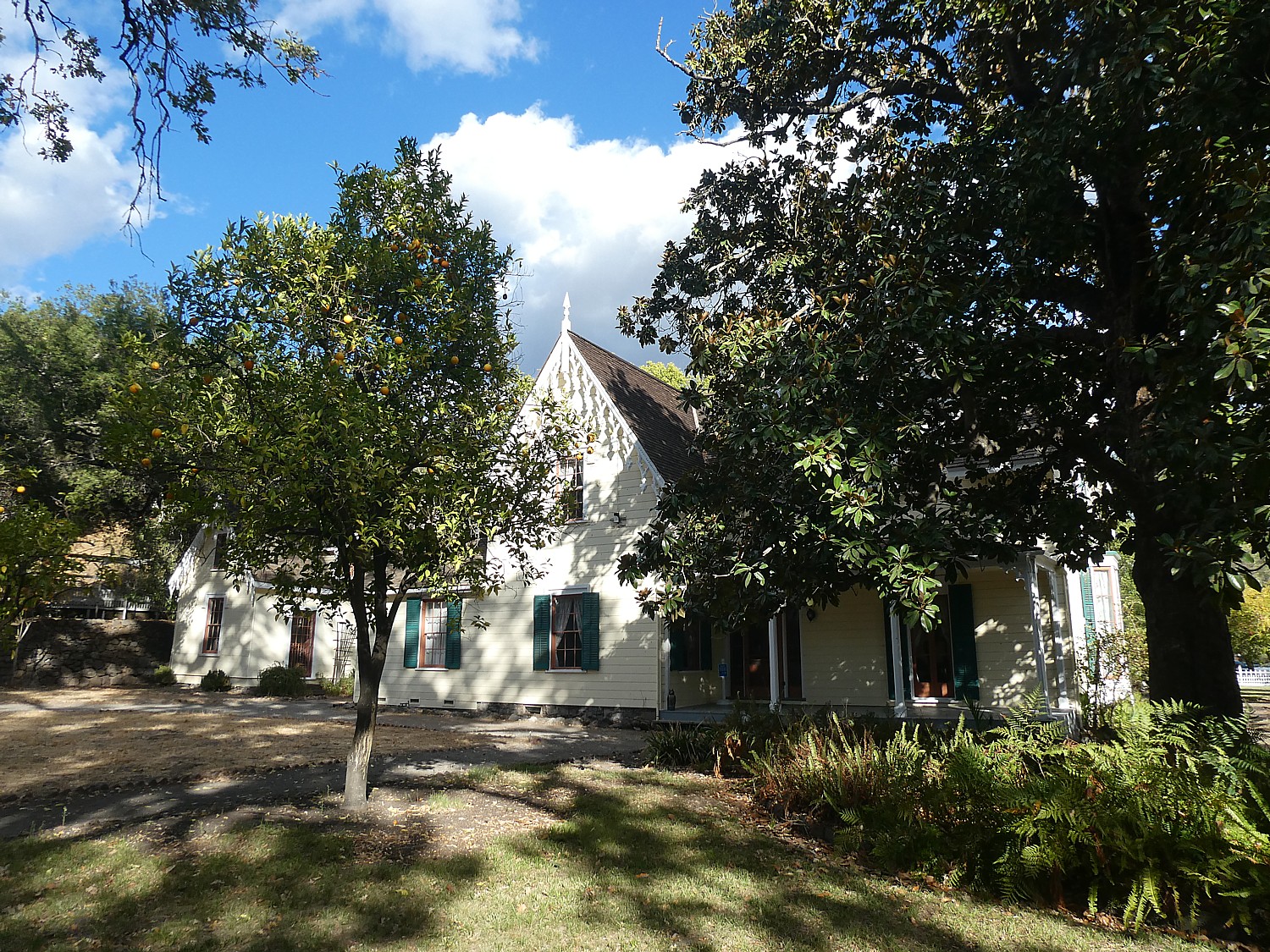
Visit the modest cottage where Jack and Charmian London lived and wrote while he was developing his Beauty Ranch and building Wolf House to get intimate insights their life together © Karen Rubin/goingplacesfarandnear.com

The cottage – amazingly modest for such a successful writer – is filled with original furnishings and artifacts and photos – you even see the fireproof safe where he stored his manuscripts. The cottage gives you such an intimate window into the man – you see a large office, but it is the tiny porch room with a simple cot where he slept and worked – and get a peek at his personality and idiosyncrasies (like how he liked to play practical jokes on his guests, who slept in a separate building). 

The office in the cottage is the biggest room, but Jack London preferred to do his writing in a tiny porch room © Karen Rubin/goingplacesfarandnear.com

The Cottage was the Londons’ principal home on the Beauty Ranch, which he eventually expanded to 1400 acres through acquisitions and used to experiment with sustainable farming techniques.

The office in the cottage is the biggest room, but Jack London preferred to do his writing in a tiny porch room © Karen Rubin/goingplacesfarandnear.com

London purchased the wood-framed Cottage, built in the 1860s, in 1911, along with the Kohler and Frohling Winery buildings where he housed workers and guests. They lived in the cottage while building the Wolf House, but enlarged it after the Wolf House burned in 1913 until it included some 3000 square feet of living space. Here in the cottage, he wrote many of his later stories and novels; a disciplined writer, he produced 1000 words a day, while Charmian edited, typed manuscripts and letters in the expansive office.

The tiny porch room in the cottage where novelist Jack London preferred to write and sleep © Karen Rubin/goingplacesfarandnear.com

You actually have to go out of the cottage to an adjacent building that served as the kitchen and their dining room, where you see the piano that London bought as a gift to woo Charmian.

As the docent notes, these two buildings capture Jack and Charmian’s bohemian lifestyle and their unique working relationship. (You can visit the cottage noon-4 pm.)

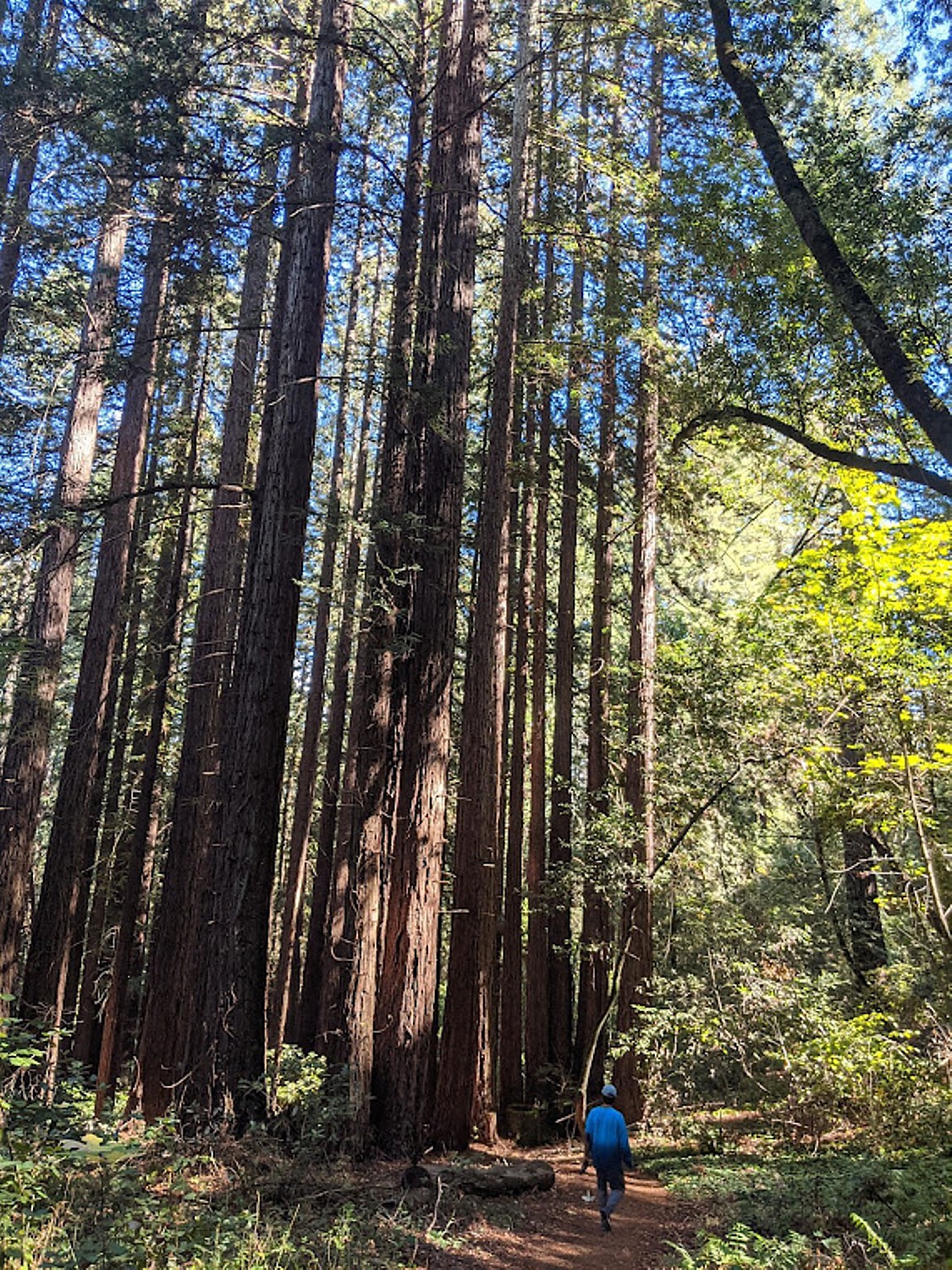
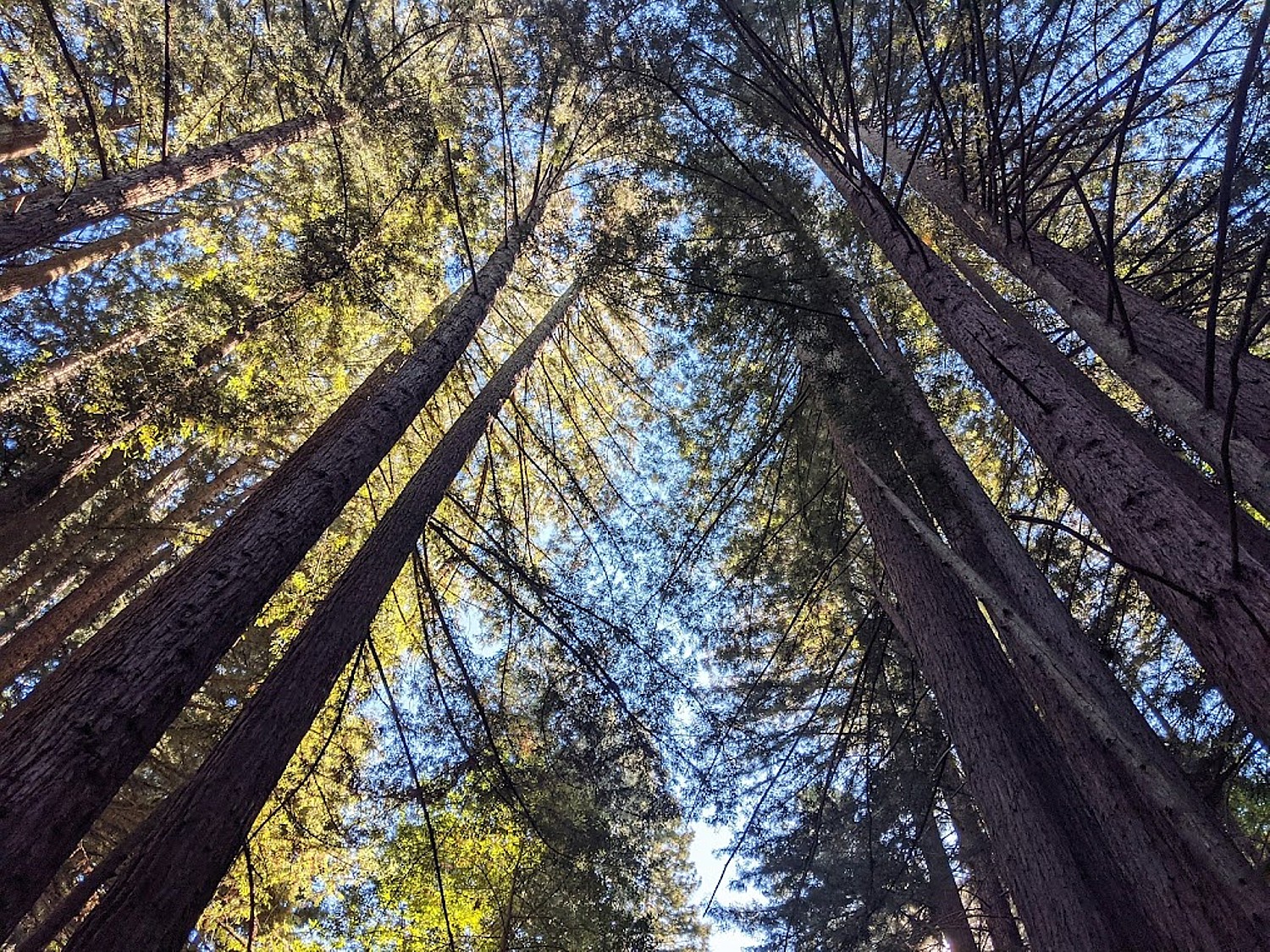
After touring the cottage, I take one of the many hiking trails through a redwood forest – this one to the small “lake” Jack London used for fishing.

Jack London pioneered sustainable farming techniques at his Beauty Ranch © Karen Rubin/goingplacesfarandnear.com

You realize what a visionary London was – he pioneered sustainable farming (he called it “model farming”) and ranching techniques here, experimenting and learning by trial and error (his bet on Eucalyptus trees did not turn out well). It was a noble mission for him: the docent tells me that London realized that settlers were constantly overusing the land but could mov West to new land, but when you reached California, there wasn’t much more West to go, so you better not deplete the land. He eventually expanded his Beauty Ranch to 1400 acres. Charmian wrote, “He had ideas on the profession of farming that will do the world more good than the stories he could ever write.”

Hiking through Jack London State Historic Park brings you to gorgeous views © Karen Rubin/goingplacesfarandnear.com

Not to be missed is the House of Happy Walls, the grand stone home that Charmian London and Jack London’s stepsister, Eliza Shepard, built after London died in 1916 at the age of 40 (all the more remarkable to consider his body of work in such a short life). The stunning Arts & Crafts structure was Charmian’s home from 1935 until 1952. She put it into her will that it become a museum to London. Today, the newly re-designed exhibits in the museum showcase the adventurous and inspiring lives of the Londons.

House of Happy Walls, built by Charmian London and Jack London’s stepsister, Eliza Shepard, after Jack London’s death, now serves as a marvelous museum to the novelist © Karen Rubin/goingplacesfarandnear.com
 

The fascinating exhibits help you appreciate not only what a brilliant writer and amazing adventurer Jack London was, what but what a decent human being. I came away with the intention to re-read “Call of the Wild,” then read for the first time “White Fang,” and go down the list of his many books (a bookcase in the gift shop is filled with first editions). It makes me wonder why Americans venerate the bad-boy Ernest Hemingway when Jack London is the better writer and a more noble, heroic man.

On weekends talented Piano Club volunteers play Charmian London’s 1901 Steinway grand piano bringing the House of Happy Walls to life (it was the piano that Jack London gifted to her to woo her.) (open 10-5 daily)

The ruins of Wolf House are dramatic, befitting Jack London’s novels © Karen Rubin/goingplacesfarandnear.com

From here, I hike another trail to the ruins of Wolf House – the dream house that Jack London was building that burned down in 1913 just before it was completed, at a cost of $75,000 ($1.9 million today). Ironically, with the 1906 San Francisco earthquake in mind, London had San Francisco architect Albert L. Farr, construct the 15,000-sq. ft., 26-room structure to be earthquake proof. Built in the Arts & Crafts style, the design was described as “rustic and individualistic”. Jack’s library measured 19 by 40 feet, and a two-story high living room measured 18 by 58 feet. Even in 1911, it was designed to include a water heater, electric lighting, refrigeration, a built-in vacuum cleaning system, laundry facilities (including a “steam dryer rotary wringer”) and a wine cellar. Even the ruins are impressive – and dramatic.

I stop to visit the modest grave sites of Jack London and Charmian on my way back.

Frankly, all of America should be celebrating Jack London’s 150th, the way Britain is celebrating Jane Austen.

Hiking through a redwood forest at Jack London State Historic Park © Karen Rubin/goingplacesfarandnear.com

You can visit this state park over and over and do new and different things.

Jack London State Historic Park, 2400 London Ranch Road, Glen Ellen, CA 95442, jacklondonpark.com,  707-938-5216

Before you head up the winding road to Jack London State Park, stop at the market right at the base and pick up a picnic.

Glen Ellen, a charming classically historic Californian town, is right in the middle of a score of wineries (Benziger Winery is next door to Jack London State Park, 1883 London Ranch Road, Glen Ellen, CA 95442, benziger.com, https://benziger.com/tours-and-tastings/; also, Imagery, its sister winery, is one of our favorites;), the Sonoma Regional Park (hiking), and Sonoma Botanical Garden.

Hiking along Sonoma Coast State Park provides sensational, quintessentially California views  © Karen Rubin/goingplacesfarandnear.com

Spend another day trip traveling less than an hour further to some of the most magnificent coastline in California: the Sonoma Coast State Park, where there are stunning trails that hug the cliffs and go down to beaches and get drinks and food at Fishetarian Fish Market on Bodega Bay watching the sun go down.

You may well forget what continent you are on at Safari West © Karen Rubin/goingplacesfarandnear.com
 

Get carried away to another continent at Safari West – spend a day, or even better, overnight in their glamping tents (luxurious). After 35 years, Safari West is transforming toward nonprofit stewardship through the newly formed Safari West Zoological Society — “a thoughtful step that strengthens our commitment to Research, Education, and Conservation and supports the animals we cherish for generations to come.” (Safari West, 3115 Porter Creek Road Santa Rosa, CA 95404, 800-616-2695, 707-579-2551, safariwest.com).

Finish the day with a sunset dinner at Fishetarian Fish Market on Bodega Bay © Karen Rubin/goingplacesfarandnear.com

Here is what else is new and happening in Sonoma County:

New in Wellness  

Sugarloaf Ridge State Park has introduced a recurring Forest Therapy Series as part of its Park Rx Program © Karen Rubin/goingplacesfarandnear.com

Park Rx- Forest Bathing Walks: Forest Therapy, also known as Shinrin-yoku or forest bathing is a guided walking practice that originated in Japan which focuses on slowing down, reducing stress, and engaging the senses to support mental and physical restoration. In Sonoma County, Sugarloaf Ridge State Park offers a recurring Forest Therapy Series as part of its Park Rx Program, held on the fourth Sunday of each month from March through November. Led by certified Association of Nature and Forest Therapy practitioners, the experience introduces participants to simple techniques designed to deepen presence and enhance the restorative impact of time spent in nature. The program highlights Sonoma County’s commitment to accessible, science-backed wellness experiences set within protected natural landscapes. 

Elevate Sonoma features hyperbaric sessions that increase oxygen delivery in a pressurized environment to support healing, recovery, and overall well-being, while complementary red-light therapy aims to enhance results. The clinic brings a modern health and recovery option to Sonoma County’s wellness landscape, positioning the region as a lifestyle travel destination for visitors seeking restorative experiences beyond traditional wine and outdoor offerings. 

Craft Brewing For a Good Cause  

Russian River Brewing Company, the Sonoma County brewery behind Pliny the Elder, a craft beer repeatedly named among the best beers in the world, is pairing purpose with production in 2026. The brewery has introduced Russian River 110, a West Coast–style pilsner created to support Russian Riverkeeper, the nonprofit dedicated to protecting and restoring the Russian River watershed. A portion of net proceeds from expanded production, and the beer’s first bottled release will fund local conservation efforts. The release underscores how one of America’s most influential craft breweries continues to connect its beer, its place, and its environmental stewardship, giving visitors another reason to experience Sonoma County’s craft beer scene firsthand. 

New in Wineries  

Katie Honey, who with her husband Dan Whalen acquired the historic Annadel Vineyard and Winery, hosts intimate, personalized wine-tastings in Sonoma, California’s wine country © Karen Rubin/goingplacesfarandnear.com

Sol Rei Wines, a boutique, women-owned producer known for low-histamine, low-sulfite wines that are lab-tested to be free of detectable pesticides and other residues, has opened a new tasting room in downtown Sonoma. The space is designed as a light, nature-inspired retreat that reflects the brand’s focus on purity, sustainability, and connection to the land and the craft of winemaking. Founder Katherine Kitzmiller created Sol Rei after a personal health journey led her to prioritize clean, intentional winemaking; the winery has quickly earned national honors for its 2023 vintage wines. 

Marietta Cellars  has just opened its first tasting room in downtown Healdsburg after 47 years as a Sonoma County staple known for its Old Vine Red and other approachable wines. The space, in a former police station near the Healdsburg Plaza, highlights the winery’s small-lot, artisanal selections rather than its widely distributed labels. Designed by co-owner and designer Lisa Steinkamp with a contemporary feel, the tasting room offers flights, glasses, and bottles of single-estate and experimental wines in a relaxed setting with indoor seating and a leafy patio. 

Wolves Lovers + Thieves, a new tasting room focused exclusively on sparkling wines, has opened in Glen Ellen. The launch reflects broader confidence in Sonoma County’s tasting room growth this year, with several new wine destinations debuting.  

Sonoma County Winegrowers and Reservoir launched Reservoir Farms, Sonoma, the first on-farm robotics and automation hub for vineyards and the flagship of SCW’s Farm of the Future initiative. The site includes fabrication space, an engineering workshop, and 14 acres of vineyard test blocks where startups and AgTech partners develop and test new tools with grower input. The hub addresses labor shortages, rising costs, and production pressures while supporting job growth and local innovation. Reservoir expects to bring six startups into the incubator by late 2025, strengthening Sonoma County’s leadership in sustainable, tech-driven viticulture.  To arrange a Vineyard Adventure walk at one of the group’s seven vineyards, visit sonomawinegrape.org/visit/sonoma-county-vineyard-adventures, info@sonomawinegrape.org, 707-522-5860.

New in Restaurants  

Bubbles & Delights Café, Petaluma’s newest breakfast spot, features a menu of scratch-made classics and bubbly drinks, including mimosas alongside farm-fresh eggs and hearty plates. Opening early for daily breakfast and brunch, the cafe adds a fresh, community-oriented spirit to Petaluma’s food scene.  

Aroma de Cafe has opened in the heart of Railroad Square, one of Downtown Santa Rosa’s most historic districts. Owners Luis Rodriguez and Alejandra Bravo have relocated their well-loved brunch cafe from Fifth Street to the larger Railroad Square location, where they are continuing to serve Latin and American brunch favorites. The expanded space allows the cafe to grow while staying connected to the neighborhood’s historic character and steady flow of locals and visitors. Adding to its appeal, chef Carlos Mojica of Guiso Latin Fusion has introduced a dinner-only Latin-Italian menu, broadening the restaurant’s reach from a daytime brunch favorite into an all-day and evening destination. 

Pick’s Roadside in the far northern Sonoma County town of Cloverdale has reopened with fresh energy while honoring its century-old roots. The drive-in first opened in 1923 and has become a local landmark known for burgers, milkshakes and root beer. After a complete renovation and menu reboot, the reimagined Pick’s features premium Wagyu beef burgers, classic shakes and a curated Sonoma County wine list. New owners Anidel Hospitality led the revival to preserve the site’s historic spirit and create a community gathering place with a Sonoma County Wine Country twist. The original neon sign and nostalgic feel remain.

New in Hotels  

Madeira House  a new boutique stay on the Sonoma Coast, is set where the Russian River meets the Pacific Ocean in the town of Jenner. The intimate property offers 11 rooms across three restored houses, pairing coastal restraint with warm, residential design. Many rooms offer river or ocean views, private decks, fireplaces, and select kitchenettes, while the overall experience is intentionally quiet and unplugged. With gardens, waterfront seating, and immediate access to coastal trails and beaches, Madeira House offers visitors a fresh lens on Sonoma County lodging beyond Wine Country, rooted in landscape, calm, and a strong sense of place. 

Fresh off its grand debut as the flagship resort of Appellation – a visionary, culinary-first hospitality brand founded by Michelin-starred chef Charlie Palmer and luxury hospitality veteran Christopher Hunsberger – Appellation Healdsburg announced its acceptance intoSmall Luxury Hotels of the World™ (SLH), becoming the first Appellation hotel to join SLH.  Located on the north side of Healdsburg in Sonoma County on 8 1/2 acres of lush landscapes, Appellation Healdsburg is a culinary-driven retreat designed to immerse guests in the region’s rich food, wine, and agricultural heritage. It features 108 guest rooms and suites, two pools, Terroir Spa, a thoughtful wellness program, dynamic programming, and expansive indoor-outdoor event spaces. Folia Bar & Kitchen offers progressive American cuisine fueled by live oak embers, led by Executive Chef David Intonato and Chef de Cuisine Reed Palmer, a Healdsburg native whose experience spans acclaimed kitchens including SingleThread, Blue Hill at Stone Barns and Amass in Copenhagen. After honing his craft globally, Palmer has returned home to honor Sonoma County’s agricultural heritage, shaping Folia’s menus around local ingredients and seasonal rhythms. Andys Beeline, the resort’s vibrant rooftop lounge, offers shareable bites, garden-infused cocktails and sweeping vineyard views. Channeling the region’s natural bounty into a deeply immersive wellness experience, Terroir Spa offers a sensory journey rooted in place, featuring treatments inspired by the surrounding landscape, locally sourced botanicals, and holistic rituals that reflect the rhythms of Sonoma’s land and lifestyle. At the heart of Appellation’s ethos is a celebration of craftsmanship. Through Crafted at Appellation, guests are invited to roll up their sleeves and dive into Sonoma’s creative spirit — joining local artisans, farmers, and makers in hands-on workshops that transform regional traditions into memorable, personal experiences. (www.appellationhotels.com/healdsburg or www.slh.com

Travel planning help is available from Sonoma County Tourism,   https://www.sonomacounty.com

__________________

© 2026 Travel Features Syndicate, a division of Workstyles, Inc. All rights reserved. Visit goingplacesfarandnear.com and travelwritersmagazine.com/TravelFeaturesSyndicate/. Blogging at goingplacesnearandfar.wordpress.com and moralcompasstravel.info. Visit instagram.com/going_places_far_and_near and instagram.com/bigbackpacktraveler/ Send comments or questions to FamTravLtr@aol.com. Bluesky: @newsphotosfeatures.bsky.social X: @TravelFeatures Threads: @news_and_photo_features ‘Like’ us at facebook.com/NewsPhotoFeatures

Wine-Tasting Exemplifies Art, Nature & Neighborhood in Sonoma, California

Enjoying a wine-tasting at Dry Creek Vineyard, a staple experience of a visit to Sonoma, California, one of the great wine-producing regions of the world © Karen Rubin/goingplacesfarandnear.com

Karen Rubin with Eric Leiberman and Sarah Falter, Travel Features Syndicate, goingplacesfarandnear.com

A staple of a visit to Sonoma, California, where nature and art come together in a perfect blend, is a tasting at one of the picturesque wineries and vineyards.  It is always so fascinating to learn about the art and science of winemaking, and to immerse in joy of discovering, sharing and savoring the fruit of that creative enterprise, the wine.

This trip, we return to the charming town of Healdsburg, where we have thoroughly enjoyed visiting its galleries and restaurants and the lovely town square (like Sonoma), to visit Dry Creek Vineyard. Family owned and run by second generation owner and president Kim Stare Wallace, it is also one of the last truly private, family-owned, iconic wineries of Sonoma County that consistently produces coveted 90+ point wines.

Dry Creek Vineyard is one of the last truly private, family-owned, iconic wineries of Sonoma County that consistently produces coveted 90+ point wines © Karen Rubin/goingplacesfarandnear.com

Dry Creek Vineyard, we learn, is responsible for many of the “firsts” in this rich wine-producing valley. Established in 1972, it was the first winery to open in Dry Creek Valley after Prohibition. Founder David S. Stare paved the way for a viticultural rebirth in the valley. Inspired by his trips to France, he modeled his winery after a Loire Valley chateau – making for a delightful setting in which to enjoy the wines.

Dry Creek Vineyard makes the claim of being the first winery to plant Sauvignon Blanc in the Dry Creek Valley and the first to label a wine with  the “Dry Creek Vineyard appellation. A pioneer of Bordeaux-style blending, the winery was also the first to use the term “Meritage”  (with its 1985 vintage) and the first to coin the term “Old Vine” to describe pre-Prohibition-era Zinfandel vineyards.

They make a claim of being the first to introduce the concept of Sustainable Agriculture in California, in 1998, providing a model for and an inspiration to others.

Indeed, it was during the years leading up to Dave’s retirement in 2006, that second generation owners Kim Stare Wallace and her husband, Don Wallace, began to lay the foundation for their vision for the winery’s future based on sustainability. “Their ‘no compromises’ philosophy required a complete re-invention from the inside out, including new winemaking techniques, vineyard management methods and winery upgrades on their 185 acres of sustainably farmed vineyards.”

This shift in philosophy led to dramatically reducing production while increasing quality and sharpening the focus on crafting appellation-driven terroir-focused, varietal-defining wines that have come to rival the best in California and the world. In 2015, Wine & Spirits Magazine selected Dry Creek Vineyard as one of its “top 100 Wineries.”

Its sustainable methods have worked: this year Dry Creek’s Sauvignon Blanc was crowned Best in California, and the Cabernet Sauvignon earned a stellar 95-point rating.

Dry Creek Vineyard is known for its Chenin Blanc, Sauvignon Blanc, Zinfandel, Cabernet Sauvignon and Meritage blends, as well as a portfolio of limited, single-vineyard selections. Prices are moderate, ranging from $18 to $125.

We sit at lovely wooden picnic tables on the lawn outside the stone chateau, as Darrin Abel, the concierge and Wine Educator, introduces the wines for us to taste.

We start with a 2022 Dry Chenin Blanc, a staple of Dry Creek since its founding in 1972. This is a classic Loire Valley-style wine that is versatile and food friendly, especially when paired with fresh oysters and seafood. Fermented in 100% stainless steel barrels, this wine is wonderfully bright and consistent vintage after vintage. The first swirl brings aromatics of honeydew, white peach and jasmine with floral notes of citrus blossom, watermelon rind and pineapple. On the palate, the wine has refreshing flavors of peach, grapefruit and jasmine with hints of mandarin, cucumber and lemon curd. It feels soft in your mouth, with a twang of acidity. These grapes, grown in Clarksburg, “like heat” which makes it dry.  

Darrin Abel, the concierge and Wine Educator at Dry Creek Vineyard © Karen Rubin/goingplacesfarandnear.com

Abel, who has been at Dry Creek for 12 years, explains the difference between a wine that is meant to be consumed early, and one that is meant to age and mature in the bottle. “White wine is meant to be drunk immediately (the screw cap). A cork is for aging – the oxygen penetrates cork and slowly ages the wine. A screw cap has no permeability, is not meant to be aged. Our philosophy : to make wine that can be enjoyed now but can age.”

Our second wine is 2022 Taylor’s Vineyard Sauvignon Blanc, produced from a vineyard on the western bench of Dry Creek Valley and named after Kim and Don Wallace’s daughter, Taylor. According to the winemaker’s notes, the Sauvignon Musqué grape is a unique clonal selection of the Sauvignon Blanc variety and a delicious interpretation of the classic varietal. Fermented in stainless steel tanks you taste plump flavors of peach, lemonade and orange blossom with subtle notes of grapefruit and Mandarin orange. Full of complexity and depth, the crafted Musqué clone produces a creamy feeling in the mouth. It has a nice, even flavor, good structure and body.

Darrin Abel, the concierge and Wine Educator, introduces the wines for us to taste.© Karen Rubin/goingplacesfarandnear.com

The 2020 Farmhouse Vineyard Zinfandel is the sixth vintage of Zinfandel produced from its Russian River Valley vineyard, where the cooler temperatures allow for complex aromas and flavors to develop. This was the second Zinfandel property of Dry Creek’s estate vineyards to be planted with its Heritage Clone. The winemaker’s notes explain that the vines were planted using the Heritage budwood concept to preserve the heritage of iconic old vine Zinfandel vineyards. Cuttings from a pre-Prohibition era vineyard were grafted onto phylloxera-resistant rootstock to create a “young vine” wine with “old vine” Zinfandel characteristics. Initially, the aromas show fruit-forward tones of black and red cherries, cranberry and blackberry. Subtle notes of mocha, rose and earthy nuances come forward after several minutes of airing. On the palate, flavors of plum and strawberry mix with soft undertones of coriander, toffee, toasty cedar and roasted almonds. The wine is supple with tremendous complexity and silky tannins. The finish has a slight spiciness and refined elegance.      

We next taste the 2020 Somers Ranch Zinfandel from grapes grown on two small parcels planted on adjacent hilltops overlooking the valley. The eastern-facing hillside vineyards provide optimum sun exposure for balanced and juicy grapes. This distinctive property was one of the first vineyards in Dry Creek Valley to be planted utilizing the Heritage Clone over 20 years ago, Abel explains.This bold Zinfandel is luxurious and fresh, with ripe fruit flavors of blackberry, cherry and cranberry, with aromatic undertones of cinnamon, clove and nutmeg and firm tannins and structure.

Dry Creek Vineyard’s 2019 Meritage “Alluvial Gap,” which has been rated 93 points by Wine Enthusiast, highlights a microregion in the Dry Creek Valley known as Lytton Springs district© Karen Rubin/goingplacesfarandnear.com

The last wine we taste is our favorite: 2019 Meritage “Alluvial Gap,” which has been rated 93 points by Wine Enthusiast and highlights a microregion in the Dry Creek Valley known as Lytton Springs district. The Meritage blend is led by Cabernet Sauvignon with three additional Bordeaux varietals to add complexity and depth. It was inspired by decades of working with Bordeaux varietals planted in the different districts and vineyards of Dry Creek Valley, including its Endeavour Vineyard, where the soils are gravelly, clay loam. “Five decades of experience have provided the knowledge of which properties can provide the best fruit our region can offer.” We learn that the wine spends 11-17 days in fermenters at 82-88 degrees F, then 19 months in French and Hungarian oak barrels (43 percent new oak) – such detail that I find fascinating, along with the precise “recipe” of the different grapes: Cabernet Sauvignon (60 percent) with three additional Bordeaux varietals  (Merlot 20%, Petit Verdot, 16%, Cabernet Franc, 4%). “The grapes are crushed and fermented separately, then blended,” Abel tells us. “It really shows off the artistry of the wine maker.”

At first swirl, the wine displays powerful aromas of black currant, plum and blueberry. Several more minutes reveal hints of black and white pepper, fennel and rose petal. The palate is full and rich with flavors of black cherry and blackberry, with notes of coriander, thyme and fine leather. The tannins are fine yet firm, with a round, plush texture and a rich, lingering finish – what I would describe as ”full bodied.” Not surprisingly, this is also the most expensive bottle of the day, $70.

After our winetasting, we go to explore.

Dry Creek Vineyard has an Insectary Garden which you can walk through and learn how it is the basis of sustainable agriculture, designed to attract beneficial insects like ladybeetles, bees, ground beetles, hoverflies, minute pirate bugs, lacewings and wasps.  The plants provide an environment attractive to natural enemies of crop pests, a natural means of controlling harmful pests like include leafhoppers, spider mites, leafrollers and mealybugs. This natural means of controlling harmful pests also assists beneficial insects in pollination and creates a balanced growing environment, the notes explain. Other animals that are considered beneficial include lizards, spiders, toads and hummingbirds. Beneficial insects are as much as ten times more abundant in insectary gardens.

“In addition to the garden being a beautiful focal point for the winery, our goal is to have this insectary further enhance our sustainable farming practices. Its contribution to a balanced ecosystem in the vineyard will be a key for years to come,” the panel explains.

The list of plants here include black eyed Susan, butterfly weed, California fuchsia, Chinese Fringe Flower, coneflower, Sunflower, Echinacea “Ruby Star”

Other sustainability techniques are described: solar panels help reduce greenhouse gas emissions by 85 tons a year, the equivalent of planting 3,400 trees a year; bluebird houses, bat houses, owl boxes and raptor perches provide specialized housing and shady platform perches to encourage birds of prey to adopt the Dry Creek vineyards as their feeding ground – a natural control for pests such as insects, voles and gophers, without the need for chemical deterrents; a habitat enhancement project provides habitat for endangered Coho and Chinook salmon and Steelhead trout; deficit irrigation uses state of the art equipment to  measure specific moisture needs of each individual block of vines, monitor soil conditions and adjust levels of irrigation to conserve water – virtual dry farming; growing cover crops like alfalfa and bell beans between vines to help rebuild depleted soil by increasing the available nitrogen and organic material, while minimizing the need to utilize fertilizer and using special seed blends that flower at different times to attract beneficial insects to help control pest populations.

Dry Creek Vineyard is one of the pioneers and leaders in sustainable viniculture © Karen Rubin/goingplacesfarandnear.com

Second generation winery partner Don Wallace, the driving force behind sustainable farming practices at Dry Creek Vineyard, has established Dry Creek Vineyard as a leader in the sustainable agriculture movement in Dry Creek Valley and the industry. The winery and its 185 acres of estate vineyards are 100% certified California Sustainable.

Also among its other notable firsts, Wallace also founded one of the first wine clubs in the U.S. “with a vision of creating a family of wine lovers united in their passion” for handcrafted wines. Events like its recent Holiday Winemaker dinner, where longtime members gather together, help to realize that vision.

Dry Creek has an excellent website that makes it easy to explore the different wine offers, arrange shipping, give as a gift, enroll in their club, or gift a club membership.

Visit 10 am-4 pm. Reservations Recommended.

Dry Creek Vineyard, 3770 Lambert Bridge Road, Healdsburg, CA 95448, cheers@drycreekvineyard.com, drycreekvineyard.com.

Art & Nature & Neighborhood

Wine tastings are the perfect metaphor for Sonoma County, where art and nature intertwine just about everywhere you go in the most marvelously energizing, invigorating, vitalizing and inspiring ways.

The towns of Healdsburg and Sonoma are like that – exquisite architecture, history, culture, intrinsically blended together with vineyards, farms and fields, wilderness.

Porchfest at Sebastopol © Karen Rubin/goingplacesfarandnear.com

Sonoma is a place of community and festivals. We visit Sebastopol for its fall Porchfest – really a giant multi-blocks party where people’s porches turn into stages for folk and rock music (you feel you have been dropped into the 1960s), the streets are full of art and food stalls and there is just a lot of good will and neighborliness, where people bump into friends and meet new ones.

Artist Patrick Amiot recycles junk into whimsical sculptures that populate Franklin Avenue in Sebastopol © Karen Rubin/goingplacesfarandnear.com

A particular street in Sebastopol, Florence Avenue, is famous for the whimsical sculptures out of recycled junk by artist Patrick Amiot, painted in bright colors by his wife, that decorate just about every home. The Sebastopol Center for the Arts hosts Sonoma County Art Trails – Juried Open Studios – Sebastopol Center for Arts, 282 S. High St., Sebastopol, CA 707-829-4797, SebArts.org

A family festival at the Bavarian-heritage Tourist Club of San Francisco © Karen Rubin/goingplacesfarandnear.com

Sonoma is just 30 miles north of San Francisco, and we have a marvelous time at an annual family festival, one of the public events at the otherwise private hiking club that dates from 1912, Tourist Club of San Francisco (we hike to get to it), delightfully Bavarian themed (even beer, pretzels and oompah band and dancing, people in Bavarian dress, and wonderful games (touristclubsf.org).

A scene that evokes “Sound of Music”: hiking to the Tourist Club of San Francisco for its family festival © Karen Rubin/goingplacesfarandnear.com

From there, we hike down a trail into Muir Woods National Park, go through the park and connect with the utterly magnificent Canopy View Trail back up to where we parked.

Hiking the Canopy Trail from Muir Woods National Park © Karen Rubin/goingplacesfarandnear.com

Sonoma has some phenomenal state and county parks. One of our favorites is the extraordinary Jack London State Historic Park (also known as Beauty Ranch) in the town of Glen Ellen (which also hosts marvelous street festivals). Beauty Ranch was the famous novelist’s home and ranch where he pioneered and experimented with sustainable farming and ranching techniques. There is an outstanding museum in the stone House of Happy Walls that his wife, Charmian, built in 1919 to serve as a museum after Jack London died (she lived there from 1935 until 1945). We visit the ruins of Wolf House, London’s 26-room dream house (mansion) which was in its final stages of completion when it burned down. We walk the trail to see where Jack London’s ashes are buried in a tiny, totally unpretentious gravesite. On previous visits we have walked trails through the ranch and farm area, through a redwood forest to a small lake.

At Jack London State Historic Park, visit the ruins of Wolf House, London’s 26-room dream house which was in its final stages of completion when it burned down © Karen Rubin/goingplacesfarandnear.com

The historic park, a national historic landmark, introduces visitors to the historical and natural features of Jack London’s lifestyle, his contribution to American literature (I am inspired to re- read “Call of the Wild” with new perspective and “White Fang”), his efforts to develop and demonstrate sustainable agricultural techniques and his love for the natural environment. There are gorgeous hikes through redwood forest. (2400 London Ranch Road, Glen Ellen, CA 95442, 707-938-5216, www.jacklondonpark.com)

Enjoying the view with a whimsical animal friend at Sonoma Botanical Garden © Karen Rubin/goingplacesfarandnear.com

Also in Glen Ellen, we discover the Sonoma Botanical Garden, which provides lovely trails through the different ecosystems – California Oaks, Asian Woodlands, Rose Garden, Stewartia Grove, a Nepalese Prayer Flags section (at the summit), terraced lawn, picturesque ponds with Japanese statuary and seating areas. It offers the opportunity to see rare and endangered plants and conservation in action. The paths are lined with whimsical sculptures of animals. (12841 Hwy 12, Glen Ellen, CA 95442, 707-996-3166, info@sonomabg.org, sonomabg.org)

For pampering, there is Osmosis Day Spa Sanctuary (a member of the Green spa network), in the historic village of Freestone, on the scenic Bohemian Highway. A gorgeous Japanese-style building and stunning gardens, the spa features the Cedar Enzyme Bath, a therapeutic body treatment from Japan “found nowhere else on this continent.”  This is a fermentation bathing ritual where you immerse in a mixture of soft and fragrant ground cedar and rice bran pulsating with enzyme activity to stimulate your metabolism. This warm and stress reducing treatment offers health benefits, from improving circulation to relieving joint and muscle pain, cleansing skin (707-823-8231, osmosis. com).

The spa is just up the road from  the incredibly popular Wild Flour Bread and the Freestone Artisan Cheese shops, an amazing artisanal jewelry shop and a farm stand, before making our way up a winding road to an old growth forest where the redwoods rival Muir Woods.

We also visit one of our favorite restaurants, Salt & Stone (9900 Sonoma Hwy, Kenwood, CA 95452, 707 623 4125, SaltStoneKenwood.com)

Sonoma County Tourism, 800-576-6662, info@sonomacounty.comwww.sonomacounty.com.

See also

WINE & ART: THE PERFECT PAIRING IN SONOMA, CALIFORNIA

__________________

© 2025 Travel Features Syndicate, a division of Workstyles, Inc. All rights reserved. Visit goingplacesfarandnear.com and travelwritersmagazine.com/TravelFeaturesSyndicate/. Blogging at goingplacesnearandfar.wordpress.com and moralcompasstravel.info. Visit instagram.com/going_places_far_and_near and instagram.com/bigbackpacktraveler/ Send comments or questions to FamTravLtr@aol.com. Bluesky: @newsphotosfeatures.bsky.social X: @TravelFeatures Threads: @news_and_photo_features ‘Like’ us at facebook.com/NewsPhotoFeatures 

Experience Sonoma Like a Local

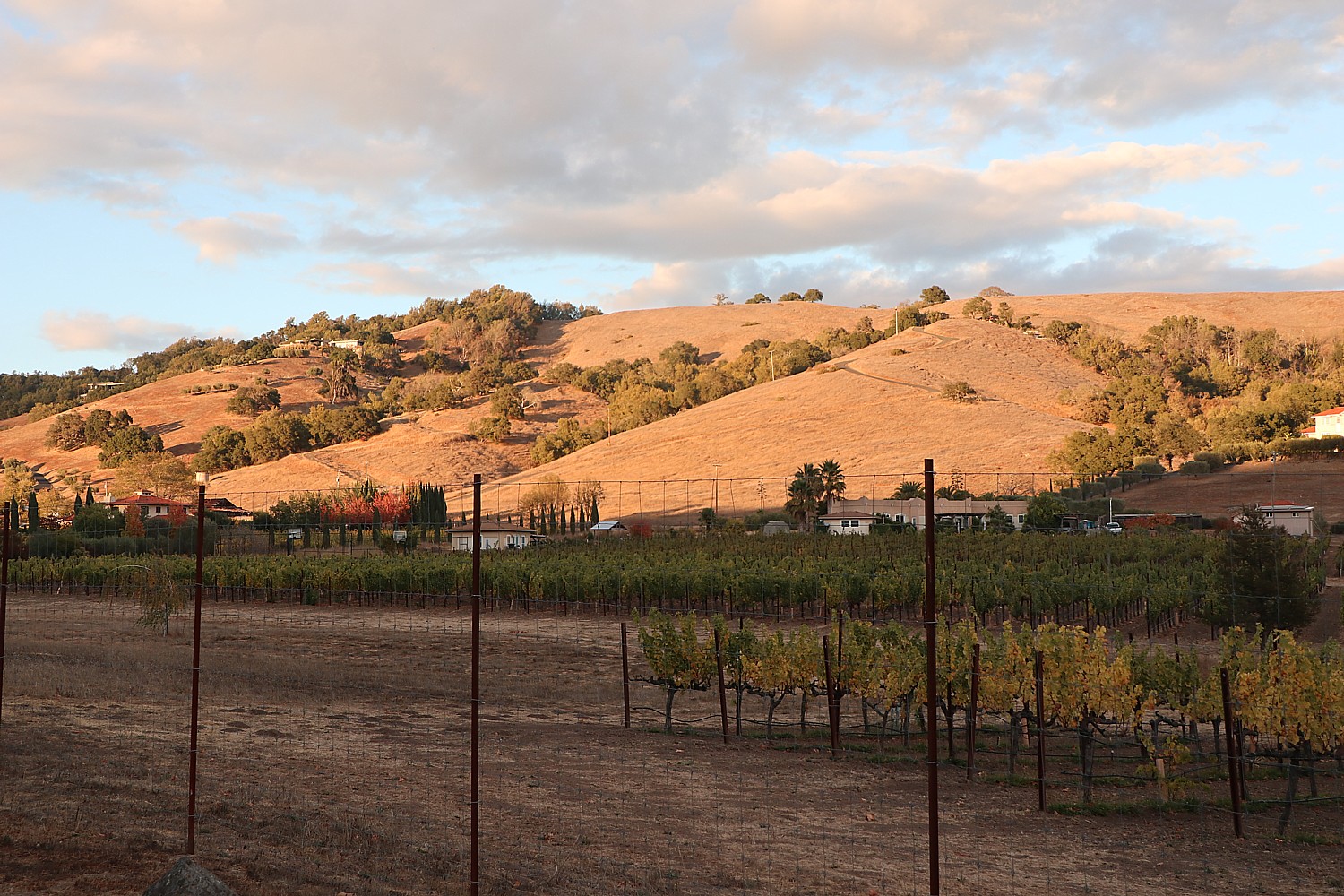
A late afternoon stroll in our Sonoma “neighborhood” © Karen Rubin/goingplacesfarandnear.com

By Karen Rubin, Travel Features Syndicate, goingplacesfarandnear.com
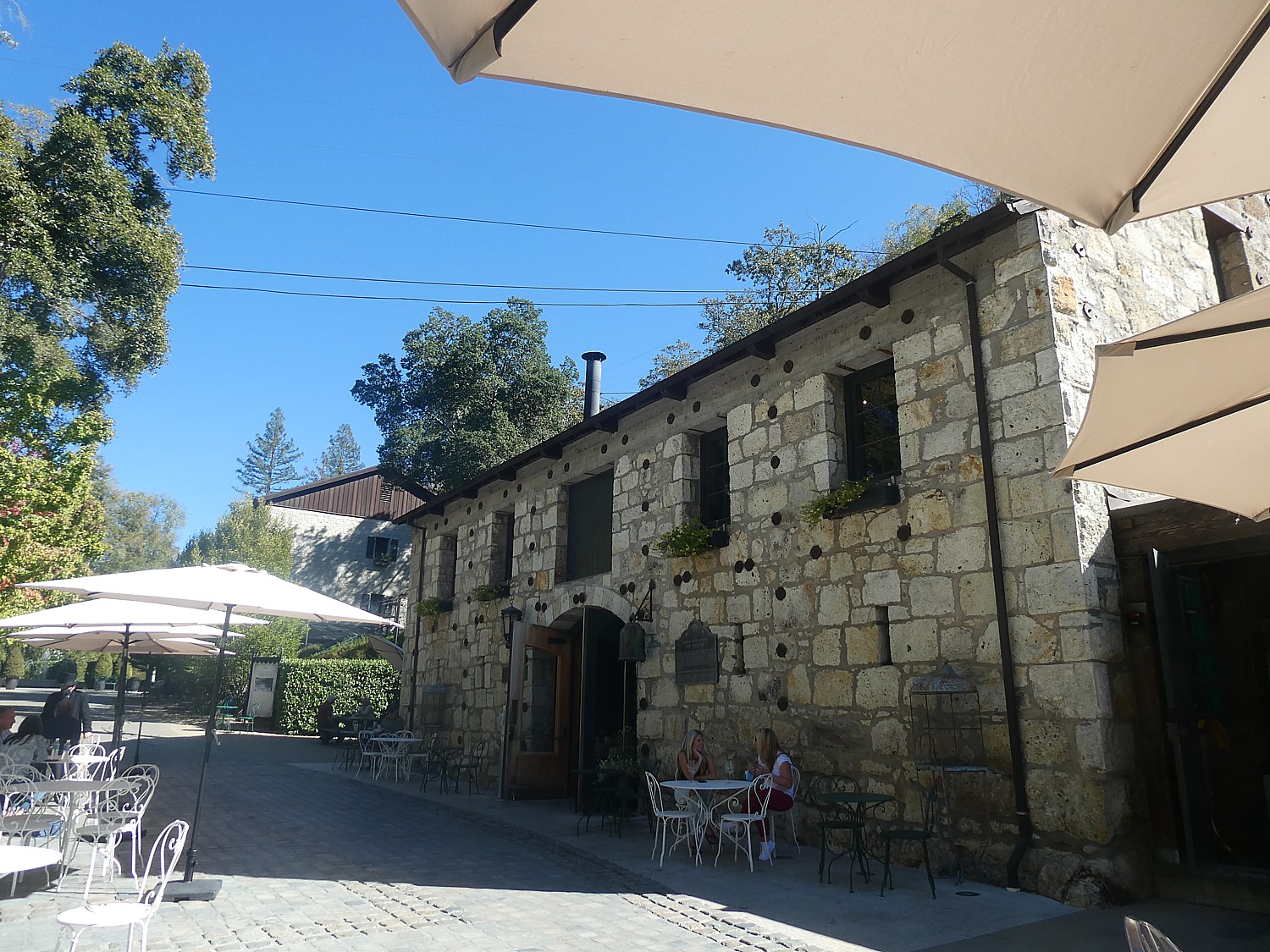
You know the refrain: “It’s a nice place to visit, but I wouldn’t want to live there.” Rare is the place that is equally precious to visit and reside. Fortunately, our family has decided to reside in such a place, and I get to visit: Sonoma, California.

Just 43 miles northeast of San Francisco, Sonoma has long been a retreat for urban dwellers, offering a “healthier” climate.  

Sonoma is the perfect combination of man and nature, as the vineyards attest, and residents today are obsessive about preserving that balance. In fact, the Sonoma County Tourism, as part of its continued commitment to encourage responsible stewardship from visitors and residents, has just joined the Global Sustainable Tourism Council.

The historic plaza is the centerpiece of Sonoma © Karen Rubin/goingplacesfarandnear.com

This is my second visit to Sonoma and while my family works, I get to explore like a local, hopping on a bike to ride the delightful paved recreation trail that goes right into the exquisitely quaint, historic village center and out to the vineyards. On my first trip, we biked, visited wineries, and hiked the spectacular Pacific coast. This trip, I focus on Sonoma’s history, heritage and the fascinating people who shaped it. What is more surprising is how contemporary the history feels – truly, history repeats.

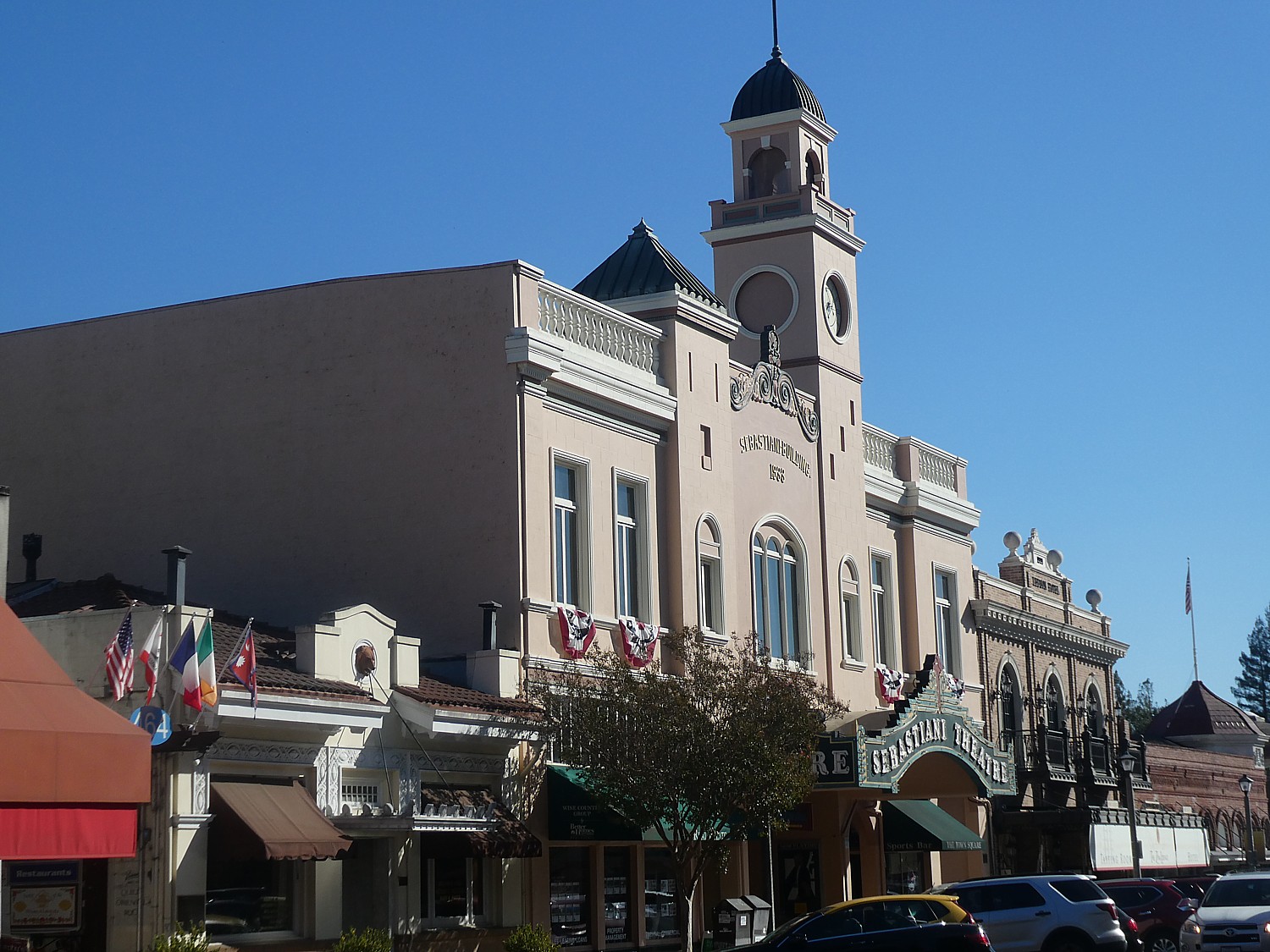
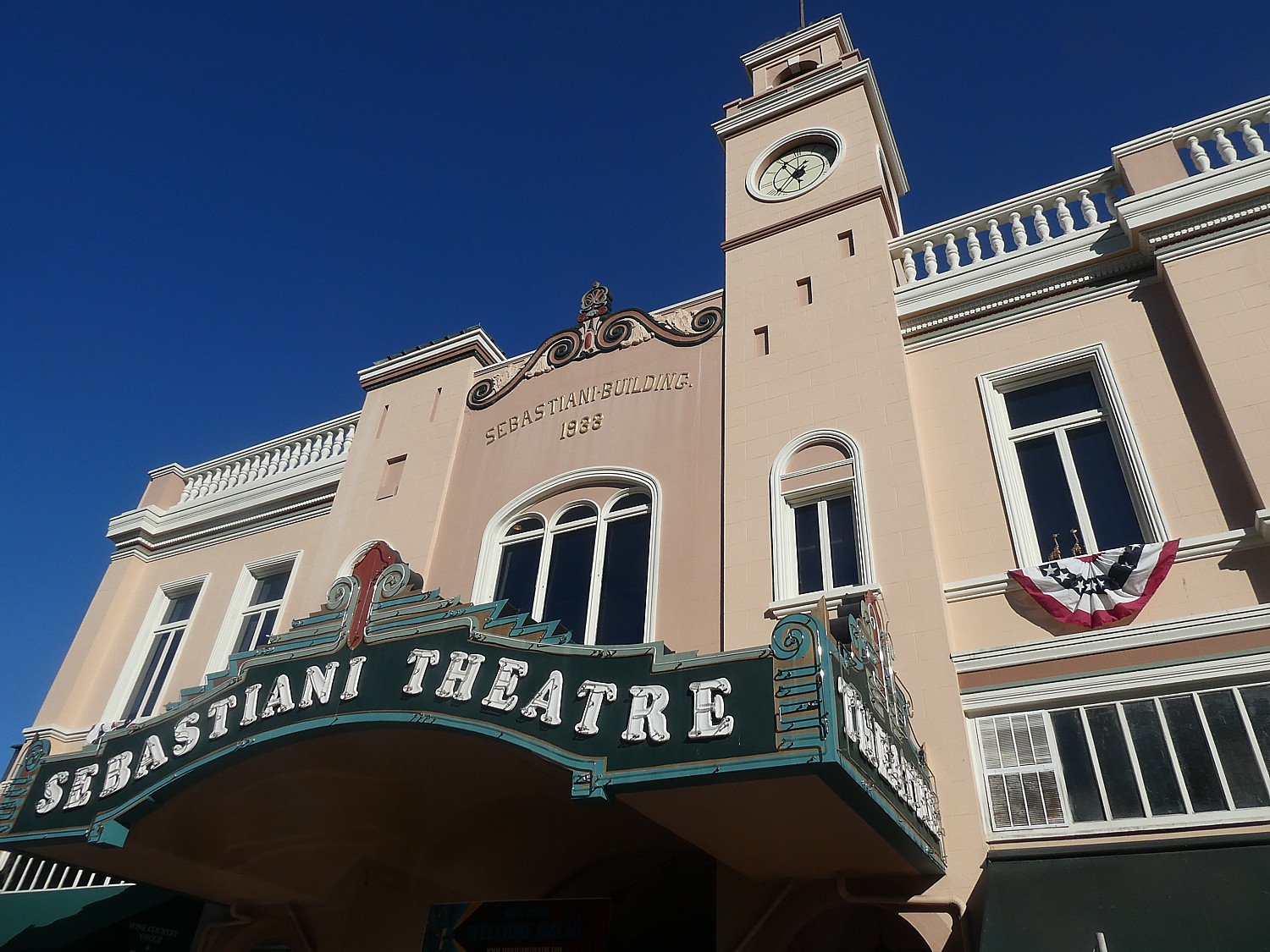
Sebastiani Theatre in Sonoma’s historic village plaza © Karen Rubin/goingplacesfarandnear.com

It starts at the village plaza – utterly charming today with lovely restaurants, wine tasting rooms and boutiques – but dotted with really important historic sites that are part of Sonoma State Historic Park, a collection of six sites located throughout the community.

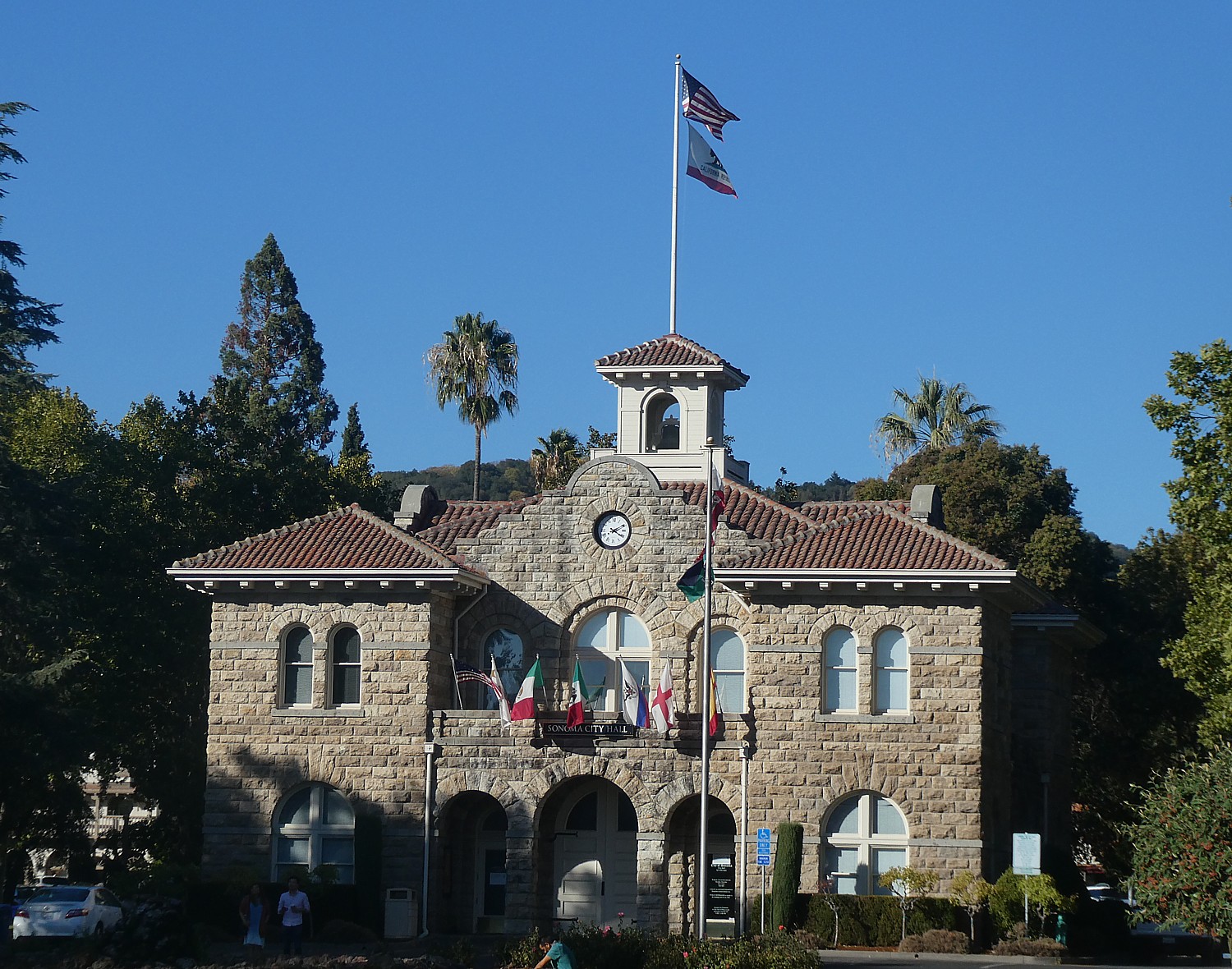
Sonoma’s City Hall © Karen Rubin/goingplacesfarandnear.com

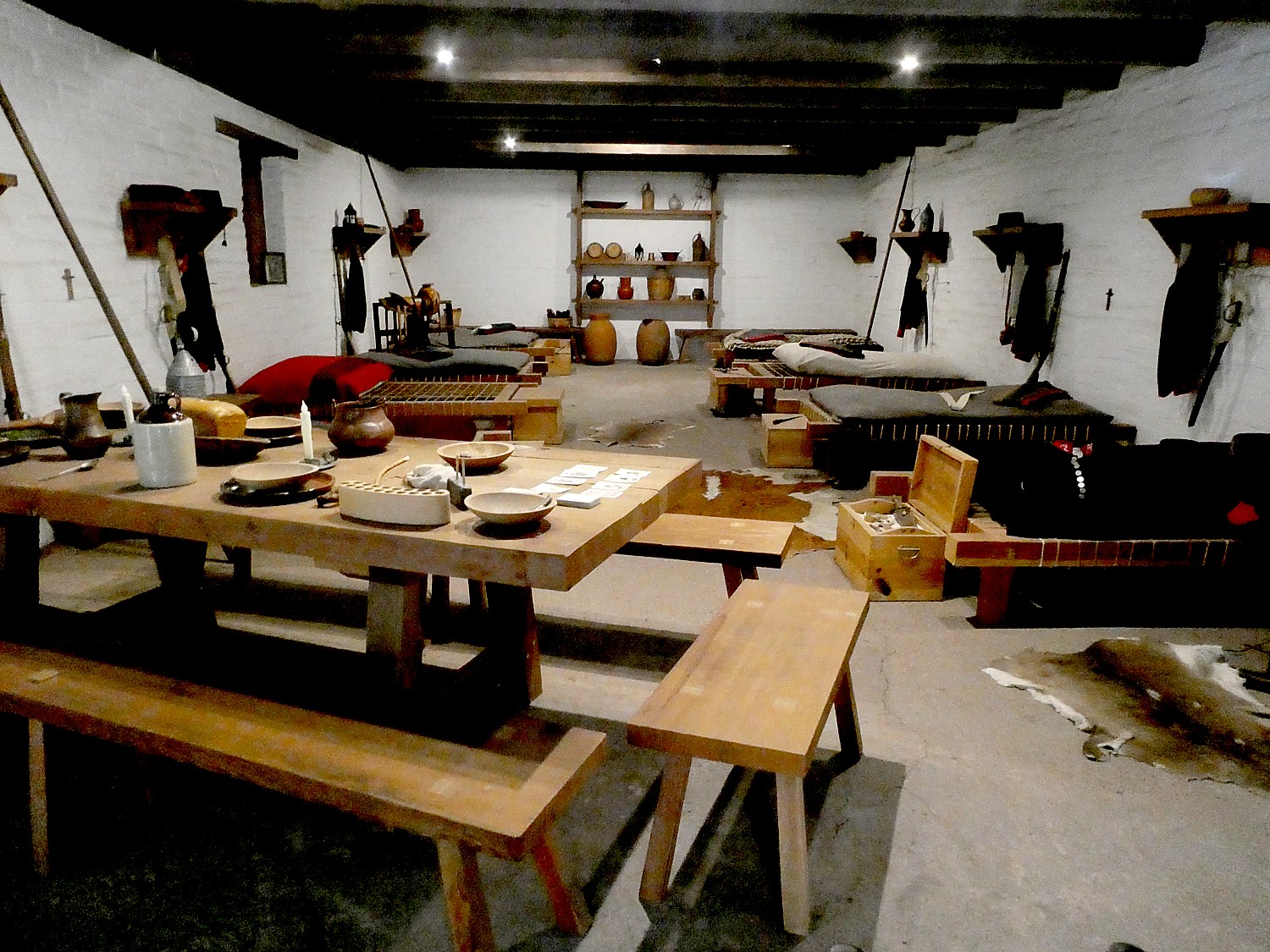
I start at the Barracks, a military post of Mexican soldiers established in 1834 to serve as a buffer to Russian expansion from Fort Ross (!!!). The Russians had come in 1812 to produce crops and trap furs to supply their Alaskan settlement. (The Russians ultimately moved out, ironically, just before gold was discovered.) You can see a room furnished as if the soldiers were still there. It is interesting to learn that they had to supply their own uniforms, horse and supplies, and basically buy them back from the Commandante. The barracks turns out to be the best place to start my journey because it offers an excellent video that encapsulates the history of this place, and puts everything into context.

The Barracks in Sonoma’s historic plaza © Karen Rubin/goingplacesfarandnear.com

From 1834-1846, it was the headquarters for General Mariano Guadalupe Vallejo, the Commandant of the Frontera del Norte – the northern Mexico provincial frontier – who built it, as well as the Plaza. More than 100 military expeditions set out from Sonoma to subdue rebellious Wappo and Cainameros or Satisyomis native tribes trying to overthrow Mexican domination. For ten years, until 1844, the Presidial company of Sonoma was considered the most powerful military force in California. During the short-lived California Republic, the barracks housed Republic followers until July 9, 1846, when the Stars and Stripes flag was first raised at Sonoma. It then served as an army post.  In 1860, Vallejo remodeled the barracks to serve as a winery. (Vallejo’s story, I learn, underpins just about everything in Sonoma.)

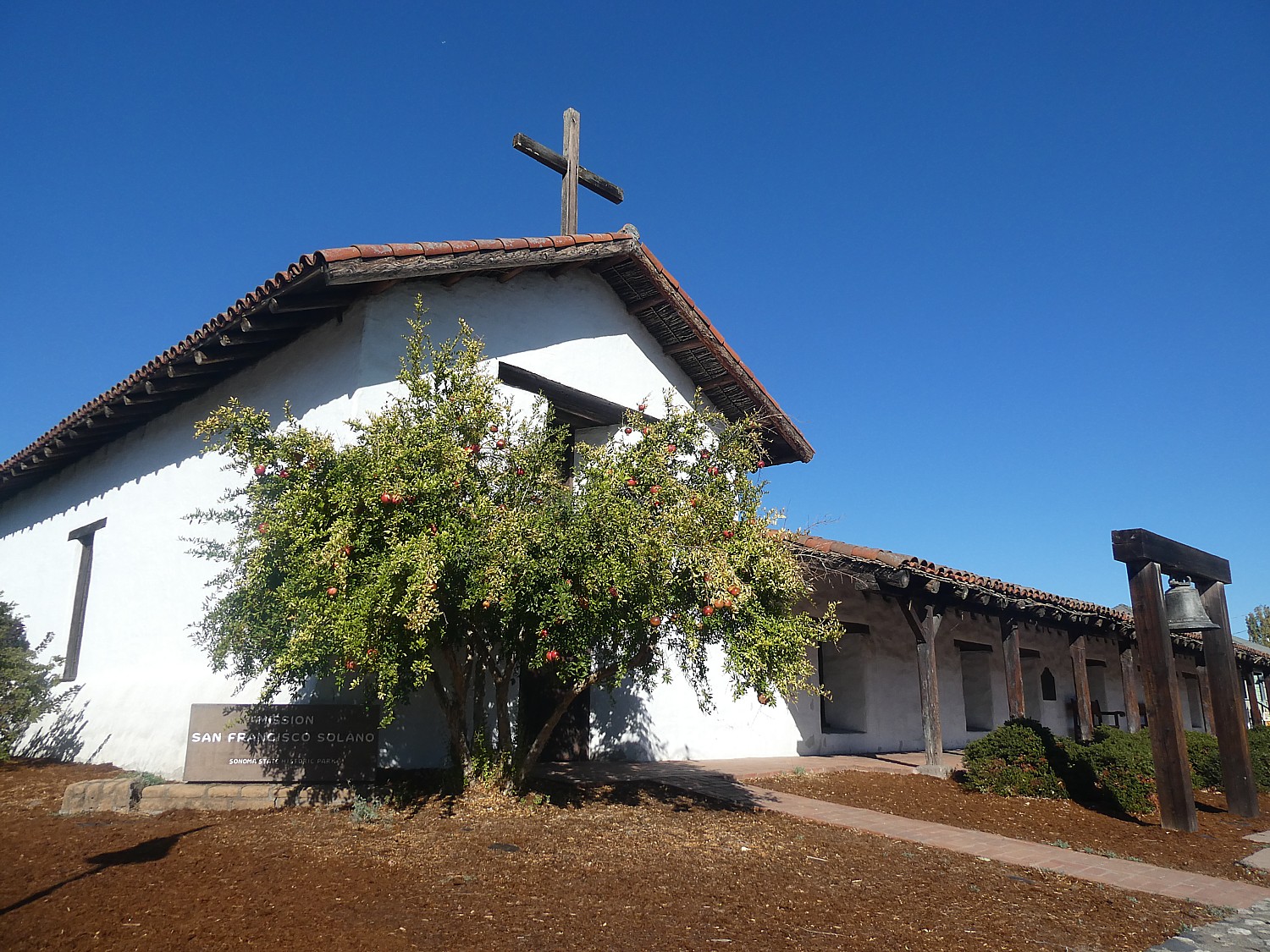
Mission San Francisco Solano was founded in 1823 © Karen Rubin/goingplacesfarandnear.com

Across the street from the Barracks is Mission San Francisco Solano – the last of 21 missions established in California. It was founded in 1823 to convert Native Americans to Christianity – often forcibly. Indians would come to the mission first out of hunger –since the colonists introduced disease, technology and livestock which depleted the corn that was their mainstay. The Indians’ had their own culture, religion, lifestyle which “was contrary to the colonists” and so, had to be eradicated. Under the mission system, families were split up, children taken for indoctrination. Indians revolted and tried to escape the mission and the soldiers would hunt the “fugitives” down and bring them back. I learn in the video in the Barracks. (There is a display, “Collision of Cultures,” which acknowledges the tribes’ experience.)

“The Sonoma mission’s sphere of influence reached its peak around 1832, with nearly 1,000 Native California Indians in residence and 10,000 acres of land used to raise crops and livestock.” In 1834, the Mexican government secularized all the missions into parish churches – which was General Vallejo’s task.

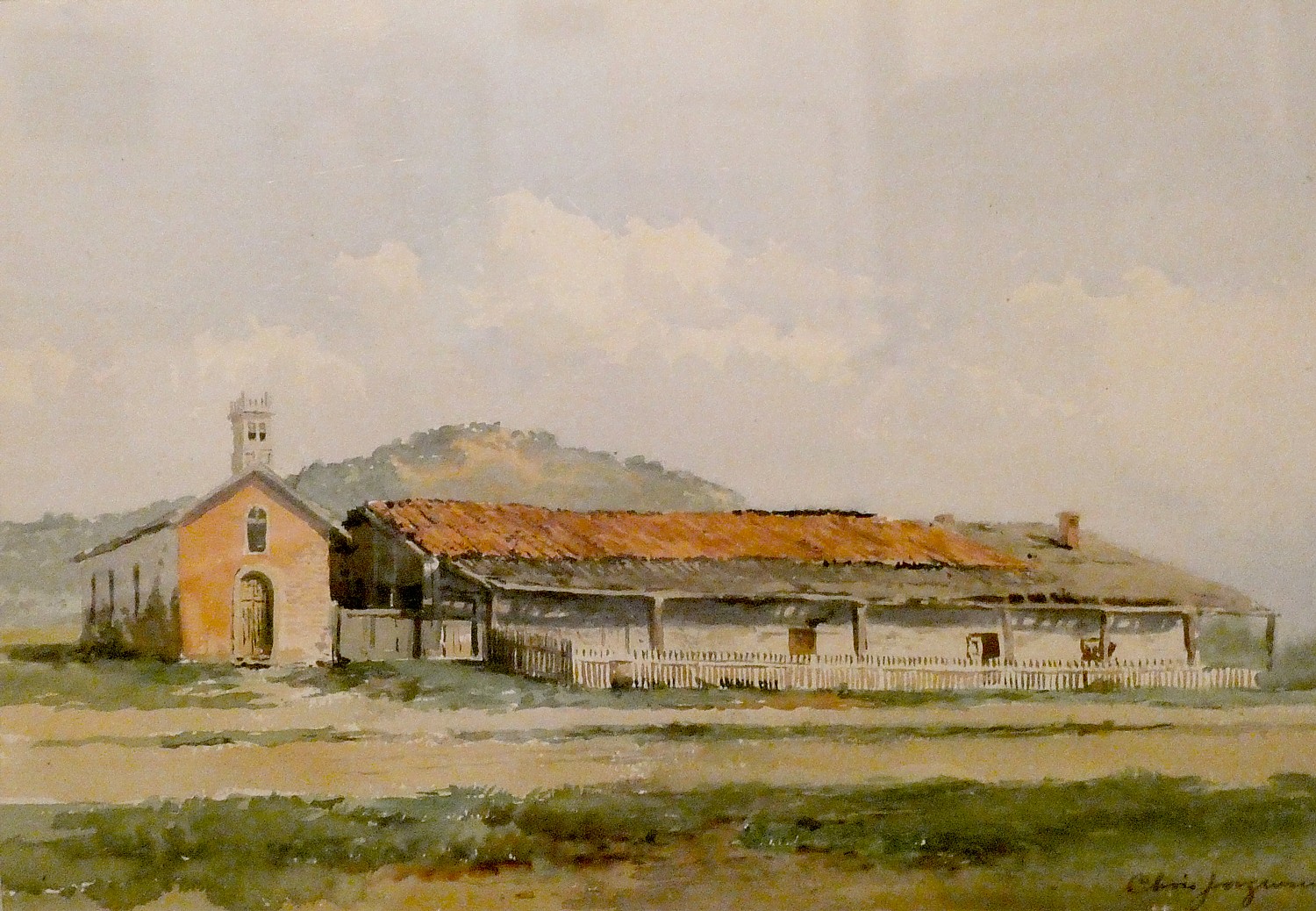
The dining room at Mission San Francisco Solano now exhibits watercolors created between1903-5 by Chris Jorgensen depicting the 21 missions © Karen Rubin/goingplacesfarandnear.com

The Dining room today houses a marvelous exhibit of watercolors created between 1903-5 by Chris Jorgensen depicting the 21 missions that remained. His watercolors helped generate interest in preserving the missions. It is most interesting to see his watercolor of this mission as it stood.

Mission San Francisco Solano, as captured by Chris Jorgensen © Karen Rubin/goingplacesfarandnear.com

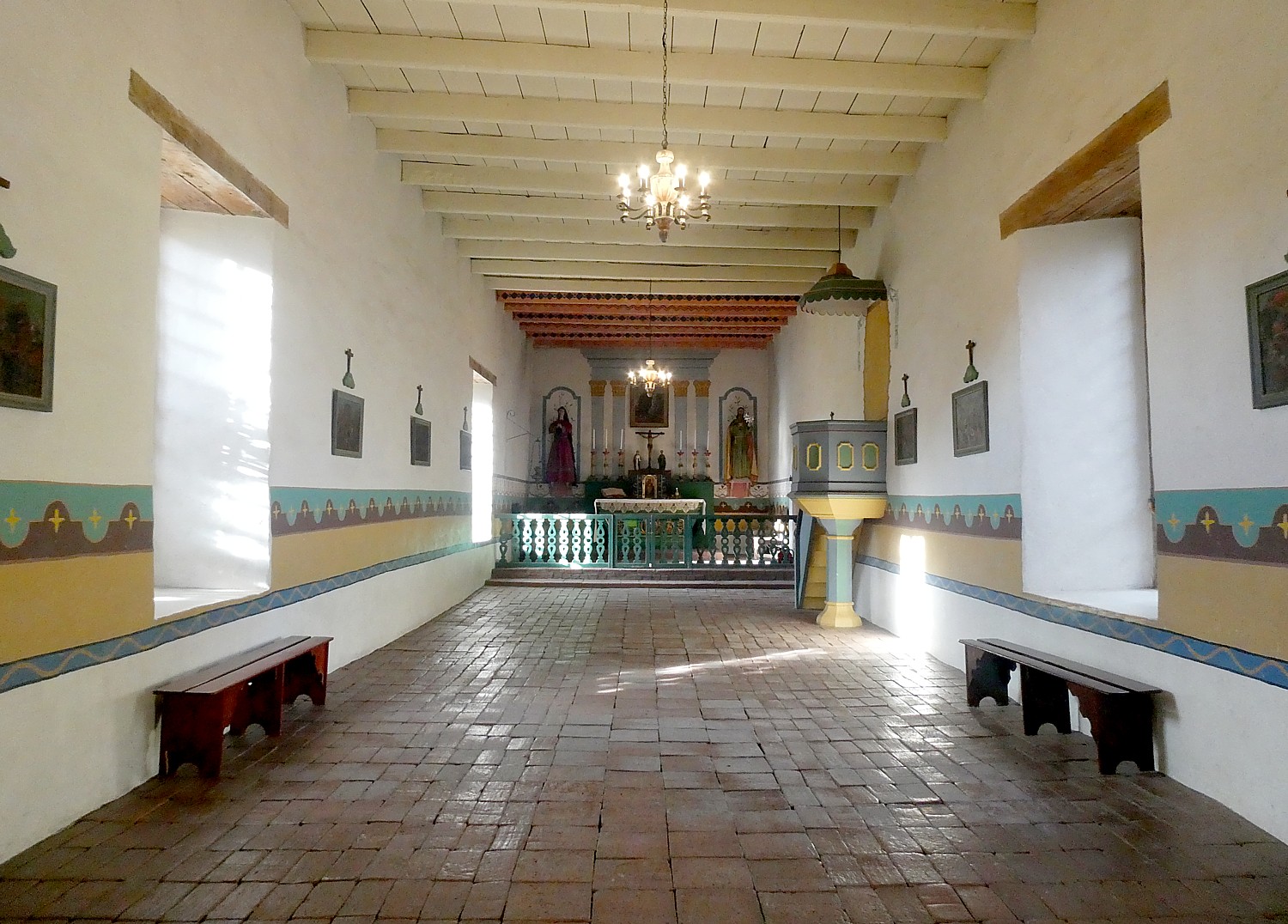
The small adobe chapel on the west side of the Padres’ Quarters, built and furnished by General Vallejo in 1840, replaced the original mission church.

The small adobe chapel on the west side of the Padres’ Quarters, built and furnished by General Vallejo in 1840, replaced the original mission church © Karen Rubin/goingplacesfarandnear.com

It is here in the mission that I meet Ranger April Farnham. When I ask if she is a native Californian, she tells me of her great great great aunt, Eliza Farnham, born in Rensselaerville, NY in 1815, who came to northern California in 1849 with her two sons (her husband, Thomas Farnham, was apparently a rogue). What a character! Wikipedia describes Farnham as a novelist, feminist, abolitionist and activist for prison reform (she worked as the matron of Sing Sing prison’s women’s ward). She returned to New York in 1856 and  in 1859, organized a society to assist destitute women find homes in the West. She returned to California, but died in New York City, at the age of 49, of consumption.

(I’m so intrigued about her, I look up her publications: Life in the Prairie Land, 1846 – An account of life on the Illinois prairie near Pekin between 1836 and 1840; California, In-doors and Out, 1856 – A chronicle of her experiences and observations on California; My Early Days, 1859 – An autobiographical novel; Woman and Her Era, 1864 – “Organic, religious, esthetic, and historical” arguments for woman’s inherent superiority’ and The Ideal Attained, 1865 – The heroine molds the hero into a worthy mate.)

General Vallejo’s Home

“Lachryma Montis,” the “Yankee Home” of General Mariano Guadalupe Vallejo, provides a window into Sonoma’s fascinating founder ©Karen Rubin/goingplacesfarandnear.com

I get back on my bike to visit General Vallejo’s home, Lachryma Montis, a 20-acre site (out of his original 500 acres) just along the path about a mile from the mission. Here you appreciate what a visionary – even progressive – Vallejo was, and how instrumental he was to the founding and nurturing of Sonoma through its multiple transitions. By the time he was 40, he had lived under four flags – Spanish, Mexican, the Bear Revolution and then the United States.

Born in 1807 to an upper class Spanish family, his career paths were limited to the military, politics or church. He chose the military. At the age of 25, a lieutenant, he commanded Presidio de San Francisco, the “director of colonization.” In 1826, he was ordered to secularize the missions and transfer power from the church to civil authorities.

The Mexican government fell into chaos; there were frequent changes of governor in his district. Vallejo got no assistance from Mexico and had to pay his soldiers out of his own pocket. The settlers became Mexican citizens, learned Spanish but were different from the “Yankees” who began to come through.

After Mexican Governor Jose Castro proclaimed that the purchase or acquisition of land by foreigners who had not been naturalized as Mexicans “will be null and void, and they will be subject (if they do not retire involuntary from the country) to be expelled whenever the country might find it convenient.” 33 Yankees lead the Bear Flag Revolt against Mexican authorities. They attacked Sonoma, took Vallejo prisoner, imprisoning him at Sutter’s Fort for two months, where he contracted malaria and was a dath’s door before being released. “His imprisonment lasted longer than the Republic” (communication was slow). At the time of the Bear Flag Revolt, (June–July 1846), there were 500 Americans living in California, compared with between 8,000 and 12,000 Mexicans.

Despite the Treaty of Guadeloupe that ended the Mexican-American War (1846-1848) assuring the Mexicans their property ownership would be respected, the Yankees claimed the property belonged to them “by right of conquest”.  Mexicans, including Vallejo, had to fight in court to prove title and that often put them in debt. His holdings were reduced from 500 acres to 20 acres, but he kept his vineyards.

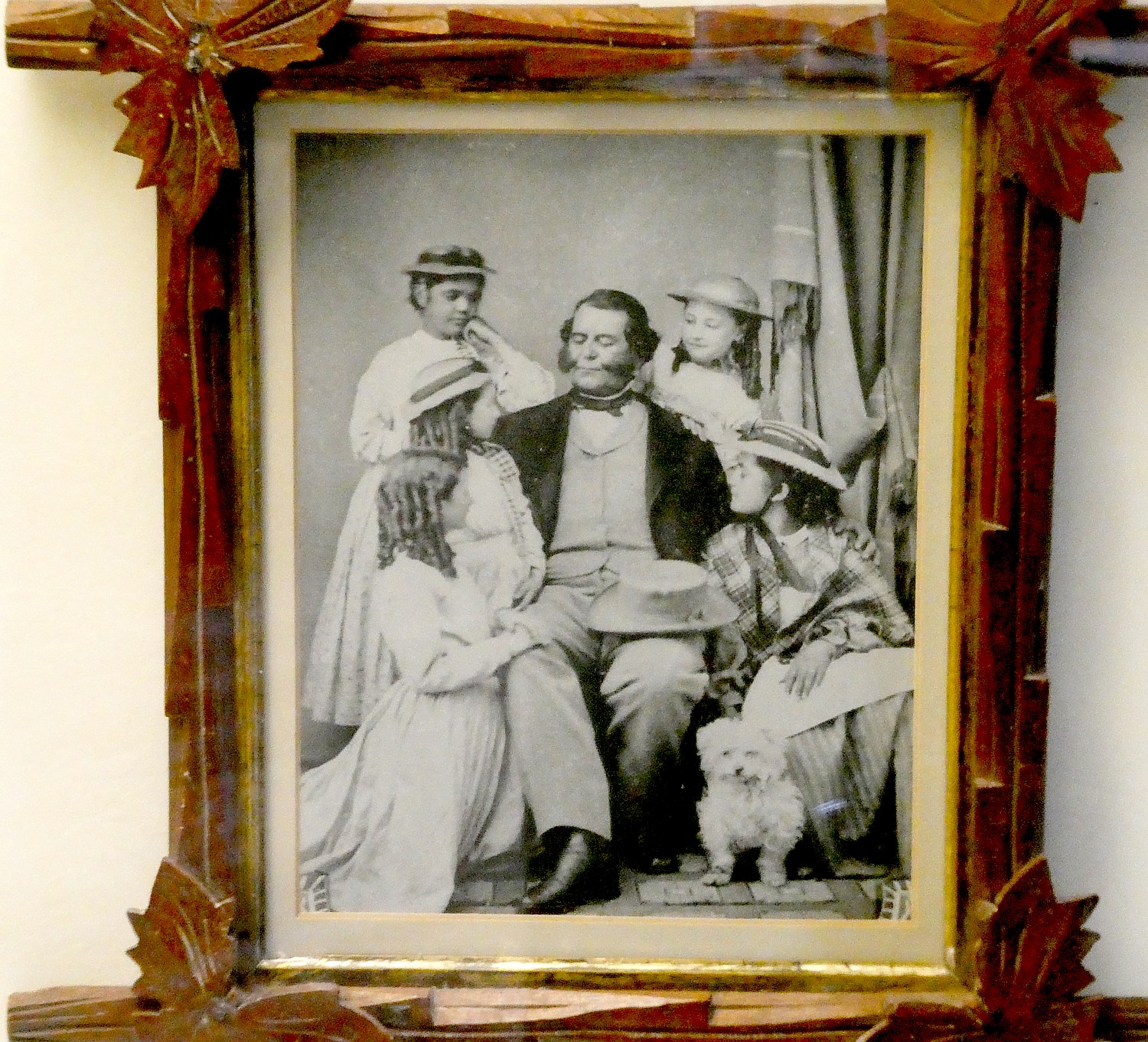
Vallejo family photos on view in a small museum in the visitors center of his home, part of the Sonoma State Historic Park, give insight into Sonoma’s founder and visionary ©Karen Rubin/goingplacesfarandnear.com

Indeed, Vallejo also had a hand in developing wine-making in Sonoma. His two older daughters married sons of Count Agoston Haraszthy, who began the first vineyards (you can learn this part of the history at Haraszthy’s Buena Vista winery).

Ever adapting, Vallejo went on to be elected state senator for Sonoma, serving until 1853.

“Lachryma Montis,” the “Yankee Home” of General Mariano Guadalupe Vallejo, provides a window into Sonoma’s fascinating founder ©Karen Rubin/goingplacesfarandnear.com

What is striking about Vallejo’s home is that it looks like it was deposited here from New England. Vallejo referred to his dwelling as the “Yankee Home” or “Boston House,” departing from traditional adobe style. That was deliberate on his part, to symbolize change (and acceptance) of becoming part of the United States.

You start your visit in the Chalet, a Tudor-style structure which originally was a storage house and granary, now a visitor center that houses a museum with family photos and personal artifacts of Vallejo and his family (he had 16 children, 10 of whom lived to adulthood), as well as their magnificent carriage. The furnishings in the main house, too, are mainly from the family.

Seeing the home as if the Vallejo family still lived there ©Karen Rubin/goingplacesfarandnear.com

You visit the parlor, which Vallejo furnished with items from around the world, the master bedroom, his daughter, Maria’s, bedroom, the nursery. You visit the bedroom of Luisa, his 15th child, who was born here, married here and, after being widowed, raised her three children in the house; she cared for her elderly parents and inherited the estate where she lived until her death in 1943 at 87. She sold the estate to the state of California in 1933 and served as its curator from 1933-1943.

The picturesque stone and masonry reservoir supplied the Vallejo home with water from natural artesian springs ©Karen Rubin/goingplacesfarandnear.com

There are several other interesting buildings and structures: the picturesque stone and masonry reservoir was constructed in the 1850s to collect water from natural artesian springs; a tiny cottage, the Hermitage, or “Napoleon’s Cottage” at the top of a winding stone staircase above the reservoir, where Vallejo’s youngest son, Napoleon, moved in 1865 at the age of 15, and kept 14 dogs, two monkeys, three cats and one parrot.  

A monument to the Bear Flag Rebellion, which briefly established the California Republic ©Karen Rubin/goingplacesfarandnear.com

Sonoma’s Plaza itself – the birthplace of the state’s Bear Flag – is picturesque. You can see a monument to where rebels raised their new, homemade flag and declare their own republic, June 14, 1846. (The Bear Flag Republic lasted just 24 days; then the United States took over).

There is also City Hall, a pavilion for outdoor events, and across the way, a lovely old-timey movie theater.

The Sonoma State Historic Park (363 Third Street W, Sonoma CA 95476, 707-938-1519). includes six sites – in addition to the Mission, the Barracks and Lachryma Montis, it also includes Casa Grande (Vallejo’s home on the plaza), the beautiful Blue Wing Inn (built to house soldiers it later accommodated such famous visitors as US Army officer Ulysses S. Grant); and Toscana Hotel. For a schedule of docent-led tours, visit www.parks.ca.gov or call 707-938-9560. (The $3 admission includes same-day visit to the Barracks and General Vallejo’s Home (363 3rd St. West) and Petaluma Adobe State Historic Park (3325 Adobe Road, Petaluma).

The Buena Vista Winery. Count Agoston Haraszthy planted the first vineyards in Sonoma; Vallejo’s two daughters married his sons © Karen Rubin/goingplacesfarandnear.com

My biking takes me into the vineyards that completely ring the village. I return to the Buena Vista Winery, founded by Count Agoston Haraszthy, who came from Hungary initially in pursuit of gold but in 1857, decided instead to build a stone winery on the property. He introduced cuttings from Europe’s best vineyards to California and basically proved that California could produce wine. Buena Vista Winery, 18000 Old Winery Road, Sonoma, CA 95476, 800-926-1266, tastingroom@buenavistawinery.com, www.buenavistawinery.com.

There are about 90 vineyards and wineries you can explore, see Sonoma.com.

I also come upon a wonderful local community garden, Sonoma Garden Park, which is a working farm, education center and “vibrant gathering place” where I encounter a gardener who comes up from San Francisco and learn about sustainable gardening in this drought-plagued place (Seventh St. East & MacArthur).

Jack London State Park

Jack London State Historic Park© Karen Rubin/goingplacesfarandnear.com

Another marvelous example of this merging of man and nature is the Jack London State Park in nearby Glen Ellen, where we go for a hike and discover a most intriguing history.  I was expecting to hike in the woods, but the historic and biographical features blew me away.
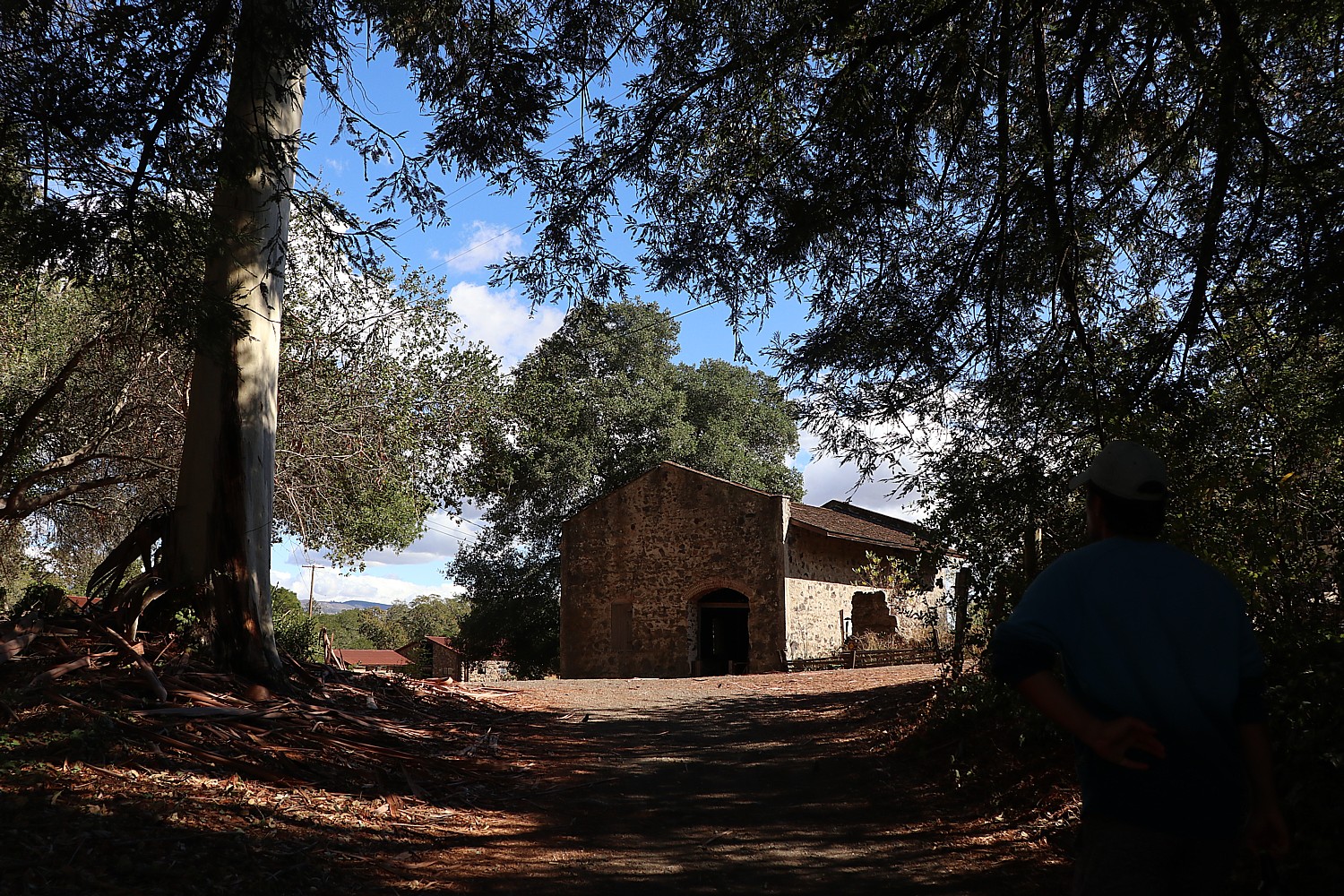
I always associated Jack London with San Francisco and Alaska. It was a complete surprise to learn that Glen Ellen was home to the writer/adventurer from 1905 until his untimely death in 1916, at age 40, of gastrointestinal uremic poisoning. London pioneered new agricultural techniques here at his 1,400-acre Beauty Ranch.

Jack London State Historic Park© Karen Rubin/goingplacesfarandnear.com

“London was well ahead in the real estate game in 1905 when he began buying up what was then exhausted farmland around Glen Ellen,” writes Kenneth Brandt, The Short, Frantic, Rags-to-Riches Life of Jack London,” in Smithsonian (www.smithsonianmag.com/smithsonian-institution/short-heroic-rags-riches-life-jack-london-180961200). “His intention was to restore the land by using innovative farming methods such as terracing and organic fertilizers… ‘I see my farm,’ he declared, ‘in terms of the world and the world in terms of my farm.’ Today, docents lead tours showcasing London’s progressive ranching and sustainable agricultural practices.”

Jack London State Historic Park© Karen Rubin/goingplacesfarandnear.com

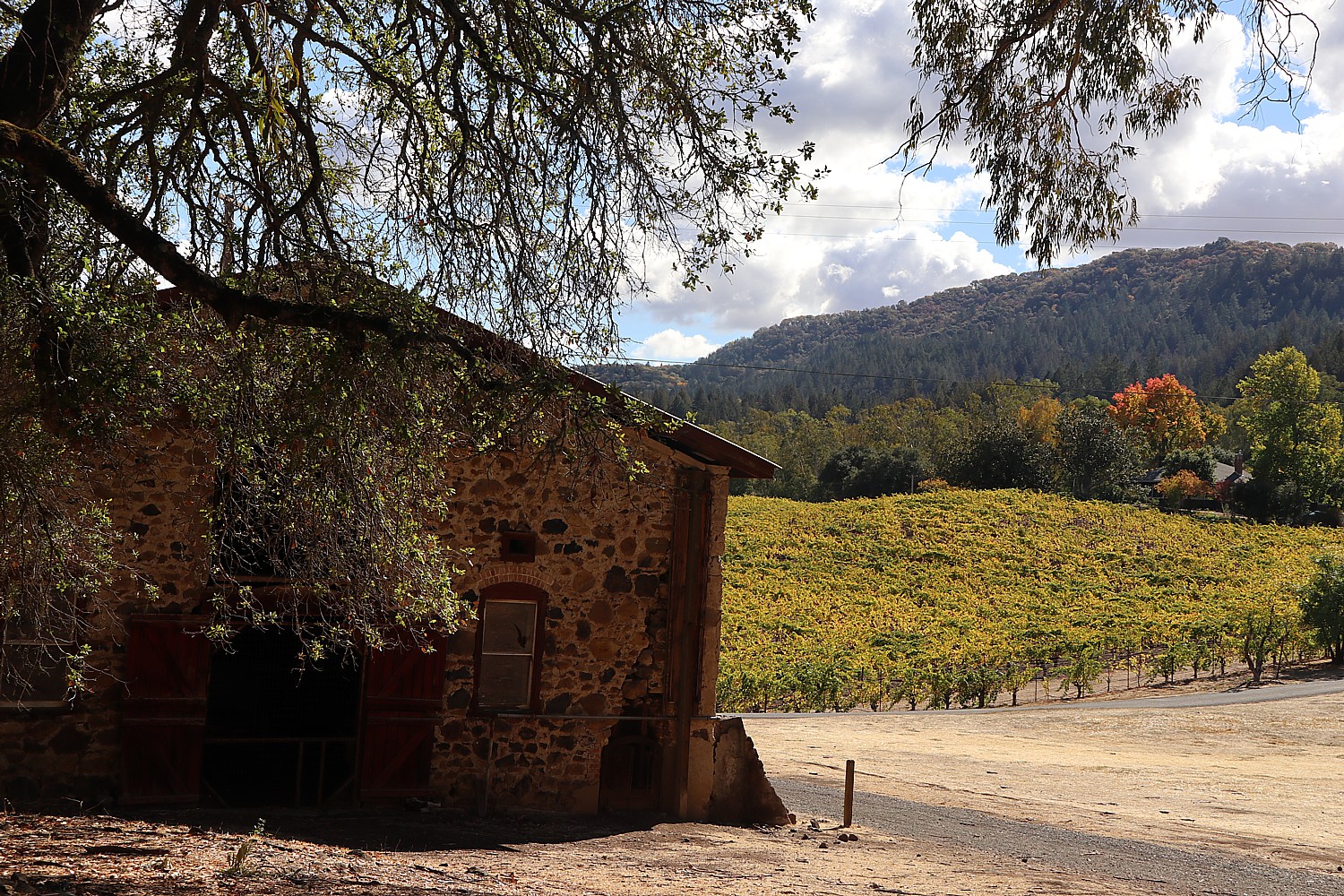
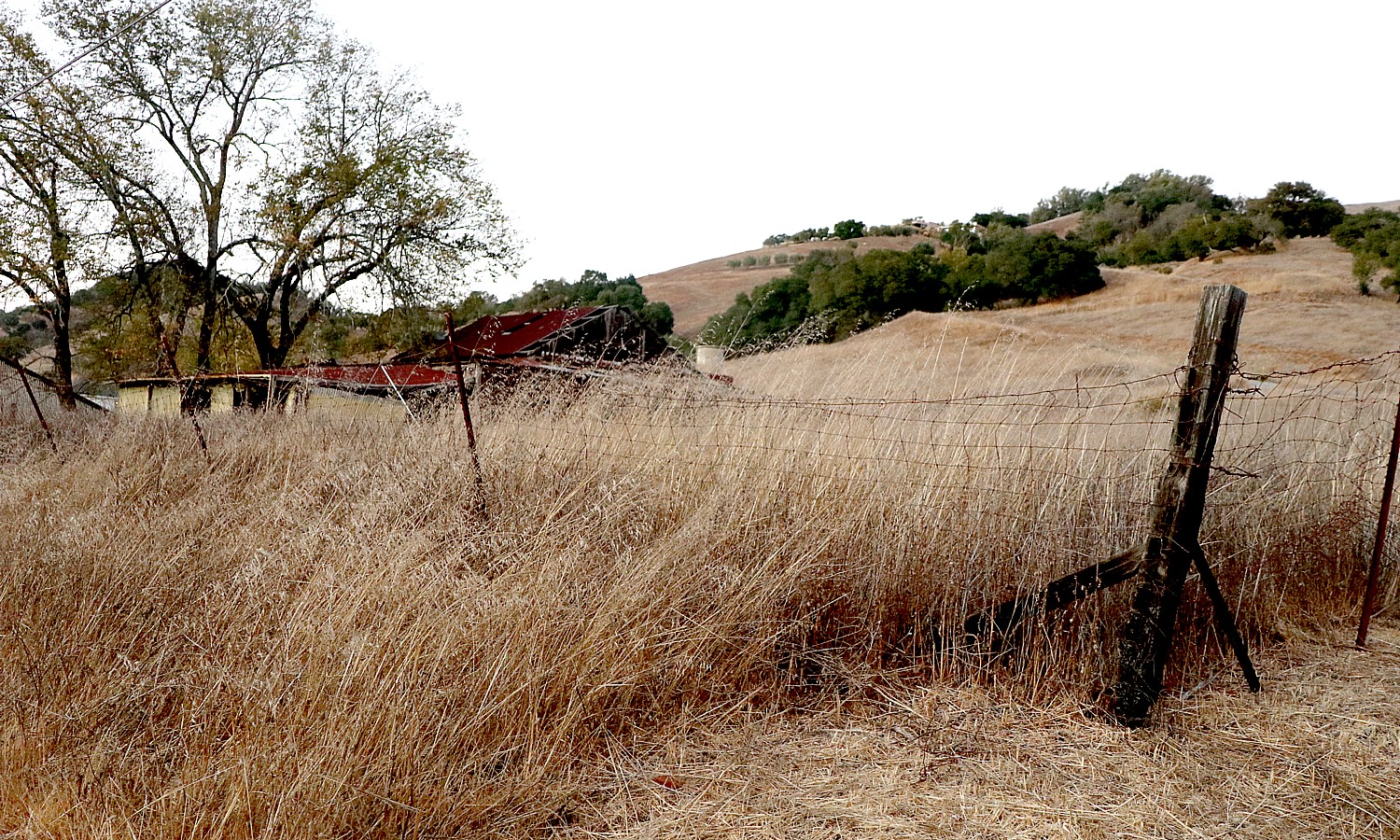
We wander through the ruins of his old stone winery and see a stone barn. You can visit the magnificent ruins of London’s 15,000-square-foot Wolf House mansion, built out of native volcanic rock and unstrapped redwoods, that would have had 26 rooms and nine fireplaces, a library measuring 19 x 40 feet, a two-story high living room, a wine cellar and – befitting a forward looking innovator – electric lighting and built-in vacuum cleaning system. It cost $75,000 ($1.9 million today) to build, but burned to the ground a month before completion.

Jack London State Historic Park© Karen Rubin/goingplacesfarandnear.com

“Built out of native volcanic rock and unstripped redwoods, it was to be the rustic capstone of Beauty Ranch and architectural avatar Jack London himself. He was devastated over the fire but vowed to rebuild. He would never get the chance,” Brandt writes.

I learn how contemporary London actually was, his writings and outlook remarkably prescient (or else you realize things don’t actually change but only repeat) – he could have been writing today. “He also remained politically engaged,” Brandt writes, quoting London from a 1914 letter: “If, just by wishing I could change America and Americans in one way. I would change the economic organization of America so that true equality of opportunity would obtain; and service, instead of profits, would be the idea, the ideal and the ambition animating every citizen.”

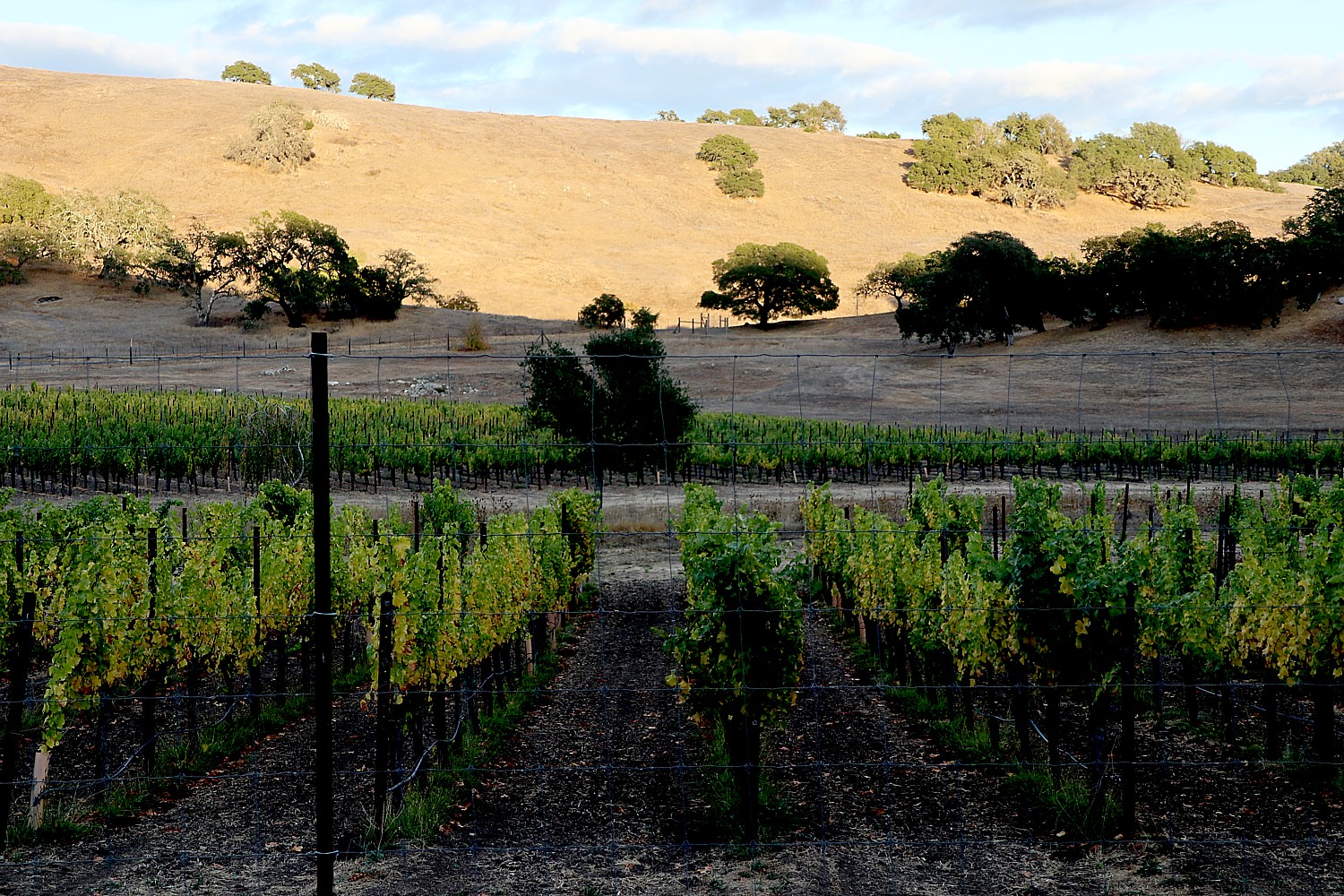
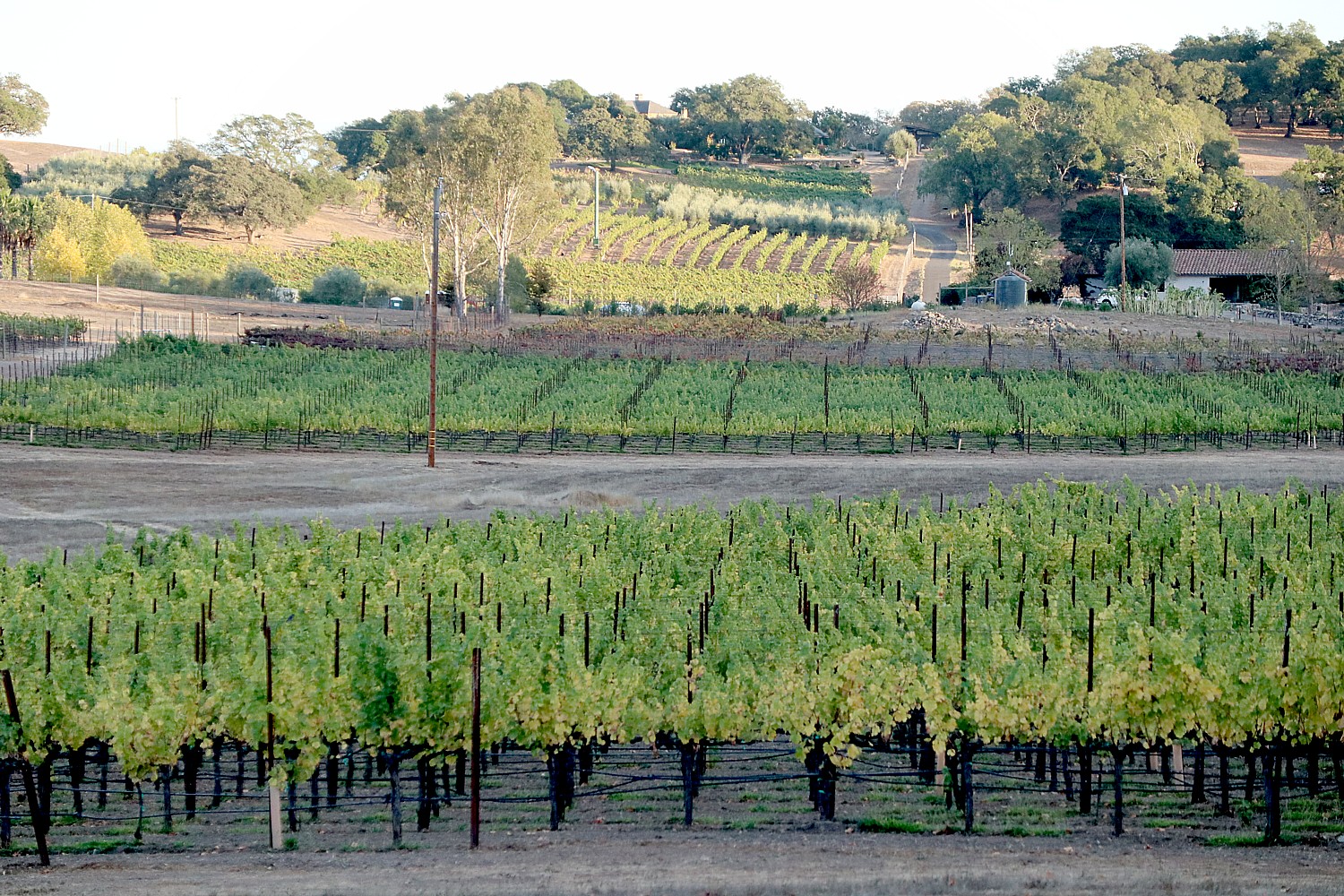
We set out on our hike (there are 20 miles of trails) through lush forest, majestic redwood groves, and meadows (a scenic six-mile trail leads to the top of Sonoma Mountain; you also can explore by horseback or bike), passing by a gorgeous vineyard to get to the trail. (We note the sign warning about rattlesnakes as we enter.)

Jack London State Historic Park© Karen Rubin/goingplacesfarandnear.com

I must return to visit the museum housed in “The House of Happy Walls” where there are displays of London’s books along with artifacts London and his second wife, Charmian, brought back from their 27-month sailing adventure among unexplored South Seas islands. (Volunteer pianists play on Charmian’s 1901 Steinway grand piano in the cottage where she lived from 1934 until she died in 1955.)

Jack London State Historic Park© Karen Rubin/goingplacesfarandnear.com

The park is very popular with locals in the know about all there is to do here – including concerts, performances, lectures, piano recitals; year-round there are free docent-guided tours, docent-led Sunday morning hikes, and other park events. Download a park map.

(Jack London State Historic Park, 2400 London Ranch Road, Glen Ellen, CA 95442, 707-938-5216, jacklondonpark.com).

You can pick up picnic supplies, as we did, at the superb Glen Ellen Village Market or croissants, mini-sandwiches and other baked goods at Les Pascals bakery.

In the late afternoon, we take a walk in the “neighborhood”:

A late afternoon stroll in the Sonoma “neighborhood” © Karen Rubin/goingplacesfarandnear.com
Moon rise during our late afternoon stroll in the Sonoma “neighborhood” © Karen Rubin/goingplacesfarandnear.com

See also: WINE & ART: THE PERFECT PAIRING IN SONOMA, CALIFORNIA (https://goingplacesfarandnear.com/wine-art-the-perfect-pairing-in-sonoma-california/)

For excellent planning materials, visit Sonoma County Tourism, 800-576-6662, info@sonomacounty.comwww.sonomacounty.comwww.sonomacounty.com/things-to-do.                

______________________

© 2022 Travel Features Syndicate, a division of Workstyles, Inc. All rights reserved. Visit goingplacesfarandnear.com, www.huffingtonpost.com/author/karen-rubin, and travelwritersmagazine.com/TravelFeaturesSyndicate/. Blogging at goingplacesnearandfar.wordpress.com and moralcompasstravel.info. Send comments or questions to FamTravLtr@aol.com. Tweet @TravelFeatures. ‘Like’ us at facebook.com/NewsPhotoFeatures