Tag Archives: Sonoma California

Annadel Estate Winery: A Sonoma Stand-Out for Charm, Intimacy, History and Really Fine Wine

Katie Honey, who with her husband Dan Whalen acquired the historic Annadel Vineyard and Winery, hosts intimate, personalized wine-tastings in Sonoma, California’s wine country © Eric Leiberman/goingplacesfarandnear.com

By Karen Rubin, Travel Features Syndicate, goingplacesfarandnear.com

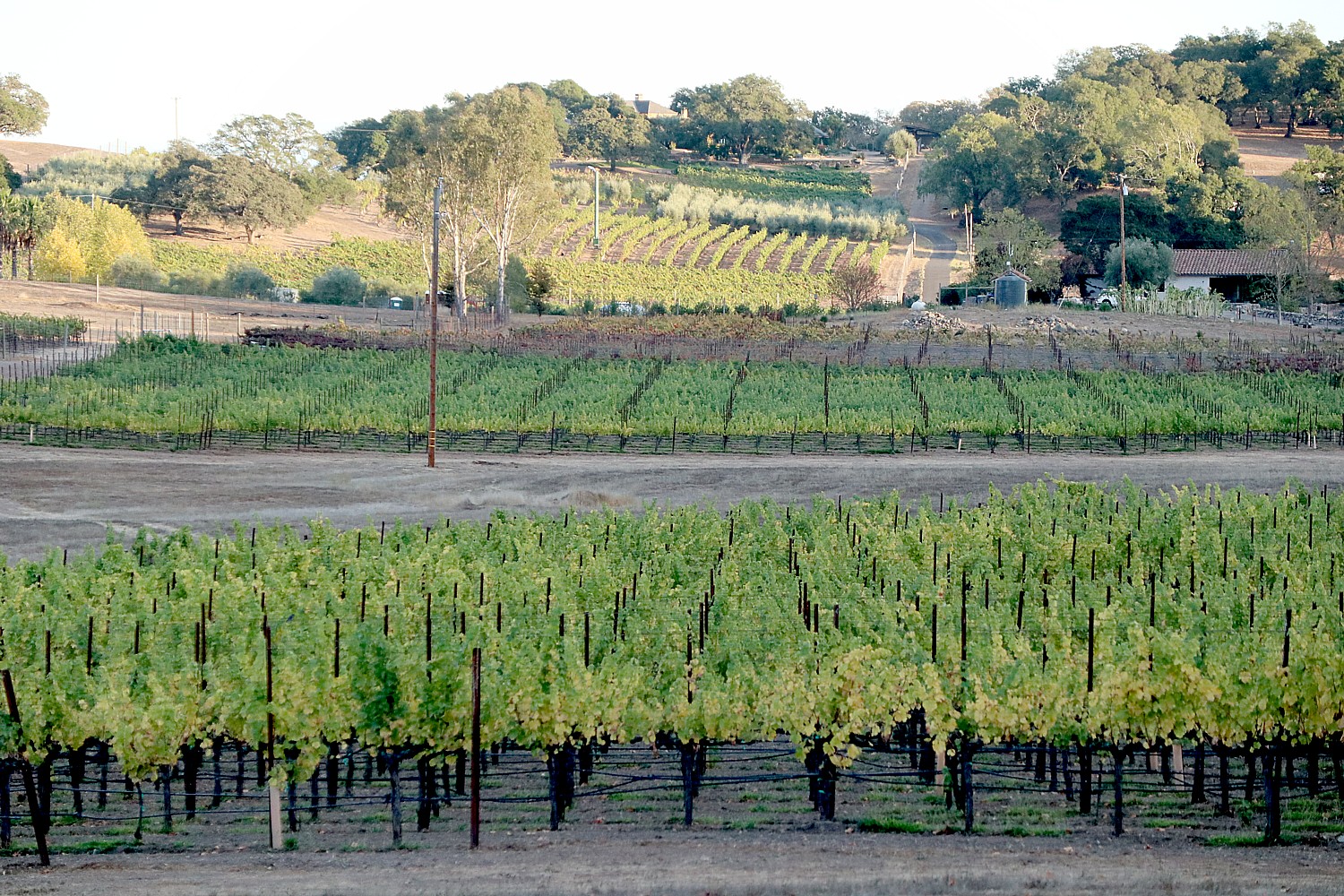
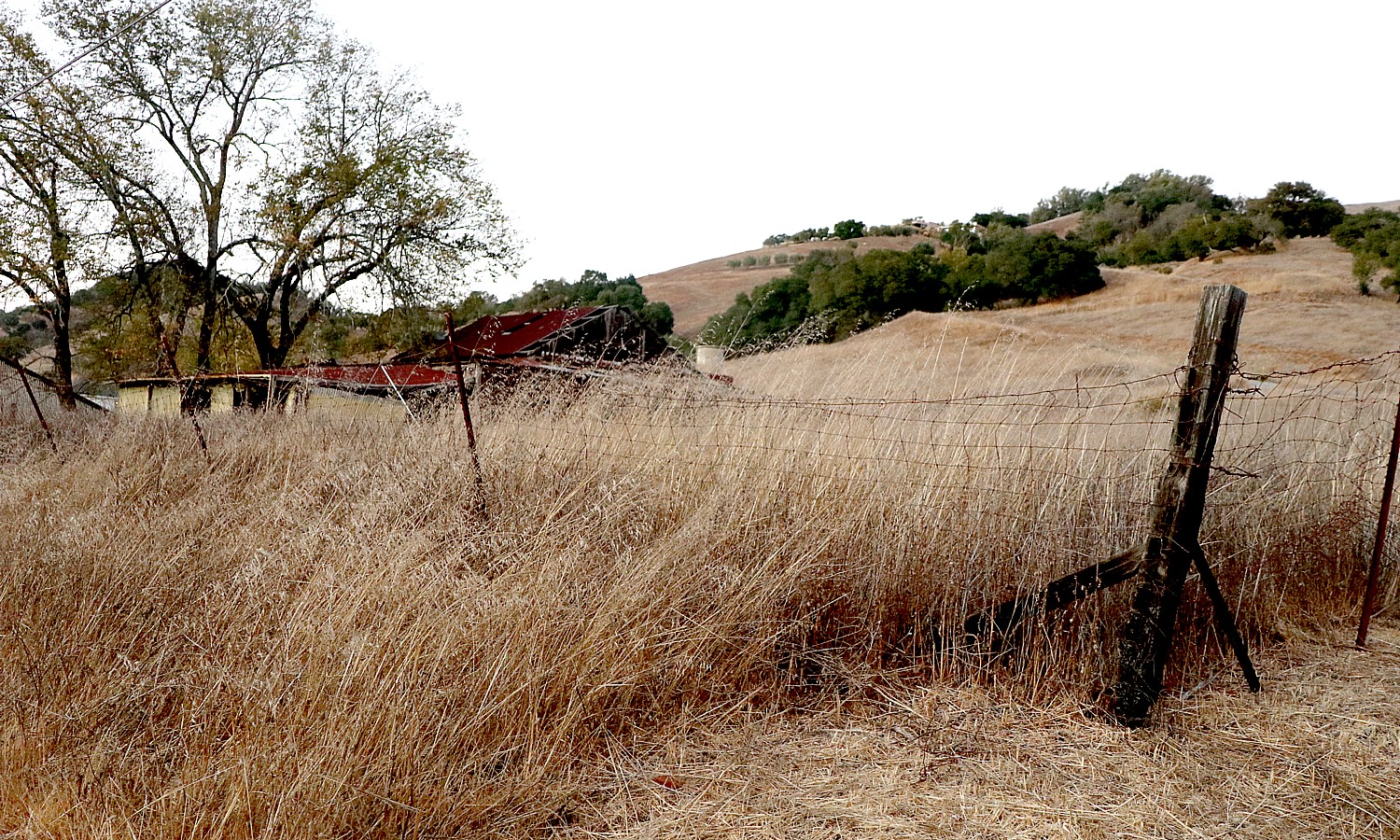
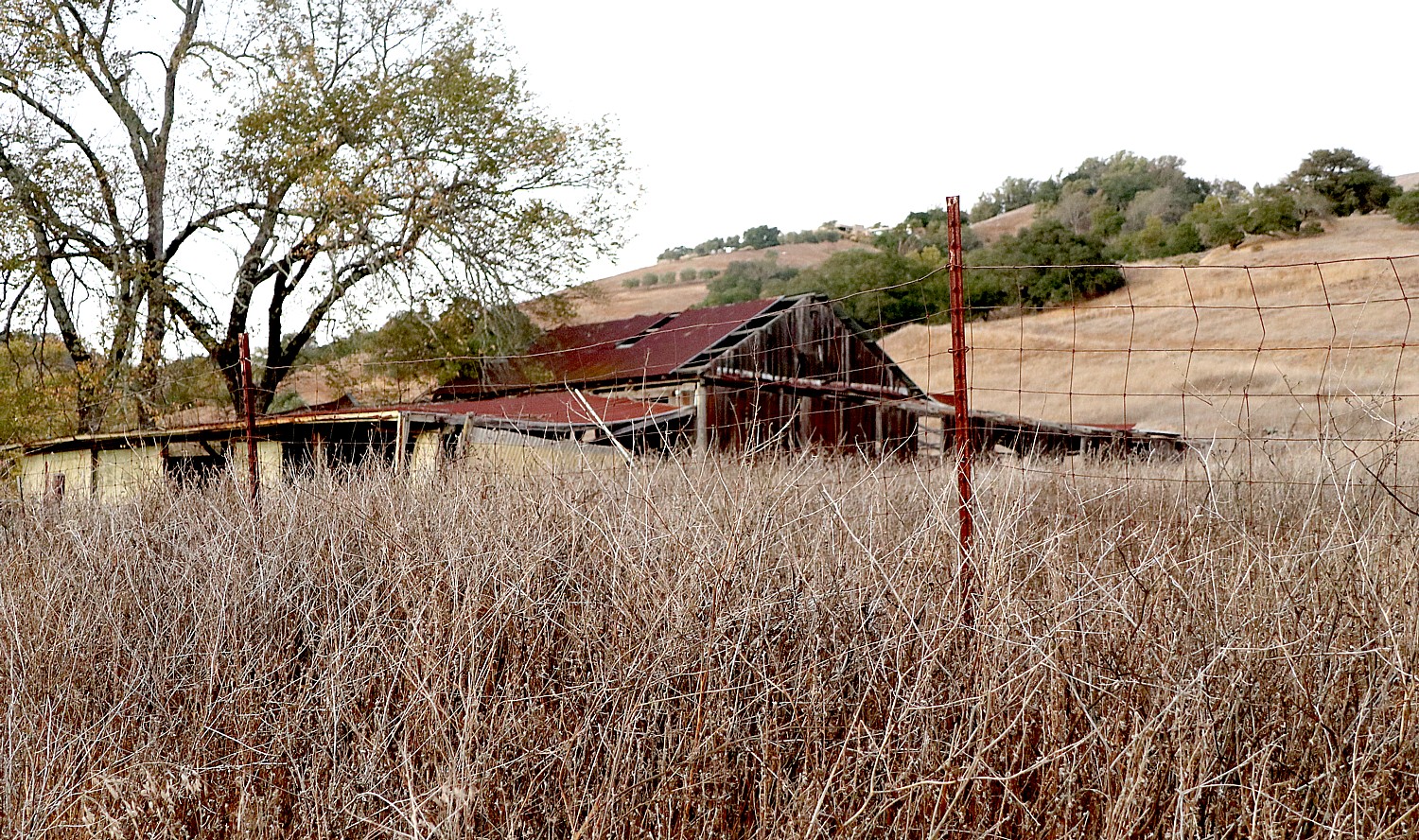
Within days of uprooting from downtown Philadelphia and acquiring the 33-acre Annadel Estate Vineyard and Winery  in California’s Sonoma wine country, Katie Honey and Dan Whalen found themselves fighting wildfire that threatened to consume the century-old farmhouse and vineyard. For days, they battled the Glass Fire that ultimately destroyed a cottage, structures, melted the vineyard drip lines, and scorched fields. “We fought the fires ourselves,” she relates during our recent wine-tasting tour.

That was 5 years ago, and they have brought their entrepreneurial talent and passion for wine to rebuild, replant and remake the 1880s winery. They restored the vineyard, added a flower farm, orchard and bee hives, and converted the historic structures into an intimate wine-tasting and indoor/outdoor wedding and events venue, as well as making Annadel their family home. Want to feel like a Sonoma local? Annadel even offers a few cozy accommodations where you can stay for a month or more.

With hundreds of wineries and wine-tasting venues throughout Sonoma and Napa valleys, Annadel Estate stands out for its charm and intimacy – and fine wine. Wine-tasting is by reservation only, and limited to six guests at a time, sitting around a table in a small cottage. And so we are buzzed in through a gate and immediately fall under Annadel’s spell.

Annadel Vineyard and Winery curates intimate, personalized wine-tastings and vineyard tours in Sonoma, California’s wine country © Karen Rubin/goingplacesfarandnear.com

We are greeted by Katie Honey, the co-owner and entrepreneur with her husband Dan Whalen, who ushers us to a gorgeous table set out with a platter of delectable cheeses, fruits and crackers to complement the four wines we taste.

As we sample the 2023 Reserve Chardonnay, Katie recounts the story of the Annadel Estate Winery – interesting to be sure, but we find how the wine enthusiasts came to be viticulturists even more storied.

Katie, who was born and raised on the prairie of Saskatchewan, Canada to three generations of farmers, brings a professional background consulting on events planning and logistics and Dan, a New Jersey native, runs a tech company. She describes themselves as wine appreciators and passionate gastronomists before they were wine producers. In fact, they are trained sommeliers who would come to Sonoma and Napa three and four times a year for tastings. They even were married here in Sonoma Valley.

Katie and Dan apply their professional backgrounds, their entrepreneurial bent and personal passions, combined with the terroir, history, and classical estate characteristics of the property, to build a sustainable, socially conscious business around creating wines and curating experiences.

They were very familiar with Bordeaux varietals (Cabernet Sauvignon, Merlot, Cabernet Franc, Petit Verdot, Malbec and Carmenere) and where they wanted to source grapes for the wines they wanted to produce, supplementing their own vineyard production with contracts for blocs at other vineyards.

Business expertise and sustainability are key issues considering Annadel’s long history: the winery was established in 1880 by German immigrants Henry and Anna Bolle. By the late 1880s, the once 545-acre property was producing nearly 50,000 gallons of wine a year, which would equate to a harvest of about 300 tons from 90-acres of vineyards. 

Over the 140 years, the Estate has transferred ownership multiple times, been divided and sub-divided into smaller parcels. With Prohibition on the horizon (coinciding with the winery burning down), it ceased being a winery in 1910 and from 1949-1961, was a turkey ranch. Ultimately, with the rise of Sonoma Valley as a premium, world-class wine-producing region, it has been restored to growing grapes and creating wine.

“Sonoma has a perfect climate – warm, dry, hot days, cool evenings and mornings,” Katie tells us, as we savor the 2023 Reserve Chardonnay.

Pinot Noir grapes on the vine at Annadel Vineyard and Winery © Karen Rubin/goingplacesfarandnear.com
 

She describes their wine-making style as “Old World” (think Italy and France). They prefer to harvest early, so the grapes have lower sugar, brighter acid, and  then age the wine in 100% new French oak barrels “to round out, soften” the flavor.

That’s what I notice in the wines we taste – a rounded, smooth, full flavor.

The 2023 Annadel Estate Reserve Chardonnay we taste is from Gap’s Crown Vineyard grapes.

The tasting notes describe it best: “The nose shows candied ginger, orange blossom, crisp Bartlett pear, and exotic high tones of tuberose. The mouth leads with crunchy green apple, lemon curd, and a whisper of lilac. The mouth is both soft and focused giving length and freshness.”

We thoroughly enjoy the 2022 Reserve Pinot Noir, the grapes from the coveted Durrell Vineyard (the contracts are hard to come by). It is robust, bright, has good balance, a fruit forward flavor.  “This is a floral wine where you will get wafts of dark cranberry and tart cherry, a fuse of sandalwood with perfume and grace. The mouth is round and bright with red cherry and pipe tobacco which provide a complex and beautiful finish.”

Katie notes simply, “Some pinots can be funky, earthy, but this has a nice profile. It’s not too anything.”

Tasting Annadel’s 2022 Estate “Chevy B’ Red Blend in the outdoor venue space, where the historic winery once stood © Karen Rubin/goingplacesfarandnear.com

The secret ingredient to Annadel’s success has to be Drew Damskey, their wine maker. Drew’s roots run deep in the Napa and Sonoma vineyards, where three generations of his family has been growing and crafting wines. Drew, who the San Francisco Chronicle named “a Winemaker to Watch”, and earned a coveted place on VinePair’s 50 List which celebrates the professionals who are changing the drinks space, is a partner in Suara Wine Company and serves as a consultant winemaker for several highly sought-after brands including Annadel.

“The same grapes may produce a flavor profile, but the artistic difference comes from the wine master, aging, and oak barrels,” Katie tells us. “Our goal isn’t to taste the same every year. We do what the year gives us.”

We take our glass of 2022 Estate “Chevy B’ Red Blend, with 57% Merlot, as we stroll the vineyards and tour the venues.

Katie remarks that the movie, “Sideways” temporarily tanked the popularity of Merlot because it seemed the lead character didn’t like Merlot, when actually, he was bitter because Merlot is what he would drink with his ex-wife.

But Annadel fashioned their “Chevy B” after the legendary 1961 Chateau Cheval Blanc, from the Saint-Emilion region of Bordeaux, considered one of the greatest wines in Bordeaux history.

Katie Honey tells the story of Annadel’s 2022 Estate “Chevy B’ Red Blend in the outdoor venue space, where the historic winery once stood © Karen Rubin/goingplacesfarandnear.com

So, Katie says with a smile, Annadel’s version is called American ‘Chevy B’ (they couldn’t use ‘Chateau Blanc’), and puts an image of a 1957 Chevy on the label.

The 2022 Estate ‘Chevy B’ Red Blend proves to be my favorite of the four tastings. The tasting notes describe it as “Blueberry pie with warm crust first pop from the glass followed by juicy summer plum, ground clove, and touch of sage. The mouth starts with a little menthol and cigar box, but swings to black cherry, rose, and a hit of game. Wet pea gravel, mixed dark fruit, and dried herbs define the soft yet serious finish.” 

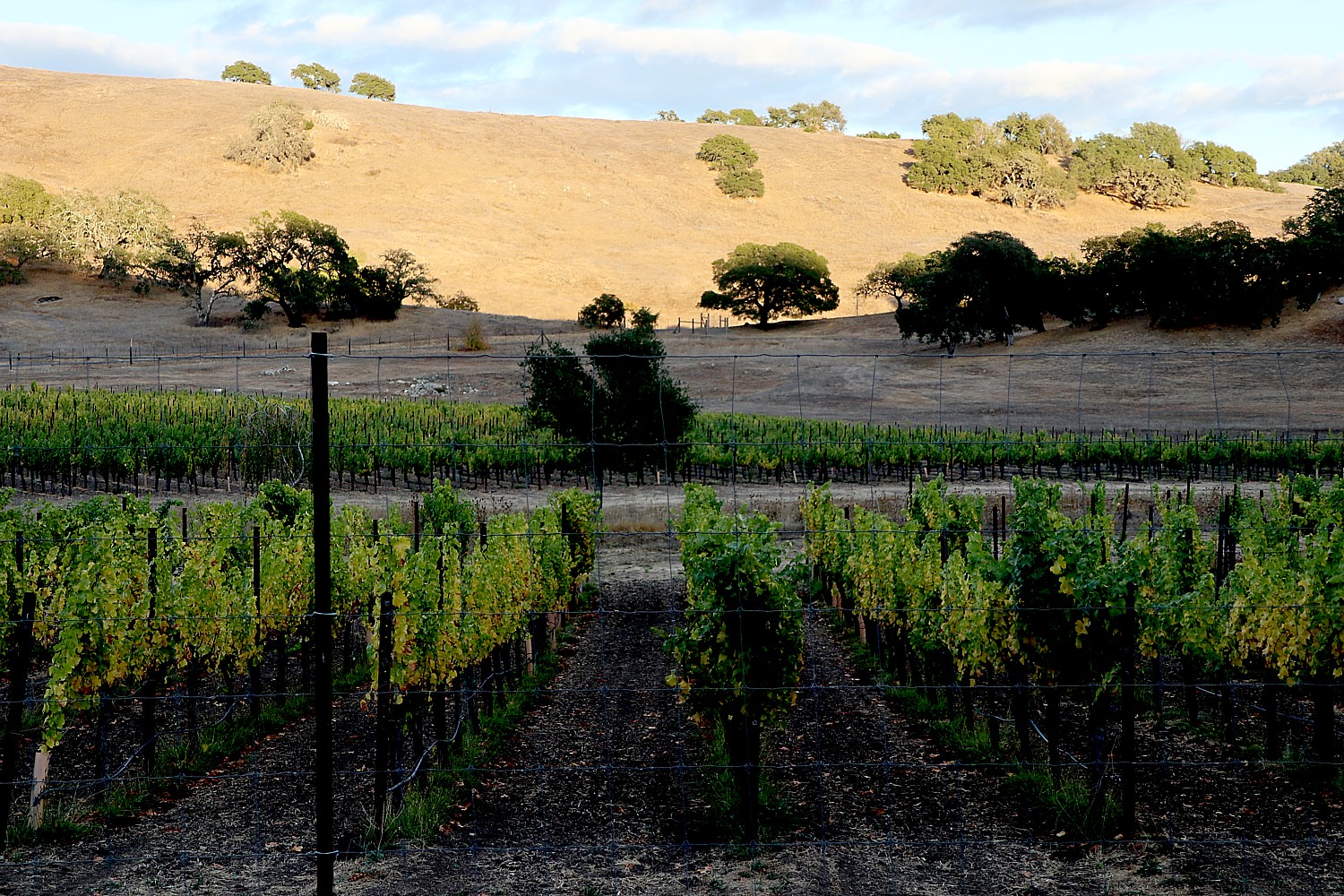
We walk through the vineyard. The oldest bloc here is from 1997, most of the vines were planted by 2001; the Pinot Noir vines were planted in 2017. “Old vines,” she says are 30-40 years old.

The grapes are picked at different times – dictated by weather conditions and even forecast.

“Drew, our winemaker, calls the pick, then the grapes go to the crusher.”

Annadel first began as a vineyard and winery in the 1880s © Karen Rubin/goingplacesfarandnear.com

It is interesting to learn about some of the intricacies of cultivating the grapes, harvesting, and the practice of “whole cluster fermentation”, where the grapes are left on the stem, then go through a de-stemmer. “It adds more flavor complexity to the wine.”

Annadel continue the tradition of planting roses at the front of the row – the rose plants provide early indication of infestation and disease before the vines show it; also, in the days when livestock was used, the rose bush prevented them from turning too soon and pulling down the post.

“Wine making is so seeped in tradition,” she says.

Pinot Noir grapes on the vine at Annadel Vineyard and Winery © Karen Rubin/goingplacesfarandnear.com

Every season, every harvest brings its own drama.  For example, “If there is frost, you have to immediately call the insurance company.” One such frost hit as Katie was in labor with her daughter.

Their entrepreneurial bent- and strategy to make their business sustainable – supplementing the winery which produces some 1,235 cases of wine – is shown in their flower production – actually restoring a tradition. Annadel Estate Winery has been cultivating species of David Austin roses and hydrangeas since the 1880s. Katie and Dan have since planted three acres of roses and purchased 400-500 new rose bushes, selling to major vendors in San Francisco, and enabling the estate to maintain two fulltime farmworkers.

They also have planted a fruit orchard, olive grove and have their own bee hives.

Touring Annadel’s vineyard with Katie Honey, we can still see evidence of the 2020 wildfire © Eric Leiberman/goingplacesfarandnear.com

As we come to the small fruit orchard, we look up at the blackened trees on a hillside just across a road at the edge of their property, and she tells their harrowing story of fighting the Glass Fire. They lost a cottage, some 13,000 sq. ft of structures, and had to replace 200 plants.

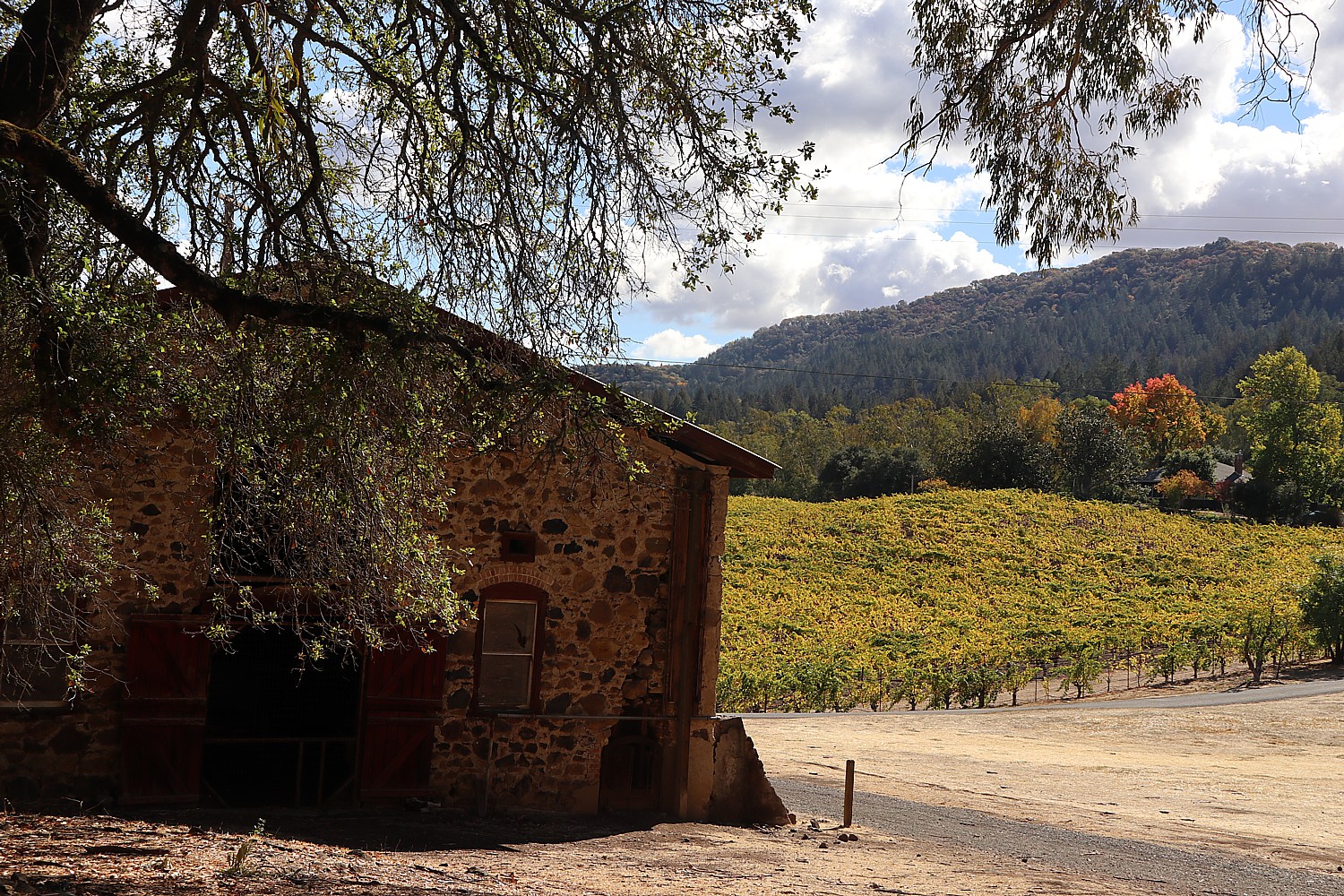
But they were able to save the 1900 horse barn, which they converted into a charming indoor venue for weddings and special events; where the original winery stood is now the outdoor venue, with the stone walls as a perimeter. (They provide planners with a list of preferred vendors.)

A former horse barn, dating from 1910, now serves as the indoor venue for weddings, events and groups at Annadel Vineyard and Winery, which dates back to 1880s © Karen Rubin/goingplacesfarandnear.com

This part of Annadel’s business is managed by Emily Todd Rodriguez, a wine country native whose background includes a three Michelin star restaurant, The Restaurant at Meadowood, boutique family-owned wine brands like Saintsbury and Amulet Estate, and managing logistics for Napa Valley Vintners events.

A former horse barn, dating from 1910, now serves as the indoor venue for weddings, events and groups at Annadel Vineyard and Winery, which dates back to 1880s © Karen Rubin/goingplacesfarandnear.com

Back in the tasting room, we savor Annadel’s 2022 Estate Cabernet Sauvignon: “Sweet dark fruits and pipe tobacco leap out of the glass, blue berry compote and clove emerge, followed by very juicy dark fruit and vanilla. The mouth is juicy and the tannins are supple there is mocha and grilled plum on the finish with soft tannins.”

The personalized, 75-minute wine-tasting experience ($75) is by reservation only and limited to six guests per party, and is what distinguishes Annadel. (Larger groups can be accommodated in the indoor event venue.)

“We emulate what we learned as wine tasters,” Katie says. “We curate the experience – we ask what people want to do.” Because of that, they are particularly family-friendly. (Tastings are offered M-F,  10am – 3pm, S-S: 9am – 2pm).

Has being a producer from a wine connoisseur changed their relationship to wine? “We appreciate it more. Wine doesn’t just grow out of ground.”

The biggest surprise? “Though everyone is in competition, how generous and collaborative the industry is.” This was especially the case after the fire. “People we just met took us into their home.”

Annadel Estate Winery, 125 Cristo Lane, Santa Rosa, CA 95409, 707-537-8007; events 707-584-6816, https://annadelestatewinery.com/shop-our-wine/, info@annadelestatewinery.com, annadelestatewinery.com.

BeautifulPlaces Offers Short-Term Stays at Private Villas for Wine Country’s Harvest Season

Harvest season (August-October) is an exciting time of year in Northern California’s wine country when grapes are picked and crushed, and many wineries celebrate the season with harvest parties, dinners and fun hands-on experiences like grape stomps.  
 
For foodies, the harvest brings extra special culinary experiences as restaurants and private chefs use the bounty of farm-fresh ingredients to create special menus and delicious dishes. 

Indulge in wine-themed events in Sonoma in September and October, most notably at the Sonoma County Wine Celebration in September and the Harvest Fair-Taste the Best of Sonoma County. Want to stomp grapes? Check out Napa Valley Vintners’ Harvest Stomp Party on Oct. 4 and Crush Party on Oct. 17.  

BeautifulPlaces is a source of villa rentals available for wine-country-themed getaways with onsite vineyards or vineyard views.

BeautifulPlaces is a source of villa rentals available for wine-country-themed getaways with onsite vineyards or vineyard views (minimum three-night stay). Visitors can rent villas with vineyards or vineyard views for as few as three nights to partake of wine harvest-related festivities throughout Napa and Sonoma, where there are hundreds of wineries to choose from.

Among them: Casa Sebastiani, historic 6-bedroom Italian villa and homestead of the Sebastiani Family in downtown Sonoma with adjacent vineyards at $1,800/night; Villa Nel Bosco, 3-bedroom Tuscan-style villa on a small vineyard at $1,495/night; Sunset View, 3-bedroom wine country vineyard retreat at $2,100/night; Twilight Ridge, 5-bedroom contemporary home with vineyard at $2,100/night.

When broken down per room, per night, private villa experiences are often more affordable than booking multiple accommodations at a hotel, with the added benefit of living space and kitchen and dining facilities  – an ideal option for couples traveling together and multi-generational groups. 
 
Award-winning BeautifulPlaces is a pioneer in hotel-style hospitality and property management in private residences. The company has over 21 years experience in the luxury villa industry in Napa and Sonoma, California and the Virgin Islands, and soon in Santa Barbara, Kauai and Costa Rica.

Visit the BeautifulPlaces website to view villa rental retreats ranging from cozy chic cottages to magnificent hilltop estates, www.beautiful-places.com  or call 800-495-9961. 

Also, for a limited time, Sonoma County Tourism has a third-night free deal: book two nights at participating properties and your third night is free. (https://www.sonomacounty.com/third-night-free/)

Get more travel planning help from Sonoma County Tourism, 800-576-6662 / 707-522-5800, www.sonomacounty.com

_____________________________

© 2025 Travel Features Syndicate, a division of Workstyles, Inc. All rights reserved. Visit goingplacesfarandnear.com and travelwritersmagazine.com/TravelFeaturesSyndicate/. Blogging at goingplacesnearandfar.wordpress.com and moralcompasstravel.info. Visit instagram.com/going_places_far_and_near and instagram.com/bigbackpacktraveler/ Send comments or questions to FamTravLtr@aol.com. Bluesky: @newsphotosfeatures.bsky.social X: @TravelFeatures Threads: @news_and_photo_feature

Safari West Brings Immersive Animal Adventure to California’s ‘Sonoma Serengeti’

Safari West’s Classic Safari provides close encounters with animals like the Cape Buffalo © Karen Rubin/goingplacesfarandnear.com

By Karen Rubin, Travel Features Syndicate, goingplacesfarandnear.com

It isn’t a surprise to see zebras grazing, giraffes ruminating, a rhinoceros with her 2700-pound baby, or sleeping in a luxurious safari tent and awakening to see a herd of antelope dashing in unison, when you go on safari in Africa. What is extraordinary is that this is in the backyard of Sonoma, California, better known for wineries, vineyards and winetasting. This is Safari West, which since its founding in 1993, affords an extraordinary authentic experience that makes you feel you are in Africa – the Sonoma Serengeti! – no passport, vaccinations or jetlag required.

Eric and I start our Safari West visit with the three-hour Classic Safari, consisting of about 2 ½ hours driving through three habitats across the vast, 400-acre landscape on which some 1000 animals (almost 100 different species), reside and a half-hour walk to visit mammals and birds.

Safari West’s Classic Safari provides an authentic safari adventure on the “Sonoma Serengeti”© Karen Rubin/goingplacesfarandnear.com

During the course of my 24 hours here, I will follow the Classic Safari with a Behind-the-Scenes tour with our toddler (children need to be at least four years old for the Classic Safari, though families with younger children can arrange a Private Safari) where we get to feed a variety of animals; a 5 pm buffet dinner, followed by a walk-about through a zoo-like setting.

Even our toddler gets to feed a warthog on Safari West’s Behind-the-Scenes tour © Karen Rubin/goingplacesfarandnear.com

Then, after the rest of the family leaves, I stay over for a Glamping Among the Wildlife: A Safari West Experience in one of their 30 authentic Botswana safari tents tucked into the trees, enjoying evening activities including s’mores and a movie (“Jungle Book”). Since overnight guests have no curfew, I am able to explore more at dusk, into the dark of night (borrowing a flashlight from reception), and again in the early morning when the animals are most animated. I follow the included breakfast buffet with more exploration before reluctantly leaving Safari West.

One of the 30 glamping tents tucked into the woods at Safari West © Karen Rubin/goingplacesfarandnear.com

Safari on the “Sonoma Serengeti”

For our Classic Safari, we ride in vehicles that are open on the sides and have four seats on top (reminding me of my tiger safari in India). The guides – invariably friendly, humorous, knowledgeable and unscripted so they respond to their guests’ interests (and terrific drivers) take us on rough gravel trails over hills and plains, coming incredibly close (without barriers or fences) to giraffe, antelope, ostrich, wildebeest, Cape buffalo, zebra, elands, addax, aoudad and others among the 97 species in residence.

Our guide for our 1 pm. three-hour Classic Safari, Alex Killian, invites our questions and observations which she gleans to stay in an area longer. We are riding in “Bender”, a 1950s Dodge Power wagon (it seems Safari West has bought up the fleet of Dodge Power wagons from 1940s to 1970s). About 2 ½ hours are spent driving, with about 30 minutes on a walking portion to see the primates, porcupines and birds.

You can read about these different animals and see photos but seeing them up close, in their habitat provides a whole different dimension of understanding and appreciation for behaviors and evolutionary adaptations.

Safari West’s Classic Safari provides an authentic safari adventure on the “Sonoma Serengeti”© Karen Rubin/goingplacesfarandnear.com

We go into the vast field with the giraffes– Killian tells us they are 5-6 feet tall at birth (they are delivered while the mother is standing up and are dropped six feet to the ground); 9 feet tall by one year old, and grow up to 19 feet tall. These sweet creatures – literally gentle giants – are distinguished by the fact every giraffe has a unique pattern of sports, like human fingerprints, but these spots also help in thermoregulation (at night, the giraffes walk themselves into their barn to protect from hypothermia).

Giraffes, Killian says, “speak” but in a pitch that can barely be heard by a human but sounds like a moo and use various sounds like moans, snores, hisses, and grunts, they mainly communicate with body language. Killian tells us they sleep standing up for 20 minutes at a time– only half their brain sleeps at one time – for a total of about two to three hours in the course of a day; the rest of the time they are eating or ruminating. (Later, during the Behind-the-Scenes tour, we get to meet them close up and feed them).

Killian points to  “Mango,” the only male giraffe, here, noting that the animals mate and breed naturally here; the caretakers only insuring they are healthy, and adds that Safari West will “buy, sell, trade, borrow and loan” animals with other zoos and conservancies to increase genetic diversity.

Addax, a white antelope that is critically endangered, whose horns have extra twists, which Killian explains helps cool the animal; we see one with only one horn, and she explains that if they break off, they do not grow back. © Karen Rubin/goingplacesfarandnear.com

In this plain, we also see Dama Gazelle; Gemsbok; Greater Kudu; Roan antelope and Addax, astonished at how magnificent they are with their horns and coloring.

Leaving this area through the double-fence system, we see an ostrich which seems to be “flirting” with the safari vehicle ahead of us. This is “Lucille Ball,” “She is more flirtatious when she is about to lay an egg,” Killian explains. Ostriches, Killian tells us, lay the largest eggs among the birds, equivalent to 12-24 chicken eggs in size and lay 1-3 eggs a week.

An ostrich gets flirtatious with one of the safari vehicles © Karen Rubin/goingplacesfarandnear.com

Ostriches are surprisingly large and amazingly fast – she tells us they can run 12-35 mph and though they have a brain the size of a walnut, “they are not dumb.” “It’s an ‘in the moment’ animal,” she explains. “But you don’t need to outwit a predator when you can outrun it.”

A pregnant Southern White rhinoceros with her baby © Karen Rubin/goingplacesfarandnear.com

We see a Southern White Rhinoceros mom with her two-year old baby that already weighs 2375 lbs. She is pregnant again (rhinoceros gestate for 16-18 months) and is due to deliver at any time (you can follow her progress on social media). But because the pheromones at the end of pregnancy and when she is in labor are the same as when she is in heat, they have to separate the male, who is in an adjacent area. In the wild, she says, “They spend a week together and then don’t see each other again” but the mom is very maternal. “She is very connected to her baby.” She can nurse two babies at a time. The female rhinoceros can weigh 4000-7000 lbs. A herbivore, the rhinoceros consumes 150 lbs of grass or 60 lbs of hay a day.

The zebra’s stripes are unique from zebra to zebra and even left and right sides © Karen Rubin/goingplacesfarandnear.com

We drive through more gates and come to an open area with zebra gathered around where they have just been provided grass. Like the giraffes, the zebra’s stripes are unique from zebra to zebra and even left and right sides of the animal, except for its face.

The Common Eland depends on pheromones to mate © Karen Rubin/goingplacesfarandnear.com

Close by are the Common Eland and we see a baby less than one month old (it’s been named “Nova”, consistent with the space-themed names given the herd). The Eland (“it means ‘moose’ in Dutch) is a kind of antelope, the biggest of the species (the tallest is the Kudu). 

“Nova” is a one-month old Common Eland © Karen Rubin/goingplacesfarandnear.com

“They depend largely on pheromones – it’s how they identify the others in their unit, and how they take a mate. They urinate and others take in the pheromone.” 

Our guide stops to tell us about the herd of eland © Karen Rubin/goingplacesfarandnear.com

We drive into the third habitat, the largest of the three at 100 acres.

Stunning views of antelope at Safari West © Karen Rubin/goingplacesfarandnear.com

We see the African Cape Buffalo, one of the Big 5 – that is, the 5 most dangerous animals to encounter in Africa, she tells us (lion, leopard, Black rhinoceros, African Bull elephant are the others). The Cape Buffalo are dangerous, she says, because they protect each other. “If one of their group is threatened, even if they just think it is threatened, they will still protect.”

The African Cape Buffalo is one of Africa’s “Big 5” © Karen Rubin/goingplacesfarandnear.com

We meet the Blue wildebeest from Southern Africa which Killian calls “a spare parts animal” because it has hair and horns resembling the female African Cape buffalo; stripes like a zebra; a long face like a baboon; and a heavy build in front but slender legs like an ostrich compared to its bulky front build.

“Spare parts animal” wildebeest are well adapted for their habitat © Karen Rubin/goingplacesfarandnear.com

These are adaptations to the environment, and as we watch one nuzzling a baby, Killian tells us that its long face helps the wildebeest detect humidity – and impending disaster, and that the herd in the wild, 1-5 million of them, migrate or escape danger moving together. Other animals have learned to follow their lead.

Mother and baby © Karen Rubin/goingplacesfarandnear.com

In the wild, they somehow synchronize the births to the month, timed for migration. Some 8,000 babies could have been born on the last day before migration, so wildebeest have evolved to move as fast as 55 mph, from Day 1. Here at Safari West, they somehow synchronize births to the season (rather than a month, as they might in the wild) and ‘migrate’ on property (moving down the hillside).

“Spare parts animal” wildebeest are well adapted for their habitat © Karen Rubin/goingplacesfarandnear.com


“Animals here mate naturally,” she adds. “We only make sure they are healthy.”

We spot Aoudad on the forested slope, and Killian says that while other species take a mate by showing dominance (brawn), Aoudad males pee on their beard and the ‘best’ smell gets the lady.

We spot Aoudad on the forested slope © Karen Rubin/goingplacesfarandnear.com

(Insiders tip: if photography is important to you, bring a decent SLR camera with a decent zoom lens that can capture moments and movements (cell phone cameras are good for scenics and landscapes and have their merit in difficult lighting situations). Safari photography is just as interesting a sport as hunting – only you are hunting and shooting with a camera. For avid photographers, Safari West offers a Private Photography Safari Workshop.)

After the drive portion of the Classic Safari tour, we have a walking tour of about 30 minutes, to see the porcupines, primates, mammals and birds. 

Nicobar pigeon in Safari West’s aviary © Karen Rubin/goingplacesfarandnear.com

We walk through one of the aviaries, chock full of bird varieties – crane, sacred ibis, scarlet ibis, spoon bill, cattle egret, black swan, Nicobar pigeon, to  list but a few. (We will soon return to help feed the birds during our Behind the Scenes tour).

The Caracal is a master of hunting and hiding © Karen Rubin/goingplacesfarandnear.com

We see the Caracal, a master of hunting and hiding that can jump 6-10 ft to capture a bird, take down prey 2-3x its size and when they hunt as a group, they can take down an impala.

The Patas Monkey is said to have been the inspiration for Dr. Seuss’ Lorax© Karen Rubin/goingplacesfarandnear.com

I especially love watching the Colobus Monkey and the Patas Monkey (said to have been the inspiration for Dr. Seuss’ Lorax), ring-tailed lemurs (two “old men” in their bachelor pads), and (my favorite) the Red Ruffed Ringtales. All have various forms of enrichment – like puzzles and toys, obstacles and constructions. (There is an immersive Enrichment Tour, also on my list for my next visit.)

One of the two older ringed tail lemurs lounges © Karen Rubin/goingplacesfarandnear.com

Behind-the-Scenes

Our Classic Safari ends just in time to meet up with Sarah and our 16-month old toddler to enjoy the Behind the Scenes tour where we get to feed the animals – one of Safari West’s most popular programs for good reason.

Our guide, Zoey, tells us she was part of Safari West’s Junior Zookeepers program for 12-16 year olds.

Even our toddler gets a chance to feed the Crested porcupines, Spike and Norton – notably, they don’t have the prickly quills, their quills are a softer material.

Birds flock to whoever has the blue latex glove on the Behind-the-Scenes tour at Safari West © Karen Rubin/goingplacesfarandnear.com

We go next to feed the birds in the aviary and Zoey warns us that it can be intimidating because there are so many birds and they get pushy when they see the blue latex glove and know there is food to be had. She adds that to stop the birds from rushing at you, take off the blue glove. I find it fascinating that there is such a learned behavior.

Sure enough, it is quite an experience that as we walk in, the birds swarm around us. We get to fling pieces of chopmeat (that surprises me) and watch as the biggest ones catch pieces in the air. 

Flamingoes, the oldest animals at Safari West, were brought here when Marine World closed © Karen Rubin/goingplacesfarandnear.com

We go to where there is a huge flock of flamingoes in a small pond. These, Zoey says, are the oldest animals at Safari, many came when Marine World closed in 1969. They can live to 30 years old in the wild, but can reach 60-70 years in captivity (the oldest known is 85).

We next go to the Giraffe Barn to feed “Mabel.” Coming so close to the giraffe is truly an experience.

Even our toddler gets to help feed “Mabel,” the giraffe, during Safari West’s popular Behind-the-Scenes tour © Karen Rubin/goingplacesfarandnear.com

With eating being the giraffes’ main activity, their tongues are the most distinctive feature – they can be up to 18 inches long and are prehensile to grasp and manipulate objects, so they can strip leaves from branches and maneuver around thorns and rugged bark to reach their food. Also, the front of their tongues are dark, with melanin, to protect from sunburn. They eat the leaves but leave the roots, so that their food source will renew. During the course of a day, they will consume 100 lbs of foliage.

Giraffes are notable for their prehensile tongue © Karen Rubin/goingplacesfarandnear.com

The giraffes come when the keeper calls them to go into barn overnight, to prevent hypothermia

We finish our Behind-the-Scenes tour by feeding the warthogs “Lucy”, Vigeri and Fig Newton

And now it is time for our feeding. 

Dining Out, Staying Over

Safari West offers a fixed menu buffet dinner (two seatings, at 5 and 7 pm) which is marvelous.

The meal is superb – chicken (paprika seasoning), steak (perfectly cooked over fire), rice, mac/cheese, salad (we are invited to have seconds until they run out), fresh fruit and a cheesecake dessert.

Guests who stay for dinner can wander the property until 8:30 pm; overnight guests (like me) can wander without any curfew.

(There is also a very pleasant deli where you can pick up sandwiches and such (good selection and very reasonable cost.)

Watching Addax in the field at Safari West © Karen Rubin/goingplacesfarandnear.com

Even when I go around at 7:30 pm when the sunlight is a rich golden color – I am surprised that it seems as if the animals have grabbed their coats and lunch buckets for quitting time (the porcupines are curled up), but several are very active.

The Red Ruffed lemur is the second loudest primate. I get to hear their chorus © Karen Rubin/goingplacesfarandnear.com

The three Red Ruffed Lemurs, with stunning, fluffy red fur, black faces and bright, piercing yellow eyes, are really active at this time. Earlier in the afternoon, when I came upon them, they were making extremely loud shrieks – indeed, the guide says they are the second loudest primates and can vocalize very high and low pitches at the same time, that can be heard up to a half-mile away.  Found only in Madagascar, they are matriarchal and the keeper explains that one of the three is being bullied, kept from being groomed and from eating,

A family of ring tailed lemur live on a small island © Karen Rubin/goingplacesfarandnear.com

There are S’mores at 8 pm and then they show “Jungle Book” (one of three animal-themed movies they present each night) at 8:30 pm. (Overnight guests can help ourselves to coffee, tea, chocolate an fruit as we like

From my tent, I watch the giraffes walk themselves into the barn for the night © Karen Rubin/goingplacesfarandnear.com

After the movie, I borrow a flashlight from the reception desk, and go into the darkness. I am especially interested to see if I can observe activities of nocturnal animals, but alas, it is too dark and the animals, if they are active, are too far into the darkness to be observed (perhaps on a night with a full moon it would be better and even more magical.)

By now pitch black (and grateful for the flashlight), I walk up the hill to my tent, delighted to find a luxurious, spacious room accommodating a queen bed and two cots, sufficient for a family of four, with beautiful wood floor, an enormous tile-floor bathroom stocked with the necessary toiletries like a deluxe hotel; giant screened windows on two of the walls so I can see out to a gorgeous view of the lake; and a patio where, when I walk out in the pitch black night, it seems the Big Dipper is right in front of my face close enough to touch. If it gets cold, there is a space heater and an electric blanket.

My glamping tent has all the comforts of a hotel room, but with canvas walls © Karen Rubin/goingplacesfarandnear.com

I am surprised that I do not hear more animal sounds in the night, and do not need to use the ear plugs they supply.

But I awake to the sounds of birds and mooing, and look out from my porch to see the herd of antelope running together across their field.

From my glamping tent, I watch antelope running together in the early morning © Karen Rubin/goingplacesfarandnear.com

The best part of overnighting at Safari West is being here at early morning when the animals become really active knowing they are to be fed.

Going out in the morning, I can take my time watching animals close up © Karen Rubin/goingplacesfarandnear.com

Each place i come upon, if there is a keeper, they are happy to share more information about the animals in their care.

A caretaker explains how she gives special attention to the Red Ruffed lemur which is being bullied by the matriarch © Karen Rubin/goingplacesfarandnear.com

I watch the Red Ruffed lemur being fed – one is being bullied by the matriarch, so the keeper goes in, entices two of them into a separate compartment, and gives the third special attention (she doesn’t get groomed, so the keeper pats her and feels for any health issues).

In the early morning, I get a good view of the cheetahs which eluded me the day before © Karen Rubin/goingplacesfarandnear.com

I get to see the cheetahs, pacing their enormous enclosure (they eluded me the previous day); and the hyenas devouring a thick chunk of red meat

A hyena with its breakfast of red meat © Karen Rubin/goingplacesfarandnear.com

As appropriate, the keepers incorporate enrichment into their feeding methods so the animals have to work for food. (“Most creatures are bribable with food,” our guide Killian had told us on the Classic Safari. “Food is a prime motivator.” (Safari West offers a new Enrichment Tour Experience to see how they use puzzles, toys and activities like hiding treats, to stimulate the animals’ natural behaviors and keep them mentally and physically active.)

A Patas monkey plays with one of its enrichment toys. Safari West now offers an Enrichment Tour where you can help create toys © Karen Rubin/goingplacesfarandnear.com

I go into the Elephant room for breakfast (included for overnight guests and served from 7-10 am) – eggs, oatmeal, cereals, yogurt, muffins, toast/bagels, fresh squeezed OJ – before going for another walk-through the animal enclosures.

As an overnight guest I need to be out of the tent by 11, but I am welcomed to stay and wander about as long as I want.

Overall, with all these encounters over the past 24 hours, I must have made some 10 tours through the animal enclosures and each time, the experience is different – I see animals that eluded me before, or doing different behaviors, or in different light, or just happening upon a guide providing information I hadn’t known before.

Mission to Promote Conservation

I am really impressed in how well Safari West fulfills its declared mission to actively promote conservation and environmental education.

“At Safari West it’s all about the animals. Always has been, always will be.” These animals become ambassadors for their species, promoting understanding and appreciation to help each person make well-informed choices for environmental protection and wildlife conservation.

Over the past decades, Safari West has evolved into a top-tier wildlife destination.

Safari West began in the late 1980s when Peter Lang purchased 400 rolling acres in the foothills of the Mayacamas Mountains. He relocated his small but growing collection of exotic wildlife, converting a former cattle ranch into a world-class conservation breeding facility.

As Peter set to work establishing captive breeding programs for the varied and often critically endangered species in his collection, he worked closely with local zoological facilities including the San Francisco Zoo where he met the lead curator, raptor-specialist and his future wife, Nancy Lang. After four years of operating their conservation breeding facility behind closed doors, Peter and Nancy opened their home to the public on July 4th, 1993.

Safari West opened glamping tents to give visitors a whole new experience © Karen Rubin/goingplacesfarandnear.com

Then, in the late 1990s, Peter looked to expand the activities available to guests and built the Safari West Tent Camp, importing custom-built tents from Lobatswe, Botswana. With the Watusi Pond as the center, the tent camp sits between the Gazelle Pasture, the Hundred Acres, and the Vista habitats, overlooking the antelope and giraffes. The 30 glamping tents are mounted on raised platforms, with hardwood floors, electricity, running hot and cold water, and even en suite bathrooms.

The Langs’ devotion to their animals was tested and proven during the horrific Tubbs wildfires that struck in October 2017.

When I ask our safari guide about how they managed during the wildfires, she replied, “We didn’t save the animals, they saved us. They graze so there was nothing for the fires to catch onto, and the oak trees are resilient.”

She relates that when sheriffs came to order an evacuation at around 11 pm, the 90 guests on the property just grabbed their keys and left within 15 minutes.” Helicopters fighting the fires used water from the lake.

But she seems to have understated what happened because it was horrific – 250 out of Safari West’s 400 acres were scorched and the osteology lab operated by the Safari West Research, Education, and Conservation Department burned completely. Though conservation organizations were ready to help evacuate the animals, no one was allowed up the twisting mountain road, so they couldn’t have evacuated the animals.

The animals were saved because Safari West owner Peter Lang, then 76 years old, after driving through fire to evacuate their home which burned to the ground, stayed behind and for the next 10 hours, fought the fires alone. In the next couple of days, some volunteers and staff were able to come and help put out the brush fires that erupted.

All 1000 animals were saved. For his heroic efforts, Peter Lang received the 2018 American Red Cross Animal Rescue Hero Award. (Read the thrilling story by Paige Peterson reported in the New York Social Diary, https://safariwest.com/2017/11/life-after-fires/).

Safari West is ideal for family gatherings and special events – I am already planning to bring our bi-coastal family together for an overnight stay as soon as the little ones are old enough to appreciate the safari. I’ve earmarked the Enrichment Tour and Private Photography tour, especially.

Safari West, 3115 Porter Creek Road Santa Rosa, CA 95404, 800-616-2695, 707-579-2551, safariwest.com

Travel planning help is available from Sonoma County Tourism,   https://www.sonomacounty.com.

_____________________________

© 2025 Travel Features Syndicate, a division of Workstyles, Inc. All rights reserved. Visit goingplacesfarandnear.com and travelwritersmagazine.com/TravelFeaturesSyndicate/. Blogging at goingplacesnearandfar.wordpress.com and moralcompasstravel.info. Visit instagram.com/going_places_far_and_near and instagram.com/bigbackpacktraveler/ Send comments or questions to FamTravLtr@aol.com. Bluesky: @newsphotosfeatures.bsky.social X: @TravelFeatures Threads: @news_and_photo_feature

Experience Sonoma Like a Local

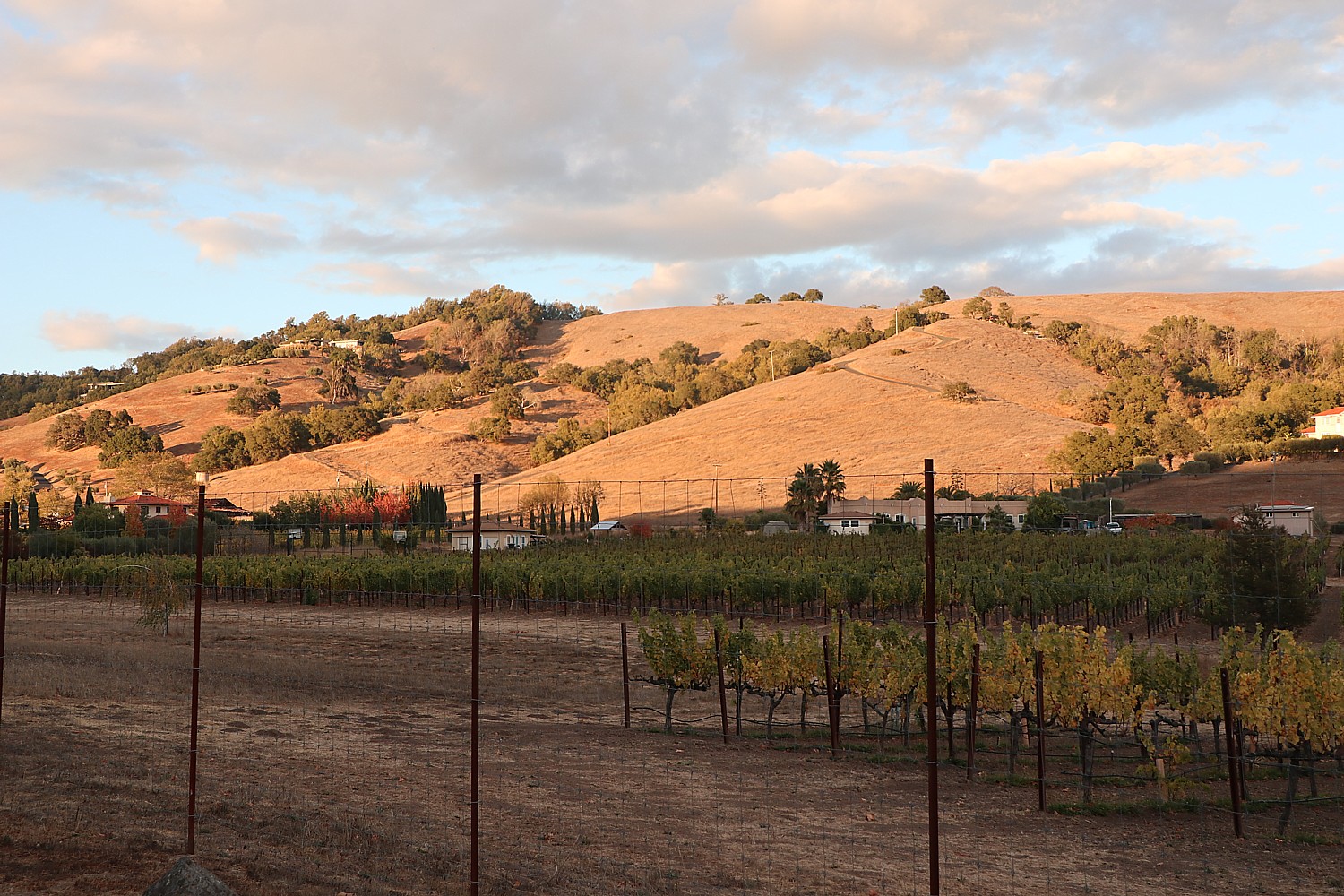
A late afternoon stroll in our Sonoma “neighborhood” © Karen Rubin/goingplacesfarandnear.com

By Karen Rubin, Travel Features Syndicate, goingplacesfarandnear.com

You know the refrain: “It’s a nice place to visit, but I wouldn’t want to live there.” Rare is the place that is equally precious to visit and reside. Fortunately, our family has decided to reside in such a place, and I get to visit: Sonoma, California.

Just 43 miles northeast of San Francisco, Sonoma has long been a retreat for urban dwellers, offering a “healthier” climate.  

Sonoma is the perfect combination of man and nature, as the vineyards attest, and residents today are obsessive about preserving that balance. In fact, the Sonoma County Tourism, as part of its continued commitment to encourage responsible stewardship from visitors and residents, has just joined the Global Sustainable Tourism Council.

The historic plaza is the centerpiece of Sonoma © Karen Rubin/goingplacesfarandnear.com

This is my second visit to Sonoma and while my family works, I get to explore like a local, hopping on a bike to ride the delightful paved recreation trail that goes right into the exquisitely quaint, historic village center and out to the vineyards. On my first trip, we biked, visited wineries, and hiked the spectacular Pacific coast. This trip, I focus on Sonoma’s history, heritage and the fascinating people who shaped it. What is more surprising is how contemporary the history feels – truly, history repeats.

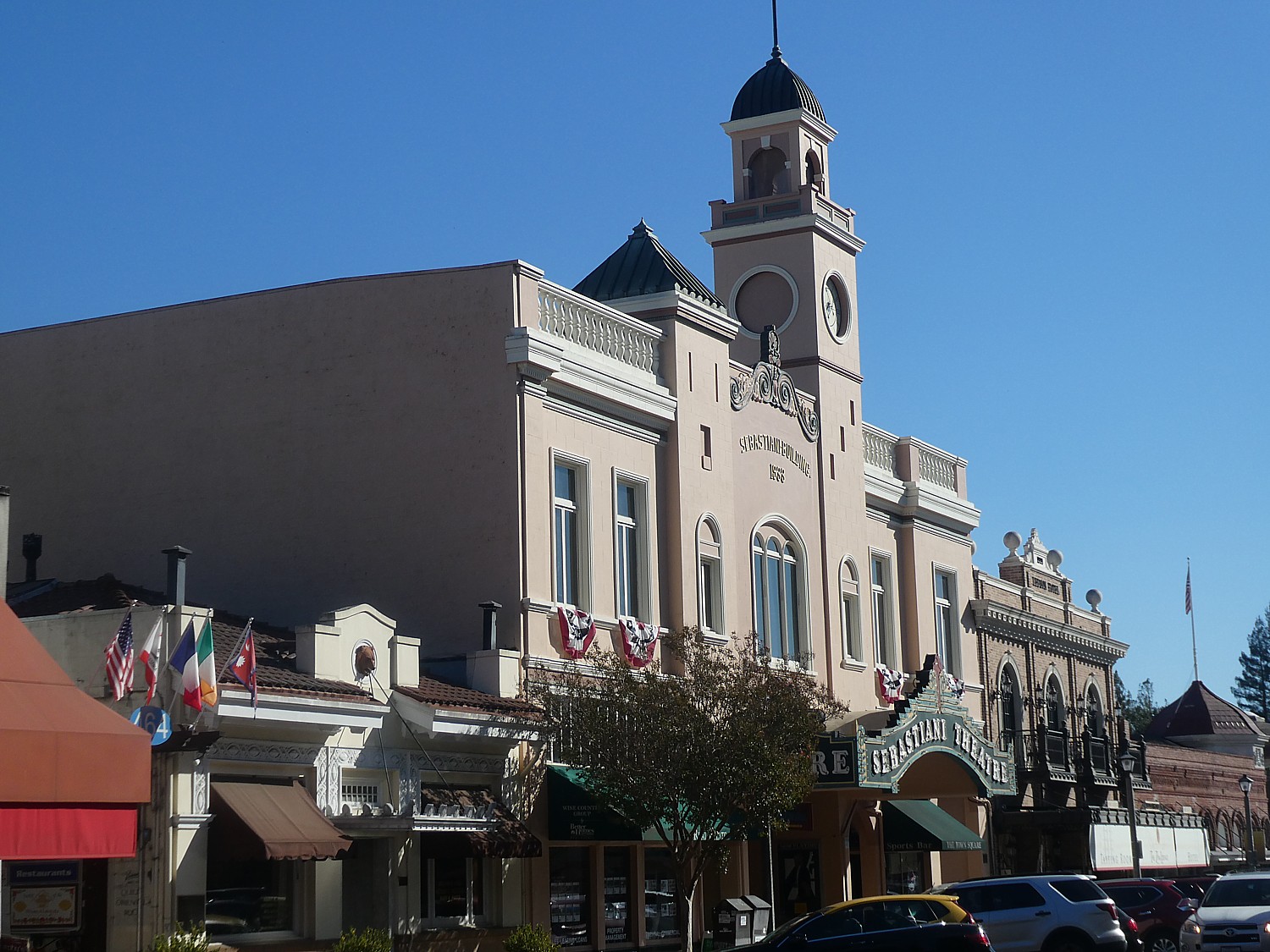
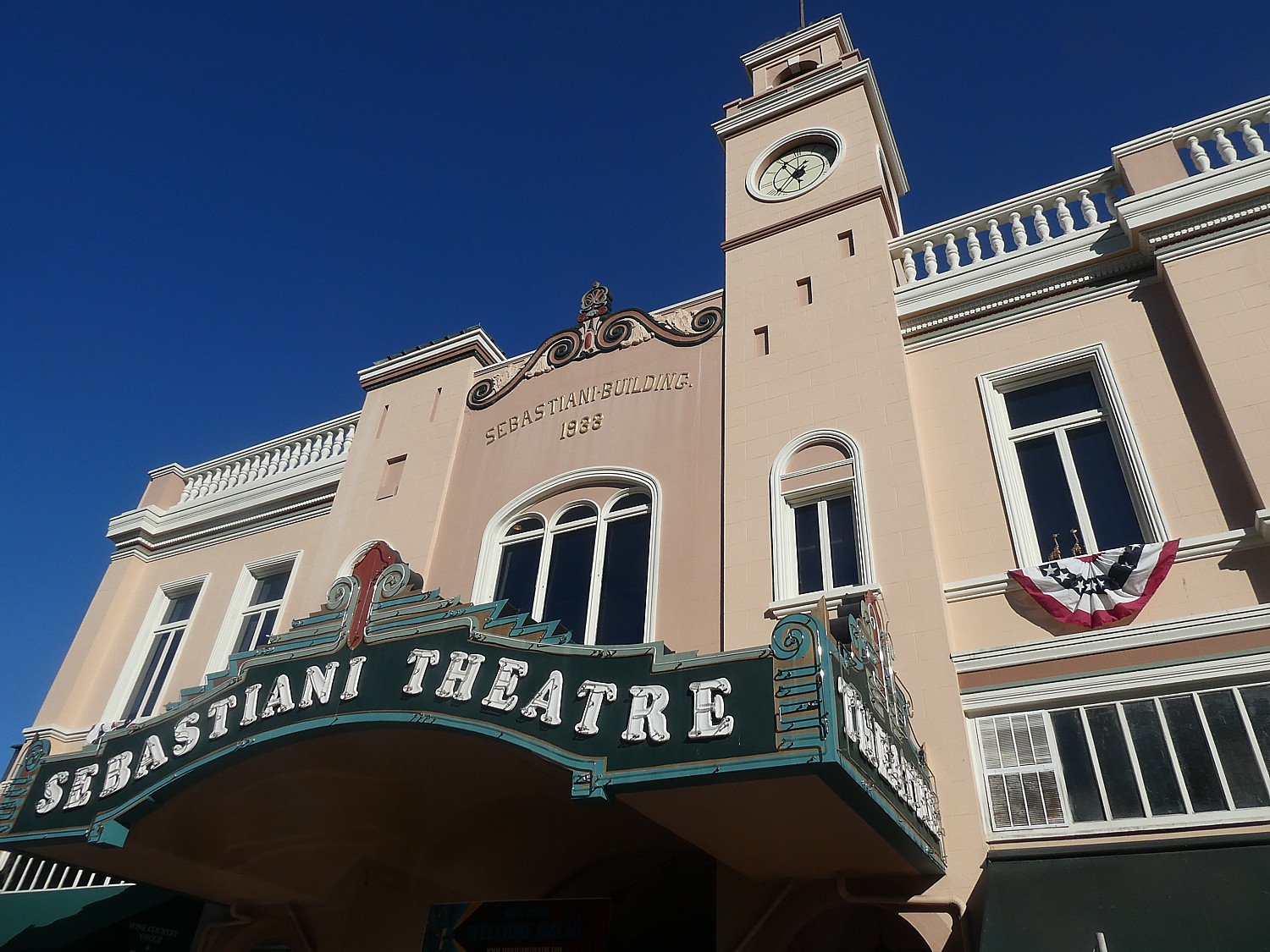
Sebastiani Theatre in Sonoma’s historic village plaza © Karen Rubin/goingplacesfarandnear.com

It starts at the village plaza – utterly charming today with lovely restaurants, wine tasting rooms and boutiques – but dotted with really important historic sites that are part of Sonoma State Historic Park, a collection of six sites located throughout the community.

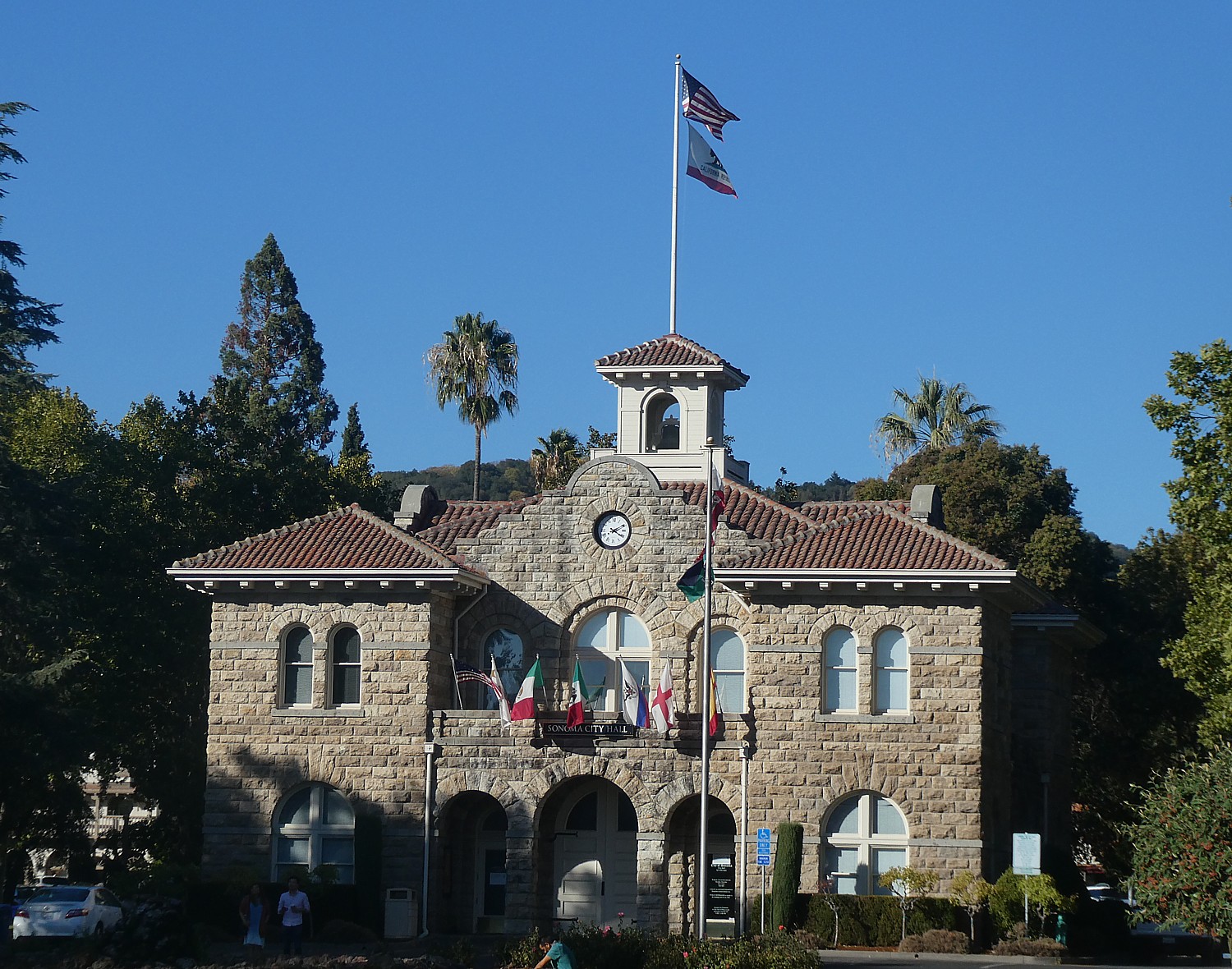
Sonoma’s City Hall © Karen Rubin/goingplacesfarandnear.com

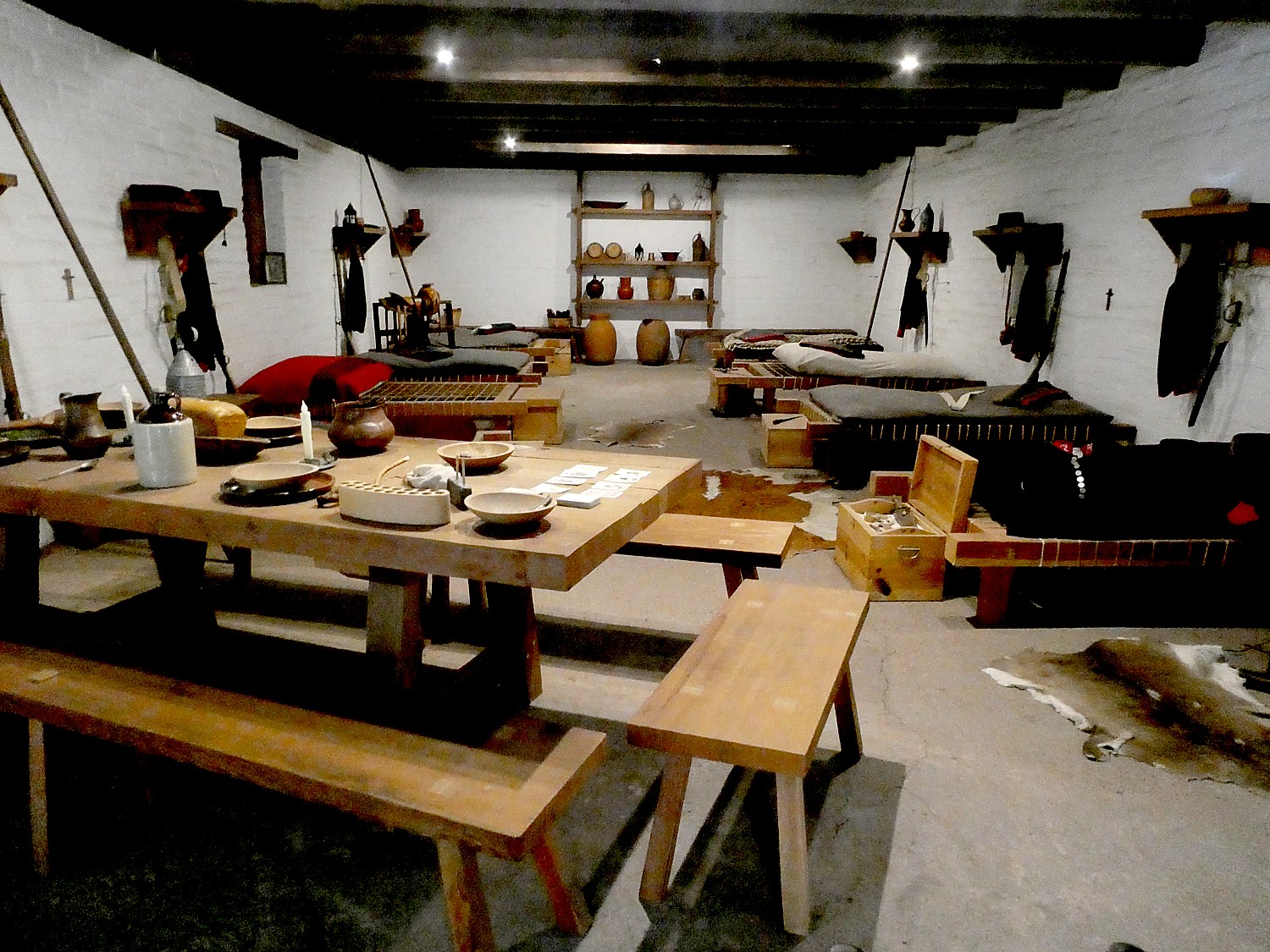
I start at the Barracks, a military post of Mexican soldiers established in 1834 to serve as a buffer to Russian expansion from Fort Ross (!!!). The Russians had come in 1812 to produce crops and trap furs to supply their Alaskan settlement. (The Russians ultimately moved out, ironically, just before gold was discovered.) You can see a room furnished as if the soldiers were still there. It is interesting to learn that they had to supply their own uniforms, horse and supplies, and basically buy them back from the Commandante. The barracks turns out to be the best place to start my journey because it offers an excellent video that encapsulates the history of this place, and puts everything into context.

The Barracks in Sonoma’s historic plaza © Karen Rubin/goingplacesfarandnear.com

From 1834-1846, it was the headquarters for General Mariano Guadalupe Vallejo, the Commandant of the Frontera del Norte – the northern Mexico provincial frontier – who built it, as well as the Plaza. More than 100 military expeditions set out from Sonoma to subdue rebellious Wappo and Cainameros or Satisyomis native tribes trying to overthrow Mexican domination. For ten years, until 1844, the Presidial company of Sonoma was considered the most powerful military force in California. During the short-lived California Republic, the barracks housed Republic followers until July 9, 1846, when the Stars and Stripes flag was first raised at Sonoma. It then served as an army post.  In 1860, Vallejo remodeled the barracks to serve as a winery. (Vallejo’s story, I learn, underpins just about everything in Sonoma.)

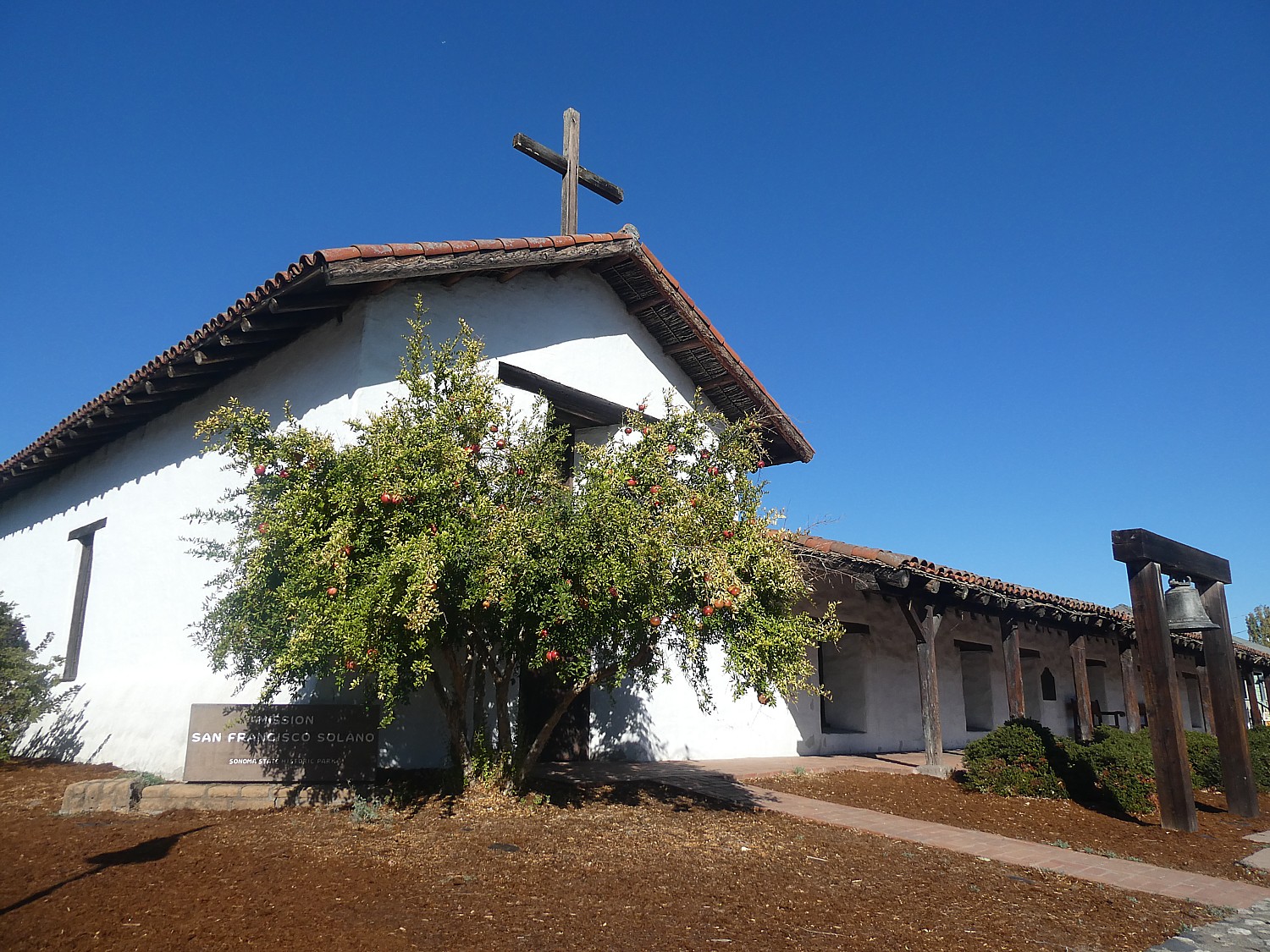
Mission San Francisco Solano was founded in 1823 © Karen Rubin/goingplacesfarandnear.com

Across the street from the Barracks is Mission San Francisco Solano – the last of 21 missions established in California. It was founded in 1823 to convert Native Americans to Christianity – often forcibly. Indians would come to the mission first out of hunger –since the colonists introduced disease, technology and livestock which depleted the corn that was their mainstay. The Indians’ had their own culture, religion, lifestyle which “was contrary to the colonists” and so, had to be eradicated. Under the mission system, families were split up, children taken for indoctrination. Indians revolted and tried to escape the mission and the soldiers would hunt the “fugitives” down and bring them back. I learn in the video in the Barracks. (There is a display, “Collision of Cultures,” which acknowledges the tribes’ experience.)

“The Sonoma mission’s sphere of influence reached its peak around 1832, with nearly 1,000 Native California Indians in residence and 10,000 acres of land used to raise crops and livestock.” In 1834, the Mexican government secularized all the missions into parish churches – which was General Vallejo’s task.

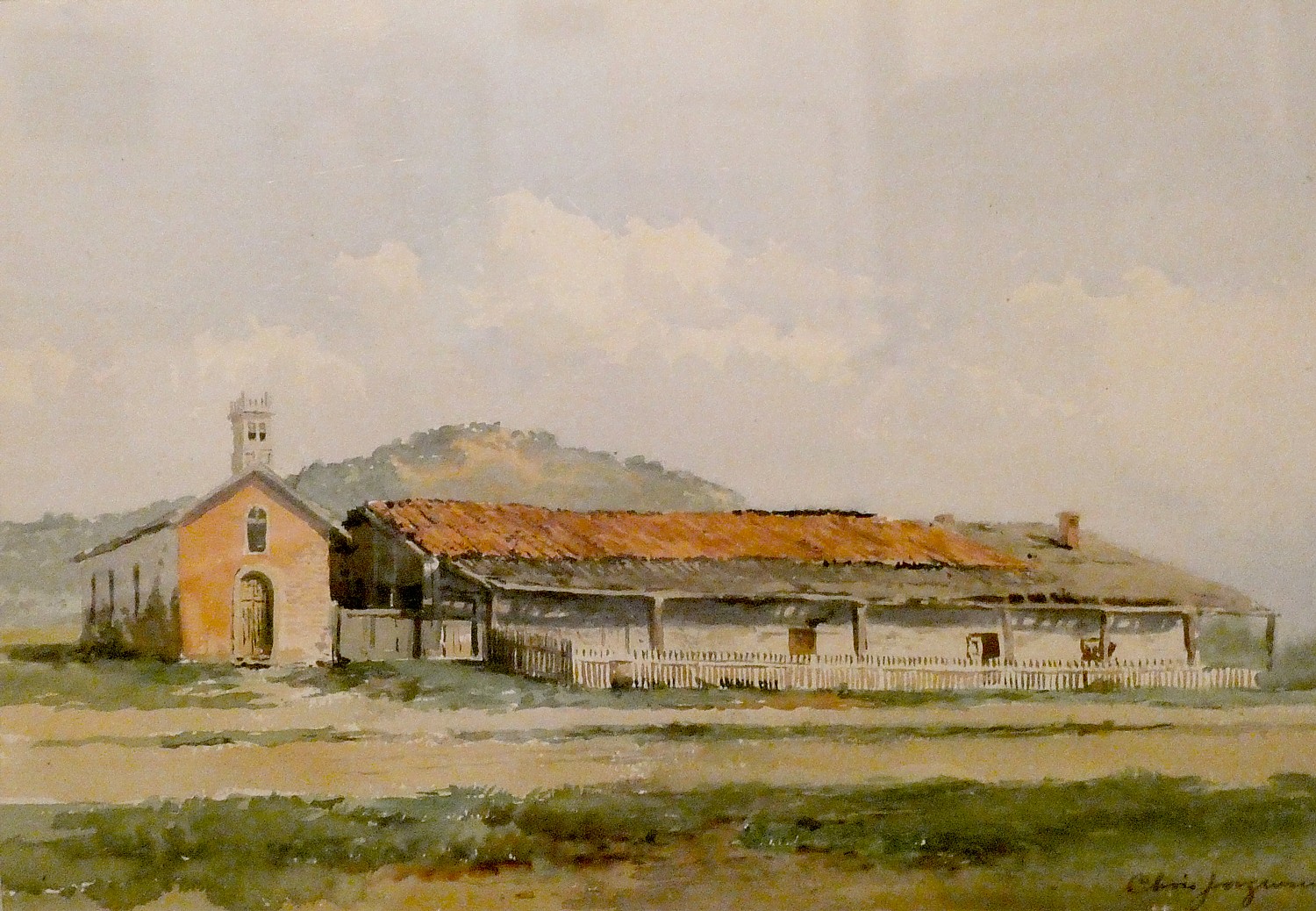
The dining room at Mission San Francisco Solano now exhibits watercolors created between1903-5 by Chris Jorgensen depicting the 21 missions © Karen Rubin/goingplacesfarandnear.com

The Dining room today houses a marvelous exhibit of watercolors created between 1903-5 by Chris Jorgensen depicting the 21 missions that remained. His watercolors helped generate interest in preserving the missions. It is most interesting to see his watercolor of this mission as it stood.

Mission San Francisco Solano, as captured by Chris Jorgensen © Karen Rubin/goingplacesfarandnear.com

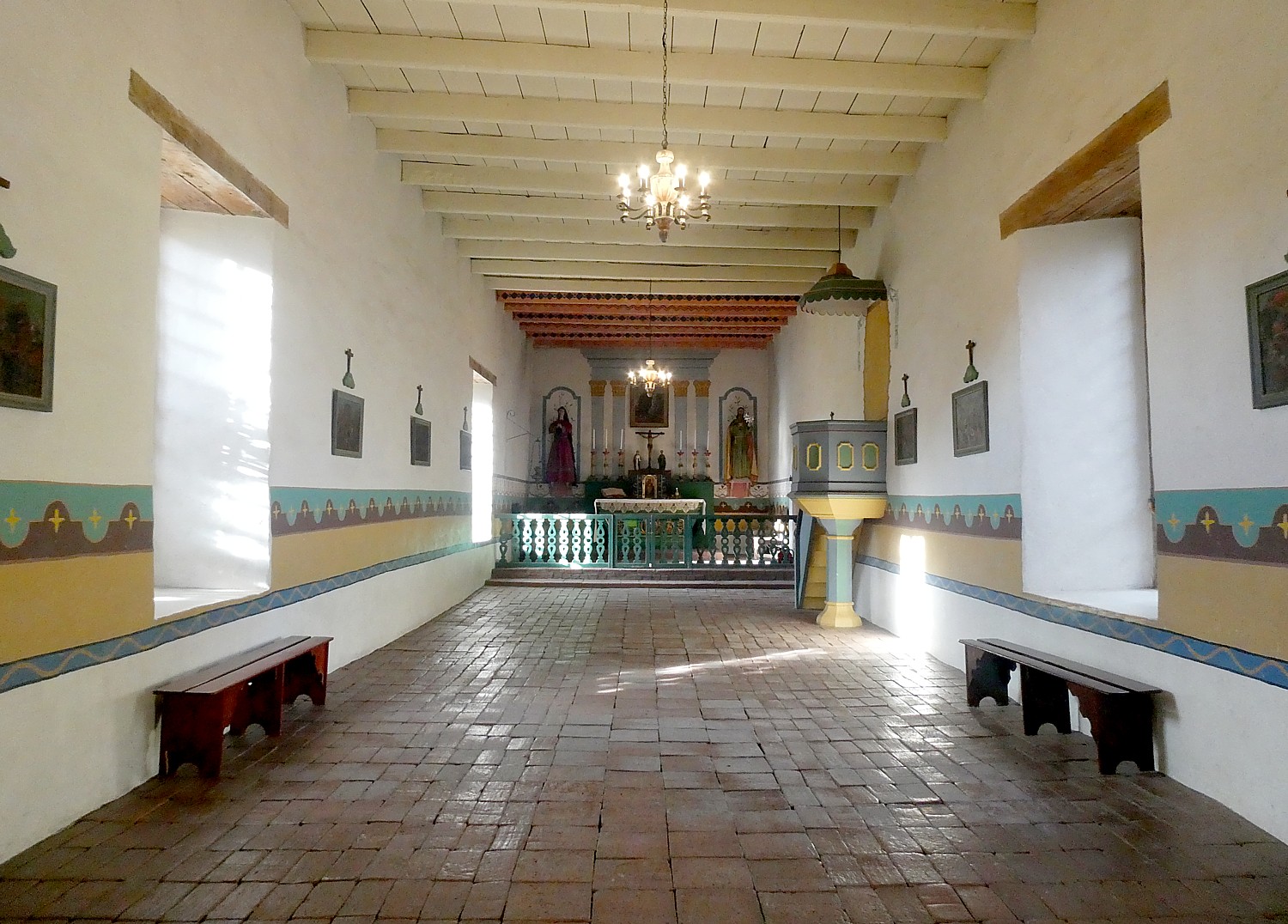
The small adobe chapel on the west side of the Padres’ Quarters, built and furnished by General Vallejo in 1840, replaced the original mission church.

The small adobe chapel on the west side of the Padres’ Quarters, built and furnished by General Vallejo in 1840, replaced the original mission church © Karen Rubin/goingplacesfarandnear.com

It is here in the mission that I meet Ranger April Farnham. When I ask if she is a native Californian, she tells me of her great great great aunt, Eliza Farnham, born in Rensselaerville, NY in 1815, who came to northern California in 1849 with her two sons (her husband, Thomas Farnham, was apparently a rogue). What a character! Wikipedia describes Farnham as a novelist, feminist, abolitionist and activist for prison reform (she worked as the matron of Sing Sing prison’s women’s ward). She returned to New York in 1856 and  in 1859, organized a society to assist destitute women find homes in the West. She returned to California, but died in New York City, at the age of 49, of consumption.

(I’m so intrigued about her, I look up her publications: Life in the Prairie Land, 1846 – An account of life on the Illinois prairie near Pekin between 1836 and 1840; California, In-doors and Out, 1856 – A chronicle of her experiences and observations on California; My Early Days, 1859 – An autobiographical novel; Woman and Her Era, 1864 – “Organic, religious, esthetic, and historical” arguments for woman’s inherent superiority’ and The Ideal Attained, 1865 – The heroine molds the hero into a worthy mate.)

General Vallejo’s Home

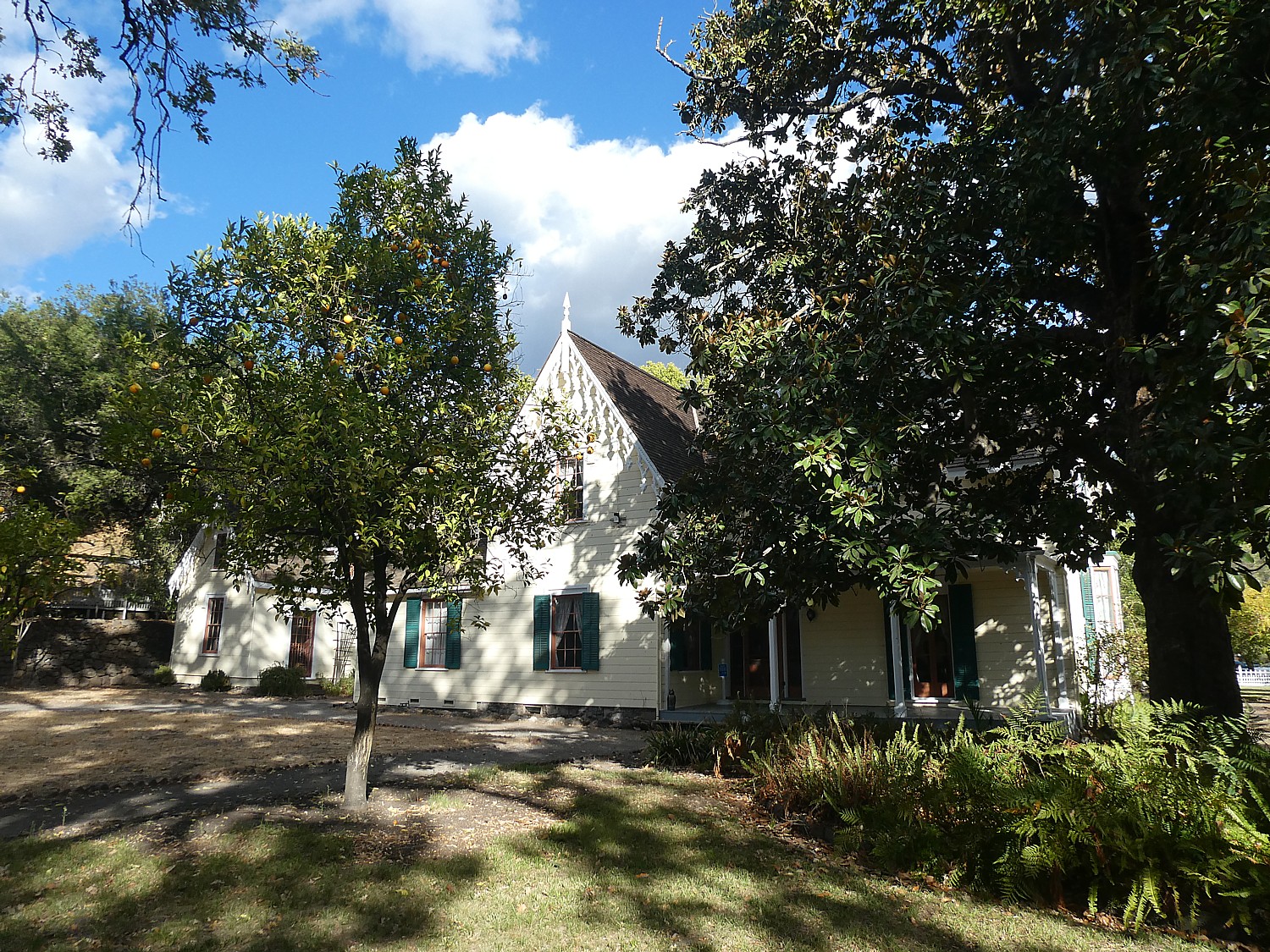
“Lachryma Montis,” the “Yankee Home” of General Mariano Guadalupe Vallejo, provides a window into Sonoma’s fascinating founder ©Karen Rubin/goingplacesfarandnear.com

I get back on my bike to visit General Vallejo’s home, Lachryma Montis, a 20-acre site (out of his original 500 acres) just along the path about a mile from the mission. Here you appreciate what a visionary – even progressive – Vallejo was, and how instrumental he was to the founding and nurturing of Sonoma through its multiple transitions. By the time he was 40, he had lived under four flags – Spanish, Mexican, the Bear Revolution and then the United States.

Born in 1807 to an upper class Spanish family, his career paths were limited to the military, politics or church. He chose the military. At the age of 25, a lieutenant, he commanded Presidio de San Francisco, the “director of colonization.” In 1826, he was ordered to secularize the missions and transfer power from the church to civil authorities.

The Mexican government fell into chaos; there were frequent changes of governor in his district. Vallejo got no assistance from Mexico and had to pay his soldiers out of his own pocket. The settlers became Mexican citizens, learned Spanish but were different from the “Yankees” who began to come through.

After Mexican Governor Jose Castro proclaimed that the purchase or acquisition of land by foreigners who had not been naturalized as Mexicans “will be null and void, and they will be subject (if they do not retire involuntary from the country) to be expelled whenever the country might find it convenient.” 33 Yankees lead the Bear Flag Revolt against Mexican authorities. They attacked Sonoma, took Vallejo prisoner, imprisoning him at Sutter’s Fort for two months, where he contracted malaria and was a dath’s door before being released. “His imprisonment lasted longer than the Republic” (communication was slow). At the time of the Bear Flag Revolt, (June–July 1846), there were 500 Americans living in California, compared with between 8,000 and 12,000 Mexicans.

Despite the Treaty of Guadeloupe that ended the Mexican-American War (1846-1848) assuring the Mexicans their property ownership would be respected, the Yankees claimed the property belonged to them “by right of conquest”.  Mexicans, including Vallejo, had to fight in court to prove title and that often put them in debt. His holdings were reduced from 500 acres to 20 acres, but he kept his vineyards.

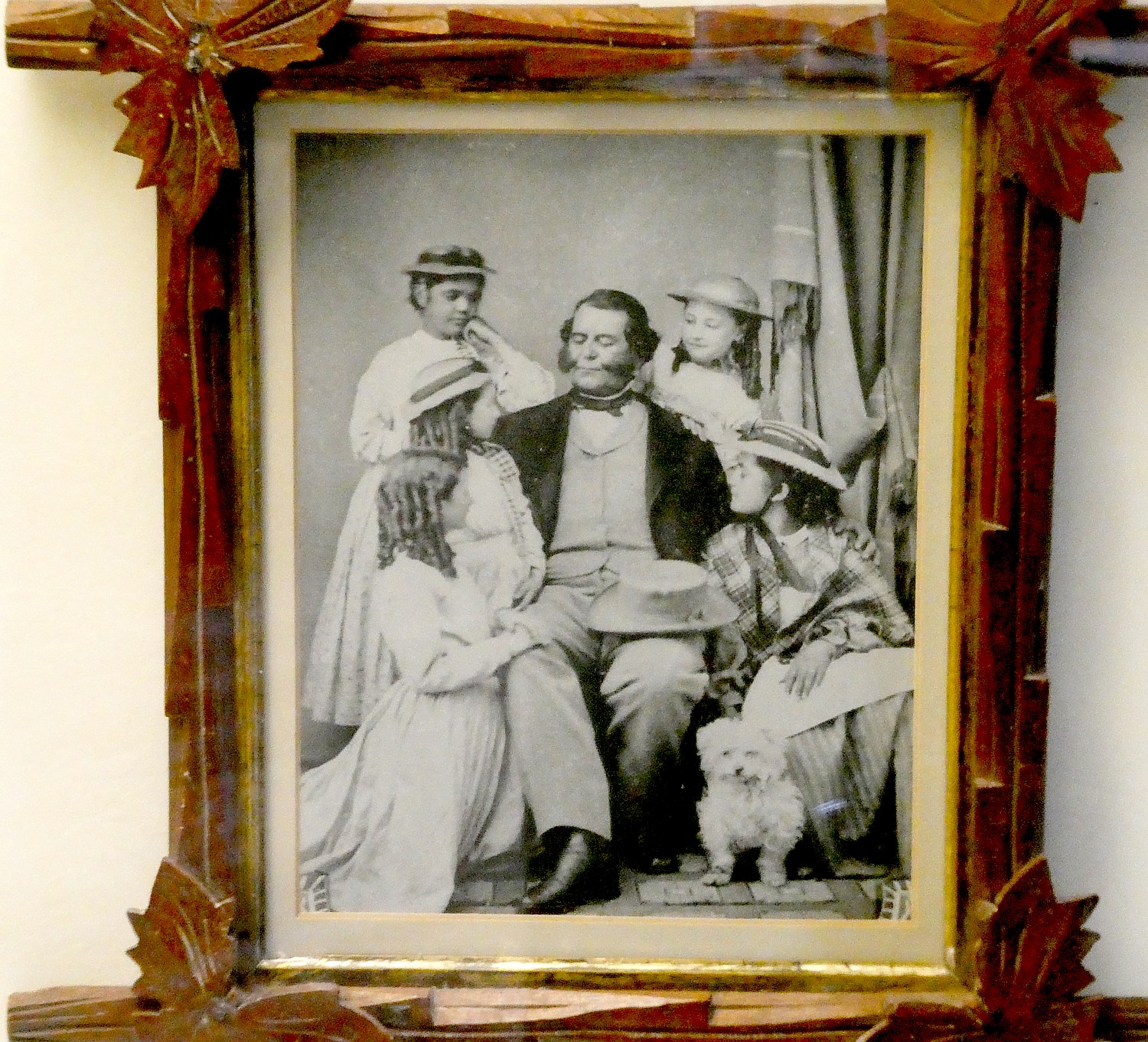
Vallejo family photos on view in a small museum in the visitors center of his home, part of the Sonoma State Historic Park, give insight into Sonoma’s founder and visionary ©Karen Rubin/goingplacesfarandnear.com

Indeed, Vallejo also had a hand in developing wine-making in Sonoma. His two older daughters married sons of Count Agoston Haraszthy, who began the first vineyards (you can learn this part of the history at Haraszthy’s Buena Vista winery).

Ever adapting, Vallejo went on to be elected state senator for Sonoma, serving until 1853.

“Lachryma Montis,” the “Yankee Home” of General Mariano Guadalupe Vallejo, provides a window into Sonoma’s fascinating founder ©Karen Rubin/goingplacesfarandnear.com

What is striking about Vallejo’s home is that it looks like it was deposited here from New England. Vallejo referred to his dwelling as the “Yankee Home” or “Boston House,” departing from traditional adobe style. That was deliberate on his part, to symbolize change (and acceptance) of becoming part of the United States.

You start your visit in the Chalet, a Tudor-style structure which originally was a storage house and granary, now a visitor center that houses a museum with family photos and personal artifacts of Vallejo and his family (he had 16 children, 10 of whom lived to adulthood), as well as their magnificent carriage. The furnishings in the main house, too, are mainly from the family.

Seeing the home as if the Vallejo family still lived there ©Karen Rubin/goingplacesfarandnear.com

You visit the parlor, which Vallejo furnished with items from around the world, the master bedroom, his daughter, Maria’s, bedroom, the nursery. You visit the bedroom of Luisa, his 15th child, who was born here, married here and, after being widowed, raised her three children in the house; she cared for her elderly parents and inherited the estate where she lived until her death in 1943 at 87. She sold the estate to the state of California in 1933 and served as its curator from 1933-1943.

The picturesque stone and masonry reservoir supplied the Vallejo home with water from natural artesian springs ©Karen Rubin/goingplacesfarandnear.com

There are several other interesting buildings and structures: the picturesque stone and masonry reservoir was constructed in the 1850s to collect water from natural artesian springs; a tiny cottage, the Hermitage, or “Napoleon’s Cottage” at the top of a winding stone staircase above the reservoir, where Vallejo’s youngest son, Napoleon, moved in 1865 at the age of 15, and kept 14 dogs, two monkeys, three cats and one parrot.  

A monument to the Bear Flag Rebellion, which briefly established the California Republic ©Karen Rubin/goingplacesfarandnear.com

Sonoma’s Plaza itself – the birthplace of the state’s Bear Flag – is picturesque. You can see a monument to where rebels raised their new, homemade flag and declare their own republic, June 14, 1846. (The Bear Flag Republic lasted just 24 days; then the United States took over).

There is also City Hall, a pavilion for outdoor events, and across the way, a lovely old-timey movie theater.

The Sonoma State Historic Park (363 Third Street W, Sonoma CA 95476, 707-938-1519). includes six sites – in addition to the Mission, the Barracks and Lachryma Montis, it also includes Casa Grande (Vallejo’s home on the plaza), the beautiful Blue Wing Inn (built to house soldiers it later accommodated such famous visitors as US Army officer Ulysses S. Grant); and Toscana Hotel. For a schedule of docent-led tours, visit www.parks.ca.gov or call 707-938-9560. (The $3 admission includes same-day visit to the Barracks and General Vallejo’s Home (363 3rd St. West) and Petaluma Adobe State Historic Park (3325 Adobe Road, Petaluma).

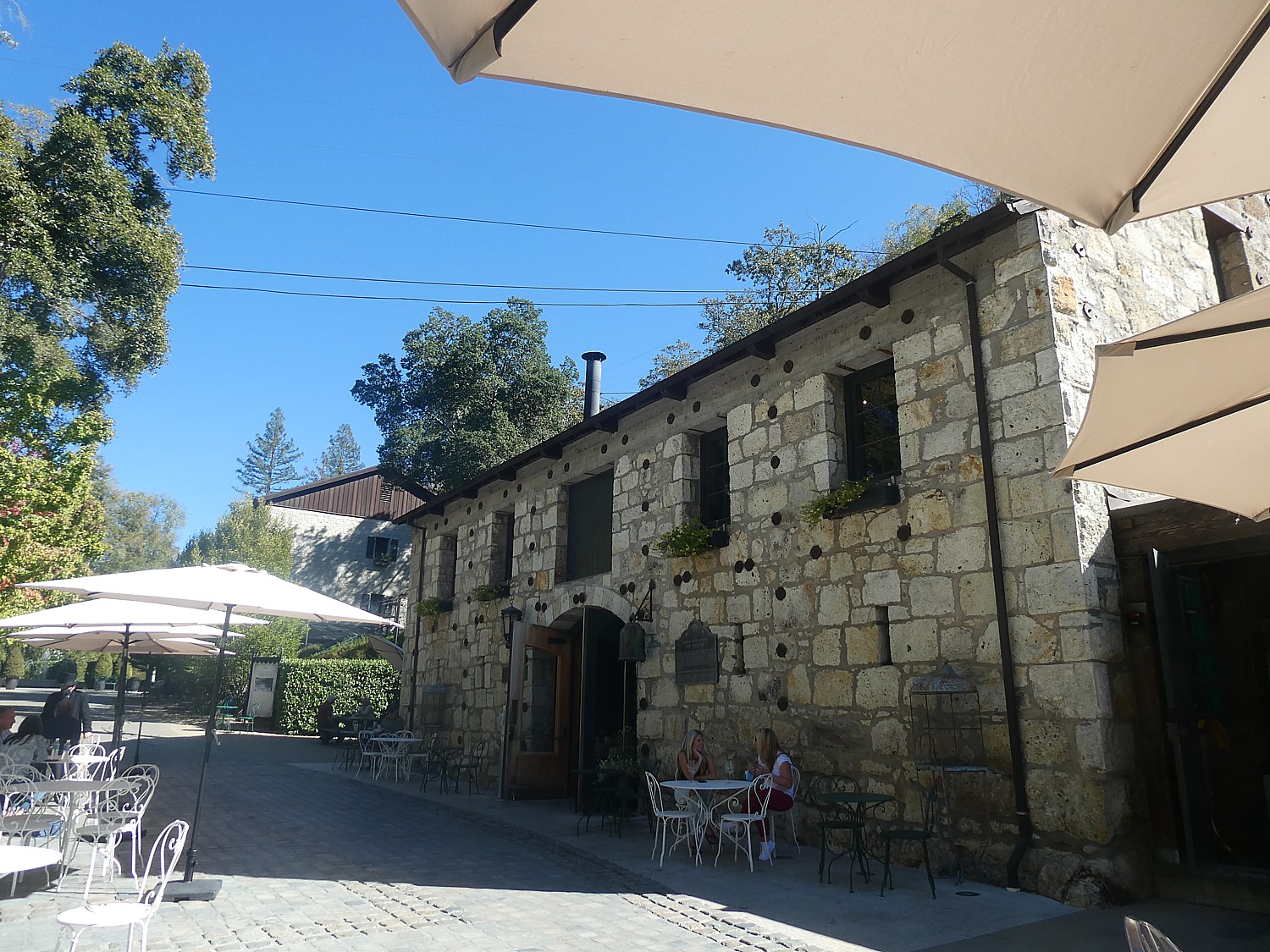
The Buena Vista Winery. Count Agoston Haraszthy planted the first vineyards in Sonoma; Vallejo’s two daughters married his sons © Karen Rubin/goingplacesfarandnear.com

My biking takes me into the vineyards that completely ring the village. I return to the Buena Vista Winery, founded by Count Agoston Haraszthy, who came from Hungary initially in pursuit of gold but in 1857, decided instead to build a stone winery on the property. He introduced cuttings from Europe’s best vineyards to California and basically proved that California could produce wine. Buena Vista Winery, 18000 Old Winery Road, Sonoma, CA 95476, 800-926-1266, tastingroom@buenavistawinery.com, www.buenavistawinery.com.

There are about 90 vineyards and wineries you can explore, see Sonoma.com.

I also come upon a wonderful local community garden, Sonoma Garden Park, which is a working farm, education center and “vibrant gathering place” where I encounter a gardener who comes up from San Francisco and learn about sustainable gardening in this drought-plagued place (Seventh St. East & MacArthur).

Jack London State Park

Jack London State Historic Park© Karen Rubin/goingplacesfarandnear.com

Another marvelous example of this merging of man and nature is the Jack London State Park in nearby Glen Ellen, where we go for a hike and discover a most intriguing history.  I was expecting to hike in the woods, but the historic and biographical features blew me away.

I always associated Jack London with San Francisco and Alaska. It was a complete surprise to learn that Glen Ellen was home to the writer/adventurer from 1905 until his untimely death in 1916, at age 40, of gastrointestinal uremic poisoning. London pioneered new agricultural techniques here at his 1,400-acre Beauty Ranch.

Jack London State Historic Park© Karen Rubin/goingplacesfarandnear.com

“London was well ahead in the real estate game in 1905 when he began buying up what was then exhausted farmland around Glen Ellen,” writes Kenneth Brandt, The Short, Frantic, Rags-to-Riches Life of Jack London,” in Smithsonian (www.smithsonianmag.com/smithsonian-institution/short-heroic-rags-riches-life-jack-london-180961200). “His intention was to restore the land by using innovative farming methods such as terracing and organic fertilizers… ‘I see my farm,’ he declared, ‘in terms of the world and the world in terms of my farm.’ Today, docents lead tours showcasing London’s progressive ranching and sustainable agricultural practices.”

Jack London State Historic Park© Karen Rubin/goingplacesfarandnear.com

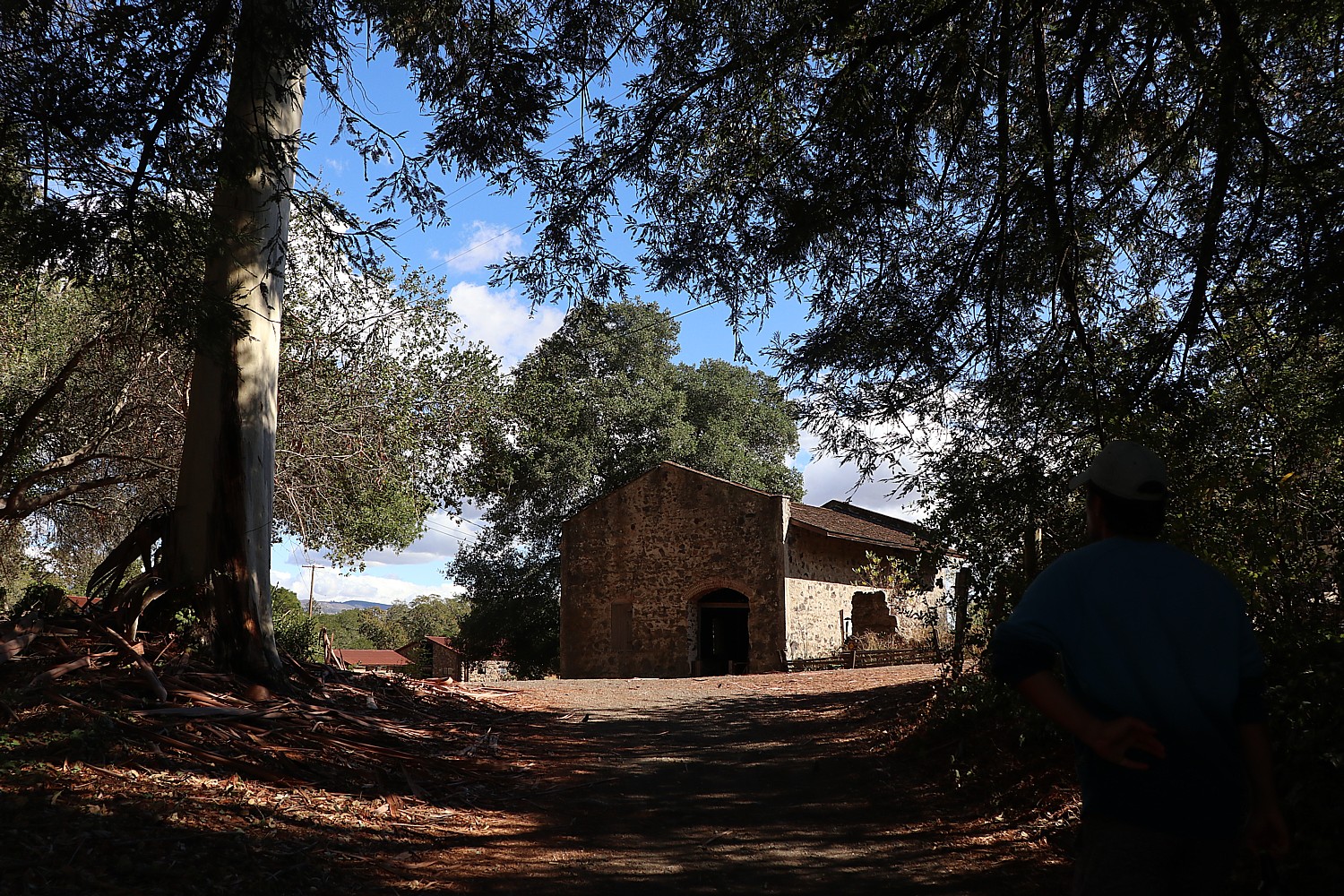
We wander through the ruins of his old stone winery and see a stone barn. You can visit the magnificent ruins of London’s 15,000-square-foot Wolf House mansion, built out of native volcanic rock and unstrapped redwoods, that would have had 26 rooms and nine fireplaces, a library measuring 19 x 40 feet, a two-story high living room, a wine cellar and – befitting a forward looking innovator – electric lighting and built-in vacuum cleaning system. It cost $75,000 ($1.9 million today) to build, but burned to the ground a month before completion.

Jack London State Historic Park© Karen Rubin/goingplacesfarandnear.com

“Built out of native volcanic rock and unstripped redwoods, it was to be the rustic capstone of Beauty Ranch and architectural avatar Jack London himself. He was devastated over the fire but vowed to rebuild. He would never get the chance,” Brandt writes.

I learn how contemporary London actually was, his writings and outlook remarkably prescient (or else you realize things don’t actually change but only repeat) – he could have been writing today. “He also remained politically engaged,” Brandt writes, quoting London from a 1914 letter: “If, just by wishing I could change America and Americans in one way. I would change the economic organization of America so that true equality of opportunity would obtain; and service, instead of profits, would be the idea, the ideal and the ambition animating every citizen.”

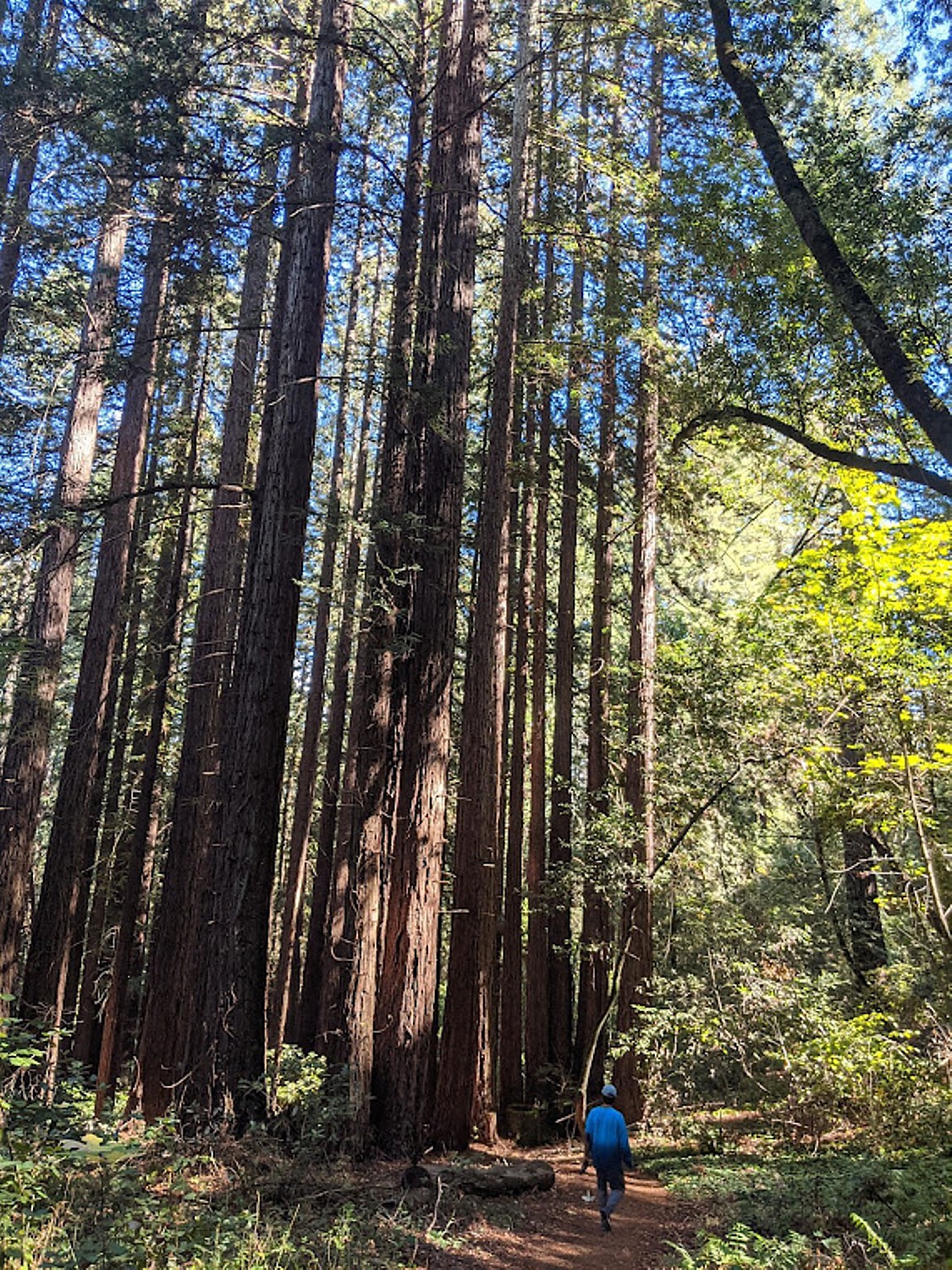
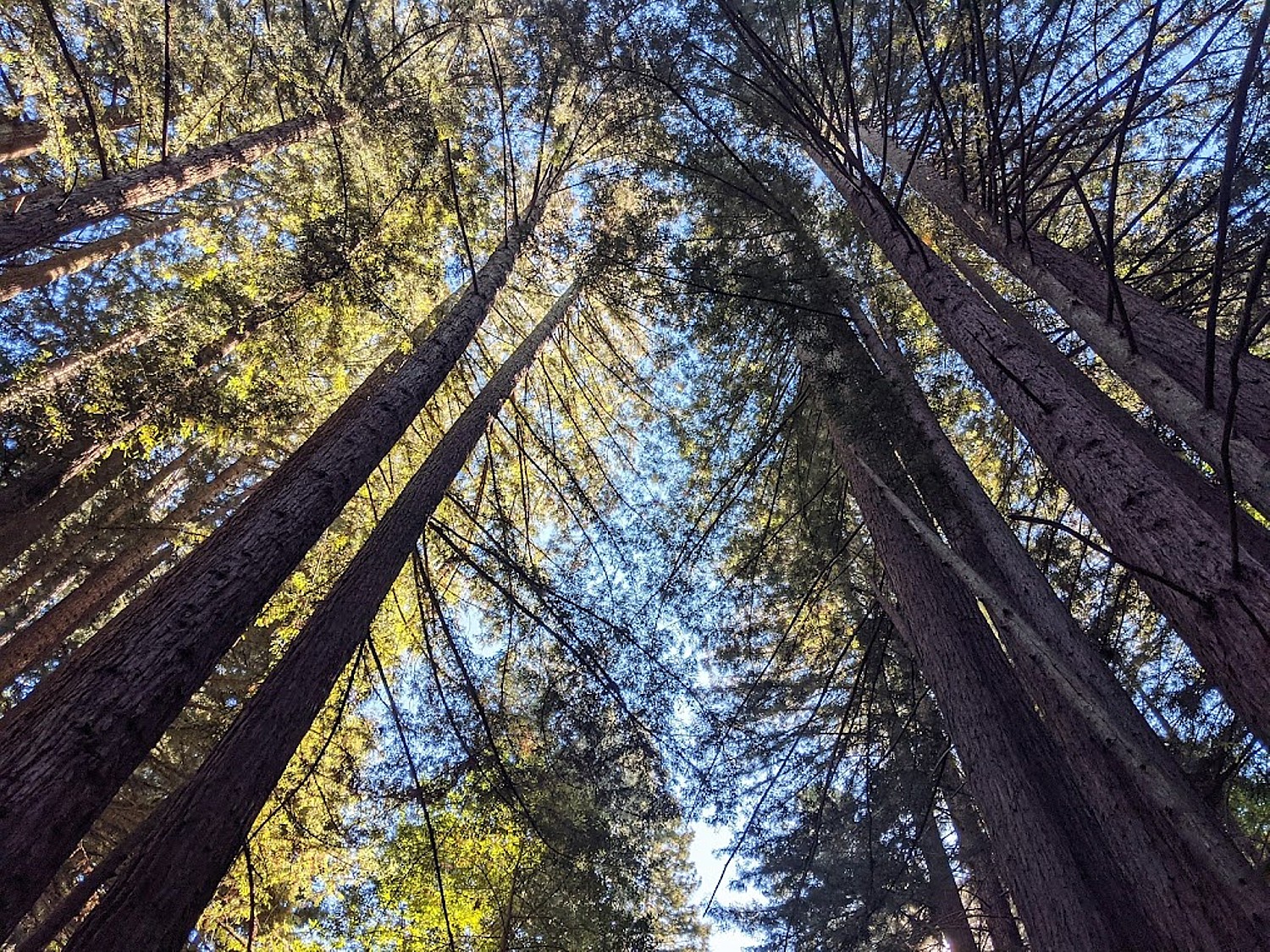
We set out on our hike (there are 20 miles of trails) through lush forest, majestic redwood groves, and meadows (a scenic six-mile trail leads to the top of Sonoma Mountain; you also can explore by horseback or bike), passing by a gorgeous vineyard to get to the trail. (We note the sign warning about rattlesnakes as we enter.)

Jack London State Historic Park© Karen Rubin/goingplacesfarandnear.com

I must return to visit the museum housed in “The House of Happy Walls” where there are displays of London’s books along with artifacts London and his second wife, Charmian, brought back from their 27-month sailing adventure among unexplored South Seas islands. (Volunteer pianists play on Charmian’s 1901 Steinway grand piano in the cottage where she lived from 1934 until she died in 1955.)

Jack London State Historic Park© Karen Rubin/goingplacesfarandnear.com

The park is very popular with locals in the know about all there is to do here – including concerts, performances, lectures, piano recitals; year-round there are free docent-guided tours, docent-led Sunday morning hikes, and other park events. Download a park map.

(Jack London State Historic Park, 2400 London Ranch Road, Glen Ellen, CA 95442, 707-938-5216, jacklondonpark.com).

You can pick up picnic supplies, as we did, at the superb Glen Ellen Village Market or croissants, mini-sandwiches and other baked goods at Les Pascals bakery.

In the late afternoon, we take a walk in the “neighborhood”:

A late afternoon stroll in the Sonoma “neighborhood” © Karen Rubin/goingplacesfarandnear.com
Moon rise during our late afternoon stroll in the Sonoma “neighborhood” © Karen Rubin/goingplacesfarandnear.com

See also: WINE & ART: THE PERFECT PAIRING IN SONOMA, CALIFORNIA (https://goingplacesfarandnear.com/wine-art-the-perfect-pairing-in-sonoma-california/)

For excellent planning materials, visit Sonoma County Tourism, 800-576-6662, info@sonomacounty.comwww.sonomacounty.comwww.sonomacounty.com/things-to-do.                

______________________

© 2022 Travel Features Syndicate, a division of Workstyles, Inc. All rights reserved. Visit goingplacesfarandnear.com, www.huffingtonpost.com/author/karen-rubin, and travelwritersmagazine.com/TravelFeaturesSyndicate/. Blogging at goingplacesnearandfar.wordpress.com and moralcompasstravel.info. Send comments or questions to FamTravLtr@aol.com. Tweet @TravelFeatures. ‘Like’ us at facebook.com/NewsPhotoFeatures