Category Archives: Nature and Wildlife

Cruises, Hospitality, Destinations Implement Responsible, Sustainable Tourism Practices

In Dominica, known as “the Nature Island of the Caribbean”, visitors can join rare, responsibly guided encounters with resident sperm whales through Secret Bay’s Swimming with the Whales & Marine Safari (photo: Dominica)

By Karen Rubin, Travel Features Syndicate, goingplacesfarandnear.com

Travelers are increasingly mindful of their responsibility in preserving and protecting the people, the environment, and the ecosystems of the places they visit and are actively seeking out travel entities – transportation, hospitality, dining, attractions, and destinations – that incorporate sustainable, responsible practices.

Here’s a sampling of how cruises and resorts are not just implementing but also modeling conservation, preservation and regenerative practices, while the revenue from tourism helps fund and sustain these programs.

Cruising
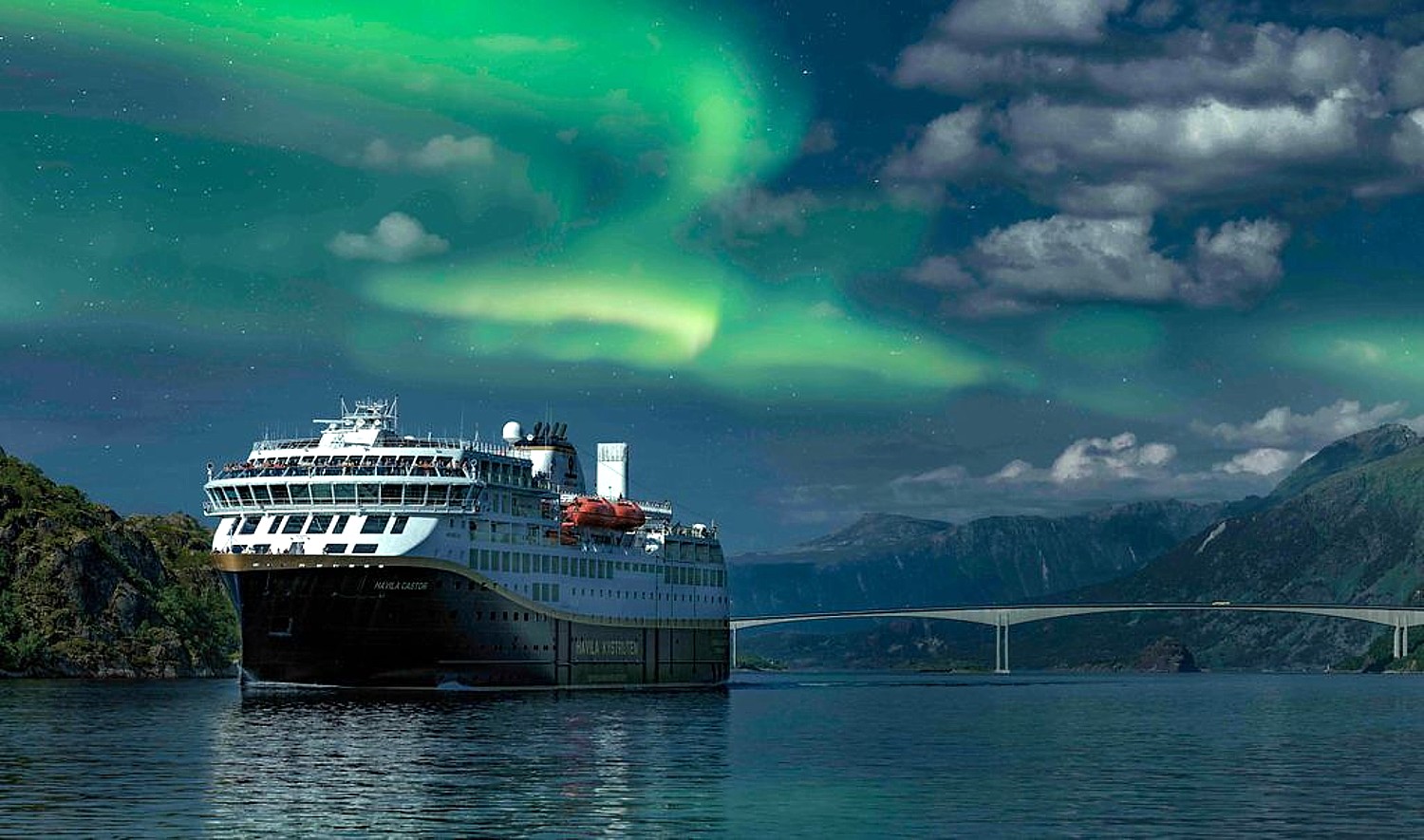
Havila Voyages, the Norwegian coastal operator, recently completed a historic 12-day voyage aboard its Havila Polaris, powered by biogas, reducing CO₂ emissions by more than 90%. Combined with the fleet’s advanced battery systems which enable ships to sail for up to four hours with zero emissions, Havila is demonstrating that cleaner, quieter travel at sea is ready to scale for the future. Silent, low-emission cruising allows access to fragile areas like the UNESCO-listed Geirangerfjord without environmental harm, while journeys along Norway’s 34-port coastal route connect travelers to authentic communities through more than 70 immersive excursions, from dogsledding to Sámi cultural experiences. Its “Havila Food Stories” program partners with local producers and serves seasonal, à la carte menus that have reduced food waste to just 69 grams per guest per day, cutting more than 60 tons annually. With ships designed for future hydrogen conversion and a goal of fully climate-neutral operations by 2028, Havila Voyages offers a compelling example of how responsible travel and bucket-list experiences, from Northern Lights viewing to the Midnight Sun, can go hand in hand.
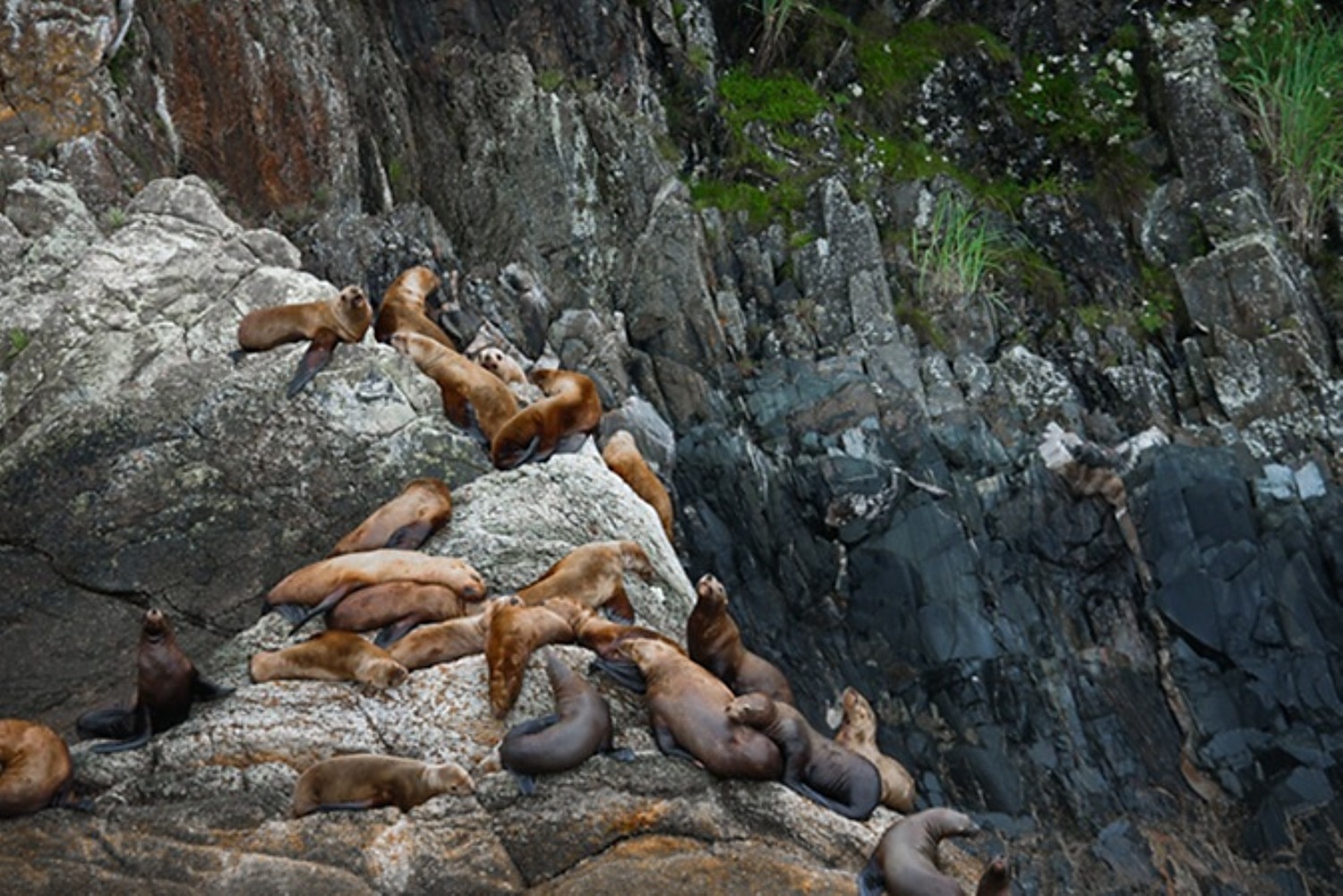
The Boat Company donates proceeds from its Alaska expeditionary cruises toward conservation initiatives.

While sustainable tourism focuses on minimizing the impacts travelers have on a community or ecosystem, regenerative tourism goes a step further with a focus on making destinations better than they were. That has been the mission of The Boat Company– one of the world’s only non-profit cruise companies – since its founding 46 years ago. All of The Boat Company’s proceeds (beyond operating expenses) from its week-long expeditionary cruises between Sitka and Juneau through Alaska’s Inside Passage are reinvested back into conservation initiatives (theboatcompany.org, 360-697-4242).

Boating and Biking Egypt: The Nile’s Hidden Banks: This tour blends slow, low-impact travel with active exploration, exploring by e-bike small villages and immense monuments rarely seen and sailing aboard an all-suite shiphttps://www.boatbiketours.com/tours/egypt-the-nile-a-journey-to-ancient-wonders/]

Hospitality
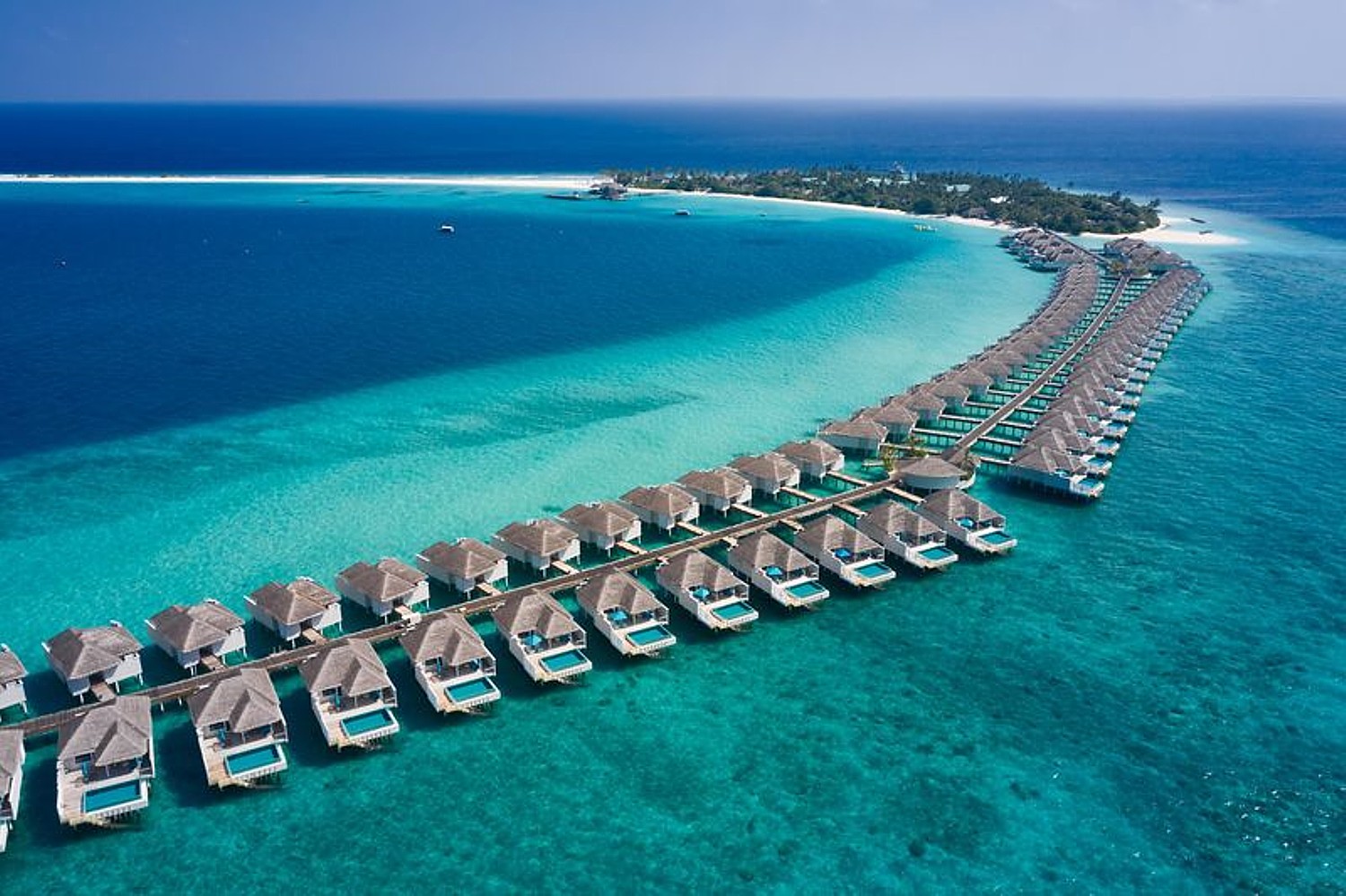
At Finolhu in the Maldives, guests can join the Coral Reef Propagation Project, ocean clean-ups, Citizen Science programs and megafauna dives (photo: Finolhu)

Set within the UNESCO Biosphere Reserve Baa Atoll in the Maldives, Finolhu, a Seaside Collection Resort is committed to safeguarding one of the world’s most delicate and vibrant marine ecosystems. Designated a UNESCO Biosphere reserve in 2011, Baa Atoll is one of the most biodiverse marine environments on earth – home to over 250 coral species, more than 1,200 fish species, and the world’s largest known aggregation of manta rays at nearby Hanifaru Bay. Its location above a deep ocean channel creates nutrient-rich currents that attract whale sharks, dolphins and sea turtles year-round, making it one of the few places on the planet with this level of protected aquatic abundance. As part of a UNESCO-protected biosphere, Finolhu is largely self-sufficient. Guests can do their part in making a difference by joining the Coral Reef Propagation Project, led by the resort’s resident marine biologist, which aims to rebuild the resort’s reef; ocean clean-ups conducted in partnership with Parley for the Oceans; and Citizen Science programs and megafauna dives, which help track individual animals and contribute to ongoing marine research. 
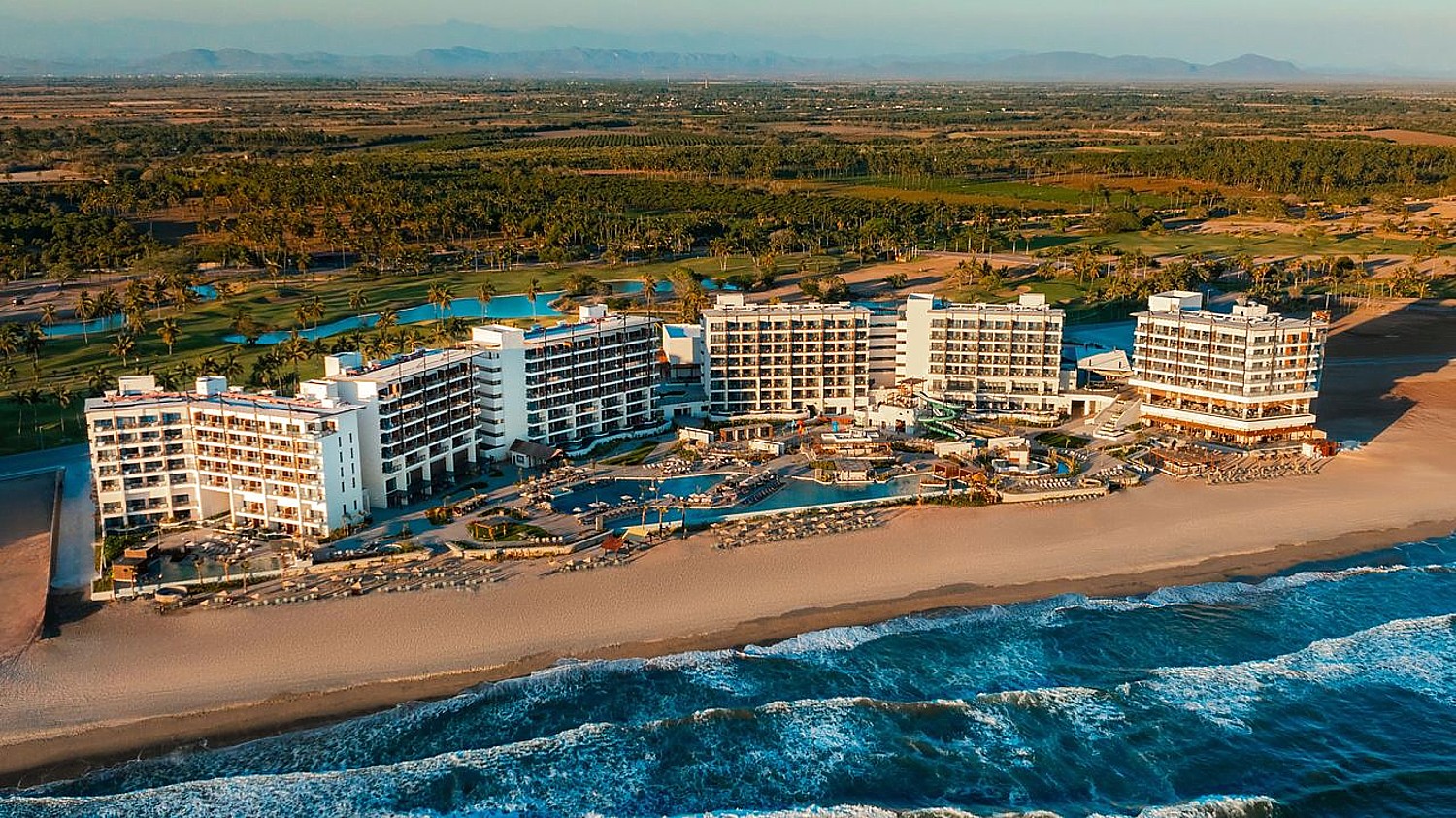
Dreams Estrella del Mar Mazatlan Golf & Spa Resort plays an active role in conservation through its on-site turtle sanctuary (photo: Dreams Estrella del Mar Mazatlan)

The first Hyatt-branded property in Mazatlán, Mexico, Dreams Estrella del Mar Mazatlán Golf & Spa Resort, has earned the prestigious Platinum Beach Certification for its sustainably maintained shoreline and partnership with local, environmentally responsible suppliers. The resort has also implemented water-saving technologies including aerators and automatic flushers, energy-efficient systems like heat recovery equipment and LED lighting, reduced plastic use, and landscaping with endemic plants to support local biodiversity. The resort plays an active role in conservation through its on-site turtle sanctuary, where guests can participate in the protection and preservation of these remarkable animals. 
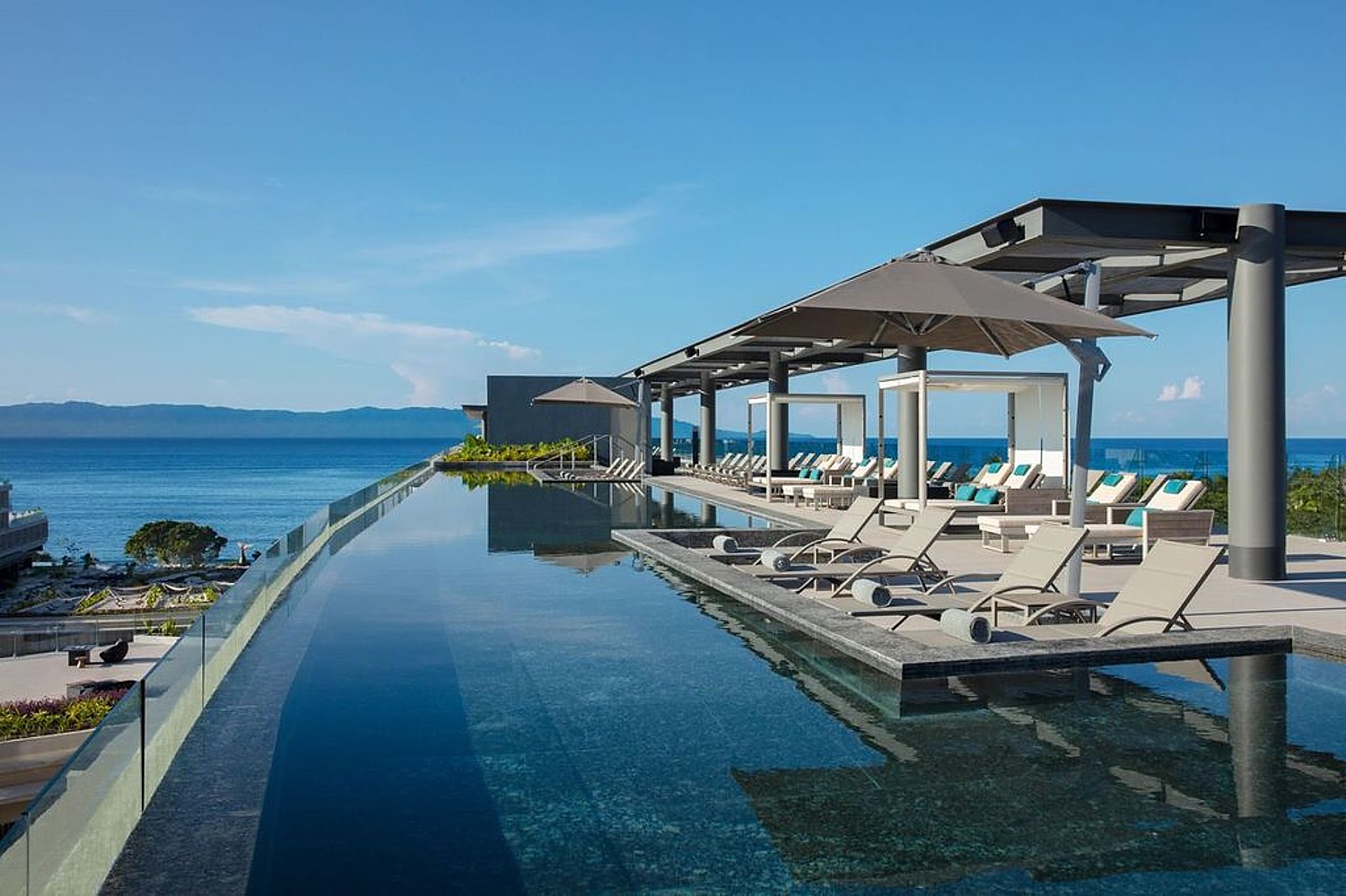
Secrets Bahia Mita Surf & Spa Resort, Rivera Nayarit, Mexico, is an eco-conscious, adults-only, all-suite all-inclusive resort.

Secrets Bahia Mita Surf & Spa Resort, Rivera Nayarit, Mexico, is an eco-conscious, adults-only, all-suite all-inclusive resort. Nestled between the golden sands and surf-friendly beaches of Banderas Bay and the lush Sierra Madre Mountains, it offers an unplugged, nature-focused getaway. On property, an organic garden and farm supply fresh herbs, produce, and eggs to the resort’s restaurants, reinforcing its sustainable ethos. The resort also supports the local community through its “World of Care” program, donating food and supplies to Wet Nose Rescue and caring for rescued animals, among them, Joker, the resort’s adopted dog and mascot. In addition, the hotel sponsors a local primary school, with team members supporting students through gifts, monthly visits, and meaningful activities. 
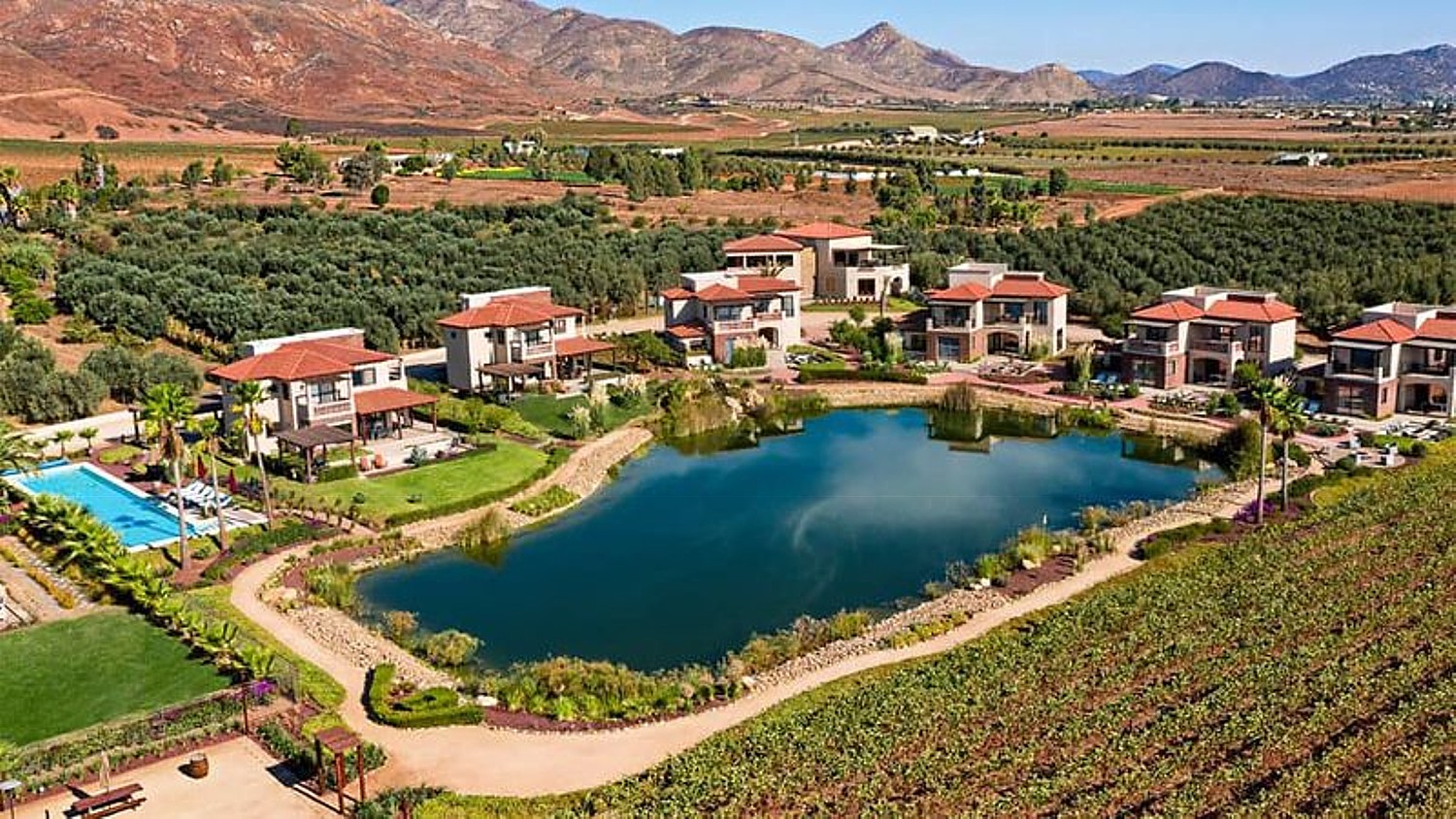
El Cielo Resort & Winery pairs luxurious vineyard accommodations with a commitment to sustainable hospitality (photo: El Cielo Resort)

Located in the heart of Valle de Guadalupe, B.C., El Cielo Resort & Winery pairs luxurious vineyard accommodations with a commitment to sustainable hospitality. Guests stay in Tuscany-inspired villas, enjoy farm-to-table dining, and explore the property’s organic vineyards while supporting eco-conscious practices woven throughout the resort experience. Sustainability initiatives include pioneering solar energy as one of the first wineries in the region to install solar panels, cultivating grapes without synthetic pesticides to preserve soil health and biodiversity, and utilizing trained Harris’ Hawks as a natural, chemical-free vineyard protection. The resort also captures rainwater in custom-built reservoirs to support sustainable irrigation and create habitats for migratory birds, alongside additional environmentally mindful touches such as lightweight wine bottles, natural corks, water treatment systems, and LED lighting designed to reduce light pollution. 
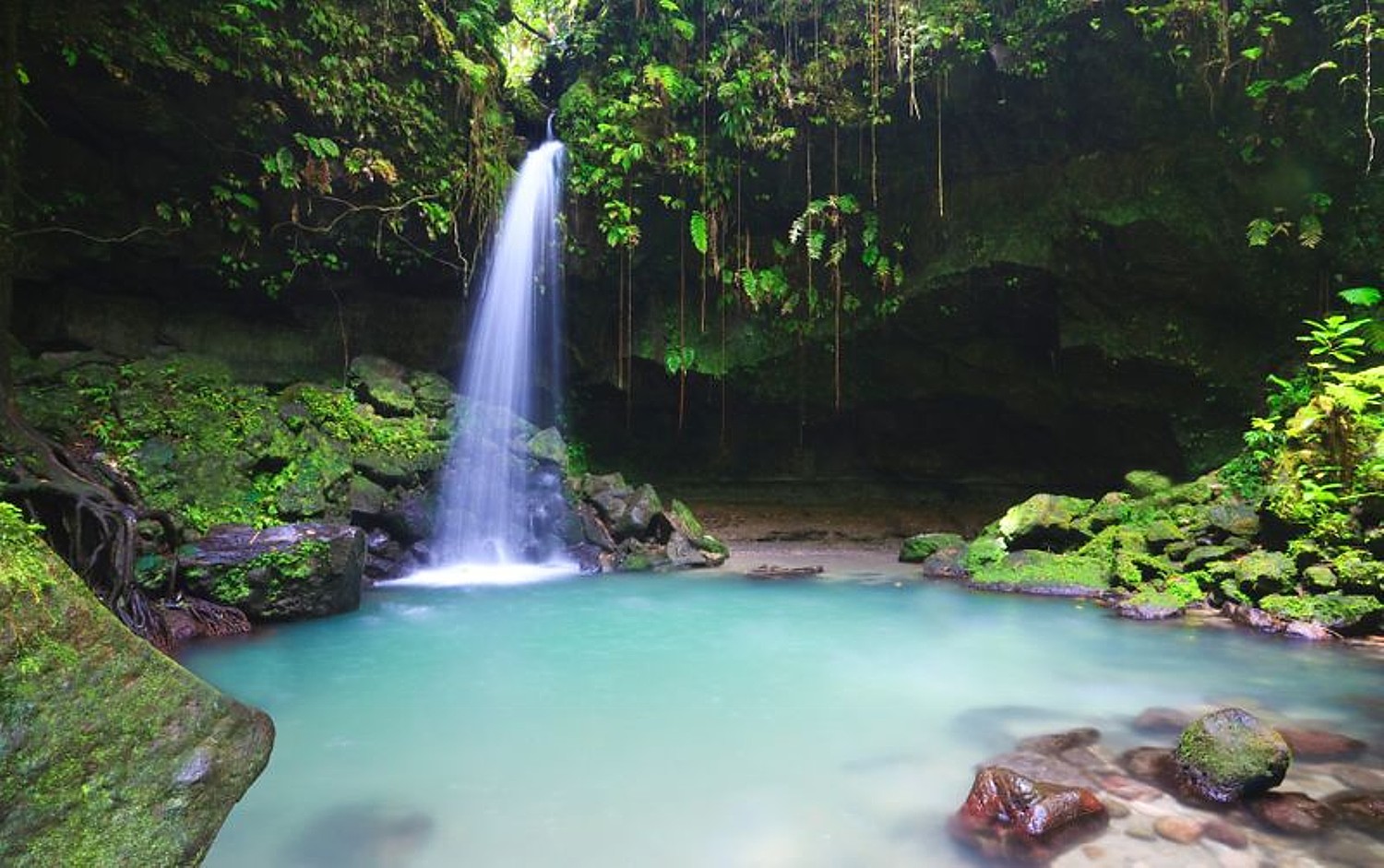
Morne Trois Pitons National Park, Dominica, known as “the Nature Island of the Caribbean” (photo: Dominica)

Dominica, the “Nature Island of the Caribbean,” continues to lead the way in eco-conscious travel, integrating sustainability into everyday life. Offering a balance of preservation and experience, Dominica is a model for sustainable tourism in action. Visitors can explore the UNESCO-listed Morne Trois Pitons National Park, engage in conservation efforts and discover the island’s rich cultural heritage. Through a blend of community-led conservation, innovative eco-luxury and immersive nature experiences, the island offers travelers meaningful ways to connect with and support the environment. Visitors can take part in hands-on conservation experiences like sea turtle nesting season at Rosalie Bay and join rare, responsibly guided encounters with resident sperm whales through Secret Bay’s Swimming with the Whales & Marine Safari, supported by the world’s first marine protected area dedicated to the species. Across the island, eco-forward properties like Coulibri Ridge and Secret Bay continue to redefine sustainable luxury, complemented by low-impact activities such as guided e-bike tours and cultural experiences like the Roseau History Tour; Sea Cliff Eco Cottages’ offers “garden-to-glass” Cocoa Martini, crafted using upcycled cacao husks in partnership with a local chocolate producer. Dominica also has one of the Caribbean’s most diverse and untouched trail systems. Its annual Hike Fest invites travelers to explore iconic landscapes, from Boeri Lake and Chemin Létang to the legendary Boiling Lake, through guided hikes taking place on Saturdays in May.
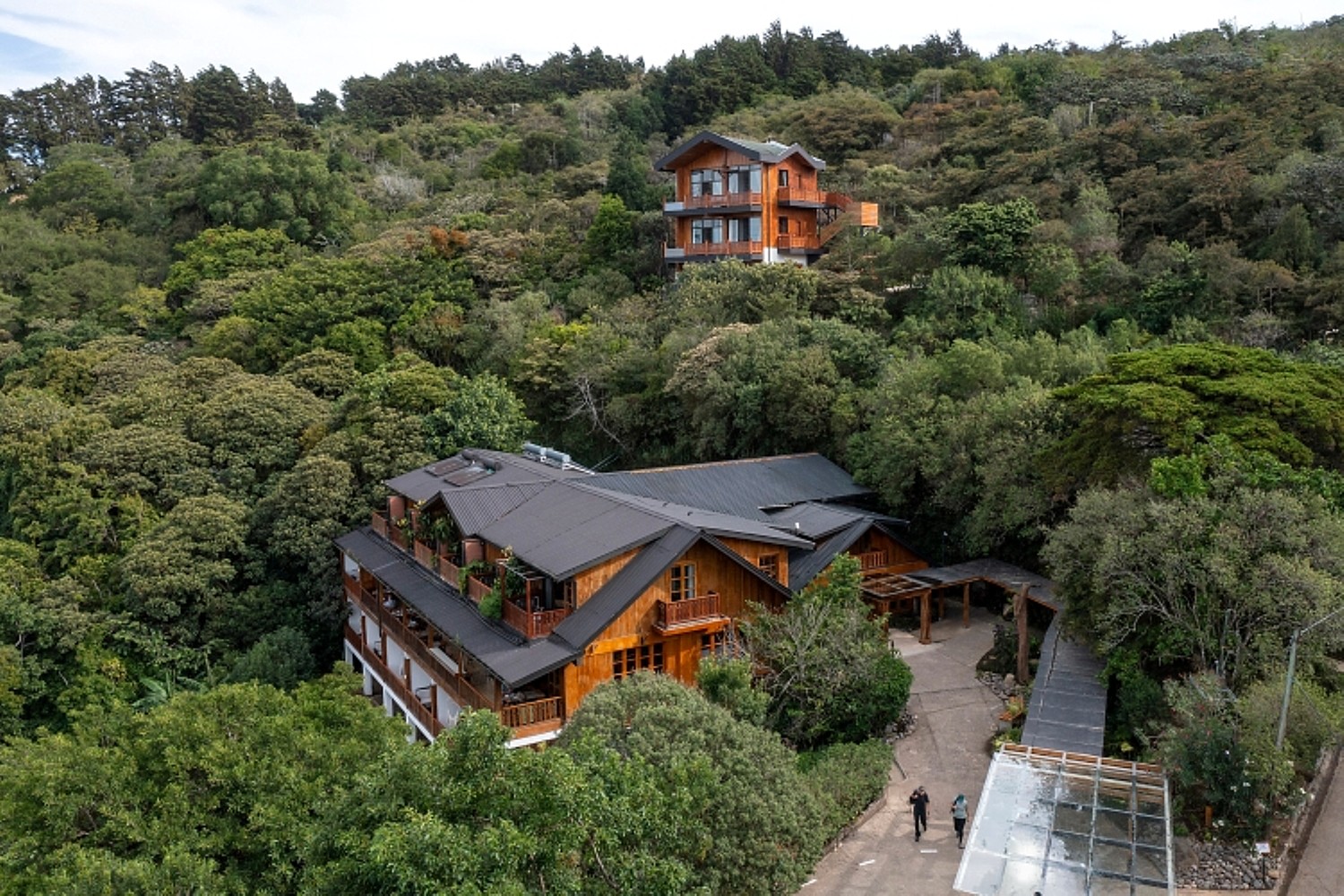
Hotel Belmar in Costa Rica’s cloud forest (photo: Hotel Belmar)

High in Costa Rica’s cloud forest where regeneration is visible and measurable, Hotel Belmar is a family-owned icon. Finca Madre Tierra, recognized as Costa Rica’s first carbon-neutral farm, supplies eggs, dairy, shade-grown coffee, sugarcane, and seasonal produce to the hotel. Guests can visit milk cows, learn cheese-making, pick coffee, and press sugarcane, deepening their connection with Monteverde’s agricultural traditions. On property, Belmar closes the loop through composting and a biodigester that turns organics into clean gas, making farm‑to‑table‑to‑farm a daily practice. Sustainability in practice: Belmar’s bio-intensive garden plots feed regenerative dining, garden-to-glass mixology that replaces bottled inputs, a plastic-free bar program, environmentally preferable products, and an air‑dry laundry solarium that reduces energy consumption. Rooms and shared spaces rely on beautifully crafted furnishings, supporting regional makers while celebrating Monteverde’s woodworking heritage and its long tradition of forest-based craft. In the forest, SAVIA employs local forest mobility experts, uses tree-friendly anchoring with high-tension ropes and cables rather than bolts, and offers themed expeditions from dawn birding to nightfall canopy study, creating paid interpretive work while keeping impact light in a rare ecosystem known for exceptional biodiversity.

Guests can also participate in programming like Monteverde Exploration with local guides and farm-to-table experience which generate income to farmers, educators, and naturalists and sends guests home with transferable skills in composting, pickling and planning. Every stay helps to underwrite a year-round economy tied to food, music, ecology, and science, supporting both the local community and the surrounding forest. Multigenerational ties to local farmers, craftspeople, guides, and musicians help sustain the region’s distinctive culture, creating a shared ecosystem of livelihoods that strengthens the surrounding community while helping to protect the cloud forest’s special environment. The hotel’s Artist Residency Program further expands this cultural exchange, inviting artists to spend time on the property and develop new work inspired by the cloud forest (hotelbelmar.net).
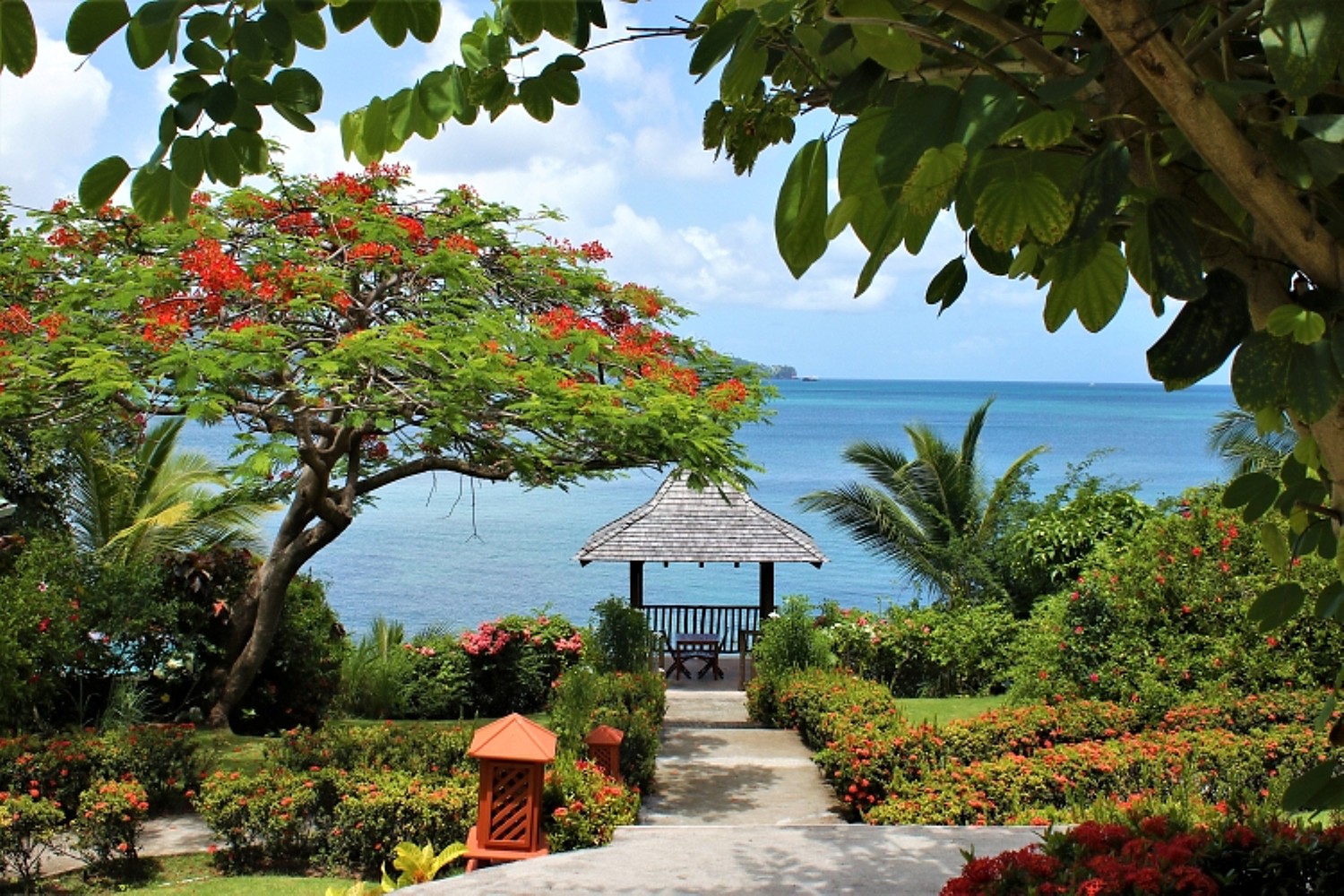
Calabash Cove Resort & Spa integrates regenerative, low-impact operations into its boutique, adults‑only experience on Saint Lucia’s coast (photo: Calabash Cove Resort)

Set on a secluded hillside overlooking Bonaire Bay along Saint Lucia’s biodiverse northwestern coast, Calabash Cove Resort & Spa integrates regenerative, low-impact operations into its boutique, adults‑only experience. The resort maintains a strict plastic-free policy, eliminating disposable containers and using recycled-material lunch boxes and biodegradable straws. All hot water is solar‑heated, lighting relies on LEDs, and an on-site water‑treatment plant recycles water for irrigation. Guests receive a free reusable aluminum bottle on arrival, with free still or sparkling water refills throughout their stay to eliminate disposable bottles. Local farms supply produce and seasonal vegetarian and vegan menus highlight Saint Lucia’s ingredients while reducing the footprint of higher‑impact foods. Kitchen oils are collected and repurposed to heat laundry water, further reducing external energy demand.

Sustainability in practice:  Closed‑loop practices underpin daily operations. Grass cuttings are mulched and composted, kitchen scraps are sent to a local pig farmer, and rainwater is collected for property use. Timers on pool pumps help reduce energy demand and mosquito fogging has been discontinued to allow local birdlife to flourish. Marine stewardship includes reef and turtle‑protection training led by Saint Lucia’s Fisheries Department, where staff learn to identify nesting periods, safely relocate eggs, and tag previously untracked turtles to support long‑term conservation monitoring. Landscaping is maintained by on‑staff gardeners who prioritize native vegetation and habitats, supporting wildlife that thrives along the cove’s protected shoreline. The resort’s intimate 26‑room scale keeps impact low while enabling meaningful guest participation through beach cleanups, nature-positive activities, and plant-forward dining (calabashcove.com).
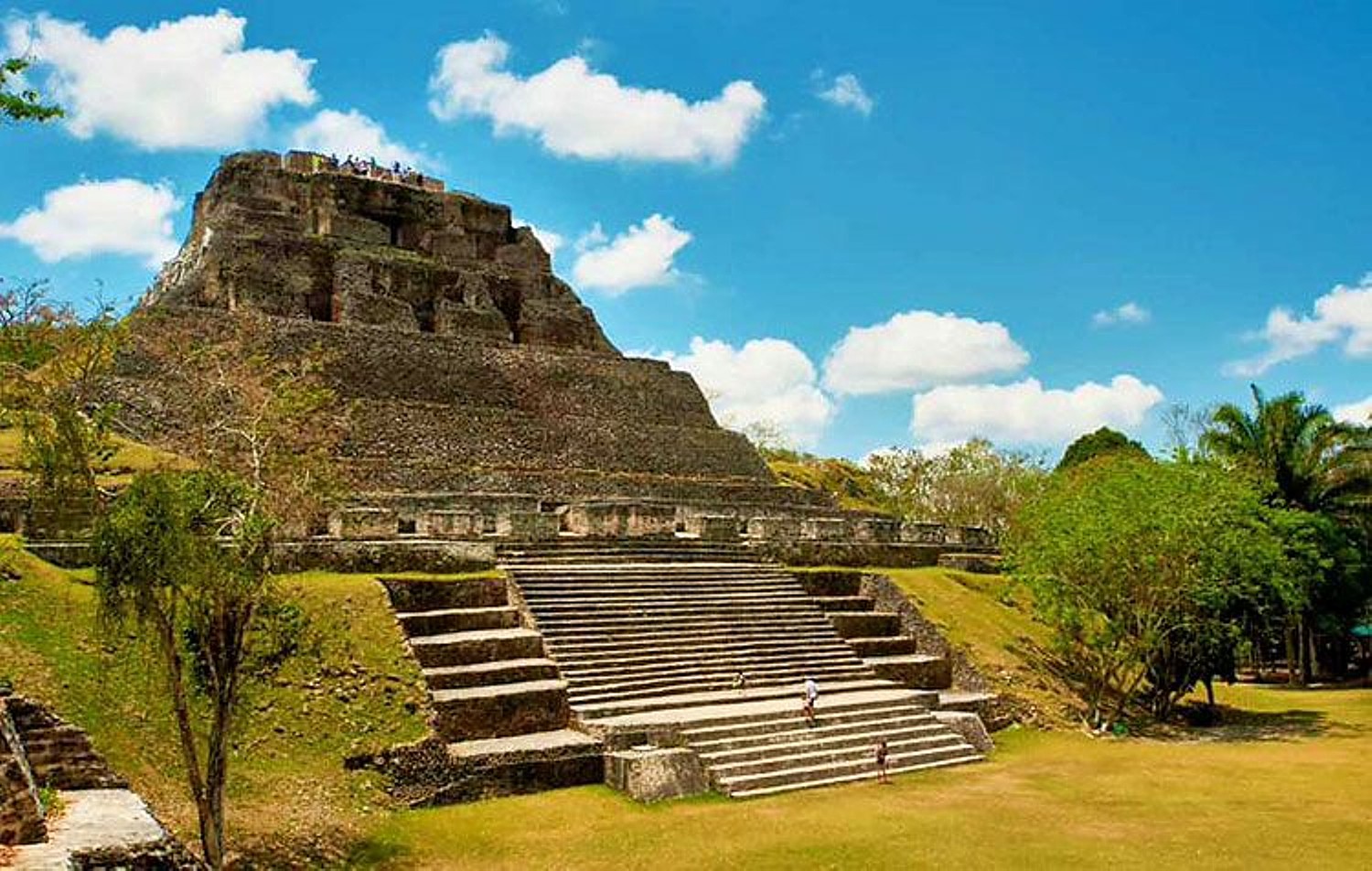
Alaia Belize guests can explore the ancient Maya site of Xunantunich on curated, conservation-minded excursions (photo: Alaia Belize)

Set on 20 oceanfront acres on Ambergris Caye, Alaia Belize, Autograph Collection  offers an upscale base for exploring one of the Caribbean’s most ecologically diverse destinations. Guests can snorkel the protected Hol Chan Marine Reserve, visit Caye Caulker, and explore the ancient Maya site of Xunantunich, all through curated, conservation-minded excursions.
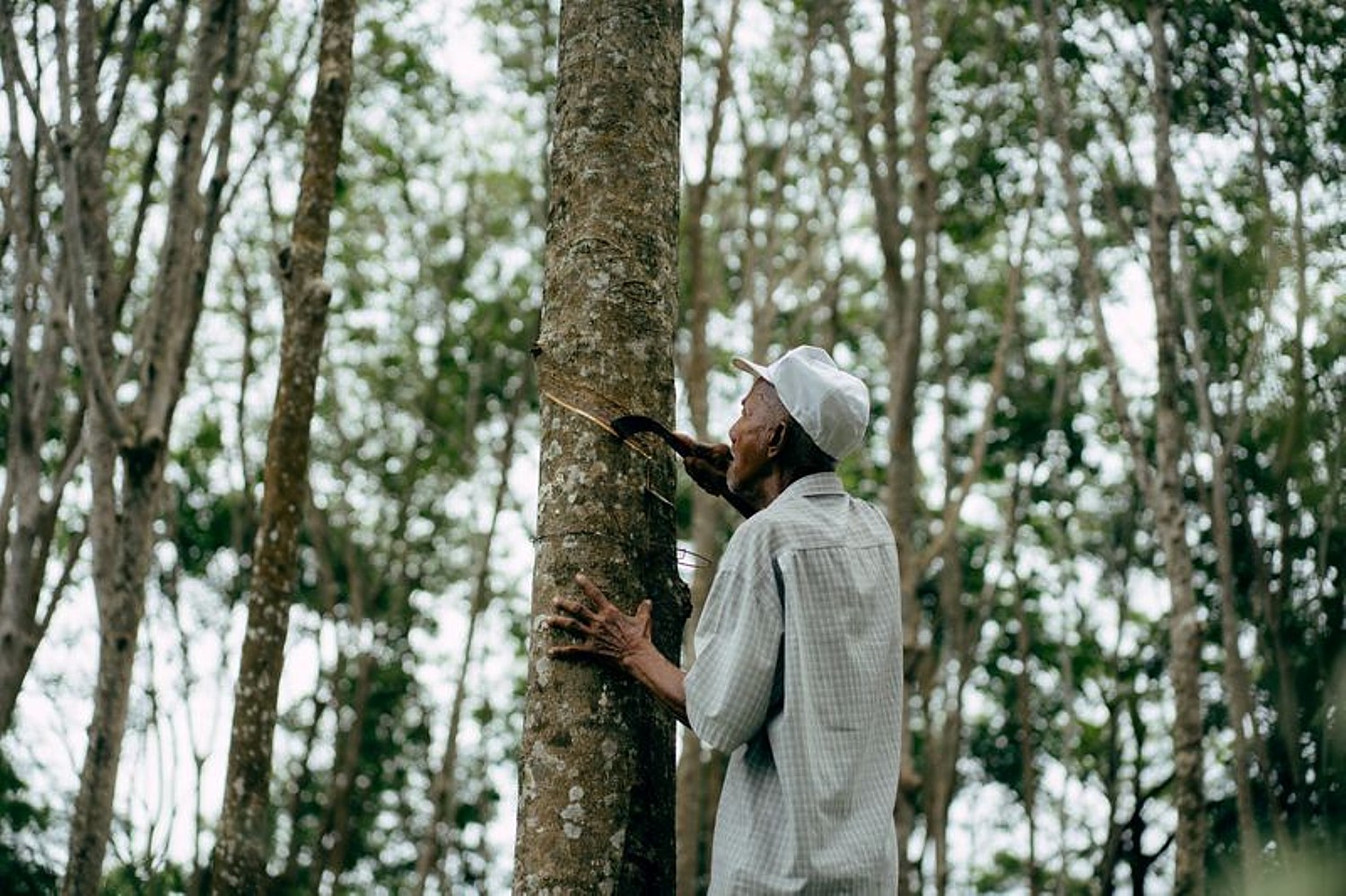
Sustainable forestry practices at Banyan Tree Phuket, Thailand (photo: Banyan Tree Phuket)

Sustainability and community-driven practices are woven throughout Banyan Tree Phuket, Thailand, nestled between white sandy beaches and coconut groves. Guests can participate in the resort’s sustainable initiatives, such as a visit to the Phuket Elephant Sanctuary, sustainable beach cleaning and cooking classes that promote sustainability and community engagement. 
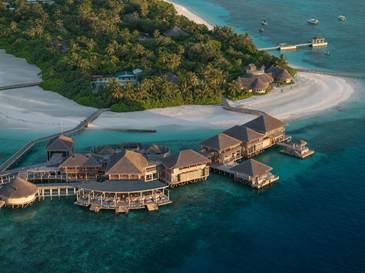
Six Senses Laamu is celebrating the impact of its Sea Hub of Environmental Learning marine education and conservation center (photo: Six Senses Laamu)

Six Senses Laamu is celebrating the impact of its Sea Hub of Environmental Learning in Laamu, the “SHELL.” This2,336-square-foot marine education and conservation center offers guests and local communitiesimmersive experiences with the local marine environment, including coral regeneration, seagrass conservation, and sea turtle research. Through the Maldives Underwater Initiative (MUI), the SHELL hosts a dedicated team of marine biologists working with partner NGOs including Manta Trust, Blue Marine Foundation, and Olive Ridley Project. Together they have grown over 10,000 baby corals across five species, released more than 12 million coral larvae onto the resort’s house reef, and conducted genetic studies of sea turtles.The team has also cataloged over1,000 turtles and 140 manta rays in Laamu Atoll, contributing to scientific research and publications.
Six Senses Kanuhura launched Kanuhura Coral Census (photo: Six Senses Kanuhura)

Six Senses Kanuhura launched Kanuhura Coral Census, thefirst long-term 3D reef monitoring program implemented by a resort globally. It usesadvanced imaging and AI to create living digital replicas of coral reefs, offering a deeper understanding of reef health, biodiversity, and resilience. These insights help guide a more mindful, long-term approach to reef restoration, ensuring that the surrounding ecosystems continue to thrive for generations to come.
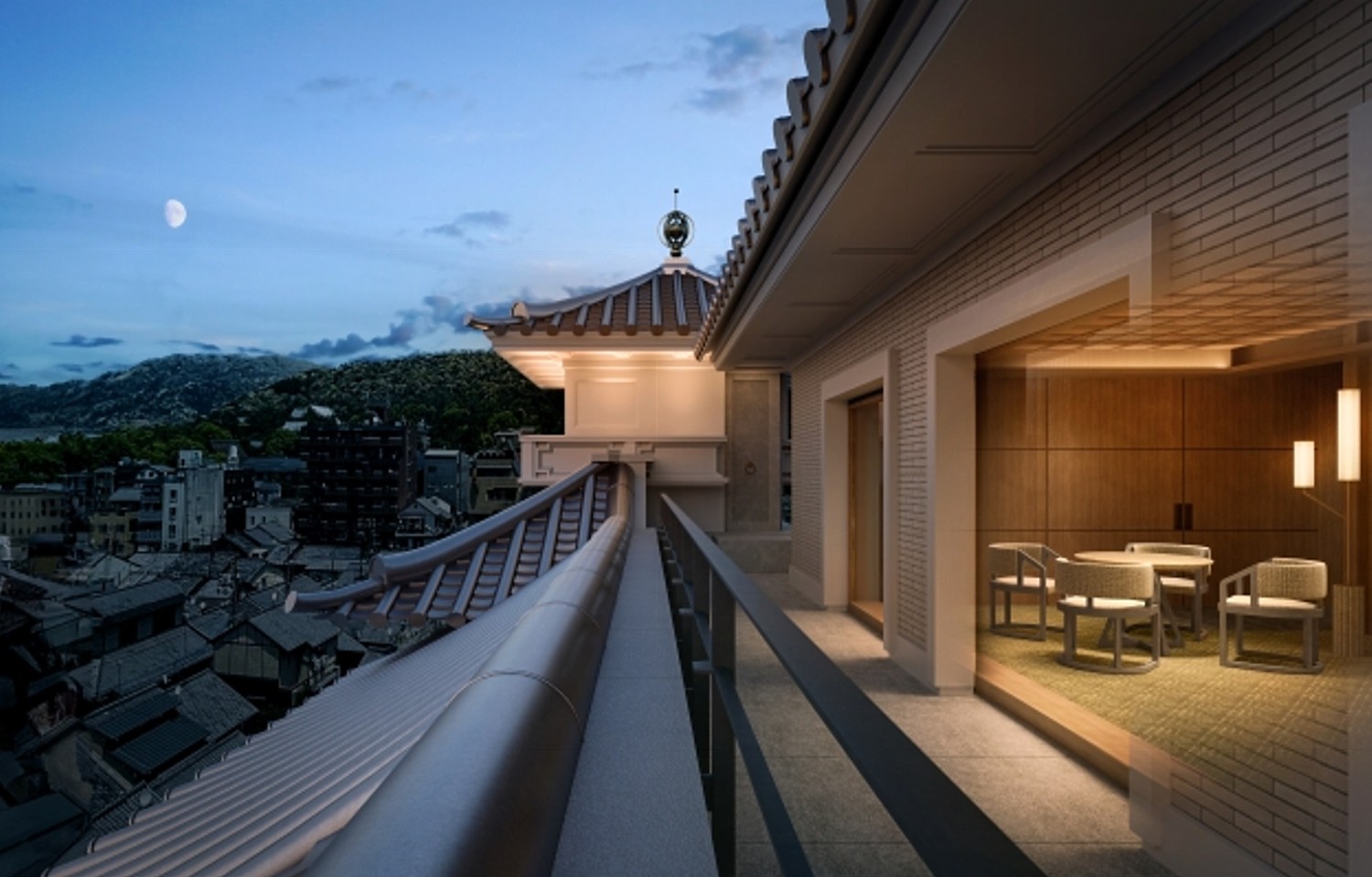
Imperial Hotel Kyoto aligns heritage with sustainability (photo: Imperial Hotels)

Imperial Hotels across Japan’s heritage cities – Tokyo, Kamikochi, Osaka, Kyoto – align heritage with sustainability. Imperial Hotel Tokyo has reduced plastics by 87.7 percent versus 2019, reducing 13.9 tons by shifting amenities to bamboo, wood, and biomass and replacing PET with paper cartons; it operates on 100 percent CO2-free electricity and advances circularity through recycling loops that turn coffee grounds into cattle feed and repurchase the resulting milk, while used cooking oil becomes Sustainable Aviation Fuel. The Osaka hotel reinforces circularity by turning kitchen waste into fertilizer and buying back vegetables grown with it and supports EV drivers with charging stations.

Imperial Hotel Kyoto, which opened March 5, 2026 inside the restored Yasaka Kaikan in Gion, preserves its cultural fabric through adaptive repurposing and reusing more than 16,000 tiles to reduce construction impact while sustaining local craftsmanship. The property supports living culture through performances. Craft atelier visits, including an imperial doll workshop, ensure fees reach local artisans. Community engagement includes food education in schools, cleanup activities in Osaka and Kamikochi; disaster support agreements in Tokyo and Osaka provide shelter for stranded residents and travelers. Imperial Hotel Kamikochi runs on net zero CO2 energy using regional hydropower and offsets, encourages refills with a lobby spring water fountain, and has reduced plastics by roughly 90 percent through amenity changes. Conservation work with the Kamikochi Beautification Association supports stewardship of the national park.
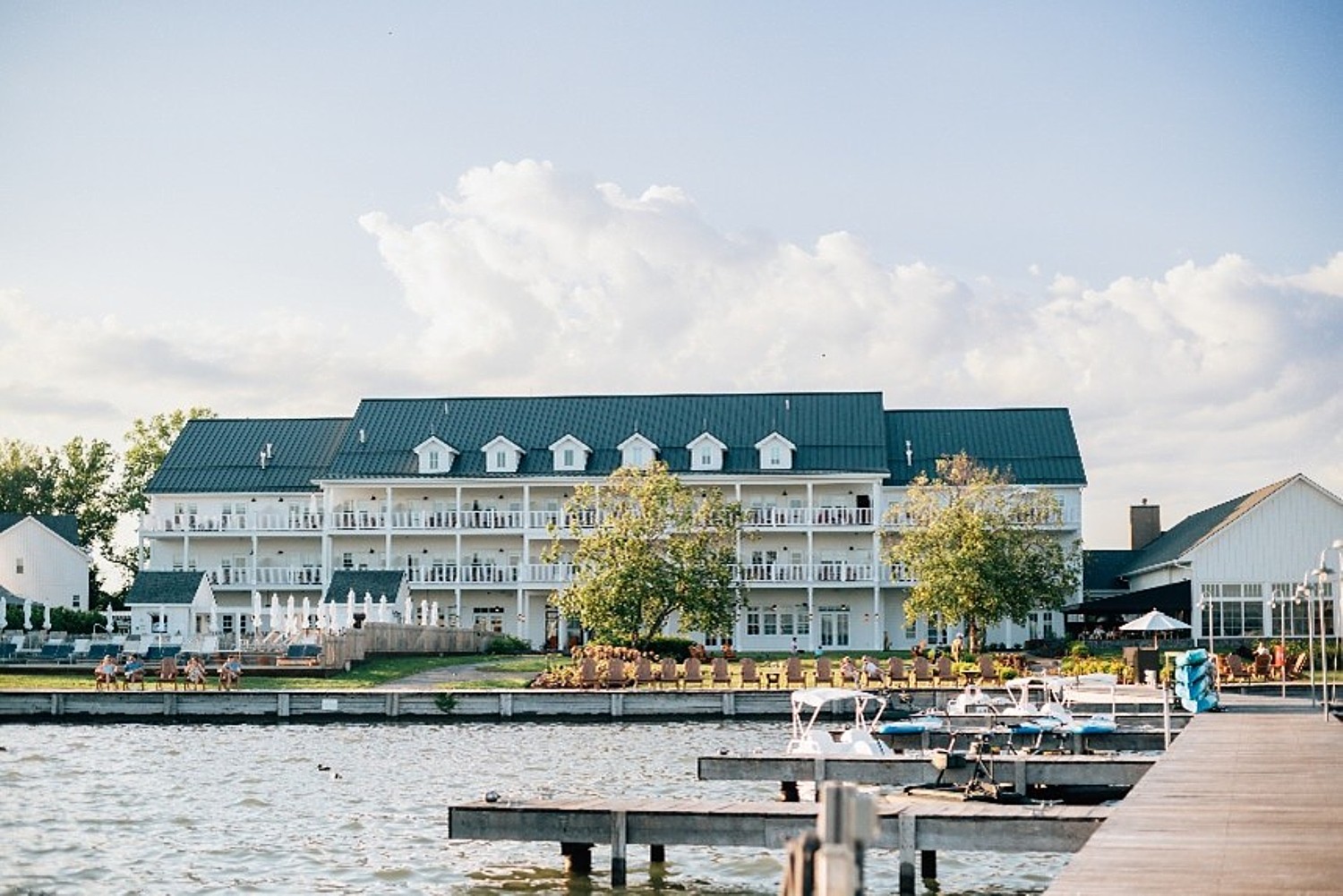
The Lake House on Canandaigua is the only hotel in New York State to receive Beyond Green certification (photo: The Lake House)

The Lake House on Canandaigua, a luxury hotel in the Finger Lakes, has earned a Beyond Green certification – the only hotel in New York State to receive the recognition – joining a global portfolio of hotels recognized for advancing sustainability, environmental stewardship and meaningful community connection. Operated by Preferred Travel Group, Beyond Green is a curated collection of hotels and resorts committed to responsible travel worldwide. Member properties are vetted against more than 50 sustainability indicators aligned with the best global practices and the United Nations Sustainable Development Goals, recognizing places where sustainability is deeply embedded in both philosophy and practice (lakehousecanandaigua.com).

See also:

Mindful Travelers Seek Out Responsible, Sustainable Travel Providers

 __________________

© 2026 Travel Features Syndicate, a division of Workstyles, Inc. All rights reserved. Visit goingplacesfarandnear.com and travelwritersmagazine.com/TravelFeaturesSyndicate/. Blogging at goingplacesnearandfar.wordpress.com and moralcompasstravel.info. Visit instagram.com/going_places_far_and_near and instagram.com/bigbackpacktraveler/ Send comments or questions to FamTravLtr@aol.com. Bluesky: @newsphotosfeatures.bsky.social X: @TravelFeatures Threads: @news_and_photo_features ‘Like’ us atfacebook.com/NewsPhotoFeatures

Tour Companies Respond to Travelers Prioritizing Meaningful, Wellness, Active, Adventure Experiences

Discovery Bicycle Tours’ biking in Cambodia tour hits multiple trends, satisfying the wanderlust for active, culturally rich adventures that are also especially welcoming for women traveling solo © Karen Rubin/goingplacesfarandnear.com

by  Karen Rubin, Travel Features Syndicate, goingplacesfarandnear.com

More than ever, travelers are prioritizing meaningful, wellness-focused, experiences, active adventures, and authentic connections with off-the-beaten-path destinations and communities. This is the finding of Backroads, a global trailblazer in active travel since 1979, in its Top Adventure Travel Trends for 2026. The report is based on early guest bookings and insights from its worldwide team of Trip Leaders and Travel Experts representing more than 60 countries across 550 itineraries worldwide.

Indeed, adventure travel is now one of the fastest-growing segments in tourism, with global adventure travel projected to surpass $2 trillion by 2032, according to the Adventure Travel Trade Association. At the same time, wellness-driven trips are accelerating worldwide as travelers seek meaningful, restorative, experience-rich vacations over passive leisure, a finding confirmed by the Global Wellness Institute.

The good news is that travel companies are catering to these trends with programming.

Backroads’ Top Adventure Travel Trends for 2026 

One of biggest trends: women traveling solo – together joining small-group programs – here completing the four-day Inca Trail hike/camping adventure to Machu Piccu, Peru © Karen Rubin/goingplacesfarandnear.com

Women and Solo Travelers on the Rise: Across travel, adventures designed for women are surging as friends, family and solo travelers seek connection, immersive confidence-boosting experiences and a sense of community. Backroads bookings reflect this shift, with demand for its Women’s Adventures projected to grow 100% in 2026. The solo travel market is expected to grow 14% over the next five years, with women over 50 a major driver of this momentum.          
What’s Trending? Backroads England’s CotswoldsPeruCanadian Rockies Trips. 

Family Togetherness Across the Globe: Prioritizing real-world experiences over screen time, modern families are seeking active vacations that spark connection and create lasting memories. Making the most of school breaks throughout the year, parents and grandparents with kids of all ages are booking adventure travel in record numbers.
What’s Trending? Backroads Trips for Families with Kids & TeensTeens & 20s and 20s & BeyondBrittany & NormandyCroatia and Iceland.     

Young professionals seek adventure: trekking up Mount Bromo volcano in East Javaa Indonesia for the sunrise © Eric Leiberman/goingplacesfarandnear.com

Young Professionals Seeking Adventure: Millennial and Gen X travelers are fueling strong growth in adventure travel, driven by a clear desire for active exploration balanced with comfort, camaraderie and iconic destinations. This cohort is also poised to benefit from an unprecedented $27 trillion wealth transfer by 2045, expanding opportunities to prioritize meaningful, experience-driven travel.
What’s Trending? Backroads 30s & 40s Trips (small-group luxury trips designed for active and adventure-seeking Gen X and Millennial travelers): Peru Lodge-to-Lodge TrekkingDolomites Hut-to-Hut Hiking and Santorini & Crete Multi-Adventure.

A lust for human-powered travel: finishing a self-guided bike tour from Venice to Croatia © Karen Rubin/goingplacesfarandnear.com

Nostalgia for Human-Powered Travel: From acoustic (non-electric-assist) biking for traditional cyclists eager to cover the miles using their own muscle power to hiking epic mountains, travelers are slowing down and rediscovering the rewards of moving with their own strength. By staying longer in one region or embracing human-powered adventure in small groups, guests are able to dive deeper into local culture and landscapes.
What’s Trending? Backroads Unplugged (non-electric-assist) Bike Tours in Croatia, Portugal’s Algarve, Tuscany and Nova ScotiaArgentina and Chile’s Patagonia Hiking & Walking Tours.

Frontier Islands: Rugged Archipelagos as the New Darling: Moving beyond classic island escapes, travelers are gravitating toward rugged, culture-rich archipelagos, places defined by dramatic cliffs, volcanic ridges, fishing villages and wide-open trails. These “frontier islands” appeal to active travelers seeking big scenery, epic hiking, cooler climates and a sense of remoteness that traditional beach islands can’t deliver.
What’s Trending? Backroads Canary IslandsCyprusDenmark IslandsLofoten Islands and Portugal’s Azores Trips. 

Trip Stacking, On and Off-Season: Travelers are increasingly “stacking” their journeys by booking back-to-back trips or even three-stop itineraries to maximize a single long-haul flight. This reflects a growing shift toward sustainable, efficient travel, where guests make the most of every mile and every moment away. Off-season exploration is also on the rise, with more travelers heading out earlier in spring, later in fall and throughout the winter for a fresh take on familiar places. Backroads has seen a more than 6% increase in guests booking consecutive trips since the pandemic, with continued growth projected on the horizon.
What’s Trending? Backroads NorwayJapan and Spain Trips. 

Active culinary travel talks off: a cooking class in Paris © Eric Leiberman/goingplacesfarandnear.com

Active Culinary Travel Takes Off: Blending outdoor activity with regional food and wine experiences is a travel style that continues to grow as travelers seek culturally rich, experiential trips. From cooking classes and local farmers market visits to stays at Relais & Châteaux properties, Backroads Active Culinary Trips that unite adventure, flavor and luxury are gaining momentum across key regions.
What’s Trending? Backroads Basque CountryTuscany and Provence Trips.

Sleeping in Huts & Mountain Lodges Is In: Travelers are increasingly choosing mountain lodges and huts and historic hideaways, especially in off-the-beaten-path destinations. Bookings for these laid-back, comfortable stays are surpassing expectations and up more than 170% since 2024, as guests seek accommodations that capture the essence of a place and seamlessly blend activity, discovery, relaxation, sustainability and wellness. Travelers can find these authentic stays on many Backroads trips including Hut-to-Hut and Lodge-to-Lodge offerings.
What’s Trending? Backroads Dolomites Hut-to-HutFrench & Italian Alps Lodge-to-Lodge and Pyrenees Lodge-to-Lodge Trips.

“We’re seeing a clear trend of guests using travel as a way to connect with like-minded travelers, with local communities, with the environment and, ultimately, with themselves,” said Tom Hale, Backroads Founder, President and CEO. “Active travel is becoming part of the rhythm of their lives, and they like creating that rhythm on their own terms, now and into the future.”

What does adventure tourism look like in 2026? Active travel blends movement, connection and wellness to create meaningful, authentic vacation experiences. In response to this growing demand, Backroads enters 2026 with new itineraries, new destinations and expanded trip categories, along with anticipated growth of more than 10%, nearly double its post-pandemic pace. Learn more about Backroads at www.backroads.com or call 800-462-2848.  

Soft Adventure

Travelers are seeking out accessible, lower-risk activities that cater to a wider demographic, including multi-generational families and first-time adventurers. This demand is strongest for holidays that successfully blend active elements—like hiking, trekking, and biking—with comfortable, enriching cultural experiences. Here is a sampling of “soft adventure” travel experiences:

Biking (and boating) from Bruges to Amsterdam with BoatBikeTours © Karen Rubin/goingplacesfarandnear.com

Boat and Bike Europe: From Amsterdam to Paris: Bike past windmills in the Dutch countryside, sip Belgian beer on a historic square, and enjoy the French capital’s grand boulevards while traveling at a relaxed, enriching pace on Boat Bike Tours’ new 10-day tour from Amsterdam to Paris. Along the way, settle into modern, comfortable accommodations aboard the new Magnifique X barge, with extensions available in both major cities (https://www.boatbiketours.com/tours/through-europes-heartland-between-amsterdam-and-paris/)

Hike and Cruise Turkey: The Carian Coast: Follow the herb-lined footpaths and ancient roads of the Carian Trail on a new, 15-day tour from Peter Sommer Travels. Hike through hills swathed in pine and olive to atmospheric ruins, then enjoy comfortable accommodations and transportation among the deep inlets and secluded coves offshore aboard a traditional, stylish gulet while cruising the beautiful, remote Carian Coast.  (https://www.petersommer.com/tours/walking-carian-trail-turkey-extended)

Exploring Incan sites of the Sacred Valley, Peru © Karen Rubin/goingplacesfarandnear.com

High Andes and Salt Flats: Peru and Bolivia Adventure: Explore the iconic natural and cultural wonders of the Andes on an accessible journey spanning Peru and Bolivia. Traverse the Uyuni Salt Flats, visit Indigenous communities on the shores of Lake Titicaca, and experience historic Incan sites of the Sacred Valley, all from carefully selected, comfortable accommodations that prioritize local authenticity and high quality (https://www.gondwanaecotours.com/adventure-tours/peru-bolivia-from-salt-flats-to-sacred-lakes-adventure/)

Singletrack in the Dakotas: Maah Daah Hey Mountain Biking: Pedal through the wild, rugged terrain of the North Dakota Badlands on the legendary Maah Daah Hey Trail. This guided mountain biking tour covers the most scenic singletrack sections, with full support, catered meals, and comfortable nights spent glamping under the vast, starry skies, offering an immersive national park experience without the crowds (https://escapeadventures.com/tour/maah-daah-hey-singletrack-mountain-bike-tour/)

Dude Ranch with History: Rancho de la Osa, Arizona: Celebrate the centennial of the dude ranching industry in 2026 with a stay at Rancho de la Osa, a ranch welcoming guests for over 100 years. Explore the high desert south of Tucson, Arizona, on horseback, riding trails frequented by U.S. presidents and legends, then enjoy a cool drink in the Cantina, a building that dates to 1722, and put up your feet in colorful Southwestern accommodations (https://www.ranchodelaosa.com/)

Snorkeling with sea lions in the Galapagos © Karen Rubin/goingplacesfarandnear.com

Scalesia Lodge: Galapagos Island Basecamp, Ecuador: Located on Isabela Island in the Galápagos, this lodge is designed as a sustainable and stylish base for exploring the unique wildlife and geology of the archipelago. Activities include accessible volcano hikes and snorkeling with sea lions, delivered with high-touch service while guests stay in elevated, spacious, geodesic dome tents with private balconies (https://www.scalesialodge.com)

Bear viewing and kayaking in the Kenai Peninsula, Alaska with Gondwana Ecotours (photo: Gondwana Ecotours )

Bear Viewing and Kayaking: Kenai Peninsula, Alaska: Witness the extraordinary sight of brown bears catching salmon at the famed Brooks Falls and explore the stunning fjords of Kenai National Park on a multi-day wildlife tour. This package is ideal for nature lovers seeking close-up wildlife encounters without the strenuous demands of deep backcountry trekking, offering scenic kayaking floats and comfortable lodge-style accommodations each night (https://www.gondwanaecotours.com/adventure-tours/kenai-brooks-falls-grizzly-bear-tours-alaska/)

Human-Powered Adventures to Reset Your Internal Clock

In an era of hyper-connectivity and AI-driven schedules, the greatest luxury isn’t a faster Wi-Fi signal, it’s the ability to disconnect. Human-powered travel is the breakout trend of 2026, trading engines for oars, pedals, and hiking boots. By moving at the speed of your own heartbeat, the landscape shifts from a blur outside a window to an immersive, sensory experience.

From the rugged coast of Tasmania to the quiet trails of Slovenia, here are a few ways to power your own adventure:

The Lakeside Loop: Eurobike (Lake Garda, Italy): Experience Italy’s famous lake at a pedal stroke’s pace. Eurobike offers a charm tour around Lake Garda, combining active days on the bike with stays in high-end accommodations. Cycling through olive groves and lakeside vineyards provides a sensory reset that no high-speed train could ever replicate. 

The Slovenian Summit: Eurohike (Alpe-Adria-Trail): Walking is the ultimate analog movement. Eurohike takes you to the heart of the Julian Alps on a 7-day trek along the Alpe-Adria-Trail. Moving through Slovenia’s emerald Soča Valley and high-altitude mountain pastures, this journey is designed to synchronize your pace with the natural world.

The Alpine Cycle: Ride & Seek (Australia): Forget the tour bus; the only way to truly reset across the diverse landscapes of the Southern Hemisphere is on two wheels. Ride & Seek has launched an epic journey from Sydney to Hobart, crossing the Bass Strait to tackle the wild, winding roads of Tasmania. It is a test of endurance that rewards you with untouched coastal views and a profound connection to the rugged terrain.

More active/adventure tour companies:

Active Adventures, activeadventures.com

Austin Adventures, austinadventures.com

Butterfield & Robinson, butterfield.com

Duvine Cycling + Adventure co., duvine.com

EF Go Ahead Tours, goaheadtours.com

Exodus Adventure Travels, exodustravels.com

Explorateur Journeys, explorateurjourneys.com

G Adventures, gadventures.com

Inspiring Vacations, inspiringvacations.com

Intrepid Travel, intrepidtravel.com

Lindblad Expeditions, expeditions.com

Nat Geo Expeditions, nationalgeographic.com

Overseas Adventure Travel, oattravel.com

Pure Adventures, pure-adventures.com

Sierra Club, outings.sierraclub.org

VBT/Country Walkers, vbt.com

Wilderness Travel, wildernesstravel.com

Wild Frontiers, wildfrontierstravel.com (March special: Wild Frontiers is offering up to 100% off single supplement for solo travelers on select 2026-2027 departures) 

__________________

© 2026 Travel Features Syndicate, a division of Workstyles, Inc. All rights reserved. Visit goingplacesfarandnear.com and travelwritersmagazine.com/TravelFeaturesSyndicate/. Blogging at goingplacesnearandfar.wordpress.com and moralcompasstravel.info. Visit instagram.com/going_places_far_and_near and instagram.com/bigbackpacktraveler/ Send comments or questions to FamTravLtr@aol.com. Bluesky: @newsphotosfeatures.bsky.social X: @TravelFeatures Threads: @news_and_photo_features ‘Like’ us at facebook.com/NewsPhotoFeatures

Celebrating Jack London’s 150th Makes Sonoma County, California Visit Extra Special This Year

Visiting Jack London State Historic Park gives intimate insight into the iconic novelist during the 150th anniversary of his birth, including how he pioneered sustainable farming techniques on his “Beauty Ranch.” © Karen Rubin/goingplacesfarandnear.com

By Karen Rubin, Travel Features Syndicate, goingplacesfarandnear.com

A major highlight for a visit to Sonoma County, California, this year takes place at one of my favorite places: Jack London State Historic Park in Glen Ellen:  the celebration of 150th anniversary of novelist Jack London’s birth, with a full year of public programming and special events.

Planned events through 2026 include a quarterly speaker series featuring scholars and London’s great-granddaughter, a “Call of the Wild Day” family celebration with art, music, and guided walks, and gala events. The program also introduces new offerings such as an online “Around the World on the Jack London Trail” guide and themed trail challenges to highlight London’s global travels and local legacy. This yearlong initiative aims to blend heritage interpretation with immersive experiences in a beautiful, hike-friendly setting at a California state park. 

I am lucky to visit the state park on Jack London’s actual birthday (admission free that day!) and visit the cottage he lived in while he and his wife, Charmian, were building their dream home, Wolf House. (Wolf House tragically burned down just before they would have moved in, but you can visit the spectacular ruins.)

Visit the modest cottage where Jack and Charmian London lived and wrote while he was developing his Beauty Ranch and building Wolf House to get intimate insights their life together © Karen Rubin/goingplacesfarandnear.com

The cottage – amazingly modest for such a successful writer – is filled with original furnishings and artifacts and photos – you even see the fireproof safe where he stored his manuscripts. The cottage gives you such an intimate window into the man – you see a large office, but it is the tiny porch room with a simple cot where he slept and worked – and get a peek at his personality and idiosyncrasies (like how he liked to play practical jokes on his guests, who slept in a separate building). 

The office in the cottage is the biggest room, but Jack London preferred to do his writing in a tiny porch room © Karen Rubin/goingplacesfarandnear.com

The Cottage was the Londons’ principal home on the Beauty Ranch, which he eventually expanded to 1400 acres through acquisitions and used to experiment with sustainable farming techniques.

The office in the cottage is the biggest room, but Jack London preferred to do his writing in a tiny porch room © Karen Rubin/goingplacesfarandnear.com

London purchased the wood-framed Cottage, built in the 1860s, in 1911, along with the Kohler and Frohling Winery buildings where he housed workers and guests. They lived in the cottage while building the Wolf House, but enlarged it after the Wolf House burned in 1913 until it included some 3000 square feet of living space. Here in the cottage, he wrote many of his later stories and novels; a disciplined writer, he produced 1000 words a day, while Charmian edited, typed manuscripts and letters in the expansive office.

The tiny porch room in the cottage where novelist Jack London preferred to write and sleep © Karen Rubin/goingplacesfarandnear.com

You actually have to go out of the cottage to an adjacent building that served as the kitchen and their dining room, where you see the piano that London bought as a gift to woo Charmian.

As the docent notes, these two buildings capture Jack and Charmian’s bohemian lifestyle and their unique working relationship. (You can visit the cottage noon-4 pm.)

After touring the cottage, I take one of the many hiking trails through a redwood forest – this one to the small “lake” Jack London used for fishing.

Jack London pioneered sustainable farming techniques at his Beauty Ranch © Karen Rubin/goingplacesfarandnear.com

You realize what a visionary London was – he pioneered sustainable farming (he called it “model farming”) and ranching techniques here, experimenting and learning by trial and error (his bet on Eucalyptus trees did not turn out well). It was a noble mission for him: the docent tells me that London realized that settlers were constantly overusing the land but could mov West to new land, but when you reached California, there wasn’t much more West to go, so you better not deplete the land. He eventually expanded his Beauty Ranch to 1400 acres. Charmian wrote, “He had ideas on the profession of farming that will do the world more good than the stories he could ever write.”

Hiking through Jack London State Historic Park brings you to gorgeous views © Karen Rubin/goingplacesfarandnear.com

Not to be missed is the House of Happy Walls, the grand stone home that Charmian London and Jack London’s stepsister, Eliza Shepard, built after London died in 1916 at the age of 40 (all the more remarkable to consider his body of work in such a short life). The stunning Arts & Crafts structure was Charmian’s home from 1935 until 1952. She put it into her will that it become a museum to London. Today, the newly re-designed exhibits in the museum showcase the adventurous and inspiring lives of the Londons.

House of Happy Walls, built by Charmian London and Jack London’s stepsister, Eliza Shepard, after Jack London’s death, now serves as a marvelous museum to the novelist © Karen Rubin/goingplacesfarandnear.com
 

The fascinating exhibits help you appreciate not only what a brilliant writer and amazing adventurer Jack London was, what but what a decent human being. I came away with the intention to re-read “Call of the Wild,” then read for the first time “White Fang,” and go down the list of his many books (a bookcase in the gift shop is filled with first editions). It makes me wonder why Americans venerate the bad-boy Ernest Hemingway when Jack London is the better writer and a more noble, heroic man.

On weekends talented Piano Club volunteers play Charmian London’s 1901 Steinway grand piano bringing the House of Happy Walls to life (it was the piano that Jack London gifted to her to woo her.) (open 10-5 daily)

The ruins of Wolf House are dramatic, befitting Jack London’s novels © Karen Rubin/goingplacesfarandnear.com

From here, I hike another trail to the ruins of Wolf House – the dream house that Jack London was building that burned down in 1913 just before it was completed, at a cost of $75,000 ($1.9 million today). Ironically, with the 1906 San Francisco earthquake in mind, London had San Francisco architect Albert L. Farr, construct the 15,000-sq. ft., 26-room structure to be earthquake proof. Built in the Arts & Crafts style, the design was described as “rustic and individualistic”. Jack’s library measured 19 by 40 feet, and a two-story high living room measured 18 by 58 feet. Even in 1911, it was designed to include a water heater, electric lighting, refrigeration, a built-in vacuum cleaning system, laundry facilities (including a “steam dryer rotary wringer”) and a wine cellar. Even the ruins are impressive – and dramatic.

I stop to visit the modest grave sites of Jack London and Charmian on my way back.

Frankly, all of America should be celebrating Jack London’s 150th, the way Britain is celebrating Jane Austen.

Hiking through a redwood forest at Jack London State Historic Park © Karen Rubin/goingplacesfarandnear.com

You can visit this state park over and over and do new and different things.

Jack London State Historic Park, 2400 London Ranch Road, Glen Ellen, CA 95442, jacklondonpark.com,  707-938-5216

Before you head up the winding road to Jack London State Park, stop at the market right at the base and pick up a picnic.

Glen Ellen, a charming classically historic Californian town, is right in the middle of a score of wineries (Benziger Winery is next door to Jack London State Park, 1883 London Ranch Road, Glen Ellen, CA 95442, benziger.com, https://benziger.com/tours-and-tastings/; also, Imagery, its sister winery, is one of our favorites;), the Sonoma Regional Park (hiking), and Sonoma Botanical Garden.

Hiking along Sonoma Coast State Park provides sensational, quintessentially California views  © Karen Rubin/goingplacesfarandnear.com

Spend another day trip traveling less than an hour further to some of the most magnificent coastline in California: the Sonoma Coast State Park, where there are stunning trails that hug the cliffs and go down to beaches and get drinks and food at Fishetarian Fish Market on Bodega Bay watching the sun go down.

You may well forget what continent you are on at Safari West © Karen Rubin/goingplacesfarandnear.com
 

Get carried away to another continent at Safari West – spend a day, or even better, overnight in their glamping tents (luxurious). After 35 years, Safari West is transforming toward nonprofit stewardship through the newly formed Safari West Zoological Society — “a thoughtful step that strengthens our commitment to Research, Education, and Conservation and supports the animals we cherish for generations to come.” (Safari West, 3115 Porter Creek Road Santa Rosa, CA 95404, 800-616-2695, 707-579-2551, safariwest.com).

Finish the day with a sunset dinner at Fishetarian Fish Market on Bodega Bay © Karen Rubin/goingplacesfarandnear.com

Here is what else is new and happening in Sonoma County:

New in Wellness  

Sugarloaf Ridge State Park has introduced a recurring Forest Therapy Series as part of its Park Rx Program © Karen Rubin/goingplacesfarandnear.com

Park Rx- Forest Bathing Walks: Forest Therapy, also known as Shinrin-yoku or forest bathing is a guided walking practice that originated in Japan which focuses on slowing down, reducing stress, and engaging the senses to support mental and physical restoration. In Sonoma County, Sugarloaf Ridge State Park offers a recurring Forest Therapy Series as part of its Park Rx Program, held on the fourth Sunday of each month from March through November. Led by certified Association of Nature and Forest Therapy practitioners, the experience introduces participants to simple techniques designed to deepen presence and enhance the restorative impact of time spent in nature. The program highlights Sonoma County’s commitment to accessible, science-backed wellness experiences set within protected natural landscapes. 

Elevate Sonoma features hyperbaric sessions that increase oxygen delivery in a pressurized environment to support healing, recovery, and overall well-being, while complementary red-light therapy aims to enhance results. The clinic brings a modern health and recovery option to Sonoma County’s wellness landscape, positioning the region as a lifestyle travel destination for visitors seeking restorative experiences beyond traditional wine and outdoor offerings. 

Craft Brewing For a Good Cause  

Russian River Brewing Company, the Sonoma County brewery behind Pliny the Elder, a craft beer repeatedly named among the best beers in the world, is pairing purpose with production in 2026. The brewery has introduced Russian River 110, a West Coast–style pilsner created to support Russian Riverkeeper, the nonprofit dedicated to protecting and restoring the Russian River watershed. A portion of net proceeds from expanded production, and the beer’s first bottled release will fund local conservation efforts. The release underscores how one of America’s most influential craft breweries continues to connect its beer, its place, and its environmental stewardship, giving visitors another reason to experience Sonoma County’s craft beer scene firsthand. 

New in Wineries  

Katie Honey, who with her husband Dan Whalen acquired the historic Annadel Vineyard and Winery, hosts intimate, personalized wine-tastings in Sonoma, California’s wine country © Karen Rubin/goingplacesfarandnear.com

Sol Rei Wines, a boutique, women-owned producer known for low-histamine, low-sulfite wines that are lab-tested to be free of detectable pesticides and other residues, has opened a new tasting room in downtown Sonoma. The space is designed as a light, nature-inspired retreat that reflects the brand’s focus on purity, sustainability, and connection to the land and the craft of winemaking. Founder Katherine Kitzmiller created Sol Rei after a personal health journey led her to prioritize clean, intentional winemaking; the winery has quickly earned national honors for its 2023 vintage wines. 

Marietta Cellars  has just opened its first tasting room in downtown Healdsburg after 47 years as a Sonoma County staple known for its Old Vine Red and other approachable wines. The space, in a former police station near the Healdsburg Plaza, highlights the winery’s small-lot, artisanal selections rather than its widely distributed labels. Designed by co-owner and designer Lisa Steinkamp with a contemporary feel, the tasting room offers flights, glasses, and bottles of single-estate and experimental wines in a relaxed setting with indoor seating and a leafy patio. 

Wolves Lovers + Thieves, a new tasting room focused exclusively on sparkling wines, has opened in Glen Ellen. The launch reflects broader confidence in Sonoma County’s tasting room growth this year, with several new wine destinations debuting.  

Sonoma County Winegrowers and Reservoir launched Reservoir Farms, Sonoma, the first on-farm robotics and automation hub for vineyards and the flagship of SCW’s Farm of the Future initiative. The site includes fabrication space, an engineering workshop, and 14 acres of vineyard test blocks where startups and AgTech partners develop and test new tools with grower input. The hub addresses labor shortages, rising costs, and production pressures while supporting job growth and local innovation. Reservoir expects to bring six startups into the incubator by late 2025, strengthening Sonoma County’s leadership in sustainable, tech-driven viticulture.  To arrange a Vineyard Adventure walk at one of the group’s seven vineyards, visit sonomawinegrape.org/visit/sonoma-county-vineyard-adventures, info@sonomawinegrape.org, 707-522-5860.

New in Restaurants  

Bubbles & Delights Café, Petaluma’s newest breakfast spot, features a menu of scratch-made classics and bubbly drinks, including mimosas alongside farm-fresh eggs and hearty plates. Opening early for daily breakfast and brunch, the cafe adds a fresh, community-oriented spirit to Petaluma’s food scene.  

Aroma de Cafe has opened in the heart of Railroad Square, one of Downtown Santa Rosa’s most historic districts. Owners Luis Rodriguez and Alejandra Bravo have relocated their well-loved brunch cafe from Fifth Street to the larger Railroad Square location, where they are continuing to serve Latin and American brunch favorites. The expanded space allows the cafe to grow while staying connected to the neighborhood’s historic character and steady flow of locals and visitors. Adding to its appeal, chef Carlos Mojica of Guiso Latin Fusion has introduced a dinner-only Latin-Italian menu, broadening the restaurant’s reach from a daytime brunch favorite into an all-day and evening destination. 

Pick’s Roadside in the far northern Sonoma County town of Cloverdale has reopened with fresh energy while honoring its century-old roots. The drive-in first opened in 1923 and has become a local landmark known for burgers, milkshakes and root beer. After a complete renovation and menu reboot, the reimagined Pick’s features premium Wagyu beef burgers, classic shakes and a curated Sonoma County wine list. New owners Anidel Hospitality led the revival to preserve the site’s historic spirit and create a community gathering place with a Sonoma County Wine Country twist. The original neon sign and nostalgic feel remain.

New in Hotels  

Madeira House  a new boutique stay on the Sonoma Coast, is set where the Russian River meets the Pacific Ocean in the town of Jenner. The intimate property offers 11 rooms across three restored houses, pairing coastal restraint with warm, residential design. Many rooms offer river or ocean views, private decks, fireplaces, and select kitchenettes, while the overall experience is intentionally quiet and unplugged. With gardens, waterfront seating, and immediate access to coastal trails and beaches, Madeira House offers visitors a fresh lens on Sonoma County lodging beyond Wine Country, rooted in landscape, calm, and a strong sense of place. 

Fresh off its grand debut as the flagship resort of Appellation – a visionary, culinary-first hospitality brand founded by Michelin-starred chef Charlie Palmer and luxury hospitality veteran Christopher Hunsberger – Appellation Healdsburg announced its acceptance intoSmall Luxury Hotels of the World™ (SLH), becoming the first Appellation hotel to join SLH.  Located on the north side of Healdsburg in Sonoma County on 8 1/2 acres of lush landscapes, Appellation Healdsburg is a culinary-driven retreat designed to immerse guests in the region’s rich food, wine, and agricultural heritage. It features 108 guest rooms and suites, two pools, Terroir Spa, a thoughtful wellness program, dynamic programming, and expansive indoor-outdoor event spaces. Folia Bar & Kitchen offers progressive American cuisine fueled by live oak embers, led by Executive Chef David Intonato and Chef de Cuisine Reed Palmer, a Healdsburg native whose experience spans acclaimed kitchens including SingleThread, Blue Hill at Stone Barns and Amass in Copenhagen. After honing his craft globally, Palmer has returned home to honor Sonoma County’s agricultural heritage, shaping Folia’s menus around local ingredients and seasonal rhythms. Andys Beeline, the resort’s vibrant rooftop lounge, offers shareable bites, garden-infused cocktails and sweeping vineyard views. Channeling the region’s natural bounty into a deeply immersive wellness experience, Terroir Spa offers a sensory journey rooted in place, featuring treatments inspired by the surrounding landscape, locally sourced botanicals, and holistic rituals that reflect the rhythms of Sonoma’s land and lifestyle. At the heart of Appellation’s ethos is a celebration of craftsmanship. Through Crafted at Appellation, guests are invited to roll up their sleeves and dive into Sonoma’s creative spirit — joining local artisans, farmers, and makers in hands-on workshops that transform regional traditions into memorable, personal experiences. (www.appellationhotels.com/healdsburg or www.slh.com

Travel planning help is available from Sonoma County Tourism,   https://www.sonomacounty.com

__________________

© 2026 Travel Features Syndicate, a division of Workstyles, Inc. All rights reserved. Visit goingplacesfarandnear.com and travelwritersmagazine.com/TravelFeaturesSyndicate/. Blogging at goingplacesnearandfar.wordpress.com and moralcompasstravel.info. Visit instagram.com/going_places_far_and_near and instagram.com/bigbackpacktraveler/ Send comments or questions to FamTravLtr@aol.com. Bluesky: @newsphotosfeatures.bsky.social X: @TravelFeatures Threads: @news_and_photo_features ‘Like’ us at facebook.com/NewsPhotoFeatures

Safari West Brings Immersive Animal Adventure to California’s ‘Sonoma Serengeti’

Safari West’s Classic Safari provides close encounters with animals like the Cape Buffalo © Karen Rubin/goingplacesfarandnear.com

By Karen Rubin, Travel Features Syndicate, goingplacesfarandnear.com

It isn’t a surprise to see zebras grazing, giraffes ruminating, a rhinoceros with her 2700-pound baby, or sleeping in a luxurious safari tent and awakening to see a herd of antelope dashing in unison, when you go on safari in Africa. What is extraordinary is that this is in the backyard of Sonoma, California, better known for wineries, vineyards and winetasting. This is Safari West, which since its founding in 1993, affords an extraordinary authentic experience that makes you feel you are in Africa – the Sonoma Serengeti! – no passport, vaccinations or jetlag required.

Eric and I start our Safari West visit with the three-hour Classic Safari, consisting of about 2 ½ hours driving through three habitats across the vast, 400-acre landscape on which some 1000 animals (almost 100 different species), reside and a half-hour walk to visit mammals and birds.

Safari West’s Classic Safari provides an authentic safari adventure on the “Sonoma Serengeti”© Karen Rubin/goingplacesfarandnear.com

During the course of my 24 hours here, I will follow the Classic Safari with a Behind-the-Scenes tour with our toddler (children need to be at least four years old for the Classic Safari, though families with younger children can arrange a Private Safari) where we get to feed a variety of animals; a 5 pm buffet dinner, followed by a walk-about through a zoo-like setting.

Even our toddler gets to feed a warthog on Safari West’s Behind-the-Scenes tour © Karen Rubin/goingplacesfarandnear.com

Then, after the rest of the family leaves, I stay over for a Glamping Among the Wildlife: A Safari West Experience in one of their 30 authentic Botswana safari tents tucked into the trees, enjoying evening activities including s’mores and a movie (“Jungle Book”). Since overnight guests have no curfew, I am able to explore more at dusk, into the dark of night (borrowing a flashlight from reception), and again in the early morning when the animals are most animated. I follow the included breakfast buffet with more exploration before reluctantly leaving Safari West.

One of the 30 glamping tents tucked into the woods at Safari West © Karen Rubin/goingplacesfarandnear.com

Safari on the “Sonoma Serengeti”

For our Classic Safari, we ride in vehicles that are open on the sides and have four seats on top (reminding me of my tiger safari in India). The guides – invariably friendly, humorous, knowledgeable and unscripted so they respond to their guests’ interests (and terrific drivers) take us on rough gravel trails over hills and plains, coming incredibly close (without barriers or fences) to giraffe, antelope, ostrich, wildebeest, Cape buffalo, zebra, elands, addax, aoudad and others among the 97 species in residence.

Our guide for our 1 pm. three-hour Classic Safari, Alex Killian, invites our questions and observations which she gleans to stay in an area longer. We are riding in “Bender”, a 1950s Dodge Power wagon (it seems Safari West has bought up the fleet of Dodge Power wagons from 1940s to 1970s). About 2 ½ hours are spent driving, with about 30 minutes on a walking portion to see the primates, porcupines and birds.

You can read about these different animals and see photos but seeing them up close, in their habitat provides a whole different dimension of understanding and appreciation for behaviors and evolutionary adaptations.

Safari West’s Classic Safari provides an authentic safari adventure on the “Sonoma Serengeti”© Karen Rubin/goingplacesfarandnear.com

We go into the vast field with the giraffes– Killian tells us they are 5-6 feet tall at birth (they are delivered while the mother is standing up and are dropped six feet to the ground); 9 feet tall by one year old, and grow up to 19 feet tall. These sweet creatures – literally gentle giants – are distinguished by the fact every giraffe has a unique pattern of sports, like human fingerprints, but these spots also help in thermoregulation (at night, the giraffes walk themselves into their barn to protect from hypothermia).

Giraffes, Killian says, “speak” but in a pitch that can barely be heard by a human but sounds like a moo and use various sounds like moans, snores, hisses, and grunts, they mainly communicate with body language. Killian tells us they sleep standing up for 20 minutes at a time– only half their brain sleeps at one time – for a total of about two to three hours in the course of a day; the rest of the time they are eating or ruminating. (Later, during the Behind-the-Scenes tour, we get to meet them close up and feed them).

Killian points to  “Mango,” the only male giraffe, here, noting that the animals mate and breed naturally here; the caretakers only insuring they are healthy, and adds that Safari West will “buy, sell, trade, borrow and loan” animals with other zoos and conservancies to increase genetic diversity.

Addax, a white antelope that is critically endangered, whose horns have extra twists, which Killian explains helps cool the animal; we see one with only one horn, and she explains that if they break off, they do not grow back. © Karen Rubin/goingplacesfarandnear.com

In this plain, we also see Dama Gazelle; Gemsbok; Greater Kudu; Roan antelope and Addax, astonished at how magnificent they are with their horns and coloring.

Leaving this area through the double-fence system, we see an ostrich which seems to be “flirting” with the safari vehicle ahead of us. This is “Lucille Ball,” “She is more flirtatious when she is about to lay an egg,” Killian explains. Ostriches, Killian tells us, lay the largest eggs among the birds, equivalent to 12-24 chicken eggs in size and lay 1-3 eggs a week.

An ostrich gets flirtatious with one of the safari vehicles © Karen Rubin/goingplacesfarandnear.com

Ostriches are surprisingly large and amazingly fast – she tells us they can run 12-35 mph and though they have a brain the size of a walnut, “they are not dumb.” “It’s an ‘in the moment’ animal,” she explains. “But you don’t need to outwit a predator when you can outrun it.”

A pregnant Southern White rhinoceros with her baby © Karen Rubin/goingplacesfarandnear.com

We see a Southern White Rhinoceros mom with her two-year old baby that already weighs 2375 lbs. She is pregnant again (rhinoceros gestate for 16-18 months) and is due to deliver at any time (you can follow her progress on social media). But because the pheromones at the end of pregnancy and when she is in labor are the same as when she is in heat, they have to separate the male, who is in an adjacent area. In the wild, she says, “They spend a week together and then don’t see each other again” but the mom is very maternal. “She is very connected to her baby.” She can nurse two babies at a time. The female rhinoceros can weigh 4000-7000 lbs. A herbivore, the rhinoceros consumes 150 lbs of grass or 60 lbs of hay a day.

The zebra’s stripes are unique from zebra to zebra and even left and right sides © Karen Rubin/goingplacesfarandnear.com

We drive through more gates and come to an open area with zebra gathered around where they have just been provided grass. Like the giraffes, the zebra’s stripes are unique from zebra to zebra and even left and right sides of the animal, except for its face.

The Common Eland depends on pheromones to mate © Karen Rubin/goingplacesfarandnear.com

Close by are the Common Eland and we see a baby less than one month old (it’s been named “Nova”, consistent with the space-themed names given the herd). The Eland (“it means ‘moose’ in Dutch) is a kind of antelope, the biggest of the species (the tallest is the Kudu). 

“Nova” is a one-month old Common Eland © Karen Rubin/goingplacesfarandnear.com

“They depend largely on pheromones – it’s how they identify the others in their unit, and how they take a mate. They urinate and others take in the pheromone.” 

Our guide stops to tell us about the herd of eland © Karen Rubin/goingplacesfarandnear.com

We drive into the third habitat, the largest of the three at 100 acres.

Stunning views of antelope at Safari West © Karen Rubin/goingplacesfarandnear.com

We see the African Cape Buffalo, one of the Big 5 – that is, the 5 most dangerous animals to encounter in Africa, she tells us (lion, leopard, Black rhinoceros, African Bull elephant are the others). The Cape Buffalo are dangerous, she says, because they protect each other. “If one of their group is threatened, even if they just think it is threatened, they will still protect.”

The African Cape Buffalo is one of Africa’s “Big 5” © Karen Rubin/goingplacesfarandnear.com

We meet the Blue wildebeest from Southern Africa which Killian calls “a spare parts animal” because it has hair and horns resembling the female African Cape buffalo; stripes like a zebra; a long face like a baboon; and a heavy build in front but slender legs like an ostrich compared to its bulky front build.

“Spare parts animal” wildebeest are well adapted for their habitat © Karen Rubin/goingplacesfarandnear.com

These are adaptations to the environment, and as we watch one nuzzling a baby, Killian tells us that its long face helps the wildebeest detect humidity – and impending disaster, and that the herd in the wild, 1-5 million of them, migrate or escape danger moving together. Other animals have learned to follow their lead.

Mother and baby © Karen Rubin/goingplacesfarandnear.com

In the wild, they somehow synchronize the births to the month, timed for migration. Some 8,000 babies could have been born on the last day before migration, so wildebeest have evolved to move as fast as 55 mph, from Day 1. Here at Safari West, they somehow synchronize births to the season (rather than a month, as they might in the wild) and ‘migrate’ on property (moving down the hillside).

“Spare parts animal” wildebeest are well adapted for their habitat © Karen Rubin/goingplacesfarandnear.com


“Animals here mate naturally,” she adds. “We only make sure they are healthy.”

We spot Aoudad on the forested slope, and Killian says that while other species take a mate by showing dominance (brawn), Aoudad males pee on their beard and the ‘best’ smell gets the lady.

We spot Aoudad on the forested slope © Karen Rubin/goingplacesfarandnear.com

(Insiders tip: if photography is important to you, bring a decent SLR camera with a decent zoom lens that can capture moments and movements (cell phone cameras are good for scenics and landscapes and have their merit in difficult lighting situations). Safari photography is just as interesting a sport as hunting – only you are hunting and shooting with a camera. For avid photographers, Safari West offers a Private Photography Safari Workshop.)

After the drive portion of the Classic Safari tour, we have a walking tour of about 30 minutes, to see the porcupines, primates, mammals and birds. 

Nicobar pigeon in Safari West’s aviary © Karen Rubin/goingplacesfarandnear.com

We walk through one of the aviaries, chock full of bird varieties – crane, sacred ibis, scarlet ibis, spoon bill, cattle egret, black swan, Nicobar pigeon, to  list but a few. (We will soon return to help feed the birds during our Behind the Scenes tour).

The Caracal is a master of hunting and hiding © Karen Rubin/goingplacesfarandnear.com

We see the Caracal, a master of hunting and hiding that can jump 6-10 ft to capture a bird, take down prey 2-3x its size and when they hunt as a group, they can take down an impala.

The Patas Monkey is said to have been the inspiration for Dr. Seuss’ Lorax© Karen Rubin/goingplacesfarandnear.com

I especially love watching the Colobus Monkey and the Patas Monkey (said to have been the inspiration for Dr. Seuss’ Lorax), ring-tailed lemurs (two “old men” in their bachelor pads), and (my favorite) the Red Ruffed Ringtales. All have various forms of enrichment – like puzzles and toys, obstacles and constructions. (There is an immersive Enrichment Tour, also on my list for my next visit.)

One of the two older ringed tail lemurs lounges © Karen Rubin/goingplacesfarandnear.com

Behind-the-Scenes

Our Classic Safari ends just in time to meet up with Sarah and our 16-month old toddler to enjoy the Behind the Scenes tour where we get to feed the animals – one of Safari West’s most popular programs for good reason.

Our guide, Zoey, tells us she was part of Safari West’s Junior Zookeepers program for 12-16 year olds.

Even our toddler gets a chance to feed the Crested porcupines, Spike and Norton – notably, they don’t have the prickly quills, their quills are a softer material.

Birds flock to whoever has the blue latex glove on the Behind-the-Scenes tour at Safari West © Karen Rubin/goingplacesfarandnear.com

We go next to feed the birds in the aviary and Zoey warns us that it can be intimidating because there are so many birds and they get pushy when they see the blue latex glove and know there is food to be had. She adds that to stop the birds from rushing at you, take off the blue glove. I find it fascinating that there is such a learned behavior.

Sure enough, it is quite an experience that as we walk in, the birds swarm around us. We get to fling pieces of chopmeat (that surprises me) and watch as the biggest ones catch pieces in the air. 

Flamingoes, the oldest animals at Safari West, were brought here when Marine World closed © Karen Rubin/goingplacesfarandnear.com

We go to where there is a huge flock of flamingoes in a small pond. These, Zoey says, are the oldest animals at Safari, many came when Marine World closed in 1969. They can live to 30 years old in the wild, but can reach 60-70 years in captivity (the oldest known is 85).

We next go to the Giraffe Barn to feed “Mabel.” Coming so close to the giraffe is truly an experience.

Even our toddler gets to help feed “Mabel,” the giraffe, during Safari West’s popular Behind-the-Scenes tour © Karen Rubin/goingplacesfarandnear.com

With eating being the giraffes’ main activity, their tongues are the most distinctive feature – they can be up to 18 inches long and are prehensile to grasp and manipulate objects, so they can strip leaves from branches and maneuver around thorns and rugged bark to reach their food. Also, the front of their tongues are dark, with melanin, to protect from sunburn. They eat the leaves but leave the roots, so that their food source will renew. During the course of a day, they will consume 100 lbs of foliage.

Giraffes are notable for their prehensile tongue © Karen Rubin/goingplacesfarandnear.com

The giraffes come when the keeper calls them to go into barn overnight, to prevent hypothermia

We finish our Behind-the-Scenes tour by feeding the warthogs “Lucy”, Vigeri and Fig Newton

And now it is time for our feeding. 

Dining Out, Staying Over

Safari West offers a fixed menu buffet dinner (two seatings, at 5 and 7 pm) which is marvelous.

The meal is superb – chicken (paprika seasoning), steak (perfectly cooked over fire), rice, mac/cheese, salad (we are invited to have seconds until they run out), fresh fruit and a cheesecake dessert.

Guests who stay for dinner can wander the property until 8:30 pm; overnight guests (like me) can wander without any curfew.

(There is also a very pleasant deli where you can pick up sandwiches and such (good selection and very reasonable cost.)

Watching Addax in the field at Safari West © Karen Rubin/goingplacesfarandnear.com

Even when I go around at 7:30 pm when the sunlight is a rich golden color – I am surprised that it seems as if the animals have grabbed their coats and lunch buckets for quitting time (the porcupines are curled up), but several are very active.

The Red Ruffed lemur is the second loudest primate. I get to hear their chorus © Karen Rubin/goingplacesfarandnear.com

The three Red Ruffed Lemurs, with stunning, fluffy red fur, black faces and bright, piercing yellow eyes, are really active at this time. Earlier in the afternoon, when I came upon them, they were making extremely loud shrieks – indeed, the guide says they are the second loudest primates and can vocalize very high and low pitches at the same time, that can be heard up to a half-mile away.  Found only in Madagascar, they are matriarchal and the keeper explains that one of the three is being bullied, kept from being groomed and from eating,

A family of ring tailed lemur live on a small island © Karen Rubin/goingplacesfarandnear.com

There are S’mores at 8 pm and then they show “Jungle Book” (one of three animal-themed movies they present each night) at 8:30 pm. (Overnight guests can help ourselves to coffee, tea, chocolate an fruit as we like

From my tent, I watch the giraffes walk themselves into the barn for the night © Karen Rubin/goingplacesfarandnear.com

After the movie, I borrow a flashlight from the reception desk, and go into the darkness. I am especially interested to see if I can observe activities of nocturnal animals, but alas, it is too dark and the animals, if they are active, are too far into the darkness to be observed (perhaps on a night with a full moon it would be better and even more magical.)

By now pitch black (and grateful for the flashlight), I walk up the hill to my tent, delighted to find a luxurious, spacious room accommodating a queen bed and two cots, sufficient for a family of four, with beautiful wood floor, an enormous tile-floor bathroom stocked with the necessary toiletries like a deluxe hotel; giant screened windows on two of the walls so I can see out to a gorgeous view of the lake; and a patio where, when I walk out in the pitch black night, it seems the Big Dipper is right in front of my face close enough to touch. If it gets cold, there is a space heater and an electric blanket.

My glamping tent has all the comforts of a hotel room, but with canvas walls © Karen Rubin/goingplacesfarandnear.com

I am surprised that I do not hear more animal sounds in the night, and do not need to use the ear plugs they supply.

But I awake to the sounds of birds and mooing, and look out from my porch to see the herd of antelope running together across their field.

From my glamping tent, I watch antelope running together in the early morning © Karen Rubin/goingplacesfarandnear.com

The best part of overnighting at Safari West is being here at early morning when the animals become really active knowing they are to be fed.

Going out in the morning, I can take my time watching animals close up © Karen Rubin/goingplacesfarandnear.com

Each place i come upon, if there is a keeper, they are happy to share more information about the animals in their care.

A caretaker explains how she gives special attention to the Red Ruffed lemur which is being bullied by the matriarch © Karen Rubin/goingplacesfarandnear.com

I watch the Red Ruffed lemur being fed – one is being bullied by the matriarch, so the keeper goes in, entices two of them into a separate compartment, and gives the third special attention (she doesn’t get groomed, so the keeper pats her and feels for any health issues).

In the early morning, I get a good view of the cheetahs which eluded me the day before © Karen Rubin/goingplacesfarandnear.com

I get to see the cheetahs, pacing their enormous enclosure (they eluded me the previous day); and the hyenas devouring a thick chunk of red meat

A hyena with its breakfast of red meat © Karen Rubin/goingplacesfarandnear.com

As appropriate, the keepers incorporate enrichment into their feeding methods so the animals have to work for food. (“Most creatures are bribable with food,” our guide Killian had told us on the Classic Safari. “Food is a prime motivator.” (Safari West offers a new Enrichment Tour Experience to see how they use puzzles, toys and activities like hiding treats, to stimulate the animals’ natural behaviors and keep them mentally and physically active.)

A Patas monkey plays with one of its enrichment toys. Safari West now offers an Enrichment Tour where you can help create toys © Karen Rubin/goingplacesfarandnear.com

I go into the Elephant room for breakfast (included for overnight guests and served from 7-10 am) – eggs, oatmeal, cereals, yogurt, muffins, toast/bagels, fresh squeezed OJ – before going for another walk-through the animal enclosures.

As an overnight guest I need to be out of the tent by 11, but I am welcomed to stay and wander about as long as I want.

Overall, with all these encounters over the past 24 hours, I must have made some 10 tours through the animal enclosures and each time, the experience is different – I see animals that eluded me before, or doing different behaviors, or in different light, or just happening upon a guide providing information I hadn’t known before.

Mission to Promote Conservation

I am really impressed in how well Safari West fulfills its declared mission to actively promote conservation and environmental education.

“At Safari West it’s all about the animals. Always has been, always will be.” These animals become ambassadors for their species, promoting understanding and appreciation to help each person make well-informed choices for environmental protection and wildlife conservation.

Over the past decades, Safari West has evolved into a top-tier wildlife destination.

Safari West began in the late 1980s when Peter Lang purchased 400 rolling acres in the foothills of the Mayacamas Mountains. He relocated his small but growing collection of exotic wildlife, converting a former cattle ranch into a world-class conservation breeding facility.

As Peter set to work establishing captive breeding programs for the varied and often critically endangered species in his collection, he worked closely with local zoological facilities including the San Francisco Zoo where he met the lead curator, raptor-specialist and his future wife, Nancy Lang. After four years of operating their conservation breeding facility behind closed doors, Peter and Nancy opened their home to the public on July 4th, 1993.

Safari West opened glamping tents to give visitors a whole new experience © Karen Rubin/goingplacesfarandnear.com

Then, in the late 1990s, Peter looked to expand the activities available to guests and built the Safari West Tent Camp, importing custom-built tents from Lobatswe, Botswana. With the Watusi Pond as the center, the tent camp sits between the Gazelle Pasture, the Hundred Acres, and the Vista habitats, overlooking the antelope and giraffes. The 30 glamping tents are mounted on raised platforms, with hardwood floors, electricity, running hot and cold water, and even en suite bathrooms.

The Langs’ devotion to their animals was tested and proven during the horrific Tubbs wildfires that struck in October 2017.

When I ask our safari guide about how they managed during the wildfires, she replied, “We didn’t save the animals, they saved us. They graze so there was nothing for the fires to catch onto, and the oak trees are resilient.”

She relates that when sheriffs came to order an evacuation at around 11 pm, the 90 guests on the property just grabbed their keys and left within 15 minutes.” Helicopters fighting the fires used water from the lake.

But she seems to have understated what happened because it was horrific – 250 out of Safari West’s 400 acres were scorched and the osteology lab operated by the Safari West Research, Education, and Conservation Department burned completely. Though conservation organizations were ready to help evacuate the animals, no one was allowed up the twisting mountain road, so they couldn’t have evacuated the animals.

The animals were saved because Safari West owner Peter Lang, then 76 years old, after driving through fire to evacuate their home which burned to the ground, stayed behind and for the next 10 hours, fought the fires alone. In the next couple of days, some volunteers and staff were able to come and help put out the brush fires that erupted.

All 1000 animals were saved. For his heroic efforts, Peter Lang received the 2018 American Red Cross Animal Rescue Hero Award. (Read the thrilling story by Paige Peterson reported in the New York Social Diary, https://safariwest.com/2017/11/life-after-fires/).

Safari West is ideal for family gatherings and special events – I am already planning to bring our bi-coastal family together for an overnight stay as soon as the little ones are old enough to appreciate the safari. I’ve earmarked the Enrichment Tour and Private Photography tour, especially.

Safari West, 3115 Porter Creek Road Santa Rosa, CA 95404, 800-616-2695, 707-579-2551, safariwest.com

Travel planning help is available from Sonoma County Tourism,   https://www.sonomacounty.com.

_____________________________

© 2025 Travel Features Syndicate, a division of Workstyles, Inc. All rights reserved. Visit goingplacesfarandnear.com and travelwritersmagazine.com/TravelFeaturesSyndicate/. Blogging at goingplacesnearandfar.wordpress.com and moralcompasstravel.info. Visit instagram.com/going_places_far_and_near and instagram.com/bigbackpacktraveler/ Send comments or questions to FamTravLtr@aol.com. Bluesky: @newsphotosfeatures.bsky.social X: @TravelFeatures Threads: @news_and_photo_feature