Tag Archives: Angkor Wat

Discovering Cambodia’s Angkor Archeological Park, Among the World’s Most Fabulous Monument Complexes

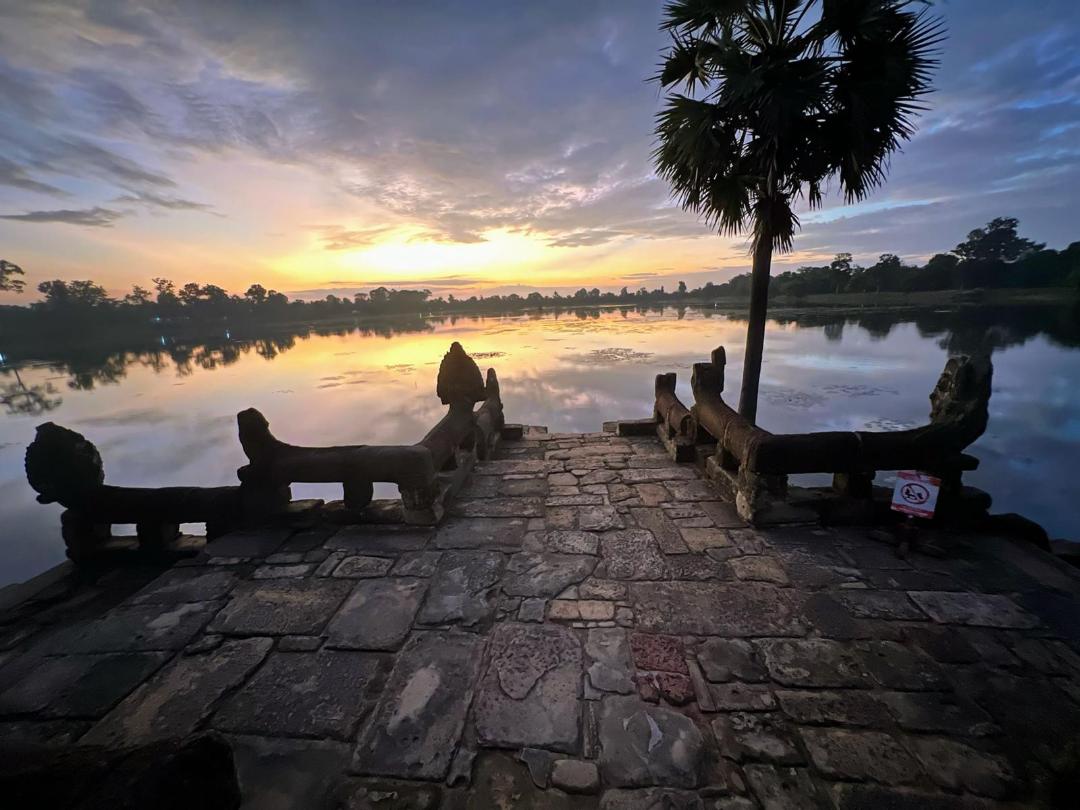
The dramatic sunset scene of the warrior statues on the Tonle Om Gate bridge outside the Preah Khan temple on our Discovery Bicycle Tours four-day Siem Reap, Cambodia pre-tour © Karen Rubin/goingplacesfarandnear.com

By Karen Rubin, Travel Features Syndicate, goingplacesfarandnear.com

Today – technically the third day of our four-day Discovery Bicycle Tours Cambodia pre-tour in Siem Reap – is our first real bike ride, planned for 36 miles. We pick up our bikes at the tourist office where we also pick up our passes for the national historic sites, and cycle right into the Angkor Archeological Park. We cycle on the Angkor Bikeway and hidden trails through the ruins and forest of Angkor. (Calista Phillips, our Discovery Bicycle Tours guide, and I have already acquired our passes on the first evening when we went to see the sunset at Phnom Bakheng; the three-day pass allows for three, nonconsecutive days of visits. Discovery purchases our tickets and reimburses me the $62 I spent.)

Biking lets us experience  the sights, sounds and feeling of Siem Reap’s countryside © Karen Rubin/goingplacesfarandnear.com

We bike on country lanes with rice paddies and fields on either side, seeing homes with thatch roofs, water buffalo. Our guide, Ta, shows us a cashew nut as it is plucked from the tree, the outer layer opened releasing a noxious acid; and the abandoned skin of a snake.

Biking lets us experience  the sights, sounds and feeling of Siem Reap’s countryside © Karen Rubin/goingplacesfarandnear.com
Biking lets us experience  the sights, sounds and feeling of Siem Reap’s countryside and how people live © Karen Rubin/goingplacesfarandnear.com

What feels like 10 of the miles (though probably less), is riding through a thick layer of sand (like skiing on ice). Once I get the hang of it (the trick is getting into a lower gear), it is still stressful, requiring concentration, but not as scary, with immense and lasting satisfaction when we come to the end of this country road, where we come to a literal archway. Here we find a USAID hat in the middle of that sandy road – crumpled, ripped, dirty, trampled – a metaphor it seemed for what Trump/Musk had just done by shutting down USAID.

Mastering how to bike on sand © Karen Rubin/goingplacesfarandnear.com
Our guide,Ta, shows us what a cashew nut looks like on the tree © Karen Rubin/goingplacesfarandnear.com

We ride a bit further on regular streets and have our first snack stop – with local foods (best cashews ever), dragon fruit, bananas, and coconuts cut so we can drink the juice with a straw, and then come upon a wedding, where the uncle of the groom comes rushing out to greet one of our riders, Pam, who he had helped rescue just two days before when their taxi had car trouble on the way from the airport. Small world! 

Coming upon a wedding, the groom’s uncle recognizes one of our riders © Karen Rubin/goingplacesfarandnear.com
We get a personal view of a wedding and learn something about the two-day rituals © Karen Rubin/goingplacesfarandnear.com
Calista Phillips, our cheery Discovery Bicycle Tours guide, takes us on a country road in Siem Reap © Karen Rubin/goingplacesfarandnear.com
 
Seeing a metaphor in a dirty, dusty, crumpled, ripped USAID hat found on the sandy Cambodian road © Karen Rubin/goingplacesfarandnear.com

We come to our first temple, Banteay Srei, a 10th century temple dedicated to the Hindu gods Shiva and Parvati, which is considered a “jewel of Khmer art” because of its intricate carvings.

Exploring Bateay Srei © Karen Rubin/goingplacesfarandnear.com

The full ride is 36 miles but we have to cut it short by 6 miles for time, so are transported to the last two temples by bus (others could cut short the ride even earlier because the bus and bike truck pretty much follow us).

Ta Som © Karen Rubin/goingplacesfarandnear.com

Our next stop is Ta Som with its dramatic ficus (fig) tree enveloping one of the towers. It was constructed at the end of 12th century, beginning of 13th century during the reign of King Jayavarman VII and features monumental gateways and a central shrine decorated with intricate carvings that I find dazzling. It was destroyed centuries ago and lay in ruins until international partners provided assistance to restore it. The temple earned a place on the World Heritage list in 1992 and was the first project to be managed by the World Monuments Fund’s Cambodian staff.

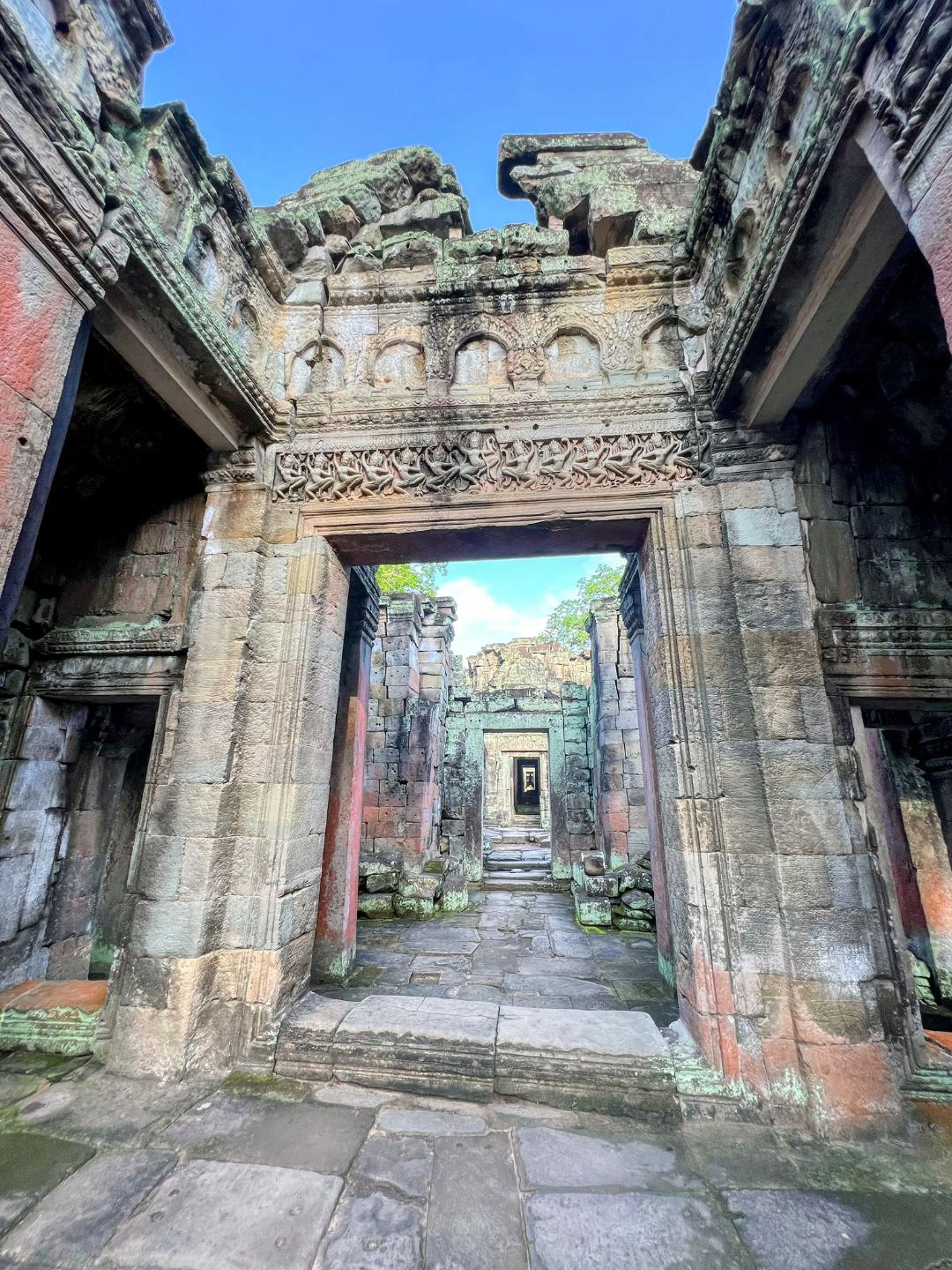
At Ta Som, you feel you are walking through art because of how the gateways line up. © Karen Rubin/goingplacesfarandnear.com

We next come to the stunning and significant Preah Khan which I find most intriguing and spell-binding – perhaps because one of the guides offers to give a private tour for $5 and points out views and details we never would have seen or appreciated, like the only carved image of Shiva holding a mirror among these temples, and an alcove where he tells us to beat our chest to hear the resonance. (This winds up being a common practice and I recommend it highly.)  

Preah Khan © Karen Rubin/goingplacesfarandnear.com

Preah Khan (it means “Royal Sword”) was built in the 12th century for King Jayavarman VII  to honor his father on the site of his victory over the invading Chams in 1191.

Preah Khan © Karen Rubin/goingplacesfarandnear.com

The guard explains that the King built this temple with an aim of bringing Hindus and Buddhists together – a Buddhist sanctuary is offset by satellite Hindu temples. Half of the temple has Hindu carvings; the other half is Buddhist. (I wonder if this is why the temple was intentionally destroyed.)

Preah Khan © Karen Rubin/goingplacesfarandnear.com
The Preah Khan guard points out the only carved image of Shiva holding a mirror so far discovered among these temples © Karen Rubin/goingplacesfarandnear.com

What is so fascinating about these vast temple complexes is that they were not just for worship but would have been like palaces, castles or fortresses, housing hundreds, if not thousands of people. The Preah Khan complex combined the roles of city, temple and Buddhist university and would have had 97,840 attendants and servants, including 1000 dancers and 1000 teachers.

The stone – which mostly appears grey-black- becomes a blazing orange in the setting sun as we leave.

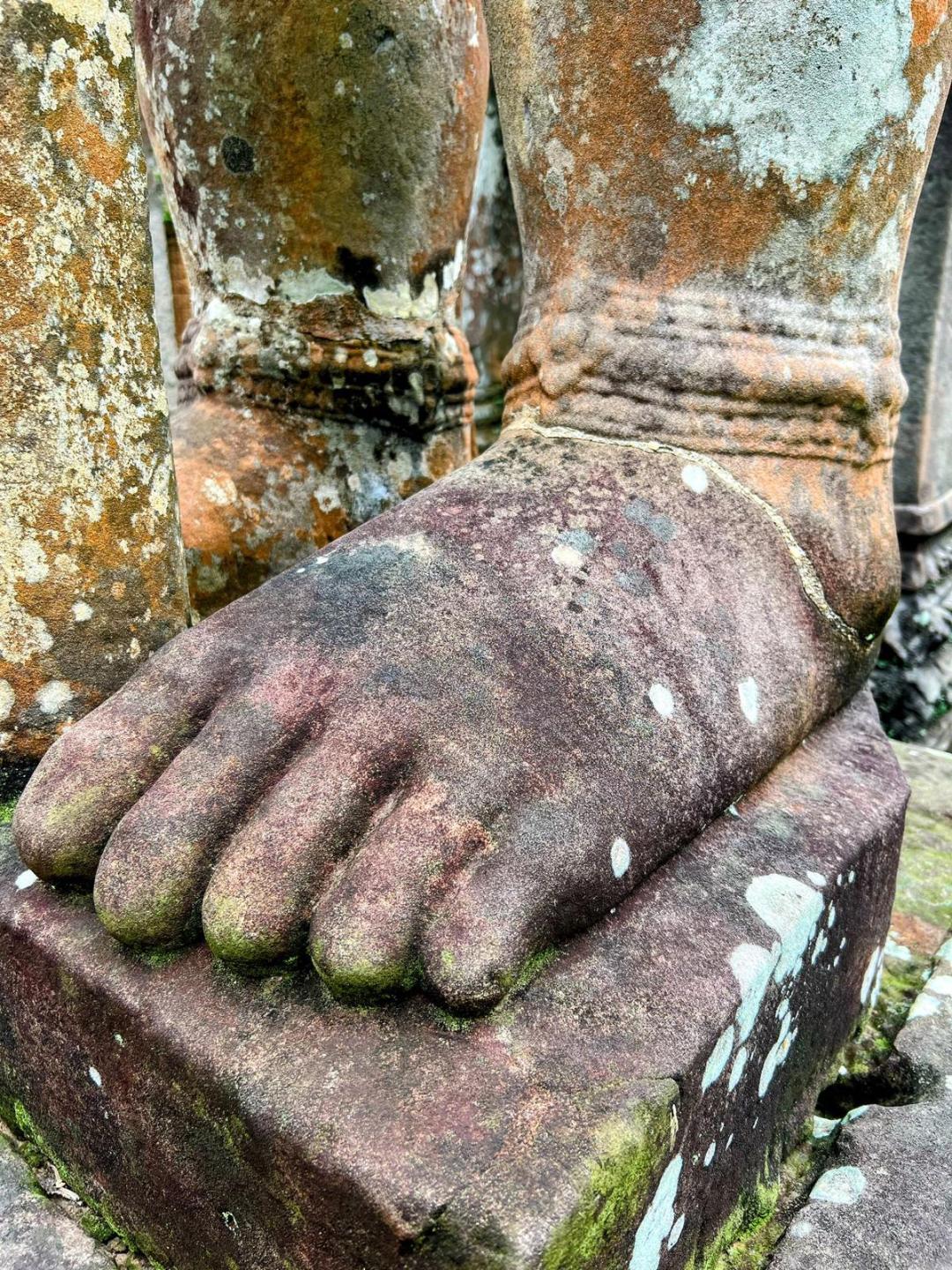
We cross a bridge lined with impressive military figures – several with the heads cut off, very possibly to sell on the black market.

The dramatic sunset scene of the warrior statues on the Tonle Om Gate bridge outside the Preah Khan temple © Karen Rubin/goingplacesfarandnear.com
Impressive military statues line the Tonle Om Gate bridge outside the Preah Khan temple © Karen Rubin/goingplacesfarandnear.com

As we cross, the sun, glowing a fiery red, offers a spectacular scene and our guide, Hang, stops the bus for us. We have just two minutes to capture the setting sun before it falls behind trees.

Between 800 and 1200 A.D., hundreds if not thousands of temples were built through the region. The oldest ones have all but disappeared due to weather, war, religious conflict and greed (stealing the art for sale). The ones we see today have had to be excavated from overgrowth and restored and represent the Golden Age of monument building. They have a certain common style – largely because of they were built in the same era, and many of the ones we see were built by King Jayavarman VII, which makes you wonder about how he had the resources and manpower. But the temples are remarkably individual for their art, theme and most especially how you experience of discovering them, so I come away with my favorites.

The most famous – for good reason – is Angkor Wat, a religious complex spanning more than 400 acres (five times the size of the Vatican) and widely recognized (confirmed by the Guinness World Records) as the largest religious structure or monument in the world. It was originally built by the Khmer Empire, commissioned by King Suryavarman II in the early 12th century as a Hindu temple before being converted into a Buddhist site by the end of the century. 

What strikes me, though, after seeing several of these, particularly those built by King Jayavarman VII and King Suryavarman II,  is how similar to Peru and the temples built in the mid-1400s, most famously Machu Picchu, by the Incan emperor Pachacuti, known as the “Alexander the Great” of the Inca. It makes you think about the commonality of the human history.

Back at the Aviary Hotel, I get in a 20-minute swim in the rooftop pool before meeting our group for a 10-minute walk to Chamrey Tree, an elegant restaurant filled with gorgeous art, where we have a fantastic dinner.

After dinner, Calista and Jake go off to explore the night market, where Jake is game to try any unusual food. The next morning, he reports back of his experience eating insects (not sure if he also snacked on snake or just observed).

Departure Day: Angkor Sunrise & Biking

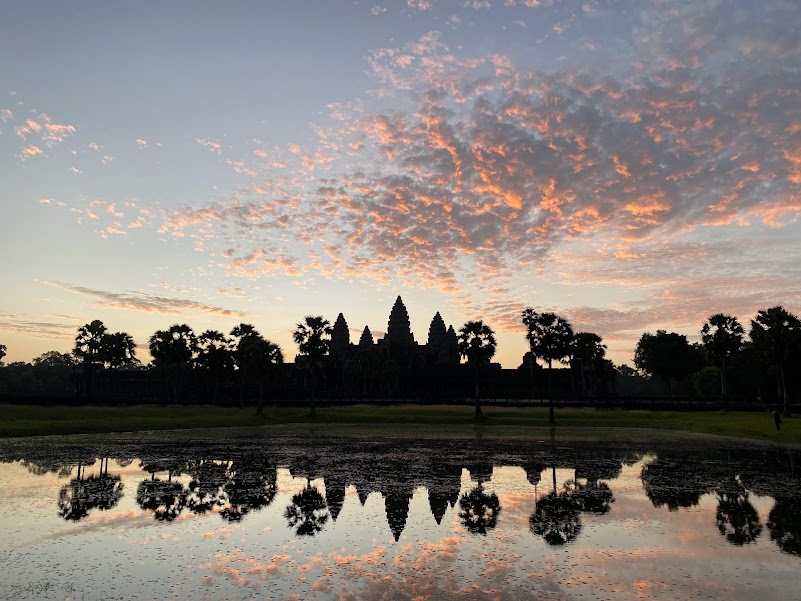
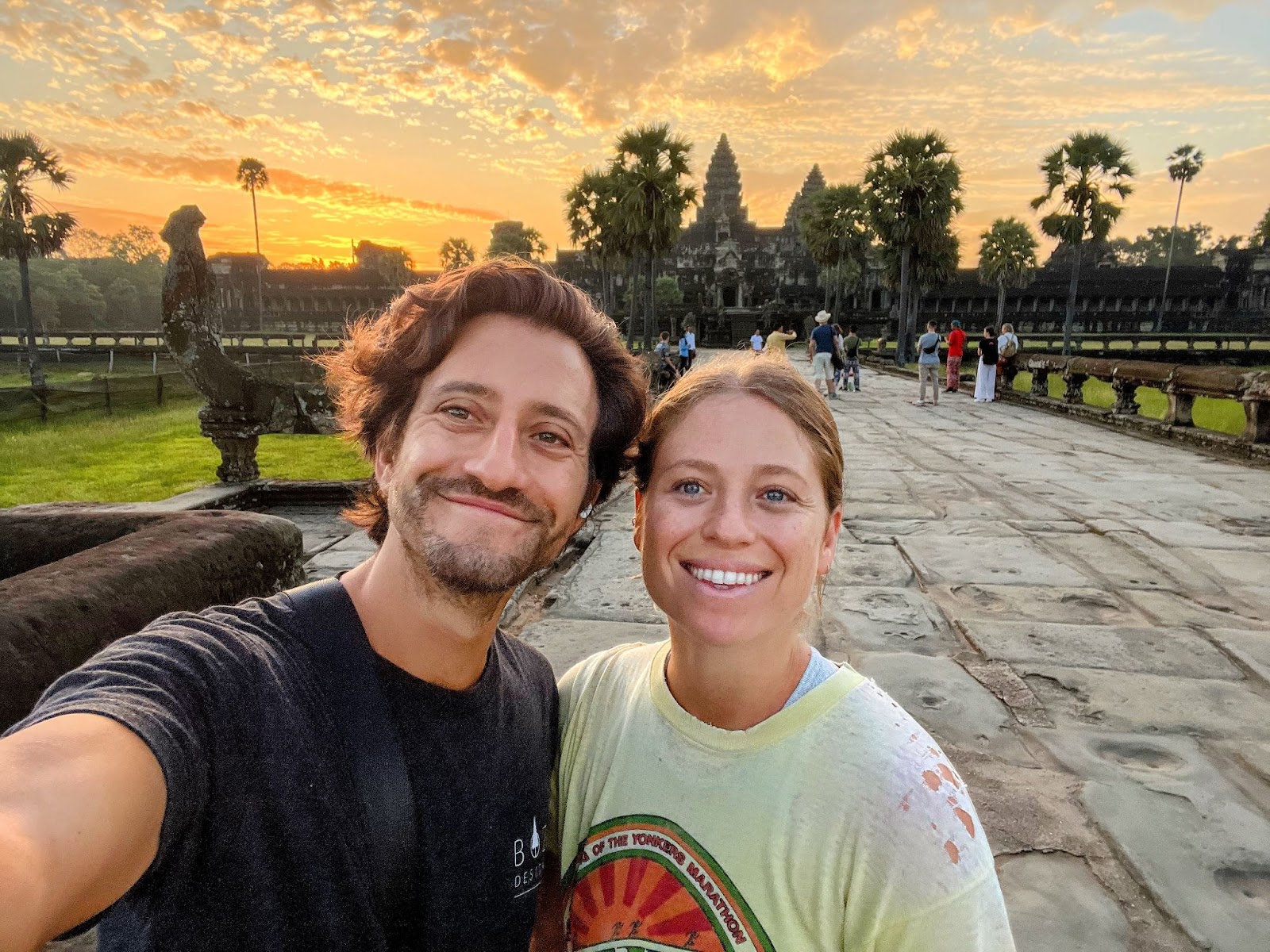
Sunrise at Angkor Wat © Karen Rubin/goingplacesfarandnear.com

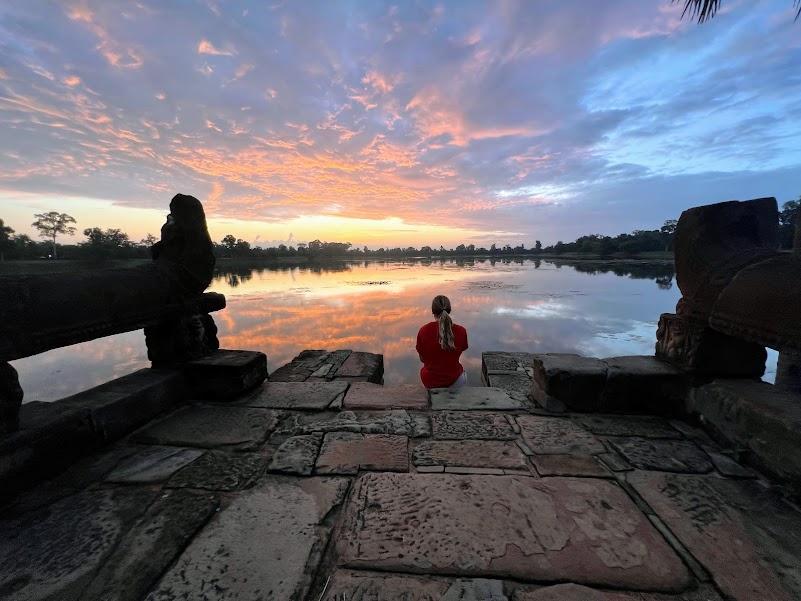
Day 4 is our departure day from Cambodia, but our last morning in Siem Reap starts at 4:30 am (we are given a bagged breakfast to take with us) so we can be at Angkor Wat for the sunrise (with thousands of others). The famous view would have the iconic temple back-lit and reflected in two large pools in front – alas the sunrise is not all that impressive and even coming so early, it is hard to get a good enough position for “the money shot,” but the experience is exciting enough.

Sunrise at Angkor Wat © Karen Rubin/goingplacesfarandnear.com

The real thrill comes after, when we go to explore the temple. Most of the sunrise-goers leave, so we are able to visit with comparatively few people if we hustle – our guide urges us to get on line fast so we aren’t trapped in an hour-long wait to climb the steep staircase.

Climbing the steep staircase into Angkor Wat © Karen Rubin/goingplacesfarandnear.com

We get inside the temple just as the sun is penetrating the structure.

Angkor Wat © Karen Rubin/goingplacesfarandnear.com

It took hundreds of thousands of workers just 37 years to build – (the 37 year deadline coincides with the belief in 37 heavens and 32 hells and there are 37 steps to enter. Like Machu Picchu, these temples were built by devotees as well as slaves. The stones came from a quarry 35 miles away (during COVID, they had time to study and discovered a canal, which they now believe was used to float the stones).

Angkor Wat, the largest religious complex in the world, had to be reclaimed from the forest © Karen Rubin/goingplacesfarandnear.com 

The temple would have been overgrown after centuries of abandonment; it was rediscovered in 1941 and the French helped restore the temple after a collapse in 1947. The World Monuments Fund has been working to preserve and restore these temples since 1991 and Angkor Wat was designated a UNESCO World Heritage Site in 1992.

Built in early 12th C under the reign of Suryavarman II, Angkor Wat was both the grandest of all Khmer temples and a city in its own right © Karen Rubin/goingplacesfarandnear.com

Built in early 12th C under the reign of Suryavarman II, Angkor Wat was both the grandest of all Khmer temples and a city in its own right.

Angkor Wat houses what are considered the finest examples of Khmer art – carved bas-reliefs stretching nearly 600 meters.

Angkor Wat houses what are considered the finest examples of Khmer art – carved bas-reliefs stretching nearly 600 meters © Karen Rubin/goingplacesfarandnear.com

In the eyes of Khmer people, the most significant bas-relief in the Churning of the Sea of Milk Gallery portrays devas and asuras in a dramatic tug of war representing the eternal struggle of good and evil that churns amrit, the elixir of everlasting life, from the primordial ocean.

The bas-relief Churning of the Sea of Milk portrays heaven and hell and the eternal struggle between good and evil © Karen Rubin/goingplacesfarandnear.com

Heaven and Hell is depicted in an astonishing 68-meter-long wall carving: heaven above consists of two tiers while hell has 32 tiers. The inscriptions tell what kind of sin a person may have committed in life judging by the tier the sinner ended up on after death.

Angkor Wat’s Hall of a Thousand Buddhas © Karen Rubin/goingplacesfarandnear.com

In the Hall of a Thousand Buddhas (Preah Poan) a few stand out dramatically from the grey statues for their gold robes. Sometime in the late/post-Angkor eras after the temple converted to Buddhism and eventually Theravada Buddhism, monks began collecting Buddha statues here.

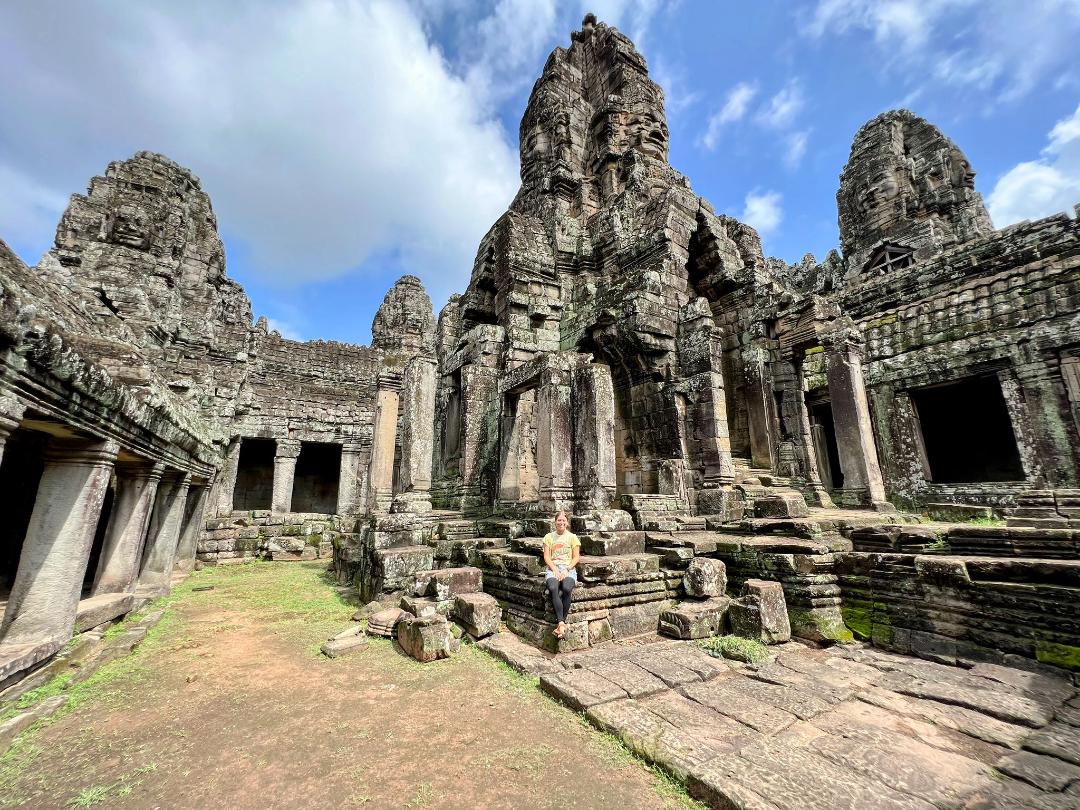
Banyon Temple © Karen Rubin/goingplacesfarandnear.com

Banyon Temple

Biking the trail through the forest to the Banyon Temple © Karen Rubin/goingplacesfarandnear.com
Encountering monkeys on the trail © Karen Rubin/goingplacesfarandnear.com

From Angkor Wat, we bike to the Bayon Temple, with its enormous, fantastical enigmatic faces looking in every direction from every stone tower – 216 in all. It is not known who the face represents – we heard they represented Buddha before achieving Nirvana, or possibly the ruler who built the temple, Jayavarman VII.

Banyon Temple © Karen Rubin/goingplacesfarandnear.com

Dating from the late 12th century (after Angkor Wat) and the last to be built in the Angkor, the Bayon is a Mahayana Buddhist temple built  to pay homage to the king responsible for its construction, Jayavarman VII, and dedicated to his mother. We are told that 12,640 people would have lived within it, including 650 dancing girls.

Banyon Temple © Karen Rubin/goingplacesfarandnear.com

We note the sign: “Beware of Monkey Attack” – sure enough, one of our group reports being “accosted” by a monkey.

With time growing short before some of our group has to get to the airport, our 12-mile bike ride is cut short (though some have biked along the top of the defensive walls of Angkor Thom). and we travel by bus to the last temple we get to visit Ta Prohm, famous for scenes from Angelina Jolie’s “Lara Croft: Tomb Raider” film.

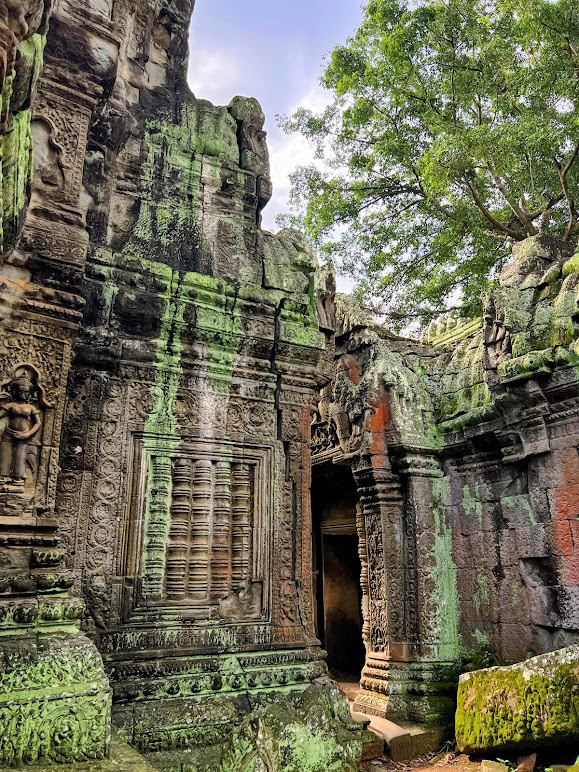
Ta Prohm Temple © Karen Rubin/goingplacesfarandnear.com

You really feel the age of the Ta Prohm temple with massive trees growing out of the stone and massive stone blocks in heaps.

Of the statues consecrated here in 1186 by Jayavarman VII here, most important was Prajnaparamita, the personification of the Perfection of Wisdom, a figure whom the king identified with his mother.

Ta Prohm Temple © Karen Rubin/goingplacesfarandnear.com

Given its fame and the dramatic setting, as well as the time of day, it is no surprise that the temple is fairly overrun with tourists.

Ta Prohm Temple © Karen Rubin/goingplacesfarandnear.com

It’s fairly amazing how much we do on Day 4, our departure day when we fly to Hanoi to start the 12-day Vietnam Discovery Bicycle tour: three temples, a fabulous bike ride, lovely lunch, and since they have arranged a late check out (the flight several of us are on is at 7 pm), I even have time for a swim at the Aviary Hotel. But then I remind myself: we got up at 4:30 am!

Discovery Bicycle Tours organizes the four-day pre-tour in Cambodia to make our visit to Siem Reap to be satisfying, productive and comfortable © Karen Rubin/goingplacesfarandnear.com

Discovery Bicycle Tours organizes everything to make our biking as satisfying and our brief time here as productive and pleasant as possible – which means we are accompanied by a third guide/bike mechanic; the bike truck typically is nearby; and the bus that takes us to the start/finish, and various stops accompanies like a SAG vehicle, so we don’t have to bike with our big cameras but have access when we get to a site. The snack (and rest) stops are also really marvelous – typically with local foods – well planned and well timed.

Enjoying local treats, like coconut juice, for our snack on Discovery Bicycle Tours’ four-day Cambodia pre-tour in Siem Reap © Karen Rubin/goingplacesfarandnear.com

In addition to the Discovery Bicycle Tours guide, we have two local guides here in Cambodia – one who likes to be called “Hang,” and the other who likes to be called “Ta” – both take care of us like mother hens, though I would have liked more background information about the different sites we visit. (An excellent source is “Angkor Temples in Cambodia” www.angkor-temples-in-cambodia.com.)

The Aviary Hotel, an eco-conscious boutique hotel, is our base in Siem Reap for the four-day Discovery Bicycle Tours Cambodia pre-tour © Karen Rubin/goingplacesfarandnear.com

Discovery does a great job of providing advance materials, the day-by-day itinerary, packing lists; excellent bikes (e-bikes are available but not really necessary) and helmets, and even though we do ride together with guides at the front and back (and not a great idea to go off on our own), we have Ride GPS so we can follow the route.

Get the required visa and arrival document at Cambodia’s website (evisa.gov.kh), where the fee is $30 (if you use a visa service it costs something like $197), but give yourself enough time to get the confirmation.

Also, always double-check the U.S. State Department’s travel advisory and make sure no vaccinations are required or recommended.

It is also recommended to purchase travel insurance – especially for the medical and evacuation coverage. You can check a site like travelinsurance.com to get recommendations.

On to Vietnam!

Discovery Bicycle Tours, 2520 W. Woodstock Rd., Woodstock, VT 05091, 800-257-2226, 802-457-3553, info@discoverybicycletours.com, discoverybicycletours.com.

__________________

© 2025 Travel Features Syndicate, a division of Workstyles, Inc. All rights reserved. Visit goingplacesfarandnear.com and travelwritersmagazine.com/TravelFeaturesSyndicate/. Blogging at goingplacesnearandfar.wordpress.com and moralcompasstravel.info. Visit instagram.com/going_places_far_and_near and instagram.com/bigbackpacktraveler/ Send comments or questions to FamTravLtr@aol.com. Bluesky: @newsphotosfeatures.bsky.social X: @TravelFeatures Threads: @news_and_photo_features ‘Like’ us at facebook.com/NewsPhotoFeatures

Hiking, Biking Adds Dimension to Experiencing Siem Reap, Cambodia’s Ancient Archeological Sites

Our six-mile hike through Kulen National Park leads to the Reclining Buddha, said to be the largest reclining sandstone Buddha in Cambodia. Hiking and biking adds a physical even spiritual dimension to experiencing the ancient temples and monuments during our Discovery Bicycle Tours’ four-day Cambodia trip © Karen Rubin/goingplacesfarandnear.com

By Karen Rubin, Travel Features Syndicate, goingplacesfarandnear.com

Biking back roads of Siem Reap, Cambodia, passed farmland and fields, through small villages our Discovery Bicycle Tours group chances upon a wedding – but not just any wedding. As it happens, the uncle of the groom was the man who came to the rescue of a couple of our riders who had car trouble on the way from the airport. When Pam gets off her bike to take a photo of the wedding, he recognizes her and dashes out – even inviting our Discovery Bicycle Tours group inside the tent to participate in the ritual underway. The experience gives new meaning to the expression, “small world.” Biking has that effect of making the world smaller, more intimate, more connected.

Coming upon a wedding is one of the delights of biking in Siem Reap, Cambodia on Discovery Bicycle Tours’ four-day pre-tour © Karen Rubin/goingplacesfarandnear.com

You don’t go to Cambodia to bike, but biking adds a whole extra dimension – and perspective – to the travel experience, as I find on Discovery Bicycle Tours’ four-day Cambodia pre-tour add-on to the 12-day Vietnam bike tour that follows.

You bike in Cambodia to have such immersive experiences, to see scenes unobstructed and at a pace where you can really observe, even stop and get off the bike for a better, lingering view, to ride through villages, alongside homes and farms and fields that you would never see otherwise, and to have such serendipitous encounters as coming upon a wedding. Discovery Bicycle Tours’ four-day Cambodia is tailored, so we bike on country roads and back roads rather than through the intensely trafficked towns, and we are taken by bus to far-flung locations so we are not deprived of seeing the important highlights of Siem Reap.

Discovery Bicycle Tours’ guide Calista Phillips takes us on Siem Reap’s back country roads © Karen Rubin/goingplacesfarandnear.com

Siem Reap has justifiably become a major attraction for visitors – as evidenced from many lovely hotels in the city, the bustling markets and shops and the modern new international airport that opened (for logistical planning purposes it is important to take note that it is more than one hour’s drive from downtown, not the 20 minutes of the old airport), 

Indeed, Siem Reap is a long way to go: it’s taken me 32 hours, three planes and three, long immigration lines, though it could have been less had I flown east from JFK instead of west; also when you book your travel, be aware that you cross the Dateline so you lose a day; and be very aware of the online process to get the visa and arrival document).It’s too long a way to go to miss the extraordinary sites by obsessing over biking point-to-point exclusively. 

I make my way to the Aviary Hotel in the heart of Siem Reap (Discovery has arranged an airport pick up but somehow I missed it), riding a shuttle from the airport with a local woman who now works in Sweden, home to visit her family. I have the good sense to ask her where to go for the best place to see the sunset. Phnom Bakheng, she replies without hesitationArmed with this information, as soon as I pull up to the hotel where I am met by Discovery’s guide Calista Phillips (I actually had just traveled with her on Discovery’s Idaho Trails bike tour), our local guide, Hang, arranges for the hotel’s tuk tuk driver to take Calista and me at 4:30 pm. (Others in the tour had other plans.)

The Aviary Hotel’s garden pool provides a cozy sanctuary. The boutique eco-hotel is a great base for our four-day stay in Siem Reap © Karen Rubin/goingplacesfarandnear.com

I organize my afternoon so that I recover my energy for our adventure, and resist my inclination to explore the area, taking advantage of the Aviary Hotel’s stunning garden pool (it also has a rooftop pool) at the Aviary, a delightful 43-room eco-friendly boutique hotel which is our home base for our four-day stay.

Sunset at Phnom Bakheng

Setting out in the Aviary Hotel’s tuk-tuk to experience the sunset at Phnom Bakheng © Karen Rubin/goingplacesfarandnear.com

The 35-minute ride through the streets on the tuk-tuk – basically a carriage pulled by a guy on a motorcycle – to the Phnom Bakheng temple is extreme fun (what a ride!).

We immediately see why this is the most popular place for the sunset. Situated in the heart of Angkor Archaeological Park, the Hill of Phnom Bakheng offers gorgeous views of surrounding monuments and countryside. (Calista and I have purchased our three-day Angkor Archeological Park passes online, which the others will get their pass later; the 3-Day Pass is valid within 10 days of purchase; Discovery reimburses me the $62.)

Because of heavy seasonal rains causing damage, the eastern stairway is closed, so we hike for 15 minutes along a shady gentle sloping path which provides a panoramic route to reach the temple.

The first glimpse through the trees is of the 10 century Bakst Chamkrong glowing orange in the setting sunlight© Karen Rubin/goingplacesfarandnear.com

The first glimpse through the trees is of a temple, glowing orange in the setting sunlight. This is Bakset Chamkrong, built during the first decades of the 10th c at the foot of Phnom Bakheng, the only pyramid temple in the area that has survived. The notes describe a rare Sanskrit text engraved in the doorjamb about the mythic succession of Khmer kings. According to the myth, the dynasty descended from the union of the hermit Kamba, said to be “born from himself” and the celestial nymph mera.  (Note: this architectural jewel can also be visited.)

Continuing on, we come to beautiful views over treetops in haze to the water.

Phnom Bakheng, which is undergoing restoration, is the best place in Siem Reap to see the sunset © Karen Rubin/goingplacesfarandnear.com

And then we come to Phnom Bakheng, which is undergoing restoration– a cooperative project begun in 2004 of World Monuments Fund (WMF) and APSARA National Authority of the Kingdom of Cambodia.with funding from US Dept of State, US Ambassador fund for Cultural preservation and US Embassy Phnom Penh.

We climb the steep stone steps to the top of the temple, and I am struck at the people who have taken up their position facing away from the sunset. I ask why and a woman points down and to the side, and mutters, Angkor Wat. Indeed, this majestic structure –one of the largest religious sites in the world –emerges from the haze and rises above the tree tops. Oh. The hope (expectation) is that when the sun dips, it will turn the grey/black stone a firey orange like the temple we saw on our walk up. 

I squeeze my way into one of the last positions that would give me that view and wait.

Our sunset hike to Phnom Bakheng gives us this view of Angkor Wat, rising out of the haze and the tree tops © Karen Rubin/goingplacesfarandnear.com

Alas, when it is clear that the weather will not cooperate (it is still a beautiful sight), I take another position to watch the sun, now a firey red ball, skirt alongside two of the temple’s stone towers, and when it finally dips into the clouds, go to study more intently the carvings on the temple. 

Phnom Bakheng is the best place in Siem Reap to see the sunset © Karen Rubin/goingplacesfarandnear.com

Notably, many of the faces in the carvings have been mutilated – testifying to the religious struggles and ping-ponging of theocratic power, while the several monks here and people worshipping at the temple testify to the temple’s continuing role as a sacred place.

Surveying the beautiful carvings on Phnom Bakheng temple © Karen Rubin/goingplacesfarandnear.com

We are among the last to start down after the sun has dropped into the clouds, and by the time we get all the way down, it is actually dark – just adding to the atmosphere. Our ride back in the tuk tuk (the guide has waited for us and we cleverly have taken down his telephone number in case we have trouble finding him) is tremendous fun. We get to see how people gather together at night. (Graffiti spotted from the tuktuk: “Love Cambodia. Hate Fascism.”)

Phnom Bakheng temple is still a holy site © Karen Rubin/goingplacesfarandnear.com

Our driver very kindly asks if we prefer to be dropped at the hotel or at Pub Street, about five blocks further than the hotel so we can get a sense of the colorful night life. We opt for the night market and immediately are engulfed in the neon lights and activity. We come upon crafts people and food sellers.

The lively night scene at Siem Reap’s Pub Street © Karen Rubin/goingplacesfarandnear.com

Hiking Kulen National Park

Our first full day in Cambodia is not spent biking but hiking. After a delightful breakfast at the hotel, the nine of us who are doing the Cambodia add-on (of the eventual 19 of us who will be doing the Vietnam tour), gather together and set out for Kulen National Park.

Hiking Kulen National Park © Karen Rubin/goingplacesfarandnear.com

The six-mile hike through a jungle on the Langur Trail, named for leaf-eating monkeys that live here) brings us to historic places – where religious symbols have been placed in a stream, a temple, and, most interestingly, a rocky hideaway that was used for the Khmer Rouge. 

We hike along the River of a 1000 Lingas © Karen Rubin/goingplacesfarandnear.com

We hike along the River of a 1000 Lingas – the phallic symbol of the Hindu god, Shiva – and rock carvings depicting Hindu deities made during the Khmer Empire.

The six-mile hike through a jungle on the Langur Trail, brings us to historic places – where religious symbols have been placed in a stream, a temple, and, most interestingly, a rocky hideaway that was used for the Khmer Rouge© Karen Rubin/goingplacesfarandnear.com

The trail takes us to a fabulous 16th century Buddhist monastery and sacred site for pilgrims at Preah Ang Thom. There is such reverence that we need to take off our shoes before we climb the steps to where the massive Reclining Buddha is housed – in fact, we are told, it is Cambodia’s largest sandstone reclining Buddha. The pose, the colors are simply jaw-dropping magnificent.

The six-mile hike on the Langur Trail, brings us to a 16th century Buddhist monastery and sacred site for pilgrims at Preah Ang Thom © Karen Rubin/goingplacesfarandnear.com
Our six-mile hike through Kulen National Park leads to the Reclining Buddha, said to be the largest reclining sandstone Buddha in Cambodia. Hiking and biking adds a physical even spiritual dimension to experiencing the ancient temples and monuments during our Discovery Bicycle Tours’ four-day Cambodia trip © Karen Rubin/goingplacesfarandnear.com
Face of the reclining Buddha at Preah Ang Thom © Karen Rubin/goingplacesfarandnear.com

Our hike continues into what seems to be a village and central marketplace for the national park, where we have lunch in a delightful restaurant. From there, we walk a path that takes us to a steep staircase (103 steps) to the scenic, 81-foot high Phnom Kulen Waterfalls.The area evokes the water cleansing of the Ganges, and was a holy place in 802 AD. We swim (fish nibble at our dead skin – actually a spa treatment), frolic under the forceful spray, before busing back an hour to Siem Reap.

We enjoy swimming at the 81-foot high Phnom Kulen Waterfalls © Karen Rubin/goingplacesfarandnear.com

Taking into account that we won’t be getting back for the rest of the group to experience the sunset at Phnom Bakheng which we raved aboutour guide, Hang, stops at Pre Rup, for us to explore as the sun sets. This temple was built in honor of Lord Shiva in 961 AD by King Rajendravarman while Siem Reap was the capital of the kingdom of Koh Ker, before the capital was moved to Angkor. (It is not nearly as impressive, so do not miss an opportunity to see the sunset at Phnom Bakheng.)

The sunset from the top of Pre Rup © Karen Rubin/goingplacesfarandnear.com

We gather at 7:30 pm for dinner at Spoons Restaurant – a delightful restaurant which is also a social enterprise where young people from disadvantaged circumstances are trained for jobs in hospitality. The food, the presentation, the ambiance are superb.

The Aviary Hotel

Our base for our four-day visit to Siem Reap is the Aviary Hotel, a 43-room eco-friendly boutique hotel that offers a luxurious, comfortable, modern environment with delightful Cambodian flourishes celebrating the Kingdom’s birdlife and filled with locally commissioned art. The Aviary’s turquoise pool has a garden-like setting curtained by vines and flowers that drape over the balconies above and comfortable lounge chairs, from which you can order drinks and food – a truly relaxing sanctuary. A rooftop pool seems as big as an Olympic pool and is particularly delightful at the end of the day and into the evening. Each morning we enjoy a marvelous buffet breakfast. The hotel also offers  its own café. (Aviary Hotel, #09, Tep Vong Street, Siem Reap, Cambodia, +855 12 241 602, reservation@theaviaryhotel.com)

Discovery Bicycle Tours, 2520 W. Woodstock Rd., Woodstock, VT 05091, 800-257-2226, 802-457-3553, info@discoverybicycletours.com, discoverybicycletours.com.

Next: Biking Siem Reap’s Angkor Archeological Park
__________________

© 2025 Travel Features Syndicate, a division of Workstyles, Inc. All rights reserved. Visit goingplacesfarandnear.com and travelwritersmagazine.com/TravelFeaturesSyndicate/. Blogging at goingplacesnearandfar.wordpress.com and moralcompasstravel.info. Visit instagram.com/going_places_far_and_near and instagram.com/bigbackpacktraveler/ Send comments or questions to FamTravLtr@aol.com. Bluesky: @newsphotosfeatures.bsky.social X: @TravelFeatures Threads: @news_and_photo_features ‘Like’ us at facebook.com/NewsPhotoFeatures

DISPATCH FROM LIVING THE NOMADIC LIFE, A GLOBAL ODYSSEY: MALAYSIA TO CAMBODIA

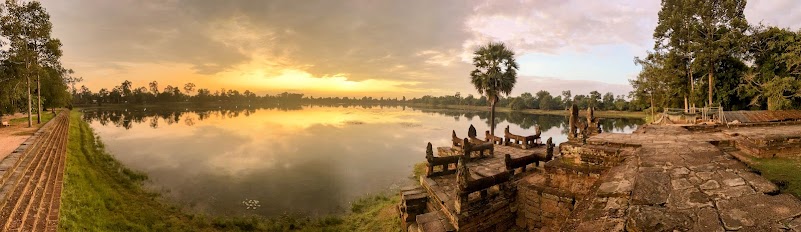
Krong Siem Reap, Cambodia © Eric Leiberman/goingplacesfarandnear.com

By Eric Leiberman and Sarah Falter, Travel Features Syndicate, goingplacesfarandnear.com
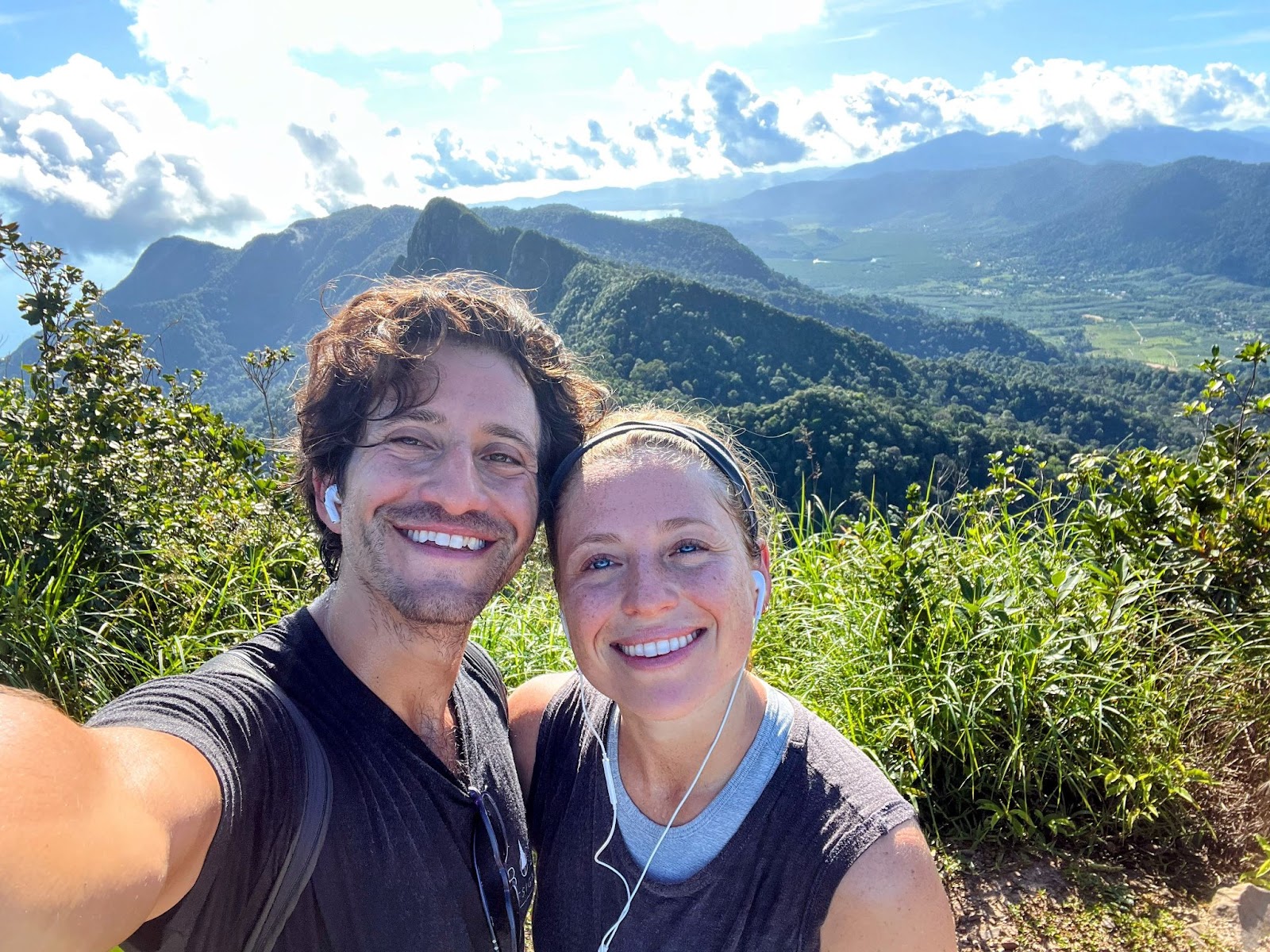
Eric and Sarah are on a 6-month around-the-world sabbatical, joining a huge movement of young people who are choosing to live the nomadic life (at least for a time) and travel or work remotely, becoming immersed in local life and culture. They are filing these dispatches periodically. They previously reported about their adventures in Mexico, South Korea and Vietnam. Here’s their dispatch from Malaysia and Cambodia:

Salutations from the two-shower-a-day club! We both agree that if these last four weeks of our trip had a title it’d be “Never Not Sweating”. The combination of oppressive humidity and laundry machines that never seem to get our clothes fully clean nor fully dry (could definitely be user error, still unclear) make us think the clothes we brought will never smell normal again. BUT the lingering scent of delicious food past, present & future prevails!

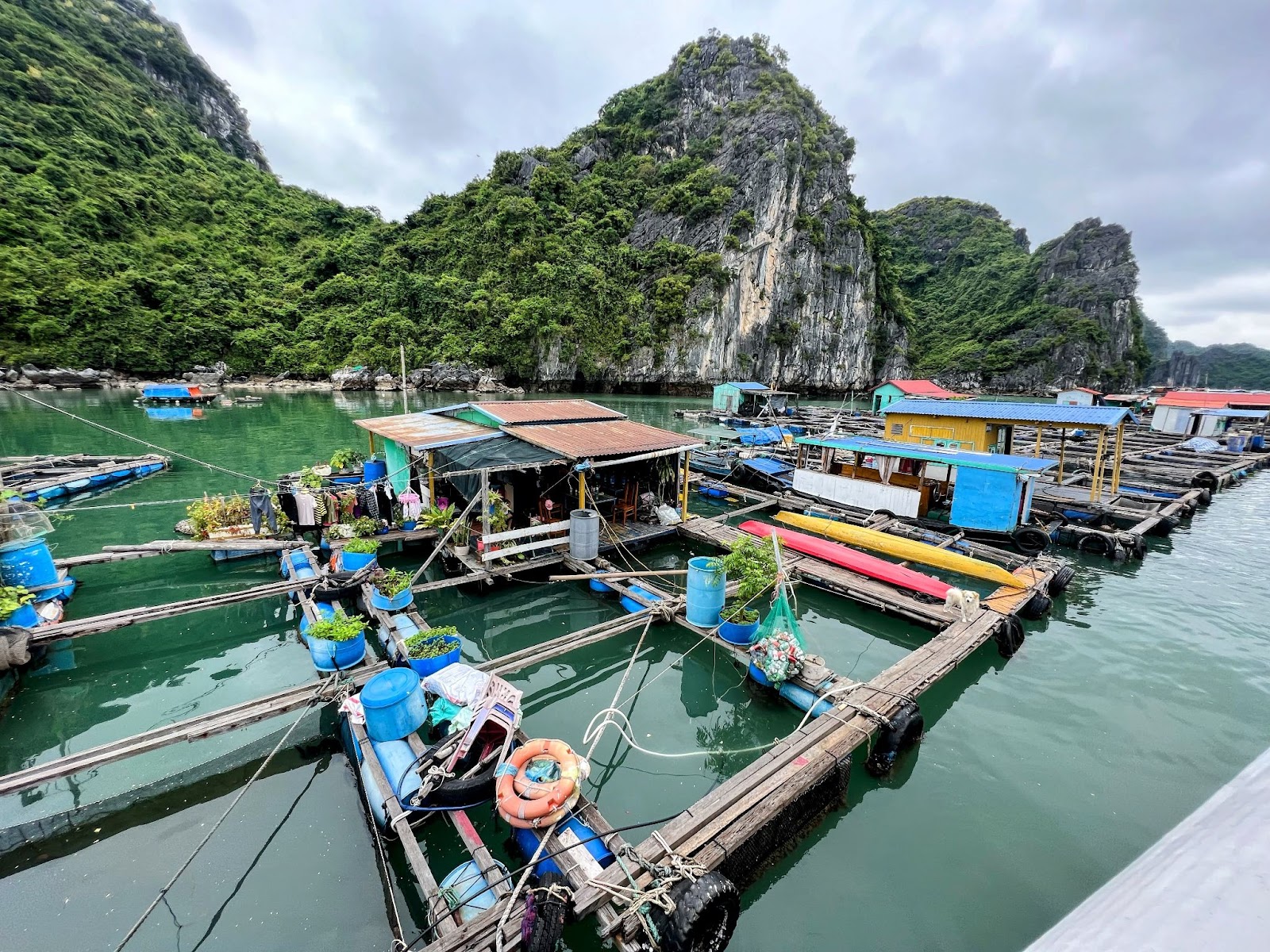
Cat Ba island © Eric Leiberman/goingplacesfarandnear.com

Since our last update, our love fest for Vietnam continued a couple weeks longer with visits to Cat Ba island (including an epic stay on a houseboat amongst a floating village of 200+ dwellings), Central Vietnam (Hoi An & Da Nang for a change up of beach yoga, morning runs, and smoothie bowls), and Ho Chi Minh city before boarding our flights to Malaysia. We definitely squeezed out every last drop of our hard-earned 30-day visas.

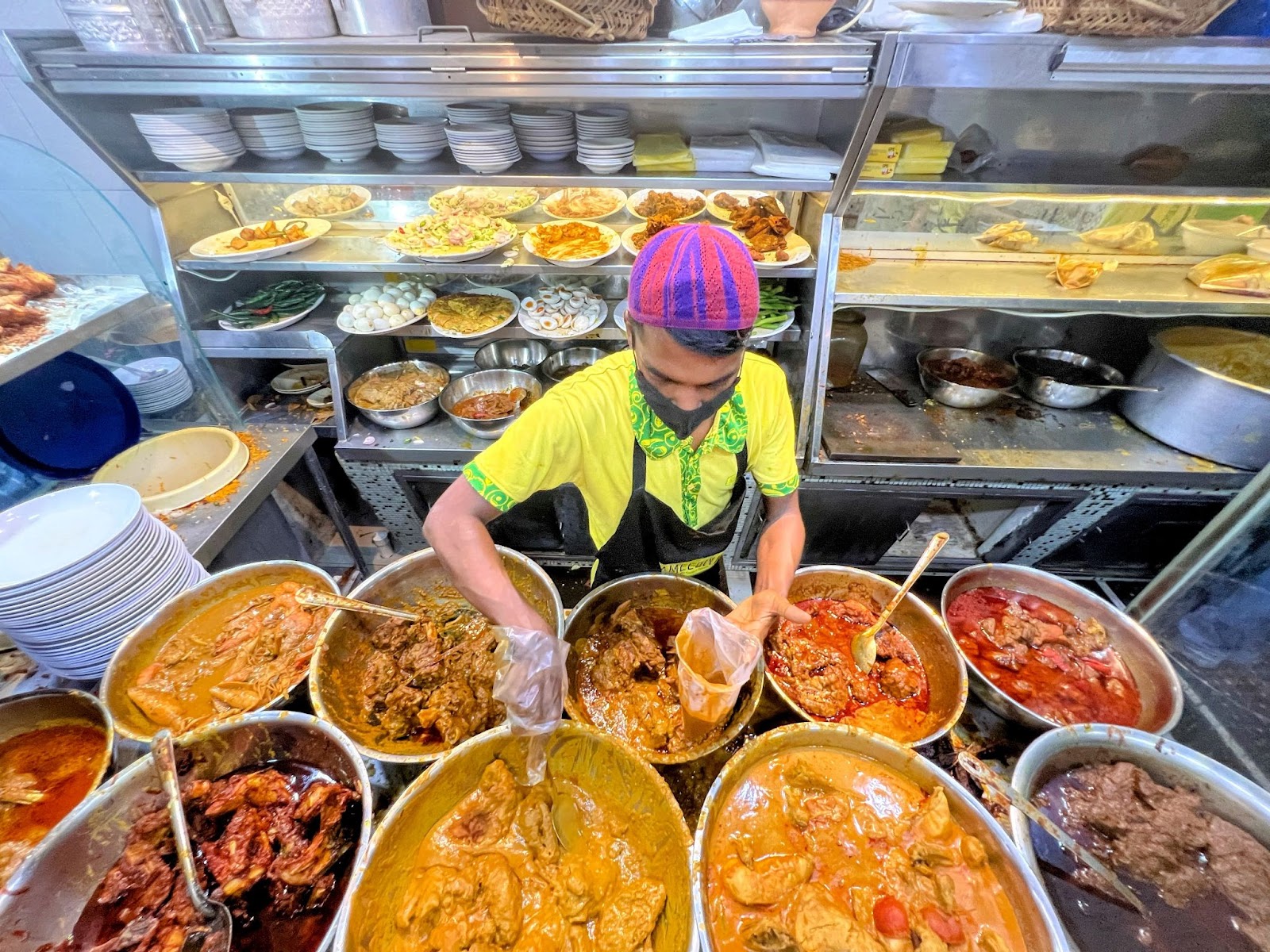
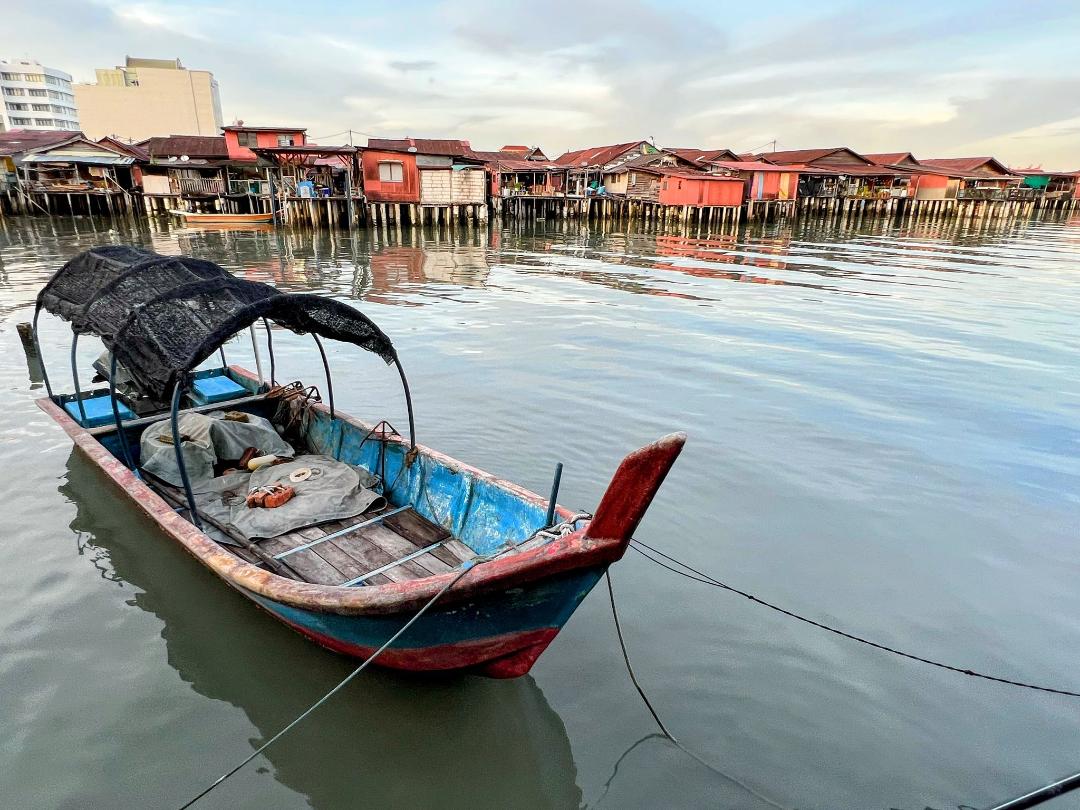
Penang © Eric Leiberman/goingplacesfarandnear.com

Malaysia really surprised us in the best way. We immediately appreciated the multiculturalism and quieter calm of daily life, which was a pretty stark contrast to our previous month in Vietnam. The melting pot of Indian, Chinese & Malay populations with all the many permutations of ethnic and religious cultures within each group made for a wide sampling of options every meal. And we were reintroduced to traffic lights and crosswalks, adding the months back to our lives that we likely lost from the heart palpitations navigating the streets and highways of Vietnam.

George Town, Penang © Eric Leiberman/goingplacesfarandnear.com


Penang © Eric Leiberman/goingplacesfarandnear.com
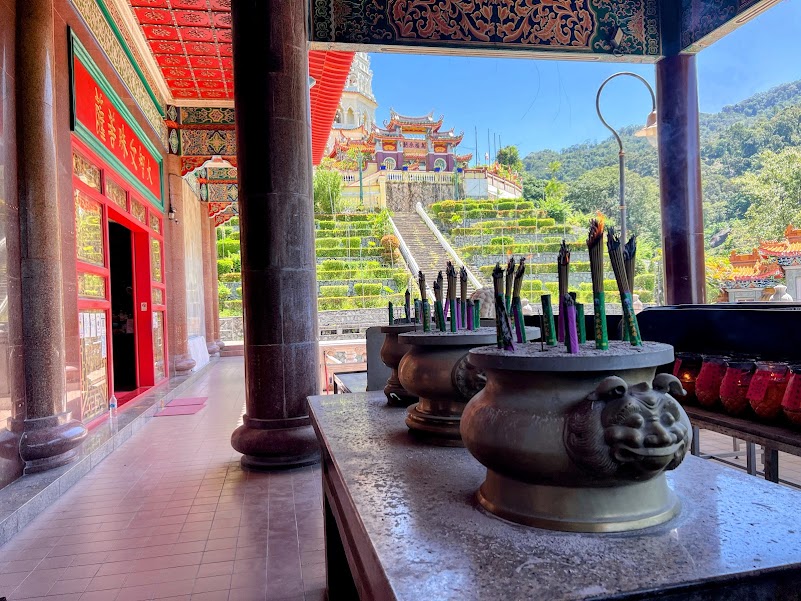
Air Itam, Penang, Malaysia © Eric Leiberman/goingplacesfarandnear.com

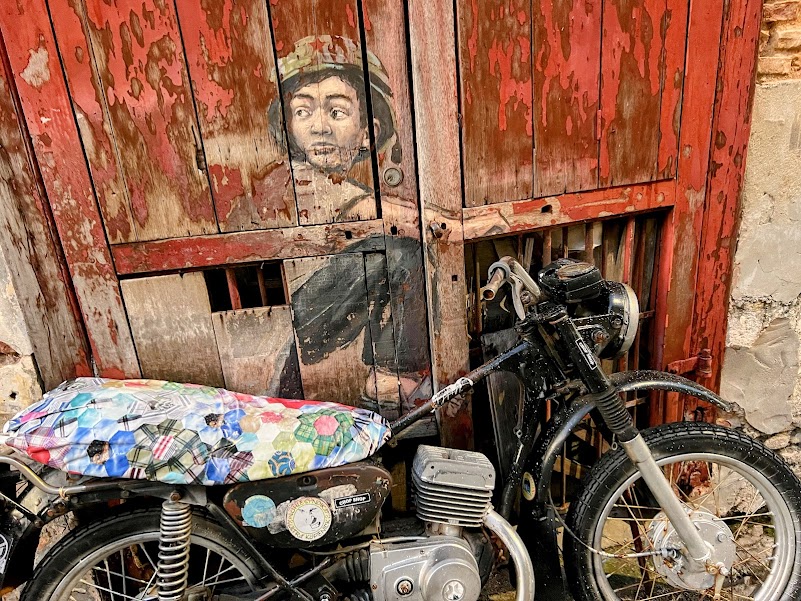
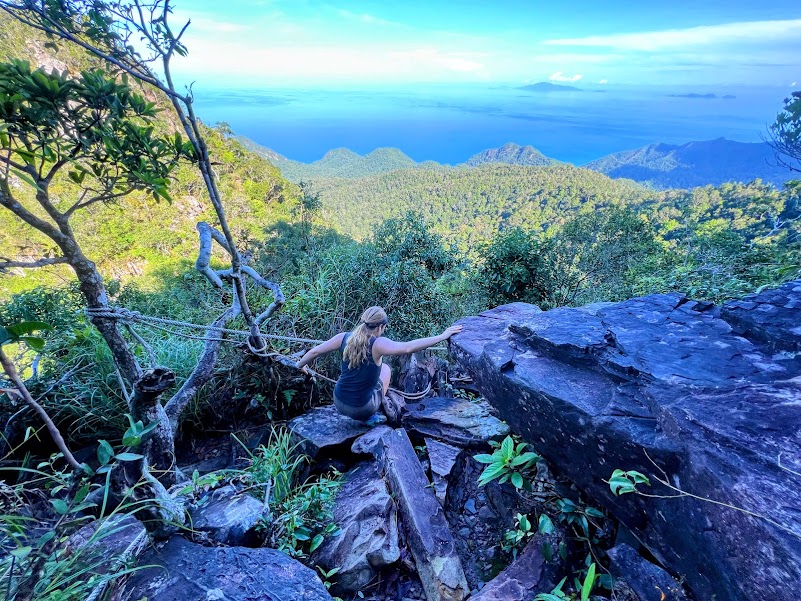
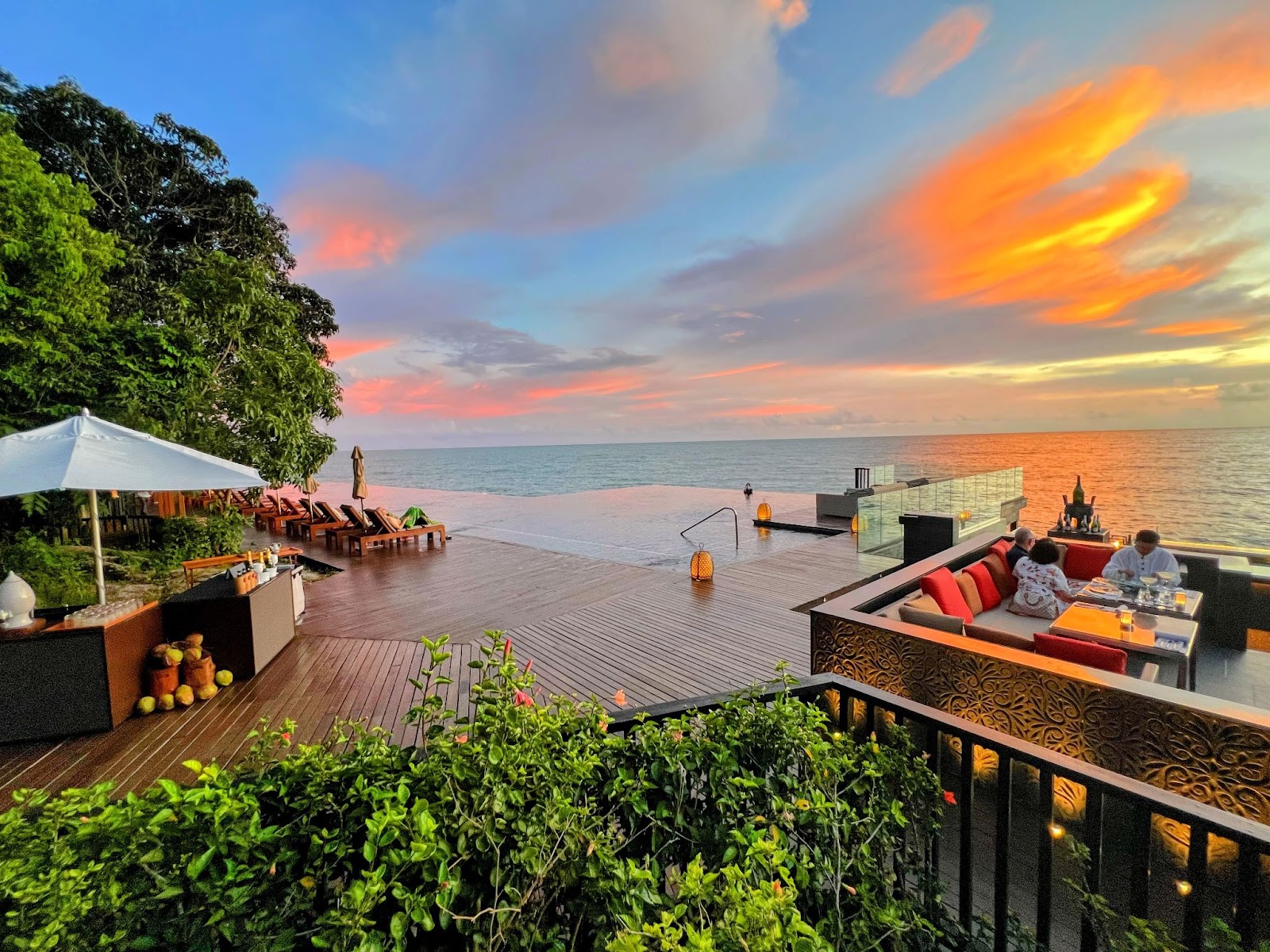
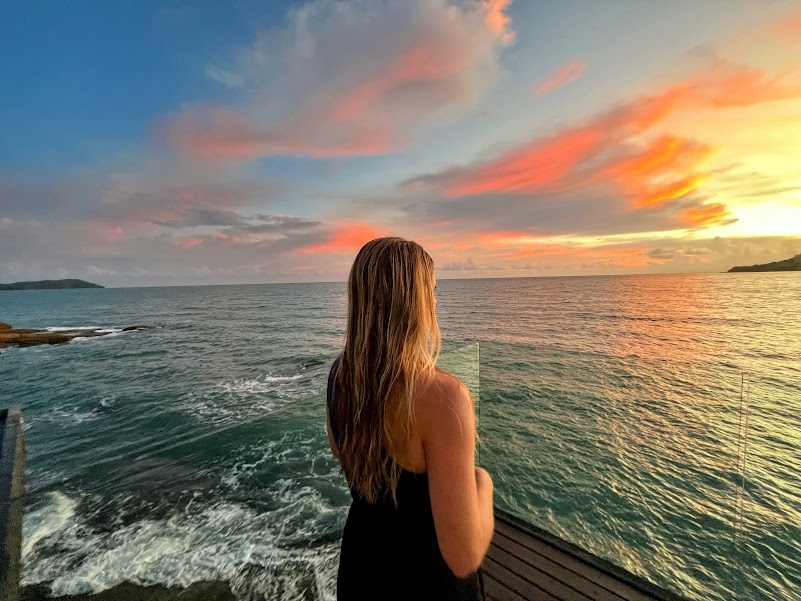
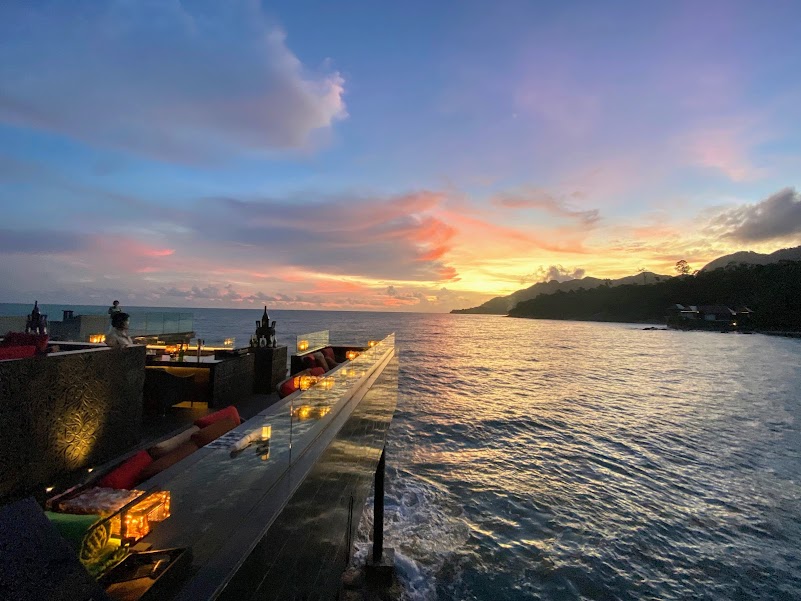
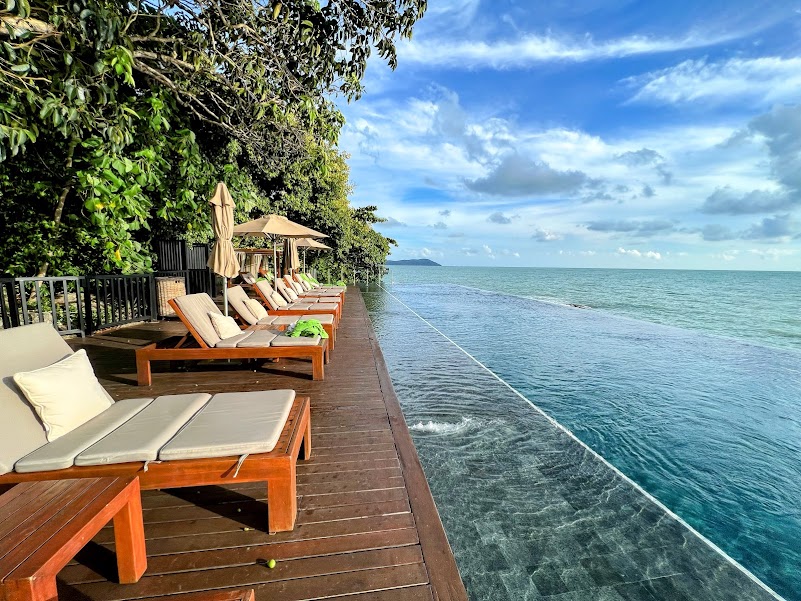
The places we visited were a pretty broad sampling of western Malaysia. Penang, a gorgeous UNESCO World Heritage site, is a food stall mecca with funky street art woven throughout. It scores extra cuteness points for being home to the smallest national park in the world. Langkawi feels like how we’ve heard/imagined Kauai to be, amazingly lush and mountainous with lots of wildlife and white sand beaches. Here, we treated ourselves and balled out on Eric’s Marriott Bonvoy points at the Ritz Carlton, enjoying every free amenity the hotel had to offer and surviving almost solely on contraband fruit, cereal, instant noodles and turn-down snacks (hey, we’re on a budget y’all.. don’t judge!).

Penang © Eric Leiberman/goingplacesfarandnear.com
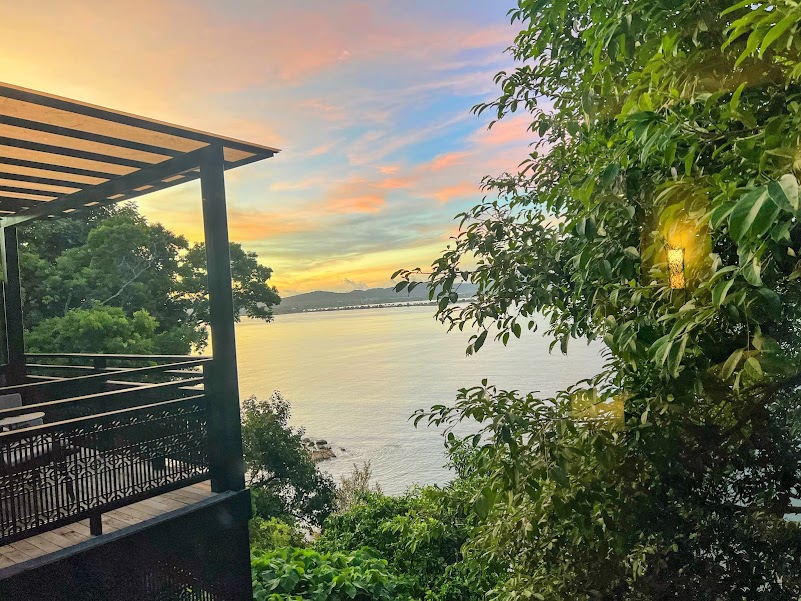
The Ritz Carlton, Langkawi, Malaysia © Eric Leiberman/goingplacesfarandnear.com
Langkawi, Malaysia   © Eric Leiberman/goingplacesfarandnear.com

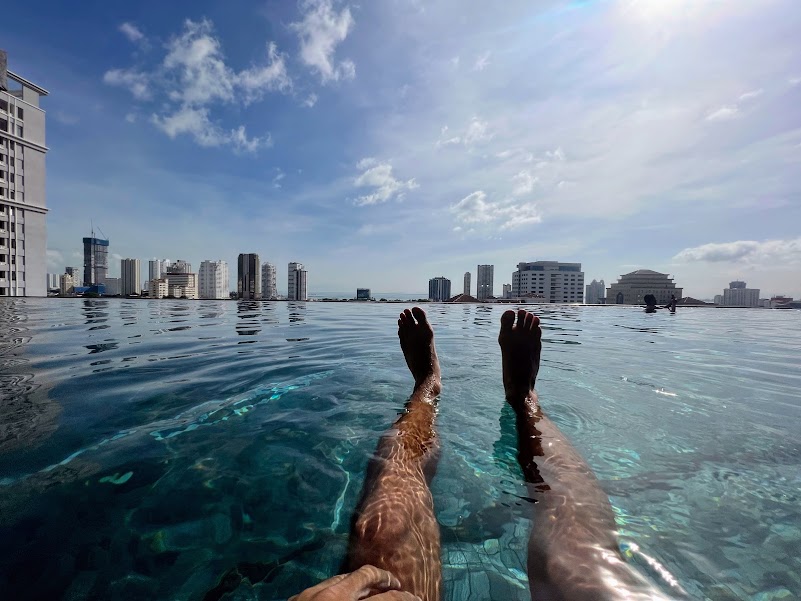
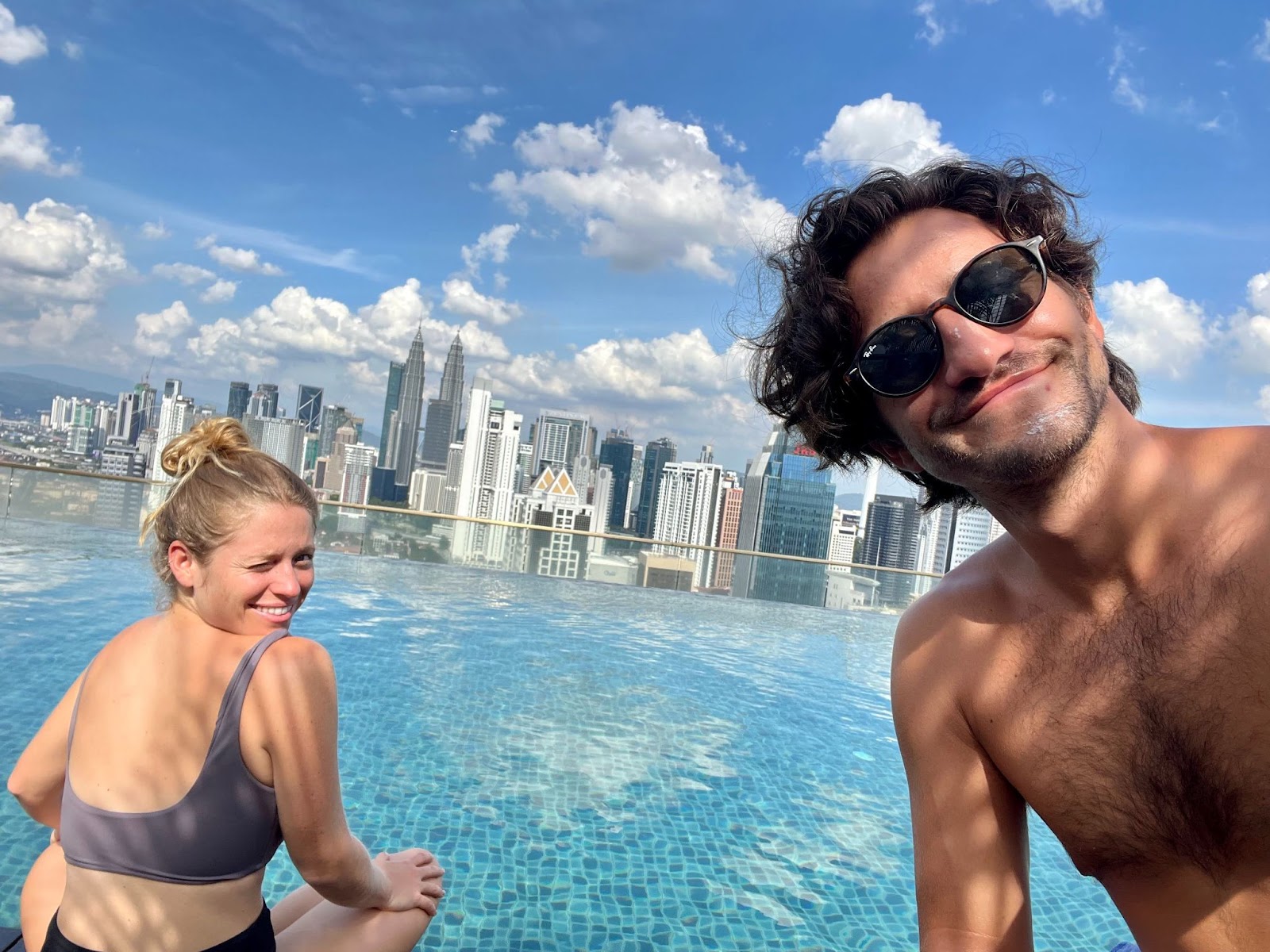
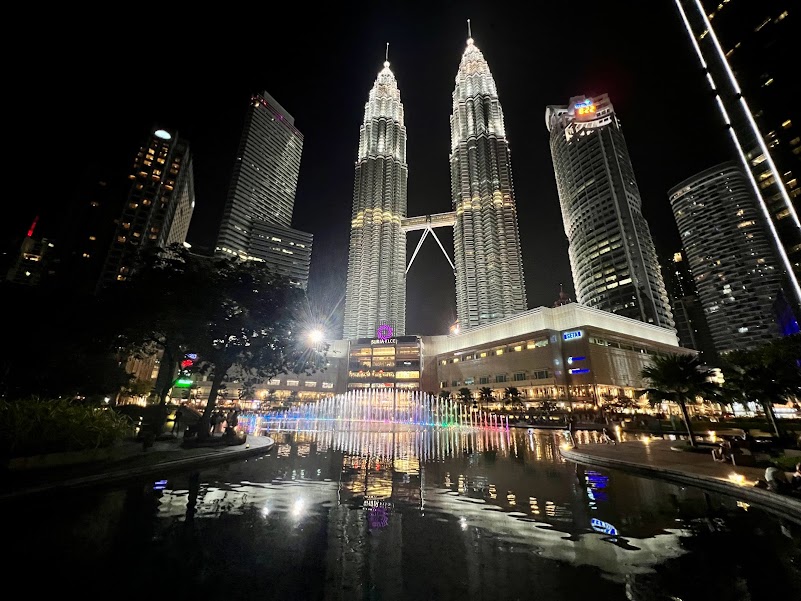
And our last stop in Malaysia landed us in Kuala Lumpur, which has a cool hybrid feel of both East and Southeast Asian megacities with its traditional houses and stray animals juxtaposed next to sleek luxury skyscrapers (spectacular infinity pools with massive skyline views are a dime a dozen).

Langkawi, Malaysia   © Eric Leiberman/goingplacesfarandnear.com
Langkawi  Kedah, Malaysia © Eric Leiberman/goingplacesfarandnear.com
The Ritz Carlton, Langkawi  Kedah, Malaysia © Eric Leiberman/goingplacesfarandnear.com
Malaysia   © Eric Leiberman/goingplacesfarandnear.com

Malaysia   © Eric Leiberman/goingplacesfarandnear.com

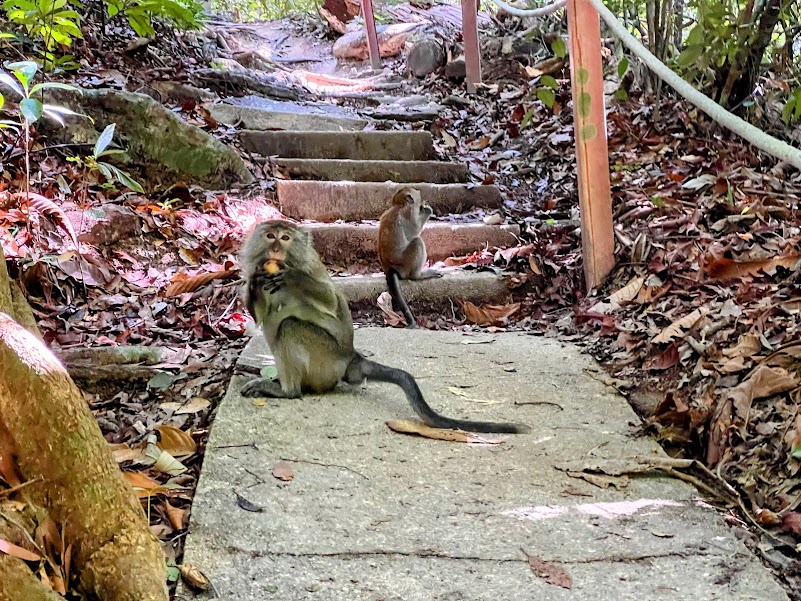
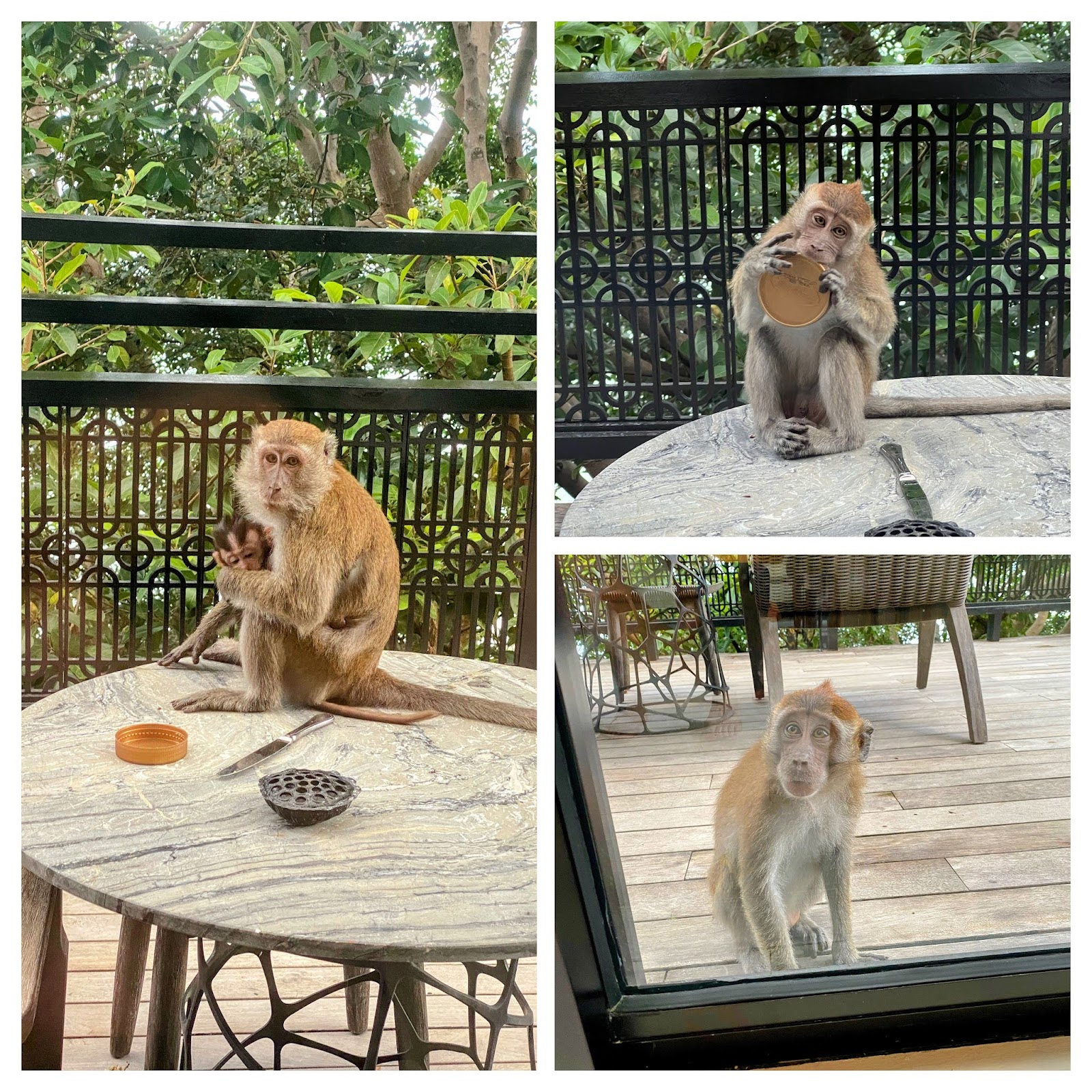
In our experience, the only thing we found to be stronger than the infinity pool game in Malaysia was the army of monkeys. We encountered them pretty much everywhere we went – during both city and jungle explorations, on beaches, and even on our hotel balcony. It was cute and fun for a while, but it got personal when Sarah was peacefully enjoying her apple with peanut butter, only to look up (at first excitedly) to see monkeys gripping the balcony rails. This excitement quickly turned to terror as the gaggle of conspirators jumped to her, and one mother monkey with baby hanging on ripped the PB jar right from Sarah’s grasp (which is quite strong, not sure if anyone here has ever tried to take PB from Sarah). Sarah is trying her best not to now think of them as glorified rats, and has Eric to remind her diligently of our shared ancestry (monkeys are Eric’s favorite animal.. shocker). Yesterday, a new friend we met on the train told us a monkey recently ripped her pants attempting to get a snack from her pocket! No thanks. Sarah’s mind is set for now.

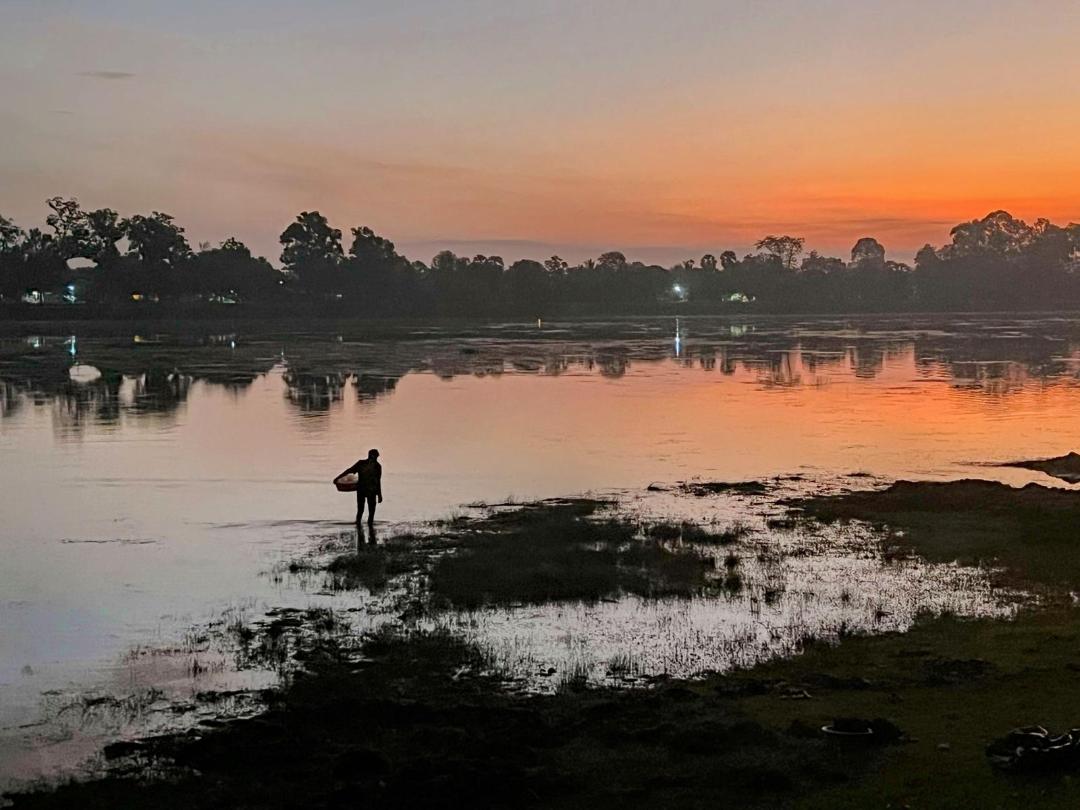
Krong Siem Reap, Cambodia © Sarah Falter/goingplacesfarandnear.com
Krong Siem Reap, Cambodia © Eric Leiberman/goingplacesfarandnear.com

Next, we skipped over to Cambodia to see the ancient temples of Angkor, just north of the town of Siem Reap. We were blown away to learn that this site was home to 1 million people at its height about 900 years ago (the largest pre-industrial city in the world, with 1/400 people on the PLANET living there). The temples throughout the 250 square mile archaeological park are in varying states of being consumed by the jungle due to a combination of factors over the years – namely neglect, war, vandalism and (thankfully) restoration efforts.

Krong Siem Reap, Cambodia © Eric Leiberman/goingplacesfarandnear.com

More fun factoids – the temples have changed hands (and actual coats of paint) between different religions over the years, based on the beliefs of whoever ruled at the time. Originally Hindu, then swapped to Buddhist, then back to Hindu again when the leading man embraced Brahmanism. Many of the Buddha statues were defaced in some way (missing a head or an arm). But can you blame the people?!.. sounds very confusing to be constantly switching horses on the path to salvation! -Editor’s note: Eric thought that was funny; Sarah thought offensive.

Angor Wat sunrise © Eric Leiberman/goingplacesfarandnear.com
Krong Siem Reap, Cambodia © Eric Leiberman/goingplacesfarandnear.com

Eric dragged Sarah out of bed at 4AM three consecutive days in a row in order to be at the Angkor temples for sunrise. But Sarah admits it was pretty special to be on the scooter on those dark mornings, slowly making our way through Siem Reap with the few locals and shopkeepers awake at that hour. It was also so worth it to escape the heat of the day and have many of the temples all to ourselves (our guide told us that pre-Covid this site could see 12,000-13,000 tourists per day, compared with 400-500 right now). We feel lucky to be able to tour the utterly magnificent sites with such freedom, but heartbroken at the economic impact the pandemic has had on so many in the tourism industry. Some we’ve met have lost their homes/homestays/hotels, and many changed their jobs entirely (to farming, fishing..) to make ends meet. They all vocalize that they can’t wait to see more and more tourists again. 

Krong Siem Reap, Cambodia © Eric Leiberman/goingplacesfarandnear.com
Kuala Lumpur © Eric Leiberman/goingplacesfarandnear.com

We went on to continue the whole not-really-sleeping thing for our first week in Indonesia, first due to an overnight layover at the Singapore airport, and then chasing first light for some epic volcanoes in Java. We’ll be making our way east in Indonesia over the next month, so please send over any/all recommendations! Sarah is 50/50 at this point in thinking we should do a week-long silent retreat.

See also:

DISPATCH 1 FROM LIVING THE NOMADIC LIFE, A GLOBAL ODYSSEY: MEXICO

DISPATCH 2 FROM LIVING THE NOMADIC LIFE, A GLOBAL ODYSSEY: SOUTH KOREA TO VIETNAM

DISPATCH 3 FROM LIVING THE NOMADIC LIFE, A GLOBAL ODYSSEY: MALAYSIA TO CAMBODIA

DISPATCH 4 FROM LIVING THE NOMADIC LIFE, A GLOBAL ODYSSEY: INDONESIA

DISPATCH 5 FROM LIVING THE NOMADIC LIFE, A GLOBAL ODYSSEY: AUSTRALIA-NEW ZEALAND-CHILE

_______________________________

© 2022 Travel Features Syndicate, a division of Workstyles, Inc. All rights reserved. Visit goingplacesfarandnear.com, www.huffingtonpost.com/author/karen-rubin, and travelwritersmagazine.com/TravelFeaturesSyndicate/. Blogging at goingplacesnearandfar.wordpress.com and moralcompasstravel.info. Visit instagram.com/going_places_far_and_near and instagram.com/bigbackpacktraveler/ Send comments or questions to FamTravLtr@aol.com. Tweet @TravelFeatures. ‘Like’ us at facebook.com/NewsPhotoFeatures