By Karen Rubin, Travel Features Syndicate, goingplacesfarandnear.com
“It was a choice,” Eric Oberg, Rails to Trails Conservancy’s Senior Director of Programs, says of Columbus, Ohio’s decision to spend $250 million over the next five years to build 150 miles of bikeways, walkways and trails.
In November 2024, voters in Central Ohio approved Issue 47, a sales tax levy to fund the LinkUS mobility initiative. The initiative specifies that 27.5% of the new COTA sales tax revenue (roughly $50 million a year) must be spent on “transit-supportive infrastructure” – that is new trails, sidewalks and bikeways. While the initial five-year phase targets building 150 miles of sidewalks, trails, and bikeways by 2030, the permanent levy is designed to ultimately create over 500 miles of paths across the region by 2050.
“It will be transformational for the region. It will benefit the 2.1 million people who live within a mile of bus service.” said Brian Ashworth Transportation Planning Manager City of Columbus, who is developing new bus routes (with bike racks) to connect to the trails. Brian’s Bike Plus Plan provides for 500 miles of bikeways. “LinkUS is a model for other places.”
Passing the ballot initiative “showed who we are and what we want to be,” he added.
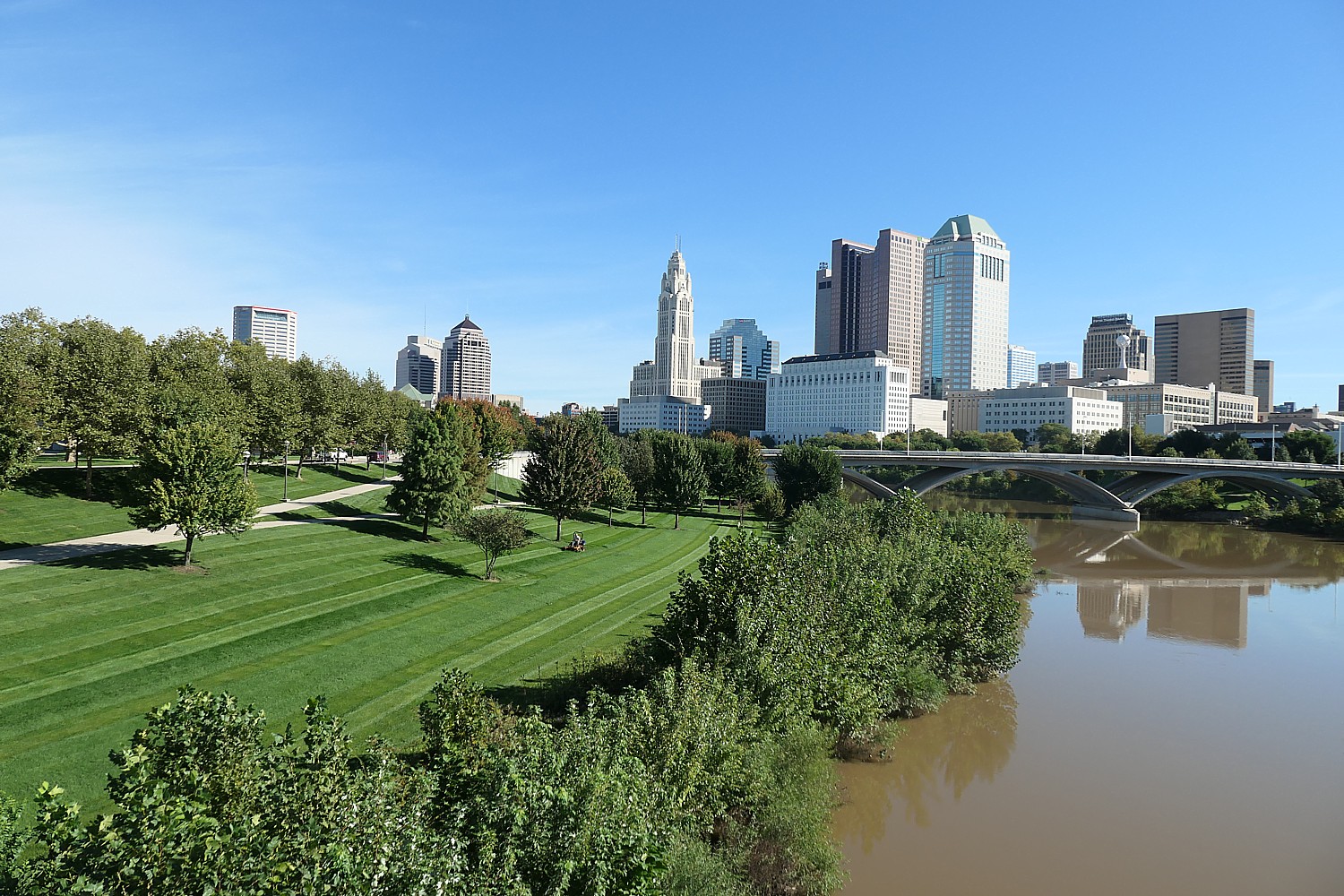
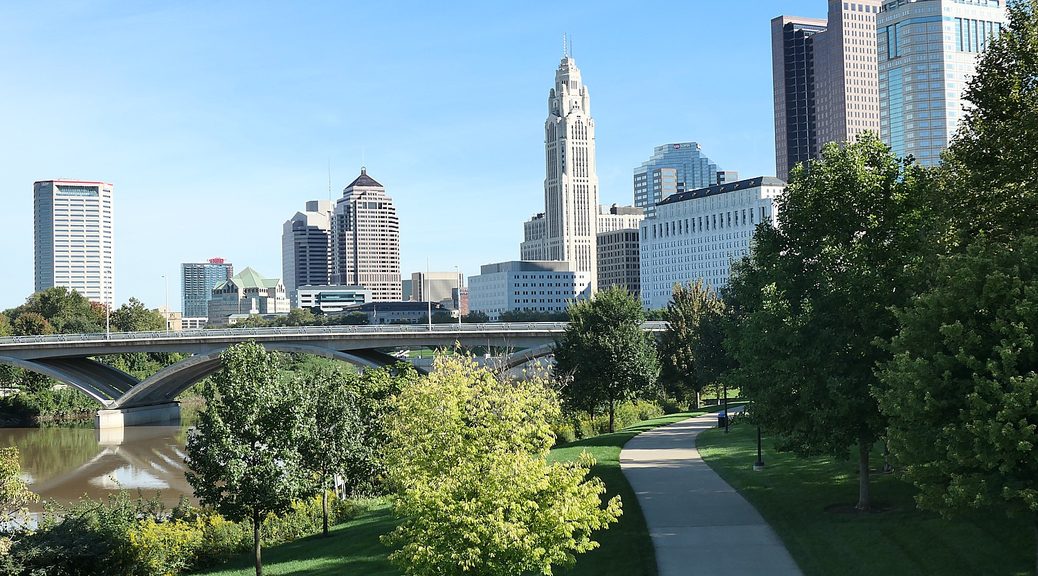
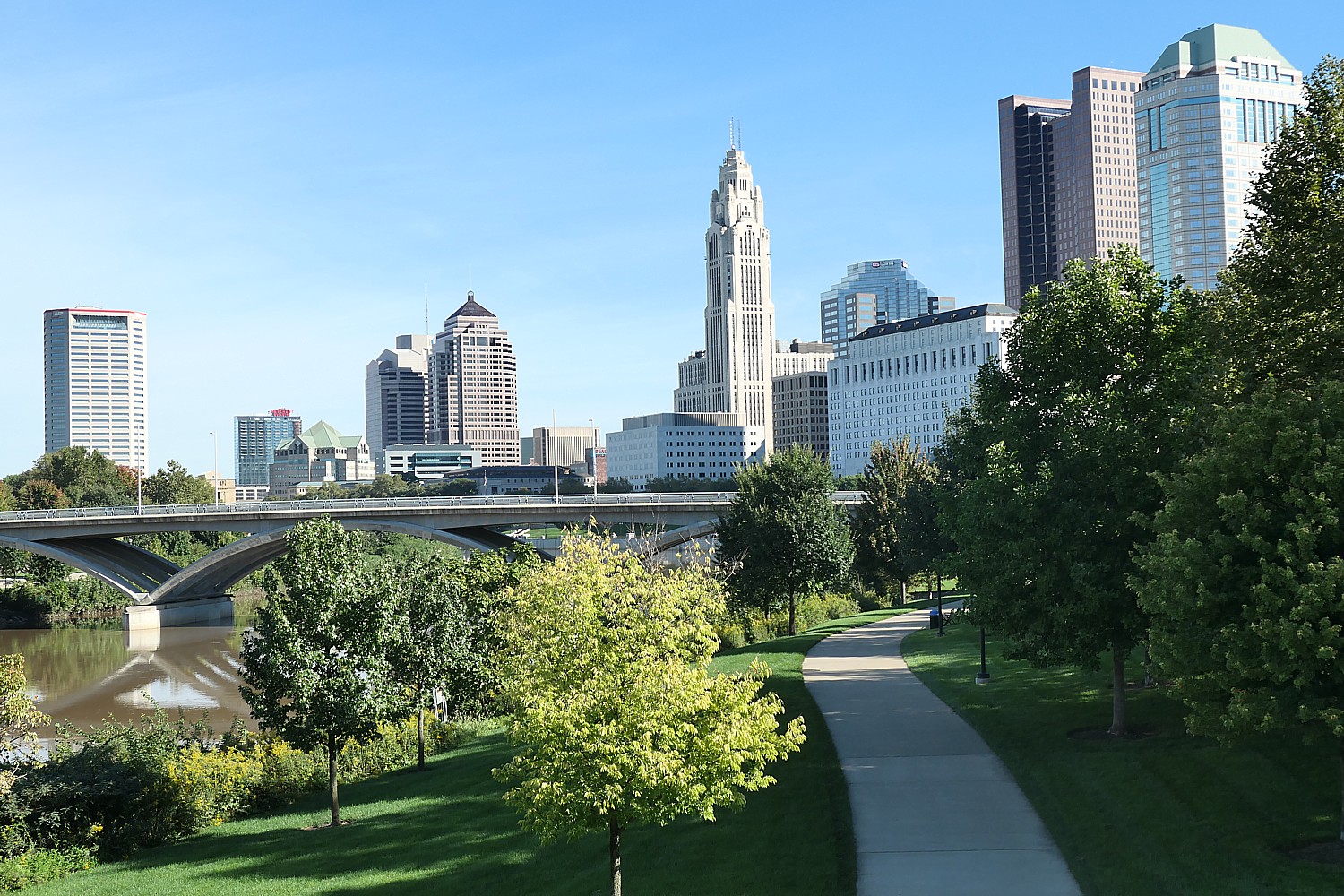
Fifteen years ago, Columbus’ city leaders’ choice to remove dams, its Scioto riverfront from a muddy, stagnant river and turning it into a glorious linear park, Scioto Riverfront.
“When the city decided to take down the dams, they created acres of greenspace of the most valuable real estate in America’s14th largest city, resisting pressure to build commercial buildings,” Melinda Vonstein, Greenways Planning Studio Lead for the Mid-Ohio Regional Planning Commission.
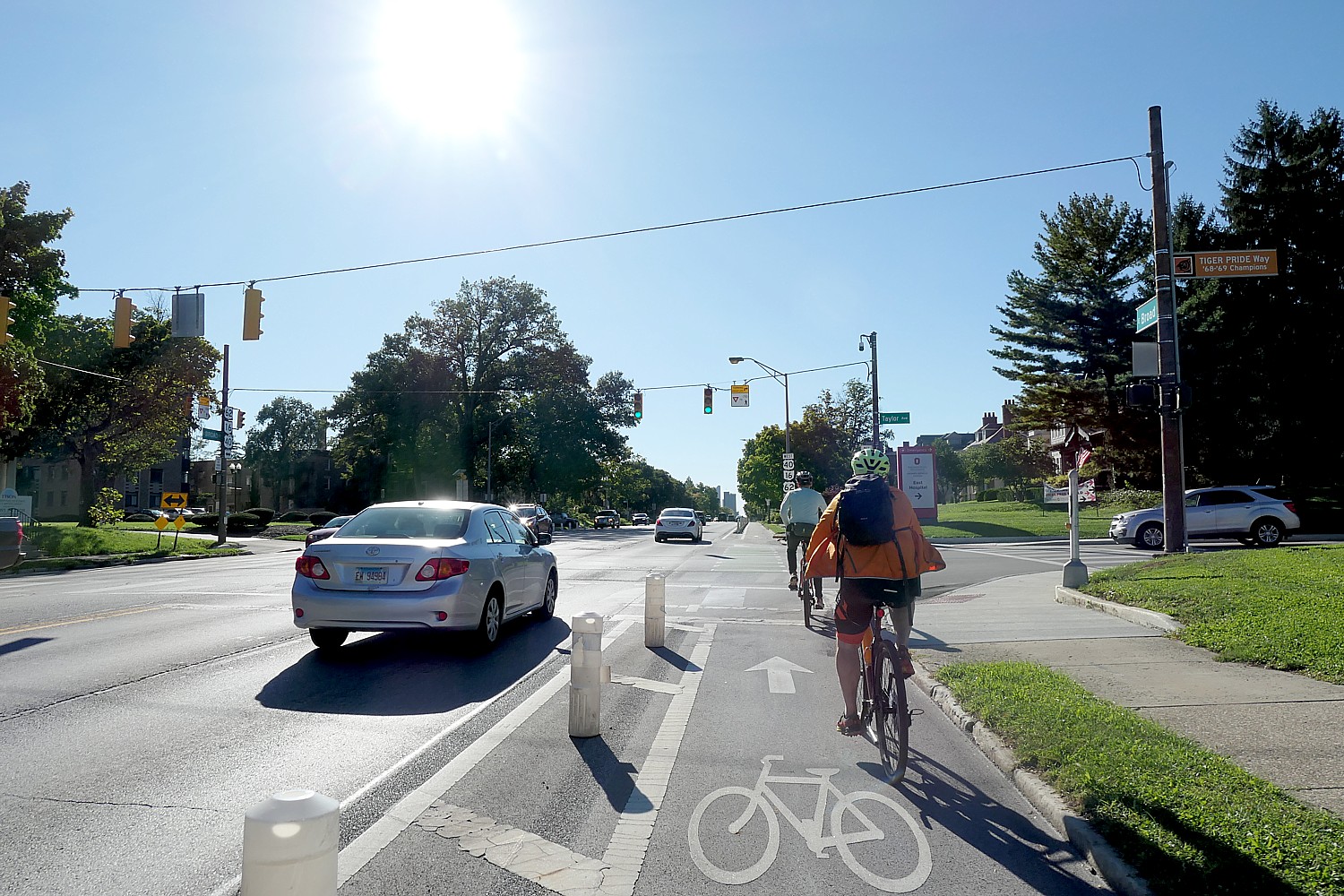
They also took away one lane on each side of a busy seven-lane Broad Street – a major roadway that dates back to 1797 and stretches 25.1 miles across the county – to create a protected bike lane which has made the road safer, reducing excessive speeding by 90% (drivers were going 55 mph on the 35 mph road) and reducing crashes by 50 percent.
“What happens when a city as large as Columbus chooses to prioritize trails, walking, biking and greenspace. These were active choices by the city – over 25-30 years, lots of choices – but there are lots of examples of cities choosing differently,” Oberg declared.
The choices that Columbus made were motivated by the change in culture over the past 30 years. Indeed, the cities ranked best for “livability” and “quality of life” are all places where bikeways and greenways are no longer treated as optional, recreational perks but are core economic and public health infrastructure that directly drive a city’s growth and livability, and ability to attract talent.
Not coincidentally, Columbus, the 14th largest city in the country is countering the trend of the rest of the Midwest and growing in population. It is forecast to grow by one million by 2030.
That is because “green mobility” act as a catalyst to growth because it acts as a “talent magnet” attracting Millennials and GenZ who want to live where they don’t have to own a car to buy groceries or get to work; they allow cities to grow in population without paralyzing traffic; and property values increase, while foot/bike traffic boosts local retail sales in a way that drivers whizzing by in cars cannot.
“Can you imagine adding 1 million more cars?” Vonstein posed, who, as Greenways Planning Studio Lead has been working to develop safe multi-use and leisure trails throughout the region.
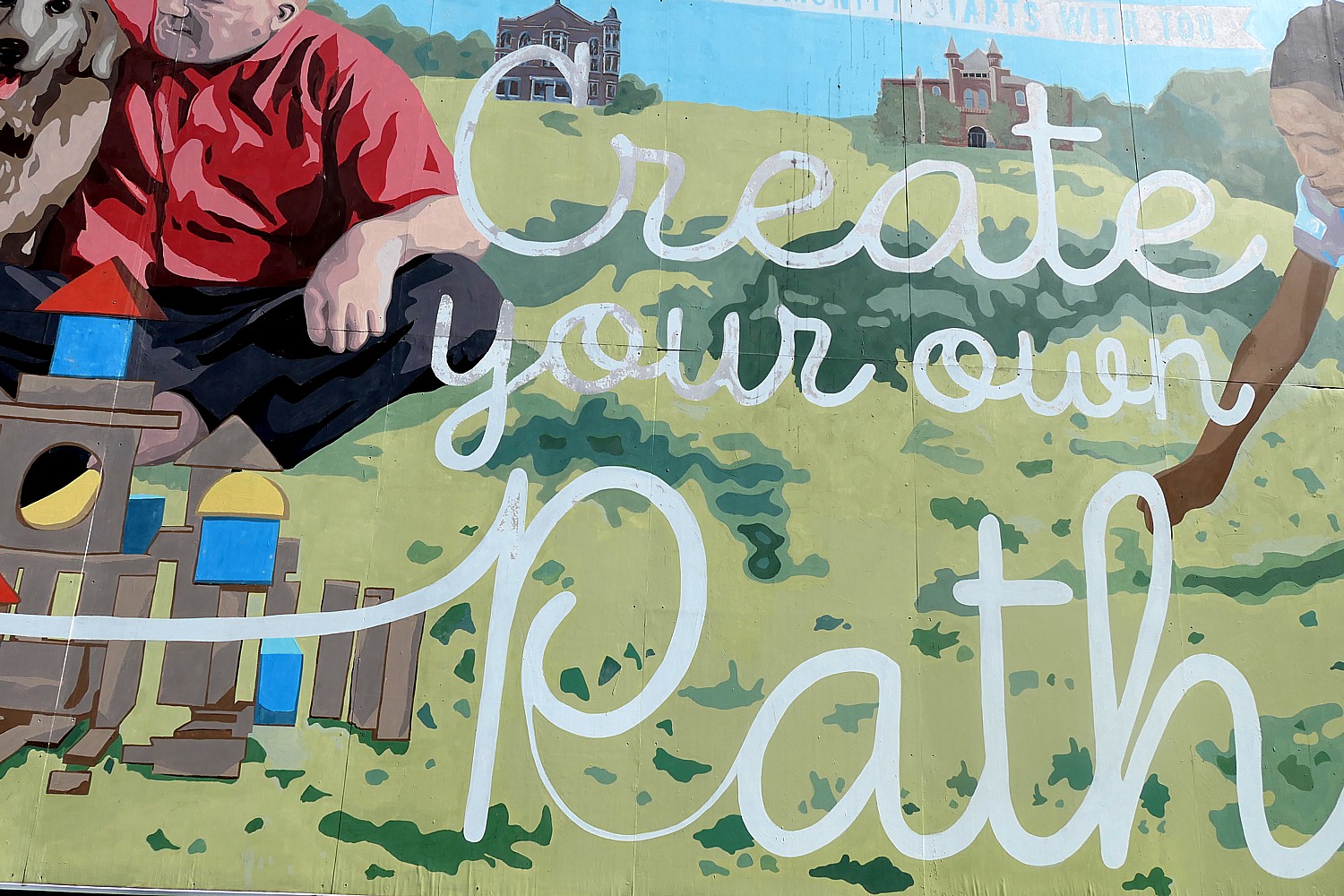
The demand and the desire to turn abandoned rail lines, canalways, and industrial complexes into greenways and byways may come from the grassroots, but it is the officials and leadership who hold the power and purse to make such projects a reality.
We come into Columbus at the end of a 50-mile bike ride on the Ohio-Erie Trail from Mount Vernon and our final day touring the Great American Rail-Trail as it is unfolding in Pennsylvania, West Virginia and Ohio. We get to see the progress in building the connectors that will ultimately link 3,700 miles of protected multi-use byways from Washington DC to Washington State. Columbus is the largest city on the Great American Rail-trail.
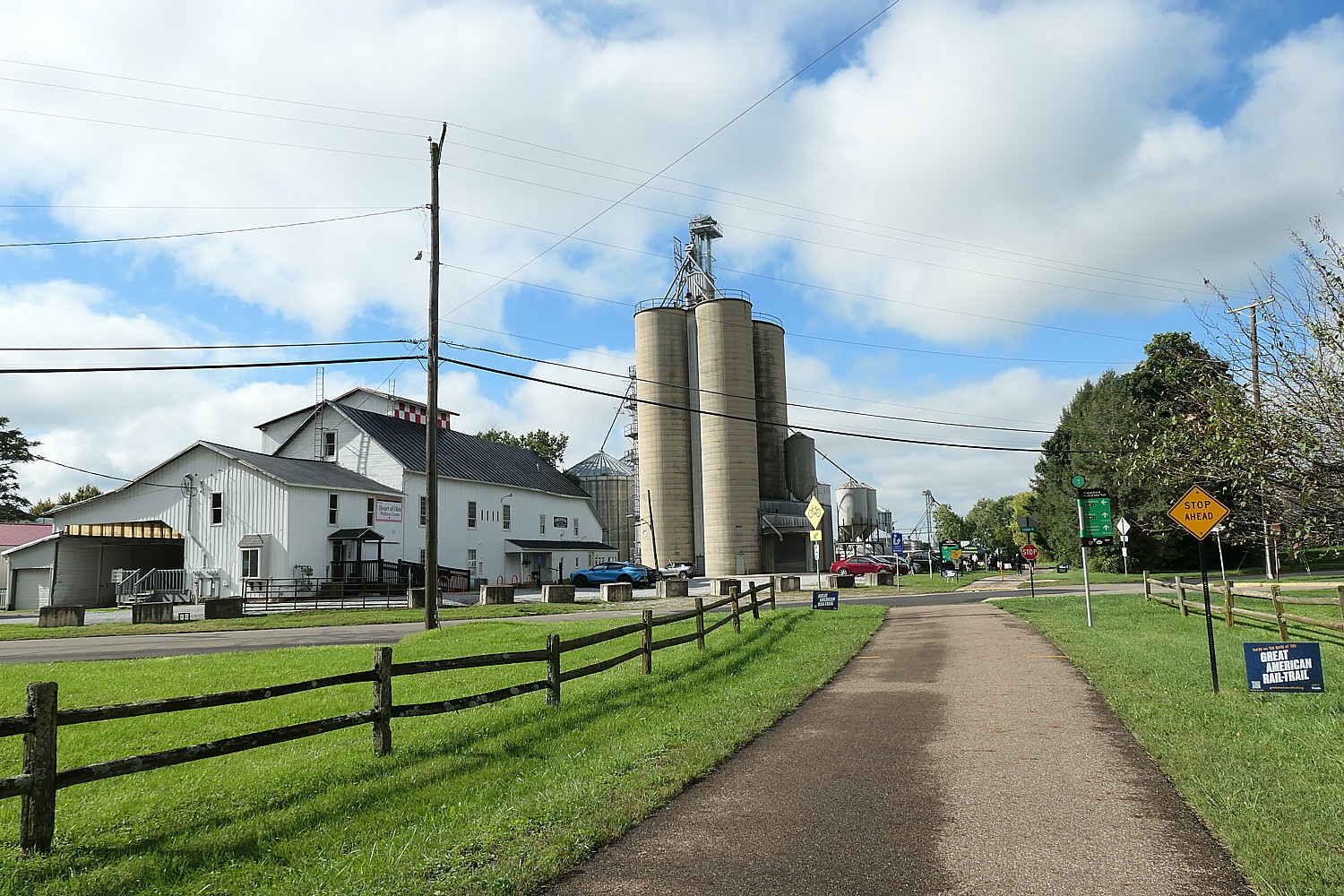
We have seen along the way how small villages and towns which saw their economy and prosperity deteriorate along with abandoned rail lines and factories, are being revitalized with the repurposing into rail-trails, and how the Columbus municipality has created a Trail Towns program to support these towns, building connections from the trail to their town centers. The first five towns have come aboard, Mount Vernon and Centerburg among them, where we start out our final day.
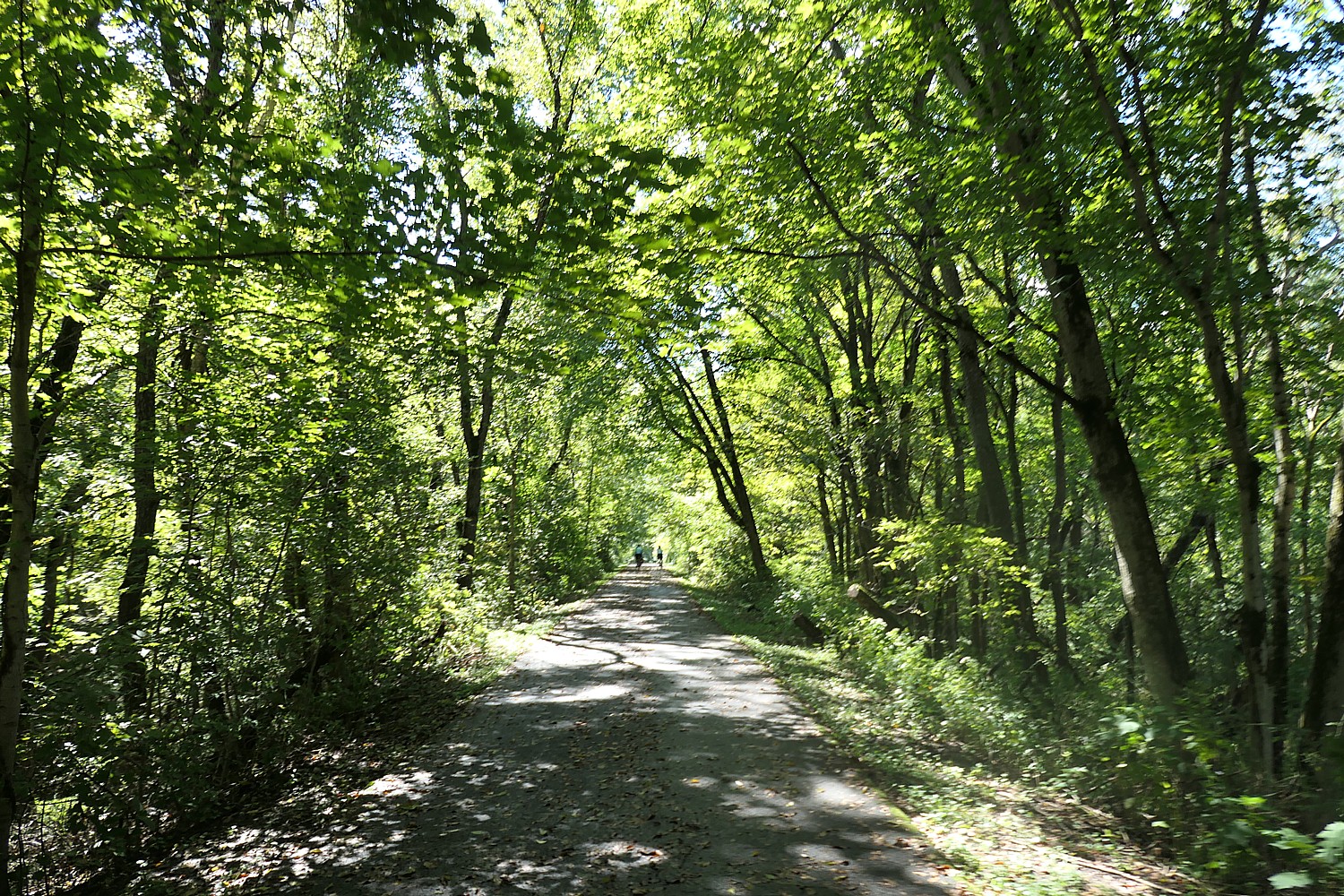
This day’s ride is a sequence of smaller named trails that are all part of the 326-mile-long Ohio to Erie Trail from Cincinnati to Cleveland, which is one of more than 150 trails nationwide that will form the Great American Rail-Trail (https://www.traillink.com/trail/ohio-to-erie-trail/).
We go from villages and towns like Mount Vernon into Centerburg, through farm land and countryside before connecting onto the scenic Alum Creek Trail, a 24.5-mile paved multi-use greenway that takes us into downtown Columbus.
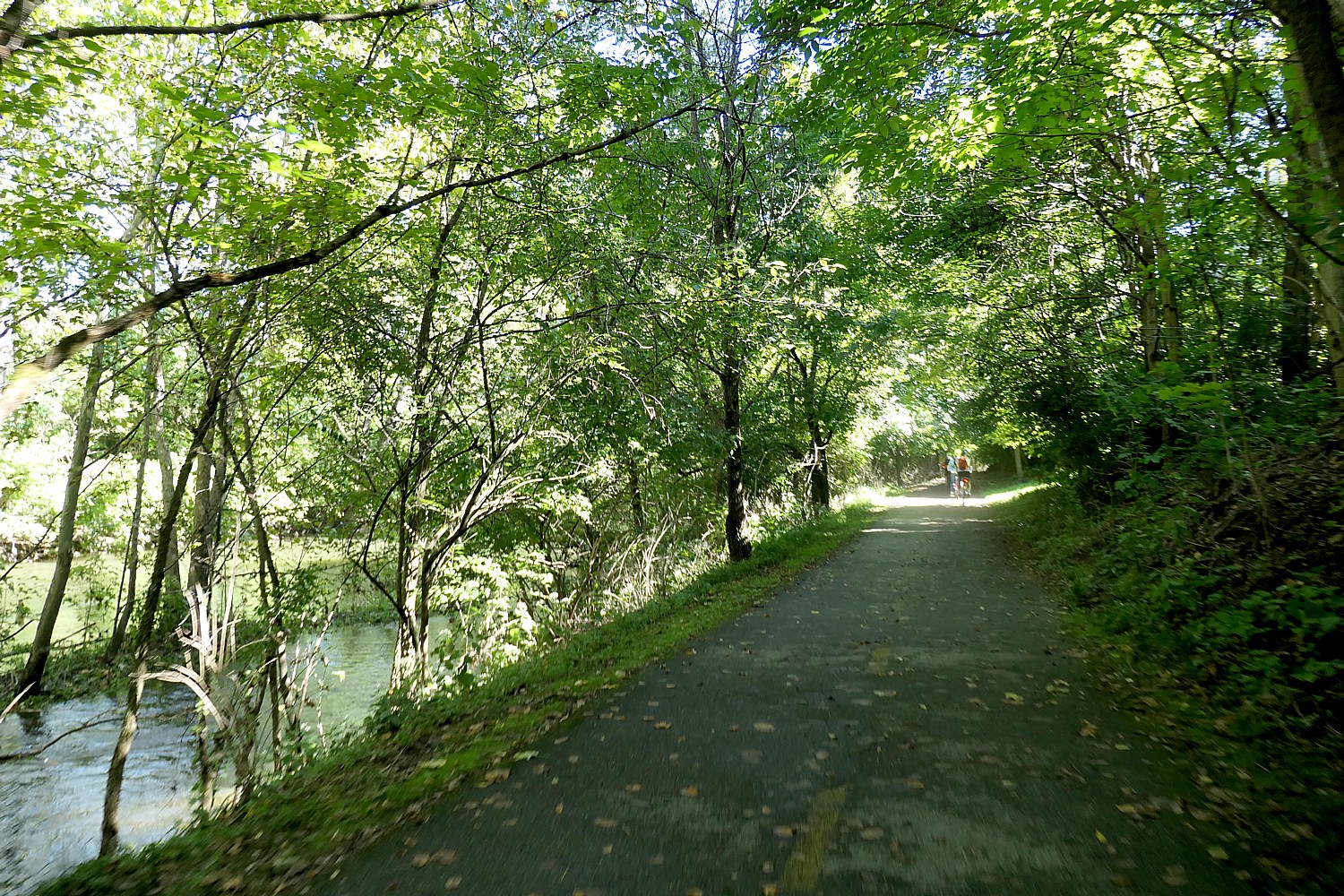
The Alum Creek Trail is wonderfully green, secluded, especially when you consider there are houses, malls, busy commercial streets just beyond, and even houses along the trail on one side, the creek on the other (getting the right of way in front of the houses was a major hurdle to creating the trail).
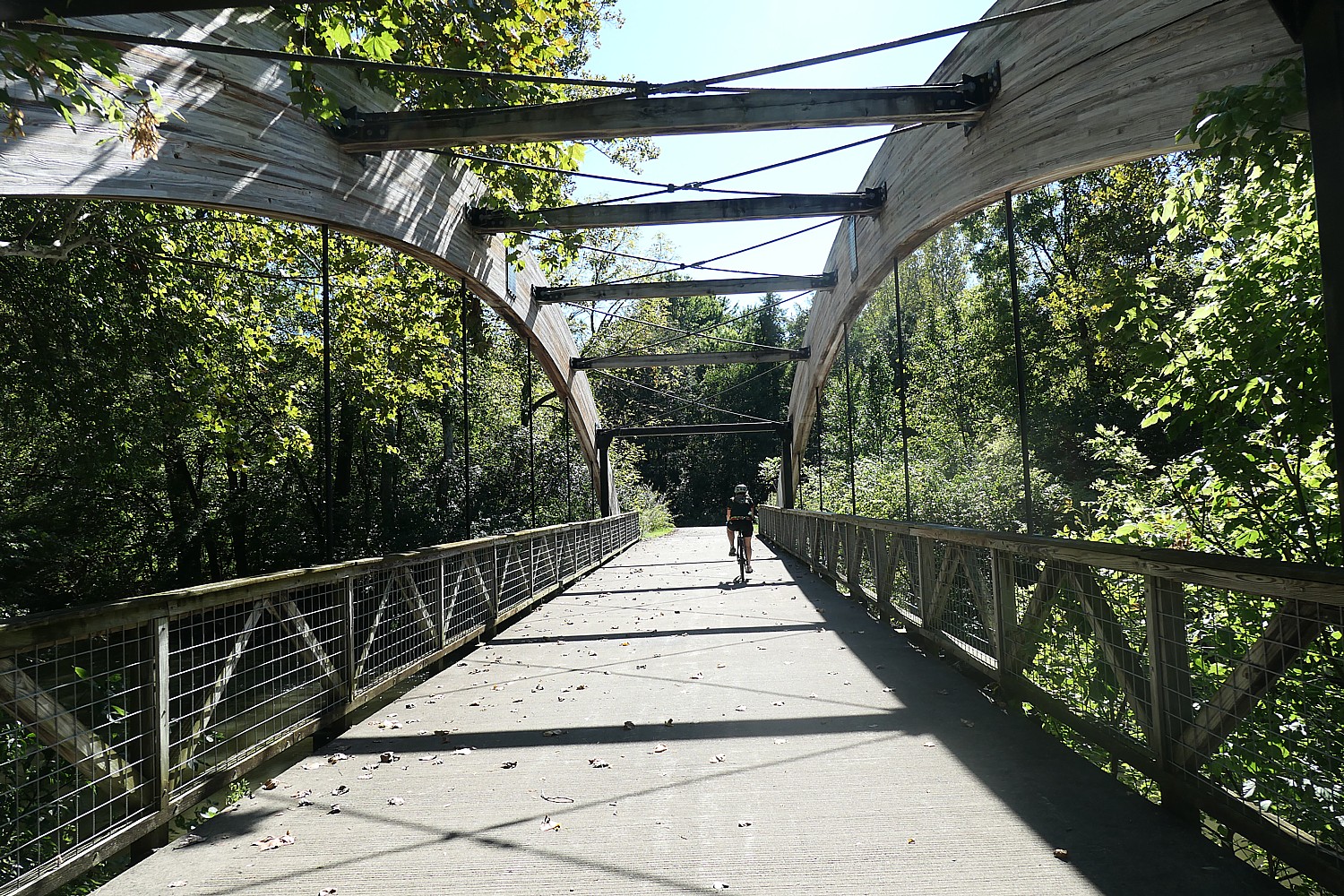
We come to a historic marker, “The Underground Railroad” and learn “The Underground Railroad was neither underground nor a railroad, but a system of loosely connected safe havens where those escaping the brutal conditions of slavery were sheltered, fed, clothed, nursed, concealed, disguised and instructed during their journey to freedom. Although this movement was one of America’s great social, moral and humanitarian endeavors, the details about it were often cloaked in secrecy to protect those involved from the retribution of civil law and slave-catchers. Ohio’s history has been permanently shaped by the thousands of runaway slaves passing through or finding permanent residence in this state.” The marker was sponsored by the Friends of Freedom Society, Inc. and the Columbus Recreation and Parks Department. It is truly a “teachable moment” and a revelation to learn that very near here are some homes that were known to have provided refuge.
Here, Brian Ashworth, Transportation Planning Manager for the City of Columbus, leads us from the present trail that would take us to Broad Street, Columbus’ busy main street and off some side trails that he hopes to make the official route on the Great American Rail-Trail.
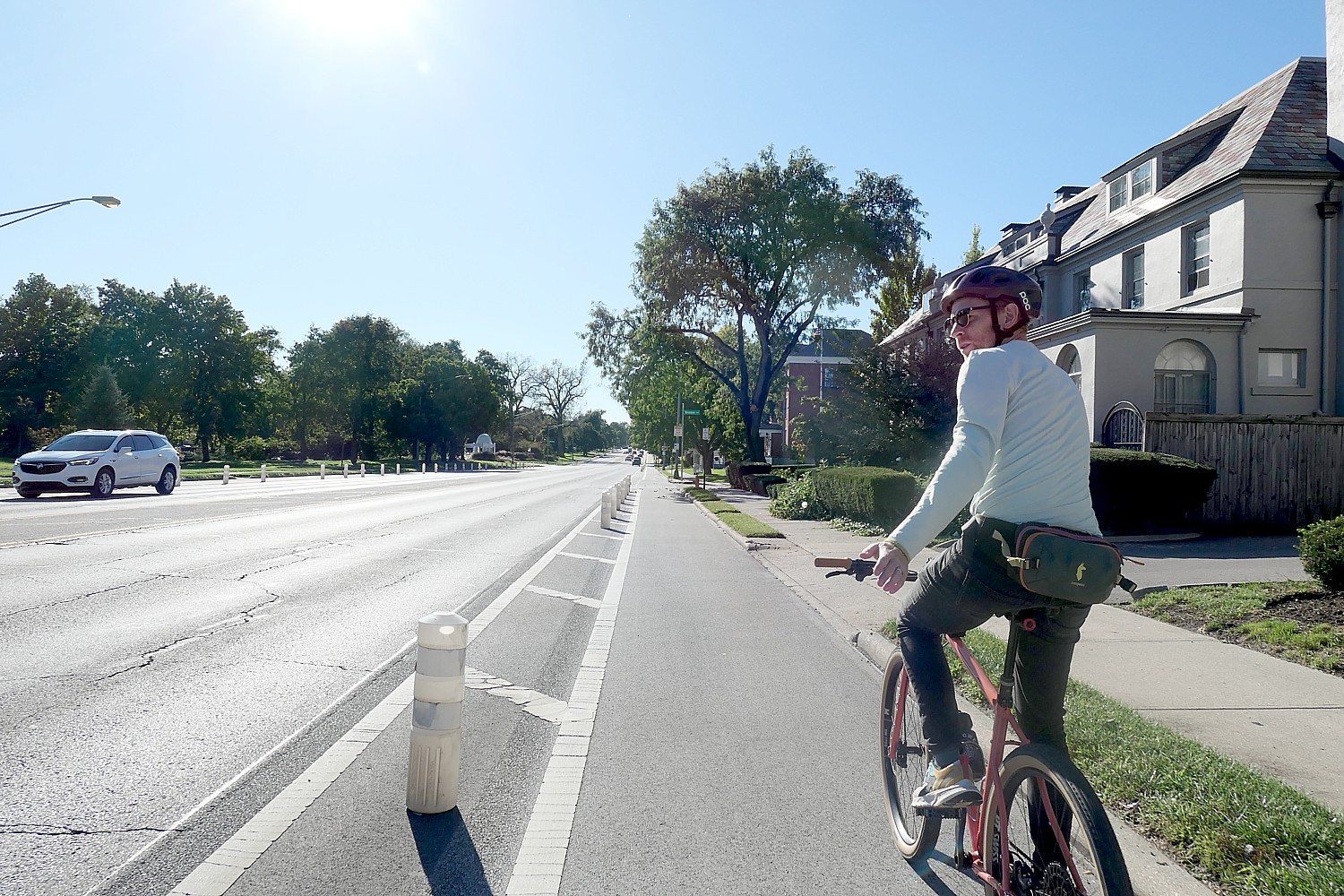
Where we come onto Broad Street is now a protected bikeway, created by taking a lane from each side of the seven-lane thoroughfare. “It’s reduced crashes by 50% and reduced excessive speeding by 90% (drivers were going 55 mph on the 35 mph road),” noted Kelly Scocco, Director of Columbus’ Department of Public Service. The goal is to create an urban trail so it passes museums and the Conservatory.
“It will offer more scenery, a better connection, and revitalize the downtown,” she said. “This community put our money where we value.”
William Murdock, Executive Director Mid-Ohio Regional Planning Commission, said that the plan is to use the Great American Rail-Trail as a backbone, connect the downtown and neighborhoods to the trail and knit the entire region together. Within a 50 mile-radius around Columbus are 1000 miles of greenway trails. The plan calls for creating curated routes, connections, and loops, and boosting the economic base for small towns. The first five towns have joined the Trail Towns program; 20 are waiting.
“All the communities see the value of becoming a Trail Town for their economic development and quality of life. People think about a future where they are not having to drive everywhere and can feel safe,” said Vonstein.
“We’ve set the standard for USA,” says Murdock. “We now have funding to make progress at an unfathomable speed. What takes 30 years elsewhere, we have plans for 81 projects in the first five years.”
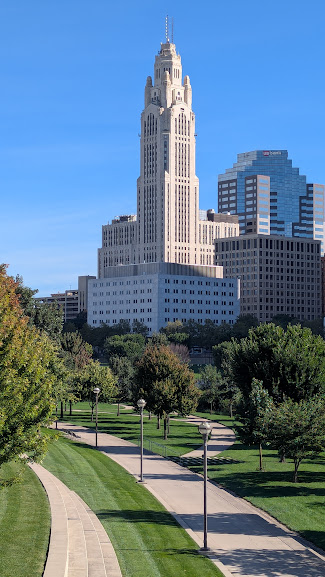
We stay the night at a hotel contained within the Le Vaque Tower, a stunning iconic landmark right on Broad Street. Standing 555 1/2 feet high, it was built to be exactly one half-foot taller than the Washington Monument and was the fifth tallest in the world when it opened in 1927, and today is a multi-use building that houses the hotel and offices and is a block away from the State Capital building.
Biking brought me to Columbus, Ohio, and now I have much of the morning to explore and discover.
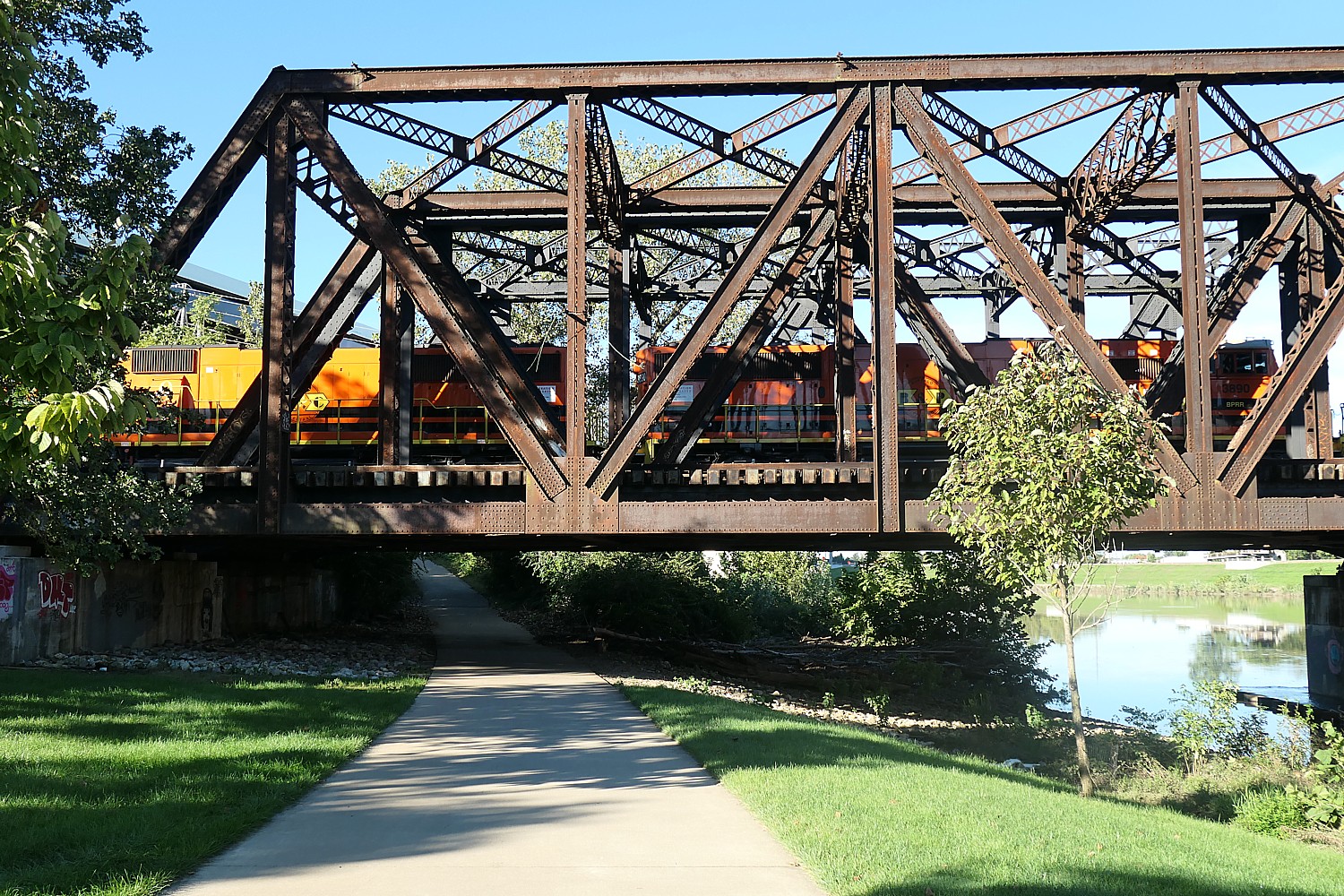
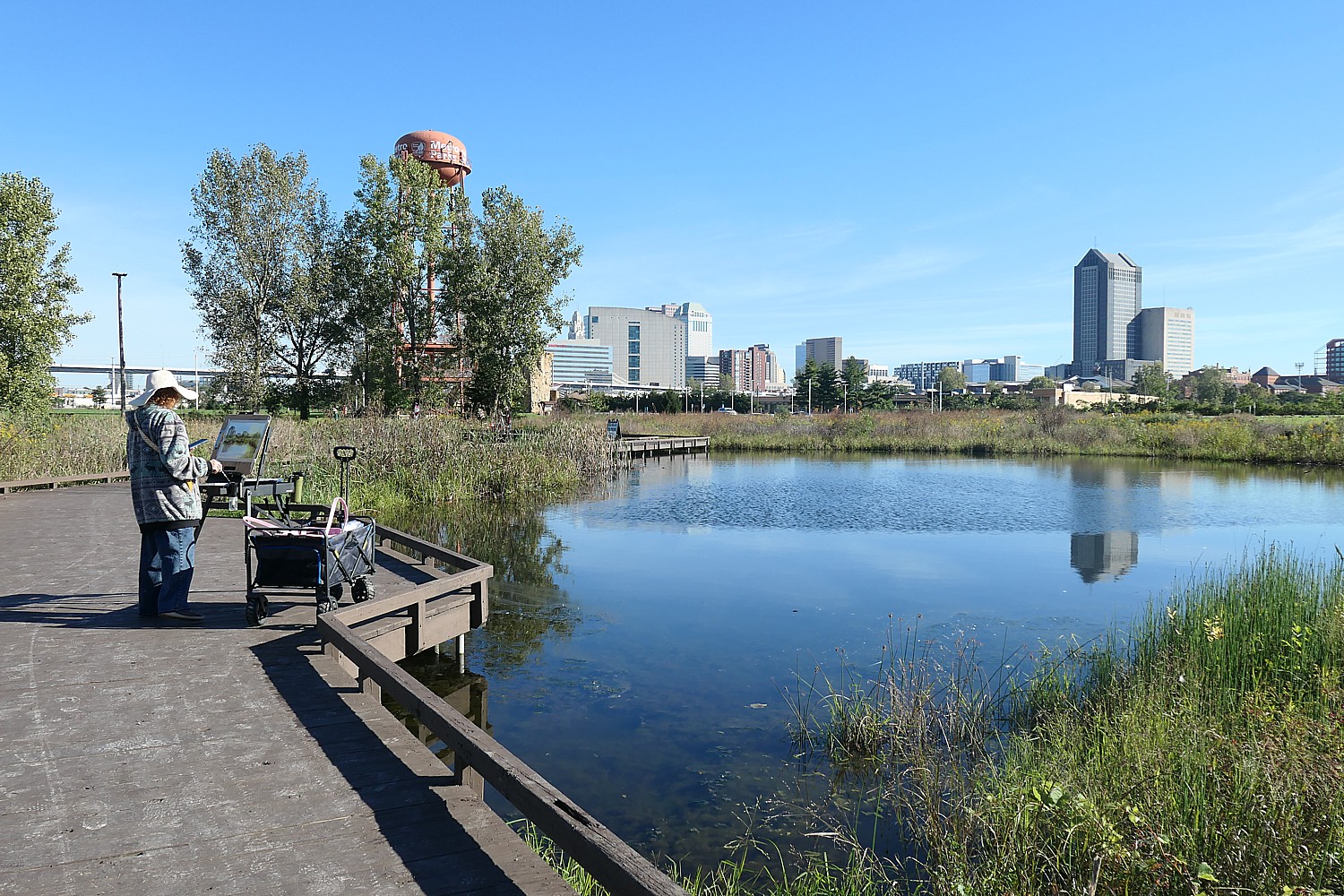
I set out from the Le Vaque hotel for the gorgeous Scioto Riverpark greenway and trails that now line both sides of the river, with stunning bridges. It is early and the paths are already well used with runners, walkers, bikers, strollers. At one end, I get really close to the railroad tracks (rather exciting to have a train go right over your head as you walk under the railroad bridge) before winding my way to the Scioto Audubon Metro Park, a picturesque refuge where several artists have set up their easels and there is and delightful playground where a father is helping his daughter climb “rock” walls (ropes and lines set out) that look like actual cliffs.
I walk across the bridge to the other side of the river, where important city institutions are located, including COSI: Center of Science and Industry (cosi.org), a science museum and research center is housed in what used to be the high school, wishing I had more time to visit.
Walking back up Broad Street, I come to the state capital building, where a bridal couple is posing for photos.
For more information on the Great American Rail-Trail, visit: https://www.railstotrails.org/site/greatamericanrailtrail/
Rails to Trails Conservancy on a Mission
On this tour of the Great American Rail-Trail and how it is unfolding 3,700-miles across the country, from Washington DC to Washington State, we have been able to see first-hand how Rails to Trails Conservancy acts on its mission “to build a nation connected by trails, reimagining public spaces to create safe ways for everyone to walk, bike and be active outdoors.”
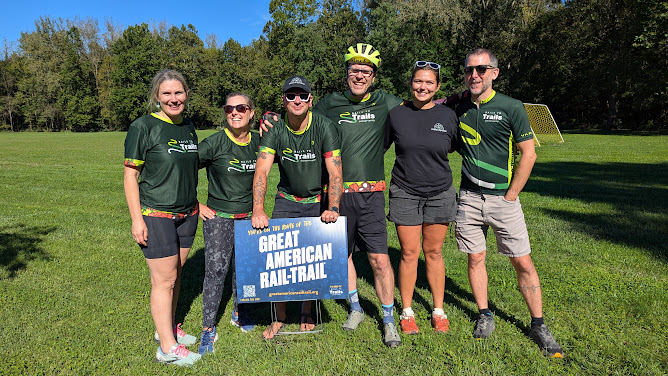
“Since 1986, Rails to Trails Conservancy has stood at the forefront of America’s efforts to make it safer and easier to walk, bike and be active outside—in every state, in every county and in every neighborhood. With more than 42,500 miles of multiuse trails on the ground nationwide, and more than 150 trail networks in development reaching into every single state, people in all types of communities now rely on this infrastructure. Trails create space for us to move our bodies, build economic opportunity and navigate our communities. They’re essential for our health, transportation choice and quality of life.”
These goals are all the more important in light of an epidemic of adults and children being obsessed with sedentary activities revolving around screens and technology and a decline in availability of health care, even as medical technology can extend our lifespans. Wellness and prevention become a necessity for quality of life but also to economic productivity.
Its flagship initiative, TrailNation™ includes 10 regional projects plus the cross-country Great American Rail-Trail® connecting nearly 12,000 miles of trails across neighborhood, city, county and state lines. Ultimately, these regional projects will serve 35 million people living within 2 miles of a network, and the Great American will serve an estimated 50 million people within 50 miles of the route.
RTC recognized early in the trails movement that success hinged on local leadership and public investment. RTC was a leading advocate for Congress to pass the Intermodal Surface Transportation Efficiency Act of 1991 which unlocked federal transportation investment in trails, walking and biking and has led to today’s robust strategy to direct dedicated public funds at the local, state and federal levels to create, connect and maintain the nation’s trails. Since ISTEA was introduced in 1991, more than $25 billion in federal funding via the legacy Transportation Alternatives (TA) program and Recreational Trails Program (RTP) has been provided to the states to build trails and other walking and biking infrastructure. These programs have supported more than 43,000 projects.
RTC has distributed more than $3.7 million in grants since 2008, helping communities in nearly every state address missing links in their trail networks and maximize their impact. So far, more than 280 organizations—including local and national nonprofits and public agencies—have benefited from the program.
In 2025, RTC awarded $398,000 in funding to 40 community organizations and public agencies working to increase connectivity and access in rural, suburban and urban communities—creating more safe access to more trails for more people in America.
However, the Trump Administration has proved hostile to the Transportation Alternatives and Recreational Trails programs, creating new threats and challenges to Rails to Trails’ ability to fulfill its mission, and making it more important for local grassroots efforts to step up.
RTC has led a 40-year effort to shape the nation’s legal framework around rail-trails and defend them in the courts. Since 1986, RTC has been involved in 60+ legal cases, including landmark state and federal cases that have laid the groundwork for the movement—with a focus on establishing and protecting the legal and policy framework facilitating rail-trail conversions, particularly the federal railbanking law. The statute since 1983 has helped build an estimated 273 rail-trails totaling nearly 4,800 miles of railbanked trail possible.
More information at www.railstotrails.org. Rails to Trails Conservancy’s Traillink.com site provides all the information you need to enjoy the trails.
See also:
Imagine Biking 3,700 Miles Across the USA on The Great American Rail-Trail
Grassroots Volunteerism Builds the Great American Rail-Trail
‘One Mile at a Time.’ New Trails Are Links in Building the 3,700-Mile Great American Rail-Trail
Railtowns, Canaltowns, Rivertowns, GhostTowns – Now Trail Towns
__________________
© 2026 Travel Features Syndicate, a division of Workstyles, Inc. All rights reserved. Visit goingplacesfarandnear.com, longislandpress.com/category/vacation-travel.com and travelwritersmagazine.com/TravelFeaturesSyndicate/. Blogging at goingplacesnearandfar.wordpress.com and moralcompasstravel.info. Visit instagram.com/going_places_far_and_near. X: @TravelFeatures Threads: @news_and_photo_features ‘Like’ us atfacebook.com/NewsPhotoFeatures. Send comments/questions to FamTravLtr@aol.com.
