Category Archives: Wellness Travel

‘It Was a Choice’: Columbus, Ohio Allocates $250 Million to Build 150 Miles of Biking, Walking Trails

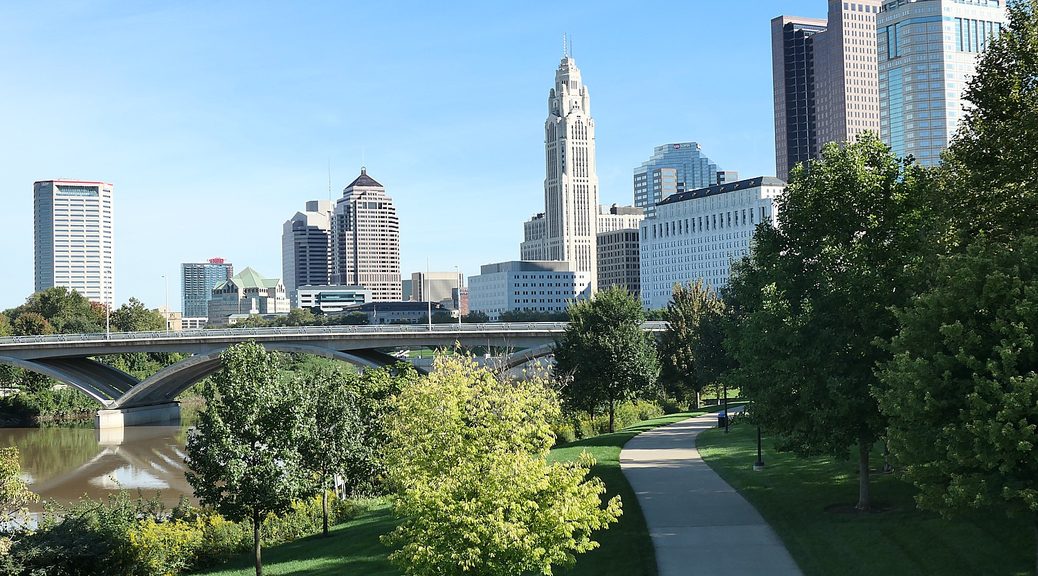
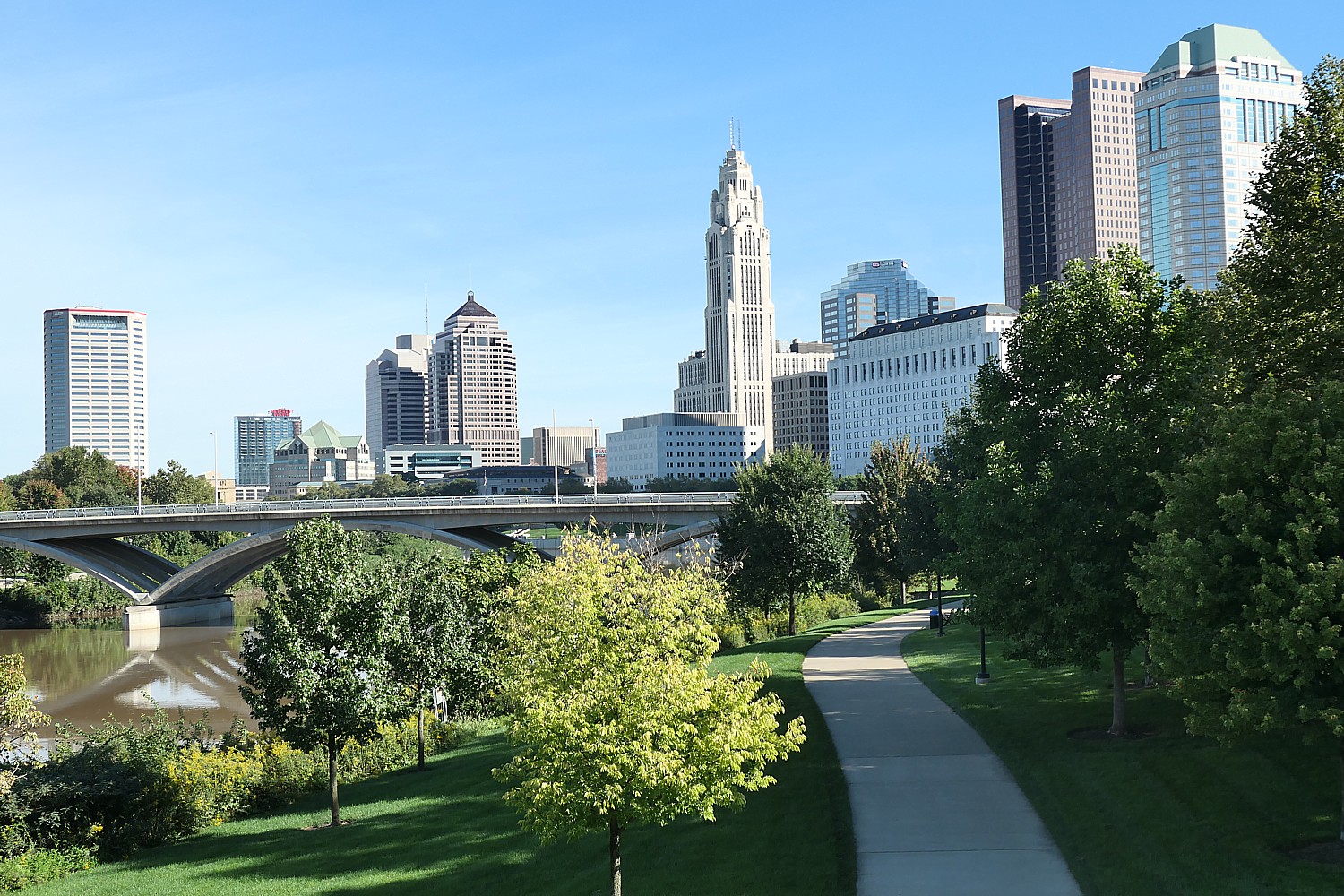
“It was a choice” by Columbus, Ohio leaders and residents to make greenspace and trails alongside the Scioto River © Karen Rubin/goingplacesfarandnear.com

By Karen Rubin, Travel Features Syndicate, goingplacesfarandnear.com

“It was a choice,” Eric Oberg, Rails to Trails Conservancy’s Senior Director of Programs, says of Columbus, Ohio’s decision to spend $250 million over the next five years to build 150 miles of bikeways, walkways and trails.

In November 2024, voters in Central Ohio approved Issue 47, a sales tax levy to fund the LinkUS mobility initiative. The initiative specifies that 27.5% of the new COTA sales tax revenue (roughly $50 million a year) must be spent on “transit-supportive infrastructure” – that is new trails, sidewalks and bikeways. While the initial five-year phase targets building 150 miles of sidewalks, trails, and bikeways by 2030, the permanent levy is designed to ultimately create over 500 miles of paths across the region by 2050.

“It will be transformational for the region. It will benefit the 2.1 million people who live within a mile of bus service.” said Brian Ashworth Transportation Planning Manager City of Columbus, who is developing new bus routes (with bike racks) to connect to the trails. Brian’s Bike Plus Plan provides for 500 miles of bikeways. “LinkUS is a model for other places.”

Passing the ballot initiative “showed who we are and what we want to be,” he added.
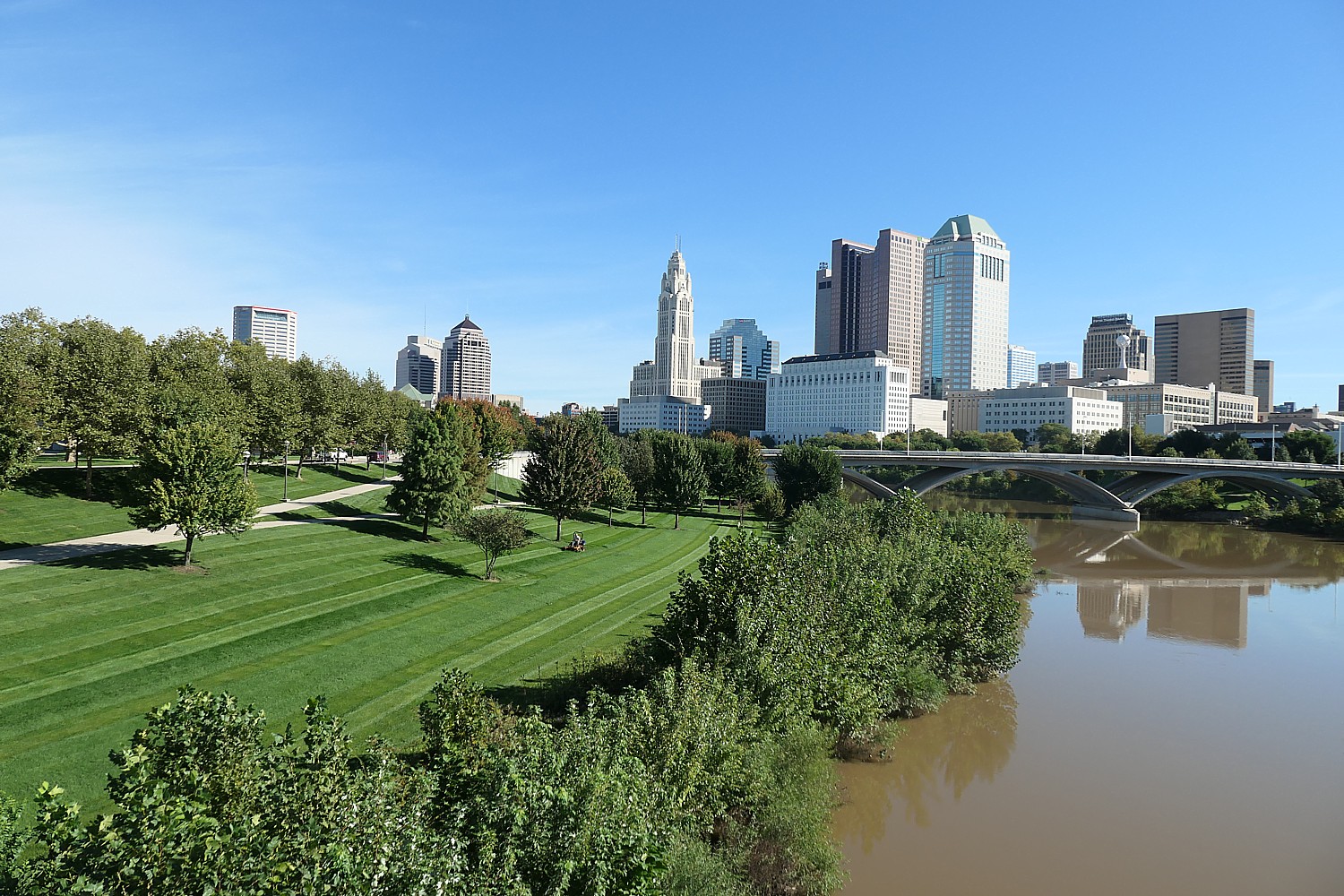
“It was a choice” by Columbus leaders and residents to make greenspace and trails alongside the Scioto River © Karen Rubin/goingplacesfarandnear.com

Fifteen years ago, Columbus’ city leaders’ choice to remove dams, its Scioto riverfront from a muddy, stagnant river and turning it into a glorious linear park, Scioto Riverfront.

“When the city decided to take down the dams, they created acres of greenspace of the most valuable real estate in America’s14th largest city, resisting pressure to build commercial buildings,” Melinda Vonstein, Greenways Planning Studio Lead for the Mid-Ohio Regional Planning Commission.
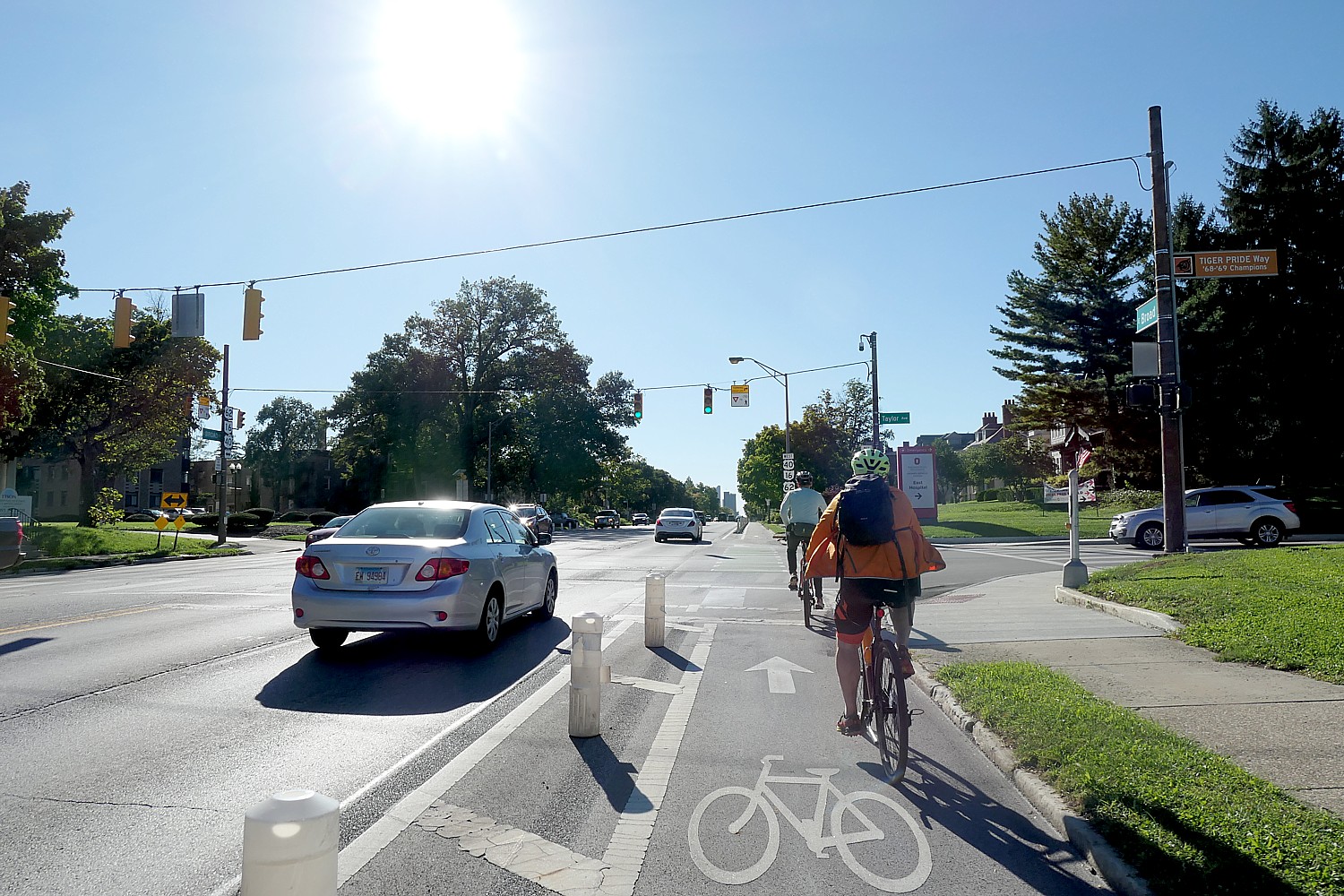
A protected bike lane along Columbus’ busy Broad Street has decreased the number of car accidents and dramatically reduced speeding. Columbus, a growing city, is investing $250 million to support safe biking and walking. “Can you imagine 1 million more cars?”  © Karen Rubin/goingplacesfarandnear.com

They also took away one lane on each side of a busy seven-lane Broad Street – a major roadway that dates back to 1797 and stretches 25.1 miles across the county – to create a protected bike lane which has made the road safer, reducing excessive speeding by 90% (drivers were going 55 mph on the 35 mph road) and reducing crashes by 50 percent.

“What happens when a city as large as Columbus chooses to prioritize trails, walking, biking and greenspace. These were active choices by the city – over 25-30 years, lots of choices – but there are lots of examples of cities choosing differently,” Oberg declared.

The choices that Columbus made were motivated by the change in culture over the past 30 years. Indeed, the cities ranked best for “livability” and “quality of life” are all places where bikeways and greenways are no longer treated as optional, recreational perks but are core economic and public health infrastructure that directly drive a city’s growth and livability, and ability to attract talent.

Not coincidentally, Columbus, the 14th largest city in the country is countering the trend of the rest of the Midwest and growing in population. It is forecast to grow by one million by 2030.

That is because “green mobility” act as a catalyst to growth because it acts as a “talent magnet” attracting Millennials and GenZ who want to live where they don’t have to own a car to buy groceries or get to work; they allow cities to grow in population without paralyzing traffic; and property values increase, while foot/bike traffic boosts local retail sales in a way that drivers whizzing by in cars cannot.

“Can you imagine adding 1 million more cars?” Vonstein posed, who, as Greenways Planning Studio Lead has been working to develop safe multi-use and leisure trails throughout the region.
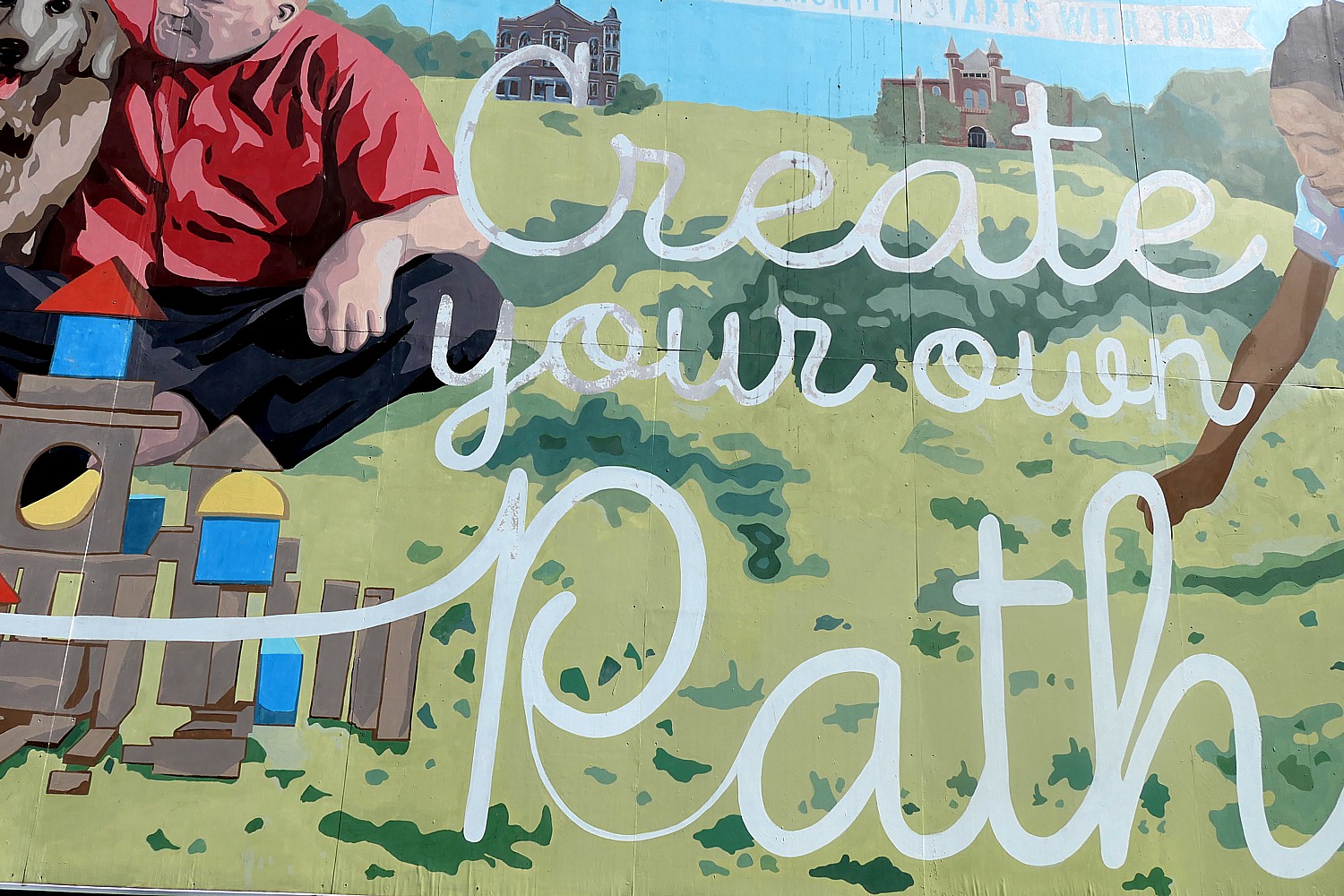
Mural along the Alum Creek Trail: “Create Your Own Path.” © Karen Rubin/goingplacesfarandnear.com

The demand and the desire to turn abandoned rail lines, canalways, and industrial complexes into greenways and byways may come from the grassroots, but it is the officials and leadership who hold the power and purse to make such projects a reality.

We come into Columbus at the end of a 50-mile bike ride on the Ohio-Erie Trail from Mount Vernon and our final day touring the Great American Rail-Trail as it is unfolding in Pennsylvania, West Virginia and Ohio. We get to see the progress in building the connectors that will ultimately link 3,700 miles of protected multi-use byways from Washington DC to Washington State. Columbus is the largest city on the Great American Rail-trail.
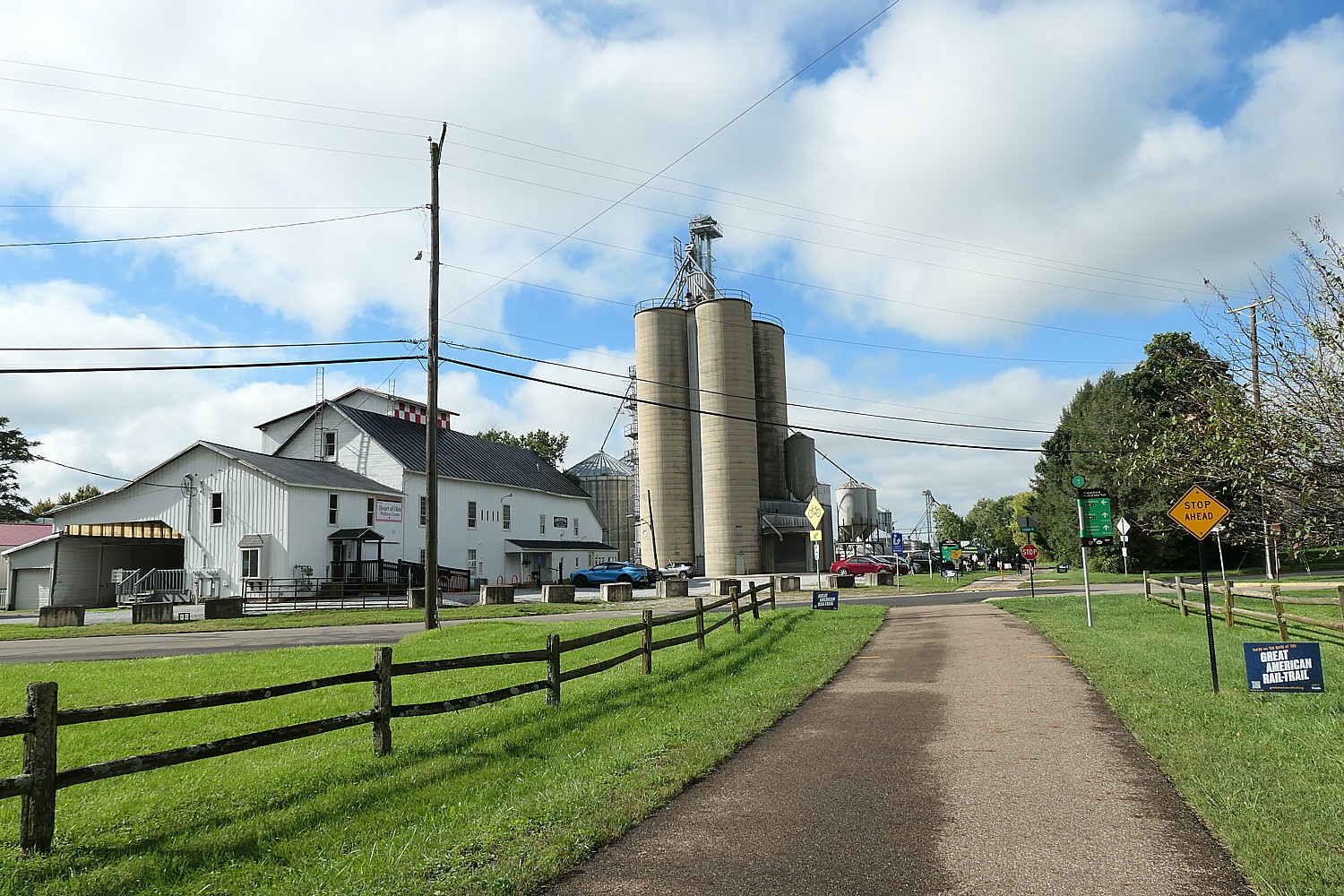
Going from farmland into the city on the Heart of Ohio Trail, on the Great American Rail-Trail © Karen Rubin/goingplacesfarandnear.com

We have seen along the way how small villages and towns which saw their economy and prosperity deteriorate along with abandoned rail lines and factories, are being revitalized with the repurposing into rail-trails, and how the Columbus municipality has created a Trail Towns program to support these towns, building connections from the trail to their town centers. The first five towns have come aboard, Mount Vernon and Centerburg among them, where we start out our final day.
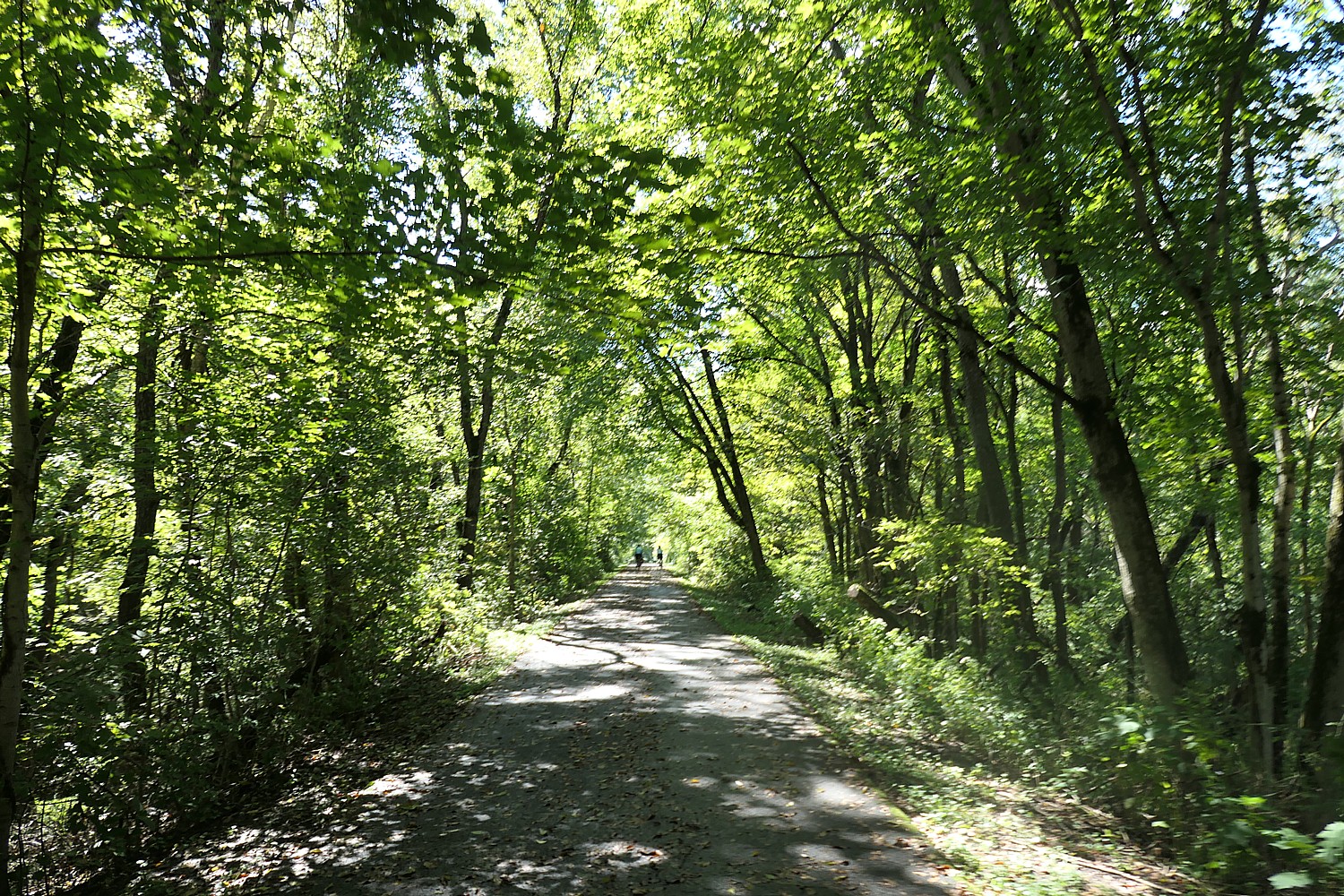
Finding tranquility on the Alum Creek Trail in Columbus, Ohio © Karen Rubin/goingplacesfarandnear.com

This day’s ride is a sequence of smaller named trails that are all part of the 326-mile-long Ohio to Erie Trail from Cincinnati to Cleveland, which is one of more than 150 trails nationwide that will form the Great American Rail-Trail (https://www.traillink.com/trail/ohio-to-erie-trail/).

We go from villages and towns like Mount Vernon into Centerburg, through farm land and countryside before connecting onto the scenic Alum Creek Trail, a 24.5-mile paved multi-use greenway that takes us into downtown Columbus.
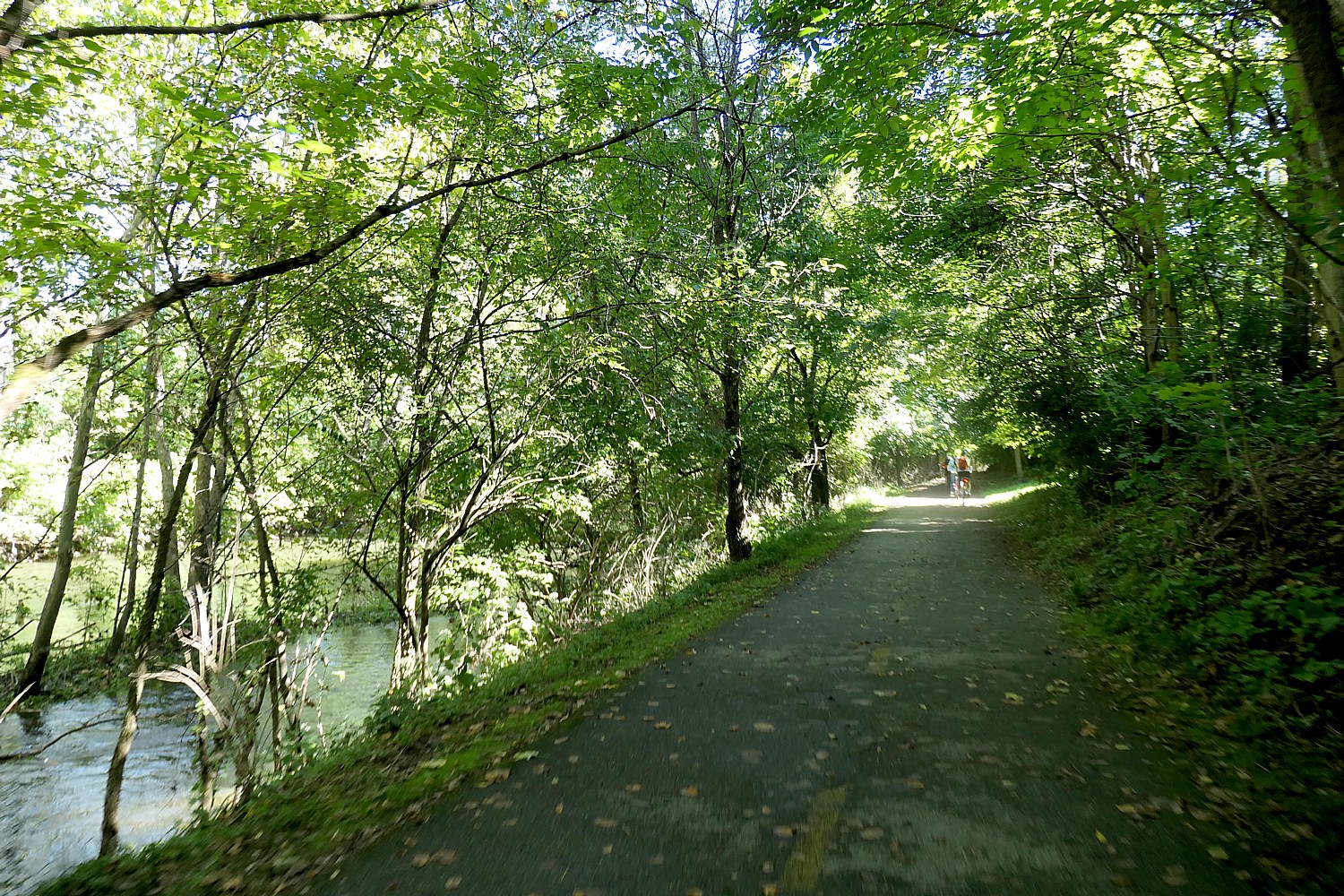
You would hardly realize you are already in the city of Columbus as you bike the Alum Creek Trail © Karen Rubin/goingplacesfarandnear.com

The Alum Creek Trail is wonderfully green, secluded, especially when you consider there are houses, malls, busy commercial streets just beyond, and even houses along the trail on one side, the creek on the other (getting the right of way in front of the houses was a major hurdle to creating the trail).
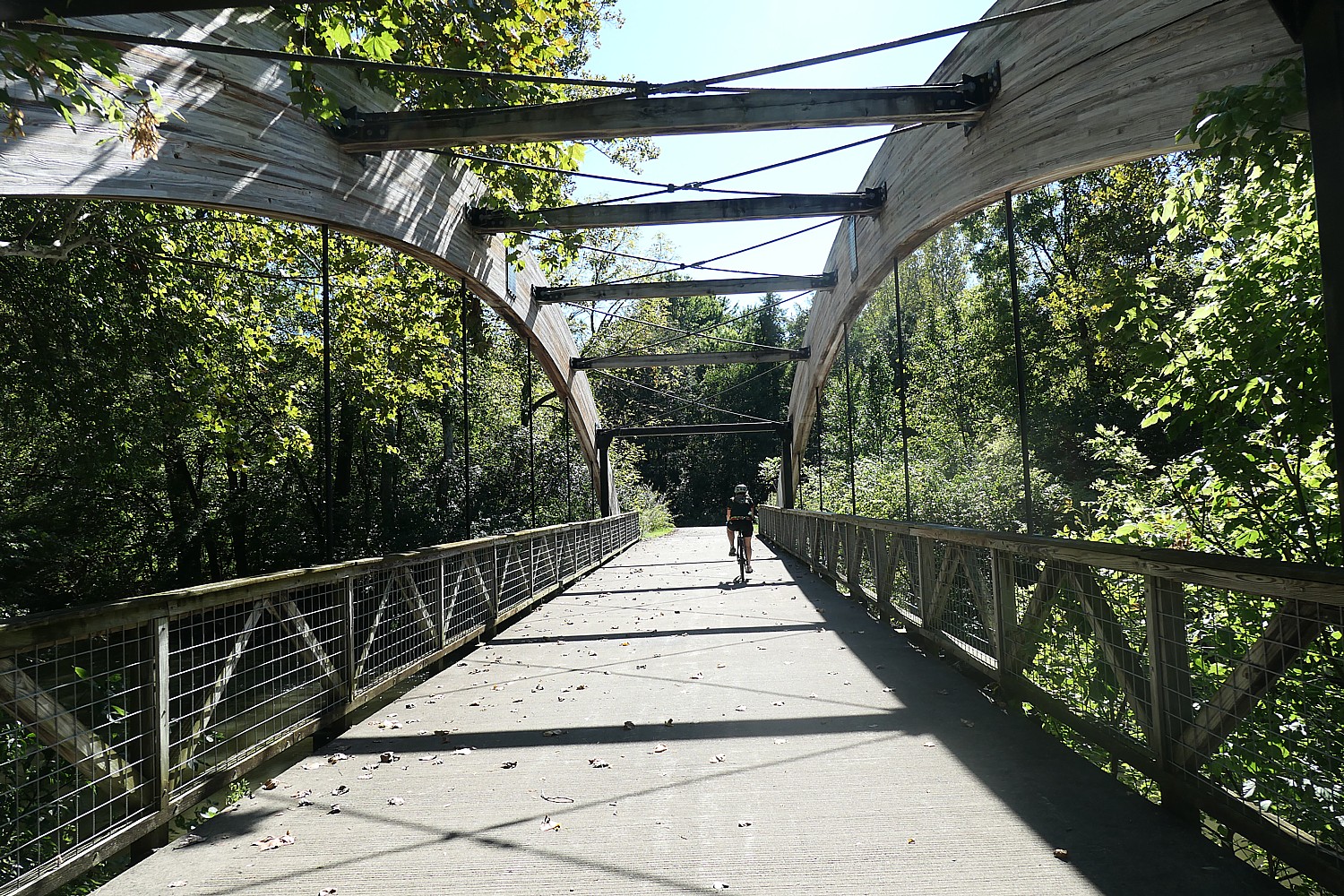
You would hardly realize you are already in the city of Columbus as you bike the Alum Creek Trail © Karen Rubin/goingplacesfarandnear.com

We come to a historic marker, “The Underground Railroad” and learn “The Underground Railroad was neither underground nor a railroad, but a system of loosely connected safe havens where those escaping the brutal conditions of slavery were sheltered, fed, clothed, nursed, concealed, disguised and instructed during their journey to freedom. Although this movement was one of America’s great social, moral and humanitarian endeavors, the details about it were often cloaked in secrecy to protect those involved from the retribution of civil law and slave-catchers. Ohio’s history has been permanently shaped by the thousands of runaway slaves passing through or finding permanent residence in this state.” The marker was sponsored by the Friends of Freedom Society, Inc. and the Columbus Recreation and Parks Department. It is truly a “teachable moment” and a revelation to learn that very near here are some homes that were known to have provided refuge.

Here, Brian Ashworth, Transportation Planning Manager for the City of Columbus, leads us from the present trail that would take us to Broad Street, Columbus’ busy main street and off some side trails that he hopes to make the official route on the Great American Rail-Trail.
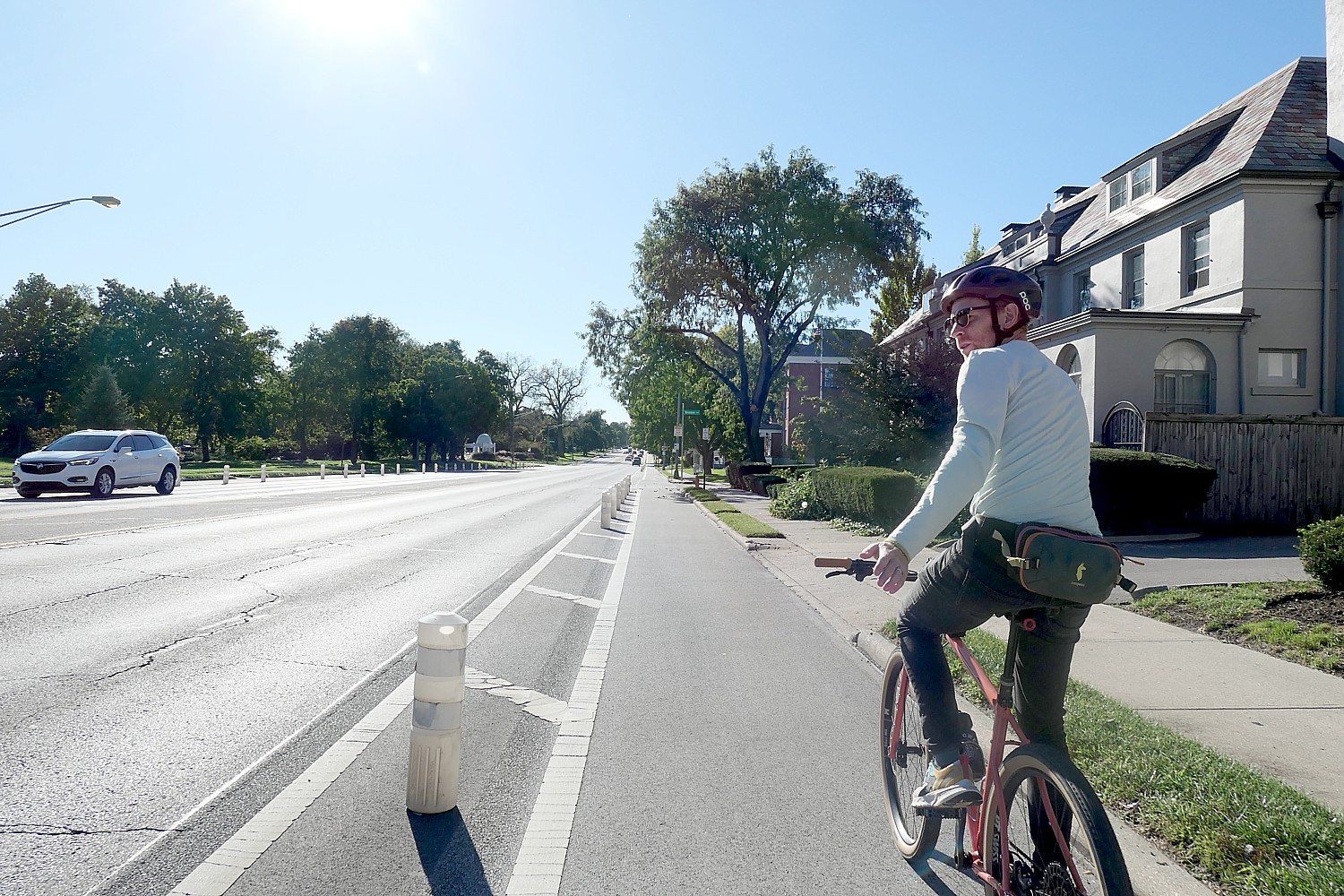
“It will be transformational for the region. It will benefit the 2.1 million people who live within a mile of bus service.” said Brian Ashworth Transportation Planning Manager City of Columbus, who is developing new bus routes (with bike racks) to connect to the trails. Brian’s Bike Plus Plan provides for 500 miles of bikeways. “LinkUS is a model for other places.” © Karen Rubin/goingplacesfarandnear.com

Where we come onto Broad Street is now a protected bikeway, created by taking a lane from each side of the seven-lane thoroughfare.  “It’s reduced crashes by 50% and reduced excessive speeding by 90% (drivers were going 55 mph on the 35 mph road),” noted Kelly Scocco, Director of Columbus’ Department of Public Service. The goal is to create an urban trail so it passes museums and the Conservatory.

“It will offer more scenery, a better connection, and revitalize the downtown,” she said. “This community put our money where we value.”

William Murdock, Executive Director Mid-Ohio Regional Planning Commission, said that the plan is to use the Great American Rail-Trail as a backbone, connect the downtown and neighborhoods to the trail and knit the entire region together. Within a 50 mile-radius around Columbus are 1000 miles of greenway trails. The plan calls for creating curated routes, connections, and loops, and boosting the economic base for small towns. The first five towns have joined the Trail Towns program; 20 are waiting.

“All the communities see the value of becoming a Trail Town for their economic development and quality of life. People think about a future where they are not having to drive everywhere and can feel safe,” said Vonstein.

“We’ve set the standard for USA,” says Murdock. “We now have funding to make progress at an unfathomable speed. What takes 30 years elsewhere, we have plans for 81 projects in the first five years.”
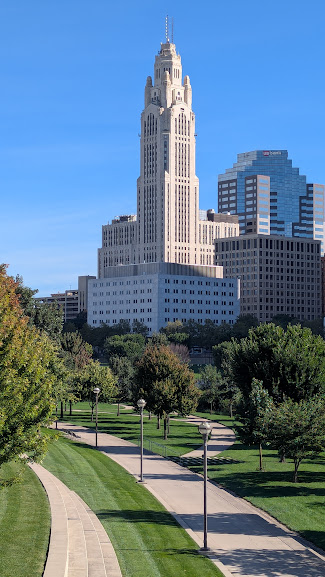
The iconic Le Vaque Tower dominates Columbus’ skyline, complementing the gorgeous Scioto Riverpark greenway and trails that now line both sides of the river © Karen Rubin/goingplacesfarandnear.com

We stay the night at a hotel contained within the Le Vaque Tower, a stunning iconic landmark right on Broad Street. Standing 555 1/2 feet high, it was built to be exactly one half-foot taller than the Washington Monument and was the fifth tallest in the world when it opened in 1927, and today is a multi-use building that houses the hotel and offices and is a block away from the State Capital building.

Biking brought me to Columbus, Ohio, and now I have much of the morning to explore and discover.
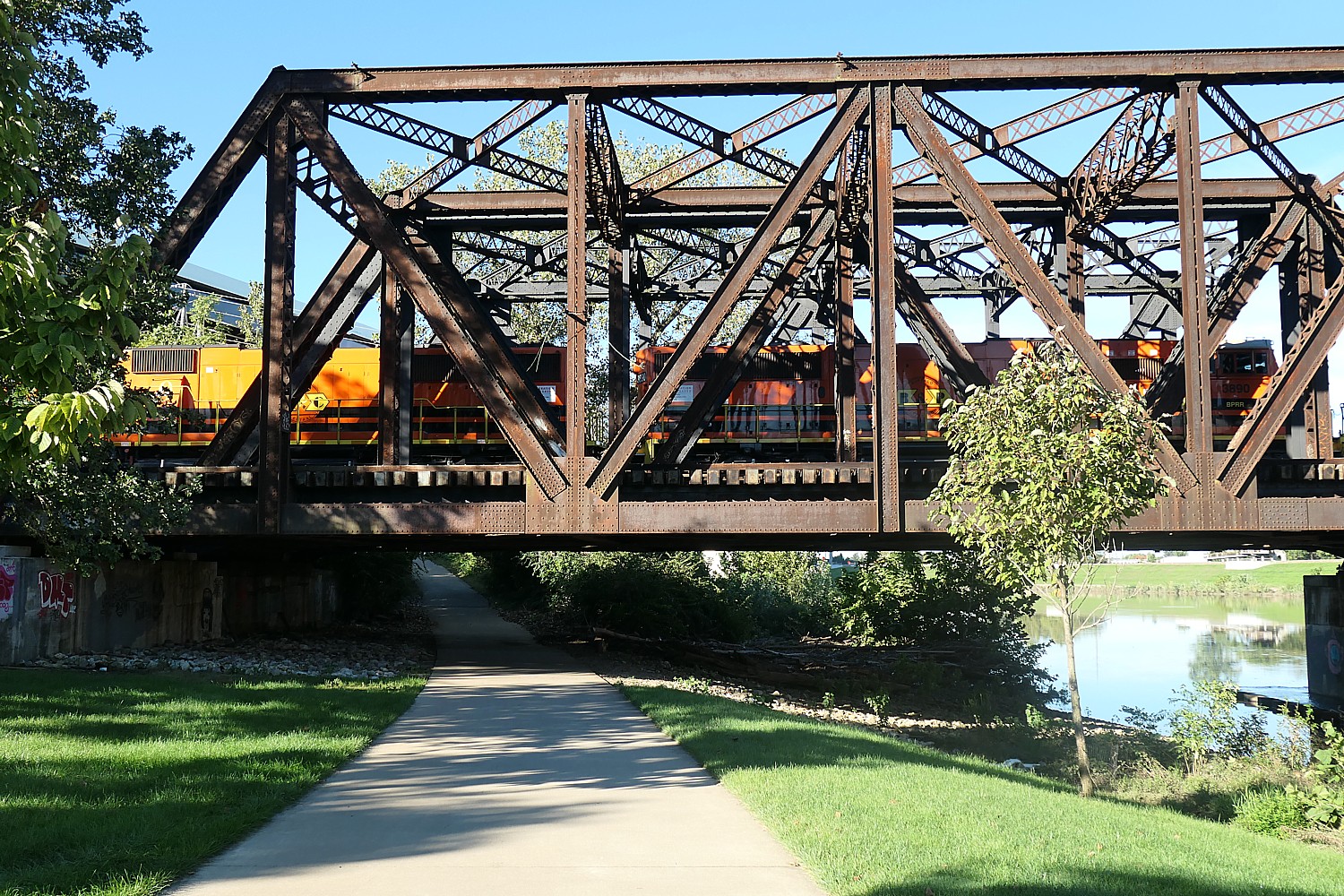
It is thrilling to have a train pass right over your head as you walk along the Scioto Riverpark greenway © Karen Rubin/goingplacesfarandnear.com

I set out from the Le Vaque hotel for the gorgeous Scioto Riverpark greenway and trails that now line both sides of the river, with stunning bridges. It is early and the paths are already well used with runners, walkers, bikers, strollers. At one end, I get really close to the railroad tracks (rather exciting to have a train go right over your head as you walk under the railroad bridge) before winding my way to the Scioto Audubon Metro Park, a picturesque refuge where several artists have set up their easels and there is and delightful playground where a father is helping his daughter climb “rock” walls (ropes and lines set out) that look like actual cliffs.
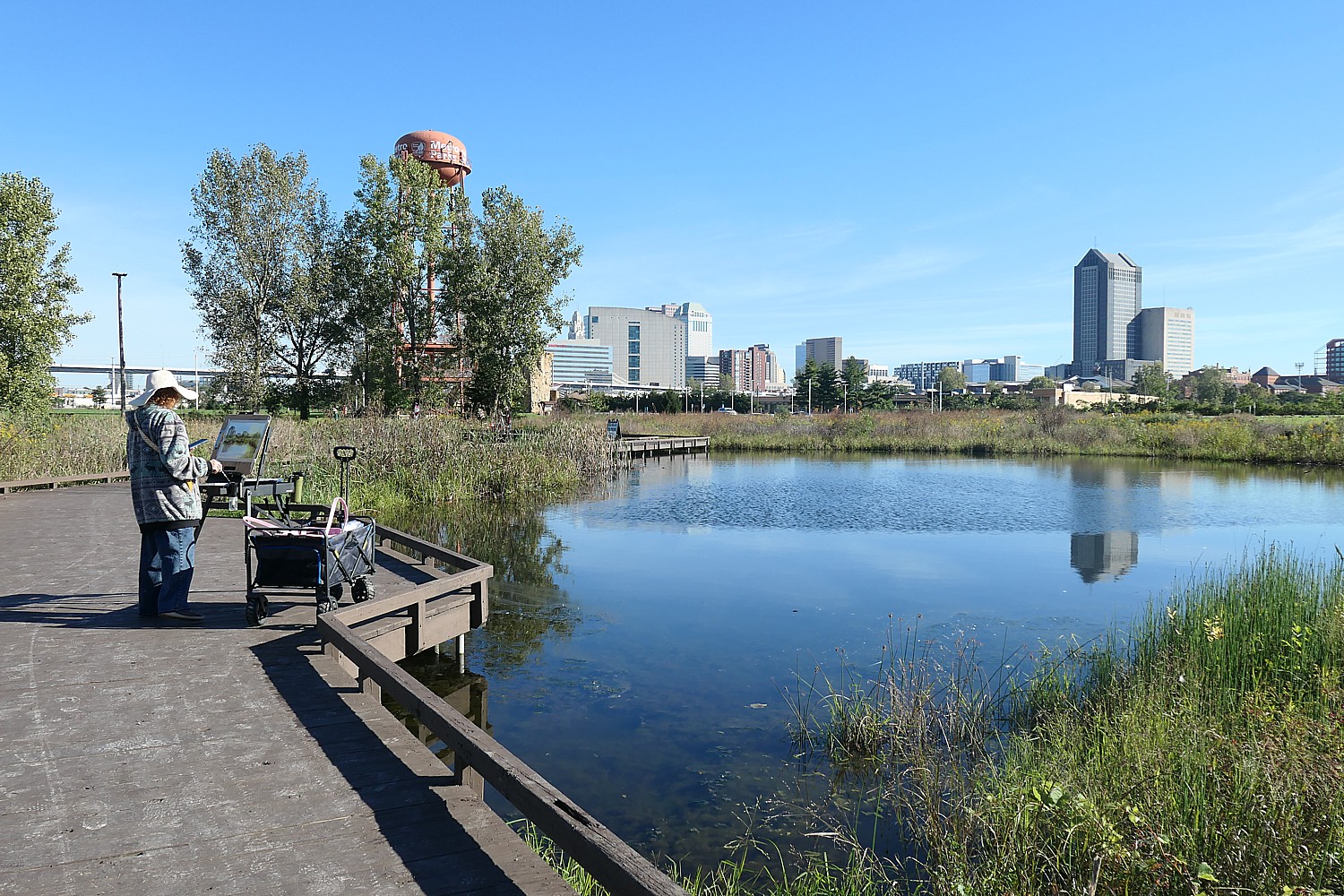
Artists set up their easels inthe Scioto Audubon Metro Park © Karen Rubin/goingplacesfarandnear.com

I walk across the bridge to the other side of the river, where important city institutions are located, including COSI: Center of Science and Industry (cosi.org), a science museum and research center is housed in what used to be the high school, wishing I had more time to visit.

Walking back up Broad Street, I come to the state capital building, where a bridal couple is posing for photos.

For more information on the Great American Rail-Trail, visit: https://www.railstotrails.org/site/greatamericanrailtrail/

Rails to Trails Conservancy on a Mission

On this tour of the Great American Rail-Trail and how it is unfolding 3,700-miles across the country, from Washington DC to Washington State, we have been able to see first-hand how Rails to Trails Conservancy acts on its mission “to build a nation connected by trails, reimagining public spaces to create safe ways for everyone to walk, bike and be active outdoors.”
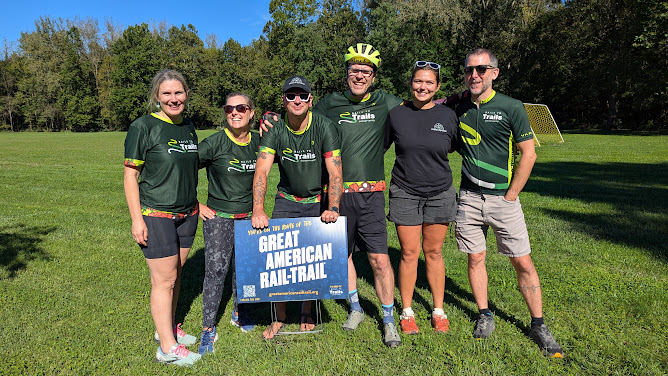
A few of the Rails to Trails Conservancy staff working to create the Great American Rail-Trai which when completed, will connect 3,700 miles of bike and leisure trails across the country, from Washington DC to Washington State. © Karen Rubin/goingplacesfarandnear.com

“Since 1986, Rails to Trails Conservancy has stood at the forefront of America’s efforts to make it safer and easier to walk, bike and be active outside—in every state, in every county and in every neighborhood. With more than 42,500 miles of multiuse trails on the ground nationwide, and more than 150 trail networks in development reaching into every single state, people in all types of communities now rely on this infrastructure. Trails create space for us to move our bodies, build economic opportunity and navigate our communities. They’re essential for our health, transportation choice and quality of life.”

These goals are all the more important in light of an epidemic of adults and children being obsessed with sedentary activities revolving around screens and technology and a decline in availability of health care, even as medical technology can extend our lifespans. Wellness and prevention become a necessity for quality of life but also to economic productivity.

Its flagship initiative, TrailNation™  includes 10 regional projects plus the cross-country Great American Rail-Trail® connecting nearly 12,000 miles of trails across neighborhood, city, county and state lines. Ultimately, these regional projects will serve 35 million people living within 2 miles of a network, and the Great American will serve an estimated 50 million people within 50 miles of the route.

RTC recognized early in the trails movement that success hinged on local leadership and public investment. RTC was a leading advocate for Congress to pass the Intermodal Surface Transportation Efficiency Act of 1991 which unlocked federal transportation investment in trails, walking and biking and has led to today’s robust strategy to direct dedicated public funds at the local, state and federal levels to create, connect and maintain the nation’s trails. Since ISTEA was introduced in 1991, more than $25 billion in federal funding via the legacy Transportation Alternatives (TA) program and Recreational Trails Program (RTP) has been provided to the states to build trails and other walking and biking infrastructure. These programs have supported more than 43,000 projects.

RTC has distributed more than $3.7 million in grants since 2008, helping communities in nearly every state address missing links in their trail networks and maximize their impact. So far, more than 280 organizations—including local and national nonprofits and public agencies—have benefited from the program.

In 2025, RTC awarded $398,000 in funding to 40 community organizations and public agencies working to increase connectivity and access in rural, suburban and urban communities—creating more safe access to more trails for more people in America.

However, the Trump Administration has proved hostile to the Transportation Alternatives and Recreational Trails programs, creating new threats and challenges to Rails to Trails’ ability to fulfill its mission, and making it more important for local grassroots efforts to step up.

RTC has led a 40-year effort to shape the nation’s legal framework around rail-trails and defend them in the courts. Since 1986, RTC has been involved in 60+ legal cases, including landmark state and federal cases that have laid the groundwork for the movement—with a focus on establishing and protecting the legal and policy framework facilitating rail-trail conversions, particularly the federal railbanking law. The statute since 1983 has helped build an estimated 273 rail-trails totaling nearly 4,800 miles of railbanked trail possible.

More information at www.railstotrails.org. Rails to Trails Conservancy’s Traillink.com site provides all the information you need to enjoy the trails.

See also:

Imagine Biking 3,700 Miles Across the USA on The Great American Rail-Trail

Grassroots Volunteerism Builds the Great American Rail-Trail

‘One Mile at a Time.’ New Trails Are Links in Building the 3,700-Mile Great American Rail-Trail

Railtowns, Canaltowns, Rivertowns, GhostTowns – Now Trail Towns

__________________

© 2026 Travel Features Syndicate, a division of Workstyles, Inc. All rights reserved. Visit goingplacesfarandnear.com, longislandpress.com/category/vacation-travel.com and travelwritersmagazine.com/TravelFeaturesSyndicate/. Blogging at goingplacesnearandfar.wordpress.com and moralcompasstravel.info. Visit instagram.com/going_places_far_and_near. X: @TravelFeatures Threads: @news_and_photo_features ‘Like’ us atfacebook.com/NewsPhotoFeatures. Send comments/questions to FamTravLtr@aol.com.

Where to Go in 2026 for Transformation, Renewal, Fulfillment

The magical “Diamond Ring'” of a total solar eclipse lasts mere moments. Book now for tours, cruises, accommodations, and air travel to witness the Solar Eclipse August 12, 2026 that will pass over the Arctic, Greenland, Iceland, Atlantic Ocean, northern Spain and the tip of northeastern Portugal © Karen Rubin/goingplacesfarandnear.com

By Karen Rubin, Travel Features Syndicate, goingplacesfarandnear.com

Travelers are increasingly choosing destinations with purpose – for their beauty or legacy, for landmark anniversaries, special event, and most importantly, for the opportunity for transformation, emotional resonance, spiritual and self-renewal, and experience, sometimes life-changing but always life-enhancing. Here are a few suggestions: 

Solar Eclipse August 12, 2026

The event that promises to be the most transformational in 2026 is the August 12 total eclipse of the sun which will be best viewed in Iceland, Greenland, and northern Spain. You must be strategic: totality lasts a mere 2 to 3 minutes © Karen Rubin/goingplacesfarandnear.com

The event that promises to be the most transformational  is the Solar Eclipse August 12, 2026 that will will pass over the Arctic, Greenland, Iceland, Atlantic Ocean, northern Spain and the tip of northeastern Portugal.

The first solar eclipse on mainland Europe since 1999, it may well prove more spectacular than the April 8, 2024 solar eclipse which crossed North America delighting hundreds of millions of people in its direct path, because the August 12 eclipse will take place about 2.2 days after perigee (on August 10, 2026), so the Moon’s apparent diameter will be larger.

Tour operators and cruise companies are organizing special itineraries; you can also contact the national and local tourist offices (like Iceland, https://www.visiticeland.com/article/iceland-solar-eclipse-2026/) to put together your own arrangements. (Map of path of totality: https://nso.edu/for-public/eclipse-map-2026/)

Long Lake, New York, April 8, 2024: The eerie, even spiritual moments when the world suddenly, briefly goes dark and silent in the middle of a sunny day during a total eclipse of the sun © Karen Rubin/goingplacesfarandnear.com

A huge advantage of experiencing the eclipse on a ship is that the open ocean means the view is unobstructed – also, the ship can monitor weather to position itself to avoid clouds that can spoil the moment (totality lasts only about 2 to 3 minutes).

Holland America is offering special voyages incorporating the solar eclipse: 35-Day Voyage of the Vikings Cruise with Solar Eclipse (Jul 18 – Aug 22 to Greenland, Iceland, Norway and Ireland); 13-Day Mediterranean Solar Eclipse with Barcelona Overnights (Aug 9-22); 28-Day Scandinavian Solar Eclipse with Greenland & Scotland (Jul 24-Aug 21) (https://www.hollandamerica.com/en/us/plan-a-cruise/specialty-cruises/solar-eclipse-cruises)

Iceland, a land of fire and ice, will be center stage for the August 12, 2026 total eclipse of the sun © Karen Rubin/goingplacesfarandnear.com

Hurtigruten (now HX Expeditions) offered a specific 2026 Solar Eclipse Expedition on the MS Spitsbergen, sailing from Svalbard (Norway) via Greenland to Iceland, focusing on East Greenland’s Blosseville Coast for the August 12, 2026 total solar eclipse, promising prime viewing in Scoresby Sound, with onboard experts and unique expedition experiences. The 17-day cruise departs August 3 (https://www.travelhx.com/en-us/cruises/solar-eclipse-expedition-2026-greenland-iceland-and-svalbard/)

Explore Worldwide, a small-groups operator with 40 years experience, is one of the tour companies offering solar eclipse itineraries in Spain and Iceland. In northern Spain, it is offering two itineraries a food tour in Catalonia and the Basque Country (8 days) where you’ll be well-placed in the limestone peaks of the Sierra de Prades mountains on eclipse day, or an amended itinerary of its -popular Walking in the Picos de Europa (8 days) optimized to see the solar eclipse. In Iceland, the company is offering a special departure of  Iceland-Land of the Midnight Sun (9 days) where you will on the beautiful Snaefellsness Peninsula for the eclipse. And for the truly dedicated, a 15-day  Spitsbergen, Greenland and Iceland Arctic expedition aboard the M/VGreg Mortimer which will sail directly into the path of totality for prime viewing from the deck of the expedition vessel. Other tours featuring the solar eclipse include: Classic Egypt and Eclipse (11 days); Highlights of Northern Morocco and Eclipse (9 Days); Tunisian Coast, Ancient Carthage and Eclipse (10 days). (https://www.exploreworldwide.com/experiences/eclipse-trips, Exploreworldwide.com , 877-956-9859)

National Eclipse has published a compendium of solar eclipse tours, (https://nationaleclipse.com/events/2026-total-solar-eclipse-tours.html)

Another source excellent source to find and book tours is tourradar.com, 833-895-6770, https://www.tourradar.com/i/western-europe-solar-eclipse

Book early – G Adventures and most Wilderness Travel itineraries are sold out; Smithsonian Journeys is waitlisted as of when we published.     

Rishikesh’s Spiritual Depth in the Himalayan Foothills

Long revered for its spiritual heritage, Rishikesh continues to be one of India’s most soulful destinations, where ancient rituals, wellness innovation, and inner awakening converge in the Himalayan foothills. Anchored by the International Yoga Festival (March 9–15, 2026) and a vibrant calendar of annual rituals, from the spring festival of colors, Holi (March 4), to purification ceremonies like Ganga Dussehra (May 25), and the summertime Kanwar Mela pilgrimage (July–August), the region pulses with devotion, classical music, riverside ceremonies, and communal celebration.

Ananda in the Himalayas, a world-renowned wellness retreat in the Himalayan foothills  (Photo courtesy of Ananda in the Himalayas)

At the heart of this is Ananda in the Himalayas, a globally acclaimed wellness retreat housed in the restored palace of the Maharaja of Tehri-Garhwal. Celebrating its 25th anniversary in 2025, Ananda enters 2026 with expanded offerings that reflect the future of holistic wellness. The retreat continues to lead in transformative programs across Ayurveda, yoga, emotional healing, and Traditional Chinese Medicine. New initiatives include Integrated Diabetes Management, women’s health, fertility, and sleep enhancement. Ananda’s 360-degree wellness system extends care beyond the stay through personalized diagnostics, daily therapies, and post-visit consultations. Signature programs such as Hormonal Balance, Yogic Detox, Panchakarma, and Ayurvedic Rejuvenation harmonize body and mind through traditional systems of healing, classical Hatha yoga, pranayama, and meditation

Kyoto’s Cultural Crescendo Rooted in Ritual and Renewal

In 2026, Kyoto offers a rare cultural crescendo, where centuries-old traditions, seasonal rituals, and landmark openings converge in one of Japan’s most spiritually resonant cities. The Miyako Odori returns to its original stage in Gion (April 1–30), with daily performances by geiko and maiko, now housed in the restored Gion Kobu Kaburenjo Theater, reborn as part of the Imperial Hotel, Kyoto, opening spring 2026. Designed by Obayashi Corporation for the exteriors and Tomoyuki Sakakida with New Material Research Laboratory for the interiors, the hotel preserves the 1936 Yasaka Kaikan structure using over 16,000 original tiles and offers just 55 rooms across three architecturally distinct wings. The property blends heritage architecture with contemporary Japanese design, offering curated calm in the heart of Gion.

Imperial Hotel, Kyoto, blending modern elegance with centuries of cultural heritage. (Photo courtesy of New Material Research Laboratory)

With Kyoto’s embrace of a more sustainable approach to tourism, travelers benefit from enhanced access, quieter moments and deeper cultural immersion in one of Japan’s most spiritually rich cities. Kyoto’s cultural calendar continues with the Gion Matsuri (July 1–31), featuring lantern-lit Yoiyama celebrations, Yamaboko float processions, and the Nagoshisai purification ritual. In September, the city marks the 400th anniversary of the Kan’ei Imperial Visit to Nijo Castle with reenactments, rare chamber access, and curated exhibitions. Seasonal temple openings and immersive installations offer deeper engagement. Infrastructure upgrades, including new EX100/EX101 buses and enhanced fare systems, make navigation seamless.

Monteverde’s Cloud Forest Regenerative Escape

In 2026, Monteverde welcomes travelers to a high-altitude sanctuary where misty forests, ecological milestones, and creative immersion converge. The region marks over 50 years of conservation since the founding of the Monteverde Cloud Forest Reserve, celebrated through legacy hikes, biodiversity exhibitions, and community-led programs. New interpretive trails connect to the Children’s Eternal Rainforest, while artisan showcases and solstice rituals reflect Monteverde’s evolving cultural rhythm. Infrastructure upgrades, including smoother access via Route 606 and expanded EV charging stations, make travel easier, especially with more international flights into Liberia Airport.

Hotel Belmar, a forest sanctuary celebrating 40 years of sustainability and style. (Photo courtesy of Hotel Belmar)

Central to this revival is Hotel Belmar, a family-owned eco-lodge perched above the forest canopy, known for alpine-inspired architecture, panoramic views, and sustainability leadership. In 2026, Hotel Belmar debuts nature-immersive wellness spaces and enhanced culinary offerings rooted in circular gastronomy. At Restaurante Celajes, regenerative menus honor Costa Rica’s agrarian traditions, using ingredients from Belmar’s organic farm and gardens. Overlooked crops, foraged herbs, and zero-waste techniques turn each dish into a tribute to biodiversity and soil health. Belmar’s Artist Residency Program invites creatives to live and work onsite, engaging guests through open studios, forest-inspired installations, and workshops.

Mongolia’s Living Traditions and a Journey into the Wild

In 2026, Mongolia emerges as one of the world’s most compelling destinations—not only for its vast, otherworldly landscapes but also for its global moment in the spotlight. The country will host COP17, the 17th Session of the Conference of the Parties to the United Nations Convention to Combat Desertification (UNCCD), from August 17–28 in Ulaanbaatar. This landmark event coincides with the UN’s International Year of Rangelands and Pastoralists, an initiative spearheaded by Mongolia to celebrate and protect nomadic cultures and ecosystems. These milestones underscore Mongolia’s leadership in environmental stewardship and its deep connection to land-based traditions—making 2026 an especially meaningful time to visit.

The Flaming Cliffs of Mongolia, a dramatic desert landmark and paleontological treasure (Photo courtesy of Pexels)

Cultural celebrations add further dimension: the Naadam Festival (July 11–12) showcases Mongolia’s national pride through wrestling, archery, and horse racing.  In early March, the Thousand Camel Festival in the Gobi Desert celebrates the magnificent Bactrian camel with races, polo, and traditional music. Adding to the momentum, Naya Traveler will debut its new Mongolia journeys in 2026, offering tailor-made itineraries that go far beyond the Golden Eagle Festival. Expect private access to cultural events, guided exploration of the Gobi Desert and Orkhon Valley, and meaningful encounters with herders and historians. These journeys reflect a growing trend toward regenerative, culturally attuned travel—where connection, context, and care shape every experience. With Mongolia joining Naya Traveler’s portfolio in 2026, the destination becomes part of a growing movement toward journeys that prioritize cultural depth, environmental awareness, and meaningful connection.

Amsterdam’s Cultural Renaissance Along the Canals

Following its milestone 750th anniversary in 2025, Amsterdam continues to dazzle in 2026 with a rich calendar of cultural events and sensory refinement. Spring brings the Tulip Festival (late March to mid-May) and the city-wide revelry of King’s Day (April 27). In May, food lovers flock to Rolling Kitchens (May 13–17), while August’s Grachtenfestival fills the canals with music. The Amsterdam Light Festival adds a luminous touch as winter approaches. Exhibitions at the Stedelijk, H’ART Museum, Eye Filmmuseum, and Fabrique des Lumières embrace immersive, interdisciplinary storytelling, reflecting the city’s forward-looking creative spirit.

Museum developments include the Zaanstad Amsterdam Museum (ZAMU), a contemporary art hub with installations spread across industrial buildings and a Piet Oudolf-designed wildflower garden just north of the city. While the Hartwig Art Foundation’s new museum is slated to open in 2028, it hosts temporary events until then. For a day trip, Rotterdam offers art lovers compelling attractions like the Depot Boijmans Van Beuningen and the Fenix Museum of Migration, which opened in 2025.

Restaurant Vinkeles at The Dylan Amsterdam, housed in a former 18th-century bakery in the heart of the canal district. (Photo courtesy of The Dylan Amsterdam)

Meanwhile, Amsterdam-Noord continues to evolve as a creative enclave, home to design studios, concept stores, and waterfront cafés. Culinary trends lean toward experiential intimacy and narrative-driven dining. At The Dylan Amsterdam, two-Michelin-starred Vinkeles offers moody interiors and seasonal French menus, while até presents a six-seat chef’s table. Bar Brasserie OCCO complements the stay with all-day dining in a stylish, contemporary setting and offers a creative High Wine tasting pairing four wines with four dishes. Reimagined by Studio Linse and Format Furniture in 2024, The Dylan anchors this renaissance with canal-side calm, Green Globe-certified hospitality, and curated access to the city’s evolving aesthetic.

__________________

© 2026 Travel Features Syndicate, a division of Workstyles, Inc. All rights reserved. Visit goingplacesfarandnear.com and travelwritersmagazine.com/TravelFeaturesSyndicate/. Blogging at goingplacesnearandfar.wordpress.com and moralcompasstravel.info. Visit instagram.com/going_places_far_and_near and instagram.com/bigbackpacktraveler/ Send comments or questions to FamTravLtr@aol.com. Bluesky: @newsphotosfeatures.bsky.social X: @TravelFeatures Threads: @news_and_photo_features ‘Like’ us at facebook.com/NewsPhotoFeatures

Health & Wellness Offerings Expand in Response to Exploding Demand by Travelers

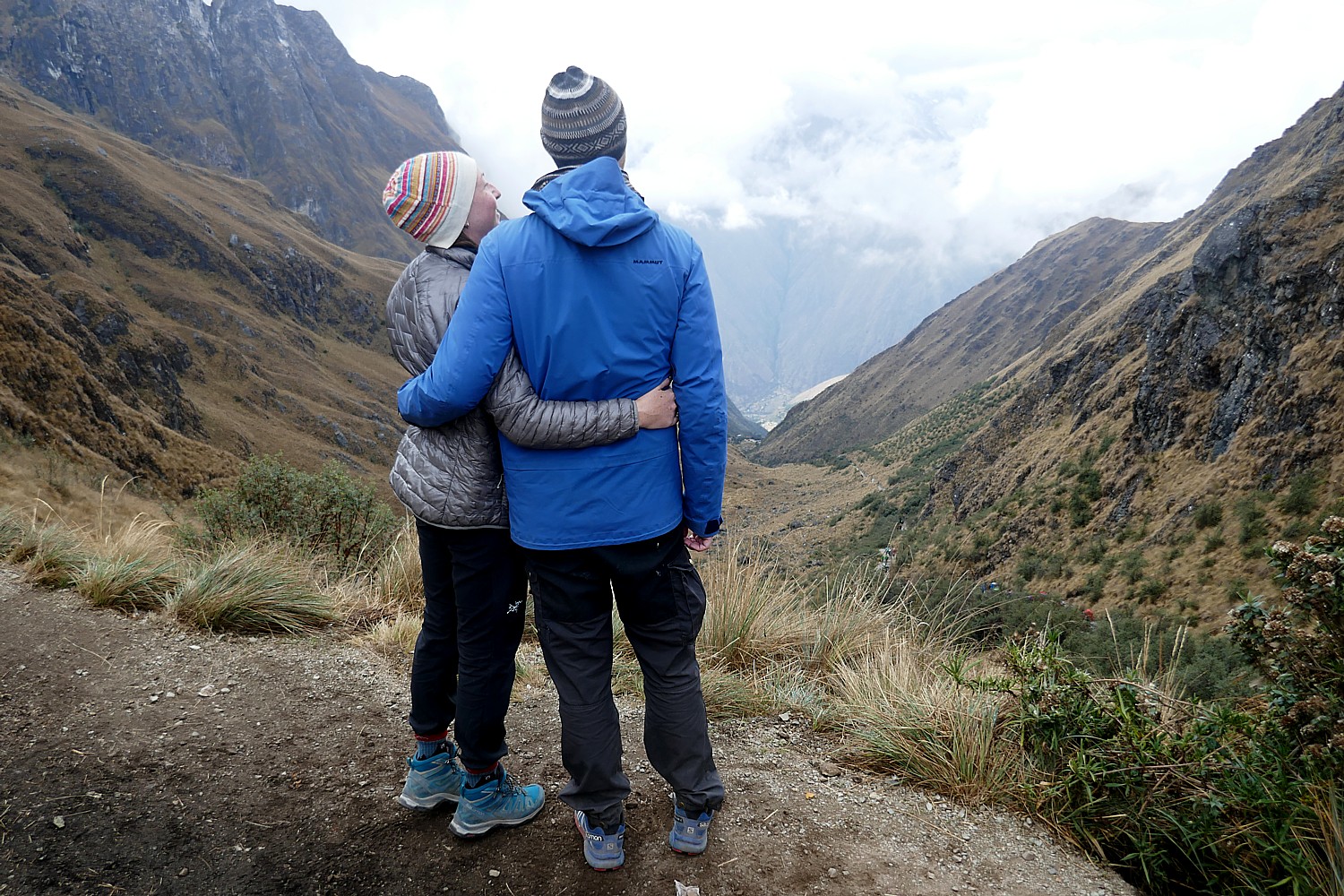
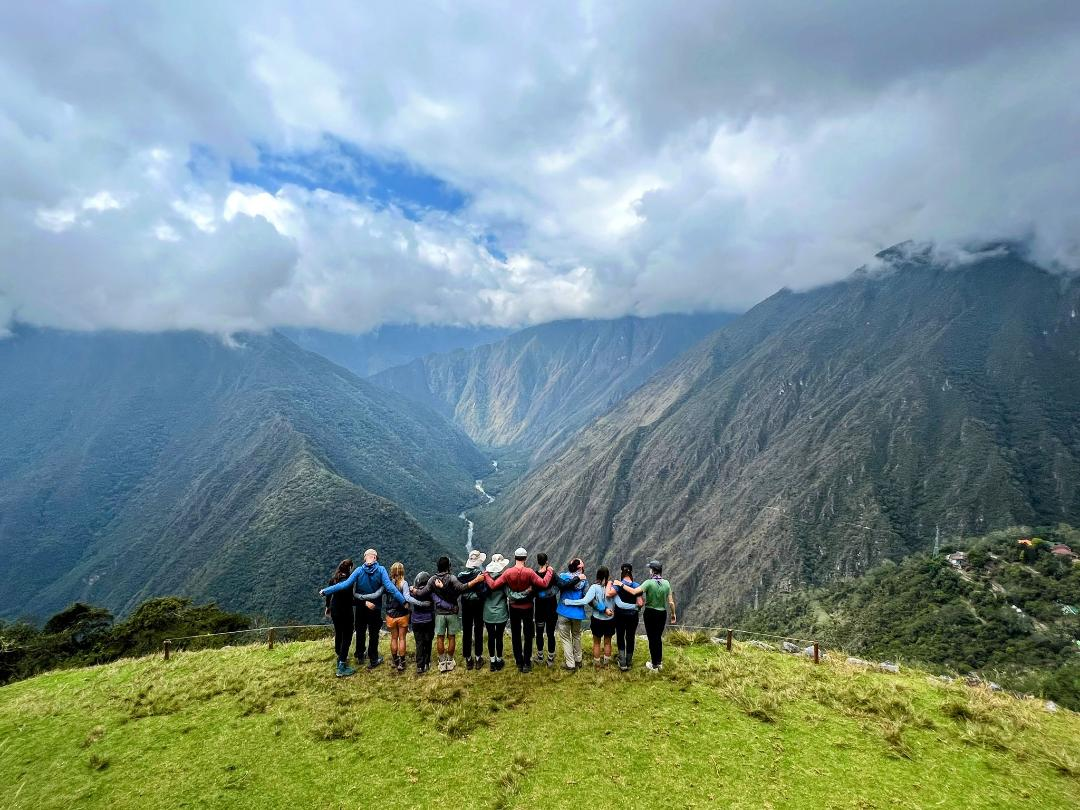
The satisfaction of having ascended the 14,000-ft high Dead Woman’s Pass on Alpaca Expeditions’ four-day Inca Trail hike to Machu Picchu © Karen Rubin/goingplacesfarandnear.com

By Karen Rubin, Travel Features Syndicate, goingplacesfarandnear.com

Health and wellness, growing as part of everyday life, have become increasingly integrated into hospitality, travel and tourism behaviors. Wellness Tourism globally has grown to be worth $651 billion annually (out of a $5.6 trillion global wellness economy) and is forecasted to grow annually by an average of 16.6% through 2027. 

We used to think of “wellness” mainly in terms of spa retreats, but health and wellness now is figures into everything from the motivation to travel and choices of destinations, accommodations, activities and experiences, even decisions about when to travel.

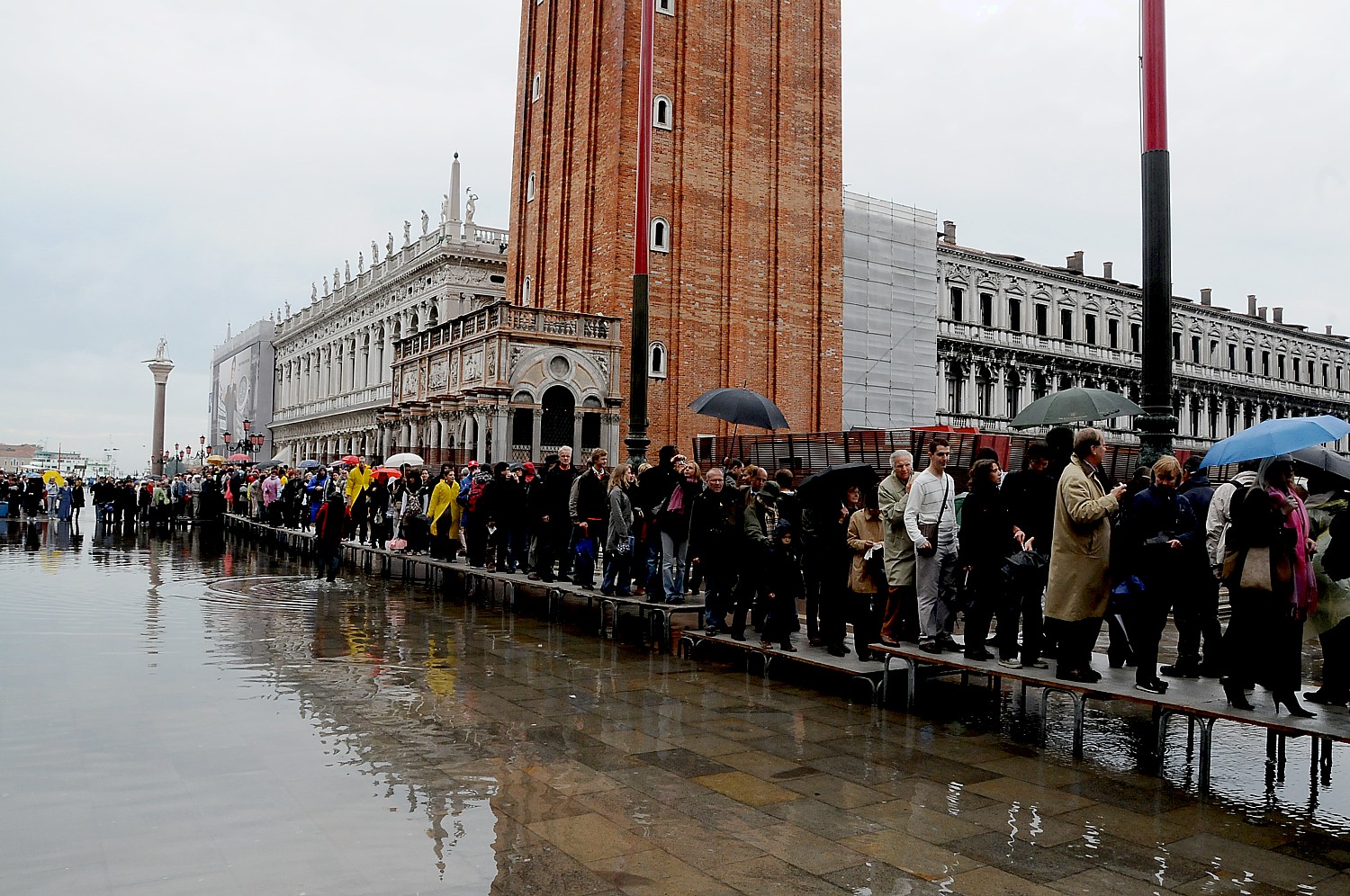
Venice is literally sinking with climate change and sea level rise. Setting out platforms for tourists to walk at St. Marks Square has become routine © Karen Rubin/goingplacesfarandnear.com

Take climate change, for instance. In light of record heat waves, wildfires, flooding, people are choosing their destinations and seasons to travel with more care. “Cool-cations” is one of the emerging new trends in travel – choosing places like Scotland and Quebec for summer holidays, trading cities for mountains, theme parks for dude ranches. There is also an awareness of the fragility of bucket-list destinations and sights like Venice (sinking), islands like the Galapagos and the Maldives (just a foot above sea level), the Great Barrier Reef (coral bleaching), the Dead Sea and the Great Salt Lake (evaporating), even the Statue of Liberty in New York harbor is on the endangered list.

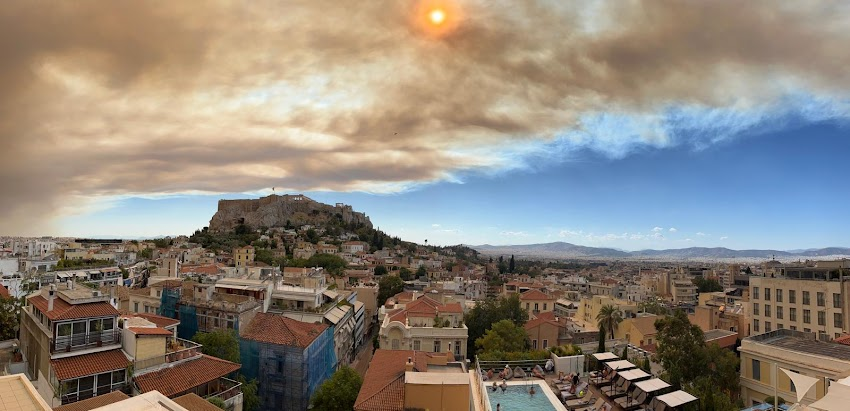
Clouds of smoke billow over the Acropolis from wildfires just outside Athens © Laini Miranda/goingplacesfarandnear.com

Travelers are also seeking out opportunities to be active outdoors instead of passive sightseers – biking, kayaking, paddleboarding, pickleball, hiking – that are physical, engaging, but also incorporate inner peace. Pilgrimages which involve long walks to places that have spiritual meaning fit the bill of combining physical and emotional benefit, as do bike trips

The wellness motif also figures into a desire for responsible and sustainable travel, where the benefits are mutual for the traveler – providing mental, physical and emotional wellbeing – and the local regional and urban economies that sustain people in their communities and preserve heritage and conserve environment for future generations.

The Global Wellness Institute’s  Tourism Initiative team reported on these emerging wellness travel trends. 

Climate Adaptive Wellness

Travelers are adapting to climate change and so is the wellness industry along with city planners, Jane Kitchen, editor-at-large of Spa Business, reports.

The impacts are seen in architecture and design: instead of relying on air-conditioning which contributes to climate change, architects and designers are looking at new solutions as well as looking back at ancient ways to cool buildings. More rooftop and vertical gardens, more greenspace, new building materials, heat resilient design incorporated into buildings whether new tech or going back to 1000-year old building techniques – like were used in the Middle East before electricity and air conditioning.

Urban planners are becoming alarmed about the public health dangers of heat for residents as well as visitors who are beginning to shun popular cities like Paris and Athens (experiencing wildfires as we write this) in summer.

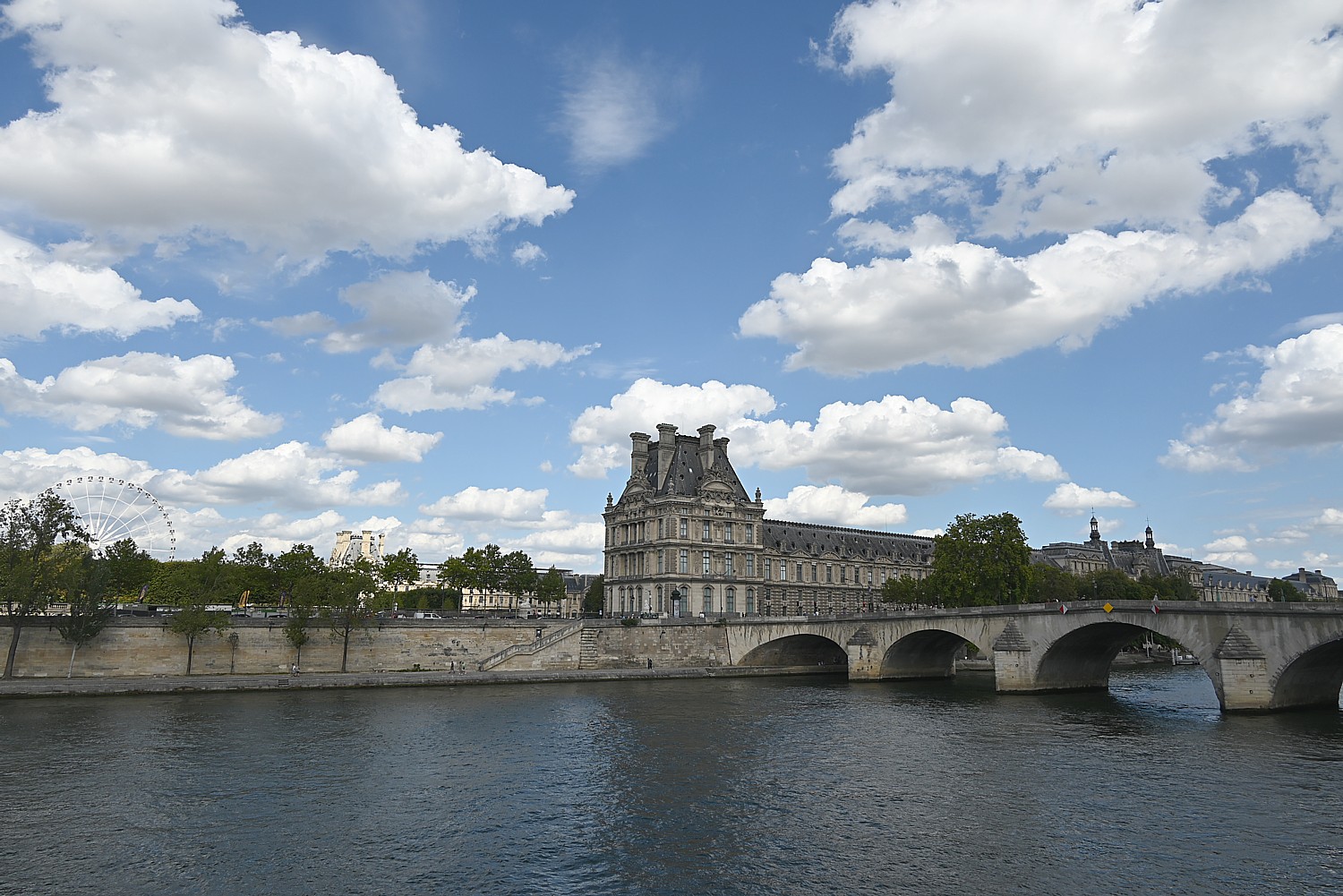
Paris spent $1 billion to clean up the Seine so it could accommodate swimming, and provides misting stations and water fountains to keep residents and travelers comfortable during the hot summer © Karen Rubin/goingplacesfarandnear.com

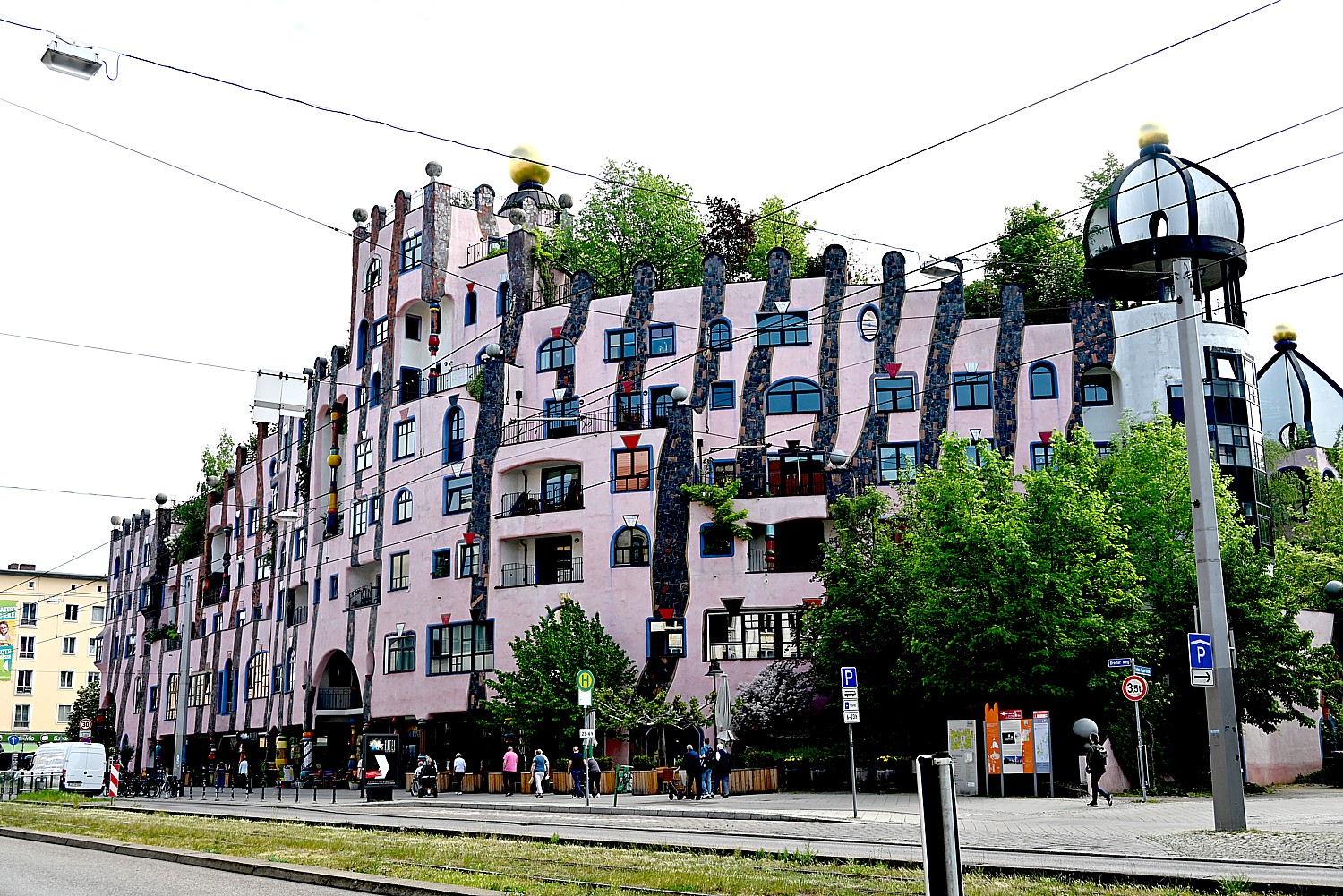
The city of Miami created a new position of Chief Heat Officer with Los Angeles, Melbourne, and Athens following suit. Cities are installing cooling stations (like Paris), cleaning up rivers so people can do wild swimming (like Paris which spent $1 billion to clean the Seine), planting more greenery, even using greenery on buildings (like Friedensreich Hundertwasser’s Green Citadel of Magdeburg, Germany, an apartment building and hotel that is literally a work of art and model for new urban design and liveability.

Friedensreich Hundertwasser’s Green Citadel of Magdeburg, Germany, an apartment building and hotel  is literally a work of art and model for new urban design and liveability © Karen Rubin/goingplacesfarandnear.com

Smart tech will also be summoned to help solve the heat crisis – like “cooling clothes – initially for workers that need to work outside, but eventually, becoming mainstream for everyday and for travel. Among the new technologies: inks in fabrics that keep cooler in summer, warmer in winter; therma adaptive textiles; wearable patches that draw heat from body and clothing embedded with smart sensors if at risk of heat stress.

Spa and wellness travel is also adapting with new, fun programs such as nighttime wellness and spa treatments, night hikes and star gazing  which have a wellness component but take place in evening when it is cooler; ice baths; and climate adaptive beauty and geo-skin care, based on where you are and the weather connections

Power of Pilgrimage

The physical, emotional and spiritual satisfaction of hiking Alpaca Expeditions’ four-day Inca Trail hike to Machu Picchu © Karen Rubin/goingplacesfarandnear.com

Journalist Eric Wilson found a “silver lining of the pandemic: people discovered the benefits of walking and walking enthusiasts discovered the benefits of exploring the ancient pilgrimage trails around the world. A record number of trekkers sought out hikes infused with cultural heritage across Asia, Europe, and the Americas (my four-day Inca Trail Trek fits neatly into that trend). A record 500,000 completed the Santiago Pilgrimage Trail in Spain – most who chose the experience not so much in pursuit of faith but for physical and spiritual wellness.

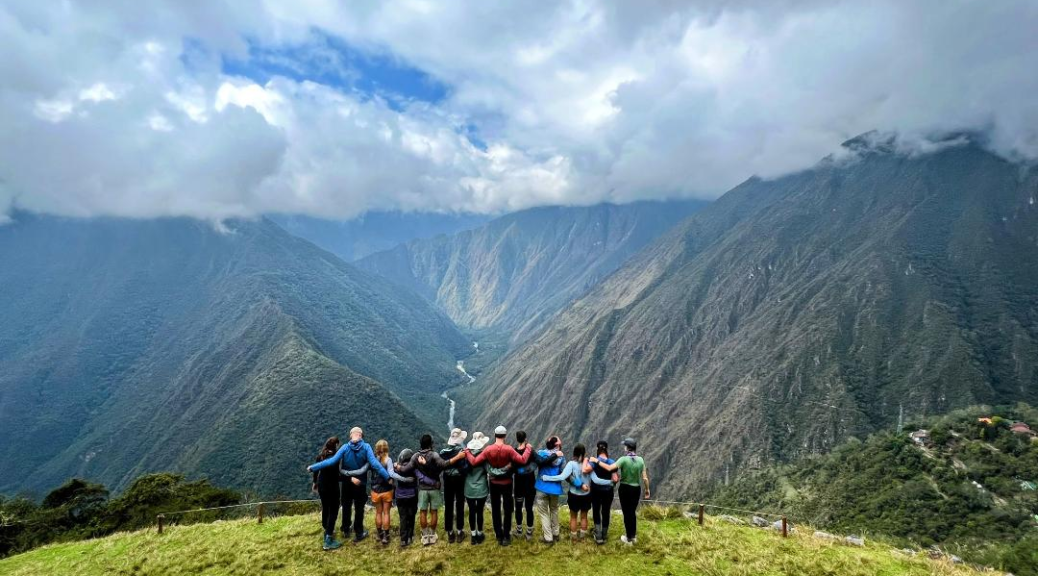
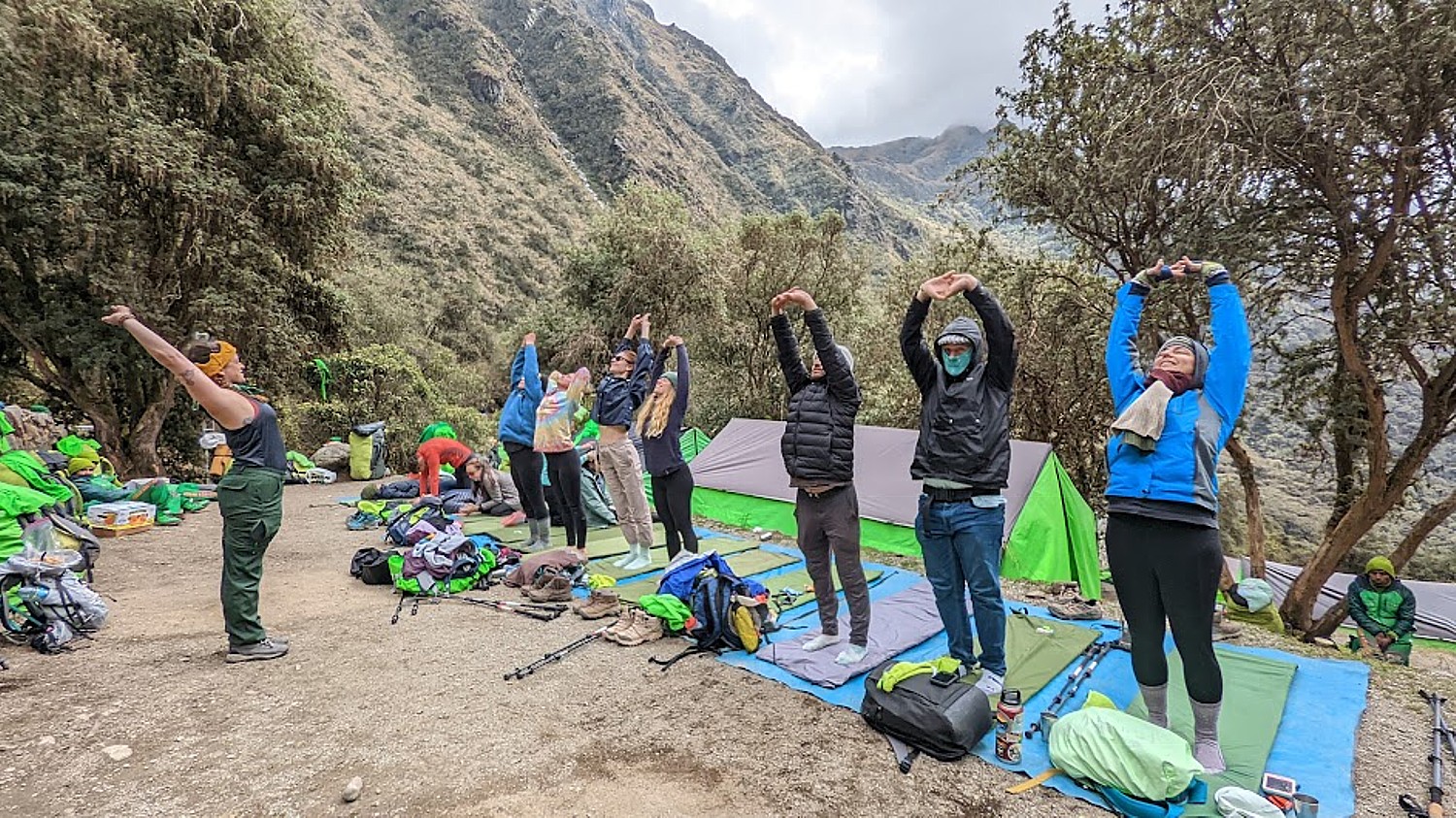
Alpaca Expeditions’ four-day Inca Trail hiking/camping adventure hits on many of the trends in wellness travel: desire for “slow-travel” walks/pilgrimage that activate physical, emotional, spiritual cylinders of well-being, an impromptu yoga session to rejuvenate after ascending the 14,000-ft high peak, responsible/sustainable/eco-friendly travel which mutually benefits travelers and community © Karen Rubin/goingplacesfarandnear.com
 

The trend has impacted a rejuvenation of trails globally to accommodate scores of new, modern pilgrims in “buzzy new destinations” like Sri Lanka, Bhutan, India, Italy and Japan. Governments, interested in promoting holistic tourism, have invested in extensive restorations of these trails – Bhutan opened a 250-mile Trans Bhutan Trail. Walk Japan reported such a surge in demand, there were not enough roadside inns or monks quarters to accommodate the travelers. Wukalina Walk, a multi-award winning Indigenous/Palawa-owned tourism experience, is led by Aboriginal guides who provide a rare window into Tasmania/lutruwita’s aboriginal culture (discoveraboriginalexperiences.com).

Savvy resorts are responding to the rising interest by incorporating a profound version of slow travel movement, linking to ancient pilgrimage trails and offering wellness programs including meditation.

“Pilgrimage is metaphor for the path to enlightenment, the slowest most meditative form of travel, where you experience unexpected encounters with strangers, gain a deeper perspective of place, where question our place in the world.” (I must confess these thoughts came to me on my Inca Trail trek.)

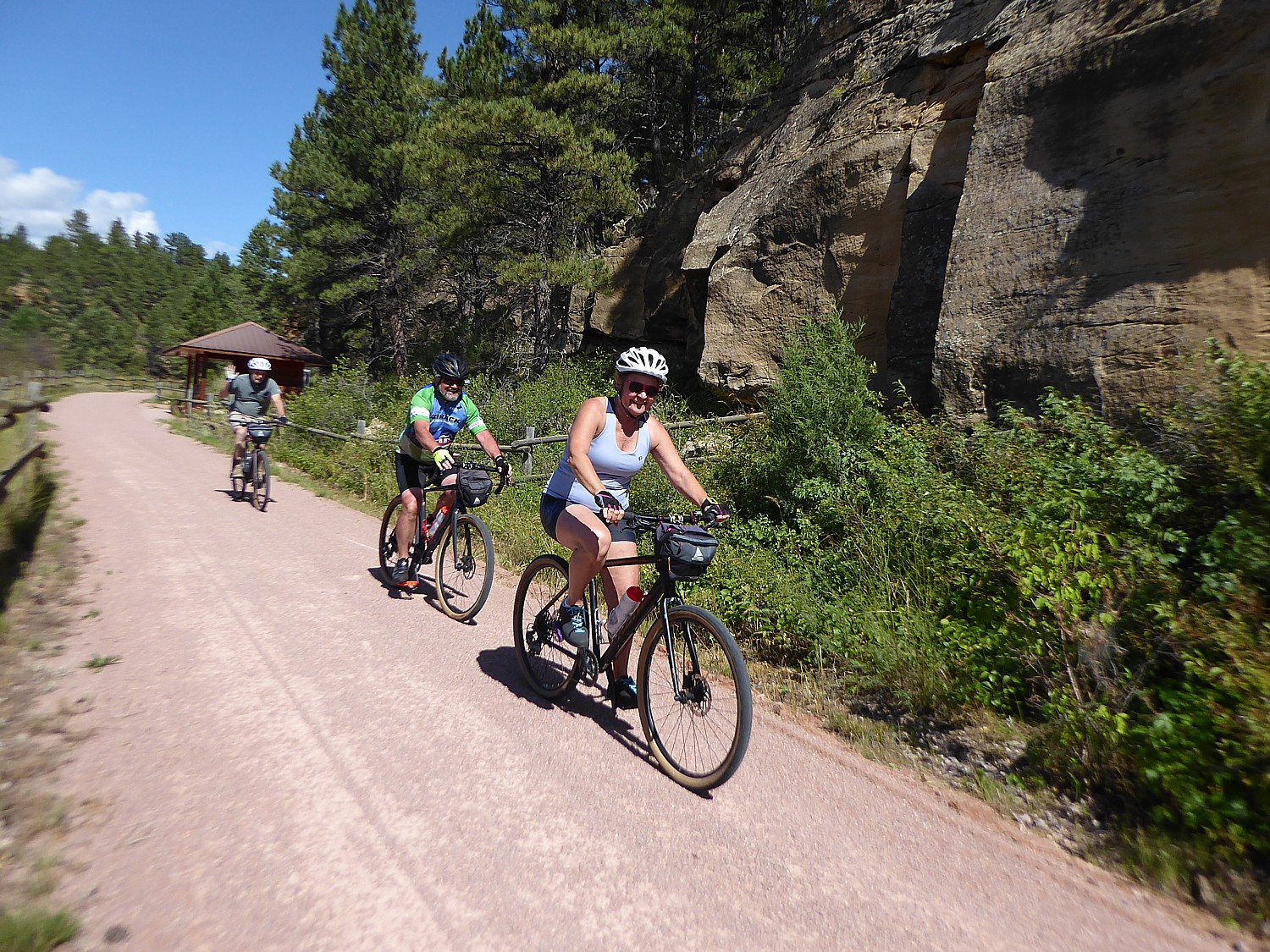
Biking railtrails like the Mickelson Trail in South Dakota with Wilderness Voyageurs has evoke physical, emotional, spiritual and social benefits, as well as a direct connection to engage directly with local people and the environment © Karen Rubin/goingplacesfarandnear.com

Surging popularity, availability of bike tours: For much the same reason as pilgrimage and walking trips, biking tours are another “slow form” of self-propelled travel experiencing explosive growth in interest and availability. Bike tours similarly evoke physical, emotional, spiritual and social benefits, as well as a direct connection to engage directly with local people and the environment, albeit at a slightly faster pace. And e-bikes now extend a cyclists’ longevity in the saddle,and take away anxiety over being able to handle the hills or the miles. Among the operators offering guided and self-guided itineraries on rail trails around the country and the world (where you are most likely to achieve that level of serenity and inner dialogue because you are not worrying about car traffic): Discovery Bicycle Tours (discoverybicycletours.com); Wilderness Voyageurs (Wilderness-Voyageurs.com); Backroads (backroads.com); VBT Bicycling Vacations (vbt.com) and Boat Bike Tours (boatbiketours.com). Also see Rails to Trails Conservancy (railstotrails.org) and the Adventure Cycling Association (adventurecycling.org).

Wellness holidays with kids are about enrichment

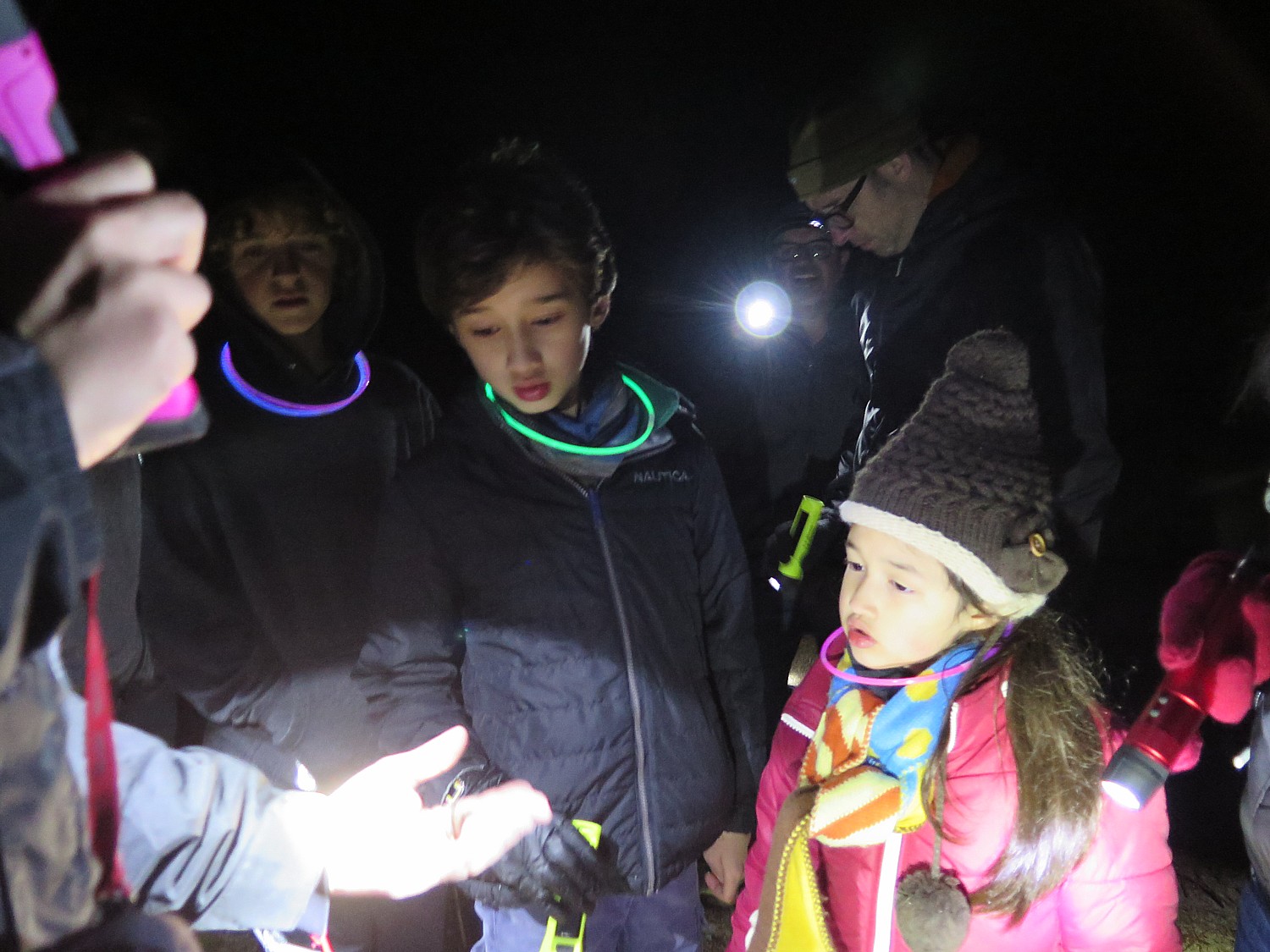
A nighttime nature walk entrances young people at the Tenaya Lodge, Fish Camp, California, at the gateway to Yosemite National Park © Karen Rubin/goingplacesfarandnear.com

Families increasingly value travel experiences that support their child’s wellbeing by expanding their education, personal development and worldview. These trips go beyond the traditional family vacation aimed at entertainment or vegging out on a beach and focus instead on immersive experiences that combine fun with learning. Examples include creative and hands-on workshops that focus on local traditions and foods, learning about local biodiversity and marine life conservation as well as personal growth elements that expose children to unexpected situations, teaching them to adapt to new environments and overcome challenges. Gleneagles Hotel in Scotland offers outdoor nature led activities for children while newcomer, Jayasom’s Family Wellness offers family counseling, enrichment activities, virtual reality and outdoor wellbeing excursions including a large hydrotherapy space that families can enter together. Austria’s Reiters Finest Family hosts sustainable family wellness holidays in Bad Tatzmannsdorf, a resort featuring 125 hectares of outdoor space, 400 animals for farm adventures as well as thermal waters, and a health and longevity center that families can enjoy together. 

Sports is playing a bigger role in hospitality  

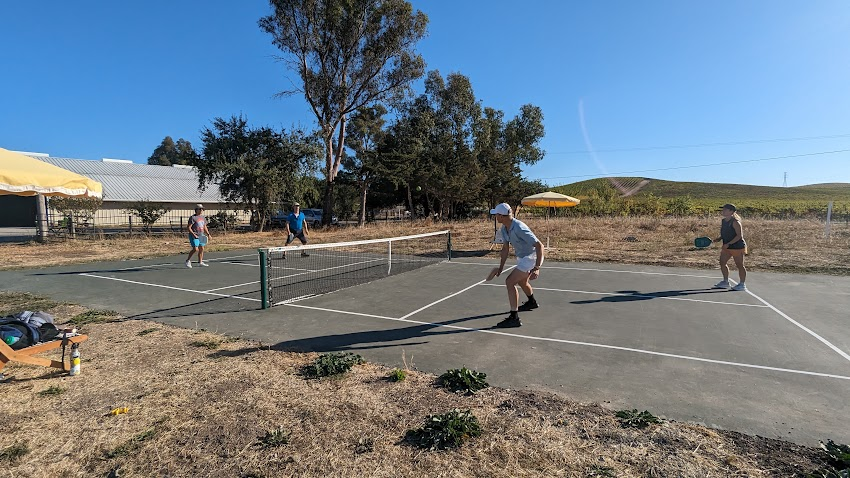
Playing pickleball on a court on a farm in Sonoma, California © Karen Rubin/goingplacesfarandnear.com

Sports related travel accounted for 66 million room stays and generated $49 billion in 2021, reported Patricia Ladis of WiseBody Physical Therapy. Enthusiasts are traveling to where they can train or improve their skills, engage in the sport (golf, tennis have long been popular but now mountain biking, cycling, rock climbing, pickleball are among the sports that are motivating travel) as well as to participate or spectate in competitions and tournaments as grand as the Olympics but as basic as a child’s hockey tourney.

People are not only traveling to engage or train in a sport, but for rehabilitation treatments and therapies. SIRO Hotels is one of first luxury hotels to be designed around health, wellness, and recovery. Its new SIRO One Za’abeel Hotel in Dubai delivers a complete experience under one roof, with rooms designed to combat jet lag, 2,000 sq m of fitness and recovery facilities with cutting-edge treatments, personalized nutritional guidance, diverse training options. Dedicated health resorts like Chenot Weggis Palace in Switzerland offer wellness travelers the opportunity to spend a week recharging with the top technologies on hand to future proof your health and wellbeing.  

In Search of Calm

Mental wellness as a travel trend has been gaining significant traction over the past few years, reflecting a broader societal shift towards valuing mental health and self-care. Wellness retreats integrate yoga, breath work, meditation. What is new are the more intensive therapy retreats. For example, equine therapy (with horses) is offered at  Gwinganna Lifestyle Retreat in Australia and NIHI Sumba in Indonesia, Re-wilding retreats that immerse into natural settings to support mental wellbeing are popular across the globe: properties like The Dreaming, in the heart of Wales and AroHa in New Zealand.

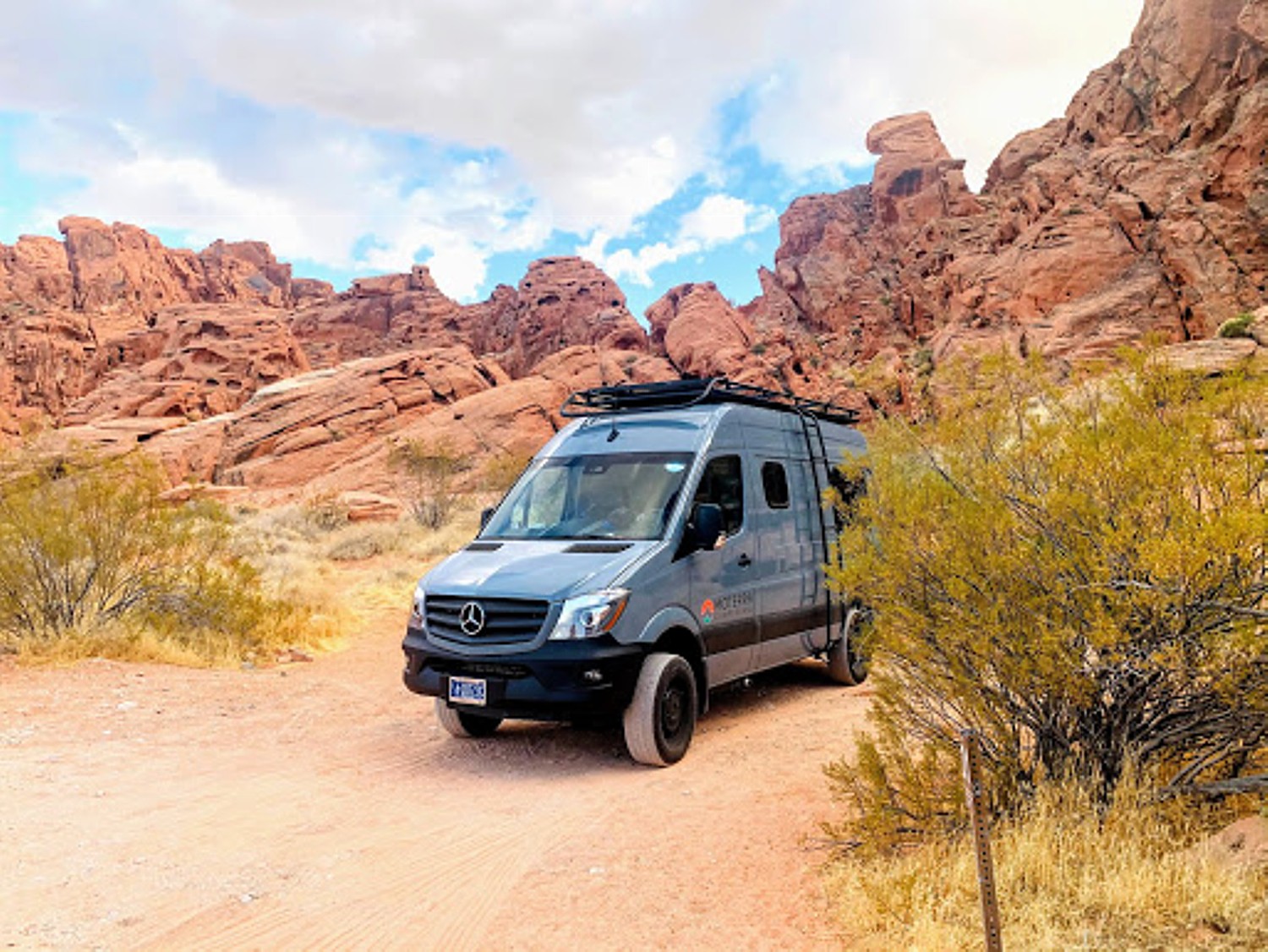
Finding calm by wild camping in a Moterra campervan in Nevada © Eric Leiberman/goingplacesfarandnear.com

This interest in seeking out the wild – getting off the beaten track – to find calm and mental wellbeing is facilitated by the rising availability of luxury campervans, equipped with water, solar-powered batteries, that enable wild camping with maximum calm and minimum stress. Among the companies: Moterra Campervans (gomoterra.com), Blacksford RV (blacksford.com), and Roadsurfer (roadsurfer.com)

Diagnostic Boom as Wellness Travelers Look to Prevention, Longevity   

Living longer is one goal of health-and-wellness travelers, but so is living well. There is recognition that quality of life is as important as quantity. Wellness travelers are now seeking out tailored and proactive health approaches, prompting many health and wellness operators to enhance their offerings with comprehensive diagnostic assessments alongside traditional wellness activities. At Canyon Ranch in Tucson, Arizona, you can undergo thorough health evaluations encompassing genetic testing, preventive diagnostics, body composition analysis, and metabolic assessments. The new Longevity Spa at Hotel, Portrait Milano, provides cutting-edge diagnostics like DNA testing and Longevity Molecular Profile, complemented by Integrative Wellness solutions and nutrition plans. KĒPOS by Goco at Daios Cove in Crete, Greece, features diagnostic services such as Metabolic Biometrics and Epigenetics testing alongside wellness programs and spa offerings.

“These offerings empower individuals to gain profound insights into their health status and make informed lifestyle choices while indulging in the rejuvenating benefits of travel. As travelers increasingly prioritize preventive healthcare and holistic well-being, the diagnostic booms in wellness travel are set to continue to reshape the tourism industry by seamlessly blending medical expertise with luxury hospitality,” GWI’s Wellness Tourism Initiative Trends for 2024 notes. 

Art and Wellness: A Perfect Pairing   

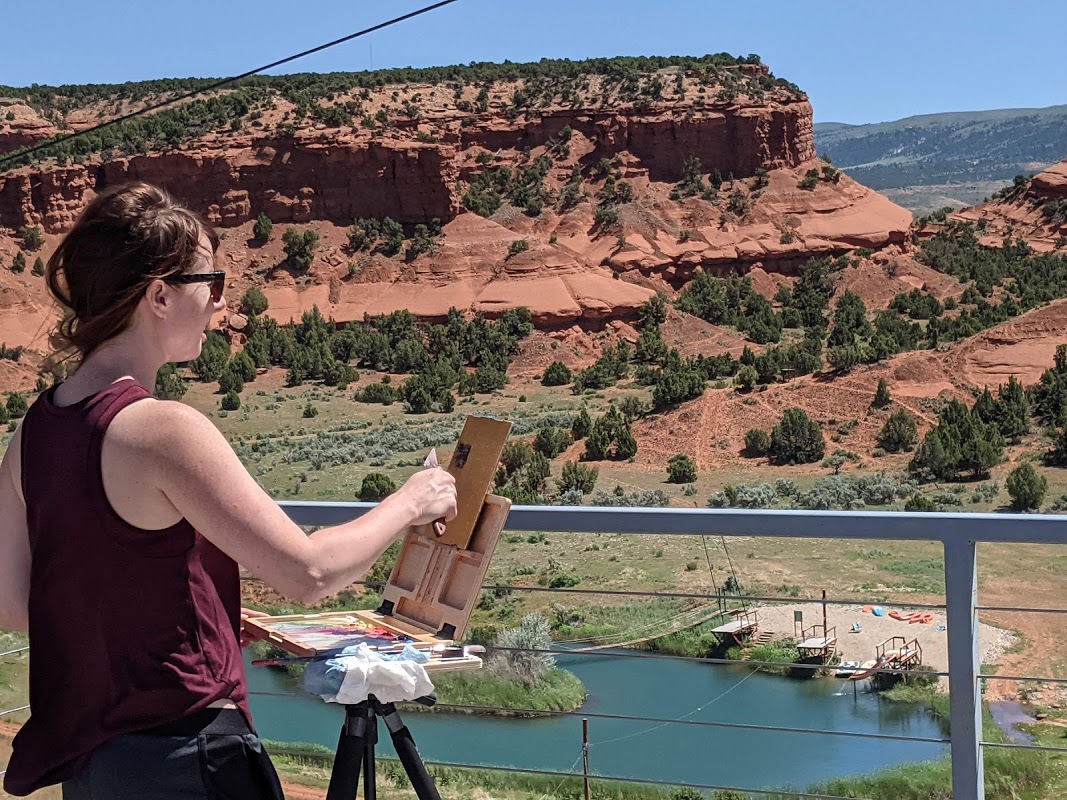
Finding harmony in nature and art at Red Reflet Ranch, Wyoming © Karen Rubin/goingplacesfarandnear.com

An emerging trend integrating art and wellness signifies a harmonious fusion of creative expression and holistic well-being, and is resulting in immersive art-centric activities, therapies and experiences that nourish both the body and the soul. Wellness hospitality operators like Como Shambhala Estate in Bali and Miraval in Arizona along with many small artisans and practitioners globally are hosting wellness retreats that blend yoga and meditation with artistic workshops encouraging guests to explore their inner creativity as a pathway to self-discovery and relaxation, inspiration and rejuvenation.  

Seeking Out Cultural Traditions and Healing

Indigenous healing has gained prominence as part of the broader trend towards holistic wellness and the search for authentic, transformative experiences. These experiences draw on the wisdom and practices of indigenous cultures around the world, offering healing techniques that have been passed down through generations. The interest in and drive behind these retreats are linked to an acknowledgement of the benefits of indigenous healing practices, a holistic approach and reconnection with the land.

Wukalina Walk, a multi-award winning Indigenous/Palawa-owned tourism experience, is led by Aboriginal guides who provide a rare window into Tasmania/lutruwita’s aboriginal culture (photo by Jillian Mundy)

 At Wai Ariki Hot Springs, in Rotorua New Zealand you can discover the ancient healing methods of these indigenous cultures, from the deeply cultural touch of mirri mirri or romi romi massage to the revitalizing power of blessed stones and herbal remedies – each experience incorporates local healers and wellness practitioners, herbal medicine practice and ceremonies that honor the community and the land. Asian traditional therapies and medicine are growing in popularity for the wellness traveler around the globe. Traditional Thai, Chinese & Ayurvedic Medicinal offerings encompass rich diagnostic protocols, herbal formulas, and treatment techniques as part of the guest experience. 

Quest for a Good Night’s Sleep

Sleep tourism is emerging as a trend catering to the growing recognition of the importance of quality sleep for overall health and well-being; travelers are seeking out diagnosis, prescriptions and coaching to improve their sleep. RAKxa Integrative wellness retreat in Thailand, offers a Thai Deep Sleep & Skin Radiant Therapy, which focuses on enhancing sleep quality, integrating traditional Thai Medicine and CBD oils. At the Longevity Hub By Clinique La Prairie in Bangkok visitors are offered Hyperbaric Oxygen Therapy.   

More information at globalwellnessinstitute.org.

_______________________

© 2024 Travel Features Syndicate, a division of Workstyles, Inc. All rights reserved. Visit goingplacesfarandnear.com and travelwritersmagazine.com/TravelFeaturesSyndicate/. Blogging at goingplacesnearandfar.wordpress.com and moralcompasstravel.info. Visit instagram.com/going_places_far_and_near and instagram.com/bigbackpacktraveler/ Send comments or questions to FamTravLtr@aol.com. Tweet @TravelFeatures. ‘Like’ us at facebook.com/NewsPhotoFeatures