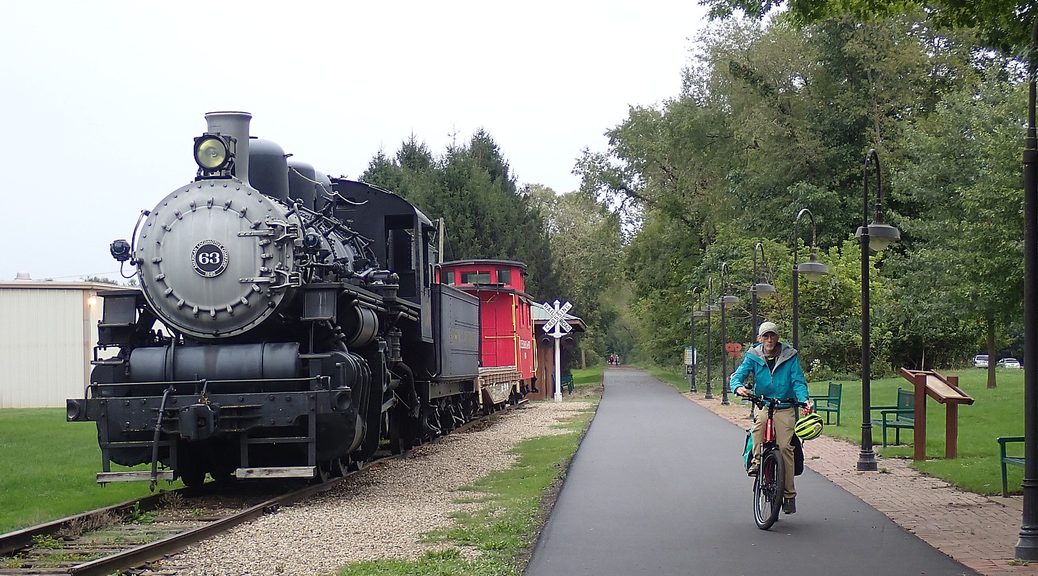
By Karen Rubin, Travel Features Syndicate, goingplacesfarandnear.com
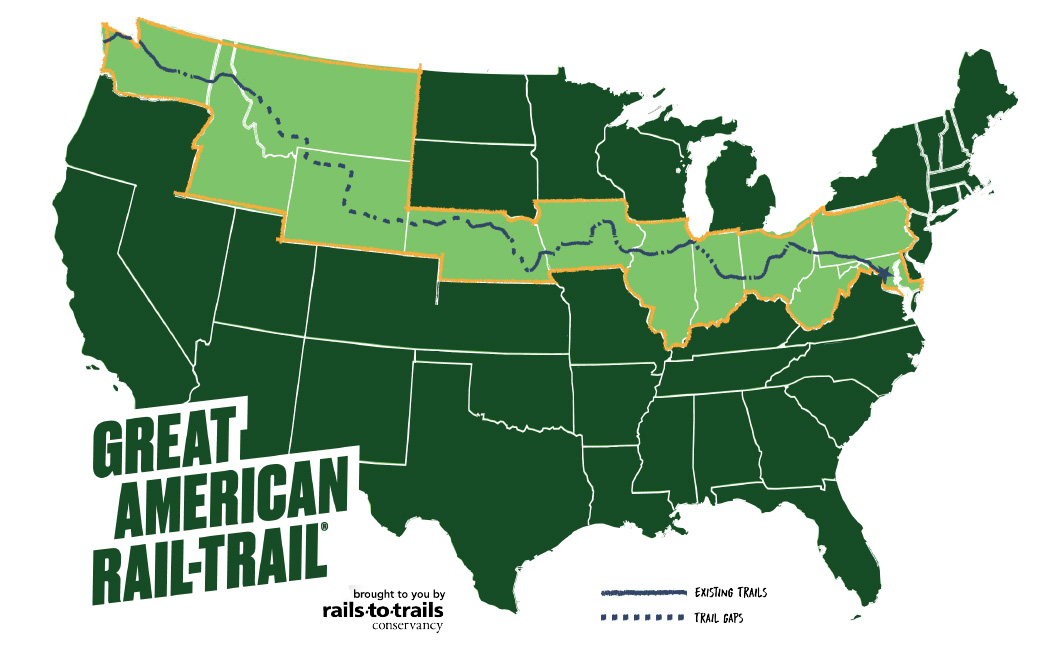
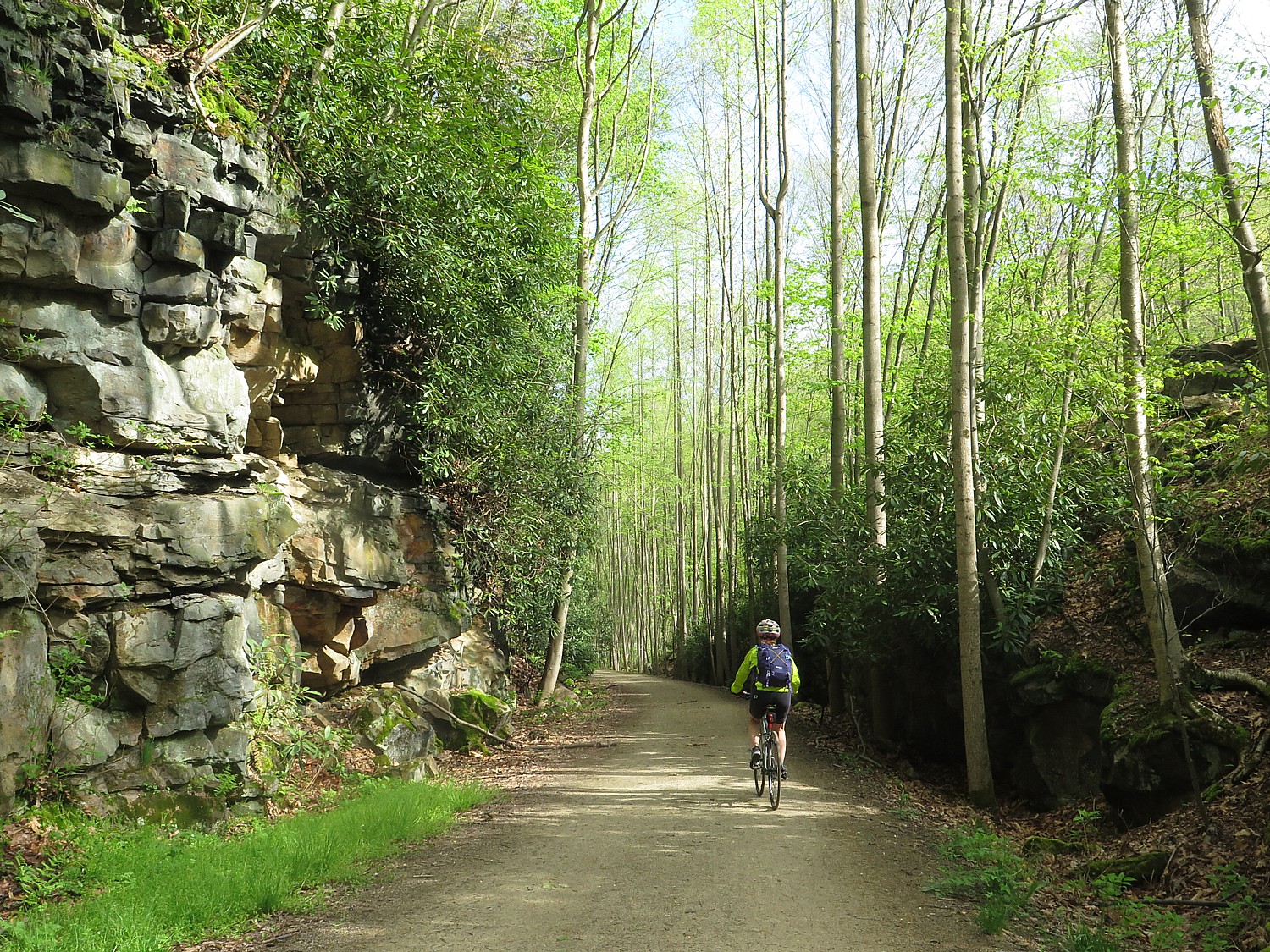
Imagine being able to bike 3,700 miles across the United States, from Washington DC to Washington State, on a network of connected, protected trails, the way people hike the Pacific Crest National Scenic Trail and the Appalachian Trail. This is the vision for the Great American Rail-Trail, and I didn’t have to imagine, because I was able to bike newly made trail connections bringing the GART to reality.
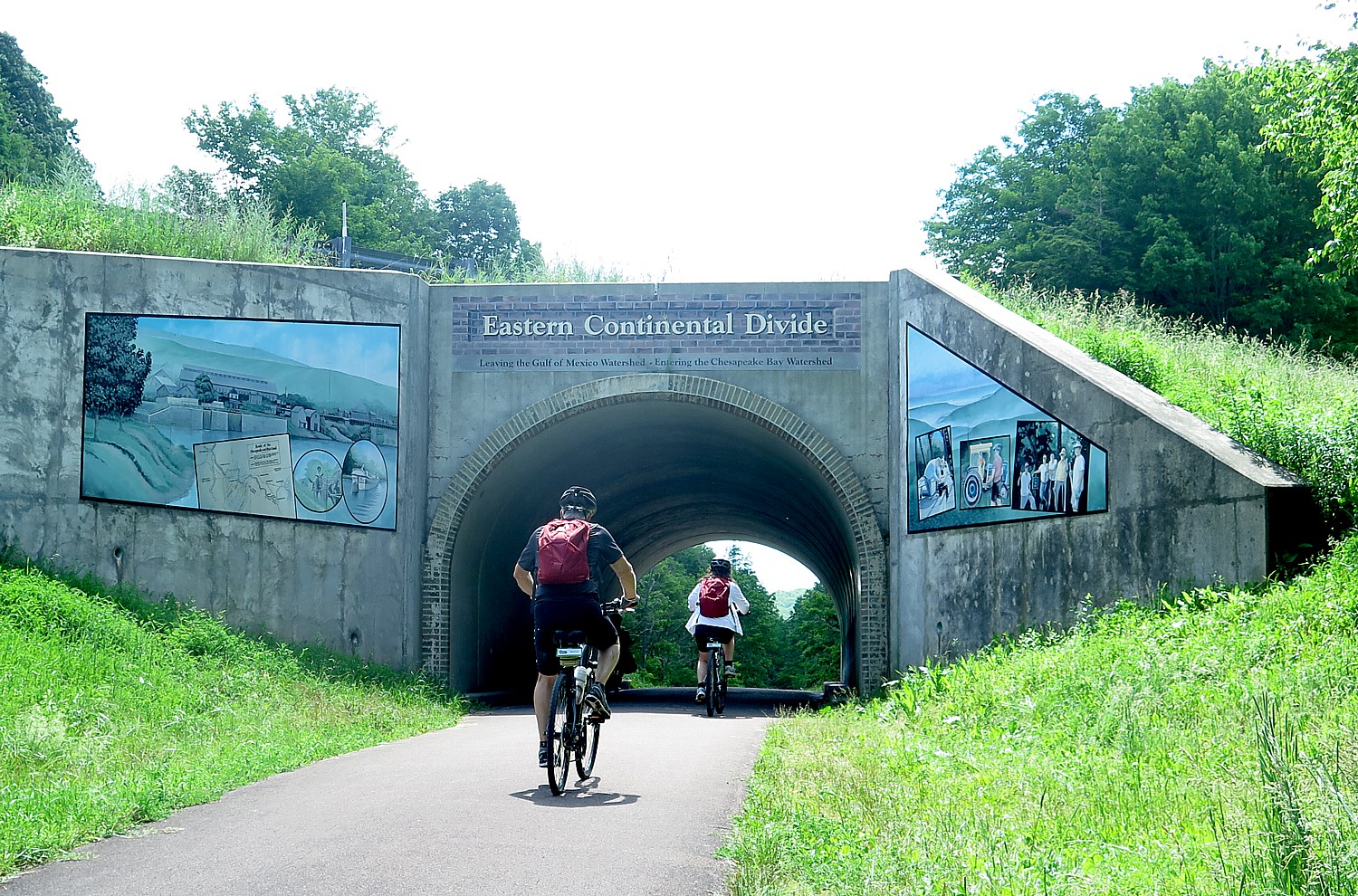
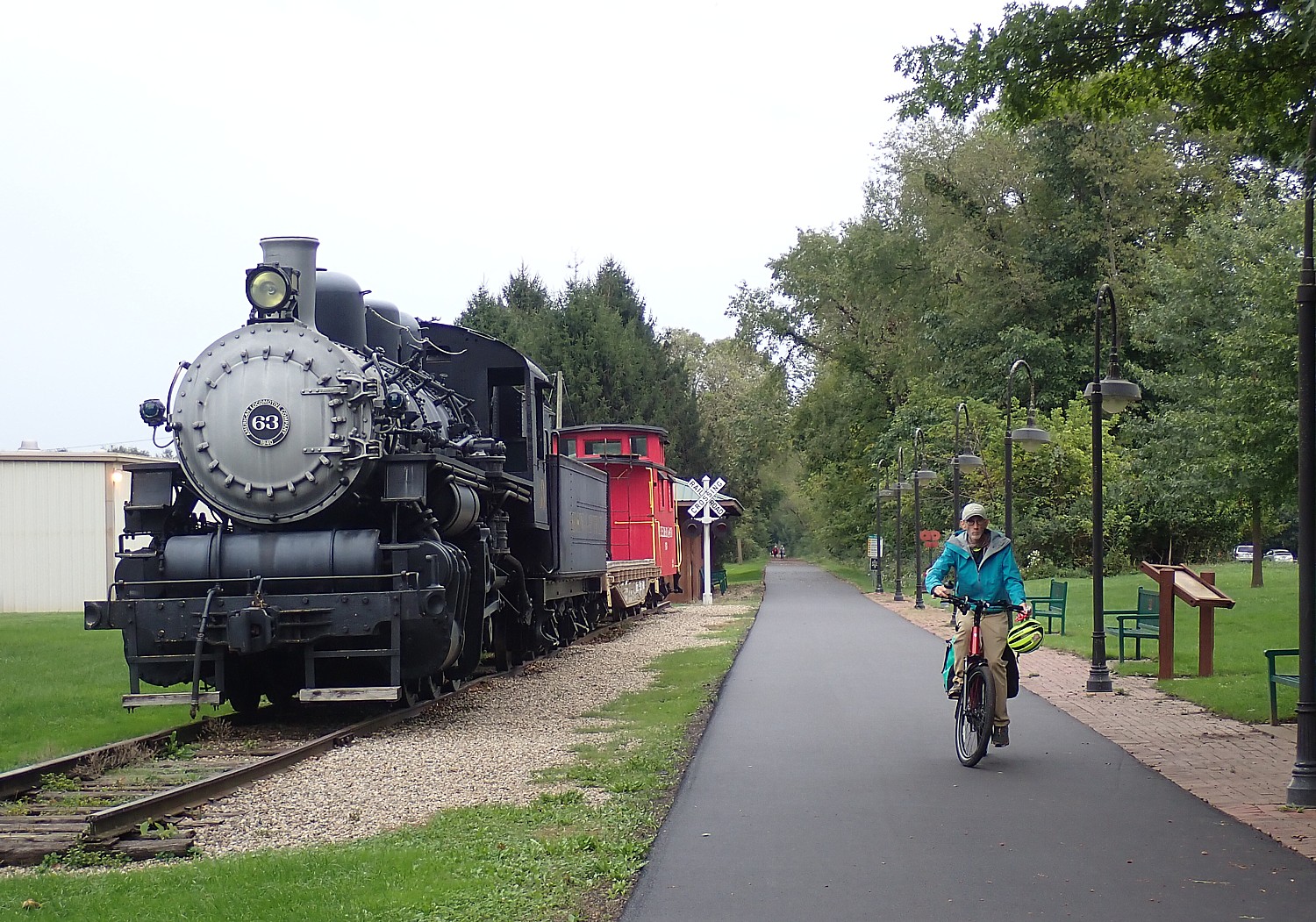
The trail now consists of more than 150 existing railtrails, canalways, bikeways and multi-use trails – 2100 miles through 12 states and DC – totaling 56% of the 3,700 miles when complete. These include some of America’s most famous and popular rail trails like the C&O Canalway from DC to Cumberland Md., where it connects to the Great Allegheny Passage (the GAP) railtrail to Pittsburgh, PA, which together form the longest (and most well used) completed stage, 350 miles long.
It would be the largest, most ambitious public transport endeavor since the Interstate Highway and the Intercontinental Railroad, and longer than the longest Interstate Highway, Interstate 90 (I-90), 3,020 miles from Seattle, Washington, to Boston, Massachusetts, and longer than the Intercontinental Railroad project, 1,911 miles.
But unlike the Interstate Highway or the Transcontinental Railroad, the Great American Rail Trail is an enterprise of the local people who want to transform abandoned byways into leisure trails and greenways that can be enjoyed by residents and visitors alike, contributing to health and wellness (when being healthy is also key to financial health, productivity and prosperity), quality of life and economic vitality, instead of federal government exerting its eminent domain power or corporations blighting the environment in the name of “commerce,” reclaiming commercial and industrial land for public use. And it is about transport – accessibility, mobility for those who prefer to travel safely by foot or on two wheels.
“The Great American Rail-Trail is the most ambitious [public lands project] to connect East and West Coasts,” said Rails to Trails Conservancy’s Kevin Belle, Project Director, Great American Rail-Trail. The Great American Rail-Trail brings the promise of a new American experience – comparable to Route 66. 50 million people live within 50 miles of the route.
GART was the dream 40 years ago of Rails to Trails Conservancy co-founder David Burwell, who had the vision of converting disused rail corridors into a continuous, cross-country trail network. “He believed trails connect the country,“ said Eric Oberg, R2T’s Senior Director of Programs. “Every trail head feels like that – a cross section of the place we live. Trails are where community happens now – the new Main Street.”
Rails to Trails Conservancy, which is stewarding the Great American Rail-Trail project and leading a coalition of more than 150 partners, announced it six years ago, when half of the 3,700 miles were in place. It took two years to devise the route. (See a map, list).
The task now is to fill some 80 gaps – 1,600 miles – which is what brings R2T project managers and developers around the country, working with local groups.
The states and agencies and organizations for the more than 150 trails that form the backbone were eager to become a part of the Great American Rail-Trail, fully appreciating the enormous benefits that railtrails, canalways, bikeways and greenways bring to cities, towns and rural villages, and what being identified with a national network would mean. Eric Oberg, R2T’s Senior Director of Programs, explained.
An economic impact study projects GART investments could generate more than $229.4 million in visitor spending, 2,500 new jobs and $104 million in labor income, and $22.8 million in new tax revenue.
The GAP, for example, cost about $1 billion to build but brings 1 million users (they know because they have sensors under the trail that count), who spend $120 million a year,. In addition to the benefits to locals – health and wellness, outdoor recreation, increased mobility and safety away from dangerous road traffic, higher property values – the people who are drawn from around the country and the world spend money on hotels, restaurants, gear – $30 million worth in Pittsburgh alone; some even find a new place to set up a business and raise a family.
You would have a network of outfitters and bike tour operators at the ready to provide rental bikes, shuttle service, book lodging or direct you to campgrounds or trailside hostels, who can assist you in doing stages – as many as you want linked together, or come back and do new sections. (Many of these services for the existing trails are also easily found on Great American Rail-Trail’s website, and R2T’s TrailLink and mobile app, www.traillink.com, which details 40,000 miles of trails nationwide, and several tour operators like Wilderness Voyageurs and Discovery Bicycle Tours already feature these trails.)
We have been invited by Rails to Trails Conservancy, to bike trails from Pittsburgh to Columbus and see the vision of the GART unfold, what has already been achieved, and the task ahead in filling the gaps.
We meet Kelly Pack, the Trail Nation Accelerator Program Director, who counsels communities in eight states (WA, MT, AZ, MO, AK, IA, VA, TN), which are just starting development of a vision for a trail network. “We hope to provide the initial start of planning process – mapping support, bringing stakeholders together, to understand the importance [and benefits] of trails.” She explains how R2T can organize virtual workshops and create a “learning cohort” with communities that have had success creating trails.
“Every place is different but the challenges and strategies may be similar.”
We start our ride towards the end of the famous and popular Great Allegheny Passage (GAP) trail, to see a success story: a gap 8.2 miles long from Homestead along the Monongahela River, crossing near the Hot Metal Bridge, into Point State Park in downtown Pittsburgh, where the GAP ends. It took 20 years and $80 million (and a change of mayors) to finally complete the gap in 2013.
Volunteers help maintain it, forging community and pride. The trail contributes to public health, wellness and quality of life, and property values increase in communities along the trail, especially by repurposing aging, decaying abandoned rail lines, bridges and trestles and waterfront.
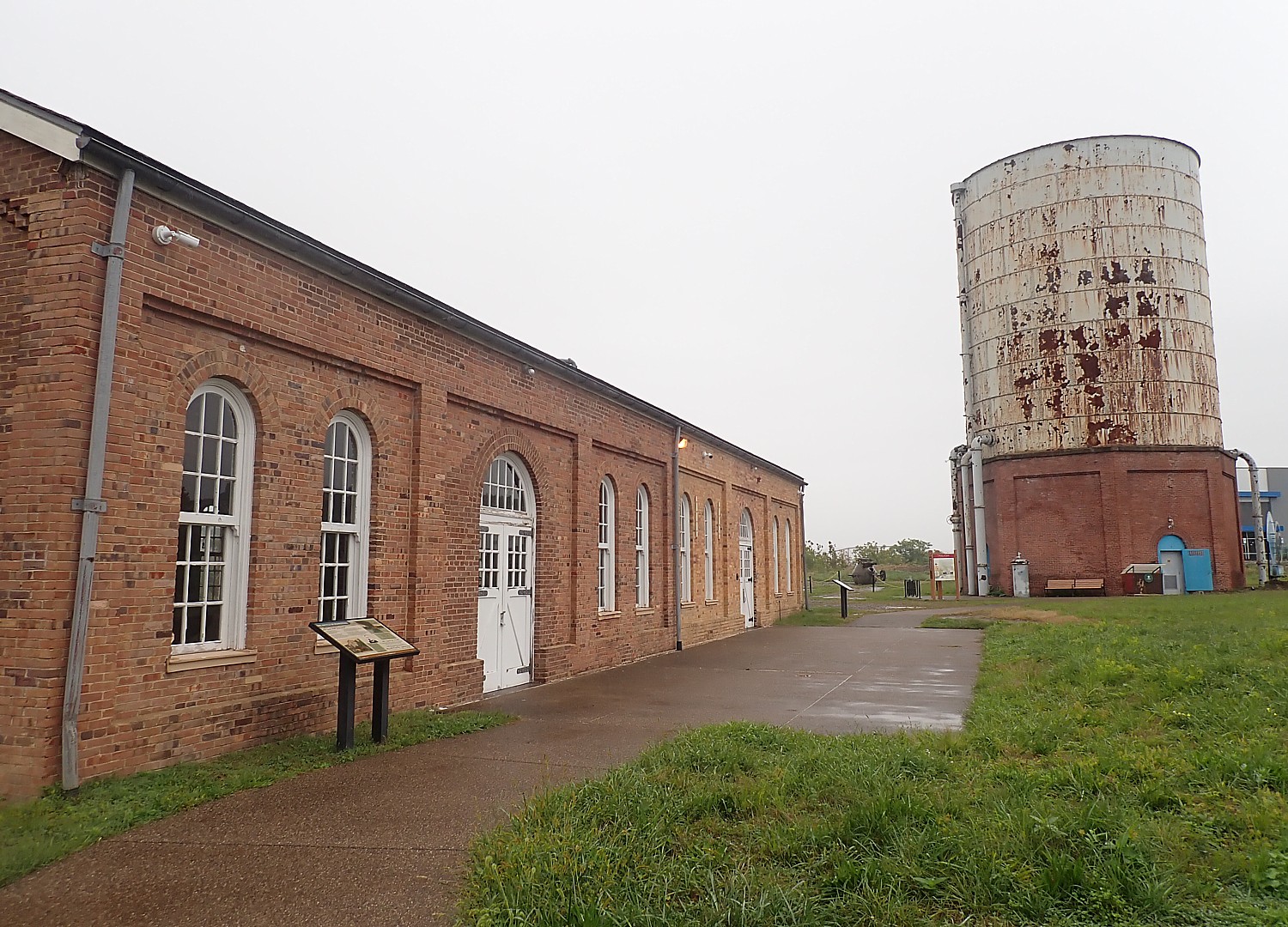
Along the trail, you see purposely left remnants of steel plants as a tribute and continuity of heritage and history and a source of interest. We come to the pump plant where steel workers attempting to unionize were rebuffed by Pinkertons summoned by the governor when they attempted to strike for better wages and conditions.
The trail passes by the NFL Steelers training center. “When they built the stadium, Mayor Tom Murphy, asked Steelers owner Art Rooney to move the stadium back so the trail could come through, reclaiming what was taken from the public by and for industry,” said Bryan Perry, Executive Director of the Great Allegheny Passage Conservancy.
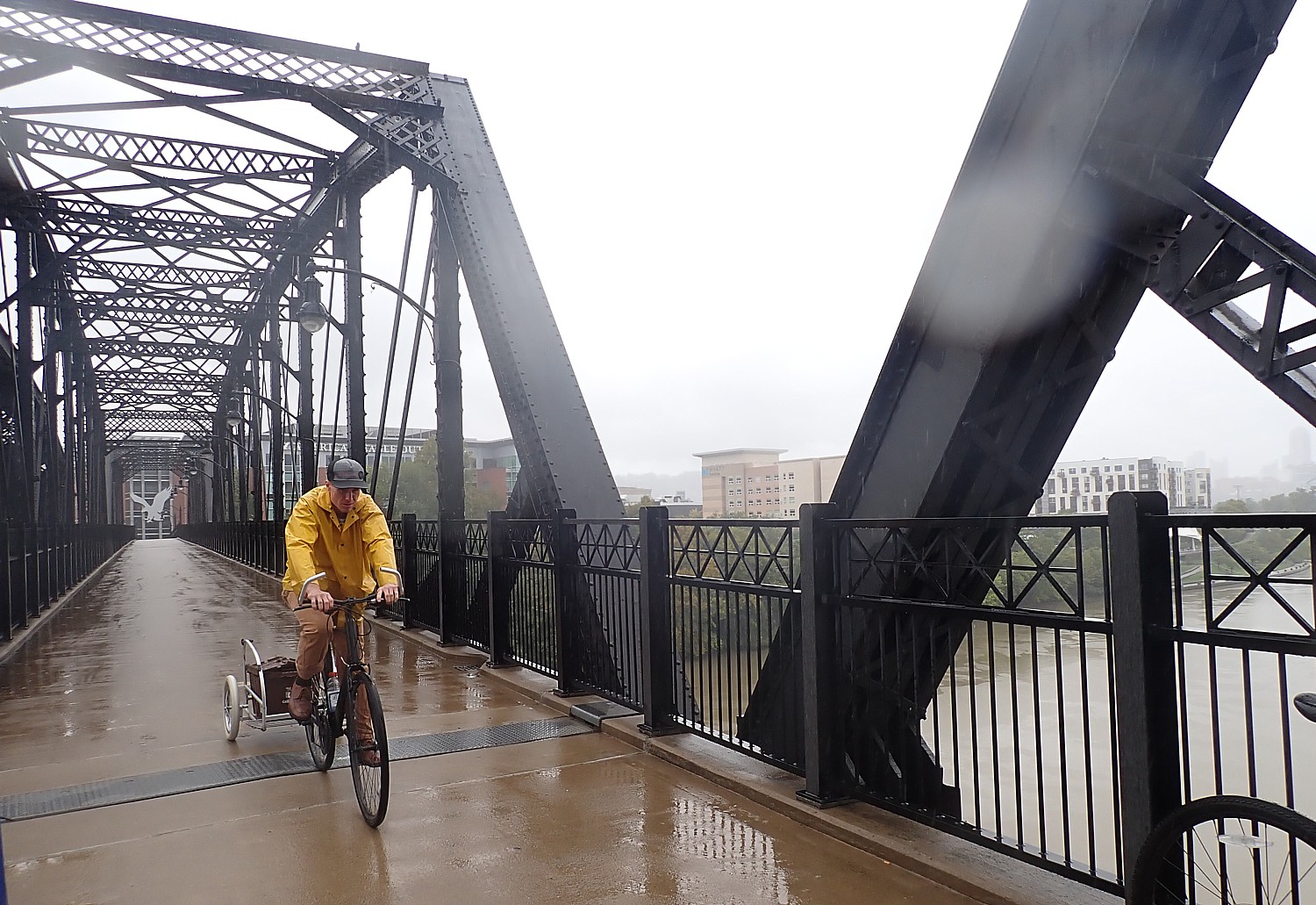
We cross a bridge that used to be used to carry buckets of molten steel over the river, now repurposed to carry cars, bikes and walkers. Those steel plants and coal depots are gone now, instead, from the repurposed bridge you can see tech company buildings on one side, and hotels, housing, retail stores and a marina lining the other side, revitalizing the economy and the environment.
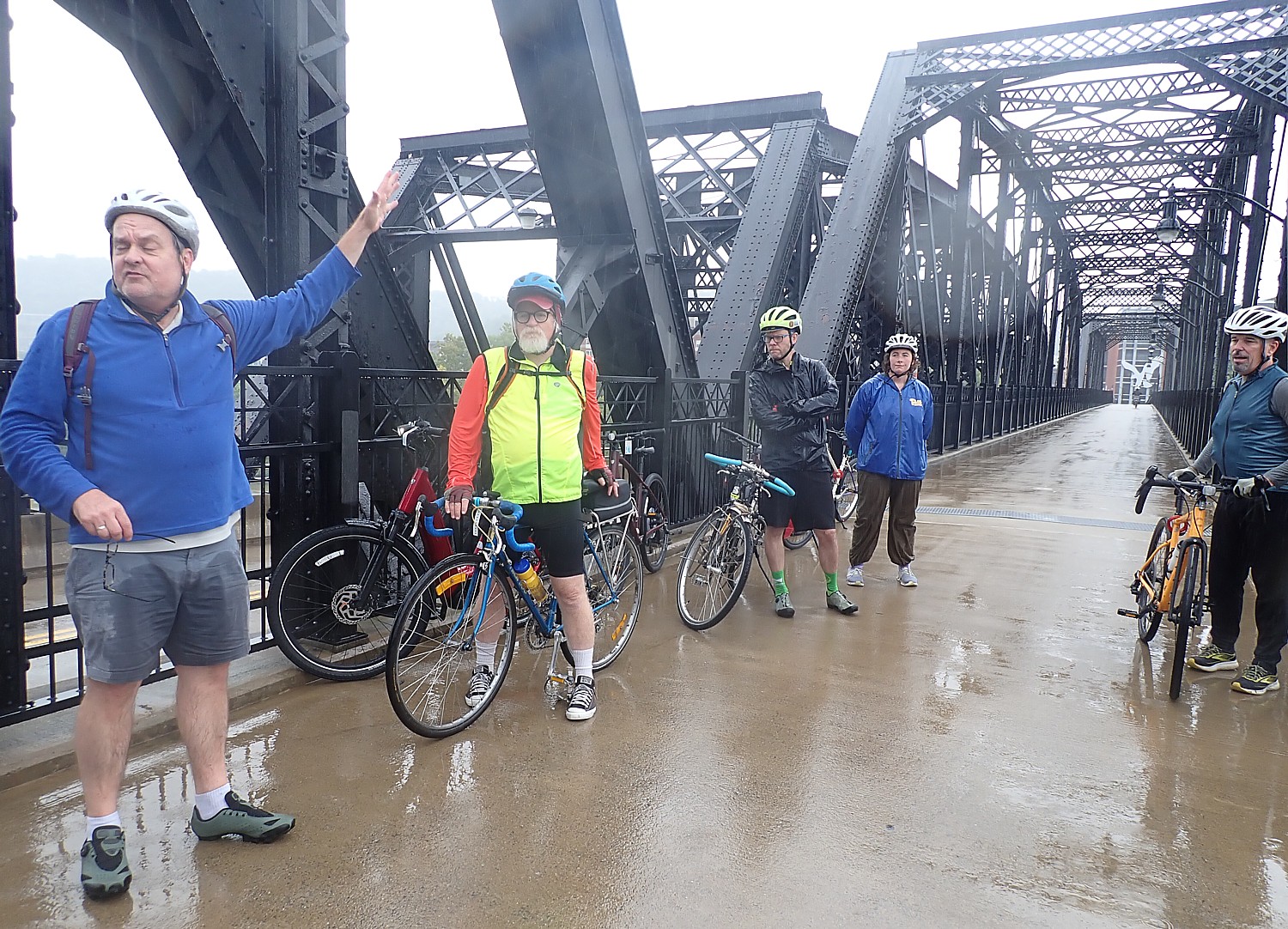
Indeed, Pittsburgh has been transformed from a carbon-choked polluted city to this glorious, wonderfully liveable, sustainable city. Not coincidentally, it is called “the City of Trails,” where six national and regional trails originate and three rivers converge, their riverfronts reclaimed for public space (GAP, Three Rivers Heritage Trail, Erie to Pittsburgh Trail, Pittsburgh-to-Harrisburg Main Line Canal Greenway, Potomac Heritage National Scenic Trail, and Industrial Heartland Trails Coalition (IHTC) Network). and Great American Rail-Trail.
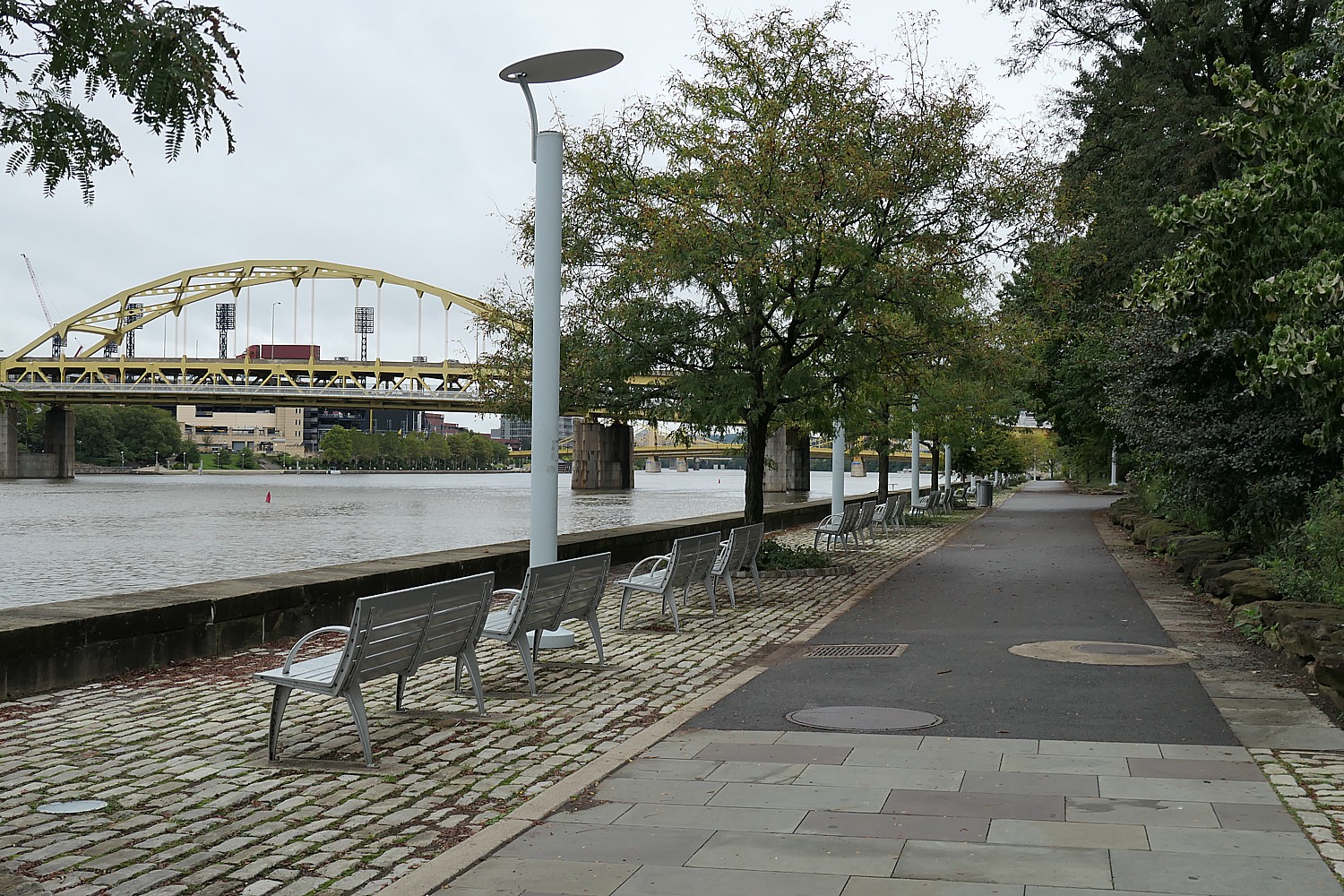
And so we come to where the Great Allegheny Passage ends at Pittsburgh’s Point State Park where we encounter the first significant gap, a 9.8 mile section along a highly trafficked West Carson street, before reaching the next trail on the Great American Rail-Trail route, the Montour, which the Pittsburgh coalition has been working for two decades to connect.
It is not just for the benefit of long-haul, out-of-town users. “Solving the problem of West Carson would make Pittsburgh safer, better for pedestrians, bikers – cars, trucks pass at high speed, there is no dedicated space for bikes,” said Scott Bricker, co-founder and Executive Director of Bike Pittsburgh (BikePGH), a bicycle and pedestrian advocacy organization. He noted that one-third of Pittsburgh residents do not drive.
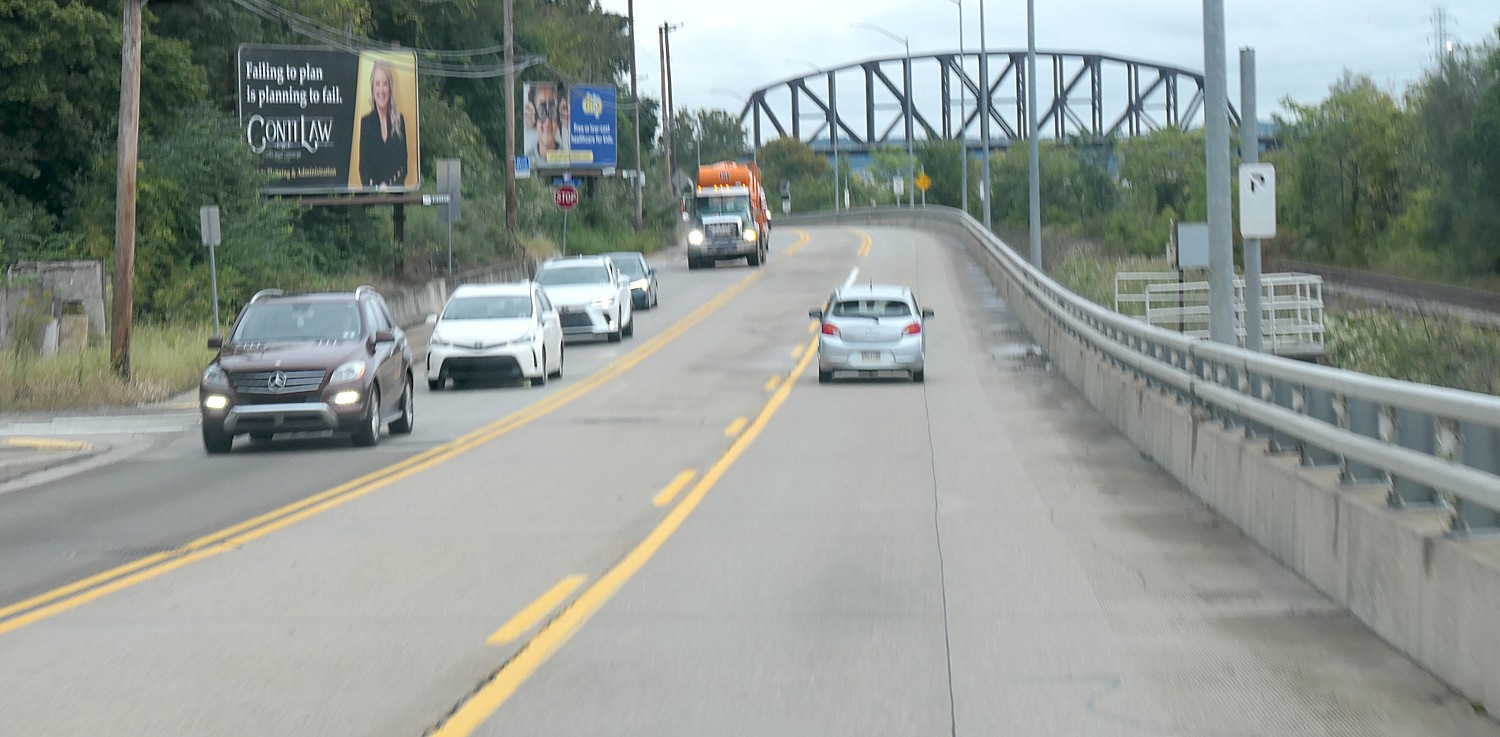
“The trail system is only as strong as its links. Missing links deprive communities of the benefit of trail – economically, socially, quality of life and health,” said Kelsey Ripper, Executive Director Friends of the Riverfront.
“The key to the project is every single foot in every connection. There are 150 trails today – every foot took hard effort of all the people. Every one worth it,” said Belle, who has spent the past 10 years helping develop those links and connections.
Explore Route Assessment Report
Learn more about the preferred route, (www.railstotrails.org/site/greatamericanrailtrail/content/route)
States on Route
Route Through Washington, D.C.
For more information on the Great American Rail-Trail, visit: https://www.railstotrails.org/site/greatamericanrailtrail/
Next: The Great American Rail-Trail Comes Together with Grassroots Support, Volunteers
__________________
© 2026 Travel Features Syndicate, a division of Workstyles, Inc. All rights reserved. Visit goingplacesfarandnear.com, longislandpress.com/category/vacation-travel.com and travelwritersmagazine.com/TravelFeaturesSyndicate/. Blogging at goingplacesnearandfar.wordpress.com and moralcompasstravel.info. Visit instagram.com/going_places_far_and_near. X: @TravelFeatures Threads: @news_and_photo_features ‘Like’ us atfacebook.com/NewsPhotoFeatures. Send comments/questions to FamTravLtr@aol.com.
