Tag Archives: Visit Ohio

Railtowns, Canaltowns, Rivertowns, GhostTowns – Now Trail Towns

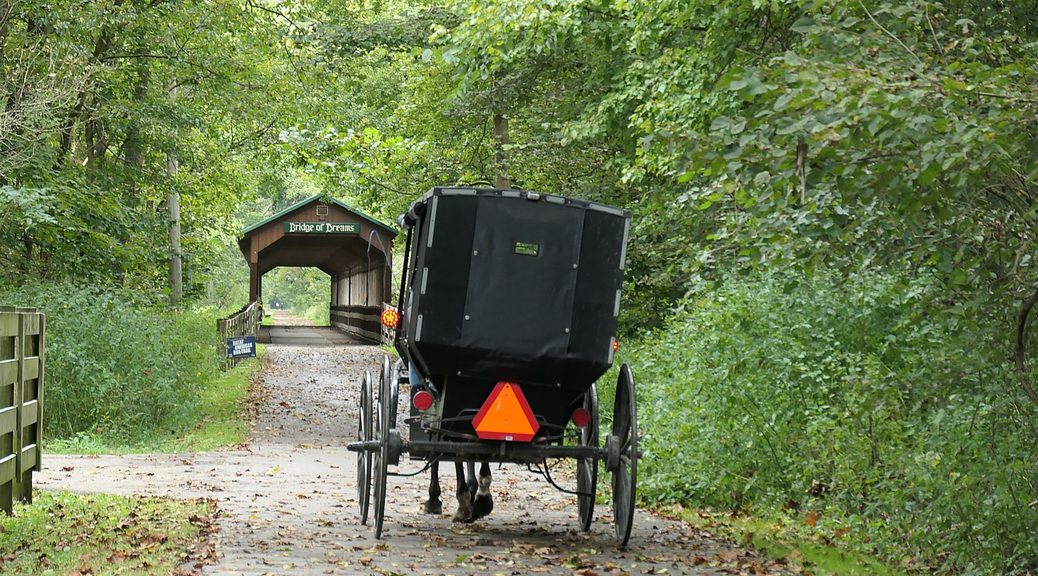
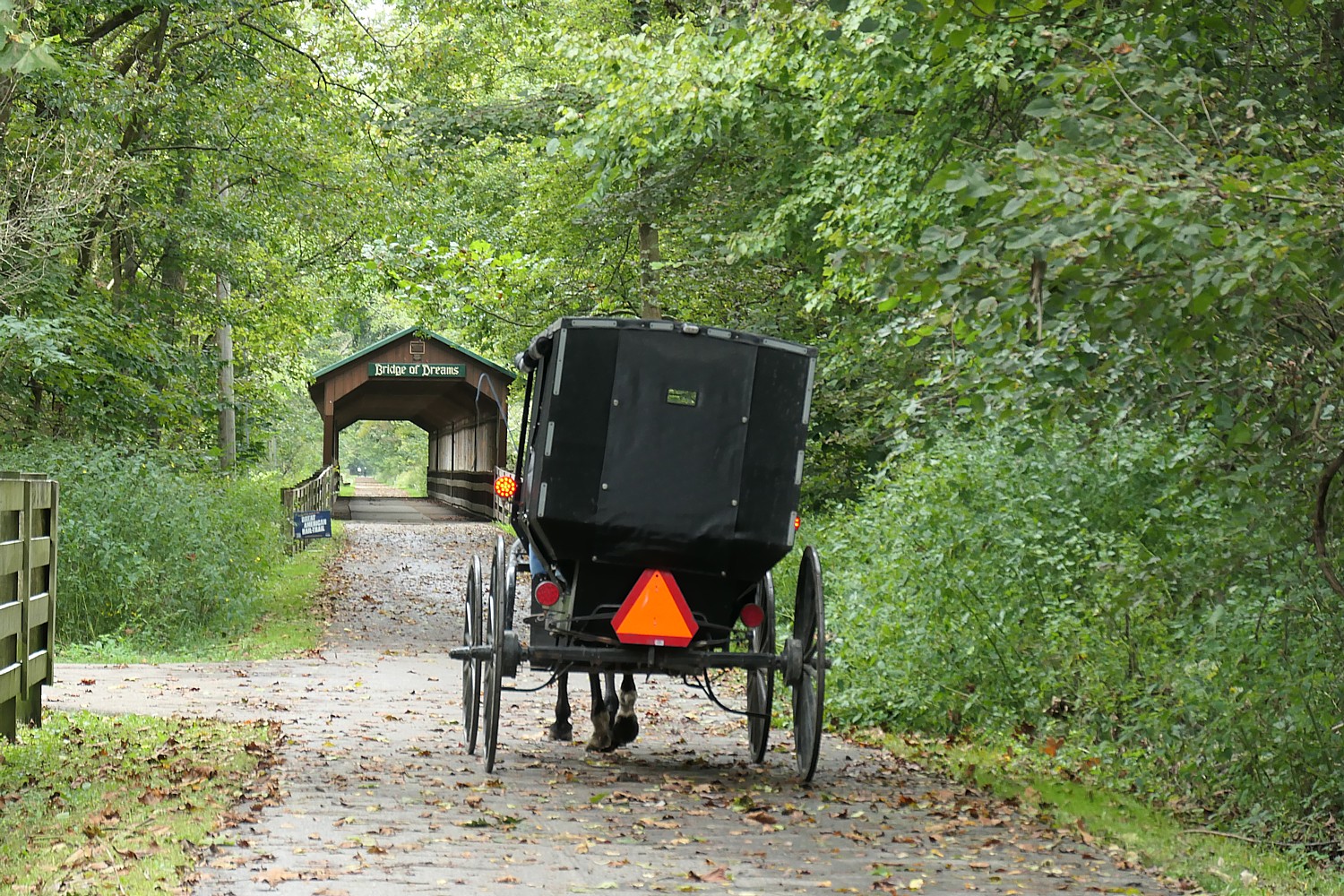
One of the most scenic sections of the Ohio-Erie Trail: a horsedrawn Amish carriage approaches the Bridge of Dreams © Karen Rubin/goingplacesfarandnear.com

By Karen Rubin, Travel Features Syndicate, goingplacesfarandnear.com

There are railtowns, canaltowns, rivertowns, and to avoid the fate of becoming ghosttowns with the loss of railroads, canal and riverboats, and factories, many of these places are looking to become Trail Towns, serving the thousands streaming by on the leisure trails that have replaced the rail lines and towpaths.

The trails are what bring people to these towns, revitalizing their economy and community, as our Rails to Trails Conservancy group of media people reporting on the progress of the 3,700-mile-long Great American Rail-Trail discover.

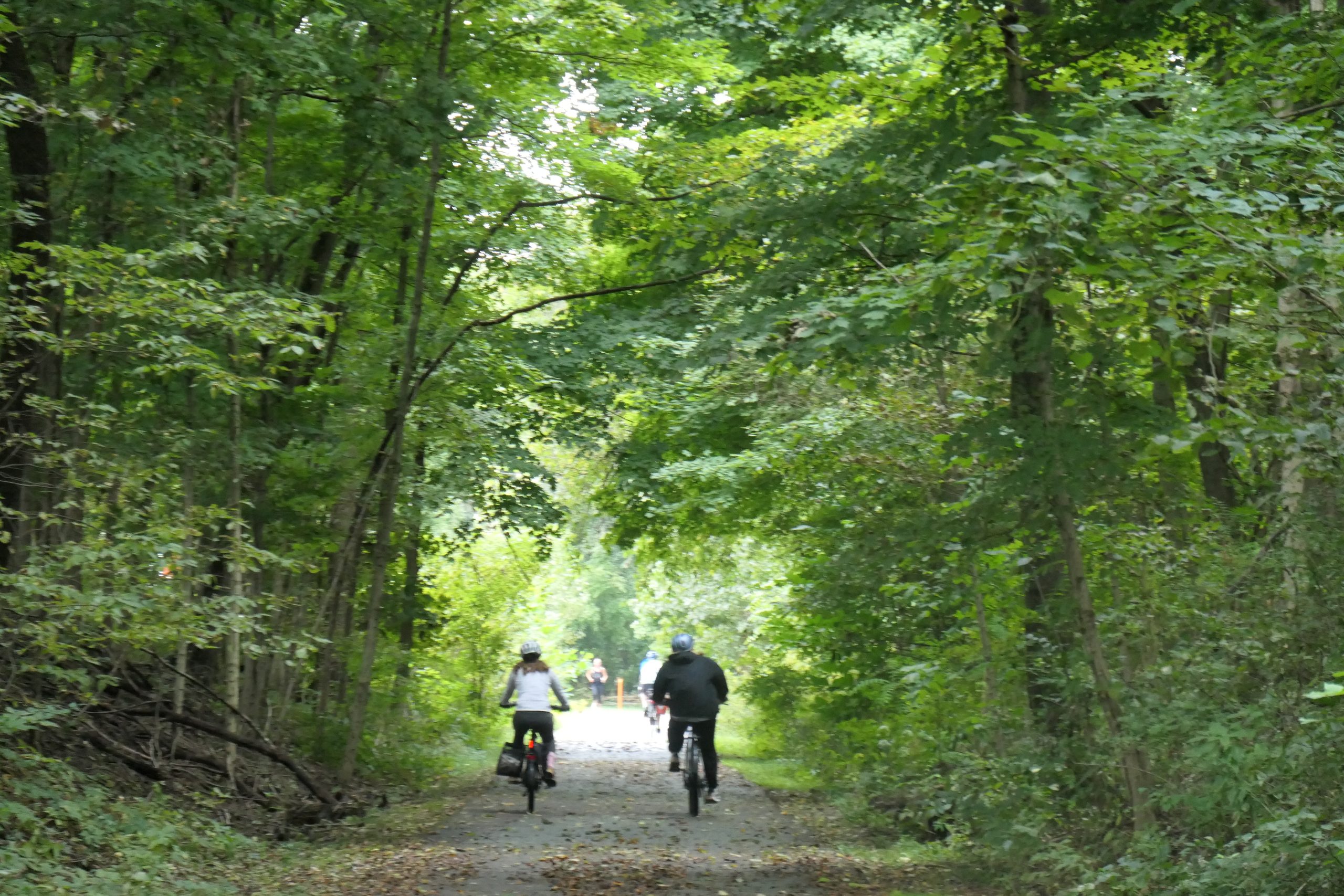
As we set out on a newly repaved portion of the Ohio-Erie trail, we meet a couple from Wallisburg, Ontario, Canada. They spark our attention considering the plummeting (as much as 25%) in Canadian visits to the USA. What brought them, we ask. “Biking.” Why here? “Well, we did the Erie Canalway [353 miles from Buffalo to Albany, New York], and the Pittsburgh to DC [350 miles on the Great Allegheny Passage and C&O, the most complete stage of the Great American Rail-Trail so far], so this was next,” said the couple who, we learn, got engaged on a bike trip.
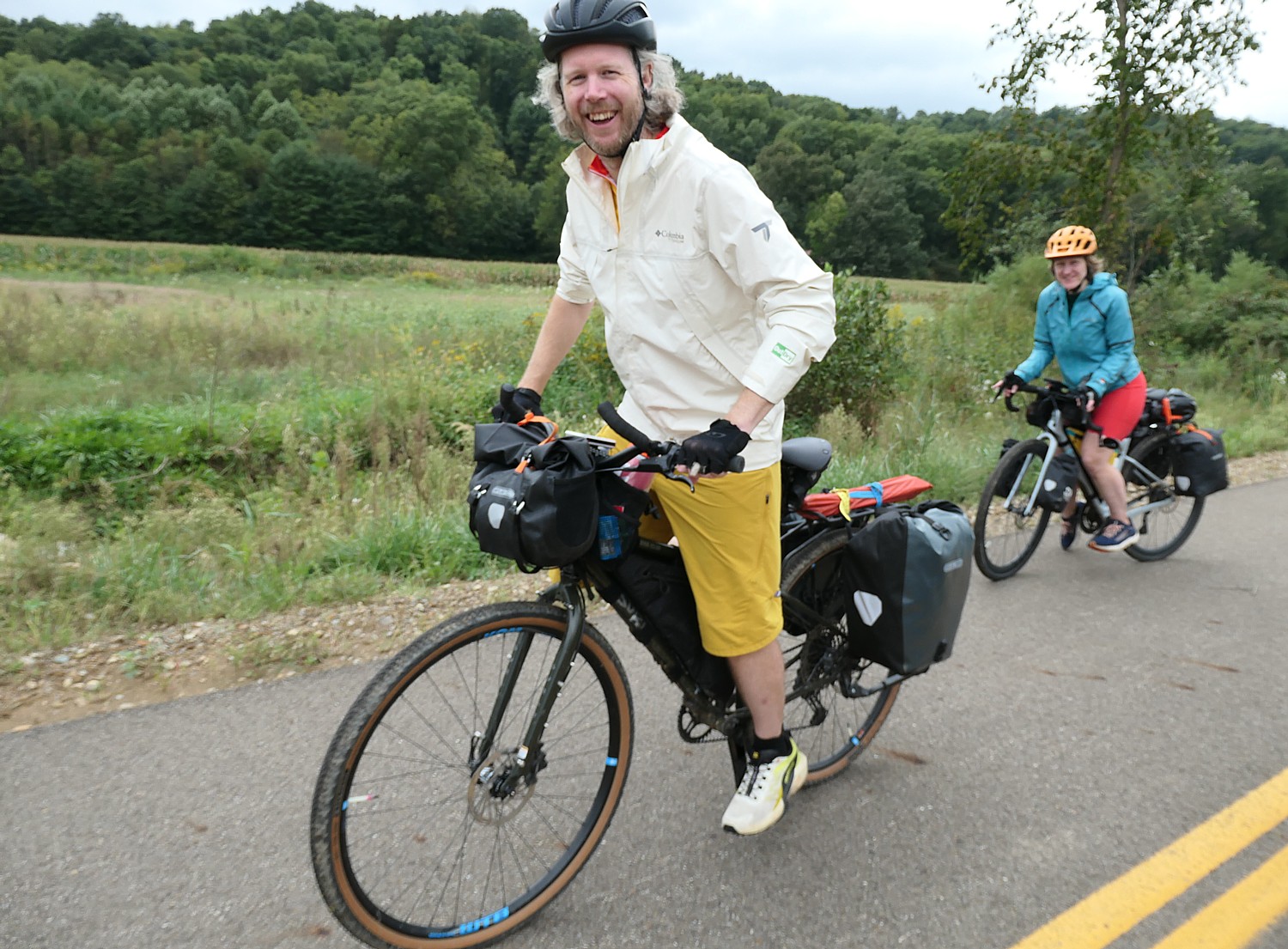
A couple from Ontario, Canada on a six-day trip biking 326 miles from Cleveland to Columbus on the Ohio to Erie Trail. “We don’t have a plan. It’s easy to get services.” © Karen Rubin/goingplacesfarandnear.com

They never book a hotel more than four hours in advance (and estimate they are spending $200/day), but check out their app to see what is convenient to where they are on the trail. “We don’t have a plan,” Mike said. “It’s easy to get services.” In Columbus, they stayed in a Rooms Plus just off the Ohio-Erie trail and close to the stadium where they took in a Blue Jackets baseball game. They also remarked that in contrast to the hostility shown by their homeland by the White House, they find “the people of America are wonderful,” adding they frequently are offered free beer and pop when locals learn they have come from Canada. “People are good.”

They are taking six days to bike the Ohio to Erie Trail, that connects the Ohio River to Lake Erie, 326 miles from Cleveland to Columbus to Cincinnati.
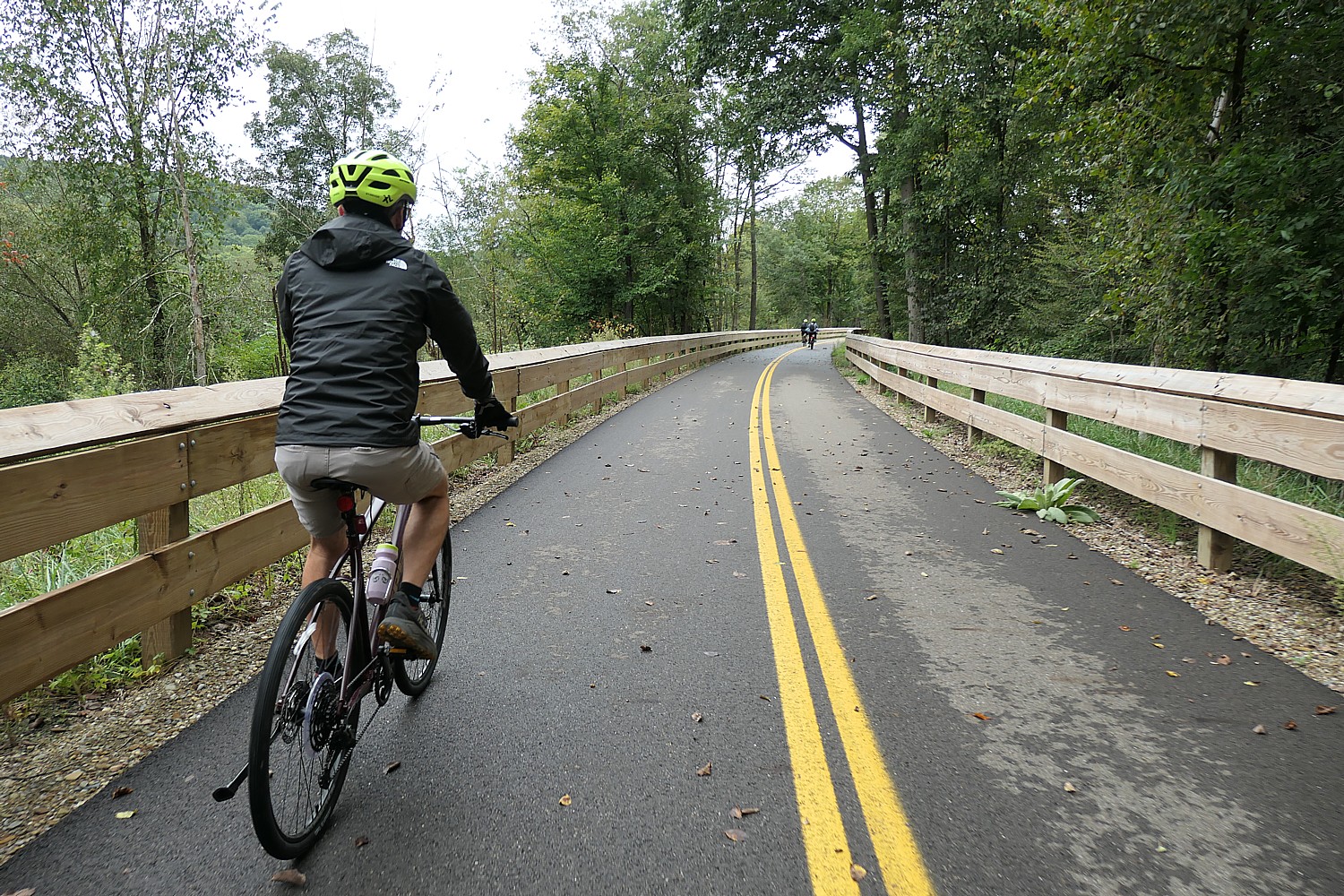
We set out on the newly repaved section of the Ohio-to-Erie Trail, one of more than 150 trails that are part of the Great American Rail-Trail that will connect Washington DC to Washington State © Karen Rubin/goingplacesfarandnear.com

“Our mission is to build, maintain, and promote this world-class trail corridor, encouraging outdoor recreation, healthy lifestyles, sustainable transportation, and a deeper appreciation for Ohio’s people, history, and natural beauty,” the website exclaims (https://www.ohiotoerietrail.org/).

The trail – one of more than 150 trails that are being linked together to create the Great American Rail-Trail from Washington DC to Washington State – is 245 miles paved, 49 crushed stone, 20 miles on-road and 10-miles on street. Where we start our ride and meet this couple has been newly repaved, and just behind us, we see where a new section of the trail is being laid, replacing having to go on-road.
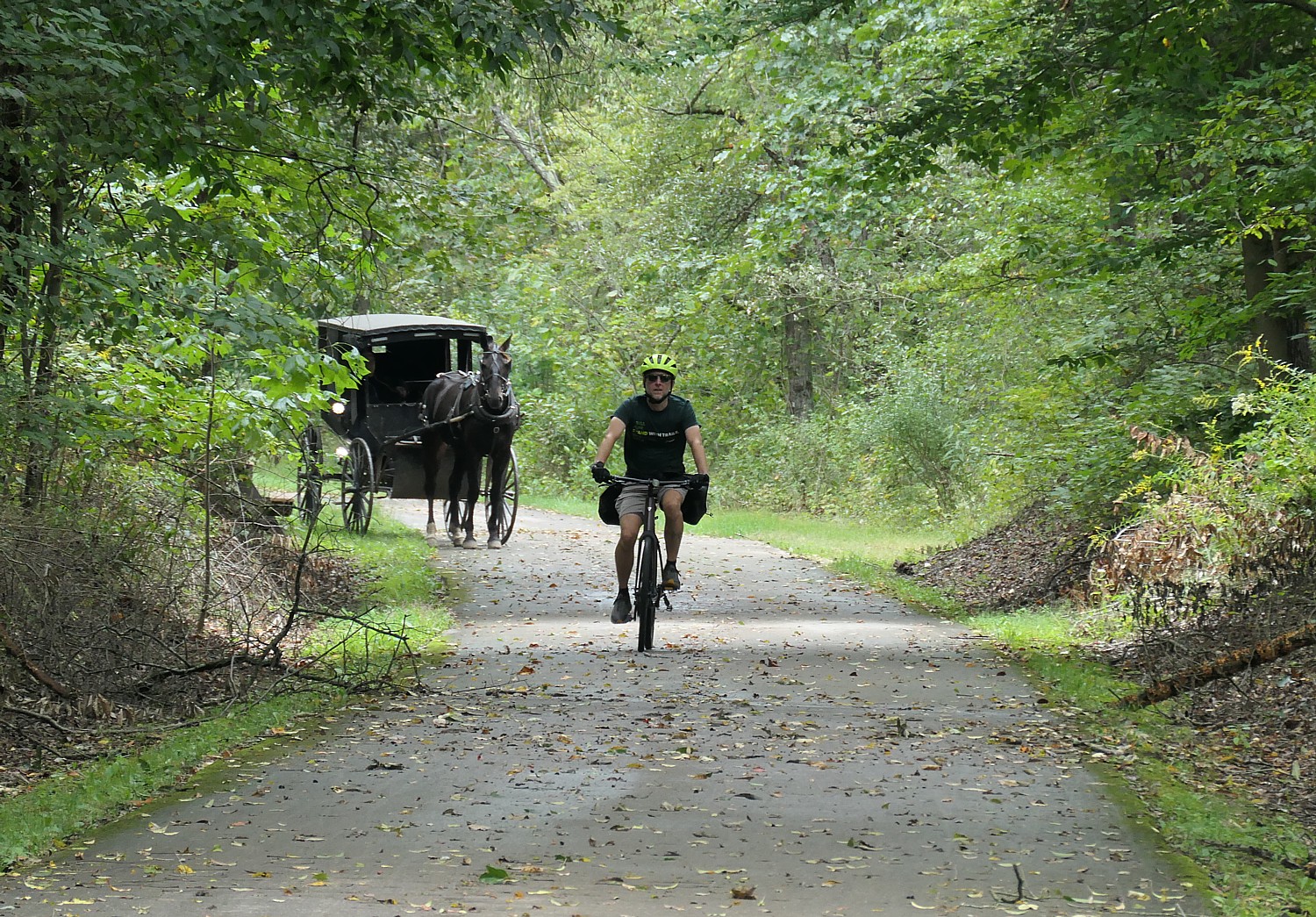
Sharing the Ohio to Erie Trail with an Amish carriage © Karen Rubin/goingplacesfarandnear.com

Soon we come to a most scenic and interesting section: it goes through an Amish community and we find ourselves sharing the path with horse-drawn carriages (the trail was purposely made wide enough to accommodate the carriages). Our rest stop is just before a marvelously named “Bridge of Dreams” covered bridge, where Raymond Weaver treats us to freshly baked and utterly divine pretzels from his family’s Weaver’s Farm & Pretzel shop. (“Better than New York’s,” I tell him to his delight.)
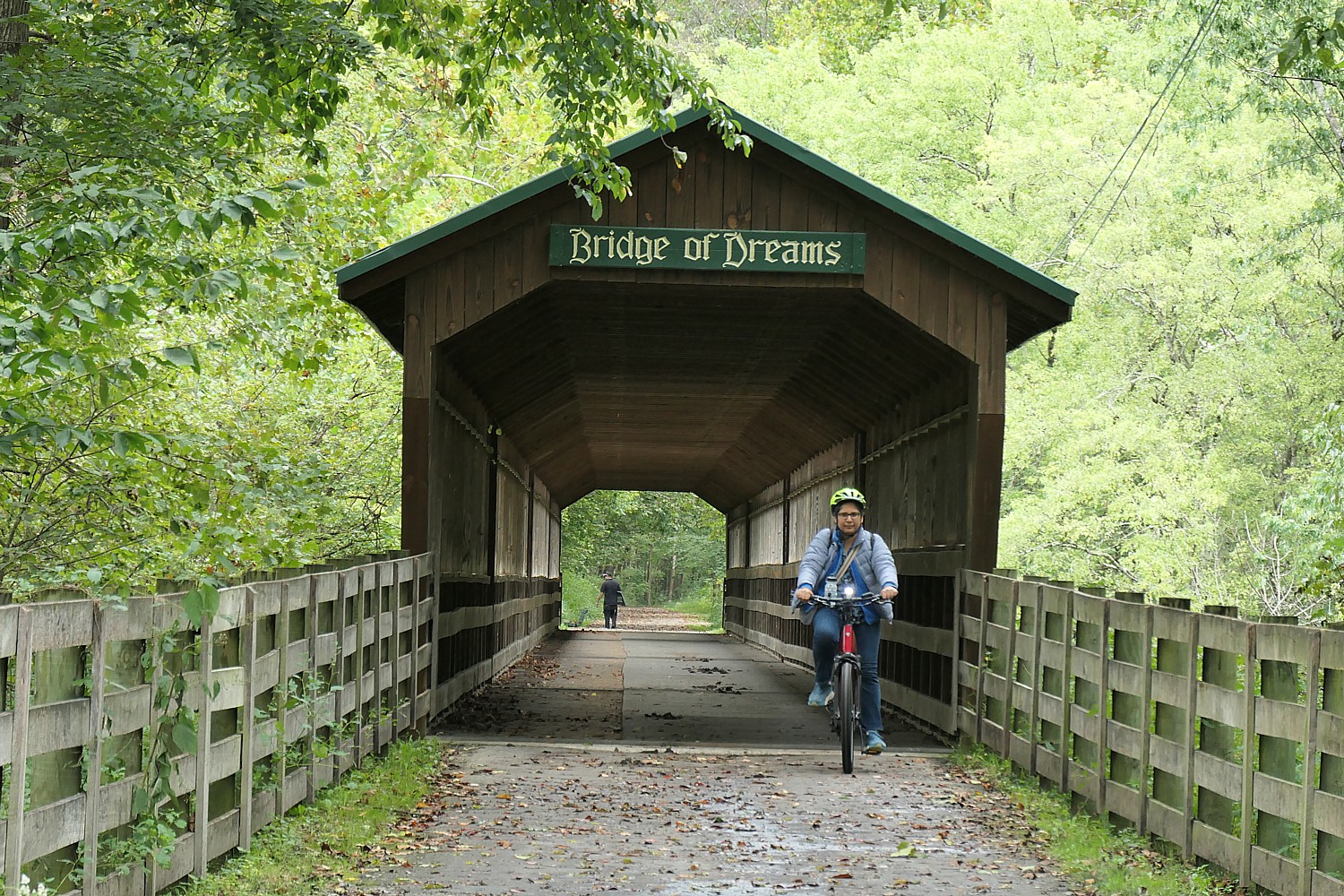
The Bridge of Dreams on the Ohio to Erie Trail © Karen Rubin/goingplacesfarandnear.com

At Gambier, on the Kokosing Gap Trail, we come to an absolutely magnificent steam locomotive, train and red caboose (a volunteer repaints it every summer). I feel like a giddy kid climbing up into the cab and ringing the brass bell.
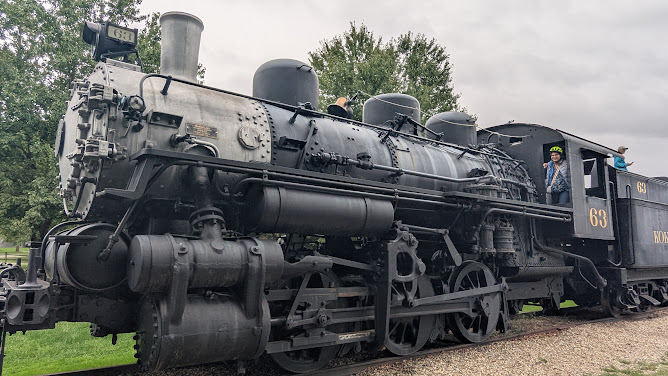
Such fun to climb into the cab of a steam locomotive in Gambier, on the Kokosing Gap Trail © Karen Rubin/goingplacesfarandnear.com

I have been thinking that the creation of these rail-trails that connect and build communities reminds me of how “Johnny Appleseed” went from town to town planting apple seeds, and, amazingly, as we enter Mount Vernon, I see a historic marker that notes Johnny “Appleseed” Chapman had property and apple orchards in this very place.
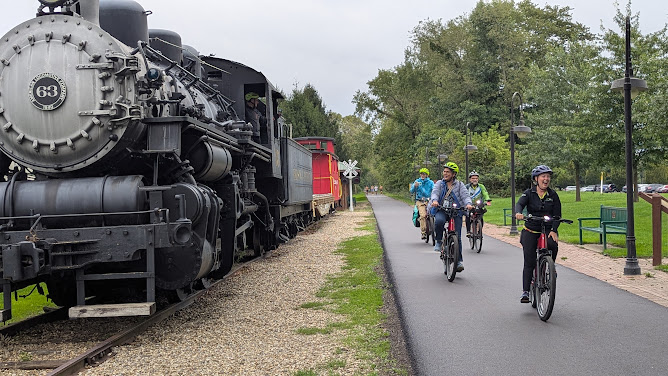
A historic steam train is now an attraction at Gambier, on the Kokosing Gap Trail, part of the Ohio to Erie Trail © Karen Rubin/goingplacesfarandnear.com

I am so intrigued, I learn from the Knox County Historical Society, that “as a young man, Johnny traveled through New York and Pennsylvania in the late 1700’s, coming into Ohio during the early 1800’s. He made it his life’s work to plant apple trees so that the soon-to-arrive pioneers would have a plentiful supply of apples at their new home. He set up his nurseries at strategic spots so that he could sell or trade his young trees to the newcomers and then move on to new unsettled areas. Many of these orchards were established throughout central Ohio, especially around Mount Vernon, Coshocton, Mansfield, Ashland and Wooster.

“He is said to have voted in Mount Vernon’s first election about 1806. Until 1828 he owned the lot now occupied by the tire store at 401 South Main St., as well as the adjacent lot toward the Kokosing River. When he needed a new supply of apple seeds, he would walk from Mount Vernon to Pittsburgh, then fill several canoes with sacks of seeds, lash the canoes together, then travel down the Ohio River to Marietta, up the Muskingum River to Zanesville, then up the Walhonding and Kokosing back to Mount Vernon – quite a trip, indeed!” 

The story touches me greatly – his life was about community and sustainability, lessons that we can certainly apply today.

It is fun to discover Mount Vernon, one of the first five Trail Towns designated by Mid-Ohio Regional Planning Commission.
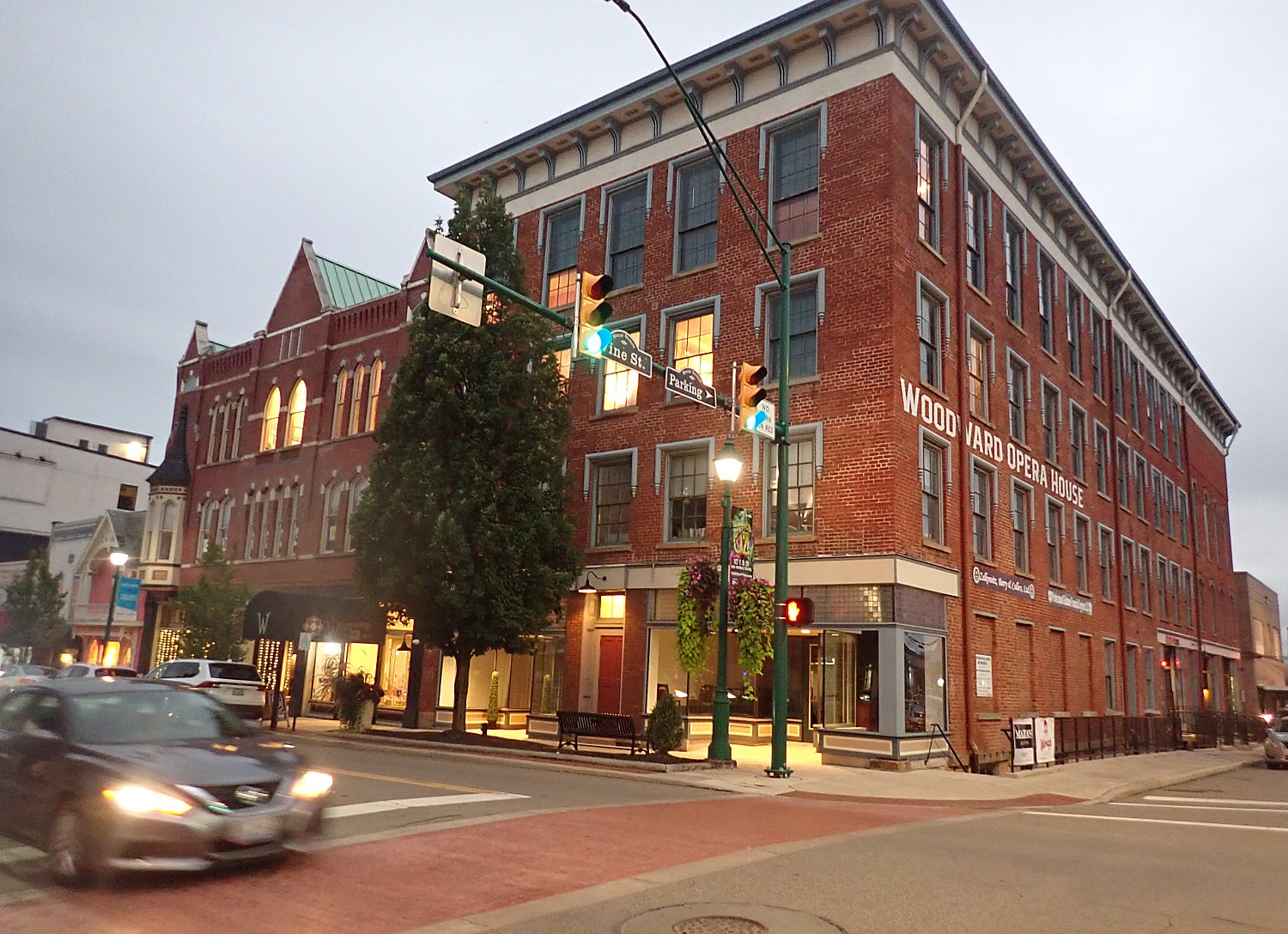
In Mount Vernon, one of Ohio’s first trail towns, we visit the Woodward Opera House, built in 1851, the  “oldest authentic operating opera house in the country” © Karen Rubin/goingplacesfarandnear.com

We are entranced by how charming Mount Vernon is and visit the Woodward Opera House, the “oldest authentic operating opera house in the country” (built in 1851, the balcony added in the 1880s, restored in 1997 and opened 2019, it has a certain percentage of original architecture to qualify), where a history lecture is going on. We overnight in an authentically reconstructed Grand Hotel, owned by Nazarene University.
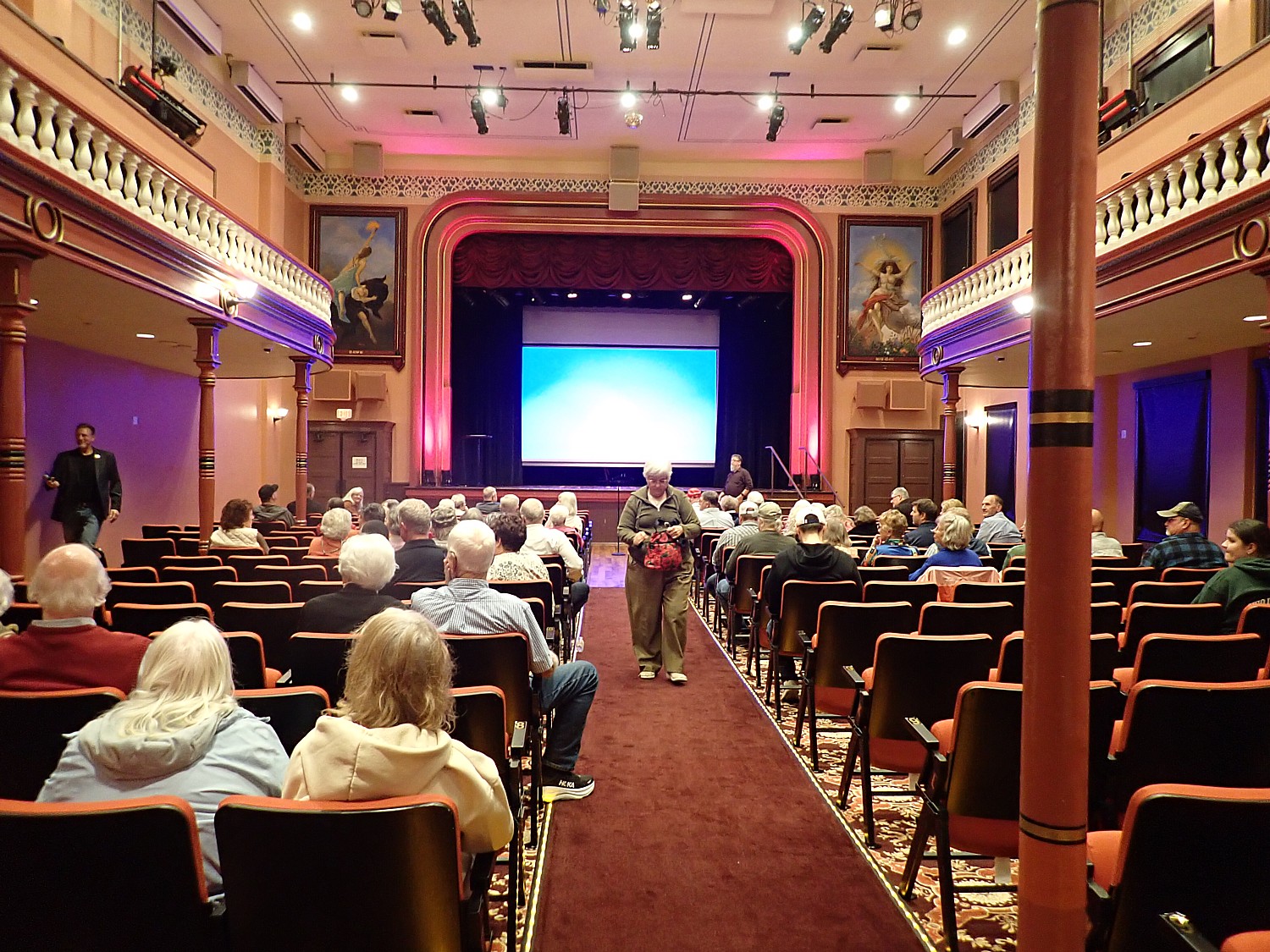
A lecture at the Woodward Opera House, Mount Vernon © Karen Rubin/goingplacesfarandnear.com

It’s about repurposing not just obsolete railroads, canalways, depots and ports, but the buildings and structures, factories and warehouses – that instead of demolishing decaying wrecks are being reclaimed, repurposed and rebranded so they benefit the community, and in the process, build community.
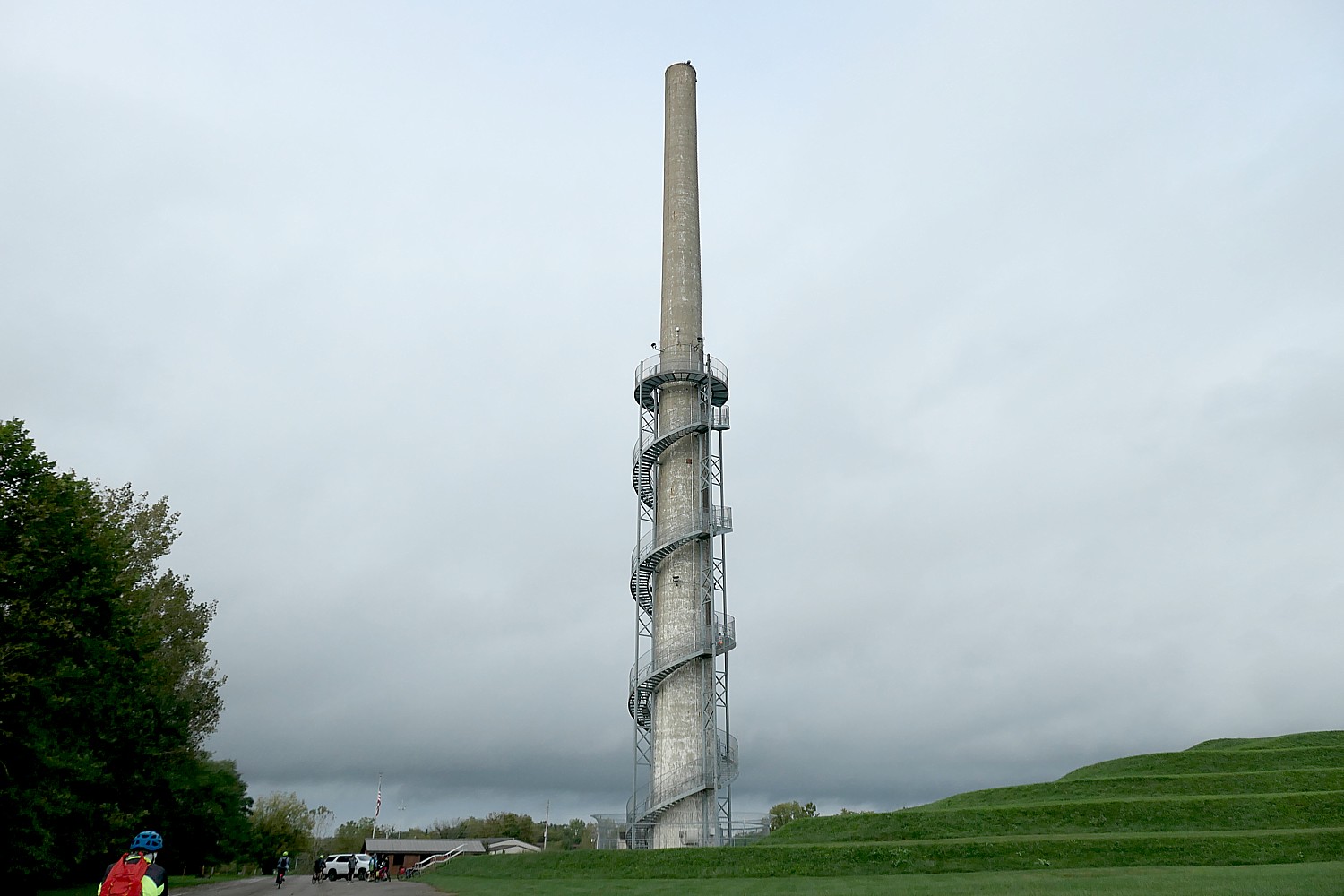
A chimney stack in a former glass factory has been repurposed into the Rastin Observation Tower at Ariel Foundation Park, Mount Vernon, alongside the Heart of Ohio Trail © Karen Rubin/goingplacesfarandnear.com

So just as we head out from Mount Vernon on the Heart of Ohio trail (a16.9-mile segment of the Ohio-Erie Trail), bound for Columbus (a 50-mile ride on trails that are part of the Ohio to Erie Trail), we come to Ariel Foundation Park, a trailside park developed from an old glass factory that manufactured car windshields. The 280-ft. tall chimney stack that served PPG from 1951 until it closed in 1976 has been repurposed instead of being demolished, and turned into a marvelous attraction, the Rastin Observation Tower.
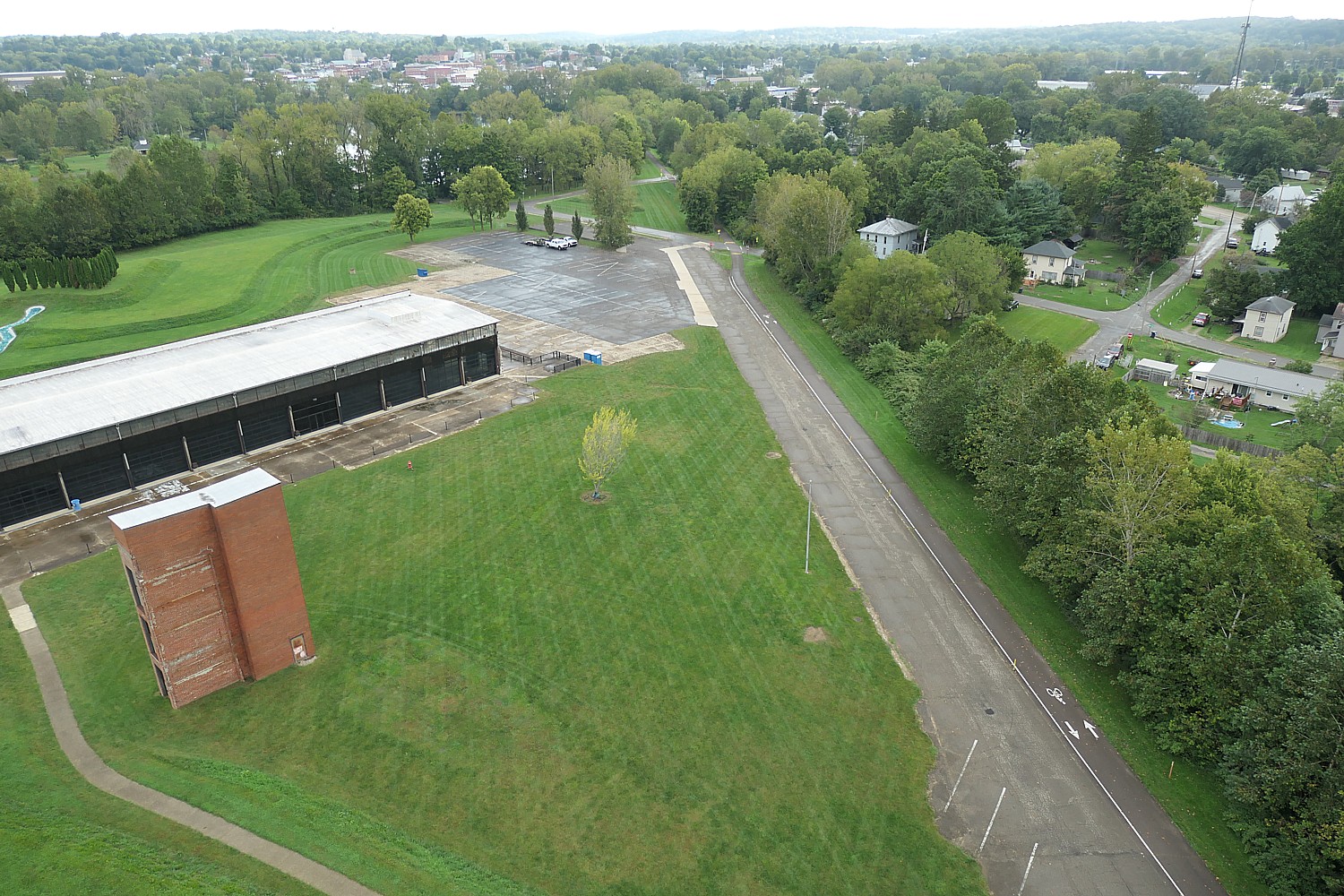
The view from 280-ft. above the Heart of Ohio trail at Ariel Foundation Park, developed from a former glass factory © Karen Rubin/goingplacesfarandnear.com

You climb a protected spiral staircase, 224 steps up to the deck 140 ft. above ground (boy do you feel it), for an incredible view of the countryside. There is an impressive entranceway constructed that prevents children from accessing on their own. It is truly an experience.
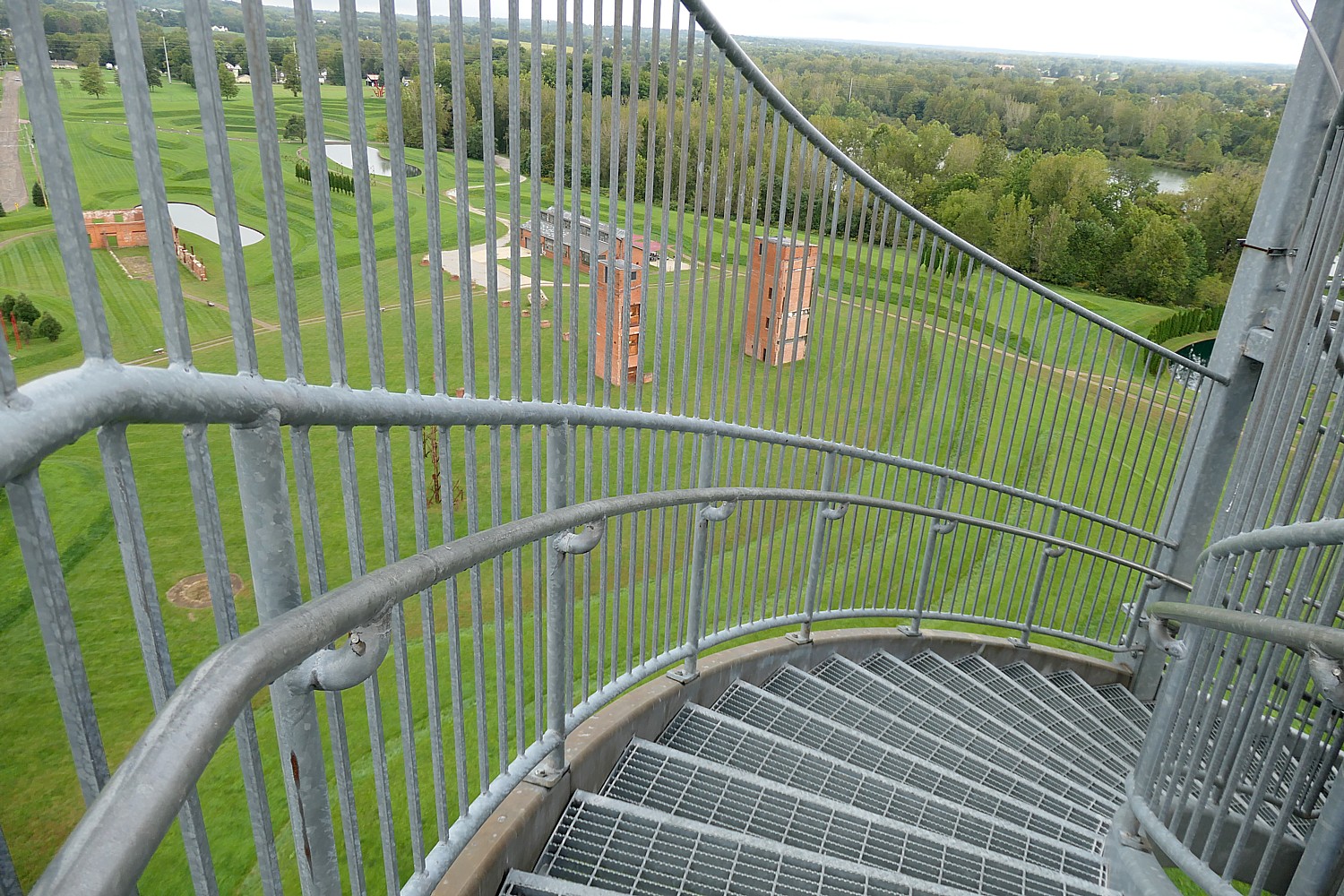
A chimney stack in a former glass factory has been repurposed into the Rastin Observation Tower at Ariel Foundation Park, Mount Vernon, alongside the Heart of Ohio Trail © Karen Rubin/goingplacesfarandnear.com

A marker notes that the Heart of Ohio Trail was built on the CANC railroad line that ran from Cleveland to Columbus through Mt. Vernon, the TNOC railroad that ran from Toledo to central Ohio. The Centerburg train station was finished in 1873, connecting the two rail lines.  Use of the tracks ended between 1960-1970. The A trail committee began purchasing the railroad line in 2000 and finally acquired it in 2005.
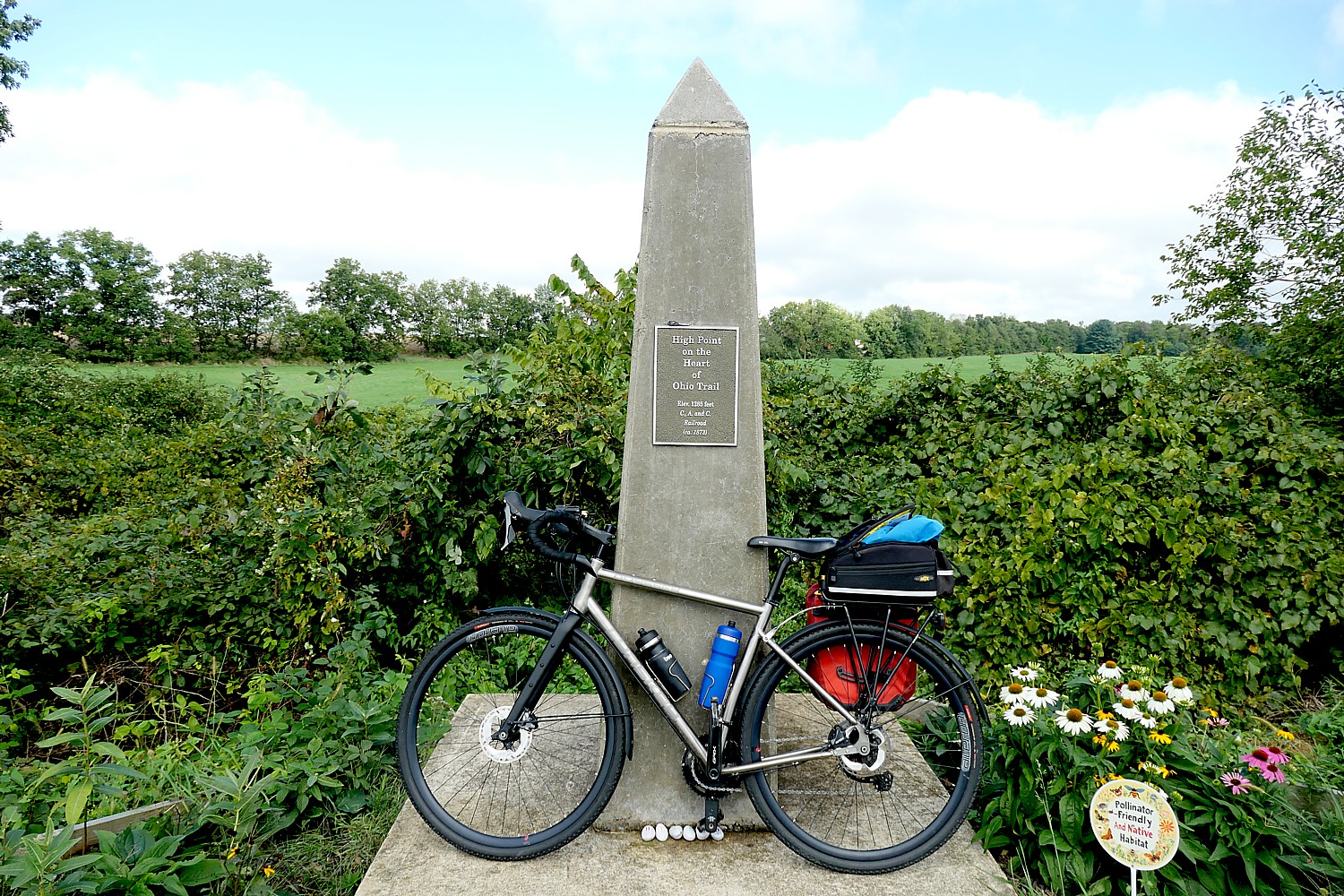
“It’s all downhill from here! The high point on the Heart of Ohio trail © Karen Rubin/goingplacesfarandnear.com

We come to a monument that marks the highpoint of the Heart of Ohio Trail, at 1,285 ft. (they joke that it is all downhill from here and that is more or less the case). Soon after, we come to Centerburg, where a sign on the trail marks the mid-point of the 326-mile-long Ohio-Erie Trail.
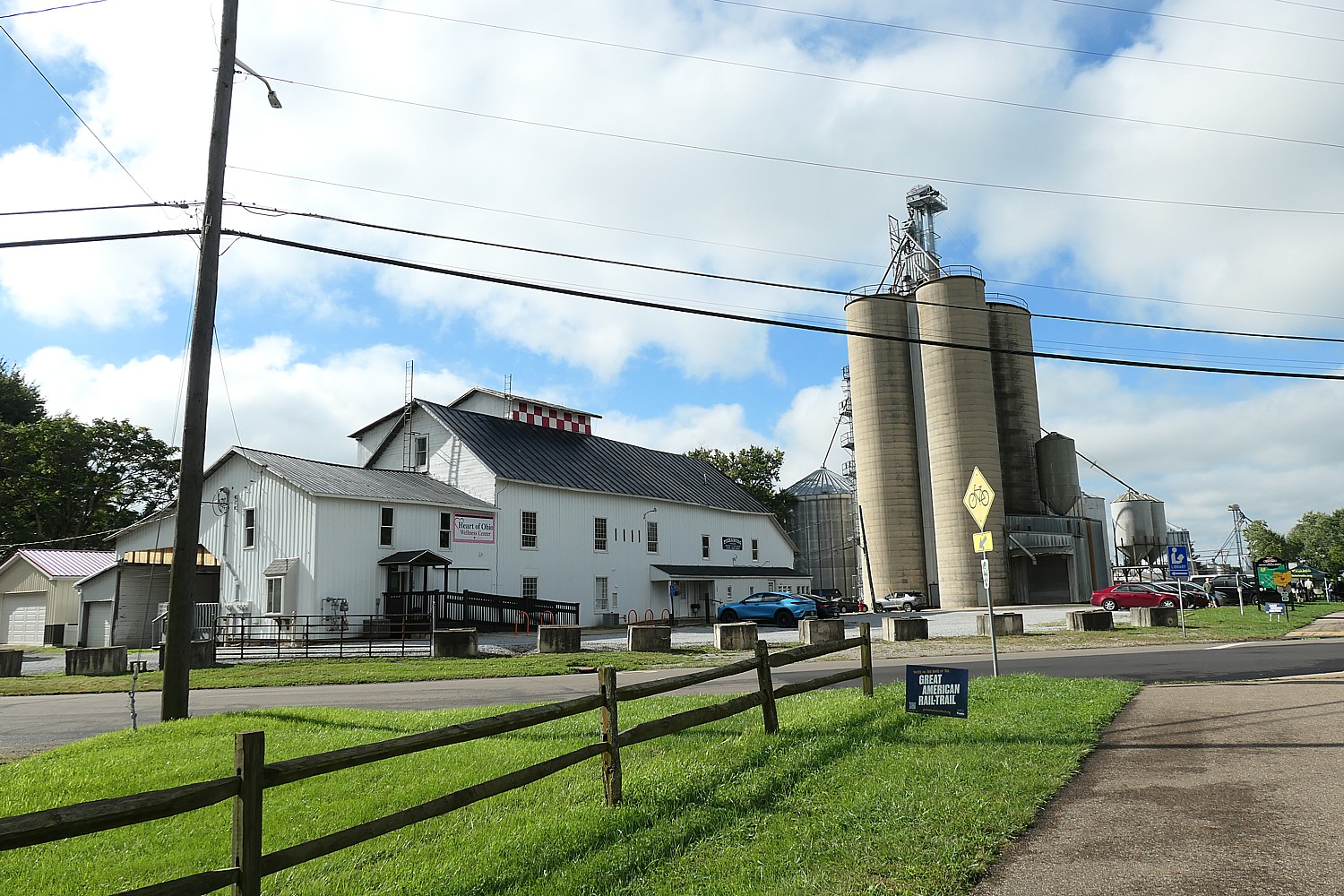
Coming into Centerburg on the Heart of Ohio Trail, one of Ohio’s first Trail Towns. © Karen Rubin/goingplacesfarandnear.com

We are greeted by many of the activists who are turning Centerburg into one of Ohio’s first five “Trail Towns.” Centerburg received a $1 million Transportation Alternatives Grant that will pay for a short connector into its town center so that cyclists (some 40,000 pass this point, which they know because of counters in the pavement) who might otherwise just pose for a photo, will spend time and money in the shops and services catering to the visitors.
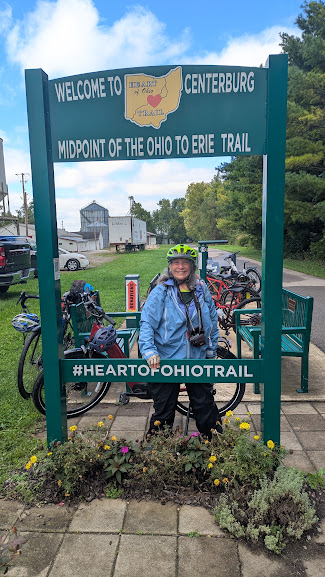
Cyclists love to take a photo at the Centerburg marker of the mid-point of the Ohio to Erie Trail, now a Trail Town, cyclists have an incentive to go into the downtown to dine and shop © Karen Rubin/goingplacesfarandnear.com

Melinda Vonstein, Greenways Planning Studio Lead for the Mid-Ohio Regional Planning Commission, has been instrumental in creating Ohio’s Trail Towns program, that launched this year with the first five towns and next year will add five more.

She tells us that several towns came to the Commission to ask to develop Trail Towns program.
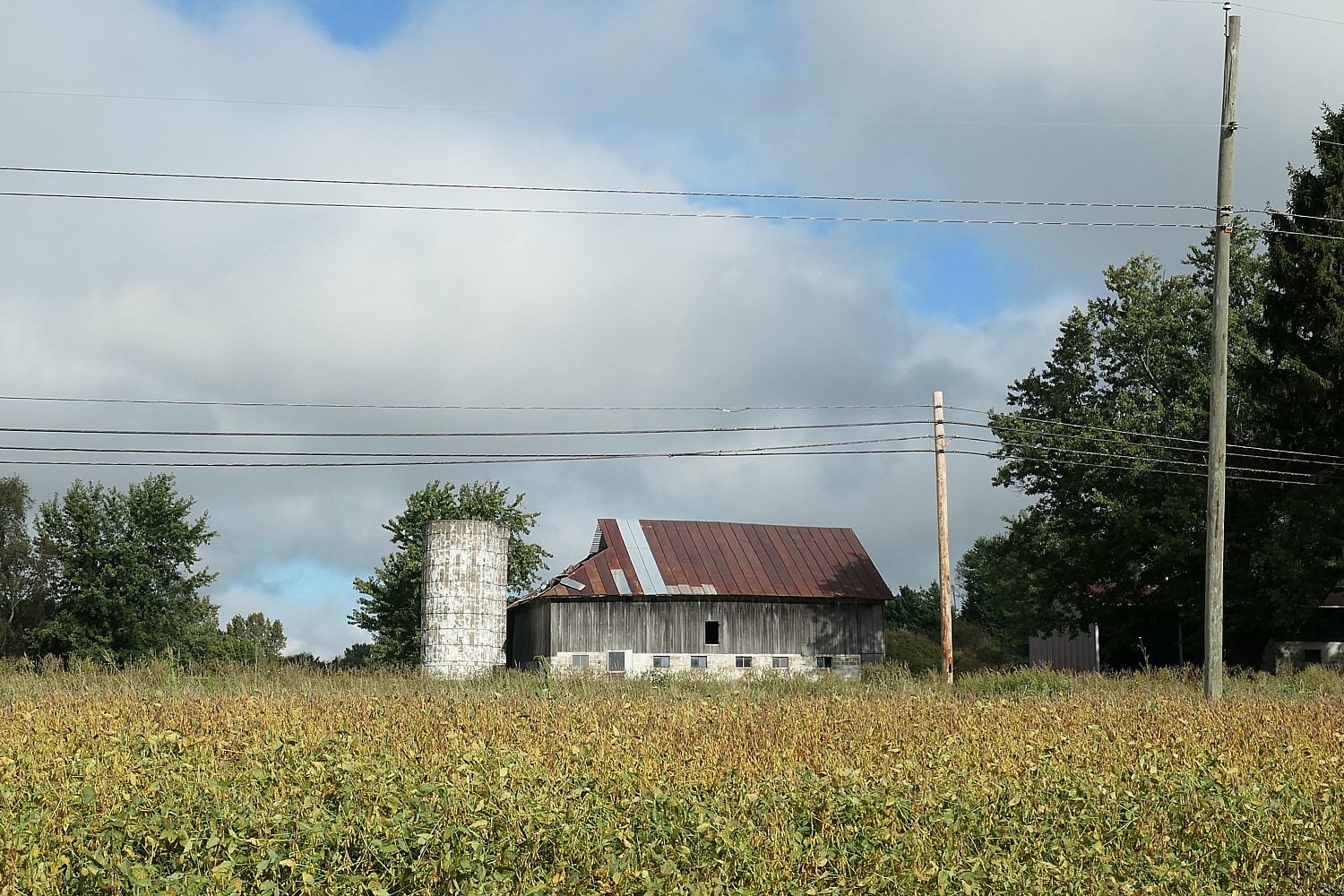
Coming into Centerburg on the Heart of Ohio Trail, one of Ohio’s first Trail Towns. © Karen Rubin/goingplacesfarandnear.com

Columbus’ Trail Towns program was modeled after the Great Allegheny Passage’s created by The Progress Fund  (https://www.trailtowns.org/guide/). The group worked for four years to come up with a framework that would suit Ohio.

The Trail Town Program® was created by The Progress Fund more than 17 years ago and was the first to test and prove the idea of multiplying the economic impact along trails like the C&O and Great Allegheny Passage. Visitors are an economic engine: every $1 spent by a visitor has a $3 impact on the local economy.

“It starts by thinking regionally: a world-class trail needs amenities along its entire stretch, and towns working together can create a much broader impact. Not every project looks the same. Every region has its own strengths and challenges. But we share the insights and lessons we’ve learned along the way in our free Trail Town guide” (www.trailtowns.org/guide).

[Indeed, even the ghost towns are getting a new lease on life because of rail trails. There is a Ghost Town Tour Trail – 54 miles long featuring a 32-mile continuous loop  from Blacklick, PA to Ebensburg, PA, and 20-mile C and I Extension – where a new Creekside Cabin opened in Strongstown, assisted by Pennsylvania’s The Progress Fund, which is now boosted by AirBnB tours and can be booked through www.airbnb.com/h/creeksidecabinsgtt (https://www.cambriaconservationrecreation.com/ghost-town-trail/)]
The Ohio to Erie Trail is one of more than 150 trails that when connected, will form the 3,700-mile long Great American Rail-Trail, from Washington DC to Washington State © Karen Rubin/goingplacesfarandnear.com

Ohio’s first Trail Towns are in the outskirts of Columbus, the 14th largest city in the US and the largest city on the Great American Rail-Trail. The city is working to create links and connections to the trails, including adding bus services with bike racks so people can shuttle to and from the trails instead of doubling back and a new bike trail map has curated routes accessed on Linkus through the Central Ohio Transit Authority (COTA).

They are working to create their own Trail Towns site but for now, information is available on CentralOhioGreenways.com.

For more information on the Great American Rail-Trail, visit: https://www.railstotrails.org/site/greatamericanrailtrail/

Next: ‘It Was a Choice’: Columbus, Ohio Allocates $250 Million to Build 150 Miles of Biking, Walking Trails

See also:

Imagine Biking 3,700 Miles Across the USA on The Great American Rail-Trail

Grassroots Volunteerism Builds the Great American Rail-Trail

‘One Mile at a Time.’ New Trails Are Links in Building the 3,700-Mile Great American Rail-Trail

__________________

© 2026 Travel Features Syndicate, a division of Workstyles, Inc. All rights reserved. Visit goingplacesfarandnear.com, longislandpress.com/category/vacation-travel.com and travelwritersmagazine.com/TravelFeaturesSyndicate/. Blogging at goingplacesnearandfar.wordpress.com and moralcompasstravel.info. Visit instagram.com/going_places_far_and_near. X: @TravelFeatures Threads: @news_and_photo_features ‘Like’ us atfacebook.com/NewsPhotoFeatures. Send comments/questions to FamTravLtr@aol.com.

‘One Mile at a Time.’ New Trails Are Links in Building the 3,700-Mile Great American Rail-Trail

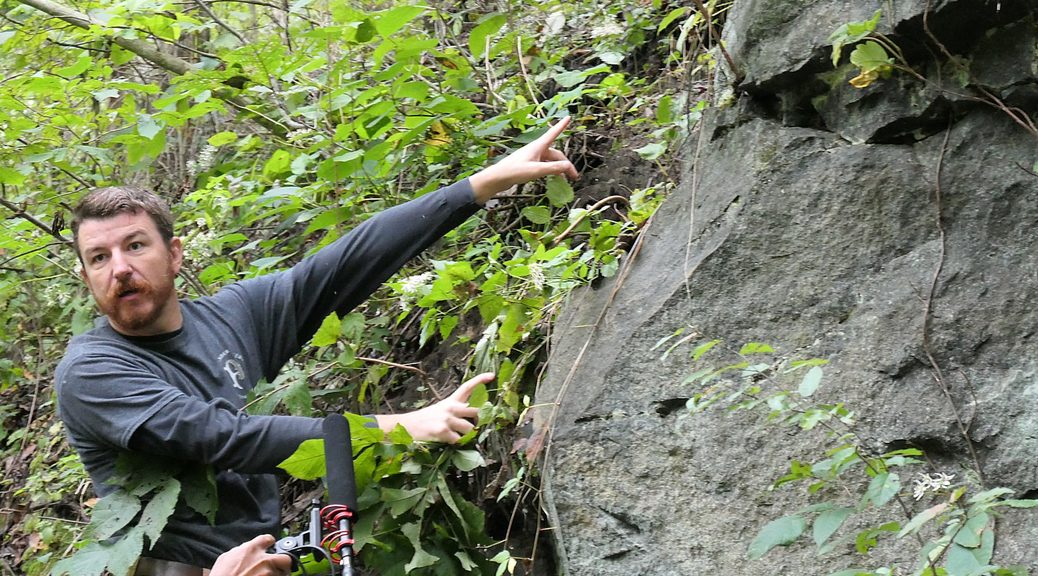
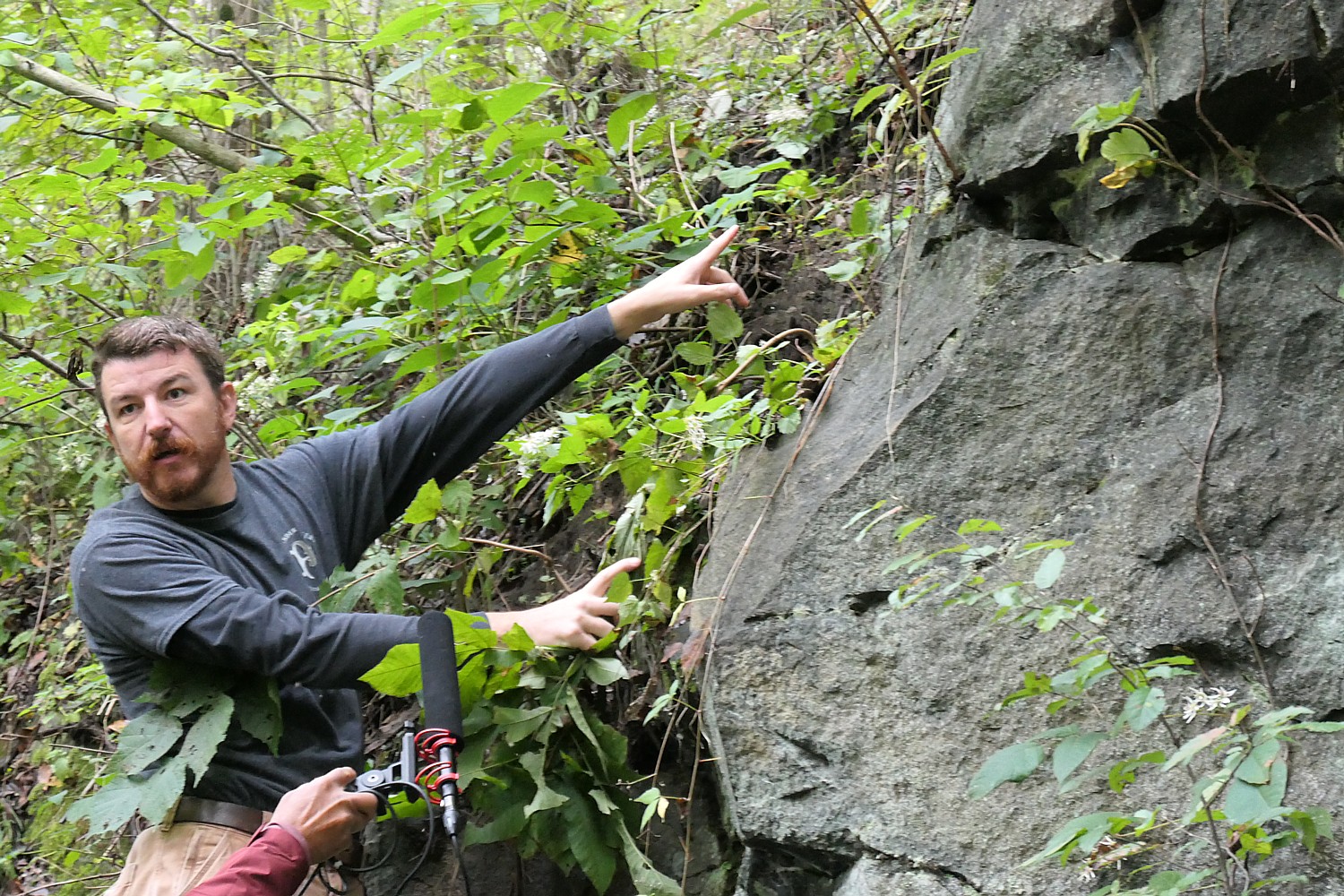
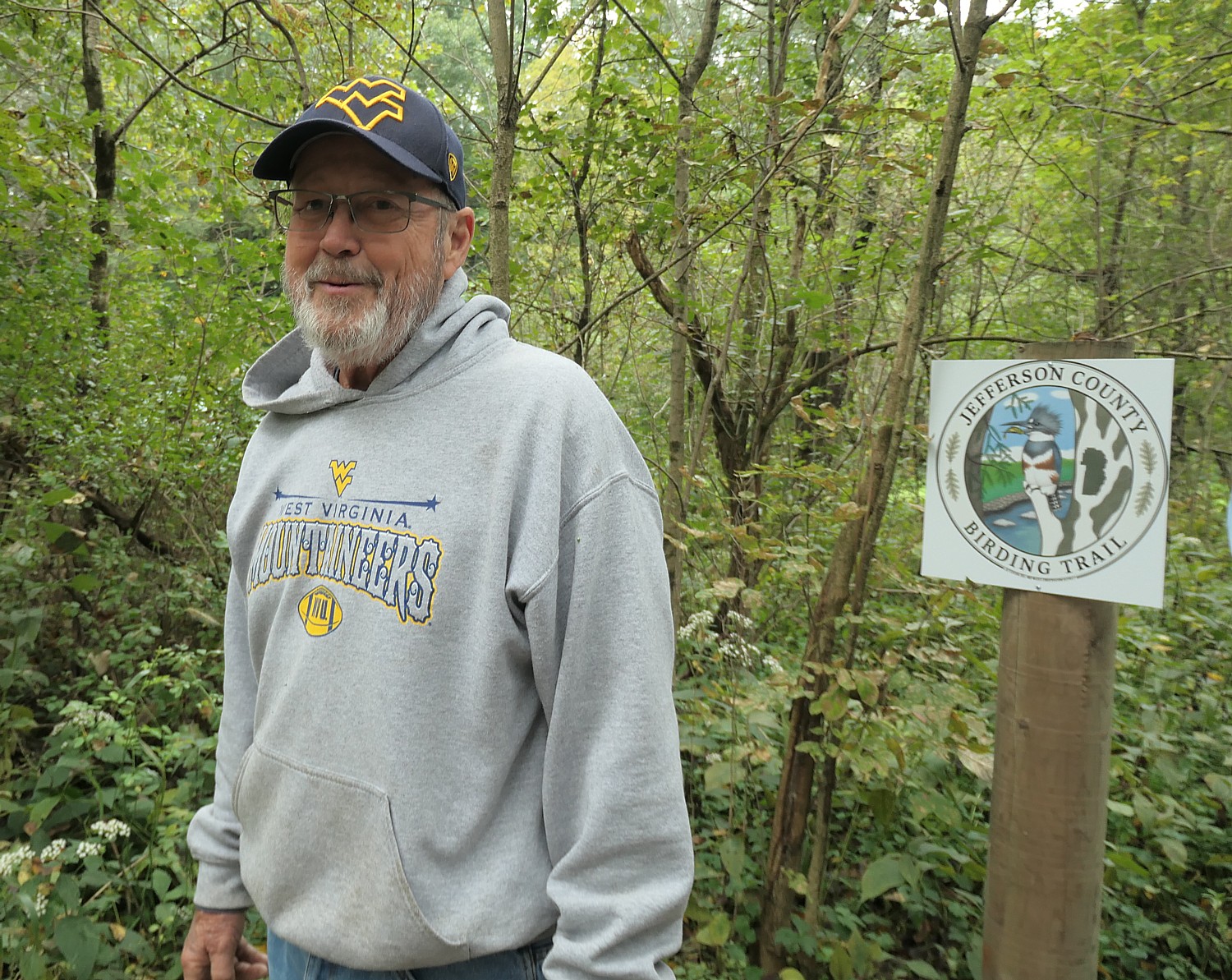
Aaron Dodds, program manager for Jefferson Soil Water Conservation District points to Hellbender Preserve’s “Ghost Wall” where Irish immigrant and freed Black Americans tunnel workers would carve their initials into rock, that mysteriously appear and disappear © Karen Rubin/goingplacesfarnandnear.com

By Karen Rubin, Travel Features Syndicate, goingplacesfarandnear.com

Within this one mile that cuts through Ohio forest, there are stories: reclusive Hellbender salamanders that grow to 28 inches long; a bridge where Abraham Lincoln nearly lost his life on the way to his inauguration; a rail tunnel, slightly askew, built by warring groups of Irish immigrants; a Ghost Wall, where they carved their initials that today appear, disappear and new initials reveal themselves.

It’s only a mile long now slicing through Hellbender Preserve, but it is the first new mile of multi-use trail in Jefferson County; four more miles will soon be added. Ultimately, it will be part of a 15-mile connector along the Great American Rail-Trail, a 3,700-mile network of biking/walking trails across America, from Washington DC to Washington State.

Even the story about how the Hellbender trail was re-discovered is worthy of a novel.

This was the Old Panhandler Rail Line, but after they built a new route and bypassed this one, the 273 acre-property was abandoned in 1949 and taken over by forest.

Hellbender Preserve is only one year old – it opened on National Trails Day 2025 – and within the first six months after opening, 30,000 visited.

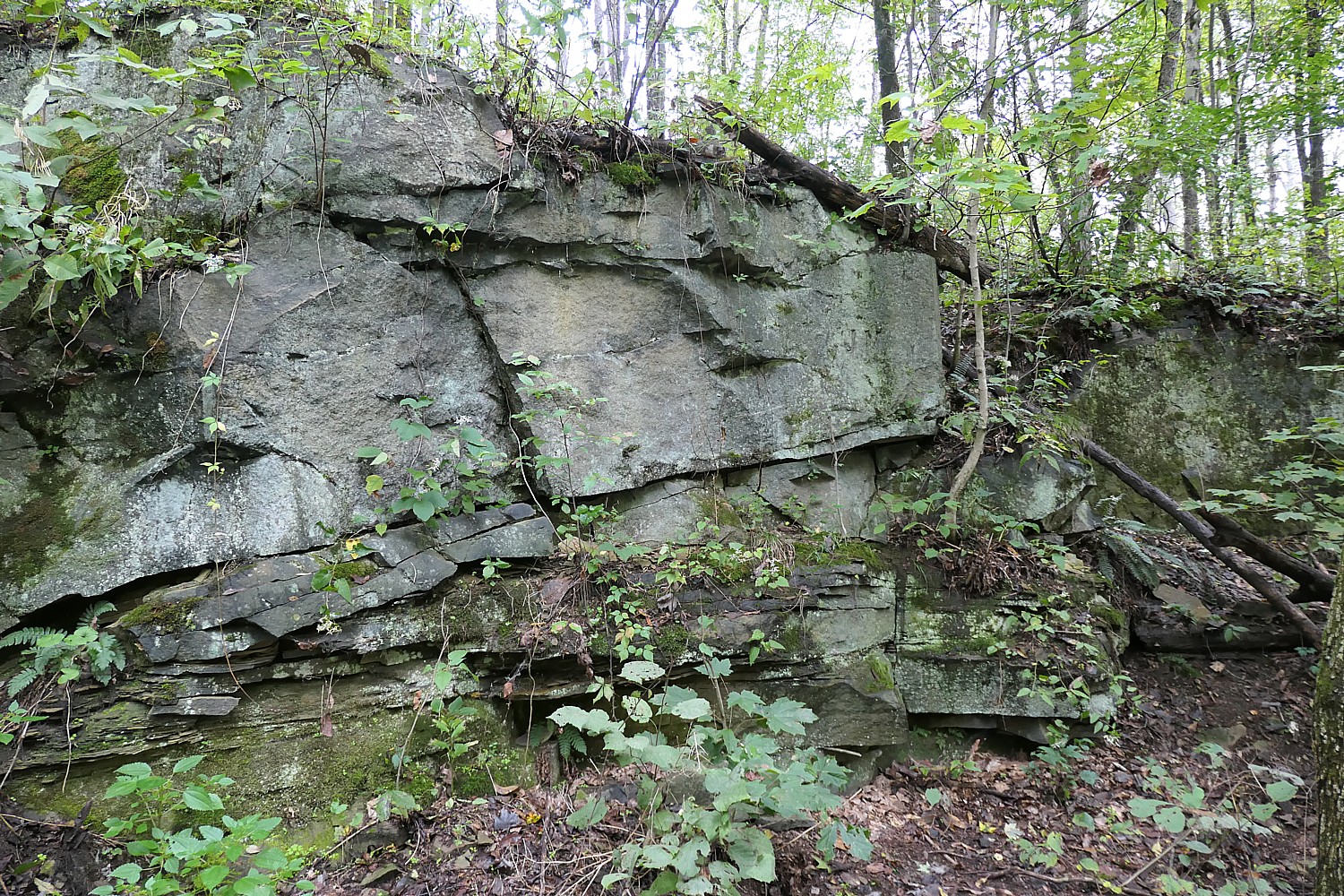
The “Ghost Wall” in Hellbender Preserve, where the first new mile of multi-use trail in Ohio’s Jefferson County has just opened and eventually will connect to the Great American Rail-Trail, 3,700-miles across the USA from Washington DC to Washington State © Karen Rubin/goingplacesfarnandnear.com

“The trail builds community, provides an opportunity to meet, get out. We’re in the Rust Belt where healthcare isn’t a priority. This is passive way to get out, get fit,” Aaron Dodds, program manager for Jefferson Soil Water Conservation District, tells us as we walk through.  “It’s great for conservation and railroad history.”

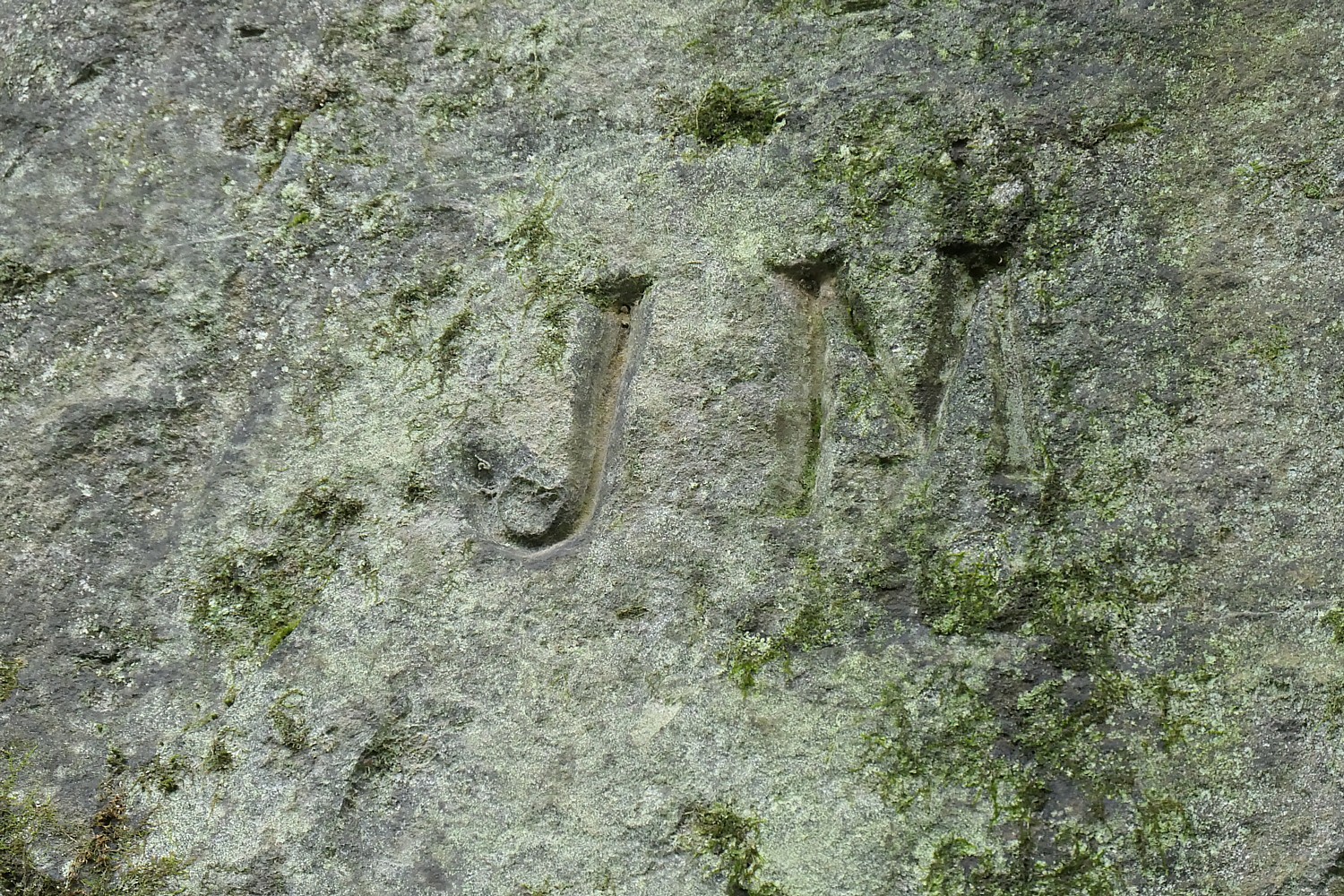
“The railroad hired Irish workers to build it because they were cheap and expendable. They came for the American Dream and carved their names and initials in the rock walls.” When they expanded the railroad from single to double track, they brought freed slaves who also carved their names. Depending on the light, you can see the names, which later disappear and other names emerge. The names come and go. They have identified 80 different names so far. That’s why they call it the Ghost Wall.

Initials in the “Ghost Wall” in Hellbender Preserve, where the first new mile of multi-use trail in Ohio’s Jefferson County has just opened and eventually will connect to the Great American Rail-Trail © Karen Rubin/goingplacesfarnandnear.com

“The Irish were cheap, expendable. They first used old canal diggers from County Cork (Corkonians) and then Far Downers (from farther down Ireland). They hated each other.” They lived in separate camps and worked different sides of the tunnel. But when they came together, they found they were four feet off.

“A war broke out. They went at each other with pick axes. The Corkonians raided Far Downers, chased them to the hillsides, then throw them off.”

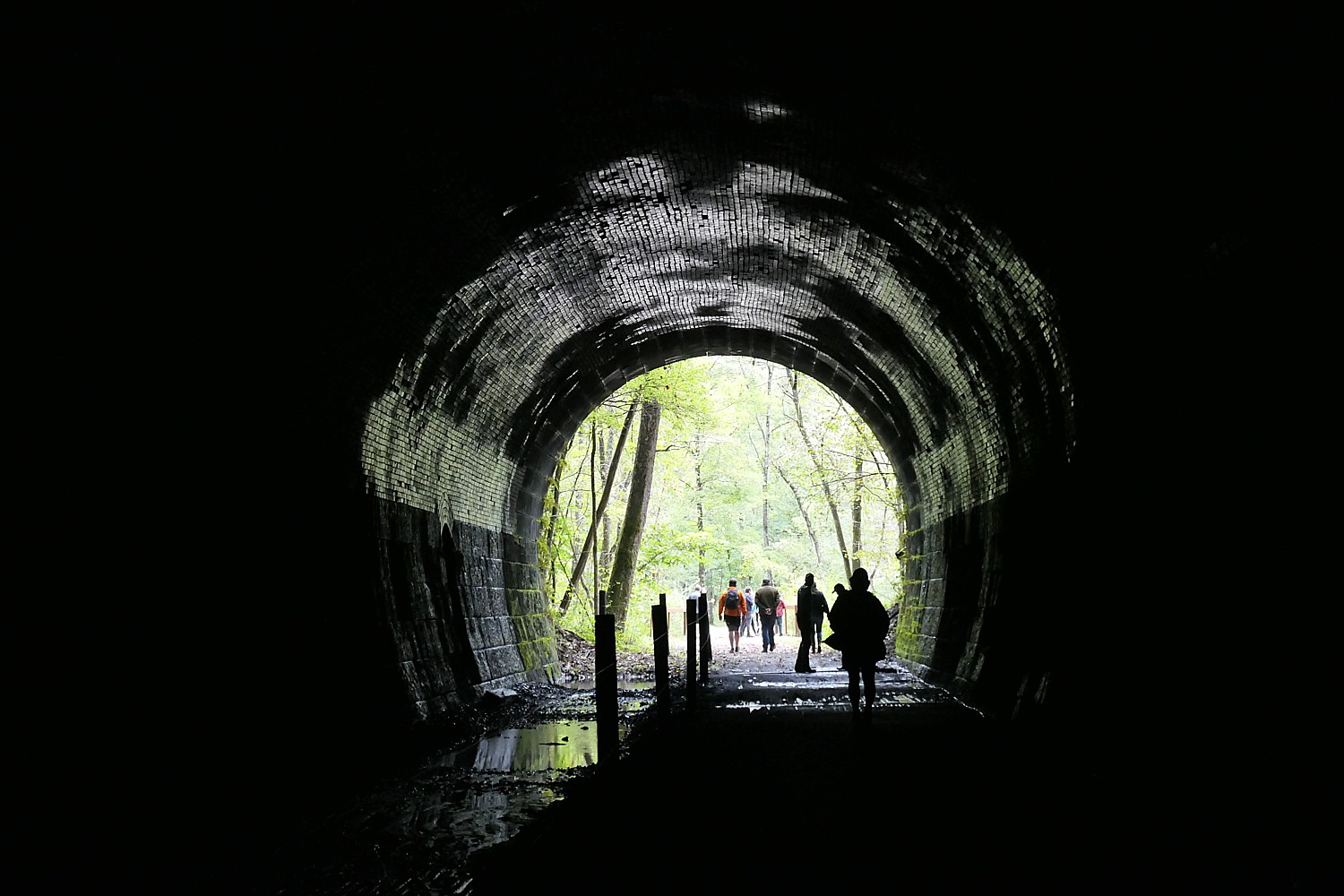
The tunnel which triggered a war between factions of Irish railroad workers is now part of the trail through Hellbender Preserve © Karen Rubin/goingplacesfarnandnear.com

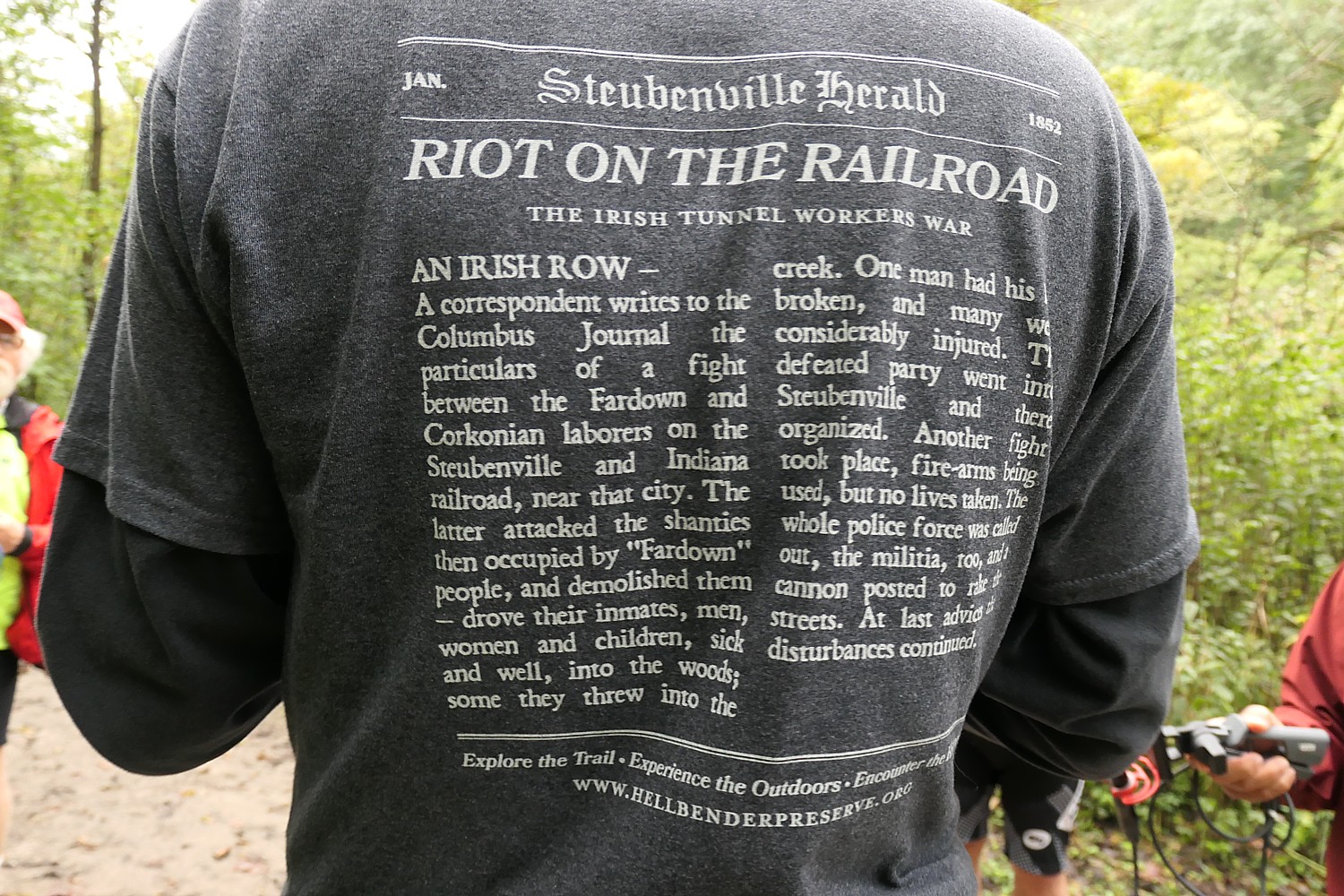
Far Downers broke into the Steubenville Armory and rolled out a cannon to Market Street, and fired on the Corkonians. The governor called in the state militia – it took four days to quell the violence. In the end, they figured out how to link up the tunnel (it is only slightly askew today). “It wasn’t worth a war.” Dodds wears a t-shirt with the newspaper clipping printed on the back,

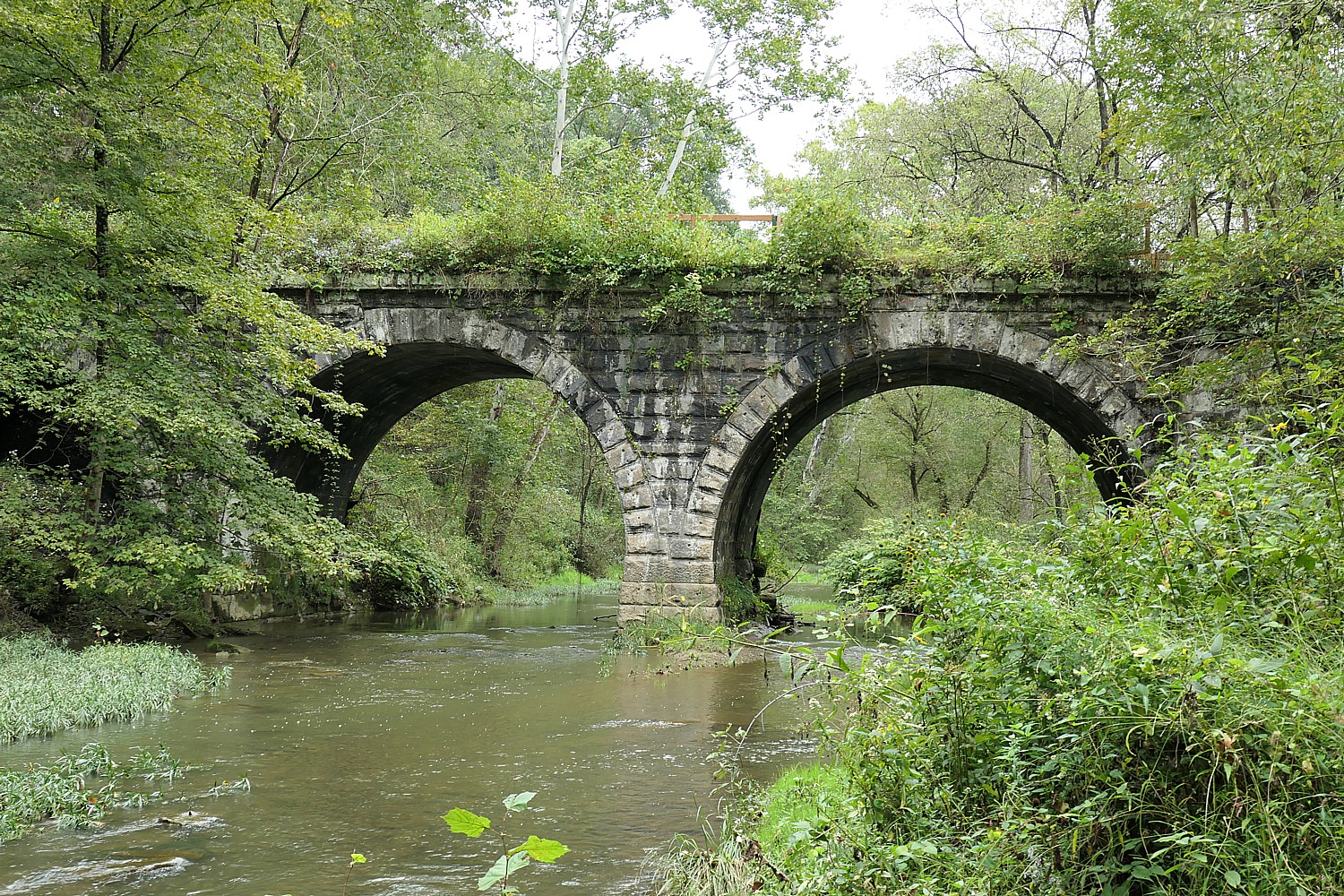
We come to the Lincoln Bridge and Dodds tells of a critical historical event that was almost lost to history – how Abraham Lincoln, traveling by rail to his inauguration, got stuck in a severe rainstorm that damaged this bridge and the passengers were told to walk over in case the train would have caused it to collapse; he nearly lost his life as he walked, holding his sons’ hands when he fell and was nearly swept into the water.

“Lincoln Bridge,” on the former railroad line, where the president-elect nearly lost his life and rebuilt to serve Union troops during the Civil War © Karen Rubin/goingplacesfarnandnear.com

Lincoln made it to Fort Steuben in Steubenville where he gave a speech on the train platform – the first time against a backdrop of seven states succeeding from the union in reaction to his election.

“Now Steubenville didn’t love Lincoln,” Dodds related. “He was described as ugly and an awful speaker (with a high-pitched voice). That is what was reported when in fact, he was ‘workshopping’ his inaugural address,” considered one of his most important, in which he set the Constitutional and moral framework for keeping the Union together.

Remarkably, Lincoln’s speech was forgotten until they began searching for the provenance of the land to acquire the preserve. “This event was lost to history, but a railroad vice president had collected newspaper clippings” which reported the event “and a railroad engineer atlas verified it.”

The Steubenville Herald reported on the four-day riot by Irish tunnel workers, now part of the trail through Hellbender Preserve © Karen Rubin/goingplacesfarnandnear.com

After the Battle of Fort Sumter in April 1861, Lincoln remembered the bridge. The Battle of Bull Run was looming. Lincoln knew he needed to get Union troops to the east, so he directed that the bridge where he almost lost his life be rebuilt. It took just eight months with a massive workforce and now named for him.

The bridge is just before we enter the 970-foot long, double track tunnel. Just feet beyond the tunnel is where the trail ends for now.

This one-mile is in the middle of what will be a 15-mile-long trail; so far, they have three miles and are working to open five more.

The State of Ohio owned the land – acquired from ConRail – but was inaccessible to the public for all this time. The state didn’t even realize it owned it until 2015 when the commission did a title search in order to acquire it (and uncovered the Lincoln story). The state willingly donated the land to the commission for a multi-use trail, but it still took five more years.

Good neighbor Mike Ruthen sets out bikes for visitors to Hellbender Preserve to use and is one of the volunteers who help maintain the rail-trail which will ultimately connect to the Great American Rail-Trail © Karen Rubin/goingplacesfarandnear.com

Mike Ruthen, whose gorgeous property along the creek is immediately adjacent to the property, puts bikes out for visitors to use and volunteers to help maintain the trail. “He saw the joy on people’s faces when they come,” Dodds said.

“One mile at a time. The trail builds community,” he said.

Hellbender Trail, https://www.traillink.com/trail/hellbender-preserve-trail/  

Ribbon Cutting in Orrville 

As we drive into Orrville, Ohio, we see Amish driving horse-drawn carriages, pass a Lehman’s store (everything you ever needed to buy is at Lehman’s), and the headquarters for The J.M. Smucker Company (Smucker’s!), where you see railroad tracks that come right up to the entrance.

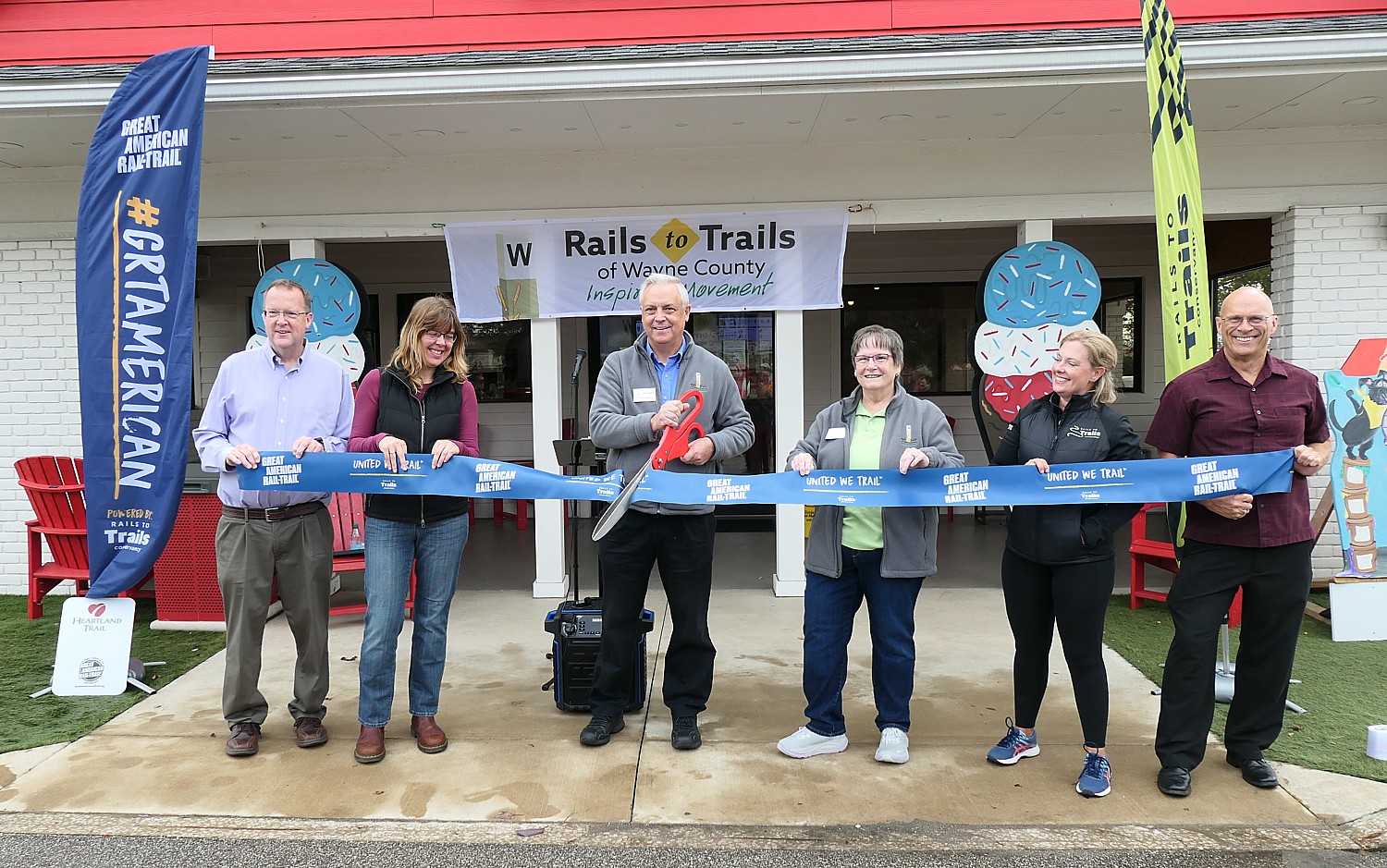
We have come to Orrville to celebrate with Rails to Trails of Wayne County the ribbon cutting for 2.7 new miles of the Heartland Trail, a connector to the Great American Rail-Trail.

Don Noble of Rails to Trails Allegheny, with state and local leaders and Brandi Horton, Rails to Trails Conservancy’s Vice President, Communications, cut the ribbon celebrating the opening of 2.7 new miles of Ohio’s Heartland Trail which will ultimately connect to the Great American Rail-Trail © Karen Rubin/goingplacesfarandnear.com

The new section begins at the downtown trailhead, just 3 blocks from the Orrville Historical Museum and Orville Railroad Heritage Society on Depot Street. The trail then threads northward through the downtown business district and Orrville Dog Park before connecting to the former Cleveland, Akron, and Columbus (CA&C) rail corridor near Little Chippewa Creek, then continues along the former railbed to Marshallville, terminating at Coal Bank Road.

Don Noble, Board President Rails to Trails of Wayne County, noted that along the trail in Marshallville, there is an unusual “geologic unconformity” dating from the Carboniferous Period (360–299 million years ago) when erosion removed older (Mississippian) rocks before younger (Pennsylvanian) rocks were deposited. The rare geologic feature was revealed during the construction of the railroad. 

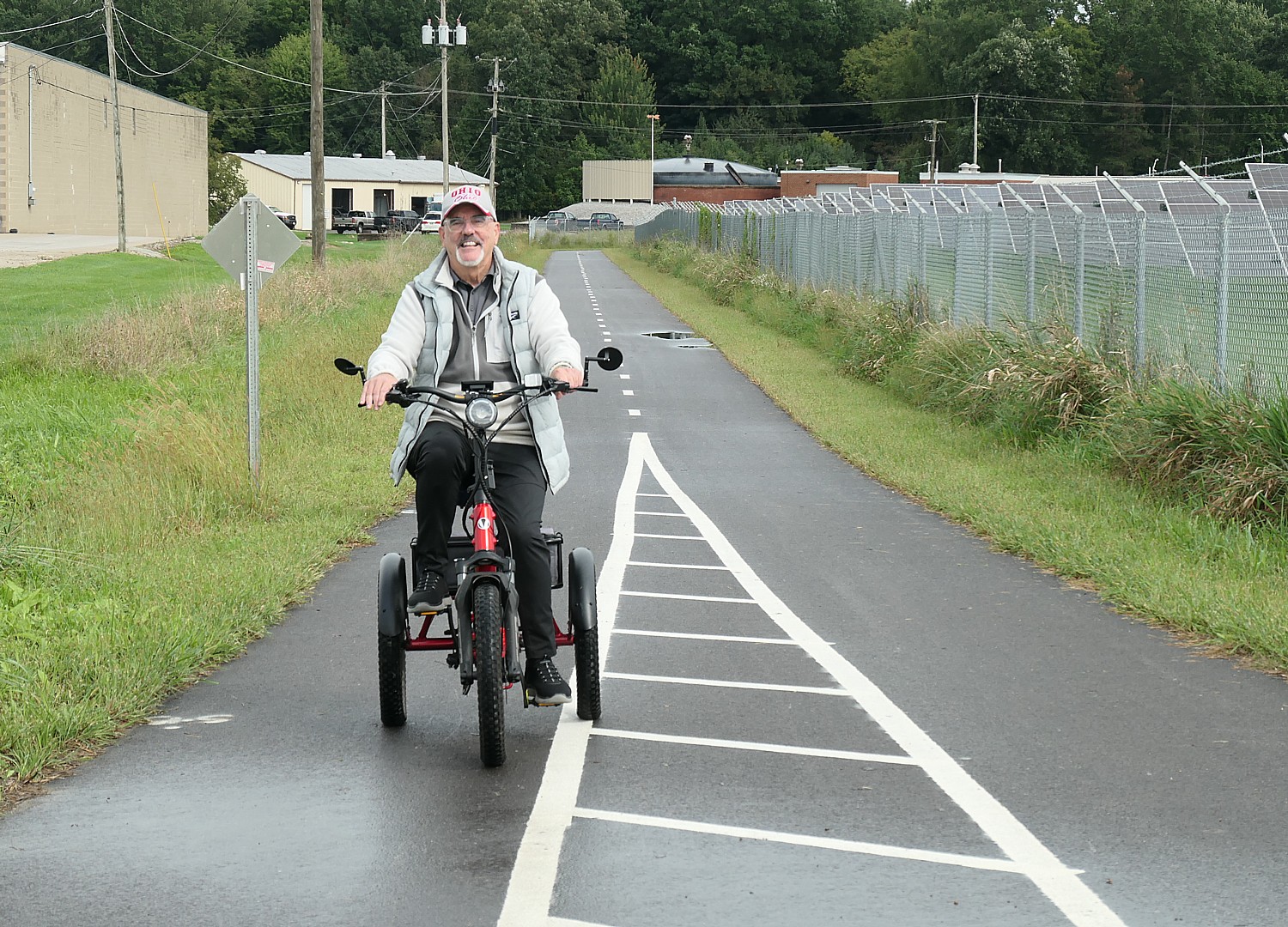
Victor Schantz of Orrville, takes a ride on the new section of Ohio’s Heartland Trail, one of more than 150 trails that will connect 3,700 miles of the Great American Rail-Trail, from Washington DC to Washington state © Karen Rubin/goingplacesfarandnear.com

Rails to Trails of Wayne County put in an application to Ohio Department of Transportation in 2020 and received $1.33 million – 58% of the total cost – but the city and donors had to come up with the rest – Ohio Clean put up $200,000; the City of Orrville, $238,000, and a foundation gave $535,000,

The group has managed to complete two sections in one year (1.7 and 1.1 miles each), from downtown Orrville north of Marshallville – a total of 7 miles in order to eventually connect to the Great American Rail-Trail.

Rails to Trails of Wayne County hopes to complete another extension of the trail that will connect it to Clinton where it will connect to the Ohio & Erie Towpath Trail, which spans 80 miles from Cleveland to Bolivar.

“This is a great day for Orrville,” Mayor Matt Plybon said. “Years ago, people saw the old railroad bed and saw what could become. This moves Orrville closer to becoming true trail town, neighbors and beyond…We welcome people who come- shop, eat, experience community, meet people. Trails may connect place but their best value is when they connect people.”

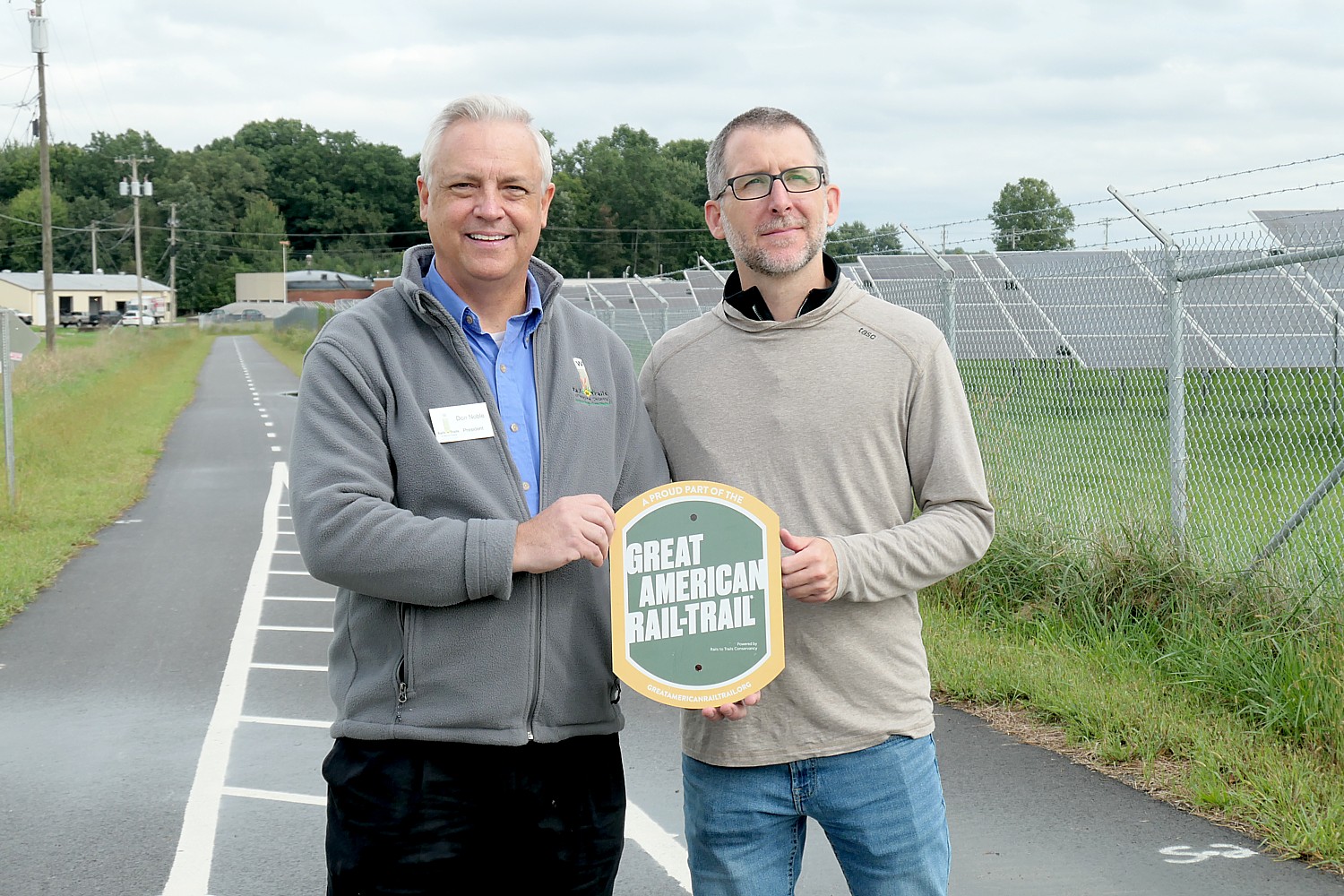
Don Noble of Rails to Trails Allegheny and Kevin Belle, Rails to Trails Conservancy’s Project Director, celebrate the opening of 2.7 new miles of the Heartland Trail, a connector to the Great American Rail-Trail © Karen Rubin/goingplacesfarandnear.com

As we sit together for lunch with many of the Rails to Trails of Wayne County volunteers and officials it becomes clear:  It may take years before all 3,700 miles of the Great American Rail-Trail across America are connected, but every foot and every mile of trail impacts people today in tangible ways – those who live in community and those who come to visit – economically, health and wellness, building community and social connections, and pride.

Leaving Orrville, Kevin Belle, who has spent 10 years as Rails to Trails Conservancy’s Project Director for the Great American Rail-Trail, reflected that they have successfully closed 10 gaps in less than 10 years.

“They are coming more frequently now,” he said, with the pride of a new father or more accurately, a midwife who has helped in the birth of a baby. “Close the gap. Open the trail.”

The Great American Rail-Trail will extend 3,700 miles across the USA, enabling biking, walking, hiking from Washington DC to Washington State. “This is the most ambitious public lands project in generations, but unlike other projects, this is the result of the determination of regular people, groups, private donations, working in conjunction with local, state and federal government, reflected Brandi Horton, Rails to Trails Conservancy’s Vice President, Communications.

Heartland Trail, https://www.traillink.com/trail/heartland-trail-/

For more information on the Great American Rail-Trail, visit: https://www.railstotrails.org/site/greatamericanrailtrail/

Next: Railtowns, Canaltowns, Rivertowns, GhostTowns – Now Trail Towns

See also:

Imagine Biking 3,700 Miles Across the USA on The Great American Rail-Trail

Grassroots Volunteerism Builds the Great American Rail-Trail

__________________

© 2026 Travel Features Syndicate, a division of Workstyles, Inc. All rights reserved. Visit goingplacesfarandnear.com, longislandpress.com/category/vacation-travel.com and travelwritersmagazine.com/TravelFeaturesSyndicate/. Blogging at goingplacesnearandfar.wordpress.com and moralcompasstravel.info. Visit instagram.com/going_places_far_and_near. X: @TravelFeatures Threads: @news_and_photo_features ‘Like’ us atfacebook.com/NewsPhotoFeatures. Send comments/questions to FamTravLtr@aol.com.