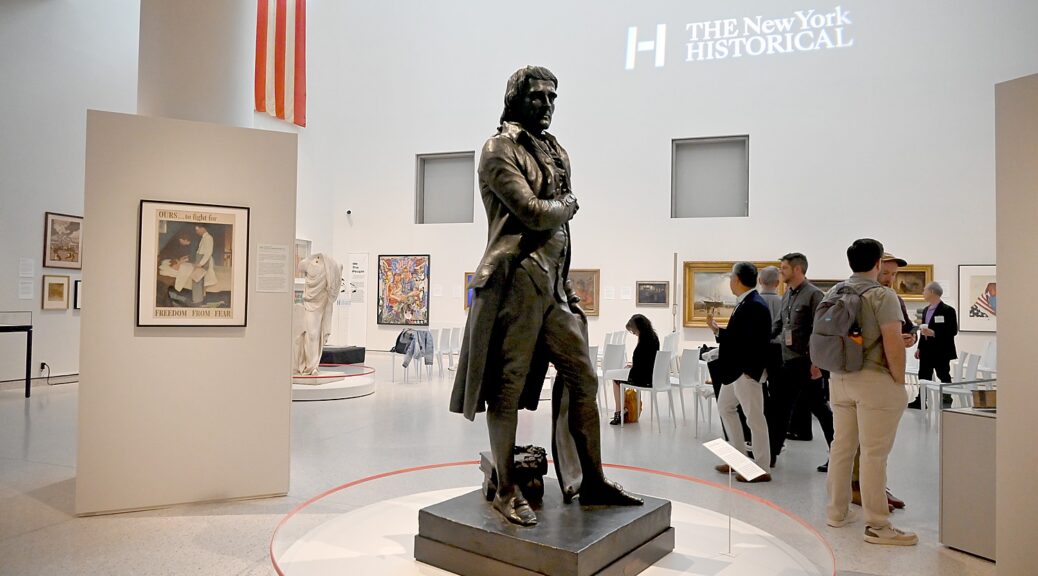
Tag Archives: New York Historical

New York Historical’s New Tang Wing for American Democracy Couldn’t Have Come at a Better Time

To mark the opening of the Tang Wing for American Democracy, The New York Historical has expanded hours until 8 pm on Thursdays through Saturdays from June 18 to July 4. Admission during expanded hours on those dates are pay-as-you-wish admission from 5-8 pm.

Also enjoy “Songs of America,” a vibrant lineup of live music performances taking place at the Museum in collaboration with Jazz at Lincoln Center, featuring music from across 250 years of the nation. Performances are free with pay-as-you-wish admission during expanded hours from June 18 to July 4.

And see a rare printed copy of the Declaration of Independence, on view through July 5.
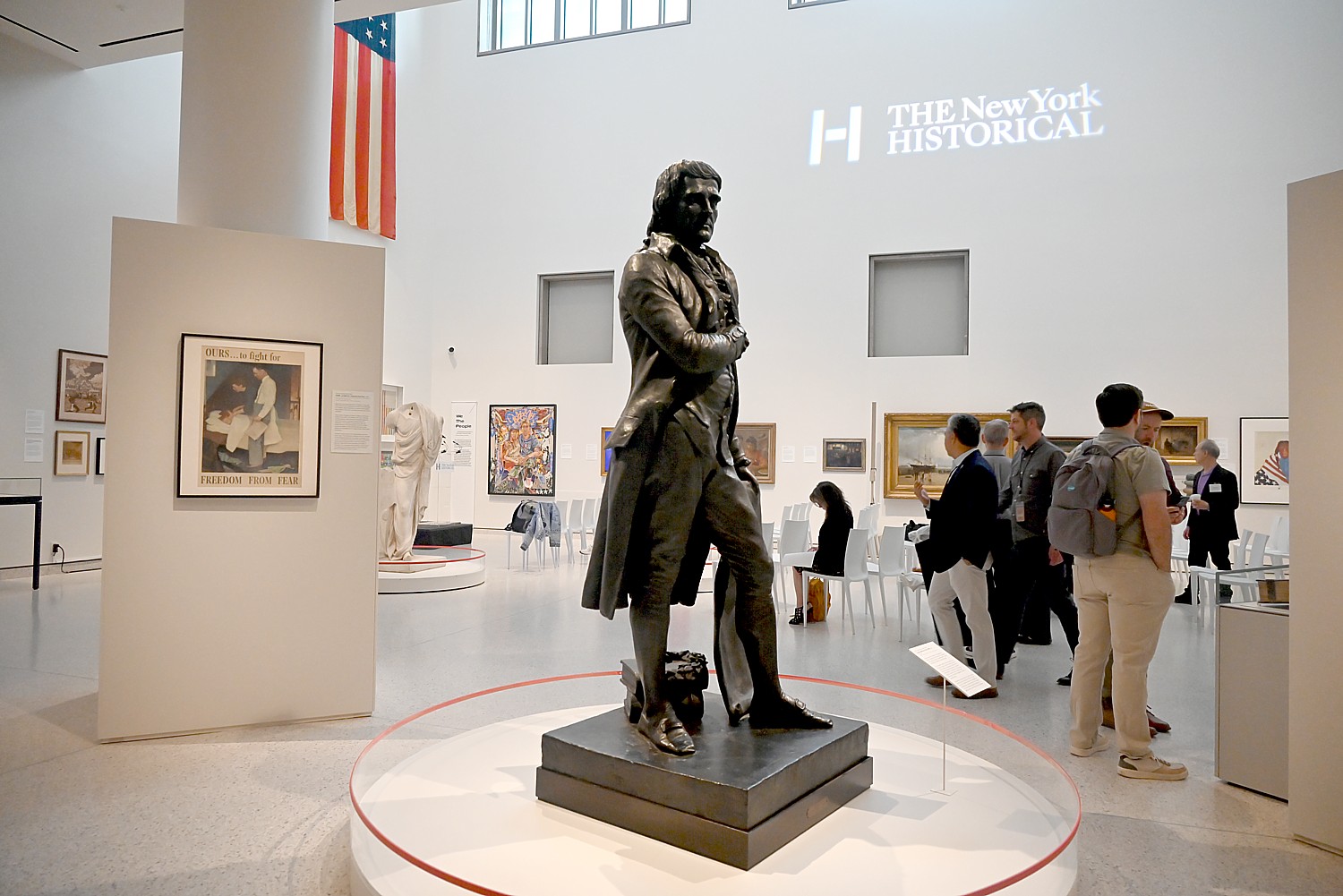
The opening of the Tang Wing coincides with the New York Historical’s exhibition, Democracy Matters, in the new Klingenstein Family Gallery © Karen Rubin/goingplacesfarandnear.com

By Karen Rubin, Travel Features Syndicate, goingplacesfarandnear.com

The timing couldn’t be more perfect, nor more necessary: The New York Historical, New York’s first museum, has just opened a major new expansion, the Tang Wing for American Democracy with a mission and a facility dedicated to teaching the history and future of the nation’s founding principles.

Opening in time for America’s 250th anniversary of the signing the foundational Declaration of Independence and audaciously creating the first government “of, by, and for the people” since antiquity, “This transformative new wing embodies The Historical’s mission of illuminating the complexities of the American story and inspiring engagement with the ideas and principles that define it,” said museum president and CEO Dr. Louise Mirrer. “As we approach the nation’s 250th anniversary, the Tang Wing will serve as both a beacon for civic learning and a space for reflection on the values that continue to shape our democracy. We are deeply grateful to Agnes Hsu-Tang and Oscar Tang for their extraordinary vision and generosity in making the Tang Wing for American Democracy possible.”
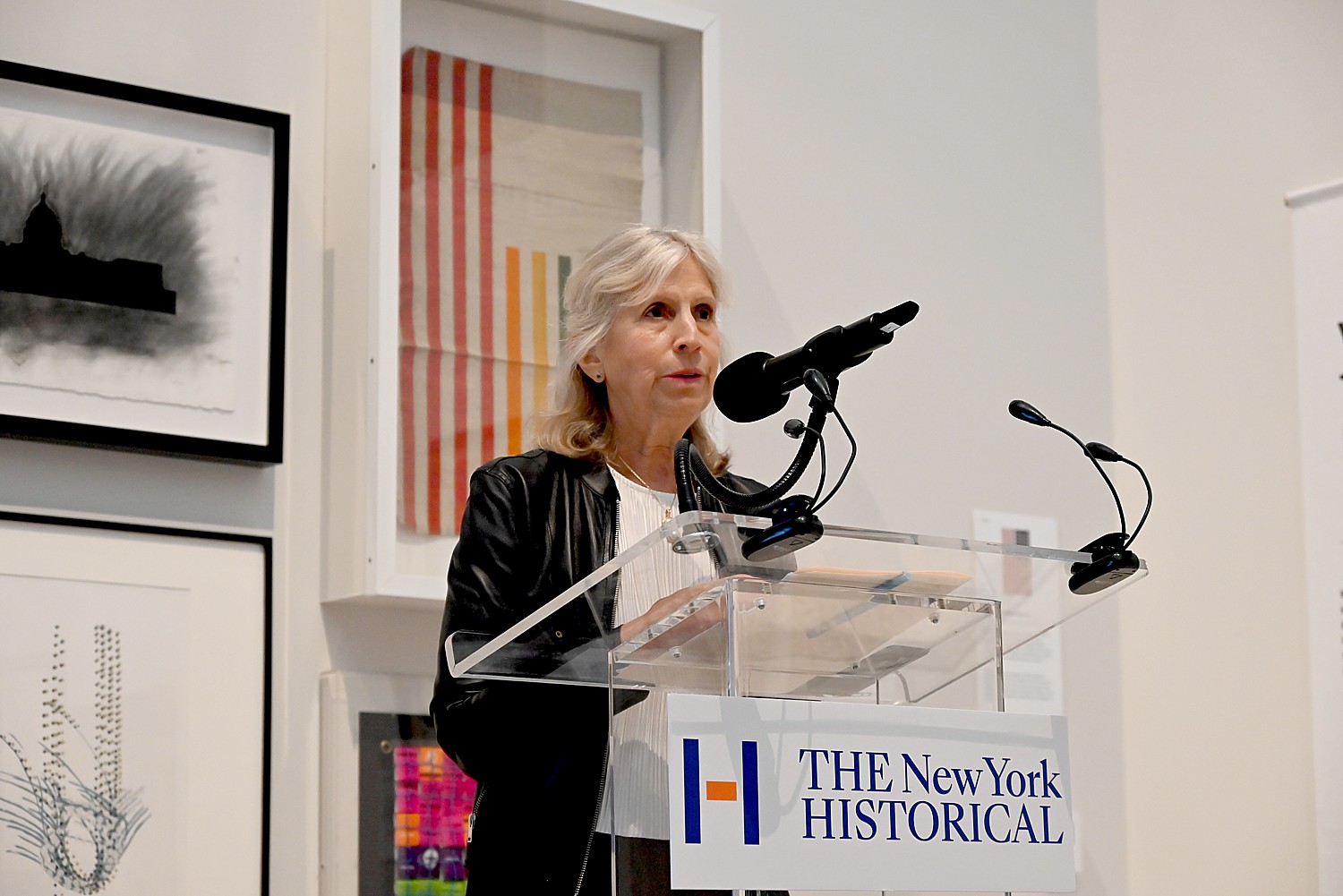
“As we approach the nation’s 250th anniversary, the Tang Wing will serve as both a beacon for civic learning and a space for reflection on the values that continue to shape our democracy,” said New York Historical President and CEO Dr. Louise Mirrer © Karen Rubin/goingplacesfarandnear.com

“The New York Historical’s origin story began with the American Revolution, and after 222 years we have achieved an institutional legacy as a steadfast witness to the history that shaped this nation,” said Dr. Agnes Hsu-Tang, who chairs The Historical’s Board of Trustees. “On the occasion of America’s semiquincentennial, this new wing shall rise as a self-evident embodiment of the American evolution—from its beginning as the world’s first modern democracy to the world’s longest continuing democracy.

“When New York Historical was founded in 1804, 222 years ago, Napoleon had crowned himself Emperor of France while Jefferson was reelected by the people of a young republic, the United States of America,” Dr. Tang said.

New York City, she noted, was the first capital of the United States of America, was where modern democracy and the American presidency originated.
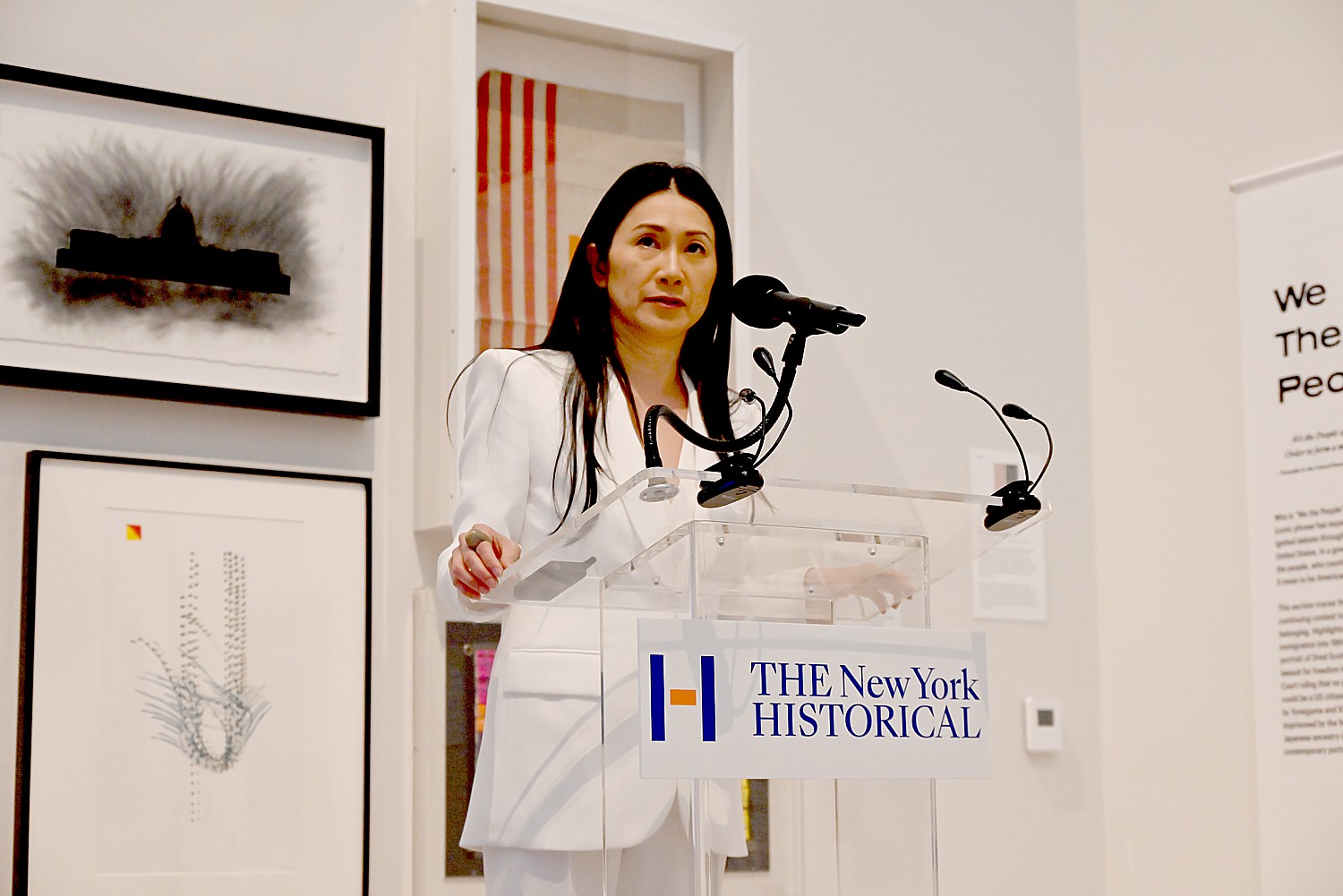
“The new wing, dedicated to teaching of American history and democracy, is the culmination of 222 years of engaged citizenship and assiduous examination of American history – the good, bad, ugly and beautiful,” said Dr. Agnes Hsu-Tang, who chairs The New York Historical’s Board of Trustees. © Karen Rubin/goingplacesfarandnear.com

“We are here today, because this very institution for 222 years has steadfastly safeguarded the evidence of our history, through wars and peace,” she said. “The new wing, dedicated to teaching of American history and democracy, is the culmination of 222 years of engaged citizenship and assiduous examination of American history – the good, bad, ugly and beautiful. Our history began as a revolution and endures and will endure as evolution of democracy for all.”

Since the museum’s founding as the New-York Historical Society, New York City has become a capital of modernity, culture and arts, Dr. Tang said. “The roots of the New York Historical are in New York City, but it has grown and evolved in mission and understanding of itself to become a national museum of national significance.”

The expanded space – 71,000 sq. ft – adds new galleries, classrooms, collections areas, a rooftop terrace and courtyard, and was designed to maintain and expand upon the Beaux-Arts style of the museum’s landmarked campus. The project also pursued LEED Gold Certification and includes state-of-the-art HVAC equipment anticipated to reduce energy consumption.

“It’s not just a new building but a tactical renovation of the existing building to knit it together with the new wing, aesthetically and functionally,” Dr. Mirrer said. “We are reimagining, reinventing this institution – what it is today and will become.”

The $175 million project represents the museum’s first expansion of its landmark campus in nearly a century and will significantly increase its capacity and ability to have exhibitions that could not be installed before, education, collections preservation and public programming. In addition to the newly constructed wing, the project included renovations to more than 30,000 square feet of existing museum space. The project was supported by $9.25 million from Empire State Development, along with $5 million from the New York State Council on the Arts.
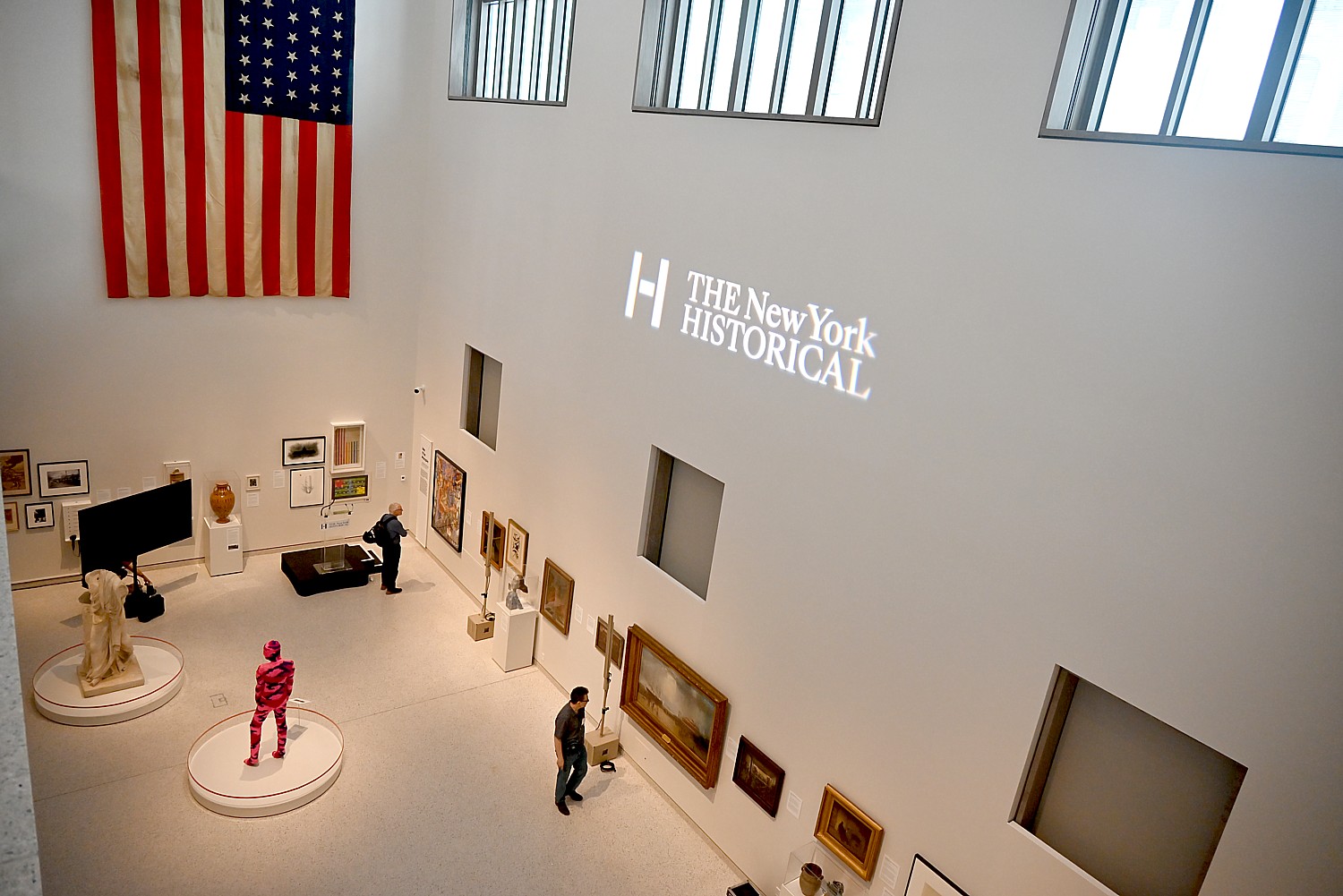
“Democracy Matters” is on view in the Klingenstein Family Gallery in the new Tang Wing for Democracy, a soaring, light-filled space. at the New York Historical © Karen Rubin/goingplacesfarandnear.com

Dr. Mirrer noted that the institution has sought an education wing going back to1937 “to educate about who we were as a people, so we can see who we should become. We sit in the new Klingenstein Family Gallery – a soaring light-filled space – where historical figures can tell their stories.”

The expansion will also support New York Historical’s education programs, including its award-winning Chang Chavin Academy for American Democracy four-day civics residency program, where 6th graders are brought to the museum to learn about democracy from its origins in antiquity – Greece and Rome – to today. With the additional classrooms – set along a gorgeous balcony – the museum expects to grow the program from 5,000 sixth-grade students served annually to 30,000 students per year. The Historical’s education programs currently reach more than 300,000 students and educators annually and help support the New York City Department of Education’s social studies curriculum.

“Hundreds of thousands of children receive education in civics here at a time when civics is under-taught in schools. New York Historical is picking up the ball, but we needed a facility,” Dr. Tang said.

Also newly opened in the Tang Wing, the Stuart and Jane Weitzman Shoe Museum, exhibits three centuries of American women’s lives through an extraordinary collection of historical footwear (check out Beyonce’s custom stiletto tour booties).

Like most of New York museums, the bulk of their collections are stored off site. The expansion includes crucial new on-site storage for The Historical’s invaluable Patricia D. Klingenstein Library, which holds the Robert A. Caro Archive, Time Inc. Archive, and Billie Jean King Archive as well as millions of manuscripts, maps, photographs, and prints documenting American history

Another significant improvement is that its conservation facilities, where its renowned collection of paintings and historical objects are restored and conserved, are now consolidated in a new state of the art facility in the lowest level.

And because the renovation has been at the highest level museum design standards, the New York Historical can now borrow rare and top quality artifacts from other institutions.

Also, the outdoor greenspace has been “recaptured” and now offers an accessible sculpture courtyard (where you will find the Hamilton and Burr statues, set at the exact distance apart as where they stood for their duel) and a new roof terrace atop the Tang Wing which will be lushly landscaped.

Interestingly, the granite used to build the Tang Wing (which was built over a vacant lot where three brownstones were razed 80 years ago) is the same as in the existing building, even though the quarry had closed in the 1920s. The quarry, on Deer Island, Maine, was reopened just for this project, architect Graham Wyatt, partner, RAMSA (Robert A.M. Stern Architects), tells us.

“Designing the new Tang Wing and related renovations for The New York Historical has been an extraordinary opportunity to engage with one of New York’s most important cultural institutions and historic landmarks,” Wyatt said.

“Designing the new Tang Wing and related renovations for The New York Historical has been an extraordinary opportunity to engage with one of New York’s most important cultural institutions and historic landmarks,” said Graham Wyatt, partner, RAMSA, showing the new rooftop terrace. © Karen Rubin/goingplacesfarandnear.com

“Our design completes a plan first contemplated almost a century ago and enters into dialogue with The New York Historical’s existing building and with the craftsmanship and materials of the original structure, while introducing new interior spaces that meet the Museum’s evolving mission and programs.” It also was the last project designed by Robert Stern before he passed away.

The Tang Wing ultimately will create the first permanent home for the American LGBTQ+ Museum – a collaborative institution that will join The New York Historical’s Center for Women’s History in advancing the narrative of civil rights for all Americans – opening in late 2027.

“New York’s cultural institutions tell our stories, strengthen our communities and power our tourism economy,” Governor Kathy Hochul stated. “For more than two centuries, the New York Historical has preserved the history of our state and nation, and the new Tang Wing will ensure that millions of visitors, students, scholars and families can continue to learn from that history for generations to come. As our nation prepares to celebrate its 250th anniversary, this expansion reaffirms New York’s role as a global capital of culture, education and ideas.”

Democracy Matters

The opening of the Tang Wing coincides with New York Historical’s exhibition, Democracy Matters, in the new Klingenstein Family Gallery. Bringing together objects from The New York Historical’s collections, the exhibition explores how the concept of democracy has stretched, contracted, and shifted through key moments in the history of the nation; how competing understandings of it have come into conflict; and how those conflicts have reshaped its boundaries.
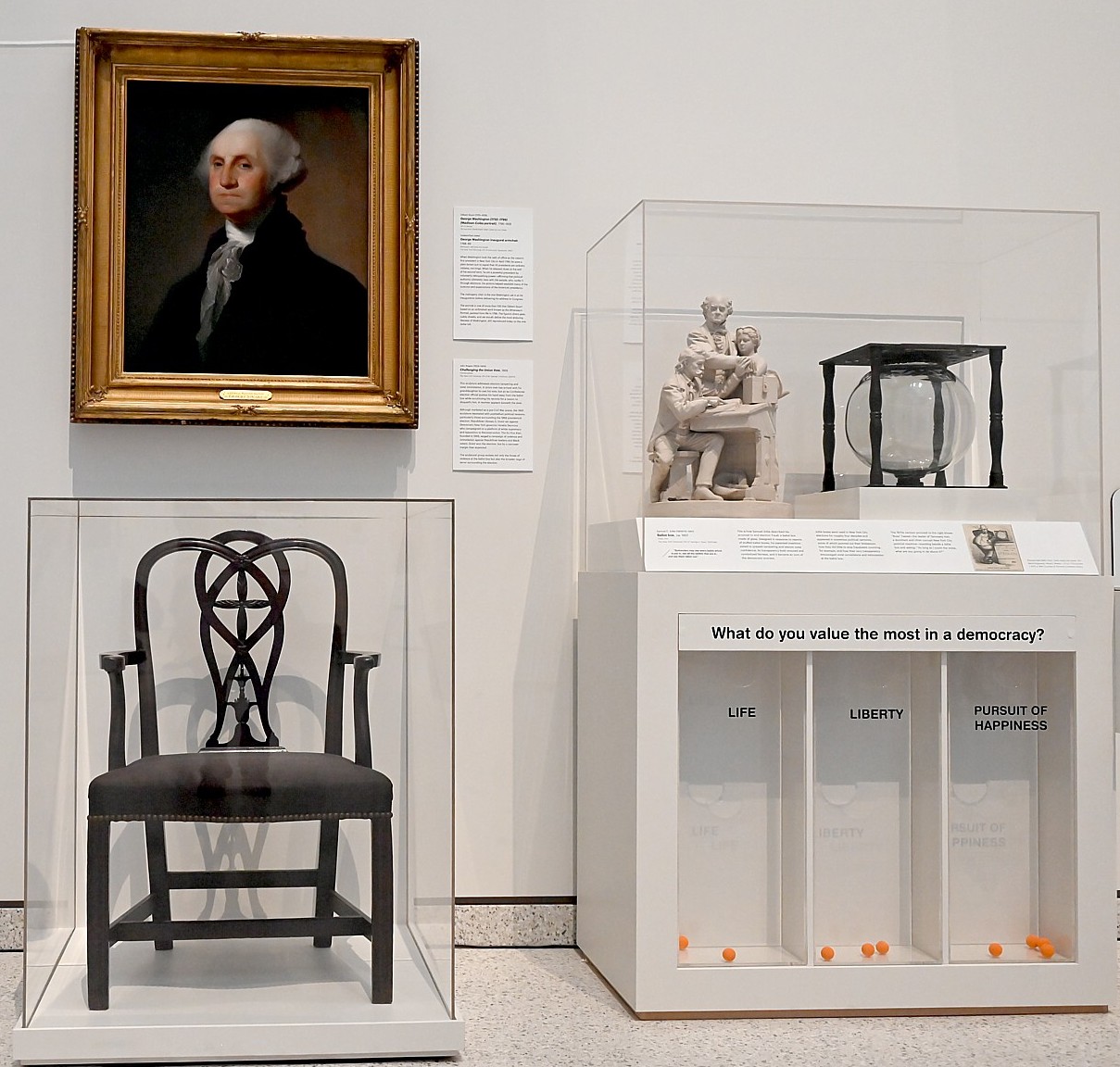
On view in “Democracy Matters,” in the Klingenstein Family Gallery in New York Historical’s new Tang Wing for Democracy: the wooden chair and Bible George Washington used in his inauguration and a glass ballot box © Karen Rubin/goingplacesfarandnear.com
© Karen Rubin/goingplacesfarandnear.com

In 1789, George Washington was inaugurated the first president in lower Manhattan. He sat in a wooden chair, not the velvet cushioned, gilded throne of a king – indeed, the chair he used and the Bible he swore the newly written oath of office, are both on view in the new Klingenstein Gallery, where Democracy Matters,” displaying essential artifacts organized around key moments in history and key pillars of our democracy – freedom of press, religion, free and fair elections, is on view through November 1.
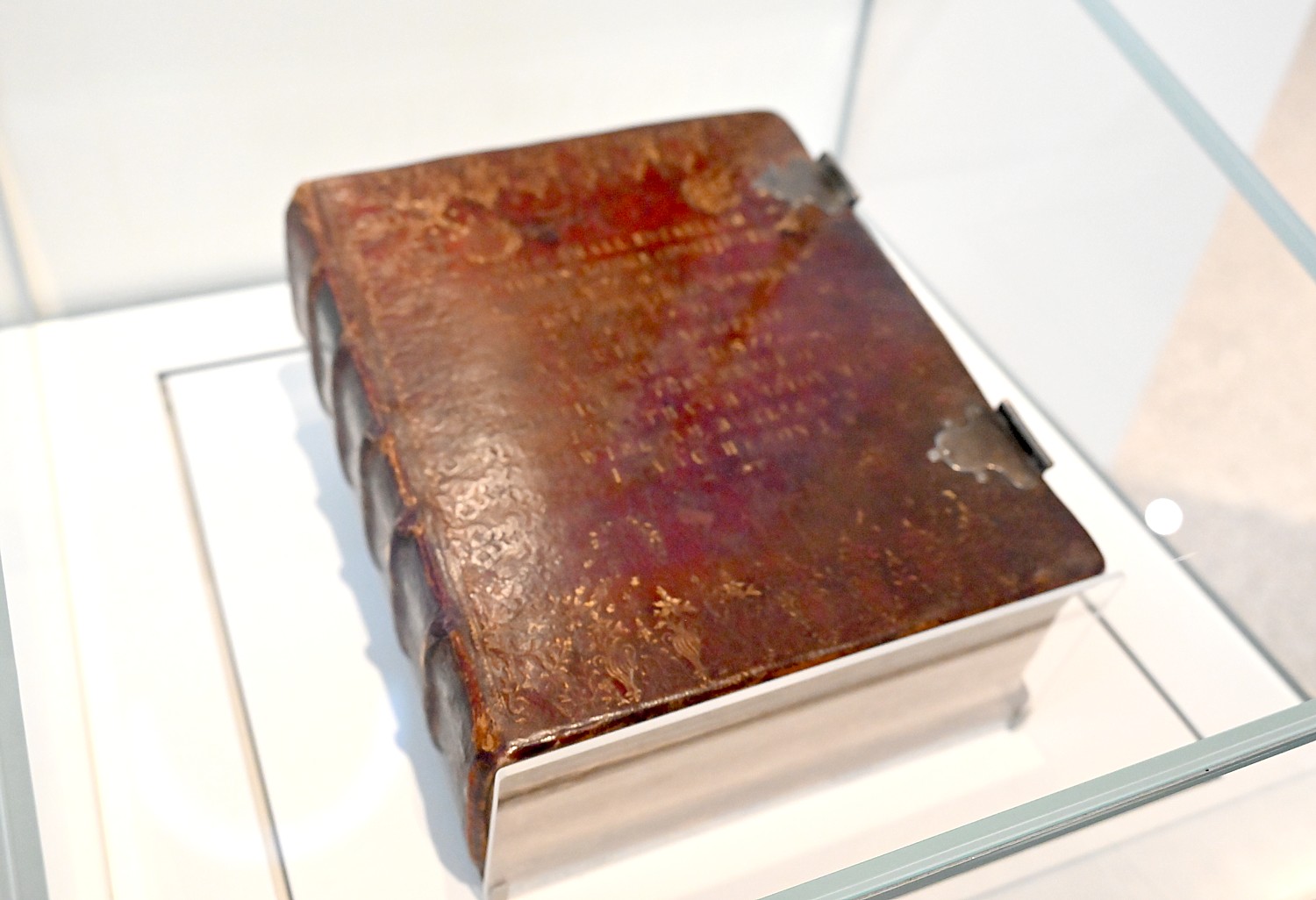
The Bible George Washington swore his oath as the nation’s first president in 1789 © Karen Rubin/goingplacesfarandnear.com

Also on view is a fragment from the King George III statue that was pulled down at Bowling Green after the Declaration of Independence was read, and a glass bowl that served as a ballot box (so votes were transparent), a Torah scroll among other religious objects that show Freedom of Religion, all five Thomas Cole’s Empire Series depicting the “Rise and Fall of Civilization.” There is also an odd, 34-star flag, dating back to the “darkest days of the Civil War. Even as the Confederacy adopted their own flag, Lincoln refused to accept the union could be broken,” Dr. Mirrer noted. The exhibits are also arranged to spark thought and interaction.
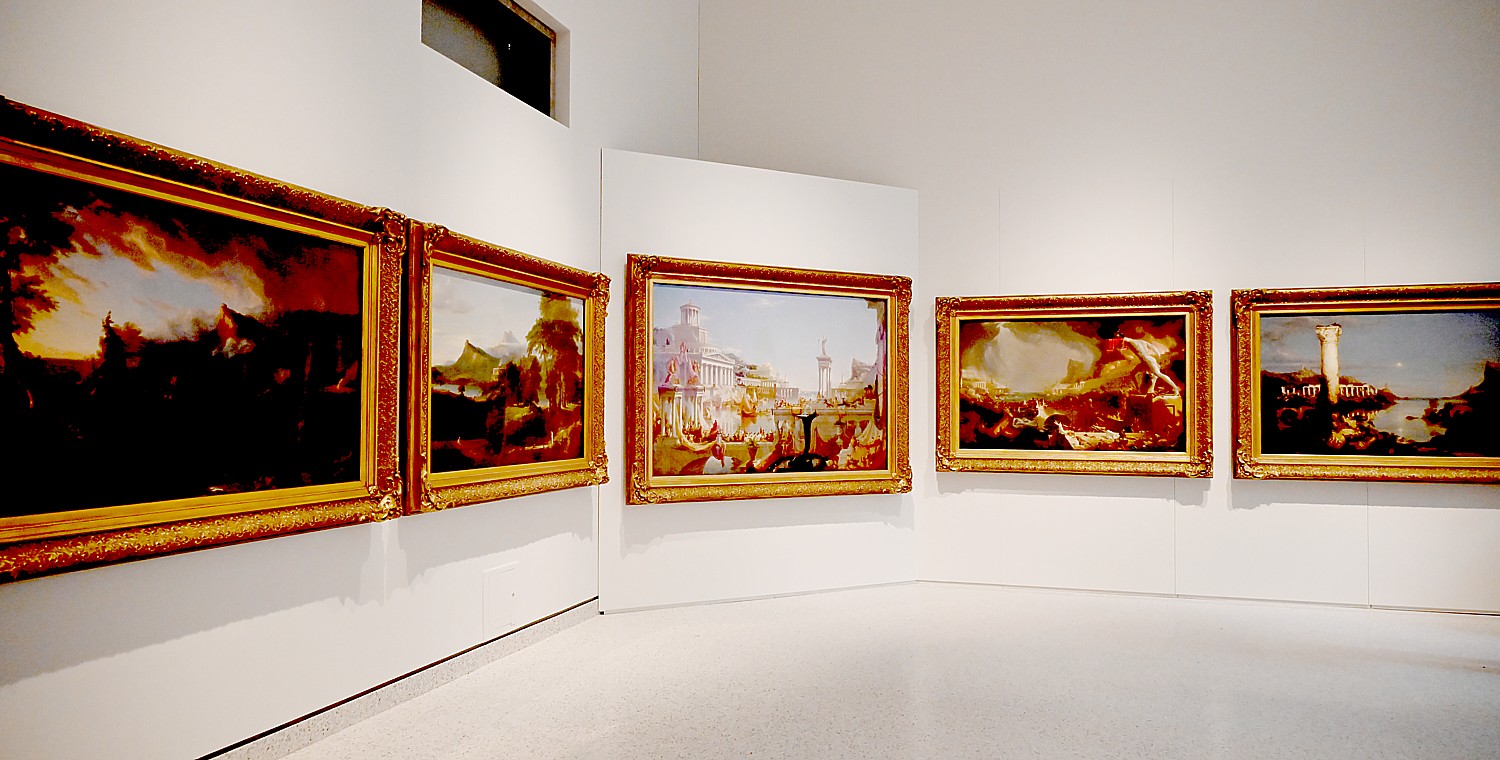
Thomas Cole’s Empire Series depicting the “Rise and Fall of Civilization.” Is on view at New York Historical’s newly opened Tang Wing for Democracy © Karen Rubin/goingplacesfarandnear.com

America 250th Anniversary Exhibitions

The New York Historical is continuing to present a slate of special exhibitions throughout the America 250th anniversary year, that have already included Declaring the Revolution: America’s Printed Path to Independence and Stirring the Melting Pot: Photographs from The New York Historical Collections.

Indeed, before there was a United States of America or a New York, there was a New Amsterdam, founded by the Dutch 400 years ago, which set the stage for America’s entrepreneurism, individualism and culture.

New-York Historical’s current blockbuster exhibition, Old Masters, New Amsterdam, celebrates the city’s founding 400 years ago with a fascinating look at life in New Amsterdam from the perspective of 17th century Dutch Masters including Rembrandt van Rijn, Frans Hals, and Jan Steen.
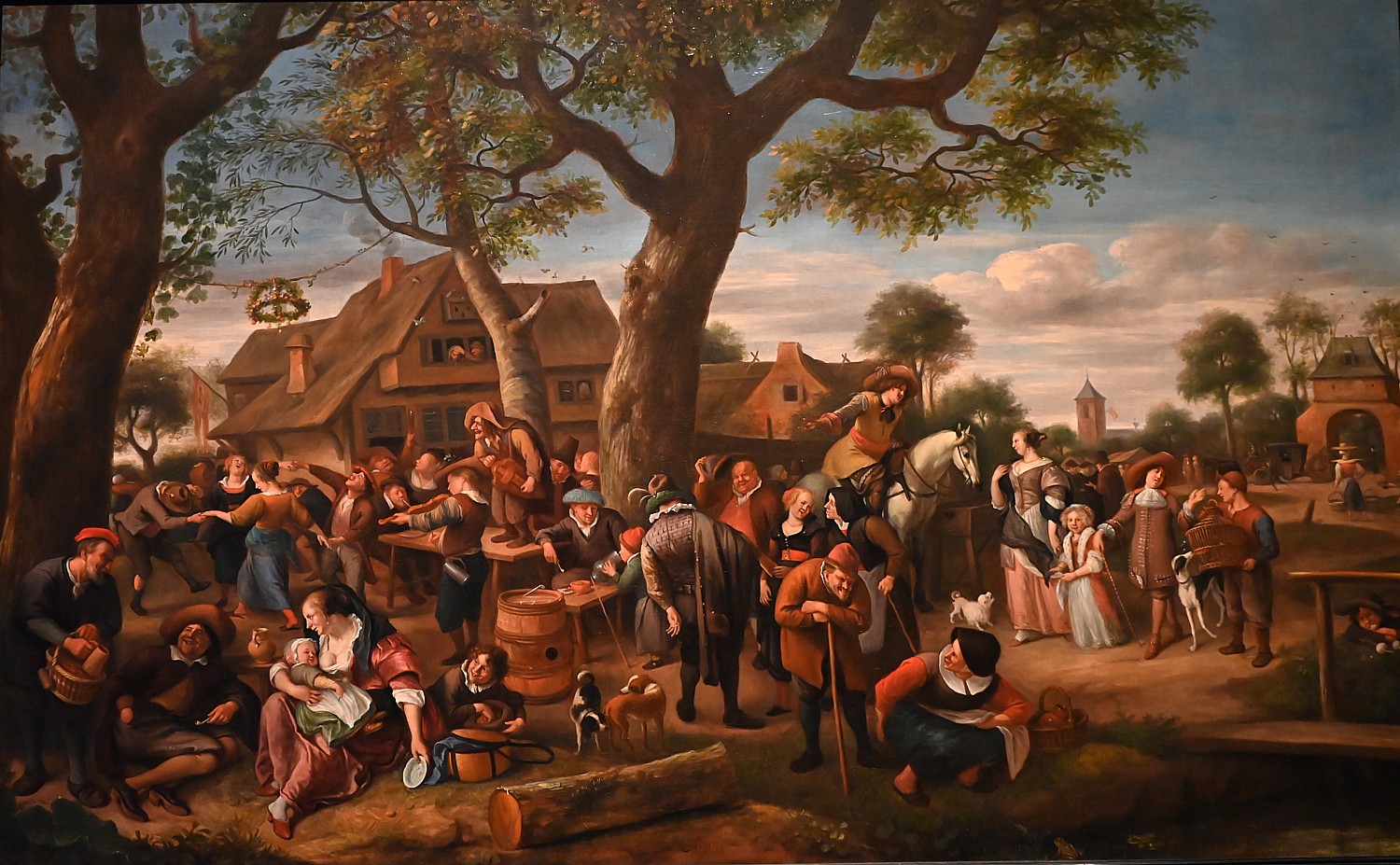
“The Dutch greatly enjoyed family festivities that included music, dancing, food, and drink,” said Arthur Wheelock, co-curator of the exhibition and senior advisor to the Leiden Collection. “Jan Steen’s joyous Peasants Merrymaking Outside an Inn, wonderfully captures the vibrancy and wide range of human interactions that could be found at a country fair, whether in the Netherlands or in New Amsterdam.”

“Four centuries ago, the Dutch founded an outpost at the tip of Manhattan Island—a humble but vibrant settlement that would give rise to New York,” said Russell Shorto, the exhibition’s co-curator, director of the New Amsterdam Project at The New York Historical. “Across the ocean, meanwhile, Rembrandt and his peers were transforming art, revealing the beauty and drama of everyday life. These Dutch artists never set foot in New Amsterdam, but their portraits, character studies, and depictions of daily life in the Netherlands provide real insight into the world of Manhattan’s 17th-century settlers.”
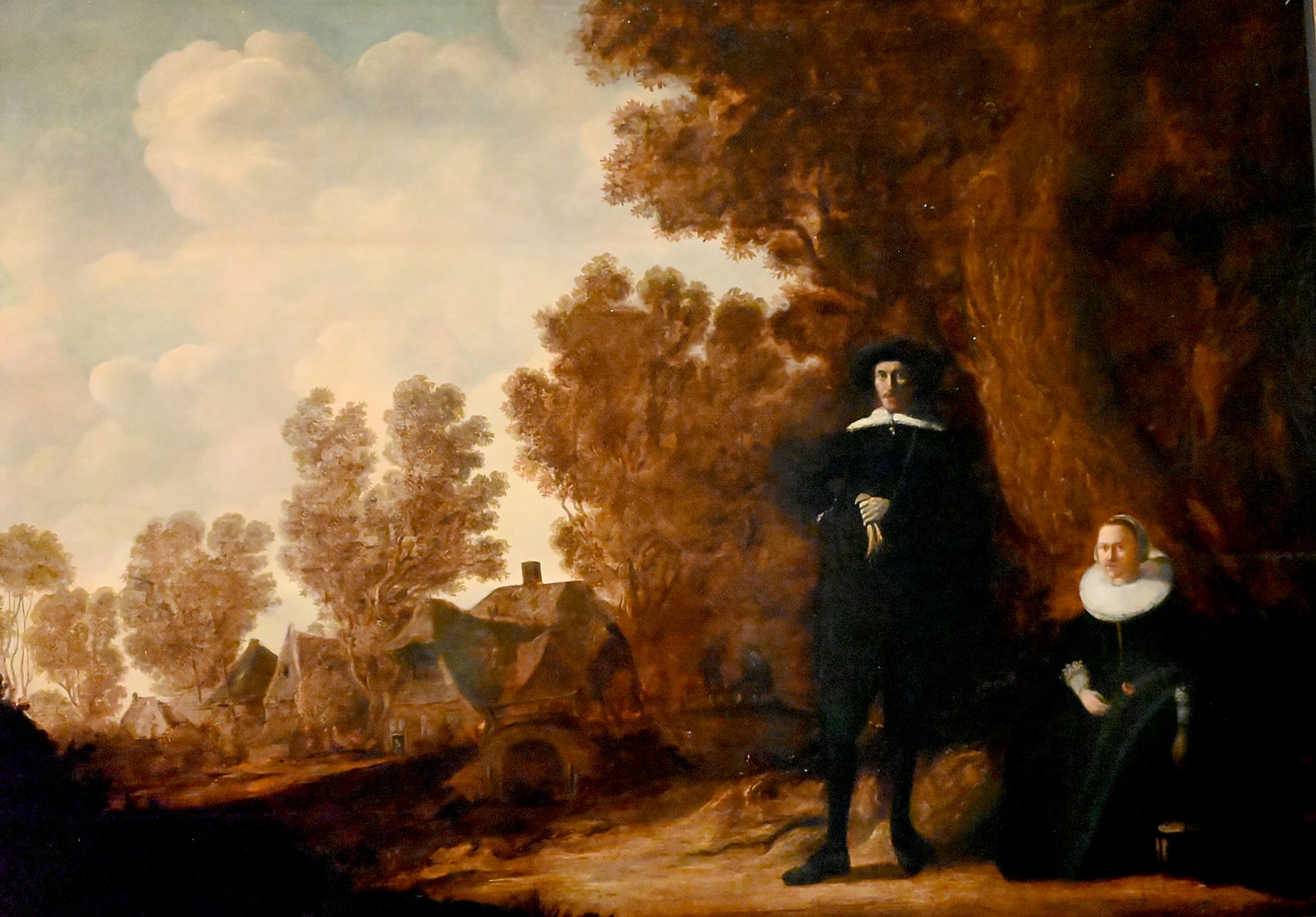
Gerard Donck and Frans de Hulst portrait of Mr. and Mrs. Samuel Bayard (1644) – Samuel Bayard and his wife Anna Stuyvesant Bayard (1644). After Samuel’s death, Anna emigrated to New Amsterdam where her brother Peter Stuyvesant was the colonial Director-General.

Some of the most intriguing objects in the exhibition are those from New York Historical’s own collection: the journal of John Bowne who was arrested for hosting a Quaker meeting and deported to the Netherlands in 1662, where the West India Company directed Stuyvesant to “allow every one to have his own belief.” setting the stage for freedom of religion in New York. Also, a property deed to Manuel de Spangle (dated January 18, 1651), who won his freedom (the first enslaved Africans probably arrived in New Amsterdam in 1627), which encouraged other slaves to sue for their freedom.

The exhibition ends with several paintings providing a glimpse into 1776 and beyond.
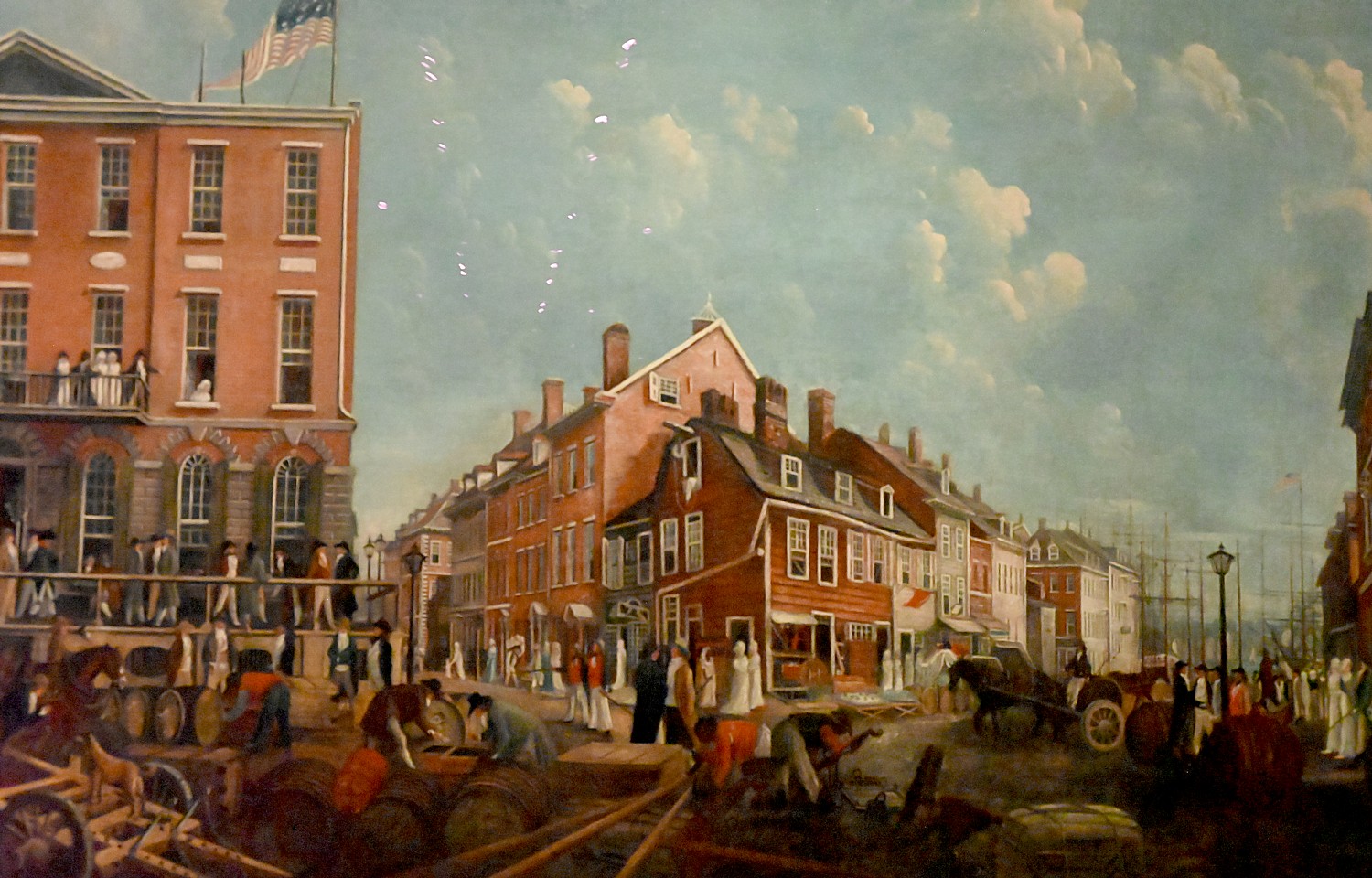
Francis Guy’s painting depicting theTontine Coffee House, NYC 1797: After American independence, merchants founded the Tontine Coffee House at the corner of Wall and Pearl Streets, as a place to conduct business. Trading of stocks in the coffee house eventually gave way to the New York Stock Exchange.

From The New York Historical’s collection, Francis Guy’s 1797 painting Tontine Coffee House, New York City, where commercial activity seemingly bursts across the canvas, shows the expansive growth of the city in the century after the Dutch founded New Amsterdam, at the place that became the stock exchange.

The individuality fostered in the Dutch era evolved into a New York hallmark: a brash, confident, entrepreneurial energy. On the eve of the American Revolution, the city’s diversity made it a cauldron of debate and unrest. Built on Dutch foundations and shaped by waves of newcomers, New York reflected the American experiment and propelled it forward.

Also on view:
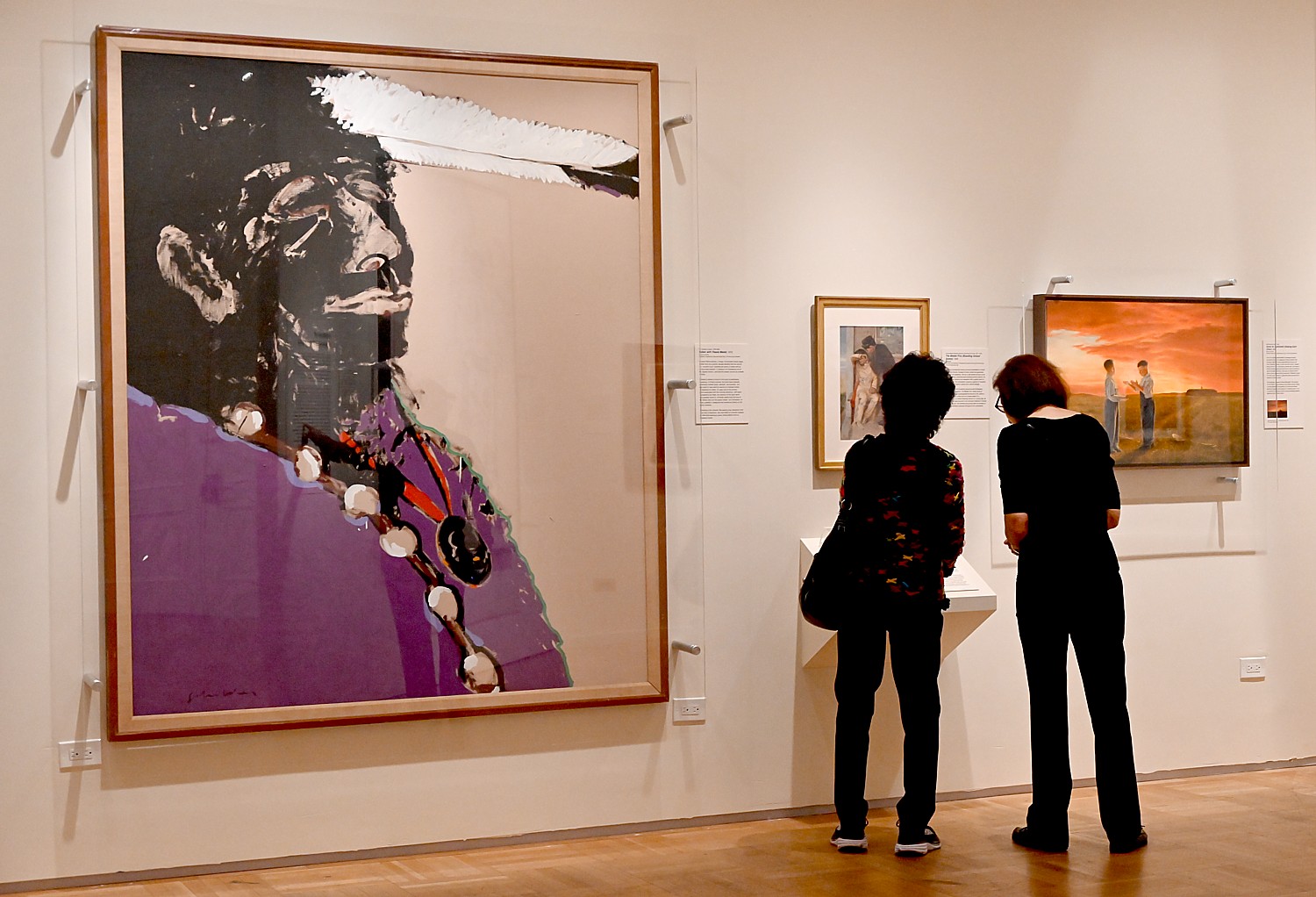
House Made of Dawn: Art by Native Americans, 1880-Now,presents distinct artistic expressions and practices of modernism by more than 85 artists of diverse Indigenous heritage (through August 2, 2026) © Karen Rubin/goingplacesfarandnear.com

House Made of Dawn: Art by Native Americans, 1880-Now,: Drawing from a collection of more than 100 promised gifts of art, artifacts, and rare books created by Native American artists to The New York Historical by Board Chair Dr. Agnes Hsu-Tang and her husband Oscar Tang in celebration of the nation’s semiquincentennial, this exhibition presents distinct artistic expressions and practices of modernism by more than 85 artists of diverse Indigenous heritage (through August 2, 2026).
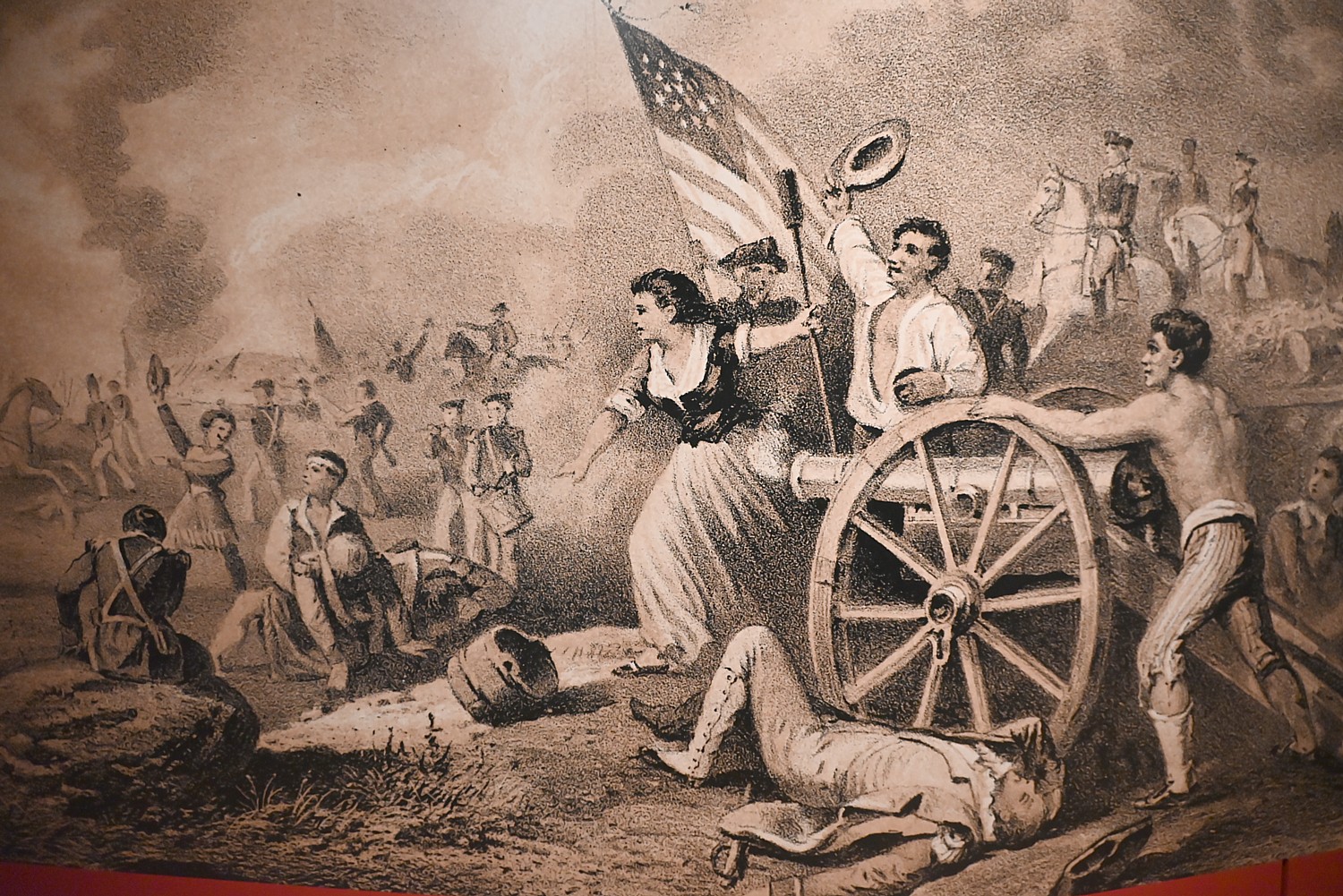
An image that gave rise to the legend of Molly Pitcher, most likely a composite of women who took up arms during the Revolutionary War. “Revolutionary Women” dives deep into the stories of the women who left indelible marks on the fight for—and even against—independence and who helped create the foundations of a new government. © Karen Rubin/goingplacesfarandnear.com

Revolutionary Women: The Center for Women’s History foregrounds the women of New York City whose contributions to the Revolutionary War effort have been little recognized—but whose experiences highlight the material realities of living in the war-torn city as well as the divergent, contested meanings of revolutionary liberty itself and its unfinished promise. Revolutionary Women dives deep into the stories of the women who left indelible marks on the fight for—and even against—independence and who helped create the foundations of a new government. Liberty, equality, and independence were key bywords for that emerging nation. But who did these concepts apply to? Revolutionary Women attempts to provide answers and deepen the history we all think we know with letters, poems, petitions, archeological objects, paintings, household objects, and more from our Patricia D. Klingenstein Library collection.
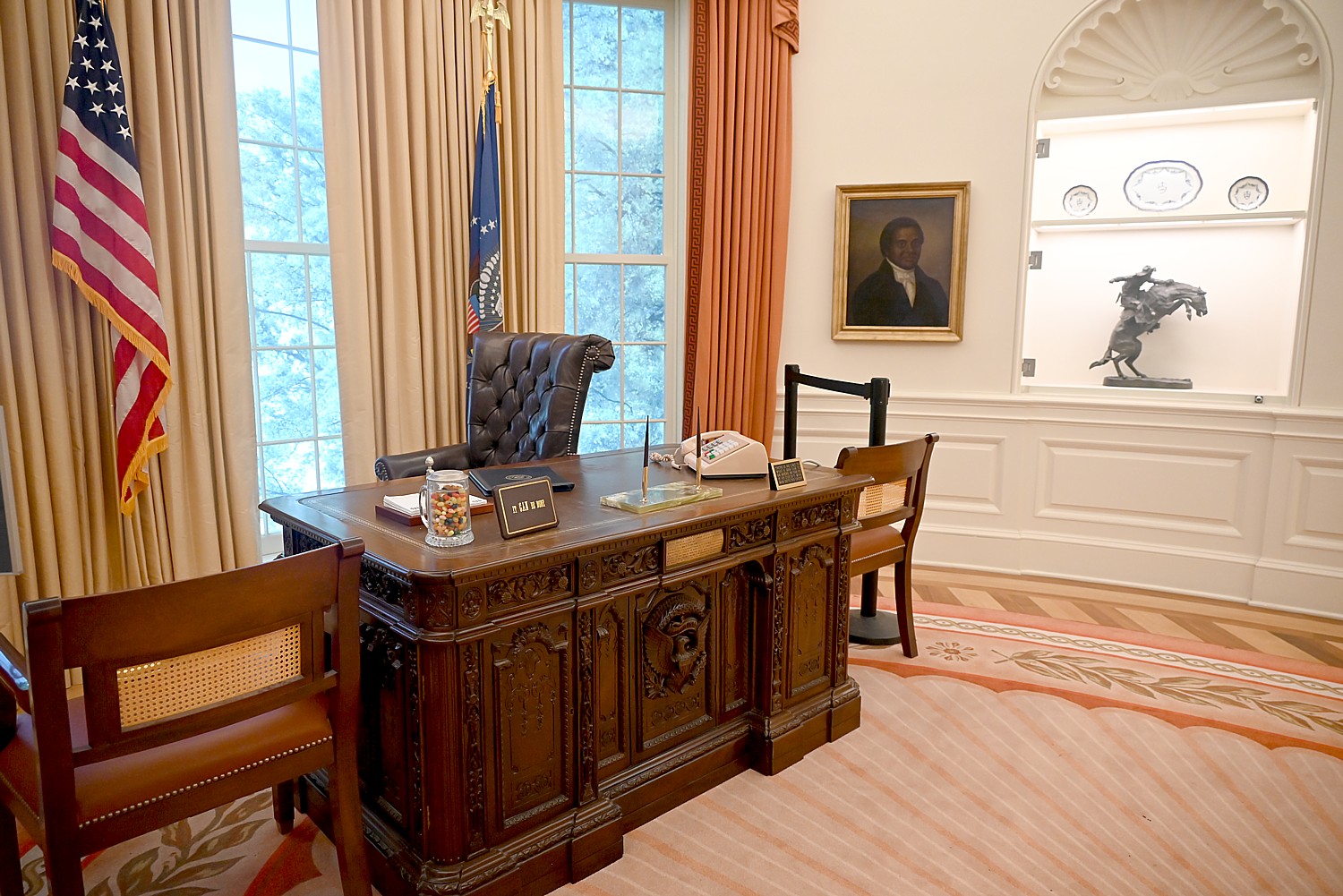
Walk through a replica of President Ronald Reagan’s Oval Office and sit at the Resolute Desk while learning about the presidency, presidents, and the three “co-equal” branches of government © Karen Rubin/goingplacesfarandnear.com

Also visit the fascinating exhibit dedicated to the Presidency (you can visit a replica of Reagan’s Oval Office and sit behind the Resolute desk) and our three co-equal branches of government.

“Songs of America, a vibrant lineup of live music performances taking place at the Museum in collaboration with Jazz at Lincoln Center, features music from across two and a half centuries of the nation, from Revolutionary-era tunes, to blues, classic jazz, turn-of-the-century jazz, soul jazz and Americana. Performances are free with pay-as-you-wish admission during expanded hours from June 18 to July 4.

A rare printing of the Declaration of Independence, which has been in The Historical’s collections for generations though little was known about it, is on temporary view through July 5. It was likely printed by Samuel Loudon, a colonial New York printer who founded The New-York Packet newspaper. in the aftermath of July 4, 1776, and used to disseminate the new nation’s independence to the general public in town halls, houses of worship, and other meeting places.
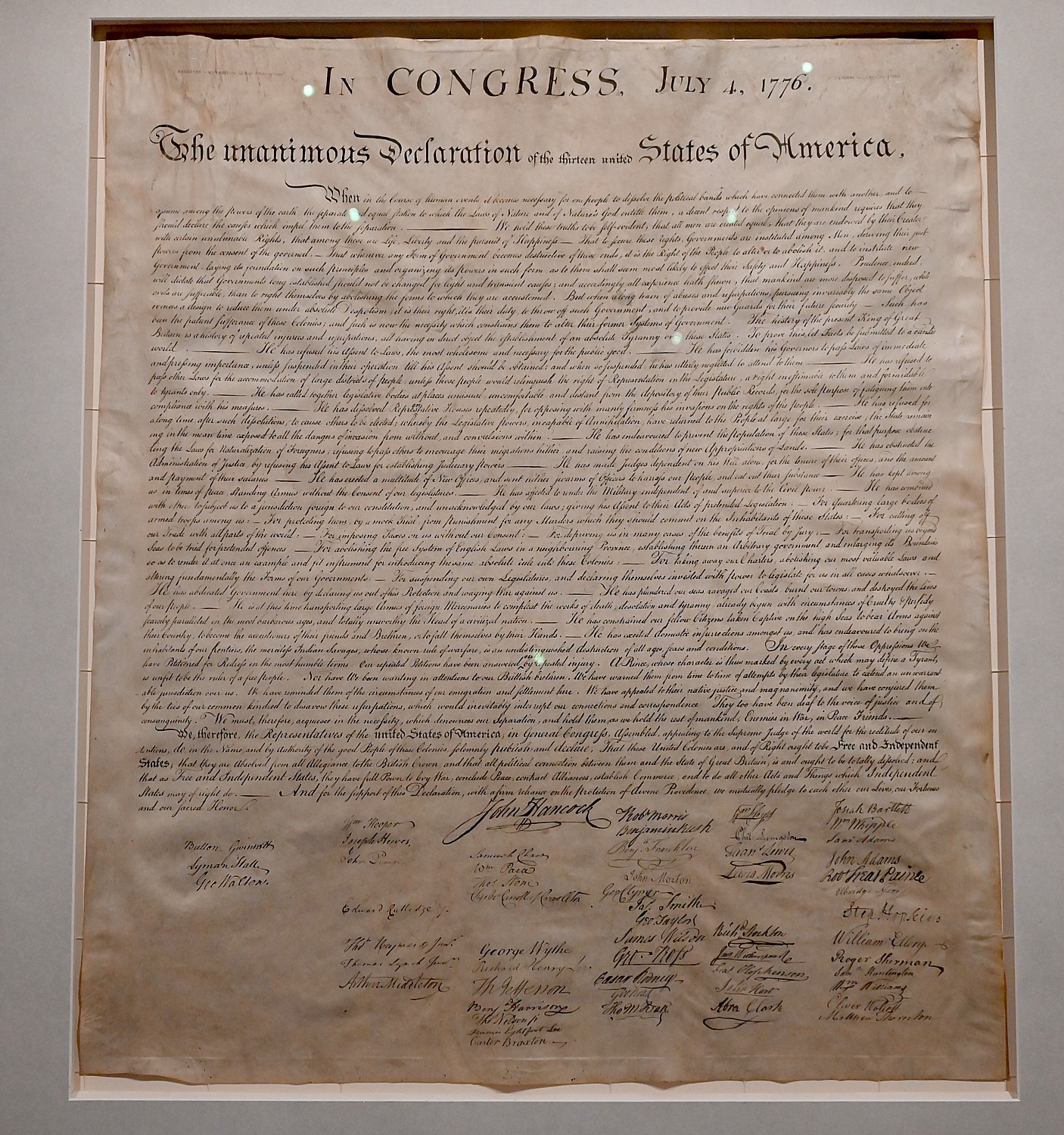
A rare printing of the Declaration of Independence is on temporary view at the New York Historical through July 5. © Karen Rubin/goingplacesfarandnear.com

To mark the opening of the Tang Wing for American Democracy, The New York Historical is hosting expanded hours until 8 pm on Thursdays through Saturdays from June 18 to July 4. Admission during expanded hours on those dates are pay-as-you-wish admission from 5-8 pm.

Founded in 1804, The New York Historical is New York City’s first museum and a nationally renowned research library, with holdings that include more than 14 million works of art, artifacts, documents and ephemera spanning four centuries of American history. Its collections document the founding of the United States, the evolution of New York and the stories of the people and communities that have shaped the nation.

The New York Historical, 170 Central Park West, New York, NY 10024, 212-873-3400, www.nyhistory.org.

__________________

© 2026 Travel Features Syndicate, a division of Workstyles, Inc. All rights reserved. Visit goingplacesfarandnear.com and travelwritersmagazine.com/TravelFeaturesSyndicate/. Blogging at goingplacesnearandfar.wordpress.com and moralcompasstravel.info. Visit instagram.com/going_placess_far_and_near and instagram.com/bigbackpacktraveler/ Send comments or questions to FamTravLtr@aol.com X: @TravelFeatures Threads: @news_and_photo_features ‘Like’ us at facebook.com/NewsPhotoFeatures

See the Original Documents That Inspired America’s Revolution at the New York Historical

July 1776, “La Destruction de la Statue Royale a Nouvelle Yorck”, published in Paris. When General Washington’s troops heard about the Declaration of Independence, they pulled down the statue of George III at New York’s Bowling Green.

By Karen Rubin, Travel Features Syndicate, goingplacesfarandnear.com

Ken Burns’ phenomenal documentary series, “The American Revolution” opens with the underpinnings of the Revolution – the documents that turned grievance over land and taxes by 13 disparate colonies into a fight to the death over independence of a new nation, the United States of America, the first founded on the principle of “consent of the governed.” What is most remarkable is that many of those documents – Thomas Paine’s “Common Sense,” Paul Revere’s propagandist print of the Boston massacre, an early surviving print of the Declaration of Independence – are now on view, “in the flesh” so to speak, at the New York Historical.

The exhibit, “Declaring the Revolution: America’s Printed Path to Independence,” is New York Historical’s first in its series of exhibits focused on the 250th anniversary of the founding of the United States of America. This exhibit, featuring David M. Rubenstein’s Americana Collection, is on view through April 12, 2026.

You see the documents that provided the ideological and philosophical underpinnings for the Revolution and the founding of a new kind of government (by the people). And you see the documents that raised the rabble, forged a collective consciousness and identity, and inculcated the outrageous idea that a ragtag collection of colonial people of diverse race, ethnicity, religion and national origin could and should take on the most powerful empire on the globe.

Dr. Louise Mirrer, New York Historical’s President and CEO, noted the “unique urgency of now” to delve into how the American Revolution became “a war of ideals, in beliefs that Americans shared and believed important enough to fight and die for.”

Declaring the Revolution’ traces the emergence of our nation through a shared belief in the power of the people and the promise of democracy,” New York Historical’s President and CEO Dr. Louise Mirrer stated. © Karen Rubin/goingplacesfarandnear.com

Declaring the Revolution traces the emergence of our nation through a shared belief in the power of the people and the promise of democracy,” Mirrer stated. “Through historical printings, the origins of the ‘American experiment’ are on display, allowing us to reflect on how we live and fulfill the ideals of our nation today. As stewards of history, The Historical is proud to kick off our celebration of America’s 250th anniversary with this remarkable testament to record-keeping as we invite Americans nationwide to share and preserve their hopes for our democracy through our On Our 250th initiative.”

Declaring the Revolution portrays the arc of the struggle through 18th-century pamphlets, broadsides, engravings, proclamations, and books, each declaring an aspect of how the colonies achieved independence. In an era when print was the only form of mass communication, these printings furthered the democratic ambitions of Americans—the highest expression of this being the Declaration of Independence.

(It is also why the Stamp Act, which imposed a tax on every piece of paper, from wills and pamphlets to newsprint, was such a factor in inspiring newspaper editors and pamphleteers to embrace independence and inspire colonials to see themselves as Americans with the ability to win an armed conflict against Great Britain, the most powerful empire in the world at the time.)

Declaring the Revolution demonstrates that America’s quest for independence was not only a military conflict, but also a battle of ideas that inspired colonists to fight and sacrifice for the promise of a sovereign new nation that adequately represented its citizenry.

A highlight of New York Historical’s “Declaring the Revolution: America’s Printed Path to Independence” is a rare State Department engraving of the original engrossed copy of The Declaration of published in 1823.

Most affecting is getting to see (in person) two extraordinary printings of the Declaration: its exceedingly rare first newspaper appearance in the Pennsylvania Evening Post and the renowned State Department engraving of the original engrossed copy. Other highlights include Thomas Paine’s electrifying 1776 pamphlet, Common Sense, which called for independence from Great Britain, and John Hancock’s 1774 oration honoring the Boston Massacre, the deadly confrontation between British soldiers and American colonists on March 5, 1770.

A printed edition of John Hancock’s “Oration,” part of David M. Rubenstein’s Americana Collection on view at New York Historical © Karen Rubin/goingplacesfarandnear.com

You get to see the Virginia Declaration of Rights, drafted by George Mason in 1776, and shown in its uncommon earliest printing, which outlines the requirement of natural rights that influenced subsequent documents like the Declaration of Independence.

“Common Sense,” one of the publications that provided an ideological underpinning to the American Revolution, on view at New York Historical © Karen Rubin/goingplacesfarandnear.com
 

There is an exceptionally rare 1773 handbill printed by enslaved persons in Boston asks that the language of freedom apply to them and points out the incongruity of a land with bondage desiring to be liberated.

“A Treatise on the Social Compact” by J.J. Rousseau, part of David M. Rubenstein’s Americana Collection on view at New York Historical © Karen Rubin/goingplacesfarandnear.com

Also on display are key texts which provided the intellectual foundation for the Revolution; you actually see printings of the Magna Carta and English Bill of Rights, as well as books by John Locke and Jean-Jacques Rousseau, among other philosophers.

There are also printings describing major events of the military conflict between Britain and the colonies including the Battles of Lexington and Concord, the Boston Tea Party, the Battle of Brooklyn, Washington’s victory at Trenton, and the Sieges of Charleston and Yorktown.

“The Bloody Massacre Perpetrated in King Street, Boston on March 5th 1770 by a Party of the 29th Regiment,” the print by Paul Revere helped to incite colonists against Great Britain, on view at New York Historical’s “Declaring the Revolution: America’s Printed Path to Independence.”

The documents are from the collection of David M. Rubenstein, who introduced them at the preview of the exhibit which opened November 14 saying, “Why do we need to see the documents, versus a computer image, to see in person?” He answered his own question saying that there is more of a visceral, emotional, engaged reaction to seeing something “in the flesh.”

David M. Rubenstein, whose Americana Collection are at the heart of “Declaring the Revolution: America’s Printed Path to Independence,” says of the Declaration of Independence, “It is the creed we’ve tried to live up to for 250 years, a creed so many other nations have adopted. That sentence has become the symbol of the United States. I am proud to have some of these documents that live up to the creed.” © Karen Rubin/goingplacesfarandnear.com

“You might read about it, but are more likely to learn more by seeing the real thing. That’s why it is so important to preserve [these original documents].”

Rubenstein went on to reflect, “When this country was set up, no one thought it would last 250 years. Jefferson said to Madison that every 20 years, we should re-do the Constitution or the nation won’t last.

Nobody expected the United States – 13 colonies of 3 million (including 500,000 slaves) – to endure and even less likely, that it would become the military, cultural, financial [superpower] of the world.  250 years later, to look at the legacy, they would have been astounded.”

Then he reflected, “We are celebrating the 250th anniversary of country, but why was July 4th 1776 designated as its birthday? Why not 1775, or 1492 with Columbus’ arrival, or 1565 when St. Augustine was settled by Spain, or 1619 when the British came to Jamestown or 1620 when the Pilgrims established a home at Plymouth?

“Or even, August 2 1776 when the Declaration of Independence was formally signed [not on July 4th as we commonly think], and it wasn’t until 1777 when the last Founder signed. Or should we celebrate January 17, 1777 when those who signed it finally made it public that they did? (They didn’t earlier because they could be hung for treason.)

“The decision to break from England was July 2, 1776, so John Adams felt July 2nd would be celebrated. It was agreed to on July 4th, but they came back in August and signed it on August 2nd.”

Or should the founding of the nation be celebrated when the Constitution was finished in 1787, or 1788 when it was agreed to and ratified, establishing the format for government and the rights guaranteed in the first 10 amendments, the Bill of Rights.

John Adams wanted the first anniversary of independence to be celebrated on  July 2, 1777. Thomas Jefferson (who was not happy with the editing of the Declaration and didn’t even admit to having authored it until much later) wanted July 4th when the Declaration’s wording was adopted. This difference led to a schism between Adams and Jefferson.

 “Well, they forgot to celebrate on July 2, so organized July 4 as a day of celebration and fireworks,” Rubenstein related.

 “But July 4th won out as the birthday of the new nation because of a sentence that became most famous, and some have called the greatest ever written: ‘We hold these truths to be self-evident, that all men are created equal, that they are endowed by their Creator with certain unalienable Rights, that among these are Life, Liberty and the pursuit of Happiness.’

“It is the creed we’ve tried to live up to for 250 years, a creed so many other nations have adopted. That sentence has become the symbol of the United States. I am proud to have some of these documents that live up to the creed.”

Rubenstein added: “My reason for collecting these original printings is to show them to the public to give Americans an opportunity to encounter our country’s impressive history and the accomplishments of those who came before us. The American Revolution was a civil war with Britain and a transformation in the hearts and minds of colonial inhabitants, who began to identify nationally with a new alliance of thirteen colonies built around the democratic principles that the United States holds most dear. To not remember these origins of our democracy is to risk losing our democracy.”

What you come away with, though – like the New York Historical’s just concluded “Blacklisted” exhibit – is how eerily and scarily we are to those times and complaints that led to rebellion – the first to break away from dynastic tyranny and replace it with self-rule – against an authoritarian regime.

A print commemorates the repeal of the despised Stamp Act which was one of the primary triggers to the American Revolution, depicting a funeral for the act © Karen Rubin/goingplacesfarandnear.com

Let’s also be reminded about the grievances against King George III listed in the Declaration of Independence that instigated not just protest, but revolution. Does this sound familiar (the summary compiled from A.I. query)?

  • Taxation and trade: Imposing taxes without consent and cutting off colonial trade with other parts of the world.
  • Legislative and judicial powers: Suspending legislatures, dissolving them for opposing his policies, and making judges dependent on his will.
  • Military and justice: Quartering large numbers of armed troops in colonial homes, transporting colonists to be tried for “pretended offenses,” and protecting British soldiers from punishment for crimes committed in the colonies.
  • Economic and political interference: Abolishing new forms of government, obstructing naturalization laws, and imposing new offices to “harass our people and eat out their substance”.
  • Incitement of violence: Exciting domestic insurrections, inciting “merciless Indian savages” to attack colonists, and waging war against the people.
  • Abuse of power: Vetoing laws necessary for the public good, and generally abusing power to establish a tyranny over the colonies

That’s the importance of preserving and studying history – and the original documents – and not enable whitewashing or literal brainwashing.

And it is good to be reminded of what it means to be American, what we value as Americans, what is precious and not to be taken for granted.

Holding on to the Declaration of Independence on the battlefield.

“I am grateful to The New York Historical for featuring these foundational documents ahead of the 250th anniversary of the signing of the Declaration of Independence,” said Rubenstein. “The items on view bring new context to one of the most important documents ever written, giving insight into the minds of our Founding Fathers as they changed the course of history.”

The exhibition is curated by Mazy Boroujerdi, special advisor to the David M. Rubenstein Americana Collection, which mounts non-partisan exhibitions of historically important printings to foster civic engagement and historical understanding, and is coordinated at The New York Historical by Valerie Paley, senior vice president and Sue Ann Weinberg director of the Patricia D. Klingenstein Library. Declaring the Revolution marks the fourth exhibition produced by the Rubenstein Collection in conjunction with The New York Historical, where the Semiquincentennial will be celebrated with a yearlong schedule of exhibitions and programs.

With the 250th anniversary of the United States approaching, The New York Historical is sharing messages of national hope and encouragement from the digital campaign On Our 250th, which invites individuals from across the country to post their personal wishes for America’s future. Launched online by The New York Historical in April 2025 in partnership with history museums and historic sites throughout the United States, On Our 250th has already received messages from people in 37 states, as well as Washington, DC and US territories. The exhibitions related to the 250th anniversary will take place over a 15-month period, from October 2025 to December 2026, in both The Historical’s main building and, starting summer 2026, its new Tang Wing for American Democracy.

Throughout the fall and winter, David M. Rubenstein will be in conversation with noted historians and scholars at The New York Historical. Visit the public programs calendar to learn more. Private group tours can also be arranged.

New York Historical, 170 Central Park West, New York NY 10024, 212-873-3400, nyhistory.org.

__________________

© 2025 Travel Features Syndicate, a division of Workstyles, Inc. All rights reserved. Visit goingplacesfarandnear.com and travelwritersmagazine.com/TravelFeaturesSyndicate/. Blogging at goingplacesnearandfar.wordpress.com and moralcompasstravel.info. Visit instagram.com/going_places_far_and_near and instagram.com/bigbackpacktraveler/ Send comments or questions to FamTravLtr@aol.com. Bluesky: @newsphotosfeatures.bsky.social X: @TravelFeatures Threads: @news_and_photo_features ‘Like’ us at facebook.com/NewsPhotoFeatures