Tag Archives: NYC theater

Public Theater’s Free Shakespeare in the Park Production of TWELFTH NIGHT Opens Revitalized Delacorte Theater in Central Park

The exuberant gender-bending curtain call of the Public Theater’s Free Shakespeare in the Park production of TWELFTH NIGHT at the reopened, revitalized Delacorte Theater in Central Park © Karen Rubin/goingplacesfarandnear.com

By Karen Rubin, Travel Features Syndicate, goingplacesfarandnear.com

After 23 months and $85 million, the beloved Delacorte Theater has reopened, renewed and revitalized for its 63rd season, but preserving what was always best about the iconic experience of the Public Theater’s Free Shakespeare in the Park: a sense of excitement, shared joy and community, the delight to be dazzled at the creativity of making something spectacular out of a simple open-air stage, and the enchanting backdrop of the Belvedere Castle on a rocky cliff, framed by trees.

The star-studded Public Theater free Shakespeare in the Park production of TWELFTH NIGHT which will run through Sunday, September 14, is the ideal choice among the Bard’s canon to reopen this New York City cultural icon.

But the performance begins with Shakespeare’s quote “All the world’s a stage, and all the men and women merely players”- famous lines that are not even from TWELFTH NIGHT but from “As You Like It.” But the quote serves to pay homage to Joseph Papp, the founder of the Public Theater and the Delacorte, who began offering free Shakespeare in the Park from a truck and planted his cultural flag on this pastoral patch to claim the site and the culture for the people.

“This theater belongs to you, the people of New York,” writes Oskar Eustis, the Public Theater’s Artistic Director, in the Playbill.”We hold it in trust for you, to serve you. The culture belongs to all of us….We are, together, celebrating what makes us human.”

The music and song throughout TWELFTH NIGHT – so unexpected, but provides such an atmospheric, ethereal backdrop for the mythic Illyria– is composed by Michael Thurber and performed by “gender-defiant” singer-songwriter Moses Sumney – who has the audience transfixed (photo: Joan Marcus)

TWELFTH NIGHT is the perfect selection with which to return Free Shakespeare in the Park to Central Park, with its theme of immigrants – refugees who escape death after a shipwreck – who have to remake themselves to survive as strangers in a strange land, and its gender-bending plot. The production, brilliantly conceived by the Public’s Associate Artistic Director/Resident Director Saheem Ali, also stays true to Joseph Papp’s racial blindness – race is erased, irrelevant, while the cultural tapestry of New York is for all to enjoy and appreciate. Joseph Papp, the Public Theater and the Delacorte were “woke” before that was a term, and certainly before the crusade to demean, de-legitimize, and eradicate diversity, equity and inclusion from our culture and society, when it took 60 years to make DEI part of our cultural fabric.

“It’s been one year and 11 months since we closed The Delacorte for much needed renovations that have made the most beautiful theater in the world even more beautiful, safer and infinitely more accessible, and more sustainable, more comfortable and more ready than ever to serve the people of New York,” Oskar Eustis, Artistic Director for the Public Theater, writes in the Playbill. “This is a palace for the people, an infinitely precious New York landmark that money can’t buy, that isn’t gated or reserved for the wealthy, that is the common property of the whole city…

“In the time that The Delacorte has been closed, American democracy has undergone perhaps the greatest challenge it has faced in the last 150 years. … the reopening will certainly help the fight to maintain the vision of America I know we all share, an America that belongs to everyone, where our diversity is our strength, where the common good makes all of us better off, where what we share is infinitely more important than what separates us. The Delacorte Theater is not just a stage. It’s a platform for democracy. A gathering place. A commons. A celebration of what public space can be when it’s shaped by values we all share: access, community, inclusion, and joy.”

Patrick Willingham, the Public’s Executive Director, welcomes the audience to the reopening of the revitalized Delacorte Theater, where the Free Shakespeare in the Park production of TWELFTH NIGHT is running through September 14 © Karen Rubin/goingplacesfarandnear.com

The Delacorte has stood as one of New York City’s most iconic and democratic cultural institutions for over 60 years. It was founded on an audacious premise: the richest of cultural jewels presented for free, in a form that New Yorkers’ could identify with and find relevant to their own experience. Since the Delacorte opened in 1962, during JFK’s “Camelot” era, some 6 million people have enjoyed over 160 productions.

A hallmark the Public Theater productions of Shakespeare are the creative ways of preserving the original but making the 400-year old-English plays accessible, relatable and relevant to contemporary society.

“What You Will”, provides the backdrop to TWELFTH NIGHT, with the dramatic Belvedere Castle in the background © Karen Rubin/goingplacesfarandnear.com

Among the fascinating devices:

“What You Will” – the backdrop of open letters that let you see out and performers walk through – is the subtitle for “TWELFTH NIGHT,” which director Ali has honed in on as the “heart of the show… Shakespeare lands these twins on a strange land” where they have to survive. “That’s an immigrant story. Someone coming from somewhere else and seeking a better life, a different life,” he writes in the Playbill.

The interjection of Swahili spoken by Viola and Sebastian makes very clear and real that Viola and Sebastian are immigrants – refugees – in a strange land with a strange culture, having escaped death during a shipwreck, and having to reinvent themselves in order to survive.

Also, the line “Some are born great, some achieve greatness, and some have greatness thrust upon them,” becomes a kind of mantra.  I always thought the quote was meant to be heroic, but in this context, it serves to mock Malvolio for his self-importance.

The music and song throughout the play – so unexpected, but provides such an atmospheric, ethereal backdrop for the mythic Illyria– is composed by Michael Thurber and performed by “gender-defiant” singer-songwriter Moses Sumney as Feste– who has the audience transfixed.

Junior Nyong’o as Sebastian, Sandra Oh as Olivia, Lupita Nyong’o as Viola and Khris Davis as Orsino descend on the clever lifts from which sets and actors magically appear at the revitalized, modernized Delacorte Theater in Central Park  © Karen Rubin/goingplacesfarandnear.com

Besides an outstanding cast, brilliantly directed, the creative staging is a marvel – indeed, the most significant improvements to the Delacorte are technical, allowing sets and actors to rise out of the floor, with a kind of sleight of hand that adds to the magic and enchantment – if you look away for a moment or are looking in one place rather than another, all of a sudden the scene is changed.

The flamboyant curtain call is itself a coup d’gras, a final slap to the Trump/MAGA WhiteChristoFascist anti-woke crusade, in which the performers dance out in androgynous costumes worthy of the Met Gala.

Sandra Oh as Olivia in the Free Shakespeare in the Park production of TWELFTH NIGHT, directed by Saheem Ali, which has reopened the revitalized Delacorte Theater and runs through September 14 © Karen Rubin/goingplacesfarandnear.com

People always delight in the stars that grace the Public Theater’s Free Shakespeare in the Park stage and TWELFTH NIGHT is no exception: The star-studded cast, who clearly are enjoying their roles as much as the audience, includes real-life siblings Lupita and Junior Nyong’o playing the twins, Viola and Sebastian, Sandra Oh (Olivia), Peter Dinklage (Malvolio), John Ellison Conlee (Sir Toby Belch), Khris Davis (Orsino), Peter Dinklage (Malvolio), Jesse Tyler Ferguson (Andrew Aguecheek), Daphne RubinVega (Maria), Moses Sumney (Feste), b (Antonio), Joe Tapper (Sea Captain/Priest), and Ariyan Kassam (Curio/Ensemble), and a marvelous ensemble of Dario Alvarez, Jaina Rose Jallow, Valentino Musumeci (Chinna Palmer (Ensemble), Sandra Oh (Olivia), Precious Omigie, Nathan M. Ramsey, Jasmine Sharma, Kapil Talwakar, Julian Tushabe, Adrian Villegas, Ada Westfall, and Mia Wurgaft.

Sandra Oh as Olivia, Lupita Nyong’o as Viola in the Free Shakespeare in the Park production of TWELFTH NIGHT, directed by Saheem Ali, which has reopened the revitalized Delacorte Theater and runs through September 14 (photo: Joan Marcus.)

TWELFTH NIGHT is cleverly staged, featuring scenic design by Maruti Evans, phenomenal costume design by Oana Botez, lighting design by Bradley King, sound design by Kai Harada and Palmer Hefferan, music composition by Michael Thurber, hair, wig, and makeup design by Krystal Balleza, prop management by Claire M. Kavanah, fight direction by Tom Schall, choreography by Darrell Grand Moultrie. Karishma Bhagani serves as the Swahili dialect coach. Delacorte Veteran Buzz Cohen serves as the Production Stage Manager and Jessie Moore and Luisa Sánchez Colón serve as the stage managers.

Peter Dinklage (center) as Malvolioand and Daphne Rubin-Vega as Maria in the Free Shakespeare in the Park production of TWELFTH NIGHT, directed by Saheem Ali, which has reopened the revitalized Delacorte Theater and runs through September 14 (photo: Joan Marcus)

The renovation of the 1,864-seat amphitheater dramatically improved the accessibility, sustainability and production facilities, and was funded through a mix of public and private support, including $42 million from the City of New York through the Office of the Mayor, New York City Council, and Manhattan Borough President’s Office; and another $1 million allocation from the New York State Assembly Member Daniel O’Donnell. 

The $85 million renovation of the Delacorte Theater has made it more accessible, more sustainable, more comfortable, and allowed for even more creative production while remaining true to the essence of Free Shakespeare in the Park and founder Joseph Papp’s vision © Karen Rubin/goingplacesfarandnear.com

The $85 million spent on the Delacorte renovation was only a part of the $175 million “Forever Public” fund-raising campaign intended to preserve all that the Public Theater does to promote the arts and access to theater and establish a Fund for Free Theater endowment. These free Shakespeare in the Park performances are what the Public Theater is most heralded for, but the Public Theater does much more to promote the arts and access to the arts.

At its six-venue Astor Place home at 425 Lafayette Street, the Public produces world premiere plays and musicals “giving voice to a diverse range of new and established artists, leading and framing the dialogue on some of the most important issues of our day.”

At its six-venue Astor Place home at 425 Lafayette Street, the Public produces world premiere plays and musicals “giving voice to a diverse range of new and established artists, leading and framing the dialogue on some of the most important issues of our day.” © Karen Rubin/goingplacesfarandnear.com

In addition to Free Shakespeare in the Park at the Delacorte in Central Park, the Public produces theater throughout the boroughs with its Mobile Unit, bringing free performances to correctional facilities, senior and recreation centers, parks with little or no access to the arts;  working with partner organizations around the city, community members participate in workshops and classes, attend performances and join in the creation of participatory theater;  some 700 shows are presented each year at Joe’s Pub at the Public, giving support to thousands of artists; and the emerging Writers Group, BIPOC Critics Lab and multi-year residences provide support for artists at all stages of their career, offering opportunities for development from idea to full production.

The Public has received 64 Tony Awards, 194 Obie Awards, 62 Drama Desk Awards, 64 Lortel Awards, 36 Outer Critics Circle Awards, 13 New York Drama Critics’ Circle Awards, 70 AUDELCO Awards, 6 Antonyo Awards, and 6 Pulitzer Prizes. The Public is currently represented on Broadway by the Tony Award-winning musical Hamilton by Lin-Manuel Miranda and Hell’s Kitchen by Alicia Keys and Kristoffer Diaz. Their programs and productions can also be seen regionally across the country and around the world.

The Public Theater’s production of Shakespeare’s TWELFTH NIGHT at the newly reopened Delacorte Theater in Central Park through September 14 is a rollicking fun farce, crisply directed by Saheem Ali, and brilliantly performed by a star-studded cast who seem to be enjoying the experience as much as the audience © Karen Rubin/goingplacesfarandnear.com

TWELFTH NIGHT is on through September 14. There will be two American Sign Language Interpreted performances on Sunday, August 23 and Tuesday, August 26, at 8:00 p.m; an Open Captioned performance in English on Friday, September 5; an Open Captioned performance in Spanish on Saturday, September 6 and, for the first time this summer, Free Shakespeare in the Park will offer a Sensory Adapted performance on Sunday, September 7. The Audio Described performance will be on Friday, September 12.

The Belvedere Castle provides a perfect setting for  picnicking and waiting on line for free tickets to the newly reopened Delacorte Theater where the Public Theater puts on Free Shakespeare in the Park © Karen Rubin/goingplacesfarandnear.com

For all the improvement, it’s what’s the same about Shakespeare in the Park that is most important – the sense of community, the delight (and story) in how the tickets were obtained (who met while waiting on line, picnicking, how won lottery) – albeit in more comfortable seats (and much, much better bathrooms).

There are five ways to access free tickets for TWELFTH NIGHT:

Distribution in Central Park

In-person lottery at The Public Theater

Distribution across all five boroughs

Digital lottery with TodayTix

Standby line in Central Park

Also, you can become a member of the Public Theater with a donation of $600 or more to be able to reserve two seats. (To keep the majority of seats free and available for New Yorkers, only a limited number of seats are available for members to reserve.)

The “Forever Public” campaign to raise $175 million (there’s a sticker with QR code on the back of the seats) is aimed to keep tickets free for the vast majority of audience-goers. “Shakespeare for the city. Free. For all. Forever.”

You can become a Supporter with a gift of $100 or more which provides benefits including early access and discounted, no-fee tickets to the Astor Place season, dedicated customer service, discounted food and drink at Joe’s Pub and The Library. For a limited time, gifts are being matched by the Howard Gilman Foundation

To learn more, or to make a contribution, call 212-967-7555, or visit publictheater.org.

The full performance calendar and complete distribution details can be found at publictheater.org. (The Delacorte Theater in Central Park is accessible by entering at 81st Street and Central Park West or at 79th Street and Fifth Avenue.)

_____________________________

© 2025 Travel Features Syndicate, a division of Workstyles, Inc. All rights reserved. Visit goingplacesfarandnear.com and travelwritersmagazine.com/TravelFeaturesSyndicate/. Blogging at goingplacesnearandfar.wordpress.com and moralcompasstravel.info. Visit instagram.com/going_places_far_and_near and instagram.com/bigbackpacktraveler/ Send comments or questions to FamTravLtr@aol.com. Bluesky: @newsphotosfeatures.bsky.social X: @TravelFeatures Threads: @news_and_photo_feature

New York Gilbert & Sullivan Players Keep These Popular Masterpieces of Musical Theater Alive

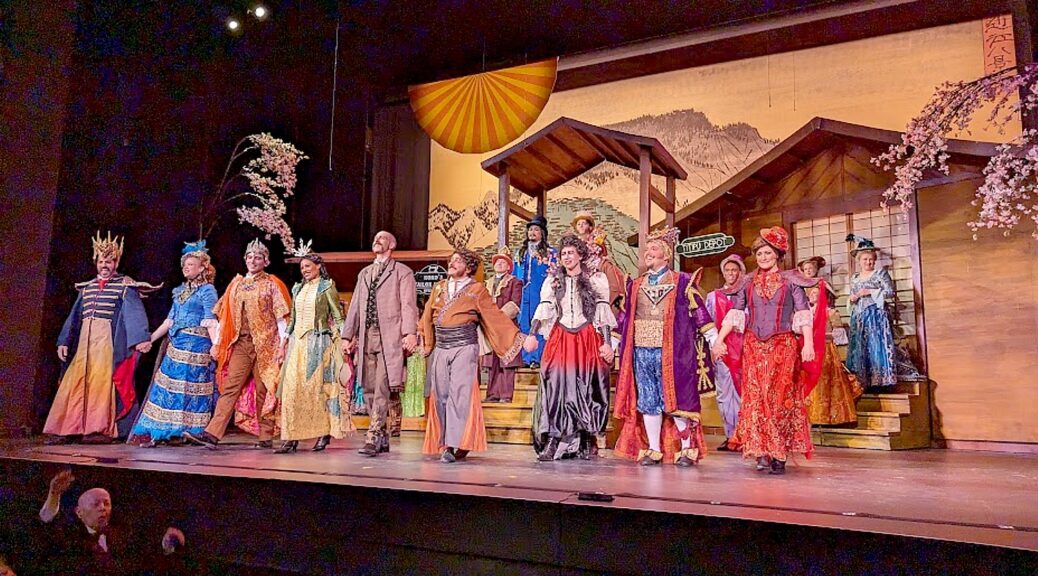
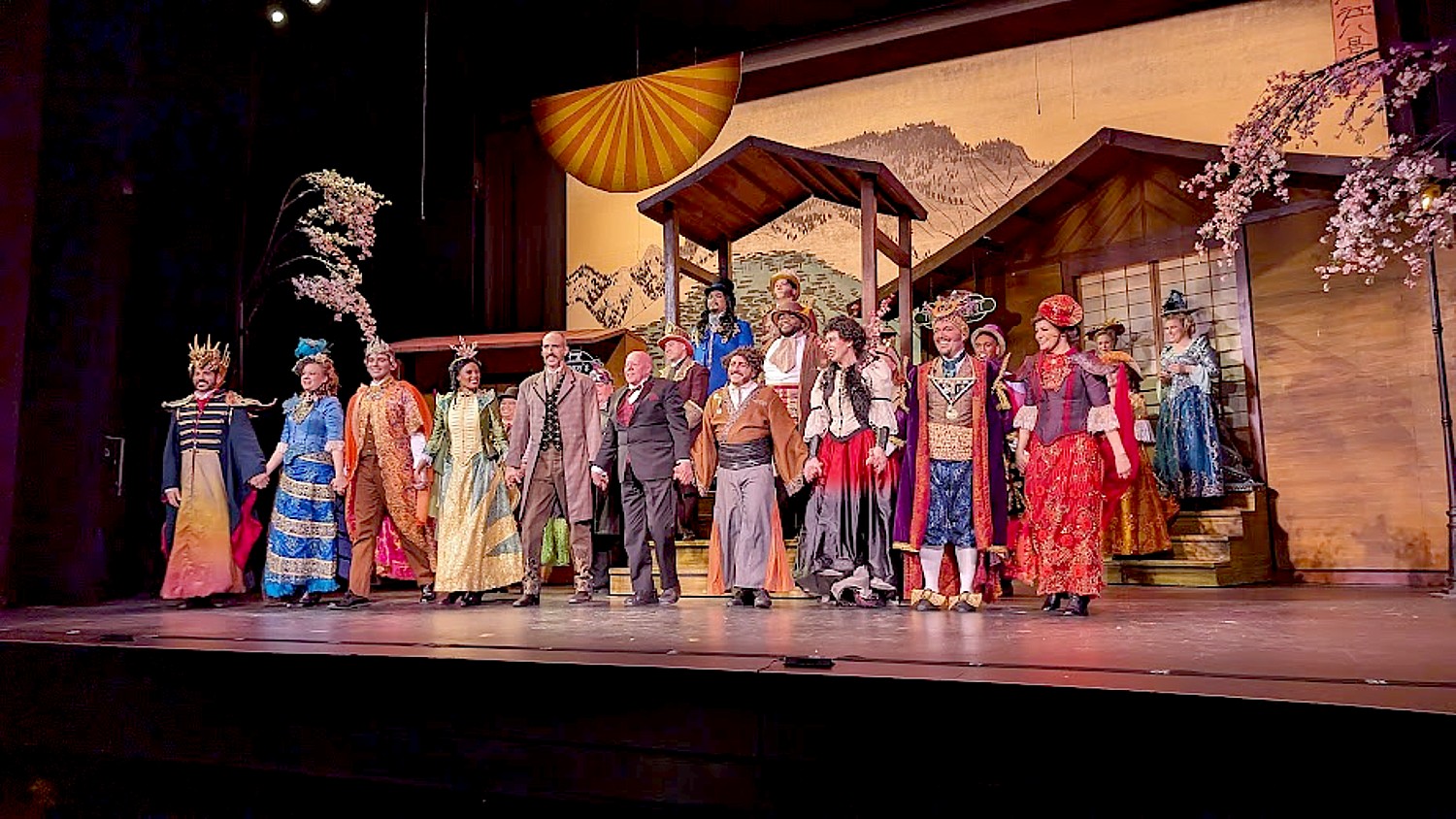
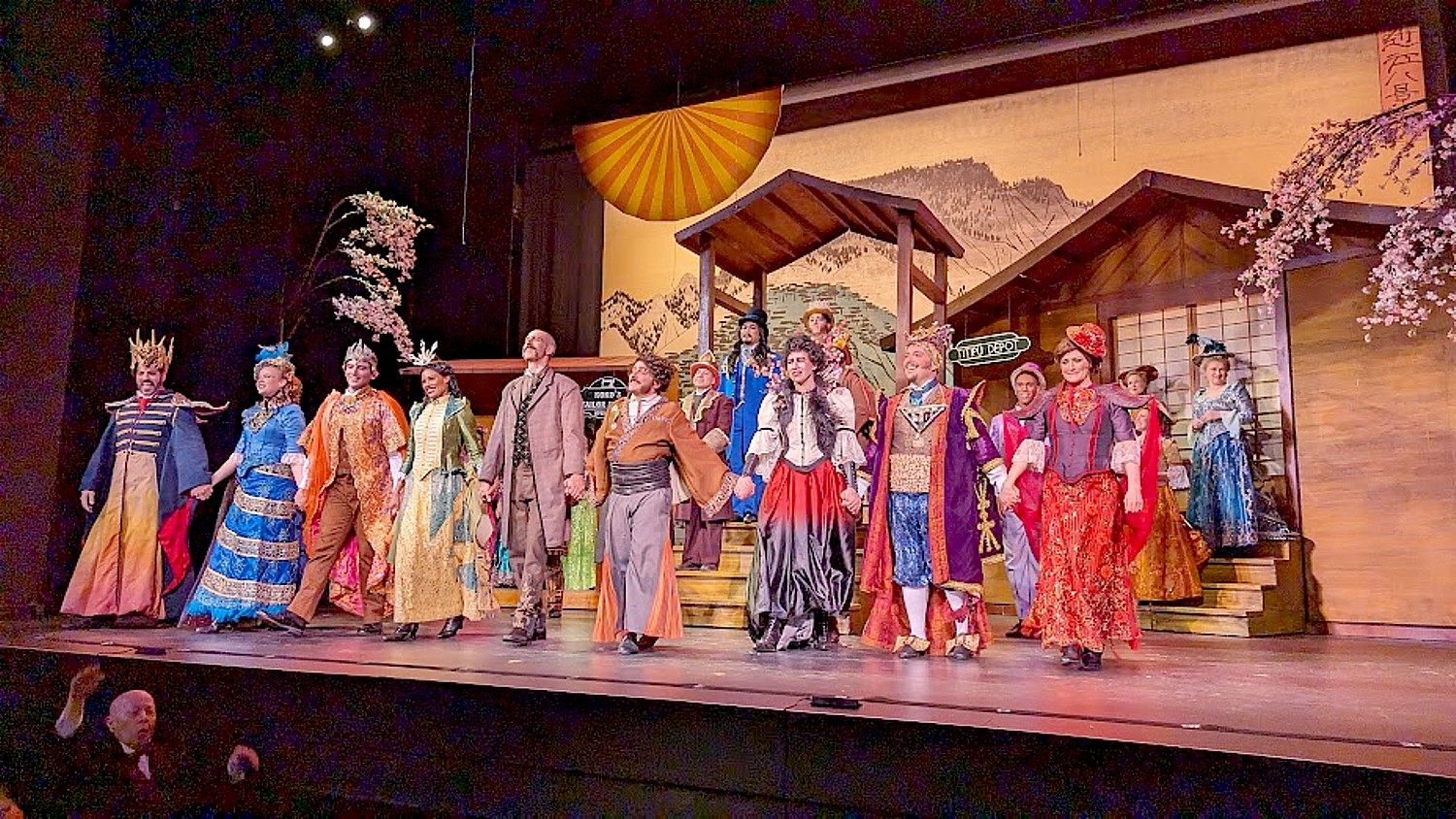
New York Gilbert & Sullivan Players take their bow at the end of this season’s “The Mikado” © Karen Rubin/goingplacesfarandnear.com

By Karen Rubin, Travel Features Syndicate, goingplacesfarandnear.com

The New York Gilbert & Sullivan Players company is one of New York City’s cultural treasures and fortunately, many outside the Big Apple will also have the opportunity to revel in the company’s artistry and talent as it finishes its stellar production of “The Mikado” and begins its annual road tour, this season featuring “The Pirates of Penzeance.”

Now in its 49th year, this extremely talented and creative company NYGASP, which is based out of the Kaye Playhouse at Hunter College, has been hailed as “the leading custodian of the G&S classics” and has created its own special niche in the cultural mosaic of New York City and the nation. NYGASP’s mission is “giving vitality to the living legacy of Gilbert & Sullivan,” says the company’s Founder/Artistic Director/General Manager Albert Bergeret.

Bergeret typically hosts a preview and introduction during a series, typically before a performance geared to families.

The new/ updated NYGASP production of The Mikado premiered in NYC in late 2016, features an original prologue that introduces the audience to the real life characters of the D’Oyly Carte Opera Company who originated The Mikado in 1885 London. The production centers the fantastic elements of juxtaposing a Victorian world with an imagined Japanese setting allowing the opera to be a truly inclusive experience for all audiences and artists. 

The show abounds with absurdity and astounding wit, clever wordplay, memorable tunes and endearing characters, performed to perfection by clever patter man David Macaluso as Sullivan and Ko-Ko (who brings extraordinary physical comedy and a sweet voice); blustering Matthew Wages who plays Richard D’Oyly Carte and pompous Pooh-Bah; creative David Auxier as author Gilbert and town leader Pish-Tush (who also authored the new Prologue and is the director, and choreographer); charming John Charles McLaughlin as romantic hero Nanki-Poo, rising star Hannah Holmes as lovelorn and overbearing Katisha; beautiful soprano Rebecca L. Hargrove  as self-aware Yum Yum;  Sarah Hutchison as maiden sister Peep-Bo; mellifluous mezzo Elisabeth Cernadas as adventurous Pitti-Sing; and dynamic bass David Wannen in the title role. 

The brilliant ensemble is rounded out by Caitlin Borek, Camilo Estrada, Chris-Ian Sanchez, James Mills, Katie Hall, Abby Kurth, Lance Olds, Logan Pitts, Maurio Hines, Michael Galante, Michelle Seipel, Sabrina Lopez, Viet Vo and Alexandra Imbrosci-Viera.

To their artistry and talent they exude a joy of performance.

The production showcases gorgeous scenery designed by Anshuman Bhatia, clever and inventive costumes by Quinto Ott and lighting by Benjamin WeillThe Mikado is produced by NYGASP Executive Director David Wannen. Founder and Artistic Director Albert Bergeret,sharing the podium with Associate Conductor, Joseph Rubin conducting the 25-piece orchestra.

NYGASP’s brilliant re-creation of Gilbert & Sullivan’s classic, “Mikado,” was first introduced in 2016, aimed at exorcizing the production of offensive stereotypes that might offend Asians that were embedded in the 1885 original. “It is a balancing act to respect the original but take out what people considered offensive,” Bergeret says.

A specially created “prologue” and creative costuming ensure there is no confusion that “Mikado” represents Englishmen satirizing Victorian society and politics, capitalizing on British fascination with all things Japanese in the 1880s, to defuse the pointed references that might have gotten Gilbert & Sullivan (already under censorship of Lord Chamberlain) into trouble. And frankly, the depiction of The Mikado (who doesn’t even appear for the first 2 ½ hours of the three-hour show) as a cruel but ridiculous tyrant is reminiscent of how the Red Queen is depicted in “Alice’s Adventures in Wonderland” (1865). If anything, the Mikado’s character may resonate in 2024 more than in 2015 or even 1885.

The clever Prologue. authored by the director, choreographer David Auxier-Loyala takes place on June 6, 1884 – one day after their “Princess Ida” opened, brings together D’Oyly Carte, the actual producer, with Arthur Sullivan, the composer and W.S. Gilbert, the lyricist and author (played by David Auxier), and has them talking about the Japanese exhibition that is all the stir in London. D’Oyly Carte is pushing them to come up with their next musical, and in their verbal interplay, these fanciful interjections become the fanciful names for characters – Pish-Tush, Pooh-Bah – and suggest plot points. Gilbert “dreams” the performance of “Mikado” – he becomes Pish-Tush, a Noble Lord; Sullivan becomes Ko-Ko, the Lord High Executioner, and D’Oyly Carte becomes Pooh-Bah (“the Lord High Everything Else”).

Of course British audiences of 1885 could have cared less about “political correctness.” The object of Gilbert & Sullivan’s satire was British society

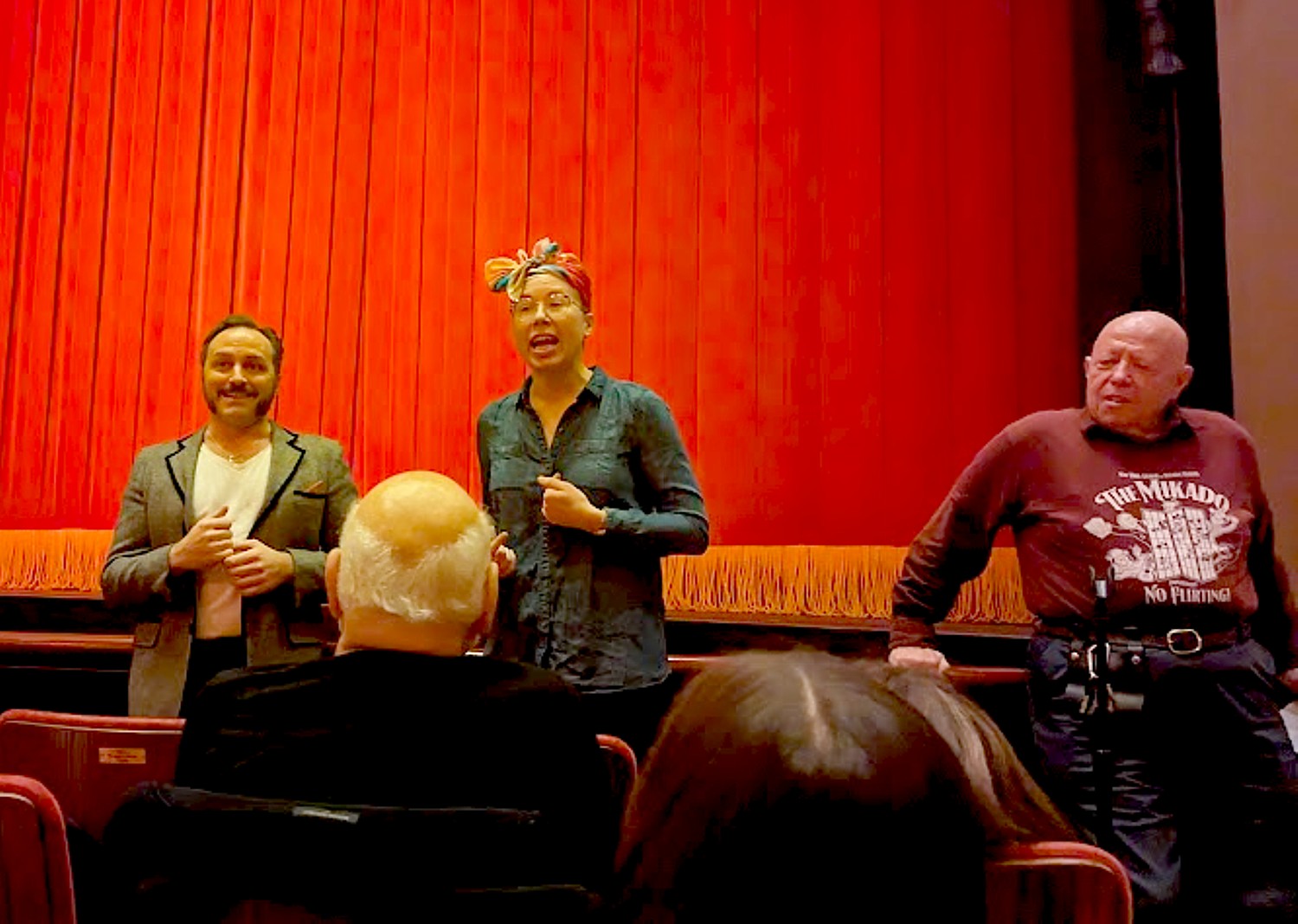
Before the “Family” performance of Gilbert & Sullivan’s “Mikado,” Music Director/Conductor Albert Bergeret, who founded NYGASP 49 years ago, accompanied by David Macaluso (Ko-Ko) and Hannah Holmes (Katishaw) give a playful explanation of the show © Karen Rubin/goingplacesfarandnear.com

We take advantage of seeing January 13 afternoon “Family performance”, which features a before-show talk introducing the plot and music presented by the esteemed Conductor and Musical Director Albert Bergeret, who founded the New York Gilbert & Sullivan Players 49 years ago (and was the original Nanki-Poo), I learn that my comparison of “Mikado” for Gilbert & Sullivan to “Madame Butterfly” by Puccini is not entirely unfounded. While the music that Sullivan composed runs the gamut of British musical styles (ballad, madrigal, march), he incorporates the Japanese five-note scale and an actual Japanese folk song, Miya-sama (though for this production, new English lyrics are substituted for the Japanese) – music which Puccini also appropriates in “Madame Butterfly.” (Miya-sama was not used in this production.)

“We took out what’s incomprehensible or inappropriate,” Bergeret says, who adds that Sullivan was a brilliant, classically trained musician who was well versed in all genres of music and composers from around the world. In “Mikado” Sullivan demonstrates his virtuosity in writing in many different forms.

Just as Gilbert incorporated contemporaneous digs, so too does this Ko-Ko, a “cheap tailor” (which means he made clothes for common people) taken from the county jail where he was scheduled to be executed (for flirting), and elevated to Lord High Executioner, update his “List” of those who shan’t be missed, to be as current as yesterday’s tweet, sometimes changing it each performance, surprising even the rest of the cast.

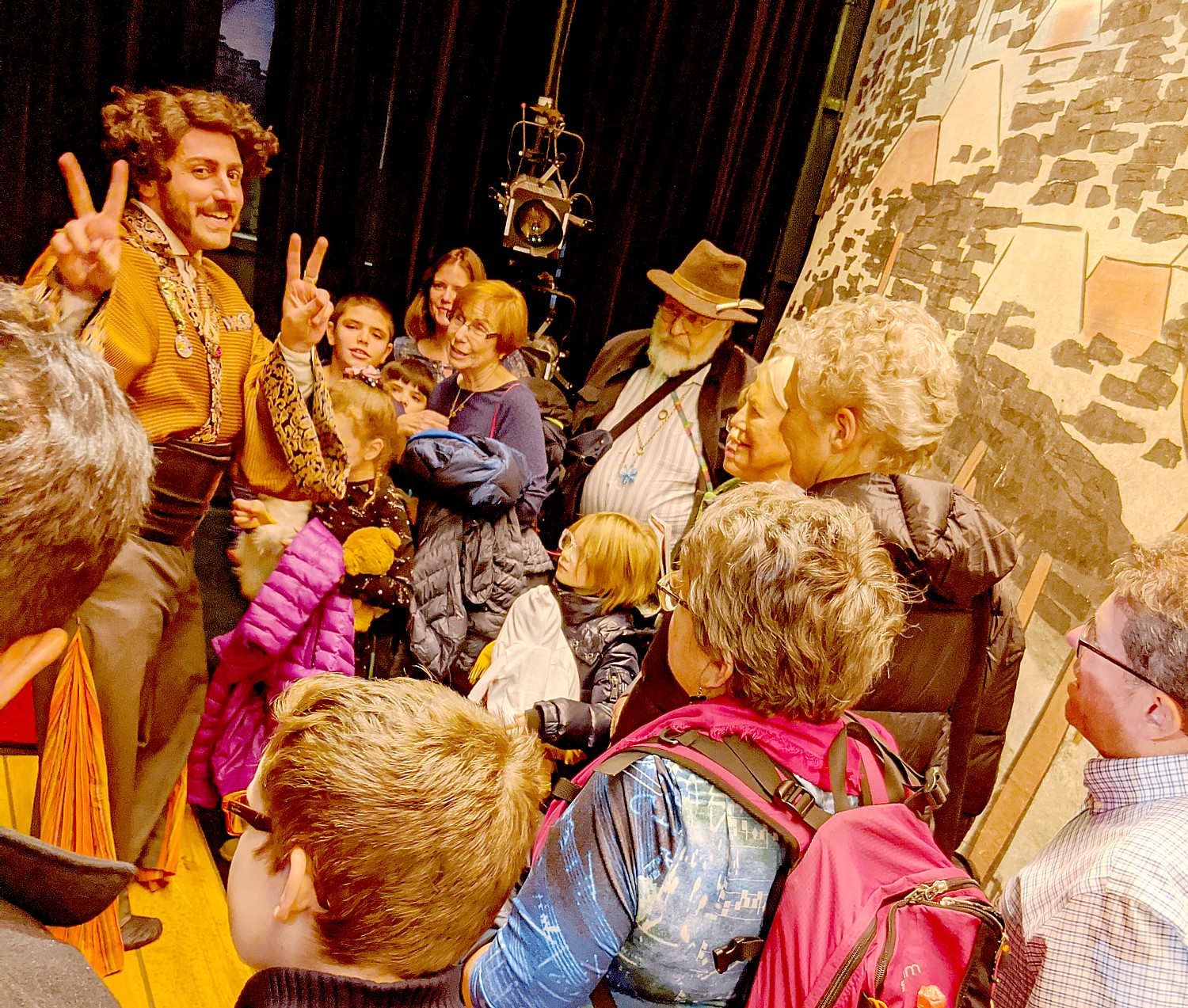
New York Gilbert & Sullivan Players production of “The Mikado” © Karen Rubin/goingplacesfarandnear.comIn an earlier season, David Macaluso (Ko-Ko) hosts audience members on a backstage tour of the Kaye Playhouse at Hunter College, homebase for the New York Gilbert & Sullivan Players © Karen Rubin/goingplacesfarandnear.com

During our performance, Ko-Ko, brilliantly played by David Macaluso, who is not only brilliant at patter but physical comedy, inserts digs at A.I. and the “plagiarist” that got him on the list, and natural gas which somehow puts the “environmentalist” also on that long, long list as the scroll unfurls.

And The Mikado’s updated long list of who to punish and how, includes the Instagrammer “made to endure a dungeon cell without not one cellular bar” and “political pundits, who must sail for weeks on a boat full of leaks on a sea of alternative facts.” (That gets tremendous laughs.)

But Bergeret notes they do not want to do too much contemporizing. “We are proud to share this production, which upholds The Mikado’s musical score, setting, characters, storytelling, themes, and most of all its universal satire of human nature.”

So, the Mikado looks to execute Ko-Ko (the Lord High Executioner), Pooh-Bah (the “Lord High Everything” and Pitti-Sing (one of the “three little maids from school” for carrying out the Mikado’s orders to execute Somebody and unwittingly execute the Mikado’s son and heir to the throne, Nanki-Poo. The Mikado appreciates their effort (he only wishes he could have witnessed the execution) but insists they still should be executed for, well, killing the heir and looks for the entertainment value in their lingering death.

The Mikado justifies executing the three because, after all, this is an unfair world where the virtuous suffer and the undeserving succeed. This leads to the song that probably best sums up the moral of Gilbert & Sullivan’s “Mikado,” in which the three condemned sing, “See how the Fates their gifts allot/For A is happy, B is not/Yet B is worthy, I dare say/Of more prosperity than A…If I were Fortune which I’m not/B should enjoy A’s happy lot/And A should die in misery/That is, assuming I am B.”

In the end The Mikado is less a jab at all-powerful monarchal misrule, than a comic contemplation of what human beings do when in faced with existential situation. Their focus is on human nature and the human condition. In Mikado, we see self-preservation – even by Yum-Yum who is willing to marry Nanki-Poo who loves her so much he is willing to be executed after just a month, until she realizes that as the wife of an executed man, she would be buried alive.

This production makes another change at the end, stopping the show for a return to the Gilbert & Sullivan characters trying to figure out an ending that would not rely on a magical or fantastical device like the “magic lozenge” they used in their 1877 opera “The Sorcerer” and almost breaks up their collaboration. (Gilbert finally gets to use the device in “The Mountebanks,” written with Alfred Cellier in 1892). Instead, Gilbert comes up with an argument that actually makes sense given the circumstance: Any order by the Mikado must be carried out, so having given the order, it must have been carried out (not much more absurd than “Anything the President does is legal and immune from prosecution, even if he orders Seal 6 to kill his political opponent.”).

New York Gilbert & Sullivan Players perform the joyful finale of “Mikado” © Karen Rubin/goingplacesfarandnear.com

“The Mikado, or The Town of Titipu” – the ninth of Gilbert & Sullivan’s 14 collaborations – was immensely popular when it opened on March 14 1885 in London, running for 672 performances, the second longest run for any musical theater production. By the end of 1885, some 150 companies in Europe and America were performing the operetta. It even was widely performed in Japan (apparently they took no offense).

Indeed, “The Mikado” is one of the most popular productions of musical theater of all time. Performed for the last 135 years – by the D’Oyly Carte Opera Company, NYGASP and others including Joseph Papp’s Shakespeare in the Park festival – there were decades when “Mikado” was being performed somewhere in the English speaking world any day of the year. Some of its word inventions have entered the lexicon, such as “the grand Poo-Bah” and “Let the punishment fit the crime.” They have also been performed in languages including Yiddish and French, though Bergeret notes that the French don’t seem to get the jokes.

G&S were very popular in their own time – all their 14 shows were popular and “Mikado” was one of most popular written out of their 14 (one, “Thespis,” was lost). Their nods to classical and digs at British society and conventions and their union of witty lyrics and lyrical music, appealed to high and low class. Both wrote with others but were never so successful as when they collaborated together. “They were very different characters – Sullivan was a lady’s man” – aspects that come through in the specially written “Prologue” to Mikado.

“The only one who doesn’t like Gilbert was Queen Victoria, Bergeret tells us. “We are not amused,” Queen Victoria once commented. The Queen knighted Sullivan as the “savior of English classical music.” (Her son, King Edward VII, knighted Gilbert.)

Gilbert & Sullivan actually invented musical theater. At the time Gilbert & Sullivan were writing, there were opera, light opera and music hall theatricals, but nothing like a musical show with story – music that had both class and pop – with real story lines, music advanced the story, Bergeret tells us. This is where musical theater started,. Watching “Mikado” you see a straight line to Rogers & Hammerstein and Stephen Sondheim.

Since its founding in 1974, the company has presented over 3,000 performances of the G&S masterpieces throughout the United States, Canada, and the U.K. delighting audiences of all ages.

The company’s celebrated ensemble of G&S experts, developed by introducing new singers each year from New York’s immense pool of vocal and theatrical talent, has collaborated with such guest artists as world-renowned G&S exponent the late John Reed, O.B.E. in numerous comic baritone roles, Tony winner John Rubinstein and Frank Gorshin both as King Gama in Princess Ida, John Astin as Sir Joseph in H.M.S. Pinafore, Hal Linden and Noel Harrison as the Major General in The Pirates of Penzance, Pat Carroll as Little Buttercup in H.M.S. Pinafore, and Steve Allen as The Mikado.

The company’s repertory consists of 13 complete G&S operas (cast, orchestra and crew of 50-80 people), special versions of the most popular operas designed for children’s audiences, and a variety of charming sextet concert programs. The company has also produced a cabaret act.  I’ve Got a Little Twist, created and directed by David Auxier, won a 2010 Bistro Award, has toured the country and appeared at Lincoln Center’s 2011 Atrium series.

NYGASP Founder/Artistic Director/General Manager, Albert Bergeret is a career-long professional specialist in the works of Gilbert & Sullivan, having performed, staged, conducted and designed every opera in the repertoire since the company’s founding in 1974. He has conducted and staged all 13 of the works in the G&S canon as well as the company’s smash hit production of George Gershwin’s Of Thee I Sing.

New York Gilbert & Sullivan Players are worthy of a Tony Award.

Coming up, NYGASP will present G&S’s “The Sorcerer” and “Trial by Jury” on April 6-7.

Also, NYGASP regularly tours its shows, and this year is featuring “Pirates of Penzance”:

Feb. 28: An Evening of G&S Favorites, Lincoln Center, Fort Collins, CO

Feb. 29: The Pirates of Penzance in One Act/Evening of G&S Favorites, Lone Tree Arts Center, Lone Tree, CO

Mar. 3, 2024, The Pirates of Penzance, Popejoy Hall, Albuquerque, NM

Mar. 5: The Pirates of Penzance, Mesa Arts Center, Mesa, AZ

Mar. 7: The Pirates of Penzance, Gallo Center for the Arts, Modesto, CA

Mar. 8: The Pirates of Penzance, Clark Center for the Performing Art, Arroyo Grande, CA

Mar. 9: The Pirates of Penzance, Torrance Cultural Arts Center, Torrance, CA

Mar. 10: The Pirates of Penzance, McCallum Theatre, Palm Desert, CA

Apr. 26: The Pirates of Penzance in One Act/Evening of G&S Favorites, Harry M. Cornell Arts & Entertainment Complex, Joplin, MO

May 10: The Pirates of Penzance, Mayo Performing Arts Center, Morristown, NJ

More information at www.NYGASP.org, 212-772-4448.

____________________________

© 2024 Travel Features Syndicate, a division of Workstyles, Inc. All rights reserved. Visit goingplacesfarandnear.com and travelwritersmagazine.com/TravelFeaturesSyndicate/. Blogging at goingplacesnearandfar.wordpress.com and moralcompasstravel.info. Visit instagram.com/going_places_far_and_near and instagram.com/bigbackpacktraveler/ Send comments or questions to FamTravLtr@aol.com. Tweet @TravelFeatures. ‘Like’ us at facebook.com/NewsPhotoFeatures