Tag Archives: Ho Chi Minh Mausoleum

Discovery Bicycle Tours Vietnam Trip: Ho Chi Minh Mausoleum Brings New Clarity to a Cloudy Past

Visiting the Ho Chi Minh Mausoleum in Hanoi on Discovery Bicycle Tours’ 12-day Vietnam trip is a profound experience © Karen Rubin/goingplacesfarandnear.com

By Karen Rubin, Travel Features Syndicate, goingplacesfarandnear.com

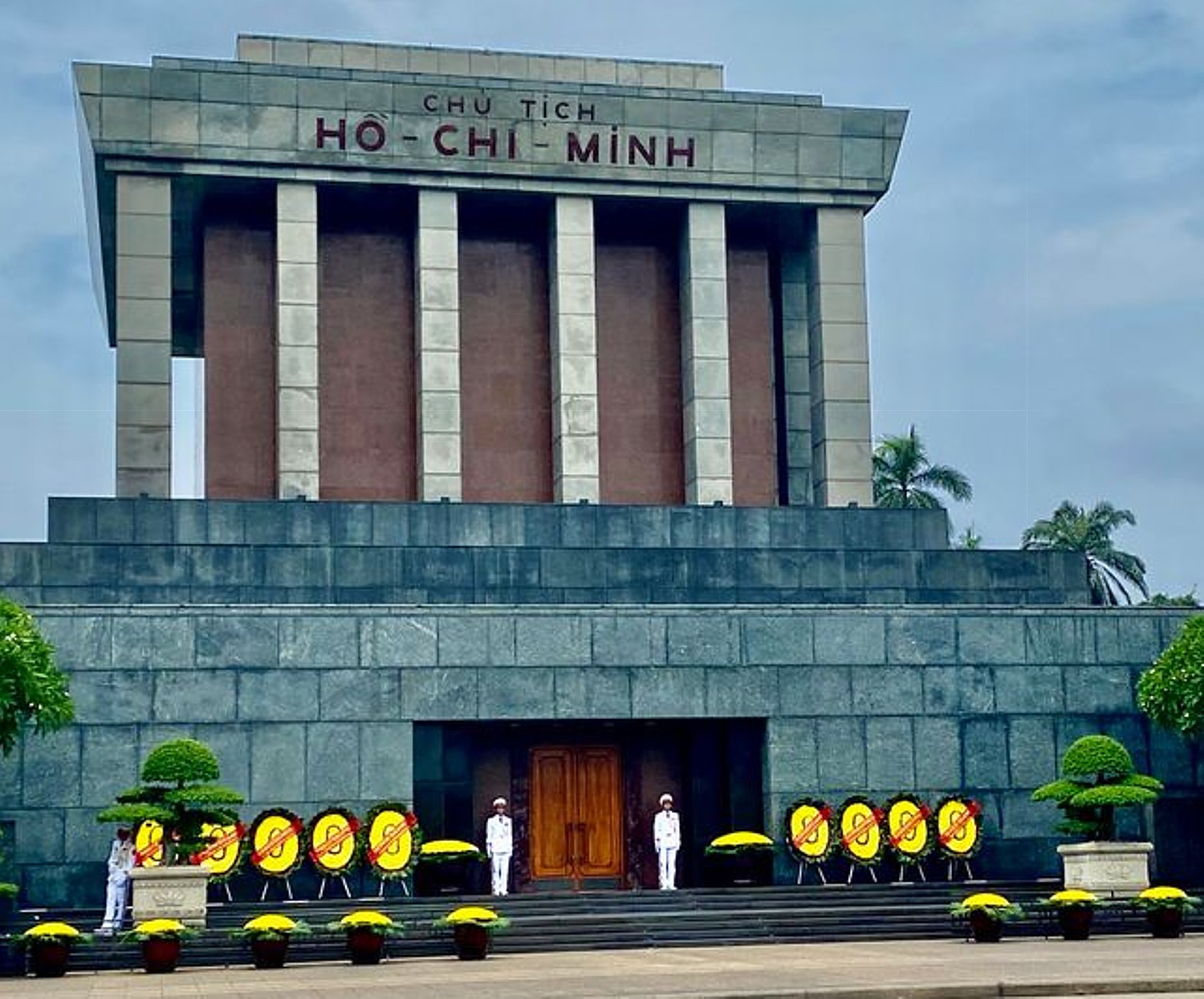
Visiting the Ho Chi Minh Mausoleum in Hanoi is a profound experience – revelatory, even. I had not expected to see the great liberator of Vietnam’s actual body, lighted from above. And shortly after, standing outside the Soviet-built mausoleum, I realize as we listen to our guide, Nguyen Hong Phong, that I had no actual understanding of who Ho Chi Minh was. Combing the recesses of my mind, I realize I saw Ho Chi Minh simply as the enemy and likely a brutal dictator (more like China’s Mao Tse-Tung). And even though I had lived through the Vietnam War (known here as the American War), I really hadn’t understood that either.

But here in Hanoi on Discovery Bicycle Tours’ Vietnam tour, I can see how Ho Chi Minh is justifiably venerated as a hero to his people – George Washington, Lincoln and FDR rolled into one. Visiting is like a pilgrimage with rules that accord him maximum respect. We walk up the stairs into the mausoleum, and slowly walk around his actual body, lit from above, as if he is merely sleeping – the still sleeping Liberator.

Ho Chi Minh, Phong tells us, “is the most respected in Vietnam. People changed their name to Ho. He is worshipped like a god in homes. He overcame the French, Japanese, Chinese and Americans for independence and freedom. Now we live in a peaceful country because of Ho Chi Minh.”

Our Discovery Bicycle Tours group at the Ho Chi Minh mausoleum

Coming back to the front of his mausoleum (built by the Soviets), Phong relates that Ho Chi Minh was born in 1890 into an educated family – his father was a Mandarin, working for a royal family. In feudal society, only men went to school and women stayed at home. He and his brother went to a French school.

He attended college in Saigon in 1911, studying culinary arts and applied to work as a cook in France. He wound up working on a ship, traveling to America, Britain, France, Russia and in 1928, went to China. Seeing the world in this way is what cultivated his revolutionary ideology and zeal to liberate Vietnam from foreign imperialists. On Feb 3 1930, he gathered party leaders and set up the Communist party.

“What he really learned was the importance of making Vietnam independent. He left Vietnam to learn enough about the French to kick them out,” Phong tells us.

The Founding Fathers of the Republic of Vietnam © Karen Rubin/goingplacesfarandnear.com

He returned to Vietnam in 1941, having been away for 30 years. In 1944, Ho Chi Minh and General Japp (also a national hero) set up the Viet Minh, to resist foreign occupation by theFrench and Japanese during World War II.  

When the Japanese and the French (who had occupied Vietnam since 1868, introducing Roman alphabet to replace Chinese characters the people used for 1000 years) left in 1945 at the end of World War II, on Sept 2, 1945, Ho Chi Minh declared the independent Democratic Republic of Vietnam. But after only one year, in 1946, the French attacked, forcing Ho Chi Minh into the mountains and retaking control.

“He wanted peace and agreed to divide the country in two for two years. They agreed to divide along the 17th parallel. It was supposed to be temporary. Five million people (mostly Catholic), fled south while one million southerners moved north. Then there was supposed to be national elections.”

But the US blocked the election (claiming concern for a “domino effect” of Chinese-led Communism spreading across IndoChina) and set up a puppet government in the south

Ho Chi Minh is still the most venerated hero to the Vietnamese © Karen Rubin/goingplacesfarandnear.com

When the war ended in 1975, Vietnam was united under the Communist regime.

The South Vietnamese who worked for the Americans were terrified of retribution and left (they were the “boat people”)

But Vietnam was still not at peace. China set up a new government in Cambodia that attacked South Vietnam. Fighting continued from 1979-1988.

Vietnam has only had real peace since 1988.

In 1986, the government implemented a “revision policy”: “We close the past, and look to the future,” Phong tells us. “The state still owned industry but allowed people to own their own businesses, allowed private enterprise and open markets. The rice fields were divided so you worked for yourself.”

Ho Chi Minh shunned the Presidential Palace, built by the French © Karen Rubin/goingplacesfarandnear.com

From the mausoleum, we visit the complex where he lived – the Presidential Palace taken over from the French (Ho Chi Minh refused to live in it and only used the palace as an office and to receive dignitaries). Instead, from 1944-48 he insisted on living in a modest one-bedroom house, then moved to a house on stilts (reminiscent of where he lived with a Thai family), which again, was absolutely beautiful, but very modest.

Looking through the window into Ho Chi Minh’s house on stilts © Karen Rubin/goingplacesfarandnear.com

In 1967, Ho Chi Minh became sick with lung cancer and was moved into another house, steps away from his house on stilts. This one looks camouflaged like a bunker, and was connected to underground bunker because by then, the US was bombing Hanoi. When he died in 1969, at the age of 79, the location of his body was kept secret and moved multiple times. His body was kept inside a cave until 1973, when the US left, and then asked Russia to build a complex. Until 1977, they moved his body nightly, keeping the coffin hidden underground. Peering through the windows of his homes provides a window into who Ho Chi Minh was in life.

A house built like a bunker where Ho Chi Minh lived his last years © Karen Rubin/goingplacesfarandnear.com

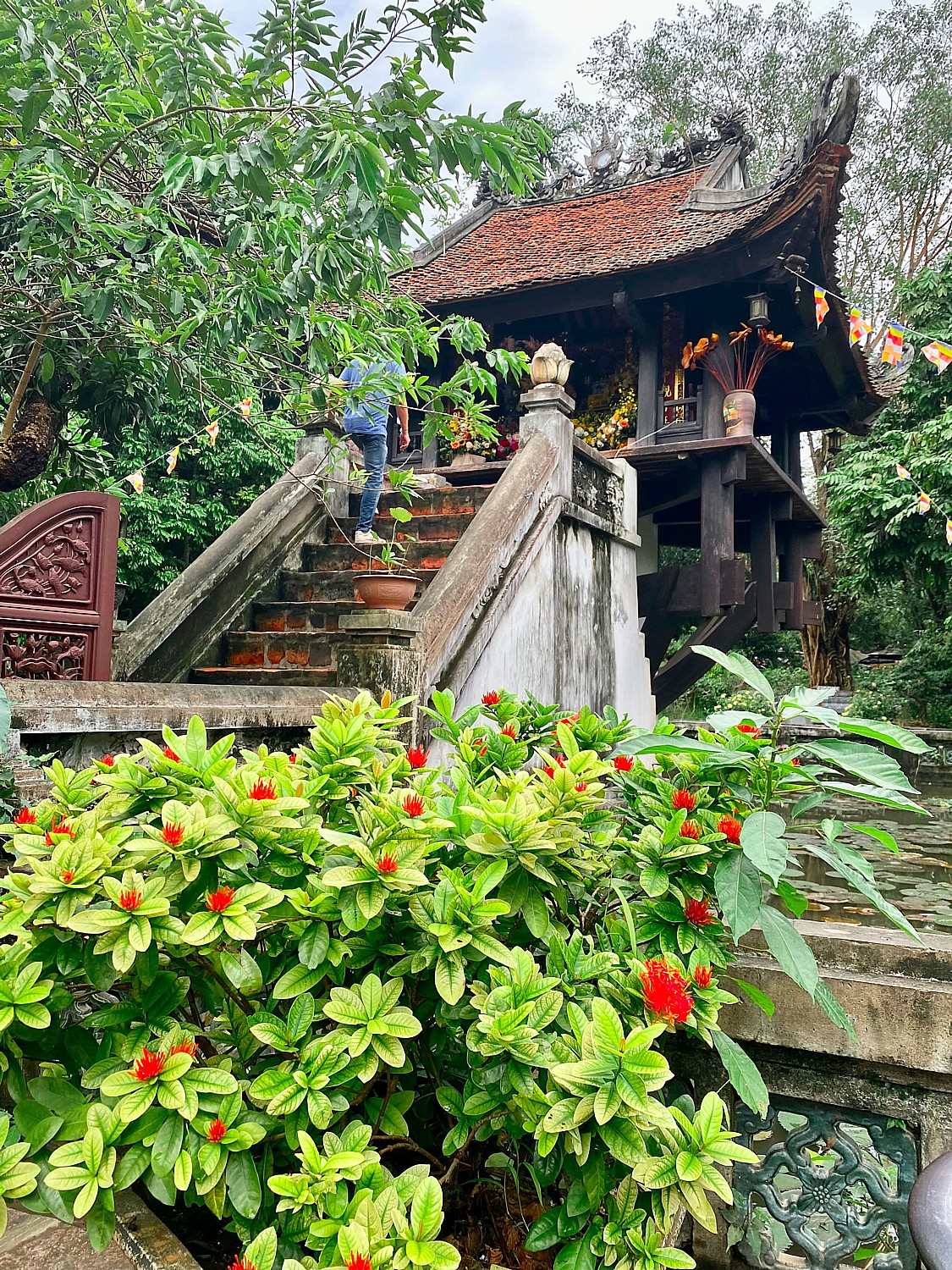
Before we leave the complex, we visit the One Pillar Pagoda, which dates back to 1049. The French destroyed it in 1954, but the Vietnamese rebuilt it in 1955. There is a billboard that lays out the moral “do’s” and ”don’ts” of Buddhist/Confucian/Taoist society.

The One Pillar Pagoda in Hanoi © Karen Rubin/goingplacesfarandnear.com

If I had questioned how Americans would be received in Vietnam, I soon get my answer standing in front of a monument to John McCain at the lake where McCain’s plane was shot down in 1967. McCain began six years as a prisoner in the dreaded Hoa Lo Prison, infamously known as the “Hanoi Hilton” – famously refusing to leave until his comrades were also freed. (We don’t get to visit but today it is a historic museum which has an exhibit devoted to the American prisoners, but is mostly showcasing French colonialism, see “Museum Hopping and Shopping in Hanoi”).  The monument dates from 1992, when John McCain became one of the first Americans to come to Vietnam to heal relations; President Bill Clinton established relations in 1993 and helped revive Vietnam’s economy.

The John McCain Monument in Hanoi © Karen Rubin/goingplacesfarandnear.com

In December 1972, American B52s bombed Hanoi, surrounding villages and hospitals. As we look around Hanoi today, there is little evidence of that.

If Vietnamese still resent Americans you do not feel it at all. When I ask our guides about that, I am told “We are a Buddhist country. We do not look to the past; we look to the future.” If anything, though, there is still resentment between North and South Vietnamese, similar to the cultural divisions that remain between north and south since America’s civil war.

“The Vietnamese love Bill Clinton, the first US president to visit after the war, and we love John McCain. The United States is one of seven countries with the best relations,” Phong says – US, France, Australia, and Russia. “We close the past and look to the future.” Interestingly, considering one of the excuses for the US to enter the Vietnam War – the “domino theory” that China would take over IndoChina – is that Vietnam is wary of China, which had dominated Vietnam for 1000 years. “Local people feel cautious about China’s ambition to invade.”

Our Discovery Bicycle Tours guide Calista Phillips with Mr. Trung, Vietnam’s national champion cyclist, where we get our rental bikes © Karen Rubin/goingplacesfarandnear.com

It is our second day on Discovery Bicycle Tours’ 12-day Vietnam tour, and we’ve come to the Mausoleum after stopping first at the bike rental shop owned by Mr. Trung, a 70-year old former national champion and president of the Giant UNCC (he poses with us and shows magazines that feature him), where we are fitted for bikes that we will use in Ninh Binh, Hue and Hoi An.

Our Discovery Bicycle Tours is rowed into the Thung Nham bird sanctuary © Karen Rubin/goingplacesfarandnear.com

From here, we drive a couple of hours to the Thung Nham Ecotourism Zone (I enjoy looking out to the scenery, how soon we find ourselves amid rice paddies and farms). It is sunset when  we are taken by traditional boat into a bird sanctuary.  Flocks of birds – storks, herons, teals, tropical starlings – take their positions in the tree tops over the Thung Nham wetland. There is a stunning resort set within the preserve, all the more gorgeous as lights and lanterns come on as the sun sets.

Our Discovery Bicycle Tours is rowed into the Thung Nham bird sanctuary © Karen Rubin/goingplacesfarandnear.com

It’s another 45 minutes drive to Emeralda Ninh Binh Resort, a fabulous five-star resort where we will stay for two nights.

The luxurious Emeralda Ninh Binh Resort where our Discovery Bicycle Tours group will stay for two nights. © Karen Rubin/goingplacesfarandnear.com

Discovery Bicycle Tours, 2520 W. Woodstock Rd., Woodstock, VT 05091, 800-257-2226, 802- 457-3553,  info@discoverybicycletours.comwww.discoverybicycletours.com

Next: Ninh Binh: A Boat Ride Through Caves, Bike Ride To Temples

See also:

UNEXPECTED DELIGHTS IN HANOI ON DISCOVERY BICYCLE TOURS’ 12-DAY VIETNAM TRIP

DISCOVERY BICYCLE TOURS VIETNAM TRIP: HO CHI MINH MAUSOLEUM BRINGS NEW CLARITY TO A CLOUDY PAST

DISCOVERY BICYCLE TOURS’ VIETNAM:  A BOAT RIDE THROUGH CAVES, BIKE RIDE TO TEMPLES IN NINH BINH

CRUISING BAI TU LONG BAY ON THE DRAGON LEGEND

DISCOVERY BICYCLE TOURS’ VIETNAM: HUE’S CITADEL, “CITY OF GHOSTS” & THE CHALLENGE OF BIKING THE HAI VAN PASS

DISCOVERY BICYCLE TOURS’ VIETNAM: HOI AN’S DAZZLING LIGHTS, TRANQUIL COUNTRYSIDE

A RENDEZVOUS WITH PROGRESS OF THE PRESENT, HORRORS OF THE PAST IN HO CHI MINH CITY

_________________

© 2025 Travel Features Syndicate, a division of Workstyles, Inc. All rights reserved. Visit goingplacesfarandnear.com and travelwritersmagazine.com/TravelFeaturesSyndicate/. Blogging at goingplacesnearandfar.wordpress.com and moralcompasstravel.info. Visit instagram.com/going_places_far_and_near and instagram.com/bigbackpacktraveler/ Send comments or questions to FamTravLtr@aol.com. Bluesky: @newsphotosfeatures.bsky.social X: @TravelFeatures Threads: @news_and_photo_features ‘Like’ us at facebook.com/NewsPhotoFeatures

Museum Hopping and Shopping in Hanoi, Vietnam

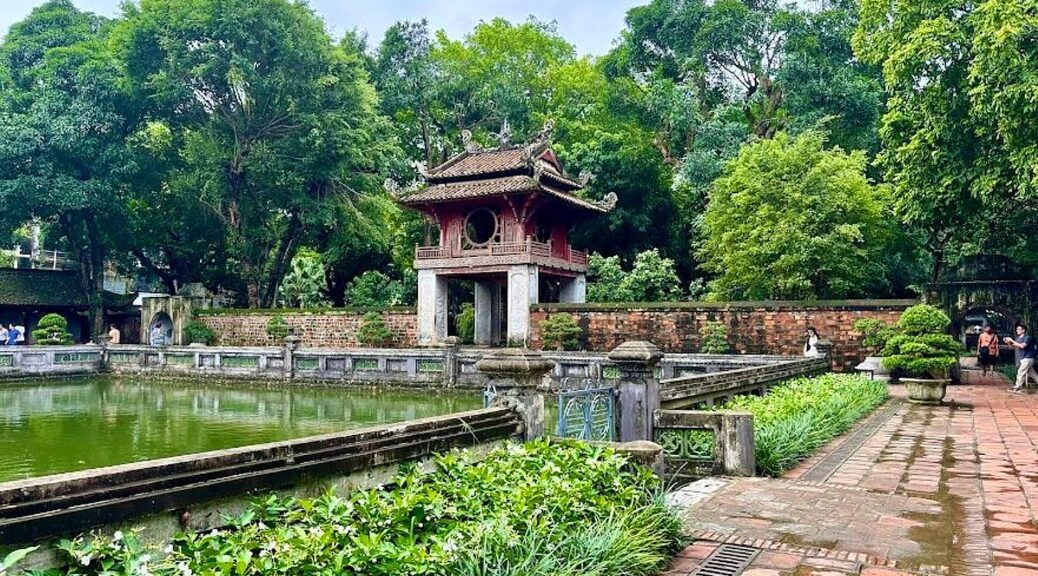
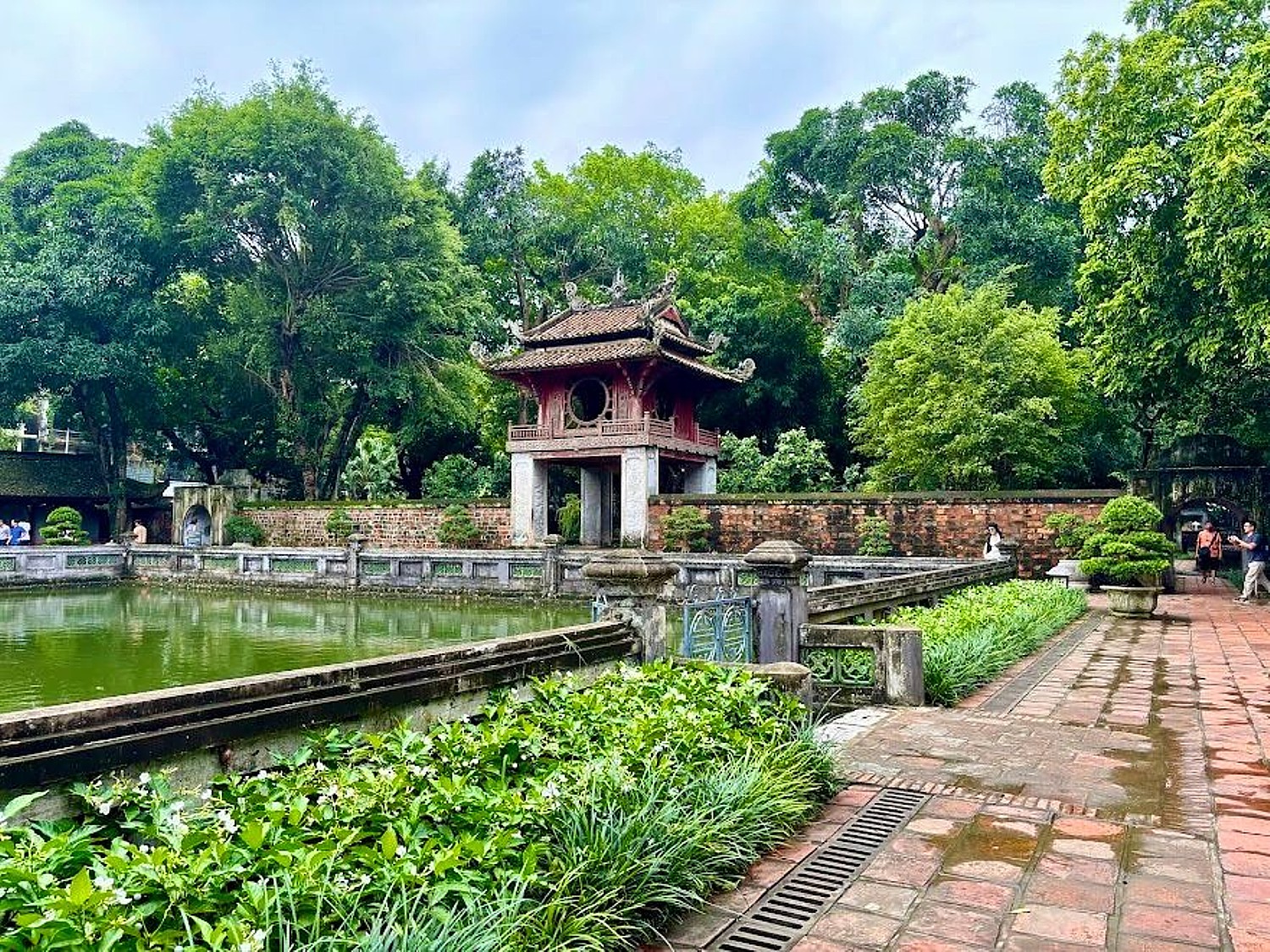
Among the museums and sites to visit in Hanoi, Vietnam, the Temple of Literature, dedicated to Confucius, is still a pilgrimage site. © Geri Bain

by Geri Bain for Travel Features Syndicate, goingplacesfarandnear.com

Hanoi is the last stop on a 16-day journey through Vietnam and Cambodia with my 30-year-old daughter. We built our itinerary around a one-week AmaWaterways Mekong River cruise (AmaWaterways.com) which began with a pre-cruise stay in Ho Chi Minh City and finished with a post-cruise stay in Hanoi. Here are highlights of Hanoi:

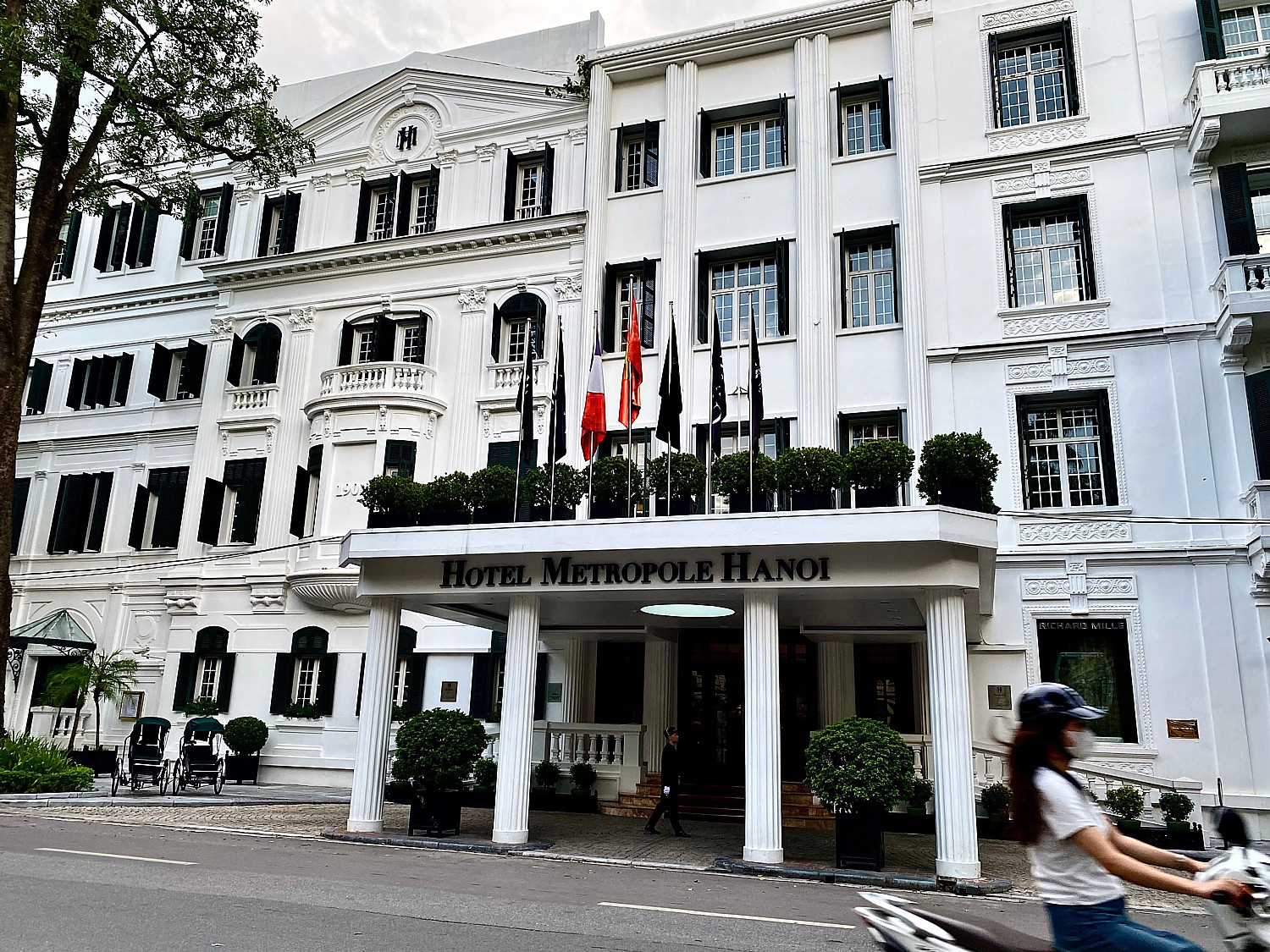
We check into our hotel, the Sofitel Legend Metropole Hanoi, happy we decided to spend three days here before flying back to the U.S. The hotel’s Heritage Wing, where we are staying, completed a full renovation last year, maintaining its luxurious French Colonial feel. We are thrilled to find that our Metropole Suite is actually comprised of three rooms—a living room with comfy chairs and a couch that is a sofa-bed, a parlor/office and a master bedroom with a king-size bed, plus two oversized bathrooms with Toto smart toilets. A nice surprise are the two balconies with great city views. (www.sofitel-legend-metropole-hanoi.com)

The recently-renovated Sofitel Legend Metropole Hanoi Heritage Wing, which opened in 1901, maintains its luxurious French Colonial feel. © Geri Bain
 

The oldest continuously operating hotel in Hanoi, the Sofitel Legend Metropole has a central location that allows us to walk to everything we want to do and offers a lovely pool and spa for recharging. Most of all, we love that the hotel’s rich history, decor, art collection and permanent “Path of History” exhibit create a kind of live-in history museum where we can relax and still feel immersed in the city. 

The hotel served as the official guest house for government guests and delegations under Ho Chi Minh. Walking through the hotel’s “Path of History” hall, we see that its list of past guests reads like a Who’s Who of the 20th and 21st century, from writers Somerset Maugham and Graham Greene to U.S. presidents. Photos of more recent political conclaves hosted here include a 2019 meeting between President Trump and Kim Jong Un.

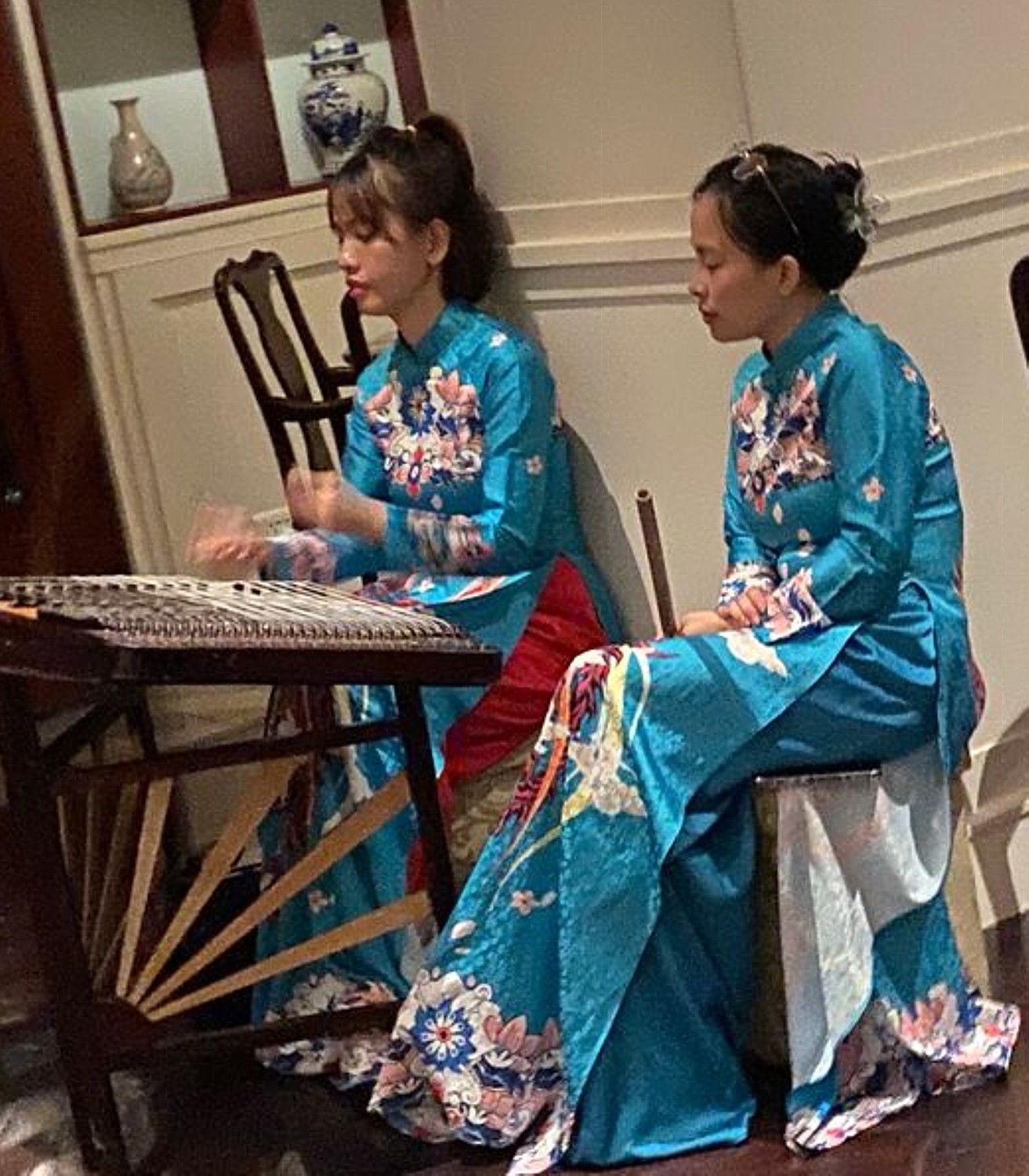
We enjoy listening to traditional Vietnamese music as we enjoy a tasting menu of specialties from different regions of Vietnam at the hotel’s Spice Garden. © Geri Bain

In addition to the actual history exhibit, over the course of our stay, we take in the entire hotel as we would an art museum, studying the sculptures and scenes of contemporary and historic Hanoi that decorate the stairwells, lounges, and other public spaces of the hotel.

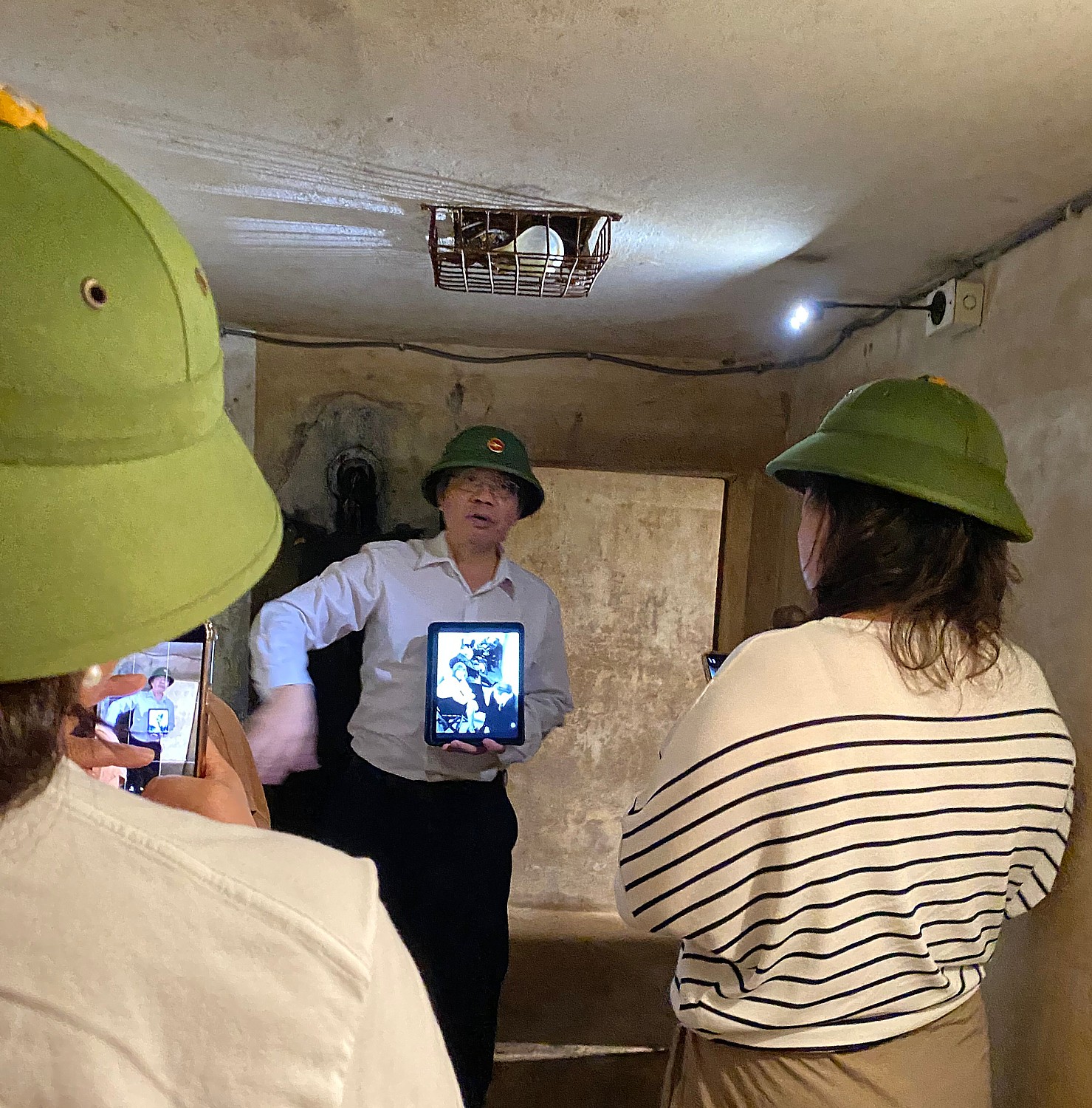
A tour of the hotel’s historic bomb shelter, free to hotel guests, turns out to be a much broader lesson in history. Our guide shows us photos of visiting diplomats and other hotel guests huddled in the small underground space during the Vietnam War (known as the American War in Vietnam); sometimes they were roused to retreat to the shelter multiple times a night. We also see heart-wrenching photos of the effects of the war on the city, its surroundings and its people.

We don helmets before descending into the bomb shelter where Jane Fonda, Joan Baez and other guests found safety during “American War” bombings of the city. © Geri Bain

Especially haunting is standing in the shelter and listening to the song “Where are you now, my son?” by Joan Baez, putting words to her experience when she emerged to witness the devastation caused by bombings.

We come to the Hoa Lo Prison expecting to learn about the American POWs held here during the Vietnam War, most famously John McCain. Facetiously called the “Hanoi Hilton” for the torture and harsh treatment that McCain and other American soldiers received here, the small area of displays and videos of happy Christmas moments and proclamations of how well they were treated is startling.

Hoa Lo Prison was built by the French to quell political uprisings; it had the opposite effect. © Geri Bain

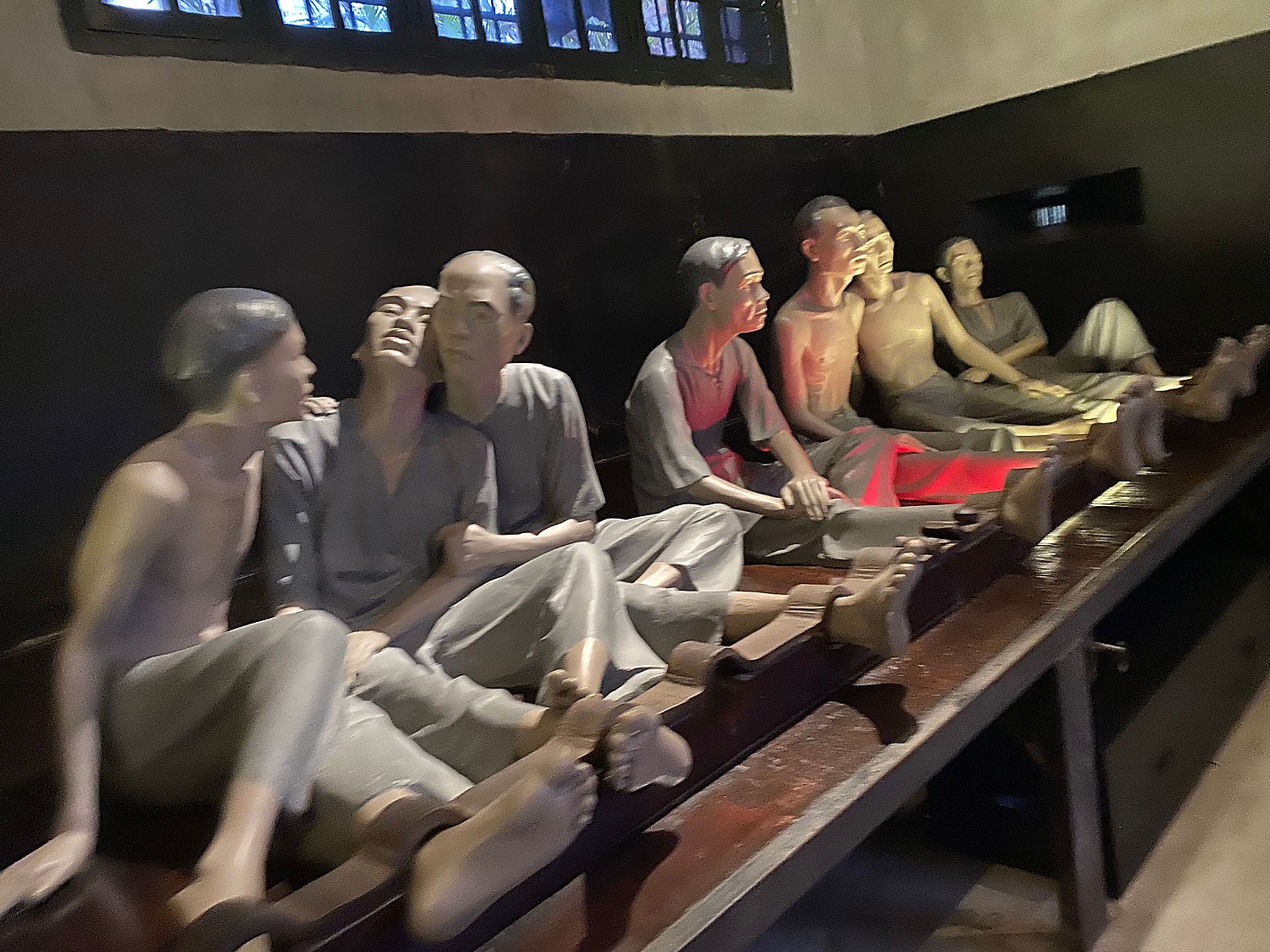
But that exhibit is only a smidgen of the museum. Its main message is the cruelty of French colonial days. We learn that the prison was built by the French Colonial government in 1896 for political prisoners. We see a portable guillotine, torture instruments and a life-size recreation of a room lined by prisoners shackled side-by-side on long concrete slabs. The museum is mainly dedicated to the horrific treatment of the Vietnamese at the hands of the French, to the heroes who lived and died here, and to the communist education and revolutionary fervor that fomented here, making the Hoa Lo Museum a proud Vietnamese heritage site.

The Temple of Literature, founded in 1070, was Vietnam’s first university. © Geri Bain

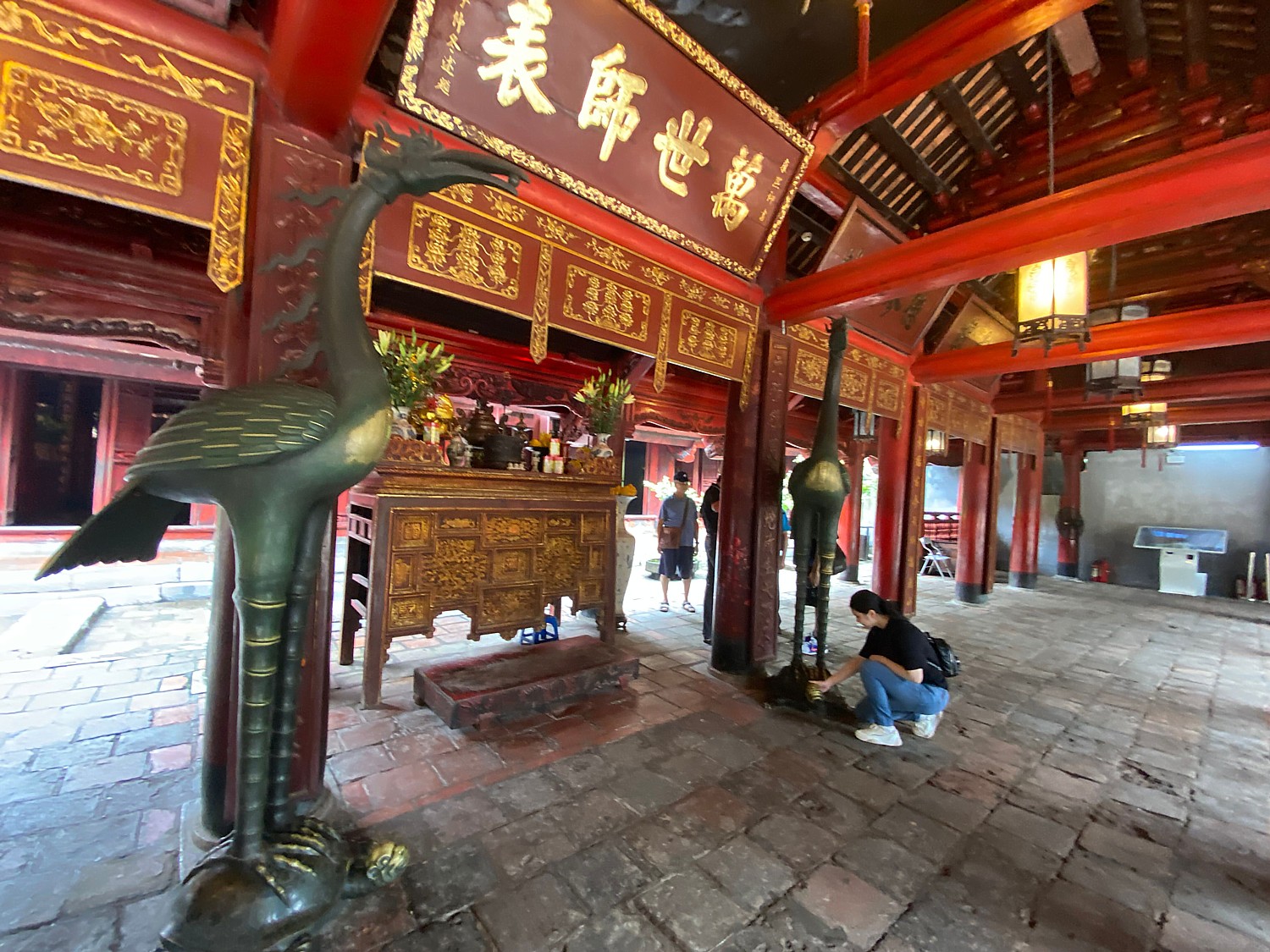
As we walk through the grand Gate of the Temple of Literature, we are amazed to realize that we are entering a university that was founded in 1070. The school was first open to members of the Royal families and later to exceptional students of other social classes. It stopped serving as a university in 1779, but it has never veered from its purpose to honor, worship and provide a place to learn the wisdom of Chinese philosopher Confucius. Students and their parents still come here to burn incense, make offerings and pray for success before important exams. We see people waiting their turn to touch a statue of a crane standing on the back of a turtle. We’re told that rubbing the belly of the crane and the head of the turtle bring good luck, and not just on exams. Never wanting to pass up a chance for positive energy, we respectfully take our turns as well. 

Couples seeking children are among those who bring offerings and pray at the One Pillar Pagoda, an 11th-century Buddhist site. © Geri Bain

Throughout our travels in Vietnam and Cambodia, we’ve come to appreciate how much architecture in this region is imbued with symbolic meaning. A great example is One Pillar Pagoda which dates back to 1048. The pagoda, which sits on a single pillar on a small lake, is designed to give form to a lotus flower like the one in a legendary dream by an 11th-century heirless emperor. He dreamt that the Buddhist goddess of mercy sat in a lotus flower on a lake and handed him an infant son.

When he did indeed have a son, he had this pagoda built in gratitude. The number three, which represents fertility, is symbolized by the three figures on the roof: two dragons (representing yang) gazing at a moon (representing yin). Inside, eight beams represent the eight petals of the lotus. The number of steps to the main hall—13—represents fertility and wealth. Although the temple has been rebuilt several times over the centuries, the architecture still embodies the spirit of the shrine. We observe a number of women placing offerings of flowers, fruit, wine, and trios of incense sticks in front of a shrine to the goddess of mercy to pray that they too will have a child.

The Ho Chi Minh Mausoleum draws people from around the country who come to pay their respects.© Geri Bain

From what we’d read and seen on this trip, Ho Chi Minh–“Bac (uncle) Ho” as he is affectionately called—was a beloved selfless leader. Interestingly, he had stated in his will that he wanted to be cremated with his ashes buried in three regions of the country. But in 1969 when he died, his followers embalmed his body and built the grand mausoleum we are visiting today. We pass through security to enter the grounds of the Presidential Palace where the Ho Chi Minh Mausoleum is located. We wonder why there are no lines to enter and file past his glass coffin where people come to pay their respects and we learn that the mausoleum is closed for its annual maintenance.

Nevertheless, we’re impressed by the grandeur of the Ho Chi Minh’s Mausoleum, which was inspired by and resembles Lenin’s Tomb, but with Vietnamese flourishes, and we sense the reverence it inspires. The setting is also impressive. The Mausoleum is across a large plaza/parade ground from the National Assembly and down the green we see the imposing Presidential Palace, built by the French during Hanoi’s colonial days. Uncle Ho declined to live there as he said it was too grand for a man of the people. Instead, a traditional stilted house was built for him on the grounds of the Palace.

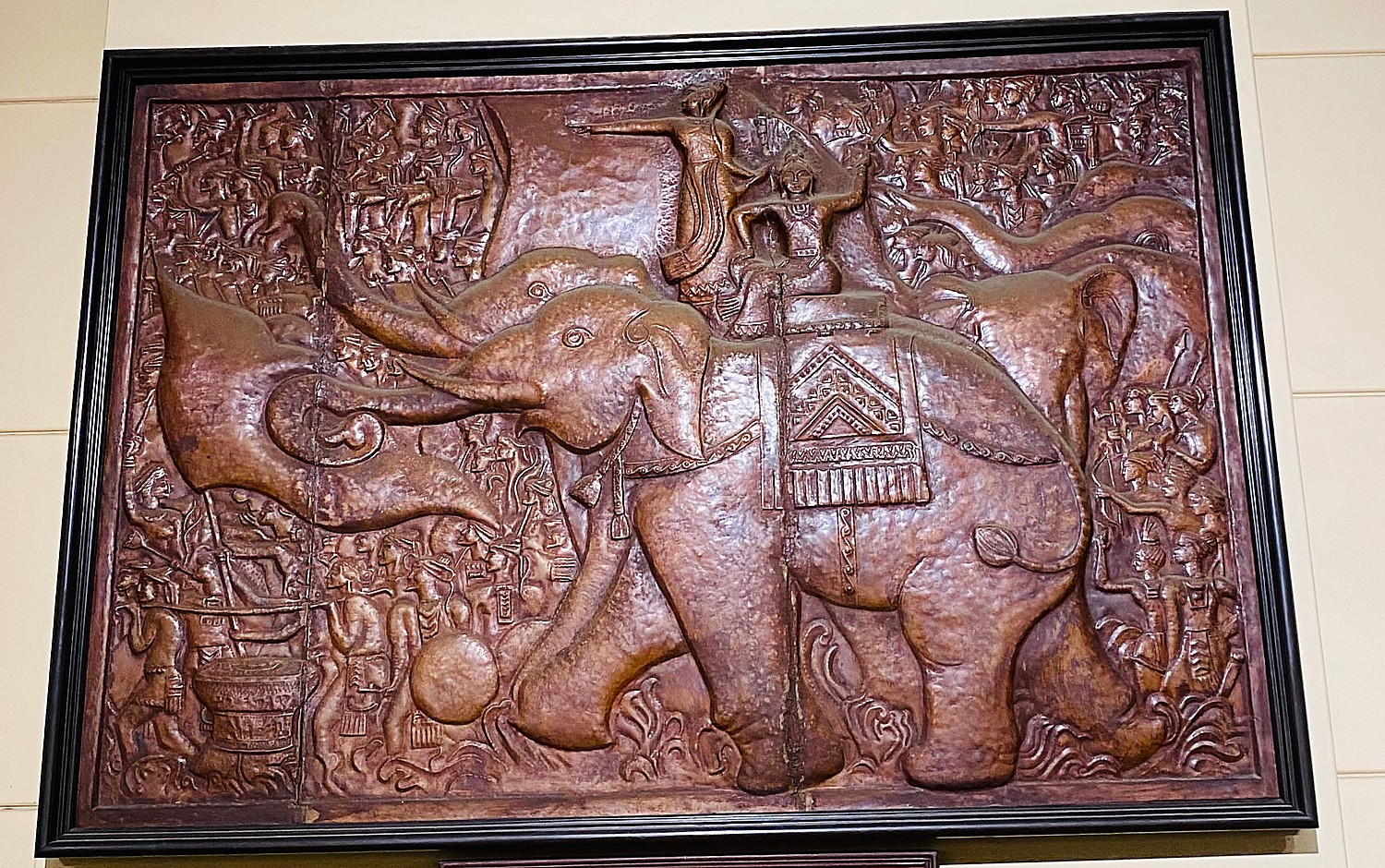
This bronze bas relief celebrates the Trung Sisters’ heroic uprising against the Chinese. © Geri Bain

I had just read “Bronze Drum” by Phong Nguyen, a historical novel about the Trung Sisters who led a women’s uprising to overthrow the Han Chinese in 40 A.D., so I am excited when my daughter points out an exhibit devoted to them at the Vietnam National Museum of History. The sisters had used bronze drums to inspire and communicate with their warriors, and we admire an array of drums with intricate carvings.

The museum is divided into two buildings. The main building takes us from the first humans through the end of the Nguyen Dynasty in 1945 and is a great consolidation of the history we’ve been learning throughout our journey. The second building takes us from 1858 and the struggle against the French colonial government to the present.

As we admire the sculptures and artifacts of the many ethnic groups and cultures throughout Vietnam’s history, we get a sense of the depth and diversity of its people today. A constant theme is the nation’s long history of fighting to maintain and develop their own unique civilization and pushing back invaders.

The second building takes us from 1858 and the struggle against the French colonial government to the present. Photos, documents, artifacts and profiles of heroes tell the story of the struggle for independence and the rise of the Vietnamese Communist Party and then, the shift in 1985 to “Doi Moi,” the fast-growing, market-oriented economy that continues to this day.

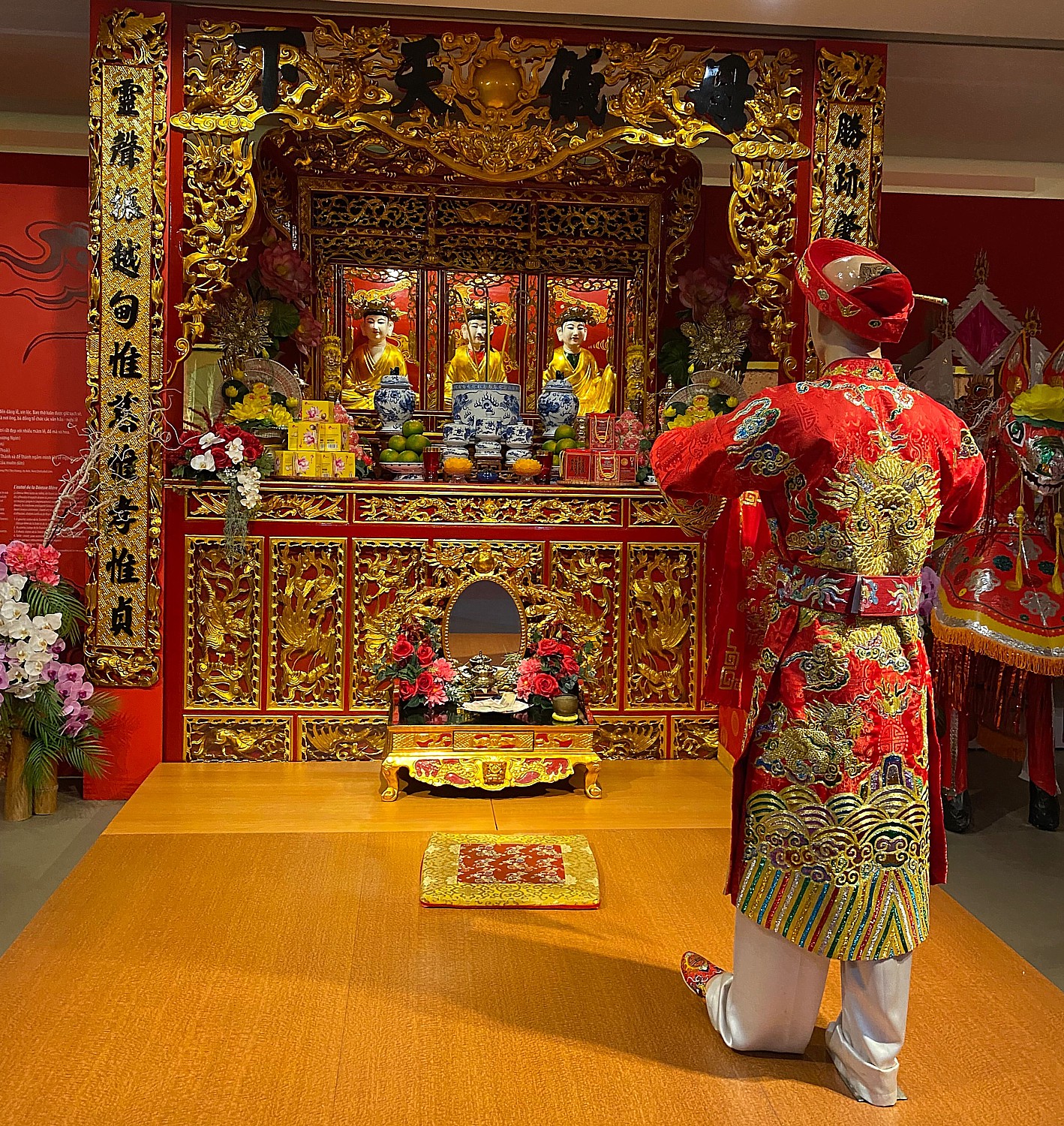
The Vietnamese Women’s Museum offers unique exhibits like this one celebrating the Mother Goddesses of Three Realms. © Geri Bain

At the Vietnamese Women’s Museum, among the fascinating customs, we learn that in some Vietnamese ethnic groups, men must move into their bride’s home for several years after marriage. In others, there is a trial sleepover when the prospective groom stays in a guest room at the bride’s home. And in at least one matriarchal group, women choose their groom, he moves to her home, and the children take her last name.

Detailed exhibits cover women’s roles in family life, heroic women in history, and both ethnic and high women’s fashion. It’s among the best small museum’s we’ve seen; it’s well organized, well-labeled with short videos, and there’s an excellent audio tour.

Its mix of architectural styles, parks and shopping make Hanoi a great walking city. One minute, we are on a wide tree-shaded boulevard lined by elegant turn-of-the-century French buildings, the next we are in a twisting medieval alley in the Old Quarter, where many streets still have the names of ancient trades. Some, like Hang Gai (Silk Street), still reflect their current shops. The huge, buzzing Dong Xuan Market sells everything imaginable, but the goods seem oriented to locals and don’t match what we saw in Ho Chi Minh City for style or price.

We head to the elegant shopping streets and dip into some luxury brand shops expecting bargains, but prices seem higher than back home. We decide the best values are found in the artisan shops. We are especially drawn to the wonderful hand-made lacquerware at Hanoia, a small boutique near our hotel, and Tired City, which sells prints, bags and t-shirts featuring the art of over 200 local artists who receive 10% of every sale.

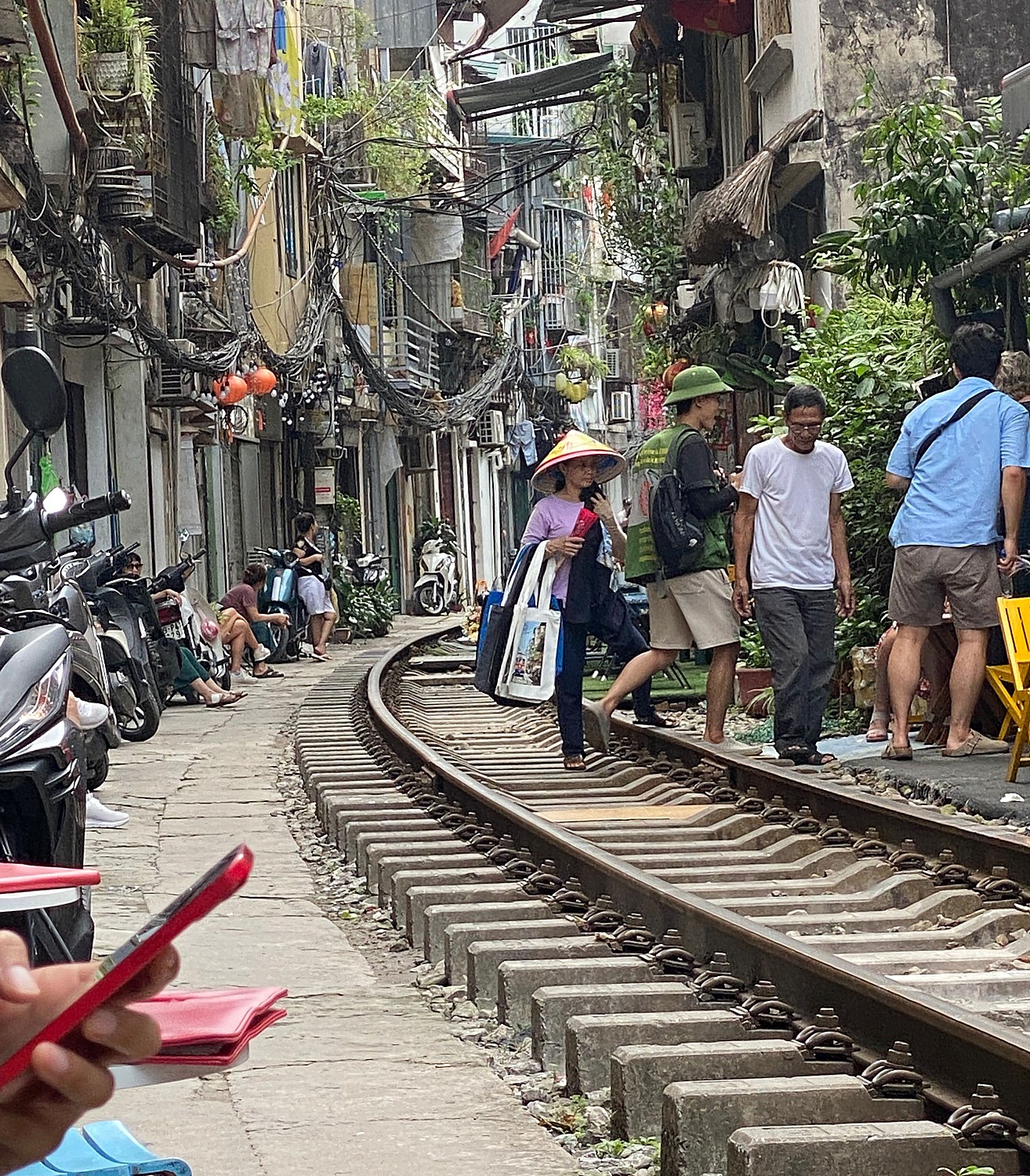
A 1902 train route that cuts through a narrow lane in the Old Quarter is still in use and now a tourist attraction. © Geri Bain

We take a coffee break at quirky “Train Street”, timing our visit for a train passage. This narrow ancient street is lined by small eateries with barely enough space for the train to zip through and it is fun to watch as we sip our new favorite drinks—hot or cold Vietnamese coffee made with condensed milk.

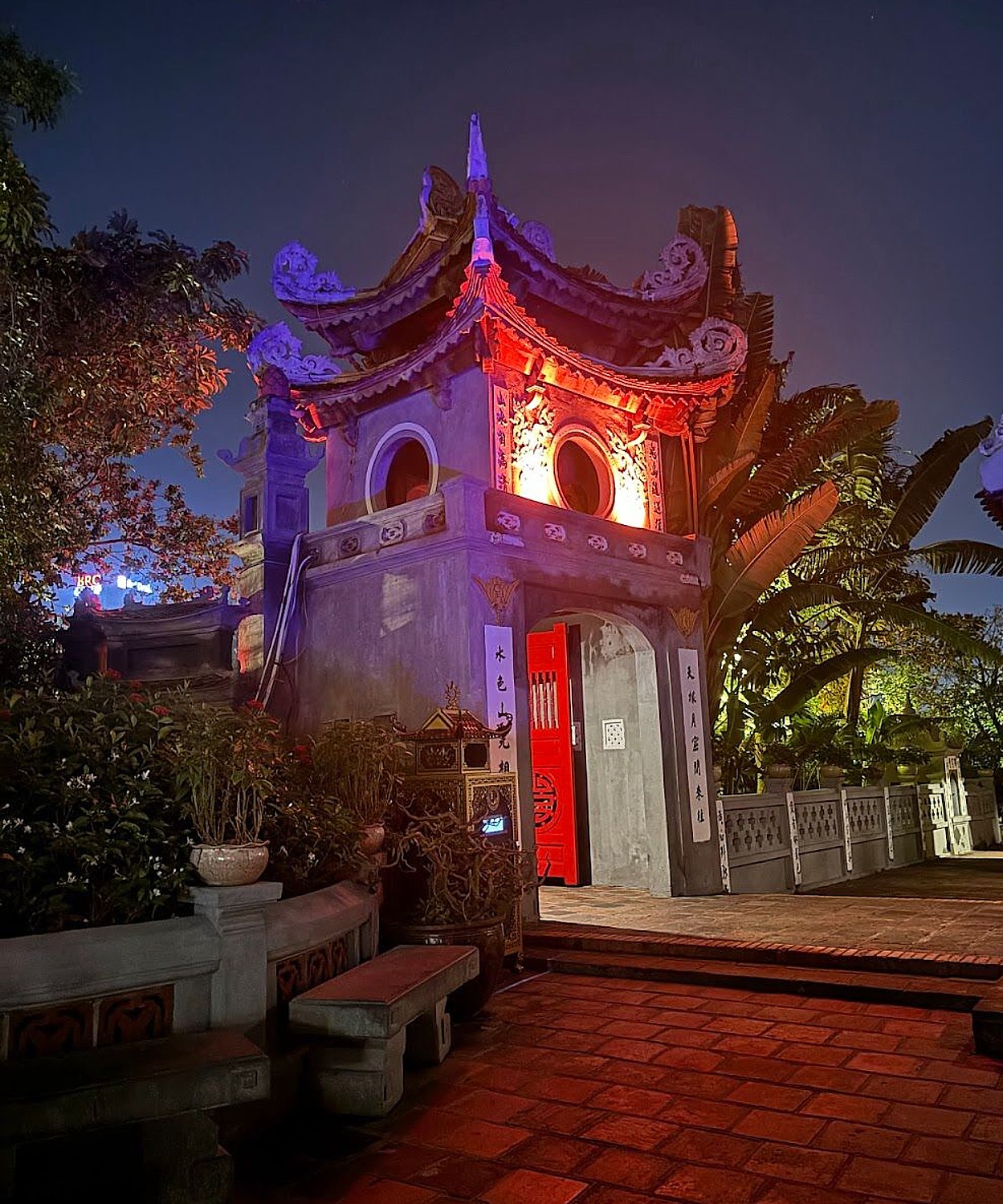
Our anchor as we explore Hanoi is Hoan Kiem Lake, just a few blocks from our hotel. Every evening, we join locals for a stroll around the lake. One night, we cross the pretty red Rising Sun (Huc) Bridge, where young couples pose for photos with the city lights as a backdrop. The bridge leads to the Ngoc Son Temple (Temple of the Jade Mountain), which sits in the middle of the lake. We are surprised to find a gatekeeper on duty at night. We pay the small admission fee and enjoy tranquil views of the city reflected in the lake. Inside, carvings depict Vietnamese history, folklore and Confucian literature.

Sitting in the middle of the lake, Ngoc Son Temple is especially lovely at night. © Geri Bain

From its start, this temple has honored both warriors and scholars, and stands as a symbol of Vietnamese resilience and pride. Built in the 19th century, the temple is dedicated to Van Xuong De Quan, a deity in charge of examination and education, and to the 13th century hero Tran Hung Dao (1231 – 1300), who led the Vietnamese army to repel two Mongol invasions.

A sign near a giant embalmed turtle and shrine explains how the lake got its name. According to legend, a god in the form of a turtle gave a magic sword to Le Loi, a l5th century leader of the Vietnamese rebellion against the Ming Chinese occupation. The sword empowered him to outsmart and defeat the Chinese. After his success, he returned to the lake and the turtle god reclaimed its sword. The lake became known as Hoan Kiem, “Lake of the Returned Sword”.  The legend is also commemorated in a picturesque monument, Turtle Tower, which sits on its own islet in the lake, one of the iconic symbols of Vietnam’s capital.

We leave Hanoi wishing we could stay longer. Another deep-tissue spa treatment. More time to relax in one of the ubiquitous cafes. More time to take in the vibes of this vibrant capital and to explore the history and legends of this fascinating and welcoming country.

Travel Tips

Many museums and sites close for lunch so check hours in advance. Also check for special shows and exhibitions; the Mother Goddess exhibition had specific but limited show times that we learned about too late.

Check with your doctor or a travel medicine specialist for recommendations on vaccinations and other health precautions, and the U.S. Department of State, CIA.gov and the CIA World Factbook for helpful country information.

Get the required visa at Vietnam’s website (evisa.gov.vn), where the fee is $25 (if you use a visa service it costs something like $197), and at Cambodia’s website (evisa.gov.kh), where the fee is $30, but give yourself enough time to get the confirmation. When filling out visa applications, flight and hotel reservations, note that dates in Vietnam and Cambodia are written day/month/year. I almost booked my flight for the wrong date. (April 1, 2025 should be written 01/04/2025).

See also:

AMAWATERWAYS’ MEKONG LUXURY CRUISE THROUGH VIETNAM AND CAMBODIA: HO CHI MINH CITY AND THE MEKONG

AMAWATERWAYS’ VIETNAM-CAMBODIA MEKONG CRUISE: THE CAMBODIAN MEKONG AND SIEM REAP

__________________

© 2025 Travel Features Syndicate, a division of Workstyles, Inc. All rights reserved. Visit goingplacesfarandnear.com and travelwritersmagazine.com/TravelFeaturesSyndicate/. Blogging at goingplacesnearandfar.wordpress.com and moralcompasstravel.info. Visit instagram.com/going_places_far_and_near and instagram.com/bigbackpacktraveler/ Send comments or questions to FamTravLtr@aol.com. Bluesky: @newsphotosfeatures.bsky.social X: @TravelFeatures Threads: @news_and_photo_features ‘Like’ us at facebook.com/NewsPhotoFeatures