By Karen Rubin, Travel Features Syndicate, goingplacesfarandnear.com
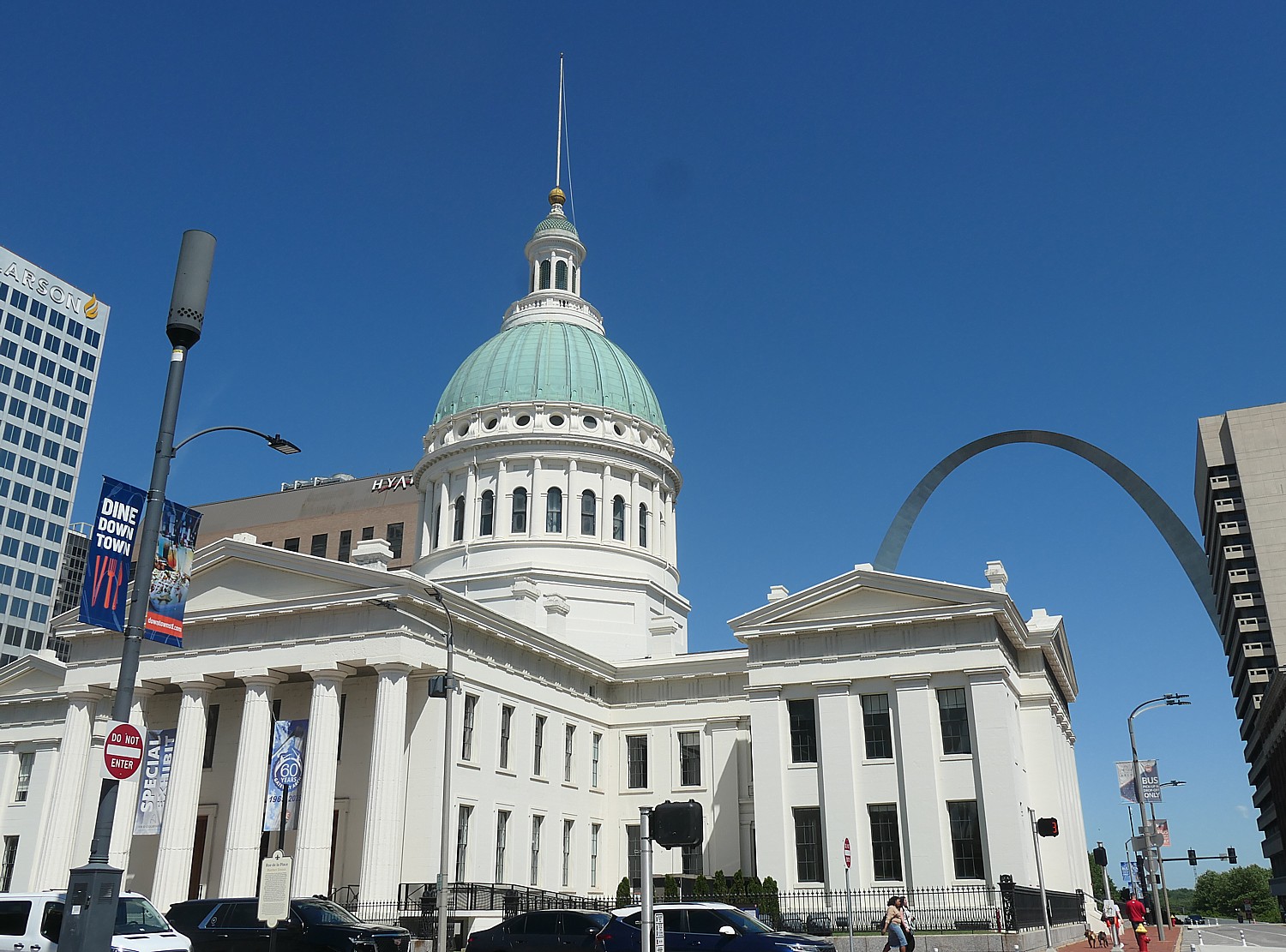
With only an afternoon and evening to explore St. Louis before my six-day Wilderness Voyageurs bike trip on the Katy Trail across Missouri, I immediately set out from the 21c Museum Hotel for Gateway Arch National Park. My walk takes me by majestic buildings and monuments such as Soldiers’ Monument, many from the 1930s and through the lovely Citygarden sculpture park. I find myself across the street from the Old Courthouse, with a banner that exclaims, “Open” and “New Exhibits.”
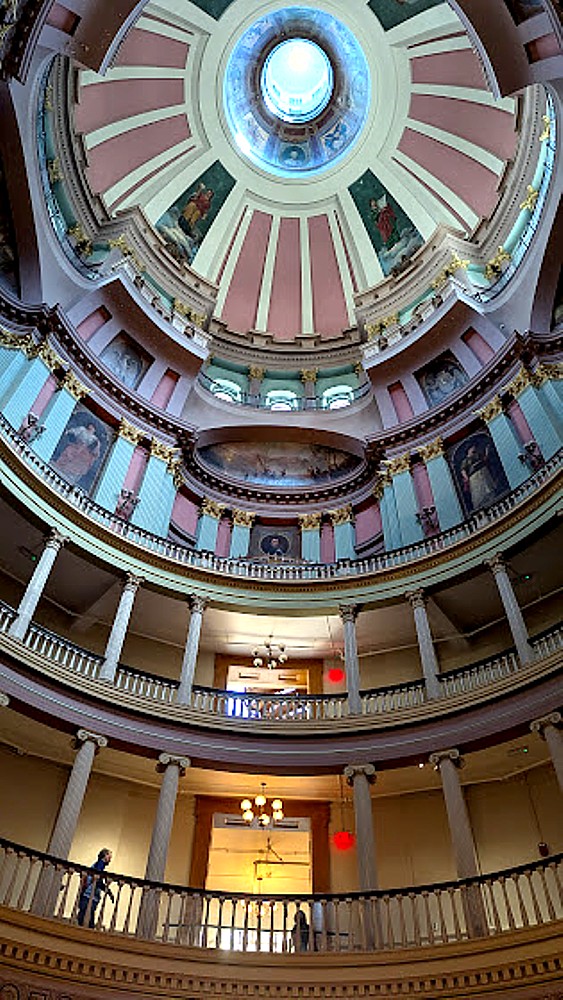
Touring the Old Courthouse is one discovery after another, beginning with its spectacular dome, architecture and stunning murals of historic scenes and important historical figures. I explore the four new museum galleries and the restored historic courtroom that opened in May 2025 after a five year, $24.5 million renovation, 2020-2025.
The Old Courthouse is actually part of Gateway Arch National Park. I find a National Park Service ranger in the spectacular lobby beneath a dome, and am amazed to learn the infamous Dred Scott case began here (two trials!) and would have ended in his favor were it not for the Supreme Court and its dastardly Dred Scott decision.
The ranger gives me a brief synopsis: The Old Courthouse was the site of the first two trials of the pivotal Dred Scott case in 1847 and 1850 before the infamous Supreme Court “Dred Scott decision” in 1857. I later learn that this was also where Virginia Minor‘s case for a woman’s right to vote came to trial in the 1870s. It was last used as a courthouse in 1930
Sufficiently intrigued, I go off to see the new exhibit, simply named, “Dred and Harriet Scott,” a detailed biography of Scott and his wife, and their legal struggle. The story is not anything that is taught anywhere else, which more typically reduce Dred Scott to the Supreme Court decision, and not a person, and, as I discover, a story worthy of an opera.
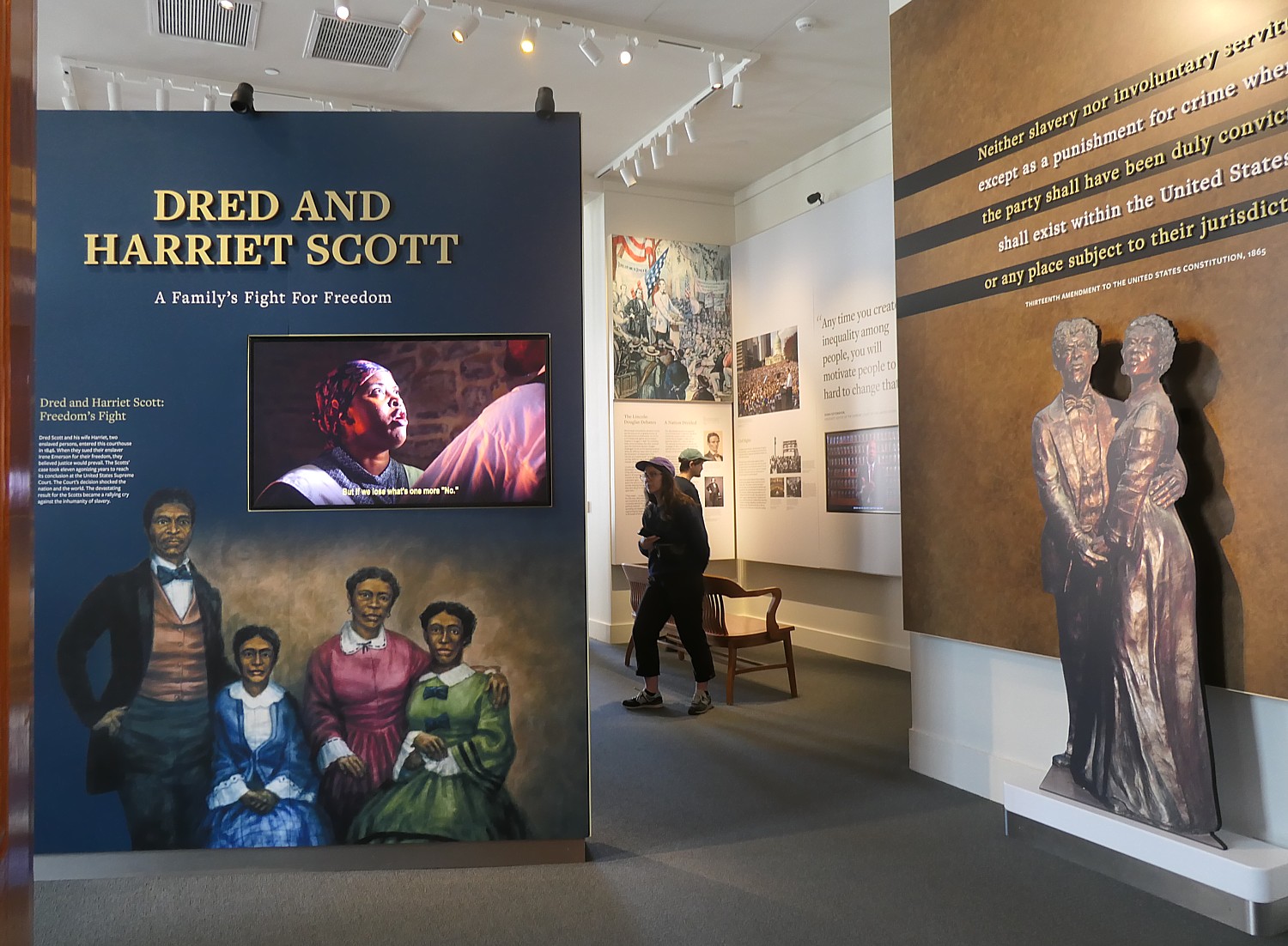
I can only wonder if these exhibits will survive Trump’s anti-DEI crusade manifest in an executive order in 2025 called “Restoring Truth and Sanity to American History” executive order directing federal historic sites to “avoid showing content that disparages past or present Americans” – in essence erasing Black history and struggle for civil rights, women’s rights, human rights, and what was and is still being done to native peoples. (In Philadelphia, the National Park Service was ordered to replace slavery interpretive panels at the President’s House.)
It would be a terrible shame, though, because the exhibit is absolutely fascinating, revelatory, and pretty much this is the only place to appreciate it. Most of us only know the Supreme Court’s Dred Scott decision and do not know what led up to it, that for the 11 years the case was being argued and decided, Dred and Harriet Scott were prisoners of the sheriff, who hired them out and kept their wages. All during this period, the Scotts secreted their daughters away to protect them from being enslaved.
I learn that Scott was suing for his freedom from Irene Emerson, who inherited him upon the death of her husband, Dr. John Emerson, on the basis that his previous owner had taken him to a free territory, and under Missouri law (and the Missouri Compromise), if a slave or freed person lived in a free territory, they could not be re-enslaved. The first case was dismissed on a technicality (“hearsay”!), but the second case, which went to a jury of 12 white men (what else?), agreed that Scott was free. But Irene Emerson appealed up to the Supreme Court.
The Supreme Court’s 7-2 decision by Justice Roger B. Taney stated that Dred Scott did not have the right to sue for his freedom because he was not a citizen and Black people, enslaved or free, were not part of the original sovereign people so could never become citizens because they were not people but property; the Constitution’s protection of property rights overruled their human right to be free.
But in a fascinating turn of events, by then, Irene Emerson had married a Massachusetts politician, Calvin Chaffee, who ran for the US Congress in 1854 on the anti-slavery America Party Ticket, and was reelected in 1856; he only became aware of his wife’s connection to the Scotts in May 1857). He would have been mortified to be found to own slaves. So, to get rid of the embarrassing, inauspicious problem, sold the “title” to the Scotts to a descendant of the Blow family which had originally owned Dred Scott and who had actually provided financial support to the Scotts while the case was going on and who purchased the couple in order to emancipate them. Meanwhile, the Scotts, who had sent their two daughters away so they could not be captured and enslaved, were reunited.
Dred Scott was 48 years old when he initiated his suit for freedom (since he was illiterate and poor, it is assumed that he was encouraged by an abolitionist who guided him through the process). The operatic tragedy continues because after finally winning his freedom, his family lived in poverty (Irene Emerson kept the wages the Scotts earned during the 11 years of their arrest) and Dred Scott lived less than a year as a free man before dying of tuberculosis at the age of 59.
(I later learn there is such an opera: Manifestos 4: The Dred and Harriet Scott Decision created by conceptual artist and composer Charles Gaines.)
What I realize is that the landmark Dred Scott decision in effect nullified the Missouri Compromise that was put into place to forestall a Civil War; the decision intensified boiling national tensions and helped spark the Civil War. You also appreciate the lasting legacy and ongoing relevance of their case today. (You can hear reverberations of the Taney decision in Trump’s effort to overturn birthright citizenship enshrined in the 14th Amendment, which states that all persons born on U.S. soil and subject to its jurisdiction are citizens, no ifs, ands or buts.)
The exhibit includes A Bid for Freedom, an excellent 4 ½ minute video reenacting a hypothetical conversation between Dred and Harriett Scott, in which they discuss the risks to their family if they sue their enslaver for their freedom at the Old Courthouse and the risks they face if they don’t.
The other new exhibits:
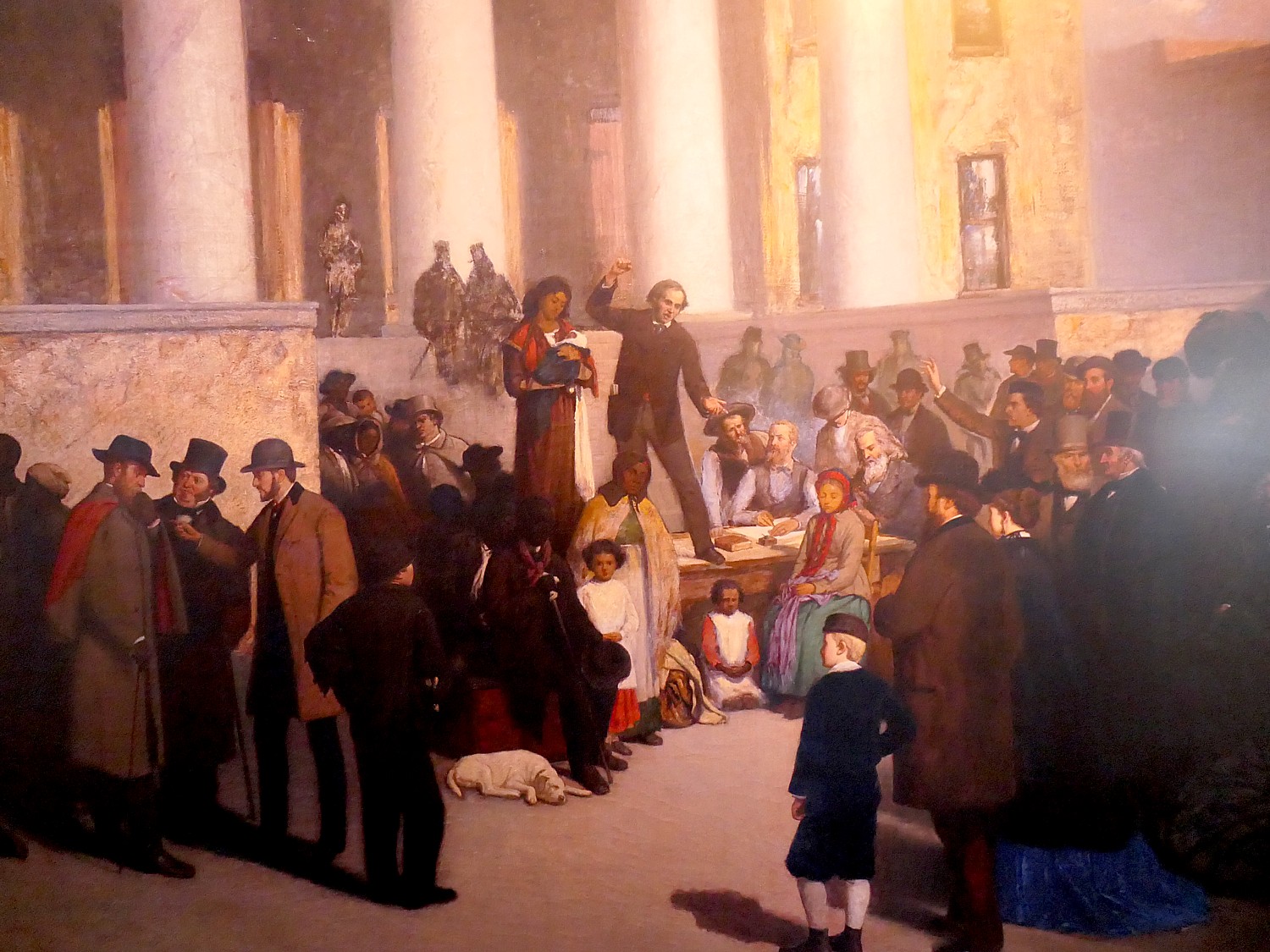
Pathways to Freedom gallery is another eye-opener. It personalizes African American life in St. Louis during the era of slavery and beyond, tracing the struggles of enslaved individuals seeking freedom, the continued fight for civil rights after the Civil War, and the rise of the Black elite known as the Colored Aristocracy, who built wealth and influence in the 1800s. Here you get an appreciation for the resilience, resistance, and influence of African Americans in St. Louis from slavery onward, with disturbing echoes as these struggles have resurfaced throughout the country today, as if the struggles of1865-1965, and brief period of progress and societal awareness, from 1965-2025 had been erased.
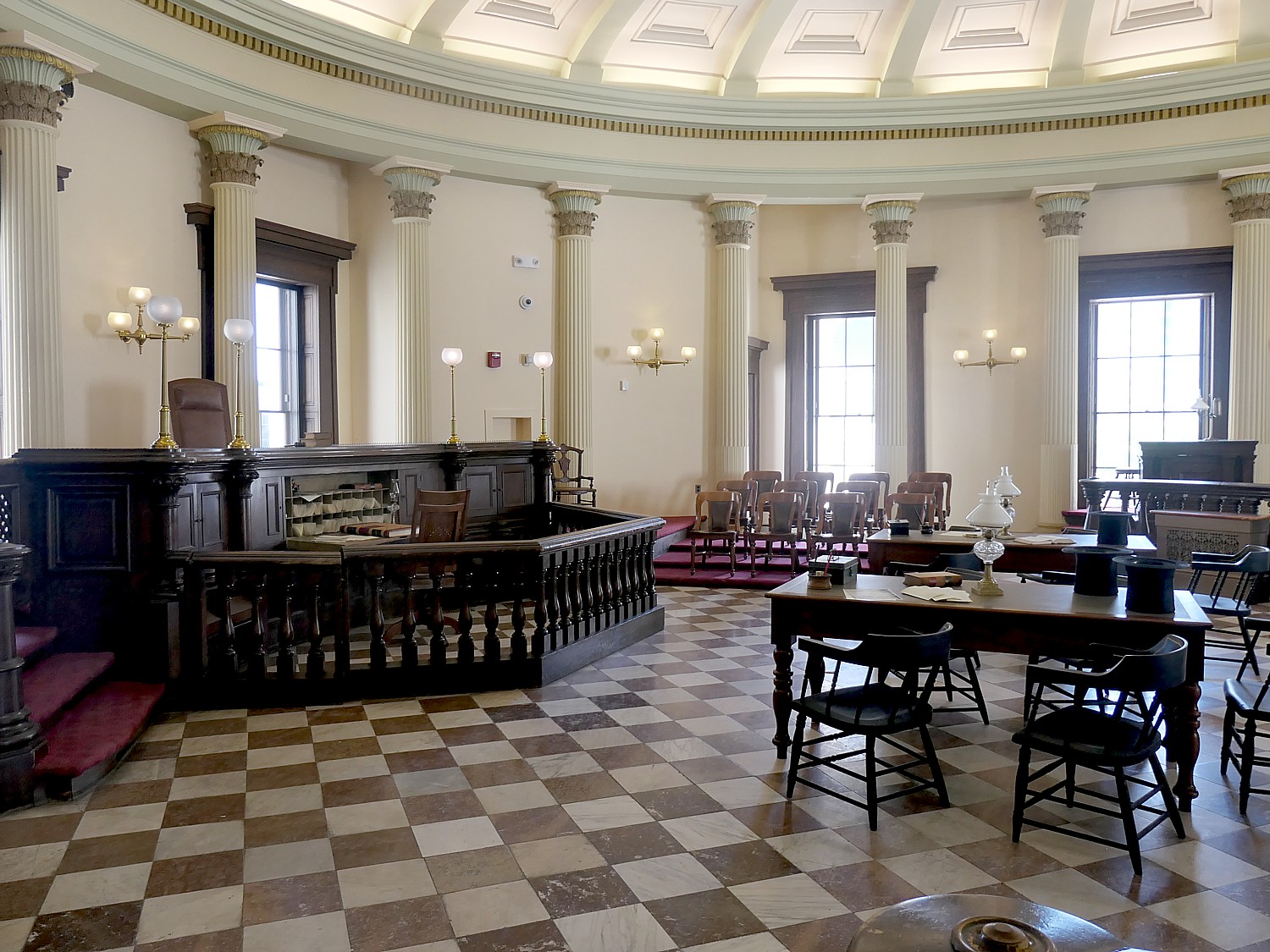
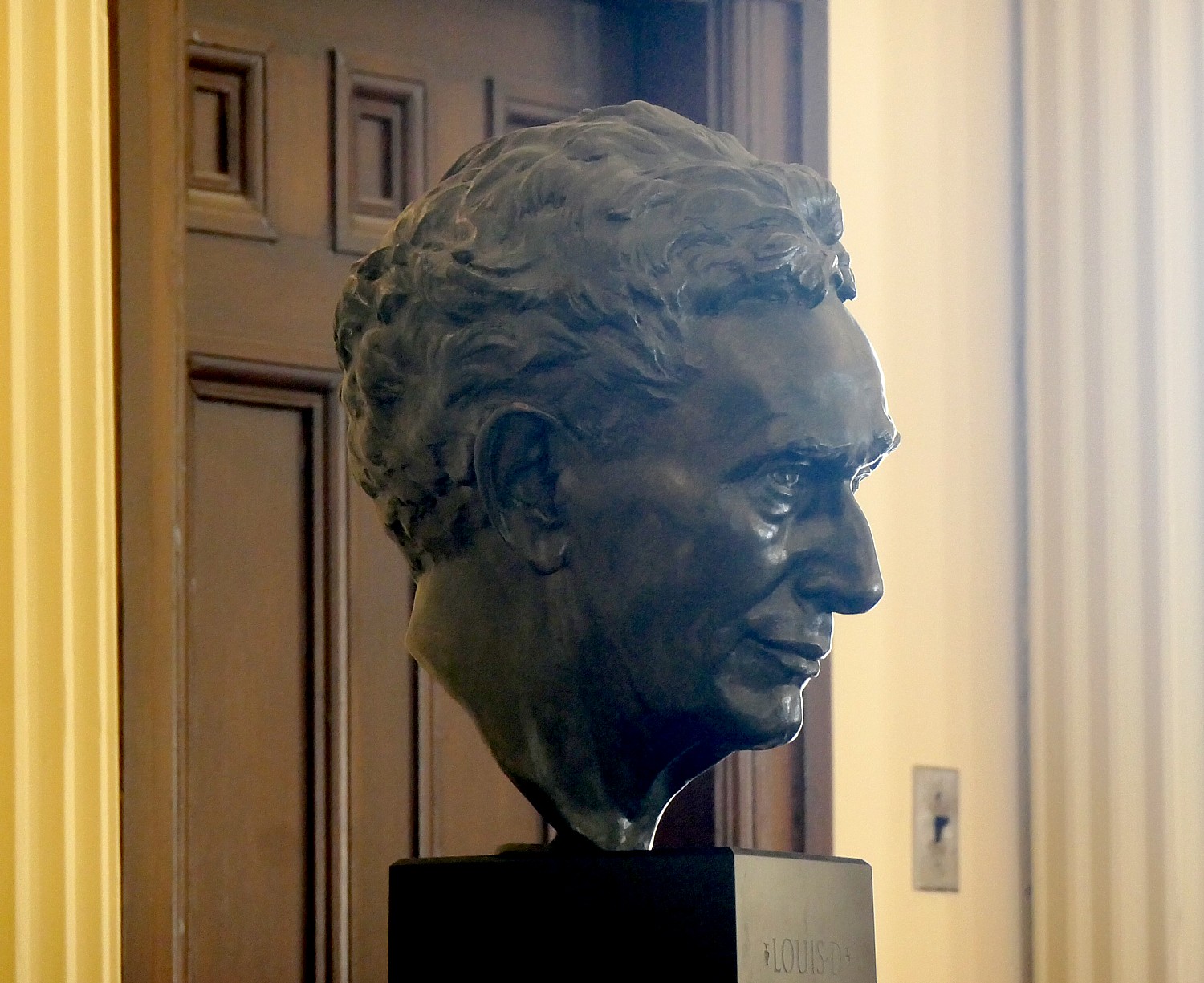
See You In Court, housed in a recreated 1850s courtroom, highlights the vital role courts have played in shaping our society, legal system, and daily life from 1839 to 1930. Visitors can explore the courtroom and even participate in mock trials, gaining a deeper understanding of how the court system helps resolve conflicts peacefully and supports the structure of our society (another important lesson for today, to remind of the foundational importance of the Rule of Law, without fear or favor.) I note the bust of Louis Brandeis, the first Jew to become a Supreme Court Justice, who was formally admitted to the Missouri Bar here on November 21, 1878.
Designed for Justice gallery highlights the Courthouse’s remarkable architecture and the architects, artists, builders, and craftsmen who created it.
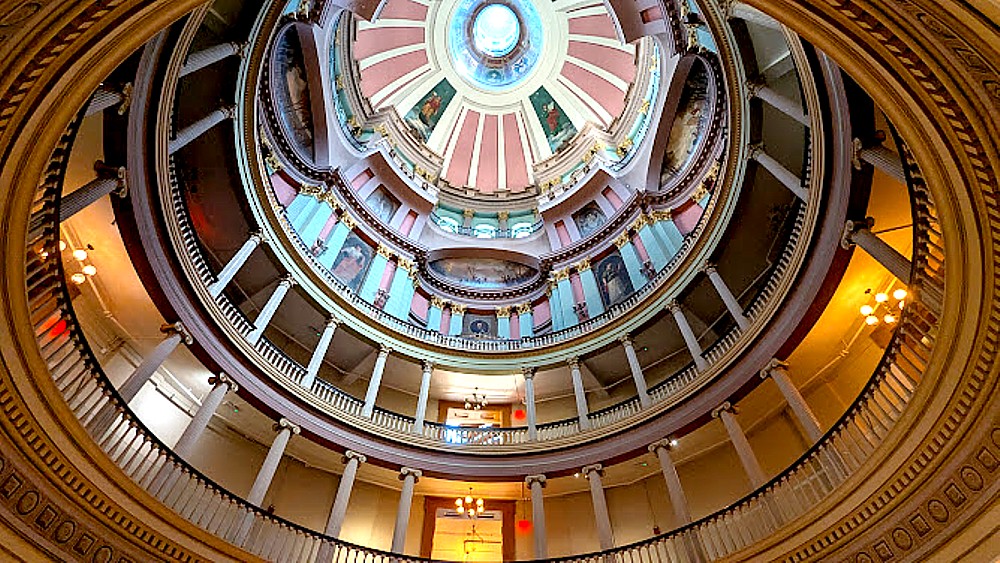
One of the oldest buildings in St. Louis, the Old Courthouse is significant for its Greek Revival architectural style, engineered dome, and interior murals. In 1838, the County of St. Louis selected Henry Singleton’s cruciform plan with a central rotunda to replace the existing smaller courthouse. Construction started in 1839 and it opened in 1845 (just one year before the Scotts filed their suit). At this time emigrants traveling westward on the Oregon and California trails often stopped and gathered provisions in St. Louis, the “Gateway to the West,” and would meet up in the Old Courthouse rotunda. The present dome, which replaced a smaller one in 1862 (while the Civil War was going on, and the Capitol Dome in Washington DC was under construction), was designed by architect William Rumbold and was one of the first of its type. After the dome alteration, American painter Carl Wimar was commissioned to design four lunettes in the building’s interior. In 1976, the Old Courthouse was listed in the National Register as a component of the Jefferson National Expansion Memorial.
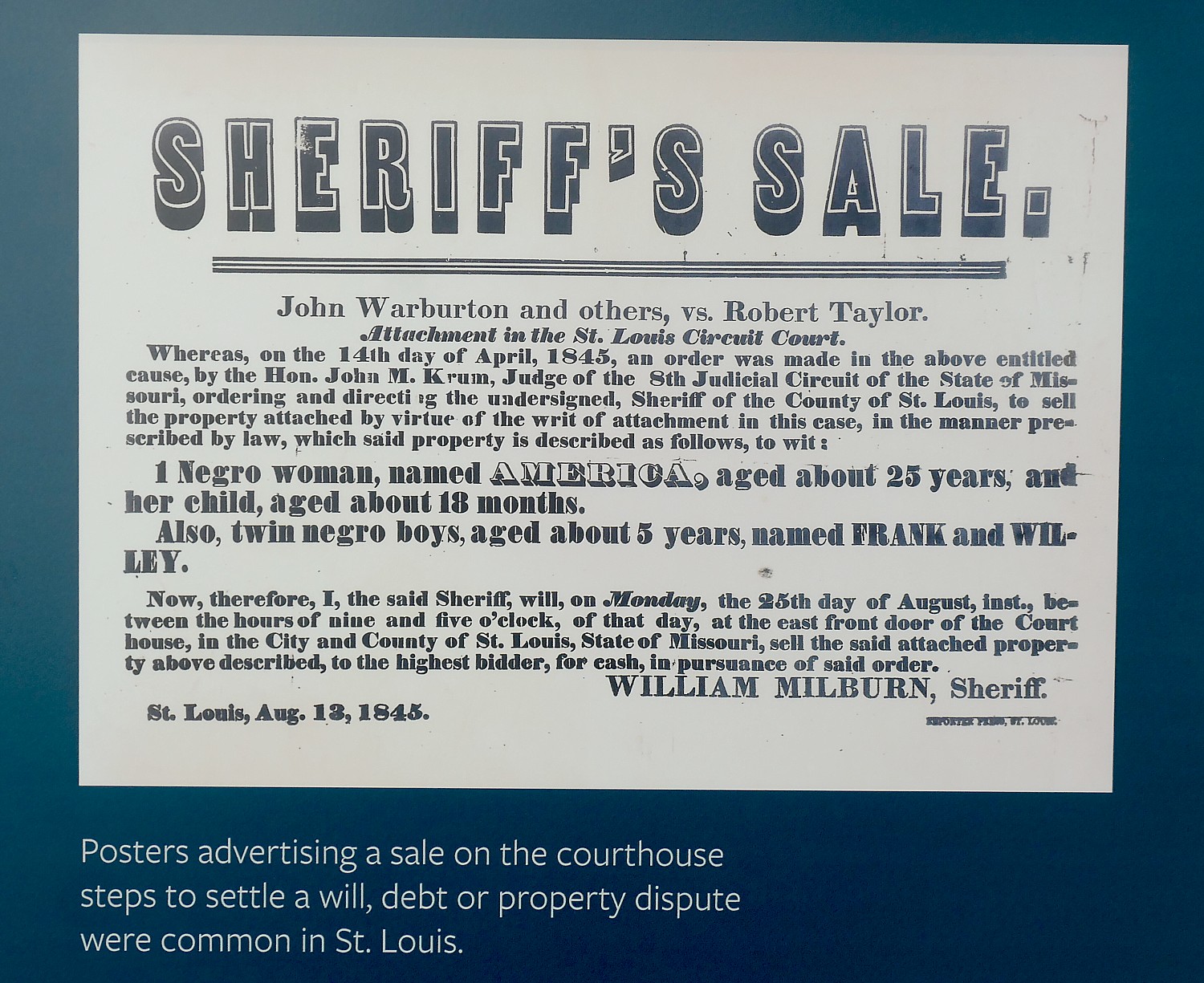
Largely because of the Dred Scott case, St. Louis’ Old Courthouse is included in the National Park Service’s National Underground Railroad Network To Freedom – places of “historic resistance to enslavement through escape and flight.” The Old Courthouse is linked with the Underground Railroad as a place associated with legal challenges to slavery. Slaves were auctioned from its steps in estate settlements, and the Old Courthouse was the site of hundreds of suits for freedom.
The city gave the Old Courthouse to the National Park Service for inclusion into Jefferson National Expansion Memorial in 1940, which was renamed Gateway Arch National Park by an act of Congress in 2018.
Plan to spend at least an hour, more likely two in the Old Courthouse.
National Park Service rangers provide guided tours of the building every day at 2:15 pm (only rarely cancelled due to staff availability). The tours cover the architecture and history of the building and the court cases associated with it. (No tickets or reservations necessary.)
The Old Courthouse is open daily from 9 am to 5 pm (closed on Christmas, Thanksgiving, and New Years Day). There is no admission fee.
Plan your visit, https://www.nps.gov/jeff/planyourvisit/och.htm
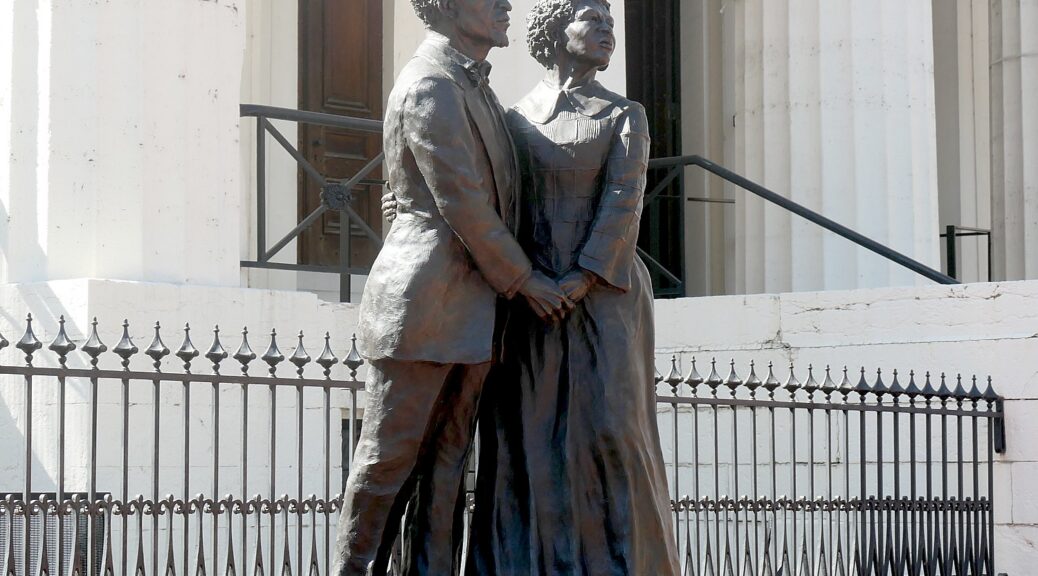
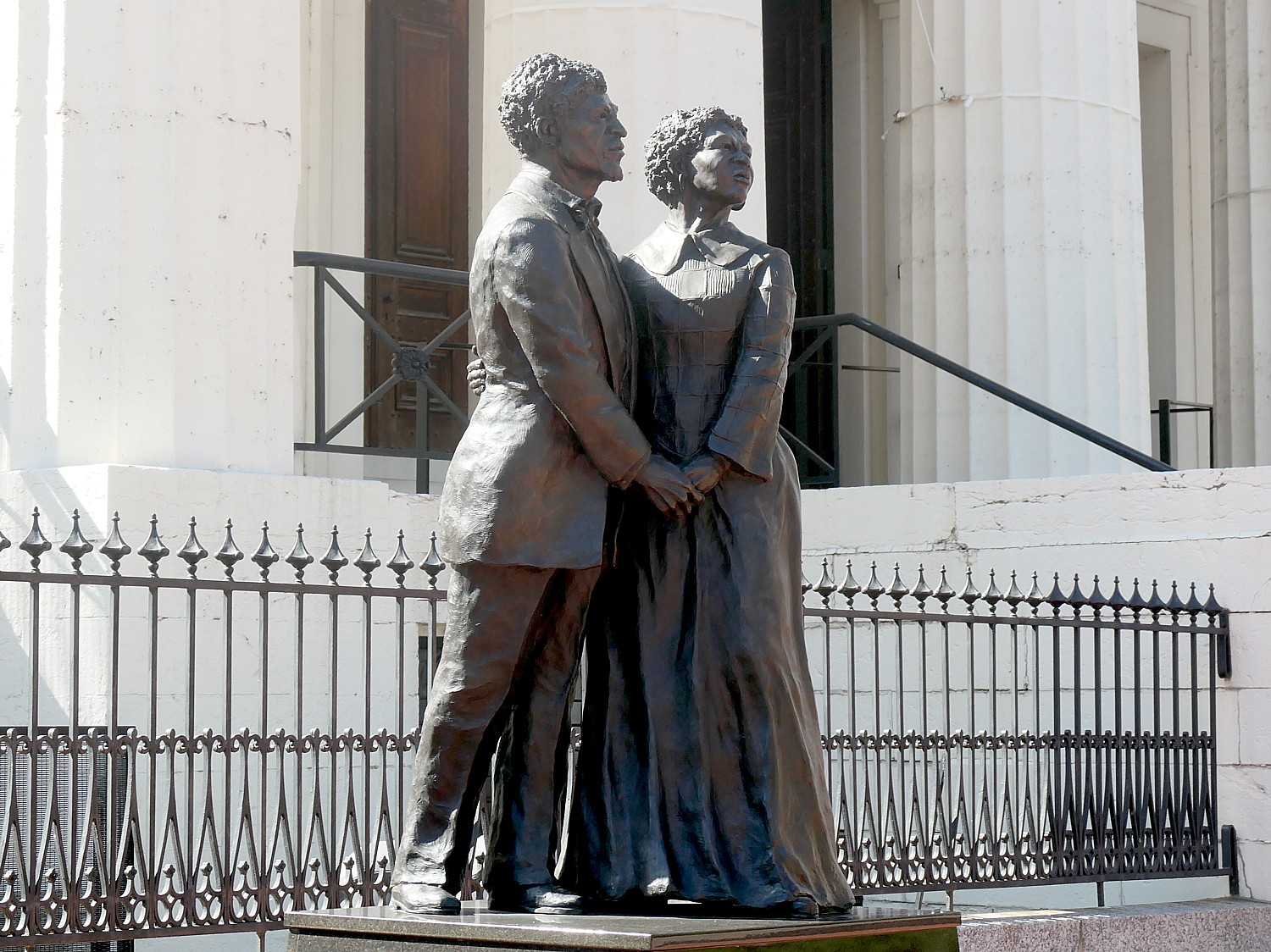
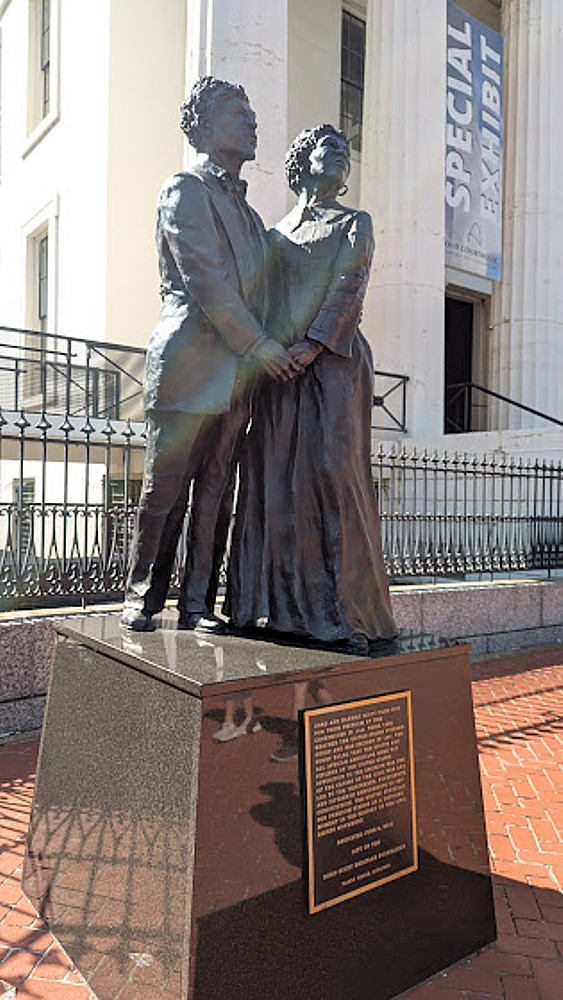
From here, I leave the Old Courthouse through the riverfront exit on my way to the Gateway Arch, about two blocks further, stopping at a stunning statue of Dred and Harriet Scott.
For more planning information, visit Explore St. Louis, 800-916-8938, explorestlouis.com.
See also:
21 C Museum Hotel St. Louis Embodies, Preserves City’s History, Culture, Community
Biking through History on Missouri’s Katy Trail During America’s 250th
Biking Missouri’s Katy Trail Following Lewis & Clark, Daniel Boone & the Westward Expansion
Next: Gateway Arch National Park
__________________
© 2026 Travel Features Syndicate, a division of Workstyles, Inc. All rights reserved. Visit goingplacesfarandnear.com, longislandpress.com/category/vacation-travel.com and travelwritersmagazine.com/TravelFeaturesSyndicate/. Blogging at goingplacesnearandfar.wordpress.com and moralcompasstravel.info. Visit instagram.com/going_places_far_and_near. X: @TravelFeatures Threads: @news_and_photo_features ‘Like’ us atfacebook.com/NewsPhotoFeatures. Send comments/questions to FamTravLtr@aol.com.
