Tag Archives: Pauline Frommer

New York Travel Show: Pauline Frommer’s Tips for Where and How to Go in 2026

Viti Levu, Fiji is getting travel expert Pauline Frommer’s recommendation this year because for the first time, there are direct flights to Fiji from the US, making it more affordable. Among the interesting sights: the largest Hindu temple in the Pacific because of immigration routes © Karen Rubin/goingplacesfarandnear.com

By Karen Rubin, Travel Features Syndicate, goingplacesfarandnear.com

Travel is always life-enhancing and can even be life-changing. Travel has the potential to build bonds, forge new understanding, bring personal enlightenment, and today, is a significant component of physical and mental wellness we crave. But no matter what bracket you are in, a trip demands significant financial resources. So, where we get our information in order to make the many decisions and choices that go into a travel plan –destination,  flight, accommodation, tours, attractions and experiences to build in, and all the other aspects of what to see and do, and where to get the best rate, fares and deals – is key.

Among the forces shaping travel, none is having more impact than artificial intelligence. A.I. is in everything from locating flights, hotels, tours, to learning about a destination and deciding what to see and do, and yes, make bookings and handing over credit cards.

While A.I. has had its benefits, there are caveats, as well – caveat emptor, to be precise (“buyer beware.”).

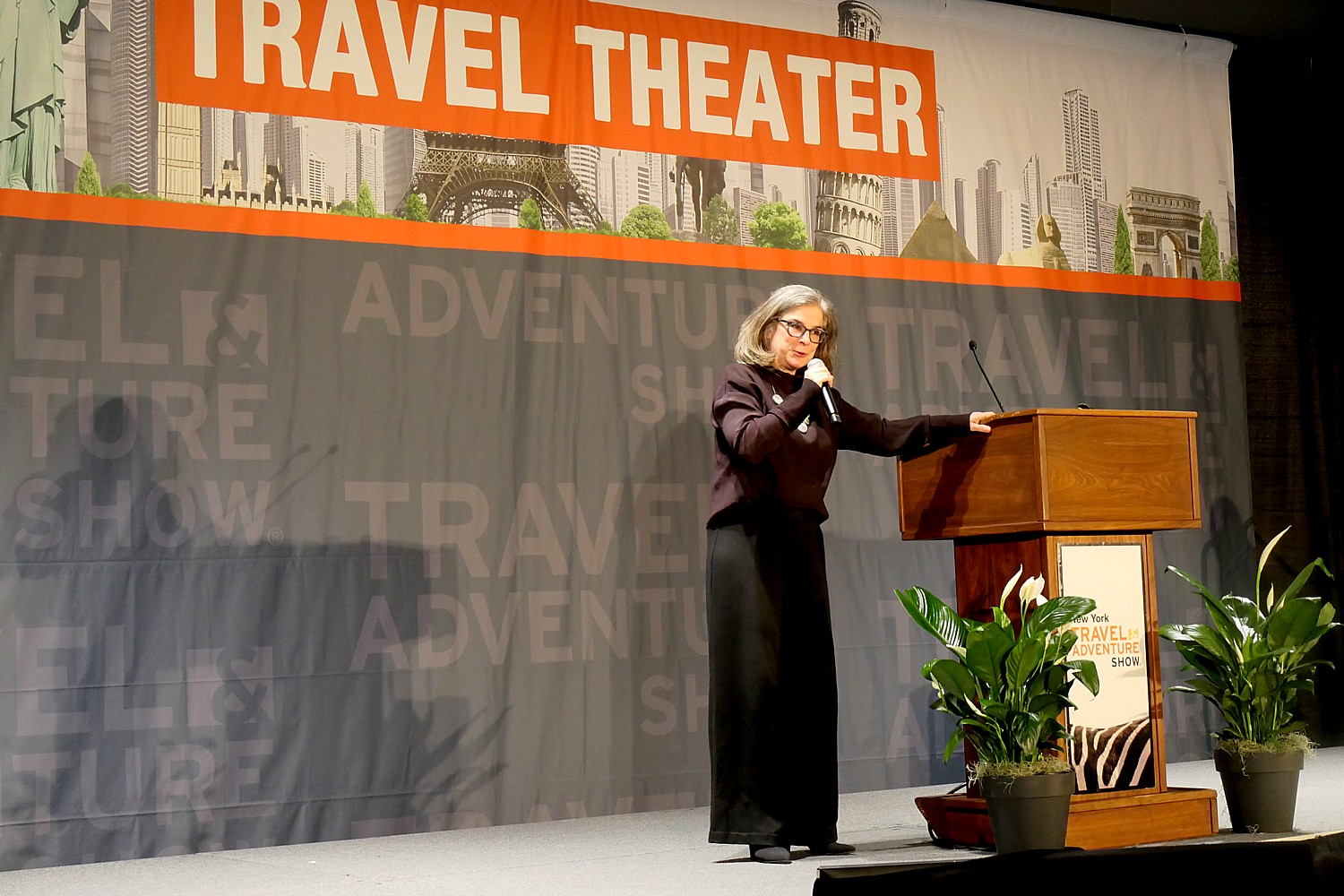
“AI is shaping how we digest travel information, and doing it badly,” travel expert Pauline Frommer says during her talk, “The Secrets to Not Overpaying for Travel & Having Soul Stirring Vacation,” to an appreciative audience at this year’s New York Travel Show.

The “First Lady of Travel,” Pauline Frommer delivers her hugely popular “The Secrets to Not Overpaying for Travel & Having Soul Stirring Vacation” talk at this year’s New York Travel Show © Karen Rubin/goingplacesfarandnear.com

There is false information – hallucinations – propagated through AI, and no way to correct and no one to complain to. “AI hallucinates too often and gets too much wrong.”

There are even travel guidebooks being created out of whole cloth by A.I. (and 5-star reviewed by bots) and sold on Amazon, filled with inaccuracies that a traveler might depend upon and then find their trip ruined.

Now AI is being used to generate airfares. One of the Frommer Researchers, which each year evaluates the various airline search engines, this year included Chat GPT and Grok. “They bombed – they never found the lowest price, and often came up with routes that didn’t exist.”

The best airfare search engines Frommer’s researcher found:

Momondo – found lowest prices most consistently. This search engine has been their top choice for many years in a row. Frommer said they particularly liked Momondo’s presentation, so you can see different prices by day, and it allows more filters than others (class, luggage rules, you can even filter by type of airplane). If you filter for luggage, it will show the airline list with the price of checked luggage included.

Skyscanner is also typically making their “best” list.

New to her list this year: Skiplagged, which tells you how to get a lower fare by booking a route where the connection airport or stopover is the destination you actually want, but offers a cheaper fare than if you go direct, so you get off the plane. Among the problems: the airline will likely then cancel your return (so if you do this, book one-way), but even ban you from flying them. “But it finds good prices.” 

Online airline reservations systems are using AI for both dynamic and “surveillance” pricing where it bases its fare quote on who you are and where you live © Karen Rubin/goingplacesfarandnear.com

AI is not only shaping how we digest travel, what we know, and helping make our choices and decisions, but is also shaping pricing, as companies – airlines and hotels, for example –  begin to use AI for “surveillance pricing” and “dynamic pricing” (an even more refined “yield management” tool).

Perhaps you have noticed that if you search for a fare, leave it for hours when you return, the fare is higher. This is dynamic pricing – because the system has recognized that you are motivated to purchase the fare because you returned for it. AI helps calculate just how much you are willing to pay, based on your motivation.

Now AI is enabling these systems to go even further: “surveillance” pricing, in which AI calculates what you will pay based on where you live (the rent you pay), what travel you have purchased before, and other personal shopping data.

The Biden administration investigated and found that based on profiles (where you live, the rent you pay, what travel you have purchased before) it serves up different prices, so that if you search from New York City, you are quoted a higher fare than if you searched from Louisiana, or Uzbekistan.

How can you shield your identity to prevent such discrimination? Subscribe to a VPN ($15-20 /year) and when you do search, decide where to do it from. You can do the search from Kazakstan or Arkansas, with each place you will see a price difference and cheaper than if the system recognizes you live in New York.

Frommer cited Proton VPN which claimed to have found a 40% difference in hotel and air fares. “I’m not sure a 40% difference is true, but there is a big enough difference – I have VPN on my computer.”

Frommer’s tips for purchasing air fares: A study using AI to find patterns in 36 billion air fare transactions found it is best to:

Purchase your airfare on Sunday (6% cheaper for domestic flights, 17% cheaper for international)

Buy 1-3 months out for domestic travel (saving 25%); 18-29 days out for international (savings of 10%). “But I don’t think I would have the courage to wait 18-29 days out for an international flight.”

Fly red eye or early morning (best fare and less likely to be delayed or canceled)

Gateway Hopping – sometimes a different gateway airport can bring down the cost. For example, if you are headed from JFK to Berlin, a secondary airport, it may cost less to fly to Paris and take a cheap regional carrier to Berlin. That would involve two searches, maybe two different carriers. (If going to Florence, you might fly into Rome and take the train.)

Saving on Lodging

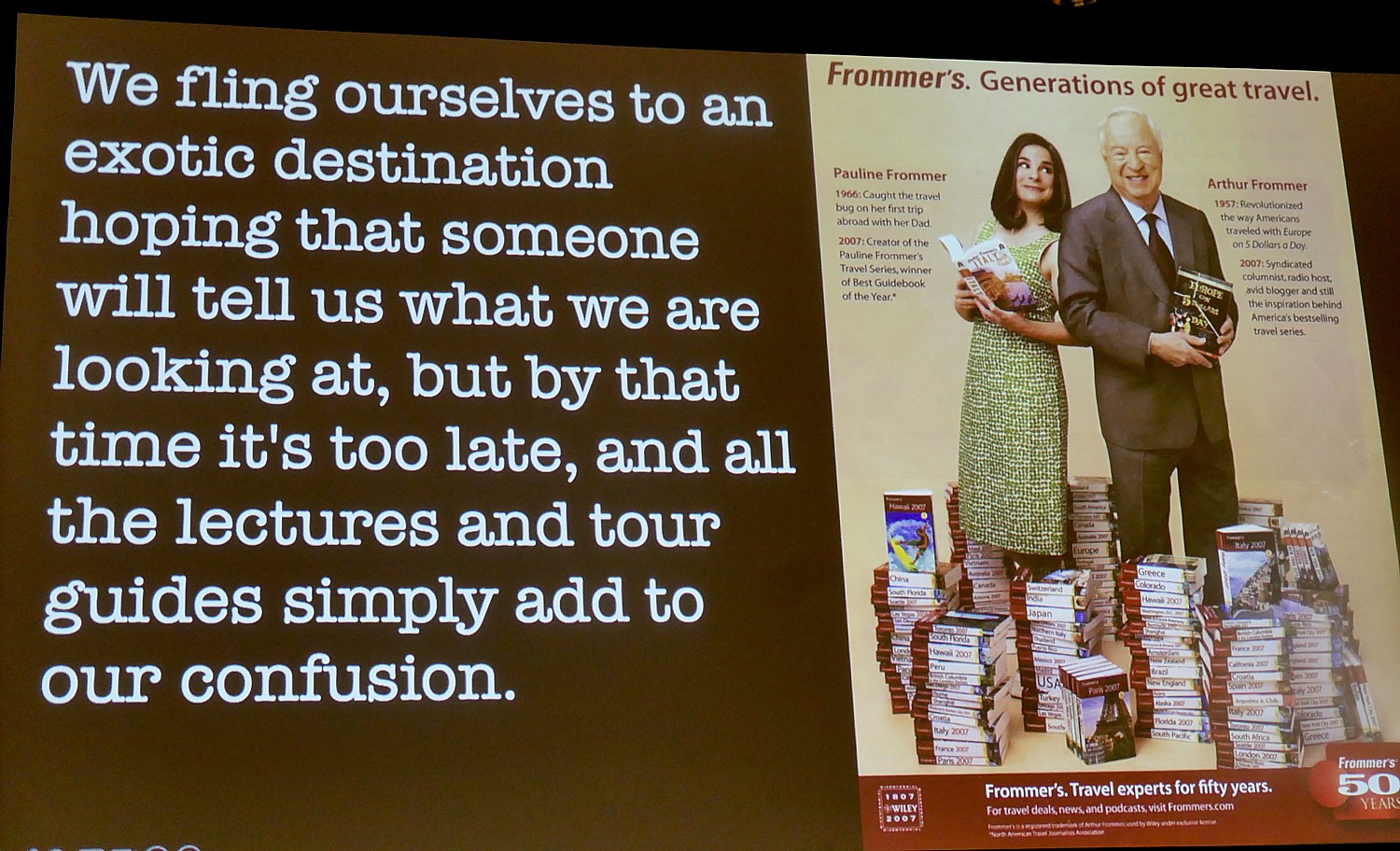
Pauline Frommer with a photo of her famous father, Arthur Frommer, who got the idea for his “Europe on $5 a Day” guidebook that became a travel guide empire, as a GI encouraging other GIs to explore. The Frommer guides continue to be geared to middle-market travelers © Karen Rubin/goingplacesfarandnear.com

Like air fares, these days, you can avoid surveillance pricing by setting your VPN’s “Where I am in the world” to the Republic of Ireland because unlike the USA (Trump repealed Joe Biden’s rule against junk fees), the European Union prohibits hidden fees (like resort fees you didn’t know you were expected to pay – because the hotel can offer a cheaper, more competitive rate, and not pay the local occupancy tax). 

Frommer recommends searching for hotels on Google Travel, Trivago or Skyscanner.

“Get a reservation you can cancel and rebook closer to the travel date.” (I like hotels.com and booking.com for their flexibility in canceling or changing reservations, the information provided and the comments.)

In business travel destinations (like Johannesburg, South Africa), rates tend to drop sharply the week before travel, but if you are not inclined to cut it that close and possibly be closed out, get the reservation you can cancel earlier.

Vacation home rentals no longer necessarily save money because of the added fees and cancellation policies (unless you are multi-generational family or some couples traveling together, in which case the space and use of kitchen and other living amenities adds value).

“Check hotel prices, too, as they may be lower. Take reviews with a grain of salt – 10% of AirBnB reviews are AI-generated fakes.”

Frommer also recommends using VRBO, which posts the contact information for the management company, then booking directly with the management company for a better rate.

Where to go in 2026?

Florence in May – shoulder season has become as popular as peak season, because the weather is better © Karen Rubin/goingplacesfarandnear.com.

If you think that your bucket-list destinations will be more in reach, price-wise, in the off-season, you will find there is no such thing as an “off season” any more – these days, travel is ubiquitous throughout the year.

Seasonality is also going the way of the dodo. The peak travel season, summer, in places like Paris, Florence, Venice, the south of France, Spain, Portugal, Czech Republic have been hit with such ferocious heat waves, that people are going to what used to be called the “shoulder season”, April-May, September-October, which are getting as pricey and crowded as summer.

Frommer said she visited Naples in March. “I thought it was low season but it was jammed and charging top dollar, and two museums were sold out. Usually southern Italy would have been dead in early March. Rome, Paris, London no longer have an off season, so consider secondary destinations.”

Instead of crowding the name-brand destinations, find new places to explore, like Camogli, close to Portofino, Italy © Karen Rubin/goingplacesfarandnear.com

But, Frommer advises, consider secondary destinations that are not as high on people’s lists, but also help destinations free themselves from the blight of overtourism, while spreading the economic and cultural benefits that tourists bring.

Instead of Amsterdam, visit Utrecht, a beautiful little city just a half hour outside Amsterdam, with the same canals, even more beautiful, Frommer says, because there are 2 levels, lined with cafes, bars, and fairy lights at night. 

Even in May, Amsterdam is so crowded it is difficult to get a reserved-time ticket to the Rijksmuseum on the same day, while the Anne Frank House is booked up weeks in advance. Pauline Frommer is recommending people seek out secondary destinations like Utrecht to discover © Karen Rubin/goingplacesfarandnear.com

“Right now it is so important to consider secondary cities. Often Amsterdam is so damn crowded. But Utrecht has great museums – you can get a hotel for $65/night in November (half the cheapest available in Amsterdam). Often these “secondary cities” have the same types of attractions as the brand name destination, but fewer visitors and lower costs, Frommer advises.

Frommer offers a list of destinations and experiences  “where you will find travel new all over again”, places that will have great celebrations, be affordable or accessible (see Frommers.com/BestPlaces2026)

Oulu, Finland: may well be best known for world air guitar championships, but Frommer is recommending Oulu this year because this little community 20 miles south of the Arctic Circle (incredible wilderness, the Northern Lights will be prominent this year, indigenous cultures), is designated the European Capital of Culture. Hundreds of artists of all sorts will descend on Oulu, creating site-specific performances.

Viti Levu, Fiji: because for the first time ever, there are many direct flights to Fiji from the US, making getting to Fiji finally affordable (and not because it’s the 50th season of “Survivor.”) Why go? Fiji is like Hawaii, with gorgeous beaches, but much less crowded and much cheaper on the ground than Hawaii, with lots of mom and pop resorts, and now, much cheaper to get there . It has traditional Pacific culture and the largest Hindu temple in the Pacific (because of immigration routes).

Jasper, Alberta, Canada: two years ago Jasper was afflicted with horrific wildfires. Frommer is recommending visiting now because you see how this community turned lemons to lemonade: “You can go and not realize what happened, but going specifically for fire ecology tours in burned areas, learn how to stop that from happening, how to regenerate and meet the people doing that – more important with climate change. [In fact, one of the Global Wellness top trends for 2026 is learning how to mitigate disasters.]. Also, Jasper is another place to experience the Northern Lights that are forecast to be spectacular this year. The Rocky Mountaineer train this year, because of FIFA World Cup, is not going to Vancouver-Banff-Jasper, but just back and forth between Banff and Jasper. “You see the highlights, the best stuff and pay less with great train experience.”

Vienna, Austria is one of travel expert Pauline Frommer’s recommended destinations to visit in 2026 © Karen Rubin/goingplacesfarandnear.com

Vienna, Austria this year is celebrating the 250th anniversary of the Berg Theater, which presents classical music. “Every major name in classical music is performing. Last year, the city celebrated the 250th birthday of Johann Strauss, opening a new museum to him. In Vienna, you enjoy the famous Lipizaaner white stallions, beautiful markets, a beautiful, loveable city.”

Kruger National Park, South Africa, is for those who want to take an African Safari but don’t have a trust fund: The park, which is turning 100 this year and may change its name, allows you to do a self-drive safari (which is rare), into all kinds of different ecosystems and the Big 5 animals. You pay a $100 fee to get into the park, then go to areas where there are resorts ($80-90 per night) or camping is allowed (pay as little as $20/night. When you go into the reserve in the morning , park rangers tell you where to go. “It’s a safari for a fraction of the cost – it’s not unusual to pay thousands a day for a safari.”

Hot Springs Arkansas – has one of the only national parks where what’s indoors more interesting – a bathhouse where Al Capone vacationed, where you can take the waters. It’s the only national park with a brewery in it, incredible architectural sites, a racecourse, and one of ‘fun-est’ yearly events in the USA: the running of the bathtubs.

(Interestingly, Frommer did not mention America’s 250th celebrations taking place all across the country, including a spectacular event in New York City, Sail4th, on July 4th.)

Meeting the People and More Travel Tips

My volunteer greeter, Reiko, takes me around Tokyo, teaching me first how to use the subway, and visiting Tokyo’s major monuments © Karen Rubin/goingplacesfarandnear.com

InternationalGreeters.org – locals in 60 countries, 400 cities who love their hometown and welcoming visitors volunteer to escort visitors for free. They are vetted and trained. Frommer went around Chicago with an International Greeter, a retired lawyer, to tour public art in a way she never could have appreciated on her own. In Tokyo, greeters take you around for a day, teach you how to use the subway, and show you the restaurants on the top floor. 

TravelingSpoon.com and EatWith.com are foodie tour companies who have on tap the best local cooks (not commercial restaurant chefs). Frommer experienced this program in Palermo, Italy, in the home of an Italian nonna in her 70s who spoke no English (her  grandson translated) and for two hours, she cooked with her in her kitchen, then the  whole family showed up for “a raucus dinner party, for the cost of a restaurant meal.”

Sources to find multi-day tours operated in the destination include: TravelStride.com and TourRadar.com

These are marketplace sites. You put in the parameters of what you want and they shoot back tours from all over the world – often locally owned tour operators – offering a better rate than the name-brand multinational companies. The platforms earn a commission from the companies.

Travel Insurance is a must have for big ticket trips like cruises, tours, safari, renting home but not for a flight. Platforms where you can input your personal details (age, date, destination) and get a list of policies, prices and bullet-list of what is covered or not – from different companies so you can compare include: SquareMouth.comInsureMyTrip.com; and TravelInsurance.com.

“You see policies from a lot of companies – with bullet lists of what is covered or not, so you can compare. Usually the one in the middle covers the most things. There is no one company best for every trip.” Frommer also advises. “Never buy insurance through the company you are traveling with.”

More information at Frommers.com.

__________________

© 2026 Travel Features Syndicate, a division of Workstyles, Inc. All rights reserved. Visit goingplacesfarandnear.com and travelwritersmagazine.com/TravelFeaturesSyndicate/. Blogging at goingplacesnearandfar.wordpress.com and moralcompasstravel.info. Visit instagram.com/going_places_far_and_near and instagram.com/bigbackpacktraveler/ Send comments or questions to FamTravLtr@aol.com. Bluesky: @newsphotosfeatures.bsky.social X: @TravelFeatures Threads: @news_and_photo_features ‘Like’ us at facebook.com/NewsPhotoFeatures

New York Travel Show: Pauline Frommer’s Annual Tips for Travel Talk Pays Homage to Father

Arthur Frommer and Pauline Frommer appear together giving their forecast and tips for travel at the New York Travel Show in 2015. Pauline has gone on to continue her father’s legacy; the travel icon who launched millions on journeys of discovery, passed away in November © Karen Rubin/goingplacesfarandnear.com

By Karen Rubin, Travel Features Syndicate, goingplacesfarandnear.com

This year’s travel talk by Pauline Frommer at the New York Travel Show was a homage to her father, the legendary Arthur Frommer who single-handedly inspired generations of travelers not born into family fortune to experience the world, with his guidebooks, then radio and TV shows, starting with the iconic “Europe on $5 a Day”. His philosophy, mission and love of travel that infuse the Frommer guides have remained. He passed away in November.

At her talk, titled “Travel Lessons I’ve Learned From My Father That Will Make Your Next Vacation Less Expensive and More Meaningful,” she said, “He believed money should be used smartly. He believed travel could be a life-changing activity.”

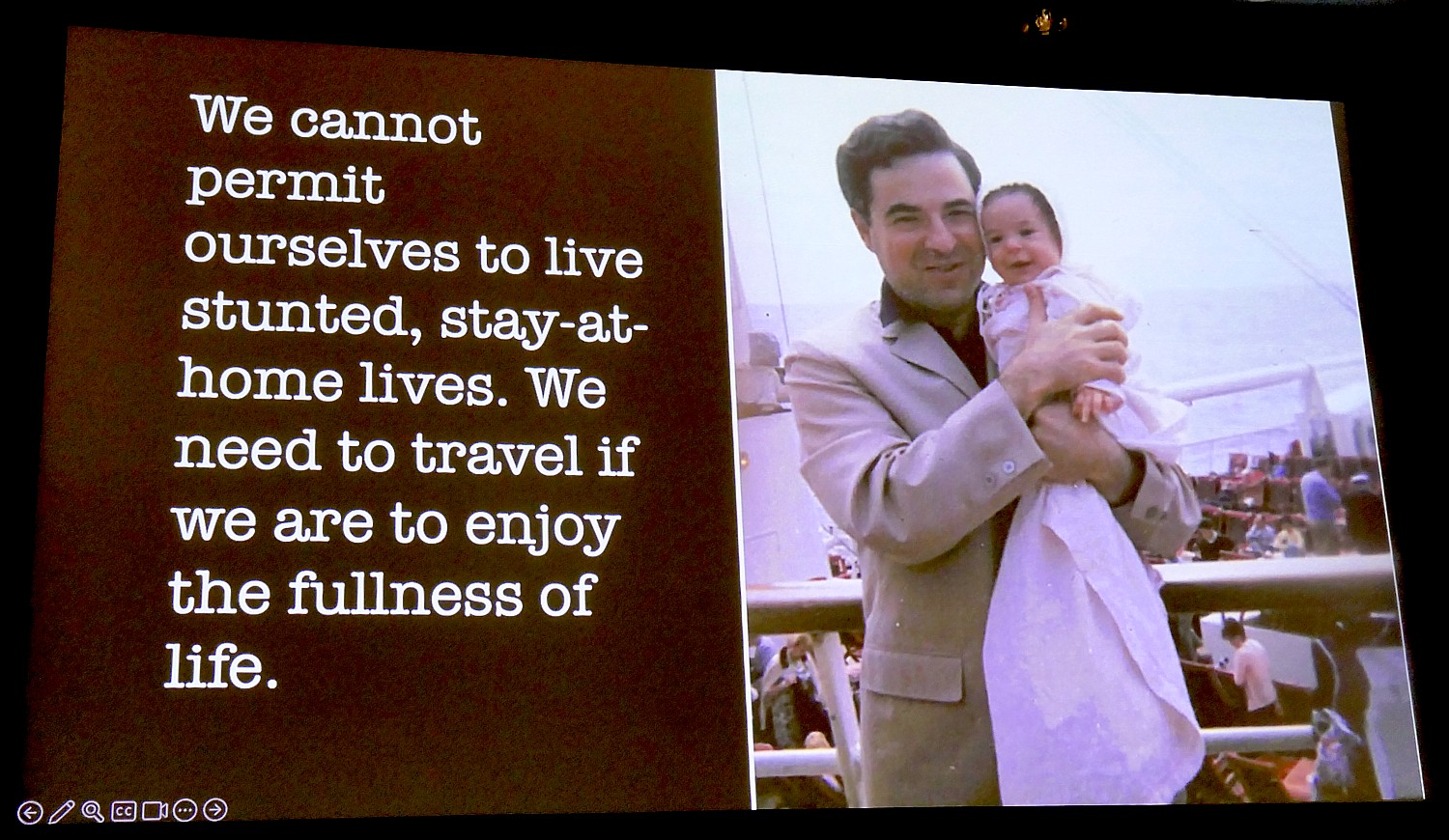
Quoting Arthur, she said, “We cannot permit ourselves to live stunted, stay- at-home lives. We need to travel if we are to enjoy the fullness of life… Contact with the new and the different is how we grow and develop. That may be possible in other ways than travel, but there is something about experiencing the world that cannot be duplicated… Nothing has the lasting impact of being there.”

Arthur Frommer, with his baby daughter Pauline, made encouraging and enabling people to travel the mission of his life.

Arthur Frommer devoted his life to guiding people how to travel inexpensively and how to have meaningful vacations, that shift who you are as a person in important 

In 1957, when Arthur set out on his mission to inspire Americans to travel abroad, Americans – even middle class ones – were rich compared to rest of world – Europe was in rubble while Americans had dollars.

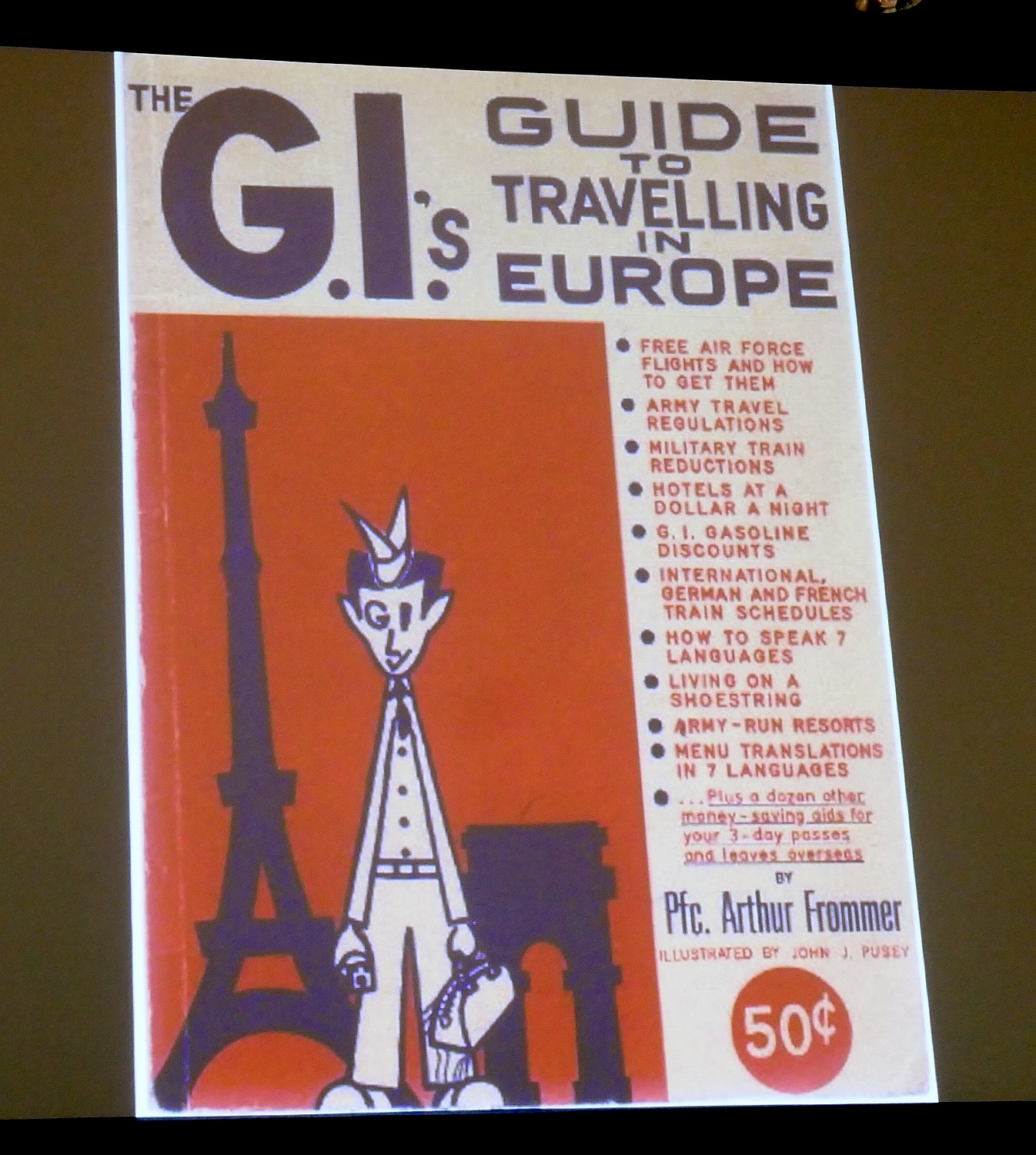
Arthur Frommer discovered the joys and benefits of international travel as a GI in Europe, and decided to encourage other GIs to travel as well, with the Gi’s Guide to Travelling in Europe. Soon after, he revolutionized travel with his guides, like “Europe on $5 a Day” to affordable, meaningful travel experiences.

“Now we are in the same position – currently the Euro is almost equal to the $1: $1.02 to 1e (in 2016 it was $1.36 to 1e. The Japanese yen has never been this weak, 156 yen to $1; the dollar is worth 1.44 Canadian and the Mexican peso is at 20.78. It has never been so good.”

On the other hand many travel companies are using AI to raise prices surgically, depending upon your prior buying habits – what Joe Biden’s Federal Trade Commission called “surveillance pricing.” (Biden’s FTC also went after airlines, others for junk fees, requiring rapid cash refunds, cybertheft and greedflation, during his pro-consumer administration.)

“Middle men watch what consumers are doing, creating profiles of the consumer so they can tell different industries how much to charge, individually.

Delta Airlines’ CEO, on an earnings call, boasted how the airline was profiling, using AI to float the maximum airfare passengers would pay.

Have you had the experience of searching for an airfare, finding one, but going off to think about it for awhile, only to return and find the fare $50 higher? “That’s because you are being watched; the amount of surveillance is insane.”

Frommer’s antidote? “When searching for travel goods and services, be private – hide your identity. For example, subscribe to a VPN (virtual private network) to hide who you are; clear your cache and cookies. Use a different computer.

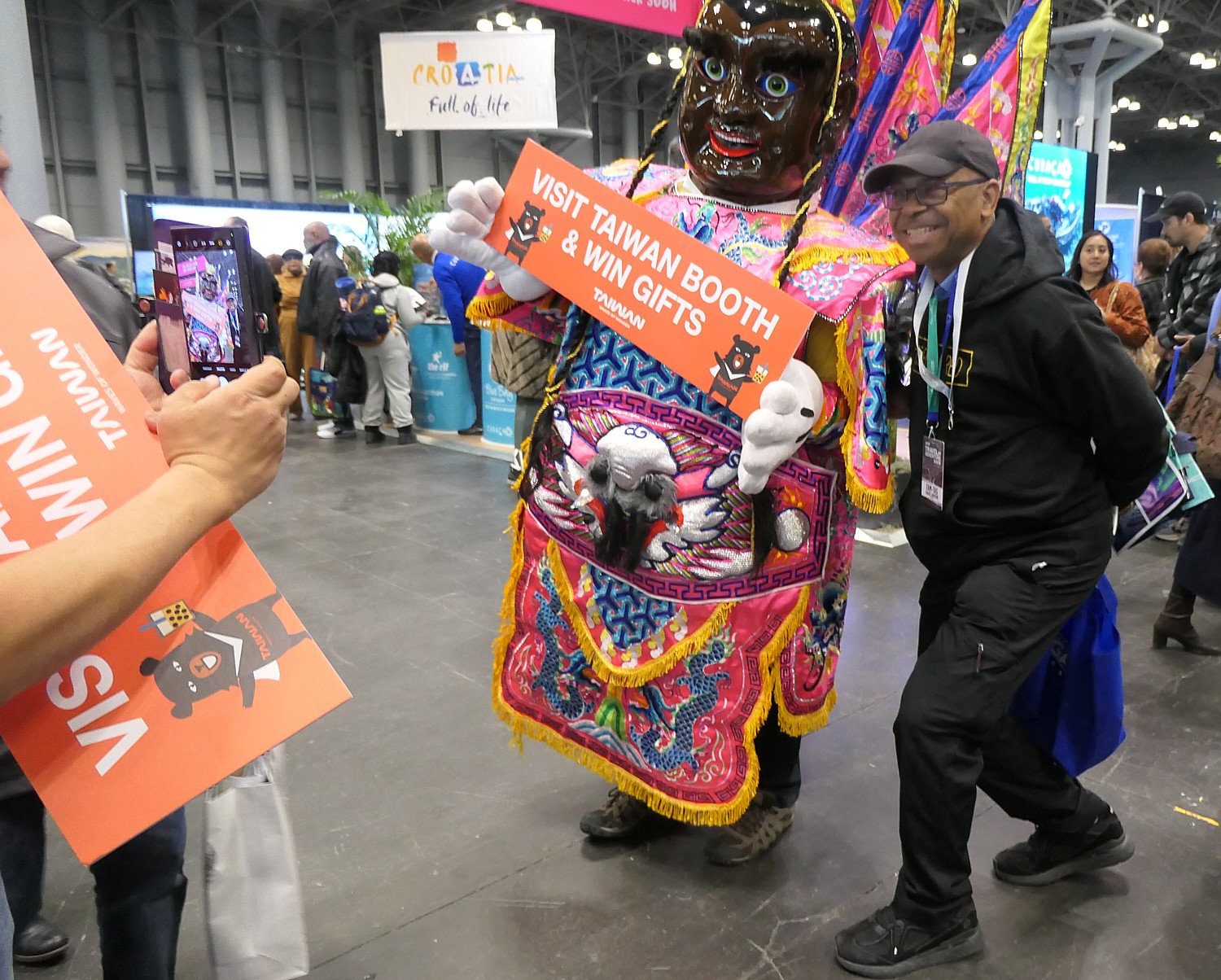
Travelers were excited to learn about destinations to visit at this year’s New York Travel Show at the Javits Center © Karen Rubin/goingplacesfarandnear.com

The best search engines for airfares, she recommends, are Momondo.com (owned and managed by Kayak.com) and Skyscanner.com.

But, she adds, “Then you don’t buy on them. There are so many issues in air travel, if you buy from a third party like an OTA [an online travel agent], you are last in line if something goes wrong. Search on the website, then buy from the airline.”

(Travel expert Peter Greenberg, at his talk at the travel show, adds that the OTAs always say there are only one or two seats available at that great price, but that is because the airline has only released that number of seats. He also advises searching online then booking directly with the airline.)

There are also days that are best to purchase air fares: Frommer recommends purchasing an airfare on Sunday can yield 6% savings on domestic fare, 17% savings on international.

Also, “buy 1-3 months out for domestic travel (for a 25% savings), 18-29 days out for international (for a 10% savings). Last year, it was 4 months out, but she acknowledges, “it takes courage to book so close.”

You get the best fares if you start your trip on a Thursday or Saturday (16% savings over flying on a Sunday), she says. “Sunday is the most expensive day to start a trip.”

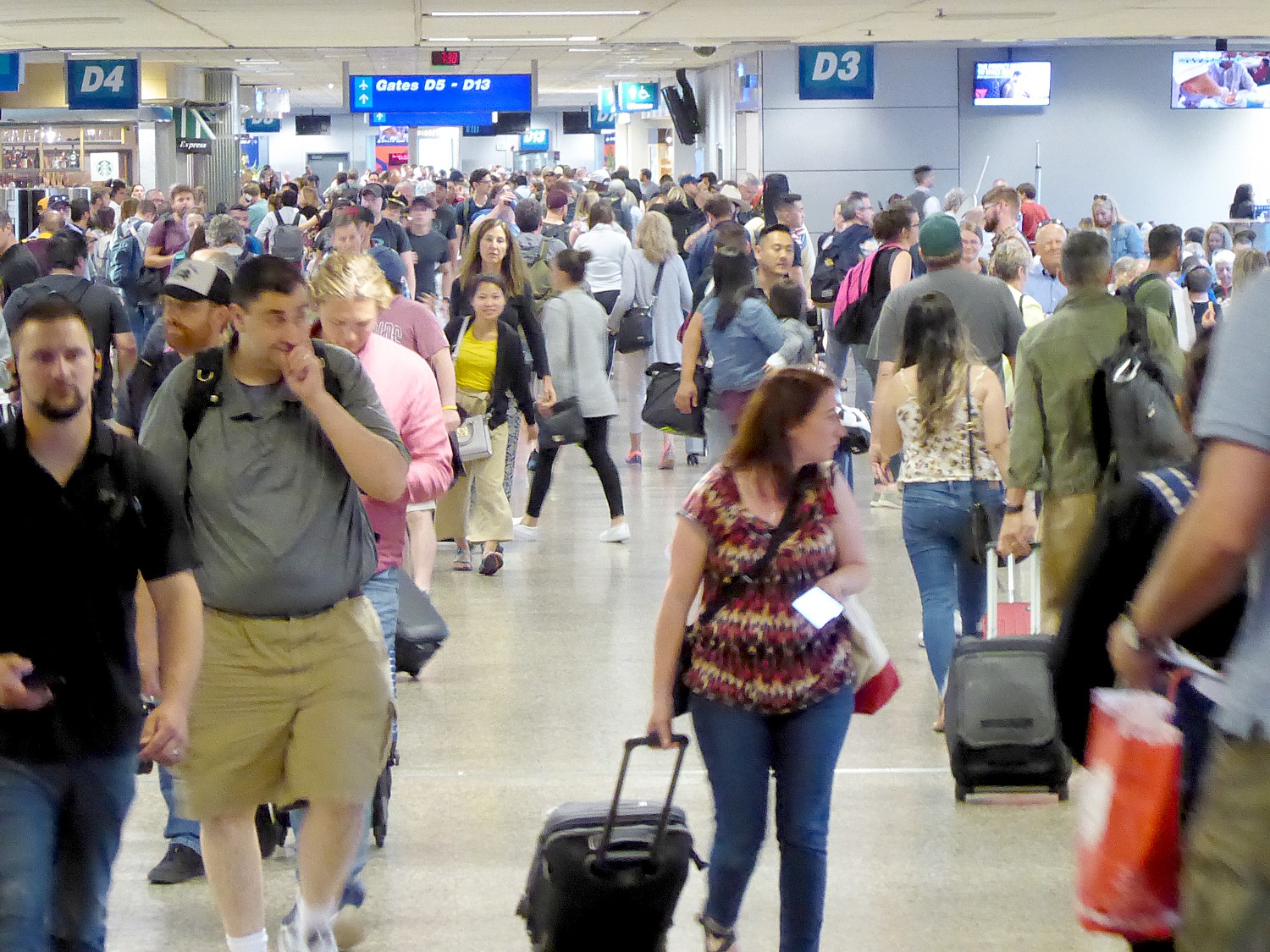
Air passengers are reasonably concerned about what to expect flying this year Karen Rubin/goingplacesfarandnear.com

Also, given the “chaos in the sky” with the doubling of cancellations in 2024, she recommends, “fly before 3 pm, or up the risk of being cancelled or delayed by 50%.” If you fly after 9 pm, your risk of being delayed or cancelled goes up by 57%. Fly after 9 pm and your risk of being delayed or cancelled goes up 57%

To get the best rate for a hotel, Frommer suggests booking three-plus months in advance for resorts, but just one week before in business-travel cities.

“Always get a reservation you can cancel.” (I have had great success finding hotels at hotels.com and booking.com, that provide great tools for location, amenities, nearby attractions, easy cancellation, and helpful reviews.)

Vacation home rentals, such as through airbnb.com may not be cheaper than hotels because of housekeeping fees and taxes (unless you are a family or couples traveling together), but typically afford more space, the convenience of kitchen and laundry, and are typically in neighborhoods so you get to connect with local people.

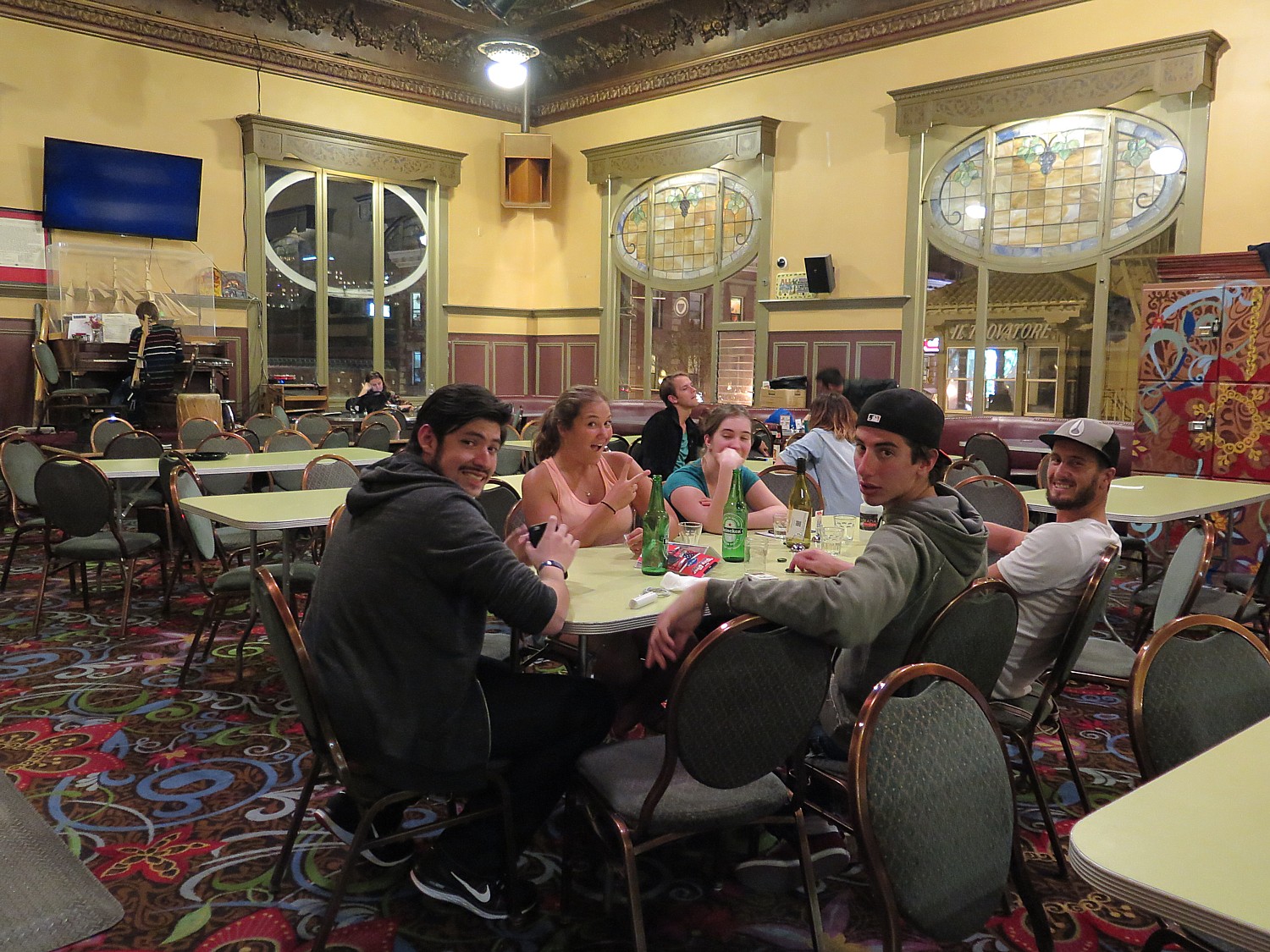
Looking for added value in accommodations? Consider hostels: “There are wonderful hostels all around the world, where you get private rooms, private bathrooms for much less than a hotel. There usually is a common area, a place where you can cook your own meal, do your laundry.”

Staying in a hostel like the Green Tortoise in San Francisco is an experience in itself © Karen Rubin/goingplacesfarandnear.com

“Typically there are also opportunities to meet and socialize with other travelers,” she said (as I found in Quito, Ecuador, where I was invited to a communal dinner). A good source for finding hostels is HostelWorld.com.

To find a tour, Frommer recommends: travelstride.com and tourradar.com, which are marketplace sites for tours. You put in dates and where you want to go and then can compare prices, highlights, what is offered. “Often the cheaper tours are by local tour operators that don’t have an international profile but go to same places, and often stay in the same hotels and restaurants.” 

Travel insurance is recommended when you are taking a long-distance, expensive tour and want protection against cancellation (but read the fine print); but what you may well want when traveling abroad is medical insurance, covering evacuation if necessary. (Medicare isn’t applicable abroad.)

You can search for the policy that works best for your purpose at:

Squaremouth.com

insuremytrip.com

travelinsurance.com

“Put in details and it generates a list. Inevitably the best is not the most expensive, usually it is in the middle cost range. No travel insurance company is always the best.” Also, she advises, “Never buy insurance through the travel provider.”

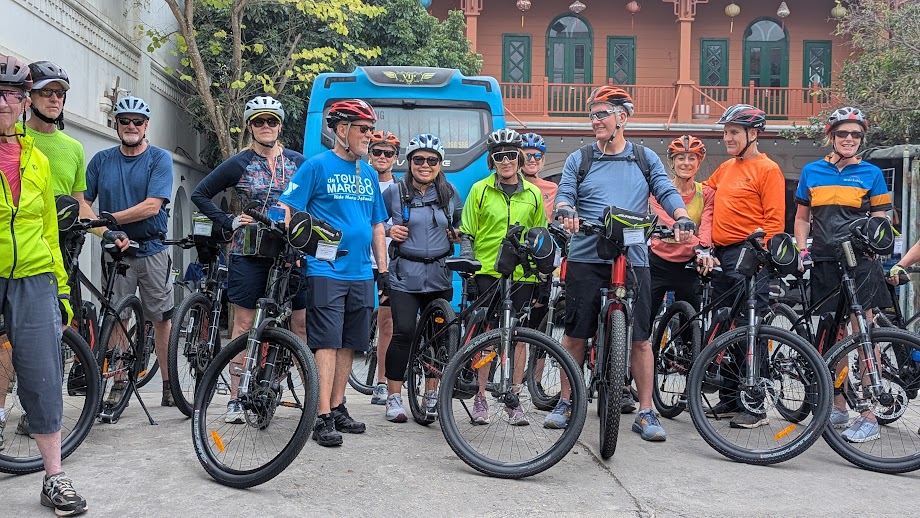
If you are undertaking a trip like a bike tour in Cambodia and Vietnam, it is highly recommended to purchase travel medical insurance that includes medical evacuation. (Medicare doesn’t cover treatment abroad.) © Karen Rubin/goingplacesfarandnear.com

(Recently, in preparation for Discovery Bicycle Tours’ trip to Cambodia and Vietnam, I did the search at travelinsurance.com and found the policy that best fit my needs for medical coverage was through Generali Global Assistance.)

Every year, the Frommers offer their recommendations for where to go in the coming year. The hallmarks of the list have become finding the less crowded destinations worth a visit. (See the full article frommers.com/bestplaces2025)

Crete in Greece: it is one of the least crowded of the Greek islands because it is the largest- twice size of Rhode Island, while most travelers go to Mykonos or Santorini. “Santorini got 3 million visitors in 2024 – it was so hairy on the roads, the government asked the Santorini citizens to stay off the roads at certain hours because of the traffic jams with tour buses.” But Crete is the land of “Zorba the Greek”. “It is the most Greek of Greek islands, once part of the Venetian Empire, it looks like Venice and has incredible ancient ruins from when it was the center of the Minoan civilization – think Minator and Labyrinth.”

Looking to do an African safari? A safari in Zambia, famous for Victoria Falls , one of tallest in world, is as much as 25% less costly than Tanzania or Kenya. “They have all the animals – giraffes, elephants, hippos, lions – and also have a progressive system where the rangers who stop poaching are women. It is also one of the safest countries in Africa. Support them.”

Greenland is top of mind lately. “Bizarrely, Greenland just expanded its airport, so for the first time, can accommodate large jets. For the first time, you can go to this ice-covered nation direct from New York in the time it takes to go to Iceland. 80% of Greenland is covered by ice – you can do heli-skiing, snowshoeing, glacier cruises, see polar bears.: Frommer is anticipating Greenland will be the next Iceland. “Go before it’s too crowded. It’s a great adventure destination.”

The Caribbean country of Barbuda (part of Antigua and Barbuda) is an undeveloped, beautiful, pristine island (because it never had a big airport) that made the news 40 years ago when Princess Diana visited, thinking she could escape the paparazzi. “During WWII, allied generals were worried Germans would use the Caribbean islands as bases to invade the US – so built airports on Jamaica, Aruba, Puerto Rico and several other islands; after the war, they drew tourists. Barbuda is finally getting an international airport and Robert De Niro is building a resort on Barbuda, she said. “See it while it is in its more pristine state.”

At her talk at the New York Travel Show, titled “Travel Lessons I’ve Learned From My Father That Will Make Your Next Vacation Less Expensive and More Meaningful,” Pauline Frommer said, “He believed money should be used smartly. He believed travel could be a life-changing activity.” © Karen Rubin/goingplacesfarandnear.com

Bath and Hampshire, England are “going crazy” this year over the 250th birthday of novelist Jane Austin (“Pride and Prejudice”, “Sense & Sensibility”) – there are Empire-style costumes you can rent, special exhibits. Bath also has one of England’s most important Roman ruins.

Tucson, Arizona is turning 250 years old this year, as well, and mounting celebrations all year long. Also, Tucson is the only city in the United States that is part of the Dark Sky program. On the edge of the city, Saguaro National Park, there is a free observatory you can go at night to look at stars with astronomers. Tucson is also the place for foodies, with a 4000-year old culinary tradition. “The United Nations named it the only culinary UNESCO World Heritage site in the US. There are all the different influences in the food. There are all kinds of food celebrations for the 250th.

“My father said, ‘Don’t just go to dead sites.’ If I had never traveled, I would never have understood that all people, no matter how exotic their appearance, have basically the same concerns, the same desires. Don’t just go to see things, but meet people.”

To meet people when you travel:

The International Greeter Association connects you to people who love their home communities and give free tours. You can go to Tokyo and find a greeter to take you around Tokyo for a day, teach you how to use subway, show you a neighborhood, free.”  In Chicago, Frommer took a tour of downtown to discover public art. She toured a Hispanic neighborhood in the Bronx, visiting stores and apartment buildings, to “learn about another side of New York City.”

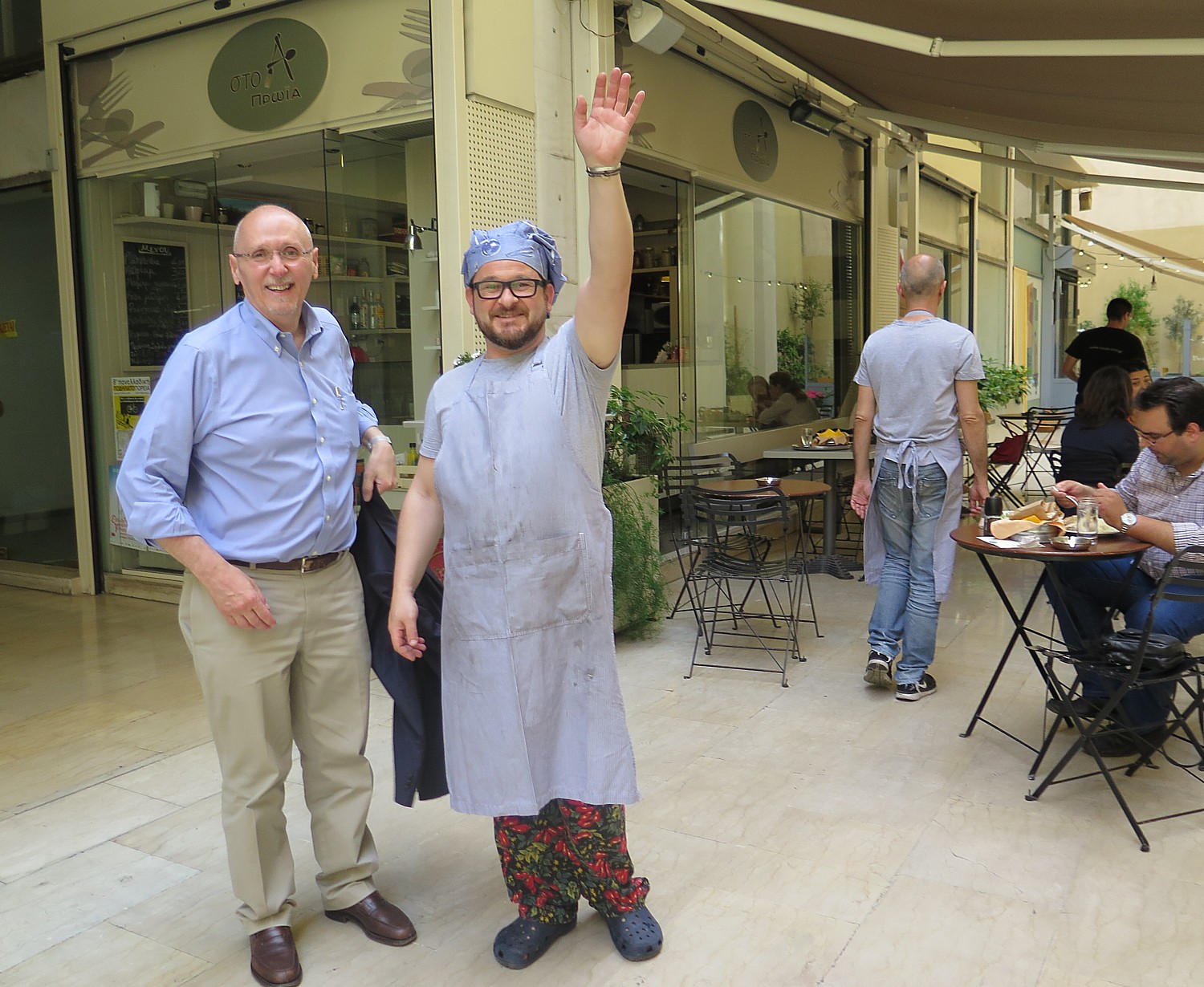
Touring Athens with a Native: architect Constantine Panagiotis introduces me to his favorite chef. Connect with these local volunteers who are eager to show you their community through the The International Greeter Association © Karen Rubin/goingplacesfarandnear.com

Find other free tours led by locals through the International Greeter Association, a worldwide nonprofit organization offering private free walks with locals through some 400 cities in 60 countries. https://internationalgreeter.org). Also, GetYourGuide.com.

(Athens, Greece has a program through the tourist office, “This is My Athens,” that sets you up with a local to show you around for free, https://www.thisisathens.org/withalocal/. We have also found free walking tour programs in most cities by googling, such as in Quito, freewalkingtourecuador,com, where you just tip the guide after. )

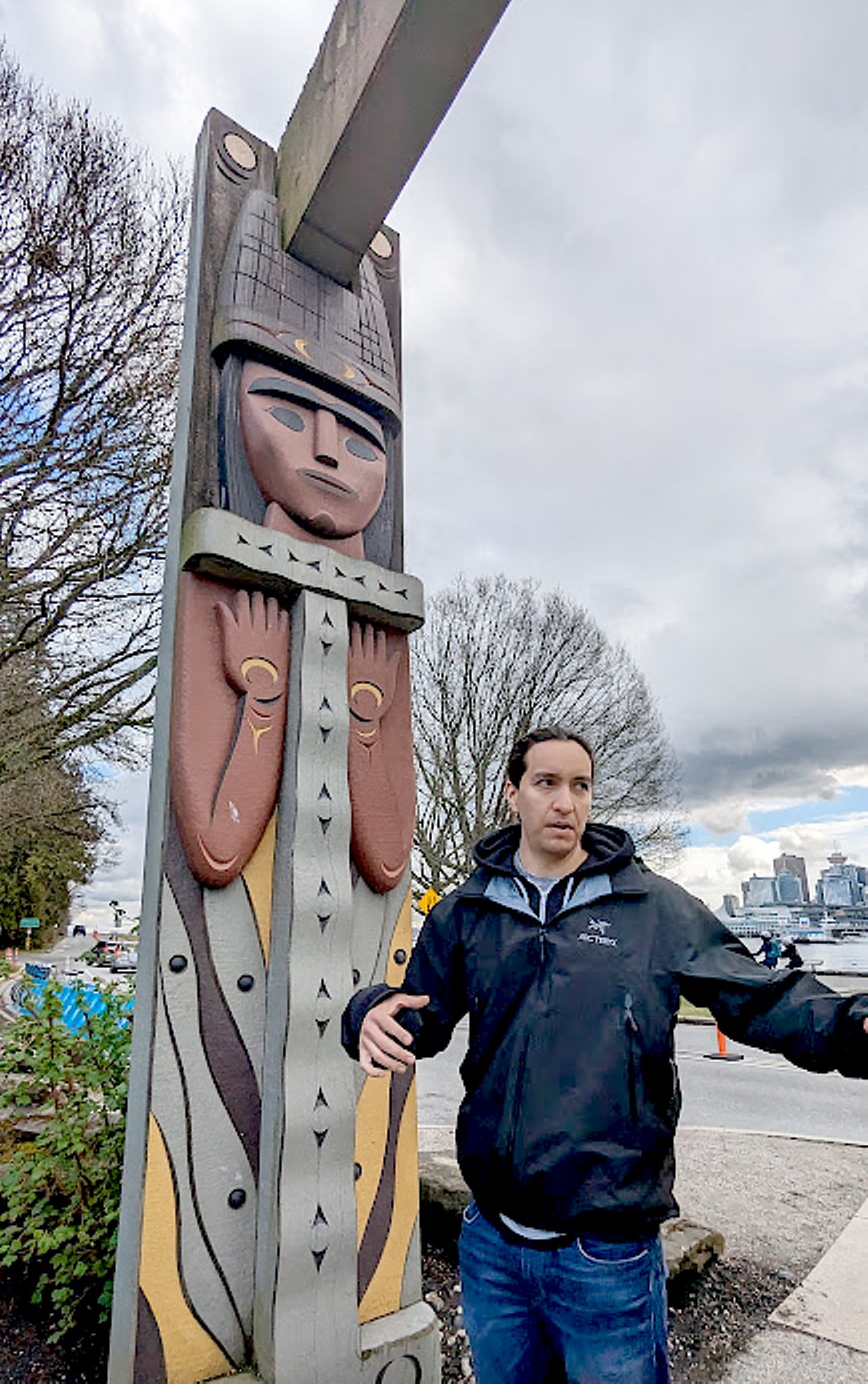
A family discovered this Talaysay Tours indigenous walking tour of Stanley Park in Vancouver, Canada, through Airbnb’s Experiences © Karen Rubin/goingplacesfarandnear.com

Airbnb.com Experiences provides links to little companies with people with experiences to share. Frommer related taking her 15-year old daughter on a tour of Paris consignment stores with a fashion expert. “We have been to Paris many times but saw things never had.”

TravelingSpoon.com and EatWith.com link travelers to culinary experiences with local people, the best local cooks in different communities, home cooks. Frommer described such an experience with an “Italian nona,” whose grandson translated as she prepared the meal in her kitchen. “We all gathered for a meal. It cost as much as a high end restaurant, but it was our most memorable meal in Italy that time.”

Another way to have an extraordinary experience is to do short-term work in a foreign destination– something that is particularly appealing for young people taking a gap year – which do not require work visas. Opportunities can be found at:

workaway.com

helpstay.com

WWOOF.org (Willing Workers on Organic Farms)

volunteers.grupo

The heyday for digital nomads may be passed, but to find what remains, you might consult:

flexjobs.com

remotey.com

jobspresso.com

remoteOK.IO

Travelers are increasingly concerned about sustainability and traveling responsibly, so the benefits of their visit (providing economic foundation to sustain people living in their community, maintaining culture and heritage and sites) do not outweigh the negatives of overtourism.

Tour operators, like Intrepid Travel (intrepidtravel.com) are taking this into account in designing itineraries so they are more hub-and-spoke and less travel by bus or airline; several, like G Adventures (gadventures.com) are conscious to purchase local products and hire locals, as well as contribute a portion of the tour price to benefit the community; Seacology (seacology.org), takes you to places threatened by ocean rise then donate money back to community.

Pauline Frommer is continuing the mission and legacy of her father, Arthur, to inspire and facilitate journeys of discovery.

“At its best, travel should challenge our preconceptions and most cherished views, cause us to rethink our assumptions, shake us a bit, make us broader minded and more understanding,” Frommer said.

Her father, Arthur Frommer, “changed this industry in powerful ways, democratized travel. He was one of the first to say average people should travel, not just the wealthy, elite. Travel afforded the opportunity to expand your life, expand your mind, and do it in a way that pushes the cause of world peace. He truly believed that when we get to know other countries, wonder at the beauty of them, we won’t attack or invade, and our hearts will break when things go wrong there.”

__________________

© 2025 Travel Features Syndicate, a division of Workstyles, Inc. All rights reserved. Visit goingplacesfarandnear.com and travelwritersmagazine.com/TravelFeaturesSyndicate/. Blogging at goingplacesnearandfar.wordpress.com and moralcompasstravel.info. Visit instagram.com/going_places_far_and_near and instagram.com/bigbackpacktraveler/ Send comments or questions to FamTravLtr@aol.com. Bluesky: @newsphotosfeatures.bsky.social X: @TravelFeatures Threads: @news_and_photo_features ‘Like’ us at facebook.com/NewsPhotoFeatures
Experts at NY Travel Show Offer Tips for Satisfying, Meaningful, Purposeful Travel

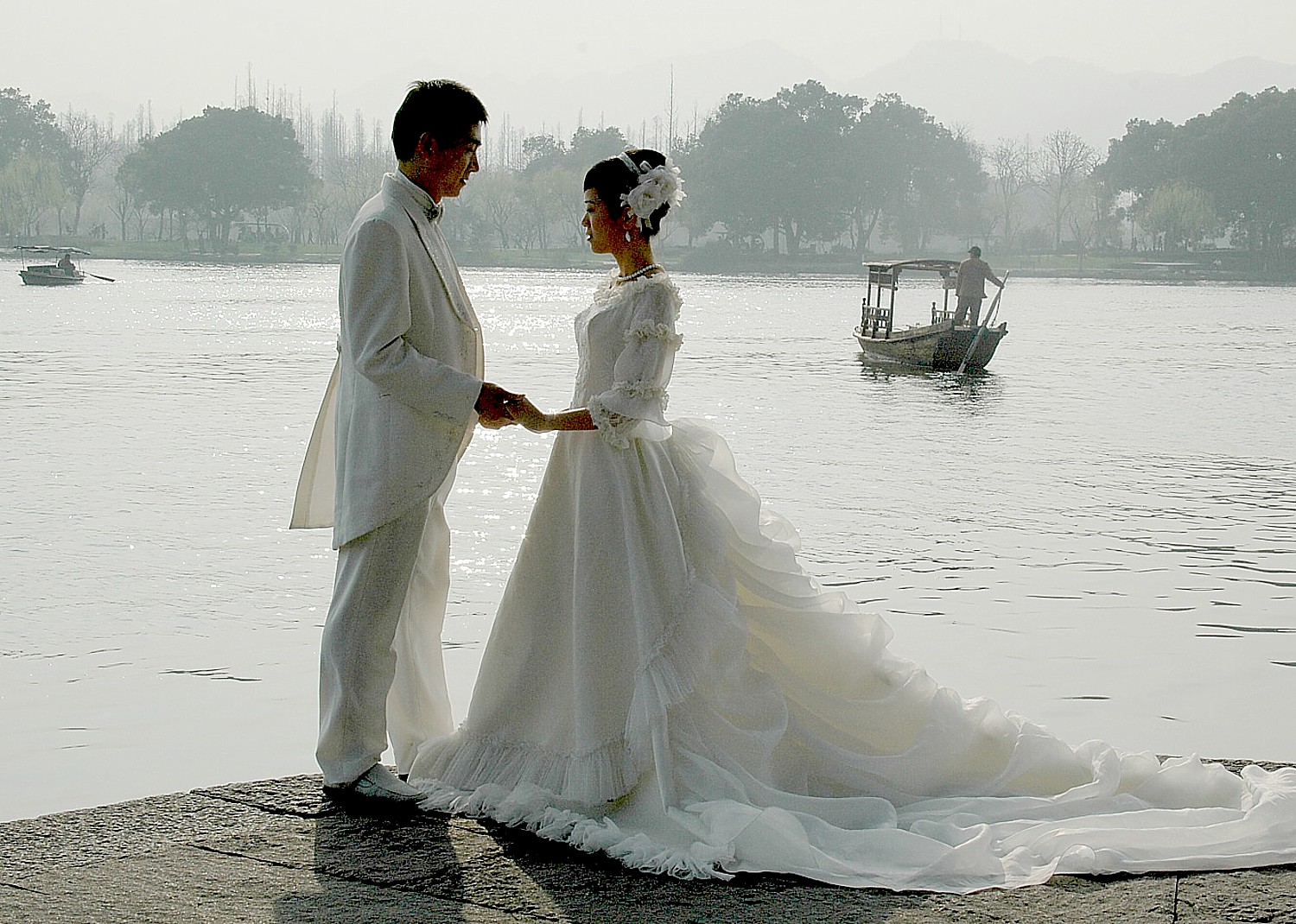
A wedding couple in Hangzhou, China. Travel is how ideas, innovations and progress, improved living standards and quality of life are spread among peoples, as Marco Polo proved. Travel is humanity’s best hope for peace and cooperation as people from different places see and appreciate that we are more alike than different, and appreciate the differences. © Karen Rubin/goingplacesfarandnear.com.

By Karen Rubin, Travel Features Syndicate, goingplacesfarandnear.com

It’s like this: travel is humanity’s best invention to promote the advancement of civilization. Travel is how ideas, innovations and progress, improved living standards and quality of life are spread among peoples, as Marco Polo proved. Travel is humanity’s best hope for peace and cooperation instead of zero-sum annihilation, as people from different places see and appreciate that we are more alike than different, and appreciate the differences. Travel is a community’s best hope for providing the economic underpinnings that provide jobs, upward mobility and enable people to stay on ancestral lands, have the funds to preserve and protect the environment, culture and heritage, and yes, make the adaptations and mitigations to prevent the ravages of climate change. Indeed, just as the travel industry has led the way with e-commerce, yield management, and  loyalty programs, the industry – the third largest in the world – is leading the way on climate solutions,

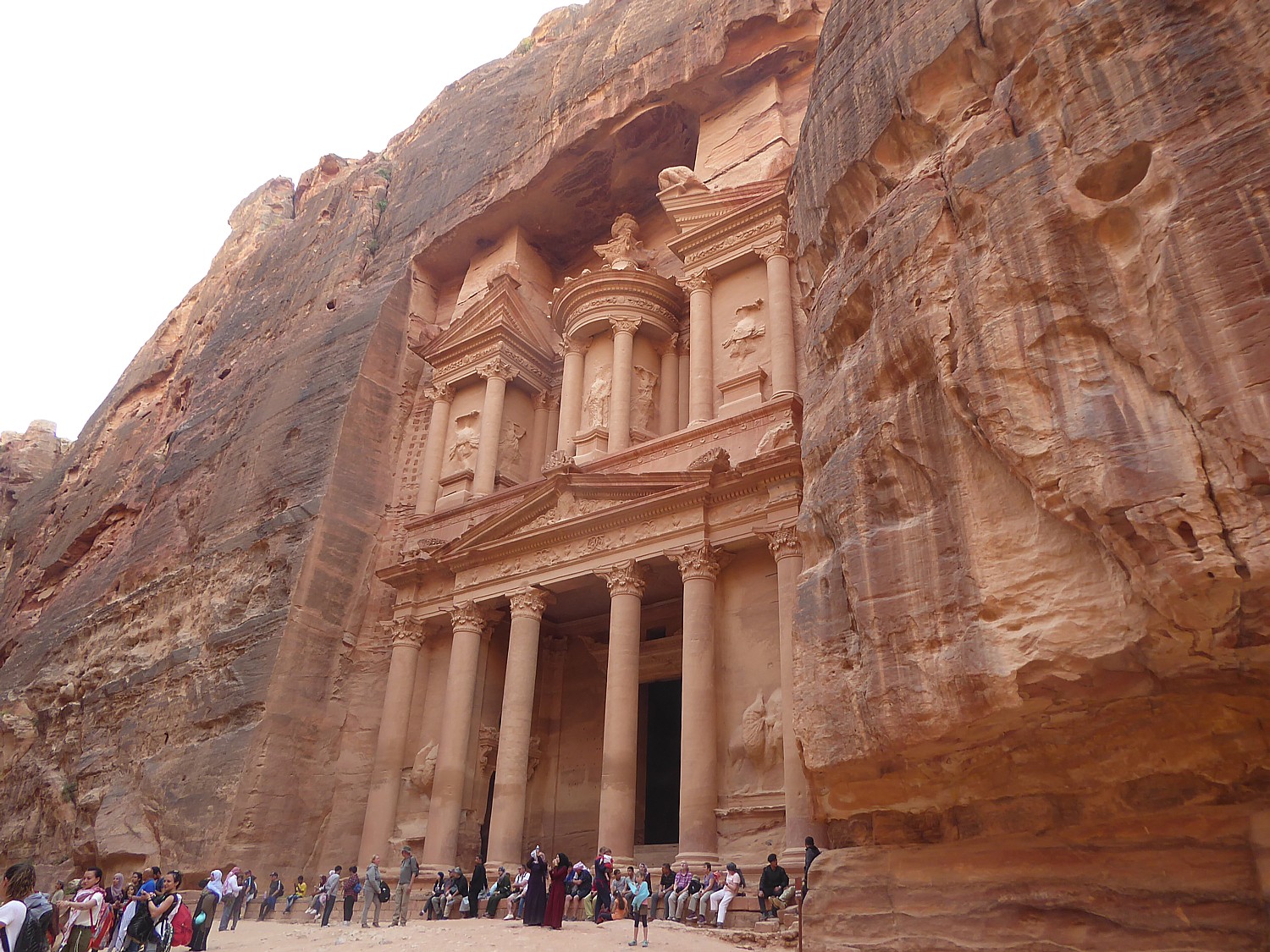
Tourism is what provides the economic underpinnings to support jobs and upkeep of such treasures as the Treasury at Petra, Jordan. To avoid crowds, stay overnight and enter the ancient city in the early morning © Karen Rubin/goingplacesfarandnear.com

Travel also is life-enhancing, enriching, potentially life-changing and among the best therapies against despair – providing a conduit for forging social connections, self-improvement, overcoming fear, anxiety and apprehension by fostering understanding and empathy, broadening perspectives. The experience of travel fosters resilience, self-confidence, self-reliance, adaptability, forges lasting bonds of family and friendship and broadens perspective and outlook.

That’s not just me saying it. It’s what travel experts with collective experience of decades (including myself), have seen and experienced firsthand.

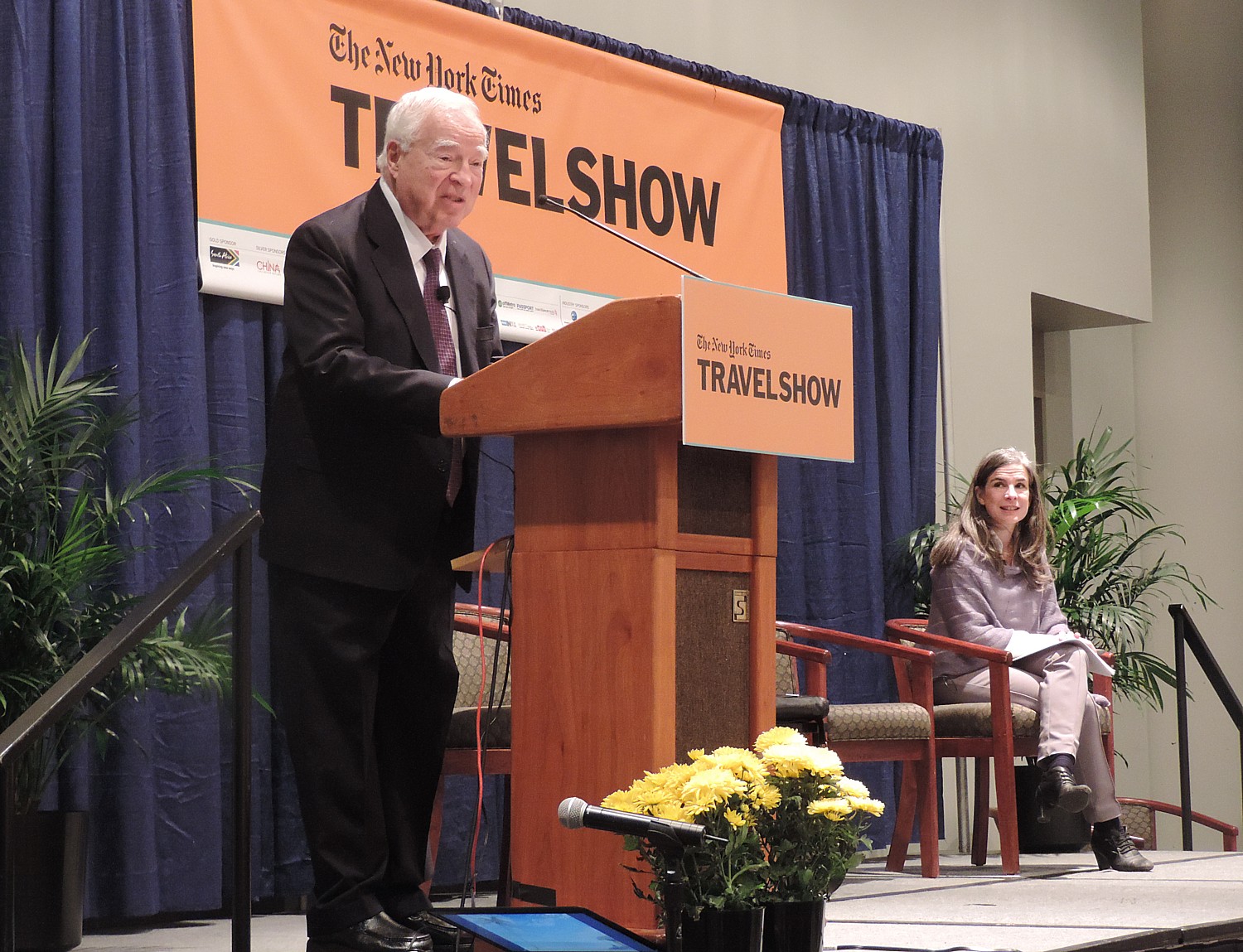
“When we travel, experience the world, it changes us in a deep and profound way,” Pauline Frommer of frommer.com, told a standing room only audience at the most recent New York Travel & Adventure Show at Javits Center. “Right now we live in such a divided word – different facts inform our view but when we travel, we see the truth on the ground, that other countries have something to teach us, we can bring that back, and present an impression of America that is positive in places that may not have positive impression of America. Even with climate change, travel is one of the best tools in our ongoing search for creating world peace. So have wonderful, relaxing vacations, but your trips also can be meaningful and you can make a difference when you travel.”

“Consume news, but don’t let that make you a frightened person,” advises Rick Steves of ricksteves.com. “Be outward looking. If we want world to be peaceful, we have to build bridges. We can be challenged and stimulated by smart people who do things in smart ways. We can celebrate the Moroccan dream, the Bulgarian dream, just like the American dream – there is room for lots of dreams, As a traveler, we get to enjoy them all….[If we want a world of] peace and stability, the most powerful thing we can do as individual Americans is to travel and get to know people.”

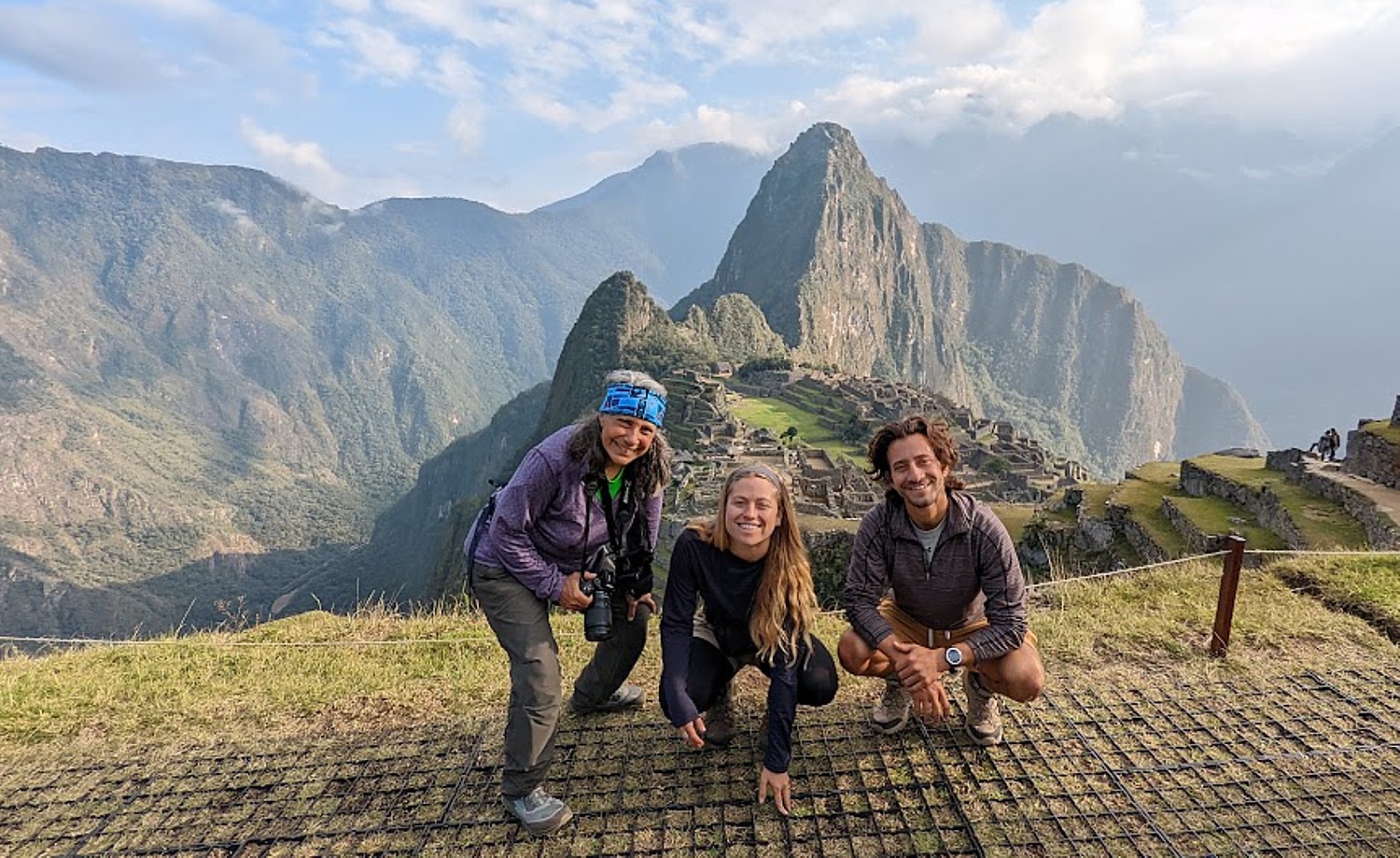
Machu Picchu, Peru: travel has the potential to be life-enhancing, life-changing. But don’t put off your “bucket-list” experiences because you never know if there will be a pandemic, a political issue, a climate disaster. “Carpe diem,” says Patricia Schultz, author of “1000 Places to See Before You Die”

The COVID pandemic reinforced the value of travel – the three years of lockdowns and constrained travel upended local economies, while shutdowns that kept people from traveling underscored the human need for connection, for renewal, for new horizons to broaden perspectives.

“A life lesson we took away from COVID and postponed pleasure is that there is never a guarantee that we will be able to travel tomorrow or next year- our health, our need to care for people, political situation, climate disasters. Carpe diem,” says “1000 Places to See Before You Die” author Patricia Schultz.  She reflects on the places that she had included but have had to drop off her list recently – Ukraine, Syria, Iran even Jerusalem. “The lesson from this image [of people at the Western Wall] is carpe diem – if some place is on your bucket list and you think, well, the Pyramids will always be there, guess what? Don’t take anything for granted.”

And so with the pandemic in the rearview mirror (at least for now), people are traveling with furor and we are back to worrying about being crowded out and the potential impacts – and actions to prevent – overtourism. COVID-generated technologies and policies for advance purchase, capacity control are here to stay.

The excitement for traveling to the four corners of the globe and in every style, from decompressing on a beach, to joining an expedition to see gorillas in Uganda, to standing up for Ukraine by showing up in Ukraine, was evident at the New York Travel & Adventure Show, where booths were crammed and talks by experts including Rick Steves, Peter Greenberg, Pauline Frommer, on traveling smart, well and meaningfully were standing room only.

But because there is a whole world out there, you can make choices of where and when to travel. Don’t like crowds? Try to visit a destination when less crowded (though there is less of an “off-season” or “shoulder” season these days); find the “hidden gems” that offer as much atmosphere, experience and character; visit attractions either very early or later in the day (to avoid the hoards of cruise passengers and daytrippers); overnight in those charming, historic cities and villages (preferably in or within walking distance of the historic district) so you are there in the early morning and the evenings to enjoy the stillness and light without the hoards of cruisers and daytrippers; and pre-purchase tickets, city/museum/attractions passes so you don’t waste valuable time and money standing in line to purchase tickets. Climate and weather also have become major issues that should factor into where and when you travel.

Their message: By all means, experience the highlights of a place, but go further afield to seek out local experiences, opportunities to visit or stay in neighborhoods. Be a mindful traveler, a purposeful traveler: enhance the experience by learning the background, the stories and back-stories, hire a local guide, take a “free” walking tour (you basically tip the guide), sign up for some volunteer opportunity to give back to the community; seek out those tour programs that provide immersive opportunities to engage with locals.

The Pont du Gard aqueduct, for example, is the most-visited ancient monument in France. A UNESCO World Heritage Site, it is one of the best-preserved Roman sites in the world. Most people see it as a pretty photo op and do not understand how innovative the engineering was – how the Romans brought water from 30 miles away – and what a difference it made in the lives of people who didn’t have to spend hours of their day in pursuit of water.

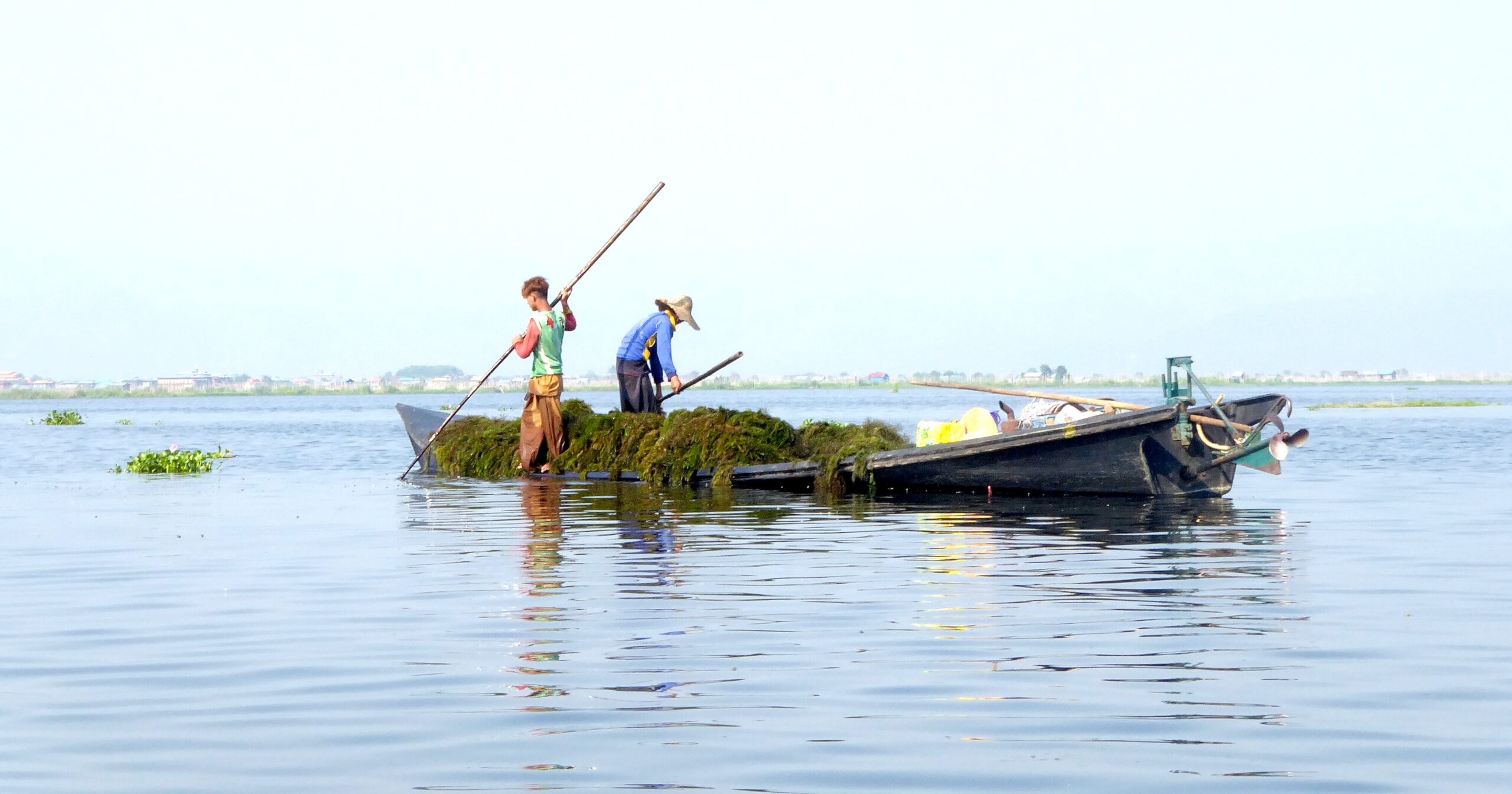
Meet the people who live on Inle Lake, Myanmar © Karen Rubin/goingplacesfarandnear.com

“For a lot of tour groups, it is just a pretty bridge, a potty break, a souvenir stand. [But learning the backstory], humanizes this site,” says Rick Steves says. “How to carbonate the travel experience is about how to connect with people..Too many tourists sit on folding chairs watching yodeling on stage, but not connecting, and back in the hotel, only interact with other Americans. It’s a vacation, to be sure, but what is missing is what it means to travel.

Steves urges travelers to “get out of their comfort zone, to see culture shock not as something to avoid, but as the growing pains of a broadening perspective.”

“Become a cultural chameleon – physically change from culture to culture because it’s different.” That means going to where the locals hang out in the evening, drinking Ouzo in Greece, whisky in Scotland, tea in England, red wine in Tuscany, beer in the Czech Republic.” Go three blocks off the main drag to find the restaurants popular with locals; for some meals (breakfast, lunch) go to local groceries and markets and picnic. Seek out the family owned two-star hotel, inn, lodge, hostel or AirBnB – that not only saves money but adds enrichment because of a more “authentic” experience.

Pre-planning is the way to mitigate wasting time and money in line or with crowds.

“There are two types of travelers: those who wait in lines and those who don’t. Think carefully of minimizing lines,” Steves notes.

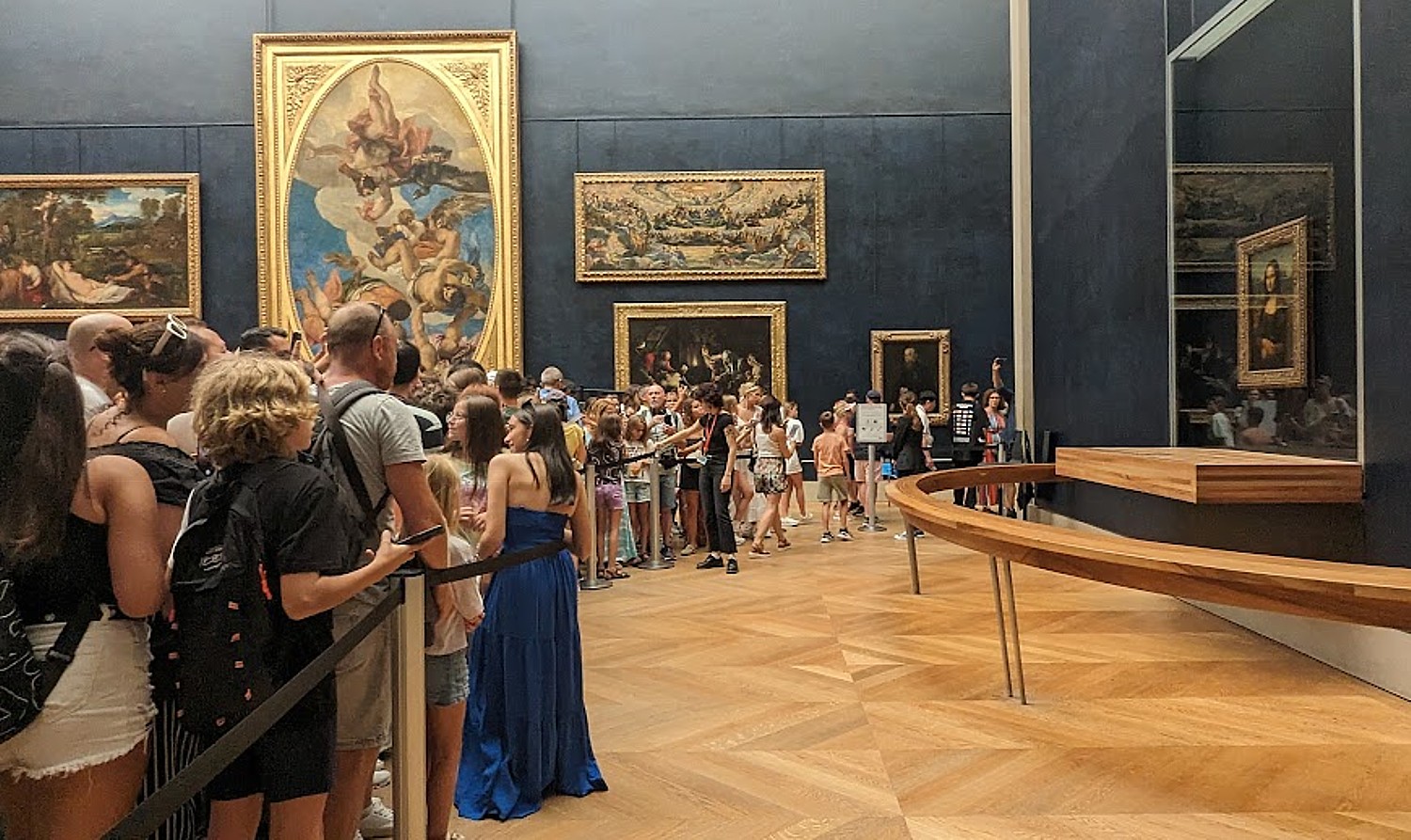
Crowds in front of the “Mona Lisa” in Le Louvre in Paris. Travel experts at the New York Travel & Adventure Show offered tips on how to avoid crowds and the lines, especially in places like Paris, where advance purchase of tickets to major museums and attractions is essential. In Paris, purchase the “Museum Pass.” © Karen Rubin/goingplacesfarandnear.com

Before you go: get an idea of the attractions and sites you want to visit (I query “Three days in….” at TripAdvisor and other travel writers to get some idea). Then, go to the attractions’ websites to get all the visitor FAQs (can I take a water bottle into the Vatican; a backpack into Le Louvre – not likely after the latest incident of vandalism against the “Mona Lisa”). As soon as you have your travel dates (that is, your air fare), immediately reserve the tickets– if the attraction is a highlight for you it is a highlight for most others. Your priority places will set the framework for your itinerary, and the time saved by not waiting on line can go to those serendipitous experiences and discoveries. The same with restaurants you have your heart set on frequenting – book a reservation as soon as you settle your dates.

Take advantage of city passes, museum passes (a must for Paris) and attractions passes from companies like GoCity.com and CityPass.com, as well as the passes offered by the cities themselves, like the PragueCoolPass.com. They not only let you breeze through, but give extremely helpful information about current exhibitions, hours, directions, visitor information.

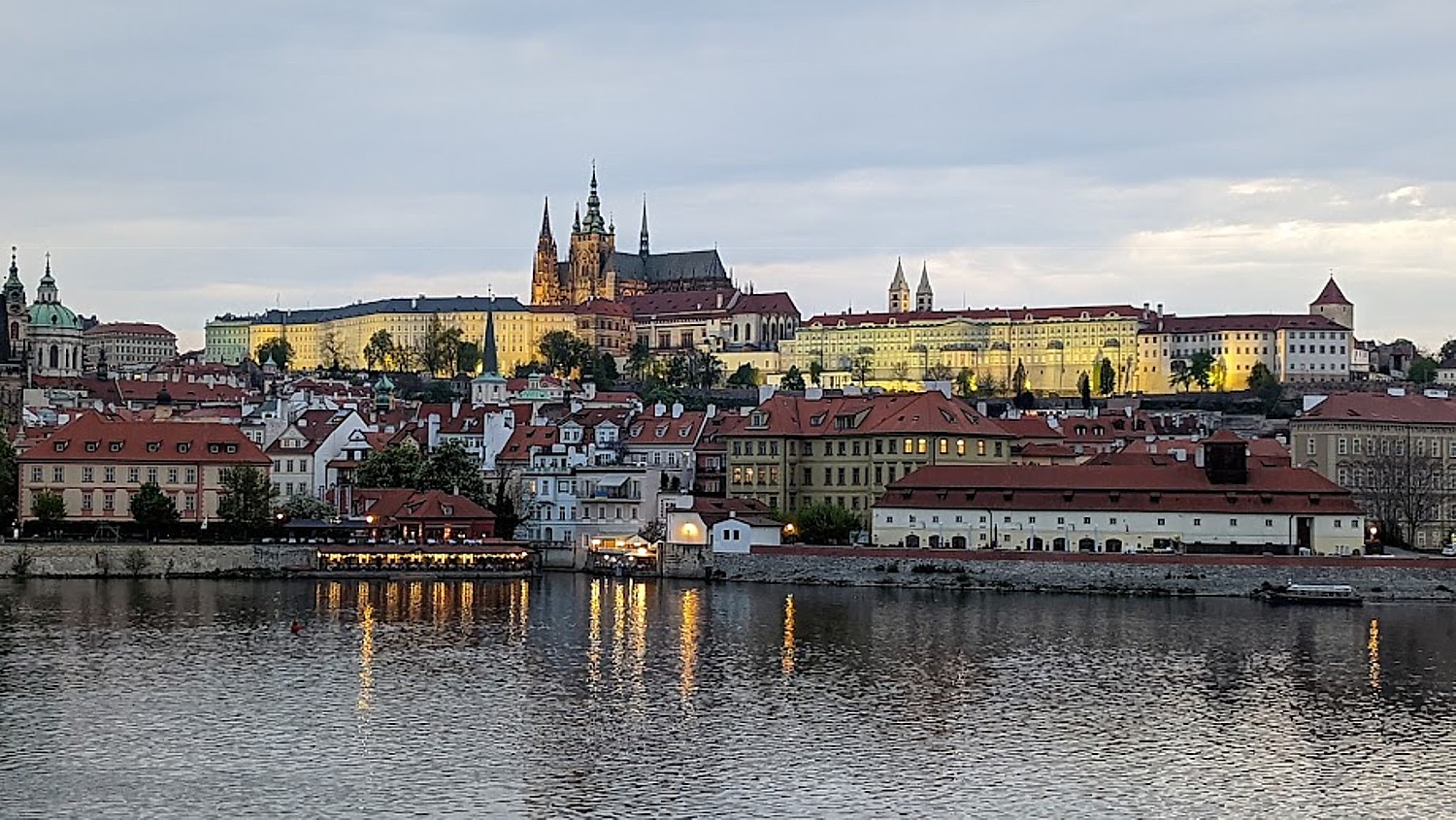
The PragueCoolPass maximizes your enjoyment of this historic city, like visiting its famous Castle © Karen Rubin/goingplacesfarandnear.com.

Try to book the earliest opening hour of the day in order to minimize the crowds, but in any case, book the earliest time available in order to have the most amount of time.

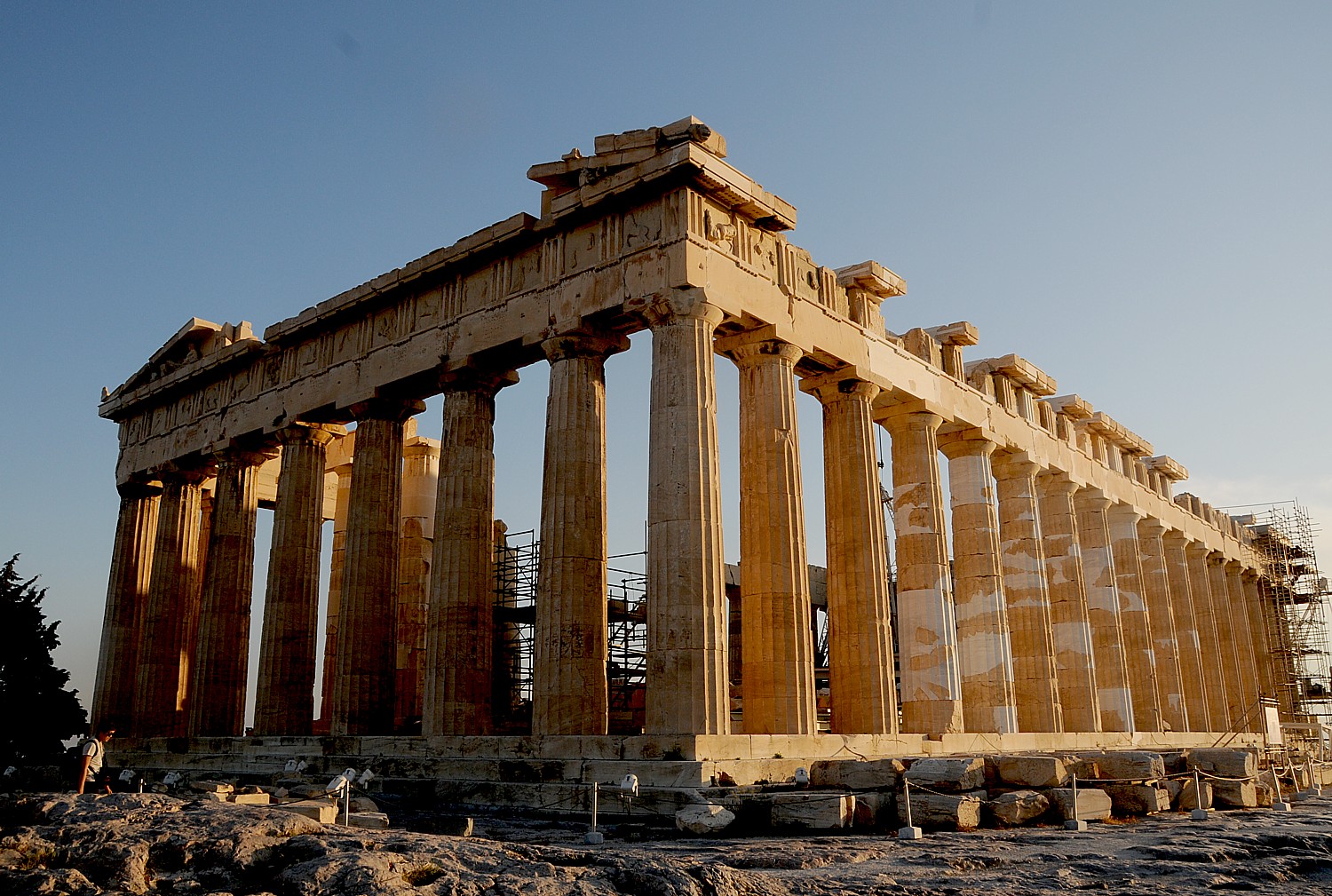
If you are visiting an outdoor site like the Acropolis in Athens, avoid mid-day when it is not only hot as blazes, but overrun with thousands of visitors who have come off cruise ships or day trippers. Come either as soon as the Acropolis opens in the morning, when it is cool and uncrowded, or at the end of the day (as I did), when the light is a gorgeous golden, the views of the city are amazing, it is cooler and the biggest crowds have left.

Visit attractions like the Acropolis at the beginning or at the end of the day to avoid the crowds and the heat and enjoy the golden light © Karen Rubin/goingplacesfarandnear.com.

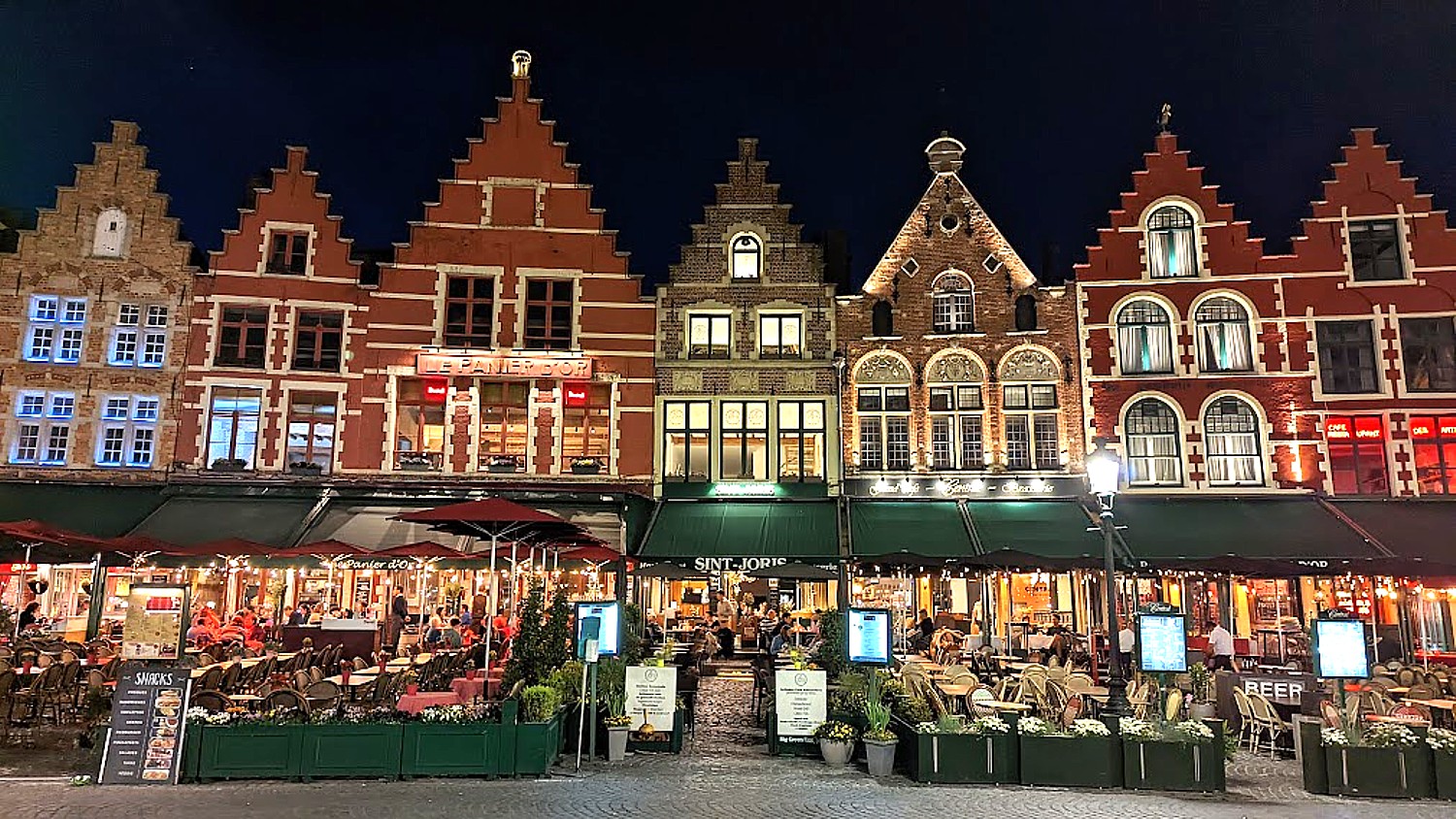
This is also the advantage of overnighting in the most charming cities like Bruges, Strasbourg, Seville, Venice, Prague, Amsterdam, Fez and important sites like Petra – choose a hotel in the historic district that is walking distance to everything but you get to enjoy in the early morning and evening when the lights/lighting/colors are so amazing, the canals like mirrors, the city streets are quiet and empty, before the onslaught of cruisers and daytrippers.

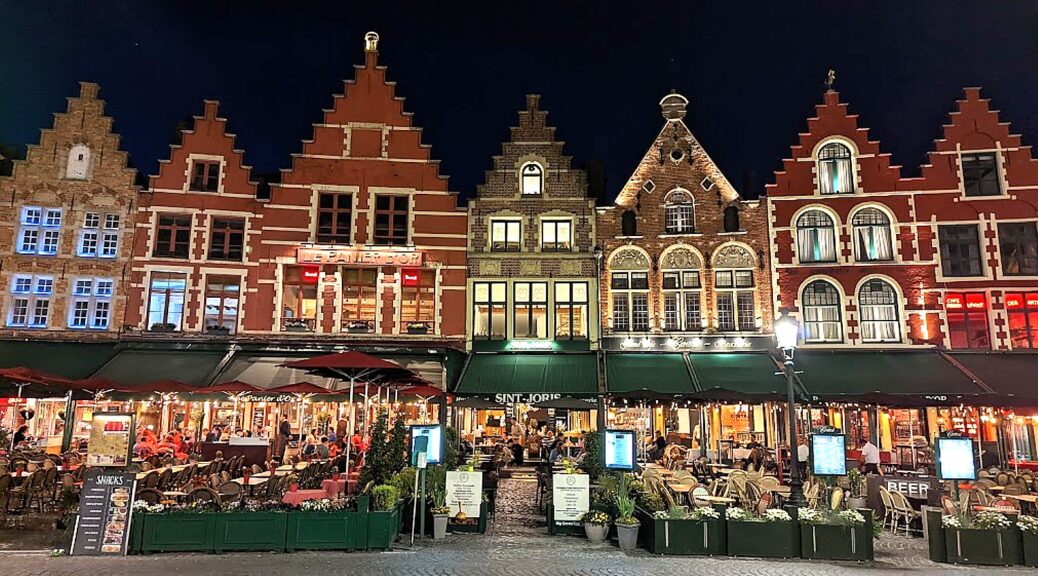
Overnighting in the boutique Flanders Hotel in Bruges’ historic district means you get to have this impossibly picturesque city to yourself at night and in the quiet of the morning before the daytrippers overrun it © Karen Rubin/goingplacesfarandnear.com.

Take advantage of “free” walking tours in cities – local guides work for tips. These are great way to get an orientation. Search “free walking tours” and read the reviews.

Also, in major cities like Paris and London, you can buy mutli-day transit tickets for the train/bus (you can also do bikeshare), so that instead of paying the price of a taxi or Uber from airport into downtown, you can purchase the pass that includes the train or tram from the airport, and not have to wait on lines to purchase individual tickets from machines and deal with the confusion of zones and station names.

Searching muiti-day tour finders is a great way to get an idea of how to organize your time, what to see, what you should pay, and find tour programs that might best meet your needs. Frommer recommends Travelstride.com and Tourradar.com. These marketplace sites, she notes, can introduce you to local companies instead of the big-name tour operators.

Considerations for choosing the right tour company: price (per diem) is only one consideration, also consider what is inclusions (all meals aren’t necessarily a good thing, you might prefer to be able to go off and find those local favorites instead of a restaurant that caters to foreign groups); traveling companions (it is fun to travel with people from other countries, not just Americans); expertise of the guide; demographics of the tour company (often there are family itineraries; women-only; solo travelers; small groups (EF Tours, Audley Travel); price (luxury versus mass market) and age such as younger travelers (Contiki) versus older (Road Scholar) (visit www.frommers.com: How to pick the right tour company for you”).

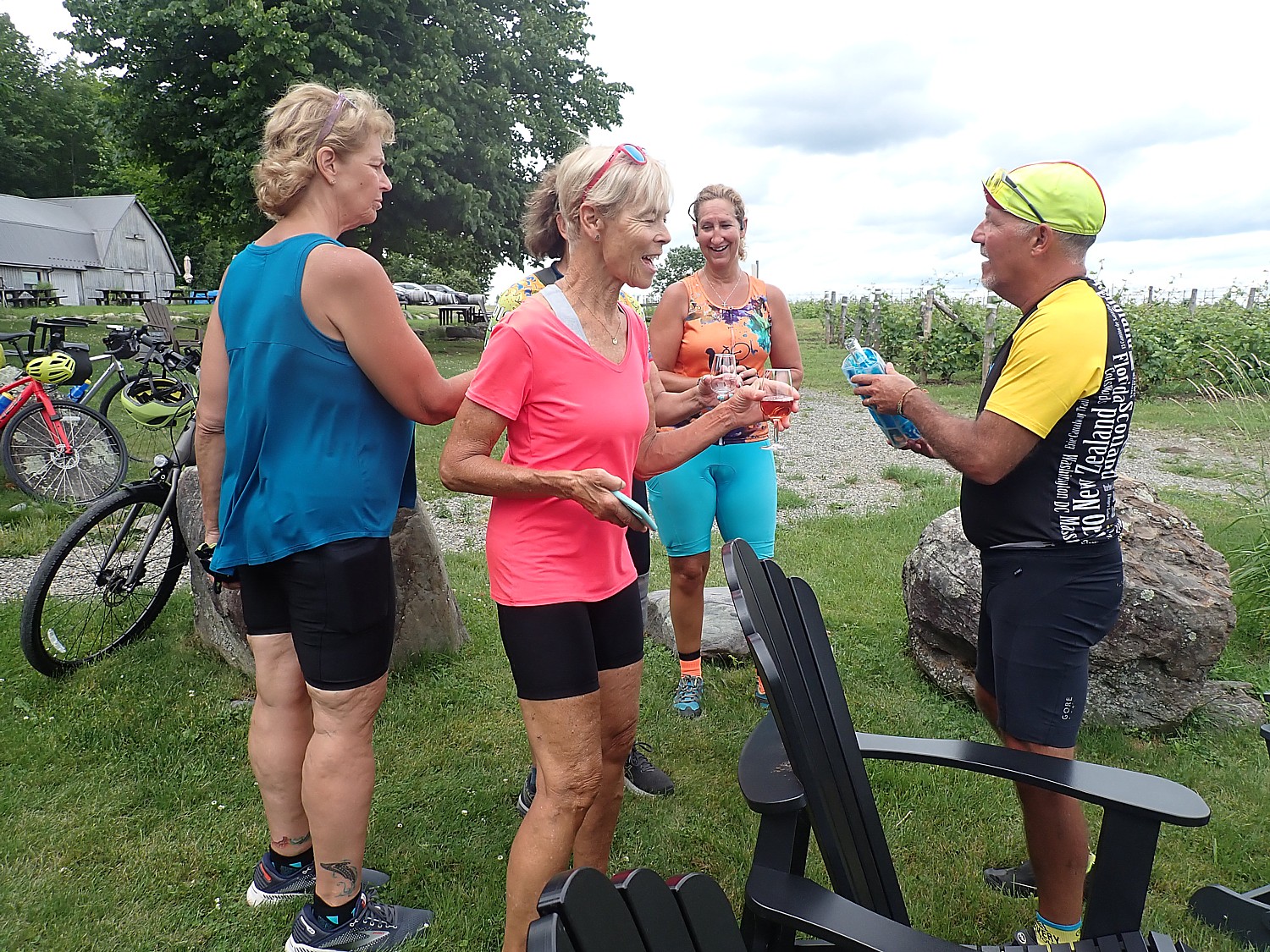
Discovery Bicycle Tours stops at a winery at the end of the day’s ride in the Eastern Townships of Quebec. Bicycle tours are ideal for women and solo travelers © Karen Rubin/goingplacesfarandnear.com

To find day tours, attractions, guides: Getyourguide.com; airbnb.com/experiences; tripadvisor.com. Foodies could look to TravelingSpoon and Eatwith. I like contexttravel.com.

Also be sure to pre-book rail (for example, raileurope.com) and bus transportation (flixbus.com is terrific) between cities. Find schedules at Rome2Rio.com.

Taking the train from Paris to Strasbourg, France. Be sure to book your ticket in advance © Karen Rubin/goingplacesfarandnear.com

To find the best airfares (always tricky), Frommer recommends searching Momondo.com/Kayak.com, Skyscanner.com, and CheapoAir.com. Momondo (and Kayak, which are owned by the same entity) tended to consistently find the lowest fares, and have filters that let’s you select for everything from the type of plane (if you wanted to avoid a Boeing 737 Max 9, or if you wanted to find the airlines with the cheapest fares with a checked bag.

But the experts also recommend that after searching for the best fares, you book directly with the airline, ”because if you book through a third party, you can’t rebook as easily as directly through the airlines” if there is some delay, cancellation or need to change. “Search but don’t book,” Frommer says.

Frommer also railed against “drip pricing” – the extra fees that airlines attach (even though Biden has waged a campaign against junk fees.) US airlines average $78 in added fees; European airlines average $58. So for United, the average is 122% of the base fare; for jetblue it’s 147%; but for Sun Country its 201% and for Frontier, its 376%, so the added fees can be higher than the fare.

When you search for an airline, Frommer consistently recommends you “Hide your identity” “Use a privacy setting on the browser, or use a different browser and different computer if you return to search fares” because the airline will track you, gauge your interest and post higher fares.

Also, there are optimum times to search and book:

  • Purchase airfare on Sundays (6% cheaper domestic travel, 13% cheaper international)
  • Book 28 days out (“the sweet spot”) for domestic travel (24% savings), 2-4 months out for international (10% savings)
  • Start your trip on a Thursday (16% savings over flying on a Sunday)
  • Fly before 3 pm (to avoid the 50% increased risk of being cancelled or delayed)

For best hotel rates, book 3-plus months in advance for resorts like Hawaii, Mexico, Caribbean, Florida but just one week before in business cities (New York, London, Paris, Denver). “It takes courage to wait to book one week before travel, so book a refundable room in advance, then search a week ahead of travel.”

“For first time in 20 years, I am having to research New Jersey hotels for people coming to New York City, because on September 18, the city got rid Airbnb, and all the cheap hotels are filled with migrants. Hotels were  charging $900 in December compared to $129 in January for the same room.”

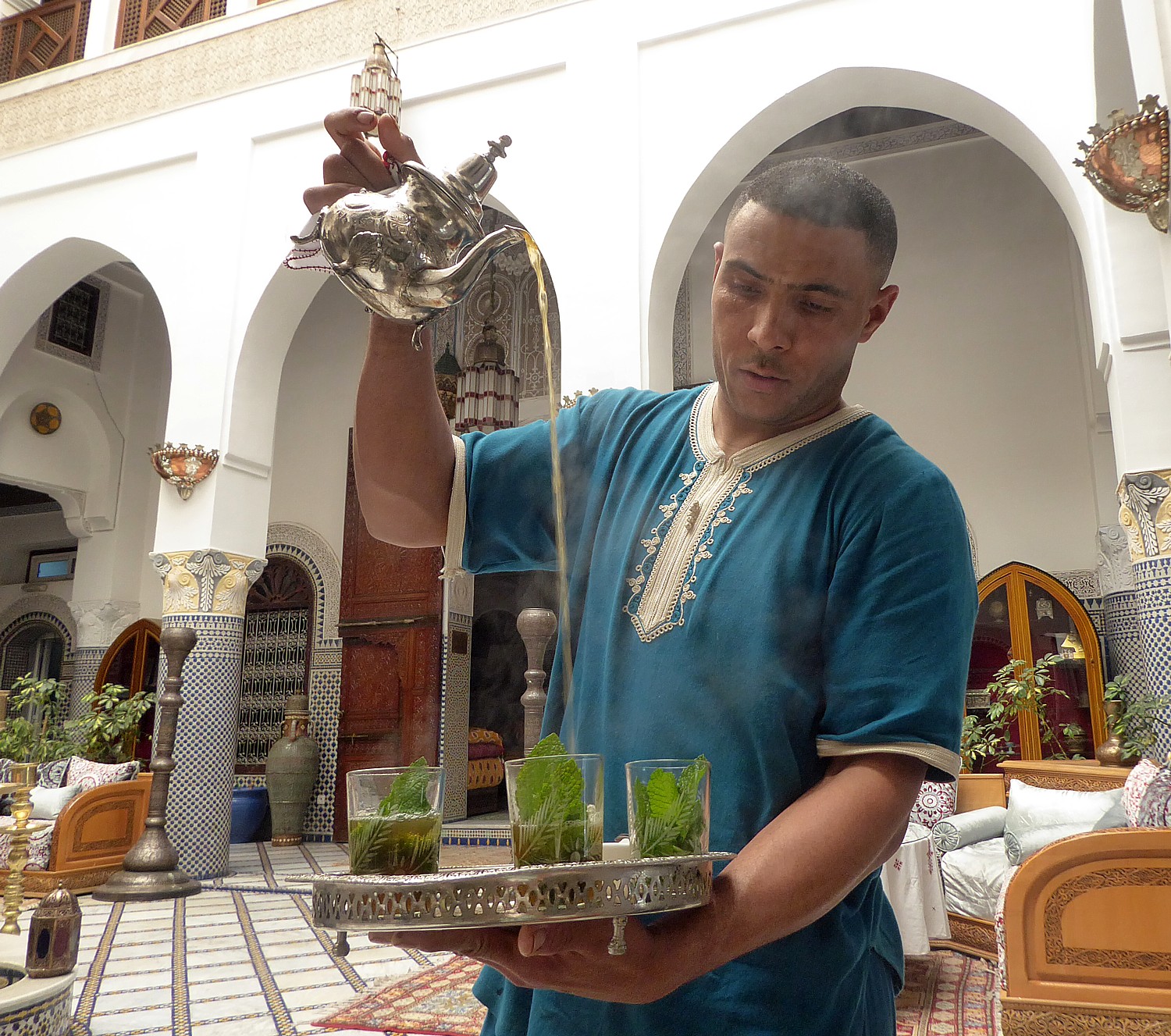
Welcome to Riad el Yacout, built in 1347 for Professor Laharchi, philosophy who taught at the famous Al Qaraouvine university, which stayed in the family until 2000, when it was converted to a 33-room guesthouse, Fez, Morocco, booked on hotels.com © Karen Rubin/goingplacesfarandnear.com

To find “secret hotel discounts, Frommer is recommending seeking out travel clubs like RoomSteals, the new Travel & Leisure Club, professional associations’ travel clubs – some which have fees to join – and @Hotel on Instagram (no fee to belong).

How do clubs have “secret: rates? “Hotel companies have contracts with Expedia, Orbitz, Travelocity etc. and are not allowed to offer publicly deeper discounts (more than 5-10%) than they give to expedia, orbitz). But if they can’t fill their rooms, they turn to the clubs.”  On the other hand, the clubs often do not show as much information as you need about services and the like.

Also, Frommer notes, Airbnb isn’t necessarily a bargain over hotel rates. “Now because so many extra fees, a recent study showed in 48 of 50 states you pay more at Airbnb than hotel (two exceptions are Nevada and Louisiana). But AirBnB is great for groups, families, if you need a kitchen (and want to save money cooking), but on average, you no longer save money on a rental vs. hotel.”

On the other hand, Frommer has always been a big booster for home exchanges – where you actually trade the use of your home for someone else’s – a way to save money but also really live like a local.

“You can go anywhere in the world – a Paris apartment, a houseboat in Sausalito.” Among the exchanges are HomeExchange.com.

Pauline Frommer cautions about getting too cautious – fearful – of traveling abroad,

Pointing to the recent US State Department’s worldwide travel advisory in the wake of the Israel-Hamas war, she notes that Australia, Canada, France, Germany, Japan, Mexico, Uruguay, and Venezuela all have travel advisories against coming to the US because of the gun violence epidemic. “Venezuela thinks it is too dangerous to come here.”  The State Department’s worldwide caution for Americans, is as if to say, “’Don’t travel anywhere, the world is too dangerous. That’s mind boggling. Yes, listen to the US State Department, read the cautions, but understand the rest of the world is terrified to come here.” There is a lot to listen to, though – such as where women of child-bearing age should be mindful of Zika, or where there is political instability or widespread crime, and urges travelers to enroll in the State Department’s “Smart Traveler” program.

The experts advise purchasing travel insurance and soon after you purchase your flights, so that you are covered if for some reason you have to cancel.

Pauline Frommer suggests looking for travel insurance that covers “Cancel for any Reason” (CFAR), includes medical evacuation and covers pandemics (policies do not necessarily cover “fear of travel” if there is a pandemic but a destination isn’t closed by authorities).

“Say the destination has a new strand of COVID but didn’t shut down, and you decide not to go – if you cancel with regular insurance, it won’t be covered – because ‘fear of travel’ is not included. A CFAR policy allows you to cancel for any reason – it’s more expensive, but will repay 75% of costs.

All the experts discourage purchasing travel insurance from the travel provider (tour operator, cruiseline), but to use apps that give you different policy recommendations based on your needs (date of travel, who traveling, age, destinations) such as Squaremouth.com, Insuremytrip.com and Travelinsurance.com.

“Inevitably the most expensive policy covers the least, but the best is usually in the middle,” Frommer advises. “Never ever buy from the travel company you are going with – if they go belly up, you’ve lost insurance too.”

Angel Castellanos (www.angelestravellounge.com) offered more tips on traveling smart with technology, like Google Fi (which makes its own SIM cards and has free international data roaming in most countries) and T-Mobile (which do not charge roaming fees for international calls; calls are 25c/minute; unfortunately, it is rare to get internet service with T-mobile abroad; you use the available WiFi) instead of having to pay for an international phone/data plan. Also, consider purchasing an international SIM card for $2.

For digital safety, he recommends installing a VPN (a virtual private network) on to mask your identity when you are on a public network, with digital thieves trying to steal passwords. He recommends ExpressVPN which works all over the world.

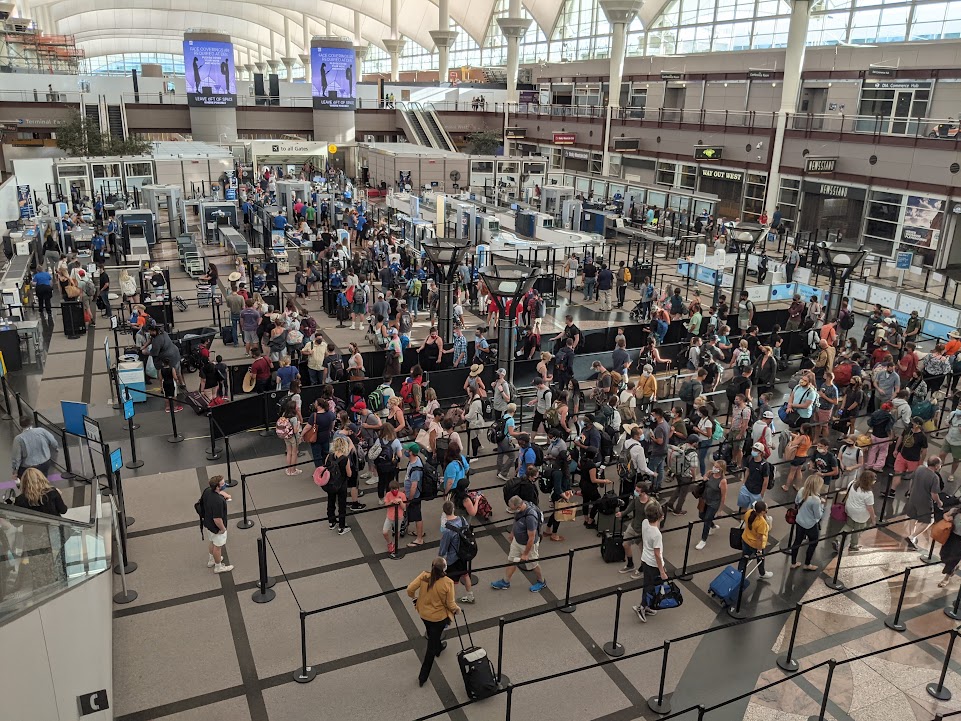
Flying, definitely register for TSA Precheck (costs $75, good for 5 years, and some credit cards rebate the charge), and CLEAR, which uses biometric data to verify your identify, and let’s you go directly from the kiosk to the front of the line “like a VIP. In certain airports that can make the difference in making the flight.” And several business credit cards like American Express Platinum rebate the cost of Clear.

Denver International Airport. Use TSA PreCheck, CLEAR, MyTSA, to breeze through the airport © Karen Rubin/goingplacesfarandnear.com

You can also install the MyTSA app on your device, a free app that gives real time information for what is happening at airport – how long the security line is taking, if one area of the airport is closed and you need to go through TSA in a different location.

Now, the Homeland Security department offers mobile passport control, even if you are not registered for Global Entry (which is similar). You can enroll by submitting passport information and responses to CBP (Customs & Border Patrol) – the free version requires you to enter passport information each time – answer the questions, then you get to whisk through a third line (the regular line, the Global Entry kiosk, and now the Mobile Passport control).

“Google is one of biggest game changers for international travel,” he notes. You can download maps in advance so they are available when you do not have access to WiFi.

The same is true for languages. “Language is no longer a barrier. You can program a phrase like ‘I’m allergic to peanuts,’ and it will show it written as well as speak. You can download the language in advance so it can translate even when offline. You can use the camera function to translate foreign languages into English.”

Of course this eliminates the delight and satisfaction of finding a local person who can either speak English or mime an answer to “I’m lost, Can you tell me how do I get to….?”

____________________________

© 2024 Travel Features Syndicate, a division of Workstyles, Inc. All rights reserved. Visit goingplacesfarandnear.com and travelwritersmagazine.com/TravelFeaturesSyndicate/. Blogging at goingplacesnearandfar.wordpress.com and moralcompasstravel.info. Visit instagram.com/going_places_far_and_near and instagram.com/bigbackpacktraveler/ Send comments or questions to FamTravLtr@aol.com. Tweet @TravelFeatures. ‘Like’ us at facebook.com/NewsPhotoFeatures