The Village Halloween Parade, normally an expression of exuberant creativity, this year had an added dimension of courage and defiance. The 44th annual parade went on, on schedule despite a terror attack that took place mere hours before and less than a mile from where tens of thousands of marchers and parade goers were gathering.
In what is New York City’s version of Carnival, the mile-long route along Sixth Avenue was transformed into a bestiary of fantastic hybrids, culled from the hallowed halls of Cryptozoology, fitting in with this year’s theme, “Cabinet of Curiosities: An Imaginary Menagerie”.
The theme was inspired by the likes of PT Barnum’s carnival-esque museum which featured “The Fiji Mermaid,” created with the head of a monkey on a taxidermied fish, and Mary Shelley’s Frankenstein – the real and imagined curiosities, made all the more plausible by leading edge technology like CRISPR gene-splicing technology promises to unleash “a host of unholy hybrids into our midst,” said Jeanne Fleming, long-time
Artistic and Producing Director of the Village Halloween Parade.
“Halloween, of course, revels in hybrids, mash-ups and the frisson of crossed identities. So, as we approach Frankenstein’s bicentennial, we are building our own Cabinet of Wonders, the Parade itself!”
Many of the marchers, though, abandoned the theme in favor of subtle (and not subtle) protest, another element of the traditionally irreverent display, with lots of pot-shots at Donald Trump, his administration, and his policies.
Despite the tragic event earlier in the day when eight people were killed and 11 injured when a lone-wolf, self-proclaimed terrorist careened at high speed in a pickup truck one mile down the Hudson River Conservancy bikeway on the Westside Highway, the irreverent, devil-may-care attitude that is hallmark of the Village Parade was still paramount, even with the legions of police with assault weapons – they blended right in.
This year’s parade was also distinguished by two of the marchers: Governor Andrew Cuomo and Mayor Bill DiBlasio, who joined the parade to show solidarity and hammer home the message: Go on with your lives.
One of the parade regulars put it more directly, as he embraced the parade’s artistic director Jeanne Fleming, “This is a giant F-U to the terrorists.”
Nothing could stifle was has been appropriately hailed as the “Greatest Event on Earth” by Festival International for October 31st and a top event in NYC by Events International, Citysearch and Biz Bash, the Village Halloween Parade is still the nation’s largest public Halloween celebration, with thousands of costumed marchers, hundreds of Halloween characters, giant masks and puppets, dozens of marching bands playing music from around the world stilt walkers, and street performers that turn the avenue into a mile-long stage.
The NYC Village Halloween Parade, which has always encouraged young and upcoming artists, this year selected as grand marshal an up-and-comer, Angelica Vox, who rode up the avenue on a float designed by Alexei Kazantsev, its first ever done in a New Orleans style.
Some 87 matches were contested on Wednesday, August 30, to complete Round 1 after a largely rained out Tuesday. Fans were treated to an amazing array of tennis champions.
The 12th annual Jazz Age Lawn Party on Governor’s Island nestled between the tip of Manhattan and Brooklyn ended on a high note, Sunday, August 27.
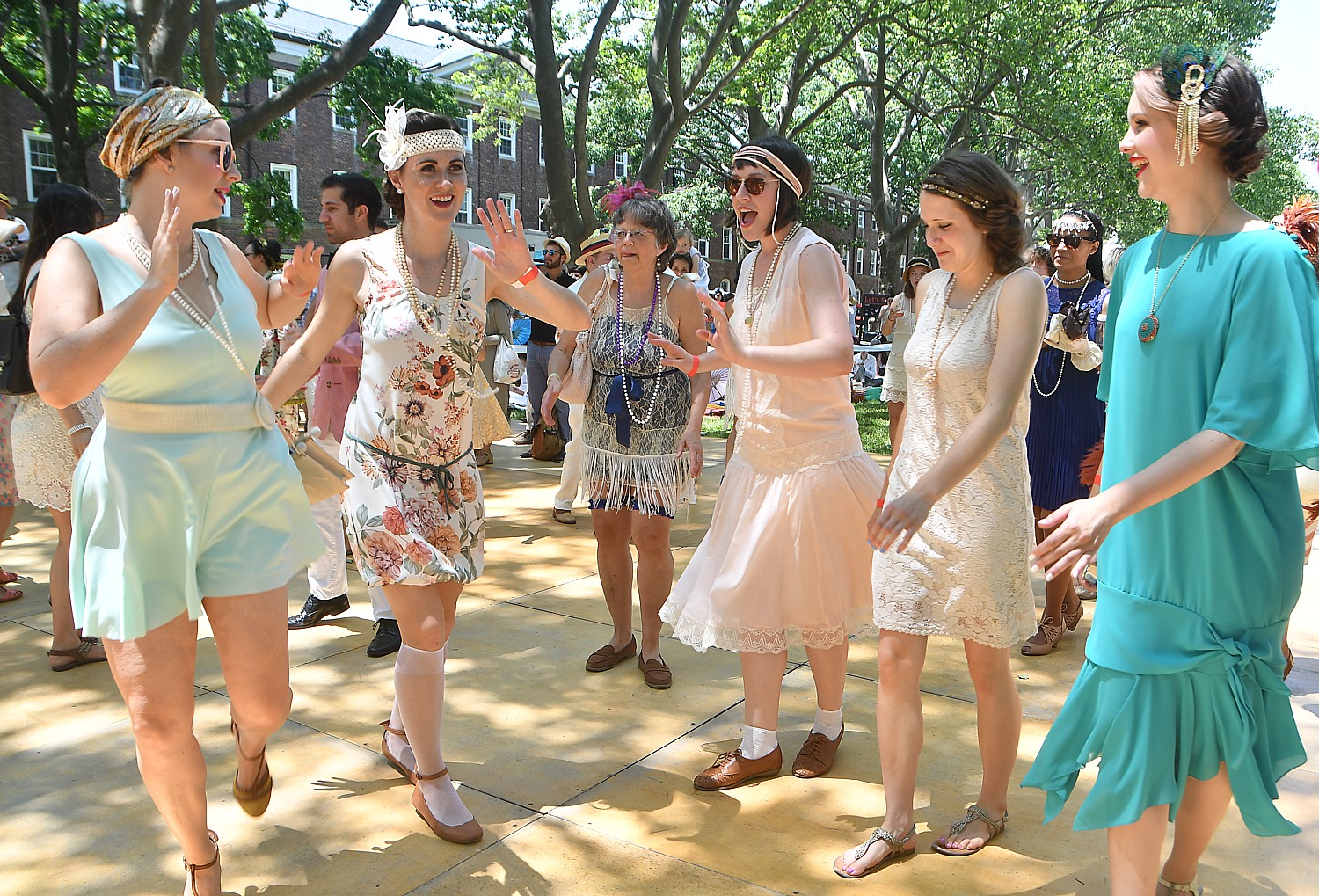
People of all ages, dressed to the nine’s in flapper dresses and glad rags, bearing wicker picnic baskets, stream from the ferries from Manhattan and Brooklyn, onto the island with its forts and structures from the Civil War and World War II. Mere minutes from Manhattan and Brooklyn, and yet a world and an era away.
A celebration of the “hot jazz” and joie de vie of the Roaring ‘20s, the festive event never fails to inspire sheer carefree happiness. It offers the full complexion, tapestry and vibrancy of New York – people of all ages and stripes turn out and for this all-too-brief time, help turn back the clock.
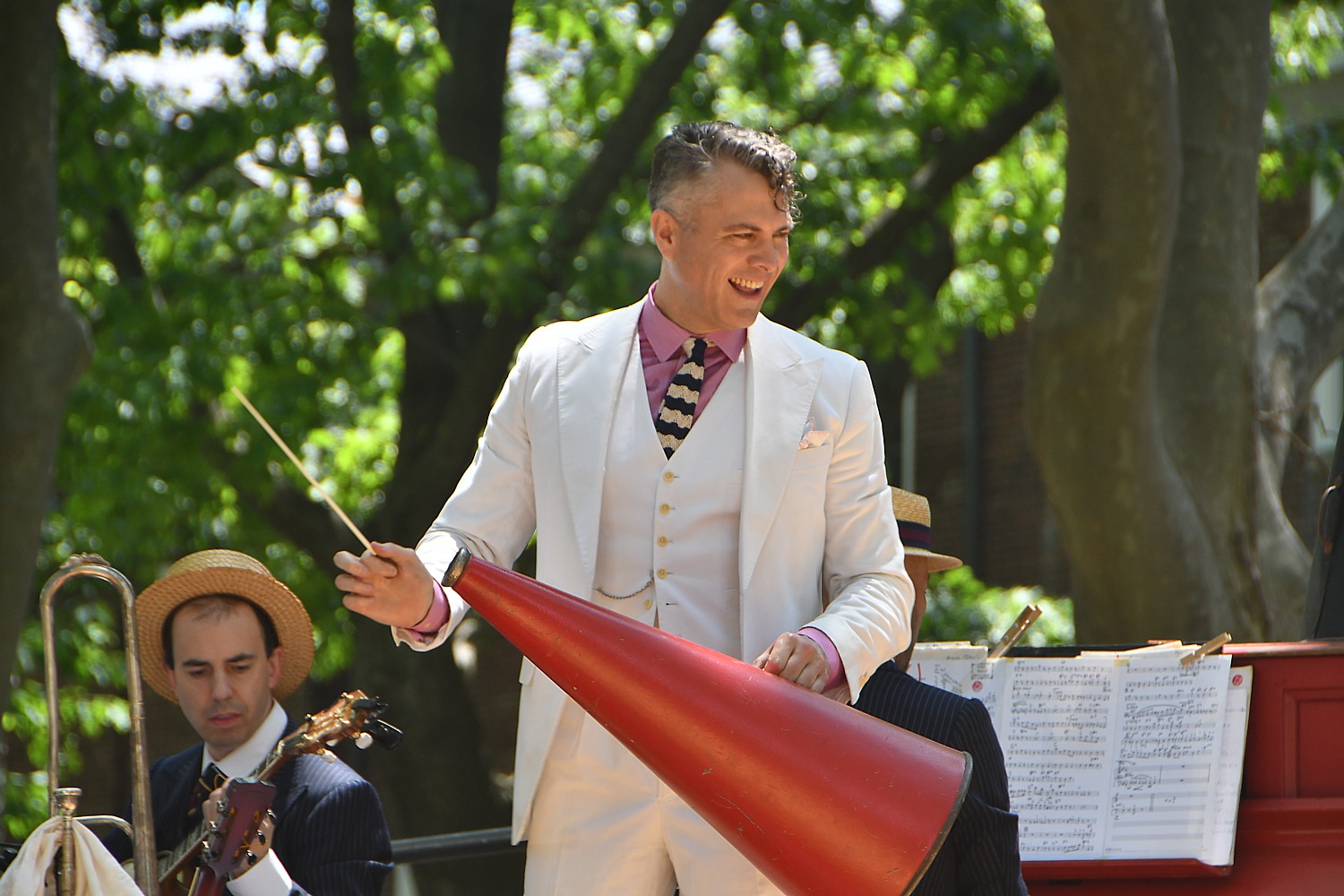
Conductor, composer, musician and crooner Michael Arenalla and his Dreamland Orchestra create this literal dream, with his meticulously recreated, personally transcribed songbook of the 1920s and 30s.
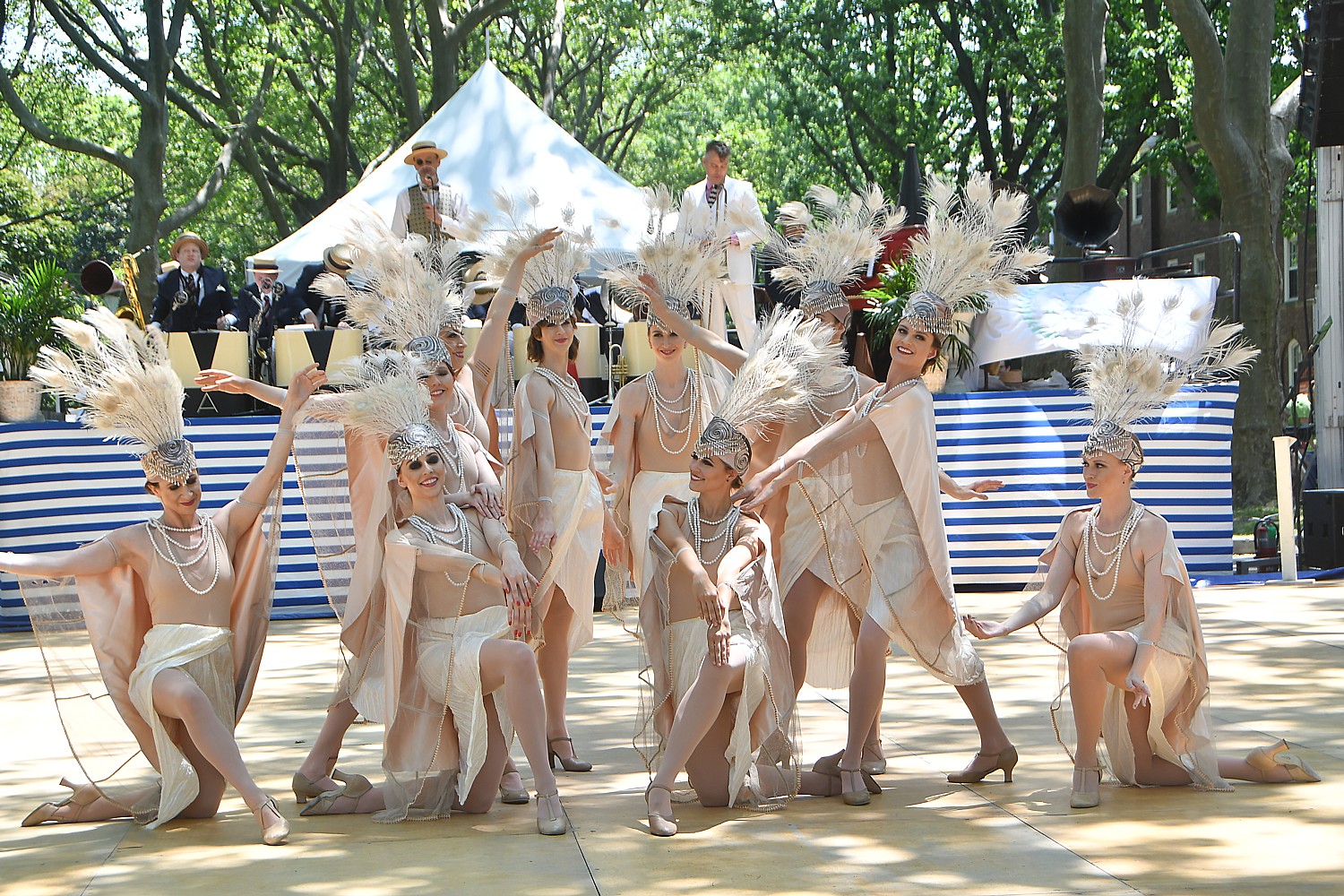
The entertainment abounds on two stages (and two dance floors): The Dreamland Follies evoke Ziegfeld-esque grand dance routines; Roddy Caravella and the Canarsie Wobblers is a fun-loving dance troupe that conjures the rebellious and exuberant spirit of Roaring ‘20s; Peter Mintun takes the moniker of “world’s greatest piano man”; the Gelber & Manning Band delight with their spirited music.
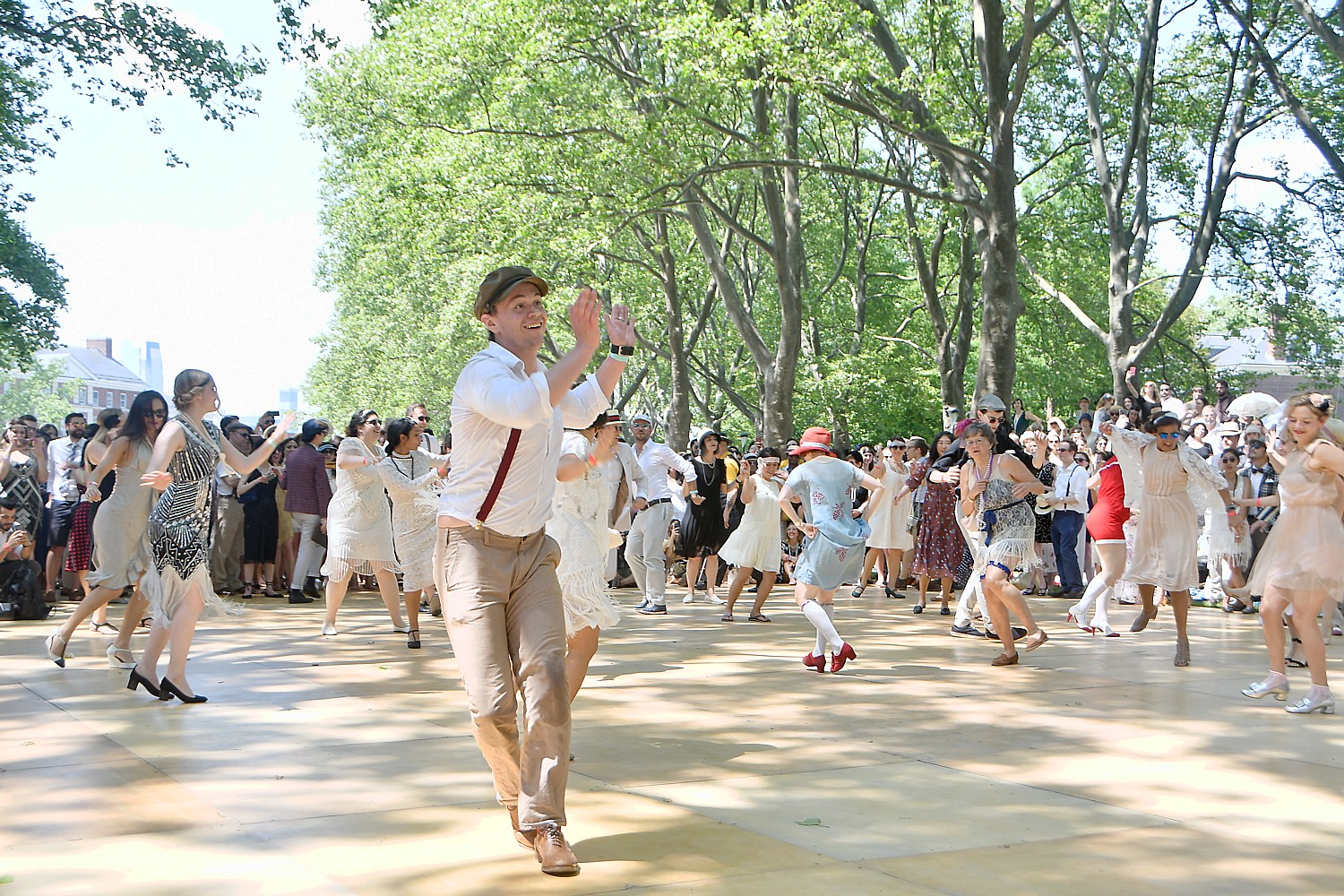
The event on Sunday, August 27, starts with Roddy Caravella and his wife Gretchen Fenston (who is also a milliner and costume designer in addition to being a ballroom dancer) giving a marvelous lesson in dancing The Peabody (which Caravella notes was created in 1915 by William Frank Peabody, a New York police lieutenant, who was a rather portly gent, who nonetheless loved a spirited, fast-paced dance; the innovation is in holding his partner on his right side to accommodate his girth. Caravella walks an enthusiastic group through the various movements: “The steps start and finish toe to toe,” (Caravella refers to gender-neutral “leaders” and “followers”), coming to the part of swirling the partner, “delicately flowering air” and the dipping motion.
The afternoon is interspersed with fun activities as well which you can join: Peabody Dance Contest to determine who is the Bee’s Knees; Bathing Beauties and Beaus Promenade, wearing vintage swimming outfits of the age; The High Court of Pie Contest.
The second stage features The Great Dubini and Drew Nugent and the Midnight Society.
You can immortalize the day in your own Vintage Portraits-You Ought To Be In Pictures, perched on a Paper Moons or in tintypes using the same techniques and chemicals (a mixture of gunpowder and ether) as were used more than a century ago; Antique Gramophones reanimate original recordings from the 1920s.
The only thing that bursts the illusion are the ubiquitous cell phones, but being captured in photos and videos streamed to Instagram seems as important to the happening as the music.
At the end, a rather sentimental Michael Arenella, showing his appreciation to his audience and fans, notes that when he originated the Jazz Age Lawn Party 12 years ago on Governors Island, it was just a small gathering of 50 friends and fans. The event has grown in popularity over the years “because of you,” who do so much to fulfill the look and feel of the 1920s and 30s. Some 20,000 fans come from all over during the course of the two weekends, in June and August.
Can’t wait until next year’s Jazz Age Lawn Party? Michael Arenella also performs at The Clover Club, Flatiron Lounge and the Red Room. Visit www.DreamLandOrchestra.com.
32 of the 128 who entered the US Open Qualifying Matches have won their chance to compete in the US Open Tennis Championships – and earned a $50,000 purse, as well – after winning their third round matches. Along the way, top-seeds were toppled, including both the #1 seed in the Men’s tournament (Leonardo Mayer of Argentina) who fell to 18th seed Maximillan Marterer of Germany in straight sets (4-6, 5-7) and the #1 seed in the Women’s tournament, Su-Wei Hsieh of Taipei, who also was defeated in straight sets to Kaia Kanepi of Estonia, 2-6, 4-6)
The popular 2nd seeded man, Denis Shapovalov of Canada, who had to qualify despite zooming up in the rankings from 143rd to 67th in the world after his performance in the Rogers Cup, drew a standing room-only crowd at his third-round match, overcame the loss of the first set tie-breaker, to go on to decisively defeat Jan Satral of Czechoslovakia (6-7, 6-1, 6-3).
Here are highlights from the fourth day of the qualifying matches at the Billie Jean King Tennis Center in Flushing Meadow Park, Queens, New York, and photos of those who have won coveted chance to compete in the 2017 US Open Championships:
One of the many pleasures of coming out for the qualifying tournament – on top of seeing world-class tennis close up – is getting a chance to watch the pros practice.
This year, the USTA is continuing the tradition of Community Day, which will be held Thursday, Sept. 7, when the gates are thrown open (for free admission) beginning at noon to watch some of the game’s biggest names in the professional, collegiate and wheelchair ranks, as well as the world’s top juniors. Tournament play features:
Men’s and women’s doubles
Men’s and women’s wheelchair competition
US Open Juniors
American Collegiate Invitational
Visit http://www.usopen.org to get daily schedules, results, videos, live streaming.
The US Open Tennis Championship draws tennis fans from around the world to the Billie Jean King Tennis Center in Flushing Meadow Park to what has become a glitzy and elite affair, but the week before the US Open tournament starts, there is the US Open Qualifying Matches, and for New Yorkers, a fabulous festival of tennis when the gates are flung open for all to enjoy.
From August 22-25, there is free admission to watch the US Open Qualifying matches – thrilling high quality play when all is on the line – as well as opportunities to watch your favorite pros on the practice courts (they now post the practice schedule).
There is a festive atmosphere and an amazingly intimate quality to being able to watch the matches close up, from prime seats.
This year, you will see an amazing transformation underway – construction is still going on for what will be the completely new Armstrong stadium.
The grounds are impressive, despite the construction underway (and during the Qualifying rounds, you see all the preparations and set-up activity, as well), with gorgeous views of the iconic Unisphere, the centerpiece of the 1964 World’s Fair at Flushing Meadow Park, and a Walk of Champions.
The Qualifying Matches, when more than 100 players from around the world fight for a coveted spot in the Open, are exciting to watch. If they make it through three rounds of the Qualifying tournament, they will earn their spot to play in the Open; 16 out of 128 will advance. The matches are fabulous, and what is more, you can see the players really up close, you can wander around from match to match. I love the match-ups of nations: China versus a Chinese-American player; Russia versus Italy, as well as seeing how the challengers do against seeded players.
In fact, the quality of the competition rivals for your time and attention from the opportunity to watch Tennis Royalty warming up in the new Grandstand, as well as the practice courts.
Here, too, you can see the greats from a perch you would never have during the actual tournament.
The four days of matches are free and the festival atmosphere is enhanced with special events including Children’s Day activities, musical presentations, and the excitement of seeing the world’s best players practicing. You never know who you will encounter.
The quality of play at the qualifying matches is superb, and Everyday Joes have front-row seats to the intense action. It’s particular fun to wander from match to match.
This year, the US TA is continuing the tradition of Community Day, which will be held Thursday, Sept. 7, when the gates are thrown open (for free admission) beginning at noon to watch some of the game’s biggest names in the professional, collegiate and wheelchair ranks, as well as the world’s top juniors. Tournament play features:
New York City experienced 75% partial solar eclipse during the Great American Eclipse on August 21, 2017.Still, the views were exciting, since the sky was mostly clear, except, ironically, for a sudden build-up of clouds during the period of totality. Still, the clouds cleared for some good shots. The experience provided an excellent warm-up for the next total eclipse April 8, 2024, when the path of totality crosses upstate New York
I was actually able to photograph the International Space Station crossing in front of the sun, with the moon on the waning side of its journey across.
Poster for new documentary “Monkey Business: The Adventures of Curious George’s Creators,” which uses animation to tell the story of Hans and Margret Rey (courtesy of The Orchard, film distributor).
Unlike Ema Ryan Yamazaki, the director of the new documentary “Monkey Business: The Adventures of Curious George’s Creators,” who became enchanted with Curious George as a child in Japan, I only became a fan of that impish monkey whose curiosity always gets him into trouble, when I saw an exhibit at the Jewish Museum in New York City that showed how his adventures actually mirrored the real-life adventures of its creators, the artist Hans Rey and his wife Margret, who made a harrowing escape from the Holocaust by bicycle, just steps ahead of the Nazi invasion.
Yamazaki’s documentary engagingly and cleverly incorporates animation that blends seamlessly into Rey’s own drawings along with traditional documentary techniques – newsreels, artifacts, interviews – to tell their story, which is on one level, a story about their devoted relationship and the creative process but also one of survival.
Newsreels show the context of Hans and Margret’s lives as German Jews born to upper middle class families in Germany, how dire and entrenched the economic depression became after World War I, a war that Hans, still a teenager, was recruited into as a medic. But most chilling were the images of the rise of Nazism in Germany as a response to rampant desperation, the bombing of Paris, the tanks rolling into the city, the storming of Nazi soldiers, and the long lines of people desperately trying to leave.
Hans and Margret Rey fleeing Paris on their bicycles, a scene from the documentary “Monkey Business: The Adventures of Curious George’s Creators” which merges animated images with archival footage (courtesy of The Orchard, film distributor).
The film uses an animated images of the couple fleeing Paris on the bicycles that Hans built out of spare parts (because none were available), and traces their harrowing journey to get to a train, then a port in order to flee to Portugal, a neutral country, and ultimately the United States. You see them passing by the Statue of Liberty, and their words (from interviews) of reaction: that they were finally free, in a country where everything is possible, the Land of Opportunity.
Without being preachy or hitting you over the head, the scenes are chilling echoes of what is happening today, with the greatest flight of refugees from genocide, terrorism, violence, economic deprivation, and famine since World War II.
And yet, the scenes are done without horror and brutality; instead, there is emphasis on the strangers they would call upon to give them a place to sleep and food to eat on their journey.
During the Reys’ flight, they were able to carry out only what they could fit into a bicycle basket, but they brought out the completed manuscript of the first “Curious George” book ( the character was named Fifi then) and they had the check for an advance for future books, which financed their journey.
In one scene, recreated in animation, they are stopped by thuggish police who go through their possessions, then, coming upon the book with the adorable monkey, they soften and let them pass through.
Curious George saves their lives.
And the character gave them new life in the United States.
They contact a sister who lives in Long Island who knows a book editor who turns out to be a refugee from Europe, as well, who knows their work, and immediately contracts for four books, with an advance of just $1000 (probably the best deal Houghton-Mifflin ever made).
The movie is absolutely charming and frank in describing the two different personalities, from interviews with the children, now Baby Boomer senior citizens themselves, who knew them from Waterville Valley, New Hampshire, where the couple spent summers.
An interesting note: the 1950s, we are reminded, was a period of intense anti-Semitism in the United States and Waterville Valley was not exactly welcoming to the German Jewish couple. But because of the children, who played and swam with Hans (he would play turtle with them) and watched Hans draw his character and were completely enchanted by him (Margret was described kindly as standoffish and severe, “to put it kindly”), the parents warmed up as well.
We get to know them – Margret as an independent minded, nontraditional, no-nonsense woman who was a calculating businessperson (she launched herself in advertising), who wrote the text for the books and was the “curious” one; and Hans, the “mischievous” one, who was good-humored, easy-going, and loved being with the children. He was the one who would feed squirrels (digging a tunnel so they could reach his house without crossing a road), who built a bird-feeder that the squirrels couldn’t get to and a squirrel-feeder the birds couldn’t get to. At one point, Lay Lee Ong, library executor of the Rey Estate, notes that their relationship was not based on love, and yet, they completed each other and were devoted to each other and indeed, the sum of the duo was greatly more than each one alone.
As Margret says, Curious George’s curiosity gets him into trouble, but his ingenuity gets him out of it.
Anyone who grew up loving Curious George, loves the process of making art and creating children’s books, would be fascinated, but it is also a study in relationships and a genuine drama, an adventure that resonates so strongly today.
Monkey Business is narrated by Sam Waterston (“Grace and Frankie,” “The Newsroom,” “Law And Order,” whose sister was one of the Reys’ neighbors in Waterville Valley) and is the directorial debut of filmmakerEma Ryan Yamazaki, and animated by Jacob Kafka.
At the screening as part of the ongoing Gold Coast Arts Center’s International Film Festival at the BowTie movie theater in Great Neck, Long Island, discussed the film in a Q&A.
Kafka, the son of a rabbi and a seismologist who has been making movies since he was five years old, in addition to making animated short films, developed the animation software for ROUGHANIMATOR for mobile devices which has been used by animators worldwide, was for a full year the only full-time animator.
Indeed, one of the most impressive aspects of the film biography is the animation, so novel for a documentary, but so appropriate for telling the Reys’ story. It is remarkable how Kafka was able to reproduce Hans Rey’s own style so seamlessly, literally animating Hans’ drawings.
“I tried as best I could to copy his style.” Indeed, the still characters take on movement and life because of his animation.
He said that the film utilizes some 15,000 individual drawings – each one hand-drawn (rather than computer-animated) – averaging 10 per second of film. Hans Rey would typically insert Margret and himself into the drawing, so he based his images of them on Hans’ own depictions.
“Each is hand-drawn, frame by frame. We ultimately had a team of 8-9 people – but only two were full time, and for the first year, it was just me. The background designer drew anything that doesn’t move; anything that moves, I drew. After a kickstarter campaign last year, we were able to bring on other animators.”
It was decided early on to use animation in the documentary because there was very little actual footage of the Reys. Though they did many television interviews in the 1960s and 1970s, at that time, nothing was saved.
Among the interesting elements that were discovered, was overturning the myth (which Hans enjoyed perpetuating) that while Hans was in Brazil, working for his brother-in-law’s import/export business, that he went up and down the Amazon River selling bathtubs. Though Hans traveled on the Amazon to see the jungle life (capturing images of monkeys, no doubt that figured into his Curious George creation), it wasn’t to sell bathtubs which would be absurd. That was a common truth that Hans indulged, and appears in many biographies, but was completely untrue, Kafka said, but only discovered well into making the film (there are scenes of Hans selling bathtubs to the tribal people along the Amazon).
But what they never uncovered was the origin of the character of the Man in the Yellow Hat.
Production on the documentary began three years ago and was finished in January. Asked whether the current refugee crisis figured into the making, he said it was coincidental timing, but became more and more relevant, especially because of director Ema Ryan Yamazaki, who grew up in Japan, had her own immigrant experience.
Lay Lee Ong, library executor of the Rey Estate, has been successful in keeping alive and reviving Curious George – with movies, PBS, and a new generation of artists carrying on the tradition.
“Monkey Business: The Adventures of Curious George’s Creators,” which had its Los Angeles premiere in June and has been making rounds of film festivals (has been an official selection of the Los Angeles Film Festival, Nantucket Film Festival, and Rooftop Film Series before coming to the 2017 Summer Gold Coast Cinema Series), will be available online and on demand August 15 on iTunes, Amazon, Google Play, Comcast, TWC and others (see curiousgeorgedocumentary.com).
The 7th Annual Gold Coast International Film Festival will take place November 7-14, 2017 at venues across the town of North Hempstead, on Long Island’s fabled North Shore. (goldcoastfilmfestival.org).
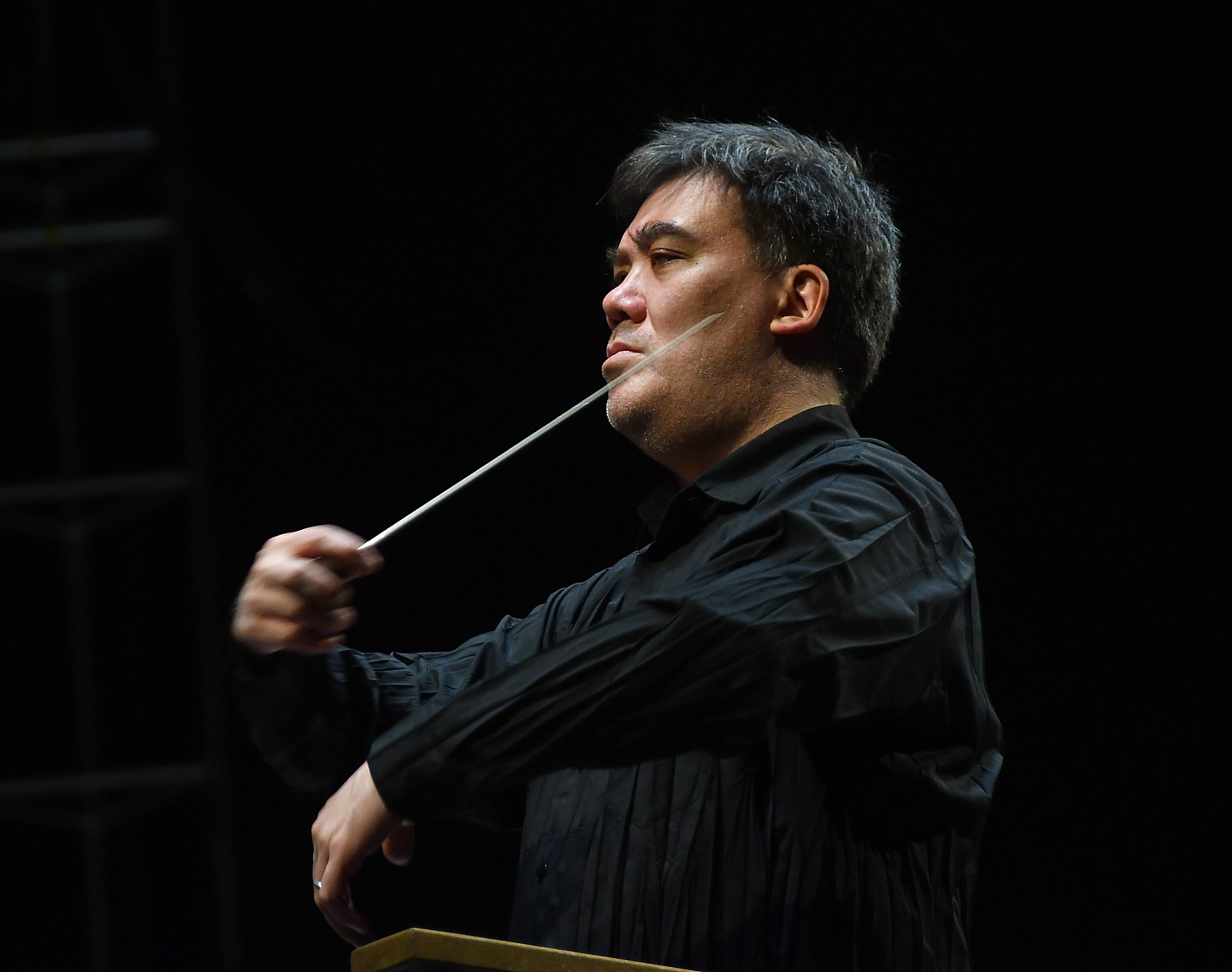
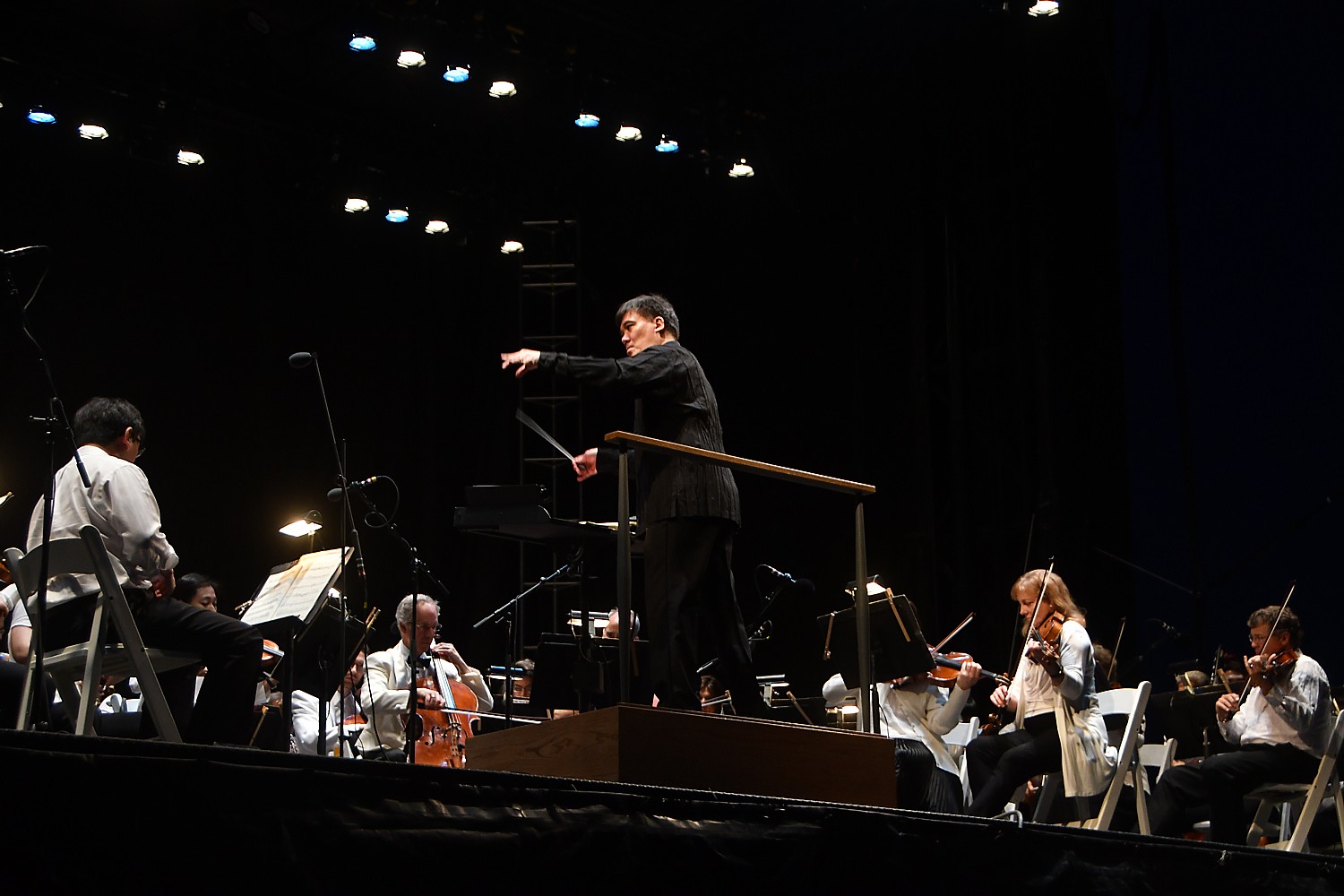
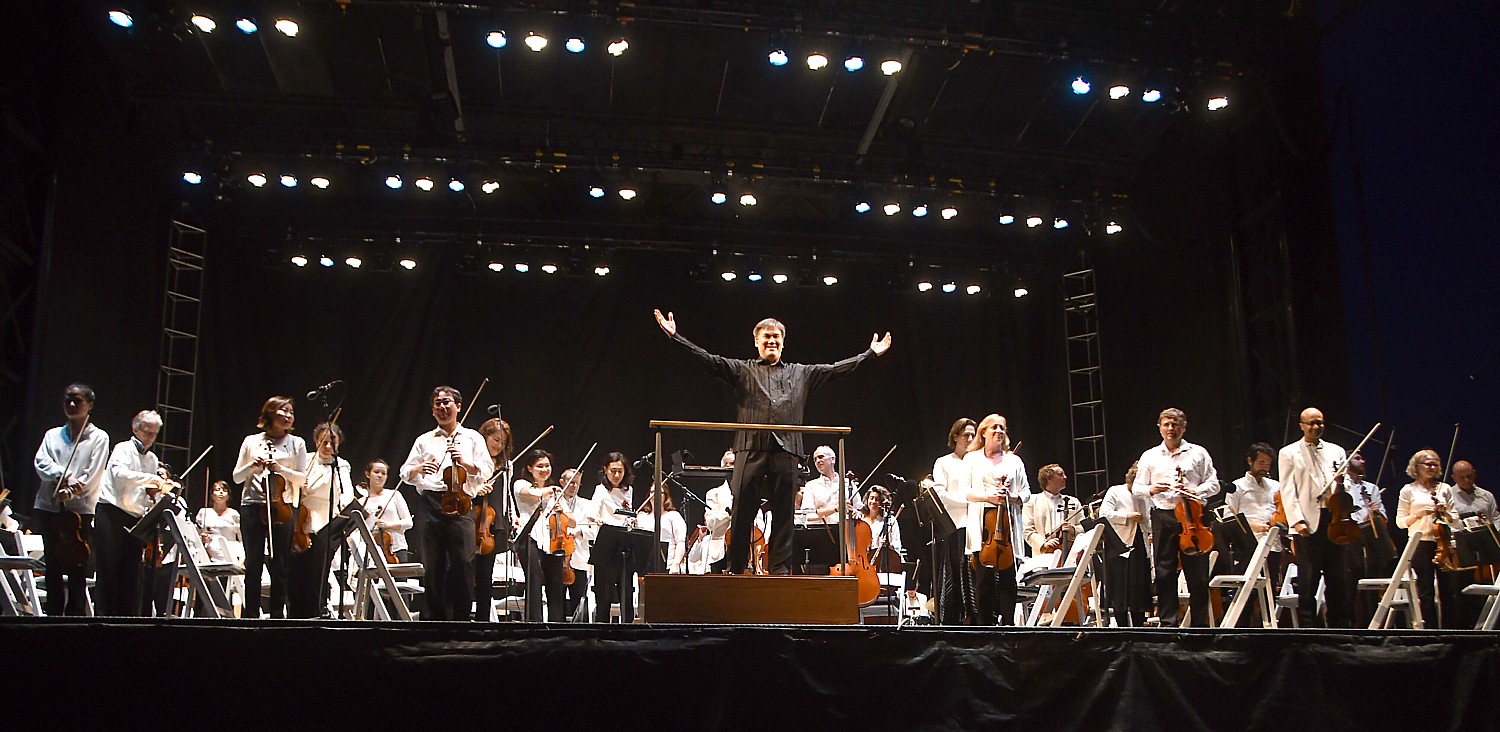
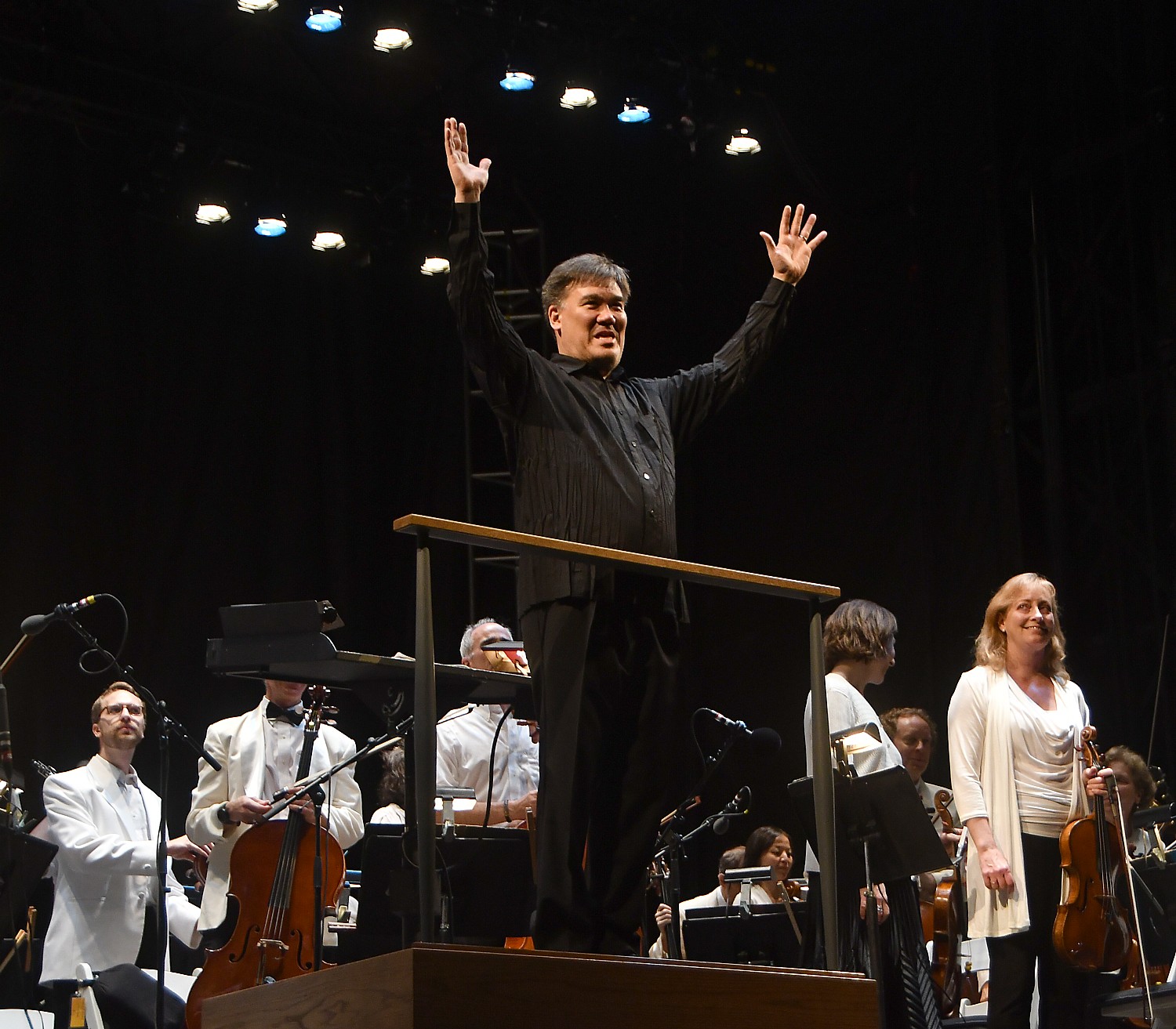
This year’s New York Philharmonic Concerts in the Parks – its 52nd summer – provided a way to say farewell to Music Director Alan Gilbert. The series, presented for the past 11 years by Didi and Oscar Schafer, was a hug and a kiss to the 100,000 music lovers who come out to the free summer concerts (“priceless music, absolutely free”), at the Great Lawn in Central Park, Manhattan; Cunningham Park, Queens; Prospect Park, Brooklyn and Van Cortlandt Park, Bronx. This season’s program was also the Philharmonic’s 175th anniversary season celebration of its hometown, featuring masterworks by Dvořák (Symphony No. 9, From the New World), Leonard Bernstein (Symphonic Dances from West Side Story), and George Gershwin (An American in Paris) — all written in New York and premiered by the Philharmonic – and was the culmination of its season-long “The New World Initiative”.
Throughout the 2016–17 season, The New World Initiative has explored the New World Symphony’s theme of home and honors New York City and its role as an adopted home. The Philharmonic gave the World Premiere of the New World Symphony in 1893, marking the Orchestra’s first World Premiere of a work written in New York City that would become part of the standard repertoire. The Largo theme was later set to the words “Goin’ Home” by Dvořák’s student William Arms Fisher.
The New York Philharmonic’s free parks concerts have become an iconic New York summer experience since they began in 1965, transforming parks throughout the New York area into a patchwork of picnickers, and providing music lovers with an opportunity to hear the best classical music under the stars. More than 14 million listeners have been delighted by the performances since their inception.
Before the New York Philharmonic takes the stage, it has become a new custom to “Share the Stage” with local musicians. This year, that included BombaYo (Van Cortlandt Park); The Ebony Hillbillies and Zulal (Central Park), The queen’s Cartoonists and Slum Suit (Cunningham Park) and The Side Project (Prospect Park).
And at this year’s concerts in the parks series, audiences joined the Orchestra in community performances of the “Goin’ Home” theme from Dvořák’s New WorldSymphony, all part of The New World Initiativeand the Philharmonic’s 175th anniversary season celebration of its hometown. (Dvořák’s symphony also incorporates the Shaker hymn, “Simple Gifts.”)
We caught the concert at Cunningham Park, in Queens, which also featured fireworks display.
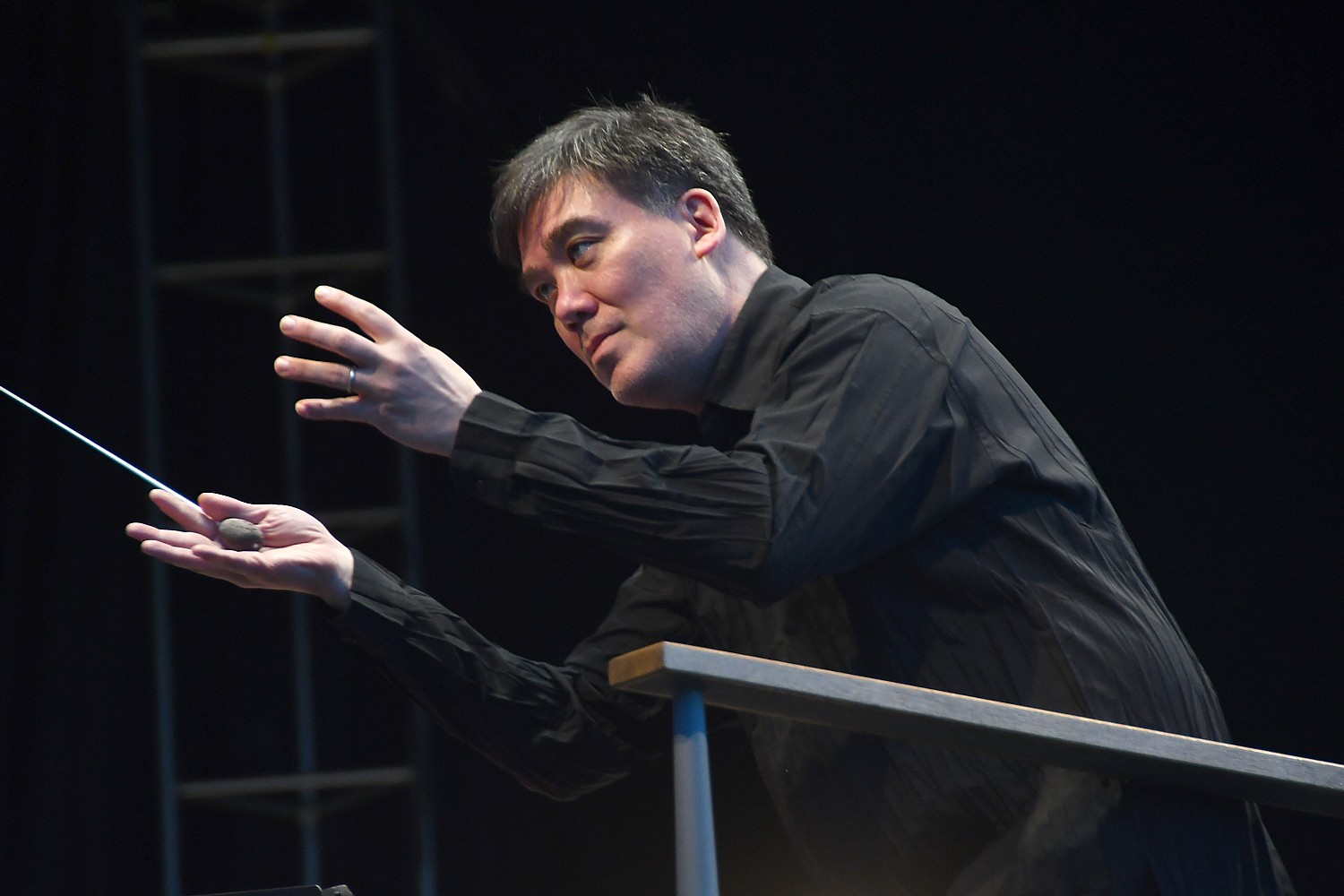
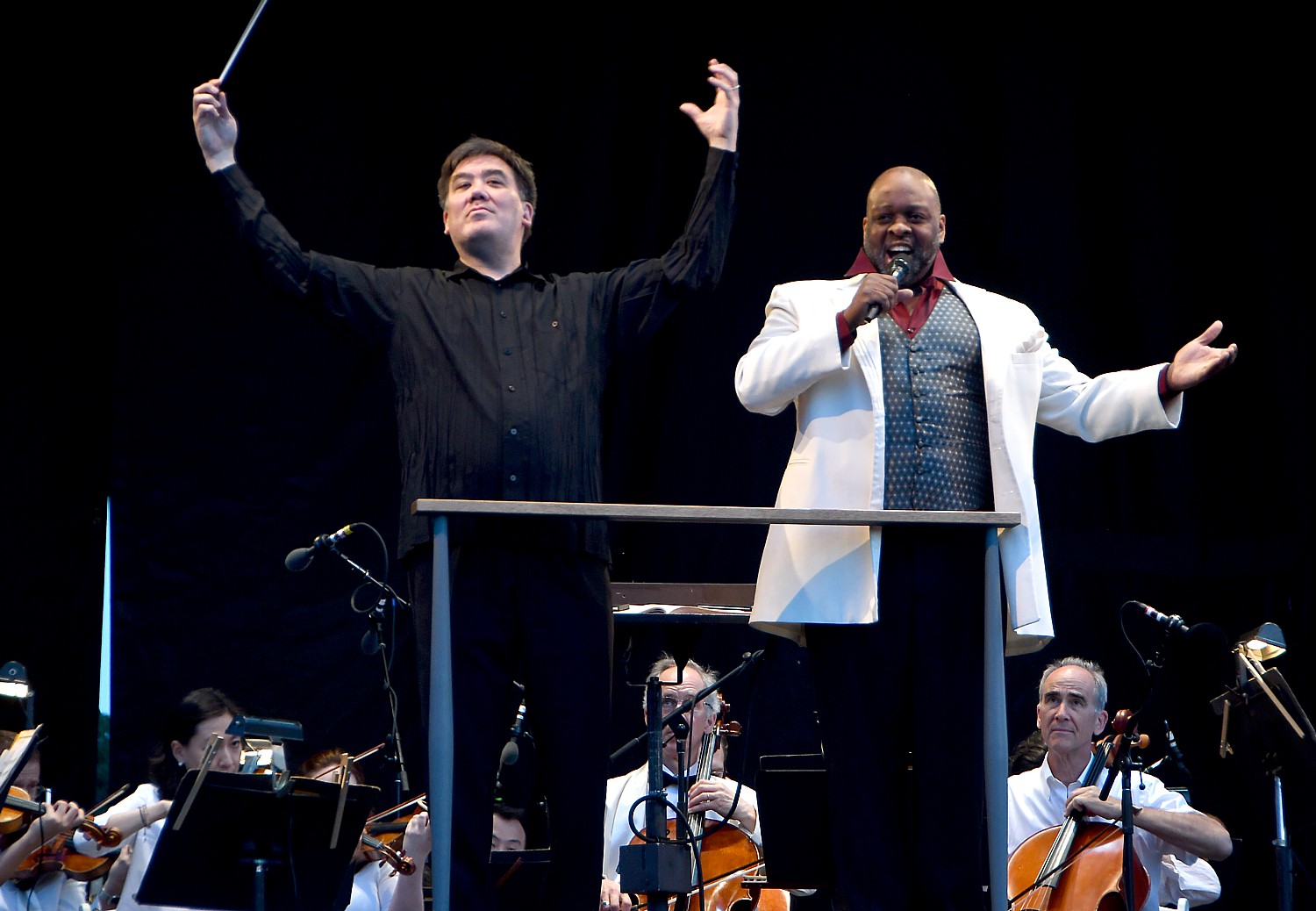
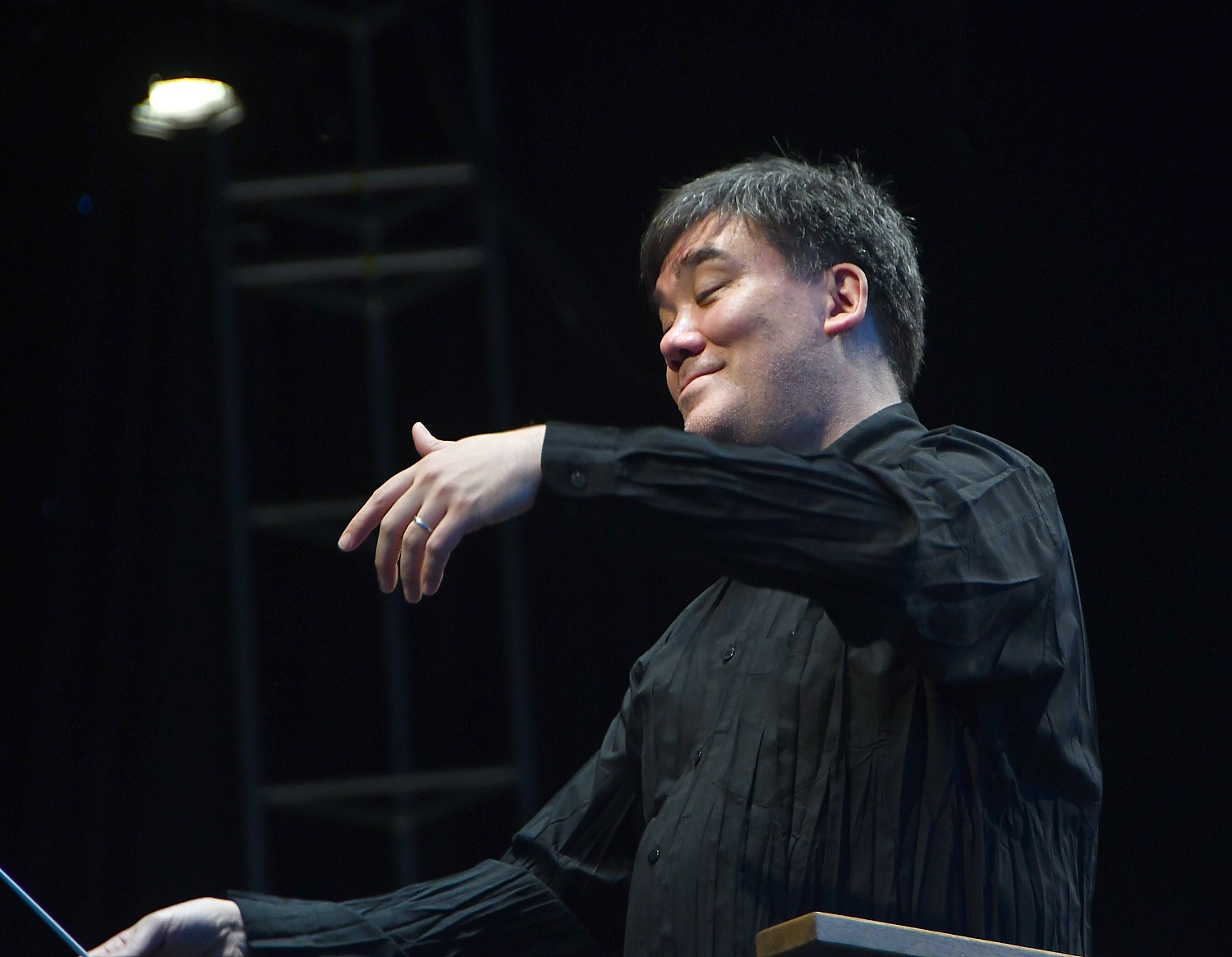
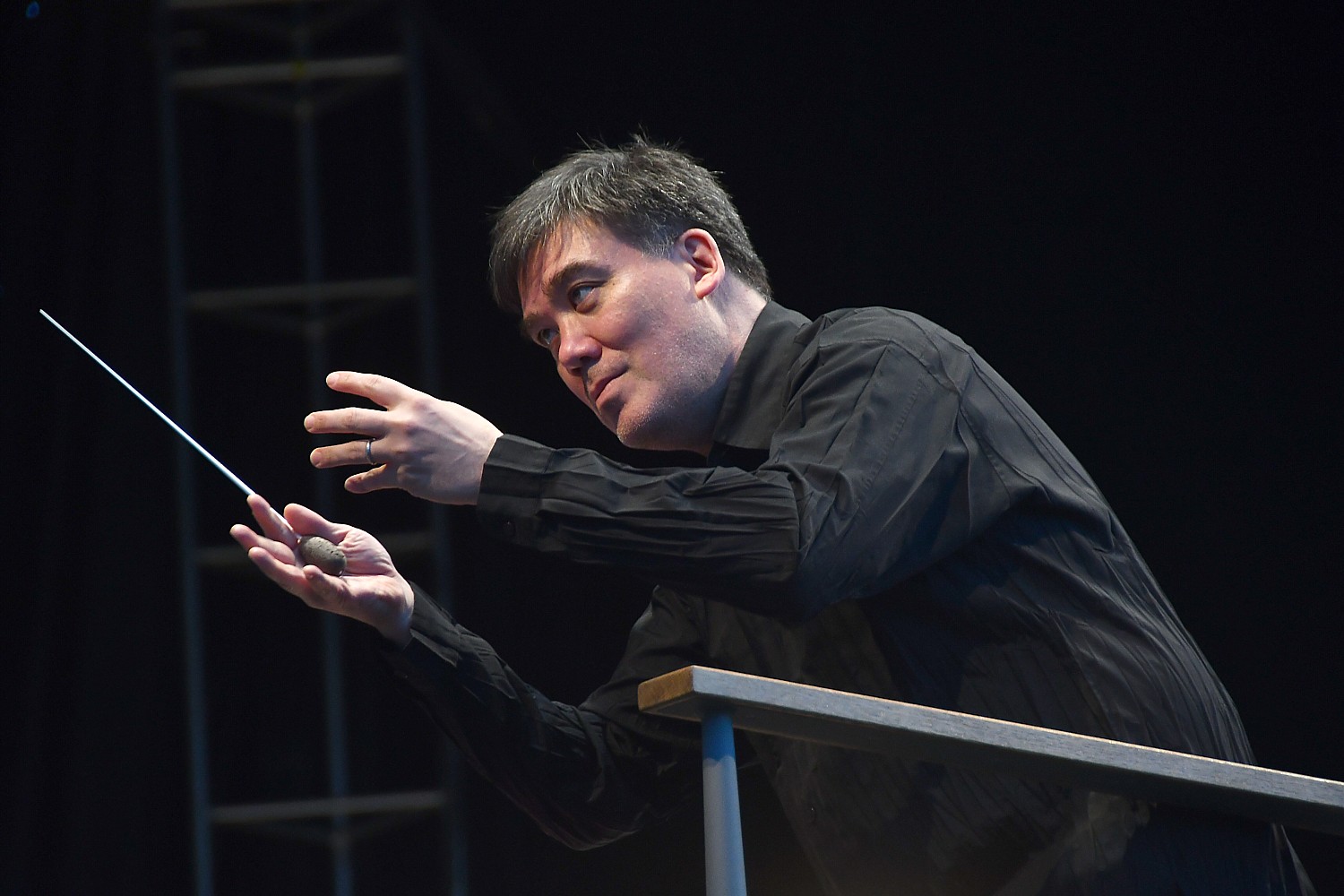
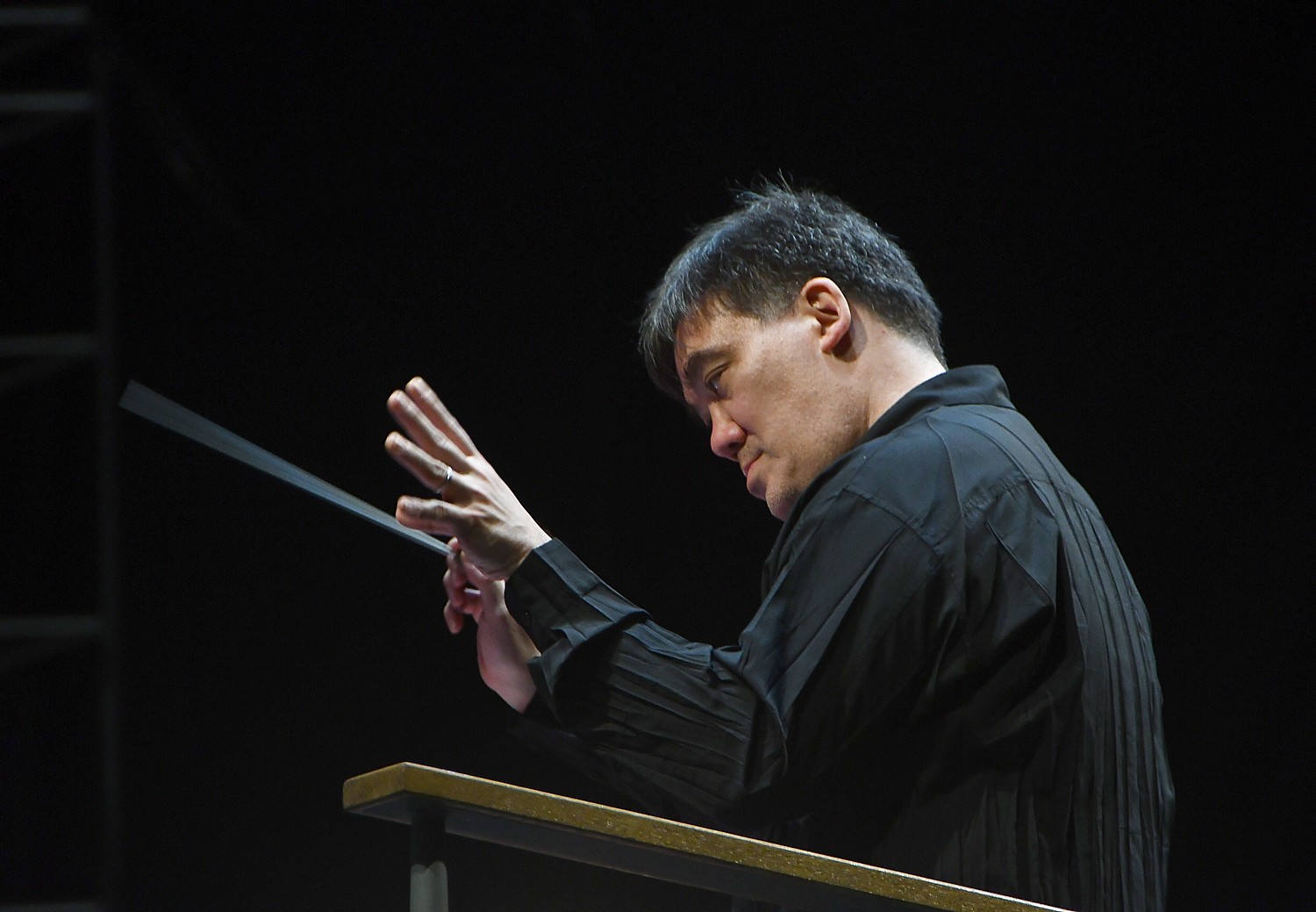
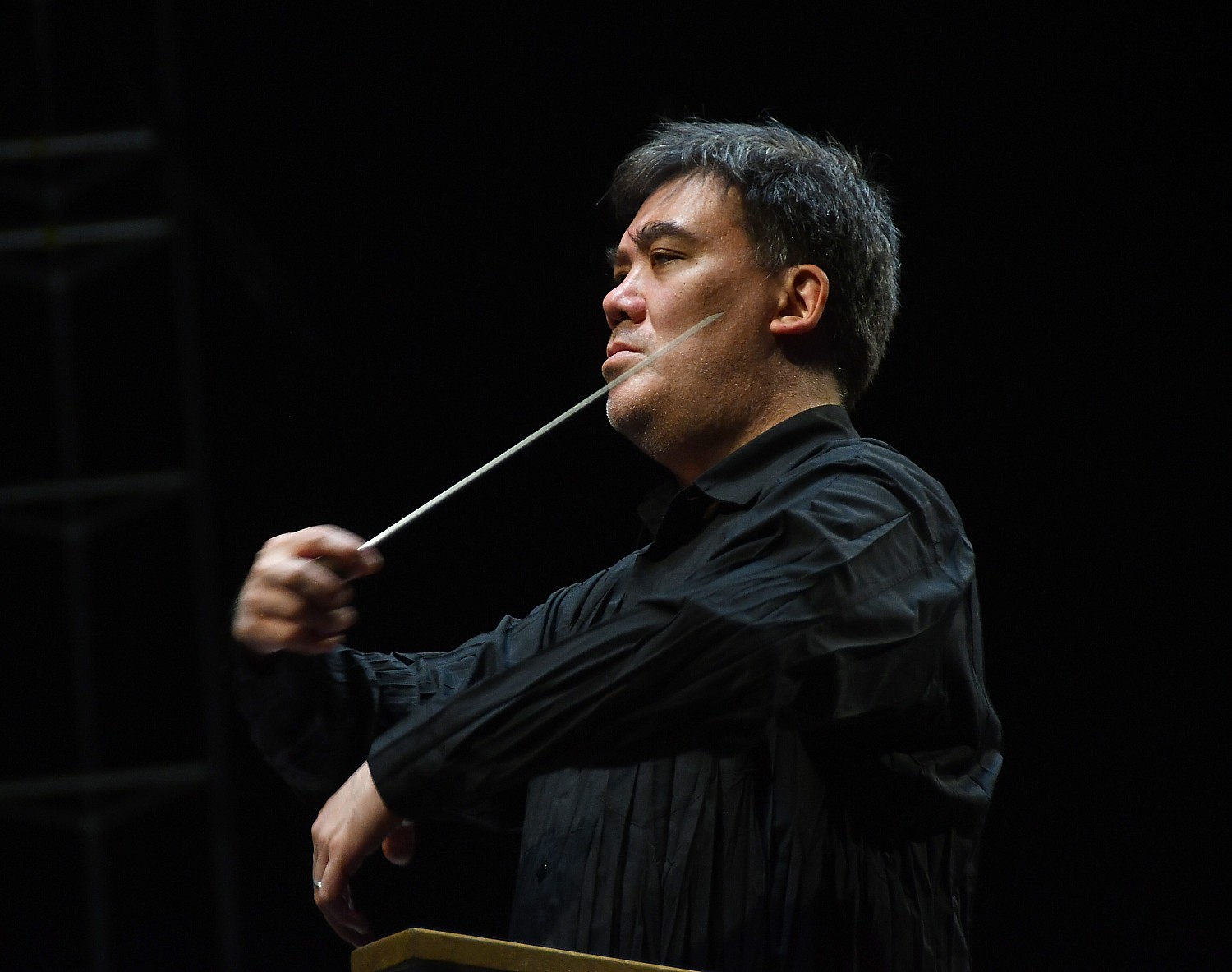
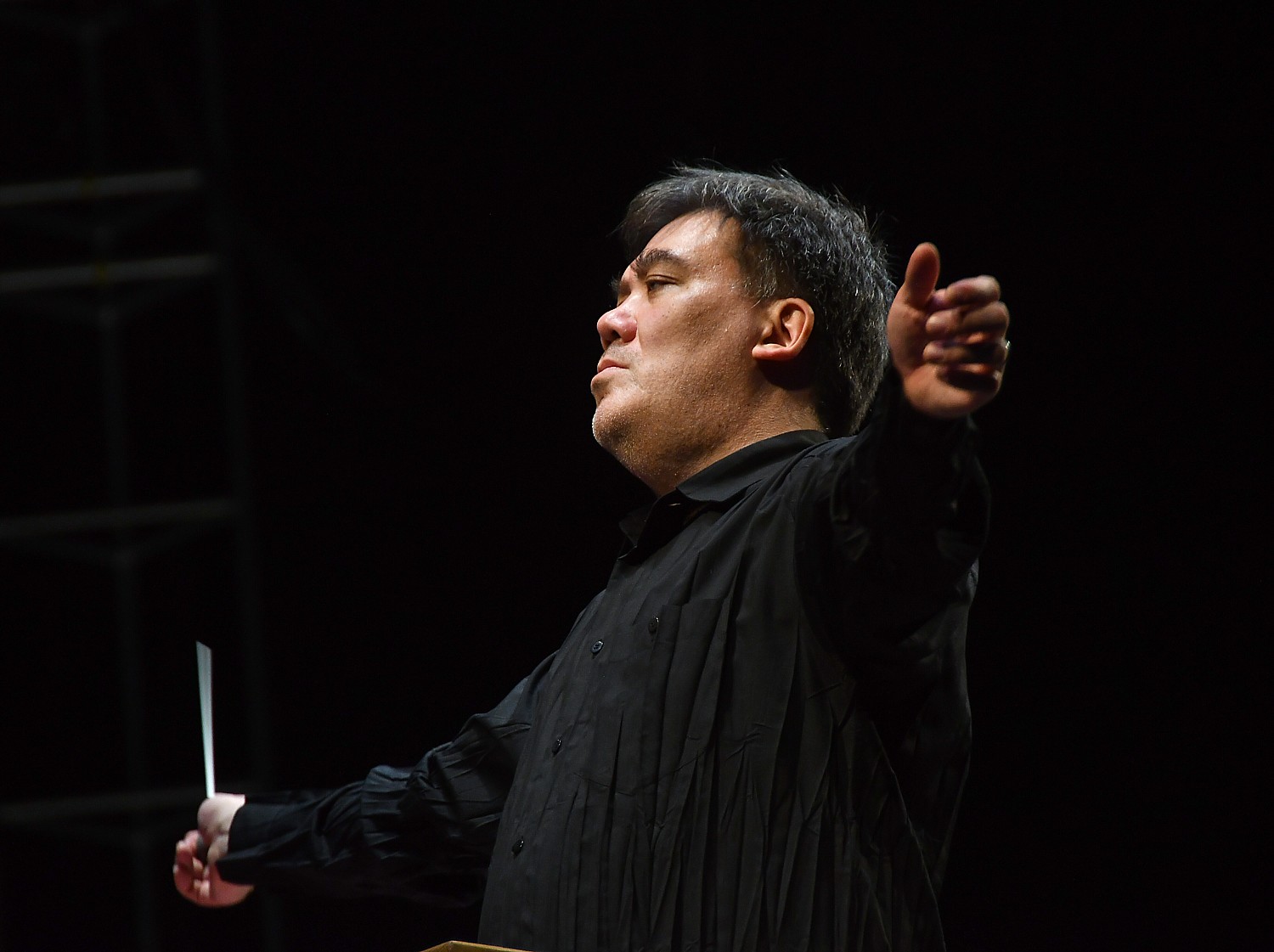
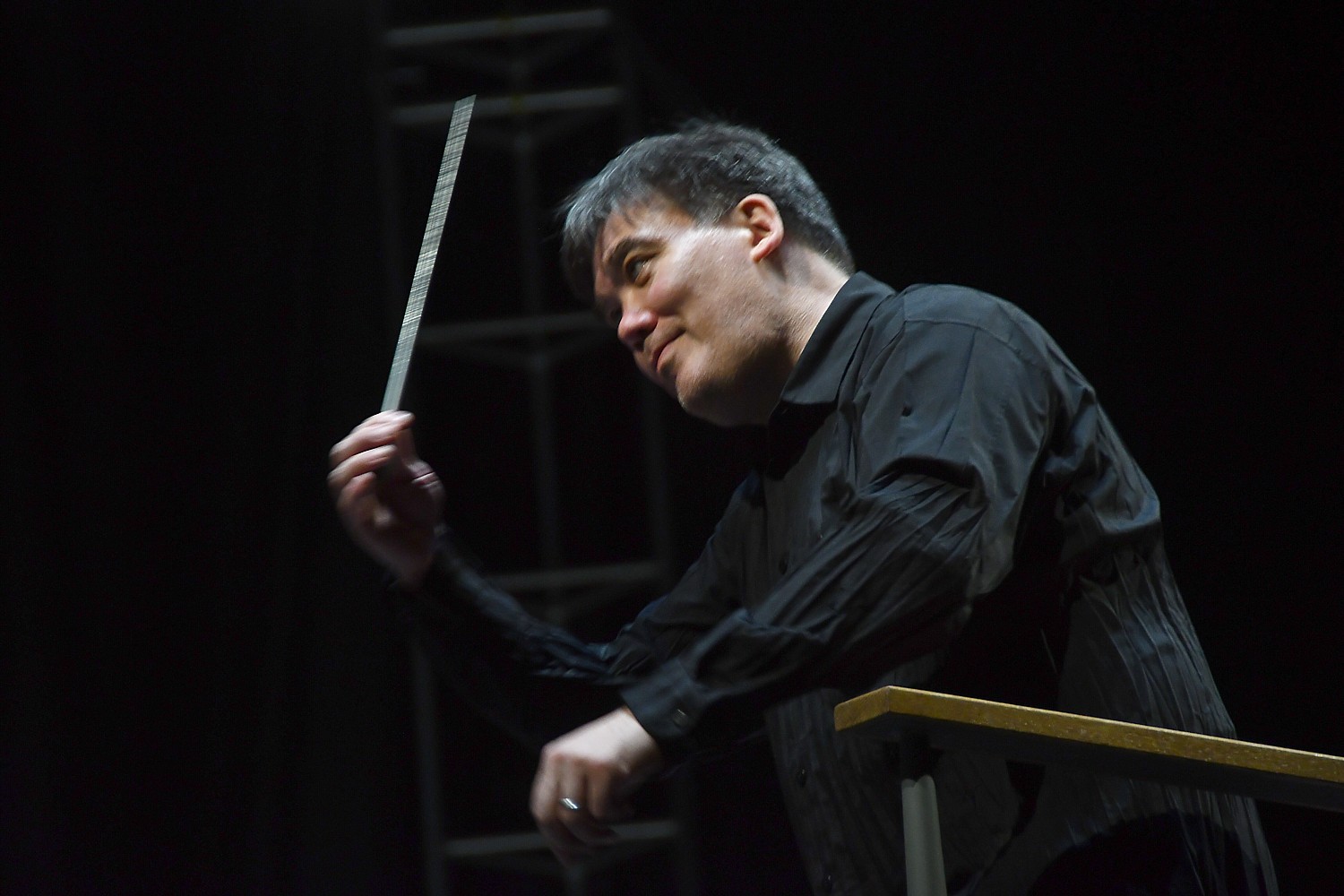
The program was a crowd-pleaser – the Symphonic Dances from West Side Story were simply transporting – and Gilbert looked extremely relaxed and joyful.
Alan Gilbert, who has stepped down as music director of NY Philharmonic, just revealed that he will be trading New York for Hamburg, Germany, leading the Elbphilharmonie Orchestra in the new Elbphilharmonie concert hall as chief conductor.
In a phone interview with the New York Times, Gilbert, a frequent guest conductor in Hamburg, said that the Elbphilharmonie’s vision aligned perfectly with his own paradigm for successful 21st-century orchestras. “It’s about how they connect to the cities they serve,” he said. “And one condition for that is the existence of a perfectly appropriate physical space. What’s going on there is related to what’s potentially going to happen here in New York with the idea of redoing David Geffen Hall.”
Gilbert bids farewell to New York in the parks concert program, writing, “It has been a privilege to stand upon this august platform and make decisions that have altered and enhanced New York City’s cultural landscape. When this Orchestra does artistic things, they are noticed, and they inspire others, far and wide. Ultimately, I know my tenure is just one chapter in the Philharmonic’s long story, and I look forward to seeing what comes next.”
As Music Director of the New York Philharmonic since 2009, Alan Gilbert has introduced the positions of The Marie-Josée Kravis Composer-in-Residence, The Mary and James G. Wallach Artist-in-Residence, and Artist-in-Association; CONTACT!, the new-music series; the NY PHIL BIENNIAL, an exploration of today’s music; and the New York Philharmonic Global Academy, partnerships with cultural institutions to offer training of pre-professional musicians, often alongside performance residencies. The Financial Times called him “the imaginative maestro-impresario in residence.”
Alan Gilbert concludes his final season as Music Director with four programs that reflect themes, works, and musicians that hold particular meaning for him, including Beethoven’s Ninth Symphony alongside Schoenberg’s A Survivor from Warsaw, Wagner’s complete Das Rheingold in concert, and an exploration of how music can effect positive change in the world. Other highlights include four World Premieres, Mahler’s Fourth Symphony, Ligeti’s Mysteries of the Macabre, and Manhattan, performed live to film. He also leads the Orchestra on the EUROPE / SPRING 2017 tour and in performance residencies in Shanghai and Santa Barbara. Past highlights include acclaimed stagings of Ligeti’s Le Grand Macabre, Janáček’s The Cunning Little Vixen, Stephen Sondheim’s Sweeney Todd starring Bryn Terfel and Emma Thompson (2015 Emmy nomination), and Honegger’s Joan of Arc at the Stake starring Marion Cotillard; 28 World Premieres; a tribute to Boulez and Stucky during the 2016 NY PHIL BIENNIAL; The Nielsen Project; the Verdi Requiem and Bach’s B-minor Mass; the score from 2001: A Space Odyssey, performed live to film; Mahler’s Resurrection Symphony on the tenth anniversary of 9/11; performing violin in Messiaen’s Quartet for the End of Time; and ten tours around the world.
Conductor laureate of the Royal Stockholm Philharmonic Orchestra and former principal guest conductor of Hamburg’s NDR Symphony Orchestra, Alan Gilbert regularly conducts leading orchestras around the world. This season he returns to the foremost European orchestras, including the Leipzig Gewandhaus, Munich Philharmonic, Amsterdam’s Royal Concertgebouw, and Orchestra dell’Accademia Nazionale di Santa Cecilia. He will record Beethoven’s complete piano concertos with the Academy of St Martin in the Fields and Inon Barnatan, and conduct Gershwin’s Porgy and Bess at Milan’s Teatro alla Scala, his first time leading a staged opera there. He made his acclaimed Metropolitan Opera debut conducting John Adams’s Doctor Atomic in 2008, the DVD of which received a Grammy Award, and he conducted Messiaen’s Des Canyons aux étoiles on a recent album recorded live at the Santa Fe Chamber Music Festival. Mr. Gilbert is Director of Conducting and Orchestral Studies at The Juilliard School, where he holds the William Schuman Chair in Musical Studies. His honors include Honorary Doctor of Music degrees from The Curtis Institute of Music (2010) and Westminster Choir College (2016), Columbia University’s Ditson Conductor’s Award (2011), election to The American Academy of Arts & Sciences (2014), a Foreign Policy Association Medal for his commitment to cultural diplomacy (2015), Officier de l’Ordre des Arts et des Lettres (2015), and New York University’s Lewis Rudin Award for Exemplary Service to New York City (2016).
Even if you were unable to get to the once-a-year Museum Mile Festival along Fifth Avenue on June 13, when six museums (some of them with pricey admissions) throw their doors open to one and all for free, it provided a marvelous preview of some spectacular exhibits that are on through the summer or fall.
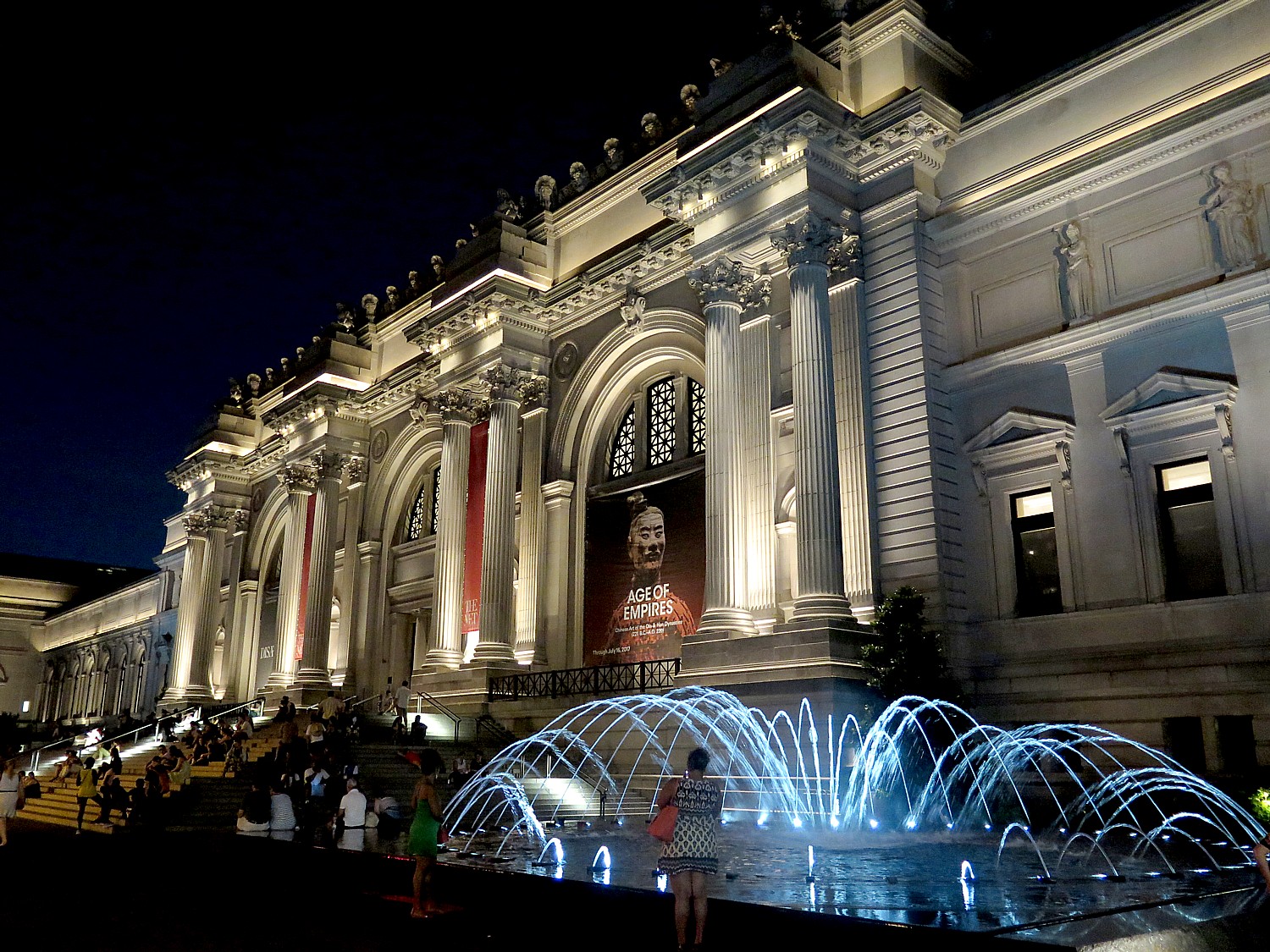
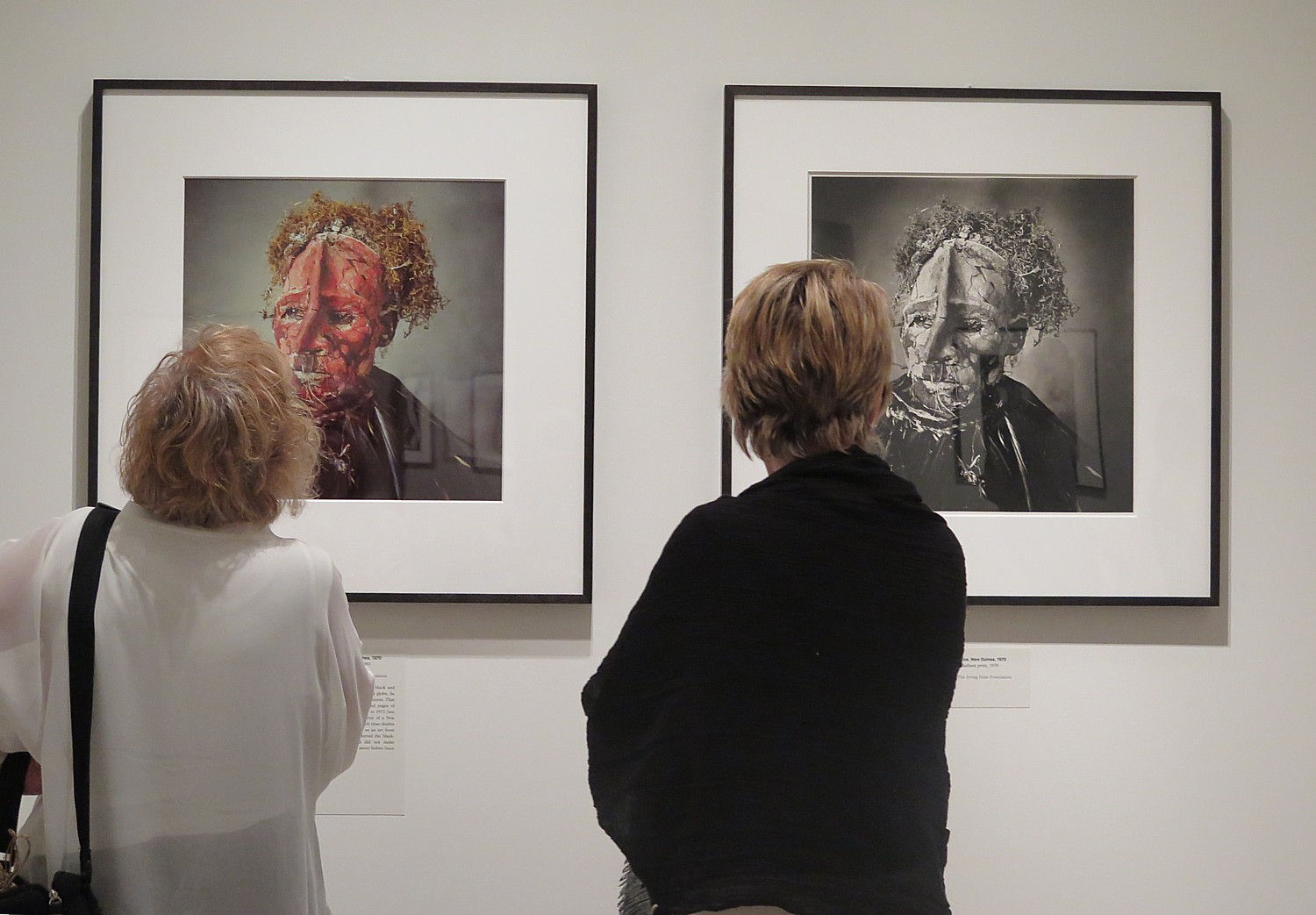
At the Metropolitan Museum of Art, at the southern “border” of Museum Mile, I visited the Irving Penn Centennial, a marvelous survey of this brilliant photographer’s career and an opportunity to see the museum quality prints that would have been seen in the pages of important magazines like Vogue; the exhibit is on through July 30, 2017.
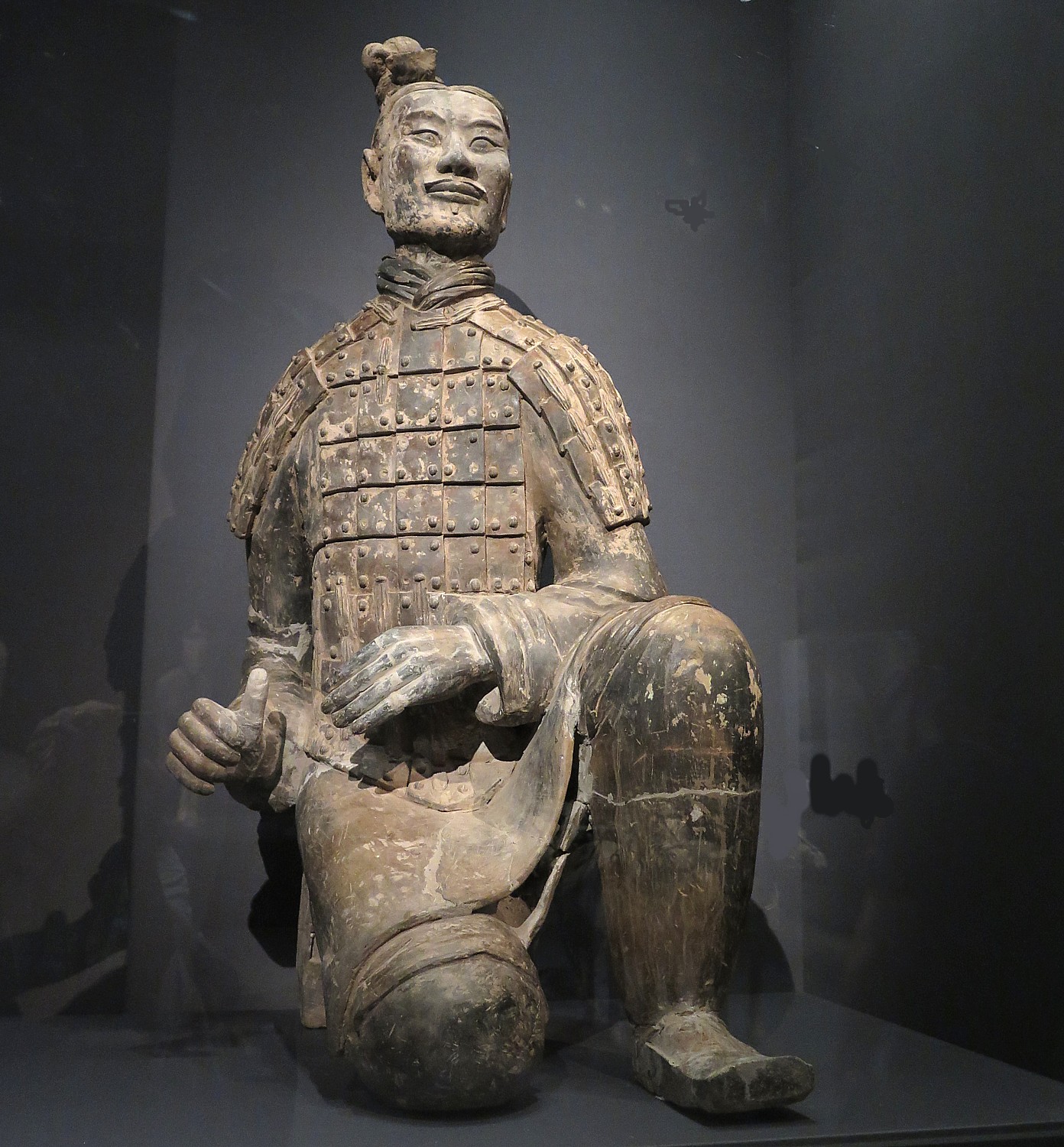
I went from Irving Penn Centennial to the “Age of Empires” exhibit of breathtaking sculpture and artifacts from the Qin and Han dynasties, spanning 221 BC to 220 AD, including near life-size but extraordinarily realistic statues of terracotta warriors from Xian (so life-like they appear to breathe) that I had seen for the first time when I visited what was at the time newly uncovered site in 1978 in China. This important exhibit is on view through July 16, 2017.
Then, I couldn’t resist, I luxuriated in the galleries devoted to Impressionists and Post-Impressionists.
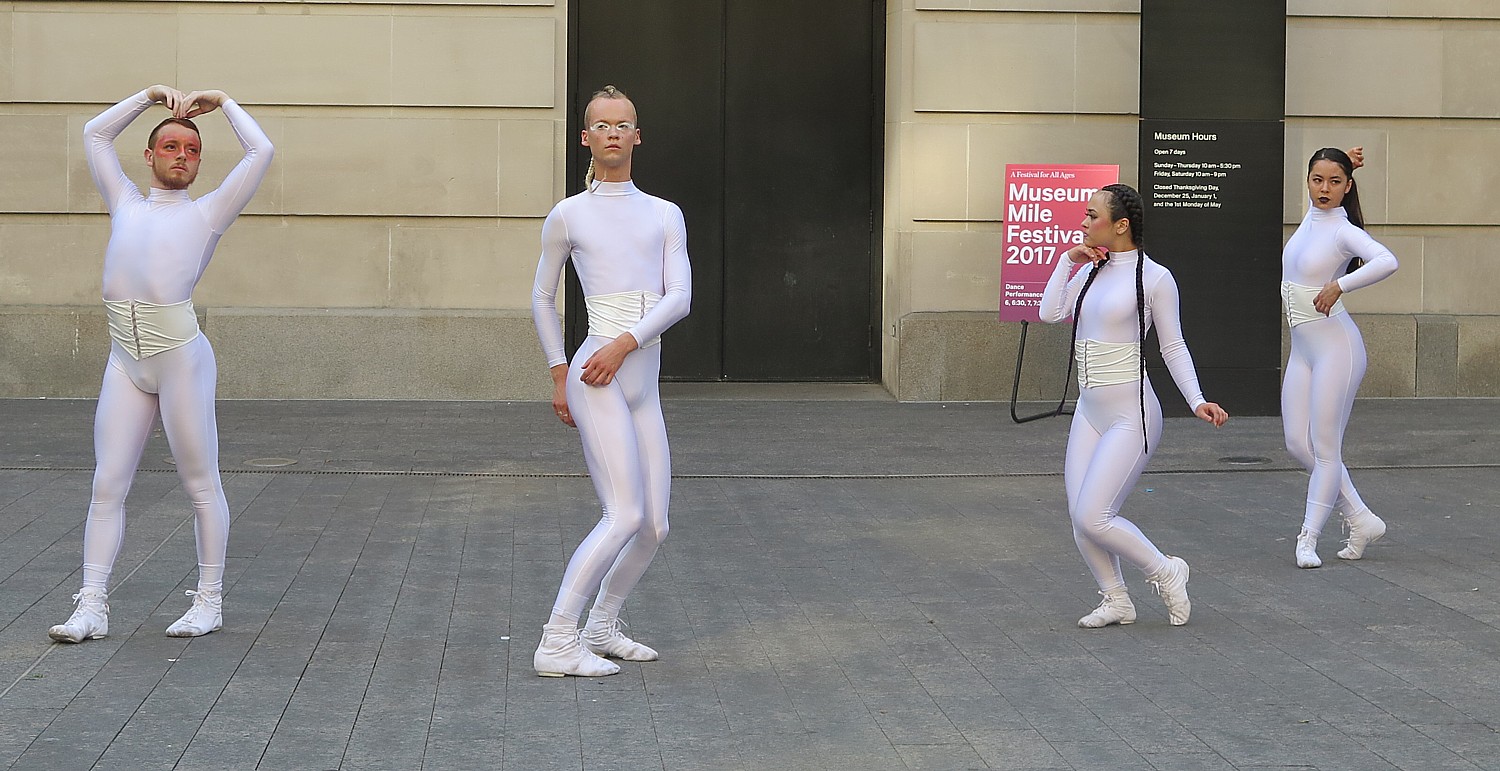
Outside, the Met Museum hosted performance art – a troupe of dancers whose movements formed artistic poses. (My favorite time to visit is on a Friday or Saturday evening when the Met is open late, has music on the mezzanine; favorite place to eat is in the American Café in the sculpture garden; also, take a docent-led “Highlights” tour, which brings you all around the museum.)
The Metropolitan Museum of Art, 1000 Fifth Avenue (at 82nd Street), New York, NY 10028, (212) 535-7710 http://www.metmuseum.org/.
(My clever strategy was to start at the Met at 5 pm, giving me an extra hour of the Museum Mile Festival in order to cover more territory.)
I next visit the Neue Galerie New York and get my annual “fix” of the breathtaking “Woman in Gold” and other Gustav Klint paintings (Klint has become one of my favorite artists). The Austrian Masterworks exhibit is a celebration of the 15th anniversary of the museum’s founding, highlighting Gustav Klint, Oskar Kokoschka, Alfred Kubin and Egon Schiele.
Neue Galerie New York, 1048 Fifth Avenue (at 86th Street), New York, NY 10028, (212) 628-6200, http://www.neuegalerie.org/.
The Solomon R.Guggenheim Museum, which always gets an enormous crowd for the Museum Mile festival, is featuring “Visionaries: Creating a Modern Guggenheim,” “Hugo Boss Prize 2016: Anicka Yi, Life is Cheap” Solomon R. Guggenheim Museum, 1071 Fifth Avenue (at 88th Street) New York, NY 10128, (212) 423-3500, https://www.guggenheim.org/
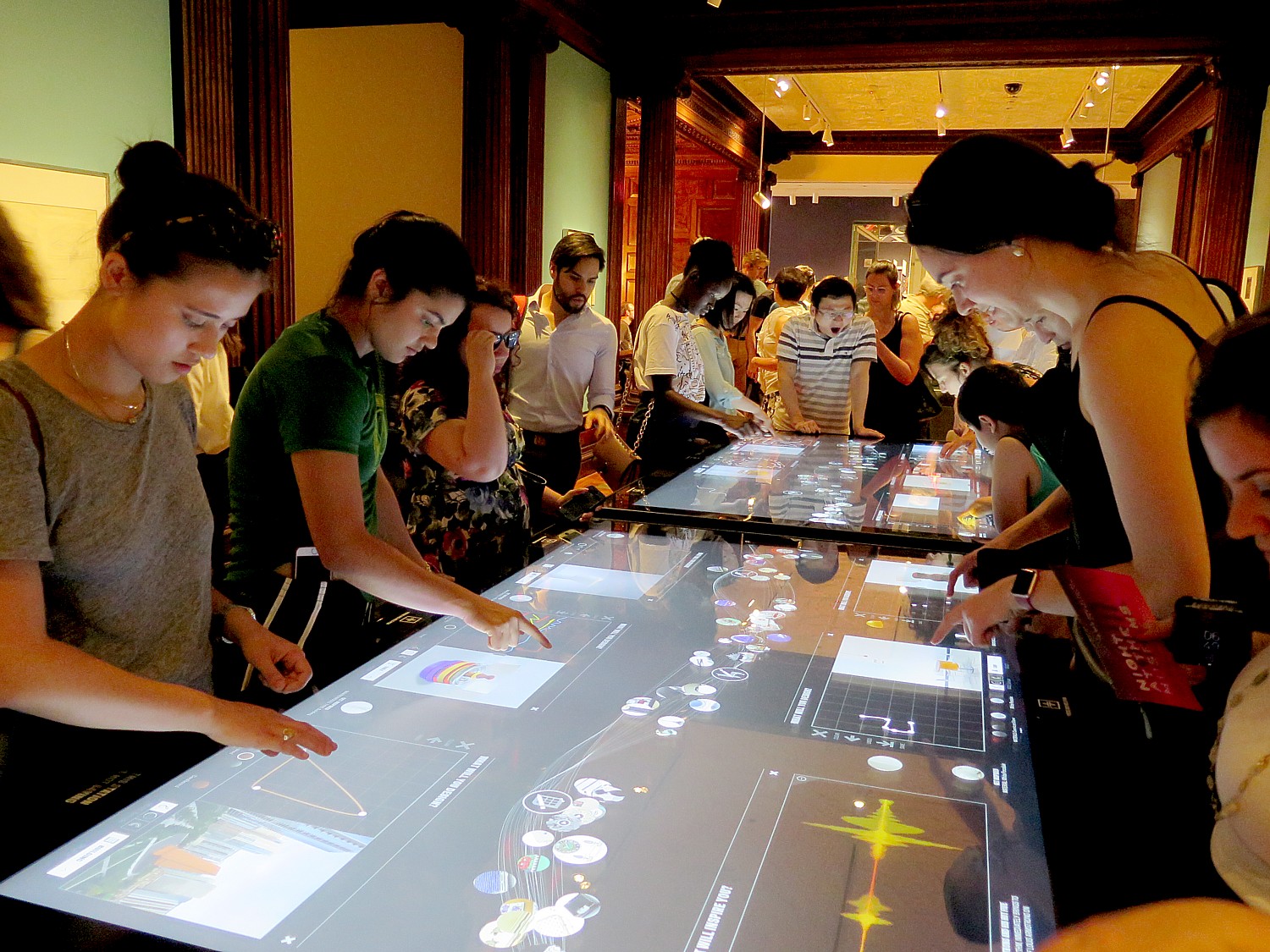
Cooper Hewitt National Design Museum, which is part of the Smithsonian Institutions, a collection established by Sarah and Eleanor Hewitt as the Cooper Union Museum for the Arts of Decoration in 1897, housed in an exquisite mansion, is presenting a marvelous exhibit, “The Jazz Age: American Style in the 1920s” – bringing together the design elements of the era through a range of furnishings, architecture, clothing, paintings and music, and what made the designs so distinctive and reflective of cultural trends of the time. For example, “Bending the Rules,” the cross-pollination of American and European artists (“A Smaller World”), the infatuation with technology and machines. One of the special delights of the Cooper Hewitt is their interactive opportunities to create designs.
Cooper Hewitt Smithsonian National Design Museum, 2 East 91st Street (off Fifth Avenue) New York, NY 10128, 212-849-8400, http://www.cooperhewitt.org/
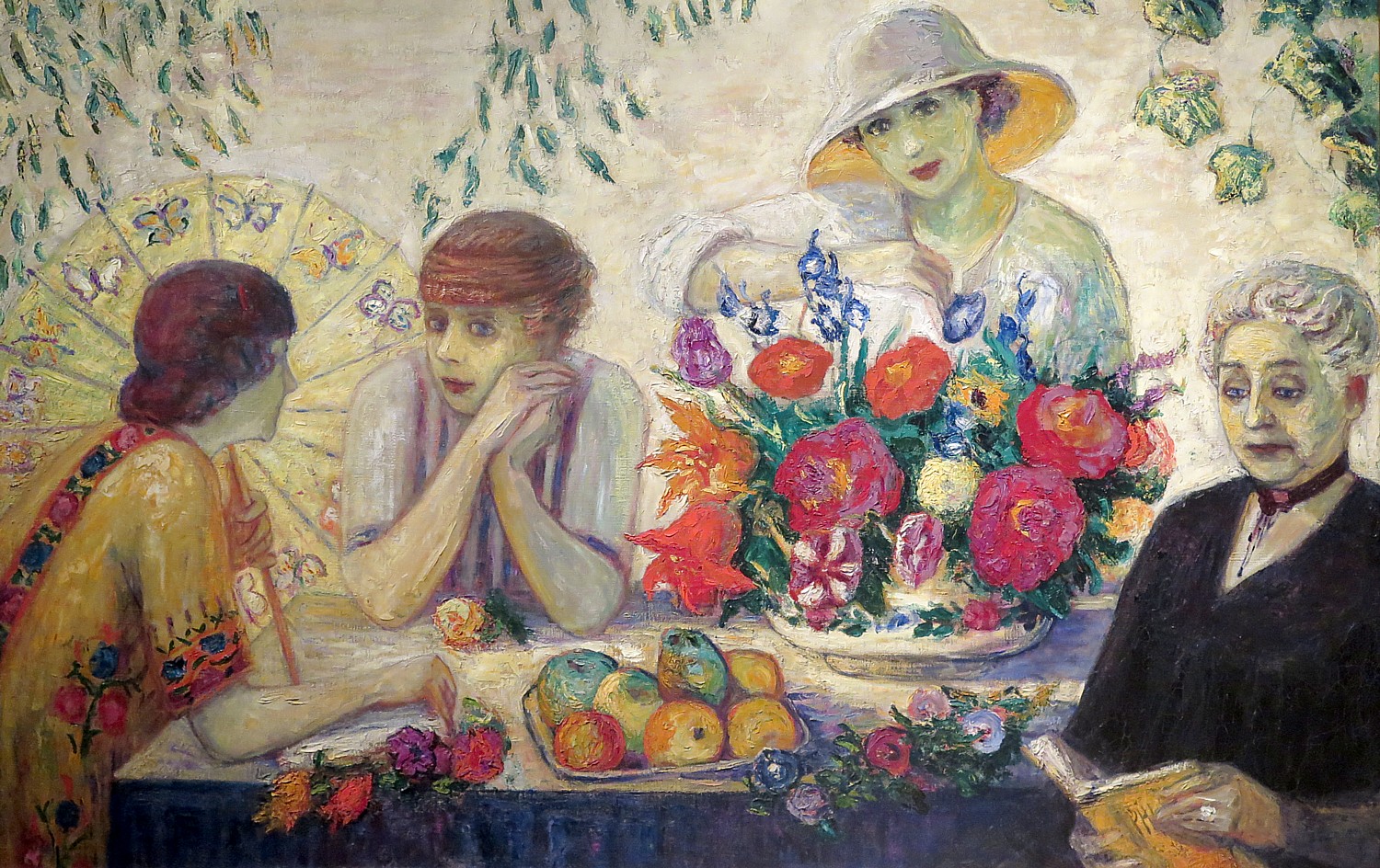
The Jewish Museum’s special exhibit this season also focuses on the 1920s, featuring the painter and poet and exemplar of the avant-garde, Florine Stettheimer. This was all new to me – I had never heard of her, or her incredible sisters, before (their independence, feminism and stunning range of creativity reminded me of the Bronte sisters, except these ladies did not keep their creative output a secret).
The Jewish Museum, 1109 Fifth Avenue, (between 92nd & 93rd Streets), New York, NY 10128, (212) 423-3200, www.thejewishmuseum.org.
The two exhibits – at the Cooper Hewitt and the Jewish Museum – are that much more inspiring to see contiguously, to have this extraordinary in-depth insight into the Jazz Age, a time of tumultuous change in culture, social mores and political currents on a scale that only recurred 40 years later, in the 1960s, and now. I became intrigued when I heard of the Jewish Museum’s exhibit at the Jazz Age Lawn Party on Governors Island in June (you have another opportunity to enjoy this fantastic festival August 26 & 27, jazzagelawnparty.com; see story)
From there I walked further north, to just about the top of the Museum Mile with only about an hour to go of the festival.
The Museum of the City of New York always has smart, clever exhibits. The not-to-be missed exhibit, “New York at its Core,” that is on now is in three parts, in three different galleries. It explores the essential question, “What makes New York New York?” (Answer: Money, Diversity, Density, Creativity) and takes the city from its very beginnings (room-sized images of neighborhoods morph from centuries ago into today), to its development as a melting pot for cultures, and then lets viewers imagine what the city of the future should look like (“Future City Lab”) and how it should solve the challenges of affordable housing, greenspace, environment, transit, and so forth. One of the most interesting parts is a computer-generated animation that puts you into the scene.
Museum of the City of New York, 1220 Fifth Avenue (at 104th Street), New York, NY 10029 (212) 534-1672, http://www.mcny.org/
Then, at the end of the Museum Mile, El Museo Del Barrio is featuring “Belkis Ayon: Nkame” and “A Retrospective of Cuban Printmaker Belkis Ayon” El Museo del Barrio, 1230 Fifth Avenue (at 104th Street), New York, NY 10029, (212) 831-7272 (http://www.elmuseo.org/)
By Karen Rubin, Travel Features Syndicate, goingplacesfarandnear.com
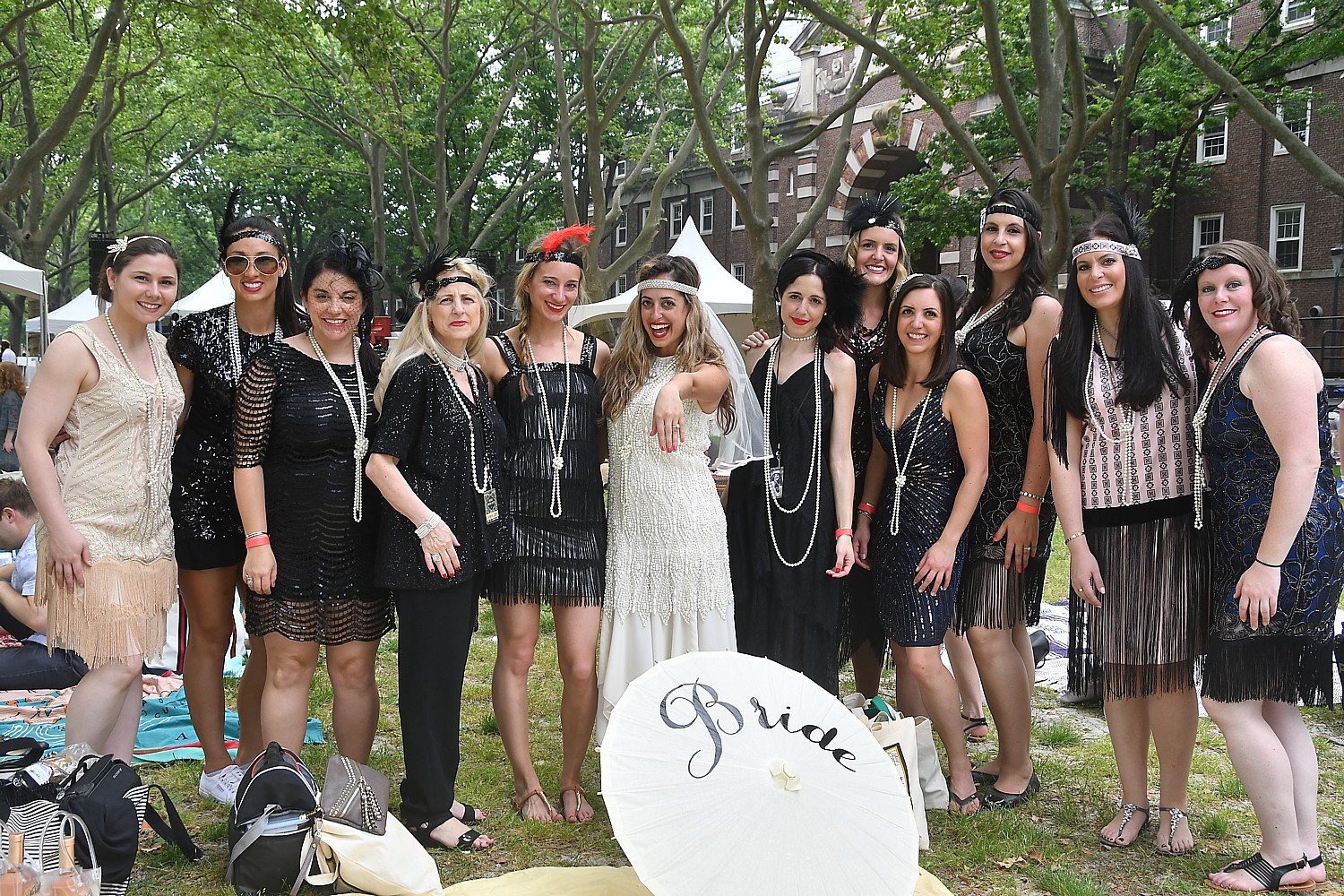
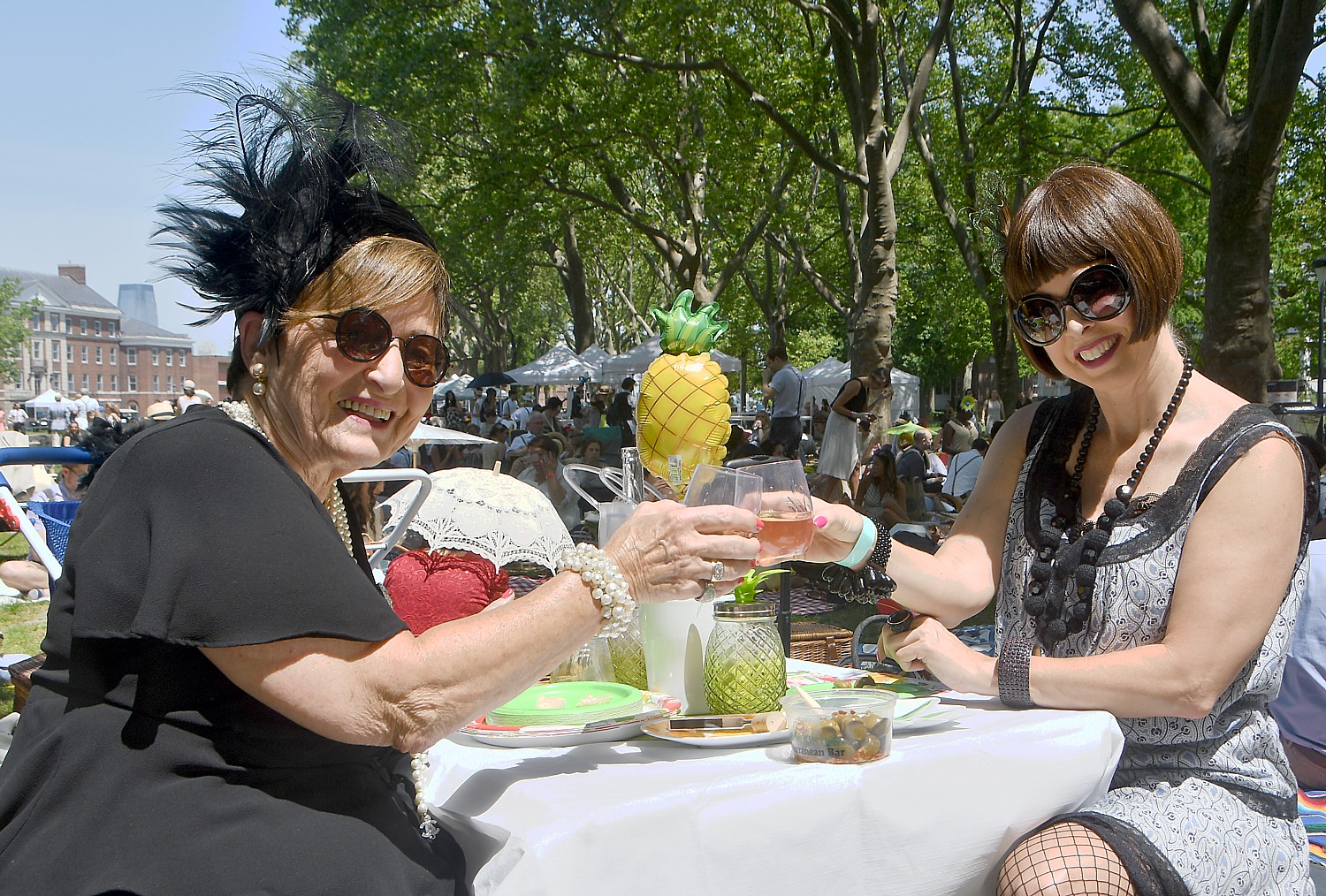
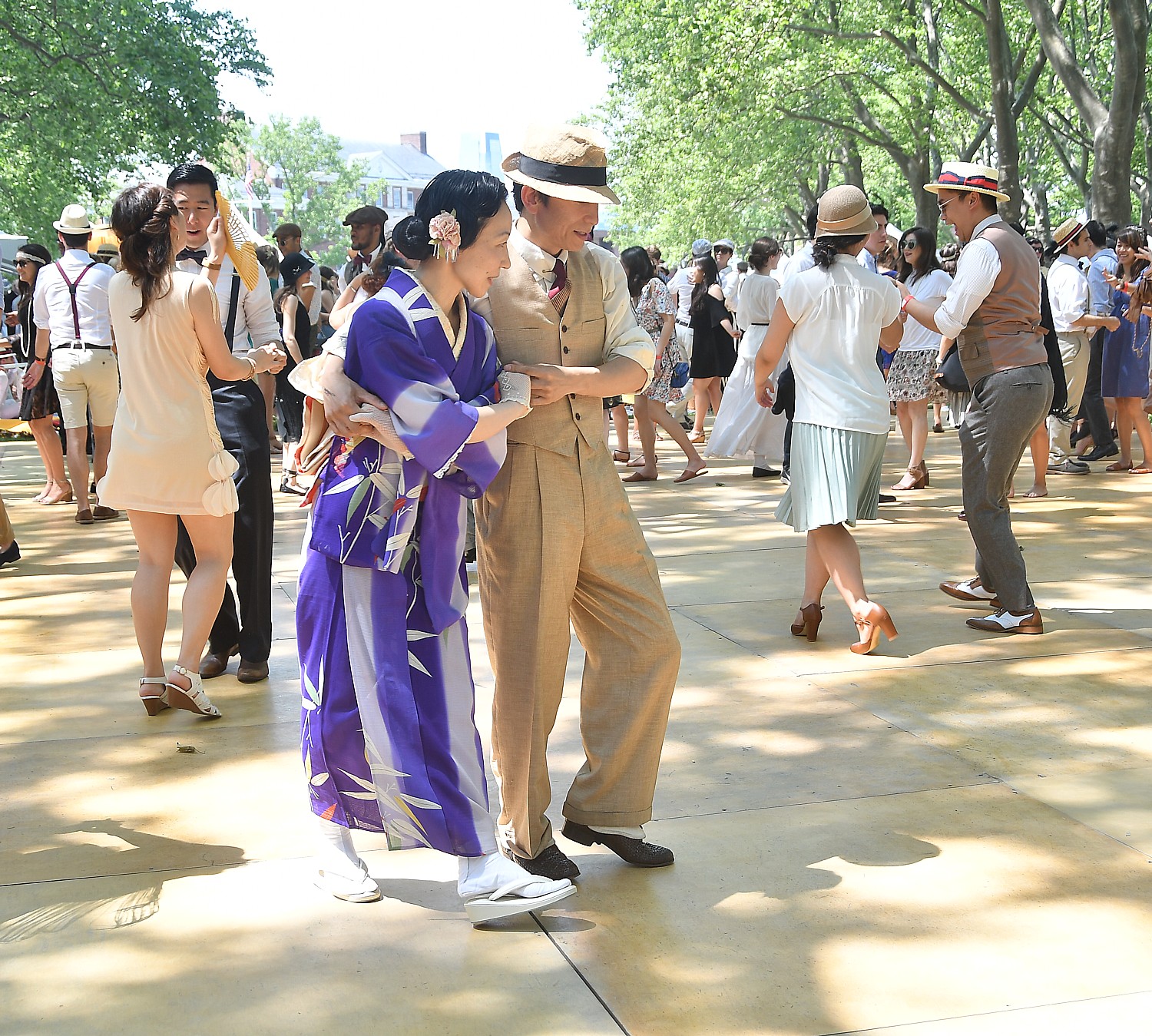
New Yorkers love to dress up – any excuse to don a costume will do, but in the case of the Jazz Age Lawn Party, now in its 12th year on Governors Island, it is a chance to push back the clock and create your own community, a Gatsby-esque Brigadoon of sorts. It is the best of New York and brings out the best of New Yorkers. The music and atmosphere brings out pure joy.
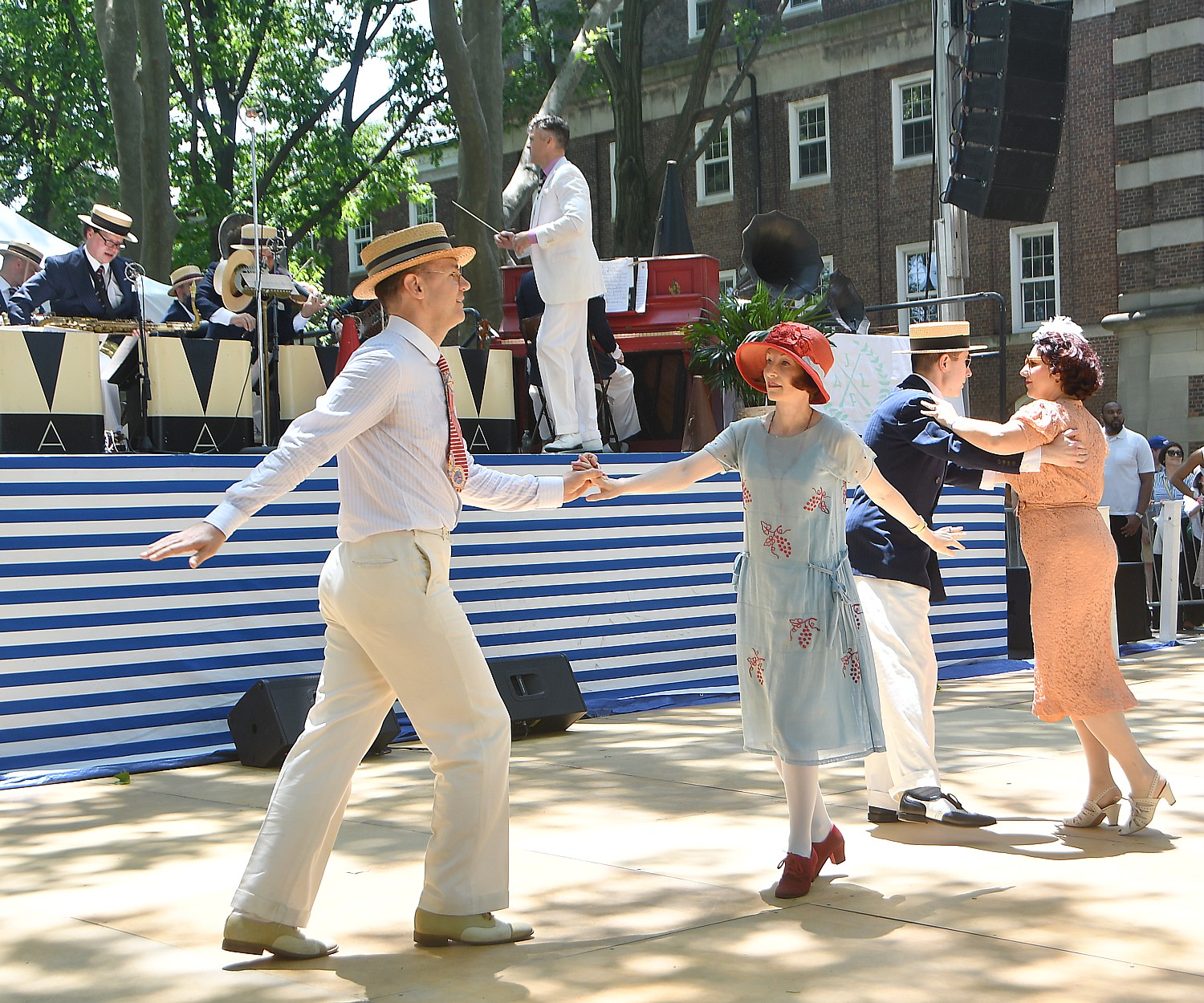
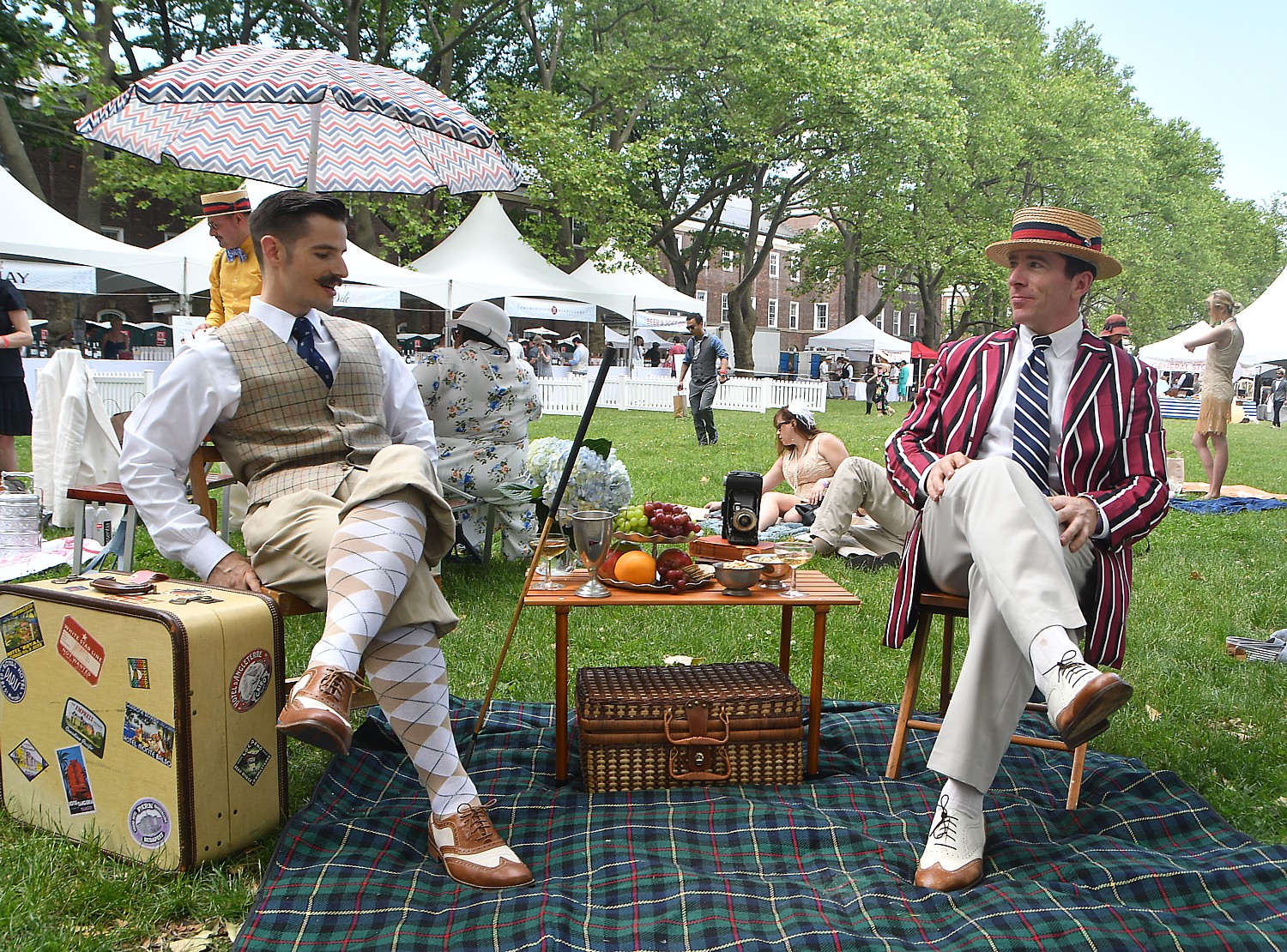
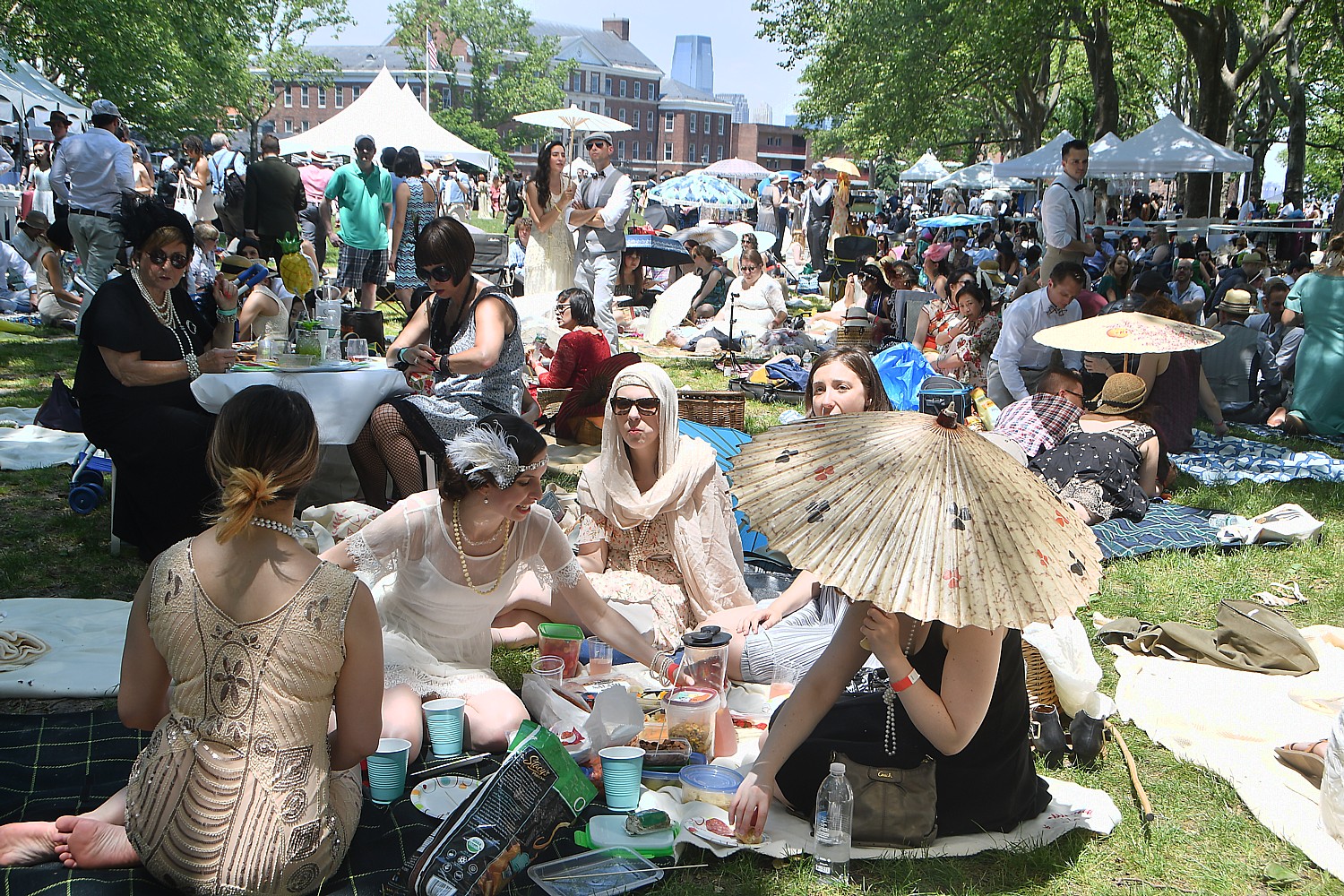
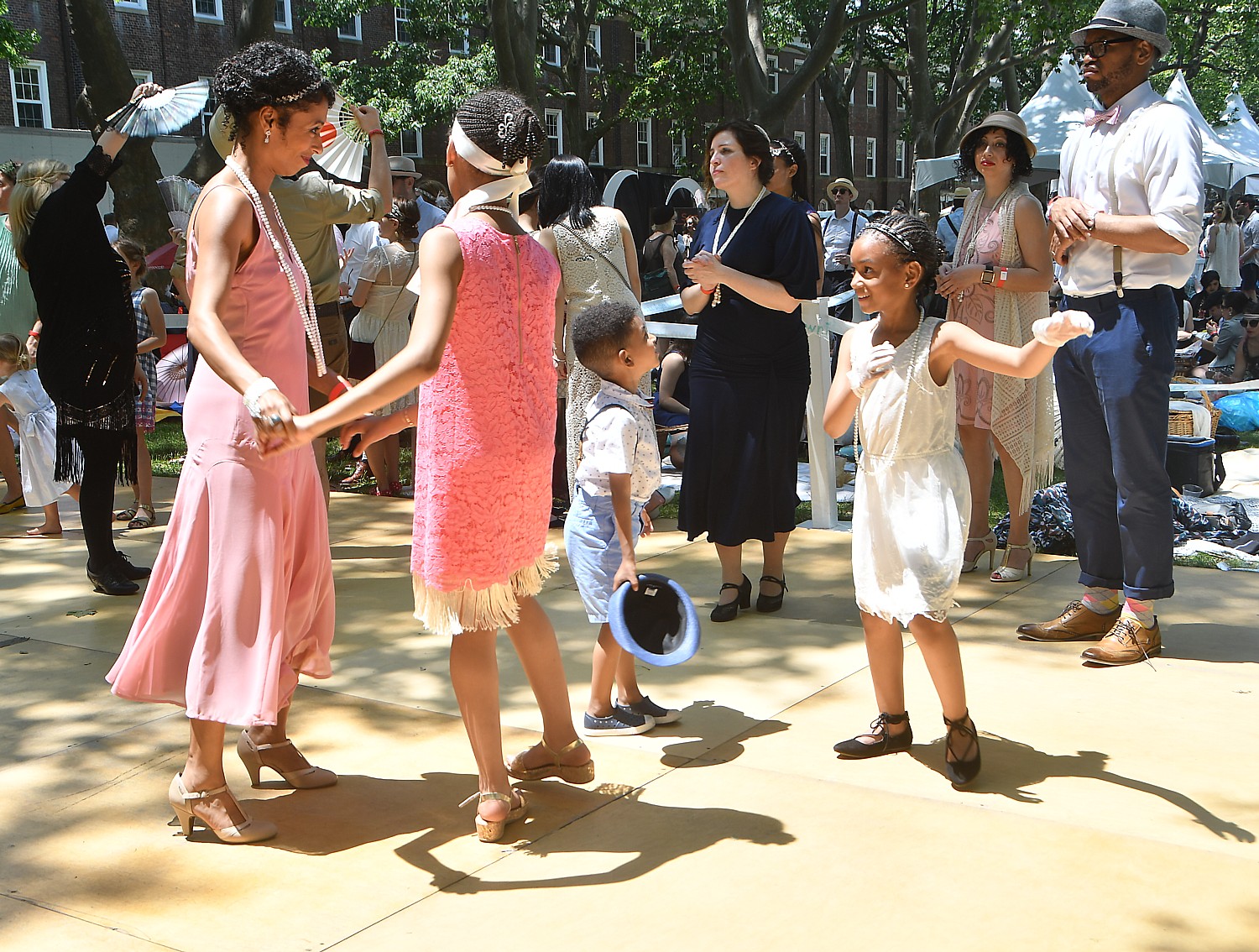
For an entire afternoon on Saturday and Sunday of the weekend of June 10 and 11, and again on August 26 and 27, you are transported – quite literally by ferry – to the 1920s era of hot jazz. People of all ages, dressed to the nine’s as flappers and gents, bearing wicker picnic baskets, stream onto the island, with its forts and structures from the Civil War and World War II. A stone’s throw from Manhattan and Brooklyn, and yet a world and an era away.
Michael Arenella and his Dreamland Orchestra create this literal dream, with his meticulously recreated music of the 1920s.
There is impeccable faithful reproduction – even the cocktails are Speakeasy worthy and if you didn’t have appropriate attire, you could rent or buy vintage, take a tintype photo or a photo sitting on a blue moon with a vintage camera. Little boys are there with their caps and suspenders, little girls with hair bows. Interlude music is provided on vinyl recordings over antique gramophones.
At one point, Michael Arenella, who throughout the afternoon gives these wonderful asides about the music, says his trombone “is so old I have to use a string to keep the slide on- that’s how authentic we are, folks.”
The only thing marring the illusion are the ubiquitous cell phones.
Conductor, composer, musician and crooner Michael Arenella presents a personally transcribed, one-of-a-kind songbook for your listening and dancing pleasure by his Dreamland Orchestra, playing the Hot Jazz of the 1920s.
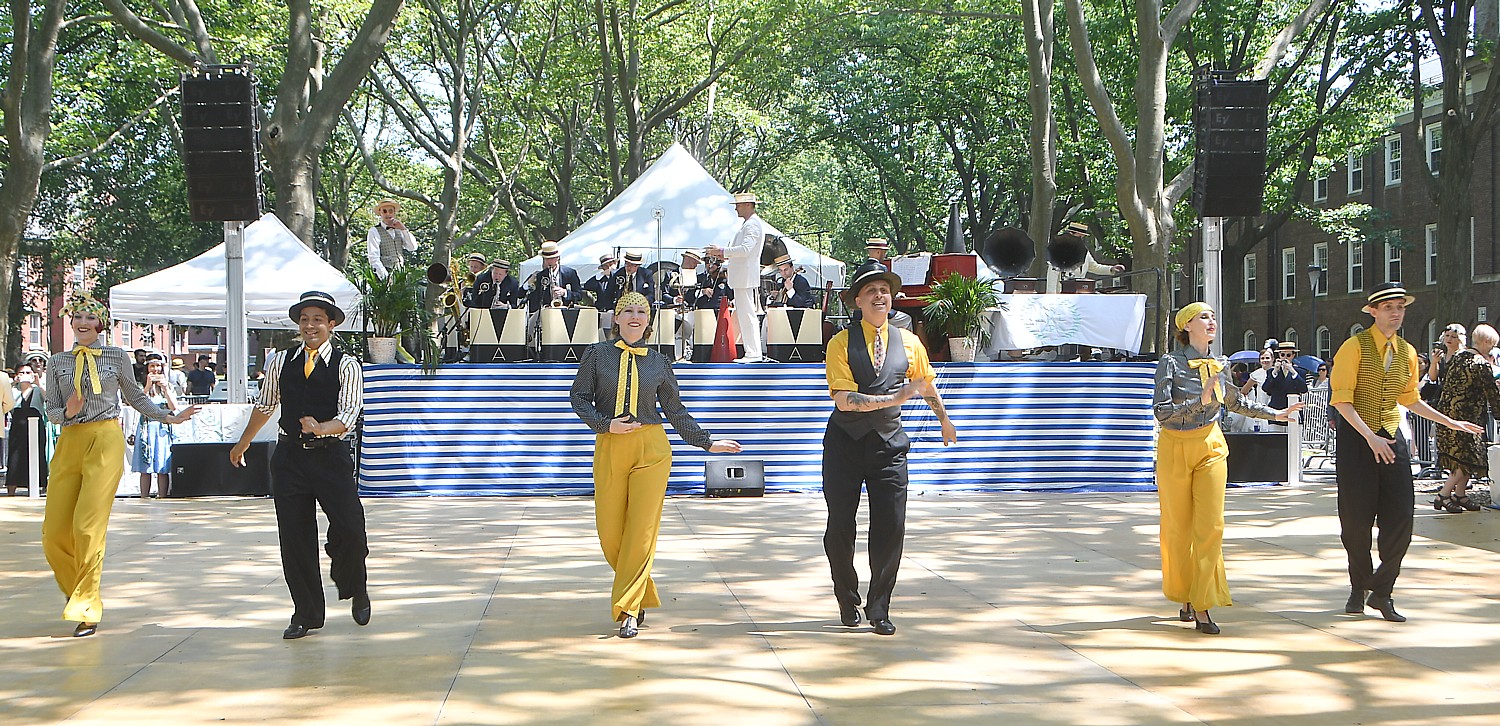
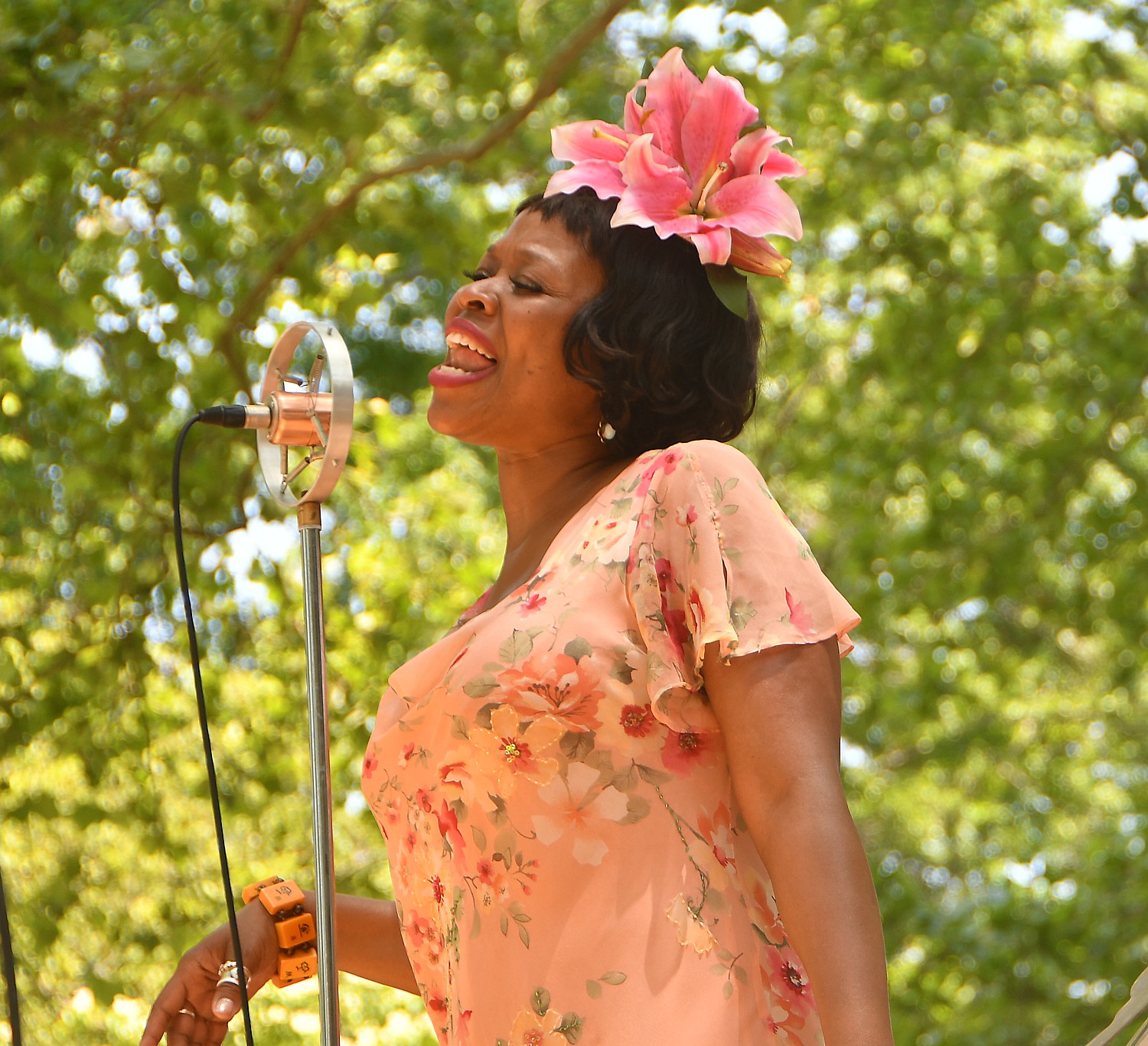
The entertainment abounds on two stages (and two dance floors): The Dreamland Follies evoke Ziegfeld-esque grand dance routines; Roddy Caravella and the Canarsie Wobblers is a fun-loving dance troupe that conjures the rebellious and exuberant spirit of Roaring ‘20s; Queen Esther pays tribute to jazz royalty of yore and Peter Mintun takes the moniker of “world’s greatest piano man”; Drew Nugent and the Midnight Society have come from Philadelphia, presents wry, spry, and certifiably Hot Jazz and the Gelber & Manning Band, feuding vaudevillian lovebirds quarrel, coo and make beautiful music together.
There are fun activities as well which you can join: Charleston Dance Contest to determine who is the Bee’s Knees; Bathing Beauties and Beaus Promenade, wearing vintage swimming outfits of the age (for entry email: bluevoon@aol.com), The High Court of Pie Contest (categories include “Mom’s Best” “Best Savory ”, “Most Original” and “Hobo’s Choice”; for entry email: govislandpie@gmail.com).
The afternoon starts off with dance lessons in the hottest dance steps of the time, like the Charleston. You can immortalize the day in your own Vintage Portraits-You Ought To Be In Pictures, perched on a Paper Moons or in tintypes using the same techniques and chemicals (a mixture of gunpowder and ether) as were used more than a century ago; the ultimate family-friendly event also features Kidland carnival games and prizes for junior Gents and Flapperettes. There’s also a 1920s MotorCar Exhibition, where you can get up close and personal with flivvers and Tin Lizzies, and Antique Gramophones that reanimate original recordings from the 1920s.
And what would a Prohibition-era, speakeasy event be without booze? VieVité, Côtes de Provence Rosé is the official wine sponsor of the Jazz Age Lawn Party. In addition, refreshing summer cocktails feature Lejay, the official liqueur sponsor which created crème de cassis in 1841, and Bootlegger 21 NY Distilleries, crafted in Roscoe, NY, which is this year’s the official gin and vodka of Jazz Age Lawn Party,. Libations available also include ice cold beer, lemonade and soft drinks. (Take note: you can’t bring in your own alcoholic beverages.)
New for 2017, Dreamland Gourmet Picnic Totes, featuring freshly prepared, custom ordered lunches that you receive when you enter, complete with a chilled bottle of VieVité Rosé, and other treats! (included in all “Bee’s Knees and “Bonnie & Clyde” ticket packages).
People also took advantage of the Gourmet Picnic Market’s fancy picnicking fare, treats and snacks including ice cream, cotton candy, hot popped corn; the Dreamland General Store, offering picnic blankets, parasols, hand fans and assorted sundries; vintage clothing vendors and artisans who create a veritable village of timeless treasures.