Tag Archives: Visit Netherlands

Boat Bike Tours’ Netherlands Islandhopping: Discovering Living History in Enkhuizen

People in period dress bring to life the village of Urk as it was in 1905, in the Zuiderzee Museum, an open-air living history museum village in Enkhuizen that re-creates daily life around the Zuiderzee before the sea was turned into a lake © Karen Rubin/goingplacesfarandnear.com

By Karen Rubin, Travel Features Syndicate, goingplacesfarandnear.com

On Day 8 of our Boat Bike Tours’ Islandhopping Netherlands tour, we wake up in Enkhuizen, back where we started. We have breakfast and have to disembark by 9:30 am but we are able to leave our luggage on board for a couple of hours, giving me time to explore a bit before I need to take the train back to Amsterdam and the Schiphol Airport. I really appreciate this bit of time since I hadn’t a chance to explore Enkhuizen when we first arrived (I recommend coming a day before the ship sails so you have more time), and though I had some time to explore in the evening, i really enjoy myself wandering around this morning.

A reminder that despite its historic appearance today, Enkhuizen was bombed in World War II © Karen Rubin/goingplacesfarandnear.com
Enjoying a walk-about picturesque Enkhuizen © Karen Rubin/goingplacesfarandnear.com
Zuiden Kerk in Enkhuizen gets ready to welcome congregants for Sunday morning service © Karen Rubin/goingplacesfarandnear.com

I find myself at the Zuiden Kerk (church) – magnificent yet simple and unpretentious, awesome yet approachable; ancient yet modern, the painted wooden ceiling shaped like the upside down bottom of a boat. It is Sunday morning and people are gathering for service as the organmeister plays Pacobel.

Plan to spend at least 3 hours at the Zuiderzee Museum, an open-air living history museum village in Enkhuizen that re-creates daily life around the Zuiderzee before the sea was turned into a lake © Karen Rubin/goingplacesfarandnear.com © Karen Rubin/goingplacesfarandnear.com
The Zuiderzee Museum, an open-air living history museum village in Enkhuizen, re-creates daily life around the Zuiderzee © Karen Rubin/goingplacesfarandnear.com

I find my way to the Zuiderzee Museum, an open-air living history museum village that re-creates daily life around the Zuiderzee before the sea was turned into a lake (the Ijsselmeer where we have just sailed) – when the dam was built in 1932. You stroll the cobble streets and explore 140 historic buildings collected from the former Zuiderzee region.

The Zuiderzee Museum, an open-air living history museum village in Enkhuizen, re-creates daily life around the Zuiderzee © Karen Rubin/goingplacesfarandnear.com
The baker is open for business at the living history Zuiderzee Museum in Enkhuizen© Karen Rubin/goingplacesfarandnear.com
Visit the apothecary at the living history Zuiderzee Museum in Enkhuizen© Karen Rubin/goingplacesfarandnear.com

The outdoor museum was opened by Queen Beatrix in 1983 as an extension of the indoor Zuiderzeemuseum, which opened in 1950 (the indoor museum doesn’t open until noon so I have to miss it). Most of the buildings are authentic while others are reconstructed replicas of actual buildings. A complete village, you can wander around and visit a windmill, lime kilns, fish-smoking house, steam laundry, drugstore, pharmacy, basketmaker, blacksmith, cheese warehouse, school (where wooden shoes are lined up outside the classroom), even a hairdresser, and visit the working post office. The harbor is a replica of its layout on Marken. From April to November you can see life in the village of Urk as it was in 1905, meet residents and watch traditional activities, like games and building clog boats, and demonstrations of crafts such as rope-making, cooperage, basket making and herring being smoked.

The Indoor Museum is “a treasure house of the Zuiderzee” © Karen Rubin/goingplacesfarandnear.com

The Indoor Museum, “a treasure house of the Zuiderzee,” consists of a string of 17th century buildings (original and replicated), some of which were used by the Dutch East India Company. Here, various collections are presented with a modern approach: you can dive into a ‘Sea of Stories’ and experience life on the former Zuiderzee in this interactive exhibition. A popular attraction is the ‘Schepenhal’ (ship’s hall), which allows visitors a close-up view of historic ships. The indoor museum also displays artifacts from the Zuiderzee cultural past, including paintings, furniture and traditional local costumes (‘klederdracht’). (Unfortunately, it opens at noon and I do not have the time to visit.)

Enjoying a walk-about picturesque, historic Enkhuizen © Karen Rubin/goingplacesfarandnear.com

Both indoor and outdoor museums have several restaurants located in National Heritage sites, like the Hindeloopen Pub, the Amsterdam House and the Pepper House on the Wierdijk.

Admission is 22E (56E for a family); plan to spend at least 3 hours at the outdoor museum. [Note: if you are extending the boat bike tour with a stay in Amsterdam, you may want to get the Iamsterdam city card (www.iamsterdam.com), which includes admission to the Zuiderzee Museum, https://www.iamsterdam.com/en/whats-on/calendar/museums-and-galleries/museums/zuiderzee-museum]

Zuiderzee Museum, Wierdijk 12-22, 1601 LA Enkhuizen, https://www.zuiderzeemuseum.nl/.

Getting to Enkhuizen

Enkhuizen is a pleasant hour-long train ride from Amsterdam’s Central Station © Karen Rubin/goingplacesfarandnear.com

I am relieved to see how amazingly easy it is to get to/from the embarkation point in Enkhuizen from Amsterdam’s Schiphol Airport (especially since I arrived by plane on the same day as the boat departed): just walk down to the train (every 15 minutes) to the Central Station, a quick switch to the train to Enkhuizen (every half hour) for the hour-long, comfortable and scenic ride. The trick is to “check in” with a credit/debit card using the app, or purchase a ticket (14-16E) before you go through to the train by tapping on a pole (a conductor will double check on the train), then when you depart the train, tap it on the pole again, and the correct amount is debited. (If you don’t pre-purchase, the conductor can charge you an extra 50E; I did forget but the conductor was extremely kind in helping me buy the ticket online.) Then it’s just a five minute walk from the train station to the ship. You can purchase tickets in the vending machines at the stations or online on https://www.ns.nl/en/journeyplanner#/. The website can also be used to check the timetable.

Enkhuizen is a pleasant hour-long train ride from Amsterdam’s Central Station © Karen Rubin/goingplacesfarandnear.com

Getting back to the airport is equally easy – we are asked to leave the ship by 9:30 am (but I am able to store my luggage there, so I could visit the city until 11).I time my touring to get back to the ship, pick up my stuff to get the 11:39 am train to Central Station in Amsterdam, then a quick switch to the train to Schiphol with more than the three-hours before my flight at 7:05 pm.

Take the train from Schiphol Airport to Central Station in Amsterdam’s historic center (be sure to buy/download your ticket and tap the yellow pole) © Karen Rubin/goingplacesfarandnear.com

Boat Bike Tours

Boat Bike Tours’ Bruges to Amsterdam trip is among the most popular for Americans © Karen Rubin/goingplacesfarandnear.com

This was my second trip with Boat Bike Tours (I had the best time on their Bruges-Amsterdam boat-bike-tour – utter perfection with the biking, the boat, the sights along the way; be sure to plan to spend at least a day in Bruges before the bike tour to appreciate its enchantment).

Boat Bike Tours, which is based in Amsterdam, got its start when Channel Cruises Holland, a barge tour operator founded in 1977, added biking to its itineraries in response to guests asking for traditional Dutch activities. The new cruise-and-cycle concept was so successful that it was spun off as its own brand in the mid-1990s. Between 2000 and 2020, the company added more itineraries and ships. Last year, Boat Bike Tours merged with Islandhopping, a Croatia-based operator which also specializes in cruise-and-cycle travel (I loved the boat-bike trip in Greece that I took with Islandhopping some years ago). Together, the merged company, while operating under their own names, offers more than 70 itineraries in 15 countries, and has opened a North American sales office in Fairfield, Connecticut.

“With half of our guests coming from North America now, it makes sense to have an office here,” said Jana Tvedt, Director of Sales, North America for Boat Bike Tours. “We’re available when needed and familiar with what Americans and Canadians are looking for in destinations, experiences and ships. And we’re always happy to work with travel advisors, groups and charters.”

Each season, the company contracts some 50 ships including barges, motor yachts and sailing ships, ranging in category from comfortable to superior. Biking styles include guided for casual riders and independent (self-guided) for seasoned cyclists, with touring bikes, e-bikes and mountain bikes available depending on the destination.

Itineraries range from five to 15 days, with most being eight days, and cater to a variety of budgets and interests, from historic cities and landmarks to picturesque natural landscapes and the world’s best wines. The Boat Bike Tours concept is to enable guests to connect with local people, culture and nature, while traveling by smaller boat and by bike also takes guests beyond tourist hotspots and minimizes environmental impacts. (Our sailing ship, Leafde fan Fryslân, uses biodiesel.)

Boat Bike Tours will be offering a deluxe itinerary on a newly built ship for 2026, Magnifique X, that includes a hotel stay in Amsterdam and a hotel stay in Paris © Karen Rubin/goingplacesfarandnear.com

The big news is that Boat Bike Tours will be offering a newly built ship for 2026, Magnifique X, an all-suite ship accommodating 32 passengers, giving the company a new deluxe, superior category. In addition to the bigger cabin, the itinerary is also enhanced with upgraded amenities, support van, included lunches, and more sightseeing inclusions. The itinerary goes from Amsterdam to Paris with one night hotel stay in Amsterdam, then biking to Bruges, then a motorcoach transfer to Paris where there is a hotel stay. (Bookings are open.)

Among its most popular itineraries for North American travelers:

Come at least the day before starting out on Boat Bike Tours’ Bruges to Amsterdam trip to be enchanted by Bruges at night © Karen Rubin/goingplacesfarandnear.com

Amsterdam to Bruges: Cruise and ride through the Dutch countryside of Zeeland and western Flanders in Belgium. Tour world-famous cities such as Amsterdam, Antwerp, Ghent and Bruges, as well as picturesque villages, a Dutch cheese farm, the windmills of Kinderdijk and the magnificent natural landscape along the Schelde River.

Split to Dubrovnik: Hop from island to island in the South Dalmatia region of Croatia by boat and e-bike. See the town centers of Split and Dubrovnik, and experience the culture and nature of more sparsely populated islands like Brač, Hvar, Korčula, Lastovo, Mljet and Šipan. E-bikes help with hilly and mountainous terrain.

Cochem to Metz: Follow the Moselle River through Germany, France and Luxembourg, passing endless vineyards and stopping to taste local wines. See enchanting old cities like Cochem and Bernkastel, the once-imperial Roman Trier, the stunning waterfalls of Saarburg, the Gothic cathedral of Metz and welcoming villages in between.

The merger of the Boat Bike Tours and Islandhopping means that clients of either one can take advantage of a 3% loyalty discount when booking. Notably, bike tours prove superb for the burgeoning number of solo travelers, and each departure offers at least one cabin with a reduced single supplement.

For more information, contact Boat Bike Tours, 203-814-1249 or visit https://www.boatbiketours.com/.

_____________________________

© 2025 Travel Features Syndicate, a division of Workstyles, Inc. All rights reserved. Visit goingplacesfarandnear.com and travelwritersmagazine.com/TravelFeaturesSyndicate/. Blogging at goingplacesnearandfar.wordpress.com and moralcompasstravel.info. Visit instagram.com/going_places_far_and_near and instagram.com/bigbackpacktraveler/ Send comments or questions to FamTravLtr@aol.com. Bluesky: @newsphotosfeatures.bsky.social X: @TravelFeatures Threads: @news_and_photo_feature

Boat Bike Tours Netherlands Islandhopping: Sailing the Wadden Sea, Biking, Exploring Terschelling, Harlingen

Sailing into Terschelling on our ship, Leafde fan Fryslân, on Day 4 of our Boat Bike Tours’ Islandhopping Netherlands bike tour © Karen Rubin/goingplacesfarandnear.com

By Karen Rubin, Travel Features Syndicate, goingplacesfarandnear.com

Day 4 of our eight-day Boat Bike Tours’ Islandhopping tour of the Netherlands is spent sailing to the island of Terschelling. It takes about six hours to sail across the Wadden Sea, a UNESCO World Heritage site.

Captain Age delicately navigates our ship, Leafde fan Fryslân, out of port © Karen Rubin/goingplacesfarandnear.com

“Big boat, small water,” our captain, Age, says, guaranteeing that the ship is “unsinkable” because the water is so shallow, we would run aground first. (“Wadden” means “mudflats” and the Wadden Sea is a large intertidal area in the North Sea along the coasts of the Netherlands, Germany, and Denmark.)

Raising the sails on the ship, Leafde fan Fryslân © Karen Rubin/goingplacesfarandnear.com

We have a northwest wind so we can raise the sails on our ship, Leafde fan Fryslân, the only four-masted ship sailing in Dutch waters,  instead of just motoring to Terschelling.

First mate Lukacz does most of the work raising the sails on the Leafde fan Fryslân © Karen Rubin/goingplacesfarandnear.com

Lukacz, who I call the first mate, gives us the safety talk and invites us to help raise the sails (we don’t do it very well). He says it is more important to be safe “You are on vacation, a nice time. You can’t have a nice time with a broken hand. Bad pain is bad time.”  But looking around at several of us with boating jackets, says, “I can see this isn’t your first rodeo.” 

‘It’s about being happy,” Lukas says, finishing with “What do you think about my speech?”

We soon see why Lukacz describes himself as a “monkey” as he raises the sails on the Leafde fan Fryslân © Karen Rubin/goingplacesfarandnear.com

Lukacz describes himself as a “little monkey jumping around,” and we soon see why as we watch him leaping around to get the sails unfurled.

We soon see why Lukacz describes himself as a “monkey” as he raises the sails on the Leafde fan Fryslân © Karen Rubin/goingplacesfarandnear.com

The wind is so strong (“Respect the power,” he says), but once the sails are raised, we feel the quiet tranquility of sailing. But having come from Texel, and seeing the scores of shipwrecks of those ocean-going trading ships, I can only imagine what this would feel like in a storm, or how those sailors felt for months, even years crossing vast seas to Asia, Africa, and North America.

We have lunch on board as we sail (tonight, we will be on our own for dinner in Terschelling, armed with a list of recommended restaurants).

The scene is stunning, with several tall sailing ships along the horizon, the swirling green/blue water, the white cottony clouds.

Sailing ships line the horizon as we sail on the Leafde fan Fryslân © Karen Rubin/goingplacesfarandnear.com

It is just 4 pm when we sail into Terschelling, flabberghasted by the finesse Captain Age shows to park our enormous ship, Leafde fan Fryslân, 210 ft. long, 24 ft. wide.

Sailing into Terschelling on our ship, Leafde fan Fryslân, on Day 4 of our Boat Bike Tours’ Islandhopping Netherlands bike tour © Karen Rubin/goingplacesfarandnear.com

We walk off the ship from the crowded harbor crammed with sailing ships tied up two and three abreast and explore the popular village. Huge ferry boats deposit thousands of visitors each day (remarkable considering a mere 9,700 people live on Terschelling).

Terschelling, one of 15 islands in the North Sea and the furthest north we will travel on our Islandhopping tour, is just 30 km long and 4.5 km wide with vast sand beaches, strong winds and wild water – and we will cycle around most of it.  

Terschelling skyline is dominated by the 420 year-old Brandaris lighthouse, standing 388 ft high © Karen Rubin/goingplacesfarandnear.com

The town is dominated by the 420 year-old Brandaris lighthouse, standing 388 ft high that can be seen from far off in the distance. I learn this is the oldest lighthouse in the Netherlands. The first tower was built in 1323 to guide ships on their way to Amsterdam through the Zuiderzee, the narrow opening between Vlieland and Terschelling. A flood destroyed the tower in 1570. Construction on a new tower began in 1592 but the tower collapsed before it was finished because of poor building materials. The tower we see today, remarkably, was built in 1594. It became the first lighthouse in the Netherlands equipped with a rotating Freshnel lens in 1837 and was electrified in 1907.

View from the top of the hill in Terschelling © Karen Rubin/goingplacesfarandnear.com

I meet up with a German couple from our ship and follow them up a path over the dunes to the hilltop for a stunning view of the island and the port as the sun streams through clouds.

Back in the charming village, I come upon a gaggle of girls who, it turns out, are Ukrainians taking refuge here from the war in their homeland.  This brings a jolt of the world and current events to this small, isolated, peaceful place, shocking me back to the present out of my reverie for ages past. But as the historic markers and notes remind, the vast majority of human history has been one invasion, one war, one revolution, one disaster after another, and the nostalgia that sweeps over us looking back has a way of tempering the horror of that time. I think that one reason history is more palatable, less stressful, than present-day events is that we know how that chapter of the story ended.

Cycling Terschelling, Sailing to Harlingen

Setting out on the bike ride on Terschelling along the dyke © Karen Rubin/goingplacesfarandnear.com

While the previous day was all about sailing, Day 5 is all about cycling. Terschelling offers 70 km of cycling tracks and four charming villages to discover. We will cycle 26 miles roundtrip, then, in the afternoon, sail across the Wadden Sea to Harlingen, the most important harbor city of the province of Friesland.

This is the first day of cycling where I appreciate why people get e-bikes in the Netherlands: the paths may be flat but the wind is strong (all the charming historic windmills and now modern wind turbines should have been a clue). I power through and at one point, one of our group becomes very conscientious about riding right in front of me to break the wind a bit (like the Tour de France!).

The Stryper Wyke statue honors a woman whose cleverness saved the town from British invaders © Karen Rubin/goingplacesfarandnear.com

We set out along the dyke, then turn off into villages, farms and fields. Our route takes us to the Stryper Wyke (wife) statue, a short distance from a cemetery. The monument heralds back to the 1666 wars with the English over trade with India. The British declared the North Sea as theirs and invaded this area, burning, raping, killing. The British, the story goes, confronted the Stryper Wyke demanding to know how many defenders there were, to which she replied, “100 standing, 1000 laying down” – referring to the cemetery. The legend goes that the invaders took her literally and retreated, and she is credited with saving the town.

In fact, everywhere we go, there are just such statues, monuments, plaques, placards and historic photos that cherish local history, heritage and culture and show the pride the Dutch have.

The Toesaks Museum (pirates!) is described as “an exciting and pleasantly eccentric museum for kids and adults” offering a collection recovered from shipwrecks © Karen Rubin/goingplacesfarandnear.com

We ride passed an intriguing Toesaks Museum (pirates!) which is described as “an exciting and pleasantly eccentric museum for kids and adults” offering a collection recovered from shipwrecks. The museum is housed in a farmhouse and has a real pirate ship, a tree house and a castle. Owner and wreck diver Hille van Dieren, I learn later, has been collecting recovered inventory pieces from the many shipwrecks around Terschelling since 1975. The museum is full of curiosities from 1650 to the present (https://wrakkenmuseum.nl/).

The wind becomes a factor as you bike on Terschelling © Karen Rubin/goingplacesfarandnear.com

No one else wants to stop to visit, so I take a quick peek inside so I don’t hold up the group. But if it were important to me, I could have left the group and followed the route myself using the RideGPS app that Boat Bike Tours provides. But, the ship is sailing this afternoon and I wouldn’t have known if I could complete the route in time. 

At Koor Hoorn, hiking over enormous dunes which open up to this vast expanse of sand beach © Karen Rubin/goingplacesfarandnear.com
The vast expanse of sand beach at Koor Hoorn © Karen Rubin/goingplacesfarandnear.com

We ride through open fields (battling the wind), through forest and then over a stretch of sand (not fun) and come to Koor Hoorn, hiking over enormous dunes which open up to this vast expanse of sand beach almost completely vacant of people or structures. I walk what seems a quarter mile before I finally reach the actual water, where the sea is swirling with whitecaps and the beach is strewn with a thick white foam that looks like pieces of clouds have fallen from the sky.

A wild swirl of sea and sky at Koor Hoorn © Karen Rubin/goingplacesfarandnear.com

A popular thing to do is take a horsedrawn carriage ride on the beach and we see one of these carriages on the road.

A popular activity on Terschelling is to ride in a horse-drawn carriage on the beach © Karen Rubin/goingplacesfarandnear.com

Leaving the beach, our guide, Edith, leads us through the “Dark Forest” so we can be shielded a bit against the wind.

Biking through the “dark forest” on Terschelling © Karen Rubin/goingplacesfarandnear.com

We get to a charming Cranberry inn (spectacular desserts, all made with cranberry), and walk out to the cranberry field (not a bog).There is a small exhibit and video on a second floor. Just as we are gathering to leave, it starts to rain. Edith checks the weather app and predicts it will only last a few minutes – so I go back inside to get cozy in the upstairs screening room to watch the video about the island and raising cranberry. Sure enough, the rain stops within 15 minutes, and we are on our way. (One of the good things about the strong wind, is that rain rarely lasts long.)

Delectable cranberry desserts © Karen Rubin/goingplacesfarandnear.com

The route takes us up and over dunes, and finally, into the village to the port, where we stop at a monument to those who have been lost at sea.

It’s been a lovely ride – we’re back at about 3:15 pm and the ship soon pulls out of the harbor.

Monument to those lost at sea in the village on Terschelling © Karen Rubin/goingplacesfarandnear.com

We are in awe – along with everyone else on the dock – collectively holding our breath as Captain Age maneuvers out of the tight harbor. We sail across the Wadden Sea to Harlingen, considered the most important harbor city of the province of Friesland.


Sailing across the Wadden Sea to Harlingen © Karen Rubin/goingplacesfarandnear.com
Our ship, Leafde fan Fryslân, sails across the Wadden Sea to Harlingen © Karen Rubin/goingplacesfarandnear.com

We have dinner as we sail, and pull into Harlingen’s port in time to have a 7:45 pm walking tour of Harlingen led by our guide, Anya.

Harlingen

A replica of the historic ship, De Witte Swaen (the White Swan). Is being built in the marina at Harlingen © Karen Rubin/goingplacesfarandnear.com

The first thing we see is a restoration of the De Witte Swaen (the White Swan). This was the famous vessel sailed by16th-century Dutch explorer Willem Barentsz when he discovered the Arctic archipelago of Spitsbergen (now known as Svalbard) and Bear Island. He then sailed onward to the Russian archipelago of Nova Zembla, where, in 1596, the ship got stuck in the ice and they were forced to stay the winter. Barentsz did not survive, but 12 of the 17 crew were saved. Here, in the port of Harlingen, marine archaeologist Gerald de Weerdt is directing volunteers in building a genuine replica of the ship using 16th century techniques and materials. After years of work, his team is planning to finish the ship by year’s end. It will be sailed to Amsterdam and then returned here. Eventually, de Weerdt and his team want to retrace Barentsz’s voyage by sailing the vessel to Spitsbergen and Nova Zembla (hopefully with a better outcome).

Discovering Harlingen © Karen Rubin/goingplacesfarandnear.com

Anya explains the complicated system of dykes and the dam built in 1932 which turned part of the Wadden Sea into a lake and from salt to fresh water, changing the ecology, and what was done to protect the fish migration from the changed ecosystem.

Discovering Harlingen © Karen Rubin/goingplacesfarandnear.com

She points out the architecture – the Celtic tradition of putting a symbol to protect the house from evil – and how 600 buildings in the town are protected for their historic significance.

Magnificent buildings like the elaborate City Hall show the wealth of this town.

Harlingen’s City Hall shows off the city’s wealth © Karen Rubin/goingplacesfarandnear.com

As we have seen before, the biggest building, typically a church, was built on the highest point, to provide safety when the town flooded.  Holland broke with the Catholic Church of Spain and declared religious freedom when it won its independence after an 80-year war.

She notes that under Napoleon, who conquered the Netherlands in 1800 and installed his brother, Louis, as its first king (who ruled 1806-1810), every home had to replace the ornaments that showed a coat of arms or profession with a house number and street, and a registry was kept of names, religion and where they lived.

“In World War II, the Nazis could see where Jews lived” (one of the reasons why today, the Dutch are still concerned to protect private information on the internet).

“Stumbling stones” in front of a house in Harlingen © Karen Rubin/goingplacesfarandnear.com

Today, we see some of the ”stumbling stones” – square copper plates in the sidewalk -documenting the name of the Jews who lived in the home, “the last place they lived in freedom,” before being taken by Nazis to concentration camps. There are some 70,000 of these “stumbling stones” in Europe, about 7,000 in the Netherlands, Anya says.

I am reminded that after declaring its independence from Catholic Spain in 1581, Holland instituted religious freedom and Jews, who suffered Spain’s Inquisition, were able to practice relatively openly. Rembrandt lived in Amsterdam’s Jewish Quarter, a short distance from where the Grand Synagogue was built. When Jews went to New Amsterdam in 1654,then a trading post of the Dutch West India Company. Governor Peter Stuyvesant wanted to evict the Jews, but the company required him to let the Jews stay. (This is all brought back when I visit two exhibits currently on view in New York City: “New York at Its Core: Port City (1609-1898)” at the Museum of the City of New York and “The Book of Esther in the Age of Rembrandt,” at the Jewish Museum.)

More information, Boat Bike Tours, www.boatbiketours.com, 203-814-1249.s

Next: Boat Bike Tours’ Netherlands Islandhopping: Exploring the Solar System through an 18th Century Lens

See also:

SETTING SAIL ON BOAT BIKE TOURS’ ISLANDHOPPING TOUR TO THE WADDEN SEA

BOATBIKETOURS’ NETHERLANDS ISLANDHOPPING: THE TEXEL ROADS YIELDS UP ITS TREASURE

_____________________________

© 2025 Travel Features Syndicate, a division of Workstyles, Inc. All rights reserved. Visit goingplacesfarandnear.com and travelwritersmagazine.com/TravelFeaturesSyndicate/. Blogging at goingplacesnearandfar.wordpress.com and moralcompasstravel.info. Visit instagram.com/going_places_far_and_near and instagram.com/bigbackpacktraveler/ Send comments or questions to FamTravLtr@aol.com. Bluesky: @newsphotosfeatures.bsky.social X: @TravelFeatures Threads: @news_and_photo_feature

BoatBikeTours’ Netherlands Islandhopping: The Texel Roads Yields Up its Treasure

Watching the sun set behind the historic windmill that is the centerpiece of the Museum Kaap Skil in Oudeschild on the island of Texel from the top deck of our ship, Leafde fan Fryslân on Boat Bike Tours’Islandhopping trip  © Karen Rubin/goingplacesfarandnear.com
 

By Karen Rubin, Travel Features Syndicate, goingplacesfarandnear.com

Day 3 of Boat Bike Tours’ eight-day Islandhopping tour proves to be my favorite, most perfect day – the biking, the attractions, the scenery, the gestalt of the island of Texel, even the weather, all combining for a thrilling experience. We will be biking roundtrip from and back to Oudeschild with a choice of a 26 mile or 30 mile route. We soon discover the treasures harbored on The Texel Roads.

Biking on Texel on Boat Bike Tours’Islandhopping trip  © Karen Rubin/goingplacesfarandnear.com

We start off biking together to Ecomare, a seal sanctuary and ecology center with superb displays, exhibits and notes (with English) that teach about ecology, climate change, animal and environmental conservation, focused on the local area, making clear what these existential planetary changes mean for the people living here.

Whale skeletons on view at the Ecomare marine wildlife sanctuary and environmental center on Texel © Karen Rubin/goingplacesfarandnear.com

I start in the room with skeletons of actual whales – enormous, suspended so that they look like they are swimming – then move to an aquarium where you can see rescued seals swimming under water. You go outside to the various habitats where there are excellent explanations of why the seals were rescued (and the steps they take to avoid “rescuing” a seal that is merely resting on the beach), what their prognosis is to be re-released into the wild or whether some condition, like blindness, will require them to stay.

An underwater view of seals at the Ecomare marine wildlife sanctuary and environmental center on Texel © Karen Rubin/goingplacesfarandnear.com

We see areas where baby animals are nurtured, where medical procedures are conducted, where seal pups are raised until they can be released (I wonder how they learn how to hunt for themselves), and where animals are quarantined (the sign says it’s a good thing if this area is empty!). 

Two of the rescued seal pups at the Ecomare marine wildlife sanctuary and environmental center on Texel © Karen Rubin/goingplacesfarandnear.com

I go walking on the dunes and come upon a turf hut (“zoonekeet” or “zooien huus”) of one of dune farmers, named Pagga who lived here until 1909.

Checking out Pagga’s zoonekeet at the Ecomare marine wildlife sanctuary and environmental center on Texel © Karen Rubin/goingplacesfarandnear.com

Our stay is timed so we get to see a feeding, before heading out again.

I stick with my group doing the longer ride (41 km), until we reach a delightful town of Dun Berg, where there is a huge event going on with a military band and seniors in wheelchairs who have been gathered for the concert that turns out to be the May 20 celebration of Texel’s Independence (different from the Netherlands, because it marks the day they finally expelled the German occupiers).

Biking on Texel on Boat Bike Tours’ Islandhopping trip © Karen Rubin/goingplacesfarandnear.com

I spend about a half-hour wandering the lovely town center before breaking off on my own in order to arrive back in Oudeschild in time to visit the Museum Kaap Skil. I feel very brave but use the RideGPS to give me the route, even though I find myself double-checking that I have selected the right route to follow. Because it stays light so late (till nearly 9 pm), I figure even if I get lost, I can still get back during daylight.

The gorgeous landscape as you bike around Texel on Boat Bike Tours’ Islandhopping trip © Karen Rubin/goingplacesfarandnear.com

I find myself so delighted to be doing these 12 miles on my own – it is idyllic pastoral scenery that compels me to stop to take photos – then I ride through a couple of villages, then onto the path along the dyke with the ocean on one side and the high berm with sheep (who keep the grass shorn) on the other, that takes me right to the harbor and the ship.

The gorgeous landscape as you bike around Texel on Boat Bike Tours’ Islandhopping trip © Karen Rubin/goingplacesfarandnear.com

Discovering Museum Kaap Skil’s Treasure Trove

Museum Kaap Skil is a must-see on Texel during Boat Bike Tours’Islandhopping trip © Karen Rubin/goingplacesfarandnear.com

I make it back in under two hours, by 3:15 pm, with just enough time to really enjoy this astonishing Museum Kaap Skil (do not miss it!), in which the historic windmill, so prominent in the landscape, is the centerpiece.

I quickly drop my things in my cabin, then climb the stairs up and over the dyke, down below sea level to the village and the museum.

The historic windmill is the centerpiece of a living history village at Museum Kaap Skil in Oudeschild, just a short walk from where our ship is docked © Karen Rubin/goingplacesfarandnear.com

The museum has a small village of outdoor attractions including the historic windmill and a ship, Texelse Blazer, dated 1894, that is being restored, and authentically furnished cottages, beachcomber’s shed and smithy, gives you a realistic view of island life during the Netherlands’ Golden Age of Sail.

Museum Kaap Skil in Oudeschild on the island of Texel features a living-history village © Karen Rubin/goingplacesfarandnear.com

On Tuesdays and Thursday when volunteers dress in period clothes, you can watch wool being spun, fishnets being mended, ropemaking, and taste a smoked fish (tastiest smoked fish I’ve ever had), visit the grocery store and walk into homes furnished as they would have been.

Museum Kaap Skil in Oudeschild on the island of Texel features a living-history village © Karen Rubin/goingplacesfarandnear.com

I save the indoor exhibits in the modern museum for last (the outdoor village closes at 4 pm, the museum at 5 pm). These extraordinary exhibits of artifacts rescued from shipwrecks in the Wadden Sea that were so plentiful off this port – an indication of how important a port Texel was during the Golden Age of Sail – are a fitting climax to the visit.

I start on the upper floor, in “World Voyage,” where you can follow specific ships to their destination and see artifacts obtained from them.. A centrally located compass shows the way and Texel folk from the past tell their stories, assisted by shipwreck finds. People such as Albert Gronders, who sailed the Baltic Sea yearly to buy grain in the 17th century, narrates the north shipping. about Baltic Sea shipping. If you go east, then Jacob Schagen, who, as a 15-year-old Texel man, sailed for the Far East aboard the VOC ship De Jonge Lieve in 1762, narrates about the eastern shipping routes.  Texel folk from the past also tell their stories about journeys west and southbound.

Knowing which ship these artifacts came from adds so much to the story at Museum Kaap Skil in Oudeschild on the island of Texel © Karen Rubin/goingplacesfarandnear.com

Alongside the adventurous and positive aspects of seventeenth century trade for Texel, World Voyage also explores its “shadow sides:”  “Adventure, wealth, trade and romance, but also exploitation, danger, slavery and poverty. Global trade in the 16th and 17th century knew many faces,” reads a self-aware note.

A section themed “A Complex History,” acknowledges the violence, greed and role in the slave trade that enabled Holland’s seafaring empire. Among the artifacts displayed are tools destined for  slaves to use on a sugar plantation in Suriname alongside luxury objects meant to guarantee the plantation owners a comfortable life, salvaged from a ship that sunk near Texel, never having reached the destination.

The displays are sensational, with many having interactive elements (the notes in English are much appreciated:  I also enjoy reading about “The Women Who Stayed Behind”.

The stellar attraction in Museum Kaap Skil is a 17th century silk dress “of royal allure,” salvaged from a shipwreck at the bottom of the Wadden Sea. “Every find from the Palmwood Wreck is important, but the dress has been dubbed “the ‘Nightwatch’ of the textile world.” © Karen Rubin/goingplacesfarandnear.com

The stellar attraction in Museum Kaap Skil is a 17th century silk dress “of royal allure,” salvaged from a shipwreck at the bottom of the Wadden Sea. Given the name ‘Palmhoutwrak‘ (Palmwood wreck), this was a merchant ship carrying luxurious goods, that must have been wrecked on the Texel Roads around 1650. The precious garment is still in amazingly good condition despite having lain on the seabed for almost four centuries. “It is a unique find worldwide; hardly any clothing from the seventeenth century has been preserved. Scientists expect to need years to answer all the questions that the dress has raised.” It is now on display with other textiles and artifacts in a new exhibition at the Museum Kaap Skil, kept in a protective airtight display cases, filled with nitrogen, especially designed for the fragile textiles in this exhibition.

“Every find from the Palmwood Wreck is important, but the dress has been dubbed “the ‘Nightwatch’ of the textile world.”  

The findings were so extensive that researchers had been working for years to make an inventory and only recently discovered that a second dress from the Palmwood Wreck was most probably a wedding dress, adorned with silver. This dress was less well-preserved but you can see it as well as what it would look like “restored” to its glory in an animation

The Palmwood finds are divided into four themes in the exhibition: wealth, worldly, intimate and stylish. Together they show how valuable, tasteful and exclusive the cargo was: a calf leather bookbinding and a gilded silver cup bearing the English royal family Stuart’s coat of arms in gold print; objects gathered from all corners of the globe: like an oriental rug and a caftan; intimate objects like a toiletry set, knitted silk stockings and a red silk bodice.

Merchant vessels, warships, whalers: they all anchored on what was known as “the Texel Roads.” In the 16th and 17th century this was the place to load, unload and wait for favorable winds, the notes explain. But many ships were lost in storms, which is why there are dozens of shipwrecks lying in the seabed near Texel and how it comes to be that so many of these artifacts can now be viewed at Museum Kaap Skil with such interesting detail. You have more of a  personalized connection to each object.

Watch as a ship is wrecked in a storm in the Texel harbor at the world’s largest marine model, at the Museum Kaap Skil in Oudeschild © Karen Rubin/goingplacesfarandnear.com

In the exposition ‘Ship in Sight – the Roads of Texel and the World’, the Roads of Texel come alive. A dimension has been added to what is claimed to be “the world’s largest maritime scale model.” The hidden stories about the 160 ships have become visible, thanks to new technique. They show that the Roads of Texel was the logistic hub of the 17th century.

So I find myself in this enormous room – I’m guessing over 100-feet long – that has a model of the city with all the various ships in the harbor (you can use a telescope to zero in on anything, then look up the back story of 160 ships and what happened to that particular ship). Then, extending the full length of the room, an animated film so realistically created  of the ships sailing into port, finishes with a massive storm hitting, and you watch how fast one of the ships sinks.

On large touchscreens, you see the ship models very close up, down to the smallest details. There is the Seven Provinces, the ship with which Dutch admiral Michiel de Ruyter won many navel battles, and the Petronella, a fluyt ship we learn was headed to Riga to buy grain. You can learn about the ship’s features, the routes sailed, personal stories, special facts and important events.

The exhibits make the point just how important the Roads of Texel was as the logistic hub of the 17th century.

You know what – it is spectacular to see first hand, but if you cannot visit, check out the website, https://kaapskil.nl/en/  (You can actually watch the thrilling and fascinating hour-long video on the museum website, https://kaapskil.nl/en/discover/expositions/ship-in-sight-the-roads-of-texel-and-the-world/.)

Museum Kaap Skil, Heemskerckstraat 9, 1792 AA Oudeschild, Netherlands, Phone:+31 222 314 956, https://kaapskil.nl/en/ Tickets: 12E (a bargain).

Tall ships in Texel’s harbor evoke the glory days of The Texel Roads © Karen Rubin/goingplacesfarandnear.com

In the evening, after dinner, our Boat Bike Tours guide Edith leads a walking tour of Oudeschild. After, I wander around the harbor and walk along the dyke, the colors absolutely stunning in the setting sun.

Our ship, Leafde fan Fryslân on Boat Bike Tours’Islandhopping trip docked in Texel’s harbor © Karen Rubin/goingplacesfarandnear.com

More information, Boat Bike Tours, www.boatbiketours.com, 203-814-1249.

Next: Boat Bike Tours Islandhopping on the Wadden Sea: Sailing, Biking, Exploring Terschelling

See also:

SETTING SAIL ON BOAT BIKE TOURS’ ISLANDHOPPING TOUR TO THE WADDEN SEA

_____________________________

© 2025 Travel Features Syndicate, a division of Workstyles, Inc. All rights reserved. Visit goingplacesfarandnear.com and travelwritersmagazine.com/TravelFeaturesSyndicate/. Blogging at goingplacesnearandfar.wordpress.com and moralcompasstravel.info. Visit instagram.com/going_places_far_and_near and instagram.com/bigbackpacktraveler/ Send comments or questions to FamTravLtr@aol.com. Bluesky: @newsphotosfeatures.bsky.social X: @TravelFeatures Threads: @news_and_photo_feature

Bruges to Amsterdam by BoatBikeTours: The Windmills of Kinderdijk

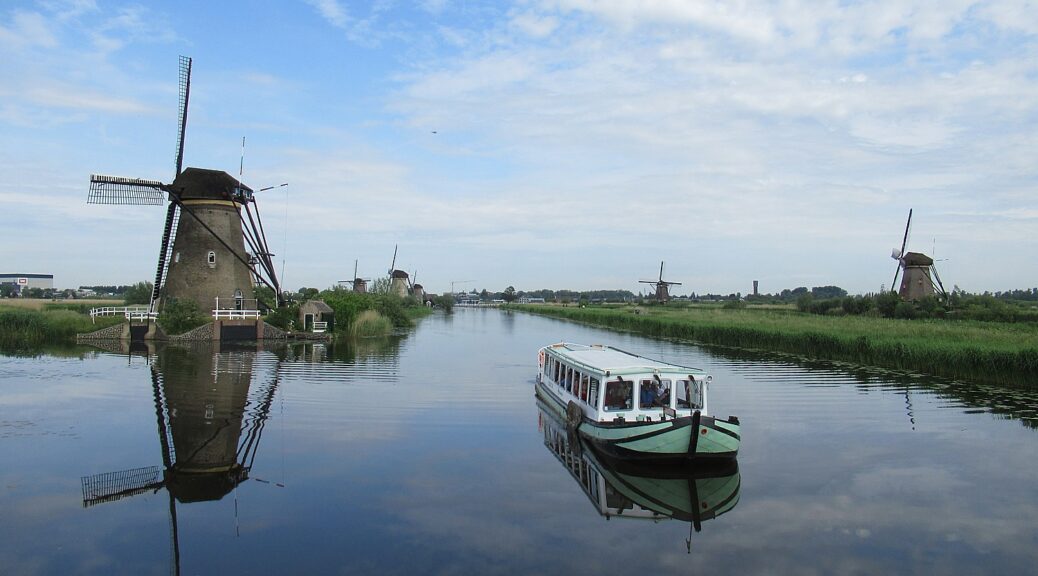
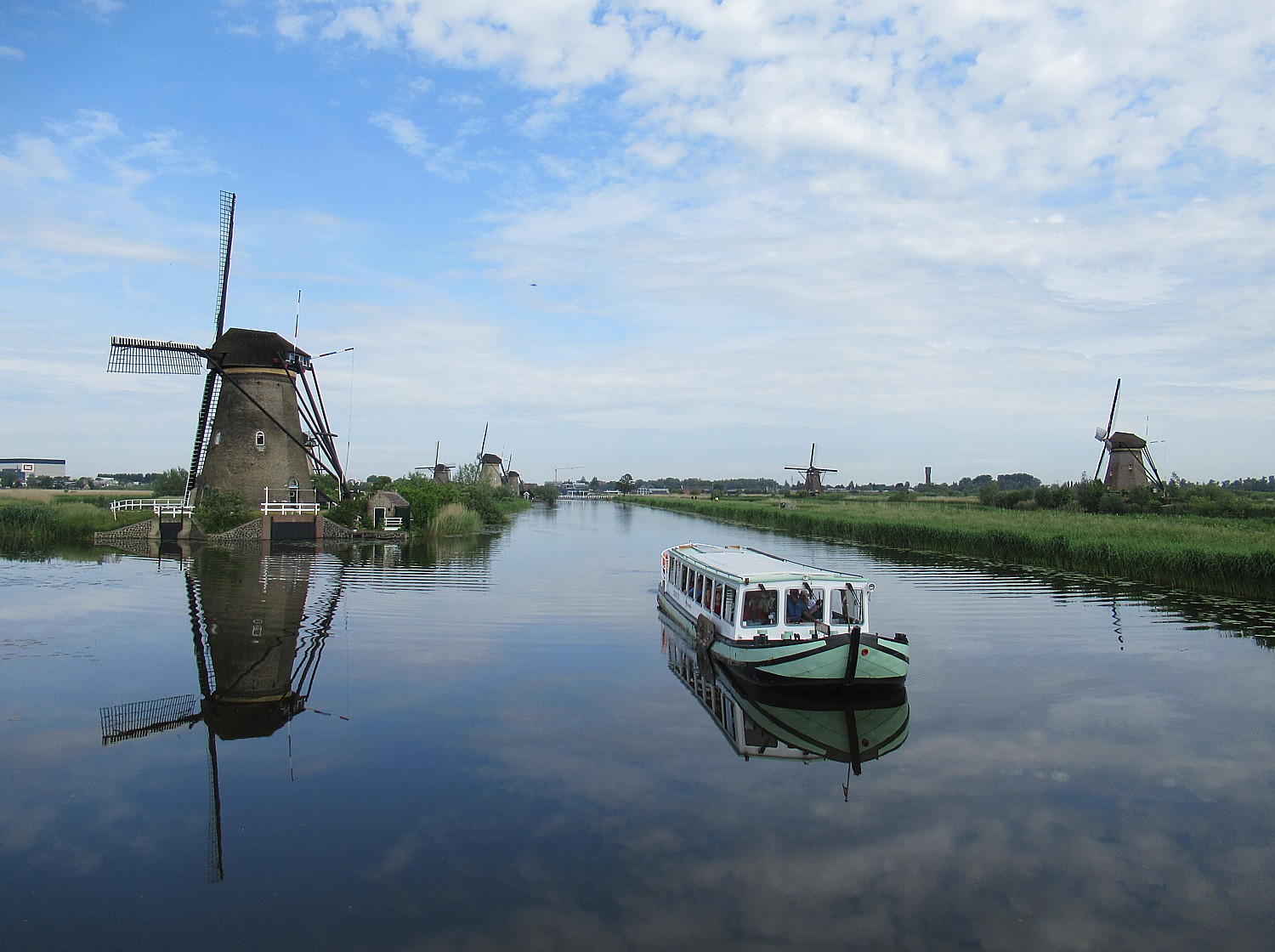
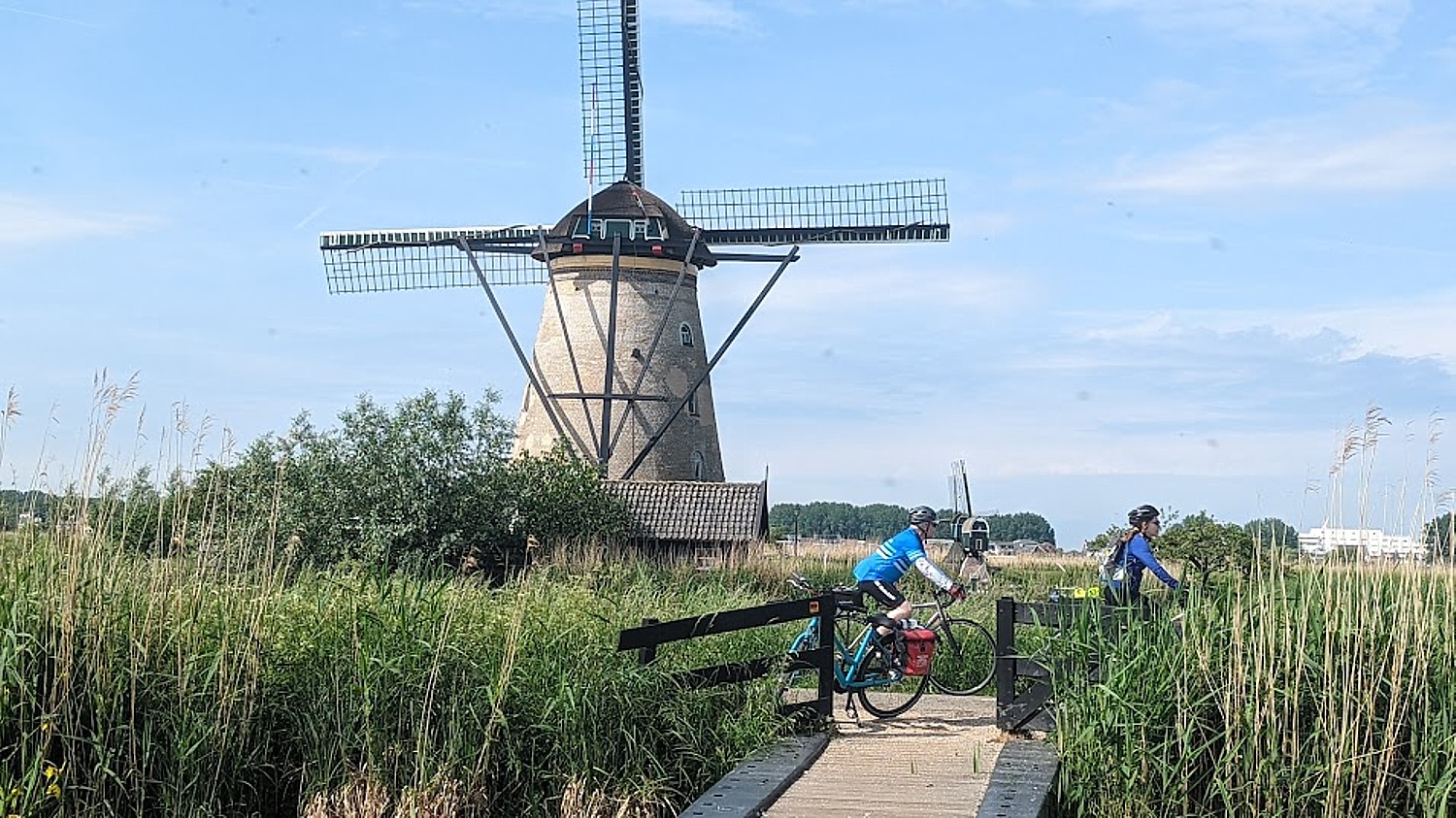
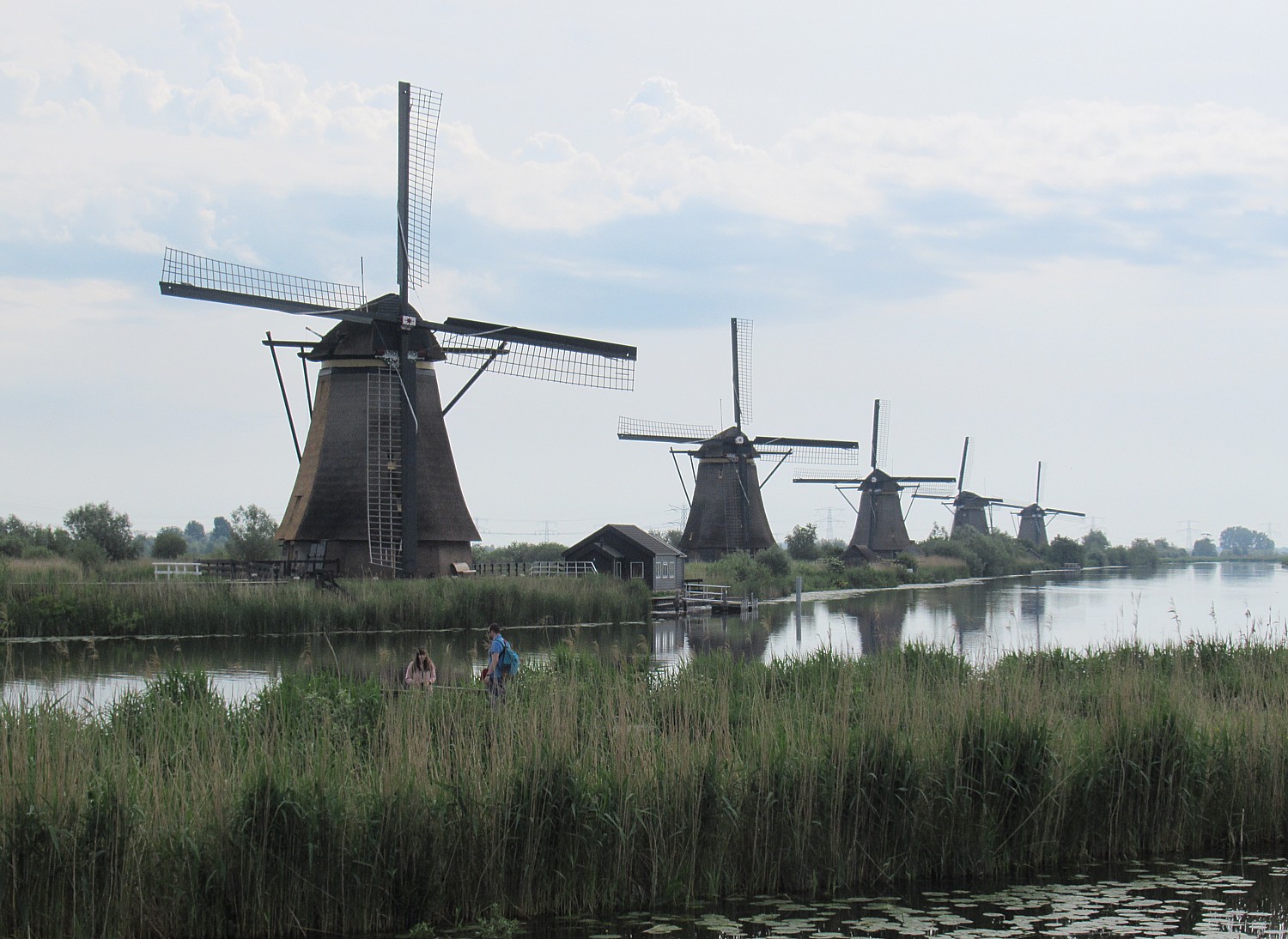
Kinderdijk, a UNESCO World Heritage site where you can see one of the best collections of centuries old windmills © Karen Rubin/goingplacesfarandnear.com

By Karen Rubin, Travel Features Syndicate, goingplacesfarandnear.com

Day 6 of our BoatBikeTours bike trip from Bruges to Amsterdam proves to be the absolute highlight (out of many) and not just for the iconic attractions (spoiler alert: windmills!), but the serendipitous experiences that are the essence of travel.

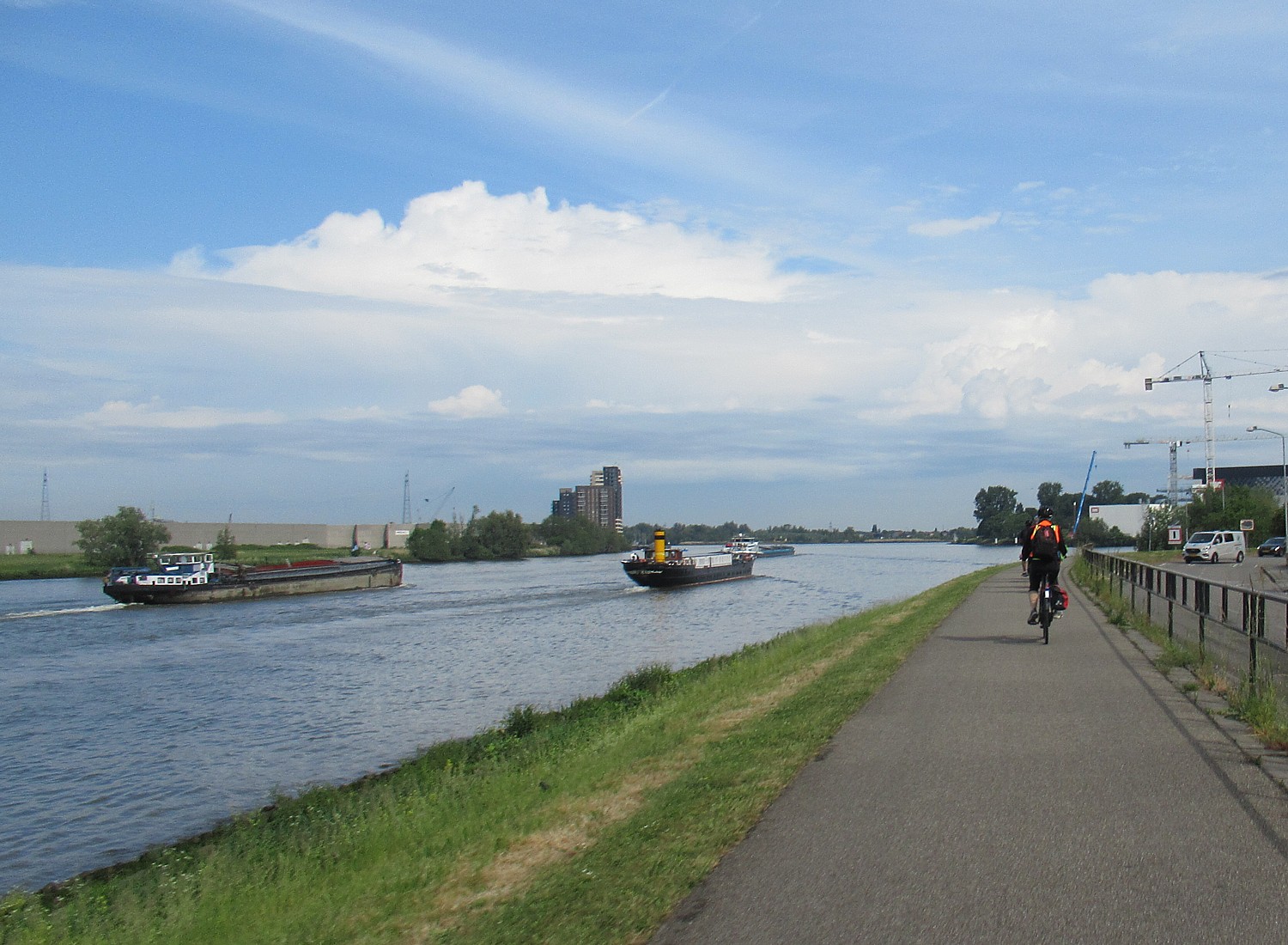
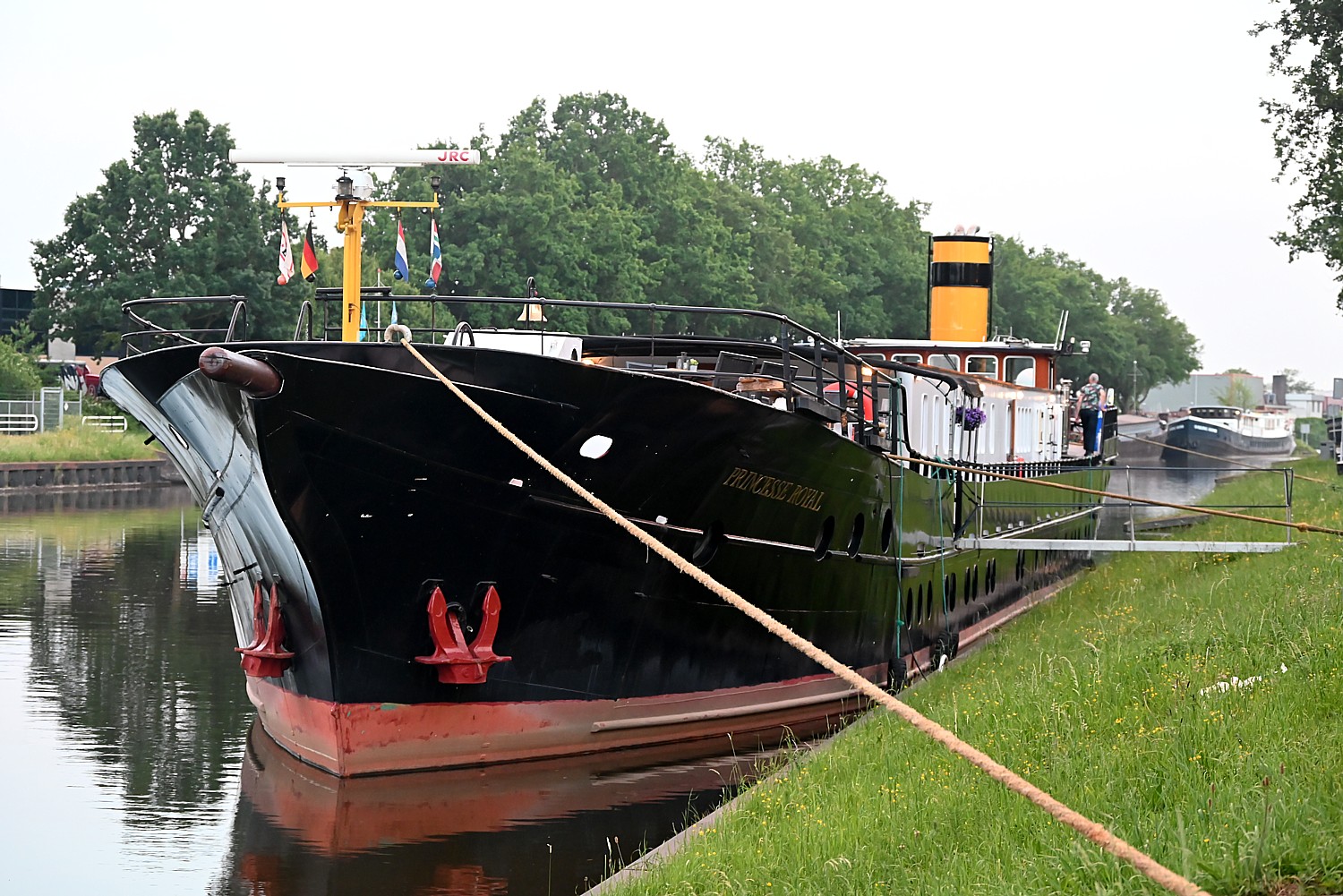
Biking along the river as our ship, the Princesse Royal sails by © Karen Rubin/goingplacesfarandnear.com

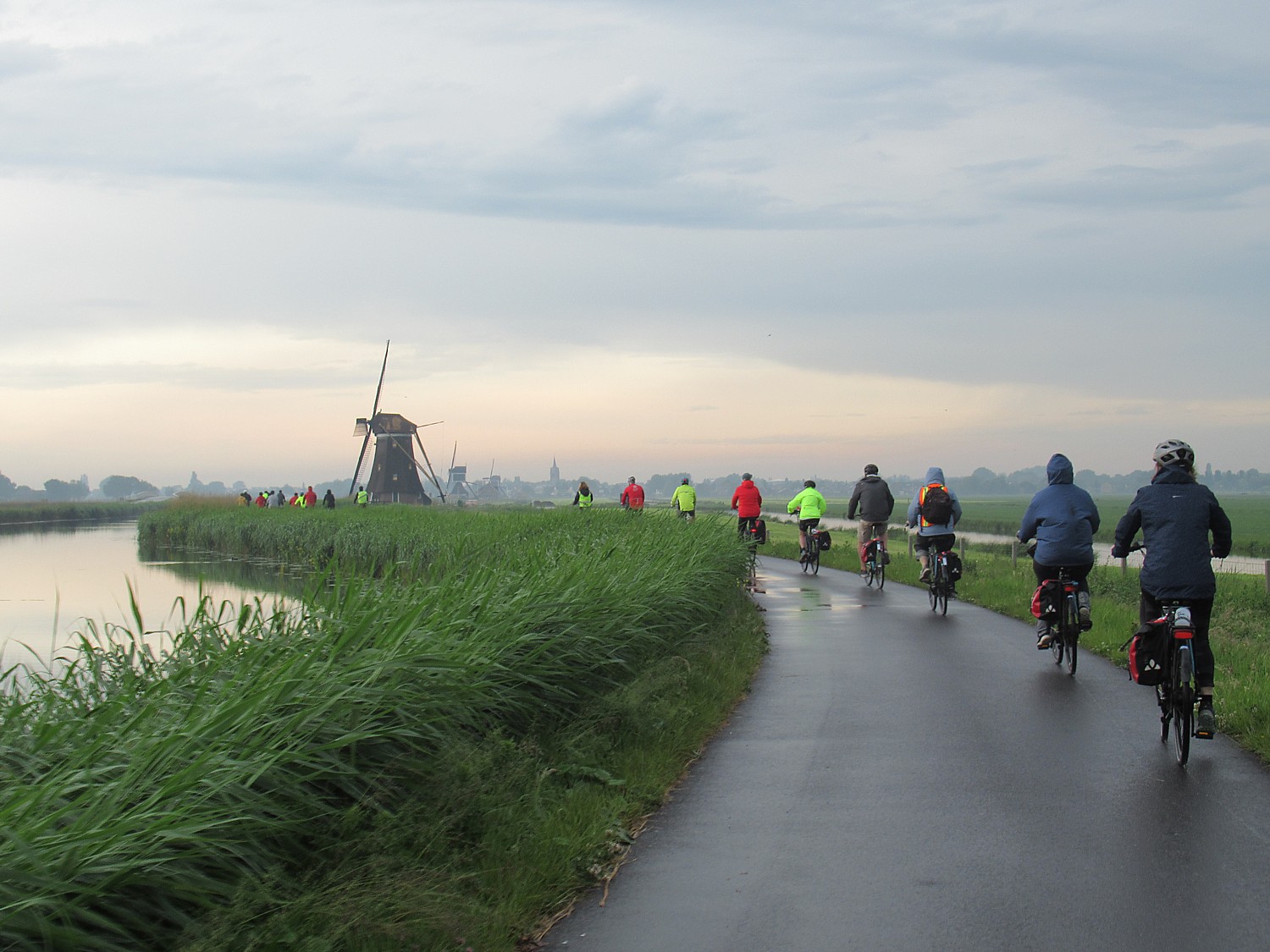
We set out for this day’s ride, 35 miles from Dordrecht to Vianen, riding along a berm that looks down on the river where we can see our ship, the Princesse Royal, sailing along on the left while on the right, just behind a row of houses, we see windmills.

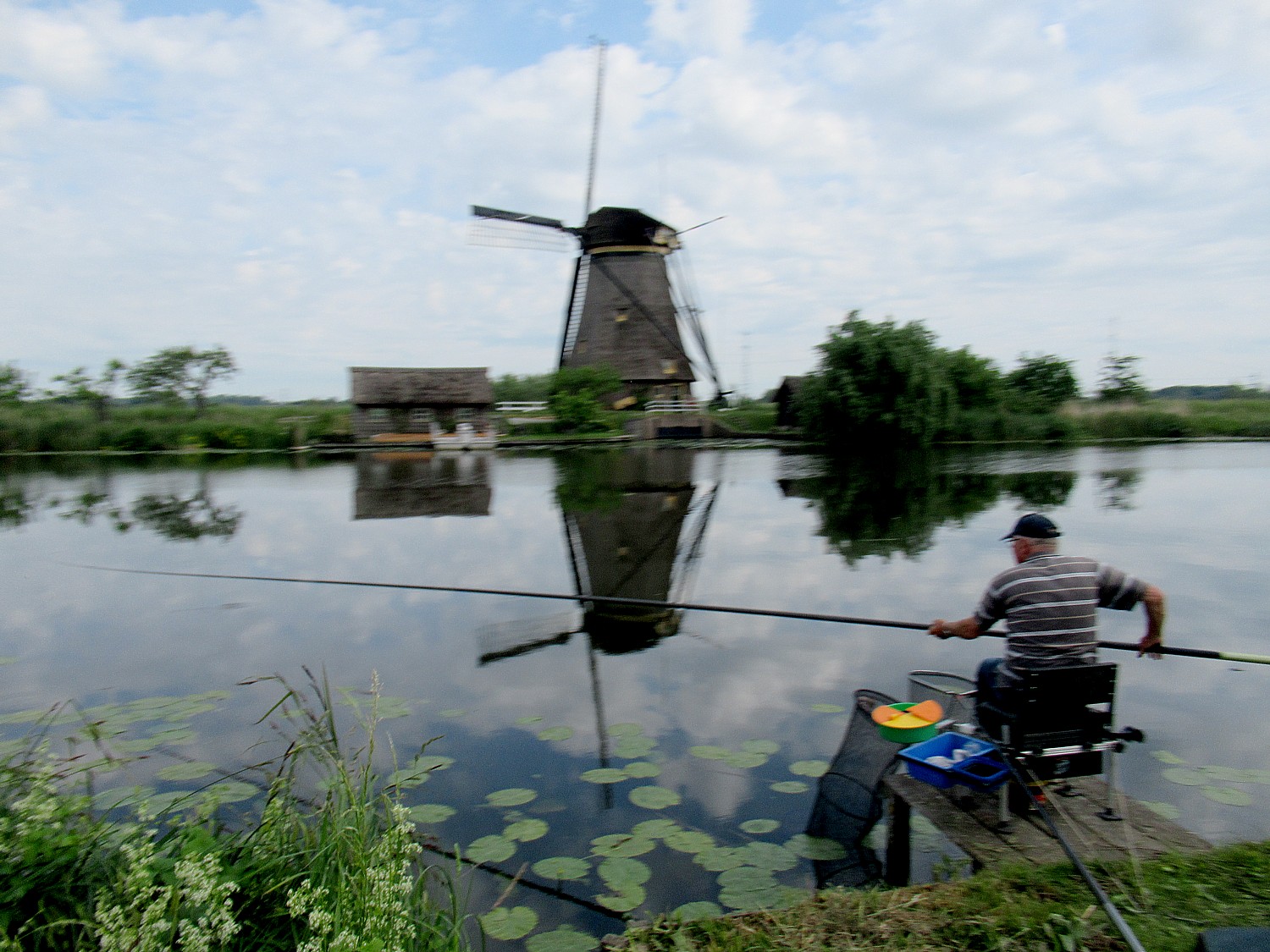
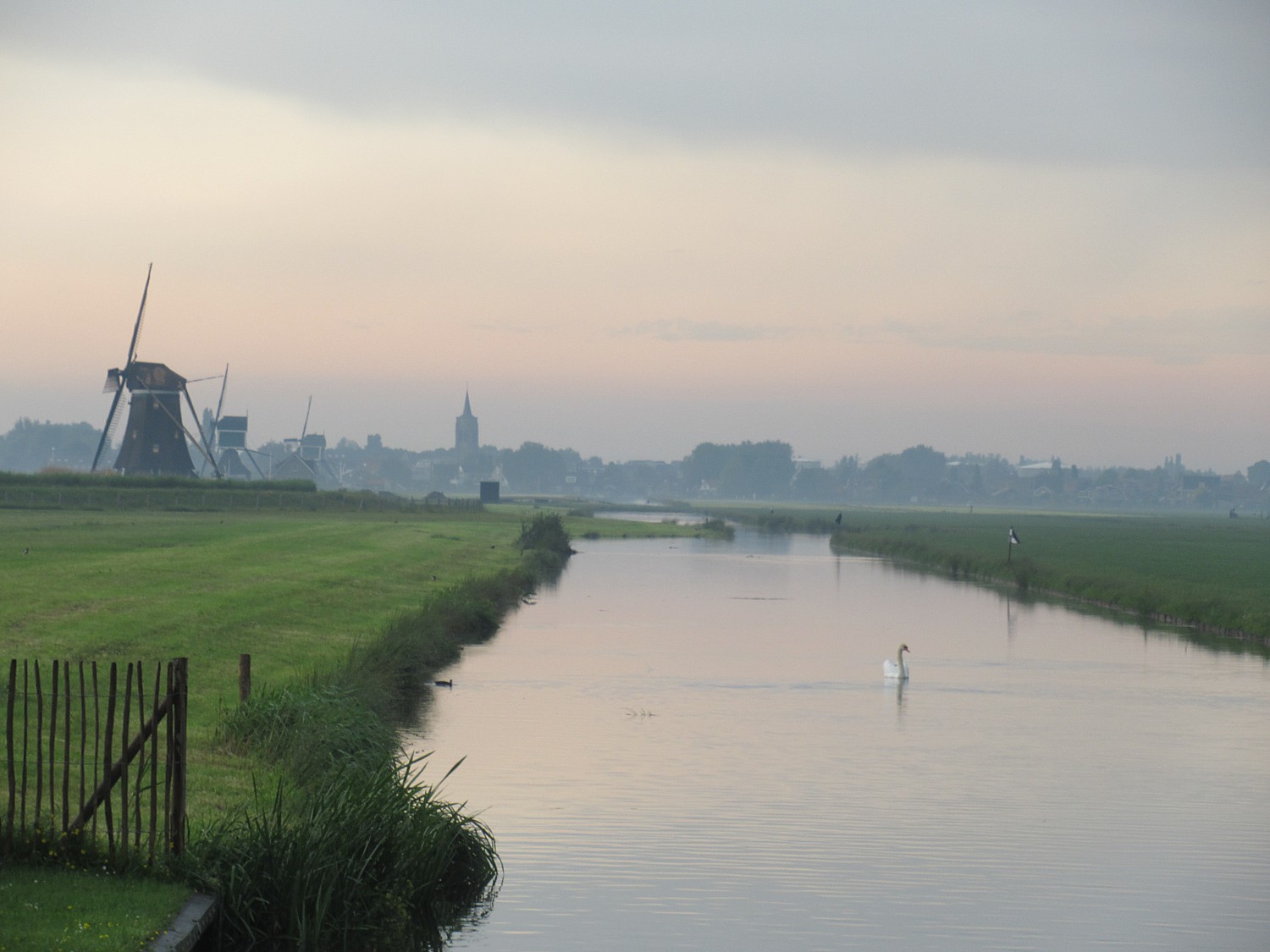
We soon come to Kinderdijk, a UNESCO World Heritage site where you can see one of the best collections of these centuries old windmills (the name literally means children’s dike).

Kinderdijk, a UNESCO World Heritage site where you can see one of the best collections of centuries old windmills © Karen Rubin/goingplacesfarandnear.com

I always thought of windmills as industrial engines to grind grain or saw wood, and windmills had that function in Holland as well, but in the mid-1700s, Holland used windmills as pumps to drain water to create farm land that otherwise would have been below sealevel. They began by reclaiming two huge patches of land with a system of canals, dykes and windmills to pump water out. Methods changed over time, with the addition of steam engines, electric pumps, that are in a race to take the water out of reclaimed land. But it is expected that this place will eventually succumb to the sea and be below sea level. (Like Venice, see the windmills now!).

Kinderdijk, a UNESCO World Heritage site where you can see one of the best collections of centuries old windmills © Karen Rubin/goingplacesfarandnear.com

The Dutch have been building hydraulic works for the drainage of land for agriculture and settlement since the Middle Ages and have continued to the present day. And these windmills’ most critical task was the ongoing water drainage because 26 percent of The Netherlands is below sea level. Each year, 5 trillion gallons of water must be pumped out to avoid flooding the low-lying parts of the Netherlands. (https://netherlandsinsiders.com/why-is-the-netherlands-known-for-windmills/)

Kinderdijk, a UNESCO World Heritage site where you can see one of the best collections of centuries old windmills © Karen Rubin/goingplacesfarandnear.com

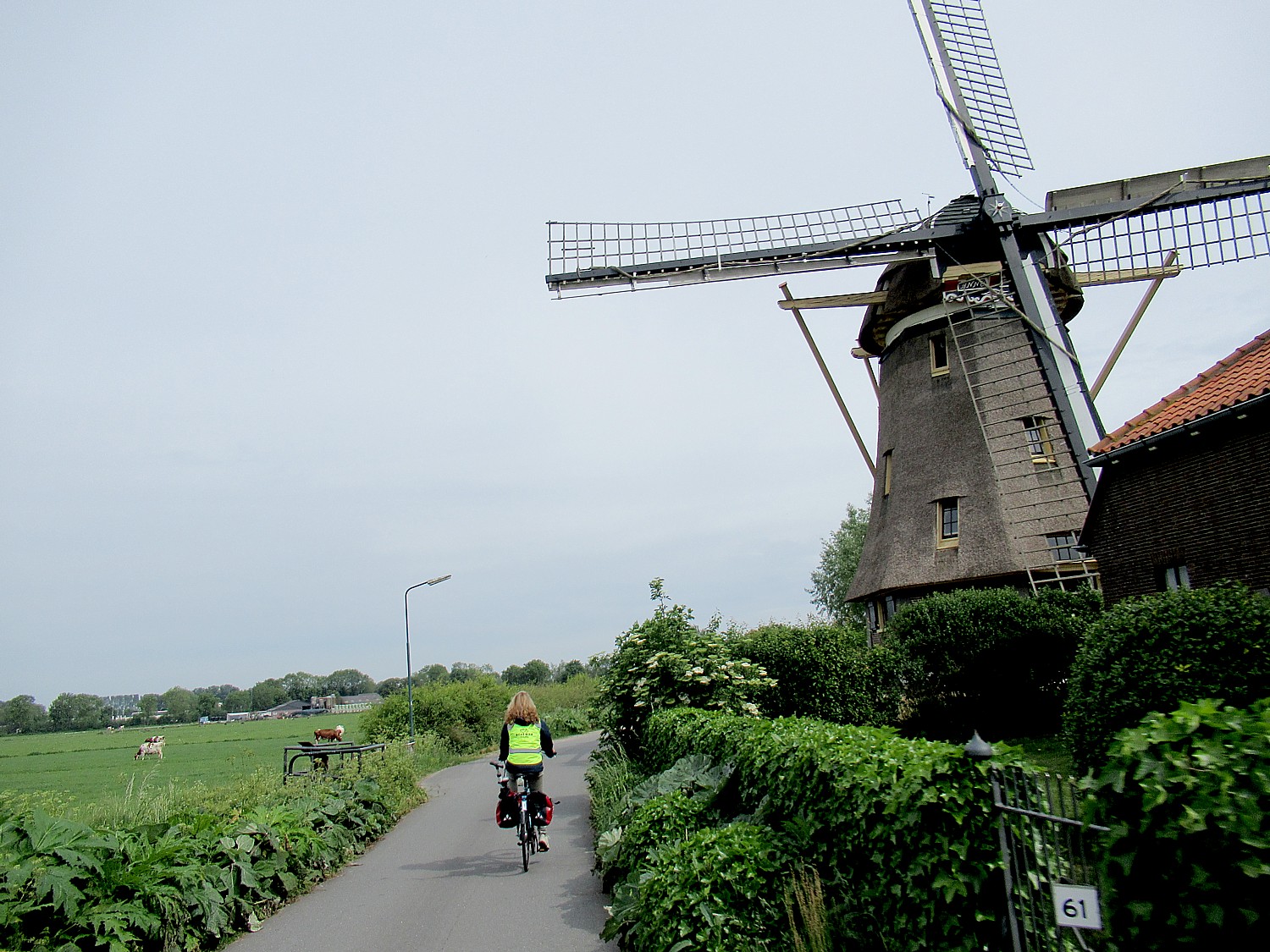
At its peak, there were more than 10.000 windmills operating in The Netherlands. Today, there still are more than 1,000 (and we encounter many of them along our ride – along with the modern day version, wind turbines).

Kinderdijk, a UNESCO World Heritage site where you can see one of the best collections of centuries old windmills © Karen Rubin/goingplacesfarandnear.com

Two of the mills at Kinderdijk, Nederwaard Museum Mill (built in 1738), and Blokweer Museum Mill (which shows what life was like in the 1950s) are opened daily to the public, in addition to boat tours, which can be visited with an entrance ticket .

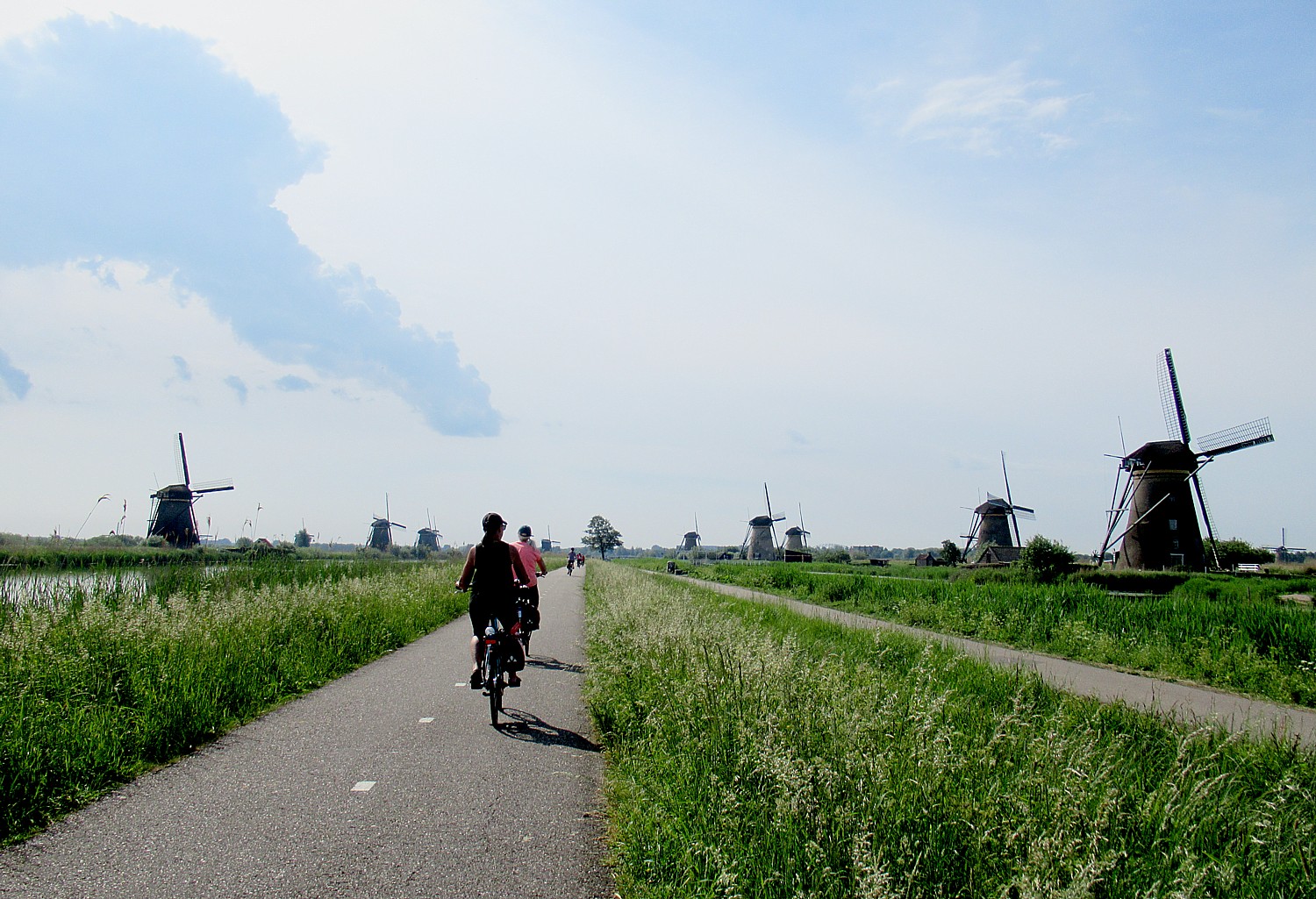
Kinderdijk is an enchanting place – like a Dutch painting come to life – and after giving us a good amount of time to explore on our own, we get back on the bikes and follow the trail through this entire expanse to continue on our way to Schoonhoven.

Kinderdijk, a UNESCO World Heritage site where you can see one of the best collections of centuries old windmills © Karen Rubin/goingplacesfarandnear.com

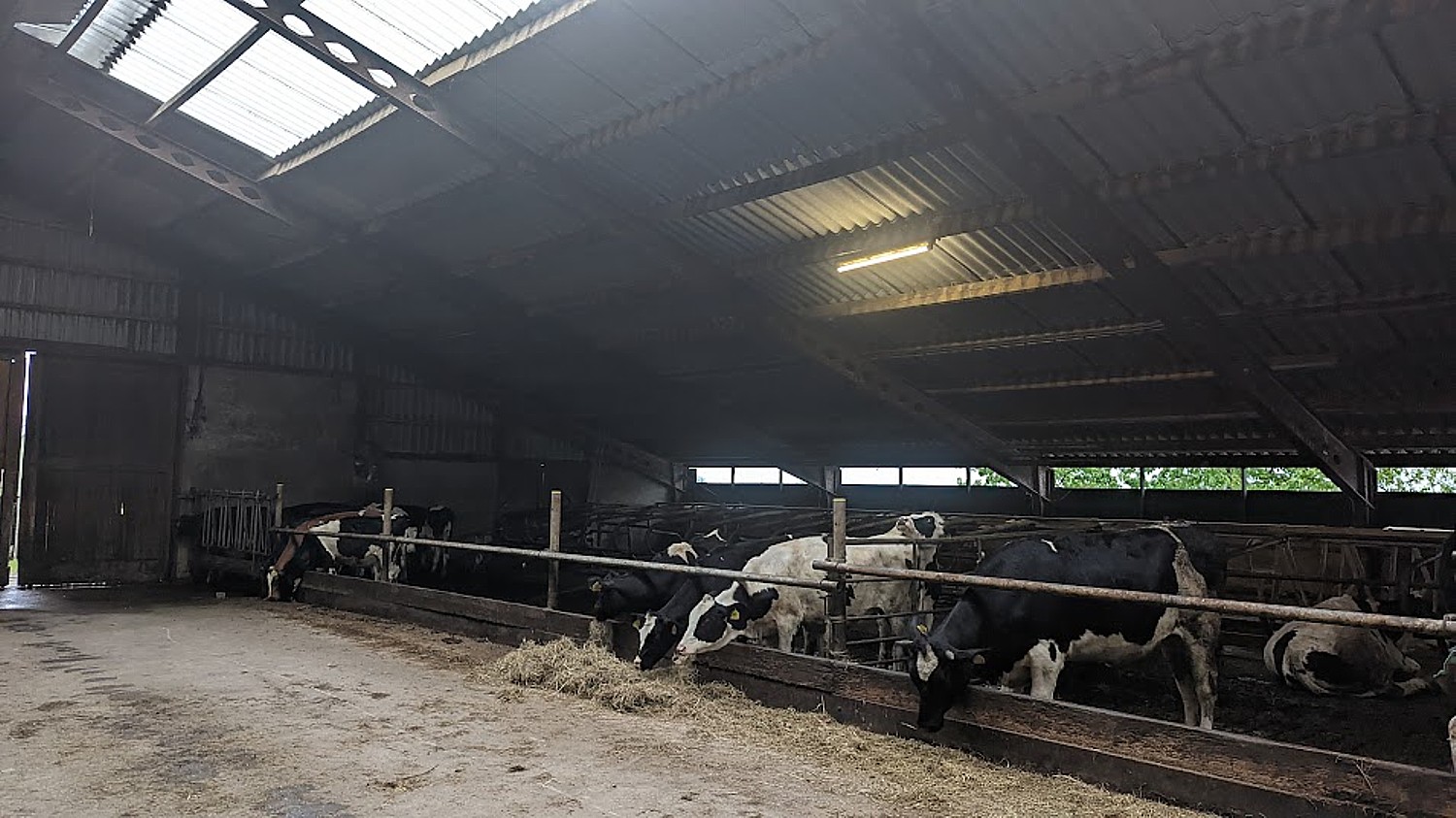
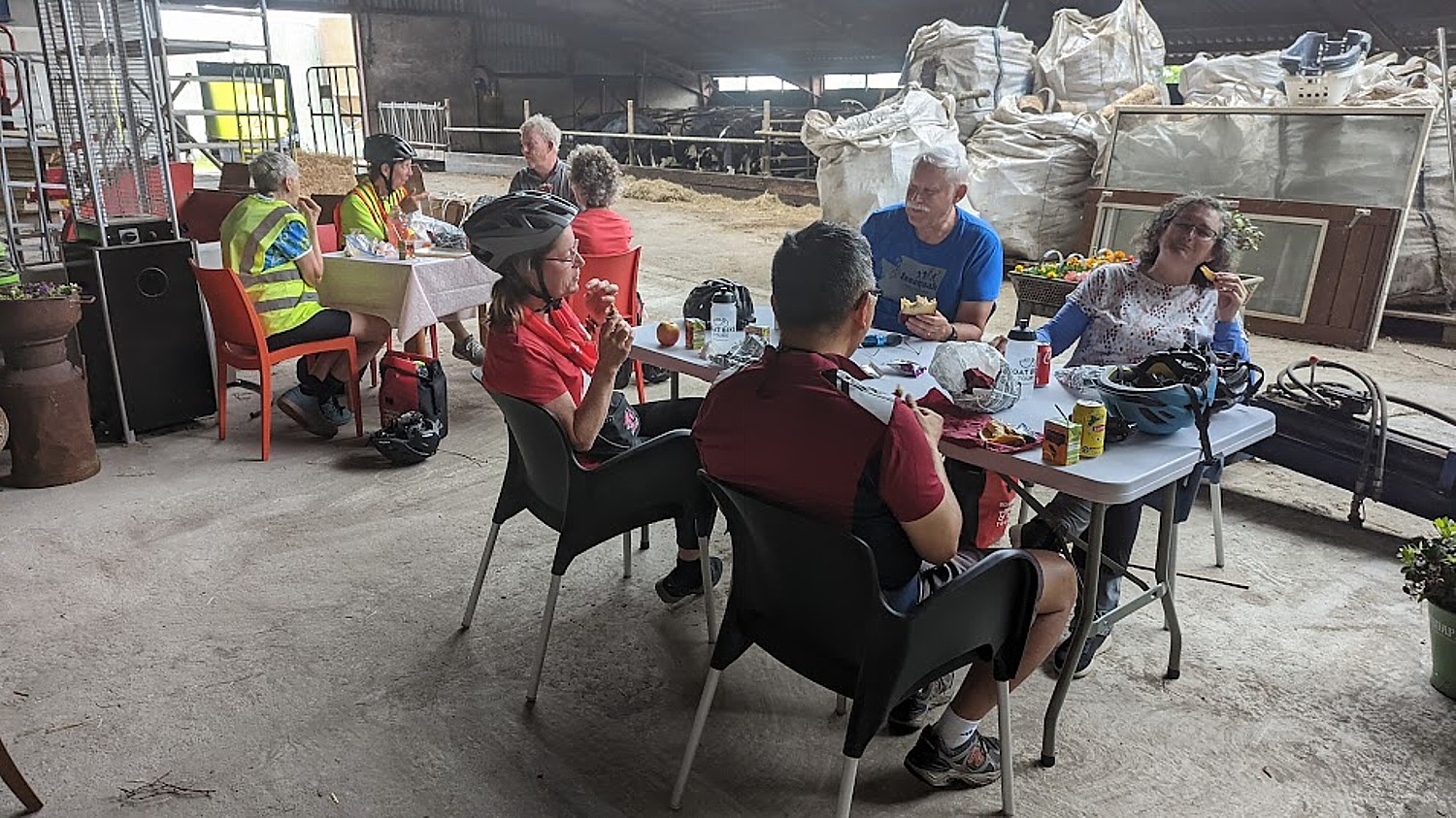
We bike to where we are having lunch – a delightful market and a marvelous shop, which usually has tables outside. But they are doing construction so we sit at tables in the barn, with cows, goats, rabbit, lambs. (Unexpected!).

Sharing lunch with cows © Karen Rubin/goingplacesfarandnear.com

Rain is expected and sure enough, it comes in like clockwork (1 pm) as a furious downpour with thunder and wind. We are cozy inside with the cows and goats. (I’m just so grateful the rain waited until after we visited Kinderdijk.)

Sharing lunch with cows © Karen Rubin/goingplacesfarandnear.com

Right on time, the thunderstorm passes, but more is expected, so our leaders decide not to offer the option of the longer ride (we were looking forward to riding through peoples’ backyards, as our leader, Arnold Thurko, described), and so set out.

Enchanting scene after a rain © Karen Rubin/goingplacesfarandnear.com

The atmosphere is utterly magical – a milky/creamy quality washing over the green/grey landscape with touches of yellow and orange, dotted with windmills.

Enchanting experience riding through the countryside after a rain © Karen Rubin/goingplacesfarandnear.com

The ship meets us at Schoonhoven and takes us on to Vianen.

Dinner this evening is a delicious broccoli soup with cucumber; cod with white herb sauce; vegetables, potatoes; and for dessert, a white chocolate mousse with pistachio.

The Princesse Royal © Karen Rubin/goingplacesfarandnear.com

Vianen: Free City

After dinner, we walk off the ship and our leader, Corrie Stein, guides us on a tour of of Vianen, delighting us with her storytelling. Vianen, she says, calls itself a “free town,” by which I take to mean they are libertarians, resistant to national authority, like paying taxes, and not too welcoming to outsiders. “The city is proud of being a free town.” “Libre” is proclaimed on a sign as we walk in.

She points out other aspects of culture: “Dutch symmetry”. “People will have two of the same planters for symmetry/balance” and the tradition of keeping curtains open (so others can see how nice it is inside).

The local hero here is Hendrik von Brederode, a nobleman who lived from 1531-1568. He became   important during the Dutch revolt against the Spanish king for religious freedom, the Eighty Years War.

Vianen’s local hero here is Hendrik von Brederode petitioned the Spanish for freedom of religion, and earned the nickname “Grote Geus” or the “big beggar” © Karen Rubin/goingplacesfarandnear.com

“In the Netherlands, when we want something badly, we can petition parliament. Nobles sent Hendrik to the representative of the Spanish king in Brussels to petition for freedom of religion. But in translation, the word ‘beggar” or ‘begging’ was attached to him. “From then on, they called themselves ‘beggars’.” Hendrik was nicknamed the “Grote Geus” or the “big beggar”.

“Eventually we got freedom of religion, after the 80-year revolt.”

Most villages have a main square. Vianen – being so independent, I guess – has a boulevard instead.

Vianen shows its free-spirit by a boulevard instead of a town square © Karen Rubin/goingplacesfarandnear.com

Napoleon made a road from Paris to Amsterdam and armies and Napoleon came here (& Dordrecht) and drank red wine.

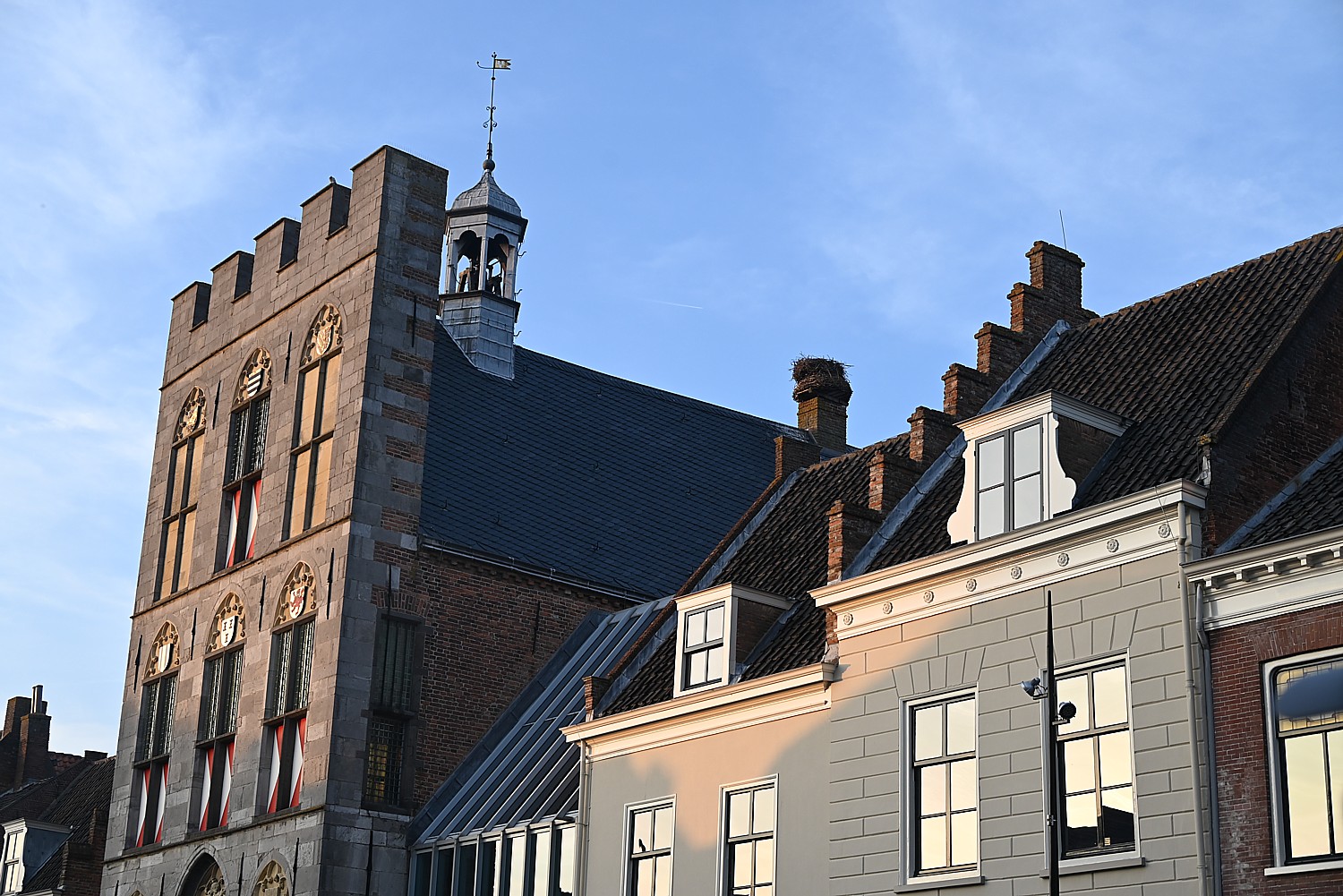
At the Town Hall, Corrie explains that the ground does not support tall towers, and there is not a lot of stone to build with, so it is very prestigious to build with natural stone instead of brick.

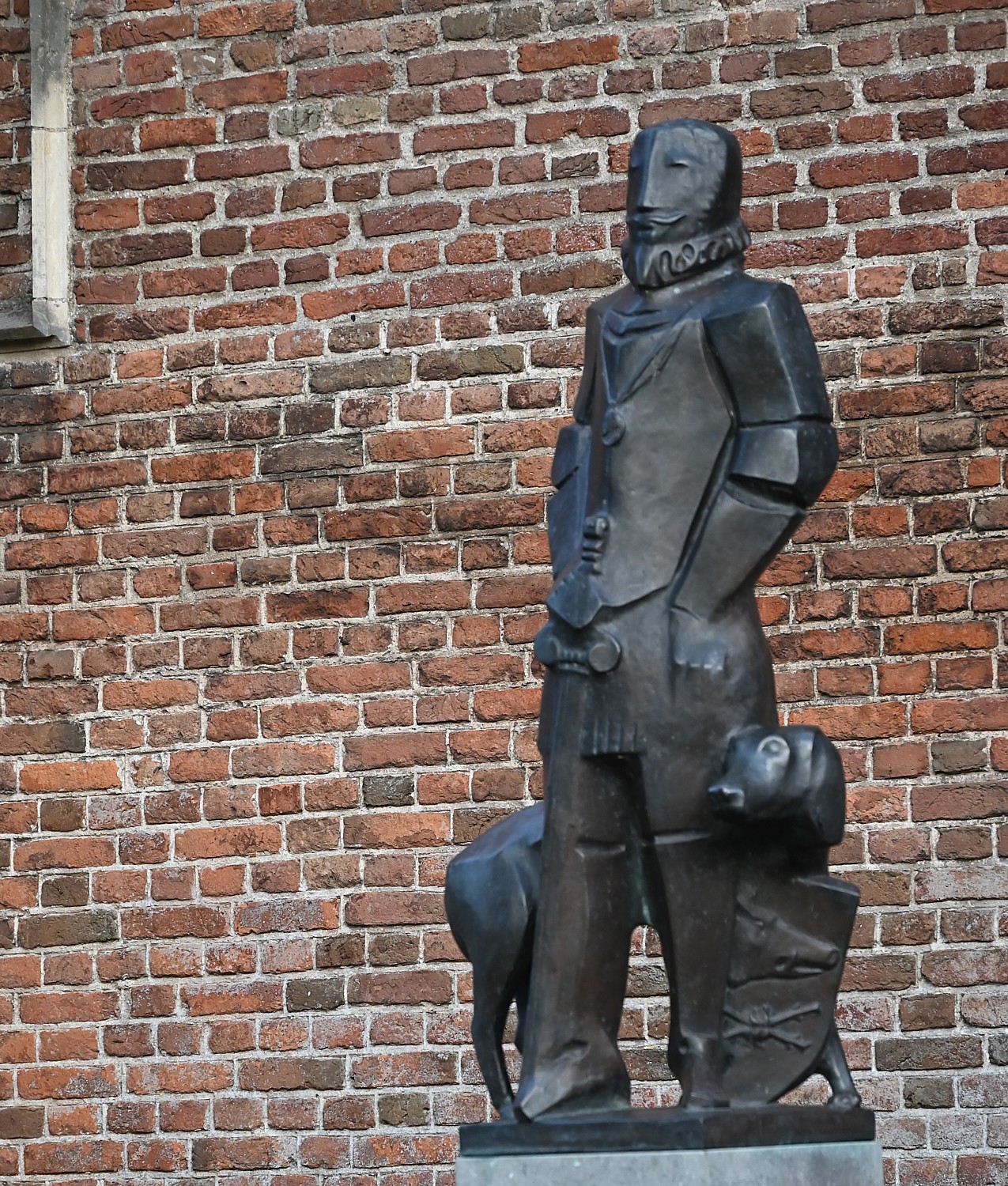
On the chimney on top of the Town Hall we see a stork nest – Corrie says the story that associates storks with delivering babies comes from Dutch tradition.

Vianen’s Town Hall with a stork’s nest © Karen Rubin/goingplacesfarandnear.com

On the outside of the apothecary, there is a bust of a taste tester “to show the medicine was safe.”

Where the historic castle used to stand today there is a water tower – the first in Netherlands to be made of concrete – which turns out to be an icon of Vianen.

She also points to a tree – the Queen Wilhelmia tree. “The House of Orange was depending upon one small girl to keep the house going – would she stay alive? Communities planted trees of hope. The House of Orange had one child – Queen Juliana – who had four daughters.”

Breukelein Bridge

In the morning of Day 7, our last day of cycling, our ship, the Princesse Royal, sails from Vianen to Breukelein, which I learn (most delightedly) that this is where the first settlers of Brooklyn came from. (Corrie jokes that it has its own Breukelen bridge; we stop at for photos). We will bike from here to Amsterdam (New York, you will remember, was originally New Amsterdam) – our last stop on our boat/bike tour.

Okay, not quite Brooklyn Bridge, but the people from Breukelein settled Brooklyn © Karen Rubin/goingplacesfarandnear.com

The path from Breukelein along the River Feckt that goes up to Amsterdam is gorgeous, dotted with literal mansions built by textile magnates. “400 years ago this was an important place- the wealthy from Utrecht and Amsterdam would flee the city in summer –heat, diseases – and built impressive summer houses,” Corrie tells us.  

They were built over a 400 year period and French destroyed many and many were replaced, so they have different styles. Many have impressive gardens and tea houses. It is reminiscent of Newport’s “cottages.”

Over a period of 400 years, wealthy merchants from Utrecht and Amsterdam built mansions along the river where they could  escape the summer’s heat © Karen Rubin/goingplacesfarandnear.com

“It was scary for people to be outside city, so they even “controlled” their gardens and would buy the view across the river (that remains true today).

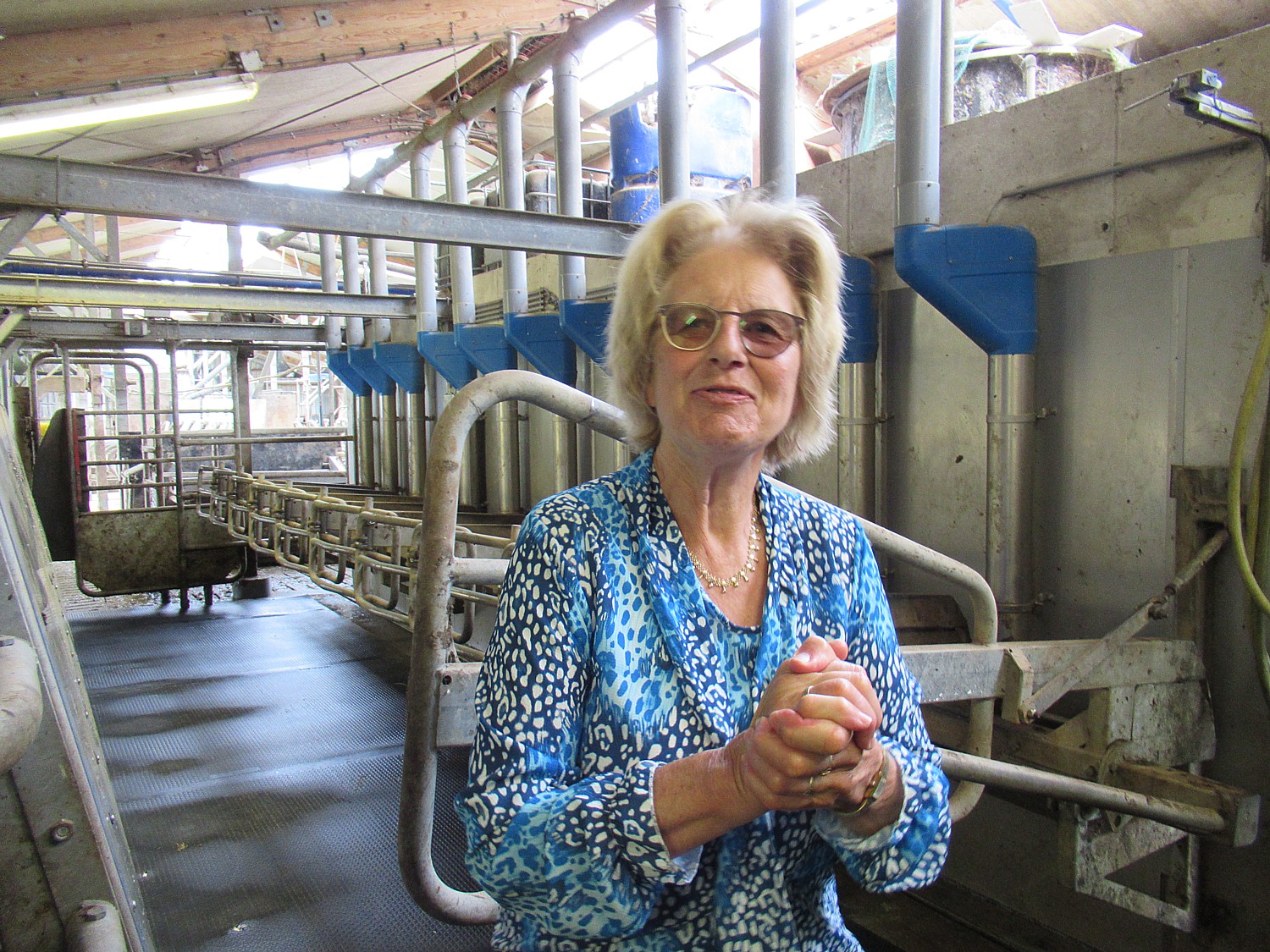
We cycle on to a dairy farm and cheese factory, Willigen, in Vreeland and are given a truly fascinating tour by owner Corey, (her brother, Henry Villa, is famous for his cheese shops but his sister, who uses the same recipes, prefers to stay small scale). I’m fascinated by the sophisticated, computerized operation. (They also have a bnb, www.dewilligenlogies.nl/nl/)

They have 80 milking cows on 180 acres of land. The cows come in for milking at 5:30 am and 5:30 pm – 10 cows on each side. One person can milk the 80 cows in an hour. The cows all have computer IDs – when their head is inserted, the computer knows the cow, how many kilos and type of food pellets every cow needs. Each cow is milked 300 days of the year and produces 30 liters of milk a day.

Learning about computerized milking, feeding and cheese-making practices at the Willigen cheese farm © Karen Rubin/goingplacesfarandnear.com

The milk, just five minutes old, goes to the cheese-making factory. “The difference between farmer cheese and factory is the farmer is not allowed to pasteurize milk. Milk that is three days old is used as starter milk for the cows.It takes 10 liters of milk to make 1 kilo of cheese.

Dairy farm © Karen Rubin/goingplacesfarandnear.com
 

We bike along the River Vecht where there are number of houseboats – we are getting closer to Amsterdam.

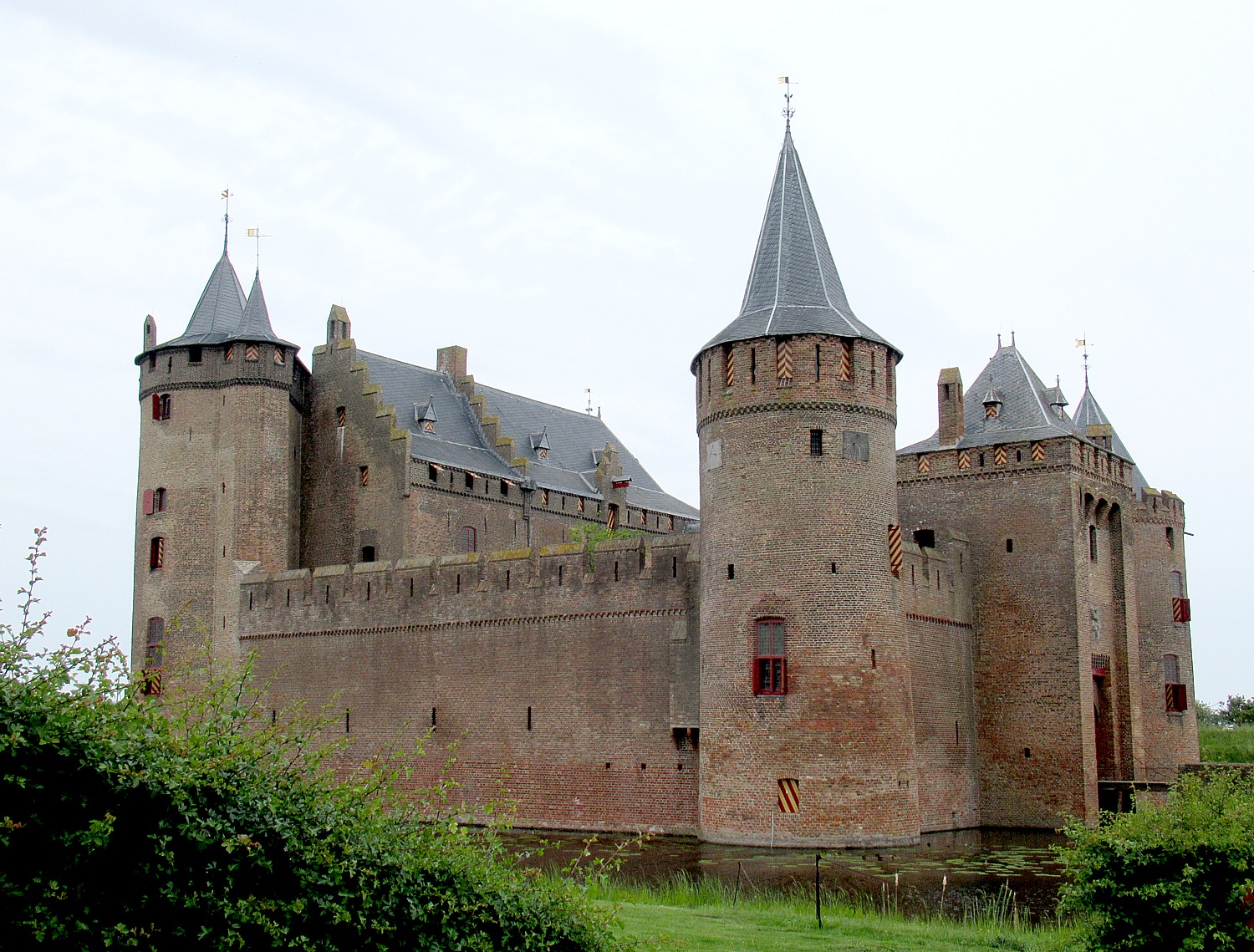
At Muiden, we take a bit of a detour to see Amsterdam Castle Muiderslot, one of the oldest and best preserved castles in the Netherlands. The castle was built around 1285 and has a long and turbulent history. It forms part of the Defense Line of Amsterdam and the New Dutch Waterline, both UNESCO World Heritage Sites. It has been a museum since 1878.The castle is surrounded by gardens (muiderslot.nl).

At Muiden, we take a bit of a detour to see Amsterdam Castle Muiderslot, one of the oldest and best preserved castles in the Netherlands © Karen Rubin/goingplacesfarandnear.com

We set out again for Amsterdam, our end point, but the option to take the longer route is taken away because of concern for a severe rainstorm.

We ride fast to get to the ship before the rain, meet the ship and sail into Amsterdam, where it is already raining.

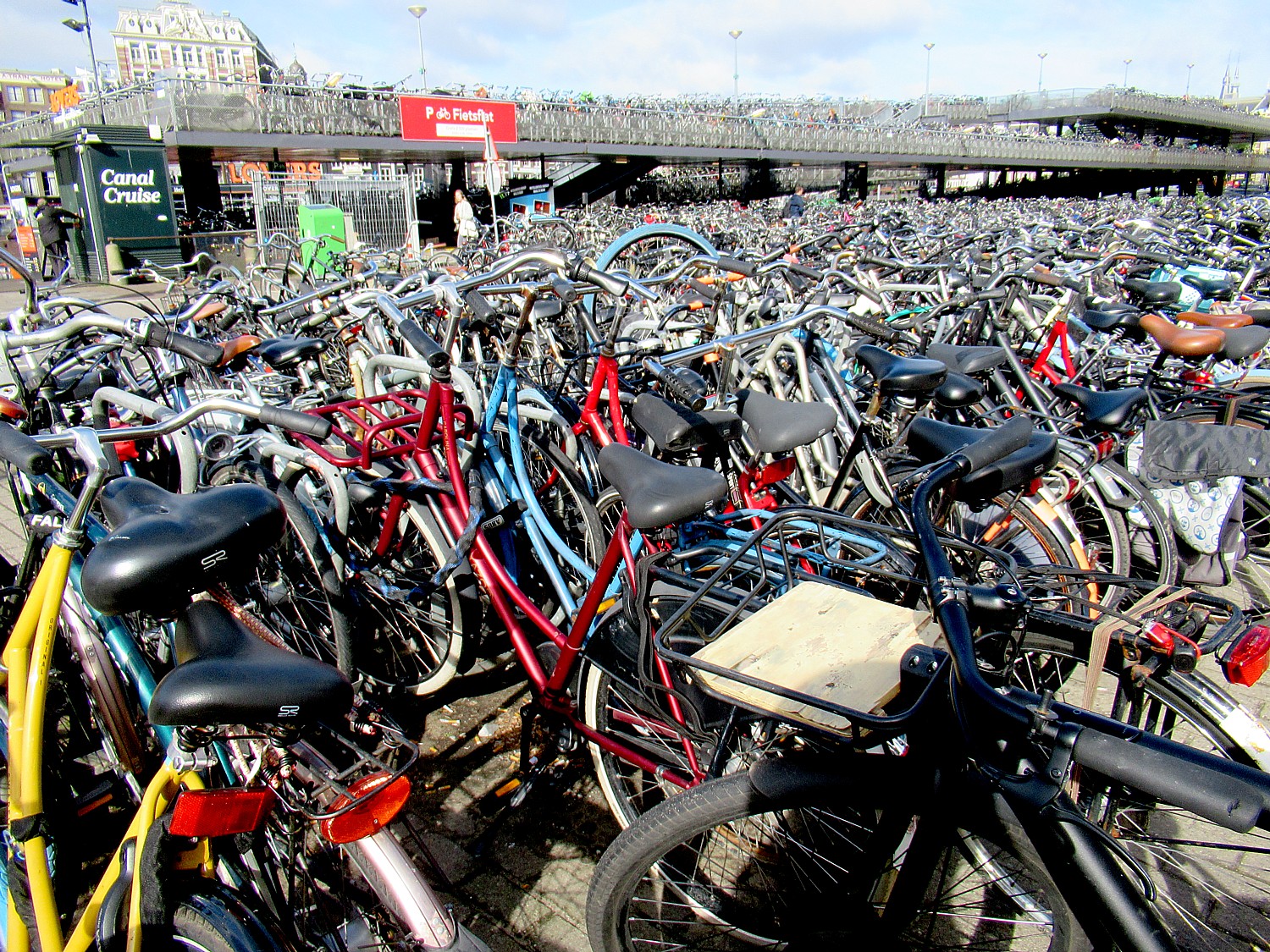
Bicycles of Amsterdam: just a small section of the bicycle parking lot beside Amsterdam’s Central Station © Karen Rubin/goingplacesfarandnear.com

We are docked on the opposite shore from Amsterdam’s city center, but Amsterdam is so bike/pedestrian friendly, the city offers free ferries that run constantly.

We literally step out of where the Princesse Royal is docked and walk a few steps to the ferry to Amsterdam’s Central Station and the historic city center. So I hop on one to go into the historic center for a walk-about in the rain before our gala, farewell dinner.

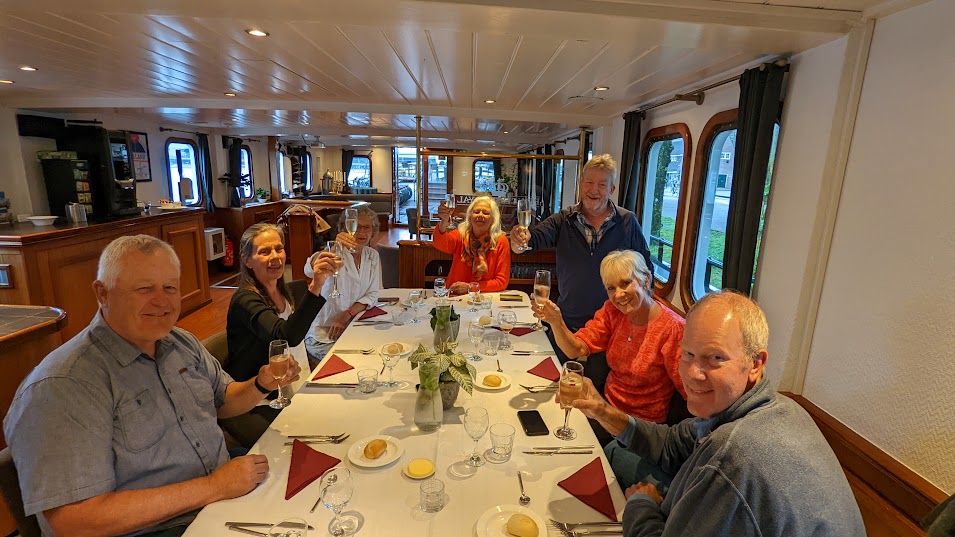
Enjoying a gala dinner onboard the Princesse Royal at the end of our eight-day BoatBikeTours Bruges to Amsterdam trip © Karen Rubin/goingplacesfarandnear.com

Corrie and Arnold also help those who need to get a COVID test before traveling back to the US make the appointment (an extremely efficient system from Spoedtest.nl in Amsterdam, and helping us organize for our departure.

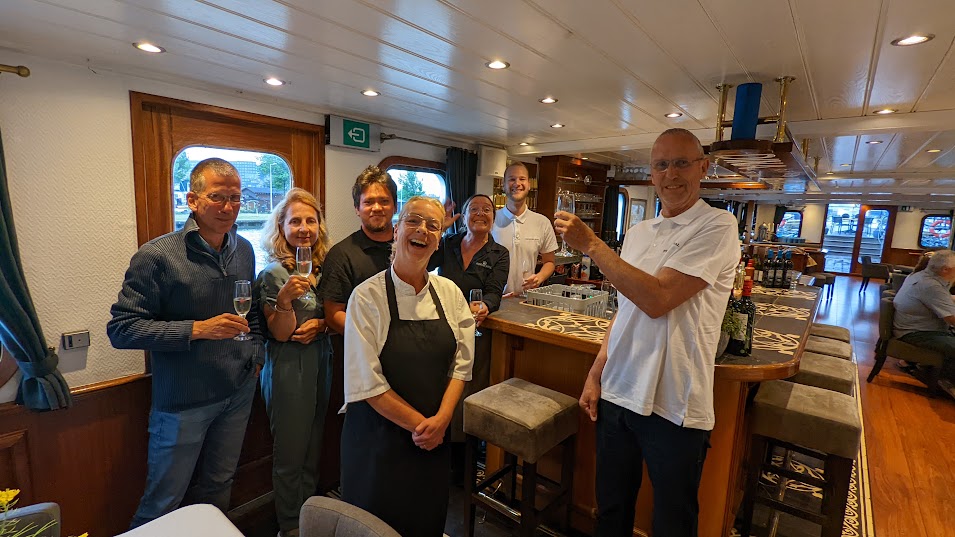
Princesse Royal’s captain and owner Roy van der Veen, first mate, chef, housekeeper, host and our tour leaders Corrie Stein and Arnold Thurkow © Karen Rubin/goingplacesfarandnear.com

This is an ideal trip especially if you are traveling on your own, if you are new to biketouring, or with a family or just want a relaxing, incredibly scenic and interesting ride. The scheduling, route, itinerary, tours and excursions are excellent – and I especially love how our ship in most cases docks right at the town so we can walk off and visit.

Boat Bike Tours, Aambeeldstraat 20, 1021 KB, Amsterdam, Netherlands, tel.: +31 20 72 35 400,  info@boatbiketours.com, www.boatbiketours.com.

See also:

Idyllic Trip: Biking and Boating from Bruges to Amsterdam

Bruges-Amsterdam by BoatBikeTours: Biking to Ghent

Bruges to Amsterdam by BoatBikeTours: Antwerp, Medieval Jewel

Bruges to Amsterdam by BoatBikeTours: Dordrecht, the Birthplace of Holland

Bruges to Amsterdam by BoatBikeTours: The Windmills of Kinderdijk

__________________

© 2022 Travel Features Syndicate, a division of Workstyles, Inc. All rights reserved. Visit goingplacesfarandnear.com, www.huffingtonpost.com/author/karen-rubin, and travelwritersmagazine.com/TravelFeaturesSyndicate/. Blogging at goingplacesnearandfar.wordpress.com and moralcompasstravel.info. Visit instagram.com/going_places_far_and_near and instagram.com/bigbackpacktraveler/ Send comments or questions to FamTravLtr@aol.com. Tweet @TravelFeatures. ‘Like’ us at facebook.com/NewsPhotoFeatures

Bruges to Amsterdam by BoatBikeTours: Dordrecht, the Birthplace of Holland

The Place Where It Happened. Dordrecht is like our Philadelphia. In 1572, a meeting was held to decide to revolt against Philip of Spain and choose William of Orange as the leader. “The Netherlands was born in Dordrecht.” © Karen Rubin/goingplacesfarandnear.com

By Karen Rubin, Travel Features Syndicate, goingplacesfarandnear.com

Day 5 on our BoatBikeTours eight-day Bruges-to-Amsterdam bike trip, we sail in the early morning from Antwerp in Belgium to Kreekrak and cycle 23 miles to Tholen (new harbor) in the Netherlands, where the ship meets us to sail on to Dordrecht – not places that I would bet most of us have ever heard of before.

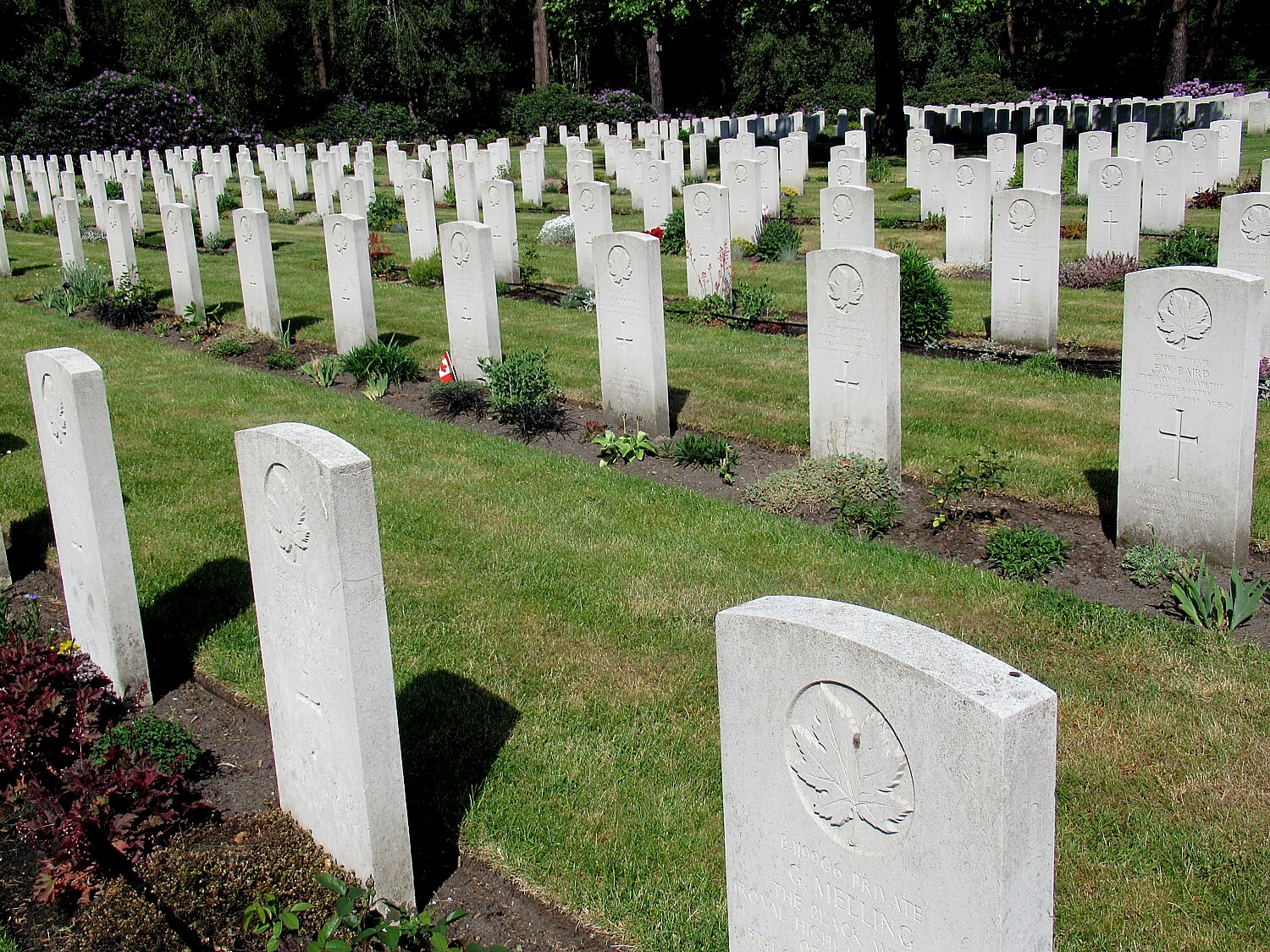
We stop to visit to the Canadian war cemetery where there are 80 graves of Canadian soldiers who fought trying to free Netherlands from the Nazis. “They try to give the graves a face,” so each one is personalized.

The Canadian war cemetery has 80 graves of Canadian soldiers who fought trying to free Netherlands from the Nazis © Karen Rubin/goingplacesfarandnear.com

Our lunch stop is at Fort De Roovere, built in 1628, the largest of four forts that formed the West-Brabantse Waterline, a water-based defensive fortification. Located along the edge of a sandy embankment between Bergen op Zoom and Steenbergen, it was built during the Eighty Years’ War (1568-1648) – the Dutch war of independence against Spanish rule.

Fort De Roovere is now a very pleasant park © Karen Rubin/goingplacesfarandnear.com

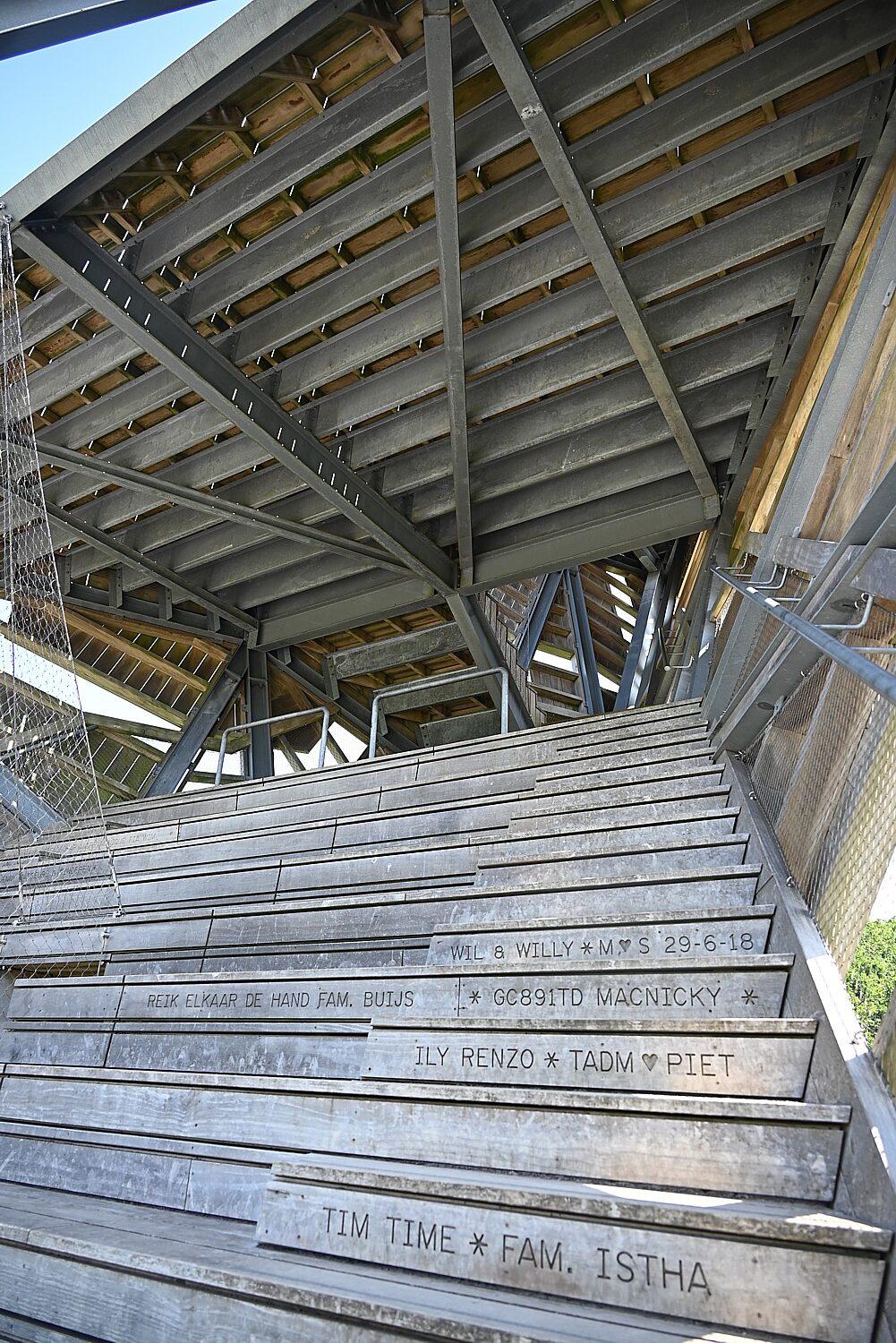
After the fall of the French Empire of Napoleon in 1816, Fort de Roovere no longer had a military purpose and was reclaimed by nature. It was designated a national monument in 1975. The earthen-fortress was restored in 2010 as much as possible to its original state, along the same design configuration as in 1784, and today is a lovely park where I watch dragon flies on a lily pond, and climb an interesting modern tower to get a sense of how, in a siege, the approaching enemy forces could be bombarded from protruding bastions by batteries of cannon..

Fort De Roovere is now a very pleasant park © Karen Rubin/goingplacesfarandnear.com
Climb the tower at Fort De Roovere © Karen Rubin/goingplacesfarandnear.com

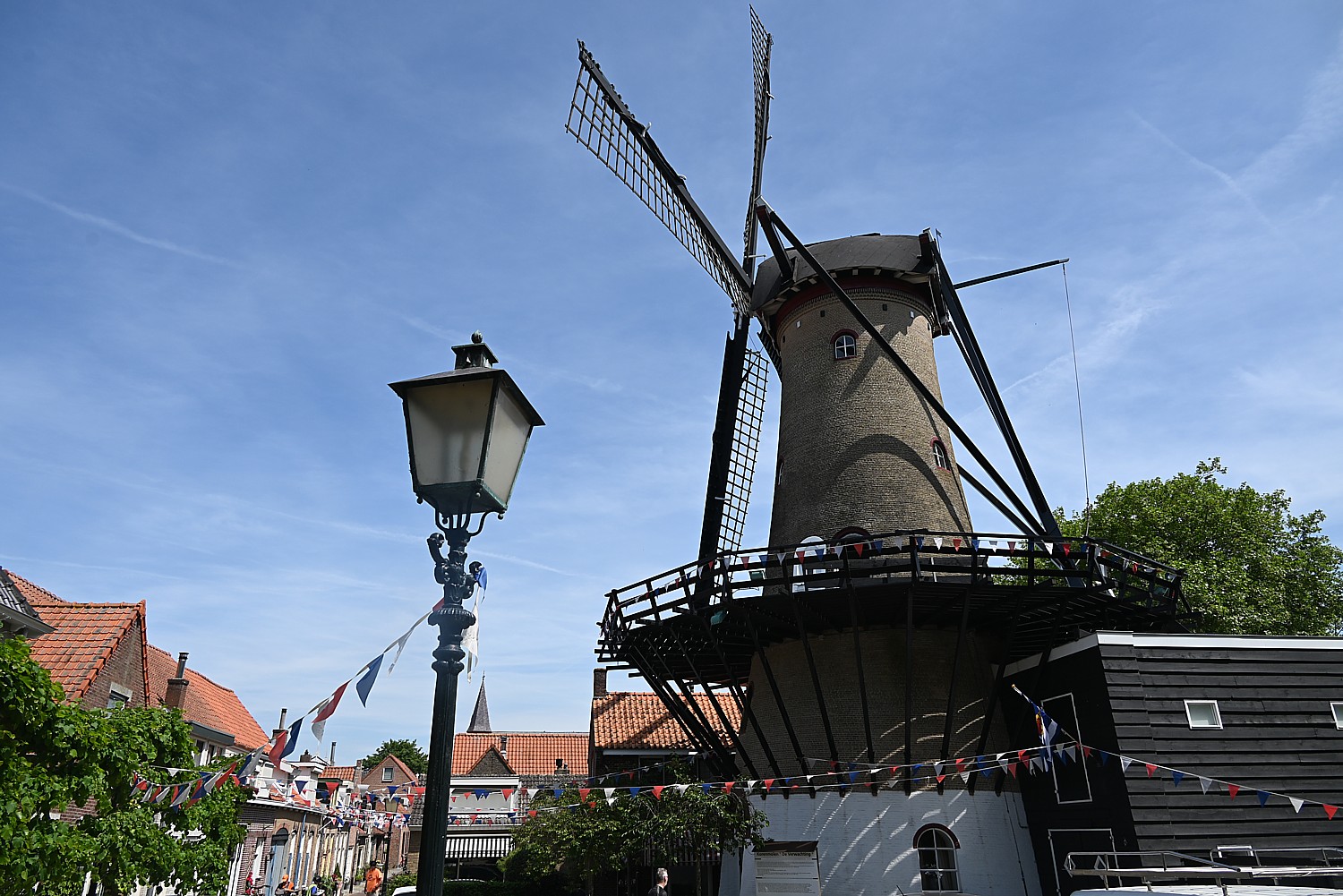
We bike into a charming village of Tholen which has a surprising windmill (converted to a restaurant), and have some time to explore.

The quaint village of Tholen © Karen Rubin/goingplacesfarandnear.com
Coming upon an artisan in the quaint village of Tholen © Karen Rubin/goingplacesfarandnear.com
Biking onto our ship, the Princesse Royal, at Tholen, after riding 23 miles from Kreekkrak, which will sail on to Dordrecht on the BoatBikeTours eight-day trip from Bruges to Amsterdam © Karen Rubin/goingplacesfarandnear.com

Our ship, the Princesse Royal, meets us here and we spend a pleasant afternoon sailing to Dordrecht, going through locks which I learn are not to level the water (like on the Erie Canal) but to keep salt water separate from fresh so the reclaimed land can be farmed. Apparently, it’s also an interesting water defense system – areas could be flooded to stop an invader.

Lovely scenery sailing on the Princesse Royal © Karen Rubin/goingplacesfarandnear.com

This day proves a nice, relaxing combination of cycling and sailing, but the highlight is yet to come.

Lovely scenery sailing on the Princesse Royal © Karen Rubin/goingplacesfarandnear.com

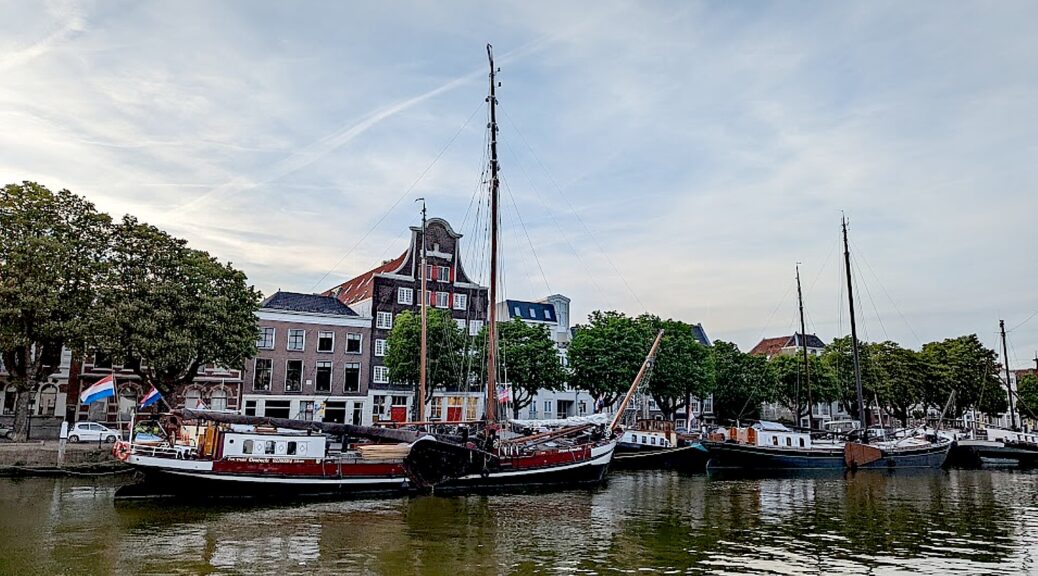
We are supposed to dock at the historic city of Dordrecht, but there is an important steam-engine ship festival about to get underway and the harbormaster has refused to let us dock. So Captain Roy van der Veen finds a spot at a boat-building marina across the river.

Sailing passed Dordrecht © Karen Rubin/goingplacesfarandnear.com

Our leader, Corrie Stein, not to be deterred because we can’t just walk off the ship into the historic center, organizes a ride back into Dordrecht for her guided walking tour because this is a city that is not to be missed. Dordrecht, as I learn, is like our Philadelphia in 1776, and this place and this adventure proves to be a highlight of our trip.
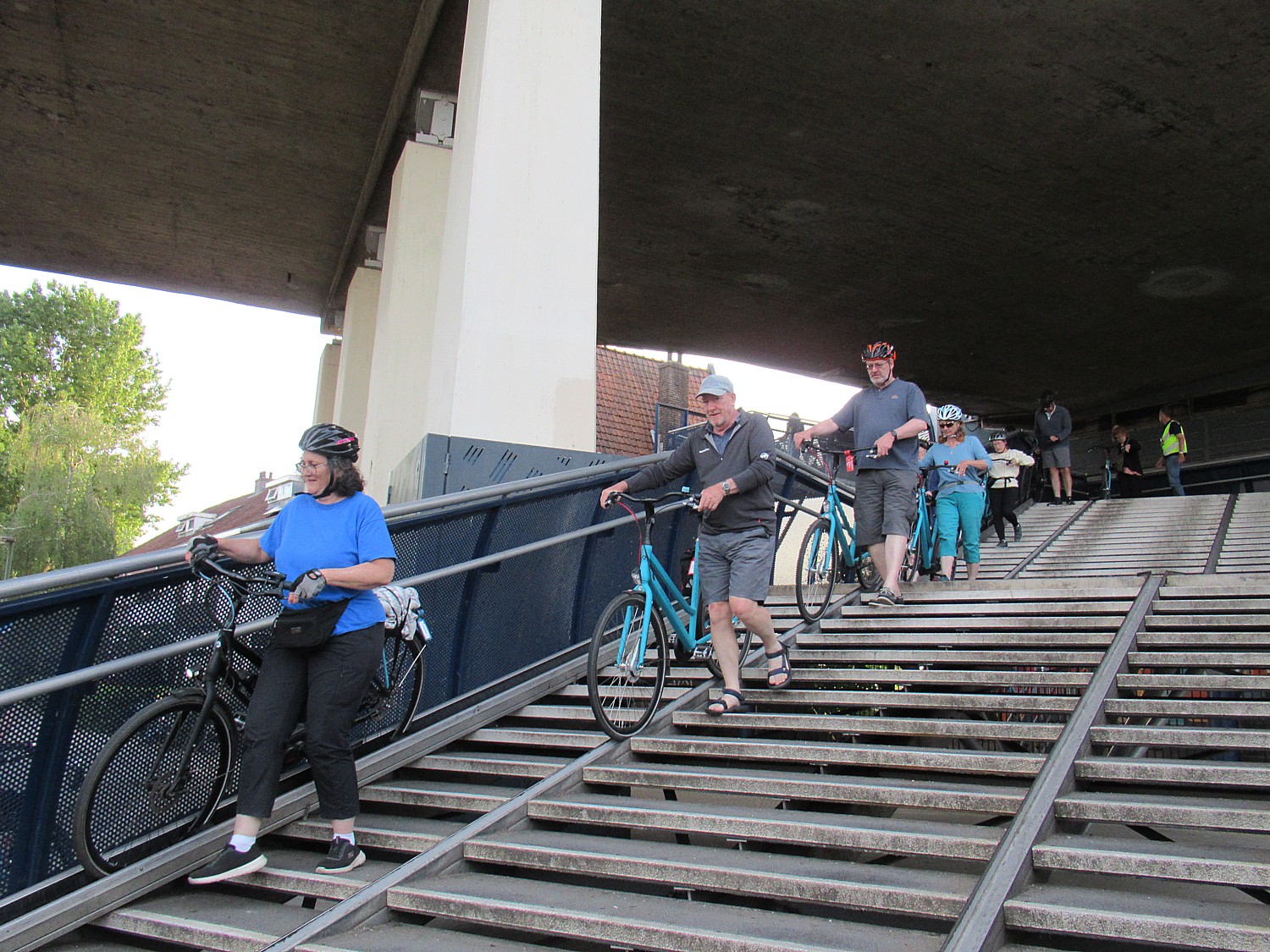
Bike track to come down from the bridge into Dordrecht… © Karen Rubin/goingplacesfarandnear.com
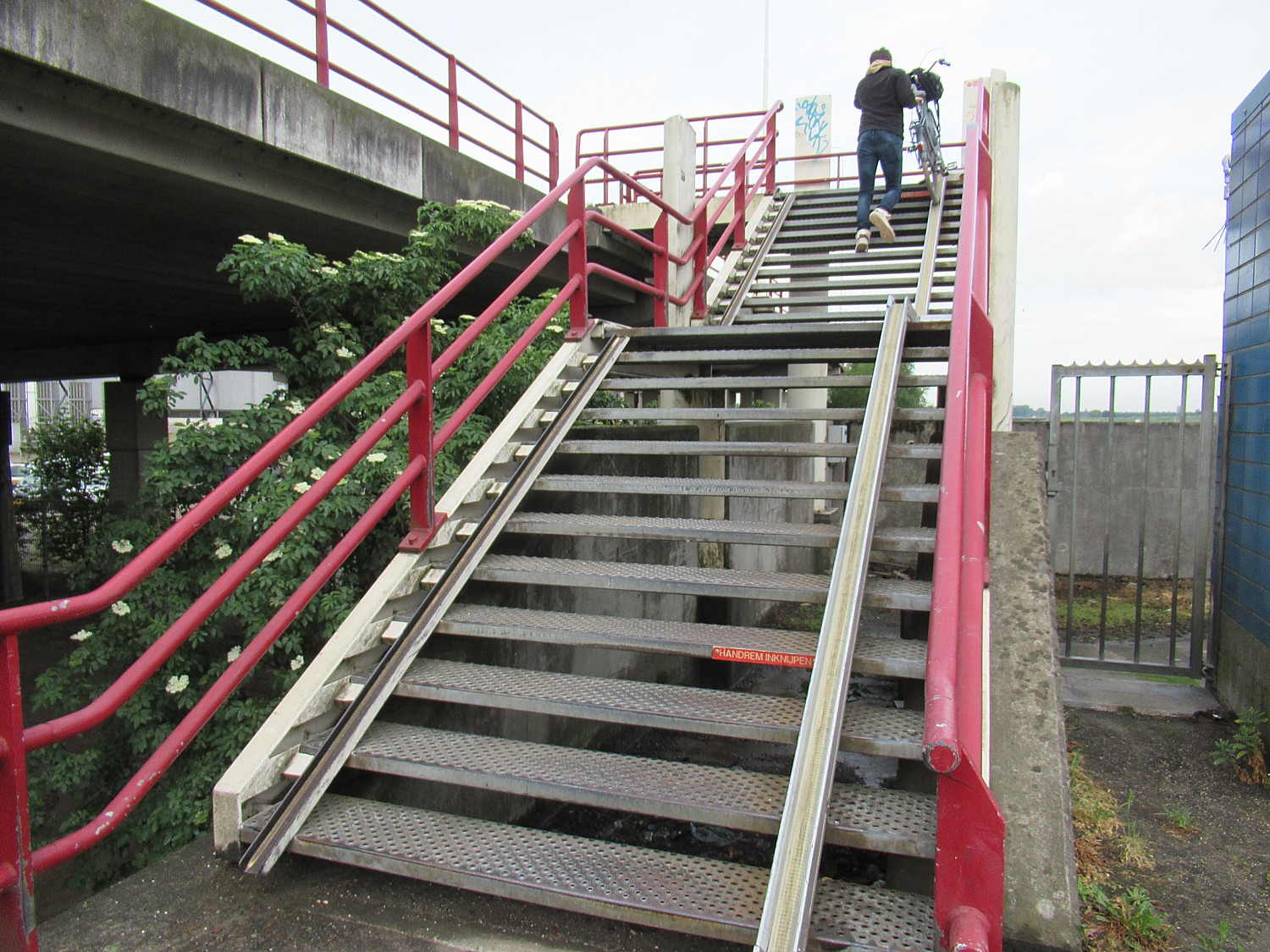
…an escalator to bring the bike up to the bridge from Dordrecht © Karen Rubin/goingplacesfarandnear.com

Here we also get to see the extraordinary infrastructure for bikes – to get up/down the very high bridge, there is actually a track and even an escalator for the bike, as well as dedicated path on the highway bridge.
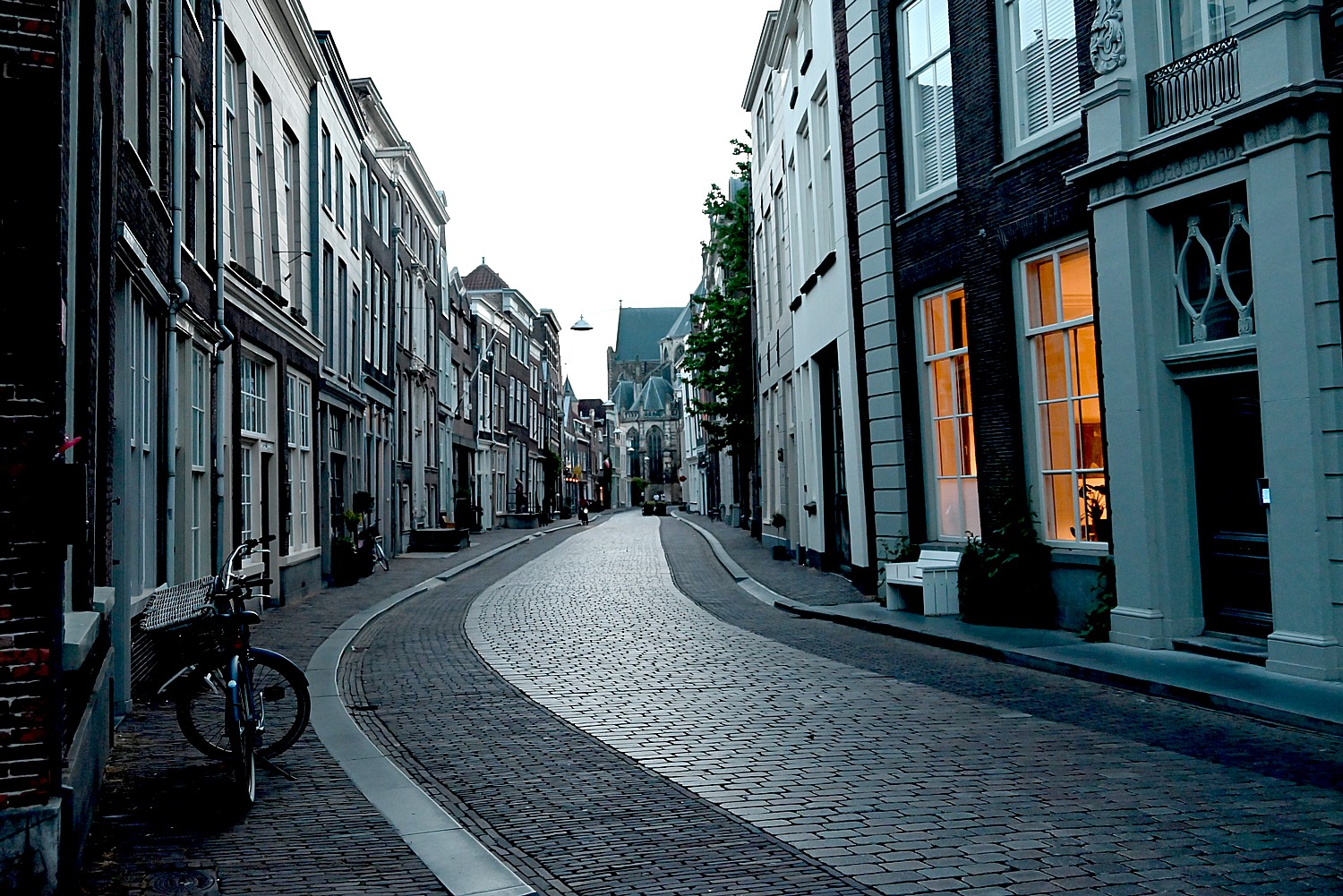
Dordrecht is 800 years old, the oldest city of Holland (not Netherlands), with a population of 120,000 and some 900 monuments. It has always been a garrison town.

At the main church we learn that they wanted to build a tower 120 meters high (to compete with another city’s tower), but the ground wouldn’t support it. So with the money left over, they built four clocks and a bell. But when the bell tolled, windows broke, so they stopped.

“Schooske” – special historic sailing ships that are iconic to Dordrecht © Karen Rubin/goingplacesfarandnear.com

We see these “schooske” – special historic sailing ships that are iconic to Dordrecht (and why there is the special festival). They are allowed to stay in this marina for free.

“Schooske” – special historic sailing ships that are iconic to Dordrecht © Karen Rubin/goingplacesfarandnear.com

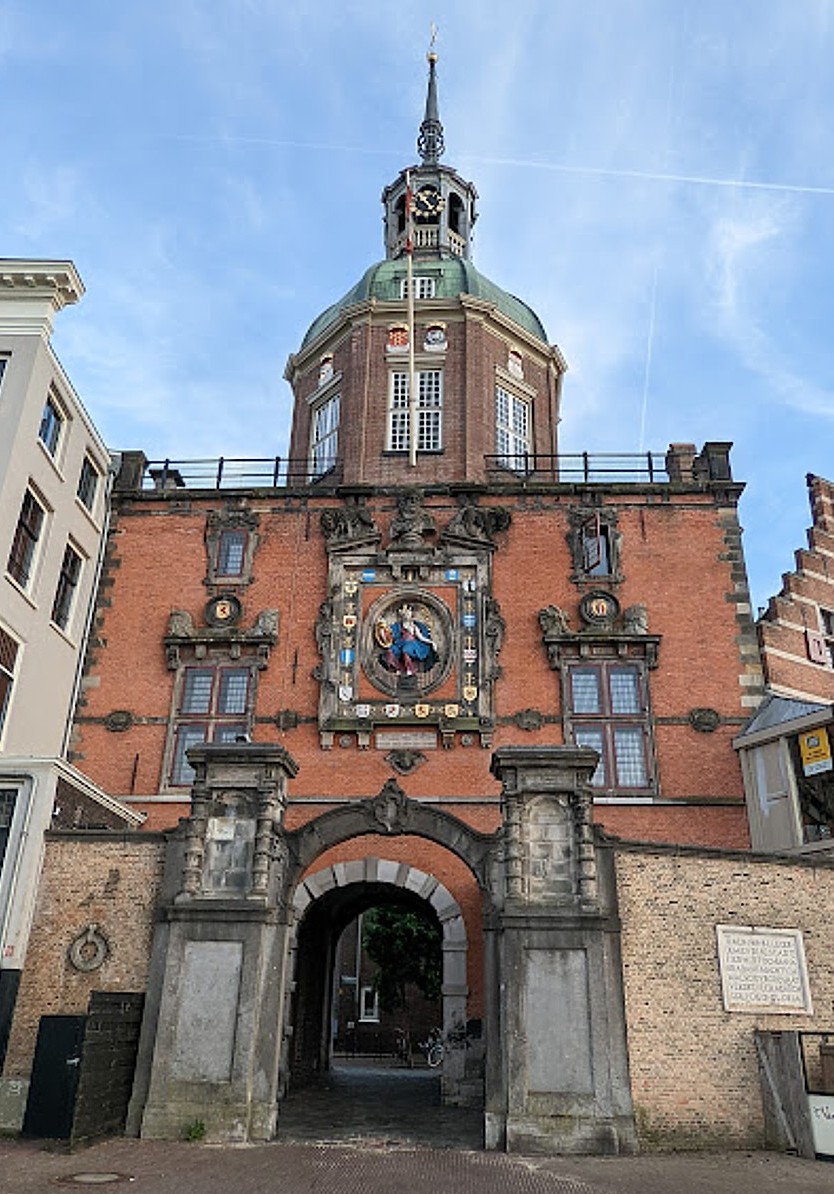
The original, ornately decorated entrance gate to the town is where Napoleon entered Dordrecht, Corrie says.

Napoleon would have entered Dordrecht through this historic gate © Karen Rubin/goingplacesfarandnear.com

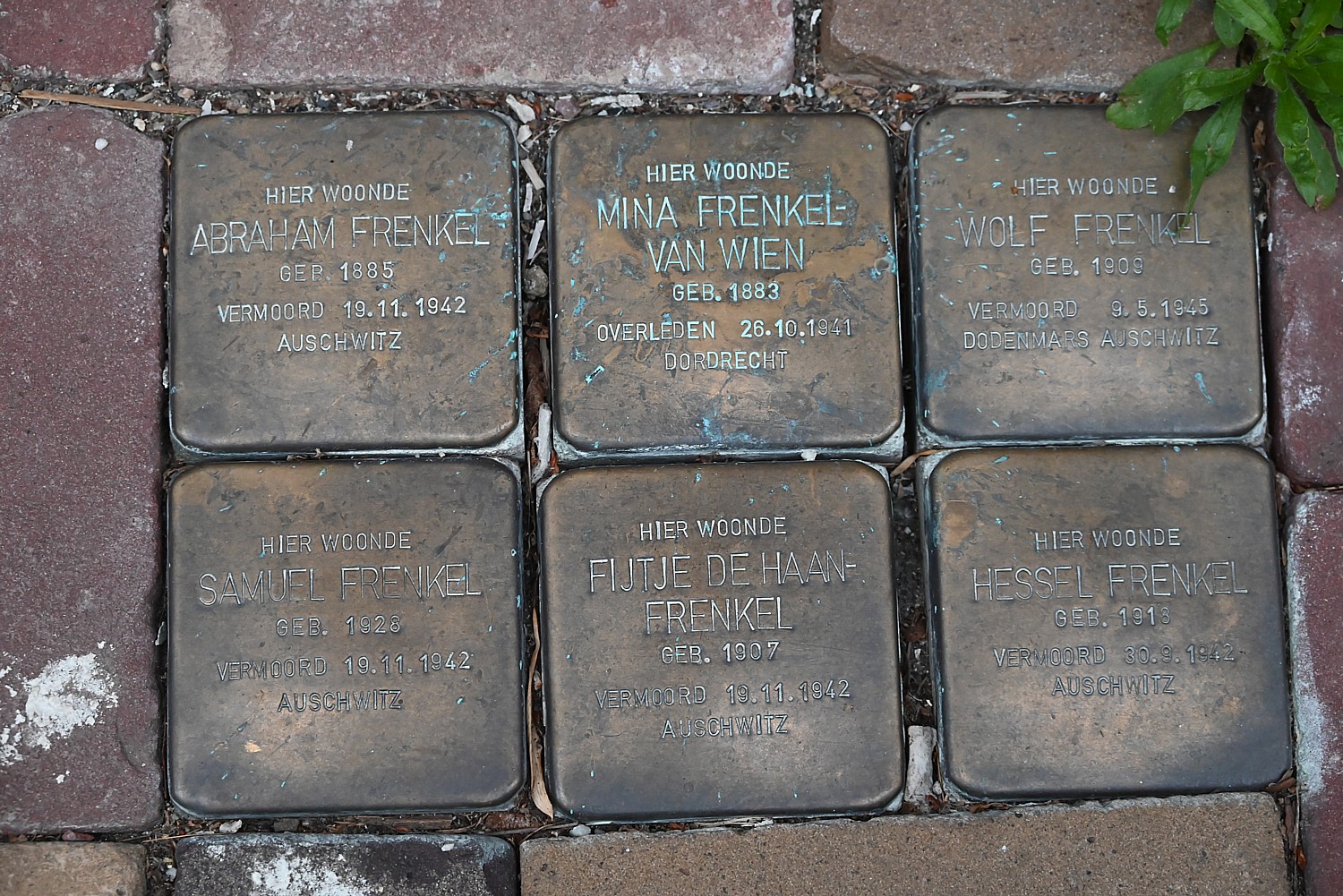
Walking down a cobblestone street, I see stolpersteine (“stumbling stones”) – bronze plaques embedded in the sidewalk as a memorial to the Jewish families who were taken from their home during the Holocaust. There are stolpersteines to commemorate the victims of the Nazi regime in more than 1,100 locations in 17 European countries

On a street in Dordrecht, stolpersteine (“stumbling stones”) – shiny bronze plaques embedded in the sidewalk as a memorial to the Jewish families who were taken from their home during the Holocaust © Karen Rubin/goingplacesfarandnear.com

On this street, Corrie points out a special Dordrecht style façade of buildings dating from the 17th century, which she says would have been designed by a mason in order to qualify to join a guild. “There were hundreds of these buildings but they fell out of fashion.

Novice masons would have to prove their stuff in order to join a guild in Dordrecht © Karen Rubin/goingplacesfarandnear.com

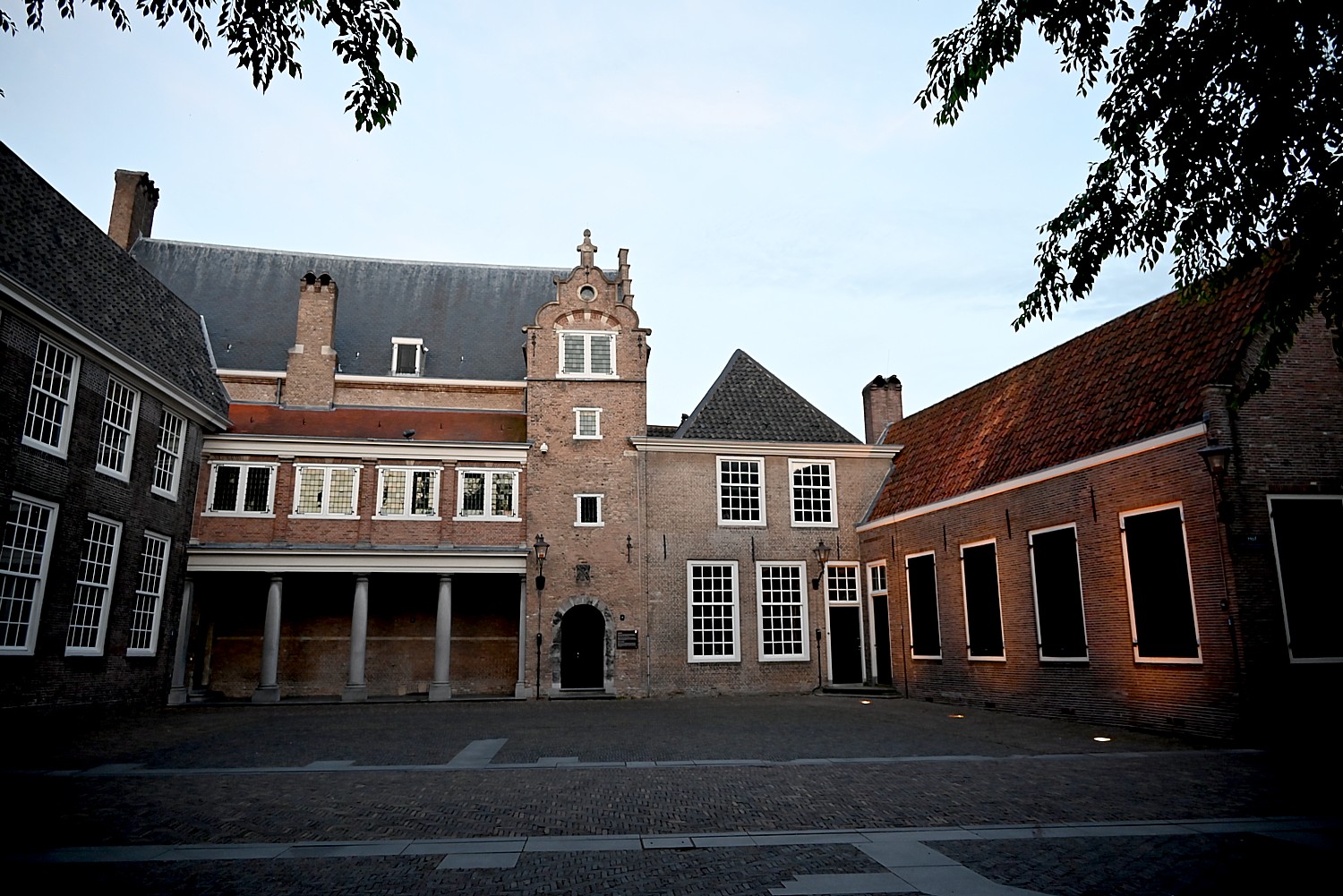
We come to what seems a simple courtyard of a 1275 Augustine monastery, but here, in 1572, a meeting was held to decide to revolt against Philip of Spain and to choose William of Orange as the leader. “The Netherlands was born in Dordrecht,” Corrie tells us.

“Netherlands formed after a revolt against Spain. It started with representatives choosing William of Orange as leader and agreeing to fight for freedom – a political moment – a thought out idea – freedom of religion,” which took place right here. (It sounds so much like the Continental Congress of 1776; Dordrecht in 1572 was Philadelphia in 1776.)

The Place Where It Happened. Dordrecht is like our Philadelphia.In 1572, a meeting was held to decide to revolt against Philip of Spain and choose William of Orange as the leader. “The Netherlands was born in Dordrecht.” © Karen Rubin/goingplacesfarandnear.com

“William wanted their own church” not like Catholic churches, but rounded with 8 sides. And they wanted their own Bible translated in Dutch.”

In 2019, the King of Netherlands, a descendent of William of Orange, came here to Dordrecht with an original family bible, and computerized art projected the writings from the old text on the building.

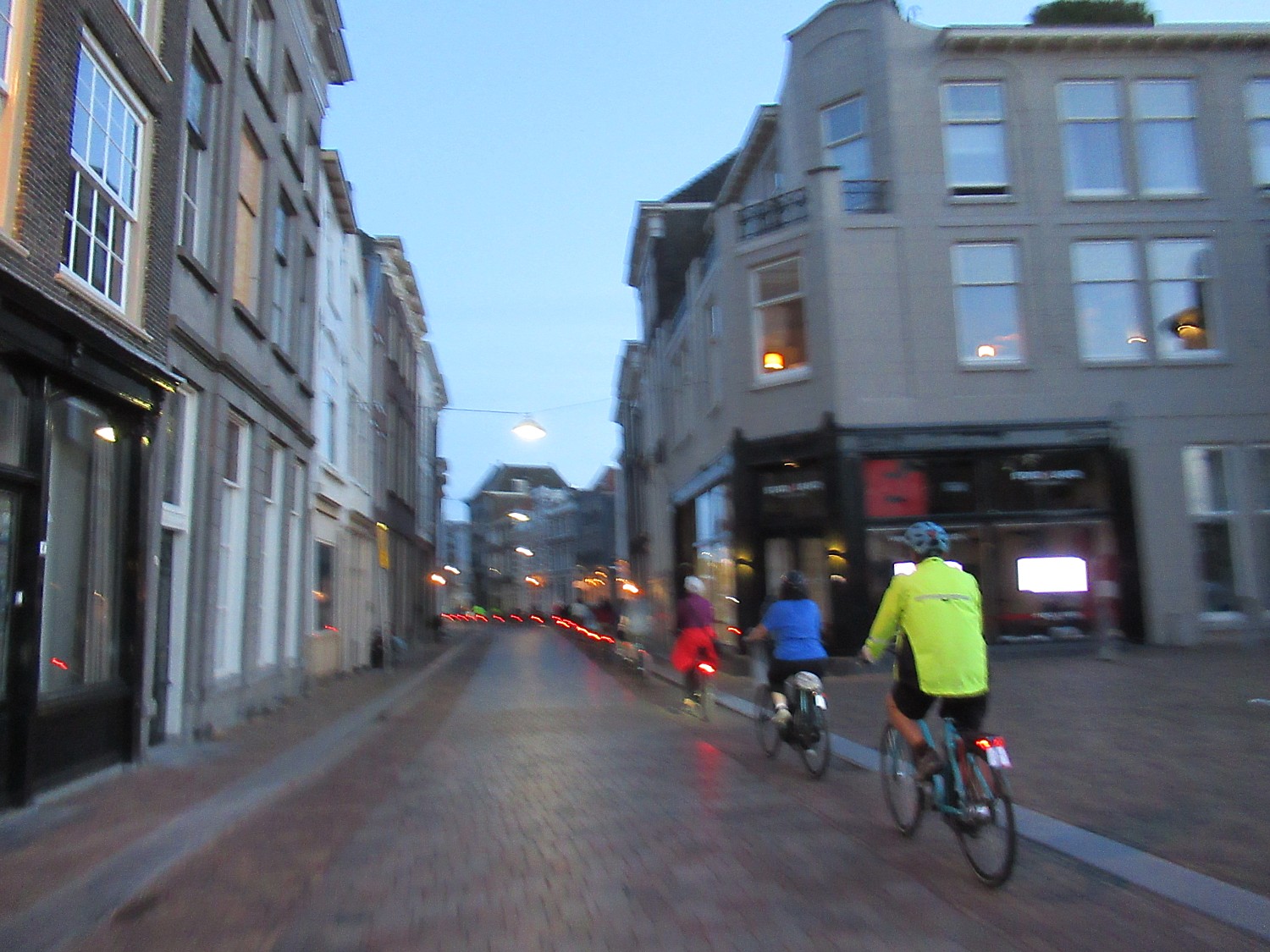
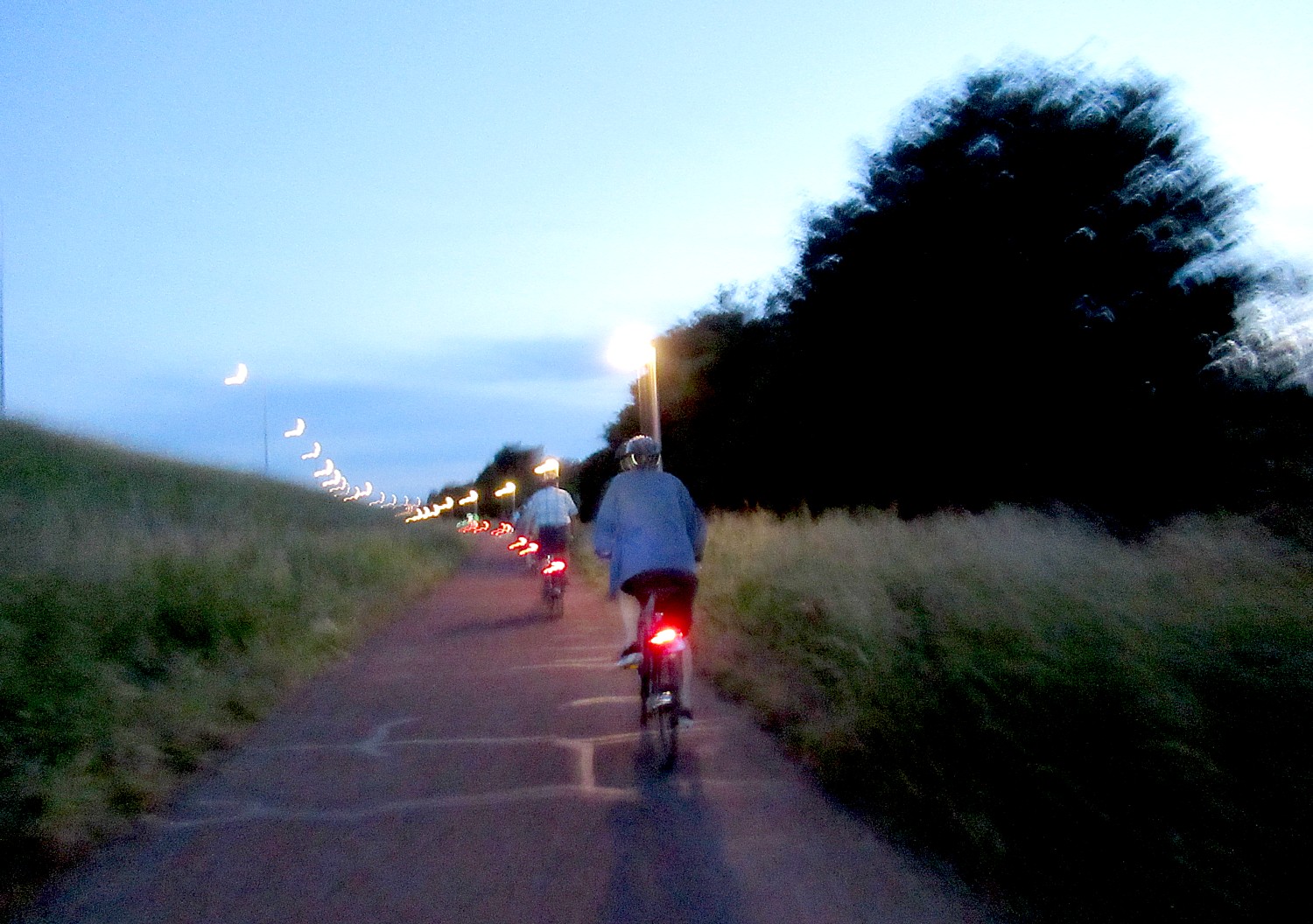
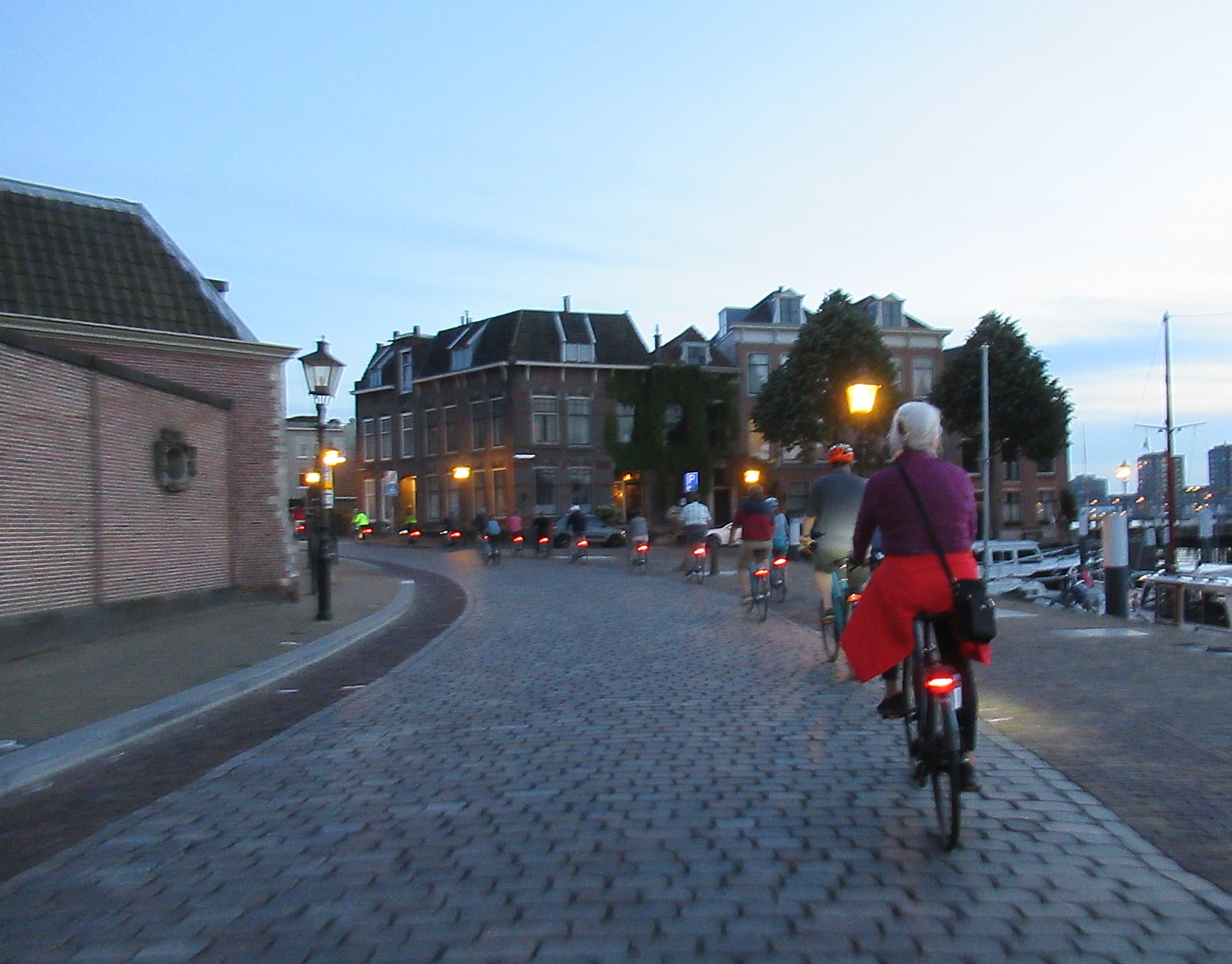
By now, darkness has all but descended. We put on our bike lights, and ride back to the ship, everyone giggling over how we look like a line of fireflies.

Biking back to the Princesse Royal from Dordrecht at night © Karen Rubin/goingplacesfarandnear.com

Boat Bike Tours, Aambeeldstraat 20, 1021 KB, Amsterdam, Netherlands, tel.: +31 20 72 35 400,  info@boatbiketours.com, www.boatbiketours.com.

See also:

Idyllic Trip: Biking and Boating from Bruges to Amsterdam

Bruges-Amsterdam by BoatBikeTours: Biking to Ghent

Bruges to Amsterdam by BoatBikeTours: Antwerp, Medieval Jewel

Bruges to Amsterdam by BoatBikeTours: Dordrecht, the Birthplace of Holland

Bruges to Amsterdam by BoatBikeTours: The Windmills of Kinderdijk

__________________

© 2022 Travel Features Syndicate, a division of Workstyles, Inc. All rights reserved. Visit goingplacesfarandnear.com, www.huffingtonpost.com/author/karen-rubin, and travelwritersmagazine.com/TravelFeaturesSyndicate/. Blogging at goingplacesnearandfar.wordpress.com and moralcompasstravel.info. Visit instagram.com/going_places_far_and_near and instagram.com/bigbackpacktraveler/ Send comments or questions to FamTravLtr@aol.com. Tweet @TravelFeatures. ‘Like’ us at facebook.com/NewsPhotoFeatures