Category Archives: Historic Hotels

Historic Inn at Saratoga Captures Sense of Place, Gracious Victorian Style

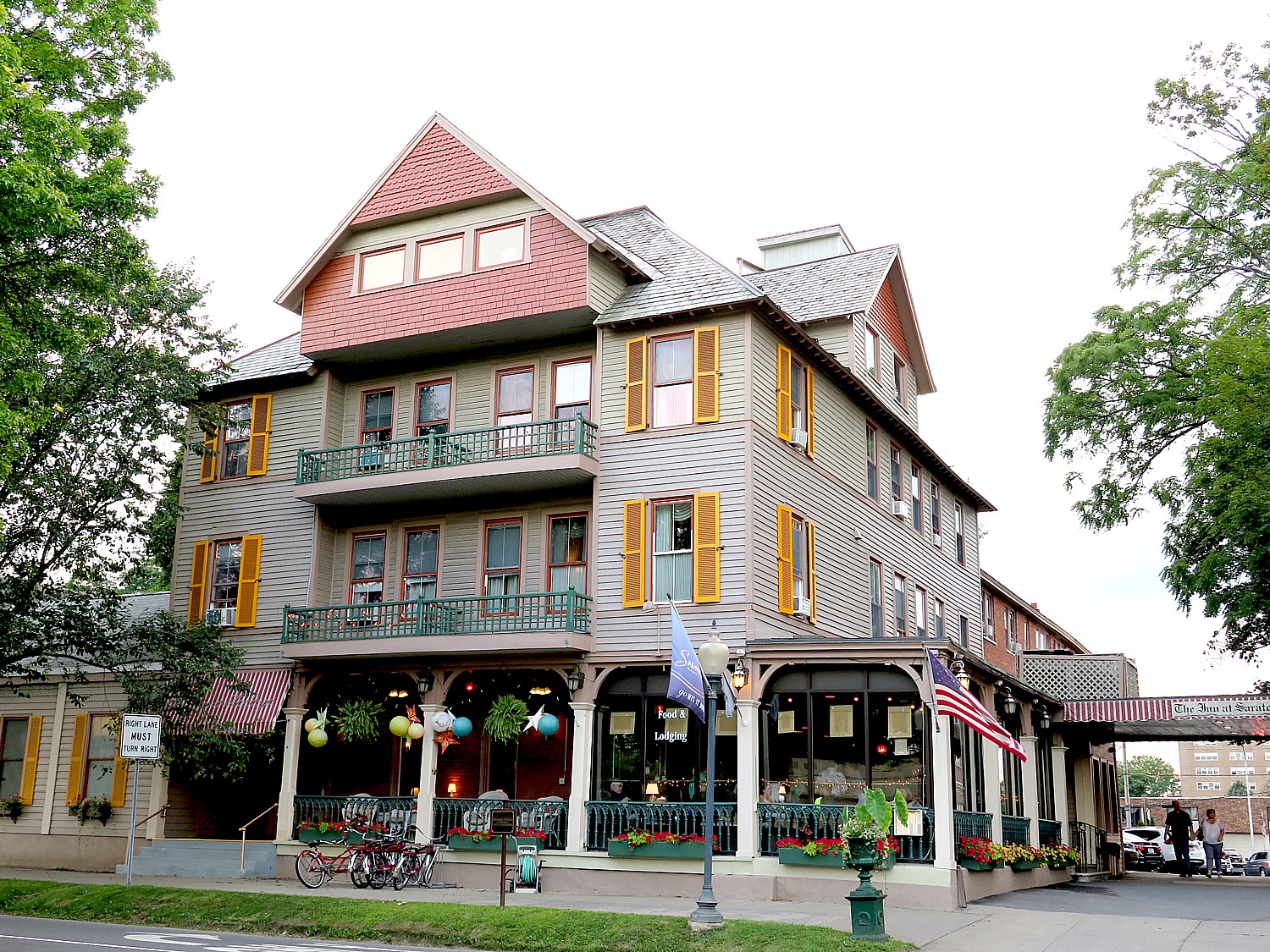
The Inn at Saratoga, Saratoga Springs’ oldest continuously operating hotel, dating from 1843, offers Victorian gracious style and a sense of place © 2017 Karen Rubin/goingplacesfarandnear.com


By Karen Rubin, Travel Features Syndicate, goingplacesfarandnear.com


Saratoga Springs, one of America’s first tourist towns, has been drawing visitors since the 14th century when Native Americans discovered the mineral springs which still draw visitors today. But it is also where formal horse racing began, and over the years, has also developed an amazingly rich cultural menu of offerings, especially in summer, when its Performing Arts Center is home to the New York City Ballet and Philadelphia Symphony Orchestra. It is fitting that among its key attractions are the National Museum of Dance (who knew there was such a thing?) as well as the National Racing Museum (fascinating), historic racetrack, lively live-music venues, stunning boutiques (you know a top-notch town by its olive oil shop and haberdashery).

It doesn’t take long, as you walk among the giant painted horses and ballet shoes to recognize this unbelievably charming town is a combination of Louisville, Kentucky and Lenox, Massachusetts, with a touch of a spa-wellness destination thrown in. And totally enchanting.

But walking around and taking in the breathtaking Victorian architecture, you also realize that Saratoga Springs has had its ups-and-downs. Indeed, the celebrated historic Racetrack even closed down in 1896 because of financial hardship, and historic markers on Broadway point to whole historic streets that were torn down in the 1960s until a preservation movement took root.

This makes you appreciate all the more the work underway ($30 million worth) on the historic Adelphi Hotel, where the colorful Irish-born prize-fighter, horse-racing impresario, gambling entrepreneur , New York State Senator and Tammany Hall enforcer John Morrissey, a regular of the hotel, died in 1878.

You get to live Saratoga Springs’ history at the Inn at Saratoga, which has basically “seen” it all. Built around 1843, it is the oldest continuously operating hotel in Saratoga Springs, and its own history mirrors that of the village.
The Inn at Saratoga, which dates from 1843, puts you into the city’s story © 2017 Karen Rubin/goingplacesfarandnear.com

Anyone who appreciates as I do how a historic hotel is like a direct line to a place – putting you on the inside track rather than being an outsider merely passing through – seeks out historic hotels wherever possible. They have presence, and give you a sense of place.

These historic hotels immerse you into the collective memory and heritage of a place – like being inserted into the scene of the village as it might have been 150 years ago. They are so much more than brick and mortar – they have personality, character, even soul (not for nothing that many also harbor a ghost or two).

It is also about providing the gracious hospitality we associate with times past – the personal attention, the tranquil pace, a quiet calm.

So, coming to Saratoga Springs, I do what I always do when I plan a trip: seek out Historic Hotels of America website (historichotels.org, 800-678-8946), a membership program of the National Trust for Historic Preservation with nearly 290 historic hotels that have faithfully maintained their authenticity, sense of place and architectural integrity. I discover the Inn at Saratoga, which turns out to be the oldest continuously operating inn in Saratoga Springs, dating back to 1843.

Over the years, the inn’s fortunes have had its ups and downs along with the city (now decidedly up in its fortunes)  and, like the city and hospitality industry, has gone through many incarnations – a physician tapped Saratoga Springs’ legendary mineral waters for his patients and operated the inn as an early version of a spa hotel; a Cuban owner had a travel pipeline for visitors from Cuba; a rabbi catered to Jewish vacationers escaping New York City’s oppressive summers.

Fortunately, it is now in the loving hands of the Israel family, who acquired the inn in 2003, and who bring a deep appreciation for historic preservation and their role as stewards.

Indeed, when you experience such places, you cannot take their existence for granted – rather, they are to be celebrated as survivors against long odds – surviving wrecking balls, economic and natural disasters, and new owners’ predilections to go “modern.”

Owners of these historic properties take on their stewardship with a sense of obligation and humility, recognizing they are links in a chain, without which, these places will simply cease to exist.

The Israel family, who are active in Preservation Society for Saratoga Springs, has spent considerable resources removing the “modern” that previous owners had installed, and restoring the hotel’s period features and charm, while providing the amenities that guests crave today, including spacious bathrooms, in-room coffee maker, flat-screen TV, voicemail, dataports, complimentary wired and wireless high-speed Internet access and such.  As they say it is “the perfect marriage of past and present.”
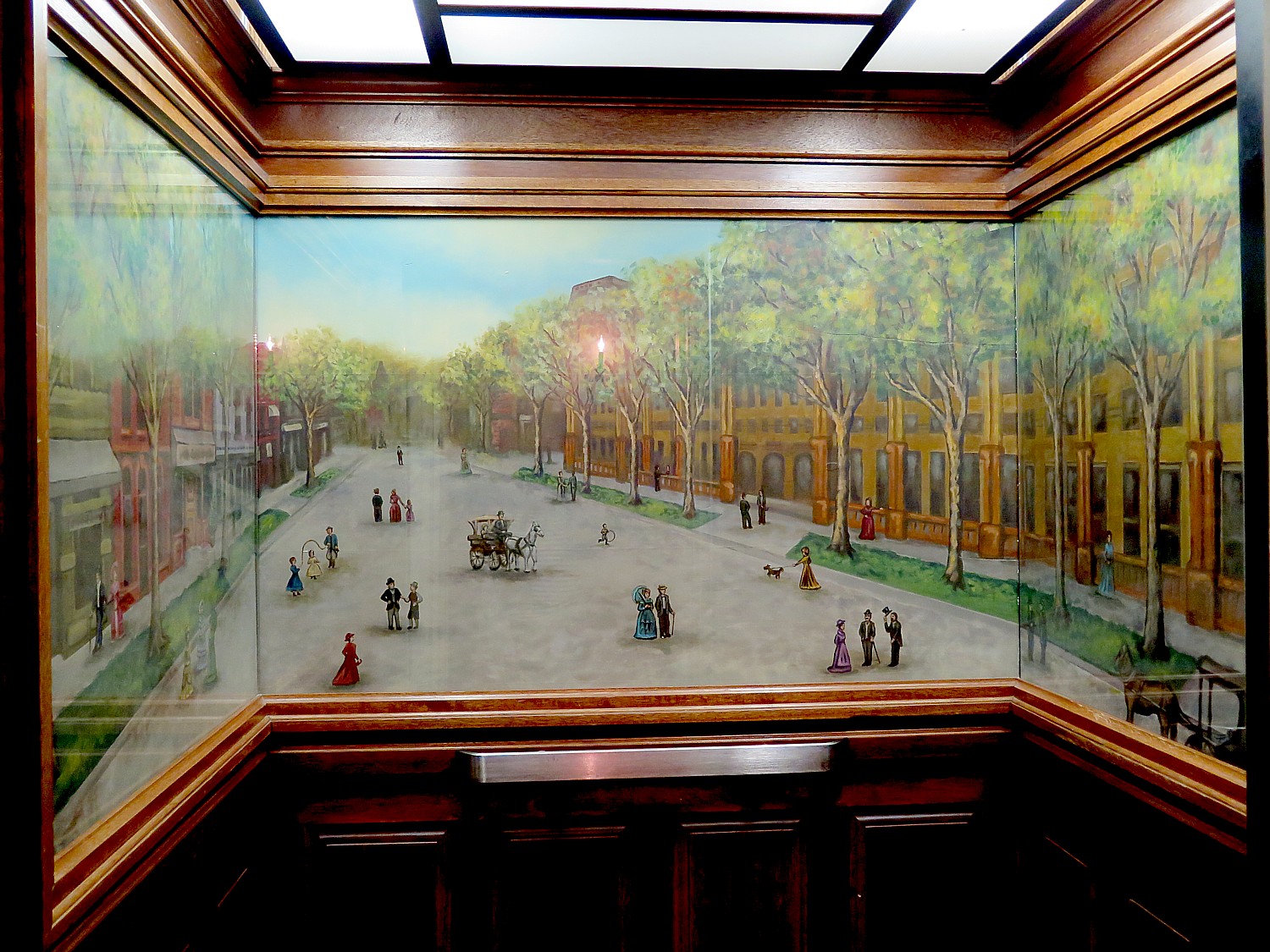
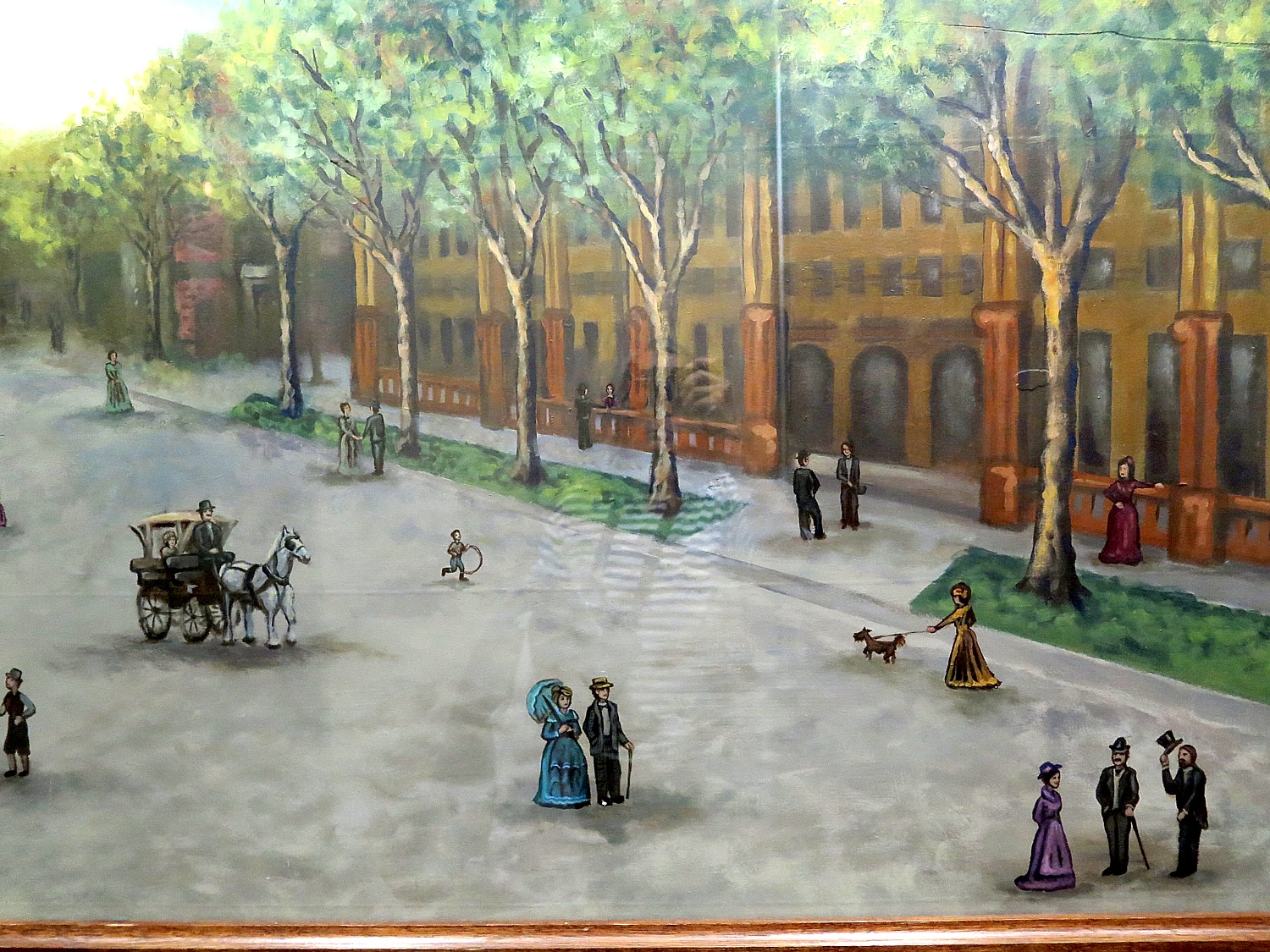
Painting along three sides of the inn’s elevator depicts Saratoga Springs of 150 years ago © 2017 Karen Rubin/goingplacesfarandnear.com

I joke about the hotel having an elevator (which has an exquisite pastel painting of Saratoga Springs as it might have been 150 years ago that spreads across three sides) and the receptionist says, this place didn’t even have running water in 1843. But to install the elevator, Liz Israel, who has the role of General Manager, tells me, the previous owners removed a formal staircase.

The inn once had around 100 rooms, more than twice the number, 42 rooms and suites, as today – because traditional hostelries had tiny rooms with a washbasin and guests shared a bathroom.
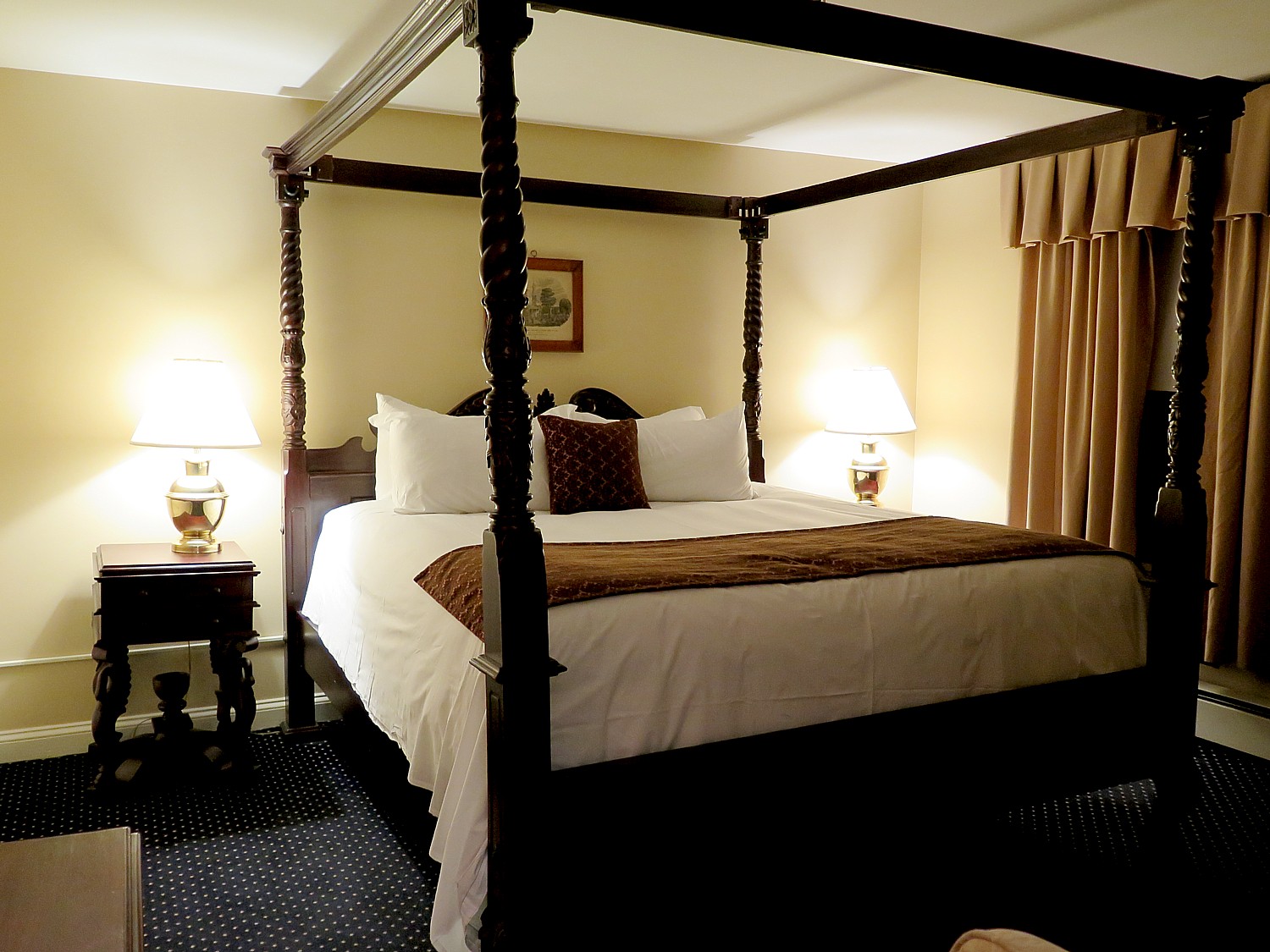
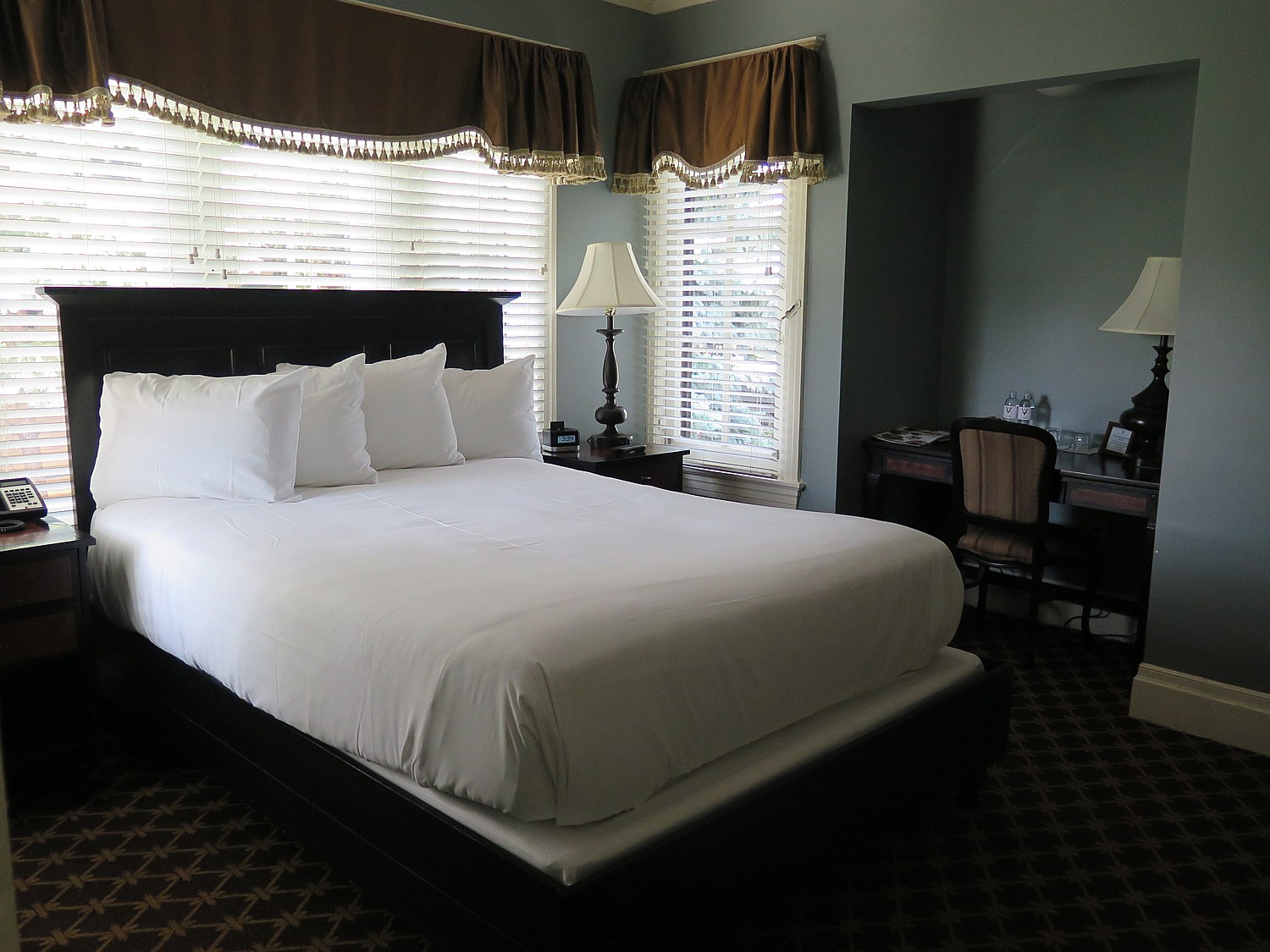
Best of the past and present: four-poster bed and period furnishings create the atmosphere in the guest room at the Inn at Saratoga; modern amenities including spacious bathroom, TV and WiFi heighten the guest experience © 2017 Karen Rubin/goingplacesfarandnear.com

Big band music plays in the hallway as I make my way to my room (you can’t hear it when you are in the room) but you use a modern key-card to enter. It is pure pleasure to sink into a four-poster bed so high you need a step ladder, and of course a spacious modern bathroom. Each room is different and appointed with period furnishings.

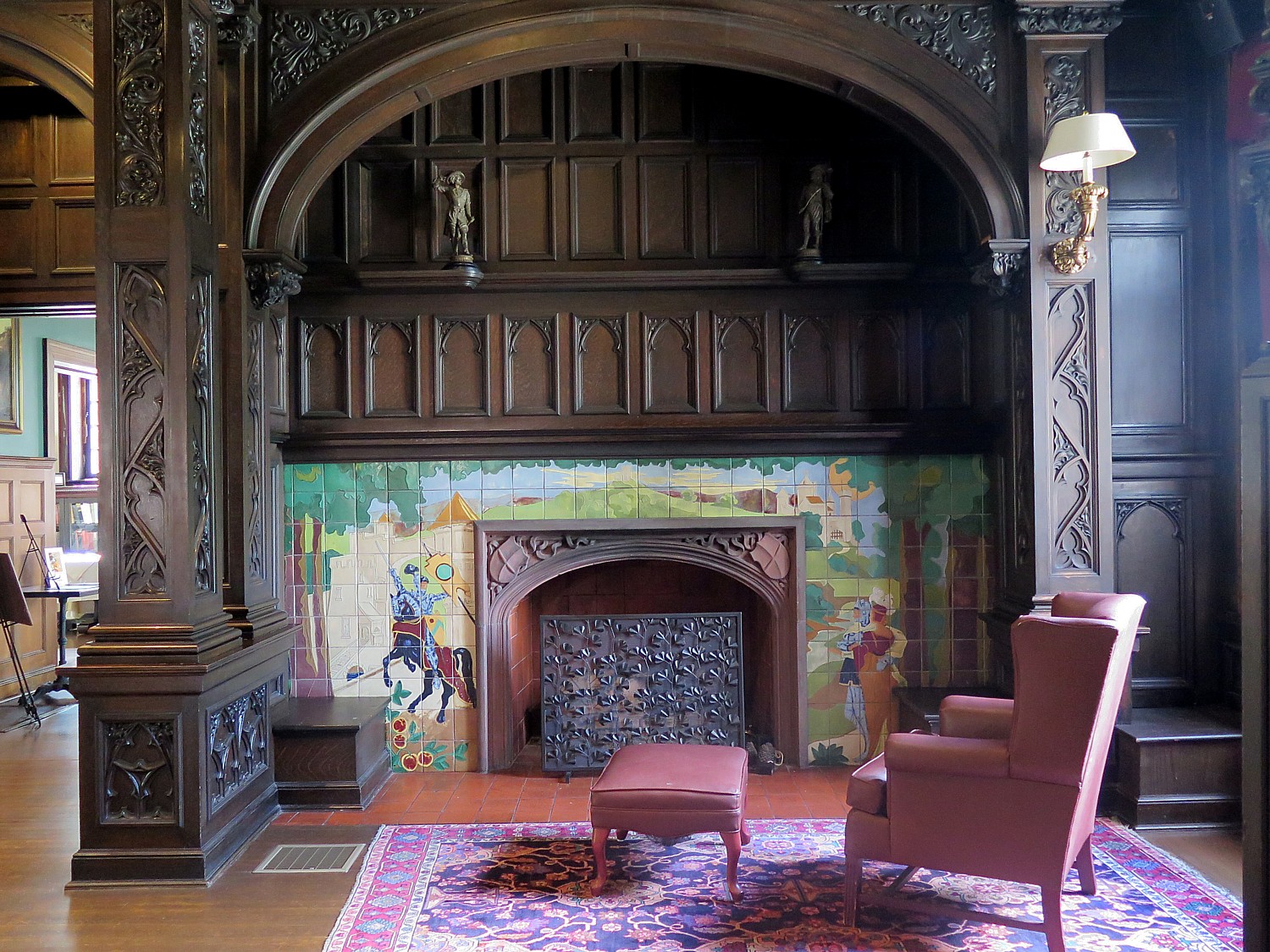
Robert Israel, a tax attorney who first came to Saratoga Springs in the 1960s when it was in decline (and property was cheap) bought the hotel in 2003, has meticulously gone about acquiring period furnishings at auction – a stunning bookcase that adorns the dining room; wood paneling that as a young man in his 20s, he salvaged from a hotel in Newburgh that he kept for 40 years before finding just the right place, in the inn’s lobby; the side board we take our coffee cup from for breakfast came from the Waldorf=Astoria Hotel. The walls are graced with stunning oil paintings (purchased at auction) as well as prints that Israel collected from the Grand Union Hall, which when it was built, was the largest in the world (it burned down). He acquired a shuttered railway ticket cottage which he reassembled and repurposed in the inn’s garden to serve as a bar for special events. The ballroom has an intricately “carved” fireplace which came  from a movie set. And the dining room has a specially made red velvet banquette that captures the Victorian ambiance perfectly.
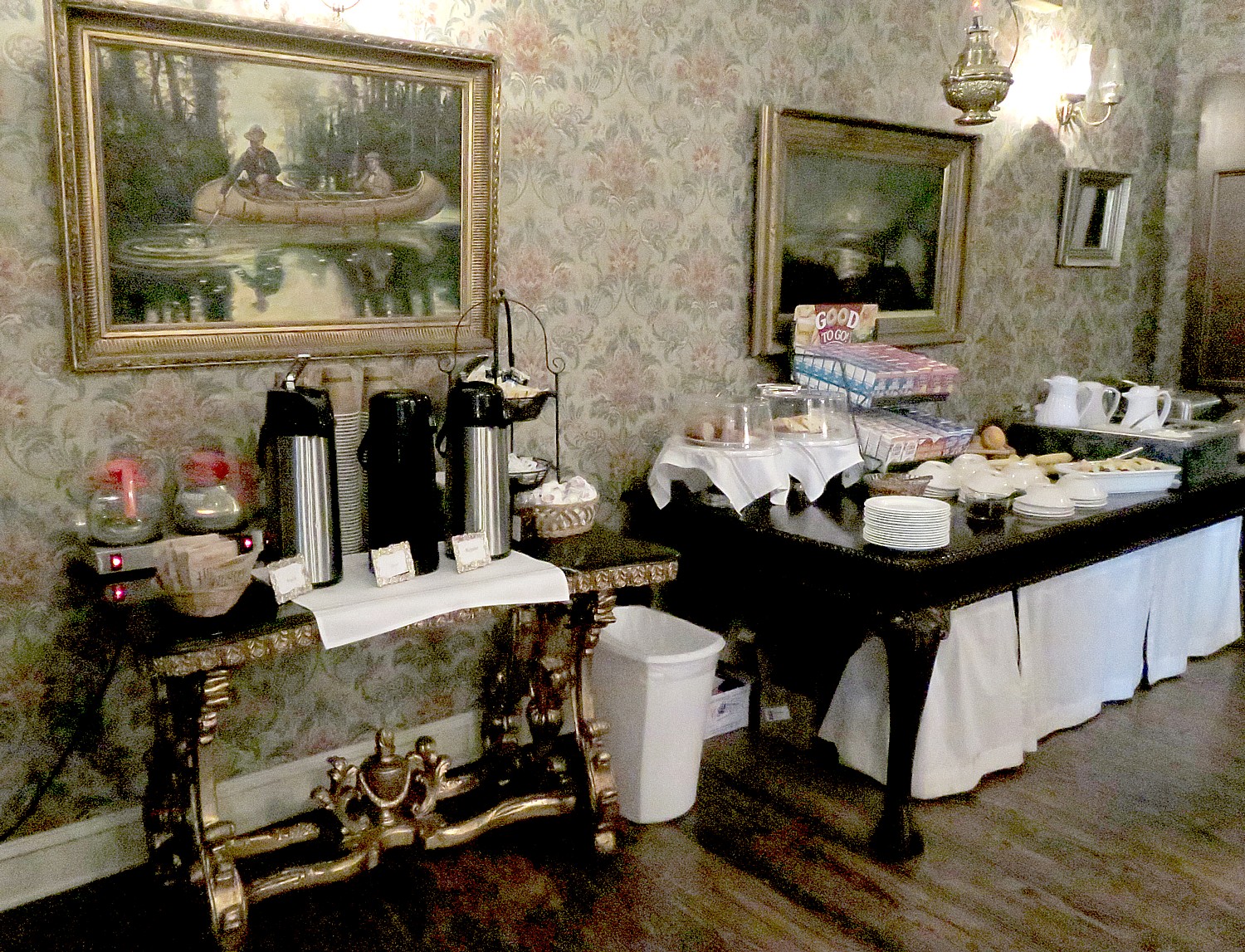
Inn at Saratoga is justifiably proud of the full breakfast served buffet style in the tradition of a bed-and-breakfast inn © 2017 Karen Rubin/ goingplacesfarandnear.com

One feature of the Inn at Saratoga is the complimentary full buffet breakfast that is included – a lavish affair that reminds you more of a bed-and-breakfast inn where the host seeks to really out do themselves with memorable meals. One breakfast consisted of delectable scrambled eggs seasoned with herbs, served on a fresh croissant, along with bacon, potatoes, selections of fresh fruit, cereals, bagels, pastries and muffins, perfectly delectable coffee, served on beautiful china.

Liz Israel was 18 years old when her father bought the property. She grew up waiting tables, handling the reception desk, and went on to get a degree in hospitality management in Ireland, where she worked at the Shelburne Hotel in Dublin before returning to the Inn at Saratoga with her Irish husband.

Liz takes me on a walking tour of the hotel, recognizing how much I appreciate the restoration.

Once an open porch, The Tavern bar has big picture windows that overlook the street bustle on Broadway, Saratoga Springs’ main street, and where there is live music five nights a week, Wednesday through Saturday.
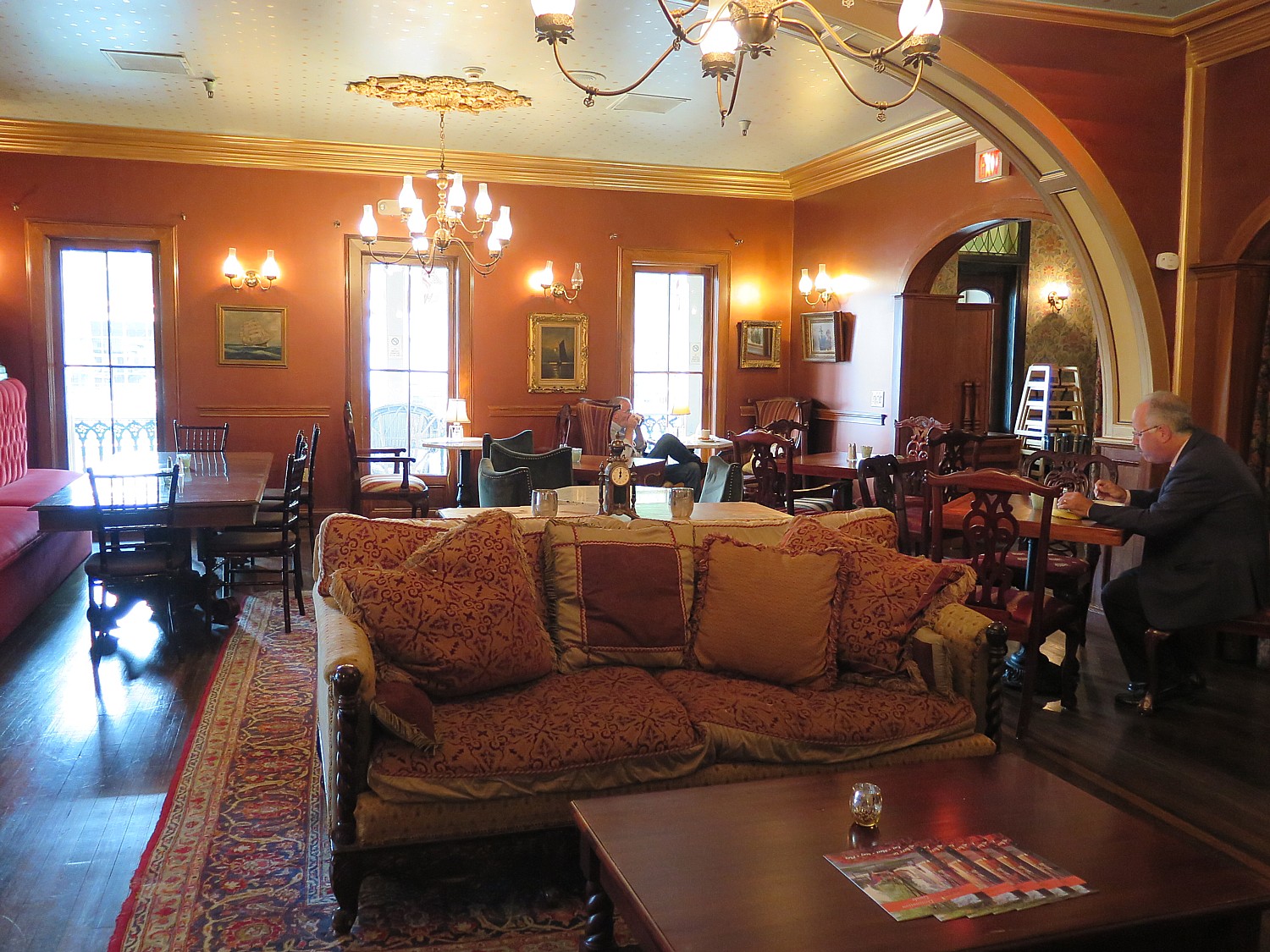
The inn’s original lobby is repurposed for a dining and lounge space; the couch is an Israel family heirloom © 2017 Karen Rubin/goingplacesfarandnear.com

Primo’s Restaurant, where you enjoy breakfast and which serves dinner, is a Victorian confection. Liz says that they lifted up the carpet and removed a cement layer to expose the original hardwood floors.

There is a beautiful ballroom that opens to a garden where a tent has been erected for a wedding reception; there is also an old railroad ticket cottage that Israel acquired and repurposed for a bar.

The inn has a few vintage Roadmaster bikes available for guests’ use (two hours at a time). Guests also enjoy complimentary access to Victoria Swimming Pool located in Saratoga Spa State Park and the nearby YMCA. Complimentary parking in its on-site lot is a significant amenity as well. (The inn offers a spa package with the historic Roosevelt Baths & Spa in the park.)
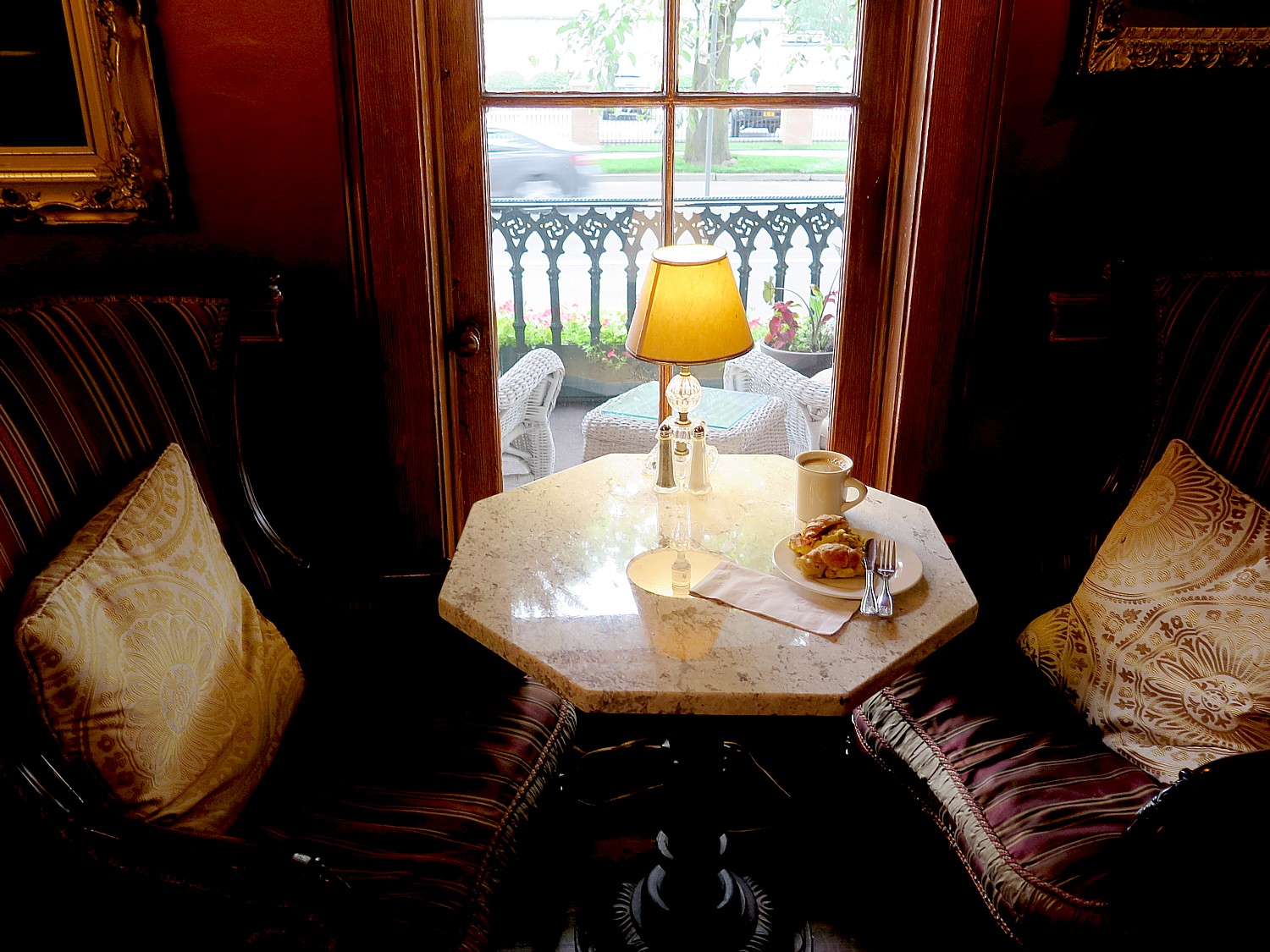
The Inn at Saratoga offers a gracious setting © 2017 Karen Rubin/ goingplacesfarandnear.com

In addition to the hotel, there is a separate Brownell Cottage (which was purchased along with the hotel) which features four luxurious suites, accommodating up to four people depending on the suite. Beautifully appointed, the cottage offers an array of modern amenities: whirlpool tub, heated bathroom floors, steam shower with multi-head massage shower, authentic Franklin Stove fireplaces, cable TV, coffee/tea maker, speaker phones with data port, voice mail and in-room safes and free high-speed wireless Internet.

The Inn at Saratoga is an ideal venue for wedding or family function or meeting because of its scale, the charming ambiance, and facilities.

Inn Follows Fortunes of Saratoga Springs

I love the back story to the inn: it was built as a large boarding house in 1843 by Isaac Hall, a carpenter from New Hampshire, 11 years after the railroad provided easy access to Saratoga’s spa for tourists.

In 1846, Hall sold the property to Thomas Smith of Virginia, who turned over the management to Dr. Richard L. Allen, who, like other physicians of the time, operated boarding houses to treat “chronic cases” – an early version of a health spa. That lasted until 1853, when the property was sold to Hervey P. Hall (Dr. Allen remained in Saratoga Springs and published a popular guide for health seekers in Saratoga).

The hotel passed through three other owners until 1865 when it was acquired by Benjamin V. Frasier, brother-in-law of Thomas Marvin, the proprietor of the huge United States Hotel (largest hotel at the time). “The wealth created by the Civil War and the pent-up demand for pleasure created the greatest boom Saratoga had ever seen.”

It isn’t a coincidence that organized horse racing, brought by casino operator and future congressman, the prize-fighter John Morrissey, had begun in Saratoga Springs.

Frasier significantly expanded the hotel, building the three-story wing in 1866 and added a brick veneer, and re-named the hotel Everett House.
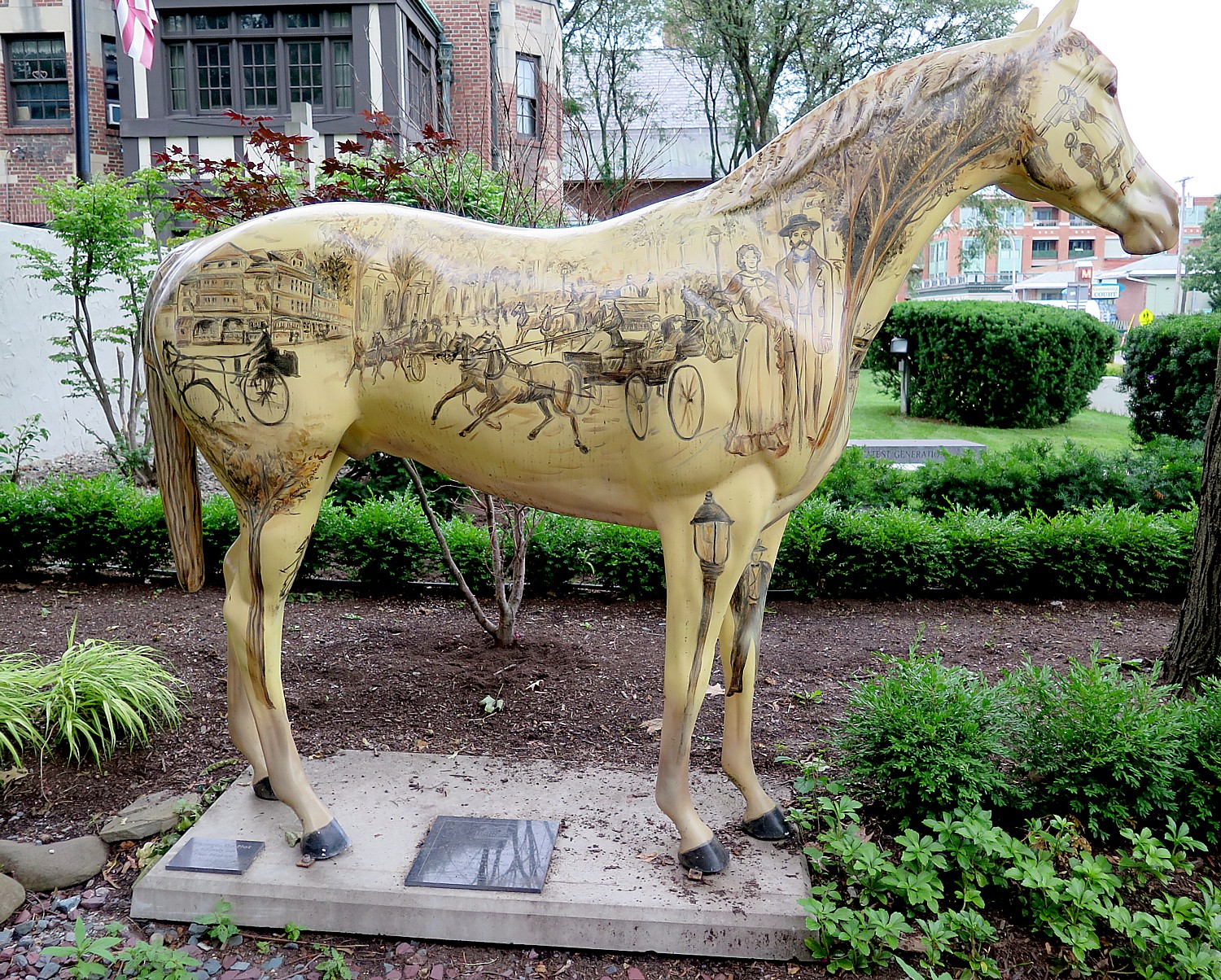
The historic Inn at Saratoga pays tribute to Saratoga Springs’ horse-racing tradition with one of the painted horses © 2017 Karen Rubin/ goingplacesfarandnear.com

Frasier gave up the hotel in 1875 (the same year as the first Kentucky Derby was run at Churchill Downs in Louisville, Kentucky) and it was sold to Nathaniel Waterbury, a prominent Saratogan, who made improvements but quickly  went into foreclosure. The US was in the midst of a major economic Depression. The property was purchased at an 1878 sheriff’s sale by Thomas Marvin’s daughters, Mary Louise Sackett and Virginia Perry. By 1882, they had leased it to Primo M. Suarez, who catered to Cuban vacationers for 35 years; he rebuilt the front of the hotel in 1887 in the High Victorian style that was fashionable at the time.

After World War I, Saratoga’s old clientele was slipping away; and instead of two-week sojourns, auto touring was the newest fad. But there was a growing audience of Jewish New Yorkers who sought to escape the city’s summer heat and could afford a country retreat. In 1919, Nathaniel Heller took over Everett House and by the 1924 season, renamed it Hotel Brenner, operated by Rabbi Charles Brenner and his extended family. That continued until 1973 when the hotel was purchased by Dom Nardelli of Saratoga Springs who “updated” the facility and renamed it the Coachman Motor Inn.

That was a fairly dark time for Saratoga Springs, when many of its historic buildings were taken down. A historic preservation movement took hold in the 1980s, and when Nardelli put the hotel on the market in 1987, it was sold to four businessmen who sought to recreate the graciousness of a Victorian hotel.

In 2003, the hotel was acquired by the current owners, Robert Israel of Franklin Square Associates, a historic preservation professional who has sought to restore the hotel’s historic quality and enhance the guest experience.

Liz tells me her father uses the inn as an excuse to shadow auctions and indulge his passion for antiques.

The Inn at Saratoga offers several package options, including:

GirlFriends Getaway Package, featuring dinner, wine, mineral baths and massage treatments at the historic Roosevelt Baths & Spa in Saratoga Spring State Park.

(The Roosevelt Baths & Spa Saratoga Springs opened in 1935 largely because at the impetus of President Franklin Roosevelt who wanted to develop the mineral baths at Saratoga Springs as well as Warm Springs, Virginia. Today, the Roosevelt Baths & Spa offers 42 original treatment rooms and a complete menu of services, including mineral baths, massages, facials, scrubs and body wraps, and a full-service salon.)

The inn’s Victorian Romance Package features a deluxe guest room or suite accommodations, a rose, chilled bottle of Champagne delivered to the room, plus morning buffet breakfast and gourmet 3 course dinner for two at The Inn at Saratoga’s Restaurant. Upgrade to a suite for the ultimate experience, most Brownell Cottage suites have a whirlpool tub, heated bathroom floors, steam showers and a Franklin stove fireplace.

The Israel family also owns another boutique hotel, in St. Thomas in the Caribbean.
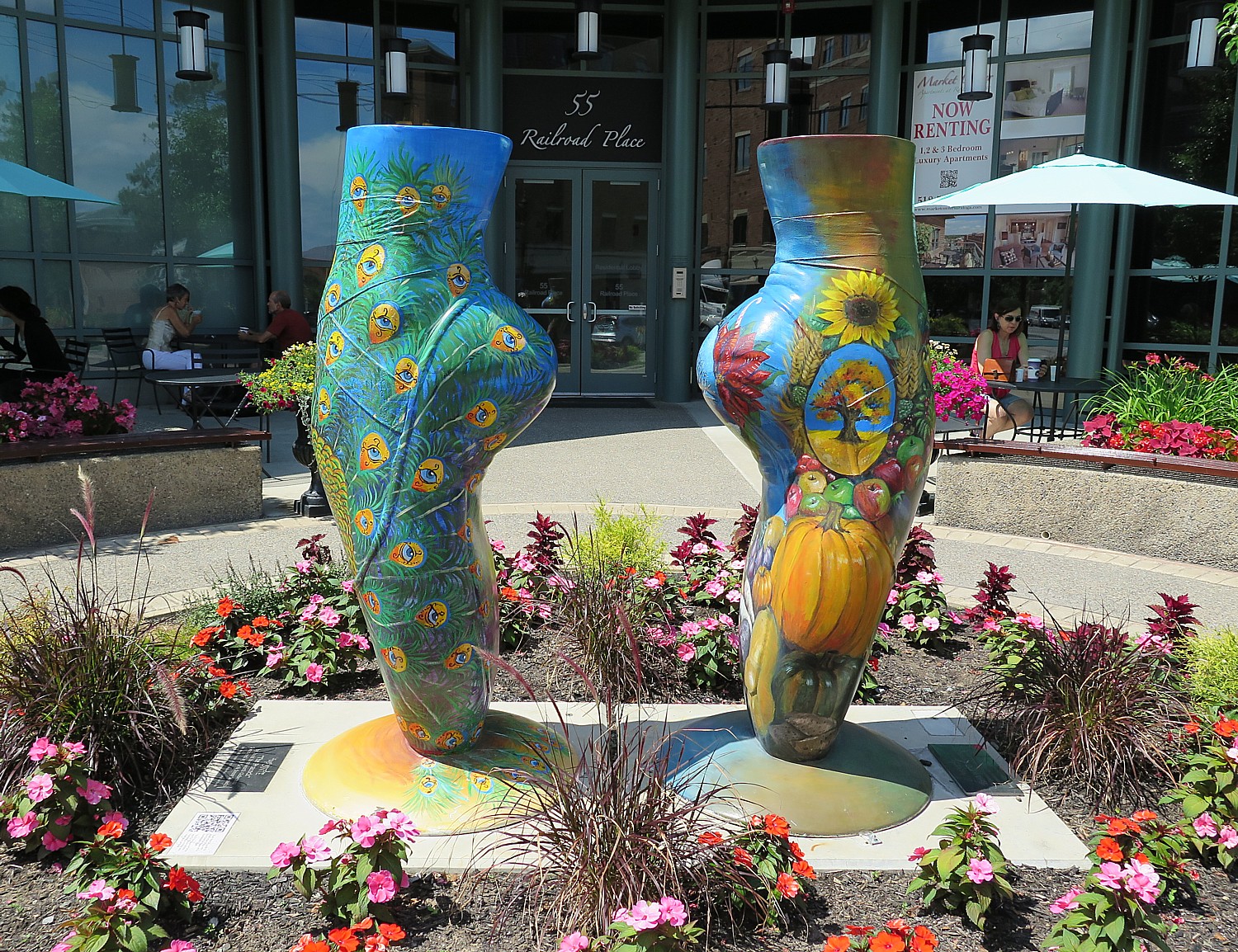
The Inn at Saratoga is near most of Saratoga Springs’ attractions, such as the National Museum of Dance and the Saratoga Performing Arts Center is summer home to the New York City Ballet © 2017 Karen Rubin/ goingplacesfarandnear.com

Centrally located, The Inn at Saratoga is conveniently near center of the village and its attractions including Congress Park, Skidmore College, Saratoga Performing Arts Center (summer home of the New York City Ballet), the famous Saratoga Thorough-bred Racetrack, the Saratoga Harness Track, the Saratoga National Museum of Dance, the National Museum of Racing, and the Saratoga Spa State Park.

On the Friday night that I am in town, I can choose from seeing the New York City Ballet, see a polo match or a live folk performance at Café Lina, among many other options.

Besides the nearby attractions of Saratoga Springs (see story), The Inn at Saratoga is well situated to year-round attractions, including Lake George (half hour); Gore Mountain (hour), and the Revolutionary War-era Saratoga National Historical Park (20 minutes).

The Inn at Saratoga, 231 Broadway, Saratoga Springs, NY 12866, 518-583-1890, 800-274-3573, theinnatsaratoga.com. 

See next: Exploring Saratoga Springs 

____________________


© 2017 Travel Features Syndicate, a division of Workstyles, Inc. All rights reserved. Visit goingplacesfarandnear.com,  www.huffingtonpost.com/author/karen-rubin , and travelwritersmagazine.com/TravelFeaturesSyndicate/. Blogging at goingplacesnearandfar.wordpress.com and moralcompasstravel.info. Send comments or questions to FamTravLtr@aol.com. Tweet @TravelFeatures. ‘Like’ us at facebook.com/NewsPhotoFeatures

Mansions on Fifth Historic Boutique Hotel in Pittsburgh’s Shadyside Sends You Back to Gilded Age

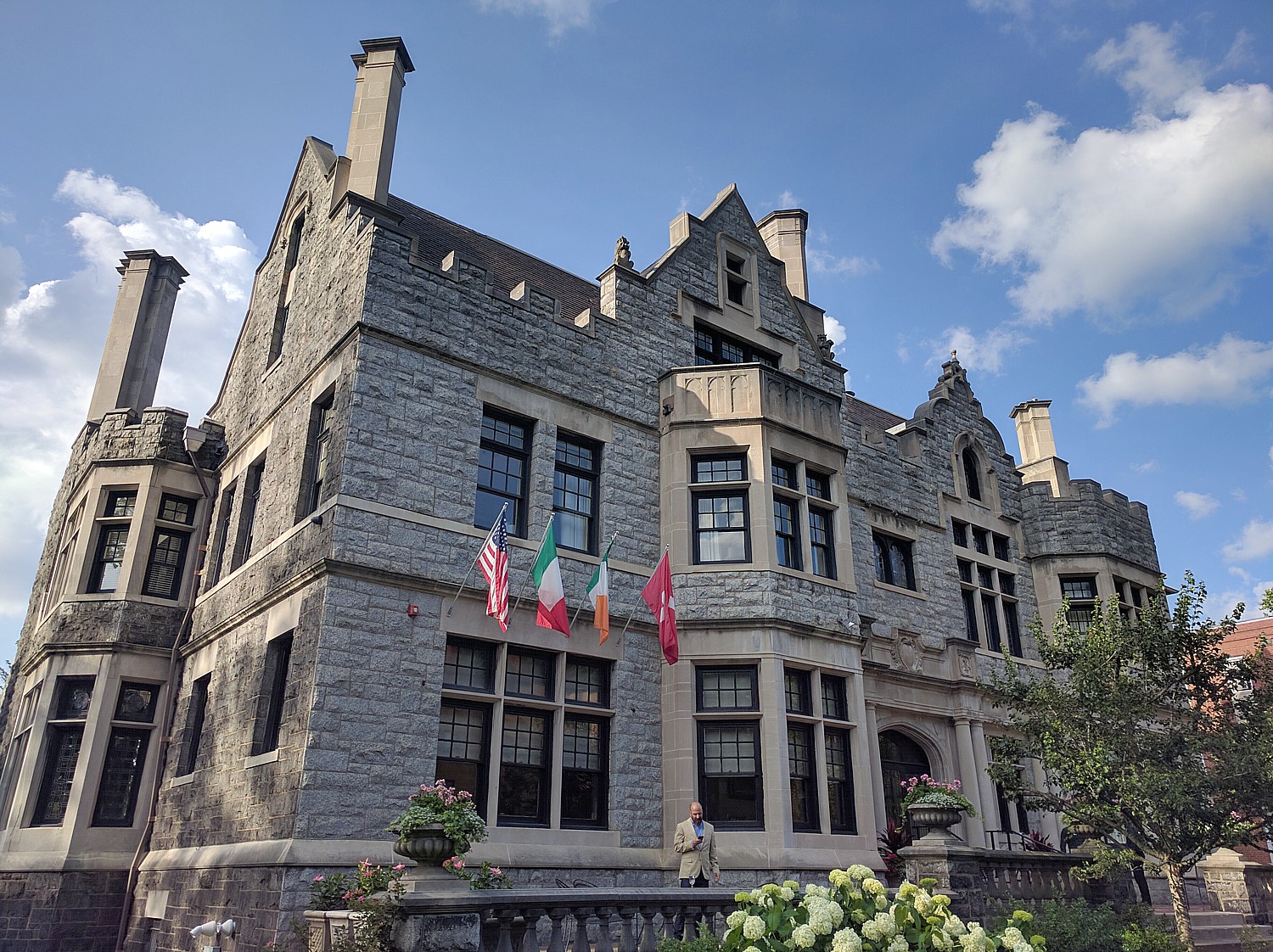
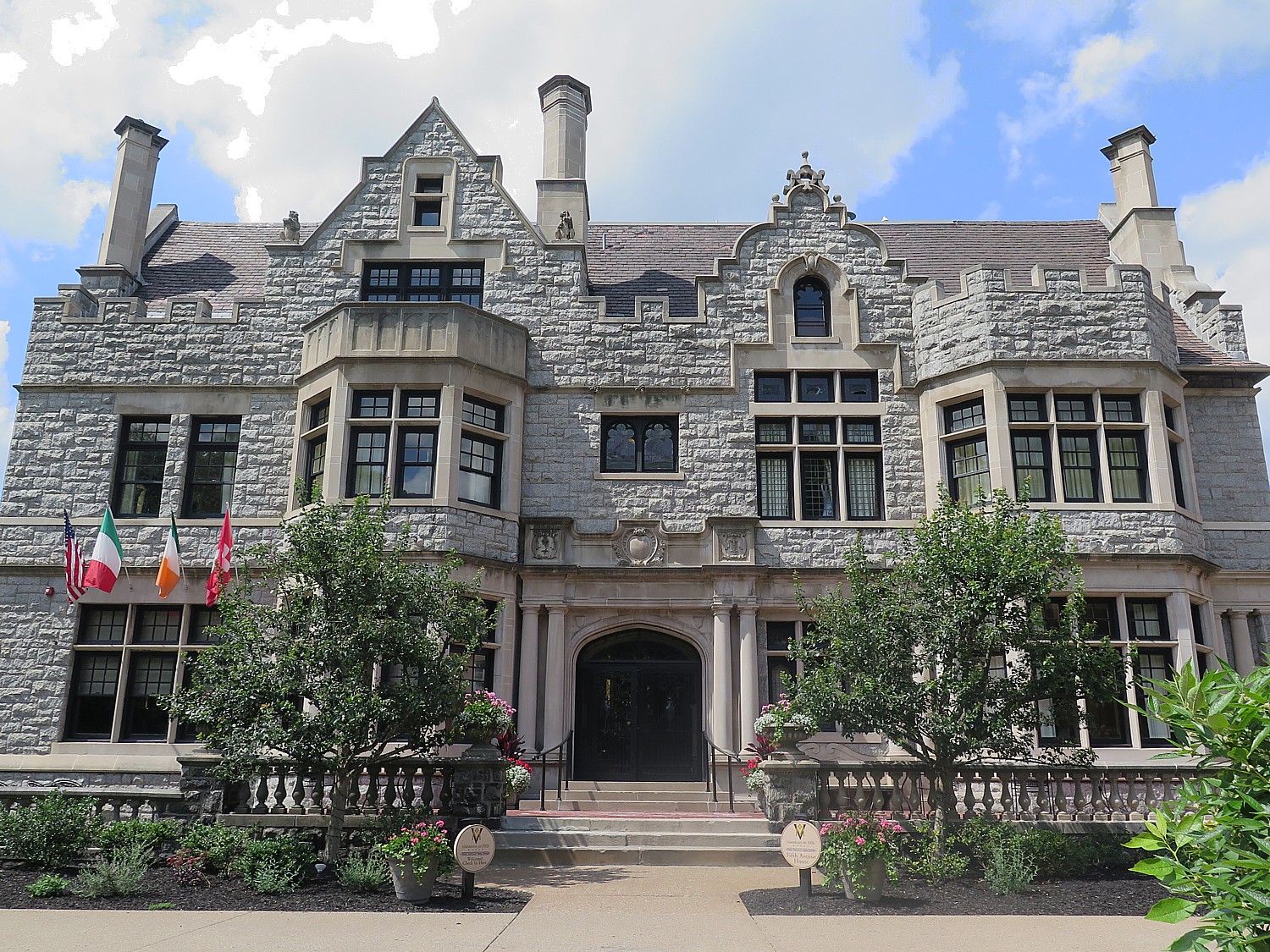
The jaw-dropping grand Mansion on Fifth, in Pittsburgh’s tony Shadyside neighborhood, home to Carnegie, Frick and other celebrated industrialists and bankers, now a boutique hotel where you get to feel as if you were transported back to the Gilded Age © 2017 Karen Rubin/goingplacesfarandnear.com


By Karen Rubin, Travel Features Syndicate, goingplacesfarandnear.com


I return to Pittsburgh when I come back to do my second Rails-to-Trails Sojourn on the Great Allegheny Passage, a fantastic rail-trail that stretches across Western Pennsylvania, from Cumberland, Md. to Pittsburgh, this time a longer trip, 150 miles, that finishes on the Montour Trail (see stories).

I had been dazzled by Pittsburgh on my first visit a year ago, and the same is true this time. It is no wonder that this city, built on steel and coal, rejuvenated, revitalized, has been named one of America’s most liveable cities. What is best about it is how it retained the best of old and new.

This time, as luck would have it, I choose a historic hotel, Mansions on Fifth, that is in the Shadyside neighborhood, a short walk away from the Carnegie Museums and the Cathedral of Learning, so that my all-too-brief time in this glorious city is spent immersed in the city’s leading cultural attractions that I had not been able to visit a year ago.

Mansions on Fifth in Pittsburgh’s tony Shadyside neighborhood is the sort of place that when you pull up, your jaw drops. And for the brief time that you are here, you feel what it must have been like to be part of Pittsburgh’s upper-crust, the society of industrial titans. You know how historic places being “living history” places because of people? That’s what you feel like when you stay and inhabit these rooms, continuing the life and spirit of these structures that seem to have a life of their own and stories to tell. People come and go, after all, but these structures remain, albeit in the care of stewards who take on the responsibility. (Whenever I travel, I first check out Historic Hotels of America’s site, historichotels.org, to see if there is a member property because the experience is always extraordinary; for my last visit, I stayed at the Omni William Penn Hotel, an iconic property right downtown. Mansions on Fifth used to be an HHA member, prior to being acquired in 2016 by Priory Hospitality Group, Pittsburgh’s premier owner, operator and developer of independent hotels and event spaces. Among its other holdings, Priory Hospitality Group owns and operates the Priory Hotel and Grand Hall at the Priory on Pittsburgh’s North Shore.)

Indeed, Mansions on Fifth puts you right back into Pittsburgh’s history and its story:

“The late 1890’s and early 1900’s were in many ways Pittsburgh’s golden age, measured by prosperity and economic might, if not by a clean environment. Pittsburgh was a financial and industrial powerhouse as well as a center of river and rail transportation. In 1900, Pittsburgh produced more than half of the crucible steel in the nation, and by 1910, it was the eighth most populous city in the country.

“It was also a time where giants of the business world traversed Shadyside’s Fifth Avenue – ‘Millionaire’s Row’ – on a daily basis. Names such as Carnegie, Mellon, Frick, Westinghouse and Heinz were among the leading citizens of the day.”

This 20,000 sq. ft. mansion was built in the early 1900s by Willis F. McCook, a prosperous attorney and legal counsel to steel and coke magnate Henry Clay Frick for himself, his wife Mary and their 10 children.

The main house of Mansions on Fifth, built in the early 1900s by Willis F. McCook, a prosperous attorney and legal counsel to steel and coke magnate Henry Clay Frick © 2017 Karen Rubin/goingplacesfarandnear.com

McCook was most famous for having represented Frick, but he was highly accomplished in his own right, the notes show.”A groundbreaker in modern day corporate law, McCook studied law at Columbia University following his graduation from Yale in 1873. He was also a pioneering athlete, serving as captain of Yale’s first football team and playing in the first intercollegiate football game in the nation. Later in life, he served as president and director of the Pittsburgh Steel Company, and was a partner in the law firm McCook & Jarrett. He died in 1923 at the age of 72.”

Pittsburgh’s Shadyside neighborhood, which was also home to many of the city’s leading industrialists, innovators and bankers of the city, including George Westinghouse, Frick, Andrew Mellon, Andrew Carnegie and the rest of Pittsburgh’s exceptionally wealthy families of the era.

Here among the leafy green trees on a hilltop, it is easy to imagine how clean and cool the air in comparison to the choking atmosphere of the steel mills that shrouded the city below.

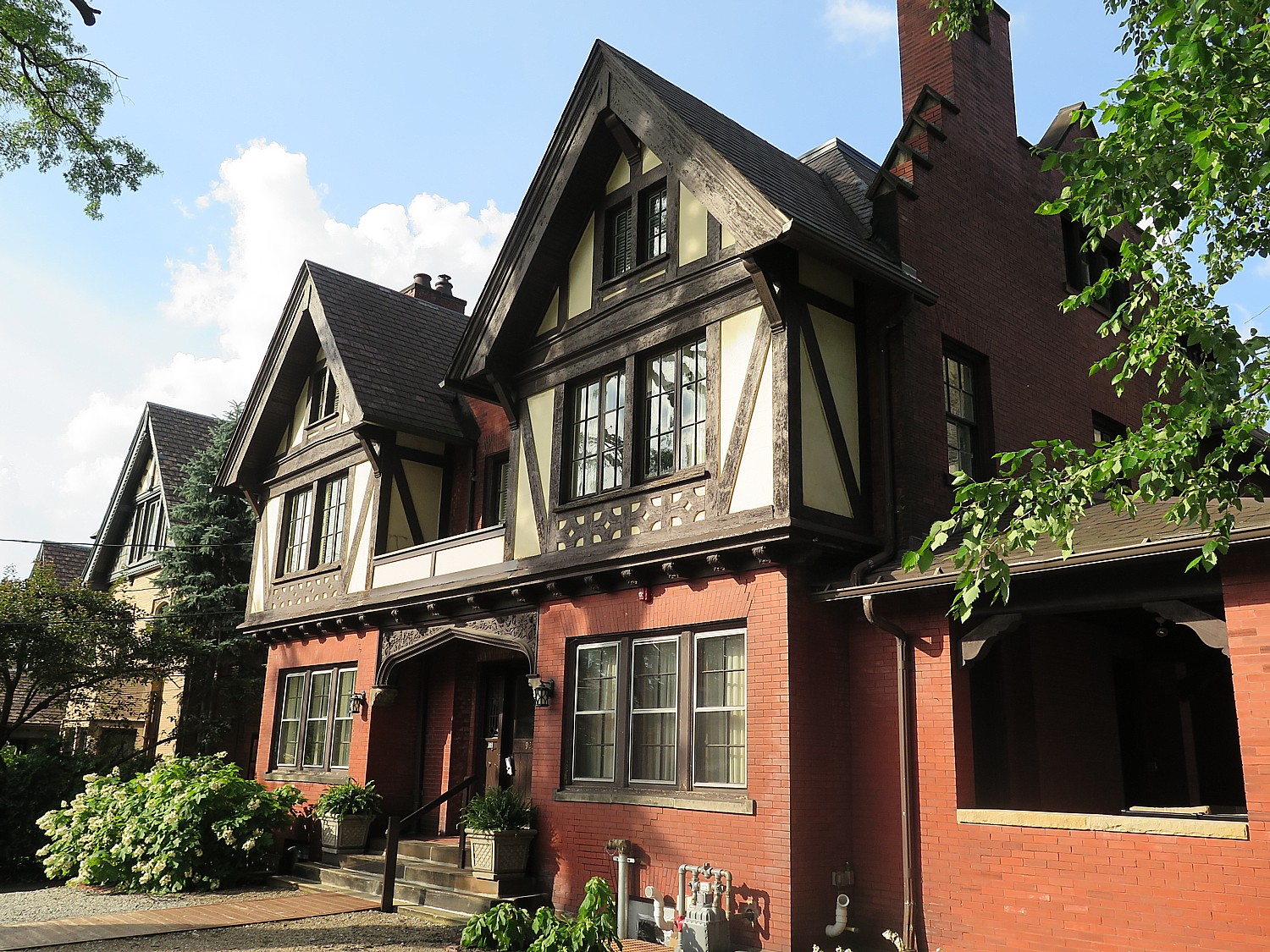
The Amberson House, built for McCook’s daughter, Bessie McCook Reed, next door to the main mansion. She lived in the home from the time of her marriage until her passing in 1966. It is now part of the Mansions on Fifth historic hotel © 2017 Karen Rubin/goingplacesfarandnear.com

As his mansion was being built, McCook’s daughter Bessie became engaged, so he contracted to build a more modest (but still spacious at 8,000 square feet) home adjacent to his own. The smaller mansion (now the Mansions on Fifth Hotel’s Amberson House) was completed first, and the main house (now called the Fifth Avenue House), was finished in 1906.

The two mansions were designed in the Elizabethan Revivalist and Tudor styles by the architectural firm Carpenter & Crocker, of Pittsburgh’s East End. Many of the firm’s other projects, which range from Florida to Washington state, exist today, including the iconic Trinity Cathedral Parish House in downtown Pittsburgh. The contractor on the McCook estate was Thomas Reilly, who also built the massive and magnificent St. Paul’s Cathedral just down Fifth Avenue from the estate. Reilly also worked with Carpenter & Crocker on the Parish House at Trinity Cathedral.

“McCook and his designers and builders spared no expense, using some of the finest craftsmen of the era, including master ironworker Cyril Colnik (fixtures and decorative items), Rudy Brothers Art Glass (leaded and stained glass installations), and Rookwood Ceramic Tile (for the decorative tile around the fireplaces in the houses). The stunning carved wood in the Grand Hall of the Fifth Avenue House was produced by Woolaeger Manufacturing of Milwaukee. The total cost of the project was $300,000 in 1906 ($7.6 million in today’s dollars).

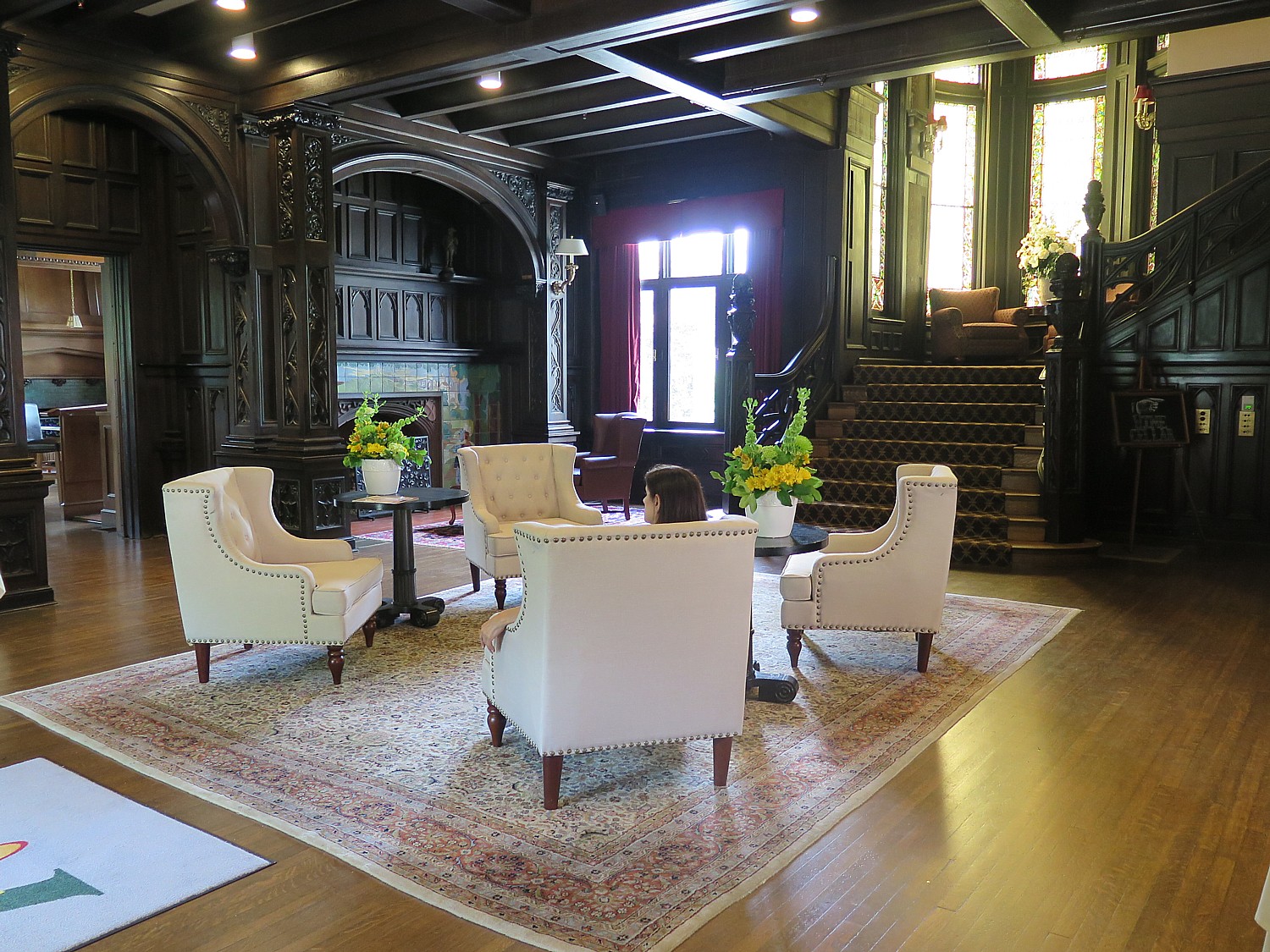
Light streams in to a wood-paneled lobby from stained glass windows on the staircase of the Mansion on Fifth to one of the cozy sitting areas in front of a fireplace © 2017 Karen Rubin/goingplacesfarandnear.com

After McCook died in, 1923, the family continued to live in the main mansion through the 1930’s. But the Great Depression took its toll and the family was unable to keep current with their property taxes. Seized for sheriff’s sale by the Allegheny County Sheriff’s Department, the mansion was purchased in 1949 by Emil Bonavita, Sr. and his wife Margaret for $28,000. The Bonavitas moved into the mansion with their two children, Emil, Jr. and Charles.

As a way to pay for upkeep for the massive building, the Bonavitas rented out rooms on the upper floors to students at nearby Carnegie Mellon University. Students were thoroughly screened, and many of those attracted to the historic property were studying at CMU’s prominent arts and theater schools. According to Pittsburgh Post-Gazette architecture writer Patricia Lowry, tenants included Albert Brooks, Andy Warhol, Shirley Jones and George Peppard. Margaret, who acted as a house mother to the many students who resided at the home over the years, resided in the McCook mansion until her much mourned death in 2003.

Bessie McCook Reed, for whom the Amberson House was built in 1905, lived in the home from the time of her marriage until her passing in 1966. Three years later, Emil Bonavita, Jr. and his wife Marie acquired the Amberson House and moved in to raise their family of four children. Emil and Marie also assisted in the boarding operations at the larger Fifth Avenue House.

In 2004, the Fifth Avenue House, the main mansion, sustained a horrific fire which caused extensive damage to the upper floors. The building became uninhabitable, and its tenure as a home for students ended. Emil and Marie looked to sell the damaged mansion to a purchaser who would restore it.

Pittsburgh preservationists, husband and wife Mary Del Brady and Richard Pearson, acquired both houses of the former McCook estate from the Bonavitas for $1.5 million. Their idea was to redevelop the property into a boutique hotel and event center. Restoration and repair work, which was extensive given the fire damage, began in January 2010. The Fifth Avenue House, the primary mansion, was completed in early 2011 and opened to the public in March of that year with 13 guest rooms and suites, the grand hall event space, a library, the Oak Room pub, and two private dining rooms. The adjacent Amberson House, with 9 guest rooms and suites, opened in November 2012. Total cost of the project exceeded $8,000,000.

The properties were recognized as an historic landmark by the National Trust for Historic Preservation in 2012.

New Era for Mansions on Fifth

In late September 2016, Pittsburgh-based boutique hotel owner/operator Priory Hospitality Group acquired the operating assets of the Mansions on Fifth Hotel and assumed operations of the Shadyside property. Owned and operated by the Graf family since 1986, the Priory Hospitality Group’s properties include the award winning Priory Hotel (a Tripadvisor Hall of Fame member), Grand Hall at the Priory event facility (Best Wedding Venue – City Paper 2016; Best of the Knot 2006-2016; Pittsburgh Magazine Best Restaurant 2012 & 13), and Priory Fine Pastries commercial and retail bakery (Runner Up – Pittsburgh Magazine Best Bakery 2012 & 13).

Priory Hospitality Group invested considerably to upgrade the properties and amenities.

The Mansions on Fifth today offers 22 elegant guest rooms (each one different; you feel more like a family guest than an out-of-towner) in the two distinct historic buildings – the main 20,000 sq. ft. Fifth Avenue House and the adjacent 8,000 sq. ft. Amberson House. The Fifth Avenue House also has the hotel’s reception desk, dining room, Oak Room pub, chapel, library and wine cellar.

The Front Desk is staffed 24 hours a day to provide help with directions, restaurant recommendations, check in, , while butlers are available from 7 a.m. to 11 p.m. every day to assist.

My room is in the Amberson House, which for your all-too-brief stay makes you feel like you are really at home in a mansion. The Amberson House offers its own cozy and comfortable first floor common areas in addition to guest rooms. It would be perfect for a family or group to take over (indeed, during my stay, there is a large wedding party.)

One of the cozy sitting areas in front of a fireplace at Mansions on Fifth, a Gilded Age mansion converted to a boutique hotel © 2017 Karen Rubin/goingplacesfarandnear.com

You can appreciate the renovations: each of the elegant guest rooms and suites features a spacious bathroom with glass and ceramic shower enclosures, Gilchrist and Soames organic bath and shower amenities, and soft, thick towels woven with bamboo fibers.

Some guest rooms and suites also feature fireplaces and jetted tubs. The spacious Presidential Suite has two separate bedrooms and baths and nearly 1,000 square feet of living space.

My room at Amberson House makes you feel more like a weekend guest of the McCook family rather than an out-of-towner © 2017 Karen Rubin/goingplacesfarandnear.com

In addition, the Mansions on Fifth Hotel offers a wide variety of amenities and services, including:  complimentary continental breakfast (with a more hearty ala carte breakfast available at an additional cost); complimentary newly upgraded Wireless Internet service; complimentary on premise parking (not a small matter in Pittsburgh); guest computer with WiFi access and printer; Fitness Center and The Oak Room pub, open 4 p.m. to 11 p.m. daily, featuring craft cocktails, fine wines, and a variety of microbrew beers.

The Oak Room pub also is the venue for a variety of weekly events, from wine flights, to whiskey tastings, to live music.

Mansions on Fifth is a delightful venue for weddings (there is one that had just finished when I arrive), family reunions and special events. You can basically take over the two mansion homes.

(I am also intrigued to visit the Priory Group’s historic, 42-room boutique hotel that was once a Benedictine monastery, built in 1888, meticulously restored to modern standards and featuring all the amenities of a large downtown property with the intimacy of a small European hotel, located in Deutschtown on the North Shore, a near walk to the Andy Warhol Museum and downtown Pittsburgh. The Priory Group spent $2.7 million to upgrade the property, adding a new, larger front desk and a cozy pub — the Monks’ Bar – in the original building, a Fitness Center and Business Center, as well as state of the art meeting space in a new wing.)

Mansions on Fifth, 5105 Fifth Avenue, Pittsburgh, PA 15232, 412-381-5105, 800-465-9550, http://mansionsonfifth.com/.

For more information, contact Visit Pittsburgh, 412-281-7711, 800-359-0758, 877-LOVE PGH (568-3744), info@visitpittsburgh.com, www.visitpittsburgh.com.

Next:

Mansions on Fifth Historic Hotel is Steps Away from Pittsburgh’s Top Cultural Attractions

See also:

One Day, Two Nights in Pittsburgh: From Grey to Green, A Proud City Revitalized

36 Hours in Pittsburgh: Point State Park Proves Highlight of Walking Tour

36 Hours in Pittsburgh: Andy Warhol Museum is at Center of Revitalized City

36 Hours in Pittsburgh: Strip District Exemplifies City’s Past, Future

Two Nights, One Day in Pittsburgh: Historic Omni William Penn Hotel Connects to City’s Proud Heritage

Rails-to-Trails Conservancy’s BikeTour on Great Allegheny Passage Highlights Benefits of RailTrails

Rails-to-Trails Conservancy’s Sojourn Biketour on Great Allegheny Passage Showcases Forgotten Towns

‘World’s Largest’ Glass Sculpture with Trump Connection is Boon for Dunbar, Pennsylvania

____________________

© 2017 Travel Features Syndicate, a division of Workstyles, Inc. All rights reserved. Visit goingplacesfarandnear.com,  www.huffingtonpost.com/author/karen-rubin , and travelwritersmagazine.com/TravelFeaturesSyndicate/. Blogging at goingplacesnearandfar.wordpress.com and moralcompasstravel.info. Send comments or questions to FamTravLtr@aol.com. Tweet @TravelFeatures. ‘Like’ us at facebook.com/NewsPhotoFeatures