Tag Archives: St. Louis

Gateway Arch National Park is a Surprising and Relevant Monument to USA’s Western Expansion

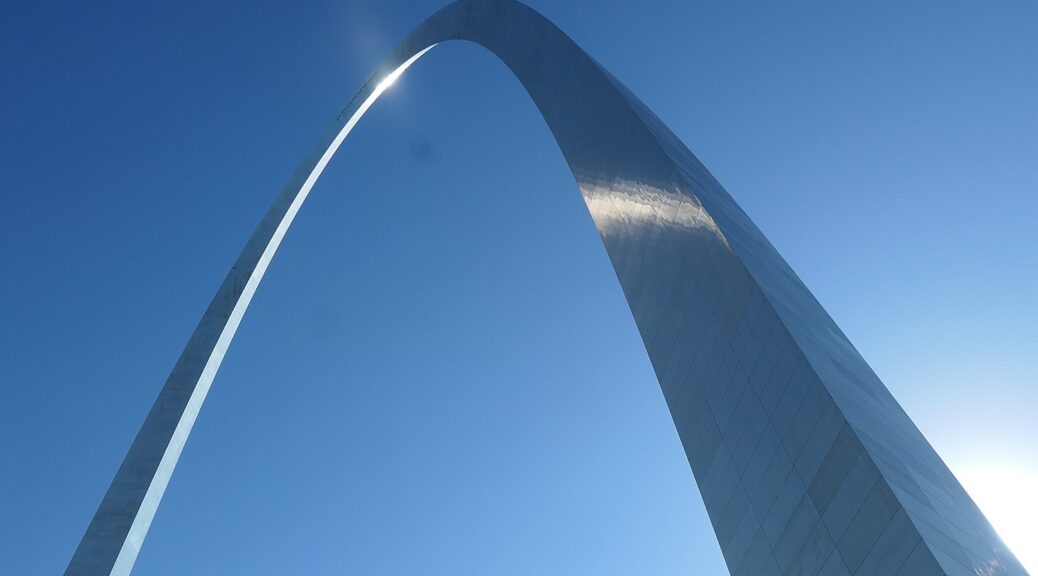
The Gateway Arch, at 630 feet high, the tallest monument in the US, is an impossibly graceful ribbon of stainless steel. It honors St. Louis’ a © Karen Rubin/goingplacesfarandnear.com

By Karen Rubin, Travel Features Syndicate, goingplacesfarandnear.com

I must have spent about two hours in St. Louis’ Old Courthouse before exiting out the riverfront door to continue on to the Gateway Arch, stopping to take in the inspiring statue of Dred and Harriet Scott.

The riverfront Gateway Arch National Park, spanning 90 acres (and apparently configured on the site of the original colonial settlement) is a glorious community space, with the Gateway Arch becoming ever more monumental and striking as I get closer.

The Arch is an impossibly graceful ribbon of stainless steel, reflecting the sun.

Gateway Arch National Park is a 90-acre complex featuring the Gateway Arch, an underground museum, and the Old Courthouse © Karen Rubin/goingplacesfarandnear.com

I had been here decades ago, not realizing at the time that the Arch was actually relatively new, and an engineering marvel when it was built between 1963-5.  Architect Eero Saarinen’s inspired design for a 630-foot stainless steel arch as an ideal monument to the spirit of the western pioneers was chosen after a nationwide competition in 1947-48. It was built for total cost of $13 million: 75% paid by the federal government, and 25% City of St. Louis funds; the $2 million Arch transportation system was financed by the Bi-State Development Agency.

The nation’s tallest monument (630 feet), the Gateway Arch has become an internationally recognized symbol of St. Louis, commemorating  Jefferson’s vision and St. Louis’ role in the westward expansion of the USA © Karen Rubin/goingplacesfarandnear.com

I had not realized there is a fantastic (free!) museum beneath it, and interactive experiences, including a bizarro tram (it looks like a Woody Allen car from “Sleeper”), that takes you on a track inside the Arch to the very top where you get out for a view through windows, before riding the tram back down. (You have to reserve tickets early; they were sold out by the time I arrived in the afternoon.)

The exhibits in the Gateway Arch museum are fascinating. They trace St. Louis’ history from A French fur trading post, Colonial St. Louis, where you discover the Indigenous, French, and Creole cultures of St. Louis before the Louisiana Purchase; Thomas Jefferson’s Vision  for the United States; The Riverfront Era (the first steamboat to arrive in St. Louis changed the city forever).

Gateway Arch museum discusses St. Louis’ Riverboat era and St. Louis’ place in the Westward Expansion © Karen Rubin/goingplacesfarandnear.com

St. Louis was once inhabited by Native Americans of the ancient Mississippian culture. Due to the area’s proximity to both the Mississippi River that runs along the eastern border, and Missouri River that joins it just north of the city, and the Meramec River on the southern border of St. Louis County, it was not only a hub for the Mississippians, but for the European traders and later pioneers, frontiersmen and ultimately settlers. It switched hands, first being claimed by France, then Spain after the Seven Years War, then (secretly) back to France, before Napoleon Bonaparte sold the Louisiana Territory to President Thomas Jefferson in 1803, who used it as the launching point for the Lewis & Clark Expedition. St. Louis remained a gateway into the American West.

Gateway Arch museum discusses St. Louis’ important role in America’s Westward Expansion © Karen Rubin/goingplacesfarandnear.com

It was surprising to learn that St. Louisians went to sleep on March 9, 1804 under Spanish rule, only to wake up as American citizens.  Indeed, in just a matter of days, residents were under French, Spanish, French, British, American flags. The implications were great: American land laws were different and Spanish land grants were subject to legal challenge; merchants and fur traders had new laws and trading partners; American slave law was based on British tradition, so slaveholders no longer could accept self-purchase and enslaved families could be torn apart through sale; free persons of color underwent greater oppression from the Spanish system; women had fewer rights under American law than under Spanish, and married women could no longer own property. (Now imagine what Greenlanders and Canadians are facing.)

“Should the people of St. Louis have a say in who owned them?” Different views of Manifest Destiny depending upon who you were © Karen Rubin/goingplacesfarandnear.com

The exhibit on Manifest Destiny, the USA’s determination to move west and control the continent, is the most interesting and relevant today, raising questions about the people who were displaced. (Trump has resurrected Manifest Destiny as his operative foreign policy); New Frontiers explores how people settled and lived in the West, the myths that became the West’s cultural legacy, and the changes caused by industry. I love the questions posed: “Because you plant a stake, does that mean you own it?” “Should the people of St. Louis have a say in who owned them?” (Spain. Britain or the US within a matter of days?. I can only wonder how long it will be before Trump shuts the exhibit down and replaces it with something akin to extolling the Divine Right of Kings.)

The museum exhibits at Gateway Arch National Park ask important questions like “Does staking claim to land justify national ownership?” © Karen Rubin/goingplacesfarandnear.com

Building the Dream is truly a fascinating exhibit where you learn how the Gateway Arch became a reality, from the engineering to the building. You learn that the Arch’s foundations are sunk 60 feet into the ground and the arch is built to withstand earthquakes and high winds. 

It is fascinating to learn about the engineering and the people who built the stainless steel Gateway Arch, at 630 feet high, the tallest monument in the USA © Karen Rubin/goingplacesfarandnear.com

I was amazed at all you can do here besides exploring these fascinating exhibits in the free museum about St. Louis’s role in westward expansion (plan to spend at least an hour). You can also purchase a ticket to a 28-minute documentary movie about the building of the arch ($3-$7), a 10-minute V.R. Experience ($5-$8) and take an hour-long Riverboat Cruise ($16-$26) outside and down the grand staircase to the riverfront.

A Grand Staircase leads from the St. Louis levee where there is a riverboat you can cruise on, to the base of the Gateway Arch © Karen Rubin/goingplacesfarandnear.com

But one of the most thrilling (and unique) experiences is the Ride to the Top of the Arch on a tram. It is a 45-60 minute experience (4 minutes up, 3 minutes down, 8-ish minutes at the top, plus a pre-boarding educational tour).

 You can take a 45-60 minute Ride to the Top of the Arch on a tram, a tiny capsule that sits five people © Karen Rubin/goingplacesfarandnear.com

Each tram consists of eight capsules that have clear doors on the front and are closed on the back. Each tram car has a five-foot diameter and five seats. (Visitors with claustrophobia issues or who simply want to take souvenir pictures can sit in the replica tram car by the ticketing counter before purchasing tickets.)

The viewing area at the top was designed to hold up to 160 people when at full capacity, but with two trams operating, there are never more than 80 at the top at one time.

The Tram Ride to the Top operates rain or shine. The Arch is designed to sway as much as 18 inches in 150 mile per hour winds and it can withstand an earthquake; however, under normal conditions the Arch does not sway. It takes a 50-mile an hour wind to move the top 1 1/2 inches each side of center.

The Arch has weathered countless severe Midwest thunderstorms and is able to operate normally in all but the most severe weather. During tornado warnings, the tram rides will be cancelled as a precaution. The tram may also be shut down if it is swaying so much that visitors are having a hard time keeping their balance. This happens very infrequently.

There are 16 windows on each side of the viewing area. Each window is 7 x 27 inches and 0.75 inches thick. Over 500 tons of pressure was used to jack the legs of the Arch apart for the last four-foot piece to be inserted at the top. A larger window would not withstand that pressure.

At peak times, as many as 80 trips a day on each tram can go to the top. When operating at full capacity, 40 tickets are sold for each trip, accommodating 6400 people each day. During normal hours there are only 48 trips to the top each day on each tram, accommodating 3,840.

On a clear day the view at the top can extend up to 30 miles in either direction, though St. Louis can be hazy, reducing visibility at the top and on cool, damp mornings a dense fog can create zero visibility at the top. Check out the Gateway Arch Park Foundation’s webcams to see what the view from the top is like on the day you wish to visit.

Tickets are sold at gatewayarch.com and cost $13-19; the Ride does sell out, so it is recommended to buy timed tickets in advance. The last tram of the day goes up approximately an hour before closing time.

For more trip ideas: Things To Do page and events calendar.

Gateway Arch National Park was originally named the Jefferson National Expansion Memorial, honoring President Thomas Jefferson who purchased the Louisiana Territory and had a vision for America’s Westward Expansion © Karen Rubin/goingplacesfarandnear.com

Gateway Arch National Park was originally named the Jefferson National Expansion Memorial, honoring President Thomas Jefferson whose acquisition in 1803 of the Louisiana Territory from France, known as the Louisiana Purchase, doubled the size of the United States, and who promoted the Westward Expansion. An act of Congress renaming the park was signed into law in February 2018. 

More information: https://www.nps.gov/jeff/index.htm; help planning your visit: https://www.nps.gov/jeff/planyourvisit/index.htm.

Walking back to the 21c Museum Hotel, I spot the Economy Museum, housed in the Federal Reserve Bank of St. Louis (free), and up Washington Avenue, a lively boulevard lined with pubs, a bowling alley, restaurants. and come across the Blues Museum (which apparently has closed after many years).

The Old Courthouse and Gateway Arch National Park are reason enough to come to St. Louis and for me are the big bonuses of having come to the city to bike the Katy Trail, a Rails to Trails Conservancy Hall of Fame trail.

For more planning information, visit Explore St. Louis, 800-916-8938, explorestlouis.com.

See also:

St. Louis’ Restored Old Courthouse Resurrects Important Lessons of Dred Scott’s Struggle for Freedom

21 C Museum Hotel St. Louis Embodies, Preserves City’s History, Culture, Community

Biking through History on Missouri’s Katy Trail During America’s 250th

Biking the Katy Trail: From Cliffside Pictographs to the Capital’s Stirring ‘Social History of Missouri’ Mural

Biking Missouri’s Katy Trail Following Lewis & Clark, Daniel Boone & the Westward Expansion

__________________

© 2026 Travel Features Syndicate, a division of Workstyles, Inc. All rights reserved. Visit goingplacesfarandnear.com, longislandpress.com/category/vacation-travel.com and travelwritersmagazine.com/TravelFeaturesSyndicate/. Blogging at goingplacesnearandfar.wordpress.com and moralcompasstravel.info. Visit instagram.com/going_places_far_and_near. X: @TravelFeatures Threads: @news_and_photo_features ‘Like’ us atfacebook.com/NewsPhotoFeatures. Send comments/questions to FamTravLtr@aol.com.

21 C Museum Hotel St. Louis Embodies, Preserves City’s History, Culture, Community

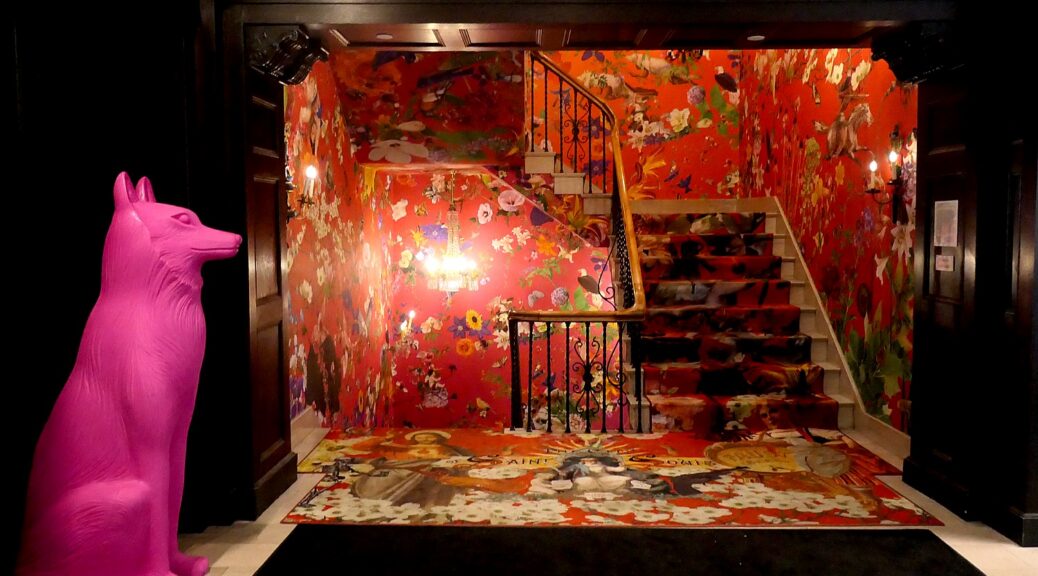
Art is a key element of the 21c Museum Hotel in St. Louis, a Historic Hotels of America member, where even the staircase is like walking into a painting © Karen Rubin/goingplacesfarandnear.com

By Karen Rubin, Travel Features Syndicate, goingplacesfarandnear.com

It’s become my practice to arrive at least a day early for a tour or cruise – to take into account any unforeseen travel delays but also to spend at least a day to explore.

With a 6:30 am pick up time for my Wilderness Voyageurs six-day bike tour on the famed Katy Trail 240-miles through Missouri, this wasn’t even an option. So knowing I would be flying into St. Louis (about 25 minutes away from the pick-up), I took the opportunity to have a good portion of a day to explore this history- and culturally-rich city.

My first step is always to seek out a Historic Hotels of America member property because I know staying in a historic hotel will enhance my appreciation for a destination– these properties are integral to a place, even characters that typically play a part in its story, are always architecturally and culturally interesting and can be depended upon to be walking distance or close proximity to the what want to explore.

St. Louis’ iconic sites, the Old Courthouse and Gateway Arch National Park are walking distance from 21c Museum Hotel © Karen Rubin/goingplacesfarandnear.com

That was definitely the case for my stay at the 21c Museum Hotel in St. Louis, with a marvelous story, gorgeous architecture, set amid the city’s important historic and cultural structures, and most importantly, a delightful 20-minute walk to Gateway Arch National Park, which was top of my list to see. But it had something more: an important art gallery, that, I learned, is the essence of this hotel brand of six 21c Museum Hotels.

The 21c Museum Hotel St. Louis started its story as a community hub when it opened as a central branch of the St. Louis YMCA in 1926, and this year is celebrating its 100th anniversary and its third anniversary as a hotel.

You might imagine a YMCA as a modest, even institutional structure, but this one was built as an architectural gem.

It was originally constructed by architects Louis LaBeaume and Eugene S. Klein in the Renaissance Revival style as the central branch of the St. Louis YMCA, and was the organization’s largest local branch and a major community hub until 2017. Due to its architectural significance and deep ties to the city, the building was listed on the National Register of Historic Places.

21c Museum Hotels revived the 10-story YMCA building, preserving its historic architectural elements like the original indoor pool, billiards room, and gymnasium and reasserting the space’s relevance as a gathering point in the heart of St. Louis. The hotel opened and became an official member of Historic Hotels of America in 2023.

The former YMCA basketball court is now a stunning art exhibition space at the 21c Museum Hotel, St. Louis © Karen Rubin/goingplacesfarandnear.com

Today, the 21c Museum Hotel St. Louis is a 173-room boutique hotel which is not just a hotel with an art gallery, but houses a major contemporary art museum. It features 14,000 square feet of curated gallery space (much of it in what used to be the basketball court, and open free of charge to the public 24-hours a day (guests have to use their room card in the elevator to access the room floors). 

“Infusing the extraordinary into daily life, radical access to contemporary art is the modus operandi of 21c St. Louis,” the notes read. “Dynamic and thought-provoking curated exhibitions reflect the global nature of art today.” 

Art is a distinct element of the 21c Museum Hotel in St. Louis, a Historic Hotels of America member, where there is a gallery open 24/7 to the public and a proud heritage in the community since 1926 © Karen Rubin/goingplacesfarandnear.com

Indeed, I was enthralled by the exhibit on view during my stay, “The Future Is Female”; the current exhibit “Revival: Digging Into Yesterday, Planting Tomorrow” is on view through January (https://21cmuseumhotels.com/museum/revival/). (The exhibits typically rotate among the 21c Museum Hotels.)

Paying homage to its YMCA roots, the 10,500-square-foot full-service Locust Street Athletic and Swim Club boasts a stunning, tiled indoor four-lane lap pool © Karen Rubin/goingplacesfarandnear.com

Paying homage to its YMCA roots, the 10,500-square-foot full-service Locust Street Athletic and Swim Club boasts a stunning, tiled indoor four-lane lap pool you might confuse for a millionaires’ mansion, sauna, steam rooms and offers spa services.

Other features include the Idol Wolf restaurant serving Iberian-inspired dishes; the Good Press Café; a stunning lobby bar, and a lounge with pool table.

While art and stunning interior design are everywhere at the 21c Museum Hotel, the ambiance is warm, welcoming, even comfortable © Karen Rubin/goingplacesfarandnear.com

The art spills over throughout the building so you never know what you will come upon, causing surprise and delight. Even the staircase between floors is a work of art.

Art is a key element of the 21c Museum Hotel in St. Louis, a Historic Hotels of America member, where even the staircase is like walking into a painting © Karen Rubin/goingplacesfarandnear.com

The property is known for its playful, colorful penguin sculptures scattered throughout the public spaces – a feature of the 21c Museum owners. Guests can even request to have one “adopted” and placed in their room during their stay.

The penguins first debuted at 21c Museum Hotel Louisville. 21c founders Laura Lee Brown and Steve Wilson had purchased the sculptures after seeing the joy they evoked from onlookers at the 2005 Venice Biennale public art project. Now perched around 21c Museum Hotels (each 21c has its own flock of penguins in the color that embodies the city’s identity), the playful penguins contribute to the hotel’s mission of making contemporary art more accessible to the public.

While art and stunning interior design are everywhere at the 21c Museum Hotel, the ambiance is warm, welcoming, even comfortable © Karen Rubin/goingplacesfarandnear.com

And while there is art everywhere and stunning interior design, it is not at all forbidding or unapproachable, but warm and welcoming, even comfortable. You feel very much a part of the “club.” And it is easy to see why 21c Museum Hotel Louisville was named to the Historic Hotels of America’s 2025 Top 25 Historic Hotels of America for a Romantic Proposal – indeed, I spot a bridal couple in an embrace, posing for their photos.

21c Museum Hotel Louisville was named to the Historic Hotels of America’s 2025 Top 25 Historic Hotels of America for a Romantic Proposal © Karen Rubin/goingplacesfarandnear.com

The 21c Museum Hotel also honors its original commitment to community, from its days as the YMCA, collaborating with its neighbors and community partners to ensure the historic establishment’s presence extends beyond its walls. Guests can enjoy poetry evenings, attend artist demonstrations, and support local creators during their stay.

Strolling through Citygarden Sculpture Park, St. Louis © Karen Rubin/goingplacesfarandnear.com

From the hotel, I wander to see the Mississippi River as it winds through St. Louis. I stroll through the Citygarden Sculpture Park on the way to the riverfront – a green area filled with beautifully landscaped lawns, cooling water features including sprinklers for children to play in, and striking sculptures. At the riverfront, you can take a cruise on a 19th-century paddlewheel riverboat or cycle along the river on bike paths that connect Missouri from downtown St. Louis to the Old Chain of Rocks Bridge, a historic Route 66 landmark.

St. Louis’ iconic sites, the Old Courthouse and Gateway Arch National Park are walking distance from 21c Museum Hotel © Karen Rubin/goingplacesfarandnear.com

I am bound for the Gateway Arch National Park, coming upon the Old Courthouse, which I realize was the site of the first two trials of the consequential Dred Scott case in 1847 and 1850 (see next).

But St. Louis is, no doubt, a sports city.

Besides being integral to St. Louis’ historic and cultural attractions, the 21c Museum Hotel is close by to St. Louis’ key sports destinations that are a big lure to the city: Energizer Park, a 22,423-seat soccer-specific stadium and 32-acre urban sports district in downtown St. Louis; Enterprise Center, an 18,096-seat indoor arena located at 1401 Clark Avenue in downtown St. Louis, that is home venue for the St. Louis Blues professional hockey team and hosts major concerts, family shows, and basketball tournaments. It is also a short ride away from Busch Stadium, the 45,000-seat stadium that is home base for the Cardinals baseball team.

The hotel offers an “Ultimate Cardinals Experience” that includes a $10 Uber credit to Busch Stadium, a 4-pack of local 4 Hands City Wide brews and a $25 credit (per stay) to be used at Idol Wolf or Good Press

Year round there are special packages to meet the mood and the season. Some recent examples:

Celebrate Mother’s Day with breakfast in bed with in-room dining from Good Press café, a rejuvenating spa treatment at the historic Locust Street Athletic and Swim Club, tour the art exhibition and end with a show-stopping Spanish-meets-midwest dinner at Idol Wolf.

Pampered Penguin package includes 1-hour massage at Locust Street Athletic and Swim Club and a bottle of bubbles upon arrival.

Yoga with Art: Beginners are welcome for Hatha Yoga Mondays and Wednesdays at 5:30 pm. (Drop-in passes can be purchased at the front desk at Locust Street Athletic and Swim Club).

Nightcap At The Museum: 21c Museum Hotel guests are invited to join the hotel every night for a complimentary late-night Angel’s Envy Bourbon sip and explore the museum exhibitions as the night winds down. Visit the restaurant bar from 8 pm-late and enjoy a pour with new friends, wandering around the galleries, or cozied up in your room.

While art and stunning interior design are everywhere at the 21c Museum Hotel, the ambiance is warm, welcoming, even comfortable © Karen Rubin/goingplacesfarandnear.com

There are currently six 21c Museum Hotel locations operating in the United States, managed as part of the Ennismore and Accor collection: Louisville, Kentucky (Flagship); Bentonville, Arkansas; Durham, North Carolina; Lexington, Kentucky; Kansas City, Missouri; and St. Louis, Missouri

21c’s chef-driven restaurants and bars highlight the brand’s Kentucky roots – so expect a healthy assortment of Bourbons behind the bar. You can explore the spirits and cocktail programs at: Idol Wolf, 21c St. Louis; Lockbox, 21c Lexington; Metropole, 21c Cincinnati; Proof on Main, 21c Louisville; The Hive, 21c Bentonville

21c Museum Hotel, 1528 Locust St., St. Louis, MO 63103, reservations: 888-831-7077, 21cMuseumHotels.com

A member of Historic Hotels of America since 2023, 21c Museum Hotel St. Louis has been named to these Historic Hotels of America Top 25 Lists:

The 2025 Top 25 Historic Hotels of America for a Romantic Proposal
The 2025 Top 25 Historic Hotels of America Best of Adaptive Reuse List
The 2024 Top 25 Historic Hotels of America Best of Adaptive Reuse List

Historic Hotels of America is a membership organization comprised mostly of independently owned and operated historic hotels but also from some 30 of the world’s major hospitality brands, chains and collections, and from 44 states, the District of Columbia and Puerto Rico. To be selected for membership into this prestigious program, a hotel must be at least 50 years old; been designated by the U.S. Interior Secretary as a National Historic Landmark or listed in or eligible for listing in the National Register of Historic Places; and recognized as having historic significance.

These historic hotels have all faithfully maintained their authenticity, sense of place, and architectural integrity. HHA members occupy buildings that date as early as 1651. Many are the site of key events in regional, national, or international history or have played host to famous figures, from heads of state and industry titans to writers and movie stars. Some hotels are also intertwined with the country’s cultural history, either as venues or culinary hotspots. As a historic preservation and hospitality program focused on experiences, Historic Hotels of America supports cultural heritage tourism and sustainability.   

(Its sister organization, Historic Hotels Worldwide® is a global collection of more than 300 historic hotels in more than 40 countries, including castles, chateaus, palaces, academies, haciendas, villas, monasteries, and other historic lodging spanning ten centuries, historichotels.org.)

Historic Hotels of America® is the official program of the National Trust for Historic Preservation with the mission to increase the preservation, recognition, and celebration of the finest historic hotels in the USA.

For more than 70 years, the National Trust for Historic Preservation has led the movement to save Americas historic places. A privately funded nonprofit organization, it works to save America’s historic sites; tell the full American story; build stronger communities; and invest in preservation’s future.

Find Historic Hotels of America members when you travel: https://www.historichotels.org/us,  800 678 8946.

See also:

Biking through History on Missouri’s Katy Trail During America’s 250th

Biking the Katy Trail: From Cliffside Pictographs to the Capital’s Stirring ‘Social History of Missouri’ Mural

Biking Missouri’s Katy Trail Following Lewis & Clark, Daniel Boone & the Westward Expansion

 __________________

© 2026 Travel Features Syndicate, a division of Workstyles, Inc. All rights reserved. Visit goingplacesfarandnear.com, longislandpress.com/category/vacation-travel.com and travelwritersmagazine.com/TravelFeaturesSyndicate/. Blogging at goingplacesnearandfar.wordpress.com and moralcompasstravel.info. Visit instagram.com/going_places_far_and_near. X: @TravelFeatures Threads: @news_and_photo_features ‘Like’ us atfacebook.com/NewsPhotoFeatures. Send comments/questions to FamTravLtr@aol.com.