Category Archives: Arts & Entertainment

‘Billy Joel-My Life, A Piano Man’s Journey’ Exhibit is Must-See at Long Island Music Hall of Fame

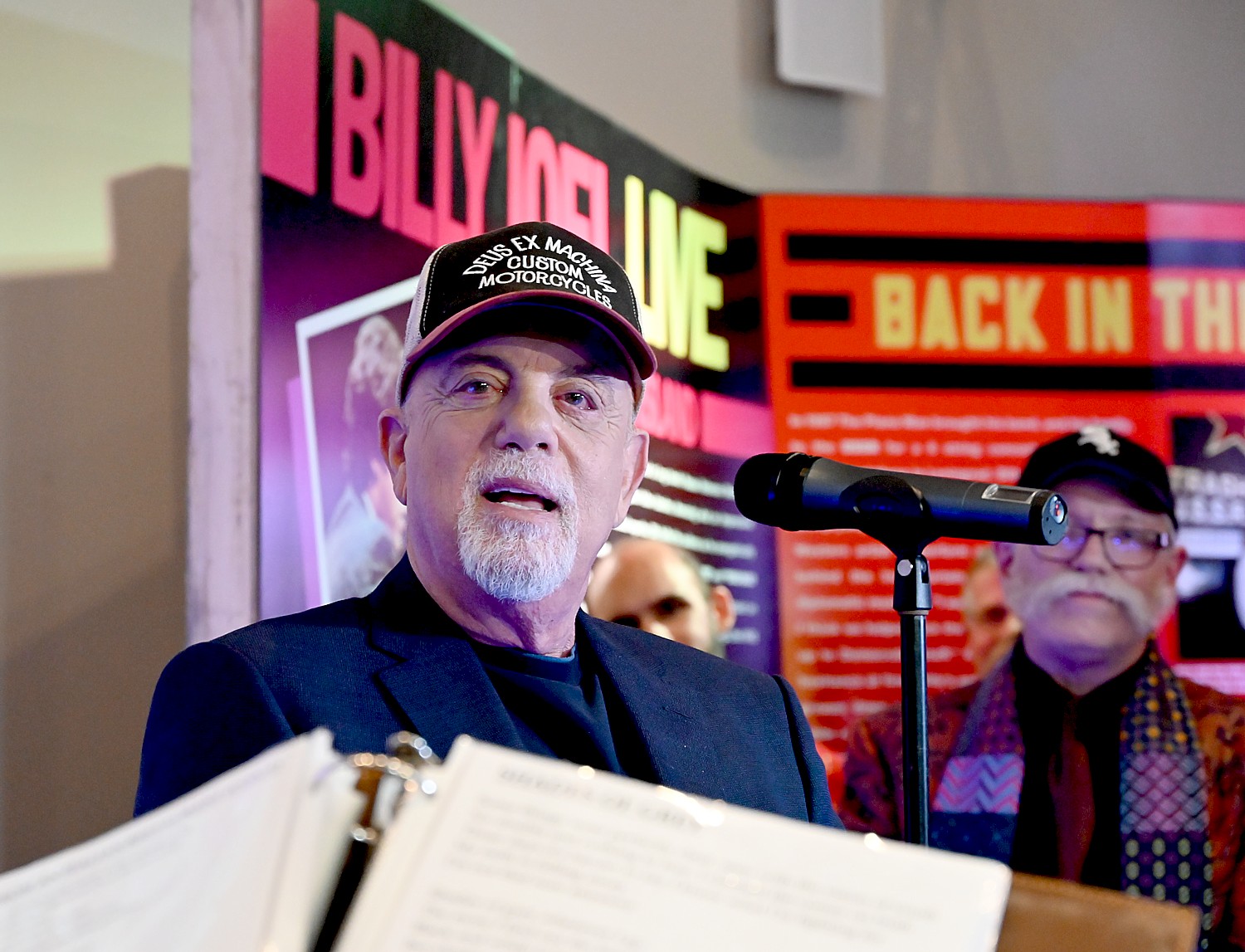
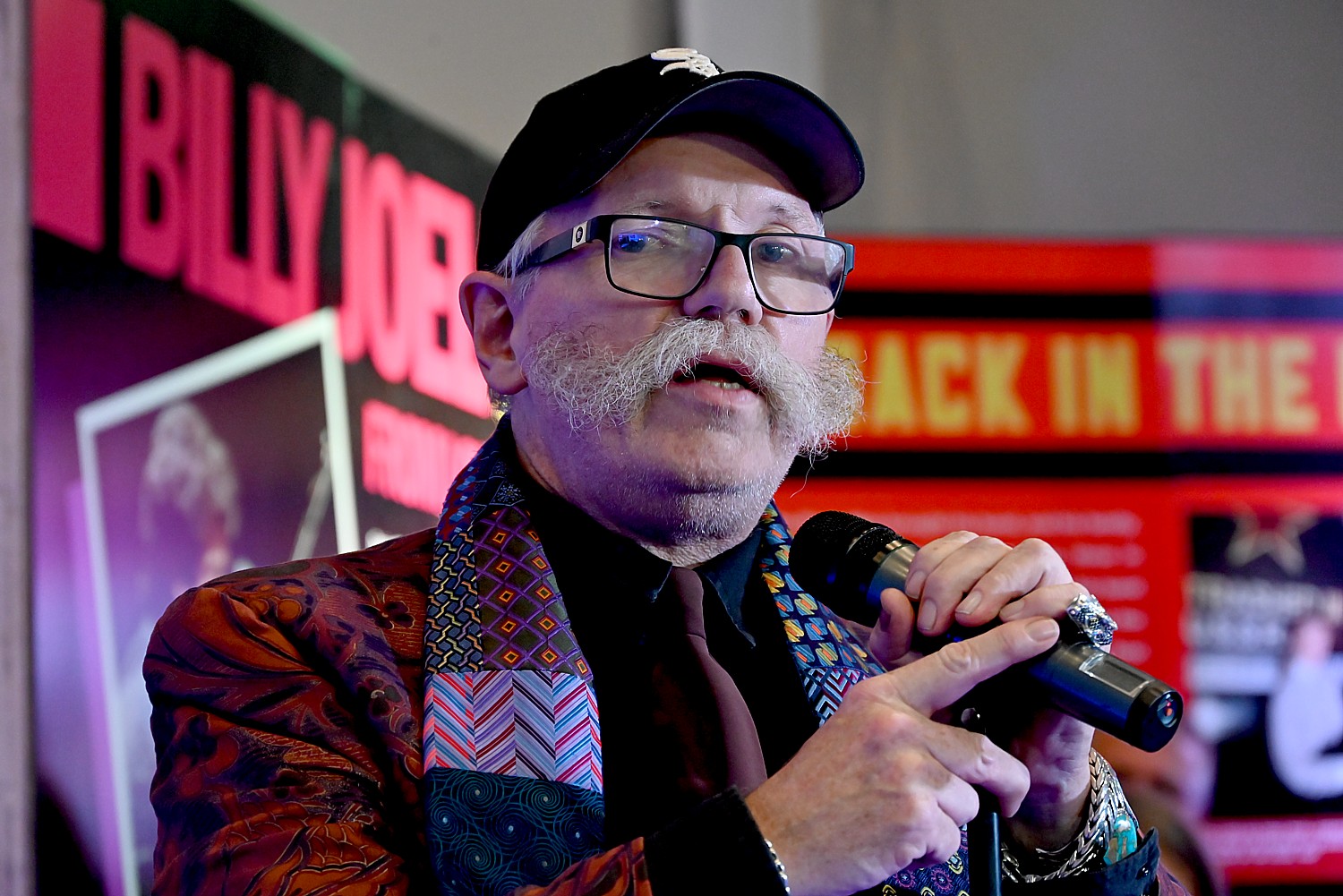
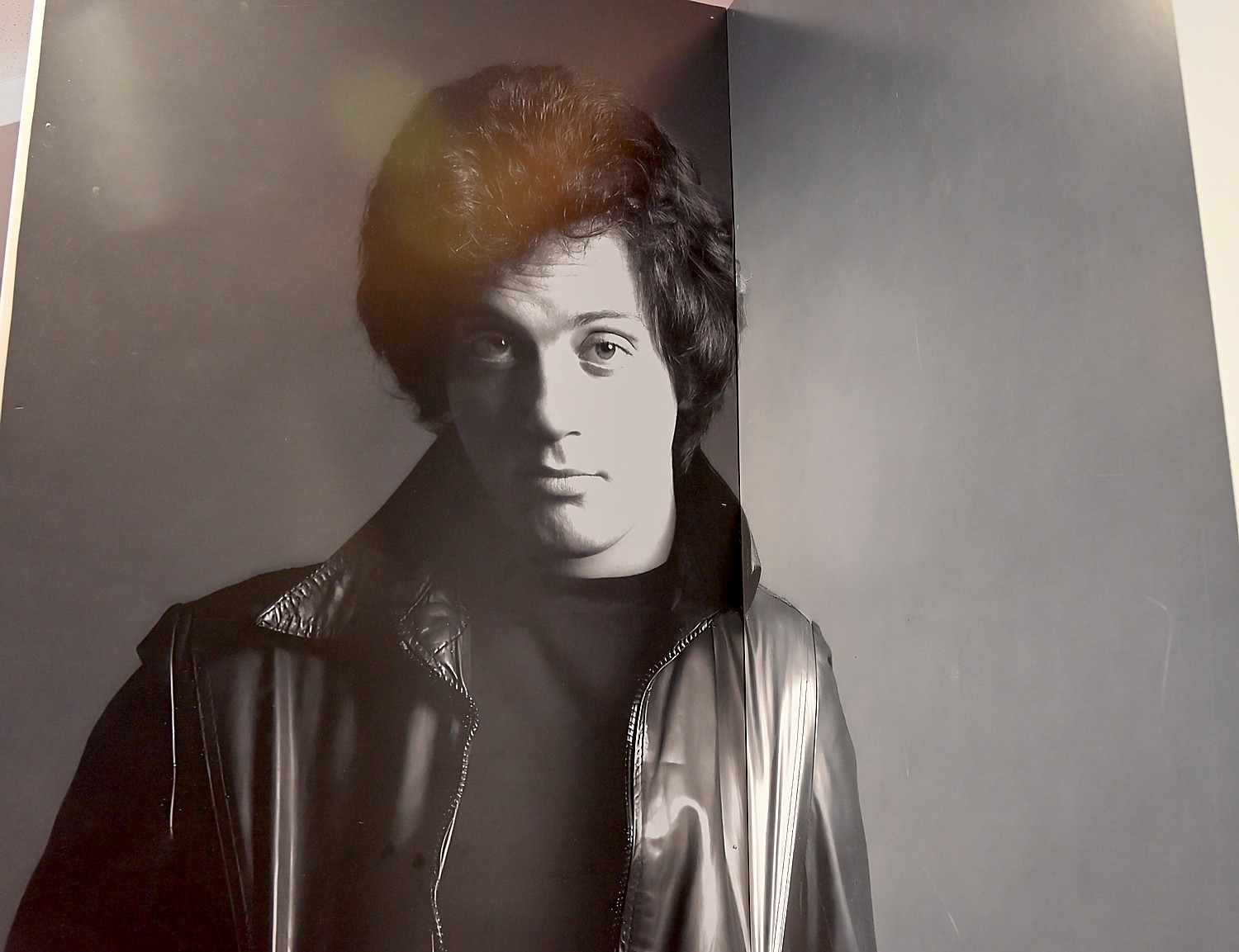
Billy Joel at the preview of the first exhibit devoted to his life and career, Billy Joel – My Life, A Piano Man’s Journey at the Long Island Music and Entertainment Hall of Fame: “This is quite an honor. I didn’t expect it to be that extensive. I’ve had a life.” © Karen Rubin/goingplacesfarandnear.com

By Karen Rubin, Travel Features Syndicate, www.goingplacesfarandnear.com

After nearly a year of planningthe Long Island Music and Entertainment Hall of Fame (LIMEHOF) opened the first-ever exhibit dedicated exclusively to LIMEHOF Inductee and Long Island’s own music legend Billy Joel, at its Stony Brook museum location .

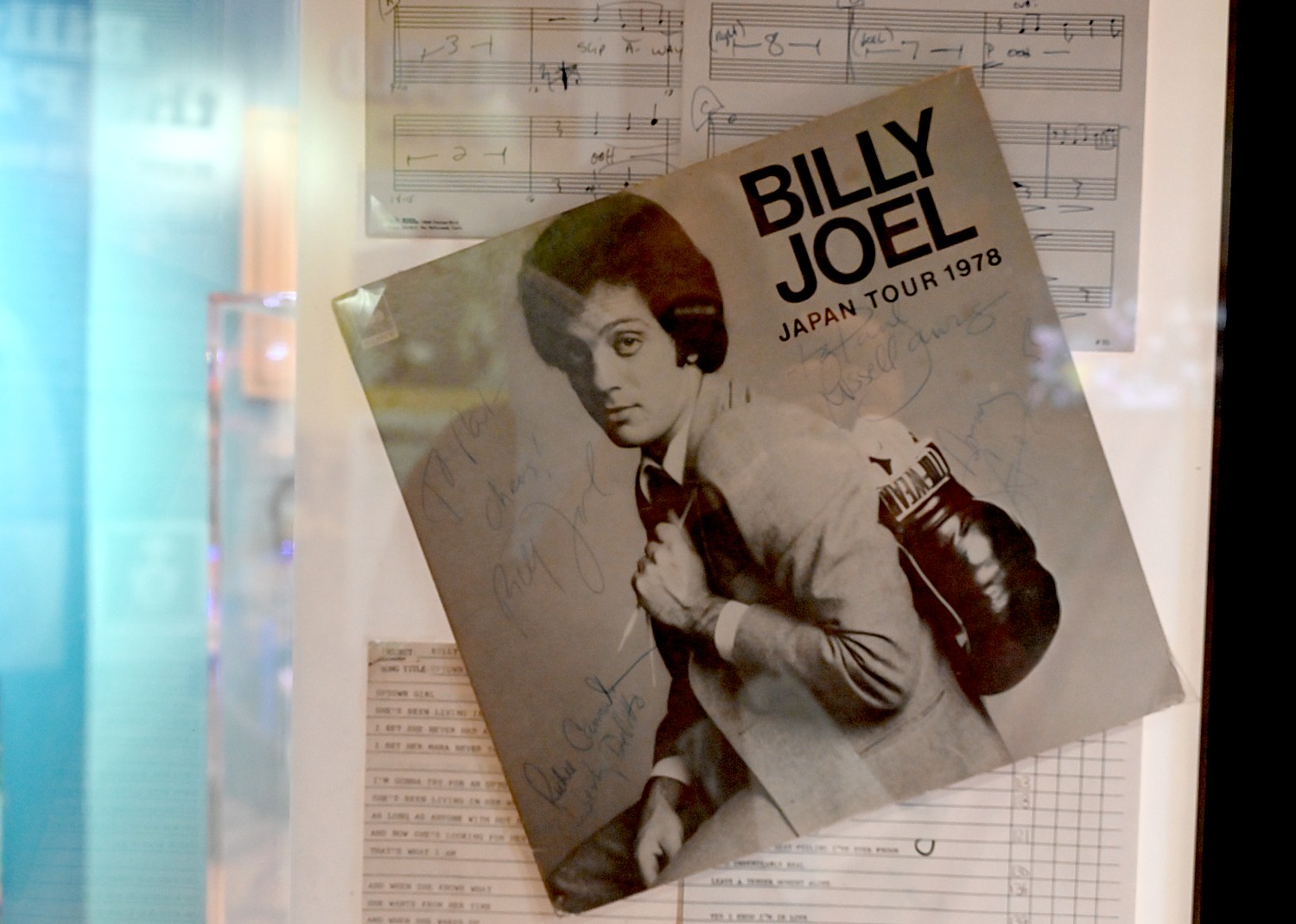
Billy Joel – My Life, A Piano Man’s Journey, created with Joel’s support and chock-full of his personal items, is this incredible showcase that brings you into his decades long career. It includes some of Billy Joel’s most cherished items, rare memorabilia, behind-the-scenes videos, awards, rare audio and video recordings, vintage instruments and historic photos, many donated by Billy Joel and never seen before in public.

This exhibit, the second since the museum opened in November of 2022, is a precious opportunity to experience Billy Joel’s life-spanning career from his roots in Levittown through his record albums, tours, inspirations, and personal experiences. You follow his life from his early days in bands like the Lost Souls, the Hassles and Attila through his solo career from his 1971 “Cold Spring Harbor” debut album, his monumental concert series with Elton John, his historic concert in the Soviet Union, at Shea Stadium, as Madison Square Garden’s artist in residence, to the present.

While Billy Joel has shunned such attention in the past, his incentive for cooperating on this exhibit was his desire to boost Long Island. “Historically Billy Joel has never done an exhibition. He doesn’t like to blow his own horn because he’s kind of a humble guy next door,” said Kevin O’Callaghan, LIMEHOF board member and Creative Director, who designed the exhibit. “When I said to Billy, ‘I think Long Island really needs this,’ he gave me the thumbs up. It was a home run.”

That humility – and his commitment to Long Island – was on view at a preview of the exhibit on November 21, just before its official opening.

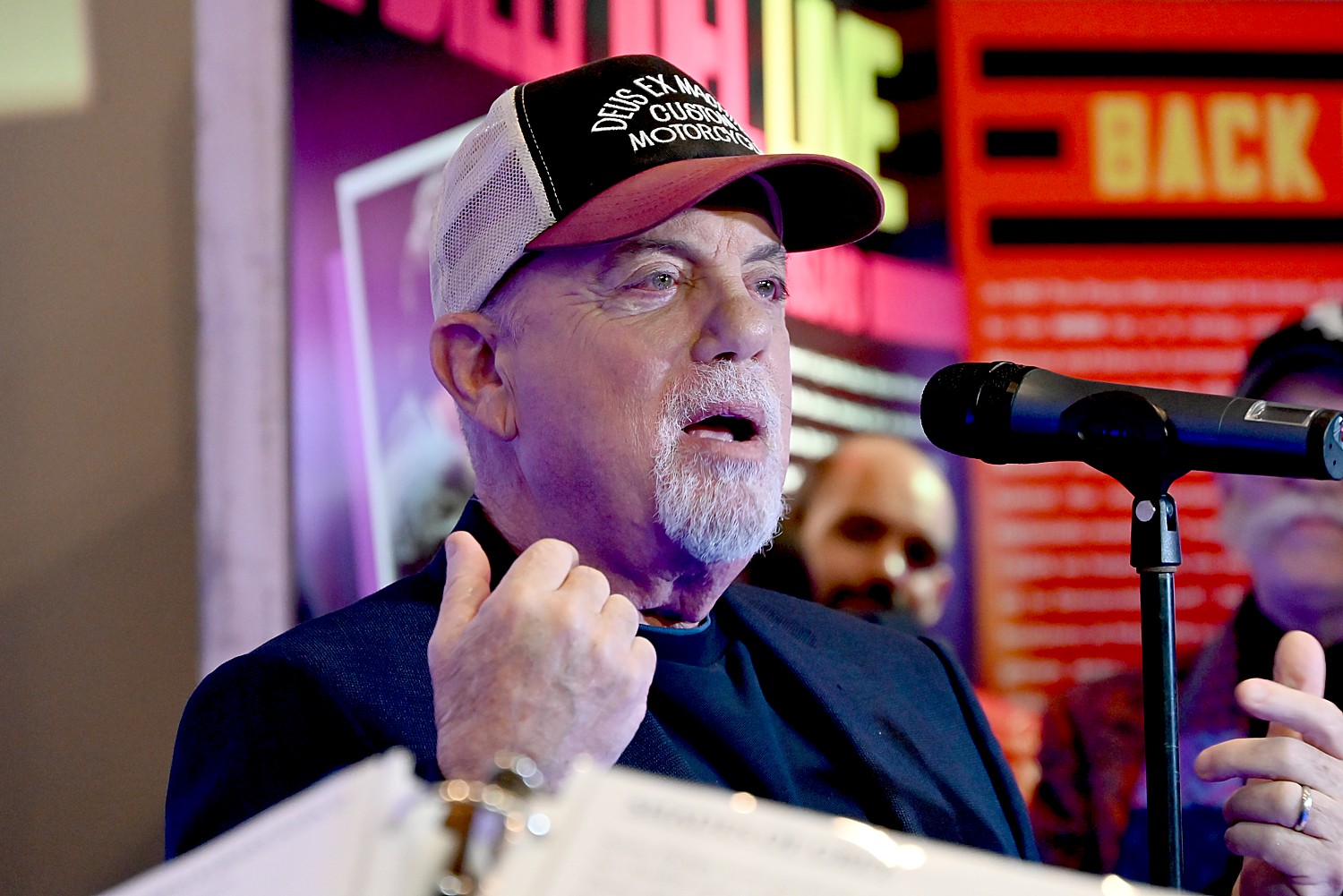
Billy Joel at the preview the exhibit “Billy Joel – My Life, A Piano Man’s Journey” at LIMEHOF, “This is a little overwhelming. Did you ever find yourself surrounded by you? I guess I lived. I always wondered, did I pick this life or did it pick me? ‘Cause I really didn’t think I had much of a choice. I was going to do this no matter what because I love music.” © Karen Rubin/goingplacesfarandnear.com

“Where did they get all this junk? I didn’t know where they were storing all these things,” Joel joked. “This is quite an honor. I didn’t expect it to be that extensive. I’ve had a life.”

“This is a little overwhelming. Did you ever find yourself surrounded by you? I guess I lived,” Joel reflected, surveying the room. “I always wondered, did I pick this life or did it pick me? ‘Cause I really didn’t think I had much of a choice. I was going to do this no matter what because I love music.”

Joel also declared that even though he’s currently selling his Centre Island home, he’s not leaving Long Island.

“This is my home and it will always be my home,” said Joel. “We will come visit this place a lot.”

Bob Buchmann, who had been a DJ at WBAB for 20 years (he’s now director of music programming for Sirius XM) came from Los Angeles to be at the exhibit preview, noting that Joel named his charity, Charity Begins at Home. “That tells you where his head is. Few people know the commitment Billy Joel has to Long Island.” © Karen Rubin/goingplacesfarandnear.com

Bob Buchmann, who had been a DJ at WBAB for 20 years (he’s now director of music programming for Sirius XM) came from Los Angeles to be at the event. He reflected that he began working with Billy Joel 29 years ago on his charity that Joel named Charity Begins at Home. “That tells you where his head is. Few people know the commitment Billy Joel has to Long Island.” He started working with Joel after “The Stranger.” “He was already a big deal. Then he became a bigger deal.” (For his accomplishments as a musician and humanitarian, Joel was honored as the 2002 MusiCares Person of The Year by the MusiCares Foundation and the National Academy of Recording Arts & Sciences.)

To construct the biography that fills the notes in the panels, O’Callaghan “did deep research. I interviewed 100, contacted other musicians. The funny thing is that on Long Island, everyone has a Billy Joel story, met him, spoke to him.”

Kevin O’Callaghan, LIMEHOF’s Creative Director who designed the Billy Joel exhibit, said “I did deep research. I interviewed 100, contacted other musicians. The funny thing is that on Long Island, everyone has a Billy Joel story, met him, spoke to him.” © Karen Rubin/goingplacesfarandnear.com

Were there any revelations in the course of his research? “The amount of success he had after “Piano Man.” Every record he did had 2,3,4 hits, a nonstop train, then he stopped recording and went into touring.” Billy Joel produced 13 studio albums, the last one more than 20 years ago.

“It has been a thrill and an honor to work with Billy in creating this extraordinary testament to his life and music,” O’Callaghan remarked.  “It is one of the highlights of my long career and I’m sure visitors will be thrilled with the result.” O’Callaghan, who also designed LIMEHOF’s first exhibition, and Canadeo presented the exhibit plans and designs to Billy Joel several times during the past year and incorporated his input.

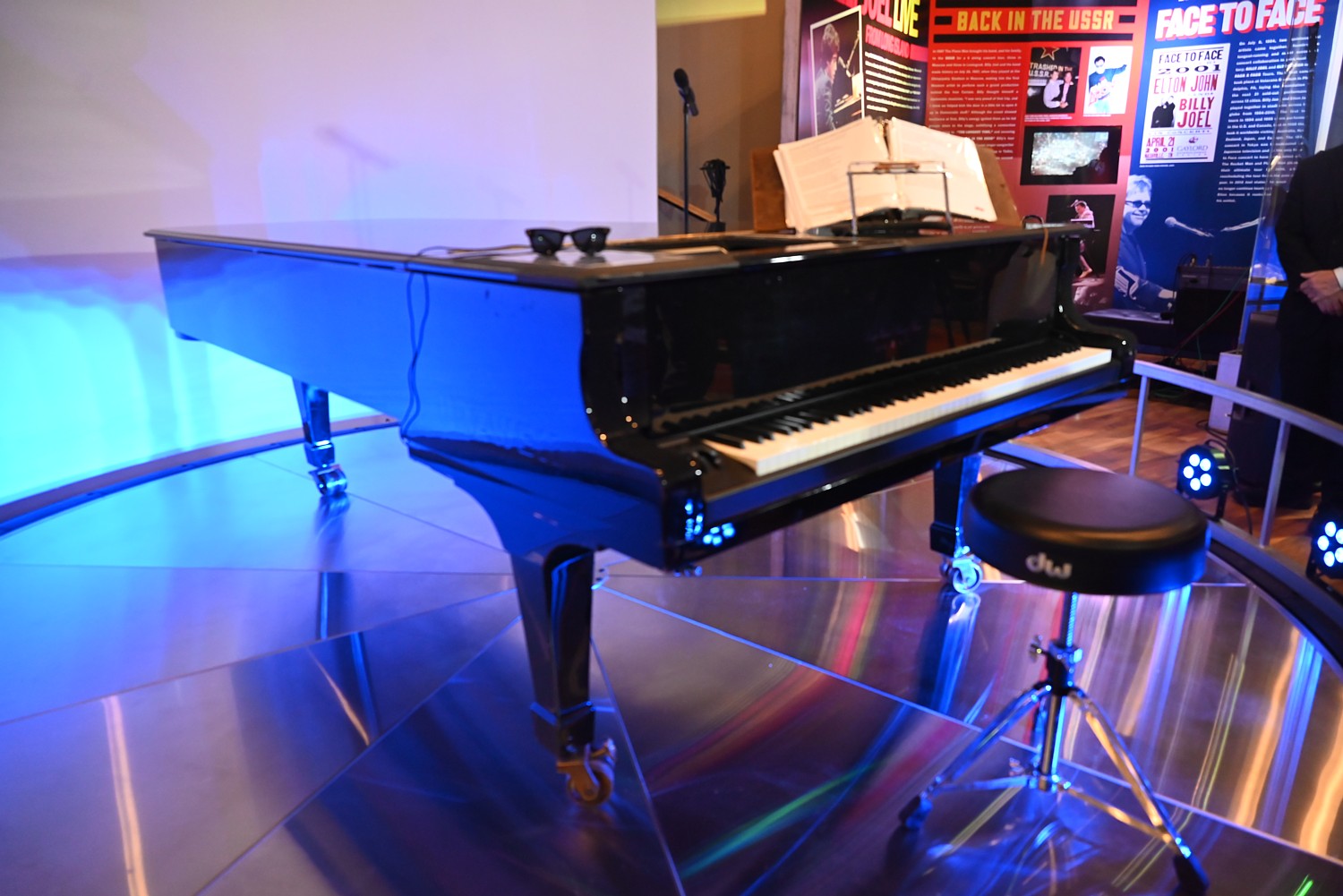
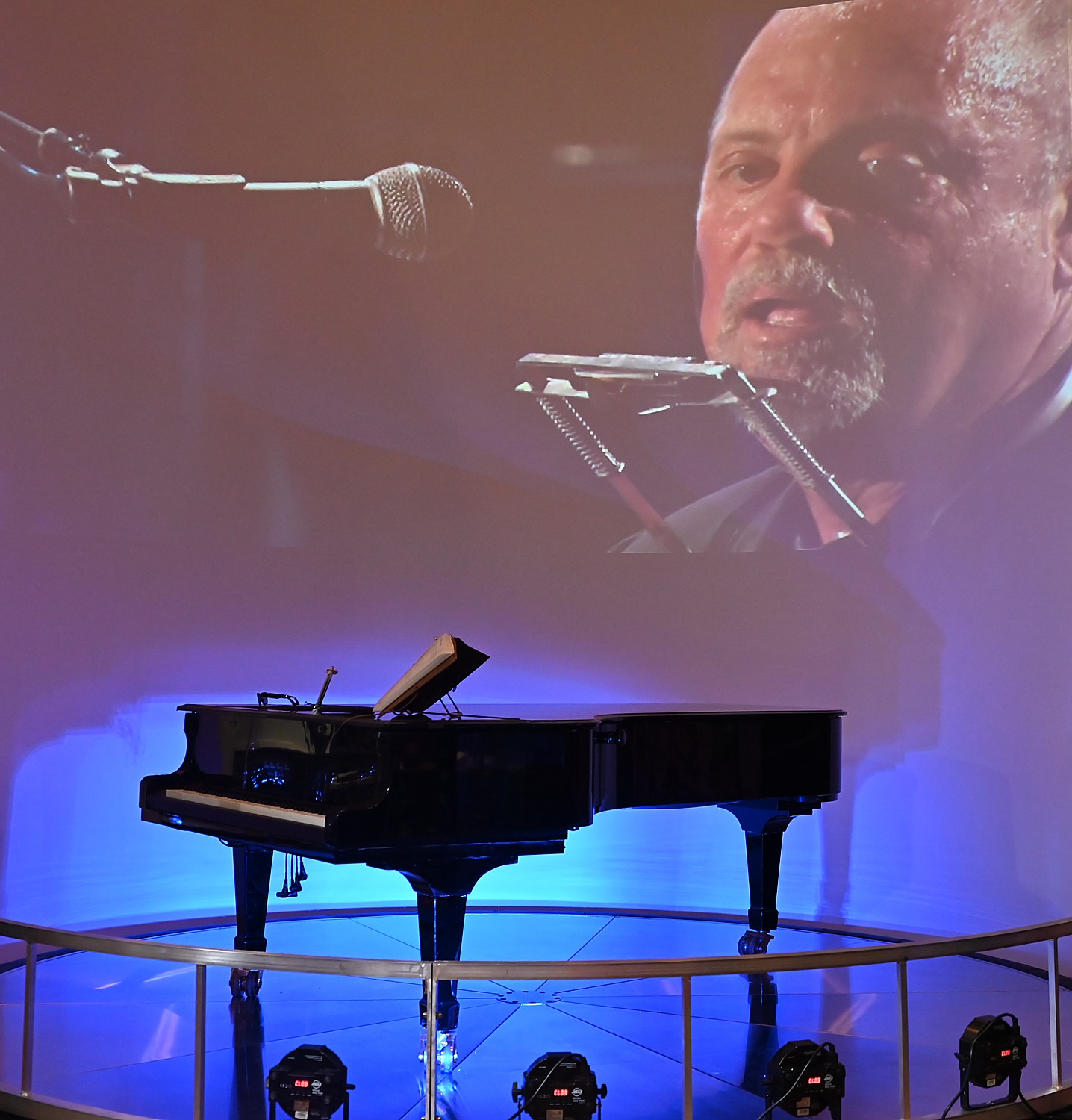
The centerpiece of the exhibit is a grand piano Billy Joel used on his “Face to Face Tour” with Elton John which spins on a 16-foot revolving turntable © Karen Rubin/goingplacesfarandnear.com

The centerpiece of the exhibit is a grand piano Joel used on his “Face to Face Tour” with Elton John that sits on a 16-foot revolving turntable with a wall-sized backdrop of live concert clips of him playing the piano with audio – including performing with Paul McCartney. On top of the piano is Joel’s harmonica and neck brace that O’Callaghan said he found inside the piano. “This is like holy grail stuff.”

The grand piano Billy Joel used on his “Face to Face Tour” with Elton John features has a wall-sized backdrop playing live concert videos© Karen Rubin/goingplacesfarandnear.com

The Rocket Man and The Piano Man came together in July 1994 and began what is considered the longest-running, most successful collaboration in pop music history. They played in stadiums across the globe from 1994-2010.

Other highlights: in 1987, Billy Joel brought his band and his family to the USSR for six concerts in Moscow and Leningrad, making history when they played at Olimpiyskiy Stadium in Moscow as the first Western artist to perform behind the Iron Curtain. “Billy thought himself a diplomatic musician. ‘I was very proud of that trip, and I think we helped kick the door in a little bit to open it up to democratic stuff’.”

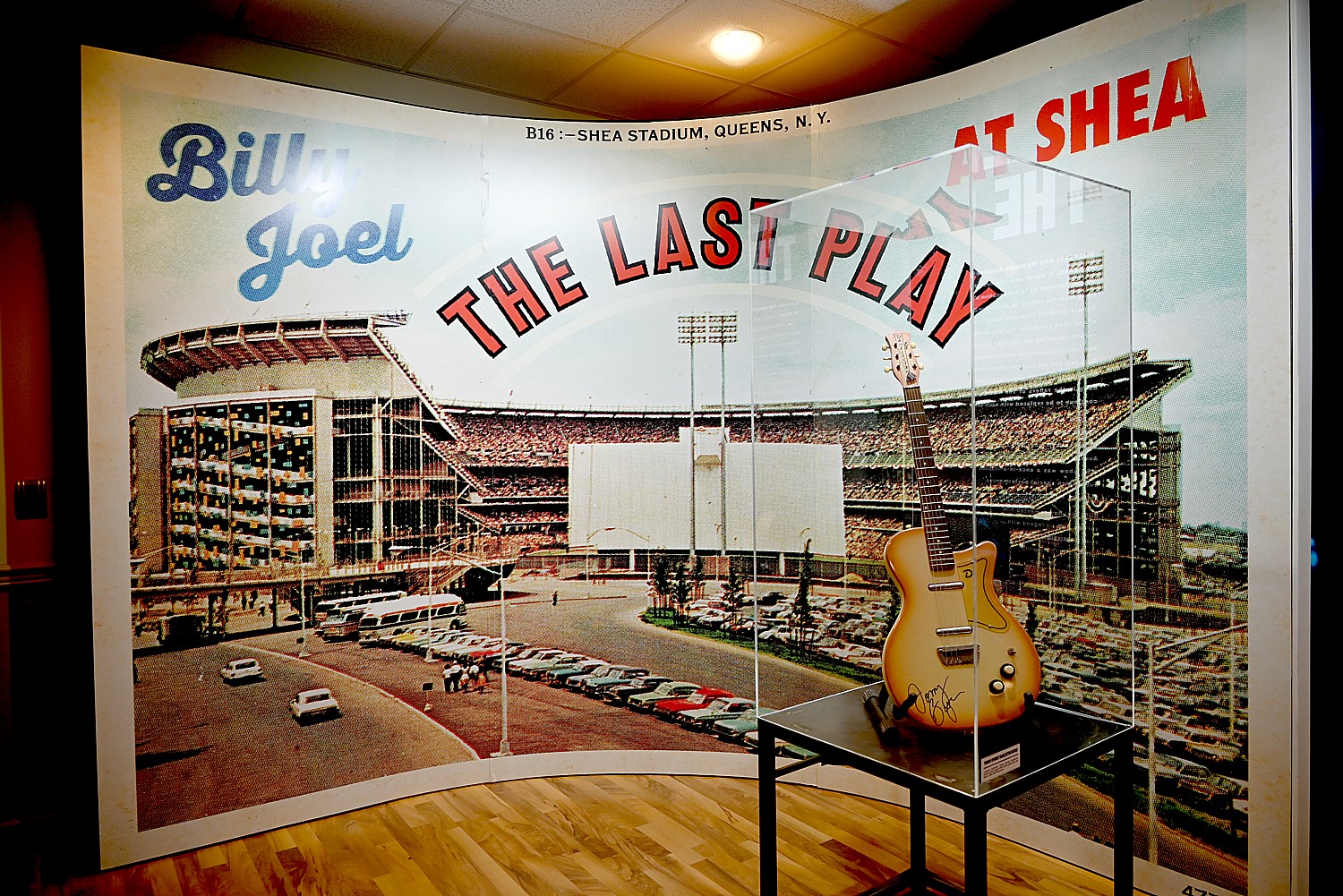
Billy Joel played the last concerts before Shea Stadium was torn down and played the first concerts at Citifield © Karen Rubin/goingplacesfarandnear.com

Shea Stadium was opened in 1965 with a concert by The Beatles, and Billy Joel headlined the final act before it closed in 2008. “The Last Play at the Shea” had epic performances including Tony Bennett singing “New York State of Mind”, but then Paul McCartney surprised him, running onstage to perform “I Saw Her Standing There,” and “Let it Be,” ending the circle The Beatles began in 1965. The two played together again to open Citifield.

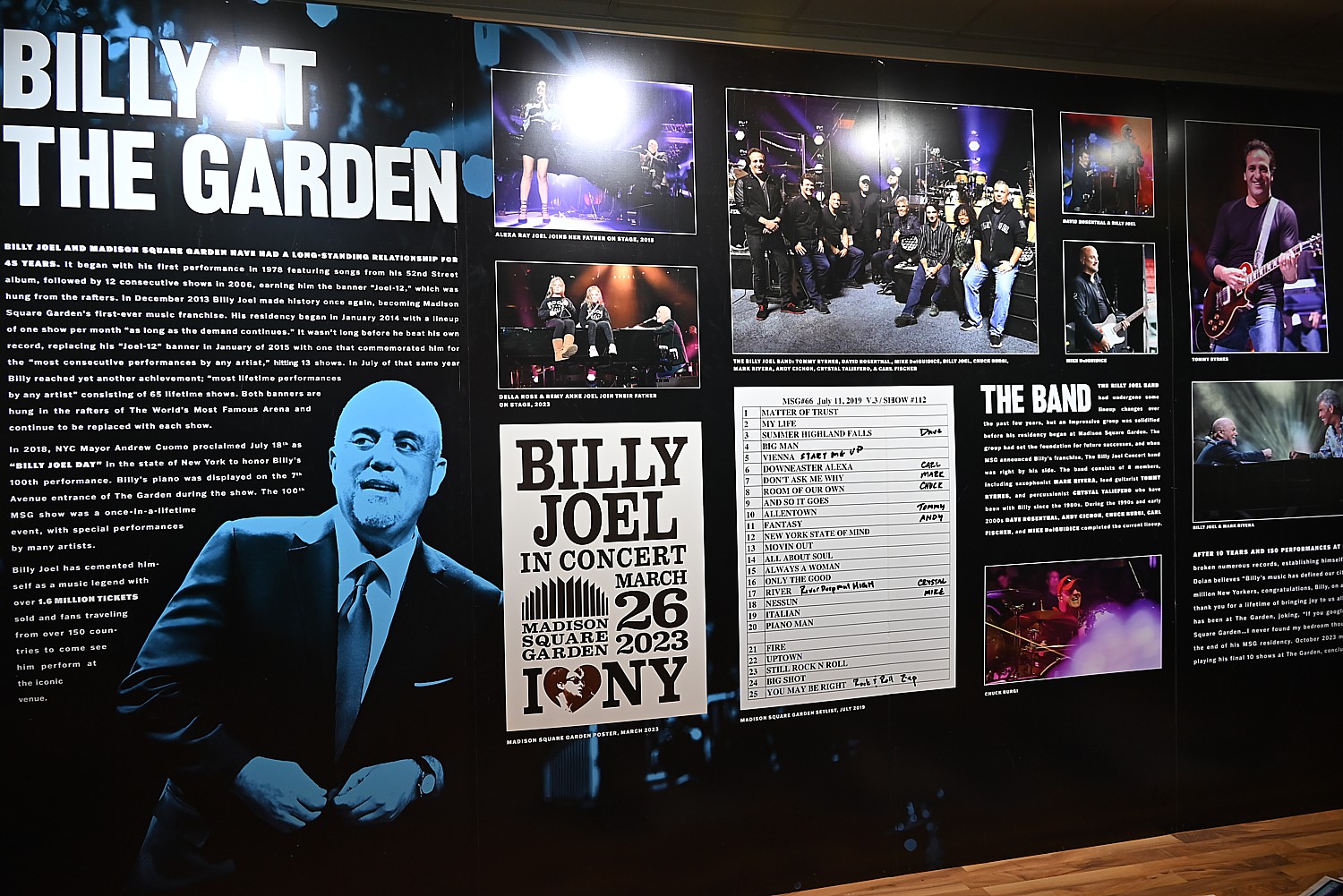
The most remarkable relationship, though, is Billy Joel’s 45 year relationship with Madison Square Garden, beginning in 1978. In 2013, he became MSG’s first-ever music franchise, starting a residency in January 2014 with a line up of one show per month “as long as the demand continues.” By 2018, he had hit 100 performances; a banner in the exhibit lists 125, and he is expected to hit 150 before the residency finally ends next year.

The exhibit celebrates Billy Joel’s 45 year relationship with Madison Square Garden © Karen Rubin/goingplacesfarandnear.com

Throughout the exhibit, there are these incredibly personal insights into his music.

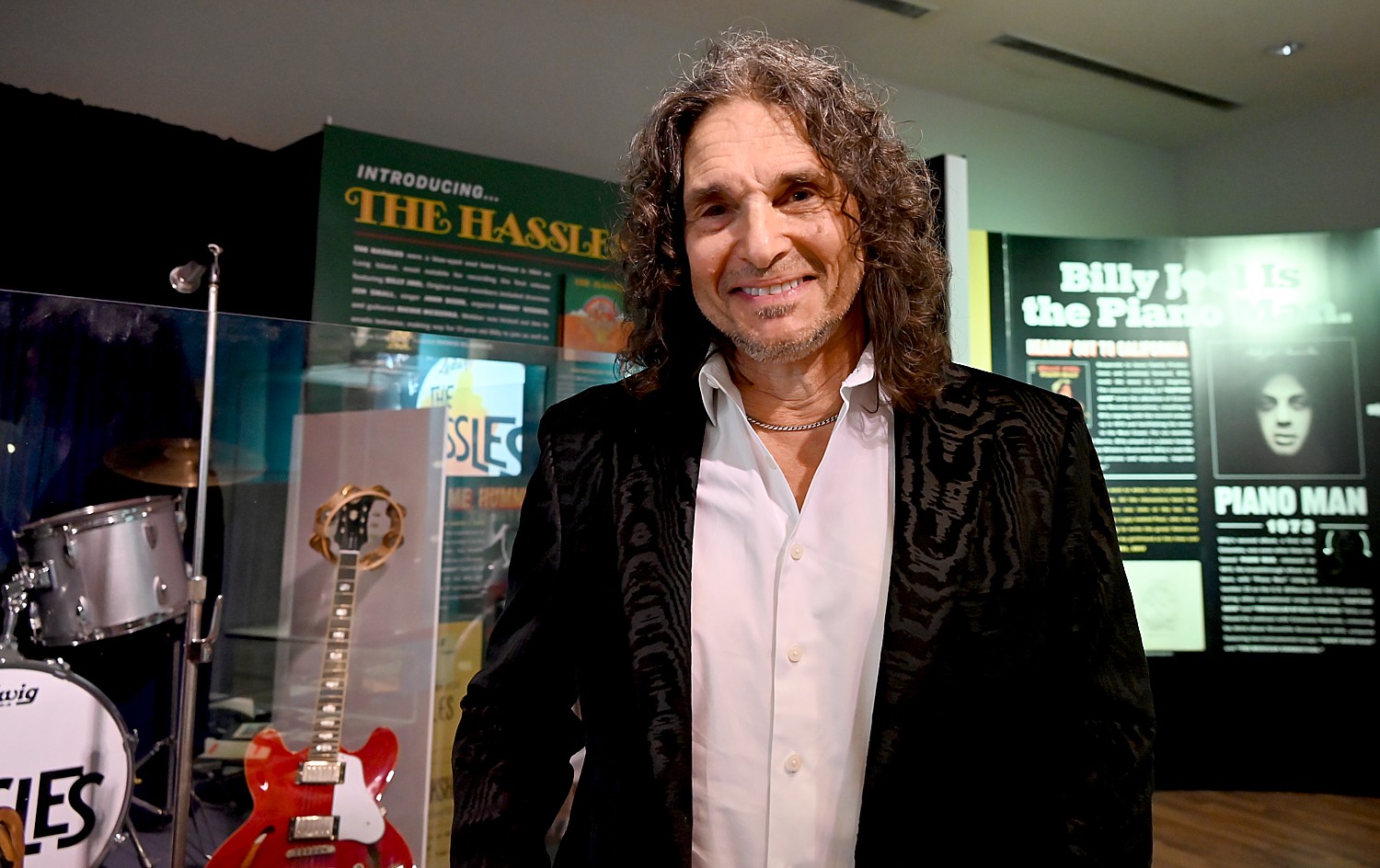
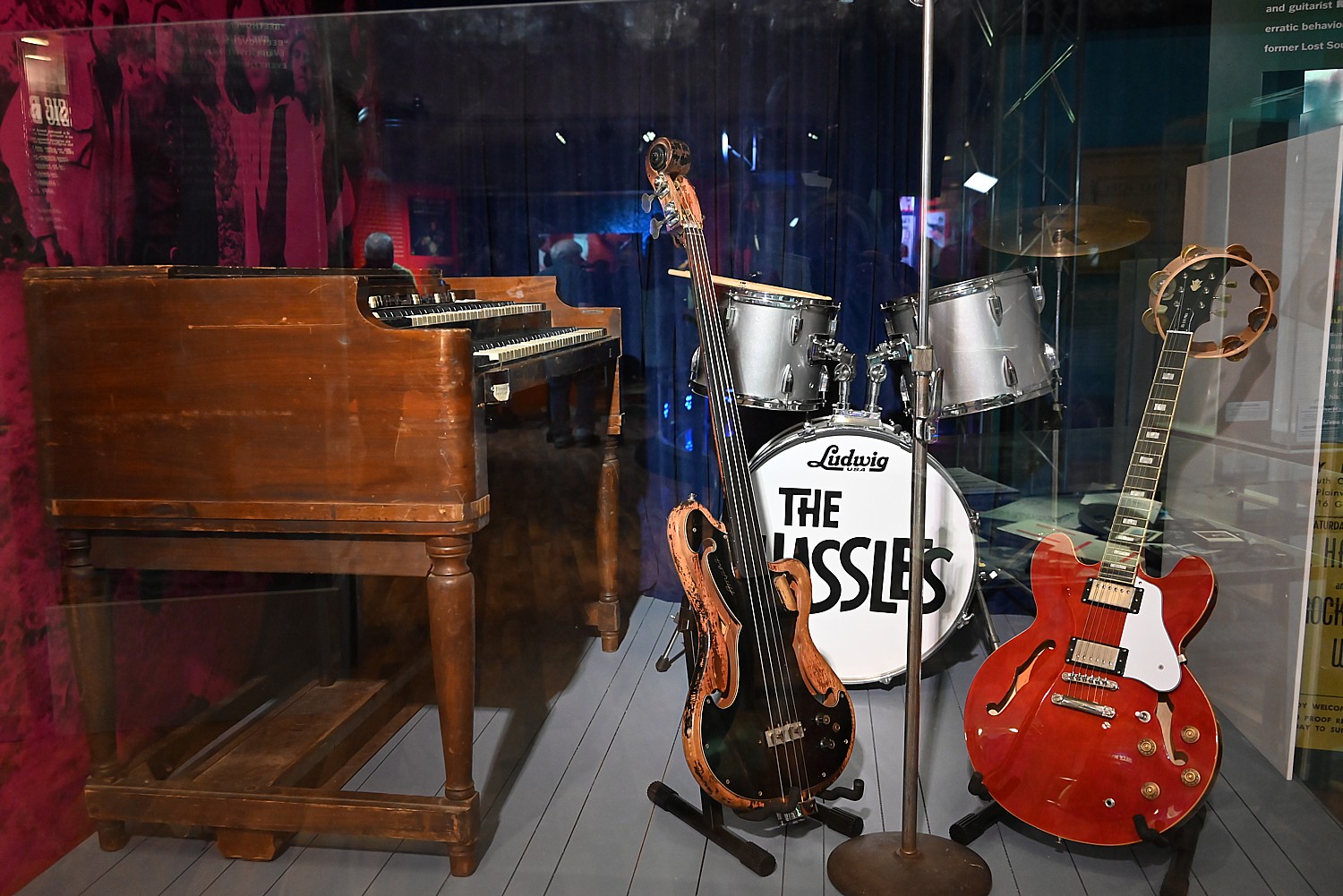
Of the items of which O’Callaghan was most proud to display are the music instruments that his band, The Hassles, would have used, including the keyboard and a rare scroll bass and a piano (the drum with The Hassles name is original, but the musicians would not part with their actual instruments).

Of the items of which O’Callaghan was most proud to display are the music instruments that Billy Joel’s band, The Hassles, would have used when he was 17 © Karen Rubin/goingplacesfarandnear.com

“The Hassles. That was the beginning, his first success. One hit record – he got a taste of what it was like to be a star. It was pivotal to make contact with them, it was fun.”

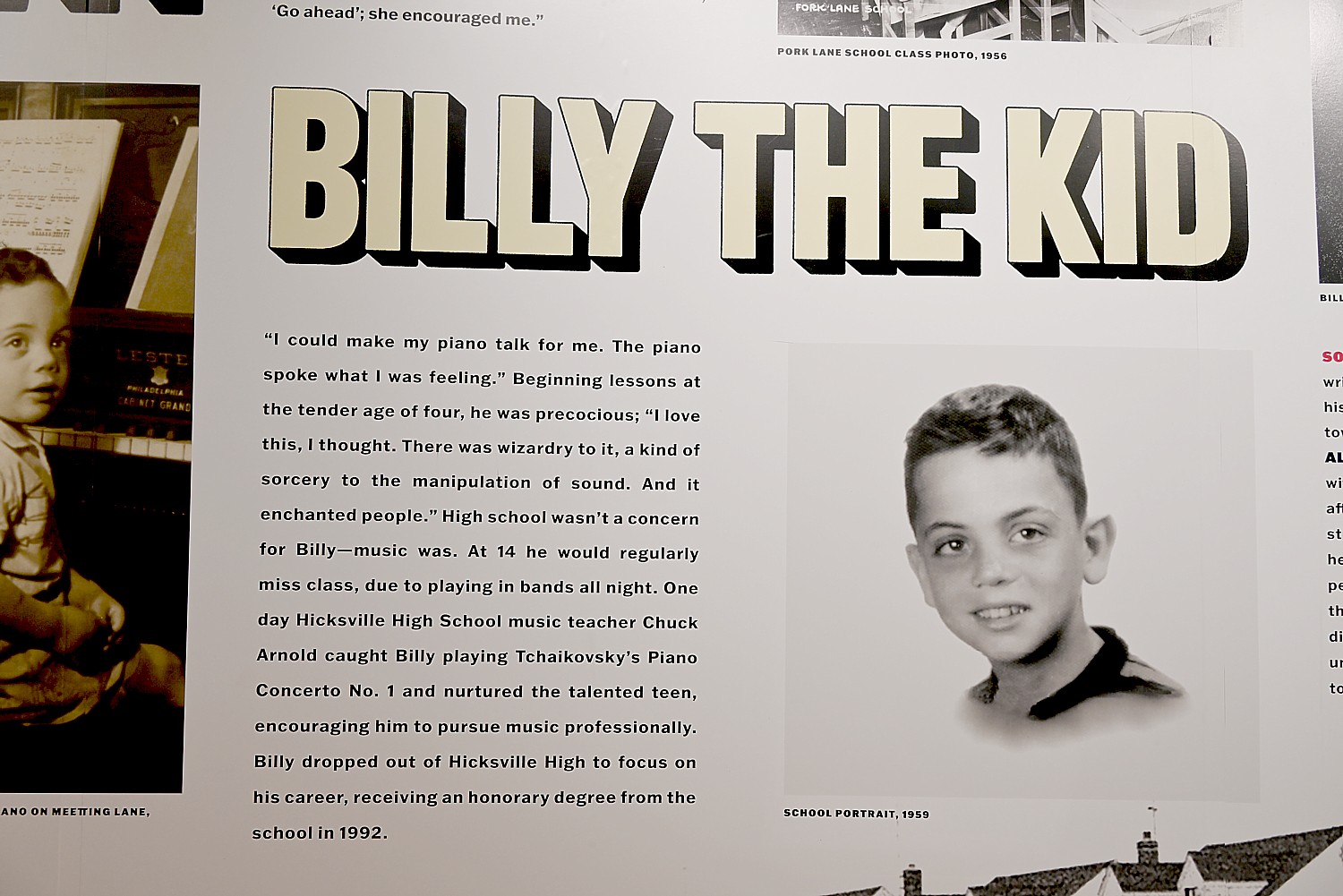
In a panel titled “Billy the Kid,” Joel is quoted as saying, “I could make my piano talk for me. The piano spoke what I was feeling.”

It’s because the exhibit is so personal, so intimate that it is so inspiring. You see Billy Joel’s house in Levittown, considered the birthplace of America’s Suburbia (he changed the name to Allentown for the song), where his parents moved from the Bronx soon after he was born in 1949. There is actually a program for his first recital at age 11, and a photo of him playing in a high school band.

“Billy Joel – My Life, A Piano Man’s Journey” traces the music icon’s life and career from his childhood in Levittown, Long Island © Karen Rubin/goingplacesfarandnear.com

His father was a virtuoso concert pianist as well as a businessman who was born in was born in Nuremberg, Germany, to a Jewish family who emigrated to the US by way of Cuba (because of US quotas) to escape Nazi Germany. His mother, born in Brooklyn to Jewish parents who emigrated from England, was the one who insisted on Billy taking music lessons.

“Beginning lessons at the tender age of four, he was precocious,” we learn from one of the panels. “‘I love this, I thought. There was wizardry to it, a kind of sorcery to the manipulation of sound. And it enchanted people.’ High school wasn’t a concern for Billy – music was. At 14 he would regularly miss class due to playing in bands all night. One day, Hicksville High School music teacher Chuck Arnold caught Billy playing Tchaikovsky’s Piano Concerto No. 1 and nurtured the talented teen, encouraging him to pursue music professionally.”

“Billy Joel – My Life, A Piano Man’s Journey” at the Long Island Music and Entertainment Hall of Fame traces the music icon’s life and career © Karen Rubin/goingplacesfarandnear.com

Billy dropped out of Hicksville High to focus on his music. But in 1992, after submitting essays to the school board in lieu of the missed exam, he finally was awarded his diploma at Hicksville High’s graduation ceremony 25 years after leaving. He returned 25 years after that, in 2017, to give the commencement address. Meanwhile, he has earned honorary doctorates from Fairfield University (1991), Berklee College of Music (1993), Hofstra University (1997), Southampton College, Syracuse University (2006), Manhattan School of Music (2008) and Stony Brook University (2015).

Another panel describes his influences. In addition to Gershwin and Beethoven, we learn that “In the late 50s, Billy was fascinated by Elvis Presley, impersonating him during a ‘Hound Dog’ performance in third grade. The Beatles heavily influenced Billy’s life, confirming his determination to become a professional musician.” His tastes widened to embrace 60s rock and roll, soul and blues, with influences like Ray Charles, Otis Redding and Chuck Berry, jazz greats Art Tatum, Dave Brubeck and Oscar Peterson. The Beach Boys were also important to him: he opened for the Beach Boys early on in his career, and later performed “Don’t Worry Baby” at a Brian Wilson tribute concert in 2010.

We are brought back in time to Billy Joel’s early band: The Hassles were “a blue-eyed soul band” formed in 1964 on Long Island, most notable for recording the first release featuring Billy Joel (he was 17 when he joined). The Hassles earned $250 a week as the house band for My House, a club run by Danny Mazur. “The band often played 20-hour days in clubs throughout Long Island and Manhattan, sneaking into shows like Led Zeppelin and Jethro Tull during their free time. The Long Island band served as an educational experience for Billy, signing with United Artists and getting his first taste of success.” (If you saw LIMEHOF’s first exhibition, you would appreciate the impact that Long Island’s many music venues had on birthing the talent that now fills its Hall of Fame.)

“Billy Joel – My Life, A Piano Man’s Journey” at the Long Island Music and Entertainment Hall of Fame traces the music icon’s life and career © Karen Rubin/goingplacesfarandnear.com

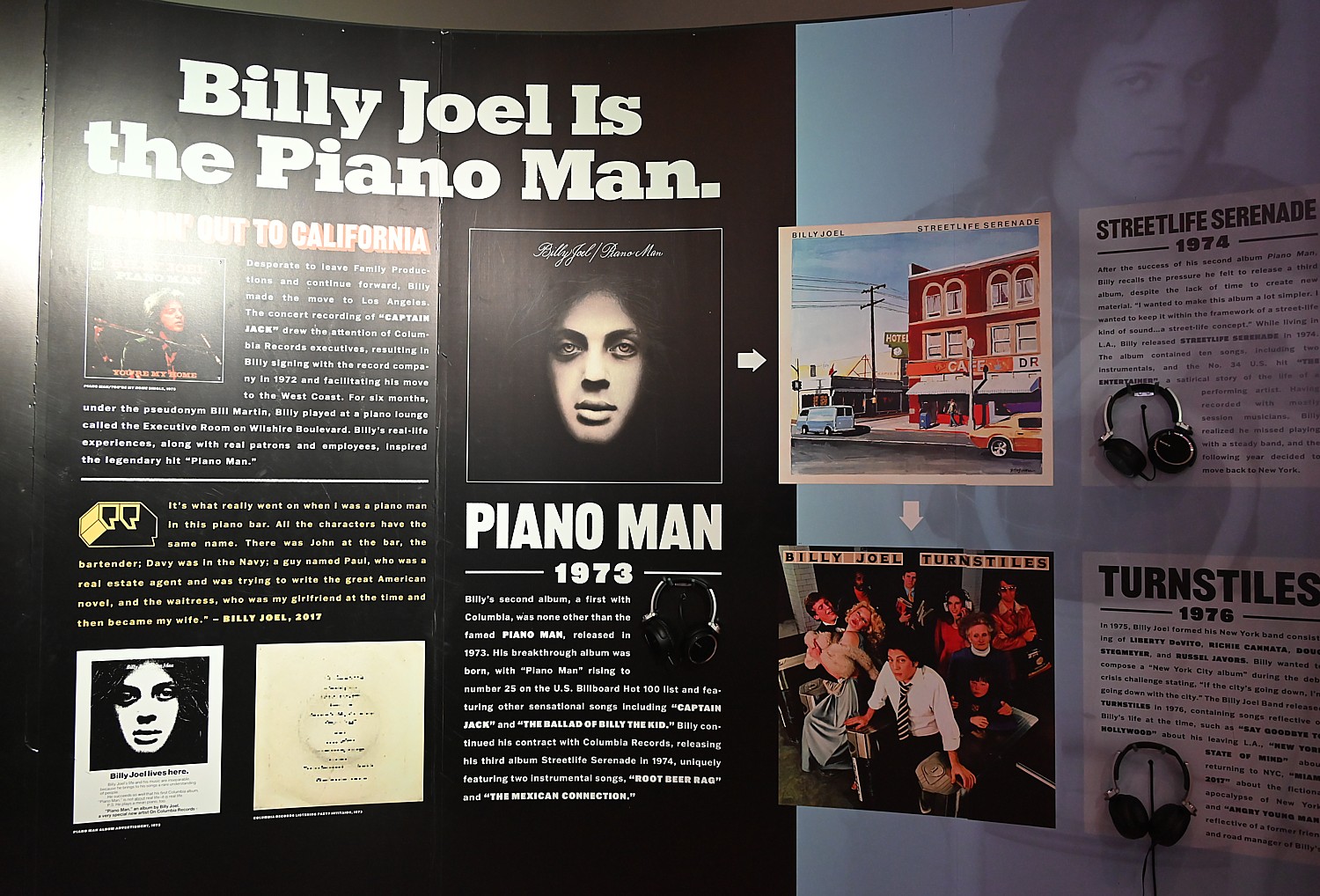
We learn that “The Piano Man” (1973), Joel’s second album and first with Columbia, “is what really went on when I was a piano man in this piano bar,” Billy Joel said in 2017. “All the characters have the same name. There was John at the bar, the bartender, Davy was in the Navy, a guy named Paul, who was a real estate agent and was trying to write the great American novel, and the waitress, who was my girlfriend at the time and then became my wife.”

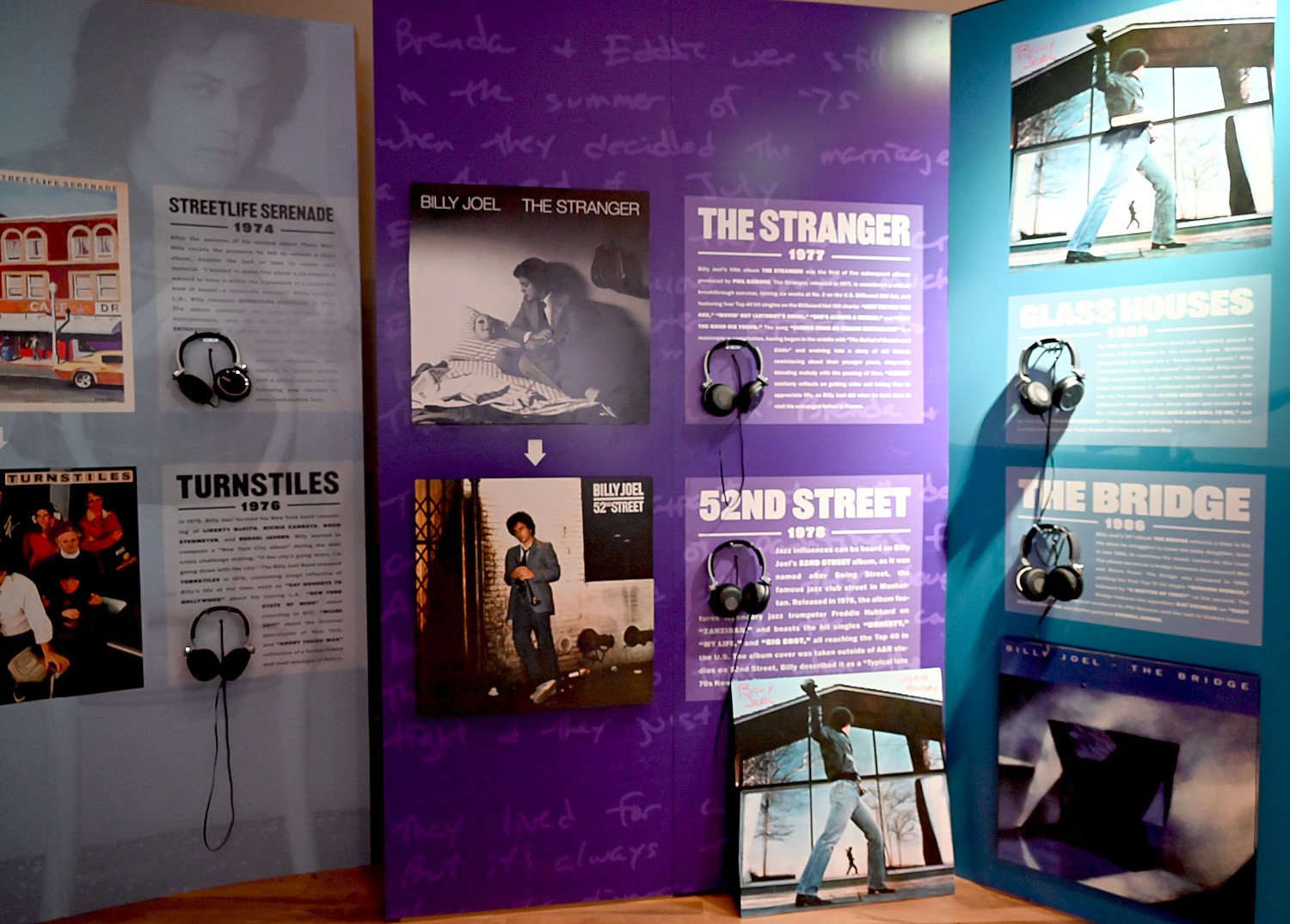
There are stations where you can listen to albums like “The Stranger” (1977), Joel’s first critical and commercial breakthrough album, which sold over 10 million copies and spawned hit singles including “Just the Way You Are,” “Movin’ Out,” “Only the Good Die Young,” “She’s Always a Woman” and “Scenes from an Italian Restaurant,” which is notably one of Joel’s favorites of his own songs. You can also listen to “52nd Street” (1978), his first album to peak at No.1 on the Billboard 200 chart, among others.

You can listen to Billy Joel’s albums at the LIMEHOF exhibit “Billy Joel – My Life, A Piano Man’s Journey” © Karen Rubin/goingplacesfarandnear.com

He has gone on to sell 160 million records, making  him one of the world’s top-selling music artists; had 33 Top 40 hits and 23 Grammy nominations since signing his first solo recording contract in 1972, winning six.

He has gone on to sell 160 million records, making  him one of the world’s top-selling music artists; had 33 Top 40 hits and 23 Grammy nominations since signing his first solo recording contract in 1972, winning six. He has won the Grammy Legend Award (1990), was inducted into the Songwriters Hall of Fame (1992), the Rock & Roll Hall of Fame (1999), and the Long Island Music Hall of Fame (2006). He’s won the Johnny Mercer Award (2001)Diamond Award from the Recording Industry Association of America for albums that sold over 10 million copies; got a star on Hollywood’s Walk of Fame (2004), and received The Library of Congress Gershwin Prize for Popular Song (2014).

What such a retrospective shows is that Billy Joel’s songs are less the typical love sought or love lost that are typical of pop, but more ballads that “meant something during the time in which I lived … and transcended that time” – like “We Didn’t Start the Fire”. Indeed, he was presented with the Kennedy Center Honor (December 2013), given for influencing American culture.

Billy Joel has remained true to his Long Island roots © Karen Rubin/goingplacesfarandnear.com

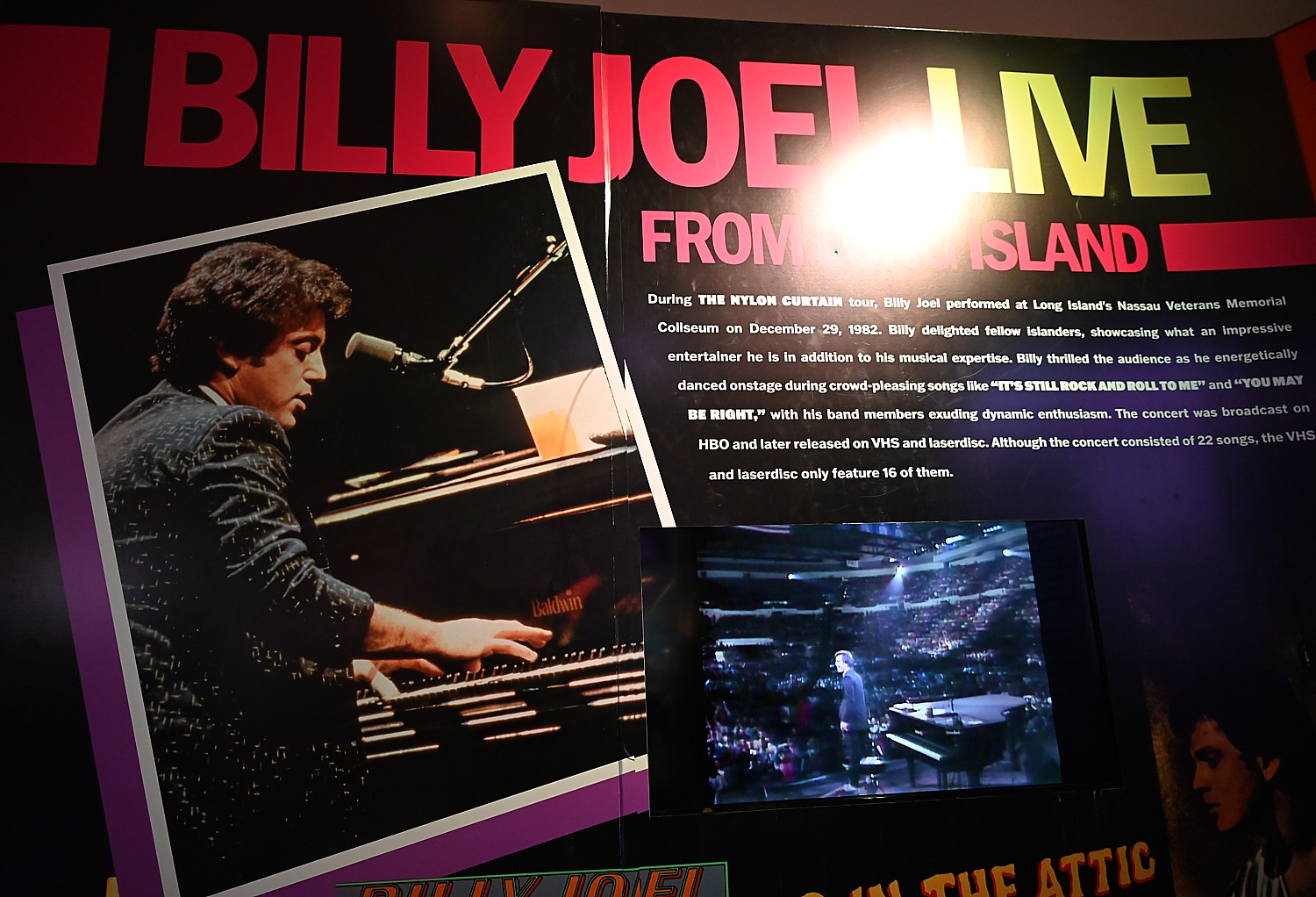
Joel has remained true to his Long Island roots. His first solo album was named for the hamlet, Cold Spring Harbor. He recorded Live from Long Island, his first video special, at the Nassau Veterans Memorial Coliseum in Uniondale on December 30, 1982. When he premiered his new song “Christmas in Fallujah”. on December 1, 2007, it was performed by Cass Dillon, a new Long Island based musician. (The track was dedicated to servicemen based in Iraq. Joel wrote it in September 2007 after reading numerous letters sent to him from American soldiers in Iraq. “Christmas in Fallujah” is only the second pop/rock song released by Joel since 1993’s River of Dreams; proceeds benefited the Homes For Our Troops foundation).

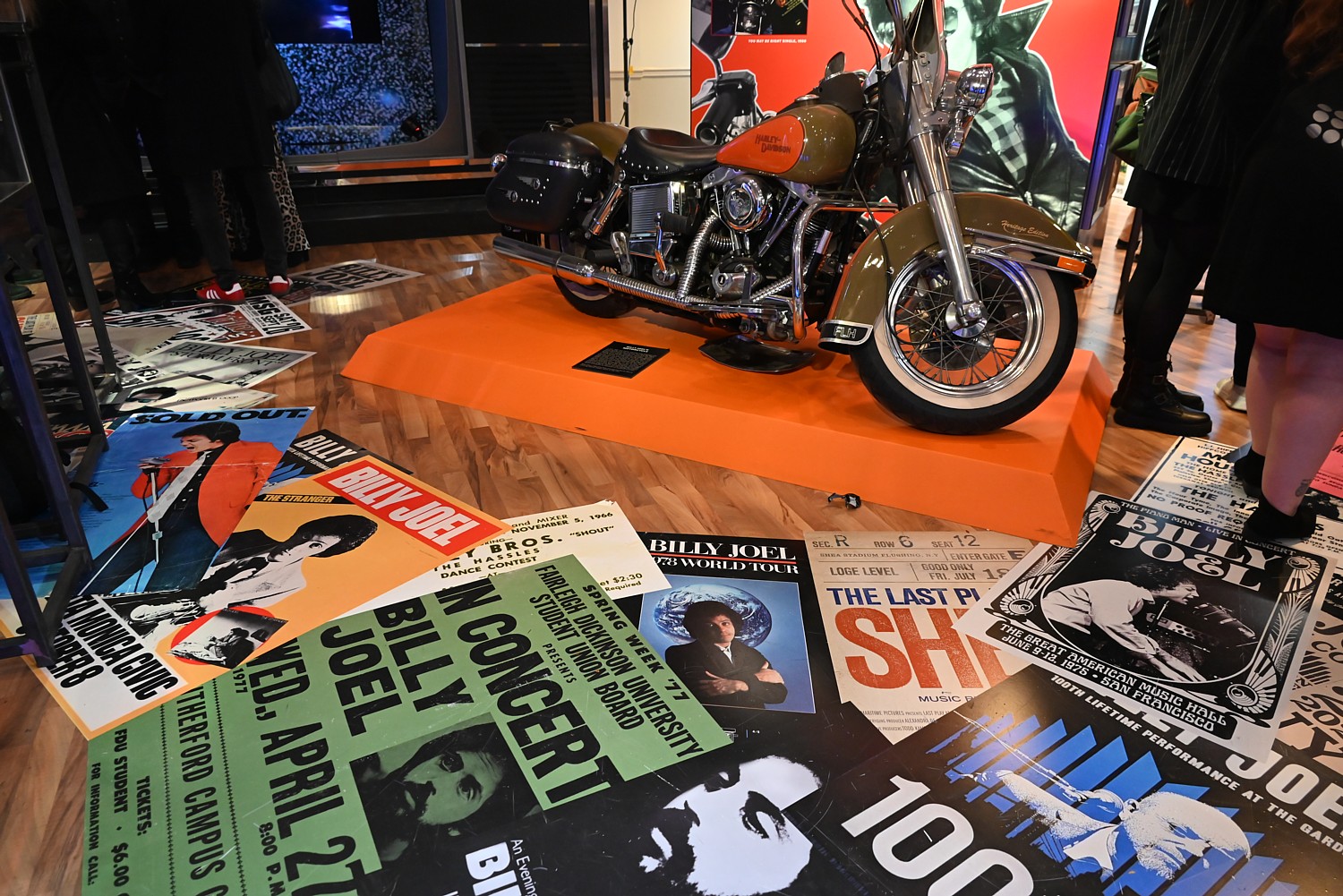
On December 12, 2012, Joel performed at the Concert for Sandy Relief at Madison Square Garden in support of victims. In October, 2013, Joel held a surprise concert at The Paramount in Huntington to benefit Long Island Cares. His August 4, 2015 concert at Nassau Coliseum was the final concert before prior to the arena’s $261 million renovation and he returned to on April 5, 2017 to play the first concert at the newly renovated venue.And in 2010, Joel opened a shop in Oyster Bay to manufacture custom-made, retro-styled motorcycles and accessories. One of his motorcycles is on exhibit at LIMEHOF.

One of Billy Joel’s motorcycles in the LIMEHOF exhibit “Billy Joel – My Life, A Piano Man’s Journey” © Karen Rubin/goingplacesfarandnear.com

“We are thrilled and honored to present the Billy Joel exhibit everyone has been waiting for,” said Ernie Canadeo, LIMEHOF Chairman. “Billy has been very cordial and involved in the planning, and it is appropriate the exhibit is on Long Island, where he has long been identified, written so many songs and lived most of his life. It is a fitting tribute to Long Island’s most successful entertainer and is guaranteed to thrill his legions of fans.”

The LIMEHOF Billy Joel exhibit is supported and sponsored by Catholic Health, The Joel Foundation, Madison Square Garden Entertainment, Jake’s 58 Casino Hotel, The Haugland Group, M&T Bank, The EGC Group and Lessing’s Hospitality.

“Catholic Health is very proud to be the presenting sponsor of the Long Island Music and Entertainment Hall of Fame and this particular exhibit really captures what it’s all about,” said Joe Carofano, Senior Vice President of Strategy and Chief Marketing Officer of Catholic Health. “Billy Joel, The Long Island Music and Entertainment Hall of Fame and Catholic Health all share a common love of Long Island; its spirit, its heritage and its unique character. Our roots are intertwined; bringing us together to celebrate the joy of life that Long Island inspires in all of us.”

“Billy Joel – My Life, A Piano Man’s Journey” at the Long Island Music and Entertainment Hall of Fame traces the music icon’s life and career © Karen Rubin/goingplacesfarandnear.com

Timed entry tickets are available at www.TheBillyJoelExhibit.com and at LIMEHOF (VIP “any time” tickets good for the duration of the exhibit, are also available). The exhibit is open Wednesday, Thursday, and Sunday (11 am-6 pm); and Friday and Saturday (11 am-7 pm). The exhibit is expected to run at least through August 2024.

Founded in 2004, the Long Island Music Hall of Fame is a 501(c)(3) organization dedicated to the idea that Long Island’s musical and entertainment heritage is an important resource to be celebrated and preserved for future generations. The organization, which encompasses New York State’s Nassau, Suffolk, Queens, and Kings (Brooklyn) Counties, was created as a place of community that inspires and explores Long Island music and entertainment in all its forms. In 2022, LIMEHOF opened its first Hall of Fame building location in Stony Brook, New York. To date, the organization has inducted more than 120 musicians and music industry executives, and offers education programs, scholarships, and awards to Long Island students and educators.

For more information about LIMEHOF visit www.LIMEHOF.org

____________________________

© 2023 Travel Features Syndicate, a division of Workstyles, Inc. All rights reserved. Visit goingplacesfarandnear.com, www.huffingtonpost.com/author/karen-rubin, and travelwritersmagazine.com/TravelFeaturesSyndicate/. Blogging at goingplacesnearandfar.wordpress.com and moralcompasstravel.info. Visit instagram.com/going_places_far_and_near and instagram.com/bigbackpacktraveler/ Send comments or questions to FamTravLtr@aol.com. Tweet @TravelFeatures. ‘Like’ us at facebook.com/NewsPhotoFeatures 

Beyond Van Gogh, Beyond Monet Immersive Experiences Offer New Way to Appreciate Masters and Their Masterpieces

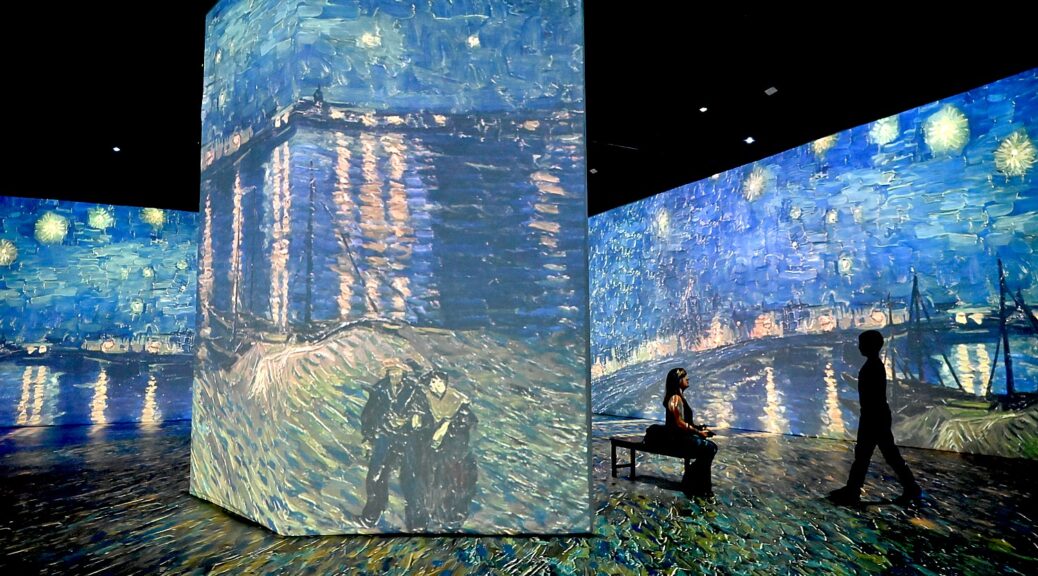
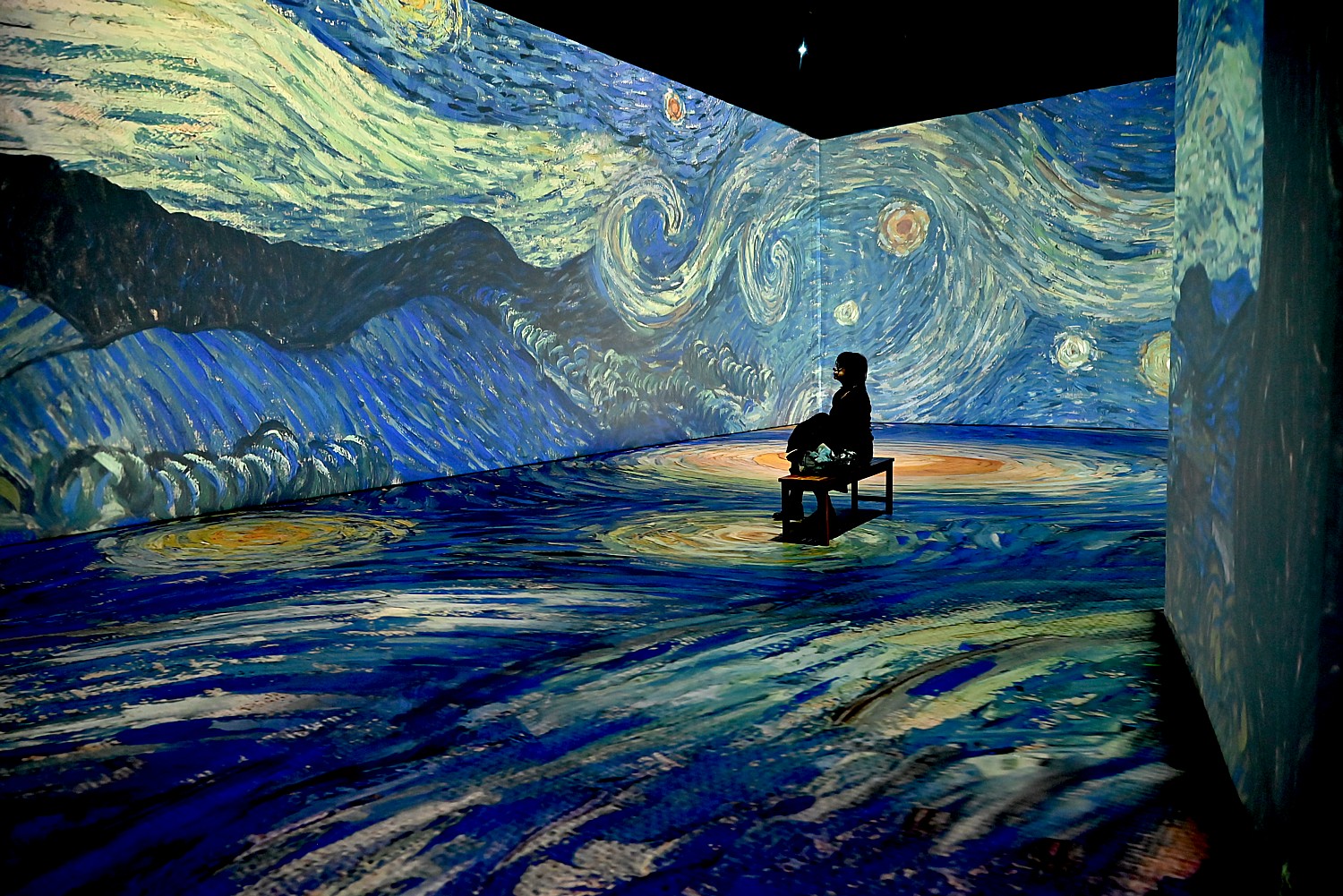
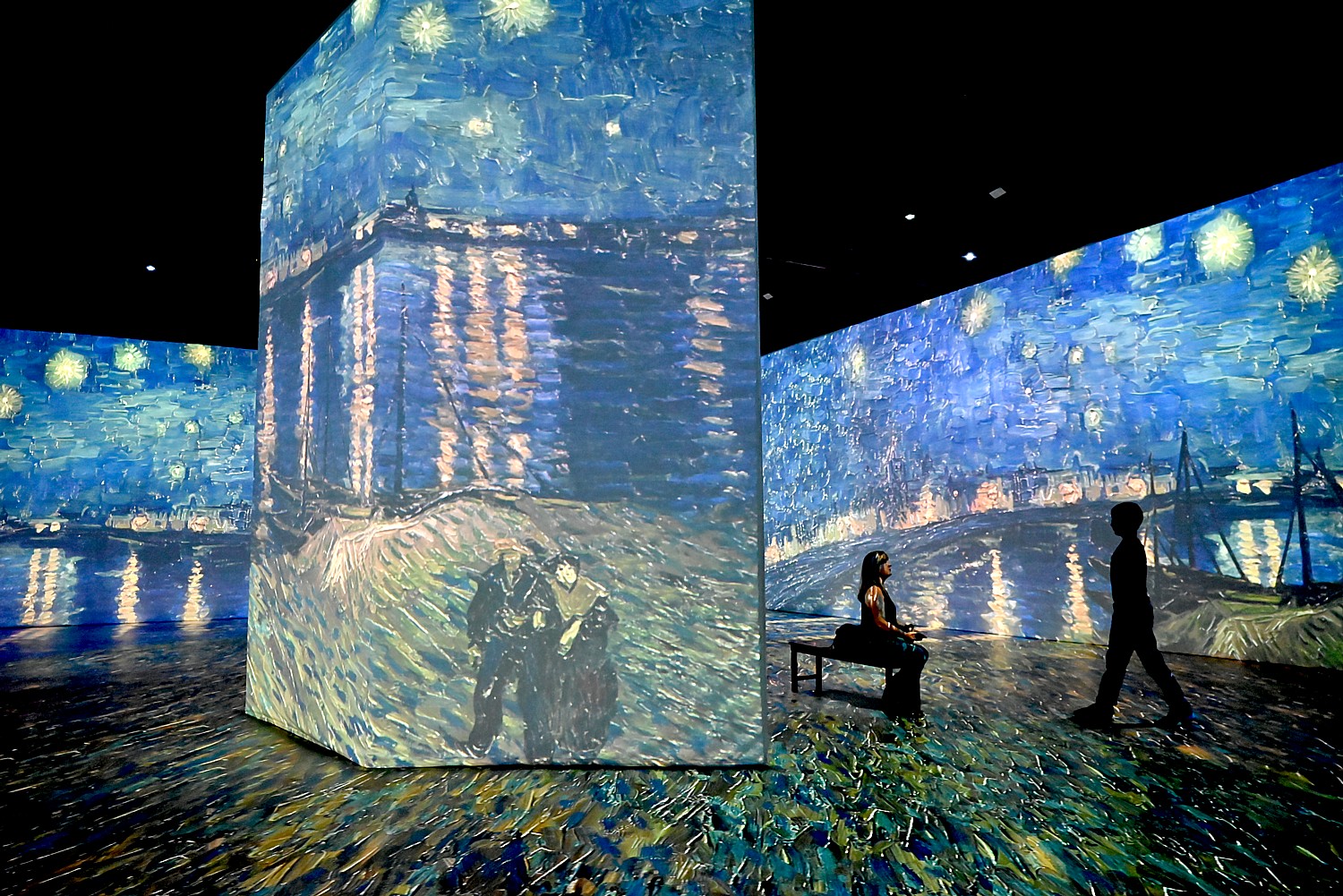
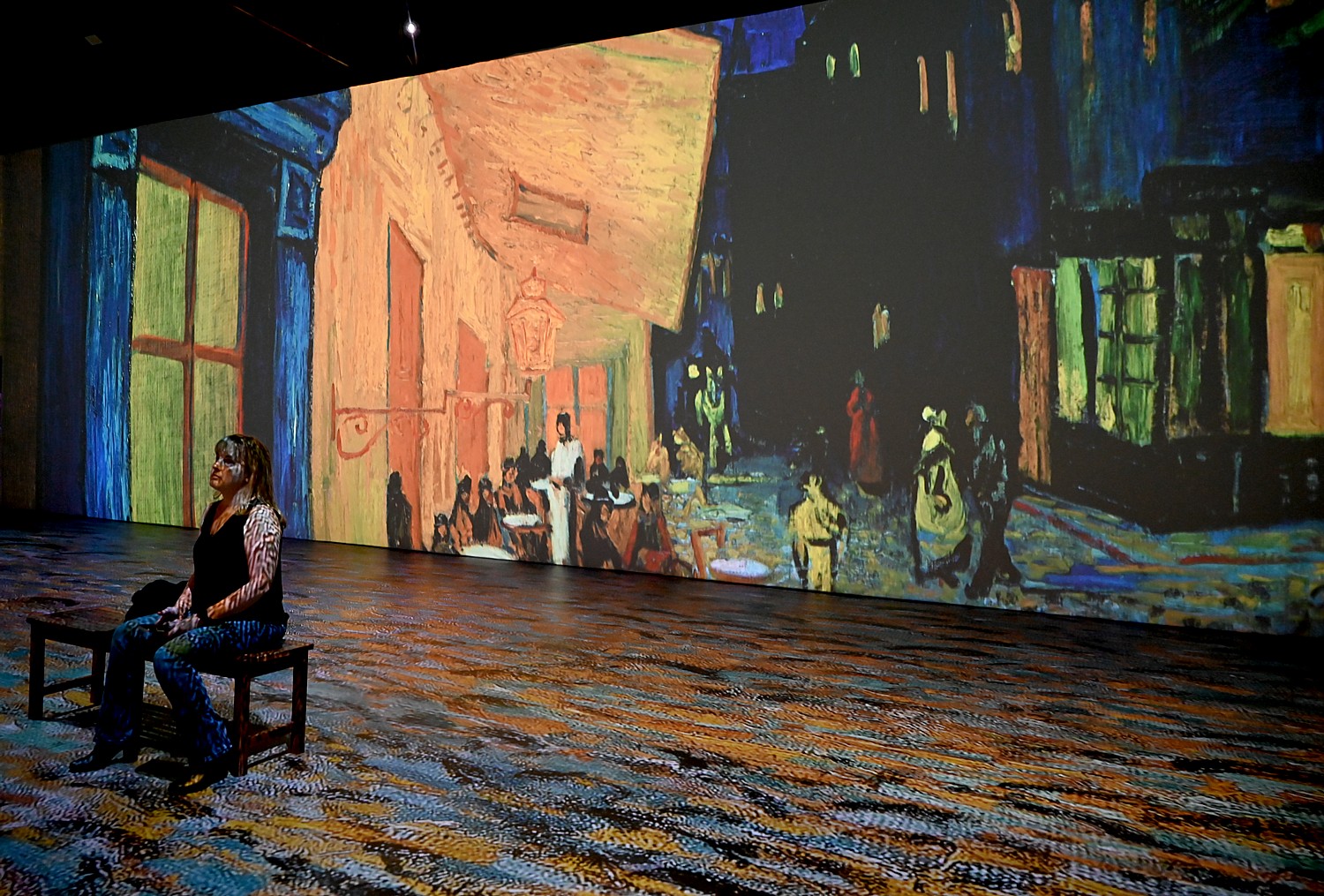
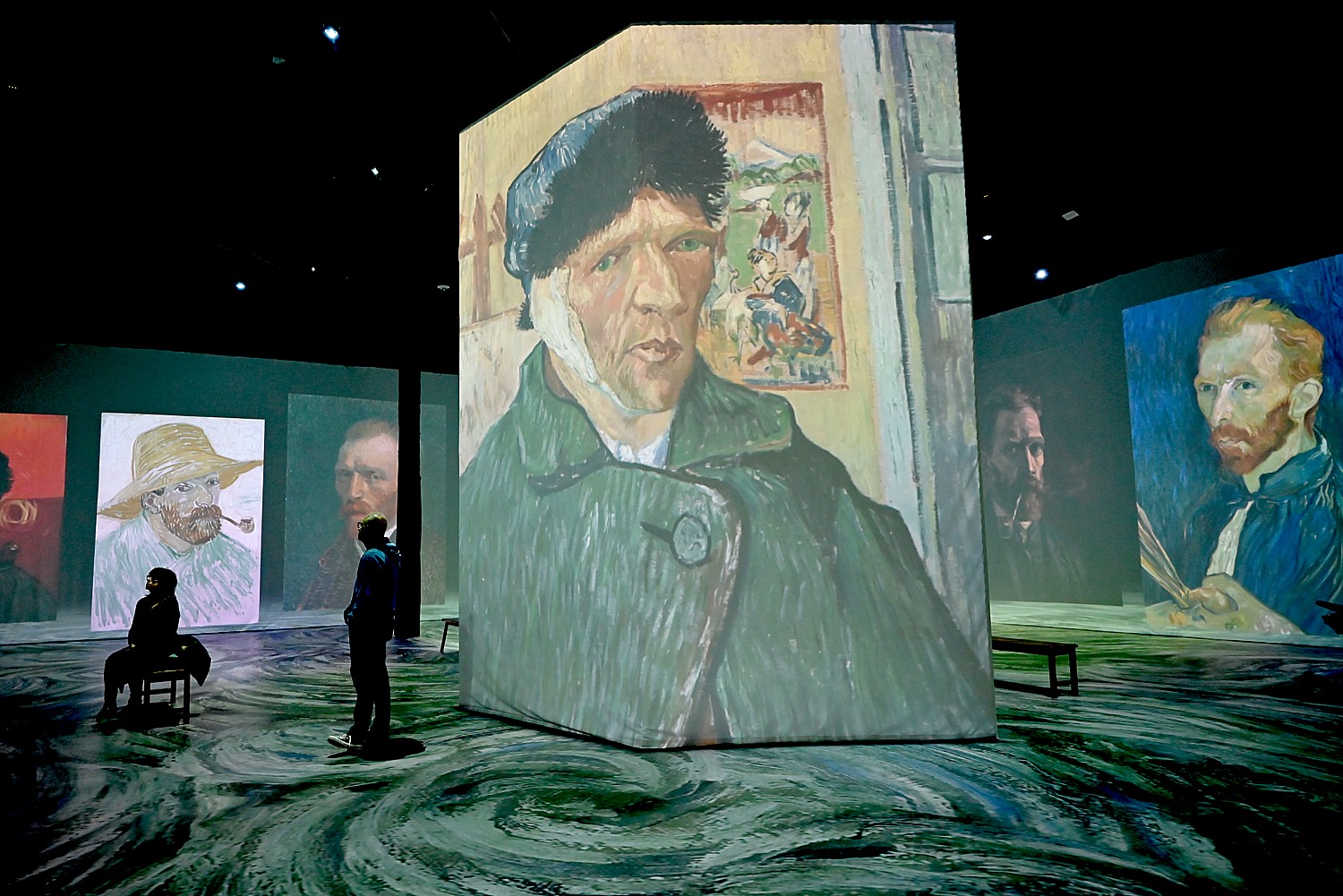
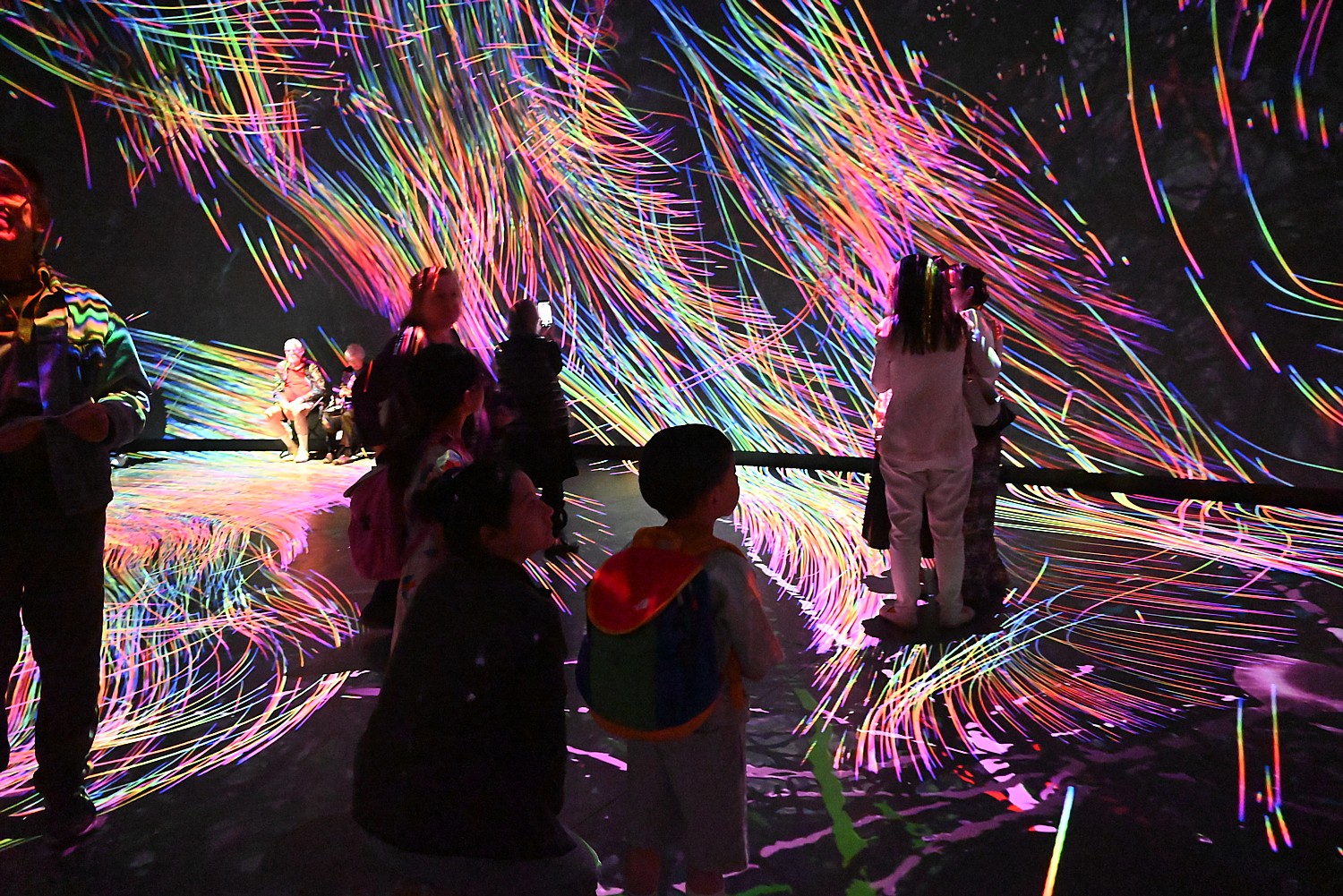
Beyond Van Gogh: The Immersive Experience is a multi-media, performance art showpiece that inspires new ways to appreciate Vincent Van Gogh’s genius © Karen Rubin/goingplacesfarandnear.com

By Karen Rubin, Travel Features Syndicate, www.goingplacesfarandnear.com
What the leading edge technology of Beyond Van Gogh: The Immersive Experience does is to turn a static, albeit emotional, experience of appreciating a painting, into an active, dynamic, cinematic one.

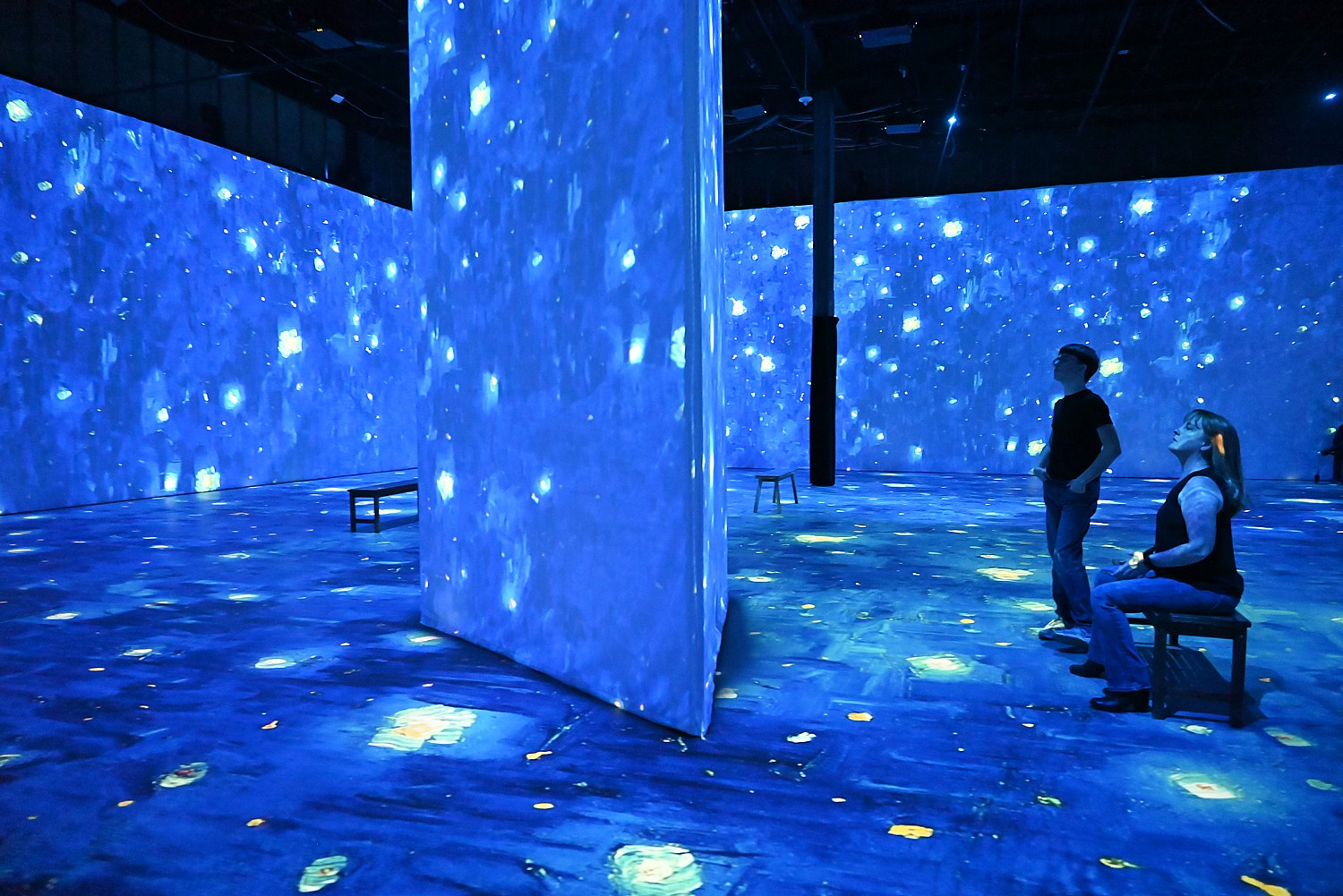
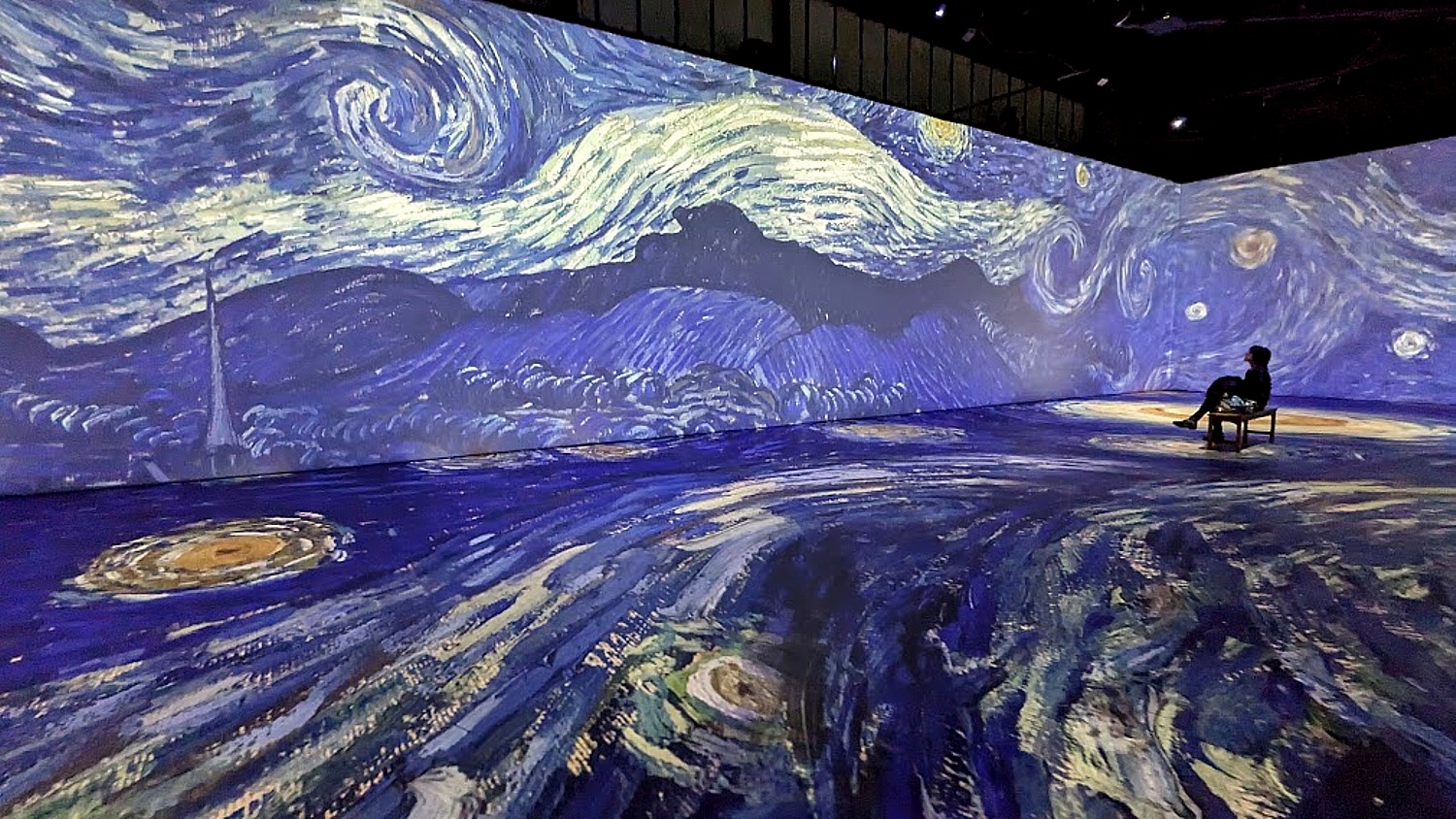
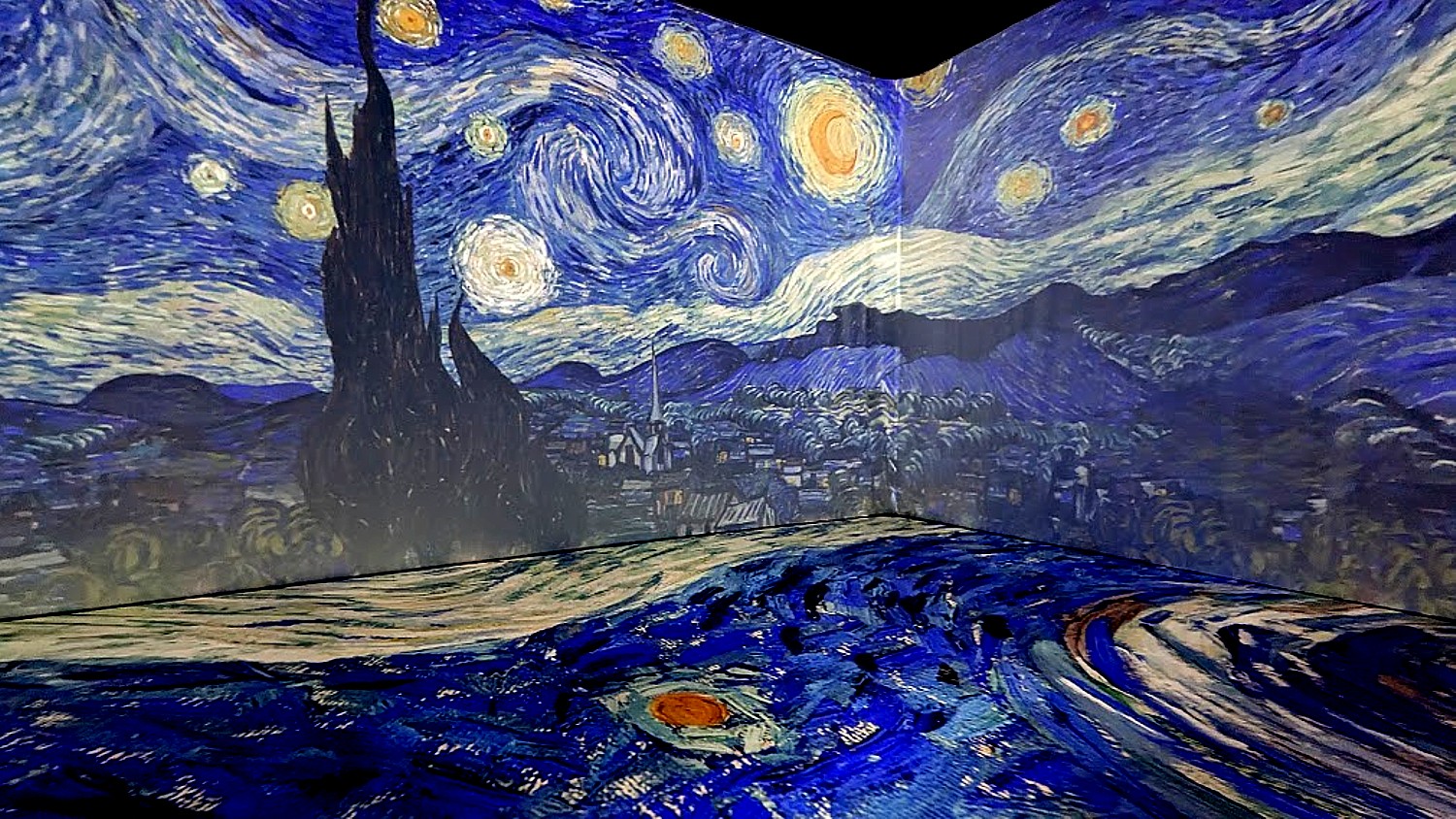
On view at Samanea New York Mall, Westbury, Long Island only until January 2, in the course of 40-minutes, you see some 300 of Van Gogh’s paintings surrounding you, projected on all four walls and the floor in a 30,000 sq. ft. space the size of a basketball court. The paintings fill the entire wall, large enough to walk into, become animated, turning stills into images that grow, change, emerge, ripple, wave, flow and blossom over you – in essence, animating the movement that Van Gogh so powerfully created with his paint strokes.

It is as if you see the painting develop from Van Gogh’s perspective, his mind’s eye and hand.

Beyond Van Gogh: The Immersive Experience is a multi-media, performance art showpiece that inspires new ways to appreciate Vincent Van Gogh’s genius © Karen Rubin/goingplacesfarandnear.com

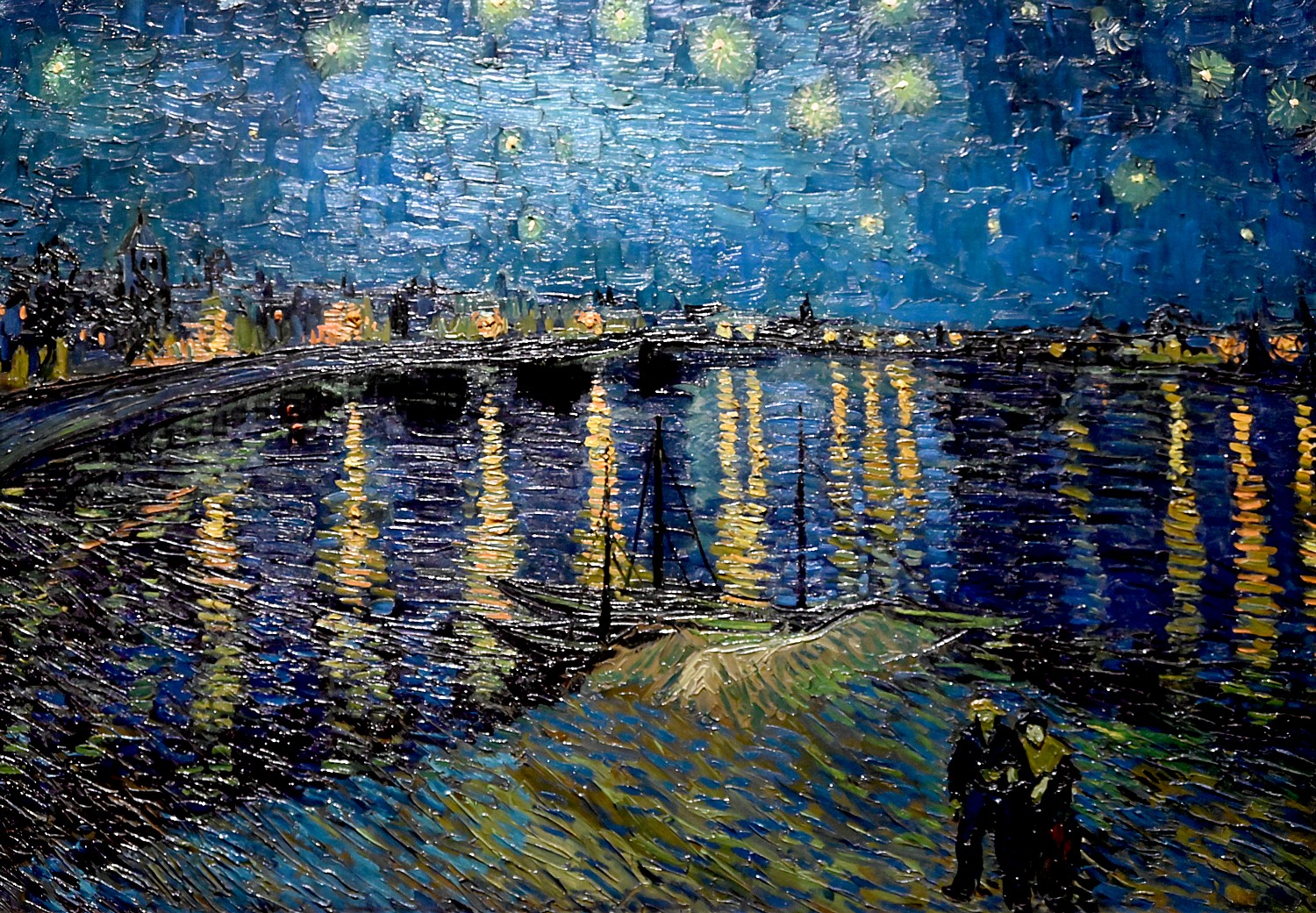
And I have to say, it is more stirring to see his works this way, than when I have seen “Starry Night Over the Rhone” which attracted the biggest crowds in a room in the Musée d’Orsay in Paris, or “Sunflowers” at the Museum of Modern Art, or his famous self-portrait at the Metropolitan Museum of Art. Is it blasphemous to say that these manifestations are more emotionally captivating than the original? Or is it enough to say, the paintings presented this way are as emotionally captivating but in a different way that adds cinematic drama.

The other benefit is that you see in this incredible 40-minute presentation some 300 of Van Gogh’s paintings – and not just zipping in front of your eyes, but well paced, magnificently and respectfully presented, each scene staying long enough to absorb what you are seeing all around you, to music perfectly curated to convey mood and emotion, before changing again.

It begs for active engagement in the sense of walking around, changing your visual perspective, even as the scene changes. There is a sense of immediacy as well as immersion.

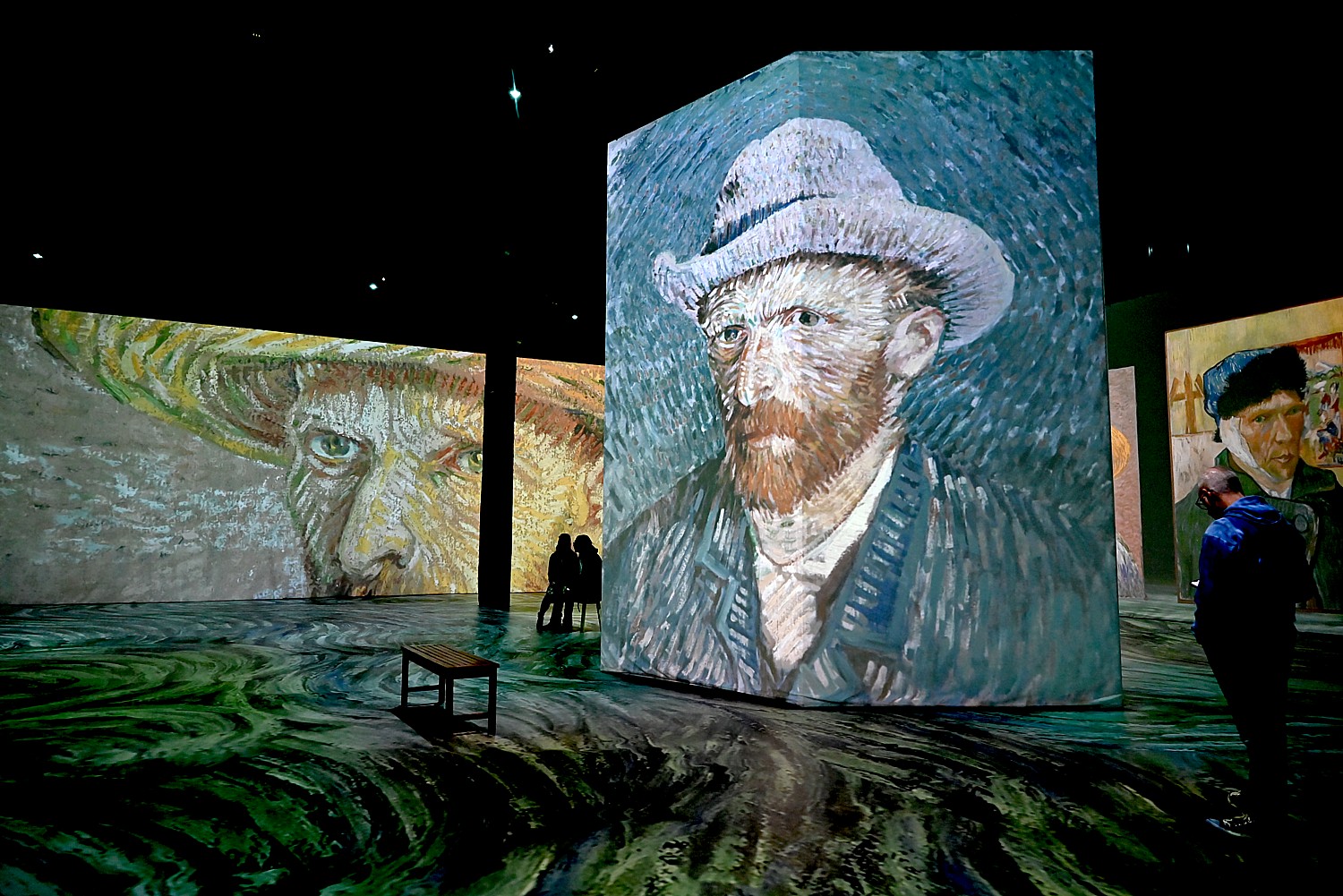
Beyond Van Gogh: The Immersive Experience is a multi-media, performance art showpiece that inspires new ways to appreciate Vincent Van Gogh’s genius © Karen Rubin/goingplacesfarandnear.com

Timed tickets, the vast openness of the space and enormous scale of the paintings almost insure you will have enough space to feel yourself a part of the paintings, large enough as if you could walk into any scene.

The music that provides the backdrop for the different scenes and themes of the works presented are equally well curated.

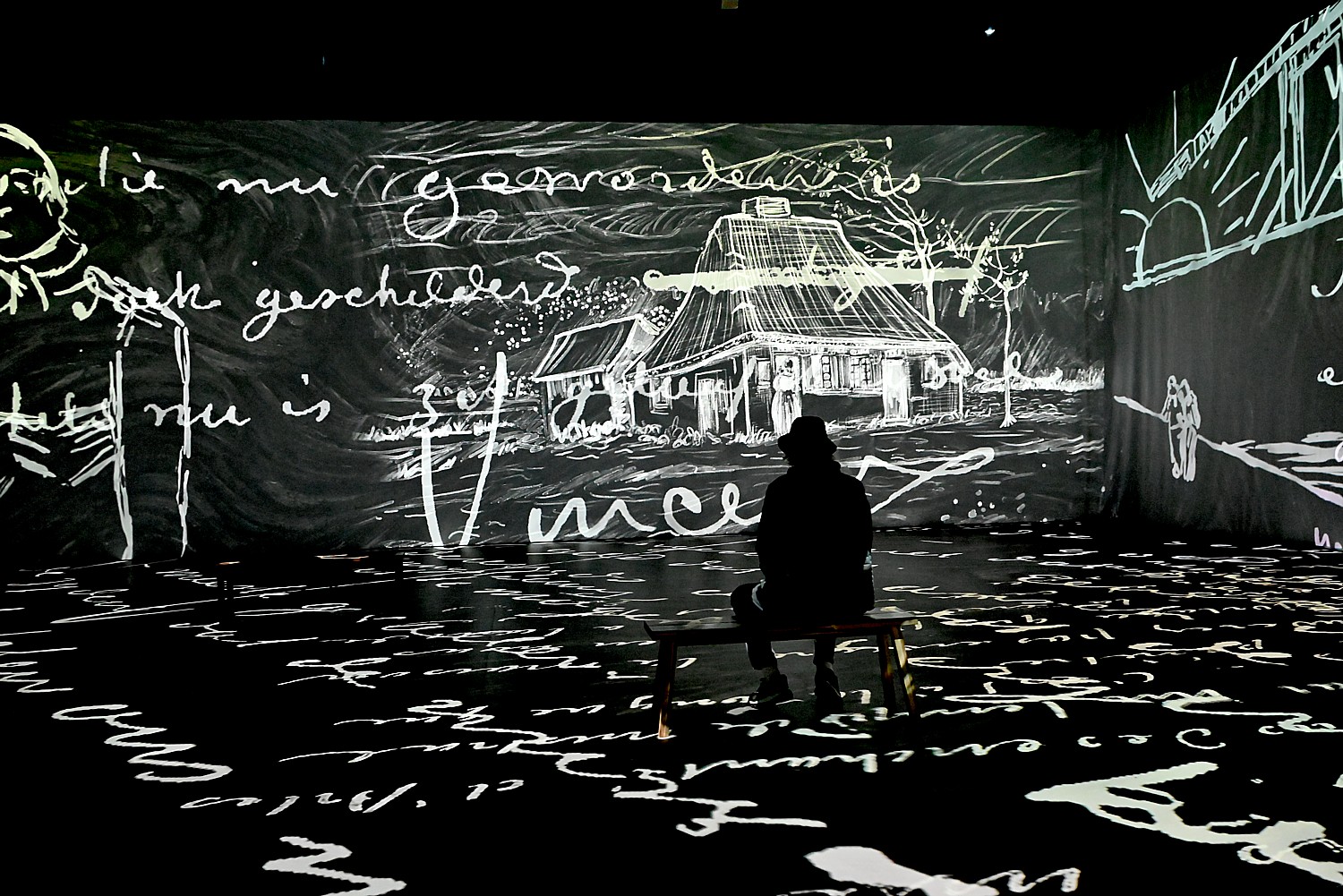
You are in tune with Vincent, as well, because the paintings seem to originate as if from his own hand – the basis are these sensitive quotes that mostly come from the letters between Vincent and his loving brother Theo, which document how he came to his artistic expression.

the heart of man is very much like the sea, it has its storms, it has its tides and in its depths, it has its pearls too,” he wrote Theo from Isleworth in 1876.

“…in all of nature, in trees for instance, I see expression and a soul, as it were,” Vincent writes Theo in 1882.

“I don’t know if you’ll understand that one can speak poetry just by arranging colours well, just as one can say comforting things in music,” he writes his sister Willemien from Arles, in 1888.

Beyond Van Gogh: The Immersive Experience is a multi-media, performance art showpiece that inspires new ways to appreciate Vincent Van Gogh’s genius © Karen Rubin/goingplacesfarandnear.com

Van Gogh’s biography is very much abbreviated – the focus is on his art and creativity. But there are these important nuggets that provide a context for better appreciating the paintings, that come from revealing quotes from the letters between Vincent and his loving, supportive brother Theo, which document how he came to his artistic expression and what art, color, light, nature meant to him.  I had no idea he came so late to being an artist, beginning when he was 27, in fact, the vast majority of his 1000 canvases, painted in only a decade, were painted in the last three years of his life, or that he became an art dealer like his brother, Theo, then, briefly studied to become a preacher, before devoting himself to his art.

Beyond Van Gogh: The Immersive Experience is a multi-media, performance art showpiece that inspires new ways to appreciate Vincent Van Gogh’s genius © Karen Rubin/goingplacesfarandnear.com

But it is intensely personal – throughout the exhibit, you see and hear snippets of Van Gogh’s letters to his brother, Theo, that provide such insights into Van Gogh’s essence, and burst the monotone myth of a man in a constant state of anguish: “the heart of man is very much like the sea, it has its storms, it has its tides and in its depths, it has its pearls too,” he wrote Theo from Isleworth in 1876.

 “In life and in painting too,” he writes Theo in 1888 from Arles, “I can easily do without the dear Lord, but I can’t, suffering as I do, do without something greater than myself, which is my life, the power to create.”

Paintings emerge like brush strokes, or like ripples of hot air, or like waves that wash over the canvas, splashing across the floor.

Sometimes the paintings themselves are made to animate, like the smoke that rises from the pipe he smokes in a self-portrait; and a windmill’s fans actually turn (a game for the viewer, a device to engage).

The scenes unfold, linger long enough to be appreciated, then another scene emerges.

Beyond Van Gogh: The Immersive Experience is a multi-media, performance art showpiece that inspires new ways to appreciate Vincent Van Gogh’s genius © Karen Rubin/goingplacesfarandnear.com

It is stunning to see his famous “Starry Night Over the Rhone” (1888) take over the walls and splash over the floor, the reflections of light in the water not at all static but shimmering, glittering and rippling.

 “..the sight of the stars always makes me dream…” Vincent writes Theo from Arles in 1888.

In another scene, trees grow up with springtime blossoms multiply,  blow in the wind, gathering more and more, becoming a storm of petals. You hear the wind.

Another display imagines a score of canvases stacked up against the wall – then transmute to stilllifes.

A roomful of the portraits he painted is profound – going beyond their surface image to create these characters.

Beyond Van Gogh: The Immersive Experience is a multi-media, performance art showpiece that inspires new ways to appreciate Vincent Van Gogh’s genius © Karen Rubin/goingplacesfarandnear.com

When a whole roomful of his self-portraits unfold, you are struck by the honesty. “It is difficult to know oneself, but it isn’t easy to paint oneself either,” he writes from Saint-Remy in 1889

Van Gogh didn’t sell any of his art during his lifetime. He suffered from clinical depression that in those days, had no medical treatment. But he seemed to have a desperate desire and even an inclination that his works would survive him, as when he refers to his subjects as becoming “ghosts” visiting future viewers.

An artist who today is considered one of the greatest of all time was considered a failure (as an artist). In this, Van Gogh gives hope and inspiration to every other failed, un- and under-appreciated artist.

Beyond Van Gogh: The Immersive Experience is a multi-media, performance art showpiece that inspires new ways to appreciate Vincent Van Gogh’s genius © Karen Rubin/goingplacesfarandnear.com

The show, brilliantly, sensitively, imaginatively done, is itself a work of art – multi-media, performance art – because it takes all of these works and creates something new, a new way to experience the paintings, that will engage young people being introduced to art as well as devotees, artists and academics.

“I came to recognize and appreciate that the world was witnessing the cusp of a new art form- a reinterpretation of the fascinating narrative between master and masterpiece,” writes Gilles Paquin, Founder, Chairman, Executive Producer of Paquin Entertainment Group, Inc., in the forward to the show’s publication. “Combining fine art and artifacts with music and cinema, curated, staged and presented in a way that can be enjoyed by an audience so diverse it transcends the confines of age, gender and cultural demographics.”

Beyond Van Gogh: The Immersive Experience is a multi-media, performance art showpiece that inspires new ways to appreciate Vincent Van Gogh’s genius © Karen Rubin/goingplacesfarandnear.com

“At the start of this creation, we searched for a refreshing perspective of Van Gogh’s vision of the world,” writes Mathieu St-Arnaud, Creative Director & Art Direction, Normal Studio. “What we found was unexpected and captivating: we were met with Vincent, a human being like all of us, an artist devoted to his craft, yearning for beauty and moved by purpose. It became a personal journey for us, one that we wanted to extend to audience members around the world: to go beyond the myth that is Van Gogh and instead meet Vincent, the man behind the vision. Wielding colour and light, Vincent transformed hardship and darkness into light and joy, infusing his work with a contagious sense of hope that it still exudes today. Amidst the challenges of today, there’s something truly inspiring in Vincent’s will to focus on the wonders of the world and his determination to both capture and share them with all of us. In more ways than one. Vincent is the artist we need right now.”

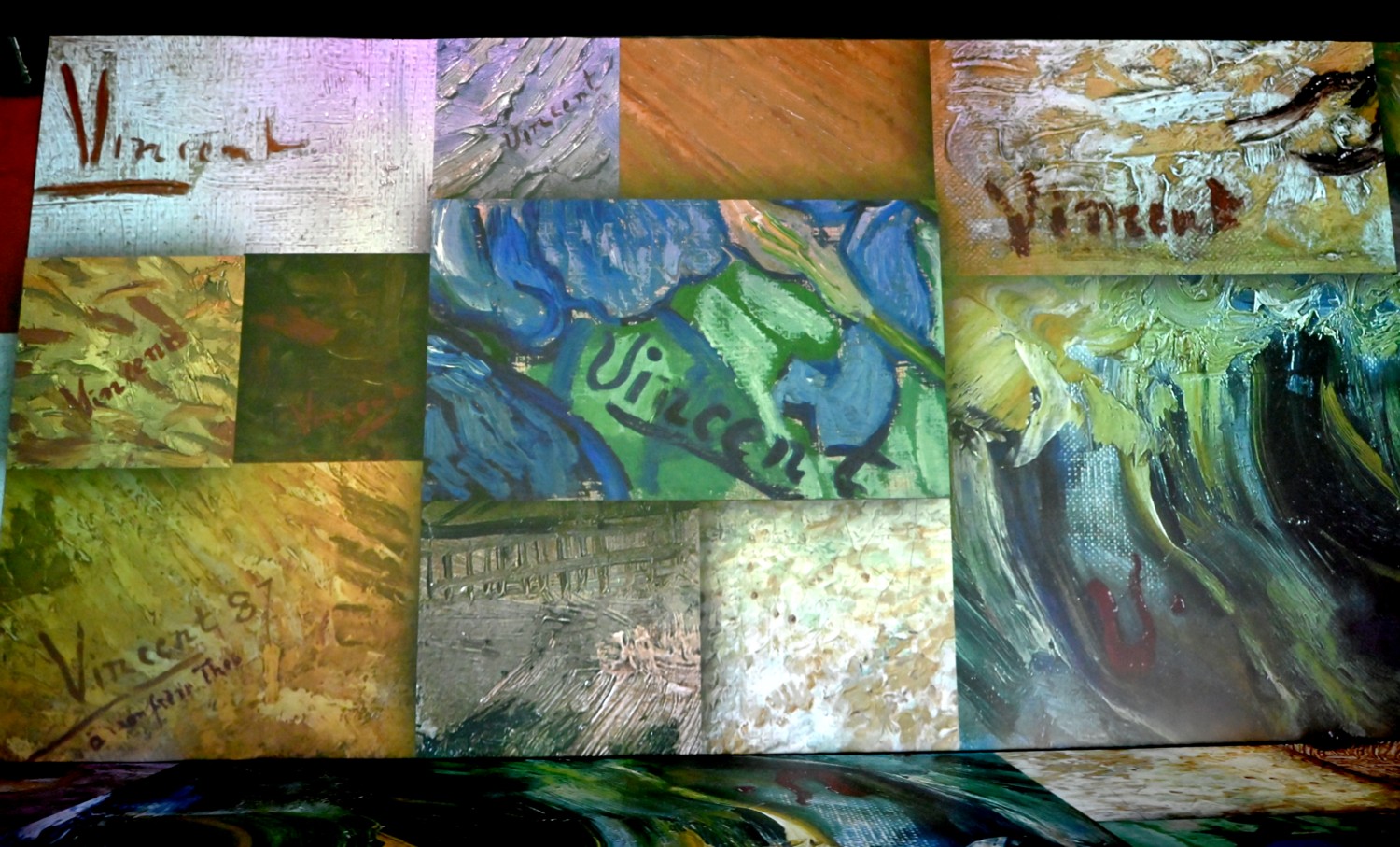
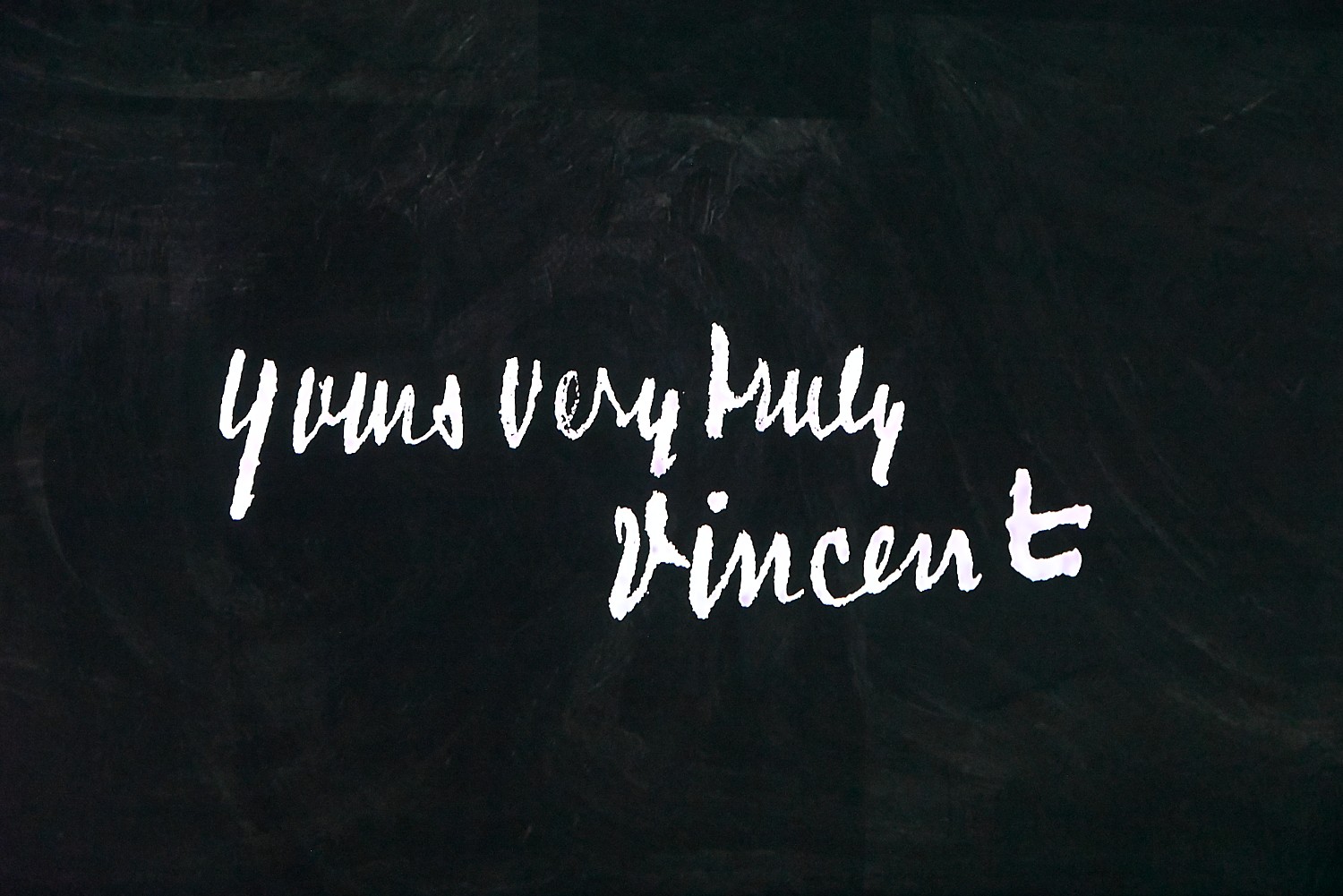
The end of the loop is a series of Vincent’s famous signature that emerge from scores of his paintings – we learn that he only signed “Vincent” because he feared his surname would be too difficult to pronounce. “yours very truly, Vincent.”

Beyond Van Gogh: The Immersive Experience is a multi-media, performance art showpiece that inspires new ways to appreciate Vincent Van Gogh’s genius © Karen Rubin/goingplacesfarandnear.com

This scene is like Van Gogh’s final word as if to say, “This is me. This is what I created. This is what I have left to the world.”

Vincent Van Gogh left this world in 1890, 37 years old, just as his work was gaining critical recognition. “to succeed, to have lasting prosperity, one must have temperament different from mine,” he writes Theo in 1889. “I make a point of telling myself, yes I am something, I can do something.”

Beyond Van Gogh: The Immersive Experience is a multi-media, performance art showpiece that inspires new ways to appreciate Vincent Van Gogh’s genius © Karen Rubin/goingplacesfarandnear.com

Beyond Monet: The Immersive Experience

Long Islanders are lucky because Beyond Van Gogh: The Immersive Experience which was brought back after a hugely successful run through the holidays, alternates days with Beyond Monet: The Immersive Experience.

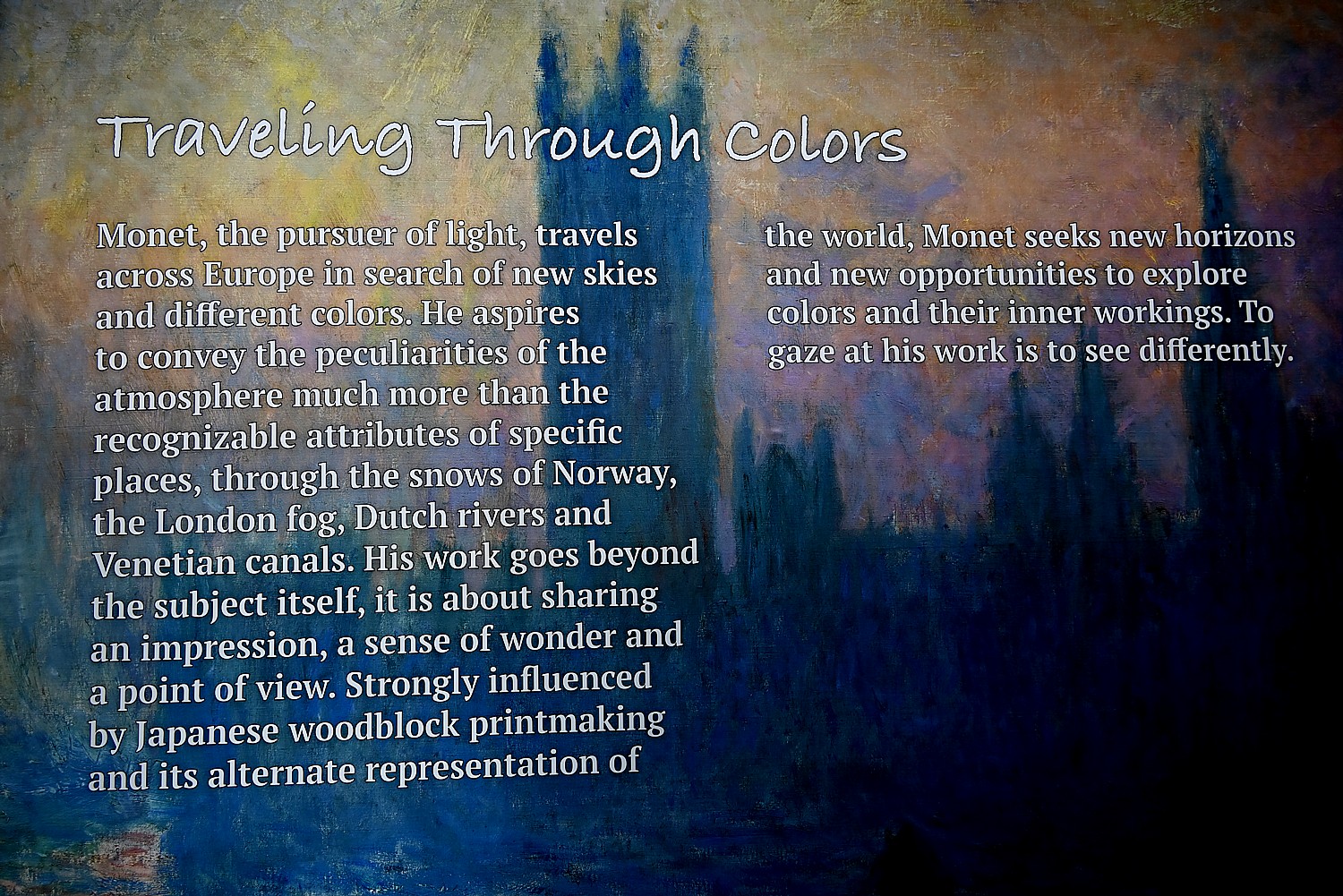
Beyond Monet: The Immersive Experience gives guests a glimpse into the emotions and perspectives of the leading figure of Impressionism: Claude Monet, with some 400 of his works. Taking inspiration from Musée de l’Orangerie in Paris, the designated home of Monet’s masterpieces, guests can freely roam the Infinity Room to absorb the artist’s bright and colorful paintings. Monet’s stunning imagery encompasses every surface of the room, transporting guests inside the paintings themselves. It is a haven for awakening the senses as the ebb and flow of the artwork is accompanied by the rhythm of an original score.

“When you stand inside Beyond Monet, you truly feel like you are part of Monet’s passionate quest for the effervescent beauty of the world,” Beyond Monet Art Historian Fanny Curtat said. “Experiences like these create fresh and original perspectives, allowing us to form new relationships with notable masterpieces in dynamic and fascinating ways.”

Beyond Monet: The Immersive Experience © Karen Rubin/goingplacesfarandnear.com

“Through cutting edge technology, Beyond Monet: The Immersive Experience is redefining what art means to people,” stated Paquin Entertainment Group’s President of Exhibitions and Theatrical, Justin Paquin “It has elevated artwork to the next level, allowing us to form new relationships with notable masterpieces that were just not possible in previous years.”

Ideal for enjoying through the holidays (both Beyond Van Gogh and Beyond Monet end the Long Island presentation on January 3), but there are other cities where the exhibitions are on view or will be).

Beyond Van Gogh: The Immersive Experience has sold over 6 million tickets worldwide and may be seen in San Diego and Tulsa and will be coming to Baltimore, Dayton, Grand Forks, Tallahassee, Tucson, Ventura, Washington DC, West Palm Beach.

See schedule and purchase timed tickets to Beyond Van Gogh: The Immersive Experience in advance at www.vangoghlongisland.com (on Wednesdays and Fridays) alternating with alternating with Beyond Monet The Immersive Experience at www.monetlongisland.com (on Thursdays, Saturdays and Sundays), at Samanea New York, 1500 Old Country Road, Westbury, NY.

____________________________

© 2023 Travel Features Syndicate, a division of Workstyles, Inc. All rights reserved. Visit goingplacesfarandnear.com, www.huffingtonpost.com/author/karen-rubin, and travelwritersmagazine.com/TravelFeaturesSyndicate/. Blogging at goingplacesnearandfar.wordpress.com and moralcompasstravel.info. Visit instagram.com/going_places_far_and_near and instagram.com/bigbackpacktraveler/ Send comments or questions to FamTravLtr@aol.com. Tweet @TravelFeatures. ‘Like’ us at facebook.com/KarenBRubin 
It’s the Magical Time of Year! Holiday Festivities Get Underway in NYC

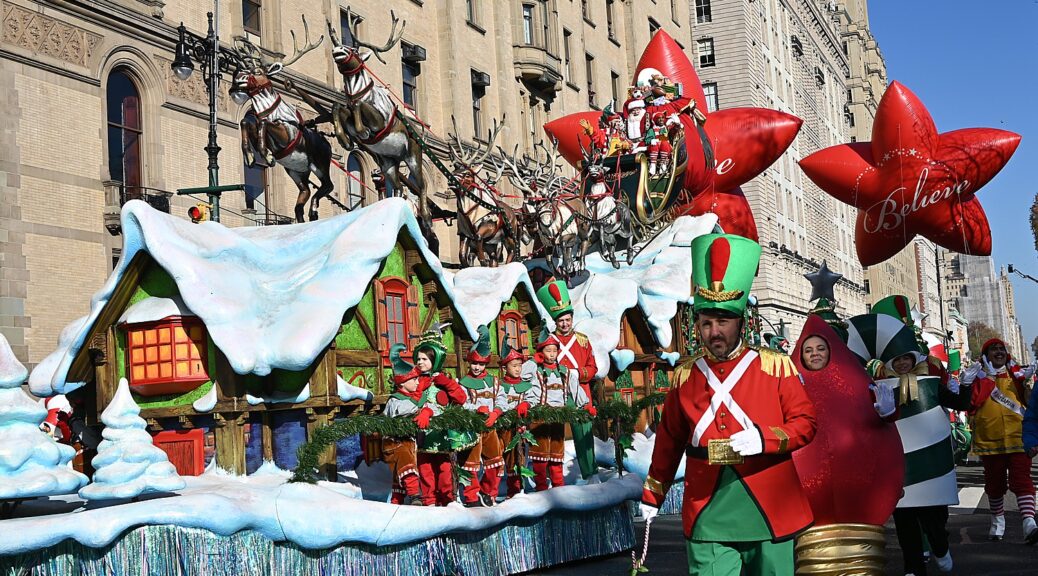
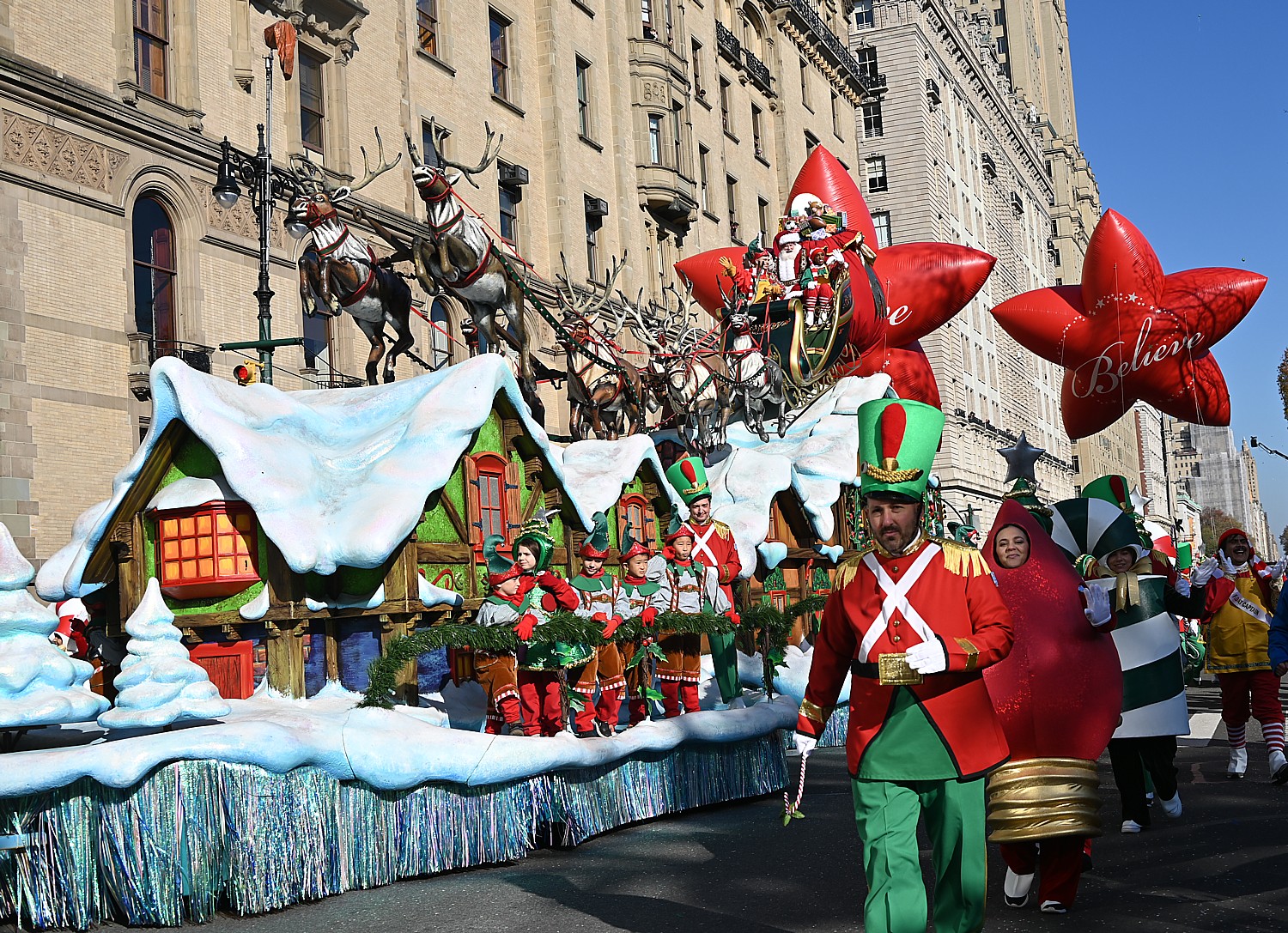
Santa Claus comes to town! The 97th annual Macy’s Thanksgiving Day Parade is the official kick-off to New York City’s season of holiday festivities and happenings. © Karen Rubin/goingplacesfarandnear.com.

By Karen Rubin, Travel Features Syndicate, www.goingplacesfarandnear.com
New York City’s holiday season officially kick off with the 97th annual Macy’s Thanksgiving Day Parade on November 23. From November to January, the city is a wonderland of holiday lightings, festive performances, winter exhibitions, special attractions and happenings across all five boroughs that surprise and delight the seven million travelers expected between Thanksgiving and New Years.

HOLIDAY HAPPENINGS

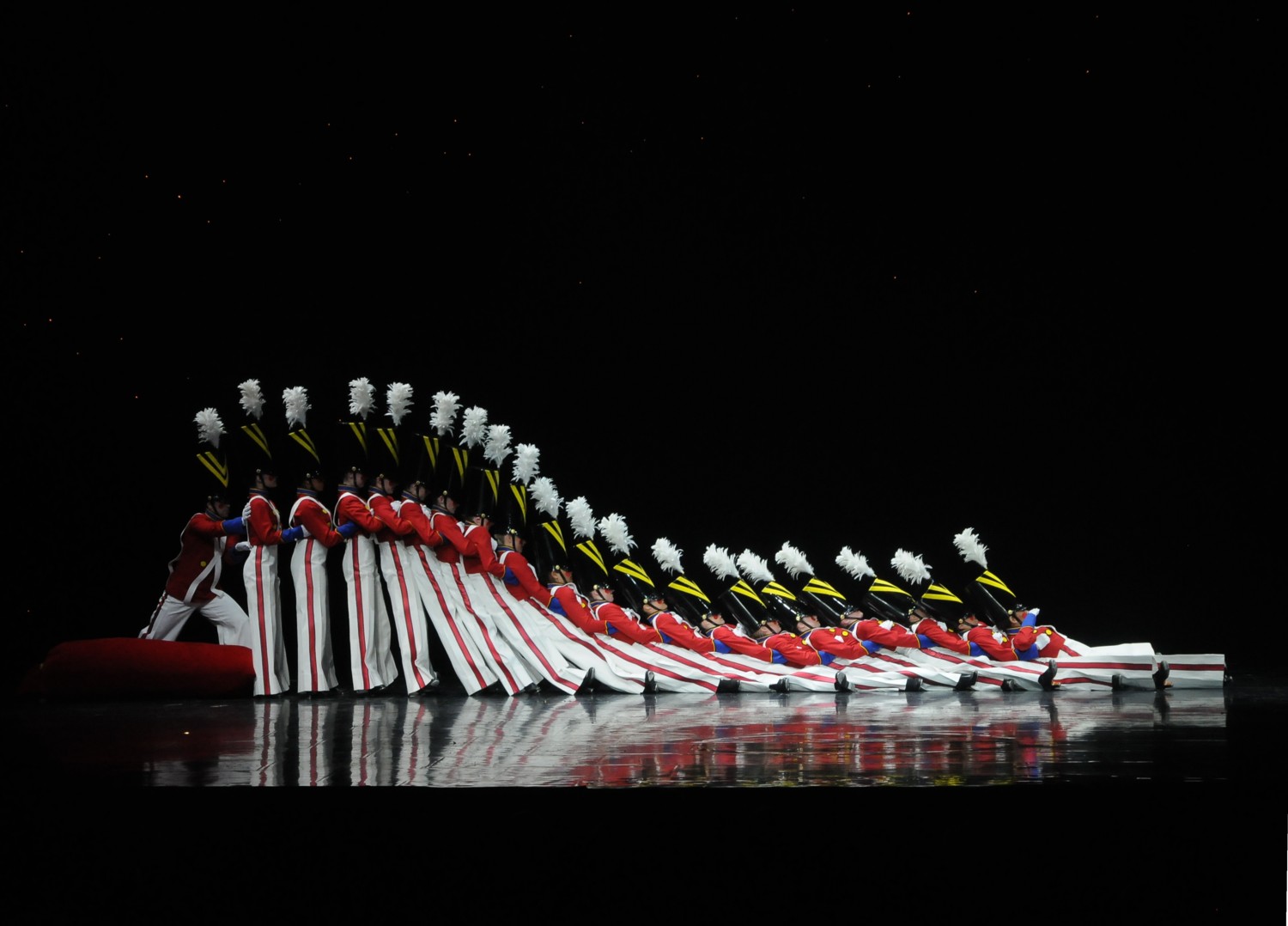
Radio City Rockettes performing their iconic Wooden Soldiers routine is always a highlight of the Christmas Spectacular © Karen Rubin/goingplacesfarandnear.com

Christmas Spectacular Starring the Radio City Rockettes, Nov.17-Jan. 1. Revel in the timeless and beloved holiday tradition as it once again graces the stage of Radio City Music Hall. With a history spanning nearly a century, this musical extravaganza features dazzling costumes, joyful songs, synchronized high kicks, innovative acts, and multiple daily shows.
George Balanchine’s The Nutcracker Presented by New York City Ballet, Nov. 24-Dec. 31 at Lincoln Center’s David H. Koch Theater.

Alvin Ailey American Dance Theater at New York City Center, Nov. 29-Dec. 31 isa cherished tradition at New York City Center, now in its 65th annual winter season. This season features world premieres like CENTURY by Amy Hall Garner and Me, Myself and You by Elizabeth Roxas-Dobrish, along with Ronald K. Brown’s Dancing Spirit.
Twas the Night Before… by Cirque du Soleil at The Theater at Madison Square Garden, Dec. 7-28.  Cirque du Soleil’s first-ever holiday production is sure to become a new NYC holiday tradition.

The Magic Flute Holiday Presentation at The Metropolitan Opera, Dec. 8-30. The Met Opera  presents an abridged, English-language adaptation of Mozart’s magical fairy tale, ideal for all ages, delivering a captivating narrative and delightful melodies. Guided by conductors Patrick Furrer and Gareth Morrell, a standout cast takes the stage in Julie Taymor’s imaginative production.
Holidays with the New York Philharmonic, Dec. 12-17. NYPhil is teaming up with the Handel and Haydn Society Chorus, conducted by baroque expert Fabio Biondi for a performance of Handel’s beloved masterpiece, Messiah. Additionally, the annual Holiday Brass tradition is back.

Candlelight Holiday Concert Series, Brooklyn Heights. Select dates from December 13-21. Enchanting Candlelight live, multi-sensory musical performances take place at St. Ann & the Holy Trinity Church, the Church of Heavenly Rest and The Williamsburg Hotel.

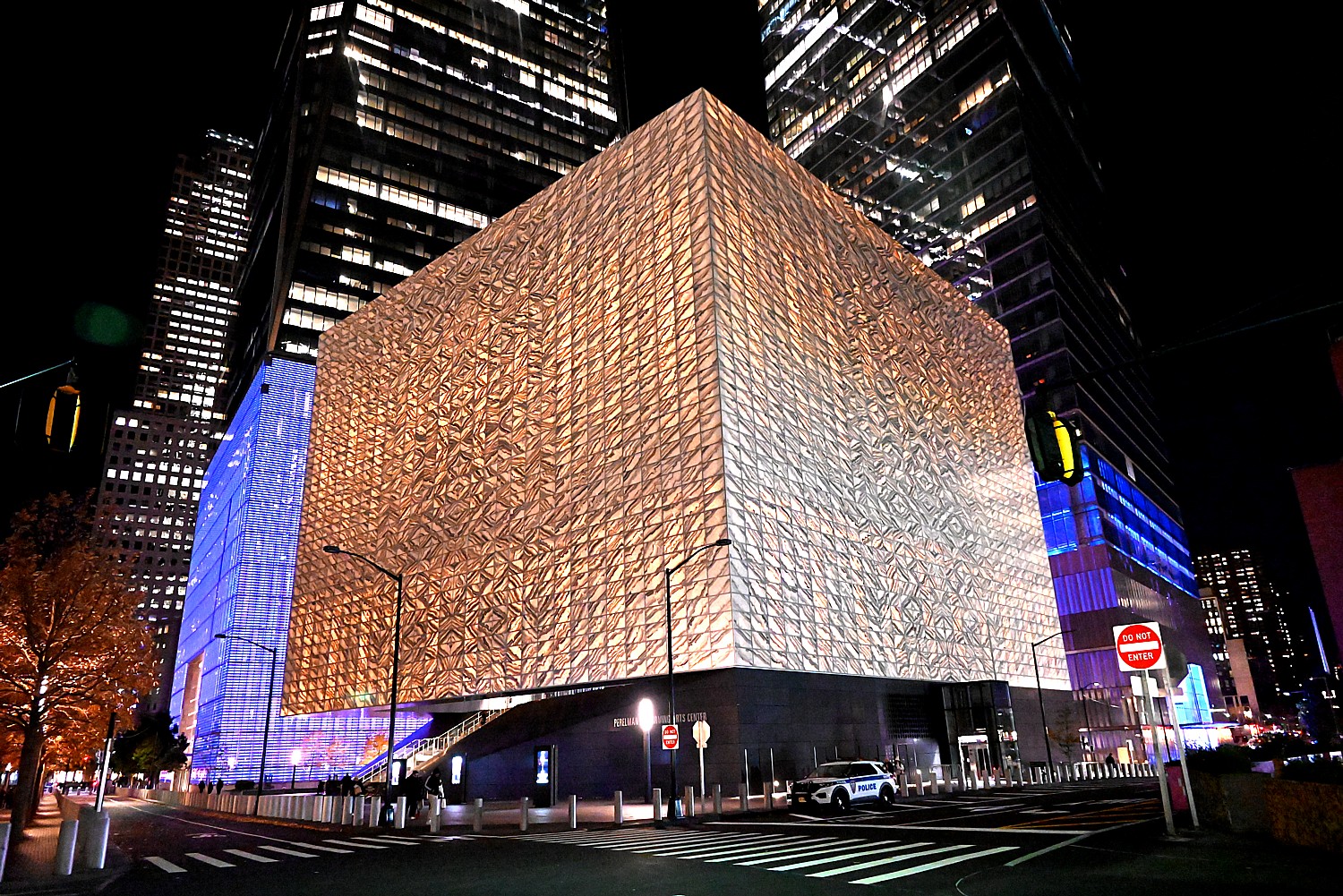
The magnificent new performance venue at Perelman Arts Center in Lower Manhattan is featuring a holiday concert series © Karen Rubin/goingplacesfarandnear.com

Circle Songs: A Holiday Concert Series at Perelman Arts Center (PAC NYC), Lower Manhattan, Dec. 20-23. During PAC NYC’s inaugural season, experience a four-evening holiday concert series featuring world-class artists, including countertenor Anthony Roth Costanzo with The Knights, Toshi Reagon’s circle of sonic experiences, Time for Three’s innovative transformation of Western music, and the dynamic Broadway duo; Orfeh and Andy Karl

The Best Christmas of All with Norm Lewis at Carnegie Hall, Dec. 22-23. The New York Pops’ annual holiday tradition returns for a merry night of classic carols, contemporary favorites, and a few surprises with Broadway baritone and Tony Award nominee Norm Lewis.

Holiday Programming at the Apollo Theater, Dec. 9 and 30, Harlem. The world-famous Apollo Theater is presenting several special events this season, including the annual Kwanzaa Celebration on Dec. 30, led by choreographer Abdel Salaam and Forces of Nature Dance Theatre, Apollo Amateur Night Holiday Special December 9 highlights accomplished alumni, echoing stars who began at the Apollo like Ella Fitzgerald and H.E.R. The theater also welcomes families for festive activities, Santa photos and performances, hosted by the Apollo Theater’s Tour Director and Ambassador, Billy Mitchell.

The Brooklyn Nutcracker at Kings Theatre, Flatbush Brooklyn, Dec. 16, offers a fresh take on the cherished holiday favorite. Brilliantly weaving in the tapestry of Brooklyn’s varied traditions and dynamic culture, the show pays homage to the historical Dutch influence and the iconic Flatbush Avenue through its innovative and skillful performance.

O. Henry’s The Gift of the Magi at Queens County Farm, Glen Oaks, Queens, Dec. 16. Join Queens County Farm Museum for a free, outdoor reading of O. Henry’s The Gift of the Magi by acclaimed actor Kevin R. Free. The program takes place in the farm’s three-acre pasture, where Free will recount the heartwarming tale of selfless love and Christmas spirit, with its everlasting significance since its publication in 1905.

Works & Process Rotunda Holiday Concert at Solomon R. Guggenheim Museum, Dec. 17. Charles Turner & Uptown Swing, joined by the accomplished Asian drag artist and Juilliard-trained tenor Jasmine Rice LaBeija, will fill the museum’s iconic Frank Lloyd Wright-designed rotunda with the joyous sounds of holiday music as part of an annual tradition beloved by all.

The Christmas Show at St. George Theatre, Staten Island. Dec. 8-10, celebrates its 20th anniversary of its beloved Christmas Show.

WINTER EXHIBITIONS AND CULTURAL EVENTS

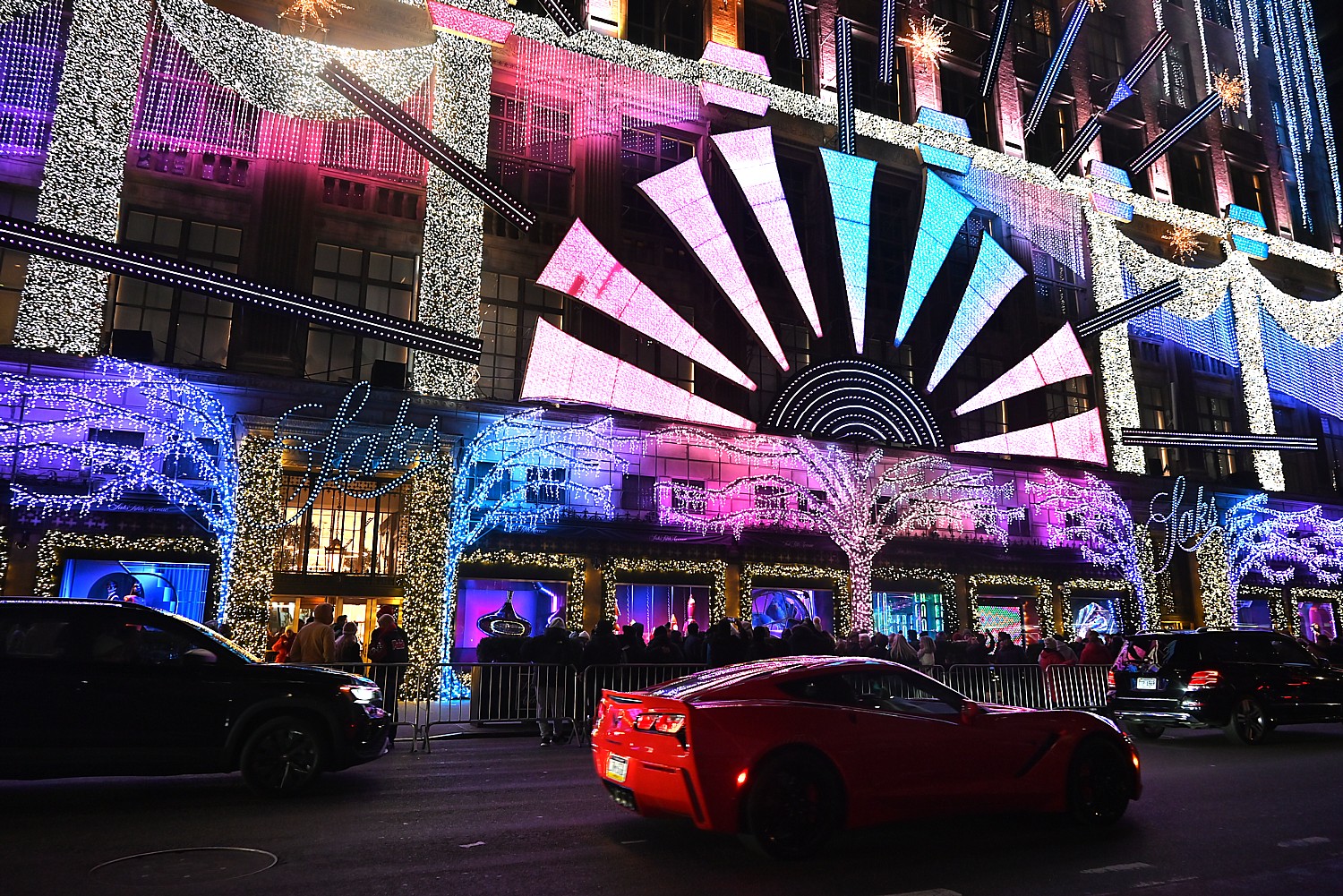
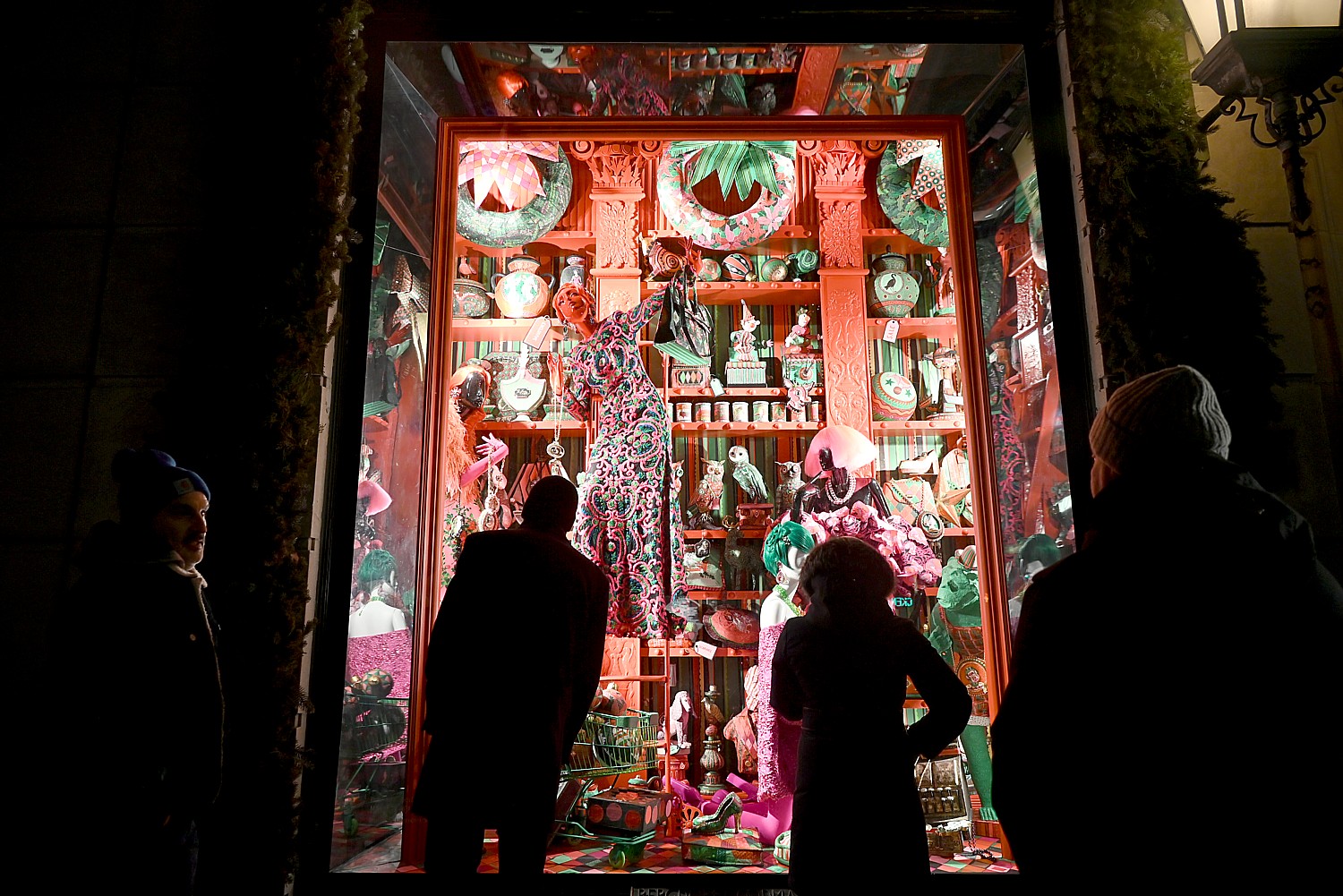
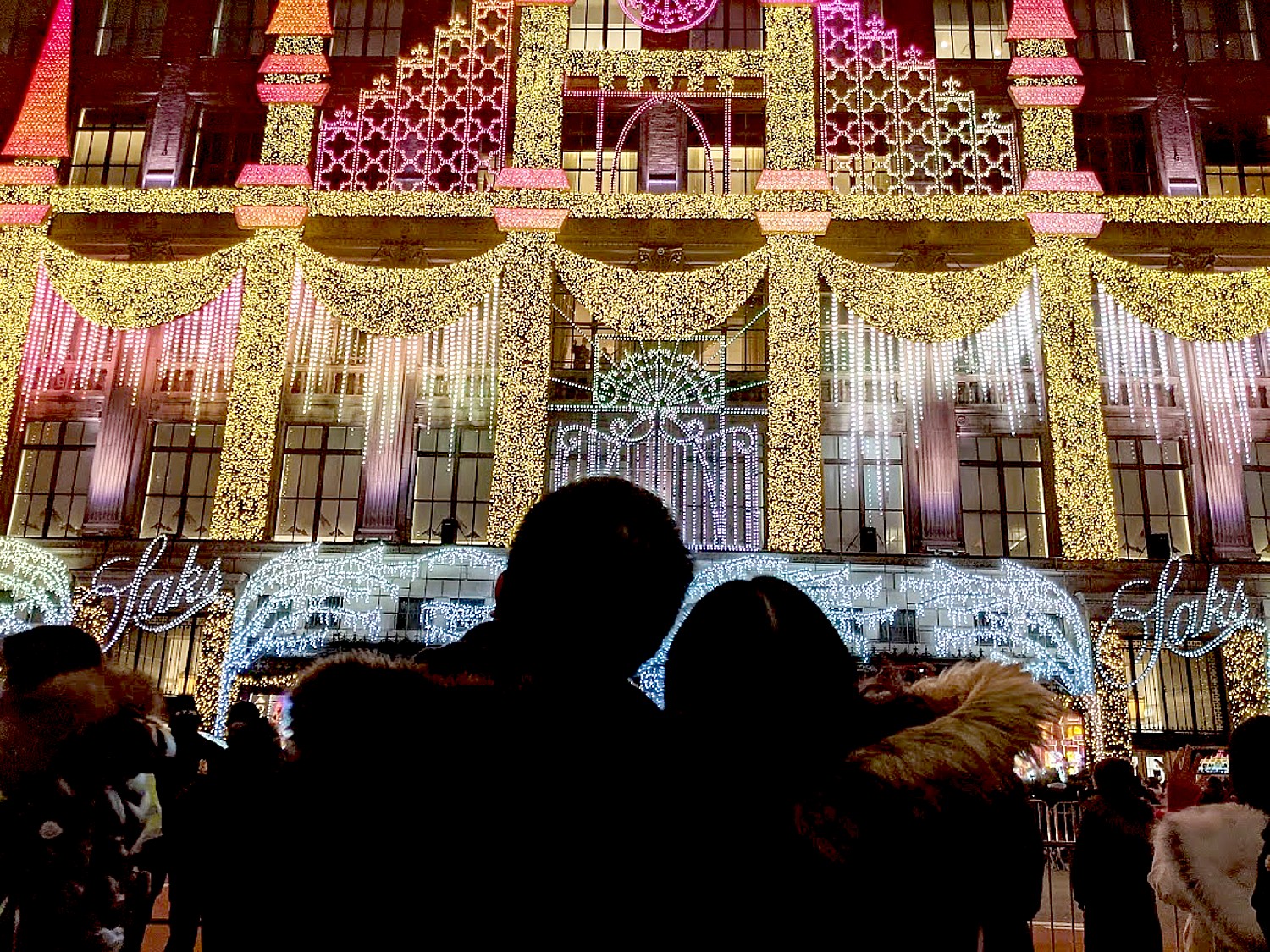
Saks Fifth Avenue always excites with its decorated windows and light show © Karen Rubin/goingplacesfarandnear.com

Fifth Avenue Holiday Window Displays & Second Annual Open Streets Program, Midtown Manhattan. throughout the holiday season, at iconic shopping venues including Saks Fifth Avenue, Tiffany & Co., Cartier, Bergdorf Goodman. This season marks the return of the popular Open Streets program, where Fifth Avenue will close to all vehicular traffic and also open the sidewalks to a variety of food vendors and musical performers from local choirs and instrumental ensembles.

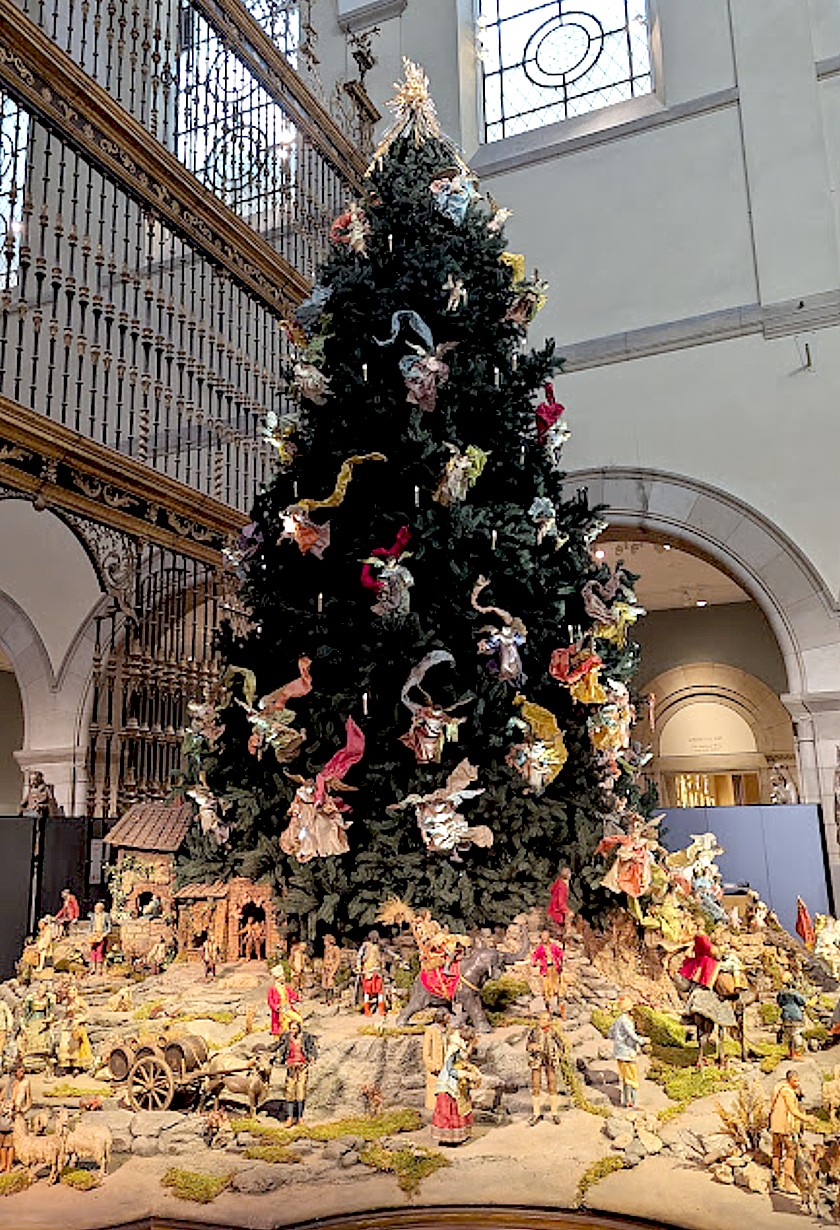
Christmas Tree and Neapolitan Baroque Crèche at The Metropolitan Museum, Fifth Avenue, Nov.  21-Jan. 7. An NYC tradition, The Met’s Christmas Tree and Neapolitan Baroque Crèche display features a beautifully decorated tree with a nativity scene encircling its base. This ensemble originates from an assemblage of 18th-century Neapolitan figures generously contributed by American artist and collector Loretta Hines Howard back in 1964. Hurry to see the “Manet/Degas” show before it ends, Jan. 7 (You must join the virtual exhibition queue via QR code once inside the Museum. No advance or timed tickets required. Access is first come, first served and subject to capacity limitations. The virtual queue closes daily when capacity is reached.) There is also a superb special show, Vertigo of Color: Matisse, Derain, and the Origins of Fauvism, thru Jan. 21, 2024. (New Yorkers pay what you want admission; metmuseum.org).

The Met’s Christmas Tree and Neapolitan Baroque Crèche display features a beautifully decorated tree with a nativity scene encircling its base © Karen Rubin/goingplacesfarandnear.com

A Christmas Carol: The Manuscript at The Morgan Library & Museum, Murray Hill, Manhattan, Nov. 21-Jan. 7. Every holiday season, the Morgan displays Charles Dickens’ original manuscript of A Christmas Carol in J. Pierpont Morgan’s Library. Bound in red goatskin leather, the manuscript was gifted to Dickens’ solicitor, Thomas Mitton, and later came into the possession of Pierpont Morgan in the 1890s. This season, the manuscript will be turned to page seven.

Be sure to visit the “Invisible World” at the Gilder Center The American Museum of Natural History © Karen Rubin/goingplacesfarandnear.com 

The Origami Holiday Tree at the American Museum of Natural History, Nov. 22 throughout holiday season. Showcasing more than 1,000 hand-crafted models, the delightfully decorated Origami Holiday Tree, the theme of this year’s 13-foot tree is Elephants, featuring models inspired by the museum’s new exhibition The Secret World of Elephants, debuting November 13. Be sure to spend time exploring the Gilder Center, especially “Invisible World.”

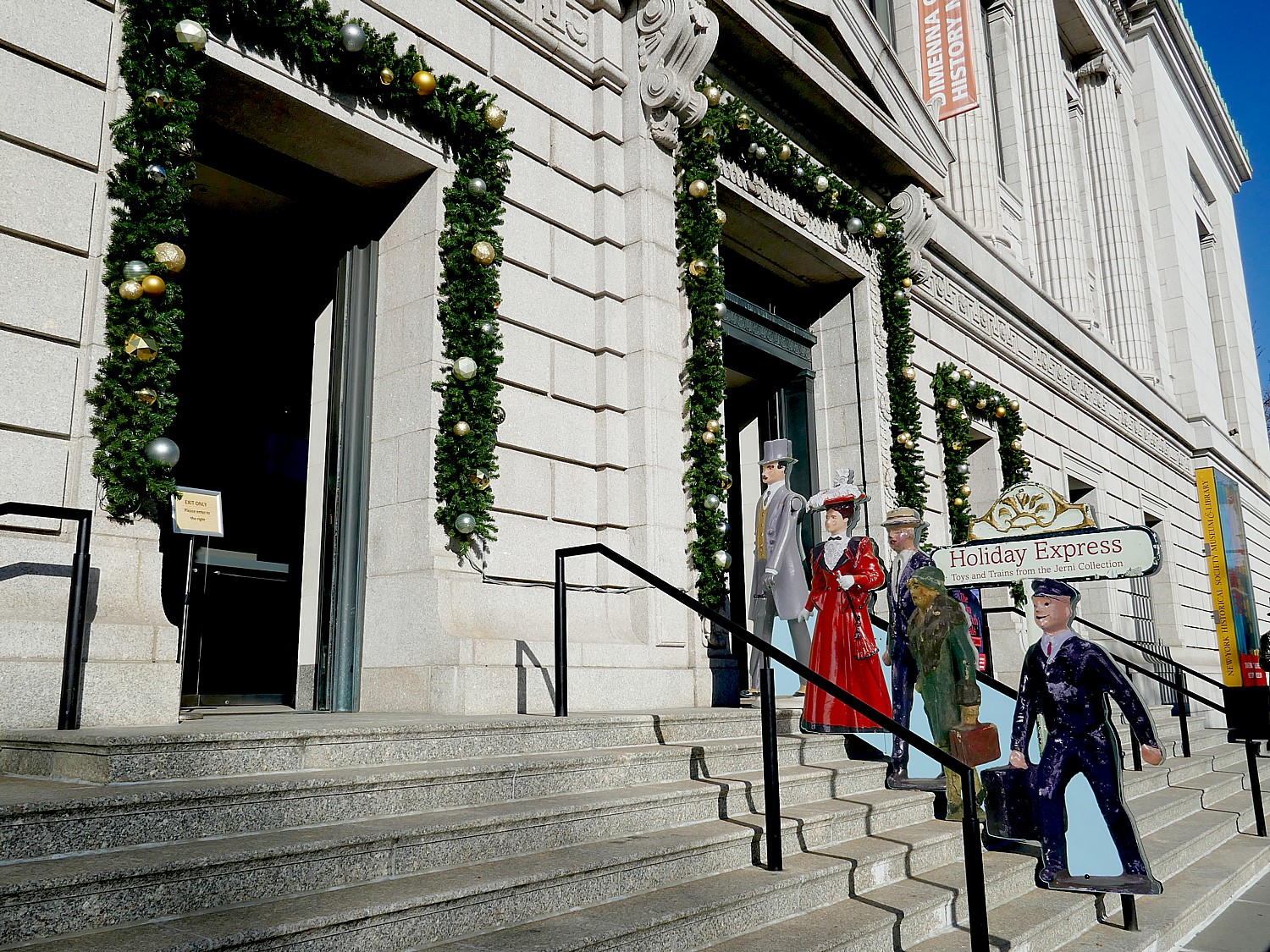
Holiday Express: Toys and Trains from the Jerni Collection at New-York Historical Society, Nov. 24-Feb. 4. New-York Historical Society’s annual wintertime favorite, the Jerni Collection, displaying handcrafted and hand-painted toy trains spanning the years 1850 to 1940. Alongside these, an assortment of toy train stations illustrates the design evolution from the early 20th century to the era of World War II.

This way to the Holiday Express at the New-York Historical Society © Karen Rubin/goingplacesfarandnear.com

Seaport Celebrations, Lower Manhattan.  Embrace the holiday season as the historic cobblestone streets of The Seaport and Pier 17 transform into a festive haven. Chef Jean-Georges Vongerichten’s latest culinary delight, the Tin Building, is located just steps away, ready to welcome visitors for the holidays.

Holiday Train Show at New York Botanical Garden, Bedford Park, The Bronx, Nov. 17-Jan. 15.
For over three decades, the beloved Holiday Train Show has captivated holiday-goers with model trains zipping through a magical exhibition featuring over 190 replicas of iconic NYC landmarks. These charming creations are meticulously crafted from materials like birch bark, lotus pods, and cinnamon sticks, which will be presented on an all-new outdoor train display this year.

Holiday Wreath Workshop at Wave Hill, Riverdale, The Bronx,  Dec. 1-3. Take part in wreath making workshops with professionals and learn simple techniques for designing one-of-a-kind decorations, as well as strolling through an artisan market on site.

Christmas in Historic Richmond Town, Staten Island, Dec. 9-10. Experience the magic of the holiday season as Historic Richmond Town undergoes a charming Dickens-style makeover. From engaging living history demonstrations, unique gift shopping, crafting and exploring the tinsmith, carpenter and general store, to encounters with Santa, delectable local cuisine and many more joyful attractions, this two-day event promises a jolly ambience for all ages to enjoy.

HOLIDAY LIGHTS

Saks Fifth Avenue always transfixes with its decorated windows and light show © Karen Rubin/goingplacesfarandnear.com

Lightscape at Brooklyn Botanic Garden, Prospect Heights, Brooklyn, Nov. 17-Jan. 1, returns to Brooklyn Botanic Garden with a longer illuminated trail, more works of art from around the world, and new, immersive experiences. Dozens of monumental light sculptures, a million lights, curated music playlist create a winter wonderland along a one-mile outdoor trail.

Bronx Zoo Holiday Lights, Nov. 17-Jan. 7. With more than 390 lanterns representing nearly 100 animal and plant species, the Bronx Zoo’s family-centric holiday lights festival will connect visitors with real wildlife and wild places. During the evenings, the park comes to life with holiday cheer as immersive light displays, custom-designed animal lanterns and animated light shows sparkle across the zoo. The celebration is complete with seasonal treats, classic holiday music, the Holiday Train, new interactive experiences, and other festive entertainment.

NYBG GLOW, Bedford Park, The Bronx, Nov. 17-Jan. 13. Discover the beauty of the New York Botanical Garden’s landscape and historic buildings, breathtakingly illuminated. Returning for its fourth year with special evening events, the Garden’s iconic sights and architecture, including the Haupt Conservatory and the LuEsther T. Mertz Library Building, become dramatic, glittering canvases.

Holiday Lights & Movie Sites Tour with On Location Tours, Manhattan, Nov. 25-Jan. 2. Explore the holiday charm of New York City with On Location Tours, visiting iconic landmarks and hidden gems while discovering filming locations from popular holiday movies like Elf, Home Alone 2, Scrooged and more. Starting at Columbus Circle and Central Park West, the tour includes stops at Bloomingdale’s, Rockefeller Center and Bryant Park’s famous ice-skating rink. 

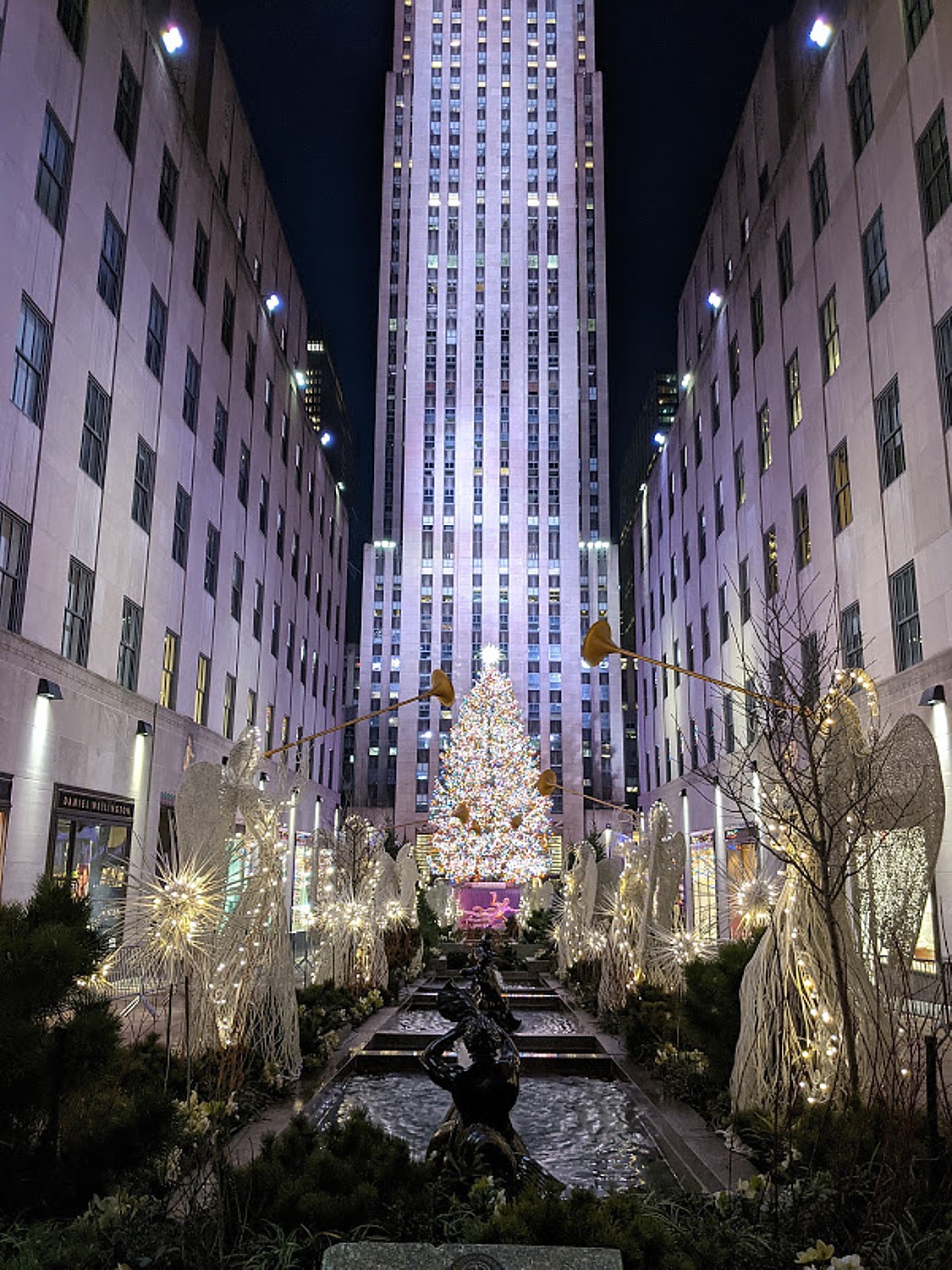
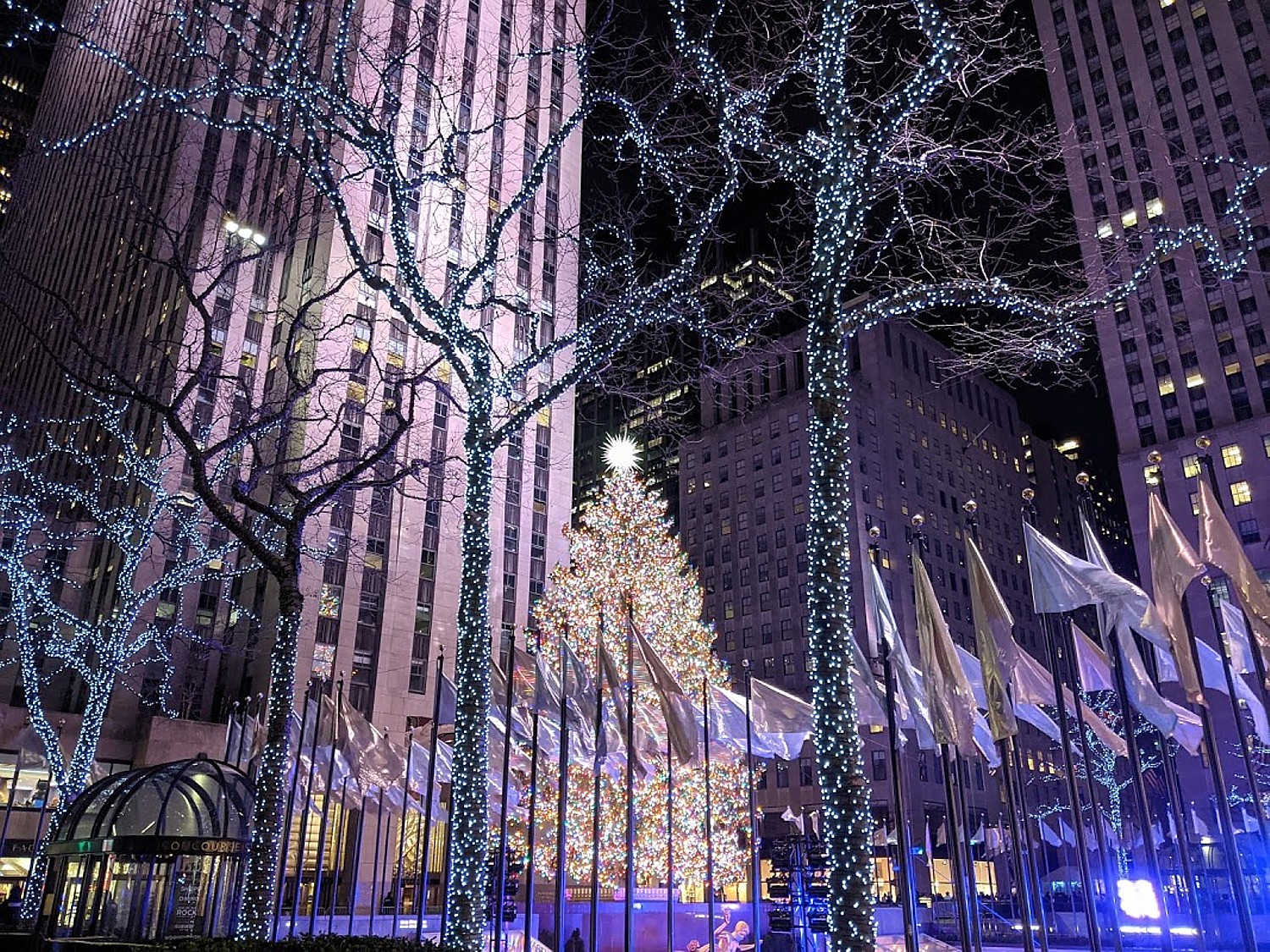
Rockefeller Center is decked for the holidays © Karen Rubin/goingplacesfarandnear.com

Shine Bright Only at Hudson Yards, throughout the holiday season. Presented by Wells Fargo, Shine Bright Only at Hudson Yards will once again mesmerize the neighborhood with  2 million twinkling lights, 725 adorned evergreen trees, 115 miles of string lights and impressive 16-foot illuminated hot air balloon structures positioned throughout the Public Square and Gardens.

Astra Lumina at Queens Botanical Garden, Flushing, Queens,  Nov. 24-Dec. 31. This one-mile-long night walk with captivating projections, dazzling lights and celestial tunes.

NYC Winter Lantern Festival: Illuminate the Farm at Queens County Farm Museum, Glen Oaks. Queens, Nov. 17-Jan. 7. Enter the whimsical world of NYC Lantern Festival lighting up the holiday season with unique light displays throughout six acres of historic farmland. This stunning array of artisanal lanterns creates an unforgettable immersive experience featuring a dazzling display of lights and illuminated Chinese lanterns, all handmade by artisans with decades of dedication to their craft.

The Original Christmas Lights Tour of Dyker Heights with A Slice of Brooklyn Bus Tours, Brooklyn, December, takes visitors through Brooklyn’s Dyker Heights area, famous for its extravagant Christmas decorations. Led by locals who know the homeowners and their decoration stories, this 3½-hour tour starts in Manhattan, includes festive music and showcases spectacular holiday homes in Dyker Heights, Bay Ridge and Bensonhurst. The tour offers both on- and off-bus views of dazzling lights, features vintage Christmas TV specials and provides a commemorative souvenir fridge magnet at the end.

ICE SKATING & OUTDOOR ACTIVITIES

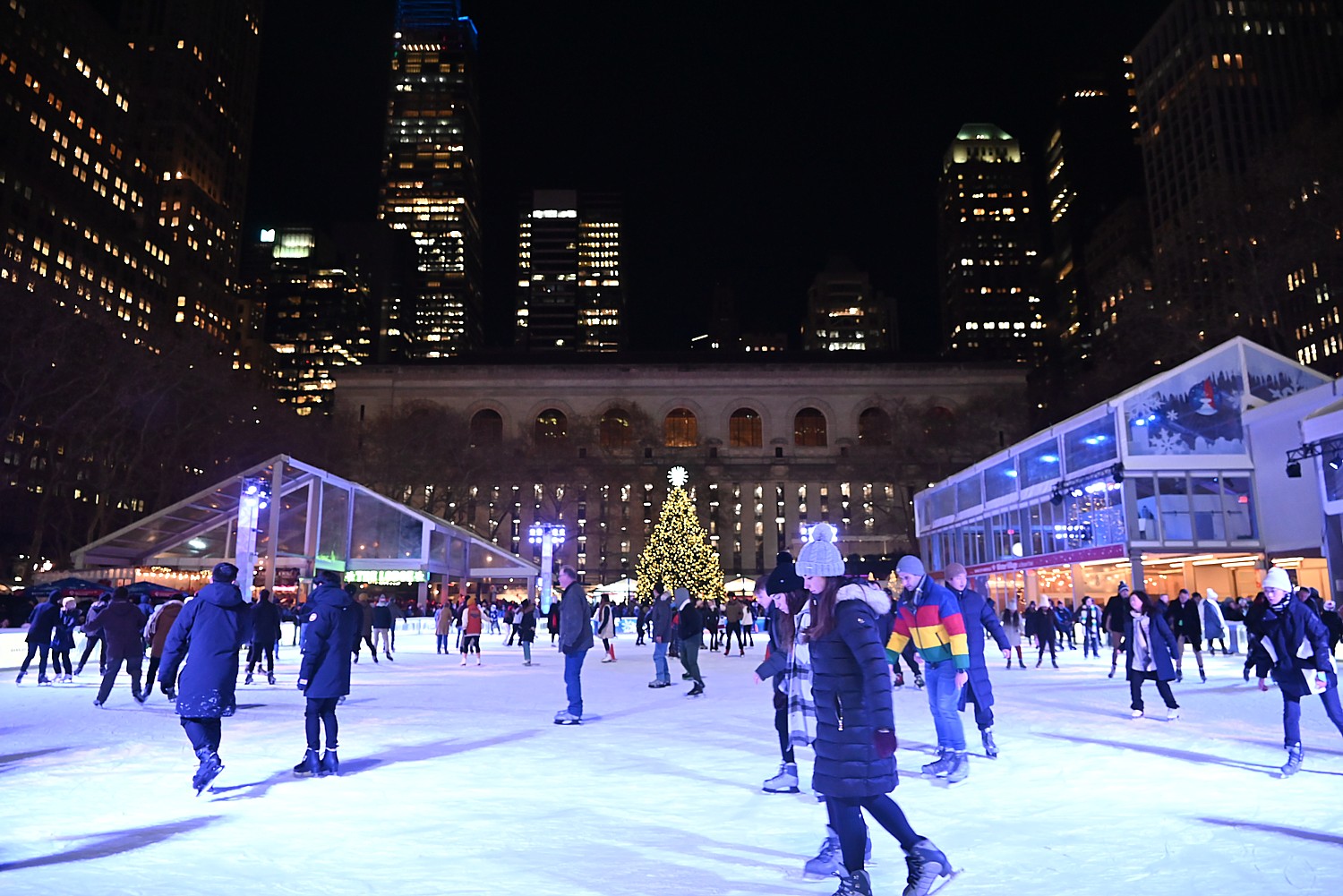
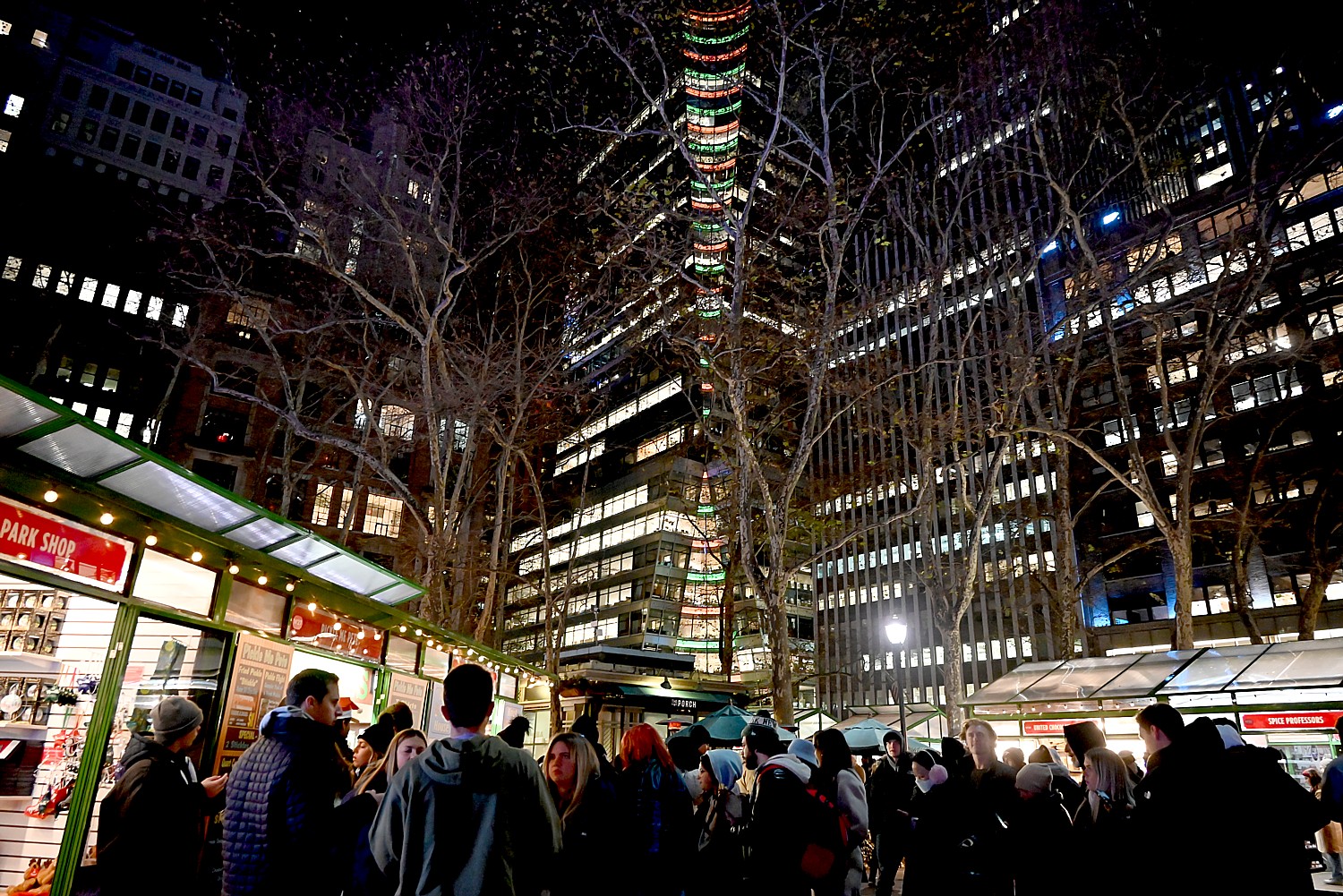
Bank of America’s Winter Village at Bryant Park is an entire entertainment complex offering the City’s largest free-admission skating rink, a holiday market comprising nearly 200 merchants. rinkside bar, food hall and carousel © Karen Rubin/goingplacesfarandnear.com

The Rink at Bryant Park, Midtown Manhattan (behind the 42nd Street Library), Through early March. Returning for its 22nd season, the Bank of America Winter Village at Bryant Park is an entire entertainment complex offering the City’s largest free-admission skating rink, a holiday market comprising nearly 200 merchants. rinkside bar, food hall and carousel.

The Rink at Rockefeller Center, Midtown Manhattan, through March. The world-famous ice-skating rink is back for the holidays, offering the classic NYC experience of skating under the iconic Christmas tree. Santa joins skaters on the ice in December.

Rockefeller Center offers the classic NYC experience of skating under the iconic Christmas tree © Karen Rubin/goingplacesfarandnear.com

Wollman Rink, Central Park, through March 15. Enjoy skating in Central Park with the picturesque Manhattan skyline in the background. Wollman Rink is continuing its partnership with Culture Pass.

The Rink at Manhattan West, Midtown Manhattan, throughout the holiday season, offers daily public skating and upscale ice skating programs hosted by Olympians Melissa Gregory and Denis Petukhov. Located a block away from Madison Square Garden, this 60×80 rink provides a skating experience amidst skyscrapers in Manhattan West’s expansive public plaza, steps away from Moynihan Train Hall.

Sky Skate at Hudson Yards, throughout the holiday season. New York City’s highest skating rink take in New York’s sights while gliding on a 1,024 square foot Glice® rink, a zero-energy ecological and synthetic ice rink positioned in the indoor portion of Edge’s sky deck.

Glide at Brooklyn Bridge Park, Brooklyn Heights, Nov. 15–March 1. Skate beneath the historic Brooklyn Bridge while taking in the stunning Manhattan skyline views at Glide. After enjoying the city’s newest ice rink, savor a diverse selection of café and beverage options.

Classic Harbor Line Holiday-Themed Cruises,  throughout the holiday season. Themed cruises include four-course holiday brunches, Cocoa and Carols, and Holidays Jazz. Set sail across the East and Hudson Rivers, treating yourself to captivating views of the NYC skyline and the Statue of Liberty.

City Cruises Holiday-Themed Cruises, Manhattan,  throughout the holiday season. Delight in the festive decorations, delectable meals and breathtaking city views from the comfort of the glass-enclosed deck as the cruise glides across the East and Hudson Rivers.  Christmas Eve, Christmas Day and New Year’s dining cruises.

Enjoy festive shopping at Bank of America’s Winter Village at Bryant Park, offering a holiday market comprising nearly 200 merchants. rinkside bar, food hall, carousel and the City’s largest free-admission skating rink, © Karen Rubin/goingplacesfarandnear.com

Festive shopping at New York City’s Holiday Markets, Manhattan & Brooklyn. Throughout the holiday season. The biggest holiday markets are:  Holiday Shops at Winter Village at Bryant Park; Columbus Circle Holiday Market; Grand Central Holiday Fair

Also: Brooklyn Flea (Sundays, Nov.–Dec.); Chelsea Flea (weekends only, year-round); Grand Holiday Bazaar (Sundays, year-round); Brooklyn Borough Hall Holiday Market (Nov.–Dec.).

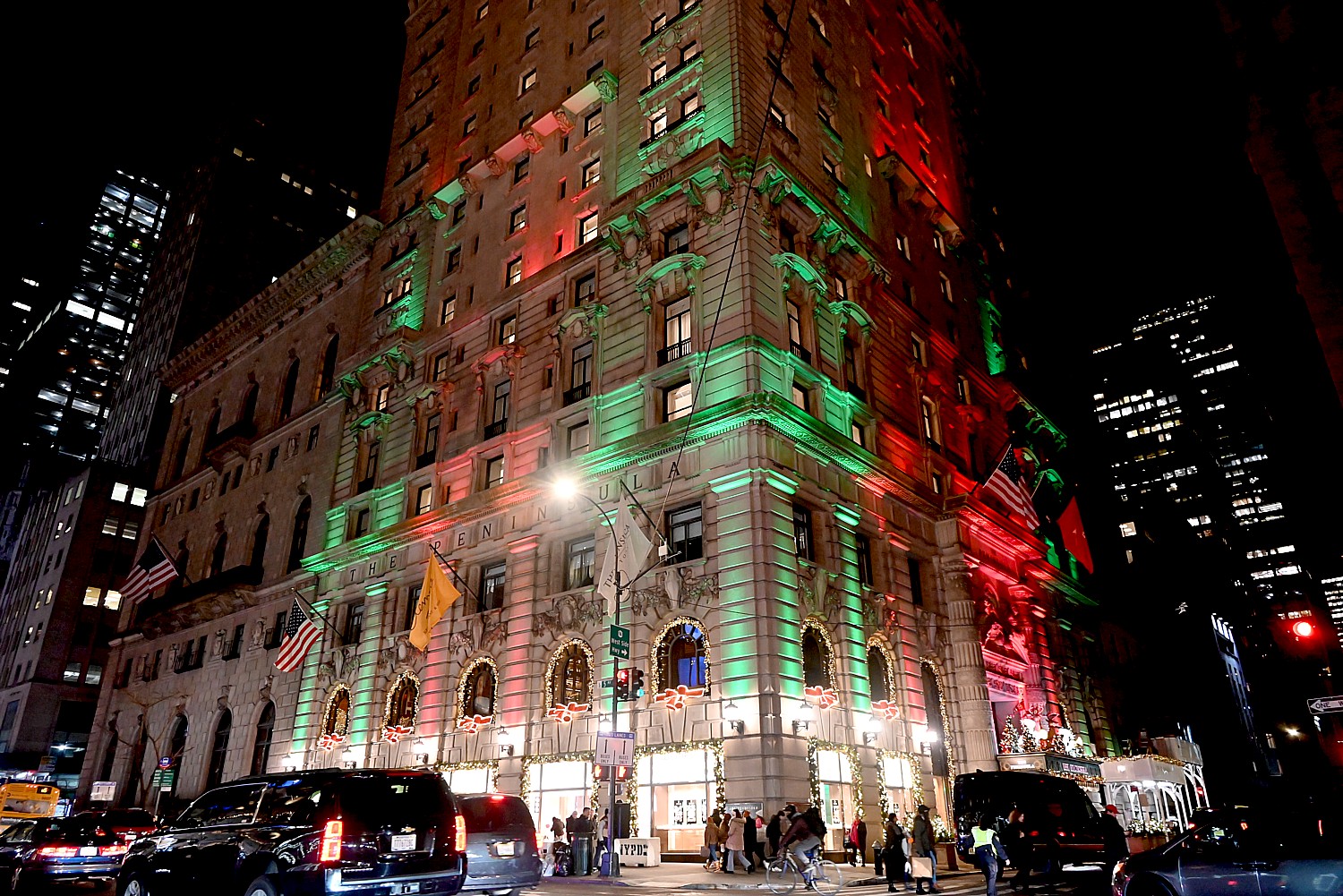
The Peninsula Hotel on Fifth Avenue decorated for the holidays © Karen Rubin/goingplacesfarandnear.com

NYC Hotel Week: Give the Gift of an NYC Hotel Stay this Winter: NYC Hotel WeekSM returns as part of NYC Winter OutingSM. Give the gift of New York City with a 24% discount on hotel stays at more than 100 hotels. Reservations open November 14; valid for stays over January 3–February 4, 2024.

For all there is to do and see in New York City, visit nyctourism.com.

____________________________

© 2023 Travel Features Syndicate, a division of Workstyles, Inc. All rights reserved. Visit goingplacesfarandnear.com, www.huffingtonpost.com/author/karen-rubin, and travelwritersmagazine.com/TravelFeaturesSyndicate/. Blogging at goingplacesnearandfar.wordpress.com and moralcompasstravel.info. Visit instagram.com/going_places_far_and_near and instagram.com/bigbackpacktraveler/ Send comments or questions to FamTravLtr@aol.com. Tweet @TravelFeatures. ‘Like’ us at facebook.com/KarenBRubin 
NYC Village Halloween Parade Marks 50 Years with ‘Upside Down’: Photo Highlights

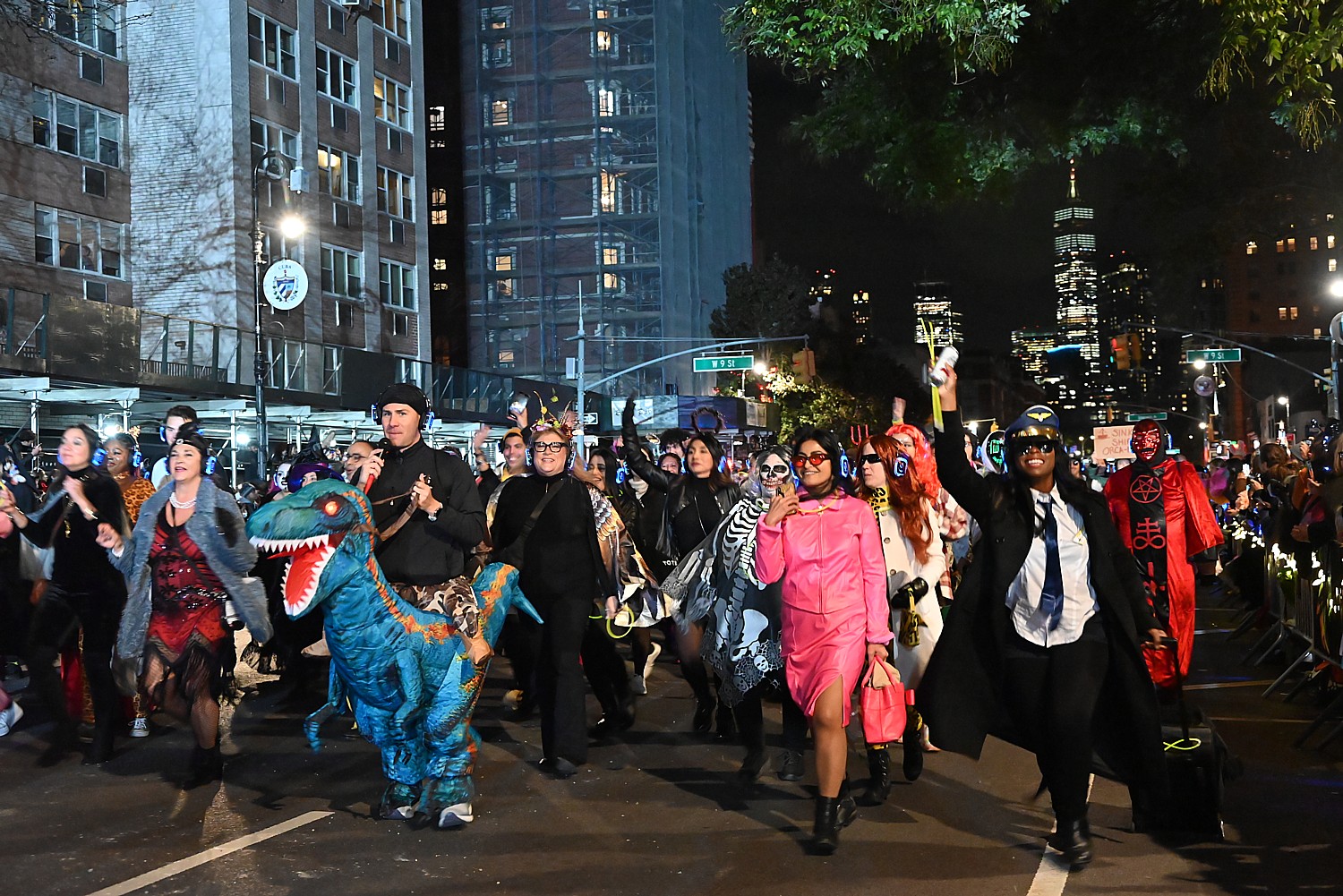
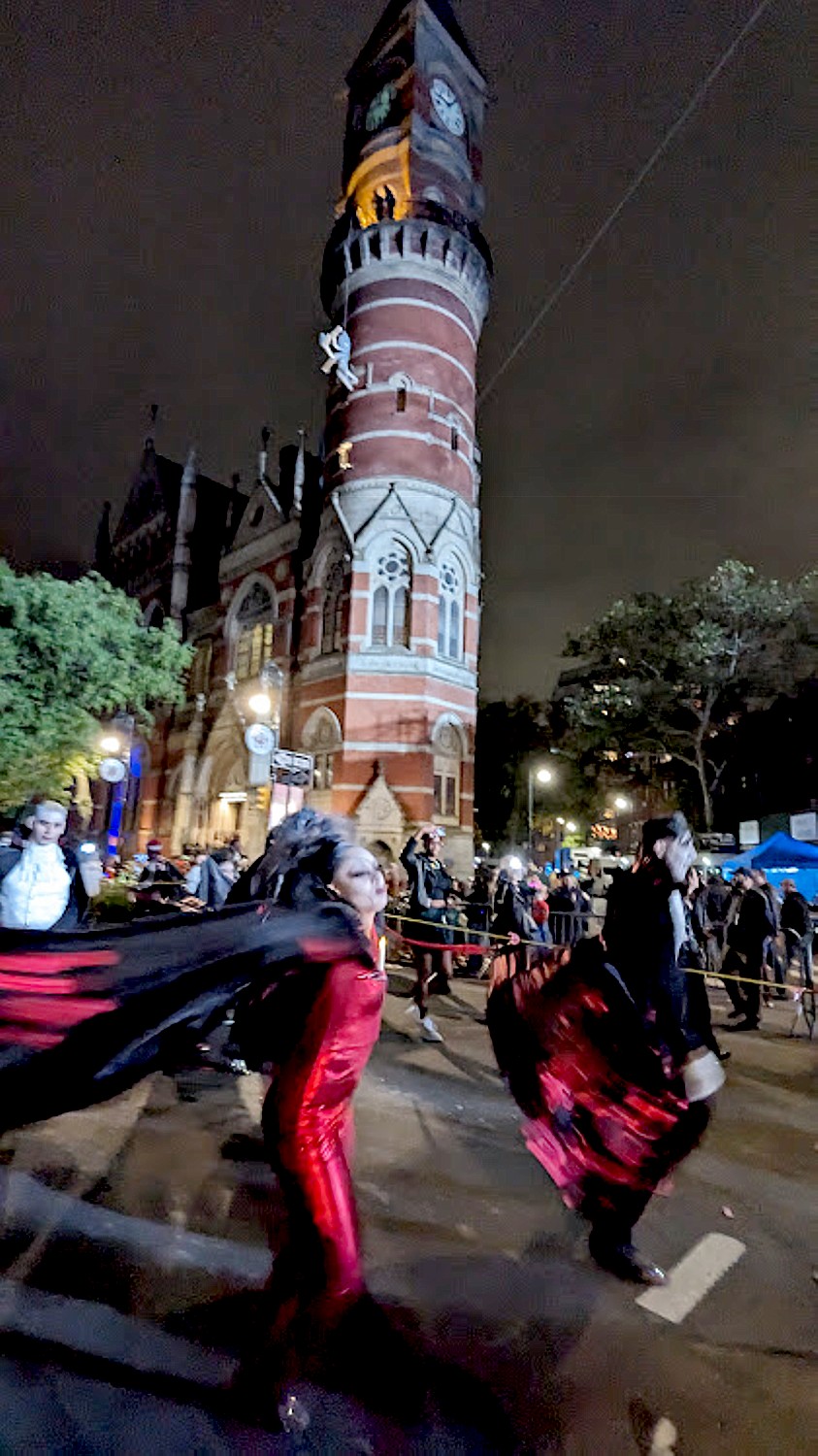
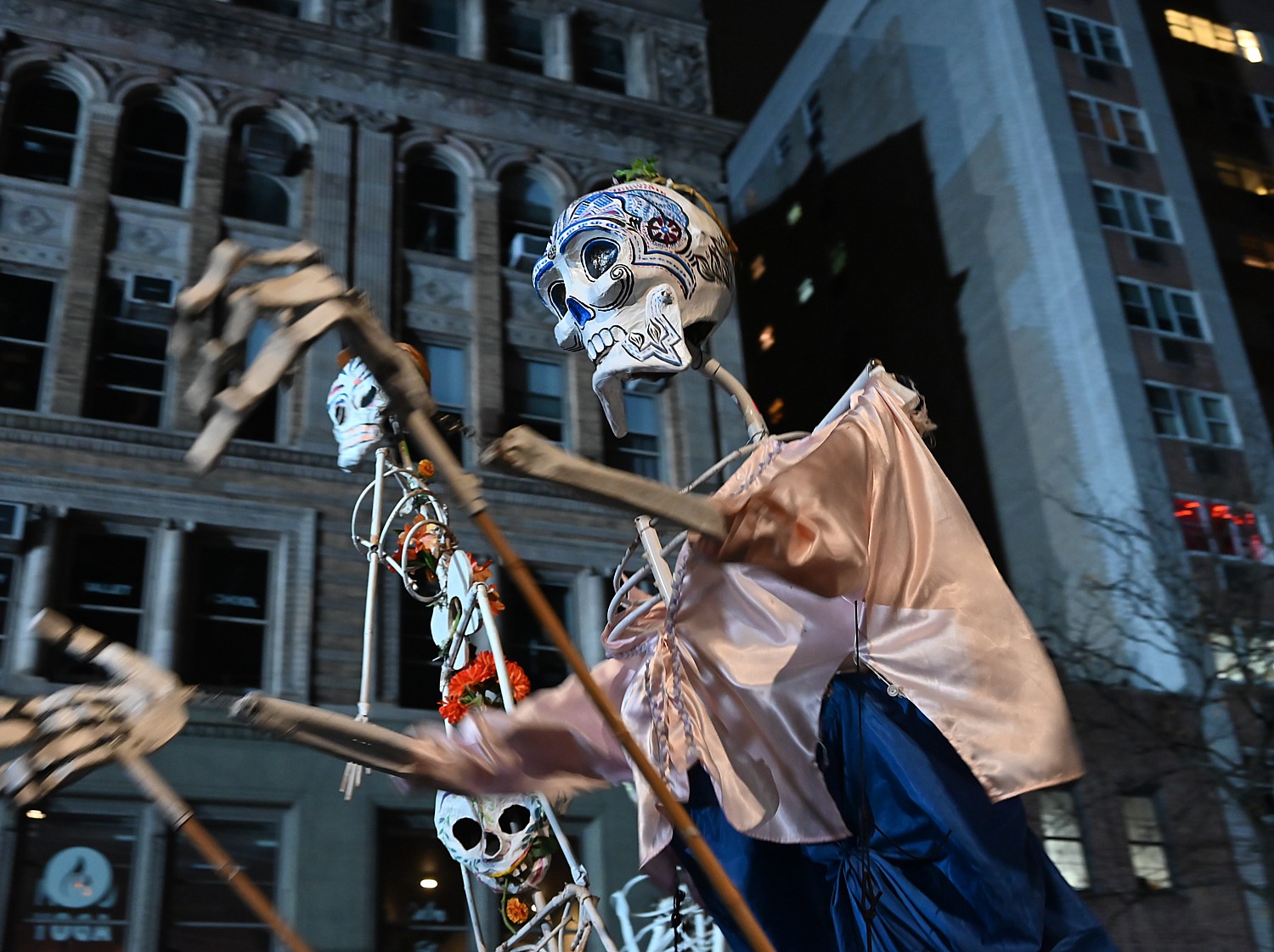
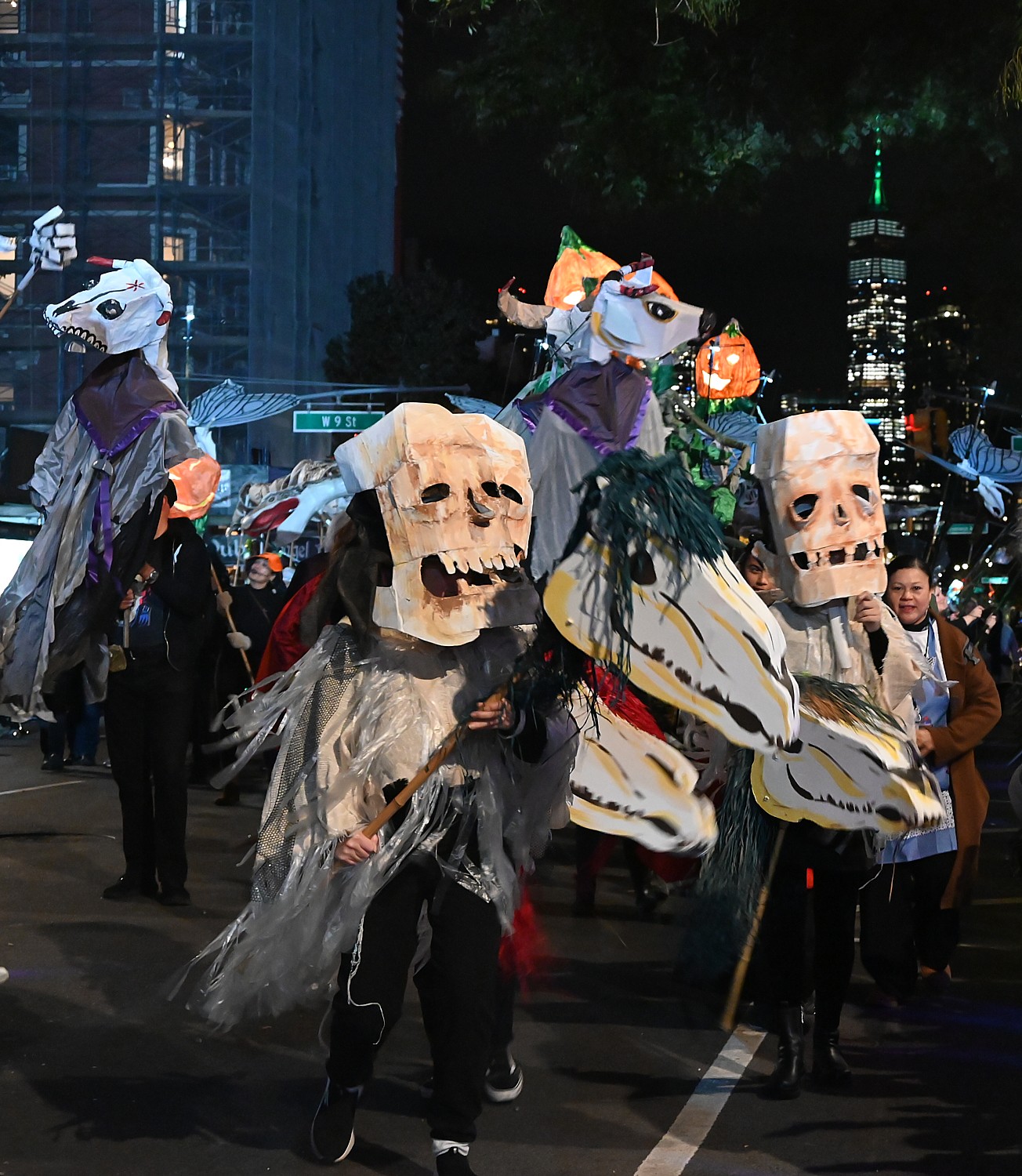
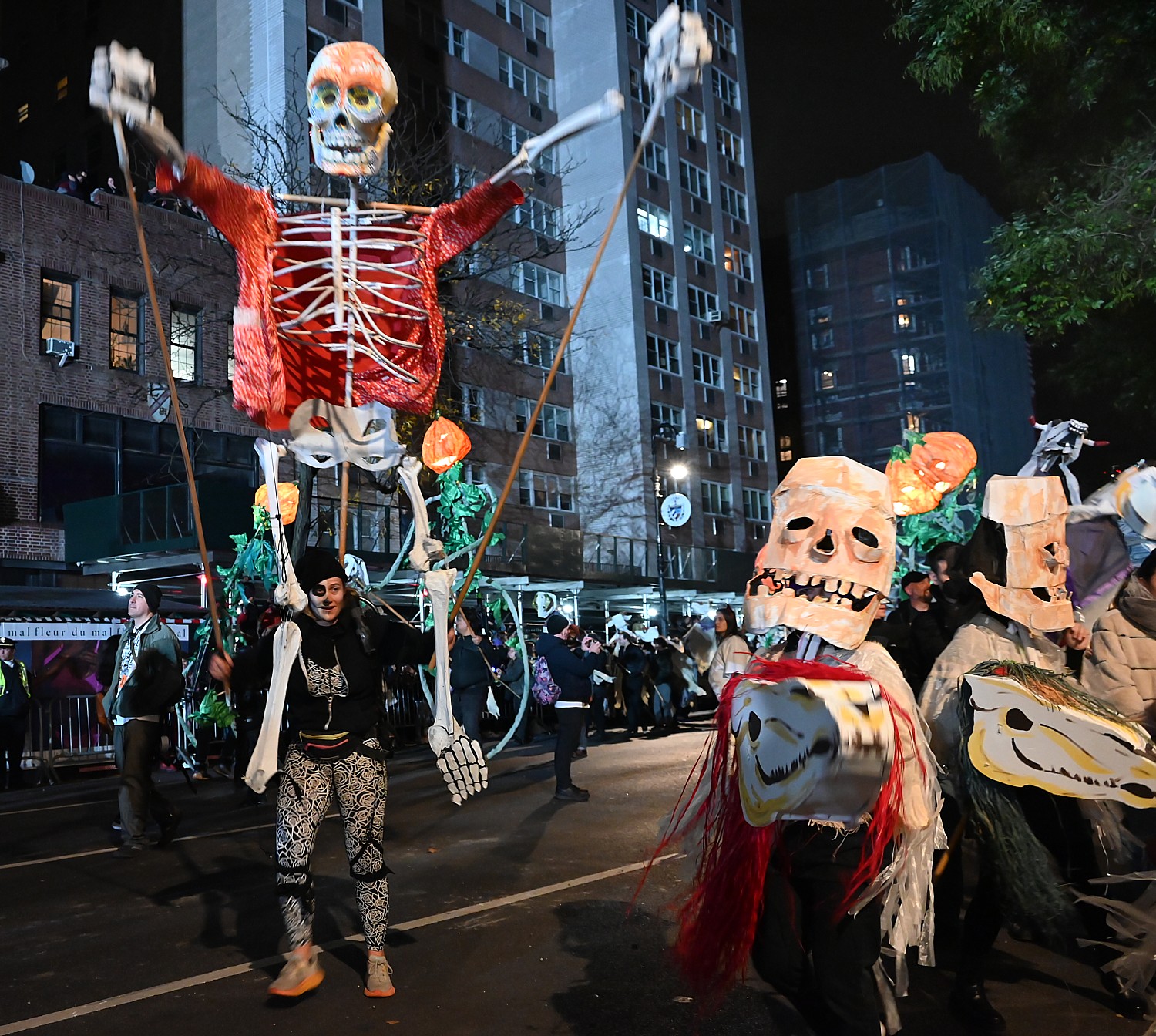
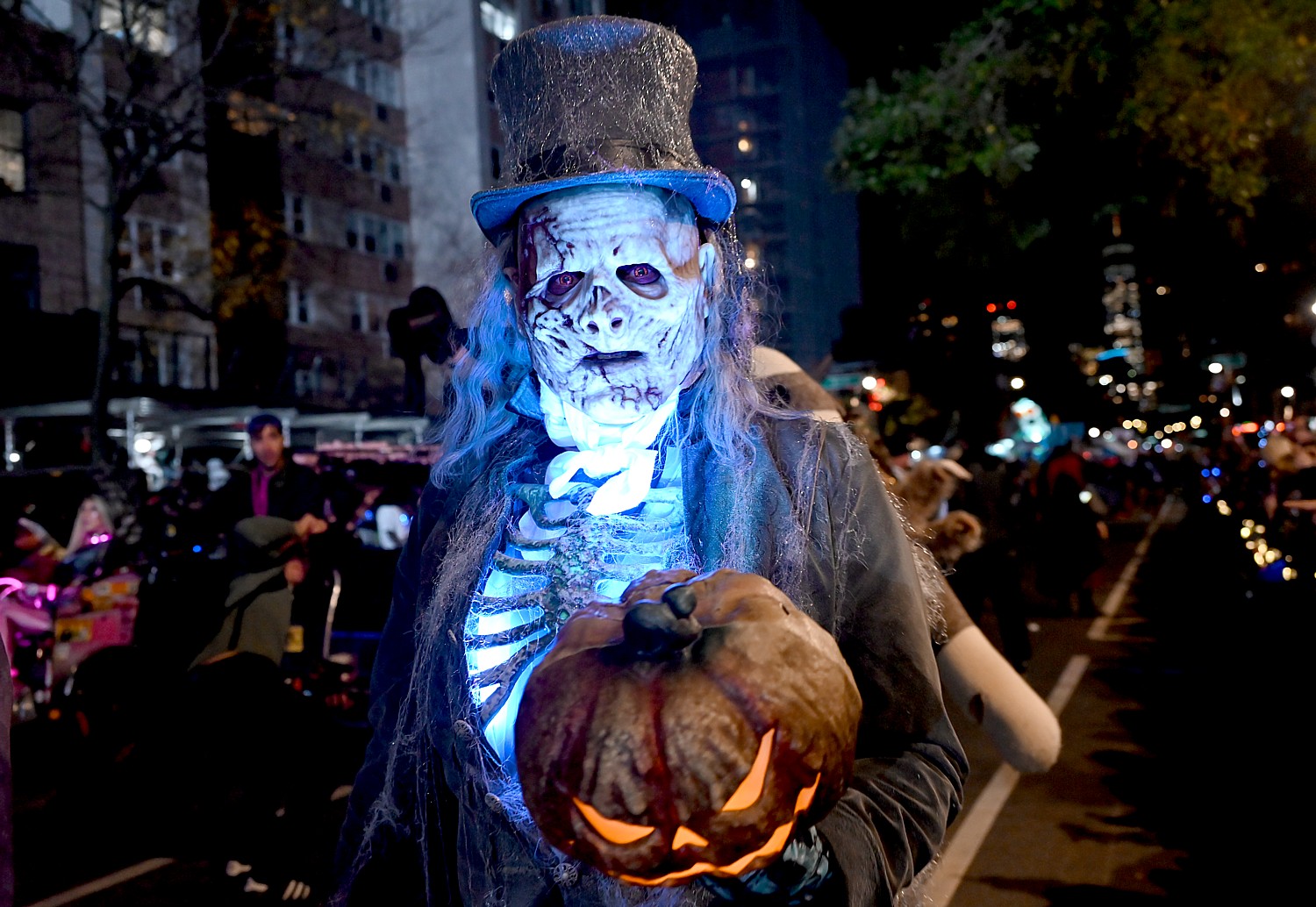
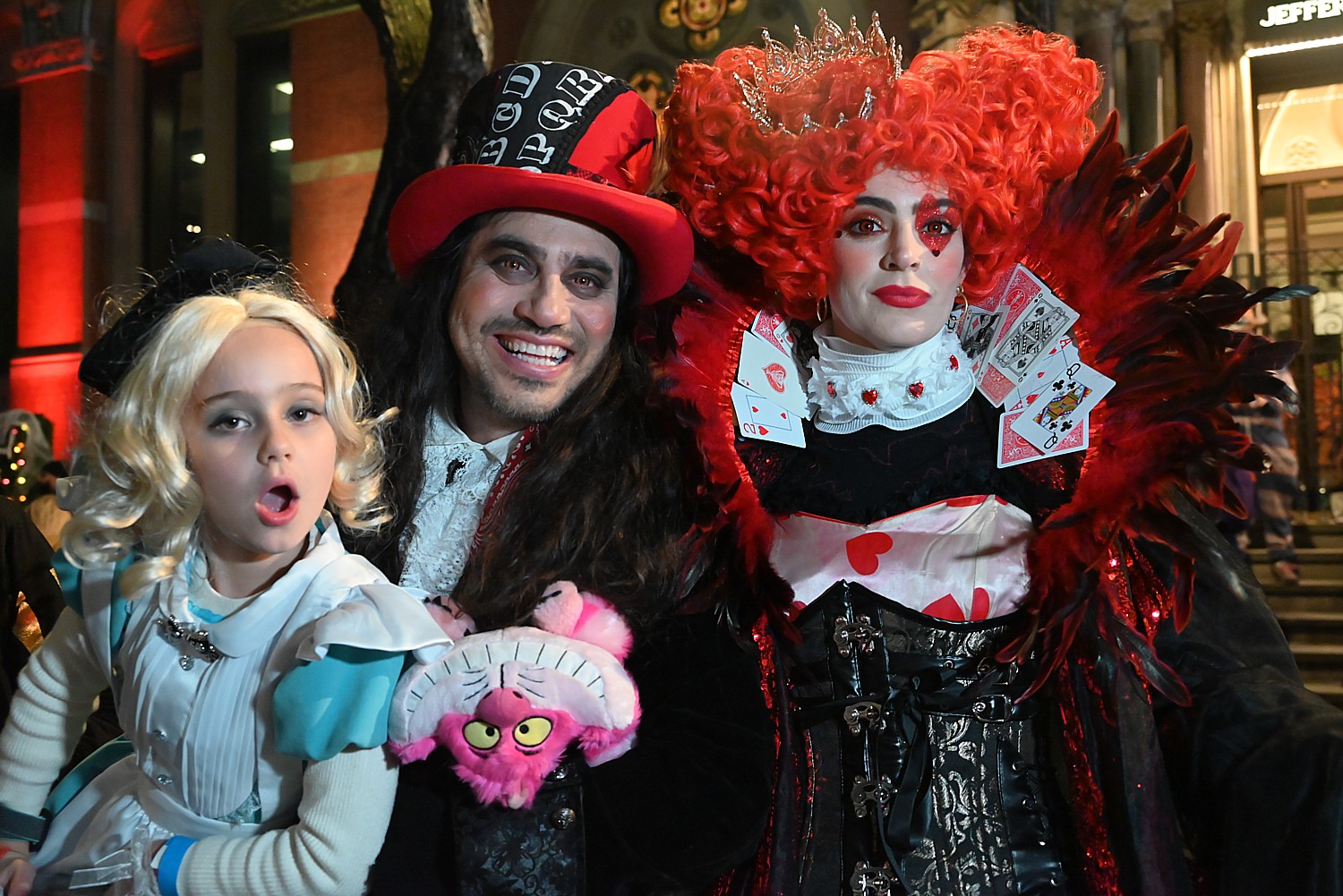
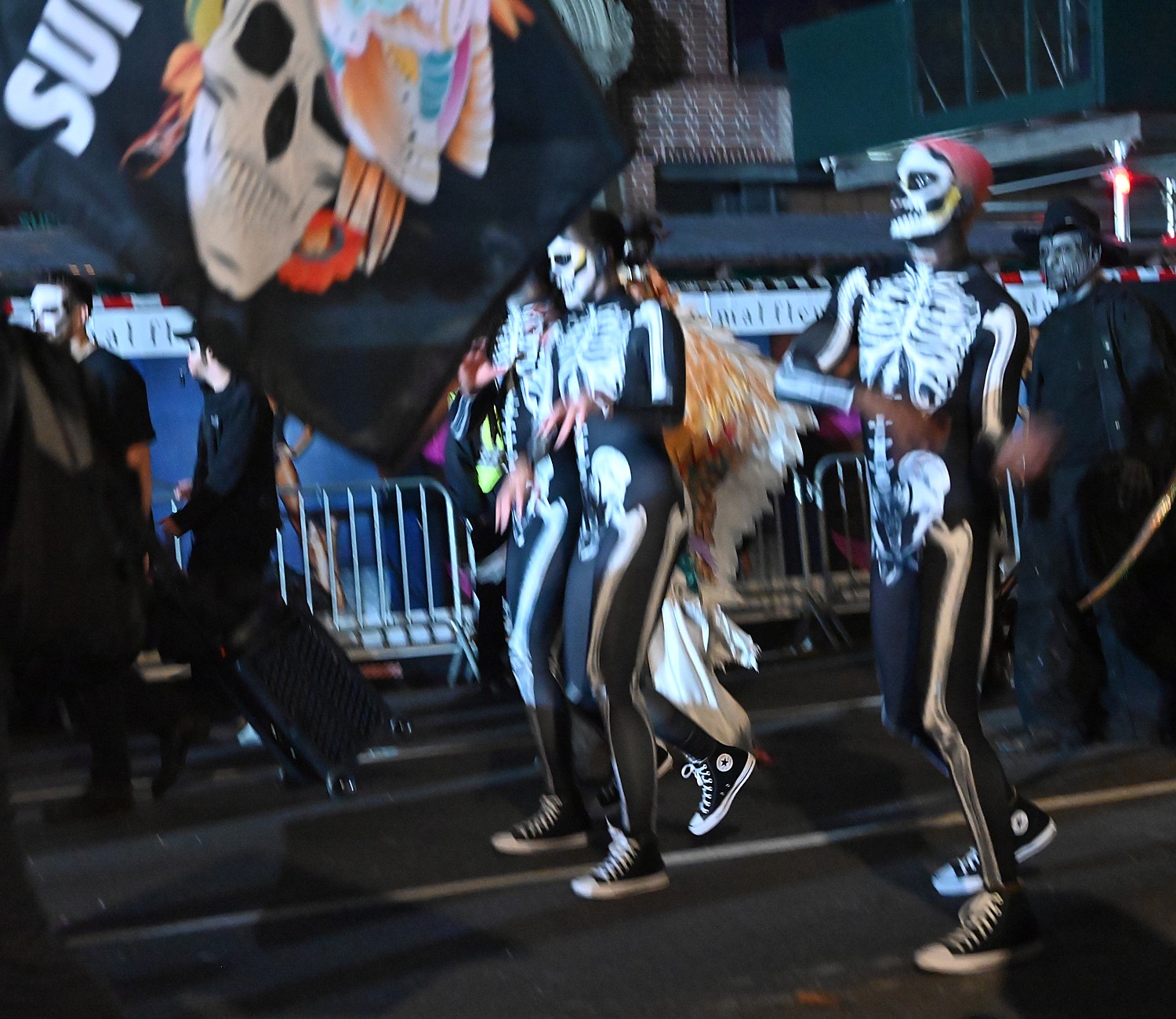
The Village Halloween Parade in New York City is celebrating 50 years with this year’s theme, UPSIDE/DOWN © Karen Rubin/goingplacesfarandnear.com

By Karen Rubin, Travel Features Syndicate, www.goingplacesfarandnear.com
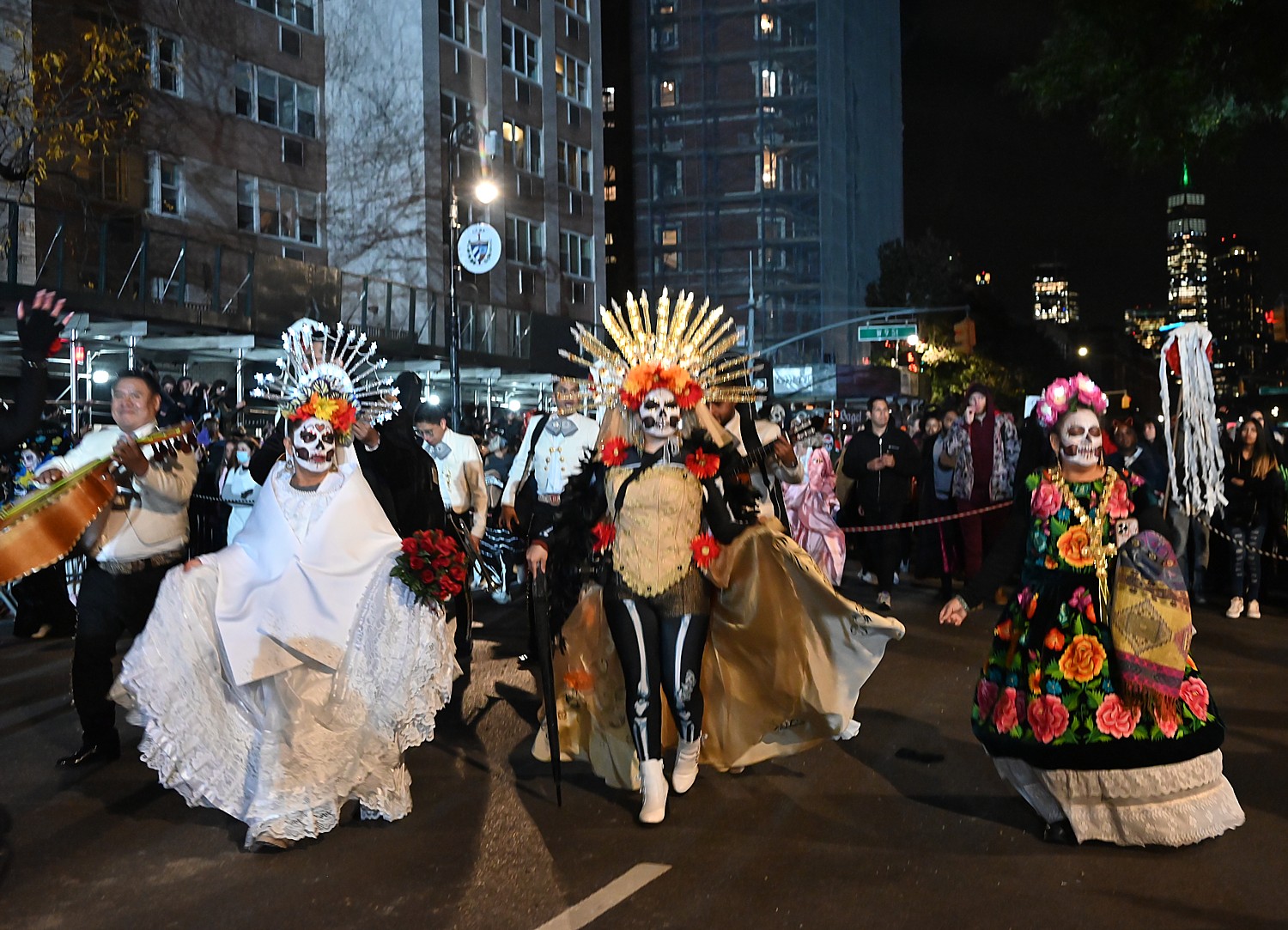
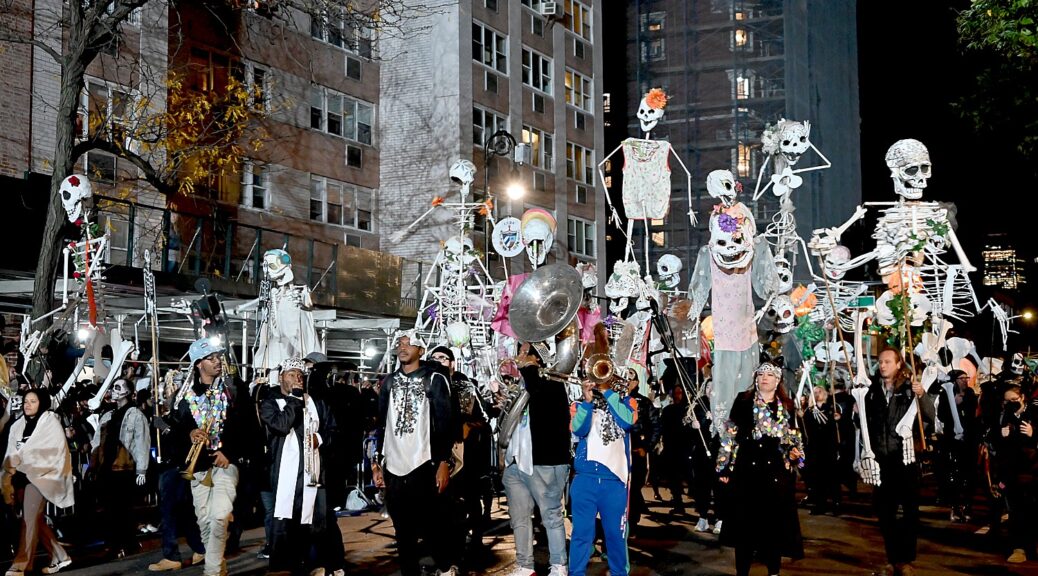
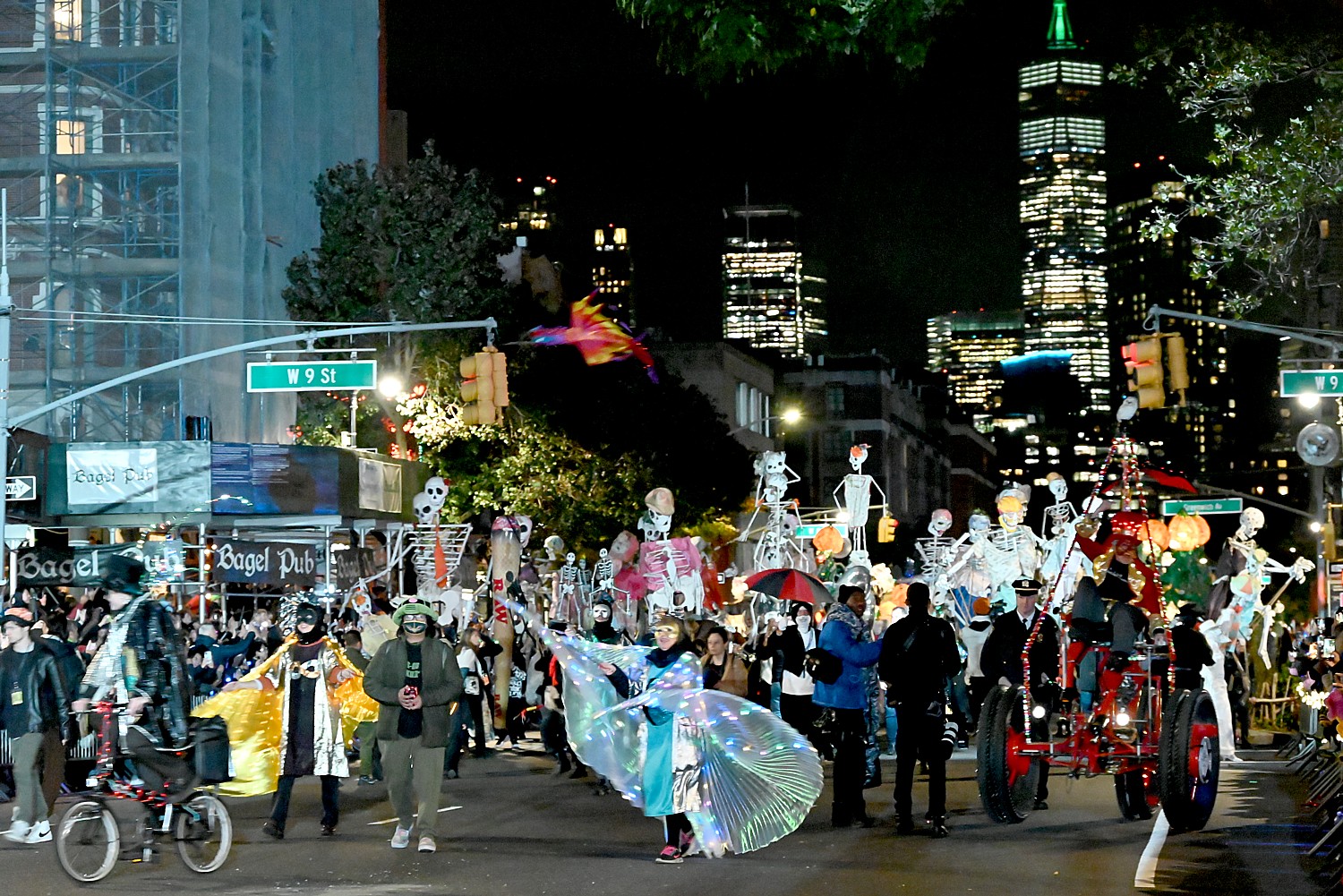
The Village Halloween Parade, celebrating 50 years since it began as a small neighborhood “promenade” and has become one of the largest Halloween events in the world, was themed UPSIDE/DOWN, reflecting the tumult of the last few years, and inviting self-reflection.  

“The Halloween Parade has always been a night of transformation, but this topsy turvy year feels even more-so in terms of realizing a dream, being who you are most authentically in your imagination,” said Jeanne Fleming, Artistic and Producing Director.

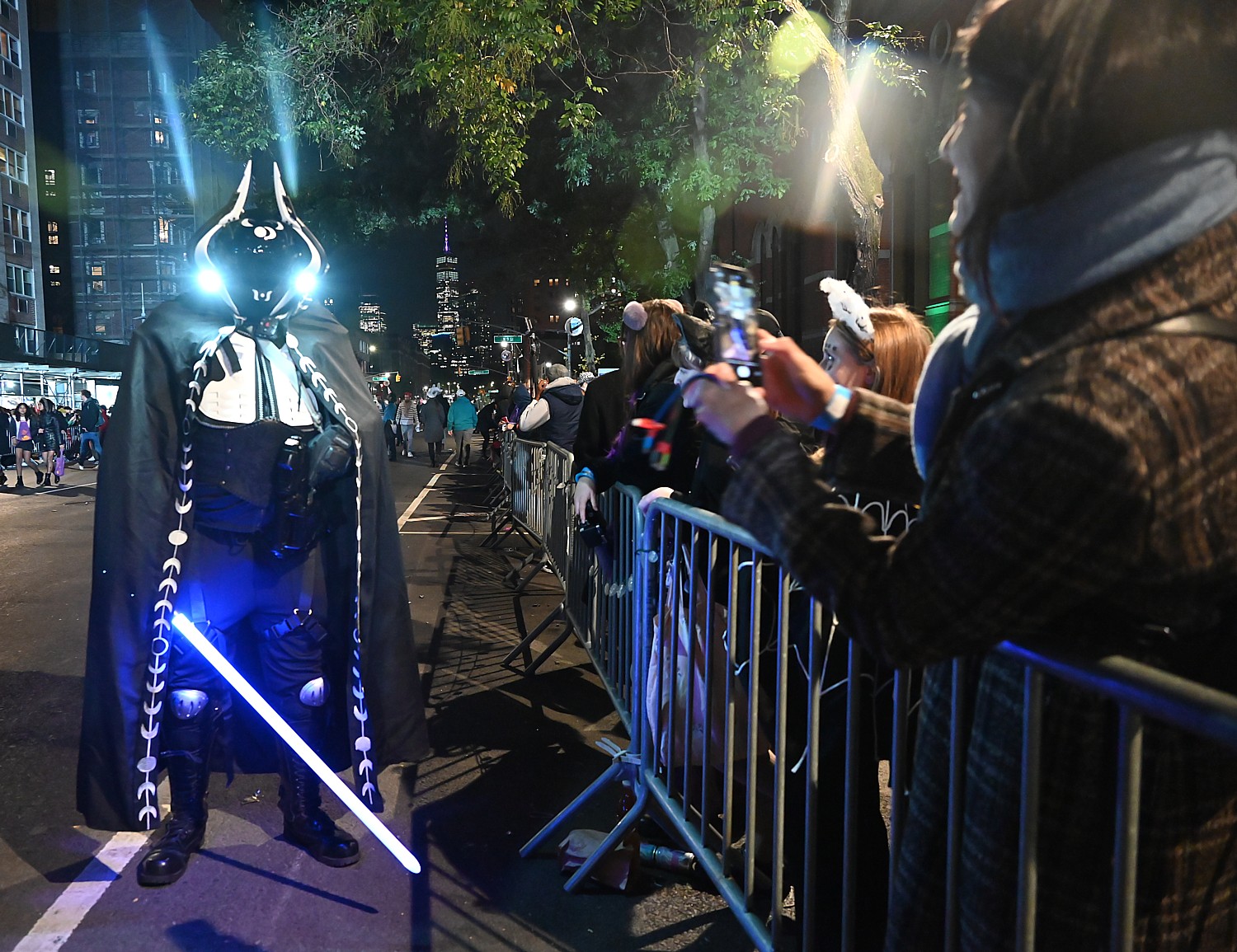
The Village Halloween Parade, celebrating 50 years, gives New Yorkers an opportunity to show off their creativity, artistry and humor © Karen Rubin/goingplacesfarandnear.com

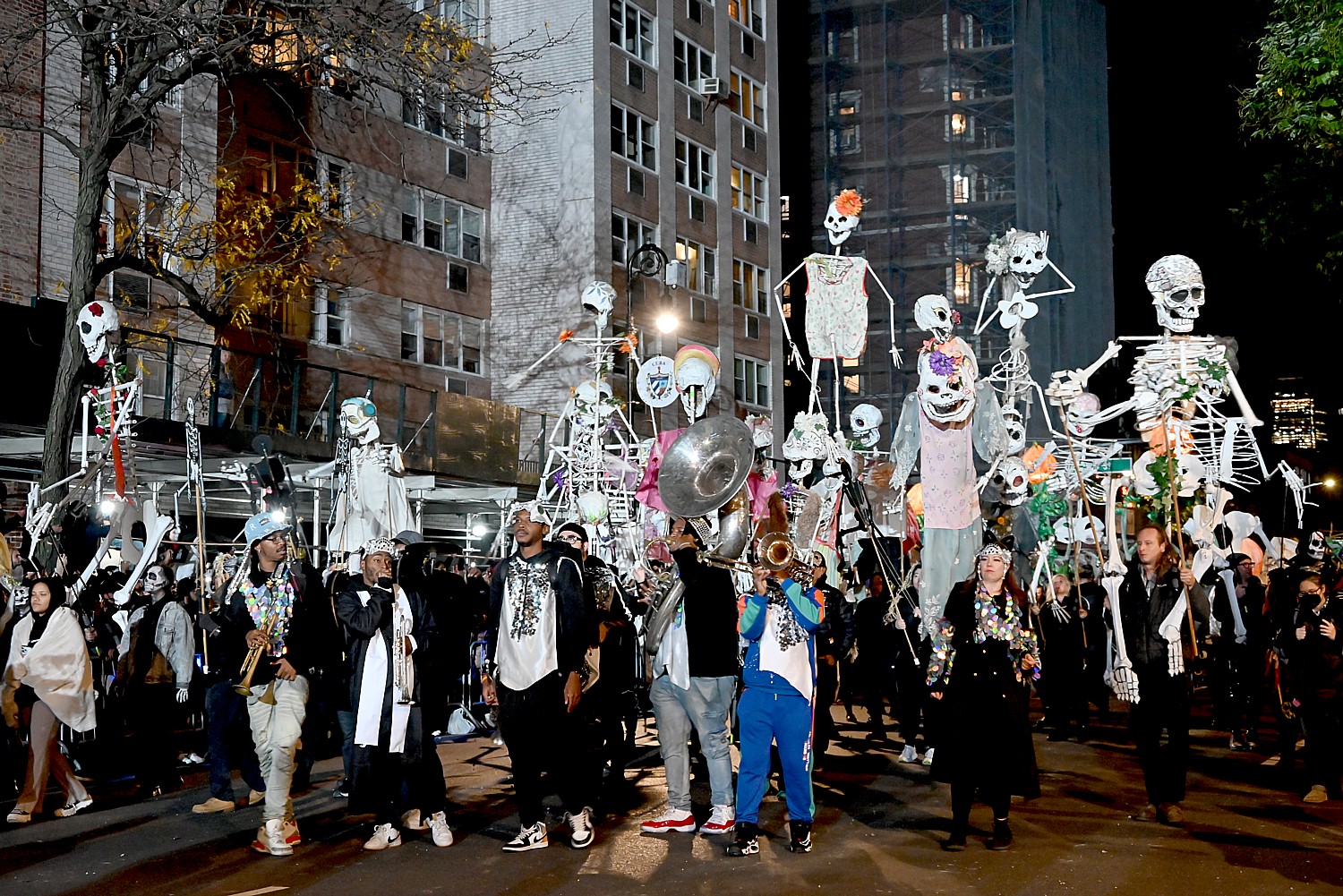
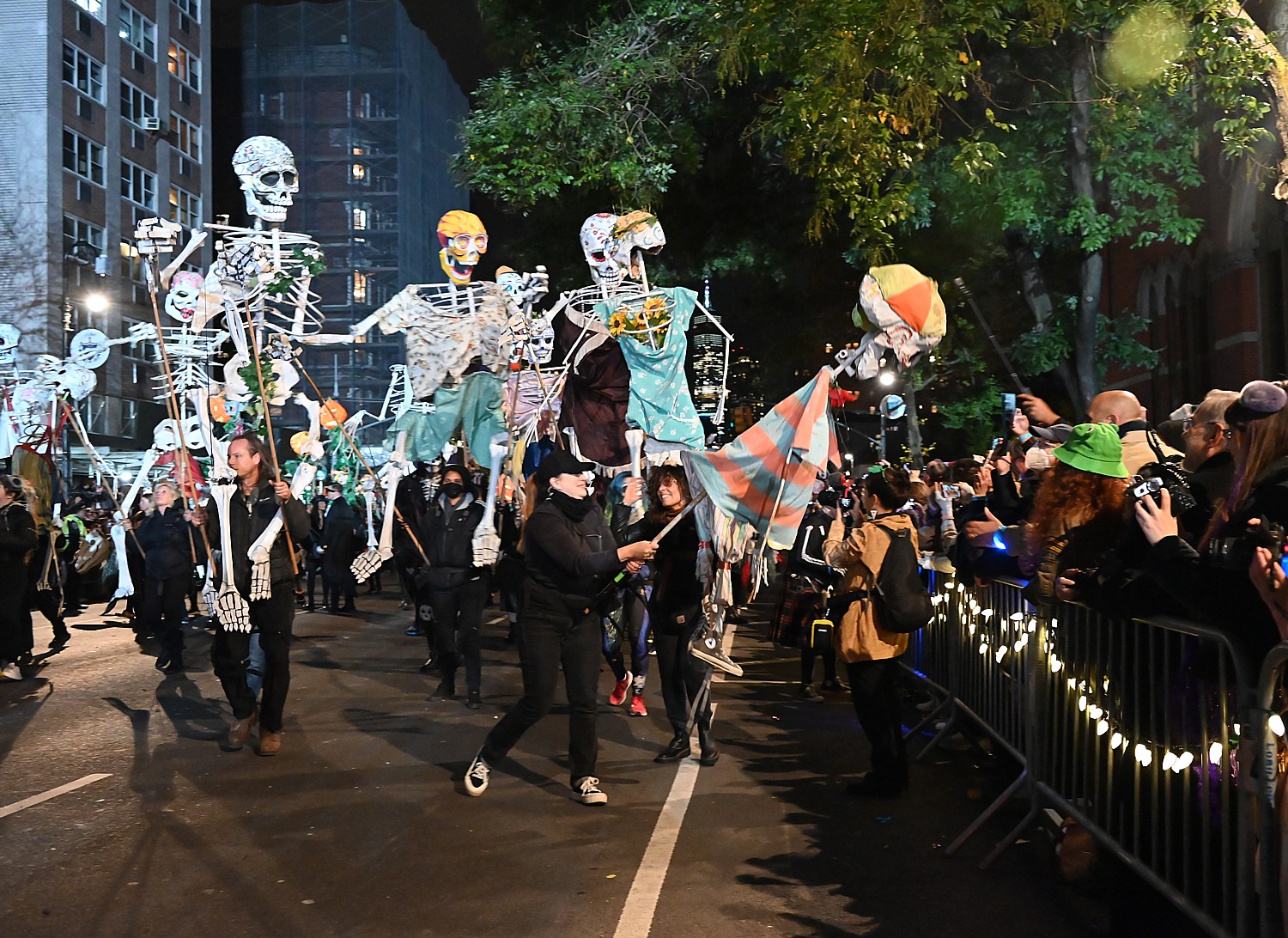
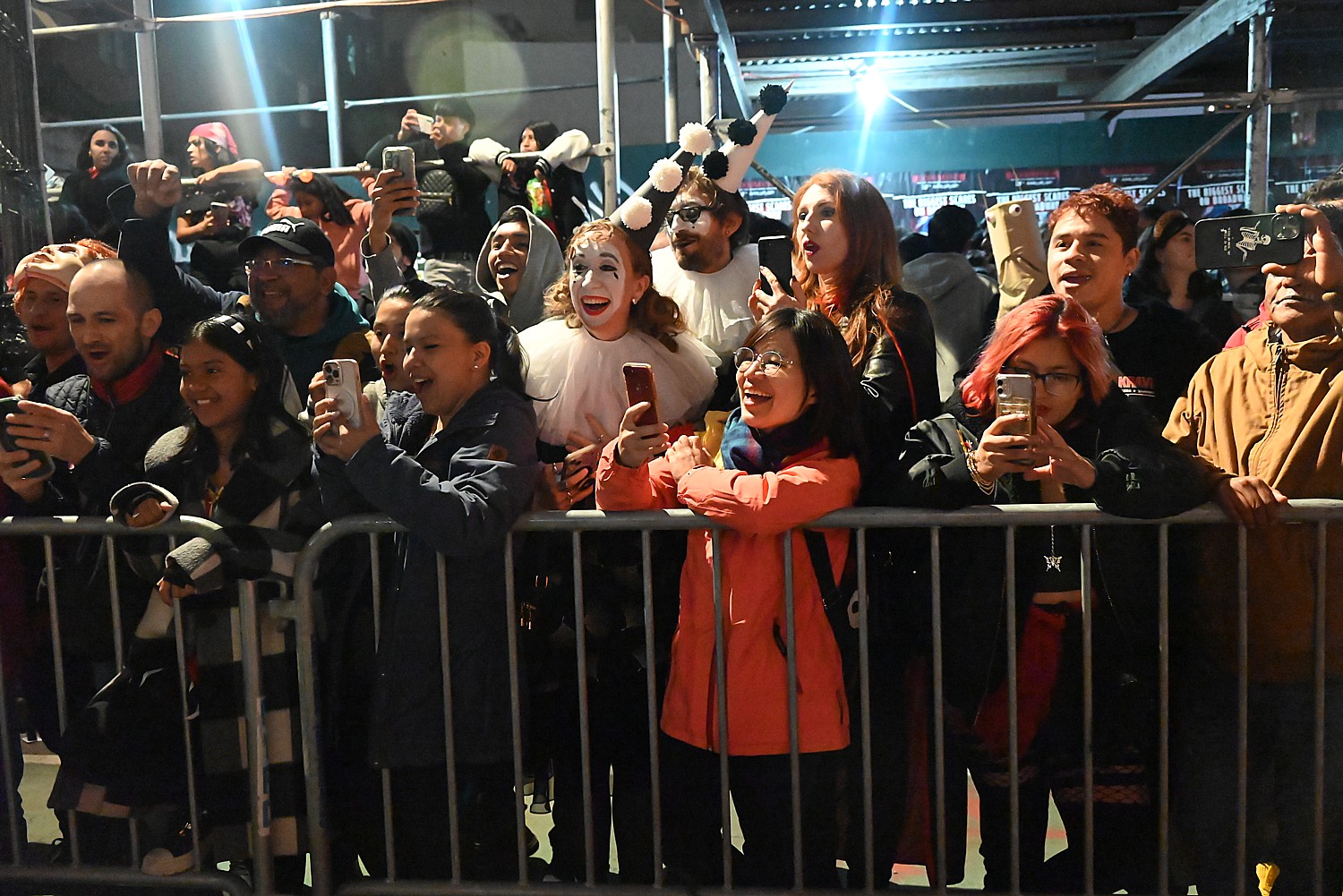
Hundreds of thousands of spectators packed the streets along the mile-long parade route from Canal Street to 16th Street along Sixth Avenue,  to thrill at hundreds of puppets, 50 bands representing music from around the world, dancers, artists, and thousands of other New Yorkers in costumes of their own creation in the nation’s most wildly creative public participatory event in the greatest city in the world – the biggest crowds since 2019.

“I’m astonished by how many people are here,” said a justifiably proud and delighted Fleming. “We invite people to come out and they did!”

Village Halloween Parade Director Jeanne Fleming was delighted with a huge turnout of  costumed parade goers and spectators © Karen Rubin/goingplacesfarandnear.com

Spectators thrilled at seeing hundreds of puppets, 50 bands and dancers representing music from around the world and New York’s melting pot, and tens of thousands of New Yorkers in costumes of their own creation, in the nation’s most wildly creative public participatory event in the greatest city in the world.

The Village Halloween Parade, celebrating 50 years, gives New Yorkers an opportunity to show off their creativity, artistry and humor © Karen Rubin/goingplacesfarandnear.com

Started by Greenwich Village mask maker and puppeteer Ralph Lee in 1973, the Parade began as a walk from house to house in his neighborhood for his children and their friends.

After the second year of this local promenade, Theater for the New City stepped in and produced the event on a larger scale as part of their City in the Streets program.

 
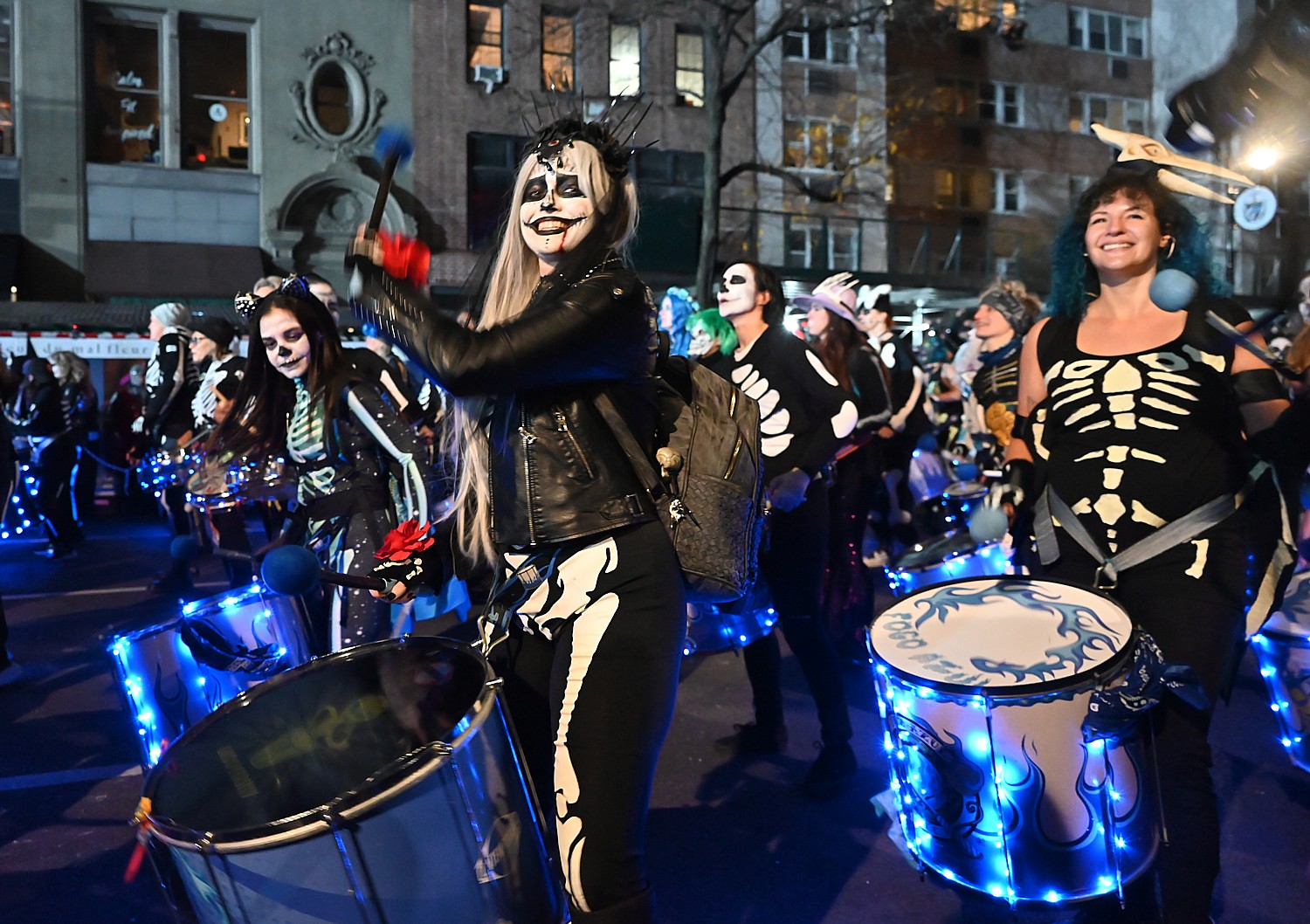
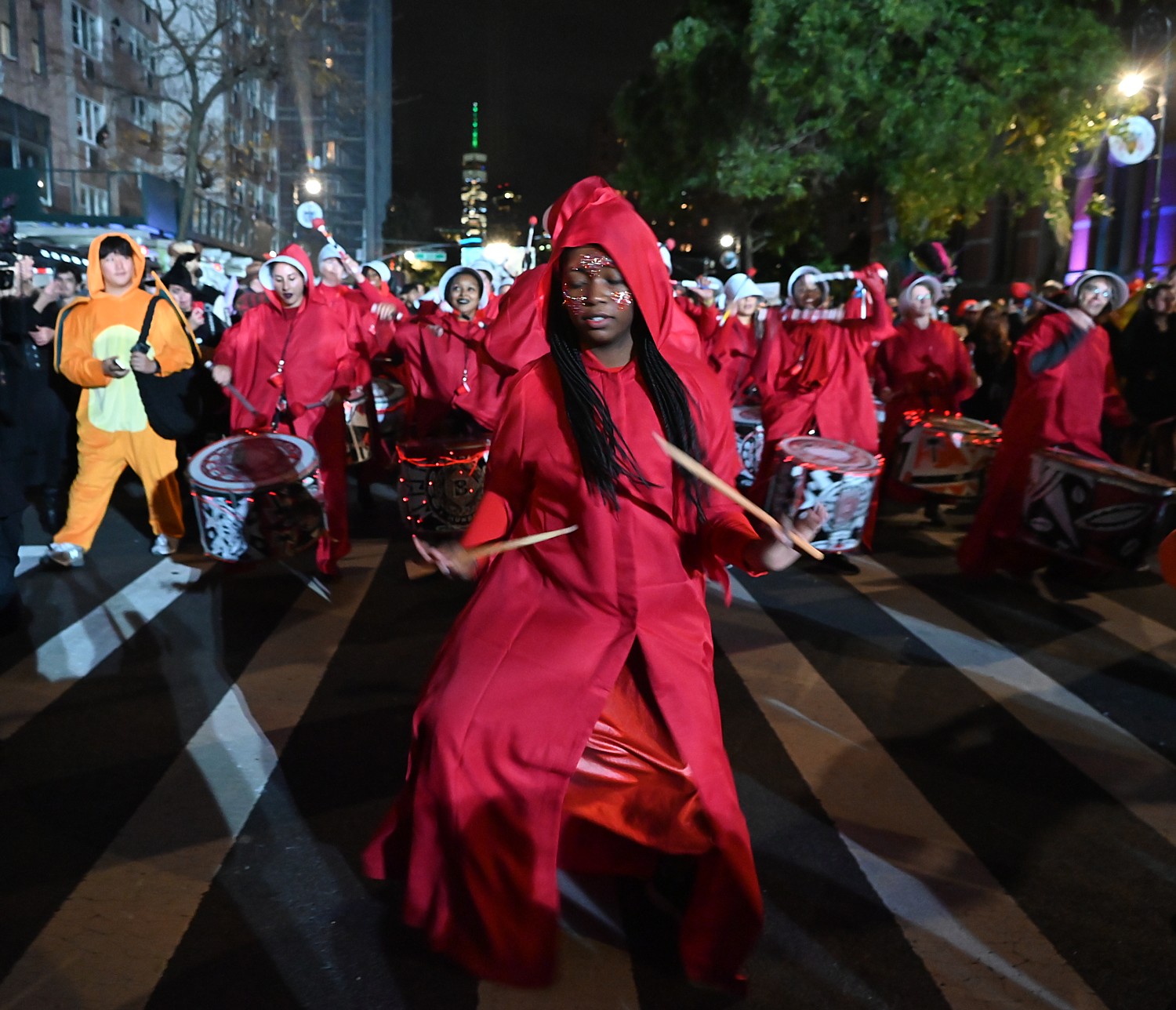
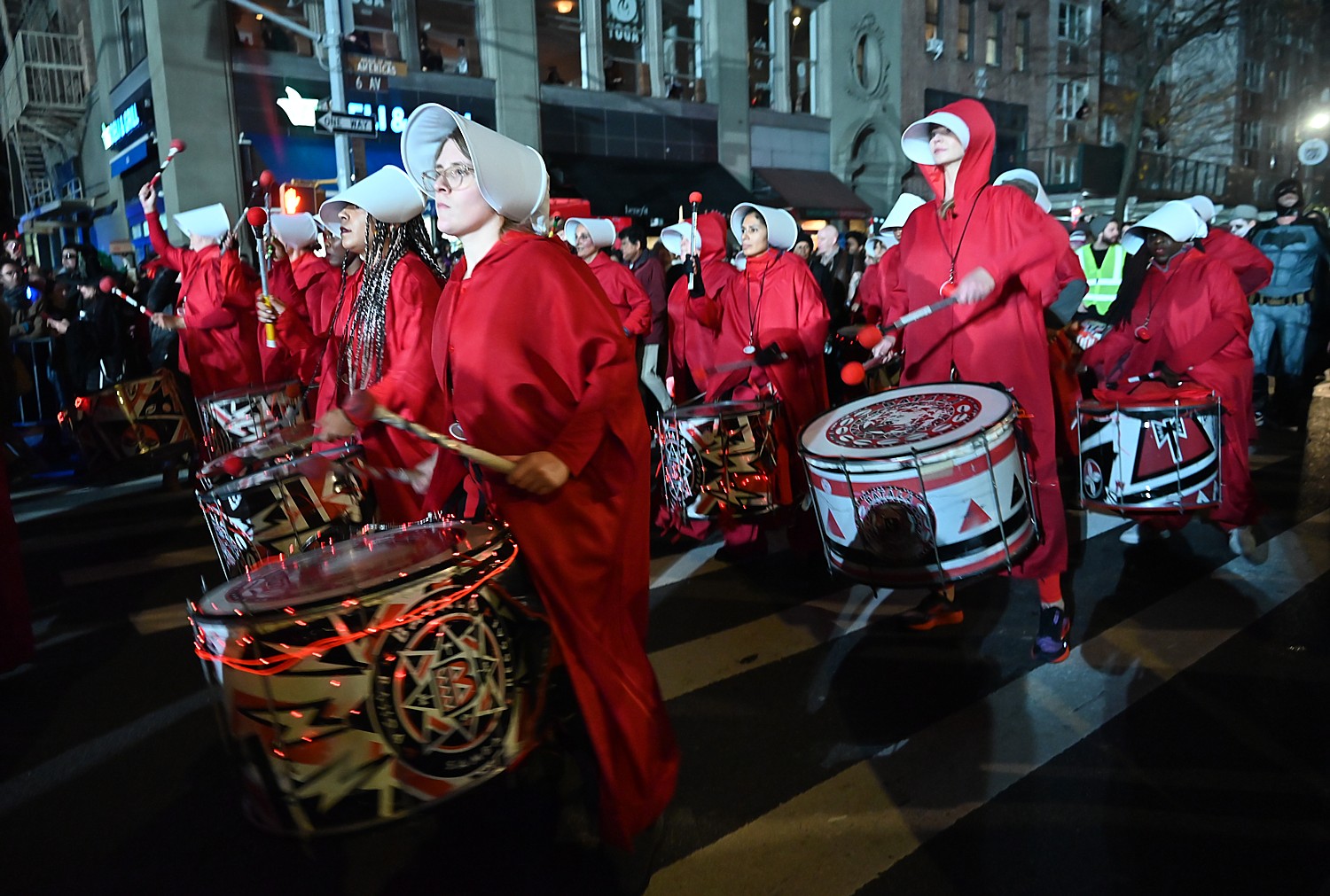
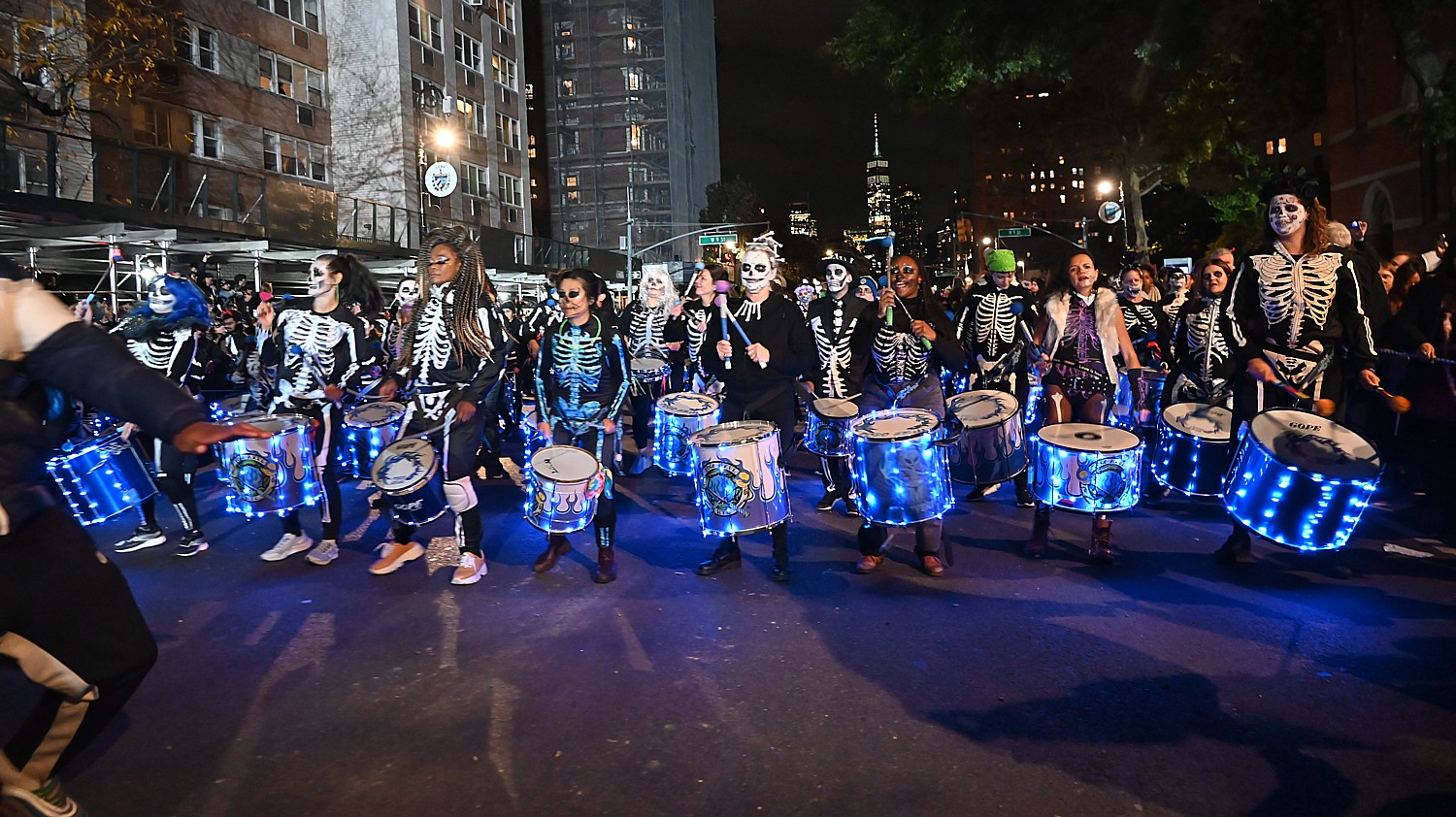
Fogo Azul NYC, an all-women Brazilian drumline, is one of about 50 bands joining the Village Halloween Parade © Karen Rubin/goingplacesfarandnear.com

Today the Parade is the largest celebration of its kind in the world and has been picked by Festivals International as “The Best Event in the World” for October 31.

Now, 50 years later, the Parade draws more than 70,000 costumed participants and some 2 million spectators, including television-viewing audience, live on NY1 beginning at 8 pm.

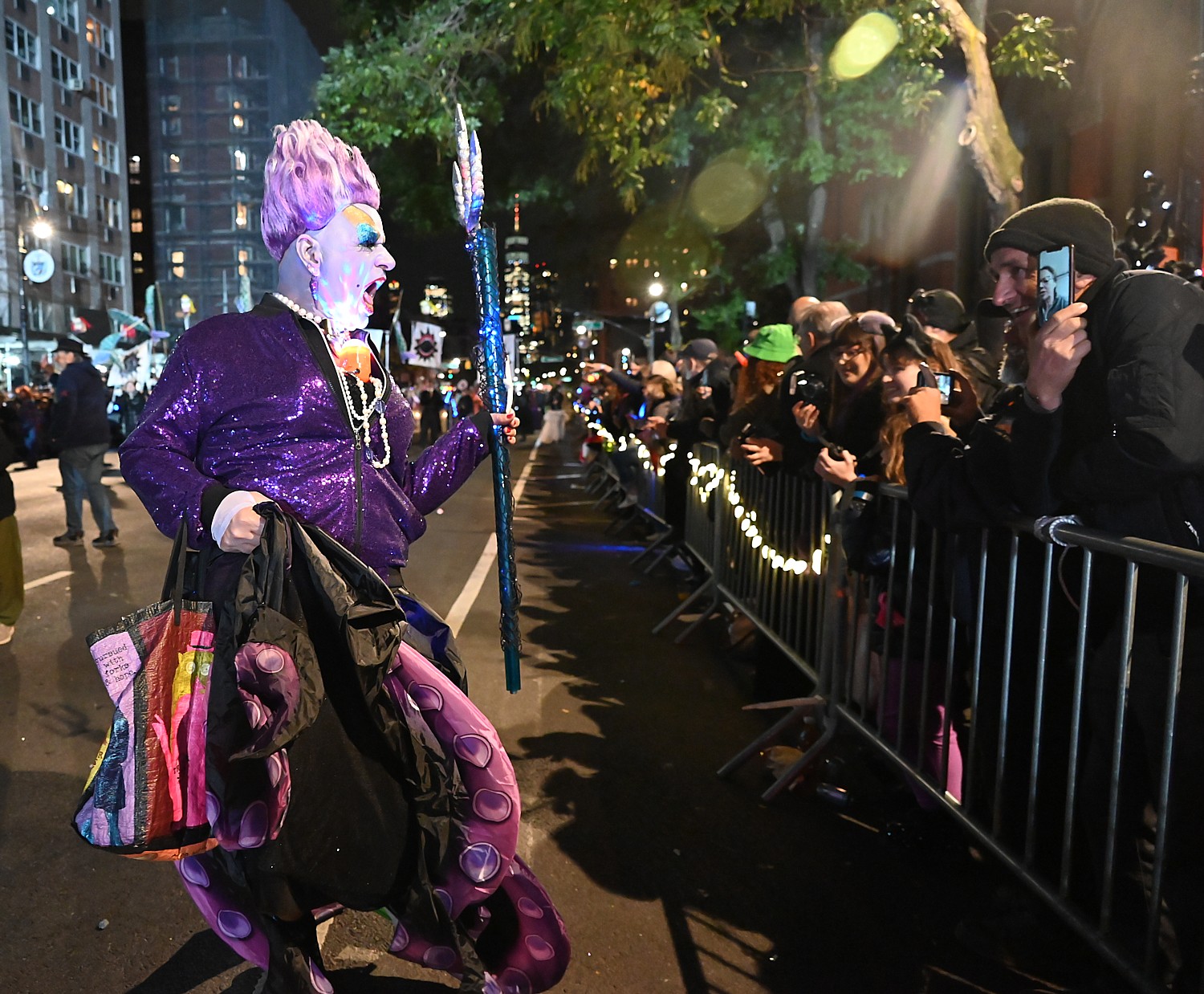
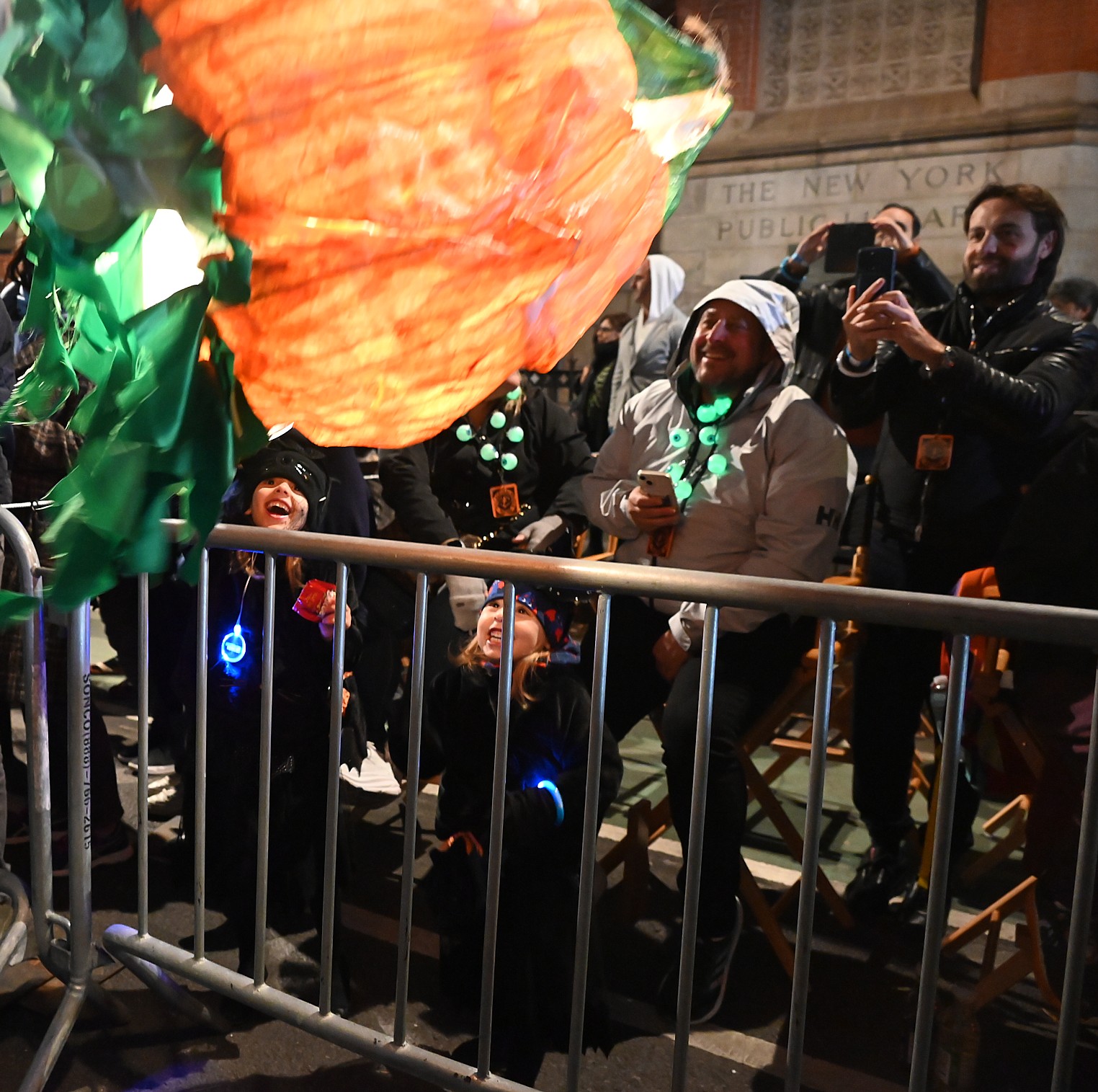
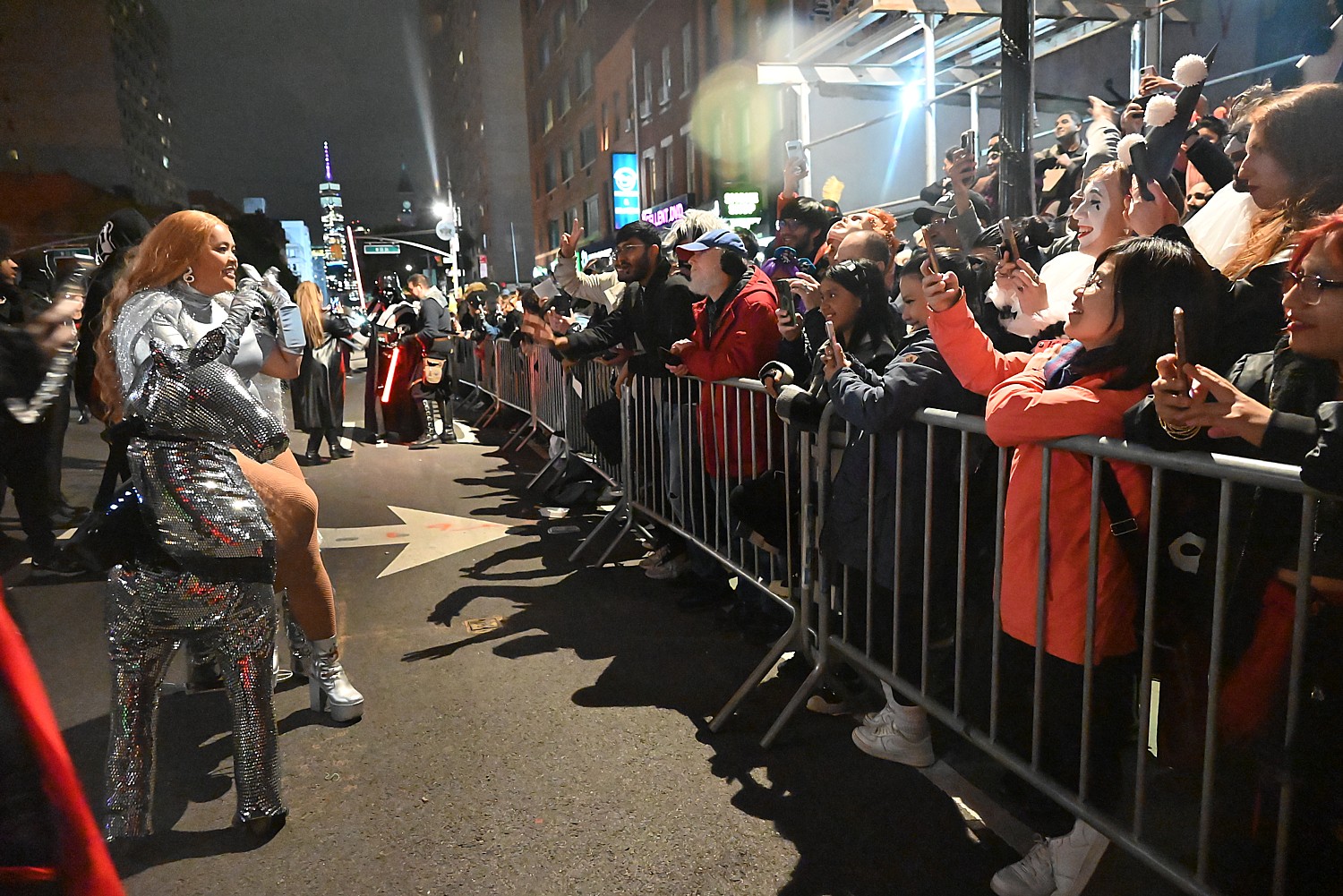
Parade marchers really interact with the spectators, to everyone’s delight © Karen Rubin/goingplacesfarandnear.com

In 1994, the Mayor of the City of New York issued a Proclamation honoring the Village Halloween Parade for 20 years of bringing everyone in the City together in a joyful and creative way and being a boon to the economic life of the City. “New York is the world’s capital of creativity and entertainment. The Village Halloween Parade presents the single greatest opportunity for all New Yorkers to exhibit their creativity in an event that is one-of-a-kind, unique and memorable every year. New Yorkers of all ages love Halloween, and this delightful event enables them to enjoy it every year and join in with their own special contributions. The Halloween Parade in Greenwich Village is a true cultural treasure.”

The irony is that while Halloween is about taking on a completely different persona, at the Village Halloween Parade, we see New Yorkers’ true selves.

And that’s true to the Upside/Down-Inside/Out theme.

Here are more photo highlights:

The Village Halloween Parade in New York City marks 50 years © Karen Rubin/goingplacesfarandnear.com
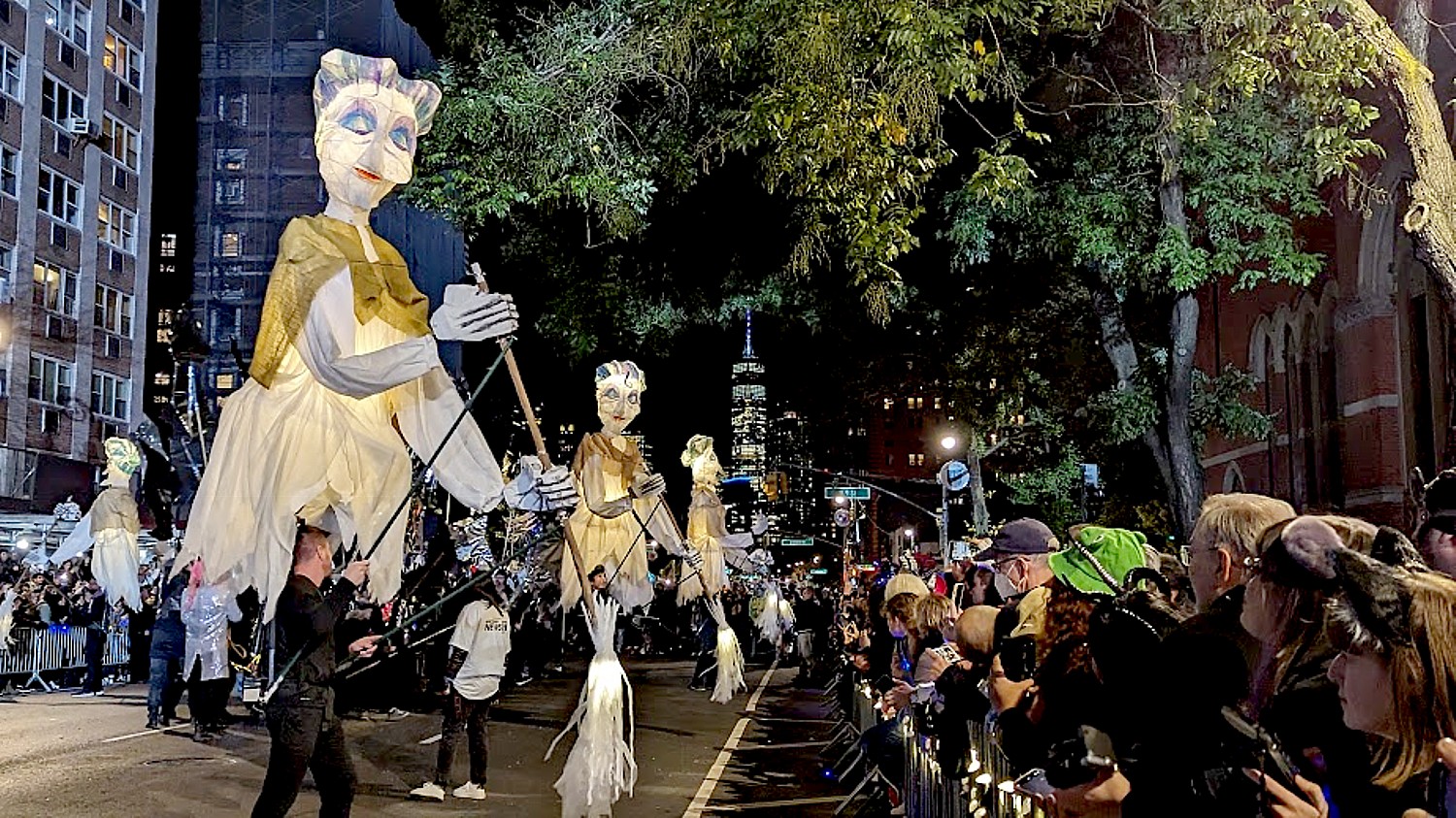
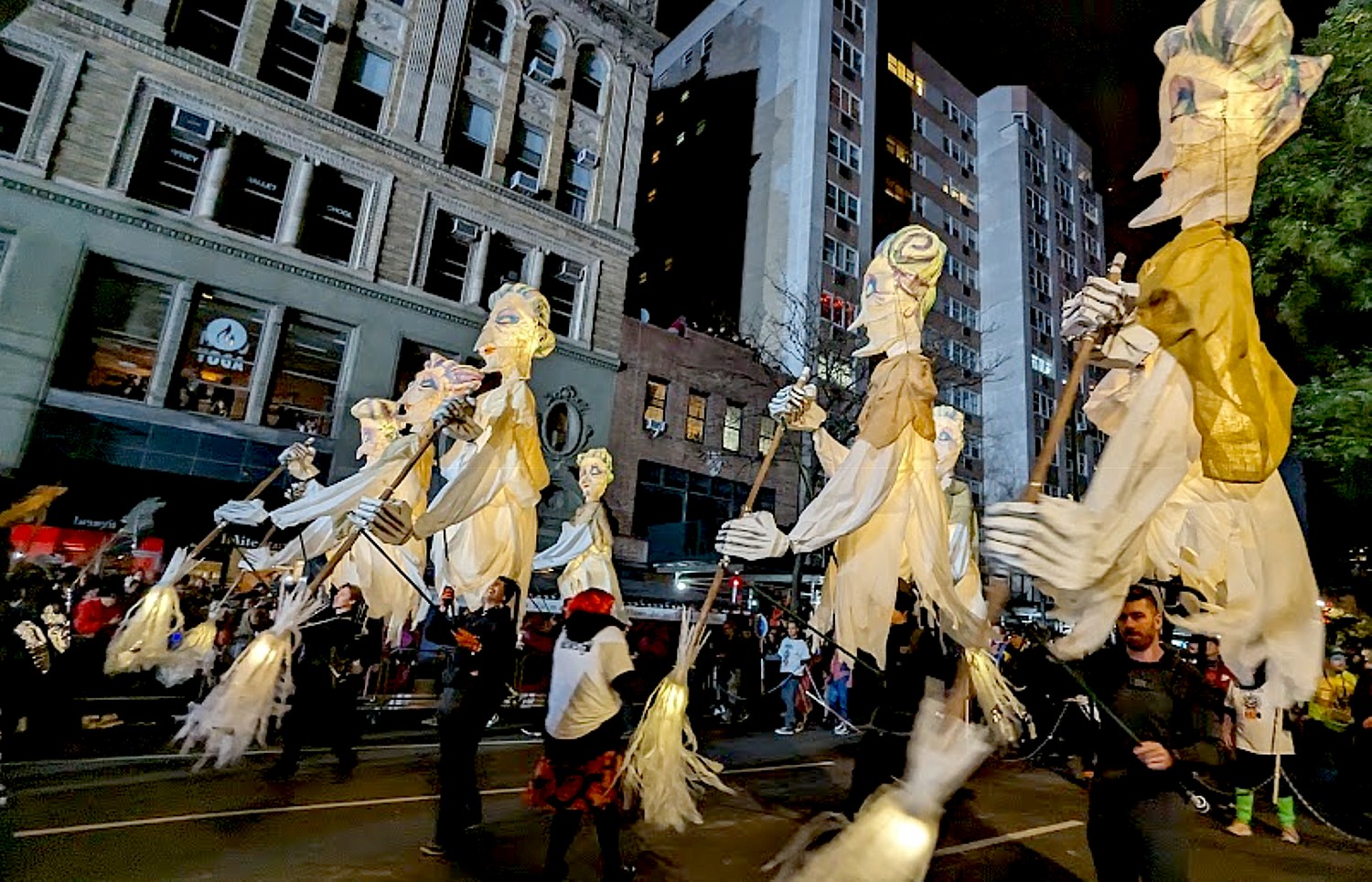
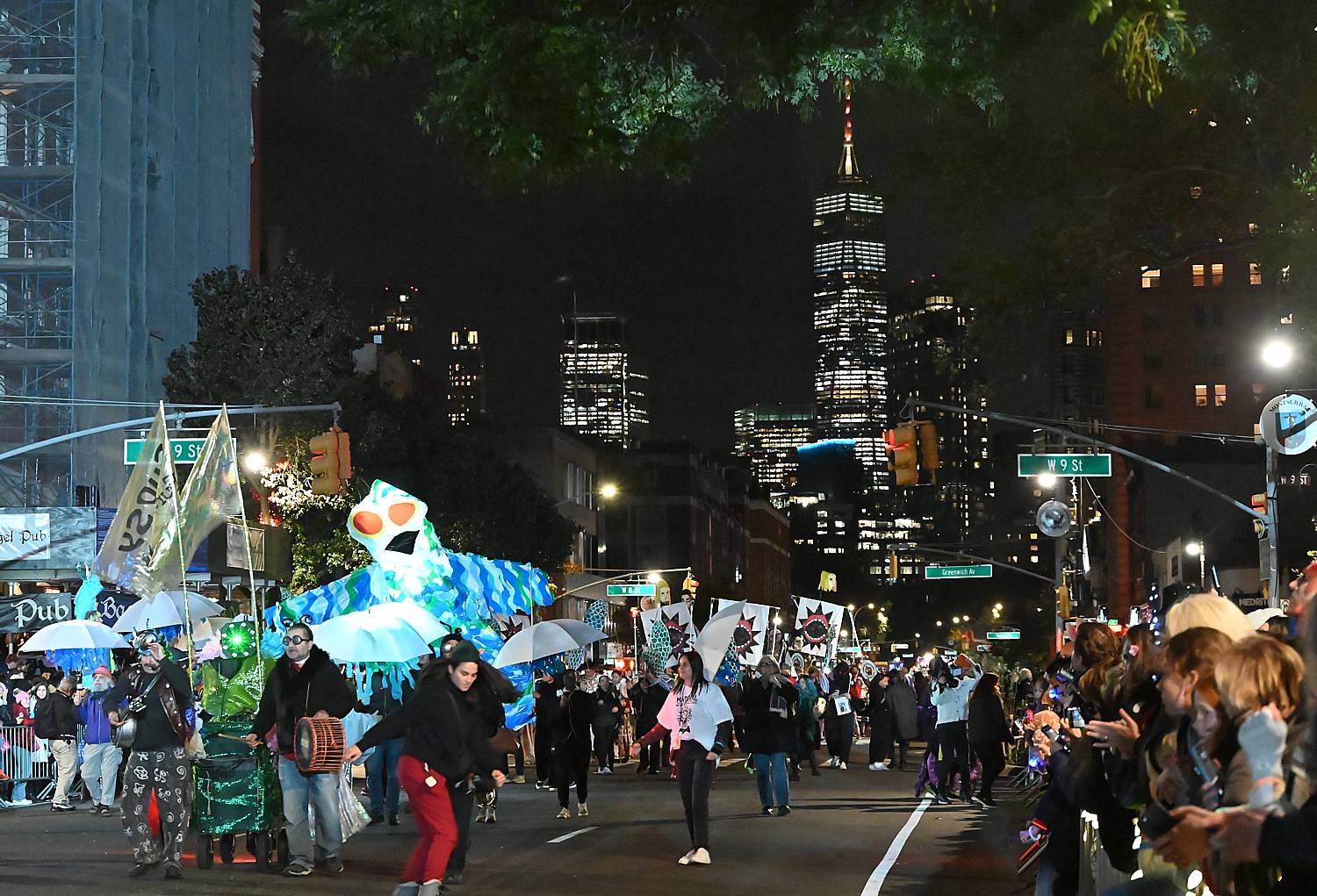
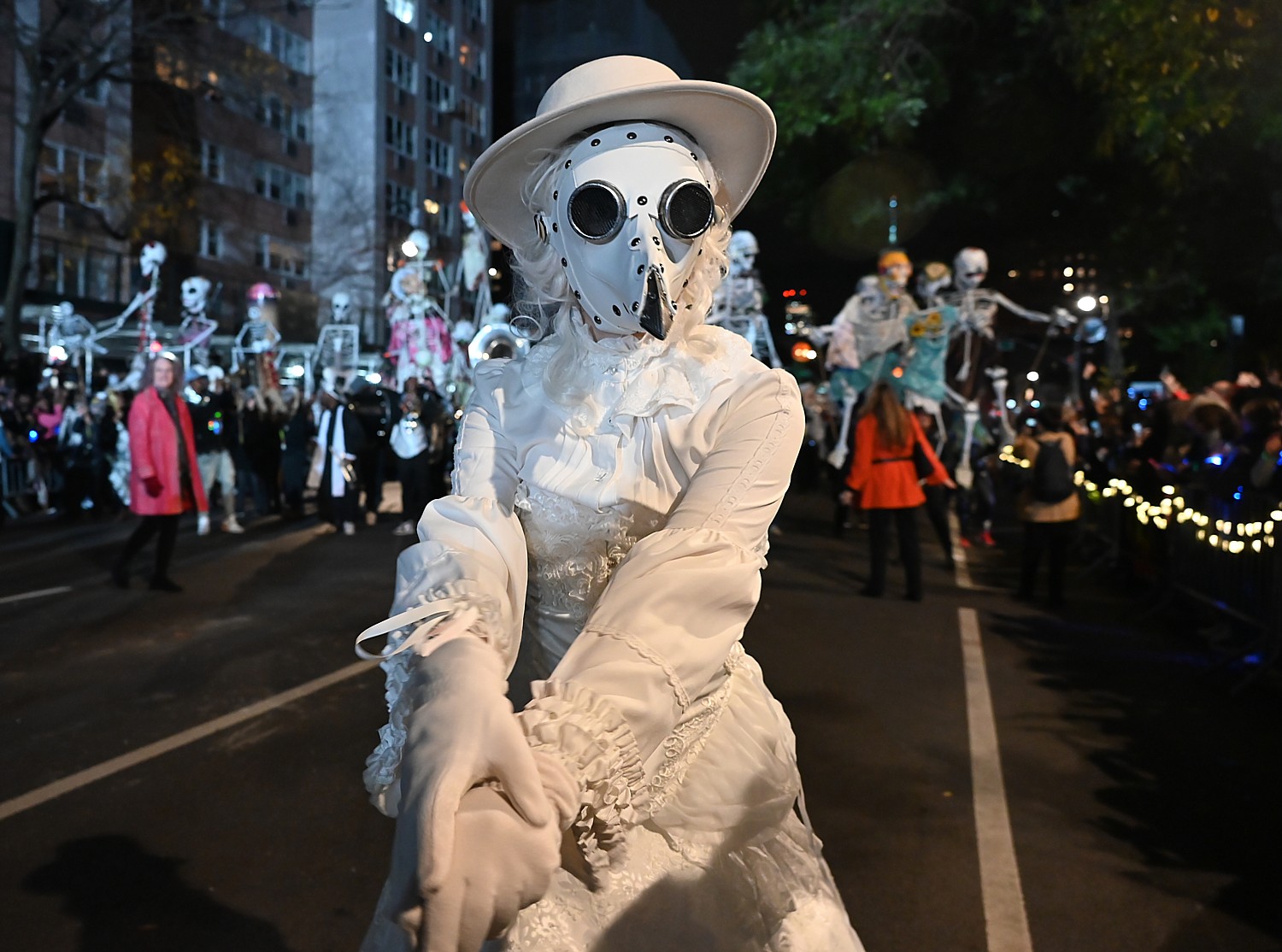
Giant puppets are a hallmark of the New York City’s Village Halloween Parade © Karen Rubin/goingplacesfarandnear.com
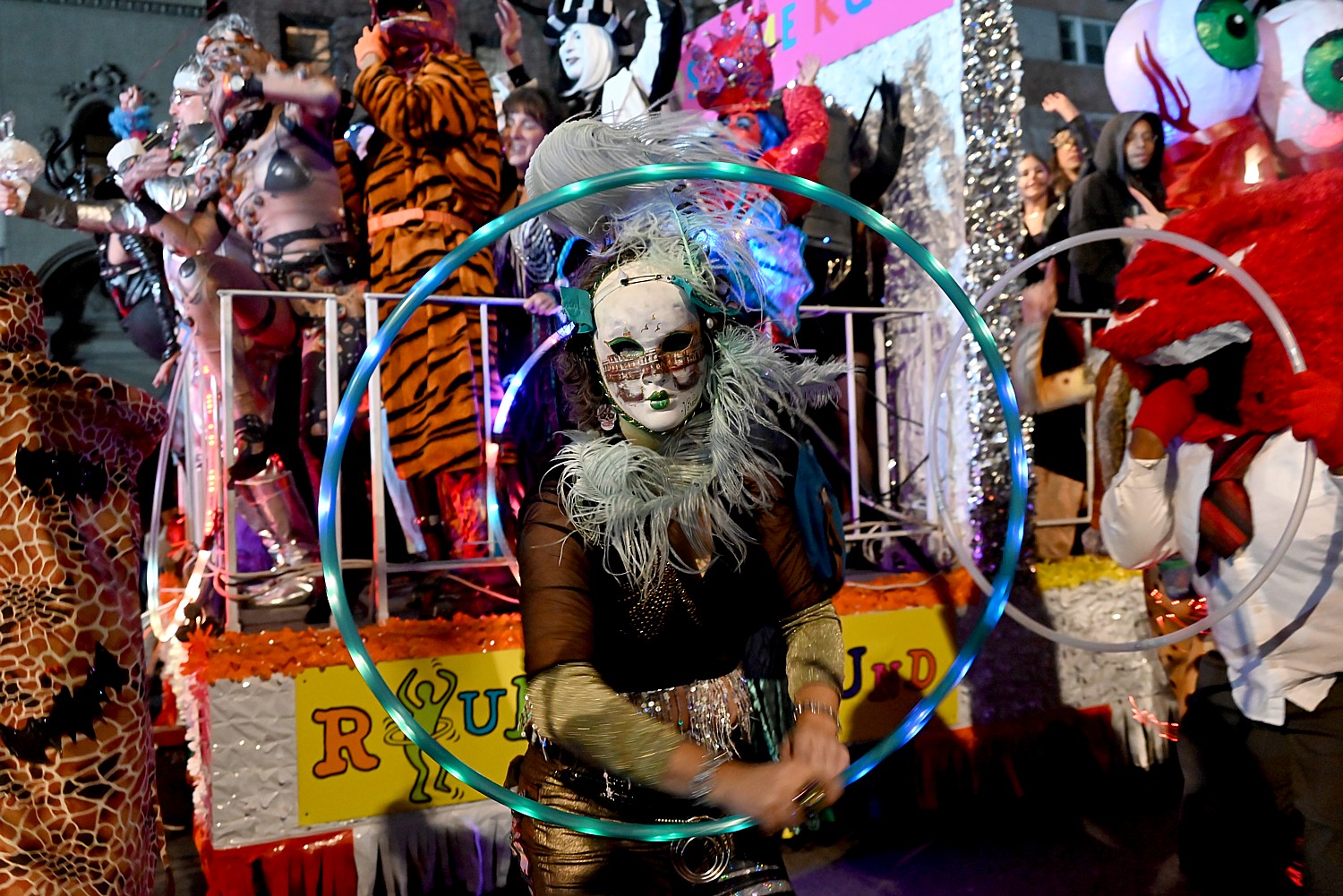
The Village Halloween Parade, celebrating 50 years, gives New Yorkers an opportunity to show off their creativity, artistry and humor © Karen Rubin/goingplacesfarandnear.com
Giant puppets are a hallmark of the New York City’s Village Halloween Parade © Karen Rubin/goingplacesfarandnear.com
The Village Halloween Parade, celebrating 50 years, gives New Yorkers an opportunity to show off their creativity, artistry and humor © Karen Rubin/goingplacesfarandnear.com
Parade marchers really interact with the spectators, to everyone’s delight © Karen Rubin/goingplacesfarandnear.com
Village Halloween Parade marchers enjoy interacting with spectators much to their delight © Karen Rubin/goingplacesfarandnear.com
The Village Halloween Parade, celebrating 50 years, gives New Yorkers an opportunity to show off their creativity, artistry and humor © Karen Rubin/goingplacesfarandnear.com
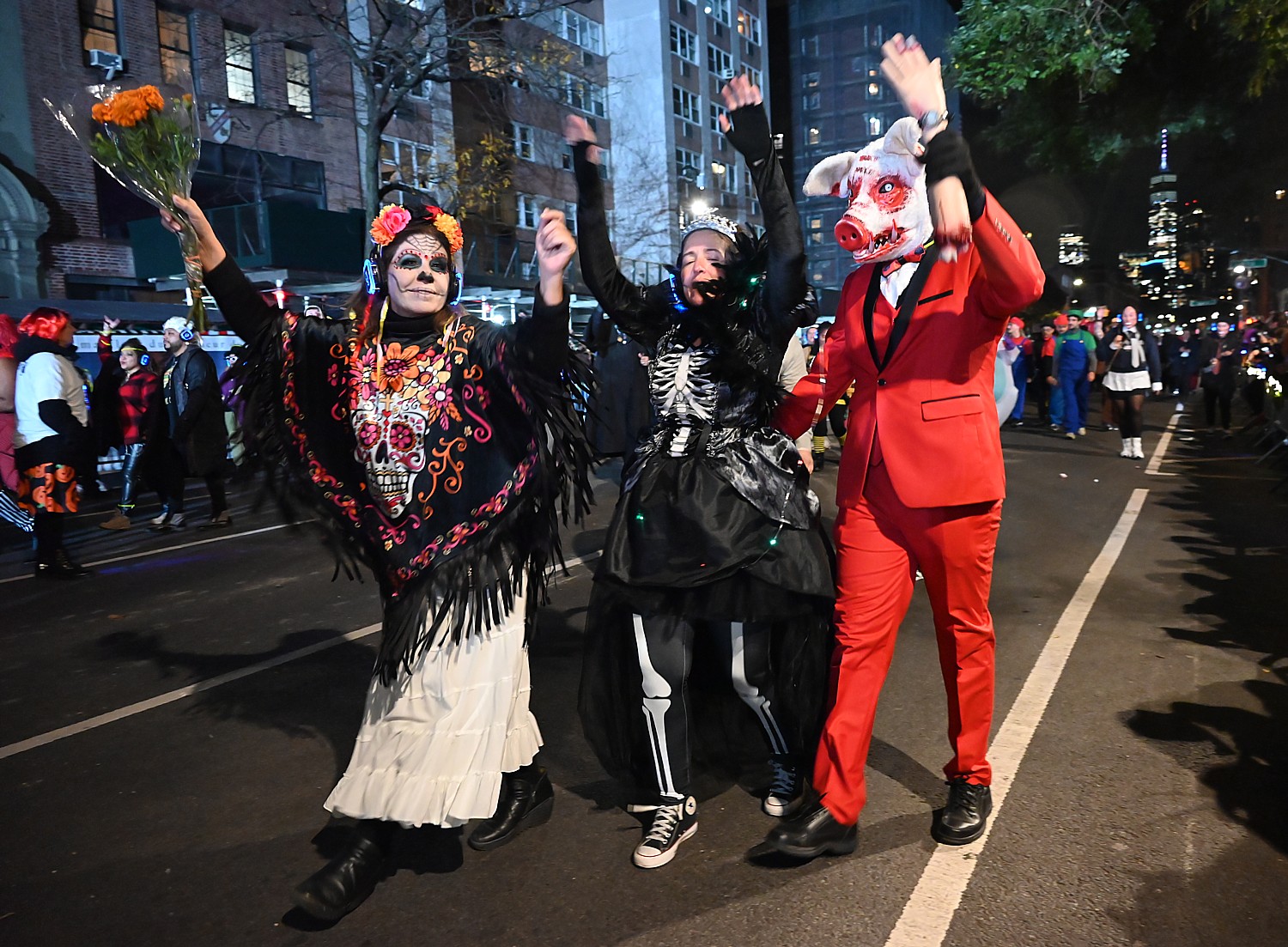
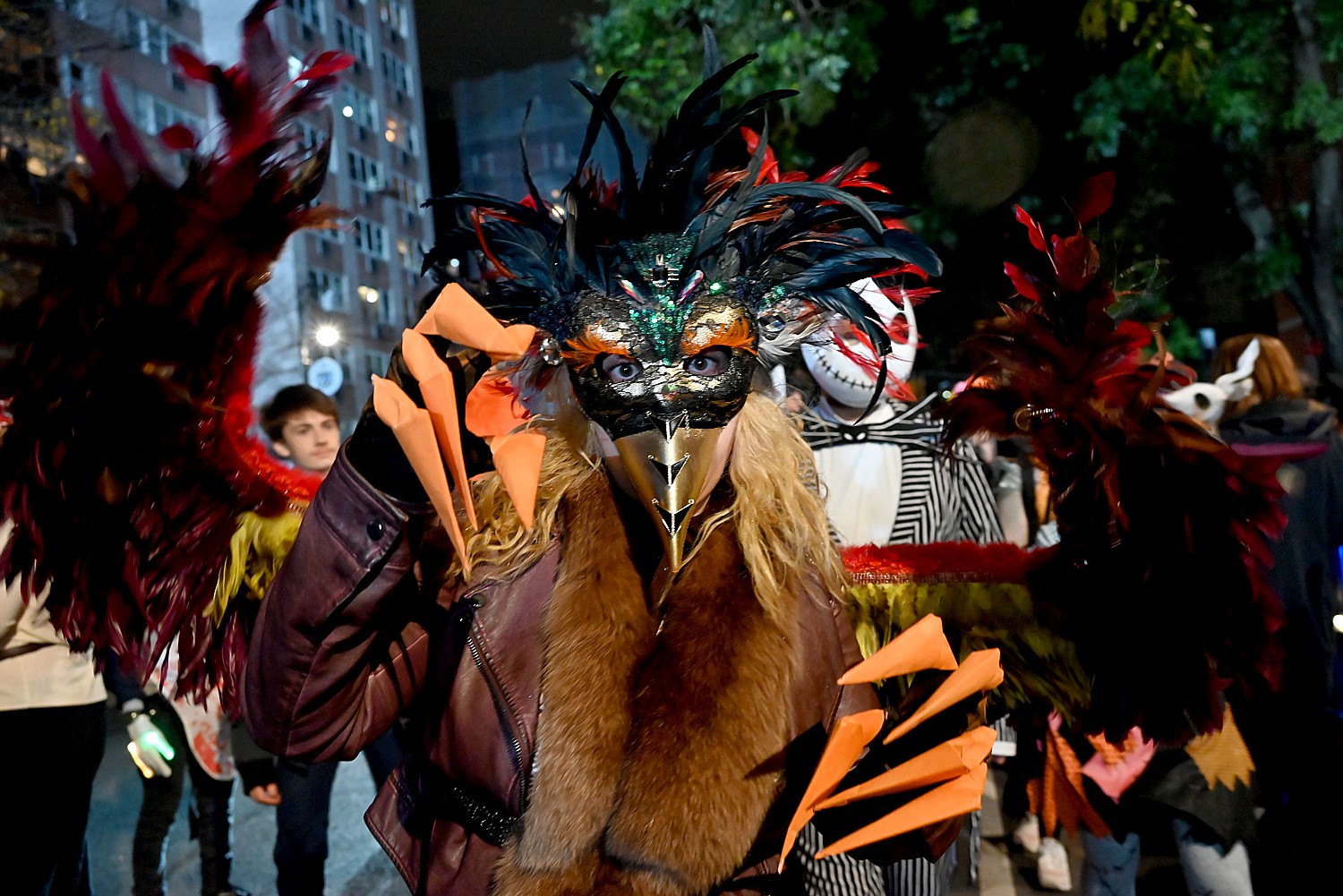
All you need to march in the Village Halloween Parade – the people’s parade – is a costume © Karen Rubin/goingplacesfarandnear.com
The Village Halloween Parade in New York City marks 50 years © Karen Rubin/goingplacesfarandnear.com 
Village Halloween Parade showcases the many cultures of New York’s melting pot © Karen Rubin/goingplacesfarandnear.com
The Village Halloween Parade in New York City marks 50 years © Karen Rubin/goingplacesfarandnear.com 
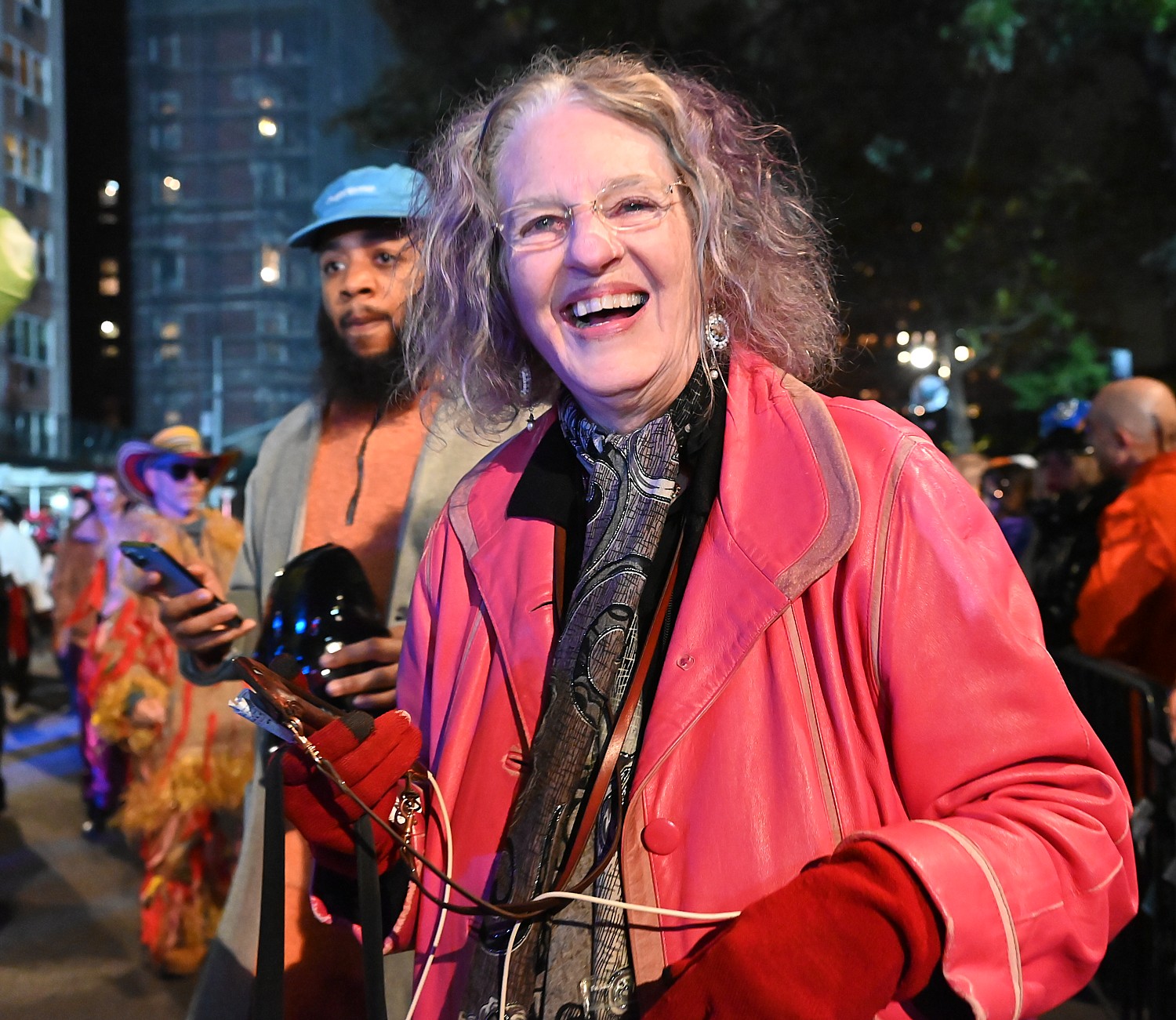
Grand Marshal of the Village Halloween Parade Laurie Anderson © Karen Rubin/goingplacesfarandnear.com
 Fogo Azul NYC, an all-women Brazilian drumline, is one of about 50 bands joining the Village Halloween Parade © Karen Rubin/goingplacesfarandnear.com
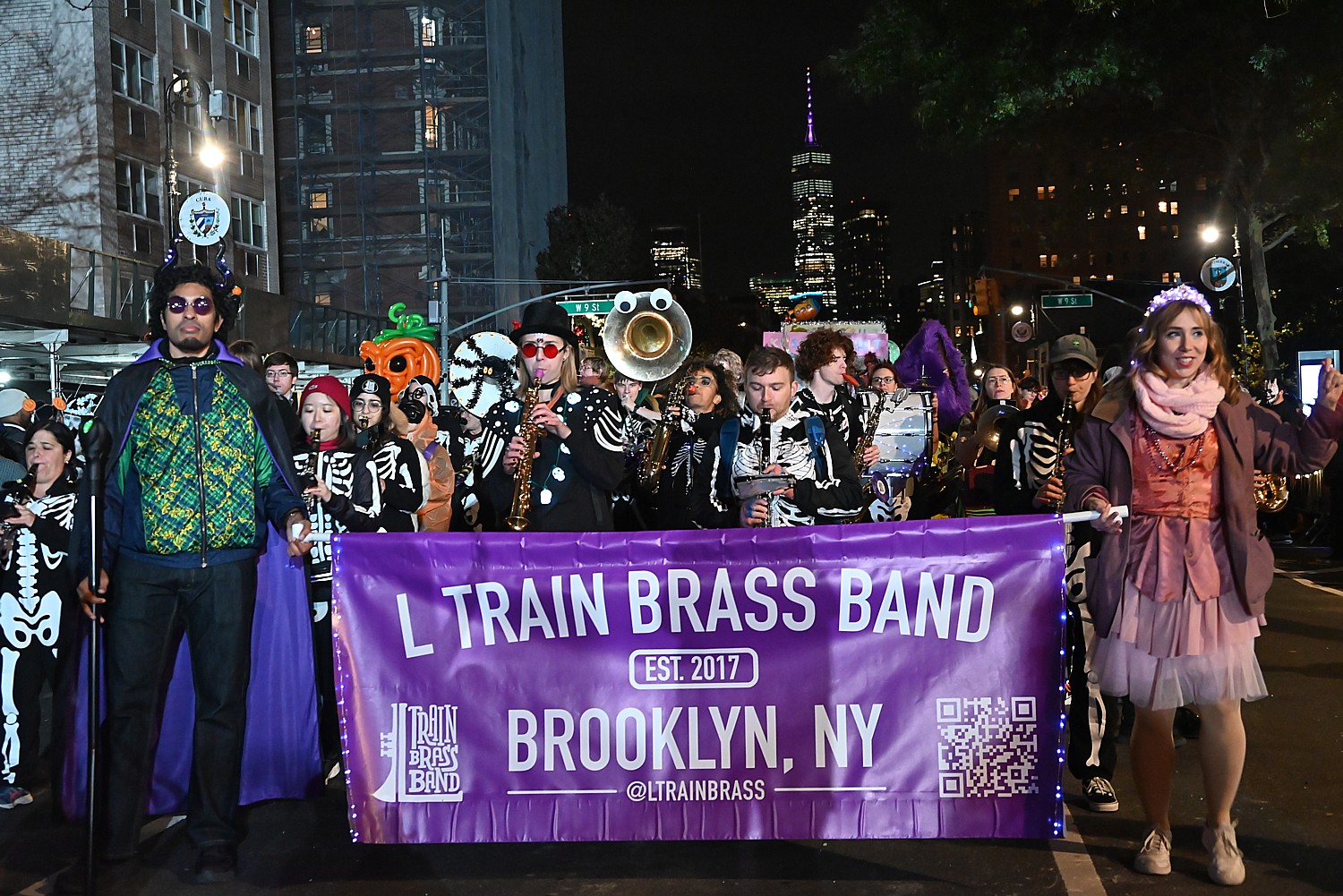
L Train Brass Band brings its joyful music to the Village Halloween Parade © Karen Rubin/goingplacesfarandnear.com
All you need to march in the Village Halloween Parade – the people’s parade – is a costume © Karen Rubin/goingplacesfarandnear.com
The Village Halloween Parade, celebrating 50 years, gives New Yorkers an opportunity to show off their creativity, artistry and humor © Karen Rubin/goingplacesfarandnear.com
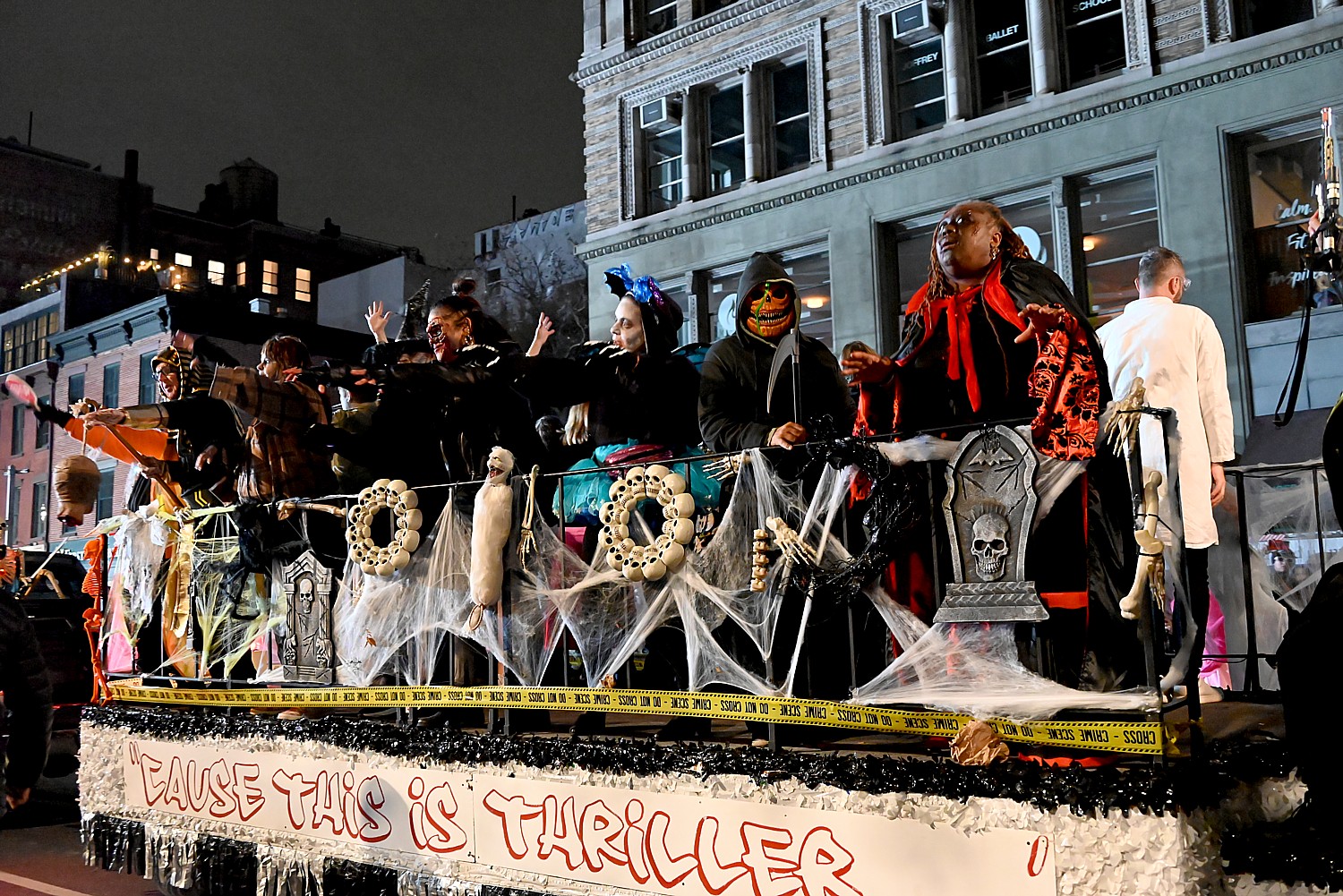
Thriller at the Village Halloween Parade © Karen Rubin/goingplacesfarandnear.com
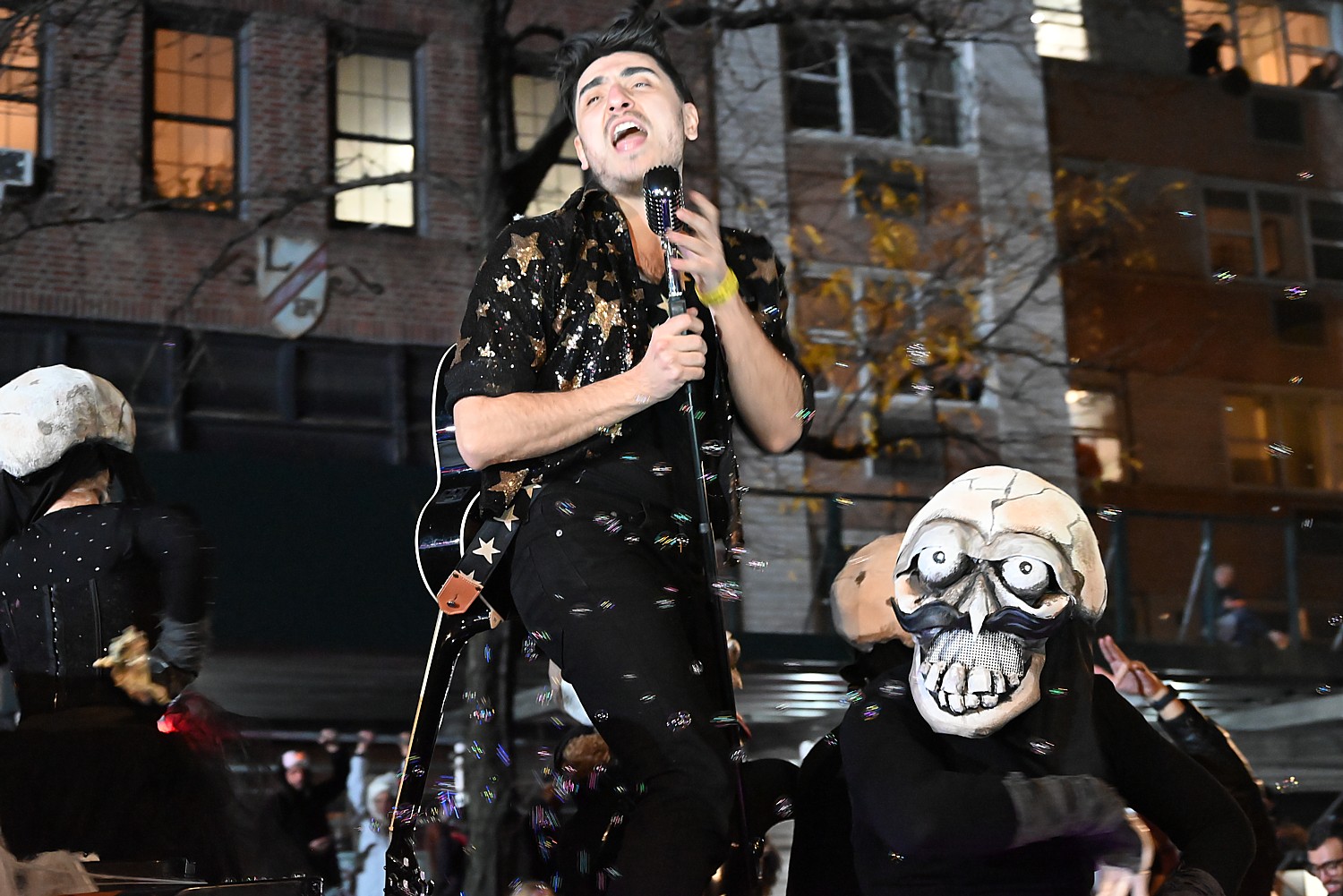
Village Halloween Parade features some of the best bands in New York City© Karen Rubin/goingplacesfarandnear.com
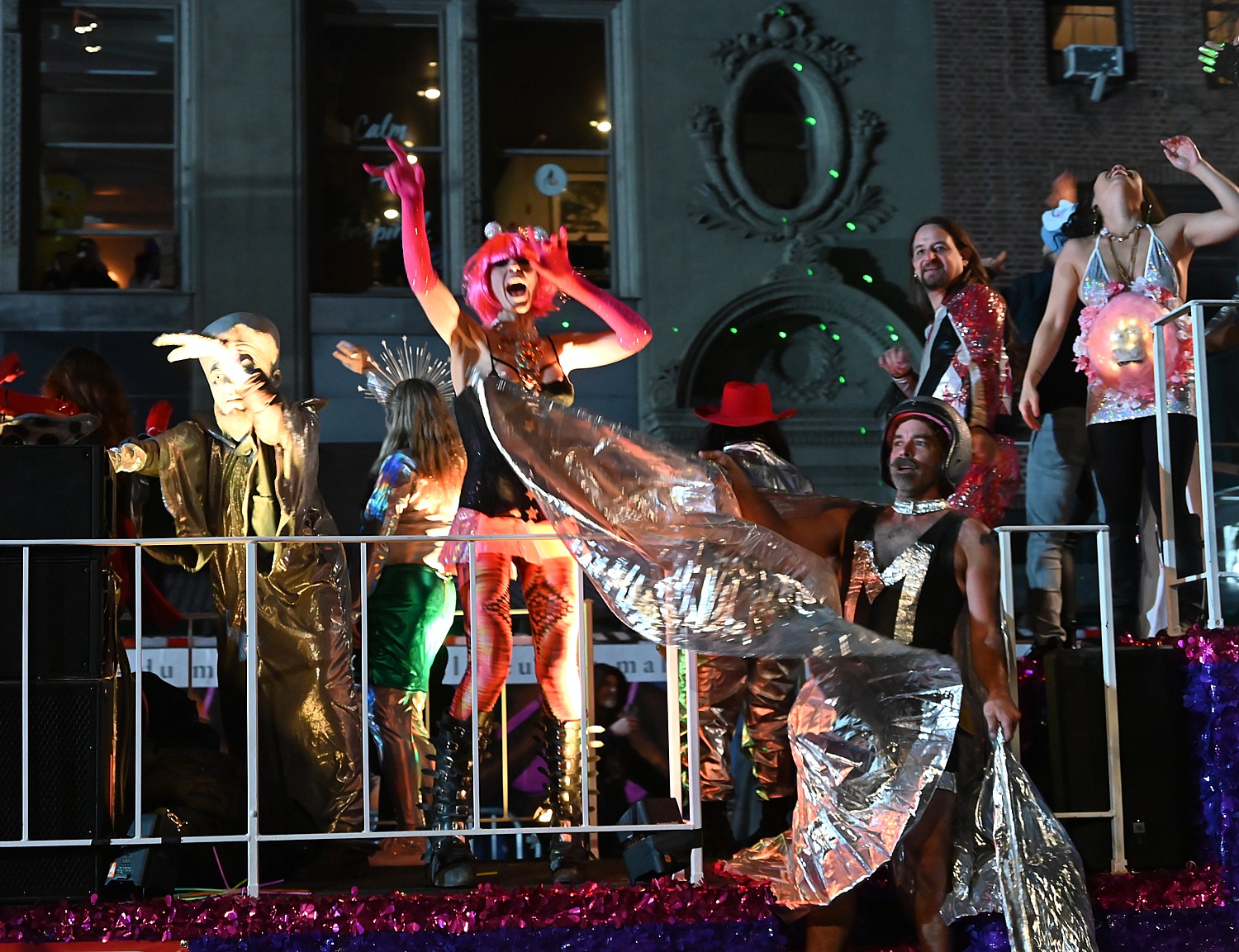
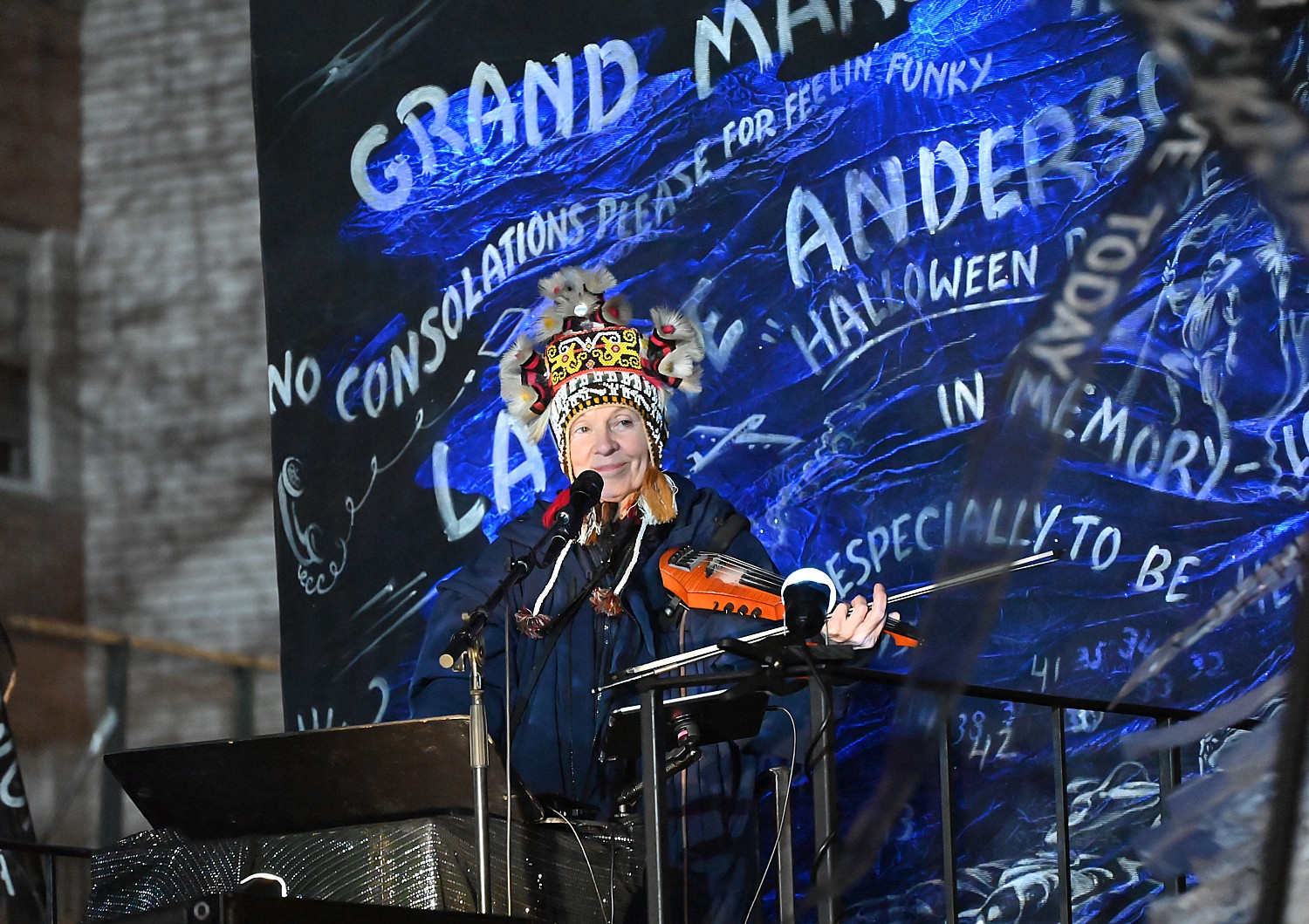
Music is in the air at the village Halloween Parade © Karen Rubin/goingplacesfarandnear.com
The Village Halloween Parade, celebrating 50 years, gives New Yorkers an opportunity to show off their creativity, artistry and humor © Karen Rubin/goingplacesfarandnear.com
Costumed Village Halloween Parade enjoy interacting with spectators much to their delight © Karen Rubin/goingplacesfarandnear.com
The Village Halloween Parade in New York City is celebrating 50 years with the theme, UPSIDE/DOWN © Karen Rubin/goingplacesfarandnear.com

___________________________

© 2023 Travel Features Syndicate, a division of Workstyles, Inc. All rights reserved. Visit goingplacesfarandnear.com, www.huffingtonpost.com/author/karen-rubin, and travelwritersmagazine.com/TravelFeaturesSyndicate/. Blogging at goingplacesnearandfar.wordpress.com and moralcompasstravel.info. Visit instagram.com/going_places_far_and_near and instagram.com/bigbackpacktraveler/ Send comments or questions to FamTravLtr@aol.com. Tweet @TravelFeatures. ‘Like’ us at facebook.com/KarenBRubin 
Granville Island, Vancouver’s Nearby Getaway, is Cornucopia of Art, Culture

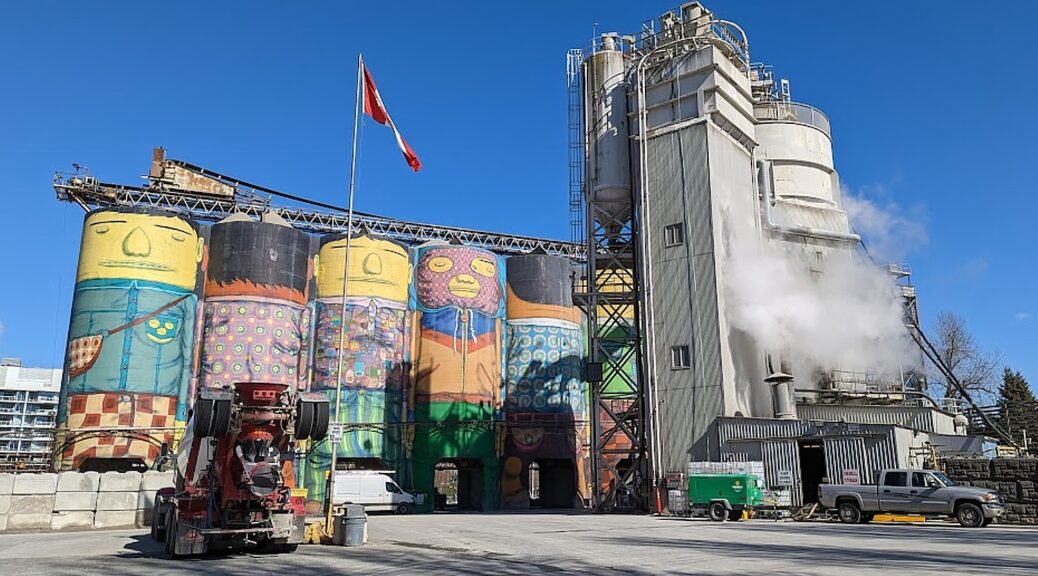
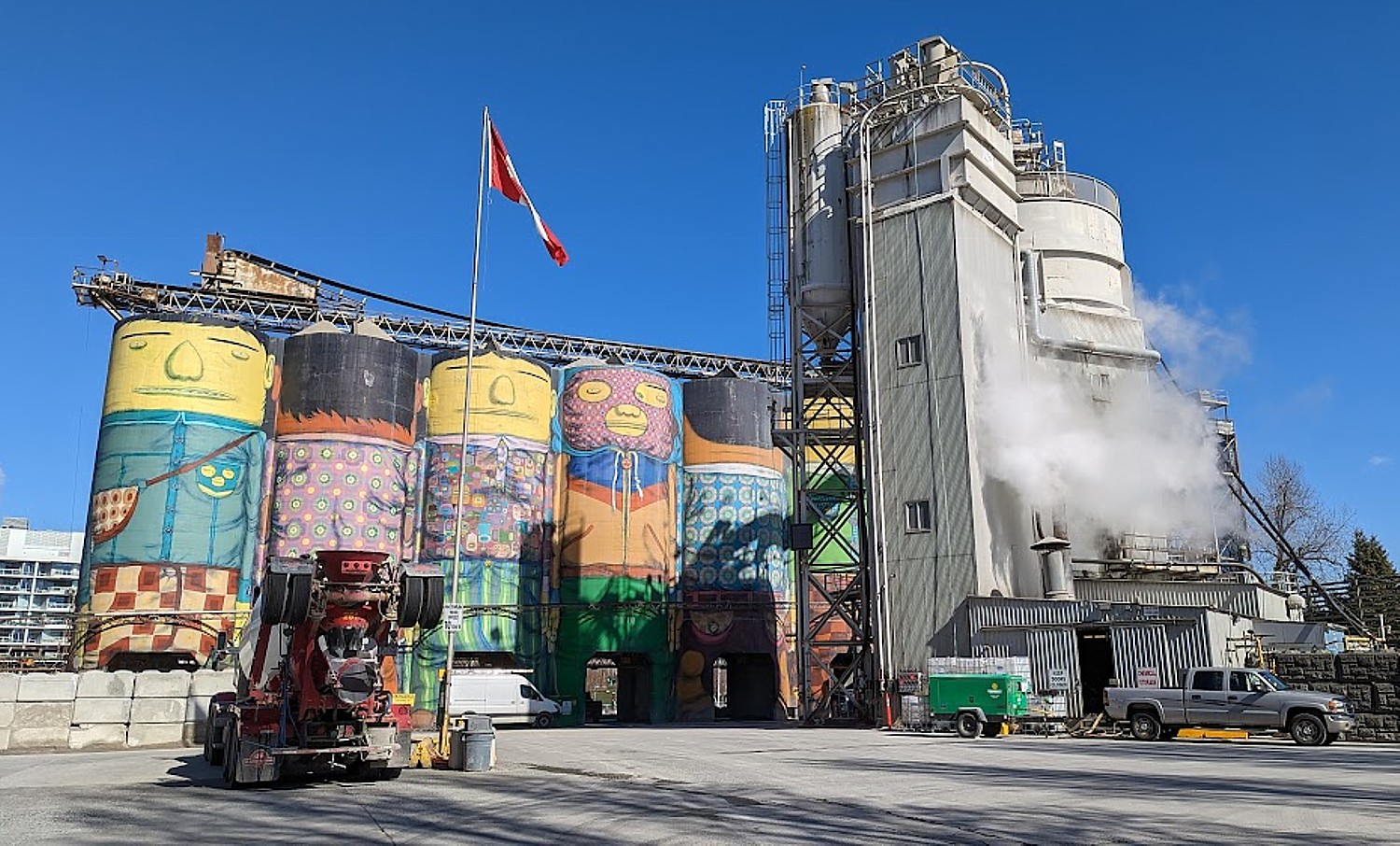
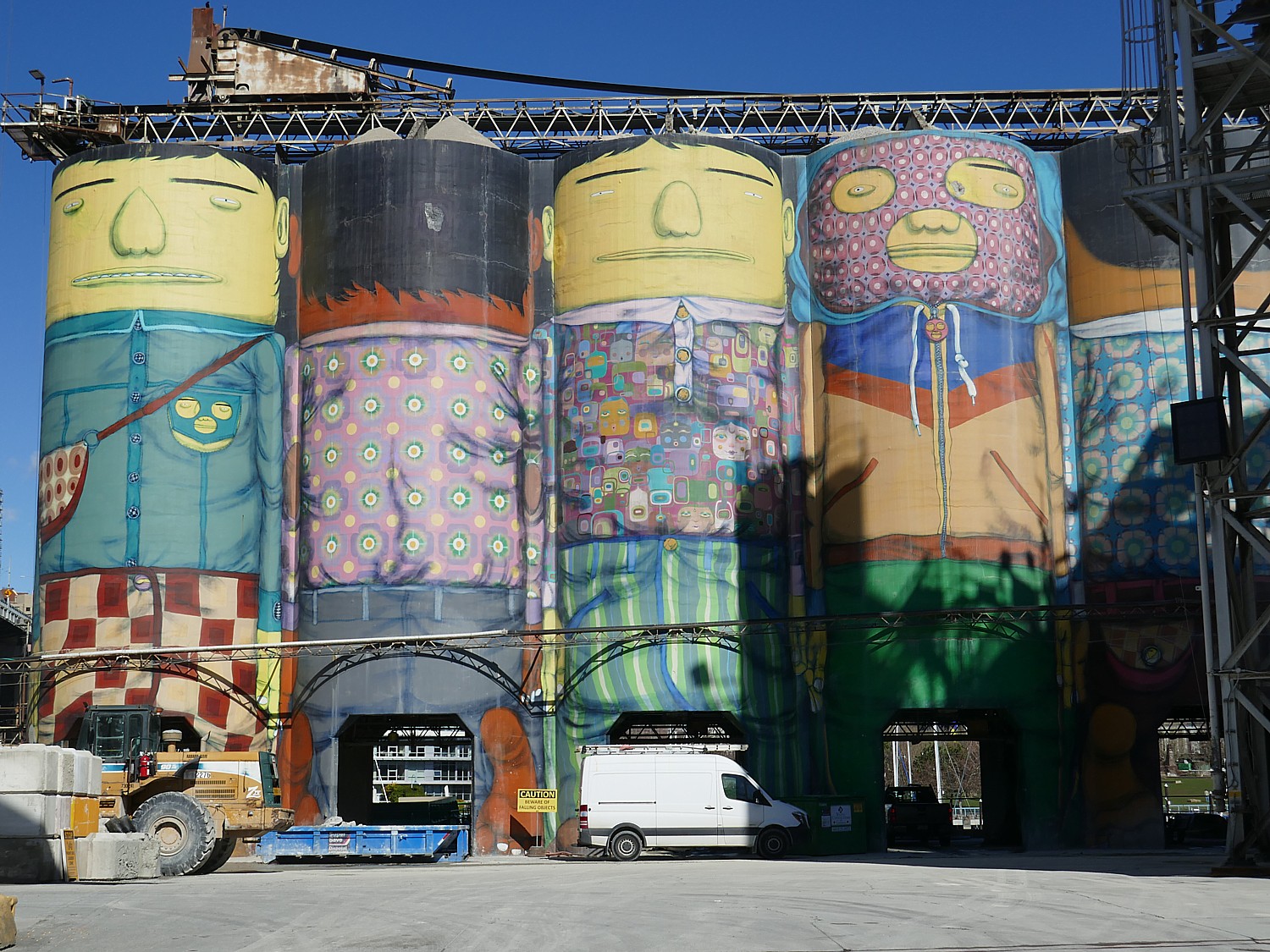
One of the most photographed scenes in Vancouver: “The Giants” at the cement factory on Granville Island, painted by Brazilian graffiti artists Gustavo and Otavio Pandolfo (known as OSGEMEOS). Granville Island is a mecca for arts and culture © Karen Rubin/goingplacesfarandnear.com

By Karen Rubin, Travel Features Syndicate, goingplacesfarandnear.com
I have cleverly arranged for a late flight from Vancouver, so I would have a whole day to continue to explore.

Indigenous Tourism BC which has arranged my itinerary has offered a number of suggestions: rent a bike and riding around the seawall at Stanley Park; visit the Vancouver Art Gallery (750 Hornby St, Vancouver); visit Museum of Vancouver (1100 Chestnut St, Vancouver) to see Indigenous micro-exhibition Spirit Journeys: Walking with Resilience, Wellbeing and Respect; visit Granville Island.

Rick, the Skwachàys Lodge manager, just the evening before, had raved about how much he loves visiting to Granville Island – it has the best public market – and was planning to go himself.
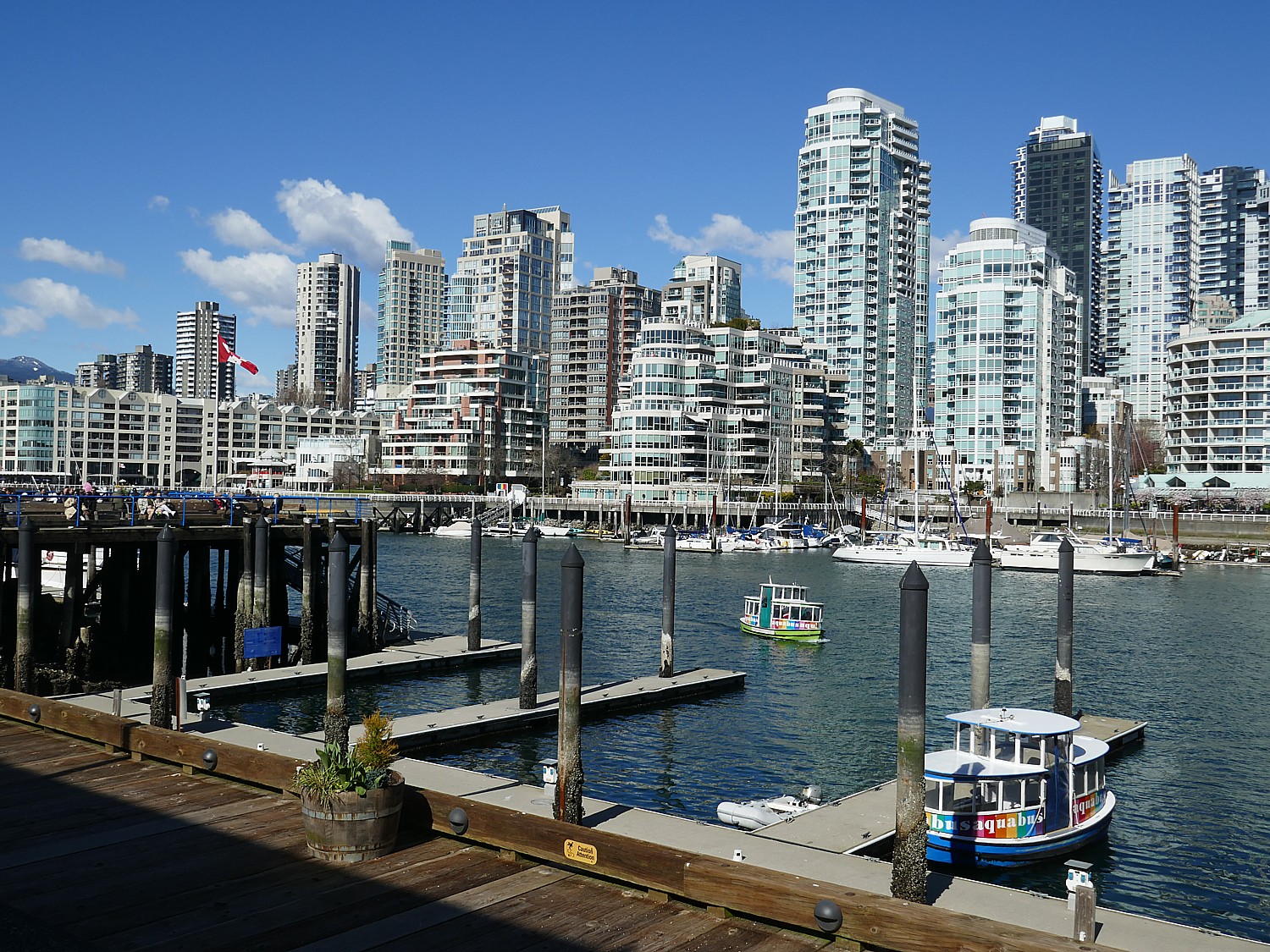
I map out a delightful 3.3 km walk from the hotel to David Lam Park where I hop the cute Aquabus ferry for the few minutes ride to Granville Island. (Aquabus, $6/roundtrip, which also offers a 40-minute ferry ride tour)

Arriving on Granville Island by ferry © Karen Rubin/goingplacesfarandnear.com

As soon as I climb the stairs from the ferry dock, I appreciate why Granville Island very properly boasts of being a “magical escape within a city.” I would add: playful, whimsical, fantastical, a place of endless delight, a non-stop smile.

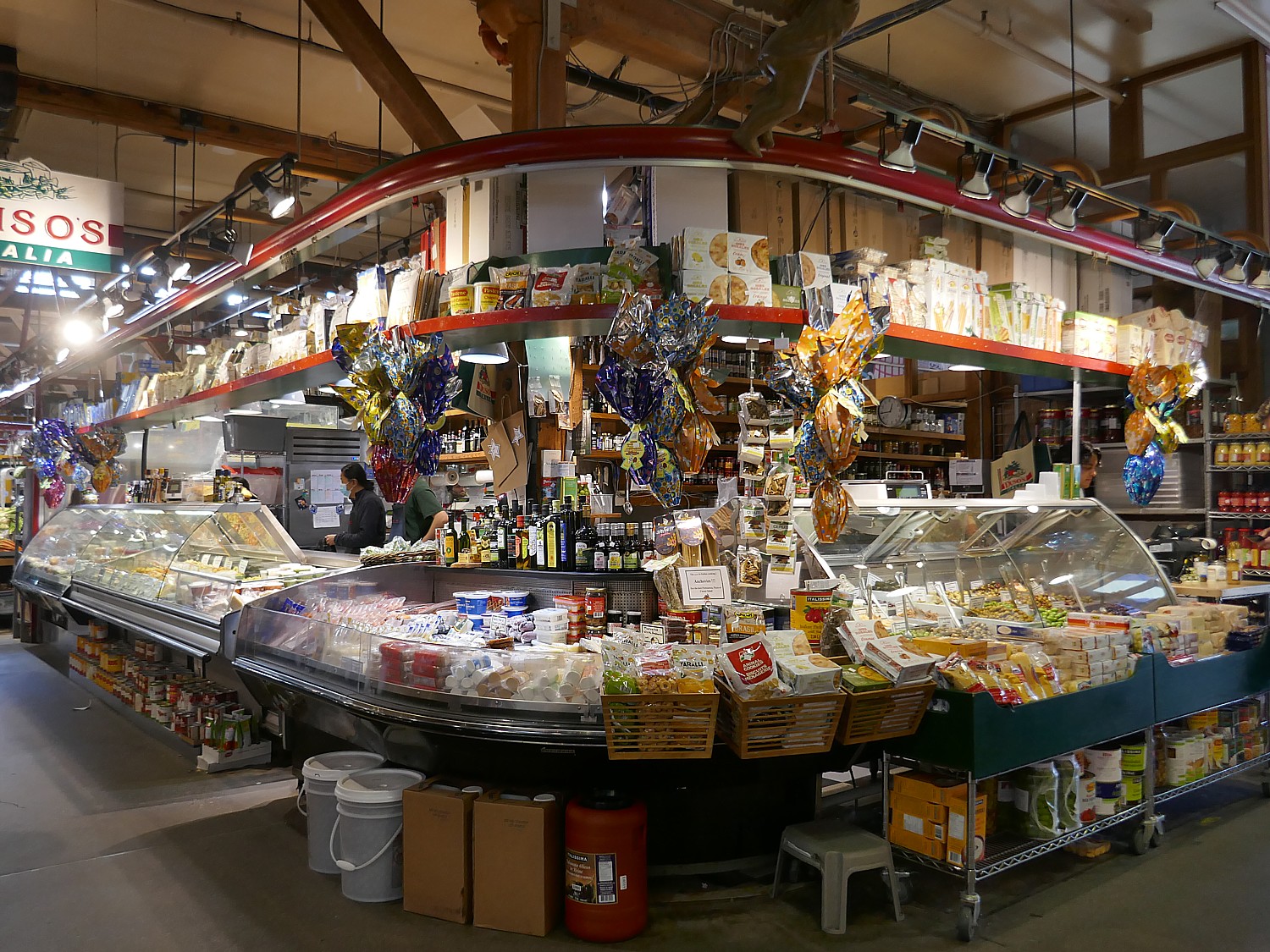
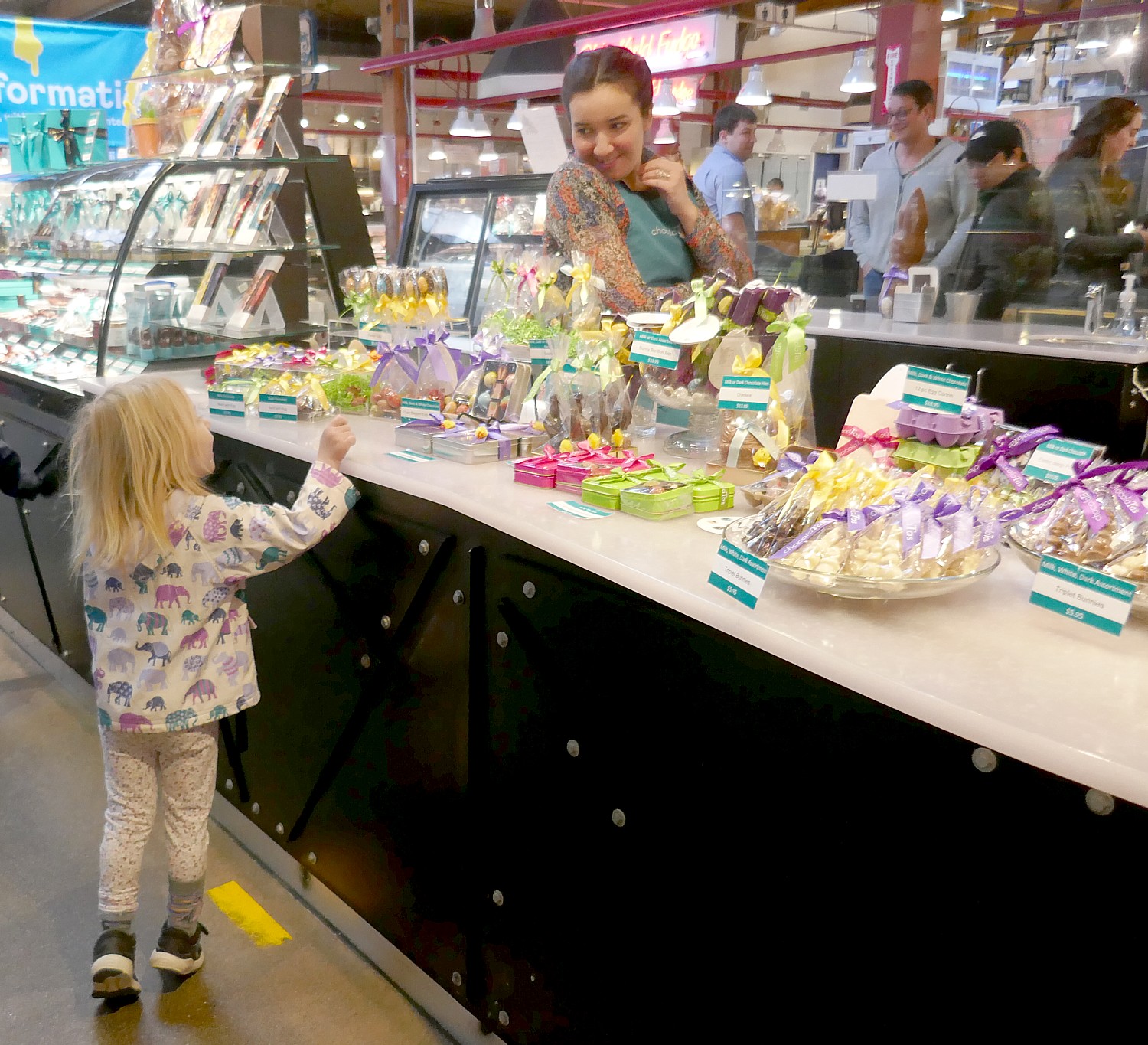
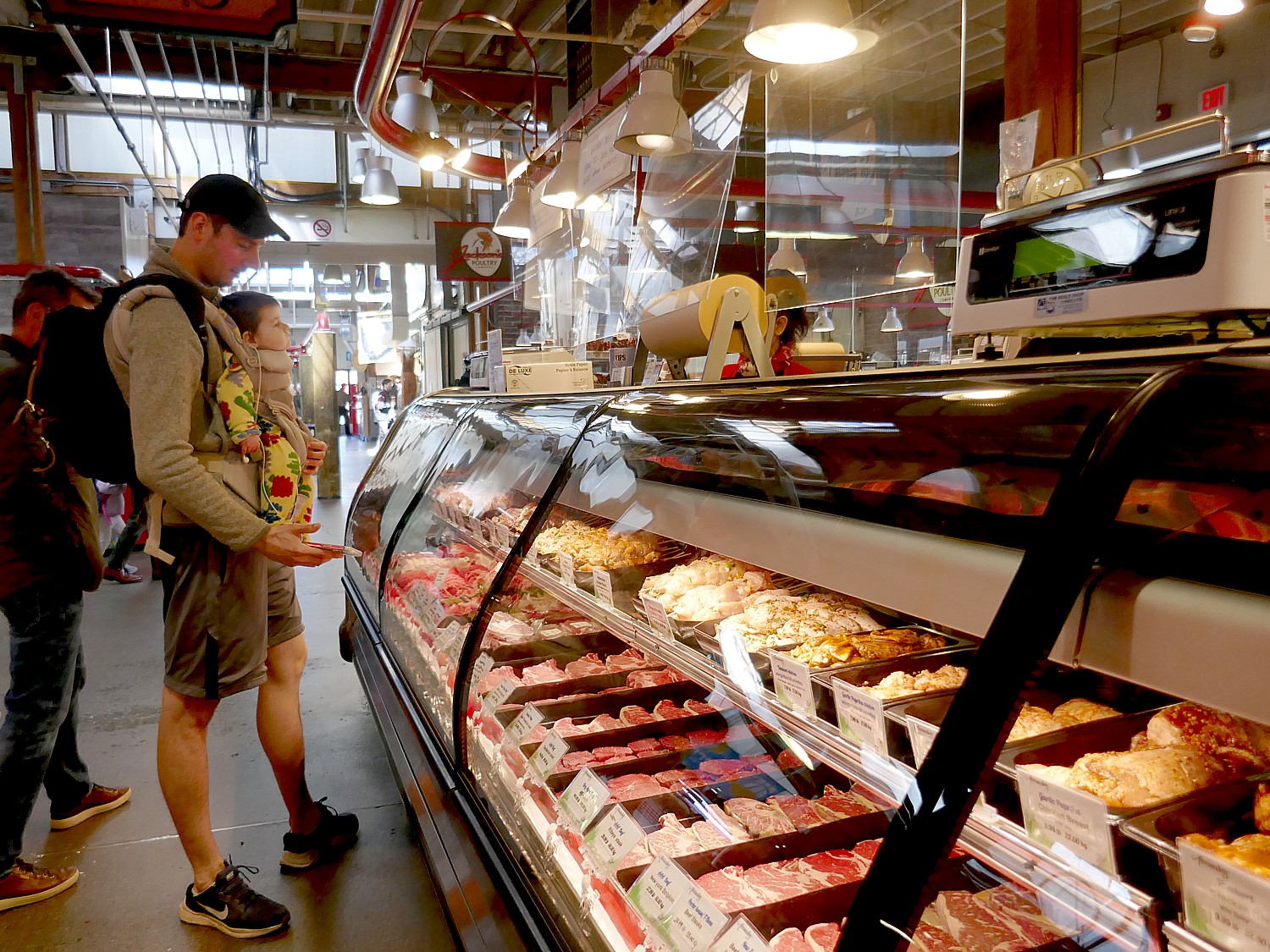
The public market on Granville Island is one of the best, most fun in the world © Karen Rubin/goingplacesfarandnear.com
The public market on Granville Island is a place of endless delight © Karen Rubin/goingplacesfarandnear.com

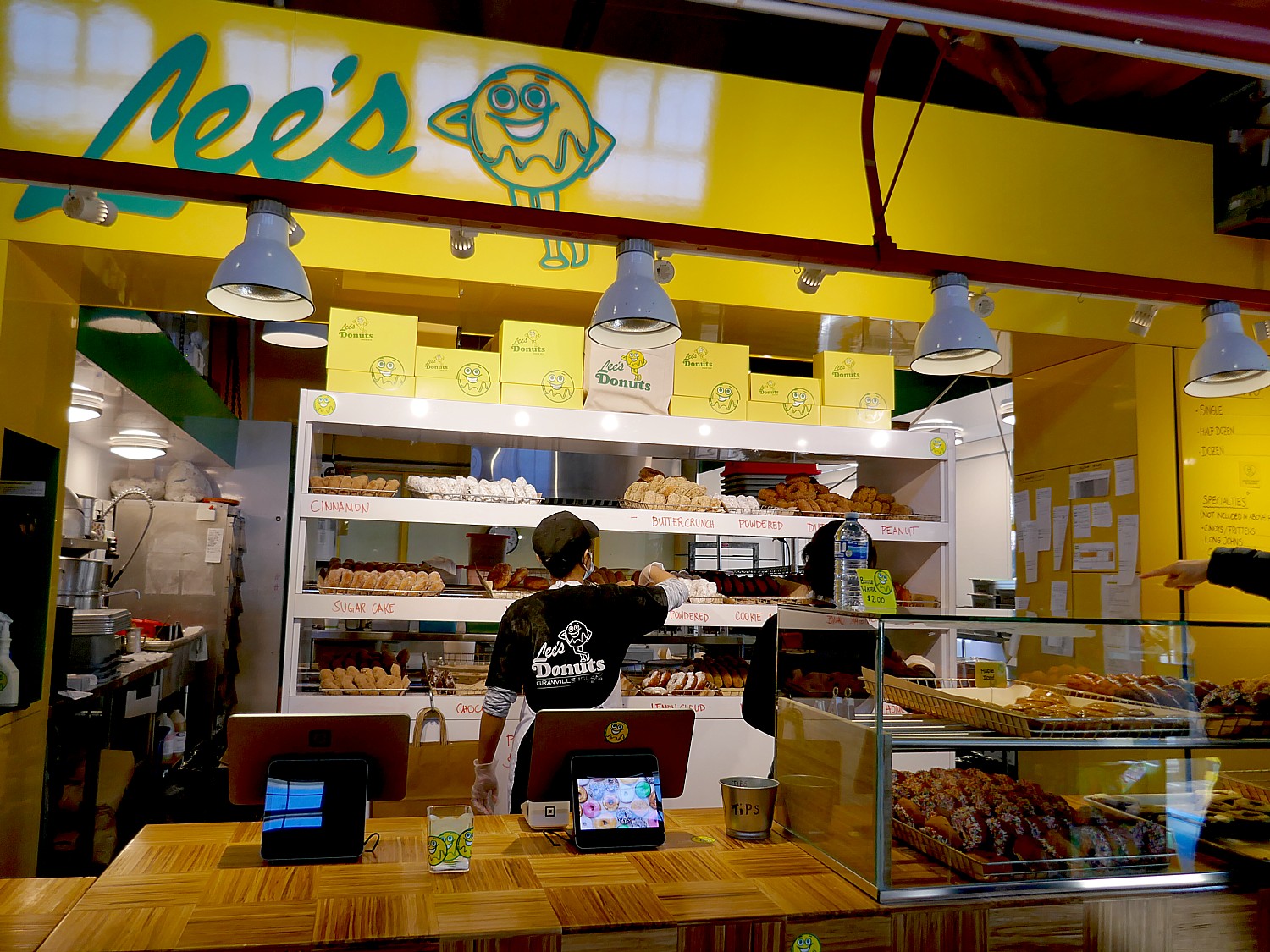
The charm of Granville Island lies in its unexpected mix of uses which reveal themselves as you simply wander around. People come for the most spectacular public market (open daily 9am-7pm) with 70 purveyors of all manner of fresh produce and fine foods (some famous, like Lee Donuts, where as Rick tells me to expect, there is a line outside to get in).

People queue up to enter Lee’s Donuts in the public market on Granville Island © Karen Rubin/goingplacesfarandnear.com
Bringing his child back to the Granville Island public market he enjoyed as a child © Karen Rubin/goingplacesfarandnear.com

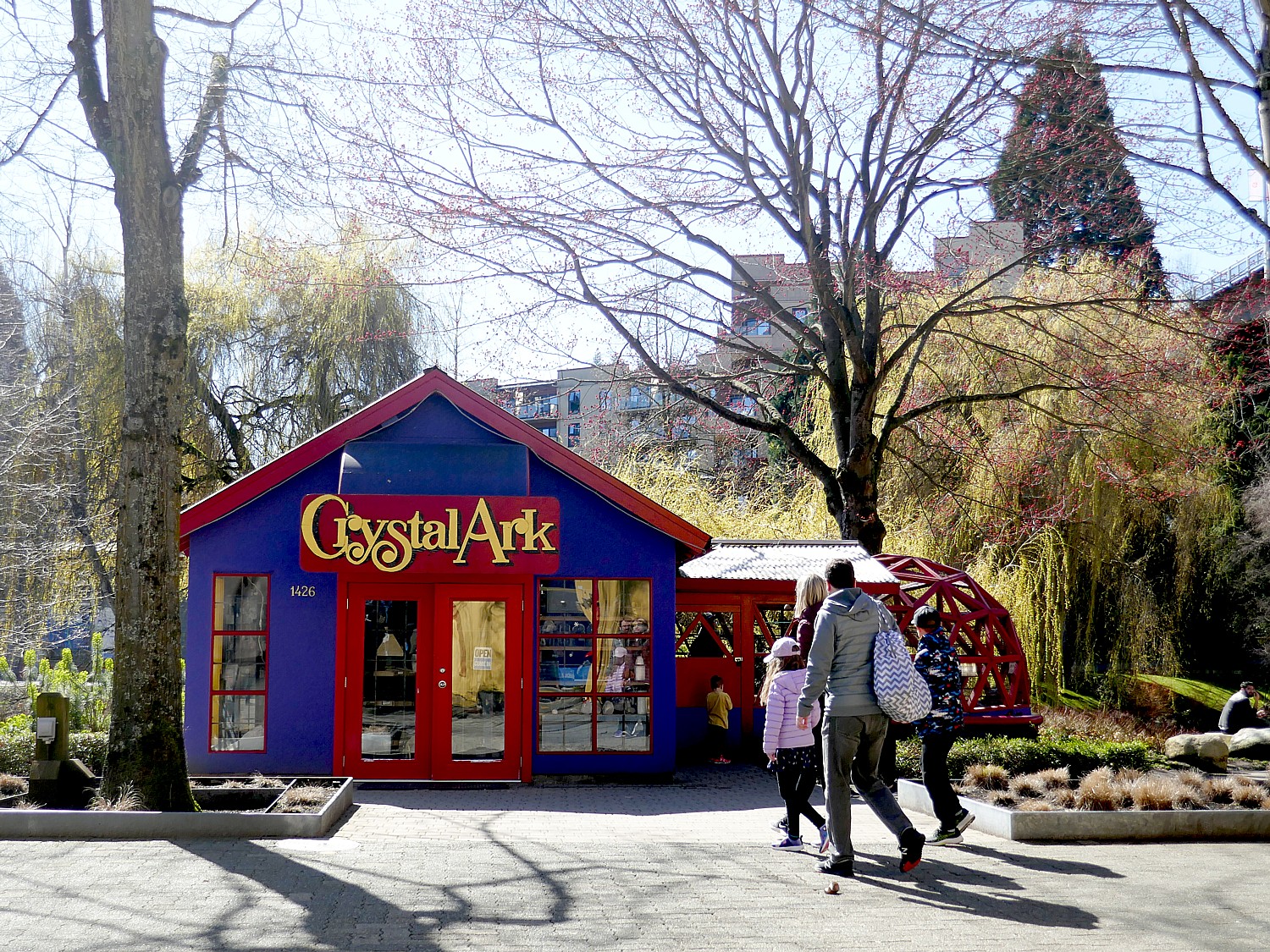
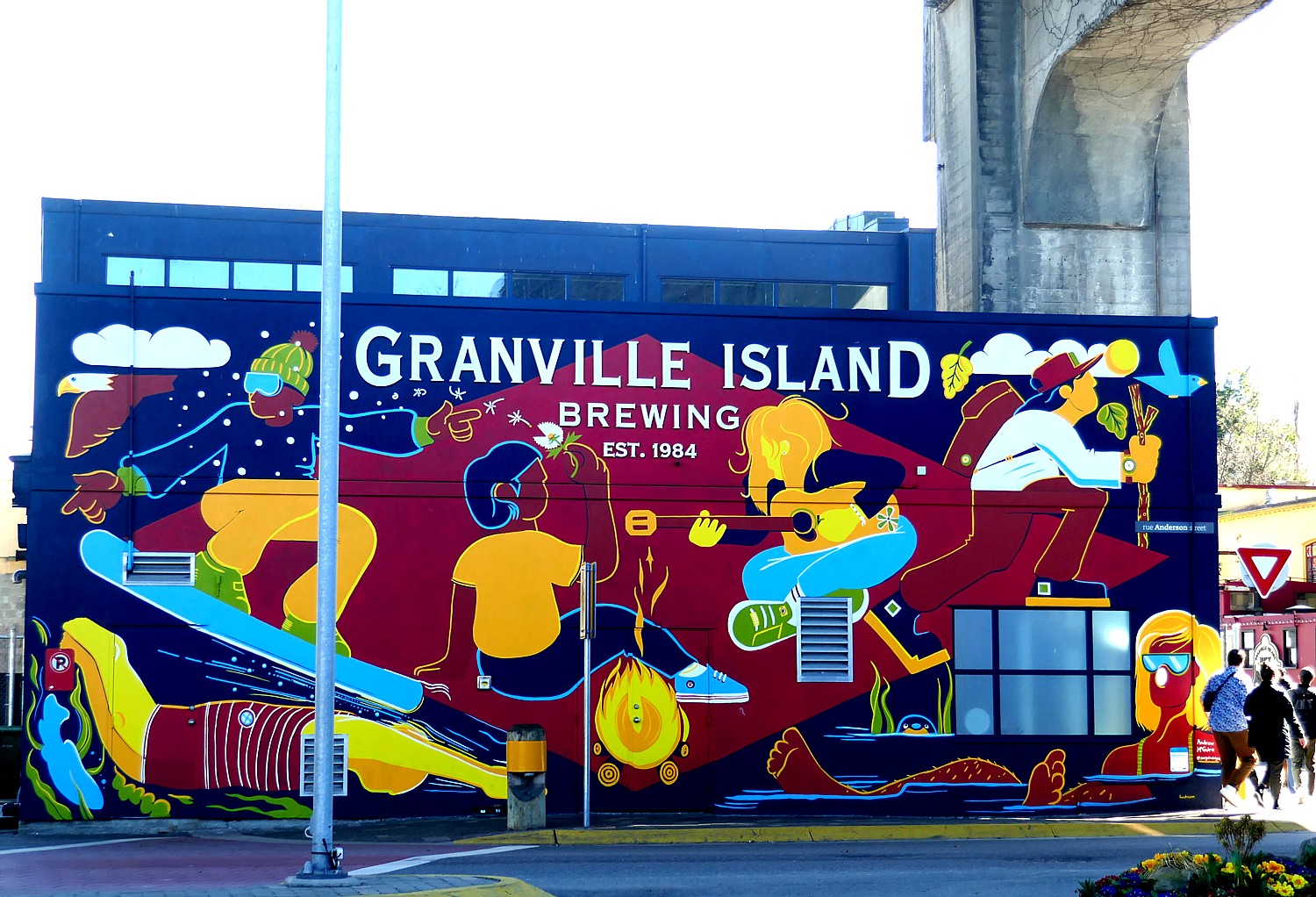
There is the Net Loft featuring “offbeat artisan goods” and marvelous boutiques and shops with local creations and imported crafts from Latin America, Asia and Africa like Mondo Company (“Step into our world and discover fairly traded, ethically sourced, handcrafted products from artisans around the globe”, www.mondoandcompany.com); a bustling Artisan District where you see and meet artists at work in their studios and galleries; a children’s district (toy stores!); and performance venues (Ballet BC coming to Granville Island), plus special events and festivals, all taking over vacated (and for a time decrepit) industrial buildings. There is even a hotel.

Granville Island has an entire Children’s District © Karen Rubin/goingplacesfarandnear.com
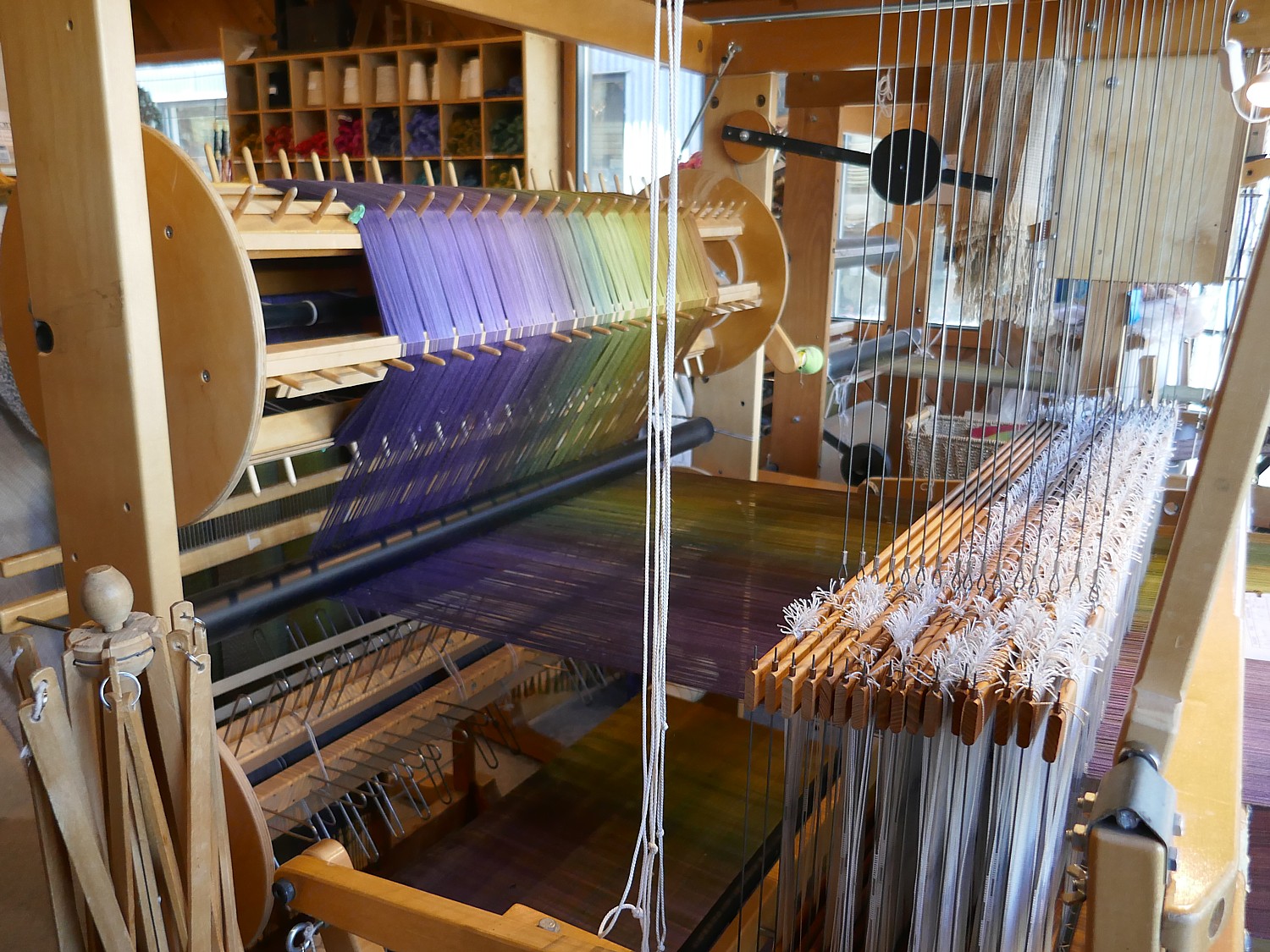
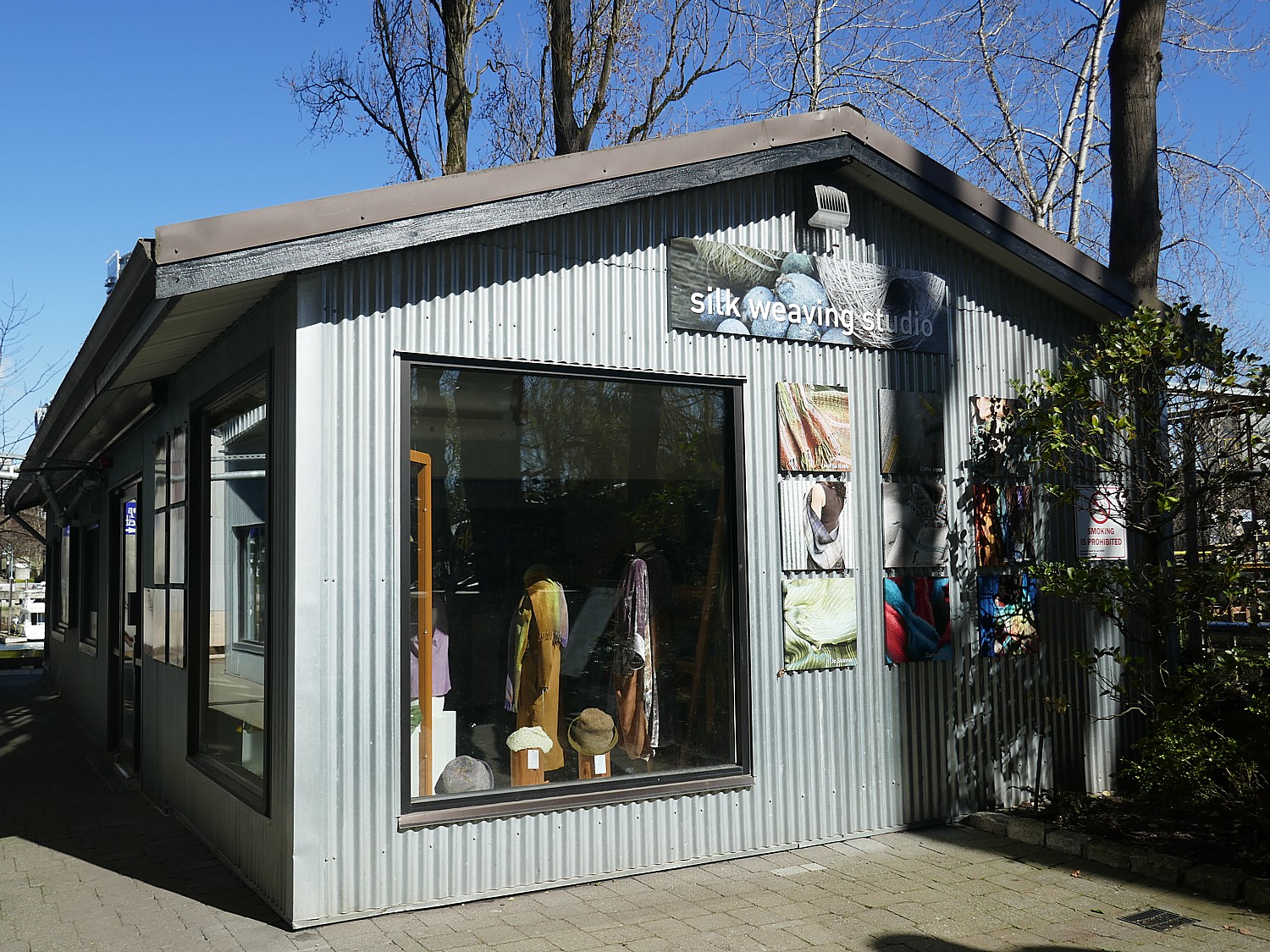
Silk weaving on Granville Island © Karen Rubin/goingplacesfarandnear.com

Art (and music) is everywhere- even the cement factory (one of the few industrial uses that remains) has painted “Giants”on its gi-normous silos (painted by Brazilian graffiti artists Gustavo and Otavio Pandolfo, known collectively as OSGEMEOS (Portuguese for THETWINS), which was commissioned in 2014 by Vancouver Biennale as part of an open-air museum, and were only expected to be up temporarily. It cost $180,000 and 1400 cans of spray paint and costs $17,000 a year to maintain. (https://www.atlasobscura.com/places/giants-on-granville-island-silos)

One of the most photographed scenes in Vancouver: the Giants at the cement factory on Granville Island painted by Brazilian graffiti artists Gustavo and Otavio Pandolfo, known as OSGEMEOS © Karen Rubin/goingplacesfarandnear.com

But before Granville Island was a cultural mecca, before it was an urban wasteland, before it was an industrial hub, it was the meeting place for three First Nations summer potlatch.

“The xʷməθkwəy̓əm (Musqueam), Skwxwú7mesh (Squamish) and Səl̓ílwətaʔ/Selilwitulh (Tsleil-Waututh) peoples are indigenous to the area around Vancouver and have lived on these lands for thousands of years…” Chief Janice George, Skwxwú7mesh, writes. “The Salish, the Indigenous people of the area, used a large sand bar (later filled in to become an Industrial Island, then Granville Island), and the surrounding areas for traditional purposes such as hunting, gathering, travel, and everyday living and cultural activities. The resources were so plentiful, the Salish people had a saying, ‘when the tide went out, the table was set,’ meaning that when the tide went out, they could walk with the tide and have enough food for their families.”  

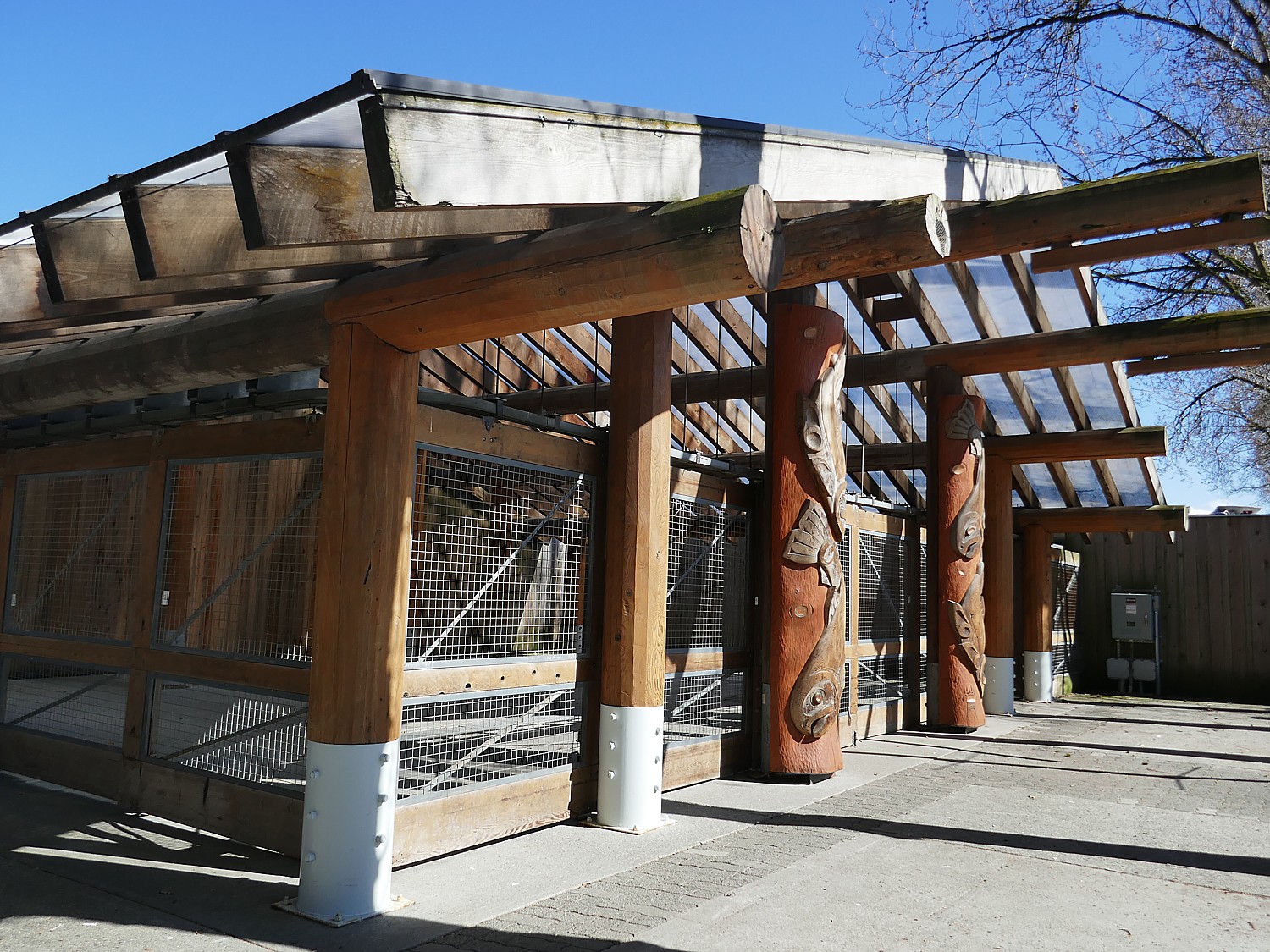
Re-creating the meeting place the indigenous people who occupied this land for thousands of years, on Granville Island © Karen Rubin/goingplacesfarandnear.com

As Vancouver was colonized in the 1860s, it became shipping port (there are still the railroad tracks), but as industries shuttered, it descended into a derelict industrial wasteland from 1950-60s. A few artists squirreled away, making art in studios within the Quonset huts.

Silk weaving on Granville Island © Karen Rubin/goingplacesfarandnear.com

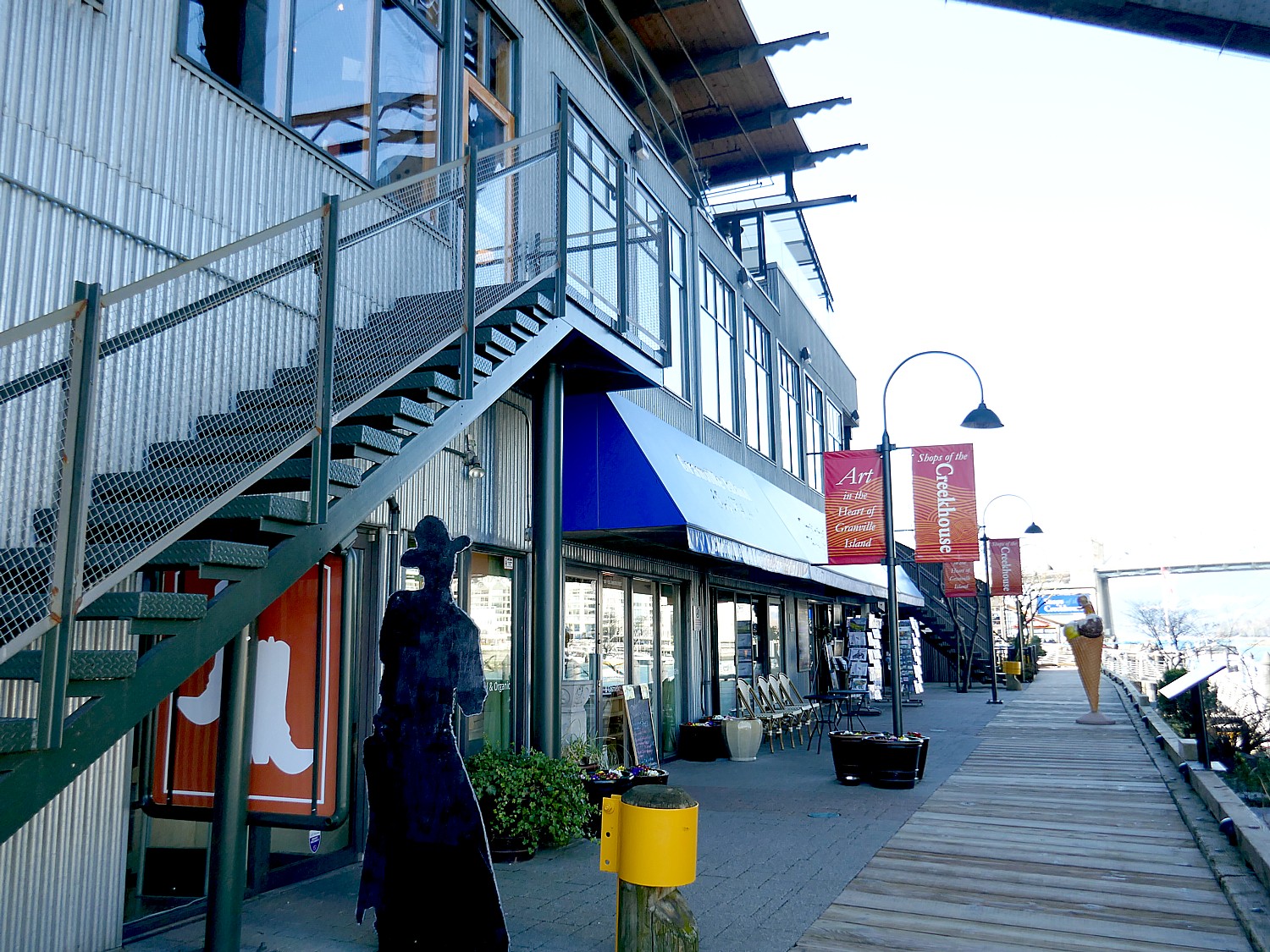
A historic marker notes that Granville Island was created between 1913 and 1916 when the government of Canada and the newly created federal Vancouver Harbour Commission contracted to pump and dredge over 1 million cubic yards from the bottom of False Creek and deposit the material behind pilings ringing several sandbars and First Nation fishing weirs. “Over the next 50 years, heavy industry waxed and waned” on Granville Island. By the early 1960s it had become a squalid, seedy and derelict industrial area.” For the next 10 years, while politicians debated, four entrepreneurs began buying up four buildings which they renovated into “The Creekhouse,” interestingly, retaining the industrial look.

“Creekside” that spurred the repurposing and redevelopment of Granville Island, from a dilapidated industrial wasteland to a mecca for culture and art  © Karen Rubin/goingplacesfarandnear.com
Granville Island has been redeveloped and repurposed from a dilapidated industrial wasteland to a mecca for culture and art, food and fun © Karen Rubin/goingplacesfarandnear.com

In the 1970s, MP Ron Basford arranged for the Canadian government to buy the land and experiment with public spaces and venues for food, culture, and  artists. Today, Granville Island provides space for 300 businesses employing more than 3,000 people and is “an active public space showcasing Vancouver culture to locals and rest of world,” a marker states.

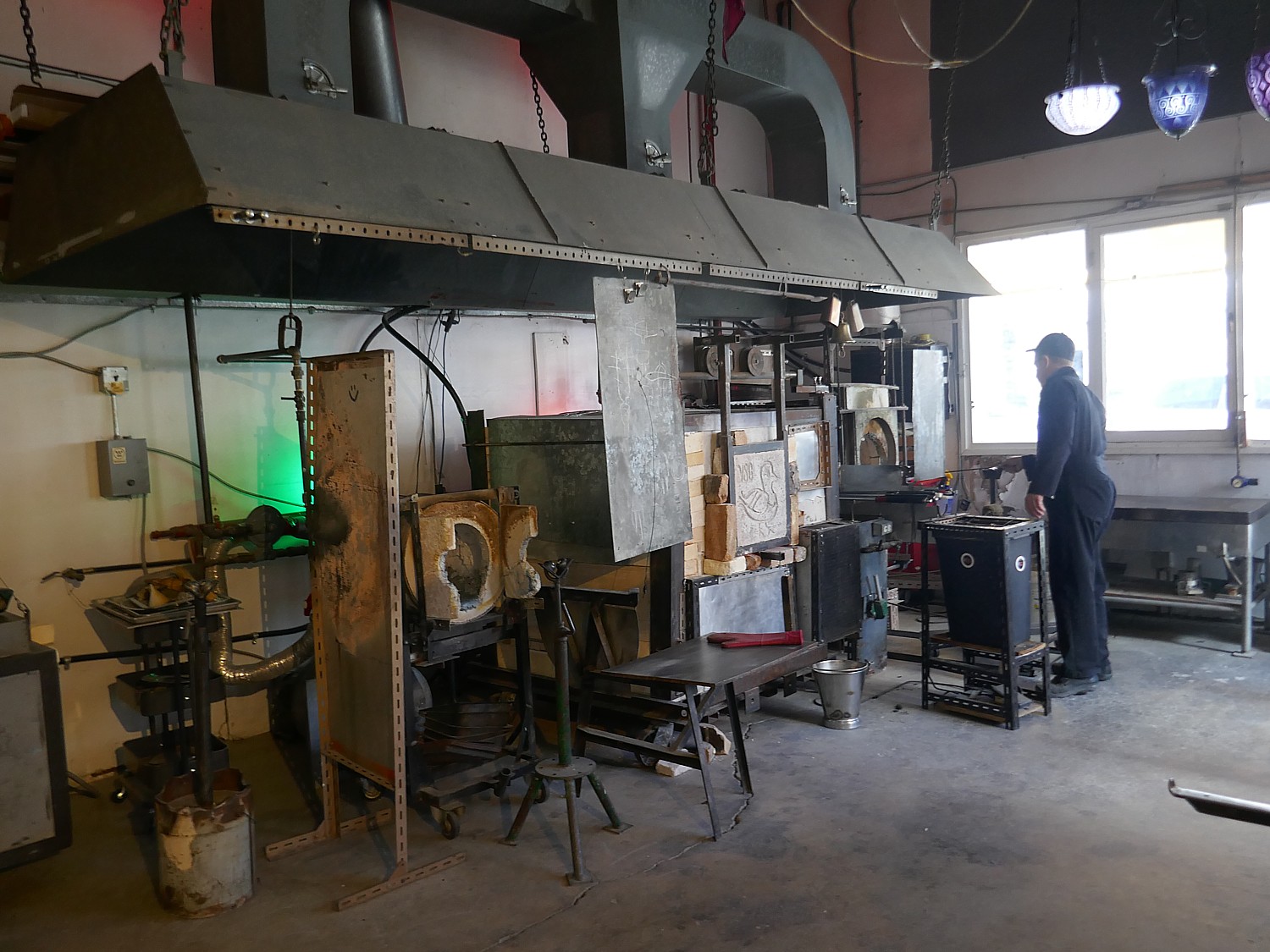
On Granville Island you see artists and artisans at work in their studios, like this art glass studio © Karen Rubin/goingplacesfarandnear.com

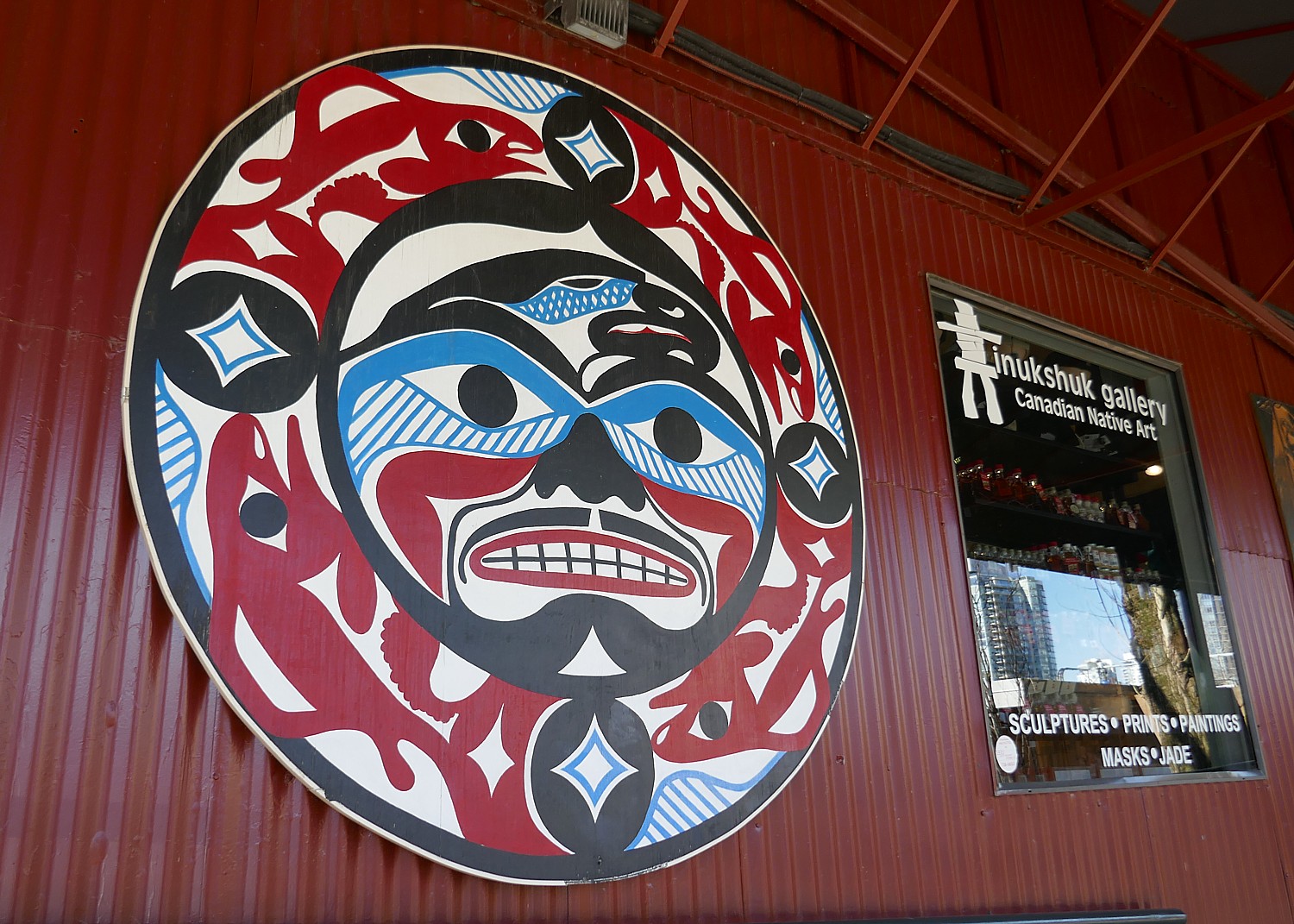
In the Artisan District, I meet artists Cheryl Hamilton and Michael Vandermere in their enormous, factory-sized studio space, ie creative artworks (her imaginative sculptures lately have been themed about climate change); BC Blacksmith Miran Elbakyan (www.bcblacksmith.com); Benjamin Kikkert who works in hot glass and mixed media sculpture; carver Todd Woffinden; silk weavers (www.silkweavingstudio.com), broommakers Mary and Sarah Schwieger (broomcompany.com). There are also indigenous art galleries.

One of the indigenous art galleries on Granville Island © Karen Rubin/goingplacesfarandnear.com

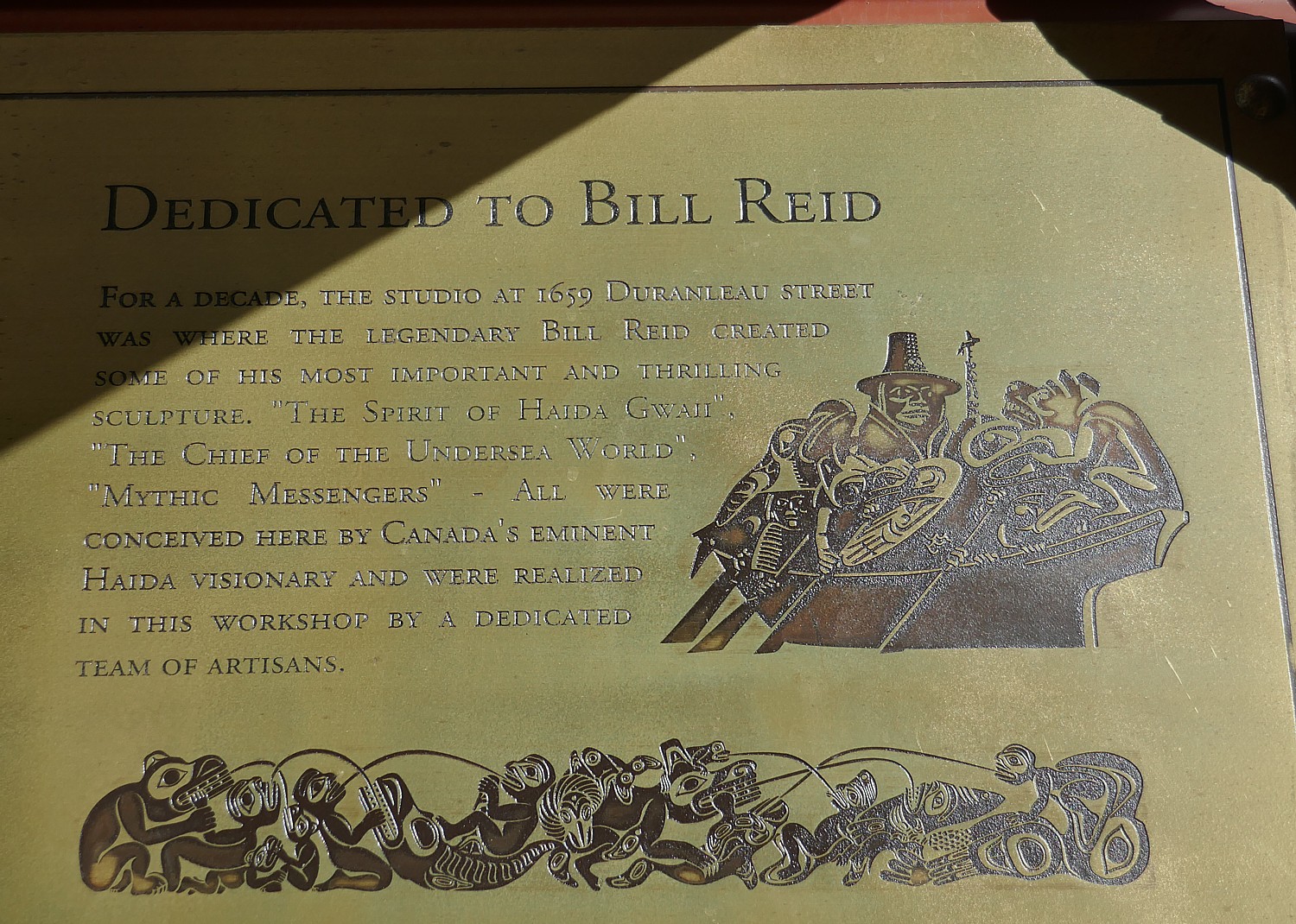
At my last stop, I find myself in front of a gold plaque identifying this place as the site of renowned artist Bill Reid’s studio, where he created the sculpture that is now at Vancouver Airport.

A gold plaque marks the former studio of acclaimed Haida artist Bill Reid where he created some of his famous monumental works© Karen Rubin/goingplacesfarandnear.com

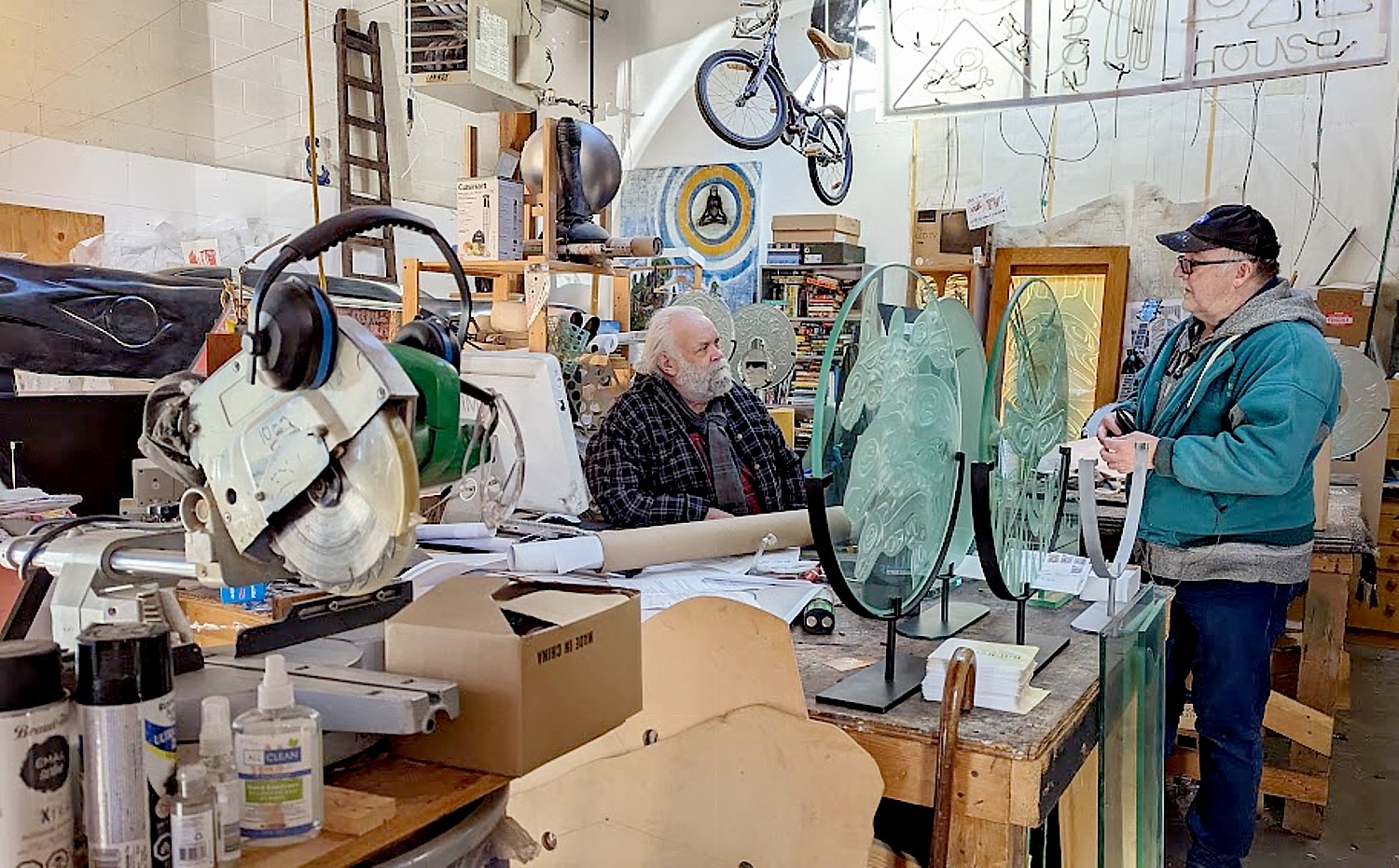
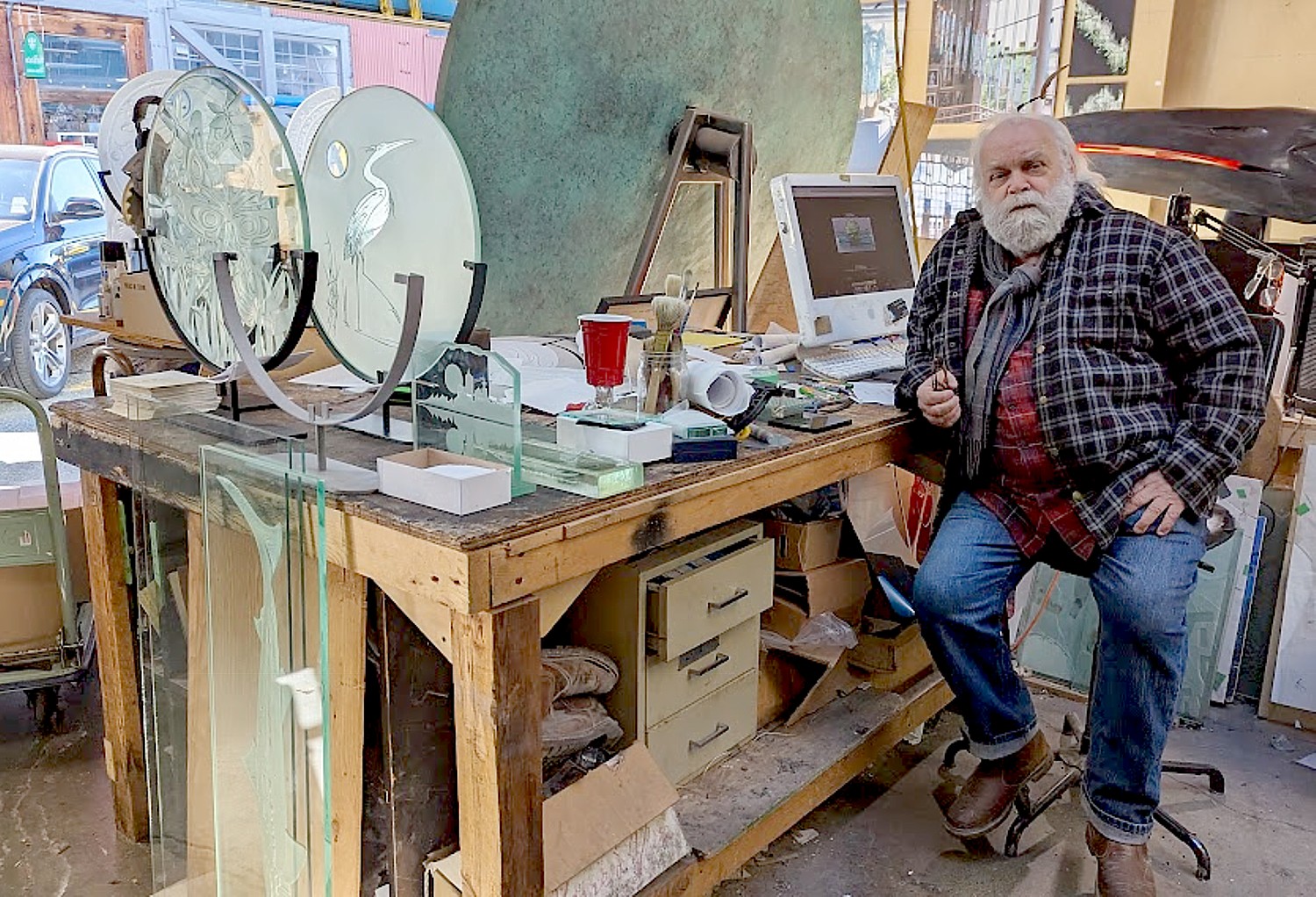
This is now the Nutter Studio, where glass artisan John Nutter does the etching in glass that many of the indigenous artists design. He even created the glass windows for Young Israel Synagogue in Hillcrest, Queens NY (my old neighborhood!) and seven windows for Atlantic Beach Jewish Center on Long Island (my brother’s neighborhood!) Small world! (www.johnnutterglassstudio.com).

Glass craftsmanJohn Nutter now occupies Bill Reid’s studio © Karen Rubin/goingplacesfarandnear.com

We have a vigorous discussion of art versus craft, the revival of indigenous arts (or is it crafts?) and artists who feel obligated to re-create traditional symbols, images and techniques, versus developing their own style and statement.

Glass craftsman John Nutter now occupies Bill Reid’s studio © Karen Rubin/goingplacesfarandnear.com

Throughout Granville Island, there are homages to its Indigenous origins, and the website offers this statement: CMHC-Granville Island would like to acknowledge that we are located on the traditional territory of the xʷməθkwəy̓əm (Musqueam), Skwxwú7mesh (Squamish) and Səl̓ílwətaʔ/Selilwitulh (Tsleil-Waututh) First Nations.

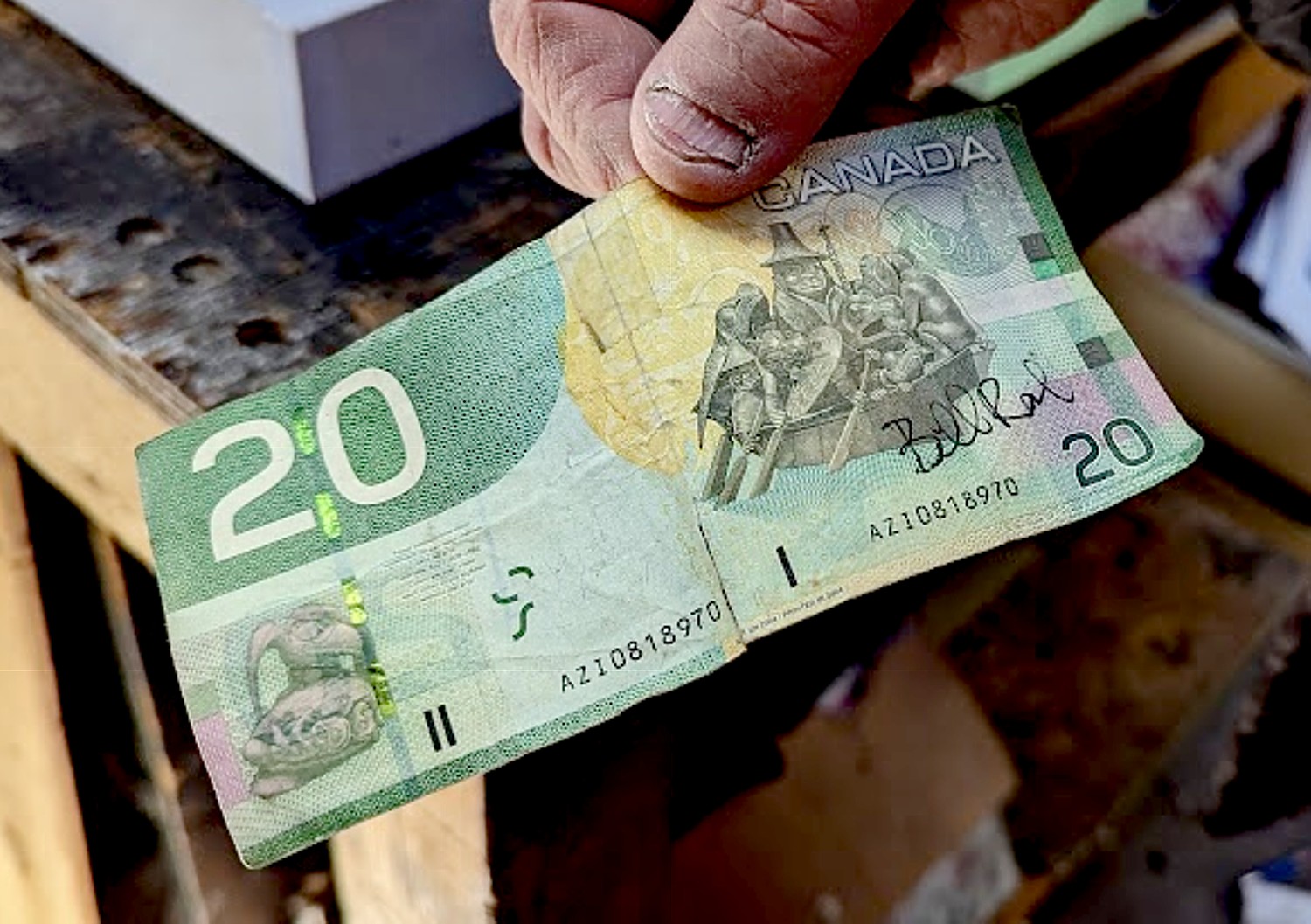
Glass craftsman John Nutter, whose studio is the site of Bill Reid’s studio on Granville Island, shows a $20 bill featuring Bill Reid’s famous “The Spirit of Haida Gwaii” © Karen Rubin/goingplacesfarandnear.com

Check the Granville Island website for events (Sunset Dragonboat and Saturday Dragonboat drop in Sessions!), https://granvilleisland.com/

Skwachàys Lodge, Canada’s First Aboriginal Art Hotel

Staying at the Skwachàys Lodge – Canada’s first Aboriginal Art Hotel – enhances my experience in Vancouver with this immersion into local Indigenous art and culture.

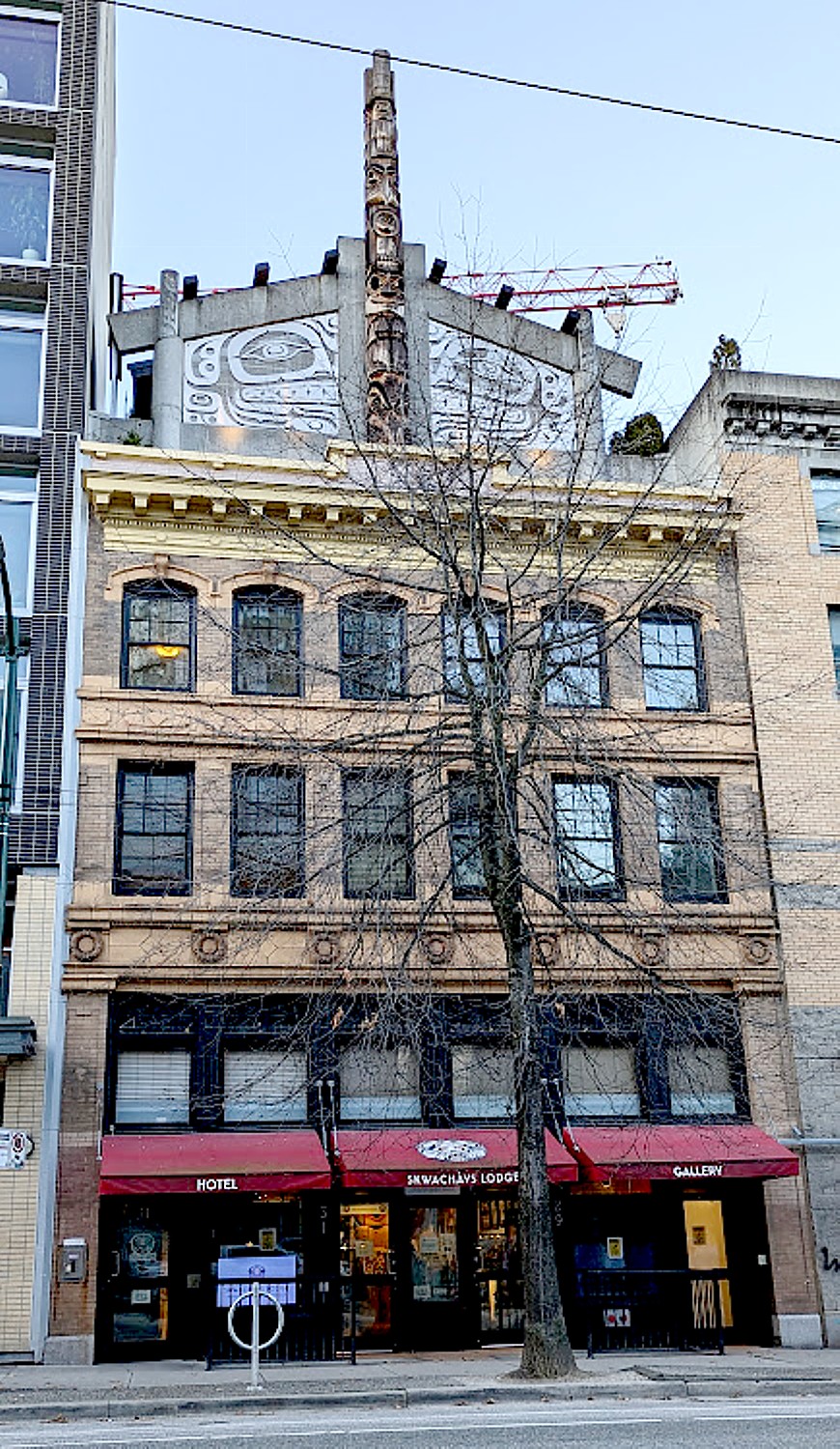
Vancouver Native Housing Society (VNHS opened the Skwachàys Lodge, the Urban Aboriginal Fair-Trade Gallery, and the Artists in Residence Program in June 2012, transforming a derelict SRO hotel into a social enterprise consisting of a boutique hotel with a street-level art gallery and on-site housing and studio space for 24 Indigenous artists © Karen Rubin/goingplacesfarandnear.com

Vancouver Native Housing Society (VNHS opened the Skwachàys Lodge, the Urban Aboriginal Fair-Trade Gallery, and the Artists in Residence Program in June 2012, transforming a derelict SRO hotel into a social enterprise consisting of a boutique hotel with a street-level art gallery and on-site housing and studio space for 24 Indigenous artists.

“VNHS identified the vulnerability of many urban Indigenous artists – artists in need of housing, artists who for various reasons are not able to properly represent and market themselves or their work. Often these artists are commercially exploited through a long established ‘street or underground’ market that takes advantage of their vulnerability. They try to live ‘off their work’ by selling on the street or in the bars or through the commercial dealer network that purchases original, gallery quality art for, at times, only five or ten cents on the dollar,” the notes state.

“By creating a live/work supportive complex with a built-in gallery and community production space, VNHS took a lead role in addressing the social and economic inequities that Indigenous artists can face.”

The Artists in Residence Program provides up to three years of affordable housing, 24/7 access to workshops, and opportunities for personal and professional development that help artists develop their craft and move into the next phase of their careers. To date, 110 Indigenous artists have participated in the program.

The Lodge, the Urban Aboriginal Fair-Trade Gallery and production space are operated as a self-sustaining social enterprise. Artists are paid a fair price for their work (30%-60% of the retail price depending on the artist’s reputation and the cost that is underwritten by the gallery (framing, marketing and promotional expenses).

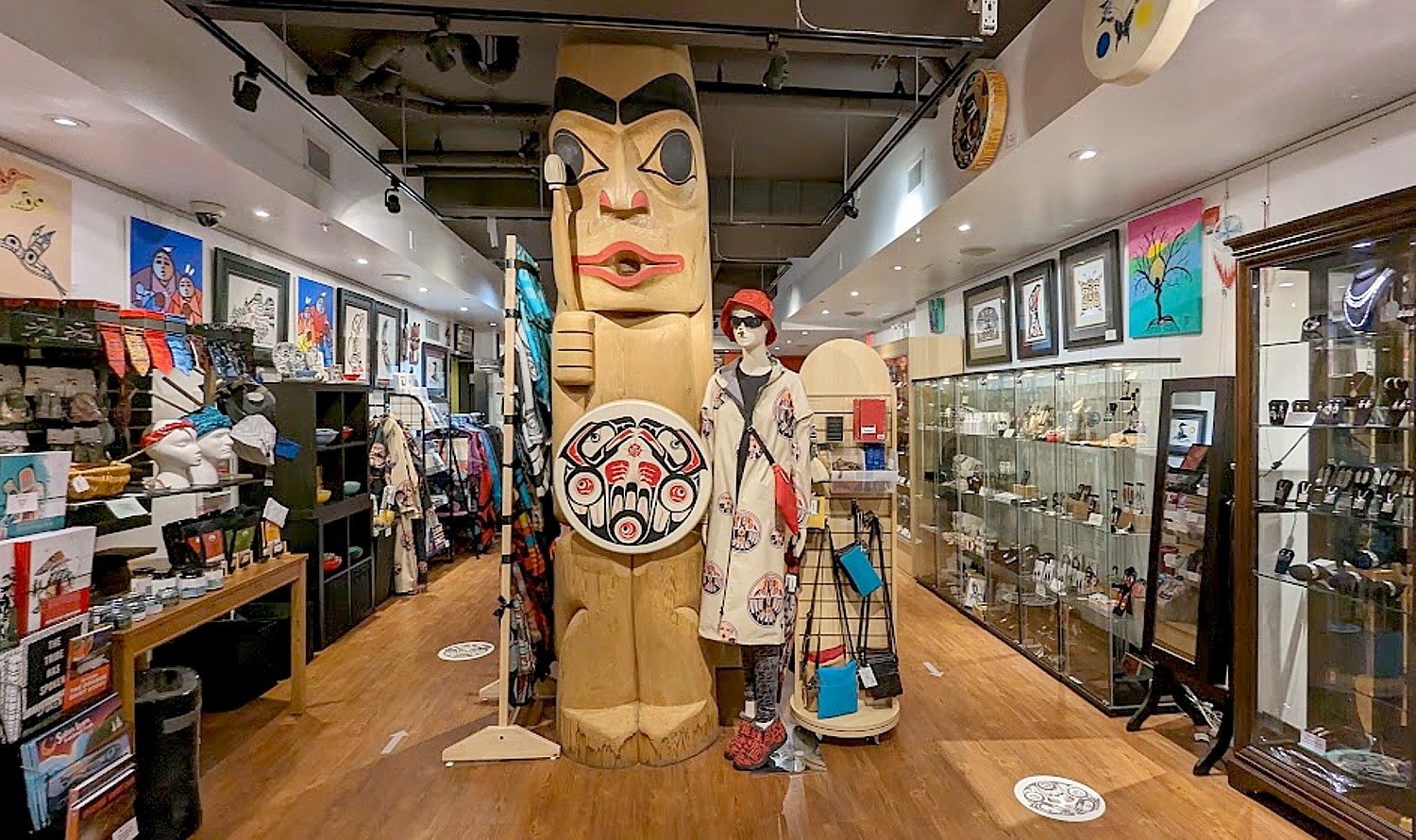
The gallery at Skwachàys Lodge is part of the social enterprise that supports indigenous artists © Karen Rubin/goingplacesfarandnear.com

In this way, each hotel guest’s travel dollars, and each purchase of art at the Skwachàys Lodge has a social impact.

“A simple purchase fights cultural misappropriation and ensures that Indigenous artists are paid fairly for their work. Cultural tourism is one of the fastest growing segments of the tourism sector and there is absolutely a place for our urban Indigenous artists to participate in this industry as a means of reclaiming their lives and independence.”

Skwachàys Lodge goes way beyond living in and supporting art – there are also opportunities for guests to engage in authentic Indigenous cultural experiences  

Sweat Lodge Ceremony: Skwachàys has a traditional First Nations Sweat Lodge and offers private Sweat Lodge Purification Ceremonies lead by a Sweat Lodge Keeper. The Sweat Lodge, located in the rooftop garden, is a domed structure constructed from inter-woven willow branches symbolizing Mother Nature’s womb. During the ceremony, the Keeper places heated rocks –known as “grandmothers and grandfathers” – to cleanse and purify the participant’s heart, soul and spirit, bringing life balance and connection to Mother Nature.

Traditional Smudge Ceremony:  Skwachàys has an authentic Indigenous Smudge Room on its Raven Level. In a Smudging Ceremony, sacred plants are burned, surrounding the participants’ body and senses in the aromatic smoke to purify body, spirit and home. Three different kinds of plants are used: cedar bows are burned for cleansing; sage to drive out ill feelings or influences, protecting the place of ceremony; and sweet grass, one of the most sacred plants, is burned to bring in positive influences and energies.

These ceremonies are personal and private, so arrangements must be made in advance. A minimum number of people is required. (For more information and costs, reservations@skwachays.com).

Studio Visits With Artists: Visitors can also arrange studio visits with Indigenous artists in residence. Artists including jewelers, painters, carvers, sculptors work on projects in the shared Artist Studio, located in the basement  throughout the year.

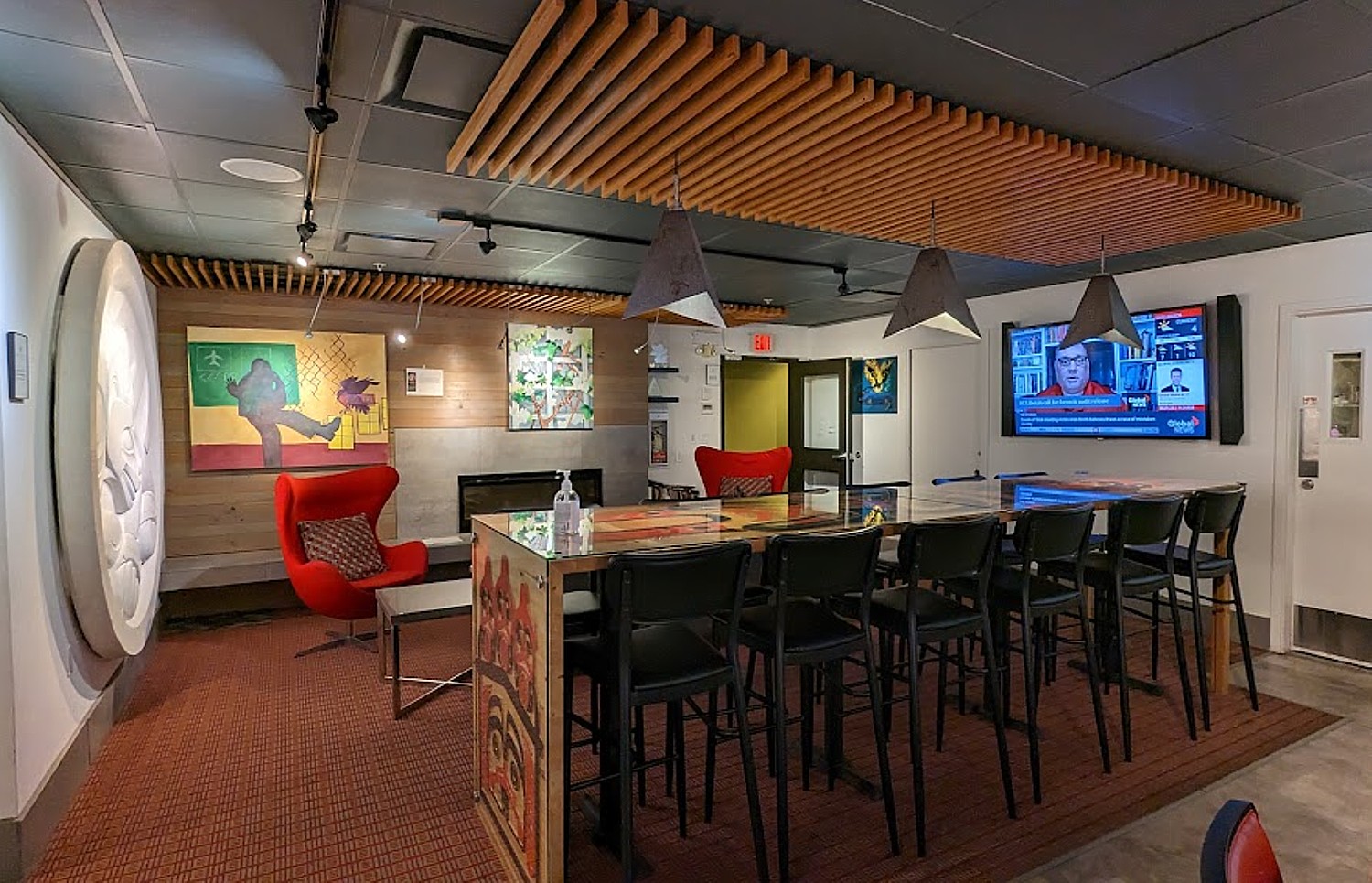
Kayachtn Room (the Salishan word for “welcome”) is a space where the Lodge community can come together to connect, create memories and share a meal – and is where breakfast is served at Skwachàys Lodge © Karen Rubin/goingplacesfarandnear.com

The Skwachàys Lodge has a Kayachtn Room  (the Salishan word for “welcome”), a space where the Lodge community can come together to connect, create memories and share a meal – and is where breakfast is served.

“Indigenous culture rests on a communal social structure, one that values living in harmony with one another, as well as with the natural world.”

Skwàchays Lodge 31 W Pender St Vancouver, BC V6B 1R3 604.687.3589,   1 888 998 0797,   info@skwachays.com, https://skwachays.com/.

Indigenous Tourism BC

With 204 Indigenous communities and more than 30 Indigenous languages – about one-third of Canada’s First nations population – British Columbia offer extensive authentic Indigenous experiences on reserves, in remote areas and even cities like Vancouver.

The best guide to these experiences is Indigenous British Columbia, a tourism development and promotion organization that connects visitors with Indigenous-owned, operated and staffed lodges, museums, culture centers, restaurants, wineries, hiking (indigenous guide), bear viewing, whale watching, outdoors adventures, wellness and other experiences.

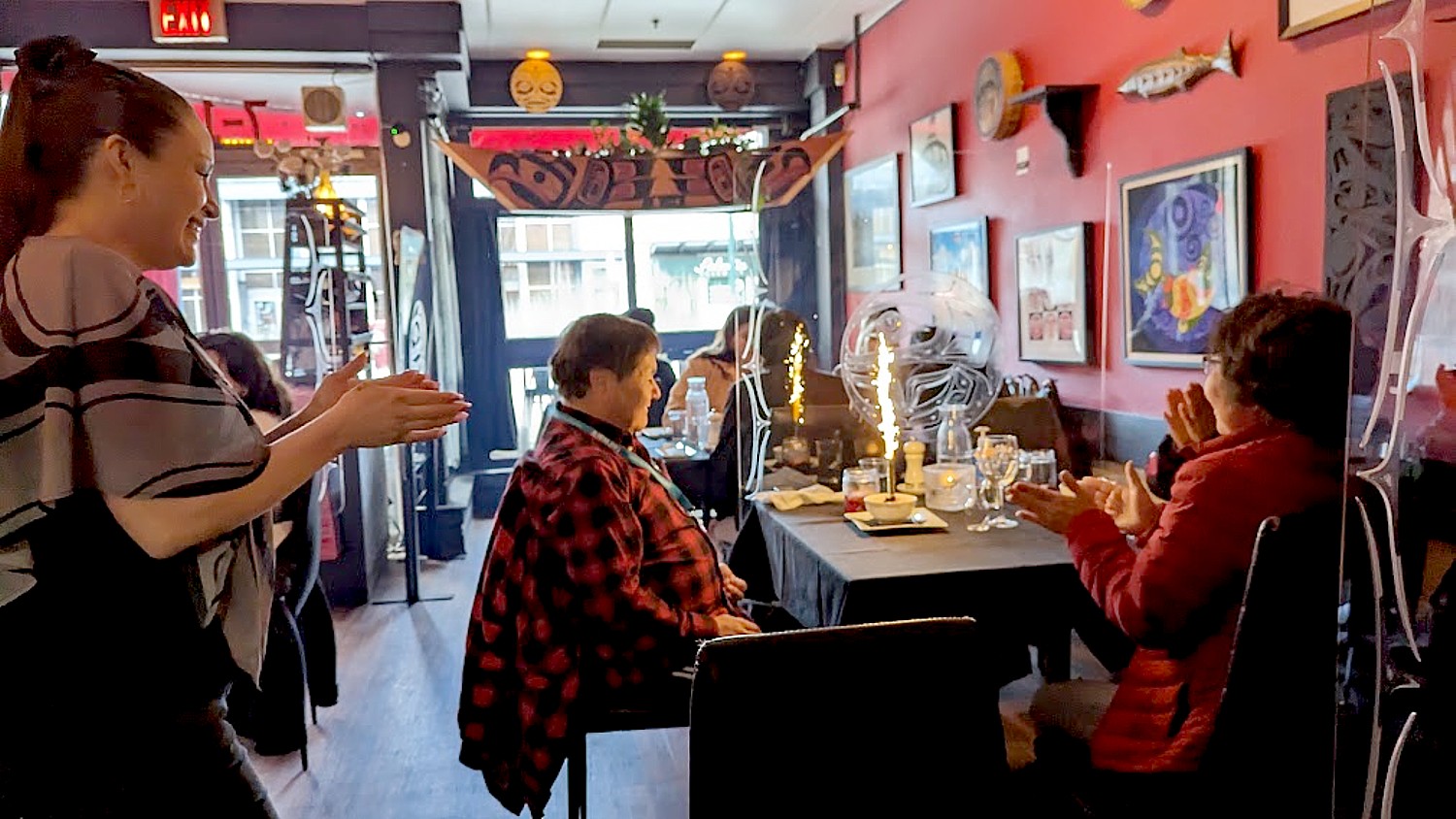
Indigenous Tourism BC connects visitors to experiences such as Vancouver’s only indigenous restaurant, Salmon n’ Bannock Bistro © Karen Rubin/goingplacesfarandnear.com

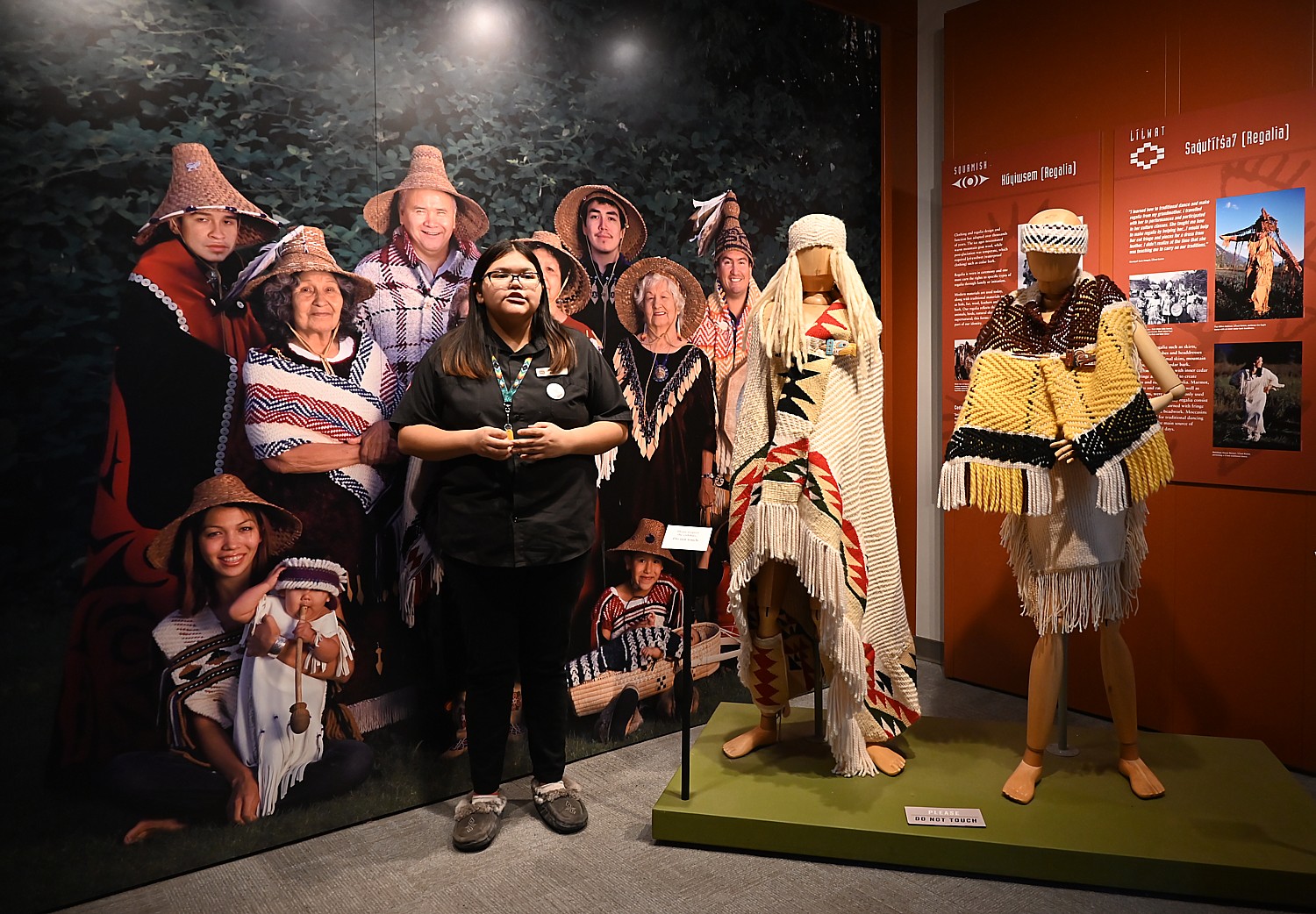
In addition to the experiences I have (the Bill Reid Gallery, Talaysay Tours, Salmon n’ Bannock Bistro, Granville Island, the Skwàchays Lodge in Vancouver, and the Squamish Lil’wat Cultural Centre and the Audain Art Museum in Whistler), other entities include:

  • Takaya Tours: Open during summer, guests can experience an array of tours, from cultural experiences, to canoe tours and even multi-day experiences
  • Great River Fishing Adventures: Another great tour company where guests can learn about the history of BC, as it started in this area from the mining era. A top experience is going sturgeon fishing, and these are not normal-sized fish!
  • Gulf Island Seaplanes: New this spring, they have introduced scenic cultural tours which involve a flight over Vancouver, along with the history and story-telling of the land

Multi-day itineraries are available. For example, a two-day Kamloops-Chase-Barriere-Merritt itinerary features a stay at Quaaout Lodge and Spa on Little Shuswap Lake in Squilax (Chase, British Columbia), Indigenous fusion cuisine, golf and spa facilities, visit to Tsutswecw Provincial Park and a 14-km Moccasin Trails Canoe Journey from Lafarge Landing to Valleyview with a local knowledge guide, down the South Thompson River along the traditional Secwepemc water route to Tkemlups.

“Immersive Indigenous destinations and experiences are expansive and transformational. Augment your reality with an Indigenous point-of-view and see old places with new eyes. By their nature, Indigenous perspectives cannot be understood as a bystander or simple witness. Step out of ordinary time and daily routine with Indigenous hosts around BC,” the tourism office says.

Indeed, the indigenous peoples’ respect for Mother Earth that is so fundamental to their culture and society – that the colonizers so intentionally sought to eradicate – is being validated as human-caused climate change is wreaking disaster after disaster. It is important that this sensibility, these philosophies, this approach to living in the world be elevated and embraced in modern terms. Travel helps us see and experience and take lessons back to our own homes and communities.

Indigenous Tourism BC offers travel ideas, things to do, places to go, places to stay, and suggested itineraries. Download a trip planning app (https://www.indigenousbc.com/indigenous-bc-trip-planner-app/)

Indigenous Tourism BC, 100 Park Royal S #707, West Vancouver, BC V7T 1A2, 604-921-1070, https://www.indigenousbc.com

See also: 

ON THE TRAIL TO DISCOVER VANCOUVER’S REVIVED INDIGENOUS HERITAGE

WALKING TOURS, DINING EXPERIENCES REVEAL VANCOUVER’S REVIVED INDIGENOUS HERITAGE

TRAIL TO DISCOVER BRITISH COLUMBIA’S INDIGENOUS HERITAGE WEAVES THROUGH WHISTLER-BLACKCOMB

____________________________

© 2023 Travel Features Syndicate, a division of Workstyles, Inc. All rights reserved. Visit goingplacesfarandnear.com, www.huffingtonpost.com/author/karen-rubin, and travelwritersmagazine.com/TravelFeaturesSyndicate/. Blogging at goingplacesnearandfar.wordpress.com and moralcompasstravel.info. Visit instagram.com/going_places_far_and_near and instagram.com/bigbackpacktraveler/ Send comments or questions to FamTravLtr@aol.com. Tweet @TravelFeatures. ‘Like’ us at facebook.com/KarenBRubin 

Trail to Discover British Columbia’s Indigenous Heritage Weaves Through Whistler-Blackcomb

Audain Art Museum, Whistler, is a world-class art museum with one of finest collections of indigenous masks going back to mid-1800s and British Columbia artists © Karen Rubin/goingplacesfarandnear.com

By Karen Rubin, Travel Features Syndicate, goingplacesfarandnear.com

My whirlwind odyssey to learn about the renaissance of British Columbia’s indigenous heritage takes me to Whistler-Blackcomb, the world-famous ski resort. The mountain resort, one of the largest in North America, is on First Nations land and is where a cultural center, a joint endeavor of the Lil’wat and the Squamash nations, has opened.

I hop the Skylynx shuttle bus, packed with skiers, that leaves from the Hyatt Regency Vancouver downtown (also close to the Bill Reid Gallery and the Fairmont Hotel) for a pleasant, scenic two-hour ride to Whistler Village Centre.

The skiing even this late in the season looks fantastic but I am here to continue my study of the indigenous heritage – past and present – that permeates this place. The spirit is very strong here in Whistler. While the skiers all head to the gondola, I find my way to a trail that leads to the Squamish Lil’wat Cultural Centre.

The idea for a world-class cultural center originated with the Resort Municipality of Whistler in 1997, which met with the Lil’wat Nation to discuss its participation and presence in Whistler. Mindful of its historic collaboration and shared interest in land stewardship with the Squamish Nation, in 2001, the two nations signed a historic Protocol Agreement, the only one of its kind in Canada. The Squamish Lil’wat Cultural Centre opened in 2008. In 2020, a framework Agreement was signed between the Nations and the Resort Municipality of Whistler, providing for collaborations on economic development, tourism and promotion of cultural awareness.

Dalilah conducts a “What We Treasure” tour of Squamish Lil’wat Cultural Centre © Karen Rubin/goingplacesfarandnear.com

The building is a beautiful space with floor-to-ceiling windows that look out to the woods. I join nine others for the center’s signature tour, “What We Treasure,” which are led by cultural ambassadors who share their own stories and first-hand cultural experiences. The tour begins with an excellent 15-minute orientation film.

Our guide is Dalilah, whose Lil’wat name is T’ac T’ac , or “sweet sweet” like sweetie or sweatheart. She is a 17-year old high school student interning on her spring break. She begins by singing in her native language, “We belong to the land, the land is our people, we belong to the land.” We view artifacts and hear stories that give us a sense of the past and present way of life of the Squamish and Lil’wat peoples. 

It is fascinating to seen the differences in clothes at the Squamish Lil’wat Cultural Centre © Karen Rubin/goingplacesfarandnear.com

As we go through the center, I am struck by how different the clothes, foods and therefore the traditions and daily habits are for these two peoples who live “where rivers and mountains meet.”  It is starkly clear how culture and lifestyle is linked to the ecology and topography of their land and the materials and resources at hand. The Squamash are coastal, the Lil’wat live on the mountain.  Culture is a manifestation of the ecosystem we inhabit – even and especially today.

It is fascinating to seen the differences in clothes at the Squamish Lil’wat Cultural Centre © Karen Rubin/goingplacesfarandnear.com

It is these traditions and lessons of living in close harmony with nature (Mother Earth), to the point of spiritual devotion, that the indigenous people impart today, all the more relevant in light of the climate disasters of a planet out of sync with nature.

The displays are less historic artifacts and more contemporary examples of the traditional arts and crafts being revived; often these are not just re-creations of centuries-old design and form, but with modern twists.

We learn how their societies were so careful to live in harmony with their environment – their canoes are made from red cedar bark, but they only harvest a precise section of the tree – hugging the tree so that there are two hand-widths.

“We make sure to only take a piece of the tree so we don’t kill it. We are connected to the cedar through the things we make with it,” notes Joy Joseph-McCullough, a Squamish weaver.

Squamish Lil’wat Cultural Centre © Karen Rubin/goingplacesfarandnear.com

There is an element of mythology, mysticism, handed down from the ancients, that continues to underpin their worldview, reflected in the urgency to save language, and the oral tradition, and resurrect traditional arts and crafts.

It is reflected in Joy McCullough-Joseph’s notes about the traditional Coast Salish Blanket she named “The Message.” “I twilled and twined on a Traditional Coast Salish Loom. I named my blanket, “The Message’ because the design for the blanket came to me in a dream. In my dream our Ancestors told me to weave in Mother Earth to remind us of our responsibility to the Earth. The second message is to honour and remember the sixteen families that amalgamated to form the Squamish Nation. The last message is to honour our Ancestors who were weavers.”

Another note reads “when you wear the blankets, you feel the protection of all who have been called to protect you… We feel the prayers offered by the weaver and our ancestors, when we wear the robes.”

You have to wait a year before you can weave cedar bark and it can three apprentices six months to weave a cedar mat, Dalilah tells us. “When we are sad, we don’t weave, otherwise it would transfer negative thoughts.”

Dalilah the importance of weaving at the Squamish Lil’wat Cultural Centre © Karen Rubin/goingplacesfarandnear.com

We learn how mountain goat wool was used in Salish weaving, an ancient art form that dates back to the ice age. A mountain goat wool blanket in those times could mean the difference between surviving or succumbing to the elements. The inner wool of the mountain goat was gathered during spring molt, collected off of bushes from wool shed by the goat or from harvested animals. “It takes 5 to 10 years to collect enough for a blanket,” she tells us.

The wool was mixed with hair from a specially bred dog. Natural dyes were derived from plants, berries and clays. Intricate geometric designs reflected elements of nature and families held the rights to use those designs.

I am lucky to see a special photography exhibit on view: “Unceded – Photographic Journey into Belonging”. This temporary exhibit makes graphic the meaning of “unceded” – land that was considered stolen, taken by force, without a legal treaty. The photos show contemporary indigenous people in places like downtown Vancouver. But it is actually speaking more to the First Nations people, prodding them to see themselves in this modern world, but retaining their connection to their heritage. Unceded “doesn’t mean our people aren’t still there.”

“As urban cities, farmland, towns, and recreation parks built up around us, our Ancestors are still here, living in the blood of the people of this land. While pop culture, fashion trends and global connection are influencing how people move through society, people residing on and off reserve are living deeply in their culture, engaged socially and politically with the world around them, reviving ancient traditions, re-enforcing a stewardship that guides their climate and lands safely through the first 50 thousand years before contact.”

I have a delightful lunch at Thunderbird Café, and survey a marvelous gift shop at the center before heading off to do a bit of sightseeing on Whistler’s famous Peak 2 Peak Gondola.

Squamish Lil’wat Cultural Centre, 4584 Blackcomb Way, Whistler, 1 866 441 SLCC (7522), https://slcc.ca/.

Peak 2 Peak Gondola

Considering how vast Whistler-Blackcomb is, it is actually surprisingly easy to get around (once I figure it out).

Whistler-Blackcomb, the site of 2010 Winter Olympics events, is a world-class ski resort and one of the biggest in North America © Karen Rubin/goingplacesfarandnear.com

I take the Blackcomb Gondola from the base of Blackcomb Mountain for the ride to the top of Blackcomb Mountain. From here it is a short walk – skirting the skiers and snowboarders – to the Peak 2 Peak Gondola which links Blackcomb Mountain to Whistler Mountain. I’m feeling jealous of the skiers but I am sightseeing today and this is an absolutely gorgeous ride. A man I ride up the Blackcomb Gondola with tells me to look for special sightseeing gondolas that have a plexiglass bottom you can look through – we sightseers stand on a separate line so we get first dibs when the car comes around.

Sightseeing on the Peak 2 Peak Gondola linking Whistler and Blackcomb mountains © Karen Rubin/goingplacesfarandnear.com

After opening on December 12, 2008, the massive gondola revolutionized the way skiers, riders and hikers experienced the mountains. The Peak 2 Peak Gondola, as part of the world’s longest continuous lift system, isn’t just to move skiers, it also gives summer guests access to Whistler Blackcomb’s high alpine for sightseeing, hiking and mountain-top dining.

The Peak 2 Peak Gondola travels a span of 2.73 miles giving sightseers and hikers a serene aerial flight showcasing flora and fauna (even black bears in their protected habitats), Whistler and Blackcomb Mountains; the Coast Mountain Range’s many glaciers and peaks; and Whistler Village, surrounded by lakes.

Sightseeing on the Peak 2 Peak Gondola linking Whistler and Blackcomb mountains © Karen Rubin/goingplacesfarandnear.com

It is notable that Whistler Blackcomb (now part of Vail Resorts, which means the resort is part of the Epic Pass) is consistently ranked one of the top ski resorts in North America. With more than 8,100 acres of terrain, variety is an understatement: there are steeps, deeps, chutes, bowls, glades, long cruisers, and high alpine and gentle rollers. And the numbers speak for themselves: one vertical mile drop; two side-by-side mountains connected by a pedestrian village, more than 200 trails, three glaciers, 37 lifts, and 16 alpine bowls – all of it top quality.

Sightseeing on the Peak 2 Peak Gondola linking Whistler and Blackcomb mountains © Karen Rubin/goingplacesfarandnear.com

Even this late in the season, the snow looks great and the trails look gorgeous– plenty of easy, intermediate runs!

Riding the Peak 2 Peak Gondola is such fun and the view so beautiful, that I actually ride it back and forth and back again for an hour before downloading via Whistler Village Gondola into Skiers Plaza in Whistler Village. (Whistler Blackcomb, https://www.whistlerblackcomb.com/)

Audain Art Museum

Audain Art Museum, Whistler, is a world-class art museum with one of finest collections of indigenous masks going back to mid-1800s and British Columbia artists © Karen Rubin/goingplacesfarandnear.com

Back down in the charming village, I pass lovely shops and eateries on my way to the Audain Art Museum. Outside is the invitation to see the “Masters of Print: Rembrandt and Beyond”- a clue that this is a world-class museum. I did not expect to see Rembrandt prints at Whistler. Nor did I expect to see what is arguably the world’s finest collection of First Nations masks, dating from the mid 1800s.

Sure enough, the Audain Art Museum delivers on its promise of a transformative experience for appreciating the art of British Columbia as well as exhibitions from around Canada and around the world. It’s in this part of the world but very much of the world. It is as local as local can be but brings the reaches of the globe into this small section of it.

The Audain Art Museum’s Permanent Collection of some 200 works  – nearly all of it from the collection of Michael Audain and his wife, Yoshiko Karasawa, or purchased with their funding – is a visual journey through the history of art from coastal British Columbia.

Audain Art Museum, Whistler, showcases one of finest collections of indigenous masks going back to mid-1800s © Karen Rubin/goingplacesfarandnear.com

Most astonishing is the room housing Audain’s collection of Northwest Coast First Nations masks. They are extraordinary because you see the individualism of the artist as well as the subject (many seem to be representations of actual people rather than mythic figures) and different techniques. I wonder if this reflects changes over time (spanning the mid 1800s to the present), regional differences and styles or perhaps just the artist’s own creativity.

Audain Art Museum, Whistler, showcases one of finest collections of indigenous masks going back to mid-1800s © Karen Rubin/goingplacesfarandnear.com

A truly monumental piece, an exquisitely carved red cedar “Dance Screen” (2010-2013) by Haida Chief 7idansuu (James Hart) who was a friend and collaborator of Bill Reid, takes up an entire wall of this room.

James Hart’s striking ‘The Dance Screen (The Scream Too)’, 2010-2013, red cedar panel takes up an entire wall at the Audain Art Museum Collection, gift of Michael Audain and Yoshiko Karasawa © Karen Rubin/goingplacesfarandnear.com

The next room has a huge collection of a beloved British Columbia artist, Emily Carr. You see her in her Impressionist phase, when she studied in France in 1911; how she incorporated First Nations elements into her landscapes when she returned in 1912. There are also post-war modernists including E.J. Hughes, Gordon Smith and Jack Shadbolt as well as works by internationally renowned, contemporary British Columbia artists including Jeff Wall, Dana Claxton, Marianne Nicolson, Rodney Graham and Stan Douglas.

Emily Carr is a beloved British Columbia artist who studied impressionism in France, then integrated indigenous subjects into her landscapes when she returned © Karen Rubin/goingplacesfarandnear.com
Audain Art Museum, Whistler, showcases a stunning collection of Emily Carr’s work © Karen Rubin/goingplacesfarandnear.com

I’m told that Audain had never even been to Whistler before, but his friend, who designed Whistler Village in the 1980s, encouraged him that he could build a museum in Whistler which would connect to nature, where people could quietly contemplate art. They worked with award-winning architects John and Patricia Patkau. The museum opened in 2016. (Open Thursday to Monday 11am – 6pm).

It is fascinating to see traditional symbols, subjects reflected in contemporary indigenous British Columbia artists work, on view at the Audain Art Museum, Whistler © Karen Rubin/goingplacesfarandnear.com

The website includes this statement:  “Audain Art Museum is grateful to be on the shared, unceded territory of the Sḵwx̱wú7mesh (Squamish) Nation and Lil̓wat7úl (Lil’wat) Nation.”

Audain Art Museum, 4350 Blackcomb Way, Whistler, British Columbia, Canada, V8E 1N3,  info@audainartmuseum.com  604-962-0413, https://audainartmuseum.com/

The stunning design of the Audain Art Museum, Whistler, provides an exquisite ambiance to experience art © Karen Rubin/goingplacesfarandnear.com

I have a rushed dinner at Caramba! Restaurant (#12 4314 Main Street (Town Plaza), Whistler, BC V0N 1B0 Phone: 604.938.1879 www.carambarestaurant.com/), a fun, casual place before I get back on the Skylynx shuttle for the 7 pm departure back to Vancouver (get there early because the bus fills up), arriving back to downtown Vancouver at 9:30 pm.

Indigenous Tourism BC offers travel ideas, things to do, places to go, places to stay, and suggested itineraries and a trip planning app (https://www.indigenousbc.com/)

Next: GRANVILLE ISLAND, VANCOUVER’S NEARBY GETAWAY, IS CORNUCOPIA OF ART, CULTURE

See also: 

ON THE TRAIL TO DISCOVER VANCOUVER’S REVIVED INDIGENOUS HERITAGE

WALKING TOURS, DINING EXPERIENCES REVEAL VANCOUVER’S REVIVED INDIGENOUS HERITAGE

____________________________

© 2023 Travel Features Syndicate, a division of Workstyles, Inc. All rights reserved. Visit goingplacesfarandnear.com, www.huffingtonpost.com/author/karen-rubin, and travelwritersmagazine.com/TravelFeaturesSyndicate/. Blogging at goingplacesnearandfar.wordpress.com and moralcompasstravel.info. Visit instagram.com/going_places_far_and_near and instagram.com/bigbackpacktraveler/ Send comments or questions to FamTravLtr@aol.com. Tweet @TravelFeatures. ‘Like’ us at facebook.com/KarenBRubin 

Walking Tours, Dining Experiences Reveal Vancouver’s Revived Indigenous Heritage

Totem poles at Brockton Point in Stanley Park are the most visited attraction in British Columbia, but few visitors realize they tell the personal stories of First Nations families © Karen Rubin/goingplacesfarandnear.com

By Karen Rubin, Travel Features Syndicate, goingplacesfarandnear.com

Vancouver’s Stanley Park is much like Central Park in New York or Golden Gate Park in San Francisco – an incredibly vast (1001-acre) green oasis in a metropolis. It is absolutely stunning, on a point that juts into the Burrard Inlet and English Bay, with scenic views of water, mountains, sky, the natural West Coast rainforest, and the Park’s famous Seawall.. You can ride a miniature train, rent bikes, go to the Teahouse, take a ride on a horse-drawn carriage, visit the Vancouver Aquarium (65,000 animals, 120 world-class exhibits), walk the many marvelous trails and paths. Most of the manmade structures present in the park– like the lighthouse – were built between 1911 and 1937 by then superintendent W.S. Rawlings. Additional attractions, such as a polar bear exhibit, aquarium, and a miniature train, were added in the post-war period.

A horse-drawn carriage tour is one of the many ways to enjoy Stanley Park, Vancouver’s oasis © Karen Rubin/goingplacesfarandnear.com

But the tranquility of Stanley Park belies its history. The park occupies land that had been used by indigenous peoples for thousands of years – it was one of the most important salmon fisheries in the region and was rich in other resources, including beaver and lumber. British colonizers came in force to British Columbia during the 1858 Fraser Canyon Gold Rush, and extract other resources including lumber. The British then set up military fortifications at Hallelujah Point to guard the entrance to Vancouver harbor (there is still a Navy outpost and the city’s marina).

(A federation of colonies in British North America – New Brunswick, Nova Scotia, Quebec, and Ontario – joined together to become the Dominion of Canada on July 1, 1867; Canada only became wholly independent of Great Britain in 1982.)

In 1886, the city incorporated the land and turned it into Vancouver’s first park. It was named for Lord Stanley, 16th Earl of Derby, a British politician who had recently been appointed Canada’s Governor General. Lord Stanley (better known today for hockey’s Stanley Cup) became the first Governor General to visit Vancouver when he came in 1888 to officially open the park.

And that is what brings me together with Patrick, an indigenous guide from Talaysay Tours, who leads me and a woman with her two daughters on a “Spoken Treasures” walking tour of the park.

Talaysay Tours guide Patrick explains the significance of the totem poles and gateway portals at Brockton Point during a Spoken Treasures” walking tour of Stanley Park © Karen Rubin/goingplacesfarandnear.com

Patrick says that Indigenous peoples have occupied this area for 8,000 years and there is still a 4,000-year old shell midden within the park. Where Lord Stanley gave his speech was an indigenous burial ground.

Indigenous people who had already been pushed out of their villages in the north had migrated here to the point they outnumbered the settlers, so there was a campaign to force them out or decimate the population. Smallpox was intentionally spread, Patrick says. One way was to inoculate, but not vaccinate people (those who were inoculated could still spread the disease). One cartographer alerted the indigenous people to what was happening.

The park – in fact all of Vancouver – is on “unceded land” – Canada never signed a treaty to acquire it, which means that under Crown and Canadian law, the land is still illegally occupied.

(By way of mitigation, if not restitution, on various websites including Stanley Park, you find a note like this, “The City of Vancouver acknowledges that it is situated on the unceded traditional territories of the xʷməθkʷəy̓əm (Musqueam Indian Band), Sḵwx̱wú7mesh (Squamish Nation), and səlilwətaɬ (Tsleil-Waututh Nation.”)

The view from the seawall at Stanley Park across Burrard Inlet to West Vancouver, where indigenous peoples had lived for thousands of years taking advantage of rich fishing and hunting before being forced out of land considered “unceded.” Expression of indigenous culture was banned in Canada for more than 100 years © Karen Rubin/goingplacesfarandnear.com

There is a marker at Hallelujah Point that describes this place as a thriving settlement which for several millennia was inhabited by the Coast Salish people. From the 1860s, Europeans, Chinese and others built houses and lived along the shoreline. After Stanley Park opened in 1888, the Chinese, who were brought in as laborers and built the park road and the yacht club, were removed; others lived here until evicted in 1931, with the last person leaving in 1957.

Hallelujah Point was taken over as a military fortification to protect Vancouver Harbor and the Canadian Navy still has a small outpost. Patrick says that this was the site of a battlefield with war canoes and was a burial site.

Beaver Lake, one of the park’s major attractions and a place of urban tranquility, “was a sacred site where they brought in beavers,” Patrick said.

Patrick brings us to a grouping of nine Totem Poles, set near Brockton Point and the Brockton Point Lighthouse – considered British Columbia’s most visited tourist attraction.

Totem poles at Brockton Point in Stanley Park are the most visited attraction in British Columbia, but few visitors realize they tell the personal stories of First Nations families © Karen Rubin/goingplacesfarandnear.com

The collection started at Lumberman’s Arch in the 1920s (originally the village of X’ay’x’ay, which would have had long houses and in 1885, held a great potlatch ceremony attended by 2000 First Nations and European residents of Burrard Inlet), when the Park Board bought four totems from Vancouver Island’s Alert Bay. More purchased totems came from Haida Gwaii (Queen Charlotte Islands) and the BC central coast Rivers Inlet, to celebrate the 1936 Golden Jubilee. In the mid 1960s, the totem poles were moved to Brockton Point. Several of the poles are re-creations, replicas or replacements.

Totem poles at Brockton Point in Stanley Park are the most visited attraction in British Columbia, but few visitors realize they tell the personal stories of First Nations families © Karen Rubin/goingplacesfarandnear.com

Each has a story.

The Ga’akstalas was carved by Wayne Alfred and Beau Dick in 1991 based on a design by Russell Smith. “We wanted this pole to be a beacon of strength of our young people and show respect for our elders. It is to all our people who have made contributions to our culture,” Beau Dick wrote.

The Chief Skedans Mortuary Pole was carved by Bill Reid with assistant Werner True in 1964 to replace an older version that was raised in the Haida village of Skidegate about 1870, to honor the Raven Chief. The pole has two tiny figures in the bear’s ears to represent the chief’s daughter and son-in-law who erected the pole and gave a potlatch for the chief’s memorial. A rectangular board at the top of the original pole covered a cavity that would have held the chief’s remains.

Patrick isn’t exactly happy with the totem poles being here, which he considers appropriation (exploitation? a balm to soothe a guilty conscience?) rather than a way of raising awareness, respect and honor for indigenous heritage.

A totem pole, he explains, was like legal title to property, marking the land as yours, and would be carved with symbols that basically tell the story of that family.  

The Rose Cole Yelton Memorial Pole, erected in front of the house site where the Cole family lived until 1935 © Karen Rubin/goingplacesfarandnear.com

Only one of the totem poles is legitimately where it should be, he says: the Rose Cole Yelton Memorial Pole of the Squamish Nation, raised in 2009, to honor Yelton, her family and all those who lived in Stanley Park. It was erected in front of the home site where the Cole family lived until 1935. She was the last surviving resident of the Brockton community when she passed away in 2002.

“The Totem was the British Columbia Indians coat of arms,” a bronze plaque reads, using language that might be considered inappropriate today. I had not realized that these poles are unique to the northwest coast of B.C. and lower Alaska. Carved from western red cedar, each carving tells of a real or mythical event. “They were not idols, nor were they worshipped. Each carving on each pole has a meaning. The eagle represents the kingdom of the air; the whale, the lordship of the sea; the wolf, the genius of the land, and the front, the transitional link between the land and sea.”

Totem poles at Brockton Point in Stanley Park are the most visited attraction in British Columbia, but few visitors realize they tell the personal stories of First Nations families © Karen Rubin/goingplacesfarandnear.com

Such skills, though, had to be resurrected because the government criminalized indigenous art, language and culture, with the intention of eradicating indigenous culture and assimilating the people into Christian society. Because art – the shapes, line and symbols – took the place of written language, the practical effect was cultural genocide.  

“Art was criminalized – it is hard to relearn it, but people found other ways to preserve their art,” Patrick tells us. For example, people would make bentwood boxes but weren’t allowed to give them away (that would be considered an illegal potlatch), but could sell them.

“For 100 years, indigenous people were forced into residential schools,” Patrick says. “Oral history made it easy to eradicate. Potlatch, language was criminalized, but people practiced in secret. We have to relearn history.” These house poles, he says, tell the story of that family.

One of the three carved red cedar portals created by Coast Salish artist Susan Point, installed in 2008 © Karen Rubin/goingplacesfarandnear.com

Three beautifully carved, red cedar portals welcome visitors to the Brockton Point Visitor Centre and to the traditional lands of the Coast Salish people. Installed in 2008, the gateways were created by Coast Salish artist Susan Point, in collaboration with Coast Salish Arts; Vancouver Storyscapes (a City of Vancouver Social Planning project to encourage Indigenous people to share their stories through a variety of media); the Musqueam, Squamish, and Tsleil-Waututh First Nations; and the Vancouver Park Board.

“Shore to Shore” carved in cedar then cast in bronze by Stz’uminus Master Carver Luke Marston, is a tribute to the ancestral connection between the area’s aboriginal and Portuguese communities. © Karen Rubin/goingplacesfarandnear.com

“Shore to Shore” carved in cedar then cast in bronze by Stz’uminus Master Carver Luke Marston, is a tribute to the ancestral connection between the area’s aboriginal and Portuguese communities. Joe Silvey came to BC from the Azores around 1860 and married Pqaltanat, a high-born matriarch of Musqueam and Squamish descent, who died; Silvey then married Kwatleematt a Sechelt matriarch who is depicted in the sculpture. The Silvey family lived at Brockton Point in a community of First Nations, Portuguese and Hawaiian people.

Founded in 2002, Talaysay Tours is owned and operated by Candace and Larry Campo, Shíshálh (Sechelt) and Sḵwx̱wú7mesh (Squamish) Nation members. “Our goal is to support culture revitalization, education and reclamation.”

Talaysay Tours, 334 Skawshen Rd, West Vancouver, V7P 3T1, info@talaysay.com, 1 (800) 605-4643, 1 (604) 628-8555, www.talaysay.com.

Salmon n’ Bannock Bistro

Celebrating a birthday at Salmon n’Bannock, Vancouver’s original indigenous restaurant © Karen Rubin/goingplacesfarandnear.com

From Stanley Park, I take an Uber across a bridge to a neighborhood that reminds me of going to Brooklyn from Manhattan.

Salmon n’ Bannock Bistro is (so far) the only indigenous restaurant in Vancouver (though Inez Cook, the owner, has just opened a second location at the international departure terminal at Vancouver International Airport).

“It was always a dream,” she tells me – not just to have a restaurant, but to revive and share indigenous culture.

Inez says that like so many of her generation, she was not raised with native heritage.

She shows me a children’s book, “Sixties Scoop,” she has written which describes how she is Nuxalk, born in Bella Coola, BC, but was taken away when she was one year old and adopted by a Caucasian family in Vancouver.

“I am part of what’s called Sixties Scoop, when the government took native kids and adopted them out to non-native families. Our native status was given up and we were supposed to grow up without our culture, without our heritage,” she writes. The “Sixties Scoop” began in the 1950s and lasted until the 1980s.

As an adult, she went to find her native roots and discovered she had a younger sister who was also given up for adoption.

That has made her all the more purposeful in showcasing her heritage with pride. (Inez also serves on the board of the Aboriginal Tourism British Columbia.)

Cook says she was inspired after seeing the Kekuli Café in Kellown, a Canadian Aboriginal bannock restaurant with contemporary twist – bannock, burgers, Indian Tacos, and espresso. (Kekuli Café, which also has restaurants in West Kelowna, Kamloops, and Merritt, BC, has decidedly 21st century marketing techniques including franchising, apps, rewards points and clever slogan, “Don’t panic, we have bannock” https://www.kekulicafe.com).

Cook was raised with the foods of her adoptive mother’s family who were Dutch Mennonite, so when she decided to open an indigenous restaurant, she needed to research native ingredients and First Nations cooking techniques.

“I wanted the restaurant to showcase food from the land and sea that the Indigenous people had traditionally hunted, harvested and eaten – everything from fiddlehead ferns to bison and sock-eye salmon,” she told the BBC. “I wanted to incorporate their traditional methods too: how they smoked food or preserved it over the long winters. I did a lot of asking and learning, then began to improvise.”

“The Olympics was coming. I dove in.” She opened Salmon n’ Bannock in 2010 to offer native cuisine with a modern twist.

Her team is indigenous, the menu based on what’s in season and available. She would ask them, “What’s your favorite dish?” and bring modern inspiration.

Inez Cook opened her indigenous restaurant Salmon n’Bannock to revive and share First Nations culture, which she had to discover for herself © Karen Rubin/goingplacesfarandnear.com

Some of the more interesting items on the menu this evening: pemmican mousse with bannock crackers; game sausage (this evening it is elk and huckleberry which is sensational); bison bone marrow served with sage rub and bannock crostini; bison pot roast with mash; smoked sablefish on Haudenosaunee corn polento,. I have the Fish n’ Rice” – wild sockeye with Anishinaabe wild rice.

She will take a native ingredient like soapberries or kelp, or a traditional recipe, and turn it into something new.

Her twist on pemmican, a staple for her ancestors, is an example.  The traditional way of serving pemmican was as a mixture of dried meat and berries, which were buried to provide food on a journey. Instead, here the pemmican is made of bison meat, smoked, dried and ground before blending it with cream cheese and sage-infused berries.

Cook worked for airlines for 33 years which enabled her to experience other cultures around the world including Saudi Arabia, India,Egypt, Chad, Nigeria, Indonesia and England, returning to Vancouver in time to open her second  2nd location, at Vancouver airport.

“I’ve lived all over the world- I wanted to take people on a journey to experience the culture of land…Food and culture bring people together,”

She doesn’t miss an opportunity to share the experience and educate. Even the menu features these interesting facts:

  • Present day Canada is set on land of 600 indigenous nations, over 200 of them in present day British Columbia. “There’s a cousin behind every corner and a Cree behind every tree.”
  • “Indigenous” is an umbrella term that represents First Nations, Inuit and Metis peoples –distinct groups with distinct cultures.
  • There are more than 70 indigenous languages, coast to coast in Canada, “many of them endangered due to systemic efforts to separate indigenous people from their culture.”

(I subsequently learn that 1,807,250 Canadians identify as Indigenous, according to the 2021 Census, accounting for 5% of the country’s total population, of which 290,210 live in British Columbia. The population that identifies as Indigenous is the fastest growing demographic group in Canada, increasing by 42.5% between 2006 and 2016.)

For Inez, the restaurant is a chance to show indigenous culture and real people in a contemporary setting, rather than as displays in a museum or separated on a reserve. “We could be your doctor, lawyer, your neighbor,”

It’s an intimate bistro setting – only about eight tables (24 guests) – but its reputation is going global. Time, Elle Magazine have raved and on this evening, seven media people from France have arrived, and Inez greets them in French.

Salmon n’ Bannock Address: 1128 W Broadway #7, Vancouver, BC, 604-568-8971, salmon.n.bannock@gmail.com, www.salmonandbannock.net

The famous steam clock in Gastown © Karen Rubin/goingplacesfarandnear.com

I leave the restaurant and have Uber take me to Gastown – with its famous steam clock – to enjoy that nighttime vibe and then take the 15 minute walk back to the Skwachays Lodge just after dark. (Skwàchays Lodge 31 W Pender St Vancouver, BC V6B 1R3 604.687.3589,   1 888 998 0797,   info@skwachays.com, https://skwachays.com/)

Indigenous Tourism BC offers travel ideas, things to do, places to go, places to stay, and suggested itineraries and a trip planning app (https://www.indigenousbc.com/)

Next: Trail to Discover British Columbia’s Indigenous Heritage Goes Through Whistler-Blackcomb

See also: ON THE TRAIL TO DISCOVER VANCOUVER’S REVIVED INDIGENOUS HERITAGE

_____________________________

© 2023 Travel Features Syndicate, a division of Workstyles, Inc. All rights reserved. Visit goingplacesfarandnear.com, www.huffingtonpost.com/author/karen-rubin, and travelwritersmagazine.com/TravelFeaturesSyndicate/. Blogging at goingplacesnearandfar.wordpress.com and moralcompasstravel.info. Visit instagram.com/going_places_far_and_near and instagram.com/bigbackpacktraveler/ Send comments or questions to FamTravLtr@aol.com. Tweet @TravelFeatures. ‘Like’ us at facebook.com/KarenBRubin 

On the Trail to Discover Vancouver’s Revived Indigenous Heritage

The view from the seawall at Stanley Park across Burrard Inlet to West Vancouver, where indigenous peoples had lived for thousands of years taking advantage of rich fishing and hunting before being forced out of land considered “unceded.” Expression of indigenous culture was banned in Canada for more than 100 years © Karen Rubin/goingplacesfarandnear.com

By Karen Rubin, Travel Features Syndicate, goingplacesfarandnear.com

Who could have imagined such an immersive experience into British Columbia’s indigenous culture revival in the heart of a bustling, modern metropolis like Vancouver?

I come to Vancouver intent to see how indigenous heritage culture is being resurrected, revived, and coming to the forefront of national consciousness and respect.

My trip is very much a voyage of discovery, in so many ways so surprising, illuminating and enriching, especially once I am sensitized to look.

My itinerary is arranged by Indigenous Tourism BC, one of Canada’s oldest (at 25 years) provincial entities to promote the economic and social benefits tourism brings to revive and sustain a heritage that had been relegated to shadows.

These efforts have accelerated after Canada signed its historic Truth and Reconciliation Act, in 2014, acknowledging the harm of 140 federally run residential schools that operated from 1867 up until 1996, and other laws, like the Indian Act, banning the practice of indigenous culture that amounted to cultural genocide.

It was only in 1951 that amendments to the Indian Act removed restrictions on rituals, customs and culture. Canada’s indigenous peoples – who account for five percent of the population – could not vote until the 1960s.

Skwachays Lodge, Canada’s First Aboriginal Art Hotel

Skwachays Lodge, Canada’s first aboriginal art hotel, affords the nearest thing to staying in a First Nations community you might find in a major modern city © Karen Rubin/goingplacesfarandnear.com

My voyage of discovery starts as soon as I check in to my hotel, Skwachays Lodge, the nearest thing to staying in a First Nations community you might find in a major modern city.

Skwachays Lodge, Canada’s first aboriginal art hotel, opened in 2012 as a social enterprise that turned a derelict building into a boutique hotel combined with an artist-in-residence program supporting indigenous artists with housing and studio space.

Skwachays Lodge, a social enterprise, provides housing and studio space for 24 indigenous artists © Karen Rubin/goingplacesfarandnear.com

Even though it is late, Rick, the night manager, is eager to show me around to the art studios and introduces me to two of the 24 artists in residence who live for up to three-years in apartments on the 2nd, 3rd, and 4th floors. The hotel also has a gallery and a superb shop.

The 18 guest rooms and suites, which occupy the 5th and 6th floors, have been individually designed by six indigenous artists – there is the Water Room (502), the Sea Kingdom Suite, Northern Lights Room, Forest Spirits Room, Earth Room, King Salmon Suite.

The gold-painted ceiling in the Moon Room. Each of the 18 Skwachays Lodge rooms and suites has been designed by an indigenous artist © Karen Rubin/goingplacesfarandnear.com

Mine is the Moon Room (505), designed by Sabina Hill and Mark Preston, equipped with a kitchenette, desk/workspace, and a giant round bed on a platform. The ceiling is decorated with the moon’s radiance in gold, and the wall, in gold calligraphy, tells the legend of the trickster god Raven who stole the sun, the moon and the stars, and released them into the sky. “Delivered to its heavenly perch by the daring Raven, the Golden Moon watches over the world below.” It’s almost like finding yourself in a painting, in the story.

The gallery and shop at Skwachays Lodge © Karen Rubin/goingplacesfarandnear.com

The hotel also offers opportunities to do a Sweat Lodge ceremony in the rooftop garden; a Smudging Ceremony in the traditional Smudge Room; as well as studio visits with the artists in residence. Its Kayachtn (“Welcome”) room, where breakfast is served, also provides a traditional community gathering place as well as a gallery.

Atop the hotel is a totem, a marvelous counterpoint to the arch that marks the entrance to Vancouver’s Chinatown, a half-block away.

The Kayachtn (“Welcome”) room at Skwachays Lodge, where breakfast is served, also provides a traditional community gathering place © Karen Rubin/goingplacesfarandnear.com

It should be noted that the hotel is one block over from East Hastings, considered Canada’s “Bowery” – but I had no problem walking everywhere, including to the marvelous Gastown district – the historic district offering boutique shopping and dining famous for its gas-spewing clock – just 10 minutes walk away. Actually, I was able to walk everywhere.

Skwàchays Lodge 31 W Pender St Vancouver, BC V6B 1R3 604.687.3589, 1 888 998 0797, info@skwachays.com, https://skwachays.com/.

Bill Reid Gallery

My first morning, after a marvelous breakfast (served 8-10 am in the Kayachtn “Welcome” room), I walk over to the Bill Reid Gallery, which is just around a corner from the Vancouver Art Gallery and the historic, grand Fairmont Hotel.  

The Bill Reid Gallery opened in 2008 to celebrate Haida cultural heritage, diverse living artists of the Northwest Coast, and the life and work of master artist Bill Reid (1920-1998). Reid arguably was responsible for bringing indigenous art from the shadows (after having been suppressed for 150 years) into the national consciousness, awareness and respect.

The Bill Reid Gallery celebrates Haida cultural heritage, diverse living artists of the Northwest Coast, and the life and work of master artist Bill Reid © Karen Rubin/goingplacesfarandnear.com

Bill Reid, I learn, is a national treasure. Two of Reid’s most popular works depict a canoe filled with human and animal figures: one black, “The Spirit of Haida Gwaii,” is at the Canadian Embassy, Washington, D.C.; and one green, “The Jade Canoe,” is at Vancouver International Airport (and was featured on the Canadian $20 bill).

Here at the gallery, you not only trace his own artistic evolution and self-discovery, but see his most famous works, including “Mythic Messengers” (1984), a multi-ton, 8.5 meter long frieze referencing folk stories that is the gallery’s piece de resistance.

Bill Reid’sMythic Messengers” (1984), a multi-ton, 8.5 meter long frieze referencing folk stories,  is the gallery’s piece de resistance © Karen Rubin/goingplacesfarandnear.com

There is an artist’s proof in white onyx of another famous work, “Raven and First Men” that depicts the Haida creation myth – how the Raven discovers a massive clamshell on the beach with humans protruding from it and coaxes the humans out, unleashing civilization. (The full-sized, cedar wood version is at the Museum of Anthropology on the University of British Columbia campus; Reid depicted this myth in many forms and sizes throughout his career.)

Another famous Bill Reid work, “Raven and First Men” that depicts the Haida creation myth, in white onyx © Karen Rubin/goingplacesfarandnear.com

Bill Reid, probably more than anyone, is responsible for resurrecting indigenous art, raising awareness, appreciation and respect, and bringing this heritage that had so long been subject to cultural genocide, into Canada’s cultural mainstream. His story is remarkable and I soon come to appreciate why he was uniquely able to achieve this.

Bill Reid represented “Raven and First Men” myth in many versions and genres © Karen Rubin/goingplacesfarandnear.com

As I look at a miniature (I mean really tiny) tea set that Reid carved from chalk in 1932 when he was 12, my guide, Wayne Louie, explains that Reid’s father was of German-Scottish descent and his mother was born to the Haida nation. She was part of the residential school system which took First Nations children from their families and put them in prison-like boarding schools designed to “kill the Indian inside the man” (as I learned at the Buffalo Nations Luxton Museum in Banff).

“His mother didn’t reveal her ancestral roots – that was the effect of residential schools, aimed to culturally cleanse the indigenous side,” Louie tells me. “He didn’t discover his ancestral roots until his teens.”

He began exploring his Haida roots at the age of 23. He visited grandparents and slowly and deliberately rediscovered and incorporated his heritage into his art. This journey of discovery lasted a lifetime and shaped Reid’s artistic career.

Glass artist John Nutter, whose studio is the site of Bill Reid’s studio on Granville Island, shows a $20 bill featuring Bill Reid’s famous “The Spirit of Haida Gwaii” © Karen Rubin/goingplacesfarandnear.com

Reid became a pivotal force in building bridges between Indigenous people and other peoples. Through his mother, he was a member of the Raven clan from T’aanuu with the wolf as one of his family crests. In 1986, Reid was presented with the Haida name Yaahl Sgwansung, meaning The Only Raven. Many of his works incorporate the raven.

“Reid’s quest for understanding the essence and the roots of a unique art form led him to discover his own ‘Haidaness’ and, in the process, restored much of the dynamic power, magic, and possibility to the art. In doing so he became the catalyst to empower a whole Nation,” the gallery notes say.

Reid’s story also shows how an artistic spirit cannot be suppressed. Even later in his life, when he contracted Parkinson’s, he created wire sculptures, some of which are on view –art is irrepressible, it must be expressed.

Bill Reid carved this tiny tea set out of blackboard chalk when he was 12 © Karen Rubin/goingplacesfarandnear.com

“Somewhere along the line, I developed a unique art: blackboard chalk carving,” he reflected in 1982. “I started it in school because I was very bored. Round chalk was such a fine medium that I made little tea sets, cup and saucers, and finished them with nail polish…It showed me I could do fine work. The first totem pole I ever made was out of blackboard chalk.”

But the reason he was able to spur a renaissance in indigenous art is that Reid had become a popular CBC announcer with a national audience. He got his first job in radio in 1939 and became a radio broadcaster for the CBC in Toronto in 1948. As a CBC announcer he had a platform, was known and accepted, and connected to more people.  I imagine promoting his indigenous identity was almost like “coming out.”

Bill Reid was perhaps uniquely positioned to revive indigenous art and bring it into mainstream of Canadian culture because of his celebrity as a CBC broadcaster © Karen Rubin/goingplacesfarandnear.com

His interest in making art had already been ignited. In 1943, he made his first visit to the Haida Gaiia since his early childhood. “He was a goldsmith at heart and hoped to build a career focused on modernist jewelry,” the notes say. “He was fascinated by the simple engravings his grandfather made and bracelets by John Cross his aunts wore. When he later saw the deeply carved bracelets by his great, great uncle Charles Edenshaw, he said, ‘Life was not the same after that’.”

Bill Reid was a goldsmith who incorporated French repousse technique to gold bracelets with traditional Haida elements he learned from his relatives © Karen Rubin/goingplacesfarandnear.com

He set up a studio in his basement, and then on Granville Island (which I later come upon almost by accident). He combined traditional Haida forms and figures with contemporary innovations, notably the European technique of repousse – pushing the metal out from behind, to bring a three-dimensional quality to his Haida-inspired work.

“Well, I don’t consider myself Haida or non-Haida or white or non-white,” Reid wrote. “I am a citizen of the West Coast of North America and I have availed myself of all the inheritance I got from all directions.”

Bill Reid infused Haida traditions with his own modernist aesthetic to create both exquisite small as well as monumental works that captured the public’s imagination.

“Reid was biracial,” Louie tells me. “He had to learn who he was – observe art of his ancestors, reinterpreted into his art. He started with jewelry, small pieces, then large, monumental works.”

Reid was in the vanguard of the revival of indigenous art, Louie tells me. “During the time these pieces created no other indigenous artist was doing this – now there are many.”

Throughout Reid’s life, he encouraged young artists as he was encouraged, and that is reflected in this gallery, which features exhibits of a dozen contemporary artists.

James Hart’s totem pole is the centerpiece of the Bill Reid Gallery © Karen Rubin/goingplacesfarandnear.com

The centerpiece of the gallery is a full-scale totem pole carved by James Hart of Haida Gwaii, featuring the Wasgo (Haida Sea-Wolf).

What strikes me as interesting is how some of the artists seem intent on reproducing the traditional symbols and techniques (like weaving), while others veer off into modern forms, like graffiti. But when you think about it, for these First Nations artists who live on lands that were never officially ceded to Canada (there was never a treaty so technically, according to Canadian law, the land is illegally occupied), the essence of street art is a form of rebellion, a means for people who feel displaced and disempowered to mark territory and establish identity, so it seems like a very appropriate form.

“Raven Who Kept Walking” (2021) by Corey Bulpitt, one of the contemporary British Columbia indigenous artists  on exhibit at the Bill Reid Gallery © Karen Rubin/goingplacesfarandnear.com

Monthly workshops, artist talks; guided tours are offered June-August. There is an excellent shop. Summer hours, open daily 10-5.

Bill Reid Gallery, 639 Hornby St, Vancouver 604-682-3455, https://www.billreidgallery.ca/, info@billreidgallery.ca

Indigenous Tourism BC offers travel ideas, things to do, places to go, places to stay, and suggested itineraries and a trip planning app (https://www.indigenousbc.com/)

Next: Walking Tours, Dining Experiences Reveal Vancouver’s Revived Indigenous Heritage

_____________________________

© 2023 Travel Features Syndicate, a division of Workstyles, Inc. All rights reserved. Visit goingplacesfarandnear.com, www.huffingtonpost.com/author/karen-rubin, and travelwritersmagazine.com/TravelFeaturesSyndicate/. Blogging at goingplacesnearandfar.wordpress.com and moralcompasstravel.info. Visit instagram.com/going_places_far_and_near and instagram.com/bigbackpacktraveler/ Send comments or questions to FamTravLtr@aol.com. Tweet @TravelFeatures. ‘Like’ us at facebook.com/KarenBRubin 

Summer in the City: Festivals! Events! Happenings! Make the City Hot, Hot, Hot and Cool Man, Cool

The iconic Metropolitan Museum of Art is one of the anchors of the annual Museum Mile Festival, this year, with eight major museums opening their doors for free admission and special programs, June 13 6-9 pm © Karen Rubin/goingplacesfarandnear.com
 

By Karen Rubin, Travel Features Syndicate, goingplacesfarandnear.com

New York City’s summer cultural season kicks off with the 45th Annual Museum Mile Festival – the Big Apple’s “biggest block party” –on Tuesday, June 13, from 6 to 9 pm, rain or shine. Walk the mile on Fifth Avenue between 82nd Street and 104th Street while visiting eight of New York City’s finest cultural institutions, open free during these extended hours: The Africa Center, El Museo del Barrio, the Solomon R. Guggenheim Museum, the Metropolitan Museum of Art, the Cooper Hewitt Smithsonian Design Museum, the Jewish Museum, Neue Galerie and the Museum of the City of New York (which is celebrating its 100th Anniversary this year). It’s an electric, eclectic festive atmosphere, with live music and street performers all along the avenue, plus special exhibitions, works from permanent collections and special family-oriented activities inside.

The Museum Mile Festival is the Big Apple’s biggest block party, with street entertainment and free admissions to museums © Karen Rubin/goingplacesfarandnear.com

It is also an opportunity to see the major exhibits underway throughout the summer:

The Metropolitan Museum of Art: Van Gogh’s Cypresses, thru August 27: Vincent van Gogh’s most famous artworks, Wheat Field with Cypresses and The Starry Night, take center stage at Van Gogh’s Cypresses, the first exhibition to focus on the trees immortalized by one of the most beloved artists of our time. Karl Lagerfeld: A Line of Beauty thru July 16, highlighting the designer’s body of work spanning from the 1950s to his final collection in 2019, the show will have approximately 150 pieces on display.

Solomon R. Guggenheim Museum: Sarah Sze: Timelapse  thru September 10: For this solo exhibition, Sarah Sze created a series of site-specific installations that weave a trail of discovery through multiple spaces of the Guggenheim’s iconic Frank Lloyd Wright building.

100th Anniversary of The Museum of the City of New York: The museum has amassed a collection of over 750,000 objects including photographs, prints, costumes, paintings and more to celebrate, document and interpret the City’s past, present and soon-to-be-announced future. These major exhibits are on view: This Is New York: 100 Years of the City in Art and Pop Culture exhibit explores how the City has served as a muse for storytelling over the past century; through a variety of mediums such as film, music, literature and visual arts, the exhibit presents a diverse and engaging portrayal of NYC. Food in New York: Bigger Than the Platethru September 17, highlights the City’s raucous and diverse food culture all while examining the various challenges of NYC’s food systems. From sustainability to equitable access to food, the exhibition explores the ways artists and designers are creating solutions to address the global and local challenges we face when it comes to the food system.

El Museo del Barrio: Something Beautiful: Reframing La Colección, thru March 10, 2024. One of El Museo del Barrio’s most ambitious presentations to date features a complex and culturally diverse permanent collection of 500 artworks, including artist commissions and acquisitions, focusing on the contributions of Amerindian, African and European cultures, through rotating displays over the course of a year.

The Museum Mile Festival is just the first of a whole series of festivals, special events, cultural happenings that make the city hot, hot, hot, or cool man, really cool. Here’s a roundup:

New York Philharmonic Concerts in the Parks: priceless music for free © Karen Rubin/goingplacesfarandnear.com

The New York Philharmonic Concerts in the Parks, presented by Didi and Oscar Schafer, have become an iconic New York summer experience since they began in 1965, transforming parks throughout the city into a patchwork of picnickers enjoying friends, family, and music under the stars, for free! This summer Music Director Jaap van Zweden conducts two iconic masterpieces — Beethoven’s Fifth Symphony and Copland’s Fanfare for the Common Man — plus a potpourri of overtures by Rossini and J. Strauss II, and works by NY Phil Very Young Composers. June 13, Van Cortlandt Park, Bronx; June 14, Central Park, Manhattan; June 15, Cunningham Park, Queens; June 16, Prospect Park, Brooklyn; – these concerts begin at 8 pm followed by fireworks. Also, June 18, Staten Island at 4 pm. For weather and updates, call Concert Info Hotline at 212-875-5709, https://nyphil.org/

Picnicking in Central Park, a tradition before the start of the New York Philharmonic concert © Karen Rubin/goingplacesfarandnear.com

Shakespeare in the Park presents: Hamlet by The Public Theater, Delacorte Theater, Central Park, Manhattan, June 8–August 6, 2023 directed by Tony Award–winner Kenny Leon and featuring Tony Award–nominee Ato Blankson-Wood in the title role. Same-day tickets can be obtained by lining up (early) at The Delacorte or at a borough distribution site (2 tix pp), or by  an in-person lottery in the lobby of The Public Theater at 425 Lafayette Street, or through a digital lottery via the TodayTix mobile app or website. A limited number of advance reservation tickets can be had by making a contribution in support of Free Shakespeare in the Park. Info at 212-967-7555 or visit publictheater.org.

More free Shakespeare! New York Classical theater company is performing Shakespeare’s Richard III, Tuesday through Sunday, 7-9 pm (Central Park West & 103 St., June 13-25); Brooklyn Commons (Myrtle Avenue & Bridge Streets, June 27-July 2) and Carl Schurz Park (East 87th St., July 4-9).  You can also watch the rehearsals taking place in Central Park, 10 am-3:30 pm Tuesdays through Sundays until June 9. (You can also watch the rehearsals taking place in Central Park, 10 am-3:30 pm Tuesdays through Sundays until June 9.) Make a FREE reservation and receive pre-show notice of weather cancellations at https://nyclassical.org/richardiii.

Jazz Age Lawn Party on Governors Island, NYC with Michael Arenella and his Dreamland Orchestra © Karen Rubin/goingplacesfarandnear.com

Jazz Age Lawn Party, now celebrating its 18th year, is one of the world’s most authentic Prohibition-era-inspired gathering, taking place this year June 10-11 and August 12-13, on Governor’s Island. Hosted by Michael Arenella and His Dreamland Orchestra, one of the world’s premier Jazz Age dance orchestras, specializing in the Hot Jazz of the 1920s. Featuring Dreamland Follies, a ten-lady Art Deco dance spectacle evoking the great Ziegfeld; Queen Esther; Peter Mintun; Gelber & Manning band; Roddy Caravella and The Canarsie Wobblers, with their scandalous Charleston numbers and rebellious and exuberant spirit of Roaring ‘20s youth. Plus dance lessons, bathing beauty contest. Purchase tickets in advance. Governor’s Island (a getaway destination in itself), reached by ferry from Lower Manhattan (Battery Maritime Building located at 10 South Street, adjacent to the Staten Island Ferry)and Brooklyn. (https://jazzagelawnparty.com/)

Free Summer Programming at Little Island, Chelsea, Manhattan, June 7–September 3: The award-winning public park on the Hudson River Greenway, hosts an array of free programming including performances from Tony-, Grammy-, and Emmy Award–winners and nominees; drag bingo; DJs; dance parties; Teen Night; Broadway performances.

Free concerts and programs are underway at Little Island, the award-winning oasis off the Hudson River Greenway © Karen Rubin/goingplacesfarandnear.com

BRIC Celebrate Brooklyn!, Brooklyn, June 7–August 24, celebrates its 45th anniversary, with a lineup of artists from around the world honoring the diversity of Brooklyn and the broader BRIC community. This year’s lineup includes Corinne Bailey Rae, Kelela, Liv.e, Robert Glasper, NxWorries (Anderson .Paak & Knxwledge).

Bargemusic free concerts, Saturdays, 4 pm through August, Music in Motion” Series — a one hour performance (no intermission), including a Q & A session with the musicians. Brooklyn Bridge Park, Pier 1; close to the base of the Brooklyn Bridge, Brooklyn (https://www.bargemusic.org/admission-free-concerts/).

Forest Hills Stadium’s 100th Anniversary Concert Lineup, Forest Hills, Queens, thru September 30: music and comedy performances from some of the biggest names in music and entertainment, including The Strokes, Fall Out Boy, Kevin Hart, Steve Lacy, LL Cool J’s Rock The Bells Festival, Duran Duran, Maggie Rogers, Toro y Moi, Weezer, Arctic Monkeys, LCD Soundsystem, Dave Matthews Band.

Carnegie Hall Citywide, Citywide, June 9–August 4: Celebrating its 50th anniversary, the beloved free concert series highlights renowned local artists from an array of musical genres. 

SummerStage 2023, Citywide, June 3–September 30: now in its 37th season, hosting free and benefit live performances in 13 parks across the five boroughs from a range of musical genres including salsa, jazz, country, opera, Afrobeats, hip hop. The annual concert series will also celebrate the 50th anniversary of hip-hop with concerts featuring artists from NYC.

Blockbuster Exhibitions

“Invisible Worlds” at the American Museum of Natural History’s new Gilder Center for Science, Education and Innovation puts you inside the body’s nerve system © Karen Rubin/goingplacesfarandnear.com

Richard Gilder Center for Science, Education, and Innovation at the American Museum of Natural History: The newly opened $465 million addition to the museum has been hailed internationally as a soaring architectural achievement, and houses world-class research facilities and scientific collections and innovative exhibitions. Admission by timed entry, reserved online. Open daily, 10 am–5:30 pm. American Museum of Natural History,200 Central Park West, 212-769-5606, amnh.org. (See: AMERICAN MUSEUM OF NATURAL HISTORY’S NEW GILDER CENTER IS LIGHTYEARS FORWARD IN IMMERSING, ENGAGING UNDERSTANDING OF THE SECRETS OF LIFE )

The imaginative architecture of the new Gilder Center at the American Museum of Natural History sets the tone for the experience that awaits within © Karen Rubin/goingplacesfarandnear.com

Harry Potter: The Exhibition, Herald Square, Manhattan, opened May 2023 for a limited time: Fans can celebrate Harry Potter and the entire Wizarding World with the most comprehensive touring exhibit in world. Featuring favorite moments, props, costumes, characters, and locations, the exhibition delights visitors with powerful storytelling married with interactive technology to explore iconic film scenes, creatures and characters from the Harry Potter and Fantastic Beasts films as well as the Tony Award–winning Broadway production Harry Potter and the Cursed Child. Harry Potter™: Tickets (for timed entry, but you can stay as long as you want) start at $29 for adults. 50 W. 34th Street (34th Street and Broadway). www.harrypotterexhibition.com. (See: IMMERSIVE WORLD OF HARRY POTTER EXHIBITION ENCHANTS NEW YORK BUT ONLY FOR LIMITED TIME)

Fans and superfans alike will be ecstatic to be immersed in the newly opened Harry Potter: The Exhibition, the most comprehensive touring exhibition ever presented on Harry Potter and the entire Wizarding World, is on view in Herald Square in midtown Manhattan but only for a limited time © Karen Rubin/goingplacesfarandnear.com

Africa Fashion at Brooklyn Museum, Prospect Heights, Brooklyn, June 23–October 22 180 works celebrating the global impact of African fashions from the 1950s to present day; 180 works are presented. 

Gardens & Works by Ebony G. Patterson at New York Botanical Garden, The Bronx, thru September 17: known for her lavishly detailed mixed media installations, this major site-specific exhibition showcases her breathtaking and provocative displays of art and nature. 

Shelley Niro: 500 Year Itch at National Museum of the American Indian, Lower Manhattan, through January 1, 2024, examines and celebrate more than 50 years of Shelley Niro’s paintings, photographs, films and more. Filled with humor and references to pop culture, the exhibition offers a glimpse into the artist’s timeless cultural knowledge and generational history of her Six Nations Kanyen’kehá:ka (Mohawk) community. 

New Photography 2023: Kelani Abass, Akinbode Akinbiyi, Yagazie Emezi, Amanda Iheme, Abraham Oghobase, Karl Ohiri, Logo Oluwamuyiw at Museum of Modern Art, Midtown Manhattan, through September 16. The return of its beloved series, New Photography for the first time since 2018, the new exhibition will explore the photographic work of seven artists united by their critical use of photography and their ties to the artistic scene in Lagos, Nigeria. This is also the museum’s first group exhibition in its history engaging in the work of living West African photographers. 

Hispanic Society of America,Washington Heights, Manhattan, reopens its Main Building June 2023 after six years of renovations and improvements. Since 1904, the museum has been the home to over 750,000 objects including rare books and masterpieces from Spanish- and Portuguese-speaking countries. 

Armstrong Corona Campus (formerly the Louis Armstrong House),Corona, Queens, Summer 2023, after undergoing a physical and programmatic expansion debuts a new cultural center with an interactive exhibit, archival collections, a 75-seat performance venue and store, all dedicated to celebrating and preserving the life and legacy of the legendary jazz musician Louis Armstrong.

Ukrainian Institute of America, Upper East Side, Manhattan, a nonprofit organization dedicated to promoting the art, music and literature of Ukraine and the Ukrainian diaspora, celebrates its 75th anniversary in 2023.

Malibu Barbie Café New York, The Seaport, Manhattan, thru September 15: Barbie fans will be transported to a 1970s Malibu California café filled with the beloved doll’s signature colors and casual, family-friendly fare including Pacific Paradise Pancakes, West Coast Wedge Salad and a California Dreamin’ Club Sandwich, all made by Master Chef finalist Chef Becky Brown. The pop-up will also be complete with photo ops inspired by Malibu Barbie including a life-size doll box, exclusive merchandise and more.

New York City is the epicenter of the art world and not just the famous, prominent, important museums but a plethora of galleries tucked into neighborhoods like The Lower East Side (who would have expected such magnificent art around the corner from the Bowery Mission, where you will also find the New Museum of Contemporary Art), Tribeca, Chelsea and the Meat Packing district under the High Line, and East and West Village. You get to experience the works of artists who should be displayed in the major museums, and perhaps will be. David Barnett’s “Collectomania” is on view at Ivy Brown Gallery through June 6 (artist talk on June 6, 6-8 pm) © Karen Rubin/goingplacesfarandnear.com

Under Cover: J.C. Leyendecker and American Masculinity at New-York Historical Society Museum & Library, Upper West Side, Manhattan, thru August 13 explores the work of J.C. Leyendecker, a prominent American illustrator, and his influence on shaping ideals of masculinity in the early 20th century. Through a collection of his iconic magazine covers, the exhibit examines Leyendecker’s depictions of stylish, confident and athletic men, highlighting their impact on shaping cultural perceptions of masculinity during that time. 

Craft Front & Center: Exploring the Permanent Collection at Museum of Arts and Design, Columbus Circle, Manhattan, thru January 14, 2024, featuring a collection of over 3,500 objects, as well as a fresh installation of more than 60 historic works and new acquisitions dating from the golden age of the American Craft movement to the present day. 

Yayoi Kusama: I Spend Each Day Embracing Flowers at David Zwirner Gallery, Chelsea, Manhattan, thru July 21: In one of her largest gallery exhibitions to date, celebrated contemporary artist Yayoi Kusama features new paintings, sculptures, flowers, and an Infinity Mirrored Room. 

Collections of Culture: 50 Years of Hip Hop Inside Libraries, Museums and Archives at Queens Public Library, Flushing, Queens, thru August 21, a celebration hosting an array of in-person and lived-streamed programs.

Oceanic, Portal at Leslie-Lohman Museum of Art, Soho, Manhattan, thru August 13, through various mediums and perspectives, the exhibit invites viewers to contemplate the fluidity, liberation and transformative power represented by the vastness of the ocean and its connection to LGBTQ+ identities. 

Vulnerable Landscapes at Staten Island Museum, Randall Manor, Staten Island, thru December 30, highlights the Staten Island shorelines at the forefront of climate change in NYC, examining the past while navigating the route forward. 

Darrel Ellis: Regeneration at The Bronx Museum of the Arts, South Bronx, thru September 10, the first comprehensive, scholarly survey of pioneering artist Darrel Ellis, the exhibition highlights Ellis’s body of work that combines painting, printmaking, photography and drawing before his untimely passing in 1992, co-organized by The Baltimore Museum of Art, 

Uniquely NYC Tours

Brooklyn Chocolate Tour – A Slice of Brooklyn Bus Tours, Brooklyn: Enjoy chocolates from some of the finest traditional and artisanal chocolates out of Brooklyn on this recently resumed tour. Guests can learn more about the history of chocolate and watch demonstrations as they explore many of the borough’s most beloved chocolate shops, including the Brooklyn Ice Cream Factory, The Chocolate Room, Raaka Chocolate and Li-Lac Chocolates. 

Sustainable Harlem – Like a Local Tours, Harlem, Manhattan: support hyper-local and community-based organizations in the historic neighborhood of Harlem with this socially impactful tour. Guests will learn about many of the sustainable movements within Harlem and the people behind them such as the New York Fair Trade Coalition at the Sustainable Fashion Community Center, Simone from Green and Blue Eco Care and more. 

Culinary Tour in Washington Heights – MAD Tours & Events, Washington Heights, Manhattan: Explore this culturally rich neighborhood (featured in Lin-Manuel Miranda’s “In the Heights”) on a special food tour. Known as one of Manhattan’s Latino hubs, Washington Heights is home to some of the City’s best Dominican, Mexican, and Cuban food. 

Food Cart Tour: Jackson Heights – Turnstile Tours, Jackson Heights, Queens: Explore many of the local flavors in one of the City’s most diverse neighborhoods right in the heart of Queens on a two-hour walking and tasting tour. Sample delicious favorites from around the world while learning more about the people and organizations helping the City’s street vendors continue to thrive. 

Retail Store Tours, Brooklyn & Manhattan: Explore the driving forces changing the retail landscape and the best of retail innovation in this two-hour tour led by industry professionals.  

The Alice Austen House,Staten Island © Karen Rubin/goingplacesfarandnear.com

New York City Borough Pass, Citywide: a new sightseeing pass designed to showcase the beauty of the neighborhoods and cultures across all five boroughs. The pass features a diverse roster of popular attractions, museums, performing arts venues, including the Alice Austen House Museum, MoMA PS1, New York Botanical Garden, Van Cortlandt House Museum, Staten Island Children’s Museum.

The Go City Pass for New York City offers 100 different options in all five boroughs. For example, the two-day all inclusive pass, giving access to as much as you want/can do from among 105 attractions is $134 – regardless of how much the actual attractions charge (GoCity.com, 800 887 9103).


During US Open Fan Week, which takes lace the week before the US Open Tennis starts, you get to watch the qualifiers, as well as a front-row seat to watch tennis stars, like Nadel, working out  © Karen Rubin/goingplacesfarandnear.com

The grand finale to New York’s summer sensations: US Open Tennis Championships, Corona, Queens, August 28–September 10: It begins with US Open Fan Week, August 23-28, when the grounds are open to the public with free admission, so you can watch the (thrilling) US Open Qualifying Tournament, watch open practices of the tennis stars, and additional scheduled exhibitions. This year, there is the first ever US Open Food Event Thursday August 25, 2022, 7pm-9pm; special appearances by athletes like former Top 5 ATP Player James Blake, and entertainment. (https://www.usopen.org/

For more New York City visitor information, visit https://www.nycgo.com/

_______________

© 2023 Travel Features Syndicate, a division of Workstyles, Inc. All rights reserved. Visit goingplacesfarandnear.com, www.huffingtonpost.com/author/karen-rubin, and travelwritersmagazine.com/TravelFeaturesSyndicate/. Blogging at goingplacesnearandfar.wordpress.com and moralcompasstravel.info. Visit instagram.com/going_places_far_and_near and instagram.com/bigbackpacktraveler/ Send comments or questions to FamTravLtr@aol.com. Tweet @TravelFeatures. ‘Like’ us at facebook.com/KarenBRubin

American Museum of Natural History’s New Gilder Center is LightYears Forward in Immersing, Engaging Understanding of the Secrets of Life

“Invisible Worlds” at the American Museum of Natural History’s new Gilder Center for Science, Education and Innovation puts you inside the body’s nerve system © Karen Rubin/goingplacesfarandnear.com

By Karen Rubin, Travel Features Syndicate, goingplacesfarandnear.com

As I walk through a corridor lined with interactive displays on my way into seeing “Invisible Worlds” in the American Museum of Natural History’s new Gilder Center for Science, Education, Innovation, these are the lessons I learn:

All life is related through DNA.

All life is connected with an ecosystem.

All life is connected through food nets – the sun’s energy is in every bite.

Life requires energy.

All of life’s dramas play out in ecosystems as individuals cooperate and compete to survive.

In Nature, nothing exists alone.

And as you go through the iconic American Museum of Natural History, and especially the newly opened Gilder Center, what strikes you is this:  the differences among all living creatures are intriguing but the similarities are even more edifying.

The new Gilder Center which opened in May, goes further than anything before in this iconic institution to engage, immerse, create interactions that make the transfer of knowledge, the act of active learning, the probing and understanding of the Secrets of Life absolutely thrilling.

The presentations are genius in the way they appeal to all ages and levels of understanding. From the dramatic architecture and physical space, to the state-of-the-art delivery to maximize immersion and engagement, to how smartly complex ideas are presented in simple terms without pandering, getting down to the essence, then inviting you to go deeper as you choose.

Why do we study? Why do we collect? What do we learn? These are some of the questions posed as you peer into the innovative displays of the Louis V. Gerstner, Jr. Collections Core, an innovation of the new Gilder Center © Karen Rubin/goingplacesfarandnear.com

For the first time, we have access to see so much more of the Museum’s collections with the innovative displays of the Louis V. Gerstner, Jr. Collections Core, posing these basic questions:

Why do we study? Why do we collect? What do we learn? Why is it important? What can New York rocks tell us about the history of our continent? What can we learn from a pot? What can a footprint tell us that fossilized dinosaur bones cannot?

I watch as people are transfixed gazing into the spectacular displays, featuring more than 3,000 objects on three levels, representing every area of the Museum’s collections: vertebrate and invertebrate zoology, paleontology, geology, anthropology, and archaeology, with materials ranging from dinosaur tracks to astronomical instruments, and from antlers to pottery.

Why do we study? Why do we collect? What do we learn? These are some of the questions posed as you peer into the innovative displays of the Louis V. Gerstner, Jr. Collections Core, an innovation of the new Gilder Center © Karen Rubin/goingplacesfarandnear.com

A series of digital exhibits feature stories about how scientists analyze various types of collections and introduce Museum researchers, while the glass-paneled exhibits, including those in the Macaulay Family Foundation Collection Galleries on the first and second floors, let us glimpse into working collections areas situated behind the displays. Together with the collections stored in the new Lepidoptera facility, which is also visible to visitors (located next to the Collections Core on the second floor), the Gilder Center houses more than 4 million scientific specimens

The “pre-show” to “Invisible Worlds” makes these points: All life on earth is related. All life is connected. © Karen Rubin/goingplacesfarandnear.com

The Gilder Center is where you can see the astounding “Invisible Worlds,” an extraordinary 360-degree immersive science-and-art experience that represents the next generation in scientific visualization with interactive, immersive elements, stunning photography, graphics, sound and narration. It is visually exciting (you are flushed with the lights, the floor reacts to your movements) – highly instagrammable as you are bathed in color and pattern.

“Invisible Worlds” at the American Museum of Natural History’s new Gilder Center for Science, Education and Innovation puts you inside the body’s nerve system © Karen Rubin/goingplacesfarandnear.com

As you walk into “Invisible Worlds” (clever in that it is on a repeating 12-minute loop so you flow in and out on your own time, and don’t have to wait for start times and audiences to empty and fill an auditorium – I watched it twice), you first go through the Susan S. and Kenneth L. Wallach Gallery, where you engage at stations that pose questions you get to choose an answer and learn from the correct answer. (This requires a separate admission ticket.) They make learning so incredibly exciting – I am even fascinated to review the list of acknowledgements of the scientists and institutions that contributed to creating “Invisible Worlds” posted as you exit. The experience was designed by the Berlin-based Tamschick Media+Space with the Seville-based Boris Micka Associates, who worked closely with data visualization specialists and scientists from the Museum and researchers from around the world.

Find yourself in the Pacific Peoples’ exhibit, where you can see an Easter Island Moai ancestor statue © Karen Rubin/goingplacesfarandnear.com

The 230,000-square-foot $465 million, seven-story Gilder Center is brilliantly situated to create 33 connections among 10 Museum buildings, linking the entire campus. I go through one hall and find myself among Pacific Peoples (the Moai ancestor statue from Rapa Nui, better known as Easter Island, is a BIG hit). Through another doorway and into the Hall of Vertebrate Origins (how fossils explain evolution and show a family tree of life of who we are related to full of surprises).

Take a turn from the Gilder Center and find yourself in the Pacific Peoples’ exhibit, © Karen Rubin/goingplacesfarandnear.com

On the main floor, I find myself walking through an incomparable photo exhibit of mural-sized insects that are endangered or near instinct (photographer Levon Biss, took 1000 images of insects from AMNH’s collection under a microscope to achieve such extraordinary detail) with fascinating descriptions about the animals, then, go down a ramp into the Big Bang (I still can’t wrap my head around the concept that from the size of an atom, the universe burst out within seconds). From here, I walk along the ramp, where every step is 450 million years, through 13 billion years of the formation of the universe, expanding, expanding, expanding; then find myself in the Hall of Earth (still can’t fathom how the moon was formed in just 24 hours), then back in the Gilder Center in the new Insectarium, where you can conduct an insect orchestra, go inside a bee hive, and, as I find myself doing, watch two gigantic grasshoppers mating (fascinating).

My goodness! Witnesses two grasshoppers mating in the Gilder Center’s new insectorium© Karen Rubin/goingplacesfarandnear.com

“Pay attention to insects. Many pollinate plants. Some recycle plants and animal matter into the soil. They are food for countless other things – and even on another, often keeping pest populations in check. Whether beetles, bees or butterflies, insects help natural ecosystems stay healthy.”

For someone who doesn’t (didn’t) particularly care for insects, I have never been so delighted and fascinated to be amid them. The displays are INCREDIBLE.

The display of ants, coming from their nests, each hauling their leaf, traveling, down, up, across metal tubes above the walkway, then down and through a huge enclosure, then up, down, up, down a series of tubes – they work hard!

In the Gilder Center insectariums, follow ants from their nest on one wall, through a bridge above the walkway, and down into a huge tank, up and down tubes to appreciate their work ethic © Karen Rubin/goingplacesfarandnear.com

The key message: insects are not “pests” but vital as the basis of the ecosystem that sustains all life.

Altogether, the exhibits show these critical themes: all life is connected. All life is related. There are very real threats to survival, to extinction and when you go through the Dinosaur exhibits, you appreciate just how real that is. The notion of extinction also becomes very real when you go through another favorite section, the Hall of Human Evolution (check out how many hominid species have already gone extinct before we homo sapiens came to be dominant).

People of all ages are engaged by the various exhibits and interactive displays in the new Gilder Center at the American Museum of Natural History © Karen Rubin/goingplacesfarandnear.com

I love the reaction of the children, from the youngest toddlers, to the various experiences. And couples on a date (this is very date-worthy place).

The Gilder Center also houses a now-permanent Butterfly Vivarium (separate ticket required).  The year-round, 2,500-square-foot Davis Family Butterfly Vivarium is where you can mingle with up to 1,000 free-flying butterflies  (as many as 80 species) in various micro-environments along a meandering route. The Vivarium let’s you closely observe one of nature’s vital environmental barometers as well as a view into the pupae incubator, where you can learn about the butterfly life cycle and observe chrysalises (perhaps even see a butterfly emerge!). Staff also helps you view butterflies through a digital microscope.

The imaginative architecture of the new Gilder Center at the American Museum of Natural History sets the tone for the experience that awaits within © Karen Rubin/goingplacesfarandnear.com

The 230,000-square-foot $465 million, seven-story Gilder Center creates 33 connections among 10 Museum buildings to link the entire campus, with a new entrance on the Museum’s west side, at Columbus Avenue and 79th Street from the Theodore Roosevelt Park.

The Gilder Center’s undulating façade, with its inviting expanses of bird-safe fritted glass, is clad in Milford pink granite, the same stone used on the Central Park West entrance. The diagonal pattern of the stone panels evokes both the phenomenon of geological layering and the design of the richly textured, coursing surface of the masonry on the Museum’s 77th Street side.

The imaginative architecture of the new Gilder Center at the American Museum of Natural History sets the tone for the experience that awaits within © Karen Rubin/goingplacesfarandnear.com

The Gilder Center architecture – it was designed by Studio Gang, the international architecture and urban design practice led by Jeanne Gang – evokes the habitats of its subjects. Is this what an ant’s habitat would be like? Or where our cave dwelling ancestors would live? The shapes, patterns are so exciting, it invites instagrammable photos and selfies, as we saw. And so do the exhibits, especially Invisible Worlds, where the lights, lines, shapes wash over you and the entire room, getting everyone snapping and clicking.

The Gilder Center’s exciting design invites photos © Karen Rubin/goingplacesfarandnear.com

Upon entering the Gilder Center, you find yourself in the five-story Kenneth C. Griffin Exploration Atrium, a grand space illuminated with natural light admitted through large-scale skylights. The building’s design is informed by the ways in which wind and water carve out landscapes that are exciting to explore, as well as the forms that hot water etches in blocks of ice.

The Gilder Center’s exciting design invites photos © Karen Rubin/goingplacesfarandnear.com

The texture, color, and flowing forms of the Griffin Atrium were inspired by canyons in the southwestern U.S. and animate the Gilder Center’s grand entrance, evoking awe, excitement, and discovery. Its striking structure was created by spraying concrete directly onto rebar without traditional formwork in a technique known as “shotcrete,” invented in the early 1900s by Museum naturalist and taxidermy artist Carl Akeley. The bridges and openings in the hand-finished shotcrete connect visitors physically and visually to multiple levels housing new exhibition galleries, designed by Ralph Appelbaum Associates with the Museum’s Exhibition Department, education spaces, and collections facilities, creating welcoming sightlines that encourage movement into and throughout the building. The verticality of the Griffin Atrium also acts as a key sustainability feature, providing natural light and air circulation to the heart of the building’s interior.

The grand staircase in the Gilder Center’s atrium © Karen Rubin/goingplacesfarandnear.com

A broad, grand staircase on the east side of the Griffin Atrium, on axis with the entrance, is designed with one side as seating steps, featuring deep, walnut-covered treads and high risers that is popular for visitors to gather for rest and conversation and programs.

You are invited to visit the Museum’s David S. and Ruth L. Gottesman Research Library and Learning Center, which houses one of the largest and most important natural history libraries in the world. © Karen Rubin/goingplacesfarandnear.com

I discover the Museum’s David S. and Ruth L. Gottesman Research Library and Learning Center, which houses one of the largest and most important natural history libraries in the world. An elegant new Reading Room on the fourth floor of the Gilder Center, with sweeping views to the west, is an oasis of tranquility with comfortable sofas, sitting areas and reading areas. With dedicated spaces for researchers and small meetings, as well as an alcove gallery for rotating exhibits, this new learning center serves as an intellectual hub for research, education, and convening, connecting visitors to its resources as never before. As part of expanded access to the Gottesman Library’s collections for visitors, the alcove gallery showcases materials from the Rare Book Collection and other holdings. The inaugural exhibit, What’s in a Name?, explores scientific nomenclature through rare books, art, and current research on insects.

“The Gilder Center for Science, Education, and Innovation is a glorious new facility that fulfills a critical need at a critical time: to help visitors to understand the natural world more deeply, to appreciate that all life is interdependent, to trust science, and to be inspired to protect our precious planet and its myriad life forms,” said Ellen Futter, President Emerita of the American Museum of Natural History. “This opening represents a milestone moment for the Museum in its ongoing efforts to improve science literacy while highlighting for our visitors everything the Museum has to offer, and sparking wonder and curiosity.” 

“The Gilder Center is designed to invite exploration and discovery that is not only emblematic of science, but also such a big part of being human. It aims to draw everyone in—all ages, backgrounds, and abilities—to share the excitement of learning about the natural world,” said Jeanne Gang, founding principal and partner of Studio Gang. “Stepping inside the large day-lit atrium, you are offered glimpses of the different exhibits on multiple levels. You can let your curiosity lead you. And with the many new connections that the architecture creates between buildings, it also improves your ability to navigate the Museum’s campus as a whole.”

Among its 33 connections, the Gilder Center links to some of the Museum’s most iconic Halls, including to the Allison and Roberto Mignone Halls of Gems and Minerals, connected on the first floor through the dazzling Yurman Family Crystalline Pass, and to the Hall of Vertebrate Origins on the fourth floor.

The Gilder Center’s exciting design invites photos © Karen Rubin/goingplacesfarandnear.com

The fifth and sixth floors of the Gilder Center house the Department of Ichthyology, including research spaces and specialized laboratories. These facilities complement the building’s new collections storage which houses the Museum’s ichthyology collection with more than 2.5 million research specimens, one of the world’s largest. The Museum’s Education Department is also located on these floors. (Its Richard Gilder Graduate School, the Museum offers two of the only free-standing, degree-granting programs of their kind at any museum in the U.S.: the Ph.D. program in Comparative Biology and the Master of Arts in Teaching (MAT) Earth Science residency program.)

You can spend eons roaming about here, so it is good that there is also a new table-service restaurant within the Gilder serving contemporary American cuisine with regional and global influences, as well as beverages showcasing local breweries and vineyards (the main museum also has the lower level cafeteria). There are also two sensational gift shops in the Center.

For anyone who hasn’t been to a museum of the quality like AMNH in awhile and expect static, boring displays with complex notes, this is leaps, bounds and lightyears beyond. Even the iconic dinosaur displays have interactive, engaging elements and make key points that are most relevant to our lives. You really feel you are having a conversation with sheer genius. “State of the art” doesn’t begin to describe it.

The development of the Gilder Center facilities and exhibitions involved nearly every department in the Museum, from operations and exhibition to education and science. The core project team also includes Arup, Atelier Ten, Bergen Street Studio, BuroHappold Engineering, Davis Brody Bond (executive architect), Design & Production Museum Studio, Event Network, Hadley Exhibits, Langan Engineering, Ralph Applebaum Associates, Reed Hilderbrand, Tamschick Media+Space, AECOM Tishman, Venable LLP, and Zubatkin Owner Representation.

And when you think about it, what is so remarkable about AMNH is how what is contained here spans the entirety of history, culture, life,  the natural world, the planet and even the known universe. And you get to explore it all.

All admission to the Museum is by timed entry and must be reserved online. Open daily, 10 am–5:30 pm. New York and New Jersey residents pay a suggested amount (all the attractions though are separately priced); standard pricing is Adults: $28 for general admission, $34 plus one, $39 plus all the attractions; Seniors and students are $22, $27, $31; Child 3-012 is $16, $20, $24.

The American Museum of Natural History, founded in 1869 with a dual mission of scientific research and science education, is one of the world’s preeminent scientific, educational, and cultural institutions. The Museum encompasses more than 40 permanent exhibition halls, galleries for temporary exhibitions, the Rose Center for Earth and Space including the Hayden Planetarium, and the Richard Gilder Center for Science, Education, and Innovation. The Museum’s scientists draw on a world-class permanent collection of more than 34 million specimens and artifacts, some of which are billions of years old, and on one of the largest natural history libraries in the world.

American Museum of Natural History,200 Central Park West, New York, NY 10024, 212-769-5606. Visit amnh.org for more information.

_____________________________

© 2023 Travel Features Syndicate, a division of Workstyles, Inc. All rights reserved. Visit goingplacesfarandnear.com, www.huffingtonpost.com/author/karen-rubin, and travelwritersmagazine.com/TravelFeaturesSyndicate/. Blogging at goingplacesnearandfar.wordpress.com and moralcompasstravel.info. Visit instagram.com/going_places_far_and_near and instagram.com/bigbackpacktraveler/ Send comments or questions to FamTravLtr@aol.com. Tweet @TravelFeatures. ‘Like’ us at facebook.com/KarenBRubin