Tag Archives: Vietnam travel

Discovery Bicycle Tours’ Vietnam: Hoi An’s Dazzling Lights, Tranquil Countryside

The dazzling night scene in Hoi An takes my breath away © Karen Rubin/goingplacesfarandnear.com

By Karen Rubin, Travel Features Syndicate, goingplacesfarandnear.com

When I think of Hoi An, Vietnam, I think of “dazzling” and I think of Venice. That first glimpse in the night as we walk over the Hội An bridge into Old Town and suddenly see the colored lights and lanterns popping out of the darkness, the silhouette of the sampan boats rowing on the river  evoking Venetian gondoliers, the reflections on the dappled surface of the water, takes my breath away. Add to this the crush of people crossing the bridge, reminiscent of the Ponte di Rialto (but with the added hubbub of motorbikes winding their way through the crowd). And then there is the Japanese Covered Bridge that reminds you of Venice’s Bridge of Sighs.

Hoi An, one of the most prosperous international trading ports in Southeast Asia in the 17th and 18th centuries, still manifests cultural diversity  © Karen Rubin/goingplacesfarandnear.com

In the 17th and 18th centuries, Hoi An was one of the most prosperous international trading ports in Southeast Asia – the center of commerce for merchant vessels from Japan, China, Portugal, Spain, the Netherlands and India – cultures that left their mark in architecture, customs, art and festivals. Preserved intact and considered a living museum, the Old Town was recognized as a UNESCO World Cultural Heritage Site in 1999, and in 2023, was listed as one of the UNESCO creative cities for handicraft and folk arts – which we enjoy discovering in the many shops and market stalls.

Hoi An, one of the most prosperous international trading ports in Southeast Asia in the 17th and 18th centuries, still manifests cultural diversity  © Karen Rubin/goingplacesfarandnear.com

Experiencing Vietnam’s Rural Life by Bike

Today’s ride – 20 miles through Hoi An’s countryside – on Day 8 of Discovery Bicycle Tours’ 12-day Vietnam cultural tour, proves my favorite – especially compared to yesterday’s challenging seven-mile ride up to the Hai Van Pass and six miles down the other side. Today’s ride is not just relaxing but really interesting, manifesting the best feature of a bike tour: bringing you into daily life. We ride through villages which represent the “five pillars” of Vietnamese daily life – a carpentry village, fishing village, vegetable village, pottery village.

After breakfast, we pedal right from the five-star European-styled Royal Hotel Hoi An to the hamlet of Thanh Ha, a modest village specializing in making small pottery objects and utensils. We learn that the clay is collected from rice paddies. Several of us get to try the traditional method, and as we leave, we are presented with a gift of a clay animal-shaped whistle.

We get to try the traditional pottery technique in the Pottery Village © Karen Rubin/goingplacesfarandnear.com
Biking in the tranquil countryside outside of Hoi An © Karen Rubin/goingplacesfarandnear.com

We continue cycling through the countryside to a small village located on the banks of the Tra Que Lagoon, 2 miles northeast of the Old Town. We meet local residents and enjoy a demonstration of making rice paper, ban xeo and the tam huu local spring roll. We get to try to make it ourselves, as we are treated to tea and rice cake. Every part of the rice plant is used, including the husk which is fuel.

A demonstration in making rice paper © Karen Rubin/goingplacesfarandnear.com

After lunch, we bike to Cam Thanh water coconut village to learn about the daily life of families who fish on the local river, and are paddled around in a “unique” (novel) Vietnamese round bamboo basket boat, coming close to a fishing boat to see how the fisherman tosses out an enormous net.

Visiting a fishing village © Karen Rubin/goingplacesfarandnear.com
A fun ride in a “bubble” boat © Karen Rubin/goingplacesfarandnear.com

Back in Hoi An after our bike ride, we have the afternoon free and time to explore the delights of Hoi An.

I go off to find The Precious Heritage Museum and Art Gallery, set in a 19th century French house in Old Town.

Rehahn’s photographs, costumes and artifacts from his decade-long ethnography project on view in his Precious Heritage Museum and Art Gallery in Hoi An © Karen Rubin/goingplacesfarandnear.com

This is so much more than the gallery of world-renowned photographer, Rehahn – it is an ethnography exhibit of his decade long project to photograph all 54 ethnic groups of Vietnam. Magnificent portraits are displayed along with that village’s traditional dress and other artifacts (several of these also decorate the hotel). Magnificent portraits are displayed along with that village’s traditional dress and other artifacts. I love his notes telling the story behind the photograph of the people and the experience. You can also watch outstanding videos. The photos are published in his book, “Vietnam.”

Rehahn’s photographs, costumes and artifacts from his decade-long ethnography project on view in his Precious Heritage Museum and Art Gallery in Hoi An © Karen Rubin/goingplacesfarandnear.com

The five rooms spanning 500 sq meters contain hundreds of portraits, 60 costumes and tribal songs. You are immersed in his striking portraits, stories, and heirlooms that equal the best exhibitions in the finest museums in the world and stand as a celebration of heritage and a call for conservation.  (Free admission, open daily 8 am-8 pm, 26 Phan Boi Chau – Hoi An 84 94 982 06 98, https://www.Rehahnphotographer.com/)

A line of rickshaws come through the Old Town market © Karen Rubin/goingplacesfarandnear.com

To get there (a 20 minute walk, or about a mile from the Royal Hotel Hoi An), I walk along the river, through the markets, first geared to tourists, then local markets. But I see why the city bans buses and trucks to enter the city after 4 pm, because as I walk, literally 100 stalls are being moved into position, like a long train, as the night market takes over the street. A long line of rickshaws transporting tourists flow down, and pedestrians take over whatever space is left.

Enjoying dinner at one of Vy’s restaurants in Hoi An © Karen Rubin/goingplacesfarandnear.com

Our group meets for dinner at the Morning Glory Restaurant, which I learn has basically re-invented Vietnamese cuisine after decades of deprivation:

“We had lost a whole generation of chefs and recipes. When you’re living on the most basic rations, taste is not your priority – you just need something to fill your belly and give you energy,” Ms. Vy, founder and owner of The Taste Vietnam Group writes.

“Nowadays, having been a chef for some 40 years, I can look back at our history and understand why Vietnamese cuisine doesn’t yet occupy the position it deserves on the world stage. And this is why I, and many of my colleagues, have tasked ourselves with exposing our amazing gastronomy to the world. We hope to highlight its techniques, the philosophy at its roots, and its historical origins, while at the same time promoting its health and nutritional benefits. We have dedicated our careers to this for our community and our nation.”

These remarks crystallize for me what our Discovery Bicycle Tours guides – Phong, Vinh and Li – have related to us in their personal stories. I was reminded of Phong, standing by a rice paddy, speaking of his holiday gift wish when he was a boy not be hungry, and how so much has changed for his people over the last 40 years.

Vy’s Morning Glory Restaurant in Hoi An. A placard notes how Vietnamese cuisine had to be reinvented after decades of deprivation © Karen Rubin/goingplacesfarandnear.com

Indeed, the meal we enjoy at Morning Glory is excellent, imaginative, exquisitely presented as we are entertained by two guitarists.

The restaurant is very clever, offering an entire store, Vy’s Market, filled with household and culinary items (“Herbal Wine for Joints”), as well as a cooking school.

(The next evening, when dinner is on our own, we happen into another of Vy’s restaurants on the other side of the river in the Old Town, with a fantastic saxophonist to entertain, stunning ambiance and delightful menu.)

The dazzling night scene in Hoi An takes my breath away © Karen Rubin/goingplacesfarandnear.com

After dinner, we stroll around on our own – we head toward the Old Town across the Hoi An bridge, and that’s when we come across the most spectacular sight: the colorful lanterns on sampan boats.

The dazzling night scene in Hoi An takes my breath away © Karen Rubin/goingplacesfarandnear.com

We enjoy looking into the shops and then come upon another scenic highlight of Hoi An: the Japanese Covered Bridge.

The Japanese Covered Bridge, Hoi An, Vietnam © Karen Rubin/goingplacesfarandnear.com

The Japanese Covered Bridge was built in the early 17th century by the Japanese who lived in Hoi An town, to cross  the stream to do business with the local people in the residential area. The two entrances are guarded by Monkey Gods at one end and a pair of Dog gods at the other. In later centuries, the Chinese and Vietnamese continued to restore the bridge, and built a small temple dedicated to the God Bac de Tran Vo (Emperor of the North).This religious architectural complex has a distinctive pantiled (yin-yang) T-shaped roof, which is related to the misfortune and happiness of the local people, so they often call it Chua Cau (bridge and temple). Chua Cau is also a symbol of the cultural exchange between the Japanese, Chinese and Vietnamese people in Hoi An. It is thought to have supernatural power and is still a place of worship. Inside, we see the small temple and historic photos of the bridge.

The temple within the Japanese Covered Bridge, Hoi An, Vietnam © Karen Rubin/goingplacesfarandnear.com
The Japanese Covered Bridge, Hoi An, Vietnam © Karen Rubin/goingplacesfarandnear.com

Bike Ride to My Son Sanctuary

The morning of Day 9, we transfer to Vinh Dien where we cycle 15 miles to the My Son Sanctuary. At this World Heritage Site, see the remains of the remarkable brick towers.

Biking in the Hoi An countryside © Karen Rubin/goingplacesfarandnear.com

Visiting My Son Sanctuary is fascinating on multiple levels – it introduces us to a part of Vietnam’s heritage that few would have known – My Son Sanctuary was the spiritual capital of the Cham Kingdom, which dominated Southeast Asia for nearly a thousand years, and is one of the few sites from this era left standing. During the Vietnam (American) War; this area was a stronghold for VietCong fighters and was bombed in 1968 during the Tet Offensive – to the extent that a letter was sent to President Nixon, pleading with him to stop bombing this precious place. Apparently, the bombing was stopped.

My Son Sanctuary © Karen Rubin/goingplacesfarandnear.com

We learn that the sanctuary had to be excavated, but the process was impeded by landmines. “In 2000, with the help of the United States, they took out the landmines.” Also, there are snakes (so don’t walk on the grass)

Another interesting thing: they don’t really know how these temples were constructed.

My Son Sanctuary © Karen Rubin/goingplacesfarandnear.com

The monuments are considered masterpieces of brick construction of the period, both in terms of the technology of their construction and because of their intricate carved-brick decorations, “unique and without equal in Southeast Asia,” according to UNESCO notes.

My Son Sanctuary © Karen Rubin/goingplacesfarandnear.com

The tower temples were constructed over ten centuries in what was the heart of the ancestral homeland of the ruling Dua Clan which unified the Cham clans and established the kingdom of Champapura (Sanskrit for City of the Cham people) in 192 CE. During the 4th to 13th centuries CE this distinctive culture, on the coast of contemporary Vietnam, owed its spiritual origins to the Hinduism of the Indian sub-continent.

We get back to Hoi An with the whole afternoon and evening to ourselves.

The Precious Heritage Museum and Art Gallery is so fascinating that I return with Calista Phillips (our Discovery Bike Tours guide) and Pam and we are so fortunate that Rehahn, the photographer himself!, is at the gallery, signing his newest book.

We get to meet renowned photographer Rehahn in his Precious Heritage Museum and Art Gallery in Hoi An © Karen Rubin/goingplacesfarandnear.com
Rehahn’s photographs, costumes and artifacts from his decade-long ethnography project on view in his Precious Heritage Museum and Art Gallery in Hoi An © Karen Rubin/goingplacesfarandnear.com

Now we can focus on the markets – when you walk from the Royal Hotel along the riverbank, you see all the tourist-oriented shops and stalls, but walk a bit further and there you have the local markets, and just a bit further than that, is the Gallery.

We stop at a woman who is carving bamboo into the most amazing heads.

One of the craftspeople in the Hoi An market. Hoi An is listed as one of the UNESCO creative cities for handicraft and folk arts © Karen Rubin/goingplacesfarandnear.com

The further away from the river front and the further back from the center, the streets empty out, and we just enjoy the atmosphere as we walk back to the Royal Hotel Hoi An.

The five-star Hotel Royal Hoi An © Karen Rubin/goingplacesfarandnear.com
The outdoor pool at the Hotel Royal Hoi An © Karen Rubin/goingplacesfarandnear.com
The gorgeous back patio of the Hotel Royal Hoi An overlooks the water © Karen Rubin/goingplacesfarandnear.com

Discovery Bicycle Tours, 2520 W. Woodstock Rd., Woodstock, VT 05091, 800-257-2226, 802- 457-3553,  info@discoverybicycletours.comwww.discoverybicycletours.com

Next: Ho Chi Minh City

See also:

UNEXPECTED DELIGHTS IN HANOI ON DISCOVERY BICYCLE TOURS’ 12-DAY VIETNAM TRIP

DISCOVERY BICYCLE TOURS VIETNAM TRIP: HO CHI MINH MAUSOLEUM BRINGS NEW CLARITY TO A CLOUDY PAST

DISCOVERY BICYCLE TOURS’ VIETNAM:  A BOAT RIDE THROUGH CAVES, BIKE RIDE TO TEMPLES IN NINH BINH

CRUISING BAI TU LONG BAY ON THE DRAGON LEGEND

DISCOVERY BICYCLE TOURS’ VIETNAM: HUE’S CITADEL, “CITY OF GHOSTS” & THE CHALLENGE OF BIKING THE HAI VAN PASS

DISCOVERY BICYCLE TOURS’ VIETNAM: HOI AN’S DAZZLING LIGHTS, TRANQUIL COUNTRYSIDE

A RENDEZVOUS WITH PROGRESS OF THE PRESENT, HORRORS OF THE PAST IN HO CHI MINH CITY

__________________

© 2025 Travel Features Syndicate, a division of Workstyles, Inc. All rights reserved. Visit goingplacesfarandnear.com and travelwritersmagazine.com/TravelFeaturesSyndicate/. Blogging at goingplacesnearandfar.wordpress.com and moralcompasstravel.info. Visit instagram.com/going_places_far_and_near and instagram.com/bigbackpacktraveler/ Send comments or questions to FamTravLtr@aol.com. Bluesky: @newsphotosfeatures.bsky.social X: @TravelFeatures Threads: @news_and_photo_features ‘Like’ us at facebook.com/NewsPhotoFeatures

Discovery Bicycle Tours’ Vietnam: Hue’s Citadel, ‘City of Ghosts’ & the Challenge of Biking the Hai Van Pass

Families in traditional dress visit the Citadel of Hue © Karen Rubin/goingplacesfarandnear.com

By Karen Rubin, Travel Features Syndicate, goingplacesfarandnear.com

On Day 6 of Discovery Bicycle Tours’ 12-Day Vietnam Tour, we get to ride (22 miles for the day), biking right from the Pilgrimage Village resort in Hue along country lanes. There is only light local traffic (mainly bicycles, motorbikes and buffaloes) to the Royal Tomb of Emperor Gia Long, the first emperor of Vietnam’s Nguyen Dynasty.

One of the magnificent gates of the Citadel of Hue, Vietnam’s “Forbidden City” © Karen Rubin/goingplacesfarandnear.com

Built between 1814 and 1820, the mausoleum of Gia Long is a complex of several tombs and temples spread across a tranquil park-like setting of 42 hills and pine forest. What makes this place all the more special is the poignant love story of the Emperor and his first wife, for whom he built the tomb so she could be buried beside him (calling to mind the Taj Mahal).

A scene of Vietnam’s countryside © Karen Rubin/goingplacesfarandnear.com

Our bike ride finishes at a pleasant restaurant in an eco-resort where we enjoy a delightful lunch before getting onto a “dragon” boat that cruises along the Perfume River to visit the famous Thien Mu Pagoda. The pagoda, with its moat now filled with lotus flowers, dates from the 1870s and has become the symbol of the city of Hue.

We next board our bus and are taken to the magnificent Citadel of Hue. Set on the northern bank of the Perfume River, the walled fortress served as the capital of the Nguyen Dynasty from 1802 to 1945, the last feudal dynasty in Vietnam. The Citadel was designated a UNESCO World Cultural Heritage Site in 1993.  

This vast complex – 520 hectares – has a moat and ten ornate gates guarding a palace, temples, gardens and tombs.

The Citadel of Hue houses magnificent architecture © Karen Rubin/goingplacesfarandnear.com

Our local guide, Vinh, tells us Vietnam was independent from 1802-1883. Then the fourth king passed away and the French moved in, turning Vietnam into its colony, from 1885-1945. “With help of an ally,” the Vietnamese pushed out the French, but that lasted only a year and the French returned in 1946 for nine more years. That triggered the Second Indochina War (what we call the Vietnam War and they call the American War).

This very place where we stand today was the site of a major battle in the Tet Offensive – our guide shows us photos of the Battle of Hue, a siege which lasted from January 31 to March 2, 1968.  

One of the magnificent gates of the Citadel of Hue, Vietnam’s “Forbidden City” © Karen Rubin/goingplacesfarandnear.com

As we walk through the expansive grounds, he tells us that the restoration of the palace was only completed last year – but he points to where we can still see bullet holes.

The palaces and tombs of the Citadel of Hue manifest gorgeous decoration © Karen Rubin/goingplacesfarandnear.com

The art, the architecture, the decoration – mosaic, enamel, sculpture –are exquisite, reminding me of China’s Forbidden City in Beijing. It turns out this is not coincidence: Emperor Gia Long modeled his palace complex after Beijing’s Forbidden City.

A woman in traditional dress at the Citadel of Hue transports the visitor in time © Karen Rubin/goingplacesfarandnear.com
A family in traditional dress visits the Citadel of Hue © Karen Rubin/goingplacesfarandnear.com
Women in traditional dress at the Citadel of Hue transports the visitor in time © Karen Rubin/goingplacesfarandnear.com
Families in traditional dress visit the Citadel of Hue © Karen Rubin/goingplacesfarandnear.com

The experience is enhanced by all the families who have come in their traditional dress (which seems fascinating to me in a Communist country), to pose for photos as part of their Lunar New Year celebration. But it has the effect of completing the feeling of having been transported back in time. There are also large groups of school kids in their white shirts.

Groups of school children in white shirts the Citadel of Hue © Karen Rubin/goingplacesfarandnear.com

We have dinner this evening at the delightful Vy’s Restaurant in Hue and enjoy the bustling, festive downtown activity.

Hue’s festive, bustling downtown © Karen Rubin/goingplacesfarandnear.com
One of the Hue street merchants selling paper cut-out sculpture cards © Karen Rubin/goingplacesfarandnear.com
Hue’s festive, bustling downtown © Karen Rubin/goingplacesfarandnear.com

Covered Bridge & Hai Van Pass

Day 7 of the Discovery Bicycle Tours Vietnam tour brings the greatest cycling challenge – the seven mile climb up to the Hai Van Pass – and a visit to the intriguingly named “City of Ghosts.”

The gorgeous pool and restaurant at Pilgrimage Village, Hue © Karen Rubin/goingplacesfarandnear.com

But the day starts off with lulling ease – a delightful breakfast at the Pilgrimage Village resort, and a visit to the Vestige of Thanh Toan Tile-Roofed Bridge, a wooden covered bridge originally constructed in 1776 with seven apartments. It was dedicated to Tran Thi Dao, a child of Thanh Thuy Chanh Village and wife of a high-ranking Mandarin in Thuan Hoa Region who provided the funding. The bridge was recognized as a national heritage site in 1990 for its beautiful architecture.

The historic Thanh Toan Tile-Roofed Bridge © Karen Rubin/goingplacesfarandnear.com

We cross the bridge and enter a busy village market, and after, are brought to an agricultural museum where we are treated to a demonstration of the traditional way the villagers processed rice by a docent with a great sense of humor.

Village Market © Karen Rubin/goingplacesfarandnear.com
Playing the role of an ox at an agricultural museum demonstration © Karen Rubin/goingplacesfarandnear.com

From here, we drive to the An Bang Village Cemetery, intriguingly known as “the City of Ghosts,” for its thousands of ornate mausoleums that extend over 8 km.

Mausoleums at An Bang Village Cemetery, intriguingly known as “the City of Ghosts” © Karen Rubin/goingplacesfarandnear.com

Many of the tombs we see in this section are relatively new – dating from 1999 up to 2024 – but are fabulous and enormously expensive, costing $60,000-$70,000, and mostly paid for by relatives from the US, UK and Australia.

Mausoleums at An Bang Village Cemetery, intriguingly known as “the City of Ghosts” © Karen Rubin/goingplacesfarandnear.com

A plaque at one of the mausoleums explains it is in honor of Nguyen Van Linh, the first ancestor who established the Nguyen Van family in An Bang-An. He was born in Ky Hoi in 1539 and died in 1588.

A scene of Vietnam’s countryside © Karen Rubin/goingplacesfarandnear.com

From here, we have a picnic lunch before “hopping on our bikes to conquer” Hai Van Pass, also known as the “Pass of Ocean Clouds.” An iconic pass known around the world, it is the highest in Vietnam at 500 meters above sea level. Discovery Bicycle Tours notes that “a new tunnel through the mountain means that the 7 miles up the pass is a very quiet section of highway. The gradient is manageable, and the views are breath taking!” Actually, as I discover, the gradient is 4.6% up to 7.5%. (I think our0 Ride with GPS app even shows 12% at some points.)

Biking to the entrance of the Hai Van Pass © Karen Rubin/goingplacesfarandnear.com
Our Discovery Bicycle Tours group at the start of the seven-mile climb up to Hai Van Pass © Karen Rubin/goingplacesfarandnear.com

Now, all of our bike rides so far have been easy, with very little elevation. But today’s is an absolute challenge, even more challenging than the ride up Acadia’s Cadillac Mountain on Discovery Bicycle Tours’ Coastal Maine trip. Notably, we are the only ones doing this pass by bike (versus motorscooter or car) and I am one of the few in our group doing it with a regular hybrid bike (not e-bike).

I have my method – it may not look pretty, but it gets me to the summit: I keep looking down at the road immediately ahead of me (if you look up and see non-ending rise, you stop), try to keep my hands light on the handlebars, relax my shoulders, and think thoughts (mostly of how people have had to suffer but got through it). I stop a couple of times on a relatively flat section to refresh and then start again.

Because of this, I cannot vouch for the claim that this is “one of the great scenic drives around the world,” or a “deserted ribbon of perfection” as some have described it. It’s only later that I learn just how significant the it is: the Hai Van Pass dates back to the 1300s when it marked a physical boundary between the Champa and Dai Viet Kingdoms – you can still see an ancient grand gate at the summit which used to be a border crossing between the two kingdoms.

“Today, the road still represents a division between two distinct sides of Vietnam. Many travellers who backpack the length of the country say that the North and South of the country have two very different personalities, as well as notable climatic differences. The north is colder, more industrial and perhaps more serious, while the south is warmer, more tropical and the people are often said to be more laid-back. The Hai Van Pass is the point at which these two worlds meet.” (https://southeastasiabackpacker.com/hai-van-pass-vietnam/)

The ancient gate at the summit of the Hai Van Pass © Karen Rubin/goingplacesfarandnear.com

I make it to the top (I’ve refused invitations to ride up from our bus driver who has been assiduously following those of us at the back). I take a quick look at the fortress at the summit, and the “spectacular view” (the rest of the group have been at the top for about 20 minutes).

Our Discovery Bicycle Tours group makes it up the seven-mile stretch to the summit of Hai Van Pass, around the world as the “Pass of Ocean Clouds,” where an ancient grand gate used to be a border crossing between two kingdoms © Karen Rubin/goingplacesfarandnear.com
The view from the summit of Hai Van Pass, known as the “Pass of Ocean Clouds,” 500 ft. above sealevel and a seven-mile uphill climb by bike © Karen Rubin/goingplacesfarandnear.com

From there, we bike down the other side of the Pass. Coming down is no picnic either – controlling the speed on the switchbacks. The best part of the ride is having done it. It has proved to be as tough and arduous as I expected (feared) and as satisfying to have done it as I had hoped.

In the bus on the way into the city of Hoi An, we delight in watching the massive traffic of scooters and play a game to find fours and fives on a scooter (since it seems this is the time that families pick up their kids, it isn’t hard), and interesting, the amusing decorations on helmets that express their individuality.

A family of four on their motorscooter in Hoi An © Karen Rubin/goingplacesfarandnear.com

We arrive at the Royal Hotel Hoi An, a gorgeous, five-star luxury European-style hotel and begin our visit to this dazzling city.

Discovery Bicycle Tours, 2520 W. Woodstock Rd., Woodstock, VT 05091, 800-257-2226, 802- 457-3553,  info@discoverybicycletours.comwww.discoverybicycletours.com

Next: Hoi An’s Dazzling Lights, Tranquil Countryside

See also:

UNEXPECTED DELIGHTS IN HANOI ON DISCOVERY BICYCLE TOURS’ 12-DAY VIETNAM TRIP

DISCOVERY BICYCLE TOURS VIETNAM TRIP: HO CHI MINH MAUSOLEUM BRINGS NEW CLARITY TO A CLOUDY PAST

DISCOVERY BICYCLE TOURS’ VIETNAM:  A BOAT RIDE THROUGH CAVES, BIKE RIDE TO TEMPLES IN NINH BINH

CRUISING BAI TU LONG BAY ON THE DRAGON LEGEND

DISCOVERY BICYCLE TOURS’ VIETNAM: HUE’S CITADEL, “CITY OF GHOSTS” & THE CHALLENGE OF BIKING THE HAI VAN PASS

DISCOVERY BICYCLE TOURS’ VIETNAM: HOI AN’S DAZZLING LIGHTS, TRANQUIL COUNTRYSIDE

A RENDEZVOUS WITH PROGRESS OF THE PRESENT, HORRORS OF THE PAST IN HO CHI MINH CITY

__________________

© 2025 Travel Features Syndicate, a division of Workstyles, Inc. All rights reserved. Visit goingplacesfarandnear.com and travelwritersmagazine.com/TravelFeaturesSyndicate/. Blogging at goingplacesnearandfar.wordpress.com and moralcompasstravel.info. Visit instagram.com/going_places_far_and_near and instagram.com/bigbackpacktraveler/ Send comments or questions to FamTravLtr@aol.com. Bluesky: @newsphotosfeatures.bsky.social X: @TravelFeatures Threads: @news_and_photo_features ‘Like’ us at facebook.com/NewsPhotoFeatures

Cruising Bai Tu Long Bay on the Dragon Legend

Cruising Bai Tu Long Bay on the Dragon Legend on Discovery Bicycle’s Vietnam cultural tour © Karen Rubin/goingplacesfarandnear.com

By Karen Rubin, Travel Features Syndicate, goingplacesfarandnear.com

Soon after embarking on the Dragon Legend for our overnight cruise of Bai Tu Long Bay, we are captivated by the picturesque karst islands that dot from the water, a dreamy landscape evoking classical paintings.

It is our fourth day on Discovery Bicycle Tours’ Vietnam tour, and we had set out from the magnificent Emeralda Resort in Ninh Binh right after breakfast.

Along the drive, we see massive industrial parks being built on land that had been used to cultivate rice, big enough to have 500,000 workers.

What we don’t see, though, are housing communities and roads that would deliver those workers – so I wonder if that is because workers are housed within the industrial compounds and only see their family four days in the month? I wonder why in this freer, more prosperous, modern Vietnam they do not build industrial parks with adjacent communities with schools, groceries, parks, so that workers can have a family life, while young, single workers can live in worker housing and save money.

Friends ride along the bus carrying new military recruits to give support © Karen Rubin/goingplacesfarandnear.com

We see a bus load of young recruits starting their mandatory two-year military service. They are being followed by supportive friends on motorbikes, waving flags, seeing them off. 

As we drive through the countryside, it seems just about every square meter is farmed or built on with houses. © Karen Rubin/goingplacesfarandnear.com

As we drive through the countryside, it seems just about every square meter is farmed or built on with houses. The new industrial parks that are being constructed near Hai Phong, Vietnam’s largest port in the north. In1964, Hai Phong, the biggest seaport in Vietnam, was the supply post from Russia and China and was the most heavily bombed.

Today, our bus is traveling on the beautiful and modern 120 km long Hanoi-Hai Phong Highway.

The government is extending the highway to go all the way north-to-south and constructing an express (bullet) train “so you would be able to have breakfast in Hanoi and lunch in Saigon.” The contractors are from Japan and China.

The rest stop on the highway offers a fascinating demonstration in the technique for oyster pearl farming devised here: a method of cutting a membrane, treating the oyster with an anti-bacterial, then implanting a seed into the oyster to stimulate the oyster to produce a pearl. “Like IVF for the oyster.”

A demonstration of how pearls are cultivated in oysters with a kind of IVF © Karen Rubin/goingplacesfarandnear.com

Then the treated oyster is placed in a mesh bag (they can stay out of water for five hours), which will be put into the sea where it takes one to five years to cultivate the pearl.

A demonstration of how pearls are cultivated in oysters with a kind of IVF © Karen Rubin/goingplacesfarandnear.com

She tells us that 30% of these oysters survive; of these, only 20% produce a pearl of sufficient quality for jewelry (there are grades like for diamonds).

At another station, we get to see the oyster opened to extract a pearl. Believe it or not, the oyster can be eaten after this.

A demonstration of how pearls are cultivated in oysters with a kind of IVF © Karen Rubin/goingplacesfarandnear.com

Every part of the oyster has a use. The “irregular” ones with no shine are crushed for cosmetic pearl cream (makes you 10 years younger!); the irregular ones that have good sheen are used for earrings. “Nothing is wasted.” Mother of pearl is used for buttons and lacquerware.

Extracting the pearl from the oyster © Karen Rubin/goingplacesfarandnear.com

Some oysters only live 1 to 2 years and are implanted once, but Black and South Sea pearl oysters, which take 2-5 years to produce the pearl, can be implanted once more after extracting the pearl.

We are then invited into a massive showroom where, we are told we can get a 5% discount and use any kind of currency or credit card. Boy, these guys are really good at capitalism!

Indeed, at this popular port of Ha Long City with loads of international chain hotels, we see massive luxury buildings that are standing empty – built during a building boom to attract those who could afford the $1 million price tag.

Cruising on the Dragon Legend

The Dragon Legend anchors in Bai Tu Long Bay during our overnight cruise © Karen Rubin/goingplacesfarandnear.com

The Dragon Legend, one of the IndoChina Junk fleet, is a gorgeous ship (my room is massive) We have all the comforts we could possibly want (except WiFi).

The cabins on the Dragon Legend are spacious © Karen Rubin/goingplacesfarandnear.com

After lunch onboard the ship, we tender to Hon Co Island – one of the few (out of 4000 karst islands in the Bay) where people are allowed to hike. We hike up stone stairs into the hidden Thien Canh Son Cave, then down to a beautiful sand beach.

Kayaking during our Dragon Legend overnight cruise © Karen Rubin/goingplacesfarandnear.com

The tender next takes us to a floating dock where we get into kayaks and paddle around another small karst island before returning to the ship for the sunset (at 5 pm), cocktails, and dinner.

A scenic overnight cruise on Bai Tu Long Bay © Karen Rubin/goingplacesfarandnear.com

Back on board the ship, we are invited to a cooking demonstration while others go for massages.

The picturesque scene at night aboard the Dragon Legend © Karen Rubin/goingplacesfarandnear.com

As night descends, several boats anchor in the same cove – their lights, reflected in the water as the sun sets makes for a stunning scene.

The picturesque scene of karst islands in the bay aboard the Dragon Legend © Karen Rubin/goingplacesfarandnear.com

Dinner is marvelous, followed by a few entertainments (the GM does some card tricks). A few of us take up the invitation to try fishing off the boat using nothing but a bamboo pole and lure – a couple of squid are caught triggering squeals of delight.

Trying our hand at fishing with a bamboo pole © Karen Rubin/goingplacesfarandnear.com

A Floating Fishing Village

I get up early for the sunrise Tai Chi (so fun, except it is cloudy). After breakfast, we tender to Vung Vieng, a floating fishing village, which proves a true highlight of the cruise.

Located some 22 km from any town, Vung Vieng has been the floating home to as many as 80 families since the 19th century. The homes still have no electricity (a community center and the dock where we board the rowboats to visit the village, has solar power).

A sign on the dock as we await to board the rowboats relates that the Vung Vieng fishing village began as an anchorage to give boats a place to rest and avoid storms, but over time, some households began to settle here, increasing in number until nearly 80 in 2014.

Visiting the floating Vung Vieng fishing village © Karen Rubin/goingplacesfarandnear.com

“With the help of the people of the United States, the United States Agency for International Development  (USAID), nongovernmental organizations, and others, dozens of fishing village households have participated in Halong Cat Ba Bay Initiative Alliance with a model of sustainable aquaculture combining responsible tourism on Ha Long Bay, so that Vung Vieng fishing village can be preserved for the future,” the sign notes. The village has been bringing tourists to visit for the past 25 years, an important source of financial support.

Seeing the sign that credits the assistance of USAID, retriggers my fury at the destruction of America’s reputation and role in the world.

Visiting the floating Vung Vieng fishing village © Karen Rubin/goingplacesfarandnear.com

We are rowed around the karst island in a traditional wooden rowboat to where the modest homes (not much bigger than a shack) are on wooden floats, sheltered by the rock formations on either side. Those of the village who are not rowing us are likely out fishing, so we see only a few people still at home – there are more dogs than people.

While there is a solar panel in the community building, there is little electricity – no hot water shower, only a wood fire stove for cooking and heat. Barrels collect rainwater from the roofs for drinking. The villagers subsist on fish (halibut, snapper, mackerel, grouper, sea bass, tuna), and scuba divers gather scallops and oysters.

Visiting the floating Vung Vieng fishing village © Karen Rubin/goingplacesfarandnear.com

We also see an actual oyster farm and when we return to the floating dock we have another demonstration of the remarkable process of inserting a seed in an oyster to produce a pearl.

Back onboard the Dragon Legend, we have lunch as it cruises back to port. We depart the ship and drive to the airport in Hanoi to continue our Vietnam adventure in Hue, in central Vietnam.

Riding the bus gives us a wonderful view of farming communities © Karen Rubin/goingplacesfarandnear.com

On the bus ride to Hanoi Airport, we see pickleball and gyms, lots of bridal gown shops, a Make Up Academy. Cell phones are ubiquitous, but where are the cell phone stores? 

I’m fascinated to see large advertising billboards that remind me of the 1950s. One reads “Better Kitchen. Better Life.” 

Riding the bus gives us a wonderful view of farming communities © Karen Rubin/goingplacesfarandnear.com

We fly into Danang Airport – yet another modern, comfortable, well organized international airport just bustling with travelers from all over the world. (Normally, Discovery would fly us directly into Hue but there weren’t enough plane tickets to accommodate the group.)

Danang is a familiar name for Americans – it was a base for Americans during the War. In the last 20 years, like the rest of Vietnam, Danang has seen extraordinary growth, progress and prosperity. In 1975-80, the population was 50,000; today the population is 1.5 million and has become the fourth largest city in Vietnam after Hanoi, Ho Chi Minh City, and Hai Phong. It is a popular place to live– just 10 minutes to the mountain, 10 minutes to the beach and seaport.

We are headed to Hue, a city of 300,000, where we will spend two nights at the Pilgrimage Village, a gorgeous five-star resort surrounded by lush gardens, 10 minutes from the bustling downtown.

As it is, our truck driver and bike mechanic have been driving for two days to bring our bikes from Hanoi to Hue so we can begin the biking portion of our Vietnam cultural tour.

The colorful, bustling nightlife of Hue © Karen Rubin/goingplacesfarandnear.com

We have dinner on our own – and since the downtown is a distance from the hotel, the bus takes us and picks us up (we have a devil of a time finding our way back to where the pick-up is).

I am dazzled by Hue, a bustling, colorful, festive downtown, jam-packed with people crowding the restaurants, the merchants hawking crafts on the streets.

The lush garden  pool at Pilgrimage Village resort in Hue © Karen Rubin/goingplacesfarandnear.com

And I really love our stay at the Pilgrimage Village, with its lush garden setting – especially swimming in a picturesque pool as darkness falls and having breakfast in a lodge overlooking the water and gardens.

Discovery Bicycle Tours, 2520 W. Woodstock Rd., Woodstock, VT 05091, 800-257-2226, 802- 457-3553, info@discoverybicycletours.comwww.discoverybicycletours.com

Next: Hue’s Citadel & the Challenge of Biking the Hai Van Pass

See also:

UNEXPECTED DELIGHTS IN HANOI ON DISCOVERY BICYCLE TOURS’ 12-DAY VIETNAM TRIP

DISCOVERY BICYCLE TOURS VIETNAM TRIP: HO CHI MINH MAUSOLEUM BRINGS NEW CLARITY TO A CLOUDY PAST

DISCOVERY BICYCLE TOURS’ VIETNAM:  A BOAT RIDE THROUGH CAVES, BIKE RIDE TO TEMPLES IN NINH BINH

CRUISING BAI TU LONG BAY ON THE DRAGON LEGEND

DISCOVERY BICYCLE TOURS’ VIETNAM: HUE’S CITADEL, “CITY OF GHOSTS” & THE CHALLENGE OF BIKING THE HAI VAN PASS

DISCOVERY BICYCLE TOURS’ VIETNAM: HOI AN’S DAZZLING LIGHTS, TRANQUIL COUNTRYSIDE

A RENDEZVOUS WITH PROGRESS OF THE PRESENT, HORRORS OF THE PAST IN HO CHI MINH CITY

_________________

© 2025 Travel Features Syndicate, a division of Workstyles, Inc. All rights reserved. Visit goingplacesfarandnear.com and travelwritersmagazine.com/TravelFeaturesSyndicate/. Blogging at goingplacesnearandfar.wordpress.com and moralcompasstravel.info. Visit instagram.com/going_places_far_and_near and instagram.com/bigbackpacktraveler/ Send comments or questions to FamTravLtr@aol.com. Bluesky: @newsphotosfeatures.bsky.social X: @TravelFeatures Threads: @news_and_photo_features ‘Like’ us at facebook.com/NewsPhotoFeatures

Dispatch from Living the Nomadic Life, a Global Odyssey: South Korea to Vietnam

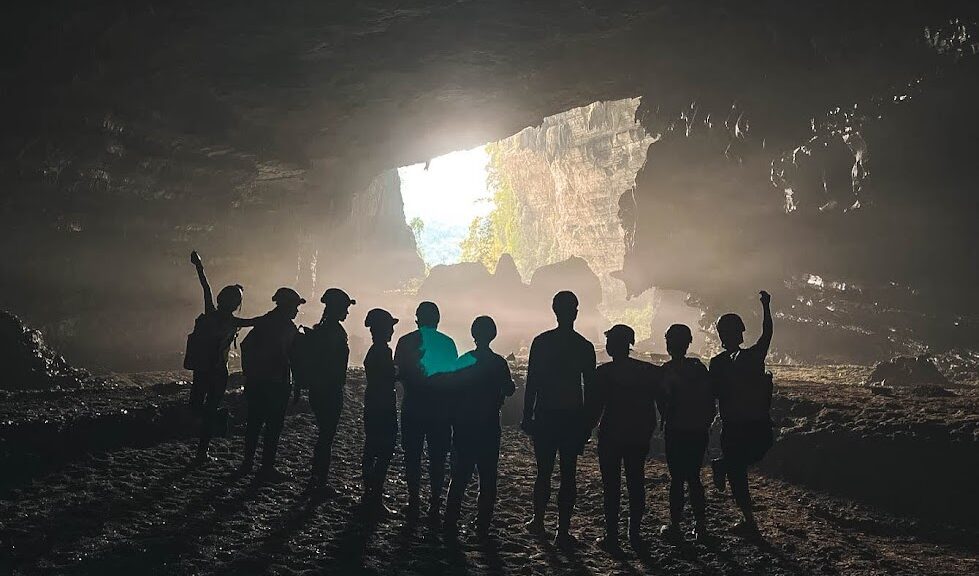
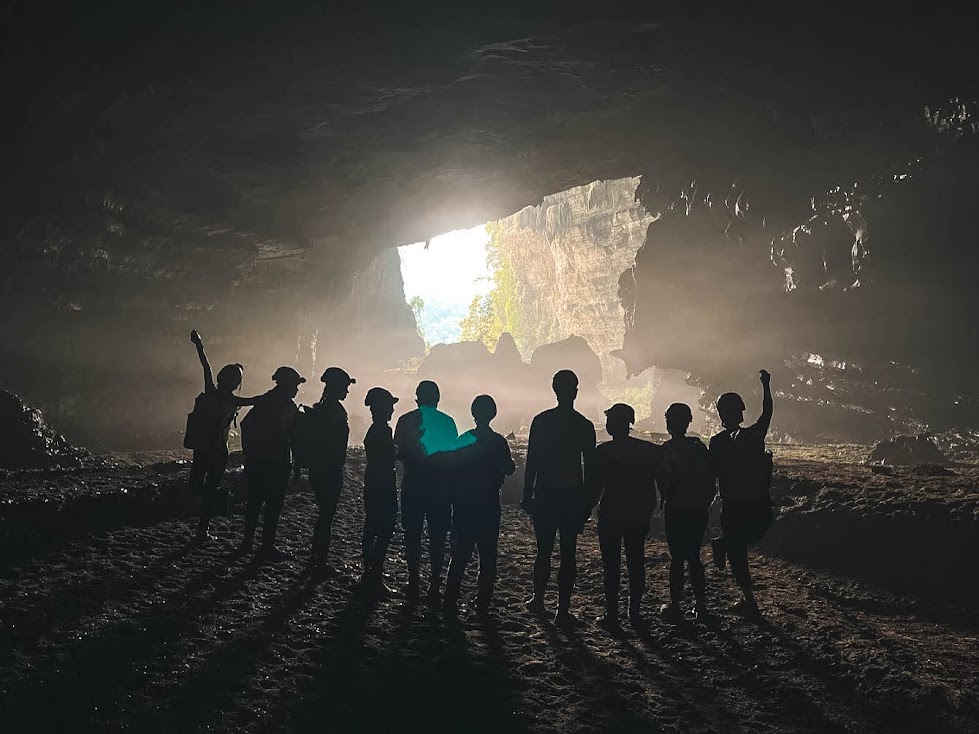
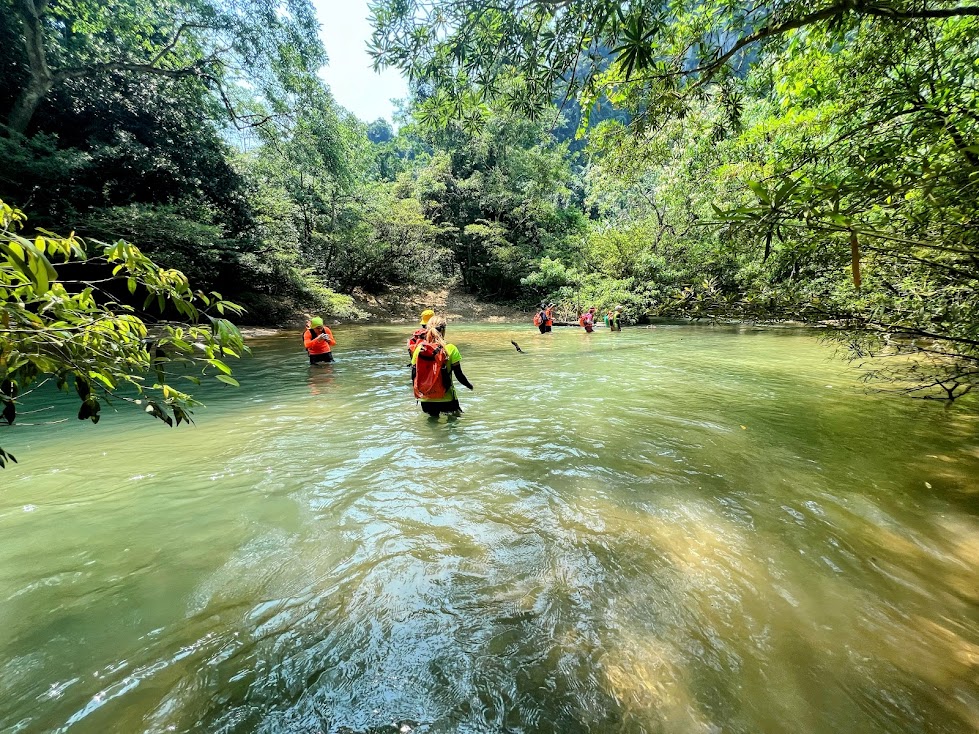
For our Oxalis tour of the Hang Tien cave system we strapped on army boots (provided) and spent the next three days walking straight through rivers, jungle and caves © Eric Leiberman/goingplacesfarandnear.com

By Eric Leiberman and Sarah Falter, Travel Features Syndicate, goingplacesfarandnear.com

Eric and Sarah are on a 6-month around-the-world sabbatical, joining a huge movement of young people who are choosing to live the nomadic life (at least for a time) and travel or work remotely, becoming immersed in local life and culture. They are filing these dispatches periodically. They previously reported about their month in Mexico. Here’s their report from South Korea and Vietnam:

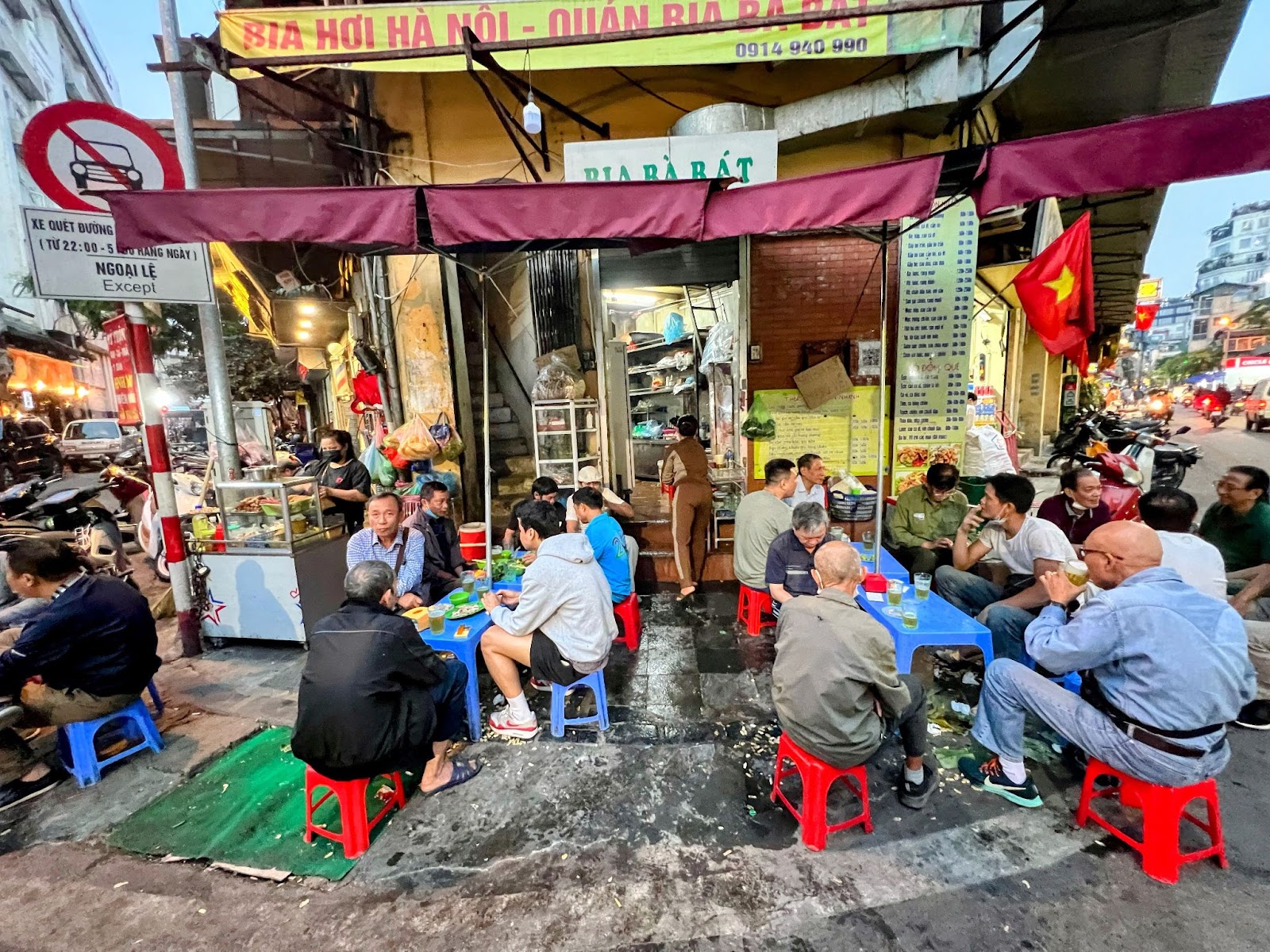
“This is the way so many of the great meals of my life have been enjoyed. Sitting in the street, eating something out of a bowl that I’m not exactly sure what it is. And scooters going by. So delicious. I feel like an animal. Where have you been all my life?” -Anthony Bourdain eating in Vietnam (and we couldn’t agree more). 

We write this second installment of our sabbatical dispatch from Phu Quoc, Vietnam (an island in the Gulf of Thailand very close to the Cambodian border).  We were very stoked to make it into Asia just a couple of weeks after border re-openings, and it’s been fascinating (and at times eerie) to be some of the first tourists here.

We spent our first week traveling Asia in Seoul after Eric was denied entry into Vietnam because he accidentally mistyped the entry month on his e-visa (*Note: if you want to read Eric’s best Aaron Sorkin impression in further documenting the gripping drama of being turned away at the border, see the PS). In South Korea we saw 100% mask compliance inside and outside everywhere we went (though those smoking cigarettes on the street get a nonsensical pass hehe), and never in our lives have we seen every single person in sight staring at their smartphone! It can look dystopian at times. Sarah happily embraced the quiet, introverted culture. Eric had to fight the impulse to chat up uninterested locals. 

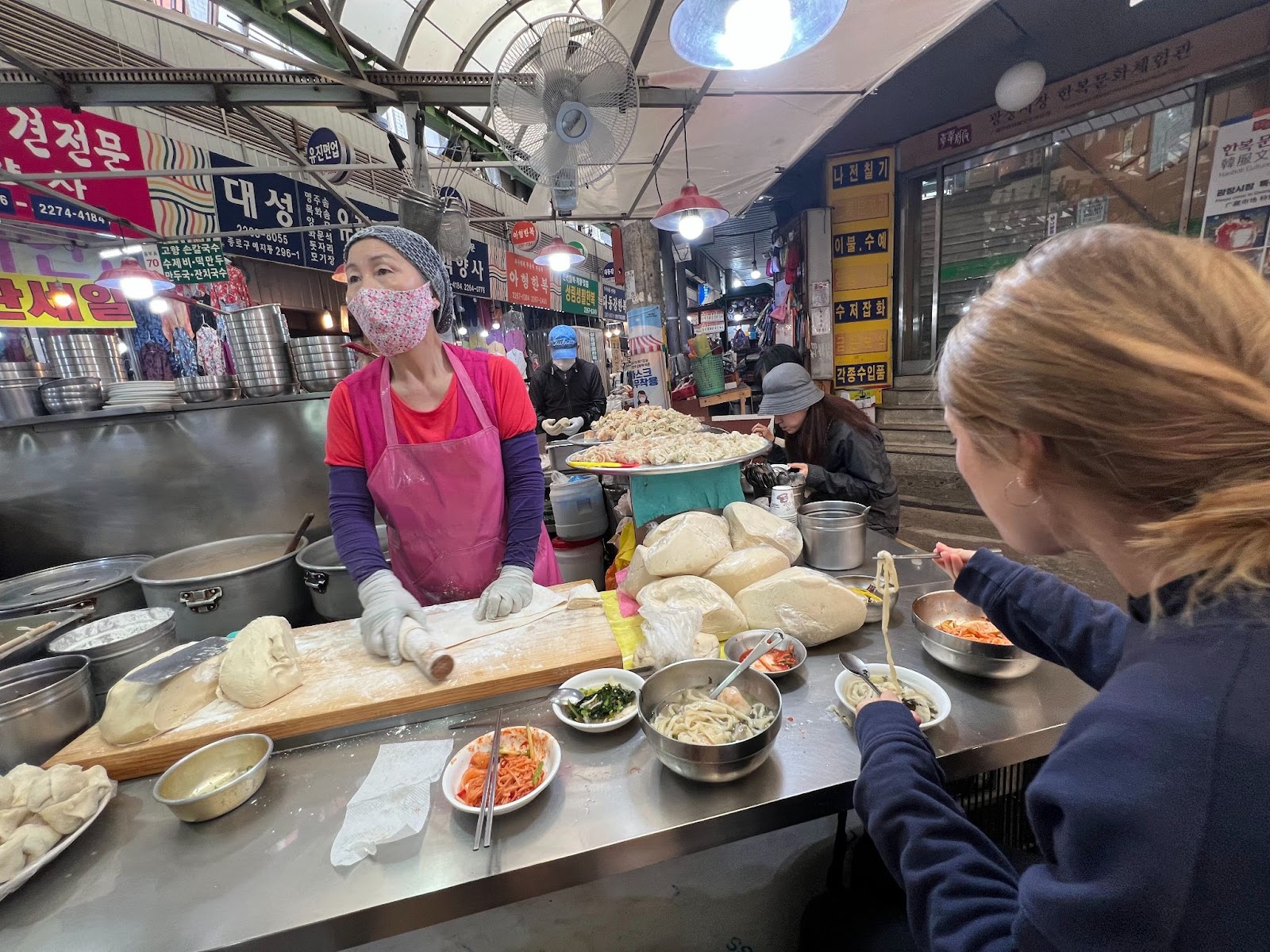
Seoul © Eric Leiberman/goingplacesfarandnear.com

But, we came together in our love for chilly mornings spent at the market scarfing down some impressive form of dumpling/kimchi soup while seated on heated benches, saving room for lots of lunch/dinner Korean bbq (and in Seoul you don’t lift a finger when prepping your bbq–it’s all done for you by extremely impressive waiters who manage 8+ grills at once). We also checked out a local baseball game where cheering is technically banned because of Covid (cheer in your heart), though when a team scores, their fans impulsively scream anyway. To our delight, the stadium allows BYO beer/soju and fried chicken, all conveniently sold right outside.


Joining the fun at a baseball game in Seoul © Eric Leiberman/goingplacesfarandnear.com

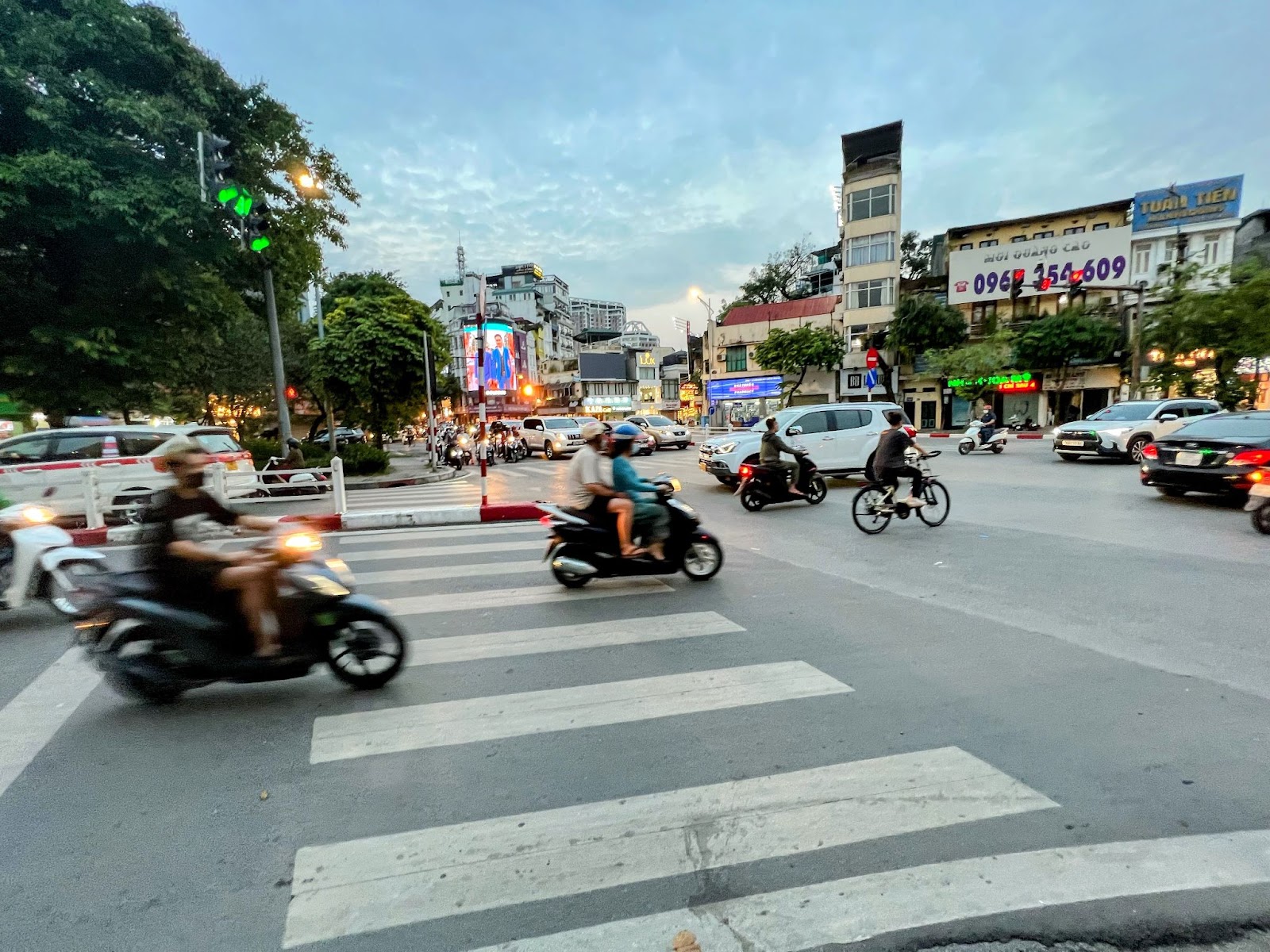
Our second attempt at clearing customs in Hanoi went off without a hitch (thanks to Sarah triple checking all of Eric’s documents), and being able to finally taste the forbidden fruit made it all the more sweet! We immediately felt invigorated by the delicious smells coming from every direction, and having to be on our toes when crossing the street (the rushing river of cars/scooters never stop, they just, without fail, go around you). We loved figuring out that what seems like complete and utter chaos really has a very predictable and harmonious rhythm to it. 

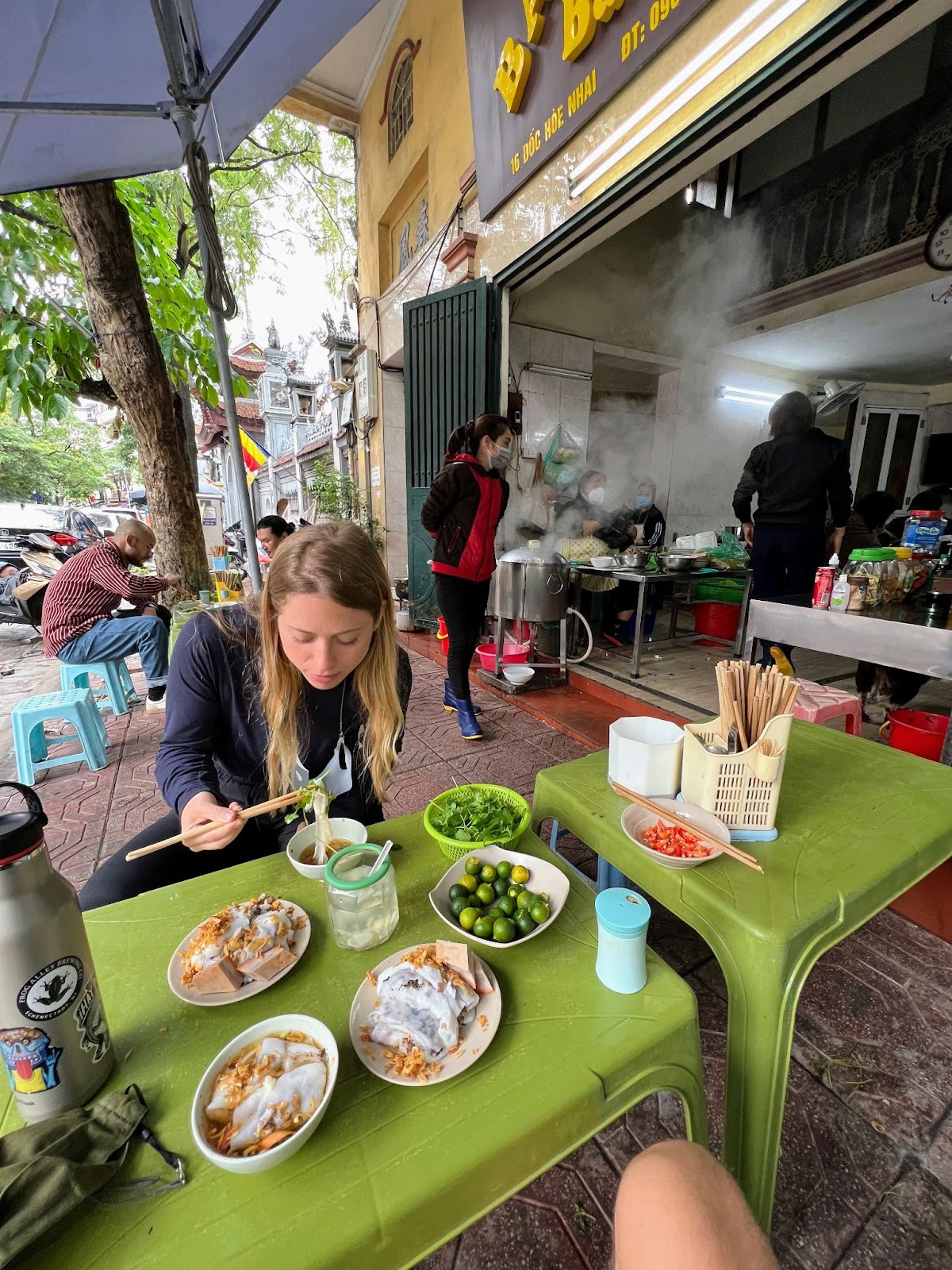
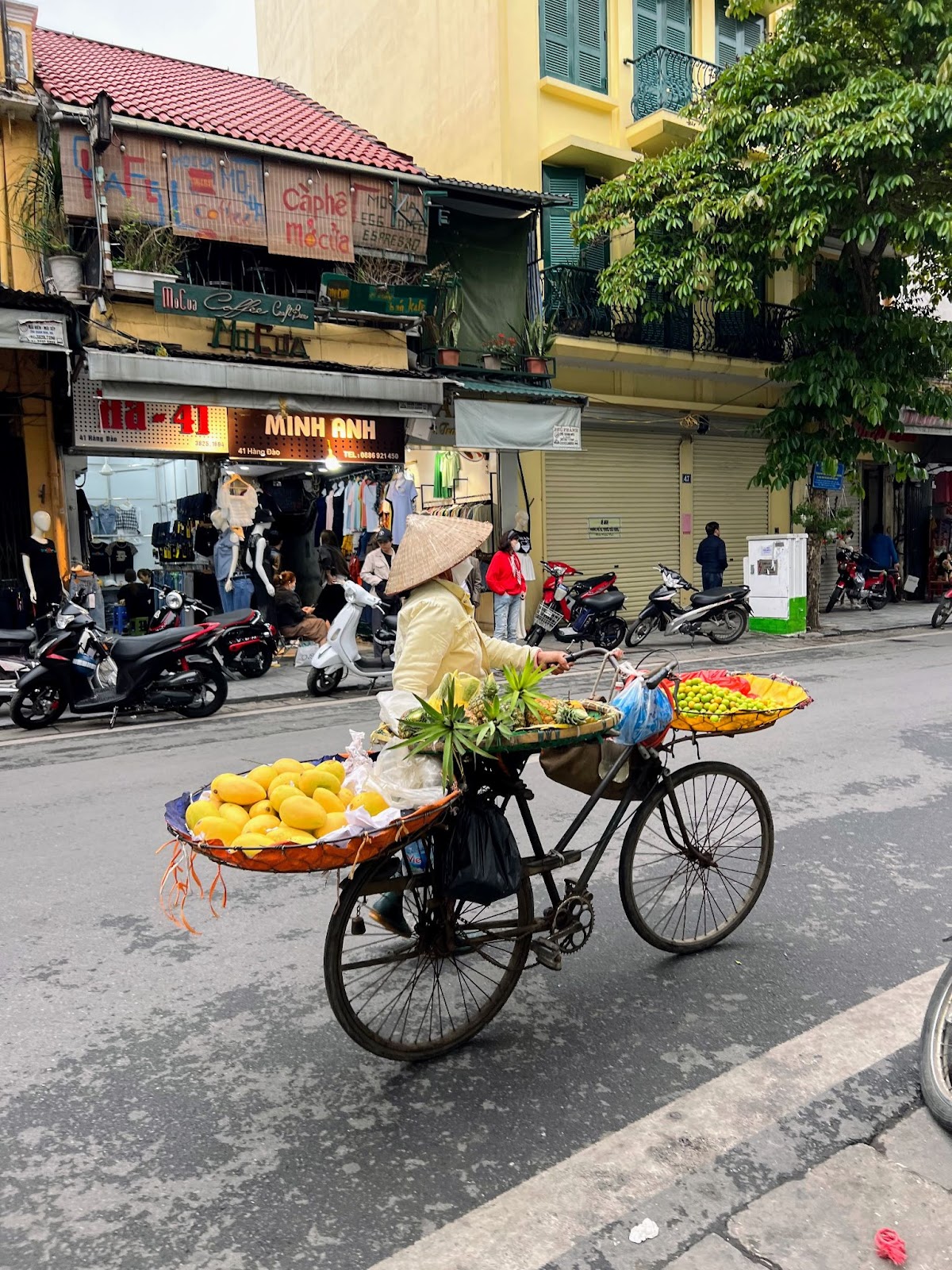
Hanoi, Vietnam © Eric Leiberman/goingplacesfarandnear.com

Hanoi, Vietnam © Eric Leiberman/goingplacesfarandnear.com

In the food department, we quickly realized that the best meals come from street stalls with tiny plastic chairs and just one thing on the menu. The insane combination of unlimited chewy rice noodles, tangy broth, chilis, crunchy peanuts, and mountains of herbs make every dish a choose-your-own adventure of deliciousness. We could’ve been convinced that some of the street food we were eating for $1-2 came off a Michelin tasting menu – the Bun Cha and Banh Cuon were especially incredible. We also learned that the French colonial rule in Vietnam is what sparked the popularity of bread here, consumed daily by millions in Banh Mi, and re-invented with rice flour here. We’ve enjoyed the food scene endlessly, but there is also a hint of sadness in this reopening world. Many stalls/restaurants we research and can’t wait to try have no reviews the last two years, and, we come to find, have just disappeared. 

Continuing on in Hanoi (our favorite city in Vietnam) we were captivated by the Hoa Lo Prison, where French colonists imprisoned and killed Vietnamese political activists in the late 1800s through the mid 1900s, and this same location is where American POWs were incarcerated during the Vietnam War. Learning about the many generations of occupation that the Vietnamese have endured brought us deeper meaning and reflection as we thought about the US’s recent departure from Afghanistan and Russia’s recent invasion of Ukraine. And we also really enjoyed the Vietnamese Women’s Museum, where we learned how valued women are in the work and family unit in northern Vietnam, and that Vietnamese women even propose marriage.

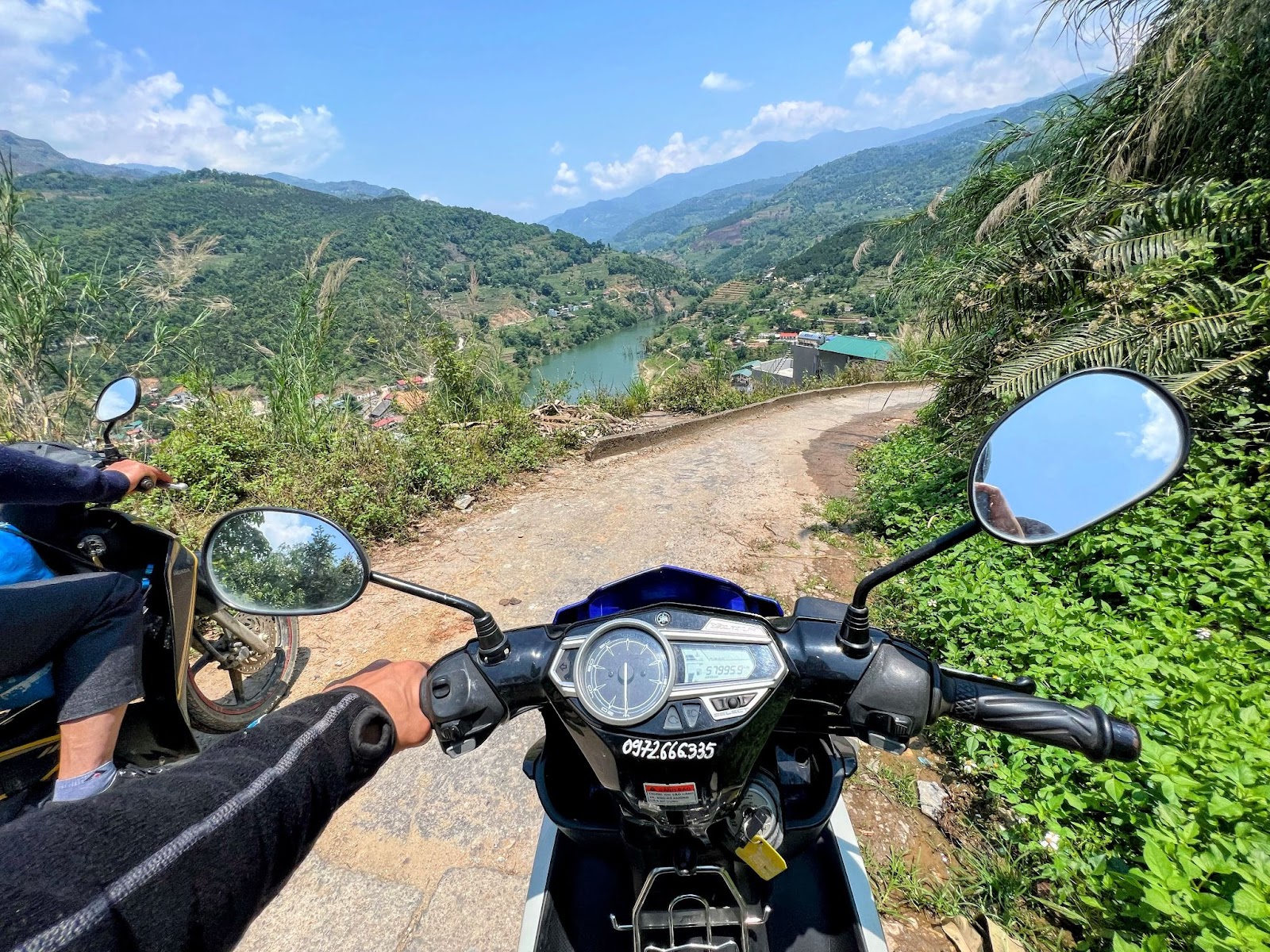
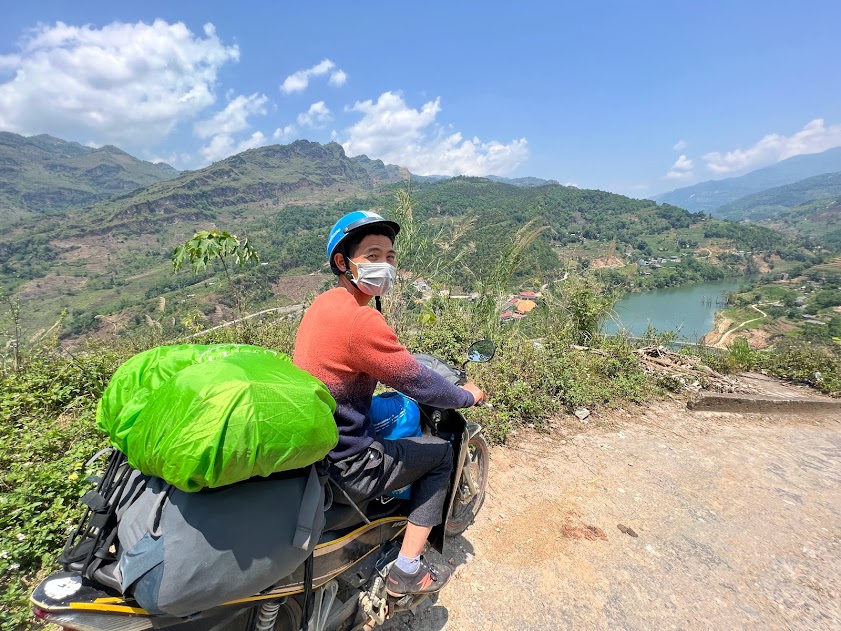
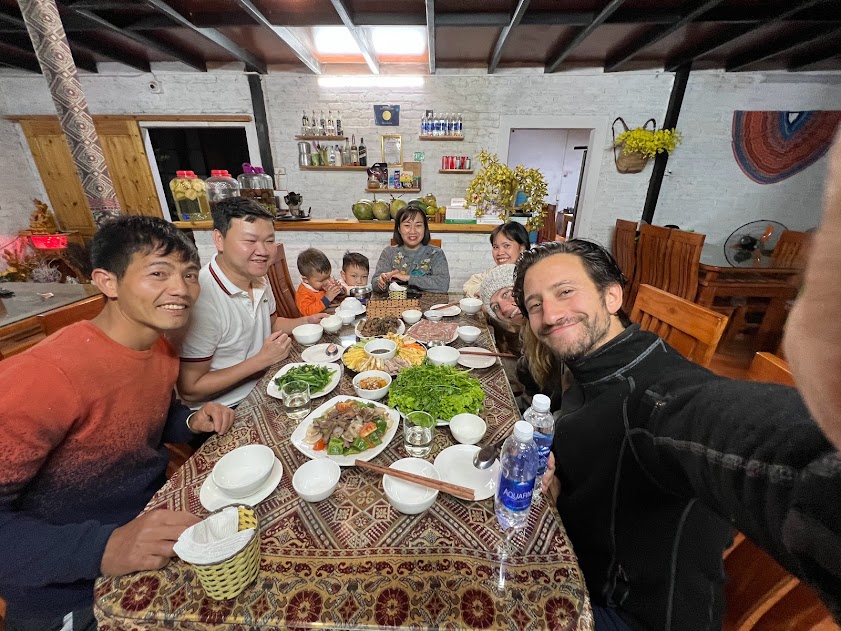
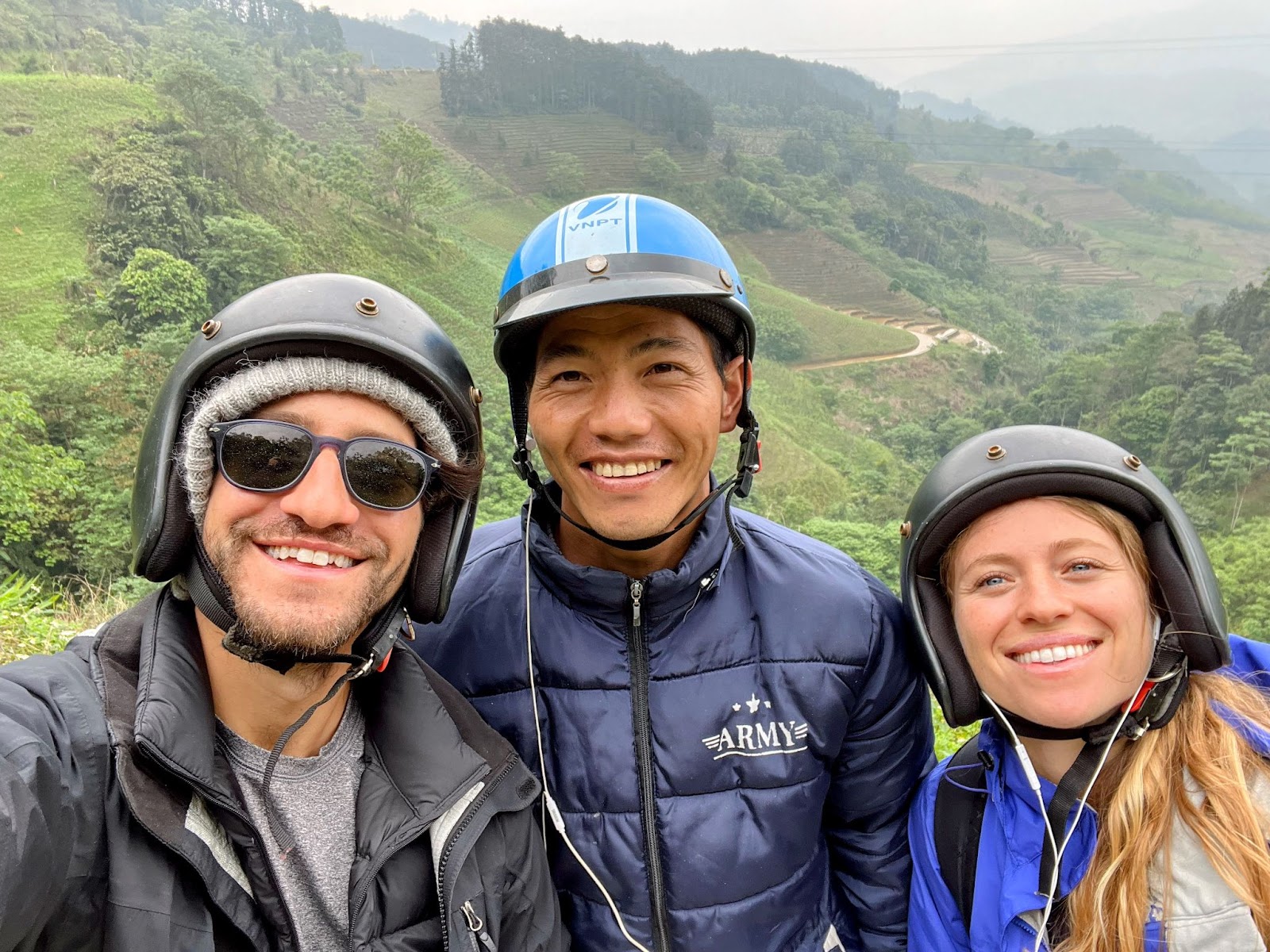
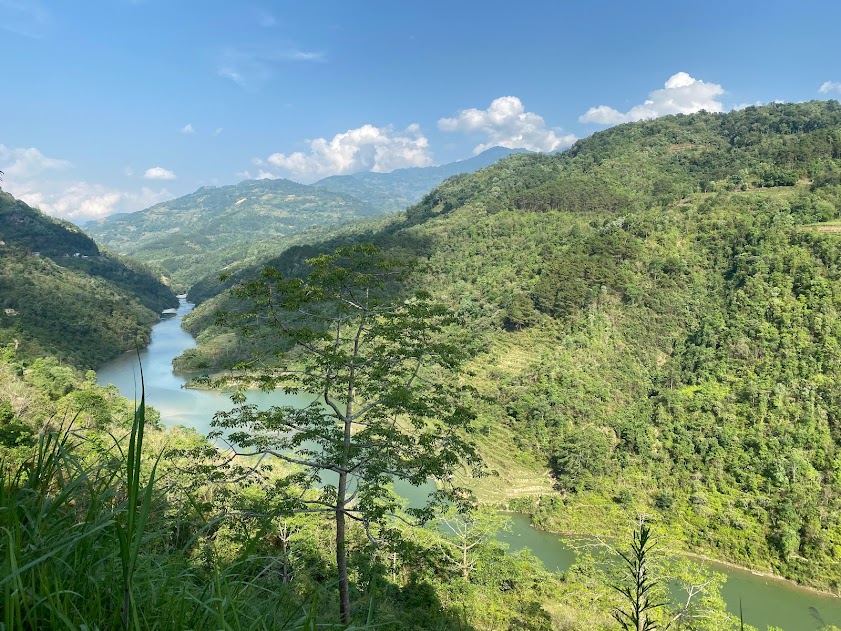
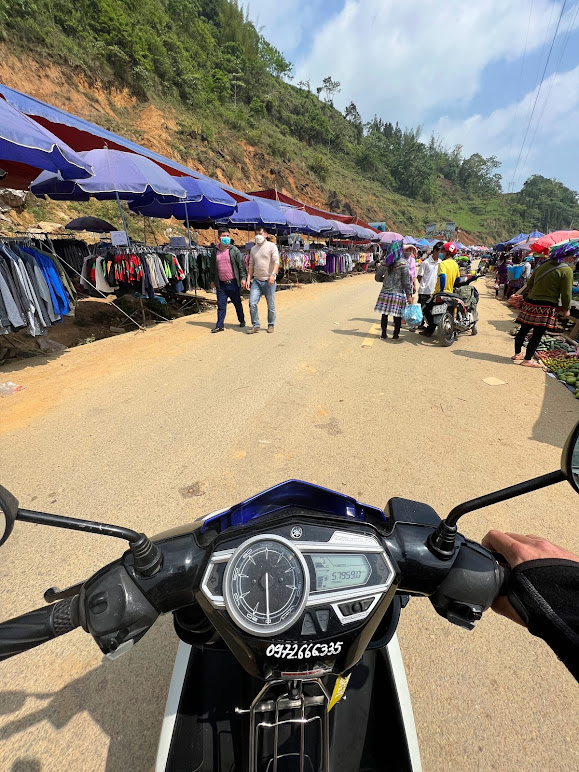
With the constant beat of vehicle horns in the air in Hanoi, Eric was beginning to itch to get on a motorbike (no shock there). So, we hopped on an overnight bus north to Sa Pa and hired a motorbike guide named Kin- a pure soul, the same age as Sarah and a father of three. Kind Kin said yes to all of Eric’s crazy ideas and before we knew it we were motorbiking from Sa Pa to Ha Giang along the Chinese border (a total of about 500km over 3 days) stopping at small homestays on our scenic way. 

Settling in on the overnight bus north to Sa Pa, Vietnam © Eric Leiberman/goingplacesfarandnear.com
Motorbiking from Sa Pa to Ha Giang© Eric Leiberman/goingplacesfarandnear.com
Kin said yes to all of Eric’s crazy ideas and before we knew it we were motorbiking from Sa Pa to Ha Giang along the Chinese border (a total of about 500 km over 3 days) stopping at small homestays on our scenic way © Eric Leiberman/goingplacesfarandnear.com
Stopping at small homestays on our scenic way © Eric Leiberman/goingplacesfarandnear.com
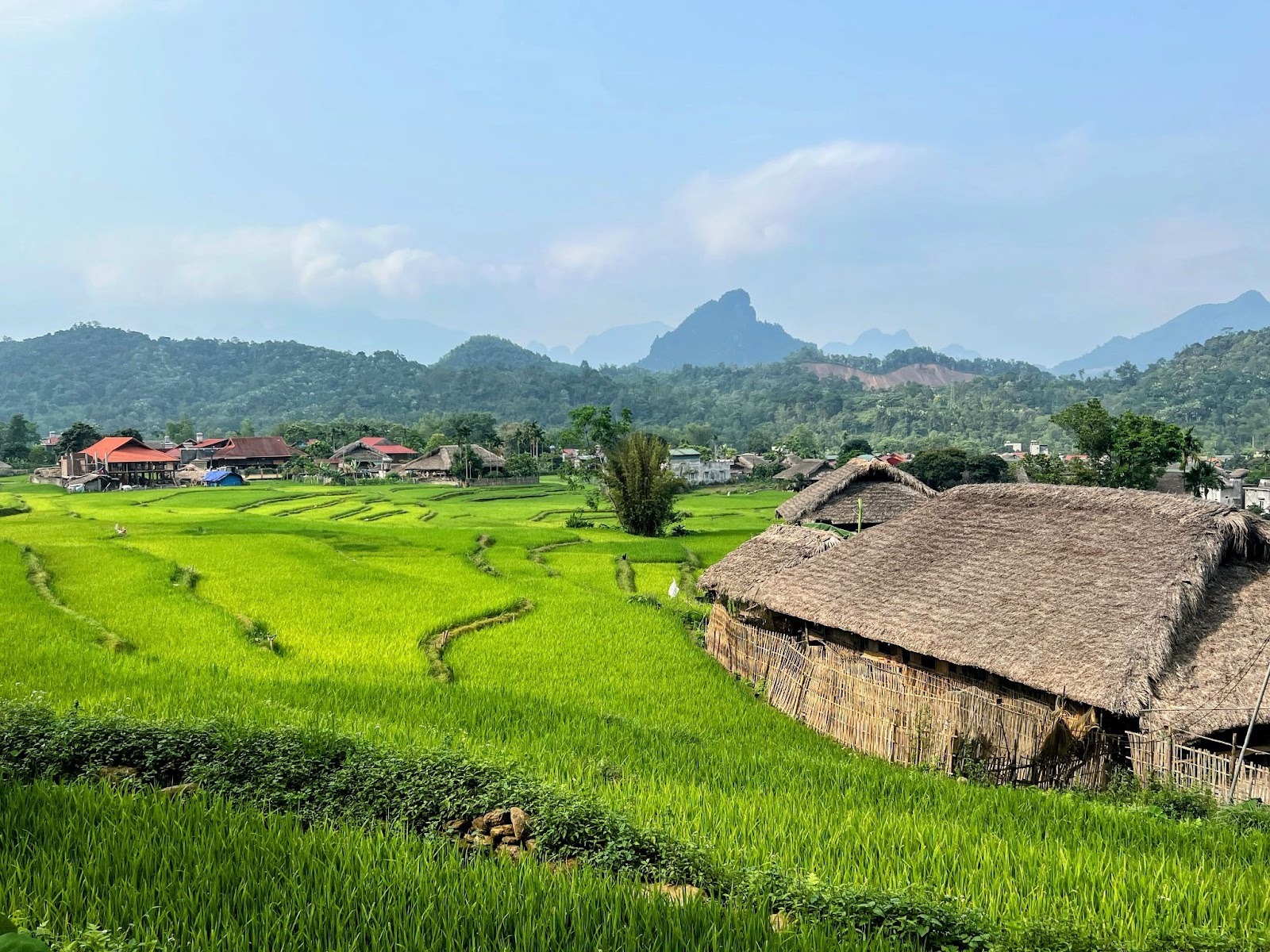
Motorbiking from Sa Pa to Ha Giang© Sarah Falter/goingplacesfarandnear.com
Kin said yes to all of Eric’s crazy ideas and before we knew it we were motorbiking from Sa Pa to Ha Giang along the Chinese border (a total of about 500 km over 3 days) stopping at small homestays on our scenic way © Eric Leiberman/goingplacesfarandnear.com
Motorbiking from Sa Pa to Ha Giang© Sarah Falter/goingplacesfarandnear.com
Motorbiking from Sa Pa to Ha Giang© Eric Leiberman/goingplacesfarandnear.com
Stopping at small homestays on our scenic way © Eric Leiberman/goingplacesfarandnear.com

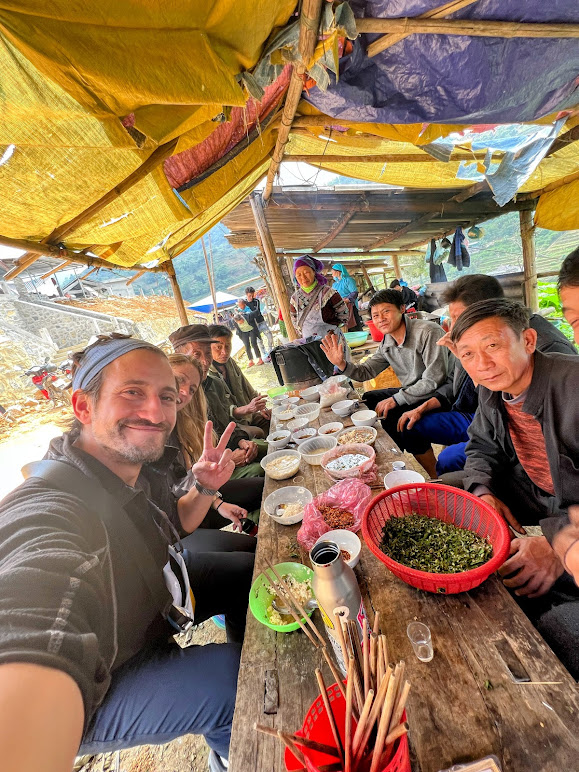
Eric did all of the driving while Sarah dutifully snapped pictures and videos from the bumpy backseat. The scenery was absolutely stunning-terraced rice paddies (which we learned are made that way for irrigation) every shade of green, heaps of green tea drying in the sun, and farmers markets where locals insist we sit down for “Happy Water”–Vietnamese moonshine–which Sarah does happily and Eric does also happily but with more responsibility because he is our forever DD. Lots of fog rolled in in the north, which made us appreciate the views when it did clear, even more.

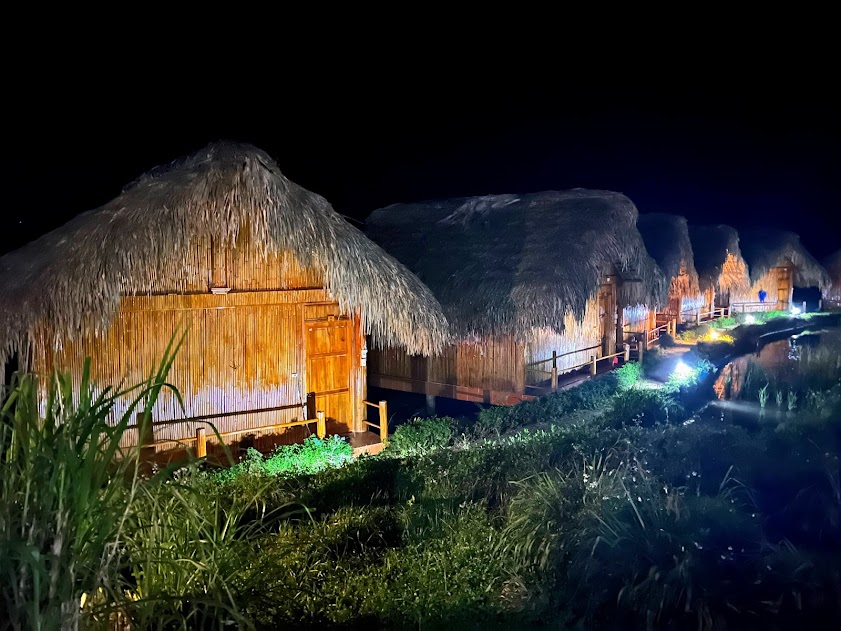
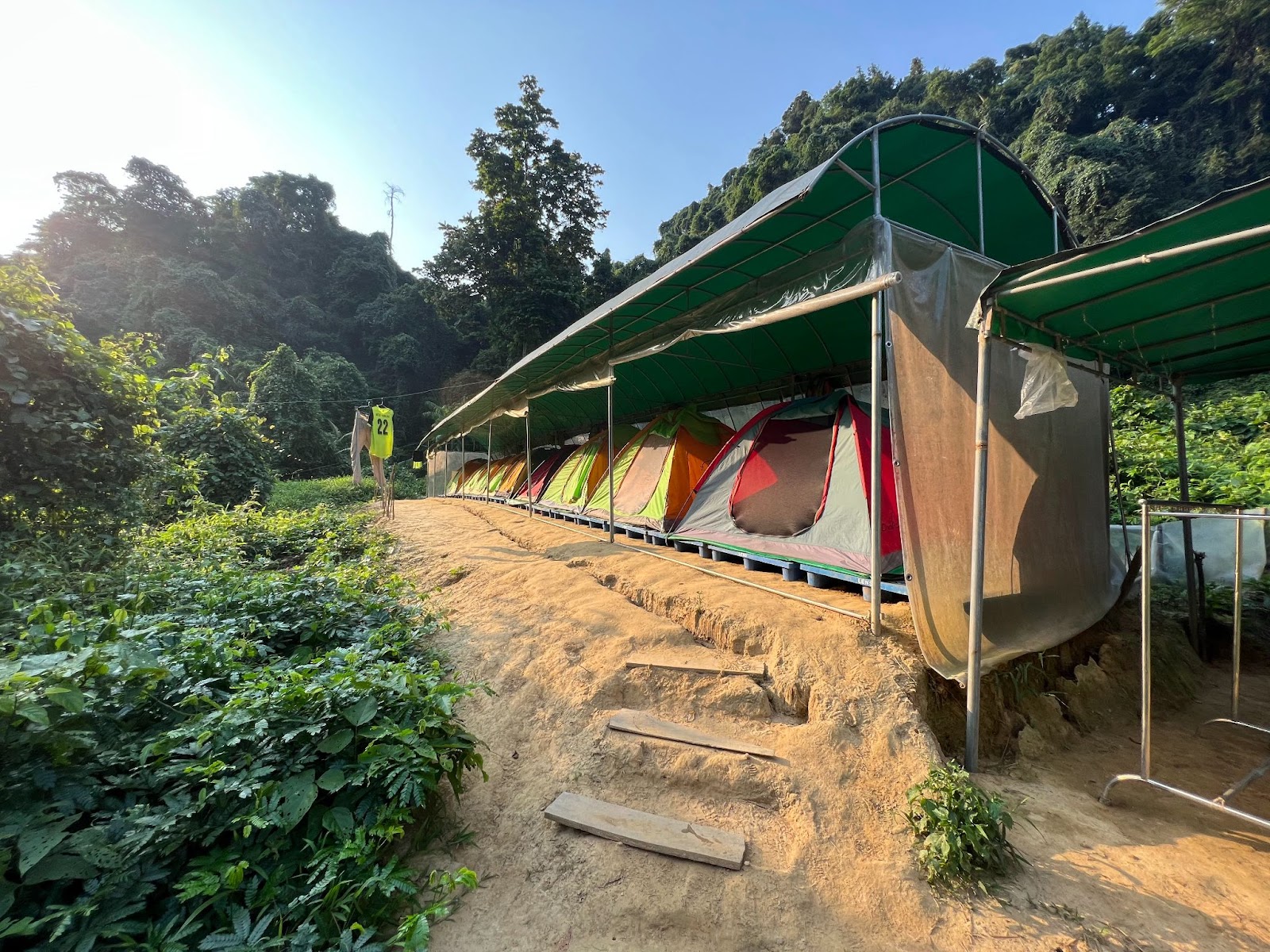
Our campsite for our Oxalis jungle trek-caving trip © Eric Leiberman/goingplacesfarandnear.com
For our Oxalis tour of the Hang Tien cave system we strapped on army boots (provided) and spent the next three days walking straight through rivers, jungle and caves © Eric Leiberman/goingplacesfarandnear.com
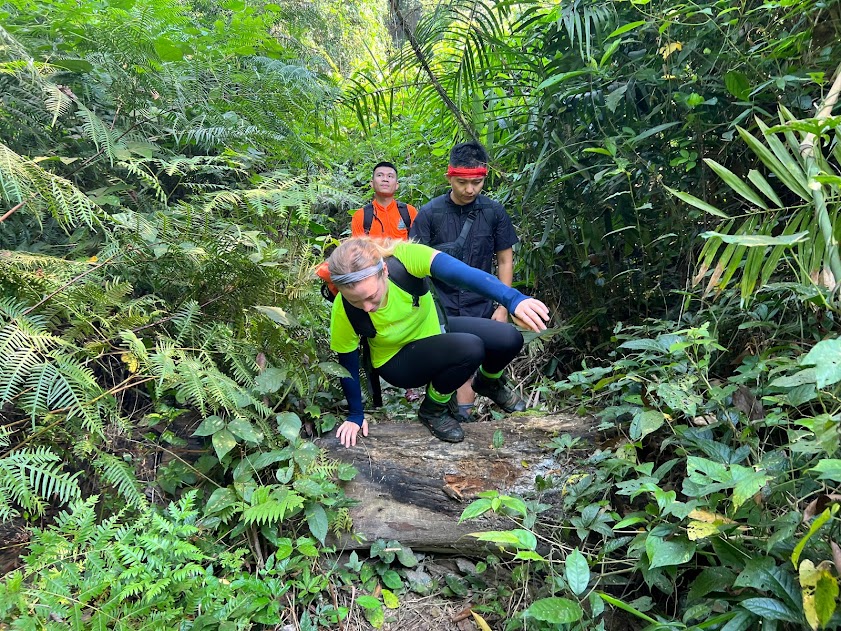
Trekking through the jungle to get to Hang Tien caves © Eric Leiberman/goingplacesfarandnear.com

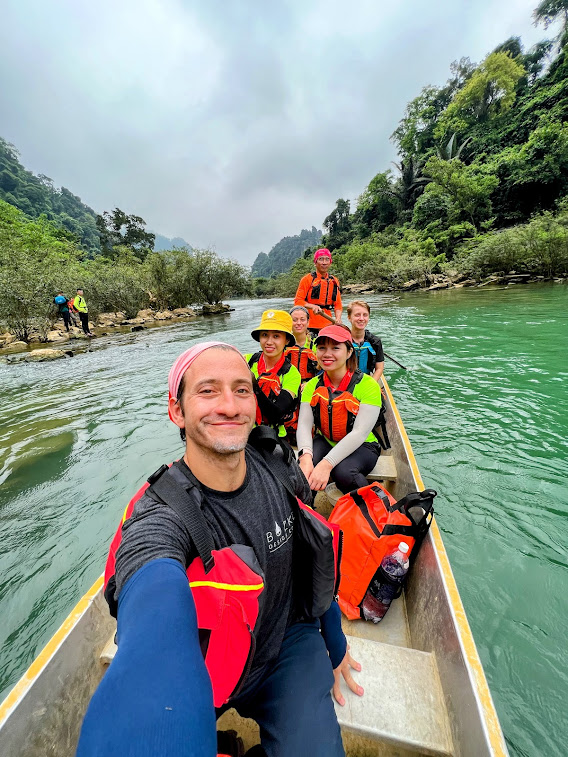
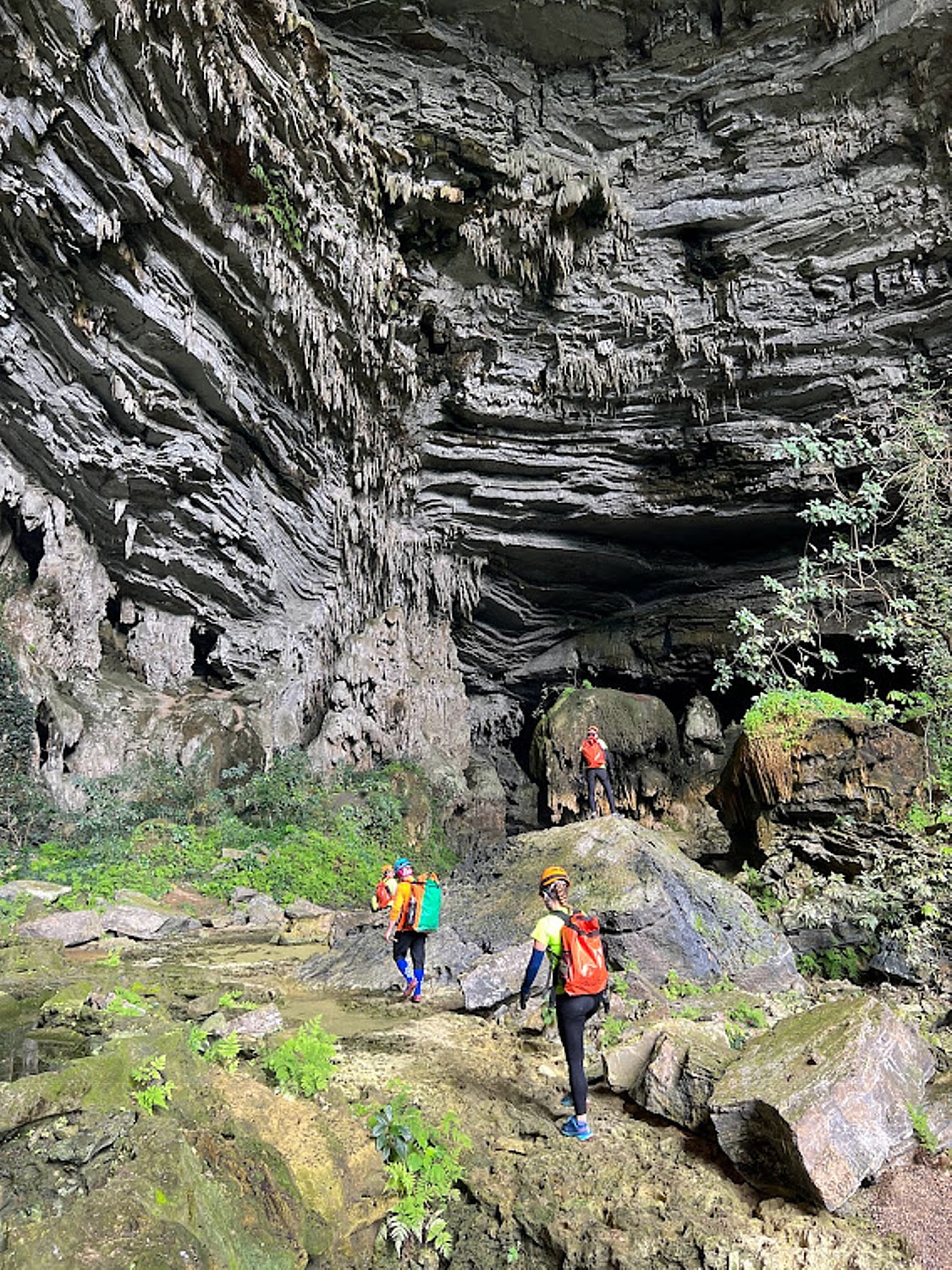
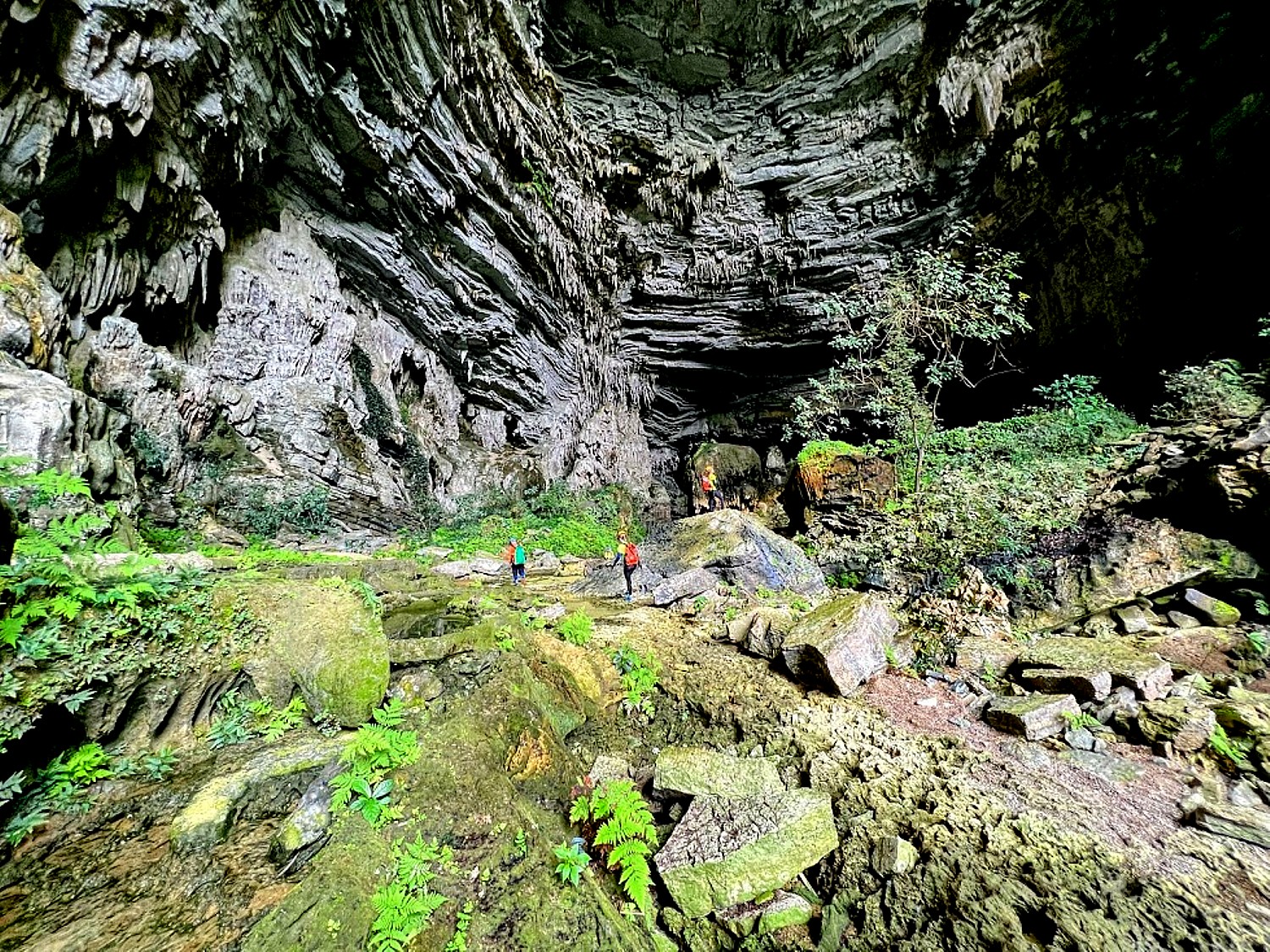
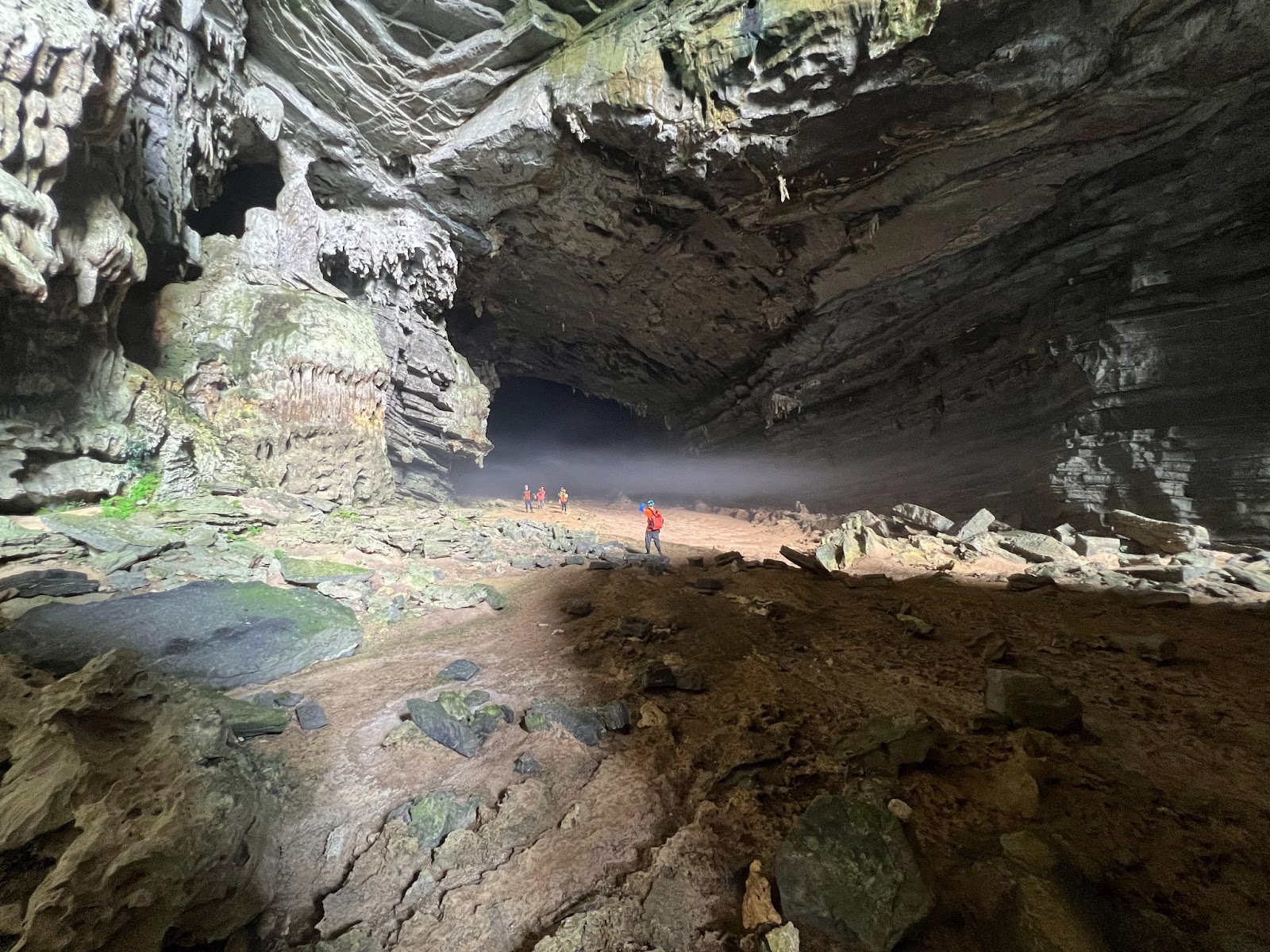
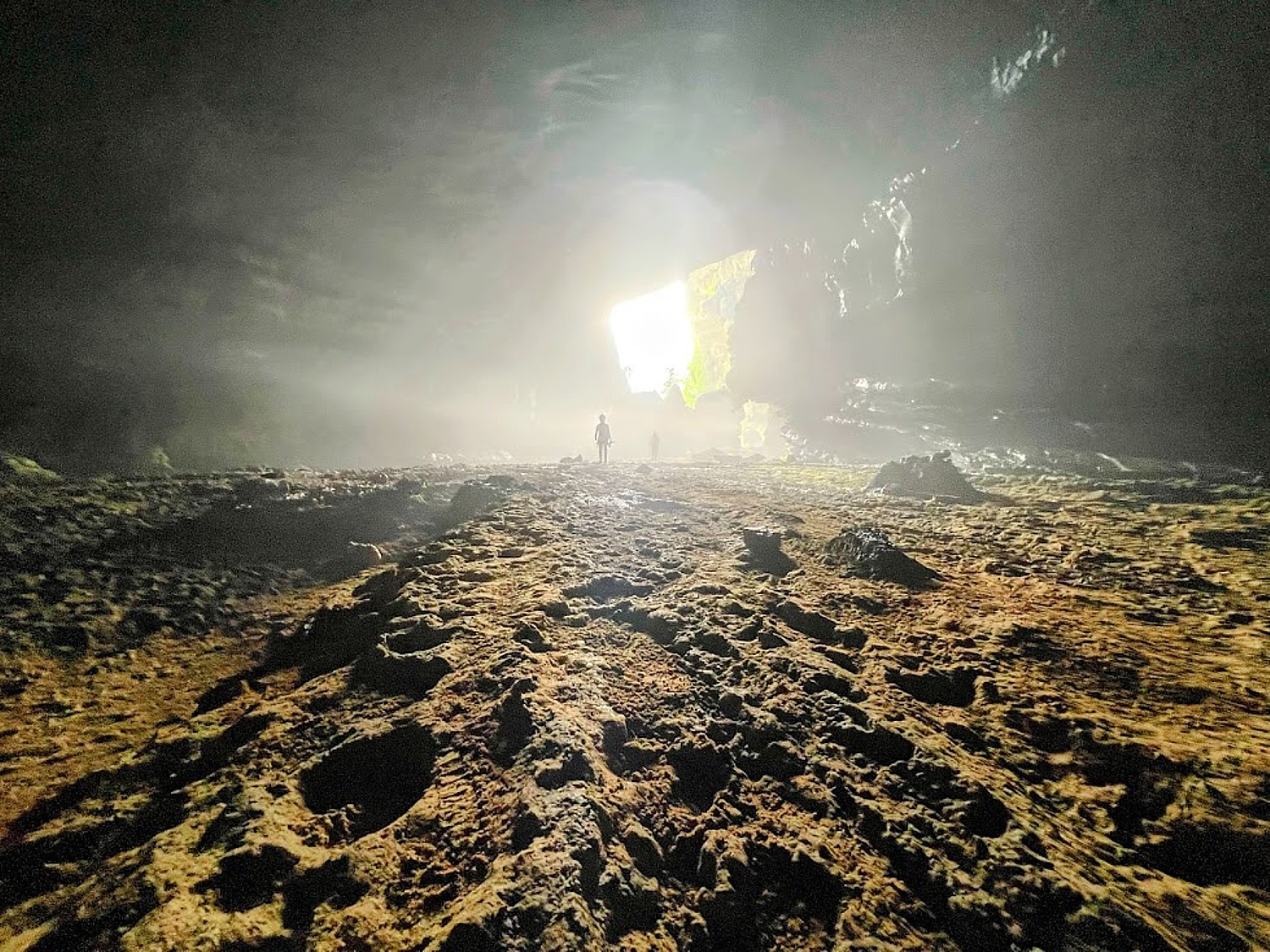
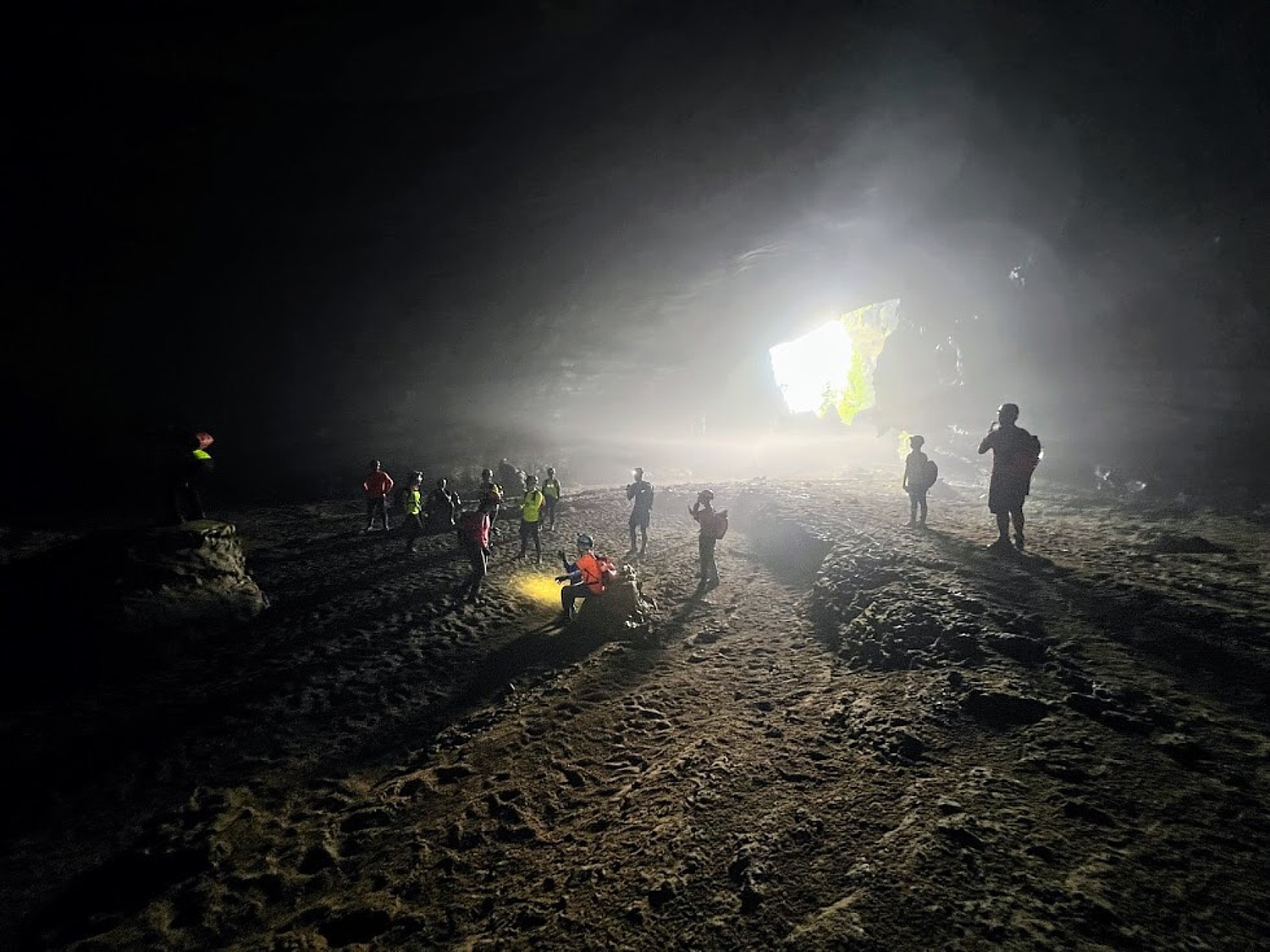
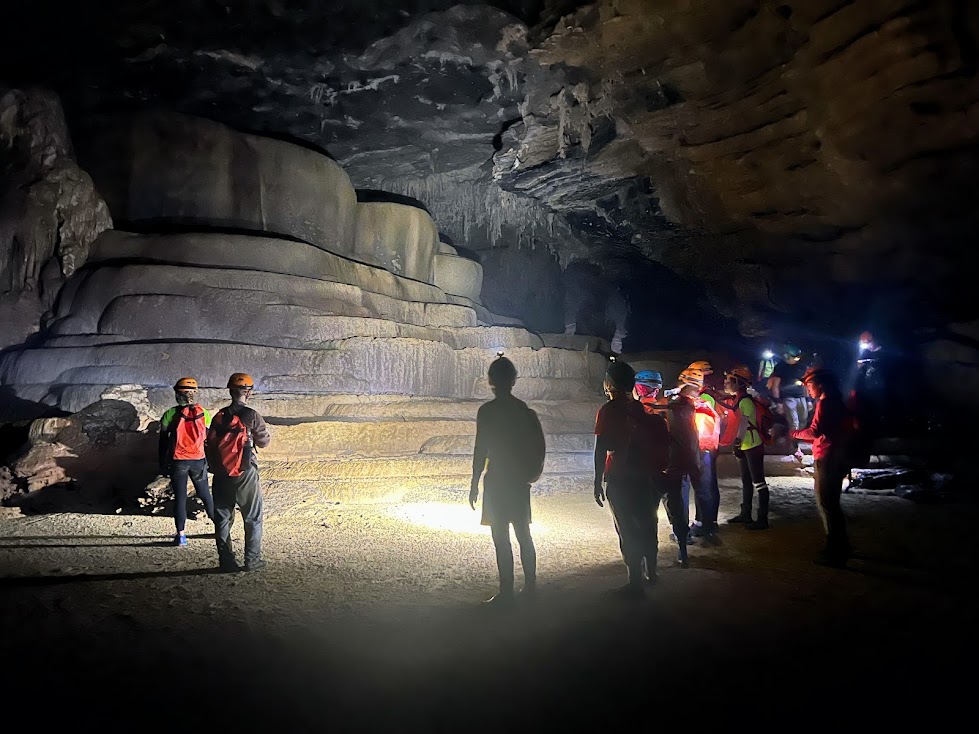
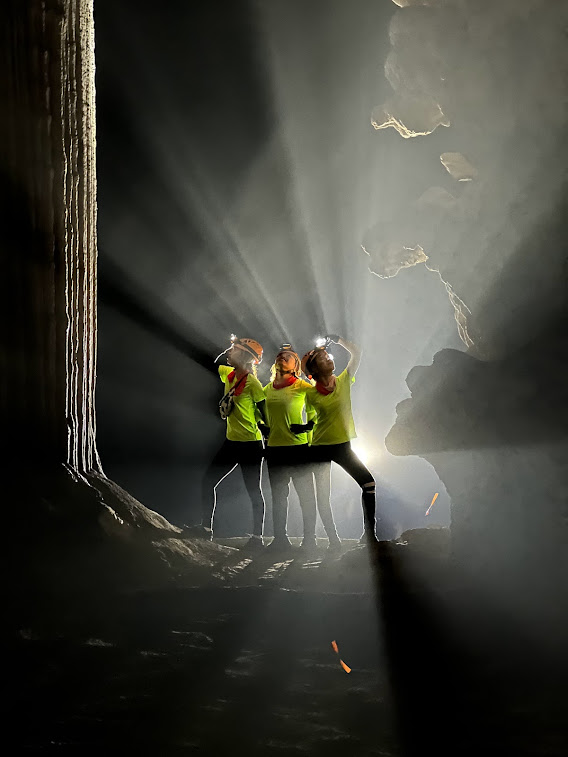
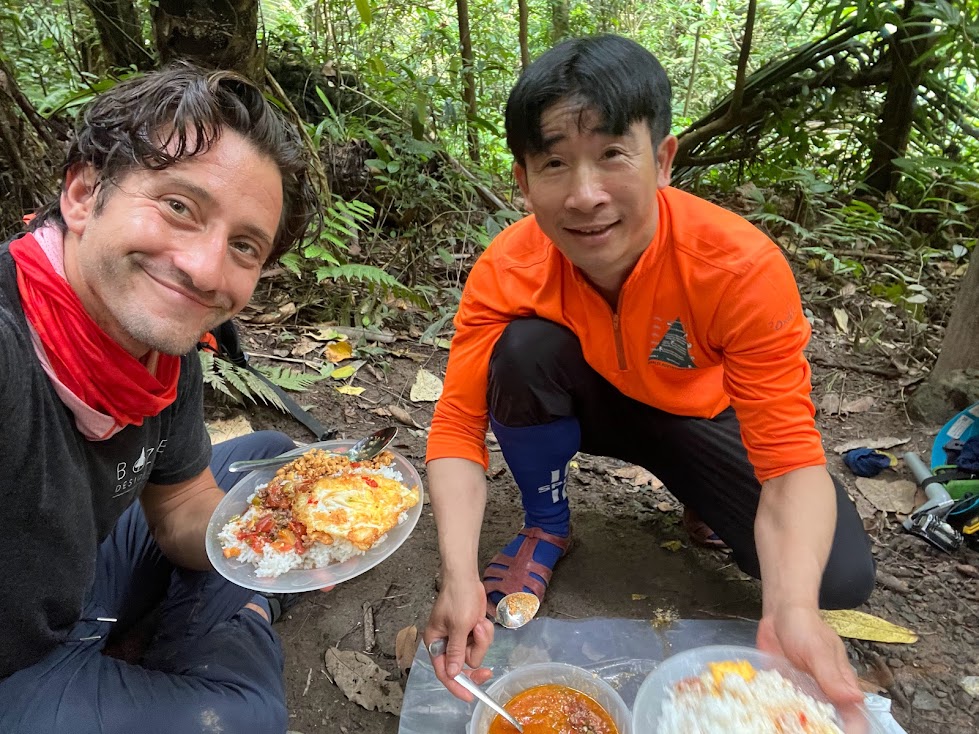
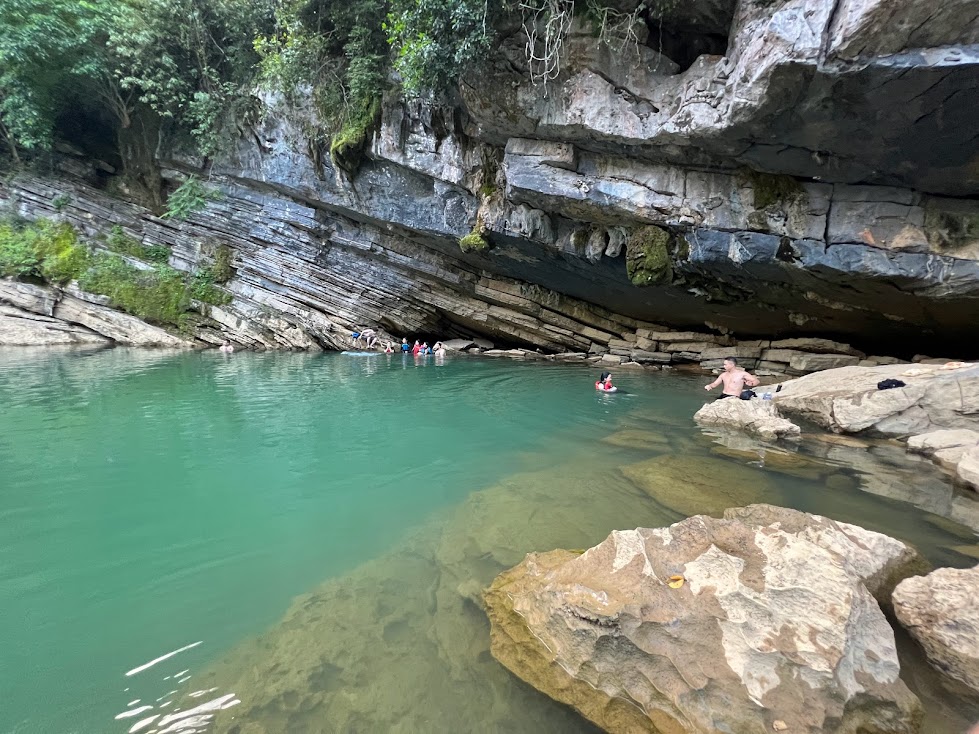
We moved south to central Vietnam so that Sarah could realize her bootcamp potential, signing up for a multi-day jungle trekking & caving tour. The caves in Phong Nha, Vietnam, are otherworldly. In fact, the world’s largest cave is here (Hang Son Doong–first discovered by a farmer by accident just three decades ago, and so big it has its own rainforest!). We found availability on a tour of the Hang Tien cave system with the tour company Oxalis (highly recommend), so we strapped on our provided army boots, and spent the next three days walking straight through rivers and caves (fully clothed in long layers to protect against plants and insects), and then scaling rocks up and down in order to capture some incredible Vietnamese nature. Our group of 10 (5 domestic and 5 foreign travelers) bonded Birthright style during the tentside hangouts, and we were fed constantly (and deliciously) which kept us smiling 🙂 despite the unrelenting heat and humidity.  (https://oxalisadventure.com/ contact@oxalisadventure.com)

Exploring the Hang Tien cave system with the tour company Oxalis © Eric Leiberman/goingplacesfarandnear.com
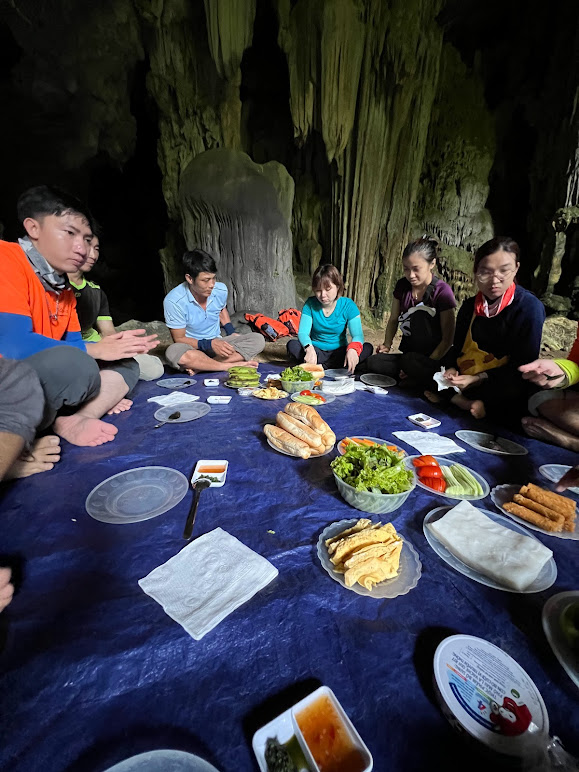
Dining al fresco inside the cave © Eric Leiberman/goingplacesfarandnear.com
Exploring the Hang Tien cave system with the tour company Oxalis © Eric Leiberman/goingplacesfarandnear.com
Our campsite in the Jungle during our Oxalis jungle trek-caving trip © Eric Leiberman/goingplacesfarandnear.com

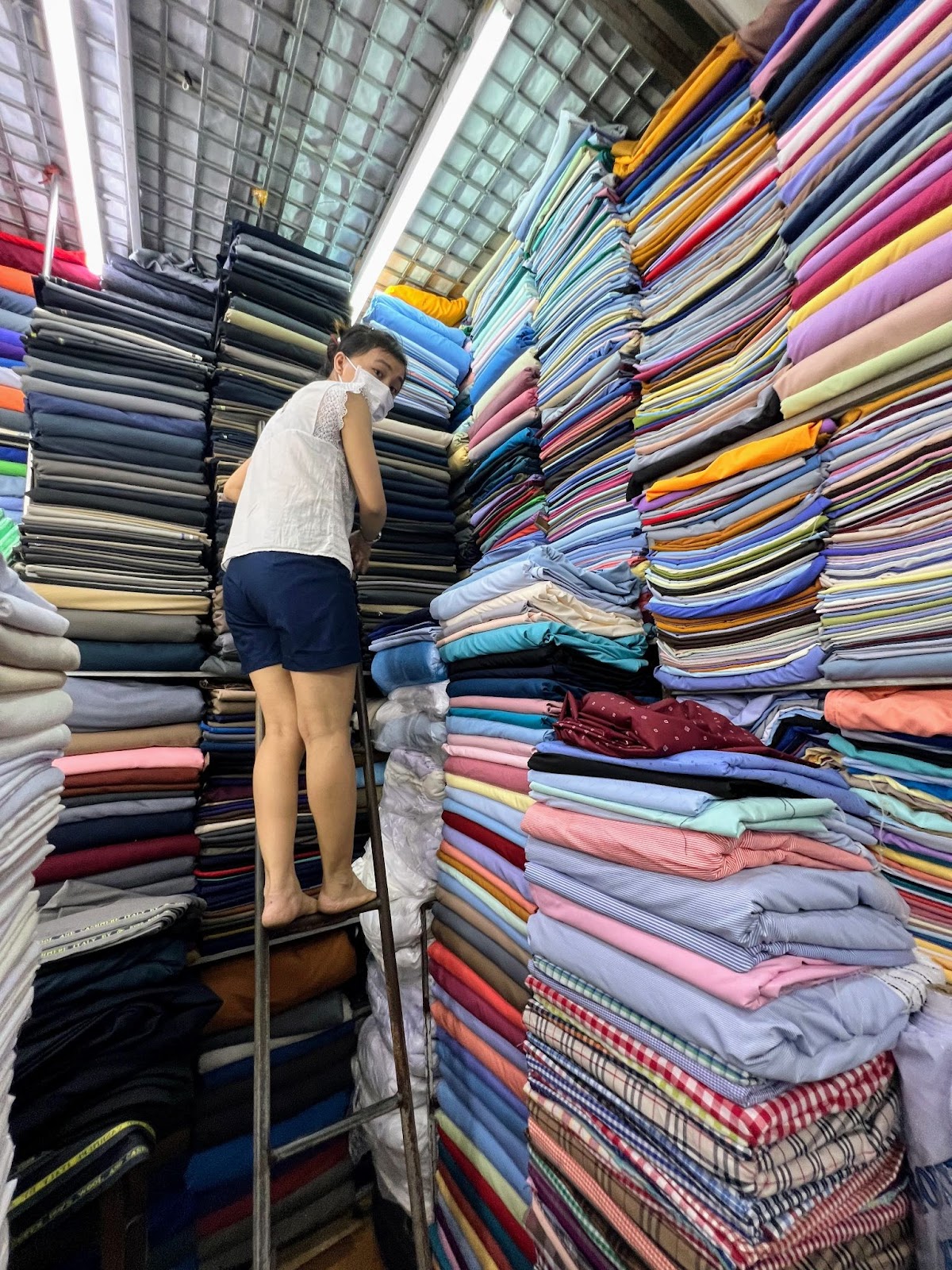
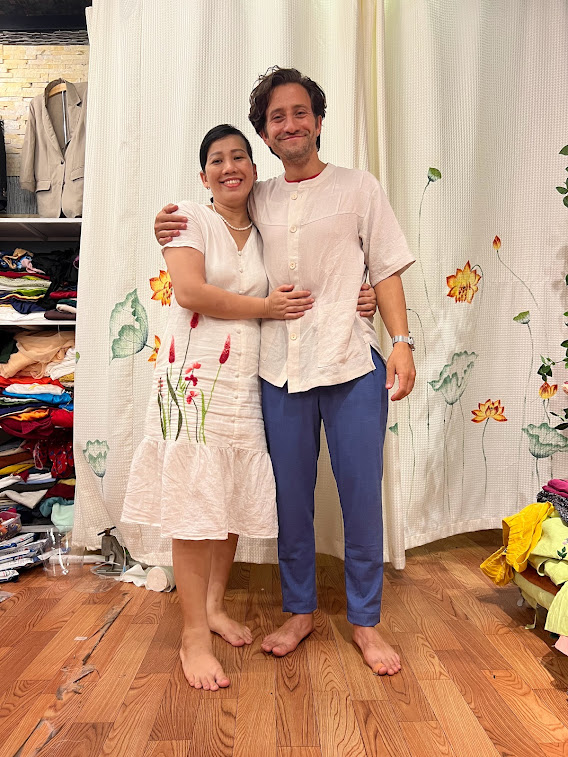
After a desperate shower and laundry session we made our way to Hue, also in central Vietnam. Eric wasted no time seeking out a tailor for his absolute favorite–custom clothes. His request was so specific, that our amazing tailor Bo (we really have met people unbelievably patient with Eric here) offered to take us to the fabric market to pick one out that she didn’t carry at her shop. One scooter ride together and a couple of hours later she nailed it! Sarah also got her first custom clothing with Bo and agrees, it is really fun. Another highlight of Hue-the salt coffee. Each region of Vietnam highlights a unique version of their rich coffee, but our favorite variation is this one–salted cream that perfectly compliments the strong black coffee blend creating an almost caramel taste. 

Picking out fabric for our custom-made clothes in Hue © Eric Leiberman/goingplacesfarandnear.com
Done! Custom-made clothes © Sarah Falter/goingplacesfarandnear.com

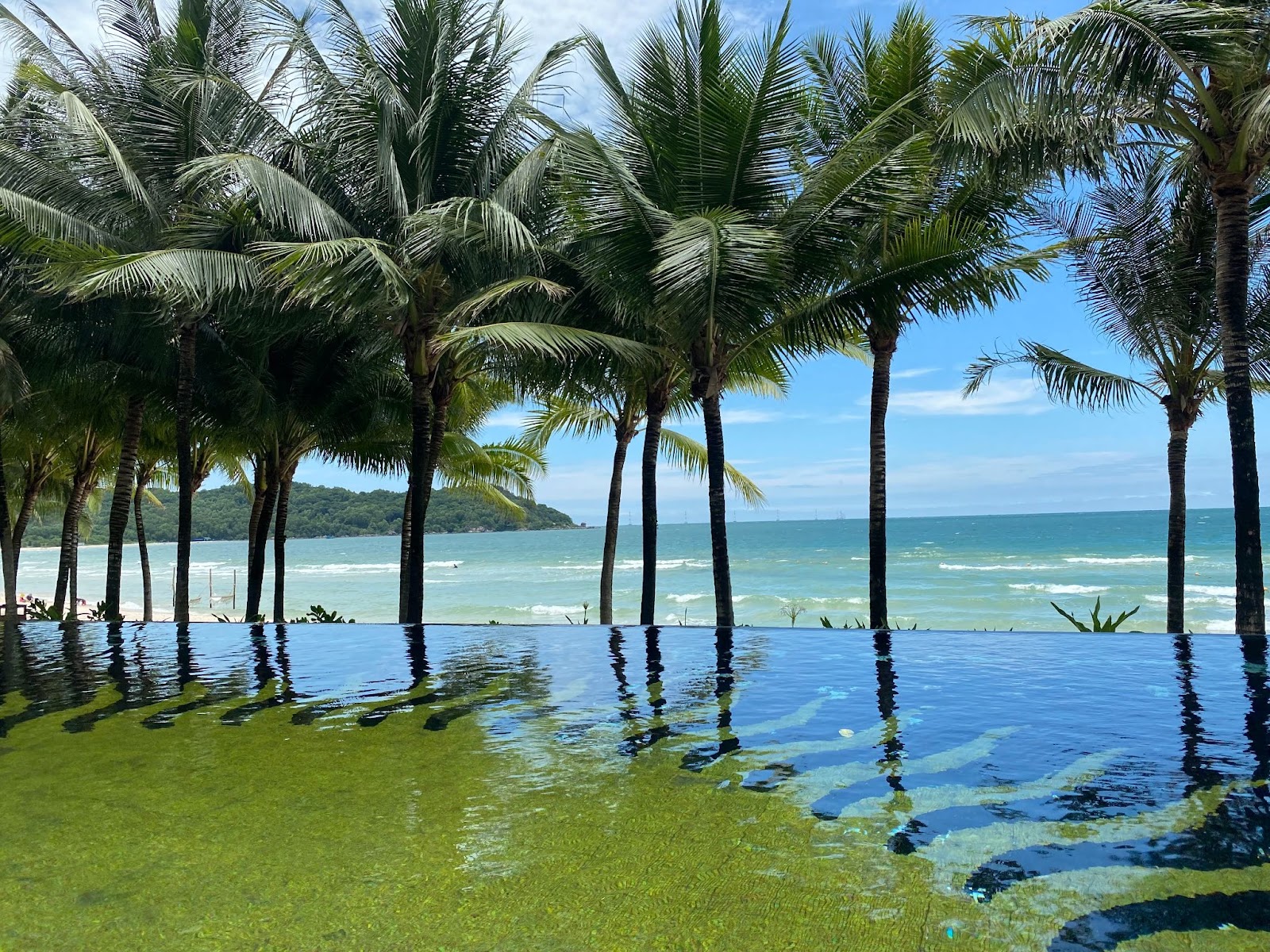
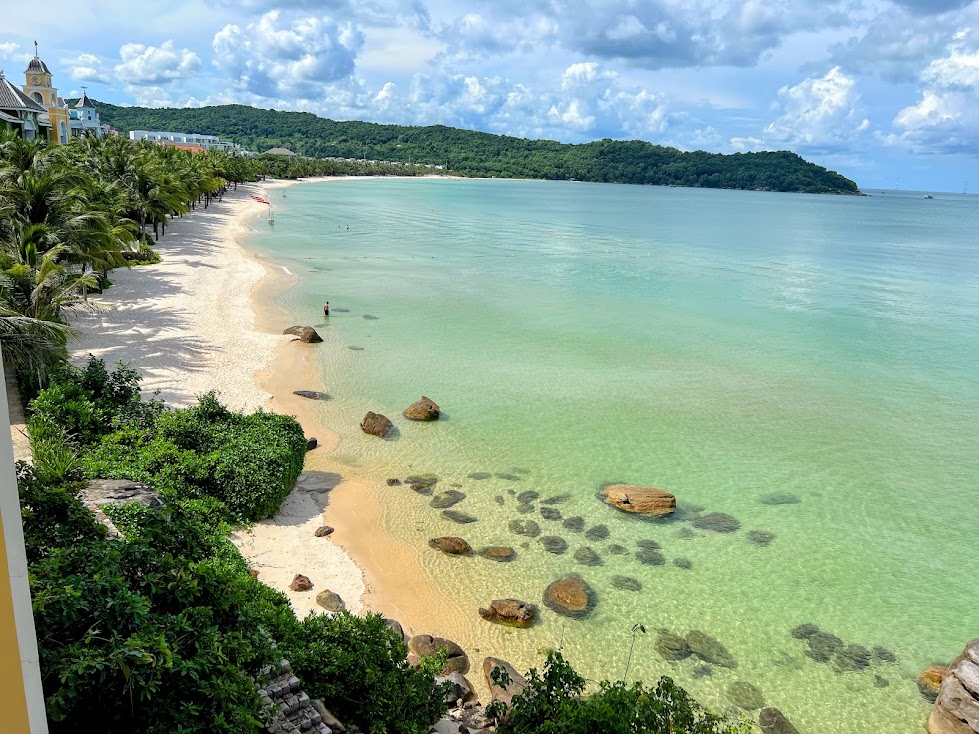
We now find ourselves on the beach in Phu Quoc, southern Vietnam. Sarah is wrapping up book number three and Eric is taking the hotel’s paddleboard about 100 times further than the buoy’s limits. The hotel seems to be approximately 10% full. Seeing as we now recognize every fellow guest were living out our White Lotus moment giving them all backstories and deciding who will get murdered (just kidding!! and watch the show White Lotus if you haven’t yet!). We continue to thrive on almost strictly street food–we went to a nightmarket the other night with a German couple from our cave tour and to Eric’s delight, found Banh Mi with steak and runny white cheese a la the Philly Cheesesteak, and sea urchin with herbs and peanuts. No food is left untried. And while Eric has been brave enough to weigh himself this week (somehow lost weight!?), Sarah continues on in ignorant bliss. 

The beach in Phu Quoc, southern Vietnam © Eric Leiberman/goingplacesfarandnear.com

* * *

PS – So there we were..3 flights and 36 hours of travel from Mexico City to Hanoi (by way of Dallas and Tokyo). It was 11PM. We were beyond exhausted because we had to wake up at 2:30AM in Mexico City to return our rental car and get to our first flight. We slept but a wink on the planes, but the in-flight viewing of the Anthony Bourdain and Alpinist docs (both must-sees btw) sustained us and we were stoked to have touched down in Asia. 

BUT NOT SO FAST the travel gods said. At immigration in Hanoi, Sarah lifted her bucket hat and mask, flashed her million dollar smile and breezed right through to the promised land. But the immigration officer looked longer at Eric’s documents. “You have to go over there,” the officer said after a few minutes of scrutinizing the documents. A lot of back-and-forth with immigration officers and airline attendants facilitated by the Google Translate app ensued, and Eric came to realize that the dates on his e-visa were wrong – it was for a May 9th entry, not April 9th. An hour of pleading for a date change on the existing visa or the issuing of a new visa on arrival fell on deaf ears. “You need to get on this plane back to Tokyo now,” the officers forcefully told him. “But my partner is on the other side,” he pleaded.

The airline officer ran to retrieve Sarah while Eric placed dead end calls to the US embassies in Vietnam, Korea and Japan. Pleading to let us book different flights to countries that were newly open to US tourists like Thailand, Singapore or Korea (instead of Japan, which was still closed, and we expected once we got there they’d tell us we needed to go all the way back to the US) didn’t work either because these countries, while open, still needed processing time for visa/Covid paperwork.

After fortunately being reunited at the boarding gate (and Sarah’s last attempt at pleas to stay), the officers forced us onto the plane for Tokyo stating our passports were now being held in the cockpit and that we’d be blacklisted from ever entering Vietnam if we didn’t board the plane NOW. We felt beyond exhausted and defeated, but quickly fired up our laptop for the 6hr redeye flight back to Tokyo to investigate our options.

Thanks to persistence and a lot of help from our travel savvy family, we were able to show proof of flights and visa documentation in Tokyo to ensure we could enter Korea and wouldn’t need to be forced all the way back to the US (and btdubs for future reference, when something like this happens, you are responsible for paying whatever the flights costs which is astronomical because of the same day booking rate; so tl;dr don’t be like Eric and always quadruple check the dates on your visas!)

See also:

DISPATCH 1 FROM LIVING THE NOMADIC LIFE, A GLOBAL ODYSSEY: MEXICO

DISPATCH 2 FROM LIVING THE NOMADIC LIFE, A GLOBAL ODYSSEY: SOUTH KOREA TO VIETNAM

DISPATCH 3 FROM LIVING THE NOMADIC LIFE, A GLOBAL ODYSSEY: MALAYSIA TO CAMBODIA

DISPATCH 4 FROM LIVING THE NOMADIC LIFE, A GLOBAL ODYSSEY: INDONESIA

DISPATCH 5 FROM LIVING THE NOMADIC LIFE, A GLOBAL ODYSSEY: AUSTRALIA-NEW ZEALAND-CHILE

__________________

© 2022 Travel Features Syndicate, a division of Workstyles, Inc. All rights reserved. Visit goingplacesfarandnear.com, www.huffingtonpost.com/author/karen-rubin, and travelwritersmagazine.com/TravelFeaturesSyndicate/. Blogging at goingplacesnearandfar.wordpress.com and moralcompasstravel.info. Visit instagram.com/going_places_far_and_near and instagram.com/bigbackpacktraveler/ Send comments or questions to FamTravLtr@aol.com. Tweet @TravelFeatures. ‘Like’ us at facebook.com/NewsPhotoFeatures