Incan Sites of Pisac, Ollantaytambo in Peru’s Sacred Valley are Preview to Machu Picchu

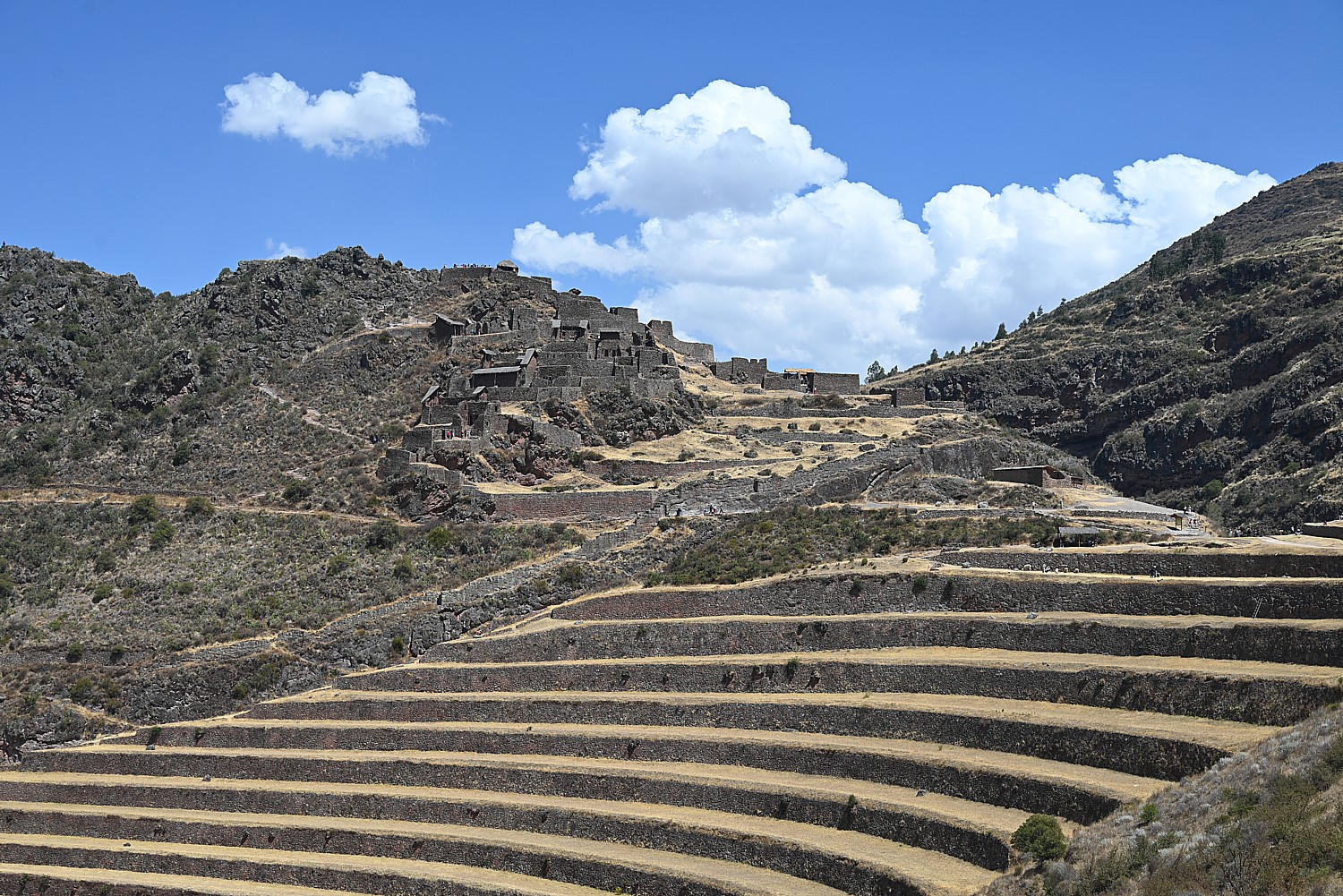
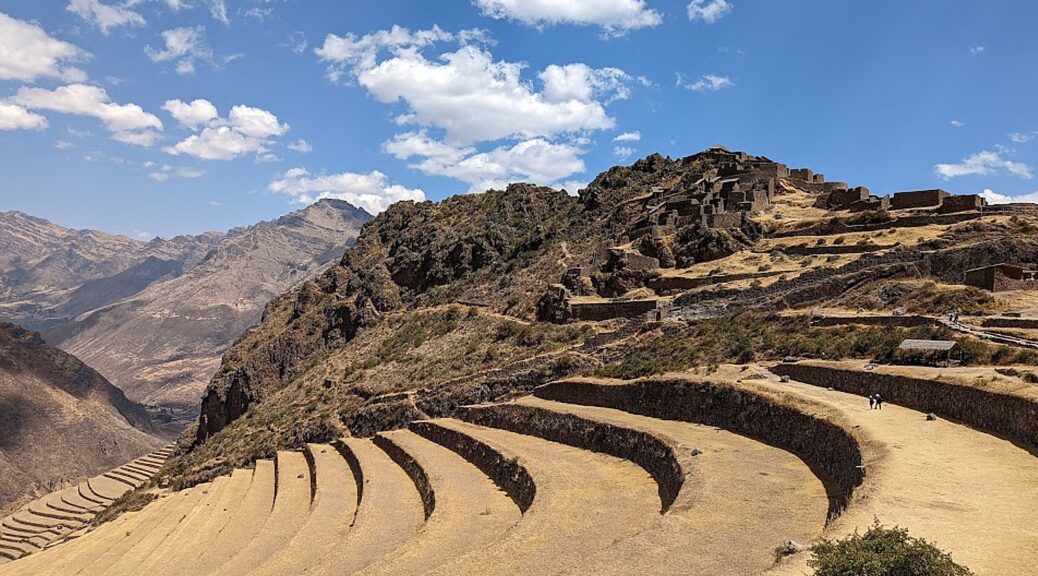
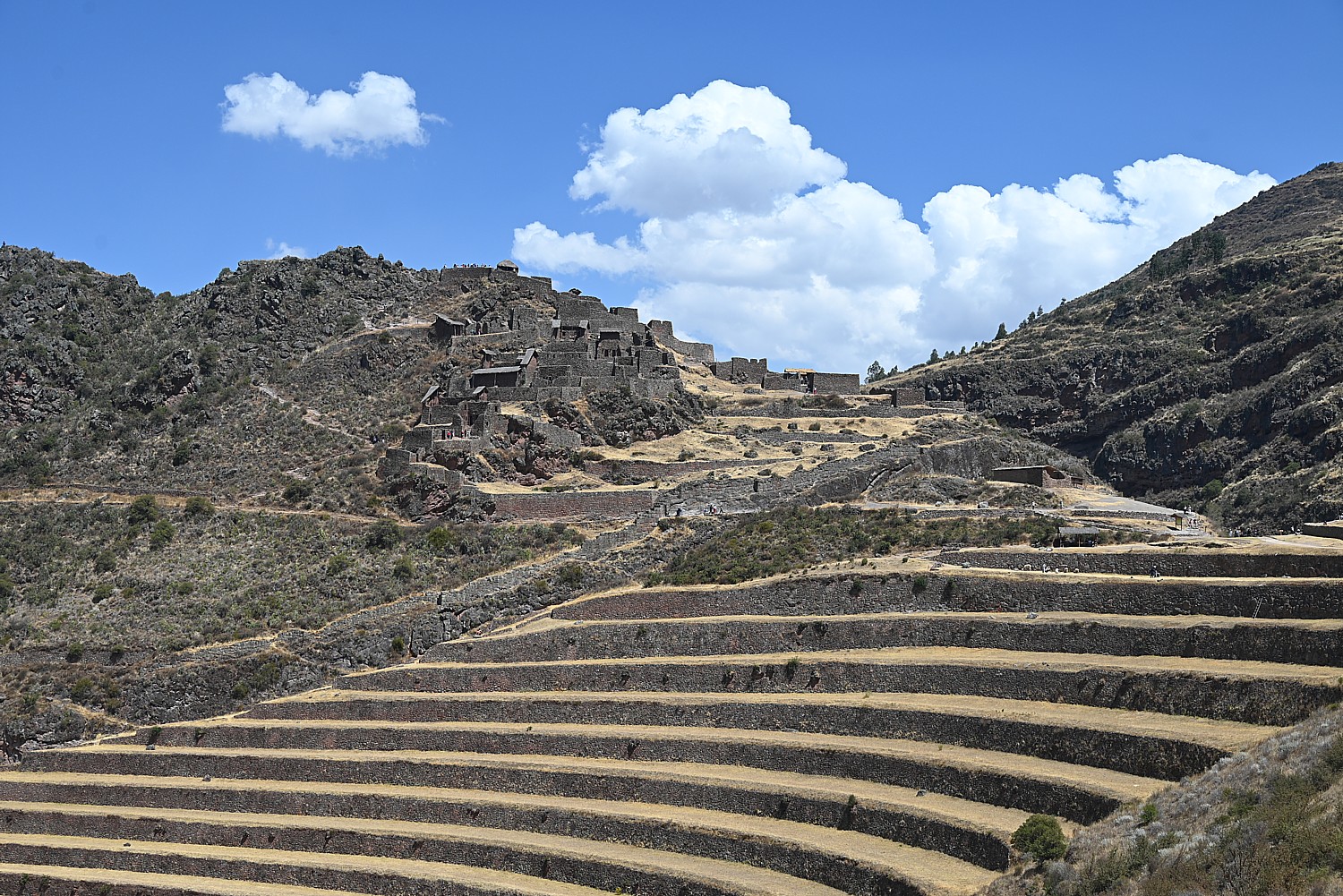
Pisac, Incan archeological site © Karen Rubin/goingplacesfarandnear.com
 

By Karen Rubin, Eric Leiberman & Sarah Falter

Travel Features Syndicate, goingplacesfarandnear.com

The Incan ruins at Pisac in Peru’s Sacred Valley on this one-day Alpaca Expeditions tour are our first introduction to the massive scale of Incan building projects. Though there were settlements here before who built terraces (there were two other major empires before the Inca), it was the Inca emperor Pachacuti who conquered the area in the mid 1400s who ordered the building of a sprawling mountain complex covering 162 acres.
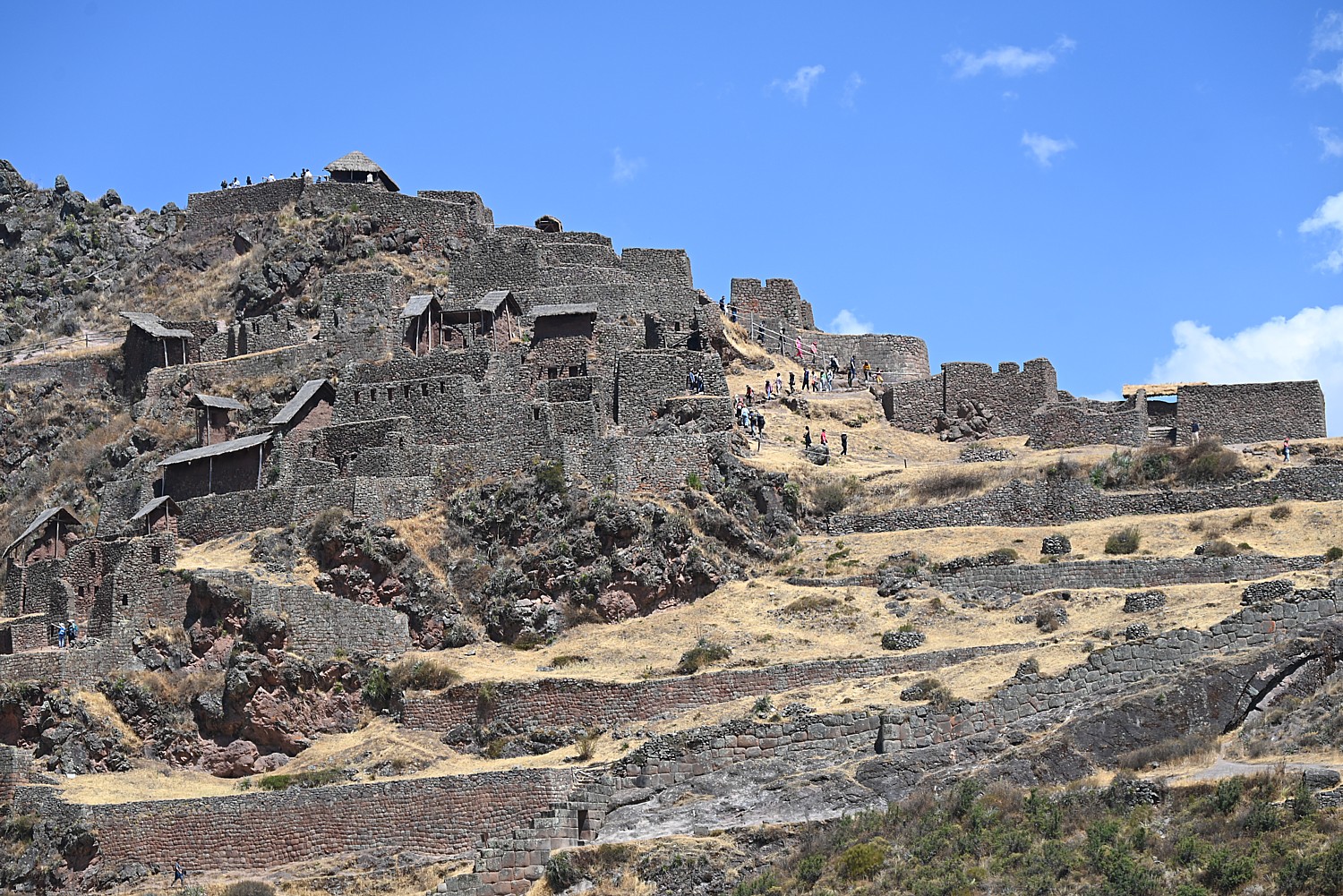
Pisac, Incan archeological site © Karen Rubin/goingplacesfarandnear.com
 

Pachacuti (who also built Machu Picchu, our ultimate destination on Alpaca Expeditions’ four-day/three-night Inca Trail trek) built Pisac as a multi-purpose residence, citadel, observatory and religious site – a secluded royal retreat outside of Cusco where he and nobility could “relax” between military campaigns, undertake ritual and religious ceremonies and be a defensive refuge.  Francisco Pizarro and the Spanish conquistadors destroyed the Inca complex.
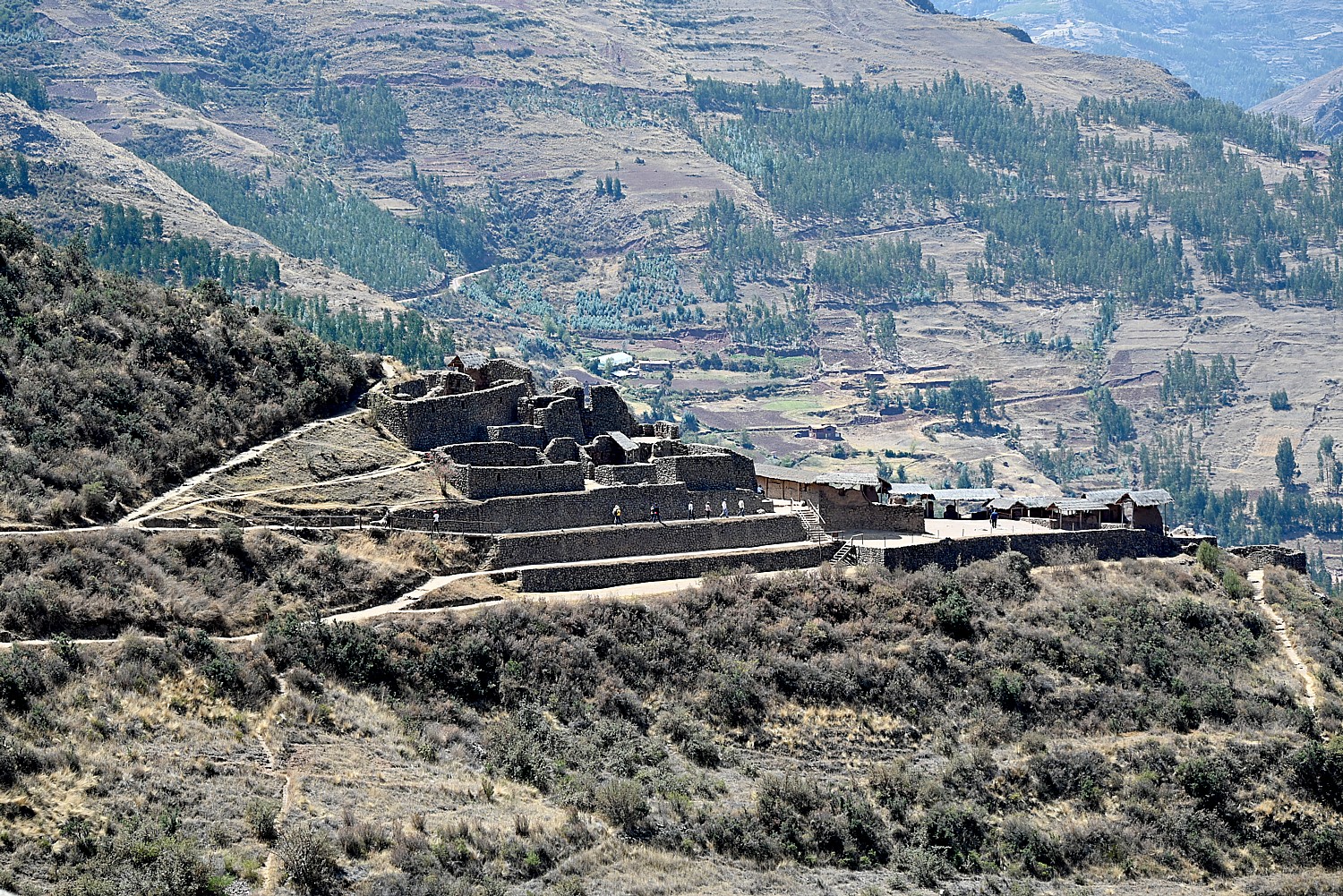
Pisac, Incan archeological site © Karen Rubin/goingplacesfarandnear.com
 

In fact, it seems most of what we associate with the Incan Empire came under the rule of Sapa Inca (paramount leader) Pachacuti-Cusi Yupanqui, whose name meant “earth-shaker”. Beginning in 1438, he and his son Tupac Yupanqui began a far-reaching expansion that brought much of the modern-day territory of Peru under the ruling Inca family control.

At the time of the Spanish conquest, the Incan Empire extended 3,000 miles, connected by an elaborate network of roads, and had built these monumental structures at Cuzco, Pisac, Ollantaytambo  and Machu Picchu– without the benefit of draft animals like the horse, the wheel, iron or steel tools, written language or currency.
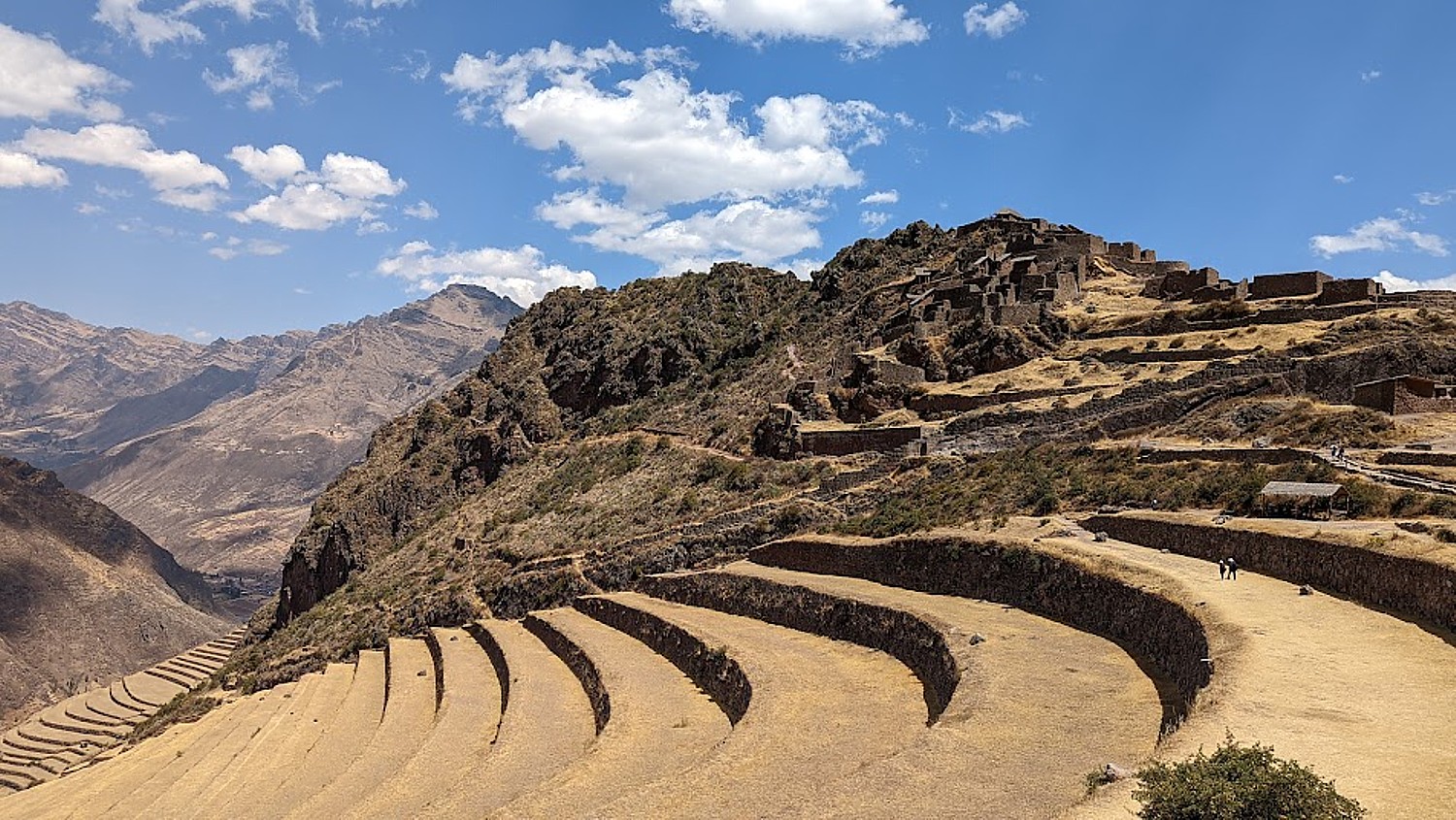
Pisac, Incan archeological site © Karen Rubin/goingplacesfarandnear.com
 

How was that possible?

Our Alpaca Expeditions guide Jaime explains how the Incan society was organized – its principles of labor and work.
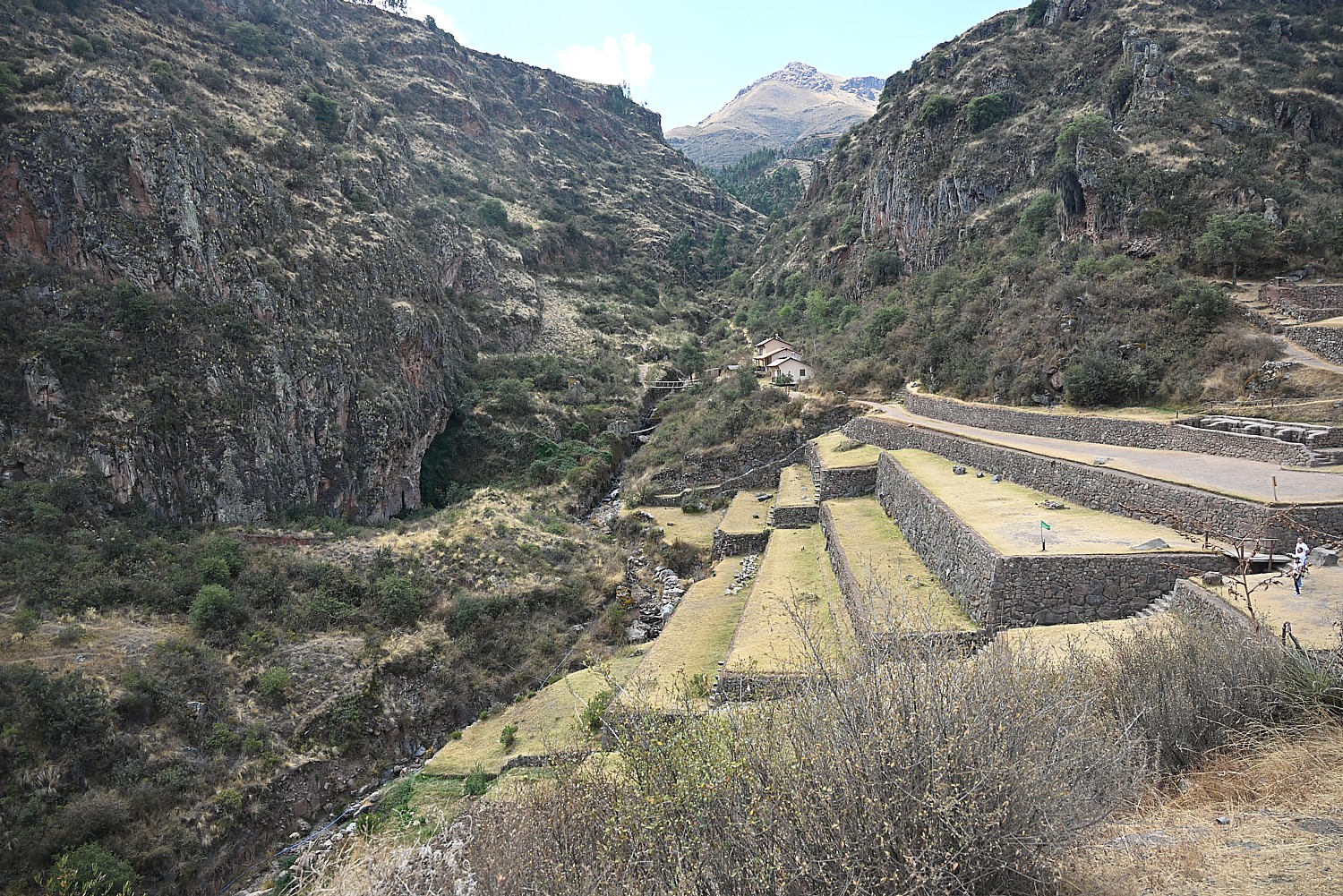
Pisac, Incan archeological site © Karen Rubin/goingplacesfarandnear.com
 

 “The Inca had three layers of labor,” Jaime tells us: Anyi (reciprocity); Minka (communities work together) and Mita (a labor tax, where every man had to give two to three months of service to the government or serve in the military each year). By combining their political authority with religious authority, the people drafted to build the Inca’s palaces and temples did it as much out of devotion to god as their obligation to give service the state.
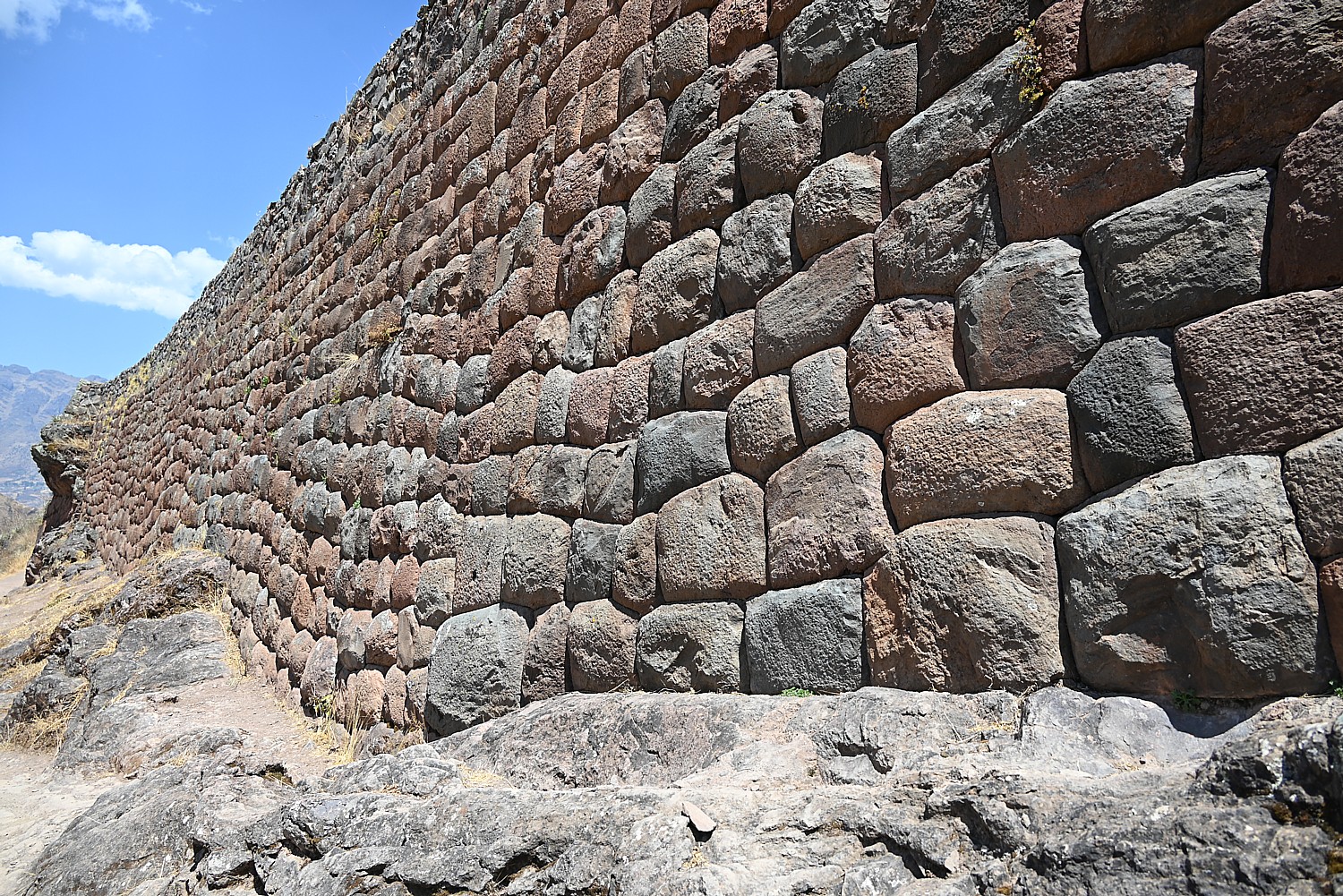
The Inca believed the mountains and stones were sacred so they would build on top of the bedrock rather than disturb it © Karen Rubin/goingplacesfarandnear.com
 

Societal behavior was governed by three moral precepts: Ama sua: Do not steal; Ama llulla: Do not lie; and Ama quella: Do not be lazy.

How long would it have taken to build Pisac? Jaime says that each ruler would have designated his own project that had to be completed in his lifetime and not left to a successor (which is why most of these sites we see were not finished).
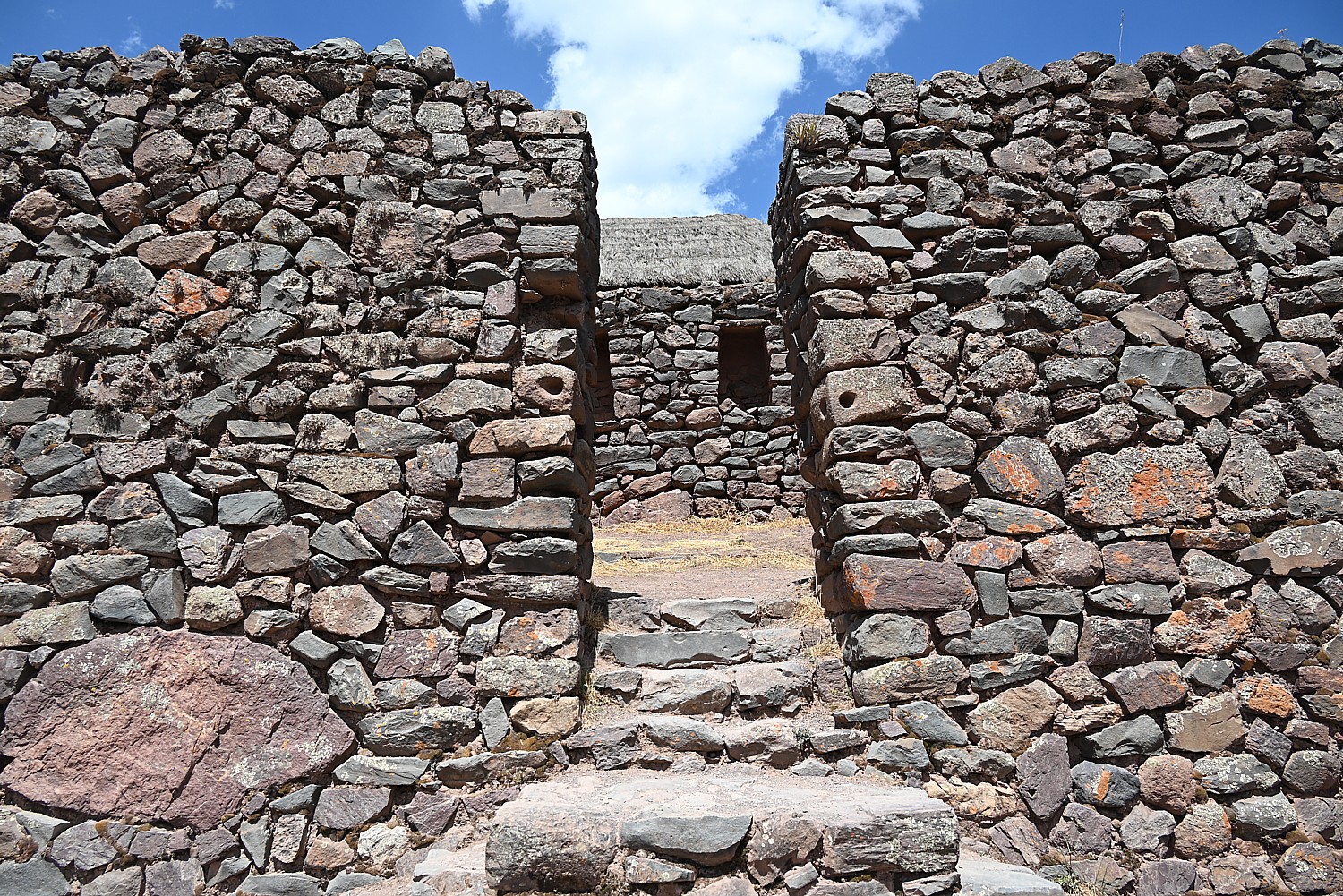
The Inca believed the mountains and stones were sacred so they would build on top of the bedrock rather than disturb it © Karen Rubin/goingplacesfarandnear.com
 

At the high point of Pisac, 3,594 meters (11,791 feet elevation), there is a watchtower, from which guards would have sent and received messages by blowing a conch. It might announce that the Inca king was coming and to be ready, or a threat.

The Inca worshipped the mountain and the rocks, so would integrate the mountain contour into the structure, rather than alter it, building on top of the bedrock.

Pisac, Incan archeological site © Karen Rubin/goingplacesfarandnear.com

Jaime explains how the terraces were built – how they would build from the bottom to the stone wall, digging a couple of feet into the ground, use a tree as a lever, filling three layers of material – soil-gravel-big stones – so that the water would drain to the lower terrace. They used a rudimentary tool – a long stick with a stone or metallic point, and one man would use it like a spade and a second would turn the soil over.

The Inca family was “pure”, but could name a non-Incan as chief. Someone could ascend to noble rank if they had a skill. An Incan ruler would have an official wife who would also be Incan, and only her children would inherit, but he could have as many concubines as they liked, and would have dozens of children.

“It was a very organized (and controlled) society.”
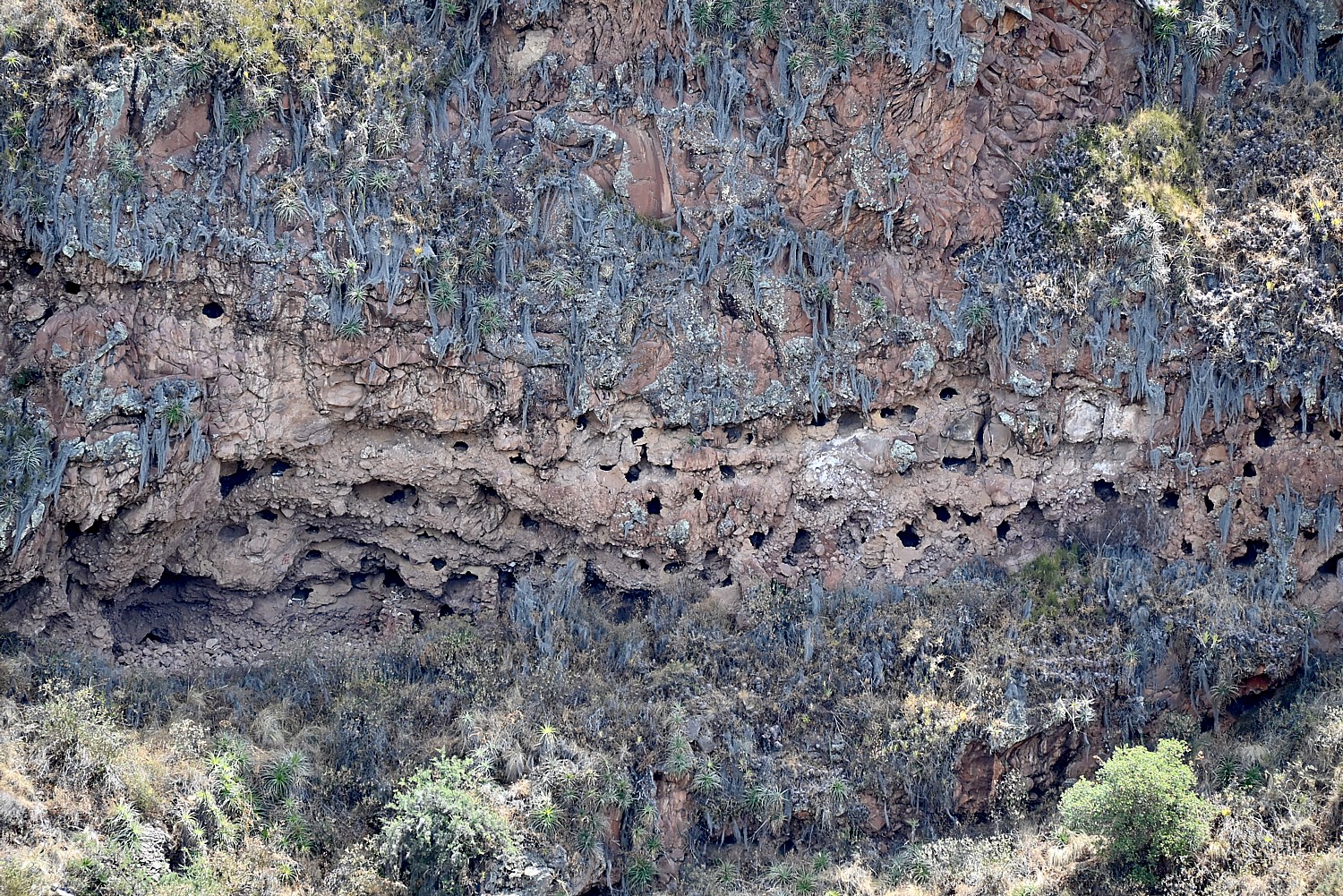
Holes in the mountain at Pisac indicate where graverobbers hoped to find treasure buried along with the body © Karen Rubin/goingplacesfarandnear.com

At another overlook, we see where some 3,000 holes have been made in a cliff – created by grave robbers. At this site, people were buried in caves with their belongings so they would have them for the next world. The king and nobles, though, were mummified and put into a mausoleum.
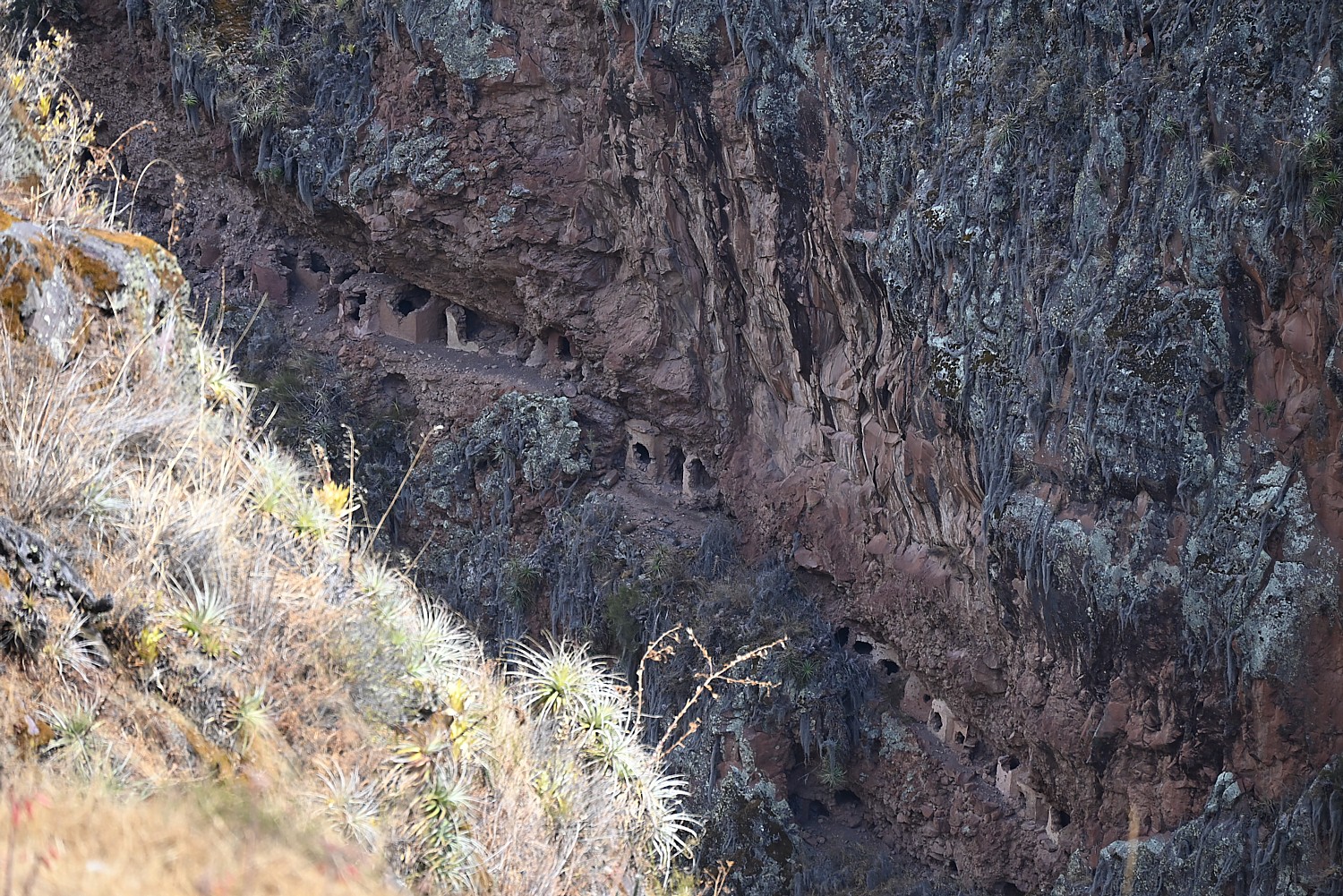
Pre-Incan cliff dwellings at Pisac © Karen Rubin/goingplacesfarandnear.com

We also see the remains of pre-Incan cliff dwellings. “They were afraid of cannibals” who believed they could ingest their victim’s power. “It was practiced until the mid-1800s.” Also, 1000-2000 years ago, there more wild animals and the people lived in cliffs to be safe.

We drive down into the town of Pisac which was built in the valley below the ruins by Viceroy Toledo in the 1570s, where Eric has found a local Andean restaurant online for lunch.

Alpaca Expeditions’ one-day Sacred Valley tour is an opportunity to visit villages as well as major important archeological sites © Karen Rubin/goingplacesfarandnear.com

Pisac is famous for its market. Official market days are Tuesday, Thursday and Sunday filling the Plaza Constitución but the market is busiest on Sunday when indigenous Quechua communities from the surrounding area come to town to sell their produce and stock up on supplies for the week. We have very little time to explore the market. (We need to be back in Cuzco at 6 pm for our mandatory orientation for the Alpaca Expeditions trek to Machu Picchu.)
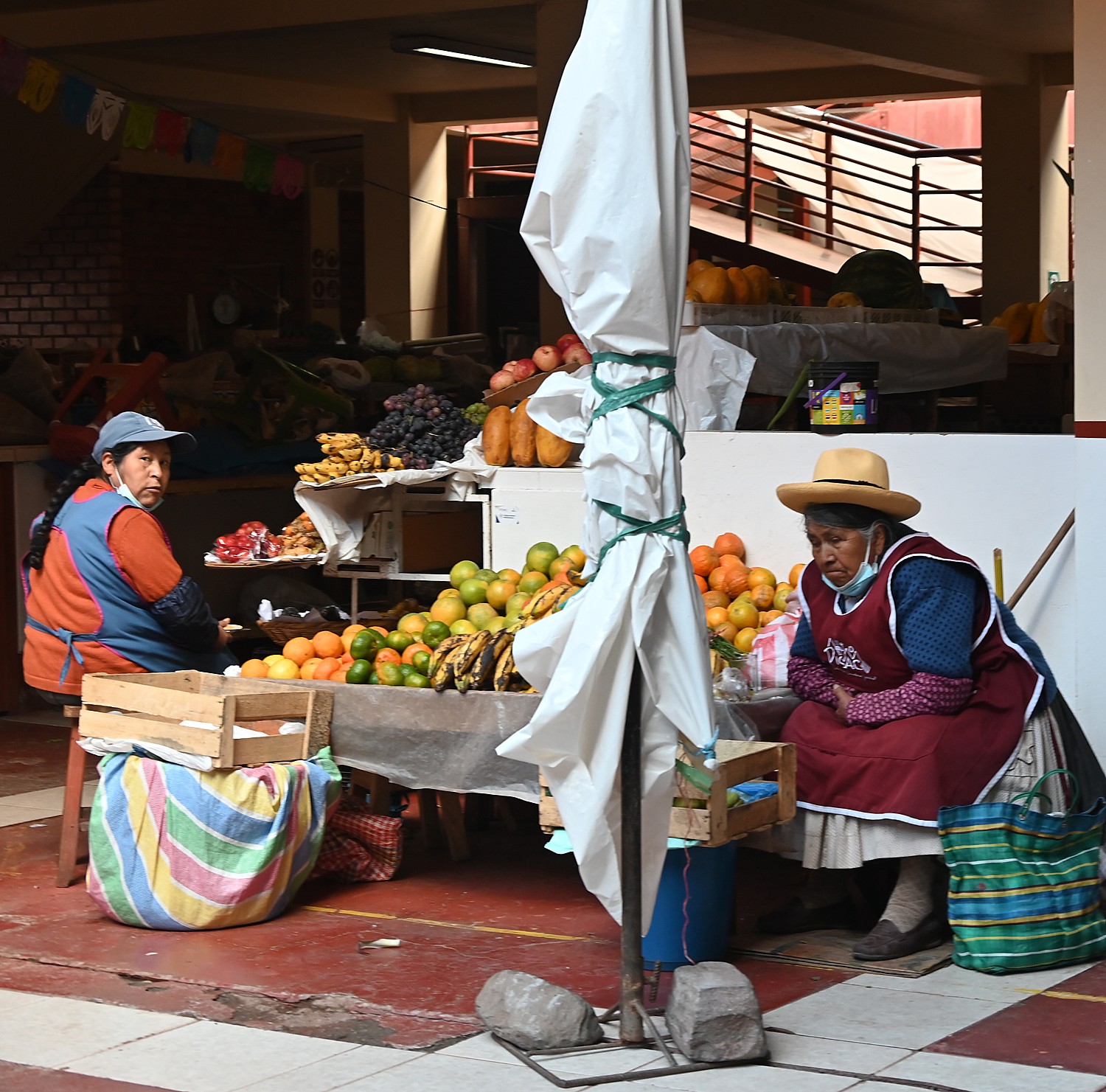
Alpaca Expeditions’ one-day Sacred Valley tour is an opportunity to visit villages as well as major important archeological sites © Karen Rubin/goingplacesfarandnear.com

We would also have liked time to visit the museum, Comunitario de Pisac, which opened in 2009 with exhibits on the production of ceramics and the traditional textiles produced by local Quechua communities. A room is dedicated to the Incan presence in the area covering its development from the archaic period (7,000 to 800 BC) to the period of imperial expansion of the Inca state (1400 to 1535). The museum includes a graphical presentation of the various areas of the imperial city, as well as various ceramic objects and remains (including Incan mummies).

Ollantaytambo

After lunch, we drive 1 ½ hours further to Ollantaytambo, a fascinating and massive Incan site built during the Inca’s heyday which provides an excellent preview of what we will experience at Machu Picchu. Here, we see rock formations representing the Incan god, Wiracocha (the god of creation), and the Church of St. James on top of Inca site.

Rock formation representing the Incan god, Wiracocha (the god of creation) at Ollantaytambo (note the crown on his head) © Karen Rubin/goingplacesfarandnear.com

The large boulders, 40-50 tons each,  were so finely finished with curved and convex edges and placed, indicate that this structure would have been the temple; boulders that are basically piled up show that it was never finished. He points out the slight angle of the wall – meant to for stability in the event of an earthquake.
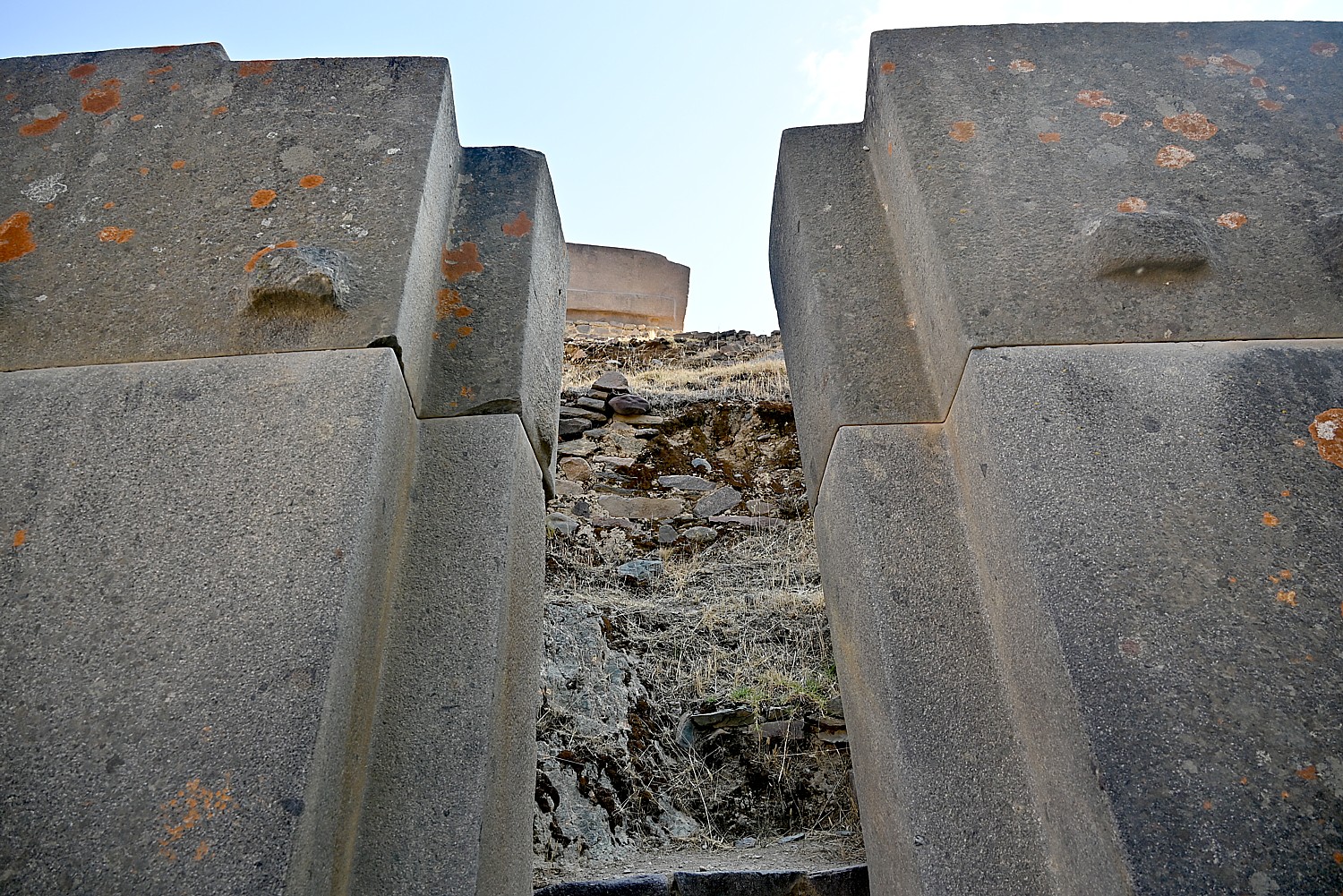
It’s almost impossible to contemplate how the Inca cut such stone, let alone how they moved them from the quarry and put them in place on a mountainside to build Ollantaytambo © Karen Rubin/goingplacesfarandnear.com

“They believed rocks were beings,” Jamie says. “From the quarry to the structure they may whip the rock (rather than the person)“ to get it to coooperate. There would have been a model of the structure they were building in ceramic or stone at the quarry and most of the carving would have been done there, where there was more room, the finishing touches would be done at the site. In the distance we can see the two quarries but it is unfathomable how they managed to move these multi-ton boulders.
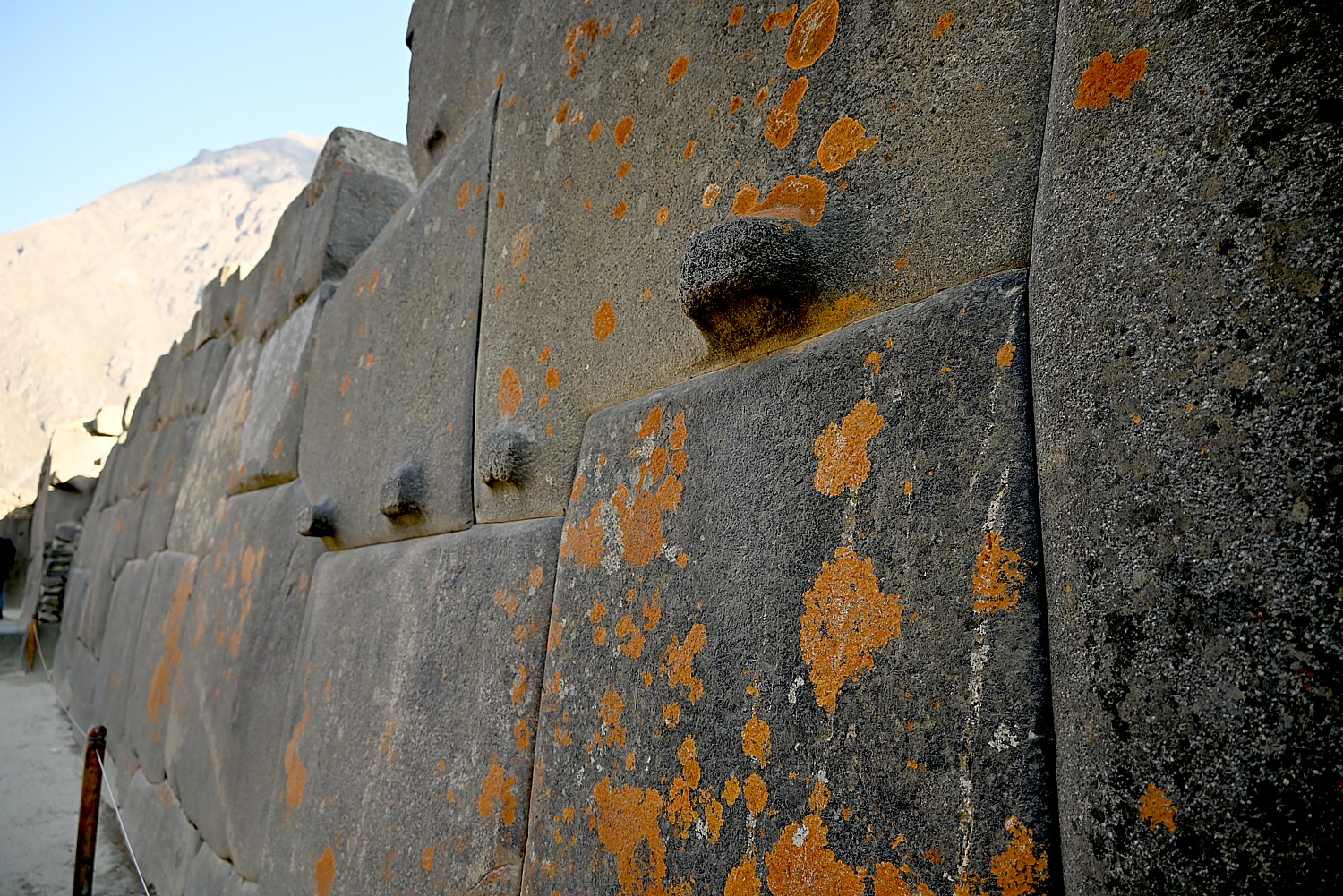
It’s almost impossible to contemplate how the Inca cut such stone, let alone put them in place on a mountainside to build Ollantaytambo. Note how many angles there are in this boulder © Karen Rubin/goingplacesfarandnear.com

At the Temple of Water, we see how the Inca used water for irrigation as well as for drinking. The window opening was cut to align with the solstice, and water, diverted from the river, would be directed back into the channel.
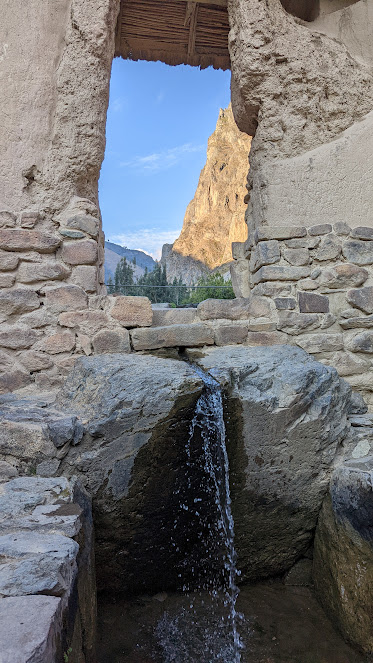
The Temple of Water Ollantaytambo – the window lines up with the stolstice, while the water was directed into the temple and then directed out to a channel © Karen Rubin/goingplacesfarandnear.com

I was concerned that I was huffing and puffing climbing around the site – realizing this was part of my acclimation to the altitude but anxious that it did not bode well for the Inca Trail trek we would be starting the next morning. I half imagined the Alpaca Expeditions guide would tap me on the shoulder and tell me I wasn’t suited for the trek. 

You could easily spend 2-4 hours here – there is so much to explore – and then spend time in the gorgeous market in the charming village just outside the walls. But we have to rush back – it’s about 3 hours drive back to Cuzco – to get to our mandatory 6 pm orientation at Alpaca Expeditions’ offices for our Inca Trail trek.
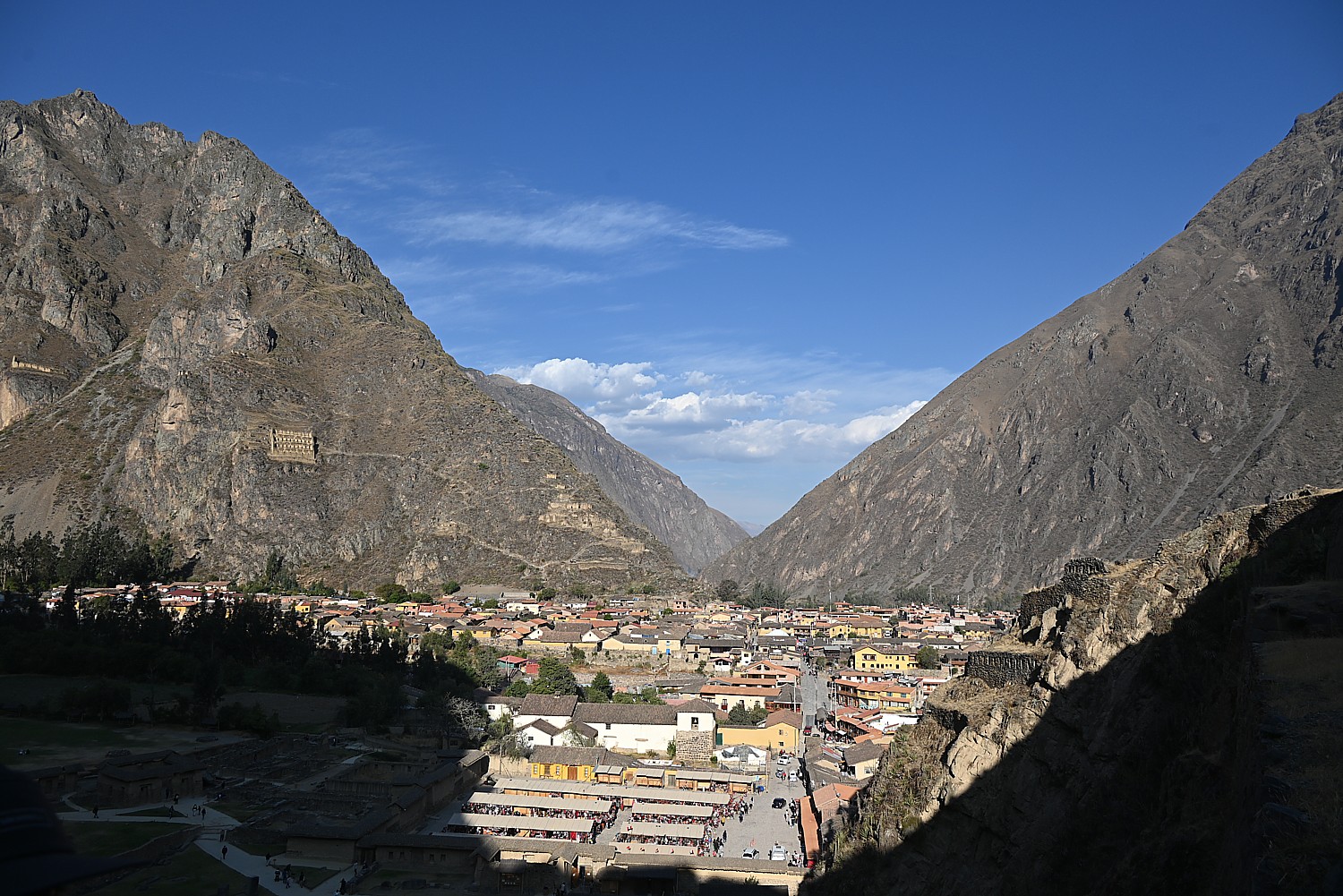
The town of Ollantaytambo is at the base of the archeological site © Karen Rubin/goingplacesfarandnear.com

The next morning, when our bus taking our group to the start of the Inca Trail trek stops in this very village to pick up a couple from their hotel here, we realize we could have organized our tour differently – done the orientation the night we arrived and stayed overnight in Ollantaytambo. Then we could have had more time to really enjoy the site and the village and instead of getting picked up at our hotel in Cuzco at 4 am could have been picked up here at 6 am. (In this scenario, we still would have left our luggage back at the Amaru Inca hotel in Cuzco where we will return after the Inca Trail to Machu Picchu trek, and just had with us what we were taking on the trek.)
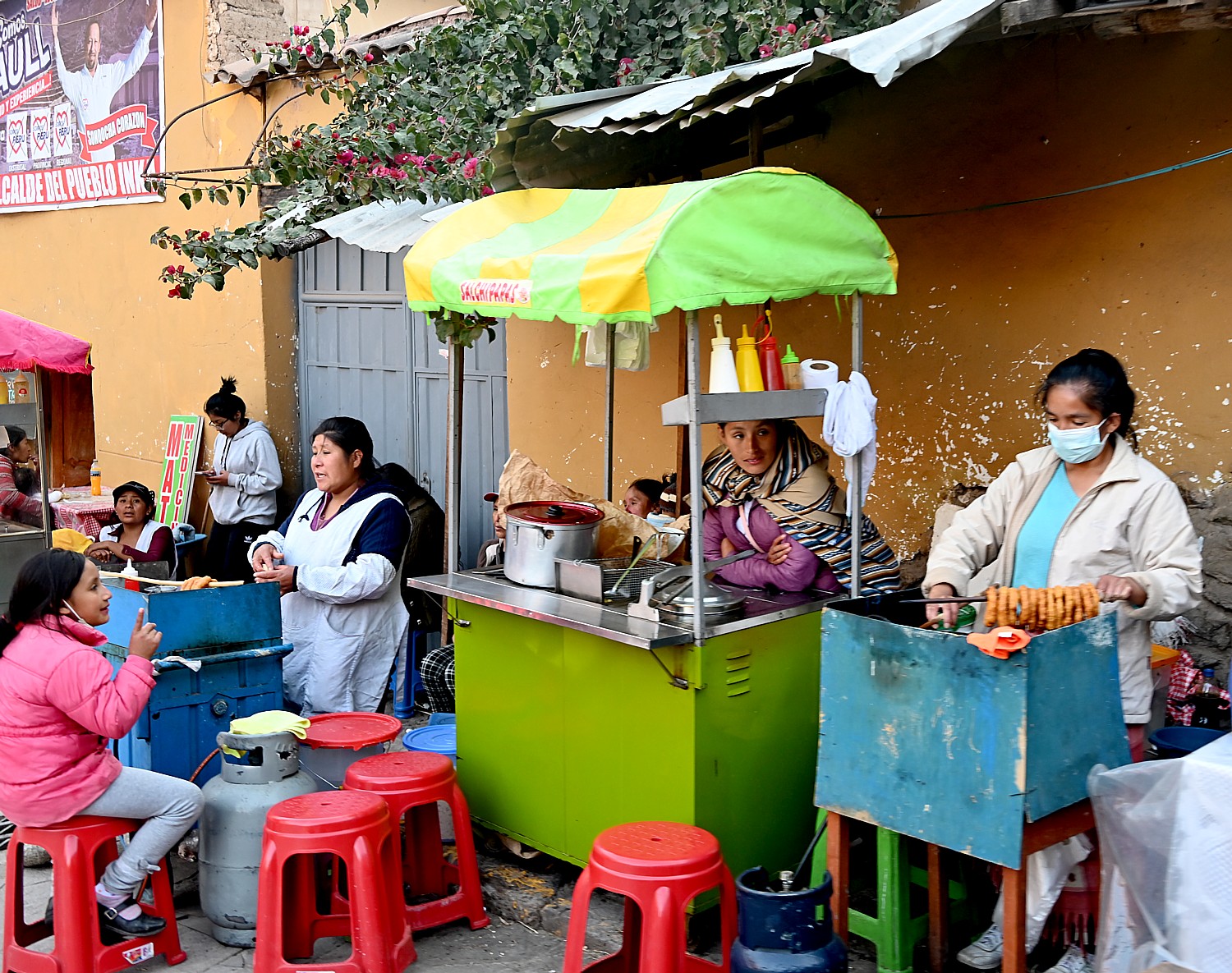
Everyday life in the town of Ollantaytambo is at the base of the archeological site © Karen Rubin/goingplacesfarandnear.com

It is also possible to combine a stay in Ollantaytambo with Machu Picchu without doing the four-day Inca Trail trek. Alpaca Expeditions has various tour options with shorter or no hiking.
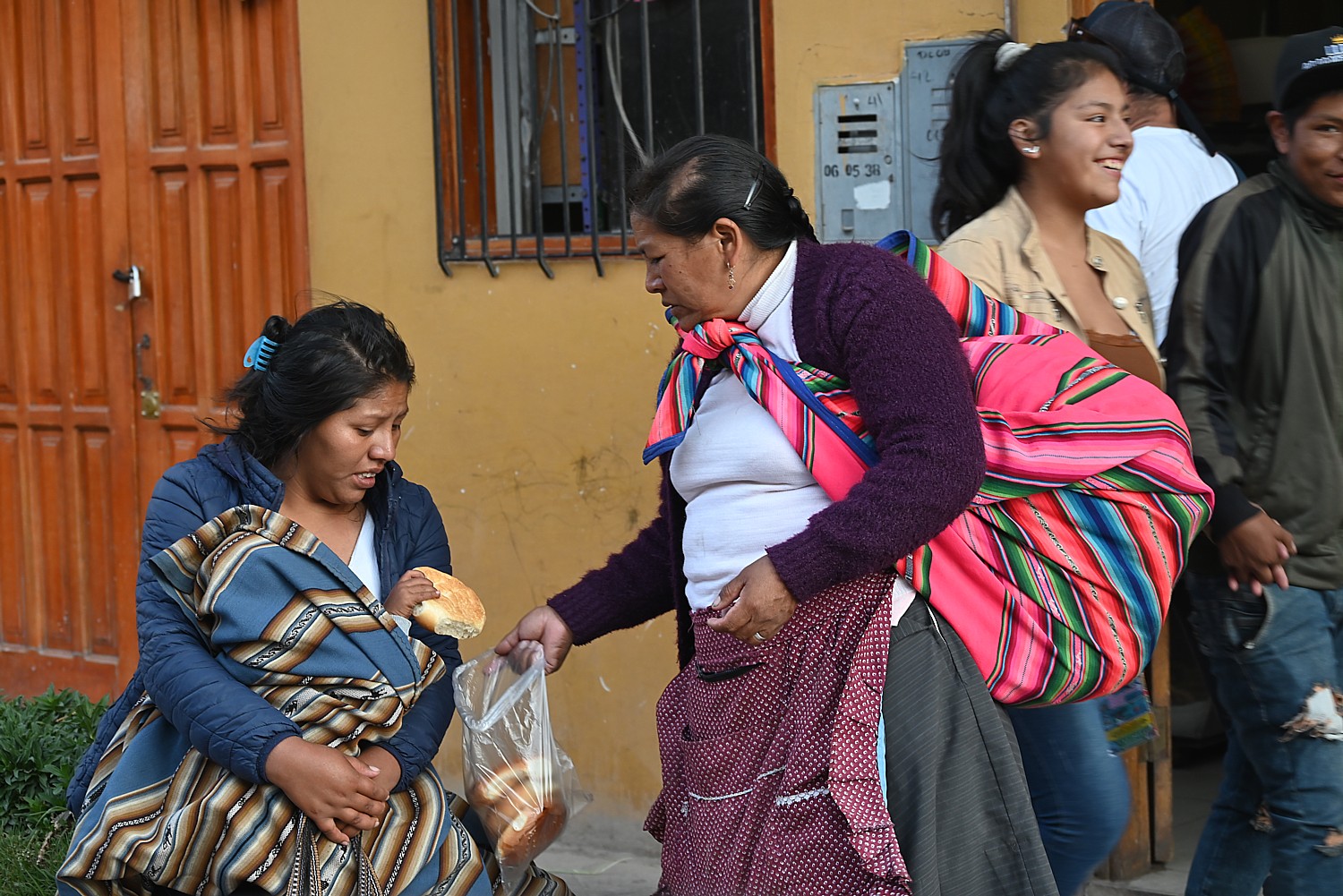
Everyday life in the town of Ollantaytambo is at the base of the archeological site © Karen Rubin/goingplacesfarandnear.com

The permits to do the Inca Trail trek are limited to 500 a day for all the trekking companies and get booked up months in advance.

To see all the options for touring, visit Alpaca Expeditions, USA Phone: 202-550-8534, info@alpacaexpeditions.com, raulmanager@alpacaexpeditions.com, https://www.alpacaexpeditions.com/

Arriving back in Cuzco for our orientation to the Alpaca Expeditions four-day/three-night hike/camping trek to Machu Picchu © Karen Rubin/goingplacesfarandnear.com

Next: Trekking the Inca Trail to Machu Picchu

See also:

VISIT TO PERU’S SACRED VALLEY IS BEST WAY TO PREPARE FOR INCA TRAIL TREK TO MACHU PICCHU

INCAN SITES OF PISAC, OLLANTAYTAMBO IN PERU’S SACRED VALLEY ARE PREVIEW TO MACHU PICCHU

ALPACA EXPEDITIONS’ INCA TRAIL TREK TO MACHU PICCHU IS PERSONAL TEST OF MIND OVER MATTER

DAY 1 ON THE INCA TRAIL TO MACHU PICCHU: A TEST

DAY 2 ON THE INCA TRAIL TO MACHU PICCHU: DUAL CHALLENGES OF DEAD WOMAN´S PASS, RUNCURACCAY

DAY 3 ON THE INCA TRAIL TO MACHU PICCHU: TOWN IN THE CLOUDS, TERRACES OF THE SUN & FOREVER YOUNG

DAY 4 ON THE INCA TRAIL: SUN GATE TO MACHU PICCHU, THE LOST CITY OF THE INCAS

__________________

© 2022 Travel Features Syndicate, a division of Workstyles, Inc. All rights reserved. Visit goingplacesfarandnear.com, www.huffingtonpost.com/author/karen-rubin, and travelwritersmagazine.com/TravelFeaturesSyndicate/. Blogging at goingplacesnearandfar.wordpress.com and moralcompasstravel.info. Visit instagram.com/going_places_far_and_near and instagram.com/bigbackpacktraveler/ Send comments or questions to FamTravLtr@aol.com. Tweet @TravelFeatures. ‘Like’ us at facebook.com/NewsPhotoFeatures

Visit to Peru’s Sacred Valley is Best Way to Prepare for Inca Trail Trek to Machu Picchu

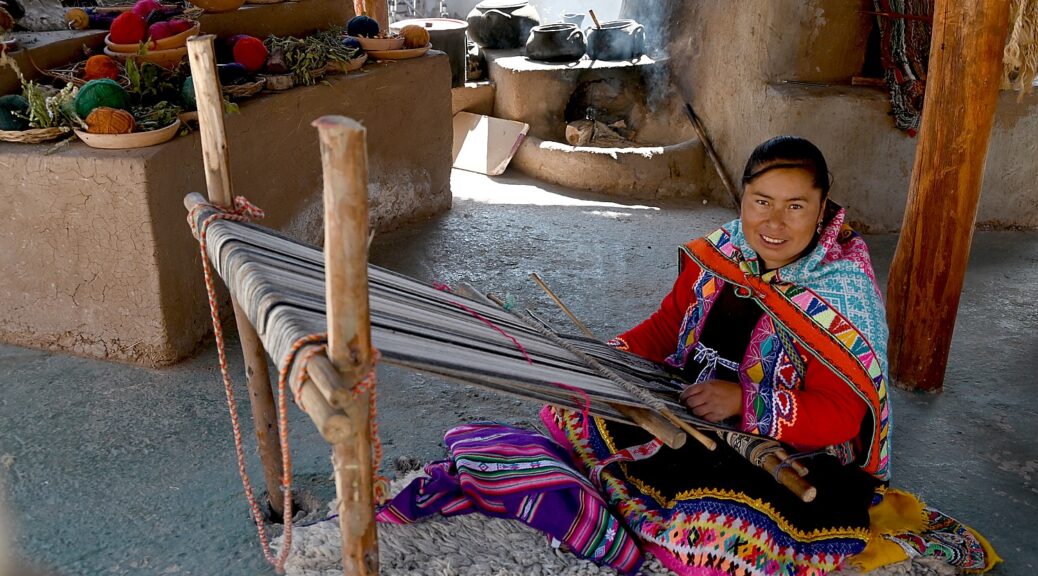
A weaver at Manos de la Comunidad, a handicraft center where we see the different varieties of llama and alpaca, learn about how the wool is produced, the raw materials that the dyes are made from, and watch villagers at their looms make stunning textiles on Alpaca Expeditions’ Sacred Valley tour © Karen Rubin/goingplacesfarandnear.com

By Karen Rubin, Eric Leiberman & Sarah Falter

Travel Features Syndicate, goingplacesfarandnear.com

We prepare for our Alpaca Expeditions four-day/three-night Inca Trail hiking/camping trek to Machu Picchu by spending an extra day Cuzco and the Sacred Valley – the best way to begin to acclimatize to the high altitude before the trek, which goes up to nearly 14,000 feet. This not only helps us avoid debilitating altitude sickness but also lays the foundation for appreciating what we will see and experience along the trail.

While it would be better to have arranged two or three days to acclimate before the trek – which would also provide more time to visit the extraordinary sights in Cuzco, Pisac and Ollantaytambo – having come from a week in the Galapagos for this grand finale to Eric and Sarah’s six-month odyssey, we only have one full day before starting out on the trek, so Alpaca Expeditions’ one-day Sacred Valley tour is ideal.

Our guide, Jaime, picks us up at 8 am our charming boutique hotel, the Amaru Inca (Cuesta San Blas, 541, Cusco City Center, Cusco, 84) which must once have been a hacienda, and we set out in private car into the countryside, where we immediately see neighborhoods, villages and communities.

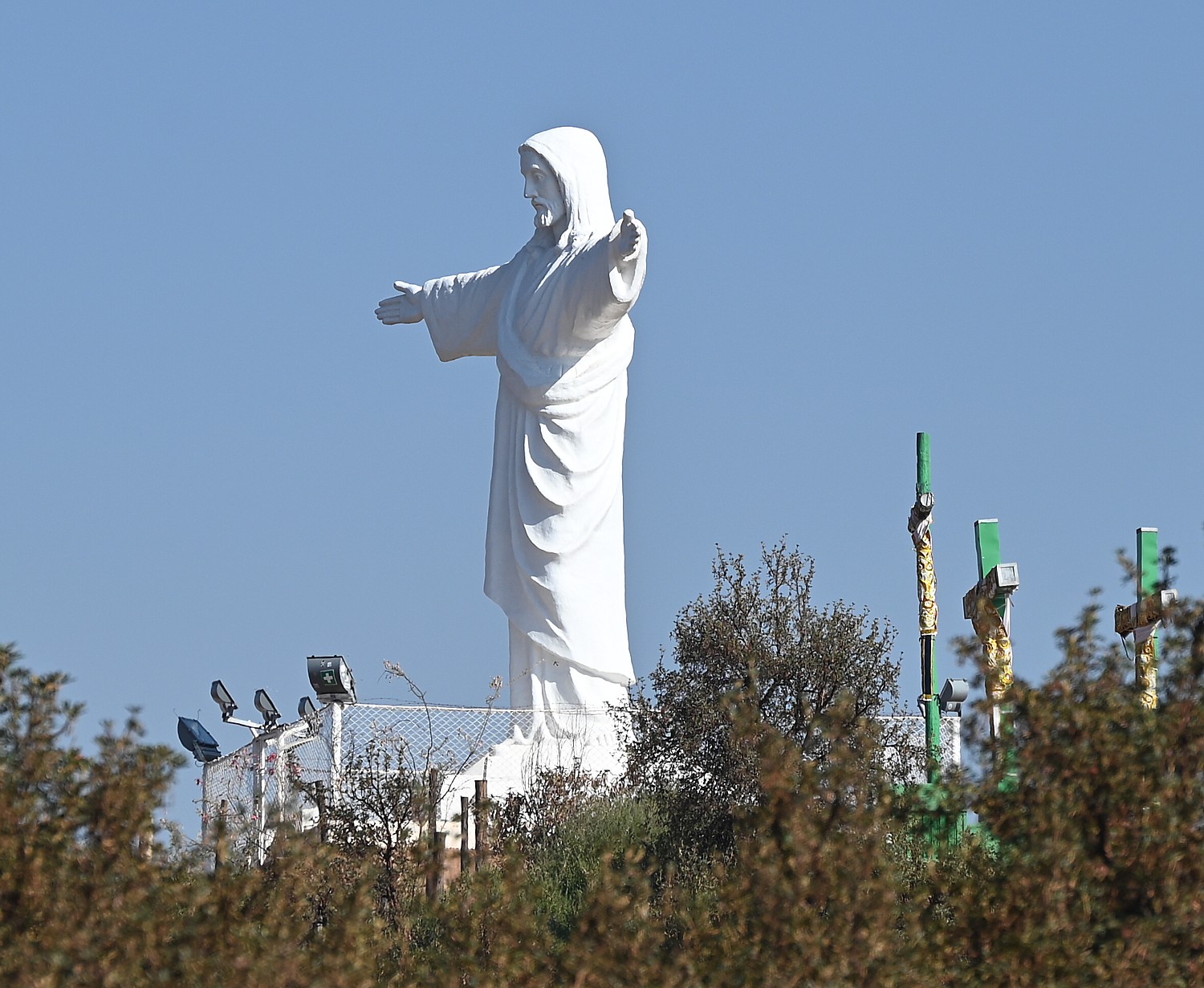
Cuzco’s most famous monument, the statue of Christo Blanco with open arms that overlooks the city © Karen Rubin/goingplacesfarandnear.com

The road begins its twisting rise into the mountains and Jaime stops just before the Sacsayhuaman fortress at a point where we are level with Cuzco’s most famous monument, the statue of Christo Blanco with open arms that overlooks the city. Eight meters high, it was created by Cusco sculptor Francisco Olazo – a gift from Palestine in 1945 – and a mini version of Rio’s statue. From here, the Cathedral and churches and Spanish-style buildings are most prominent.

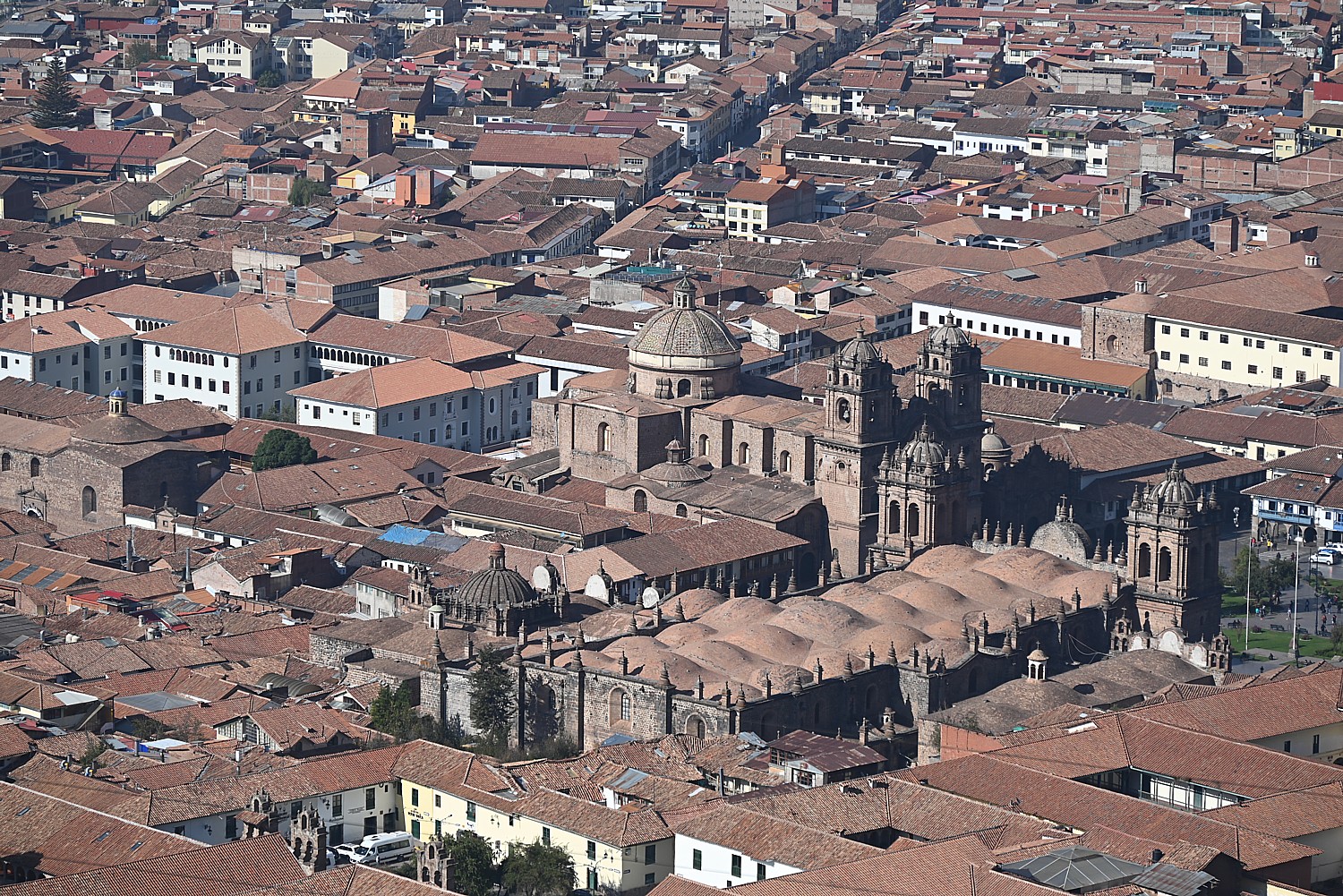
Looking down at Cuzco, you see the Spanish structures built over the Incan structures © Karen Rubin/goingplacesfarandnear.com

Cuzco was the capital of the Incan Empire and the “navel” of the world, according to its lore. At its peak, had 30,000-40,000 inhabitants.

“There is nothing like Cuzco in any other part of South America for the concentration of people and sites,” Jamie says.  There are some 1,250 sacred sites in Cuzco.

The hostels we stay in today were once grand homes – first of Inca rulers who began to take over Cuzco in 1000 AD, then rich Spaniards who came in the first century after conquest, in 1536.

The Incan heritage pretty much had to be resurrected because the Spanish did their level best to eradicate the culture, and especially the “pagan” religion which was based on nature worship – literally building their palaces and churches on top of the original foundation stones of the Incan palaces and temples.

“It’s as if they were saying, ‘We are built upon your gods. Submit.’”

The Spanish conquerors intentionally eradicated the Incan culture and society © Karen Rubin/goingplacesfarandnear.com

The center square, would have been the city’s market place and where religious ceremonies would have been held, was renamed by the Spanish the Plaza de Armas – the place of arms – where they would have held executions of rebels.

Our guide Jamie explains that the Inca were actually the ruling family – not the people – who basically ruled over some 50 different tribes and city-states, speaking different languages.  Some 20,000 to 40,000 Inca nobility ruled over a population of 10 to 20 million that at its peak, spanned as far as Columbia, Ecuador, Chile and Argentina. The Inca expanded its empire from Cuzco by conquest and “diplomacy” between 1000 and 1536, reaching its peak in the mid 1400s, 125 years before the Spanish conquest.

What is so remarkable is the Empire the Inca built – the monumental architecture and 3,000-miles of road network reaching all corners of the empire – was accomplished without the benefit of draft animals like the horse, the wheel, iron or steel tools, a written language, currency, or slaves.

How was it possible for a few hundred Spanish conquistadors to conquer the Incan Empire ? The Spanish seemed to arrive during a perfect storm of turmoil and weakness in the Empire. The Inca Emperor Huayna Capac had died in 1529 after contracting smallpox, that likely came from Maya fleeing south along the roads the Inca built, who were infected by the Spanish and weakened the population; and two brothers were embroiled in a devastating civil war to become the new Emperor. Atahuallpa, the 13th and last emperor of the Inca, was victorious, only to be captured, held for ransom, and then executed by Francisco Pizarro.

But a key reason for the Spaniards’ success was that the tribal people were not motivated to battle the invaders. Many wanted to be rid of the Inca rulers and allied with Spaniards (“The Inca weren’t very nice,” Jamie says). Also, the Spaniards seemed to be endowed with supernatural power and the incarnation of the priests’ prophesy of an existential event akin to Armageddon.

The first group of 90 Spaniards arrived in Cuzco in 1533 in Cuzco and lived together with Cuzco population for three years. But in 1536, a second, larger, more militant group came, determined to take the Inca’s gold and silver (the Inca did not understand how the Europeans valued precious metals as a source of power) and forcibly replace the “pagan” religion with Christianity.

The Incan leader Manco realized the Spaniards weren’t leaving, so rose up against them, but the Incan weapons were no match. After the third battle, the indigenous population abandoned Cuzco and the Spanish took over their properties.

If the Spaniards would have come 50 years later, Jaime says, the Incan Empire may have taken over Mexico and been powerful enough, unified enough to drive the conquerors out, he says.

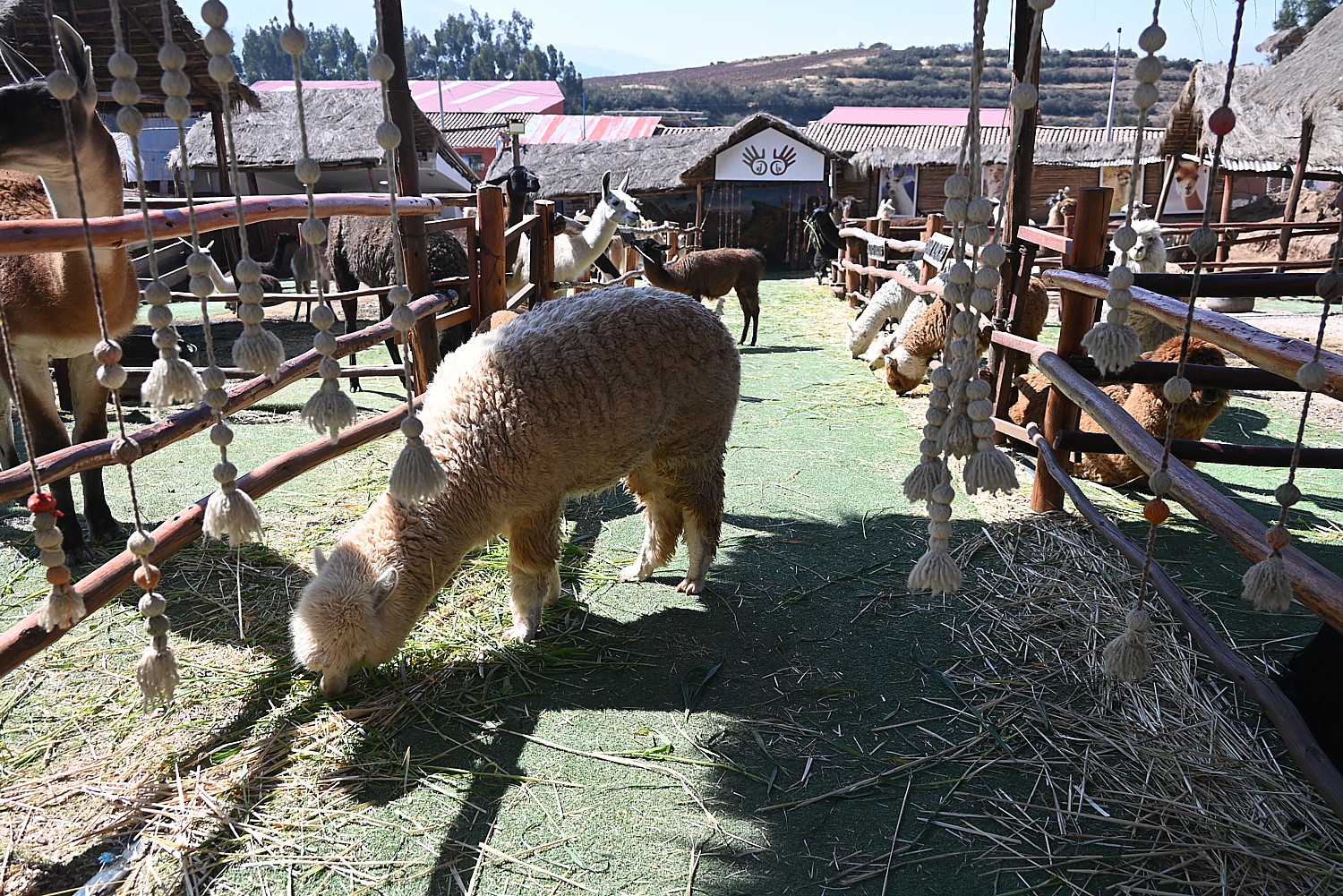
At the Manos de la Comunidad, a handicraft center, we learn the vital importance of domestication of llama and alpaca to the Incan Empire © Karen Rubin/goingplacesfarandnear.com

The Spaniards did whatever they could to eradicate the pagan religions. Some continued to observe  their religious rituals in secret – even up to modern day and as recently as 15 years ago, would practice secretly. Today people openly practice. “The church knows our religion was respecting nature,” Jamie says.

We stop at the Manos de la Comunidad, a handicraft center where we see the different varieties of llama and alpaca, learn about how the wool is produced, the raw materials that the dyes are made from, and watch villagers at their looms, make stunning textiles (there’s also a fantastic gallery, museum and a large store).

A weaver at Manos de la Comunidad, a handicraft center, © Karen Rubin/goingplacesfarandnear.com

This visit provides fascinating insights into the culture and heritage, the structure of society and the ecosystem that shaped and sustained the Incan Empire – the environment that supports agriculture in high altitude (enough food and calories to fuel the building of these monumental structures and support an army) and domestication of animals, how the natural materials at hand shaped the culture.

A weaver at Manos de la Comunidad, a handicraft center © Karen Rubin/goingplacesfarandnear.com

You realize how critical to the success of the Incan Empire the domestication of llama and alpaca were – for carrying goods and producing wool for clothes – the only domesticated animals in pre-Hispanic America. Also, the grasses were food for the animals but also used to make the ropes for bridges and hauling the massive stones (I suspect were also used to make the straight lines without the benefit of rulers.)

A weaver at Manos de la Comunidad, a handicraft center © Karen Rubin/goingplacesfarandnear.com

These finely-woven textiles and the monumental architecture were the main arts of the Incan Empire; instead of written communications they used knotted strings (quipu), which still cannot be deciphered but which (Karen postulates) might have been a kind of Morse code (so why can’t a computer crack the code?). The colors and patterns of clothes would communicate tribal affiliation, friend or foe.

The source of the natural dyes for the textiles © Karen Rubin/goingplacesfarandnear.com

The Inca’s success at farming had much to do with the fact the Inca calendar was tied to astronomy. Inca astronomers understood equinoxes, solstices and zenith passages and the Venus cycle. Religious leaders –the only others besides the nobles who were educated – used their knowledge as power over the people who were kept ignorant. The priests would use the solstice as if the people’s religious devotion would bring back the longer days. They couldn’t predict an eclipse, but they well understood how it operated.

Weavers at Manos de la Comunidad, a handicraft center © Karen Rubin/goingplacesfarandnear.com

The Inca also used mathematics to divide up political governance (a system of 10s), assess taxes, keep the census, and to do the calculations necessary to create such monumental architecture.

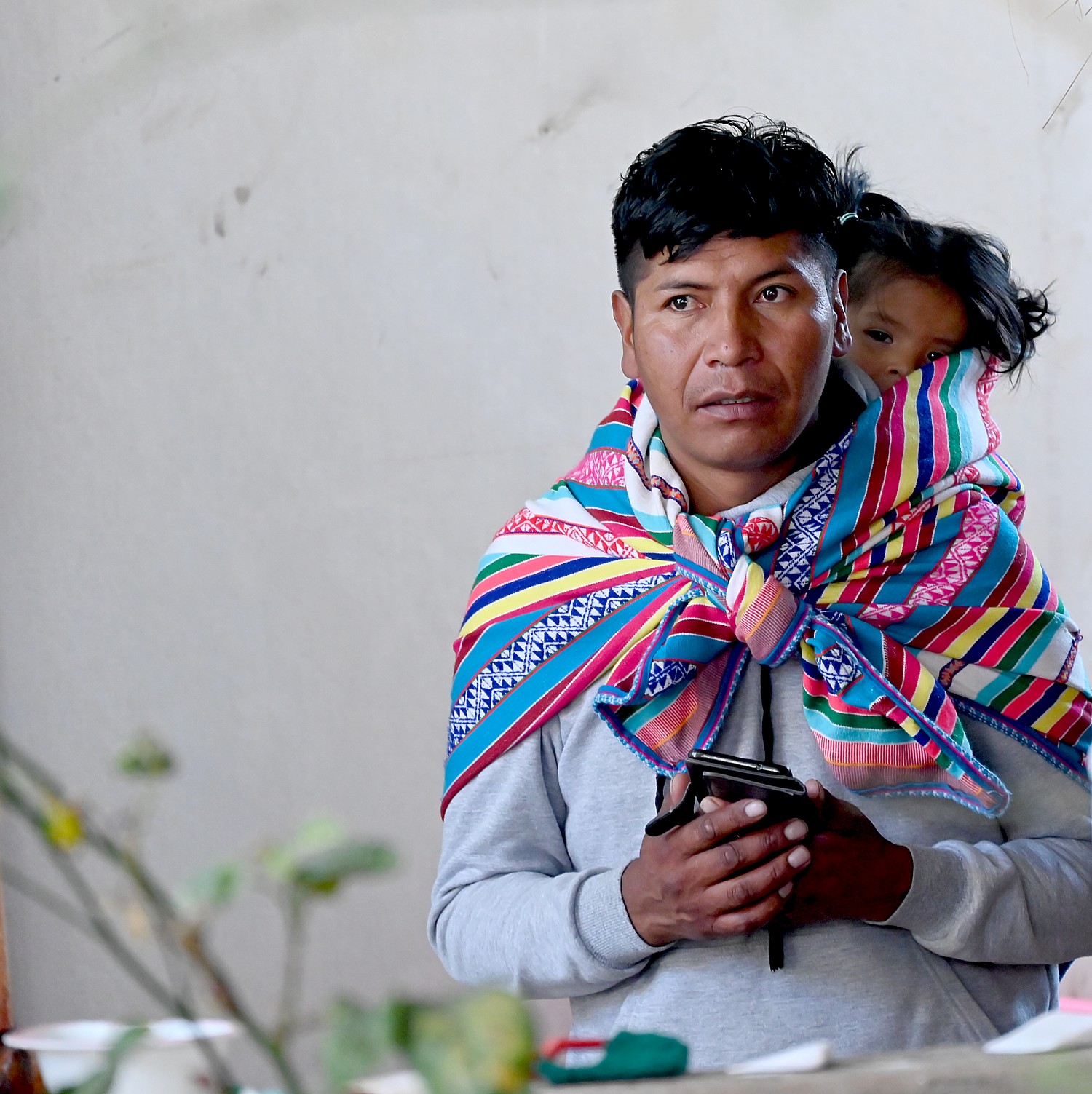
A father and child at Manos de la Comunidad, a handicraft center © Karen Rubin/goingplacesfarandnear.com

We also see guinea pigs in cages. They were a delicacy, served at important festivals, and even today are served for festivals as well as in restaurants.

At the Manos de la Comunidad, a handicraft center, we learn the vital importance of domestication of llama and alpaca to the Incan Empire © Karen Rubin/goingplacesfarandnear.com

But the Inca could not have accomplished what they did – labor, military might – without enough food (calories) to support the population, which is why the Machu Picchu Sacred Valley was so vital.

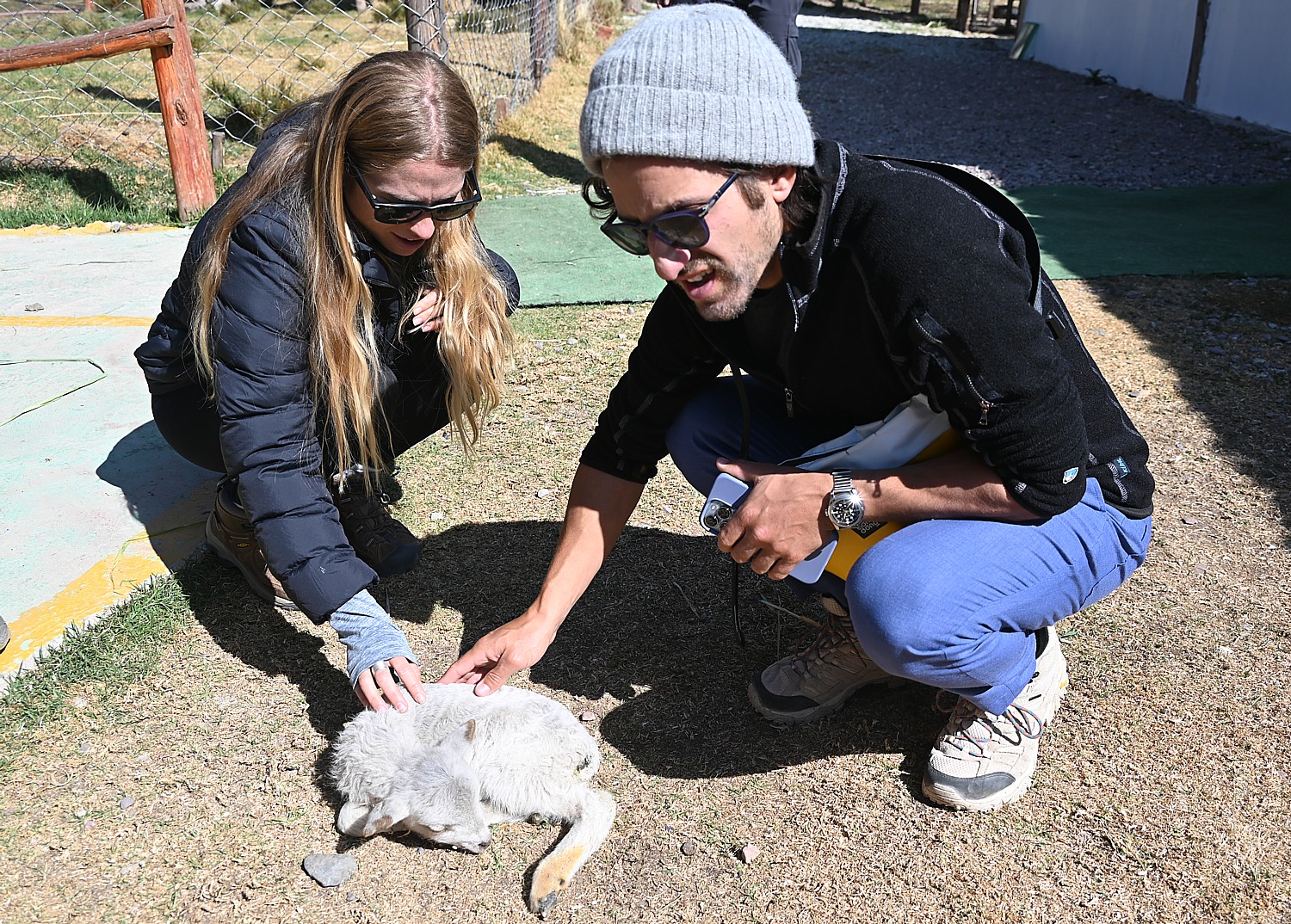
Sarah and Eric pet a baby alpaca at Manos de la Comunidad, a handicraft center © Karen Rubin/goingplacesfarandnear.com

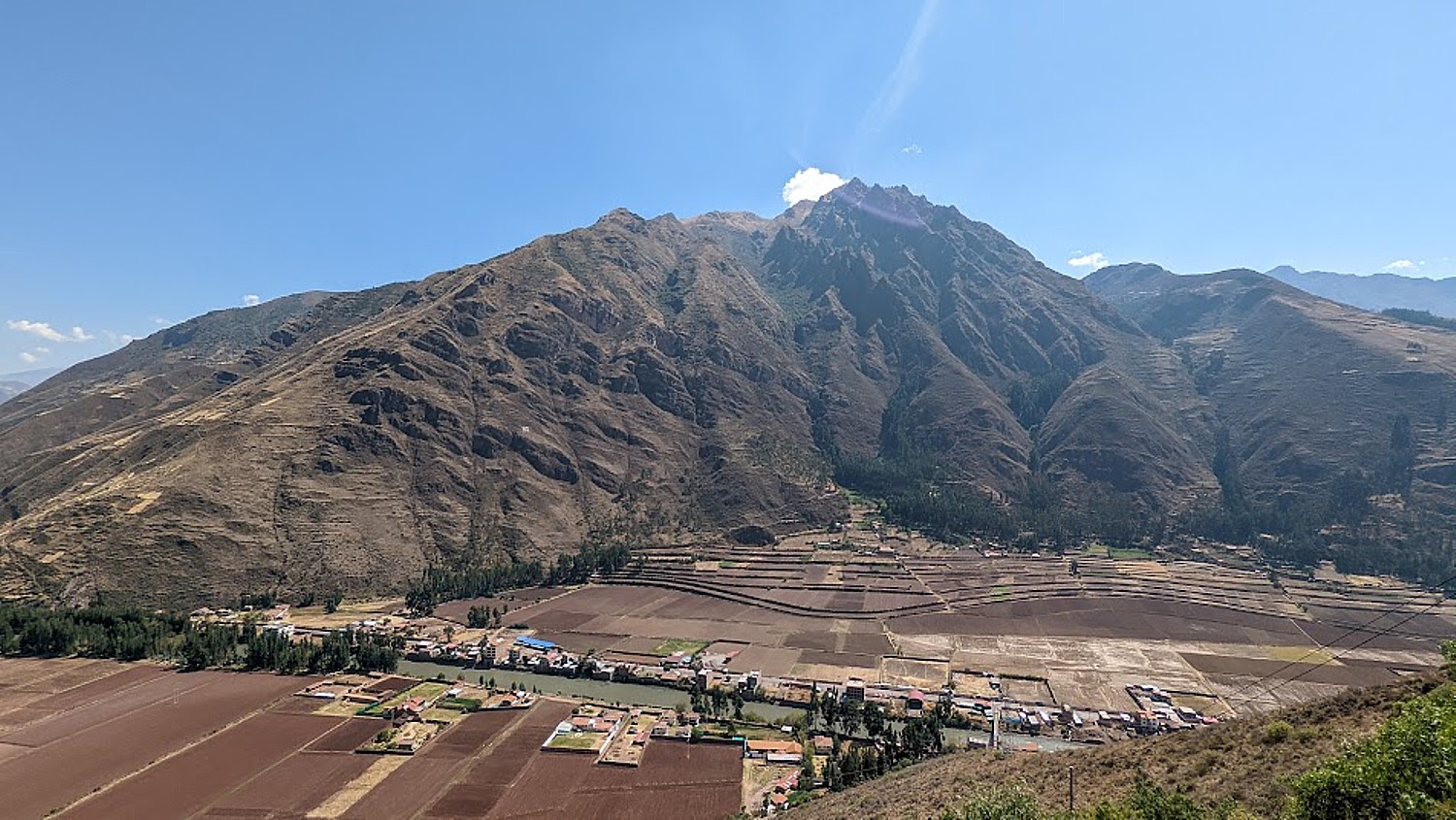
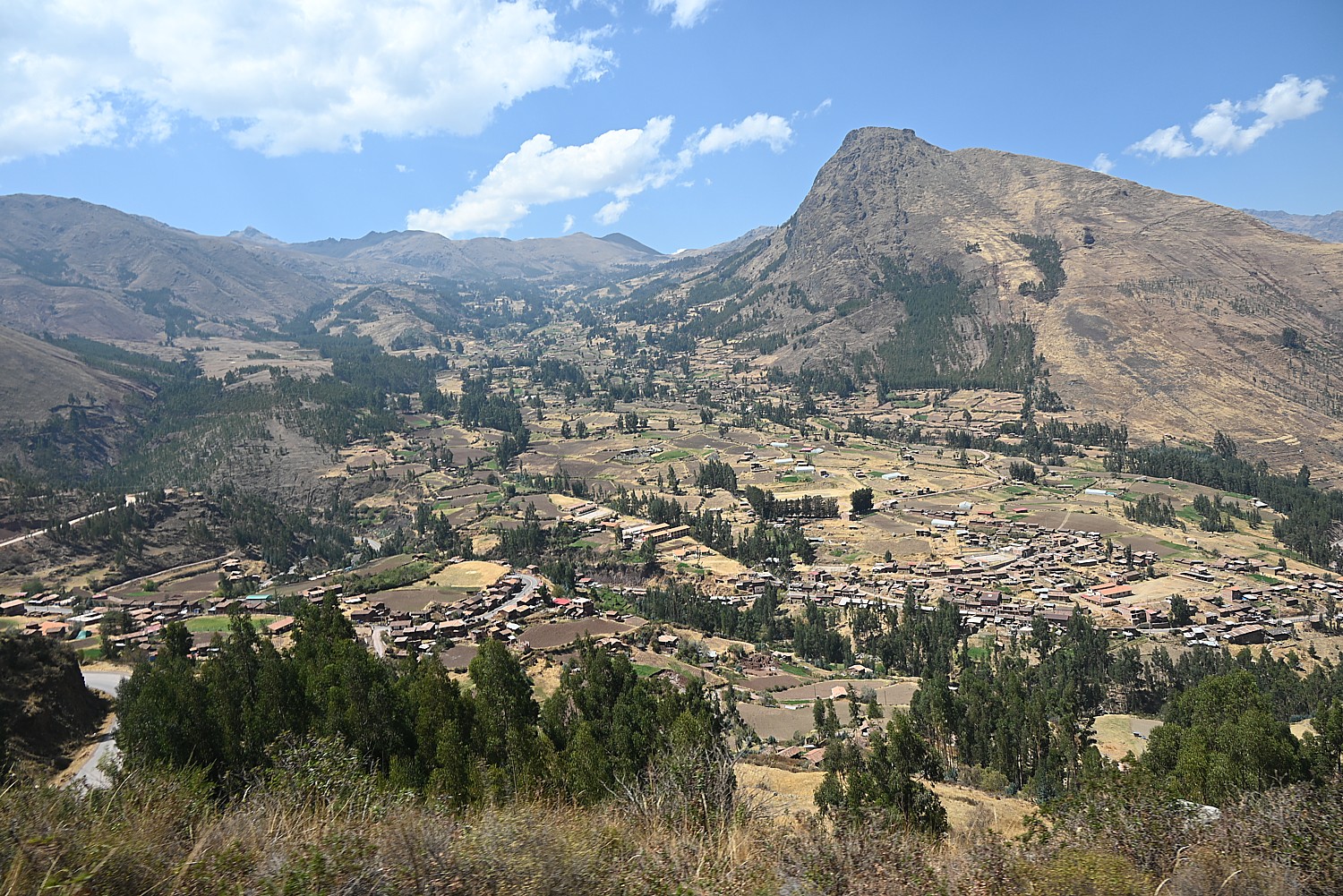
We stop at a famous overlook known as El Mirador (Lookout Point) from where we can see the Sacred Valley – an abundance of fertile plains in this high area of the Andes – spread out in front of us.

The view from El Mirador (Lookout Point) of the Sacred Valley © Karen Rubin/goingplacesfarandnear.com

Around the year 1000, Manco Capac claimed to be the “son of the sun god Inti,” sent to earth to become the first king of the Inca. He was known for his courage, and taught the people how to grow plants, make weapons, work together, share resources and worship the gods – in other words, set the parameters for the society.

Karen suspects the source of Manco’s power over the people was that he was an agricultural genius – figuring out terraces and irrigation technology – and abundant food production was proof of his divinity. He probably was a popular dictator but later Inca rulers relied on force. Besides military might and a brutal form of “justice,” the Inca ruled through religion and superstition.

The view from El Mirador (Lookout Point) of the Sacred Valley © Karen Rubin/goingplacesfarandnear.com

Their religion was based on nature and the different tribes had their own local gods and idols – they worshiped the gods and goddesses of rain, lightning, rainbow (connected with fertility), moon, sea and water. The Inca imposed sun worship of Inti over other gods, even Pachamama (Earth Mother). The people drafted to build their palaces and temples did it as much out of devotion to god as their obligation to give service to the state.

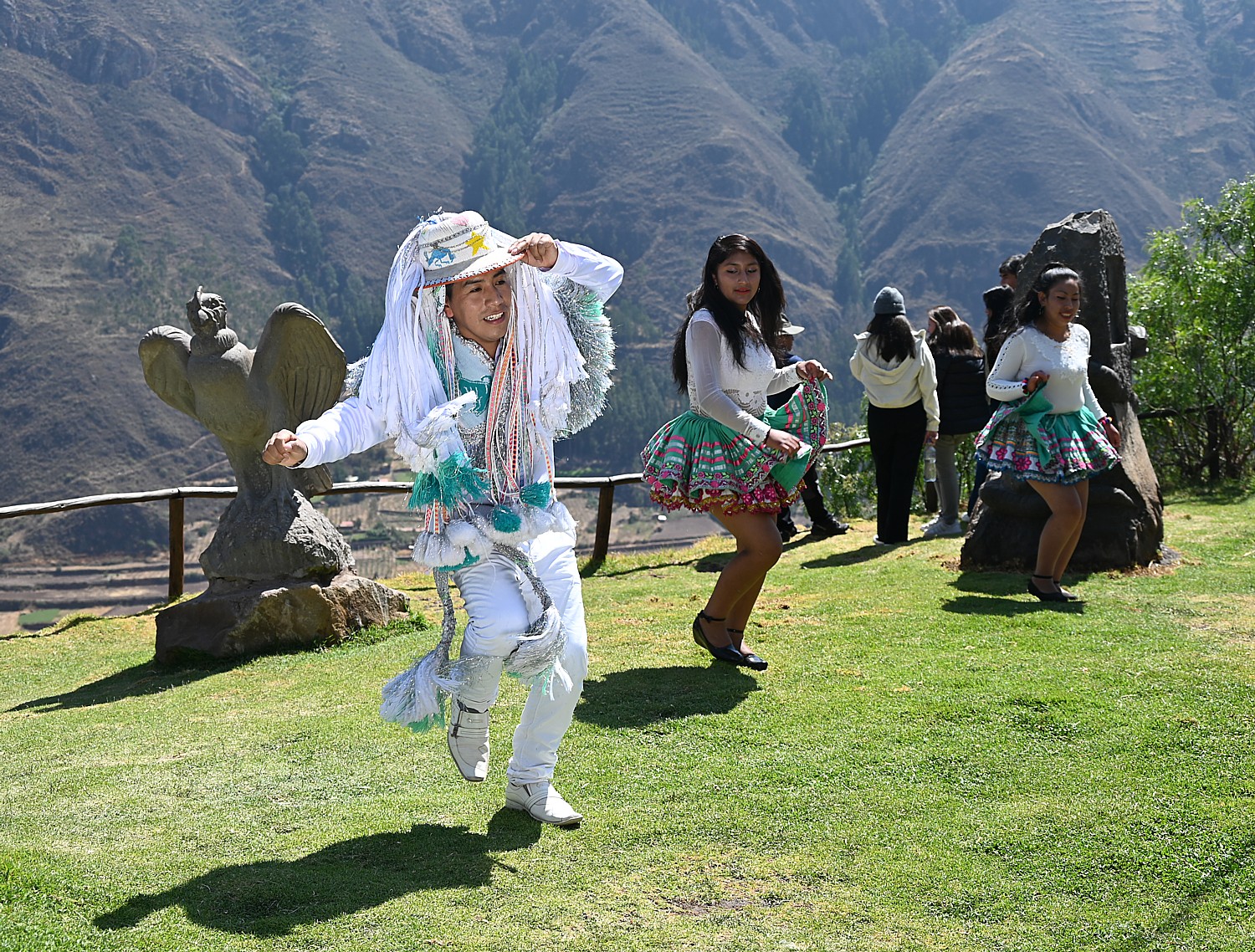
Chancing upon traditional dancers filming a video at El Mirador © Karen Rubin/goingplacesfarandnear.com

The elevation of the valley provides the perfect climate for growing corn (maize), so Inca named in Sacred Valley (a golden staff also comes into play). The maize was also used to make a fermented liquor that was used in religious ceremonies, adding to the “sacred” nature of the valley.

They modified the river bank with sand bags to control flooding and perfected irrigation techniques to create more arable land; the terraces created micro-climates for producing different crops.

Terracing and irrigation account, plus the ability to find fertile soil and take advantage of micro-climates account for the Inca Empire’s success in producing food © Karen Rubin/goingplacesfarandnear.com

The Inca society was a combination of feudalism and socialism. While they did not have currency and technically did not use slaves, instead, the exchange of goods and services was based on reciprocity between individuals and among individuals, communities and the Inca rulers. Farm production was divided up with 25 percent going to the Inca rulers and nobility, 25 percent to the priests and religious institutions and half kept by the farmers. The Inca rulers (who theoretically owned all the means of production) reciprocated by granting access to land and goods and providing food and drink in celebratory feasts for their subjects.

When the Spanish came, they introduced a feudal system – where the Spanish owned all the land. That persisted up to as recently as 1969, when a socialist (nationalist) president came to power.

“The government bought the land to give to farmers, brought more freedom, and the right to go to school. For the first 15-20 years, it didn’t work well because farmers didn’t know business like the landlord, didn’t have the export connections, and were used to being bossed. The government had to step in, ‘Remember the Inca time’ – and get them to act as a cooperative. Today, every farmer has his own land. Peru’s biggest export is avocado; its corn is shipped to Japan, Germany and Canada.”

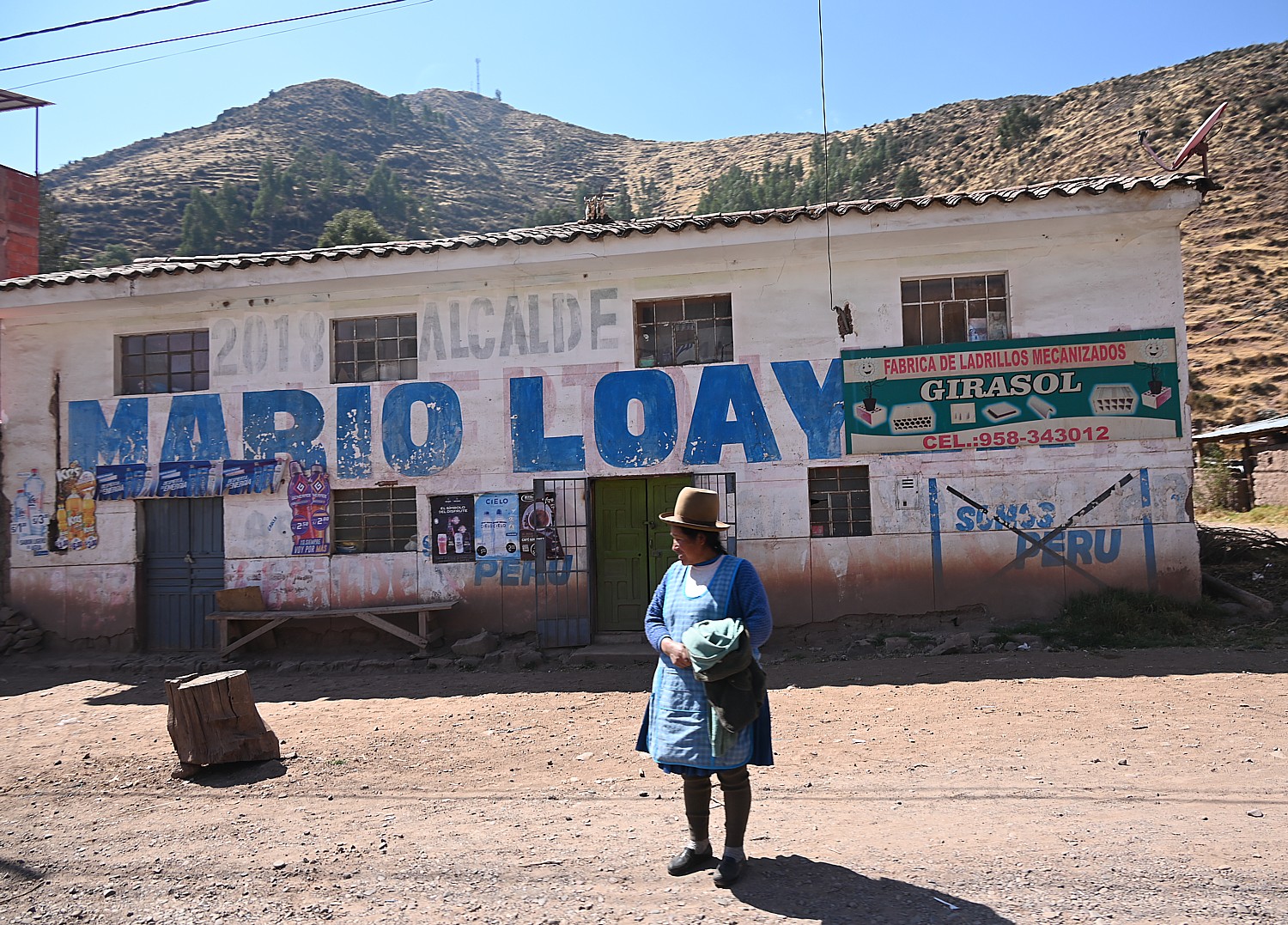
As we drive into the countryside, we see women in traditional dress, pass markets and see buildings painted with election posters © Karen Rubin/goingplacesfarandnear.com

As we drive into the countryside, we see women in traditional dress, we pass markets. Many of the houses – still made of adobe – were swept away in a massive flood and are being replaced with brick structures which do not seem completed (to save taxes?). There is an election underway and we note campaign posters painted on whole buildings.

Before the day is done, we will have a chance to explore the archeological sites of Pisac and Ollantaytambo before making our way back to Cuzco for our 6 pm orientation with Alpaca Expeditions for our Incan Trail trek that begins the next morning.

The permits to do the Inca Trail trek are limited to 500 a day for all the trekking companies (which includes 300 set aside for guides and staff and only 200 for trekkers) and get booked up months in advance.

More information: Alpaca Expeditions, USA Phone: (202)-550-8534, info@alpacaexpeditions.com, raulmanager@alpacaexpeditions.com, https://www.alpacaexpeditions.com/

Next: Exploring Pisac, Ollantaytambo

__________________

© 2022 Travel Features Syndicate, a division of Workstyles, Inc. All rights reserved. Visit goingplacesfarandnear.com, www.huffingtonpost.com/author/karen-rubin, and travelwritersmagazine.com/TravelFeaturesSyndicate/. Blogging at goingplacesnearandfar.wordpress.com and moralcompasstravel.info. Visit instagram.com/going_places_far_and_near and instagram.com/bigbackpacktraveler/ Send comments or questions to FamTravLtr@aol.com. Tweet @TravelFeatures. ‘Like’ us at facebook.com/NewsPhotoFeatures

Cruising on the Galapagos Legend: San Cristobal Island

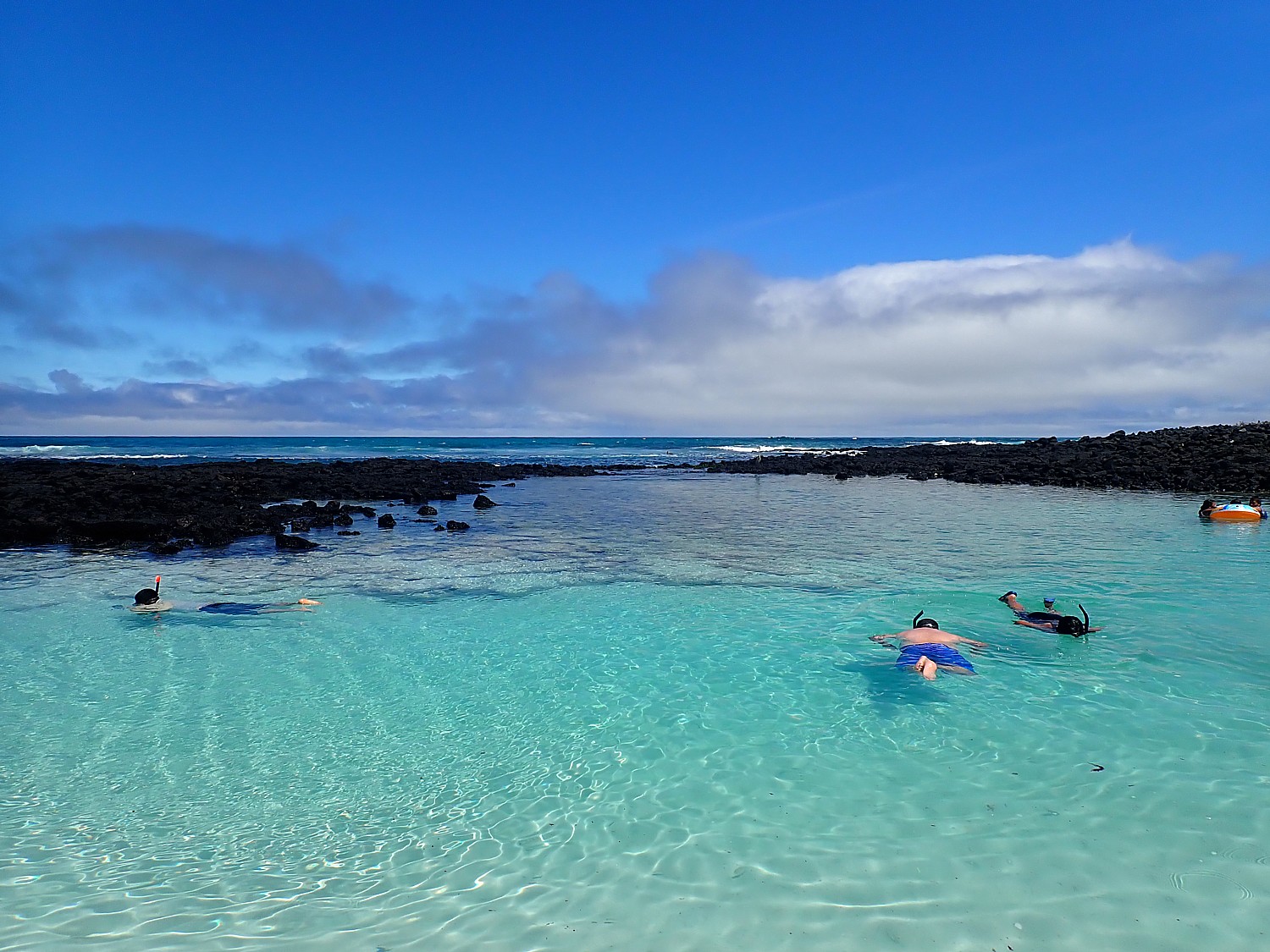
Snorkeling at Punta Pitt, San Cristobal Island, Galapagos © Karen Rubin/goingplacesfarandnear.com

By Karen Rubin, Dave E. Leiberman, Laini Miranda, Eric Leiberman & Sarah Falter

Travel Features Syndicate, goingplacesfarandnear.com

We have our longest, and roughest, sail over the second night of this three-night, four-day cruise aboard the 100-passenger Galapagos Legend. Our guide, naturalist Alejandro, tells us to keep doors closed so they don’t slam. Actually, it feels more like being rocked in a cradle during the night. (While the weather is temperate year round and the Galapagos is visited throughout the year, in this, the dry season, is when the seas tend to be rockier. In any case, we’ve prepared by taking a motion sickness pill and not drinking any alcohol-well, Karen abstained.)

Booby in flight, San Cristobal Island, Galapagos © Karen Rubin/goingplacesfarandnear.com

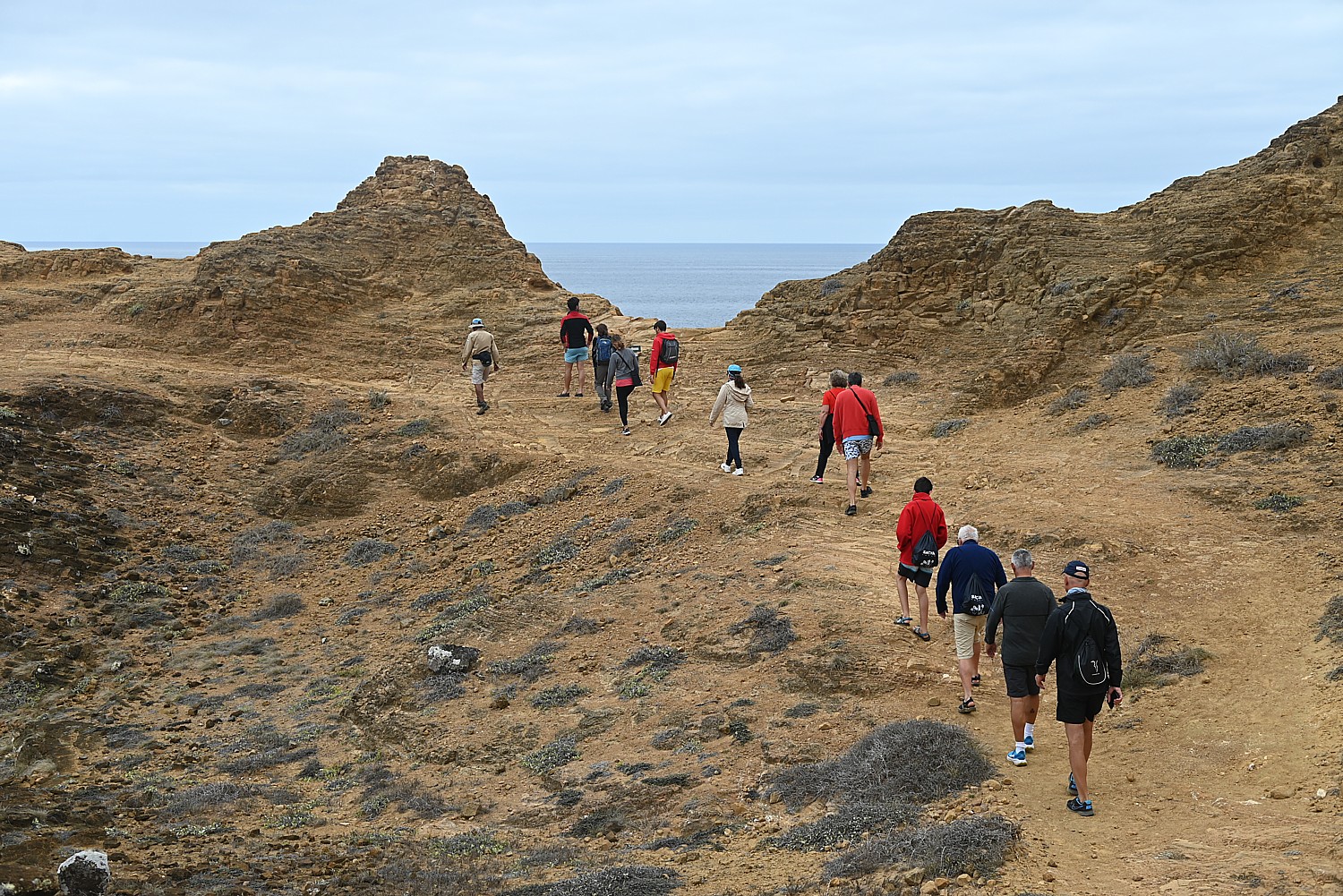
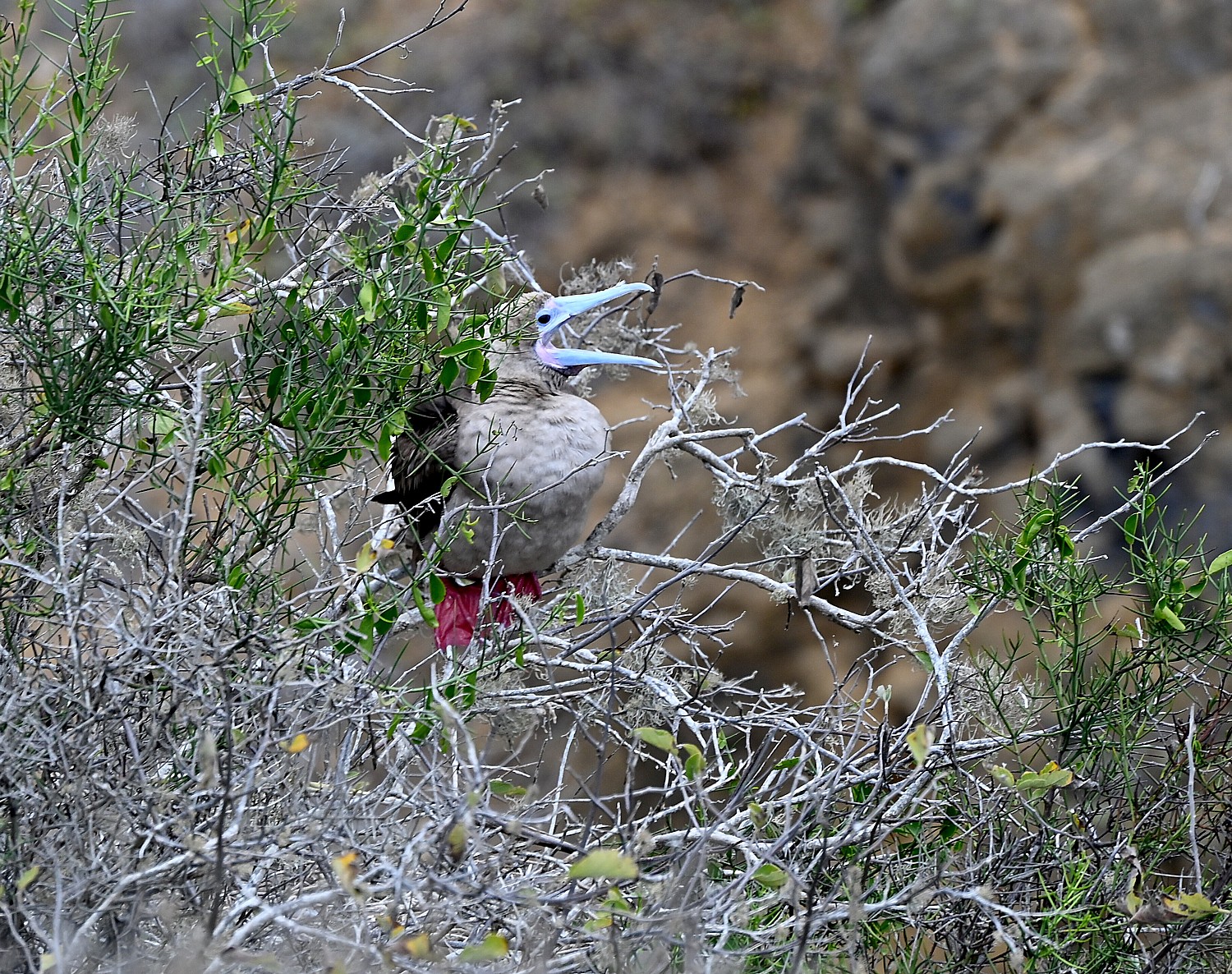
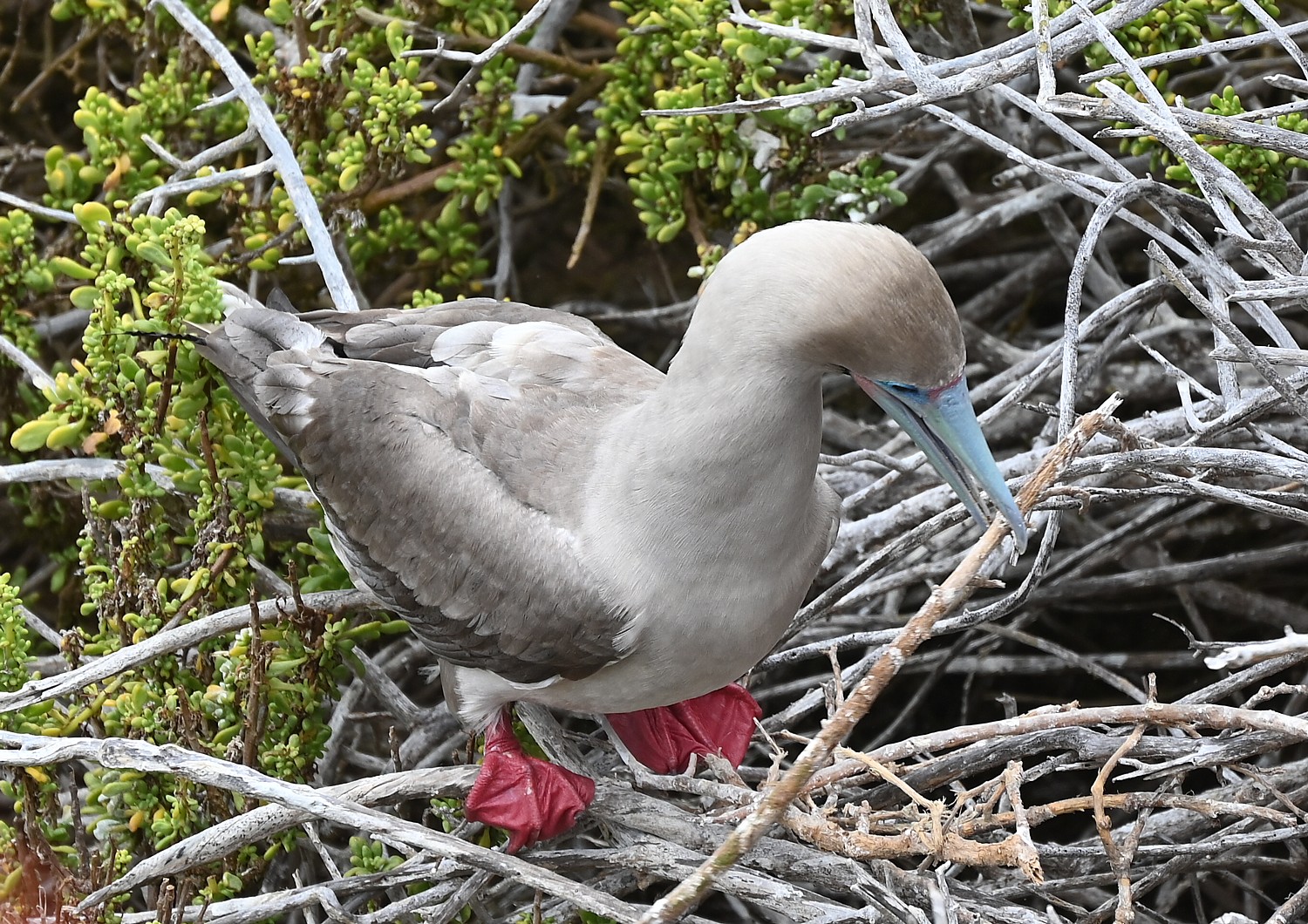
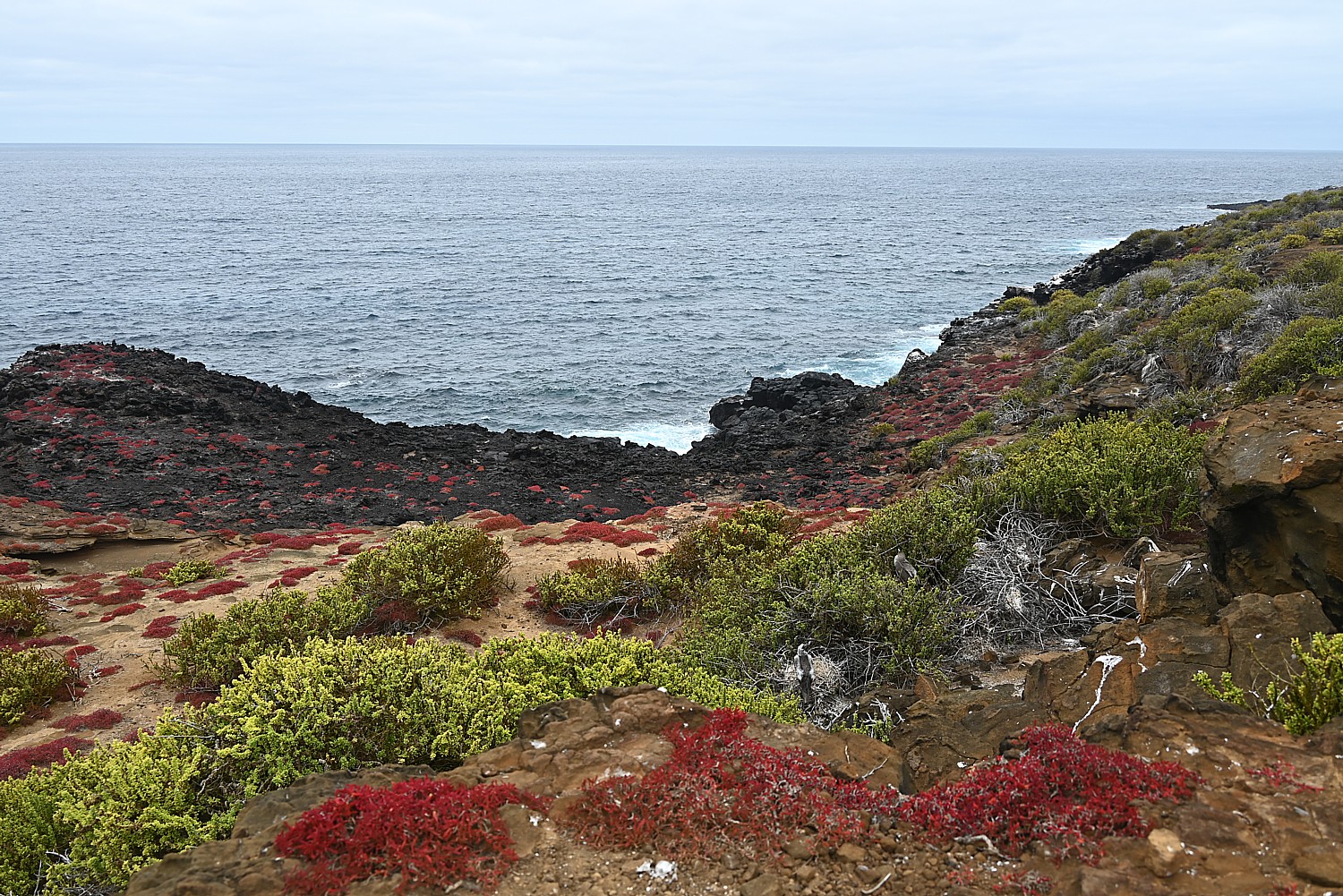
We sail to Punta Pitt and Pitt Islet off San Cristobal Island, the easternmost island, closest to South America’s coast (600 miles away), the oldest island and oldest settlement in the Galapagos. Here we first have a marvelous, two-hour hike to the high point of a steep, eroded tuff cone. Here is the only opportunity to see all three booby species in the same place: the red-footed booby perched on small trees, the Nazcas which nest on the ground near the cliff edge and the blue-footed boobies inland. Frigatebirds fly around and the views are stunning. Notably, we see how hardy vegetation takes hold in such a volcanic barren land – saltbush, spiny shrubs, Palo Santo trees, cacti, and, because it is the dry season, we get to see stunning carpets of red Vesuvius.

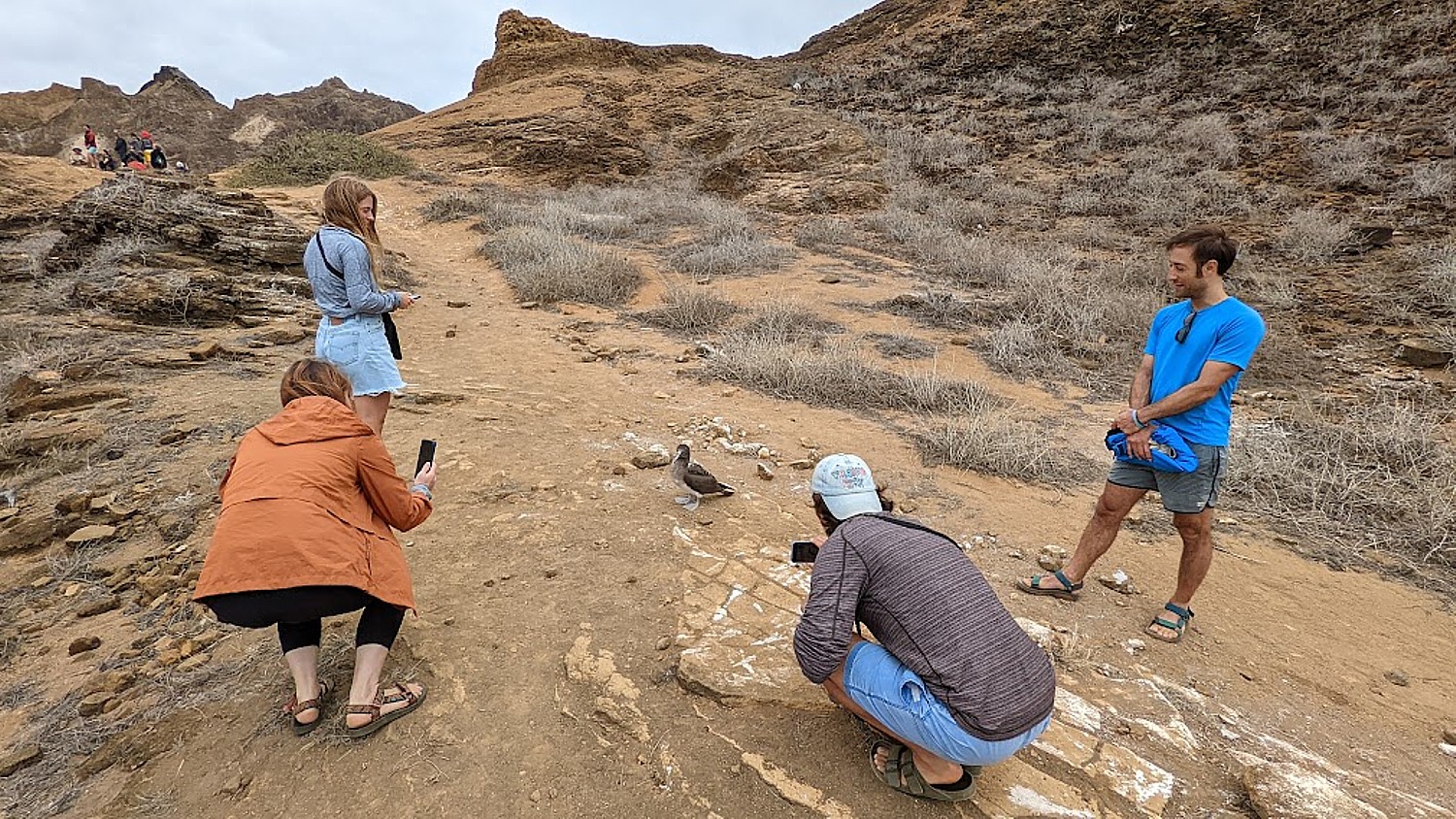
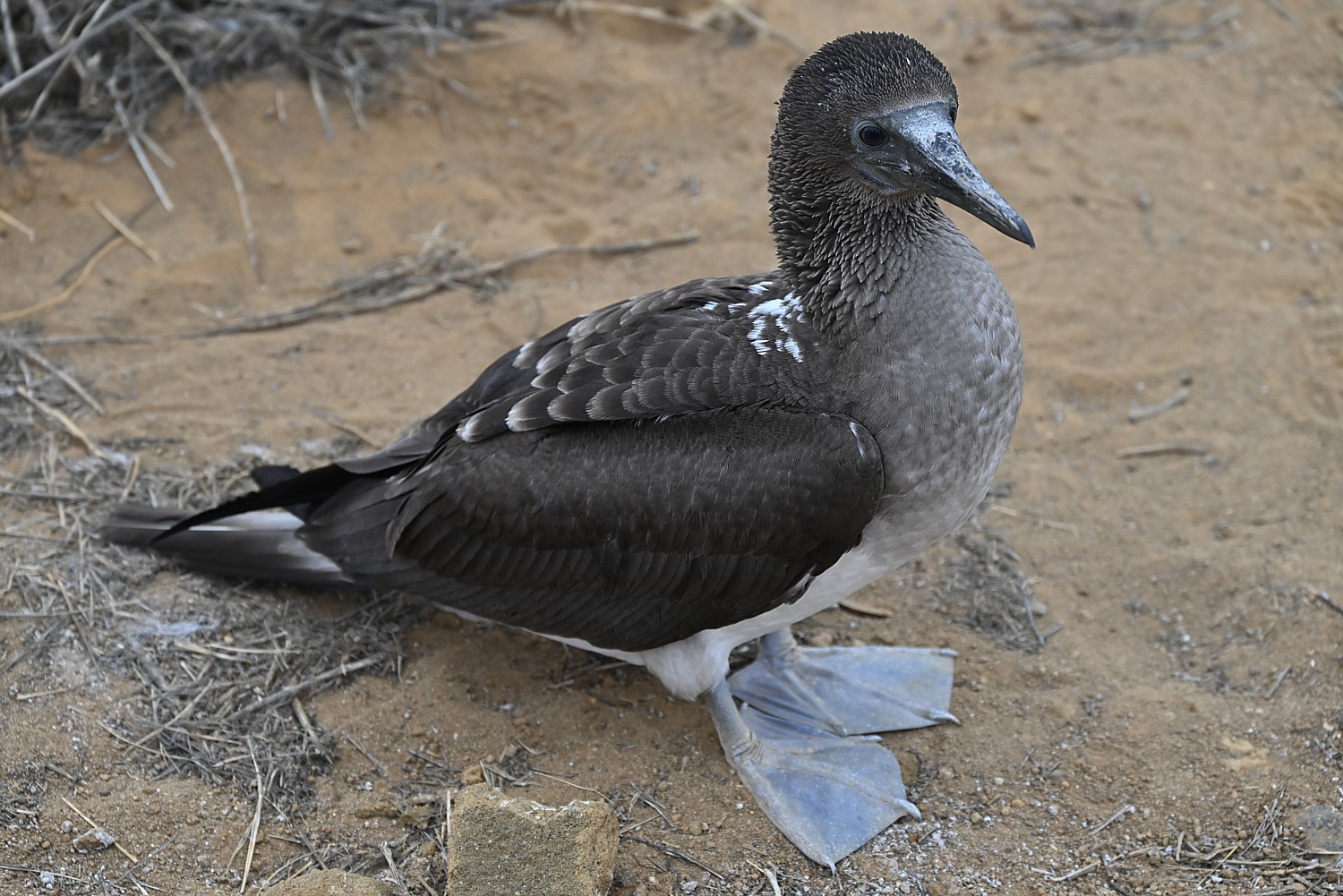
While it seems that most of the time, the animals we see ignore us, as we walk the trail, a blue-footed booby (adolescent?) seems curious enough to just stand in the middle of the trail as we take photos, study us, and wait until we came back.

A young blue-footed booby seems to be as curious about us as we are about it © Karen Rubin/goingplacesfarandnear.com
A young blue-footed booby seems to be as curious about us as we are about it. San Cristobal Island, Galapagos © Karen Rubin/goingplacesfarandnear.com
San Cristobal Island, Galapagos © Karen Rubin/goingplacesfarandnear.com

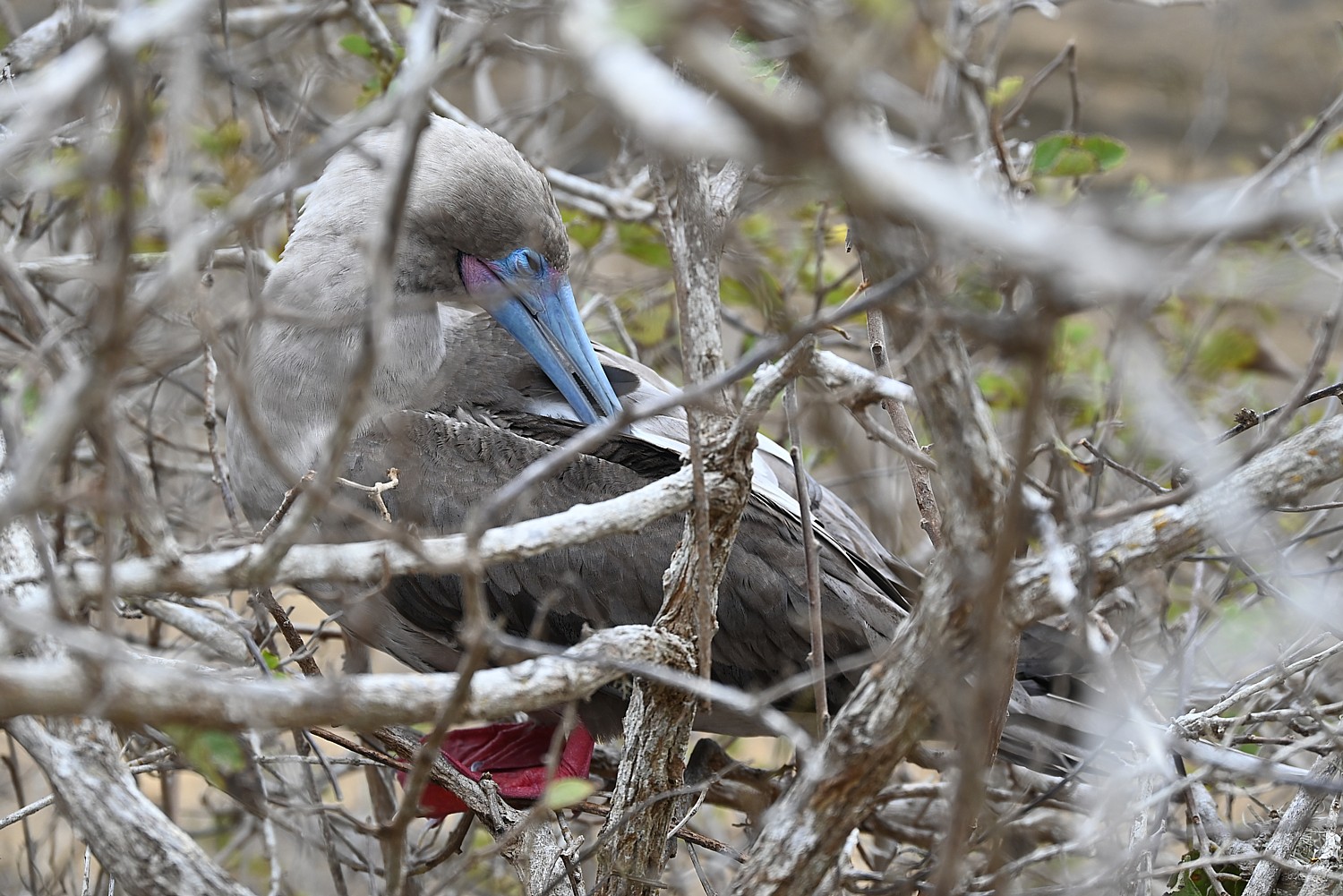
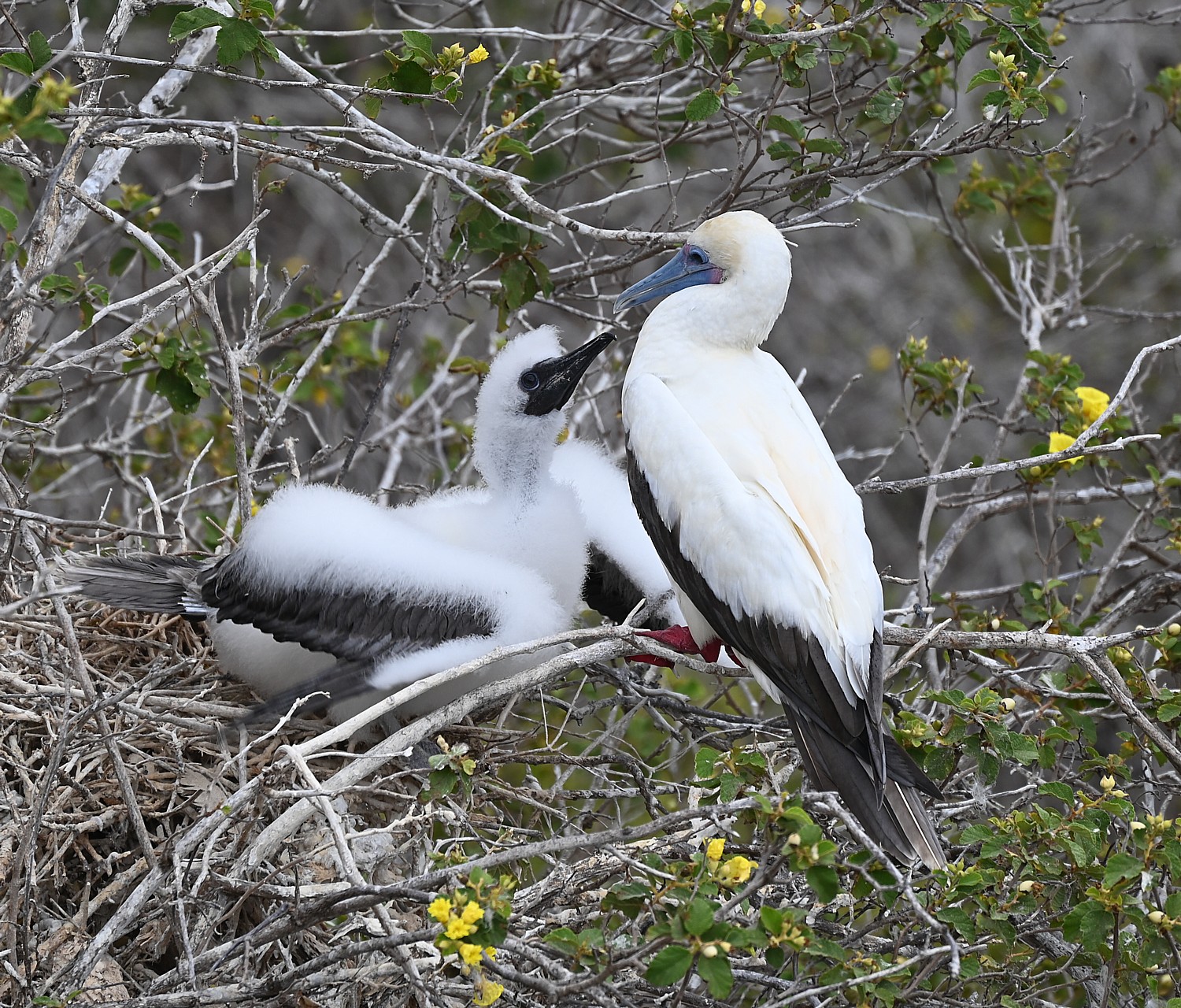
While the blue-footed booby lays up to three eggs and can get enough fish to feed two to three chicks, the red-footed booby only lays one egg, because it takes half day to fish so it can only feed one chick. It nests in large colonies, laying one chalky blue egg in a stick nest, which is incubated by both adults for 44–46 days. The nest is usually in a tree or bush and only rarely on the ground. It may be three months before the young first fly and five months before they make extensive flights. Red-footed booby pairs may remain together over several seasons. They perform elaborate greeting rituals, including harsh squawks and the male’s display of his blue throat, also including short dances. (See: https://www.santacruzgalapagoscruise.com/boobies-in-the-galapagos/)

Red-footed booby, San Cristobal Island, Galapagos © Karen Rubin/goingplacesfarandnear.com
Red-footed booby parent feeds its chick, San Cristobal Island, Galapagos © Karen Rubin/goingplacesfarandnear.com

At the high-point in the walk, there is a stunning view and the most vivid color. And for sure, Karen spots a red-footed booby flying back with a branch and watches as it maneuvers the branch to make a nest. We soon come upon another nest where the parent is feeding her chick.

Red-footed booby flies back with a branch to build its nest, San Cristobal Island, Galapagos © Karen Rubin/goingplacesfarandnear.com
Red-footed booby builds its nest, San Cristobal Island, Galapagos © Karen Rubin/goingplacesfarandnear.com

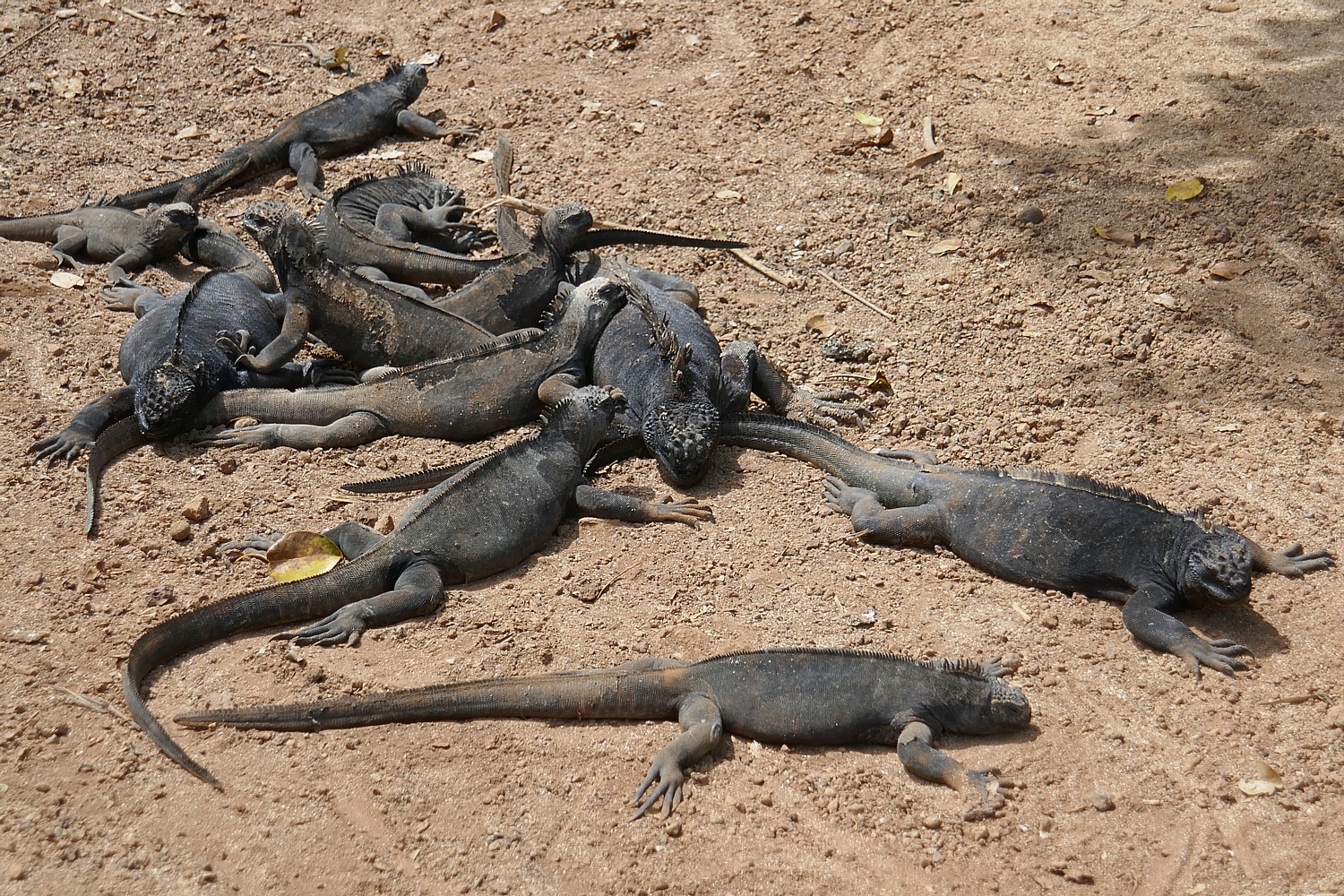
We see a marine iguana nest. Our guide, naturalist Billy, says it’s a mystery why it lays its eggs so far from the ocean, and how the hatchling, without any parental help (because the parents don’t stick around), knows instinctively how to get to the ocean. He suggests the baby iguana can feel the vibration of the ocean waves; Karen has the hunch that the baby can smell the salt since we have learned that land iguana have glands which remove the salt from their blood and, as we have seen, expel the collected salt in forceful nose excretions which look like snorting or sneezing. (Karen says, “Hey, we’ve been in the Galapagos like five days, I have my two cents!)

San Cristobal Island, Galapagos © Karen Rubin/goingplacesfarandnear.com
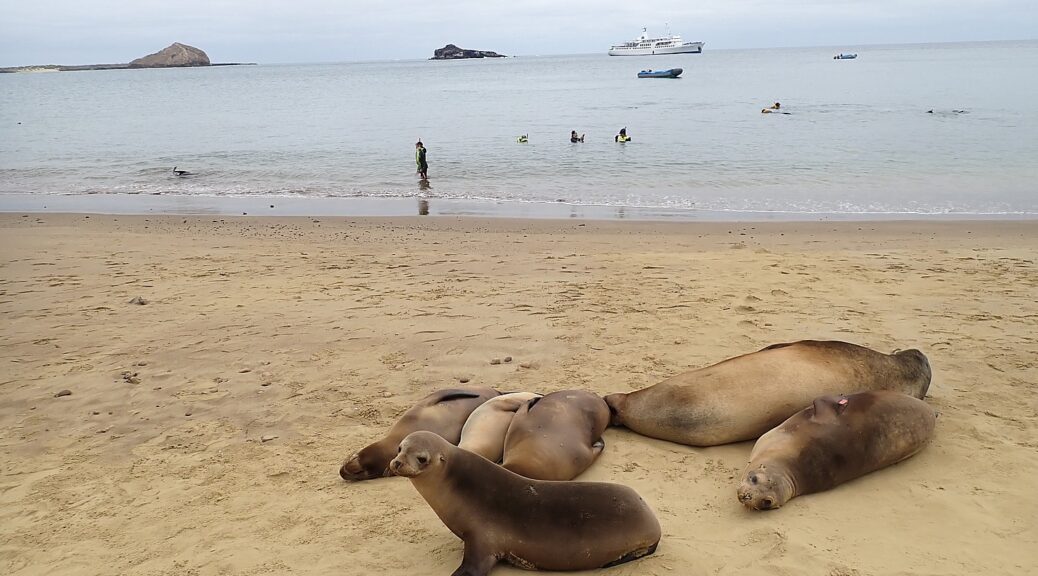
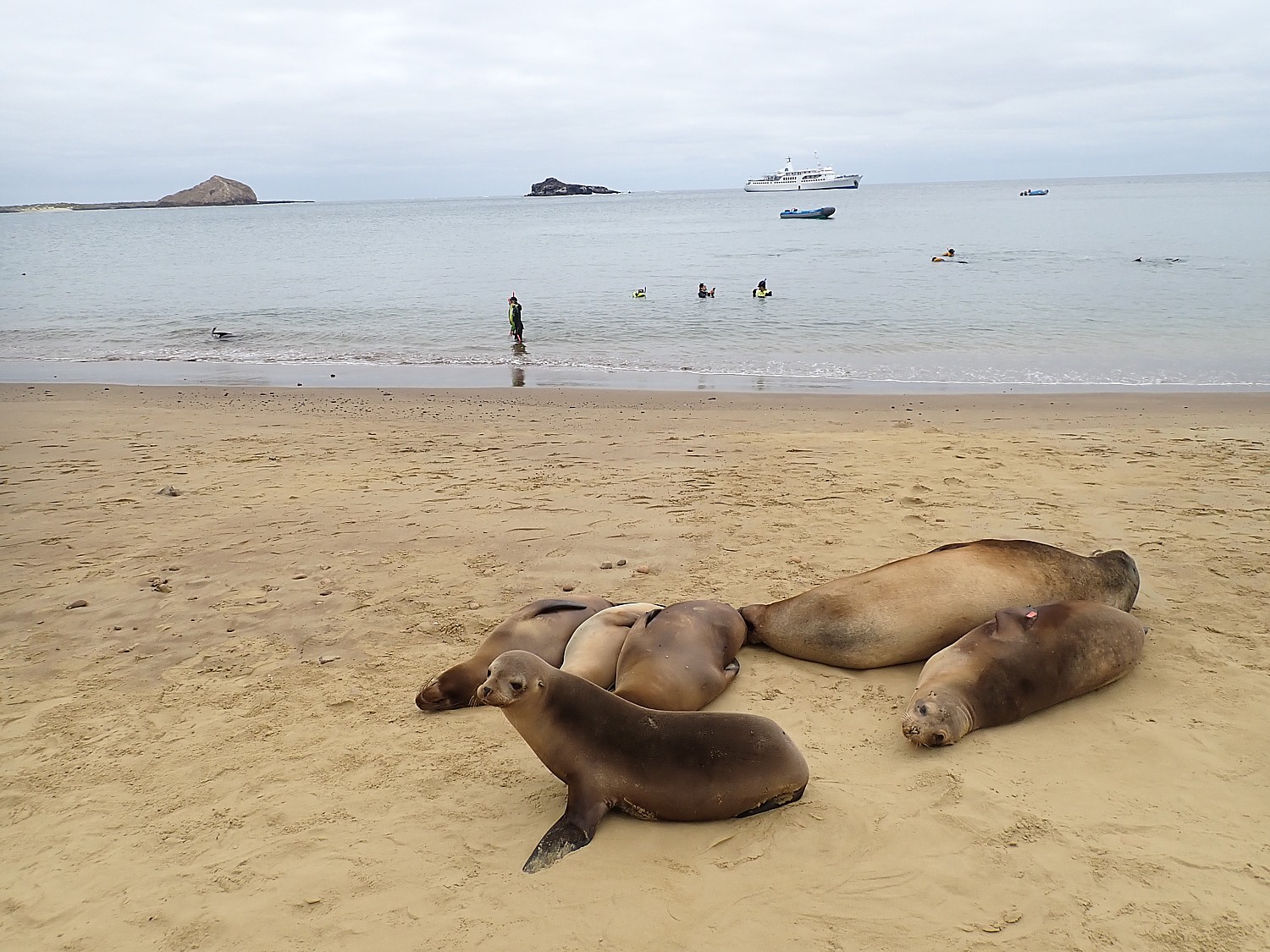
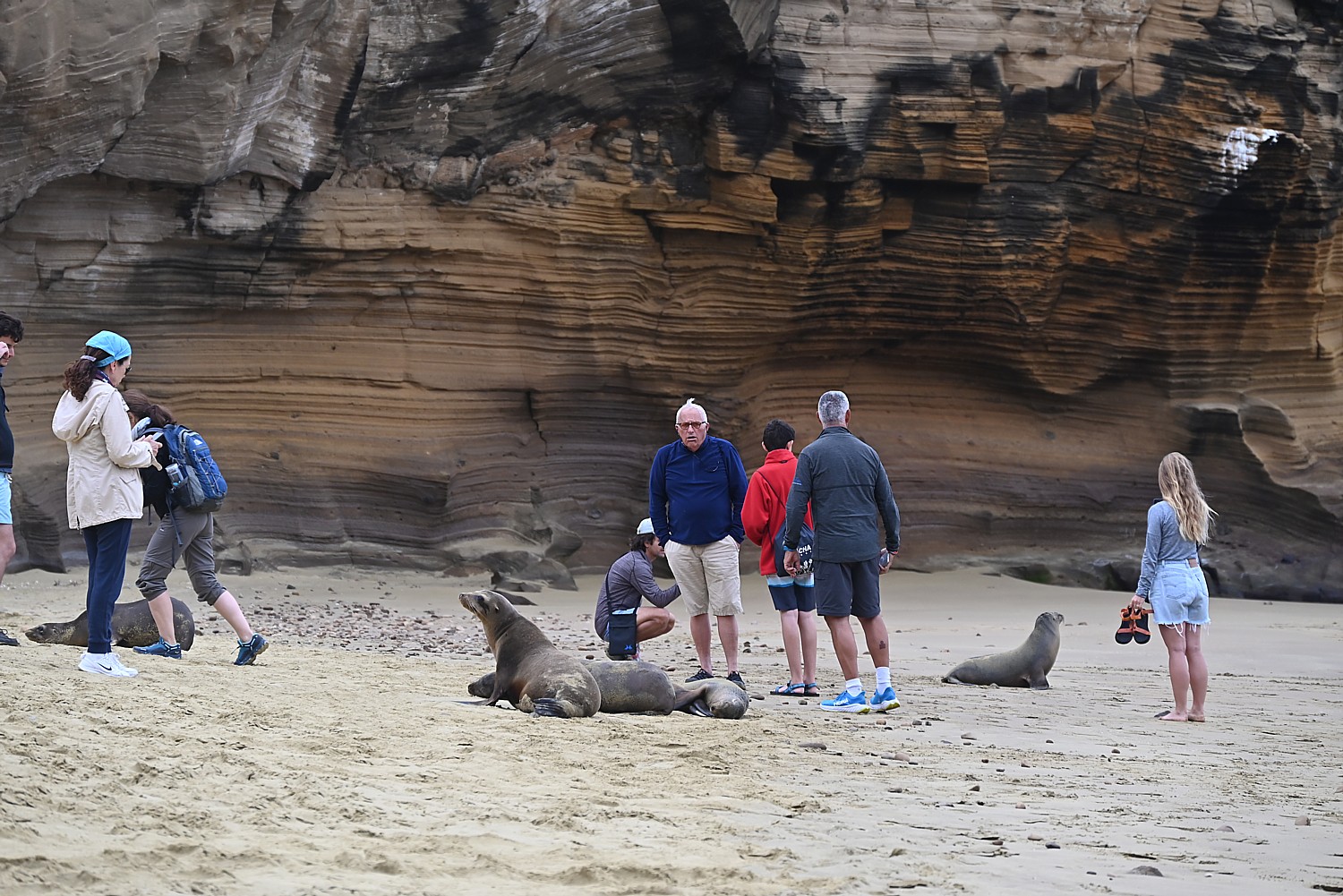
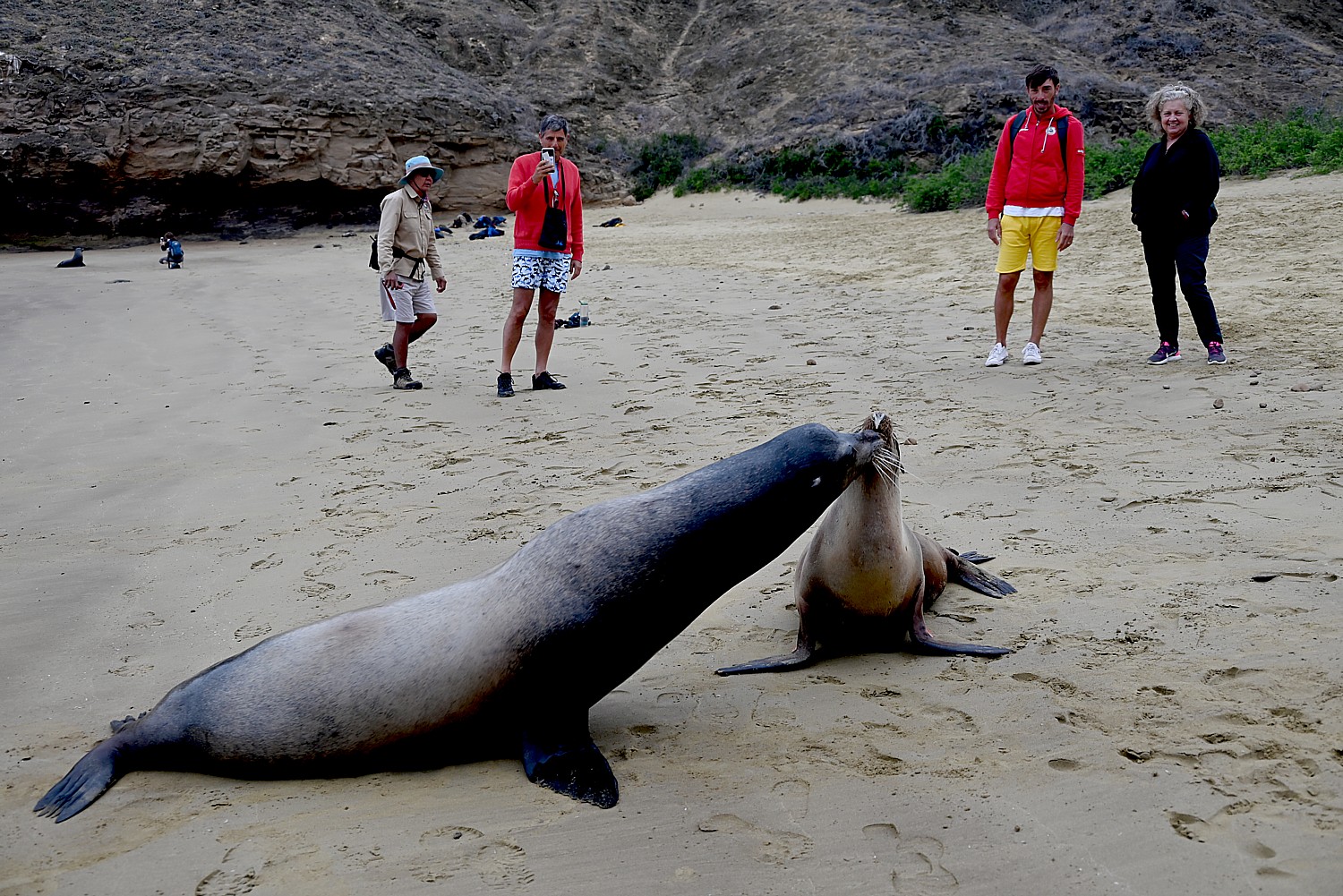
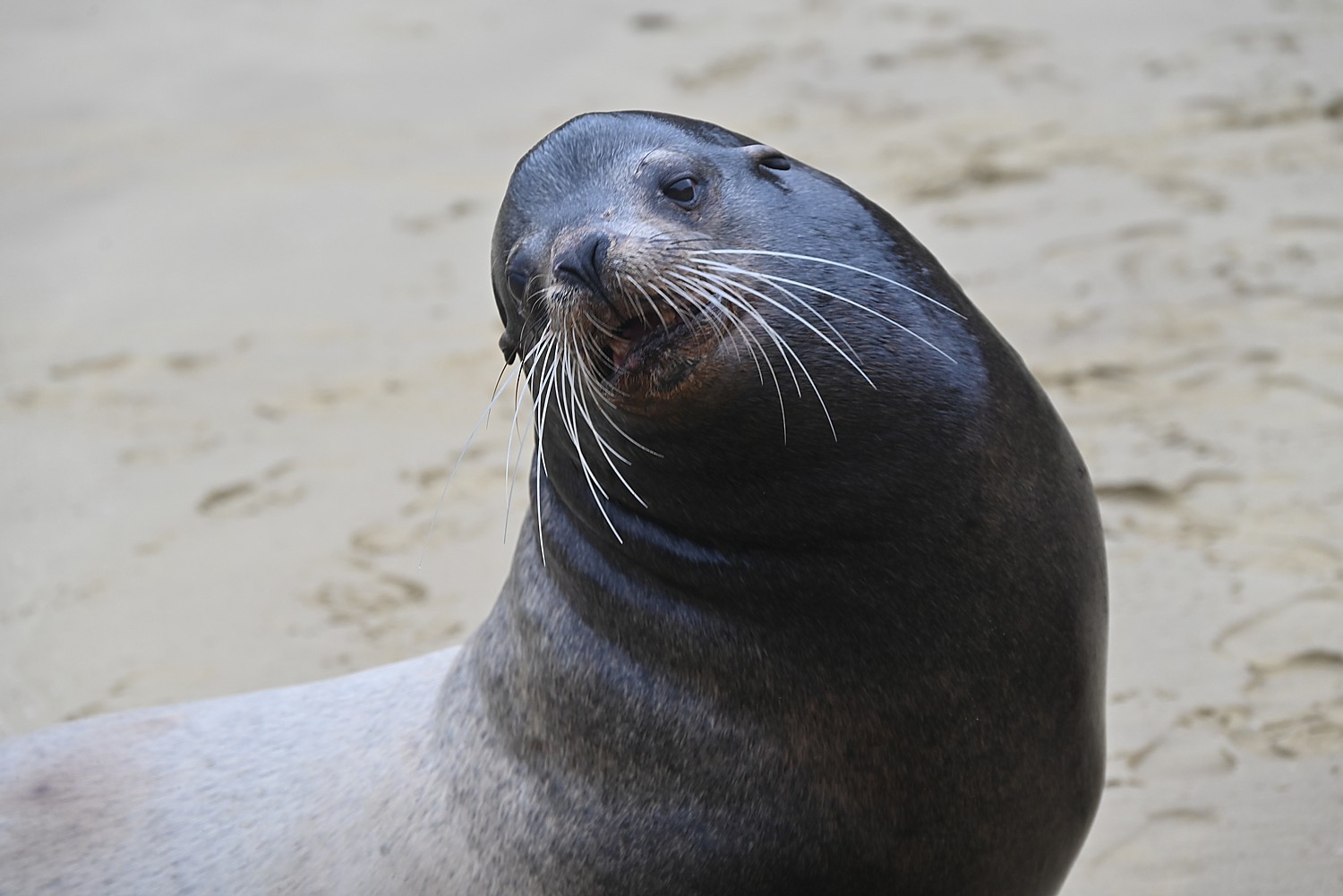
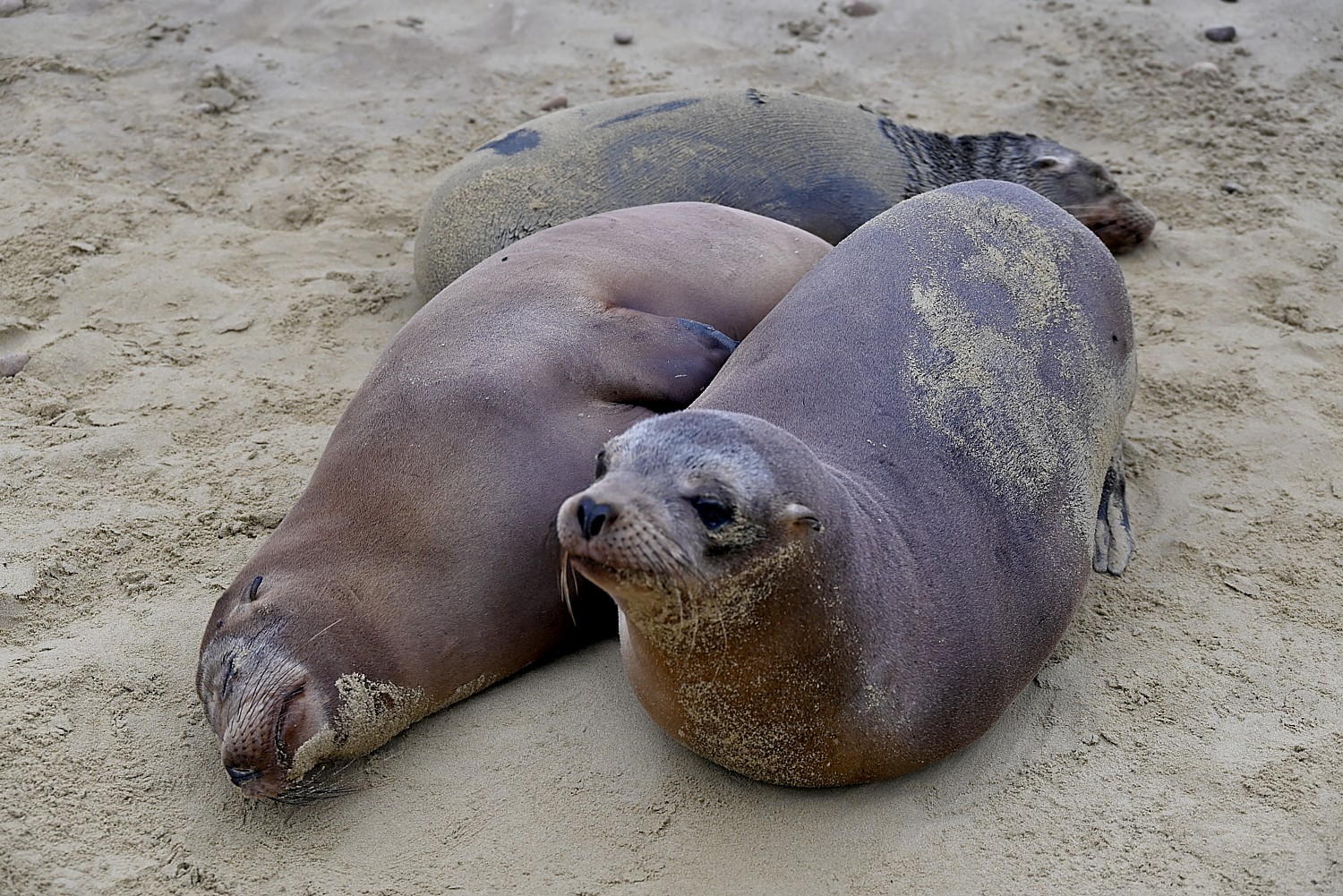
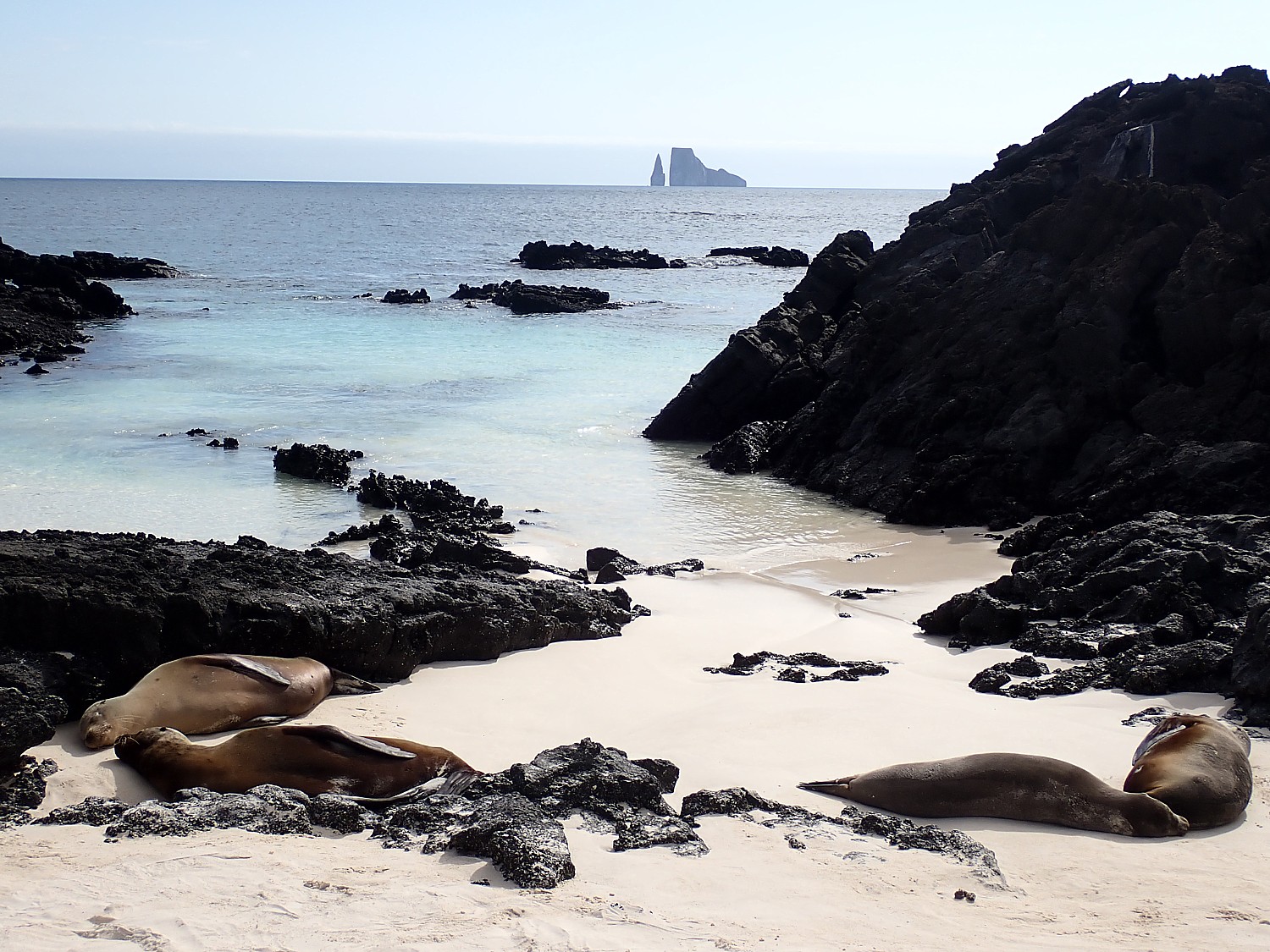
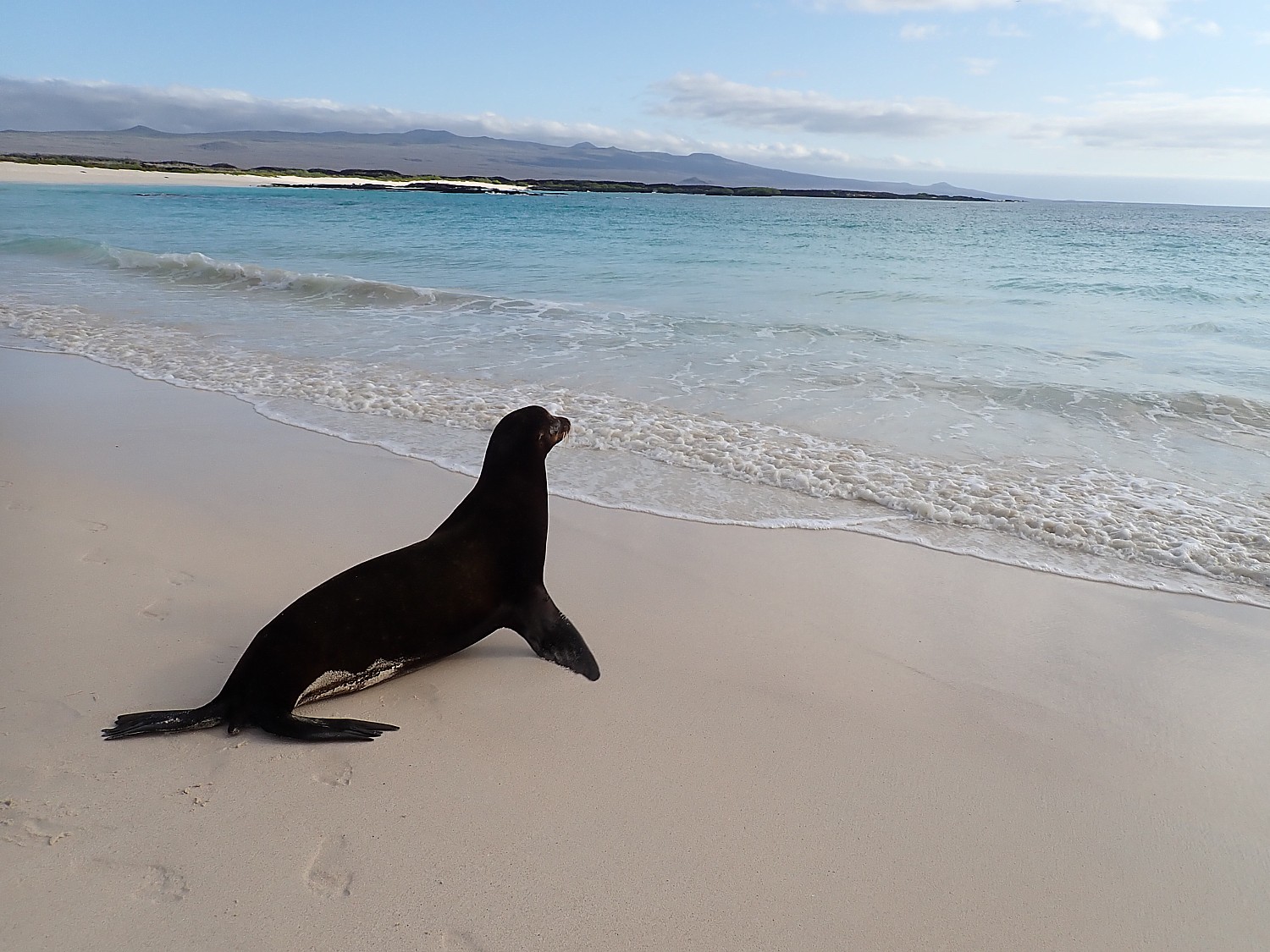
Close encounters with sea lions on the beach at Punta Pitt, San Cristobal Island, Galapagos © Karen Rubin/goingplacesfarandnear.com

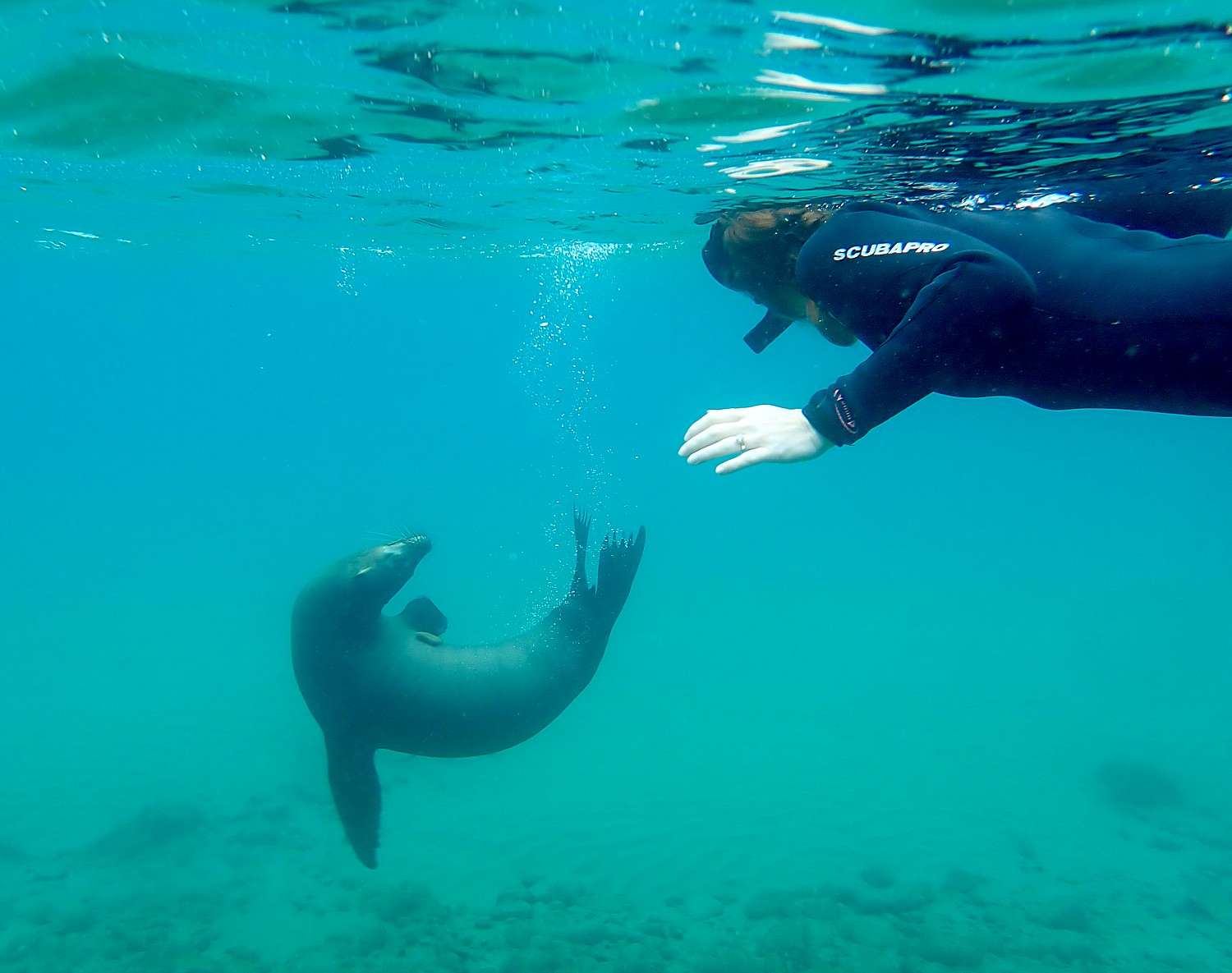
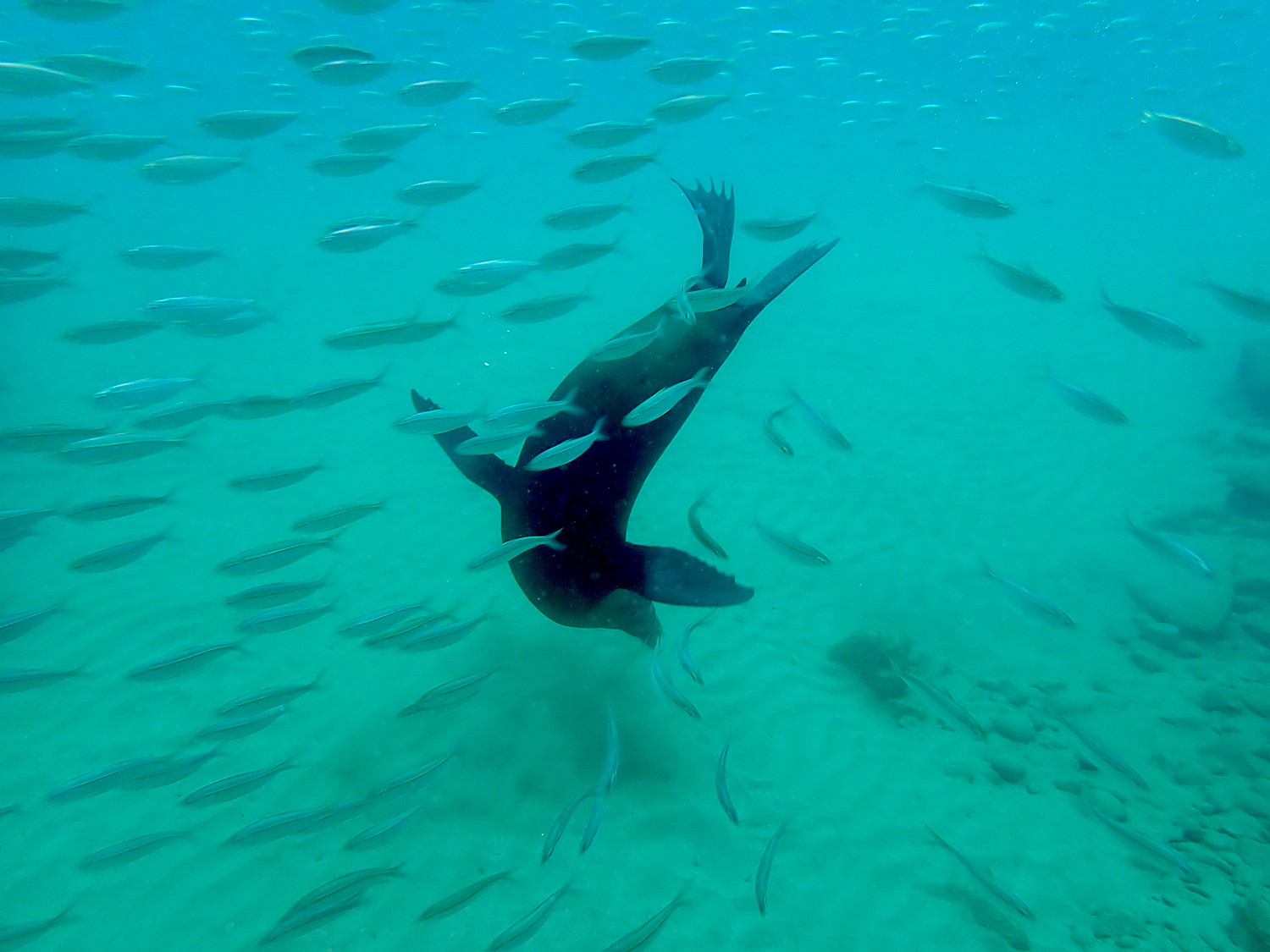
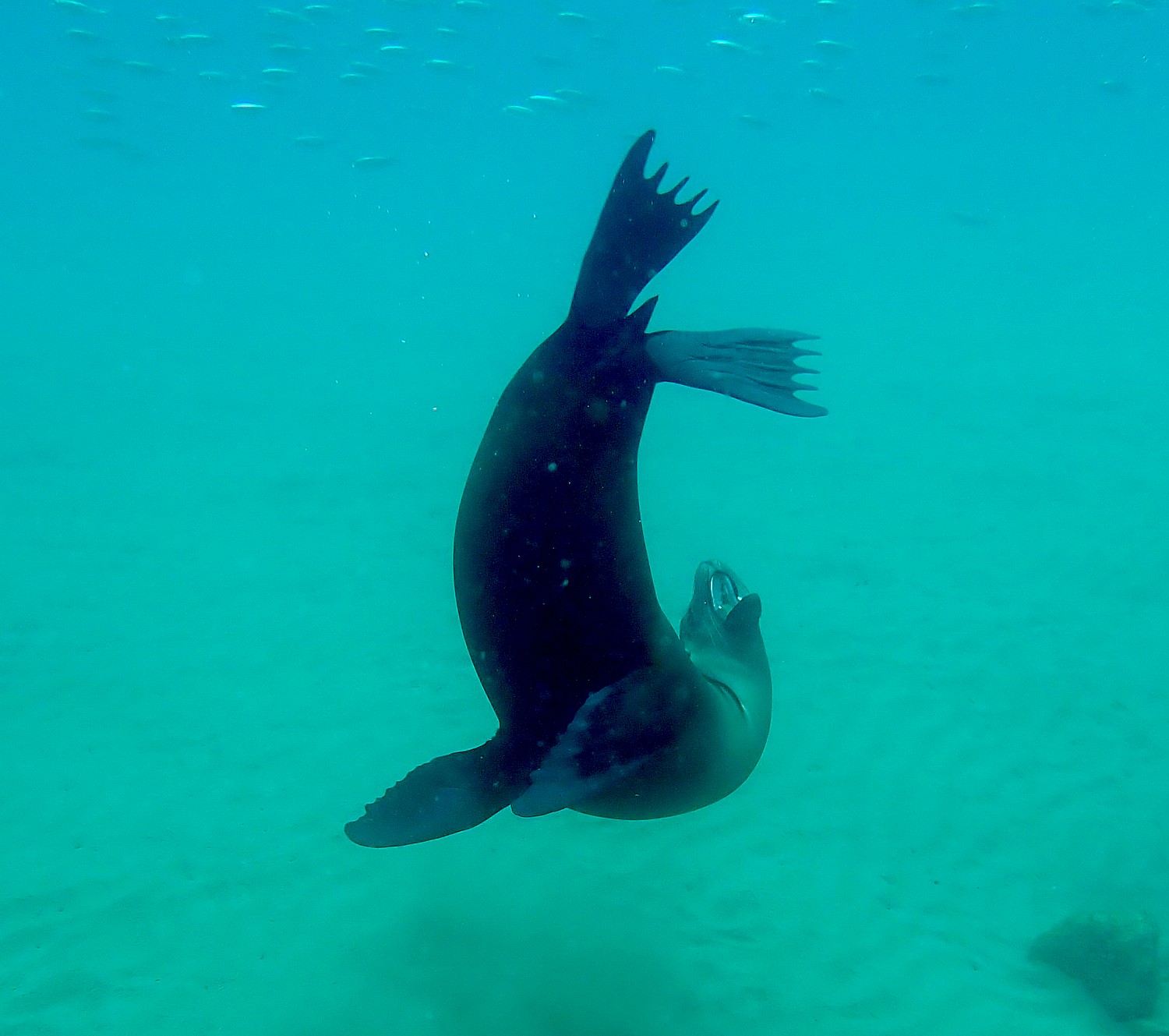
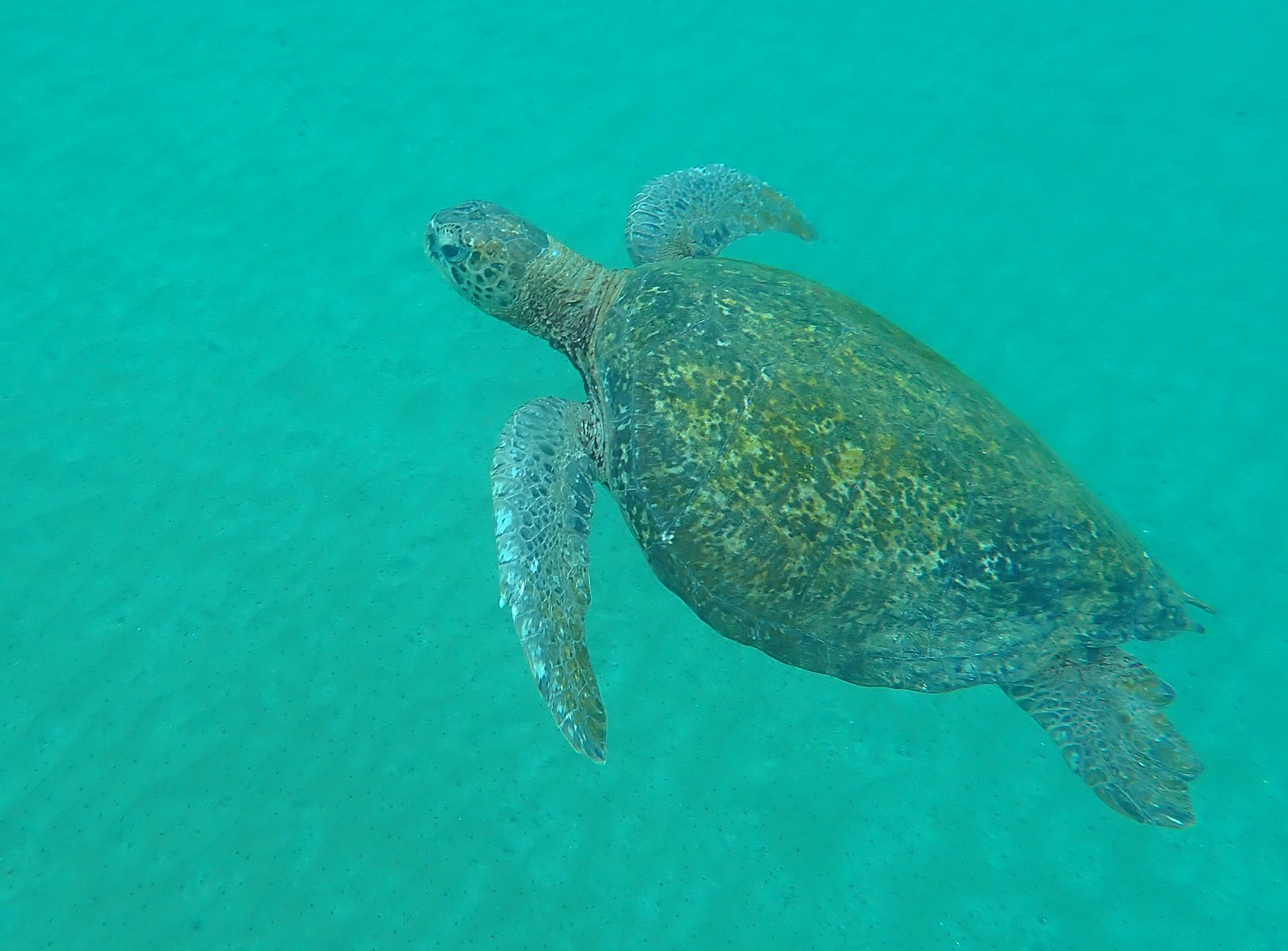
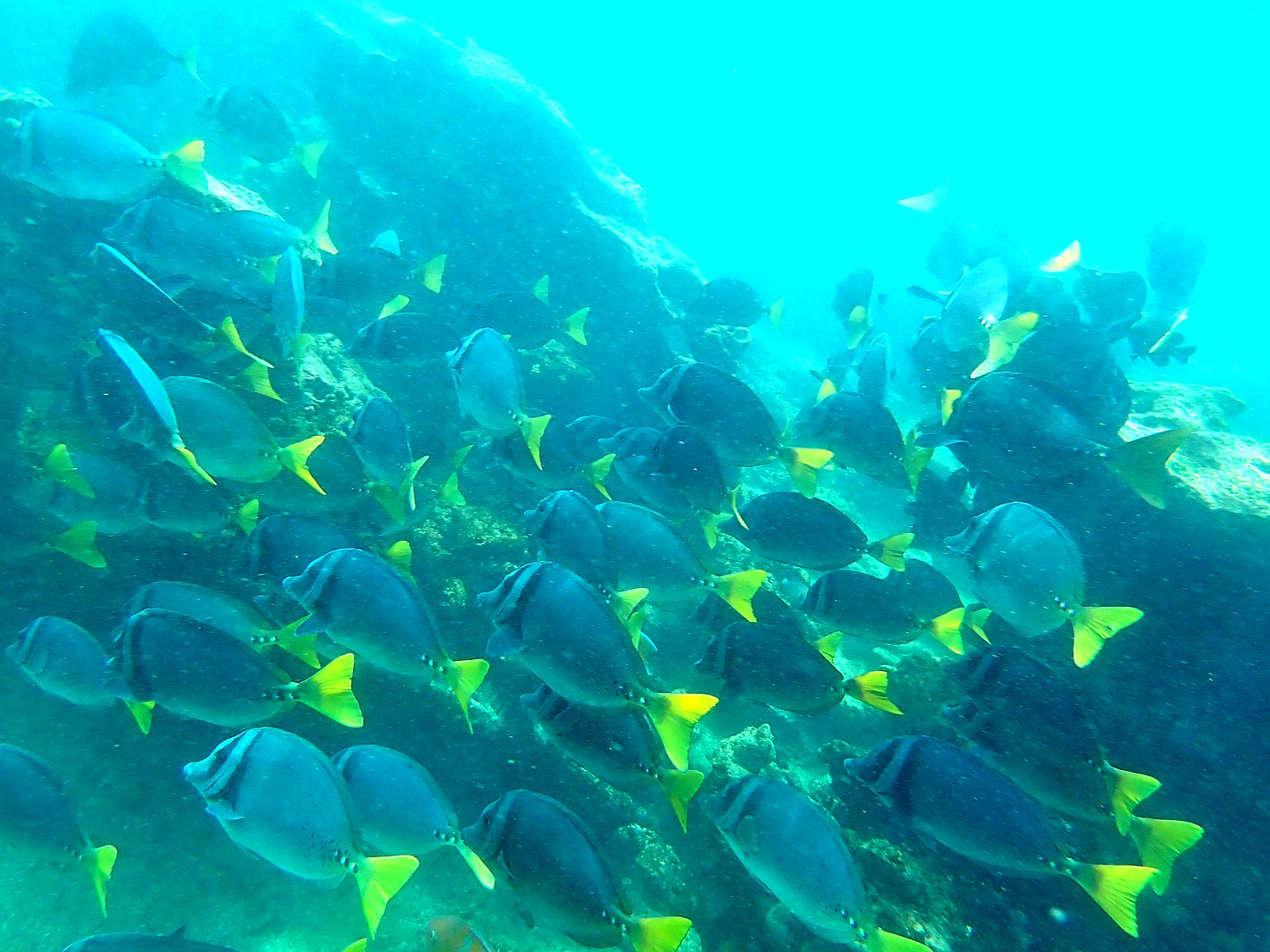
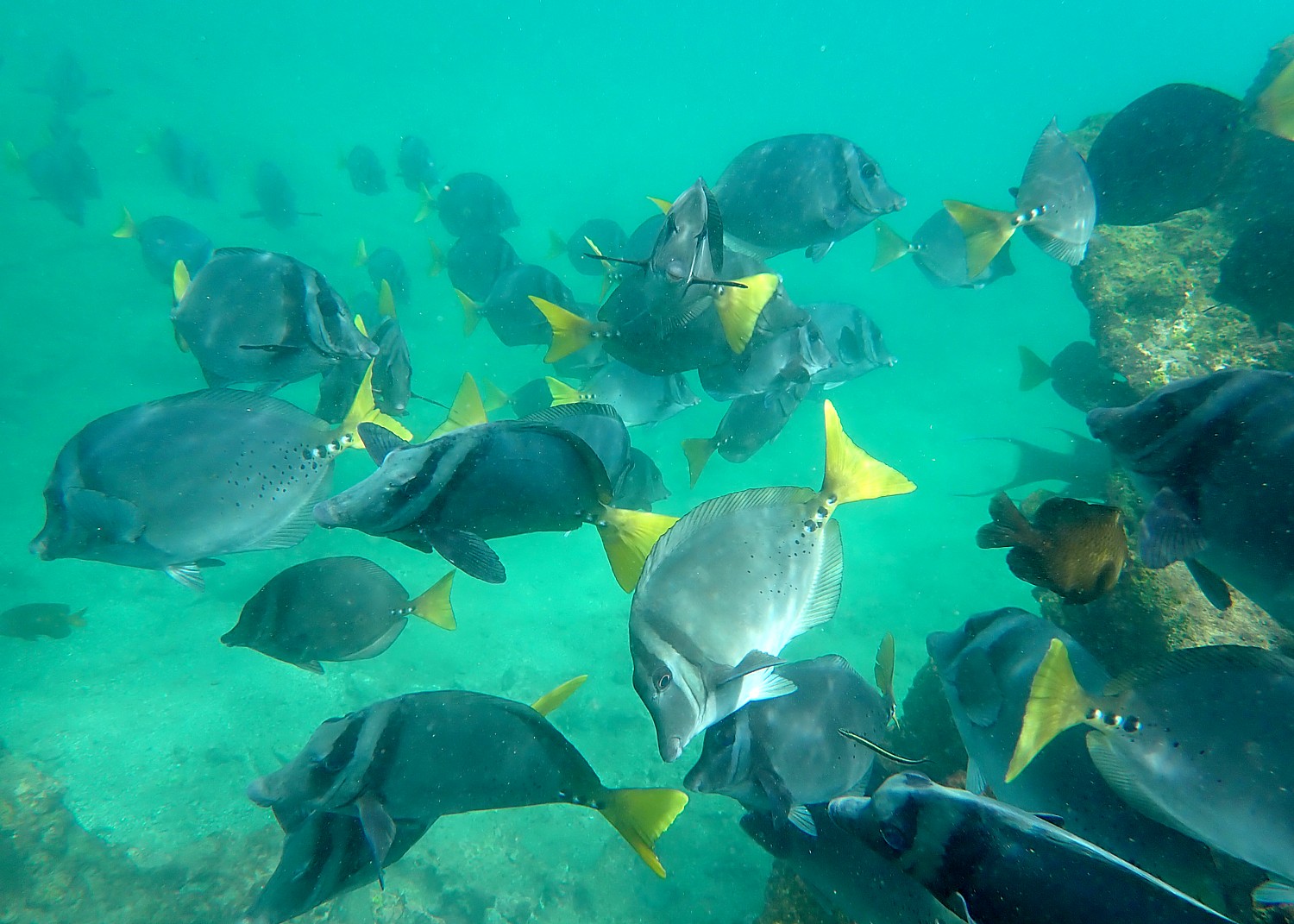
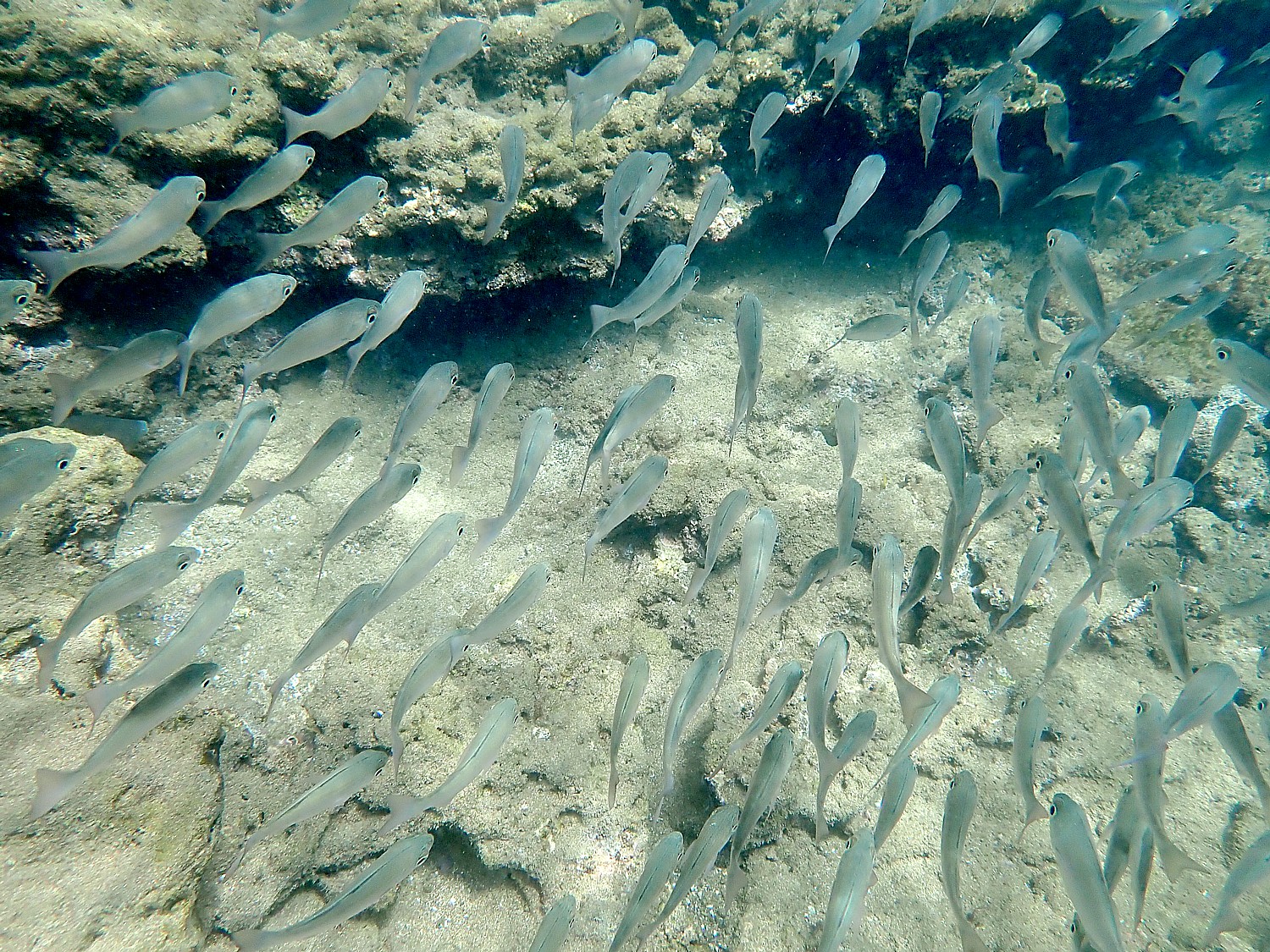
Coming back down to the beach, we get to snorkel again, and this proves to be the most sensational experience of all – the sea lions actually play with us in the water. One uses a rock like a ball, tossing it up and grabbing it in its mouth, and when it drops into the sand, digs it out with its snout and plays some more. Sarah finds a sea turtle that we get to swim with.

Close encounters with sea lions on the beach at Punta Pitt, San Cristobal Island, Galapagos © Karen Rubin/goingplacesfarandnear.com
This sea lion was showing off for Laini, San Cristobal Island, Galapagos © Karen Rubin/goingplacesfarandnear.com
This sea lion amuses itself with a rock, San Cristobal Island, Galapagos © Karen Rubin/goingplacesfarandnear.com
Snorkeling, San Cristobal Island, Galapagos © Karen Rubin/goingplacesfarandnear.com
San Cristobal Island, Galapagos © Karen Rubin/goingplacesfarandnear.com
Swimming with a sea turtle, San Cristobal Island, Galapagos © Karen Rubin/goingplacesfarandnear.com
San Cristobal Island, Galapagos © Karen Rubin/goingplacesfarandnear.com

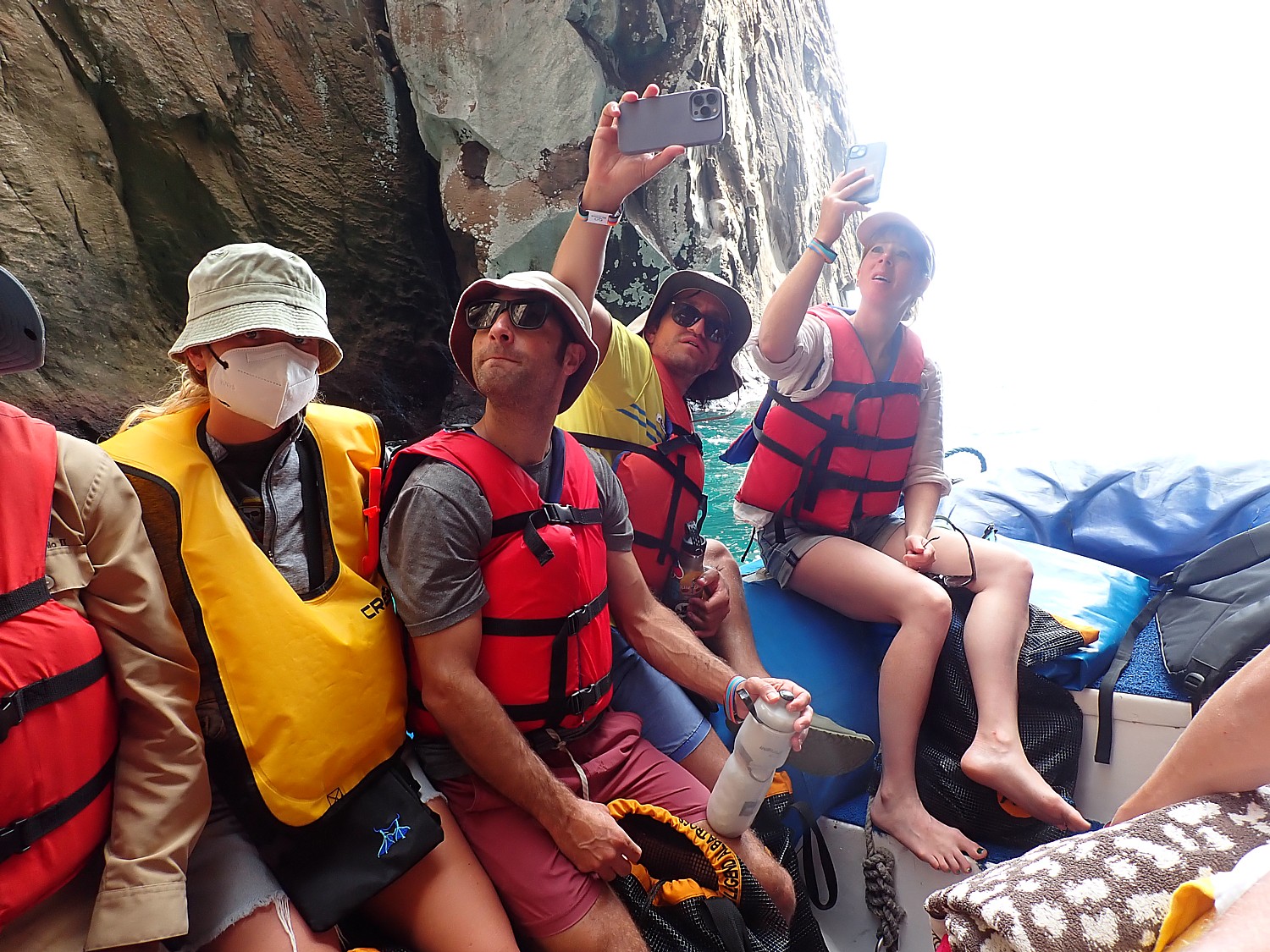
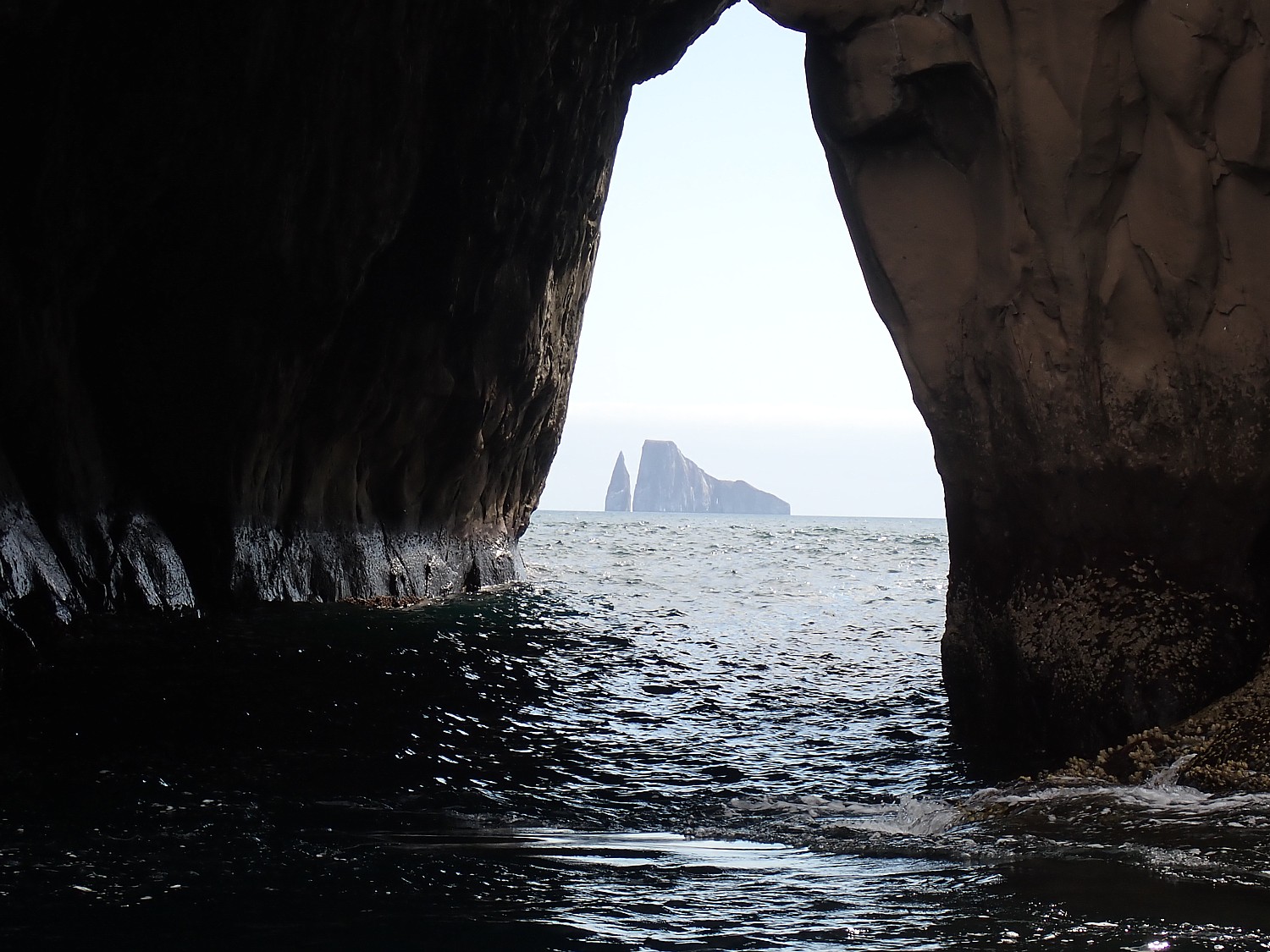
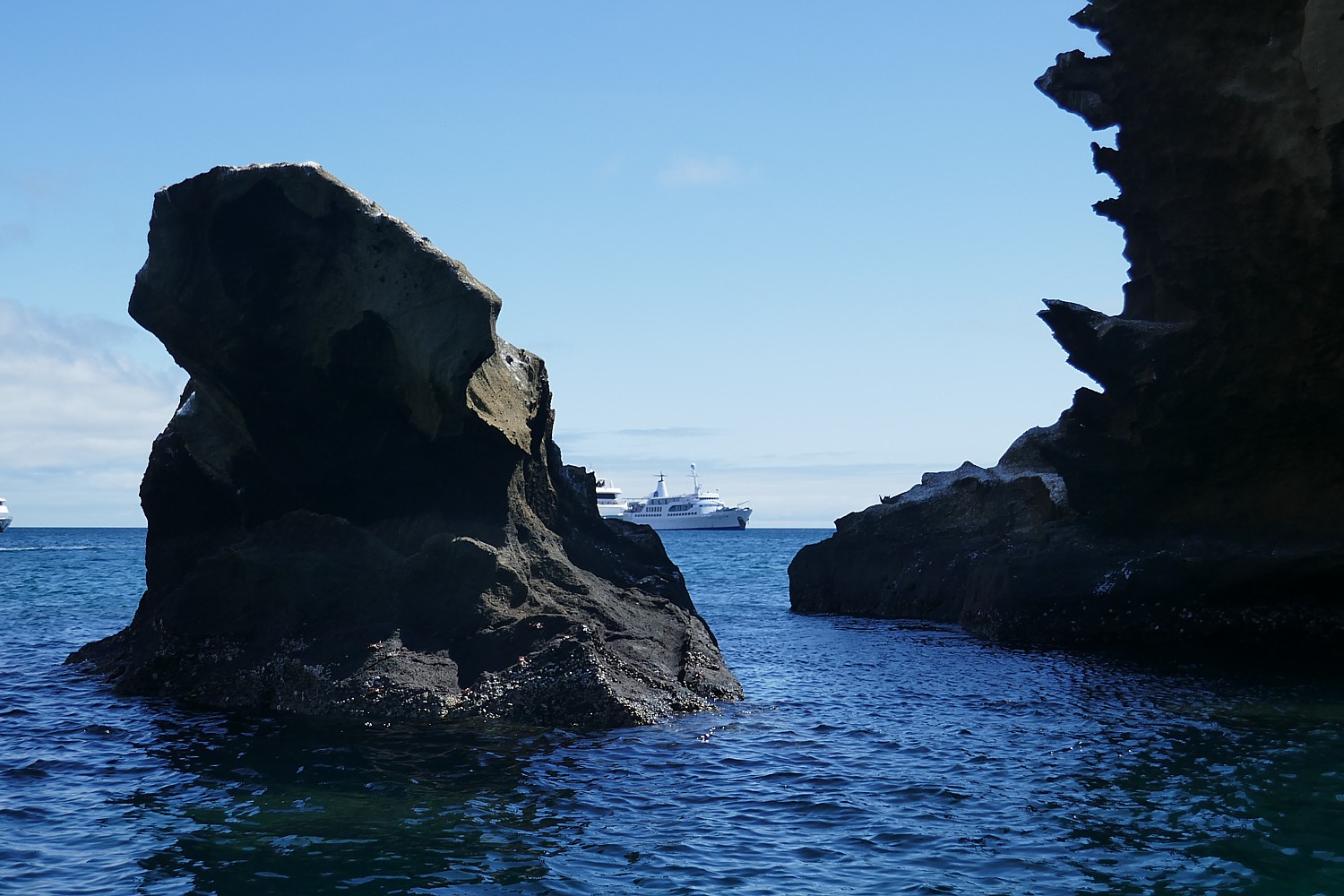
In the afternoon, we sail to a different part of San Cristobal, Cerro Brujo, where there is an exquisite white-sand beach just loaded with sea lions. Our visit begins with a dinghy ride to explore the gorgeous rock formations and see the iconic scene of Kicker Rock through an opening.

San Cristobal Island, Galapagos © Karen Rubin/goingplacesfarandnear.com
A view of the iconic Kicker Rock, San Cristobal Island, Galapagos © Karen Rubin/goingplacesfarandnear.com

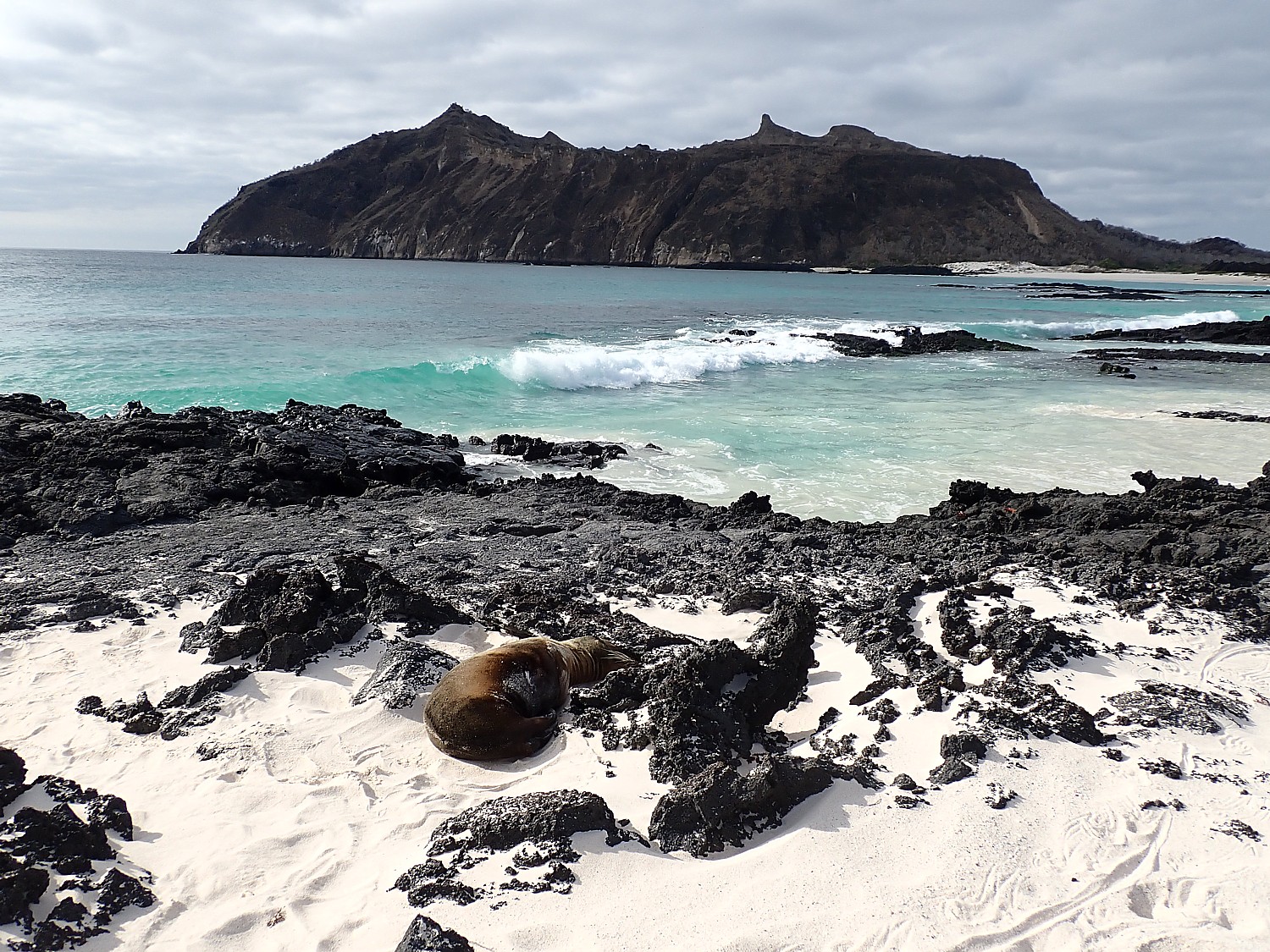
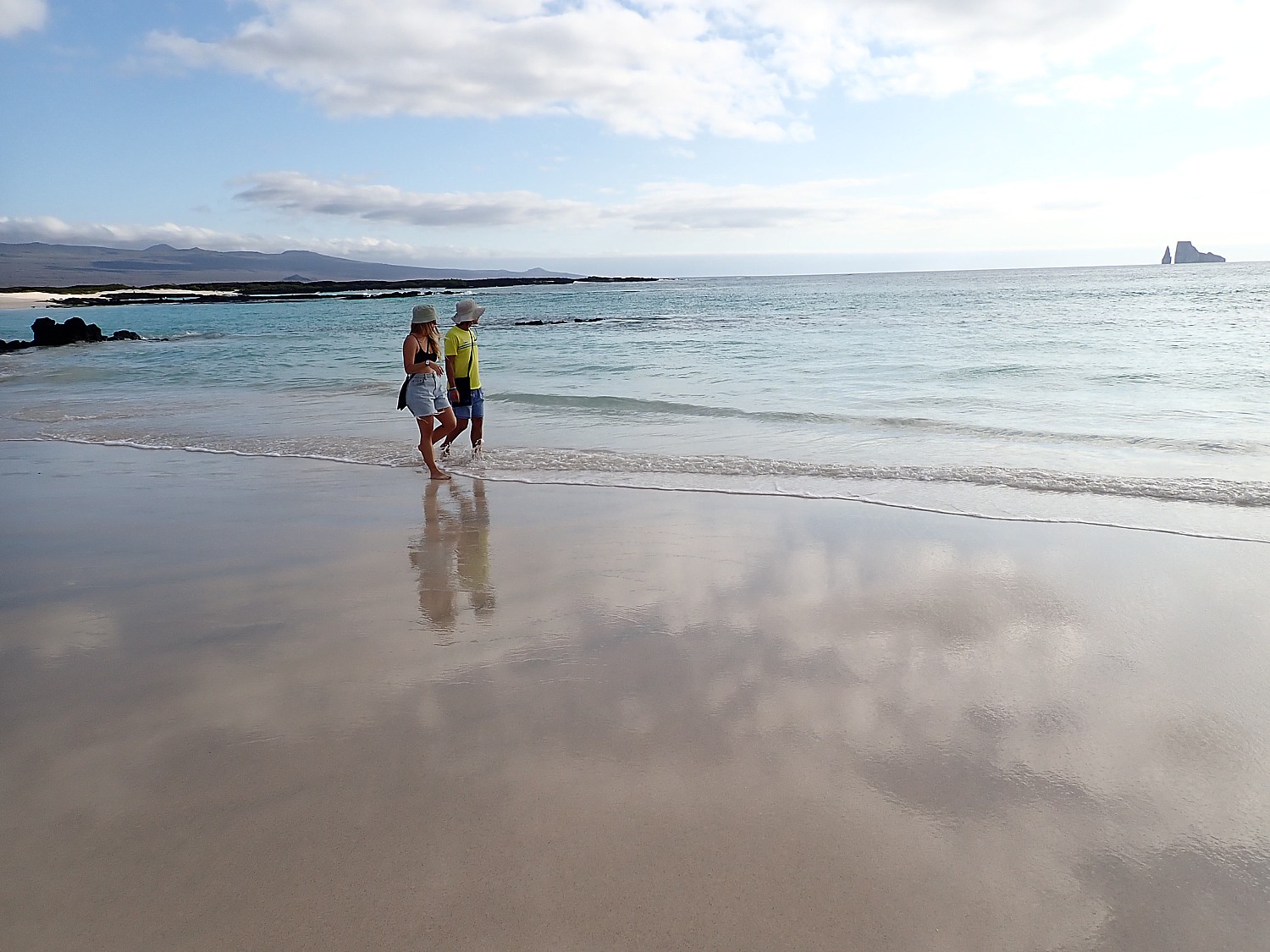
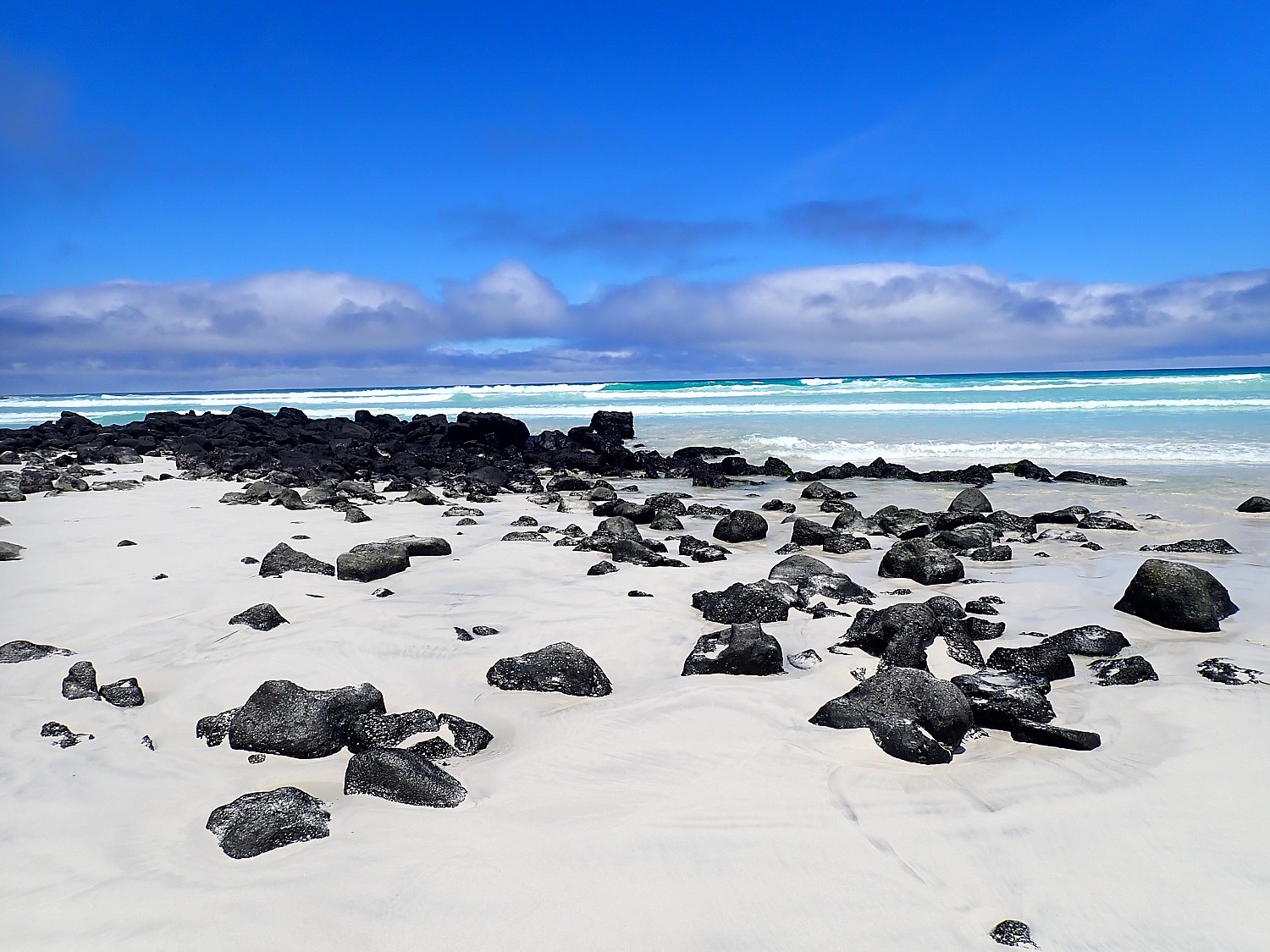
We spend a relaxed afternoon on Cerro Brujo, which was one of the first sites visited by Darwin. The coral sand beach is so beautiful, we spend only a little time swimming or snorkeling because just walking (or jogging) along the beach is so special. The scenery is dramatic – the white sand, black lava, aquamarine water, the sweep of the horizon, the iconic Kicker Rock framed on the horizon, and the Galapagos Legend anchored.

Stunning scenery from Cerro Brujo, San Cristobal Island, Galapagos © Karen Rubin/goingplacesfarandnear.com
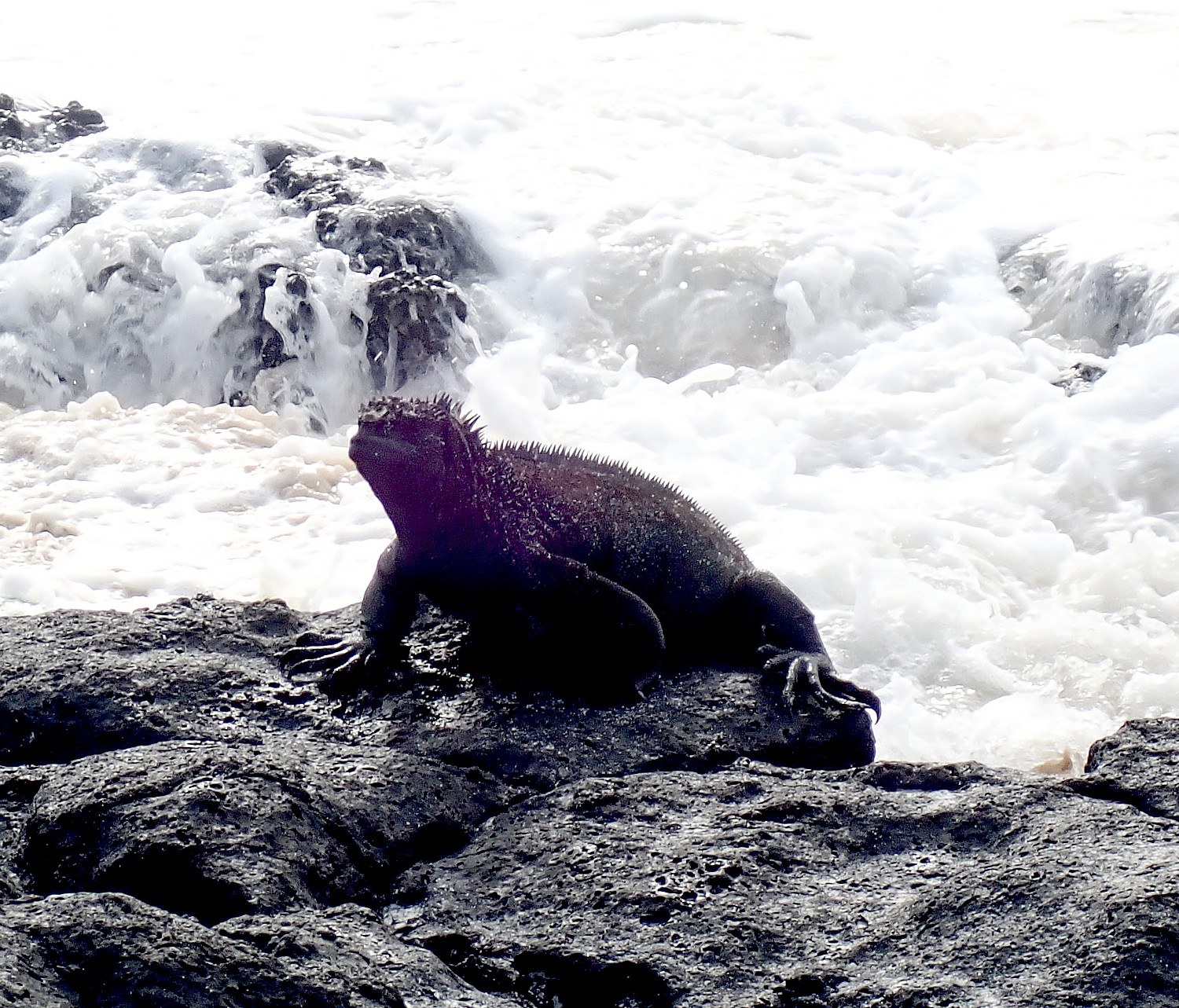
A marine iguana emerges from the sea at Cerro Brujo,, blending in with the rock, San Cristobal Island, Galapagos © Karen Rubin/goingplacesfarandnear.com
Stunning scenery from Cerro Brujo, San Cristobal Island, Galapagos © Karen Rubin/goingplacesfarandnear.com
San Cristobal Island, Galapagos © Karen Rubin/goingplacesfarandnear.com

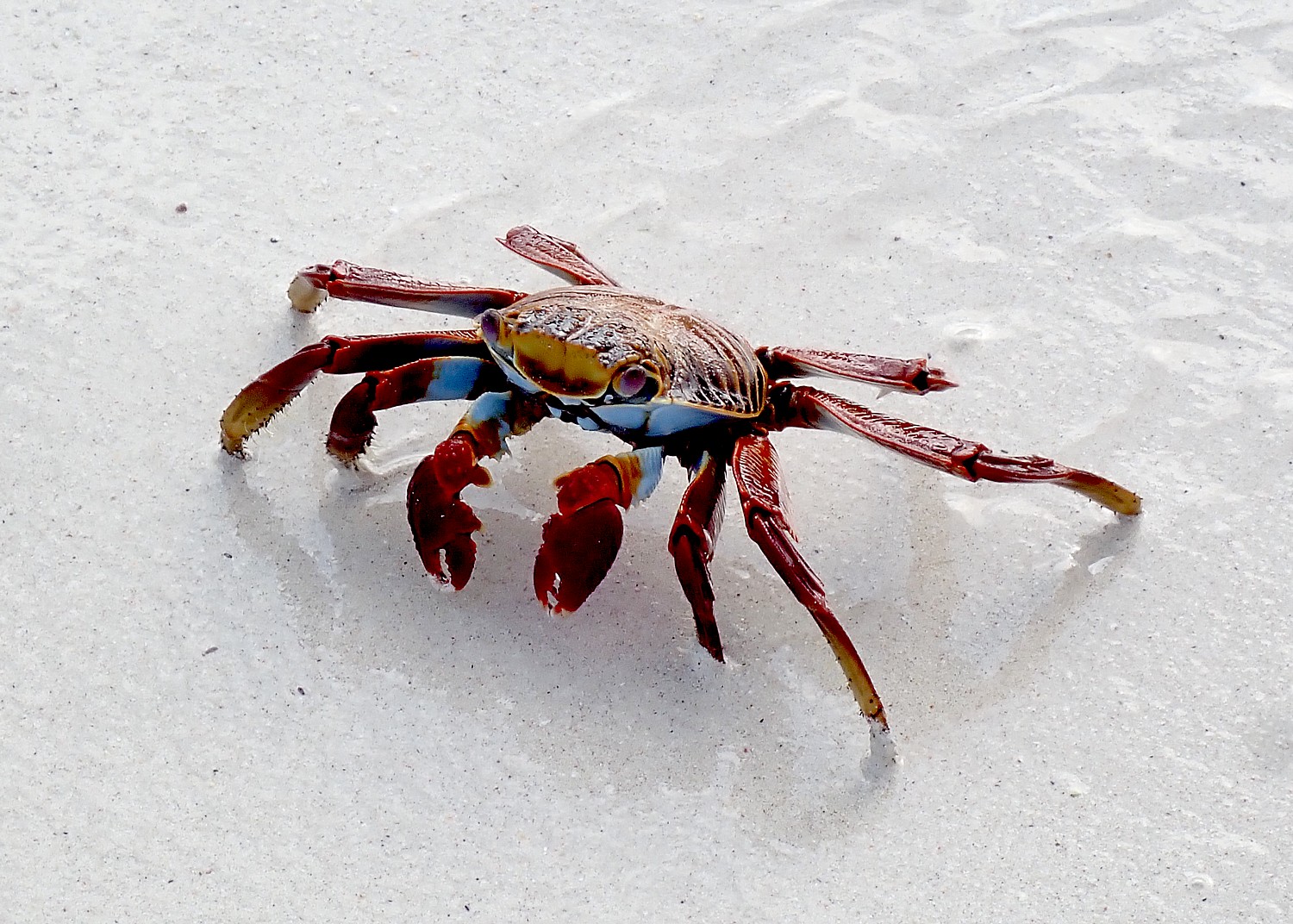
There are black iguana, black crabs and bright-red crabs climbing the black lava rocks, some of us spot the last baby sea turtle trot from its nest into the ocean, and we get to watch a mother sea turtle making her way back into the sea.  Walking to the far end of the lagoon to Sapho Bay (Puerto Grande), we look out for black-necked stilts, ruddy turnstones, whimbrels and white-cheeked pintails. And apparently, there are legends of buried treasure at Puerto Grande.

Laini sketches the sea lions from a distance of a few feet; Sarah is transfixed by a mother sea lion and pup, David and Eric run to the end of the lagoon.

Cerro Brujo, San Cristobal Island, Galapagos © Karen Rubin/goingplacesfarandnear.com

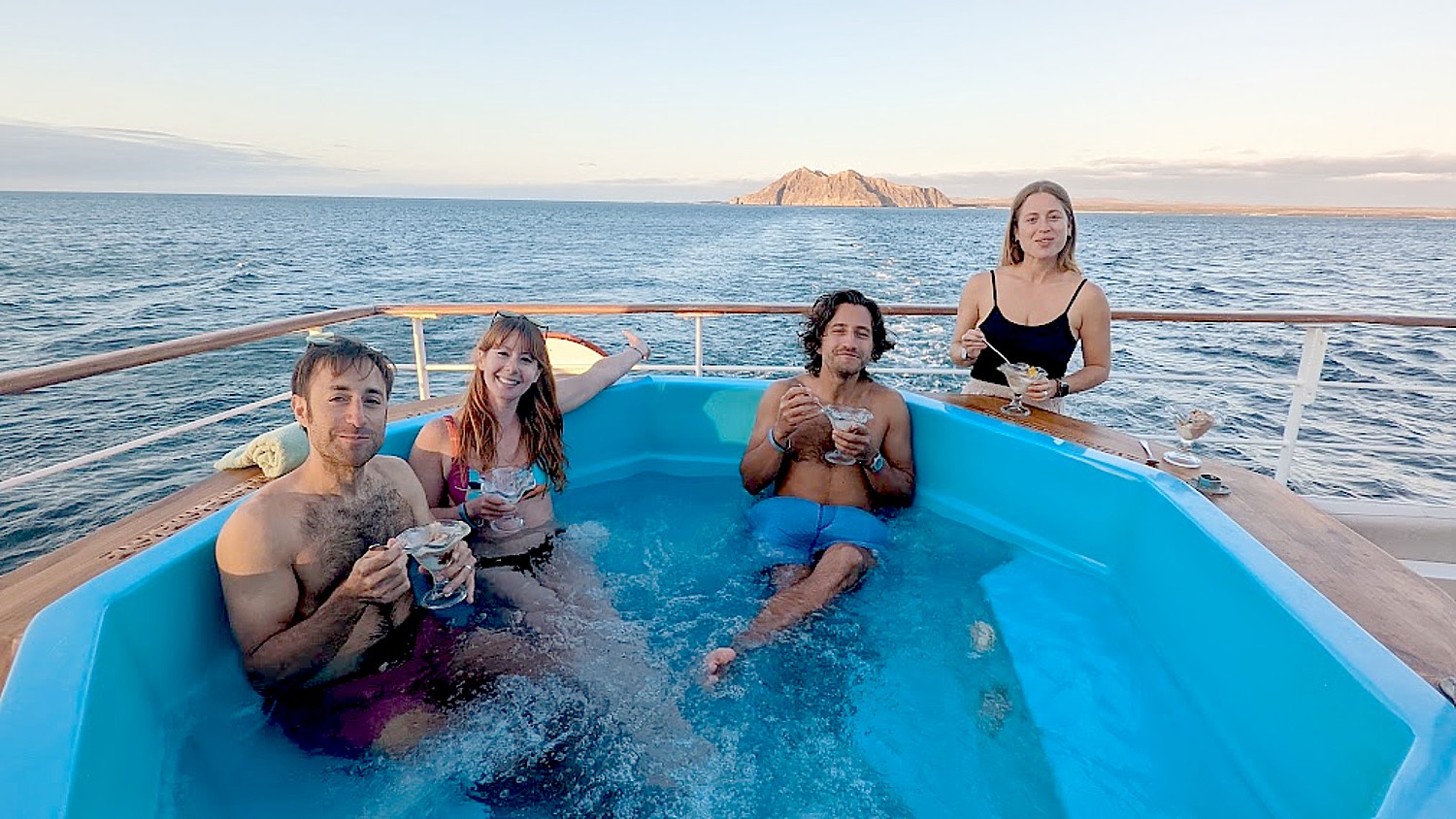
It is a feeling of complete contentment that continues on during an Ice Cream Festival on board the Galapagos Legend, while sitting in the hot tub, and looking back as Kicker Rock fades into the distance, glowing a golden brown in the setting sun.

Cruising on the Galapagos Legend passed Kicker Rock © Karen Rubin/goingplacesfarandnear.com
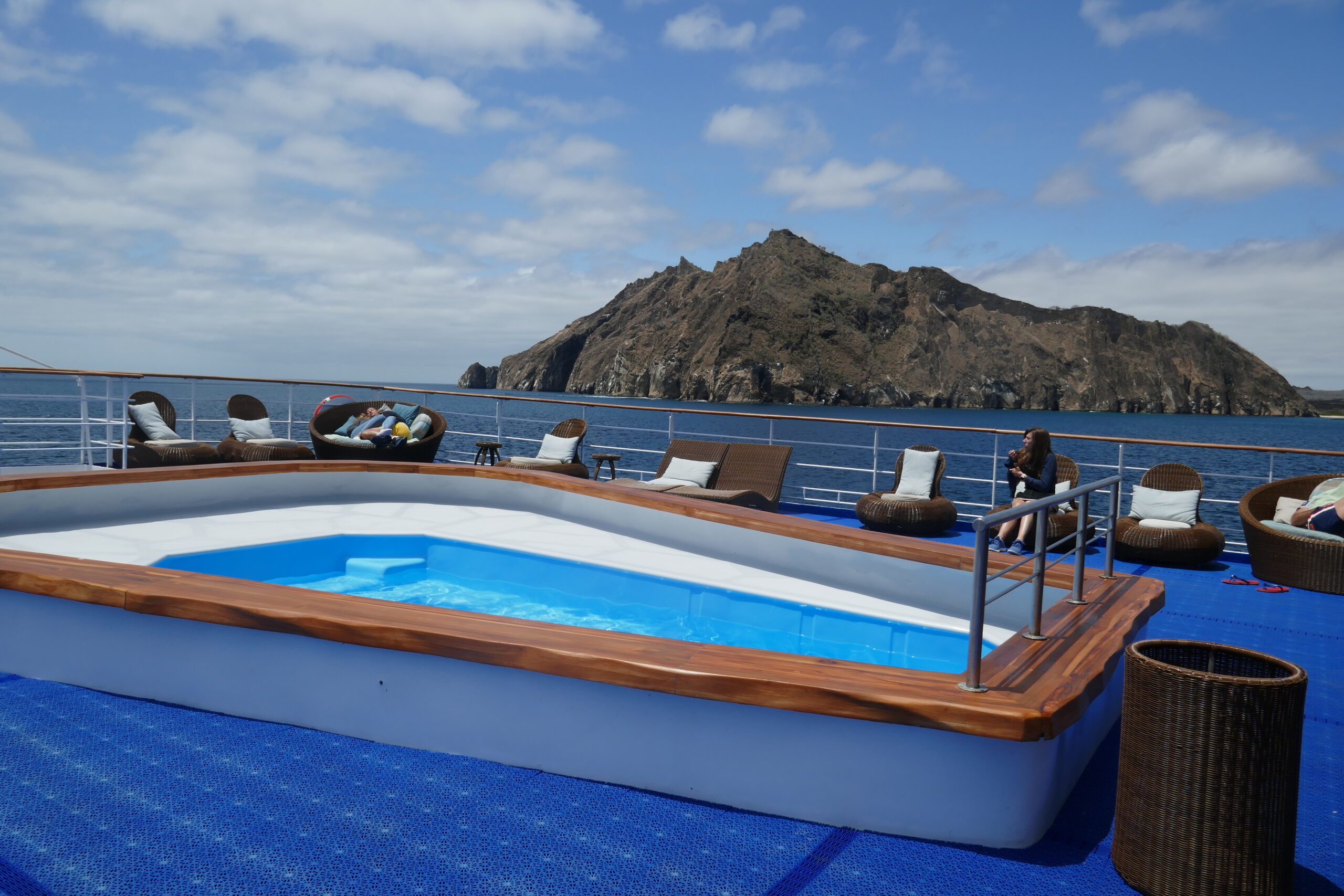
Enjoying the Ice Cream Festival in the hot tub onboard the Galapagos Legend © Karen Rubin/goingplacesfarandnear.com
Onboard the Galapagos Legend, Kicker Rock fading into the sunset© Karen Rubin/goingplacesfarandnear.com
Sailing into the sunset on the Galapagos Legend © Karen Rubin/goingplacesfarandnear.com

The next morning, we sail around to the Puerto Baquerizo Moreno, the main town of San Cristobal and the capital of the Galapagos province and the second most populated after Puerto Ayero on Santa Cruz.

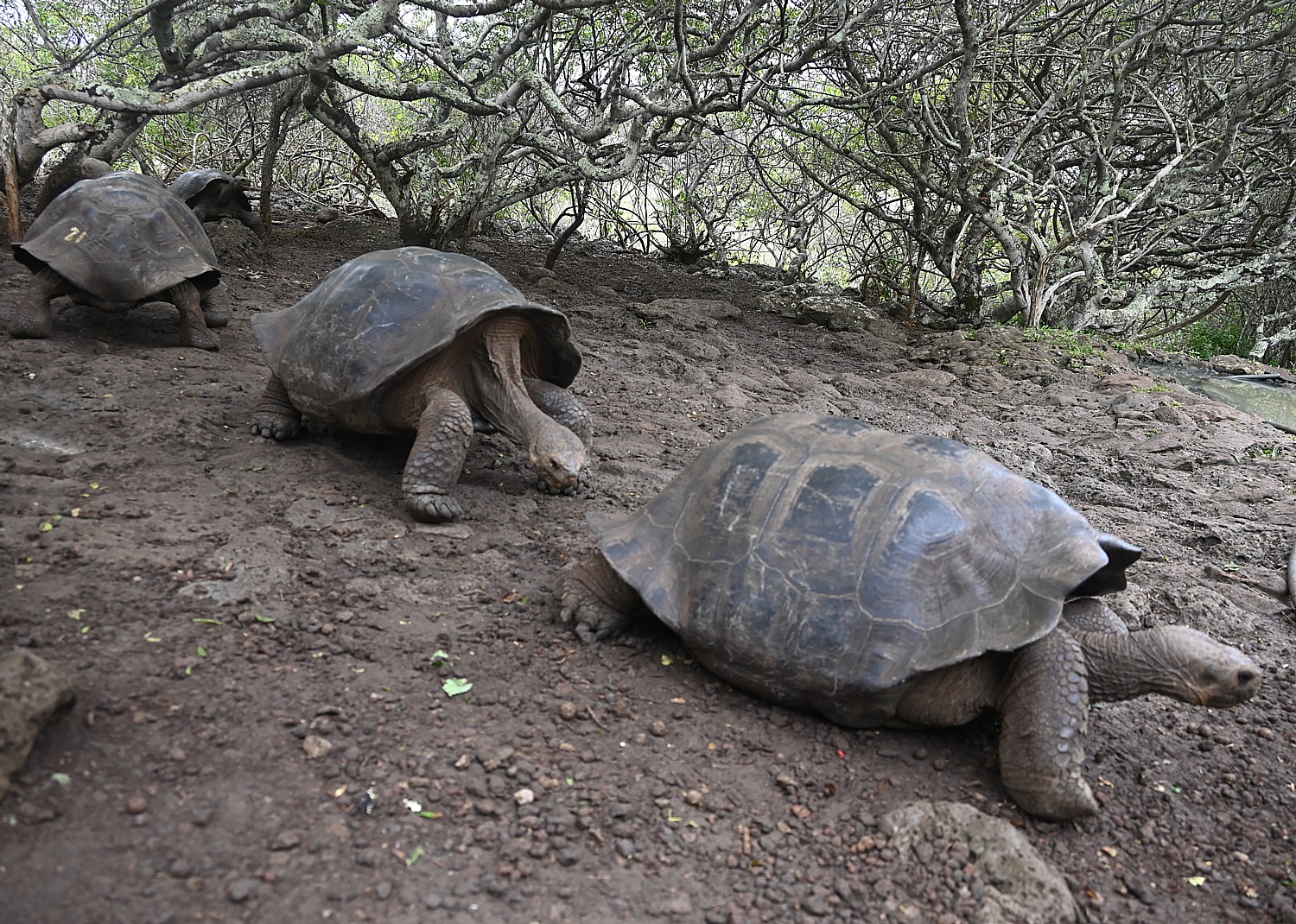
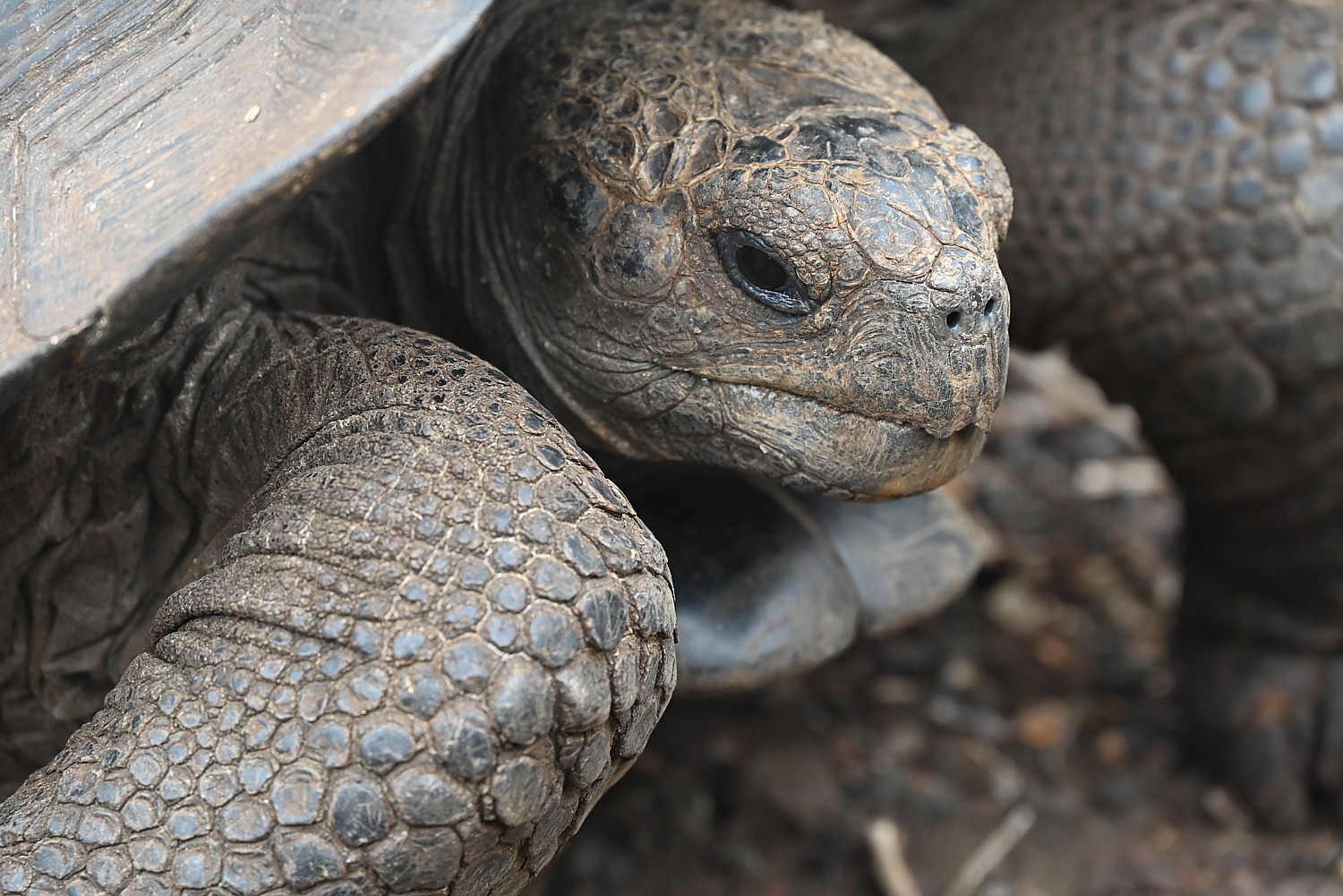
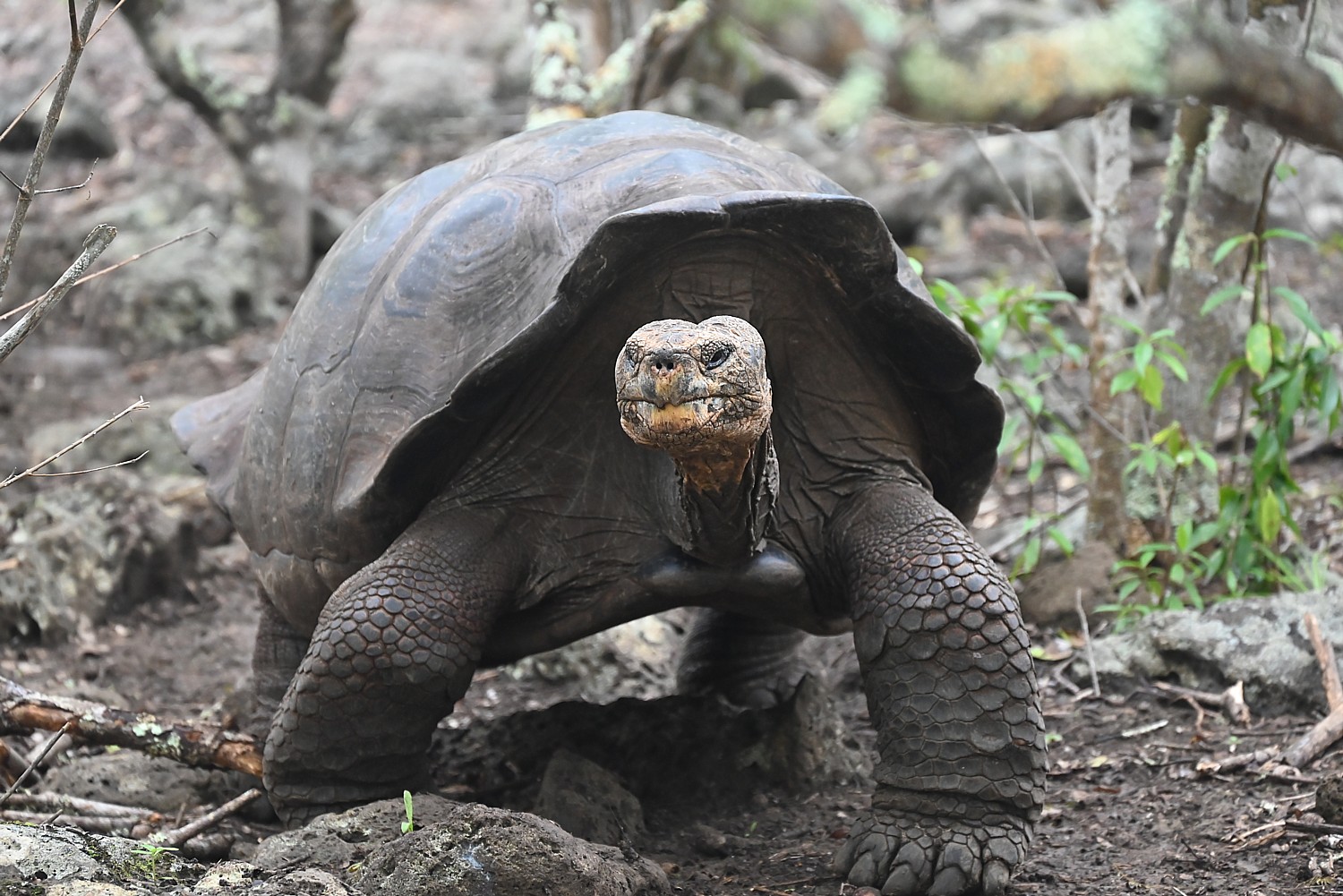
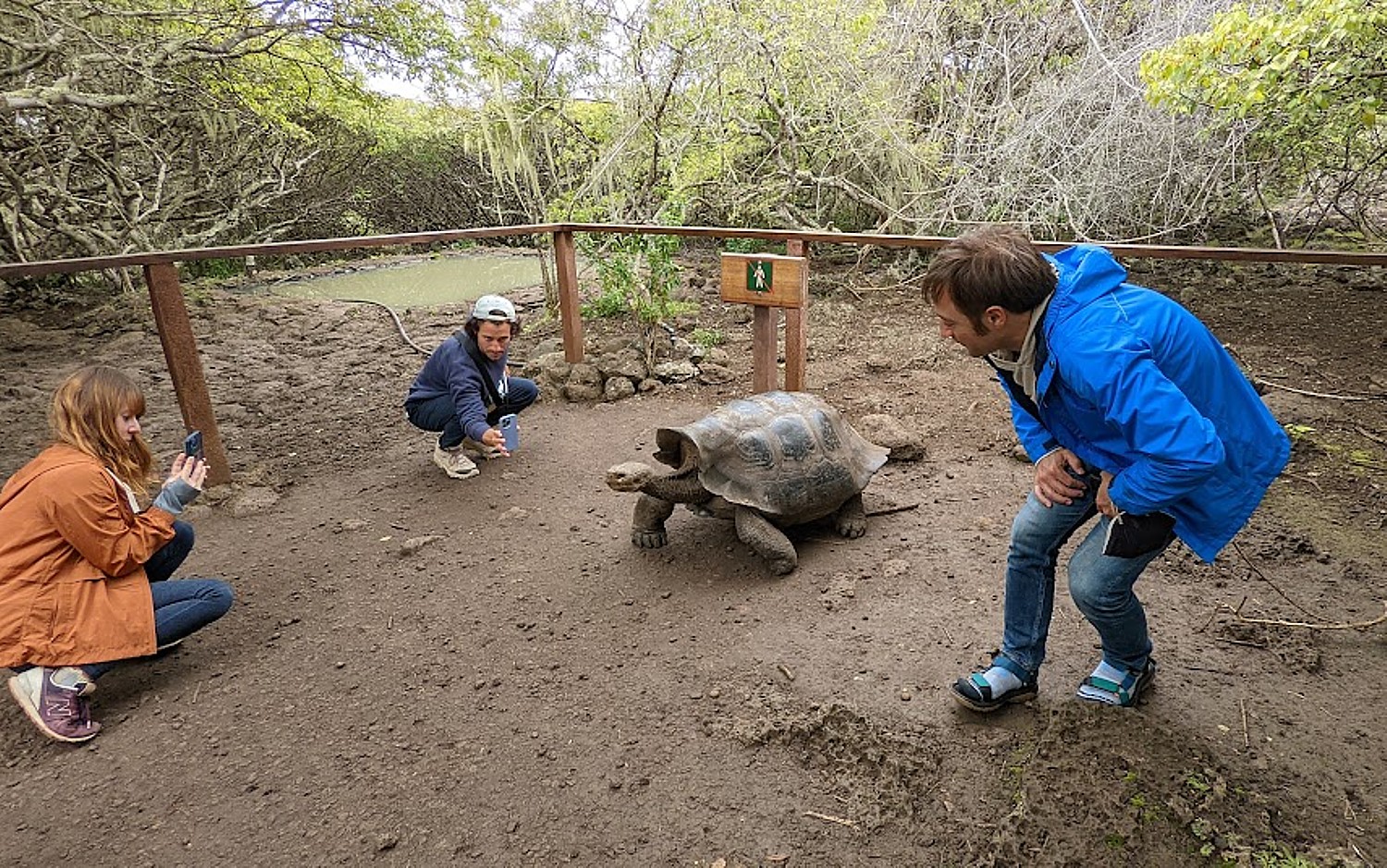
For our final excursion, we are taken by bus up to the highlands to visit the Cerro Colorado Tortoise Reserve, a giant tortoise breeding center, established by the Galapagos National Park in 2003. We get to observe giant tortoises living in a semi-natural habitat, and learn about their origin, evolution, and threats from introduced animals. The reserve is one of four in the Galapagos dedicated to restoring the populations of tortoise, ultimately to return them to the wild.

We watch as giant tortoises at the Cerro Colorado Tortoise Reserve seem to form a line and parade as if to a meeting, San Cristobal Island, Galapagos © Karen Rubin/goingplacesfarandnear.com
Cerro Colorado Tortoise Reserve, San Cristobal Island, Galapagos © Karen Rubin/goingplacesfarandnear.com
Cerro Colorado Tortoise Reserve, San Cristobal, Galapagos © Karen Rubin/goingplacesfarandnear.com
Cerro Colorado Tortoise Reserve, San Cristobal Island, Galapagos © Karen Rubin/goingplacesfarandnear.com
Cerro Colorado Tortoise Reserve, San Cristobal, Galapagos © Karen Rubin/goingplacesfarandnear.com

Being a port town, a provincial capital city and having an international airport, San Cristobal is also a gateway for invasive, sometimes aggressive, species – like the black fly which came in 1990 and proved dangerous for humans and farm animals.

The town is just a short walk to the airport where Eric, Sarah and Karen fly on to our next destination, Quito, en route to Cuzco, Peru, and the four-day/three-night Inca Trail hike to Machu Picchu. It will be the grand finale to Eric and Sarah’s six-month odyssey.

The Galapagos Legend cruise is perfect for this bucket-list experience – the ideal mix of soft adventure, the wonder, thrill and delight of exploring and encountering truly unique sights, all in comfort, and sharing together.

Go Galapagos offers a selection of itineraries that basically cover the major islands – four 4 day/3 night itineraries (East, South, North, West) which can be combined to make longer itineraries.

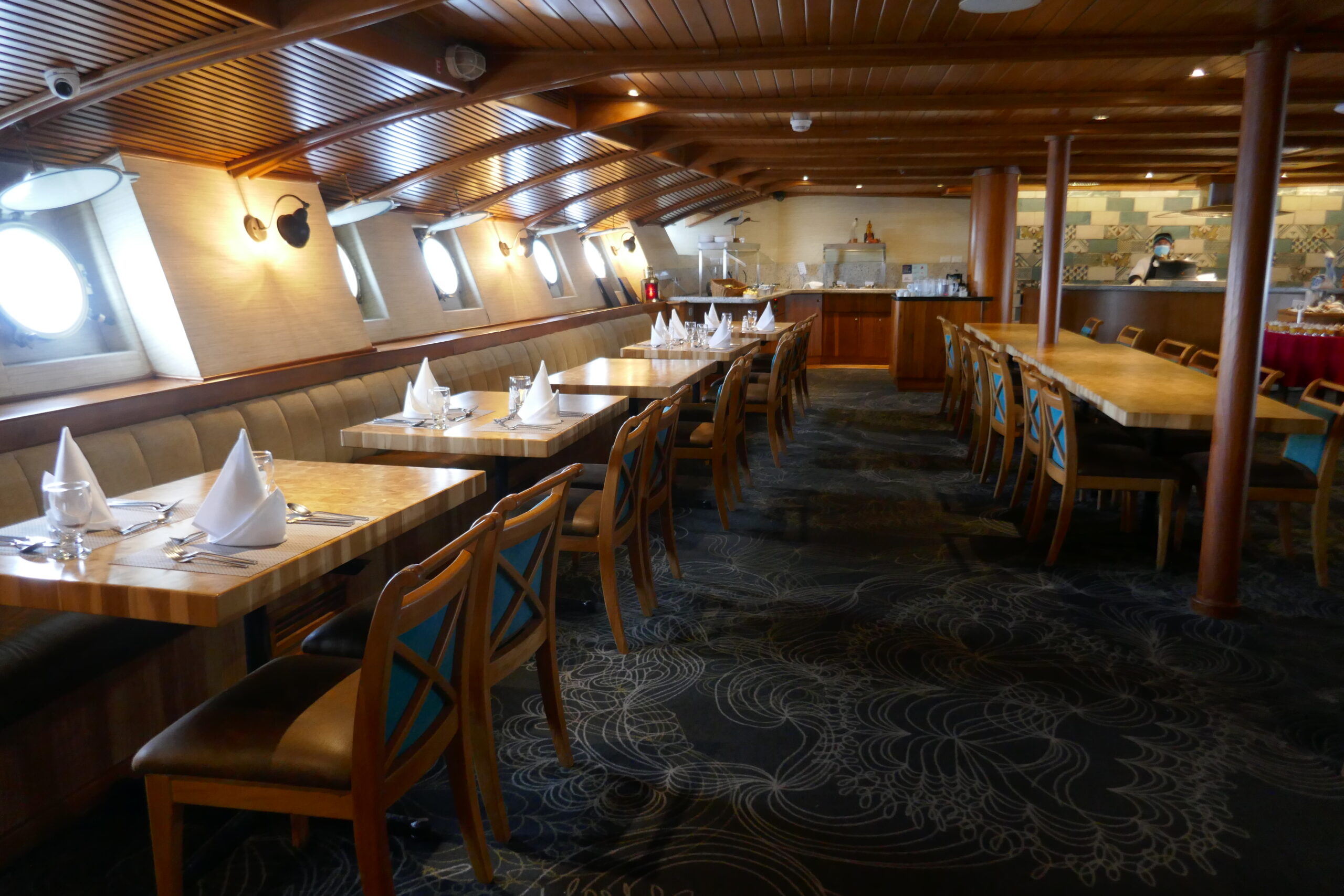
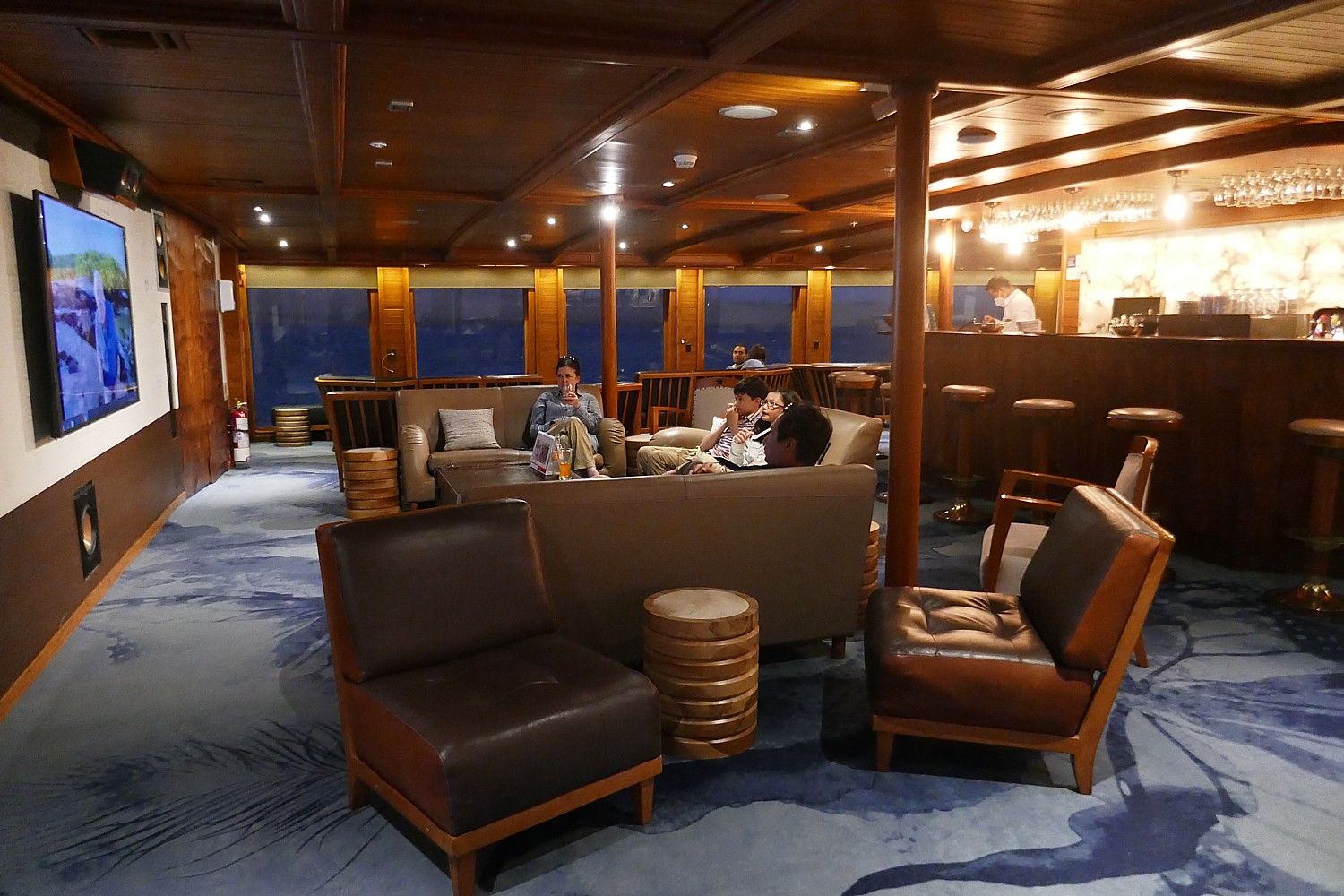
The itineraries are wonderfully organized so that your days are filled and fulfilling with exploring, hiking, snorkeling, discovering, adventuring, each place so different and distinct in terms of wildlife and geology, and then time on board to enjoy truly sensational meals either in the comfortable Lonesome George dining room, or alfresco; relax in the hot tub (how fun to have an ice cream festival while soaking in the hot tub), pool or fitness room, or hang out in the charming lounge where you are likely to see Attenborough’s “Galapagos” series running or play board games that are on hand. They also have kayaks available for rent. (Another advantage of the East itinerary is that it let us start off with a few days on Santa Cruz island and the charming town of Puerto Ayora before meeting up at Baltra Airport for the cruise.)

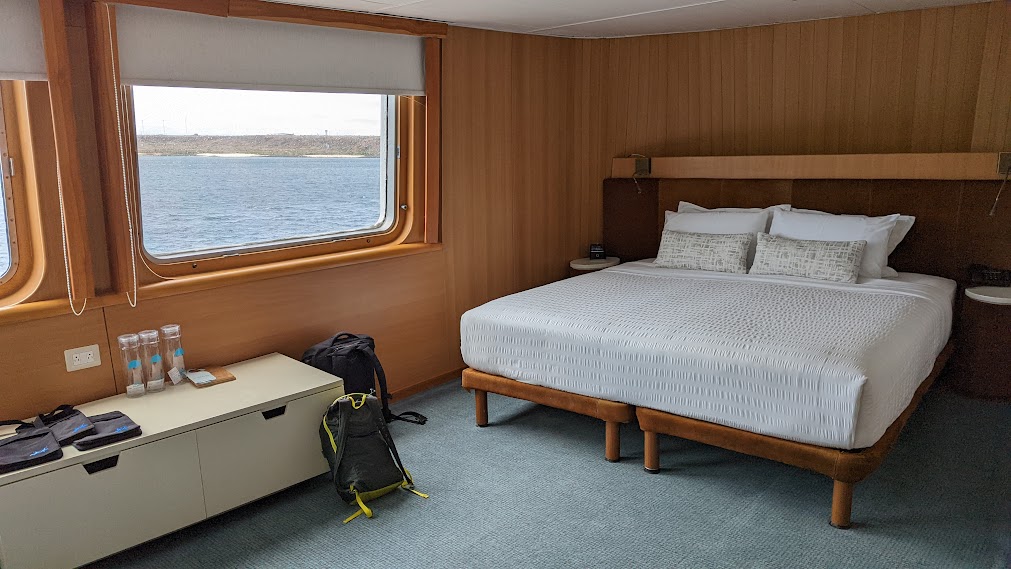
Cabin on the Earth Deck of the 52-cabin Galapagos Legend © Karen Rubin/goingplacesfarandnear.com

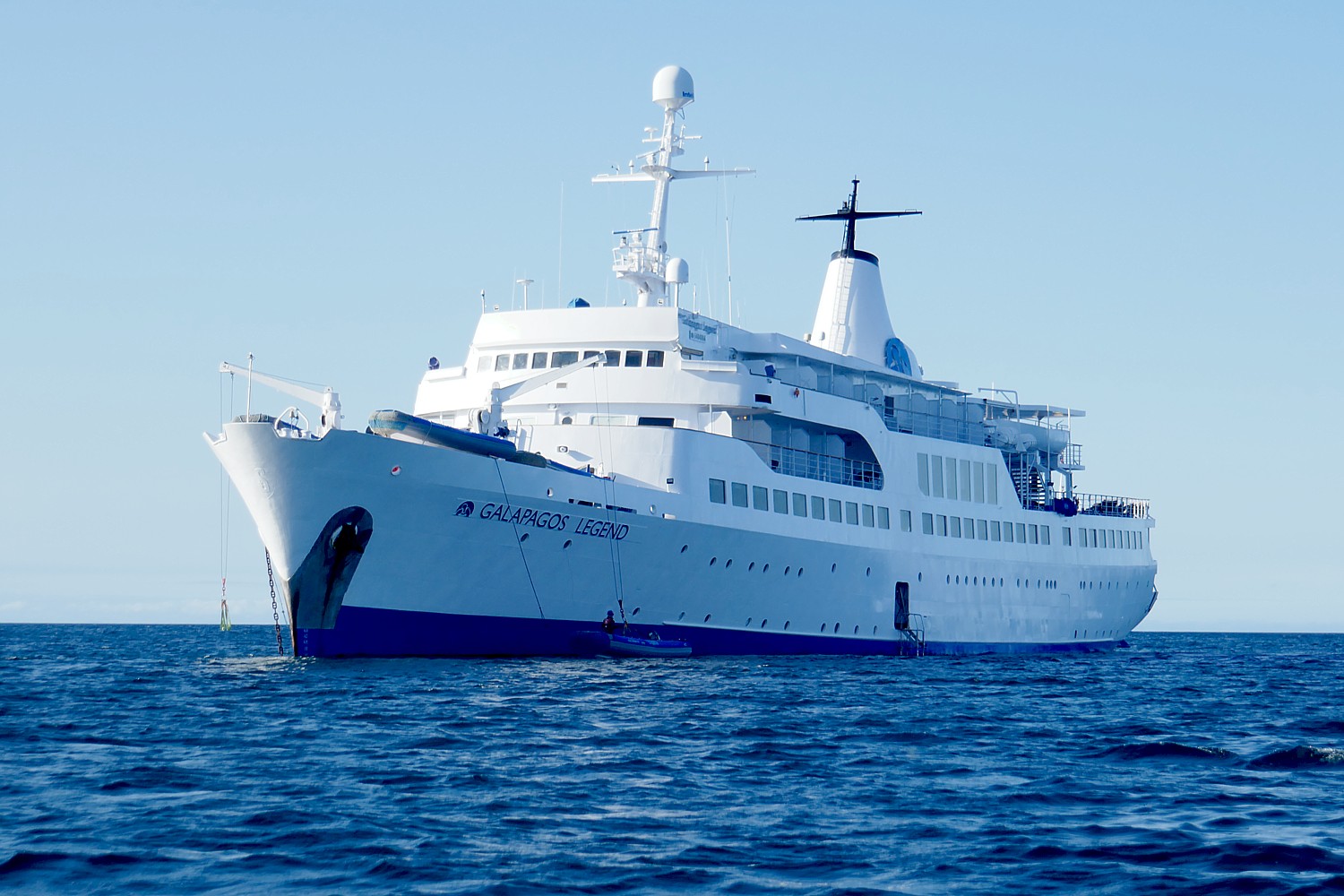
The ship, with 52 ocean-view, air-conditioned cabins is large enough to feel very comfortable and have all the amenities you would want on a luxury cruise, but small enough to feel intimate.

The Lonesome George dining room on the Galapagos Legend ship is named for the iconic giant tortoise who was the last of his species, who in turn was named for comedian George Gobel because of a character the comedian played © Karen Rubin/goingplacesfarandnear.com

There’s a reason they say Galapagos is a trip of a lifetime – the total experience is a constant wow, especially when shared with loved ones and have the memory to share with the next generation so is ideal for a family, especially multi-generational. That’s what this is about – a chain of life and living. (But note: you need to be mobile enough to get on/off the dinghy from the boat, onto the shore, and hike, so seize the opportunity and don’t put this bucket-list trip off). The Galapagos is also an ideal honeymoon for a couple who loves adventure but wants the luxury and romance of a cruise for their special journey starting out life together. 

Lounge aboard the Galapagos Legend © Karen Rubin/goingplacesfarandnear.com

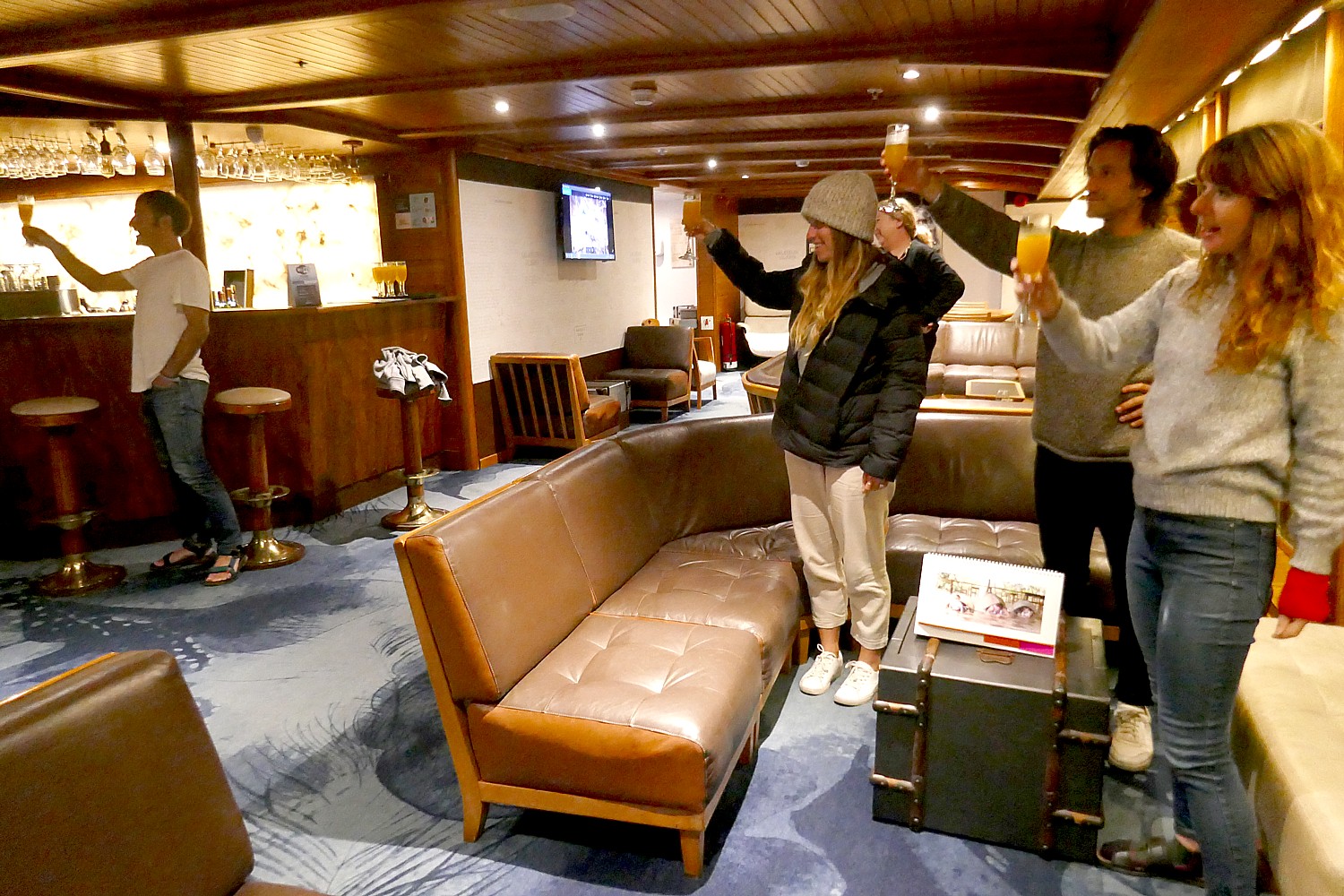
Just how special a Galapagos cruise is can be appreciated by the multiple milestone birthdays celebrated each night. (Indeed, Paul, a video game animator who was taking his third consecutive cruise aboard the Galapagos Legend, said he got tired of waiting for friends to join him, so just two days after celebrating his 40th birthday, he flew to the Galapagos on his own.)

A farewell toast and the end of the four-day/three-night “East” cruise aboard the Galapagos Legend © Karen Rubin/goingplacesfarandnear.com

Galápagos is wonder-full to visit any time of the year. Because of the Islands’ location on the Equator, the air and water temperatures remain relatively stable all year long. During peak seasons (mid-June through early September, and mid-December through mid-January), it is particularly important to make your travel arrangements well in advance.

Go Galapagos, an alliance of Kleintours and Gala Tours, is a cruise and tour operator with more than 34 years of experience, offering excellent price/quality value for 3, 4, 7 and -night inclusive cruises (two guaranteed weekly departures), You can also combine the cruise with land packages in the Galapagos, in Ecuador, and in Peru.

In addition to the Galapagos Legend, Go Galapagos also has two yacht-style ships, Coral I and Coral II.

Go Galapagos by Kleintours, Av. Eloy Alfaro N° 34-111 & Catalina Aldaz. 170515, Quito – Ecuador, Ph: (593) 2 – 2267000 / (593) 2 – 2267080, USA: 1-888 50 KLEIN, www.GoGalapagos.com.

Here are more helpful links: 

https://www.Go Galapagos.com/request-a-quote-2/
https://www.Go Galapagos.com/galapagos-legend/
https://www.Go Galapagos.com/coral-yachts/
https://www.Go Galapagos.com/islands/santa-cruz/
https://www.Go Galapagos.com/islands/genovesa-island/
https://www.Go Galapagos.com/islands/south-plaza/
https://www.Go Galapagos.com/islands/santa-fe/
https://www.Go Galapagos.com/islands/santa-cruz/
https://www.Go Galapagos.com/galapagos-animals/

See also:

CRUISING ON THE GALAPAGOS LEGEND: A VOYAGE OF WONDER

SANTA CRUZ ISLAND IS WONDER-FUL START TO GALAPAGOS ADVENTURE

CRUISING ON THE GALAPAGOS LEGEND: SANTIAGO ISLAND

__________________

© 2022 Travel Features Syndicate, a division of Workstyles, Inc. All rights reserved. Visit goingplacesfarandnear.com, www.huffingtonpost.com/author/karen-rubin, and travelwritersmagazine.com/TravelFeaturesSyndicate/. Blogging at goingplacesnearandfar.wordpress.com and moralcompasstravel.info. Visit instagram.com/going_places_far_and_near and instagram.com/bigbackpacktraveler/ Send comments or questions to FamTravLtr@aol.com. Tweet @TravelFeatures. ‘Like’ us at facebook.com/NewsPhotoFeatures
Cruising on the Galapagos Legend: Santiago Island

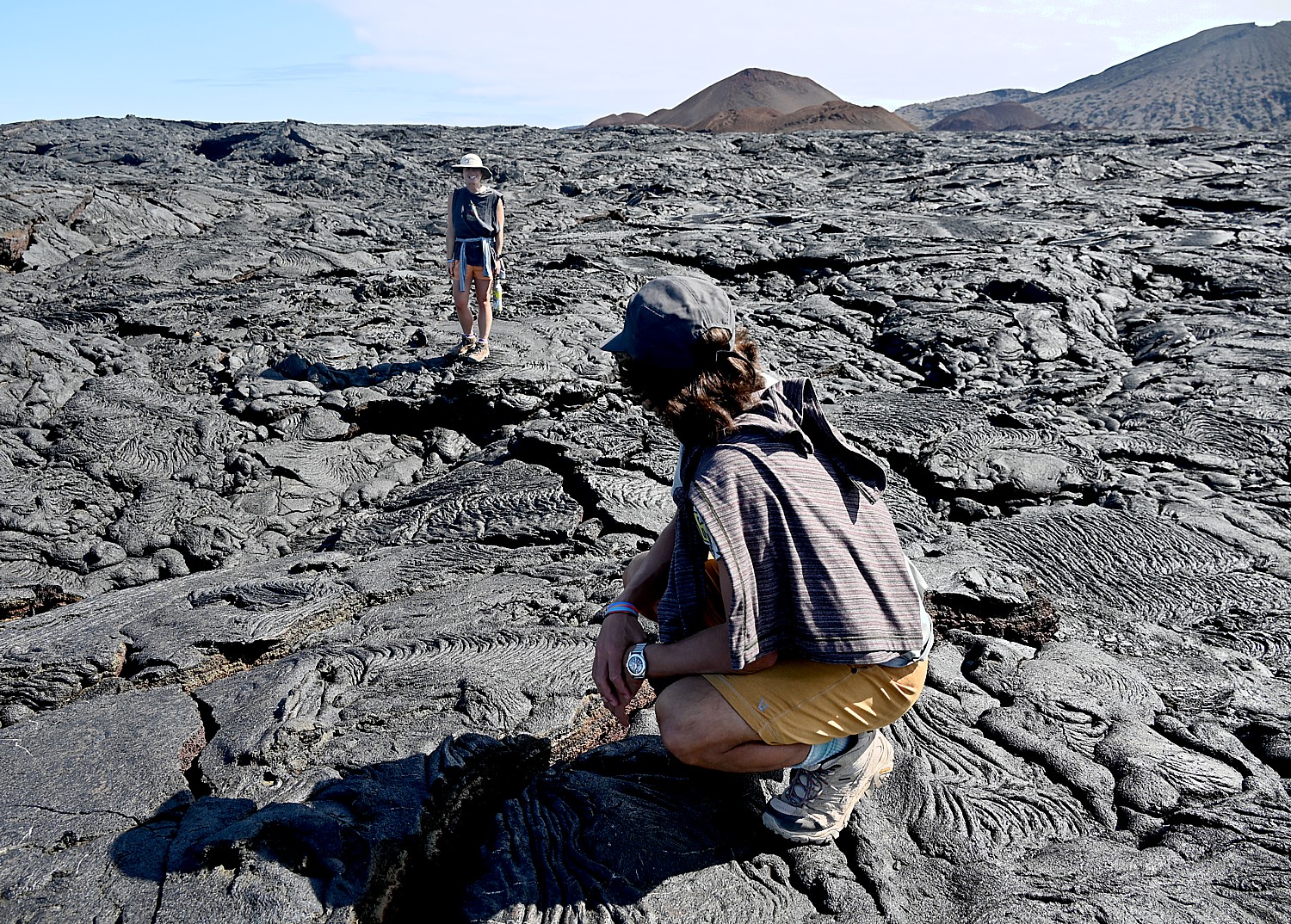
In Sullivan Bay, exploring this newly formed (350 years old) lava landscape on our second day of a four-day cruise aboard the Galapagos Legend © Karen Rubin/goingplacesfarandnear.com

By Karen Rubin, Dave E. Leiberman, Laini Miranda, Eric Leiberman & Sarah Falter

Travel Features Syndicate, goingplacesfarandnear.com

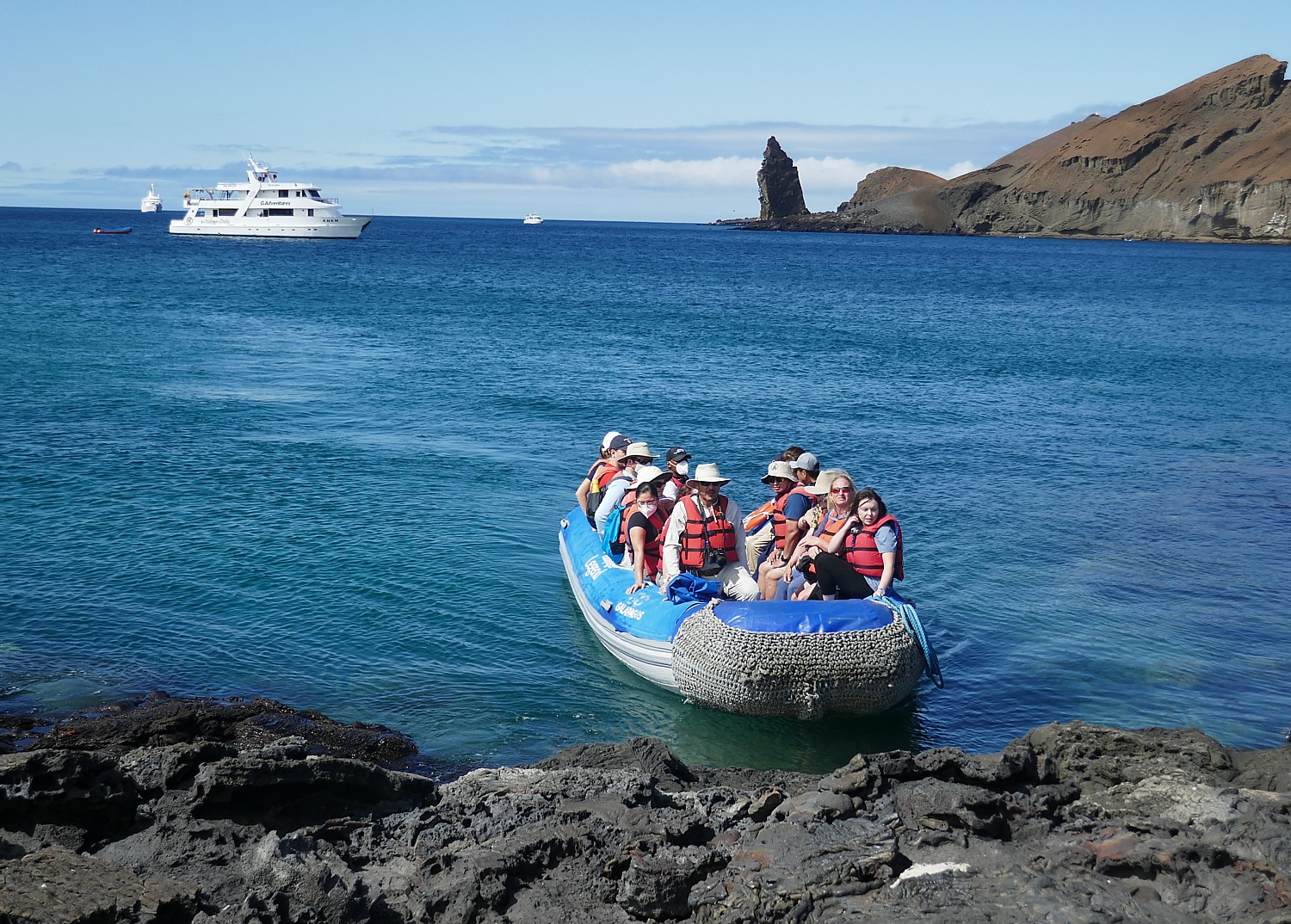
On the second day of the four-day cruise aboard the Galapagos Legend, we sail on to Santiago island. Early in the morning, after a talk about snorkeling and getting outfitted with our gear, we have a dry landing at Bartolome island just off Santiago.

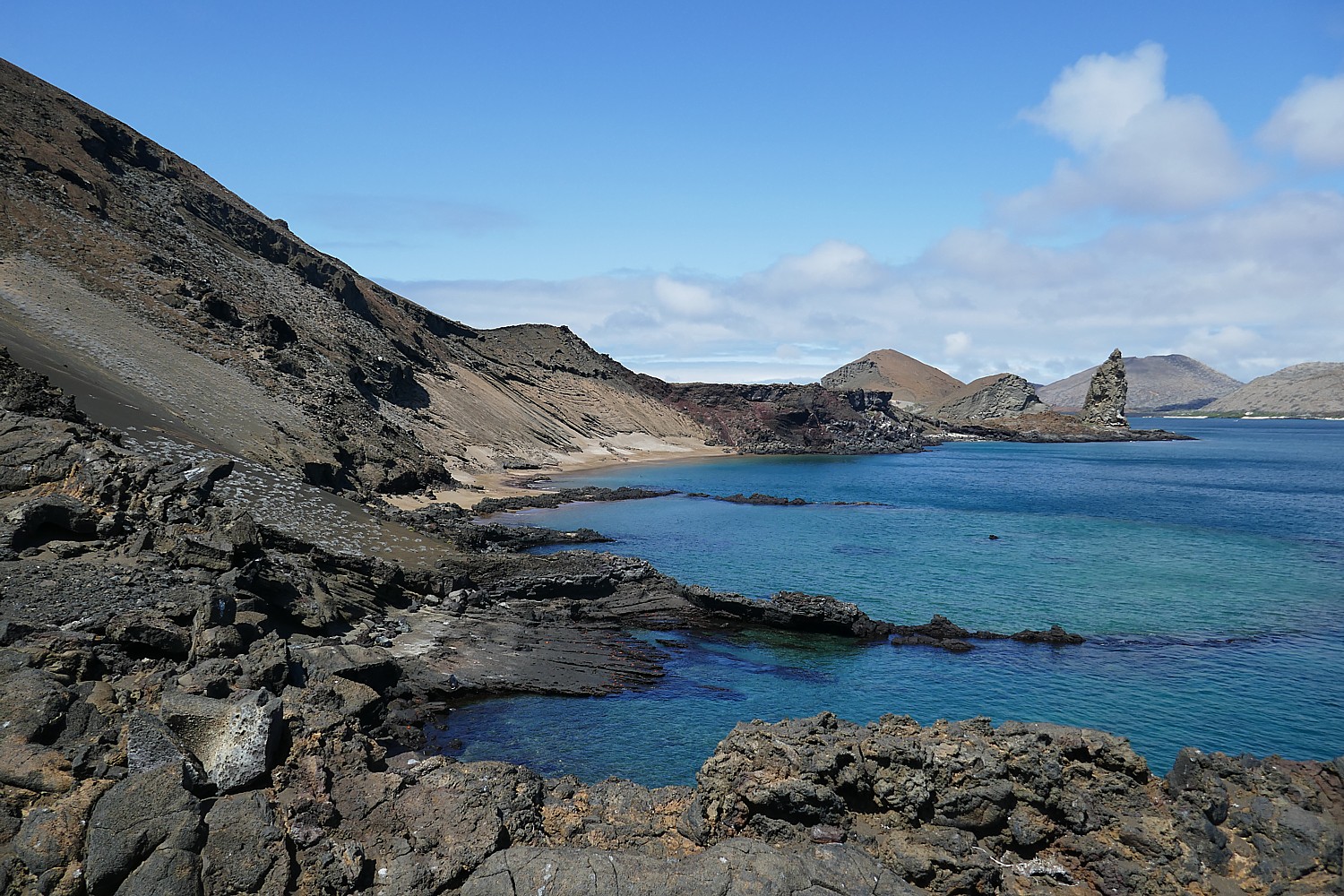
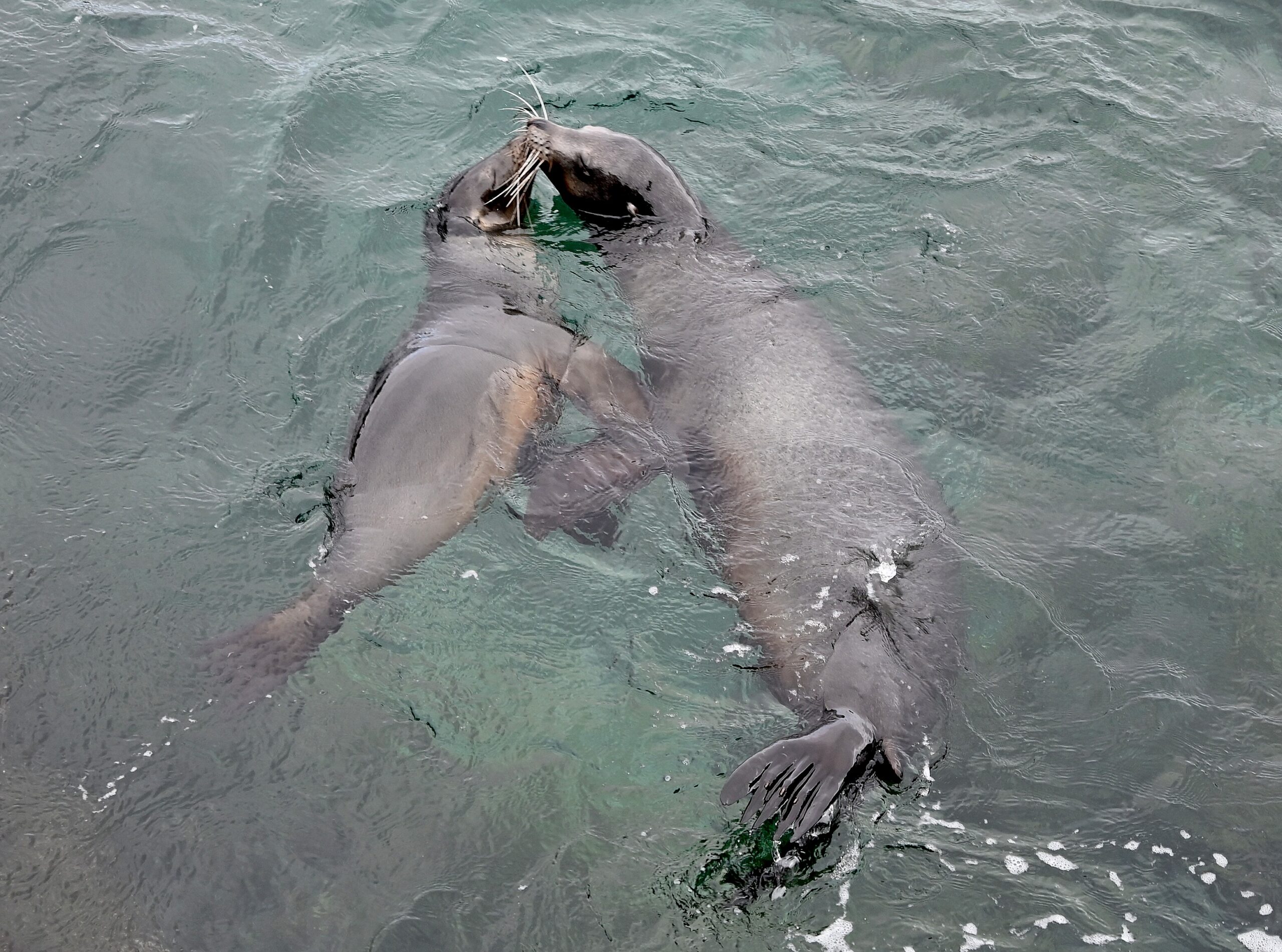
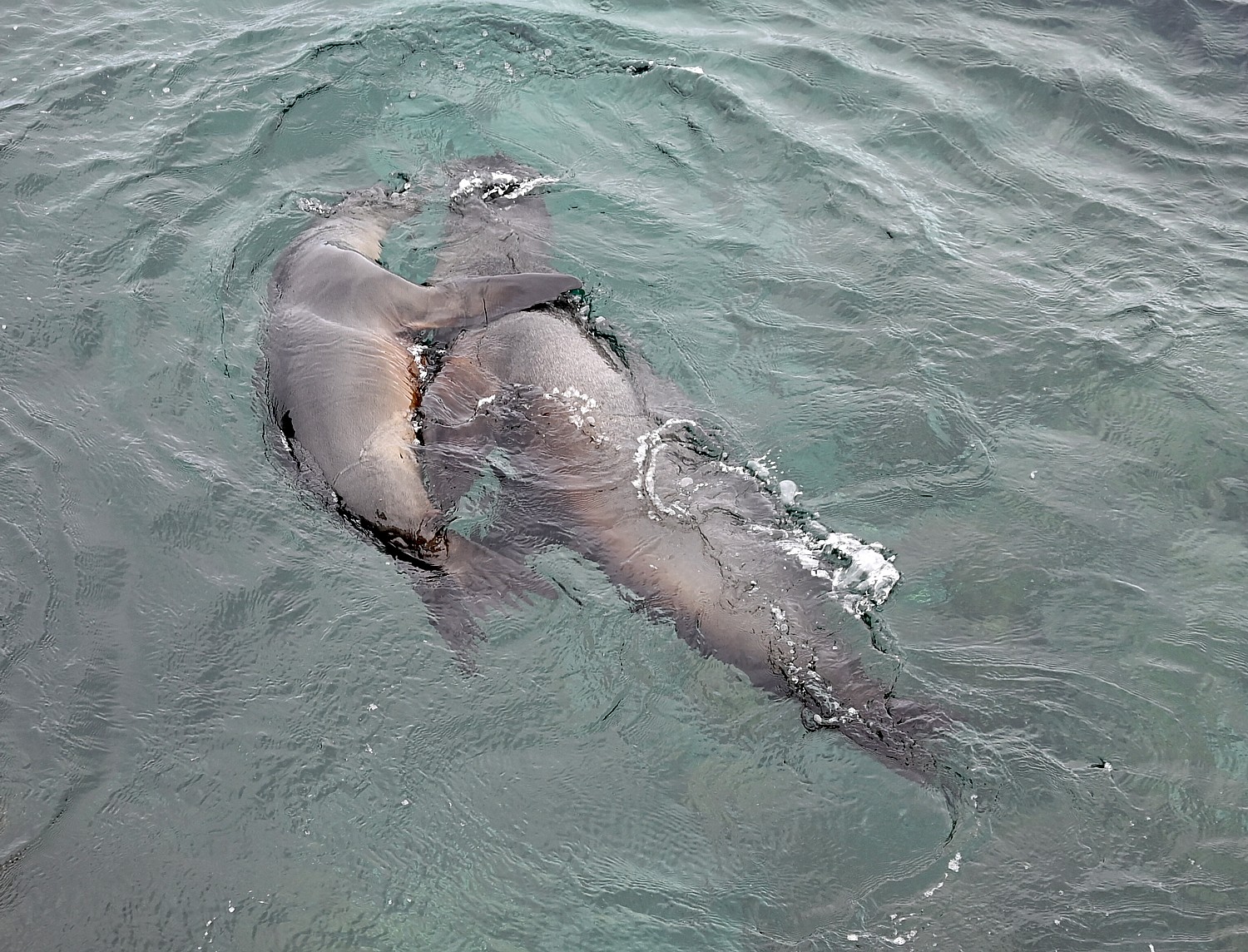
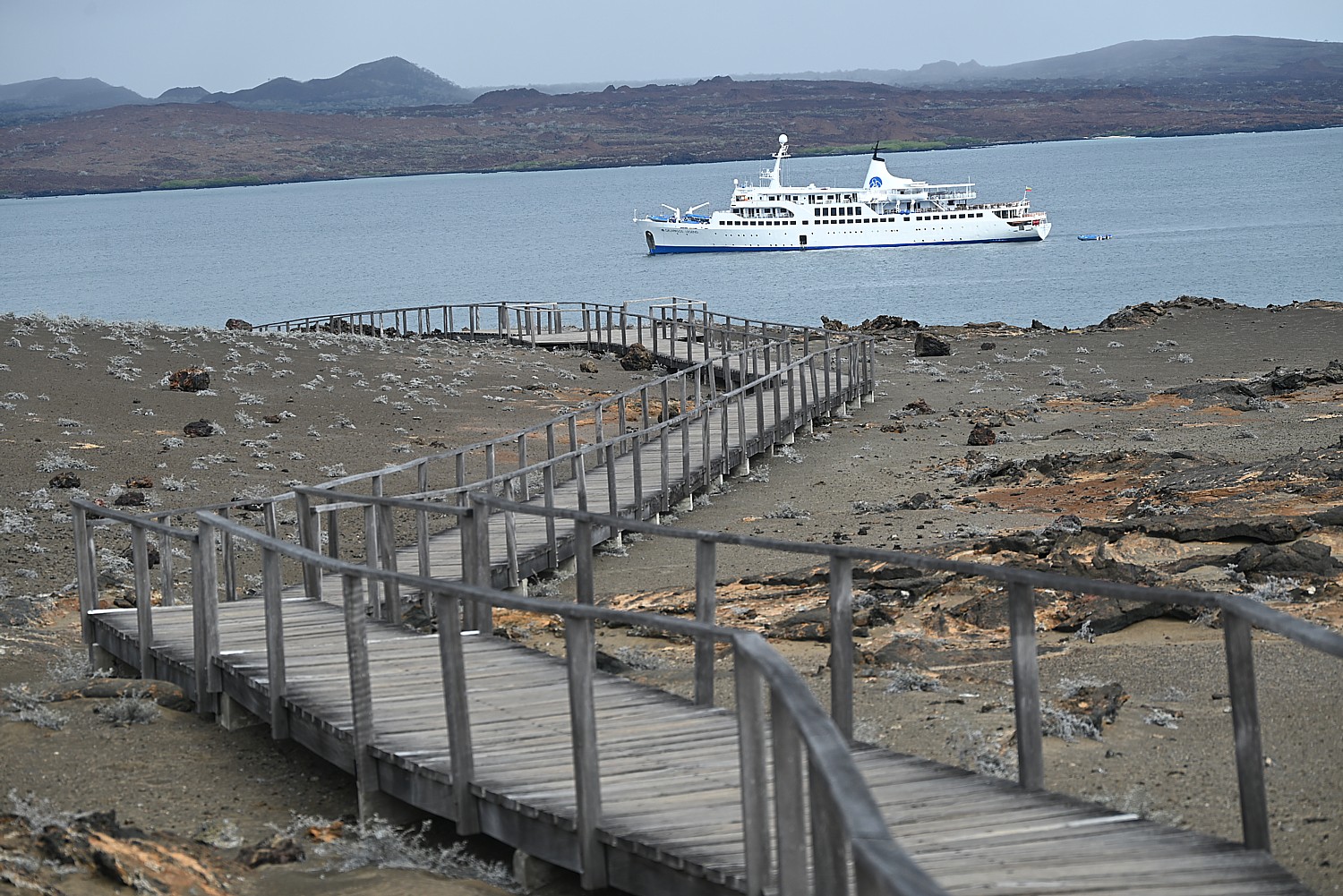
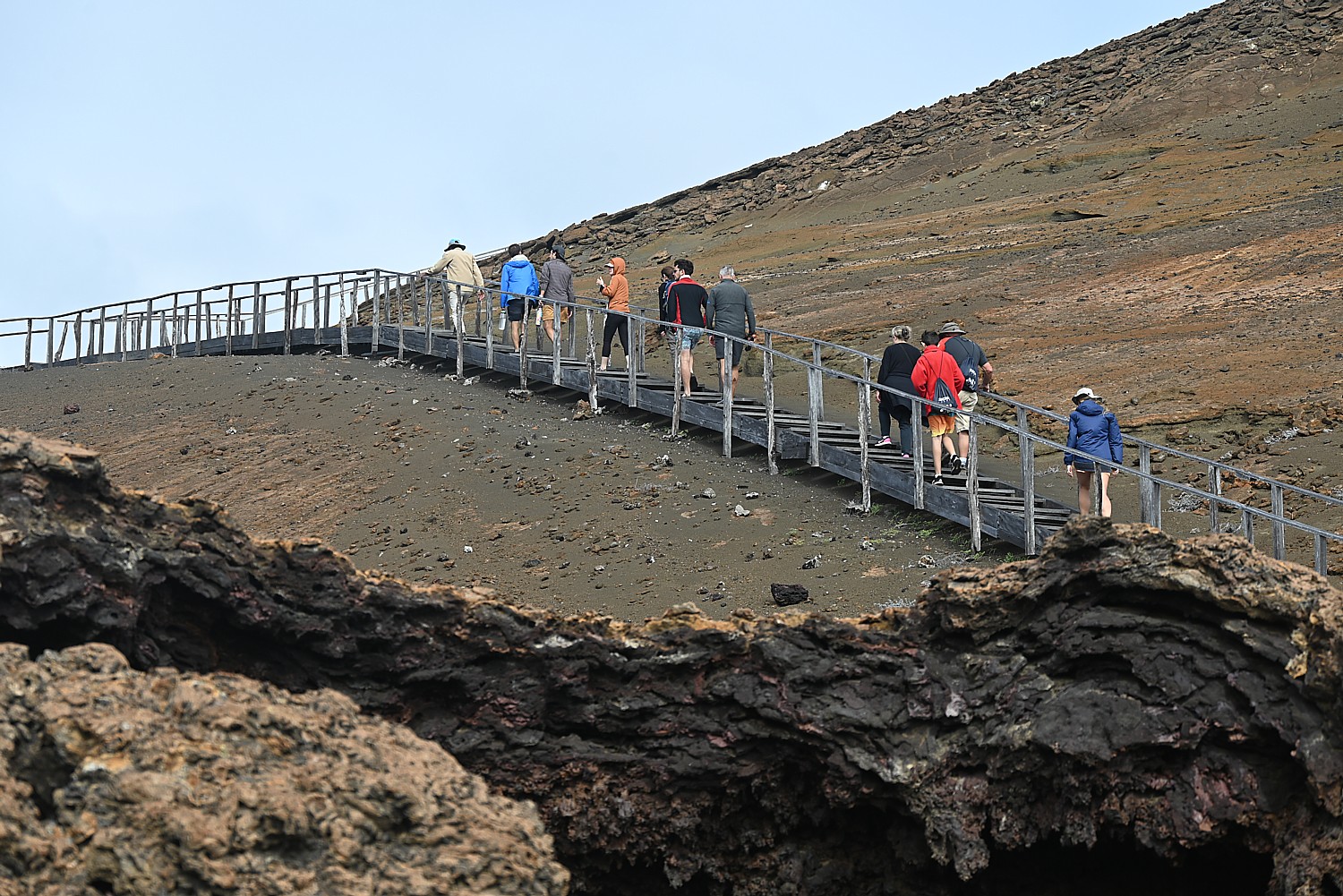
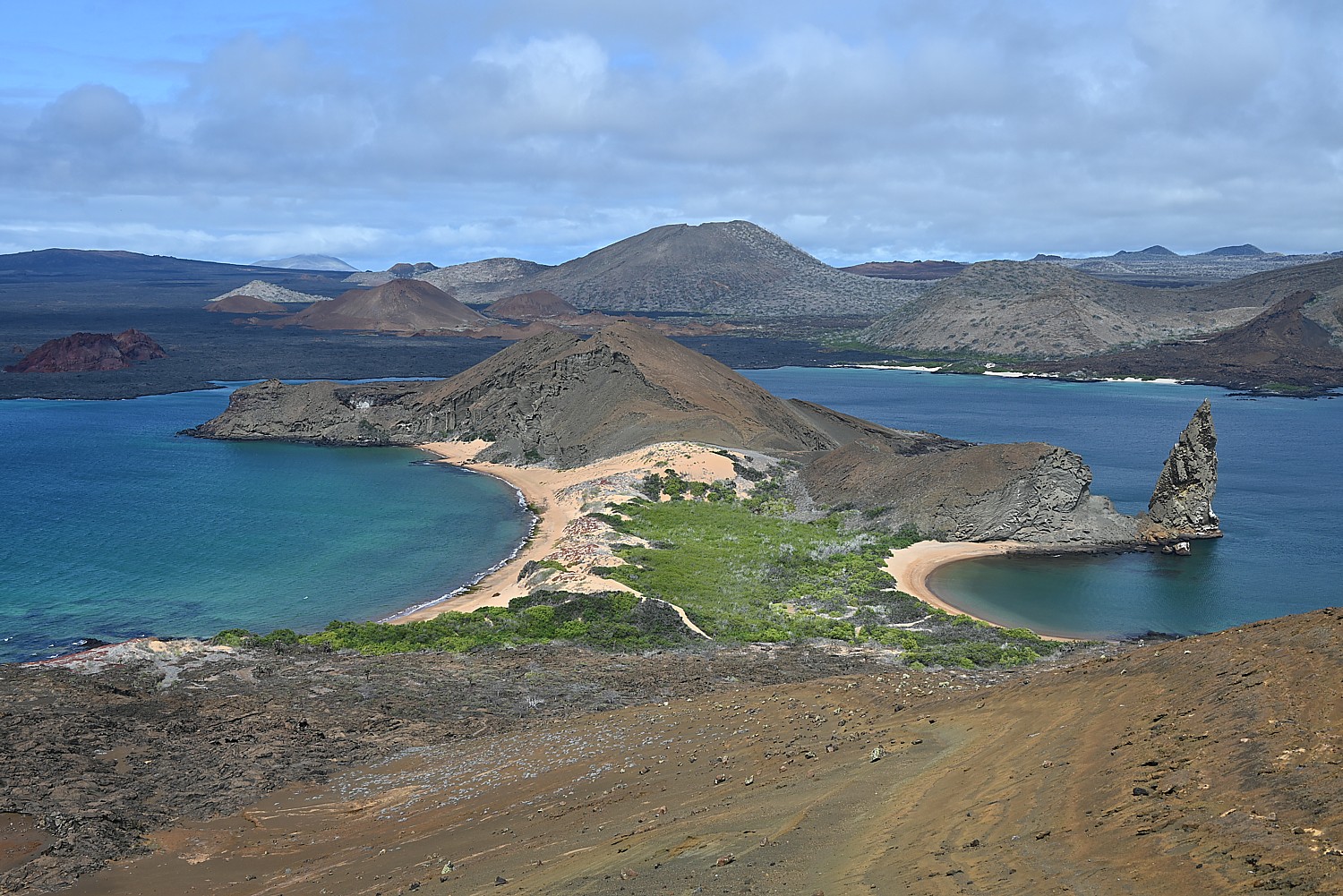
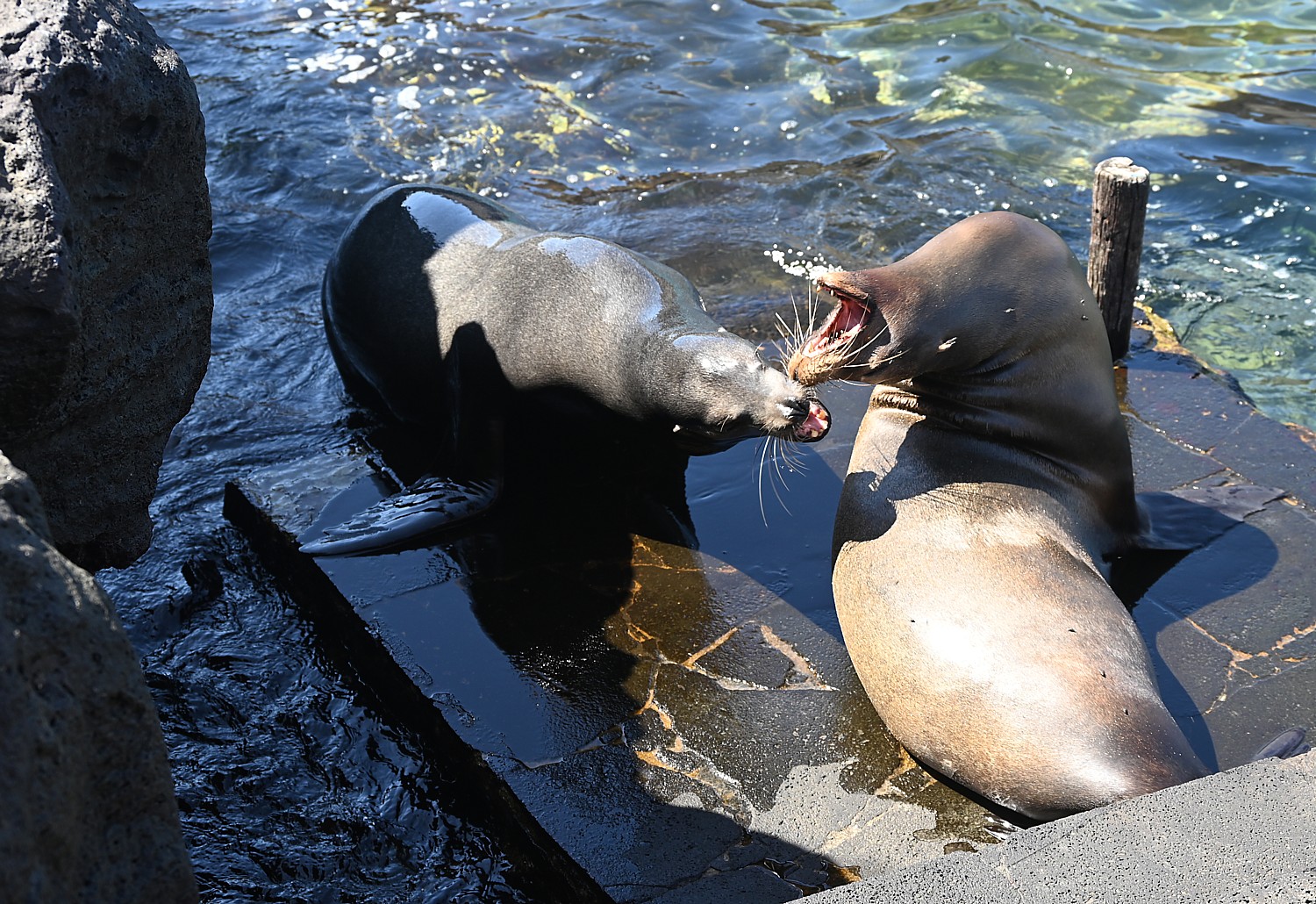
We climb a long boardwalk, 372-steps, over a barren landscape that evokes a moonscape, up to the summit for an iconic view overlooking the famous Pinnacle Rock and Santiago Island. On the way up, we get to see sea lions frolicking (courting, perhaps?) with each other, and on the way down, one perches on a deck, perhaps putting on a show for us, until another literally pushes it off (wanting attention?).

Sea lions frolicking as we arrive on Bartolome island © Karen Rubin/goingplacesfarandnear.com

When Darwin visited here on October 5, 1835, he encountered Spaniards who came to catch tortoises for food; he also found many land iguana which today are extinct. Goats, pigs and donkeys were released on the island in the 1800s, “causing havoc for the island ecosystem and many of its native species,” the Galapagos Conservancy, a US-based nonprofit, notes. “Goats destroy habitat, cause massive erosion, and compete with native herbivores, including the giant tortoise. Pigs dig up both giant tortoise and sea turtle nests and destroy both eggs and hatchlings, dig into Galapagos petrel nests in the highlands, and destroy other ground-nesting birds. Donkeys are particularly destructive to Opuntia cactus in the arid zones. The presence of these species on Santiago had created an ecosystem very different from the pristine condition.” (https://www.galapagos.org/about_galapagos/the-islands/)

Bartolome island © Karen Rubin/goingplacesfarandnear.com

Today there are programs to eradicate the goats, which have provoked ire from animal rights groups. “Which would you prefer,” our guide, Billy, challenges, “penguins or goats? Penguins or cats? Flightless cormorants or dogs? We are sorry for animal-loving people” but the Galapagos has made its choice.

The summit of Bartolome island provides an iconic view © Karen Rubin/goingplacesfarandnear.com
One sea lion seems to resent the other sea lion which has been putting on a show for us© Karen Rubin/goingplacesfarandnear.com

Then we ride in the dinghy along the coast where we get a glimpse of the Galapagos penguin (one of 18 penguin species but the only one found this close to the Equator).

Getting a scenic view © Karen Rubin/goingplacesfarandnear.com

We are returned to a beach on Santiago Island to snorkel and explore for an hour. (Those who don’t want to snorkel can take a 12-passenger glass bottom boat to observe the marine life). Naturalist Alejandro, who is also a Galapagos National Park ranger, tells us to look for sea turtles, rays, maybe a small reef shark and the Galapagos penguin. (Karen is so happy with her Olympus Tough6 waterproof, shockproof camera, though David got excellent video with his cellphone in a waterproof pouch).

Snorkeling on Bartolome island © Karen Rubin/goingplacesfarandnear.com

It is amazing to literally share the beach with sea lions. This also provides an opportunity to see the extraordinary Galapagos penguins; Sarah gets to swim with one. One of our group (we are Albatross; the other group is Booby) actually sees a white-tipped reef shark as he snorkels.

Enjoying alfresco dining onboard the Galapagos Legend © Karen Rubin/goingplacesfarandnear.com

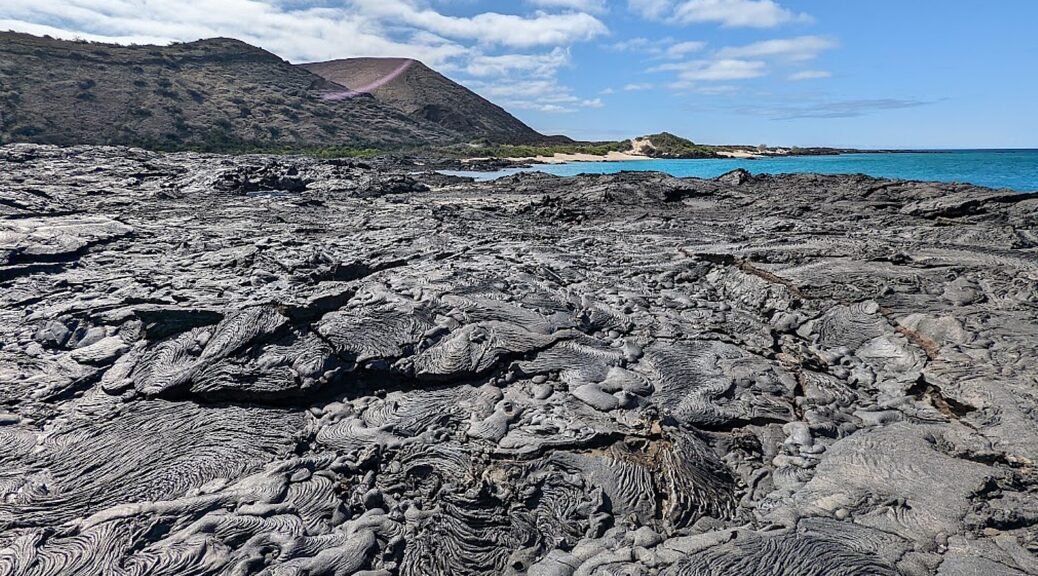
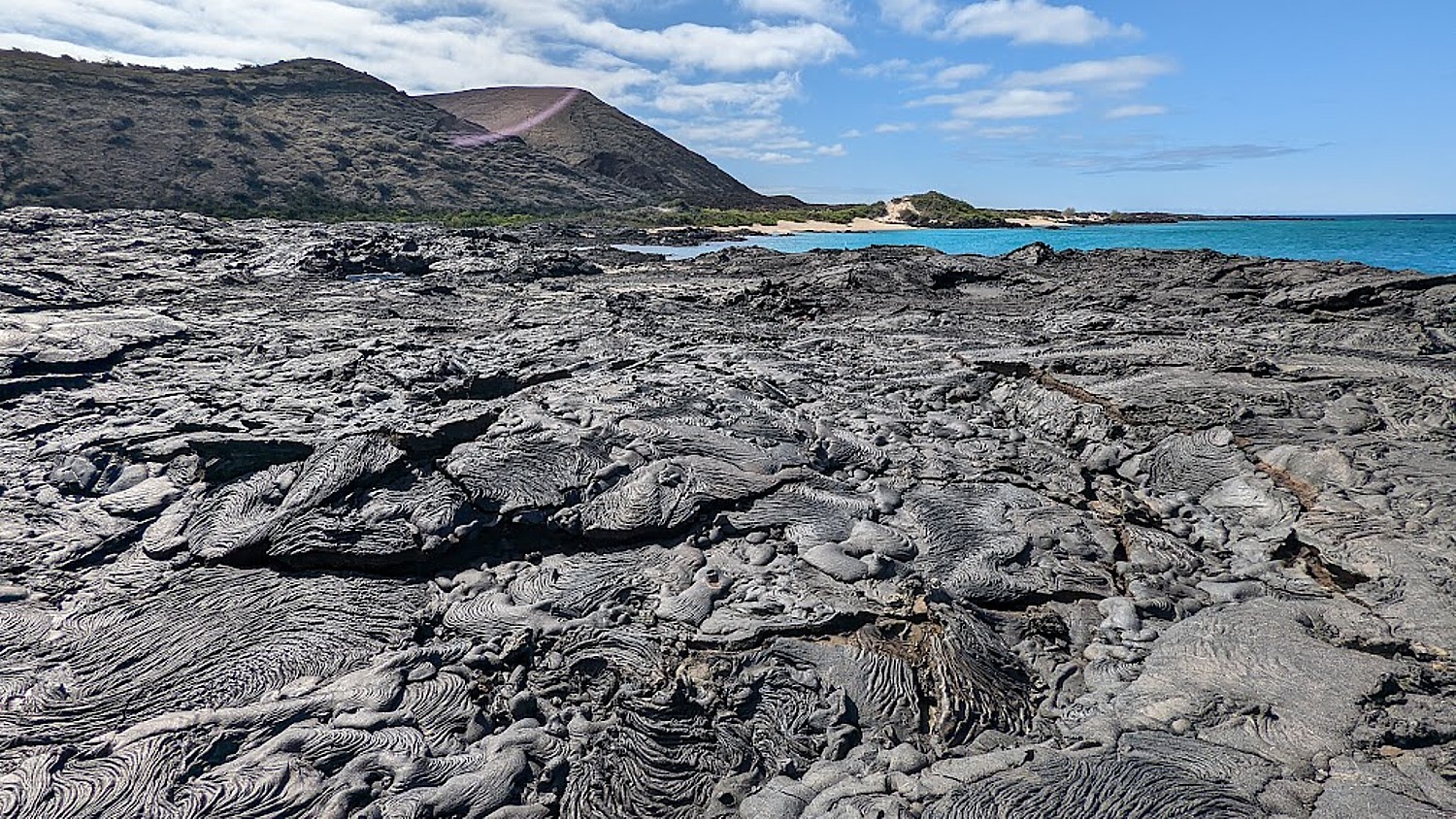
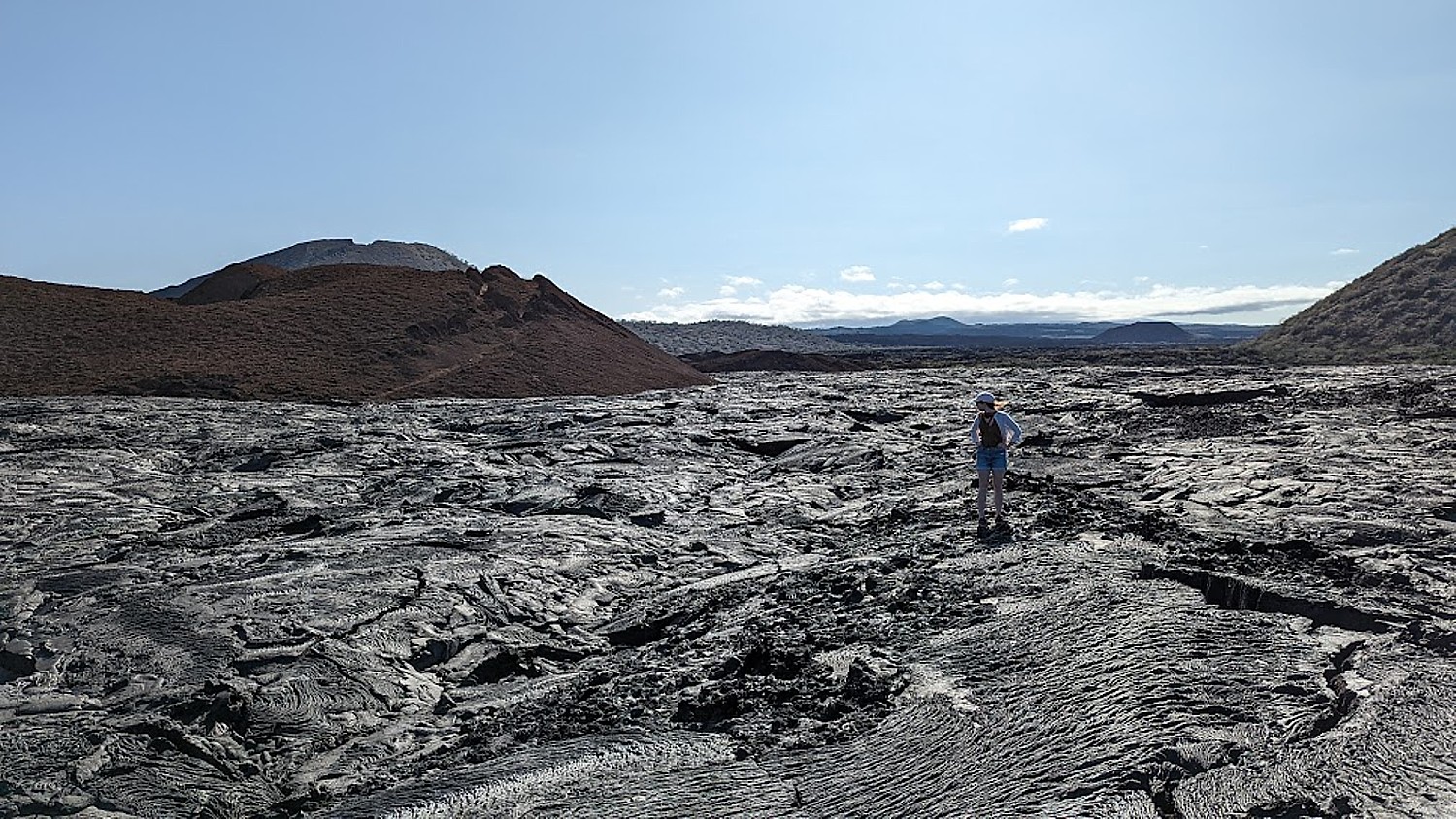
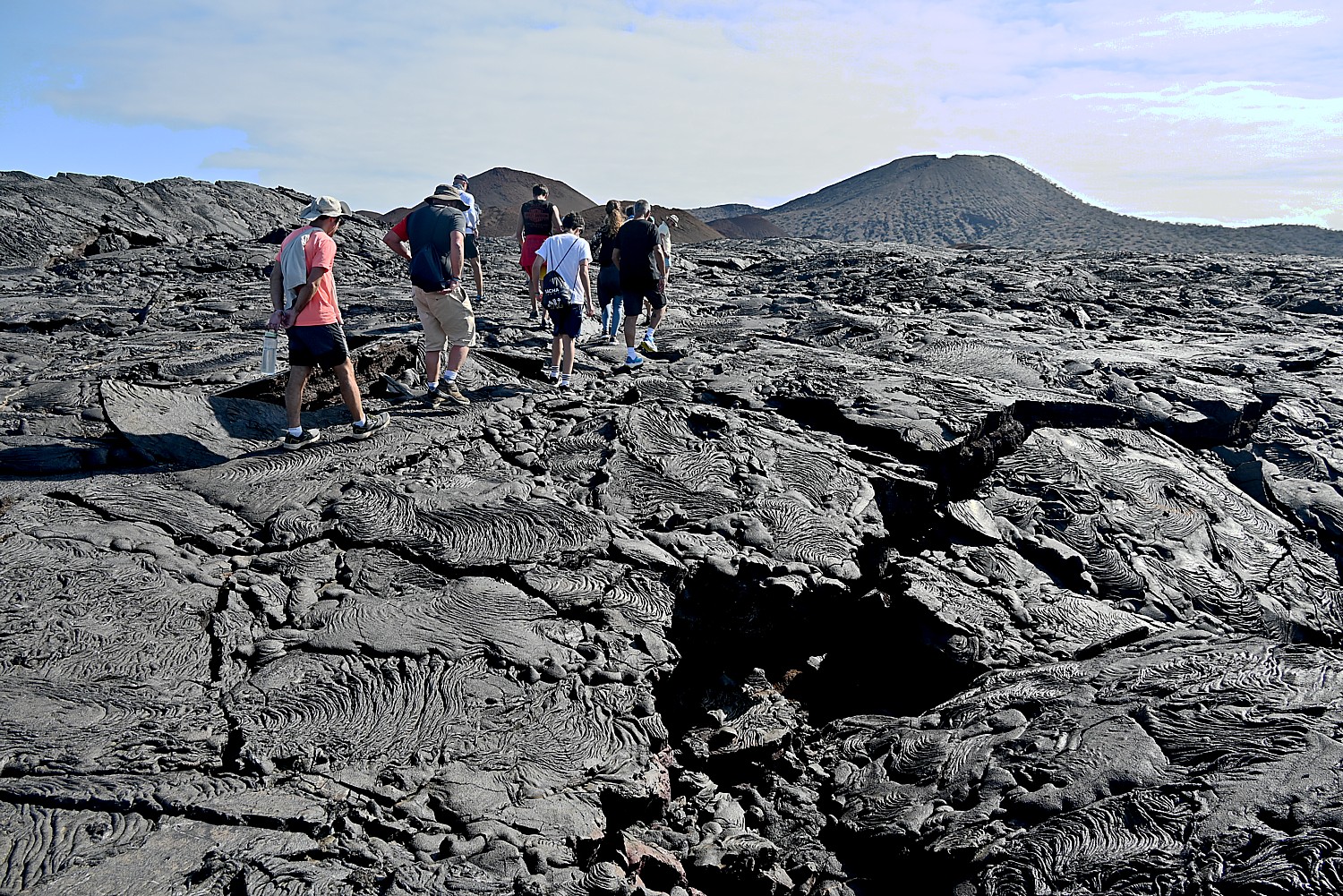
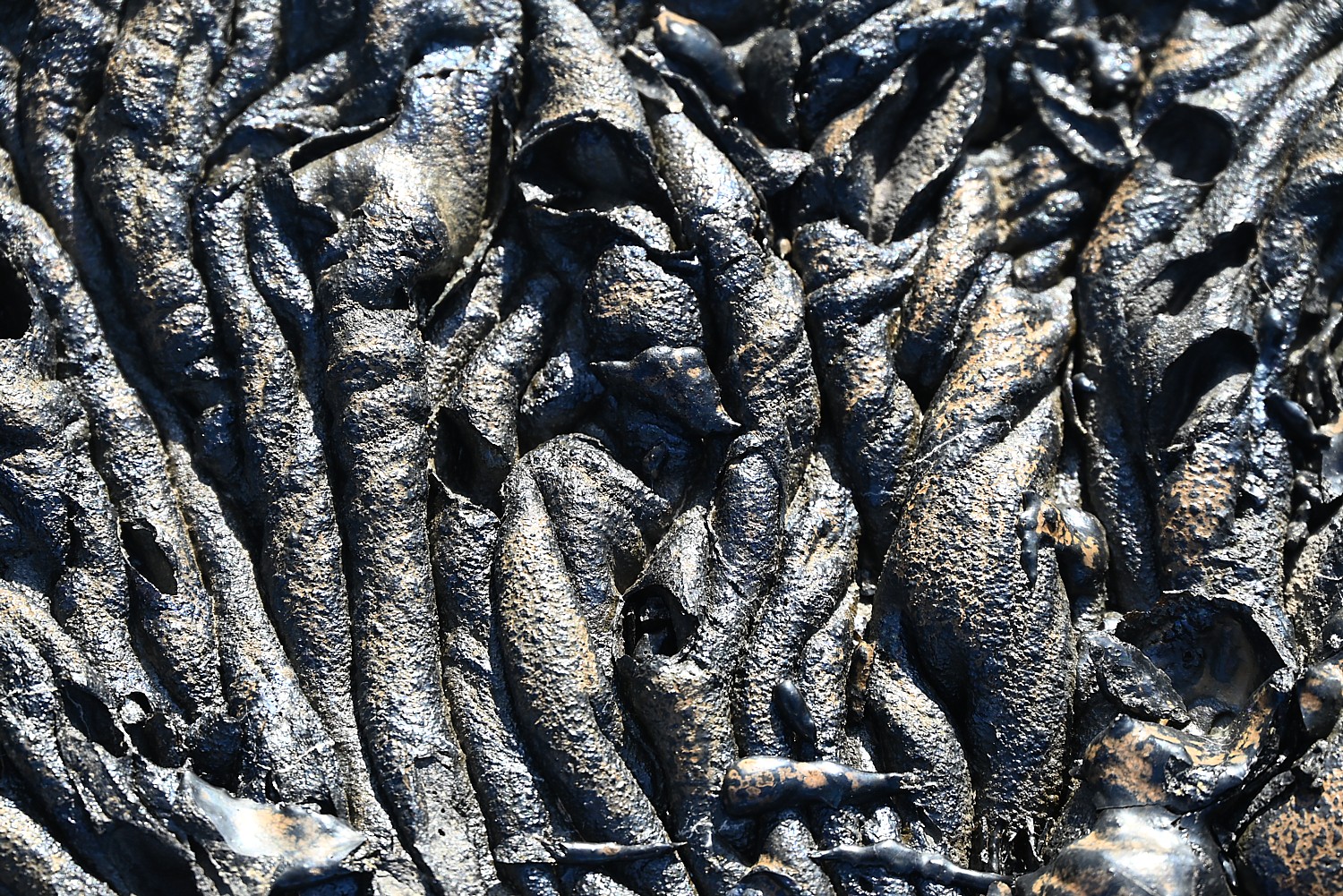
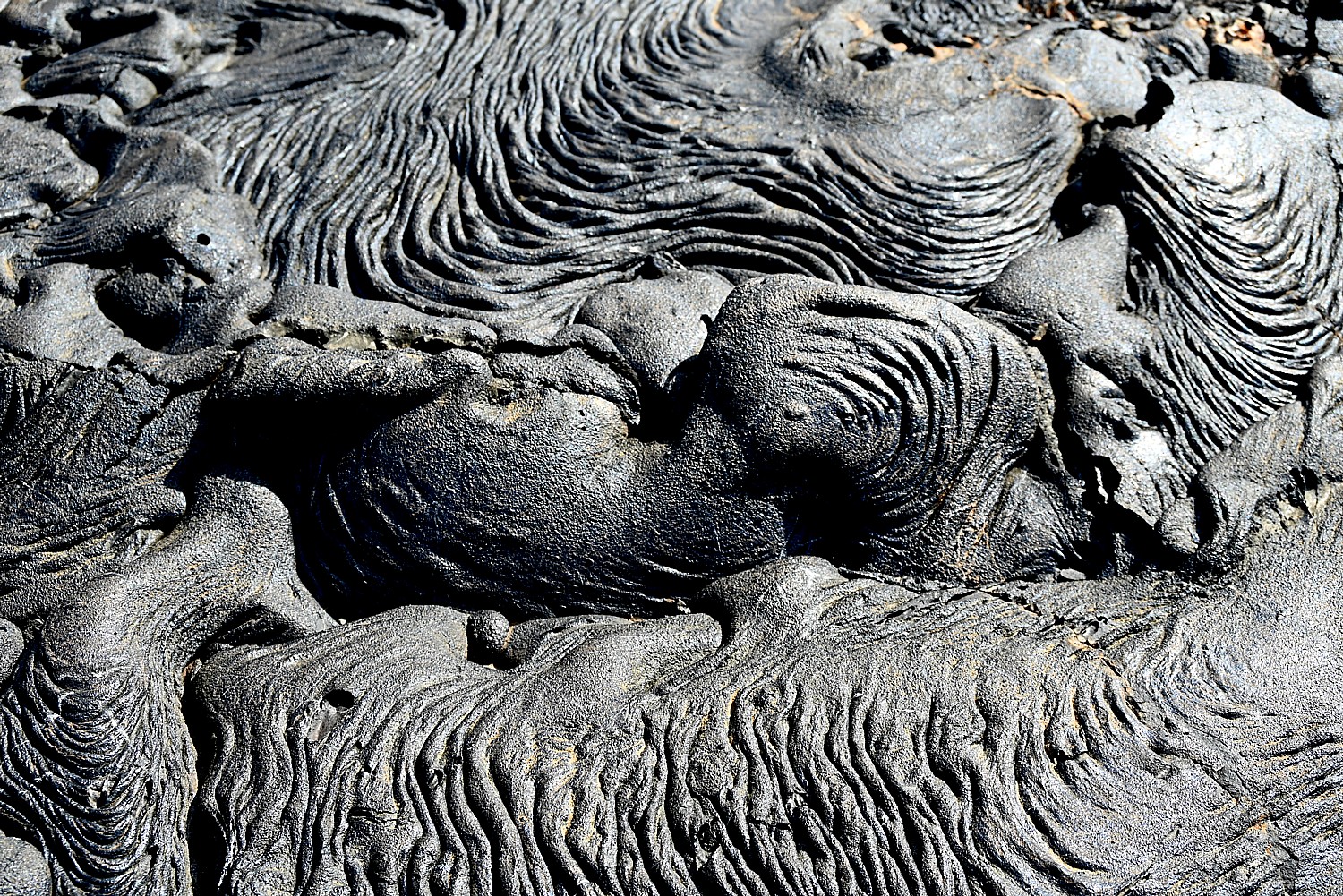
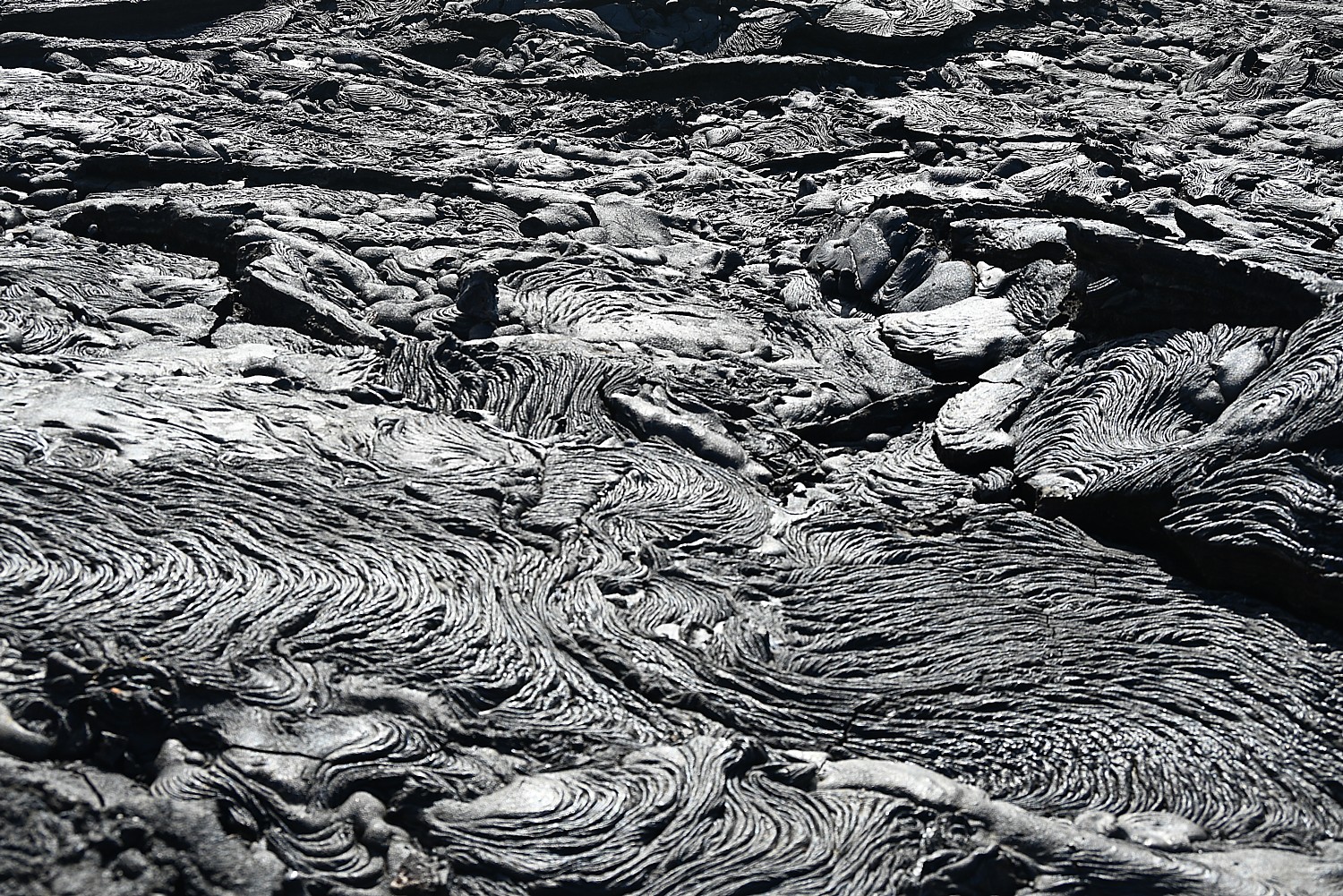
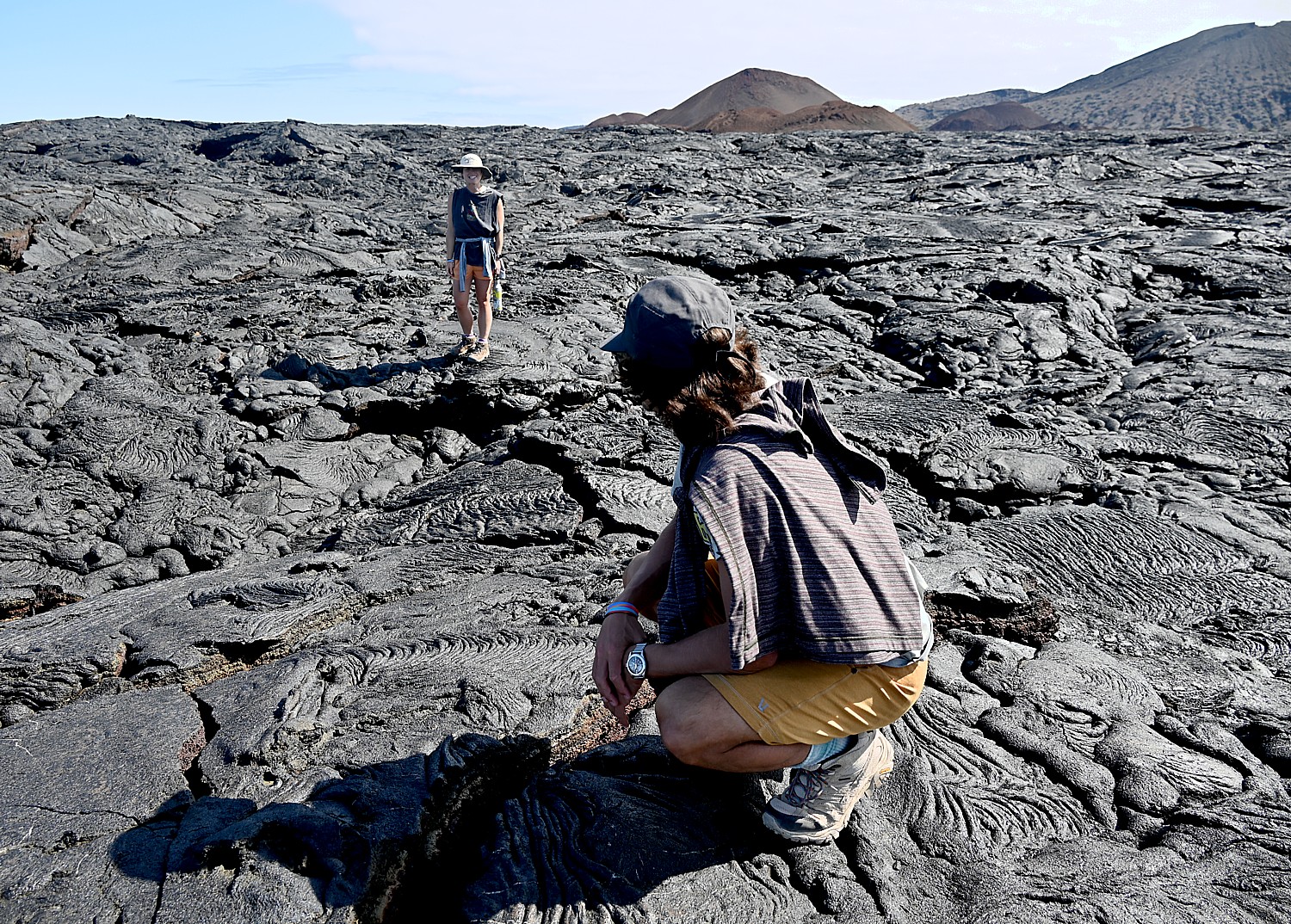
In the afternoon after a wonderful lunch, we have a dry landing off the dinghy and into the water at Sullivan Bay (Santiago Island) – a fascinating geologic site of a relatively “young” pa-hoe-hoe lava flow that came from 10 km away. It is like being dropped into a sculpture of black swirls and shapes – an absolutely stunning and dramatic landscape. Billy explains the black is because of oxidation but the layers underneath still have the original reddish-mustard color.

Landing at Sullivan Bay © Karen Rubin/goingplacesfarandnear.com

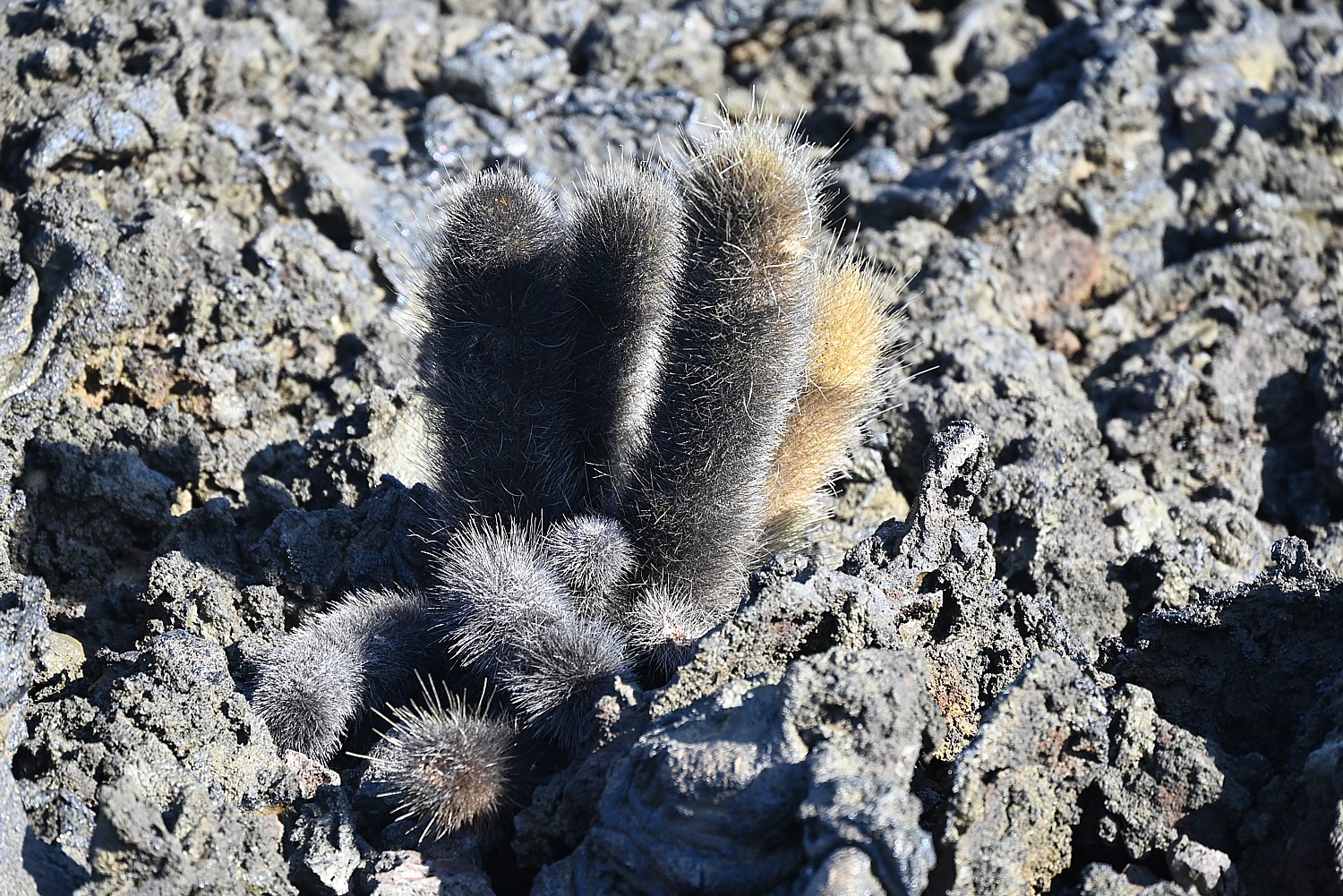
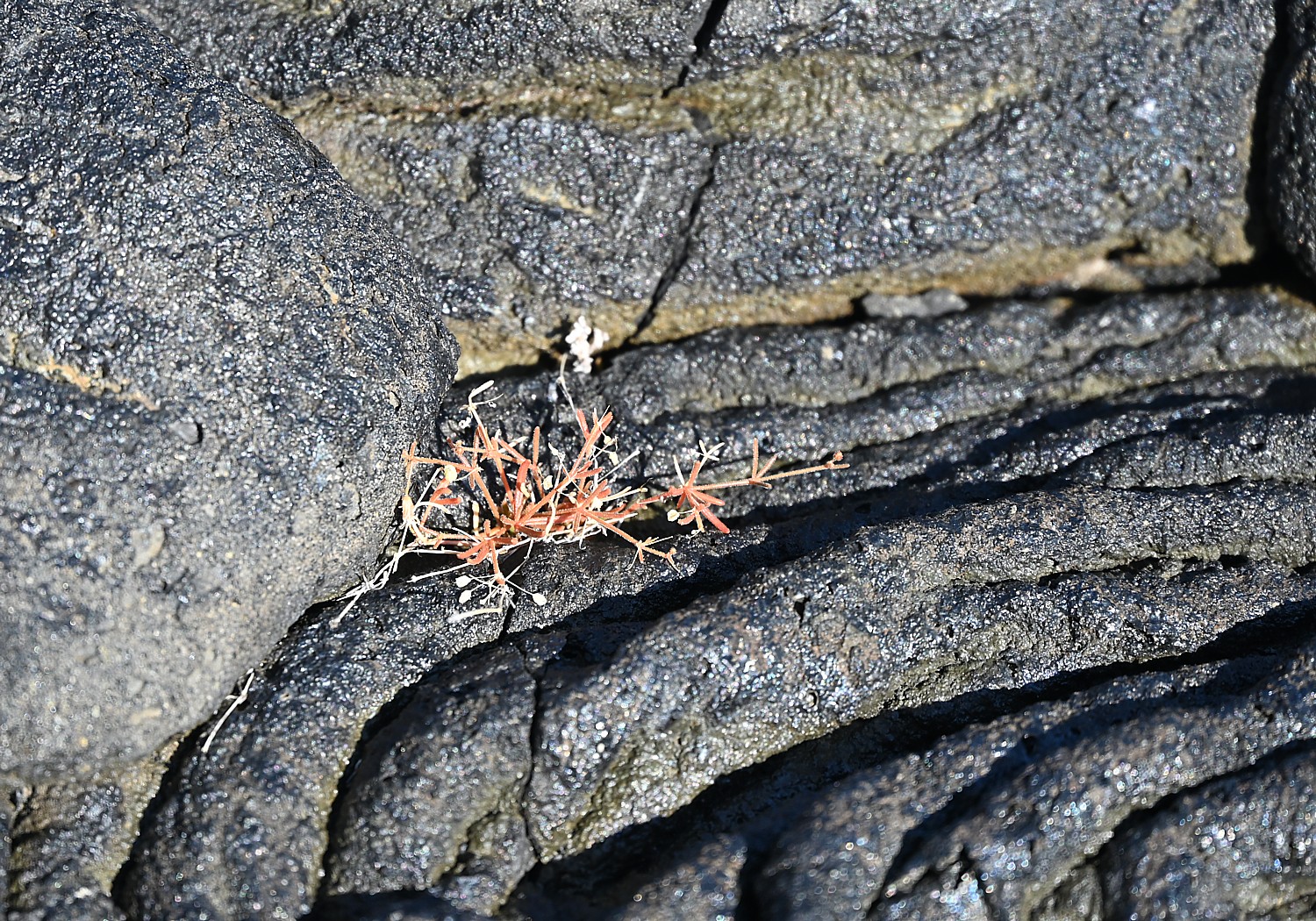
Billy says that when Darwin visited this very place, he estimated it formed only 200 years before and was spot on because scientists believe this land mass is a mere 350 years old. Now it seems virtually devoid of life – a moonscape – though when we look more carefully, we see the very beginnings of life taking hold: small mollugo plants beginning to grow out of fissures, a cactus, a locust flying by. 

Exploring the lava field at Sullivan Bay © Karen Rubin/goingplacesfarandnear.com

There is no organic soil, no water, the food chain is poor, but that locust eats the little bush and drinks its liquid and becomes food for lava lizards. This is like what Galapagos would have been at the beginning, just the top of volcano above the surface and nothing living, he says.

Exploring the lava field at Sullivan Bay, like being plopped into a sculpture © Karen Rubin/goingplacesfarandnear.com

We are already witnessing the process of how the surface material will be broken down by lichens and eventually become soil.

Lichens are key to “terraforming” this barren landscape. “Look for moisture from steam coming out from fissures – that’s where lichens colonized.” The lichens crack the rock and turn it into organic soil that can support a plant or tree. Come back in 500 years, he says, and there will be life.

A tiny cactus grows in the lava rock © Karen Rubin/goingplacesfarandnear.com
This little locust, the only animal we see, plays a major role in turning this barren landscape into one that can sustain an ecosystem © Karen Rubin/goingplacesfarandnear.com
Lichens taking hold in the lava rock will ultimately help break it down into soil © Karen Rubin/goingplacesfarandnear.com

Billy tells us there used to be coal mining here, but after the National Park was established, the company was evicted. Today, the government has resisted permitting any kind of drilling, mining – for fresh water or for any of the valuable minerals that are likely in these islands, nor any of the resort or real estate development companies that would pay a small fortune for the rights to establish themselves here. The government has resisted all offers in order to preserve the Galapagos, “Nature’s Greatest Laboratory.”

Exploring the lava field at Sullivan Bay © Karen Rubin/goingplacesfarandnear.com

“We know the Ecuador government has pressure to build resort hotels. But Galapagos has been a UNESCO Heritage site since 1978 – even if a corrupt government would want to sell, it cannot. Politically and geographically, Galapagos belongs to Ecuador, but culturally, Galapagos belongs to world.” But a lot of celebrities and billionaires have been so moved by their experience, they deposit hefty checks on their way home. “Bill Gates wrote a check for $5 million and left it at one station.”

Mother Nature’s artwork at Sullivan Bay © Karen Rubin/goingplacesfarandnear.com

Sullivan Bay was made famous because “Master & Commander” was filmed here – but the images of the ship were all digitized because the only boats allowed in the Galapagos have to come from here. Also, all the wood that is used to build boardwalks has to be already cut down – no living trees can be cut.

Exploring the lava field at Sullivan Bay © Karen Rubin/goingplacesfarandnear.com

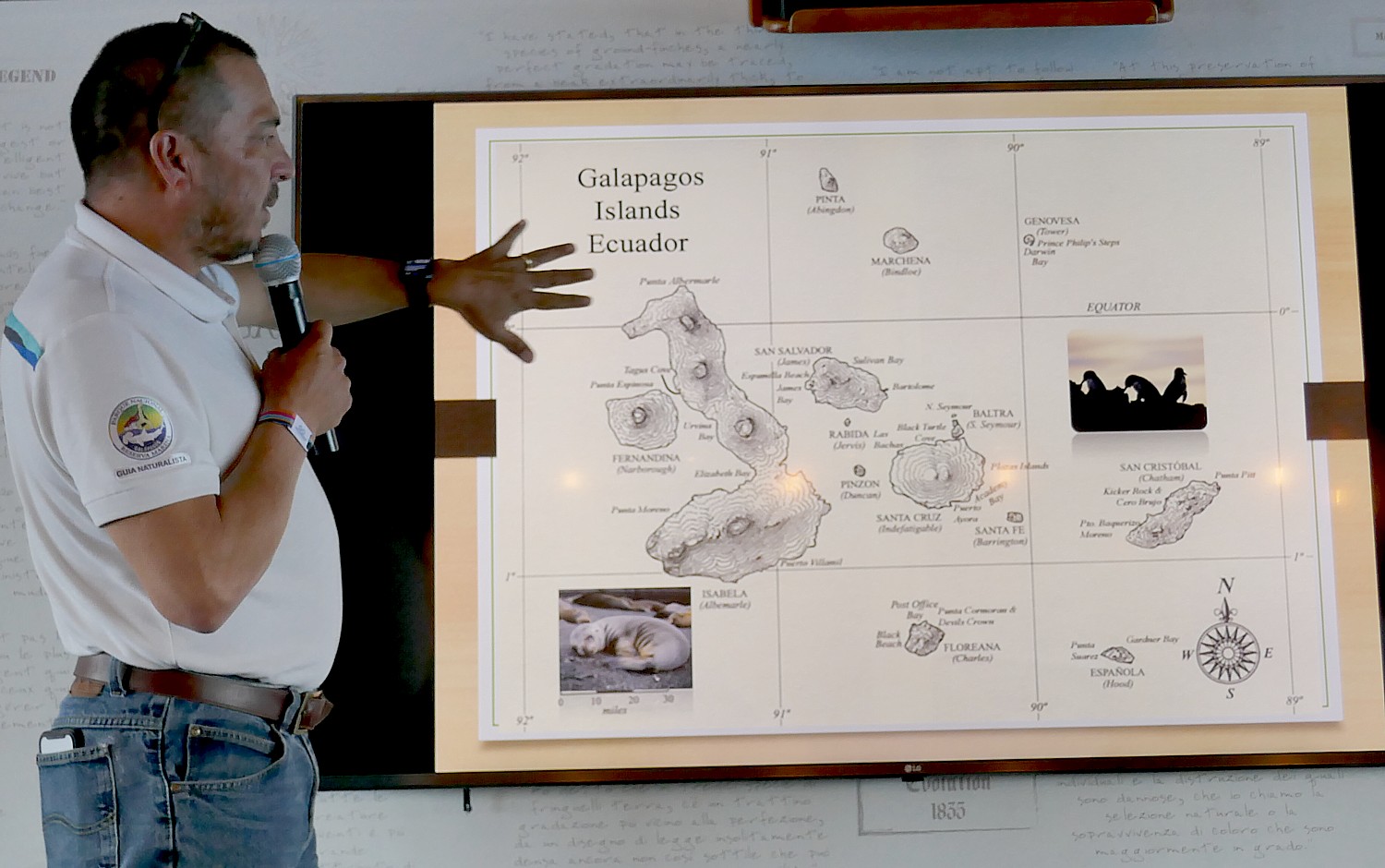
Back on board, Alejandro gives a talk about how the weather and currents are responsible for the unique life found in the Galapagos, and why, only in the Galapagos, can you see sea lions, penguins, tuna with parrot fish, angel fish and flamingoes. 

From December through May, the water temperature (avg. 76°F/25°C) and air temperature (avg. low/high 72-86°F/22-30°C) are slightly warmer. Seas tend to be calmer. Rainfalls are common for a short period of time each day, but the remainder of the day tends to be very sunny resulting in high humidity. Flowers come into bloom and vegetation is more colorful. This is a good time to observe birds mating or sea turtles nesting on the beaches.

Naturalist Alejandro explains how hot and cold currents converging at the Galapagos Islands accounts for the extraordinary diversity of life © Karen Rubin/goingplacesfarandnear.com

From June through November, when we visit, the Humboldt Current brings colder water (avg. 72°F/22°C) and cooler land temperatures (avg. low/high 66-79°F/19-26°C) It also brings nutrient-rich water that attracts fish and sea birds: albatross arrive on Española and penguins are easier to encounter. This is the mating season for blue-footed boobies. During this time of year clouds fill the sky and a misty rain called Garua is common. Winds tend to be stronger and seas a bit rougher. The abundant marine life makes this the preferred time of year for experienced divers.

Alejandro tells us that the sunny, blue skies we have had are unusual for this time of year (late August).

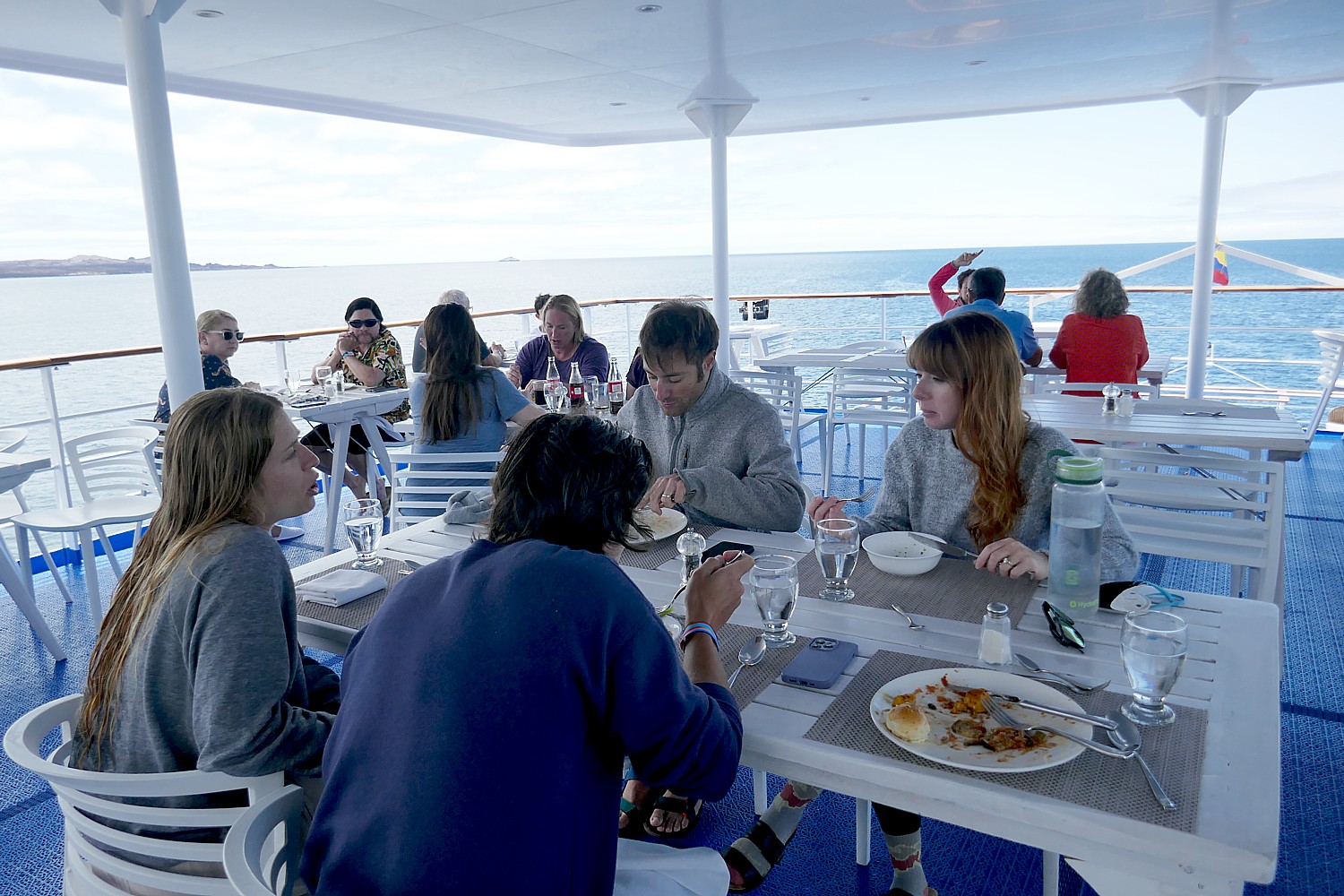
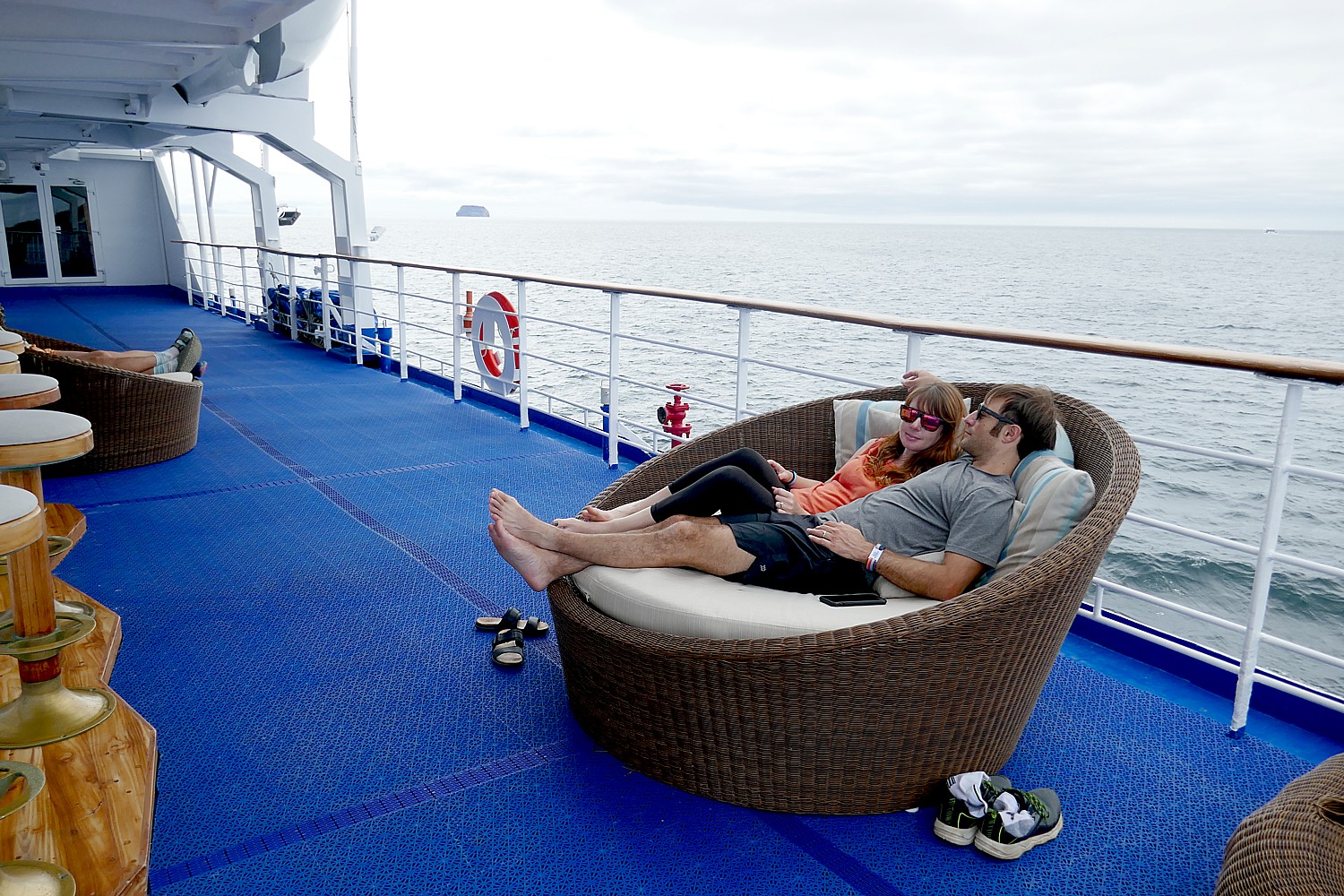
Back on board the Galapagos Legend, we thoroughly enjoy relaxing on the deck, hanging out together – there are two hot tubs and a nice-sized pool, plus a fitness center, a library, a children’s playroom, and a gorgeous lounge where coffee, tea, hot chocolate and fresh fruit are always available.

The Galapagos Legend cruise affords time and space to relax © Karen Rubin/goingplacesfarandnear.com

The M/V Galapagos Legend has 52 ocean view, air-conditioned cabins plus 3 interior ones, each cabin which can accommodate a matrimonial, double, triple or quadruple option, accommodating 100 passengers. The Balcony suites have private balconies and panoramic windows. The Junior suites have three meters of panoramic windows. Housekeeping is provided twice daily.  You can use US plugs, and US currency. Our cabins on the Earth deck  are gorgeous and spacious and can easily accommodate a triple.

The ship is large enough to feel very comfortable and have all the amenities you would want in a luxury cruise, but small enough to feel intimate.

The cuisine on board is superb (we especially love the BBQ banquet served alfresco on deck), how we are greeted on the return from our excursions and snorkeling with hot chocolate or tea and a snack, and how coffee, tea and fresh fruit are always available.

There are special touches: we absolutely adore the electronic key-bracelets we wear throughout our stay (even snorkeling) so you never have to fish for a key; how they keep track that everyone is onboard with a computerized check-in. (You can purchase beer or wine packages; wet suits are $25 to rent; kayaks are $40 pp, and you can purchase access to wifi.)

More information: Go Galapagos by Kleintours, 1-888 50 KLEIN, www.GoGalapagos.com.

Next: Our Voyage on the Galapagos Legend Continues to San Cristobal

See also:

CRUISING ON THE GALAPAGOS LEGEND: A VOYAGE OF WONDER

SANTA CRUZ ISLAND IS WONDER-FUL START TO GALAPAGOS ADVENTURE

CRUISING ON THE GALAPAGOS LEGEND: SAN CRISTOBAL ISLAND

 __________________

© 2022 Travel Features Syndicate, a division of Workstyles, Inc. All rights reserved. Visit goingplacesfarandnear.com, www.huffingtonpost.com/author/karen-rubin, and travelwritersmagazine.com/TravelFeaturesSyndicate/. Blogging at goingplacesnearandfar.wordpress.com and moralcompasstravel.info. Visit instagram.com/going_places_far_and_near and instagram.com/bigbackpacktraveler/ Send comments or questions to FamTravLtr@aol.com. Tweet @TravelFeatures. ‘Like’ us at facebook.com/NewsPhotoFeatures

Cruising on The Galapagos Legend: A Voyage of Wonder

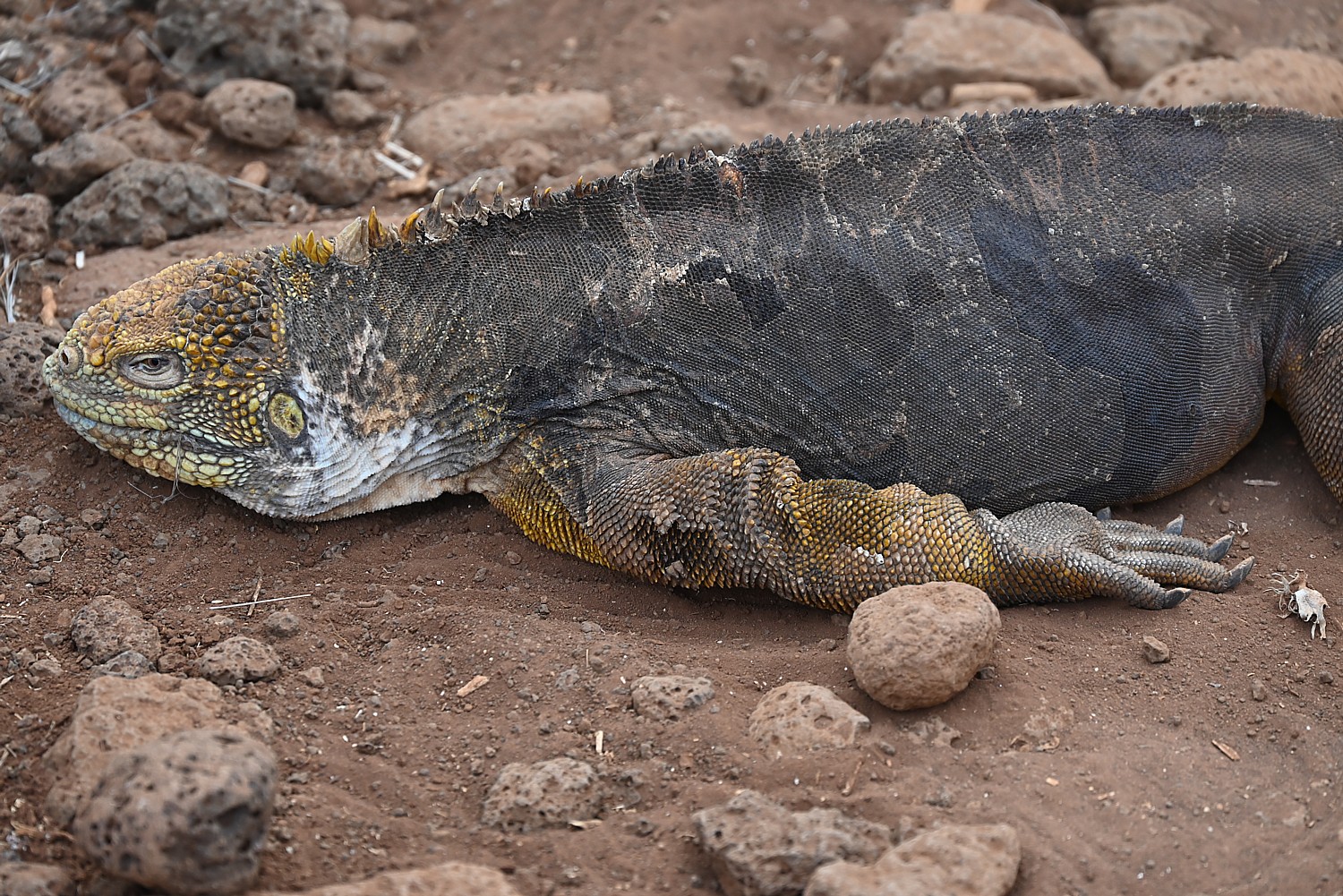
Remarkably, this land iguana unfazed by the humans exploring North Seymour island, Galapagos, on the first afternoon of a four-day cruise aboard the Galapagos Legend © Karen Rubin/goingplacesfarandnear.com

By Karen Rubin, Dave E. Leiberman, Laini Miranda, Eric Leiberman & Sarah Falter

Travel Features Syndicate, goingplacesfarandnear.com

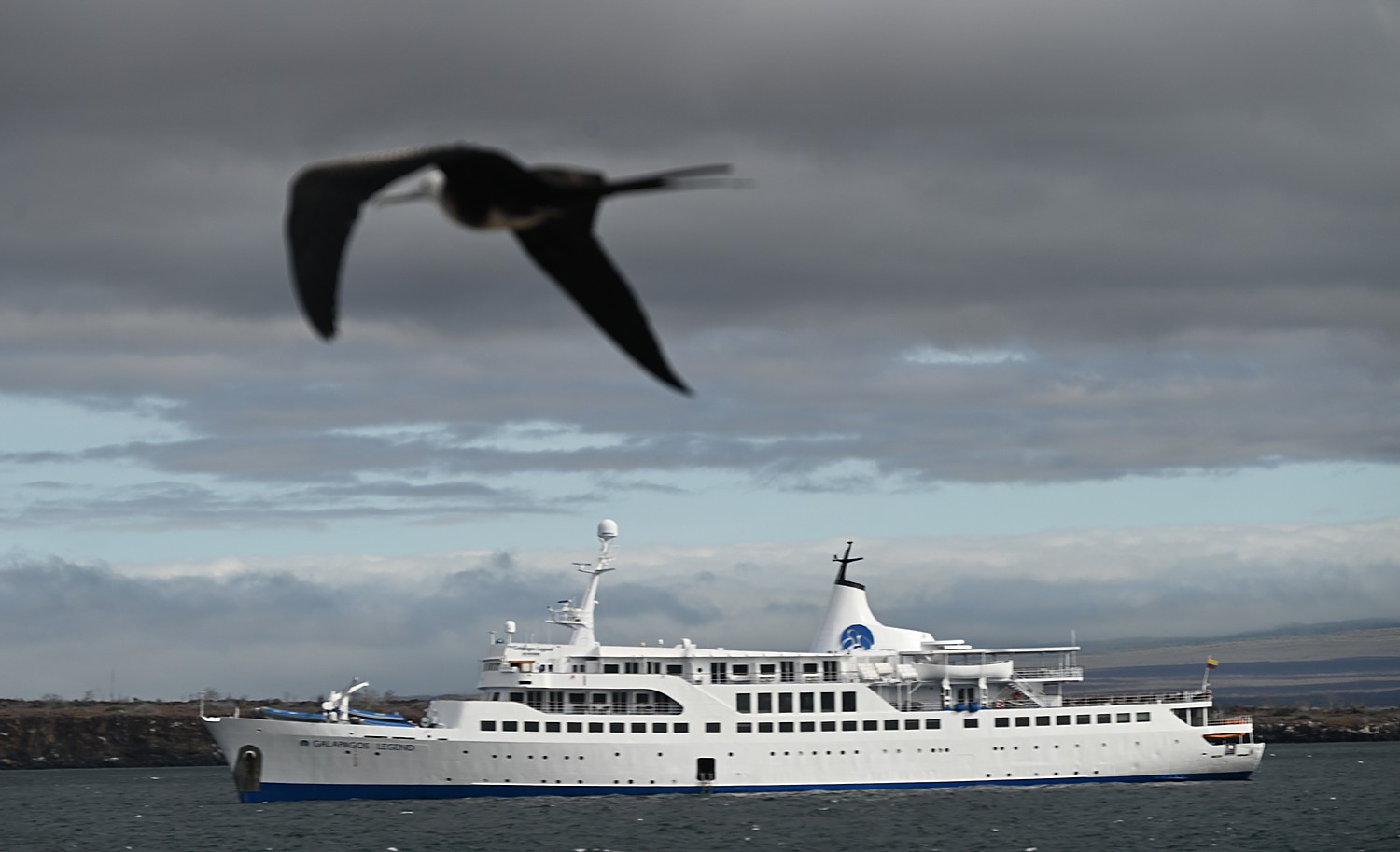
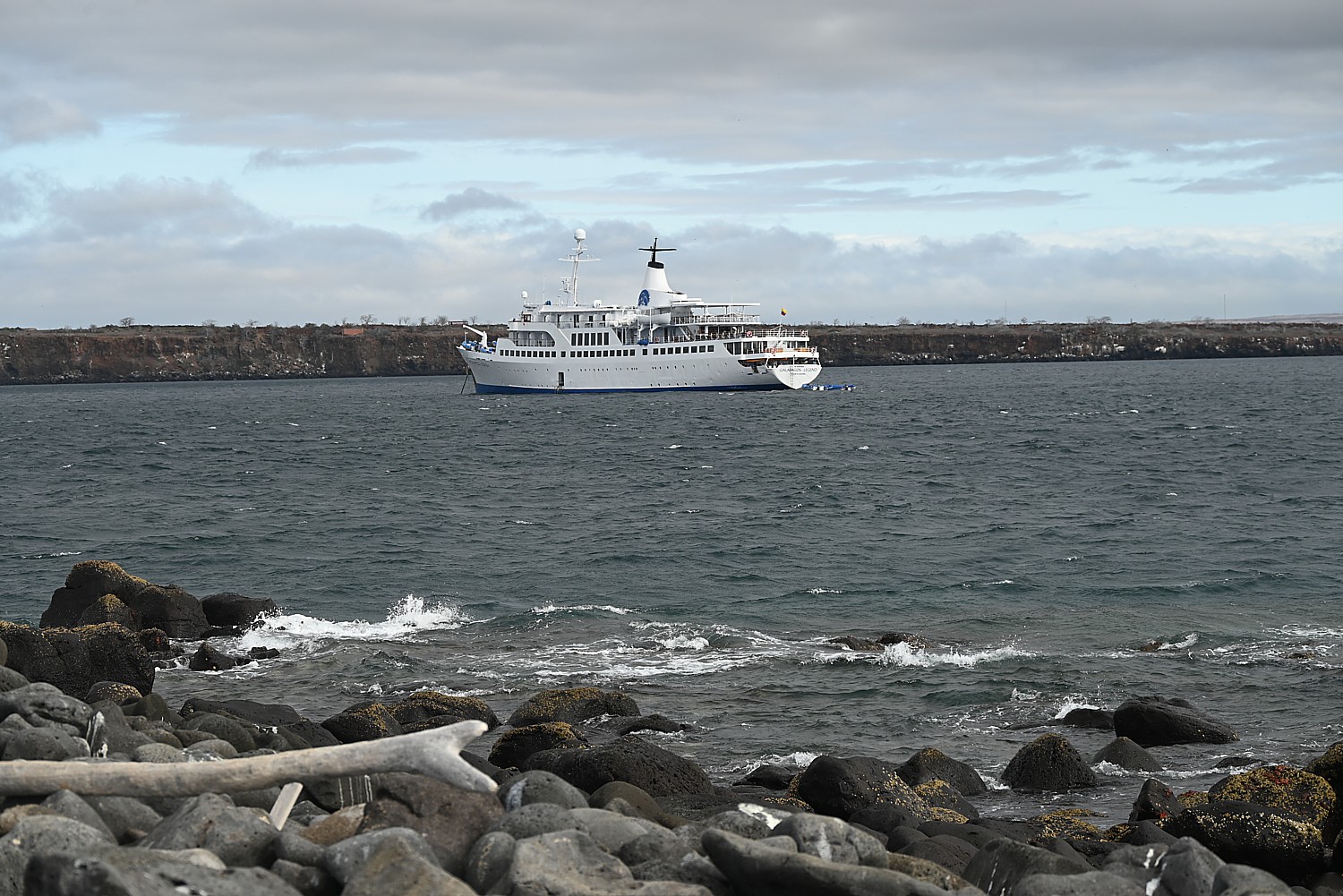
The Galapagos Legend anchored while we explore North Seymour Island, Galapagos, on the first afternoon of our four-day/three-night cruise © Karen Rubin/goingplacesfarandnear.com

The Galapagos, an archipelago of some 200 islands spanning 8000 sq km  just below the Equator and 600 miles from South America’s coast – has the most varied ecosystems and diversity in such a concentrated area on the planet.

You see animals and floral life that don’t exist anywhere else in the world – not even from one island to the next. It’s the only place in the world you can see sea lions, penguins and albacore tuna with parrot fish, angel fish and flamingoes. 

We get so close because here, animals do not have a fear of humans because humans are no longer their predators. Most profound, is how vividly we can see the impacts of the environment on the evolution of a species, right down to their blue or red booby feet and the red sac that expands like a balloon on the male frigate bird’s neck. We see mating rituals, newborn chicks, adolescence and death. We get to swim with sea turtles and sea lions.

The Galapagos Legend anchored while we explore North Seymour Island, Galapagos, on the first afternoon of our four-day/three-night cruise © Karen Rubin/goingplacesfarandnear.com

The best way to experience the Galapagos – a place that can only be described as “enchanting,” “mesmerizing,” “awe-inspiring” – is by ship. We book a four-day/three-night cruise on the 100-passenger MV Galapagos Legend, a gorgeous ship big enough to afford all the luxury amenities you could crave and small enough to be intimate. Go Galapagos, the operator, offers four itineraries (longer itineraries are available by combining sailings) and we choose the “East” which seems to afford less time sailing (in this time of year, we are concerned about rougher seas) and more time exploring islands, hiking, snorkeling and seeing a good portion of the wildlife that the Galapagos is most famous for.

Remarkably, this land iguana completely ignores the humans © Karen Rubin/goingplacesfarandnear.com

Each of the destinations we visit is so different – in landscape, geology, wildlife, vegetation – that the experience we have changes drastically from morning to afternoon and day to day.

This Galapagos cruise proves to be the perfect combination of pure excitement and pure enjoyment. It is the very definition of “soft adventure” – giving us the ability to experience something really exotic, unique, remote and isolated, but in absolute comfort, adding the priceless dimension of being an experience that can be shared by a family, young and old.

After spending a couple of days on Santa Cruz island, we meet up with the rest of our cruise passengers for this sailing of the Galapagos Legend at the international airport on the adjacent island (a US Naval Base in World War II), and are taken by bus to a small marina where we are tendered by dinghy to the ship.

It is still morning when we go aboard for a “captain’s welcome” have an excellent orientation to the ship and the cruise, and then have lunch as the ship sails to the first island we explore. (A short, easy sail, it gives us time to acclimate.)

We have two naturalists on board, Alejandro and Billy, rangers who work for the Galapagos National Park. They not only guide us, but are responsible for making sure the strict rules that protect the ecosystems are enforced. (You can’t visit the islands on your own, and even the operators and cruise ships are limited in the number of people that can be anywhere at any one time.)

Frigatebird in flight over North Seymour, Galapagos © Karen Rubin/goingplacesfarandnear.com

The Galapagos became Ecuador’s first national park in 1959 and began operations in 1968, with tourism really getting underway in the 1970s. In 1979, UNESCO declared the Galápagos Islands a Natural Heritage for Humanity site, making the Park Service responsible for guarding and conserving the islands. 

Keeping to the marked trail on North Seymour to minimize impact to the Galapagos ecosystem © Karen Rubin/goingplacesfarandnear.com

Alejandro tells us the rules that are in place to protect the animals, too many of which have been endangered by invasive species including rats, cats, dogs and most significantly, humans.

We are instructed to stay on the marked trails and not stray or go off on our own, not to bring any food (water is okay), not to use the camera flash (light is too strong and would stress the animal) or selfie stick. We must not take anything from the island, not a shell, not sand nor stone. “Keep it as natural as possible, with the least human impact, so we have this for future generations.” But the Galapagos already has clear examples of how fast human impact can set into motion the extinction of species.

North Seymour island is fabulous to see birds of the Galapagos © Karen Rubin/goingplacesfarandnear.com

The mystery is how these animals even came here to begin with. They are said to have evolved from animals that managed to get here from North and South America – but the most eastern island, San Cristobal, is still 600 miles from South America’s coast. They tell us how an iguana could have floated here on some sort of “raft”-like vehicle, which Karen comprehends about as well as the “Big Bang” theory of the universe exploding from a ball of matter that could fit in the palm of your hand.

(Think of it: an iguana would have to survive weeks at sea with swells and storms without food or water, arrive on an island and somehow meet a fertile animal of the opposite sex in a timely way in order to reproduce. It sounds about as credible as Adam and Eve in the Garden of Eden having two sons but being the progenitors of all humankind. After Billy later explains about teutonic plates that move 2 meters a year, west to east, and how these islands actually floated here, Karen is more inclined to think that these animals’ evolutionary ancestors were already onboard.)

The oldest islands are in the East (San Cristobal) and are 3 million years old; the youngest islands are in the west and are one million years old, and actually moving eastward at a rate of two meters a year. But, Billy tells us, an island would “disappear” before it reached South America’s coast (!!??). (Actually, Karen thinks the island would more likely disappear – and sooner – because of climate-caused sea-level rise, which makes her worry about the fate of these animals.)

A dry landing on North Seymour © Karen Rubin/goingplacesfarandnear.com

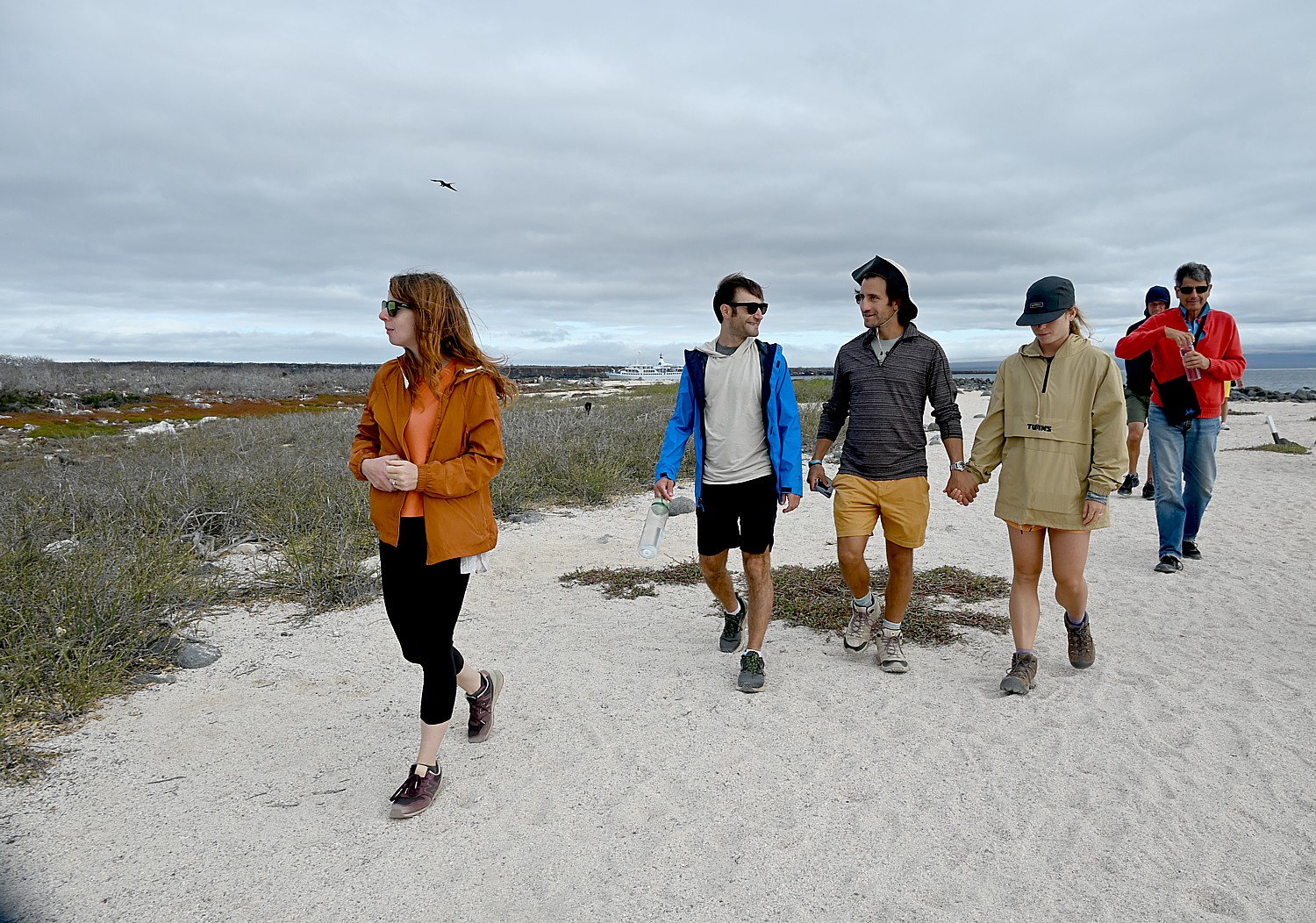
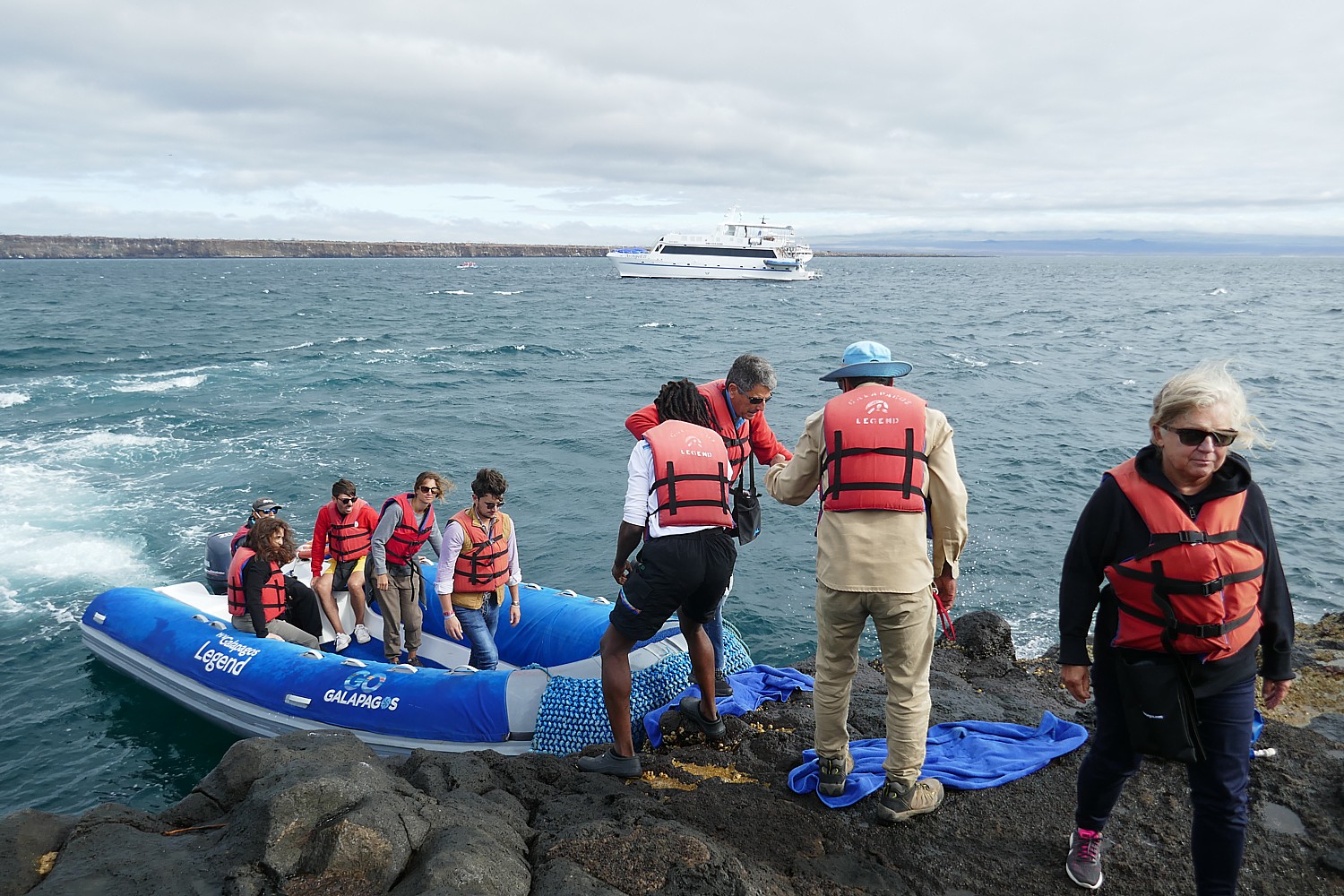
Our first walkabout is that afternoon, on the island of North Seymour, a bird lover’s dream. The dinghy takes us to a “dry” landing which means we step onto slick rocks (they put down a towel to make it easier). We spend about two-hours (is it that long? Time flies by) walking a rocky – but easy – trail that makes us feel like we are strolling through Wonderland.

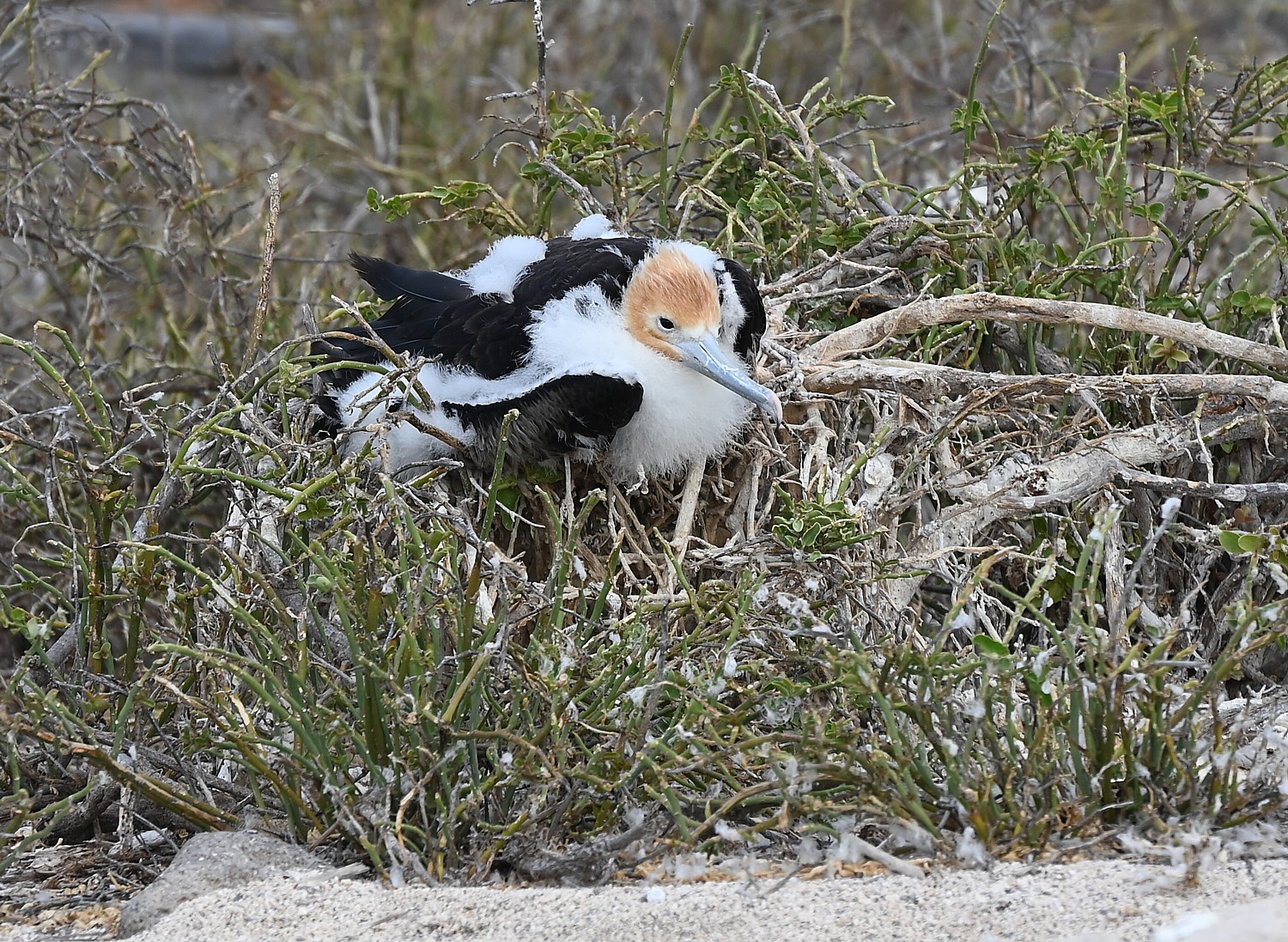
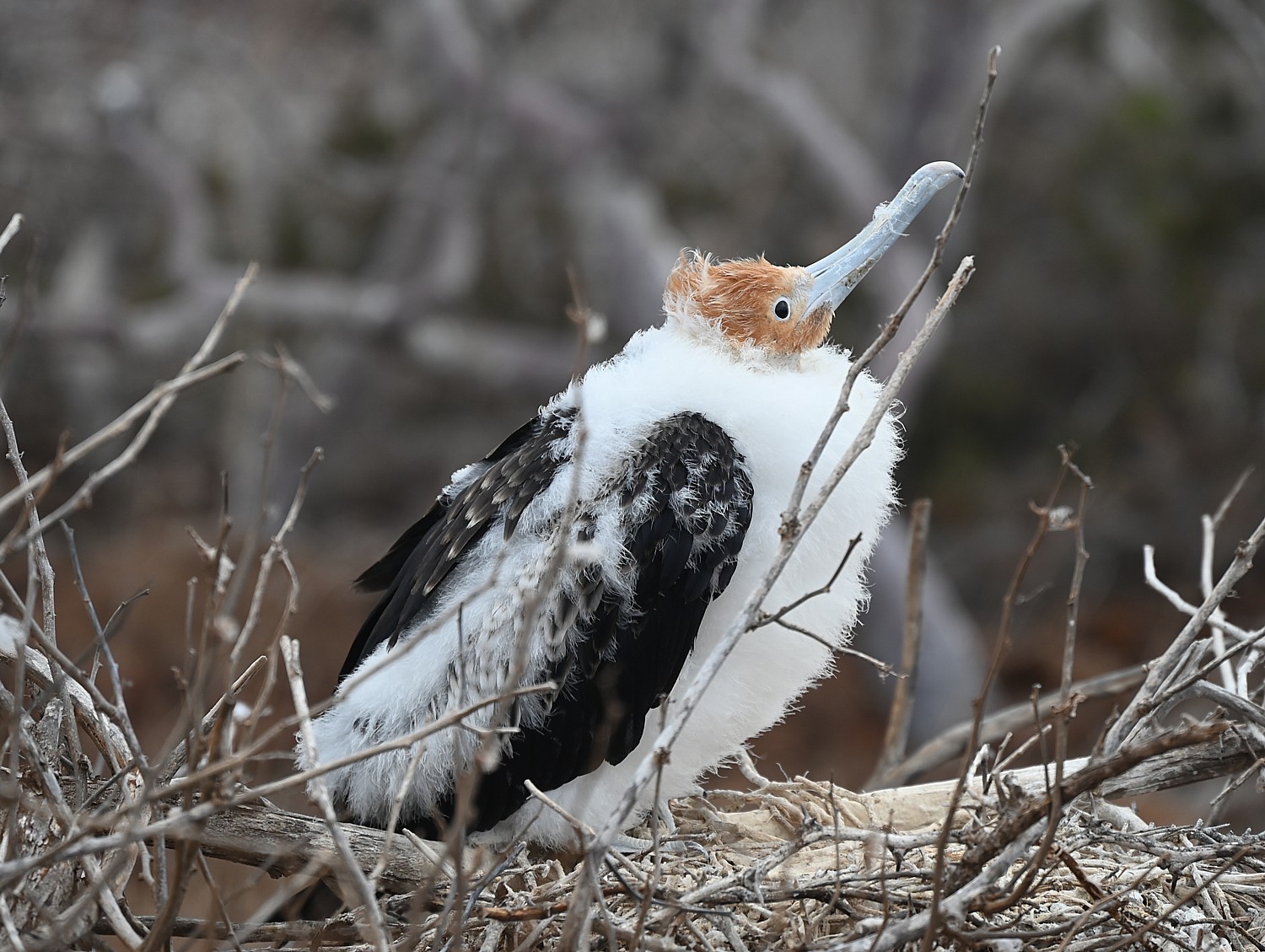
Seeing a young frigatebird in its nest © Karen Rubin/goingplacesfarandnear.com

Because humans are not perceived as a threat, the animals pay us no attention. We can walk amazingly close to bird colonies, even to chicks still in the nest, as if we were invisible; they just continue doing what they will do. And yet, we later have experiences where it seems the sea lions do want to attract our attention, show off and even play with us, and on one occasion, a blue-footed booby (adolescent?) seems curious enough to just stand in the middle of the trail as we take photos, study us, and wait for us until we come back.

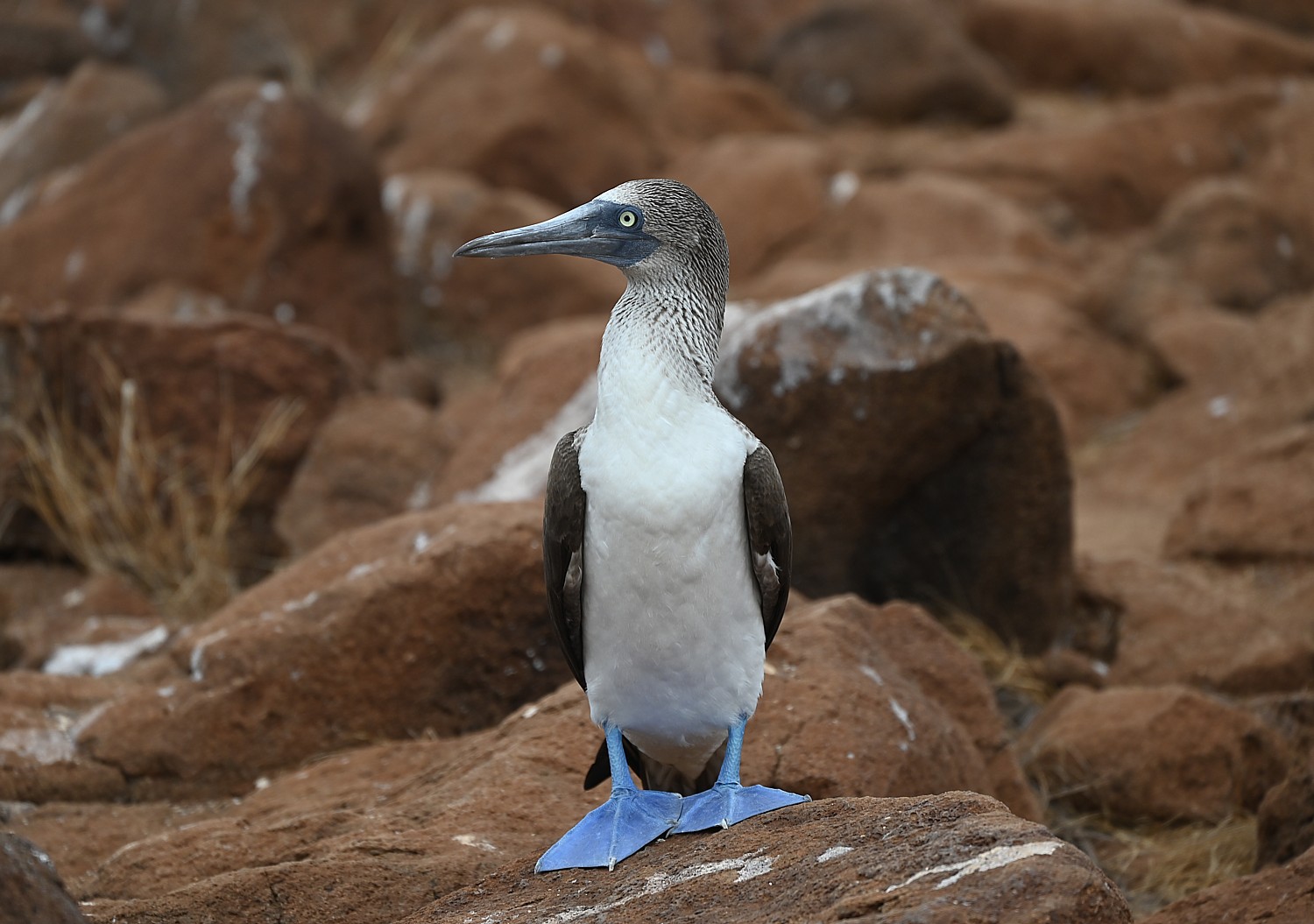
North Seymour is fabulous for sightings of the blue booby © Karen Rubin/goingplacesfarandnear.com

“Two things make Galapagos unique,” our guide, Billy, tells us. “Fear doesn’t exist and there is harmony – the hawk, boobies, iguana live in harmony [balance] because there is enough food to eat.” He tells us that the government gave fishermen an incentive to become guides, so there is less fishing and more for the animals. “Harmony and no fear.”

A male frigatebird in flight © Karen Rubin/goingplacesfarandnear.com

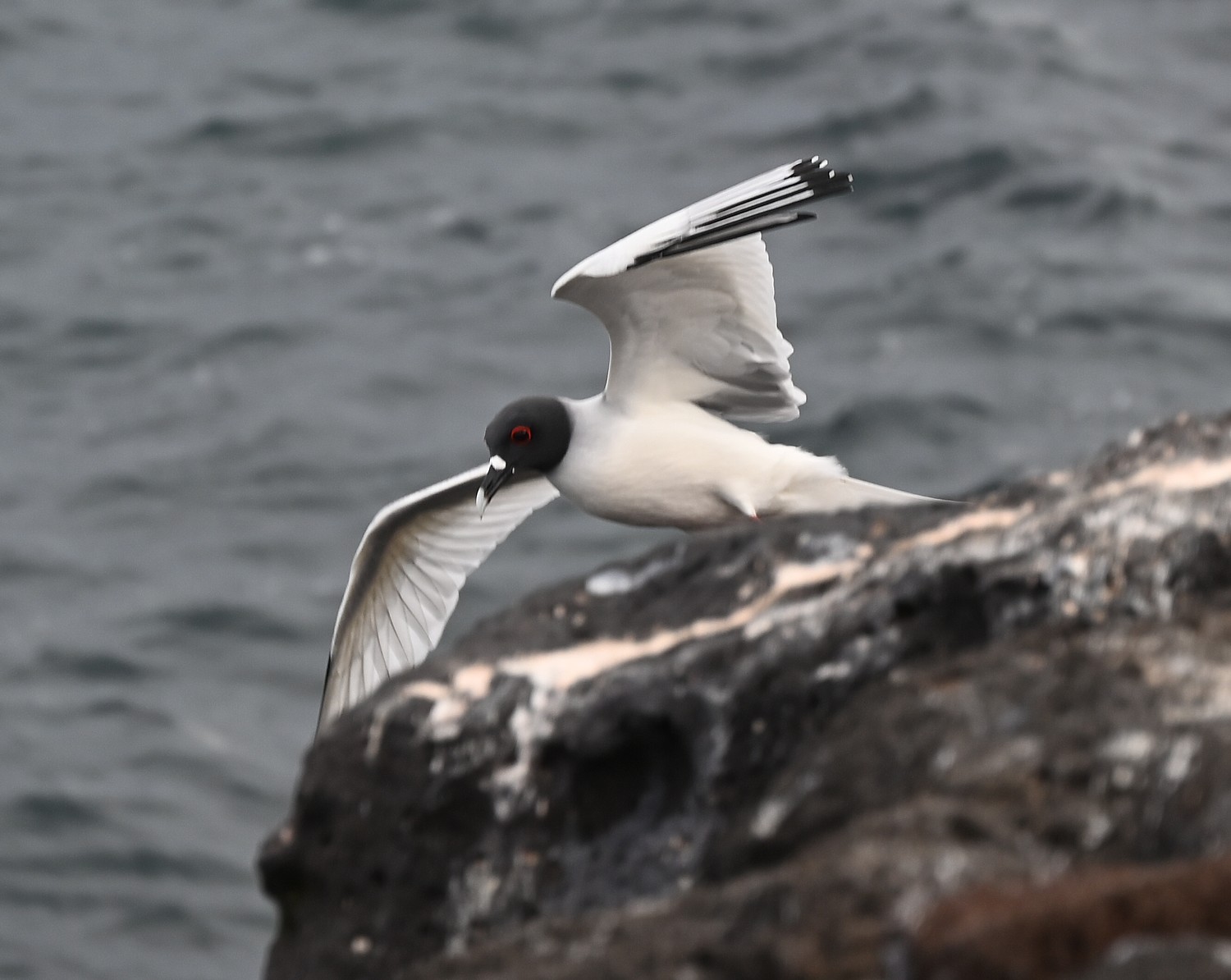
North Seymour is fantastic because we see several of the birds the Galapagos are so famous for– the blue-footed booby, the magnificent frigatebird (the largest colony in the Galapagos is here), swallow-tailed gulls; also land iguana (2500 are resident here). And we see them all!  It is thrilling for us to see a blue-footed booby for real (the males use their webbed feet to attract a prospective mate, but when we go to San Cristobal, we see the red-footed booby, where red proved more enticing).

North Seymour is fabulous for sightings of the blue booby © Karen Rubin/goingplacesfarandnear.com

We also see boxes used to trap the rats (that came with humans) that were endangering the rest of the native species.

North Seymour is fabulous for sightings of the blue booby © Karen Rubin/goingplacesfarandnear.com

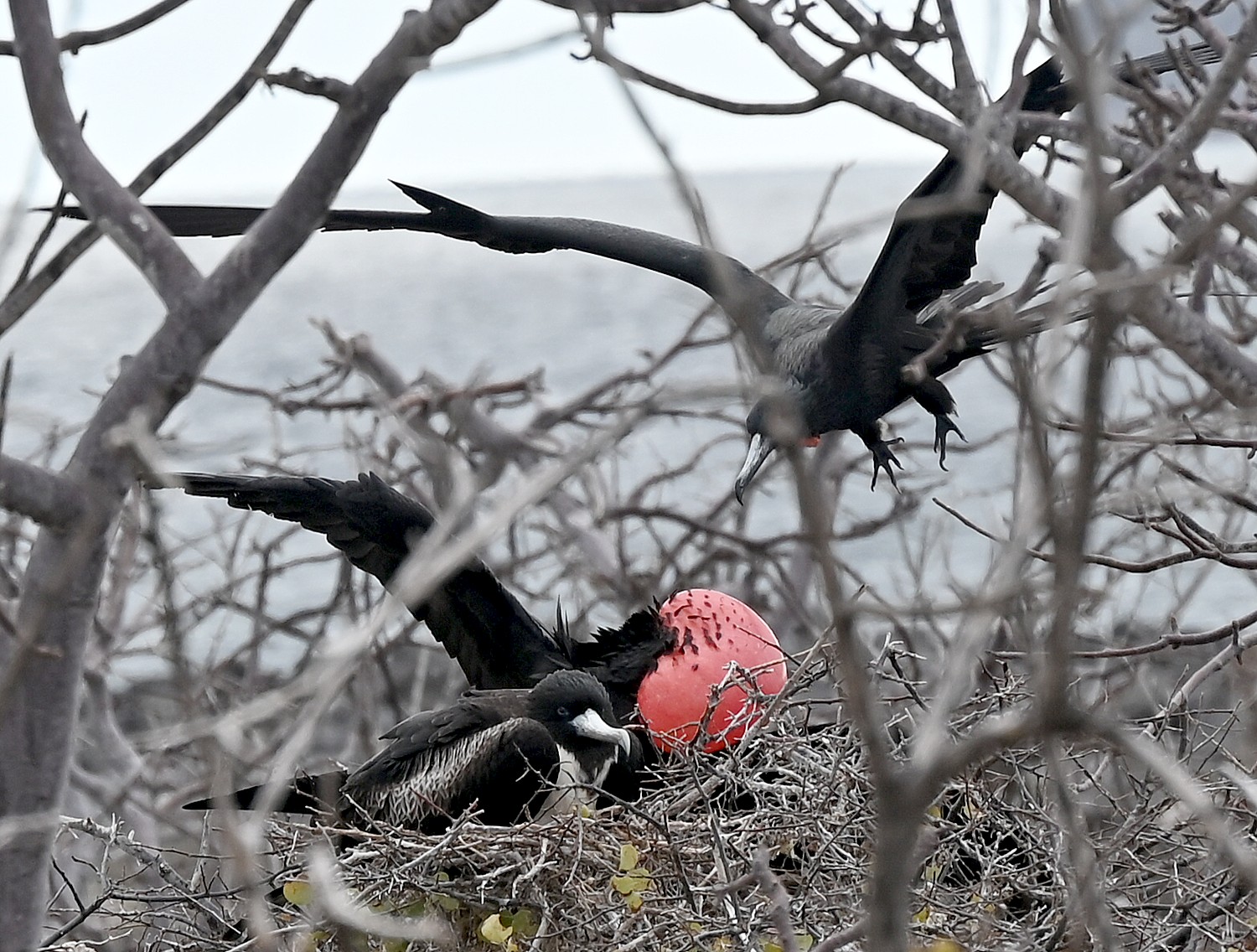
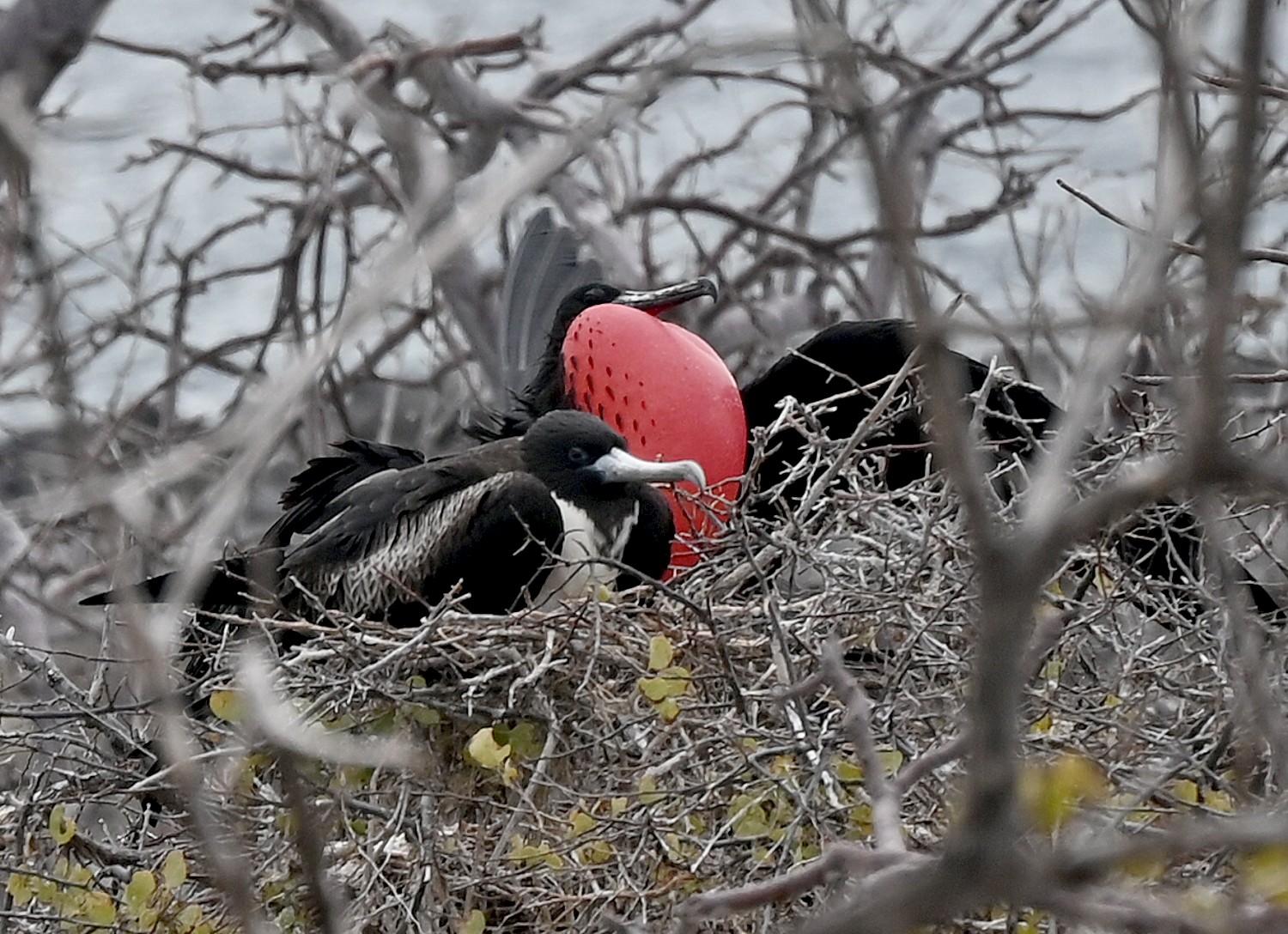
We get to see the great frigatebird males courting the females by clicking, bill-clapping shuddering and flapping their wings, while puffing up their bright red, gular pouch, as big as a balloon. Billy tells us it’s late in the season, so this is their last chance to mate.

A male frigatebird puffs up like a red balloon to appeal to a mate while fending off competition © Karen Rubin/goingplacesfarandnear.com

We see frigatebird chicks in all stages of development. Billy tells us that the female lays only one at a time, and one of the two parents have to cover it or it will die from the heat, while the other goes fishing. When it hatches, if the parent doesn’t feed it, it will die. The parent is also responsible for cleaning the chick. “The very young need more protection than food, the older ones need more food than protection.”

Seeing a young frigatebird in its nest © Karen Rubin/goingplacesfarandnear.com

We see a blue-footed booby chick in the nest. Billy tells us that the female lays 3 eggs, 12 days apart, so they hatch at different times after 28 days of incubation. The oldest is the largest and takes food first so has a 100 percent chance of survival; the second is smaller, so can’t outdo the eldest for food, and has a 50 percent chance; the third is the smallest, and has only a 25 percent chance of surviving. If there is enough food, all will survive. “In the nest, there is natural selection for the strongest and fittest.”

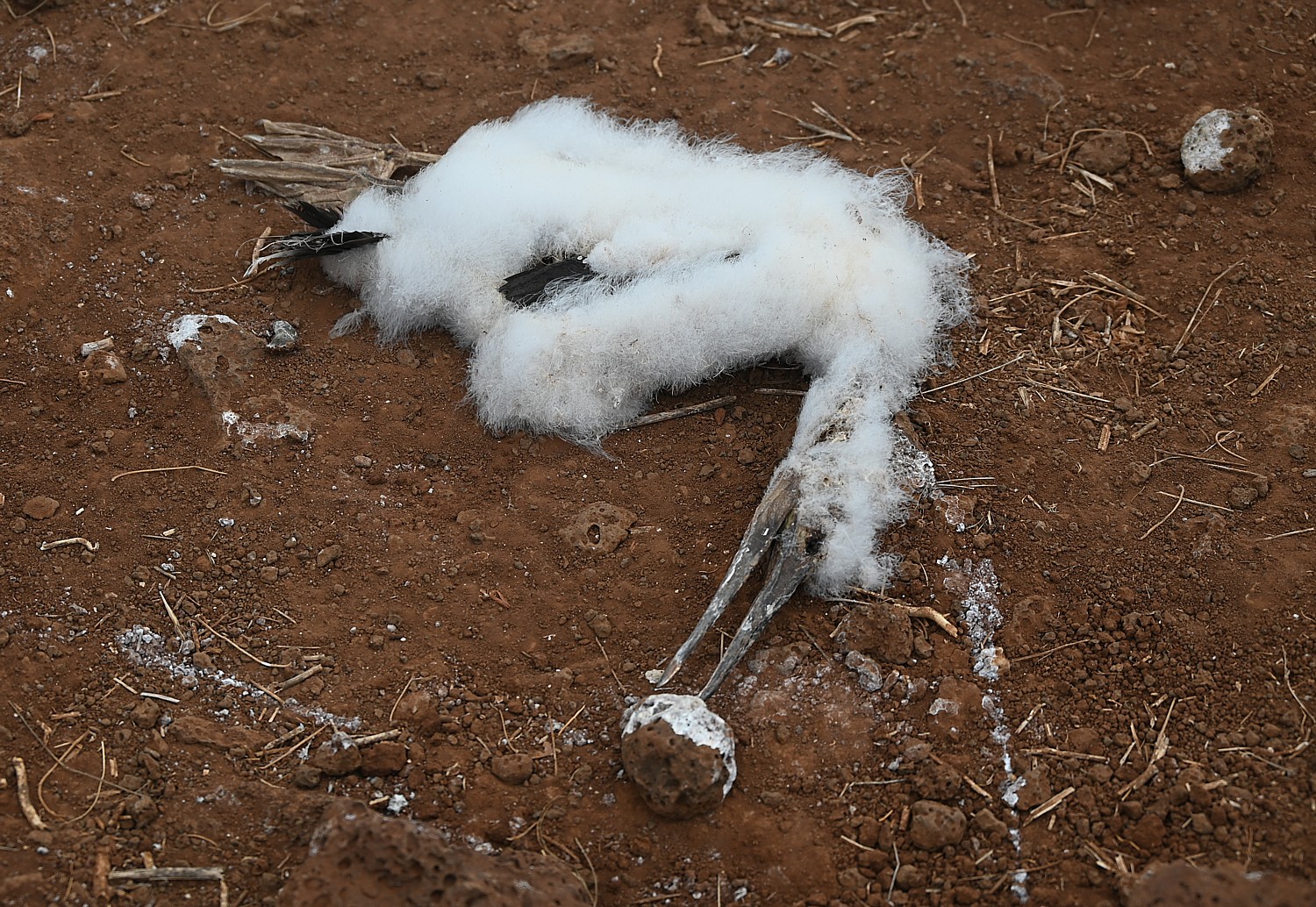
A dead chick is a lesson in survival of the fittest and natural selection © Karen Rubin/goingplacesfarandnear.com

We also see death – a dead booby chick. Billy tells us that if he sees a booby chick fall out of the nest, the ranger isn’t allowed to help it and it will die. “It means the chick has a balance problem, and if it mates and reproduces, that trait will be inherited and would be the result of the ranger’s mistake. That individual should die before it reproduces. That’s natural selection.”

A dead bird is a lesson in survival of the fittest and natural selection © Karen Rubin/goingplacesfarandnear.com

When you are here, you realize what an ecosystem is – the cooperation and competition that is required for survival.

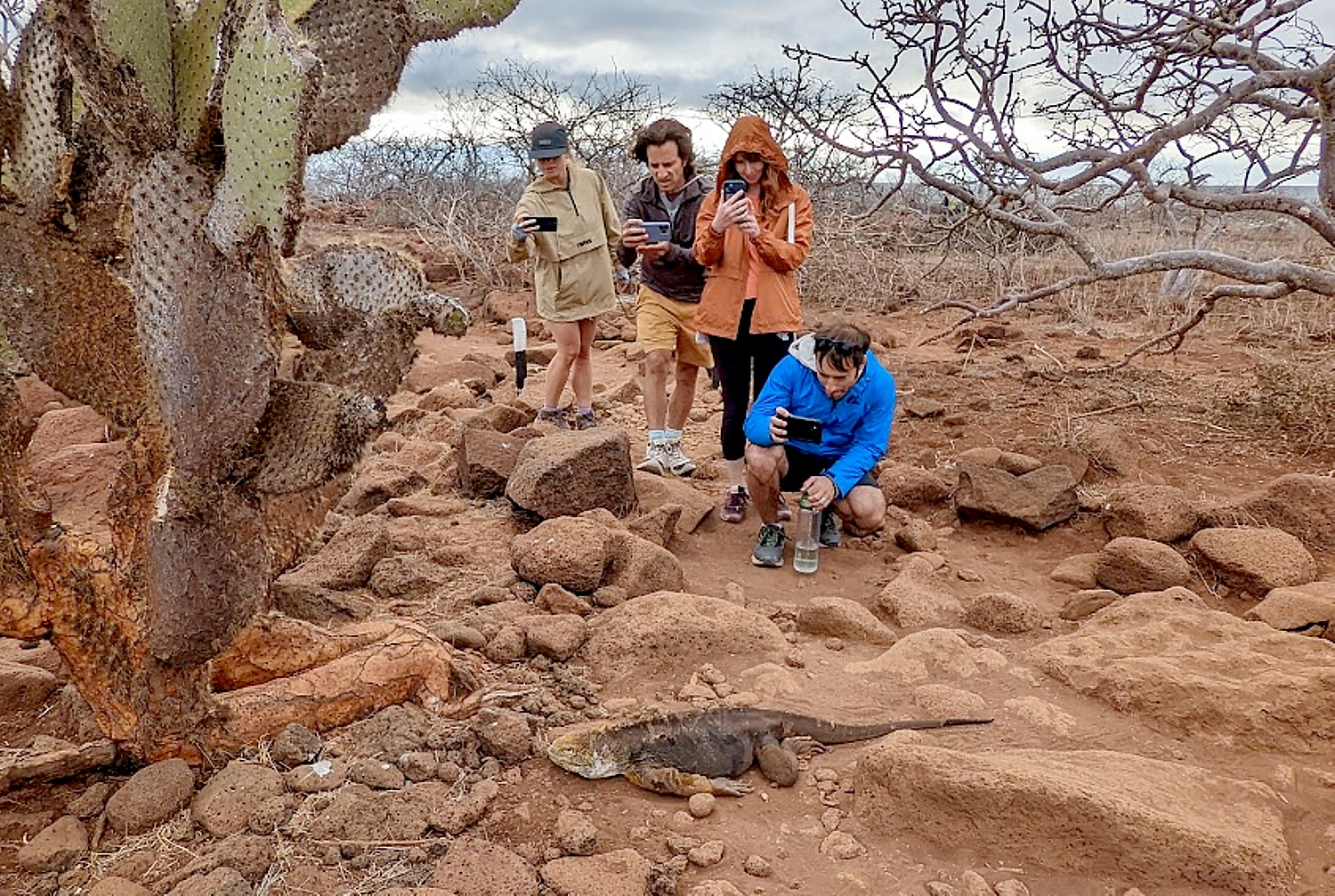
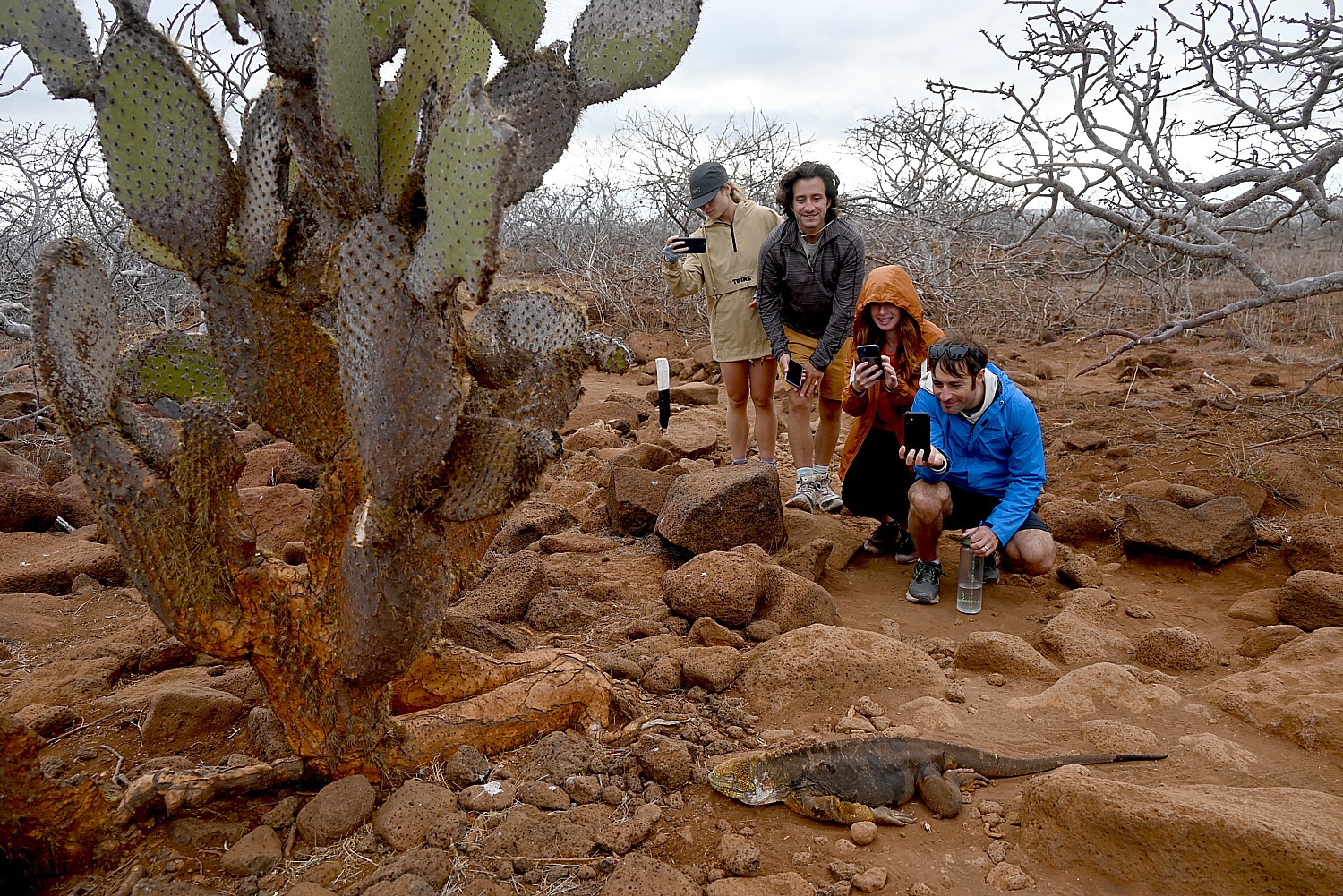
We come upon a land iguana (they survived here but went extinct on Baltra), which is unfazed as groups of us stand over it. I’m fascinated by its delicately formed hands and feet that look so human, and yet, this isn’t just a different species but a different genus, reptilian.

A male frigatebird puffs up like a red balloon to appeal to a mate © Karen Rubin/goingplacesfarandnear.com

There aren’t any hummingbirds here, Billy says, because there isn’t the kind of vegetation that hummingbirds require – a lesson that “Prey and predators have to colonize together or one or the other disappears.”

The humans who began arriving in the Galapagos in the 17th century were predators also, engaged in the fight for their own survival. Without food or fresh water, they relied on giant sea turtles and tortoises. “They could survive for 6 months with meat and water from a sea turtle –the turtle was their supermarket for hundreds of years.”

More information: Go Galapagos by Kleintours, 1-888 50 KLEIN, www.GoGalapagos.com.

Next: Our Voyage on the Galapagos Legend Continues to Santiago

See also:

CRUISING ON THE GALAPAGOS LEGEND: A VOYAGE OF WONDER

SANTA CRUZ ISLAND IS WONDER-FUL START TO GALAPAGOS ADVENTURE

CRUISING ON THE GALAPAGOS LEGEND: SANTIAGO ISLAND

CRUISING ON THE GALAPAGOS LEGEND: SAN CRISTOBAL ISLAND

 __________________

© 2022 Travel Features Syndicate, a division of Workstyles, Inc. All rights reserved. Visit goingplacesfarandnear.com, www.huffingtonpost.com/author/karen-rubin, and travelwritersmagazine.com/TravelFeaturesSyndicate/. Blogging at goingplacesnearandfar.wordpress.com and moralcompasstravel.info. Visit instagram.com/going_places_far_and_near and instagram.com/bigbackpacktraveler/ Send comments or questions to FamTravLtr@aol.com. Tweet @TravelFeatures. ‘Like’ us at facebook.com/NewsPhotoFeatures
Santa Cruz Island is Wonder-ful Start to Galapagos Adventure

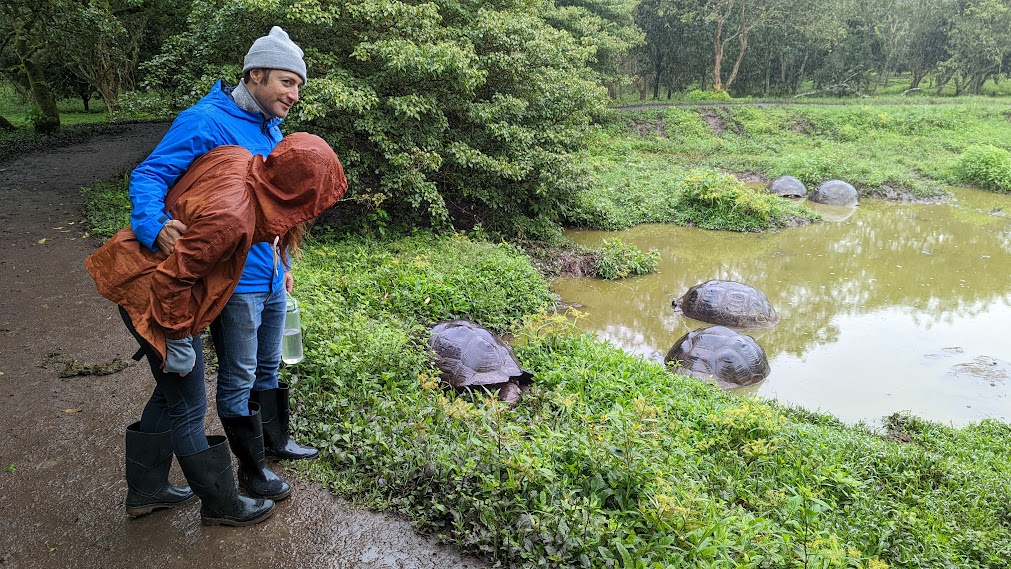
Opportunities for close encounters with unique animals such as giant tortoises at the El Chato Ranch Tortoise Reserve abound during the course of a voyage of discovery to the Galapagos © Karen Rubin/goingplacesfarandnear.com

By Karen Rubin, Dave E. Leiberman, Laini Miranda, Eric Leiberman & Sarah Falter

Travel Features Syndicate, goingplacesfarandnear.com

For a place that seems so remote, so exotic, so far from the reaches of the everyday and which affords such a unique opportunity to see rare and endangered animals, the Galapagos is surprisingly easy to reach – not at all like Jules Verne’s “Journey to the Center of the Earth.” All that it takes to have this “once in a lifetime,” “bucket list,” wonder-ful experience, is making the decision to go.

“Nature’s Greatest Laboratory,” the Galapagos is where you see natural selection and evolution unfold before you in real time. The Galapagos is also the poster child for the importance of tourism to provide the economic resources to protect the environment and culture, but also the critical need to rein in tourism and development. In effect, the Galapagos is the model for what responsible, sustainable tourism can mean to preservation, conservation of these precious places.

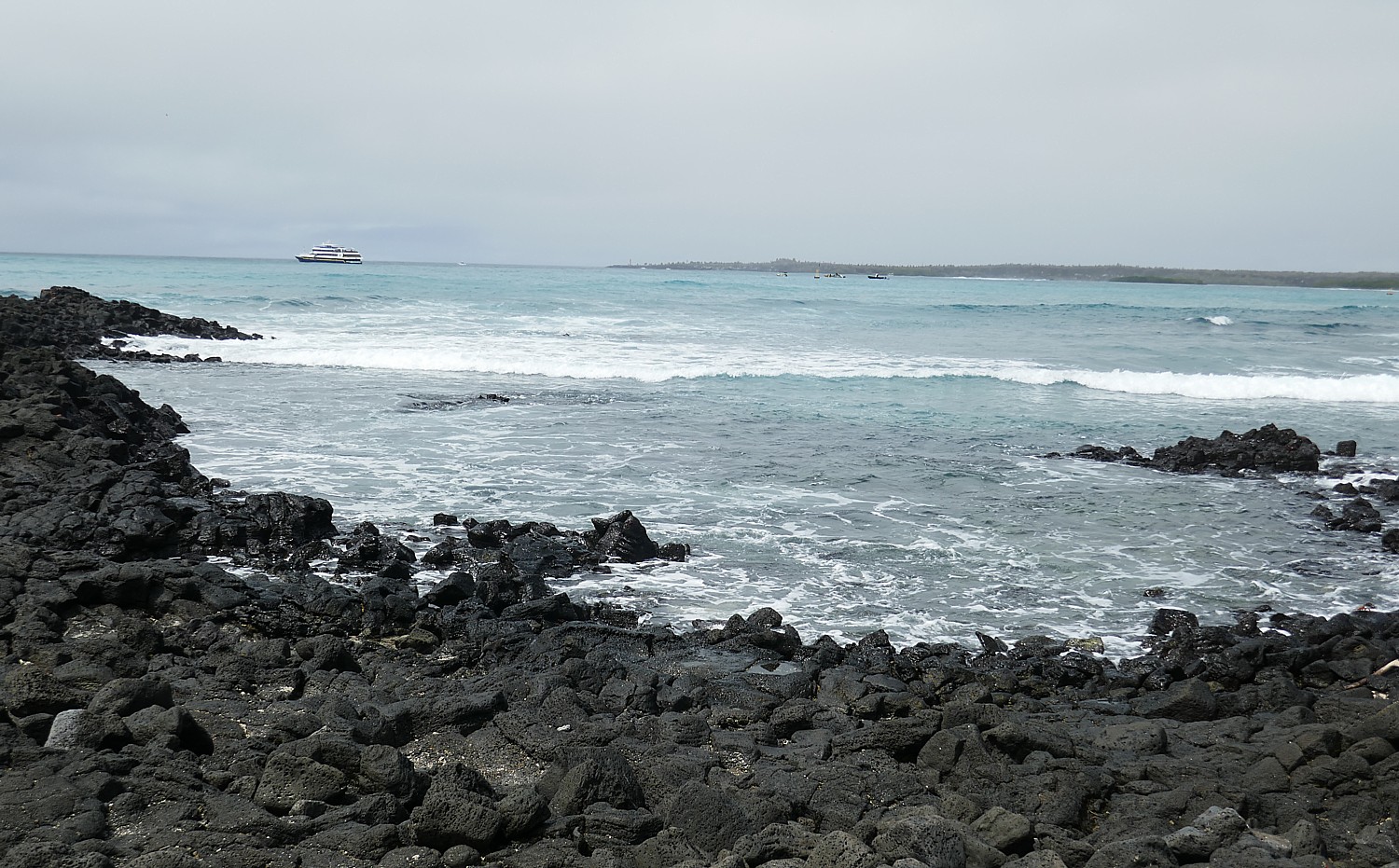
The rocky shore of Santa Cruz © Karen Rubin/goingplacesfarandnear.com

The Galapagos became a national park (Ecuador’s first) in 1959, the same year that the Charles Darwin Research Station was founded and 100 years after Darwin published his seminal “On the Origin of the Species”-  introducing the concepts of natural selection and evolution which he developed as a young naturalist who joined the voyage of the Beagle. The park began operations in 1968. In 1979 UNESCO declared the Galápagos Islands Natural Heritage for Humanity, making the Park Service responsible for park conservation and guarding the islands.

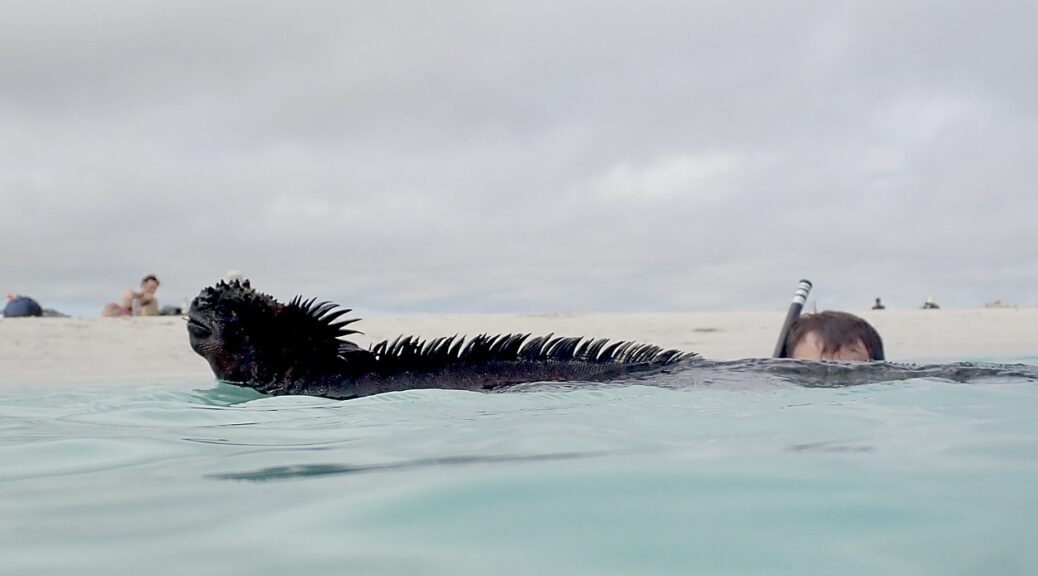
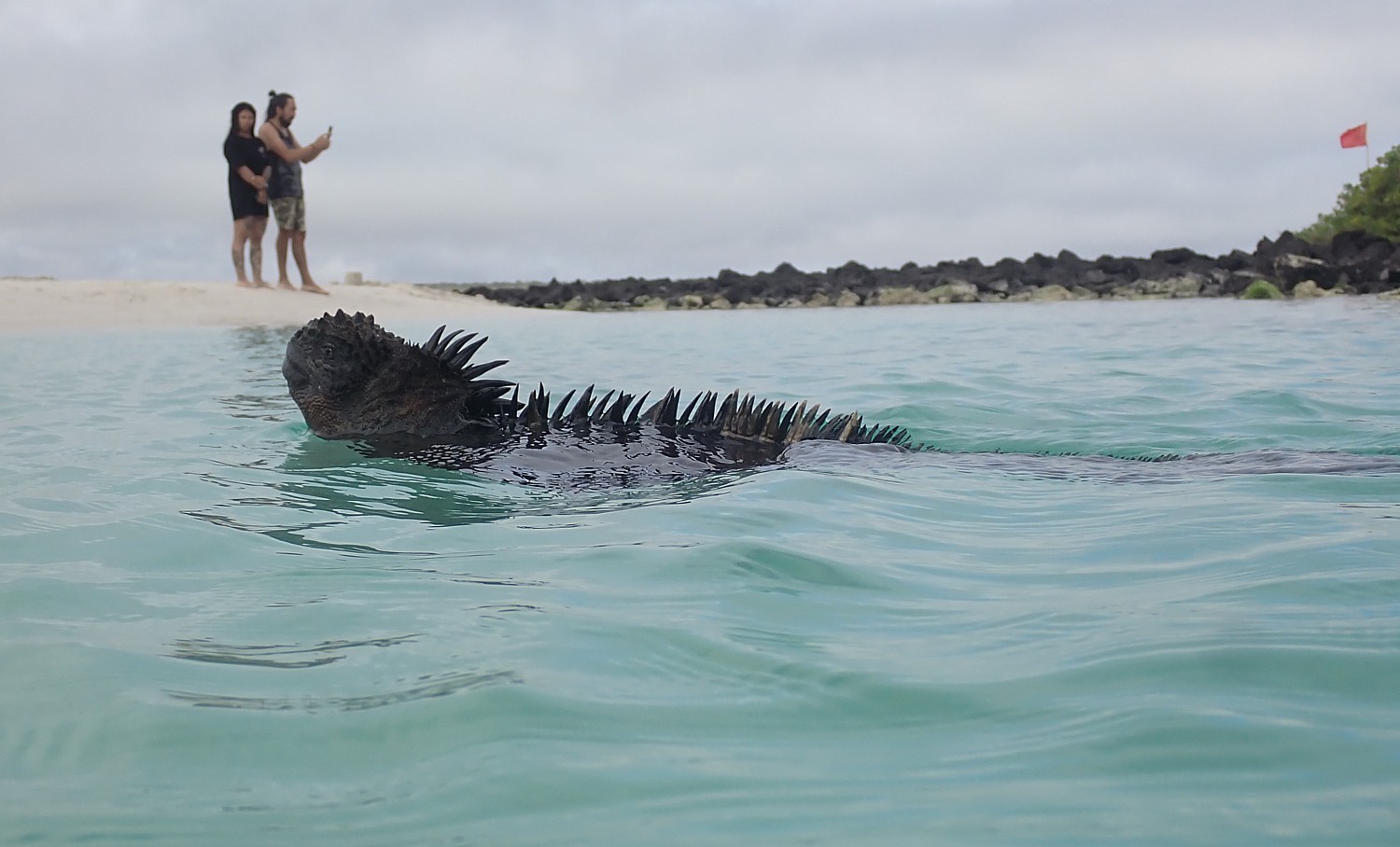
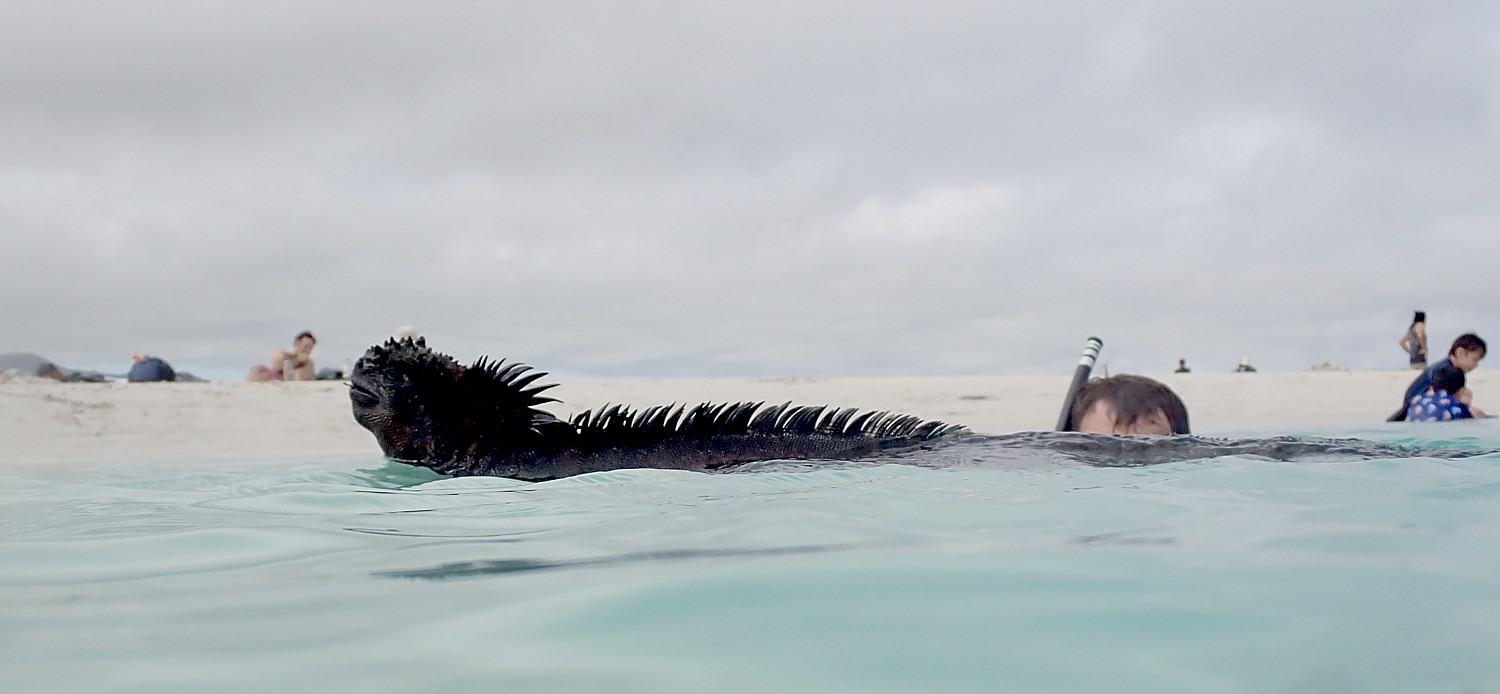
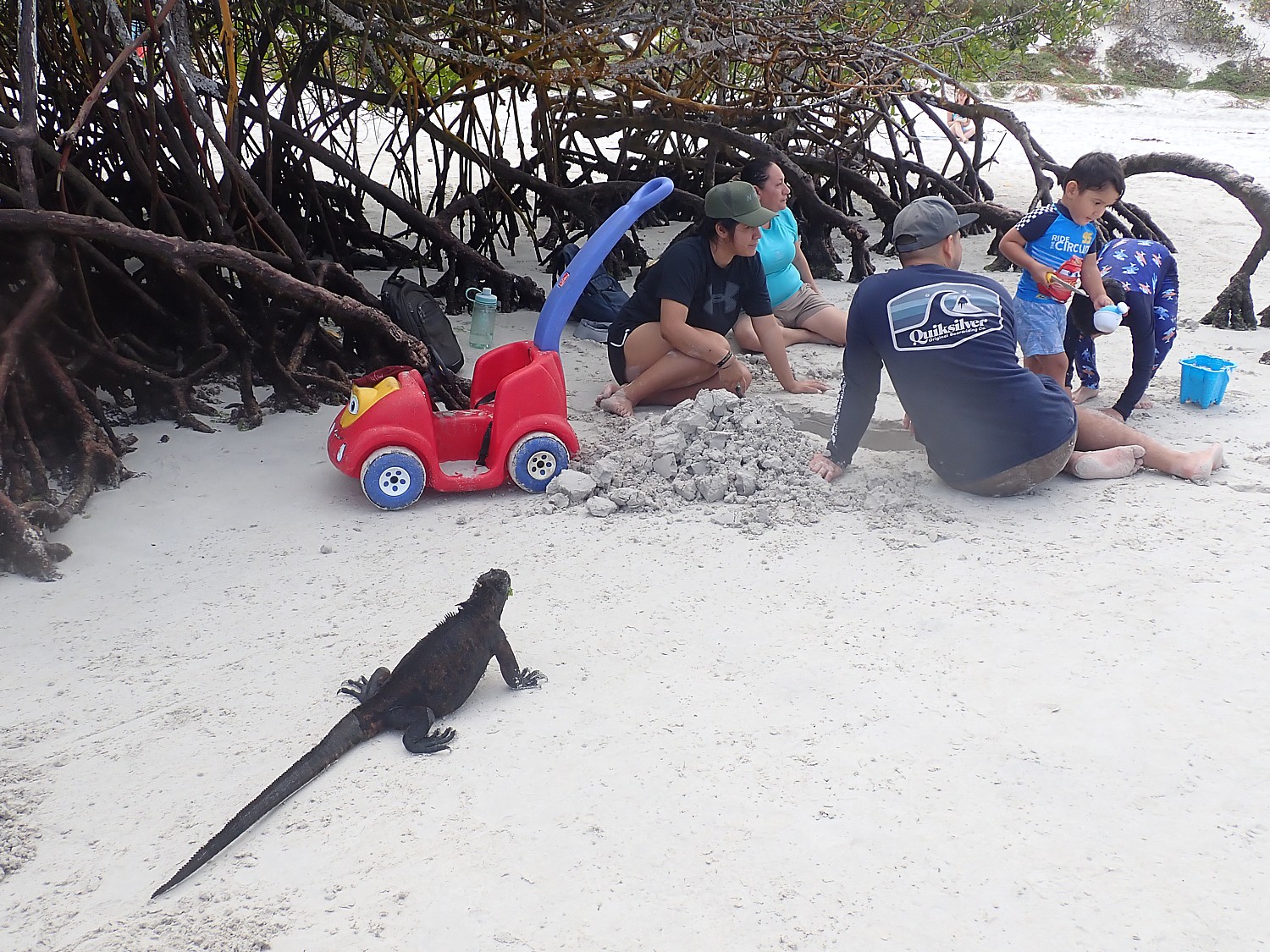
Swimming with marine iguana, at Tortuga Bay on Santa Cruz island, Galapagos © Karen Rubin/goingplacesfarandnear.com

Karen has been writing about the origin of “soft adventure” travel since Lars Eric Lindblad basically invented it and more than anyone else, opened Galapagos to the world in the 1970s. At the same time, Lindblad crusaded for insuring the protection of the Galapagos – lobbying to limit on the numbers of visitors, the size of ships, which are in force today. (His son, Sven Lindblad now continues that legacy with his own company, Lindblad Expeditions, and specially designed expeditionary ships in partnership with National Geographic.)

Finally, we have the opportunity to see the Galapagos and its responsible tourism preservation strategies first hand.

The best way to experience the Galapagos is by ship (you feel a little like Darwin) and we book a four-day/three-night cruise on the 100-passenger MV Galapagos Legend, a gorgeous ship that affords all the luxury amenities, which is operated by Go Galapagos (gogalapagos.com).

We cleverly organize our trip to arrive in the Galapagos a couple of days before the cruise, on Santa Cruz, easily accessed from the Baltra International Airport where we will meet up for the cruise.

The “welcome committee” – a golden iguana – on arrival at Baltra International Airport, Galapagos © Karen Rubin/goingplacesfarandnear.com

We fly in separately from Quito and Guayaquil into Baltra International Airport on a tiny island that became a US naval base during World War II. Just walking from the plane at Baltra Airport into the terminal, Karen ise met by a “welcoming committee” of a golden iguana (land iguanas were extinct on Baltra by 1954, but thanks to repopulating effort from nearby North Seymour island, they have recovered). 

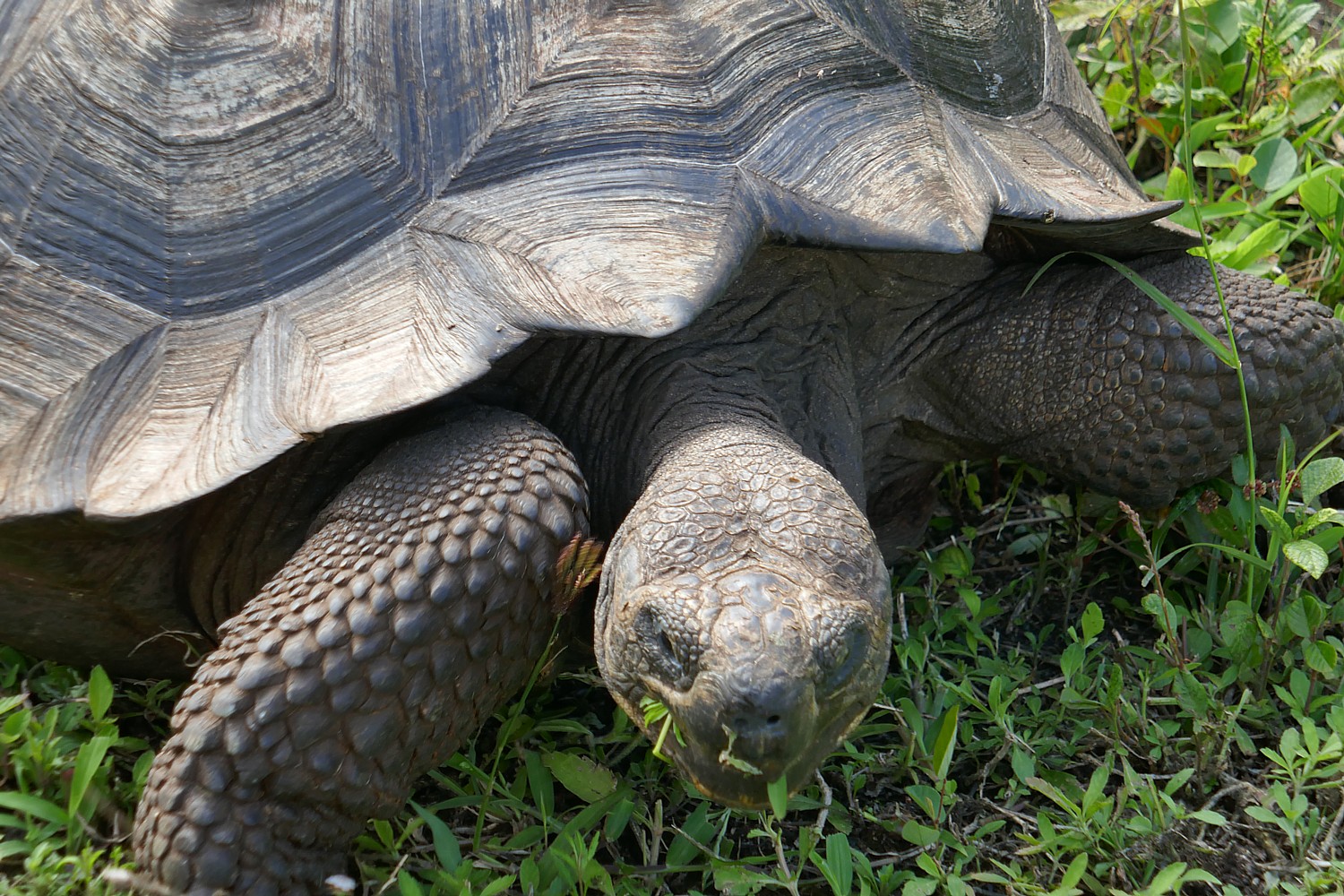
Encountering a wild giant tortoise on Santa Cruz island, Galapagos © Karen Rubin/goingplacesfarandnear.com

Along with most of the other air travelers, we get on buses to the ferry ($5 fare), and the short ferry ride ($1 fare) to Santa Cruz, one of four inhabited islands, where we have the most splendid introduction to the Galapagos.

Ecuador has the highest biodiversity per square kilometer in the world, spread out among a wide variety of environments, even within the small area of Santa Cruz island © Karen Rubin/goingplacesfarandnear.com

It’s almost an hour’s drive from the ferry to get to Puerto Ayora on the island’s southern tip along the longest paved road in the Galapagos, and you already see the variety of geology and ecosystems which support such diversity of animal life and vegetation. The taxi driver pulls over so Karen can see giant tortoises wandering in a pasture, mixed in with cows.

Ecuador has the highest biodiversity per square kilometer in the world, spread out among a wide variety of environments such as the rainforest to the east and the dry forests to the south. Indeed, within minutes of landing, we already see many of the animals and birds that the Galapagos is famous for.

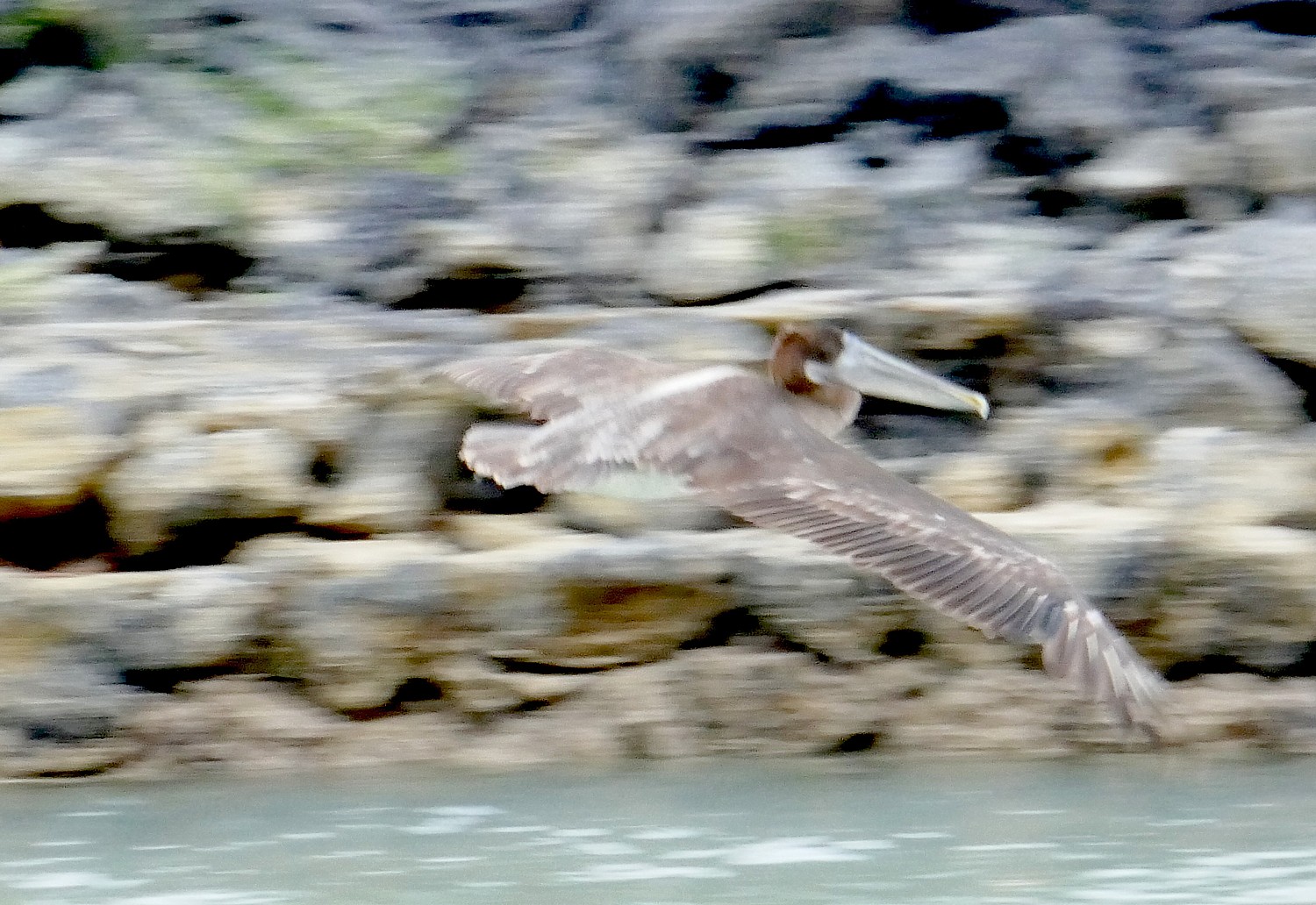
A pelican in flight © Karen Rubin/goingplacesfarandnear.com

Santa Cruz has a long history of human settlement and agriculture, which has left the landscape permanently altered by invasive species. But the island really developed with World War I and II and settlers from the United States and Europe. Some 12,000 people now live on the island, the second largest of the archipelago. Besides ranches and farms that raise avocados, coffee, sugarcane, bananas, oranges, and lemons, Santa Cruz is the main tourism hub for the Galapagos and in fact, offers a microcosm of what you see throughout. 

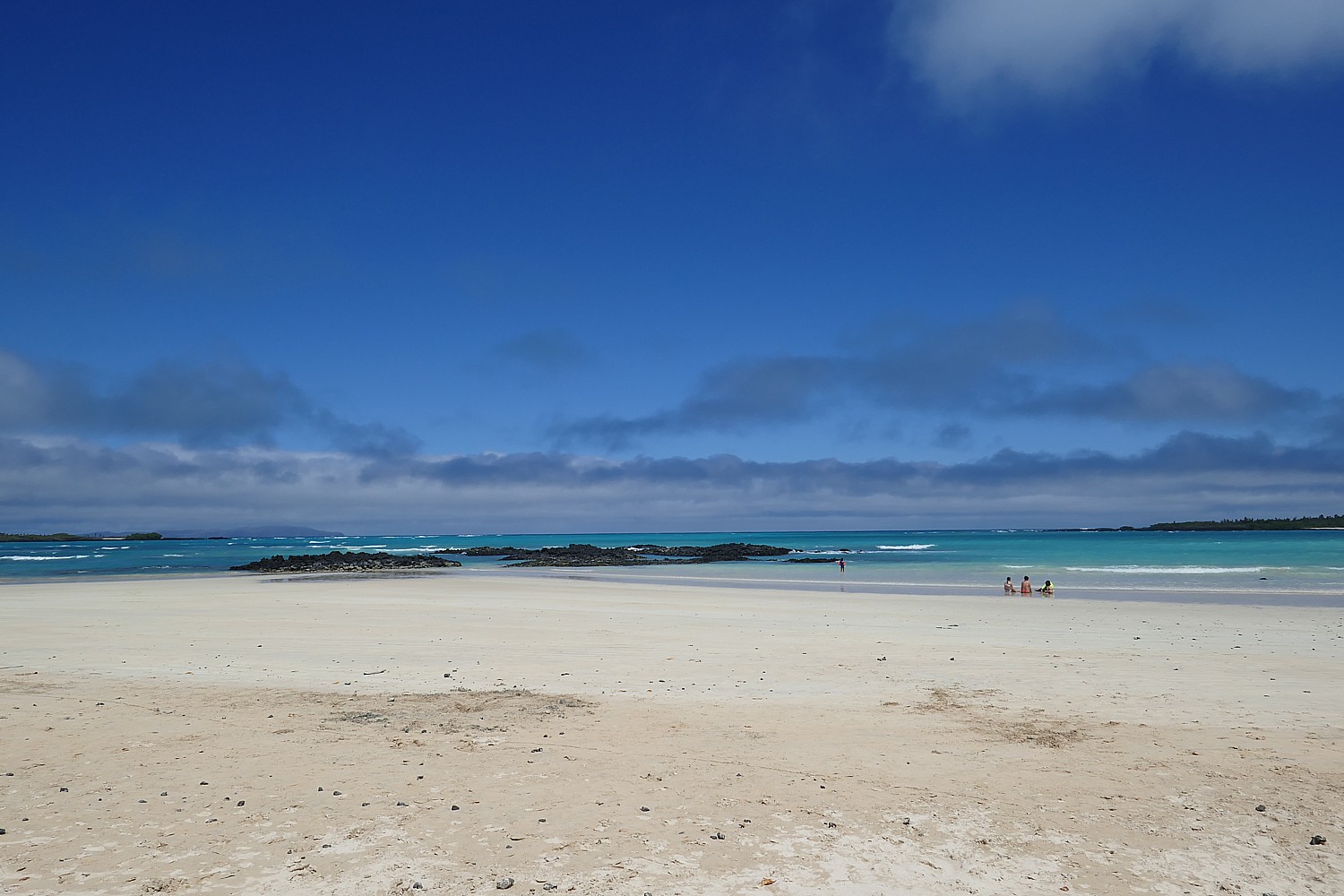
Playa Garrapatero, a long beautiful sand beach with clear waters © Karen Rubin/goingplacesfarandnear.com

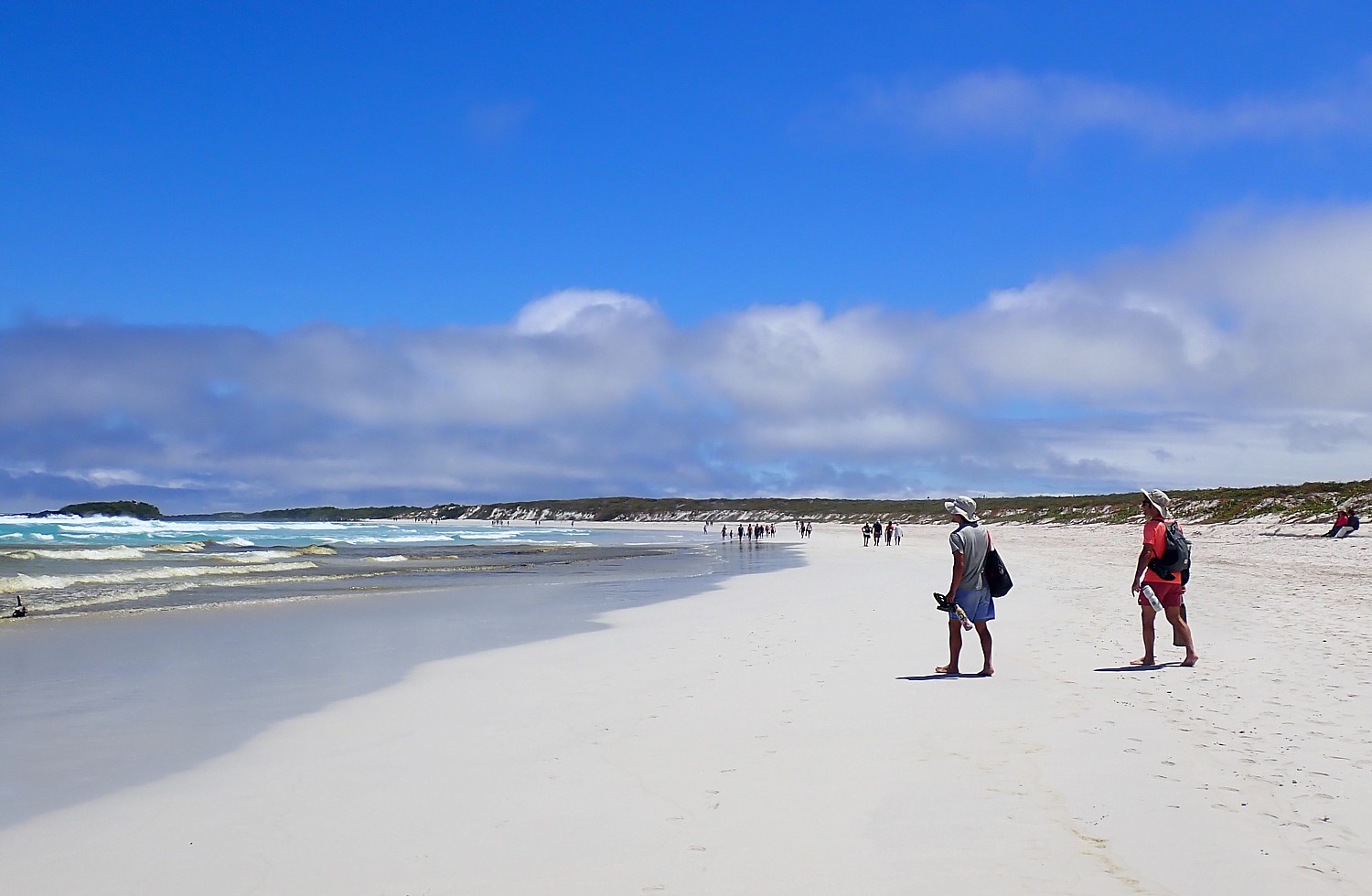
Karen’s taxi stops at Playa Garrapatero, a long beautiful white powder sand beach with clear waters (and no kiosks so bring your own food!) where David and Laini, Eric and Sarah are already encamped – Eric and Sarah on the last legs of their six-month odyssey. (Imagine, meeting up in the Galapagos!). We arrange with the driver for a taxi to pick us up later (no cell service!). (They have biked here about 15 miles along a hilly route from their AirBnB in Puerto Ayora).

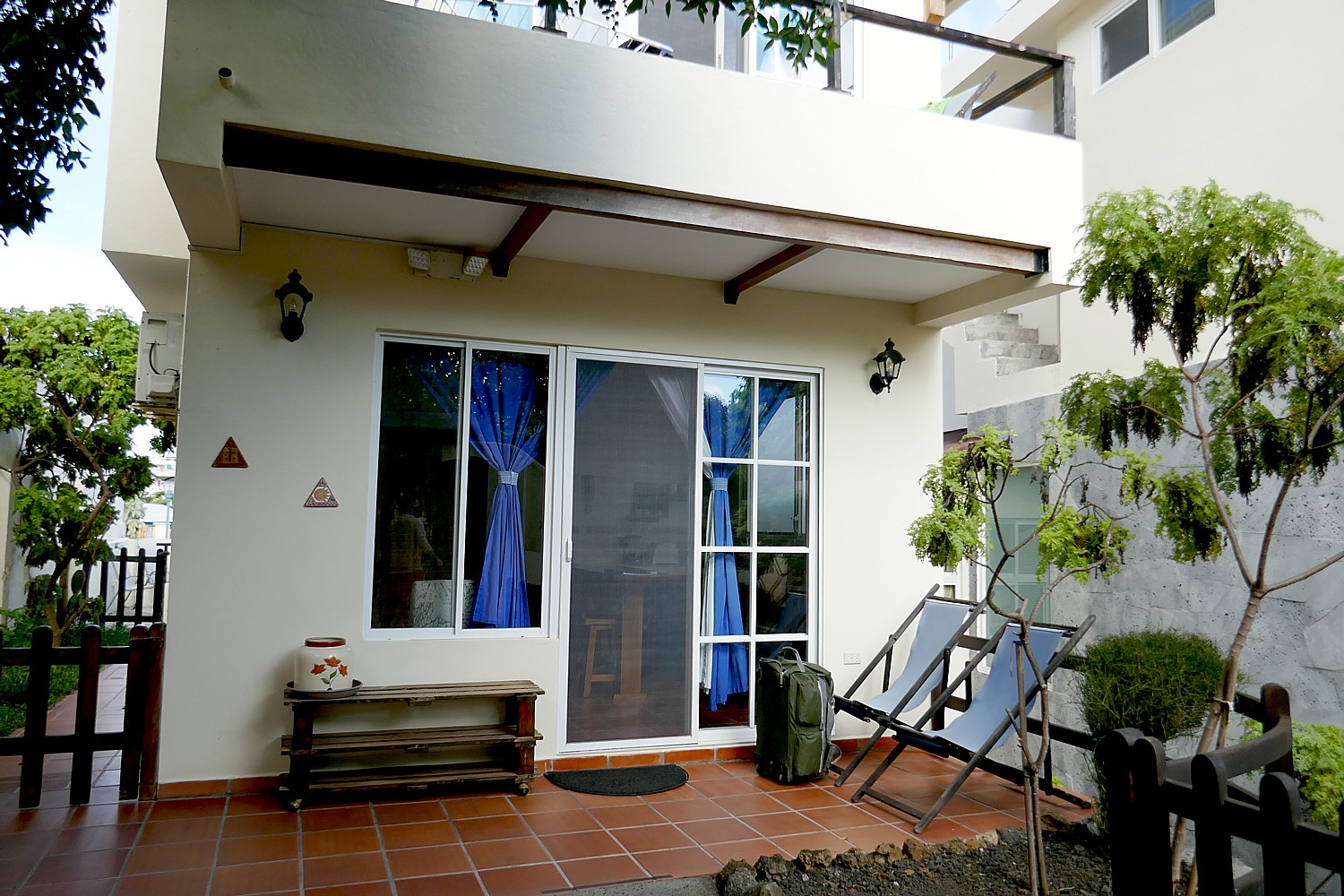
Laini organized a stay in a fantastic AirBnB, Encantadas Guest House, walking distance to everything Puerto Ayora, and steps away from the entrance to the boardwalk that leads to the fabulous beach at Tortuga Bay.

Our delightful AirBnB, Encantadas Guest House, in the town of Puerto Ayora on Santa Cruz island, is actually two buildings, roomy enough for the five of us © Karen Rubin/goingplacesfarandnear.com

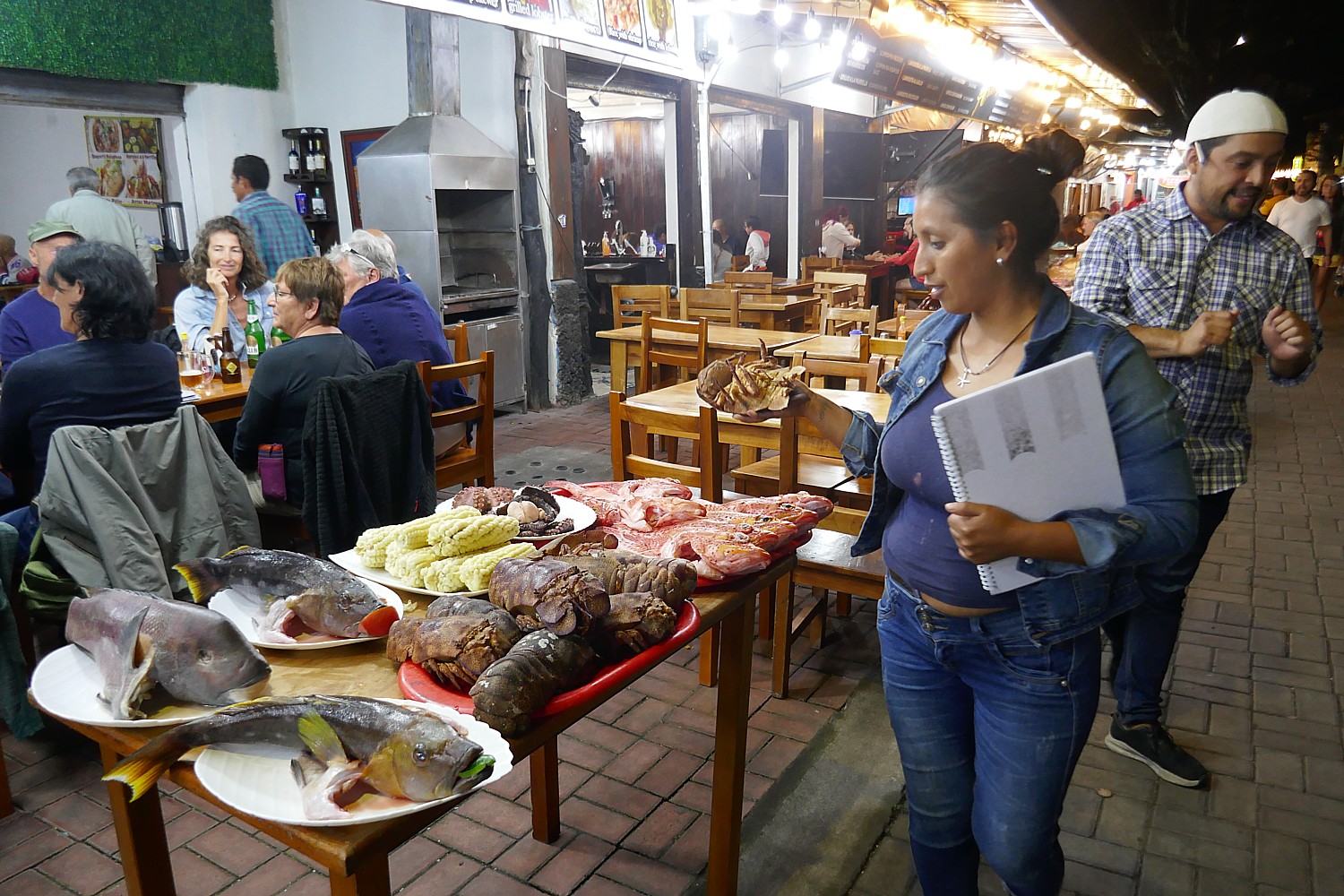
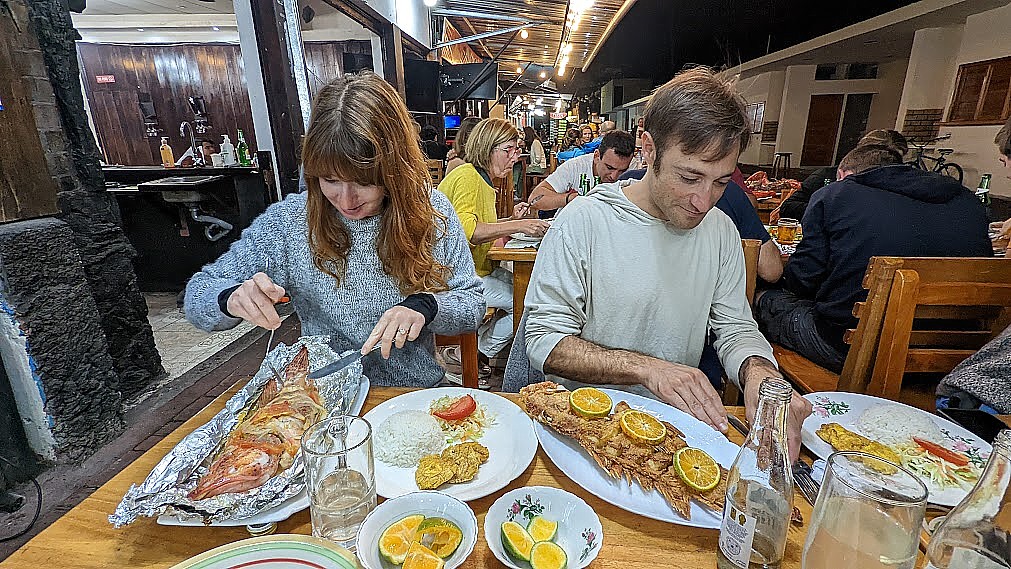
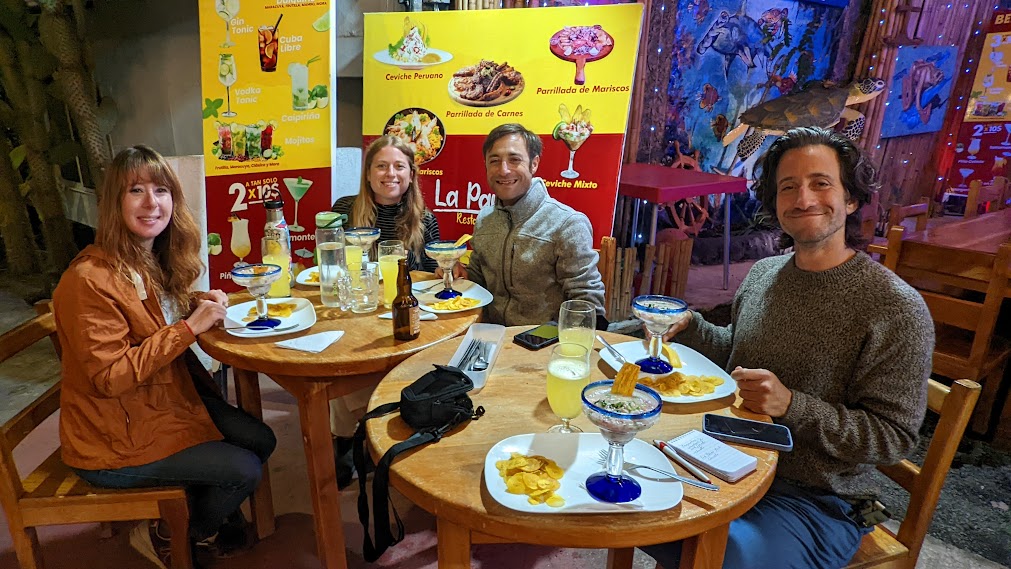
Puerto Ayora is absolutely charming and fun – unbelievably wonderful restaurants and delightful (and tastefully upscale) shops. (Calle Charles Binford is a bustling street of seafood restaurants where you order that day’s catch the length of your arm, some of them still moving, for a $10 complete dinner; elsewhere you can also get a three-course lunch for $5, such as at Laguna Beach, one of our favorite stops; also La Pausa, which Karen insists is the best cerviche ever!).

Lunch at Laguna Beach in Puerto Ayora on Santa Cruz island © Karen Rubin/goingplacesfarandnear.com
Calle Charles Binford in Puerto Ayora, Santa Cruz, is a bustling street of seafood restaurants where you order that day’s catch the length of your arm, some of them still moving, for a $10 complete dinner © Karen Rubin/goingplacesfarandnear.com
Delightful La Pausa restaurant in Puerto Ayora, Santa Cruz, serves the best cerviche © Karen Rubin/goingplacesfarandnear.com

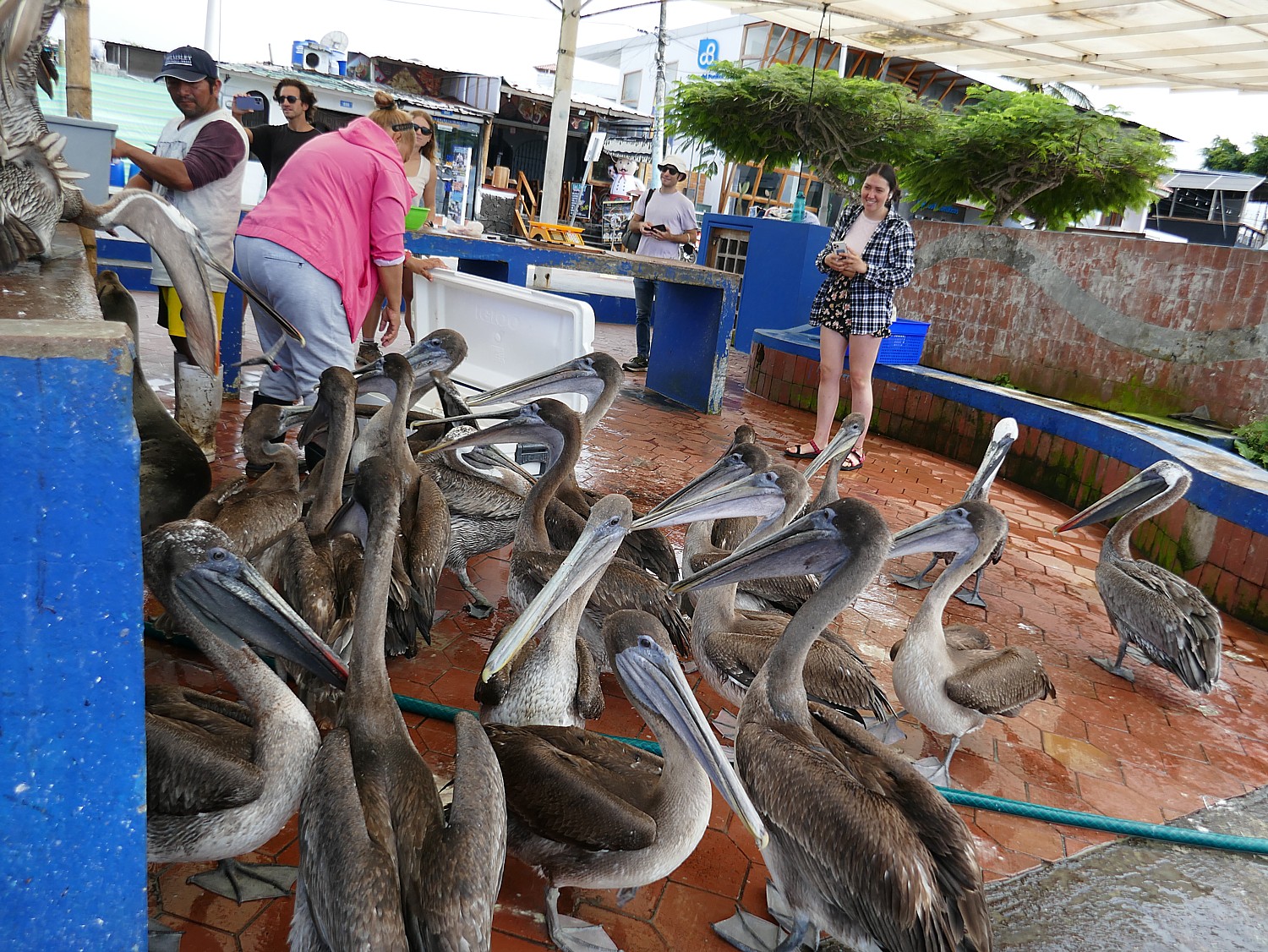
One of the fun places to stop is the fish market on the pier where the fishermen bring in their catches, eagerly awaited by a gaggle of pelicans and a sea lion or two that hang out daily, waiting patiently for their share of scraps.

Pelicans seem to understand the rules at the fish market: wait patiently and you will be rewarded © Karen Rubin/goingplacesfarandnear.com
A park is decorated with beautiful mosaics in Puerto Ayora on Santa Cruz island, Galapagos © Karen Rubin/goingplacesfarandnear.com

There also are any number of tour companies offering day-trips to the various islands, scuba diving, bike rentals.

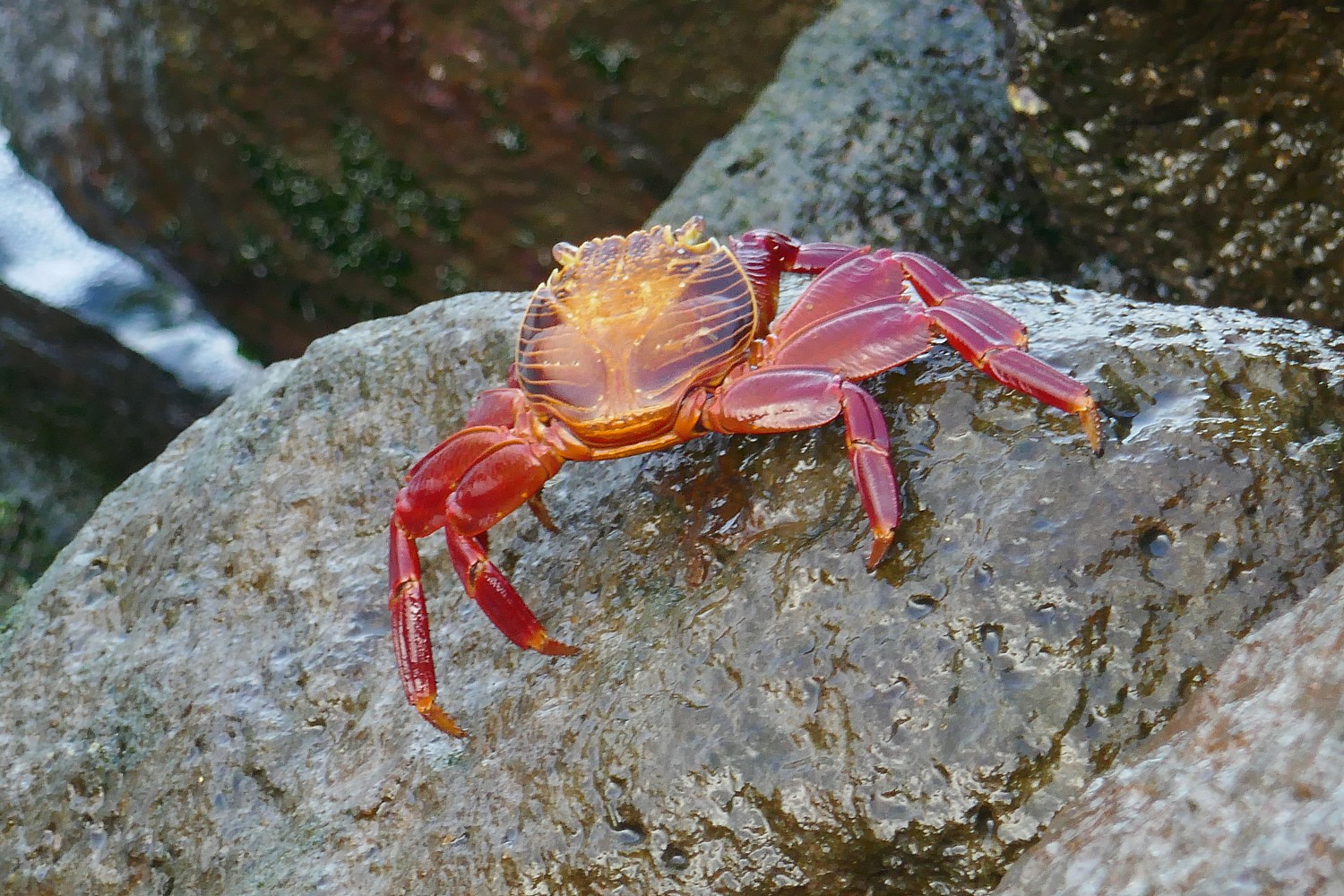
Red crab along the rocks in Puerto Ayora on Santa Cruz island, Galapagos © Karen Rubin/goingplacesfarandnear.com
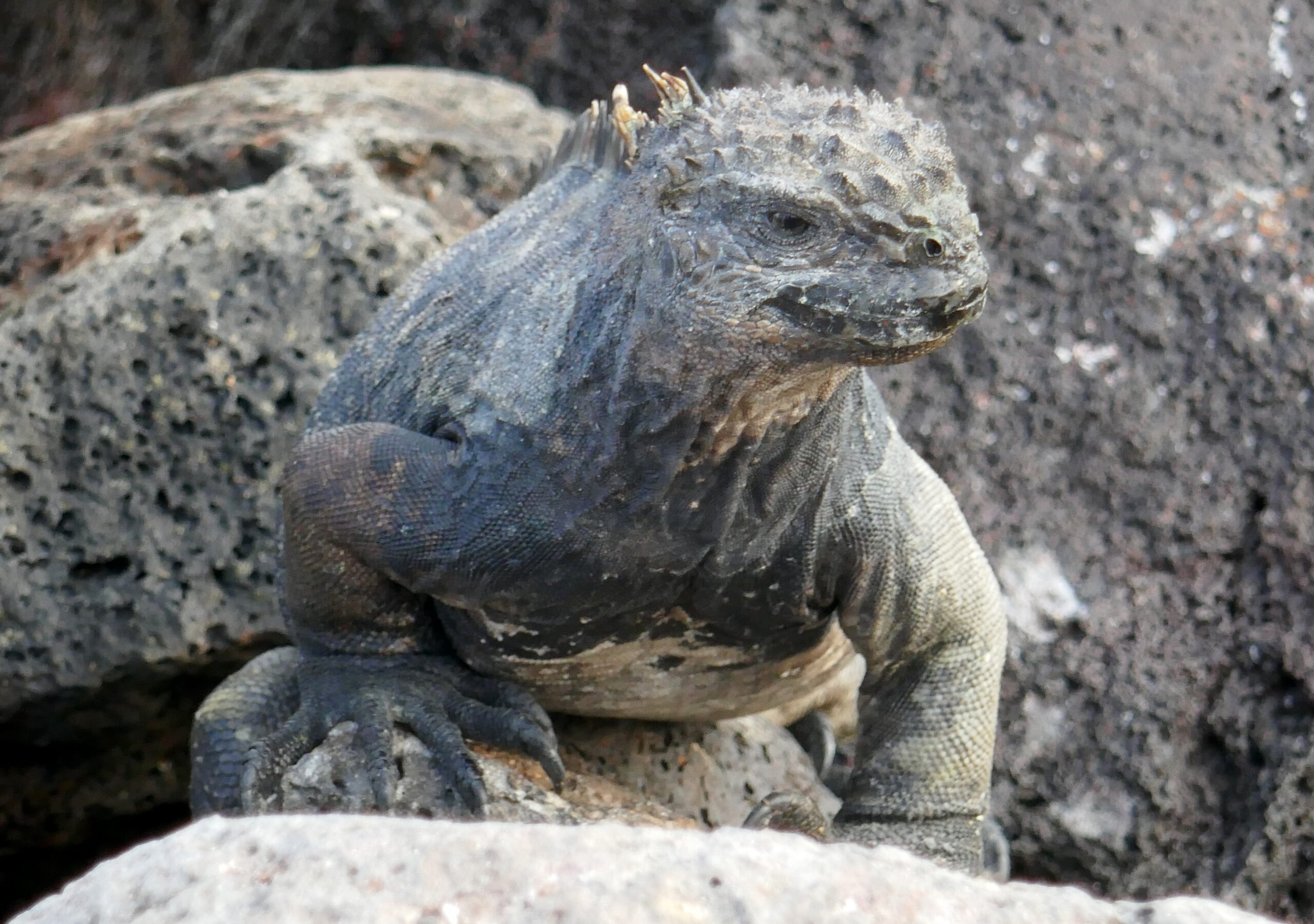
Hollywood clearly found inspiration in Santa Cruz’ marine iguana © Karen Rubin/goingplacesfarandnear.com
Marine iguana in Puerto Ayora on Santa Cruz island, Galapagos © Karen Rubin/goingplacesfarandnear.com

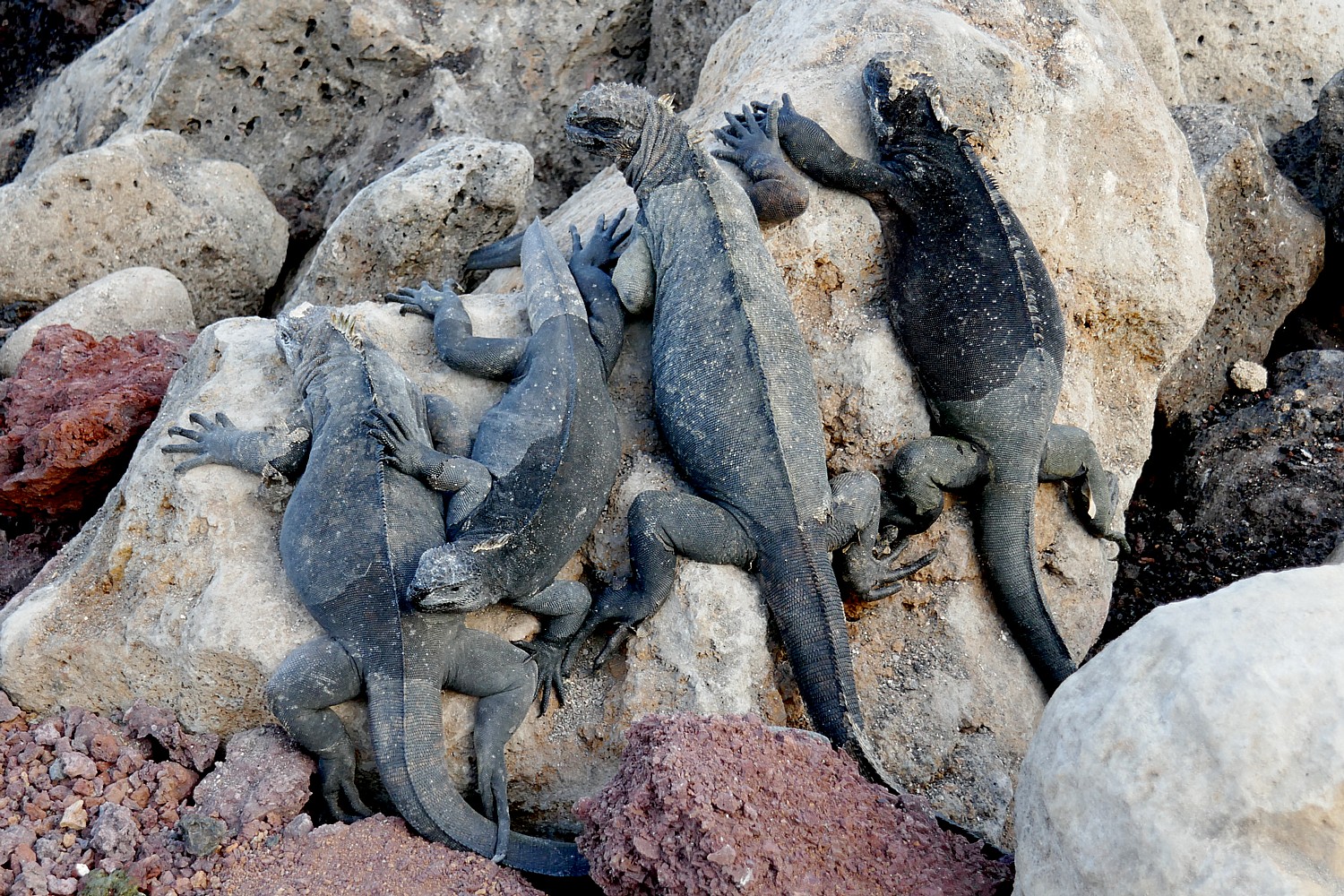
We walk along the rocky shore and are dazzled to see the marine iguanas, red crabs, sea lions and pelicans.

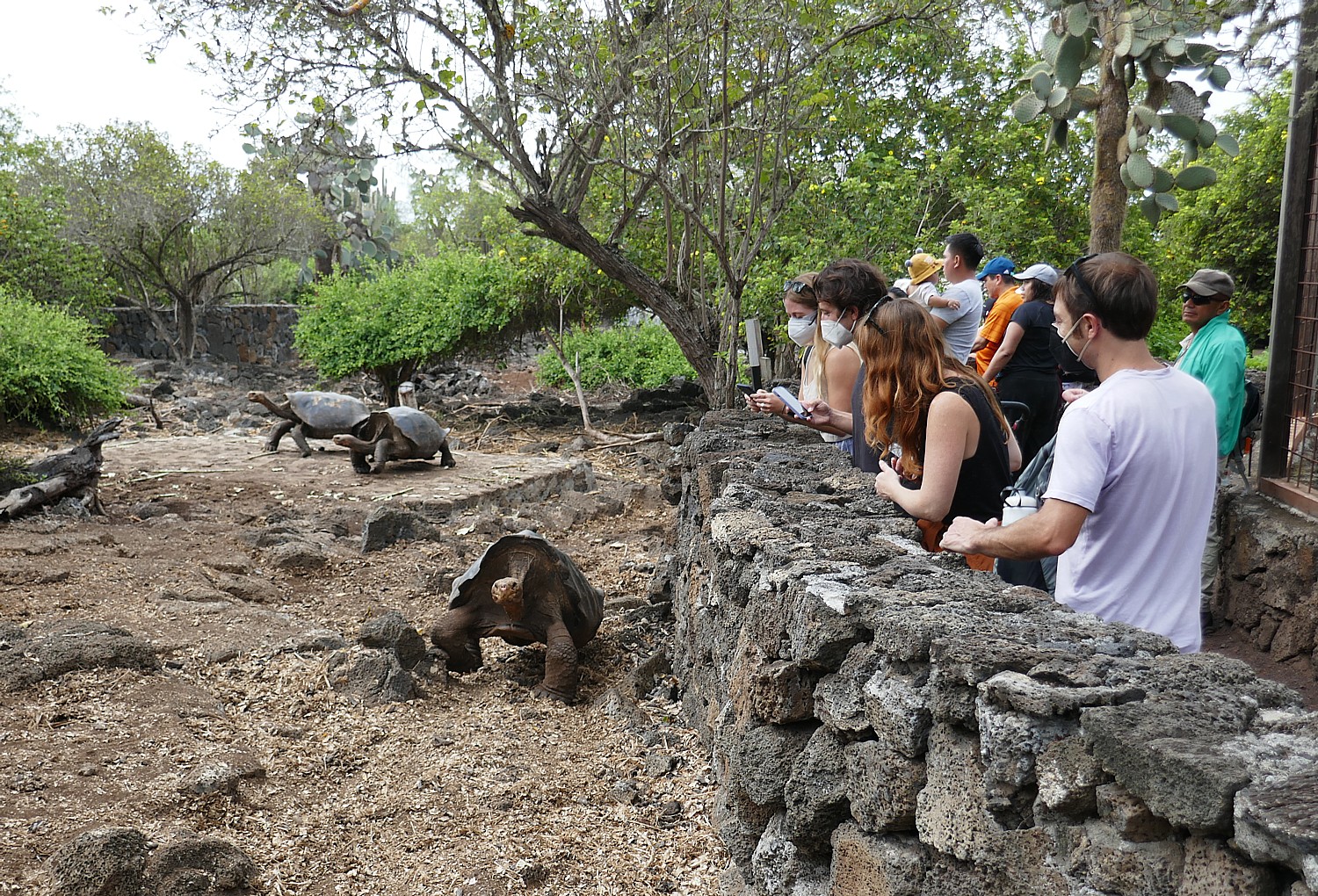
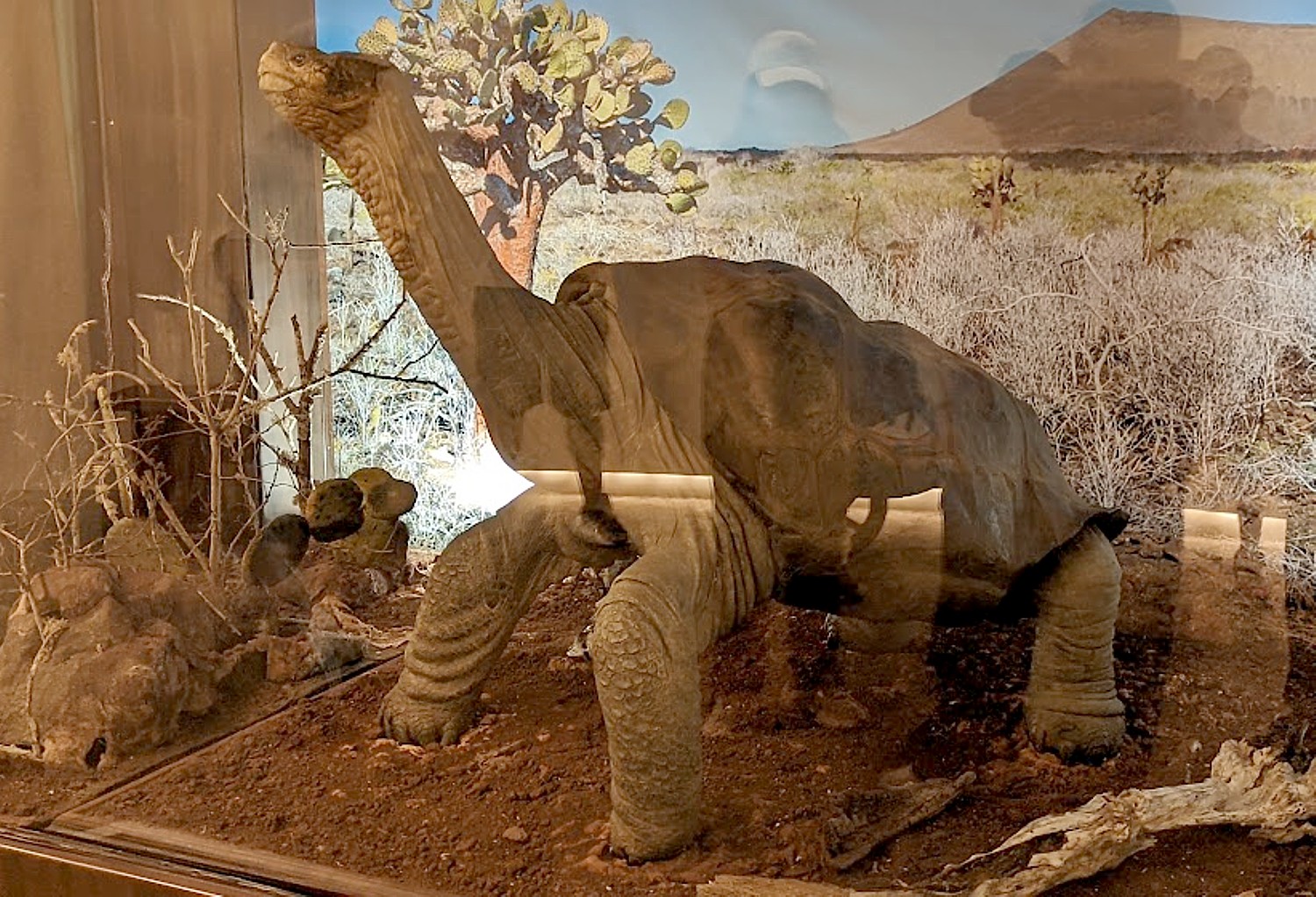
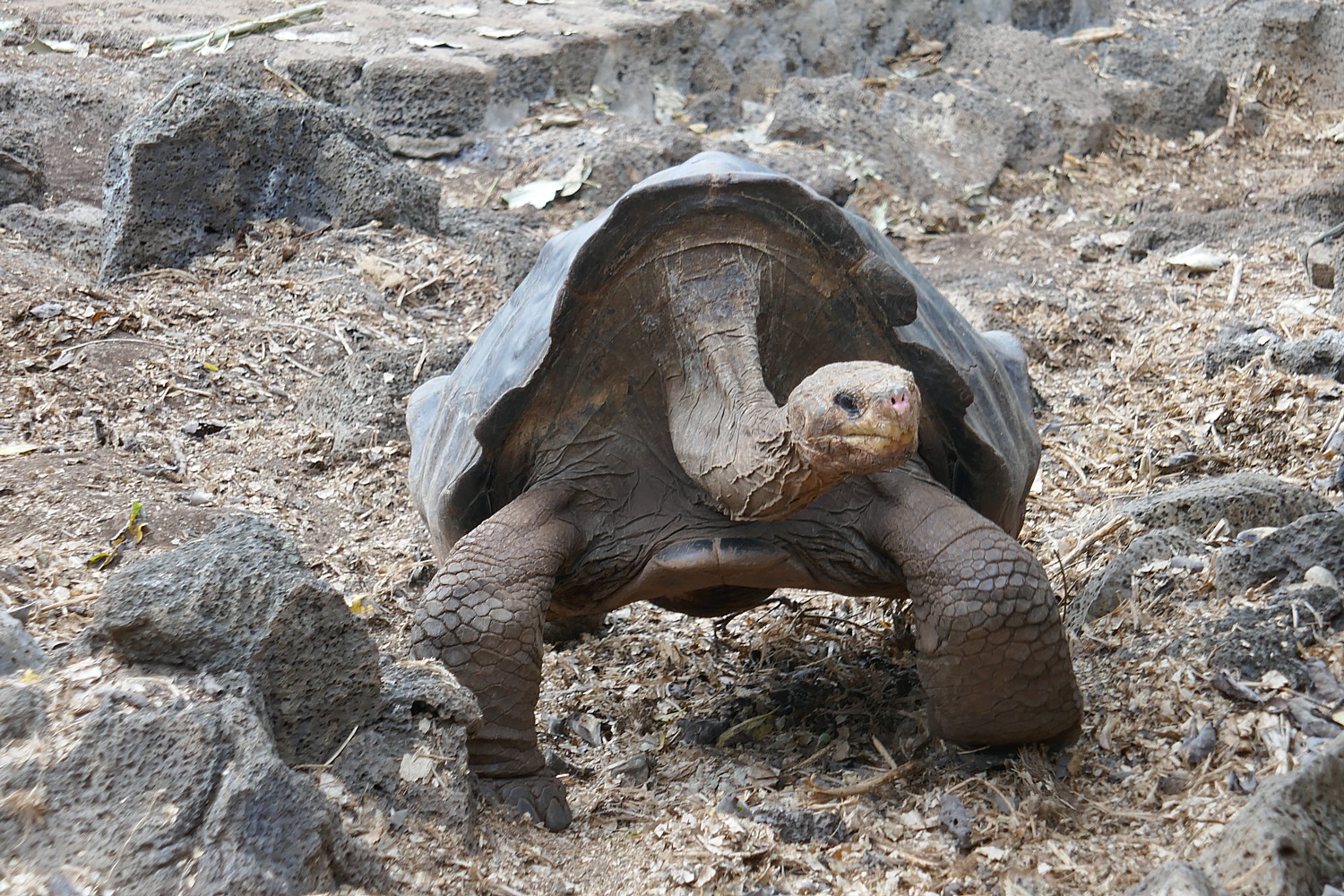
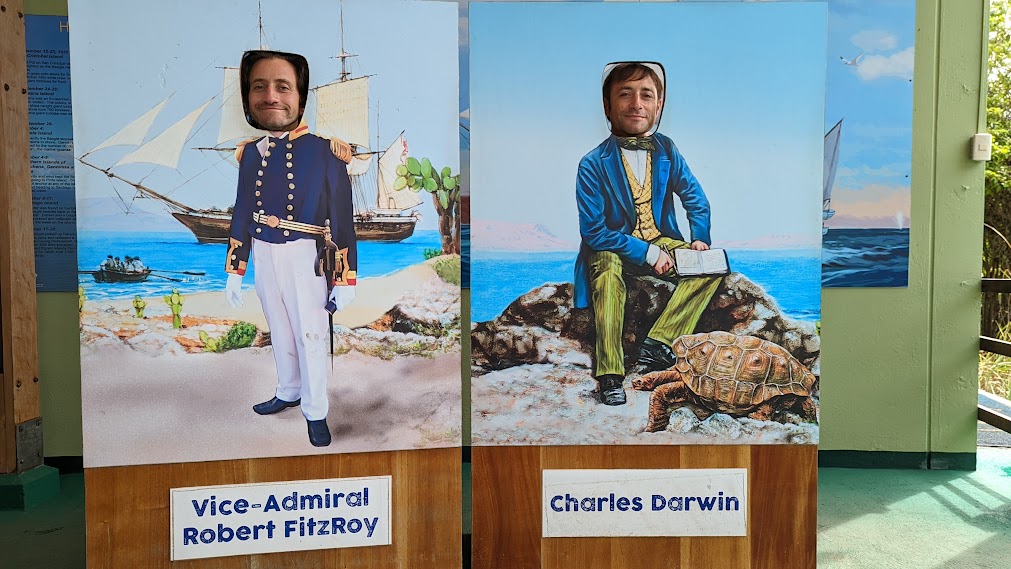
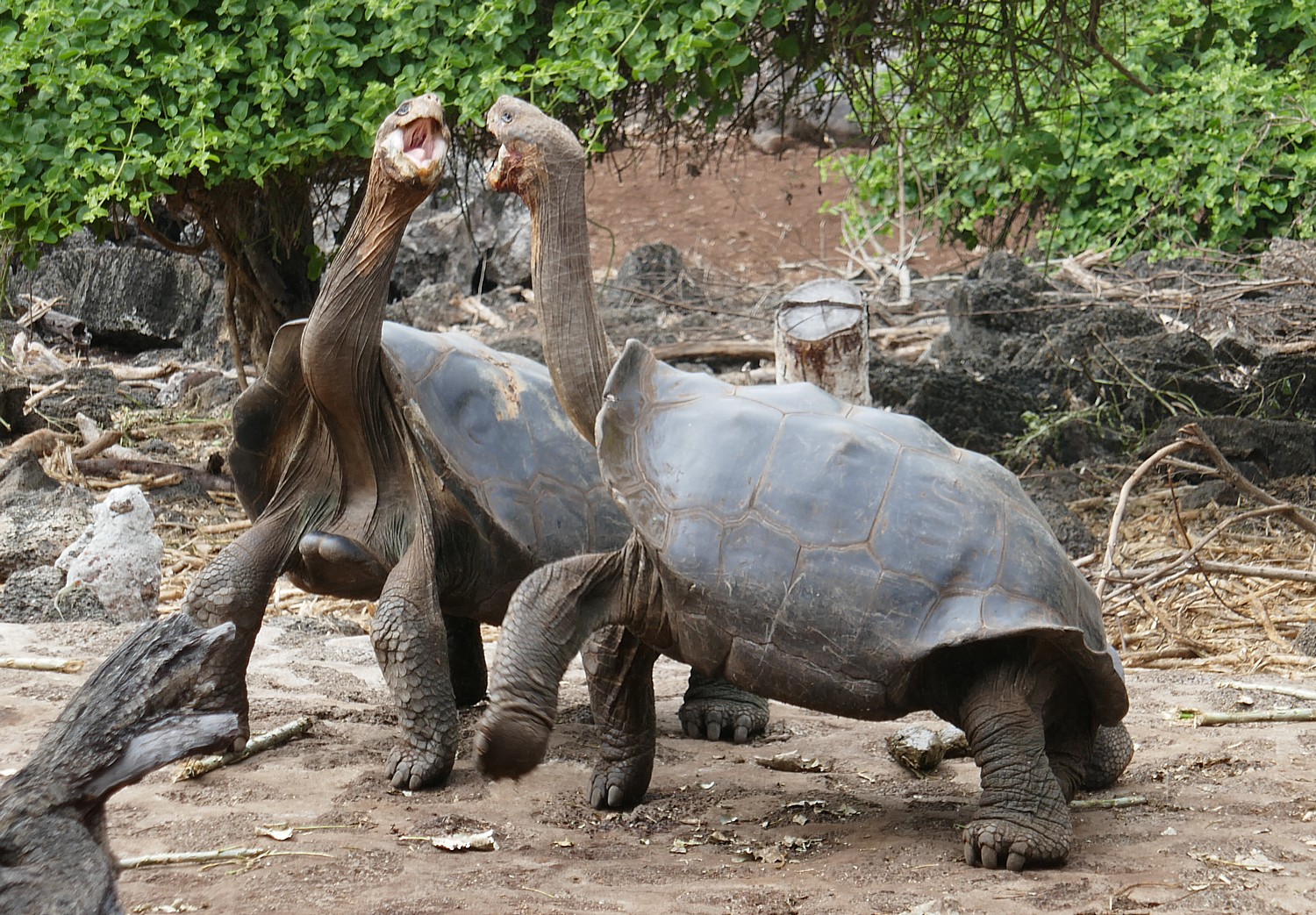
Visiting the Charles Darwin Research Station/Fausto Llerena Tortoise Center is a must to learn about the conservation efforts of the islands’ giant tortoises. Established in 1959, the center has a new guided tour – including infrastructure to support it. The tour is fantastic, introducing you to the concepts – which you can see in real life – of natural selection and evolution which Darwin developed on his five-year voyage (1831-1836) around the world on the Beagle; he studied and documented flora and fauna, particularly noting the specialization of species living in the isolation of the Galapagos islands.

Learning about the near-extinction and conservation efforts of giant tortoises at the Darwin Research Station, Puerto Ayora on Santa Cruz island, Galapagos © Karen Rubin/goingplacesfarandnear.com

The dramatic climax of the tour comes when you enter a special darkened room to see a mummified Lonesome George, the last of his species, the Pinta tortoise. Lonesome George died in 2012 at the age estimated to be around 100 years old. (Lonesome George was named for comedian George Gobel because of a character the comedian played.) His body was sent to a taxidermist at the Museum of Natural History in New York City to be mummified, and is now both a cautionary tale of extinction and an iconic symbol of the conservation efforts in the Galapagos.

At the Darwin Research Station, seeing the mummified Lonesome George, the last of his species, is both a cautionary tale of the threat of extinction and an iconic symbol of the conservation efforts in the Galapagos © Karen Rubin/goingplacesfarandnear.com

The Fausto Llerena Tortoise Center, a long-term program run jointly by the Galapagos National Park Directorate and the Charles Darwin Foundation, began in 1965 to save the giant tortoise population on Pinzón. It was quickly expanded to include other populations, in particular that of Española where only 14 individuals remained. As of 2008, more than 4,000 young tortoises from eight different populations have been repatriated to their native island, with nearly 1,500 going back to Española. At the Tortoise Center, we observe a variety of tortoises, including hatchlings, juveniles and full-grown individuals.

Learning about the near-extinction and conservation efforts of giant tortoises at the Darwin Research Station, Puerto Ayora on Santa Cruz island, Galapagos © Karen Rubin/goingplacesfarandnear.com

There would have been 350,000 tortoises in the 15th Century – the pirates and explorers who found their way here used tortoises and sea turtles for food and fresh water; by 1959, when the Darwin Research Center was founded, there were only 16,000 great tortoises left. The efforts of this center, and three others located in the Galapagos have resulted in the population reboundng to 50,000.

Eric and David follow the footsteps of discovery of naturalist Charles Darwin and Vice-Admiral Robert FitzRoy, at the Darwin Research Center on Santa Cruz, Galapagos © Karen Rubin/goingplacesfarandnear.com

Among the fascinating facts: the conservationists impact whether a tortoise egg will hatch as male or female by controlling the incubator temperature – a higher temperature produces a female.  The eggs are brought here to hatch because they would not survive in the wild due to the introduced animals – rats, cats, dogs – and are kept here for four to six years until their shells are firm enough to give them a defense against predators, and then are returned to their native island. We see their colored markings and numbers on their shells. “If left to nature, their survival rate is zero because of intruder animals,” our guide tells us. “We investigate how they live, behave, learn what tortoise need, study mortality. After, we restore the population.”

Seeing interactions of giant tortoises at the Darwin Research Station © Karen Rubin/goingplacesfarandnear.com

We keep hearing that the tortoises are not “social” but we keep seeing interactions. Perhaps they are changing their behavior simply by putting them together in these reserves, Karen wonders.

Baby marine iguana at the Darwin Research Station © Karen Rubin/goingplacesfarandnear.com

There is a sandy path that goes along the coast where we find many black marine iguanas and their babies.

Charles Darwin Research Station, Av. Charles Darwin s/n, Puerto Ayora, Galapagos,  https://www.darwinfoundation.org/en/, $10 fee; allocate two hours.

We pick up some sandwiches at Galapagos Deli in town and then go off to what is easily the most wonderful day on any beach Karen has ever had, on Tortuga Bay – soft powdery white sand, the most exquisite blue-aqua-green waters, white waves, black lava rock, and a quiet cove where you get to snorkel with parrot fish and black marine iguanas (the Galapagos is the only place in the world where you see these marine iguana).

The gorgeous mile-long walk to Tortuga Bay beach, Puerto Ayora on Santa Cruz island, Galapagos © Karen Rubin/goingplacesfarandnear.com

But first, we walk about 45 minutes down a mile-long paved path through a gorgeous lush forest (cactus trees!), before you get to this most stunning beach. There are actually two beaches – the long beach which is open to the ocean, has strong undercurrents and is not great for swimming.

The stunning white powder sand beach at Tortuga Bay Puerto Ayora on Santa Cruz island, Galapagos © Karen Rubin/goingplacesfarandnear.com

But then we come to a small cove at the end which offers superb calm waters for snorkeling and swimming with those black marine iguana as well as colorful parrot fish. Just passed this cove and around a thicket of mangrove trees we find a second beach at “Tortuga Laguna” that is more of a protected lagoon area on the bay, where the water is calm and families gather along the more narrow strip of sand.

 
Snorkeling at the protected cove, ringed with black lava rock at Tortuga Bay, Puerto Ayora on Santa Cruz island, Galapagos © Karen Rubin/goingplacesfarandnear.com
A fun encounter with a parrot fish while snorkeling at Tortuga Bay, Puerto Ayora on Santa Cruz island, Galapagos © Karen Rubin/goingplacesfarandnear.com
Snorkeling with a marine iguana at Tortuga Bay, Puerto Ayora on Santa Cruz island, Galapagos © Karen Rubin/goingplacesfarandnear.com
Snorkeling at Tortuga Bay, Puerto Ayora on Santa Cruz island, Galapagos © Karen Rubin/goingplacesfarandnear.com
Enjoying a day at the beach at Tortuga Bay, Puerto Ayora on Santa Cruz island, Galapagos © Karen Rubin/goingplacesfarandnear.com
A quiet lagoon ideal for swimming at Tortuga Bay, Puerto Ayora on Santa Cruz island, Galapagos © Karen Rubin/goingplacesfarandnear.com

We round out this exquisite stay on Santa Cruz by arranging with our taxi driver on our way to meet our Go Galapagos cruise group at Baltra Airport to stop at the El Chato Ranch – Giant Tortoise Reserve in the Highlands (a rainforest), where we get to see where great tortoises are protectedand also get to walk through two lava tubes.(The boots they give you to wear through the mud is appreciated, $10 admission, General Rodriguez Lara 629 Puerto Ayora, Santa Cruz 200350, Ecuador, +593 98 864 4178, www.ranchoelchato.com).

El Chato Ranch Tortoise Reserve on Santa Cruz island, Galapagos © Karen Rubin/goingplacesfarandnear.com
Walking through a lava tube at El Chato Ranch Tortoise Reserve on Santa Cruz island, Galapagos © Karen Rubin/goingplacesfarandnear.com

At the driver’s suggestion, we also make a quick stop at Los Gemelos (Twin Craters) – two giant pit craters which were caused by the collapse of empty magma chambers, located just off the road. If we had more time, we would have walked the trail through the Scalesia forest, which is an excellent place to spot terrestrial birds such as Vermilion Flycatchers, Short-eared Owls, the Galapagos Dove and several finch species.

Los Gemelos are twin craters that give insight into the geologic history of Santa Cruz island © Karen Rubin/goingplacesfarandnear.com

Two days is really not enough time in Santa Cruz to take advantage of all it offers – you can easily spend a week. On our list for when we return:

Las Grietas (The Crevices), a strip of water through two rock formations where we hear the snorkeling is fantastic. From there the trail passes by lagoons, a beach, and the residential zone until reaching the cliffs of the main crevice. Take care climbing down into the crevices. There, you can see fresh water at the surface and the salt water of the sea at the bottom. It’s a great place to swim or snorkel. (Take a water taxi from the municipal pier to the pier of Finch Bay Hotel on the other side of the bay.)

El Mirador is a partially collapsed lava tube. Located in the arid zone, you may also get to see several of Darwin’s finches and a barn owl that lives inside the tube.

Dragon Hill, created by the Charles Darwin Foundation and the Galapagos National Park to restore the population of land iguanas that had been decimated by feral dogs, is also a wonderful place for snorkeling. Heading inland on the trail, you pass two small salt-water lagoons where you might see flamingos and other shore birds.

Playa de los Perros is a very short beach out on the western outer point of Academy Bay. The highlight is a white-tipped shark pond where you can watch sharks. It is reached by an 8-minute boat ride from the municipal pier followed by a ½ km hike on a rough trail.

Santa Cruz is ground zero for the urgency and need for sustainable tourism and development of such precious and rare places as the Galapagos. Indeed, the main point of visiting the Galapagos is that you see this process unfolding in front of you – this delicate balance between predator and prey, population numbers and the resources sufficient to sustain it, whether it is the giant tortoise, the iguana or humans. Humans have been the invasive species for centuries, not only decimating the population of sea turtles and tortoises for food and water, but introducing rats, cats, dogs and goats.

A birthday party in Puerto Ayora on Santa Cruz island, Galapagos. The population of the island, second largest among the Galapagos, has grown with the increase in tourism © Karen Rubin/goingplacesfarandnear.com
One of the artful shops in the charging town of Puerto Ayora on Santa Cruz island, Galapagos © Karen Rubin/goingplacesfarandnear.com

The growth of tourism has led to the growth in population in the Galapagos, putting pressure on local resources and municipalities in health, education, waste management and all the aspects of daily life, the Galapagos Conservancy notes. In effect, the Galapagos demonstrates in real time the principles of natural selection and the need to keep resources in balance. The islands are also a model in terms of adapting to these pressures – so there are strict limits on everything from owning a car to requiring the ships that bring in vital goods take away the waste that cannot be recycled (before, they just piled waste onto a dump without treatment). In 2006, the community and the national park built the “Fabricio Valverde Environmental Center” that now recycles 40% of the waste materials generated in Santa Cruz. On our walk from Tortuga Bay we also see the Galapagos Renewable Energy Center building.

Not discussed with us tourists but what must be a major concern to islanders: the impacts of human-caused climate change – stronger storms, rising sea levels. But it all adds to the urgency: see the Galapagos now.

An excellent source of information is the Galapagos Conservancy, which, since 1985, “has been the only U.S.-based nonprofit dedicated exclusively to the protection and restoration of the Galápagos Islands  and its brilliant mosaic of life, including more than 2,000 species found nowhere else on Earth.” (https://www.galapagos.org/about_galapagos/the-islands/)

Some important tips: You pay $20 airport fee at Quito or Guayaquil for the flight to the Galapagos, $100 in cash to the Galapagos National Park (US dollars are used for currency in Ecuador) upon arrival. The electrical plugs are the same as we use in the US. Karen really appreciated her waterproof Olympus Tough TG-6, though an inexpensive waterproof pouch for David’s cell phone also worked well (video!).

We get to Baltra airport and meet up with the guides and fellow passengers for our cruise aboard the Galapagos Legend (www.gogalapagos.com).

See also:

CRUISING ON THE GALAPAGOS LEGEND: A VOYAGE OF WONDER

SANTA CRUZ ISLAND IS WONDER-FUL START TO GALAPAGOS ADVENTURE

CRUISING ON THE GALAPAGOS LEGEND: SAN CRISTOBAL ISLAND

 __________________

© 2022 Travel Features Syndicate, a division of Workstyles, Inc. All rights reserved. Visit goingplacesfarandnear.com, www.huffingtonpost.com/author/karen-rubin, and travelwritersmagazine.com/TravelFeaturesSyndicate/. Blogging at goingplacesnearandfar.wordpress.com and moralcompasstravel.info. Visit instagram.com/going_places_far_and_near and instagram.com/bigbackpacktraveler/ Send comments or questions to FamTravLtr@aol.com. Tweet @TravelFeatures. ‘Like’ us at facebook.com/NewsPhotoFeatures
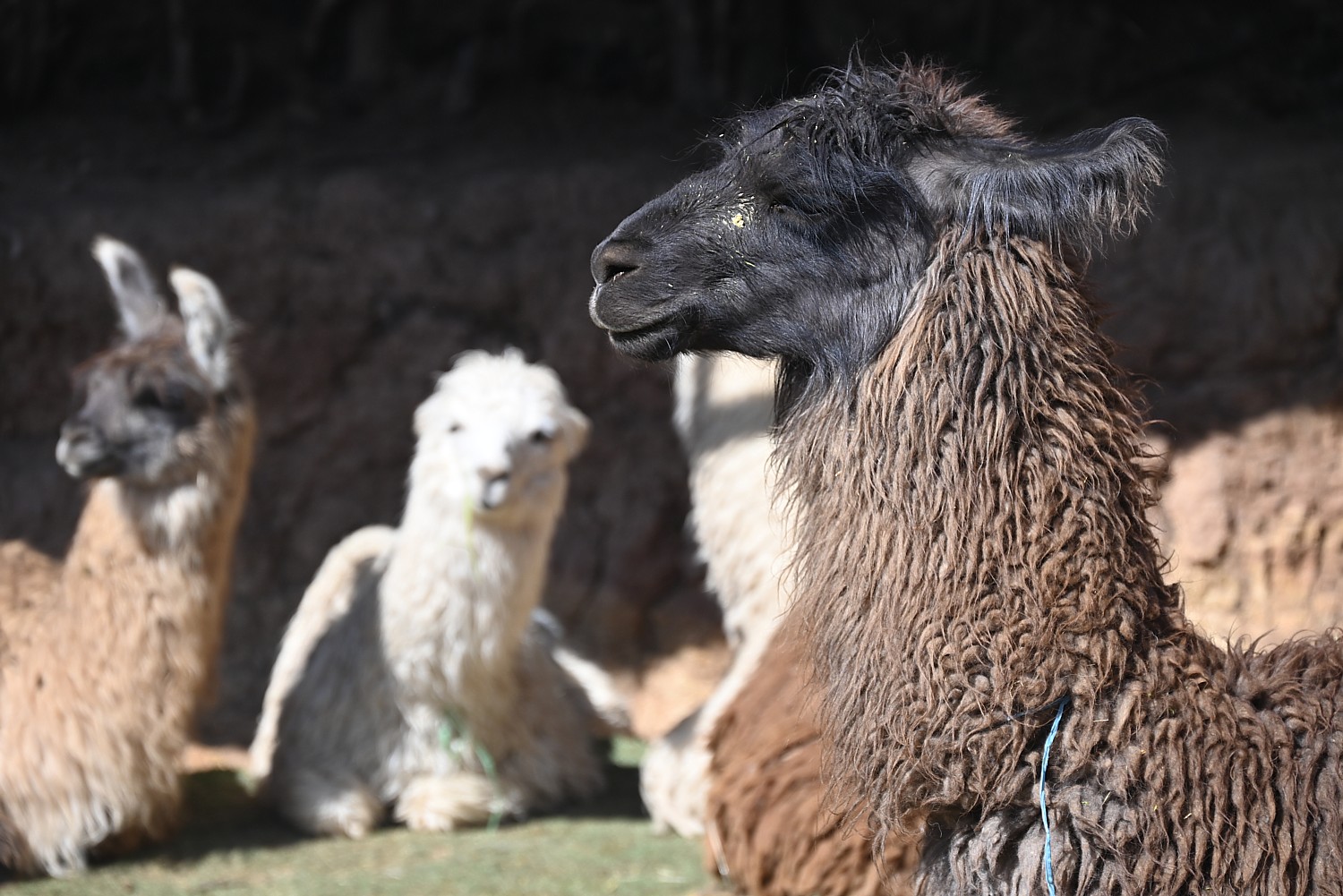
Dispatch 5 From Living the Nomadic Life, a Global Odyssey: Australia-New Zealand-Chile

Coromandel Peninsula, New Zealand © Sarah Falter/goingplacesfarandnear.com

By Eric Leiberman and Sarah Falter, Travel Features Syndicate, goingplacesfarandnear.com

Eric and Sarah are on a 6-month around-the-world sabbatical, joining a huge movement of young people who are choosing to live the nomadic life (at least for a time) and travel or work remotely, becoming immersed in local life and culture. They are filing these dispatches periodically. They previously reported about their adventures in MexicoSouth Korea, VietnamMalaysia and Cambodia and Indonesia. Here’s their dispatch #5 from the Southern Hemisphere: Australia, New Zealand, Chile.

AUSTRALIA Melbourne

We took an overnight flight Bali → Melbourne (actually we flew separately though our flights were minutes apart–cheaper!). Food costs in Australia brought us straight back to SF living, at >$20/meal, but we managed to find  $1 oysters our budget can always accommodate!

In the colder Melbourne climate, Sarah expanded her small wardrobe when she realized for the first time she doesn’t just fit into Eric’s tops, she fits into his pants too! A whole new world. Feeling fresh in Eric’s khakis, we spent our few days there wandering hipster neighborhoods, catching an AFL game, exploring a winter food fest (including fake snow), and laughing our arses off at a comedy show (we def missed some local references, but Sarah howled when they mentioned anything Bravo-related). We reckon it was a pretty good time. 

One of Melbourne’s hipster neighborhoods © Eric Leiberman/goingplacesfarandnear.com
Watching an Australian Football League game (Australia’s own version of football, invented in Melbourne) in Melbourne © Eric Leiberman/goingplacesfarandnear.com
Can’t leave Australia without seeing an actual koala © Eric Leiberman/goingplacesfarandnear.com

NEW ZEALAND Lake Hawea, Wanaka

We arrived in New Zealand just in time for winter holidays, which meant that our serendipitous trip planning had met its match. When we began our search for an accommodation just three days before arriving, we knew we’d made a mistake – everything was booked solid. One shout out to friends and we were connected with Jack & Cass – our saviors! Jack and Cass showed us their beautiful town of Lake Hawea, South Island, where we hiked around, marveled at views of the humongous lake, drank flat whites in the morning and craft beers in the evening, and got real local watching the All Blacks (rugby) at a local pub.

Lake Hawea, Wanaka, New Zealand © Eric Leiberman/goingplacesfarandnear.com
Lake Hawea, Wanaka, New Zealand © Sarah Falter/goingplacesfarandnear.com
Meeting up with friends in Lake Hawea, Wanaka, New Zealand © goingplacesfarandnear.com

At the Mount Iron Track, we got some gorgeous views of South Island mountains, lakes and ski fields 🙂 Did ya’ll know that the only native land mammal in NZ is the bat? Everything else came with the humans…wild. And still to this day, there are no big scary predators or poisonous snakes in all of NZ…paradise. And did we mention the public bathrooms everywhere are beautiful and spotless!? Again, huge shout out to Jack & Cass for showing us their home and such a good time. It was a massive highlight of our whole trip!

Cardrona, Remarkables

Skiing in summer (or actually, our summer, their winter!) was a huge bucket list item. So to round-out our time on the South Island, we hit the slopes at Cardrona ski field with lots of borrowed gear and some thrift store finds Eric couldn’t resist ($8 for a helmet, goggles & gloves?!). It was basically a white-out all day on slippery ice, but Sarah only fell once, whined twice, and we were truly stoked to have the chance to ski on this sabbatical.

Skiing Cardrona in New Zealand © Eric Leiberman/goingplacesfarandnear.com

When the opportunity came about to ski again at Remarkables a few days later (about an hour south near Queenstown), Eric jumped at it and lucked out with a bluebird day. Sarah audibled and jumped at a local jewelry-making class.

Skiing Remarkables, New Zealand © Eric Leiberman/goingplacesfarandnear.com
 
Skiing Remarkables, New Zealand © Eric Leiberman/goingplacesfarandnear.com
 
Making my own ring in jewelry-making class © Sarah Falter/goingplacesfarandnear.com

Queenstown

We caught a flight from Queenstown → Auckland, but squeezed in time to explore this charming, twinkly-light town right on the lake. Our Airbnb gave us ghost vibes, so we skipped about town as much as the frigid temps would allow. Notably, we nommed some delicious (and massive) fish n’ chips, and washed it down with fried kiwi for dessert (!!).

Queenstown, New Zealand © Eric Leiberman/goingplacesfarandnear.com

Van Life – Coromandel Peninsula

We zipped up to North Island to begin our week-long van life extravaganza. We hit the road after stocking up on pb&j, chips & craft beer. First stop: Coromandel Peninsula. We were treated to neon greenery, the salty ocean, and cool fog (but thankfully little rain despite the forecast!). Also, no road trip is complete without Taco Bell, and Eric wants everyone to know that TB in NZ is unparalleled – perfectly crispy tortilla, succulent pulled pork & it weighed approx. 1KG. Watch out, San Francisco burritos..

We zipped up to North Island to begin our week-long van life extravaganza © Eric Leiberman/goingplacesfarandnear.com
Coromandel Peninsula, New Zealand © Eric Leiberman/goingplacesfarandnear.com
Coromandel Peninsula, New Zealand © Sarah Falter/goingplacesfarandnear.com

Van Life – Rotorua, Taupo

We continued south in the van, coming to find that NZ is bubbling with thermal activity– especially in Rotorua & Taupo. Geothermal steam oozes from ponds at local parks and Eric veered off the road for any and all opportunity to hop in a thermal bath – his favorite being the Hot N’ Cold river where two rivers converge (one piping hot, one ice cold, as the name suggests). It was his dream come true – a natural version of a hot tub and cold plunge!

Hot N’ Cold River, Rotorua, New Zealand © Sarah Falter/goingplacesfarandnear.com
Rotorua, New Zealand © Eric Leiberman/goingplacesfarandnear.com
Rotorua, New Zealand © Sarah Falter/goingplacesfarandnear.com

Our campsite in this region was chosen for us when we got our van thoroughly stuck in the mud. Thankfully a lovely Kiwi helped us MacGyver a way out in the morning:) Sarah also tried mountain biking here for the first time, and basically screamed the entire way down.

Taupo, New Zealand © Eric Leiberman/goingplacesfarandnear.com
Mountain biking, Taupo, New Zealand © Eric Leiberman/goingplacesfarandnear.com
Taupo, New Zealand © Eric Leiberman/goingplacesfarandnear.com

CHILE Santiago, Valparaiso

The direct flight from Auckland → Santiago, being loosely in the direction of home (California), was what ultimately led to the decision of concluding our adventure in South America. We touched down in Santiago and immediately had to gear our stomachs up for cream-sauce & mayo-covered-everything (Eric was ready). Sarah’s dad, Joel, joined us for the Chile leg, and we spent the first couple days at parks, drinking pisco sours, and consuming “completos” (local version of a hot dog).

Santiago, Chile © Eric Leiberman/goingplacesfarandnear.com

Eric also squeezed in one more day on the slopes of Valle Nevado (ya know, because he had to maximize the return on the thrift store ski gear he picked up in NZ). Then we scooped up a rental car and drove west to Valparaiso, a graffiti-filled port town. We wanted to love Valparaiso, but lots of warnings of crime plus stray dogs and their doodoo on every inch of the street left us feeling a tiny bit meh. Joel did find a really cool hat at the market though——->

Happy with their hats from the Valparaiso market © Sarah Falter/goingplacesfarandnear.com
Skiing at Valle Nevado, Chile © Eric Leiberman/goingplacesfarandnear.com
Valparaiso, Chile © Eric Leiberman/goingplacesfarandnear.com
 
Valparaiso, Chile © Eric Leiberman/goingplacesfarandnear.com
 
Valparaiso, Chile © Sarah Falter/goingplacesfarandnear.com
Valparaiso, Chile © Eric Leiberman/goingplacesfarandnear.com

Casablanca, Maipo

We continued on with a stop in Casablanca (wine country) where we sipped some delicious (and inexpensive) vino, ate pizza, and slept in a tiny house overlooking vineyards. We loved the much more chill and less elitist vibes of the wineries we visited (compared to Northern California).

Casablanca, Chile © Eric Leiberman/goingplacesfarandnear.com
 
Casablanca, Chile © Eric Leiberman/goingplacesfarandnear.com
 
Casablanca, Chile © Eric Leiberman/goingplacesfarandnear.com
 
Casablanca, Chile © Eric Leiberman/goingplacesfarandnear.com
 

And to round-out the road trip, we visited the mountains of San Jose de Maipo. We stocked up on food and took the hosts 4×4 van up the steep and rocky road to our Airbnb. The cute cabin had one furnace, so Eric and Joel got to practice the manly skill of fire building 24/7, and we all slept in four layers of clothing. We spent the days cooking meals and going for lots of walks with mountain views (the neighbor’s sweet dog accompanied us wherever we went).

Atacama Desert

Last stop in Chile: The Atacama Desert, the driest and one of the highest deserts in the world. Lots to see in this vast dryland, which often felt like another planet – salt flats, sand dunes, lagoons with flamingos (did you know flamingos are born white, and their diet of exclusively sea monkeys turns them pink!?), multicolored canyons & geothermal springs.

Flamingoes, Atacama Desert, Chile © Eric Leiberman/goingplacesfarandnear.com
Lagoon, Atacama Desert, © Sarah Falter/goingplacesfarandnear.com
Atacama Desert, Chile © Eric Leiberman/goingplacesfarandnear.com
Atacama Desert, © Sarah Falter/goingplacesfarandnear.com

At one point we were locked out of our car in the middle of the desert, but thankfully we are small humans and were able to climb in through the trunk back to mobile safety. After the panic subsided we were treated to a herd of llamas trekking alongside our car for 30 minutes. This desert oasis has an added bonus– a Death-Valley-meets-Albuquerque boho-chic little town called San Pedro de Atacama. Lots of funky cool souvenir shops and live music to check out.

San Pedro de Atacama © Sarah Falter/goingplacesfarandnear.com

Now off to Peru and Ecuador for trekking and wildlife viewing, the grand finale of our six-month odyssey.

See also:

DISPATCH 1 FROM LIVING THE NOMADIC LIFE, A GLOBAL ODYSSEY: MEXICO

DISPATCH 2 FROM LIVING THE NOMADIC LIFE, A GLOBAL ODYSSEY: SOUTH KOREA TO VIETNAM

DISPATCH 3 FROM LIVING THE NOMADIC LIFE, A GLOBAL ODYSSEY: MALAYSIA TO CAMBODIA

DISPATCH 4 FROM LIVING THE NOMADIC LIFE, A GLOBAL ODYSSEY: INDONESIA

DISPATCH 5 FROM LIVING THE NOMADIC LIFE, A GLOBAL ODYSSEY: AUSTRALIA-NEW ZEALAND-CHILE

____________________________

© 2022 Travel Features Syndicate, a division of Workstyles, Inc. All rights reserved. Visit goingplacesfarandnear.comwww.huffingtonpost.com/author/karen-rubin, and travelwritersmagazine.com/TravelFeaturesSyndicate/. Blogging at goingplacesnearandfar.wordpress.com and moralcompasstravel.info. Visit instagram.com/going_places_far_and_near and instagram.com/bigbackpacktraveler/ Send comments or questions to FamTravLtr@aol.com. Tweet @TravelFeatures. ‘Like’ us at facebook.com/NewsPhotoFeatures
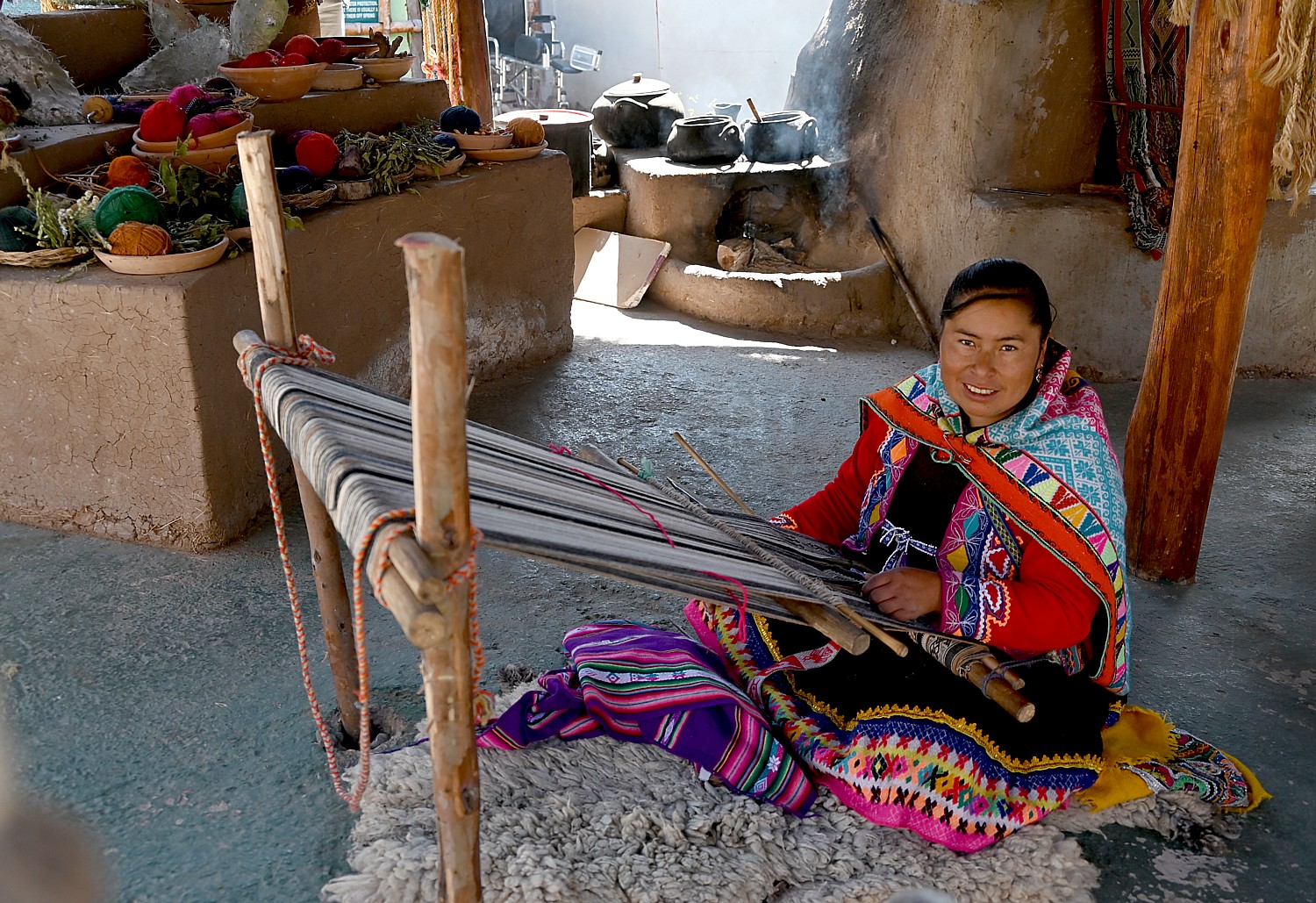
36 Hours in Amsterdam: Time-Traveling Through Amsterdam’s Jewish Quarter

The Sofitel Legend the Grand Amsterdam Hotel is set in the heart of Amsterdam’s historic district, a short walk to the Jewish Quarter, and walking distance to Rijksmuseum © Karen Rubin/goingplacesfarandnear.com

By Karen Rubin, Travel Features Syndicate, goingplacesfarandnear.com

At the Jewish Museum in Amsterdam, I pick up a sheet detailing a walking tour through the Jewish Cultural Quarter which features 37 points (Rembrandthuis and the Waterlooplein flea market are included) and 12 museums, monuments and memorials. It is supposed to take about 90 minutes.

I go off to follow much of the list – which is most interesting because you go into this historic neighborhood where you almost hear the voices of the people who lived there, certainly feel their presence. It feels a bit like time travel.

Across the street from the Jewish Museum, which is housed in four former synagogues including the Great Synagogue, is one of the most beautiful and grandest synagogues of the world, the Portuguese Synagogue. Dating from 1675 (just four years after the Great Synagogue which is across the street), this Sephardic synagogue is in fact a whole religious complex with the synagogue, archives, a mortuary, and a library.

Known as The Esnoga, the Portuguese Synagogue was designed by Elias Bouman, who had also helped design the Great Synagogue of the Ashkenazim across the road. Elias Bouman later became the city’s chief architect. The colossal building dominated its surroundings then, as it still does today. When finished, it was the largest synagogue in the world. And even centuries ago, was a tourist attraction. (Mr. Visserplein 3, jck.nl/en/longread/portuguese-synagogue

Entrance to the Portuguese Synagogue, the world’s largest and most ornate synagogue and a tourist attraction since it was first built in the 17th century, still conducts religious service so was closed to visitors on Saturday © Karen Rubin/goingplacesfarandnear.com

The Portuguese Synagogue is still used for religious services (it’s Saturday so I don’t get to go inside), but on most days you can buy a ticket to see inside. It is renowned for its exquisite 17th century interior.  There are also smaller buildings in the complex where there are “treasure chambers” displaying ceremonial objects of silver, gold, brocade and silk. The synagogue also hosts frequent candlelight concerts. (I experienced an extraordinary concert at the Spanish Synagogue in Prague at the start of my European odyssey.)

The Great Synagogue was destroyed in the Holocaust (it was restored and turned into a museum in 1961), but the Portuguese Synagogue was saved apparently because Hitler wanted to leave a trace of the vanished nation (I was told much the same about how Prague’s Jewish Quarter managed to survive.)

The world’s oldest functioning Jewish library, Ets Haim Livraria Montezinos, which is on UNESCO’s World Heritage List, is also here in the Portuguese Synagogue (Mr. Visserplein 3). The library has more than 25.000 books and 560 manuscripts in Hebrew, Spanish, Portuguese, Latin, Greek, Arabic and Yiddish in its collection. Some of the manuscripts date to13th C. (An appointment is required to visit: for a guided tour phone: +31 20 531 03 80; researchers call +31 20 531 03 98).

Outside the Portuguese Synagogue is the Jonas Daniel Meijerplain, a square named for Jonas Daniel Meijer who in 1796 became the first Dutch Jew to receive a doctoral degree. He was a leader in the Jewish struggle for emancipation and equal rights (which was won in 1796). There are Stolpersteine (small memorial plaques) in front of houses that are along the square (nos. 13, 15, 19) that bear the names of Jews who lived there and were murdered by the Nazis. (I saw these Stolpersteines in Dordrecht, as well.)

In the square is the February Protest Monument commemorating the strike of the Amsterdam dock workers on February 24, 1941, to protest persecution of Jews. The strike has been followed by protest actions all over the city: in public transport, schools and in some companies. Strike actions also took place in several cities around Amsterdam and in Utrecht. Although the Nazi administration, which invaded the Netherlands in 1940, managed to suppress the strike within just a few days, killing nine of the protesters, injuring many and perpetuating several other ruthless actions, the open protest against the Nazis had the symbolic importance for all people in the Netherlands. The monument represents a striking worker called “De Dokwerker”. The sculpture is by Mari Andriessen, a sculptor who during the war refused membership of the Nazi-led artist union and hid Jewish friends at his home to save them from death.

A walking tour through Amsterdam’s Jewish District makes you look closely at structure to see their Jewish origins © Karen Rubin/goingplacesfarandnear.com

My walking tour takes me to what was the Ashkenazi Jewish Girls Orphanage, which from 1863-1943 was where these orphaned girls received religious education. In the Holocaust, 80 were deported to concentration camps.

The Plancius/Resistance museum, was where the Jewish choral society, Oxfening Baart Kunst (Practice Makes Perfect) was established in 1876; it has been the site of the Dutch Resistance Museum since 1999.

The De Castro Pharmacy is Amsterdam’s oldest apothecary (1832). Daniel Henriques de Castro was not only an apothecary but also an administrator of the Portuguese Synagogue and a glass engraver.

The Pinto House (Sint Antoniebreestraat 69), was built in 1603, bought by the wealthy Jewish merchant Isaac de Pinto in 1651 and rebuilt by his son David Emanuel in 1686 with the broad classical facade. Devastated in 20th C. and saved from a demolition, it is a public library today.

I go to the Walter Suskind Bridge – fairly nondescript – named for Walter Suskind (1906-1945) who was the head of Jewish staff of the Hollandsche Schauwburg and in this capacity saved hundreds of Jewish children from deportation and murder.

(Gassan Diamonds is also here in the Jewish Quarter and had an important role in the Jewish community. I book a free tour for the next morning at its website, https://www.gassan.com/en/tours/gassan-historical-tour)

A walking tour through Amsterdam’s Jewish District makes you look closely at structure to see their Jewish origins © Karen Rubin/goingplacesfarandnear.com

I visit as many of the sites as I can, and finally come to the National Holocaust Memorial, which only opened in September 2021. It’s the first in the Netherlands to name all 102,000 Dutch Jews, Sinti and Roma who were killed by the Nazis during World War II.  Designed by Polish-American architect Daniel Liebeskind, the 102,000 bricks, each bearing the name of a victim, form the shape of four Hebrew letters meaning “in memory of.” 

The National Holocaust Memorial, Amsterdam, keeps alive the memory of the 102,000 Dutch Jews, Sinti and Roma who were killed by the Nazis © Karen Rubin/goingplacesfarandnear.com

I estimate there are 32 rows of 50 bricks just named DeVries. I note some of the names: Frouwkevn Mandenburg Gosschalk, Rooje van Maagdenburg-Frank, Maas, Magtige, Maij – very Dutch, with some of these families I would bet having lived in Amsterdam for hundreds of years. The name plaques seem to go on forever.

Of the 107,000 deported to concentration camps, only 5200 Jews and 30 Santi and Roma survived.

“A warning for all generations, all over the world and in the future,” a plaque reads.

The National Holocaust Memorial, Amsterdam, keeps alive the memory of the 102,000 Dutch Jews, Sinti and Roma who were killed by the Nazis © Karen Rubin/goingplacesfarandnear.com

According to reporting of the event, the memorial was unveiled by King Willem-Alexander and Dutch Prime Minister Mark Rutte.

“Last year marked the first time an official in the Netherlands publicly apologized on behalf of the government for the war-time persecution of Jews, after Rutte admitted little was done to protect them from the atrocities committed by Nazi Germany.” (https://www.dw.com/en/dutch-holocaust-memorial-opens-after-years-long-legal-deadlock/a-59231217)

The National Holocaust Memorial, Amsterdam, keeps alive the memory of the 102,000 Dutch Jews, Sinti and Roma who were killed by the Nazis © Karen Rubin/goingplacesfarandnear.com

Tickets to all the Jewish Cultural Quarter exhibits may be purchased at any of the participating institutions. Adults – € 12 ; young people age 13 -17, students, Stadspas – € 6 ; children age up to 13; free admission is provided with the Amsterdam Holland Pass, iAmsterdam Pass, Museum Card, Friends of The Jewish Historical Museum, ICOM, Rembrandt Association. Tickets to the Jewish Historical Quarter are valid 1 month for a multiple access to all exhibits. Tickets to concerts at the Portuguese Synagogue: € 13.50.

You can also sign up for a walking tour with a knowledgeable, personal guide (see www.amsterdam.info/jewish/).

“Night Watch” at Rijksmuseum

By now, it is time for me to walk over to the Rijksmuseum for my timed ticket, which brings me through more of the neighborhoods that seem so far removed in time and place from what I had just experienced.

Rembrandt’s famous “Night Watch” can be seen through glass where it is undergoing conservation at the Rijksmuseum © Karen Rubin/goingplacesfarandnear.com

The big attraction at the Rijksmuseum (I only have two hours before closing) is Rembrandt’s famous “Night Watch” painting (I hadn’t realized it is the size of an entire wall), and you get to see it as it is being conserved, behind a glass-enclosed studio.  A docent is there to answer questions about it.

Rembrandt’s famous “Night Watch” can be seen through glass where it is undergoing conservation at the Rijksmuseum © Karen Rubin/goingplacesfarandnear.com

At the Rembrandthuis, I was told that this painting was one of the reasons that Rembrandt went bankrupt – the three benefactors who paid the most for the painting are not shown prominently, and they conveyed their discontent so that Rembrandt lost commissions. The docent disputes this and points out that was a decade between the painting and his bankruptcy.

Rembrandt’s famous “Night Watch” can be seen through glass where it is undergoing conservation at the Rijksmuseum © Karen Rubin/goingplacesfarandnear.com

By now, I have to get to my COVID19 test that I scheduled, so I get to discover more neighborhoods. As it turns out, the clinic is across the way from Amsterdam’s science museum, along the boulevard that would go to the Central Station. The process is extremely efficient (shortly after, the United States halted requiring COVID tests within 24 hours of entering the country.)

On the way back to Sofitel Legend Grand Amsterdam Hotel, I find myself walking through the Red Light District, jam-packed with people. Here you can also visit museums to Erotica, Prostitution, assorted peep shows and museums devoted to  Hash, Marijuana and Hemp . Even the public toilet is titillatingly called the “Sexy Loo.”

Here you find posters on the bridges warning of fines for peeing in the canal or taking alcohol out of the district, and as the evening grows later, more and more police presence.

Amsterdam’s Red Light District is legendary © Karen Rubin/goingplacesfarandnear.com

Diamonds!

The next morning, before I have to get to the airport (and after enjoying a terrific breakfast at the Sofitel Legend the Grand Amsterdam Hotel), I tour the Gassan Diamonds, a historic place which had great importance in the Jewish Quarter. 

Gassan Diamonds is housed in a diamond factory that was built in 1879 by the Boas brothers, and at the time was the largest diamond factory in Europe. © Karen Rubin/goingplacesfarandnear.com 

Initially, Jews were not permitted into Amsterdam’s guilds, so the only occupations that were open to them were street trading (hence the giant flea market at Waterlooplein), financing, book printing and diamond cutting. In the 19th century many Jews worked in the flourishing diamond trade and industry.

Amsterdam has been famous for its diamonds since the 16th century, and after 400 years, the city is still regarded as a diamond trading center of the world. The popular brilliant-cut with 57 facets which was developed in Amsterdam is known as the “Amsterdam-cut”.

There are about a dozen diamond factories in Amsterdam left, five which offer guided tours.

Gassan Diamonds has played a pivotal role in Amsterdam’s diamond history, as well as in Jewish life in Amsterdam. The diamond factory was built in 1879 by the Boas brothers, and at the time was the largest diamond factory in Europe. It was shut down during World War II, and resurrected by Samuel Gassan, whose father actually worked there as a diamond cutter.

Samuel Gassan stayed in Switzerland until the end of the war, became a captain in the British Army. Working in the repatriation service, he helped children of diamond workers who had lost their parents and who had been held captive in Bergen-Belsen, return to the Netherlands.

In October 1945, having returned to Amsterdam, Samuel, now 35, opened his own diamond trading company, Firma Gassan, in the Diamond Exchange on the Wesperplein. He traveled all over Europe selling his diamonds. Five years later he owned his own diamond cutting factory on the Zwanenburgerstraat.

You can sign up for a free tour of Gassan Diamonds to see diamond polishers at work © Karen Rubin/goingplacesfarandnear.com

On the tour, we get to see the diamond polishers at their craft, while a guide explains how they turn rough diamonds into dazzling brilliants. And Gassan has taken the “Amsterdam cut” to a new level, patenting the technique of the Gassan 121 diamond – a diamond cut with 121 facets to dazzling effect.

I am taken into a room where, even though it is Sunday morning, there are a couple of people polishing diamonds. My guide explains the three-step process: cutting (phosphorous blade, rotates 6400/min,  coated with olive oil and diamond dust because only a diamond can cut diamond; shaping and elevating sharp edges (not sparkling yet); and third, polishing with olive oil and diamond dust to make facet. Facets are what make the diamond clear and sparkling.

It takes 3 to 4 working days to prepare one diamond.

A brilliant cut has 57 facets (33 on top, 24 on bottom), which originated in Amsterdam and is known as the “Amsterdam cut.” But, she explains, Gassan (pioneered and patented) a 121-facet diamond with exponentially more refraction (no one else can sell 121 facets)

Luna, diamond polisher for three years, is able to work on half-carat diamonds as she works up to becoming a master. It takes 3-4 days to finish a diamond, but you can order one, have it set and have it within 30-60 minutes of your visit to Gassan Diamonds © Karen Rubin/goingplacesfarandnear.com

Luna, who I watch polishing a diamond, has had 3 years experience (it takes two years to learn basics, 10-20 years to perfect, and by the time you are ready to retire, you are a master). A half carat is the biggest diamond she has worked on, she tells me.

All the rough diamonds that come to the Antwerp bourse must have a certificate that they are not conflict diamonds. Diamonds come from all over the world and are found everywhere but Australia, Canada, India, and China, she tells me.

This 1879 building is long and narrow because it was built before electricity, so the workers were dependent upon natural light, and used steam system (you can see the pipes).

Names of Jewish diamond workers etched with diamond in glass are preserved at Gassan Diamonds © Karen Rubin/goingplacesfarandnear.com

In a display case are old pieces of glass with names etched with diamond into it. “This was a Jewish neighborhood and a Jewish company,” she tells me. “A lot of Jews worked here. During World War II, most were killed, so we keep the glass with their names. Gassan’s own father was a diamond worker in the factory here. After the war, Samuel acquired the old factory.

My guide takes me into a small room to explains the different elements that go into the quality (and price) of a diamond – carats, colors, clarity, cuts and, of course, the ultimate Gassan 121- and fortunately, you can buy here at factory price (and get the 16% tax refunded at airport). ”You can choose a diamond today, choose setting and it will be ready within 30 to 60 minutes – ring, necklace, earrings.” You can also peruse the jewelry store, filled with luxury items.

Gassan also offers a VIP tour through the diamond factory and the in-house Rolex boutique which includes a glass of champagne, a goodie bag and the chance to chat with a certified Rolex watchmaker. Or you can take a seat behind the grinder yourself with the Diamond Polishing Experience, where you can apply the final facets to your own diamond! 

Gassan Diamonds, Nieuwe Uilenburgerstraat 173-175, www.gassan.com/en/tours/gassan-historical-tour

I time it so I get back to the Sofitel Legend Grand Amsterdam hotel so I can take the tour of this fascinating place that played such an important role in Holland’s history, and still have time for one last walk through the historic district to Amsterdam’s Central Station. It’s a hop-skip-jump on the train to Schiphol Airport (2nd class ticket does just fine), all of about 15 minutes ride.

Amsterdam’s Central Station. It’s just about 15-20 minutes and very inexpensive ticket to get to Schiphol Airport on the train © Karen Rubin/goingplacesfarandnear.com

Pre-purchase the I AmsterdamCity Card, which provides access to the city’s major highlights and more than 70 museums, city-wide public transport, a canal cruise and bicycle rental. You also get discounts at restaurants, attractions and concerts. https://www.iamsterdam.com/en/i-am/i-amsterdam-city-card iamsterdam.com.

Plan your visit at www.iamsterdam.com/en.

See also:

Sofitel Legend The Grand Amsterdam: Historic Hotel that Played Major Role in History

36 Hours in Amsterdam: Time-Traveling in the Jewish Quarter

36 Hours in Amsterdam: Time-Traveling Through Amsterdam’s Jewish Quarter

__________________

© 2022 Travel Features Syndicate, a division of Workstyles, Inc. All rights reserved. Visit goingplacesfarandnear.com, www.huffingtonpost.com/author/karen-rubin, and travelwritersmagazine.com/TravelFeaturesSyndicate/. Blogging at goingplacesnearandfar.wordpress.com and moralcompasstravel.info. Visit instagram.com/going_places_far_and_near and instagram.com/bigbackpacktraveler/ Send comments or questions to FamTravLtr@aol.com. Tweet @TravelFeatures. ‘Like’ us at facebook.com/NewsPhotoFeatures

36 Hours in Amsterdam: Time-Traveling in the Jewish Quarter

The Jewish Museum shows how the community lived for 350 years in Amsterdam with very vivid and detailed personal stories that still resonate today © Karen Rubin/goingplacesfarandnear.com

By Karen Rubin, Travel Features Syndicate, goingplacesfarandnear.com

I have cleverly arranged an extra day in Amsterdam after the eight-day BoatBikeTours Bruges-to Amsterdam bike trip, and I can’t afford to miss a minute. So after checking into my five-star luxury historic hotel, Sofitel Legend the Grand Amsterdam Hotel, marveling at my room (actually a suite), and having the concierge help purchase a timed ticket to the Rijksmuseum, I immediately set out.

In fact, I realize too late that it was necessary to pre-purchase timed tickets to major sites in Amsterdam – Anne Frank House is booked (you have to purchase weeks in advance). So I set out myself to see as much as I could – and in the course of the day, wind up exploring on foot just about all Amsterdam’s historic district neighborhoods. And since I can’t get into the Anne Frank House, I head to the Jewish Quarter (the Anne Frank House is not actually in the Jewish Quarter), which proves a wonderful and satisfying adventure in many ways.

Rembrandt van Rijn’s was doing well when he bought this townhouse, which may surprise people to learn is on a street that used to be in the center of Jewish life in Amsterdam © Karen Rubin/goingplacesfarandnear.com

My first stop is most remarkable: The Rembrandt House. This is Rembrandt van Rijn’s actual townhouse, which may surprise people to learn is on a street that used to be in the center of Jewish life in Amsterdam. Although Rembrandt was not Jewish, his paintings often reflect his life among the Jews in the city – scenes from the Old Testament and many portraits of the Jewish people who lived around him. But what is most remarkable are the insights into this master’s life and work and even his creative process as you go around the house, essentially restored and furnished in the way it was, when he lived here. The Rembrandthuis presents Rembrandt’s life, his epoch, an interesting collection of paintings by his contemporaries and his prints.

Rembrandt captured scenes of neighborhood life. His townhouse was in the Jewish Quarter © Karen Rubin/goingplacesfarandnear.com

Rembrandt was doing well when he bought this townhouse, but when his fortunes turned and the house was sold, his possessions were inventoried – the museum recreates the house from that inventory as well as Rembrandt’s drawings, so they knew what was in specific rooms; the audio tour notes the objects (and you can get even more detail on many of the objects). 

It is utterly fascinating to be in this space – his bedroom, his printing room (where you can lift leather coverings and see original etchings), his studio, his salon (actually a sales room). I learned that Rembrandt was an art dealer, and would have entertained clients in this parlor where there are a number of paintings on the wall as there would have been.

Rembrandt’s salon where he would have entertained art clients. As an art dealer, he sold works by his pupils, Flemish and Italian artists and Dutch masters © Karen Rubin/goingplacesfarandnear.com

Rembrandt “would receive his clients with a glass of chilled wine from a marble wine cooler. On the walls hung dozens of paintings from which the client could choose. Rembrandt sold his own works and works by his many pupils. He also dealt in paintings by other masters. This was common practice among artists at this time. Rembrandt had Flemish and Italian works in stock, but most of the paintings were by Dutch masters.”

You walk through with your own audio device which gives a really excellent tour (allocate at least an hour), and notes the personal aspects, and you can point the sensor to a number and hear more details, like about the painting of an old man with bears, which was by one of his students).

Rembrandt’s bed chamber. Rembrandt House recreates how he would have lived based on an inventory and his paintings © Karen Rubin/goingplacesfarandnear.com

“We know from paintings his wife was lying on the bed – she died at 29 giving birth to their son.”

As a display of Rembrandt’s affluence, his townhouse had a stove, which was an innovation of the time © Karen Rubin/goingplacesfarandnear.com

In the kitchen, we see a stove which would have been an innovation in his day.

Rembrandt was “a ground-breaking etcher” as we see in the printing room at Rembrandt House © Karen Rubin/goingplacesfarandnear.com

Rembrandt was ‘a ground-breaking etcher” and my favorite room is his print shop where we can see original etchings (they are put under leather covers in a darkened room to best preserve them, and are rotated every three months ). It is absolutely thrilling to see.

Rembrandt was “a ground-breaking etcher” as we see in the printing room at Rembrandt House © Karen Rubin/goingplacesfarandnear.com

We go into a studio where Rembrandt taught art students – you could have been a Rembrandt pupil for 50 guilders a month (he had 40 students). “They would already have had a basis in art.”  

Visit Rembrandt’s studio at the Rembrandt House © Karen Rubin/goingplacesfarandnear.com

Rembrandt had two mistresses after his wife, Saskia van Uylenburgh, died at the age of 29, giving birth to their son.

Rembrandt’s “Self-Portrait with Saskia,” his wife © Karen Rubin/goingplacesfarandnear.com

The first was his housekeeper and nanny to his son and they developed an intimate relationship. She wanted to marry; Rembrandt couldn’t because under the terms of his (wealthier, noble) wife’s will, his inheritance would have reverted to her other relatives. So when he couldn’t marry, she sued him for a very large amount of alimony. He had her committed to a madhouse for five years.

Then he met Hendrickje Stoffels, very much younger than Rembrandt. They had a loving relationship, had children, and were together for 15 years until she died at the age of 38.

Rembrandt’s “Self-Portrait” © Karen Rubin/goingplacesfarandnear.com

Rembrandt had 16 children but only three  – a son and two daughters – survived to adulthood. His son became an art dealer, and after Rembrandt’s bankruptcy, rented a house for himself and father and his mistress, Hendrickje Stoffels. His son died one year before Rembrandt.

I ask how Rembrandt went bankrupt. “He spent too much. Also, ‘Nightwatch’ – the three people who paid the most for the painting were not well represented in the painting; it went around that Rembrandt wasn’t a good portrait painter and he lost commissions (100G, equivalent to yearly salary). With commissions down, he went bankrupt.” [Later, I get to ask the docent at the Rijksmuseum when I visit “Nightwatch” who disputes this account.]

The Rembrandt House museum has a broad collection of Rembrandt’s works, but only a small portion is on view at any one time (they rotate to preserve the art).

Small Studio, which Rembrandt used as a workplace for his students. There were partitions bere four to five pupils could work with good light © Karen Rubin/goingplacesfarandnear.com

In the modern building that is attached, there are exhibitions of modern artists reinterpreting Rembrandt’s concept of painting people as they are, not idealized. (I don’t care for them at all).

I realize that though I so admired Rembrandt, I actually knew very little about who he was. You come away seeing, understanding Rembrandt in such a different light as you tour his house.

Rembrandt House, Jodenbreestraat 4, 1011 NK Amsterdam, +31 (0)20 520 0400, museum@rembrandthuis.nl, www.rembrandthuis.nl/en/.

It’s Saturday and just near the Rembrandthuis there is a regular – and massive – Waterlooplein (Waterloo square) flea market, started ages ago by Jewish peddlers (one of the few occupations allowed to Jews) and today is the largest flea market in Amsterdam. It’s definitely fun to visit (www.amsterdam.info/markets/waterlooplein/)

Waterlooplein flea market, started ages ago by Jewish peddlers (one of the few occupations allowed to Jews) is the largest flea market in Amsterdam today © Karen Rubin/goingplacesfarandnear.com

Even this early in the tourist season, Amsterdam seems pretty crowded with visitor s (especially in the Red Light District), but I set out to explore more of the historic Jewish Quarter where I find myself on a sort of hunt to locate sites. It seems more the “real Amsterdam” – less impacted by tourists – where I can time travel.

Peering Back at 350 Years in the Jewish Quarter

The Jodenbuurt (Jewish Quarter) was inhabited by the Jewish community for 350 years, from the late 16th century up to the Holocaust.

Jewish people, culture and religion became an important element of life in Amsterdam from the early 1600s. Several countries in Europe guided by the Catholic Church, starting from the 13th C, had laws aimed at expelling Jews. During the counter-reformation in the 16th C, persecutions of Jews increased. While subject to many restrictions, Jews were permitted to settle in Amsterdam and peacefully observe their religion.

In 1593, a century after the Spanish Inquisition, Sephardic Jews from Portugal and Spain settled in this neighborhood of Amsterdam. In the course of the 17th century Ashkenazi Jews from Central, Eastern, and parts of Western Europe also moved into the district. By 1602, the Jews started to build their first synagogues. And in the centuries that followed, many more synagogues opened.

The absolutely best place to start my odyssey is the Jewish Museum (previously known as the Jewish Historical Museum) 

The Jewish Museum is the only museum in the Netherlands that focuses on Jewish history, religion and culture. The museum is set in a group of four 17th and 18th century Ashkenazi synagogues at the heart of the former Jewish quarter in the centre of Amsterdam. The permanent exhibition follows several themes: the role of religion and tradition, the links with Israel, the persecution of Jews during the Second World War, personal life stories and the mutual influence of Jewish and Dutch culture.

The main part of the museum is housed in the stunning Great Synagogue, the Ashkenazi “Gathering Place” that dates from 1671. The exhibits here are enlightening and inspiring.

Jewish Museum is more focused on the 350-year long history of Jews in Amsterdam. it’s about their migration and integration into Holland, though the period from 1900 to present is also on display in a very moving way, how they integrated into Dutch society, and how they thrived and contributed to the community when restrictions were lifted.

It’s a museum of stories and surprises – it’s uncanny how much personal information they have to connect with the portraits and personal effects on view – so much more meaningful than looking at paintings and artifacts. I especially loved seeing these gorgeous portraits of Jewish Amsterdamers from the 17th and 18th centuries, – how they looked like any other Amsterdamer of the time, a testament to how secular and assimilated people can come when they are free to interact in the broader society.

Some of Rembrandt’s etchings of his Jewish neighbors are on display at the Jewish Museum with amazing personal detail © Karen Rubin/goingplacesfarandnear.com

Here you see Rembrandt etchings of his Jewish neighbors but with canny personal detail. So attached to Rembrandt’s etching of a distinguished looking man, we learn, “This is the Sephardi doctor Ephraim Bueno (1599-1665). When he was a child, he and his parents fled Portugal to Bordeaux where studied medicine, then later settled in Amsterdam. Father and son gained a good reputation as doctors, both in Jewish and non-Jewish circles. Ephraim Bueno lived near Rembrandt, who etched his likeness.”

“This is the Sephardi doctor Ephraim Bueno (1599-1665). When he was a child, he and his parents fled Portugal to Bordeaux where studied medicine, then later settled in Amsterdam. Father and son gained a good reputation as doctors, both in Jewish and non-Jewish circles. Ephraim Bueno lived near Rembrandt, who etched his likeness.”

Amsterdam, a legendarily liberal city for sex, drugs (as today), was also comparatively liberal for Jews back in the day. William of Orange fought a revolution for religious freedom from Catholic Spain. Jews won comparative emancipation in the Netherlands in 1796.

The combination of economic success and a relatively tolerant religious environment – unusual in Europe – made Amsterdam attractive to foreigners.

Portuguese “New Christians” – descendents from the Jews from Spain and Portugal who were forced to convert but practiced secretly – found that here in Amsterdam, Jews could practice without having to wear distinguishing marks or live in ghetto. We meet several (in portraits) who took up again their Jewish lives once they settled in Amsterdam.

“Sephardi nobility: Antonio Lopes Suasso was one of the Republic’s richest merchants. He was born in Bordeaux and, as a son of New Christians, was baptized a roman Catholic. He moved to Amsterdam in 1654, where he began to live as a Jew. He continued trading with various countries, including with Catholic Spain, and provided important financial services to the Spanish king, Charles II. After the king elevated him to the nobility in 1676, Antonio was awarded the title Baron d’Avernas-le-Gras (c. 1700)”

Amsterdam at the start of 18th C developed into the biggest, most important Jewish city in world. No other city had the synagogues of the size and majesty of the Great Synagogue and Portuguese Synagogue (the largest synagogue in the world) – which served as a symbol of liberation enjoyed by Jews here.

“Two historical synagogues: the Majestic Askenazi Great Synagogue (left) and the Portuguese Synagogue were consecrated in 1671 and 1675 respectively. The two buildings symbolized the permanent establishment of the Jewish communities in Amsterdam. Gerrit Berckheyde (1638-1698), c. 1675-1680.

You walk through to another building, also a former synagogue, where the exhibit basically tells the “modern” story of Jews here, from 1900 to the present, and especially, the horrifying history of what happened to real people before, during and after the Holocaust.

When Nazi Germany invaded the Netherlands in 1940, there were 80,000 Jews living in Amsterdam (- approximately 10% of the city population. Throughout the years of German occupation not many survived. Almost all were deported and exterminated in Nazi concentration camps.

When the Nazis came, Jews tried to hide in basements, attics, secret rooms. Anne Frank is best known because of her diary.

Some 25,000 Jews went into hiding, of whom 18,000 survived, the rest were discovered or betrayed. ”Those in hiding often received help from non-Jewish acquaintances. Later on, resistance organizations set up a system: besides hiding places, they supplied ration cards and forged identity papers and arranged means of transport.

Sign: ‘Voor joden verboden’: Almost immediately after the Germans occupied the Netherlands in May 1940, they began taking anti-Jewish measures. Their goal was to isolate the Jewish population. In January 1941, all Jews were required to register. The first razzias (raids) took place soon after and were intended to instill fear. Other measures followed in rapid succession: Jews were barred from many occupations; they had to turn over their savings; Jewish children could no longer attend state schools; Jews were not allowed to make telephone calls, visit non-Jews, drive cars… From 15 September 1941, Jews could no longer enter parks, zoos, cafes, restaurants, hotels, theatres and museums. Signs reading ‘Voor joden verboden’ (No Jews allowed) appeared all over the country., This one was posted in the Haagse Bos, a park in the Hague.” © Karen Rubin/goingplacesfarandnear.com

Hiding places ranged from back rooms and converted cupboards to sheds and ditches and carefully concealed holes in the ground. Jewish children were sometimes given new identities and assimilated into non-Jewish foster families.” Some were successful, most found out, betrayed, or gave up. On average, Jews in hiding paid 100 guilders a month for protection.

Some 30,000 Dutch Jews out of 140,000 survived the war, most of them by going into hiding. After the war ended only 5,200 Jews returned to Amsterdam from the camps, and the life of the city changed forever.

“Their repatriation to the Netherlands was a laborious process and they met with a cold and bureaucratic reception in their home country. Jews who returned were… scarcely received any support in trying to rebuild their lives. Survivors often had nothing left – their relatives and friends had been murdered and their possessions stolen. The government declined to take any measures to address the specific problems of the Jewish population, arguing that they did not wish to discriminate as the German occupying forces had done…. There was little interest in or understanding for the plight of survivors among the Dutch population, which was coping with its own poverty and distress.”

The perspective you get at the Jewish Museum is unusual – to see how the community lived for 350 years in Amsterdam and then the aftermath holds lessons for today. © Karen Rubin/goingplacesfarandnear.com

The perspective you get at the Jewish Museum is unusual – to see how the community lived for 350 years and then the aftermath holds lessons for today.

Today Jewish Amsterdam community numbers 20,000 persons, is well organized, has a rich religious and cultural life, nevertheless the old Jewish Amsterdam belongs to history.

The Jewish Museum also manages the Hollandsche Schouwburg, the Holocaust Memorial. The former theater was used during the Nazi occupation as a deportation center for Jews. Today it is a monument to the memory of those who died, with a special exhibition for school children. (It is being renovated with reopening expected beginning 2023). https://www.amsterdam.info/jewish/hollandsche_schouwburg/

At the Jewish Museum, I pick up a sheet describing a walking tour through the Jewish Cultural Quarter. I go off to follow much of the list. It is like a mystery tour, peeking back in time to people’s lives.

Jewish Museum, Nieuwe Amstelstraat 1, www.amsterdam.info/museums/jewish_historical_museum/. More information and to purchase tickets online, at www.jck.nl/en.

See also:

Sofitel Legend The Grand Amsterdam: Historic Hotel that Played Major Role in History

36 Hours in Amsterdam: Time-Traveling in the Jewish Quarter

36 Hours in Amsterdam: Time-Traveling Through Amsterdam’s Jewish Quarter

__________________

© 2022 Travel Features Syndicate, a division of Workstyles, Inc. All rights reserved. Visit goingplacesfarandnear.com, www.huffingtonpost.com/author/karen-rubin, and travelwritersmagazine.com/TravelFeaturesSyndicate/. Blogging at goingplacesnearandfar.wordpress.com and moralcompasstravel.info. Visit instagram.com/going_places_far_and_near and instagram.com/bigbackpacktraveler/ Send comments or questions to FamTravLtr@aol.com. Tweet @TravelFeatures. ‘Like’ us at facebook.com/NewsPhotoFeatures
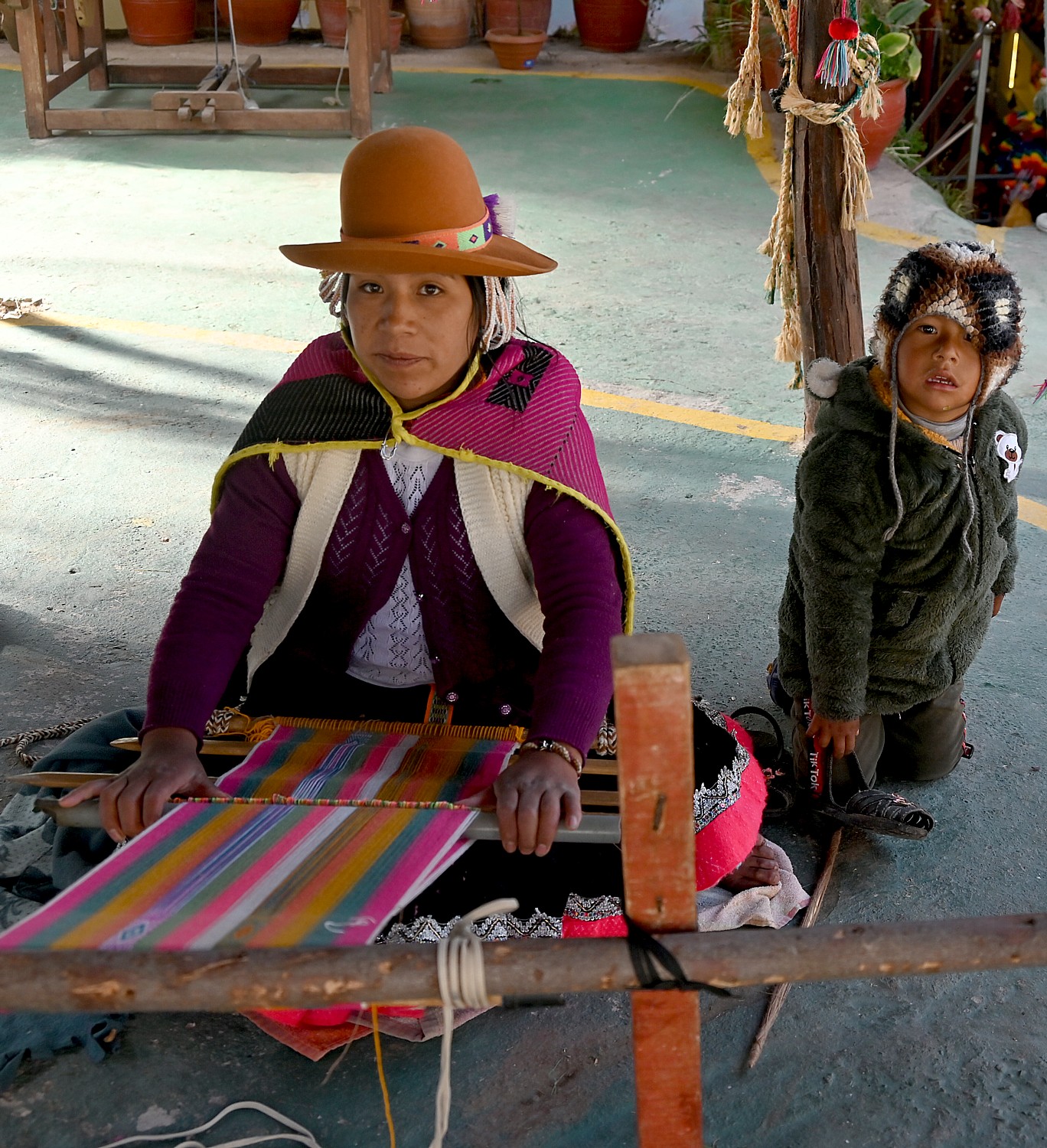
Sofitel Legend The Grand Amsterdam: Historic Hotel that Played Major Role in History

Rarely do you find a historic hotel that played such an integral role in a nation’s history as the Sofitel Legend Grand Hotel Amsterdam, a member of Historic Hotels Worldwide © Karen Rubin/goingplacesfarandnear.com

By Karen Rubin, Travel Features Syndicate, goingplacesfarandnear.com

I march myself from the Princesse Royal, the ship that has been my floating hotel for the eight-day BoatBikeTours’ Bruges to Amsterdam bike trip the few steps from where we are docked to the free ferry to Amsterdam’s Central Station and into Amsterdam’s historic city center and on to the hotel Sofitel Legend The Grand Amsterdam.

The level of service, luxury and elegance in this five-star hotel makes you feel you are staying in a palace, and frankly, it was, as I soon learn on the hotel’s daily tour.

I always seek out historic hotels when I travel because they tend to be so much more interesting, so connected to place, so full of personality, character and yes, authenticity, but rarely have I stayed in a hotel that played such an integral role in a nation’s  history.

A hotel only since 1992, the original buildings and tower that have been repurposed  for The Grand were built in 1411 and actually were two convents – one on the northern side and one on the southern side, with canals on both.

The Princenhof (still the name) at the Sofitel Legend Grand Amsterdam has accommodated  Maria de’ Medici, Queen of France, and William of Orange © Karen Rubin/goingplacesfarandnear.com

In 1578, with the success of William of Orange’s revolt against Catholic Spain, Protestantism swept the Netherlands and Amsterdam. The two convents were given to the city.  The northern side was empty for a time, but the southern building became the Royal residence – The Princenhof (still the name). The Maria de’ Medici, Queen of France, and William of Orange himself stayed here at some point.

In 1652, after a fire at Dam Square destroyed the building  where the Council met, they moved into the northern part of the building, which served as the Council Chamber for three years until Dam Square was renovated (the room is still set up as a Council Chamber).

In 1655, the powerful Dutch East India Trading Company made this their headquarters. The company, which set up trade, exploration and colonization around the globe, functioned as a military power, government, and even agricultural producer and helped make this small nation a global power, from 1602 to 1800. (A little research reveals the Dutch had an advantage in resources because they were on the cutting edge of capitalism. The Dutch East India Company had a more successful strategy because of sound money, an efficient tax system and a system of public debt by which the government could borrow from its citizens at low interest rates. See https://www.theindiaforum.in/article/what-made-east-india-company-so-successful)

In 1808, the French took over and Napoleon installed his brother, Louis Napoleon, as King of Netherlands. He wanted Dam Square for his palace, so the Council came back to this building for the next 108 years (until as recently as 1988, which explains why the room is still set up as a Council chamber.)

A portion of the five-story high stained glass window by Roland Holst (1868-1938), given to the city of Amsterdam in 1925 by the city of Rotterdam on the occasion of the capital’s 650th anniversary © Karen Rubin/goingplacesfarandnear.com

We see an astonishing five-story high wall of stained glass by Roland Holst (1868-1938), given to the city of Amsterdam in 1925 by the city of Rotterdam on the occasion of the capital’s 650th anniversary. The first nine stained windows present the founder of Amsterdam, Gijsbrecht van Amstel. The others depict dike constructors, fishermen, floral patterns, symbols of trade, education and jurisdiction. There are three crosses of Amsterdam symbolizing fire (a lot of fires afflicted the city); water (the city is below sea level) and plague (to show respect for people).

The Wedding Chamber at the Sofitel Legend Grand Amsterdam Hotel © Karen Rubin/goingplacesfarandnear.com
The Wedding Chamber at the hotel Sofitel Legend the Grand Amsterdam Hotel © Karen Rubin/goingplacesfarandnear.com
The Wedding Chamber at the hotel Sofitel Legend The Grand Amsterdam © Karen Rubin/goingplacesfarandnear.com

In 1925, the Wedding Chamber was painted with a most magnificent Art Deco series of murals that our guide, Donna van der Heul, of guest relations, relates, tell the story of a couple who meets, are seduced in a sneaky way (symbolized by a snake), stay true, meet each other (there is a little flame between their legs), become engaged (the flame becomes bigger), a wedding showing the happy couple. Another panel shows the couple with a child with a flame of her own, and another panel shows them as an old couple, still together. (We have to rush through the chamber because a wedding is getting underway shortly).

Princess Beatrix and Prince Klaus then were married here in 1966 before the Sofitel Legend Grand was a hotel © Karen Rubin/goingplacesfarandnear.com

We visit the Council Chamber (which looks like parliament). Princess Beatrix and Prince Klaus  (the present king’s parents) in 1966 and you can see a photo of their wedding .

The Council Chambers was used for 108 years © Karen Rubin/goingplacesfarandnear.com

We visit the beautifully decorated Oriole Garden Bistro where there is a mural that was painted in 1949 when the building was City Hall. Titled, “Inquisitive Children,” by artist Karel Appel,  it depicts begging, crying children, with sad eyes, in the aftermath of World War II’s human destruction.  “The Council Staff thought it would make people feel uncomfortable so they put it behind a wall. But when the building became a hotel and the painting was found, the artist, Karel Appel, had by then become a famous painter. They had Appel sign it and repair the painting.  Now it is behind glass and doesn’t look sad,” our guide relates.

“Inquisitive Children,” by artist Karel Appel, is now proudly displayed at the entrance to the Oriole Garden Bistro © Karen Rubin/goingplacesfarandnear.com

She also points out the marble floor with pieces that are arranged with a “book marking” design that form a butterfly, so the butterfly images and theme is around hotel .

The Princenhof – once the royal residence – is used for meetings. Obviously an immensely popular venue for weddings, the hotel has its own florist and wedding planner.

The hotel Sofitel Legend the Grand Amsterdam is set on a historic canal © Karen Rubin/goingplacesfarandnear.com

Located between two historical canals in the heart of the historic city, the hotel Sofitel Legend the Grand Amsterdam has turned its pedigree from a 15th century convent to royal residence to Dutch admiralty headquarters to Amsterdam’s city hall, into a five-star luxury hotel with a particular “Amsterdam” ambiance, French elegance and grandeur. You feel the five-star luxury in every aspect of the hotel, from the moment you check in. The lordly complex became a hotel in 1992.

The bar at The Grand © Karen Rubin/goingplacesfarandnear.com

It offers the restaurant Bridges, the Oriole Garden Bistro serving Mediterranean-style cuisine, the Garden Terrace within an inner garden, the Library ‘Or’ where Grand Afternoon Tea is served, and the Flying Deer pop-up bar and a spa.

The Library ‘Or’ where Grand Afternoon Tea is served © Karen Rubin/goingplacesfarandnear.com

The Sofitel SPA offers a heated indoor pool, sauna, hammam (Turkish steam bath) and fitness area where you can also order from a spa menu.

The Grand is one of the Sofitel Legend’s collection of stately heritage hotels and palaces found in iconic cities around the world, “exclusive hotels in legendary places, offering world-class service, stunning décor and inspiring culinary experiences. Step into a timeless story that’s still unfolding to this day at Sofitel Legend The Grand Amsterdam.”

Rarely do you find a historic hotel that played such an integral role in a nation’s history as the Sofitel Legend Grand Hotel Amsterdam, a member of Historic Hotels Worldwide © Karen Rubin/goingplacesfarandnear.com

The Grand features 178 guest rooms of which 52 are luxury suites. Throughout, you see a harmonious blend of traditional and contemporary French design and typical Dutch style elements. The rich heritage of the structure has been carefully preserved, while ensuring that the accommodations are updated with the amenities and advanced technology travelers today savor. (I can testify to the exemplary service.)

Guests who stay in the suites are provided an extra layer of luxury: Butler Service, with exclusive benefits, such as “personalized rooming” – (un)packing of suitcases and presenting the “pillow menus” and “bath rituals”.

Sofitel Legend Grand Amsterdam, Oudezijds Voorburgwal 197, 1012 EX AmsterdamThe Netherlandswww.sofitel-legend.comwww.sofitel-legend-thegrand.com.

Historic Hotels Worldwide

Sofitel Legend The Grand Amsterdam is a member of Historic Hotels Worldwide®, an official program of the National Trust for Historic Preservation in the USA, and an international companion to Historic Hotels of America (historichotels.org). Historic Hotels Worldwide is a prestigious collection of 360 historic treasures that include historic hotels, castles, chateaus, palaces, academies, haciendas, villas, monasteries, and other historic lodging spanning ten centuries and more than 45 countries in Europe, Africa, Asia, and the Americas.

The Sofitel Legend Grand Hotel exemplifies the mission of Historic Hotels Worldwide, to promote revitalization and preservation of magnificent architectural and cultural legacies and inspire heritage and cultural travel © Karen Rubin/goingplacesfarandnear.com

The Sofitel Legend exemplifies the mission and criteria of the membership. Hotels inducted into Historic Hotels Worldwide® are authentic historic treasures, demonstrate historic preservation, and celebrate historic significance.  With a growing global collection of hotels that have faithfully maintained their authenticity, sense of place, and architectural integrity, Historic Hotels Worldwide® membership  is comprised of the world’s finest hospitality brands, chains, collections, and independently owned and operated properties.

Historic Hotels Worldwide® is dedicated to promoting heritage and cultural travel to these prestigious historic treasures. Membership in Historic Hotels Worldwide® encourages revitalization and enhances preservation of magnificent architectural and cultural legacies.

The Sofitel Legend Grand Hotel exemplifies the mission of Historic Hotels Worldwide, to promote revitalization and preservation of magnificent architectural and cultural legacies and inspire heritage and cultural travel © Karen Rubin/goingplacesfarandnear.com

To participate in Historic Hotels Worldwide, historical lodging properties must be at least 75 years old; utilize historic accommodations; serve as the former home or be located on the grounds of the former home of famous persons or a significant location for an event in history; be located in or within walking distance to a historic district, historically significant landmark, place of historic event, or historic city center; be recognized by local preservation organization or national trust; and display historic memorabilia, artwork, photography, and other examples of its historic significance. Hotels located in the United States must be a current member of Historic Hotels of America to qualify for participation in Historic Hotels Worldwide.

Hotels are in diverse cultural settings, ranging from a 12th-century castle set among the rolling hills, prehistoric  monuments, and Celtic landmarks of Ireland’s Ancient Eastin, (Kilkea Castle, Castledermot Ireland, circa 1180) to a medieval village nestled in the Tuscan countryside that dates back to the 11th century (La Bagnaia Golf & Spa Resort Siena, Curio Collection by Hilton, Siena, Italy circa 1081).

Travelers can find and book these historic hotels them at HistoricHotels.org, which since 2012 has served as a global travel website, or call 1-800-678-8946. The Annual Directory can be found by visiting HistoricHotels.org/Directory.

See also:

Sofitel Legend The Grand Amsterdam: Historic Hotel that Played Major Role in History

36 Hours in Amsterdam: Time-Traveling in the Jewish Quarter

36 Hours in Amsterdam: Time-Traveling Through Amsterdam’s Jewish Quarter

__________________

© 2022 Travel Features Syndicate, a division of Workstyles, Inc. All rights reserved. Visit goingplacesfarandnear.com, www.huffingtonpost.com/author/karen-rubin, and travelwritersmagazine.com/TravelFeaturesSyndicate/. Blogging at goingplacesnearandfar.wordpress.com and moralcompasstravel.info. Visit instagram.com/going_places_far_and_near and instagram.com/bigbackpacktraveler/ Send comments or questions to FamTravLtr@aol.com. Tweet @TravelFeatures. ‘Like’ us at facebook.com/NewsPhotoFeatures
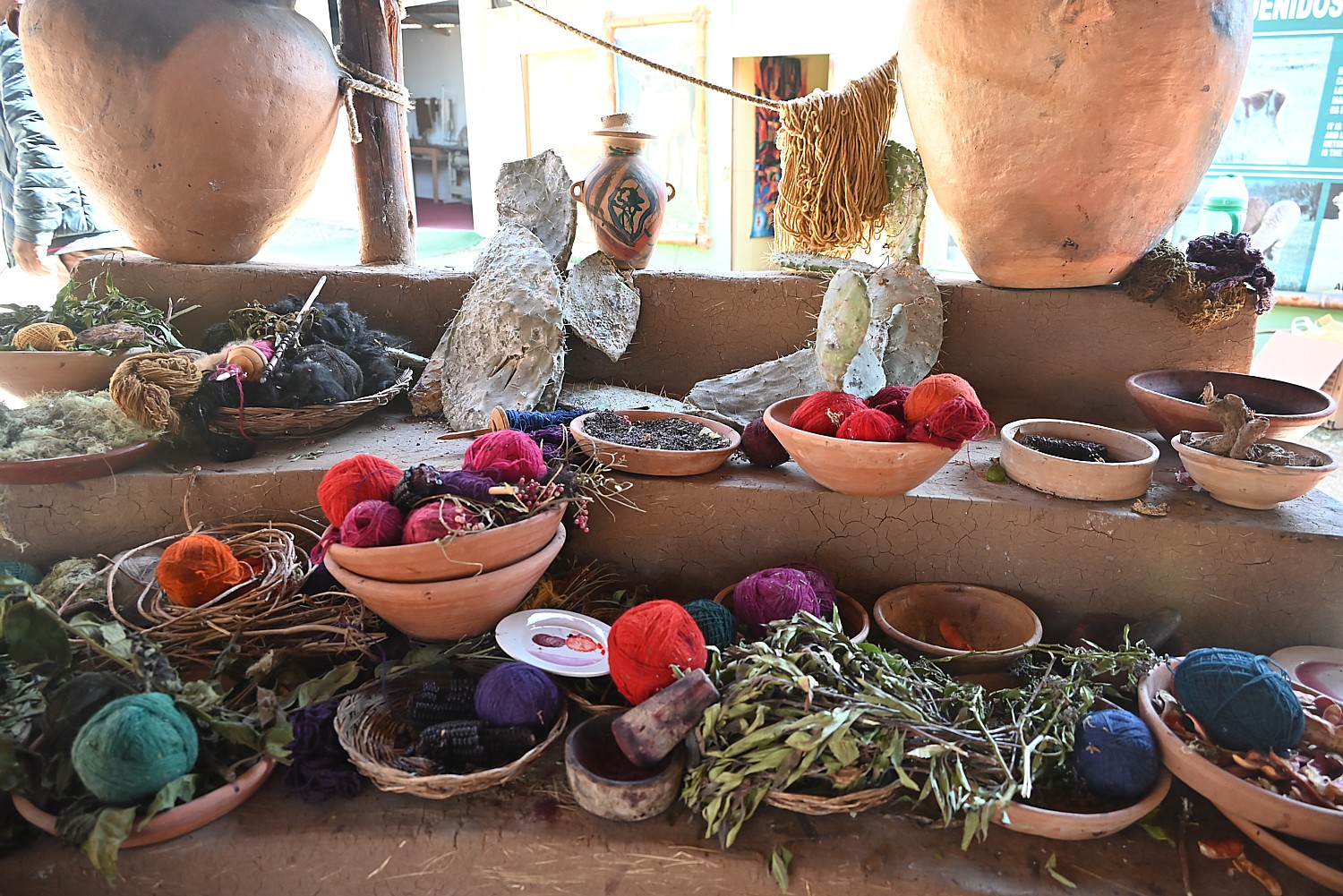
Because travel is a life-enhancing, relationship building, world-changing experience