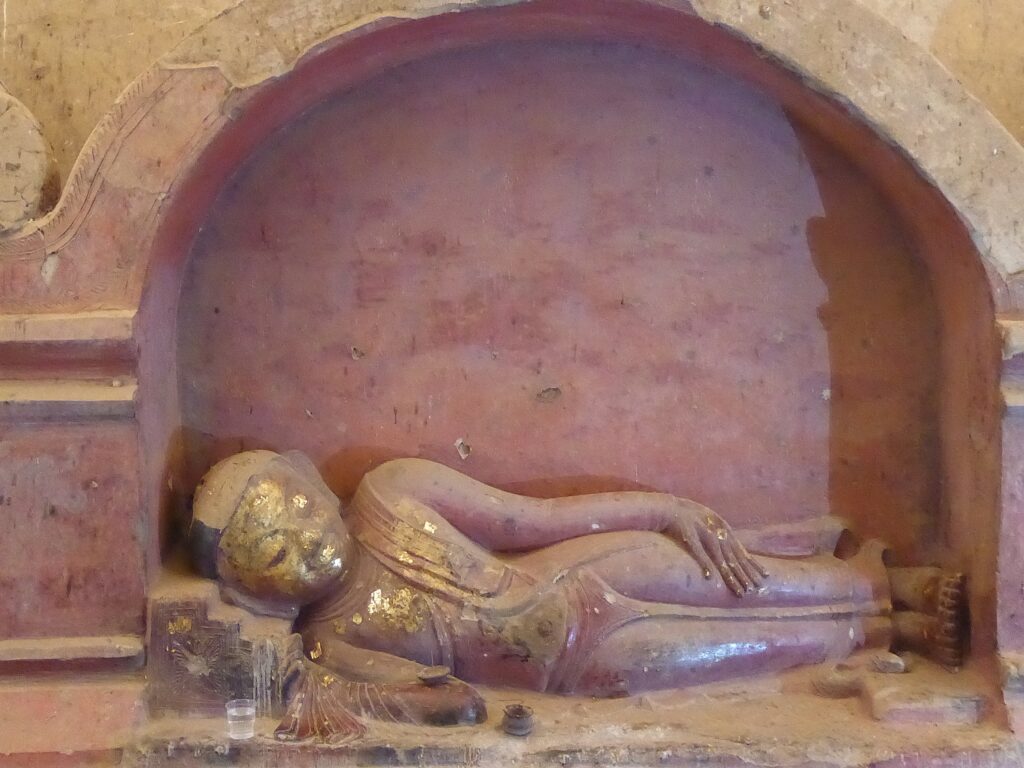
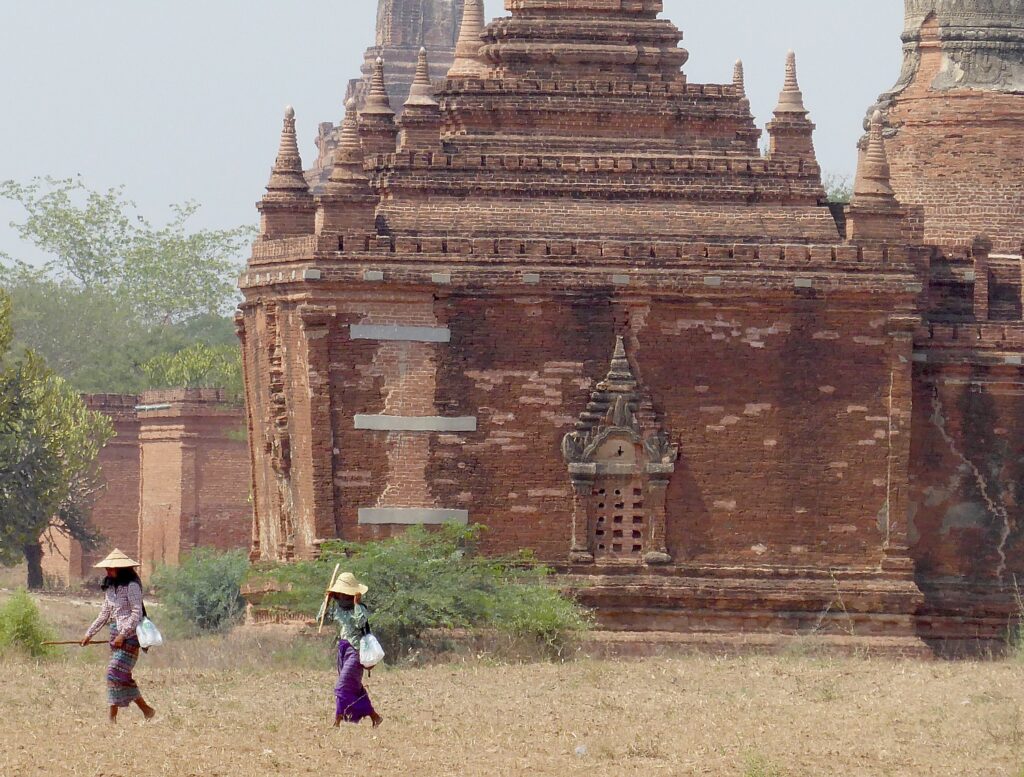
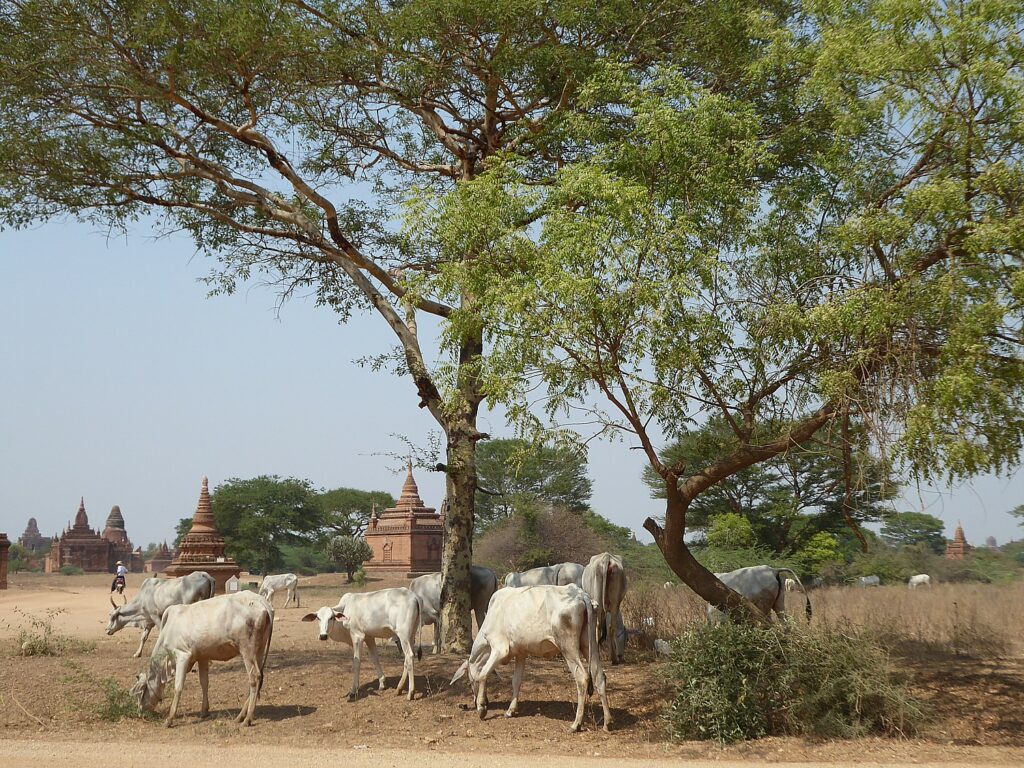
Another
perfect day in Myanmar – our fourth and final day on Leg 3 of the Global
Scavenger Hunt, in which we set out from Yangon to travel about the country,
making a triangle that takes me to Bagan and Inle Lake and back to Yangon to
fulfill the Par 5 challenge on this a 23-day around-the-world mystery tour.
The
45-minute taxi ride from the delightful, five-star Sanctum Inle Resort on Inle
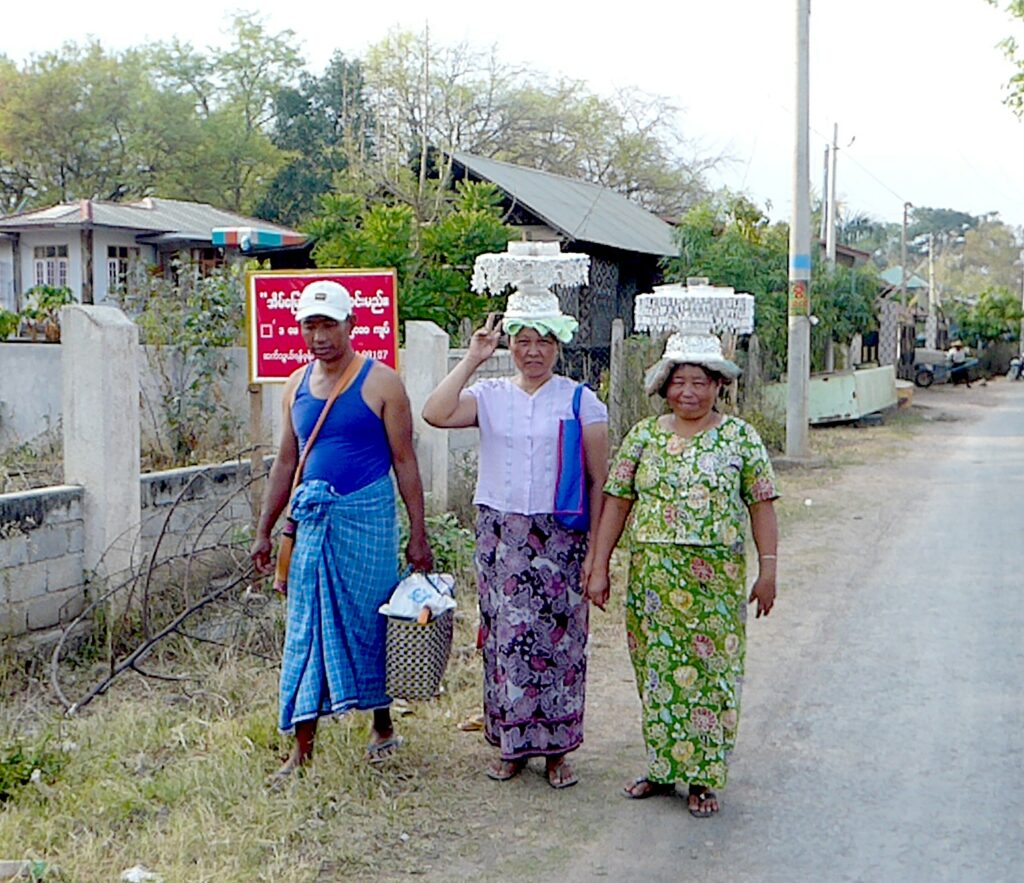
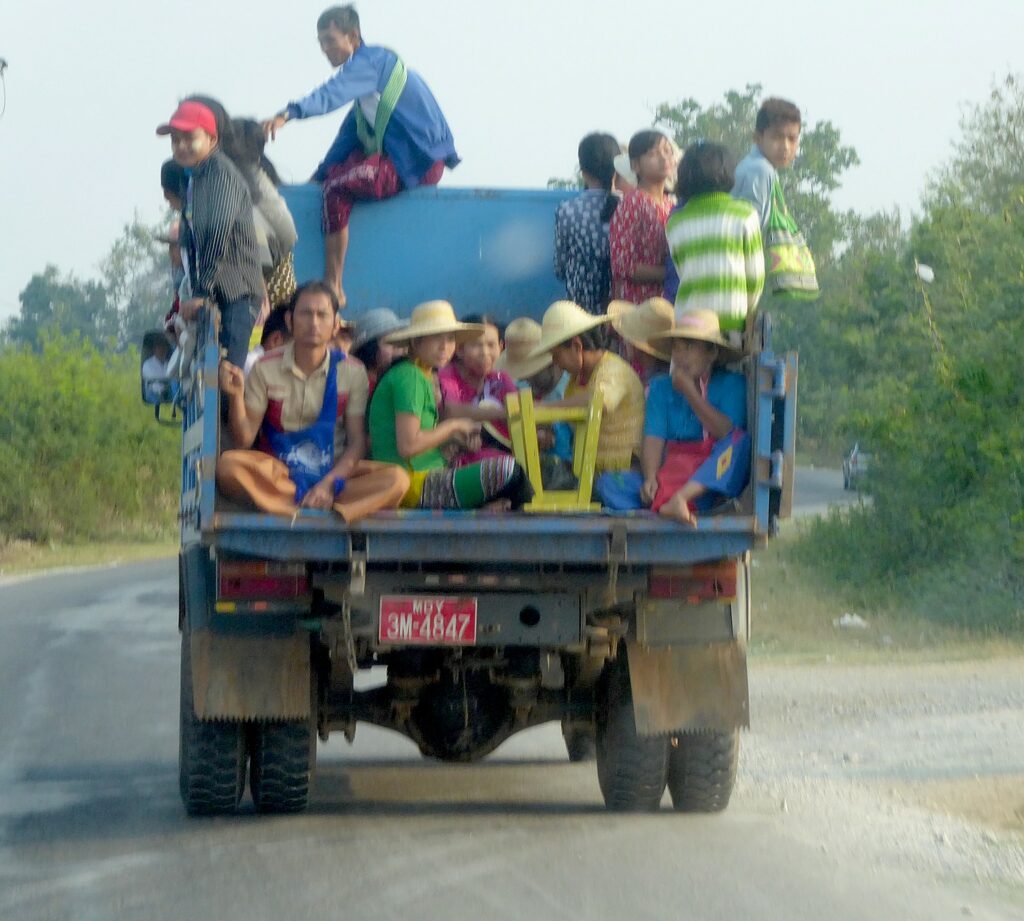
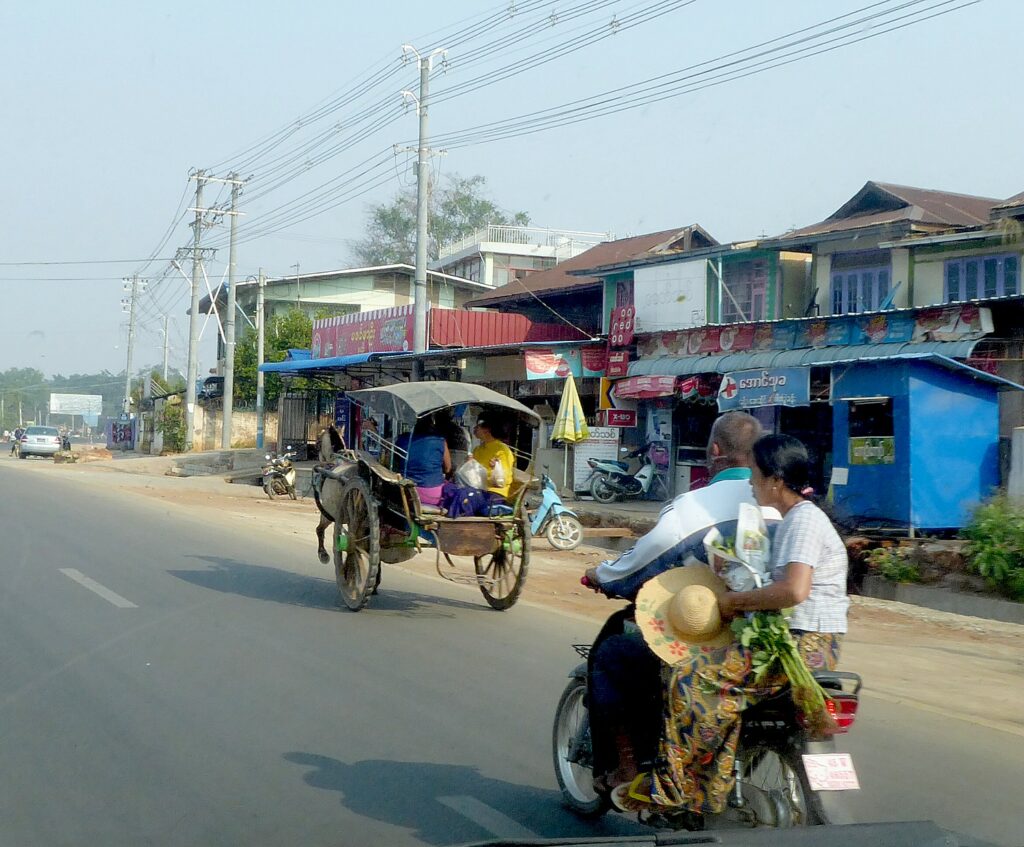
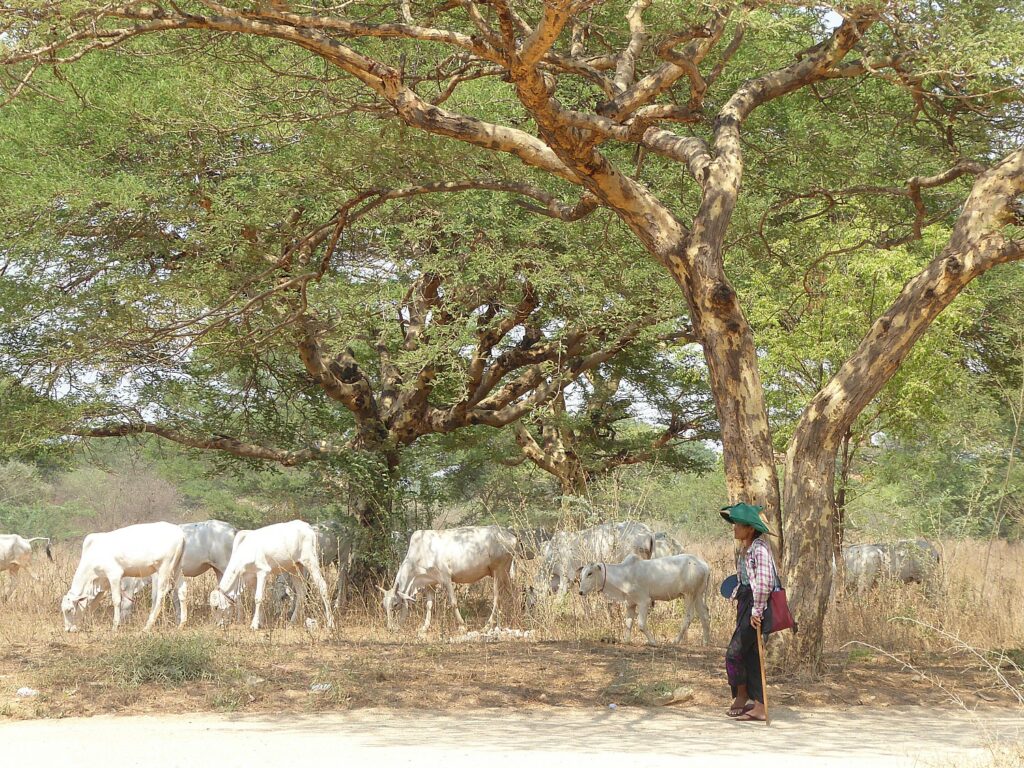
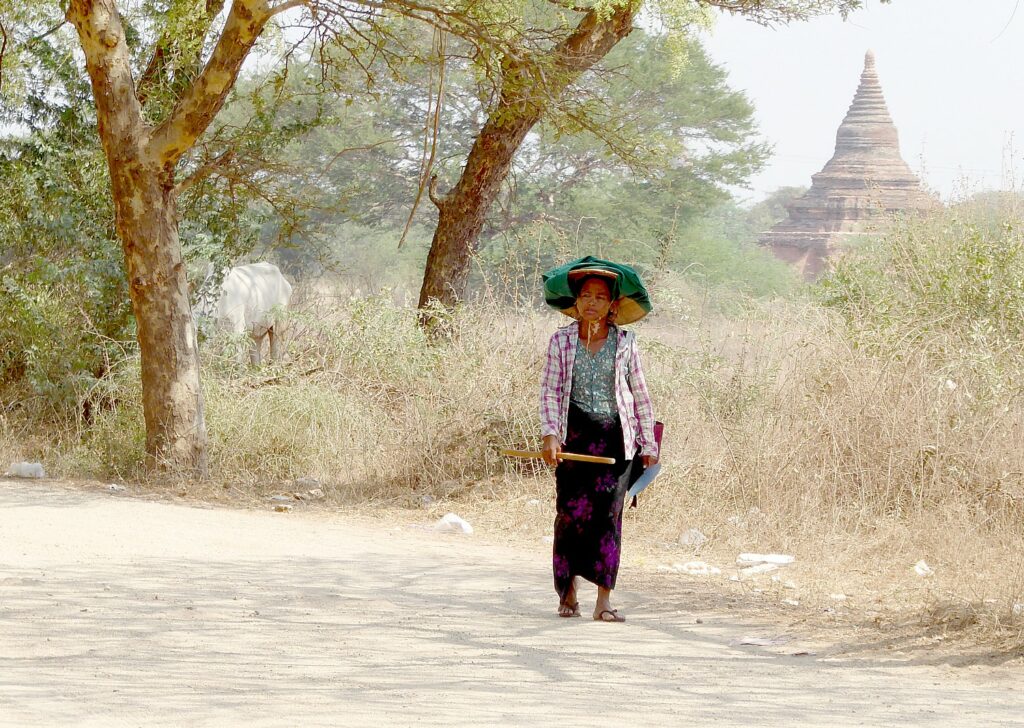
Lake is wonderful – I catch people driving oxcarts and donkey carts and people
riding the backs of trucks, villages and pagodas. But I have some trepidation
about Heho Airport because of the snafu in booking my ticket, resolved
long-distance by text to my son in New York to phone the online booking agent,
as I bounced around on the overnight bus from Bagan to Inle Lake. But I arrive,
am checked in to Golden Airlines without incident, and relax during the
45-minute flight back to Yangon.
The
morning flight gives me time to explore Yangon which I didn’t have when we
first arrived on Leg 3 of the Global Scavenger Hunt from Vietnam, and were
given our challenges, to travel around Myanmar and return to the Sule Sangri-la
Hotel by the 6 pm deadline.
Leaving
the airport, I attempt to take the public bus back into downtown, but after two
buses pass me by, I take a taxi instead.
Riding
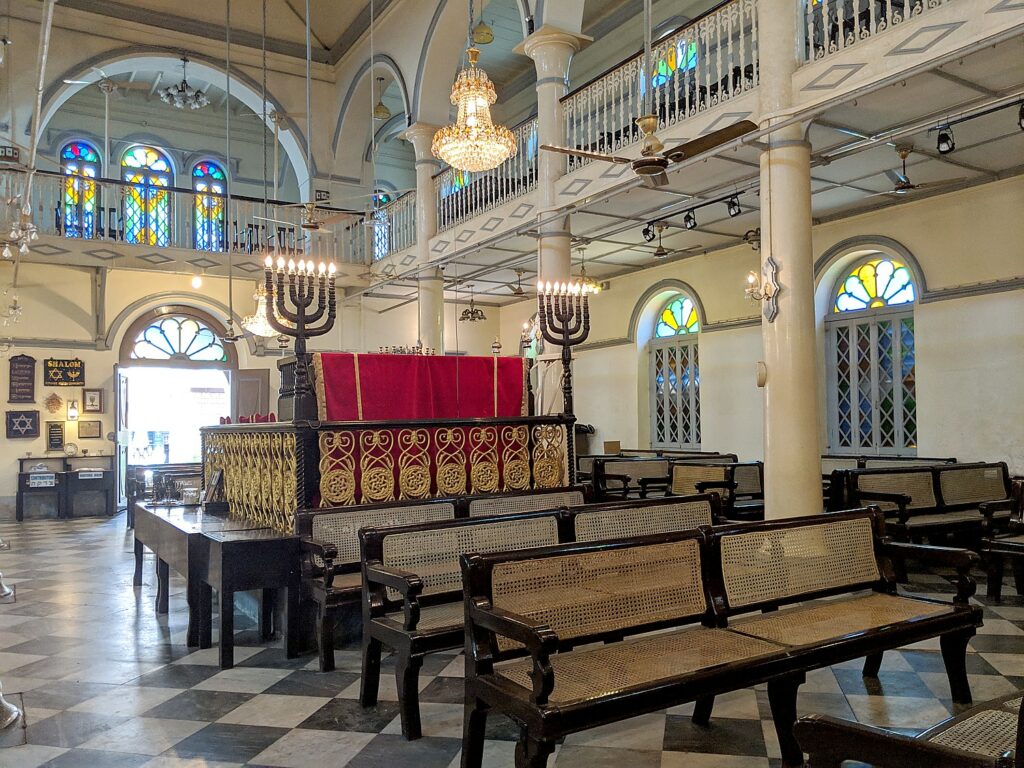
back, I review a brochure I picked up at the airport which mentions a synagogue
in Yangon – in fact, the last synagogue in Myanmar. So I resolve to find it.
It
turns out it is only a 15-minute walk from our hotel, the Sule Sangri-la,
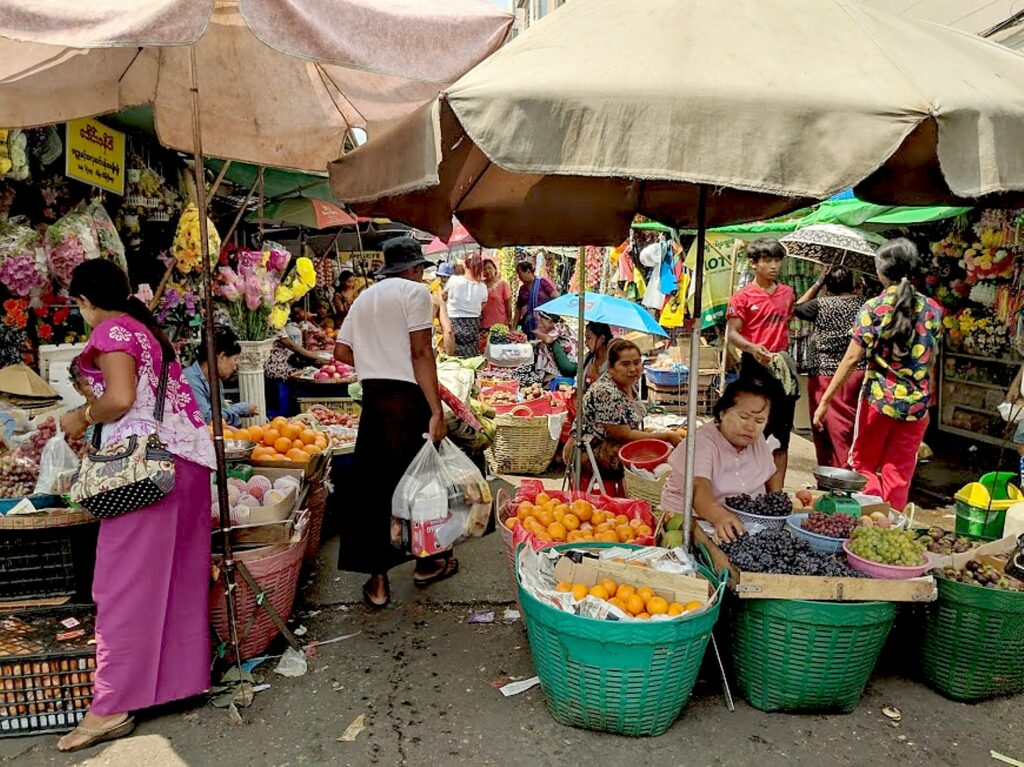
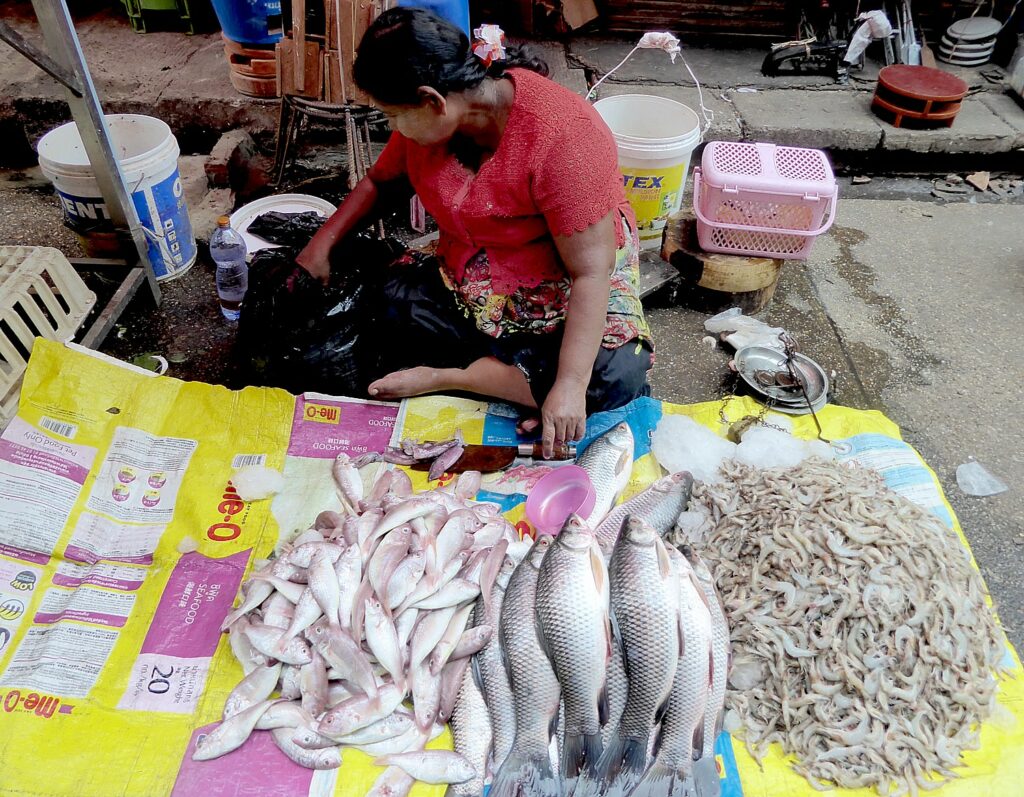
bringing me through various bustling market streets and shopping districts. The
Musmeah Yeshua Synagogue itself is set on a busy market street where there are
chickens and fish for sale – the chickens clucking, the fish squirming to get
out of their container (I see one jump out of its container), the rich scent of
spices, and every other manner of item you can imagine.
By
the time I arrive at Musmeah Yeshua Synagogue, it is 1:40 pm – which proves
extremely lucky because it closes to visits at 2 pm (open daily except Sunday).
Inside, it is a lovely synagogue in the Sephardic style, built in 1896. At one
point, the Jewish community in Yangon numbered 2500 before the mass migration
of WWII; today, there are only 5 families (about 30 people). The Samuels, one
of the last remaining Jewish families, has maintained the synagogue for
generations, a plaque notes.
Perhaps
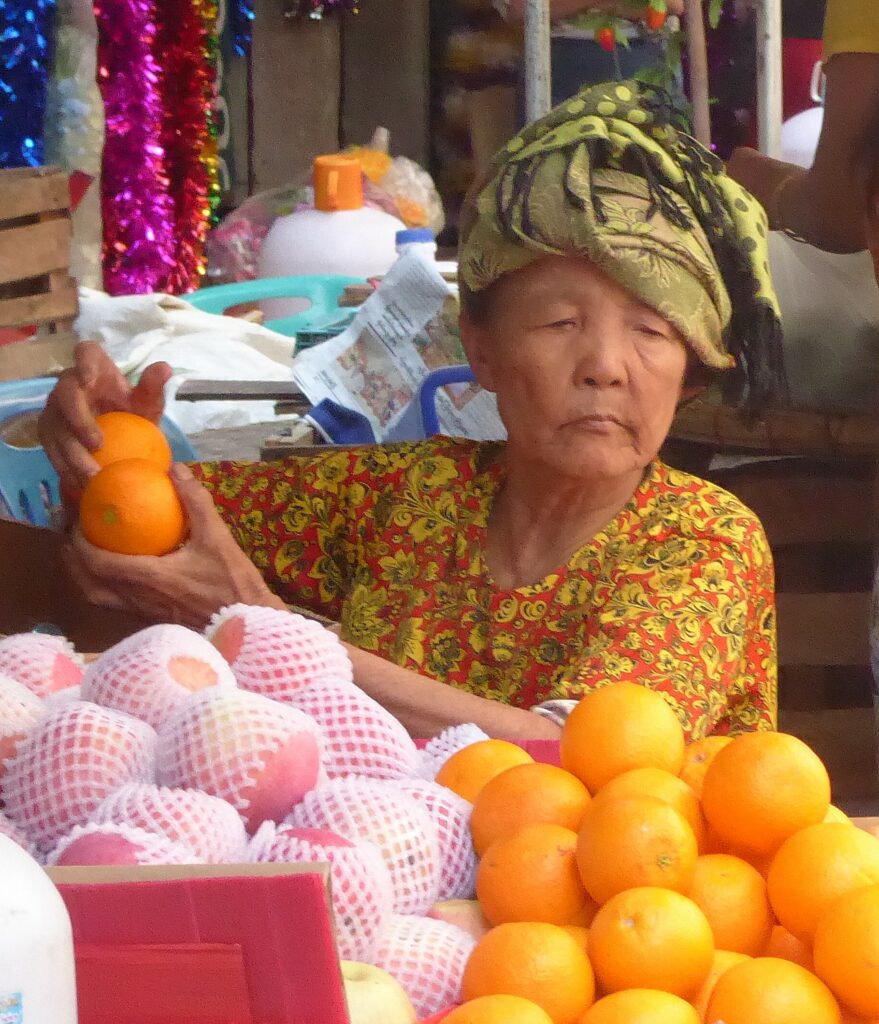
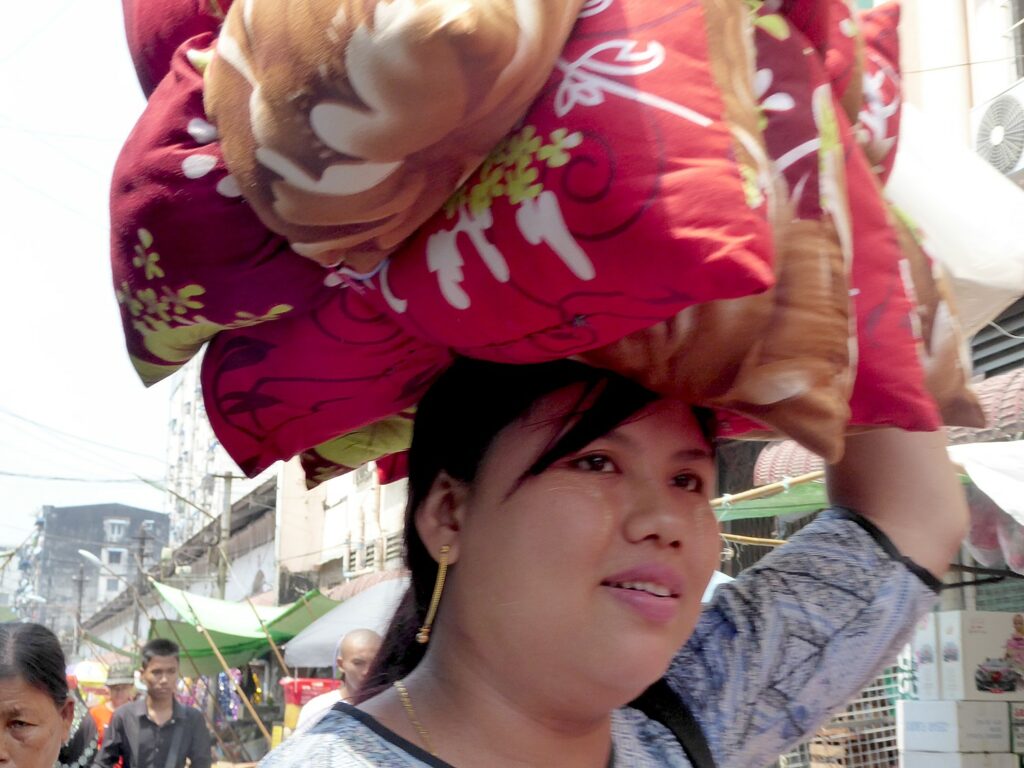
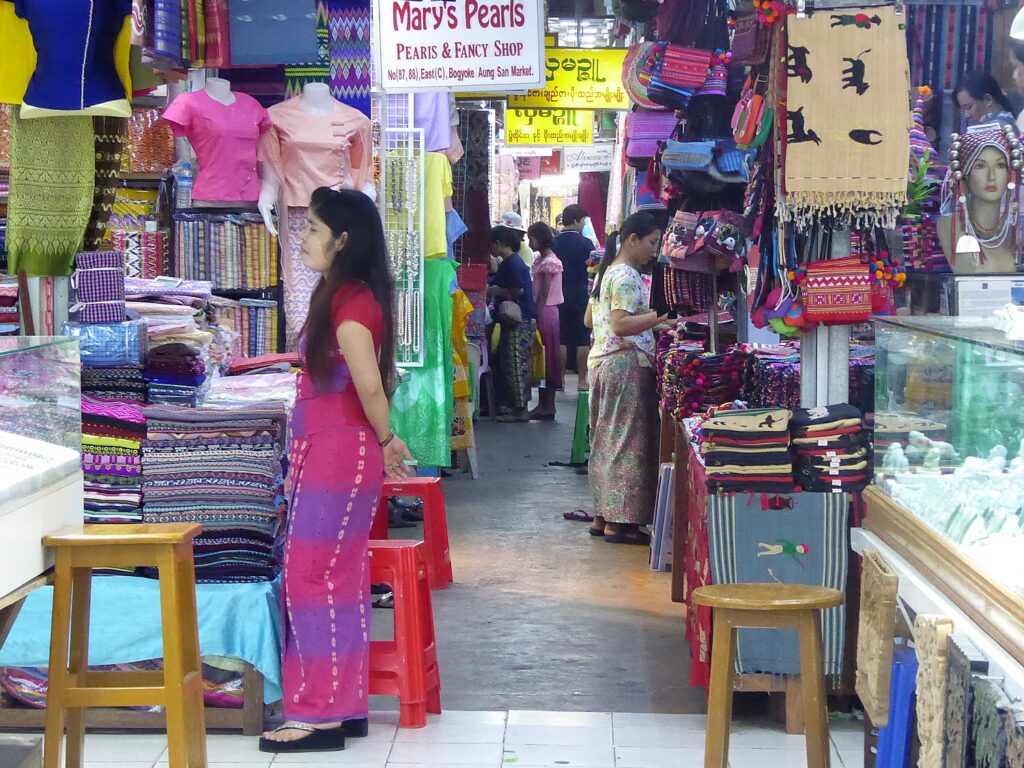
not surprising, a short distance from the synagogue is Bogyoke Aung San Market,
which since 1926 has been the city’s major marketplace. I am surprised to see
all the sellers of jade and jewelry (which is what the market is known for), as
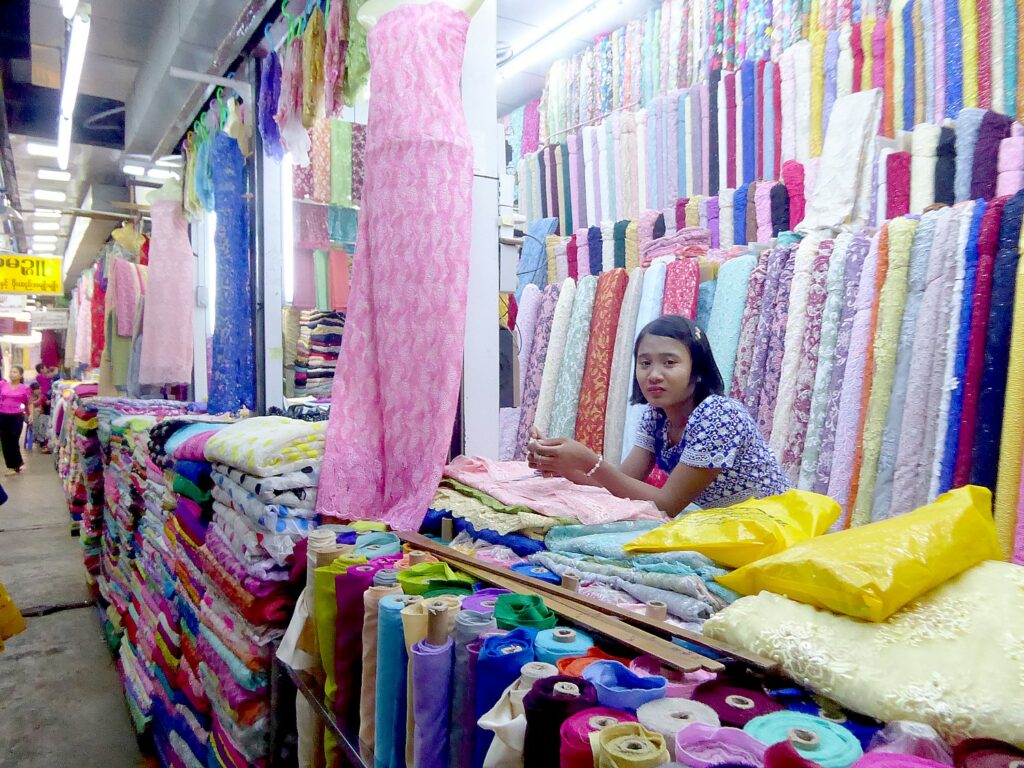
well as traditional longyi, and just about anything else you can think of. I come
upon a seller of interesting post cards, and find the post office on the third
level (one of my traditions of travel is to send home postcards, which not only
have stamps, but mark the date and give some visual and personal notes). Also,
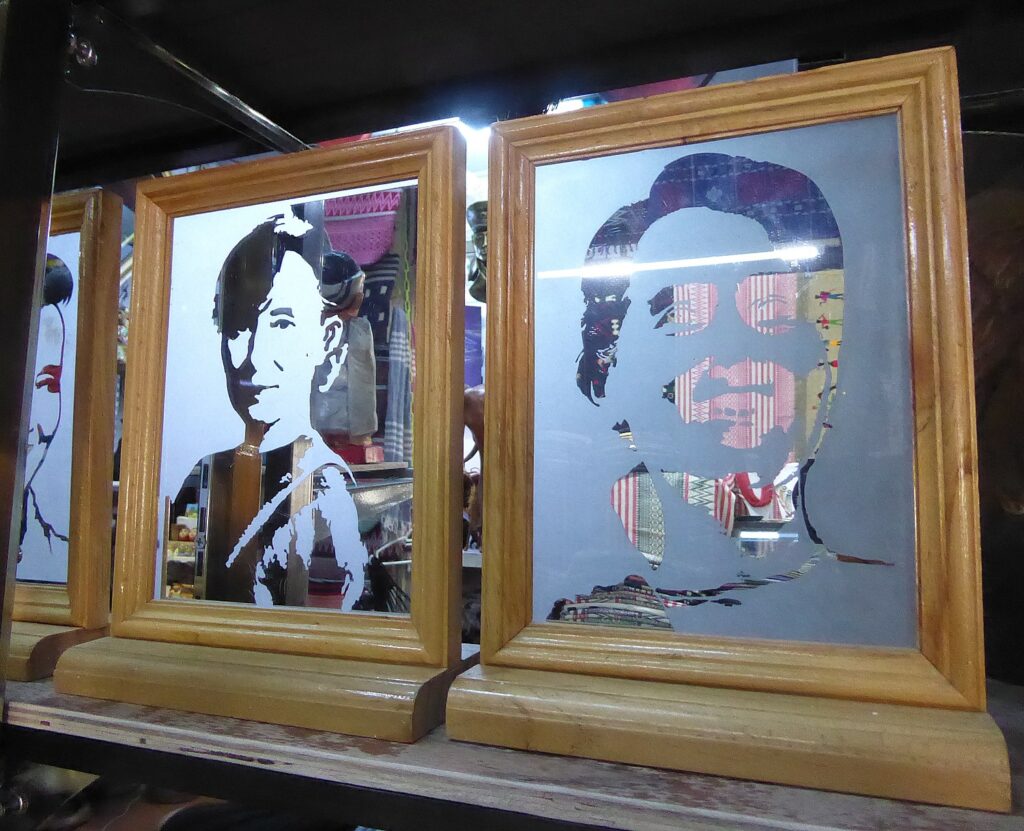
I have been impressed by the absolute lack of political messaging in the streets,
but here in the market is one art seller who has images of Myanmar’s most
famous leader, Aung San Suu Kyi. Wondering about the name, I later learn that Bogyoke
Aung San market is named for her father, Bogyoke (General) Aung
San.
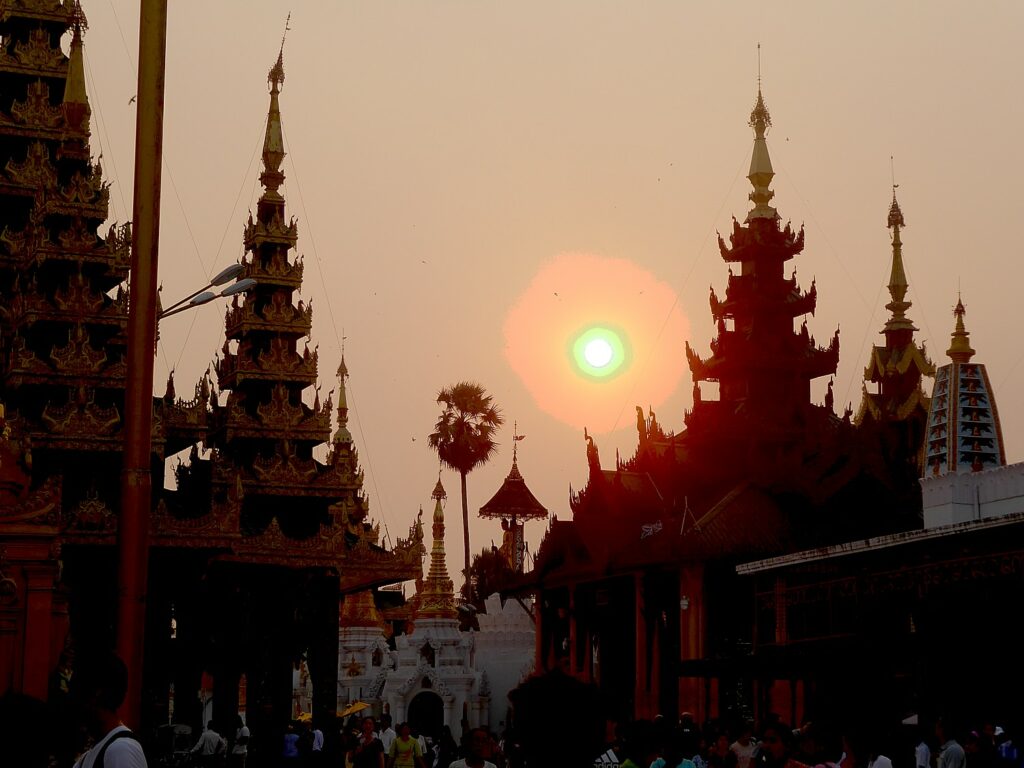
I
walk back to the hotel, just a few blocks away, to refresh (it is 104 degrees),
in order to prepare for a visit to Shwedagon Pagoda, which I have been saving
for the late afternoon (one of the mandatory scavenges of the Global Scavenger
Hunt is to visit at dawn or dusk), so that I will be there at dusk (but back at
the hotel by the 6 pm deadline for the scavenges), but nothing could have
prepared me for the experience of seeing it.
Just
as I am about to leave, my teammate, Margo, who had traveled to Mandalay when I
went on to Inle Lake, walks in. She relates that after a snafu with her airline
ticket, she had to hire a taxi to drive her back to Yangon (ironic because I
couldn’t get the airline to cancel my ticket when I changed my plan to go to
Inle Lake instead, but such mishaps turn into marvelous adventures). We go off
together to Shwedagon Pagoda, which is located west of the Royal
Lake, on the vast, 114 -acre Singuttara Hill.
Margo
cleverly hires a guide to show us around this vast, vast complex and it is
fascinating: this was the first pagoda in the world, he tells us.
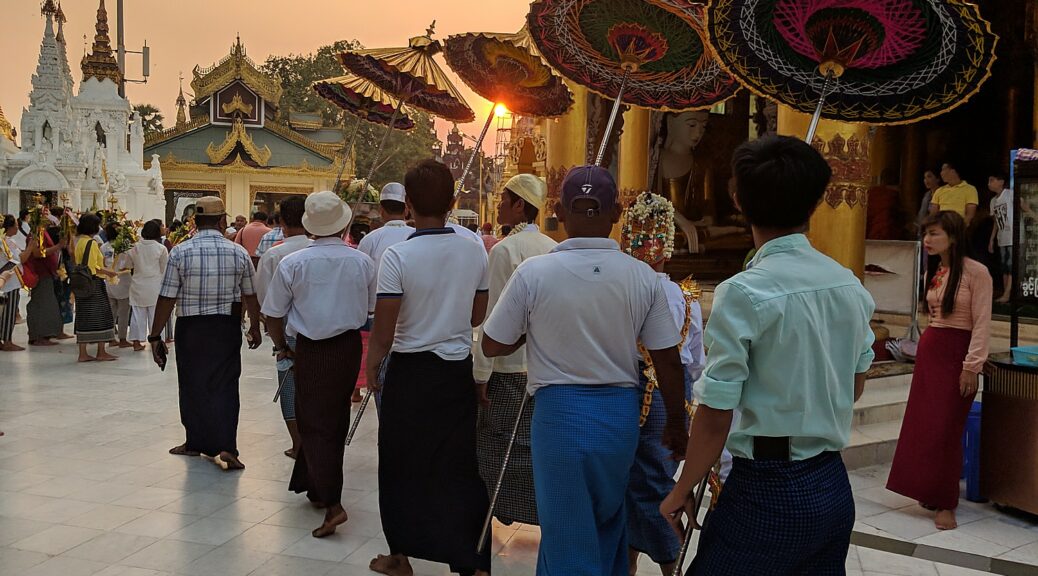
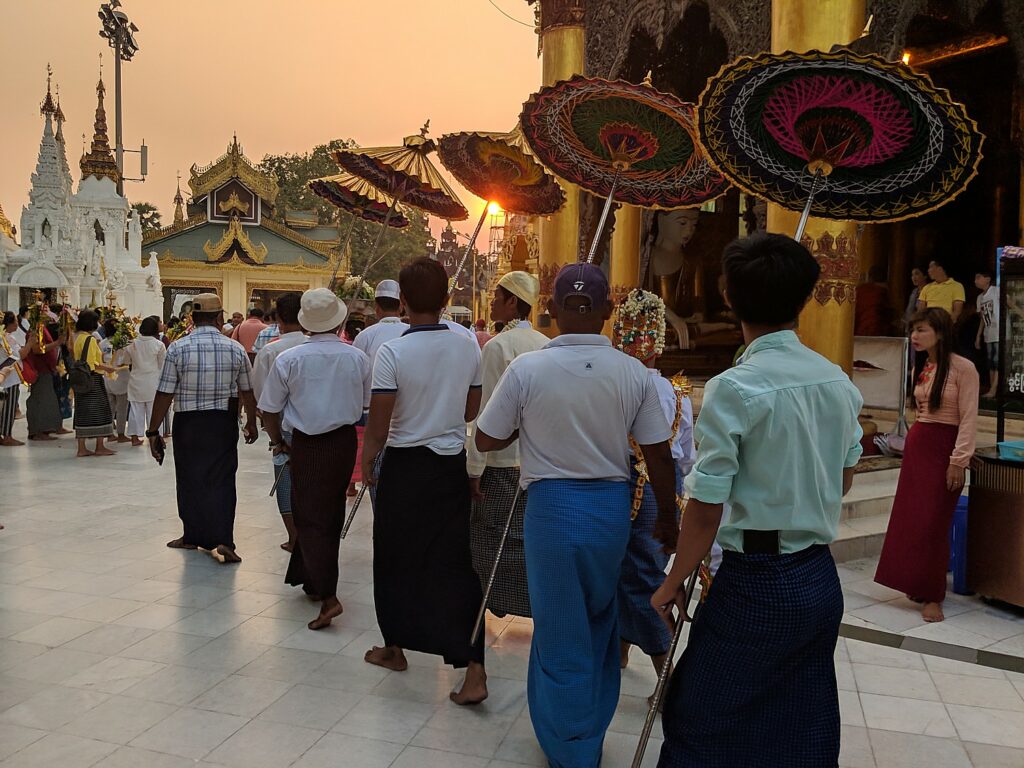
Indeed,
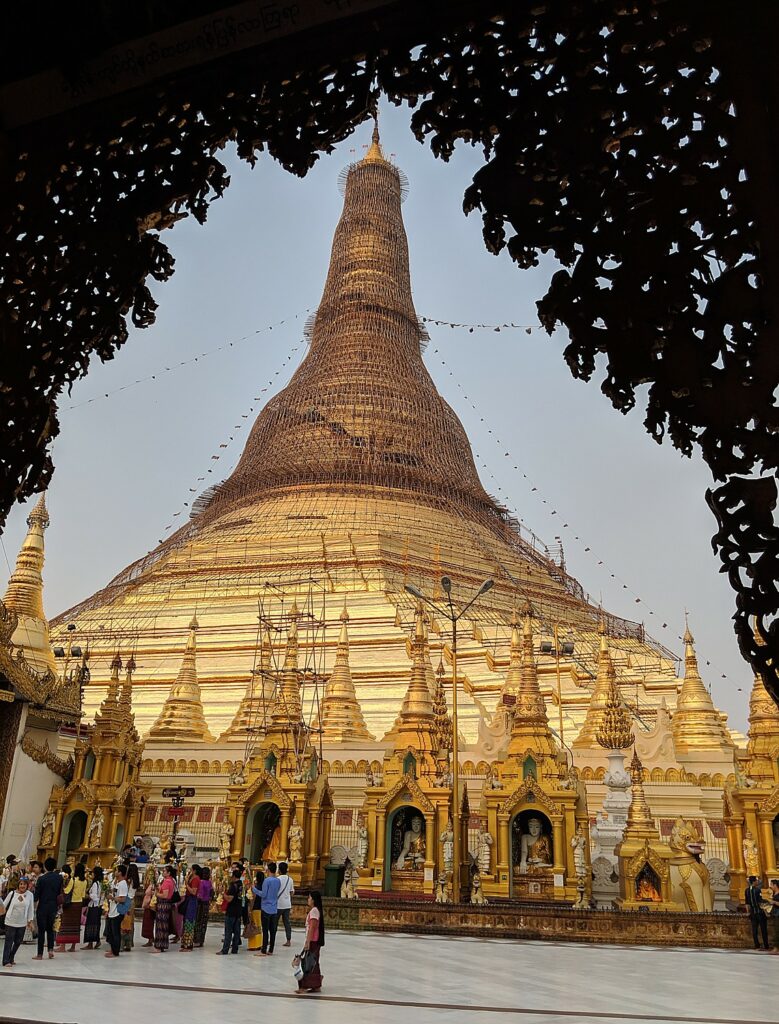
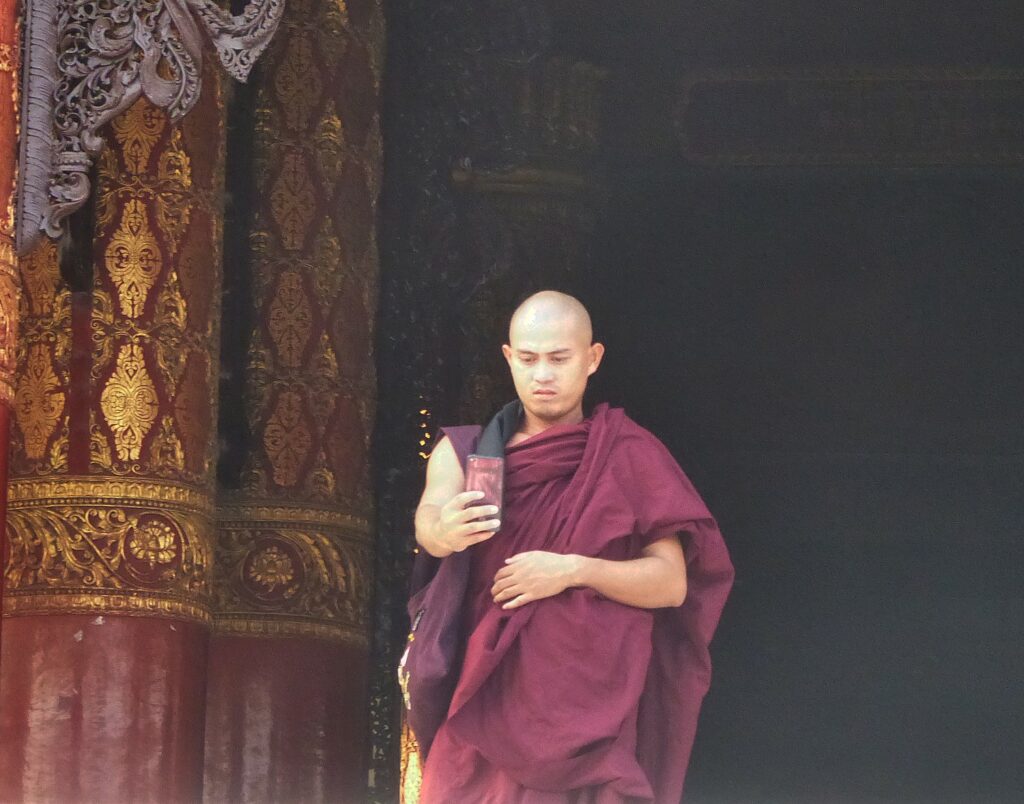
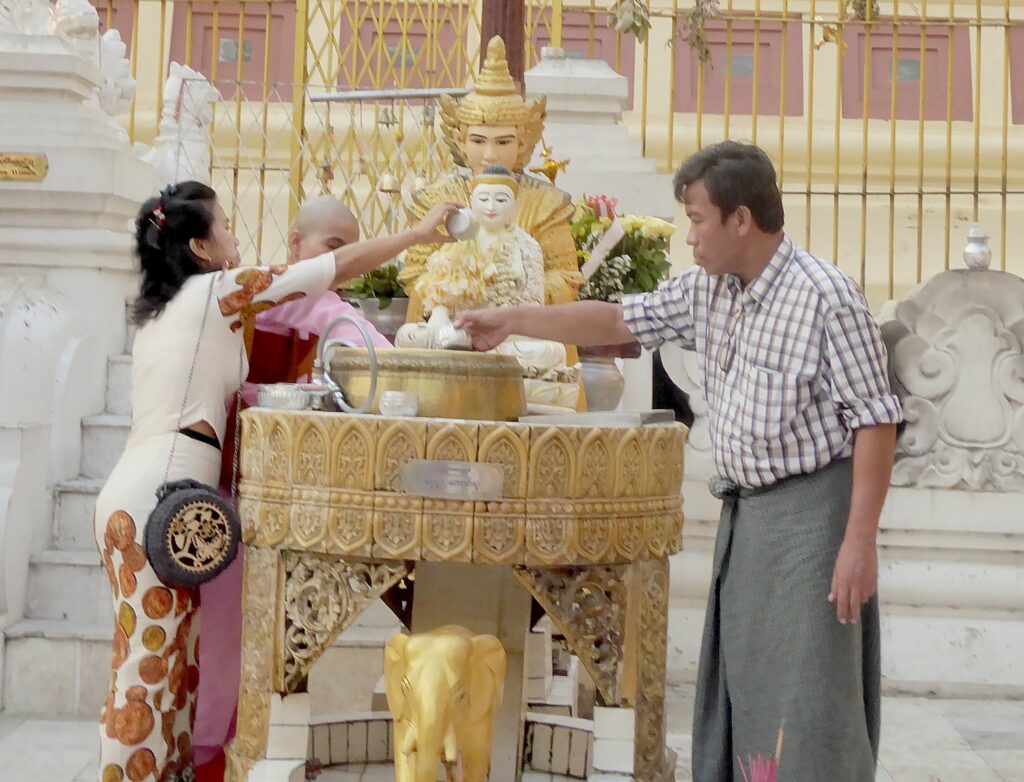
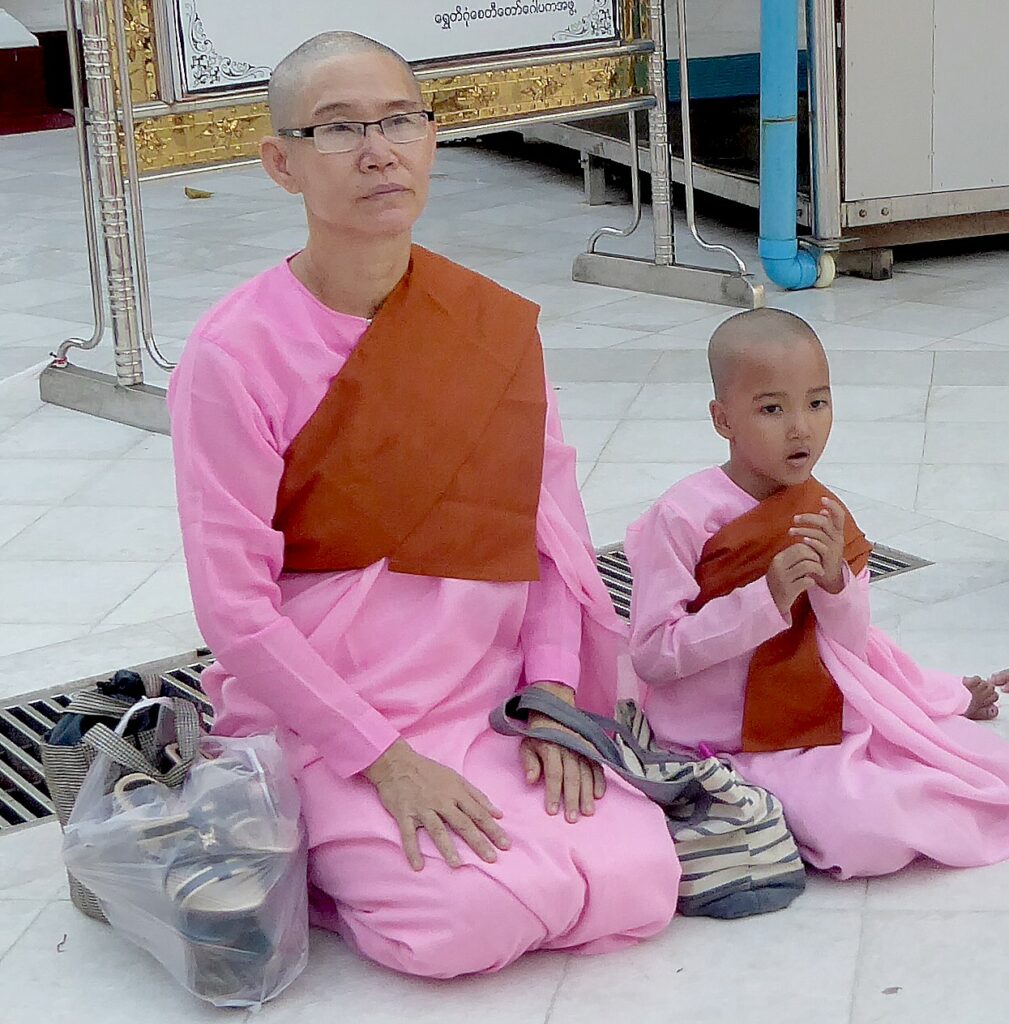
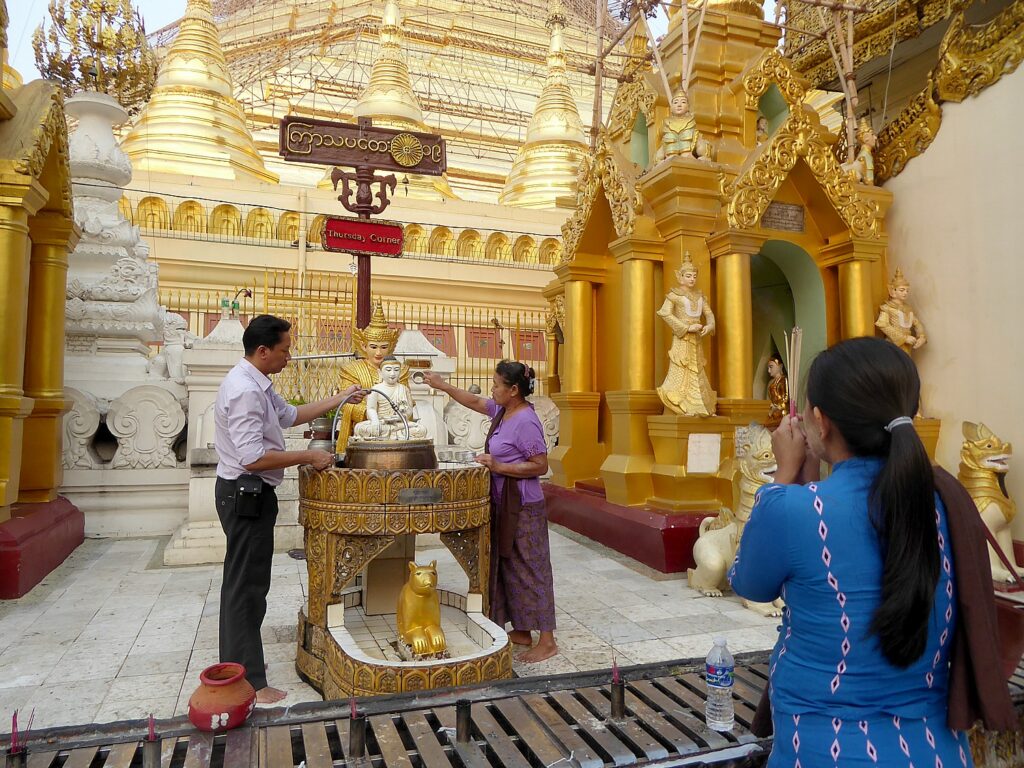
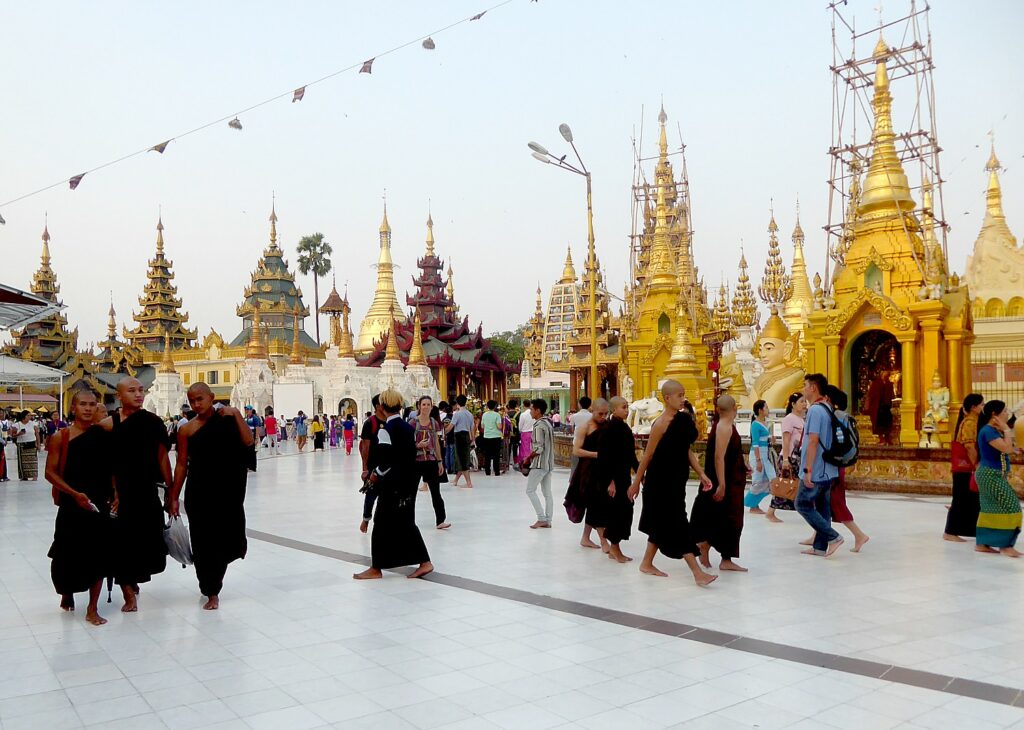
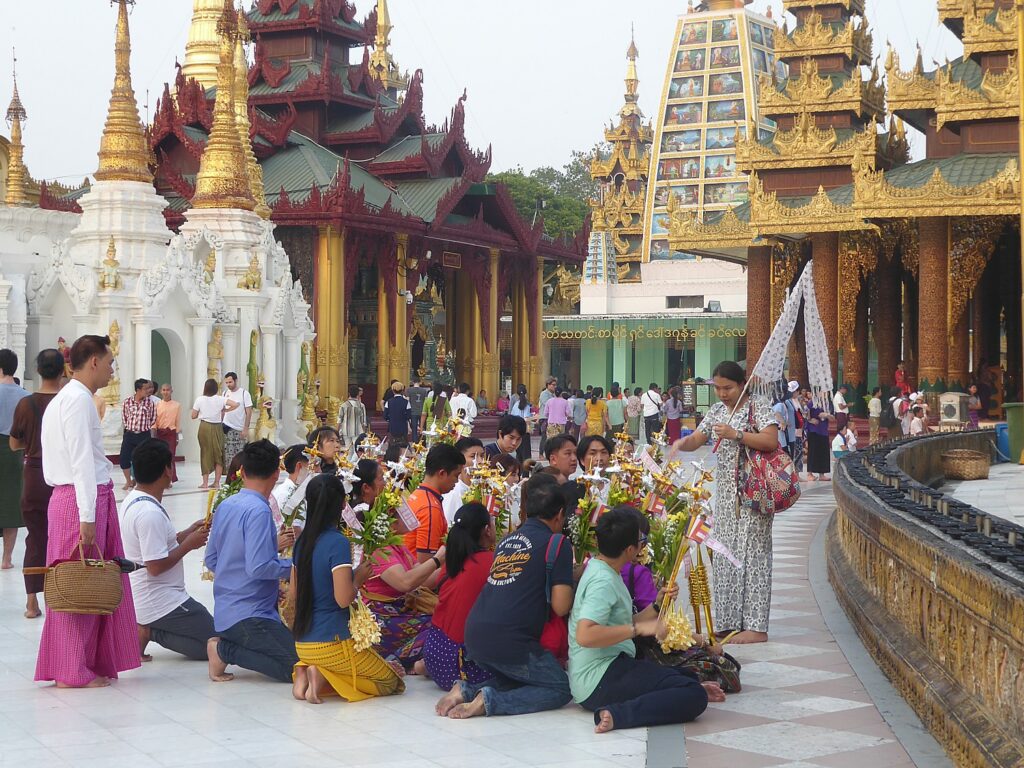
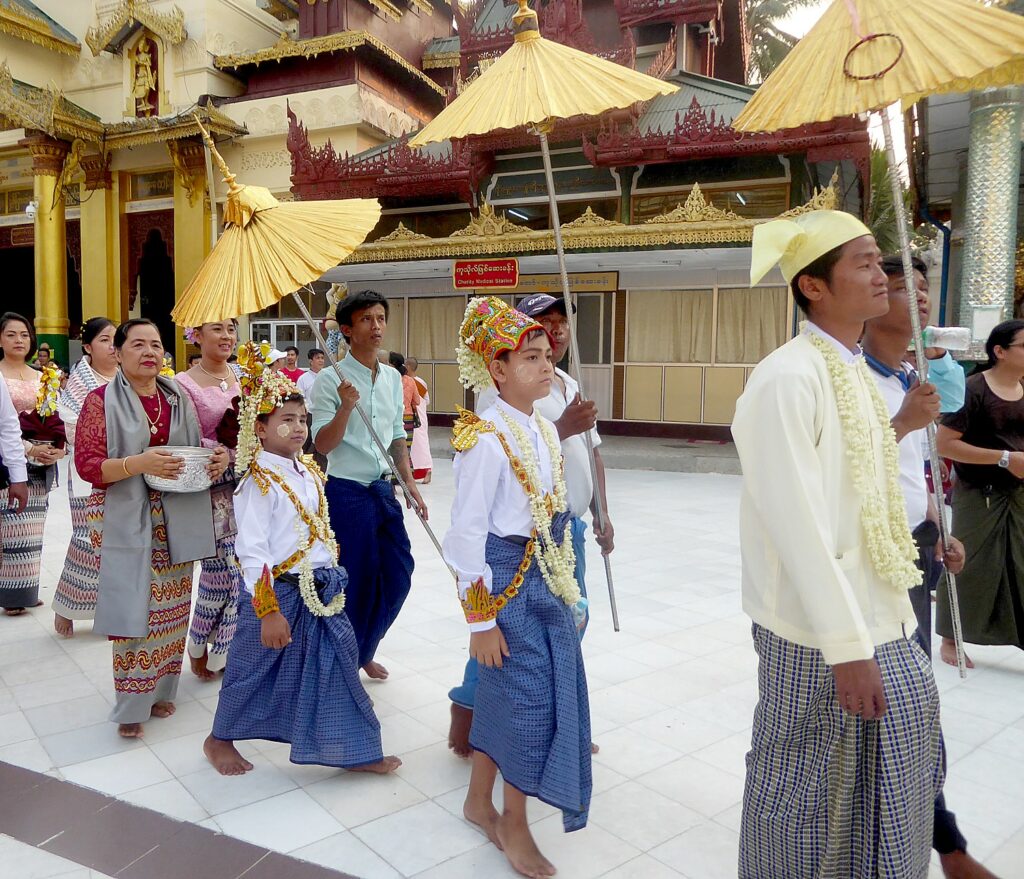
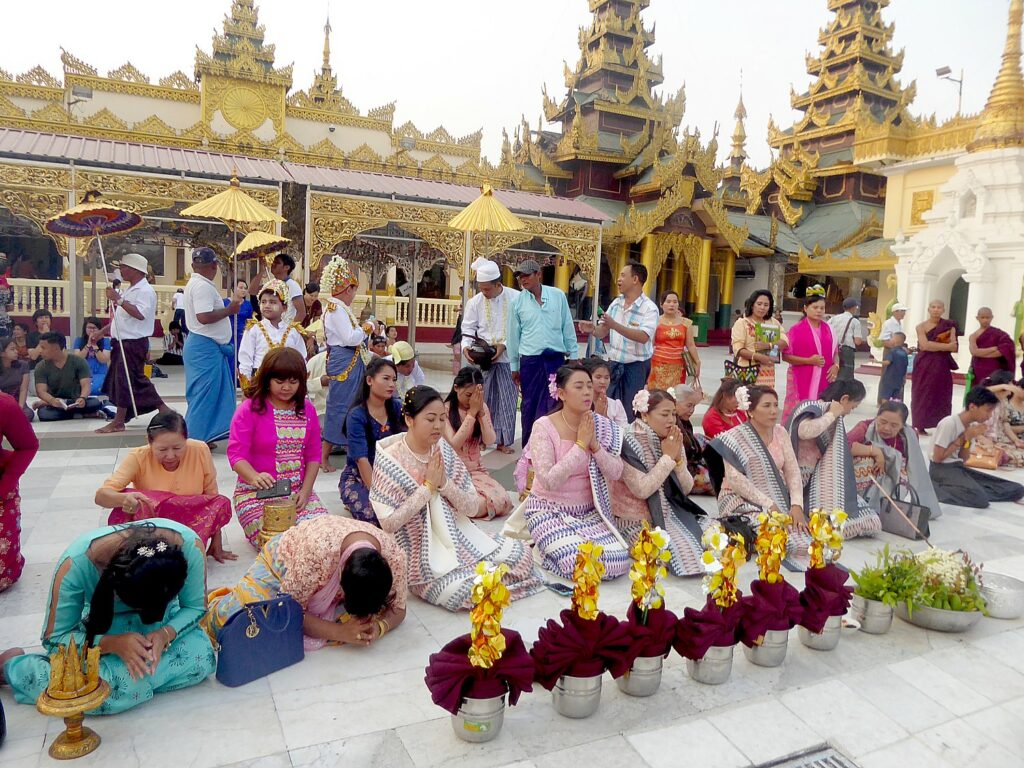
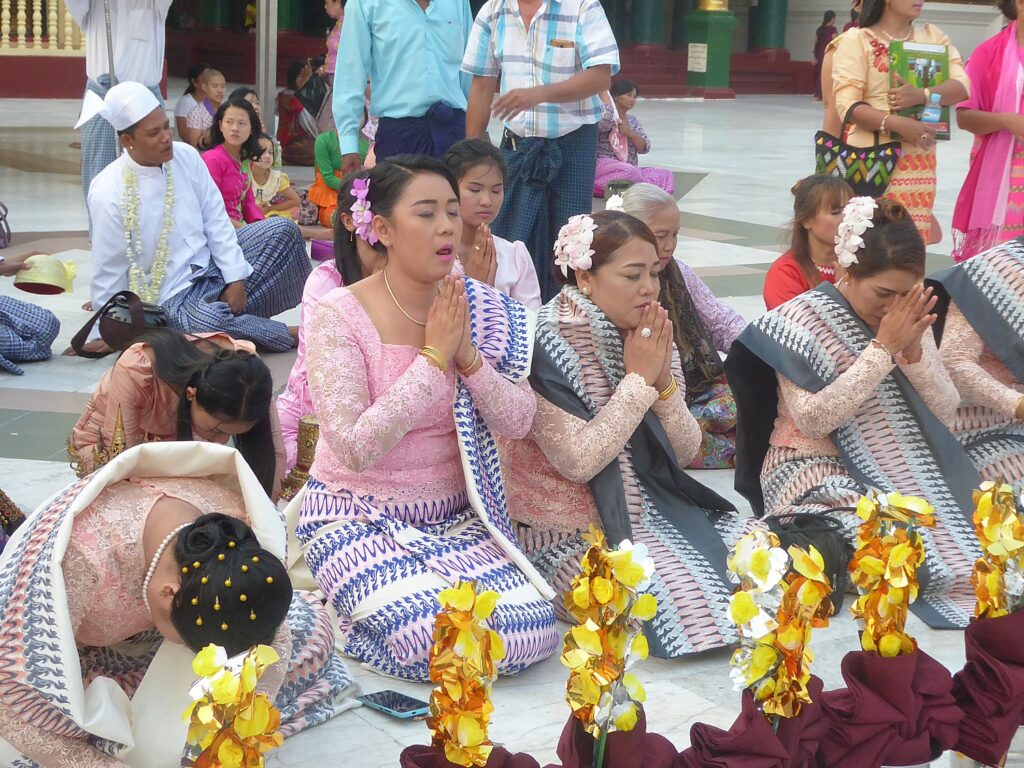
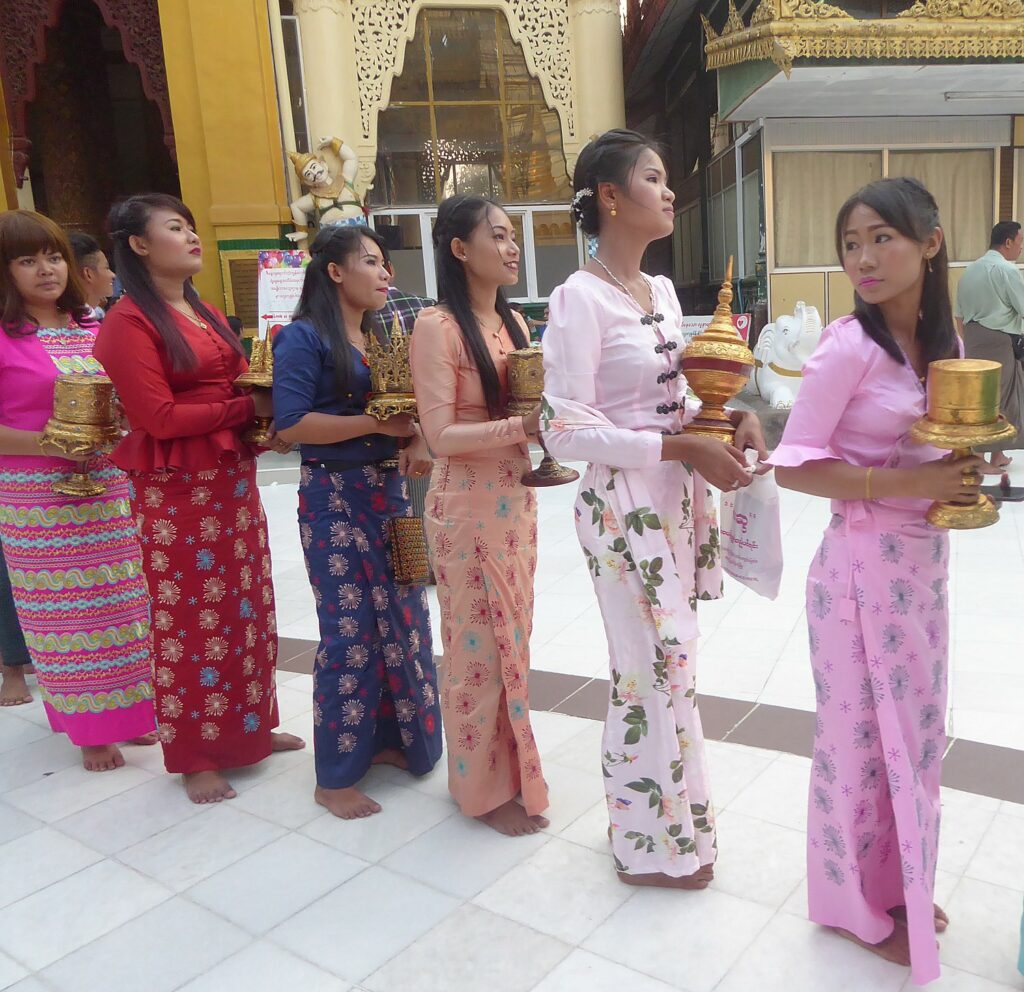
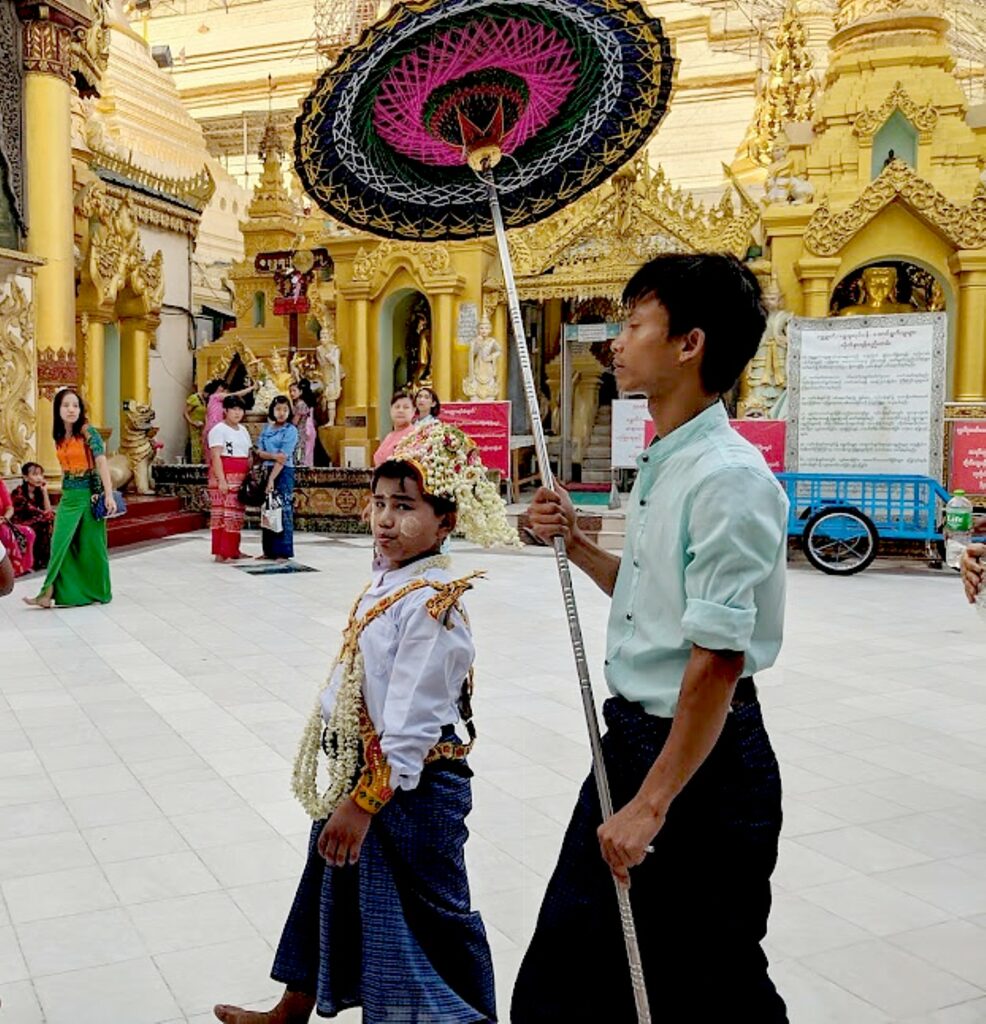
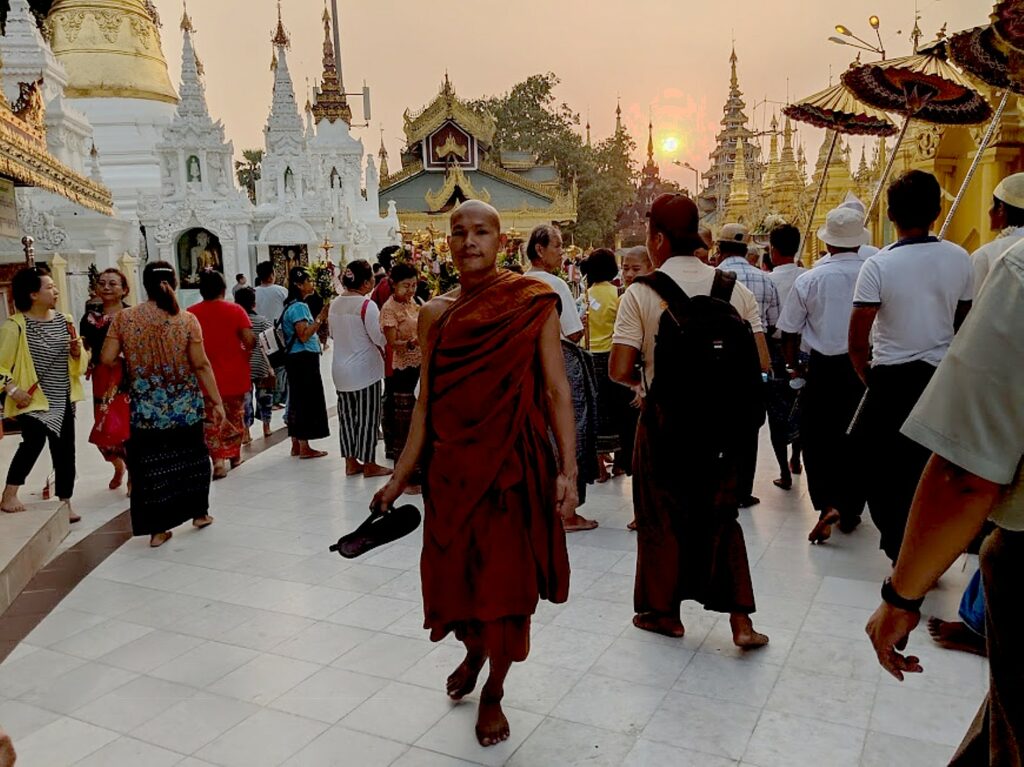
the Shwedagon Pagoda is Myanmar’s most sacred and impressive
Buddhist site. Dating back almost 2500 years, the pagoda enshrines strands of Buddha’s hair and other
holy relics. It is breathtaking.
The Shwedagon Pagoda stands 326
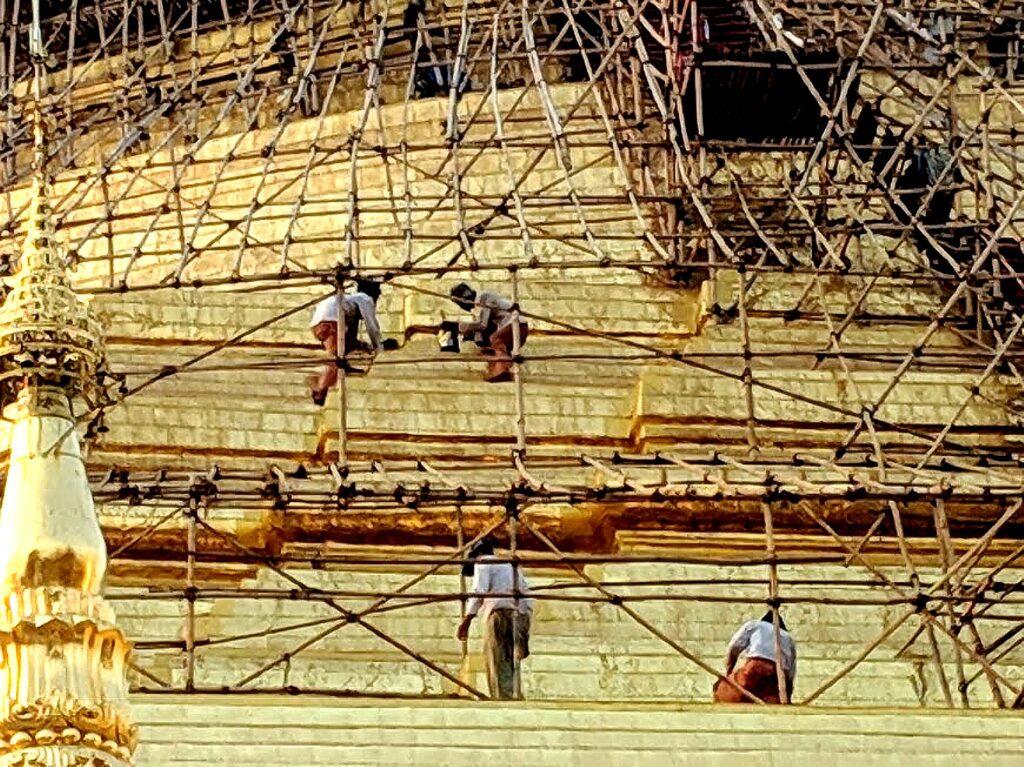
feet high, its dome covered in 60 tons of gold (we watch workmen on scaffolding replacing some of the
gold plates). At the very top, too small to be appreciated from where we stand
at the base, is an orb, 22 inches high and 11-inches wide, encrusted with 4531
diamonds, the largest of which is a 72 carat diamond. The base is
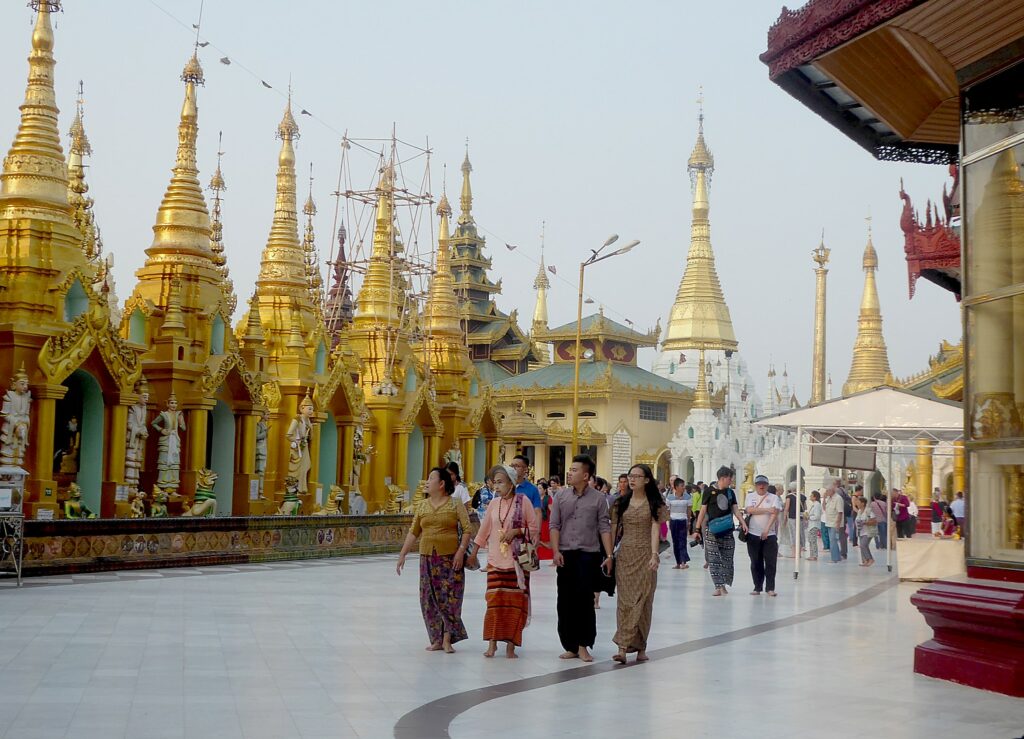
surrounded by 64 small pagodas with four larger ones in the center of each side.
There also are four sphinxes, one at each corner, with six leogryphs (a lion-like
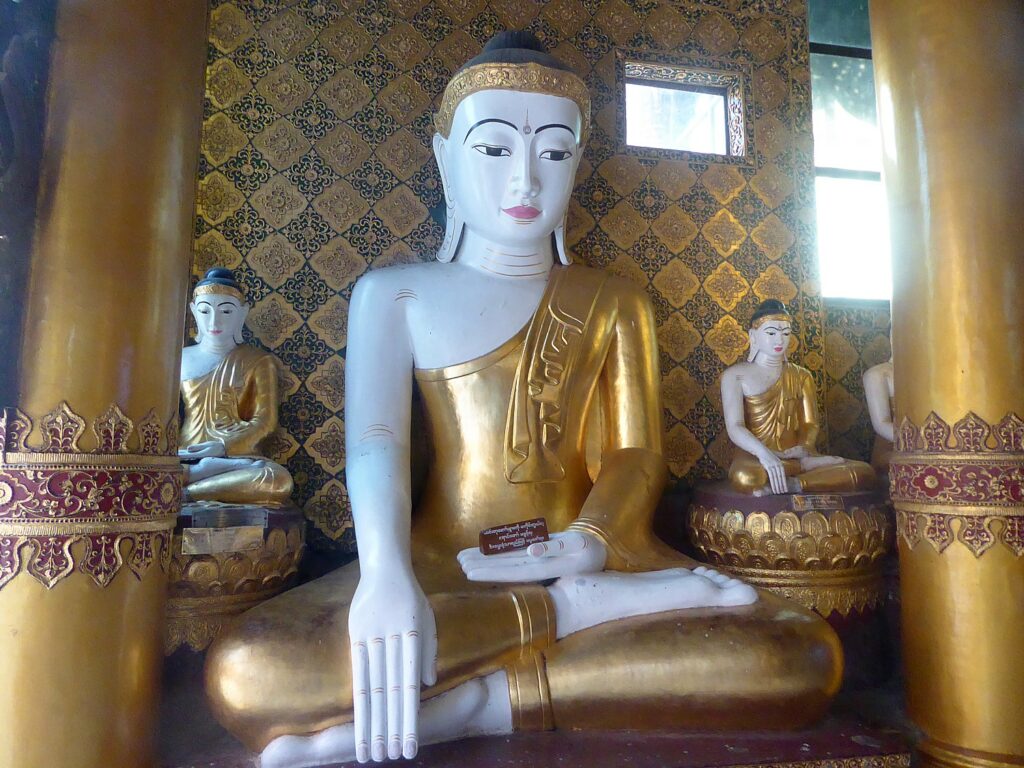
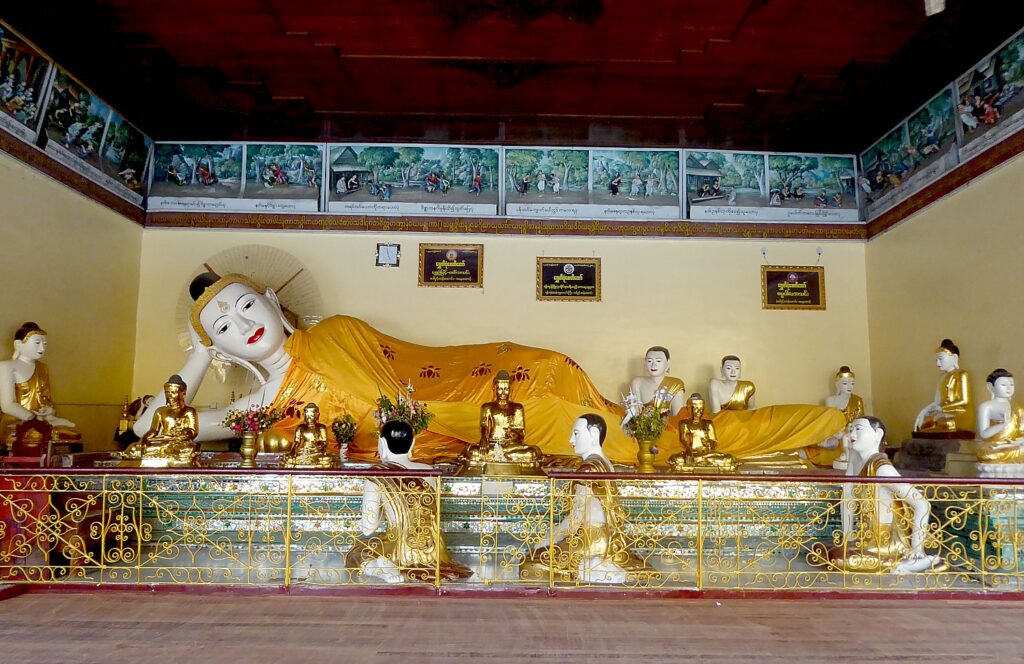
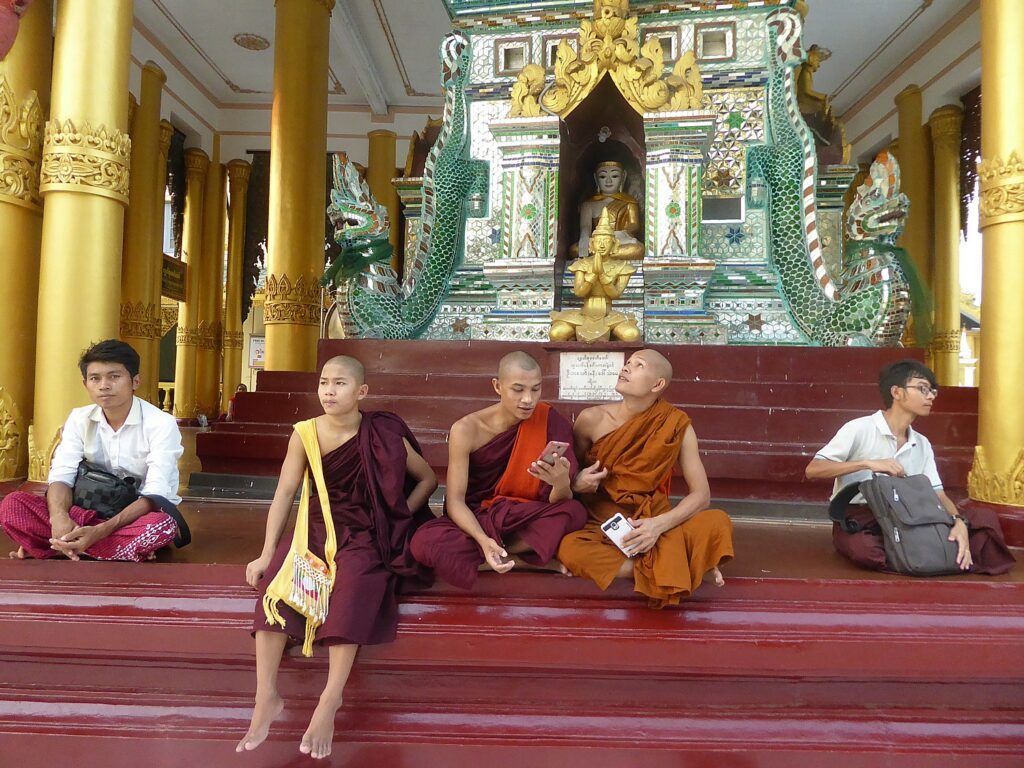
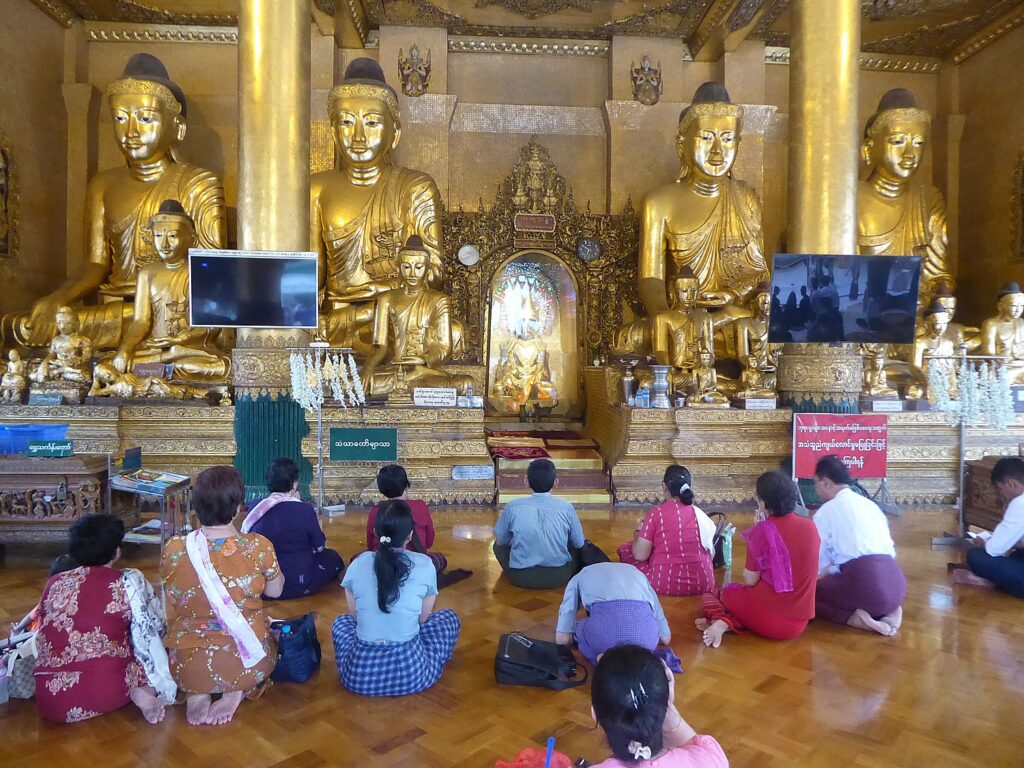
creature). Projecting beyond the base of the Pagoda. are Tazaungs (shrines) in
which are images of the Buddha and where offerings are made.
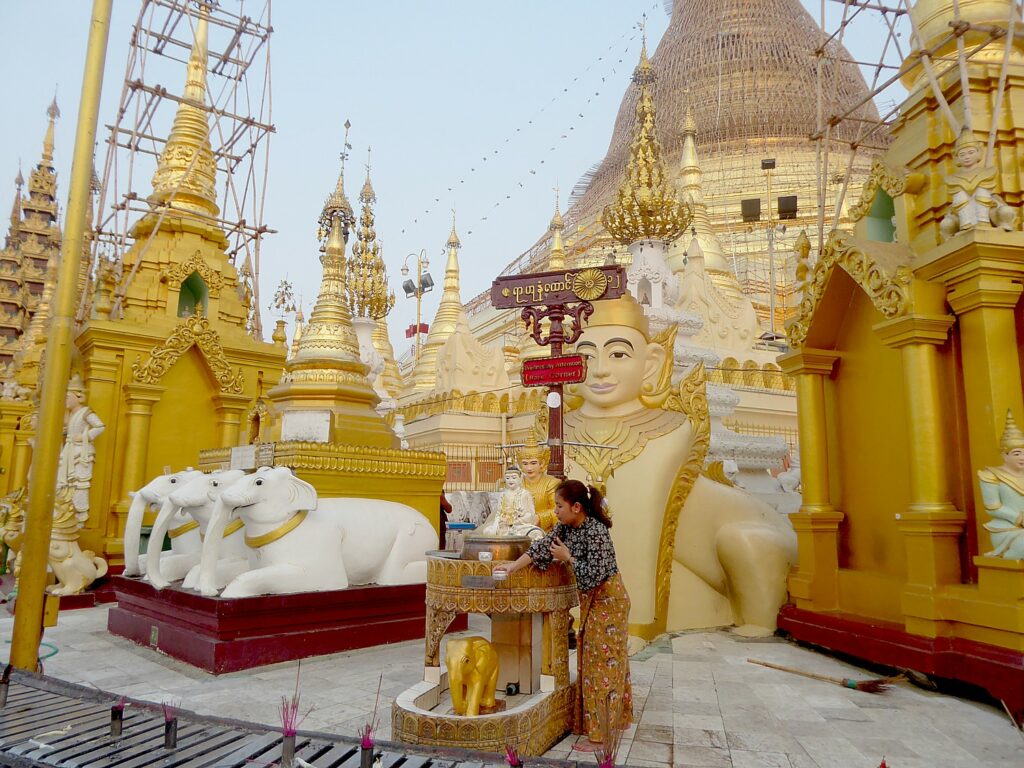
There are also figures of elephants crouching
and men kneeling and pedestals for offerings all around the base. In front of
the 72 shrines surrounding the base of the Pagoda, there are images of lions,
serpents, ogres, yogis, spirits, or Wathundari. Among the most dazzling art is
a Jade Buddha. There are also mystical and mysterious places, like the well
where Buddha’s sacred hair was washed and Buddha’s foot print.
Representing
the highest achievements of Myanmar’s sculpture, architecture and art, there
are hundreds of colorful temples, stupas and statues spanning nearly 2500 years. It
is known as Shwedagon, “the Sanctuary of the Four,” because it contains relics
of four Buddhas who had attained Enlightenment.
(The
Sule Pagoda which I visited the evening we arrived in Yangon – was it just four
days ago? – was also magnificent, but Shwedagon is on a different scale of magnificent.)
You
could easily spend hours here, but we must dash back in a taxi to get back to
the Global Scavenger Hunt group, arriving a few minutes past the 6 pm deadline
(we aren’t competing to win the challenge to be the “World’s Best Travelers,”
so we did not have to turn in our scorecards documenting our scavenges, though,
in fact, we have been doing as many as we can.
At
a hosted dinner at a Japanese restaurant, all of us trade our stories of adventure
and exploration from Yangon and some combination of Bagan, Mandalay and Inle
Lake. One of the scavenges invited the teams to take part in a volunteering
opportunity and Lawyers Without Borders, the team from Houston, volunteered at a
Youth Development monastery in Yangon. “The monks take in, house,
feed and educate orphans from far-flung and remote villages around the
country,” Zoe Littlepage writes on her blog (http://zoeandraineygreatescape.blogspot.com). “My favorite
part was eating lunch with the kids. They sing their prayers before they
can start eating.. magical.” (Zoe Littlepage and Rainey Booth, of Houston, are
on their 12th Global Scavenger Hunt, and are five-time champions,
and their law firm helps support the philanthropic works of the Global
Scavenger Hunt Foundation.)
We
return to the hotel to get our four-hour notice and learn where our 23-day
“Blind Date with the World” mystery tour continues next: an eight-hour layover
challenge in Bangkok and then on to Abu Dhabi – essentially having breakfast in
Myanmar, lunch in Thailand and dinner (or nightcap?) in the United Arab Emirates.
We
are out the door at 5:15 am (the hotel sends us off with breakfast boxes), to
get to the airport.
It
is worth noting that in addition to having a unique alphabet and language,
Myanmar (formerly Burma) asserts its identity by keeping its clocks half-hour
different from its timezone.
I
realize that time is really fluid – not really stable or fixed ordering our day,
a concept rather than an invention. We lost a full day crossing the timezone
during that first flight of more than 14 hours, and have been picking up an
hour or so here as we go.
At the
end of this Par 5, Leg 3 dash through Myanmar, SLO Folks, a team
from central California who are the returning champions from last year’s Global
Scavenger Hunt, earned the second most points with 37 scavenges in Yangon,
Bagan and the point rich area of Inle Lake for 2,055 points; and Lawyers Without
Border, a team from Houston on their 12th Hunt (they have won it
five times) had the most, completing 52 scavenges in Yangon, Bagan & Inle
Lake earning 2,745 points.
The Global Scavenger Hunt is an annual travel program that has been operated for the past 15 years by Bill and Pamela Chalmers, GreatEscape Adventures, 310-281-7809, GlobalScavengerHunt.com.
My
perfect day in Inle Lake, Myanmar, on Leg 3 of the Global Scavenger Hunt, a
23-day around-the-world mystery tour, begins the night before, on the JJ
Express bus that leaves the temple city of Bagan at 10 pm and arrives at the
bus stop (literally in the middle of the street in a small village) at 4:30 am.
It is complete darkness, not a sound or stirring besides ourselves as the bus
pulls away, leaving us there. For a moment, we feel stranded. Then, out of the
shadows, two tiny jitneys – like small tut-tut open-back vehicles – appear. The
drivers ask which hotels we are bound for so we divide up based on which side
of Inle Lake we are staying. We settle the fare (we are in a very limited
position to negotiate) and climb in.
The
jitney drops us at the Sanctum Inle Resort at 5:30 am, where the kindly hotel
clerk calls in housekeeping early so we could get into our rooms by 6 am (when
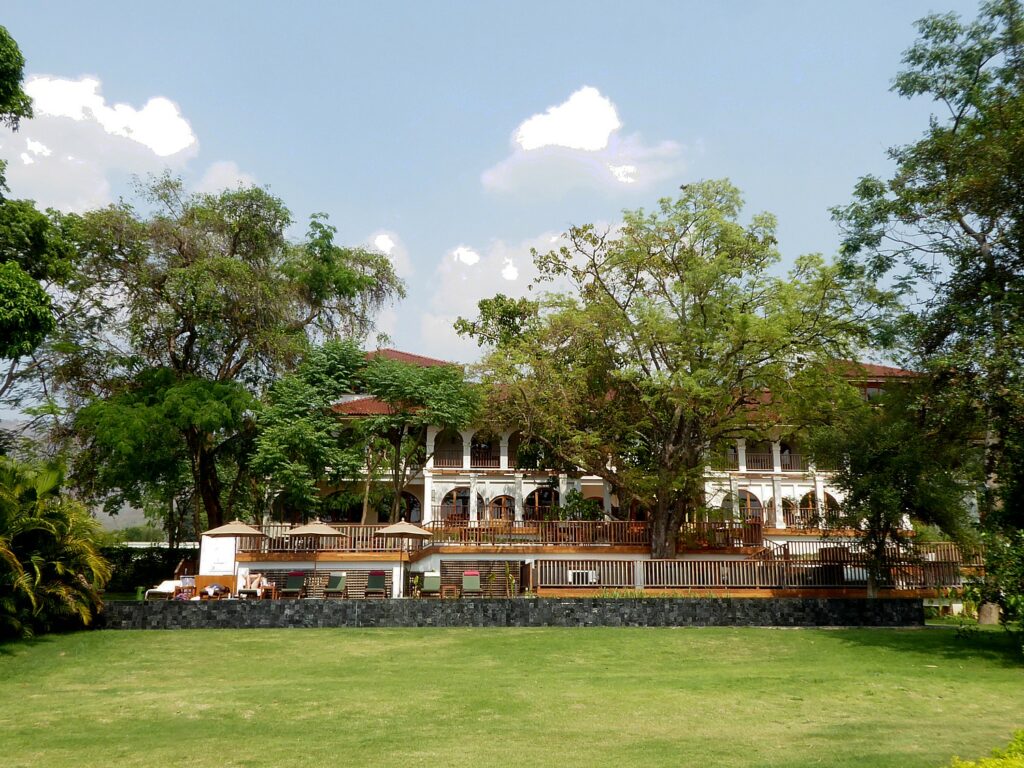
2 pm would have been normal check-in time). This five-star resort makes me feel
like I have been dropped into paradise.
I
am traveling on my own at this point, though at least one other of the 10 teams,
SLO Folks, on the Global Scavenger Hunt are here – my teammate went on to Mandalay with
another team who decided not to compete for points. SLO Folks (last year’s “World’s
Greatest Travelers” GSH champion) has been scrupulous about following rules of
the contest (no using computer or cell phone to make bookings or to get
information; the trip is designed to “trust strangers” and engage with local
people) so they arrive in Inle with no hotel, not even a decent map to start
planning how they will attack the scavenges (challenges) and accrue the most
points in the limited amount of time.
Indeed,
this challenge, Leg 3 of our trip, is to depart Yangon (the city formerly known
as Rangoon when the former British colony was known as Burma) and complete a
triangle of cities (Bagan, Mandalay, Inle Lake), allowing only two legs by air and
return to Yangon by 6 pm on Saturday, making our own arrangements for
transportation and hotel (we are reimbursed $200/night/team). I had planned to
go from Bagan to Mandalay with my teammate, but after hearing about Inle Lake
from another team (Lawyers Without Borders, a Houston team that has done the
Global Scavenger Hunt 12 times) who had been here before, I was enchanted to
see it; then, overhearing SLO Folks planning to take the overnight bus, I was
determined to see it for myself.
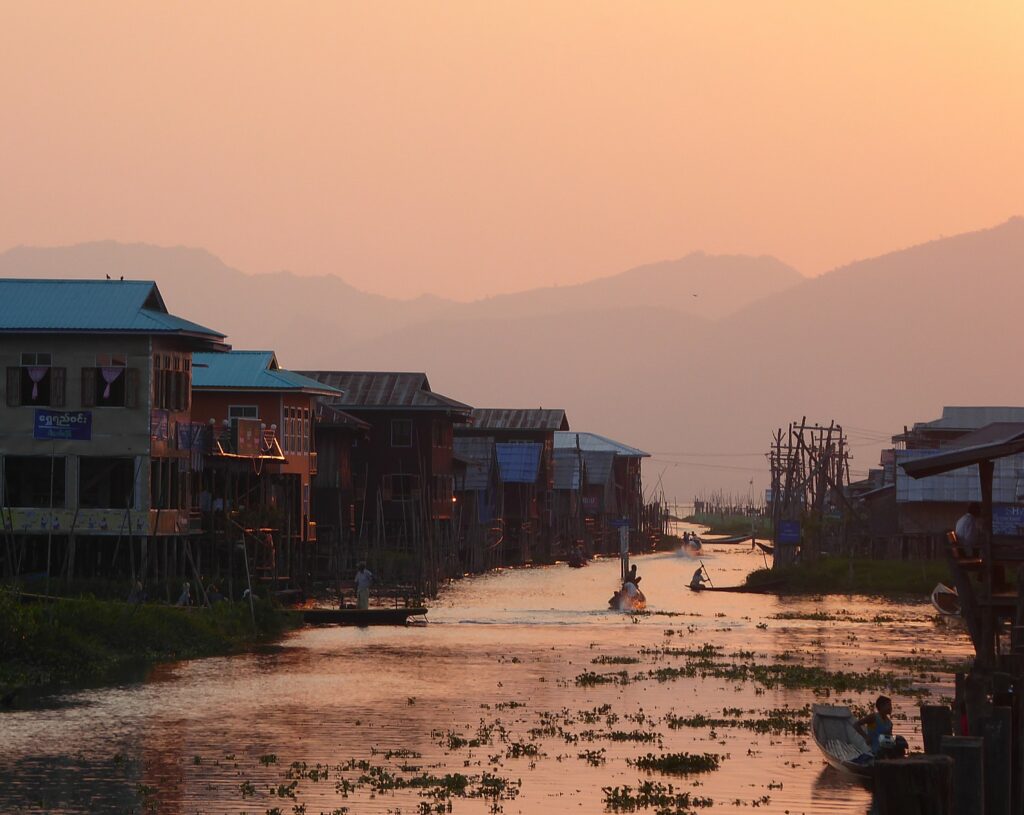
The description enchanted me: Located in the middle of Myanmar,
in the Shan State, Inle Lake is set in a valley
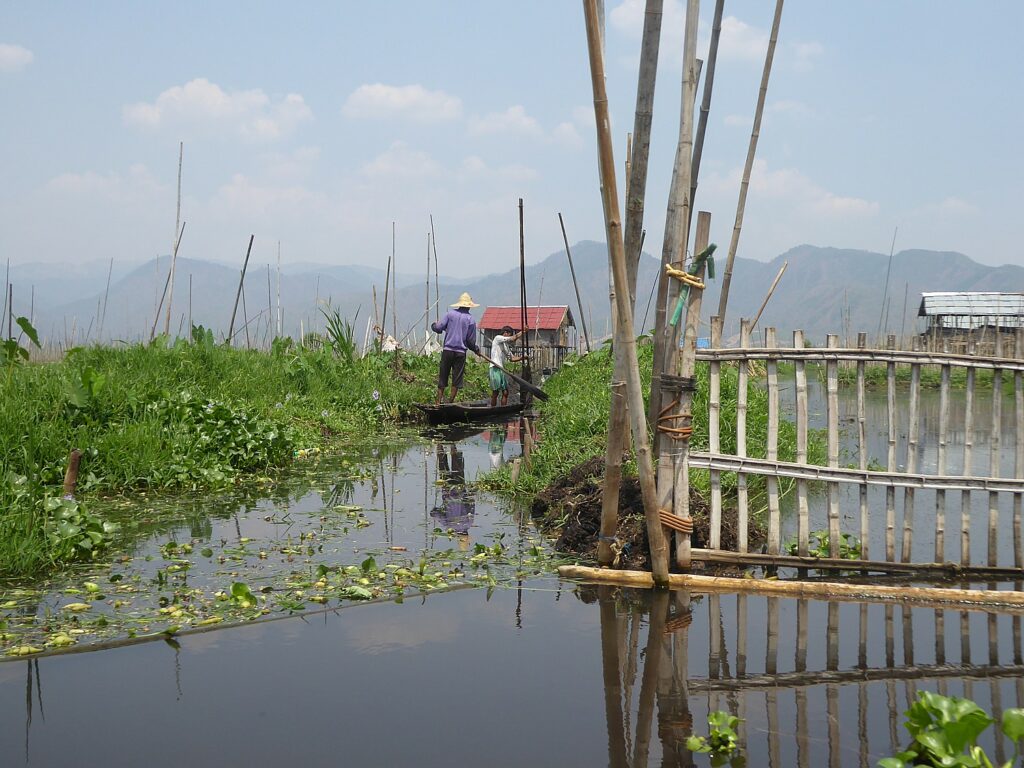
between two mountain ranges, with whole villages of wooden houses built on
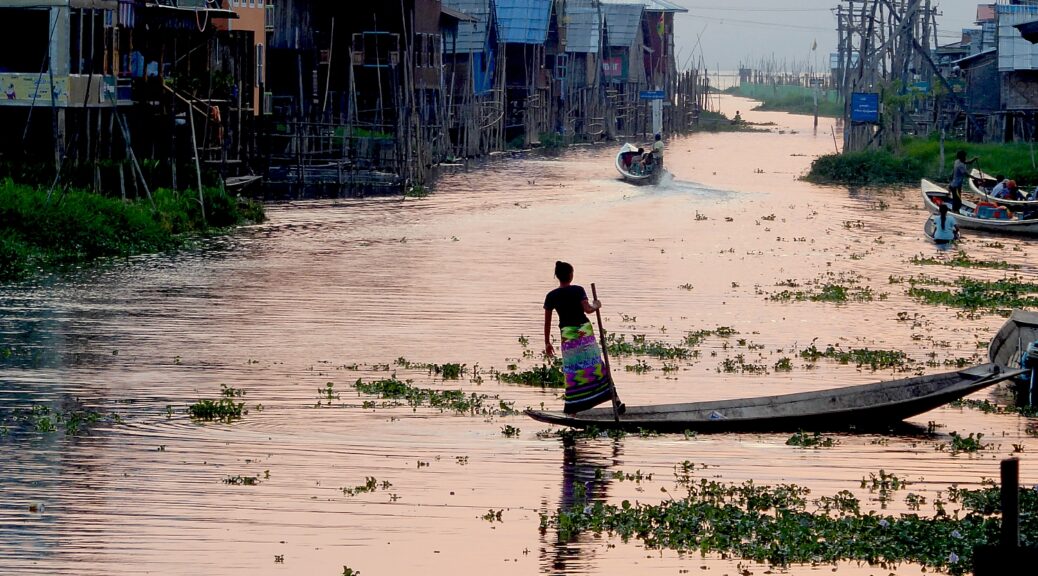
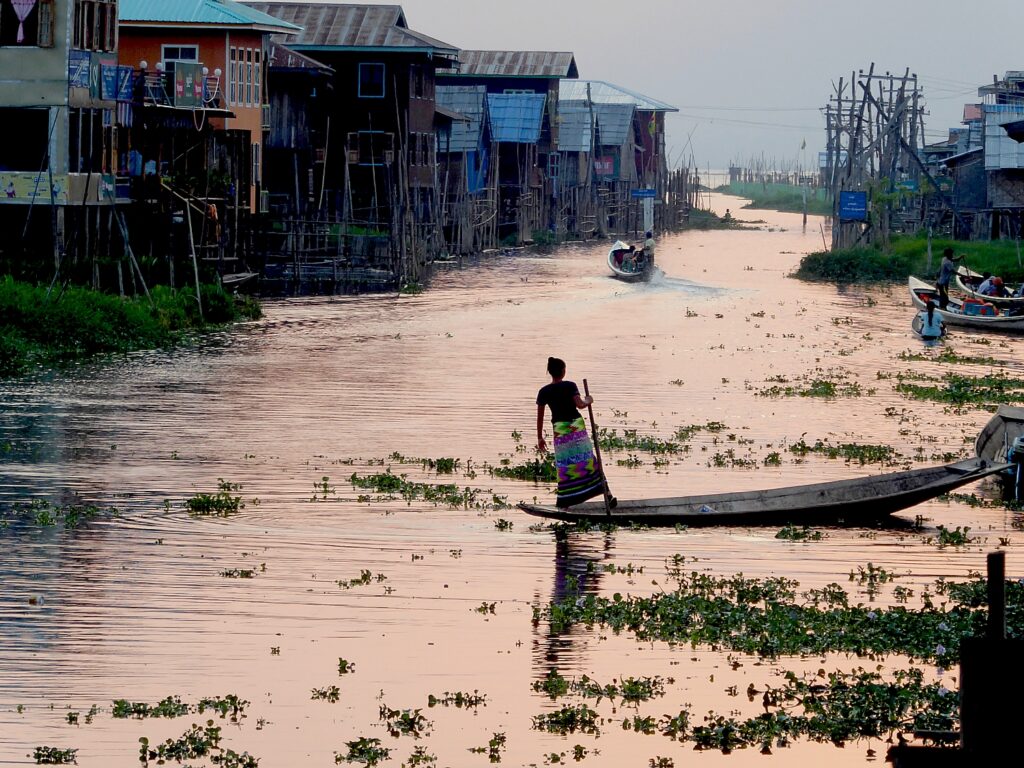
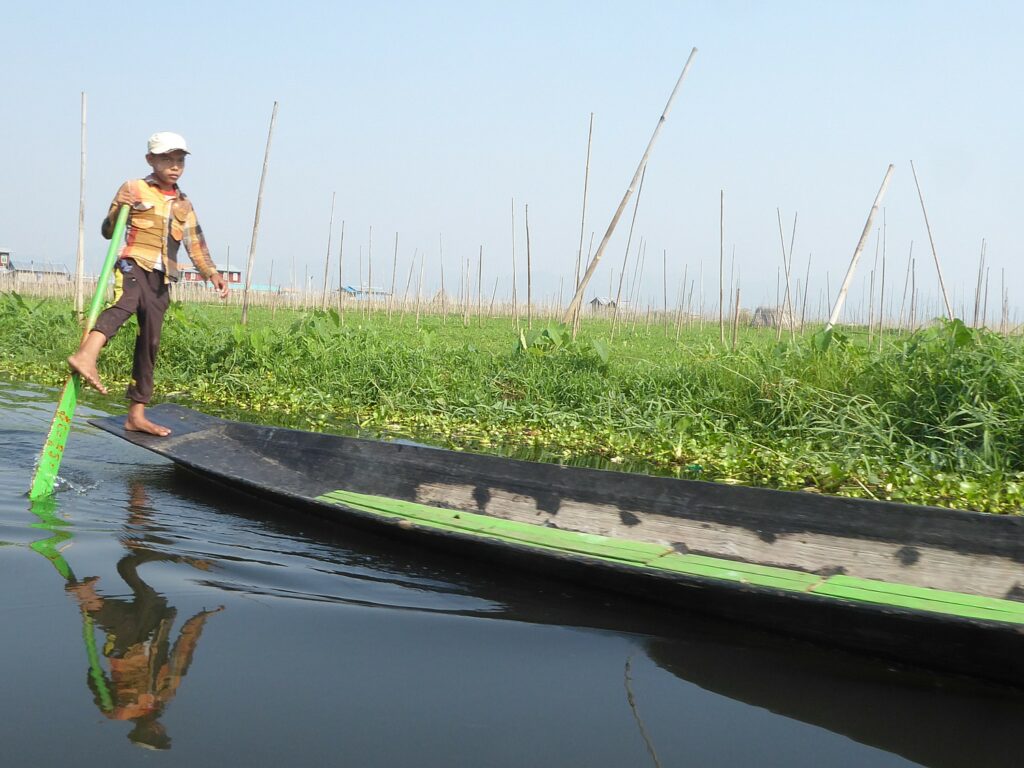
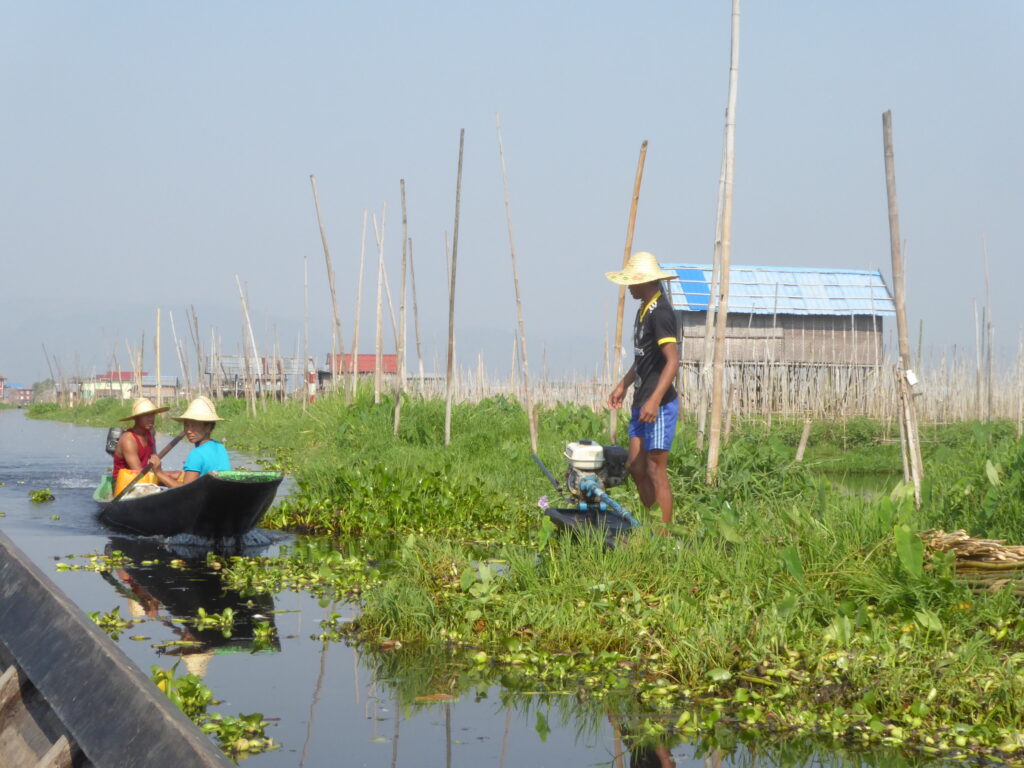
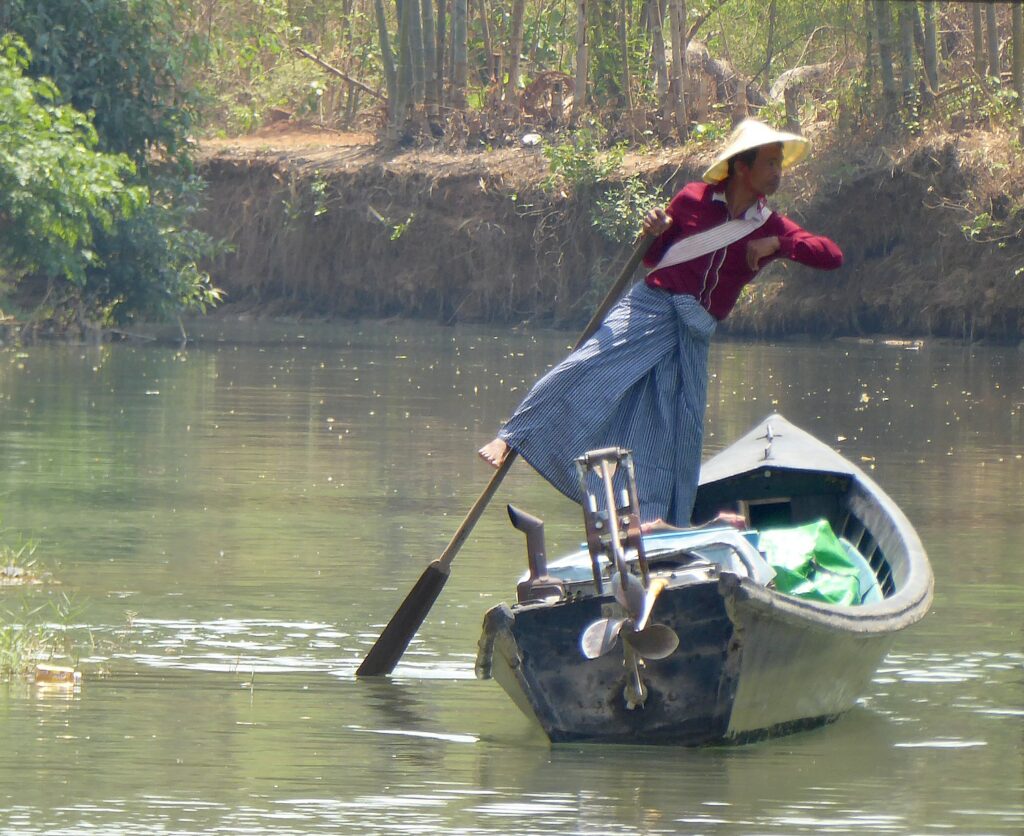
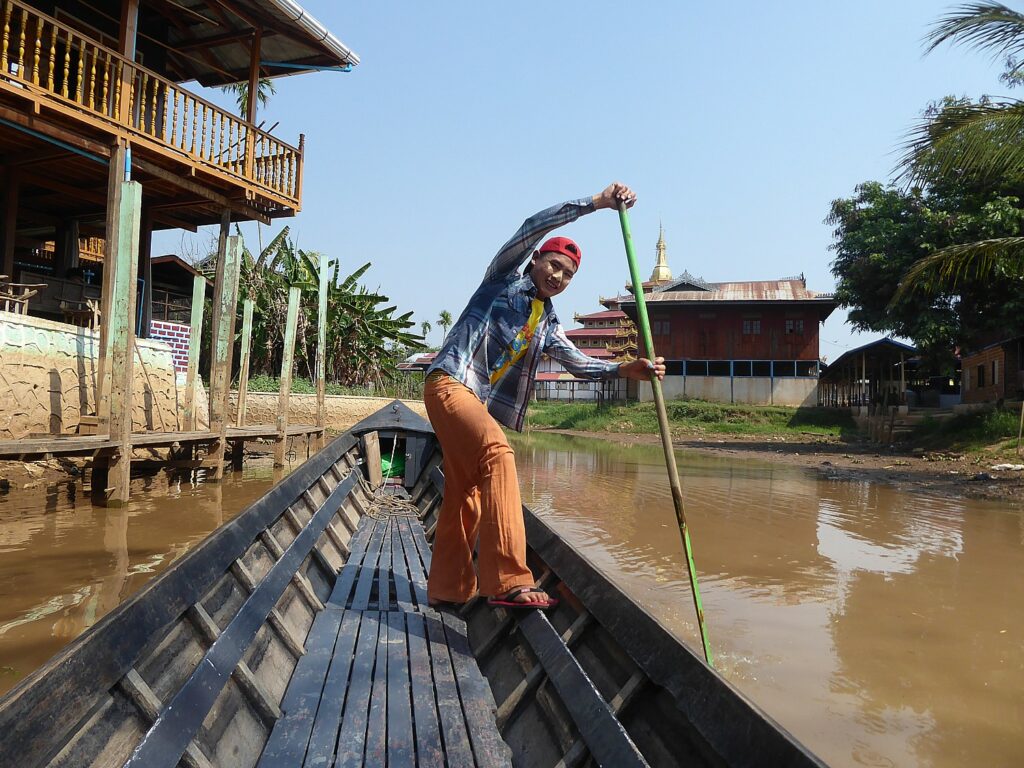
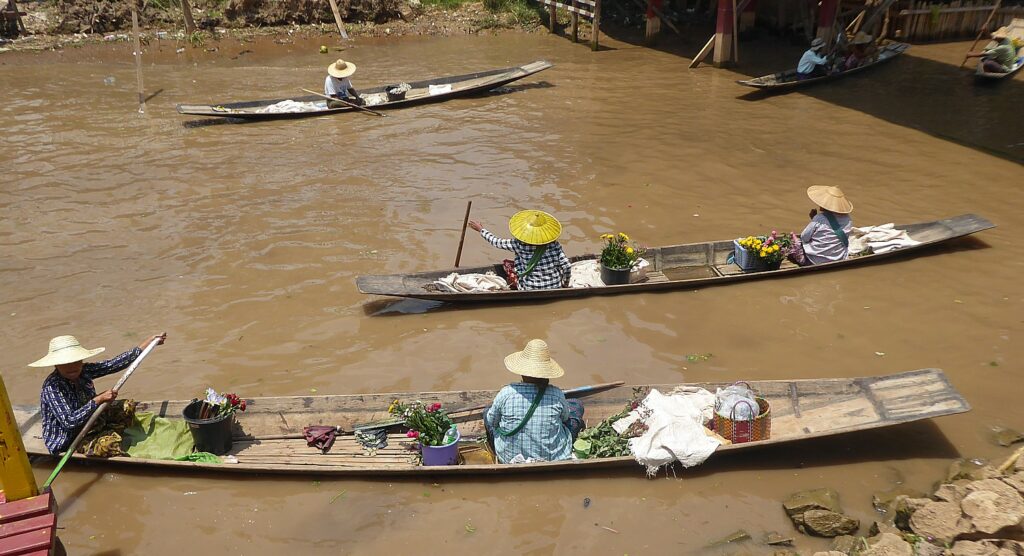
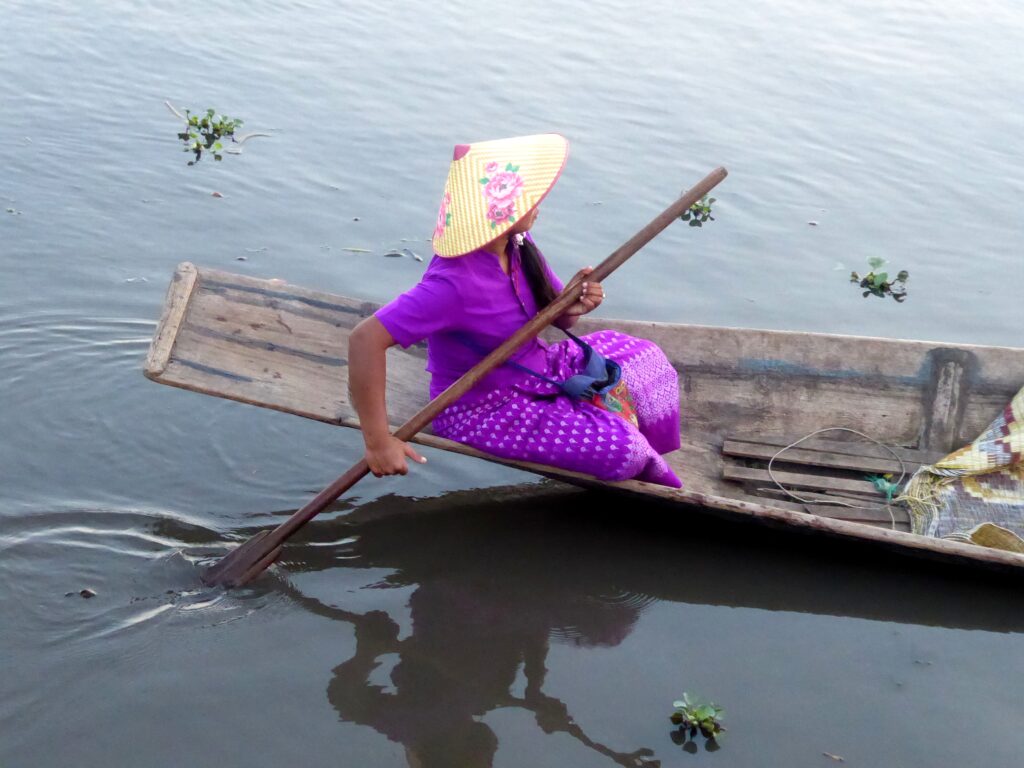
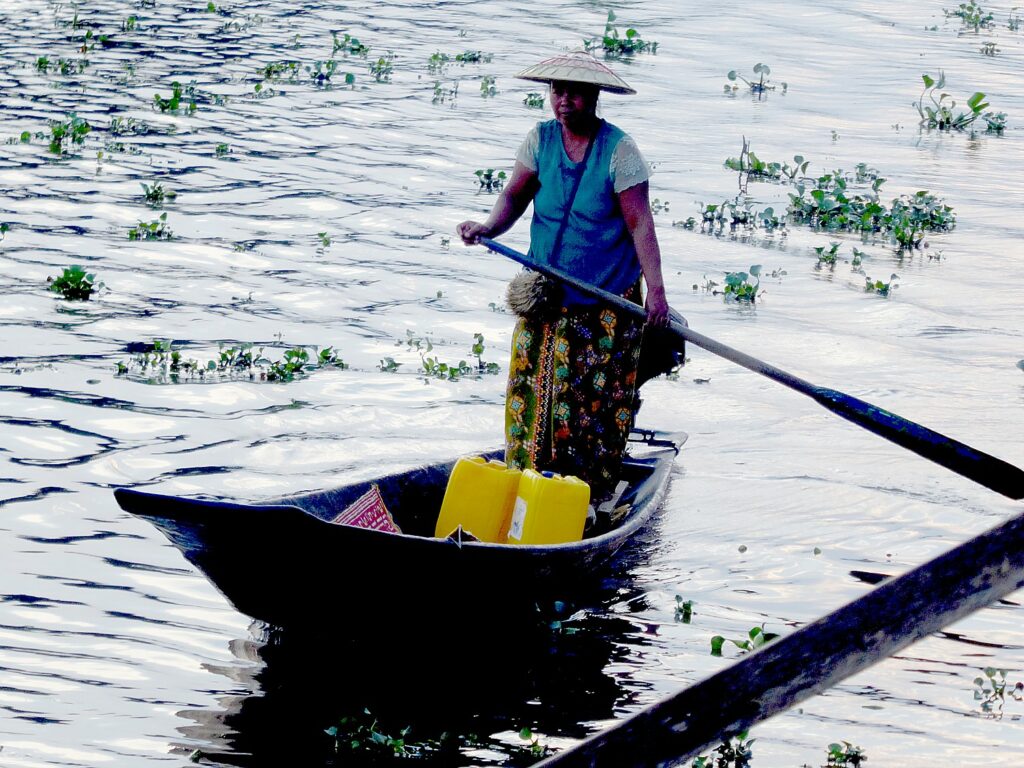
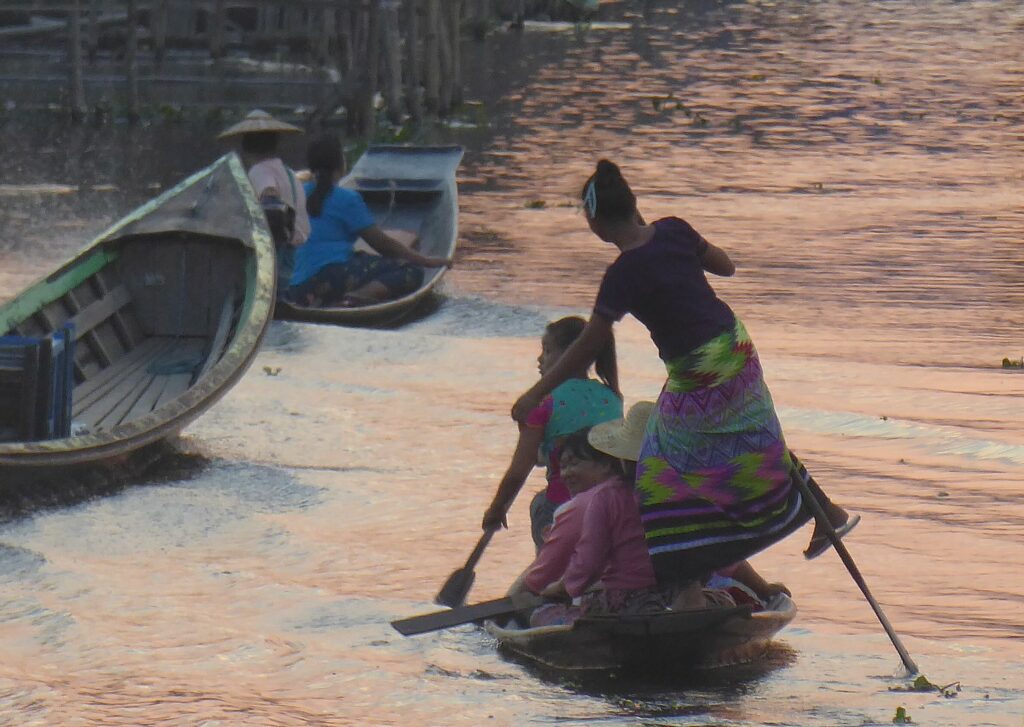
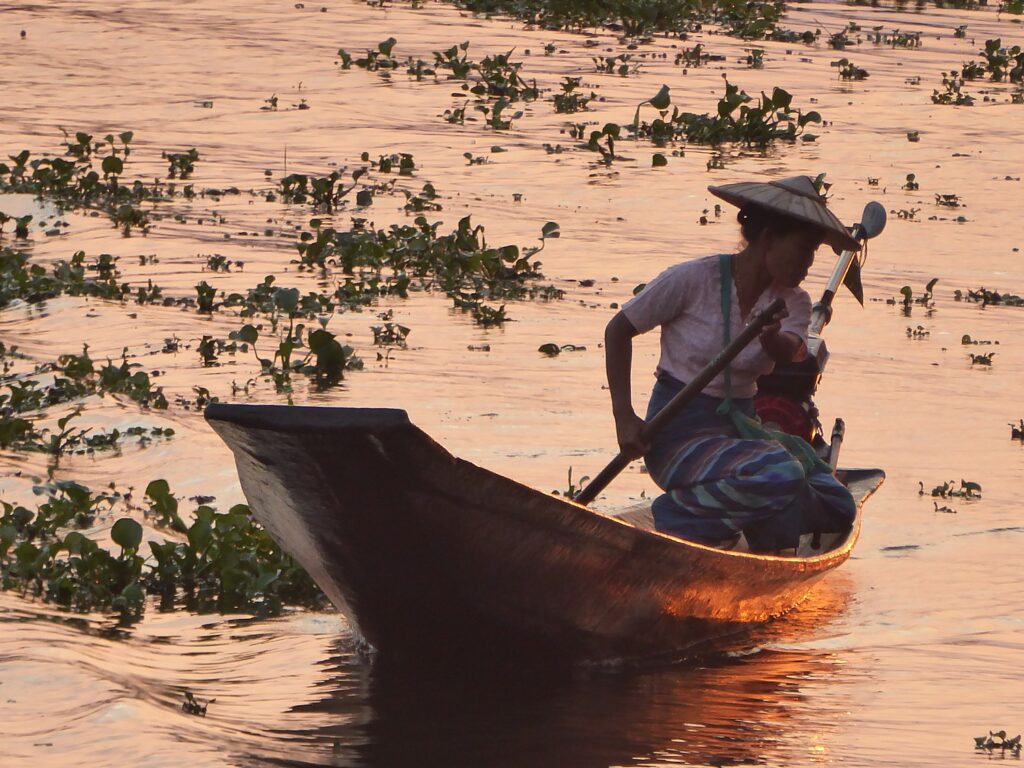
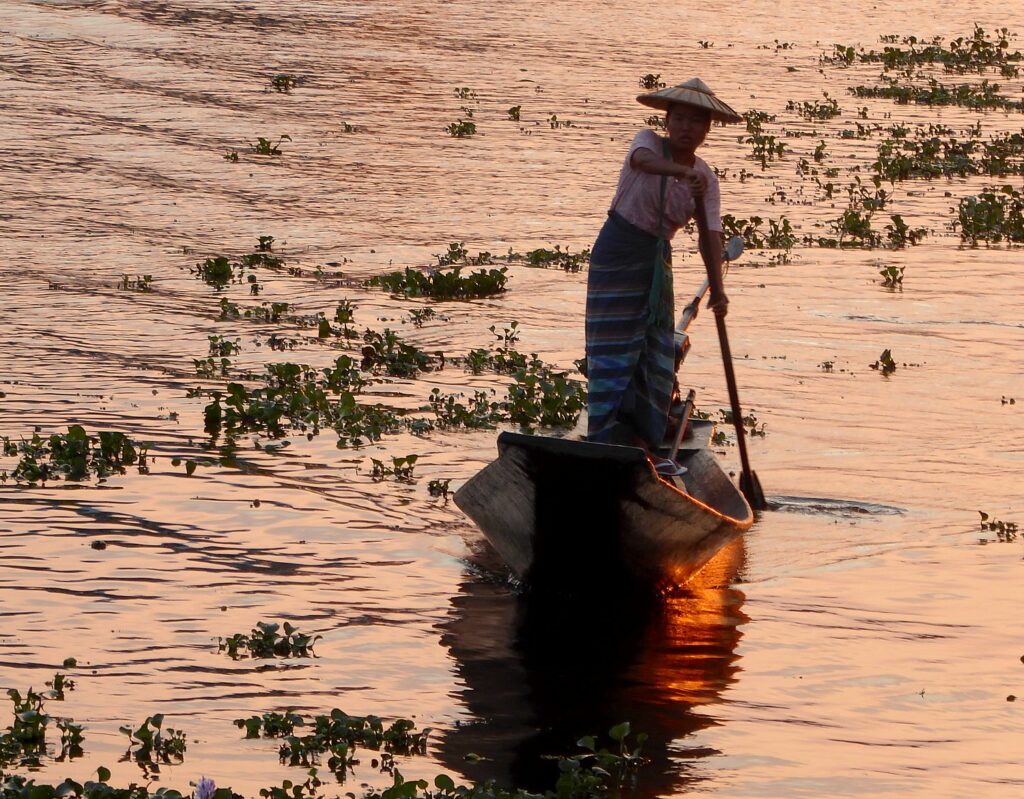
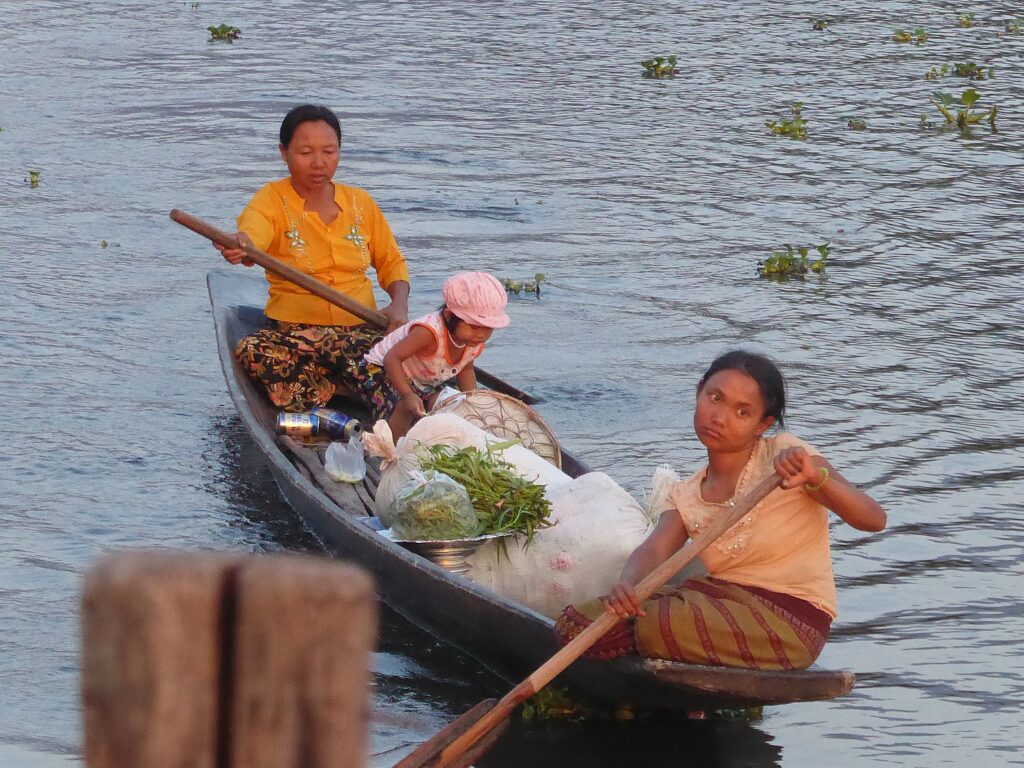
stilts in the middle of the lake, floating gardens, boatmen who steer standing
up, wrapping one leg around a tall oar. There are 10 different Shan
ethnic groups living around the lake and the surrounding hills, home to many
different minorities who come down to sell their goods in the villages – like
the Long Neck Ladies. Inle Lake was designated a wetland wildlife sanctuary in
1985.
Inle Lake feels like a different world to the rest of Myanmar,
indeed, it seems like an enchanted Sangri-la.
The
Sanctum Hotel (Maing Thauk Village, Inle Lake, Nyaungshwe, Myanmar) is on the
list of suggested accommodations provided by the GSH “ringmaster” and Chief
Experience Officer, Bill Chalmers, and because I am not competing, have booked
on hotels.com ($101 for the night). I am delighted to find it is an absolutely
gorgeous five-star luxury resort (the infinity pool on the grounds with views
to the lake is breathtaking), and just being here fills me with a contented
peace. But that is only the beginning.
The
kindness of the hotel manager is immensely appreciated. For me, it means I am
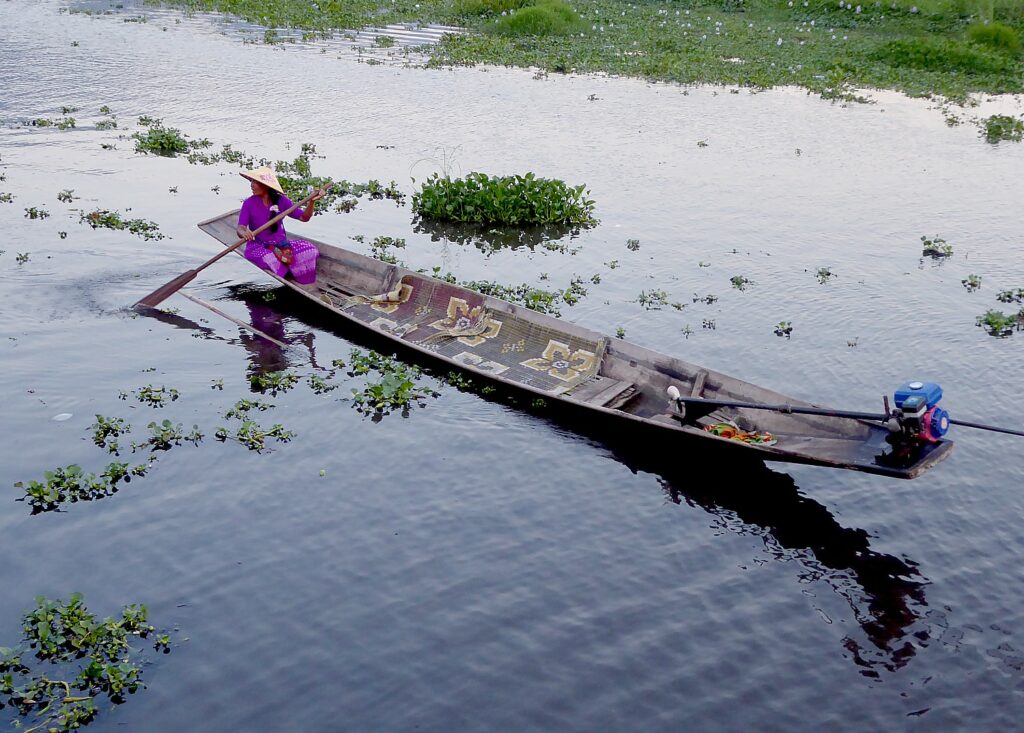
able to take advantage of the hotel’s 8 am boat tour (that means a traditional
wooden boat with the modern convenience of a power motor as well as the
boatman’s long oar) because most of Inle Lake’s special attractions are
literally on the lake – whole villages, in fact, are built on stilts on the
lake; there are floating gardens which are really aquatic farms; floating
markets; the fishermen fish in a distinctive fashion with nets and the boatmen
paddle standing up, with their leg wrapped around the tall oar. The temples and
other major attractions – silversmiths, weavers, boatmakers – are all reached
by the boat.
The
full-day tour will take me to the Five Day Market, Phaung Daw Oo Pagoda, Inn
Paw Khone Village, Ywa Ma Village, Nam Pan Village (where we visit workshops to
see crafts – silversmithing, weaving, boatmaking), Floating Gardens, Nge’ Phe’
Chaung Monastery and Indein Pagoda – essentially enabling me to see all Inle
Lake’s highlights in a one-day visit ($35), though there is so much to see,
Inle Lake is worth a two or three day stay.
The
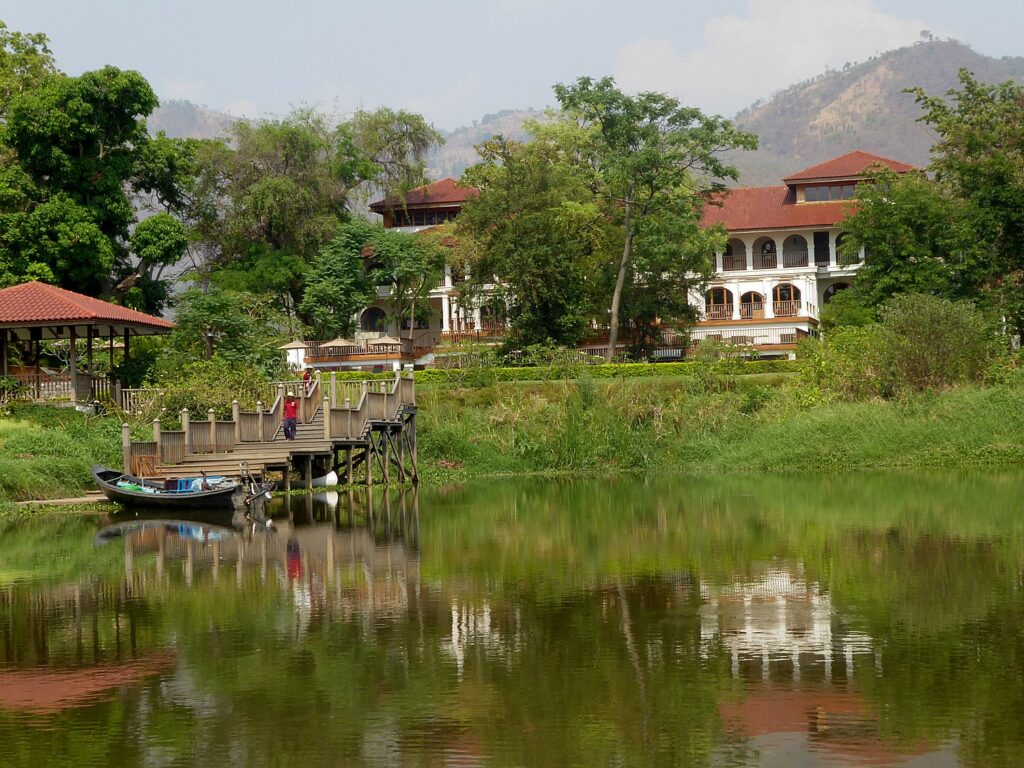
Sanctum Inle Resort is situated on the bank of Inle lake – a shallow lake
that’s over 13.5 miles long and 7 miles wide – and to begin the tour I
have booked (because I’m not competing, I can book a hotel tour, while the
competing team cannot, so they go off to find where the boatmen keep their
boats), I am escorted down to the hotel’s dock where the boat and the boatman
is waiting. It turns out I am the only one, so this is essentially a private
tour. The boatman, a young fellow named Wei Mo, speaks only limited English –
enough to tell me where I am going – but it is sufficient, I just don’t expect
to get any commentary.
It
is an amazing experience – gliding across the lake, the fresh air and cool
breeze rushing over me, especially after the debilitating 108-degree heat of
Bagan. Inle Lake is notable for the Intha, lake dwellers who have a distinctive
way rowing their wooden boats by wrapping their leg around a tall oar. At
first, the mechanics make no sense. But I realize it is a way of standing and
using such a tall oar and keeping the weight balanced on the tiny boats.
During
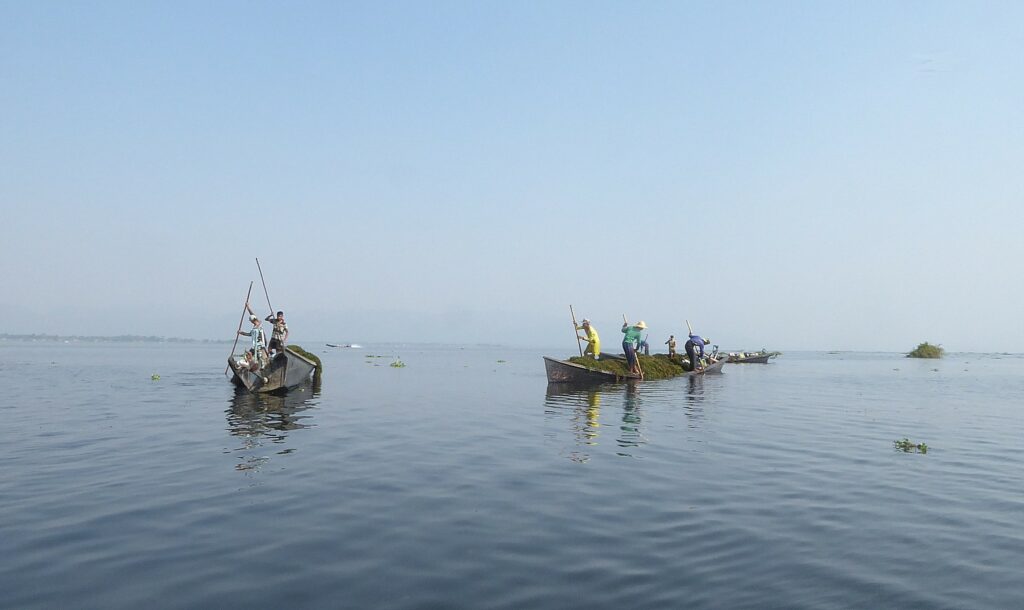
the course of the boat tour, I encounter a young fellow fishing (though you
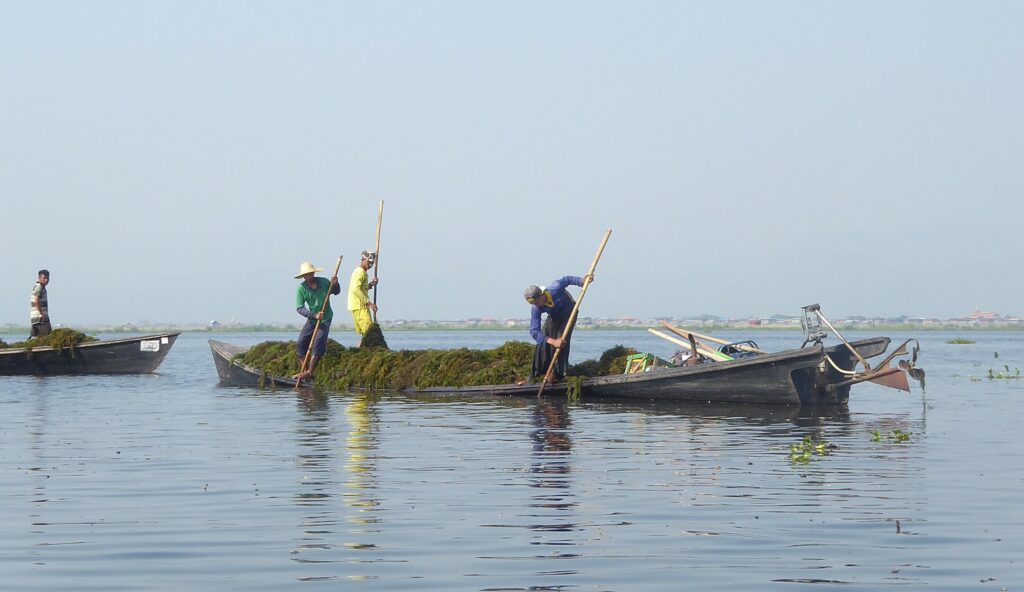
have to get out pretty much at sunrise to see the fishermen), boat people
harvesting from the lake, go through an entire village built on stilts, where
there are also numerous craftsmen and workshops we visit. One stop provides an
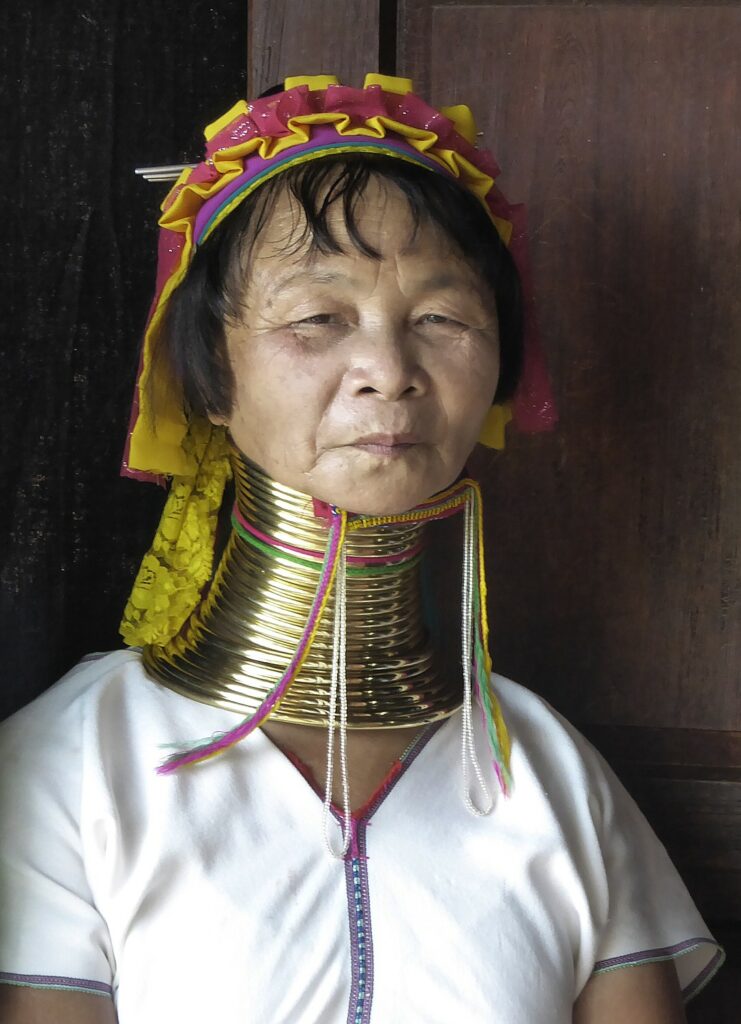
opportunity to visit with the Long-Neck Ladies (actually only one), who come
down from their secluded village to pose for photos with tourists for money. We
also visit important pagodas and temples on the lake.
It
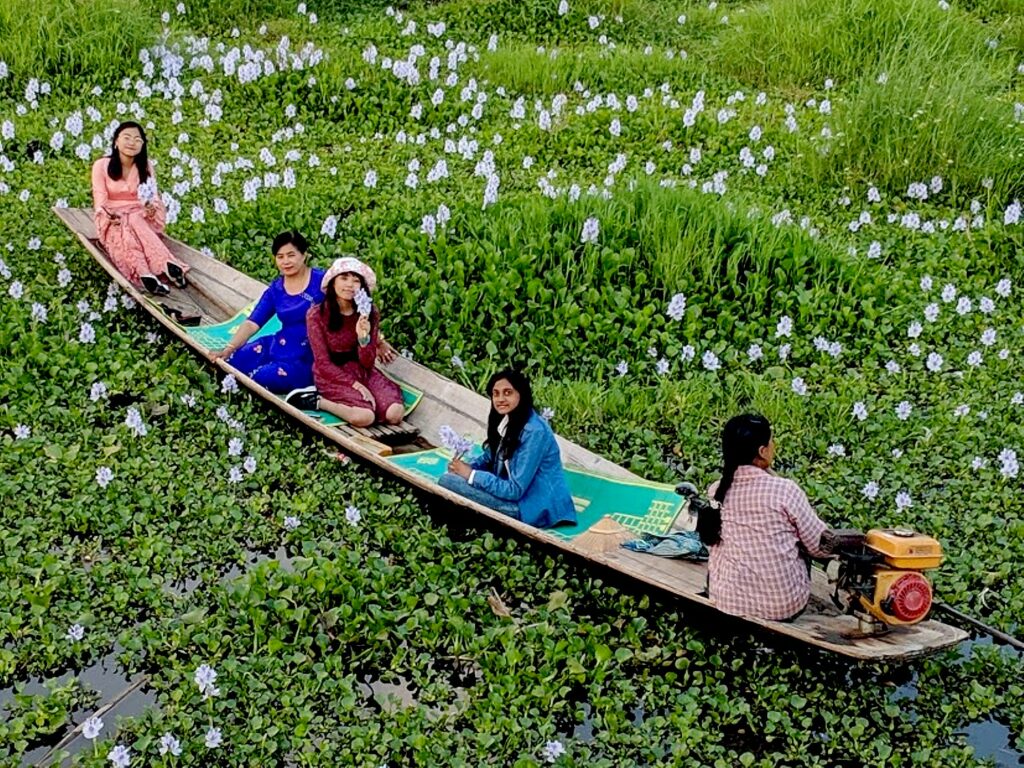
is remarkable to see how the Inthar make the most out of the lake – even
creating farmland where none existed. They build floating gardens out of
lake-bottom weeds and water hyacinth and grow crops like squash and tomatoes,
anchoring them with bamboo poles. I learn that these
floating islands can be cut, dragged by boats and even sold like a plot of
land. Floating gardens can be found mostly in Kaylar, Inchan and Zayatgyi
villages.
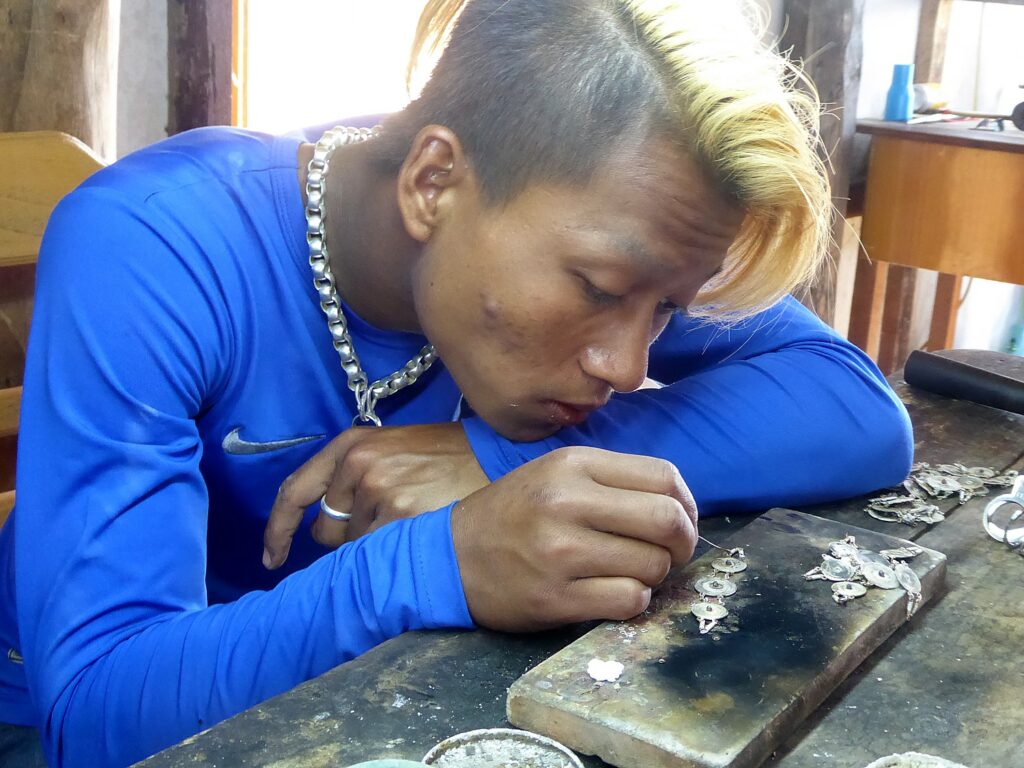
I love visiting the various workshops in the various villages
– it seems each has a specialty. We visit a silversmith workshop where I watch
the intricate process before being led into (what else) an elaborate shop,
filled with stunning creations.
Wei
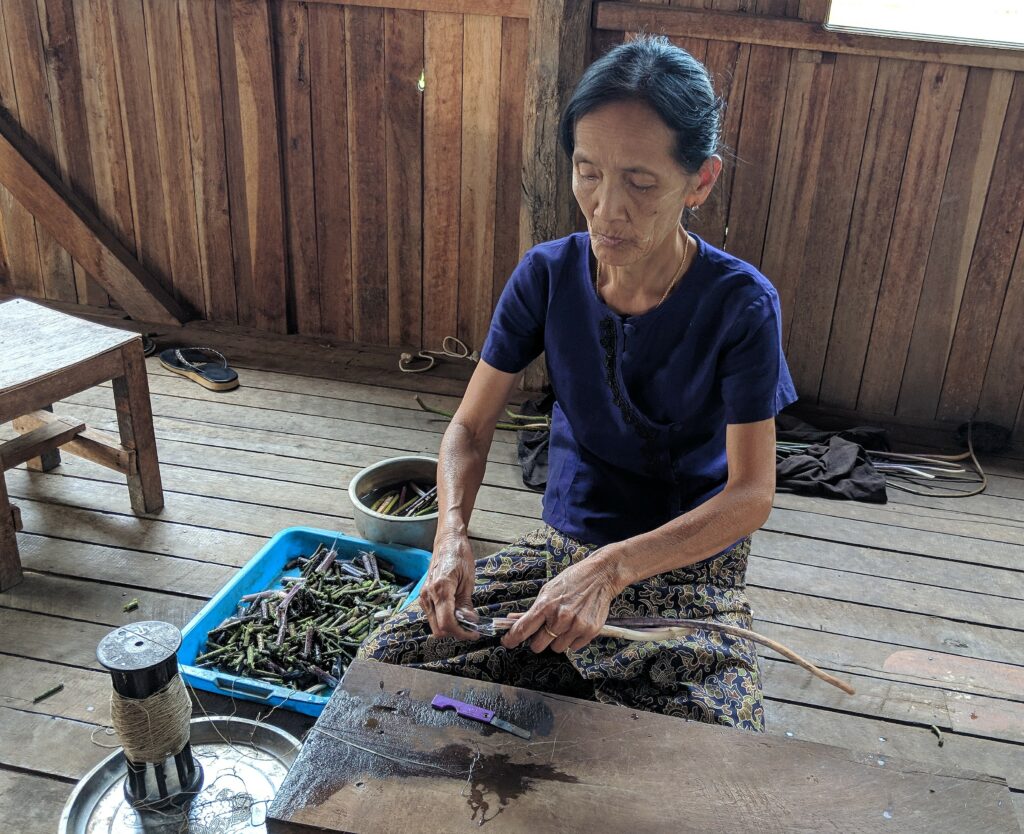
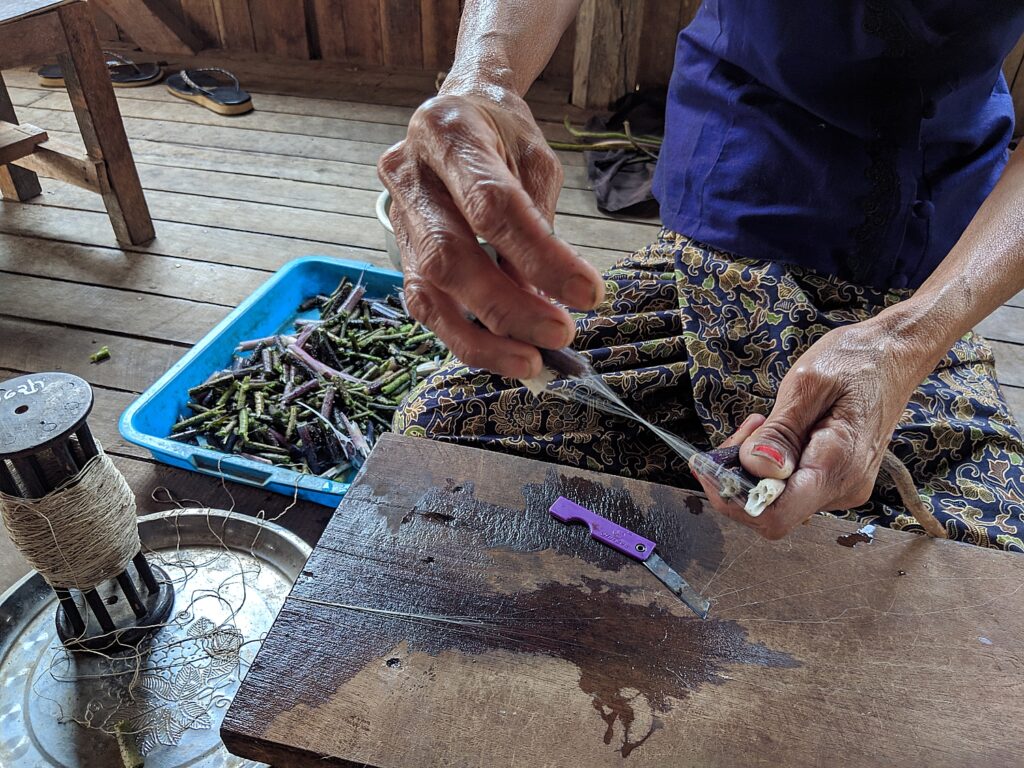
pulls up to Inn Paw Khone Village, famous for
its weaving workshops, but most notably, weaving silk from lotus. Silk
weaving in Inn Paw Khon began 100 years ago. At first, they wove from cotton
fiber and then changed to silk and finally lotus fiber. and I am told that the
technique of making silk from lotus was begun by a woman now more than a
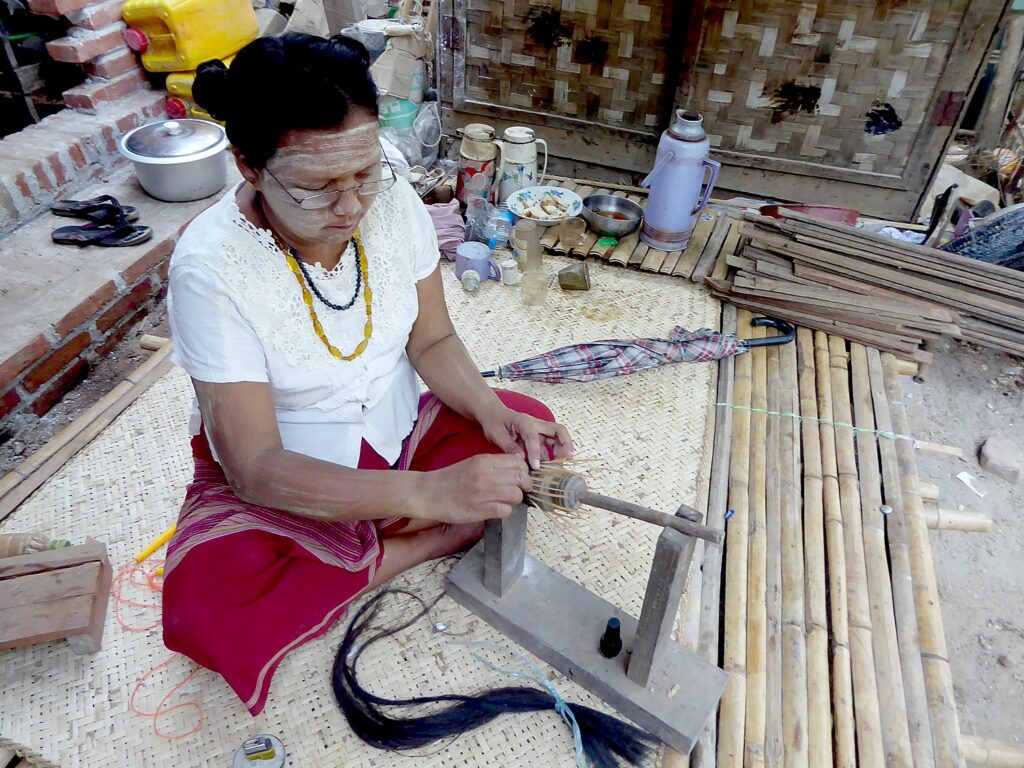
century old. I get to watch how a woman
delicately pulls a strand from the lotus plant which is wound on a spindle into
thread.
At
the boatmakers, I learn how each one is designed differently for their purpose
– a family boat, a fishing boat (7.8 meters), a boat designed for the Long Neck
people. “A boat lasts 25 years. Only men make the boats, they need to be
strong. It takes 20 days to make a boat; they make lacquer from a tree to
paint, wood powder and cotton. It takes two people to cut the teakwood,” she
tells me. There are absolutely stunning wood carvings to purchase. But I must
travel light.
We
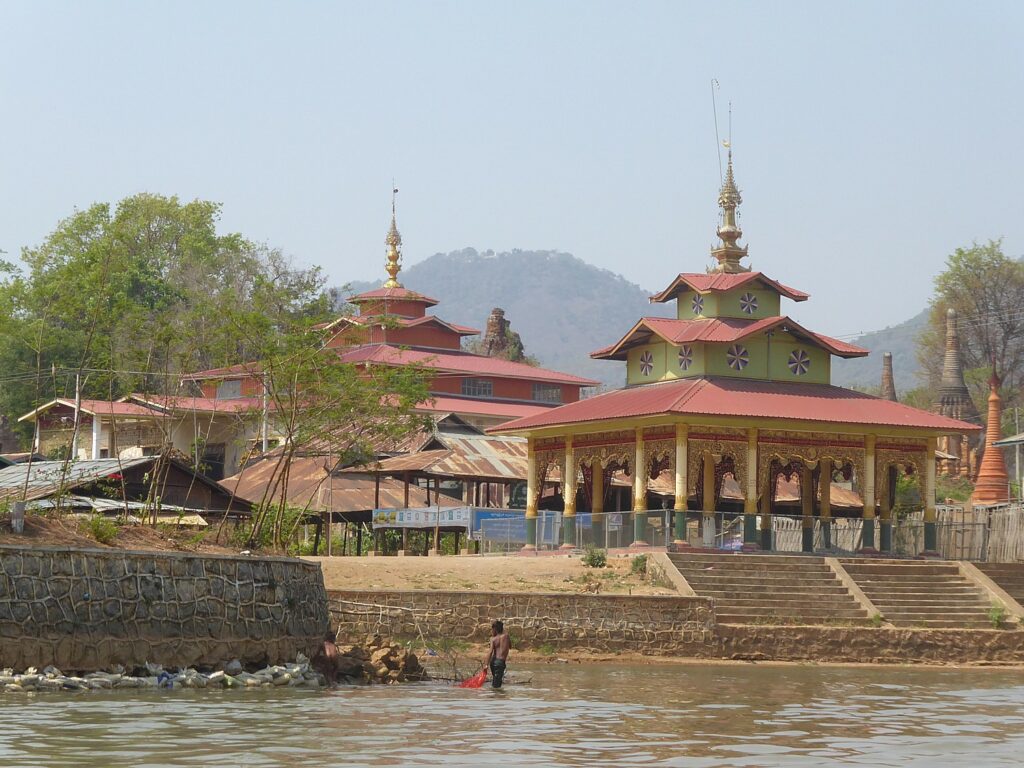
stop in several of the region’s most important pagodas.
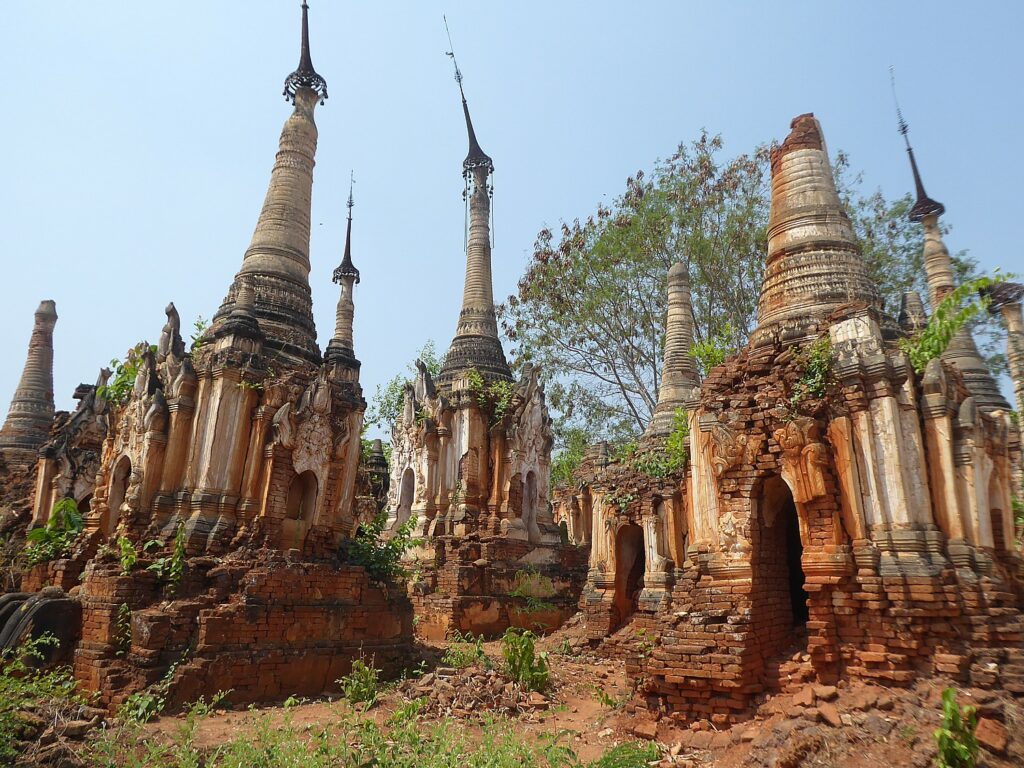
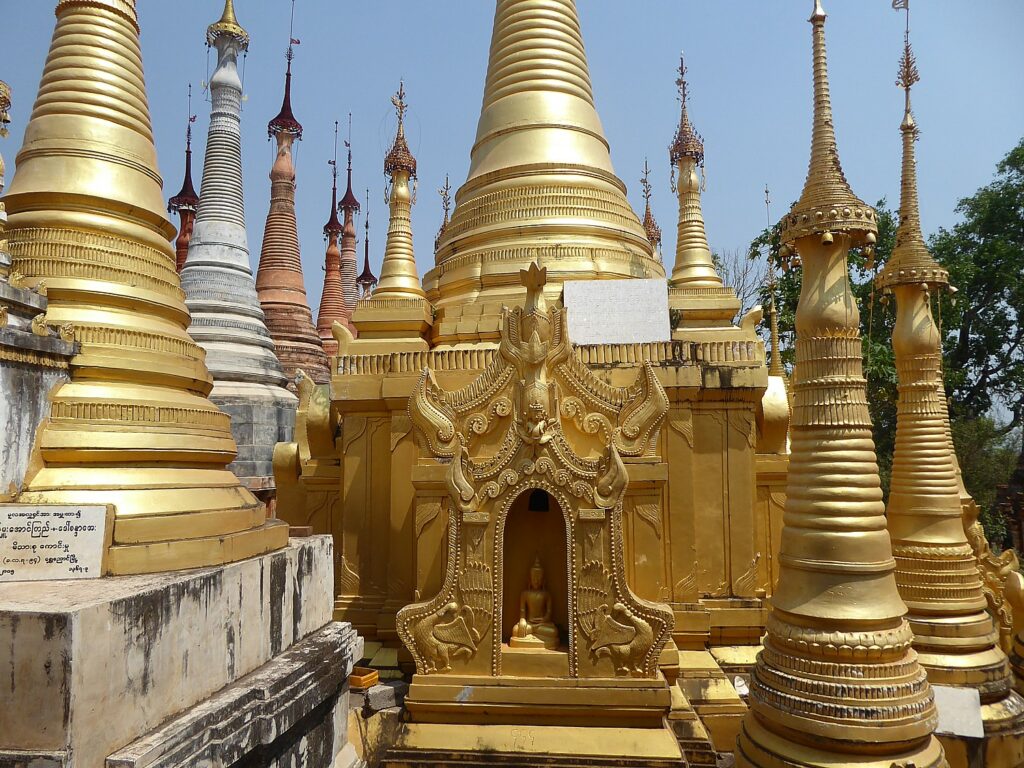
Shwe
Indein Pagoda is the most impressive of the attractions visited. You walk up a
covered walkway lined with beautifully painted columns, up a hill, flanked by
an astonishing 1,600 Buddhist stupas, some of stone, some intricately carved,
some gilded. Many have been restored but you also see many crumbling with age
and being reclaimed by the jungle. (There
is a camera fee, 500 kyat, which works out to about 30 cents).
According
to atlasobscurba.com, “These structures date from the 14th to the 18th
centuries and are typical of Burmese zedi. Like others found
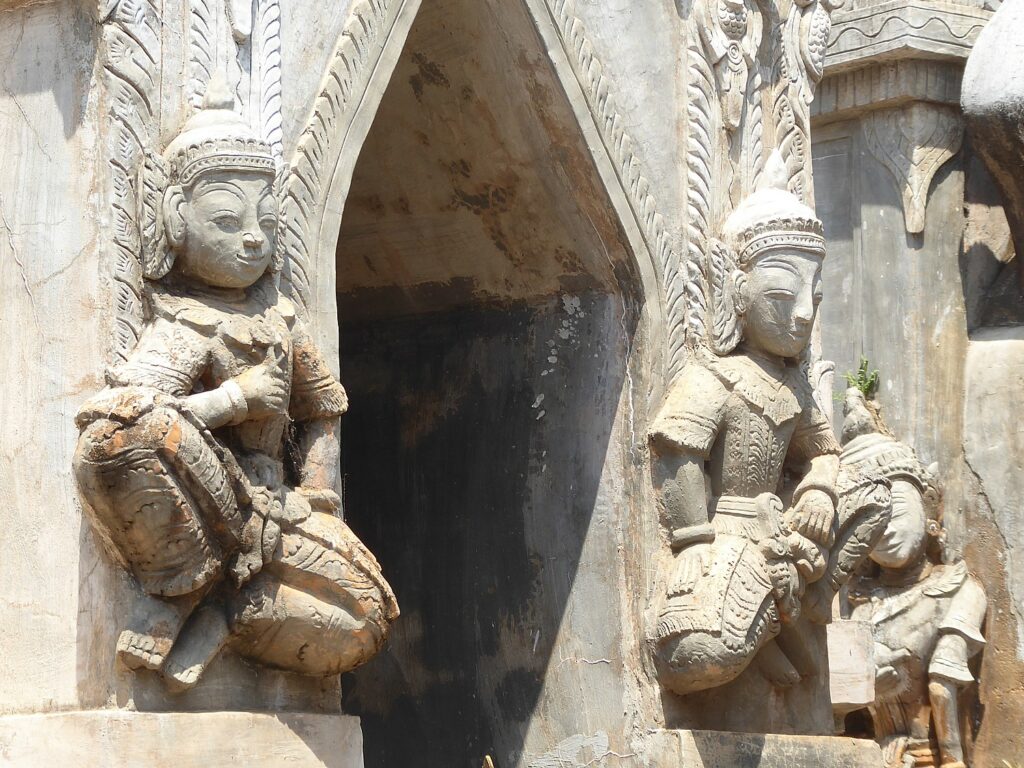
across the region, the stupas feature fantastical creatures like chinthe –
mythic lion-like beings that protect sacred spaces. These were (and remain)
sites for contemplation and meditation and many contain relics inside their
bases. The first stupas at Indein were likely commissioned during the reign
of King Narapatisithu, although according to legend, it was King Ashoka – the
Indian emperor responsible for spreading Buddhism across much of Asia – who
first designated this as a site of particular spiritual importance. Hundreds of
years later, that distinction is completely obvious. The sea of ornate spires
coupled with the view over the lake and surrounding calm lend this spot an
unquestionably mystic, reflective air.” (www.atlasobscura.com/places/shwe-indein-pagoda) It is
breathtaking to see. Inside, people are gathering for a communal feast.
We
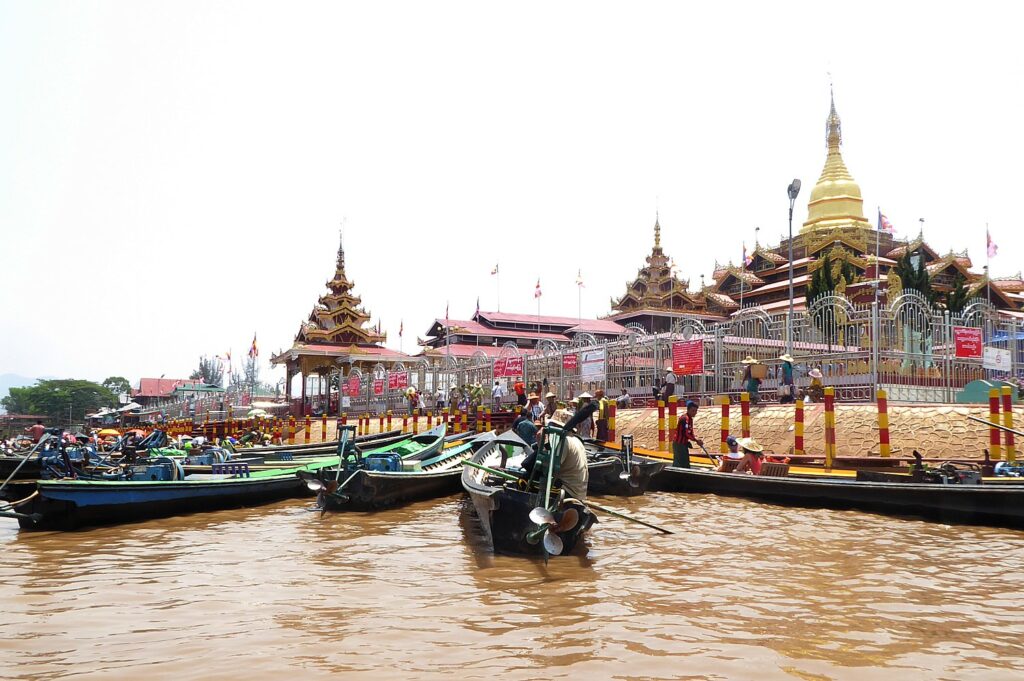
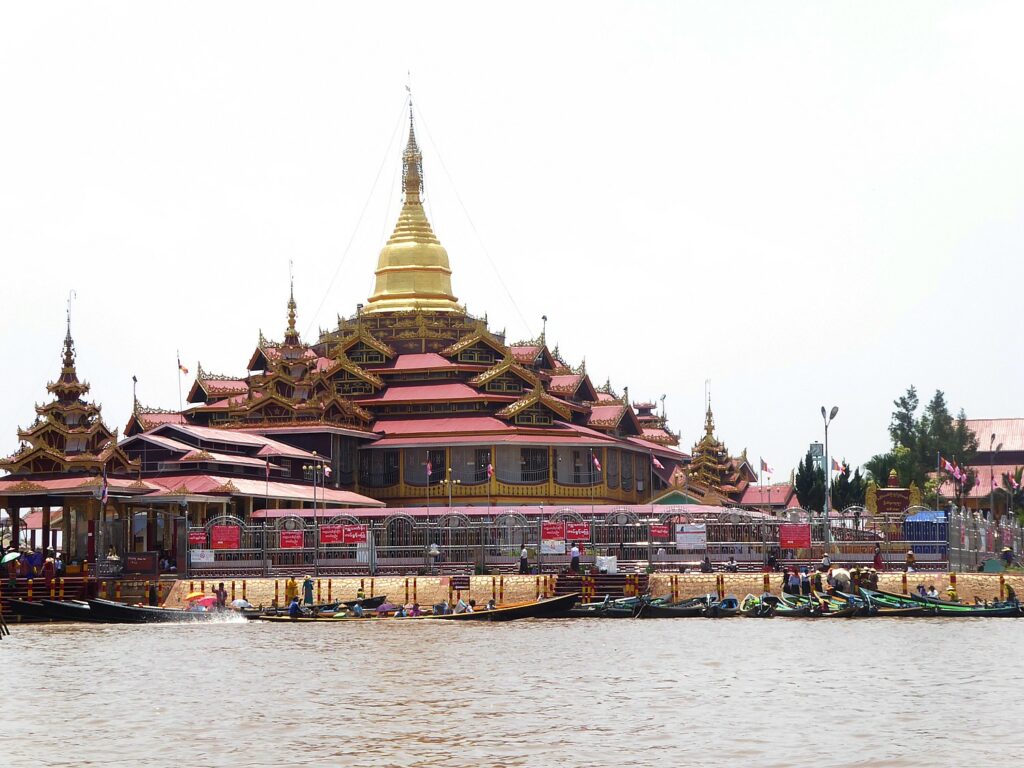
come Phaung Daw Oo Pagoda, one of the famous principal
shrines in Myanmar, just crammed with boats and worshippers. The pagoda houses
five small Buddha images which are much revered by the lake-dwellers. Once a
year, in late September-early October, there is a pagoda festival when four of
the five Buddha images are taken on an elaborately decorated barge towed
by several boats of leg-rowers, rowing in unison, and other accompanying boats,
making an impressive procession on the water.
Ngaphechaung Monastery is a
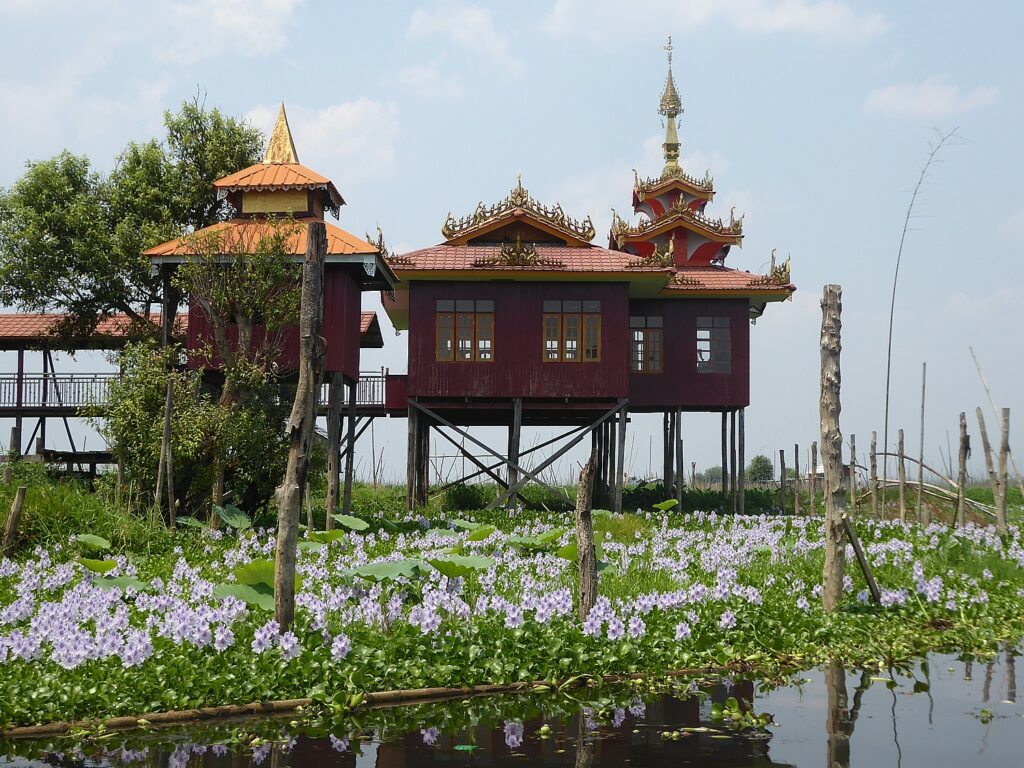
beautiful wooden monastery built on stilts over the lake at the end of the
1850s, the biggest and oldest monastery on the lake. The
monastery is known for a collection of old Myanmar’s Buddha images from
different eras. It is also notable because the monks have taught a few of
the many cats living with them to jump through hoops (that is the reputation,
but I don’t get to see any cats).
I
skip stopping for lunch so am able to condense the tour somewhat, which brings
me back to the hotel at 2:30 pm.
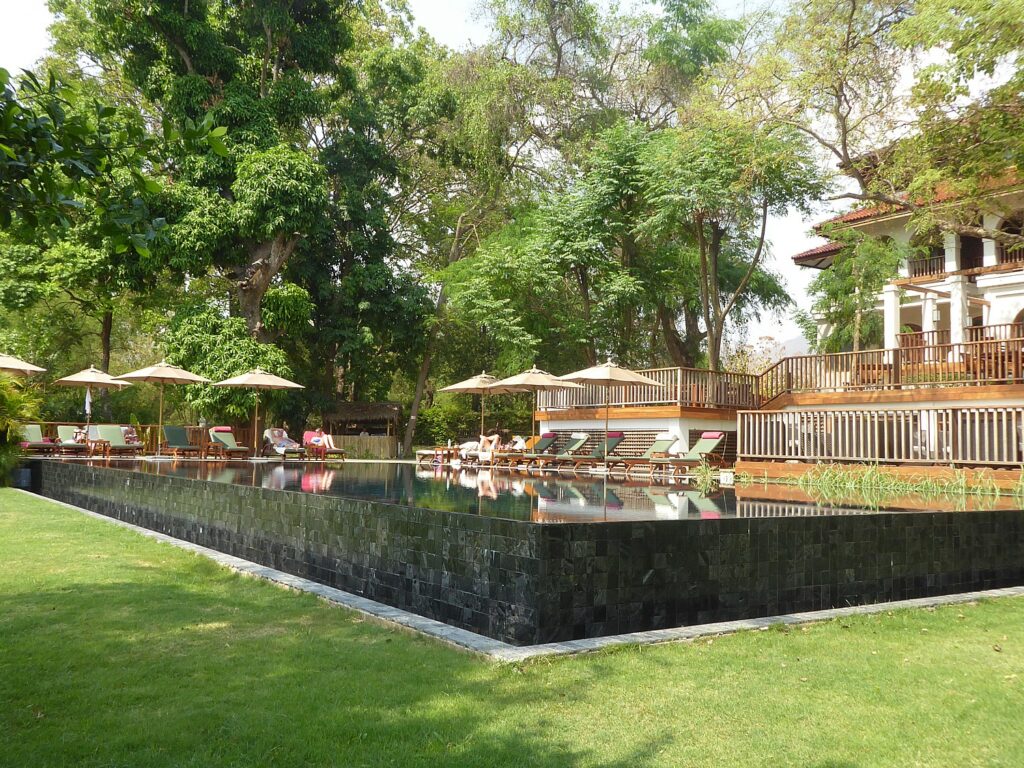
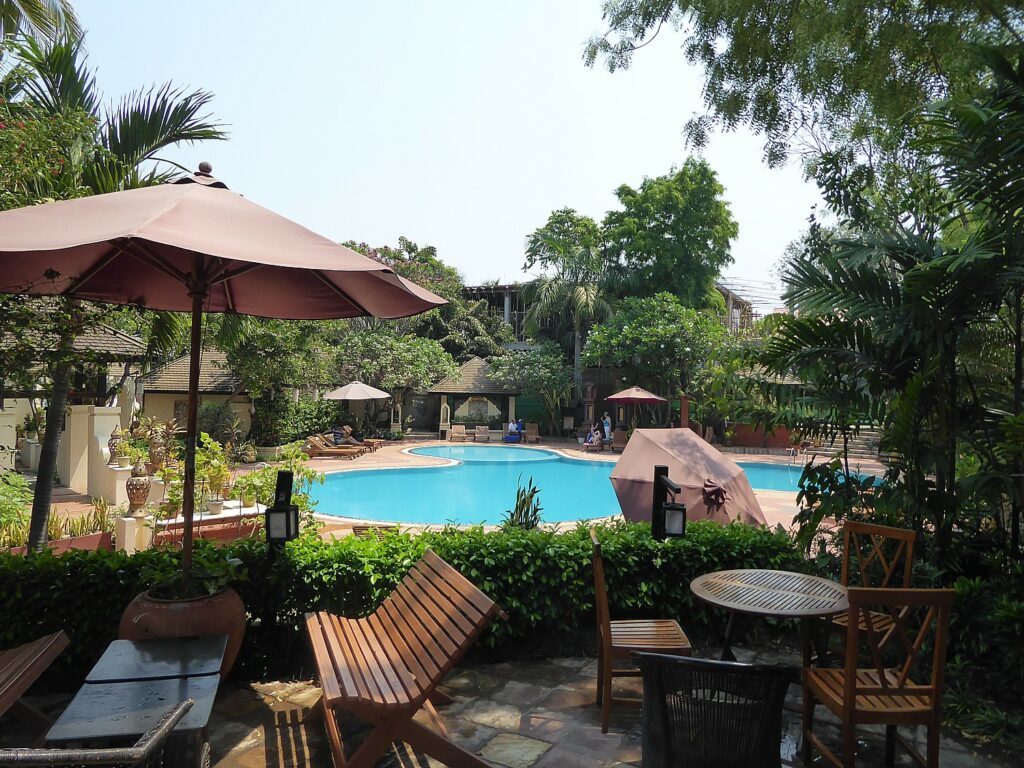
I indulge in Sanctum Inle Resort’s utterly stunning pool – I would rank one of the best resort pools in the world – an infinity pool of black and silver that shimmers as you swim, magnificently set with a view down to the lake, richly landscaped, a great size for actually swimming as well as playing around. It is also one of the most magnificent places just to lounge. I meet families from around the world.
I
am back in my room by 5 pm, to walk about a mile up the road from the resort
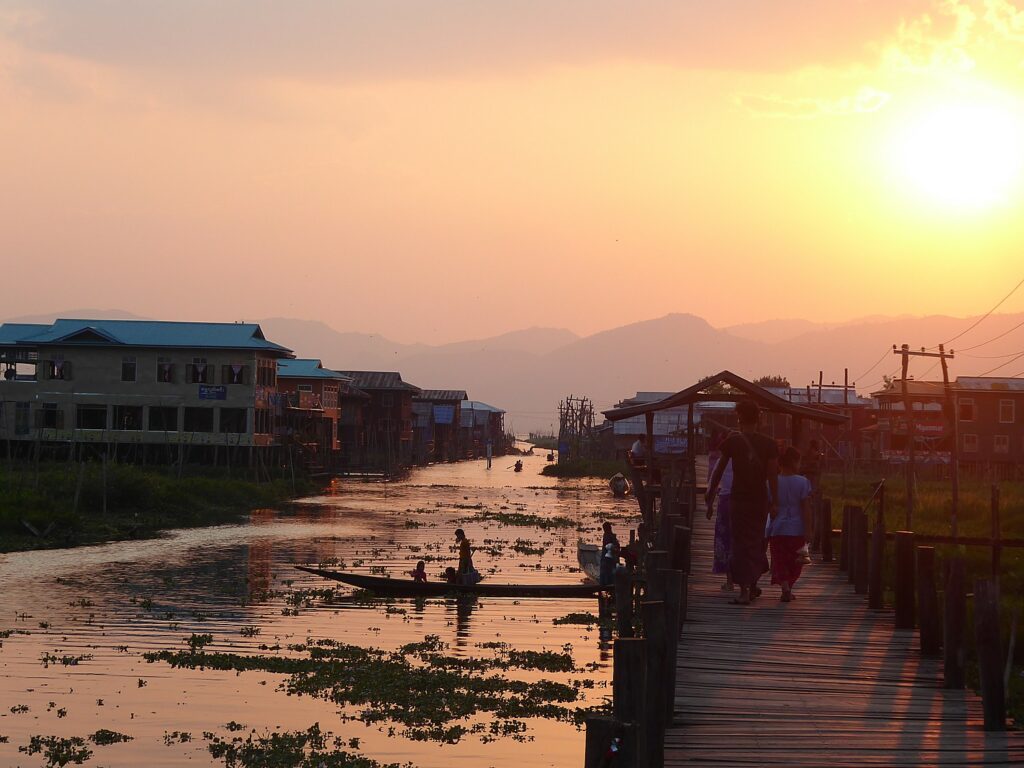
into the nearby village of Maing Thauk. I am bound for the Friendship Bridge
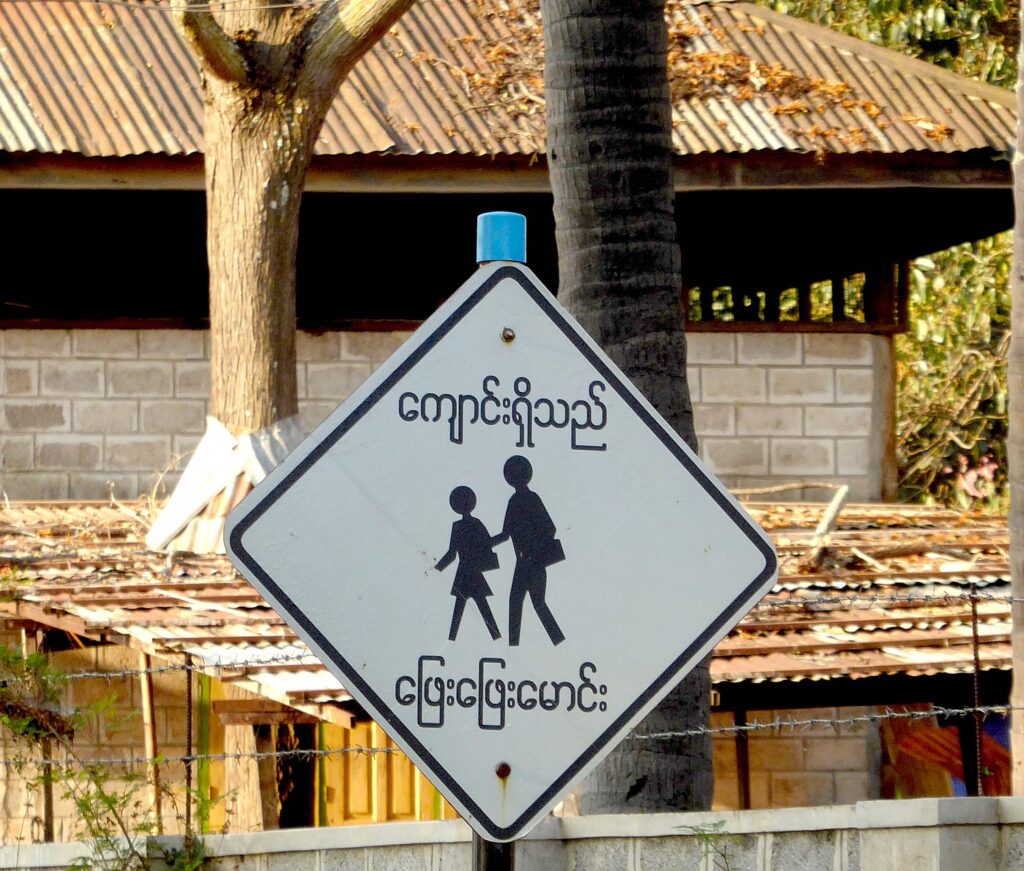
where one of the scavenges is to watch the sunset. I love to see the Burmese alphabet,
with its circles and curley-cues, on signs (few have English translation,
except for the Noble Aim PreSchool, my Rosetta Stone, and a traffic sign with a
drawing of a parent holding a child’s hand, indicating a school crossing). I
come upon a school holding a sports competition that has drawn a tremendous
audience. Even though hardly anyone speaks English, we manage to chat
(icebreaker: What is going on? Where is the bridge?). It’s a good thing I ask
the fellow if I was going the right way to get to the Friendship Bridge I am
looking for, because he directs me to turn left on the next corner (I would
have gone straight).
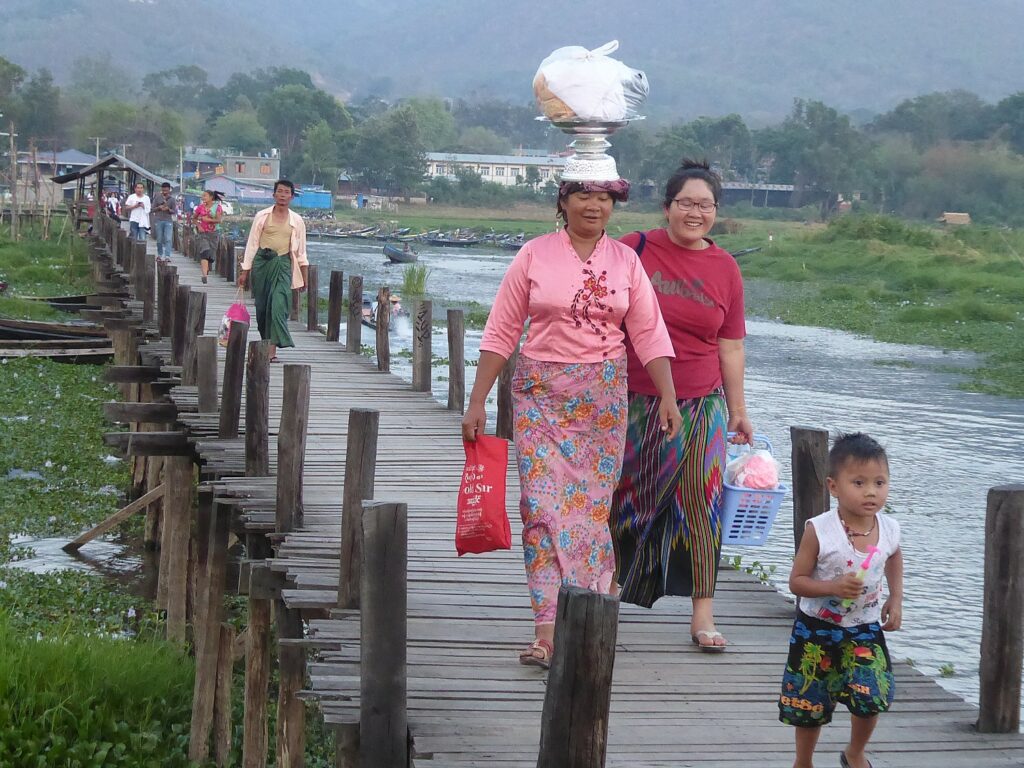
The
Bridge connects many structures and from which people can get onto the scores
of wooden boats that gather here, especially to offer sunset “cruises”, as well
as walk to several restaurants. The views and the evening activity are just
magnificent. It’s like watching the entire community walk by.
What
I’ve noticed during this incredibly brief visit is exactly what GSH’s organizer
Bill Chalmers had hoped when he dealt with a question of whether we should be
in a place that has earned worldwide condemnation for human rights abuses.
Travel is about seeing for yourself, but also gaining an understanding of one
another, disabusing stereotypes or caricatures, and most significantly, not
seeing others as “other”, which works both ways. In very real ways (and
especially now), travelers are ambassadors, no less than diplomats. Boycotting
destinations because of their governments, isolating people from one another,
cutting off the exchange of ideas and people-to-people engagements is not how
change happens – that only hardens points of view, and makes people susceptible
to fear-mongering and all the bad things that have happened throughout human
history as a result. “See for yourself,” Chalmers tells us.
What
I see in the people I’ve encountered is a kindness, a warmth of spirit, a
sweetness among the people here. I see it in how parents hold their children,
how the boatman, Wei Moi, shows such etiquette among the other boatmen, how
helpful people are. And how readily they
smile.
This
leg has been a Par 5 in difficulty (Par 6 being the most difficult during this,
the 15th Global Scavenger Hunt) – which has entailed us going out of
Yangon to Bagan, Mandalay and/or Inle Lake (many more rules on top of that,
including no more than 2 flights), taking overnight bus or hiring a taxi or
train, and so forth. But Chalmers devious design has worked – in just these
four days, we really do immerse ourselves in Myanmar, though our itinerary most
properly should be done in 11 days (there are several operators who offer such
trips).
The
challenge of the Global Scavenger Hunt is important to mention because Inle
Lake is worth at least a two or three day stay to be completely immersed in its
spell. There is a tremendous amount to do and experience.
You
can reach Inle Lake by air, bus (Joyous Journey Express, known as JJ Express,
provided excellent service; travel on the first-class bus geared to tourists,
www.jjexpress.net), or hire a driver to Inle Lake from various other major destinations
in Myanmar (Bagan, Mandalay, Yangon). The closest airport to Inle Lake is Heho
airport (HEH) which is 45 minutes away from the lake.
The
final challenge of this leg is to get back to our hotel, the Sule Shangri-la,
in Yangon by 6 pm, and for those competing to hand in their scorecards and
proof of completing the scavenges. That’s when we will learn where in the world
we will go next, and where we will all compare experiences.
The Global Scavenger Hunt is an annual travel program that has been operated for the past 15 years by Bill and Pamela Chalmers, GreatEscape Adventures, 310-281-7809, GlobalScavengerHunt.com.
Having set out from Yangon, Myanmar on
our Par 5 Challenge on the Global Scavenger Hunt, a 23-day around-the-world
mystery tour in which we solve scavenges to amass points in order to win the
title, “World’s Best Travelers,” we arrive at Bagan airport.
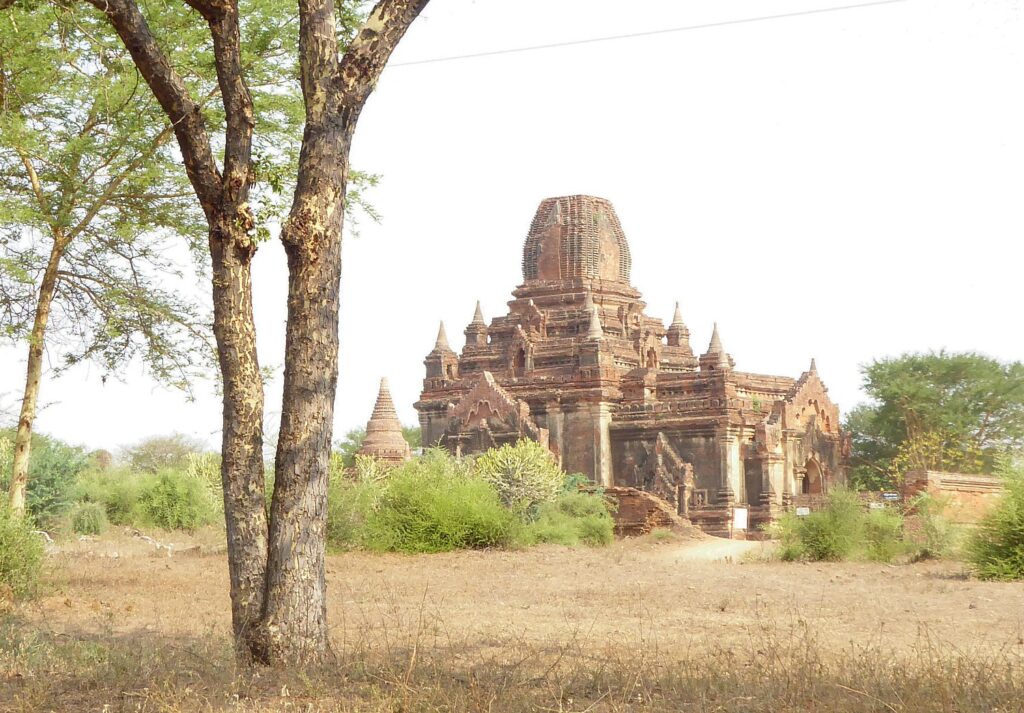
Moments
after arriving at the Bagan airport in Myanmar (and paying the mandatory ticket
to the archaeological zone, 15,000 Kyat, or $12), we see why Bagan was only
this July was named a UNESCO World Heritage Site: known as the city of Temples,
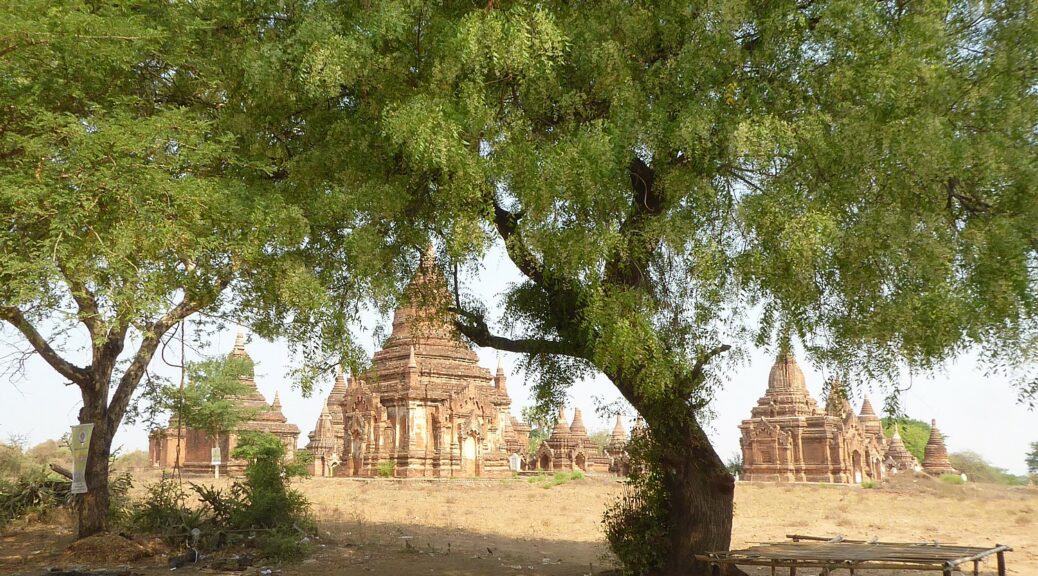
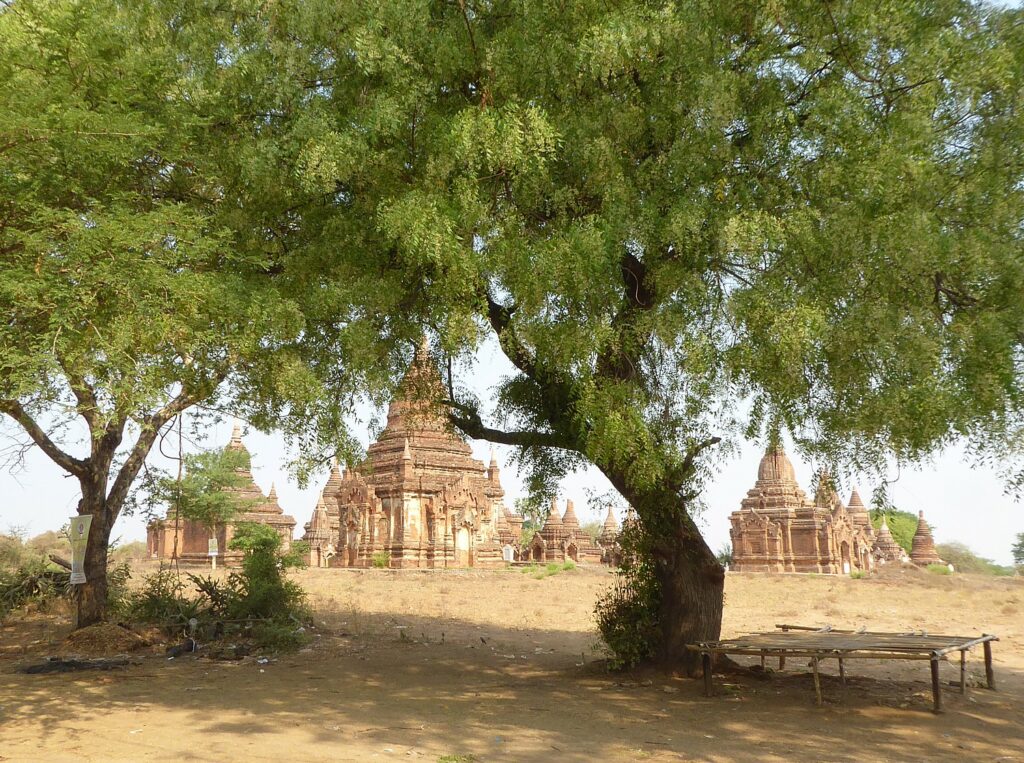
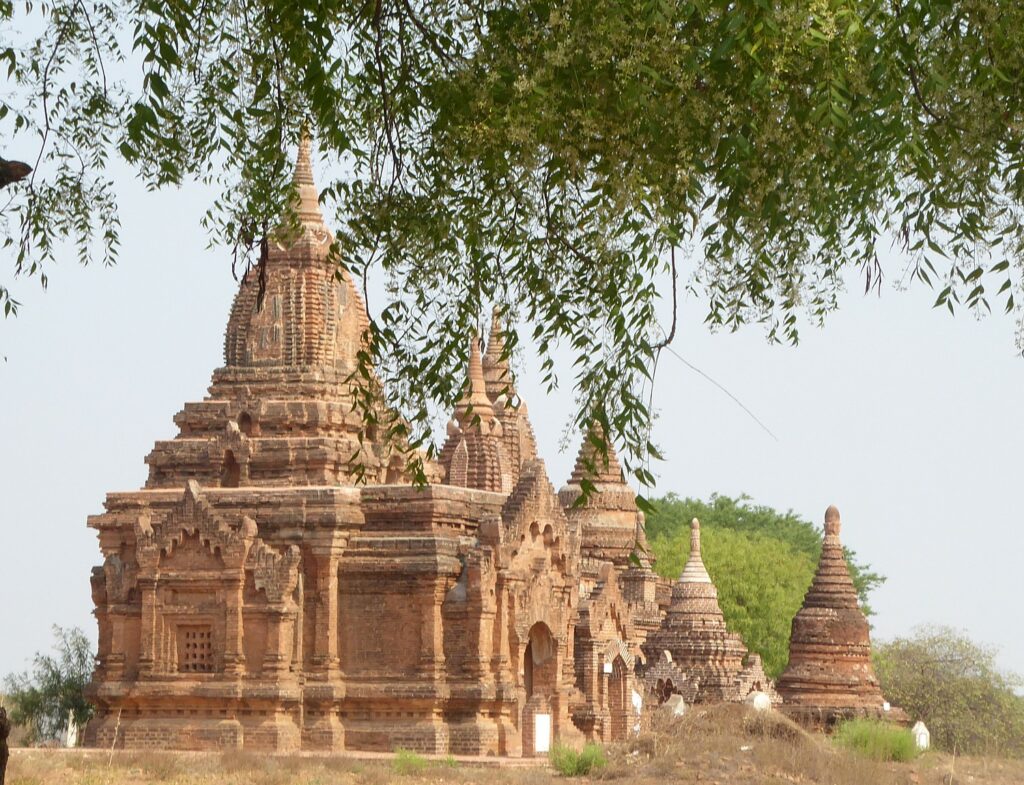
Bagan has more than 2,000 Buddhist temples and pagodas within 16 square miles,
its ancient ruins rival Angkor Wat in Cambodia, though in Cambodia, the
prevailing colors seem grey and green, while here, they are the red, orange and
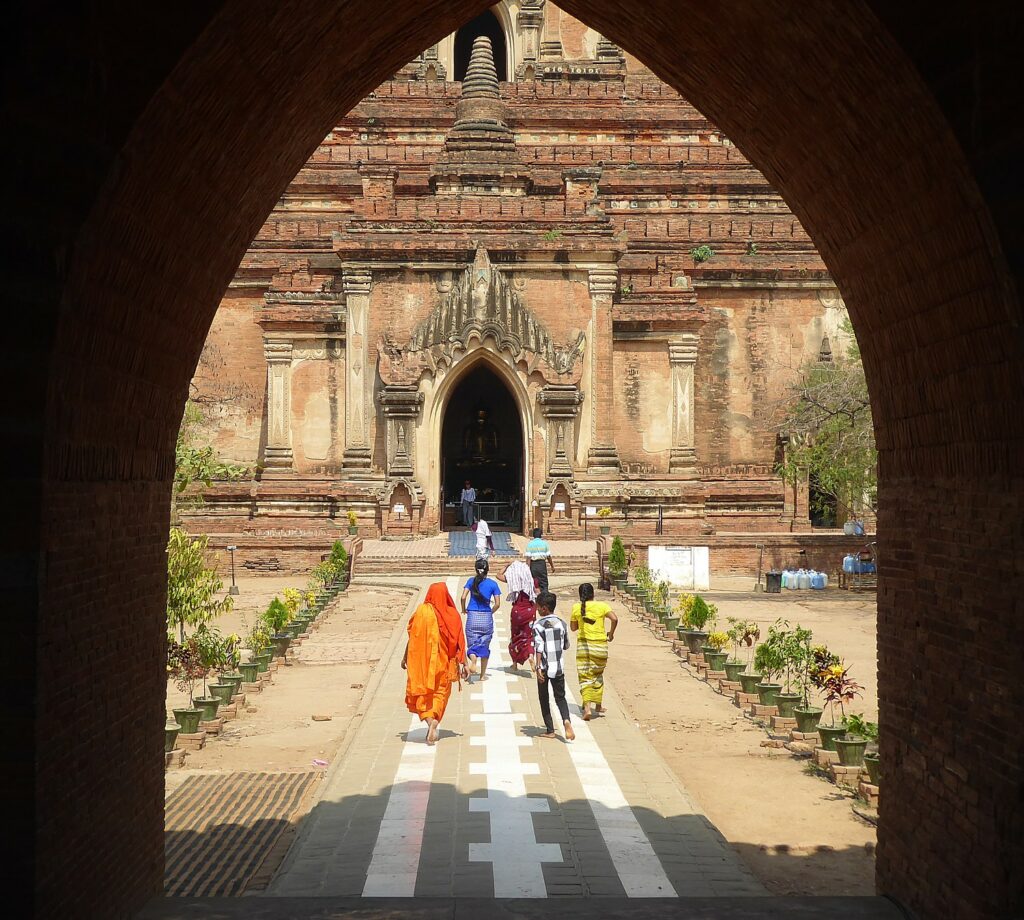
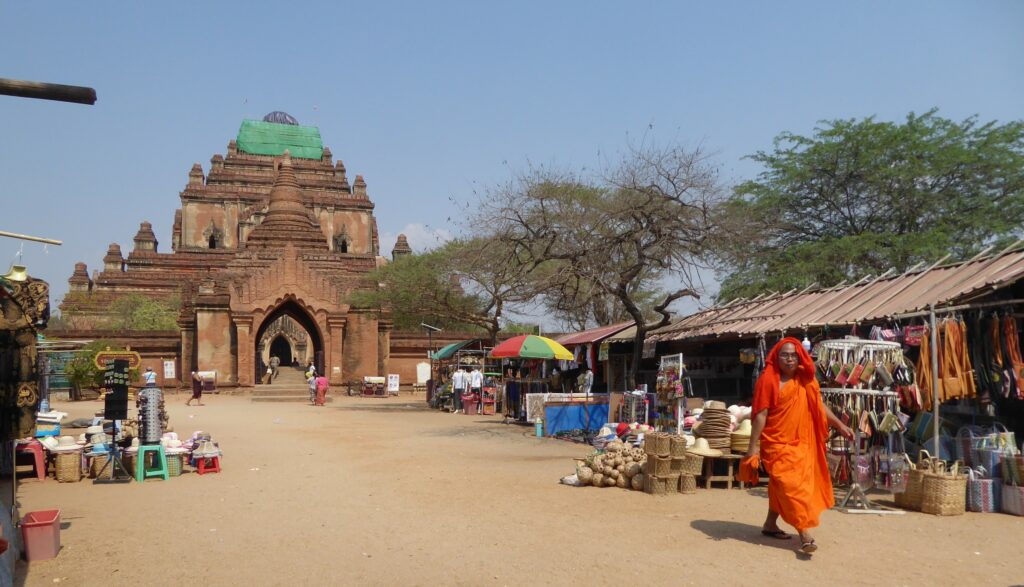
beige of sandstone. Temples here are as common as skyscrapers in Manhattan,
dotting the plain.
The profusion of
temples is astonishing. The stunning architecture and the fact that they are
centuries old is mind-boggling. On top of that, you realize they have survived
earthquakes as recent as 2016 when nearly 200 temples were damaged by a 6.8
magnitude quake.
Considering
that Myanmar was shut off from the world for 60 years, only reopening since
2011, Bagan is still relatively unknown and draws fewer tourists than so many
of the world’s great archeological sites that are endangered by their very
popularity. In Bagan, you have the feeling of discovery and authenticity. Here,
local worshippers vastly outnumber Western visitors and you can be immersed in
the rituals.
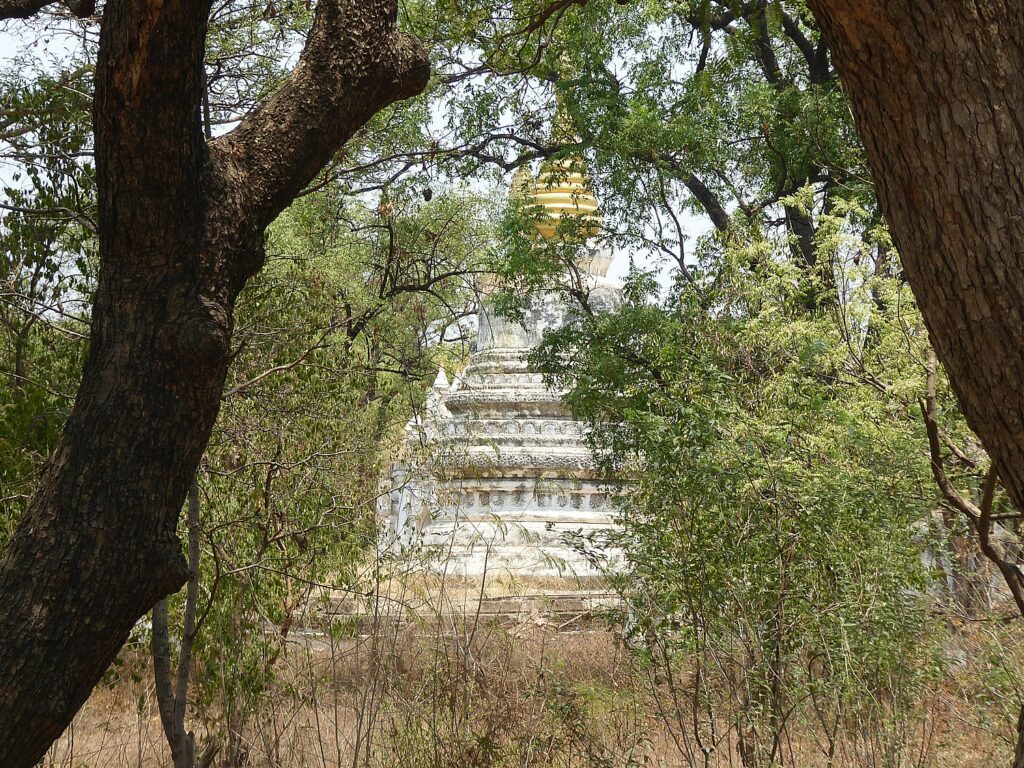
There
are so many temples, some are just out in overgrowth that makes you think of
fairy tales with the castle buried by a forest. Some of the most breathtakingly
beautiful architecture comes immediately as we set out. We stop the taxi to
explore.
Luen,
the taxi driver who takess us from the airport, is a delightful man who speaks
English very well, and immediately expresses appreciation for us coming to
visit his country. On our way to the hotel, he stops where we ask to take
pictures. We decide to hire him to take us around and make an appointment for
him to come back at a certain time. (Had we been competing for points and to
win the crown, we wouldn’t be allowed to hire a taxi for a whole day or use the
driver as a guide).
The
hotel, Aye Yar River View Resort in Old Bagan, inside the city walls, which I
booked on hotels.com, is absolutely lovely – walking distance to several of the
places I want to visit (such as the Archaeological Museum) and some of the
temples, with an absolutely lovely pool (so welcome in the heat that exceeds
100 degrees), and open-air restaurant.
But
instead of racing out to start on the scavenges as other teams have done (some
racing from the airport to Mount Popa, an hour’s drive away), I find myself
losing a frustrating couple of hours trying to switch my travel arrangements
from Mandalay to Inle Lake. Making the reservation on the overnight bus (first
class!) to Inle Lake turns out to be easy on the JJ Bus website,
www.jjexpress.net); booking the hotel which I select from the list Bill
Chalmers, the Global Scavenger Hunt organizer and ringmaster, has provided, on
hotels.com is a cinch, but the flight to get back to Yangon on Saturday in time
for the 6 pm deadline in is the real problem. Because of the national holiday,
I can’t get through to the airline itself, not even the hotel manager who does
her best, in order to change my booking on Golden Airlines from Mandalay. I can’t
even book a new flight. But finally, I make the booking through an on-line
agency.
While
the others are having lunch, I only have to stroll out the front gate of the
hotel to come upon temples and archaeological sites. I wander over to the
Shwe-gu-gyi Hpaya (temple), which the
sign (in English) notes was built by King Alaungsithu in 1141. The temple is
built on a high platform, topped by a sikhara, or curvilinear square-based dome
and has a projected porch, or vestibule.. A stone inscription describes the
merit of King Bayinnaung in 1551.
Also
in this immediate vicinity, walking distance from the hotel are: Mahabodhia
Pagoda (1215 AD); Shwe Hti Saung Pagoda (11th C), Saw Hlawhan Pagoda
(598 AD), and the Lacquerware Museum.
I
take note of a tourism school and a sign that says, “Warmly Welcome & Take
Care of Tourists.”
Finally,
we set out with our taxi driver, San Luen, to visit some of the notable temples
(there are 2,000 in Bagan) – we only have a day. It’s 108 degrees (116 with
heat index). We set out initially
following some of the scavenges which steer us to prime places and experiences.
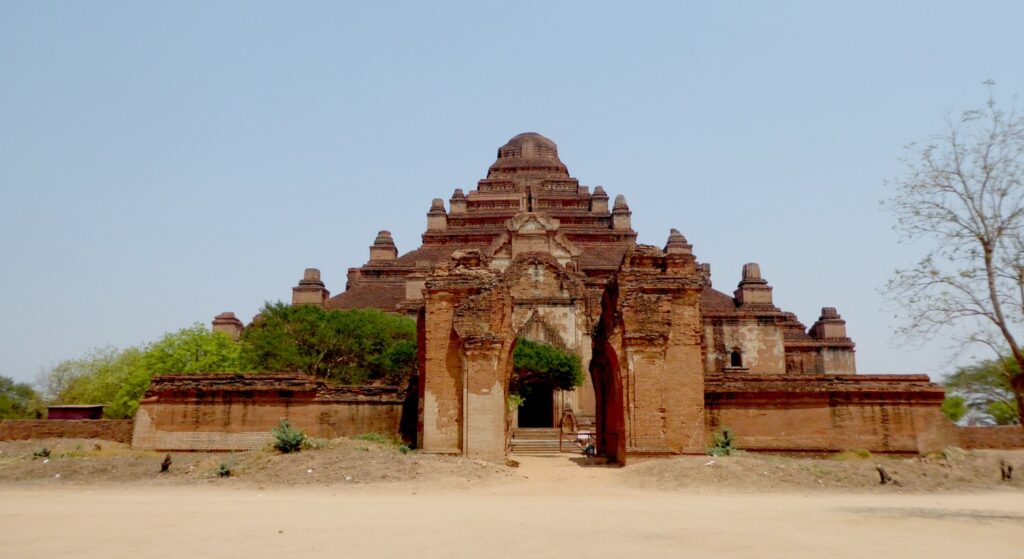
Our first stop is Dhammayangyi
Temple, one of the most massive structures in Bagan and one of the most
popular for visitors. It was built by King Narathu (1167-70), who was also
known as Kalagya Min, the ‘king killed by Indians’. Luen drives us to a side
entrance so we will have a shorter distance to walk over the extremely hot
ground in bare feet (not even socks are allowed in Bagan). Here in this holy
city, strict rules mean we can’t even wear slippers or socks into the temples,
but have to walk over intensely hot sand and stone, baking in the 108 degree heat.
Luen calls it “the Temple of the Evil King. I later learn that
Narathu ascended the Bagan throne by murdering his father, the king, and built
this temple as penance. “It is said that Narathu oversaw the construction
himself and that masons were executed if a needle could be pushed between
bricks they had laid. But he never completed the construction because he was
assassinated before the completion.” Apparently he was assassinated in this
very temple in revenge by the father of an Indian princess who Narathu had
executed because he was displeased by her performance of Hindu rituals.
I guess thanks to Narathu, the interlocking, mortarless
brickwork at Dhammayangyi, is said to rank as the finest in Bagan.
We wander about what feels like a labyrinth of narrow
hallways to discover the art inside. The interior floor plan has two
ambulatories. Almost all the innermost passage, though, was filled with brick
rubble centuries ago. Three of the four Buddha sanctums also were filled with
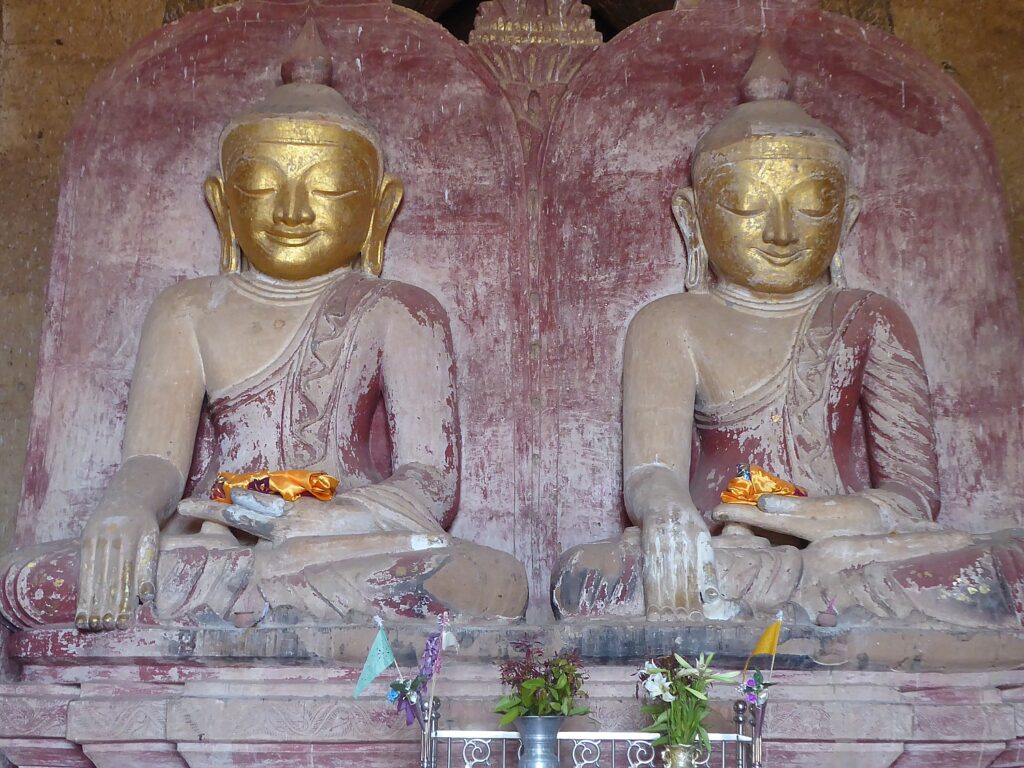
bricks. What we see in the remaining western shrine features two original
side-by-side images of Gautama and Maitreya, the historical and future Buddhas
– they are magnificent.
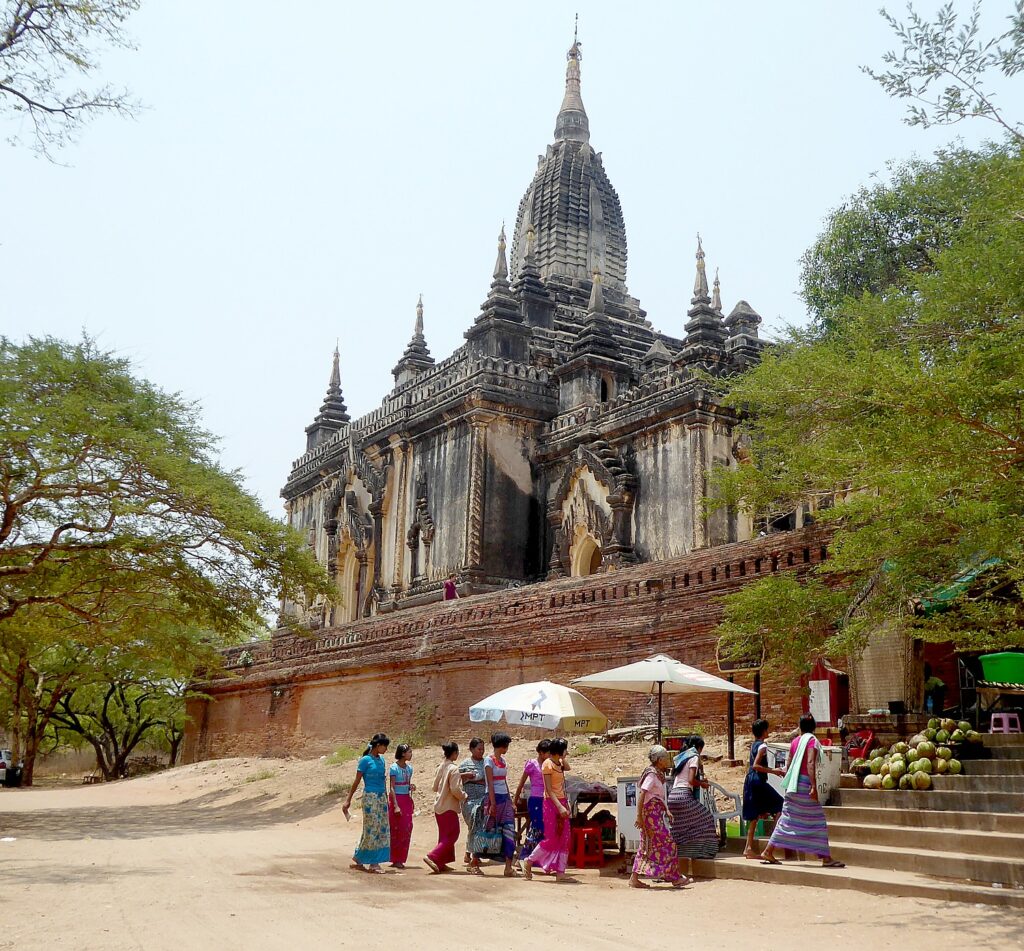
A short distance away is another temple, Sulamani Phaya, “The Ruby of Bagan”, which
dates from 1183 AD. Considered the most frequently visited temple in Bagan, the
Sulamani was built by King Narapatisihu, who found a small ruby on the ground
on the Bagan Plains and built a temple in its place. A description notes, “The
word Sulamani means ‘small ruby’ and is a fitting name for this sand-orange and
elegant ‘crowning jewel’.The temple is surrounded by a high wall; its layers of
terraces and spires give the structure a mystical fairytale appearance. Inside,
intricately carved stucco embellishments adorn the doors and windows.”
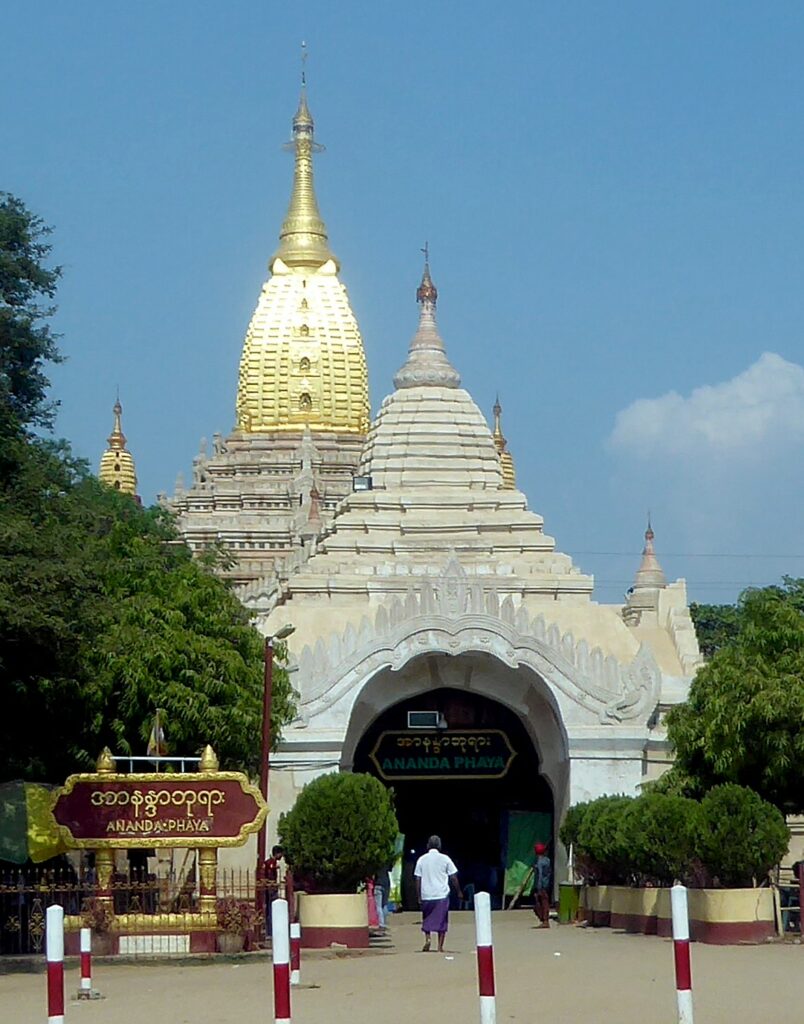
We drive passed
the Ananda Temple, known as the
“Westminster Abbey of Burma” for its elegant and symmetrical design,
intending to return to visit. The golden spire on top can be seen from miles
across the Bagan Plain and is lit up at night by spotlights, creating an
impressive beacon in the sky. The temple is known for its four gold-leaf Buddha
statues, each standing an impressive 30 feet tall. Built in 1090 AD, Ananda
Temple is one of the largest and best-preserved temples in Bagan and is still
very important to local people. The temple was damaged in the earthquake of
1975, but has been fully restored and is well maintained. In 1990, on the
occasion of the 900th anniversary of its construction, the temple spires were
gilded.
Shwesandaw Pagoda is considered one of
the most impressive temples in Bagan. Standing 328 feet high, it is visible
from a great distance. You can climb to the top for a wonderful view of the
plain. It also is an excellent place for interacting with locals as they come
to worship. One of the first to be built with what has become a classical
golden bell shape, Shwesandaw became the model for Myanmar’s pagodas. The
pagoda has survived invasions and natural disasters but has undergone renovations.
Thatbyinnyu Temple is distinctive
because it is one of the earliest two-story Buddhist temples and, unlike many
other temples in Myanmar, is not symmetrical. At over 120 feet tall,
Thatbyinnyu towers above nearby monuments. The area around it is picturesque
and offers a panoramic view of Bagan.
Gubyaukgyi Temple is known for having
the oldest original paintings in Bagan. According to notes, “The interior walls
and ceilings of the temple are covered with ancient murals that tell stories
from the previous lives of Buddha. The murals have been well-preserved because
the temple is lit with natural lighting from large perforated stone walls. Each
mural is paired with a caption written in old Mon. These captions are the earliest
examples of Old Mon in Myanmar making it an important site for the study of the
ancient language. No photography is allowed inside the temple, in order to
preserve the murals for future generations.”
The
heat (114 degrees with the heat index) has gotten to Margo who wants to go back
to the hotel. After a swim in the gorgeous pool at the hotel, I set out again
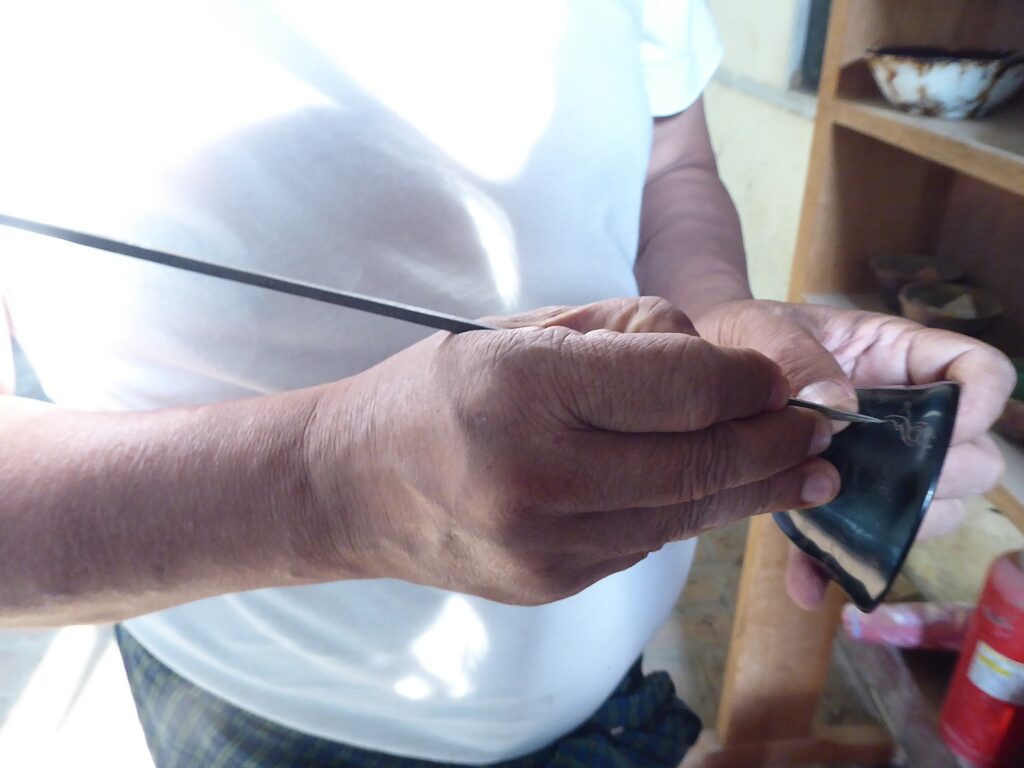
with Luen at 4 pm to take me to a nearby village known for crafting the lovely
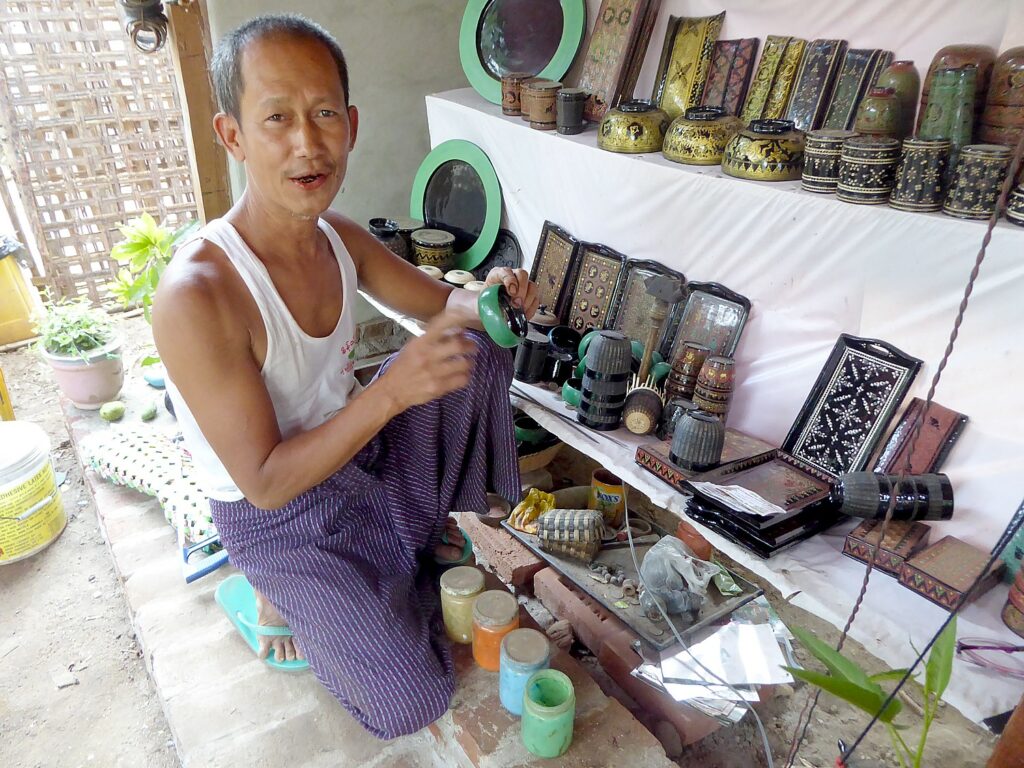
lacquerware. I wander around – seeing the crude living conditions (they don’t
have running water but they have electricity), and am invited in to watch
people as they craft. At the entrance to the village, there is a large retail
shop and workshop of master artisans.
I’m
on my way back from the village, about 5 pm, when I see a message on my phone
from the online booking agent that the airline booking from Inle to Yangon did
not go through – I basically would be stranded. The booking app gives me a
California 24/7 help number to call.
That
interferes with my plan to see the sun set and watch the golden light take over
the dramatic landscape.
The setting of
the temples on the Bagan Plain make for expansive views – one of the reasons
you should look for opportunities to get to a height, preferably at sunrise, or
late afternoon toward sunset, when the light and the colors are most dramatic.
For this reason,
one of the popular ways to see Bagan is taking a hot-air balloon ride is an
incomparable experience to see the thousands of temples scattered across the
Plains of Bagan, Balloon tours
normally begin at 6:30 am, just a few minutes after sunrise. They offer a
bird’s-eye view of the monuments in the misty orange morning light. The
picturesque spectacle of the temples at sunrise from red balloons above, has
become iconic for travelers in Myanmar. Hot-air balloon flights in Bagan
normally cost around $330 per person and are seasonal (from October to March;
book in advance).
Another is to drive about 1 ½ hours outside of Bagan to Mount Popa, an extinct volcano, climb to the top and see down at the whole plain laid out in front and visit the sacred Popa Taungkalat monastery at the top. Several of our group did that, literally racing by taxi from the airport so not to lose valuable time for our all-too-brief stop here on our Global Scavenger Hunt.
There are also river cruises, an archaeological museum, crafts like cotton weaving and lacquerware, oil processing, palm sugar production. Almost none of it am I able to take advantage of because I have abbreviated my time here and frankly, my experience in Bagan proves a lesson in the frustration of poor planning, but a learning experience, none the less.
Many of the
scavenges bring us to these important sites, but also to experiences. Among the
mandatory experiences in Bagan is to try toddy juice or Black Bamboo; finding
the “Rosetta stone of Myanmar” in the Bagan Archaeological Museum, where you
learn the interesting origin of Burmese distinctive alphabet of circles and
curleycues; rent a horse cart for half a day to compete 3 scavenges.
Even
though Bagan is surprisingly compact and it doesn’t take long to travel from
one incredible sight to another, seeing Bagan properly would require planning
and sufficient time. I don’t have either but I chalk up my visit to a preview
for a future visit. You should spend at least two or three days here.
Back
at the Aye Yar River View Resort, the manager again tries heroically and fruitlessly
to reach the airline directly but says the office has already closed. (I highly
recommend the Aye Yar River View Resort, located Near Bu Pagoda, Old Bagan,
Nyaung-U, MM).
I
meet up with Paula and Tom, the SLO Folks team from California who were last
year’s Global Scavenger Hunt champions, who are also going to Inle Lake on the
overnight bus and we go together to one of the two restaurants listed in the
scavenger hunt (more points!). The first is closed; the second is a lot of fun.
(Many of the scavenges involve food.)
Luen,
the taxi driver, picks us up to go to the bus station.
As
I ride on the night-bus to Inle, at 10 pm, bouncing and rolling on the roads
that quickly turn into mountain passes, I text my son in New York to call the
airline in California. The texts go back and forth. “There’s no ticket, no seat.”
“We got you a seat, yay!” “No seat, he made a mistake. Drat.” “A seat, yay!” (On
the same flight as I originally booked! Yay!).
The adventure
continues as I bounce along the overnight bus on twisting, winding roads
through the hills and darkness to Inle Lake.
The
Joyous Journey Express (JJExpress) bus is actually geared for foreign tourists –
first class modern buses with comfortable reclining seats, providing passengers
with a blanket, bottle of water and snack, even some variation of a TV monitor
which I couldn’t figure out (but no onboard bathroom – the driver stops when
necessary). In busy season, they even do a pick-up at your hotel. (www.jjexpress.net)
The Global Scavenger Hunt is an annual travel program that has been operated for the past 15 years by Bill and Pamela Chalmers, GreatEscape Adventures, 310-281-7809, GlobalScavengerHunt.com.
It
is only a two-hour flight from Ho Chi Minh City, Vietnam, to Yangon (formerly
known as Rangoon), Myanmar, the third leg of the Global Scavenger Hunt, a 23-day
around-the-world mystery tour. We arrive at our five-star hotel, the Sule
Shangri-la, around noon. We will have our meeting at 2:30 pm when we will get
our booklets, spelling out the challenges we will face in the Golden Land.
After
60 years closed to the world, Myanmar, formerly known as Burma, was only
reopened to the outside world in 2011, so I am most intrigued to see it for
myself. The country has also received horrible press over the persecution of
the Rohingya people, which raises controversy for Bill Chalmers, who
meticulously organizes the Global Scavenger Hunt. But it encapsulates his
philosophy, bordering on religion, that appreciates travel as a way of forging
understanding, bringing people together and yes, fostering progress and change.
Throughout this Global
Scavenger Hunt, “A Blind Date With the World” – where we don’t know where we
are going next until we are told when to go to the airport or get ourselves
there, and along the way, complete scavenges and challenges – we are
encouraged, even forced, to “rely on the kindness of strangers,” to interact
with local people even when we can’t understand each other’s language. (Towards
this end, using cell phones or computers to research, access maps or GPS is not
allowed.)
Though it is a conceit
to think we can parachute into places and understand the nuances of complex
issues, travel is about seeing for yourself, but also gaining an understanding
of one another, disabusing stereotypes or caricatures, and most significantly,
not seeing others as “other”, which works both ways.
In very real ways,
travelers are ambassadors, no less than diplomats. Isolating people is not how
change happens – that only hardens views and makes people susceptible to
fear-mongering and all the bad things that have happened throughout human
history as a result. “See for yourself,” Chalmers tells us.
Chalmers offers this to ponder: The point of a travel boycott is
to force a government to reform their ways (corruption, human rights, democracy
and such) is based on the concept that tourism income mostly goes into the
hands of government, not the people, so enables their power and policy. But
others believe that tourism is not only economically helpful to locals, giving
them the means to improve their living conditions, but vital to pro-democracy,
humanitarian movements because of the two-way flow of information.
On
balance, Chalmers tells us, “I don’t like the idea of a boycott. Travelers are
serving as ambassadors, doing fact-finding. This country is emerging from decades
of isolation – there are problems, humanitarian problems on a large scale. It
is a troubled country with great suffering.
“Bear
witness for yourself. Enjoy the rich culture, the people, play journalist,
bea reporter, have conversations, learn
and gain perspective. Parachuting in can’t give you full expertise. All acquire
more accurate idea, local perception. Talk with locals, see for yourself.
“The
issue with not coming is you paint a broad picture about everyone. When we
travel, a lot of people disagree with our government but don’t take it out
against us as individuals. We practice diplomacy of engagement. Not coming
won’t change minds but possibly, coming can help change minds.” I contemplate
that point: imagine if the people we meet as we go around the world held us
personally responsible for caging migrant children and keeping parents
separated in conditions that wouldn’t meet the Geneva Conventions requirements
for POWs.
“Myanmar
is breathtakingly beautiful,” Bill tells us. “Say yes to things. There are
extraordinary sights.” But he isn’t naïve. Anticipating the problems,
frustrations we will have, he gives us a list of to-do’s and don’ts (buy food
and water before getting on a train, ferry or bus; Myanmar roads are among the
most dangerous; have a safe word between
teammates that is code for “danger.” Travel,
he says, is about “conquering fears, heat, holidays.” Indeed, the fact it is
Myanmar’s New Year’s Day and many services are closed becomes a major issue for
me.
The Global Scavenger Hunt is also about teamwork, and one of the rules is that you can’t separate from your teammate (Chalmers actually feels very guilty about the possible friction the competition can foment in couples). So, though we are not officially competing for points, I go along with my teammate, Margo, who wants to travel to Mandalay instead of Inle Lake, which I become extremely excited to see after hearing about this enchanting place, after visiting the temple city of Bagan.
We
learn that the Myanmar leg is designated a Par 5 (very tough, the highest is
Par 6). The challenge we are given is to spend the next two nights on our own,
that we have to go to two of the three cities (Yangon, Bagan, Mandalay and Inle
Lake), but can only take two flights (necessitating ground transportation between
two cities of the triangle) and have to be back to The Sule Shangri-la in
Yangon by 6 pm on Saturday. Chalmers spends much of the time spelling out the
special rules for this leg of the contest, the winner of which is designated
“World’s Greatest Traveler”.
“Today the real travel test will begin. Our teams collective travel savvy and travel IQ will be tested here in Myanmar… in this daunting, breathtaking, frustrating, exhilarating haunting, sacred, dynamic, traditional, thrilling, rapidly changing (and I could go on and on) destination! It will be an interesting four days. Have fun and be safe folks,” Chalmers writes on the Global Scavenger Hunt blog.
We spend the next 3 1//2 hours organizing where and how we will travel to Bagan, Mandalay and back to Yangon. Under the rules of the contest, we are not allowed to use our own computers or phones to book flights or hotels, or even the hotel concierge, but have to go out and find a travel agent. That proves problematic because of the holiday, but Kim says that a fellow on the street has told her where there is a travel agency. Sure enough, he is waiting for us on the street (internal warning light goes off) to walk us down dinghy alleys to the agency which looks and smells like a hovel. Another team is already there, handing over a wad of cash, since the agency isn’t accepting a credit card (ostensibly because of the holiday). I get nervous and suggest we leave, and make the bookings on our own (since we are not competing, we can use our computers). But this proves an interesting experience.
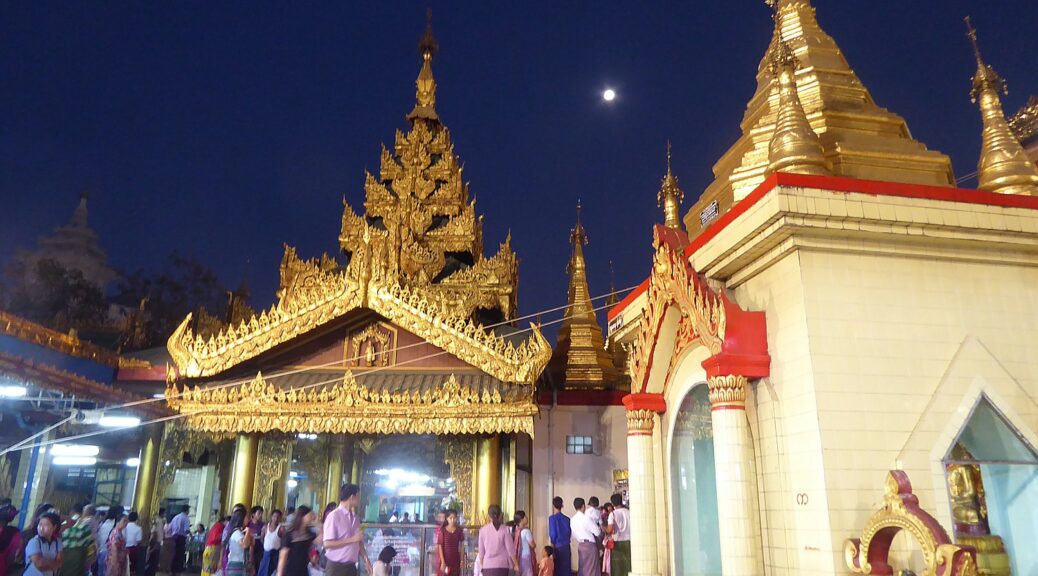
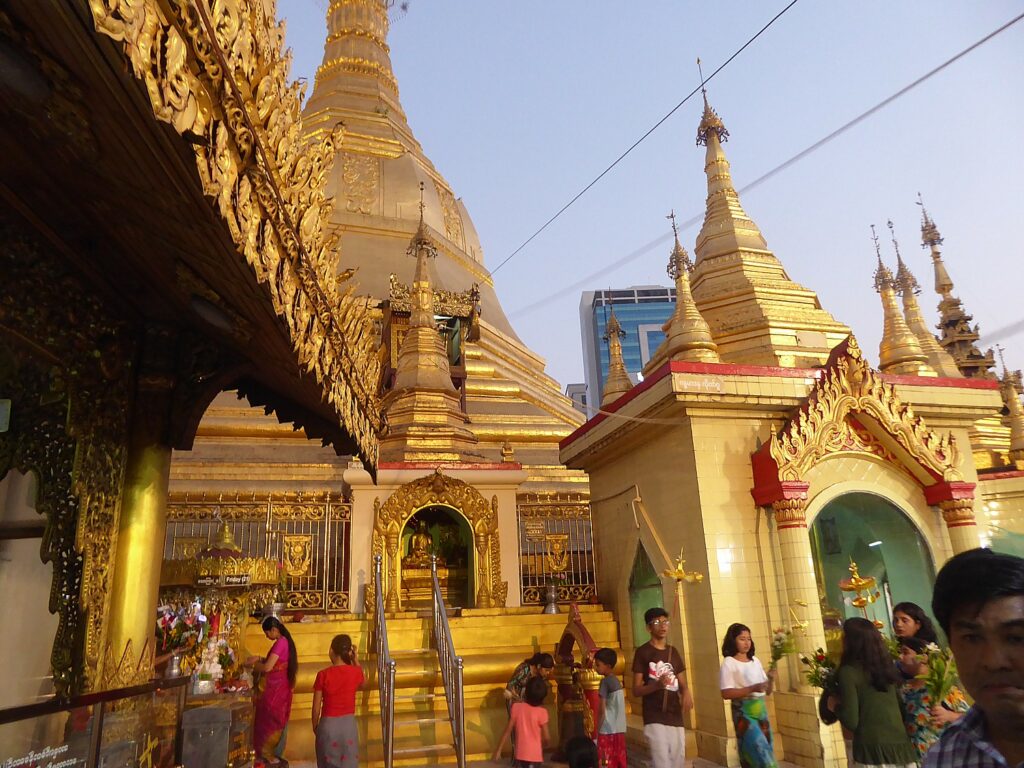
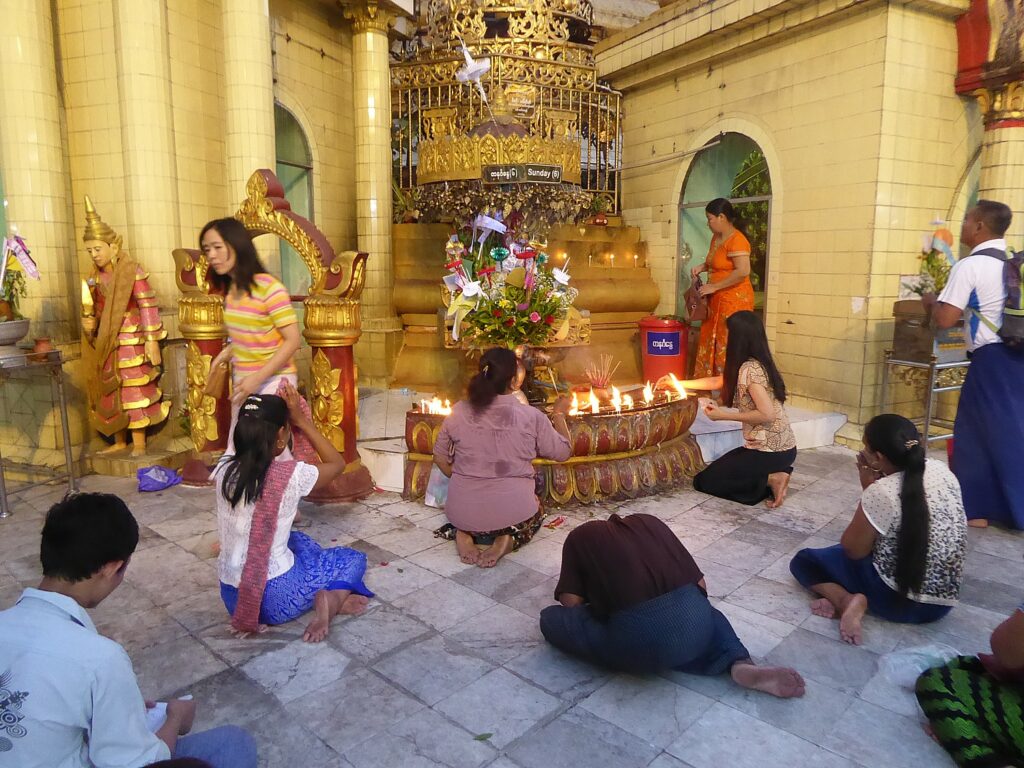
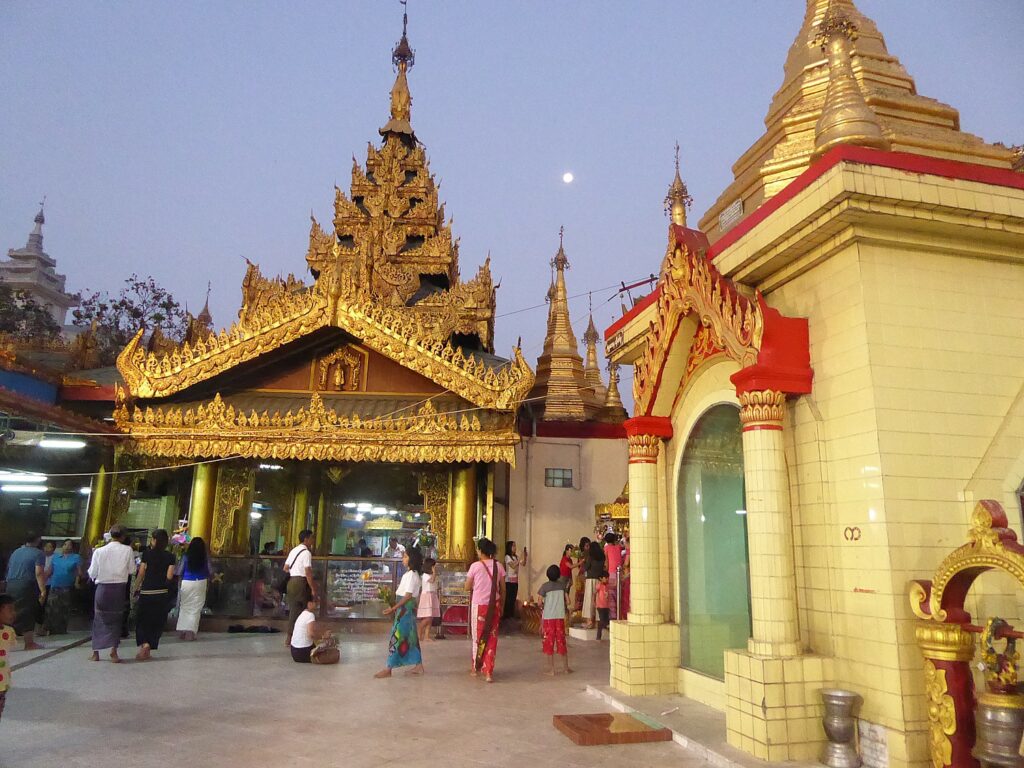
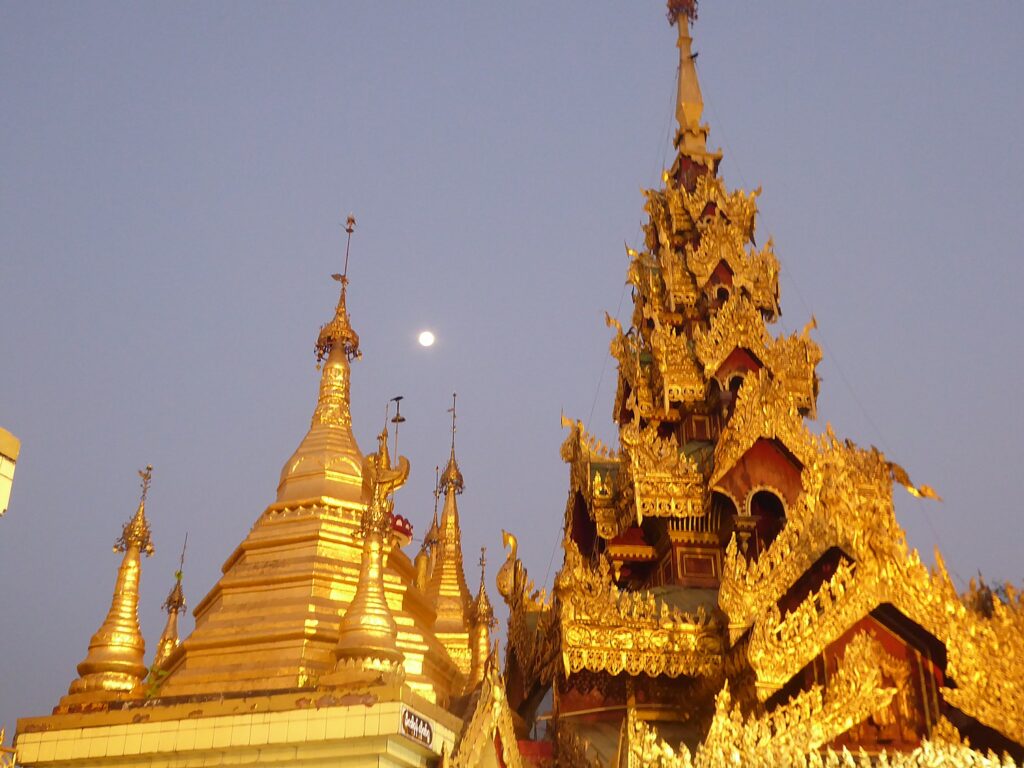
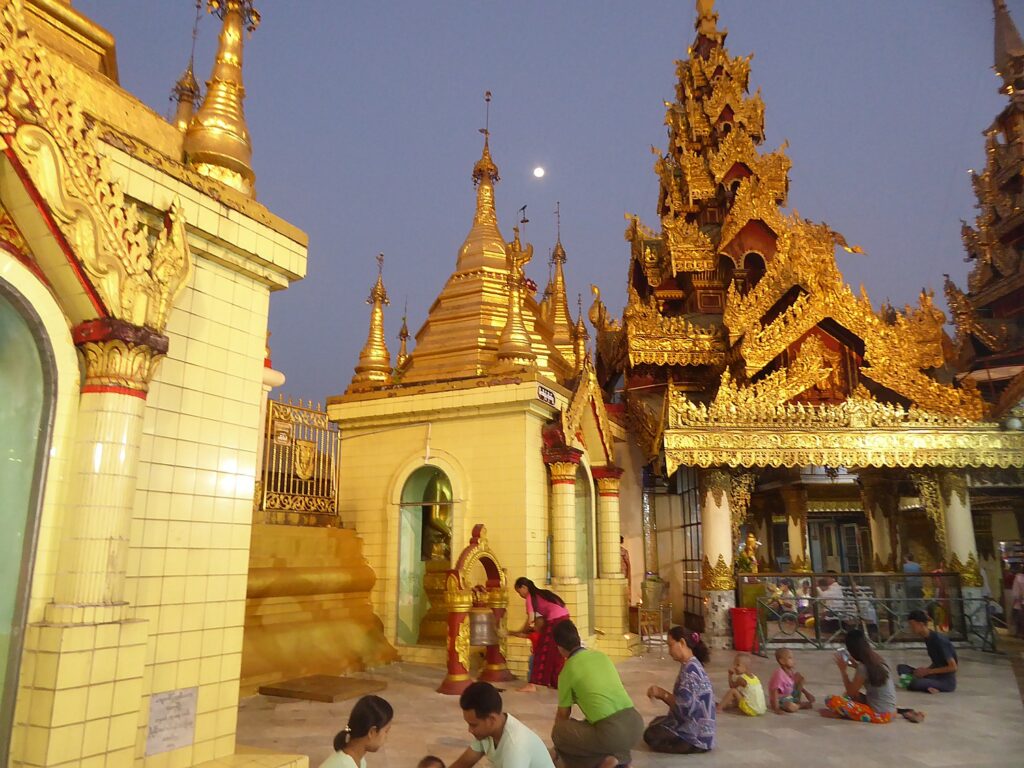
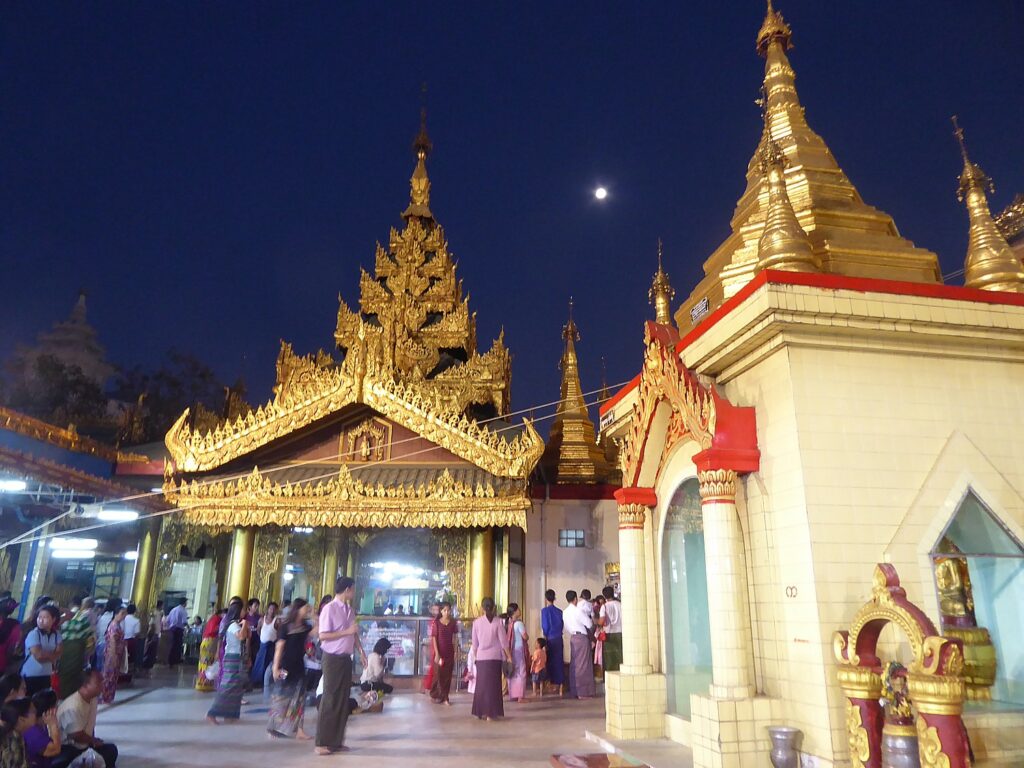
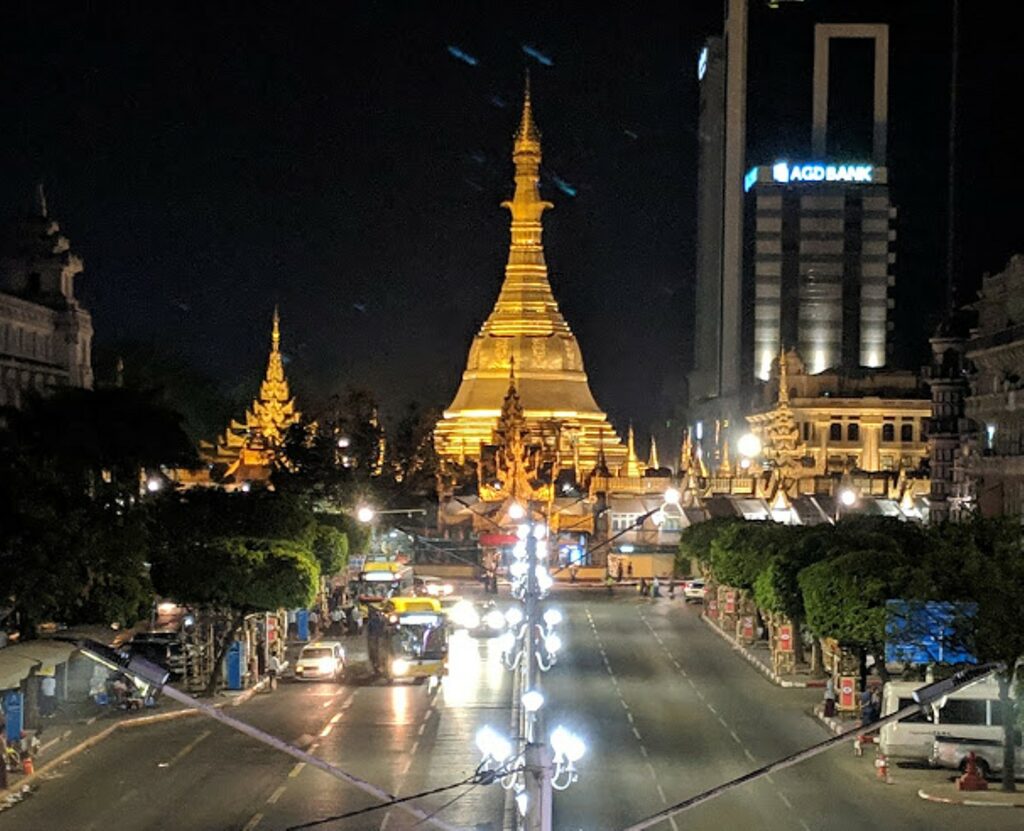
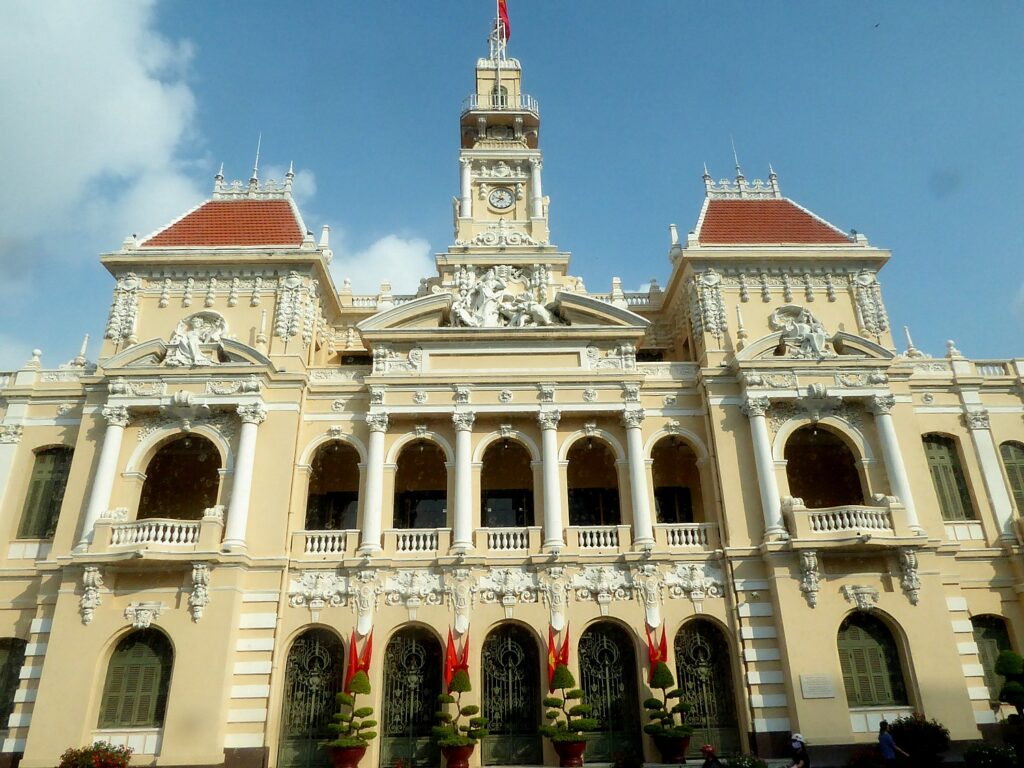
Sule Pagoda
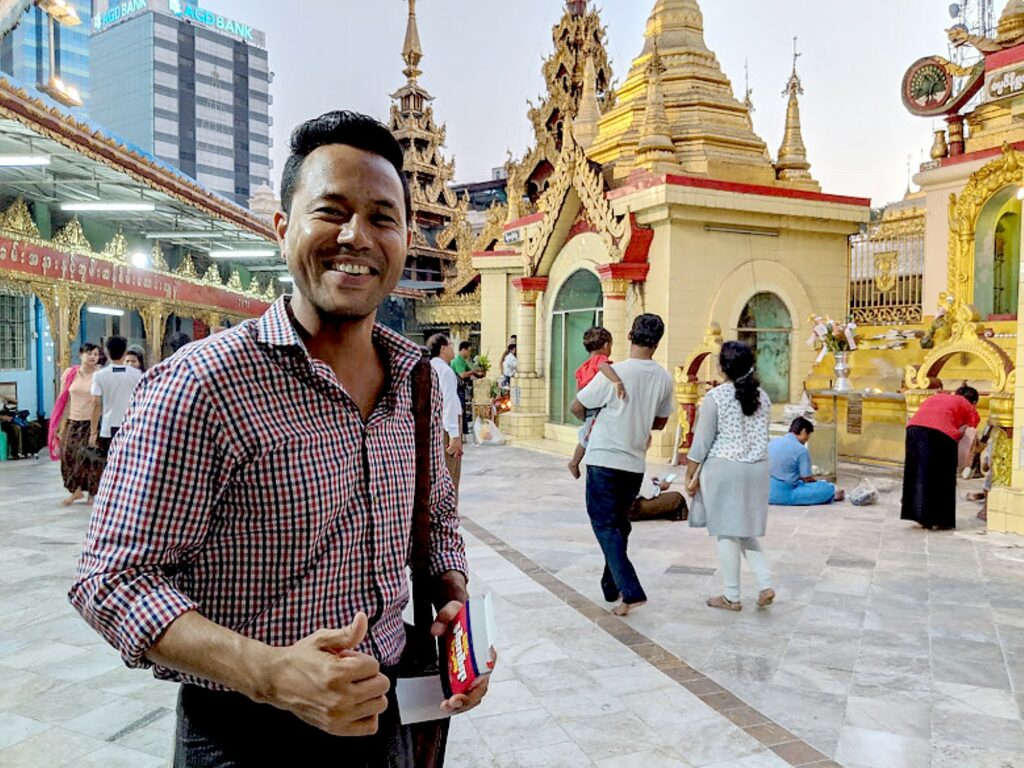
By the time we finish, I only have time to walk down a modern boulevard to the Sule Pagoda, which sits at the center of the city as well as the city’s political and economic life.
According to legend, the stupa was built even before the
more famous Shwedagon Pagoda
during the time of the Buddha, which would make it more than 2,600 years old.
The Sule Pagoda served as a rallying point in both the 1988 uprisings and the
2007 Saffron Revolution.
It’s
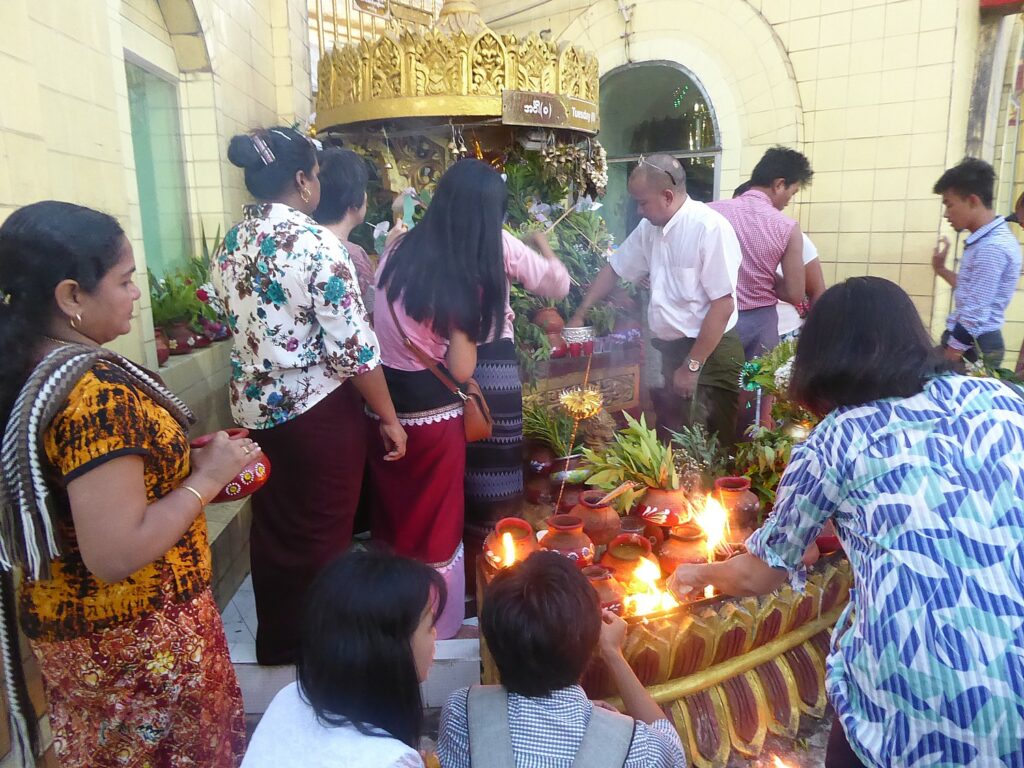
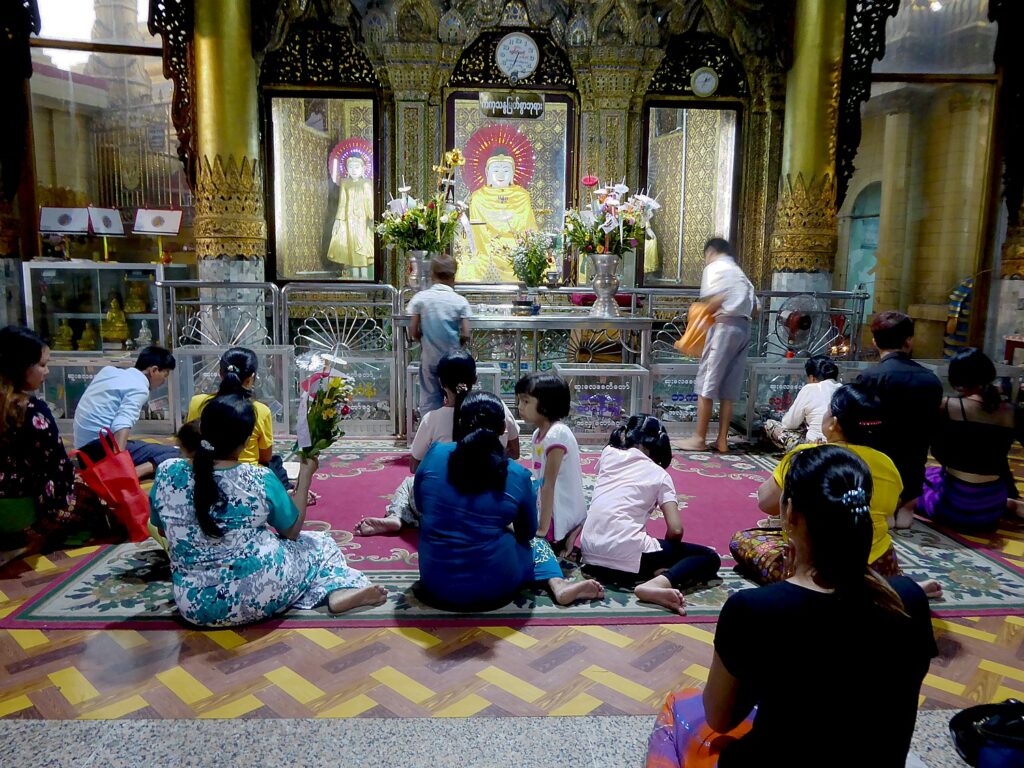
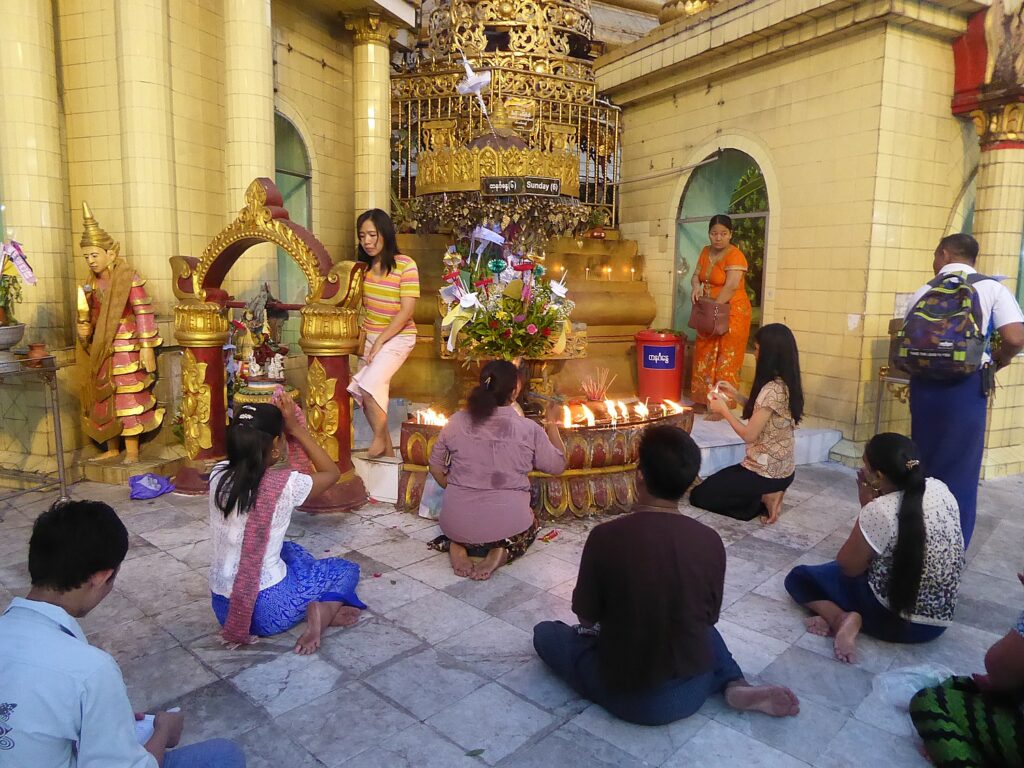
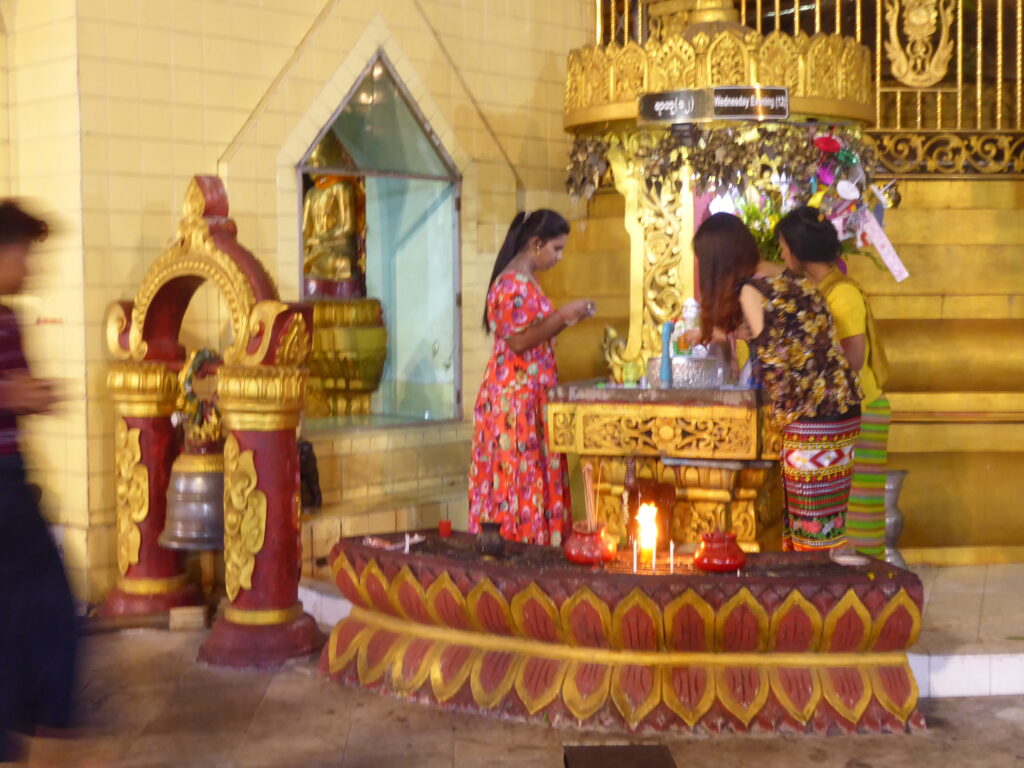
the last day of the New Year celebration and place is packed with people
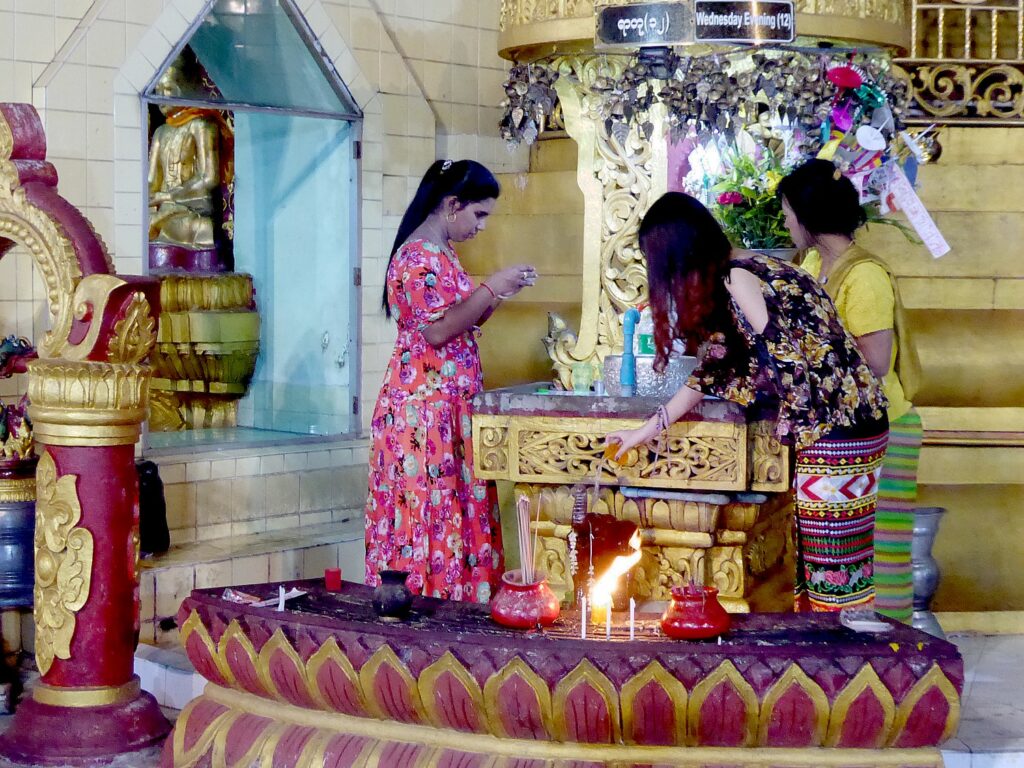
bringing offerings, lighting candles and spilling water at their Weekday
shrine. It is dusk when I arrive, and I watch the moon rise and the sky deepen
in color to azure blue, the brilliant gold of the pagoda a blazing contrast. A
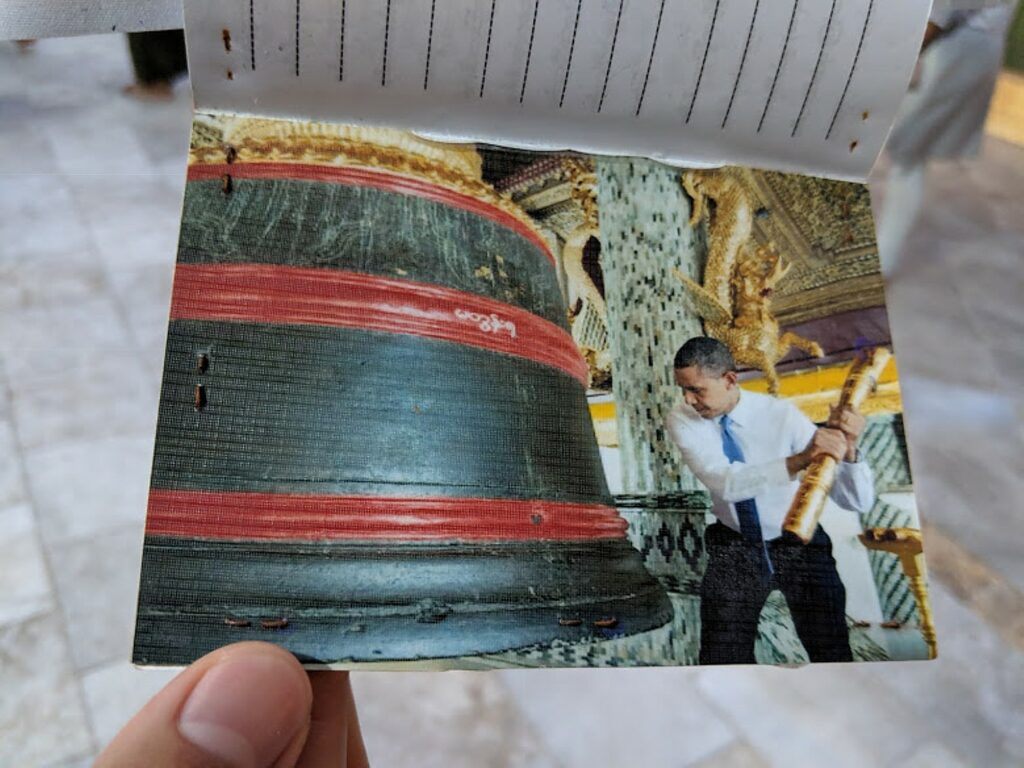
guide immediately comes up to me to offer to take me around and checks his book
to see exactly what day of the week I was born, so I know which is my shrine
(Thursday is my shrine; the mouse is my animal); he shows me a photo of
President Obama striking one of the bells during his visit here.
I
have yet to see the famous Shwedagon Pagoda. Fortunately, I will have more time
to explore Yangon when we return on Saturday.
We
are up at 4 am to leave at 5 am for the airport for a 7 am flight to Bagan on
Golden Airlines. The hotel has very kindly packed a to-go breakfast. It turns
out several of us are going on the same flight to Bagan.
This
morning in clearer light, having become entranced by the description of Inle
Lake, a villages built on stilts and only accessible by boat, and hearing one
team discuss the overnight bus they will take from Bagan to Inle Lake, I decide
to go on my own to Inle Lake instead of to Mandalay. But that depends on
whether I can get seat on all-night bus, a hotel in Inle Lake and a flight from
Inle Lake on Saturday morning to be back in time for the 6 pm meeting/deadline.
The Global Scavenger Hunt is an annual travel program that has been operated for the past 15 years by Bill and Pamela Chalmers, GreatEscape Adventures, 310-281-7809, GlobalScavengerHunt.com.
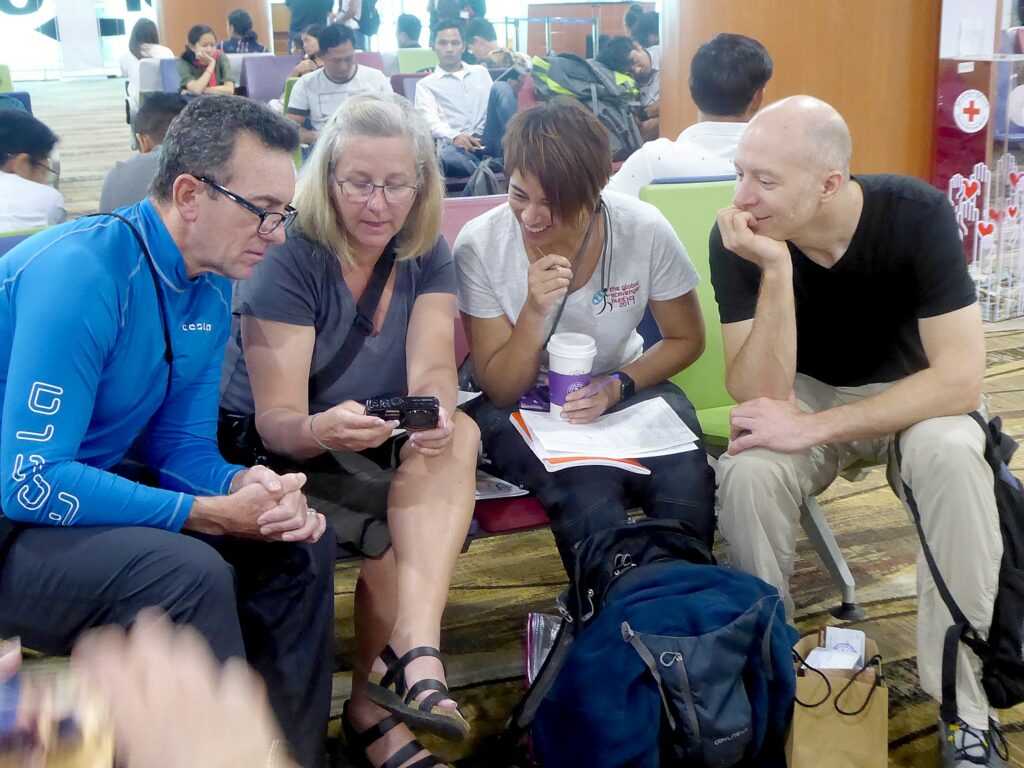
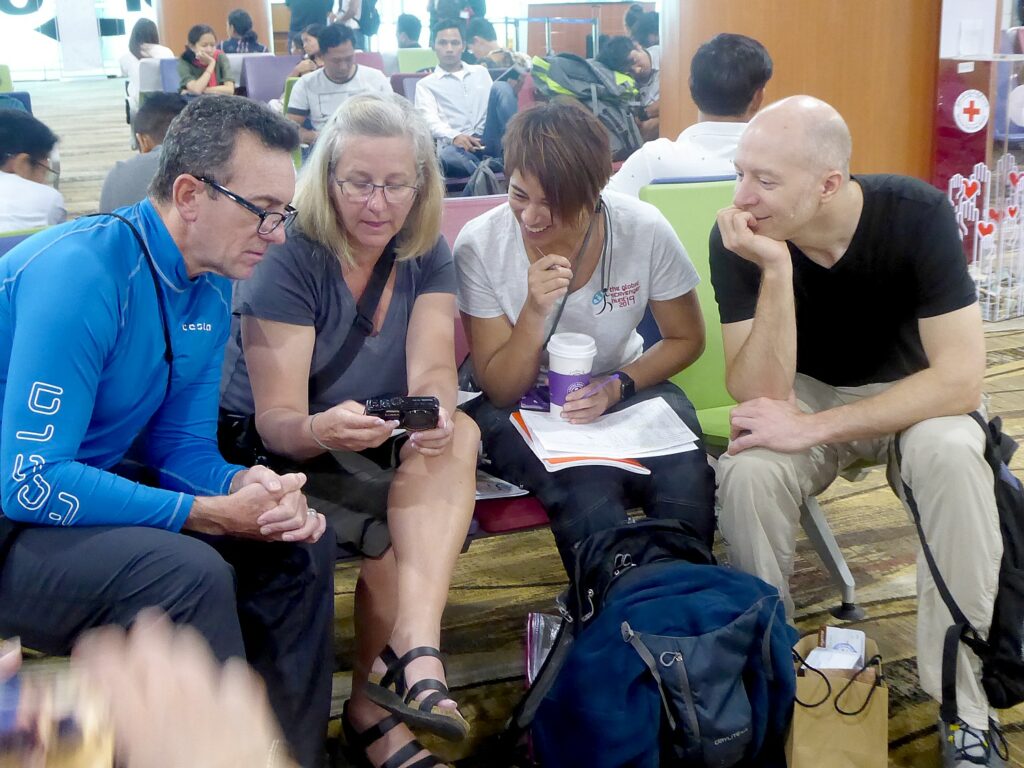
Two of the Global Scavenger Hunt teams, Lawyers Without Borders from Houston, and Lazy Mondays, doctors from California, do their peer review while waiting in the airport for the flight to the next leg of the 23-day, around-the-world mystery tour to determine “World’s Best Travelers.” (c) Karen Rubin/goingplacesfarandnear.com.
Saigon is the second leg of nine
during a 23-day, around-the-world Global Scavenger Hunt, “A Blind Date with the
World,” where we don’t know where we are going until we are given 4-hour
notice. Under the Global Scavenger Hunt rules, you are not allowed to use a
phone or computer for information or reservations, hire a private guide, or
even use a taxi for more than 2 scavenges at a time, since the object is to
force you to interact with locals. Though we were not officially competing for
“World’s Best Travelers,” my teammate, Margo (who I only met on this trip) and
I basically followed the rules in Vancouver and during our first day in Vietnam,
but we had to deviate on the second day.
It is shortly before 4 pm in Ho Chi
Minh City (Saigon), Vietnam, by the time we have received our book of scavenges
from Bill Chalmers, the Global Scavenger Hunt ringmaster (as he likes to be
called), who has ranked Vietnam a “Par 3” in difficulty (on a scale of 1-6),
strategized what scavenges we will undertake, and after a swim in the hotel’s
pool (so hot even the pool was like a bathtub), we head out of the Majestic
Hotel, a five-star historic property, toward Ben Thank Market, one of the
scavenges on the list.
Built in 1870 by the French who
colonized Vietnam for 100 years, it is where then and now, you can find locals
and tourists alike, with row after row after row chock-a-block full of almost
everything imaginable. (Be prepared to bargain aggressively; the shopkeepers
are even more aggressive). I come away with a few things I can’t bear to pass
up, when Margo realizes a second scavenge we can accomplish: tasting three
separate fruits (there is heavy emphasis on “experience” scavenges that involve
food, and Vietnam, Bill says, is one of the great food places in the world).
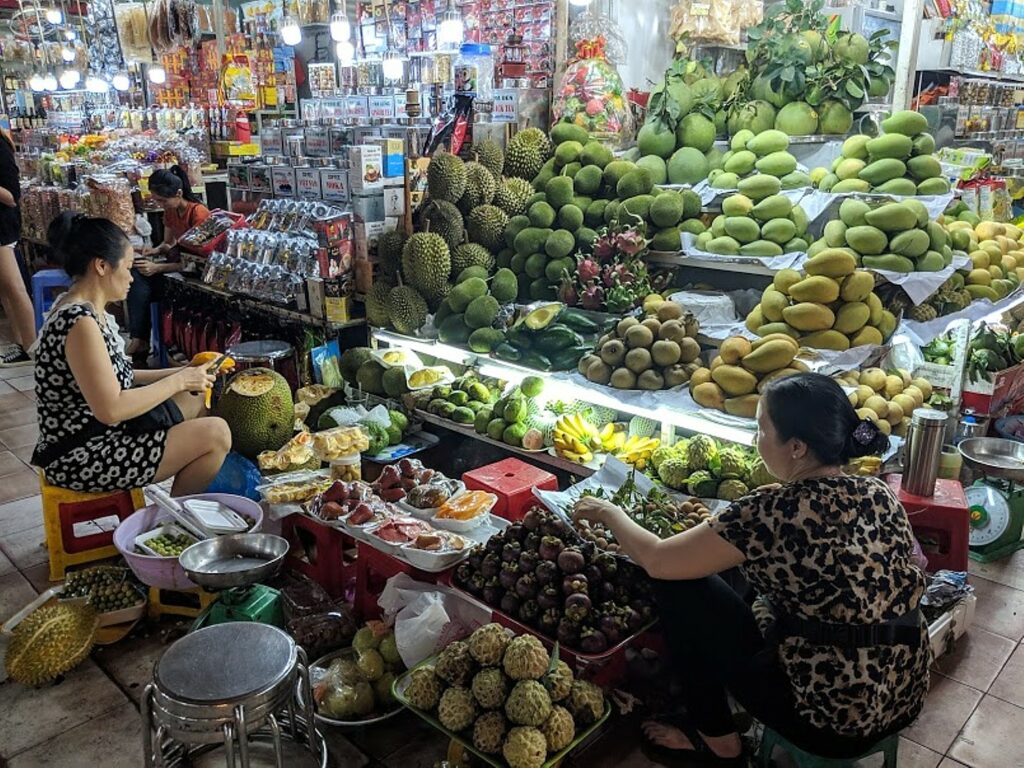
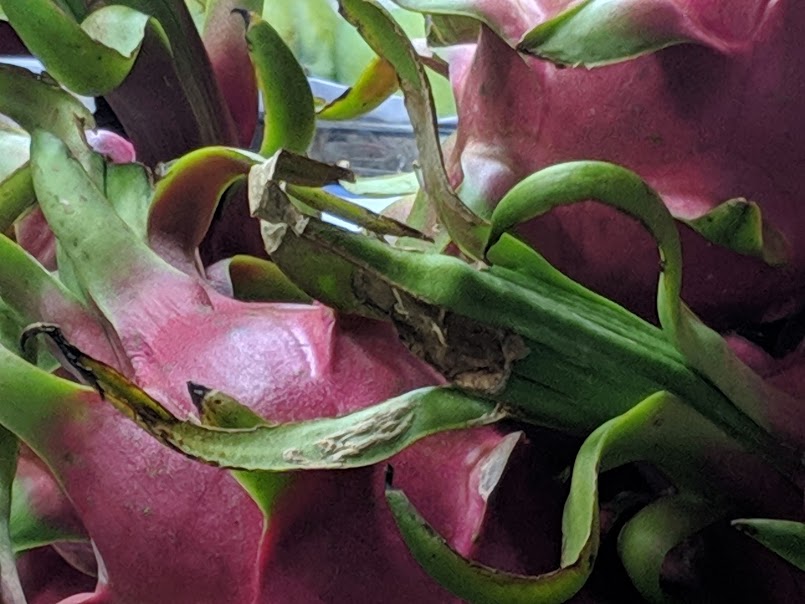
We find a fruit stand and sure
enough, there are fruits I have never seen before, including one, called dragon
fruit, which looks like it was divined by JK Rowling for Harry Potter; the
others we sample: rambutan, mangosteen, longan. We are standing around these
ladies, asking them to cut open the various fruits so we can sample them to
complete the scavenge, taking the photos we need to document.
Among the other scavenges on the
list here in the market: to find a cobra in jar of alcohol; the tackiest
souvenir in market; and a wet market (which befuddles most of us and turns out
to be the meat market which is hosed down).
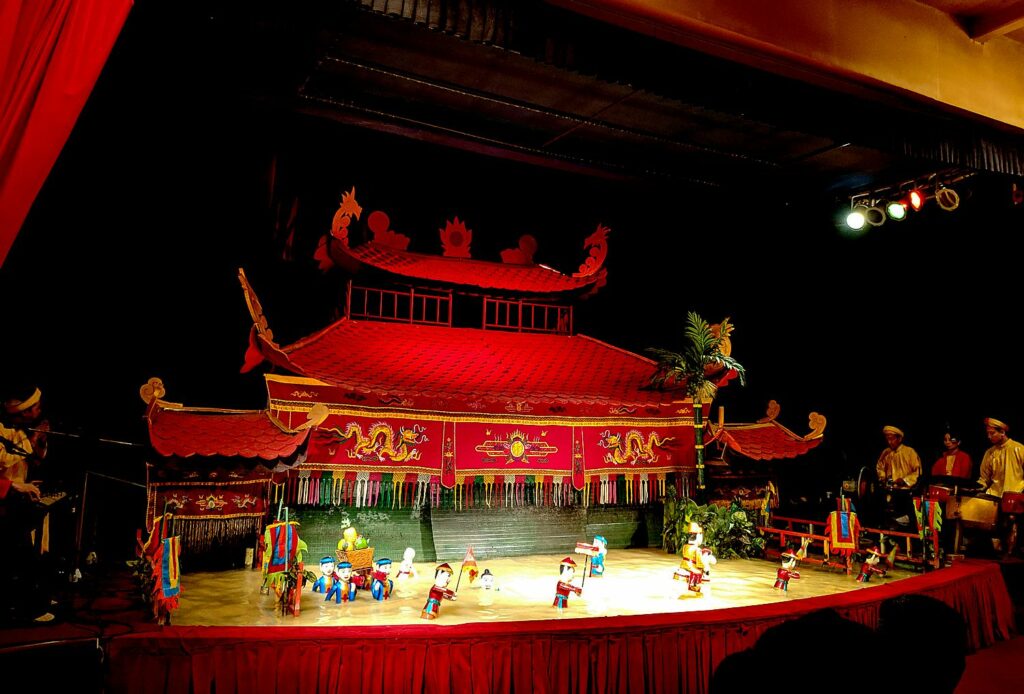
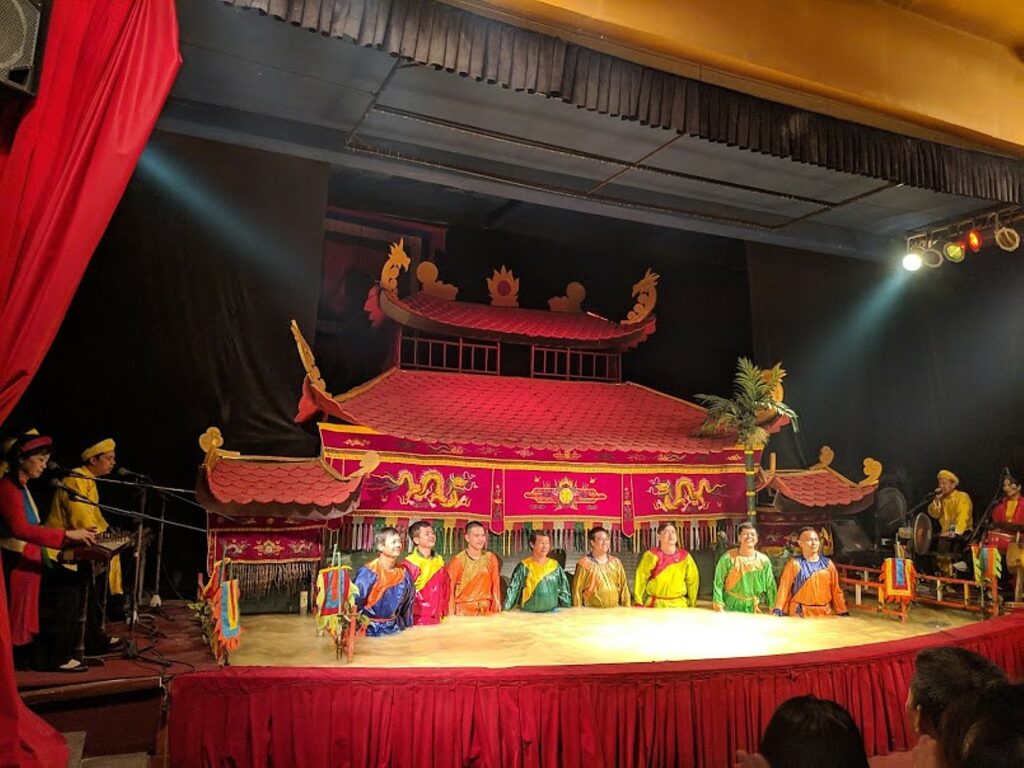
We ask locals for directions to our next stop: the Water
Puppet Show of Vietnam at the Golden Dragon Water Puppet Theater. It seems
walkable but we get lost along the way (technically we can’t use the GPS on the
phone, but we aren’t competing – we still get lost) and are simply amazed at
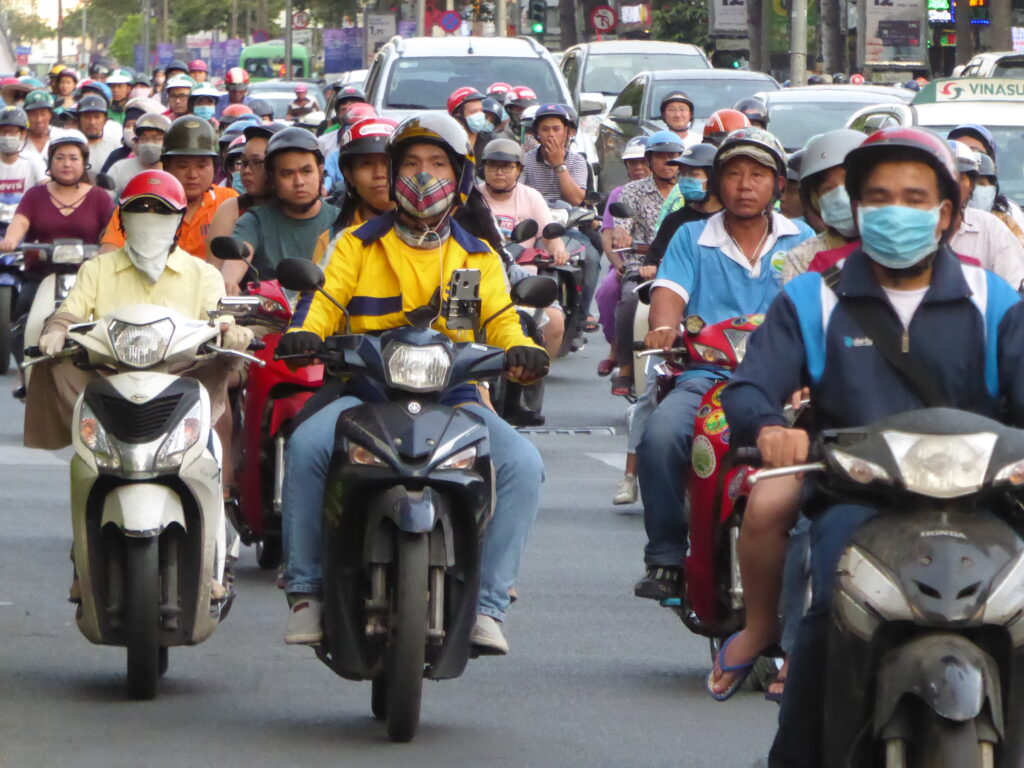
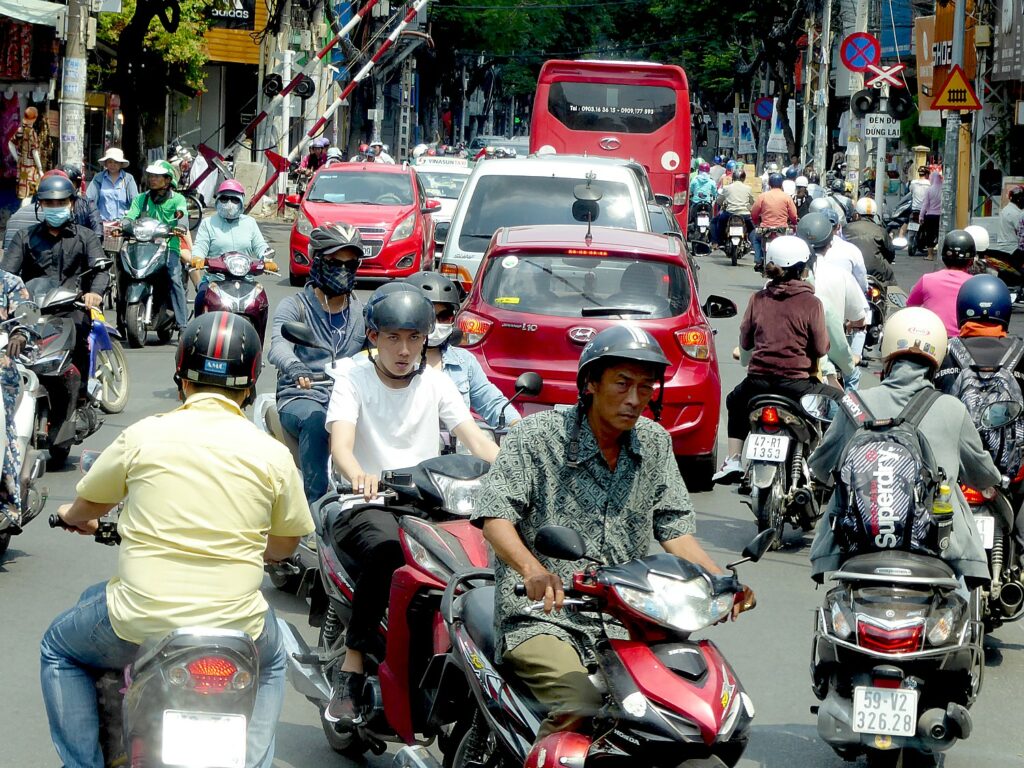
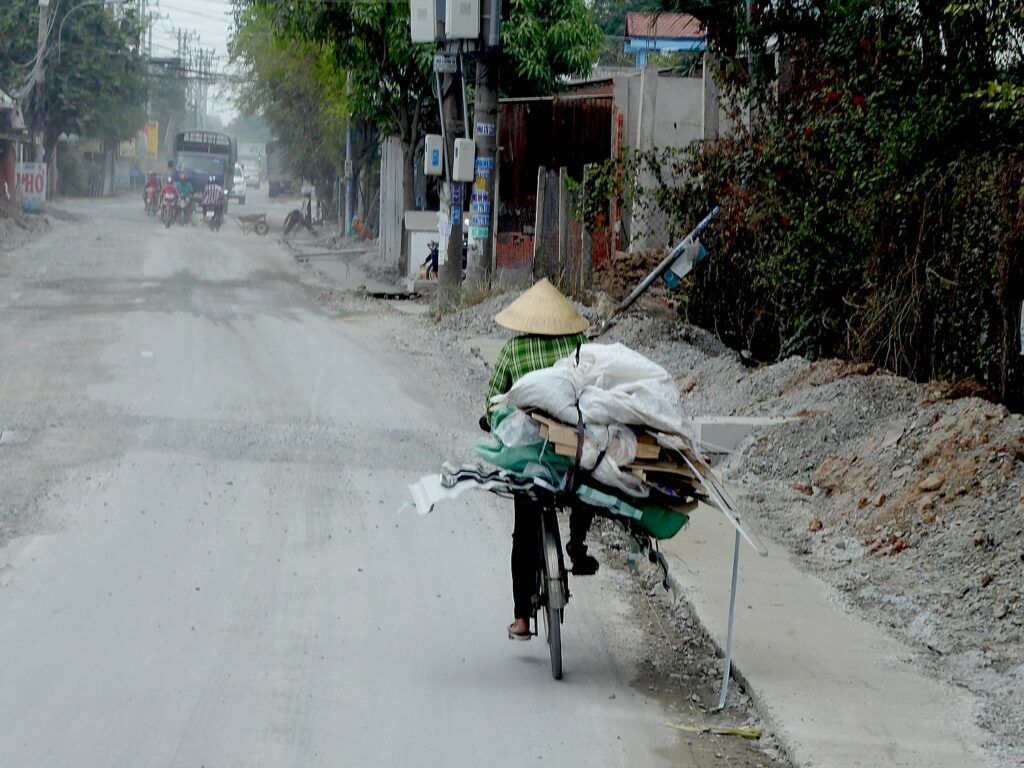
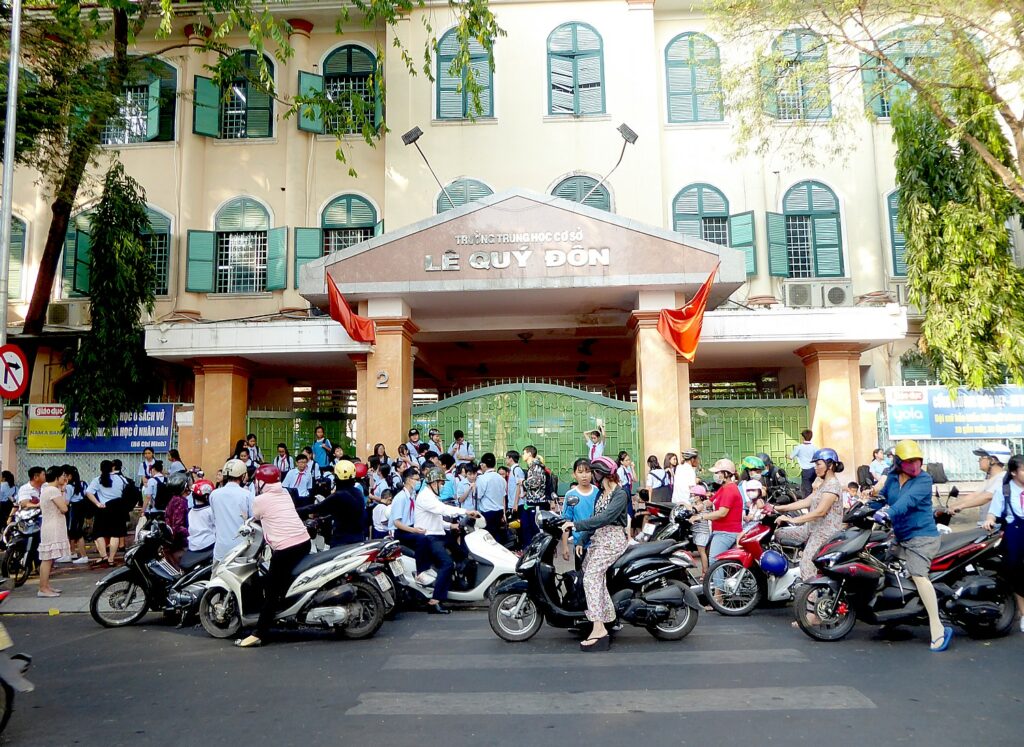
the rush and crush of mopeds (mainly) and cars in this city of 9 million where
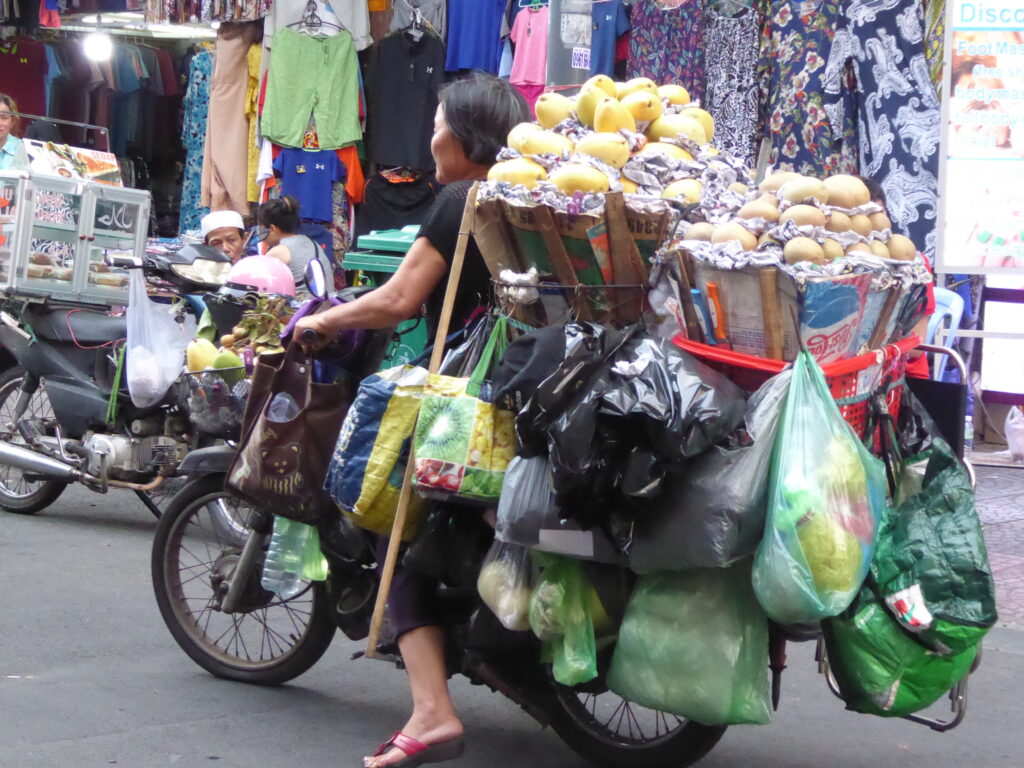
there are an estimated 7 million scooters, and the range of what people carry
on them without a second thought. I literally stand in a traffic island to get
the full view.
We are also amazed we are able to
function having departed Vancouver, Canada, for Vietnam at 2 am for a 14-hour
flight to Taipei, followed by an hour lag time before a 3-hour connection to
Saigon. Time has become a very fluid, meta thing.
But we forge on (the secret to
avoiding being taken down by jet lag is to stay up until bedtime). This is also
on the scavenger list and as it turns out, we meet several other teams from our
group.
The performance proves fabulous and unexpected – the puppets actually emerge out of water; water is their platform. There is musical accompaniment on traditional instruments and the musicians also become the characters and narrators and sing. This is quite an outstanding cultural performance – the artistry and imaginativeness of the puppets (who swim, fish, plant rice which then grows, race boats, dance, catch frogs and do all sorts of things with incredible choreographed precision, is incredible.
These seem to be folk stories, and the music is traditional. It doesn’t matter if you don’t understand Vietnamese. It confounds me how they do such precise choreography from the water (the puppeteers are behind a gauze curtain; controlling with bubble wands horizontally). The artistry is magnificent and the experience an utter delight. (Golden Dragon Water Puppet Theatre, 558 Ngyuyen Thi Minh Kahi Street, Dist.1, HCMC, www.goldendragonwaterpuppet.com).
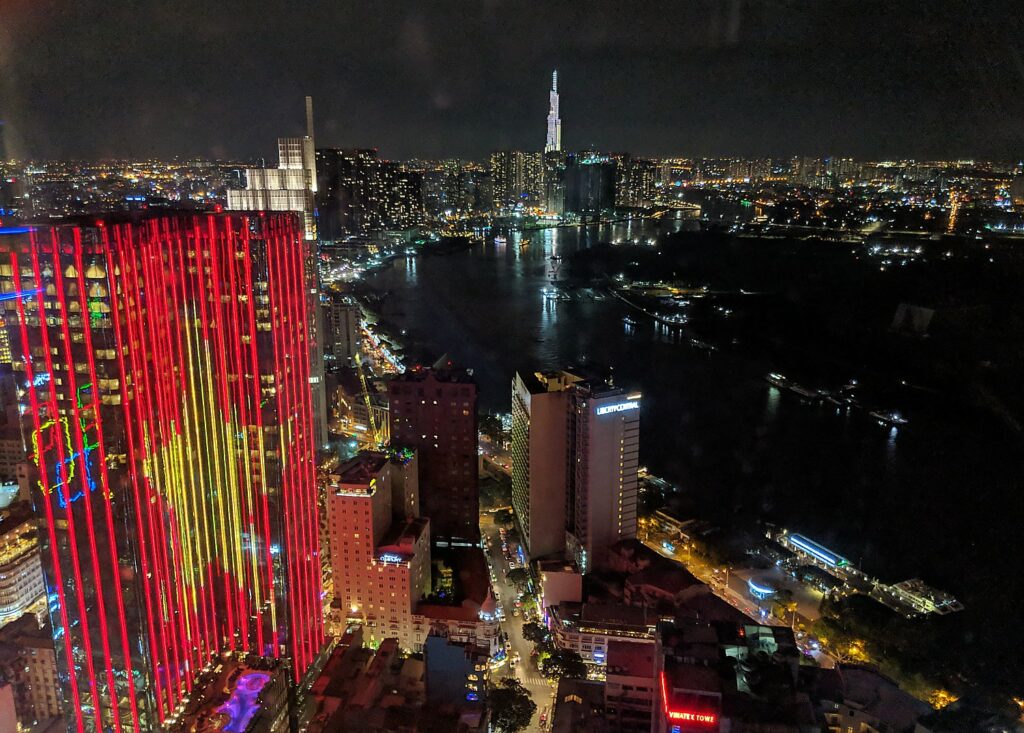
From there, we take a taxi to hit
another scavenge, going to the Saigon Skydeck on the 49th floor of the Bitesco Financial Tower, which
affords beautiful scenes of Saigon. From here, all you see is a very modern
city. Many of the buildings below are decorated in colored lights. This is an
example of modern Saigon that is rising. (Skydeck senior rate $5; some places have
senor rates, others don’t, so ask)
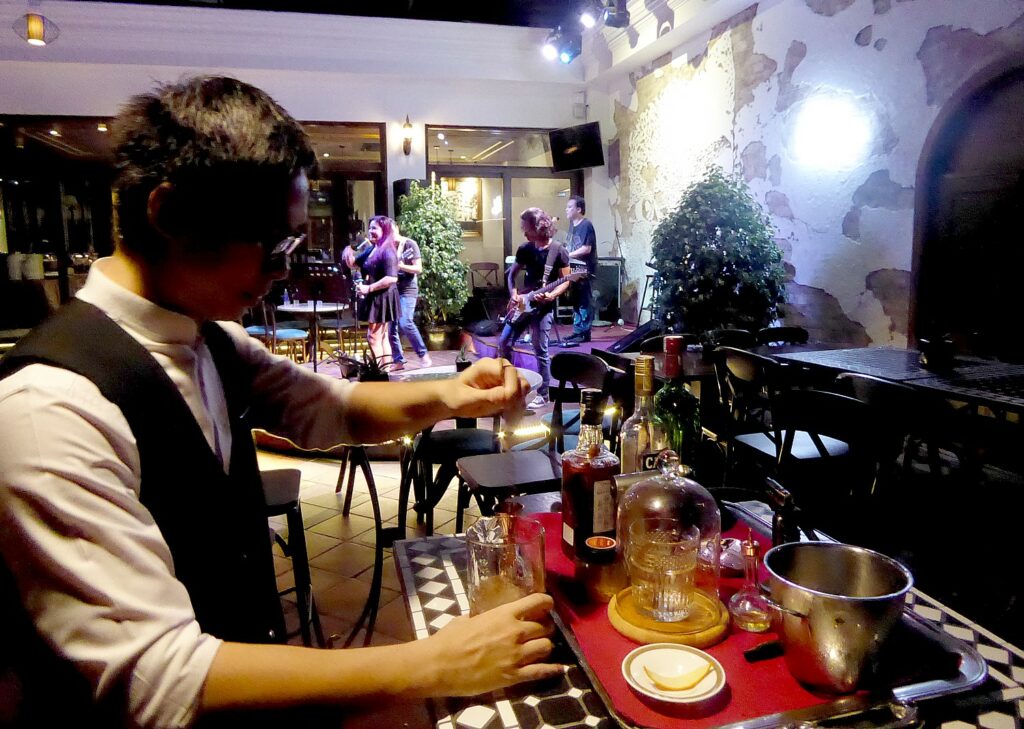
Back
at the Hotel Majestic, we go up to the 8th floor M
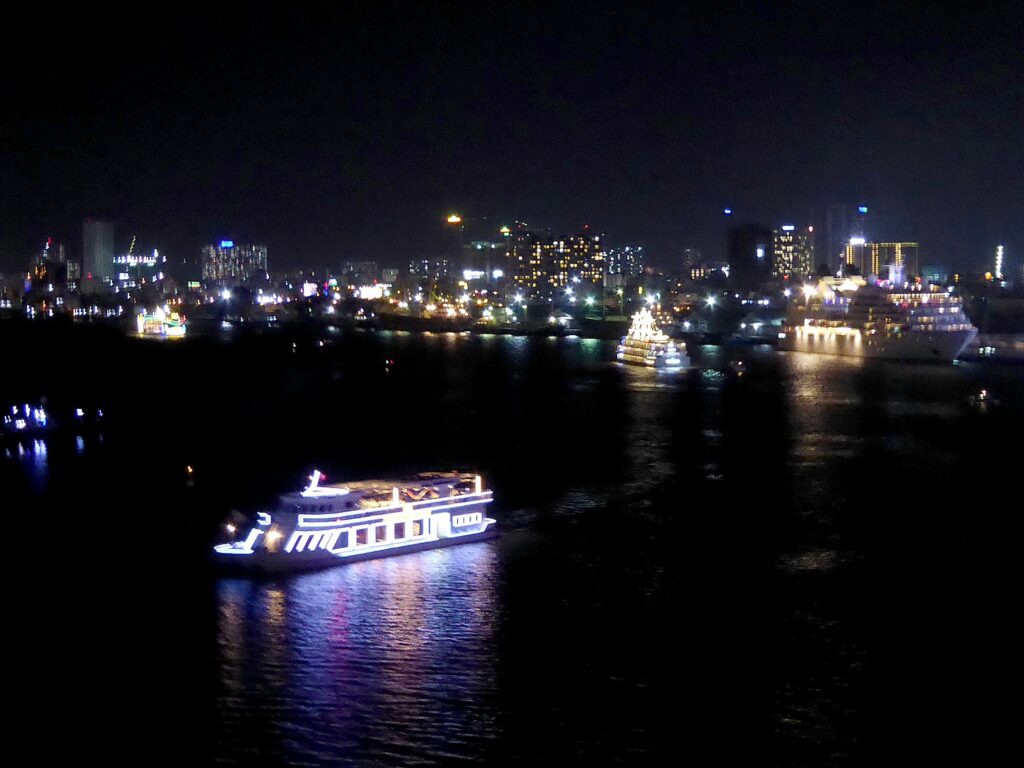
Club, a delightful rooftop bar, where there is a band playing. The open-air
views of the Saigon River and the skyline are just magnificent. Margo orders a
“Majestic 1925” which is Bourbon, infused orange, sweet vermouth, Campari,
orange bitter, orange zest, and smoked – the whole process done on a table
brought to us, as a crowd gathers to watch the mixocologist light a torch to
generate the smoke. Quite a scene.
Whereas
my first afternoon and evening in Ho Chi Minh City was devoted to seeing the
city as it is today – albeit dotted with centuries old buildings, markets and
heritage – the second day is a somber, soul-searching journey back in time.
Indeed, as I wander around the city, you don’t see any obvious scars of the
Vietnam War.
One of the signature sights of a
visit to Ho Chi Minh City is the Cu Chi Tunnels. My teammate Margo has already
been there and doesn’t want to return, but I feel duty-bound to see it for
myself. I wake up early and go down to
the hotel concierge to see if I can get on the 7:30 am half-day trip to the Cu
Chi Tunnels.
The concierge calls the tour company
and says there is room on the bus and that they pick up right at the hotel. I
am off. (545,000
Dong, about $25, www.saigontourist.net, www.e-travelvietnam.com)
As
we travel outside through the city, the guide points out sights and gives us a
history of Vietnam, going back to the Chinese who came in the 1600s, the French
who came later, the Vietnam War and the aftermath, while hardly disguising resentment of the
North Vietnamese who have flooded into the city since the war. Ho Chi Minh City has grown from a city of 2 million to 9
million today, with 7 million scooters (here, instead of Uber car, you summon a
Grab scooter).
It’s
an opportunity to see more of the city and soon we are in the countryside,
traveling through small villages and farms where we see cemeteries, markets,
houses, a few animals, rubber plantations. We see new agricultural techniques
being used on farms and pass an agricultural research center. It is about an
hour’s drive.
The Cu Chi Tunnels are an immense
network of connecting tunnels located in the
Củ Chi District of Ho Chi Minh City (Saigon), which the
Viet Cong used to launch guerrilla warfare against the Americans during the
Vietnam War. The site has over 120 km of underground tunnels with trapdoors,
living areas, storage facilities, armory, hospitals, and command centers, and
were used going back to 1948 against the French, and later against the
Americans.
The visit is profound, and though
the script is written by the victors, is appropriate to represent the side that
wanted to push out colonists (though in retrospect, I realized that there was
no real mention of the fact that the South Vietnamese leadership didn’t want
the Communist North Korean leadership to take over, either – nothing is simple,
especially not in the world of geopolitics).
You have to appreciate the
commitment and courage and sacrifice of the Viet Cong in living the way they
did – creating a virtually self-sufficient underground community, planting
booby traps for the Americans, repurposing unexploded bombs into weapons and
old tires into sandals, cooking only at night and channeling the smoke to come
up in a different place (where it would look like morning steam, so not to give
away the location of the tunnels).
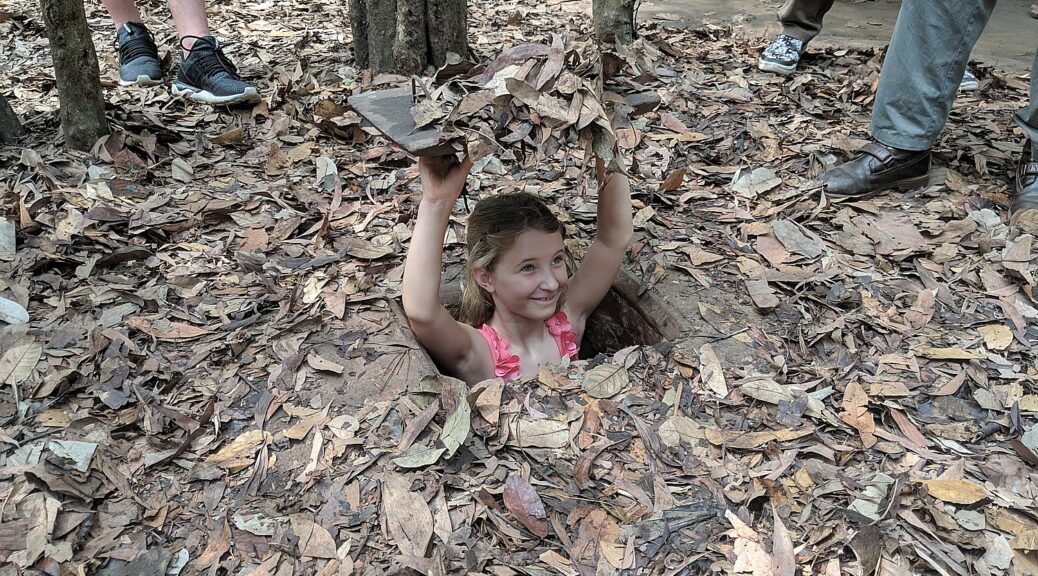
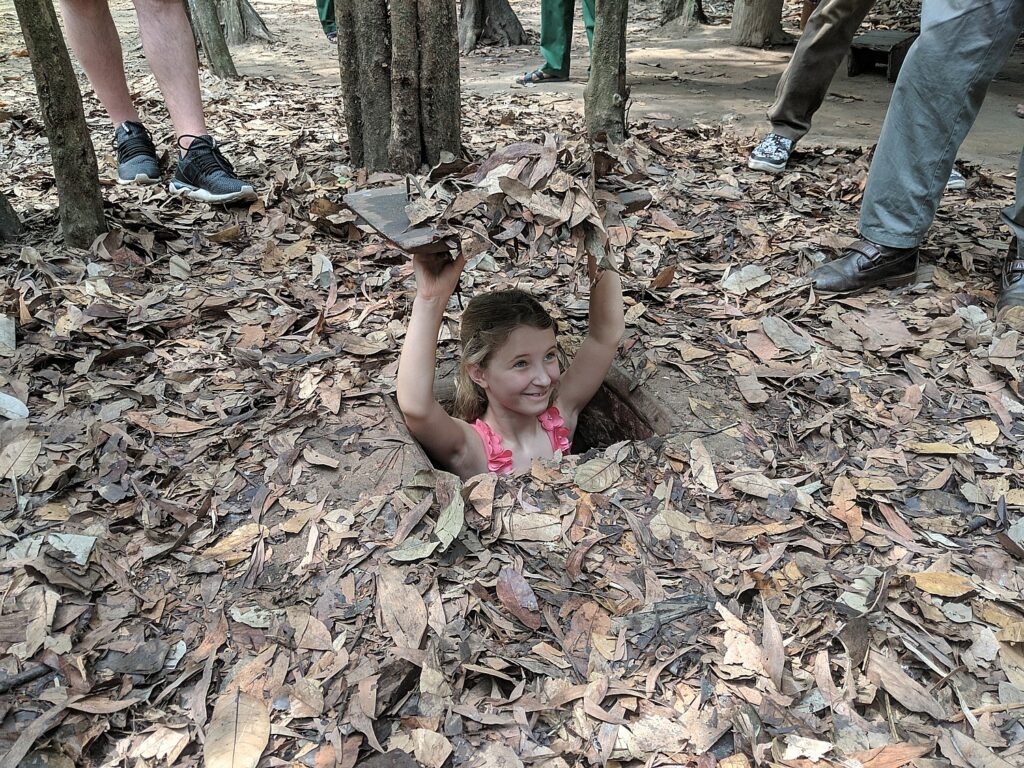
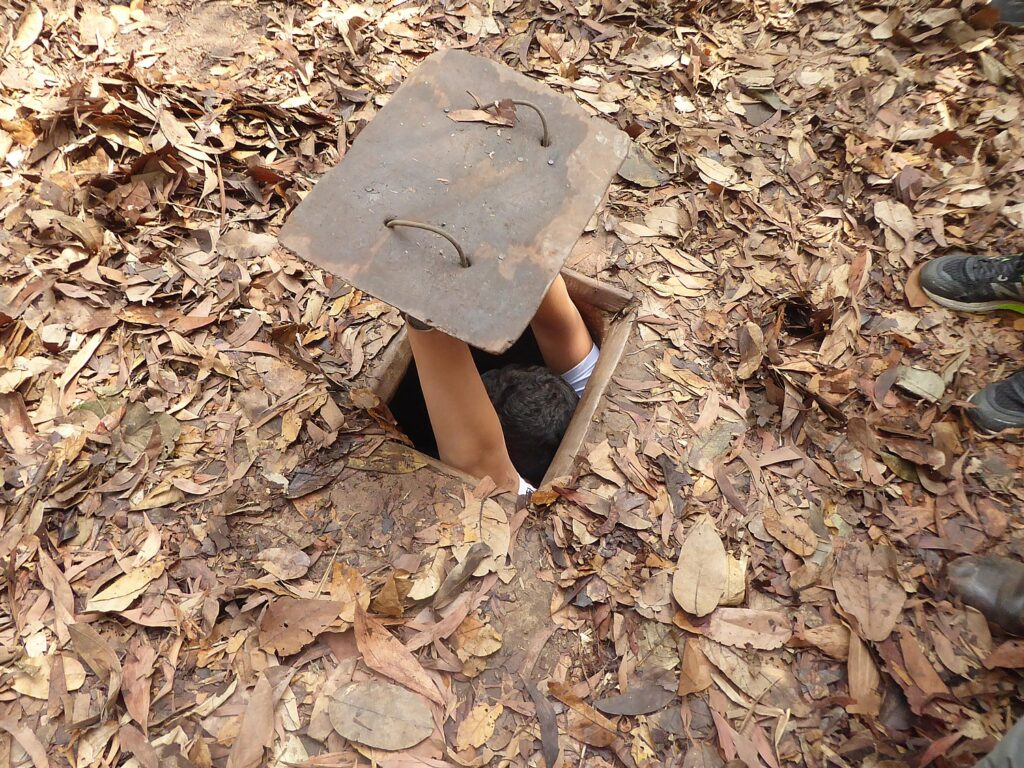
We get to climb into a tunnel, and
can go 20, 40, 60, 80 up to 160 meters, seeing just how tiny they were – you
have to crouch all the way through and sometimes even crawl. It is hot,
uncomfortable, you feel claustrophobic and it is a bit terrifying.
Our tour guide leads us through – he
is incredibly kind and considerate. He gives special attention to the children
who are visiting – grabs them when they want to go down into a tunnel where he
fears there could be scorpions (he shows us carcasses), snakes or rats.
There is also a shooting range where
you can shoot an AK 47 or M16 (extra charge), but the constant sound of gunfire
gives you some sense of what the people were living through. There was a
hospital, a sewing area where they would make uniforms, there is a trap door to
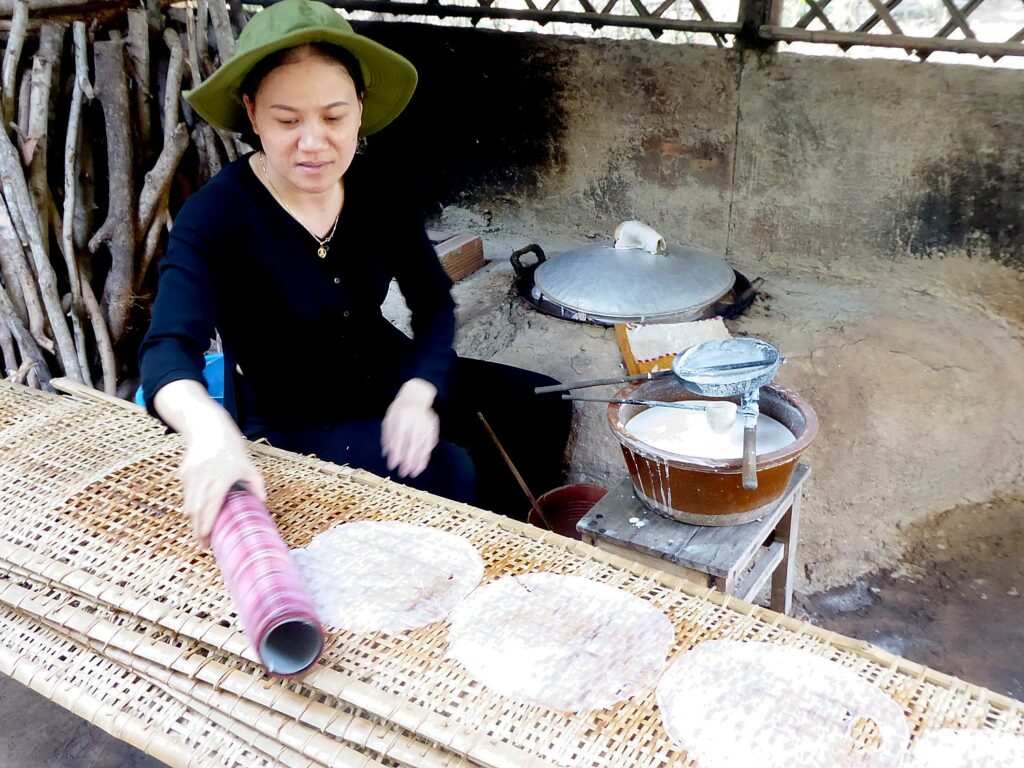
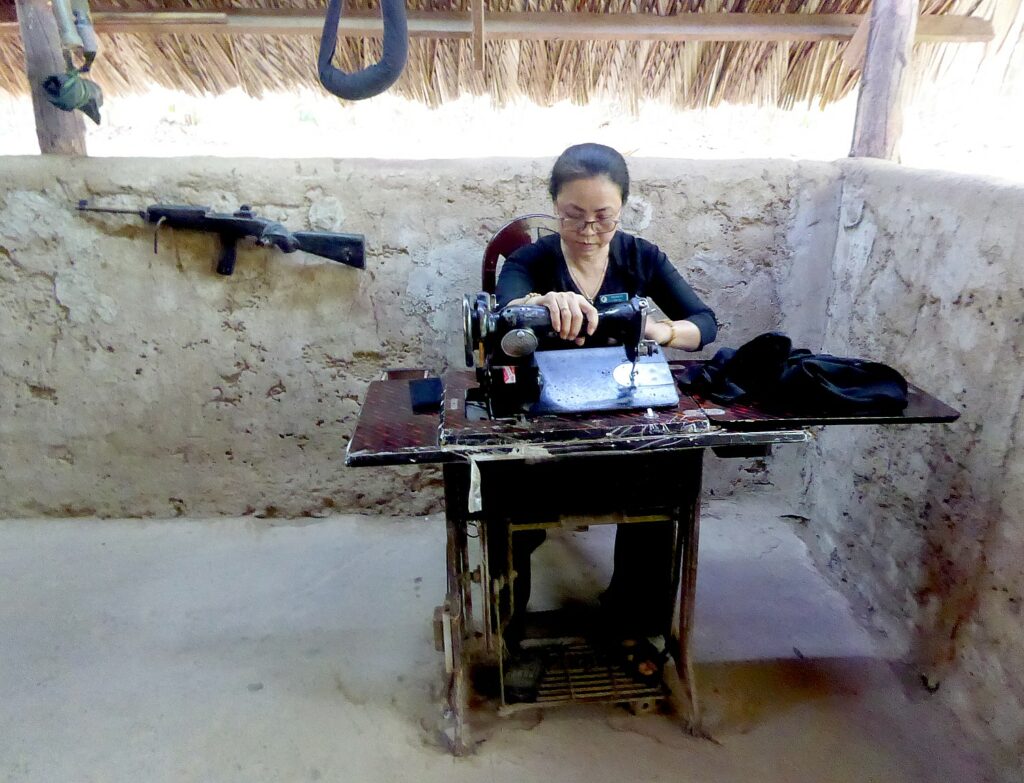
escape. We see where they would have made sandals from old tires. We watch a
woman demonstrate making rice paper; another at a sewing machine where she
would be making uniforms, a rifle hung close by on the wall.
All of these things which we see
above ground are recreated from what they would have looked like underground.
There were also constant bombings –
B-52s could fly from the base in just two minutes time.
We get a sense of that in
documentary-style films that are presented at the end. The film uses grainy
black-and-white imagery with a narration that spoke of the commitment to save
the Fatherland from US aggression, which basically depicts much of what we have
visited in the tunnels, but as these places were used during the war. I must
say that as gruesome as the film is, the only “propaganda” element is that it
does not discuss the civil war between North and South Vietnam, only that the
war was perpetrated by the Imperialist United States.
Many of the scenes show women and
girls as soldiers. “They took unexploded bombs and turned them into their own
weapons; they took from the Americans the new guns but never stopped using
traditional weapons – the traps devised to hunt animals were used against the
American enemy… Every person can be a hero. They had to live in poverty but
wouldn’t retreat. A rifle in one hand, a plow in the other. Attacked in the
morning, they farmed at night so they had enough food to win the war. The
Americans wanted to turn Cu Chi into a dead zone, but they lived underground.”
But
what we see in the film looks exactly like what was put on view here. We see
people climbing through tunnels to the sound of gunfire.
“Male
and female enrolled to kill enemy..Cu Chi guerrillas would rather die and
become hero for killing Americans… never afraid of hardship to kill
Americans. In hardship, they came together.”
Believe it or not, they actually
make the experience as pleasant and as comfortable as possible, which somehow
masks the terror of the place. Children smile and laugh as they get to descend
through the camouflaged openings in the ground.
We leave the tunnels after spending about two hours here.
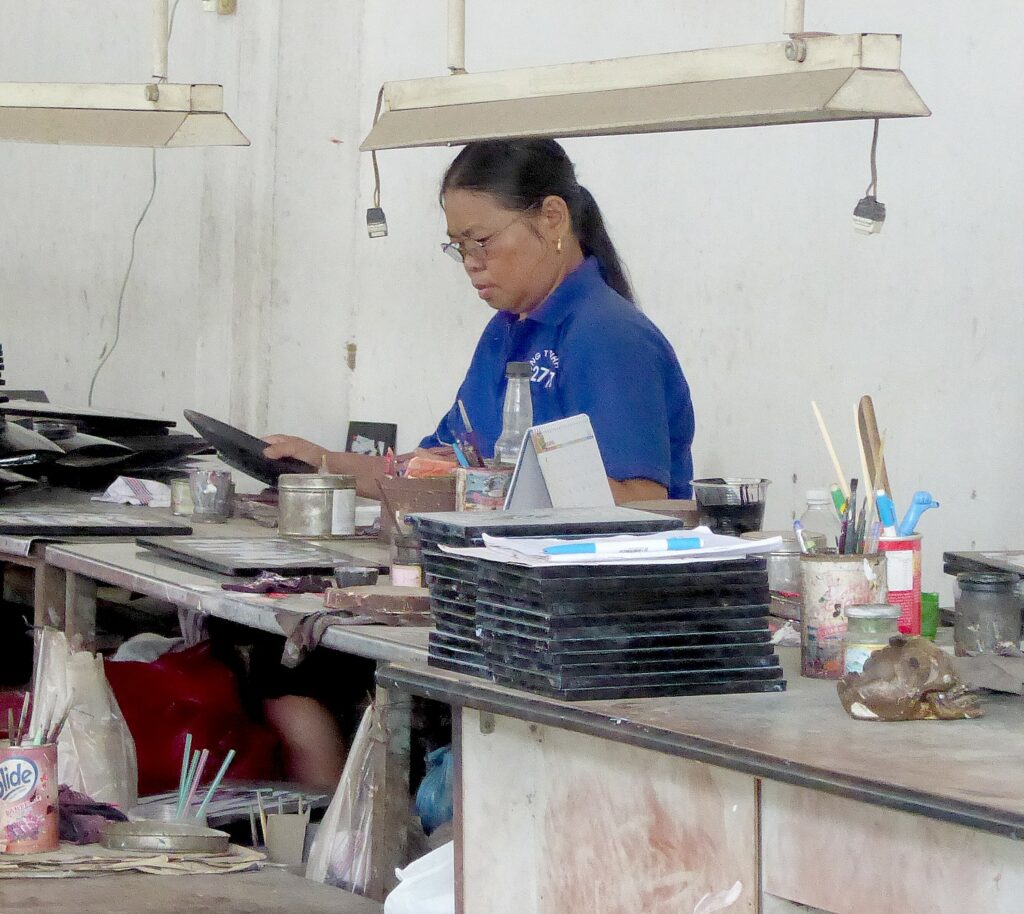
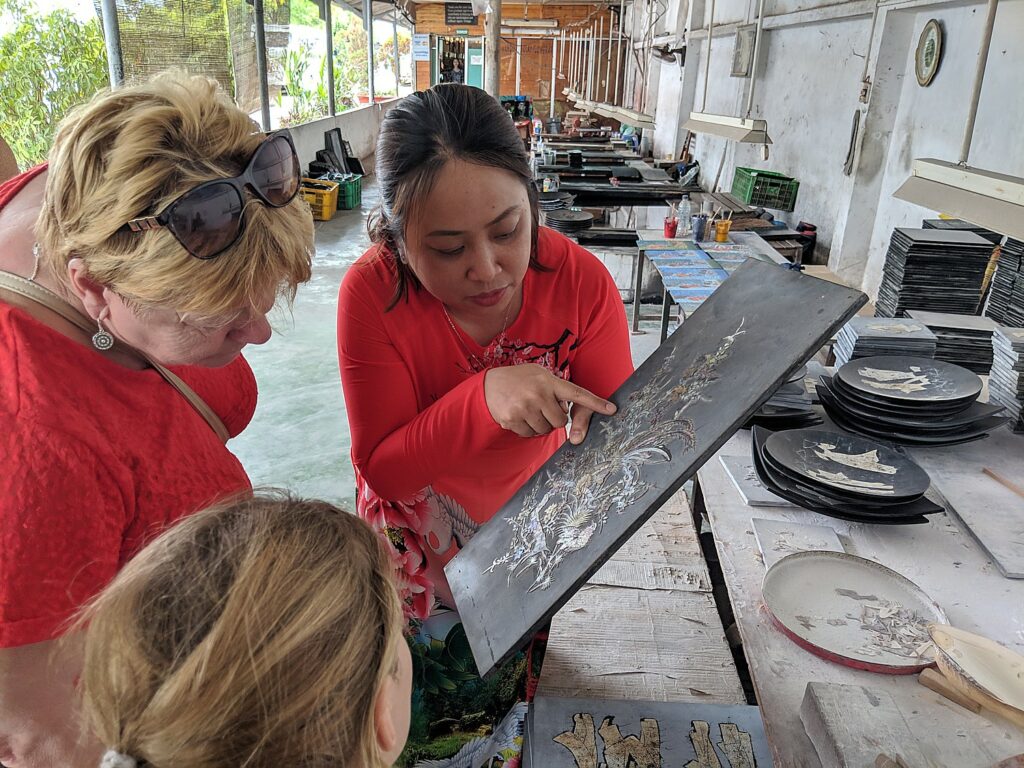
On the way back, the guide asks if we would like to make a detour to visit a factory, created by the government to employ people who were handicapped because of coming upon unexploded ordinance, or who had birth defects as a result of the chemical weapons used against the Vietnamese. Originally the factory, 27-7 HCMC.Co.Ltd, produced cigarettes, but today, Handicapped Handicrafts produce really beautiful handicrafts – mainly lacquered and inlaid items.
After
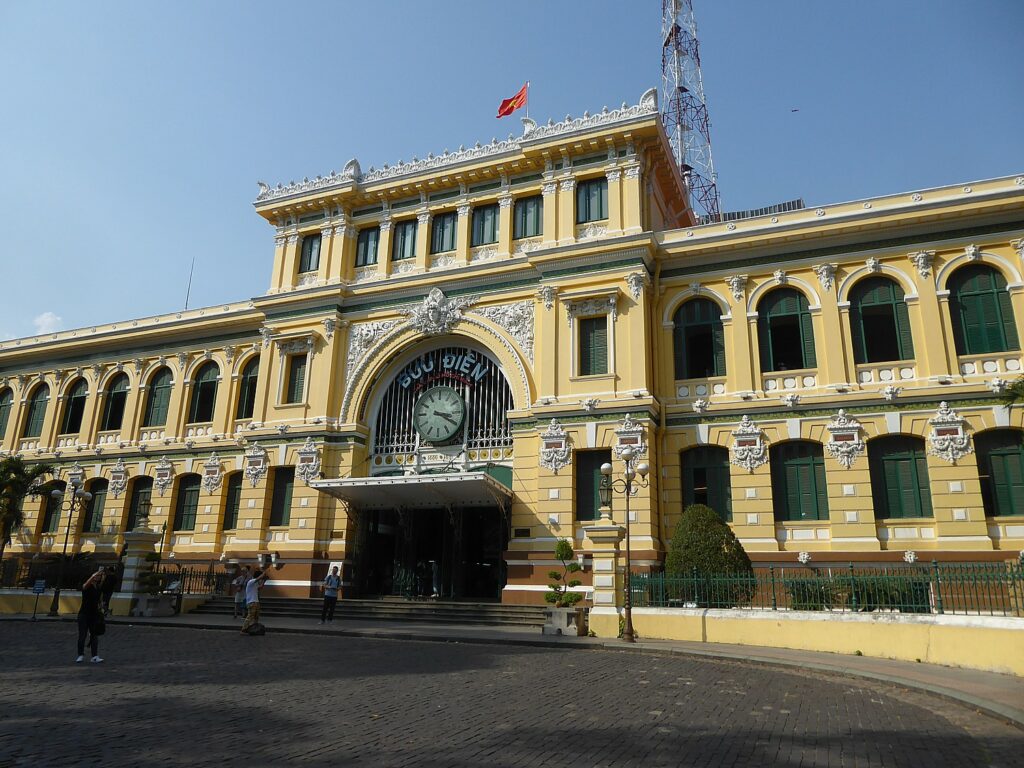
returning to Saigon, I go off to continue my theme – visiting the buildings
that the French built, starting with the magnificent Post Office (where I wind
up spending close to an hour choosing from a stunning array of post cards,
buying stamps and writing the cards, the sweat streaming down my face and
stinging my eyes so that a nice lady hands me a tissue). Then onto the
Reunification Palace (which I thought was open until 5 but closed entrance at
4), so I go on to the War Remnants Museum.
I
have trouble following the map, so when I ask directions of a young man, he
leads me through back alleys to the entrance of the museum, which I visit until
it closes at 6 pm, because there is so much to see and take in.
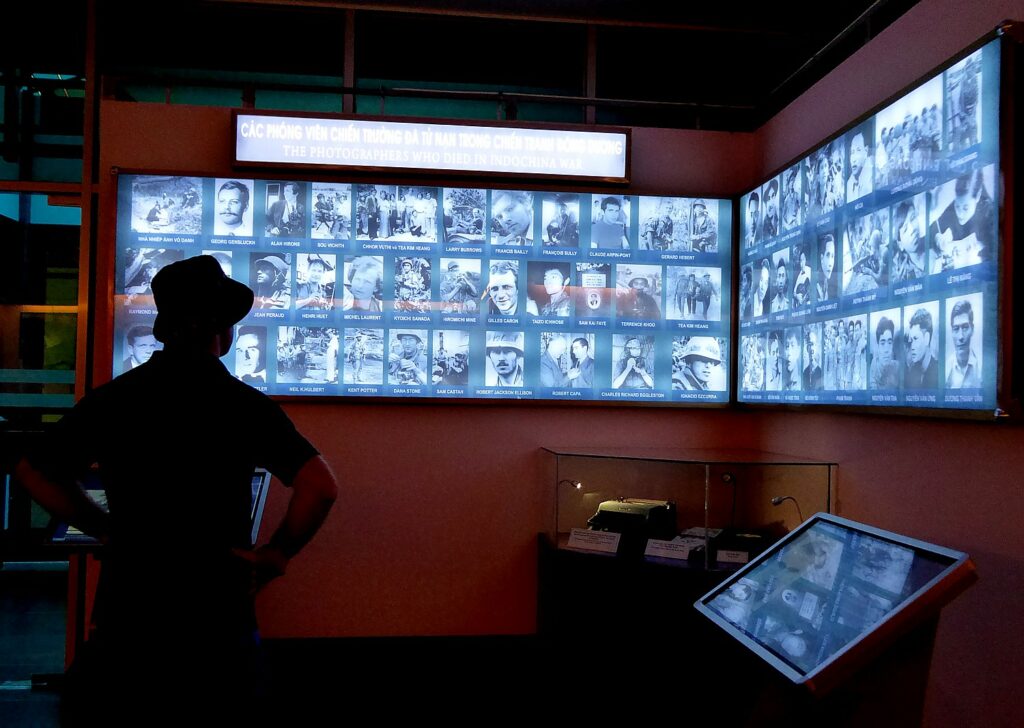
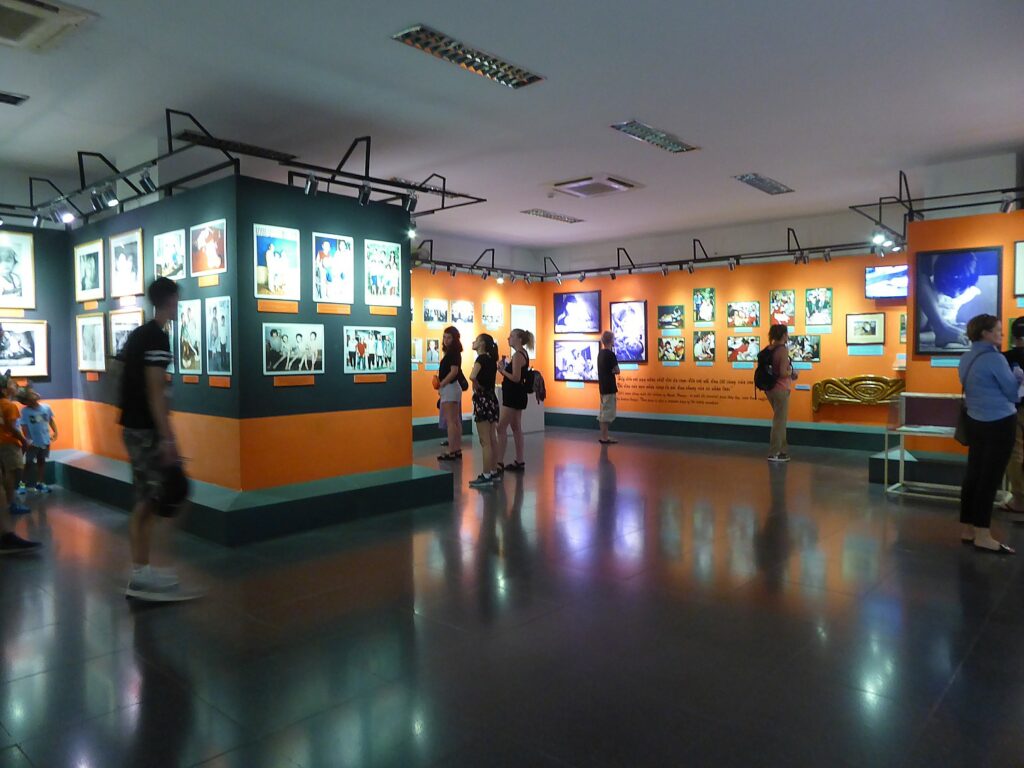
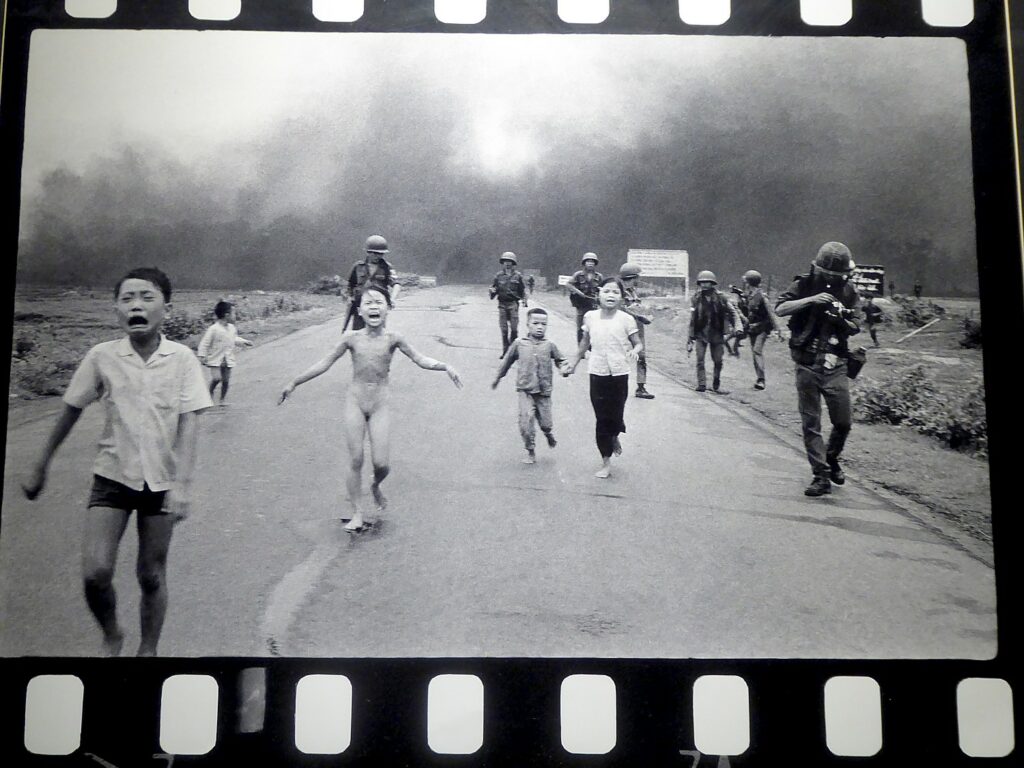
You should begin on the third level, which provides the “historic truths” (actually the background) for the Vietnam War, which more or less accurately presents the facts. On this level is a most fascinating exhibit that presents the work of the multinational brigade of war correspondents and photographers, along with a display of the dozens who were killed in the war.
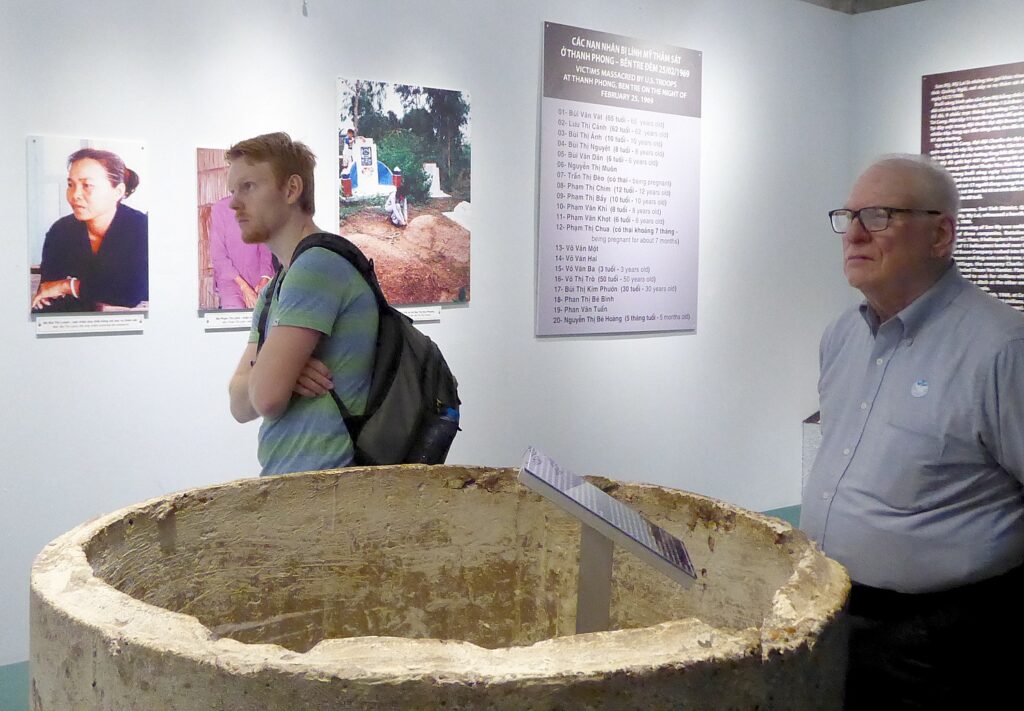
The photos are presented in an extraordinary way: showing the photo, then providing notes about the background, the context of the image, and the photographer. Here too, the language (which was probably produced by the news organizations that put on the exhibit), was accurate. Among them is the famous, Pulitzer-prize winning photo of “Napalm Girl” where, for the first time, I notice the soldiers walking along as this young girl is coming down the road in terror, their demeanor in such jarring contrast to these fleeing Vietnamese. The photos then and now are chilling, but today, they properly evoke shame and wonder why there has never been accountability for war crimes.
It
only gets worse on the second level, where the atrocities committed during war
are provided in the sense of artifacts, and details that could have, should
have properly been used at war crimes trials. But none took place. Another
exhibit documents the effects of Agent Orange.
The first floor, which should be
visited last, addresses the Hanoi Hilton, the place where American prisoners of
war, including Senator John McCain, were kept. Here, though, is where it can be
said the propaganda offensive takes place – there are photos showing a female
nurse bandaging an American’s head wounds, the caption noting how she had put
down her gun in order to care for him. This exhibit brings things up to date,
with the visits of President Clinton in 1994; in another section, it notes that
Clinton’s visit brought the end of economic sanctions, and with the country’s
shift to market economy, produced revitalization, as measured by the boom in
mopeds.
But on the bottom floor, they show
photos of Obama’s visit and most recently of Trump in Vietnam.
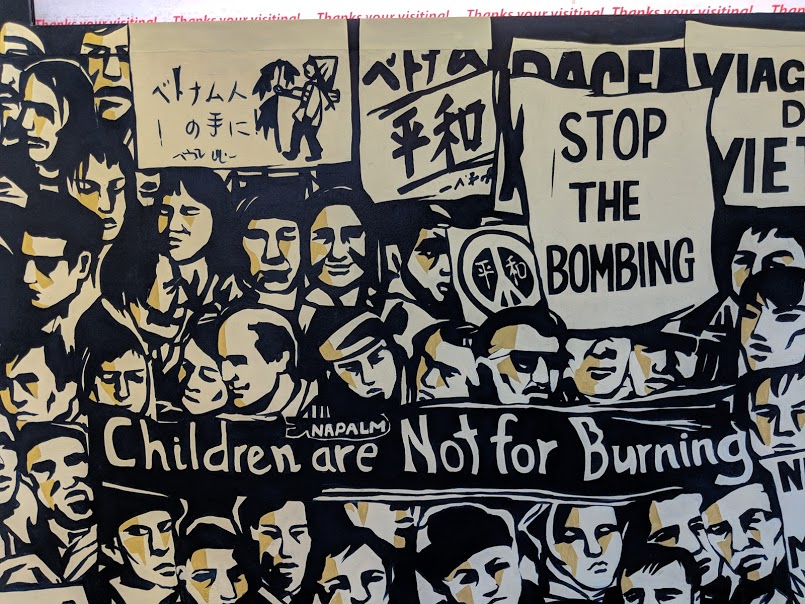
This floor also has an exhibit
devoted to the peace movement in the US and around the world, with some famous
incidents, such as the shooting of the Kent State four. There is a photo of John Kerry, who
went on to be a Senator, Secretary of State and candidate for president, testifying to Congress in his military
uniform, on the necessity of immediate and unilateral. “how do you ask a man to be the last man to
dies in Vietnam? How do ask a man to be the last man to die for a mistake?
A
special exhibition, “Finding Memories” attempts to recreate the struggle of the
people of Hanoi and Haiphong to overcome the pain and loss of war. “It helps
those who haven’t experienced wars to learn more through remarkable and humane
wartime stories, especially the stories about American pilots in the
‘Hilton-HaNoi’. Finding Memories is an opportunity for Vietnamese people to
develop greater pride for their victory – a 20th century miracle;
for American pilots to recall a serene period of their lives; as well as for
each and every visitor to understand the severe destruction and painfully grim
nature of war, in order to call for all people to work together and dedicate
our efforts to build a world of peace and love.”
Outside
are displays of captured American plane, tanks, and other items.
I look around for an American who
might have served in Vietnam to get an impression, but did not find anyone, and
saw a few Vietnamese (most of the visitors were Americans or Europeans), but
only one or two who might have been alive during that time and wondered what
they thought. Clearly the conclusion of the displays was in favor of
reconciliation when just as easily, and using a heavier-handed propagandist
language, could have stoked hatred. The exhibit is careful not to paint all
Americans and not even all American soldiers as monsters but one photo caption
is particularly telling: it shows an American hauling off an ethnic minority,
noting “American troops sent to the battlefield by conscription knew nothing
about Vietnam, thought the Cambodia people of ethnic minorities were living
near Cambodia were collaborators for the enemy.”
I leave feeling that the experience
is close to what you feel visiting a Holocaust Museum. And it is pain and
remorse that is deserved.
We
meet at 8:30 pm to hand in our score sheets and share stories – one team got up
at 5 am in order to get to the floating market; a team was able to get on the
street market food tour, where they take you around by scooter (they only take
8 and it was closed out); another took a cooking class.
We
get our notice of where we are going next:
be up at 6 am for 7 am bus to airport for 9:35 flight…. to Myanmar!
The Global Scavenger Hunt is an annual travel program that has been operated for the past 15 years by Bill and Pamela Chalmers, GreatEscape Adventures, 310-281-7809, GlobalScavengerHunt.com.
By Karen Rubin, Travel Features Syndicate, goingplacesfarandnear.com
I had last visited Vancouver, British Columbia, when it was the departure point for an Alaska cruise, and learned too late (from photos in the airport) about Capilano Suspension Bridge. That image stayed in my mind, and I always felt a loss not having seen it for myself. So, when I learned that our Global Scavenger Hunt – a 23-day around-the-world mystery tour where you don’t know where you are going until they tell you to get to the airport – was starting in Vancouver BC, I wasn’t going to miss an opportunity twice. I arranged to arrive a day ahead to be sure to have time to visit. And even after years of built-up anticipation, the attraction was even better than I imagined.
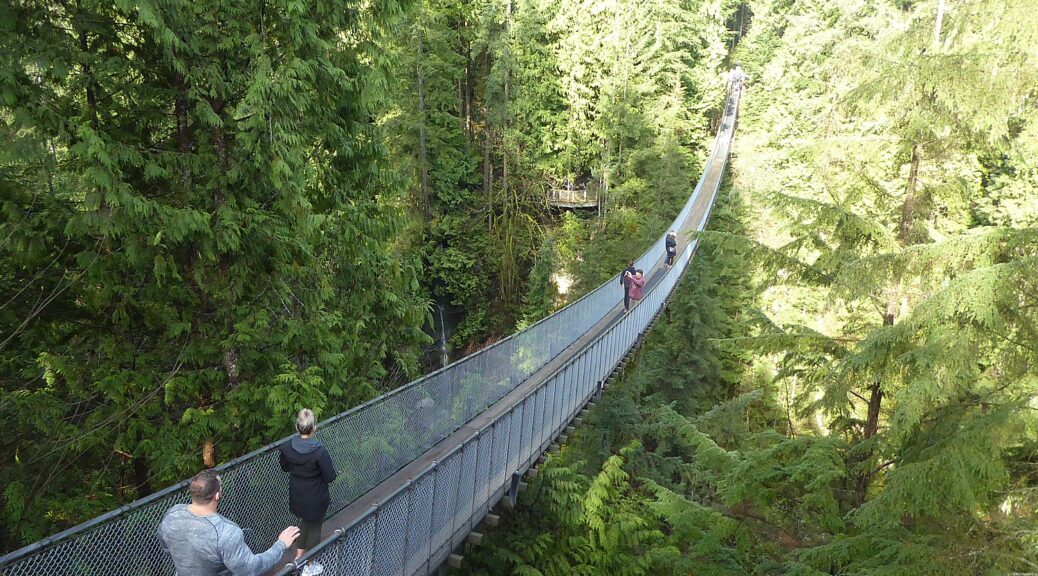
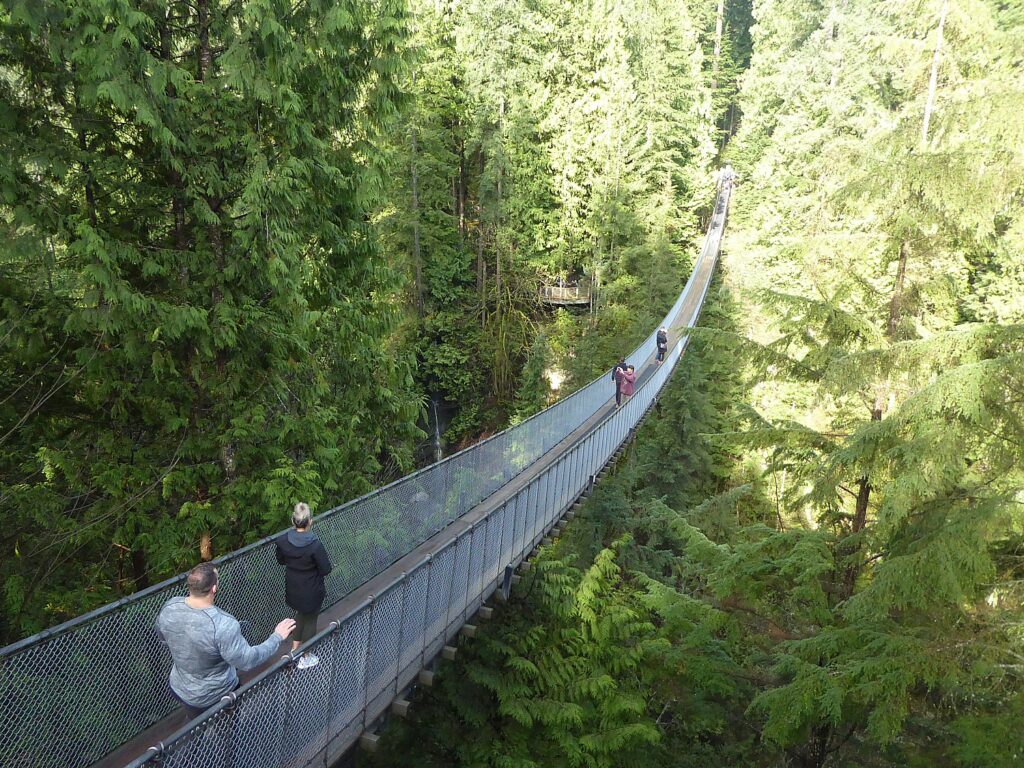
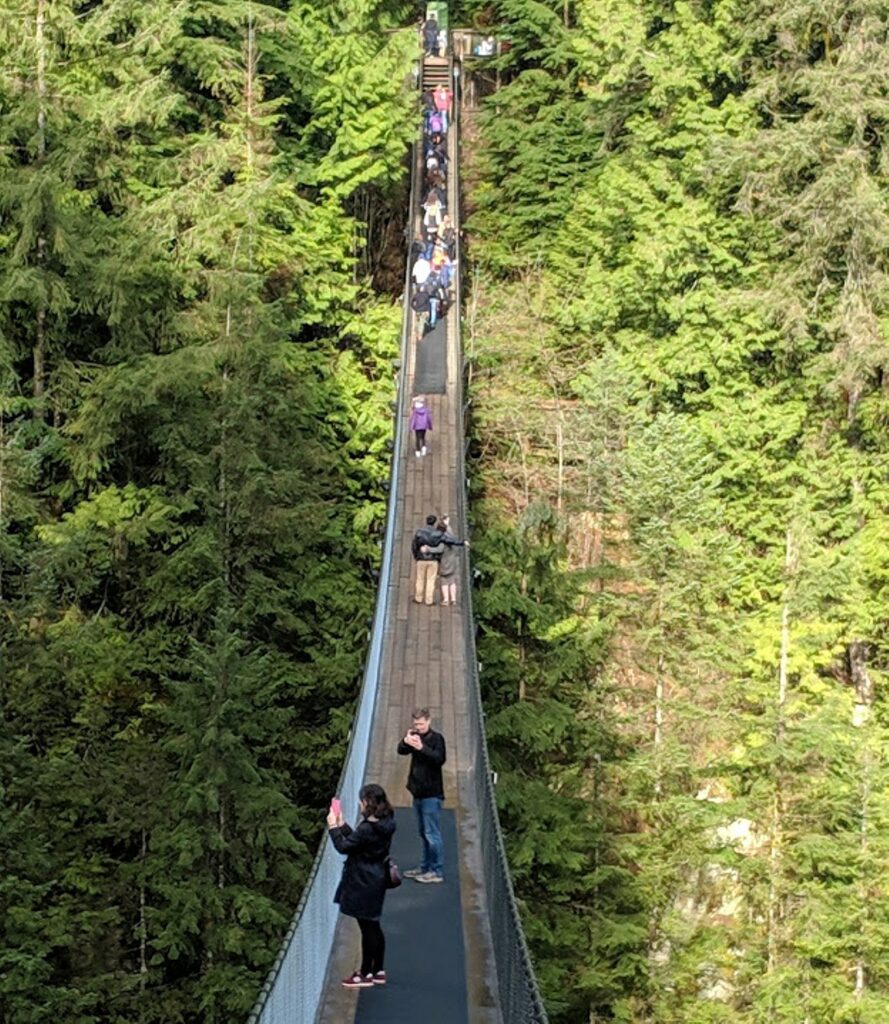
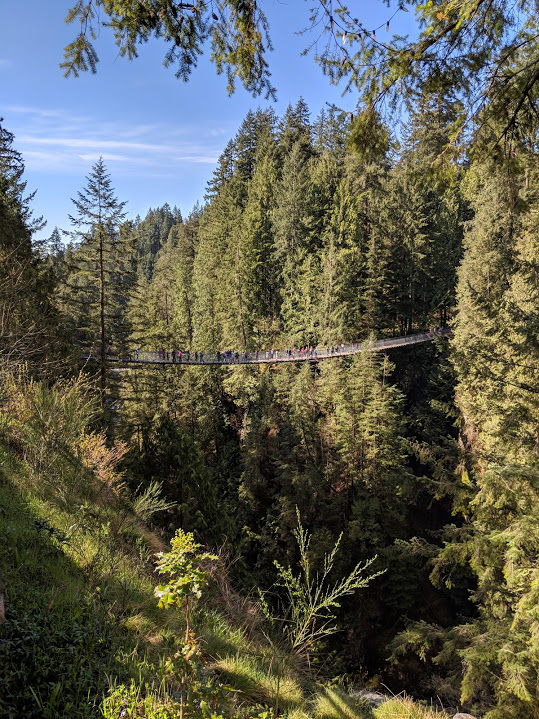
Capilano Suspension Bridge, it turns out, is a sanctuary to nature, and so much more than one (albeit) spectacular bridge, high above a rushing river – it isn’t just the view of the bridge, its setting, but actually walking over it and feeling it bounce and roll that is so sensational. You feel it through your entire body.
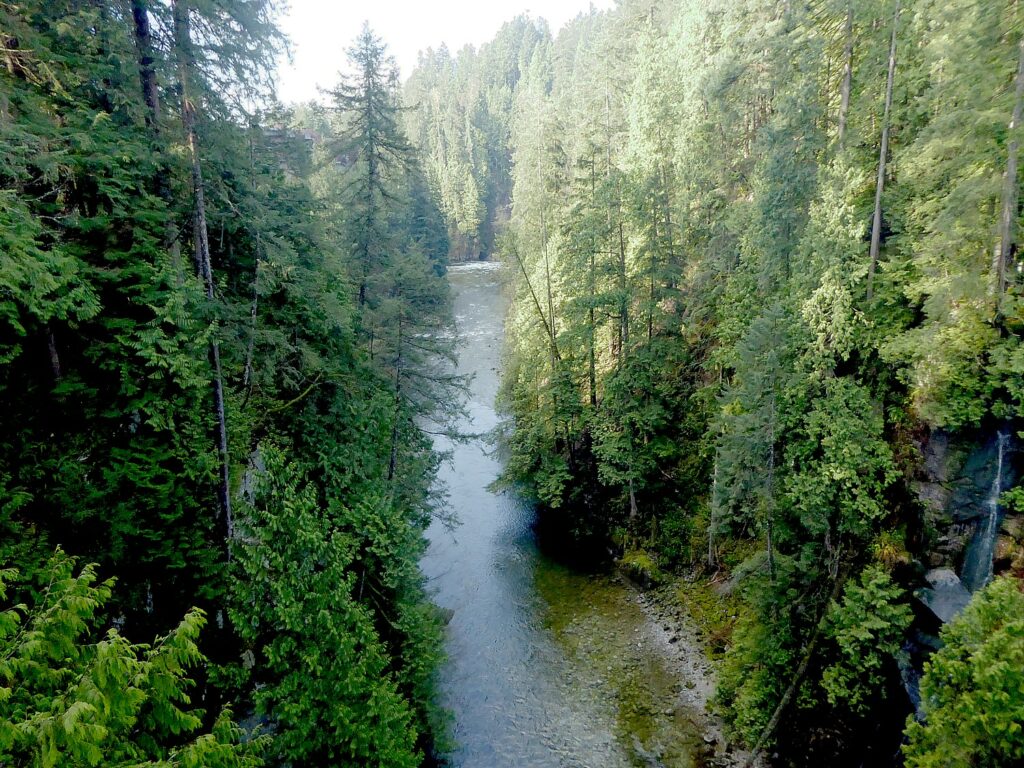
The bridge suspends you 230 feet above the Capilano River (that would be shoulder height of the Statue of Liberty), and is 450-feet long. It was built to hold 200,000 lbs. (that is the trepidation most people have as they cross), which means it can hold 1300 people standing on it at the same time, or parade 96 elephants across.
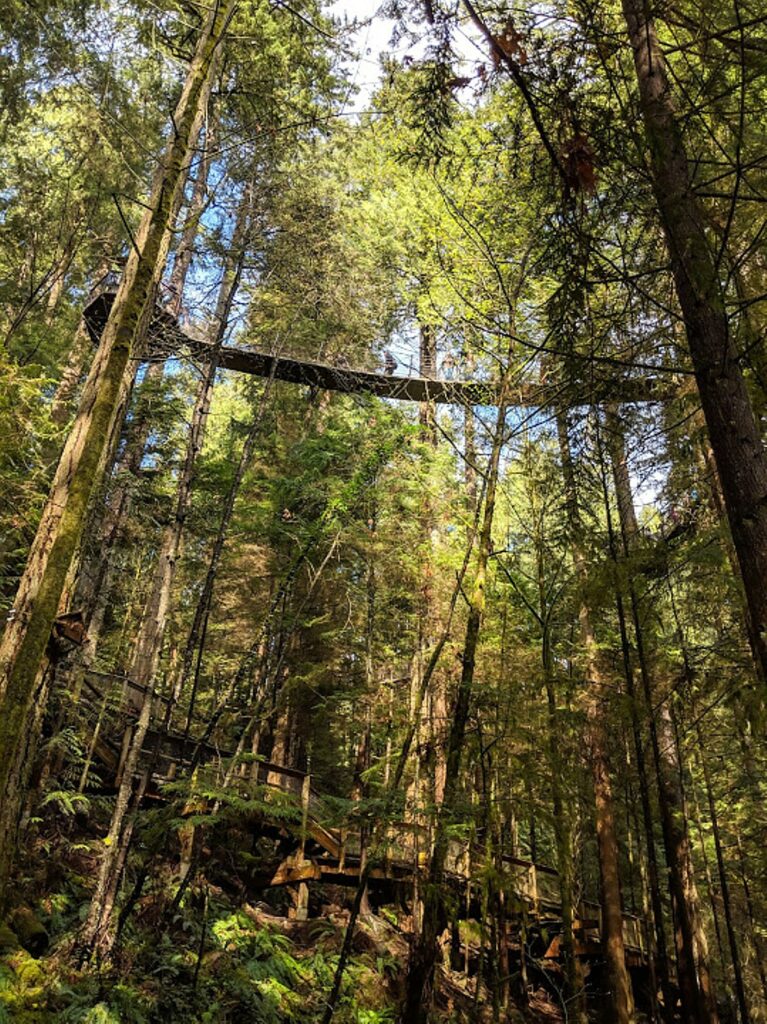
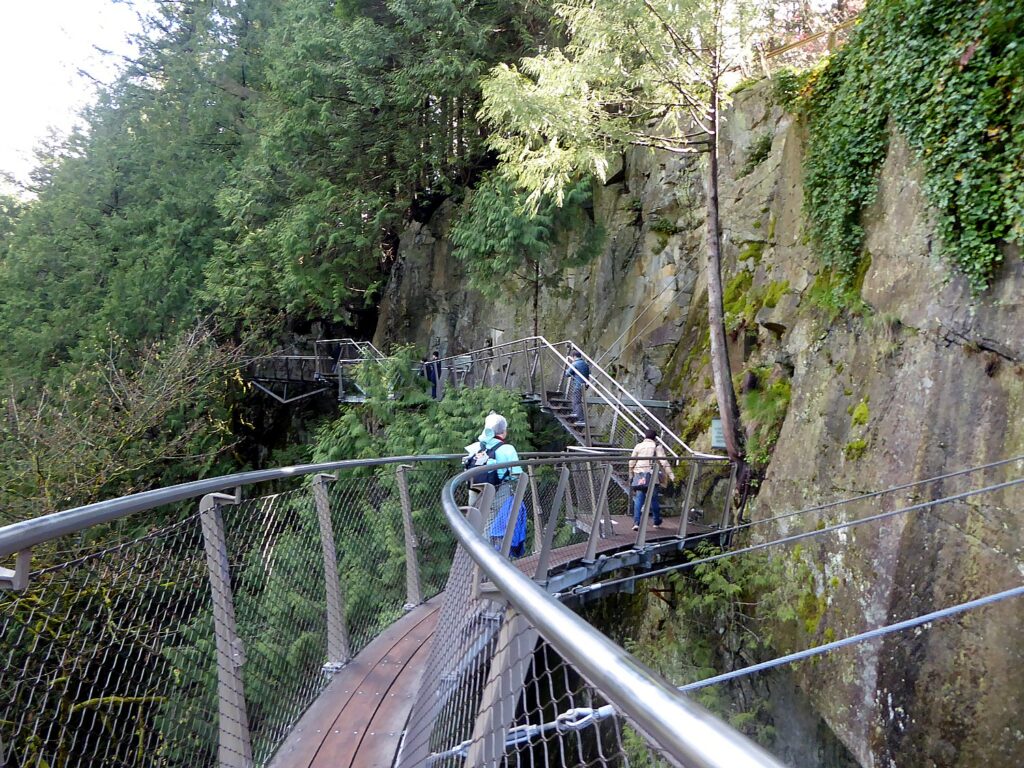
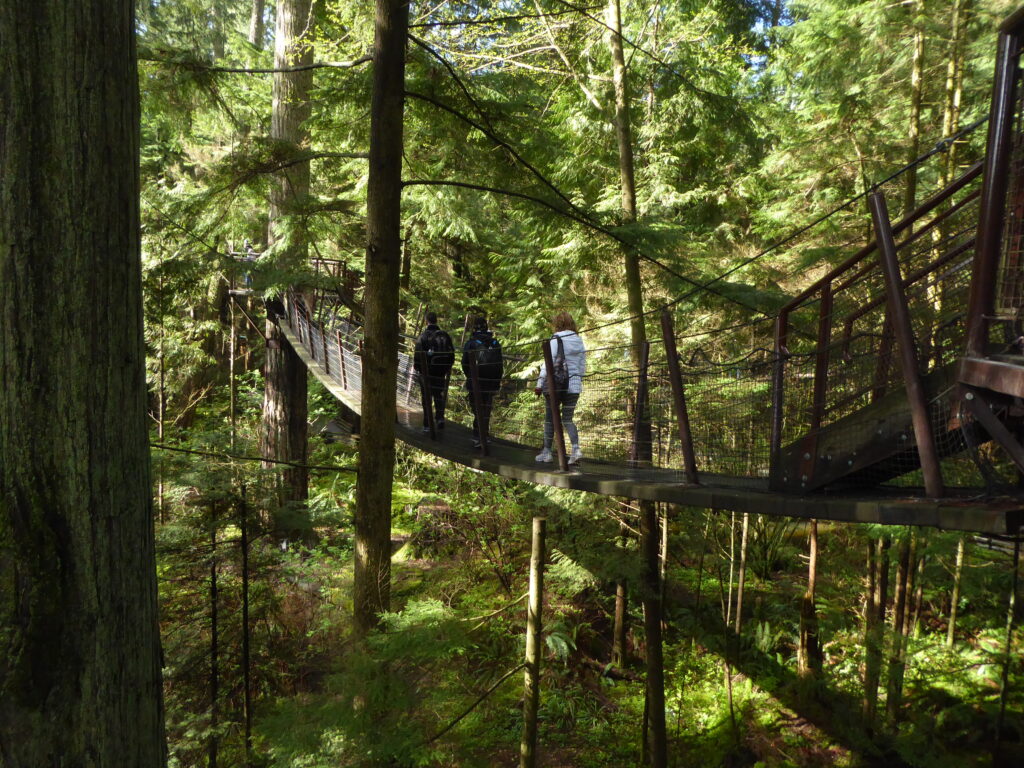
But it turns out that this is an entire nature park, with many “attractions” that enable you to become immersed in nature – the relatively new Tree Tops Adventure, which is a network of bridges that let you walk in the canopy of a rainforest and a new Cliff Walk, another network of bridges set out from the cliffs that make you feel like you are dangling over the gorge. All throughout, there are signposts that inform you about the trees, the rocks. It pays homage to sustainability – not just of nature, but as a tourist attraction that minimizes its impact and promotes consciousness.
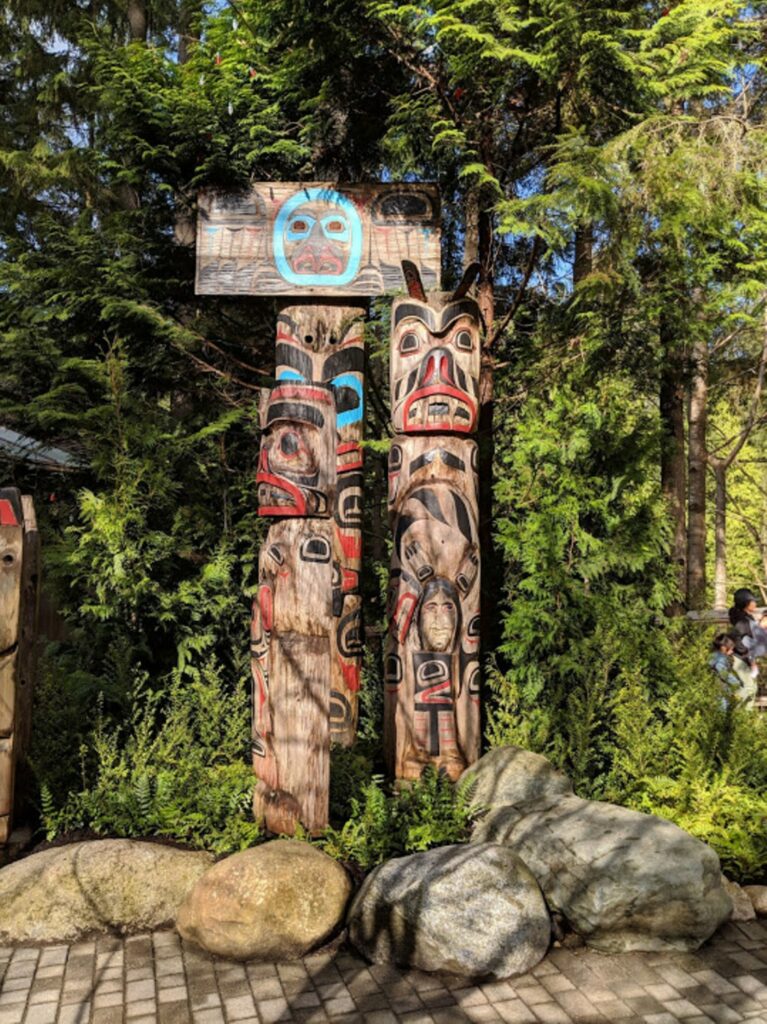
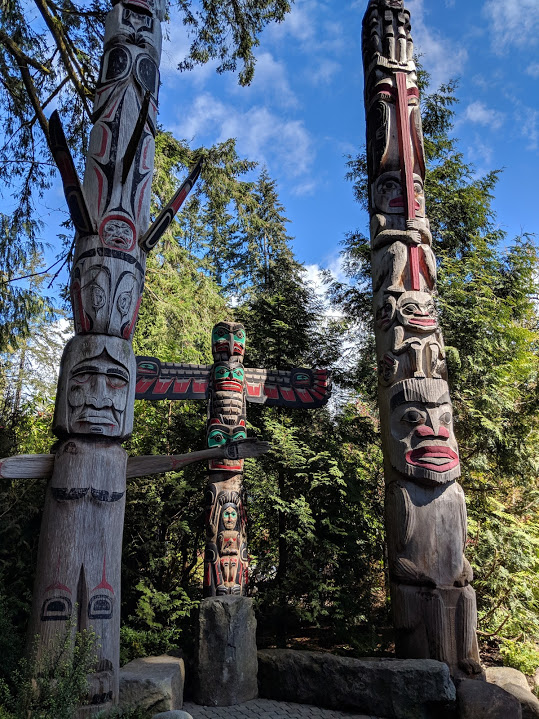
I was surprised at the heritage aspect of Capilano – its homage to the First Peoples who inhabited this area – stunning totem poles in addition to a display about the original founders and how Capilano Suspension Bridge came to be – how the first owner, George Grand MacKay, purchased 6000 acres for $1 in 1889 (the land is now worth over $1 million), and built his house on the wrong side of the river. A civil engineer, he built a rope bridge, and then people wanted to visit. George Grant MacKay was a visionary who, as Park Commissioner for Vancouver, also set aside the land for Stanley Park, North America’s third largest urban park nestled in the heart of Vancouver. He sold off 27 acres to a guy who changed the rope to cable and charged visitors 10c to cross. (There is a wonderful love story that is also part of the history).
It’s been a paid attraction since 1907, employing just a single gatekeeper.
Today’s Capilano Suspension Bridge has been a family-run business for the past 60 years. Nancy Stippard’s father, Rae Mitchell, bought the bridge in 1953 and 30 years later sold it to his daughter.
The bridge was torn down and rebuilt in 1956 with thick cable (it took just five days to install), but under the ownership of Nancy Stippard, beginning in 1983, went through a major transition – her vision was to enable visitors to walk in the trees to get a perspective like a squirrel, so she created Tree Tops Adventure; then in 2010, she had a vision to walk along the cliffs, so created the Cliff Walk.
When Nancy took over the park in 1983, admissions totaled 175,000 visitors a year. Today, the Park sees 1.2 million visitors annually. Vancouver’s oldest attraction is one of its most popular and has won many awards including British Columbia’s Best Outdoor Attraction in 1999 and 2000.
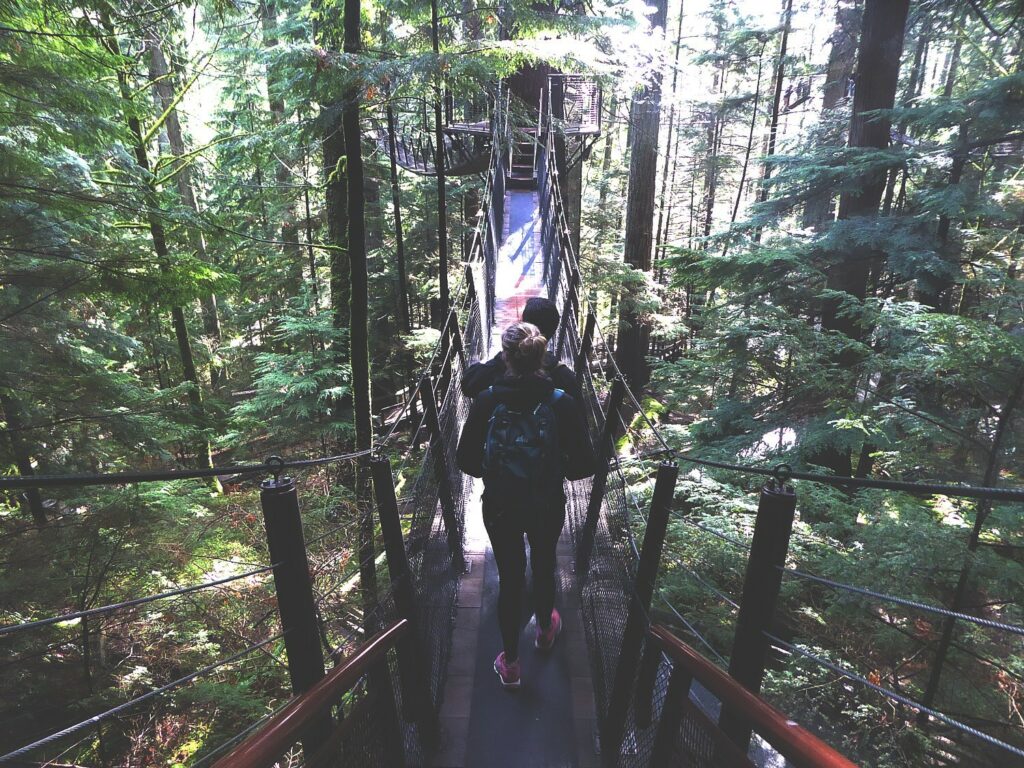
On Treetops Adventure, you venture from one magnificent old growth Douglas-fir to another on a series of seven elevated suspension bridges, some reaching 33-metre (110 feet). Some of the trees, we learn, are 1500 years old; we meet “Grandma Capilano,” the tallest tree at 250 feet high and 1300 years old. History and nature guides, signage and interactive human and natural history exhibits throughout the park help guests in their understanding of rainforest ecosystems and the sustainability of this environment. As I walk, I am literally euphoric breathing in the pure, cool air.
Treetops Adventure was the first of its kind in North America when it opened: some 700 feet of cabled suspension bridges link eight Douglas fir trees; at its highest point, you get the perspective from 110 feet above the forest floor. The towering Douglas-fir trees showcased by the attraction range in height from 130 to 300 feet tall – equivalent to a 20-story high-rise.
To protect the fragile forest during construction, the elements were crafted off-site by hand, then brought into place with pulleys and ropes.
The bridges themselves are constructed of hemp netting, wooden planks protected with environmentally-friendly preservatives and other natural products, reflecting and enhancing its surrounding rainforest environment; antique wooden beams and pegs lend a unique historical flavor to the attraction’s handcrafted, two-story Treehouse.
Treetops Adventure is an engineering marvel: an innovative compression system safely secures each tree’s observation platform using only 20 pounds of force per square inch, or the amount of pressure exerted by pressing your thumb on a tabletop.
There is a lovely café tucked into the forest on a platform amid the Treetops Adventure.
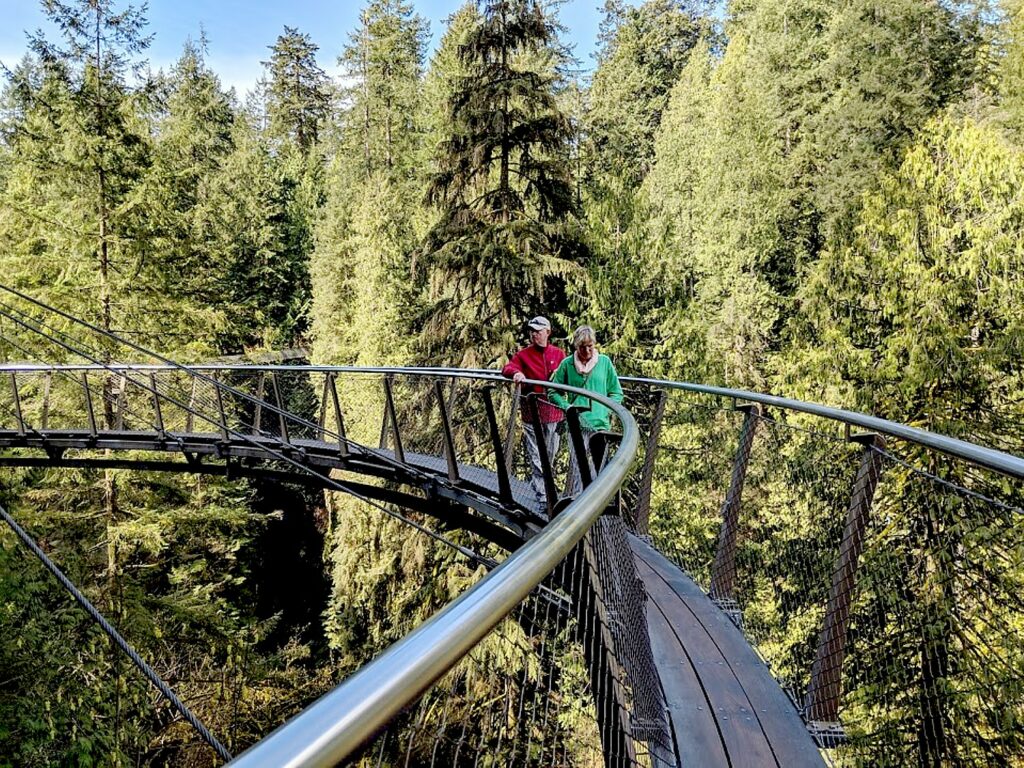
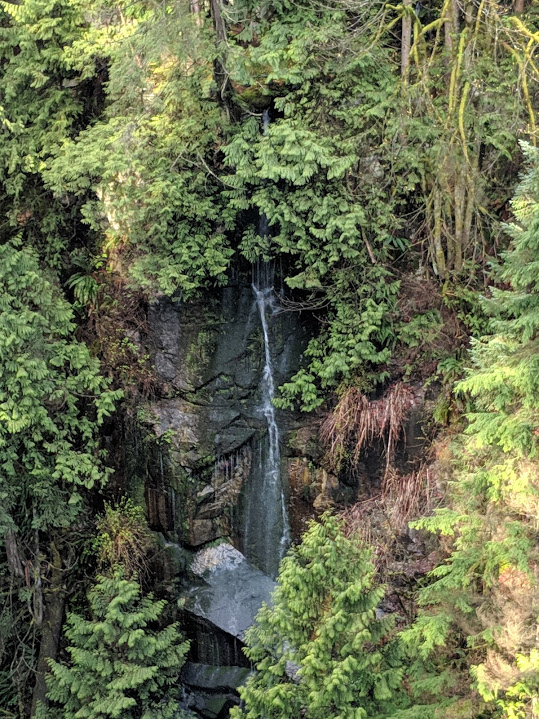
The Park’s newest attraction, Cliffwalk, follows a granite precipice along Capilano River with a series of narrow cantilevered bridges, stairs and platforms extending 700 feet. The granite formations are 160 million years old, dating back to the Mesozoic Age. At the highest point, you are 300 feet above the Capilano River – making for a thrilling experience. Cliffwalk is high and narrow and, in some sections, open metal grates are all that separate guests from the canyon far below. With just an 11-square meter environmental footprint (about as much as a parking stall), Cliffwalk is unobtrusive as it winds its way on a heart-stopping cliff-side journey through rainforest vegetation. Educational signage along the route shares information provided by the David Suzuki Foundation, speaks to the delicate interaction between water, granite, salmon, flora and fauna, broadening the experience.
After rappelling down the east face of Capilano Canyon into jungle-like ferns and mosses, John Stibbard, Capilano Suspension Bridge’s VP of Operations and Nancy’s son, conceived his plan to give this thrilling ecological experience. With only 16 anchor points in the granite cliff supporting the structure; It can support 100,000 pounds, the weight of 35 killer whales.
Cliffwalk is environmentally sensitive. No two bridges, platforms or stairs are alike – each piece of Cliffwalk is custom-fabricated. The signature 7-shaped bridge utilized a first-of-its-kind construction technique that relied upon 3D digital information to establish the geometry for each segment of Cliffwalk.
The visitor facilities are fabulous – really restful and appropriate for the place. There is a trading post (absolutely superb items and crafts), an ice cream shop, a fudge shop, a café, tucked along the cliffs.
Come early in order to maximize the perfect peace of this place.
Capilano operates a free shuttle bus service from downtown Vancouver – five in the off season, up to 11 departures a day in summer that makes it a pleasure to make the day trip (there are also public buses that go). We took the first shuttle at 8:35 am. The driver turned it into a narrated tour for our benefit because of the questions we were asking over the course of a delightful, 40-minute drive. As we cross over the bridge (designed by the same guy who built San Francisco’s Golden Gate Bridge), he tells us to look below to see a First Peoples reservation – or actually a residential community.
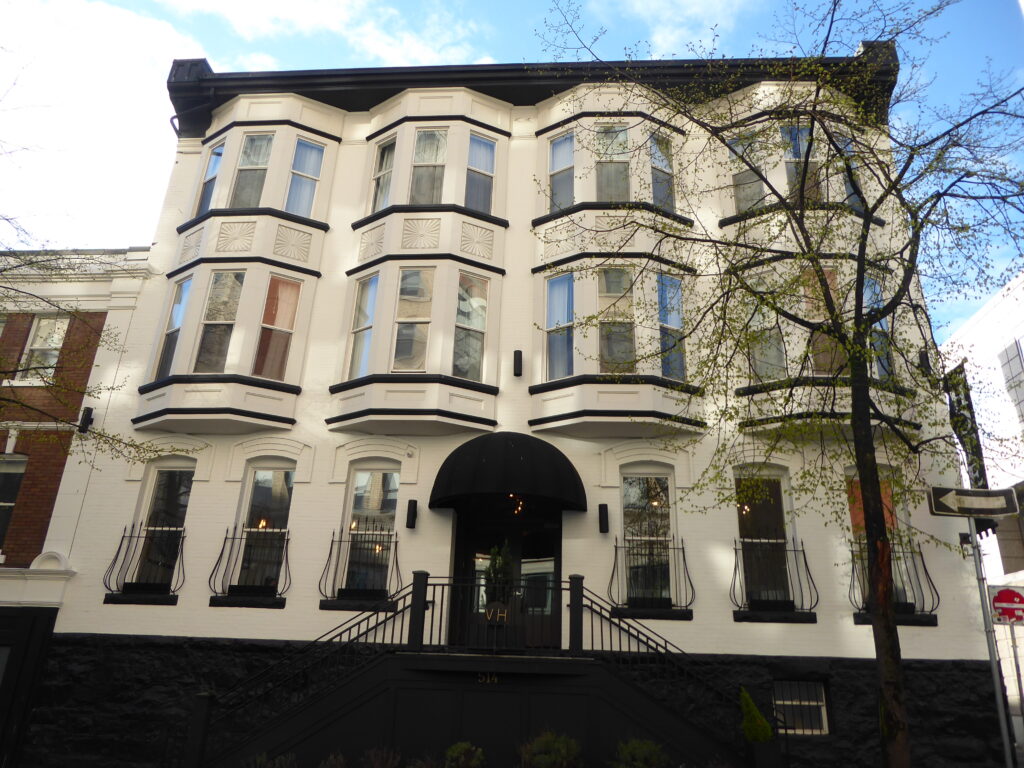
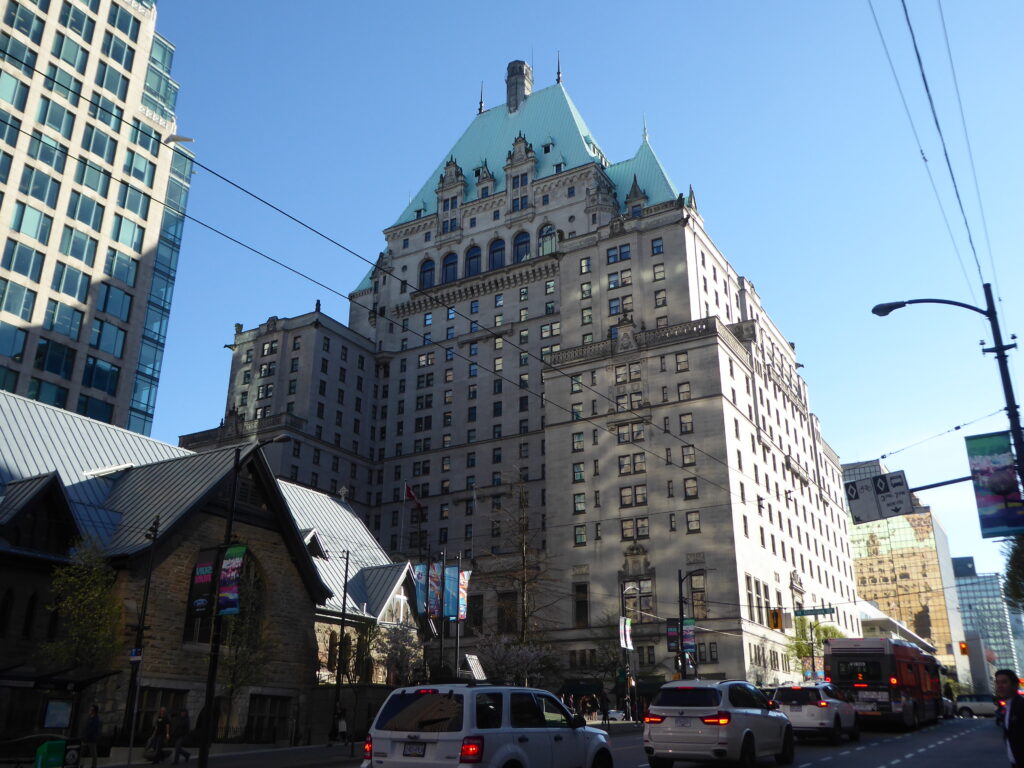
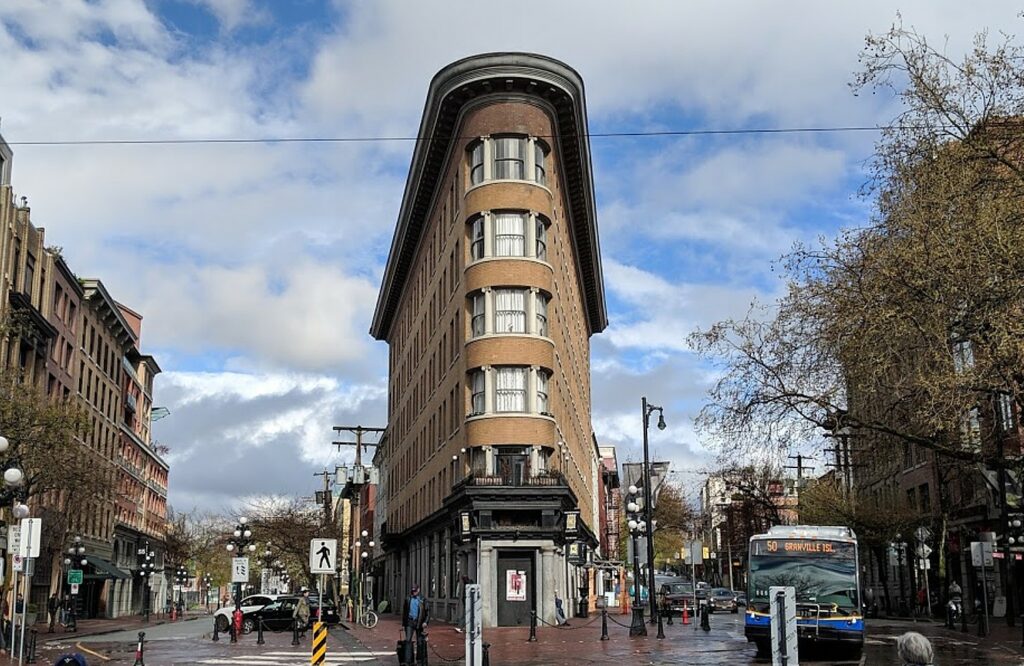
There are several pick-up points. We caught the bus at Library Square (go inside, it is spectacular), just a five-minute walk from the Victorian Hotel (built in 1896, an absolute gem which serves breakfast).
We are among the first to arrive at Capilano and the only sound we hear is the rushing water below the bridge.
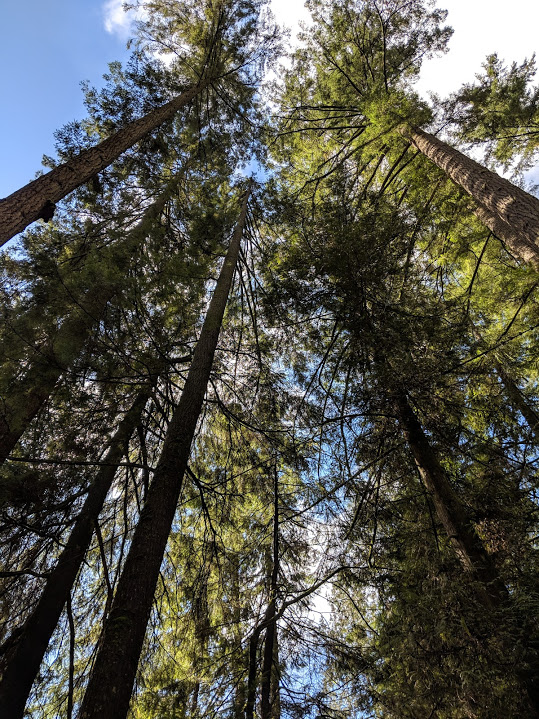
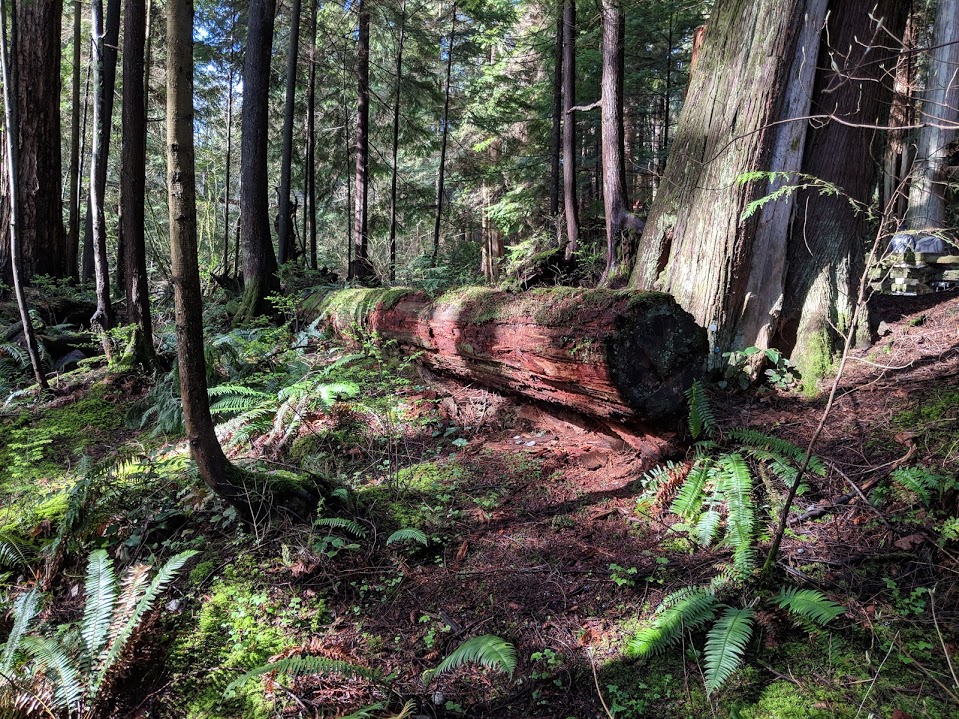
Walking through the forest of Douglas fir, you feel so small. If you are there early, you can feel the peace of the woods that the Native peoples who first lived here must have felt.
The signposts are very informative, and get you in the spirit. “Take a moment.” “Breathe In.” “Water is the lifeblood of the environment.”
Another sign notes that in one year, the Capilano Rainforest of 7 acres can absorb the same amount of carbon that is emitted by a car driven across the continent 19 times.
“Rainforests are sometimes referred to as the Earth’s lungs, and they are responsible for 28% of the world’s oxygen turnover…Just one of these giant trees releases enough oxygen to support a family of four.”
The atmosphere is so vivifying, we saw a marriage proposal during our visit as we walk through the Treetops Adventure.
“It is not so much for its beauty that the forest makes a claim upon men’s hearts, as for that subtle something, that quality of air, that emanation from old trees, that so wonderfully changes and renews a weary spirit,” wrote Robert Louis Stevenson. That is exactly what I am feeling when I find this signpost.
“The tree which moves some to tears of joy is in the eyes of others only a green thing that stands in the way. Some see nature all ridicule and deformity…and some scarce see nature at all. But to the eyes of the man of imagination, nature is imagination itself.” William Blake’s words seem particularly relevant today.
We explore on our own, and then catch one of the complimentary guided tours offered hourly within the park. We take the history tour that offers an interactive synopsis to the attraction’s colorful past including the endeavors of past owners (one chapter is a love story), the involvement of local First Nations and information on the Capilano Suspension Bridge.
There are also guided nature tours, Kids’ Rainforest Explorer program and the Living Forest exhibit; seasonal musical entertainment and First Nations culture.
This place is reminiscent of San Francisco in other ways besides the bridge that takes you to Capilano that was built by the builder of the Golden Gate. Much like Muir Woods is a refuge for the urbanites crammed into the city, Capilano is a refuge for the city dwellers of Vancouver.
Every moment was precious and rejuvenating.
Capilano Suspension Bridge Park, 3735 Capilano Road, North Vancouver, BC, Canada V7R 4J1, 604-985-7474, info@capbridge.com, www.capbridge.com.
We ride the shuttle bus back to town, pick up our stuff from the Victorian Hotel (stopping for some refreshment they so kindly provide. Victorian Hotel (514 Homer St, Vancouver V6B2V6, BC, CA, 1604-681-6369, which proved a short walk to Gastown and just about every place we wanted to go), and walk over to the Fairmont Hotel Vancouver (900 West Georgia Street, Vancouver, British Columbia, Canada V6C 2W6 , 800-257-7544, 604-684-3131, www.fairmont.com/Hotel-Vancouver) to meet our fellow Global Scavenger Hunt travelers.
I still have time before the meeting to run across the street from the Fairmont to Vancouver Art Gallery, where I catch a sensational special exhibit of Impressionist Art, with many of the works, ironically, on loan from the Brooklyn Museum. (750 Hornby Street Vancouver, BC, 604.662.4700, www.vanartgallery.bc.ca)
The afternoon meeting is really a meet-and-greet and orientation with Bill Chalmers, the “ringmaster” and Chief Experience Officer of our “traveling circus,” along with his wife Pamela (with cocktails), before we all walk over to a restaurant for dinner.
Our adventure begins the next morning.
We gather at 9 am on the first day of our 23-day Global Scavenger Hunt, a “Blind Date with the World,” where 10 teams of two people each don’t know where we are going until Bill Chalmers, the Global Scavenger Hunt Ringmaster and Chief Experience Officer, gives us our four-hour notice to get to the airport. We have come to the meeting prepared for anything – a notice to pack up to our next destination, perhaps? – and learn that we will spend the day doing a practice scavenger hunt, to level the playing field between newbies (me) and troopers/vets (one of the teams has done it 12 times). He has prepared the same kind of booklet and score sheet as we will get on arrival at every mystery destination.
We can choose the scavengers out of the selections – they each have different points. Among them are a choice of “mandatory” including at least one “experience”. Many have to do with experiencing local foods. During the course of this day, we will have to complete 10 scavengers by 8 pm when we get together again. We are told this is a Par 1 in terms of difficulty, which can go as high as Par 6, so is the easiest we will encounter.
My teammate, Margo (who I have just met upon arriving at Vancouver International Airport) and I start in search of “Affluent Alley” – after all, we are staying in Vancouver’s famous Fairmont Hotel Vancouver in a toney boulevard off Robson Street where we were told you used to have to drive a Rolls or BMW in order to park on the street. We look at a couple of streets which are called Vancouver’s Fifth Avenue and Rodeo Drive. We are only allowed to ask locals – not the hotel concierge or any actual guide (and there are tourism ambassadors on the street)– but no one has heard of Affluent Alley – possibly because everyone we ask is either too young or a transplant. One woman at a bus stop is extremely helpful when we ask where a certain high-end shoe store is located, and about how the bus system works. As for Affluent Alley, I suspect that it actually refers to the opposite (maybe East Hastings), or is the red-herring (and doesn’t exist at all).
But now we are in search of the high-end shoe store, John Fluevog. We go into several stores, finally Coach, and the salesperson directs us… We walk the several blocks to the store – unbelievably wacky, creative, magnificent (better art than the modern art I had seen at the Vancouver Art Gallery). We learn we are the 6th team to ask
We walk to the Olympic cauldron, take our selfies, record the time. It’s pouring rain now when we walk to the bike rental shop on the list to rent bikes to ride around Stanley Park’s seawall, find the Totem Poles, stop at the Teahouse (fantastic carrot soup to restore our energy and warm our souls).
We go to Gastown to find more scavenges – we have the same problem trying to find Hotel Europe, but as we are gazing at the statue of Gassy Jack, the garrulous bartender that gave Gastown its name, and, of course, the steam clock, we turn around and find the building. It turns out that Hotel Europe, built in 1908-9 by Angelo Calori, is no longer a hotel, but now is “social housing.” And haunted, as we discover when a fellow who works in the art store that is now at its street level, takes us on a tour into its basement recesses. The building looks remarkably like a smaller version of the Flat Iron Building in NYC.
Indeed, even this practice session reveals the essence and why the Global Scavenger Hunt is such a different experience. Scavengers give purpose to your wandering – more than that, they become a platform for a completely different perspective on a place and people. The Global Scavenger Hunt is designed to have us interact as much as possible with local people, to trust strangers. That’s what we have been doing all day long, and finding how incredibly friendly and kind the Canadians are (even the many who have come here from all points of the globe and made Vancouver their home. But, as we come to realize, these exercises foster new knowledge about ourselves, self-confidence in our ability to handle the unknown, and personal growth in knowledge and experience.
We gather at 8 pm, the deadline, and Bill tells us we are off tonight on a 2 am flight to Ho Chi Minh City (Saigon), Vietnam, hands us our airline info and visas, and we are off.
The Global Scavenger Hunt is an annual travel program that has been operated for the past 15 years by Bill and Pamela Chalmers, GreatEscape Adventures,310-281-7809, GlobalScavengerHunt.com.
When I signed up for Biketours.com’s guided eight-day “The Emerald
Tour of Slovenia’s Gems”bike tour, I was expecting
sprawling landscapes and quaint villages. What I wasn’t expecting was to be
surprised each day by some unique attraction. The final days of the trip
bring us to the stud farm in Lipica where the famous Lipizaner horses,
so identified with Vienna, were first bred, to Skocjan Caves, so special as to
be designated a UNESCO World Heritage site, and the enchanting medieval city of
Piran.
Day 5: Štanjel – Lipica – Divaca (30
miles/48 km)
Our fourth day of riding brings
us first to the lovely village and botanical garden in Sežana, which is at the
stop of a high hill (all castles are), in a very quaint village.
Then it’s on to the stud farm of
Lipica, where we visit these beautiful thoroughbred Lipizaner horses whose
glistening white coats and gentle, graceful dancing have earned them a
worldwide reputation. The history of the Lipica horses is closely linked to the
Vienna riding school, because this part of the country used to be part of the
Austro-Hungarian Empire. They continue to breed and train the famed horses
here.
Founded some 430 years
ago, this is claimed to be the oldest stud farm in the world. The Archduke of
Austria bought it in 1580 – the Turkish
Empire had invaded and Austrians needed horses for the military. They bred the
local karst horse – well built, muscular, intelligent, long lived – with
Spanish stallions and later Arabian and Italian stallions.
We get to visit the
stables and learn that the white color is the result of selective breeding from
the 1750s, but not all the horses are white.
We visit the stables,
the Lipikum Museum, the museum of carriages, an art gallery, and on the way
out, see the horses in pastures, tree avenues (they used to plant trees in
honor of the horses that were sent to Vienna).
There are other
experiences available here (including a luxury hotel and casino), but we have
arrived at the end of the day.
We finish the day’s ride
at the Hotel Malovec, where the owner, a butcher, also opened a restaurant (he
also owns the Hotel Kras where we stayed in Postojna). I have a massive t-bone
steak.
Day 6: Divaca – Muggia (23
miles/38 km)
This day offers the most varied
of experiences, beginning with a hike through Skocjan
Caves (a UNESCO natural monument), biking 39
km through countryside to the picturesque town of Muggia on the Bay of Trieste,
where we arrive early enough in the afternoon to get to swim in the Adriatic
(or we can take the ferry into Trieste).
Visiting the Skocjan
Caves is no less spectacular
than the Postojna Caves (minus the thrilling train ride) but the experience is
quite different – this is more of a hike, but unbelievably spectacular – the
highlight is walking over a bridge 45 meters above a roaring river.
Ranking among the most important
caves in the world, the caves, one of the largest known
underground canyons in
the world were
designated a UNESCO natural
world heritage site in 1986.
What distinguishes Škocjan Caves from other caves and places it among the
most famous underground features in the world is the exceptional volume of the
underground canyon and the Rika River that still rushes through. An underground
channel is 3.5 km long, 10 to 60 m wide and over 140 m high. At some
points, it expands into huge underground chambers. The largest of these is
Martel’s Chamber with a volume of 2.2 million cubic m, believed to be the
largest discovered underground chamber in Europe and one of the largest in the
world.
The existence of the
cave has been known since ancient times (and the area is rich with
archeological sites), but concerted exploration of Škocjan Caves began in 1884.
Explorers reached the banks of Mrtvo jezero (Dead Lake) in 1890. Silent Cave (Tiha jama) was discovered in 1904, when some local men climbed the 60-metre
wall of Müller Hall (Müllerjeva dvorana). Then, in 1990, nearly 100 years after Dead Lake was
discovered, Slovenian divers managed to swim through the siphon Ledeni dihnik and
discovered 200 m of new cave passages.
The cave is colossal,
other worldly, that takes your breath away as you walk through in the course of this
2-hour, 2 km tour, during which we will climb/descend some 500 steps.
There are two main parts
to the cave that we get to visit Thajama (Silent Cave), the part that was
discovered in 1904, and “Water Murmuring” Cave (more like water roaring), which
has been opened to tourists since 1933.
We are marched through
the cave (they have an extraordinary number of visitors each day) and
periodically stop for the guide to give us narration. We are informed about the
collapsed ceiling in the Silent Cave, the result of an earthquake 12,000 years
ago.
The canyon’s most
spectacular sight is the enormous Martel Chamber. The Great Chamber is 120 meters long, 30 meters high. It takes 100
years for 1 cm of stalagmite to grow, and we see the biggest “dreamstone,”
Giant, 15 meters tall.
We see a square pool of
water which was carved by the first explorers and the original stairs that were
carved with hand tools by these early explorers – mind-boggling to contemplate.
They originally came into the cave following the river, to find a supply of
drinkable water for Trieste.
We walk over the
suspension bridge, 45 meters above the river – an incomparable thrill. Prone to
flooding, as recently as 1965, the river rose 106 meters higher, almost to the ceiling,
so the entire cave would have been underwater.
You almost swoon with
the depth below and height above and space all around – you feel so small.
Looking back to the other side, the flow of people coming down the lighted
trails look ants.
At the very end, there
is an odd area where tourists from a century ago used to actually carve names
into the rock.
We come through the
enormous opening – there is an option to take a cable car back up, but I am
delighted to continue to hike. You come upon a dazzling view down to the
rushing water flooding through an opening in the rock. You again get a sense of
scale by how small the people are nearest to the rushing water.
It’s very cool in the caves
and you should wear decent footgear and a hat (water drips down).
(Skocjan Cave is open daily, but you enter with an organized tour at
specified times; 16E/adults, 12E/Seniors & students, 7.5E children, travelslovenia.org/skocjan-caves/)
With a cheer of “Gremo!”
(“Let’s go”), from Vlasta, our guide, we’re
off.
Vlasta is good natured
and good hearted, patient and considerate. She knows how to organize and keep
us in order without being tough, and has a great sense of humor.
We picnic again, this
time along the country road (not as scenic as yesterday’s cemetery) amid sounds
of a new highway.
Our ride today, 42 km,
is mostly downhill, some of it along the seacoast, to get to Muggia, on the Bay
of Trieste, where we overnight at the Hotel San Rocco, a very pleasant seaside
hotel in the marina (with its own swimming pool).
We arrive about 3:30 in
the afternoon and have the option to take the convenient ferry (half-hour) to
Trieste (I had come through Muggia (and Trieste) the week before on the
Venice-Trieste-Istria biketour.). I decide to have a leisurely afternoon, enjoying
swimming in the Adriatic off the stone beach, and then walking through the
picturesque town.
A few of us took the ferry into the city of Trieste in Italy –
once an important port with its worldly flair and wonderful atmosphere –where
you could visit the castle, cathedral
and Piazza Unita central square.
We have a farewell
dinner at a delightful waterfront restaurant in the plaza outside the hotel Vlasta,
our guide -ever patient, considerate, excellent humor, knowledgeable, she asks
us to vote, “Democracy rules,” and tailors the experience to what the group
wants – will be leaving us after she delivers us to our end-point in Piran the
next day and presents us with certificates of completion of the tour.
Day 7: Muggia – Piran (23 miles/37 km or 30 miles/48 km with side trip)
Today’s ride, 46 km from Muggia to Piran, brings us along the coastal road on a new cycling path following a former railway line. There are beautiful vistas of Slovene coast (Slovenia has only 44 km of shoreline).
We ride through Koper, a
major port city, which also has a picturesque old town and Tito Square, one of
few squares still with Tito’s name. There is a beautiful Romanesque cathedral
and a town hall and a market.
There is an exquisite
view of Izola from top of trail at first of three tunnels which were built for
trains, and now is used for the rail-trail.
We stop at a restaurant in the
fashionable resort of Portorož before riding into the adjacent village of
Piran, on the tip of a peninsula. On my prior trip, we had come to Portoroz but
not as far as Piran, and now I see how enchanting this tiny Venetian harbor
village is.
Our hotel, the Art Hotel Tartini (very chic, it prides itself on
looking artfully unfinished), overlooks the massive piazza, and is steps away
from the rocky border that serves as a beach for people to swim in the Adriatic.
The hotel has beautiful
outdoor patio/bar and rooftop bar. My balcony overlooks the main square.
I visit the historic
church and walk the Town Walls (2E to climb) that offers a spectacular view of
the Peninsula (it occurs to me the symmetry of ending my Slovenia biketour the
same way I started, looking down at the city from castle walls). The fort dates
from the 10th century – the Venetians ruled for 500 years.
I go off to swim before meeting
our group for our last dinner together, at the
Ivo restaurant, right on the water where we are treated to a gorgeous sunset.
The next morning, I have
more time to enjoy Piran before I catch my bus at the Portoroz bus station for
the airport in Venice.
There is a pirate
festival underway, and a Slovenian Navy battleship in the harbor (very possibly
in celebration of the end of World War I a century earlier).
A free bus takes me
one-third of the distance back to Portorose and I walk the rest of the way,
along the glorious waterfront, to the station where I wait for the bus (flixbus.com)
that will bring me back along much of the route I first traveled, back to Marco
Polo International Airport in Venice, a chance to review in my mind the
marvelous sights and experiences of the bike tour.
(I booked this 8-day “Emerald
Tour of Slovenia’s Gems” guided bike
tour through BikeTours.com, a broker which has an excellent catalog of
well-priced guided and self-guided bike and bike/boat trips, mostly in Europe,
and has very attentive counselors. Biketours.com, 1222 Tremont Street,
Chattanooga, TN 37405, 423-756-8907, 877-462-2423, www.biketours.com, info@biketours.com)
When I signed up
for Biketours.com’s guided eight-day “The Emerald
Tour of Slovenia’s Gems”bike tour, I was expecting sprawling landscapes and
quaint villages. What I wasn’t expecting was to be surprised each day by some
unique attraction. Postjana caves, Predjama Castle, Škocjan Caves, the
most magnificent parts of the trip prove not to be above ground, but
underground, as we experience what Slovenia’s karst (limestone) geology really
means.
Day 3: Vrhnika – Postojna (20
miles/32 km or 27 miles/44 km with side trip)
Our second day of biking is a bit
more demanding as we cycle 36 km up and down over hills, forest roads and a “typical”
karst polje (field) with intermittent rain showers. We leave the main tourist
routes and ride through the Slovenian countryside, cycling passed the beautiful
Slivnica Mountain and the “disappearing” lake of Planina. And if there is a
theme for the day, it is about Slovenia’s remarkable natural wonders.
We stop in the Rakov Škocjan nature reserve, where the Rak River
has carved out a beautiful gorge, interesting landscape
formations, including two natural bridges – which proves just a teaser for what we will experience later.
Indeed, the spectacular highlight comes after we check in to our
hotel, Hotel Kras. We quickly
drop our things and walk
up to Slovenia’s justifiably most popular tourist attraction, the Postojna Caves.
Spectacular is an
understatement. Colossal only begins to describe it. Stupendous is probably
closer.
The jaw-dropping Postojna Cave, the most extensive cave system in
Slovenia, is a series of caverns, halls and
passages some 24 km long and two million years old.
The visit begins with a
spectacularly thrilling train ride that Disney would envy (but there is no
warning to “keep your hands inside the car, your head down and hold on to your
kids!” just a brief whistle and we’re off). The open railway car speeds us
through the narrow, twisting opening more than a mile into the cave, some 120
meters below the surface and I swear, unless you were mindful, you
might lose your head on a protruding rock face.
Rather than a Disney ride, the image that comes to mind (no less surreal) is
the frantic train ride Harry Potter takes to escape Gringots.
Then we get to walk 1.5 km
through this fantastic cave system of massive halls, stunning rock formations,
stalagmites, stalactites that have been carved by the Pivka River. It is impossible to
imagine how the first people explored these caves – it was discovered 1818 and first opened to visitors in
1819. We walk over what is
known as the “Russian Bridge,” built by World War I Russian POWs, for tourists. The scale of the
halls is not to be believed.
They manage to
move some 1,500 people through the caves each day on the 1 1/2-hour tour, that ends with a peek at an aquarium
containing the proteus they call a
“human fish”, a mysterious creature that lives in dark pools inside
the caves – just one of some 100 species that live in this netherworld.
Another thrilling rail ride
whisks us 2.5 km out of the caves to the surface. (Wear a jacket, the cave is
about 10 degrees Celsius, and you need appropriate foot gear.)
Day 4: Postojna – Štanjel/Kodreti (26 miles/42 km or 30 miles/48 km with side trip)
It is hard to imagine anything as thrilling as the
Postojna caves, but this day’s attraction is also breathtaking and
extraordinary.
It is foggy when we set out on
what will be a 48 km biking day, but becomes sunny and cool. We take a short
detour, riding 11 km (much of it uphill), before we arrive at the incredible
sight of Predjama Castle, improbably built into a crevasse halfway up a
123-meter cliff-face.
The impenetrable fortress, first built in 1274 by the Patriarch of Aquileia (I was there! just a week before on the Venice-Trieste-Istria self-guided bike tour! See bit.ly/2JnF8Su) that looks down at the valley protrudes dramatically into the surrounding basin. It is claimed to be the biggest castle in the world built in a cave.
We are enthralled by the
story of the vivacious and daring knight, Erasmus, the “Slovenian Robin Hood” who
lived here. Erasmus of Lueg, son of the imperial governor of Trieste, Nikolaj
Lueger, was lord of the castle in the 15th
century and a renowned “robber baron.”
As legend has it, Erasmus riled
the Habsburg Monarchy when he killed the commander of the imperial army,
Marshall Pappenheim, for offending the honor of Erasmus’s deceased friend. He
took refuge in the family fortress of Predjama, and, allying himself with
King Mattias Corvinus, attacked Habsburg estates and towns in Carniola. This
angered Holy Roman Emperor Frederick III (a Habsburg) who dispatched the
governor of Trieste, Andrej Ravbar, to capture or kill Erasmus.
The enemy’s strategy was
to blockade the castle and starve Erasmus out, but they didn’t realize that the
castle was actually built at the mouth of a cave, linked to a network of
tunnels that provided “a secret path to freedom”.
Erasmus
had steady access to supplies. He would acquire freshly picked cherries which he would
throw at his adversaries to taunt them.
Erasmus is revered as a hero for keeping the Austrian army at
bay for a year and a day.
The self-guided audio tour you
listen to as you climb through the warren of rooms, is unbelievable. and
learning how Erasmus met his untimely demise (literally caught with his pants
down), is worthy of Greek mythology or Hollywood.
Apparently, the weak
link was the lavatory: Someone in the castle was bribed to signal when Erasmus
went to the lavatory, and they launched a cannonball that killed him. (There
are stone cannonballs laid out so you can get the picture)
“It was never a pleasant
place to live in – cold, dark, damp but safe. There was safety but little comfort.
In the Middle Ages, safety was most important.”
I subsequently learn that after
the siege and destruction of the original castle, its ruins were acquired by
the Oberburg family. In 1511, the second castle, built by the Purgstall family was
destroyed in an earthquake. In 1567, Archduke Charles of Austria leased
the castle to Baron Philipp von Cobenzl, The castle we see today was built in
1570 in the Renaissance style, pressed up against the cliff under the original
Medieval fortification. The castle has
remained in this form, virtually unchanged, to the present day.
In the 18th century, it became one of the favorite
summer residences of the Cobenzl family, among them the Austrian statesman and
famous art collector Philipp von Cobenzi and the diplomat Count Ludwig von
Cobenzi.
The castle was inherited by Count Michael Coronini von
Cronberg in 1810 and was sold to the Windischgratz family in 1846, who remained
its owners until the end of world War II, when it was nationalized by the Yugoslav
Communist government and turned into a museum.
It costs 37E for a combo
ticket (with the Postojna
cave park and castle),
definitely worth it.
We bike in the
countryside through small villages (“Slovenian
flat “ – rolling terrain- as our guide Vlasta calls it). Quaint homes are decorated with flowers. Vlasta says that
locals are in competition with each other for the best floral decorations.
Stopping for a picture
of flowers that decorate houses, we find ourselves in front of a World War II memorial.
Vlasta uses it as a teaching moment to explain some of the history of Slovenia
and Tito: “Slovenians were against Hitler after Hitler invaded Czechoslovakia,”
she tells us. “Tito broke with Stalin – allowed freer movement (things were
never as bad as in Soviet Union). People could move freely, could go to Trieste
to buy Western goods. There was some self-management.”
She adds, “People always
wanted democracy but some say things were better under Communism. Today, there
is free enterprise but there is also rising income inequality, unemployment,
young people can’t get jobs or afford houses,” she says, sounding a familiar refrain.
“Slovenians used to like to own their own house but mortgages were affordable;
now too much. Now, you may have three generations living in the same house.”
We stop in front of one
of the oldest houses to appreciate the architecture, and again, the use of
flowers as decoration. At another stop, she points to a flag hoisted on top of a
tree pole to signify a marriage.
We stop for lunch at a
delightful restaurant, where we eat at tables outside, under a walnut tree –
Vlasta says women used to take the black for hair dye and to make schnapps (“Of
course, Slovenians make everything into schnapps”). The restaurant has page
after page of items with truffles; I enjoy the fish soup immensely.
Riding through
vineyards, we meet a woman biking with her two children whose family owns these
500 Riesling vines. She tells us that the family comes together to pick the
grapes – it takes 4 hours – and produce 600 liters of wine.
We arrive at a charming
guest house, Hisa posebne sorte, in Stanjel, at 4 pm, having biked 44 km for the day.
The guest house was built
1991, a modern representation of karst architecture using old stones. The
cellar, which serves as the restaurant, is a large open arch, absolutely
gorgeous, decorated with their daughter’s sculpture (Teacurksorta.com), which I learn also was part of the “dragon”
exhibition at the castle museum in Ljubljana.
The guesthouse offers a
set dinner menu which this evening consists of zucchini soup, fresh baked
bread, a pork dish, and a delectable dessert using the juice from forest
fruits.
Along the way, we have
seen vineyards, farms, orchards of apples, pears, plums, figs.
The attractions along the
Emerald tour of Slovenia are what make this 8-day bike tour so special. The
climbs – the ups and downs of Slovenian hills make the ride a bit physical. There is not a lot
of English spoken (except in the facilities that accommodate tourists) and it
is hard to read the language, but that just makes Slovenia more exotic, more
interesting, and you find other ways to connect.
(I booked this 8-day “Emerald
Tour of Slovenia’s Gems” guided bike
tour through BikeTours.com, a broker which has an excellent catalog of
well-priced guided and self-guided bike and bike/boat trips, mostly in Europe,
and has very attentive counselors. Biketours.com, 1222 Tremont Street,
Chattanooga, TN 37405, 423-756-8907, 877-462-2423, www.biketours.com, info@biketours.com)
When I signed up for
Biketours.com’s guided eight-day bike tour of Slovenia, I was expecting
sprawling landscapes and quaint villages. What I wasn’t expecting was to be
surprised each day by some unique attraction – the most mind-boggling caves I
have ever seen (and most thrilling train ride ever!), a castle built into the
face of a mountain with a cave as a secret back door, the horse farm where the
original Leipzaners we
associate with Vienna were bred and trained,
as well as the surprises we chanced upon, like getting a tour of a centuries
old water mill by the family.
I wasn’t expecting to
find myself at the intersection of a multiplicity of cultures (flowers hoisted
high on a pole to announce a wedding), or thrown back into history. The
picturesque landscapes were like icing on a fabulously rich cake.
This actually was the
second week of my Biketours.com European biking experience. I had decided to
fly into Marco Polo International Airport in Venice to meet up with this guided
tour that started in Slovenia’s capital city, Ljubljana, so I thought, it’s a far way to go for only
eight-days, so why not stop in Venice? And then I thought, Why not see if Biketours.com
offers another biking trip that I can link together?
I found a
Venice-Trieste-Istria itinerary, operated by FunActiv, that ended on the day this
“Emerald Tour of Slovenia’s Gems”, operated by another local operator, Helia,
would start, but it was self-guided. I thought about doing it on my own, but
sent out an invitation and successfully recruited my son to join me. (Thank
goodness, because I think I would have been lost and still wandering around the
wilderness if I had to do it on my own.) The Venice bike trip ended in Istria, in
Croatia, and, after a search on Rome2Rio.com, I found a bus (Flixbus.com) that
would take me into Ljubljana right on time for the
start of the second tour (and then from Piran, where that trip ended, back to
Marco Polo International Airport in Venice).
It is very interesting
to compare the experience of a self-guided tour, with the guided tour.
In the first place,
the guided tour of Slovenia averages 26 miles a day and each day; our
self-guided trip averages 50 miles a day (though we could have shortened the
daily rides by taking train or ferry), so there is more time for sightseeing on
the guided trip which is organized around sightseeing – that is, getting to
sites in a timely way (our leader, Vlasta, our wonderful guide, also takes
votes to see whether we want to detour to take in some attraction, whether we
want her to make dinner reservations for us at a restaurant).
On
our self-guided trip, we are able to set out from the hotel after a leisurely
breakfast and stop for lunch when we want and spend as much time lingering in a
village but when we come to a cave in time for a 5 pm English-language tour
with still an hour to ride before reaching our destination, we don’t take the
chance and so miss an opportunity. We also miss out on visiting the
castle of Miramare high above the Bay of Grignano just outside of Trieste
(which has a Manet exhibit) because we didn’t know better.
On this Slovenia bike
tour, we ride as a group – Vlasta says we ride only as fast as the slowest,
that one of us will be the “sweep” riding at the back. We don’t even have our
own maps or cue sheets, but follow the leader. I am only a little frustrated
because I have to ask to stop every time I want to take a photo, but it all
works out.
We are informed
in advance that the terrain is flat and downhill from Ljubljana to Postojna,
from where it gets a bit hilly (Vlasta says it is “Slovenia flat – rolling hills.
From Stanjel, the cycling is downhill on the way to the coast.
Most of the ride
is on quiet roads, 25% on roads shared with traffic, 3% on dirt or gravel roads
and 2% on dedicated bicycle paths. The tour is appropriate for hybrid and road
bikes.
Day 1: Arrival to Ljubljana
It is pouring rain as I make my
way from the Porec Hotel in Porec, Croatia, where my eight-day, self-guided
Venice-Trieste-Istria bike trip has ended, to the bus station directly behind
it, and I am grateful that it is not a day I would be biking. I am pretty proud
of myself for having figured out the Flixbus connection – convenient and
inexpensive (after having looked online at Rome2Rio.com for how to get between
the two cities).
At the bus station in Ljubljana,
Slovenia’s capital, I use my GPS to figure out what public bus to take to get
to my hotel in the old city, and after wasting time waiting on the wrong side
of the street, hop on the bus. The driver doesn’t understand me but a fellow on
the bus helps me figure out where my stop is in the Old City, and I find the hotel
just a short walk from the bus.
I have the afternoon to explore
Ljubljana, and miraculously, the rain clears and sun begins to shine as I begin
to explore. I come upon a flash mob dance on a small bridge – one of the most
scenic spots in the city – and roam the narrow, cobblestone streets of the old
town center with its “fin de siècle” mansions.
The Old City is dominated by a
mighty fortress on the highest hill, so of course, that’s where I head, along
with others who realize it is the best place to watch the sun set.
Day 2: Ljubljana – Vrhnika (24
miles/39 km or 36 miles/57 km with side trip)
Our group meets together for the first
time after breakfast at the hotel and our guide, Vlasta, orients us to how the
trip is organized. It turns out we are English-speakers from three continents:
a couple from England, a couple and their friend from New Zealand, a couple
from Denver and me, a New Yorker.
We are fitted to our bicycles, load our
luggage into the van that accompanies us, and are off.
Vlasta has organized an easy (flat) first
day of biking (notably, her rule is that we bike only as fast as the slowest
person), but generally 15-20 km/h or 30 km/hr downhill.
Interestingly, we are not given any maps
or cue sheets, and the alphabet is not pronounceable and signs are not
readable, nor do many people speak English; we are completely dependent upon
following the leader. But this is not a problem.
We ride across
the historic plains surrounding the capital, a flat, easy first day. The immense 160-square kilometer marshy
plain, the Ljubljansko Barje, was once a great lake until it dried up 6000
years ago, leaving behind landscape that, we are told, is now home to some of
Europe’s rarest forms of bird, plant and insect life.
We stop at the picturesque Iški
Vintgar Gorge Nature Reserve, carved deep into a stunning limestone dolomite
plateau, and visit the remnants of the world’s highest railway viaduct in
Borovnica.
The highlight of the day’s ride –
as is so often the case –is one of those serendipitous happenings:
As we are riding back from
visiting the Gorge, I stop to take photos of a picturesque water wheel.
A young man comes out
and offers to take us inside to see how this ancient mill works. He is soon
followed by his father who explains that it is one of only two left in
Slovenia, and has been in their family for 380 years. There
used to be 9 mills on the river, now he keeps this one running to preserve the
heritage. It is private, not even a designated historic landmark. I admire an
old carriage, and the older man says it was his mother’s dowry 65 years ago.
Just before arriving in Vrhnika, where we overnight, we visit
the Technical Museum of the Republic of Slovenia (actually a science and
technical museum), housed in Bistra Castle (later a monastery). The castle (technology museum) is like a maze
inside and it is tremendous fun to explore.
It provides a different
perspective on “technology”. Hunting, for example, includes the dogs used for
hunting and the birds and animals that were hunted.
A woman demonstrates how
she makes lace using a century-old pattern.
Here, we first encounter Joseph
Broz Tito, who served in Yugoslavia’s government from 1943-1980 and was the
dictator for much of that (apparently, he was considered a benevolent
dictator).
I find my way to this
wonderful collection of Tito’s cars: his Rolls Royce (against the backdrop of a
giant photo), a Tatra from1898, a 1923 Chrysler, a Piccolo which was
manufactured from 1904-1912.
There are all modes of
transportation on display – cars, trucks, bicycles, bus, tractors – and
agricultural tools and machines. It evokes 1960s Communist-era vibe.
Today’s ride, 57 km, all
flat on roads (not dedicated bike trails), is easy cycling today, the weather
cool and comfortable for biking.
This
was just the warm up. The best is yet to come.
(I booked this 8-day “Emerald
Tour of Slovenia’s Gems” guided bike
tour through BikeTours.com, a broker which has an excellent catalog of well-priced
guided and self-guided bike and bike/boat trips, mostly in Europe, and has very
attentive counselors. Biketours.com, 1222 Tremont Street, Chattanooga, TN
37405, 423-756-8907, 877-462-2423, www.biketours.com, info@biketours.com)
The
Global Scavenger Hunt teams arrive in New York City for the last leg of the
Global Scavenger Hunt that has taken us to 10 countries in 23 days. Bill
Chalmers, the ringmaster and Chief Experience Officer of this around-the-world
mystery tour, in which the challenges and scavenges are designed to get us out
of our comfort zone and immerse us in a culture, fine-tune our skills as world
travelers, and most significantly, “trust in the kindness of strangers.” Back
in New York, he is delighted all 10 teams circumnavigated the world “in one
piece” without dramatic incident, in this, the 15th annual Global
Scavenger Hunt competition.
The
leading teams vying for the title of “World’s Greatest Travelers” as we enter
this final leg of the contest in 4th place, SLO Folks from
California with 96 points (where the low-score wins); in 3rd, Order
& Chaos, doctors from San Francisco with 81 points; in 2nd
place, Lazy Monday, computer networking consultant and think tank professional
from California with 46 points, and Lawyers Without Borders, from Houston, with
33 points, five-time winners who are competing in the Global Scavenger Hunt for
the 12th time.
There
is one more challenge in New York (an easy urban Par 1), and even though, based
on points and placement, the winners of the 15th annual, 2019
edition of the Global Scavenger Hunt have been determined, still the teams go
out and give it their all. Those in contention must complete at least one of
the scavenges in New York, and complete their time sheet and hand in by the 4
pm deadline.
Examples
of the scavenges: take in a
Yankees game or a Broadway show; have one of each of following: a New
York bagel, a New York hot dog, a New York deli sandwich, a slice of New York
pizza, New York cheesecake, a New York egg cream, or an old-fashion Manhattan; -locate
five pieces from five of the nations you just visited in the Met; visit
Strawberry Fields, pay John Lennon tribute; do one scavenge in each of
the five boroughs of New York City.
A
native New Yorker, this is really my turf (though there is the oddest sensation
of feeling like I am in a foreign place, reminding myself of what is familiar
like language, money, streets, drink water, eat salad), and I delight in
walking up Madison Avenue to 82nd Street to the Metropolitan Museum
of Art on Fifth Avenue.
I
elect to take up the challenge of going to the Metropolitan Museum of Art to
seek out objects from five of the countries we visited (Canada, Vietnam,
Myanmar, Thailand, Abu Dhabi, Jordan, Greece, Morocco, Gibraltar, Portugal,
Spain). Greece will be easy, of course, but Morocco and Jordan (Petra), Vietnam
and Myanmar (Burma) are just a bit trickier. It is Chalmers’ way of making us
experience things on a different level, and for me, it brings together so much
of what we’ve seen, learned and experienced along the way.
I
first join a docent-led Highlights Tour, knowing from past experience that
these always lead me to parts of the museum I am unfamiliar with, and enlighten
about aspects of art and culture with the in-depth discussion of the pieces the
docents select to discuss.
The
docent, Alan, begins in the Greco-Roman exhibit with a stunning marble
sculpture of the Three Graces, showing how this theme – essentially copied from
the Greek bronzes (which no longer exist because the bronze was valuable and
melted down for military use) – was repeated over the eons, into the
Renaissance and even beyond.
Obviously, finding an object from Greece is going to be easy, and I hope to find objects from Vietnam, Myanmar (Burma), and Thailand in the Asia wing where there is a massive collection of Buddhist art (it proves just a tad more difficult, but I succeed). Morocco and Jordan (Petra) proved trickier than I expected, but brought me to an astonishing exhibit, “The World Between Empires: Art and Identity in the Ancient Middle East,” with an extraordinary focus on the territories and trading networks of the Middle East that were contested between the Roman and Parthian Empires (ca. 100 BC and AD 250). “yet across the region life was not defined by these two superpowers alone. Local cultural and religious traditions flourished and sculptures, wall paintings, jewelry and other objects reveal how ancient identities were expressed through art.”
The
exhibit features 190 works from museums in the Middle East, Europe and the
United States in an exhibition that follows the great incense and silk routes
that connected cities in southwestern Arabia, Nabataea, Judea, Syria and
Mesopotamia, that made the region a center of global trade along with spreading
ideas, spurring innovations (such as in water control), and spawning art and
culture.
It
was the most incredible feeling to come upon the objects from Petra, having
visited the site (was it only 10 days ago?) and having a context for seeing these
isolated objects on display.
The World between Empires
The landmark exhibition The World between Empires: Art and Identity in the Ancient Middle East, which is on view through June 23, 2019, focuses on the remarkable cultural, religious and commercial exchange that took place in cities including Petra, Baalbek, Palmyra and Hatra between 100 B.C. and A.D. 250. “During this transformative period, the Middle East was the center of global commerce and the meeting point of two powerful empires—Parthian Iran in the east and Rome in the west—that struggled for regional control.”
The exhibition focuses on the diverse and distinctive
cities and people that flourished in this environment by featuring 190 outstanding
examples of stone and bronze sculpture, wall paintings, jewelry, and other
objects from museums in the United States, Europe, and the Middle East.
Among the highlights is a Nabataean religious shrine,
reconstructed from architectural elements in collections in the United States
and Jordan; the unique Magdala Stone, discovered in a first-century synagogue
at Migdal (ancient Magdala) and whose imagery refers to the Temple in
Jerusalem; and wall paintings from a church in Dura-Europos that are the
earliest securely dated images of Jesus. Sculptures from Baalbek illuminate
religious traditions at one of the greatest sanctuaries in the ancient Middle
East, and funerary portraits from Palmyra bring visitors face to face with
ancient people. The exhibition also examines important contemporary
issues—above all, the deliberate destruction and looting of sites including
Palmyra, Dura-Europos, and Hatra.
“The compelling works of art in this exhibition
offer a view into how people in the ancient Middle East sought to define
themselves during a time of tremendous religious, creative, and political
activity, revealing aspects of their lives and communities that resonate some
two millennia later,” said Max Hollein, Director, The Metropolitan Museum of Art. “Further,
in focusing on an area of the world that has been deeply affected by recent
conflicts and the destruction of sites, monuments, and objects, this show also
engages with complex questions about the preservation of cultural heritage.”
The exhibition evokes a journey along ancient trade routes,
beginning in the southwestern Arabian kingdoms that grew rich from the caravan
trade in frankincense and myrrh harvested there and used throughout the ancient
world. Camel caravans crossed the desert to the Nabataean kingdom, with its
spectacular capital city of Petra, which I had just visited, walking through
very much as the caravan travelers would have.
From here, goods traveled west to the Mediterranean and north and
east through regions including Judaea and the Phoenician coast and across the
Syrian desert, where the oasis city of Palmyra controlled trade routes that
connected the Mediterranean world to Mesopotamia and Iran and ultimately China.
In Mesopotamia, merchants transported cargoes down the Tigris and Euphrates
rivers to the Persian Gulf, where they joined maritime trade routes to India.
These connections transcended the borders of empires, forming networks that
linked cities and individuals over vast distances.
Across the entire region, diverse local political and religious
identities were expressed in art. Artifacts from Judaea give a powerful sense
of ancient Jewish identity during a critical period of struggle with Roman
rule. Architectural sculptures from the colossal sanctuary at Baalbek and
statuettes of its deities reveal the intertwined nature of Roman and ancient
Middle Eastern religious practices. Funerary portraits from Palmyra represent
the elite of an important hub of global trade. Wall paintings and sculptures
from Dura-Europos on the River Euphrates illustrate the striking religious
diversity of a settlement at the imperial frontier. And in Mesopotamia, texts
from the last Babylonian cuneiform libraries show how ancient temple
institutions waned and finally disappeared during this transformative period.
In Athens and Petra, particularly, you appreciate this synergy
between trade, migration, environmental sustainability and technology (in
Petra, the ability to control water supply was key), economic prosperity and
political power, and the rise of art, culture, and community.
It is rare (if ever ) for the Metropolitan Museum to venture into
the political, but a key topic within the exhibition is the impact of recent
armed conflicts in Iraq, Syria, and Yemen on archaeological sites, monuments,
and museums, including deliberate destruction and looting. Some of the most
iconic sites affected—Palmyra, Hatra, and Dura-Europos—are featured in the
exhibition, which discusses this damage and raises questions regarding current
and future responses to the destruction of heritage. Should the sites be
restored or will they now only exist “on paper”? How much money and resources
should go to restoring or excavation when villages and homes for people to live
in also need to be rebuilt?
There is a fascinating, if frantic, presentation of three archaeologist/historians speaking about what the destruction by ISIS and Islamic fundamentalists of Palmyra, Eura-Europos and Hatra – what it means to destroy a people’s heritage, their cultural identity. “It may seem frivolous to focus on [archaeological sites] when people are enslaved, killed…but to wipe out, destroy culture is a way of destroying people.”
Happening
upon this exhibit made the travel experiences we had to these extraordinary
places all the more precious.
It
is a humbling experience, to be sure, to go to the origins of the great
civilizations, fast forward to today. How did they become great? How did they
fall? Greatness is not inevitable or forever. Empires rise and fall. Rulers use religion,
art and monuments to establish their credibility and credentials to rule;
successors blot out the culture and re-write history.
(“The World Between Empires” is featured on The Met website as well as on Facebook, Instagram, and Twitter using the hashtag #WorldBetweenEmpires.)
I peek
out from the American Café windows to Central Park and see sun and the early
spring blossoms on the trees, and dash out to walk through my other favorite
New York City place. There is nothing more beautiful than New York City in the
spring – brides are out in force taking photos; there are musicians and
entertainers. There is a festive atmosphere as I walk through the park toward
the Palace Hotel in time for our 4:30 pm meeting.
And now, drumroll please, Chalmers announces the
winner of the 2019 Global Scavenger Hunt: “Only one team wins. The competition
was fierce.”
3rd – Order & Chaos, Sal Iaquinta & Vivian Reyes, doctors from San
Francisco
2nd – Lazy Monday, Eric & Kathryn
Verwillow, computer networking and think tank professional of Palo Alto, California
(“I am in awe of how hard worked beginning to end – embraced the spirit,”
Chalmers says.
1st Lawyers Without Borders, Rainey Booth and Zoe Littlepage of Houston, who have competed in the Global Scavenger Hunt 12 times, and won it for the 6th time. “You embody the spirit of the event, to go out of your comfort zone.” (You can follow Zoe’s blog of her experience to get a sense of how strenuous, outrageous, and determined the team was in accumulating their points: https://zoeandraineygreatescape.blogspot.com/2019/05/gsh-2019)
We celebrate at a final bon voyage dinner.
The Global Scavenger Hunt is the brainchild of Bill and
Pamela Chalmers, who in addition to forging understanding and bonds among
travelers and the people in the destinations visited, use the program to promote
voluntourism (one of the scavenges is to volunteer at an orphanage or school
during our stay in Yangon, Myanmar, and in the past travelers visited & helped out at: Tibetan
refugee camps in Nepal, orphanages in Laos, hospitals in Cambodia, homeless
schools in India, hospices in Manila, disabled facilities in Sri Lanka,
Ethiopian schools, the slums of Nairobi) and raised money for the
GreatEscape Foundation.
“The foundation is one of main reasons we do the event,”
Chalmers says. The foundation has raised money to build 12 schools (1 each in Niger, Haiti, Ecuador, India & Ethiopia; 2
each in Sri Lanka & Sierra Leone, and 3 in Kenya), helped build the Tamensa Medical Clinic in Niger for migrating
Tuareg nomads which serves as a midwives & nurse training center too. “We
know that we saved lives and bettered the lives of hundreds. We have helped
over 2400 families in more than 60 countries (mostly women entrepreneurs) with
our interest and fee free micro-loans (96% of which have gone to women with a
99% repayment).”
Through the event this and last year, the
foundation will build 2 more co-ed elementary schools , in Ethiopia and Haiti.
TheGlobal Scavenger Hunt travel
adventure competition is aimed at returning the romance of travel while testing
the travel
IQ of the most travel savvy of globetrotters. The travelers
(who must apply and be accepted to compete) completed a series of highly
participatory, authentic and challenging cultural site-doing scavenges
in ten secret countries over a 23-day circumnavigation between April 12 and May
4, 2019 designed to bring people out of their comfort zone and trust strangers
in strange lands.
“The Global Scavenger Hunt covers a lot of
extraordinary travel bases,” says Chalmers, who dubs his mystery tour, “A blind
date with the world.”
For more information, contact GreatEscape Adventures
at 310-281-7809, or visit GlobalScavengerHunt.com.