San Francisco Throwing Year-Long 50th Anniversary Celebration of Summer of Love – Be Prepared to Be Blasted into the Past

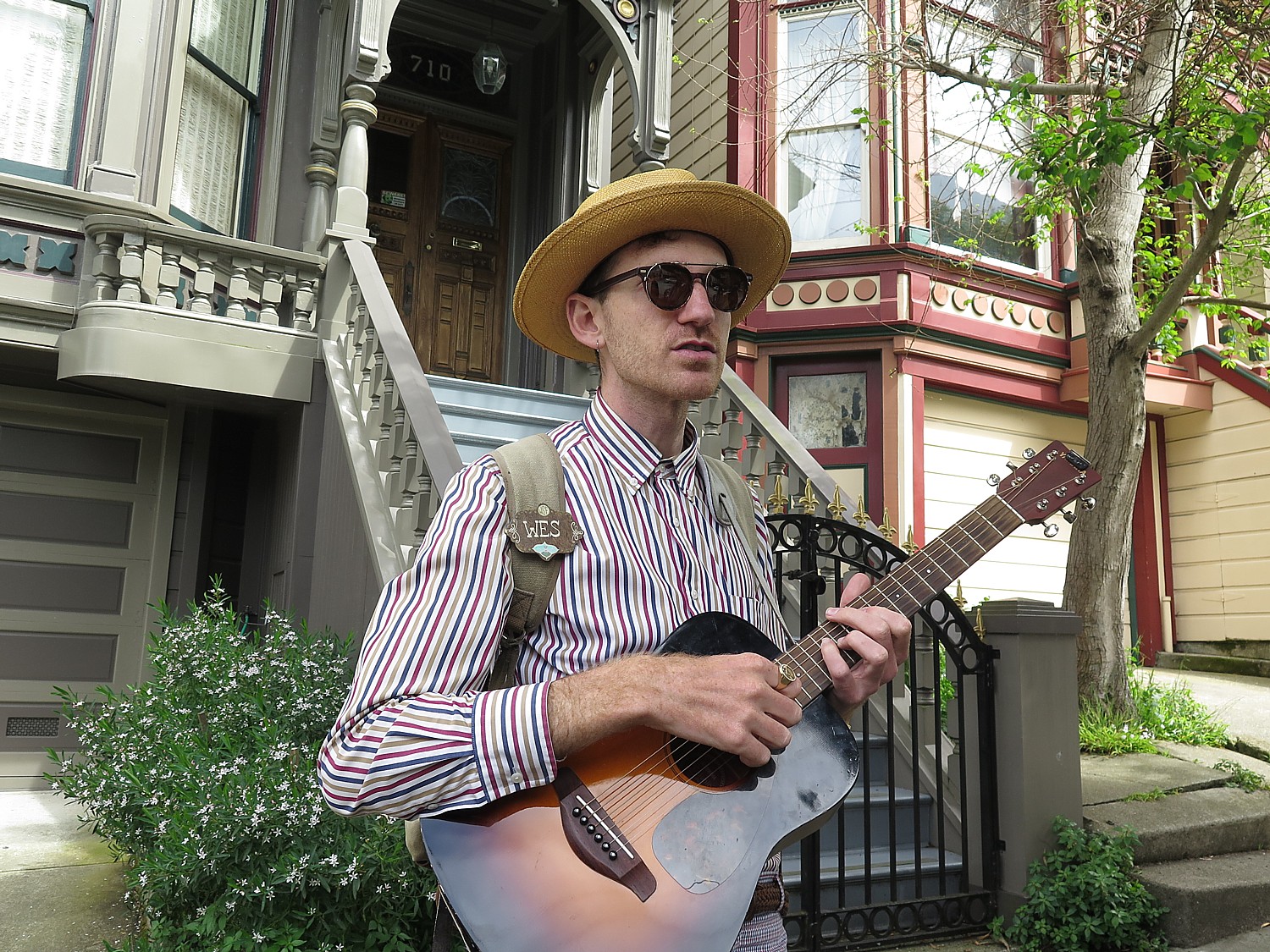
Wes Leslie, co founder of Wild San Francisco tours, is offering Haight-Ashbury Walking Tour: A Musical Trip of The 60’s for free during the 50th Anniversary of the Summer of Love © 2017 Karen Rubin/goingplacesfarandnear.com

By Karen Rubin, Travel Features Syndicate, goingplacesfarandnear.com

My, how time flies!

It’s the 50th anniversary of San Francisco’s Summer of Love, when, in 1967, nearly 100,000 young people converged on the Haight-Ashbury neighborhood, turning San Francisco into the epicenter of a cultural phenomenon known as the Summer of Love. It was a transformative time, when music, fashion, art and new ideas flourished and there was a feeling that everything was possible.

“The city of San Francisco was a magnet for musicians, artists and social rebels in the mid-to-late 1960s. They created a counterculture bound by leftist politics, tribal spirit, music and art. Long stamped a literary bohemia, attracting nonconformists like the Beat Generation writers of the Fifties, it was a natural progression for free-thinking San Francisco to give birth to a radical new movement eventually embraced by the rest of the world.”

The 50th Anniversary Celebration – with some 60 different events, special tours, concerts – is already  well underway in San Francisco and I’m guessing that tens of thousands of Baby Boomers will grab their tie-dye t-shirts, bell-bottom jeans, and put a flower in their hair and join in for a mind-blowing time-travel blast back into the past.
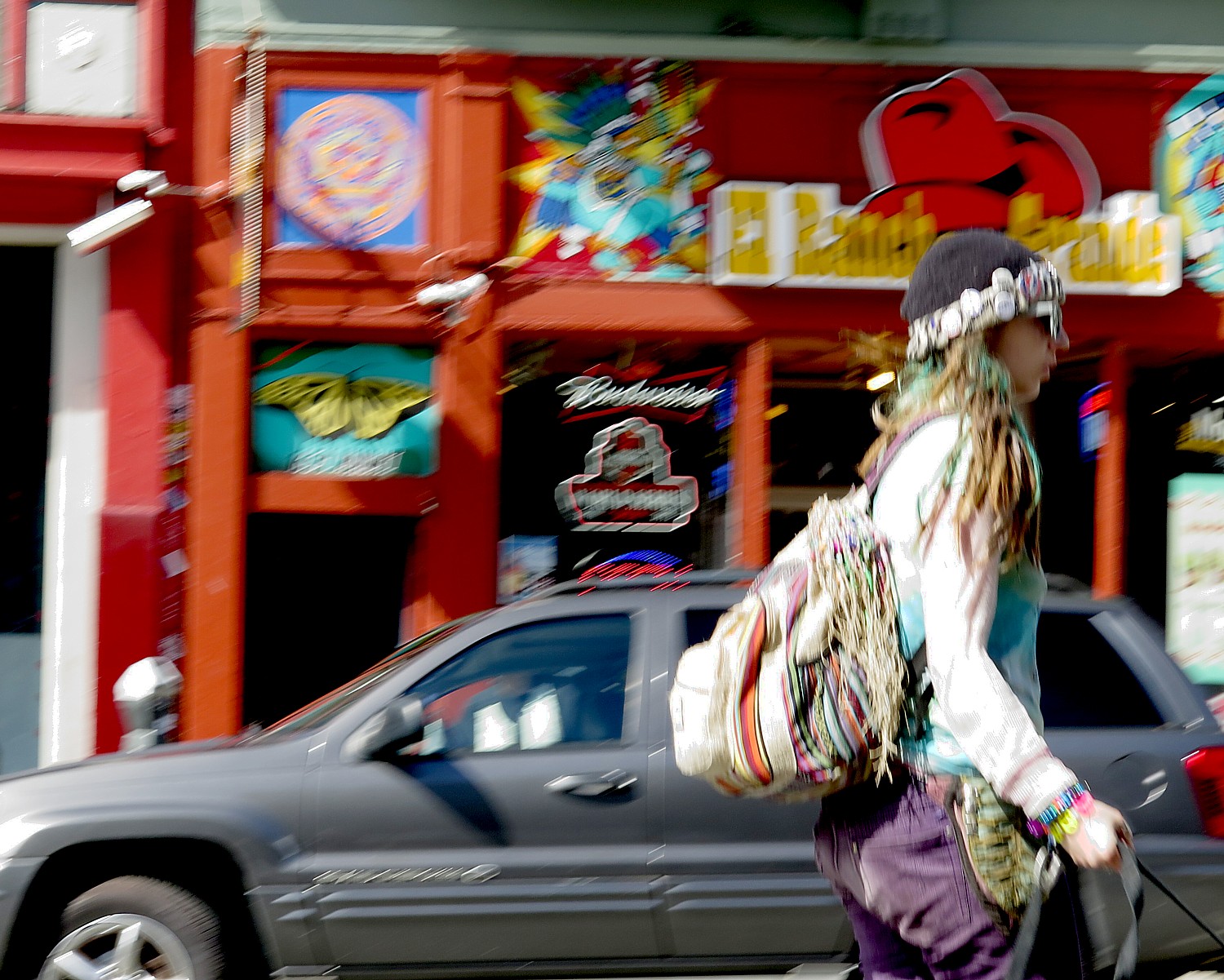
You feel you are in a time warp in Haight-Ashbury district, celebrating the 50th Anniversary of the Summer of Love © 2017 Karen Rubin/ goingplacesfarandnear.com

I’ve just returned from my own magical mystery tour – more precisely, Haight-Ashbury Walking Tour: A Musical Trip of The 60’s, a musical Summer of Love walking tour with Wes Leslie of Wild San Francisco Tours – when I was stunningly, and eerily transported back to my past.

Let me say at the outset that I can’t recall taking a historical tour where I personally lived the history.

Wes (he jokes that he is called “Wild Wes”) is perfect to lead this tour, using his guitar at opportune points – in front of the homes where the Jerry Garcia and the Grateful Dead, Janis Joplin, Country Joe (of the Fish) and others lived – to recreate the iconic music of that era. What is more, in keeping with the spirit of the Hippie Movement, the tour during this anniversary year is “free” (you pay a suggested donation at the end).

Though I lived through that era – memories came flooding back with Wes’ narration – there is so much more of the inside, behind-the-scenes, backstage stuff that I hadn’t known. It is kind of like sitting around a table with relatives and finding out inside scoop you hadn’t realized went on.

Wes’ anecdotes and folksy style make the tour as entertaining and fun as it is informative from a historical and cultural point of view.
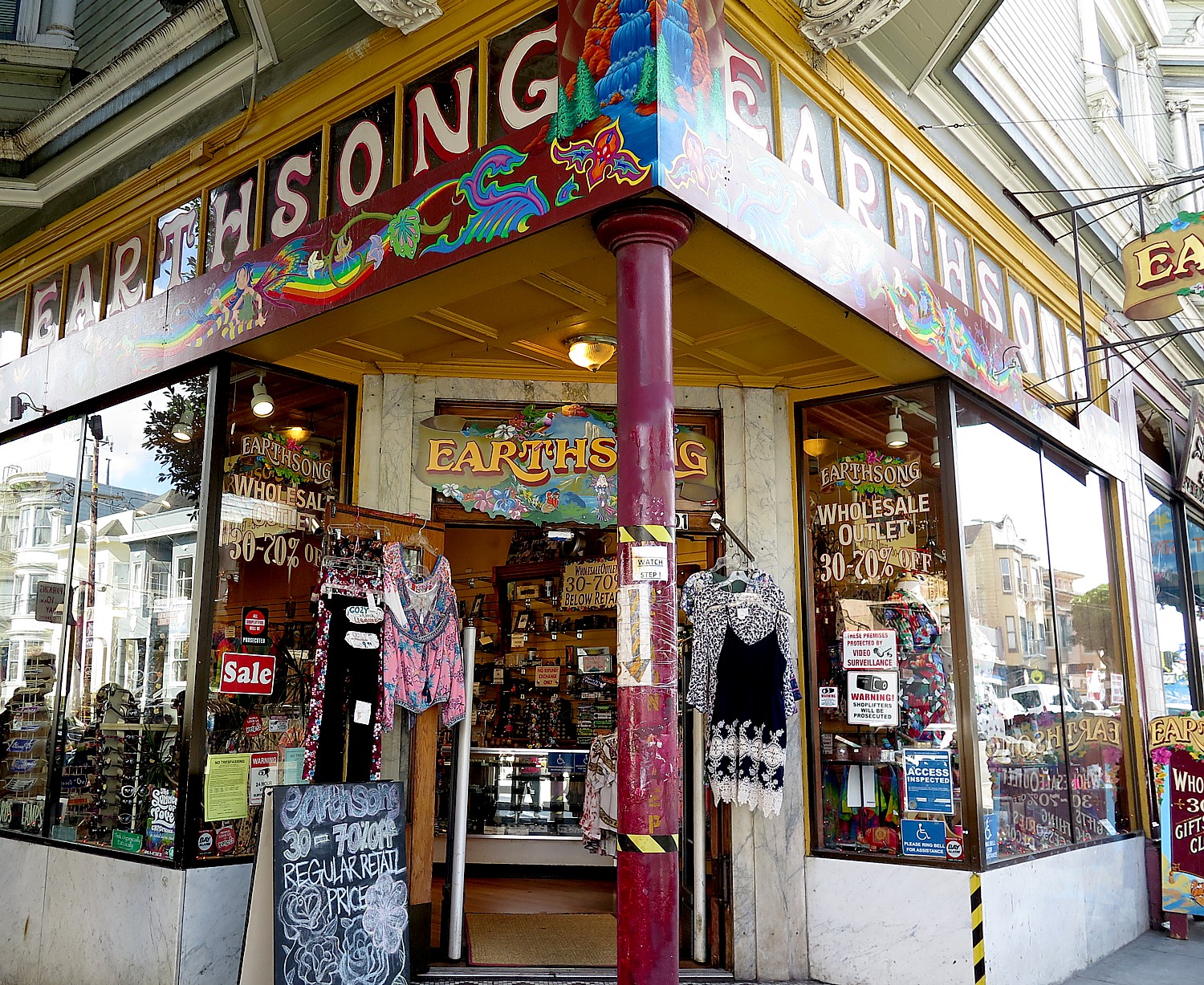
Earthsong shop on Haight Street © 2017 Karen Rubin/ goingplacesfarandnear.com

What I come away with is a realization that the Summer of Love would not have happened without The Pill and how that spurred cultural changes – most significantly a willingness to challenge the entrenched White Patriarchy and Power Structure. I come away with is a new appreciation of how the Women’s Liberation movement actually fueled the Hippie movement, which, through its counter-cultural, anti-establishment, anti-institutionalism, then paved the way for civil rights, gay rights and peace movements – methods and organizations and themes which are eerily resurgent today.

During this Wild San Francisco walking tour through Haight-Ashbury (with music!), I learn about the rise – and fall– of the Hippie Movement that reached its pinnacle during that Summer of Love, when some 100,000 descended and overwhelmed San Francisco (consider that the city has a population today of 800,000), much to the horror of local Hippies who decried that famous song, “If you’re going to San Francisco, be sure to wear flowers in your hair.”
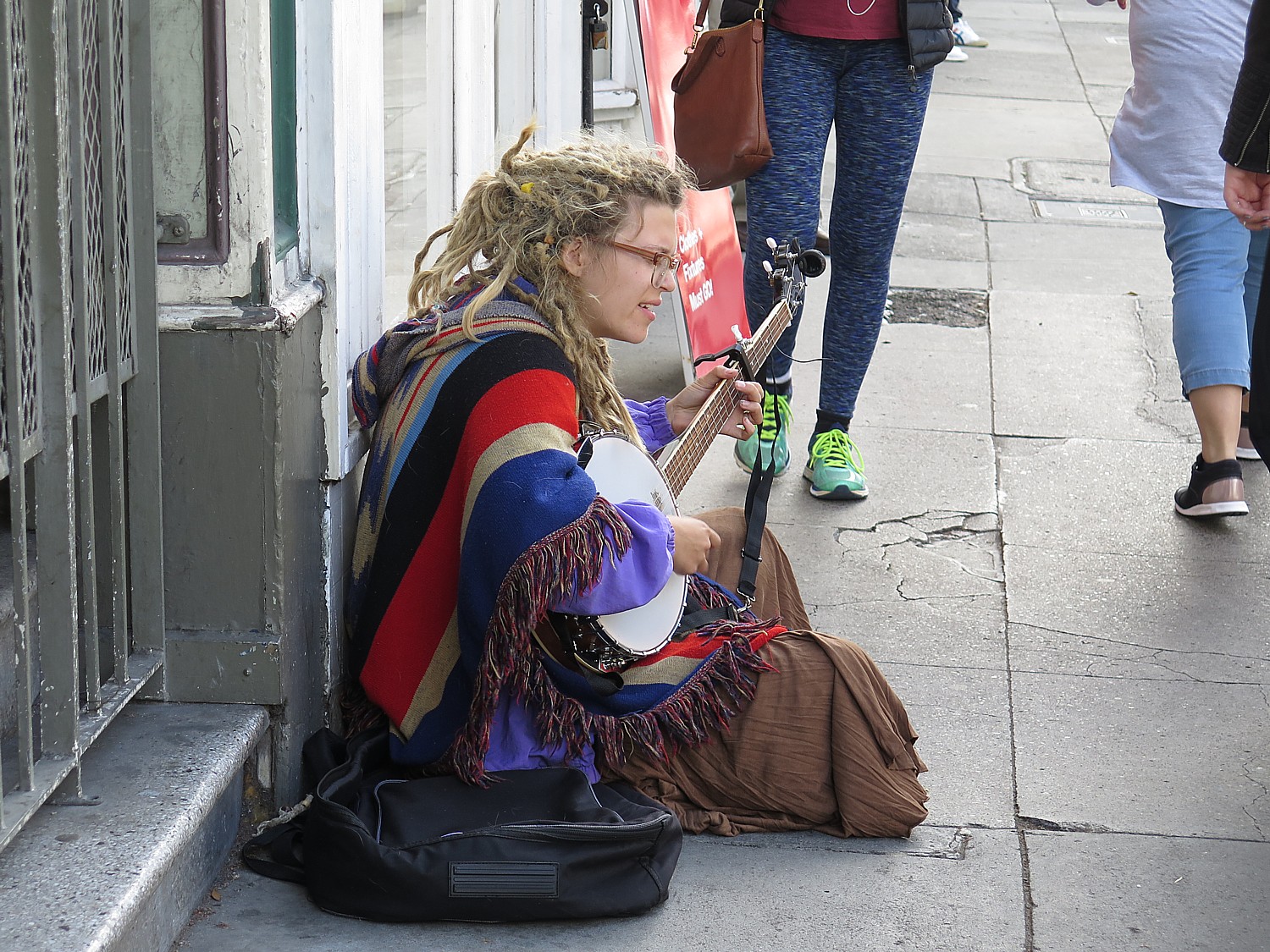
The popularity of “If you’re going to San Francisco/Be sure to wear some flowers in your hair,” Scott McKenzie’s song, contributed to the undoing of the Hippie Movement in Haight-Ashbury after the 1967 Summer of Love © 2017 Karen Rubin/goingplacesfarandnear.com

The very “success” of the Summer of Love proved the undoing of the Hippie Movement, much to the delight of Mayor Shelley at the time, who went after the hippies with such vengeance that he told area hospitals not to help young runaway teens who OD’d, and told the police to stand down so that chaos would reign. It is a complete surprise to me to learn about how brief this movement was in Haight-Ashbury – like a brief, shining light.

The Hippie Movement, which emerged 1965-1967, was aimed at overturning the 1950s culture of uniformity, conformity and obeisance to The Man (whether that is the Capitalist or the Authority of the white patriarchy power elite). The “Hippies” (named because they were the next-gen Beatniks but not quite the Hipsters the Beatniks were, according to San Francisco Chronicle columnist Herb Caen who coined the names for both) renounced capitalism and embraced everything “free” (free food, free concerts, free health clinics, free love), which is why they were considered so dangerously radical (Communists!) and vilified by The Establishment. After all, America was still in the throes of the Cold War.

The social, political ideologues shaping the movement were The Diggers, Wes explains (a group I had never heard of before even though I lived through this era) and must have been news to the other people on our tour, who hailed from Wales, Australia, Hungary, Berlin and Los Angeles (that fellow had taken two other tours with Wes).
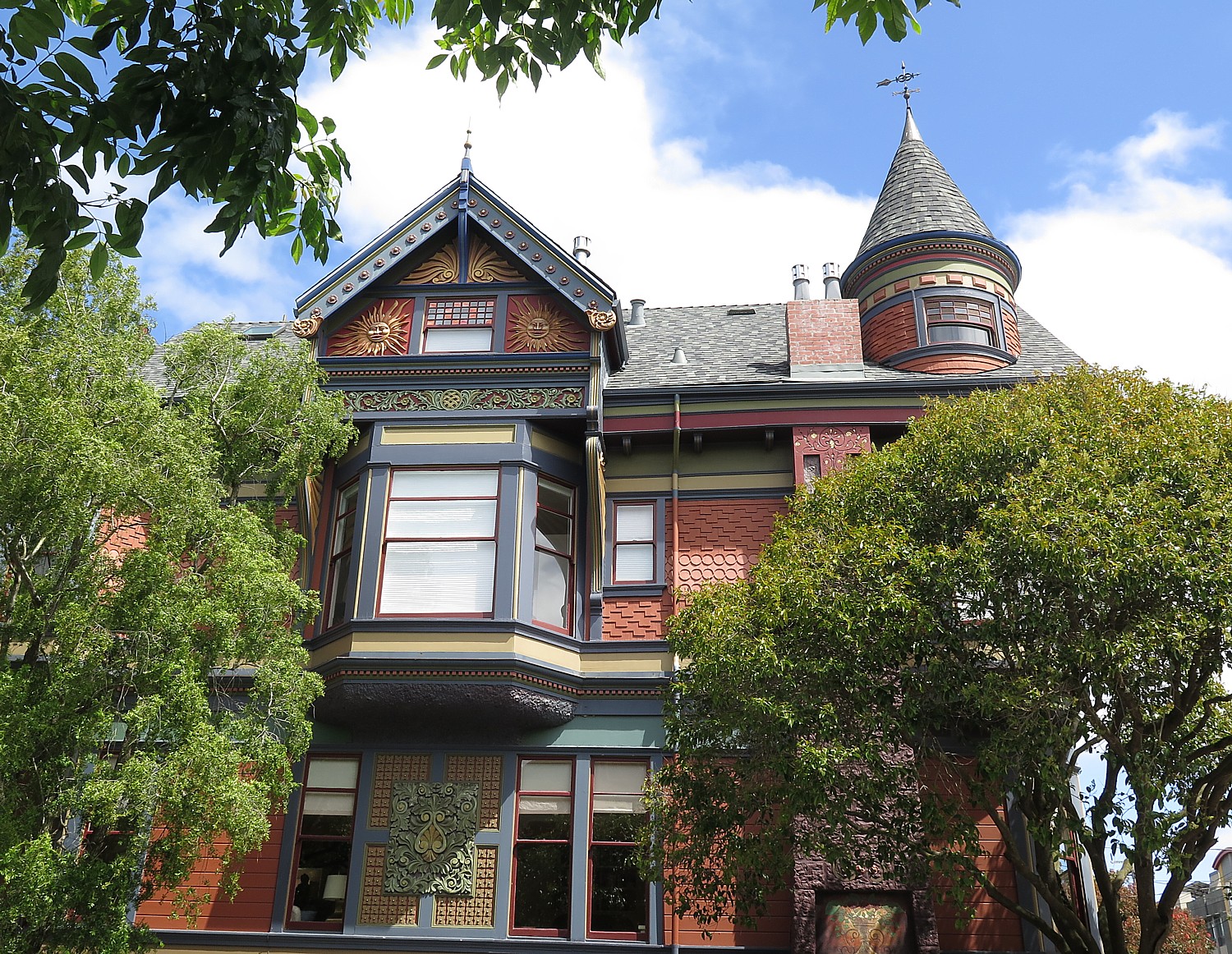
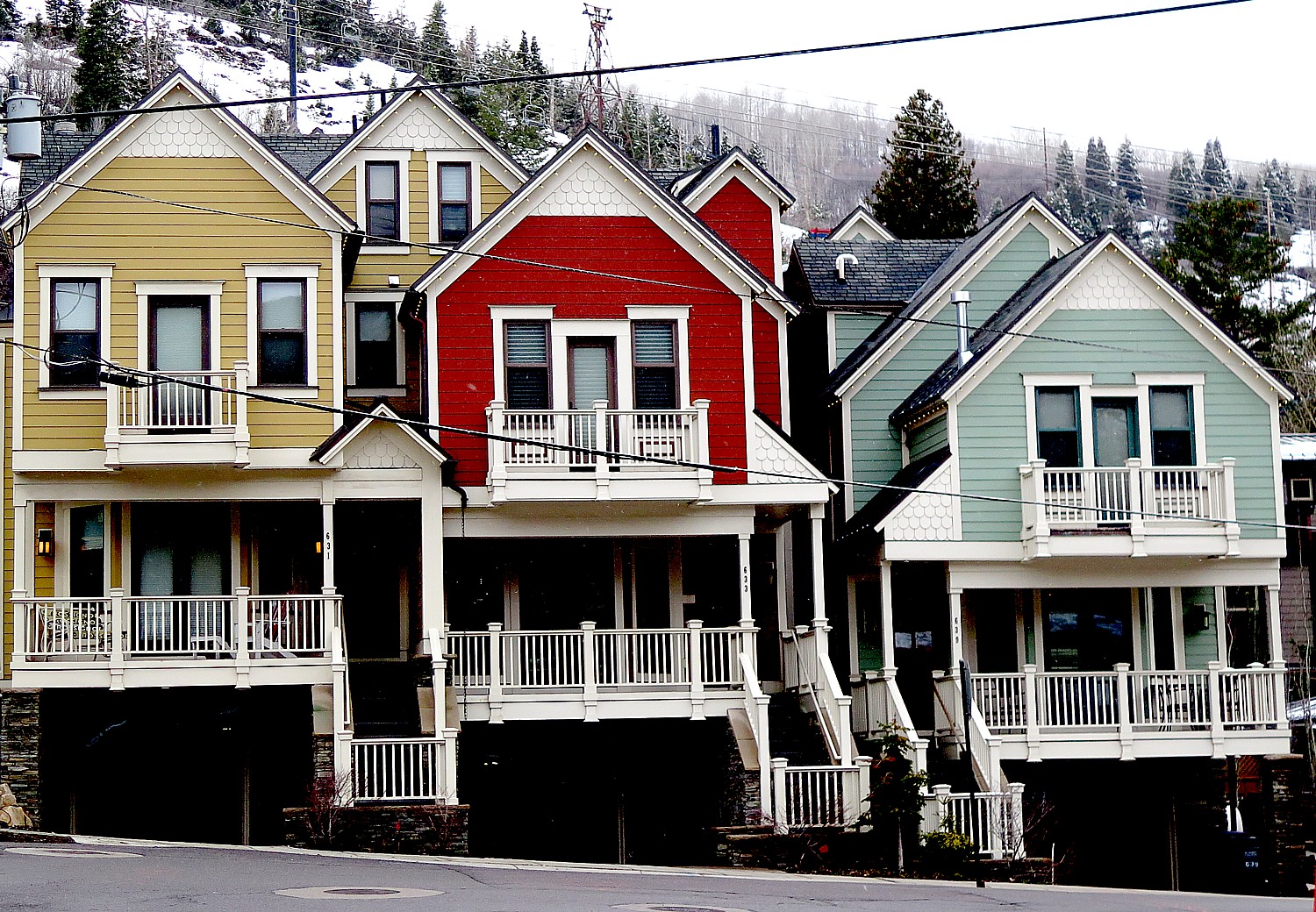
San Francisco’s Haight-Ashbury district has the most magnificent surviving Victorian-era homes, like the one known locally as Hippie Temptation © 2017 Karen Rubin/goingplacesfarandnear.com

The Haight-Ashbury district, where the Hippies were concentrated, today seems an odd locale for these counter-culture radicals, because this district is dominated by the most magnificently preserved (expensive!) Victorian-era homes, some dating from the 1890s, surviving the 1906 San Francisco earthquake and fire which destroyed 80 percent of the city. Wes explains that by the 1960s, the district was run-down and cheap to live in after white flight to the suburbs. Back then, you could rent an entire Victorian house for $175 a month and divide that among 10 people (amounting to $80 a month per person in today’s money, compared to the $3400/month rent for an apartment the district now commands). So naturally, it attracted artists, writers and musicians.

In the 1960s, half the American population was under 25 years old. These were the Baby Boomers and they were coming of age, disillusioned with income inequality, segregation, the assassination of President John F. Kennedy.

“Maybe they hadn’t figured out the solutions but they wanted whatever was furthest from whatever set those things into motion,” Wes tells us as we face one of the most magnificent Victorians, known as “Hippie Temptation”, so they reclaimed the derelict urban cities, swore off capitalism, and embraced drugs that were emerging and love and a philosophy of individual discovery and expression.

They picked up where Jack Kerouac (“On the Road” was a handbook for the Beat Generation) and Alan Ginsberg (“Howl”) left off.
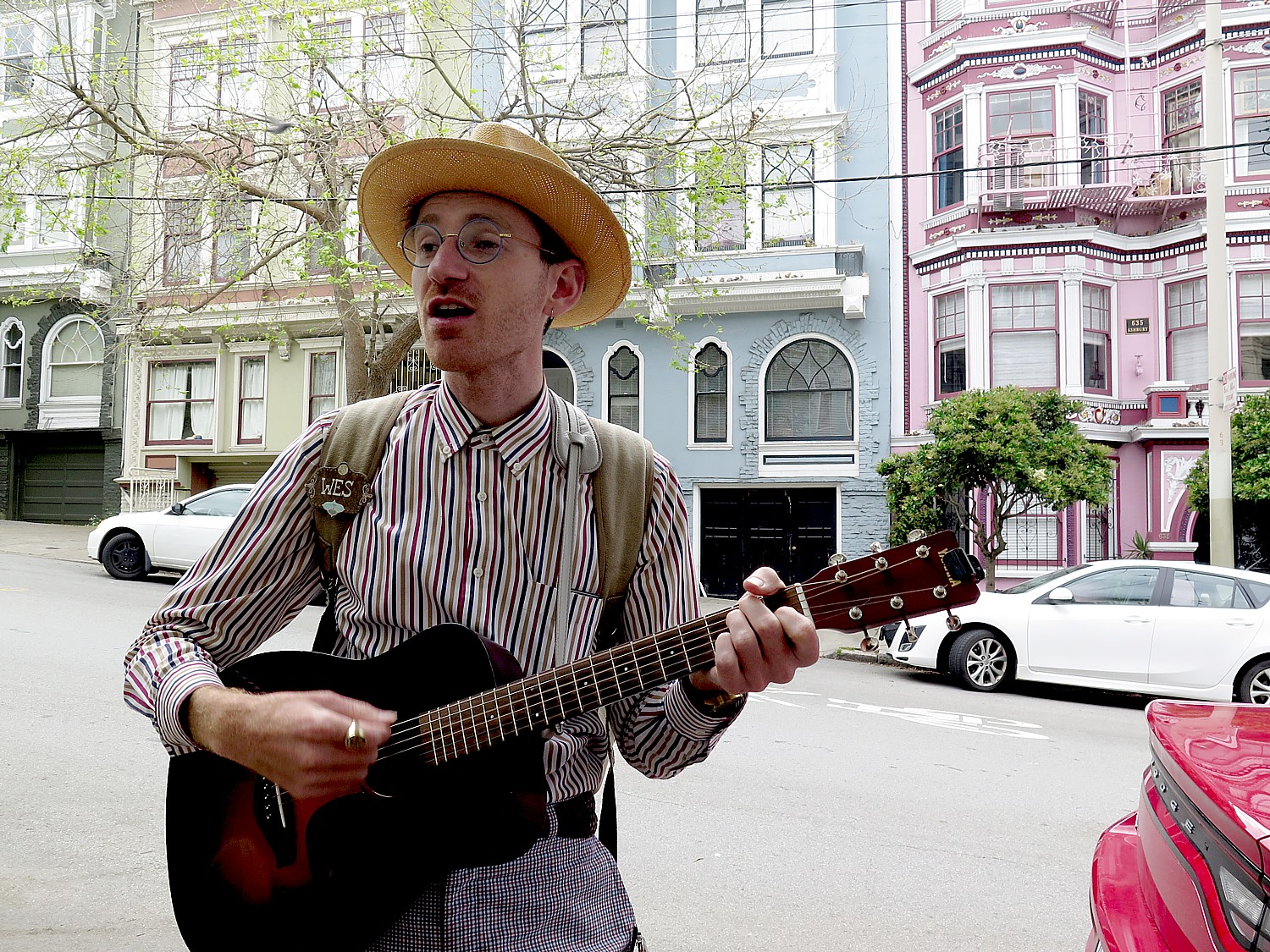
Wes Leslie across from pink house where Janis Joplin used to live in Haight-Ashbury © 2017 Karen Rubin/goingplacesfarandnear.com

The emergence of drugs (and the drug culture) was a significant element that led to the rise of the Hippie Movement– like LSD (which was legal), which led to the rise of “psychedelic” experimentation and provided the subtext for culture of “seeing the world in a new way” and a devotion to individual expression, rather than conformity. “Turn on, tune in, drop out,” declared Timothy Leary.

The Diggers, Wes explains, took their name from a 17th century group of anarchists in England who would take over unplowed fields and would give away the harvest to end inequality.

San Francisco didn’t have farms, but it did have food waste, so the Diggers would go dumpster diving and brought the food to All Saints Parish Church (where we find ourselves standing) and would make a pot of Hippie Stew which they would bring to Panhandle Park (where our tour began, named for the shape, not for handouts), to distribute for free. (The church still gives away food weekly.).

One day, The Diggers gave away free food on the steps of City Hall, which enraged San Francisco’s mayor. “’We are not a charity,’ the Diggers declared,” Wes tells us. “’We are an anarchist organization doing what government should do’.” (a philosophy that is reemergent with the anti-Trump activism) It was the act of it, in contrast to the liberals at Berkeley, the intellectual kids, who were theorizing.

“The Diggers said, ‘Just do it, don’t theorize.’ The Diggers started putting ‘free’ in front of everything: free food, free concerts, free health care.”
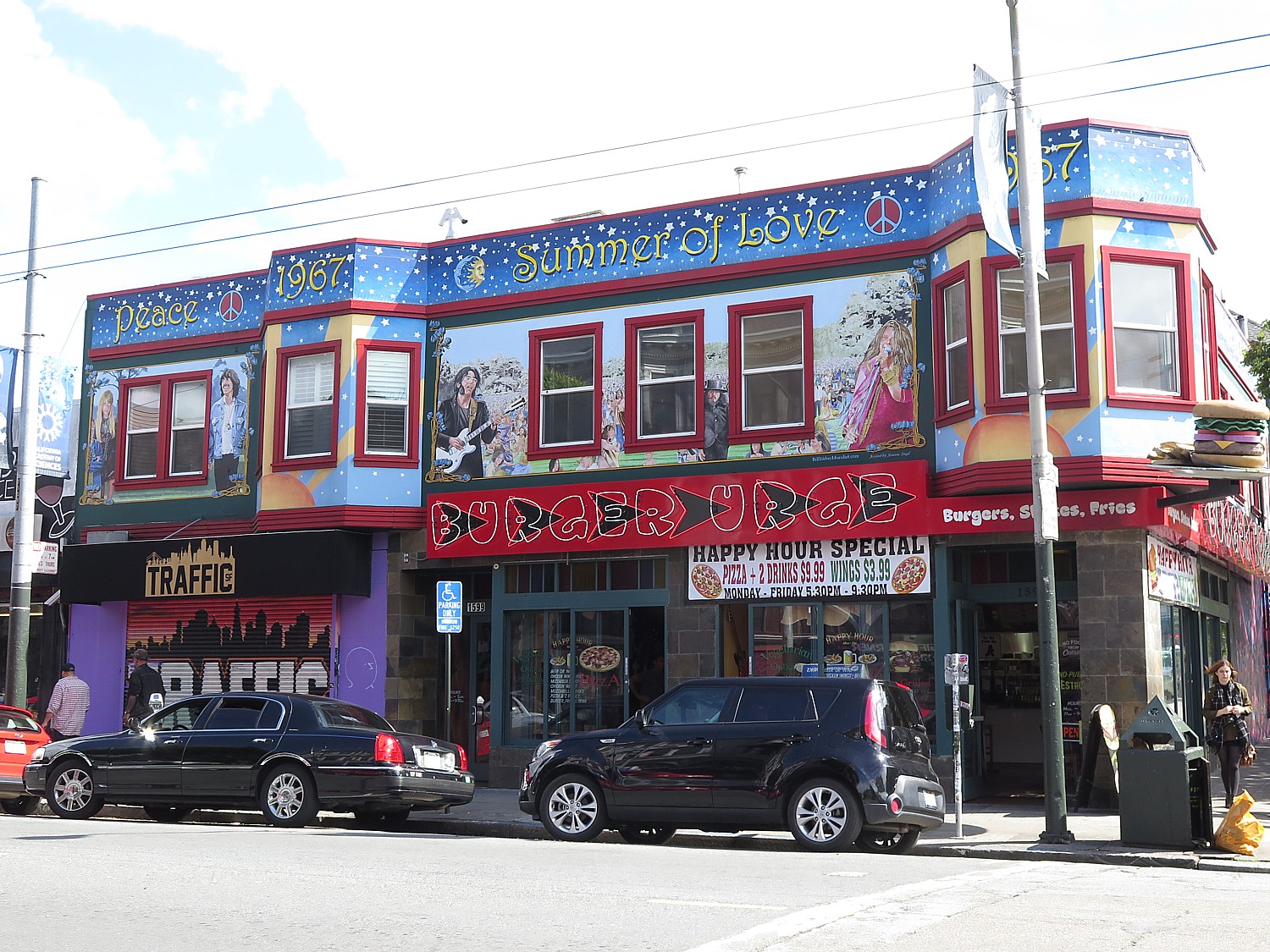
San Francisco’s famous Haight-Ashbury district has resurrected the psychedelic look and feel of its mid-1960s heyday © 2017 Karen Rubin/goingplacesfarandnear.com

Wes traces the actual beginning of the Hippie Movement that led up to the Summer of Love to “The Death of Money” March the Diggers put on. The Diggers, he says, were the activist branch of the San Francisco Mime Troupe, a political satire and theater group.

Hundreds came out wearing dark clothing and carrying a coffin filled with cash and coins – “50 years before the Occupy Wall Street movement and Bitcoin.”

They opened a free store, stocked with contributions from shopkeepers and what they could scavenge. Tie-dye? That gender-bending fashion innovation developed, Wes says, because the Diggers would get contributions of white shirts and would die them.

Interestingly, Wes points out, there was a revolution within the Diggers because the men were writing the manifestos but the women were actually doing the work.

Ultimately, he relates, “the structure of the Diggers – who eschewed “leadership” (they were anarchists) – falls apart.” But they will be forever remembered for coining the famous phrase: “Today marks the first day of the rest of your life.” And for providing the template for social innovations that followed.

Jerry Garcia of the Grateful Dead, still beloved in Haight-Ashbury, immortalized in a mural © 2017 Karen Rubin/goingplacesfarandnear.com

By now, we are standing in front of the most famous house in Haight-Ashbury: the “crash pad” for the Grateful Dead, the most beloved group in San Francisco, “hallowed ground for Haight-Ashbury.”

As Wes is talking, a 60ish man in long white beard, long flowing hair, wearing a tie-dye shirt and bright colored vest comes out of his bright colored house and into his red car, looking every bit the part.

Wes regales us with stories about Jerry Garcia, the Grateful Dead, the Hells Angels, Country Joe and the Fish, Janis Joplin as we visit their houses and important landmarks.

The Hippie Movement had its “greatest moment” not in the Summer of Love, but in January 1967, with a Human “Be-In” in Golden Gate Park. It was supposed to attract a few hundred people. Instead, some 20,000 turned out. The Diggers provided free food; the Hells Angels provided child care, Wes says. (Photos of the event are on view at the De Young Museum in Golden Gate Park, which this season has a special “Summer of Love Experience” exhibit.)

Kids 12 to 14 years old were running away from home to join the Haight-Ashbury scene, and they were overdosing on the ubiquitous drugs.
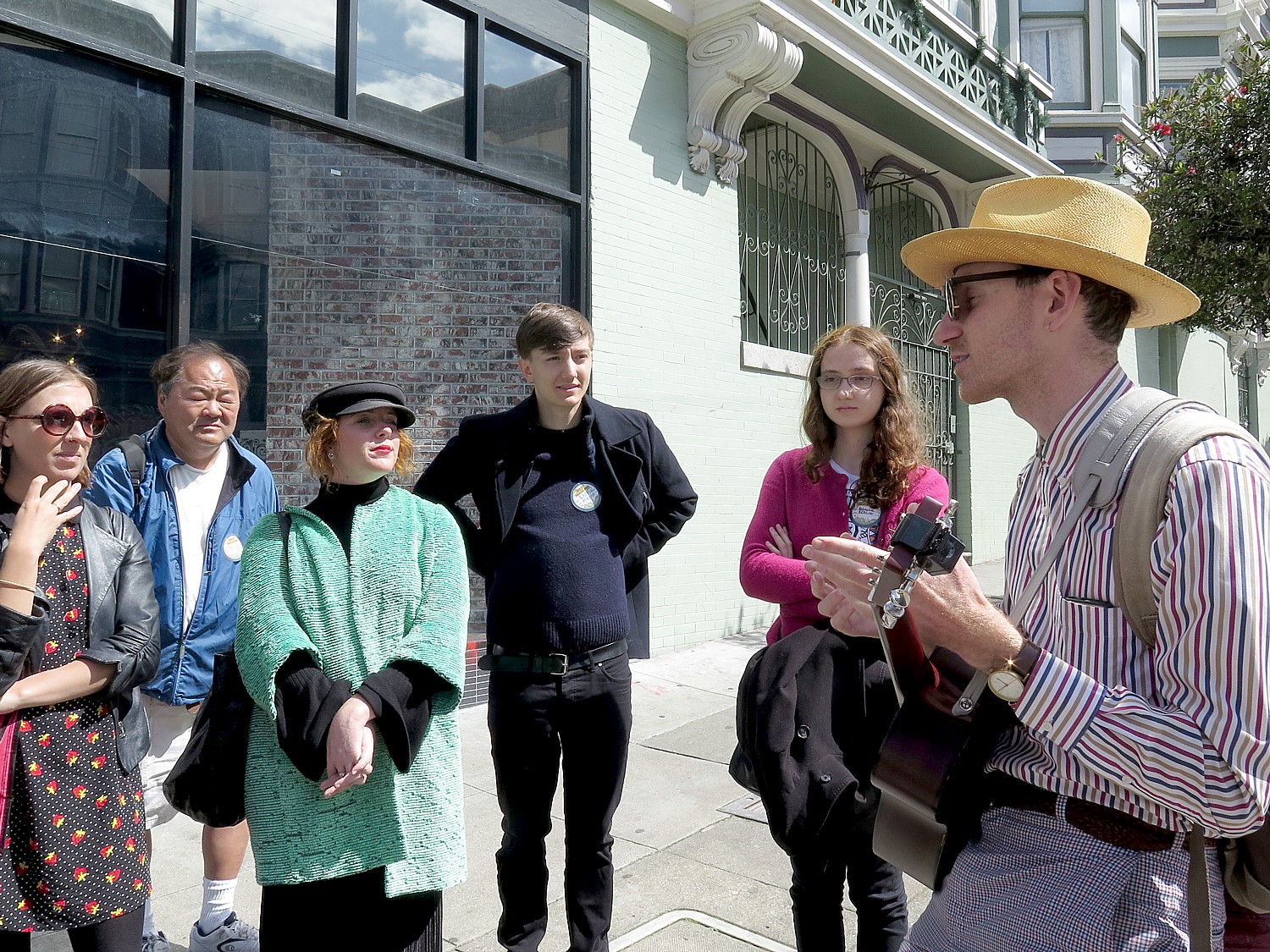
“Wild Wes” of Wild San Francisco Tours relates the history of Haight-Asbury’s free clinic during his musical walking tour of the district © 2017 Karen Rubin/goingplacesfarandnear.com

Dr. David Smith, who was then a 28-year old medical intern (he still lives here), decided to do something and opened a free medical clinic in June 1967, which despite Mayor Jack Shelley’s efforts to shut it down, actually still exists (as we discover that we are standing in front of it) and has served as the model for some 2,000 free clinics since.

As the Summer of Love event approached, the city was freaking out at what would likely be an invasion of some 50,000 (the museum says 100,000 came). Mayor Shelley shut down the clinic and the police, hoping people would be turned off from coming.

Instead, the locals who occupied those Victorian houses turned over their keys to The Diggers, so that the visitors would have some place to sleep, and left town themselves. The Diggers opened “The Switchboard” putting visitors in touch with apartments (sounds like a forerunner of Air BnB), with jobs, and provided a central place for parents to send messages to their runaway kids.

The “success” of the Summer of Love was actually the undoing of the movement, which unraveled after that, Wes explains.

The Grateful Dead left, the Hippies moved to North Bay where they created a farming commune, the Diggers disbanded.

“The Last Hurrah was the ‘Death of Hippies’ march” paralleling the “Death of Money” march which initiated the movement. The Diggers, again wearing dark clothing, carried another coffin, this time with a Hippie inside, covered with flowers and incense.

The Hippie Movement, they said, “was killed off by fame,” adding, “If you care about this, take what you learned and radicalize it.”

Indeed, they did: the Hippies willingness to take on the Establishment unleashed the Women’s Movement, the Civil Rights Movement, Gay Rights Movement and Peace Movement.
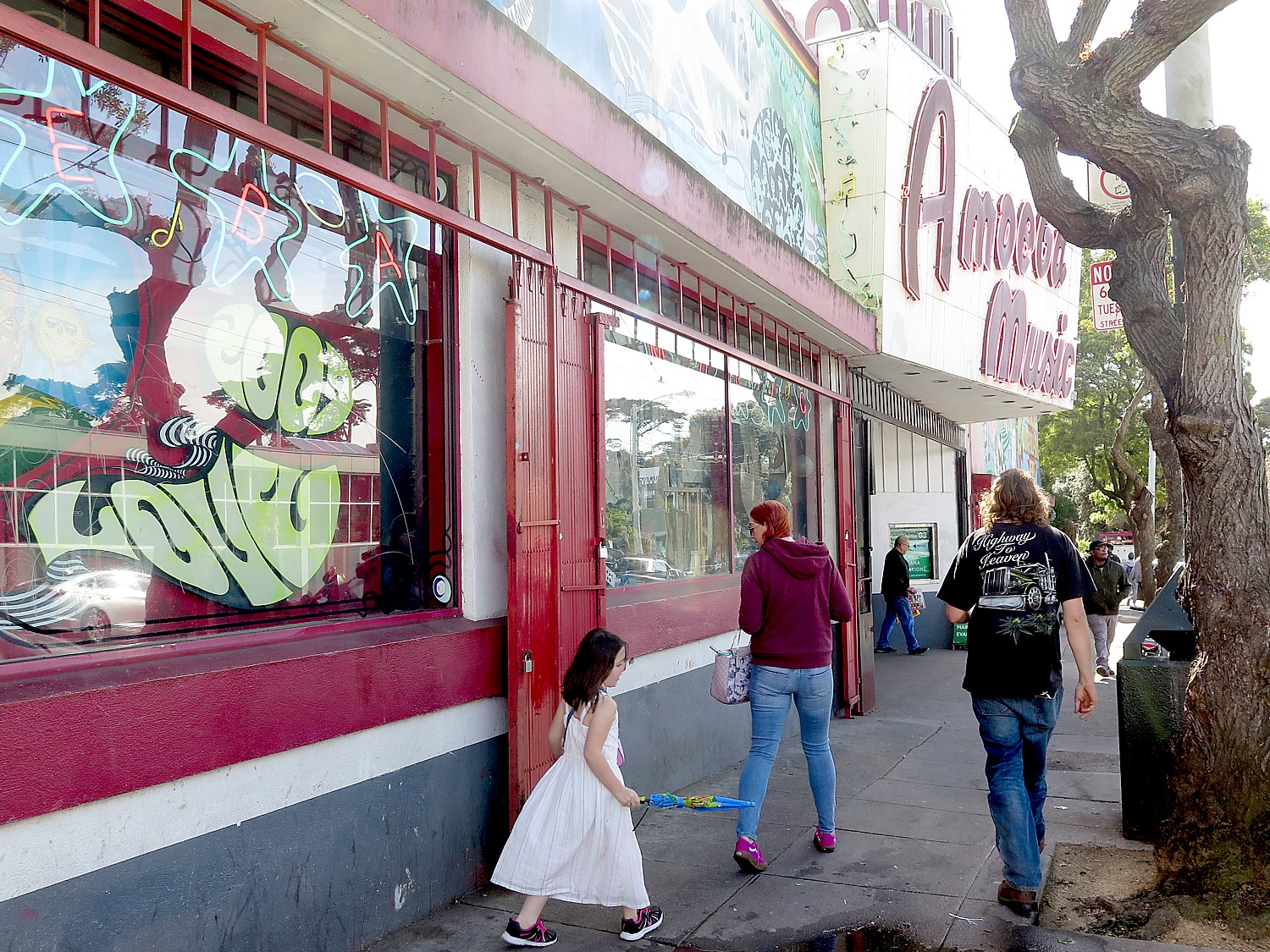
Amoeba Records, world’s largest independent record store, still has its psychedelic location at 1855 Haight Street © 2017 Karen Rubin/ goingplacesfarandnear.com

But Haight-Ashbury sunk further and further into decline, becoming an outright derelict and dangerous place, until the Dot.Com resurgence of San Francisco in the early 2000s, and tourism which has resurrected the colorfully decorated shops, including Earthsong, and Amoeba (which Wes says is the world’s largest independent record-album store).

Wild San Francisco’s other tours – such as “Radical SF”, a walking tour through the Mission and Castro districts – are focused on the people’s history and social movements (there is also a historical ghost tour for good measure).

Wild San Francisco’s co-founder Wes Leslie is a third-generation San Francisco Bay native (I admire his ring with the insignia of the Golden Gate Bridge and 3 diamonds, which he tells me was his grandfather’s, a transit driver for 3 decades). He makes “bedroom soul” music as Wes Leslie, the Bedroom Player (wesleslie.com) and fixes cocktails at Mrs. Jones on Market Street.

Contact Wild San Francisco Tours, 415-580-1849, http://wildsftours.com/, info@wildsftours.com

Special Tours Celebrate Summer of Love Anniversary 

2017, the 50th Anniversary of the Summer of Love, is being marked with a year-long celebration of San Francisco’s counter culture with a 1960s throwback including some 60 exhibitions, performances, literary events, tribute concerts and recognition of significant moments in time.

While the Summer of Love remains a key moment in history, the free love movement can be experienced through a number of geography specific tours, neighborhoods and performances throughout the year.  In addition to Wild San Francisco’s offerings, other tours include:
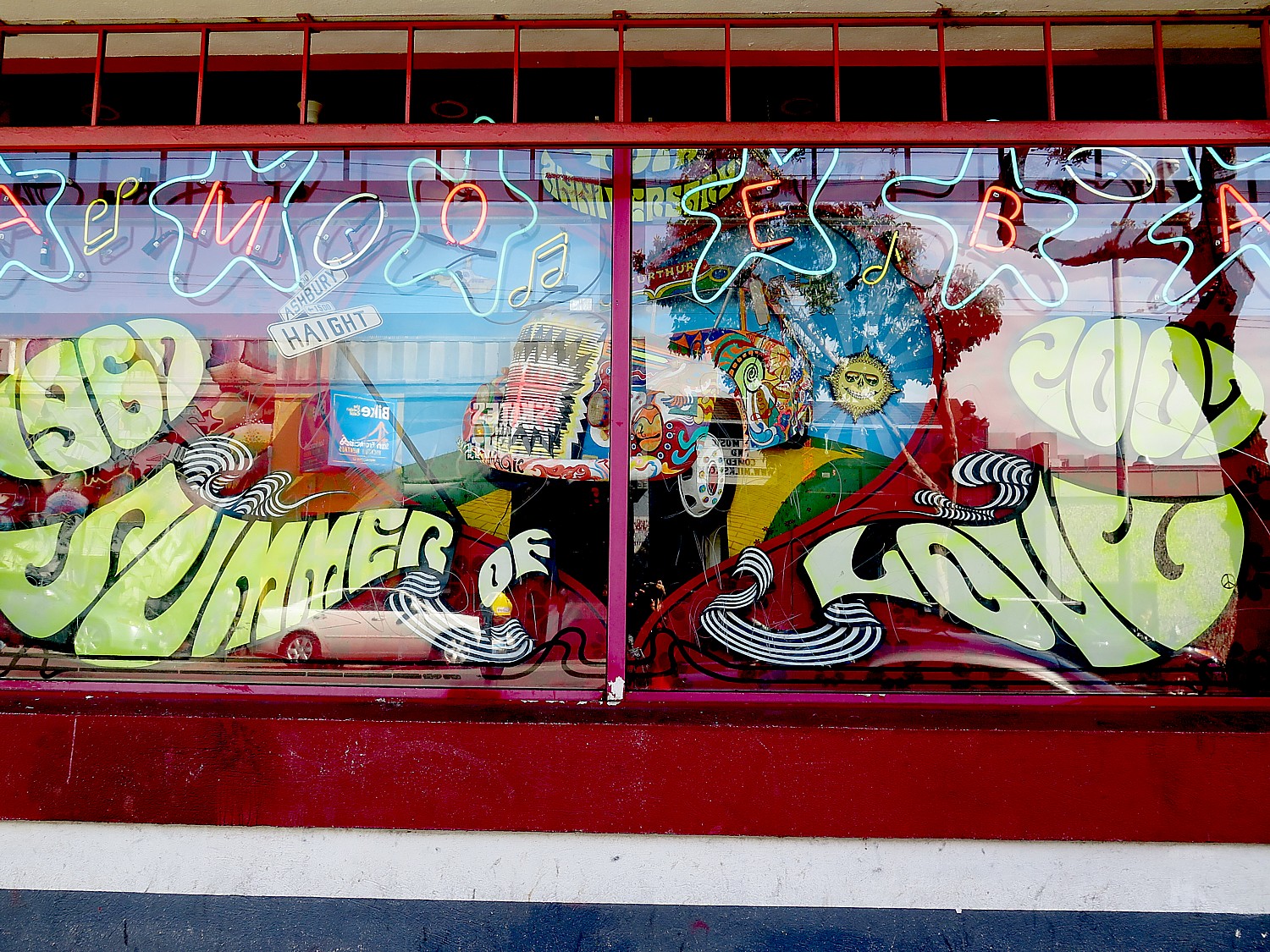
A variety of San Francisco tour companies are offering special Summer of Love programs through Haight-Ashbury district in 2017© 2017 Karen Rubin/goingplacesfarandnear.com

Flower Power Walking Tours: Walk in the footsteps of Janice Joplin and the Grateful Dead on the Haight Ashbury Flower Power Walking Tours touching on the history of it all, from rock and roll to art, fashion and architecture. (www.haightashburytour.com/)

FOOT! Fun Walking Tours:  is presenting a special tour, Flashback: From the Summer of Love to the Winter of Discontent, from the highs of the summer of 1967 to the restlessness that followed. Follow in the footsteps of music legends like Janis Joplin and Jerry Garcia with this walking tour in the iconic Haight Ashbury neighborhood.(www.foottours.com).

San Francisco City Guides Haight-Ashbury Tour: Explore streets, sidewalks, parks and vistas that tell the story of a Victorian era resort site subsequently developed by comfortable merchants, whose gingerbread homes still grace its streets. Offered most Sundays, see website for details.  Somewhat strenuous.    San Francisco City Guides offers free (donations welcome), volunteer-led tours of a variety of neighborhoods, landmarks and topics. To bring eight or more walkers to a regular tour, click here for information on private group tours. (www.sfcityguides.org, tours@sfcityguides.org.

Detour’s Walking Tour: Walk through the epicenter of the Summer of Love with Detour’s Walking Tour of the Haight, narrated by one of the activists who was at its center, Peter Coyote. (www.detour.com/san-francisco/haight-ashbury).

Avital Food Tours, Haight Ashbury: Did you know that local food co-ops were born out of this era? Delve into one of the world’s best food scenes to hear the stories of restaurant owners, chefs and industry experts for a culinary experience in San Francisco.  Walking tours are available in iconic neighborhoods across the city including Haight Ashbury (http://avitaltours.com/san-francisco/).

San Francisco Love Tours: Ride a VW hippie bus with San Francisco Love Tours and experience modern day San Francisco infused with the spirit of the 60’s (http://sanfranciscolovetours.com/).

Magic Bus Experience: This two-hour+ adventure, “Time Machine to the 60’s,” is a “mind-bending” combination of professional theater, film, music and sightseeing that allows tour goers to travel back in time to the summer of 1967.  The Magic Bus is an actual bus colorfully painted and filled with a sound system, micro projectors and screens that periodically lower over the windows making the bus into a moving movie theater (http://magicbussf.com).

To help visitors plan their “trip,” the San Francisco Travel Association has launched a special website, www.summeroflove2017.com, which provides an ever-expanding guide to the whole groovy scene, including events and itinerary ideas. (San Francisco Travel. 415-391‑2000, www.sftravel.com)

Next: Special Events, Exhibitions Planned for San Francisco’s 50th Anniversary Summer of Love

____________________

© 2017 Travel Features Syndicate, a division of Workstyles, Inc. All rights reserved. Visit goingplacesfarandnear.com www.huffingtonpost.com/author/karen-rubin , and travelwritersmagazine.com/TravelFeaturesSyndicate/. Blogging at goingplacesnearandfar.wordpress.com and moralcompasstravel.info. Send comments or questions to FamTravLtr@aol.com. Tweet @TravelFeatures. ‘Like’ us at facebook.com/NewsPhotoFeatures


Born in a Silver Boom, Park City, Utah, Heritage Delights Diners, GalleryStrollers, FestivalGoers

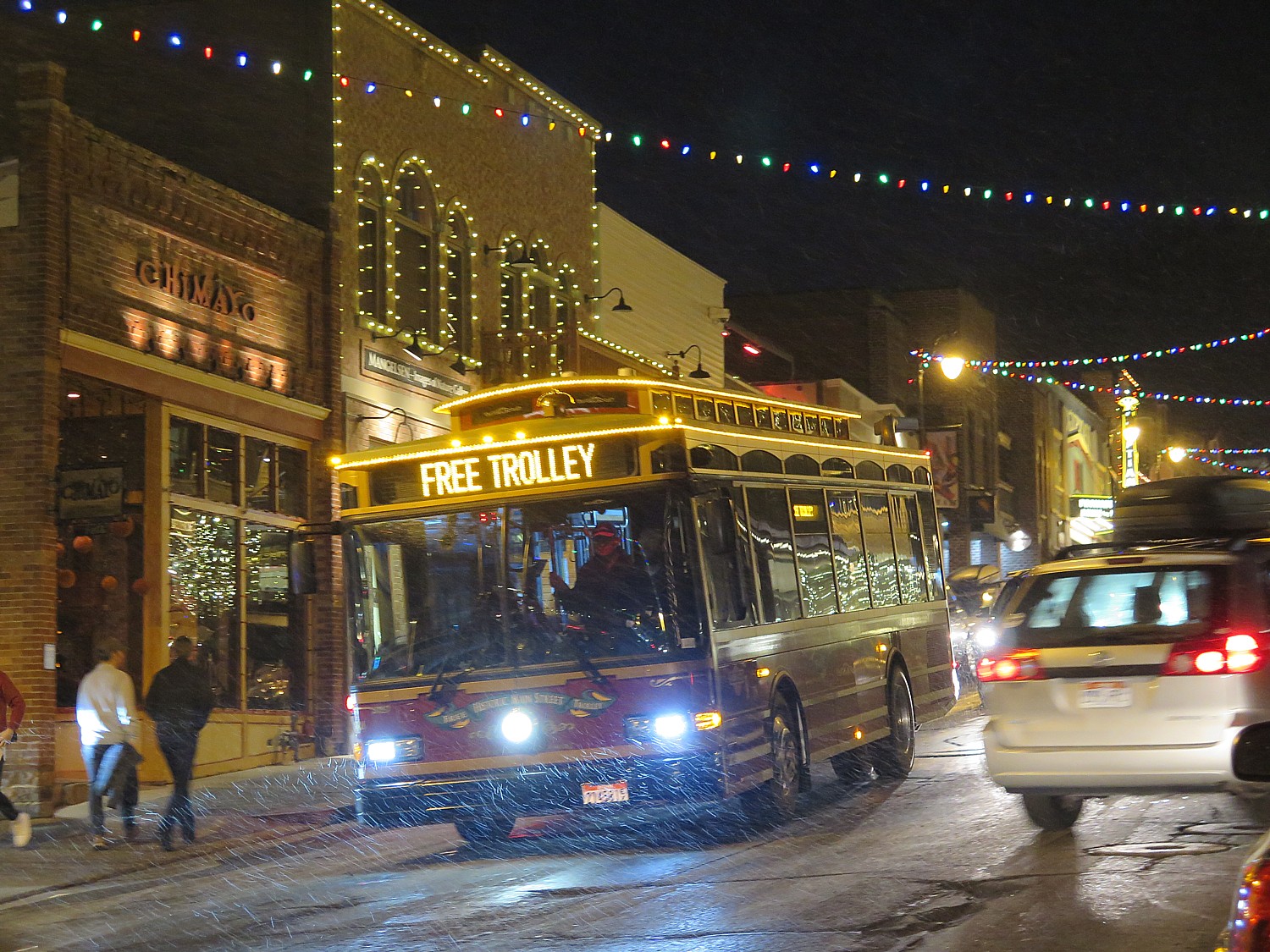
Park City’s historic Main Street has a festive, welcoming ambiance especially with the free, old-timey trolley © 2017 Karen Rubin/goingplacesfarandnear.com


By Karen Rubin, Eric Leiberman & Sarah Falter

Travel Features Syndicate, goingplacesfarandnear.com


Like so many, we have come to Park City for its legendary powder snow and sprawling mountain peaks, home to two major ski resorts, Park City (which since Vail Resorts acquired and combined Park City and The Canyons has become the largest ski resort in the US), and the skiers-only, “retro” Deer Valley Resort.

And besides being one of the easiest world-class ski destinations to reach from every part of the country by air (I literally leave my home on Long Island in the morning and am skiing at Park City Mountain by the afternoon), it affords a perfectly delightful, charming historic town that rounds out the joyful experience.

Which is ideal because one of the major delights of a ski (or any outdoors) holiday is dining out. During our all-too brief stay in Park city, we get to sample the diverse venues.

Just a few blocks long, Park City’s historic Main Street really packs it in: one phenomenal gallery, boutique, superb restaurant after another. I visit on three evenings of our four-day stay and find new treasures to explore each time.

Park City was born in a silver mining boom of the 1880s. – today, it extracts a different kind of silver, from tourism – indeed, we are told that Park City has been ranked the most expensive small town in America (surpassing Aspen).

But the 19th century past is still very much on display – I love reading the historic markers outside some of the buildings which collectively tell the story of a town that survived explosions, flooded mineshafts, a town-wide fire in 1898 which burned 200 of the town’s 350 structures, snows heavy enough to collapse buildings, and a devastating downturn in silver prices that deflated the town’s economy in the mid-1900s, so that by 1951, it was officially named a ghost town. (There is quite a good Park City Museum, 528 Main Street, allocate about an hour.) Sixty-four of the Park City buildings are listed on the National Register of Historic Places. Meanwhile, there are more than 1,200 miles of tunnels that wind through the mountains (Park City Mountain Resort offers an on-mountain Historic Mountain Tour on skis that goes to some of the mine shafts.). There are other charming touches, like the free old-timey trolley, and the decorative lights that are strung across Main Street and around many of the buildings.

Park City retains its historic charm © 2017 Karen Rubin/goingplacesfarandnear.com

But out of a silver bust has come a new kind of cash boom: Park City today is considered the “most expensive small town” in America (actually surpassing Aspen) which you sense in the high-end galleries, shops and restaurants. Yet, the ambiance is not in the least snobby or elitist. We are struck by how very welcoming and friendly everybody is – from the shopkeepers to the visitors. The town is one perpetual smile.

There are a mind-boggling number of restaurants to choose from – nearly 150 in the area – from cozy bistros, casual eateries ideal for family gatherings, jazz and live-music venues, and fine dining establishments worthy of Michelin stars.

During our all-too brief stay, we get to sample Park City’s diverse dining options. After all, a ski holiday is one of the few times you can tell yourself, “I’m on vacation, AND I’ve spent the day outside burning up calories.”

The first place to replenish those calories is at Firewood on Main.

Firewood on Main should be a Park City institution. Though it only opened in December 2016, its chef/owner is John Murcko who is responsible for developing many of the fine dining restaurants throughout Park City (The Farm, in the Canyons village and was named one of “Utah’s 25 Best Restaurants” in 2015, is one) and Sun Valley. This is his first restaurant of his own, and you get the feeling it just gives him the freedom to express his passion for culinary creativity. What we love about it is that although the selections and taste combinations are as sophisticated as you might find in the major capital cities of the world, it still is absolutely true, in ingredients and selections (not to mention décor) to its local surroundings. So there are taste sensations that evoke South America (particularly Argentina’s penchant for grilling) and Asia, but that still feel right at home in Utah.

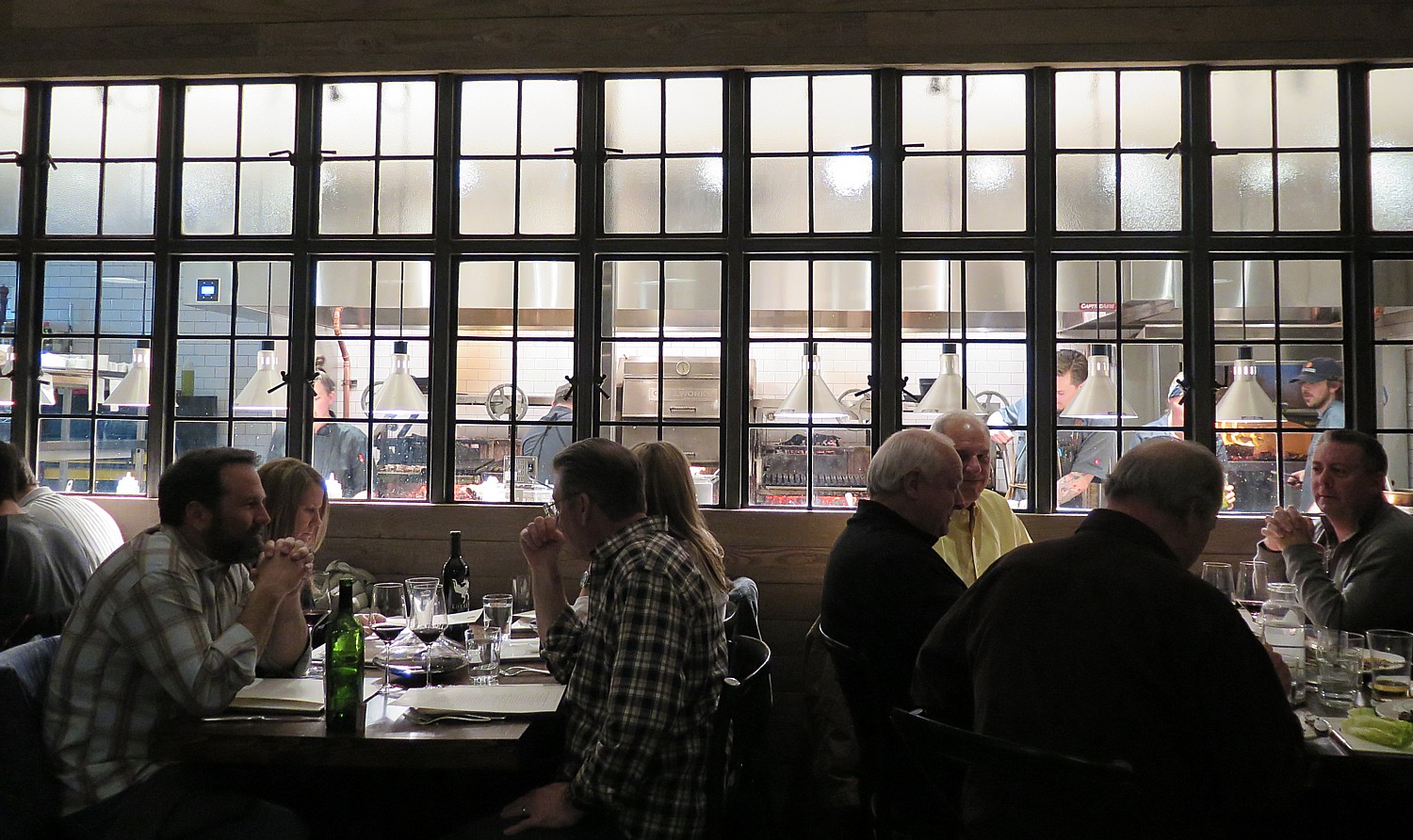
Firewood on Main provides windows into the kitchen © 2017 Karen Rubin/ goingplacesfarandnear.com

Chef Murcko has done some interesting things: like creating the Chef’s Library – a literal tiny, private and separated room connected to the kitchen with a pass-through for the dishes – where you get to create a menu in collaboration with the chef.  There is also a second private dining room, and the Nickel Bar on the basement floor (named for the nickels that fill the bar tabletop) which is appropriately dark and woody.

The main dining room features a set of windows that let you see through to the sprawling kitchen (I like that better than when the kitchen is just open to the dining room). You get to see the activity, as well as marvel at the room-length long open grill, that was custom-built, “the Mazzerati of grills,” our server, Sean, notes.

Just about everything is grilled or seared or fired or smoked in some fashion – even the lemon garnish on the cocktail, to enhance its flavor (more about that in a bit).

I love the décor, which I dub “Mountain Moderne.” It has a quasi-agricultural/industrial heritage motif – clean lines but woodsy – that  summons Utah heritage with windmill fans that are used as ceiling fans and black-and-white photos that decorate the room. Chef Murcko even crafted the tables himself.

We start off with a batch of appetizers that we share:

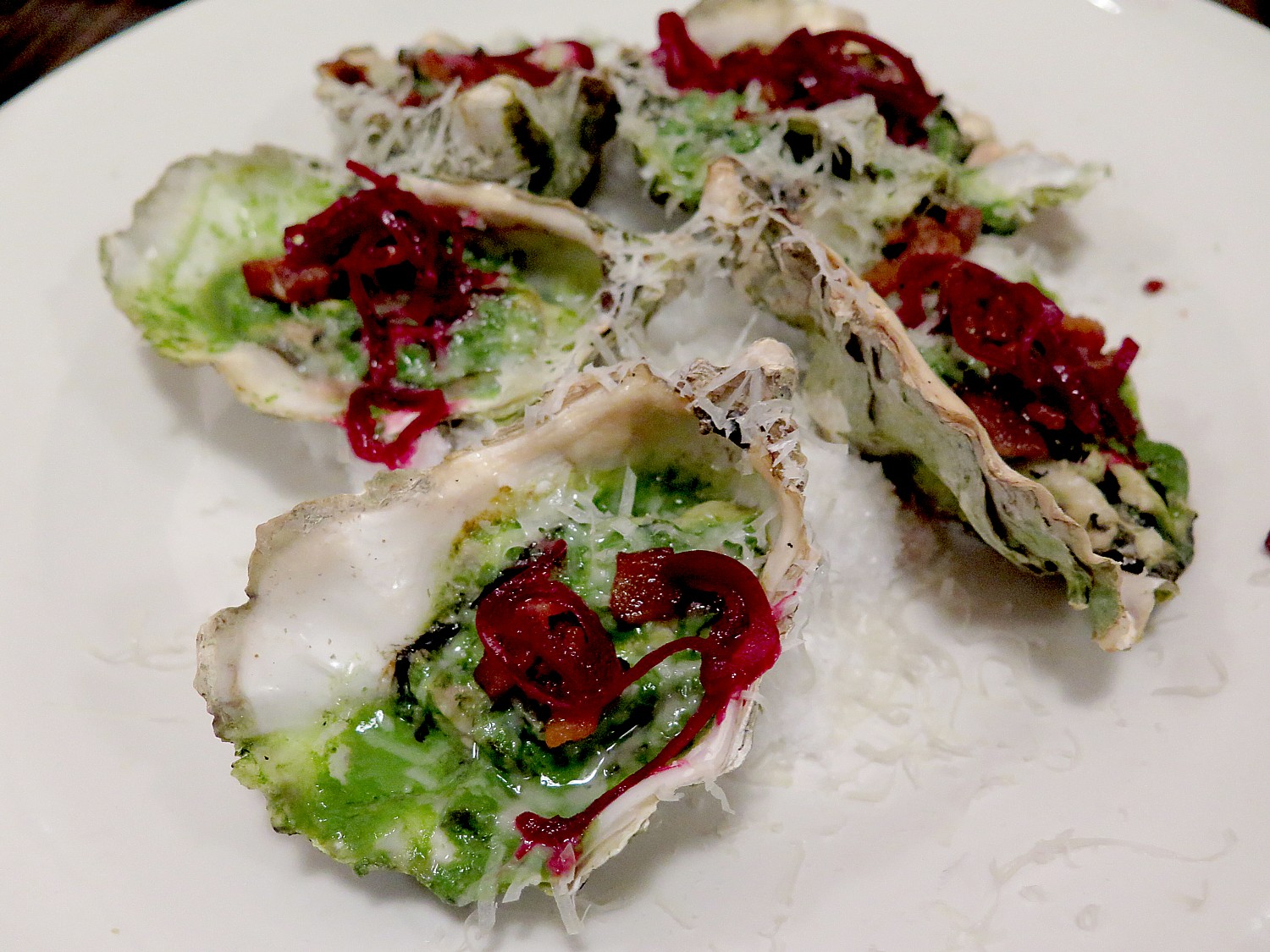
Grilled Oysters, a popular appetizer at Firewood on Main © 2017 Karen Rubin/goingplacesfarandnear.com

Grilled Oysters with spinach, wood roasted bacon and beet pickled shallot – the oysters are palm-sized huge and are brought in from Washington and Applewood Smoked Burrata with ash roasted beets and herbed pesto; pork belly (for which Firewood is known) prepared with honey wine apple vinegar, red pear and frisee; and fire-braised seasonal wild mushrooms (wood beech, royal trumpets, chanterelles) served with grilled bread. Delectable.

For our mains, we savor Port Short Rib, so succulent and perfectly prepared over creamy polenta, warm dried stone fruit chutney, and heirloom carrots fired on the grill; Rack of Lamb, with black lentil ragu, cipollini onion, eggplant and red chimichurri, had some wonderful Argentinian influences and it too was prepared and presented to perfection; and American Kobe New York (the best of both cultures!) showed off Murcko’s penchant for grilling, was sensational, served with rosemary pave, baby shiitakes and duxelle jus.

Watching chefs create at Firewood on Main © 2017 Karen Rubin/ goingplacesfarandnear.com

That being said, the menu (which basically touches all cylinders of offerings) shifts nightly to incorporate the freshest seasonal ingredients, locally sourced wherever possible. But the one constant is that everything is cooked over a wood fire. “Chef John Murcko’s vision blends the most primitive of cooking methods—open wood flame—with an innovative menu.” (Firewood On Main, 306 Main Street, Park City UT 84060, 435-252-9900, firewoodonmain.com).

High West Saloon and Distillery

One of the most popular places to be in Park City is High West Saloon and Distillery. It has the look of being around a century but was opened in 2006 by David Perkins and his wife, Jane. David, a former biochemist, was inspired to open his own distillery after seeing the parallels between the fermentation and distilling process and his own work in biochemistry during a trip to the Maker’s Mark Distillery in Loretto, Kentucky. The old-timey look comes from the fact that Perkins opened with just a small, 250-gallon still and Saloon in an historic livery stable and garage.

High West Saloon & Distillery is set in an historic livery stable and garage © 2017 Karen Rubin/goingplacesfarandnear.com

The Saloon features alpine-inspired western fare alongside the original still (you can see it) and the Nelson Cottage offering whiskey-paired dinners. It’s  lots of fun and draws huge crowds willing to wait 2 ½ hours for a table (they don’t mind sampling the product in the meantime and looking at the traditional 1,600 gallon copper pot still, or perusing the small “general store”. Notably, High West was named 2016 Distiller of the Year by Whisky Advocate.

The original still is on view at High West Saloon & Distillery © 2017 Karen Rubin/goingplacesfarandnear.com

We had a fantastically fresh chicken noodle soup and amazing High West Burger 18, made with a bison and beef blend (wonderfully moist), “proprietary seasoning”, broiled aged gruyere, blue cheese, BBQ glazed sweet onion, crispy fried shallots, served with fries. The Distillery also offers tours, which you can book in advance.

Colorful atmosphere at High West Saloon © 2017 Karen Rubin/ goingplacesfarandnear.com

The new High West Distillery and tasting room is located “high in the Wasatch-Uinta Mountains,” in Wanship, Utah, 25 minutes outside Park City and 40 minutes from Salt Lake City, and is open Wednesday-Sunday, 10 am to 5 pm).

(High West Saloon and Distillery, 703 Park Ave Park City, UT 84060, 435-649-8300, www.highwest.com).

Silver Star Café

We also got to sample Silver Star Café, which is located at one of the bases to Park City Mountain, one of the venues that regularly features live music.

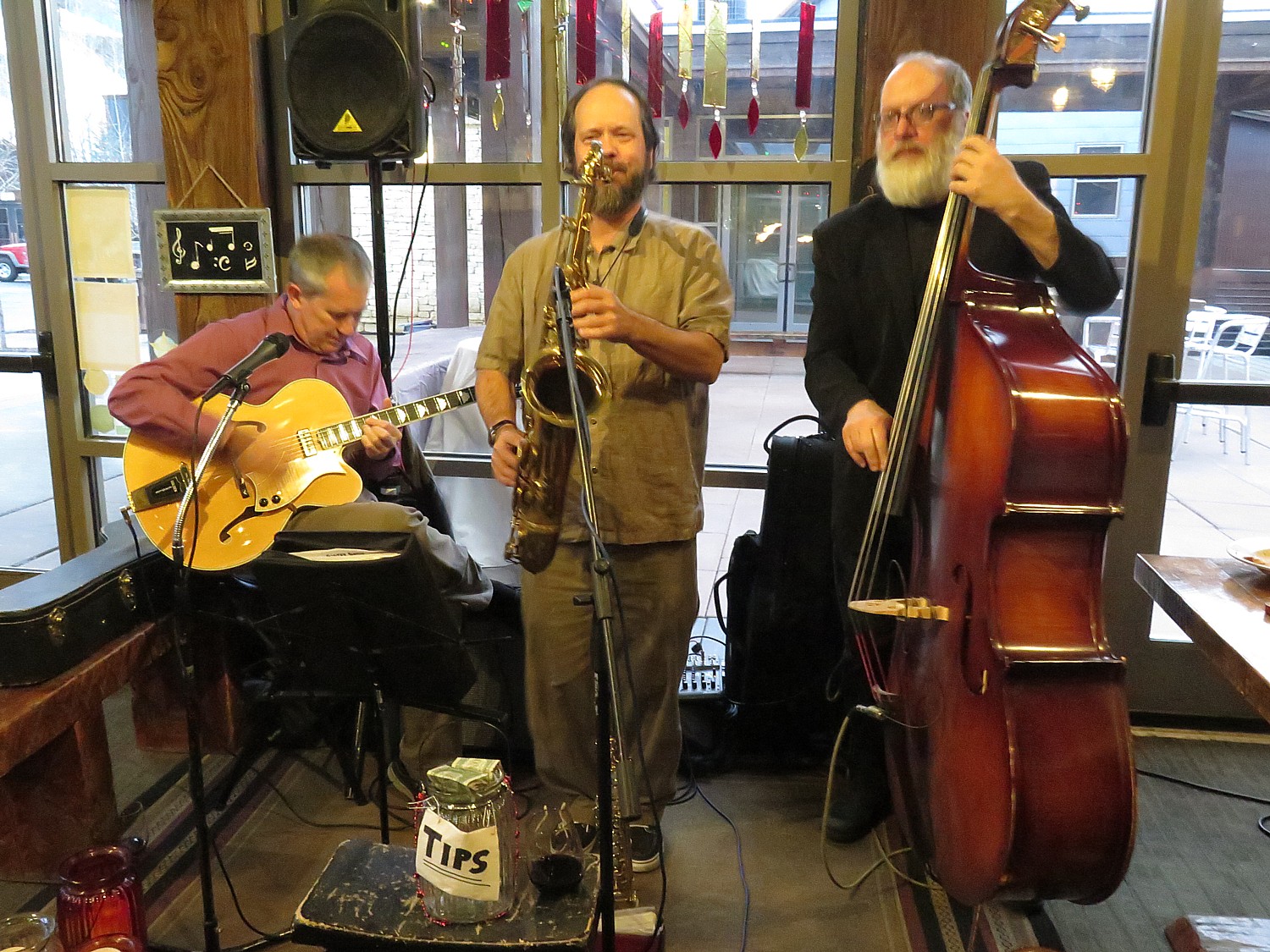
Here, we enjoyed live jazz by the John Flanders Jazz Trio in a most comfortable dining room that made you feel more like being in a living room than a restaurant, with long banquettes and loads of pillows that is clearly a favorite with regulars and locals.

The John Flanders Jazz Trio performing at the Silver Star Café, Park City Mountain © 2017 Karen Rubin/goingplacesfarandnear.com

We thoroughly enjoyed the freshness and flavor combinations of the appetizers and salad: General Tso’s Pork Belly Wrap prepared with Butter lettuce, pickled chilies, toasted peanuts; Warm Roasted Brussels Sprout Salad with pomegranate seeds, toasted hazelnuts, pickled onion, pomegranate-balsamic dressing; Winter Greens & Apple with radicchio, arugula, endive, candied pecans, grapefruit vinaigrette.

The mains offered wonderful choices:

Pork Osso Bucco (a house specialty), featured Niman Ranch pork shank, fresh tomatillo salsa, coconut creamed corn, Queso Fresco, pork jus; Boneless Buttermilk Fried Half Chicken is prepared in a distinctive way  and served with Red beans & rice, braised greens, Carolina BBQ; Seared Elk Burger, 8 oz. of our signature elk-bacon blend, fig-cherry mostarda, bacon burger sauce, served with hand-cut fries on a toasted Ciabatta bun.

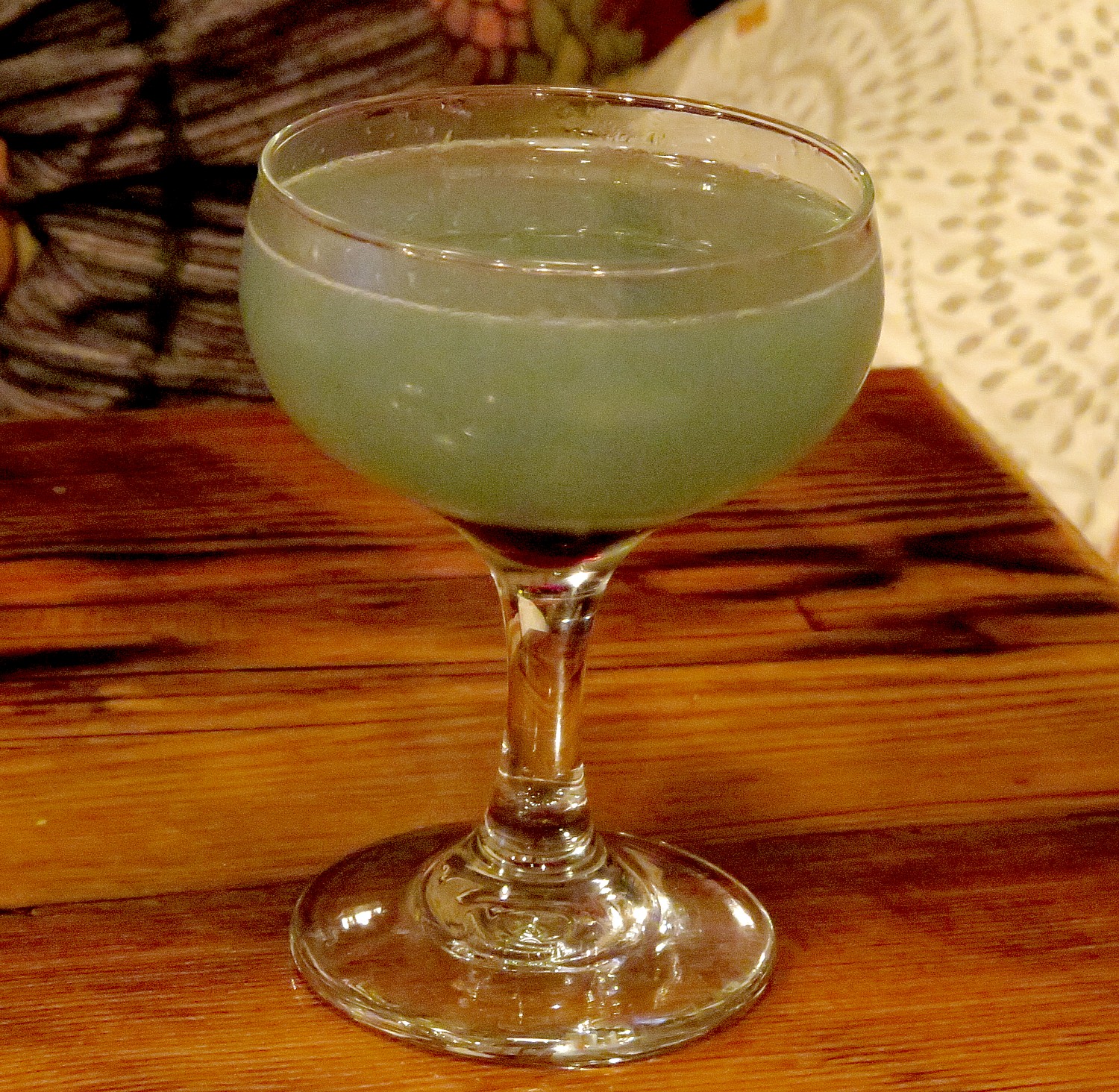
Lost at Sea, the newly created cocktail by James Root, Silver Star Café’s manager and mixologist © 2017 Karen Rubin/goingplacesfarandnear.com

James Root, the manager who is an award-winning mixologist, let’s us sample a cocktail he had only just devised: “Lost at Sea” contains Beehive Gin, Absinthe, lime and crème de violette with a cherry set at the base of the glass. It is built about Absinthe, a spirit with a colorful reputation of having been banned and therefore embraced by Parisian artists, bohemians and literati like Hemingway (it was falsely accused of having hallucinogenic properties). What I love about it is that it isn’t too sweet but has an air of intrigue. (Silver Star Cafe. 1825 Three Kings Drive Park City, UT 84060. 435-655-3456. info@thesilverstarcafe.com, www.thesilverstarcafe.com)

Galleries Galore

The art galleries are simply breathtaking. The last Friday of each month is a free Park City Gallery Stroll that lets visitors and locals alike the opportunity to enjoy light refreshments while discovering what’s on in the galleries; from 6-9 pm, members of the Park city Gallery Association offer a showcase highlighting artists, special exhibits and art events.

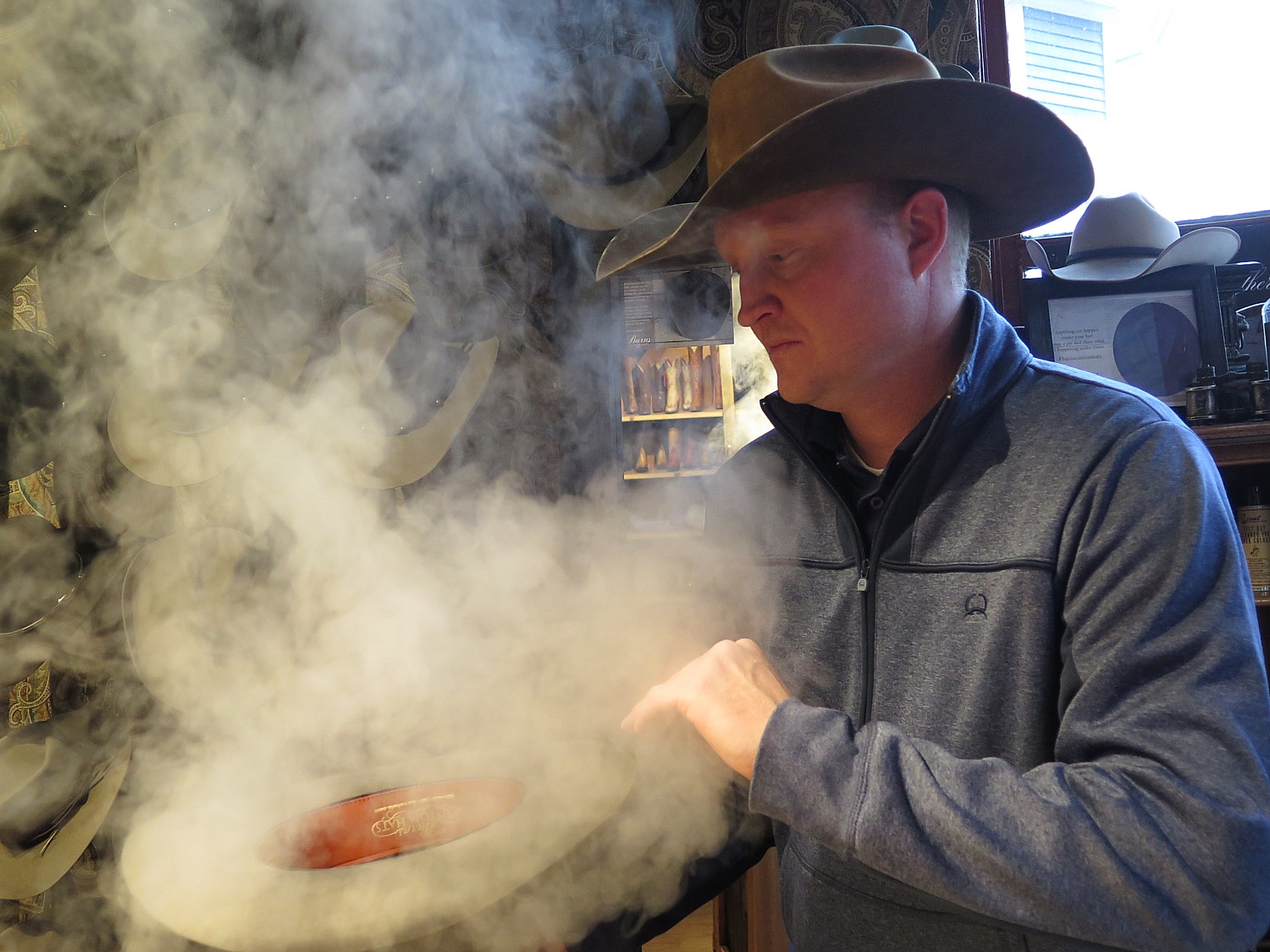
Jake Quarnberg, the hat shaper at Burns Cowboy Shop on historic Main Street, Park City, Utah. Family owned since 1876, one of oldest family owned western shops in US. © Karen Rubin/goingplacesfarandnear.com

At Burns Cowboy Shop on historic Main Street, family owned since 1876, one of oldest family owned western shops in US (the boots just take your breath away),  I meet Jake Quarnberg, the hat shaper, who is steaming a hat and patiently explaining the process to two girls who listen completely enthralled. Quarnberg who used to be a cattle rancher in Utah, grew up with the 6th generation Burns.

Year-Round Destination 

Park City is very much a year-round destination – after the snow melts, the mountain bikers and hikers take over.

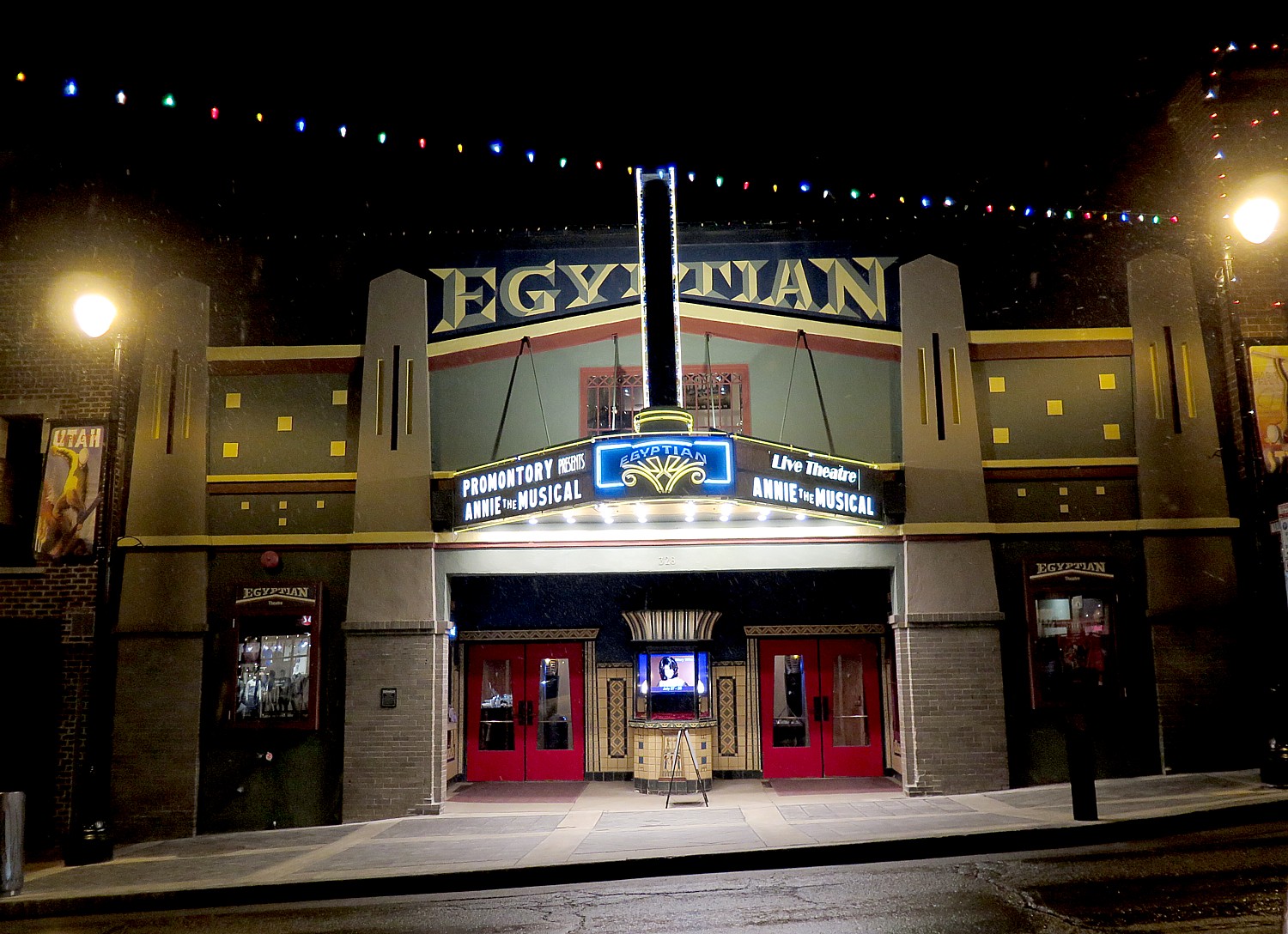
Park City offers festivities and festivals year-round, the most famous being the Sundance Film Festival when as many as 40,000 come to town each January (remarkably, few actually ski so the slopes are relatively empty).  But the whole calendar is chock-a-block with special events: beginning in June, the Park silly Summer Market festival, each Sunday, showcasing local produce and artisan crafts; in July,  Independence Day parade, and Park City Food & Wine Festival; in September, Autumn Aloft hot air balloon festival; in October, the Howl-O-Ween dog parade, to list just a few that have built the town’s reputation as the “Festival City of the Rocky Mountains.”  There is also the Park City Institute’s concert series; performances at the picturesque Egyptian Theater (“Annie the Musical” was being performed during our visit).

The famous Egyptian Theater on historic Main Street in Park City © Karen Rubin/ goingplacesfarandnear.com

There are more than 100 lodging properties to choose, from on-mountain hotels, condos and full-service luxury hotels with ski-in/out convenience, to multi-family private homes, bed and breakfast inns, downtown properties (you can hop on the Town Lift to the Park City Mountain base).

Park City, Utah is arguably North America’s most accessible mountain recreation destination, just 35 minutes from Salt Lake City International Airport with convenient service from everywhere. Park City – home to Deer Valley Resort and Park City Mountain Resort and the Utah Olympic Park – affords more than 400 miles of public trails offering year-round outdoor recreation.

Excellent travel planning assistance is provided by the Park City Chamber of Commerce, Convention & Visitors Bureau, 800-453-1360, www.visitparkcity.com.

See also:

Park City Mountain, Utah: Biggest Ski Area in US is One of Easiest to Reach

Deer Valley, Utah is Skiers’ Only Paradise with Retro, Refined Vibe

____________________

© 2017 Travel Features Syndicate, a division of Workstyles, Inc. All rights reserved. Visit goingplacesfarandnear.com www.huffingtonpost.com/author/karen-rubin , and travelwritersmagazine.com/TravelFeaturesSyndicate/. Blogging at goingplacesnearandfar.wordpress.com and moralcompasstravel.info. Send comments or questions to FamTravLtr@aol.com. Tweet @TravelFeatures. ‘Like’ us at facebook.com/NewsPhotoFeatures
 

Deer Valley, Utah is Skiers’ Only Paradise with Retro, Refined Vibe

Deer Valley Resort, one of the few skiers-only mountain resorts, is part of the Park City, Utah skiing metropolis, just 40 minutes from Salt Lake City © 2017 Karen Rubin/goingplacesfarandnear.com

By Karen Rubin, Eric Leiberman & Sarah Falter

Travel Features Syndicate, goingplacesfarandnear.com


Park City is a veritable skiing metropolis so close to Salt Lake City (35-45 minutes drive), it may well be considered the suburbs rather than this vast Nature’s playground. Not only do you have Park City and Canyons (now combined under the Vail Resorts OneParkCity banner, making it the largest ski resort in the United States), but literally next door is Deer Valley Resort.

Deer Valley Resort is one of the only ski areas in the country that is skiers’-only (Alta, Utah is another). This makes for an old-school, European, retro atmosphere – dare we say dignified? sedate? quaint? As a skier, you don’t have that constant frantic feeling when you hear the looming scrapping sound building in intensity as snowboarders, tearing up the mountain, come upon you, like Jaws. You don’t have that hip, counter-culture vibe that tends to surround snowboarders. It is frankly more peaceful, calm, quiet.

Deer Valley has a deserved reputation of being ultra-luxurious – there are uniformed ski valets to help you with your equipment, parking lot shuttles, free overnight ski storage, groomed-to-perfection slopes, fine dining experiences in three day lodges, complimentary tours led by Mountain hosts and limited lift ticket sales so that the slopes are never crowded. It feels less like a resort and more like a country club.

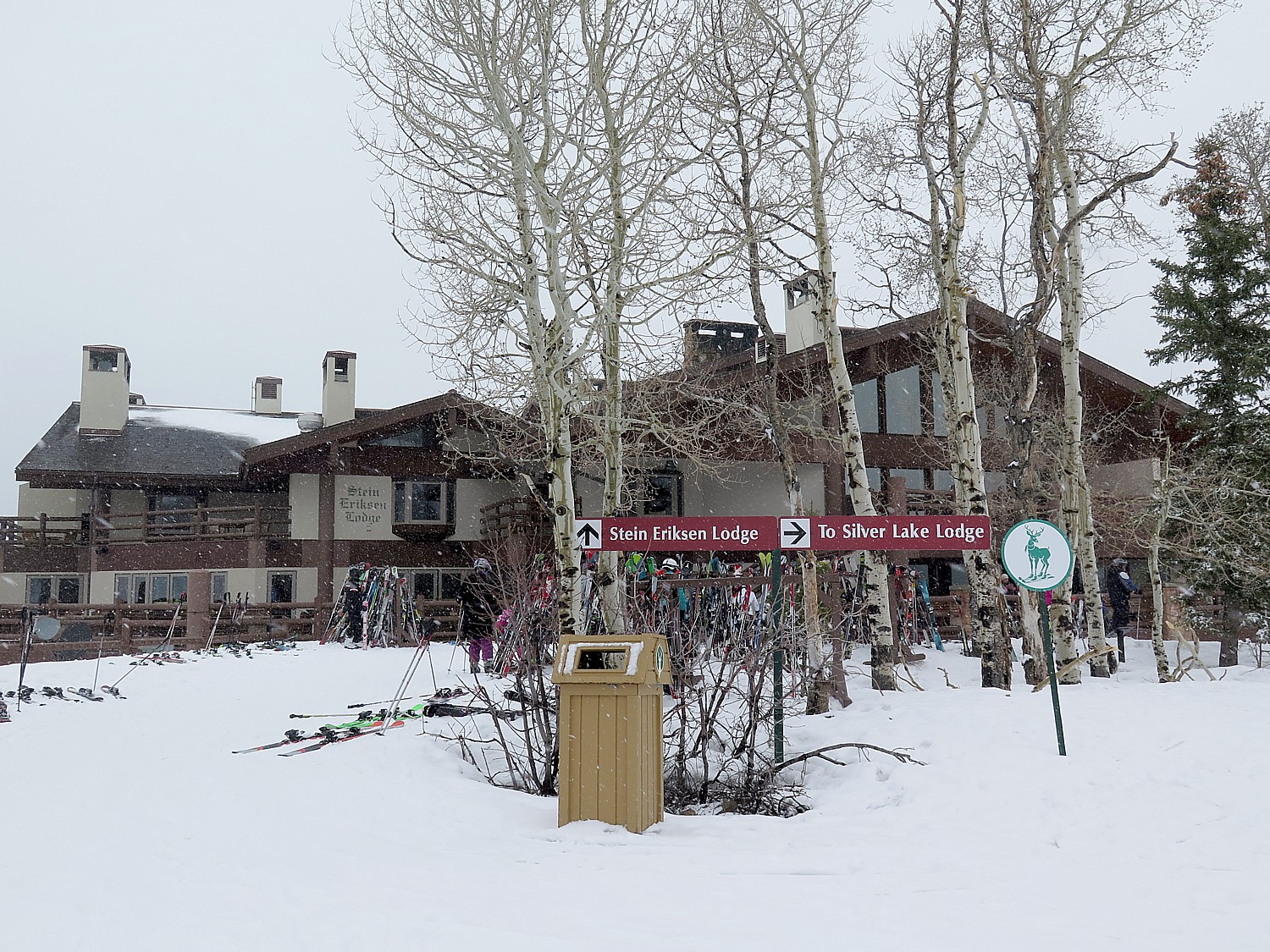
It also offers luxurious on-mountain accommodations – indeed, it is the home of the world-famous, five-star Stein Ericksen Lodge which has held the title of  “World’s Best and United States’ Best Ski Hotel” as well as the St. Regis Hotel, a Starwoods hotel, which is accessed by its own funicular from the parking lot.

The five-star Stein Eriksen Lodge on the mountain at Deer Valley Resort has held the title of “World’s Best and United States’ Best Ski Hotel” © 2017 Karen Rubin/goingplacesfarandnear.com

Yet, to our eye when we visited during the last couple of week’s of the season, it seemed unpretentious. Or perhaps that is just because of the relaxed feeling that pervades.

Deer Valley affords 2,026 skiable acres over six mountains (about the size of Killington and Pico, Vermont, combined), six bowls, two chute areas. It offers a vertical rise of 3,000 feet to the highest summit, Empire, at 9570 ft. The longest run is 2.8 miles. There are 21 lifts including a high-speed gondola, 12 high speed quads, one fixed grip quad, five triples and two doubles.

Of Deer Valley’s 101 trails, 27% rated “easier”, 41% more difficult and 32% most difficult, making it ideal for families, new skiers and skiers of all abilities.

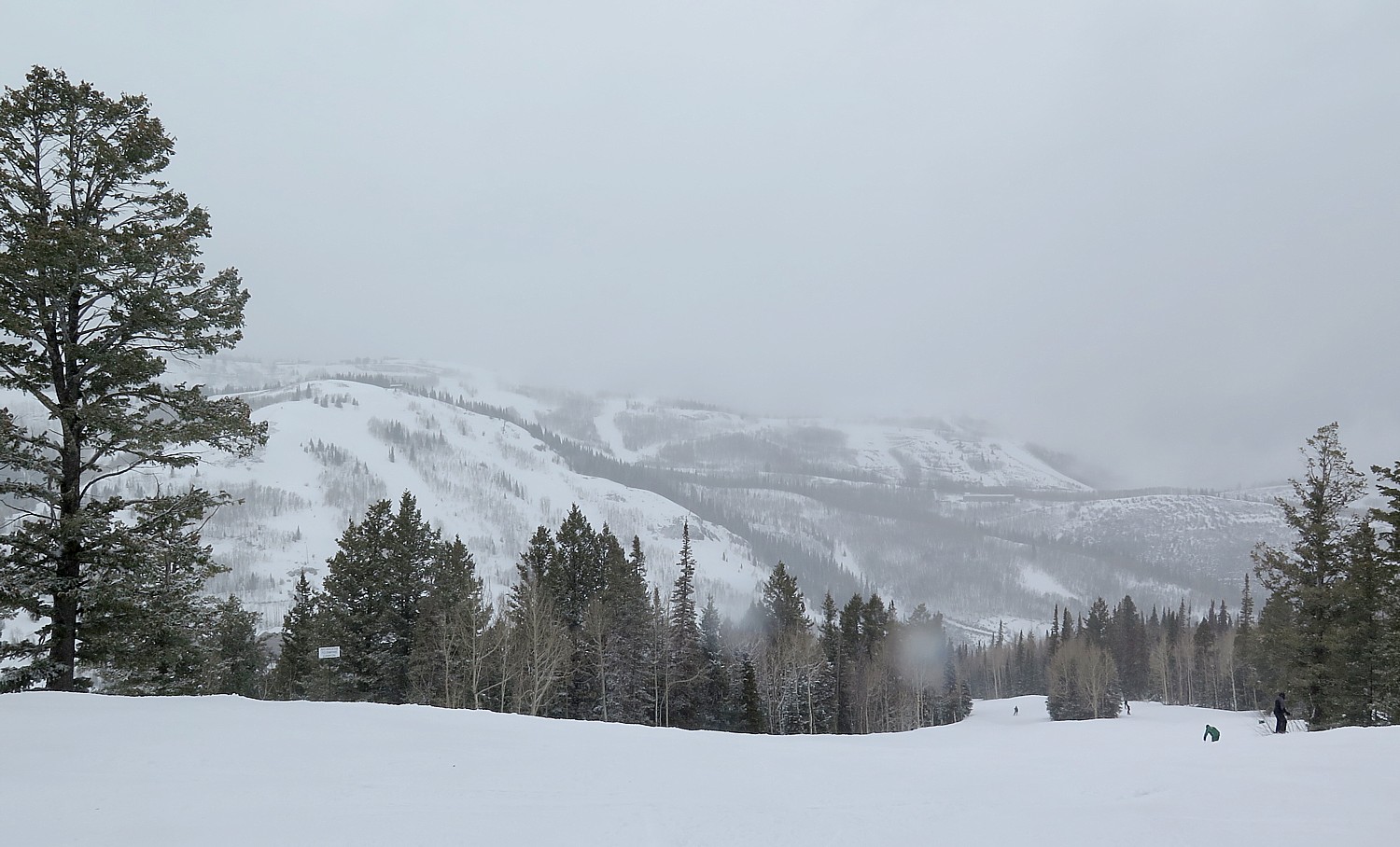
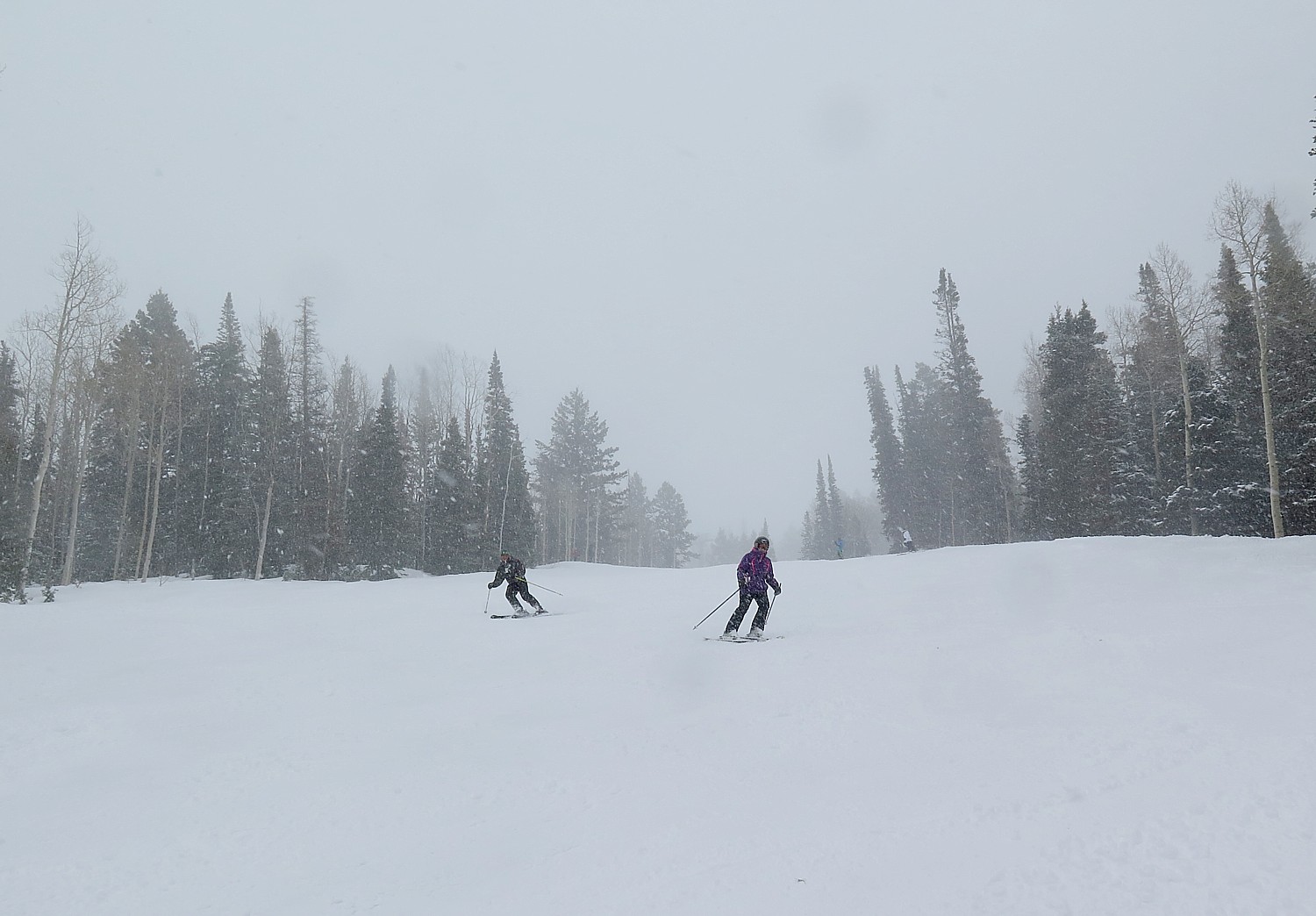
Deer Valley Resort offers loads of easy and intermediate terrain for skiers © 2017 Karen Rubin/goingplacesfarandnear.com

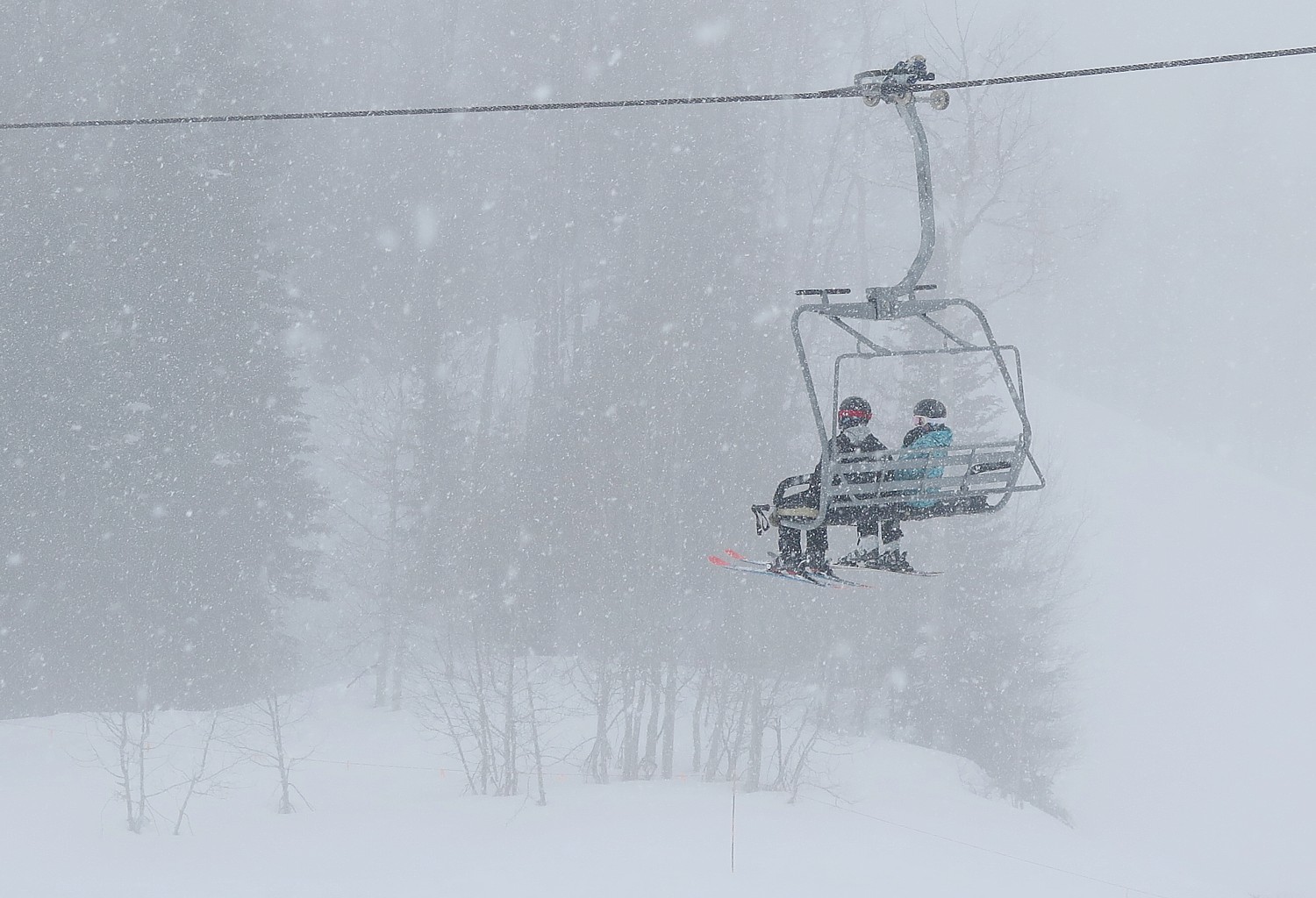
It is a snowy, foggy, generally wet day when we visit, but that doesn’t interfere with the enjoyment. Here too, the mountain is so vast, first-timers to the resort need directions to get to the peak you want to ski if you are particular (I am still working out my confidence issues, especially when visibility is a factor). A mountain Ambassador helpfully maps out for us where we will find the peak with the best selection of intermediate trails to get me started. That’s Flagstaff Peak, where we head.

Eric has exchanged his snowboard for skis – skiing for the first time in years – and immediately leaves Sarah and me in the proverbial “dust.”

After a few runs, Eric and Sarah go off to the more challenging Empire Peak (summit at 9570 ft., highest among Deer Valley’s six peaks), with only blue and black trails from the summit.

Deer Valley Resort is a skiers-only paradise © 2017 Karen Rubin/goingplacesfarandnear.com

The Empire lift offers some wonderful intermediate tree skiing (not very steep, trees are nicely spaced), so Sarah, who had never skied through glades before, gives it a try. She absolutely loves the experience — it’s so quiet and peaceful in the trees, and the snow tends to be the softest on the mountain. It really feels like it’s just you and the mountain.

I continue to get my rhythm on Flagstaff (summit at 9100 ft.) with a delectable selection of blue and green trails.

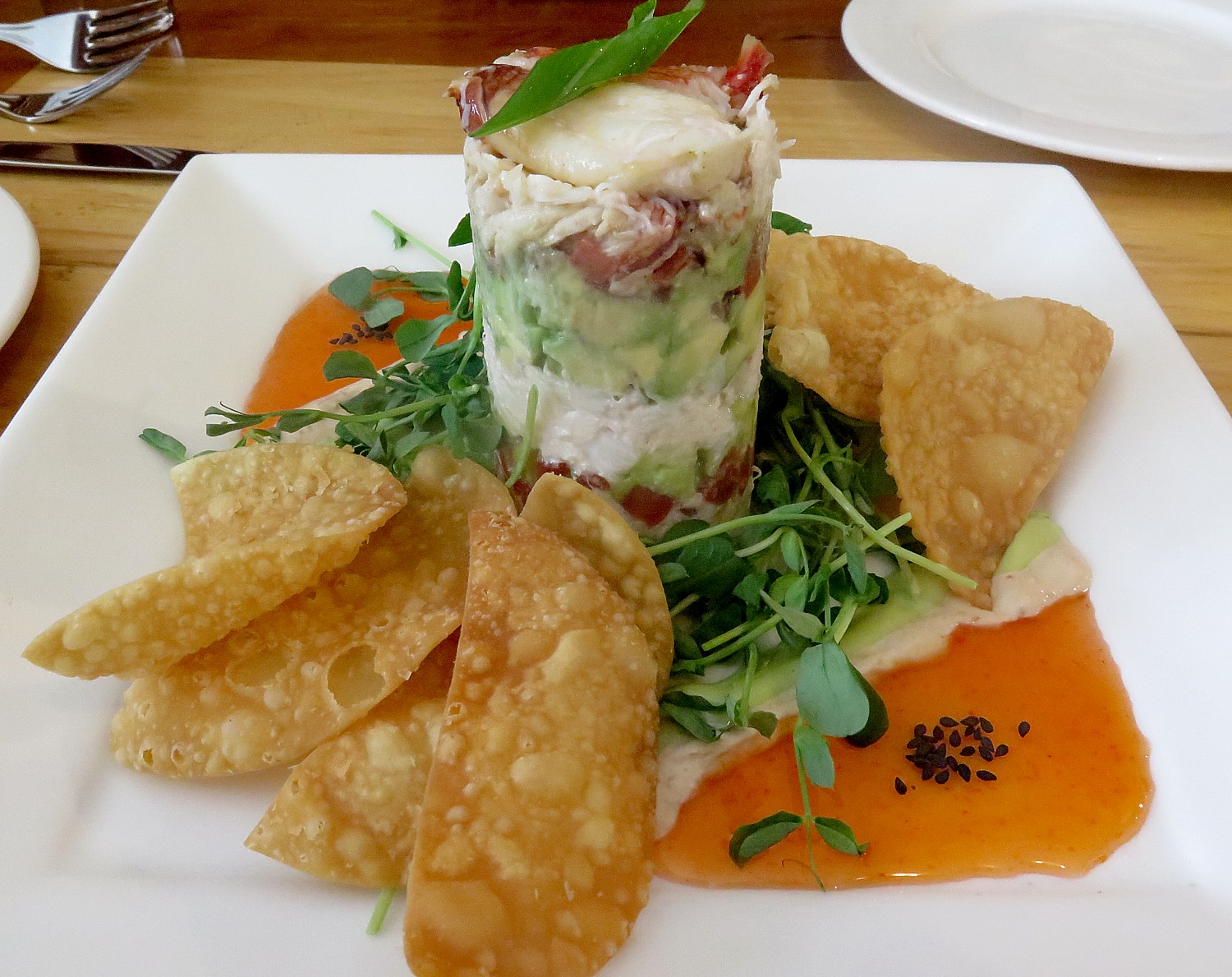
Fresh Dungeness crab tower, amazing appetizer at Royal Street Café at the Silver Lake Lodge at mid-mountain Deer Valley Resort, Utah, where we meet up for a lunch break © 2017 Karen Rubin/ goingplacesfarandnear.com

We meet for lunch at the Royal Street Café in the Silver Lake Lodge – a full-service restaurant with a lovely firepit in the middle, serving breakfast, lunch, dinner, snacks and après ski from 11:30 am to 8 pm. The menu is delightful – creative American and international casual cuisine. Our waiter, Alex, makes some marvelous suggestions and we start off with Fresh Dungeness crab tower, made with fresh crab from Washington, avocado tomato crispy spiced wontons, and sauces is wasabi, soy and sweet chili. Sarah and Eric share a Maple Bacon BBQ Bison Burger, made from scratch and served with smoked habañero cheddar, sautéed onions, guacamole, barbeque sauce, habañero aioli, Tuscan bun and garlic-herb-parmesan shoestring fries; and grilled fresh ahi served with mango-avocado salsa, southwest slaw, smoked habañero mayonnaise, crisp corn tortilla shells or grilled fresh white corn tortillas (www.deervalley.com/Dining/wheretoeat/RoyalStreetCafe).

Eric and Sarah go off for even more challenging runs while I happily keep putting on the miles on the blue trails on Flagstaff Mountain.

Another option would be to take the Silver Lake Express to the Sterling Express quad up to the 9,400-foot summit of Bald Mountain. There, you have your choice of runs down the mountain or take the Wasatch and Sultan Express quads at the base back up to this beautiful peak. Intermediate and advanced skiers will enjoy Little Baldy Peak and the long run down Jordanelle, named for its sweeping views of Jordanelle Reservoir on the resort’s east face. Then, take the scenic gondola ride back up the mountain.

Riding the chairlift at Deer Valley Resort © 2017 Karen Rubin/ goingplacesfarandnear.com

You can follow in the tracks of the 2002 Olympians. Know You Don’t and Champion were sites for alpine slalom and freestyle mogul events. There’s no need to pick one or the other — just ride back up on the Carpenter Express. Champion is where local skier Shannon Barhke won silver in 2002, and it’s a favorite run for another local, 2010 mogul bronze medalist Byron Wilson. Deer Valley, like the other Park City-area resorts, also features the Nastar Ski Racing slalom experience.

Summer at Deer Valley

We are at Deer Valley in the closing days, but in mid-June, the mountain resort transforms for summer: pristine mountain biking trails, hiking, chairlift rides, al fresco dining, a children’s adventure program, and outdoor concerts at the Snow Park Outdoor Amphitheater featuring headlining musicians, world-renowned artists and local bands.

Deer Valley Resort, 2250 Deer Valley Drive South, Park City, UT 84060. Where to stay, what to do, packages and deals and other visitor planning tools are at www.deervalley.com, 800-424-3337, 435-649-1000.

Park City, Utah is arguably North America’s most accessible mountain recreation destination, just 35 minutes from Salt Lake City International Airport with convenient service. Park City offers over 100 lodging properties including bed and breakfast inns, condominiums and full-service hotels. Park City is home to Deer Valley Resort and Park City Mountain Resort and more than 400 miles of public trails offering year-round outdoor recreation. The area boasts 150 restaurants, stunning boutiques and galleries lining Historic Main Street, plus attractions such as the Utah Olympic Park.

For travel planning assistance, contact Park City Chamber of Commerce, Convention & Visitors Bureau, 1850 Sidewinder Drive #320, Park City, Utah, 800-453-1360, www.visitparkcity.com.

See also:

Park City Mountain, Utah: Biggest Ski Area in US is One of Easiest to Reach

See next:

Historic Park City, Utah Delights Diners, GalleryStrollers, FestivalGoers

____________________

© 2017 Travel Features Syndicate, a division of Workstyles, Inc. All rights reserved. Visit goingplacesfarandnear.com www.huffingtonpost.com/author/karen-rubin , and travelwritersmagazine.com/TravelFeaturesSyndicate/. Blogging at goingplacesnearandfar.wordpress.com and moralcompasstravel.info. Send comments or questions to FamTravLtr@aol.com. Tweet @TravelFeatures. ‘Like’ us at facebook.com/NewsPhotoFeatures
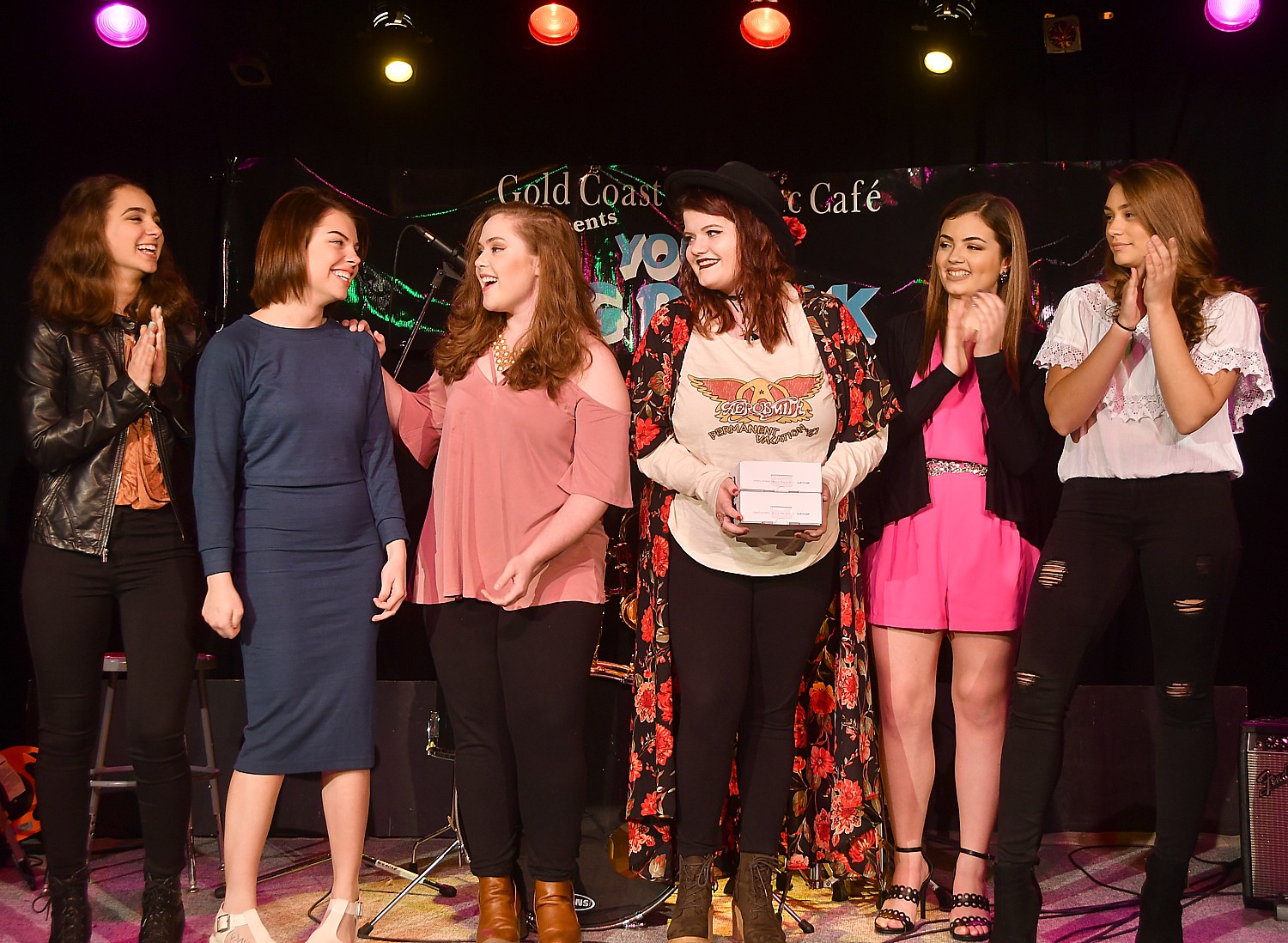
Paris Ray is winner of Gold Coast’s 5th Annual Your Big Break Talent Competition

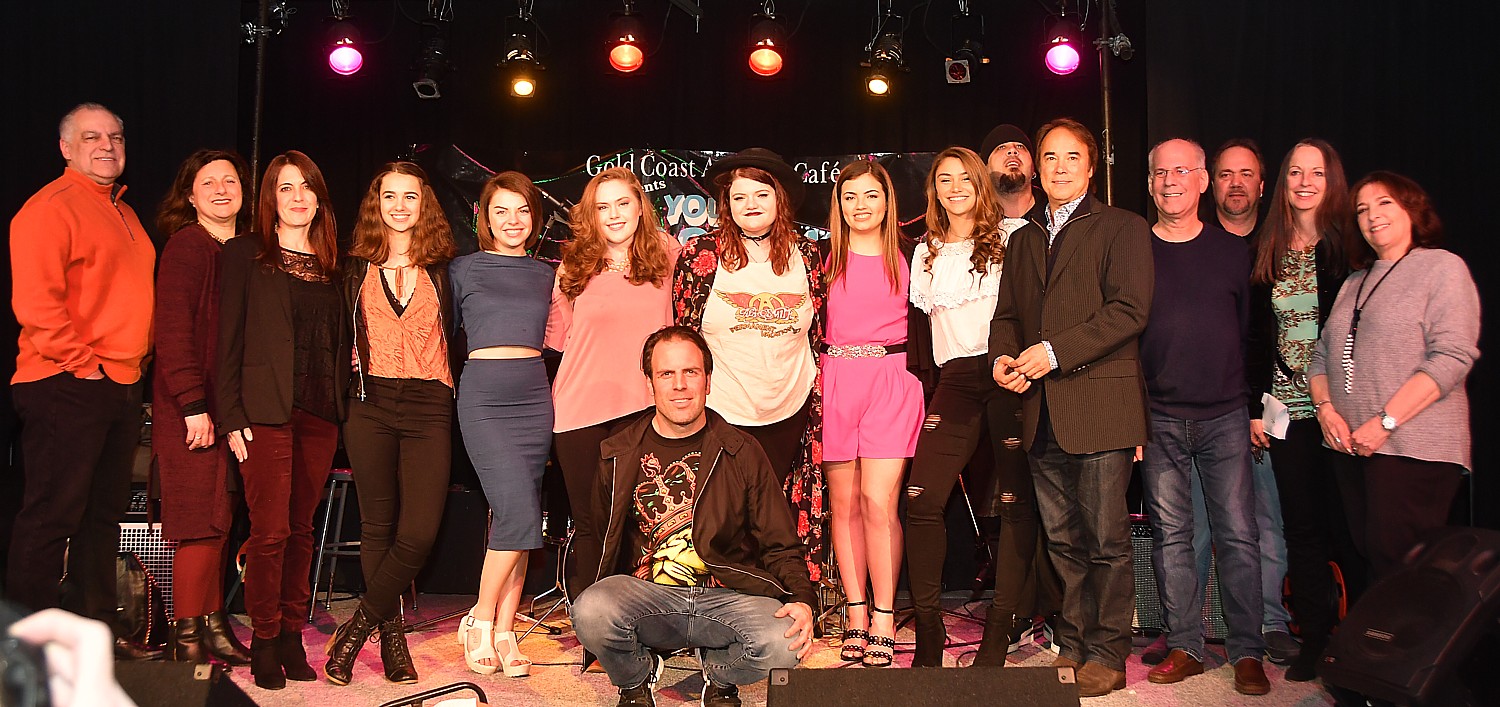
The 6 finalists of the 5th annual Gold Coast Your Big Break talent competition: grand prize winner, Paris Ray (second from left) and runner up Julia Lambert (fourth from left)with Julia Hayden, Lydia von Hof, Sydney Perruzza and Jaclyn Manfredi © 2017 Karen Rubin/ goingplacesfarandnear.com

By Karen Rubin, Travel Features Syndicate, goingplacesfarandnear.com

Judges at the 5th annual final of the Gold Coast Acoustic Café’s Your Big Break talent competition had an unusually hard time picking the winners out of a talented field of six, but in the end, Paris Ray was the grand-prize winner and Julia Lambert the runner-up, at the Gold Coast Arts Center, Great Neck, Long Island, Saturday, April 1.

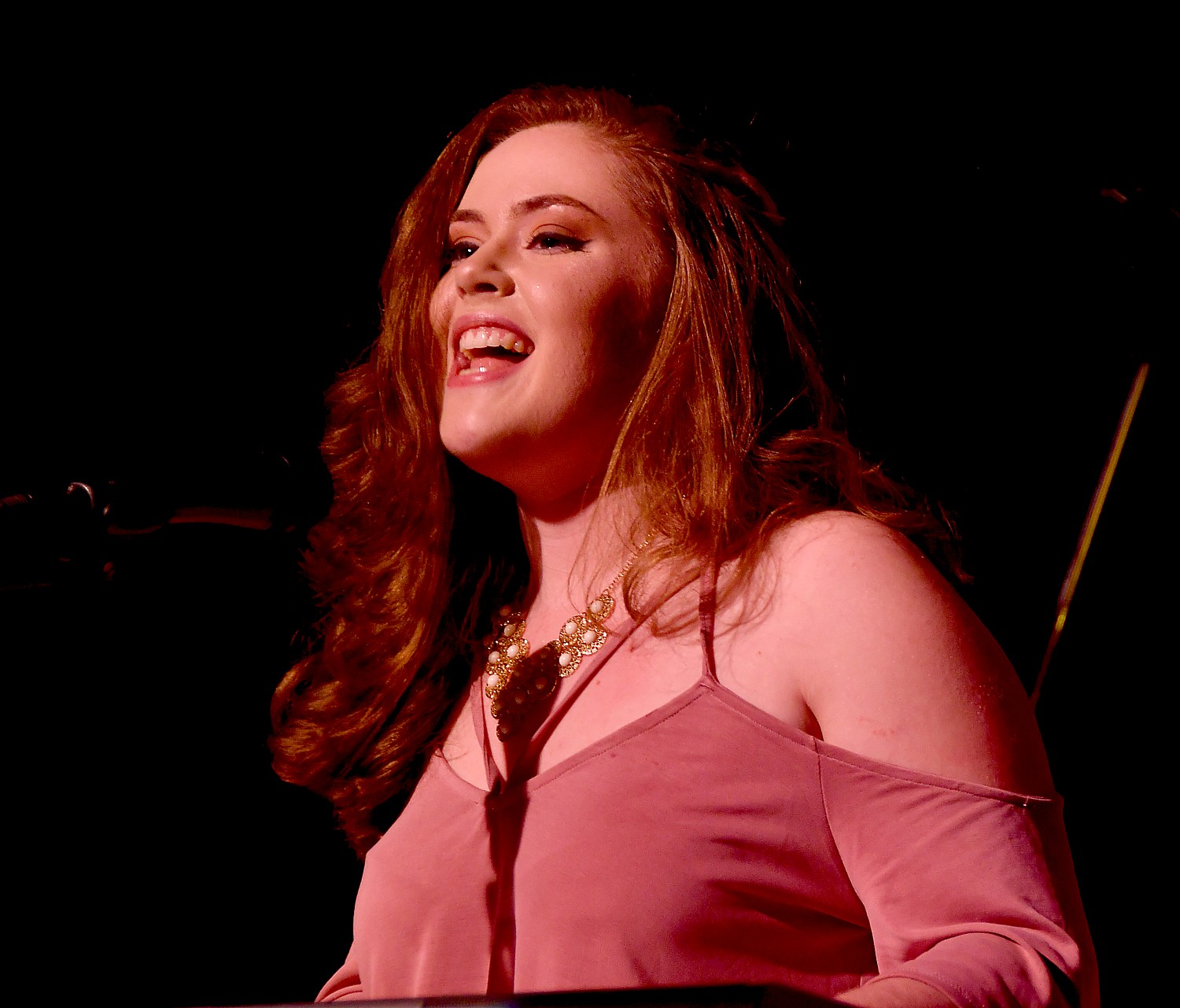
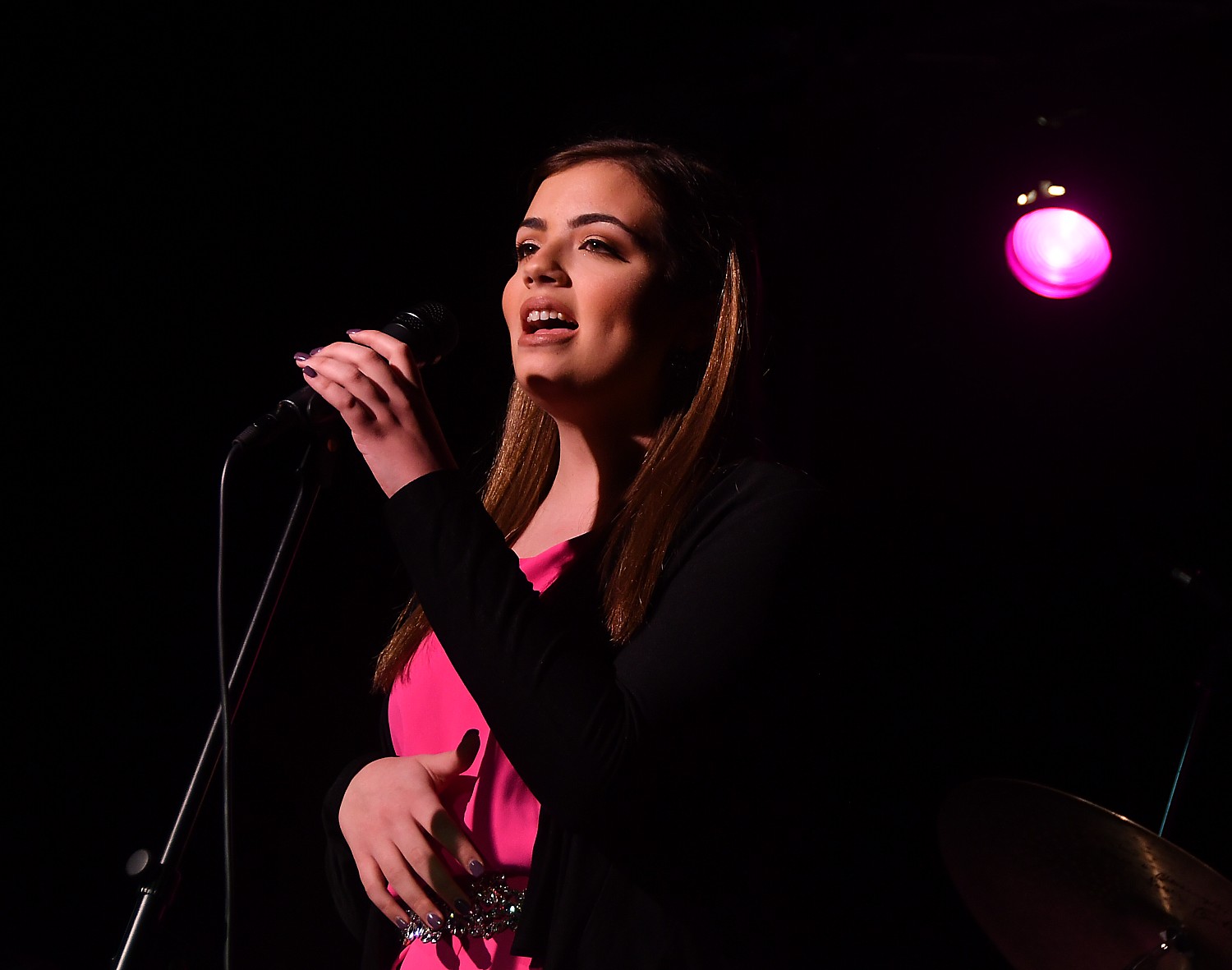
Paris Ray, a 21-year old from St. James who majored in  Studio Composition in the Conservatory of Music at college, dazzled the judges with her original song, “Astronomy” (“I became an astronaut so I could give you space.”) off her Just Visiting EP; a second, highly personal original song that gets to the heart of domestic violence, as well as the required George Michael song (each of the contestants only a week ago was assigned a George Michael song to perform).

Paris Ray was the grand prize winner of the 5th annual Gold Coast Your Big Break talent competition © 2017 Karen Rubin/ goingplacesfarandnear.com

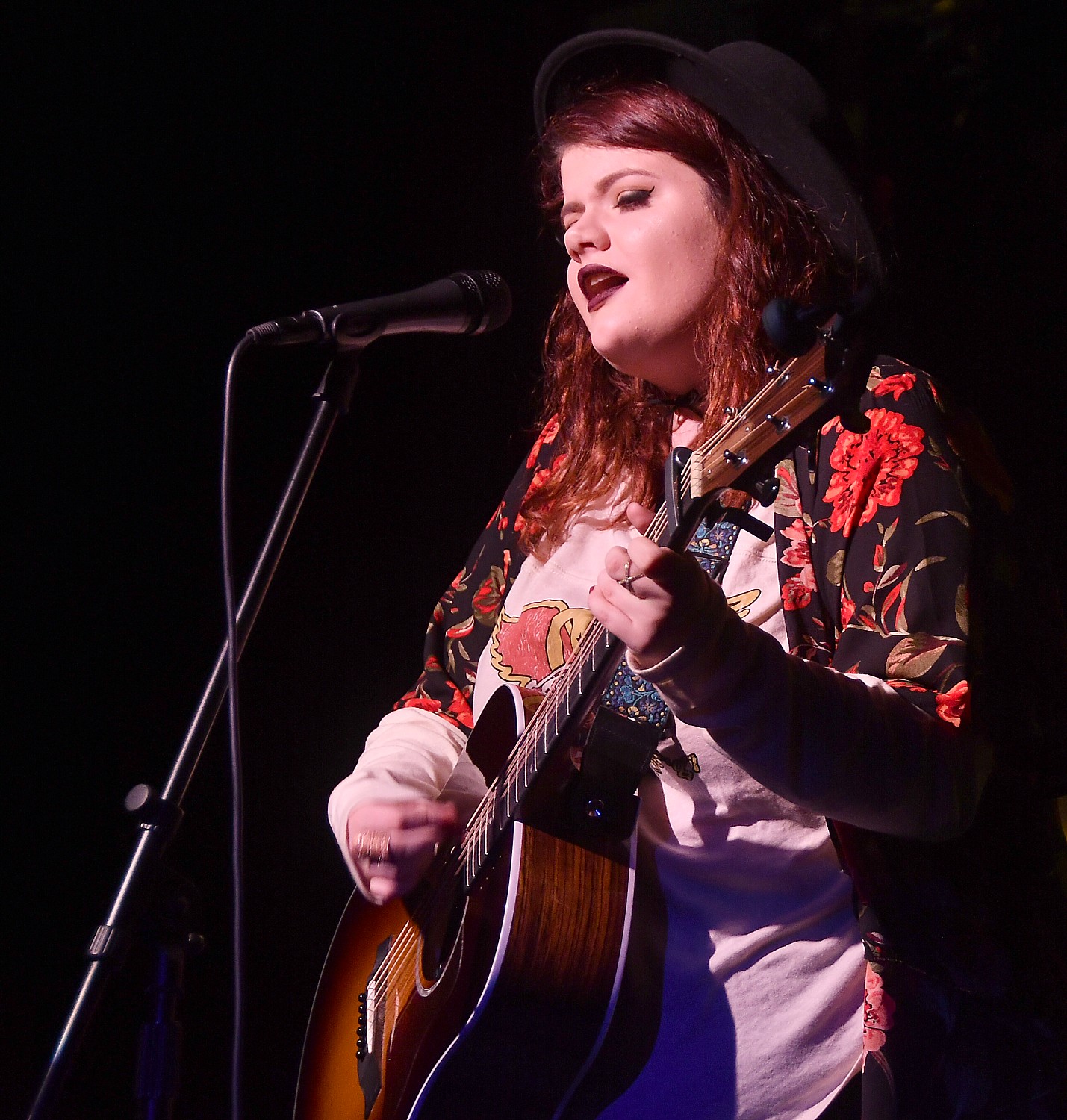
Julia Lambert impressed with her song-stylings on the acoustical guitar, and her original song that soon will be released on an EP (“Take a chance, it will be okay, I promise.”).

Julia Lambert performing at the 5th annual Gold Coast Your Big Break talent competition © 2017 Karen Rubin/goingplacesfarandnear.com

All of the performers were audience favorites:

Julia Hayden, from Port Washington, backed up with a sensational band, performed two original songs plus  a tribute to George Michael, which offered a MiddleEastern meets MidWest country feeling, and an really interesting song that featured the drum roll of a marching band (“Carry on”).

Julia Hayden performing at the 5th annual Gold Coast Your Big Break talent competition © 2017 Karen Rubin/goingplacesfarandnear.com

Lydia von Hof, just 15 years old but conveying a skill and sophistication way beyond her years (she is a classically trained pianist who will be performing Chopin at Carnegie Hall), brings a full, rich voice to her performance.

Lydia von Hof performing at the 5th annual Gold Coast Your Big Break talent competition © 2017 Karen Rubin/goingplacesfarandnear.com

Sydney Perruzza, from Carle Place, brought her bluesy style to her performance.

Sydney Perruzza performing at the 5th annual Gold Coast Your Big Break talent competition © 2017 Karen Rubin/ goingplacesfarandnear.com

Jaclyn Manfredi, 17, brings a sultry style reflecting jazz, blues and R&B influences, and has performed at the Apollo Theater. She performed an original song, “Warehouse.”

Jaclyn Manfredi performing at the 5th annual Gold Coast Your Big Break talent competition © 2017 Karen Rubin/goingplacesfarandnear.com

The “Big Break” is not just a clever title. The young performers are competing for prizes that could well launch their career.

As the grand-prize winner of the 5th Annual Your Big Break talent competition, Ray  will have an opening spot for national acts at major venues like The Paramount, recording time at DCITY Studios and Online TV streaming opportunities, a feature on Reverbnation.com, a $250 gift certificate from All Music Inc. and ZOOM North America, a PR and social media campaign including management, booking and label services consultation with Rick Eberle Agency.

Lambert, as the runner up, won a video camera.

In addition, Rick Eberle has also invited all the contestants to appear on his radio and TV shows.

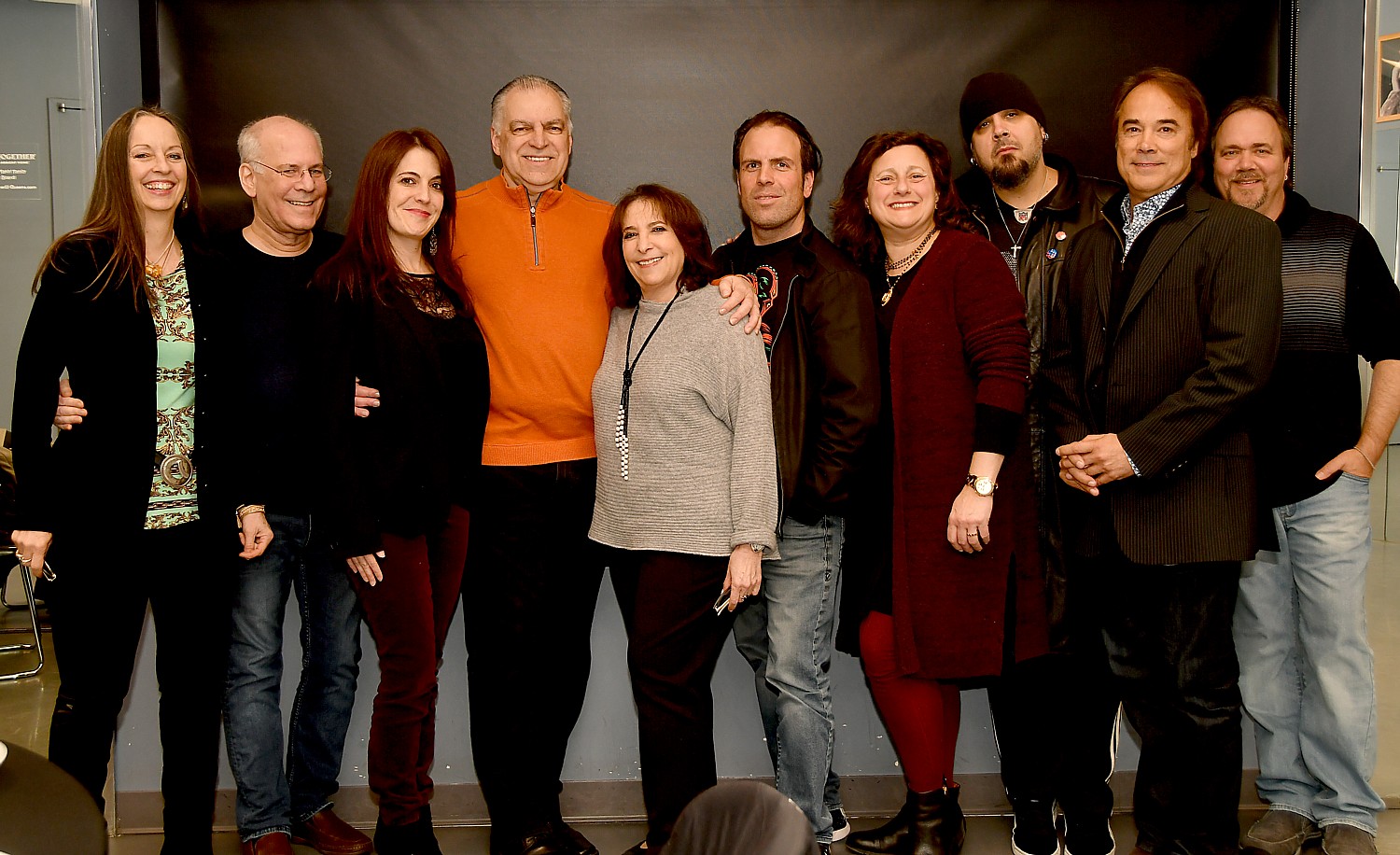
The judges are major players in the music industry including: ReverbNation.com’s Lou Plaia, All Music Inc.’s Guy Brogna, Songwriter Tara Eberle Drouin and Label Executives Stephen Marcuccio, Jerry Lembo, Linda Ingrisano, Mark Ambrosino.

Your Big Break Judges and Gold Coast Acoustic Café organizers are an elite group from the music industry © 2017 Karen Rubin/ goingplacesfarandnear.com

The contestants for Your Big Break were selected out of 1000 submissions through Gold Coast Arts Center (www.goldcoastarts.com) and Reverbnation.com sites in response to an open call for musicians age 15 to 25 who do not currently have a recording or publishing contract. The artists have to perform with a band or solo with an acoustic guitar or sing to a backing music track. There is no fee to submit.

Finals of the fifth annual Gold Coast Acoustic Café Your Big Break talent competition participants, organizers and judges at the Gold Coast Arts Center, Great Neck, Long Island © 2017 Karen Rubin/ goingplacesfarandnear.com

The six finalists came out of two semi-final competitions of performers and were paired with mentors to guide them in performing a song by George Michael, assigned to them, in tribute to the music icon who died last December: American Idol’s Robbie Rosen, Dream Recording Studio’s Jason Melker, Sojourn Record’s Mark Ambosino, arranger/producer/songwriter/remixer and former VP of A&R at Atlantic Records Jimmy Bralower, singer/songwriter John Hampson of Nine Days, and songwriter/producer Donnie Klang of MTV’s “Making the Band”.

Your Big Break talent competition is hosted by the Gold Coast Arts Center’s Acoustic Café and LoveRevolution.Org. Conceived by Rick Eberle and the Gold Coast Arts Center, the talent competition carries on the tradition of Long Island musical talent, including

Ashanti, Mariah Carey and LL Cool J (born on Long Island), Billy Joel, Lou Reed and Harry Chapin and going back to John Philip Sousa and Guy Lombardo.

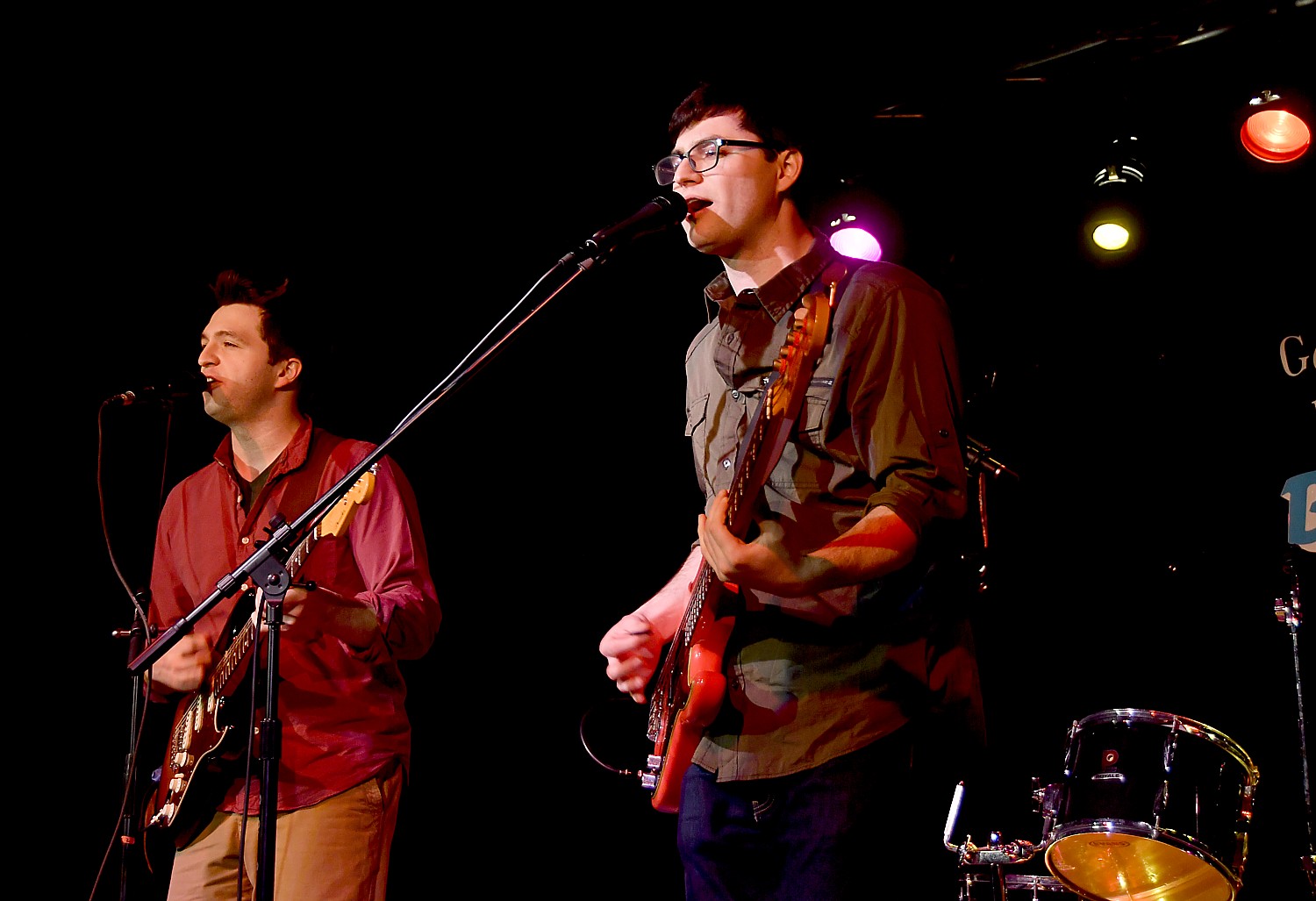
The Como Brothers, the headliners of the evening, brought harmonies and flashback rock n’roll vibe that reminded you of the Everly Brothers © 2017 Karen Rubin/goingplacesfarandnear.com

The Arts Center is transformed into the Gold Coast Acoustic Café once a month, a music venue that showcases local up-and-coming talent as well as established music acts. With its black box theater performance space and a lounge in the art gallery, the Gold Coast Acoustic Café is one of the few small music venues around which makes for a special and intimate atmosphere for artists and audience alike, especially during Your Big Break.

Gold Coast Arts Center, 113 Middle Neck Road, Great Neck NY. Call 516-829-2570, www.goldcoastarts.org.

See also:

Lambert, Manfredi Advance in Gold Coast Arts Center’s ‘Your Big Break’ Talent Competition 

Hayden, Ray, Van Hoff Advance in Gold Coast Arts Center’s ‘Your Big Break’ Talent Competition Finals, April 1

____________________

© 2017 Travel Features Syndicate, a division of Workstyles, Inc. All rights reserved. Visit goingplacesfarandnear.com www.huffingtonpost.com/author/karen-rubin , and travelwritersmagazine.com/TravelFeaturesSyndicate/. Blogging at goingplacesnearandfar.wordpress.com and moralcompasstravel.info. Send comments or questions to FamTravLtr@aol.com. Tweet @TravelFeatures. ‘Like’ us at facebook.com/NewsPhotoFeatures
New ‘Mummies’ Exhibit at American Museum of Natural History Lets You Peer Through Wrappings, Peel Away Layers of Time

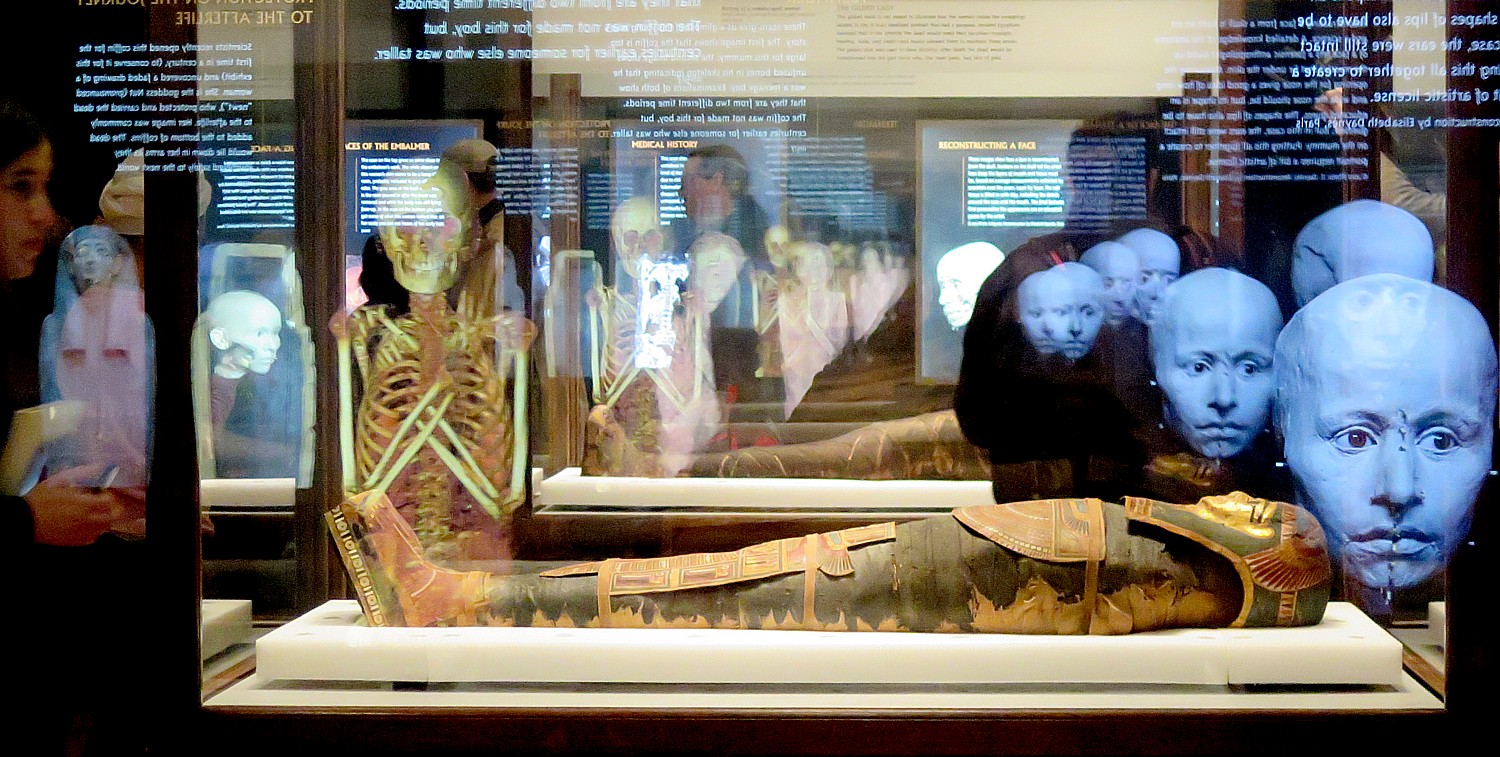
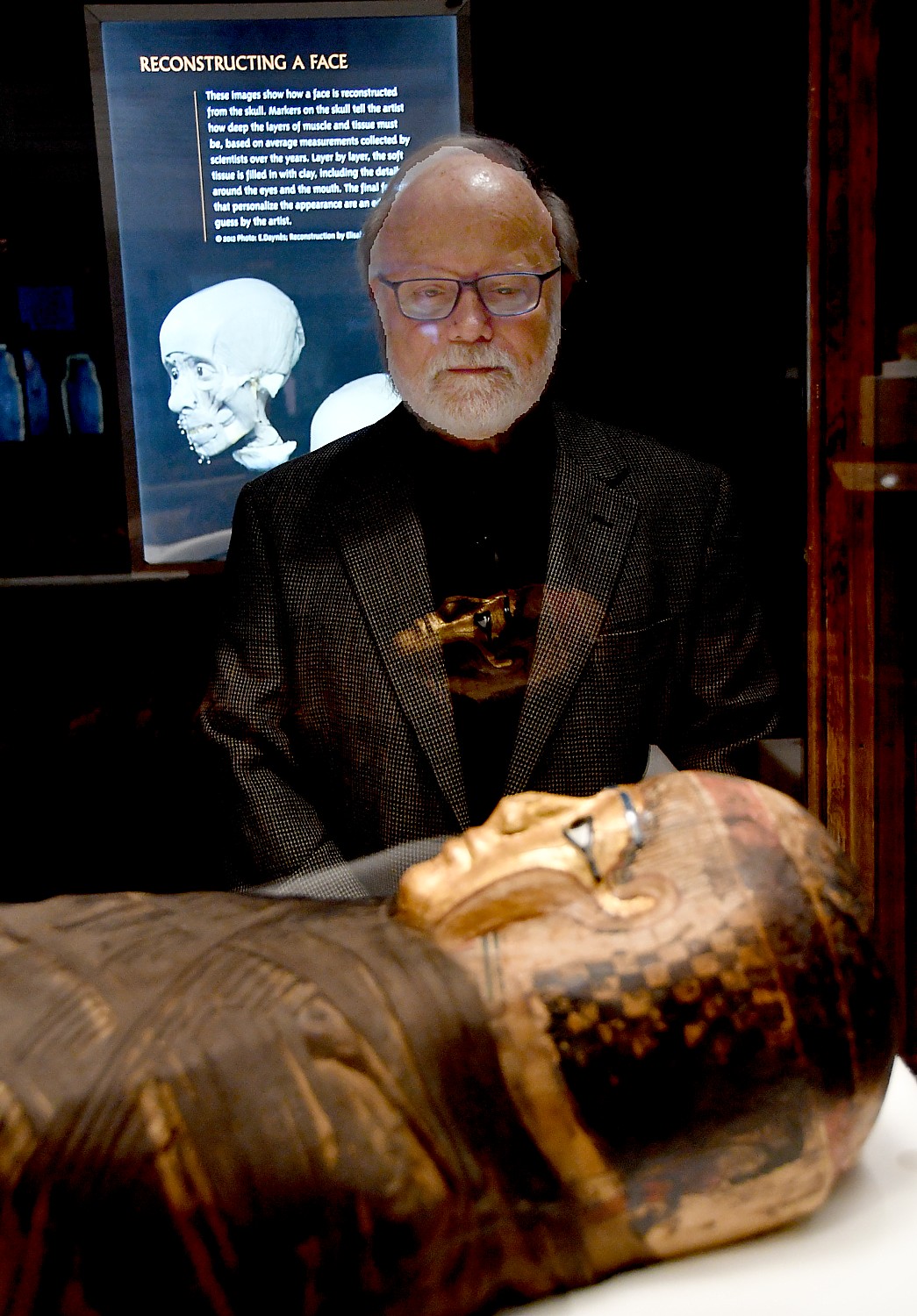
Haunting images: the coffin that still harbor the thousands-year old mummified remains of a teenage boy who lived in Ancient Egypt thousands of years ago, and his scanned image reflected in his glass case. © 2017 Karen Rubin/ goingplacesfarandnear.com

By Karen Rubin, Travel Features Syndicate, goingplacesfarandnear.com

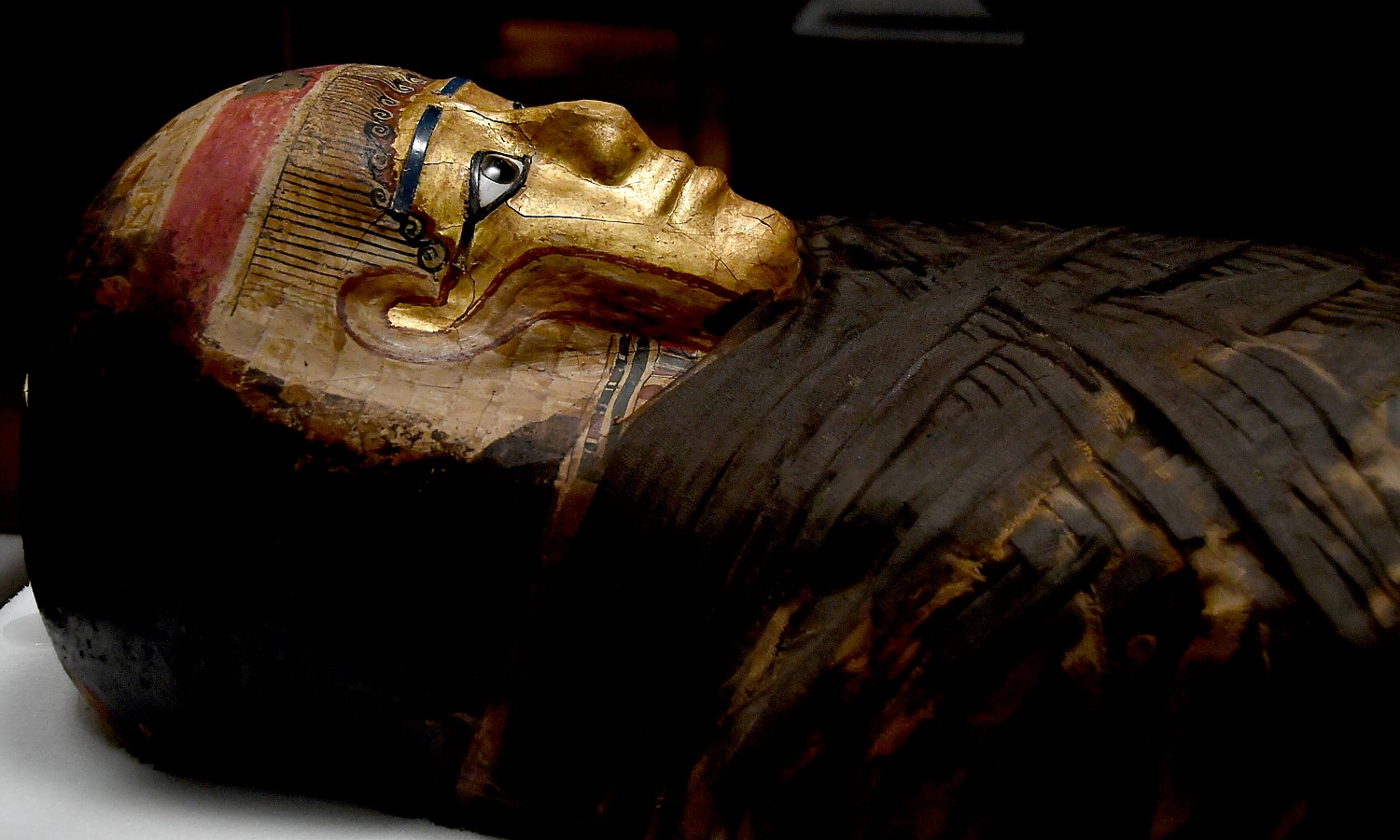
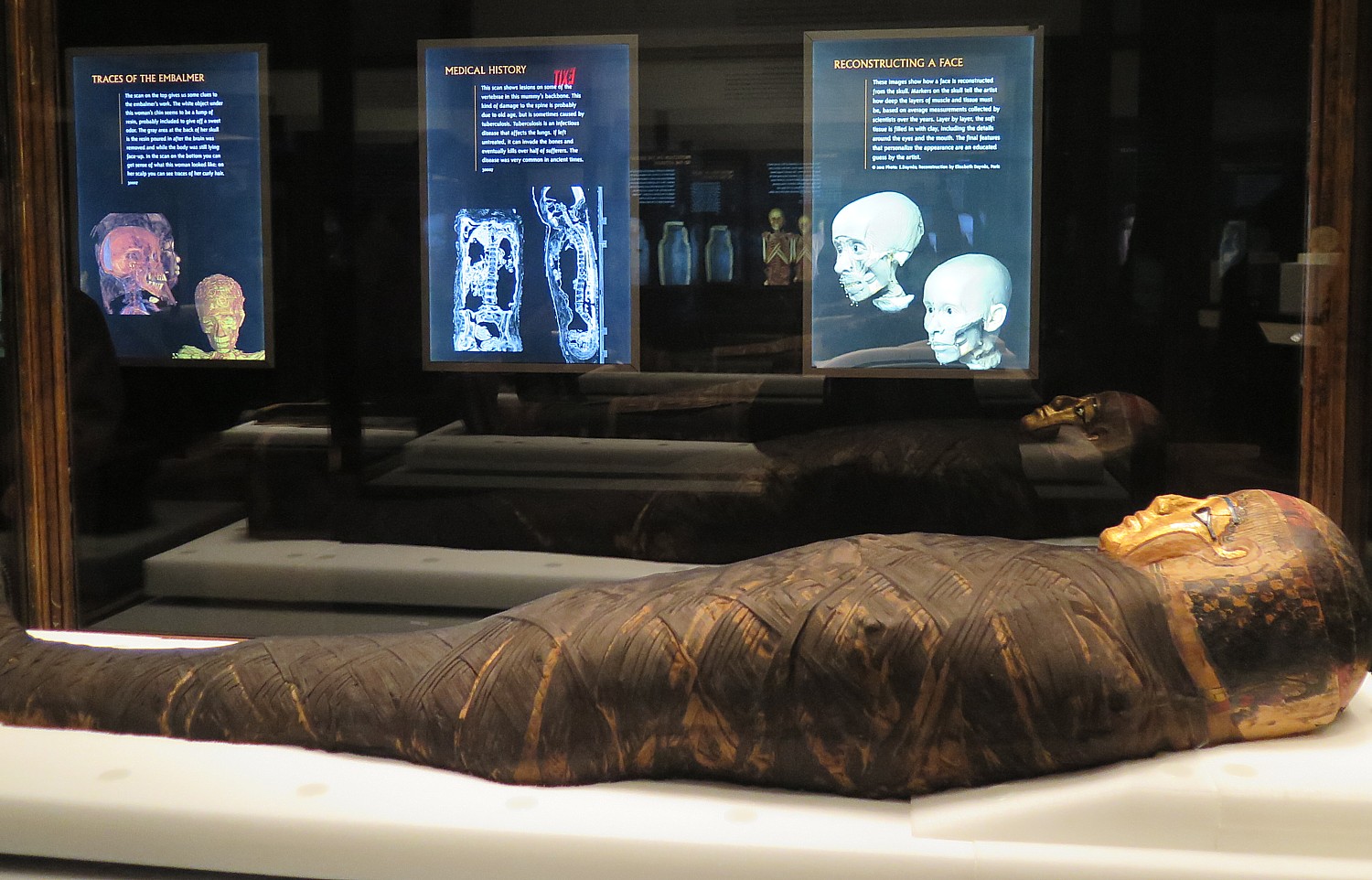
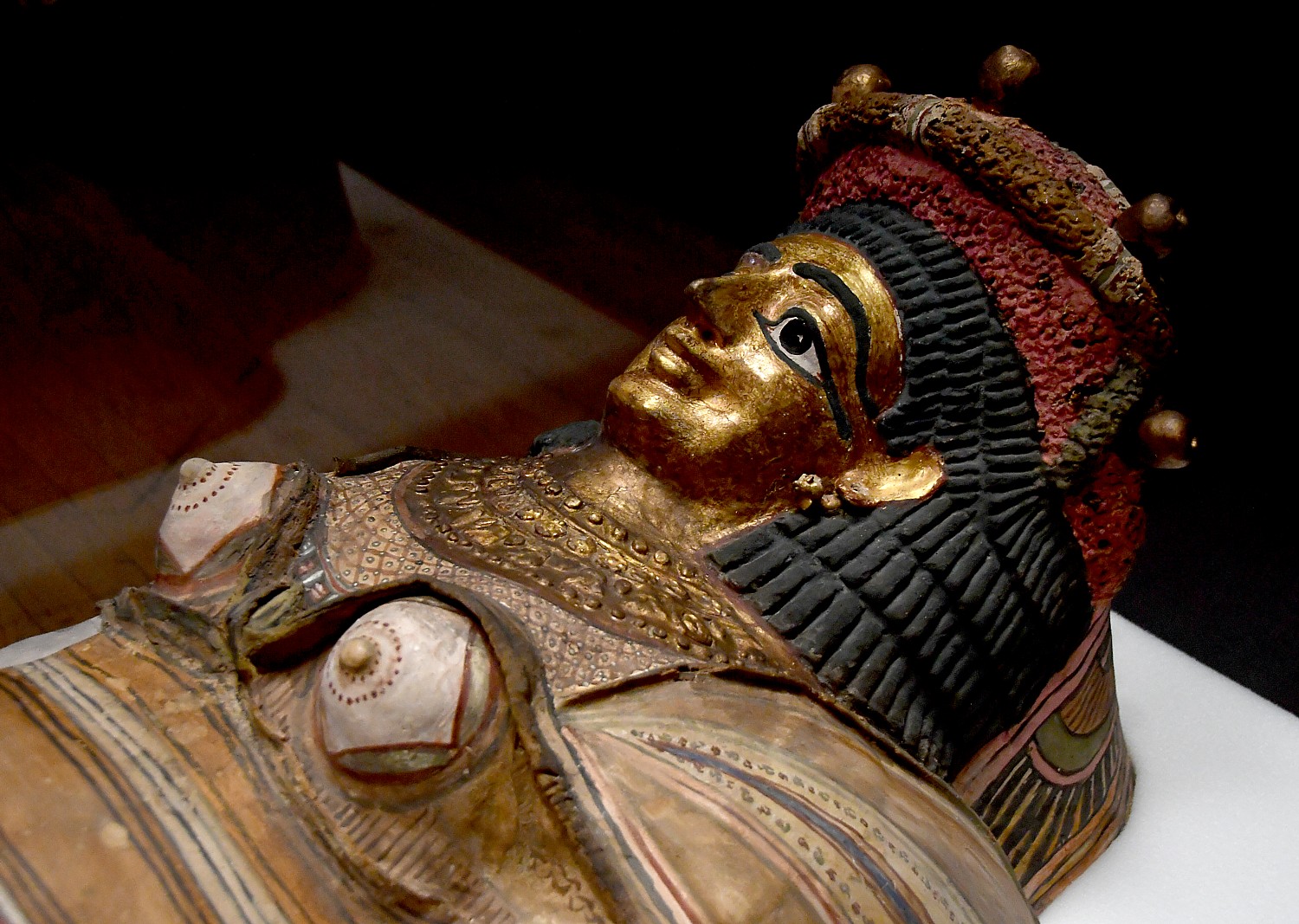
The Gilded Lady seems to be resting peacefully, her painted visage staring up to the sky. But inside this container are the remains of a real woman who lived nearly 2000 years ago, and for the first time, the ancient coalesces with 21st century scientific techniques: we actually get to peer inside, probing down layer by layer to her mortal remains, and then, at a digitally reconstructed, 3-D image of her as she lived: this middle-aged woman was beautiful.

She has already traveled from Chicago where she lives at the Field Museum, to Los Angeles, Minneapolis, Denver and now she is reposing here in New York as part of Mummies, an extraordinary exhibit featuring one of the largest collections of mummies housed in North America that just opened at the American Museum of Natural History through January 7, 2018.

The Gilded Lady, the gold-masked coffin of a middle-aged woman who was mummified during the Roman Period (30BC-AD 395) © 2017 Karen Rubin/ goingplacesfarandnear.com

The exhibit provides an unparalleled glimpse into the lives and traditions of people from ancient cultures. It puts us face to face, head to head with people who lived their lives thousands of years ago, in Egypt and in Peru – two of the many cultures that practiced mummification. The contrasts and the similarities are striking, and just as their similarities speak to a unity of humanity, this extraordinary way of connecting past to present connects us as human beings. (And to bring about an even broader connection, increasing the span from thousands to 100s of thousands of years ago, be sure to visit the AMNH’s Human Evolution wing.)

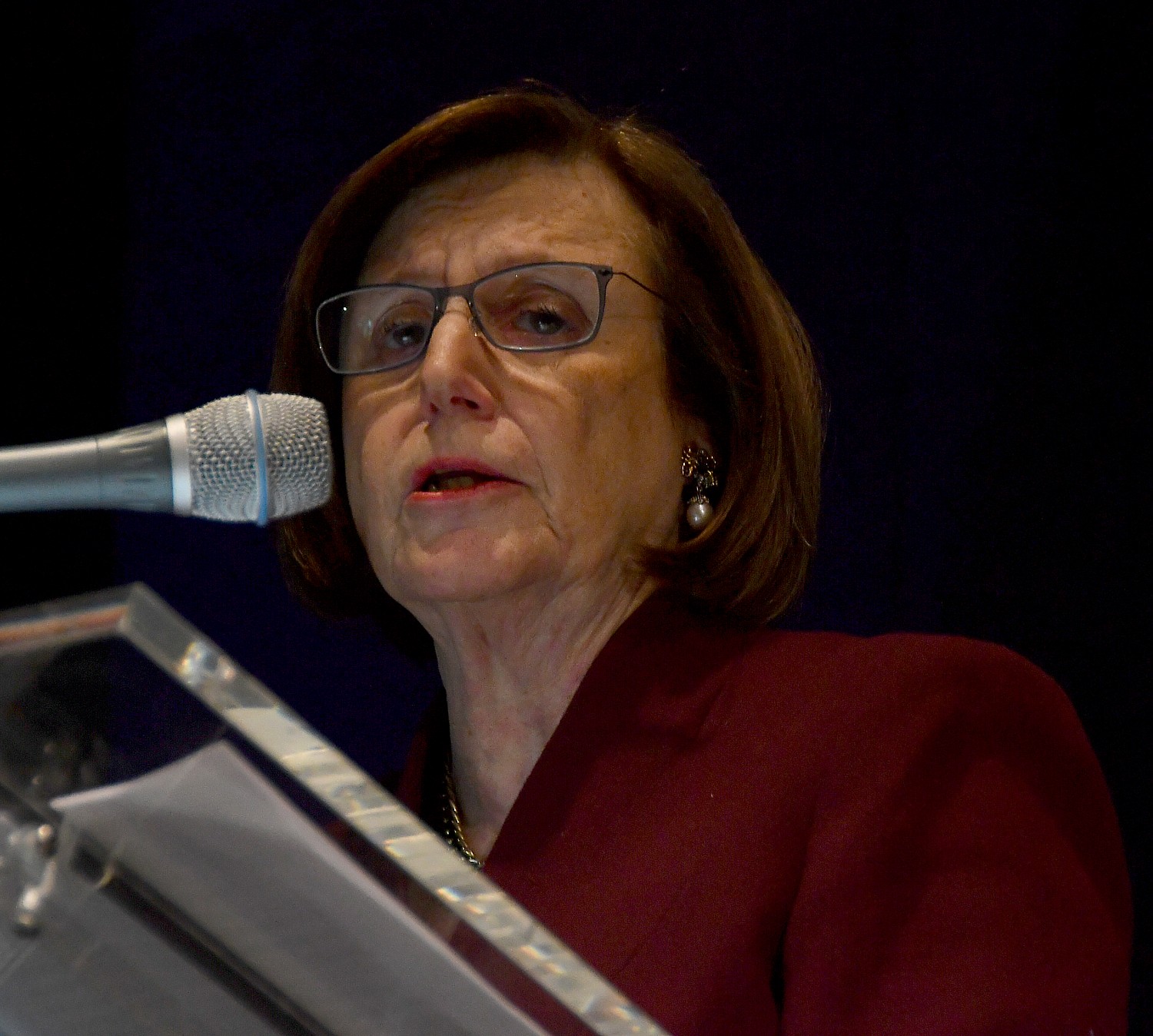
Ellen V. Futter, President of the American Museum of Natural History © 2017 Karen Rubin/ goingplacesfarandnear.com

“Mummies have long been fascinating, and now the intersection of these ancient relics and cutting-edge technology is revealing new and intriguing secrets,” said Ellen V. Futter, President of the American Museum of Natural History. “For generations, the Museum has studied and presented the diverse cultures of humanity, past and present, to help us better understand one another and ourselves. Today, when such understanding is more important than ever, Mummies invites us all to consider both what may be distinct among cultures and what is universal in the human condition.”

On a special, limited tour from the collections of The Field Museum in Chicago — and presented for the first time on the East Coast (the traveling exhibition has already been on view in Los Angeles, Minneapolis and Denver), Mummies showcases the ritually preserved remains of 18 individuals from ancient Egypt and pre-Columbian Peru. The Peruvian mummies that are on display have not been seen since they were exhibited at the 1893 Chicago World’s Fair.

Significantly, you get to discover how modern imaging techniques have transformed the study of mummification by letting researchers peer inside centuries-old mummies without disturbing or damaging them. Digital touchscreens let you “virtually” peer into Peruvian mummy bundles, layer by layer from the skin to the bones, as well as animal mummies buried as offerings to Egyptian gods. You also get to handle 3D-printed figurines of burial goods that were encased within mummy wrappings for millennia and only recently revealed.

“You may think you know mummies,” Futter said at a press preview, pointing to the most popular representations in horror movies. “That’s not what this show is about. This is serious business that simultaneously offers a window to the past – two different ancient worlds – and into the latest technology and study. You get a glimpse of actual people entombed – who they were, what their lives were like, what they looked like.”

“They are like messages from a different time – they are our sisters and brothers in a shared humanity. It may not be as sensational as a [horror] movie, but more amazing than you would have imagined.”

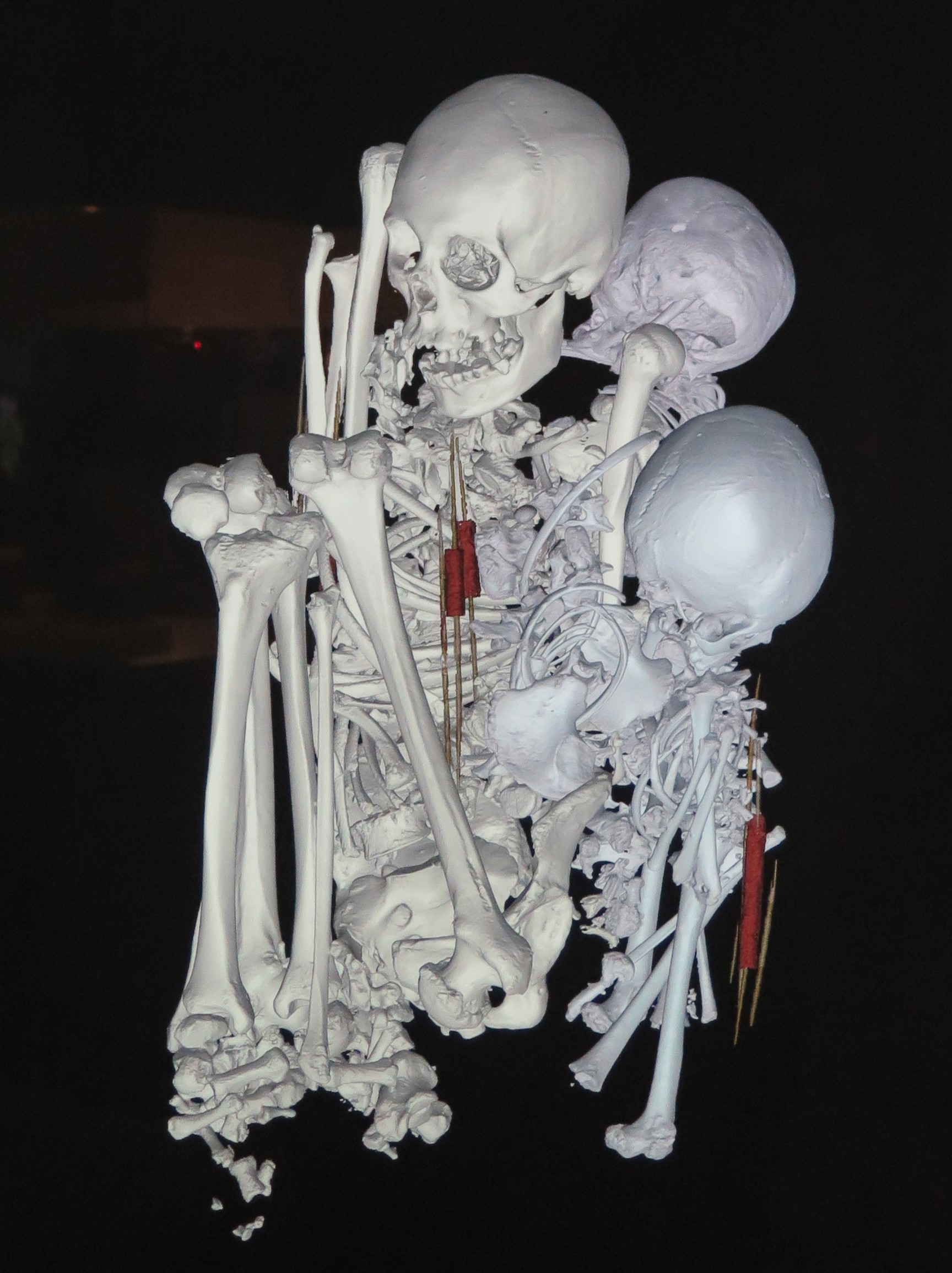
Scan of a bundle from Peru reveals a woman in her 20s with two children, around six and two years old who died of unknown causes © 2017 Karen Rubin/ goingplacesfarandnear.com

Indeed, most people – especially  young people – have never actually seen a dead body before. The most profound experience in the exhibit is seeing the remains of a woman who lived 5500 years ago, whose bundled body was left in the Egyptian desert where it naturally mummified.

Indeed, it wasn’t just pharaohs and their spouses and other royal figures who were mummified, though their tombs and the possessions that were left with them reflected their station. This was the common practice – as people were lower and lower down the economic totem pole, the possessions that they would have been buried with were more and more modest.

In Egyptian society, it was also common for animals to be mummified and buried – there is a baboon and a crocodile in the exhibit. Cats were actually popular and David Hurst Thomas, the co-curator of the exhibit, said that archaeologists found cemeteries of a million mummified cats, manufactured  for sale to be entombed with the loved one.

Michael Novacek, Senior Vice President, Provost of Science and Curator, division of Paleontology and David Hurst Thomas, curator of North American archaeology and co-curator of Mummies, American Museum of Natural History © 2017 Karen Rubin/goingplacesfarandnear.com

It is fascinating to have this view to contrast the Peruvian mummies (I’m betting few people have even realized that pre-Colombian Peruvian peoples practiced mummification), with the Egyptian burial practices. The two civilizations never interacted – mummification developed independently, indeed, on every continent but Antarctica, Dr. David Hurst Thomas, curator of North American archaeology, division of Anthropology and co-Curator of the Mummies exhibit, said at a press preview of the exhibit.

In Peru, mummification was intended to enable the living to stay connected with their loved ones. The body was carefully prepared and wrapped and then a mask was placed on top the canvas.

One of the scans of a bundle reveals that it is a woman with two children. The scans also show artifacts that have been buried with the individual.

The ancient Egyptians, in contrast, mummified their dead so that they could live on – their limbs intact – in the next world. The earliest mummies, like the 5500-year old woman, were not buried in elaborate pyramids or tombs, but were put into a pit grave. Over the centuries, the mummification process became more and more elaborate – organs were preserved in canopic jars and bodies placed in magnificently painted coffins with gilded masks.

By using these new technologies – most that have come from medicine – the scientists have been able to see artifacts that were buried with them, how a mother is buried with her two children (how did they die?).

“They have so much to teach us – medical infirmities, migration, interaction of societies,”

The Gilded Lady, for example, is utterly fascinating – you see her in her magnificently decorated coffin, and on the wall are the slides that show how her hair was curled, had a damaged spine, possibly as a result  of tuberculosis. Based on the scan of her skull, they made a 3-D reconstruction using a 3-D printer, and from that, like a forensic scientist, re-created what she likely looked like in life – all of this in one view.

Gilded Lady with the scans that show what she likely looked like © 2017 Karen Rubin/goingplacesfarandnear.com

The gilded mask that we see was not meant to illustrate how the woman looked in life, but was an idealized portrait that had a purpose: the Ancient Egyptians believed that in the afterlife, the dead would need their faculties – eyesight, hearing, taste and smell. The masks allowed them to maintain these senses. The golden skin was used to show divinity: after death, the dead would be transformed into the god Osiris, who, like most gods, had skin of gold.

The Gilded Lady lays across the room from another mummy, named Minirdis according to the hieroglyphs on the coffin. The coffin was opened for the first time in a century for this exhibition. In examining the remains, researchers discovered the teenaged boy inside was mummified around 250 BC, or 200 years after the coffin was made, construction of the coffin, indicating that the mummified individual wasn’t Minirdis after all, and confirming that coffins were occasionally recycled (though might not the inscription have been added when the boy was buried?)

The hieroglyphs on the coffin say the name of the mummy who is supposed to go inside it – Minirdis, son of a priest. Preserving the person’s name was essential for their soul to reach the afterlife. Minirdis means “Min is the one who gave him,” and Min was a god of fertility. The inscription also says that Minirdis’ father, Inaros was a priest, in charge of purifying and clothing the god’s statue. The only problem was that the boy inside was mummified around 250 BC, or 200 years after the coffin was made, indicating that the mummified individual wasn’t Minirdis after all, but also confirming that coffins were occasionally recycled.

The scans of the body show that the coffin was too large for the body inside and the bones hadn’t fused, indicating that the body was a teenage boy.

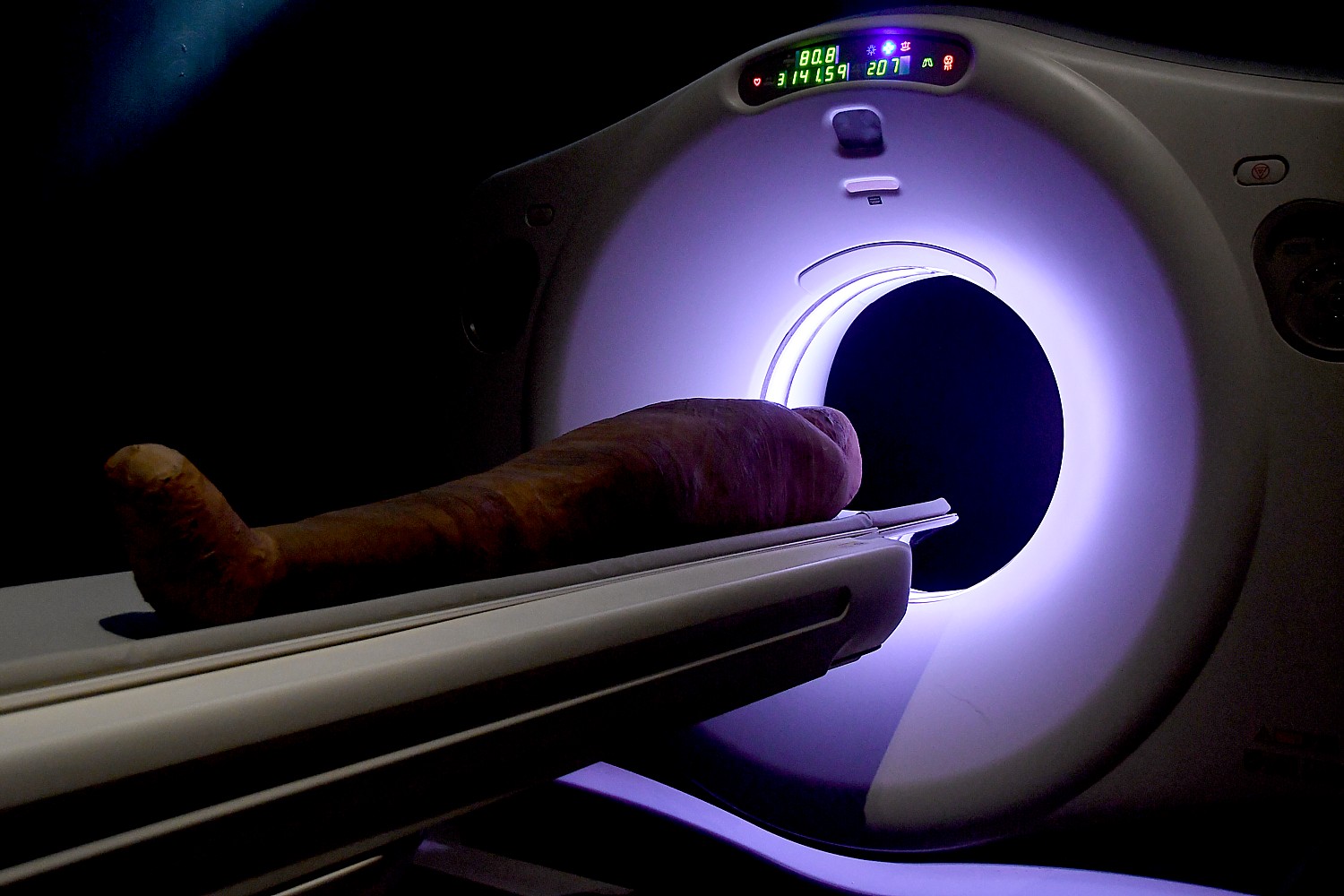
Ancient culture meets Modern science: A mummy as it would go through the CT scanner, on view at the American Museum of Natural History © 2017 Karen Rubin/goingplacesfarandnear.com

The CT scans enabled scientists to generate 3D-printed skull reconstructions of both the “Gilded Lady” and Minirdis. Then, artist Elisabeth Daynès studied the replicas and built facial muscles and skin layer by layer. The hyper-realistic portraits in 3D. we meet at the end of the exhibit let us come face-to-face with these ancient people, seeing them as they may have looked in life —while their mummified remains sleep peacefully.

Peruvian Mummies On View for the First Time in a Century

We are much more familiar with Egyptian mummies, particularly with the sensational exhibits of King Tut and the artifacts uncovered from his tomb in the Valley of Kings, as well as the scientific analysis of his mummified remains. But this exhibit goes much further in its exploration of the cultural significance of the burial practice.

The first part of the exhibit focuses on the collection of Peruvian Mummies, which had not been seen in public since they were on display in the 1893 Chicago World’s Fair.

People living along the Pacific coast of South America in what is now Peru began to mummify their dead more than 5,000 years ago. Scholars think that the Chinchorro culture (5,000–2,000 BC)—the world’s first practitioners of mummification—prepared the bodies of their loved ones personally, removing the deceased’s skin, de-fleshing the bones, and removing the organs before reinforcing the skeleton with reeds and clay and reattaching the skin. The mummy was then painted black or red and given a wig and an individualized clay portrait of the deceased.

In addition to the Chinchorro, dozens of societies in the region mummified their dead to remember and remain connected with the departed.

As we walk through the  Mummies exhibit, we encounter a number of Peruvian mummy bundles, including the mummified remains of three children from the Chancay culture (AD 1000–1400), which placed their dead into a sitting position and wrapped them in layers of cloth.

The exhibit is very much hands-on, interactive, if you can believe it, because you get to do what scientists do, in penetrating the layers of scans to reveal the body contained in the wrappings, through the skin layer, to the bones.

There are digital touchscreens, where you can examine composite CT scans of these mummies and virtually “unwrap” them to reveal figurines and other burial offerings that are contained within, becoming surprised as surely the scientists were, when a scan reveals a mother with two children bundled together, or seeing the objects that were personal or prized which reveal so much about who they were in life.

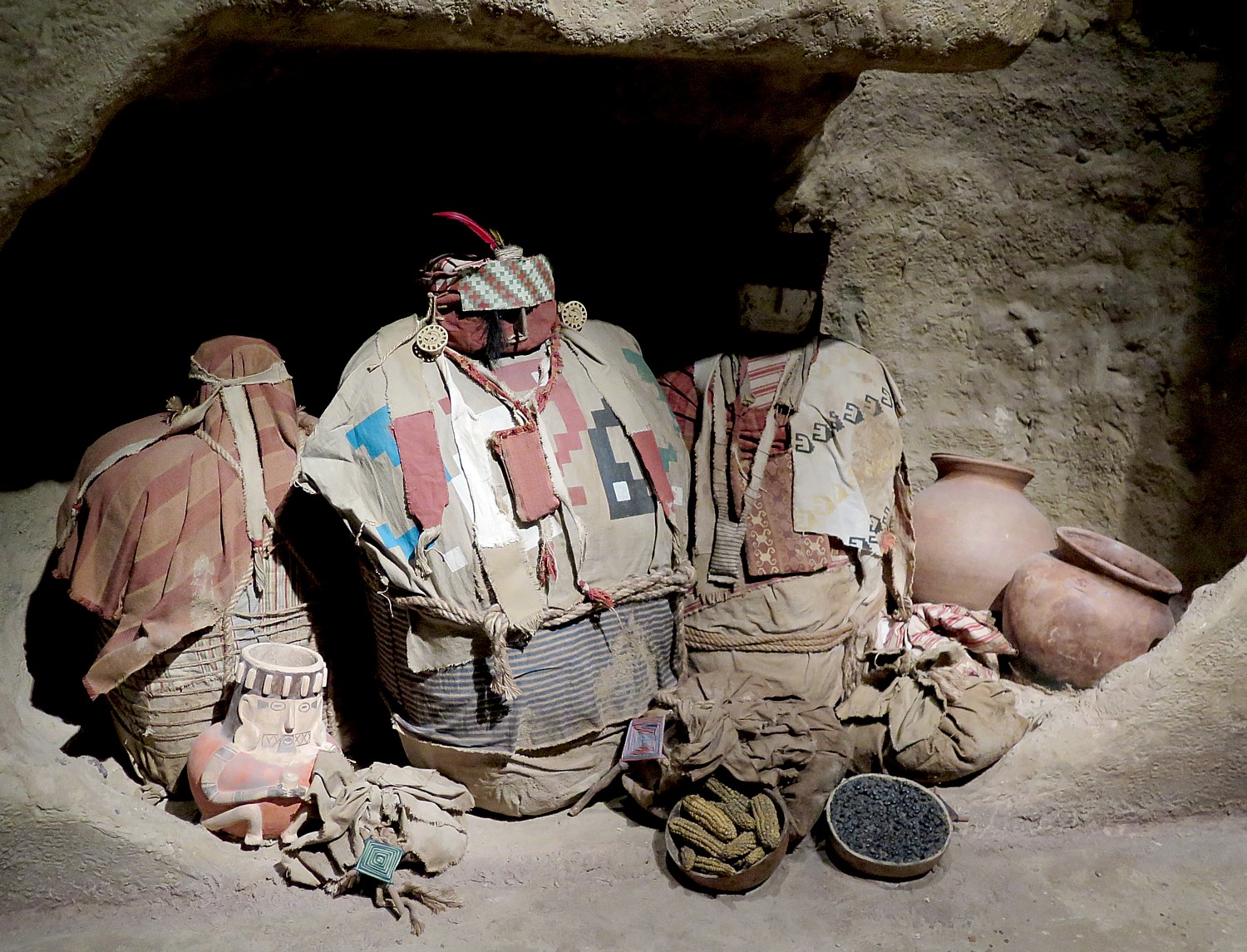
A life-sized diorama of a Chancay pit burial demonstrates the common practice of interring members of an extended family together © 2017 Karen Rubin/ goingplacesfarandnear.com

A life-sized diorama of a Chancay pit burial demonstrates the common practice of interring members of an extended family together. These burial pits were accessible to living family members, allowing relatives to bring food or drink to their loved ones’ graves, or even to remove mummies to take them to festivals or other special events. We see examples of real burial offerings such as chicha (corn beer) pots.

Jim Phillips, curator of The Field Museum, tells me that the Peruvian mummies were uncovered on expeditions in the 1880s and 1890. This means they would have been recent finds – the most modern discoveries – when they were displayed at the 1893 Chicago World’s Fair.

Jim Phillips, curator of The Field Museum, with the Gilded Lady and the scan that shows how imaging techniques helped reconstruct her face © 2017 Karen Rubin/goingplacesfarandnear.com

Egyptian Mummies of the Nile Valley 

Unlike people in Peru, ancient Egyptians believed the dead could live on in the next world if provided with a physical home, preferably within the body itself. This belief made it essential to preserve the corpse, and Egyptians used an elaborate process of mummification to halt the natural process of decay. Scholars posit that natural mummification—an example of which can be seen in the remains of a woman whose preservation occurred naturally in the hot, dry sand about 5,500 years ago—gave Egyptians the idea for artificial mummification.

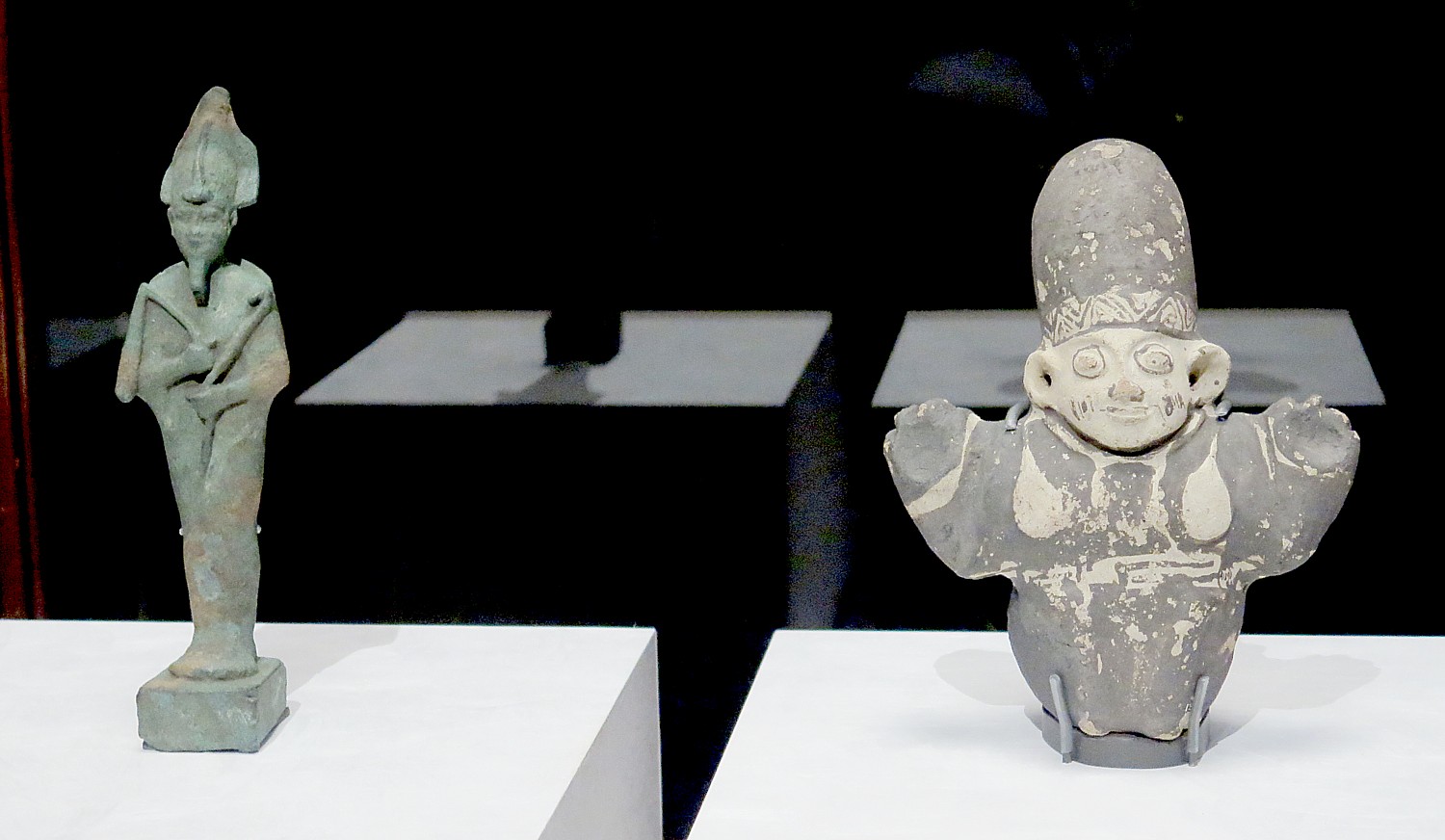
Mummies invites visitors to compare and contrast burial practices of Egypt (statue of Osiris on left) and Peru © 2017 Karen Rubin/ goingplacesfarandnear.com

Within centuries, ritual burial in Egypt evolved into a complex practice that included elaborate embalming, brilliantly decorated sarcophagi, and grandiose tombs designed to deter grave-robbers (we see magnificent limestone busts from sarcophagi that were an added layer of security to those who could afford this extra protection and would have weighed thousands of pounds). Organs that would hasten decay—the liver, lungs, intestines, and stomach—were removed, preserved, wrapped, and housed in separate containers. The heart—thought to be the source of emotion and intellect—often stayed in place, since it would be necessary in the afterlife, while the brain, thought to have no use, was removed through the nose. Forty days in salt desiccated the body, and embalmers then used resins, oils, and padding to restore its appearance before wrapping it in linen. Artifacts on view include a Ptolemaic Period mummy (332-30 BC) along with canopic jars containing the person’s organs. Here, there are stations where you can handle 3D-printed burial figurines that depict ancient Egyptian gods provide visitors with an opportunity to explore the hidden artifacts within its wrappings.

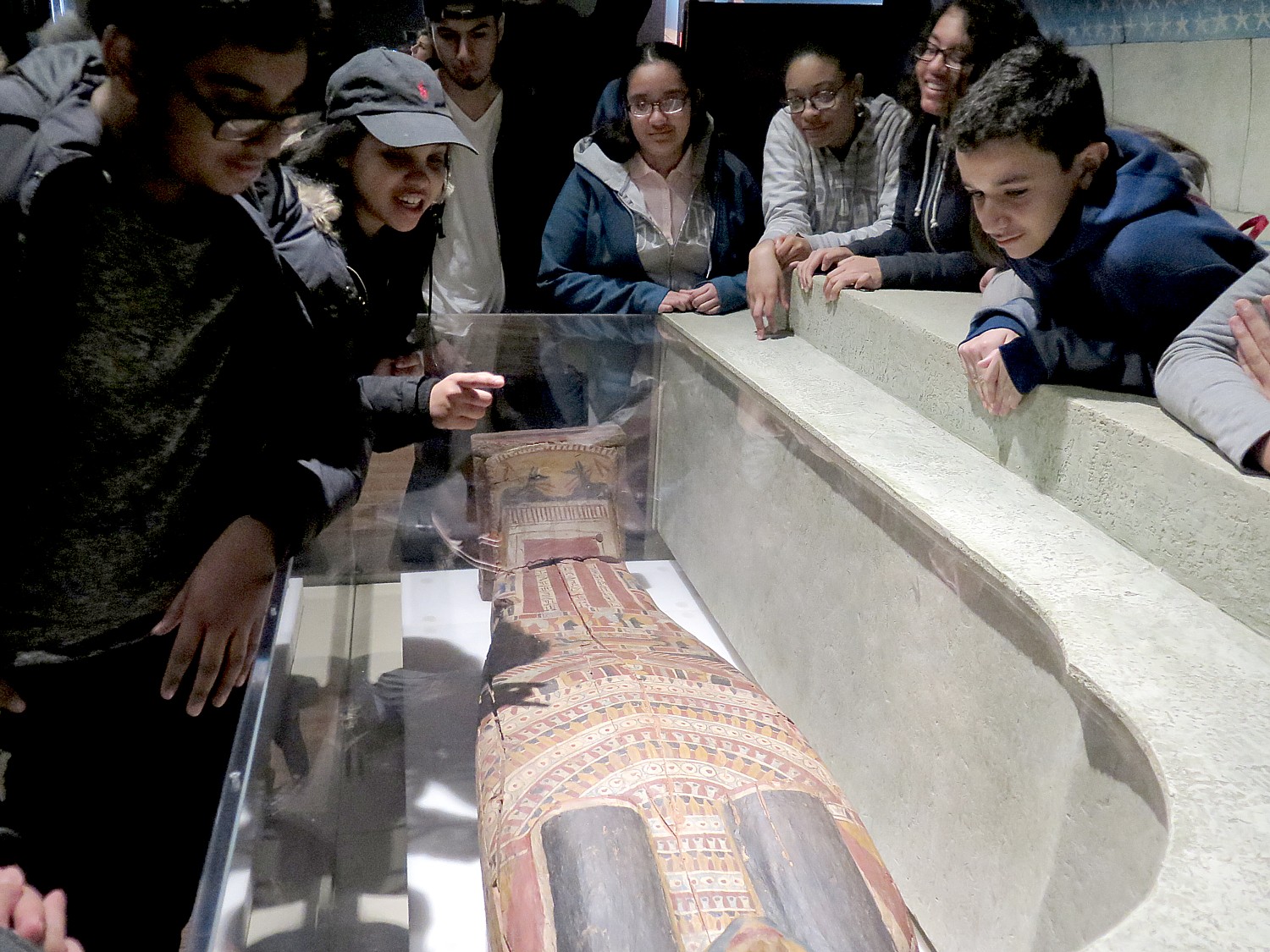
Students get to discover burial practices of ancient peoples. The exhibit is designed to be “family friendly”; the notes that accompany the exhibit are easy to understand © 2017 Karen Rubin/goingplacesfarandnear.com

The objects found in Egyptian tombs were meant to provide for the deceased in the afterlife. Burials of wealthy Egyptians include their servants, represented by figurines called shawabti; ideally there would be 365 of these, one for each day of the year, with 36 overseers, one for each week in the Egyptian calendar. Even mummified animals were included in tombs, and archaeologists have uncovered cemeteries containing millions of animal mummies, including cats, baboons, gazelles, birds and even crocodiles, some of which are on view. Grave-robbing was rampant in ancient Egypt, and an Egyptian tomb diorama represents a type of crypt that Egyptians with rank or wealth constructed to guard against such thefts. Within the tomb, a plain stone sarcophagus contains a smaller stone sarcophagus and a wooden coffin from the Late Period (525-343 BC) covered in hieroglyphs. Most of the imagery on the coffin was inspired by scenes in The Book of the Dead, a collection of funerary texts believed to assist a person’s journey into the afterlife.

Dr. Thomas says the Gilded Lady steals the show, and indeed she does. She was mummified during the Roman Period (30 BC-AD 395), a period when we see in the exhibit the most magnificently painted coffins. There is one of a woman whose coffin is a stunning piece of artwork – it has a magnificent gilded mask and the body had pronounced breasts. Why? The anthropologists could not say, showing that there is still so much more to be learned.

Magnificently decorated coffin from Egypt’s Roman Period (30 BC-AD 395) © 2017 Karen Rubin/goingplacesfarandnear.com

Mummies is on view in New York through January 7, 2018. The exhibition is co-curated at the American Museum of Natural History by David Hurst Thomas, Curator of North American Archaeology in the Division of Anthropology, and John J. Flynn, Frick Curator of Fossil Mammals in the Division of Paleontology. 

Mummies was developed by The Field Museum, Chicago, and will go back there for an exhibition after its New York showing.

Explorer

Mummies is featured in the Museum’s recently re-launched Explorer app, developed with support from Bloomberg Philanthropies, which lets visitors think like an explorer by personalizing their onsite experience using cutting-edge location-aware technology that provides unique journeys through the Museum’s 45 permanent halls.

More information about the exhibit is available at amnh.org/mummies.

A Major Scientific Research Institution

When we see these fantastic exhibits, we don’t necessarily see behind them, to the fact that the American Museum of Natural History, founded in 1869, is one of the world’s preeminent scientific, educational, and cultural institutions, whose research has contributed not only to their discovery, but to the understanding of what is displayed.

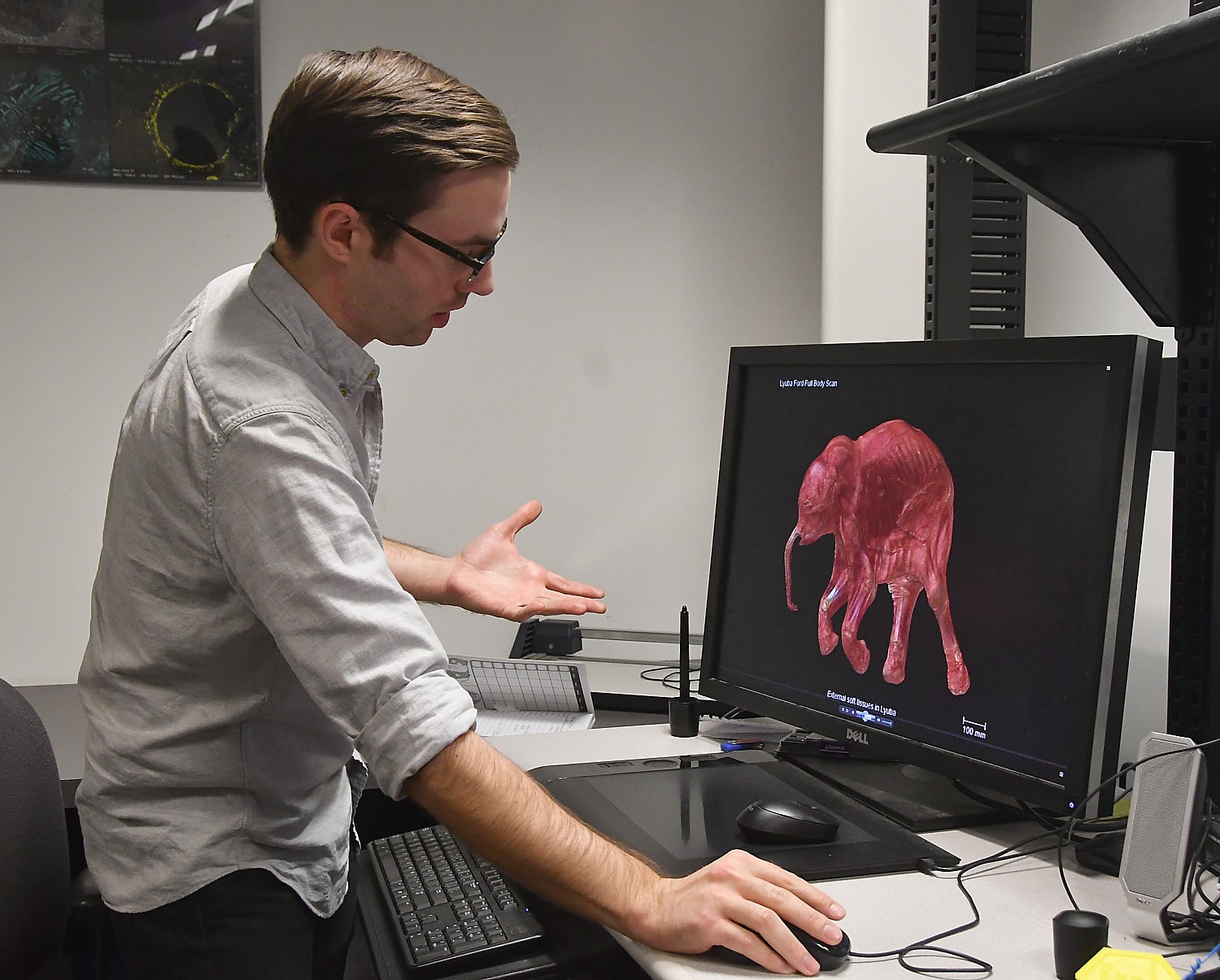
Indeed, the press tour takes us behind the scenes to the institution’s Microscopy and Imaging Facility – the technology that would have been used to scan the mummies. The equipment is shared by all five departments of the institution, whether AMNH scientists are studying fossils, cultural artifacts, planets or solar systems, the cutting-edge imaging technologies in the facility make it possible to examine details that were previously unobservable. While earlier studies often required unwrapping mummies – which could have damaged them – tools like high-resolution computerized tomography (CT) scanner provide scientists with non-invasive methods to examine them. MIF technician Morgan Hill walked us through the process, along with Zachary Calamari, a Ph.D. student in comparative biology program at the Museum’s Richard Gilder Graduate School, who showed us how the scans help in research of two naturally-mummified newborn wooly mammoths – one who was mummified by being frozen and the other who was “pickled.”

Zachary Calamari, Ph.D. student at the Museum’s Richard Gilder Graduate School, shows scan of a naturally mummified newborn wooley mammoth © 2017 Karen Rubin/goingplacesfarandnear.com.

During our visit, the CT scanner is doing an image of a rabbit. It is this ability to understand the internal aspects of dinosaurs and fossils that have led scientists to rejigger Evolution’s schema, to redefine who is related to who and what is connected to what.

The Museum’s five active research divisions and three cross-disciplinary centers support approximately 200 scientists, whose work draws on a world-class permanent collection of more than 33 million specimens and artifacts, as well as specialized collections for frozen tissue and genomic and astrophysical data, and one of the largest natural history libraries in the world. Through its Richard Gilder Graduate School, it is the only American museum authorized to grant the Ph.D. degree and the Master of Arts in Teaching degree.

The Museum encompasses 45 permanent exhibition halls, including the Rose Center for Earth and Space and the Hayden Planetarium, as well as galleries for temporary exhibitions. It is home to the Theodore Roosevelt Memorial, New York State’s official memorial to its 33rd governor and the nation’s 26th president, and a tribute to Roosevelt’s enduring legacy of conservation.

The museum gets 5 million visitors a year and the Museum’s exhibitions and Space Shows can be seen in venues on five continents. The Museum’s website and apps for mobile devices extend its collections, exhibitions, and educational programs to millions more beyond its walls.

American Museum of Natural History, Central Park West at 79th Street, New York, NY 10024-5192, 212-769-5100. Open daily from 10 am-5:45 pm except on Thanksgiving and Christmas. Visit amnh.org for more information. 

Become a fan of the American Museum of Natural History on Facebook at facebook.com/naturalhistory, follow us on Instagram at @AMNH, Tumblr at amnhnyc, or Twitter at twitter.com/AMNH

____________________

© 2017 Travel Features Syndicate, a division of Workstyles, Inc. All rights reserved. Visit goingplacesfarandnear.comwww.huffingtonpost.com/author/karen-rubin , and travelwritersmagazine.com/TravelFeaturesSyndicate/. Blogging at goingplacesnearandfar.wordpress.com and moralcompasstravel.info. Send comments or questions to FamTravLtr@aol.com. Tweet @TravelFeatures. ‘Like’ us at facebook.com/NewsPhotoFeatures
NYT Travel Show: Budget Travel Guru Matt Kepnes Offers Easy Ways to Save Big Money When You Travel

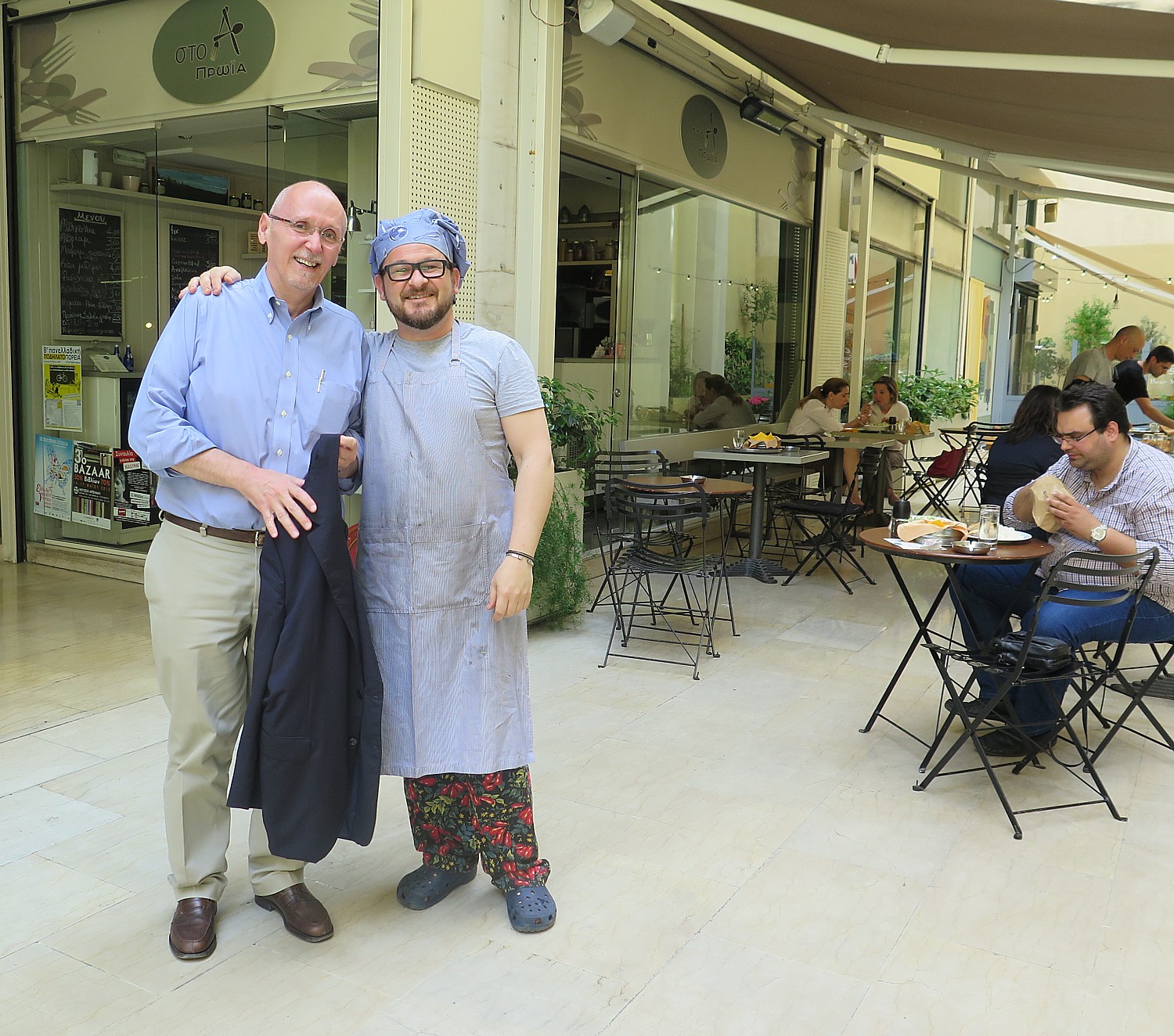
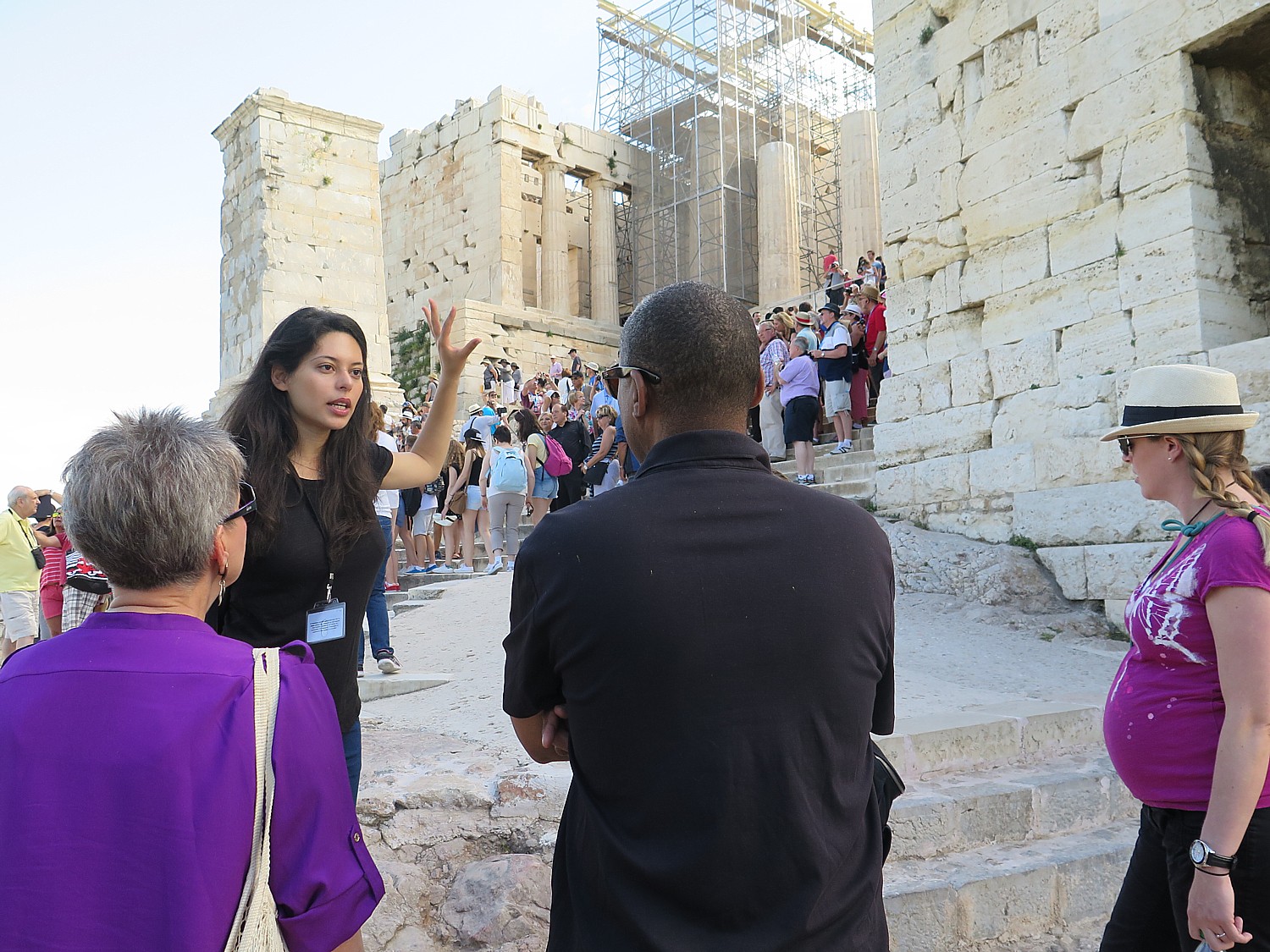
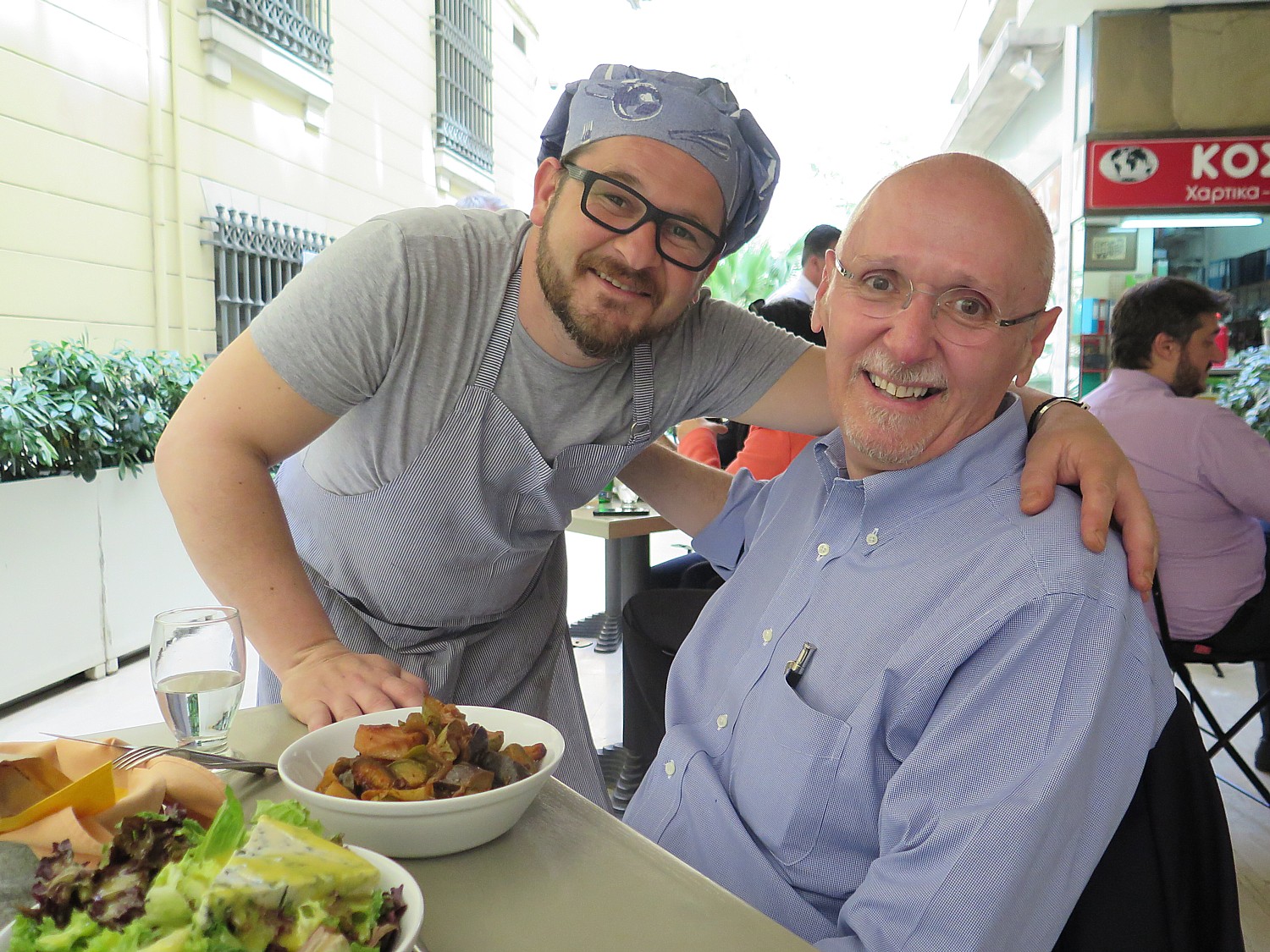
Free sightseeing with a local and cheap eats: Athens with a Native, a free program through MyAthens, matches visitors with a volunteer who takes you on a walking tour. My guide, Constantine E. Cavoulacos introduces and the owner/chef of Panagiotis © Karen Rubin/goingplacesfarandnear.com

By Karen Rubin, Travel Features Syndicate, goingplacesfarandnear.com

When I first Eurailed across Europe when I was in college, I was among the minions clutching Arthur Frommer’s “Europe on $5 a Day.” A new budget travel guru, Matt Kepnes, has come on the scene with a tome for today, “How to Travel the World on $50 a Day (Travel Cheaper, Longer, Smarter)”.

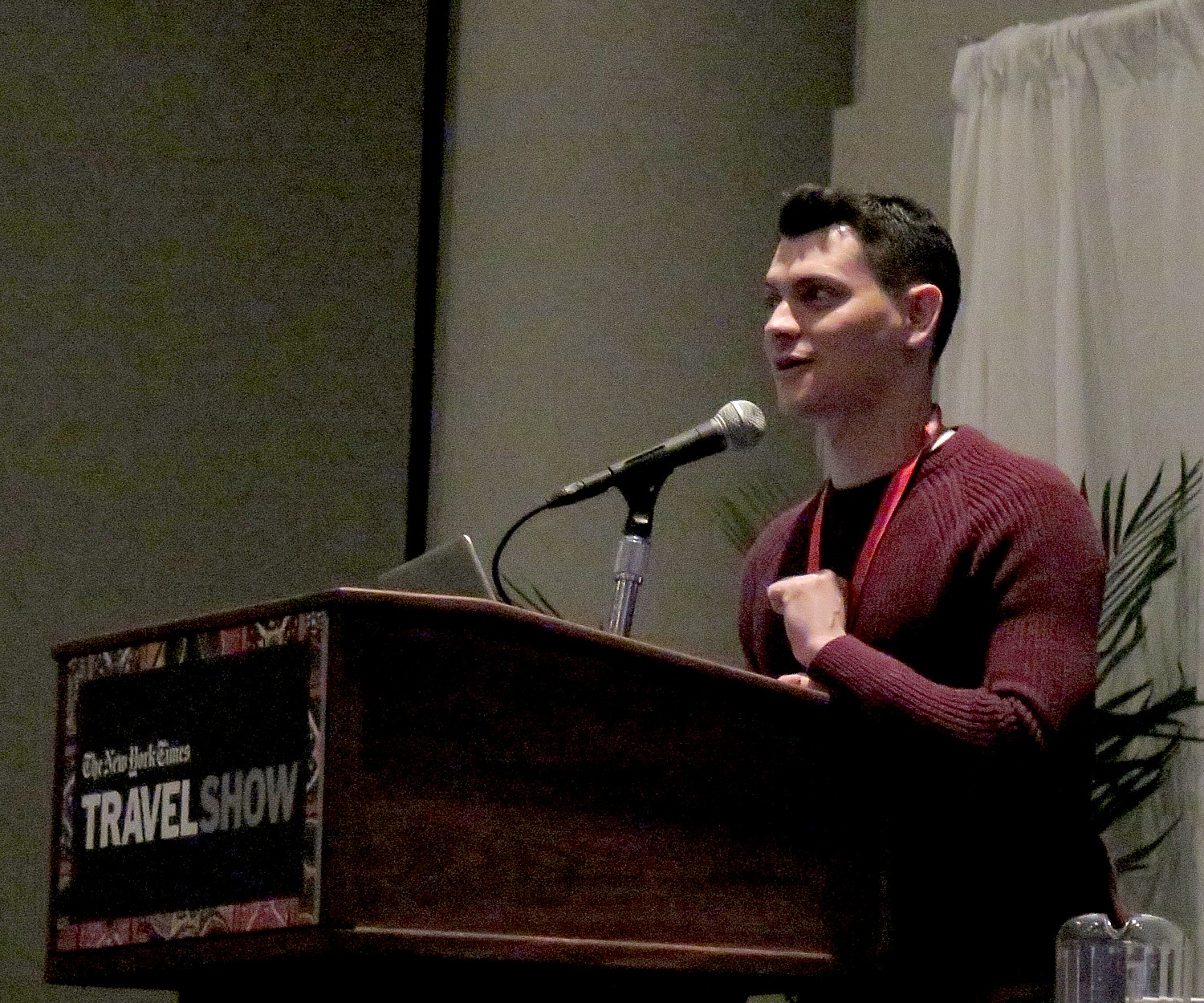
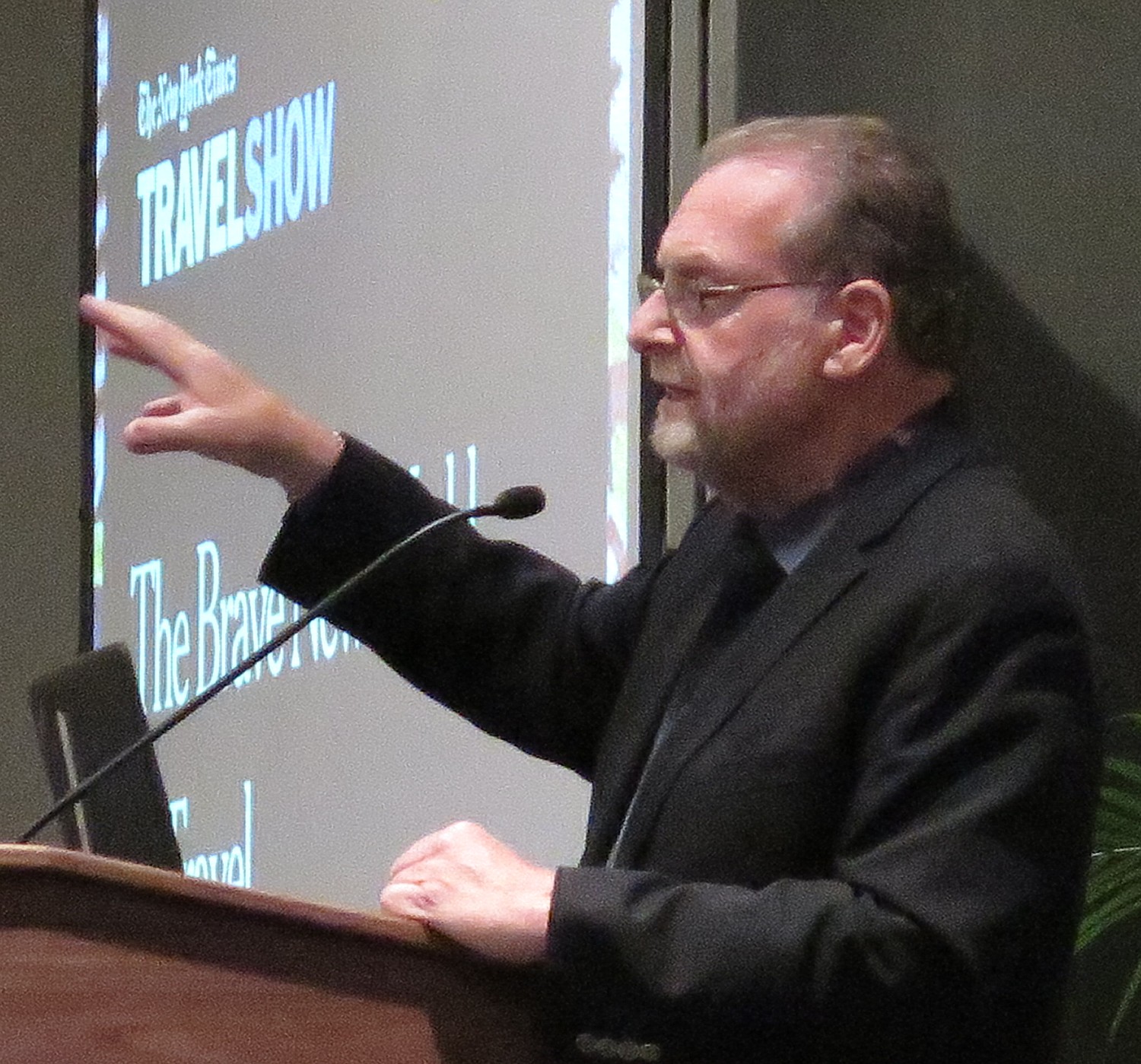
Kepnes shared his strategies for traveling on a shoestring at the 2017 New York Times Travel Show, in his talk, “12 Easy Ways to Save Big Money When You Travel” to a standing room/sitting wherever you could find floorspace audience, in which he shared tips on how to bank smart, save on flights, book quality budget accommodations, eat for cheap, and save on transportations and attractions.

Budget travel guru Matt Kepnes offers easy ways to save when you travel to a packed audience at the New York Times Travel Show © Karen Rubin/ goingplacesfarandnear.com

Here are Kepnes’ key strategies:

Use  Your Money Wisely:

Avoid ATM fees

Buy in the local currency

Never exchange money in airports (Travelex is bad)

Never use travelers checks

Never use random ATMS

His recommendations: CapitalOne, Fidelty, CharlesSchwab (open an account and get a card), Global ATM Alliance

Collecting points or miles to fly free is an art that lately has stymied even travel experts. There is even a term for it, Kepnes says: Travel Hack is the art of collecting points/miles that can be used for free flights and hotel rooms (see nomadicmatt.us/HackTravel)

Kepnes offered these strategies, beginning with the notion that you can get 50,000-100,000 points as a bonus just for signing up. He says he recently took a flight from Germany to Austria for just $7 out of pocket.

Get a Travel Credit Card

Get a card that gives something back, even if you only travel once a year

That offers consumer protection

That avoids foreign transaction fees

Use everyday spending to amass points or miles

Pay your taxes to the government on a credit card (to accumulate points).

Get a new card and pay your taxes on it

His favorites: Chase Sapphire Preferred, Chase Ink, American Express SPG, Barclaycard

Find Cheap Flights

Be flexible with date/time/destination

Fly budget airlines: WOW, Norwegian Airlines (Ny-Oslo-Bangkok for $400)


Ignore the “myths” (such as the best day of the week to book is a Tuesday)

Search in other currencies (choose a weak currency, like New Zealand and search in that currency; often, prices cater to a local market)

Search as one person

If you are a student or educator, you can take advantage of discounted travel at such sites as. STATravel for students and teachers; ISIC  (he says he traveled Athens to Bangkok for $350).

Best sites to find flight deals:

HolidayPirates – great for Europe

The FlightDeal – out of US

SecretFlying-flights anywhere

Cheap Flight resources:

Googleflights

Kayak (Don’t book through kayak, he says, just use for reference and get a second opinion)

Momondo (search websites around the world)

SkyScanner (search websites around the world)

Stay Cheaply

Stay in Hostels:

Hostels are budget friendly

Made for socializing and meeting people

Have a kitchen to cook your own food

Usually offer the option of a private room and private bath

Centrally located

Knowledgeable staff (know what’s going on, where to go)

Great source: Hostelworld

Green Tortoise hostel in San Francisco: Staying in a hostel isn’t just inexpensive, but provides for social interaction, let’s you save on eating out by cooking your own meals. Green Tortoise also organizes dine-arounds and tours © Karen Rubin/goingplacesfarandnear.com

Hostels have really upped their game, Kepnes says. They are nicer, typically offer WiFi, rooms are cleaned daily, offer breakfast, and even organized tours

Hostels offer a social aspect even if you are staying in a private room (because there are communal facilities and the people who stay tend to be outgoing)

“Cheapos stay in hostels so the staff are experts about cheap restaurants, what to do for free or inexpensively.”

Sharing Economy

Bypass the traditional travel industry

Gives access to locals using their own assets and skills to become small tourism companies with cheaper prices.

Locals know where to find

Share Accommodations:

AirBnb

A Camp in My Garden (which directs you to places where you can pitch a tent in someone’s backyard)

Where to stay with locals (for free) – these sites do vetting and offer reviews:

Be Welcome

GlobalFreeloaders.com

The HospitalityClub

Couchsurfing

Kepnes notes that these kinds of shared accommodations are not just for youthful backpackers; a lot of families take advantage as well, and see it as an opportunity to expose their kids to other cultures.

Eat Cheap:

Eat cheap, skip fancy meals, don’t eat out every meal; cook your own meals; take your own water bottle.

Avoid eating near tourist areas (he has a five-block rule)

“Don’t ask ‘Where should I eat?’ (because you are a tourist). Ask ‘Where did you eat?’ That’s how you find the local, cool restaurants.

Use apps to find local hotspots, like FourSquare, OpenRice, Yelp

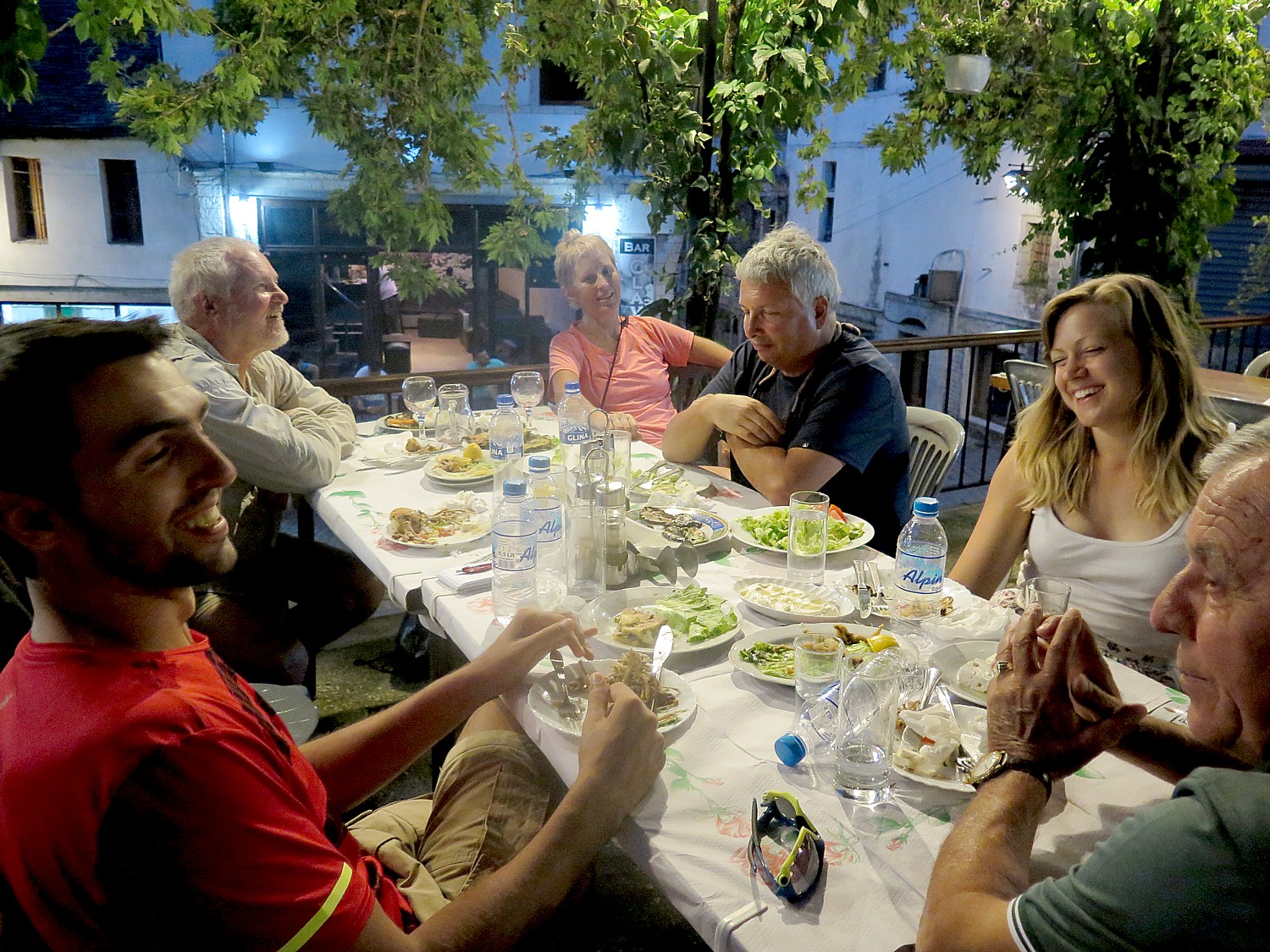
Dining out in Gjirokaster, Albania, where the dollar goes far © Karen Rubin/ goingplacesfarandnear.com

Sharing Food Economy:

EatWith

CoLunching (feed your network)

MealSharing

Get Around Cheaply:

Use public transportation

Ask hostel staff for timetables and cheap transportation options

Avoid taxis

Get a train pass (ie. Eurail, or in-country pass)

Hitchhike

Rideshare

Best tour in San Francisco is, of course, the cable car: just $7 to ride. And definitely visit the San Francisco Cable Car Museum, admission is free © Karen Rubin/goingplacesfarandnear.com

Ride Sharing sources include:

BlaBlaCar

Liftshare.com

Gumtree

Zipcar

Flightcar

Jayride

Kangaride

Kepnes says he hopped a ride from Geneva to Zurich with a father who was driving his son back to school, which cost him $10)

“You save money and meet people in a way you wouldn’t if you just booked transportation.”

Seeing Things/doing Things

City Tourism Cards, which you can find through tourism offices and/or online, often provide admissions or discounts to multiple museums and attractions, city tours, public transportation, restaurants, shopping.

You typically purchase these by the number of days, (1, 3, 5, 7)

CitizenCards: Some places have passes only for country, county or city residents, like London restaurants for UK residents, Kepnes suggests you can get around this by using your AirBnB address.

Find Free or Inexpensive Activities

Ask tourist offices (and go online) and hostel staff

Time Out

The Local (Europe)

Take free walking tours (New Europe; Free Tours By Foot)

Google It! (Use as terms “free things to do in…”; “free activities in….”; “cheap events in…”, “what do locals do for fun in NYC?”)

NYC: Metropolitan Museum of Art, one of the greatest museums in the world, let’s you pay a donation, rather than admission fee and there are free tours led by docents © Karen Rubin/goingplacesfarandnear.com

Tour with Locals

Connect with local guides (for example, Athens tourism bureau matches you up with a volunteer guide, myAthens.org; Big Apple Greeters through the NYC visitor bureau connects travelers with a local tour guide)

These tend to be small, intimate groups and offer quirky experiences like

Hidden Treasures of Paris

Florence: Bike the Local Backroads

A Photojournalist’s NYC

Melbourne’s Street Art

San Francisco: Urban Night Hiking

Istanbul: Learn to Bargain

Sources: ShowAround, Rent-a-Guide, Vayable

Where to Meet Locals:

Online communities

Forums.nomadicmatt.com

BootsnAll

Lonely Planet’s forums

Couchsurfing (host travelers; stay with locals; grab coffee with travelers/locals; travel events)

Sources: Couchsurfing, TravelMassive, Meetup

Matt Kepnes (nomadicmatt.com) is the author of “How to Travel the World on $50 a Day” (Travel Cheaper, Longer, Smarter), nomadicmatt.us/amz50nm; Instagram.com/nomadicmatt; Facebook.com/nomadicmatt; Pinterest.com/nomadicmatt; Twitter: @nomadicmatt

The New York Times Travel Show, which just marked its 14th year, is the largest and longest-running trade and consumer travel show in North America, featuring the Travel Industry Conference, Consumer Seminars, and an interactive Exhibition including more than 500 exhibitors from Africa, Asia, Australia/South Pacific, Canada, the Caribbean, Europe, Latin America, Mexico and the United States.  In addition to discounts and special offers, the show provided educational seminars and live entertainment for families, individuals, couples and seniors. Seminars focused on home exchange and rentals; festivals and markets as a window into the soul of a place; wellness travel, family travel, global travel tips for women, LGBT travel, traveling solo, senior travel, cruising, planning the perfect African Safari, Italy, Japan, Cuba; ethical travel; choosing a travel agent, travel photography, travel writing; Expecting the Unexpected-Planning ahead for When Disaster Strikes (nyttravelshow.com)

See also:

NYT Travel Show: Greenberg Tells Intrepid Travelers to Exploit ‘Brave New World of Travel’

Pauline Frommer at NYT Travel Show: How to Get Best Value for Your Travel Dollar in 2017

____________________

© 2017 Travel Features Syndicate, a division of Workstyles, Inc. All rights reserved. Visit goingplacesfarandnear.com and travelwritersmagazine.com/TravelFeaturesSyndicate/. Blogging at goingplacesnearandfar.wordpress.com and moralcompasstravel.info. Send comments or questions to FamTravLtr@aol.com. Tweet @TravelFeatures. ‘Like’ us at facebook.com/NewsPhotoFeatures
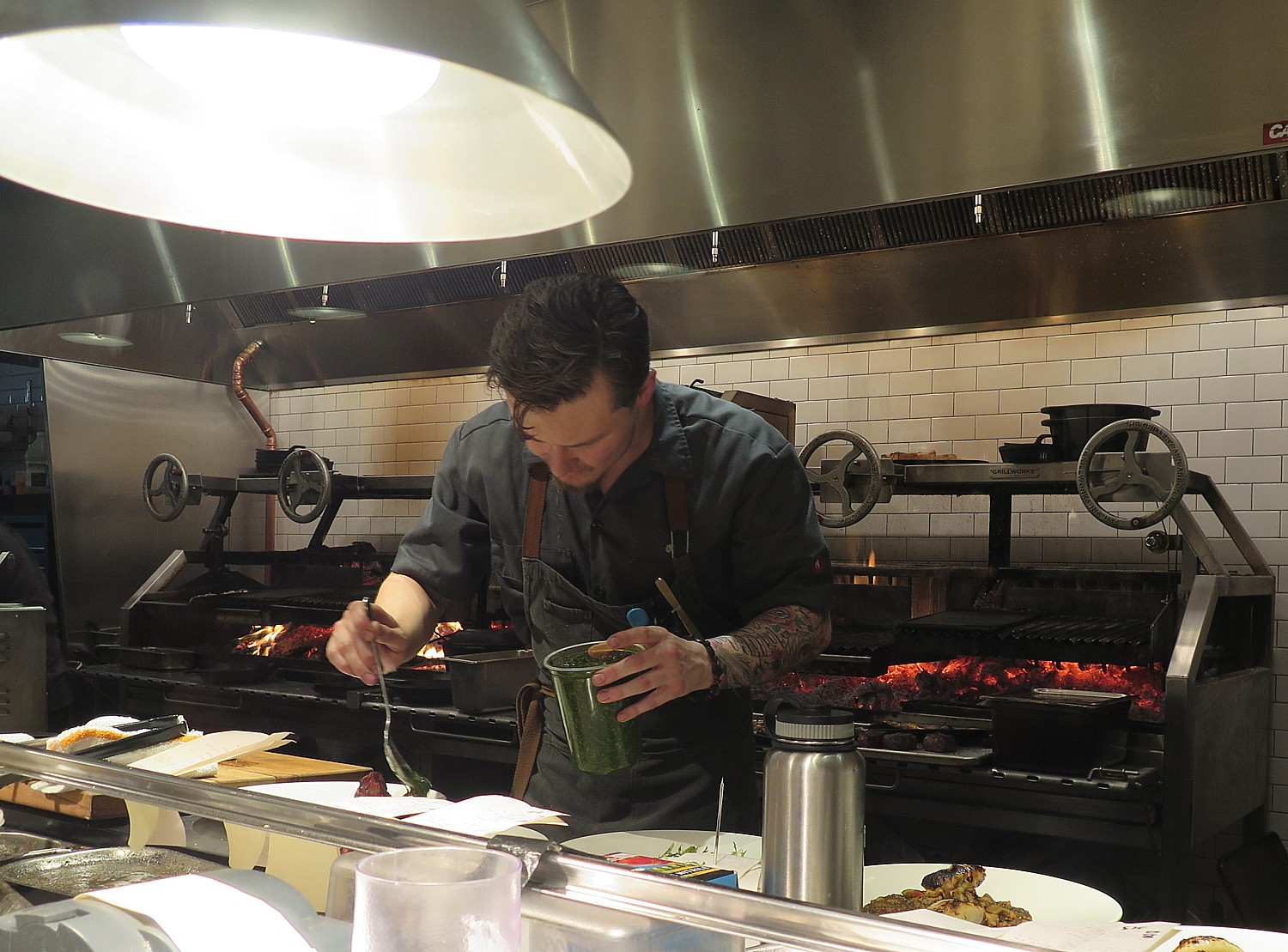
 

HSMAI Honors Innovation at its 60th Annual Adrian Awards

Bermuda Tourism Authority and agency, TURNER, accept the Best of Show in Public Relations Award at HSMAI’s 2016 Adrian Awards Gala at the Marriott Marquis on February 21, 2017 in New York City © Karen Rubin/ goingplacesfarandnear.com

By Karen Rubin, Travel Features Syndicate, goingplacesfarandnear.com

They are the CLIO awards of the hospitality and travel industry – a gigantic segment of the US economy and culture which people don’t readily recognize as being so integral to everyday life. But these are the campaigns that excite, engage, inform and ultimately spur millions of us to venture out and experience new places and people. At the same time, travelers bolster local, state and national economies, create an economic underpinning that sustains heritage, culture and the environment.

The Hospitality Sales & Marketing Association International (HSMAI) presented the 60th Annual Adrian Awards at the New York Marriott Marquis, recognizing excellence in travel advertising, digital marketing and public relations, and the leaders behind the work.

“It’s always wonderful to be able to celebrate the innovators of our industry. Their outstanding work challenges and inspires the rest of the profession,” said Robert A. Gilbert, CHME, CHBA, president and CEO of HSMAI. He added, “Tonight was a special milestone—the Adrians have now been recognizing excellence in the hospitality industry for six decades.”

Dating back to 1956, the Adrian Awards applaud marketing achievements in hospitality across multiple segments of the industry. Award winners are selected by senior industry and media experts from more than 1,200 entries, for three main entry divisions: advertising, digital marketing and public relations. Gold Award winners across these three categories were recognized during the Adrian Awards Dinner Reception, which was co-sponsored by HSMAI and Google. Platinum winners were selected from the standout Gold Award winners. Winners were selected from 1000 entrees.

The judges speak of authenticity, engagement, blurring of lines among media, emotionality, innovation and creativity, visual beauty, quality of content, storytelling, and most significantly measureable results in distinguishing the winners.

The stakes are huge: these advertising, marketing and public relations campaigns are a key part of the travel and tourism industry that generates $2.1 trillion in economic output (2.7% of the nation’s GDP) from domestic and international visitors (includes $927.9 billion in direct travel expenditures that spurred an additional $1.2 trillion in other industries through a ripple effect). Travel expenditures support 15 million jobs (8 million directly); account for $221.7 billion in wages, and generate $141.5 billion in tax revenues to federal, state and local governments, levels that increased significantly over the past eight years, helping to lift the nation out of the Great Recession.

For example, Bermuda, which won “Best of Show” in Public Relations, undertook its campaign to reverse a decline in tourism that is such a large part of the country’s economy.

Best of Show Awards, the highest honor of the evening, were bestowed upon a Platinum Award winner from each of the three divisions—advertising, digital marketing, and public relations:

Advertising “Best of Show” – NFL Father’s Day Video – Courtyard by Marriott – IMG and Marriott Content Studio

Digital Marketing “Best of Show” – From Brake Lights to Rested Nights – Red Roof Inn and its agency, 360i

Public Relations “Best of Show” – Bermuda: Finding an Island’s Adventurous Side – Bermuda Tourism Authority and its agency, TURNER

Courtyard by Marriott win Best of Show in Advertising at HSMAI’s 2016 Adrian Awards Gala at the Marriott Marquis in New York City © Karen Rubin/goingplacesfarandnear.com

The following are Platinum Award winners in the advertising, digital marketing, and public relations divisions:


Advertising Platinum Winners:

Company; Agency

Newfoundland and Labrador Tourism; Target

Brand USA

Visit Seattle; Publicis Seattle

Hilton; Fold 7

VisitGreenvilleSC

Courtyard by Marriott; IMG and Marriott Content Studio


Digital Marketing Platinum Winners:

Company; Agency

24 North Hotel; Travel Tripper

Visit Seattle; Publicis Seattle

Marriott International; Facebook & MEC

Aruba Tourism Authority; Concept Farm

Caribbean and Latin America Resorts Cluster; Marriott- Caribbean and Latin America

Best Western Hotels & Resorts; Ideas Collide & 11 Dollar Bill

Red Roof Inn; 360i

Red Roof Inn accepts the Best of Show in Digital Marketing Award at HSMAI’s 2016 Adrian Awards Gala © Karen Rubin/goingplacesfarandnear.com

Public Relations Platinum Winners:

Company; Agency

South African Tourism; Sparkloft Media
Omni Hotels & Resorts; LDWWgroup

Hampton by Hilton; rbb Communications

Hilton

Cunard; MGA Media Group

Caneel Bay Resort

Marriott International; GREY New York

Aqua-Aston Hospitality; QUINN & Stryker Weiner Yokota

Bermuda Tourism Authority; TURNER

Gold Award winners’ submissions were shown on digital displays at the Adrian Awards Dinner Reception and featured during the Gala stage presentations. “The honorees in this year’s competition displayed innovation, creativity, and demonstrated measurable results and return on investment that were noted by this year’s judges as being exceptional,” said Fran Brasseux, HSMAI Executive Vice President.

Additionally, the distinguished careers of two industry leaders were celebrated with HSMAI Lifetime Achievement awards. Randy Smith, Chairman & Co-Founder, STR, was honored with the 2016 Albert E. Koehl Award and Melanie Brandman, Founder & CEO, The Brandman Agency, was honored with the 2016 Winthrop W. Grice Award for Public Relations.

“It is an honor to be a member of this illustrious group of industry leaders,” said Brandman, at the awards ceremony. “I would like to dedicate this award to my father and my mother, for raising me and my siblings to be global citizens, and instilling in us an unstoppable desire to experience the world and share whatever wisdom we pick up along the way.”

“It is truly an honor to accept this award,” stated Koehl Award recipient Randy Smith, who was unable to accept the award in person. “I have been incredibly fortunate throughout my career in the hospitality industry in working with smart and talented people.”

The winner of the seventh annual Leader in Sustainable Tourism Award, presented by HSMAI and National Geographic Traveler, was Amelia Island Convention & Visitors Bureau for “Clean Beaches and Sea Turtles.”

“Presented in conjunction with National Geographic Traveler, the Leader in Sustainable Tourism award recognizes a person, company, or community for demonstrable leadership and innovation in preserving and communicating an authentic sense of place through a wisely managed tourism program. Nominees are judged by how their efforts preserved the environmental, cultural, and historic integrity of a destination, and how the program demonstrated leadership, innovation and accomplished its goals.”

Gil Langley and Ktimene Axetell of Amelia Island Convention and Visitor Bureau accept HSMAI & National Geographic Traveler Leader in Sustainable Tourism Platinum Award from Fran Brasseux, Executive of HSMAI and Deborah Friedman, VP, Independent and Specialty Travel, National Geographic at HSMAI’s 2016 Adrian Awards Gala © Karen Rubin/goingplacesfarandnear.com

The Pioneer in Visual Storytelling Award, presented by HSMAI and Libris by PhotoShelter, a new award presented for the first time at these Adrian Awards, went to Newfoundland and Labrador Tourism and their agency, Target.

“The Pioneer in Visual Storytelling Award celebrates a brand in the travel and tourism industry that has shown consistent commitment to using visual assets creatively in marketing and communication to tell its story. Nominees are evaluated based on high-quality production value of images and/or video, compelling storytelling across platforms, use of forward-thinking formats, innovative distribution and demonstrated impact on their audiences. Successful entries use visual assets to inspire an emotional response, motivate audiences to take action and help the brand meet strategic objectives.”

Randy Smith. Melanie Brandman Honored with Lifetime Achievement Awards

The Hospitality Sales & Marketing Association (HSMAI) presented its 2016 HSMAI Lifetime Achievement Awards to Randy Smith, Chairman & Co-Founder, STR, honored with the 2016 Albert E. Koehl Award. Melanie Brandman, Founder & CEO, The Brandman Agency, received the 2016 Winthrop W. Grice Award for Public Relations.

The HSMAI Lifetime Achievement Awards recognize individuals who have spent a major portion of their careers in the hospitality and travel profession and have contributed to the betterment of the industry in a significant and lasting way, over an extended period of time.

Melanie Brandman, Founder and CEO of The Brandman Agency, receives the 2016 Winthrop W. Grice Award for Lifetime Achievement in Public Relations at HSMAI’s 2016 Adrian Awards Gala © Karen Rubin/goingplacesfarandnear.com

Melanie Brandman, honored with the Winthrop W. Grice Award for Public Relations, is the founder & CEO of The Brandman Agency. With offices in New York, Los Angeles, London and Sydney, Brandman is recognized as one of the most credible travel and communications experts in the business. She has ensured that The Brandman Agency has remained at the forefront of the industry by being an early adopter in the ever-evolving digital and influencer space. Prior to establishing The Brandman Agency, she served as Vice President, Corporate Affairs for InterContinental Hotels Group based in London. Brandman’s other successful ventures include Travel Curator, an online travel website, content development, and distribution platform targeted to an affluent, forward-thinking audience of global travelers. The site was voted one of the 10 Best Luxury Travel Blogs by readers of USA TODAY and 10Best. This past year, Brandman was named ‘Most Compelling Woman in Travel’ by Premier Traveler magazine.

The Winthrop W. Grice Award was named in honor of Winthrop W. “Bud” Grice, CHME, a long-time senior marketing executive with Marriott, who was the award’s first designate. Other winners include: Howard Feirertag, Mary Gendron, Vivian A. Deuschl, Laura Davidson, Yvonne Middleton, Peggy R. Bendel, René A. Mack, Lou Hammond, Bunny Grossinger, Herbert D. Kelleher, Steve Wynn, Richard Kahn, Gordon Lambourne, and Geoffrey Weill.

Randy Smith, the recipient of the Albert E. Koehl Award, co-founded STR in 1985. STR provides clients from multiple market sectors with premium, global data benchmarking, analytics and marketplace insights. With just over 300 employees, STR maintains a presence in 16 countries around the world with a corporate North American headquarters in Hendersonville, Tennessee, and an international headquarters in London, England. Prior to starting STR, Smith was Director of Research for Laventhol & Horwath. He has been recognized by Business Travel News, Lodging Hospitality magazine, ALIS, Industry Real Estate Financing Advisory Council, Florida State University College, and the International Society of Hospitality Consultants.

The Albert E. Koehl Award for Lifetime Achievement in Hospitality Marketing recognizes individuals who have spent a major portion of their careers in the hospitality and travel profession and have contributed to the betterment of the industry in a significant and lasting way, over an extended period of time. The award is named in honor of Albert E. Koehl, a pioneer in hotel advertising. Past Koehl award recipients including: David Kong, Roger Dow, Eric A. Danziger, Sol Kerzner, Ian Schrager, Barbara Talbott, Barry S. Sternlicht, Vincent Vanderpool-Wallace, Horst H. Schulze, John J. Russell, CHME, Michael A. Leven, CHME, Richard Branson, Christopher J. Nassetta, and George Aguel.

Amanda Hite accepts the Albert E. Koehl Lifetime Achievement Award on behalf of Randy Smith, Chairman & Co-Founder of STR during HSMAI’s 2016 Adrian Awards Gala © Karen Rubin/goingplacesfarandnear.com

“HSMAI is proud to honor Melanie and Randy for their impressive careers marked by innovative contributions to the global hospitability industry,” said Robert A. Gilbert, CHME, CHBA, president and CEO of HSMAI. 

Top 25 Extraordinary Minds

Selected by a panel of senior industry executives, The HSMAI Top 25: Extraordinary Minds in Hospitality Sales, Marketing, Revenue Optimization for 2016 were honored by HSMAI in a reception co-hosted by Questex Hospitality + Travel and also recognized on stage during the Gala.

The HSMAI Top 25 Extraordinary Minds for 2016 are:

Justin Barnette: Manager, Marketing & Communications USA, South African Tourism

DC Becker: Principal & Co-Owner, Titan Group of New York

Josh Belkin: VP & General Manager, North America, Hotels.com

Bree Brostko: Managing Director, Kindred Resorts & Hotels

Bonnie Buckhiester: President, Buckhiester Management Limited

Patrick Campbell: Director of Advertising, Best Western Hotels & Resorts

Lisa Checchio, VP, Brand Marketing and Insights, Wyndham Hotel Group

Britton Cordill: Director of Marketing & eCommerce, Marriott International

Santiago Corrada: President/CEO, Visit Tampa Bay

Chris Flatt, EVP of Hotel Sales & Marketing, Wynn Las Vegas

Isaac Gerstenzang, Assistant Vice President, Corporate E-Commerce, Two Roads Hospitality

Jennifer Hill: Regional Director, Revenue & Distribution, Highgate

Daniel Hostettler: President and Group Managing Director, Ocean House Management Collection

Danny Hughes: Senior Vice President & Commercial Director, Hilton Worldwide

Victoria Isley: Chief Sales & Marketing Officer, Bermuda Tourism Authority

Cherry Kam: Director, Marketing Communications/Americas, Four Seasons Hotels and Resorts

Lynn Kaniper: Owner/President, Dana Communications

Leora Halpern Lanz: Lecturer, Boston University School of Hospitality Administration

Michael Lau: Regional Director of Revenue Management, Accor Hotels

Lisa Ross: President and Partner, rbb Communications

Ed Skapinok: Vice President of Sales & Marketing, Hostmark Hospitality Group

Edgar Tapan: Head of Industry, Travel, Google

Paolo Torchio: VP Digital & E-Commerce, Two Roads Hospitality

Vicki Varela: Managing Director, Utah Office of Tourism, Film & Global Branding

Daniel Wise: Founder & Chief Product Architect, revcaster – a Rainmaker company

“HSMAI is proud to recognize an outstanding group whose impressive achievements define success and inspire their peers in the hospitality industry,” said Robert A. Gilbert, CHME, CHBA, president & CEO of HSMAI. “Their deep knowledge, nimble response to changing markets, and innovative solutions have driven their success and strengthened our industry.”

The HSMAI Top 25: Extraordinary Minds in Hospitality Sales, Marketing, Revenue Optimization for 2016 © Karen Rubin/goingplacesfarandnear.com

For more information about the Adrian Awards visit www.adrianawards.com.

The Hospitality Sales and Marketing Association International (HSMAI) is committed to growing business for hotels and their partners, and is the industry’s leading advocate for intelligent, sustainable hotel revenue growth. The association provides hotel professionals and their partners with tools, insights, and expertise to fuel sales, inspire marketing, and optimize revenue through programs such as HSMAI ROCET, Adrian Awards, and Revenue Optimization Conference. HSMAI is an individual membership organization comprising more than 7,000 members worldwide, with 40 chapters in the Americas Region. Connect with HSMAI at www.hsmai.orgwww.facebook.com/hsmaiwww.twitter.com/hsmai and www.youtube.com/hsmai1.

NYT Travel Show: Greenberg Tells Intrepid Travelers to Exploit ‘Brave New World of Travel’

Biking in Albania.Go beyond your bucket list, Greenberg says. Pick a place and go there. © Karen Rubin/goingplacesfarandnear.com

By Karen Rubin, Travel Features Syndicate, goingplacesfarandnear.com

According to travel expert Peter Greenberg, that dreaded four-letter word “fear” could actually work out to the benefit of Americans who want to explore the globe..

That, in combination with a strong dollar against just about every other currency, means that Americans have a buyers market in a “brave new world of travel” characterized by “disruption.”

Travel expert Peter Greenberg gives tips on navigating the “Brave New World of Travel” at the 2017 New York Times Travel Show © Karen Rubin/ goingplacesfarandnear.com

Americans who travel abroad, though, tend to be open minded, able to adapt to different situations, and open to adventure and the unknown.

As it turns out, only 37% of Americans have passports (and, Greenberg notes, only 42% of members of Congress and Senate – a revealing aspect at why some have such an insular, provincial view, or who hold so ardently to the myth of American Exceptionalism. It’s easy to imagine America to be exceptional when you don’t actually see anything else first hand.)

“How can you make global policy if you have never left Kansas?,” Greenberg, a best selling author and TV travel commentator, asks the standing-room crowd  attending his seminar, “The Brave New World of Travel,” at the 2017 New York Times Travel Show  at the Javits Center in New York.

The Travel Show took place just as Trump’s Muslim/Travel ban was causing havoc and bringing out thousands of protesters at international airports across the country, an anathema to the people attending the show who clearly valued international travel as a bridge between peoples, cultures and politics.

The “disruption” that is at the heart of the “Brave New World of Travel,” is that there are more international airlines, creating more competition, more services, and keeping fares from rising, more competition among hotels and cruiselines. Even the uncertainty (insecurity) around global affairs creates a buyers’ market for intrepid travelers who see more reward than risk.

Since 2006, he says, there have been 75 new routes from such carriers as Turkish Airlines. Condor Airlines used to be a charter carrier, now is a scheduled carrier. Norwegian Airlines has really rocked the market with low fares.

It’s a buyers market in the hotel industry also, though it is harder to see why, with mergers and acquisitions like Marriott & Starwood giving a single entity even more control of the marketplace. It could be because after making their deals to sell inventory through online travel agencies (OTAs) like Expedia, now the hotel companies are trying to incentivize customers to book direct. “Why click around? They will give free WiFi and a donut.”

A boom in building new cruise ships – there are 56 cruise lines – has resulted in excess capacity. Last year, there were 18 new river cruise ships, and this year 10 new cruise ships.

How can you benefit? Greenberg says don’t book the newest ships (they aren’t discounting their fares); rather, “book the 2-3-4 year old ships that are just as good but have excess capacity.” Norwegian for example has fares as low as $65/night. “You can’t wake up in Brooklyn for that.”

Norwegian’s Breakaway in Bermuda. Greenberg advises that because of the onslaught of newer ships, look to cruiseships just 2-4 years old for better pricing. © Karen Rubin/ goingplacesfarandnear.com

“Now you know you can go, the question is how do you go.” When he asks people to raise their hands if they make their reservations online and most people in the room do, he comes back, “You’re all losers,” with a smile.

“You’re operating on myth that all inventory is online. But only 52% of inventory is online because that all the inventory that travel providers want to make available online.

“I know why you book online –because you can do it at 3 am and you don’t have to talk to anyone. You’re very happy to hit a key and book. But now you have disenfranchised yourself with 40% of inventory.”

He derides the “lost art of conversation,” and says, “it’s okay to research online, but don’t book online.”

He notes (what Pauline Frommer had observed in an earlier seminar also), that when you search for an airline fare, and happen to wait and return an hour later, you will find the fare has increased, perhaps $100 more.

That’s because the computer remembers you, appreciates a supply/demand market and can pitch you a higher fare. “Clean up your cookies or use somebody else’s computer.”

“When you have a conversation with an airline rep or a cruise rep, you may think it is about getting the best rate – losers! –It’s not about the rate, it’s about the value. The internet does nothing creativity, thinks literally, it can’t answer the questions you should ask.

“You might get a good rate online, but when you have a conversation directly with a hotel, you can ask for the hotel to throw in free WiFi, get rid of dreaded resort free, get the kids to stay free, eat free.

With a cruiseline, “it’s not about the cost of cabin, it’s about onboard credits, which excursion should or should not take.” [In this respect, you are much better off booking through a travel agent, who can usually get free upgrades, free drinks, perhaps even a shore excursion thrown in.]

Where do You Want to Go?

“Where do you want to go?” he asks. “This is where you get into trouble – how many have bucket list? He asks, and a few people raise their hands. “Loser,” is his retort.

“Everyone wants Paris, Hawaii. There are 196 countries in the world. Pick one. There are only four I wouldn’t go to (my metric is ‘Who is in control.’ – There are four countries where nobody is in control.)

He says he wouldn’t say no to going to North Korea (I know who is in control), Iran [which is actually become a hot destination for Americans, up until Trump’s election and the travel ban]. I would even go to Northern Iraq, because it is under control of Kurds, every airline goes there and is safe.” [Which might have been true before the Trump travel ban which Iraq retaliated against in kind.]’

“‘Fear’ is a four-letter word. Don’t be motivated, don’t be driven. How many read US State Department travel advisories – you should read them but when people hear there is an advisory, they don’t go.”

The State Department’s travel advisory for Turkey advises travelers that Turkish  drivers pass on the left and on the right. “Have they been on Southern State Parkway?” he jokes. “I was in Turkey 48 hours after the New Year’s Eve nightclub shooting. I did not feel threatened or afraid.

“The best time to go anywhere is after natural disaster, civil disturbance, terrorism.”

[Indeed, six countries have travel advisories against the United States because of the epidemic of gun violence.”

“Tourism creates jobs – these destinations that have been hurt by natural or manmade disasters are desperate to have you there. And who wants to stand on line? Go to a place that is happy to have you, a great deal, an amazing experience. And it sends a statement that we will not be beaten by that.

He notes that 707 Americans have been killed in acts of civil unrest of the past 28 years. “Put that in perspective: every week in this country 800 citizens are killed or injured in accidents in their bathtubs. People worry about shark attacks –after 1 person is attacked. More are killed in auto accidents abroad; the second greatest cause of death is by selfies – people fall off cliffs, are hit by trains – 100 people are killed by selfies. Put the numbers in perspective.”

“All these passport holders, you love to travel. Now you’ve got to use them – you are in the drivers seat – the most beneficial position.

The New York Times Travel Show cultural performances introduce intrepid travelers to destinations to explore © Karen Rubin/goingplacesfarandnear.com

“It’s not seasonal – there will be deals all year long because economies are taking longer to recover – Italy, France, Turkey – you can go anywhere – Brazil, Argentina. Then, there are the deals airlines are doing with stopovers, hotels, tours.

“Now think of what’s on your bucket list, burn it and figure a place where you can have great experience.”

Beating the Airlines at Their Own Frequent Flyer Game 

Airlines have radically changed their Frequent Flyer programs. “If you didn’t pay a lot [for a fare] you don’t get much [in points]. It’s not just hard to earn miles but hard to redeem them.”

In fact, Greenberg notes that there are some 23 trillion unredeemed miles outstanding.

“Airlines, he notes, are free to constantly change rules for using frequent flyer miles to their advantage because there is no regulation by attorney general. They are protected by deregulation and can change the rules any time, which means every day, they have outstanding miles as a liability but they don’t want to displace revenue passengers.

“There is no such thing as a free ticket anymore; every plane is full.”

But miles are great to use to “figure a place you’ve never been, never wanted to go, and go there. Pick 330 days out and go.”

Still, you may just want to go to Hawaii and Paris and use your unredeemed miles to get there.

Greenberg proposes a rather adventurous way to beat the restrictions that make it almost impossible to use frequent flyer points,

“Let’s say you want to go to Hawaii a week from today and have enough miles based on eligibility– The carrier indicates you can’t have the fare at 12,000 points, but you can at 50,000 (extortion).

“You call up the airline to redeem miles. ‘When in my lifetime will  there be a seat?’ The airline tells you after Thanksgiving. ‘I’ll take it.’

“Then pick an arbitrary day. But now you have a ticket that has the flight and the cities just not the date you want. So you hang up and call the regular reservations number. You  tell them you want to purchase six seats on that flight. You just want to know there are 6 seats on the flight.

So you send your bags ahead by Fed Ex, he says.

“You know there are seats – every day you call, you  pick the first flight of the day – go down on the day want to fly, NY-Hawaii – 5 am with ticket – fly standby, no bags. If there is a seat on the plane, they will let you on. Or if that is full, the next or the next (there are many flights during the day).

“If you ask if you can fly standby with a Frequent Flyer ticket,  they will say no, but the counter agent will say yes.”

[I find myself thinking this is all well and good and wonderfully adventurous, but how would this work for the return flight?]

“The rule is – don’t hoard miles. There is no upside.” On the other hand, you are a full if you redeem your miles for a magazine subscription.

“54% of all miles earned is earned on the ground – that means that to get 25,000 – you spent $14,000, not counting the 11,000 miles you paid for when you flew.” If the magazine subscription wants 2500 miles, you spent $1200 to accumulate those miles, or for 6500 points, Delta will give you a $40 box of Godiva chocolates, but you spent $3800, or $190 each bite.”

“Don’t succumb to those offers. Instead, think 333 days out and beat the airlines at their own game playing by their rules.”

At the New York Times Travel Show, travelers eager to learn about new destinations © Karen Rubin/goingplacesfarandnear.com

With the US dollar so strong, it isn’t just that the dollar has more purchasing power abroad, but that travel to the US becomes more expensive for people to come here. That means that it will be harder for airlines to fill their seats coming here.

(Of course, this, combined with the travel ban means that US inbound travel, a key export that contributes to a favorable trade balance and supports millions of US jobs and economic activity, will also be depressed, perhaps for Americans to fill the vacuum with domestic travel.)

“In a world of disruption, you get to disrupt. You have the knowledge. You can always go to Paris or Hawaii, but the world is open and [destinations] are ready.”

See also: 

Pauline Frommer at NYT Travel Show: How to Get Best Value for Your Travel Dollar in 2017

____________________

© 2017 Travel Features Syndicate, a division of Workstyles, Inc. All rights reserved. Visit goingplacesfarandnear.com and travelwritersmagazine.com/TravelFeaturesSyndicate/. Blogging at goingplacesnearandfar.wordpress.com and moralcompasstravel.info. Send comments or questions to FamTravLtr@aol.com. Tweet @TravelFeatures. ‘Like’ us at facebook.com/NewsPhotoFeatures
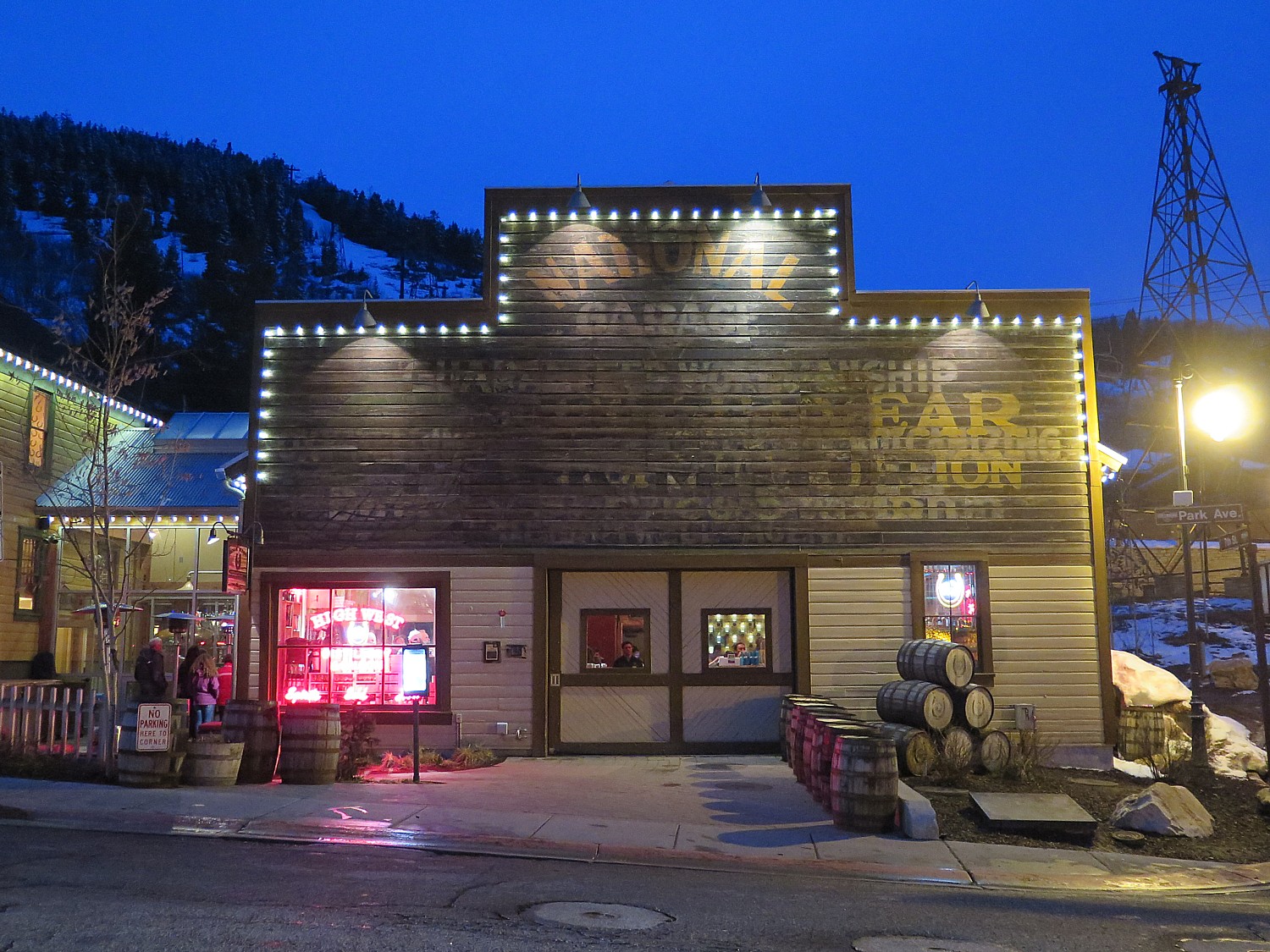
Pauline Frommer at NYT Travel Show: How to Get Best Value for Your Travel Dollar in 2017


At the New York Times Travel Show, travelers showed tremendous enthusiasm for foreign destinations, such as these Indonesia, a destination that Pauline Frommer is recommending for 2017. © 2017 Karen Rubin/ goingplacesfarandnear.com

By Karen Rubin, Travel Features Syndicate, goingplacesfarandnear.com

Travel expert Pauline Frommer, of the Frommer Guides and radio show, says that 2017 is probably the best year for Americans to travel abroad because of a surging dollar, competitive pressure on international airline fares, and an international climate where destinations are thrilled to have foreign visitors.

Travel expert Pauline Frommer urges travelers to be skeptical of online travel searches but says 2017 is a great year for Americans to travel abroad because of a strong dollar and low air fares. © 2017 Karen Rubin/ goingplacesfarandnear.com.

But she began her presentation to the 2017 New York Times Travel Show counseling travelers to be skeptical of technology that is transforming so much of how people travel and even where they travel – how online search engines can force you into purchasing more expensive hotels and airlines based on the profile that previous searches create, and, as a corollary, the intrusion into privacy.

“Often the answers you are going to get through an online search aren’t necessarily the answers you want.” This is especially true because of the way the search engines keep track – through cookies, for example – and will provide listings that seem to conform to previous searches.” The cookies might be in your computer after you did a search for a hotel or a business trip where the boss pays, so you book a $400/night hotel. “So when you try to find a hotel for a family holiday, in your search, all the expensive hotels come up first. It’s more difficult to find the least expensive.”

This is true for flight searches on popular sites (like expedia.com), where if you log off, then go back, you might find that the flight is $200 more. The way around it? You have to either clear your browser of cookies, or go online again on a different computer, or “even go to Starbucks and use their WiFi.”

Based on research that Frommer commissioned from a freelancer, Frommer recommends a couple of websites for airline searches:

Momondo.com (which doesn’t use cookies, so when you return, the price is same but you have to reenter information); and Skyscanner.net (which does use cookies)

She also counsels that the cheapest days of the week to book are Saturday, Tuesday & Wednesday flights.

And based on a study of 26 million airline transactions by the Airline Reporting Corporation, which acts as middleman between airlines and travel agencies (online and storefront), there are trends in fares (she warns won’t always be true and likely not for traveling on Christmas or SuperBowl weekend). Nonetheless, to get the best fares, she advises:

Book on a weekend, 19% savings

Book 57 days before travel for domestic tickets,10% savings

Book 176 days before travel to Europe, 11% savings

Book 77 days before travel to the Caribbean 5% savings

Book 160 days before travel to Asia/Pacific 13% savings

Book 144 days before travel to the Mideast, Africa, 24% savings

Book 90 days before travel to Central/South America, 10% savings

Book160 days to get the best air fare to Asia Pacific; new carriers are also holding international fares down© 2017 Karen Rubin/ goingplacesfarandnear.com.

Frommer (as well as travel expert Peter Greenberg) warn buyers to beware of the new category of “basic economy fares” which American Airlines recently introduced, following on heels of United and Delta. Averaging $25 less than regular economy, the airlines have tended to offer them in markets where carriers have competition from low-cost carriers like Frontier and Spirit.

“But these are really, really ugly. You will never get to choose your seat, which means you are likely to wind up in a middle seat. This is a problem if you are travel with children – if there is a plane crash, how could you leave the plane if your kids are in different seats. I don’t think will be brought up soon with current administration.” On American and United, the austerity goes beyond (and is even parodied by comedians): you don’t get to use the overhead bin, you can only bring on board the plane what you can slip under your seat; if you need to check luggage, it costs $25. Another disadvantage: you don’t get any loyalty points when you buy a basic economy seat (though loyalty doesn’t mean much of anything, anymore, she adds).

Rethink loyalty. Loyalty has been devalued by the airlines now. In the last year, you would get points for how many miles you traveled; now it’s for how much money paid, that is multiplied by how high you are in their system. If you are a big-time business traveler, your money is multiplied by 5; if you only travel only twice a year, it is only multiplied by 2 – not greatest system. It will cause major fights at the gate.”  American, she says, is soon going to use its new Loyalty standard to determine where you get on a list to upgrade (it used to be, as an elite member, first-come, first serve, now the airline will look how much money you spent to get elite membership).

The only way to make the points game work in this climate, she advises, is to use credit cards.

Good news for travelers: airfares in the US have stayed stable, and airfares abroad are dropping dramatically because of new players like Norwegian Airlines (offering $499 fare each way to London), WOW airlines, XL Airlines (operating to Paris, www.xl.com/us/, which used to only concentrate on French travelers, but now Americans, too); Thomas Cook Airlines, Eurowings, AirAsia, Emirates, and soon, JetBlue, adding, “Any airline flying into the United States has to adhere to our gate standards.”

Emirates Airlines, which has been offering low fares, is not new but going to a lot more places in Europe for a lot less money. “Now Milan is the cheapest gateway in Europe because of Emirates.” And the international scene may get a new competitor, as JetBlue is looking to starting to fly to Europe.

Also, AirAsia has started flying to Asia, pushing fares down 25% from last year.

Context Travel specializes in small-group walking tours led by experts and focused on a theme, such as of Ancient Athens, Greece © 2017 Karen Rubin/ goingplacesfarandnear.com.

How do you find great ways to sightsee besides using Frommer guide? All around the world, you can find local walking tours led by starving graduate students. “These are people who go to places like Venice, Rome, New York, Chicago to work on dissertations and to make a little extra money, often lead walking tours. They know they have to be really entertaining or they won’t get a tip (which is all they make). The best walking tour in Rome, Through Eternity, is led by a woman writing her dissertation on Michelangelo, who had been studying letters his assistants on scaffolding had been writing the Pope. From those, she learned that Michelangelo, who was from Florence, believed Rome’s water was poisoned and because of that, did not bathe for the 10 years he was in Rome. That’s what his assistants were writing about. This woman really knew and was passionate about what she was speaking about.” Such tours can also be a refreshing change from tour guides who, because of limitations on purchasing licenses, have been at it for decades, and “sometimes are so bored telling about Hadrian’s Gate for the 10,000th time.”

Atypical tour companies include:

G Adventures

Djoser

Intrepid Travel

Explore!

Context Travel

Road Scholar

G Adventures, Djoser, Intrepid Travel all are designed around small groups, never more than 12 people, use locally owned guest houses, local transportation to keep green [and provide a closer, more authentic experience], provide a lot of free time to explore on your own, and tend to be much cheaper than the competition. G Adventures is based in Canada, Djoser in Holland, and Intrepid is an Australian company so you are not just traveling with other Americans, but people from all over the world [which is also a special experience].

“I took an Intrepid family tour with my kids in Morocco. It was the most wonderful tour because of our group. We had a German family, 2 British families and a family who lived four blocks away from us in Manhattan. Explore!, an interesting British company, does hardcore tours of places that are otherwise difficult to get to on your own – the Stans, deep Africa, deep south Africa. Context Travel hires erudite guides – it is the most expensive on list, but they run really smart learning vacations to major cities. It started in Italy, now everywhere. Road Scholar (used to be Elderhostel) is for seniors, offering smart tours, hub and spoke so you stay in one place and take day trips; tours are often led by professors, educators.”

Under the category “Solo travel with a safety net,” Frommer cites Women Welcome Women (a UK-based international membership network started by a woman who was jealous of son being able to do exchange, http://www.womenwelcomewomen.uk/article/home.aspx; which is not a travel agency or travel company, but basically network women traveling to other cities).

Greeter Tours are free tours run by local who love showing their home town to people from around the world. (in NYC, Chicago, Houston, Paris, Lyon, Bangkok, Delhi, Cordoba, Grenada, Sydney, etc. (GlobalGreeetersNetwork.info)

For a very different perspective on a city, look for a greeters program, such as “This is My Athens” program offered through the city’s tourism bureau, which matches visitors with a local volunteer. Here, my Athens with a Native guide, Constantine E. Cavoulacos, with the owner of Panagiotis, a neighborhood eatery. © 2017 Karen Rubin/goingplacesfarandnear.com.

Accommodations. There’s been a sea-change in accommodations – AirBnB now has more beds in its inventory than all the major hotel chains combined. “Last year, [hoteliers] were saying AirBnB wasn’t affecting prices because a different person uses AirBnB. But this year, they are saying it is affecting prices. It used to be hotel chains would know they could raise prices sky high for a major holiday; now they no longer have that kind of security [control].”

The best search sites for accommodations, she says, are HotelsCombined.com (#1 for prices 92% of the time, according to a study, but Hotelscombined doesn’t actually sell from inventory, it just Googles), followed by Trivago (which is owned by Expedia; expedia gets inventory from the major chains).

In terms of OTAs (online travel agents), booking.com wins (not just the big hotel chains), followed by Asia specialist Agoda.com (best prices for Asia).

The best Booking Blind sites are: Priceline.com, hotwire.com, and biddingtraveler.com.

For lodging rentals, she recommends:

AirBnB.com

Homeaway.com (owns Rentals.com, owned by Expedia, massive corporation)

Zonder.com

FlipKey.com

VRBO.com

Sea Changes in Cruising: The cruise industry is seeing a sea change in technology. Frommer is skeptical about where technology is leading, particularly the juncture of privacy and marketing.

Carnival Cruises, for example, is very excited about a new medallion that replaces a key card, credit card, and knows if you are scheduled for a yoga class or a show or have a restaurant reservation.

“Medallion or Horcrux?  They hook you up to an app. They know where every member of your party is, open your door, order a drink, and will sell you things. I find this disturbing – from the point of view of the lack of privacy –a large corporation is going to know everywhere you are. They will be able to up-sell you. You may be glancing at a list of shore excursions and somebody will appear at your side to tell you why you should take a shore excursion.”

But one good trend in cruising, she says, are the lines that have responded to complaints about getting into a port at 9 am and leaving at 2 pm. Some are changing itineraries to allow more time in port, and some make it a focus. Azamara Club Cruises (which pioneered overnight stays, even 2-3 nights in a port so you can really get to know a city, but the trade-off is fewer sea days to relax) and other lines where they give you more time in port, like Oceania, Celebrity Cruises, Costa, MSC, and Holland America, so you can experience nightlife in a place and you don’t have to rush back to ship).

Cruiselines also are introducing new ports to their itineraries such as in Ireland, Australia, Asia, Scandinavia).

Frommer has a bugaboo about how much shore excursions cost: “They scare guests to take them when they don’t need to. They say if you don’t, the ship can leave without you. I say, get a watch. In most cases, you can wander off the ship and see as much as the shore excursion.

But, you can purchase less expensive port excursions than the ones offered by the cruiseline through such agencies as CruisingExcursions.com, ShoreTrips.com, Viator. CruisingExcursions.com and ShoreTrips.com offer 12-person vans and usually charge 2/3 of cruise ship costs. Viator is more of a marketplace for city tours will give you guarantee that if you miss the boat they will pay to get you to next stop.

There are tremendous differences in cruiselines – aesthetics, what the experience is like. “When you take a cruise, the ship is your vacation, so get the best ship for you. Use a travel agent. This is one area where you are foolish not to use travel agents – those who specialize in cruises, get special discounts they can pass along, complimentary upgrades, shipboard credits, bottle of wine. They know their boats [and typically have toured the ship and have worked with the line]. Not all travel agents are equal. Ask questions. Make sure the travel agent represents all lines or, at least, the ones you are interested in. They can suggest the best cabin for the price you are willing to pay.

River Cruising has become extraordinarily popular, largely due to the success of Viking River Cruises. “For centuries, the rivers of Europe, Asia, America were the arteries that people used to get place to place, so you are in the middle of everything. You step off the boat and in front of you is the cathedral, the historic square.” (Frommers has a guidebook just on river cruising.)

The beauty of river cruising is that cities are right along the water. The Danube is one of the best rivers for cruising. © 2017 Karen Rubin/ goingplacesfarandnear.com

But not all river cruises are alike, she notes.

In the category of Over the Top, most luxurious: Uniworld, Tauck, Scenic.  “Uniworld has a designer that Marie Antoinette would approve – crystal, silk wall paper; it’s over the top extravagance. Tauck is as luxurious but a little more contemporary in décor, well known for shore excursions. The dirty little secret of river cruises is that all the river cruises except Tauck and Gate 1 share the same guides on shore. Scenic gives all its guests headphones, so can hear commentary about what you are passing on shore; it is an Australian company so you are traveling mostly with Australians and blasts Olivia Newton-John at night; it offers fun trips (and also owns a budget river cruisline, Emerald Waterways).

Luxurious: AmaWaterways, Viking River Cruises, Avalon Waterways. Avalon and Ama are trying to attract younger crowd with more active experiences – kayaking on river; Ama carries bikes on board.

Budget Emerald Waterways, Grand Circle, Croisie Europe. “Croisie Europe is the second biggest river cruise company in the world after Viking, but you probably never heard of it because the line only marketed to Europeans until recently – so in Europe, you are surrounded by Europeans. Croisie tends to have very reasonable prices, but some Americans aren’t comfortable because of a language barrier. “Grand Circle, in contrast, only markets to Americans so you will be on ship with Americans, have burgers at every meal if you want, but in their defense, they do a lot on the educational side, bringing on educators, so the cruises are more erudite, but cheaper than the others.”

Family friendlyAmaWaterways has partnered with Disney to do tours for families. “These are wildly popular and very well done (not surprising, Disney). There are no characters onboard, but they have activities to keep kids busy on land and river. It’s great for multigenerational.” Tauck is another with family-friendly tours.

Best rivers (for first timers): Danube (variety – castle, spas, vineyards, interesting trip), Mississippi (variety, start or end in New Orleans, plantations, Civil War sites, Mark Twain sites); Mekong (because you go to many places you couldn’t otherwise get to except by river cruise).

Where to Go 

The US Dollar is strong pretty much everywhere, “whooping every other currency.”

Brexit tanked the British pound

Euro that cost $1.45 in 2012 costs $1.05 in 2017.

Japanese yen lost 1/3 of value against the dollar from 2012

“It’s never been a better time for Americans to travel abroad (at least from a strong-dollar point of view).

Imperial Palace, Tokyo. The dollar has more buying power in Japan because of a strengthening dollar against the Japanese yen. © 2017 Karen Rubin/ goingplacesfarandnear.com.

As for where to go, Frommer (and Peter Greenberg as well), also tell Americans not to be discouraged by terror attacks in places like Paris, which has lost 30% of its tourism, a vital economic component. “In certain rooms in the Louvre, I was  alone; I didn’t make advanced reservations at restaurants, some of most coveted in Europe; the hotel room, everything was cheaper,” Frommer, who visited Paris in June, says., “And Parisians are happy to see Americans. There’s never been a better time.”

But she points out that a lot of the discomfort for Americans, who see headlines and have little comprehension of geography, is perception:

“What do the UAE, Bahamas, France, New Zealand, United Kingdom have in common? They each issued travel warnings against coming to the United States because of gun violence. We are New Yorkers. We know what it is to bounce back [after a catastrophic event].”

But if you are looking for a city like Paris but has bagels? Montreal is celebrating its 300th anniversary this year. The home city of Cirque d Soleil will be the scene of the craziest, most surreal celebrations – 40 foot tall marionettes marching through streets, 3D projections on the river; you can download a free app of the historic district and as you go through, suddenly there is a Sound & Light show.

Haida Gwaii (formerly known as the Queen Charlotte Islands; the people changed back the name to the original First Nations name) “has everything that Alaska has – fishing, wilderness areas, First Nation’s culture but without the crowds and 30% cheaper. I highly recommend visiting before it is better known.”

Indonesia, the largest Muslim nation in the world. “Open the doors. Go there but not necessarily Bali – that is over-loved.” She recommends Sula Wessy – an island of incredible culture, architecture, bright green rice paddies, the smallest monkeys on planet, and fascinating cultural rituals. In

Bali, outsiders can go to weddings and funerals, where welcome; in Sula Wessey, funerals are so elaborate that when people die, they are mummified similar to Egyptians, and left in the house; the mummy lives with the family for years because it takes that long to raise money for the funeral. They have elaborate processions, feasts, dances, and water buffalo sacrifices, then finally the body is buried in rock caves. It is fascinating to visit and less touristic than Bali.

Northern Lights. This is the year to see the Northern Lights, a phenomenon caused by storms on the sun that shoot particles into the Earth’s atmosphere. It goes in a 10-year cycle and 2017 is the last year of the cycle. It will be spectacular this year and crumby for the next. There are inland places in Norway, next to Arctic Circle, where there are no worries of fog from the sea obscuring as well as dog sledding.

Pantanal, the largest inland wetland in the world – twice the size of Iceland, is straddles Brazil, Bolivia and Paraguay (?). A decade ago, you couldn’t go in, because it was too difficult, but now river boats go in and for nature lovers it is spectacular because all the foliage is low to the ground so you can see more easily than Amazon – 500 species of birds, jaguars, tapirs, giant otters, fascinating wilderness. It is becoming more popular, so go now.

Nashville prides itself as being the “Athens of the South.” this year, “Music City” is celebrating the 120th anniversary of the Ryman and 50th anniversary of the Country Music Hall of Fame. © 2017 Karen Rubin/ goingplacesfarandnear.com

Nashville – hot – wonderful city – 120th anniversary of Ryman, 50th of Country Music Hall of Fame – every kind of music – get off the plane, live musicians. Foodie scene. Parthenon-replica [Nashville considered itself the Athens of the South], – which sounds silly until you visit – it is the symbol for the city which has many universities, a major medical center, a whip smart population. You will meet great people.

Bermuda – will be home to the America’s Cup this year, undergone millions of dollars of infrastructure rejiggering. Martin Samuelson opening restaurant, great chefs opening. The Hamilton Princess has undergone a multi-million renovation. “More than fun in sun, Bermuda has interesting culture (British, high tea, Bermuda shorts without irony) –a really interesting place, historic sites.”

Not just “fun in the sun” on its famous pink beaches, Bermuda also offers a rich heritage, travel expert Pauline Frommer says © 2017 Karen Rubin/ goingplacesfarandnear.com

She adds as a “bonus place” to her list: Cuba. “President Trump has said he will shut the door there and he can with sign of pen. It was opened by President Obama by executive order so can be closed down just as quickly. But Cubans are smart, when Trump was elected, they fast-tracked port rights to Carnival and 5 other major lines, fast tracked hotel building permits to Marriott and Hyatt and are trying to get Corporate America on their side so Trump can’t undo relations. But go to Cuba while you can and before the changes that would inevitably come.

Connect with Pauline Frommer at Frommers.com, @frommers, on Facebook Frommers.

See also: 

NYT Travel Show: Greenberg Tells Intrepid Travelers to Exploit ‘Brave New World of Travel’

____________________

© 2017 Travel Features Syndicate, a division of Workstyles, Inc. All rights reserved. Visit goingplacesfarandnear.com and travelwritersmagazine.com/TravelFeaturesSyndicate/. Blogging at goingplacesnearandfar.wordpress.com and moralcompasstravel.info. Send comments or questions to FamTravLtr@aol.com. Tweet @TravelFeatures. ‘Like’ us at facebook.com/NewsPhotoFeatures
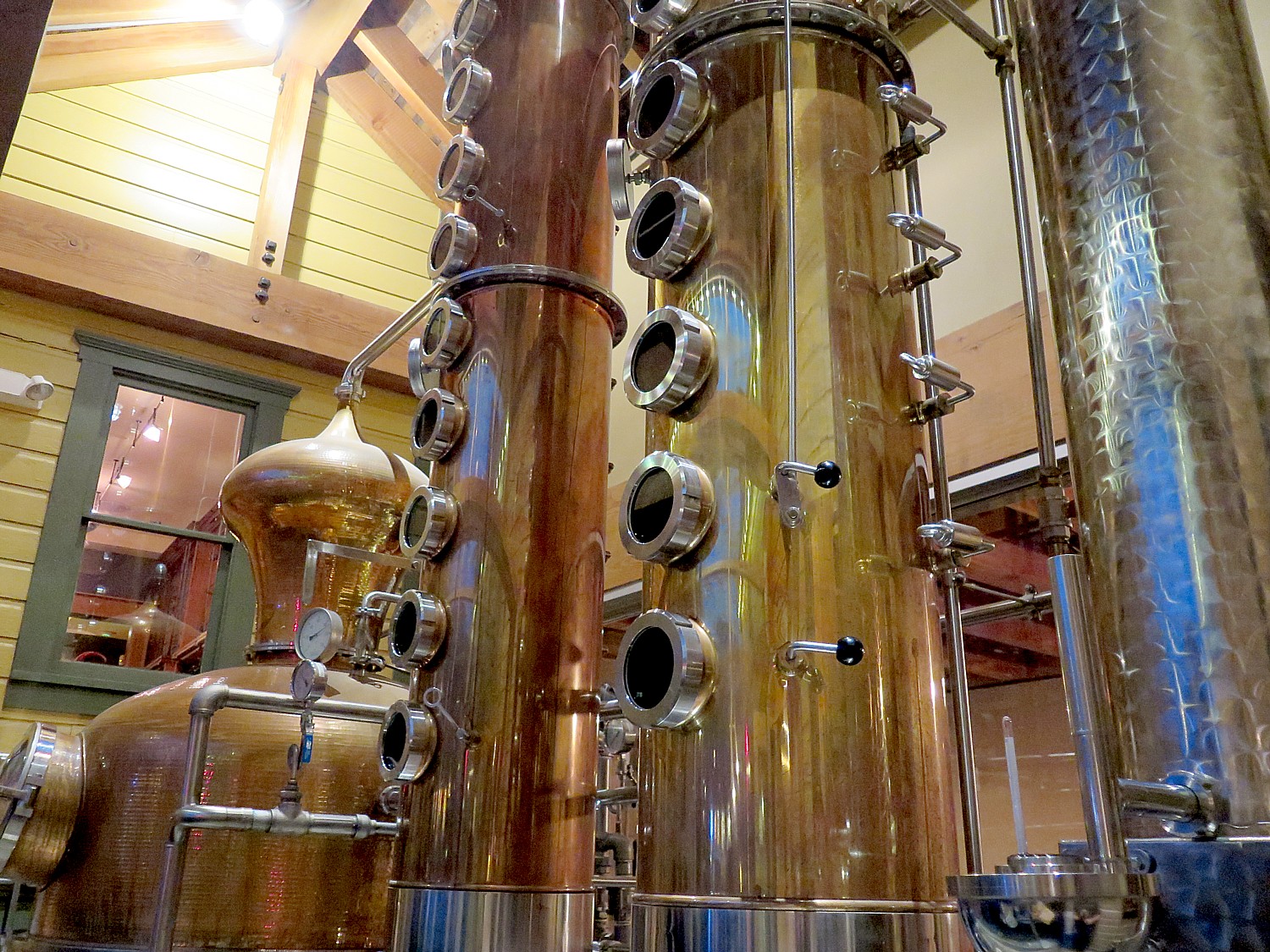
 

Chinatown, NYC Celebrates Year of Rooster at 18th Annual Lunar New Year Parade

18th Annual Lunar New Year Parade, Chinatown, New York City © 2017 Karen Rubin/ goingplacesfarandnear.com

By Karen Rubin, Travel Features Syndicate, goingplacesfarandnear.com

New York City’s Chinatown celebrated the Year of the Rooster with its 18th annual Chinatown Lunar New Year Parade & Festival.

US Senator Charles Schumer of New York was the Grand Marshal.

All along the route, Senator Charles Schumer gave a shout out to the largest ethnic Chinese community in the US, to Chinese immigrants, to all immigrants, and finished with a declaration “Immigrants make America great. We need more,” eliciting cheers from the crowd each time, as the parade wound its way along Mott Street.

US Senator Charles Schumer, Grand Marshal of the 18th Annual Lunar New Year Parade, Chinatown, New York City © 2017 Karen Rubin/ goingplacesfarandnear.com

Periodically, he would make his way to personally greet parade-goers, which included many people from outside the community. The most frequent comment that he heard had to do with somehow torpedoing the confirmation of Betsy DeVos as Education Secretary. “She’ll be terrible,” he said. “We need one more vote. I’m working on it.”

Occasionally a few in the crowd would shout an anti-Trump remark, but in general, the crowd was in the spirit of the Lunar New Year.

US Senator Charles Schumer greets paradegoers at the 18th Annual Lunar New Year Parade, Chinatown, New York City © 2017 Karen Rubin/ goingplacesfarandnear.com

This is the Year of the Rooster, the tenth in the 12-year cycle of Chinese zodiac sign. The Years of the Rooster include 1921, 1933, 1945, 1957, 1969, 1981, 1993, 2005, 2017, 2029.

18th Annual Lunar New Year Parade, Chinatown, New York City celebrates the Year of the Rooster © 2017 Karen Rubin/goingplacesfarandnear.com

“The Rooster is almost the epitome of fidelity and punctuality. For ancestors who had no alarm clocks, the crowing was significant, as it could awaken people to get up and start to work. In Chinese culture, another symbolic meaning of chicken carries is exorcising evil spirits,” according to the travelchinaguide.com site.

New York City’s Chinatown, two square miles in lower east side of Manhattan, is the largest Chinatown in the United States and the site of the largest concentration of Chinese in the western hemisphere. Manhattan’s Chinatown is also one of the oldest ethnic Chinese communities outside of Asia.

Chinatown, New York City, largest Chinese-American community in the US, celebrates the Year of the Rooster © 2017 Karen Rubin/ goingplacesfarandnear.com

Schumer’s encouragement for immigrants was understandable in Chinatown. With a population estimated between 70,000 and 150,000, Chinatown is the favored destination point for Chinese immigrants, though in recent years the neighborhood has also become home to Dominicans, Puerto Ricans, Burmese, Vietnamese, and Filipinos among others, according to Sarah Waxma, who writes about the history of Chinatown on the Chinatown-online.com site, which is also a source for planning a visit and touring.

Lunar New Year Parade, Chinatown, New York City © 2017 Karen Rubin/ goingplacesfarandnear.com

“From the start, Chinese immigrants tended to clump together as a result of both racial discrimination, which dictated safety in numbers, and self-segregation. Unlike many ethnic ghettos of immigrants, Chinatown was largely self-supporting, with an internal structure of governing associations and businesses which supplied jobs, economic aid, social service, and protection. Rather than disintegrating as immigrants assimilated and moved out and up, Chinatown continued to grow through the end of the nineteenth century, providing contacts and living arrangements — usually 5-15 people in a two room apartment subdivided into segments — for the recent immigrants who continued to trickle in despite the enactment of the Chinese Exclusion Act of 1882,” she writes.

Lunar New Year Parade, Chinatown, New York City © 2017 Karen Rubin/ goingplacesfarandnear.com

In remarks that sadly resonate in today’s headlines because of Trump’s Travel Ban on seven predominantly Muslim nations, she notes that “The Chinese Exclusion Act (1882-1943), to date the only non-wartime federal law which excluded a people based on nationality, was a reaction to rising anti-Chinese sentiment. This resentment was largely a result of the willingness of the Chinese to work for far less money under far worse conditions than the white laborers and the unwillingness to ‘assimilate properly’.”

There is none of this dark history on view today, only celebration.

Lunar New Year Parade, Chinatown celebrates culture © 2017 Karen Rubin/ goingplacesfarandnear.com

At the Lunar New Year, Chinatown becomes a fantastic street party with vendors, food and festivities, and heritage and ancient traditions on view.

“Lunar New Year is the liveliest and most important celebration in Chinese culture and Chinatown is the place to experience it!

The Museum of China in the Americas (MOCA) offers a walking tour that takes visitors through Chinatown to learn about holiday traditions and customs observed by Chinese households. Witness how the neighborhood transforms itself in preparation for the New Year and discover the characteristics that make this holiday unique.”

Lunar New Year Parade, Chinatown, New York City © 2017 Karen Rubin/ goingplacesfarandnear.com

Tours are conducted in English and are led by MoCA docents with personal or family roots in the neighborhood. In case of inclement weather, tours will be held in the galleries. Advance reservations are required. For information and reservations call 212-619-4785 or purchase tickets online, www.mocanyc.org. (Museum of Chinese in America, 215 Centre Street New York, NY 10013, 855-955-MOCA).

For more information, visit www.chinatown-online.com.


Lunar New Year Parade, Chinatown, New York City © 2017 Karen Rubin/ goingplacesfarandnear.com

____________________

© 2017 Travel Features Syndicate, a division of Workstyles, Inc. All rights reserved. Visit goingplacesfarandnear.com and travelwritersmagazine.com/TravelFeaturesSyndicate/. Blogging at goingplacesnearandfar.wordpress.com and moralcompasstravel.info. Send comments or questions to FamTravLtr@aol.com. Tweet @TravelFeatures. ‘Like’ us at facebook.com/NewsPhotoFeatures
 

Because travel is a life-enhancing, relationship building, world-changing experience