I am surprised at how much we could cover on our first day in Yosemite National Park, spent hiking in Yosemite Valley. This is the most popular and iconic part of this vast park, the size of Rhode Island, but the three trails we chose – Mist Trail, John Muir, Mirror Lake – haven given us a really good sense of the park, despite its size. Since we need to leave the area for San Francisco, 200 miles away, by 4 pm, we cleverly find a hike (thanks to the Tenaya Lodge concierge) that starts from just inside the South Gate, in the Wawona section, thereby cutting out 1 ½ hour drive each way jut to get into Yosemite Valley at the center of the park. We plan this out very well: the Chilnualna Falls Trail is just about 6 miles from the Tenaya Lodge, and is much, much, much less crowded – and yet, we meet some wonderful people from Australia and other places.
It is also sufficiently long hike to take about five or six hours – exactly the amount of time we have, and, we discover, offers dramatic, close-by views of the cascading Chilnualna Falls, the sweeping vistas of the southern Yosemite, and wonderful diversity of the landscape, as the trail winds through a variety of terrain and habitats. Our choice proves brilliant.
We start out in the village of Wawona (you pass a general store so if you need supplies, this would be a great place), turn onto Chilnualna Falls Road and park at the trailhead (there are restroom facilities here).
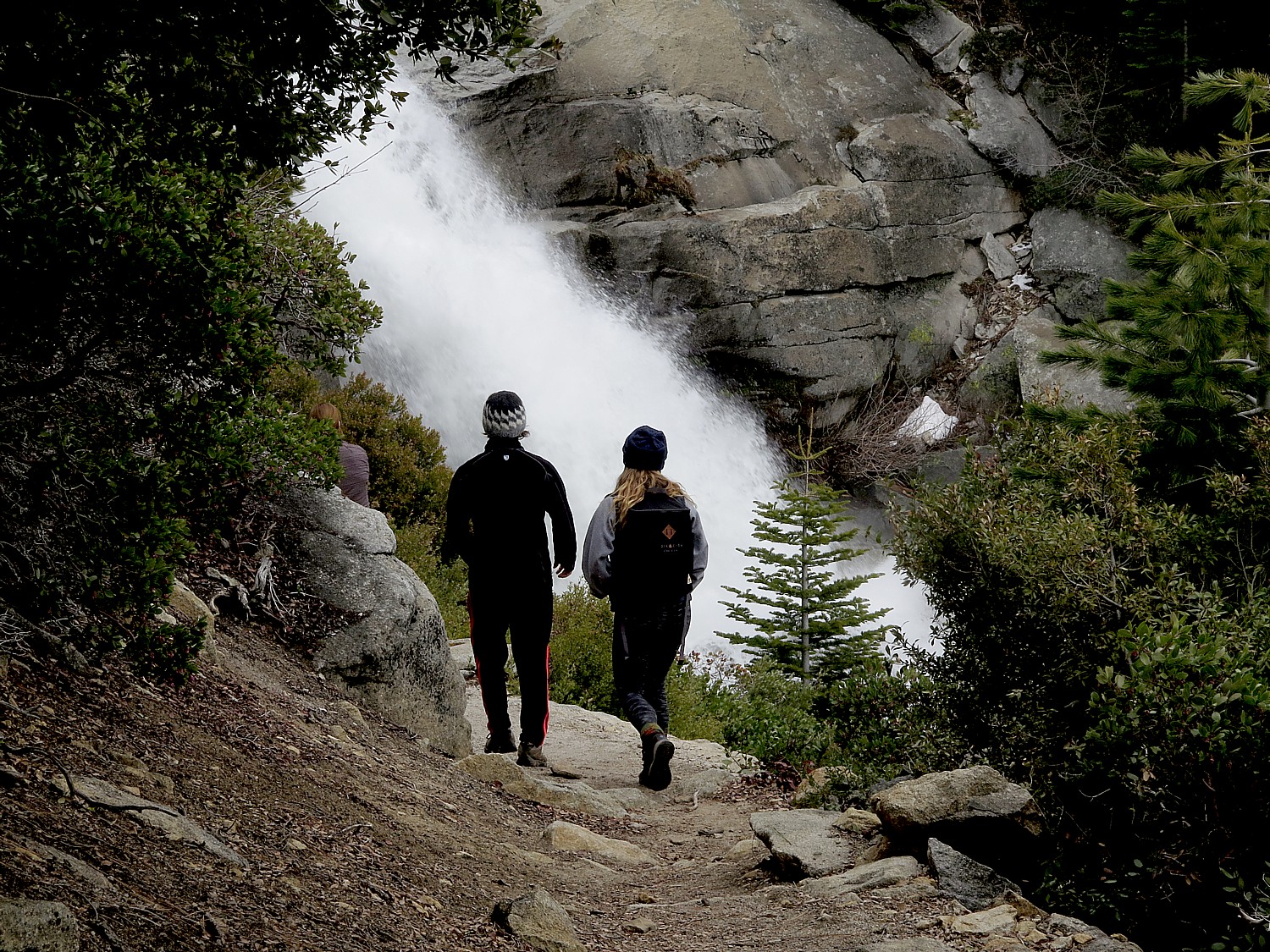
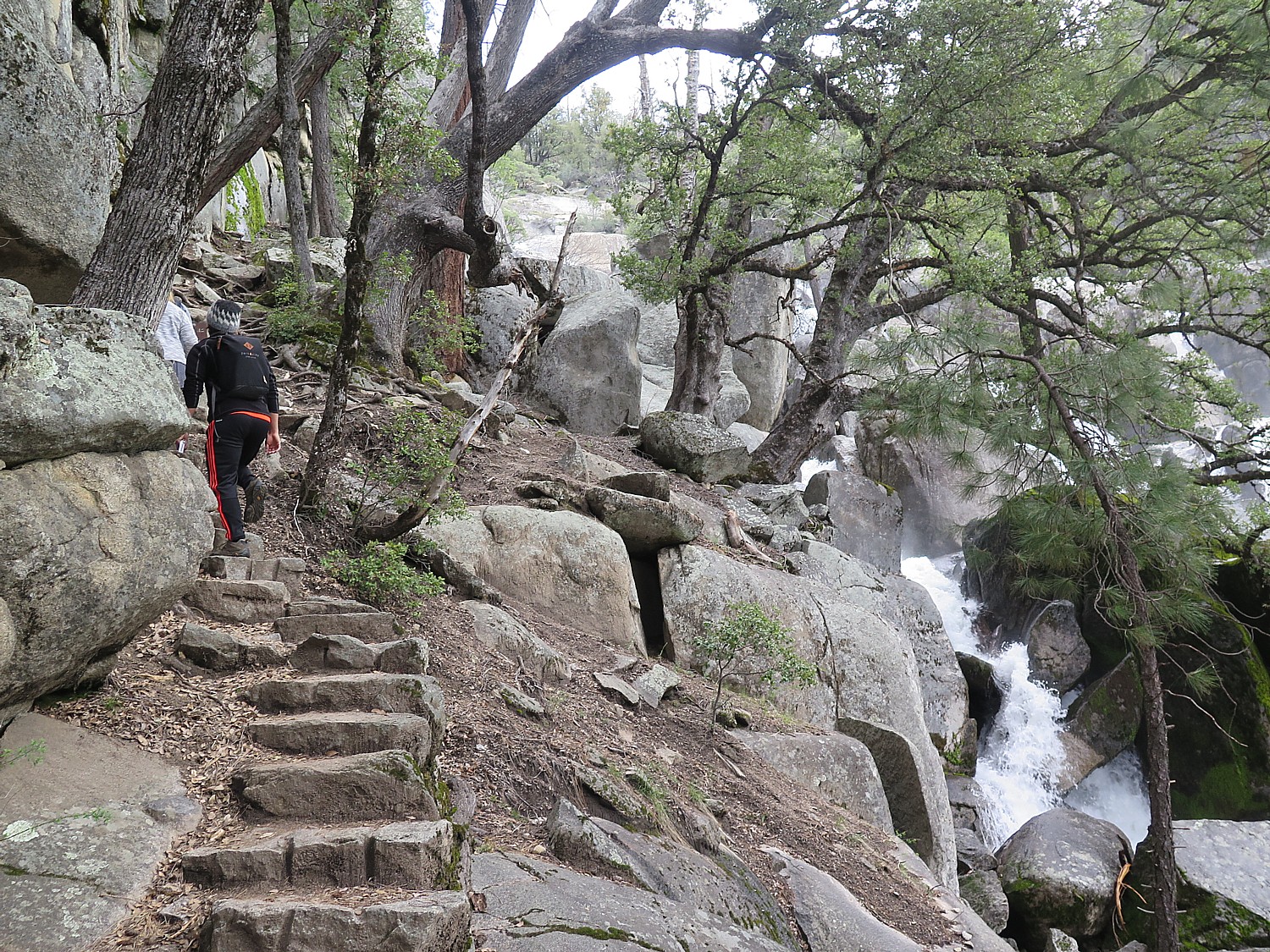
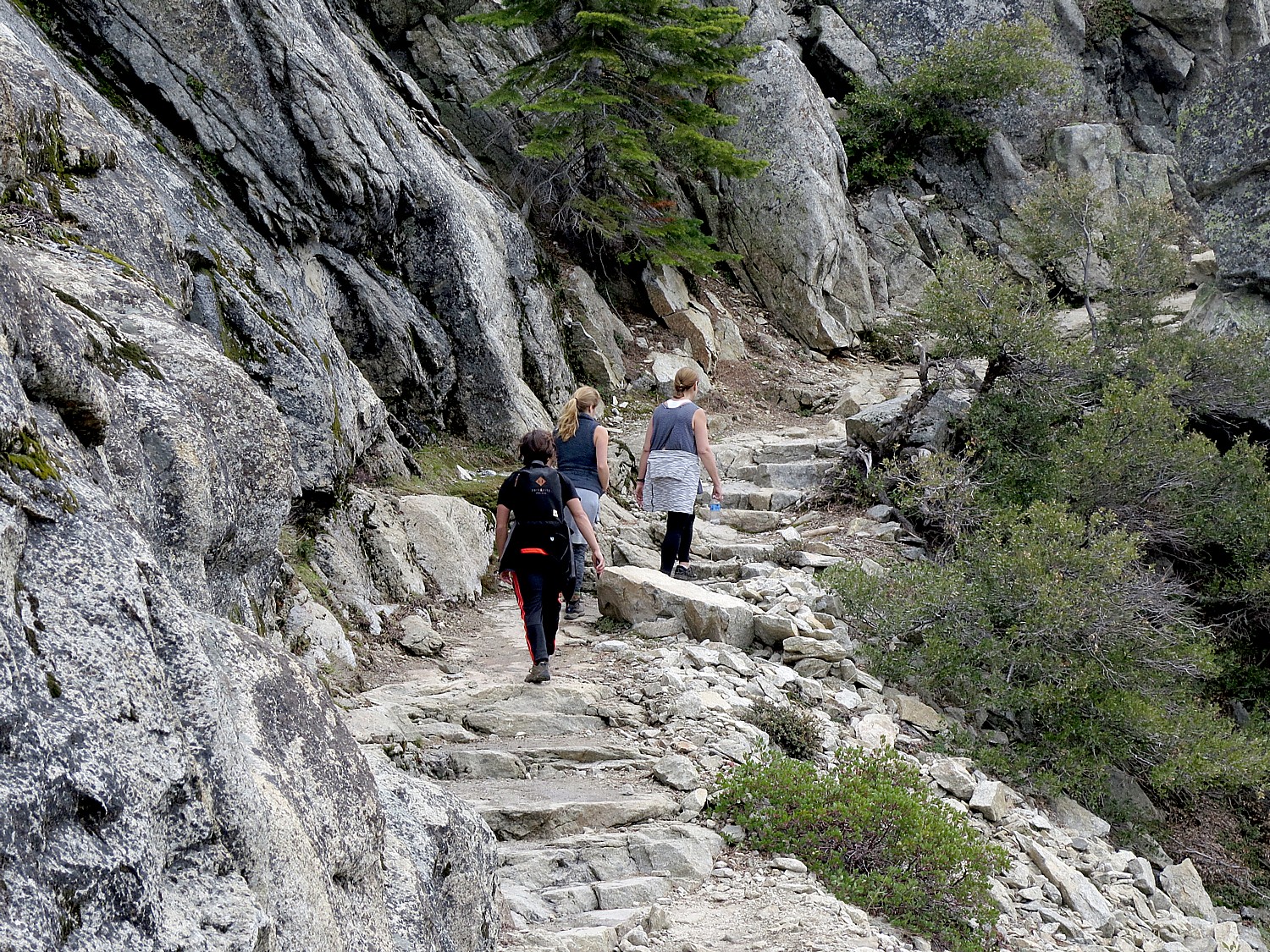
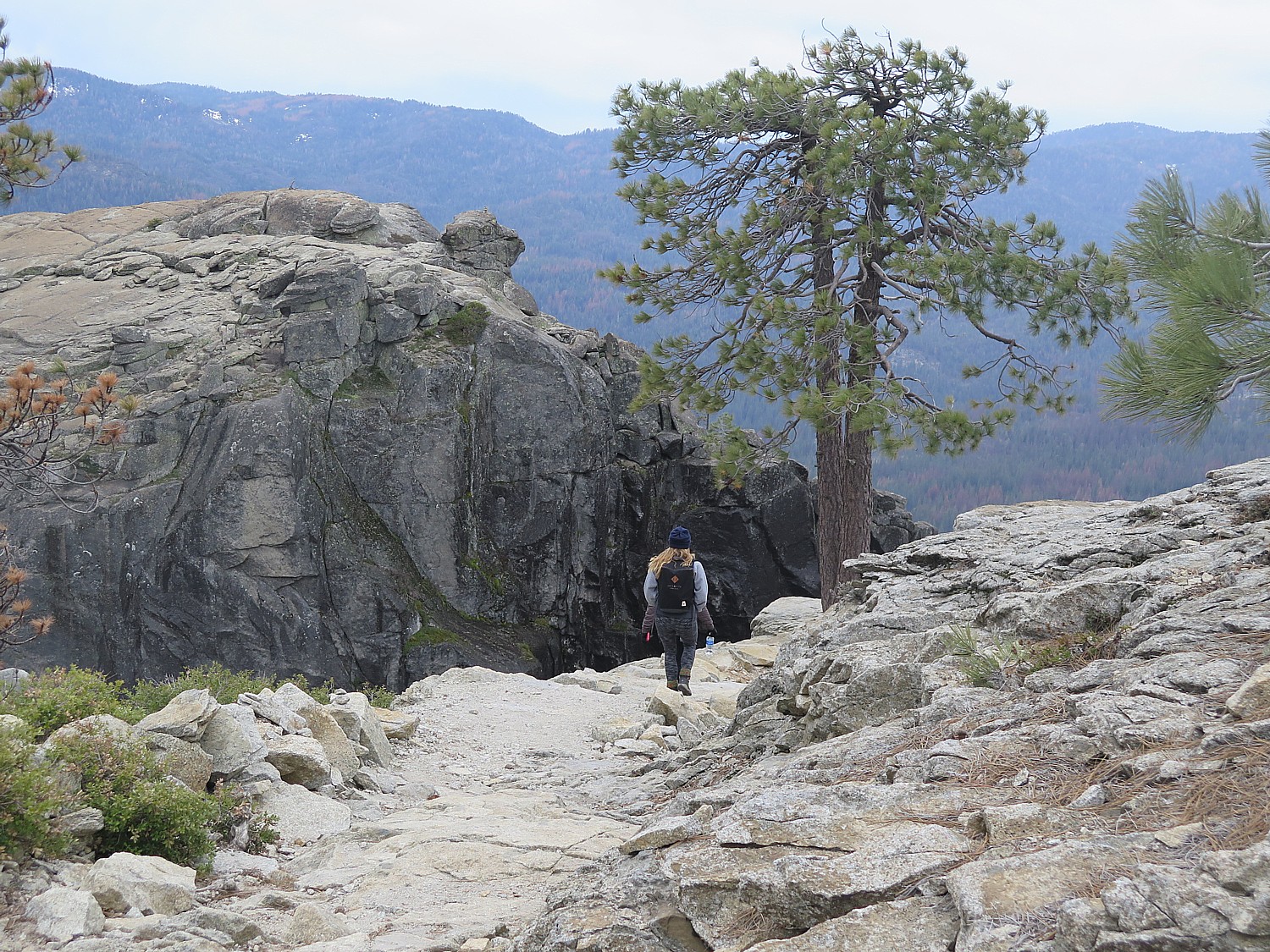
This hike is billed as strenuous – mainly for a fairly steep, nearly mile-long beginning, that includes narrow, high stone steps (with the reward of a gorgeous cascading waterfall). Then it is a steady upward (though mostly gradual) climb for about 4 miles, with a 2,400-foot elevation gain to an altitude of 6,600 feet – that’s what makes the hike tough.
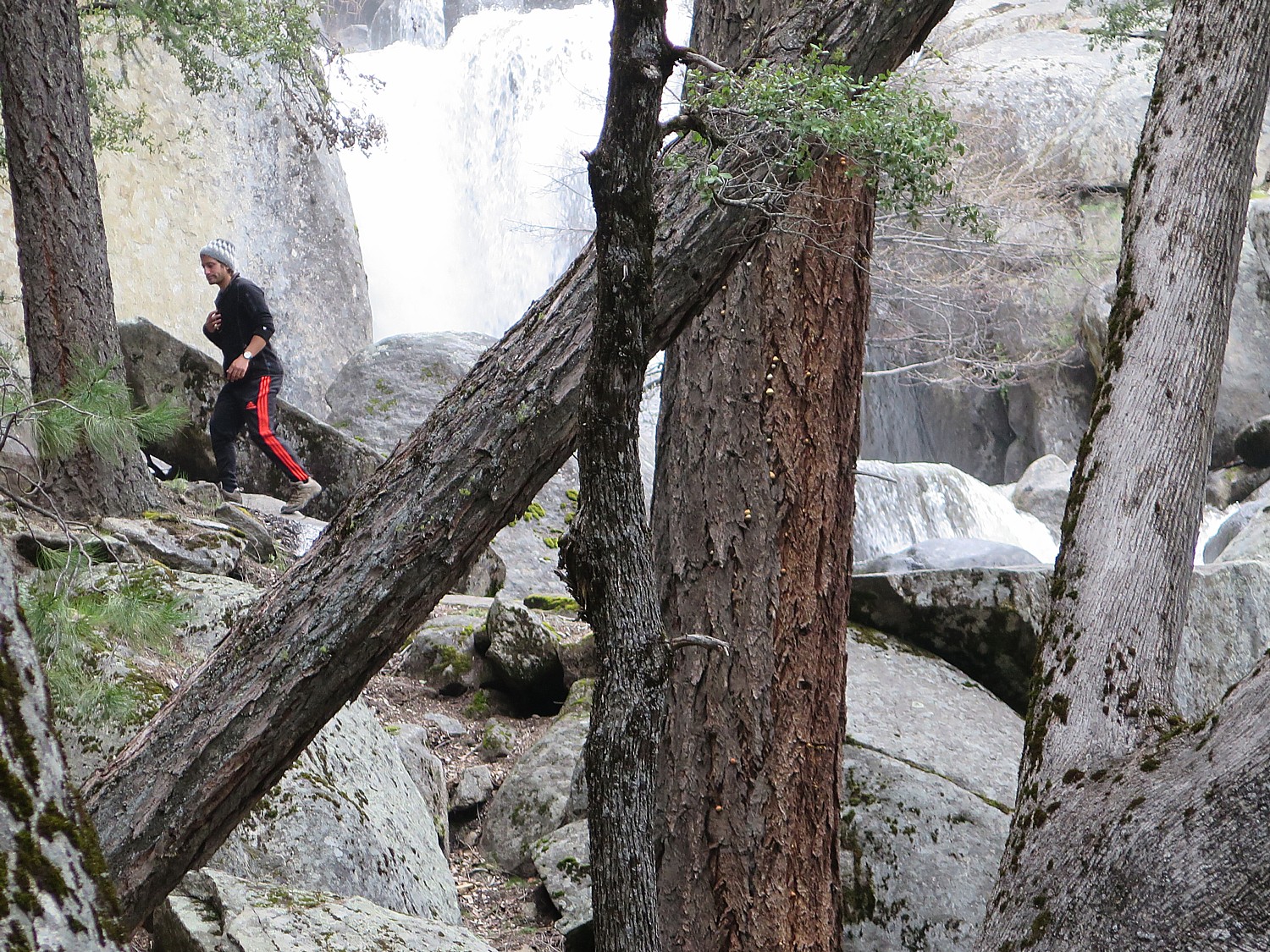
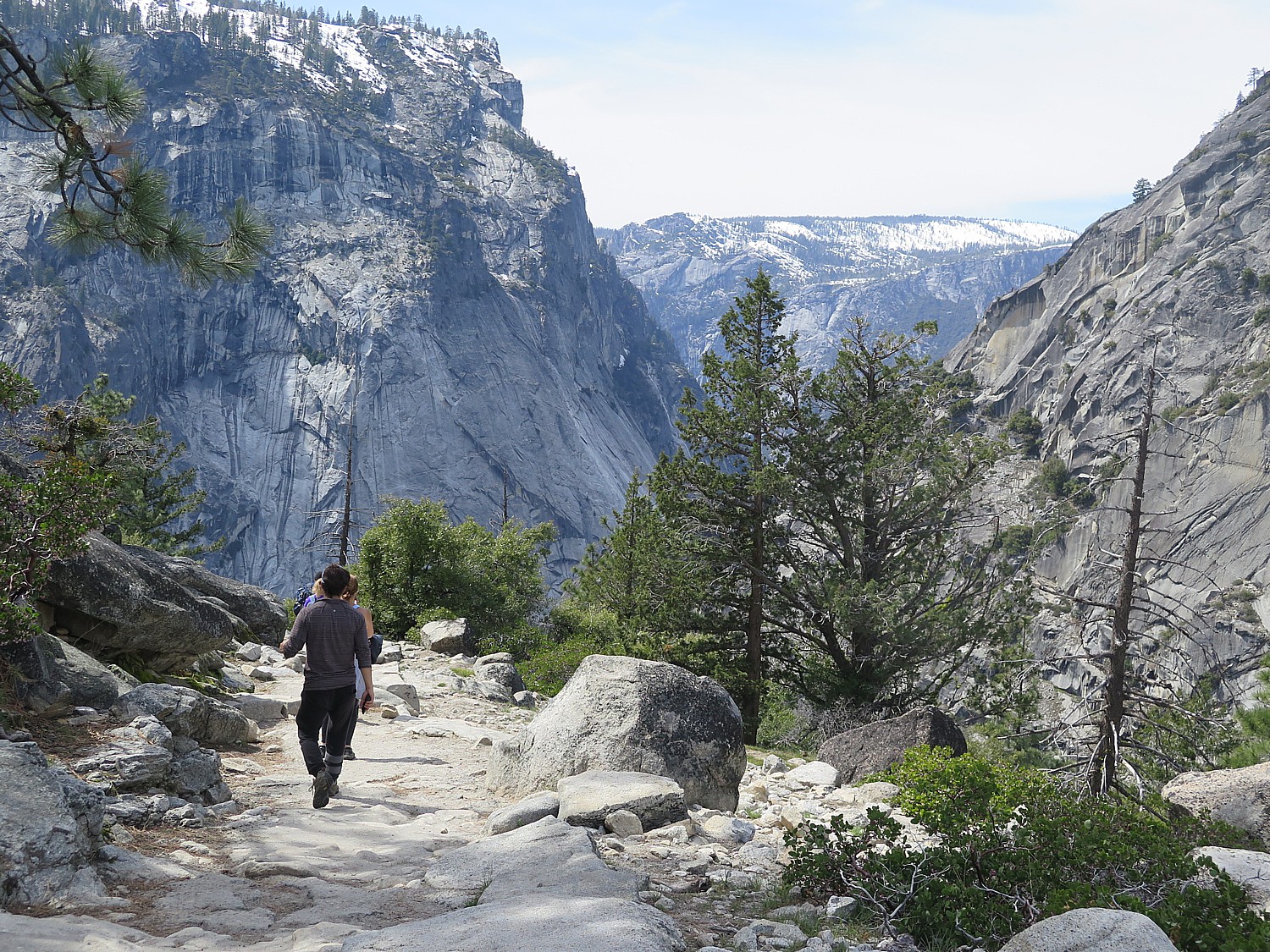
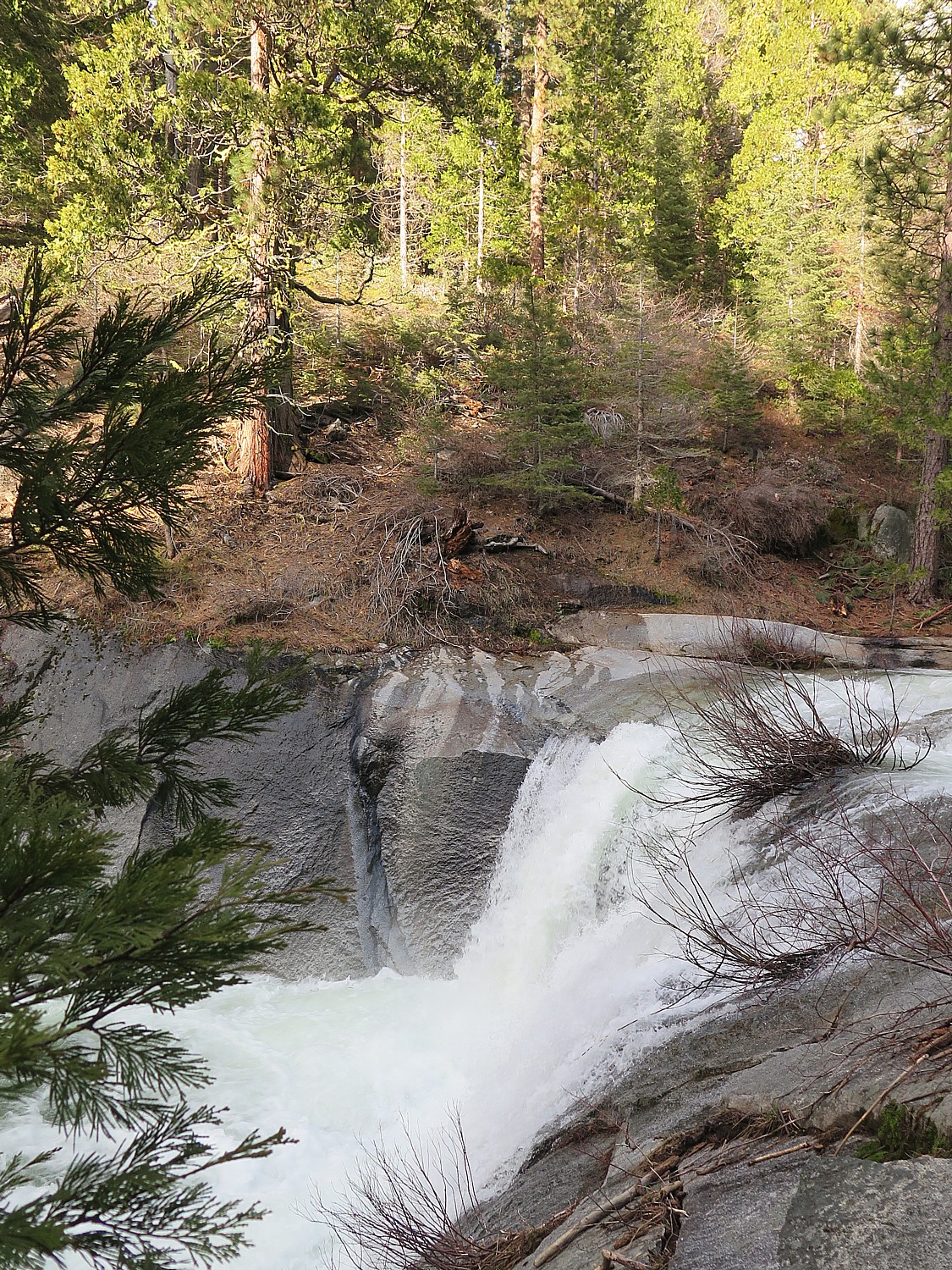
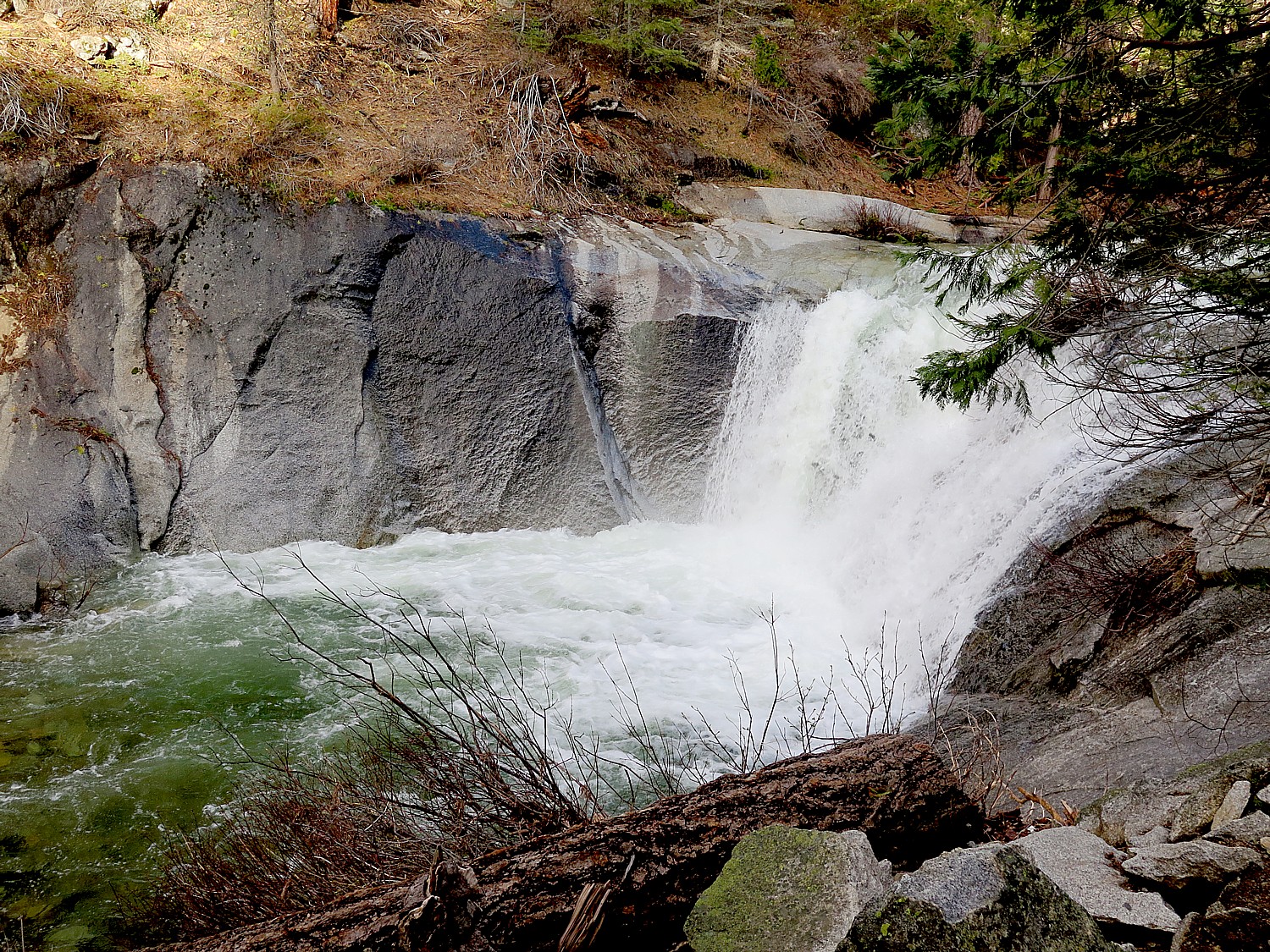
The Chilnualna Falls, which fortunately for us is one of the less known and visited falls (and not accessible by car), consists of five large cascades that slide through and over large granite rock formations – almost like the ruins of a fort, parts of which we get to climb.
At various points we come across the cataracts, up close, and each time, the sound and view is dramatic.
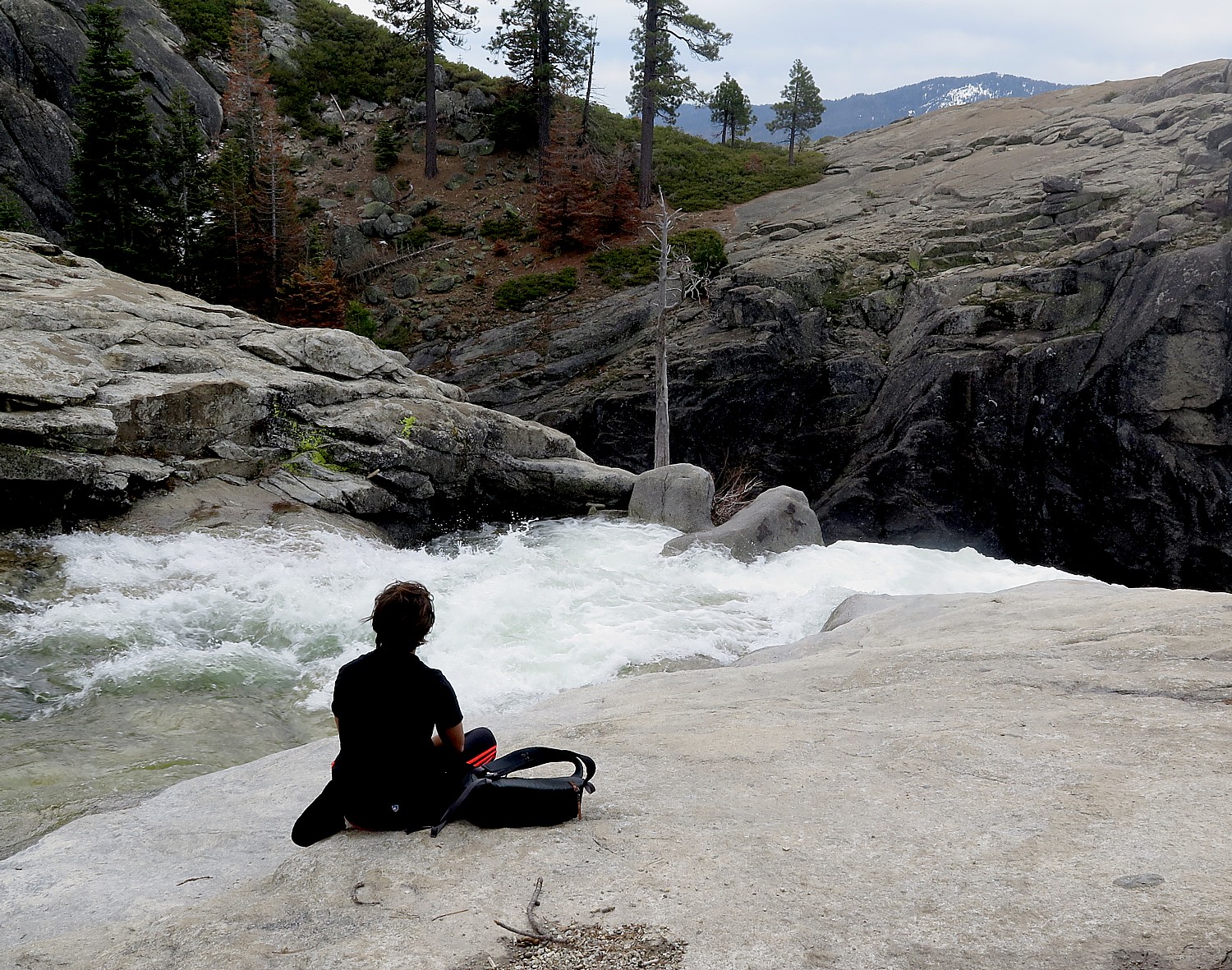
Finally, we come to a beautiful scene where the Chilnualna Falls comes to a ledge before going over a ridge. Here, we sit along some flat rocks right beside the water, and look over the forest and distant mountain peaks of the southern Yosemite and the Wawona Dome.
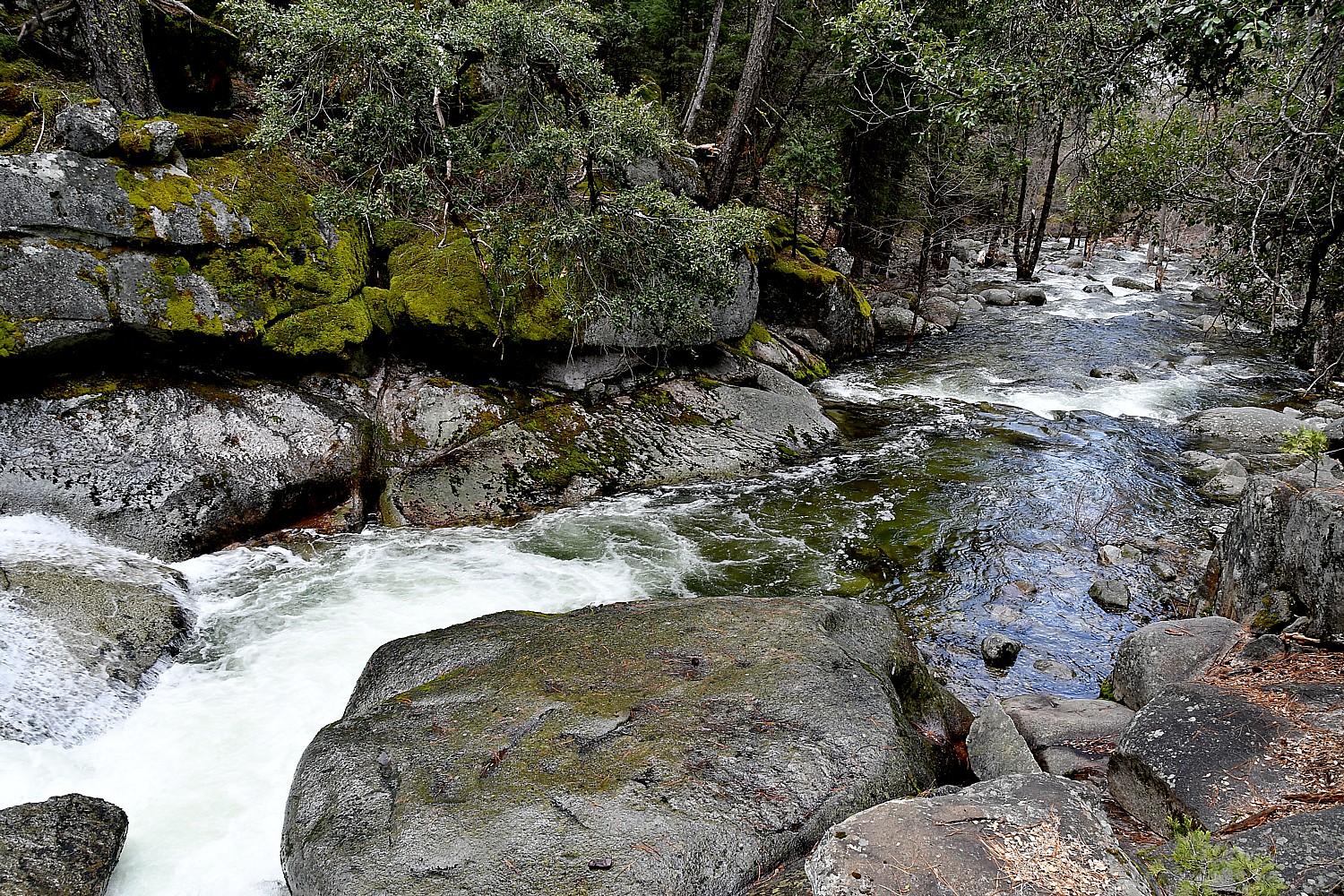
From here, you can continue on to get to the top of the fall (as well as connect to several other trails that go all the way back to into Yosemite Valley), but considering our time schedule (and looking out at rain clouds flowing in), we head down after a lovely picnic along side the cascading Chilnualna Creek.
Most of the trail is along the ridge so you have dramatic views of the creek or valley. Some of it crosses through meadow, so there is wonderful variation. The views of the rushing water and waterfalls are surprising and dramatic.
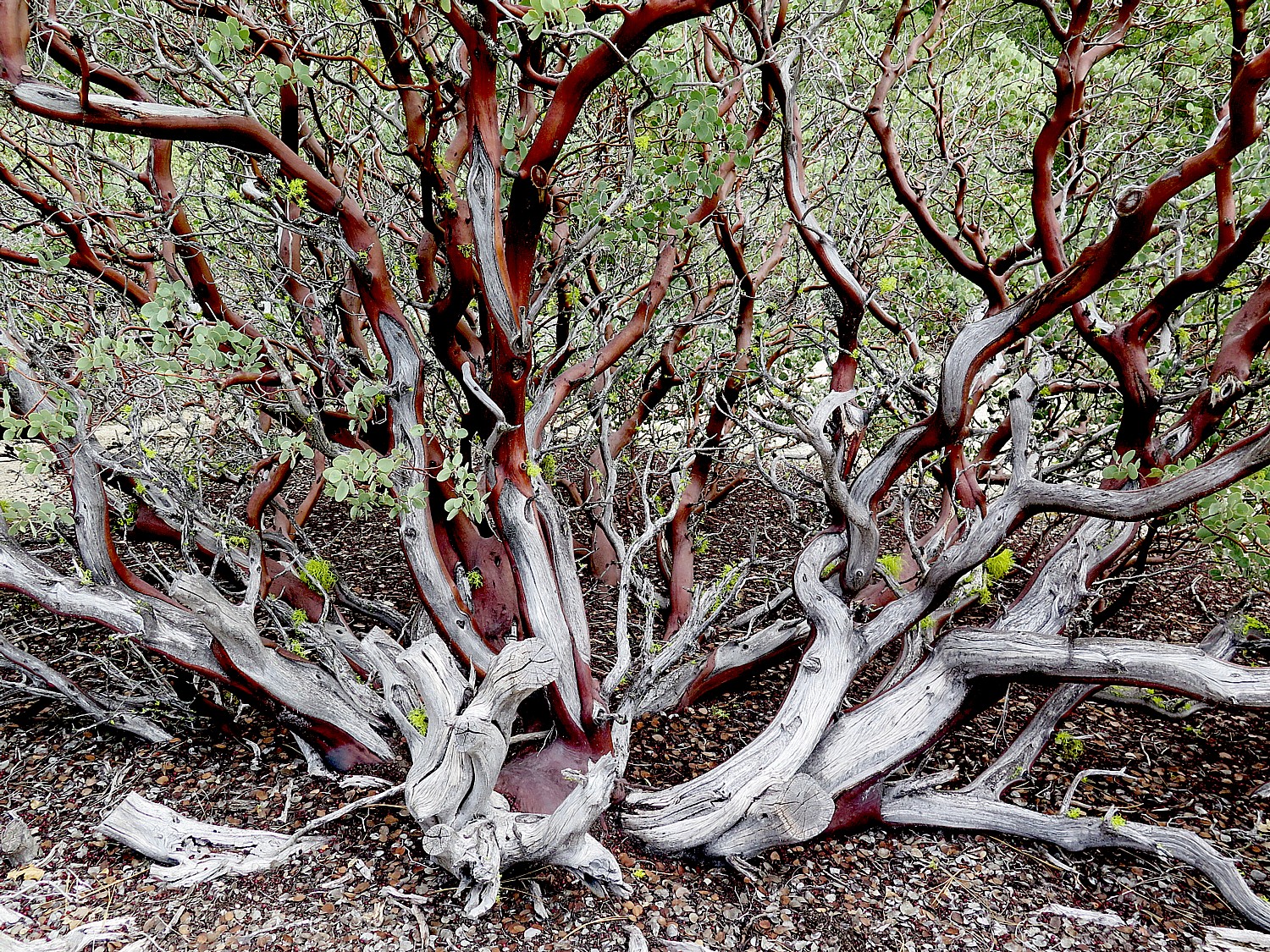
One of the nicest aspects of this trail, as compared to yesterday’s hikes on the Mist Trail, the John Muir Trail and the Mirror Lake Trail, are the opportunities to appreciate some magnificent trees and flowers. After about a half mile (and the first cascade), the trail leaves the creek and heads up switchbacks through manzanita, oak and mixed conifer forest. In the spring, the hillsides are full of Mountain Misery – a spreading plant with beautiful white blossoms, which we get to see. In among the Mountain Misery you may well see Hartweg’s Irises, Indian Pink, Golden Yarrow, Narrow-Leaved Ceanothus, Utah Serviceberry and several more showy flowers. Some of the side seeps might be blooming with Seep Spring Monkeyflowers and perhaps Sunflowers.
The upper cascades of Chilnualna Falls are quite beautiful in high flow, and in the early season they will be flanked with Azaleas, Mountain Pride Penstemmon and Dogwoods, Pussypaws and others.
We don’t necessarily realize it, but we are also passing through territories of deer, coyote, mountain lion, and black bear. There are birds, as well, but we are a bit early to see the western tanager which can be spotted from May through September.
Finally, as we near the top, we have views over to Wawona Dome and finally of the falls themselves.
We have to climb down a little from the trail to these broad slabs so we have a beautiful view of the falls. It is a perfect place for our picnic lunch.
Coming back is much, much easier – basically a gentle downward slope, and you are looking out at the scenery. Even the obstacles are no concern because we have already done them.
We are down to the steep part when it begins to rain. There are a couple of obstacles – like leaping over flowing water (thank goodness for my hiking sticks!).
We make it all the way back just in time for it to rain in earnest, adding to our feeling of physical satisfaction and accomplishment. All in all, an 8.2 mile hike that takes from 10 am to 3:40 pm.
What I love most, after completing this trail, is how different the experience has been from the previous day’s hike in Yosemite Valley – the vegetation, the meadows, the general landscape – and how surprisingly gorgeous the falls and the creek, and especially, the peacefulness without the crowds.
Preparation: bring enough water (2 water bottles) and prepare for changes in weather: bring rain poncho and plastic bags to cover cameras from rain or mist; rain poncho; snacks, moleskin for blisters, hat, sunglasses and sunscreen, camera, extra memory card and battery, cell phone, an extra layer in case it gets cool. I have also found hiking sticks extremely helpful.
For non-hikers, non-DIYers, Tenaya Lodge offers a Yosemite Tour Package, via mini-bus, that includes lunch and narration, and guarantees waterfalls and wildlife and seeing the most popular sights of Yosemite. (Offered May 1-Nov. 30; from $575 spring, $685 summer, $555 fall; call 888-514-2167 or Tenaya Reservations directly at 559-692-8916).
Tenaya Lodge, 1122 Highway 41, Fish Camp, CA 93623, 800-722-8584, tenayalodge.com.
Yosemite National Park – America’s first – has been on my bucket list for years, so I am beyond excited when we arrive at the Tenaya Lodge, in Fish Camp, just two miles from the South Gate, and immediately start planning for how we will tackle the park the next day. I am intimidated at first by how vast Yosemite is – the size of Rhode Island I am told – and how to organize the logistics if I am going to see for myself the places that are etched in the images in my mind in only two days.
We spend a lot of time with the Tenaya Lodge concierge to get suggestions of where to go, which trails to hike, where to park (there is a bus shuttle system but during our visit, at the very beginning of spring, it wasn’t operating very well).
Because it is so early in the season, some of the areas (like Glacier Point) aren’t even open yet. But it also means that the waterfalls are at near maximum of their cascading flow: all the sound and the fury, the feel of the cool spray, the moist smell. On the other hand, as it happens, we are here on the weekend of National Parks Week, when admission is free, coinciding with Easter, so the park is likely to be especially crowded.
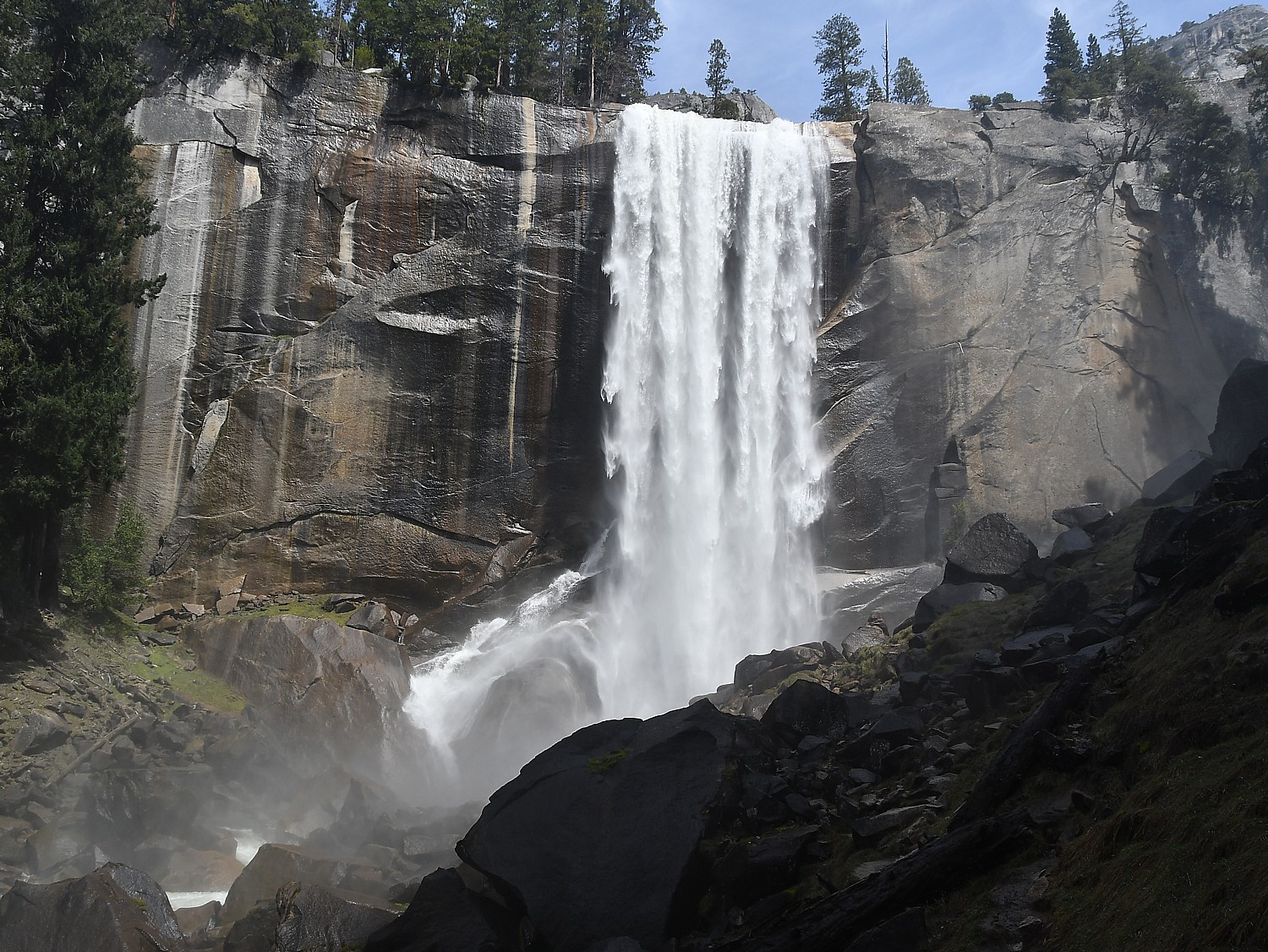
But we pick out the trail for the day: Mist Trail – which is also one of the most popular (we discover) for good reason, especially this early in the season. In one trail, it seems to encapsulate the entire Yosemite experience of a reasonably vigorous hike over a good distance (3 miles roundtrip to Vernal Fall, with 1,000 foot elevation gain, taking about 3 hours), sensational views, proximity to a fantastic waterfall (Vernal) with views of the Nevada Fall (which would be a further 1.3 miles up Mist Trail from Vernal Fall).
Indeed, it is a shock to learn that though the Tenaya Lodge is a mere two miles from the South Gate entrance into Yosemite National Park, it is another 45 minutes drive (30 miles) just to get to the famous Tunnel View, then another 45 minutes drive to get to Curry Village where we will fnd parking for the Mist Trail.
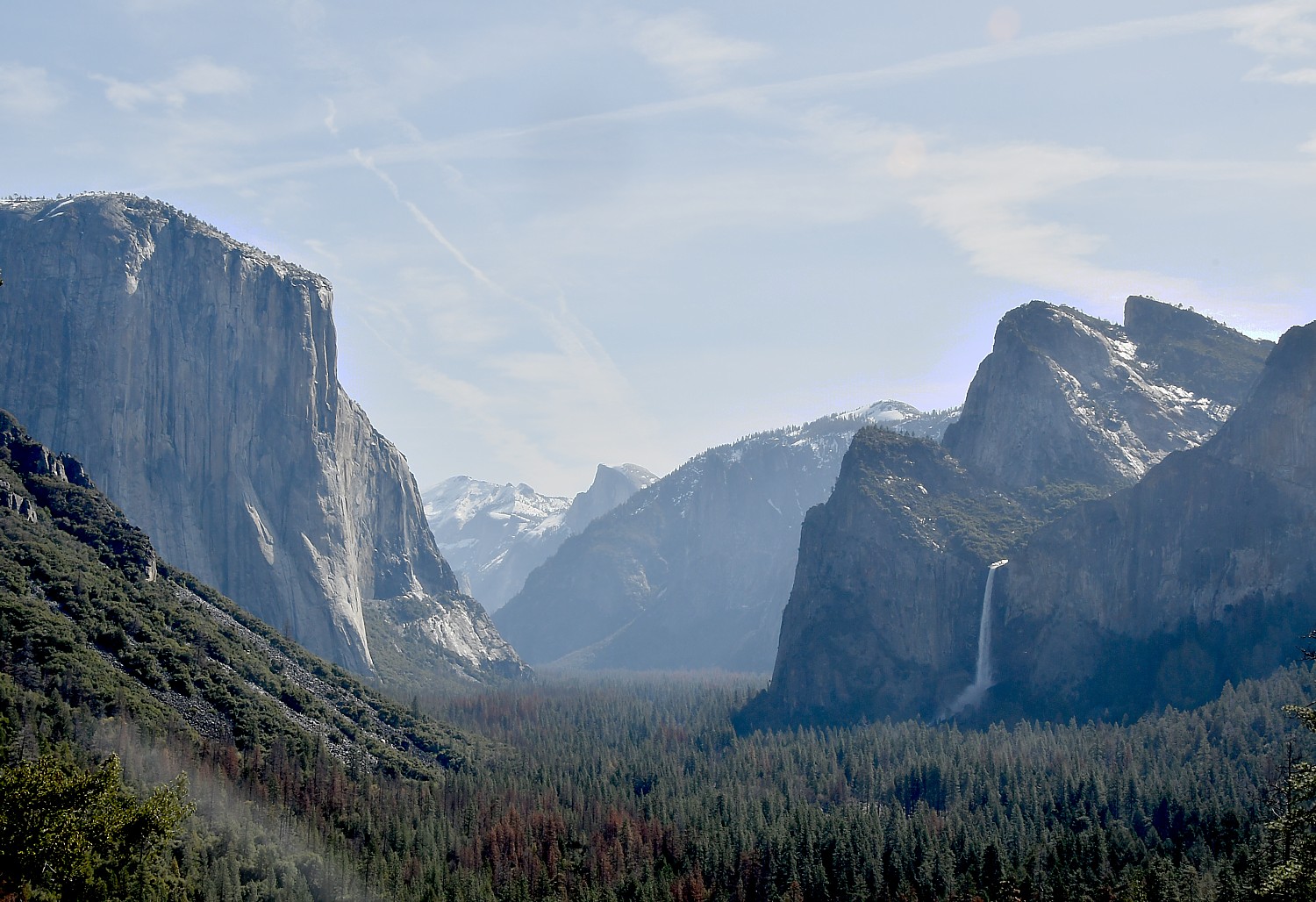
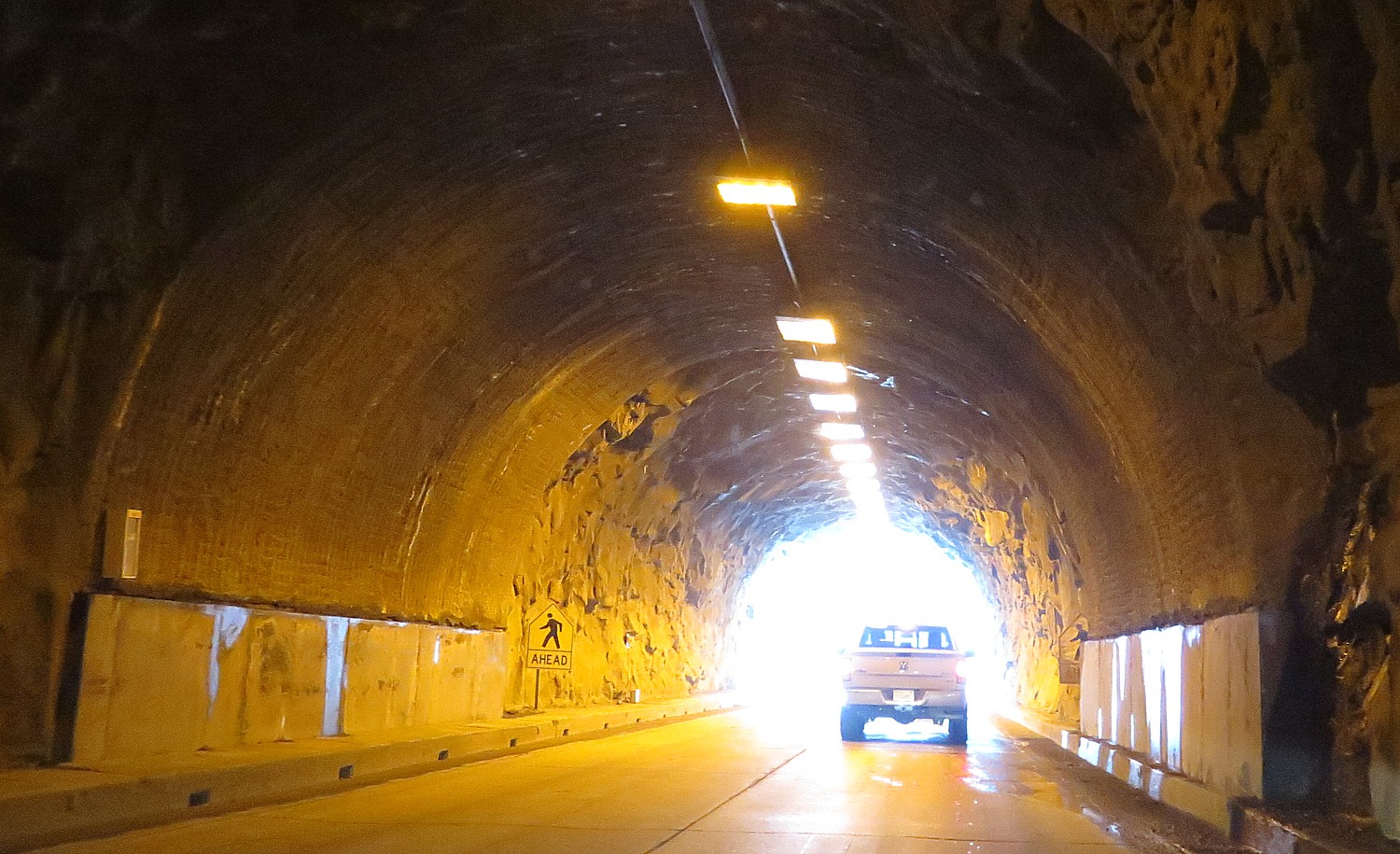
The concierge prepares us well. We know that just outside of the mile long tunnel, to look for the parking lot for the iconic Tunnel View. “Take the first spot” she has advised.
The Tunnel View lookout place, in one image, offers a spectacular view of the quintessential Yosemite sites: Bridalveil Fall, Half Dome, Clouds Rest, El Capitan.
Indeed, the biggest surprise for me is how accessible the iconic features of Yosemite National Park are from the road – I expected them to be more remote, reached only after long, difficult hikes through the wilderness.
And so I shouldn’t have been surprised by the steady stream – wall to wall in some spots – of people, just like us, seeking out the solace and majesty or our natural, national heritage. Indeed, last year saw a record – 331 million visitors to America’s 417 National Park Service sites (contributing $34.9 billion to the U.S. economy in 2016), 5 million alone to Yosemite (Grand Canyon got 6 million).
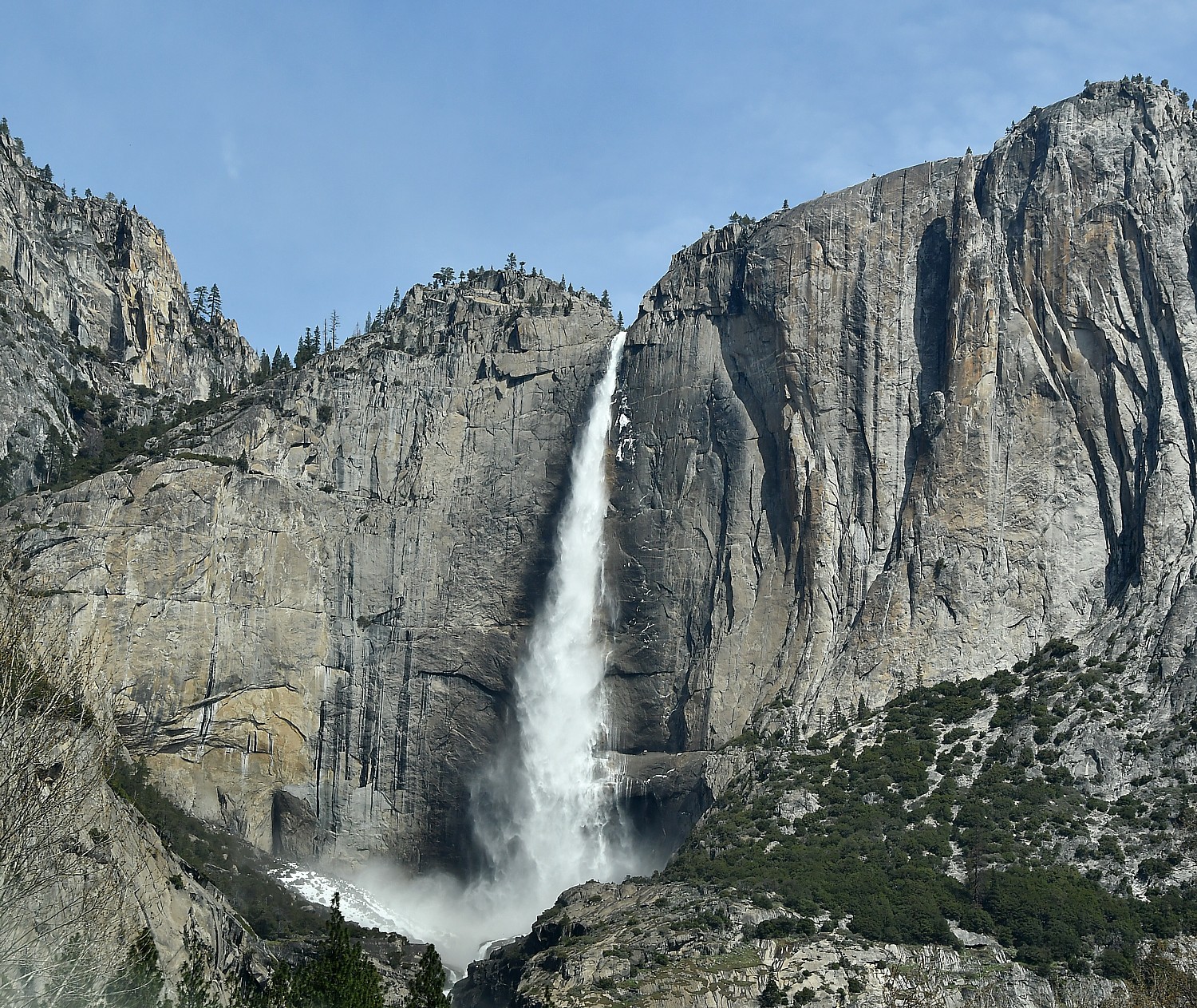
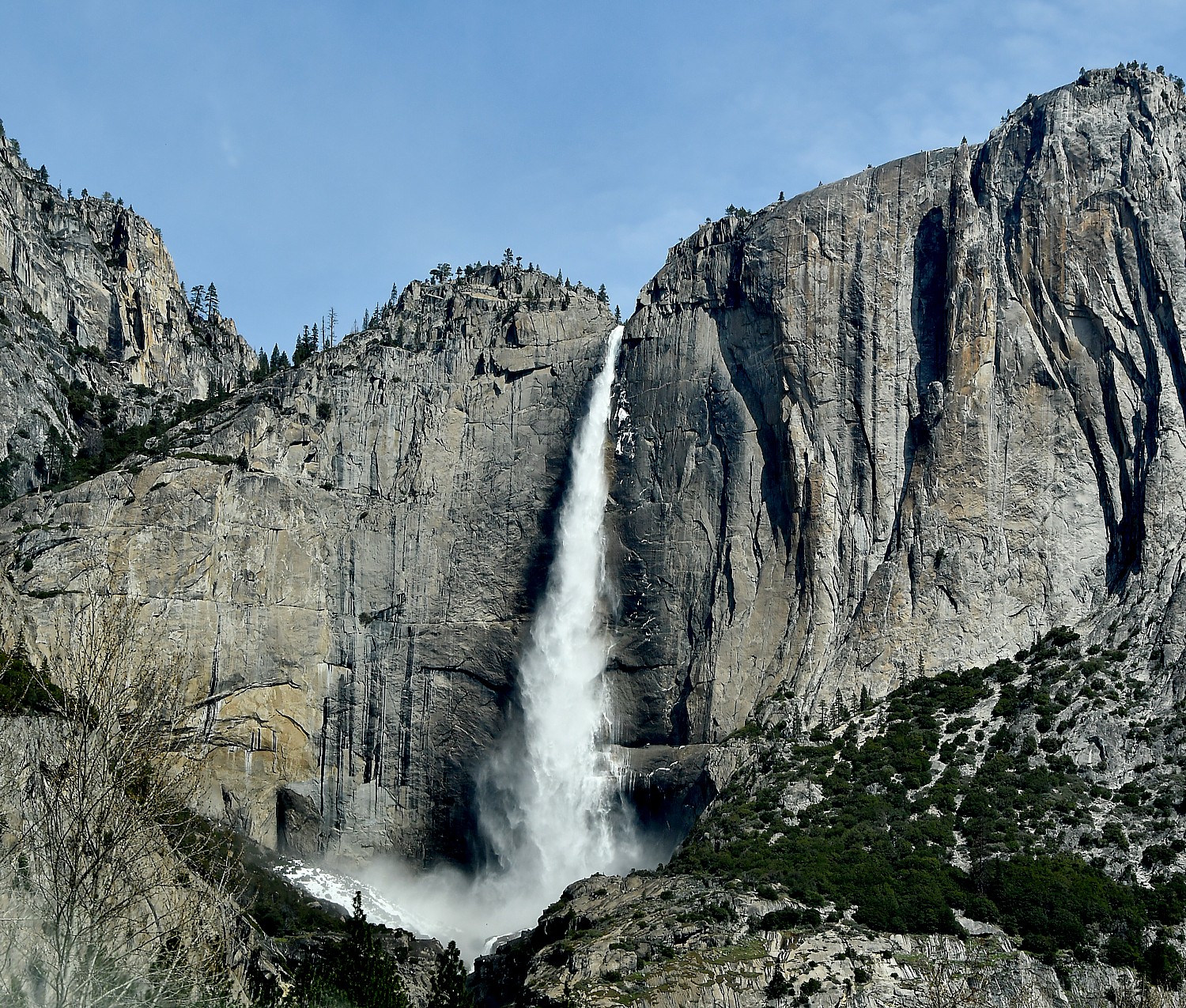
Just a half mile beyond Tunnel View, you come to Bridalveil Fall – which has to be the second most visited place in Yosemite – and it is just a quarter-mile walk to the waterfall (a key reason it gets MASSIVE crowds that converge in this small spot; I even meet someone who had just been at a wedding right there). The famous Yosemite Falls, also, is visible from the road (we see it on our way out, when it is already getting dark), and the Lower fall is an easy one-mile loop (half of it is wheelchair accessible).
But we are here to hike! And the trails we have picked out are perfect for the level of physical exertion (and satisfaction), photographic opportunities, and the general appreciation of Yosemite that we are seeking today.
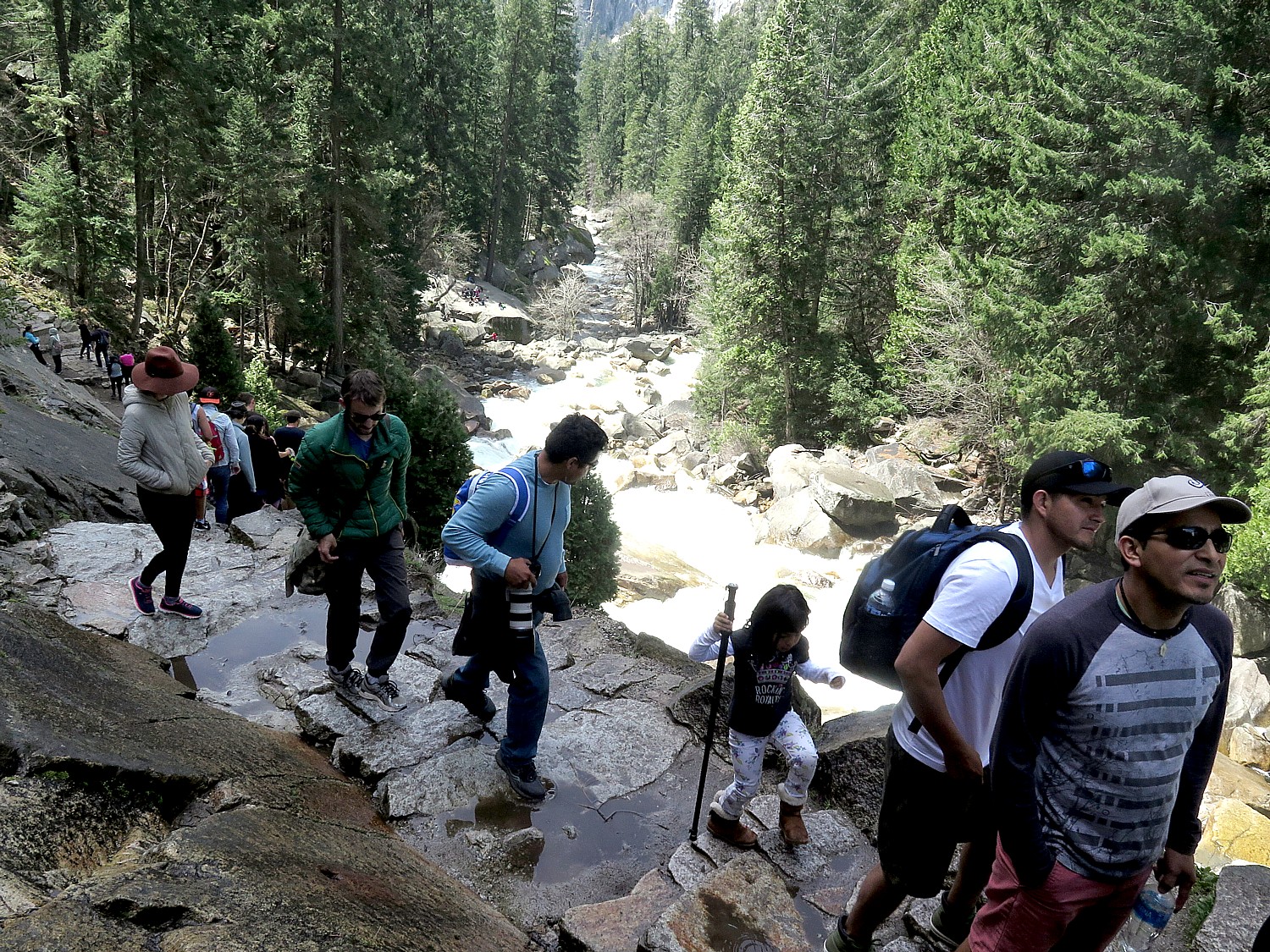
We have set our sights today on the Mist Trail which takes us alongside the Vernal Fall. The trail is both moderately challenging and an ideal distance (not too short, not too long), and unbelievably gorgeous, especially this early in the season, with the fall at maximum flow (especially after a winter where they had twice the normal snowfall; prepare to be sprayed). It is a steep hike beside the waterfall on a series of stone steps – narrow and very crowded, with most people walking up but some people trying to come down this way. (It is better to continue down on the John Muir Trail, which is not as steep or crowded and has fantastic views).
The trail starts off with an .8 mile hike up to the Vernal Falls footbridge (there are restrooms and water fountains here which you should definitely take advantage of before continuing on); and then another mile hike up to the top of Vernal Falls. Along the way, we see a rainbow in the spray at the bottom of the falls.
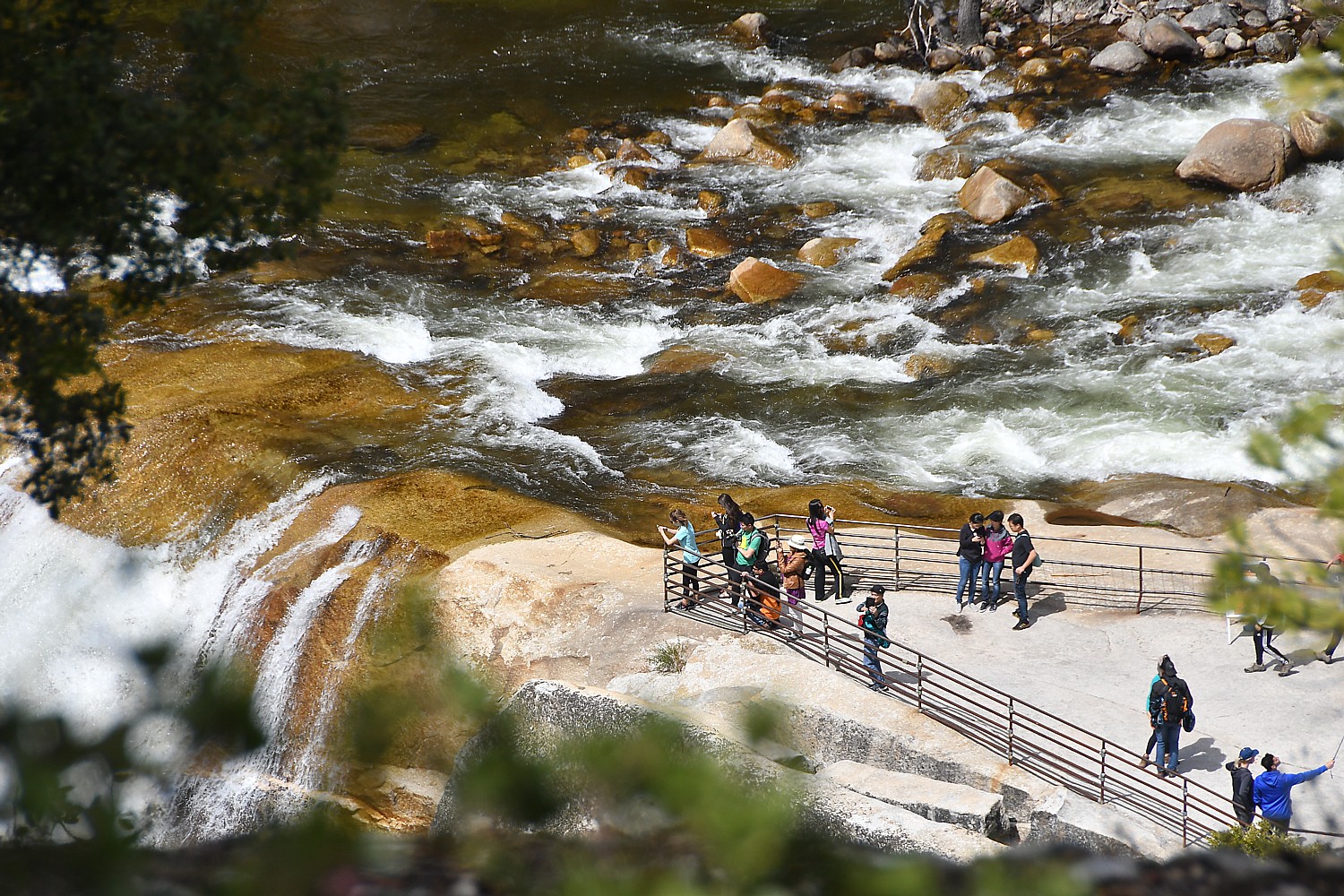
The Vernal Fall lookout – a series of relatively flat slabs – is about 1000 feet above where we started and is extremely popular spot for picnicking, relaxing and taking selfies. We do the same.
From here it is a short walk up to Emerald Pool which, so early in the season is a rushing torrent rather than the calm pool it will become by late summer.
It is so scenic and seems so benign, but there are warnings signs not to be so foolhardy as to go near the water or (perish the thought) swim. People are warned to watch out for their children. The rocks are slippery and this has been the scene of many accidents. I learn that in the summer of 2005, a hiker walked out into the water a bit to fill his water bottle, slipped, got caught in the deceptively strong current and was swept over the falls.
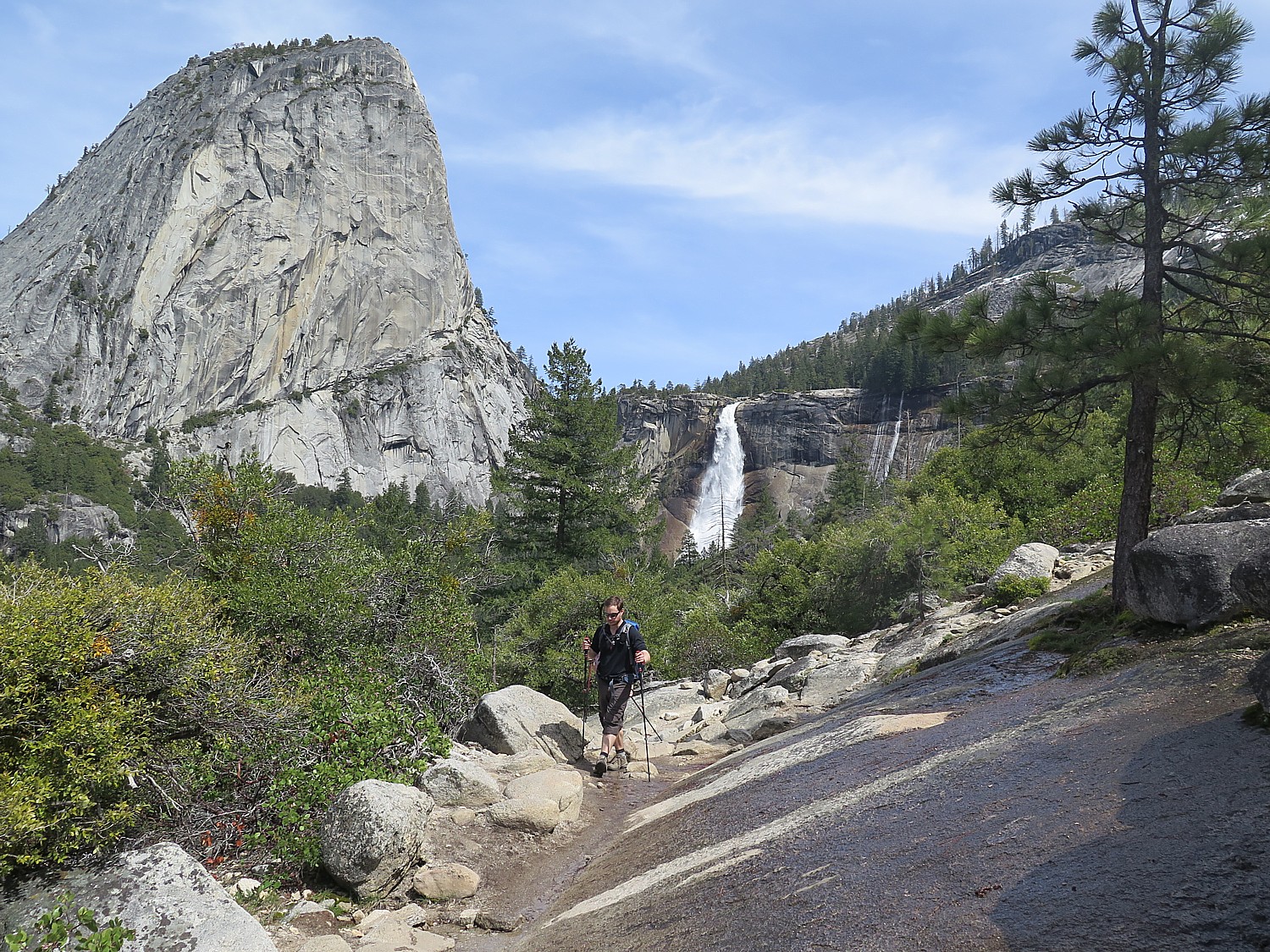
At this point, you can continue to hike another two miles to the top of the Nevada Fall, but we decide to hike down 3.5 miles along the less-steep John Muir Trail (versus coming back down on the Mist Trail). The John Muir Trail gives us a marvelous view of the Nevada Fall and Half Dome; much of the trail follows along a ridge that opens up to purple mountain majesty.
It’s still early enough in the afternoon when we get back down to the base – delighted with how perfect the Vernal Fall hike was (altogether, we’ve hiked six miles, and climbed 1885 ft. in elevation) that we are excited to try another. We look over the list we have been given for a shorter, easy hike and set out for Mirror Lake.
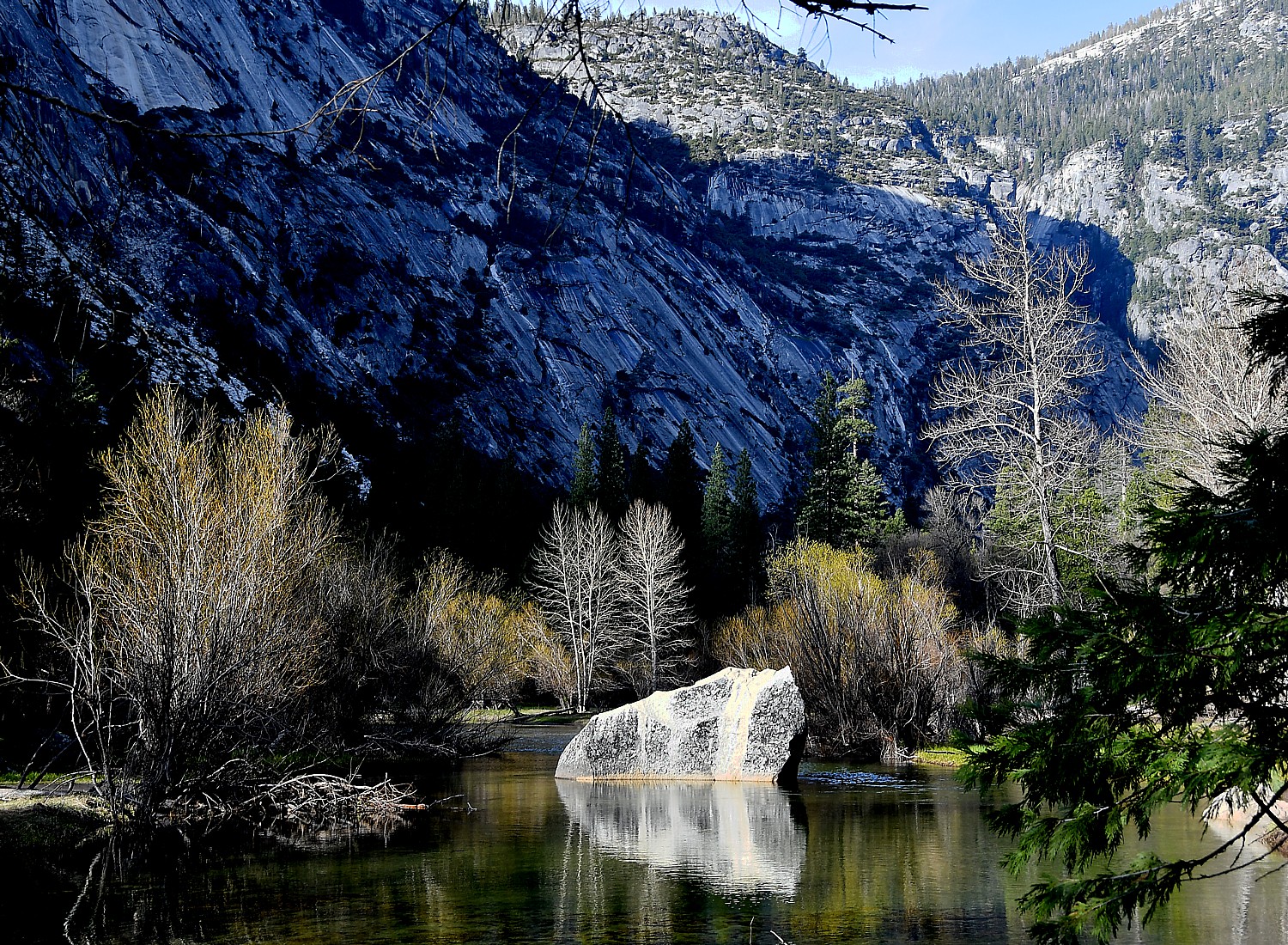
The Mirror Lake hike is supposed to be two miles round trip (taking one hour), but this is apparently if you just walk along the road. Instead, we take the trail that is apparently part of a five-mile loop around the lake which has more obstacles than I had bargained for. But there are some dazzling scenes along the way, and a stunning scene of the lake, so flat and still that it is literally a mirror reflecting back the stunning backdrop, and affords a closer view of the face of Half Dome.
To walk back by the road, Eric and Sarah scurry on a log across a narrow point which they imagine is a short cut to a road (the option is to hike around the lake). I’m not the scurrying-across-a-fallen-tree type, so I opt to backtrack along the same trial, which turns out to be fun, now that I know what the obstacles are (and that I can do them).
Finally meeting up with everybody in the car (after a MUCH longer walk back from the trailhead toward the parking lot, without seeing a single shuttle bus), which turns out to be a feat because cars are restricted, we set out to return to the Tenaya Lodge.
On the way out of Yosemite, we find ourselves crossing Sentinel Bridge which is supposed to be one of the best photo spots to capture Half Dome over the Merced River (the dusky light doesn’t cooperate, but that’s the element of serendipity that comes with every visit).
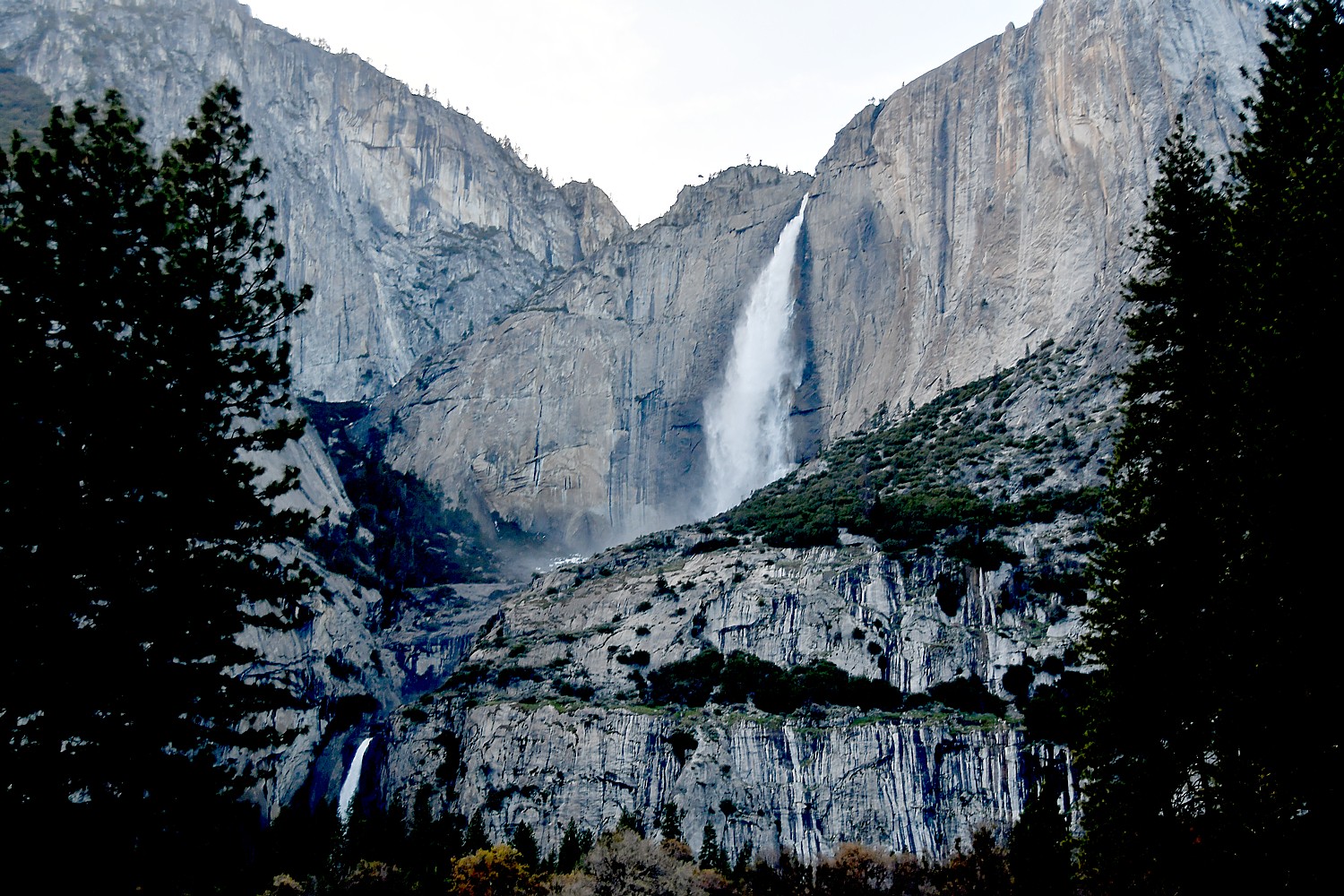
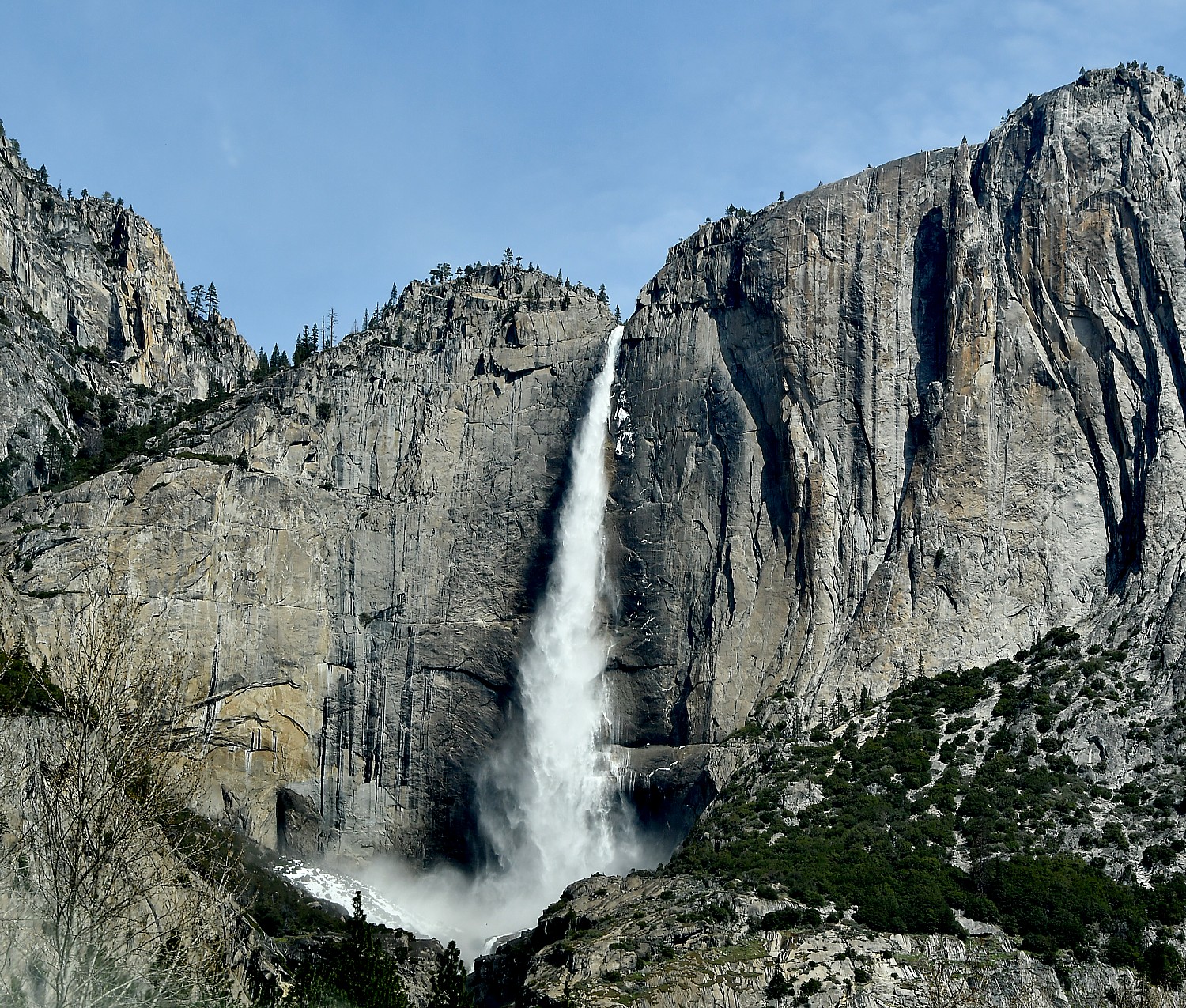
Then, the one-way road back to the South Gate passes by Yosemite Falls, agonizingly close (just a quarter of a mile), but it is too late to hike up to it in the fading light. We get a fleeting shot – I am surprised that it is so “exposed” to the access road – I imagined it was tucked inside.See https://www.nps.gov/yose/planyourvisit/valleyhikes.htm
Preparation: bring enough water (2 water bottles) and prepare for changes in weather: bring rain poncho and plastic bags to cover cameras from rain or mist; rain poncho; snacks, moleskin for blisters, hat, sunglasses and sunscreen, camera, extra memory card and battery, cell phone, an extra layer in case it gets cool. I have also found hiking sticks extremely helpful.
For non-hikers, non-DIYers, Tenaya Lodge offers a Yosemite Tour Package, via mini-bus, that includes lunch and narration, and guarantees waterfalls and wildlife and seeing the most popular sights of Yosemite. (Offered May 1-Nov. 30; from $575 spring, $685 summer, $555 fall; call 888-514-2167 or Tenaya Reservations directly at 559-692-8916).
Tenaya also offers an itinerary you can take on your own to hit Yosemite’s highlights in a single day: Half Dome, El Capitan, Yosemite Falls, Bridalveil Fall, Mariposa Grove, Glacier Point, Wawona, Royal Arches, Turtleback Dome, Three Brothers, Leaning Tower, Ribbon Fall, Cathedral Spires, Yosemite Chapel, Vernal and Nevada Falls. In summer, you have to park and use shuttle buses to get around.
Tenaya Lodge, 1122 Highway 41, Fish Camp, CA 93623, 800-722-8584, tenayalodge.com.
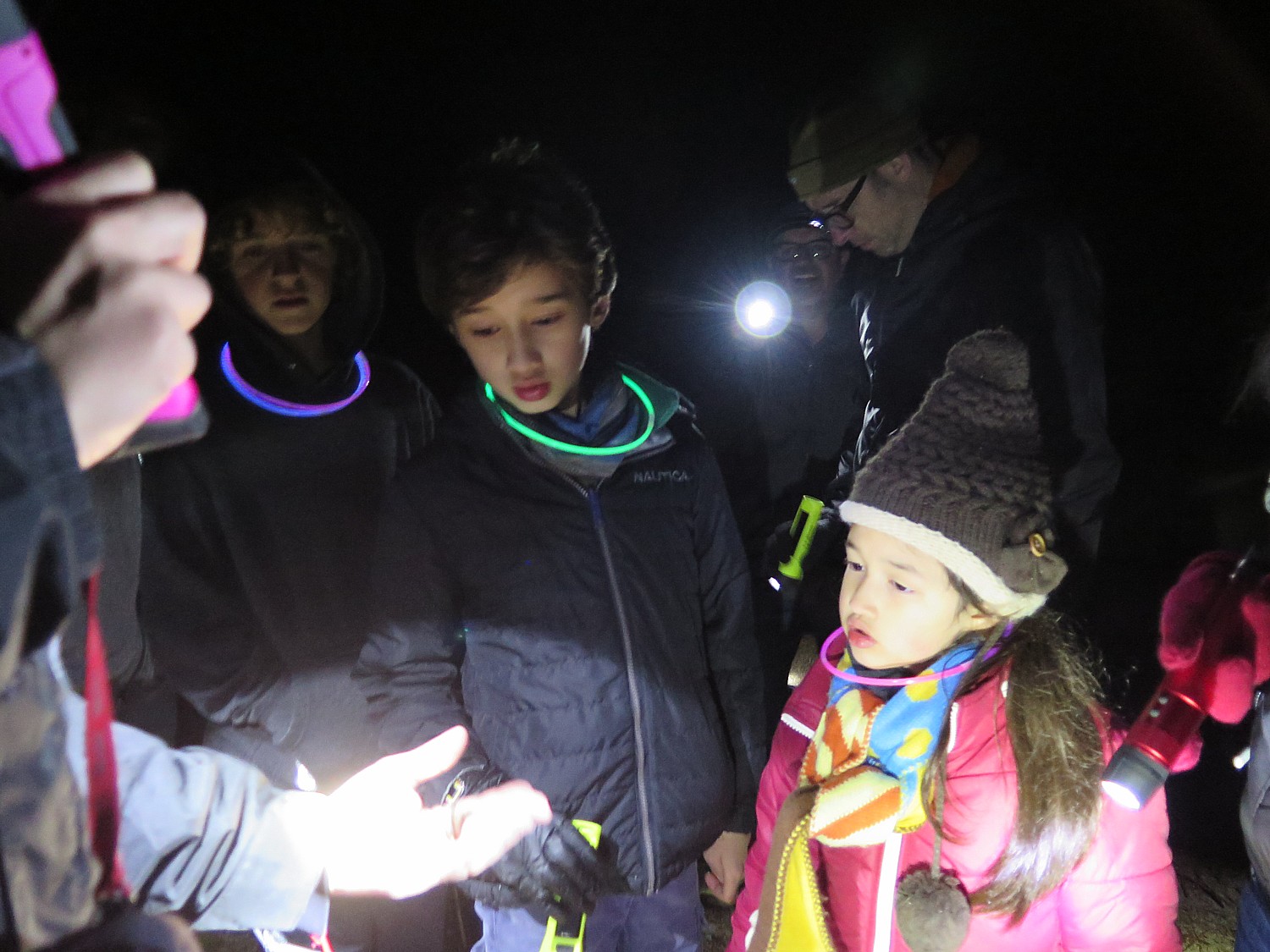
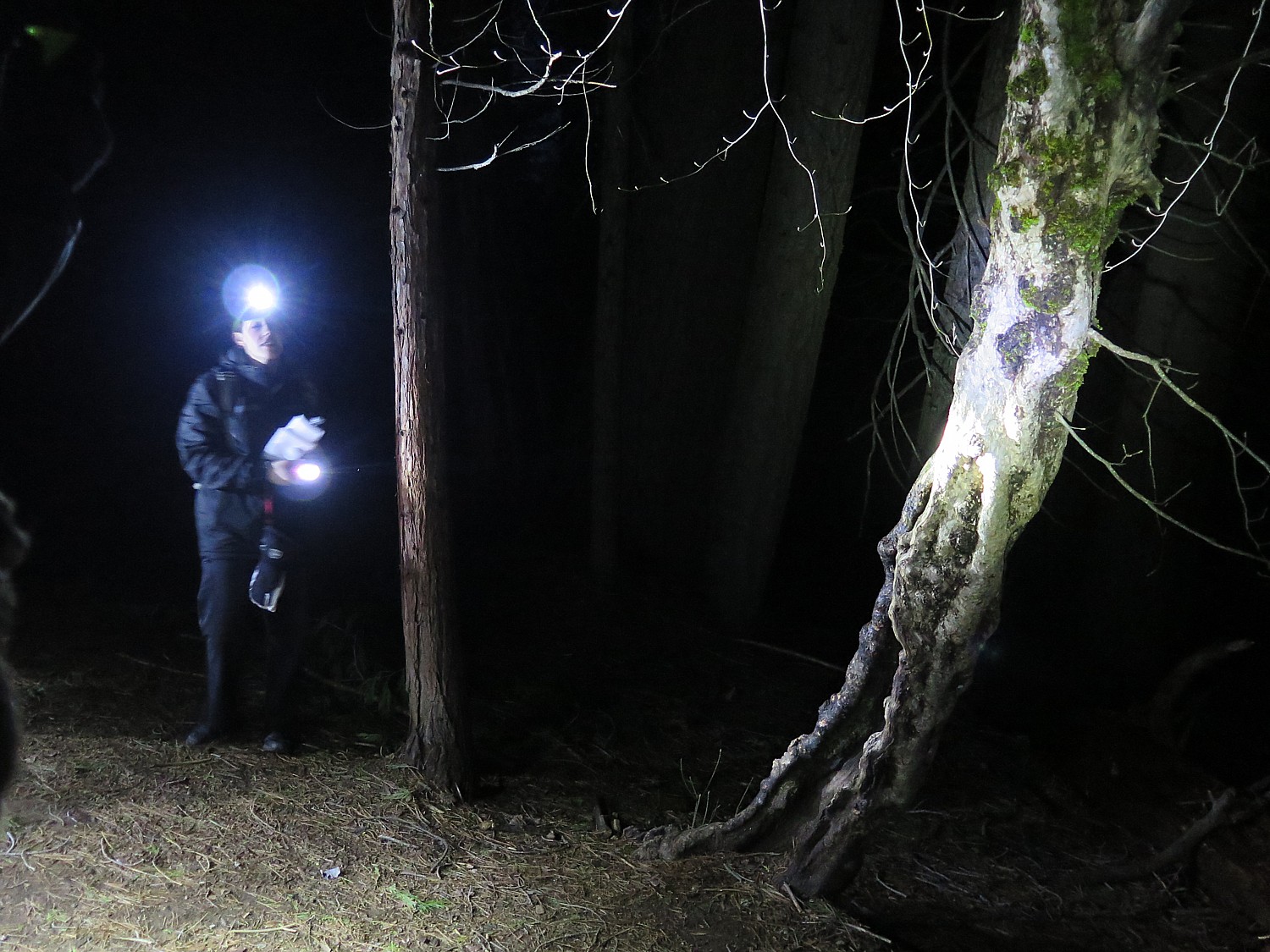
The description of the Tenaya Lodge nightly Flashlight Hike sounded very tame. A mile-loop in the woods surrounding the resort. Indeed, it is designed for families. But shortly after starting out from the Lodge, flashlights in hand, as the dusk turned to darkness and any light that would have come from the lodge faded as we walked deeper into the forest, we realize this is really an adventure!
Amanda, our guide, introduces herself as a wilderness kid – she grew up in Yosemite National Park, literally next door to the Tenaya Lodge (the Yosemite South Gate is just 2 miles down the road), where her parents both worked, and she has guided horseback riding trips and skiing. Her commentary is absolutely fascinating.
At the start, she introduces us to ”widow makers” (no joke: the branches that can break off these tall trees and kill), with the moral to the lesson, “Be aware of your surroundings.”
We also learn that trees are like people; that the trees in the forest (Tenaya Lodge is nestled between Yosemite and the Sierra National Forest) have a 600-year life expectancy; that the famous giant sequoias can live 1000 years and as large as they are, they come from a seed the size of a splinter inside a golfball-sized cone that only opens once it has been exposed to fire. The wood is mostly fire resistant and insect repellant and lumbering companies would have cut them down but for pioneering conservationist John Muir who convinced President Theodore Roosevelt to protect Yosemite and turn it into the nation’s first national park.
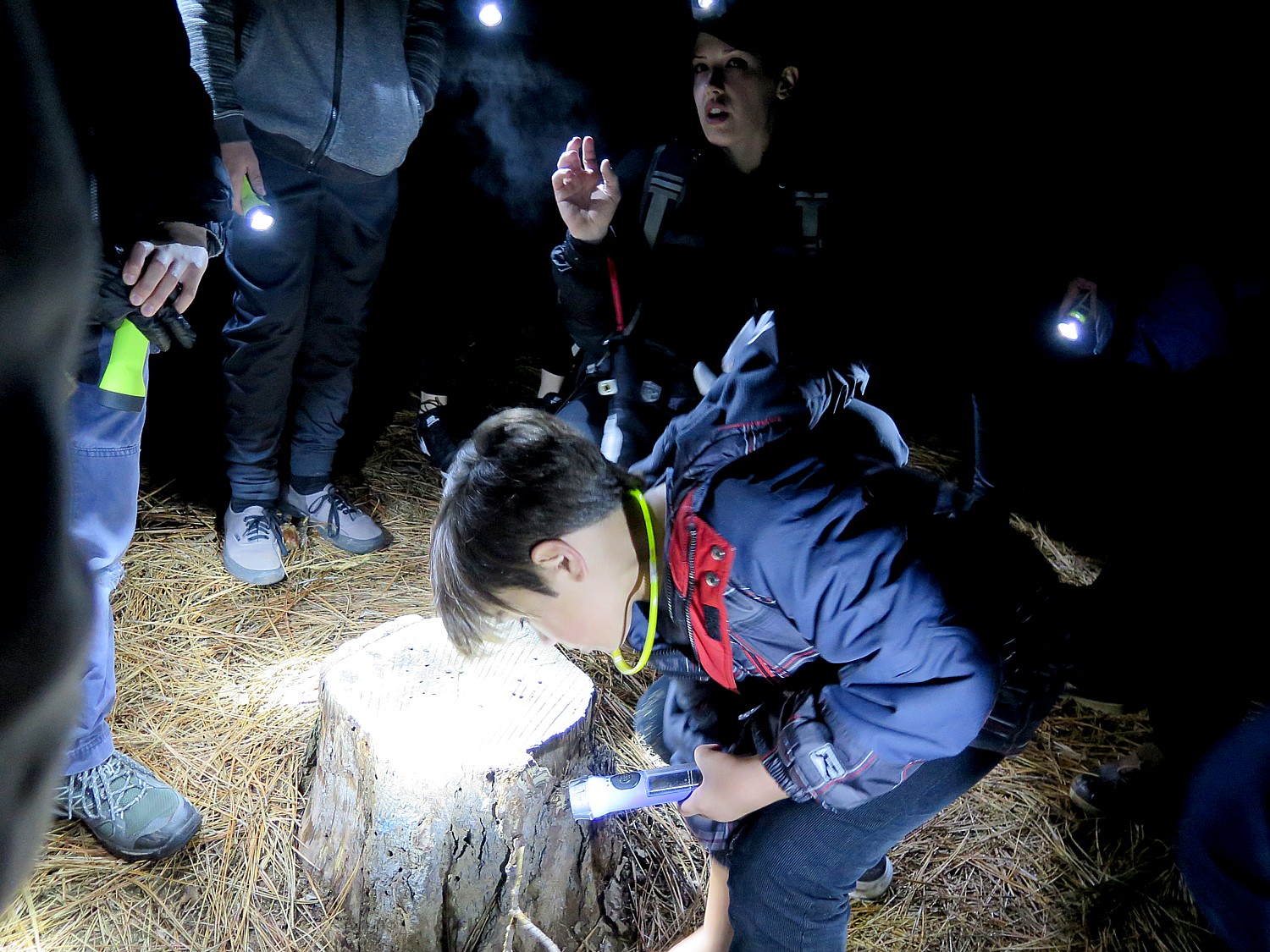
Native peoples used acorns as a source of food, and turned pine needles into a medicinal tea. She shows us a log that has been “damaged” by a bear pulling out insects (it eats 10,000 insects, or about 5 lbs worth).
We shine our flashlights onto a white thorn bush, where, she says, mule deer hide their young to protect from mountain lion; the babies stay until they hear their mother.
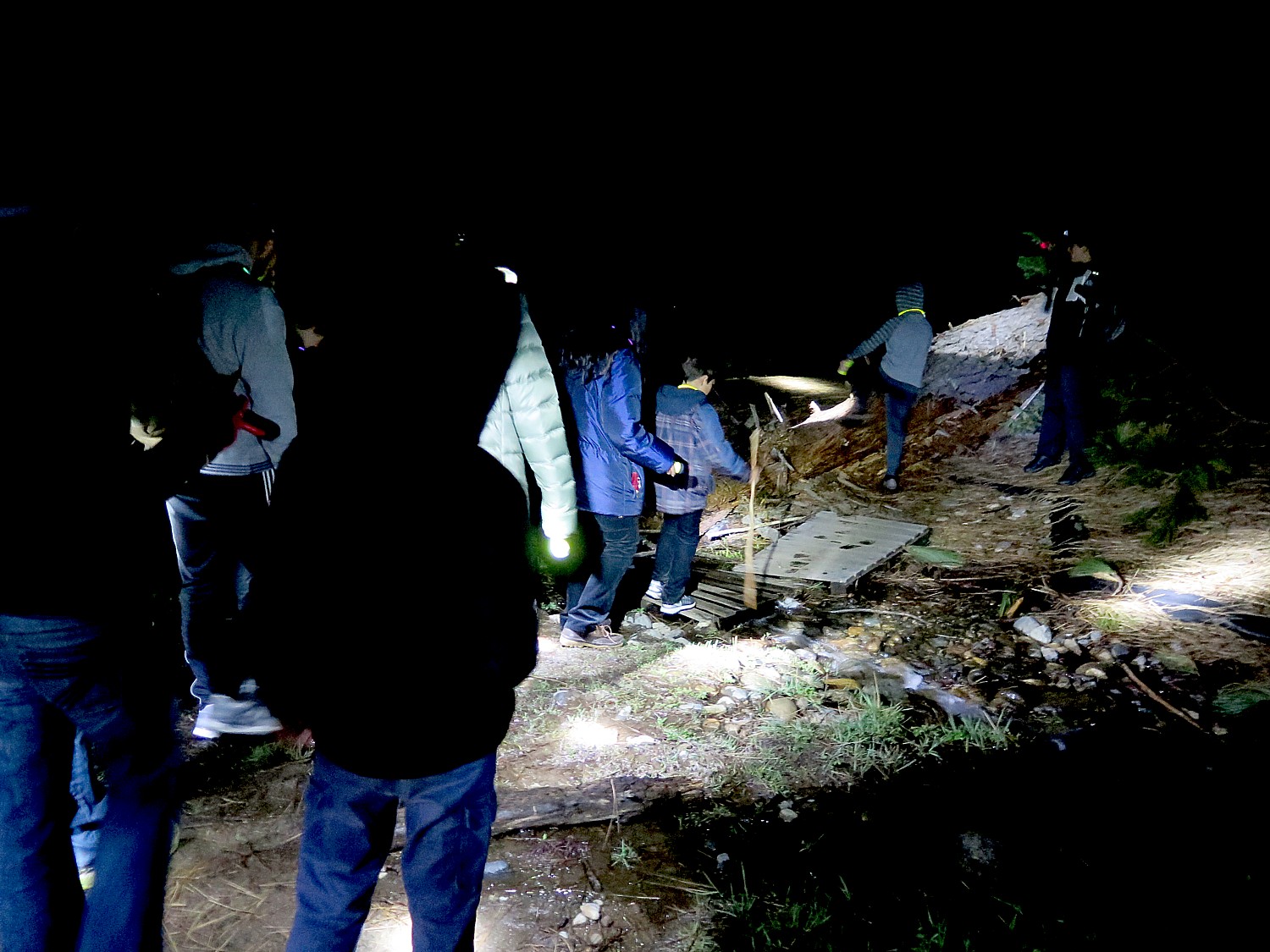
By the light of our flashlights, we cross over a plank over a tiny stream, climb over a fallen tree trunk. At one point Amanda points to a pile of dead wood and warns, “Don’t go into it- rattlesnakes like to play there.” Rattlesnakes, I think to myself??? She shows us where trees have been destroyed by Bark beetle – the tree stops making sap, dries out, and has no protection. “These are ‘one match trees’ – very flammable.”
And she tells us something that we find very helpful when we are out on our own hiking, “moss only grows on the north side of tree.” We feel like we are true outdoorspeople.
Towards the end of the hike, we come to a place where the trees, lifting up to the sky, open up, giving us an expansive view of a billion stars. A boy exclaims, “I’ve never seen the sky like this.”
Amanda says that when we see the stars, we are seeing deep into the past – it takes 1000 years for light to come to earth; sunlight is 8 minutes behind. “The Indians felt that sky was blanket over earth, raven poked holes to see sun… Anytime I am feeling bothered, I just look up.”
This is just one of the activities available at Tenaya Lodge, and I would say it is a must – book in advance because it fills up; in winter, they offer a Snowshoe Flashlight Tour which must be sensational.
Actually, this was our second hike of the day, since arriving in the afternoon at Tenaya Lodge, which is located in Fish Camp, California, a 3 ½ hour drive (200 miles) from San Francisco.
Shortly after our arrival, we quickly drop off our luggage in our room, get directions from the concierge, and set out for a hike that starts from the resort’s entrance, up a logging road, about 2 ½ miles to a waterfall. The hike is perfect to acclimate ourselves to the 5,200 ft. elevation. We immediately fill our lungs with rejuvenating pure air, and recharge with the rhythm of a rushing creek.
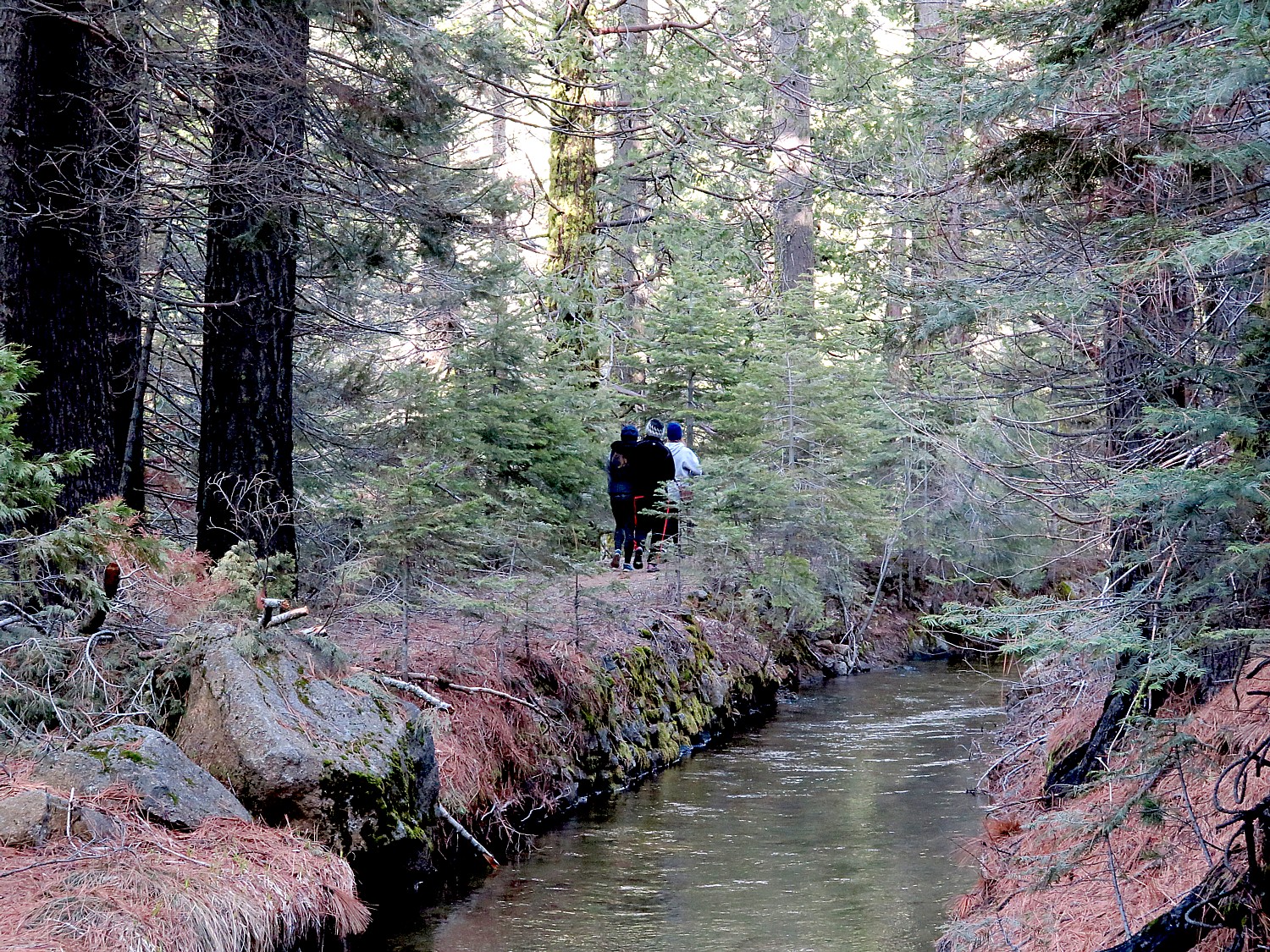
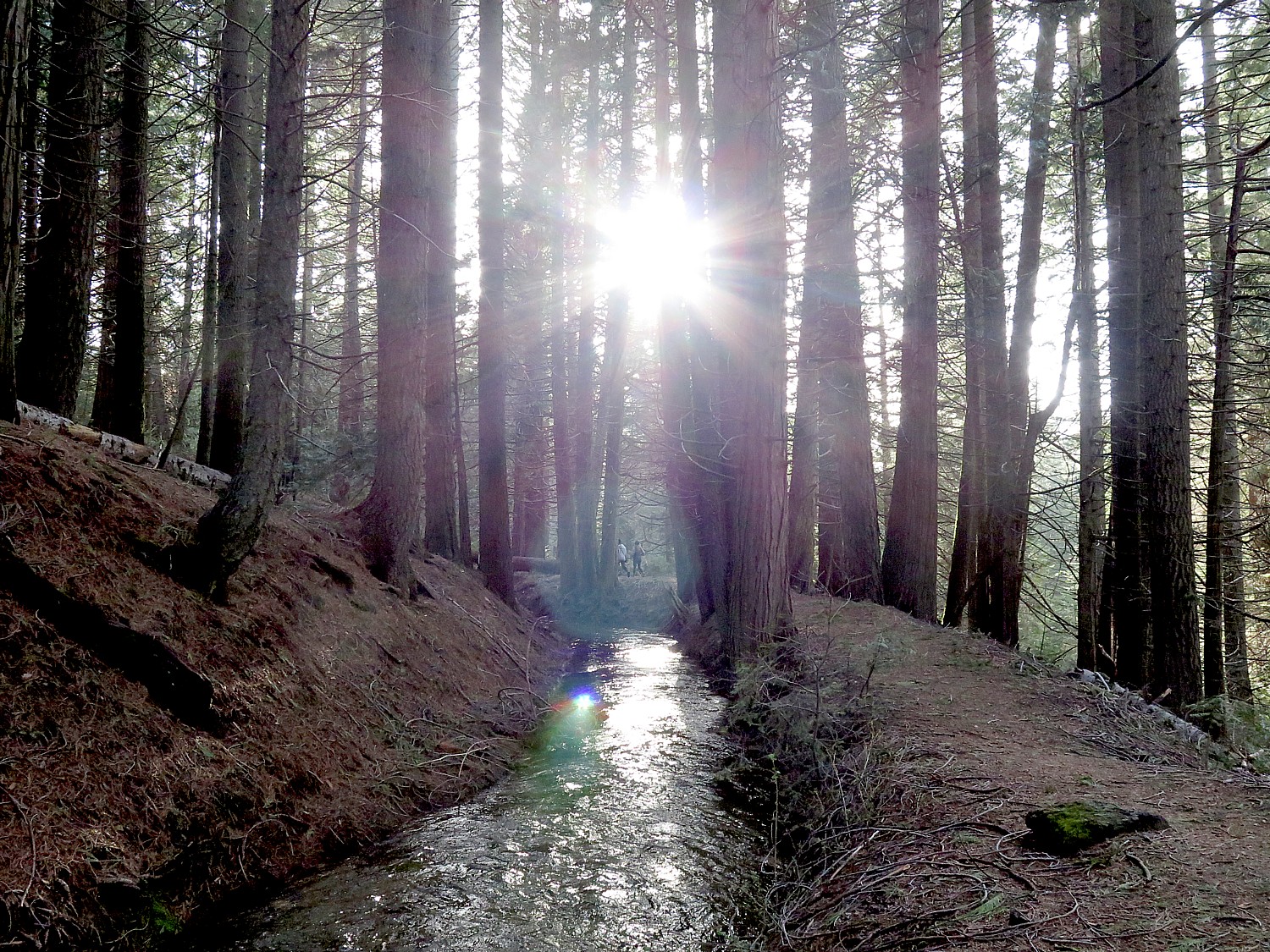
It is so early in the season, there is still snow on sections of the trail, making the rushing creek and waterfall all the more dramatic. We are supposed to turn off at a green building, but actually overshoot (it turns out it isn’t a building, but rather a water management shed with solar panels on it). Retracing our steps, and calculating for the time until dusk, we (bravely) go through a fence, walk past a decaying wood cabin and come to where the trail narrows significantly, following along a canal on one side. There are spots where you can hear and see a rushing stream and distant sound of the waterfall. Following along, we come to a wonderful waterfall. By now, the late afternoon sun is like liquid gold spreading over everything. Magical.
We make our way back to the lodge with minutes to spare before joining the 8 pm Flashlight Hike.
The Tenaya Lodge is a four-diamond luxury resort with every manner of amenity that nonetheless manages to be faithful to its rustic environs. It is named for Chief Tenaya, of the Miwok tribe of Indians who lived mostly along the foothills of the Sierras.
The Lodge is just two miles from the South Gate of Yosemite National Park, the most popular entrance (it provides year-round access to the park). The lodge makes every accommodation for the guests who will almost certainly find their way into Yosemite for hiking (they even have the moleskin package that is a lifesaver when you are getting a blister); the Deli, that is surprisingly well-stocked.
There is where you can pre-order lunch so you can grab it on your way out the door to hike (really a good idea so you don’t have to find your way to a restaurant in Yosemite).
Tenaya offers a few different dining options, accommodating late-night dining (which helps when you have been hiking in Yosemite all day).
The Sierra Restaurant where we enjoy fuel up on a lavish buffet breakfast before a day of hiking, is a casual restaurant serving breakfast and dinner, with convenient hours to accommodate guests.
Just next door (and providing overflow space at breakfast) is Jackalopes Bar & Grill serving lunch and dinner (conveniently, until very late)
Embers is an upscale, fine dining restaurant which covets a quiet atmosphere (no children), serving a leisurely two to three-hour meal, where they even make salads in front of you.
There is also a pizzeria in the cottages and in season, there is an appropriately named Summerdale restaurant, that is open seasonally off-site, that serves BBQ.
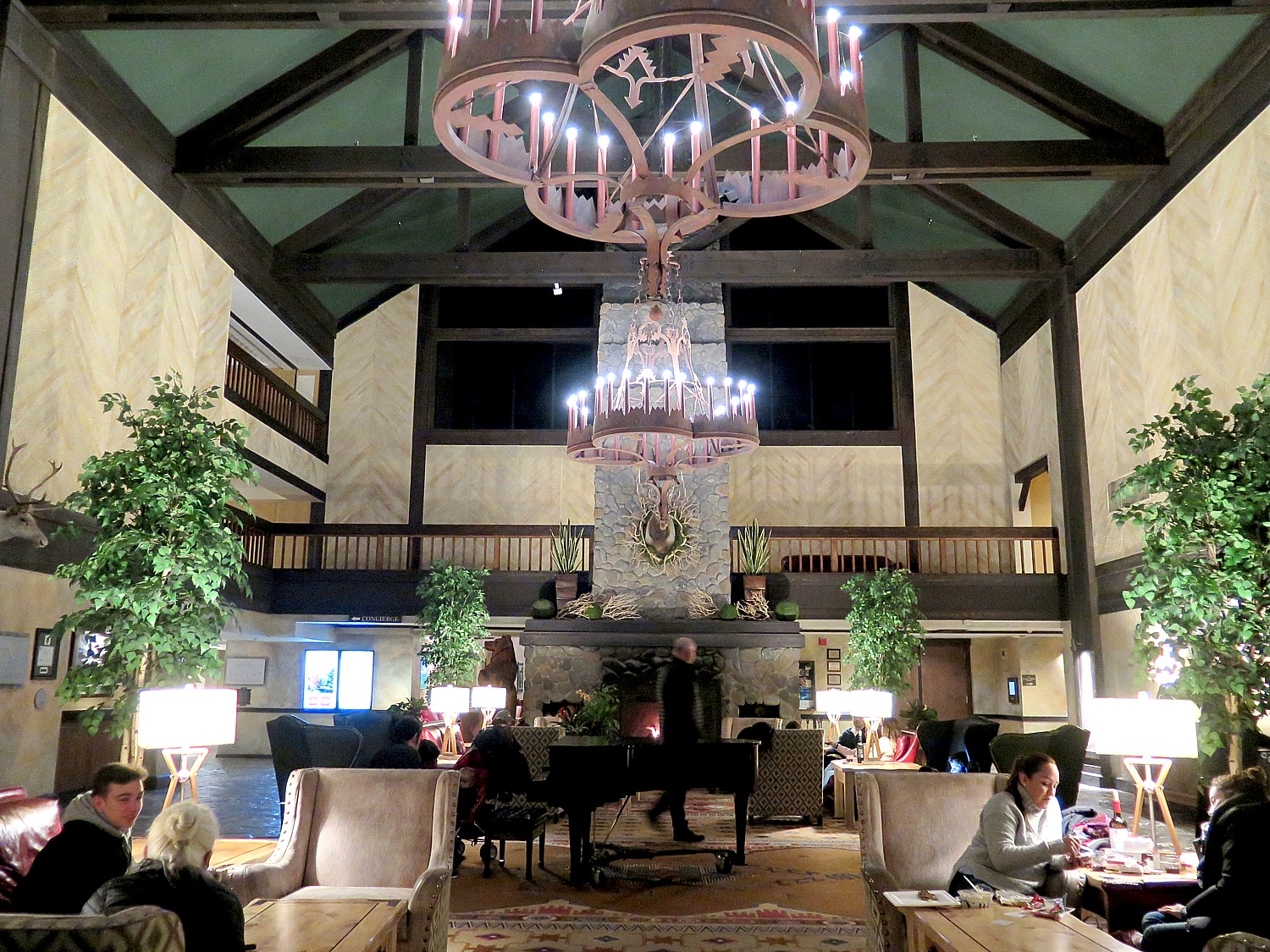
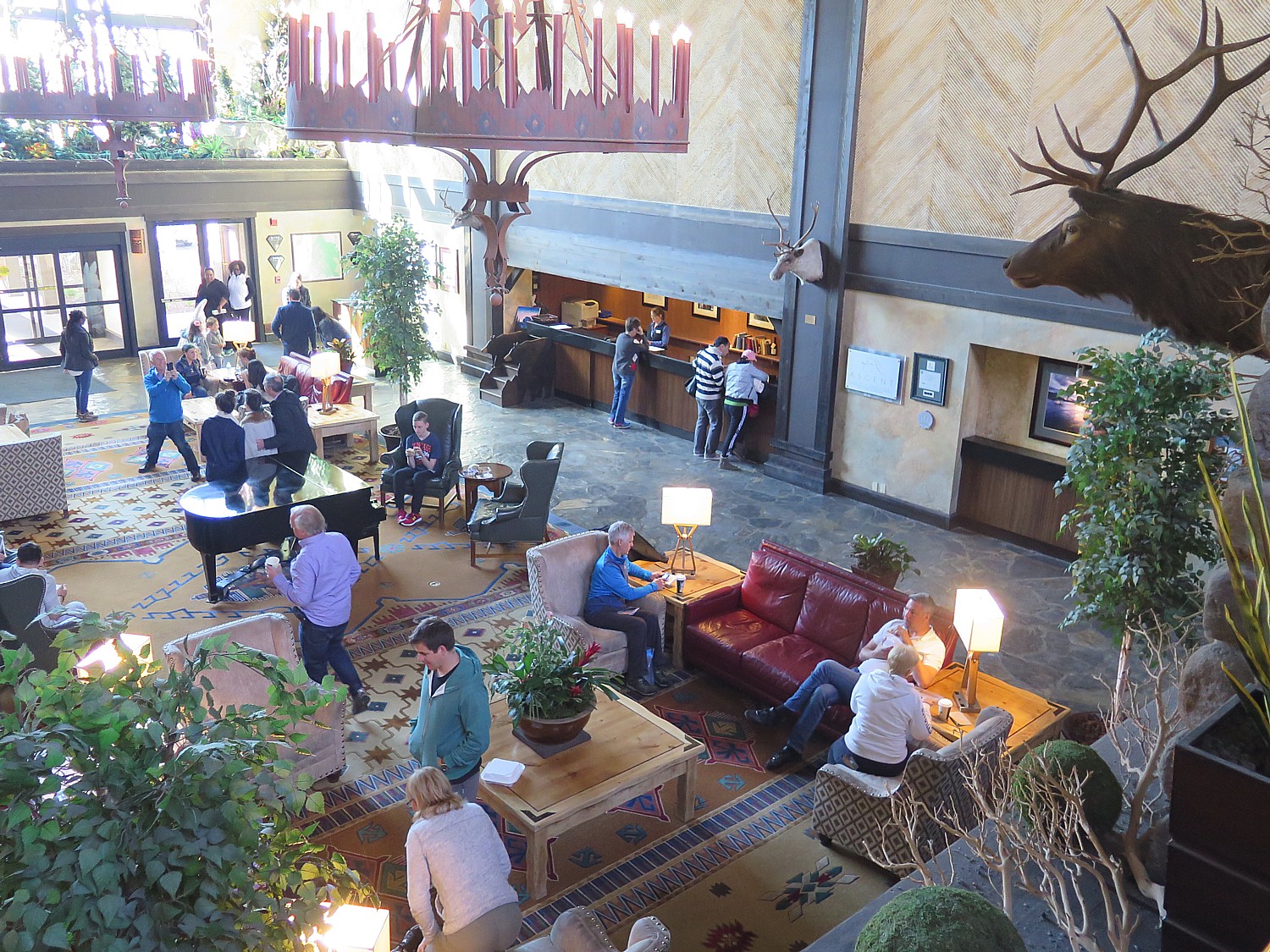
We settle into the cozy leather sofas in the expansive lobby, complete with stone fireplace and mounted deer head, like a true rustic lodge, and order items from Jackolopes for a very relaxing late-night snack. I love the Native American/western décor, and the exquisite photos of Yosemite Park that decorate the walls all through the hotel.
The four-diamond Tenaya Lodge is one of the most luxurious resort properties in proximity to Yosemite, and offers 297 guestrooms, suites and cottages.
Tenaya Lodge was originally built 1990; but acquired in 2001 by Delaware North, a vast global hospitality company which, among other things, manages lodgings and concessions in several national parks including the Grand Canyon and Yellowstone national parks and manages Kennedy Space Center Visitors Complex. Delaware North invested $5 million in significant renovations which were completed last year.
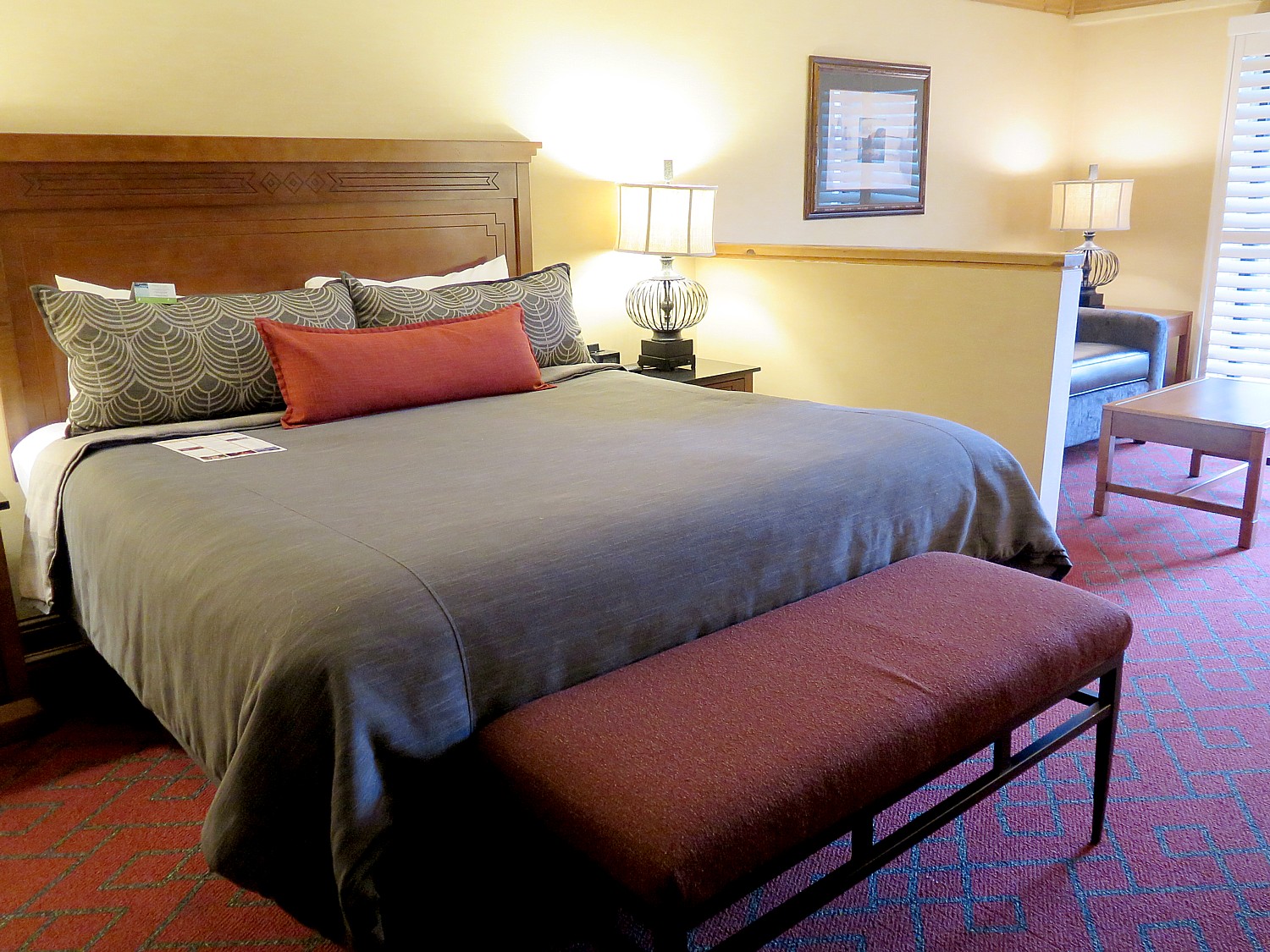
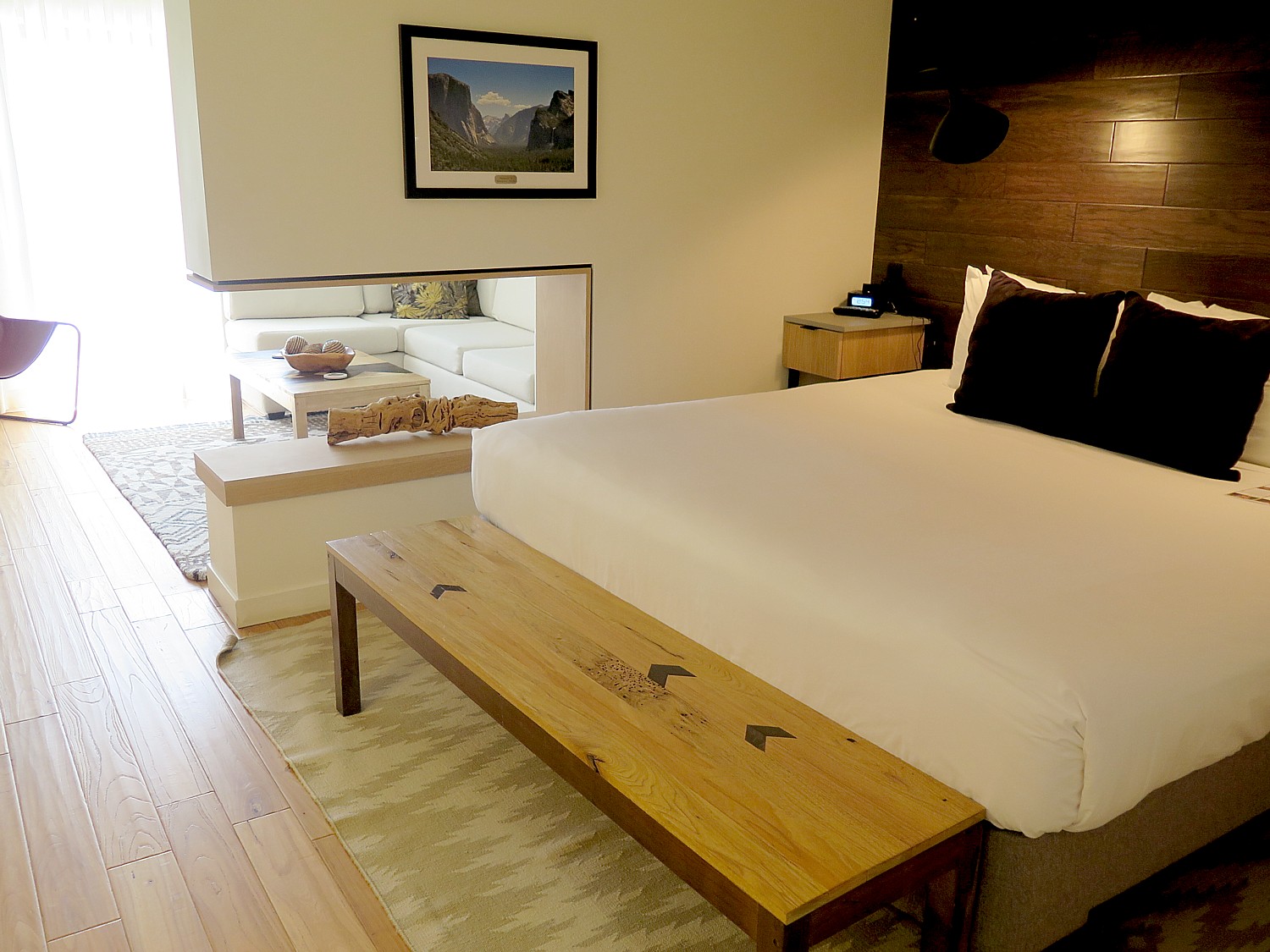
Among the innovations are stunning Garden Suites, designed by Piccini Group, SF with a prevailing white Scandinavian modern design, designed to be quiet (so you can understand why adults-only and no pets, though other rooms are pet-friendly).
Contemporary suites have a native ambiance and new “spa rooms” are lavish.
There are also several stand-alone cottages (that were acquired in 2008) that have up to three bedrooms (refrigerator, no kitchen). The lodge has plans to build two-bedroom cabins.
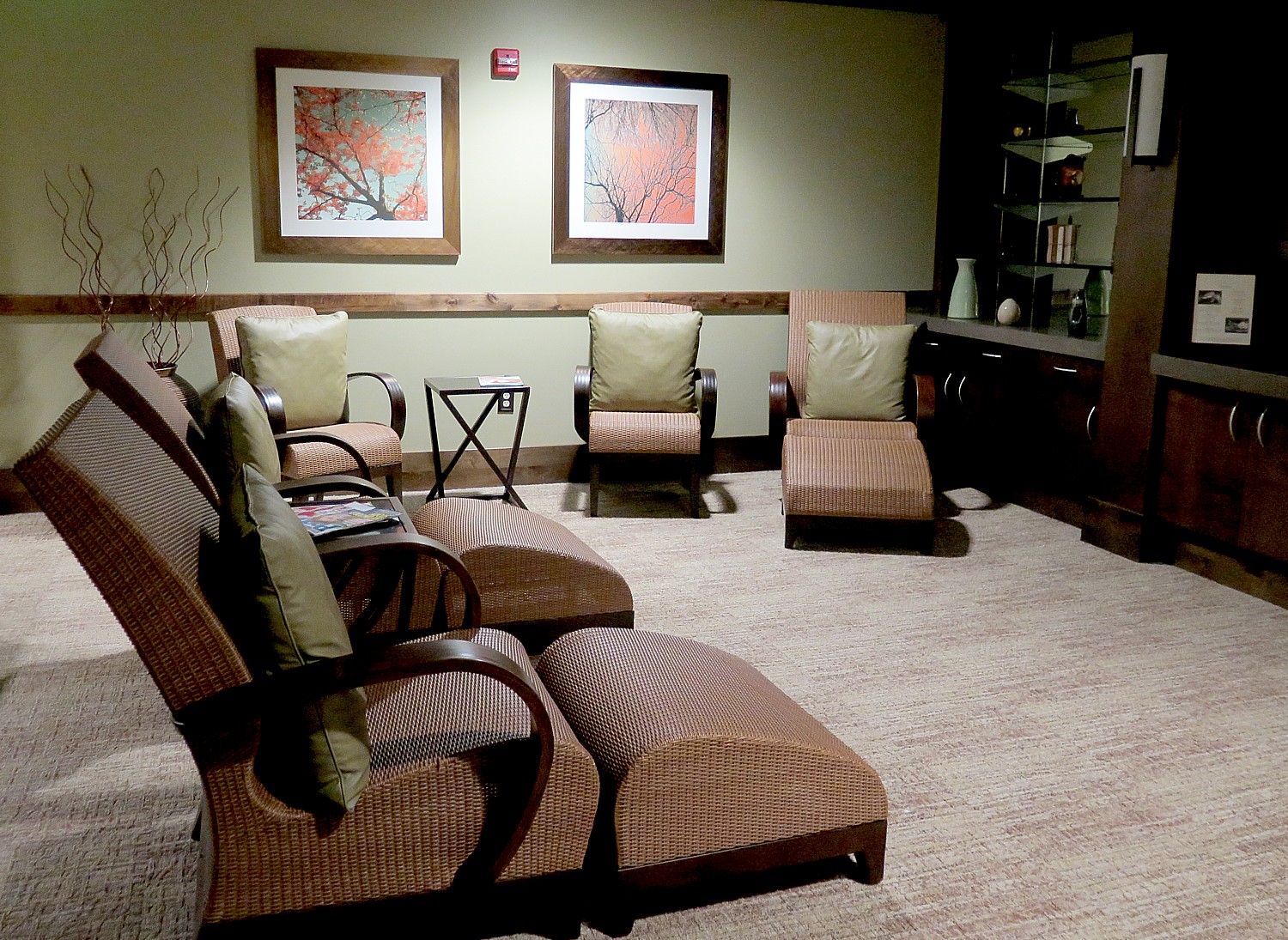
Tenaya Lodge is a true resort with every manner of amenity. Delaware North opened Ascent Spa, 10,000 sq ft, with 12 treatment rooms, a relaxation room (you can order sushi, drinks), a mud bath, group relaxation room, and couples massage room. (Spring spa specials: Receive a complimentary glass of champagne with any 60 or 90-minute spa treatment; a new spring Parafango Slimming Body Treatment “detoxifies and slims the body.”)
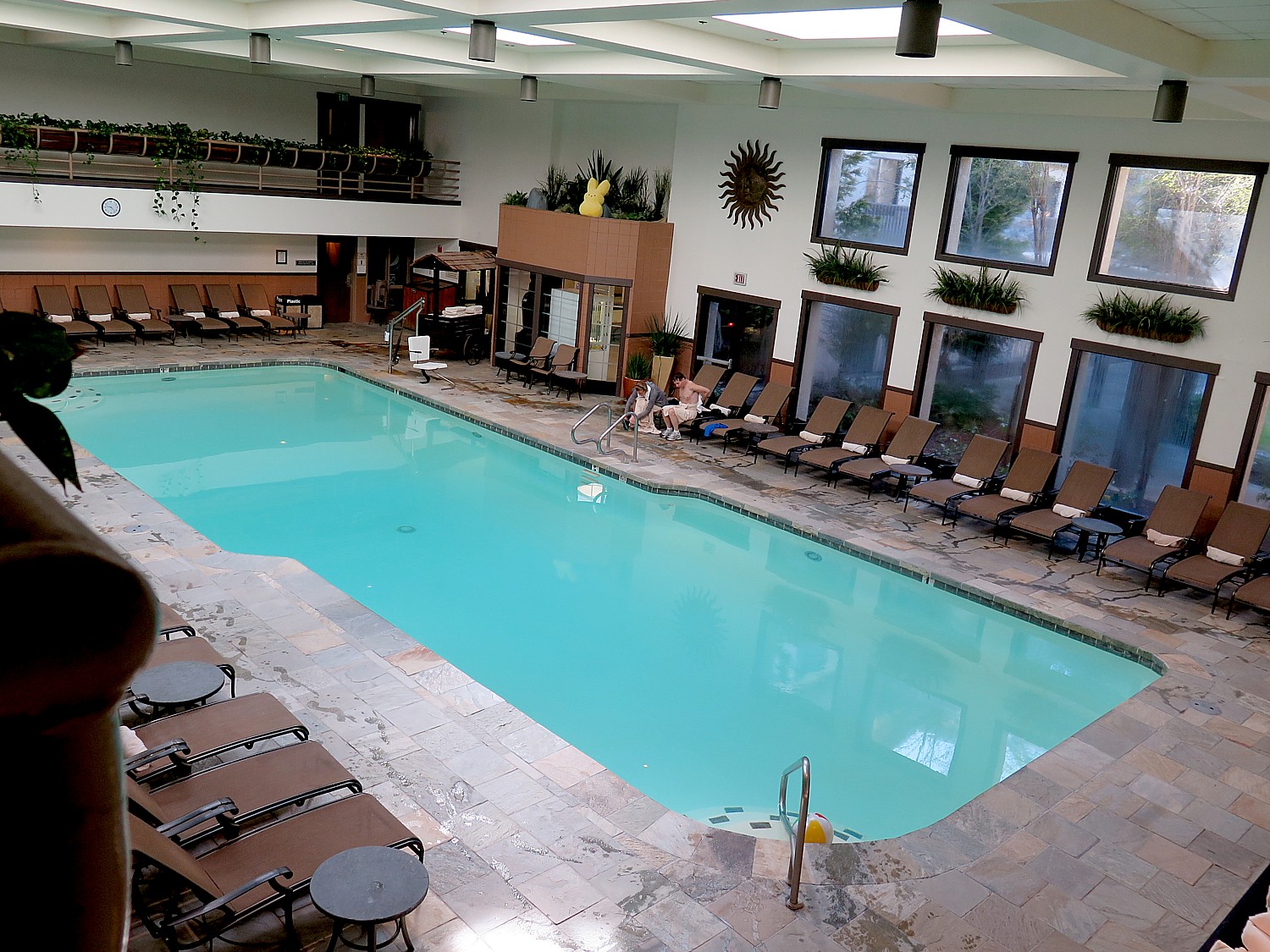
There is also a fitness center with sauna, Olympic-size lap swimming indoor pool, an outdoor pool, archery, rock climbing wall, arcade.
There is a robust schedule of activities like the nighttime Flashlight Hike and Paint & Wine evenings (Thur. & Sat. 7-9, $55 pp), plus special events and activities, like yoga on the patio overlooking the forest. (A resort fee covers fitness room, sauna, fitness room but everything else is a la carte, though there are package offerings.)
In winter, there is an enchanting 3,000-sq. ft. outdoor covered ice skating pavilion (skate rentals available), which in summer becomes suitable for weddings and events.
There is a fire pit (you can order drinks to come down); s’mores kits; a sledding hill and a kiddie slope.
Winter activities also include kids snowmobiling, horse-drawn sleigh rides, snowshoe nature hike, skiing at Badger Pass, California’s original ski resort.
Spring, summer and fall activities include mountain biking, guided hikes, guided rock-climbing excursion, fly-fishing excursion, fishing, Yosemite Valley tours, steam train rides, Summerdale BBQ, gold panning, Bass Lake water sports, golf, horseback riding, white-water rafting. They also offer supervised kids programs, like an adventure camp. (There’s a daily activity schedule.)
Tenaya Lodge is really family friendly (ideal for multi-generational getaways, family reunions, weddings and family events). When you check in, there is a special place for children to check in (a short staircase to the reception desk); and they go all out for holidays like Christmas and Easter (when we are there); on Easter Sunday, there was a petting zoo and pony rides.
It’s also delightful for all the seating areas where families can gather.
Extremely popular for weddings and functions, Tenaya Ledge has a ballroom that can accommodate up to 850 and 12 meeting rooms.
For the same reason it is so well suited for family gatherings, Tenaya Lodge is ideal for meetings and corporate outings (there is a whole list of special activities that can be built in for groups, from rock climbing classes and whitewater rafting excursions, to culinary classes and competitions, guided fly-fishing trips and group geo-challenges).
Notably, Tenaya Lodge won LEED Silver building certification. (I note that there are 8 Tesla charging stations for electric cars outside).
There are any number of activities just beyond the Tenaya Lodge door, which the lodge can pre-arrange:
In winter, the lodge offer snowshoeing; in warm weather they offer mountain biking on its own forest trails, while a short drive away, the Sierra National Forest offers some of the finest single-track riding anywhere, from easy to technical. (The concierge can provide detailed maps.). Half-day and full-day bike rentals available for adults and kids ready to explore the forest trails.
A short distance down the road is Miller’s Landing which has fishing; horseback riding is also nearby.
We came just a little too early in the season to experience the Yosemite Mountain Sugar Pine Railroad. a one-hour, narrated excursion through the Sierra National Forest on historic narrow gauge Shay locomotives over tracks once used for logging trains at the turn of the century.
The ride travels over four miles on the historic Madera Sugar Pine Railroad. There is a brief stopover in the Lewis Creek Canyon to see the locomotive up close, or explore the outdoors before your return trip to the station. You travel along the historic right-of-way of the Madera Sugar Pine Railroad where mighty lumberjacks felled the timber and flumes carried the lumber to the town of Madera. The conductor tells of the history of the line, the trees, and the wildlife native to the area.
The line operates two historic geared steam locomotives called Shays. Both locomotives were from the Westside Lumber Company in Tuolumne, California. These two locomotives represent the original shays that worked this line from 1874 to 1931. The original Madera Sugar Pine Shay locomotives burned wood for fuel, while our two Westside Shay locomotives burn oil. Shay #10 was built in 1928 and weighs in at 84 tons, while Shay #15 was built in 1913 and weighs 59 tons. They also demonstrate how to pan for gold (you get to keep it!). And you can visit the Thornberry Museum which illustrates logging camp life at the turn of the century.
There is also a three-hour Moonlight Special, which starts with a BBQ dinner before boarding the logger steam train for a ride to the campfire sing-a-long program hosted by the Sugar Pine Singers. At the conclusion of the evening, you will re-board the train for a memorable trip up the mountain in the night.
Daily rides are available all summer. (The schedule varies seasonally and usually alternates with Jenny car rides. Reservations recommended.)
We have come to Tenaya Lodge for the express purpose of hiking in Yosemite National Park, but for non-hikers, non-DIYers, Tenaya Lodge offers a Yosemite Tour Package, via mini-bus, that includes lunch and narration, and guarantees waterfalls and wildlife and seeing the most popular sights of Yosemite. (Offered May 1-Nov. 30; from $575 spring, $685 summer, $555 fall; call 888-514-2167 or Tenaya Reservations directly at 559-692-8916).
Other tours are available as well.
We were so fortunate to arrive as the winter snows were melting. Indeed, after almost five years of drought, the waterfalls are fuller than ever this year. Tenaya Lodge is offering special Waterfall Season Hot Dates, now through June 26. (Go to https://www.tenayalodge.com/packages/hot-date-deals for promo code to get the special rate).
Tenaya Lodge (like Yosemite) is very much a four-season resort (the South Gate, the most popular entrance to Yosemite, is open year-round), 55 miles north of Fresno Yosemite International Airport, 3 ½ hours drive from San Francisco Bay area and 4 ½ hours from the Greater Lost Angeles Area.
Tenaya Lodge, 1122 Highway 41, Fish Camp, CA 93623, 800-722-8584, tenayalodge.com.
Well off San Francisco’s tourist track, an exquisite dining experience awaits at Okane, a delightful, intimate neighborhood izakaya in the style of a Japanese gastropub, tucked into SoMa (South of Market), once a warehouse and light industrial district that became popular work/living space for musicians and artists and clubs until the techies took over and now is loosely known as the Design district.
Okane, which opened in January 2015, is the hip, casual sister restaurant to the more upscale, sophisticated Michelin-starred Omakase restaurant literally next door. Okane has already been rated a Michelin Bib Gourmand for 2017.
But the casual appearance and really moderate pricing disguises the exquisite, opulent quality of the fish, much it that has been flown in directly from Tokyo’s world-famous Tsukiji Fish Market (when you arrive, the list of fish that have come in that day are on a board).
The presentations are breathtaking, but when you bring yourself to take a bite, every morsel brings an astonishment of succulent flavor, so that even the memory of the meal makes your mouth water.
The experience is the culinary equivalent of euphoria.
It’s also an education in Japanese cuisine.
Okane is a SoMa neighborhood izakaya – a Japanese gastropub – serving traditional and refined Japanese “comfort” food and contemporary sushi. Many of the selections would be common in Japan but are rarer to find in a Japanese restaurant in America.
The menu at Okane, which is owned by Kash Feng and Jackson Yu who is also the Executive Chef, features an array of shareable vegetable, fish and meat course (Ippin, or appetizers)s, rice and noodles, nigiri sushi and sushi rolls, and assorted specialties.
Highlights from the izakaya menu include the Salmon Aburi with avocado, served with ikura, shio-kombu and truffle; Wakadori Karaage (fried young chicken); Nebeyaki Udon with shrimp tempura, chicken, wakame, green onion and fish cake; and Oyako Donburi with chicken, egg and green onion.
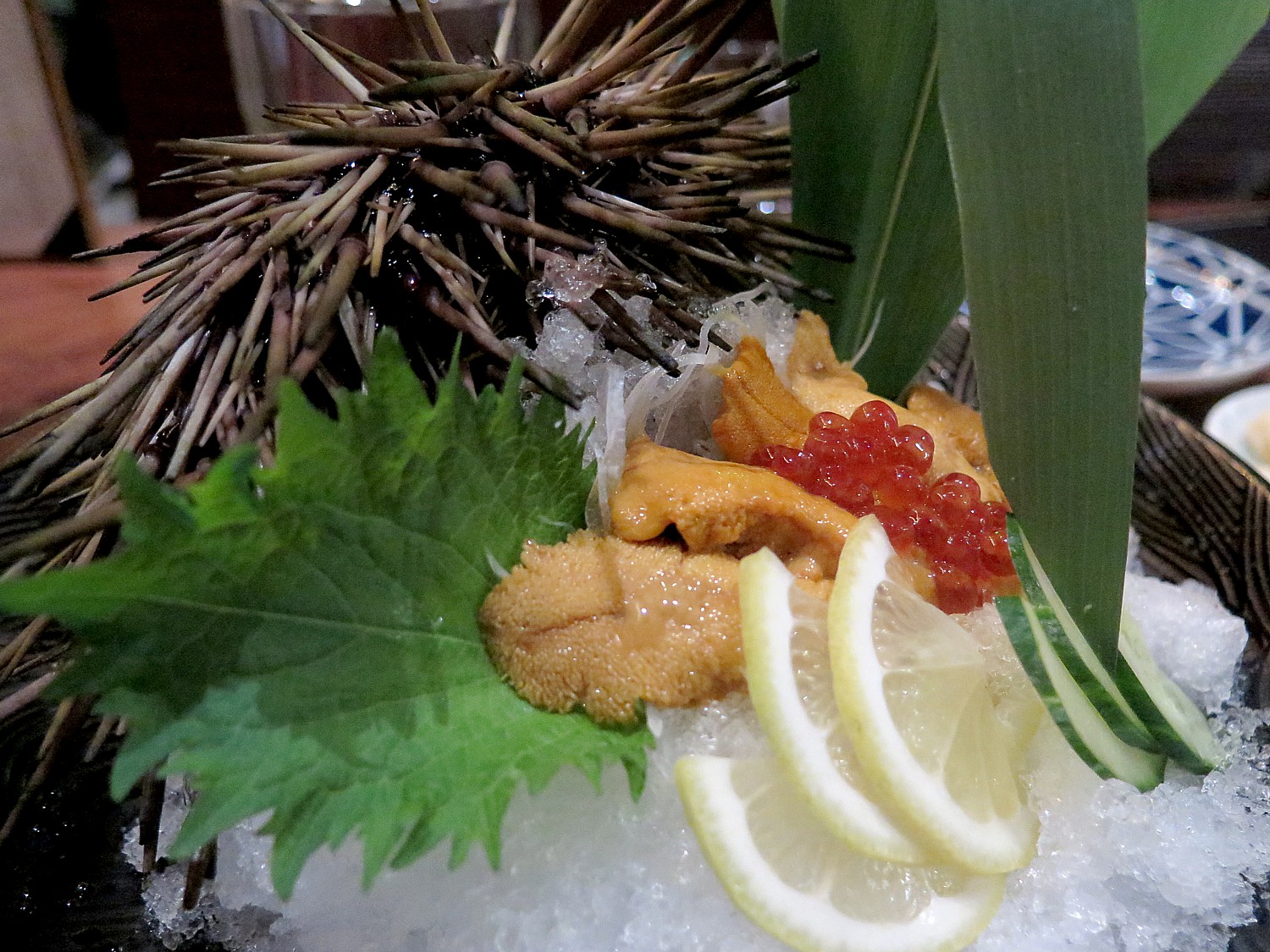
We were treated to Uni, the edible part of the sea urchin (Mario, the manager, actually saved it for our arrival) presented with the spikey part still on the plate, which was so fresh that when you poked it, it would actually still move reflexively. The meat is sweet, creamy in texture and delectable.
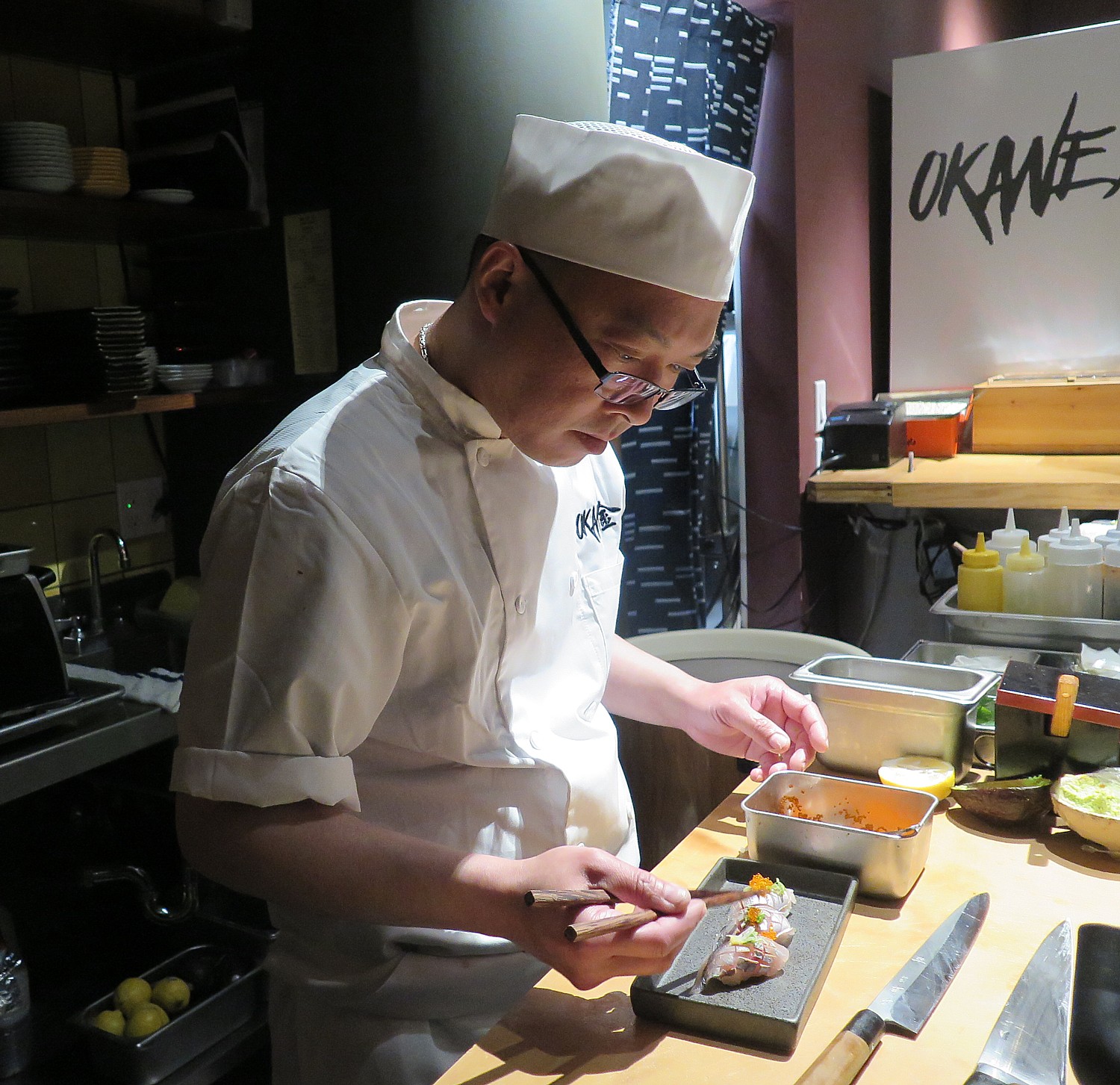
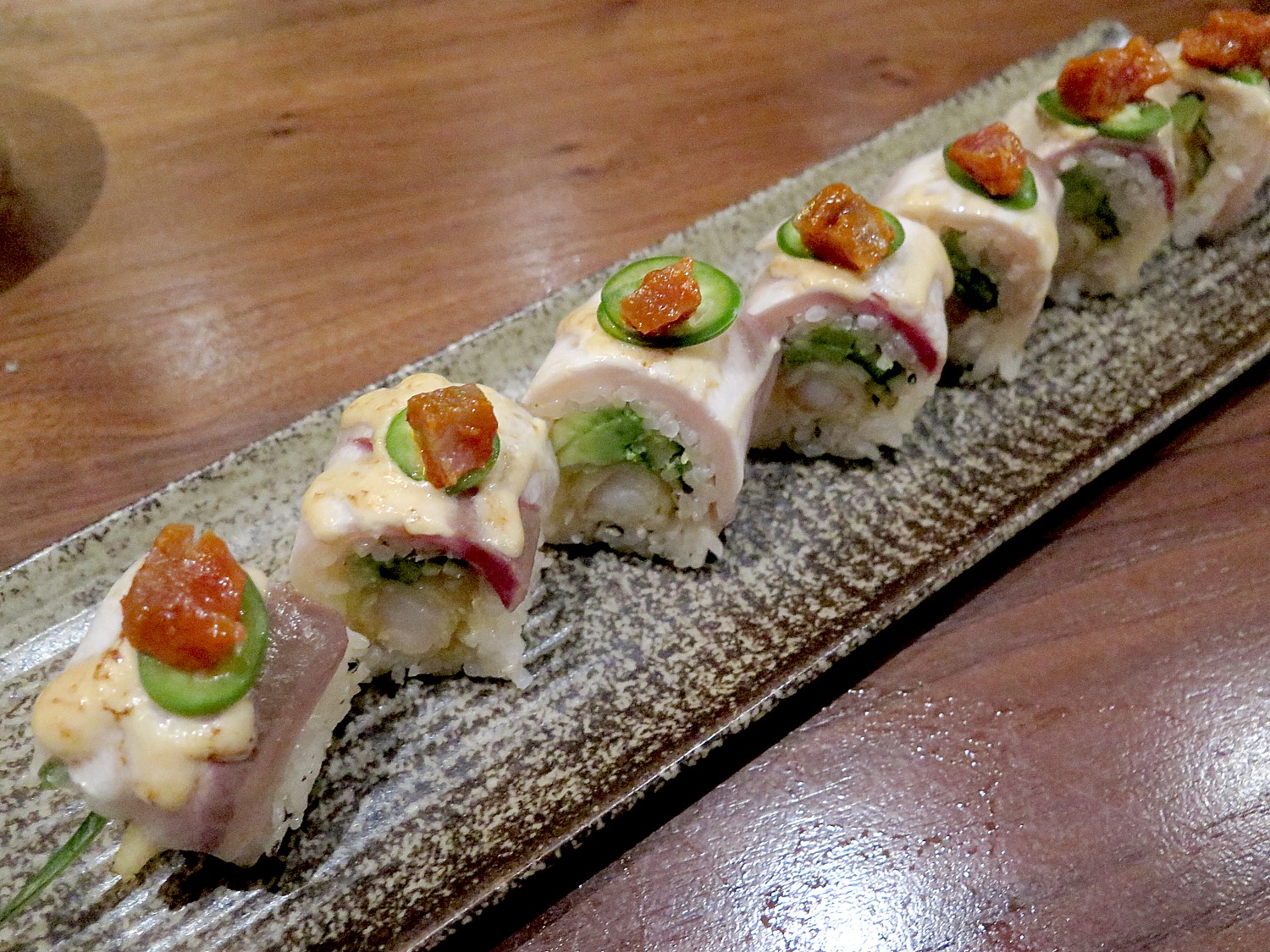
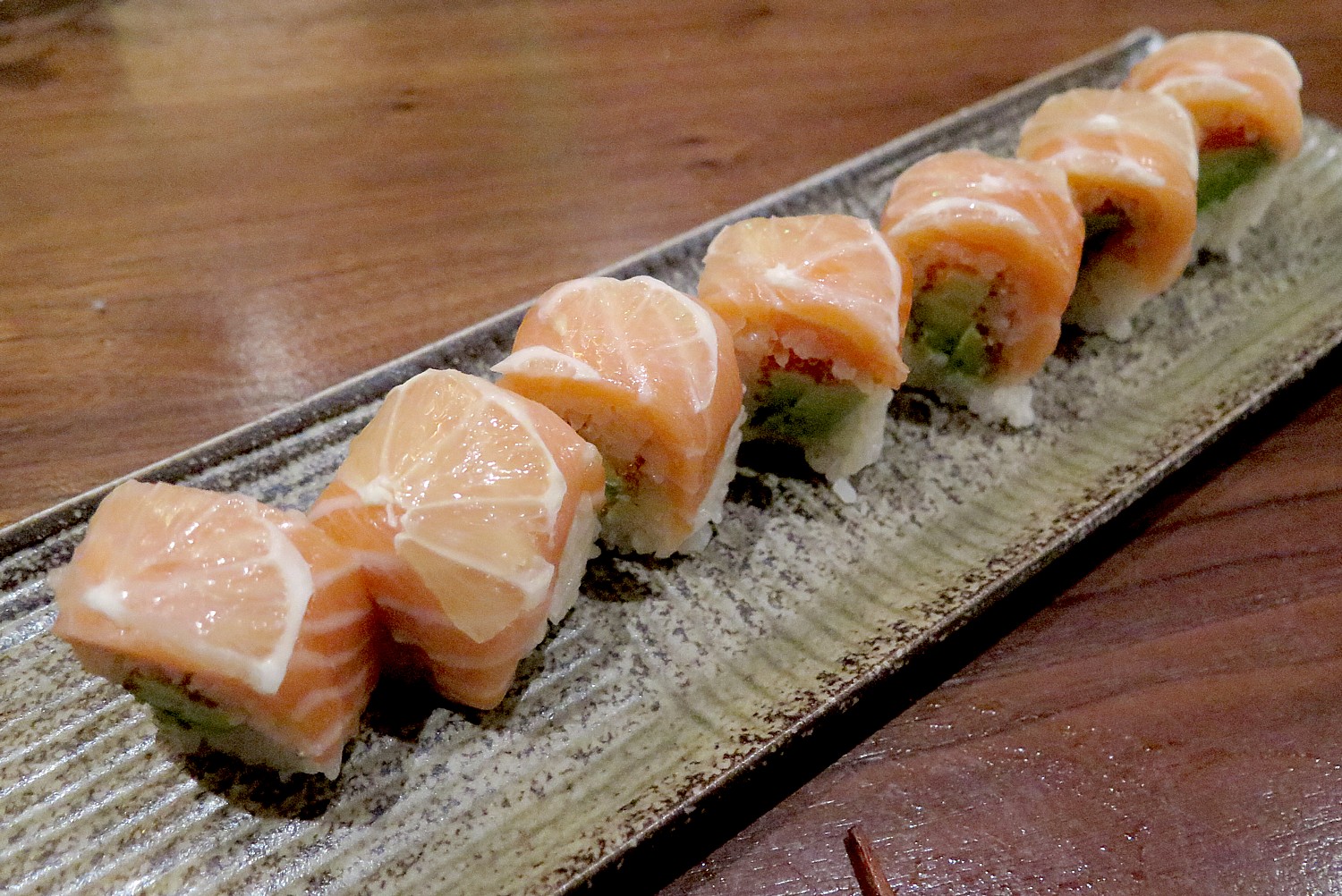
This was followed by a sampling from the sushi menu, overseen by Chef Rico Li, who creates a mix of traditional nigiri selections and contemporary rolls. Among the most popular (for good reason): the Ginza which features shrimp tempura (giving it a bit of a crunchy texture), avocado and cucumber, topped with torched Hamachi, jalapeño (a fusion tip of the hat to San Francisco), and spicy blue fin tuna, and Shibuya prepared with avocado, shiso, tobiko (flying fish roe), topped with salmon and a tiny lemon wedge and a Japanese mint leaf; and the Shinjuku, with snow crab and avocado, topped with A5 Wagyu beef.
We were gobsmacked by a succession of offerings, each setting off flashes of euphoric delight with each bite:
From the Special Fish Ippin Ryori: Albacore Aburi prepared with Japanese mustard mayonnaise and truffle; and Salmon Aburi with avocado, served with ikura, shiokonbu, truffle.
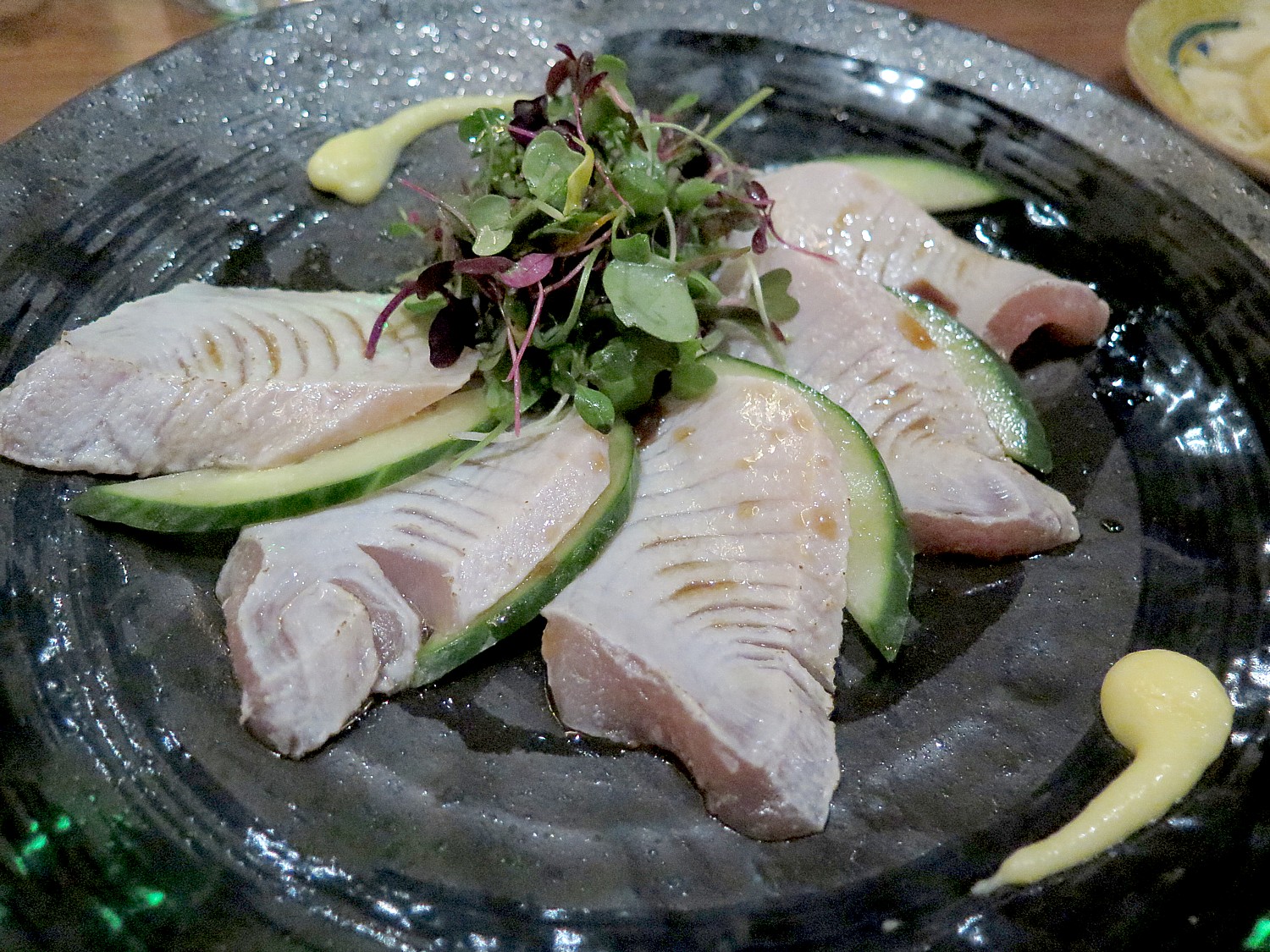
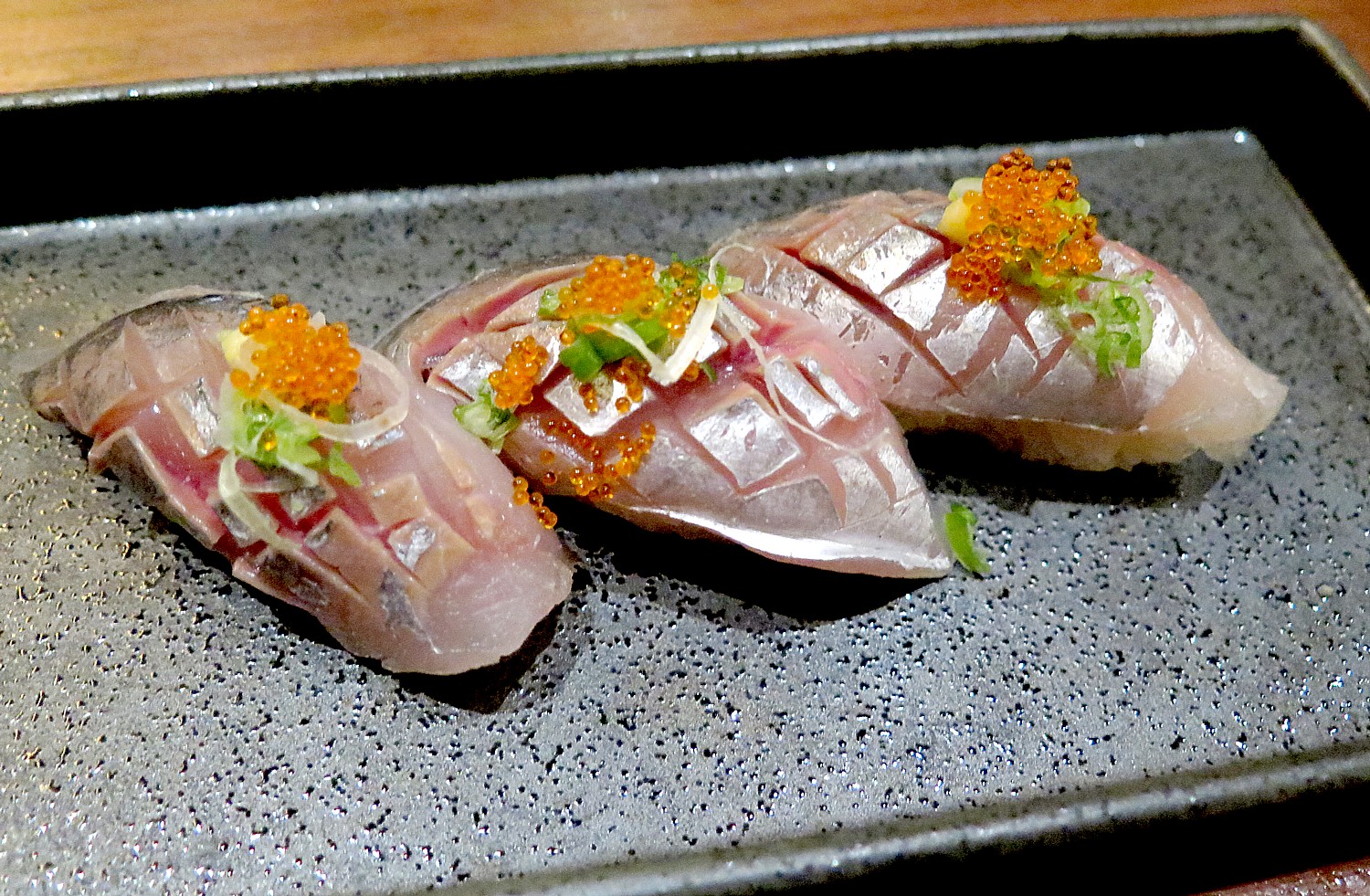
Agi Tataki, one of the chef’s seasonal sashimi offerings, is mackerel sashimi with ponzu (a citrus-based sauce), onions, ginger and momiji oroshi (grated daikon radish and red chili peppers).
From the sushi offerings, we savored barracuda, salmon belly, Hamachi (yellowtail that already comes sauced so you don’t dip it), Tai (sea bream), Kinmedai (golden eye snapper), prepared with sea salt, lemon and torched is also sensational.
The authentic Japanese cuisine is complimented with a comprehensive menu of sake, Japanese craft beer (Okane is one of the only San Francisco restaurants to offer Coedo Pilsner, IPA and Black Lager on tap), and wine.
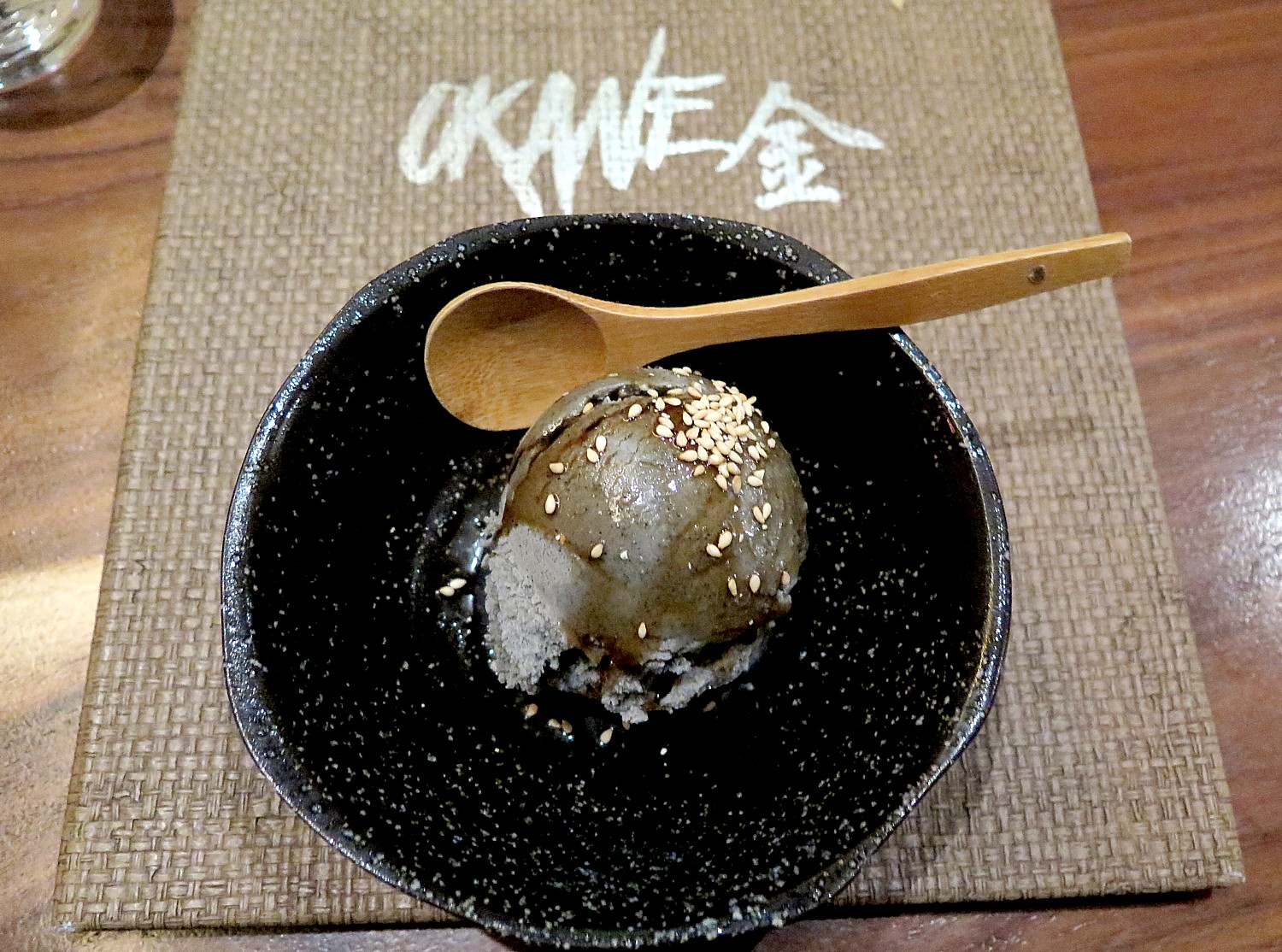
Okane doesn’t do many desserts, but to finish the meal, we experienced black sesame ice cream that is the perfect combination of sweet/not sweet – a taste a little like peanut butter – that becomes addictive. (Save room!)
You can sit at the sushi counter and be treated to Chef’s Choice, where you are served one piece to savor at a time, ($80 pp, compared to $150 at Omikase).
Okane is also unusual in serving brunch (what a concept!).
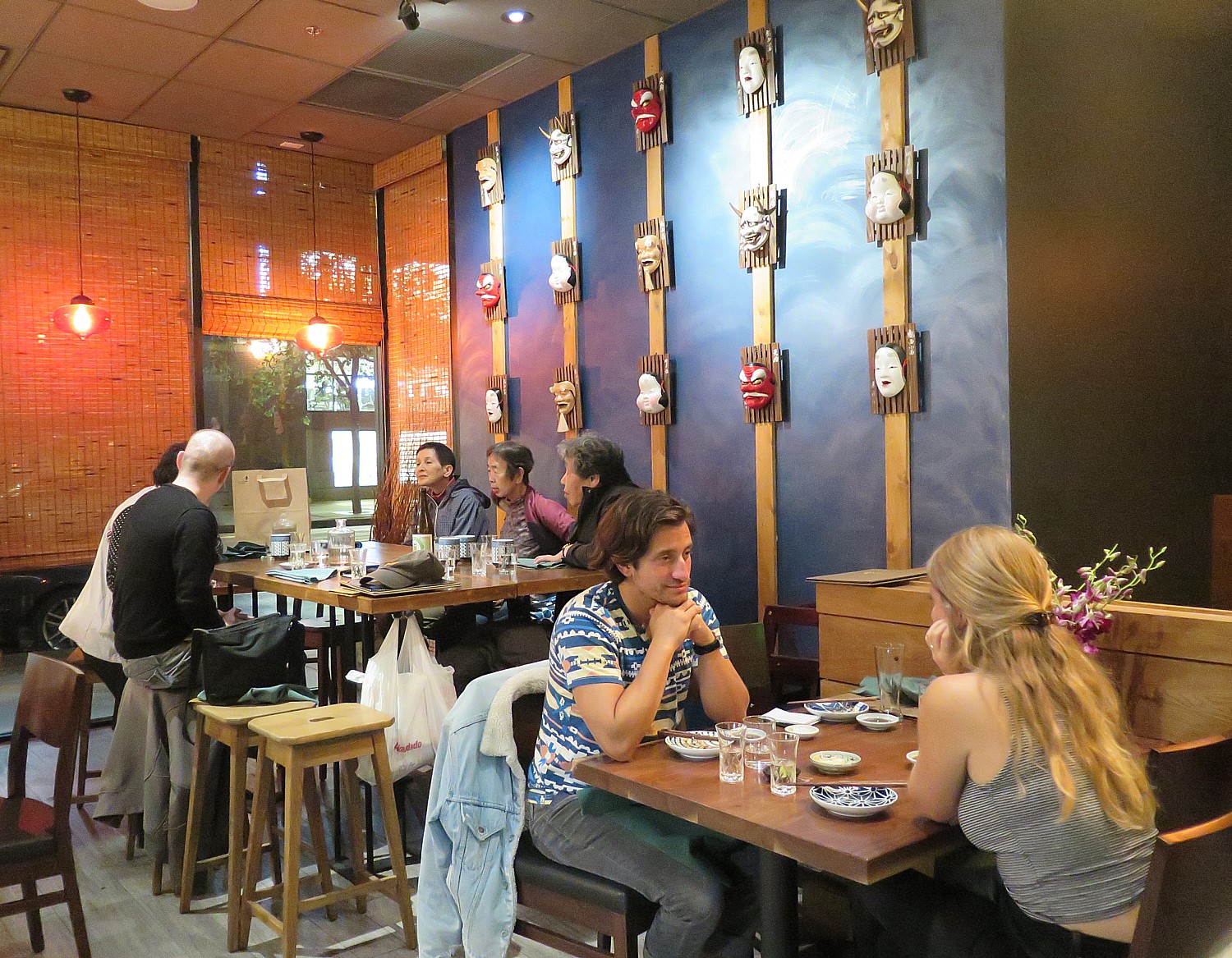
Okane’s interior design, by Aya Jessani, a San Francisco-based interior designer who also helped create the intimate space for Omakase – there are just 46 seats – is utterly perfect to make you feel absolutely relaxed, focused on nothing more than to savor every morsel.
Okane is the sort of place you happily wait in line for.
Hours Lunch: Monday – Friday, 11 a.m.-2:30 p.m. Dinner: Monday – Thursday, 5:30 p.m.-10 p.m. Friday & Saturday, 5:30 p.m.-11 p.m. Check Average Lunch: $15-$20 Dinner: $30-$40 Capacity 46 seats and a four-seat sushi bar Private Parties For private events, contact Jean Francisco at jean@omakasesf.com or call the restaurant at 415-865-9788
Okane, 669 Townsend Street, San Francisco, CA 94103 415-865-9788, www.okanesf.com. Social Media Instagram – @okane_sf Facebook – @okane-523346331167212.
For more help planning a visit to San Francisco, contactSan Francisco Travel.415-391‑2000,www.sftravel.com.
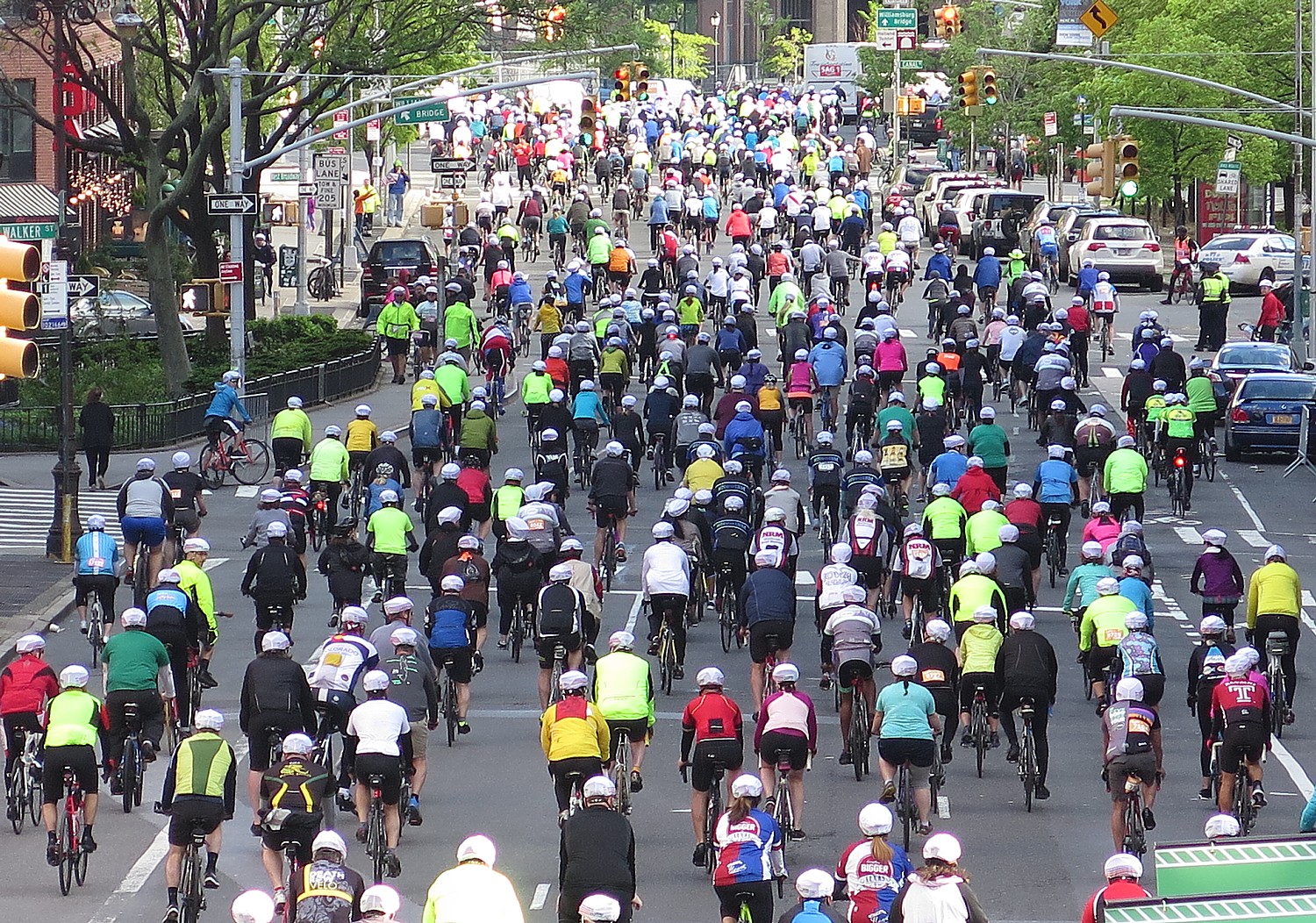
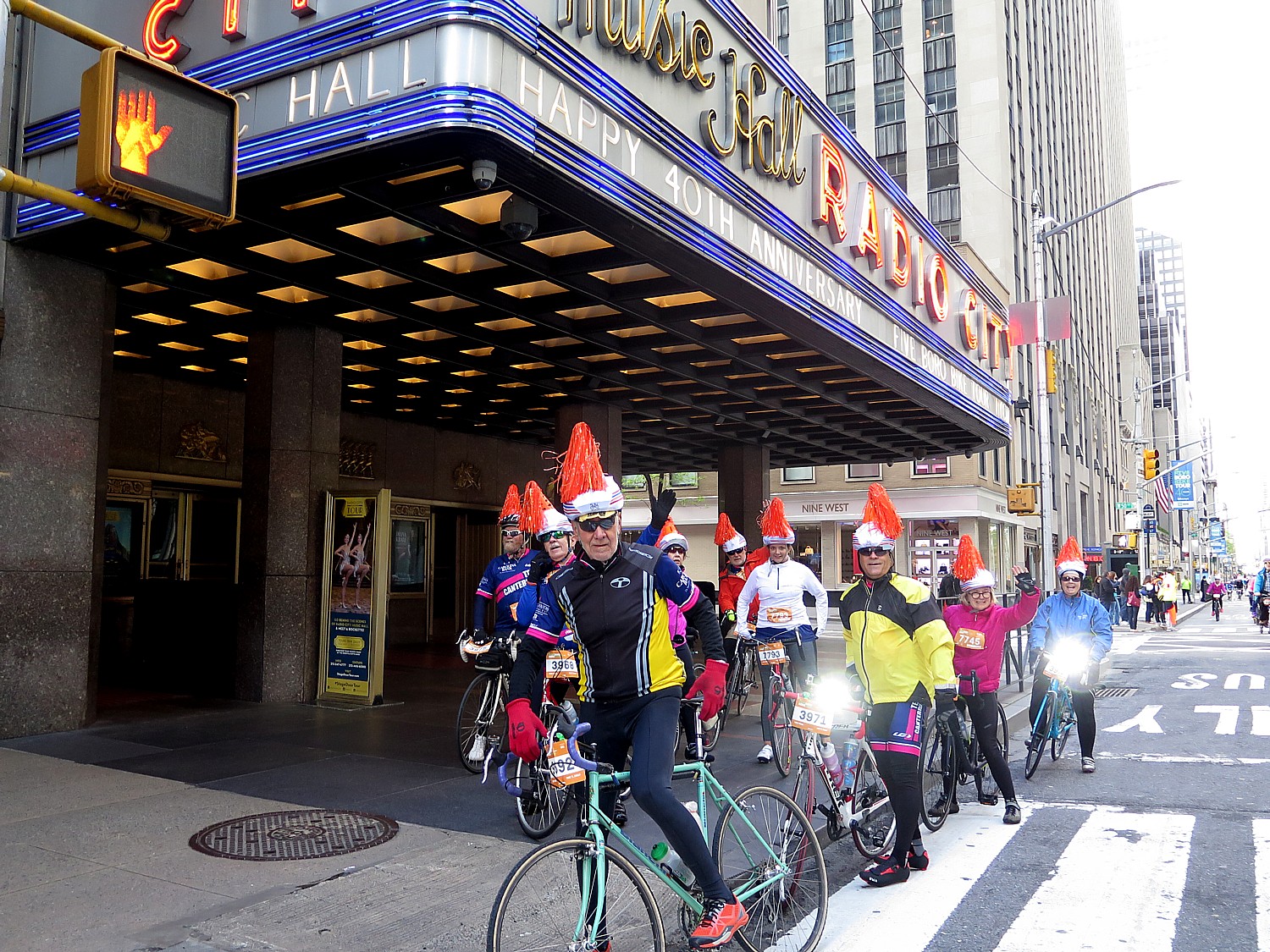
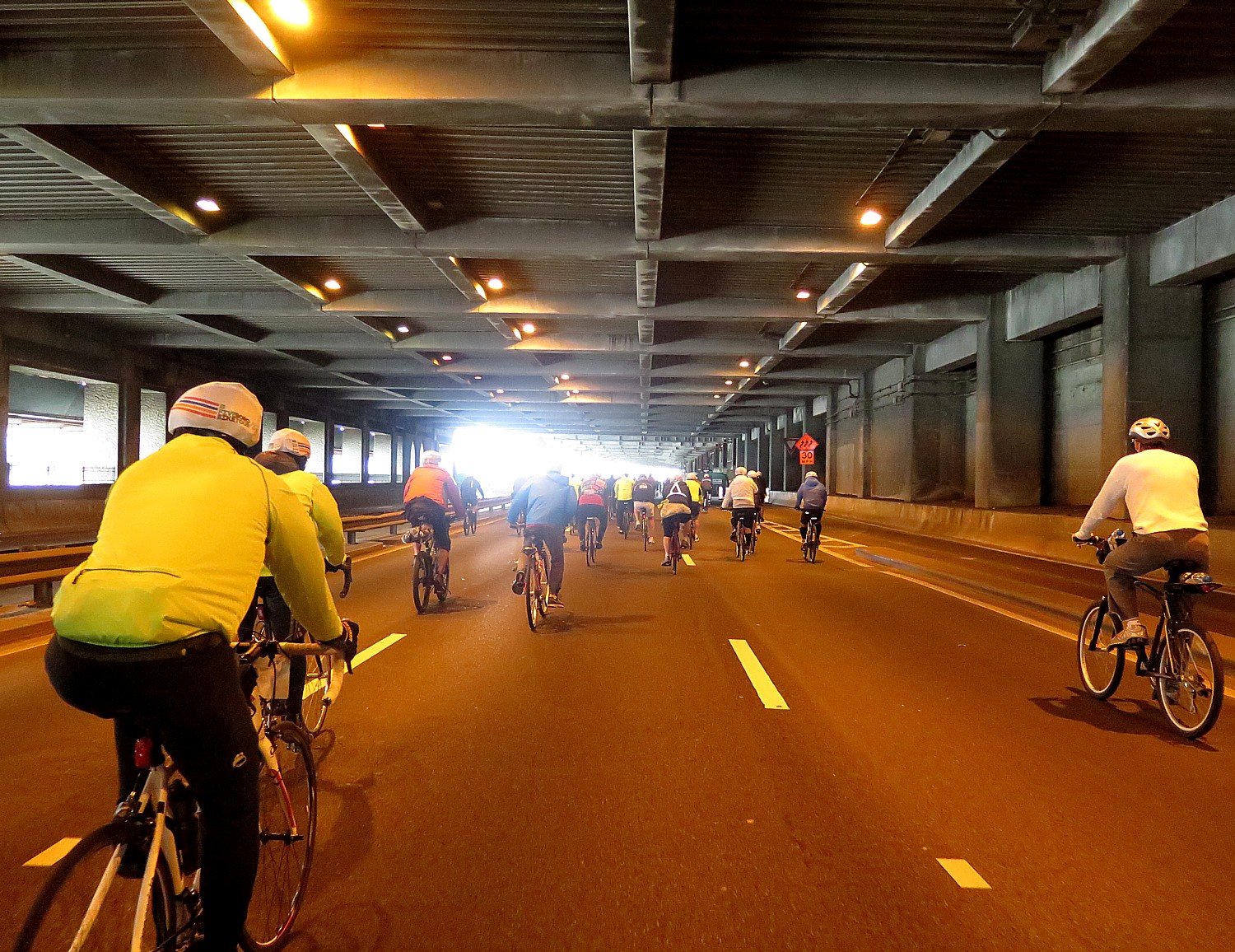
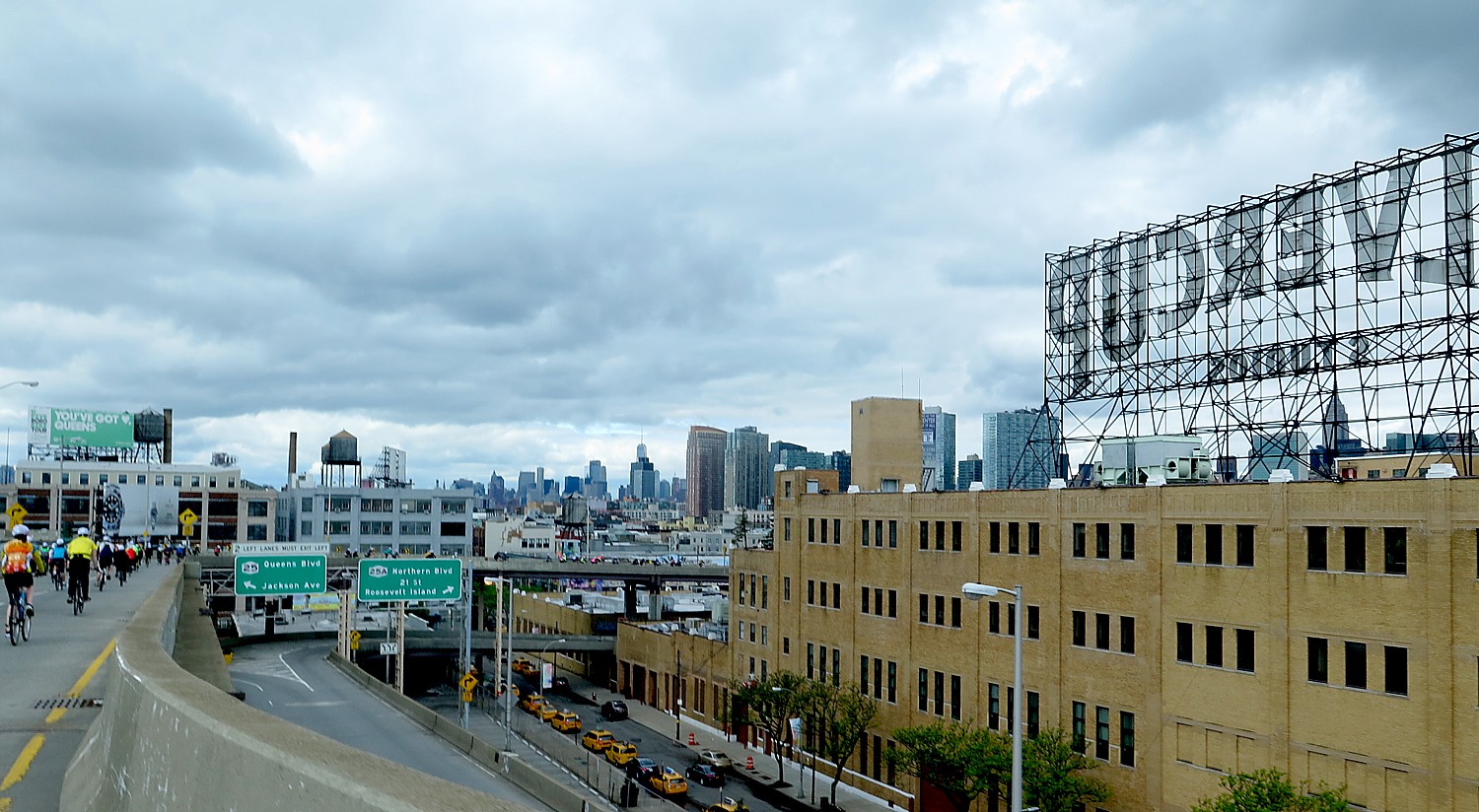
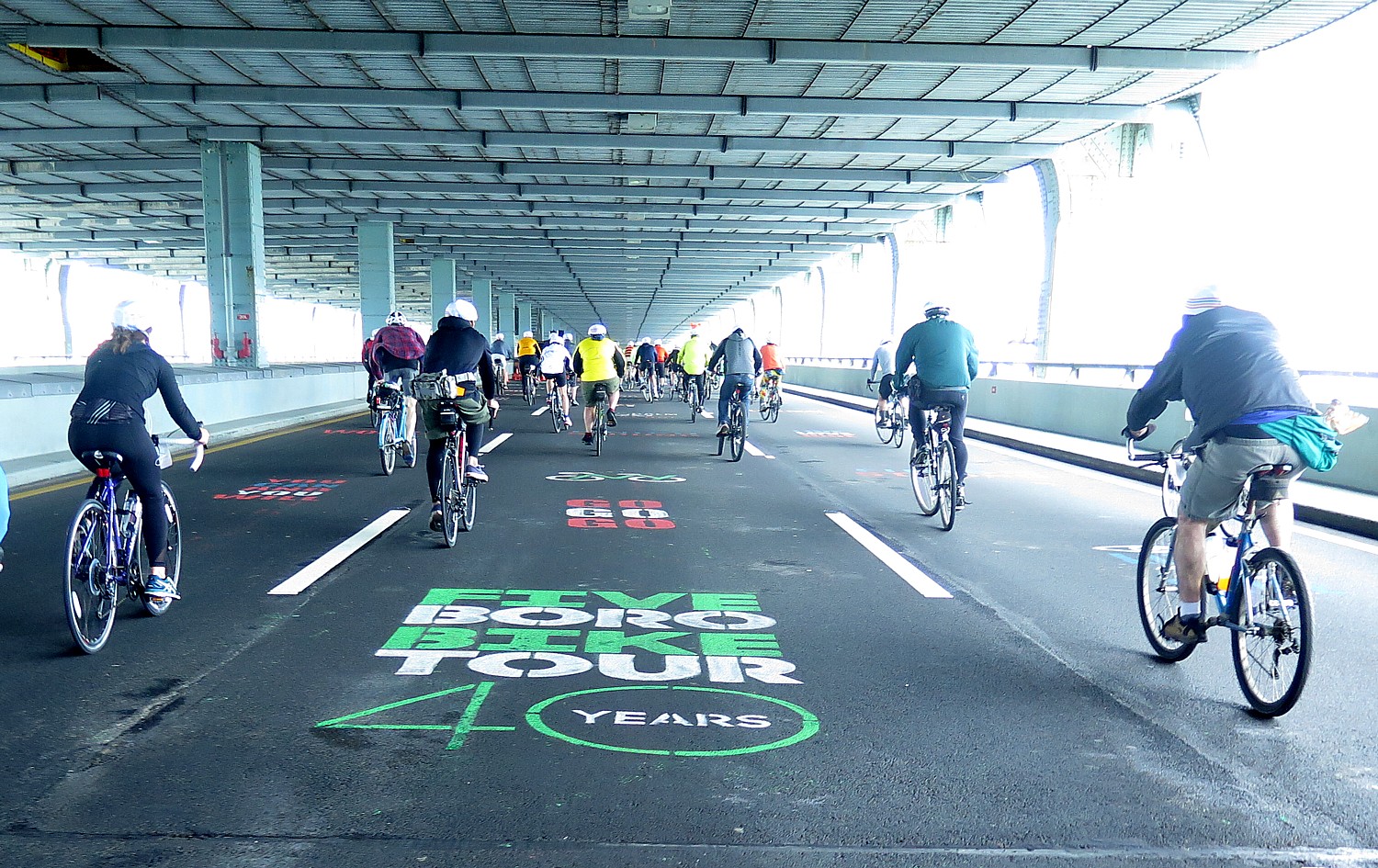
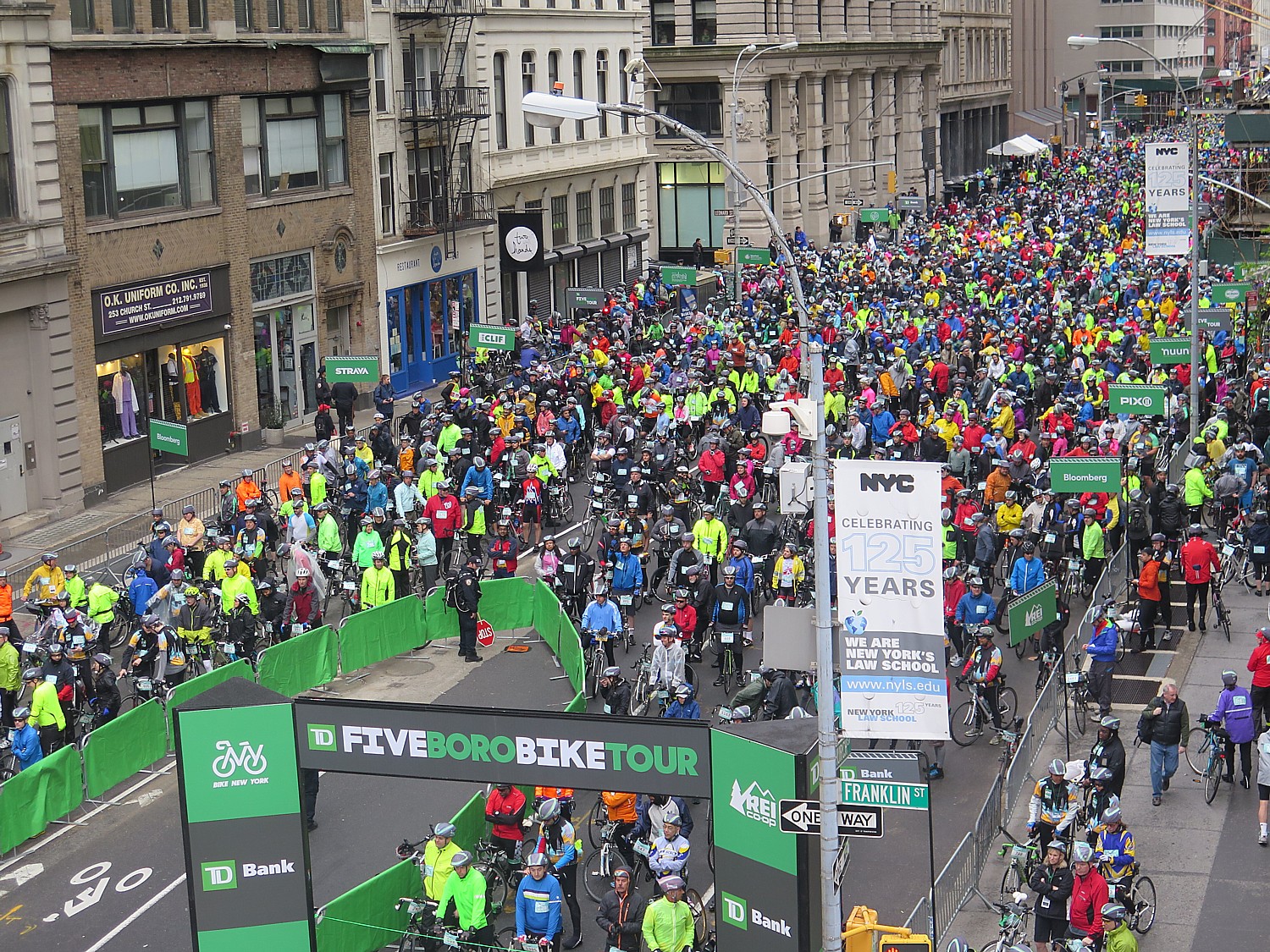
What is so special about New York City’s TD Five Boro Bike Tour is how, for one day, you and 32,000 of your closest friends, feel like you own the city. The streets, bridges and highways – like Sixth Avenue, the FDR Drive, the Queensborough Bridge, the Brooklyn-Queens Expressway and the Verrazano are your domain. It makes you giddy. Neighborhoods ring with sound and spirit – Greenwich Village, Harlem, Astoria, Greenpoint, DUMBO. Central Park’s blossoms seem to burst just for us.
The ride this year marked the 40th anniversary of this event, which is the largest noncompetitive bike tour in North America. The ride has come quite a long way from that first one, in 1977, when just 250 people participated.
Riders, who race to get a spot as soon as registrations open (participation is limited to 32,000 but could easily be thousands more), came from every state in the nation (yes, Hawaii and Alaska), and 1300 riders came from 43 countries, as far as Australia.
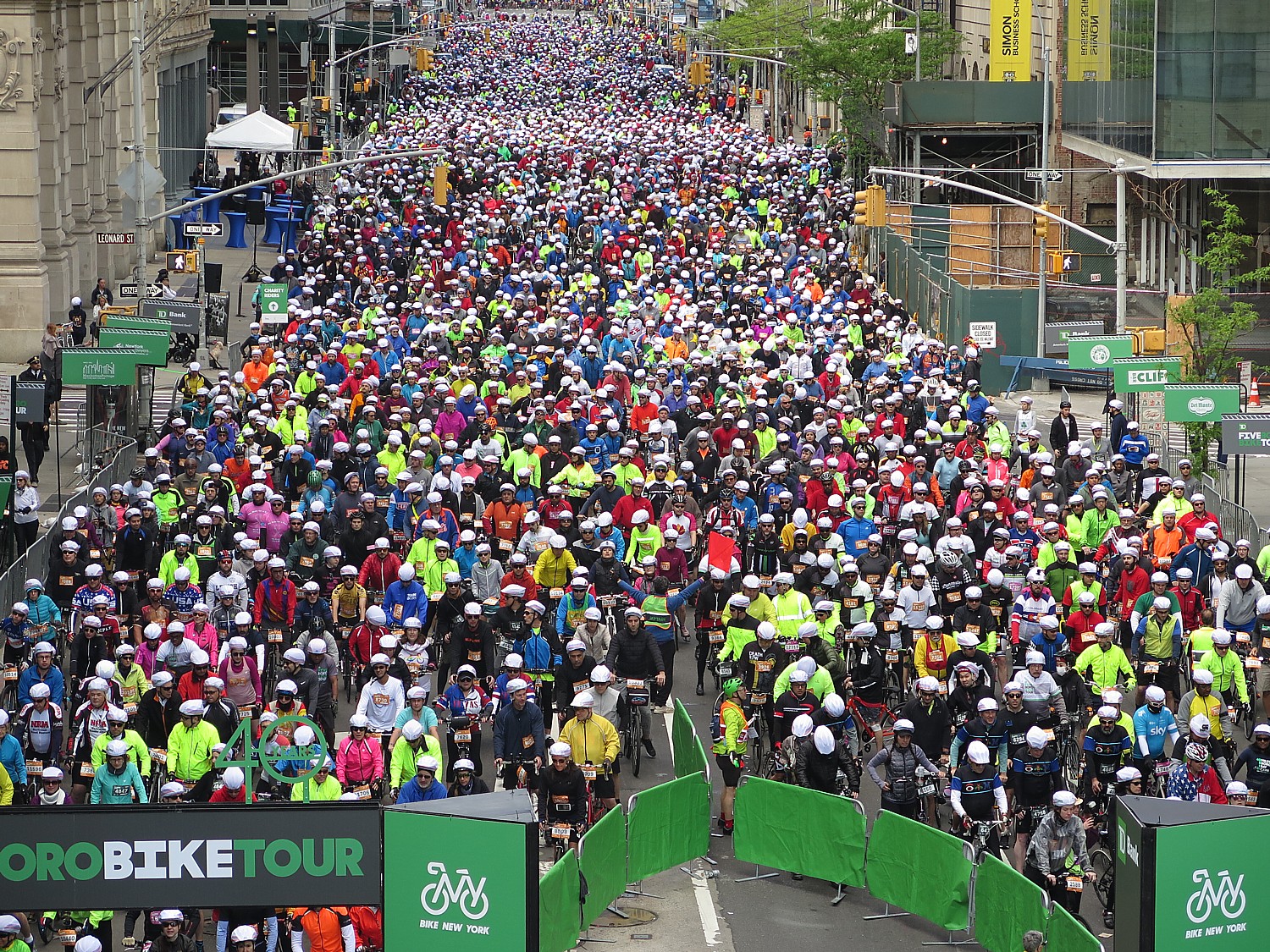
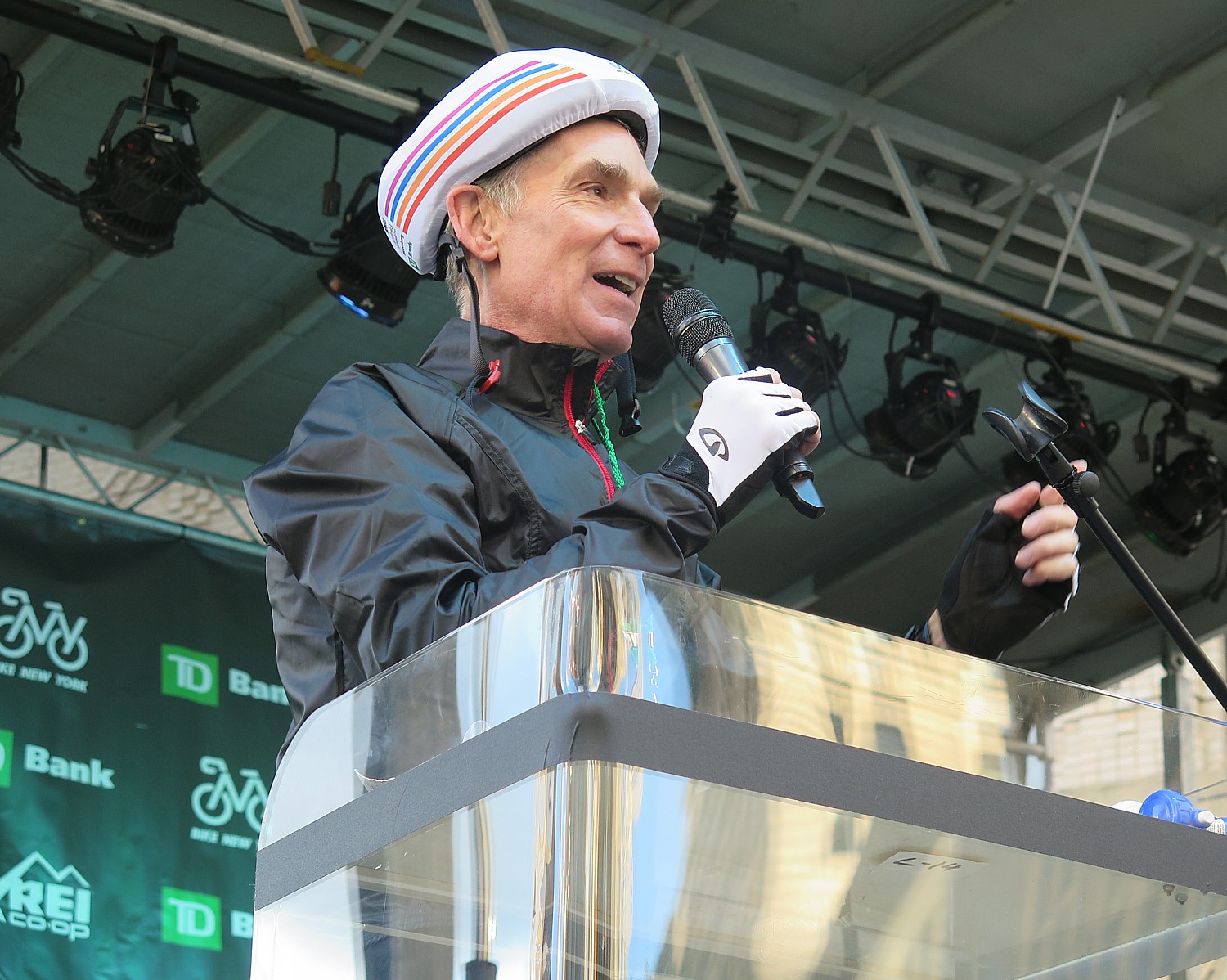
Bill Nye the Science Guy greeted the crowd as they lined up in downtown Manhattan, extending a mile, saying, “The bicycle is the most efficient machine known to humankind.” The ride, he says, brings the joy of movement, of being part of the city. Strong hearts. Free minds. Together we can change the world.”
New York City has really embraced biking, and now offers miles and miles of dedicated bike lanes – dozens more this year.
Manhattan Borough President Gail Brewer said that 750,000 New Yorkers now bike regularly, 50 percent more since 2012. “Thank you for your bike lane advocacy, for being healthy, for being part of the city’s future.”
The annual event raises money for bike education – 17,000 people a year learn how to ride, the largest free biking education program in the country. Bike New York operates bike education centers, after school programs, summer camps, and this year launched a Women’s Initiative, as well as its first membership program. “Alums” from the bike education program are joining the ride this year as “Student Ambassadors.”
Numerous charities such as Doctors Without Borders, also use the event for fundraising, purchasing registrations which participants then raise money against.
One of the charities is the Lighthouse Guild, a not-for-profit vision and healthcare organization with a long history of addressing the needs of people who are blind or visually impaired, and will have several cyclists who are blind riding tandem bikes including a former triathlete, Charles-Edward, who became blind five years ago.
The bike tour is also a model of sustainability, promoting recycling, water conservation, becoming the largest sporting event to be certified for sustainability by the Council for Responsible Sport 3 years ago and this year, earning gold level. Each rest stop featured “zero waste” recepticals.
The ride is designed to be a family friendly tour, not a competition, appealing to all abilities, ages – a pace car keeps the speed down, and keep it safe.
“Diversity is what makes the ride,” says Sam Polcer, who handles communications for Bike New York.
Indeed, everyone marvels at how well organized the ride is and all the precautions that are taken to make the ride safe. The route has also been improved to unplug some of the bottlenecks of years ago, so there is a nice flow.
And there is such a sense of liberation to take over New York City’s streets.
The ride embraces all five boroughs – and each shows off with street entertainment. In all, there were some 25 bands raising the spirits of the riders along the route, and at rest stops (Clif Bar sponsored a DJ and entertainment at the Con Ed rest area) and at the Finish Festival on Staten Island, where, for the first time, all the finishers received a commemorative 40th anniversary medal.
As in recent years, the event is preceded by a two-day Bike Expo, when cyclists can take advantage of discounts and giveaways by scores of bike, biking gear, and bike tour companies and destinations from the New York State’s Erie Canalway, to the Laurentians in Canada, to Taiwan, and special biking events like the Granfondo Campagnolo Roma, October 6-8, 2017, through the World Association of Cycling Events, along with Granfondo Campagnolo Roma.
In a first for the TD Five Boro Bike Tour’s 40th anniversary year, friends and family were able to follow their rider’s progress along the 40 mile route, by virtue of a chip embedded in the number card on each bike.
Riders could sign up to have their progress posted automatically on their Facebook or Twitter pages, or enter the phone numbers of up to three people to keep them updated via SMS (text), so that folks can know when they start the Tour, reach several rest areas along the route and finish.
In a first for the TD Five Boro Bike Tour’s 40th anniversary year, friends and family will be able to follow their rider’s progress along the 40 mile route, by virtue of a chip embedded in the bib.
The ride – which caps participation at 32,000 – is the largest noncompetitive bike tour in North America, with riders from every state (Hawaii and Alaska included) and 1300 riders from 43 countries, coming from as far as Australia.
Remarkable to consider that when the first ride was held in 1977, just 250 participated.
The annual event raises money for bike education – 17,000 people a year learn how to ride, the largest free biking education program in the country. Bike New York operates bike education centers, after school programs, summer camps, and this year launched a Women’s Initiative, as well as its first membership program. “Alums” from the bike education program are joining the ride this year as “Student Ambassadors.”
This year, Bill Nye the Science Guy will be riding and will help launch the ride which gets underway in waves, beginning at 7:30 am from downtown Manhattan.
Numerous charities such as Doctors Without Borders, also use the event for fundraising, purchasing registrations which participants then raise money against.
One of the charities is the Lighthouse Guild, a not-for-profit vision and healthcare organization with a long history of addressing the needs of people who are blind or visually impaired, and will have several cyclists who are blind riding tandem bikes including a former triathlete, Charles-Edward, who became blind five years ago.
The bike tour is also a model of sustainability, promoting recycling, water conservation, becoming the largest sporting event to be certified for sustainability by the Council for Responsible Sport 3 years ago and this year, earning gold level.
The ride is designed to be a family friendly tour, not a competition, appealing to all abilities, ages – a pace car keeps the speed down, and keep it safe.
“Diversity is what makes the ride,” says Sam Polcer, who handles communications for Bike New York.
The route has also been improved to unplug some of the bottlenecks of years ago, so there is a nice flow.
And there is such a sense of liberation to take over New York City’s streets.
The ride embraces all five boroughs – and each shows off with street entertainment. In all, there will be some 25 bands along the route, and at rest stops (Clif Bar is sponsoring a DJ and entertainment at the Con Ed rest area) and at the Finish Festival on Staten Island, where, for the first time, all the finishers will receive a commemorative 40th anniversary medal.
As in recent years, the event is preceded by a two-day Bike Expo, when bikers can take advantage of discounts and giveaways by scores of bike, biking gear, and bike tour companies and destinations from the New York State’s Erie Canalway, to the Laurentians in Canada, to Taiwan, and special biking events like the Granfondo Campagnolo Roma, October 6-8, 2017, through the World Association of Cycling Events, along with Granfondo Campagnolo Roma.
Riders can sign up (click here) to have theirr progress posted automatically on their Facebook or Twitter pages, or enter the phone numbers of up to three people to keep them updated via SMS (text), so that folks can know when they start the Tour, reach several rest areas along the route and finish.
Anyone not riding the Tour can follow along with a live broadcast produced by NTD.TV. View it here:
Also, don’t forget to follow @bikenewyork on Facebook and Instagram for the latest from the Tour.
If you want to cheer on the riders or catch any of the entertainment we have planned along the route, check out the Tour’s entertainment page for info. Tag @bikenewyork and use the official event hashtag: #TDFBBT
Bike New York, 475 Riverside Drive, New York, NY, Suite 1300, New York, NY 10115, www.bikenewyork.org.
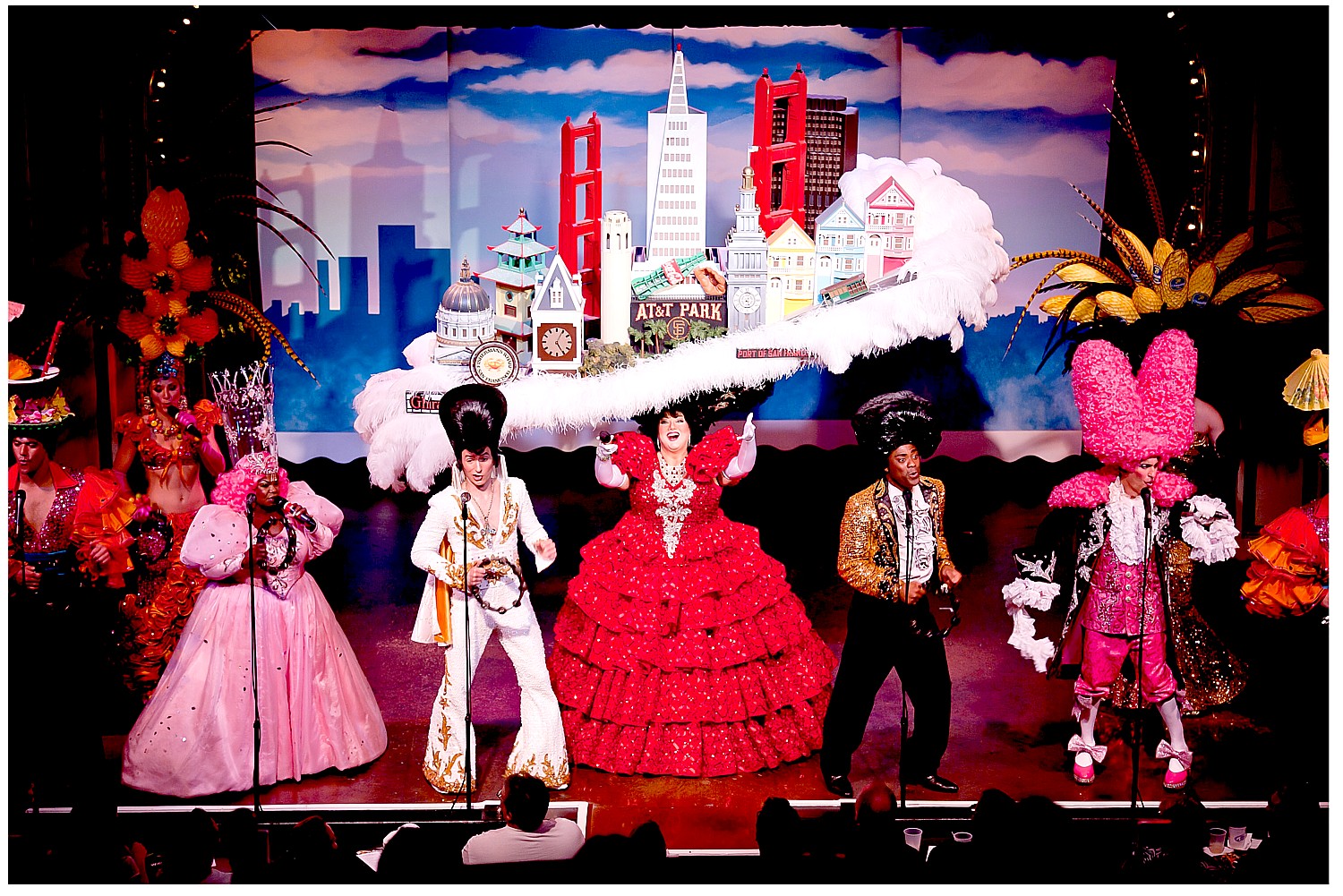
Steve Silver’s Beach Blanket Babylon boasts being the world’s longest running musical review, and once you decide to dismiss the stupidity of the premise – Snow White’s search for her Prince Charming – you become completely enchanted with the quality of the musical performances, the costumes that would make Ziegfeld jealous (the hats are spectacularly outrageous), the choreography, and yes, the satire.
This isn’t expressly a political satire, though all your favorite political figures are zinged. Beach Blanket Babylon is really more of a spoof of popular culture, iconic brands, hot celebrities. And though the musical has been playing here in San Francisco since 1974, sections seem as if they were written just the week before, they are that timely.
In a phrase, it’s a hoot that carries you along with abandon as if you were riding a tube through rapids. Just suspend disbelief, sit back and enjoy the ride.
A mind-boggling statistic that would seem to make the show eligible for inclusion in the Guinness Book of Records, Beach Blanket Babylon has already had more than 16,000 performances and has been seen by six million people who come to the delightful theater at Club Fugazi in the North Beach district from around the world. The show doesn’t only spoof celebrities, it draws its share to its audience: HRH Queen Elizabeth II, Prince Charles and Camilla the Duchess of Cornwall as well as some of Hollywood’s biggest stars.
Beach Blanket Babylon (whatever basis in plot that title originates from seems to have been erased with the sands of time) follows Snow White as she finds herself in various locales around the world in search of her “Prince Charming.” (I can only imagine that way back in its history, these locations had more relevance to the plot.)
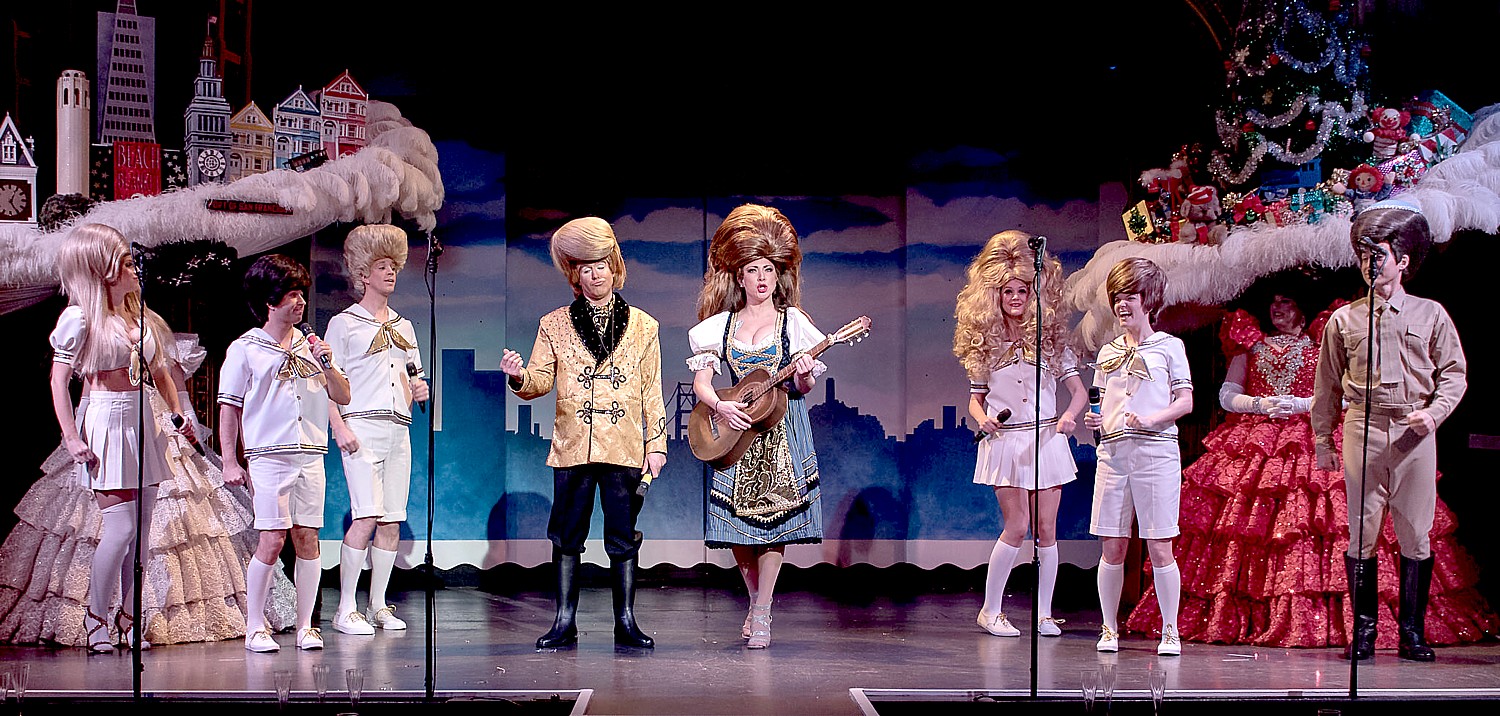
Our favorite bit was Donald and Melania Trump and the Trump family (done as the Von Trapp Family from “Sound of Music”). The incredibly long and varied list of characters that get their share of ribbing include Vladimir Putin, Beyoncé, Lady Gaga, Adele, Hamilton, Kellyanne Conway, Darth Vadar (Steve Bannon), Barack and Michelle Obama, Taylor Swift, Prince, Ivanka Trump, Bernie Sanders, Kim Kardashian and Kanye, Hillary Clinton and Bill, Oprah and the San Francisco Giants.
“Donald and the von Trump Family,” one of Beach Blanket Babylon production numbers spoofing political figures.
But the main reason that this show has survived all these years is the astonishing quality of the performances and yes, witty lyrics, and FABULOUS costumes (and hats!) that makes you wonder why they don’t spend a few bucks on a smarter, more updated unifying gag.
It all began on June 7, 1974, when Steve Silver produced a small show in the back room of the Savoy Tivoli Restaurant in San Francisco. There were 214 seats crammed into a tiny space. The floor was covered with two tons of sand; a lifeguard tore tickets at the door and sprayed the backs of people’s hand with Coppertone®. (Now I know where the title comes from!) For $2.50, the audience was entertained by a 45-minute show with four main performers, a chorus line of hula-dancing middle-aged housewives doing card stunts, a band dressed as poodles, one lighting man on top of a lifeguard stand manipulating Folger’s® coffee can lights and a whole lots of laughs.
The show was to run for six weeks. That was more than 40 years ago…
After a brief stint in the fall of 1974 at Club Olympus, Steve Silver’s Beach Blanket Babylon opened at Club Fugazi, a really beautiful theater that makes you think you are back in 1890s San Francisco, where it has been running since. The show became an expanded version of the Tivoli and Olympus shows, with more characters, grander sets, a larger cast and what was to become a trademark of the show, bigger hats!
This show is everybit a showy, elaborate display – you can’t believe they can get that many performers doing complicated choreography (and in those hats!) on an intimate stage. The musicians are fantastic, too.
Tickets range from $25 – $155 (based on performance date and seat location) and can be purchased online at www.beachblanketbabylon.com, in person at the box office or by calling 415-421-4222. All performances take place at Club Fugazi, 678 Beach Blanket Babylon Blvd. (Green St.) in the heart of San Francisco’s North Beach district. Shows perform on Wednesdays, Thursdays & Fridays at 8 p.m., Saturdays at 6 & 9 p.m., and Sundays at 2 & 5 p.m. (Due to liquor license restrictions, persons under 21 are not admitted to evening performances. (Minors welcome at Sunday matinees.) Valid photo I.D. is required.
Club Fugazi happens to be in North Beach which has some of the best Italian restaurants in San Francisco (and is one of San Francisco’s oldest neighborhoods). We thoroughly enjoyed our dinner at the casual and moderately priced Baonecci Ristorante – pasta with truffles, eggplant Parmigiana; Tagliatelle ai Funghi Porcini (Fresh homemade eggs pasta Porcini Mushroom, Garlic, Olive oli, Fresh Italian Parsley) and Pizza Rustica (San marzano tomato sauce, fresh mozzarella, gorgonzola cheese, salame toscano, arugula (reservations recommended, Baonecci Ristorante, 516 Green St, San Francisco, CA 94133, 415-989-1806).
North Beach was home base for The Beats, Jack Kerouac and poet Alan Ginzberg. Arrive early and stop in at The Beat Museum, which houses an extensive collection of Beat memorabilia, including original manuscripts and first editions, letters, personal effects and cultural ephemera, originally collected by Jerry Cimano, (The Beat Museum, 540 Broadway (at Columbus Ave.), San Francisco, CA 94133 (museum entrance is $8/Adults, $5/Students/Seniors), 800-KEROUAC (800-537-6822), www.kerouac.com, email info@kerouac.com, follow on Twitter @KerouacDotCom and The Beat Museum on Facebook.) (See story Beats of North Beach, Rolling Museums, Urban Oasis: San Francisco’s Cultural Highlights Where You Least Expect).
For more help planning a visit to San Francisco, contact San Francisco Travel. 415-391‑2000, www.sftravel.com.
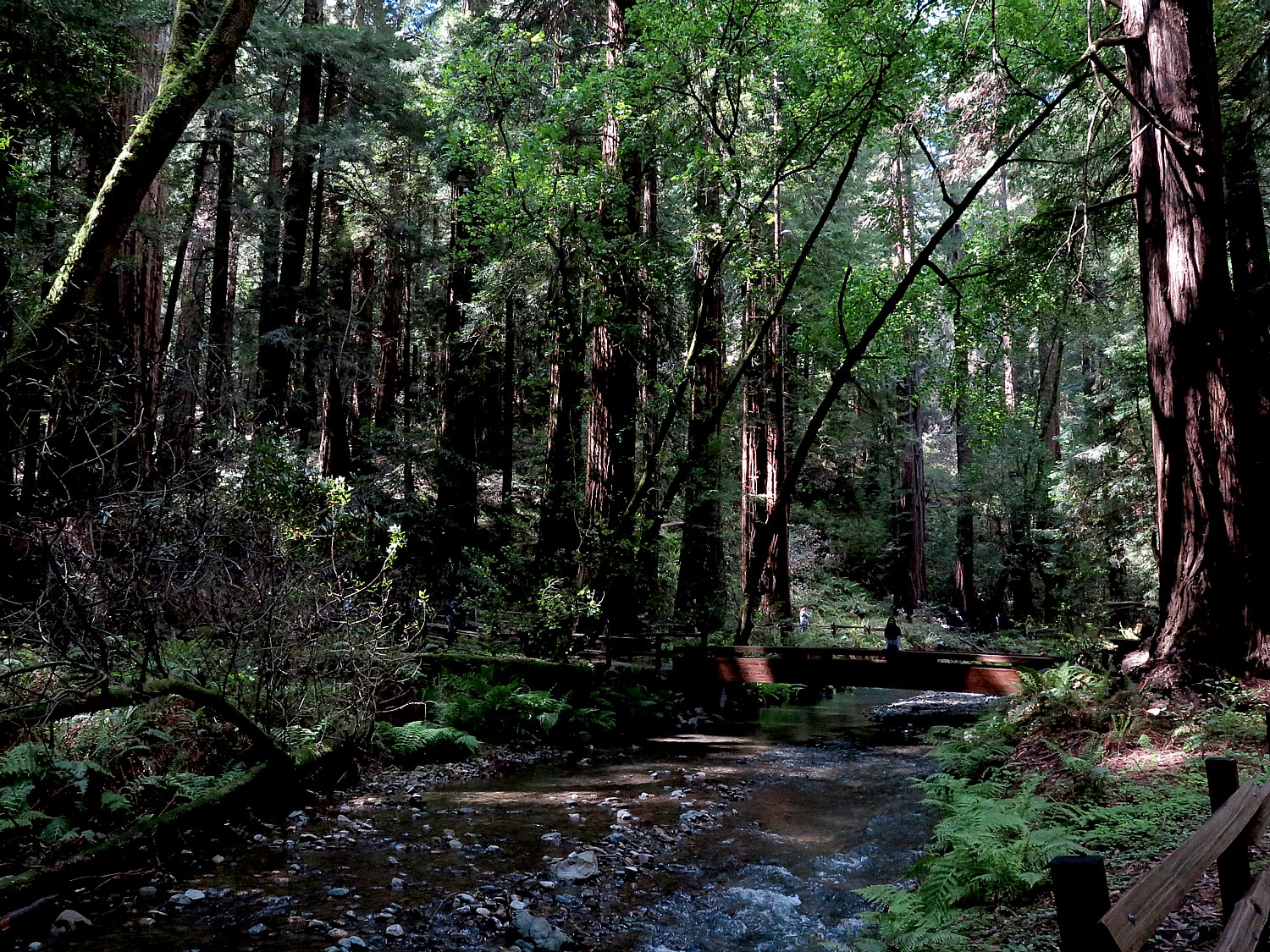
It is quite amazing to me that just 35 minutes drive from downtown San Francisco, the fabulous urbanized city with some of the tallest structures man has devised, are the Muir Woods, with some of the tallest and most ancient trees Mother Nature has produced.
The peace, the serenity, the sheer awe and majesty envelopes you from the first steps into the national forest.
There are many tour companies that make it easy for tourists to visit, as well as various means to get you there on your own (but if you use Uber, you have to be aware that there is no cell service there).
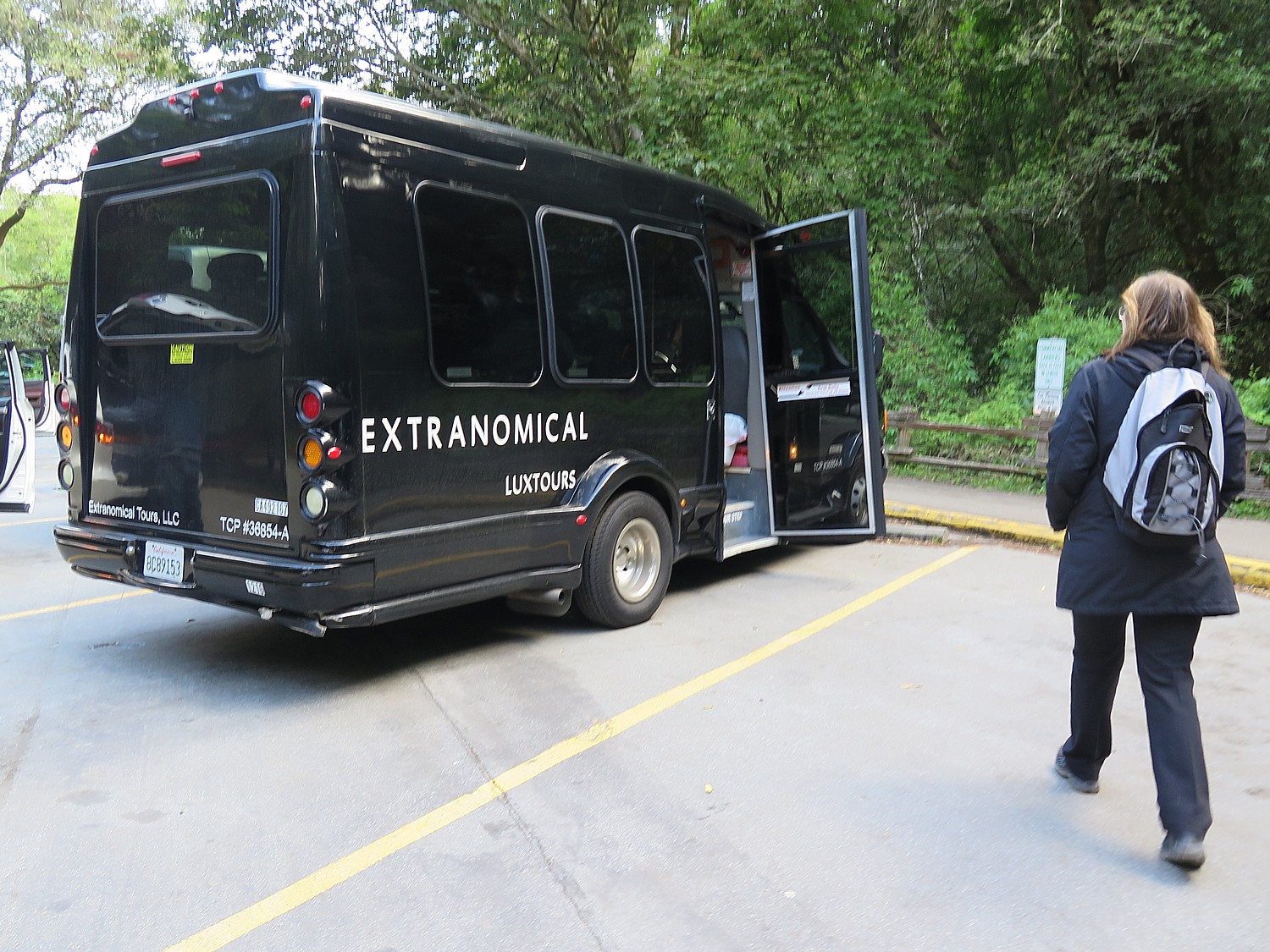
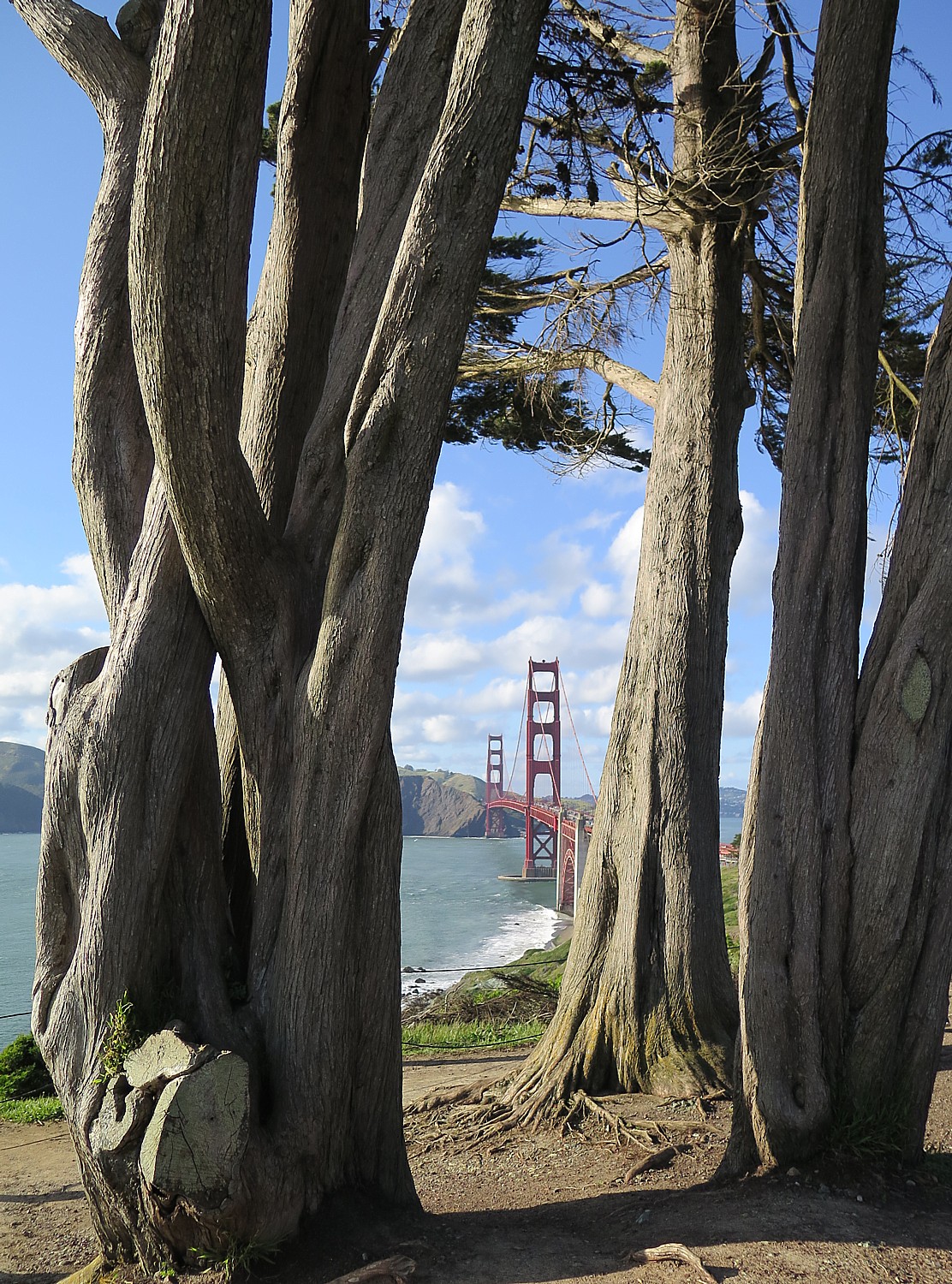
I took Extranomical Tours’s Muir Woods Expedition which offers an excellent program, well organized, and that gives you some extra added treats: a stop in scenic Sausalito and another stop for a “unique” view of the Golden Gate Bridge (in fact, an unusual vantage point that most tourists would never have), as well as an animated, well informed guide (Jake on the tour I took), who points out the sights, relates San Francisco’s history and gives good historical and naturalist background to prime you for your visit to Muir Woods National Monument.
The Extranomical tour to Muir Woods begins with a pick-up at convenient locations – I was picked up at the Hyatt Regency Embacadero, in a smart van (flooding has wiped out part of Highway 1, so you have to take a small, winding road up to the entrance which the big buses they normally use can’t take).
Jake, a filmmaker originally, is our guide and gives pleasant commentary on the drive that orients us well when we arrive.
Muir Woods is a national monument, established on January 9, 1908 by President Roosevelt using his powers under the Antiquities Act, to protect an old-growth coast redwood forest from destruction.
Jake explains us how these woods were saved from lumbering and development by William Kent and his family. Redwood Creek contained one of the Bay Area’s last uncut stands of old-growth redwood, Congressman William Kent and his wife, Elizabeth Thacher Kent, bought 611 acres for $45,000 in 1905. To protect the redwoods the Kents donated 295 of the land to the Federal Government and, in 1908, President Theodore Roosevelt declared it a national monument. Roosevelt suggested naming the area after Kent, but Kent wanted it named for the pioneering conservationist John Muir responsible for saving Yosemite as America’s first national park.
Since Muir Woods is a national monument, Jake can’t escort us through and we pay our $10 fee to enter. But he has oriented us well and tells us the best way to explore in the two hours we have here.
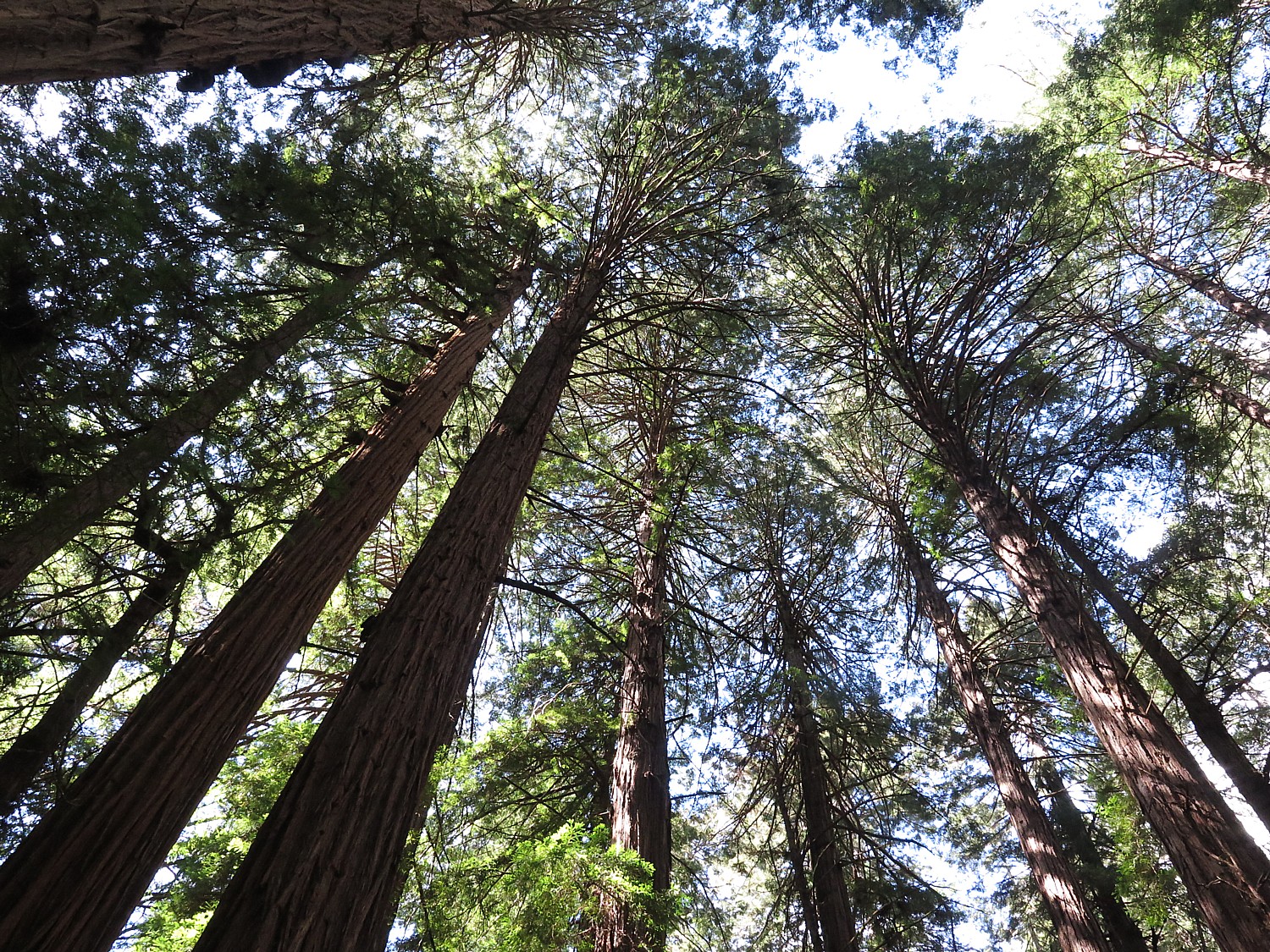
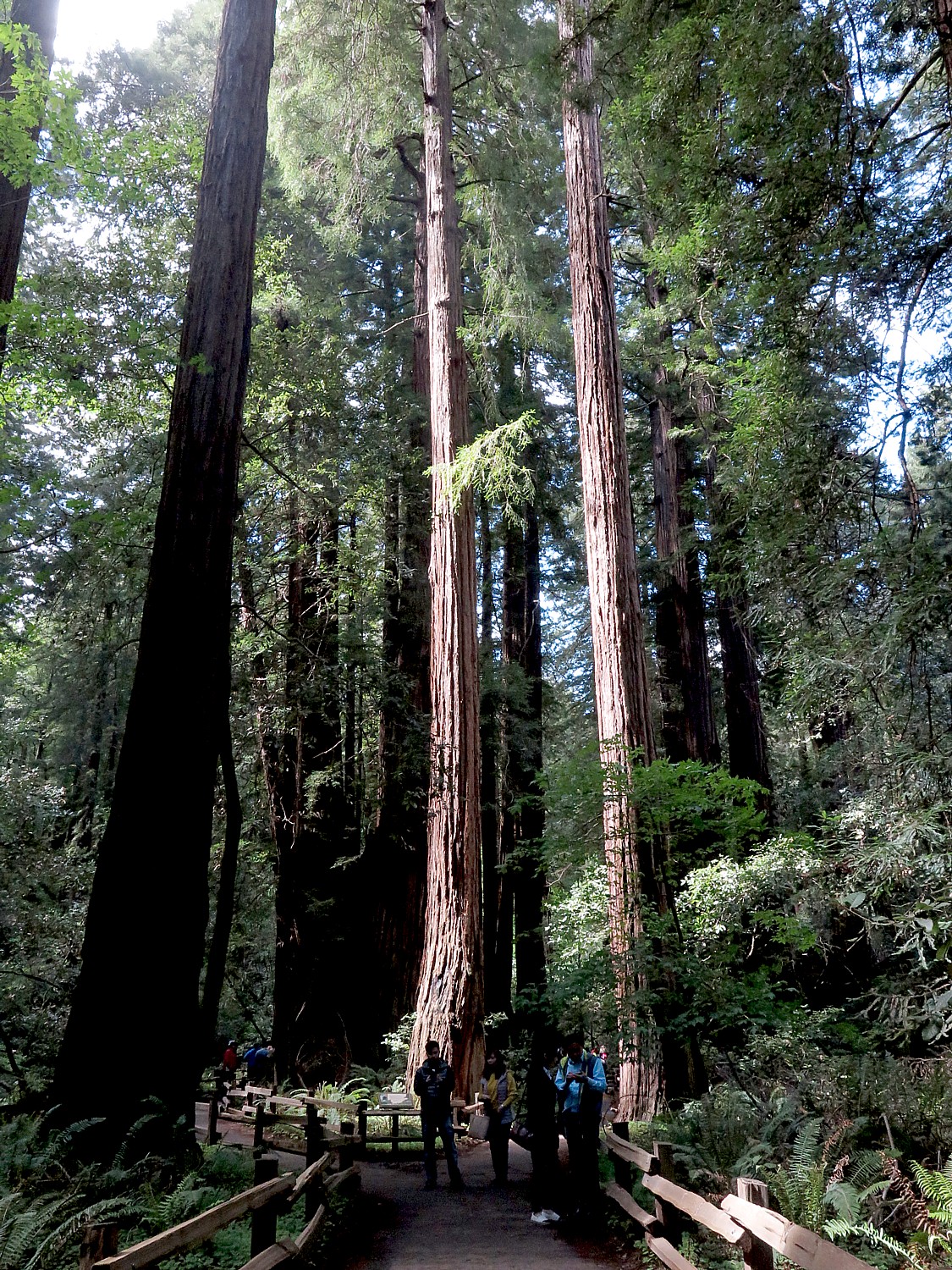
Two hours proves sufficient to get the highlights of Muir Woods and hike the most popular trails (there are numerous hiking trails, some of which hadn’t opened yet for the season). The main trail is paved, flat, and can accommodate wheelchairs. This trail puts you at the base of these mammoth trees so you can the full appreciation of just how massive they are (and how small you are). You find yourself constantly craning your neck to see to the top.
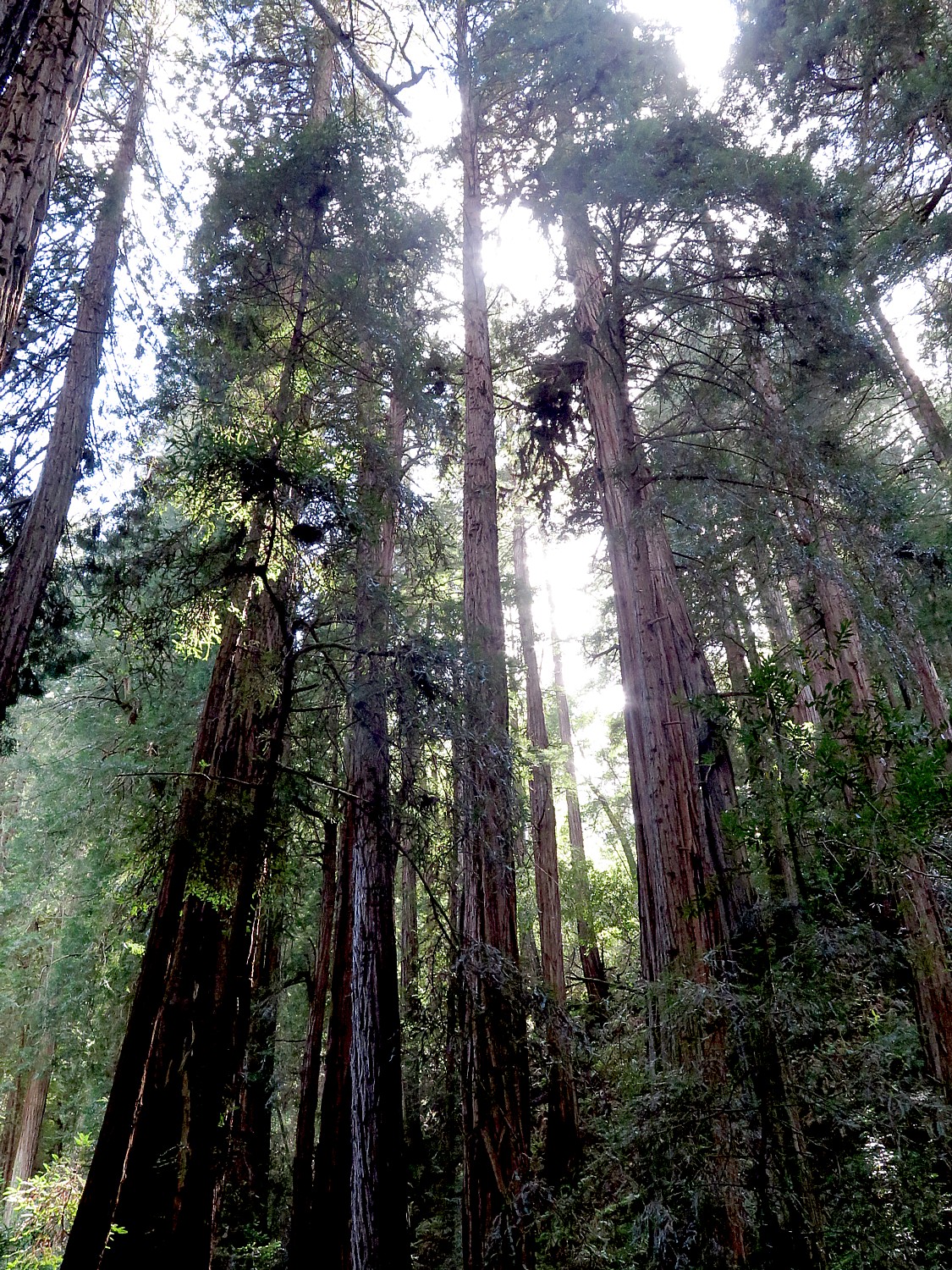
And when you walk in, you do feel like you are entering a cathedral – that craning of the neck to see the treetops making an arch over the narrow path, as if looking up at the high arching roof of a Gothic cathedral like Notre Dame.
Indeed, perhaps because it is so close to San Francisco and offers such a contrast to a congested urban area, Muir Woods is very much a “cathedral” – there is even a Cathedral Grove, with a sign that says “Shhh… Quiet Refuge.”
You hear birds, the gurgling of the Redwoods Creek that flows through.
You feel small, a speck in time and space.
You feel grateful to man who saved these woods.
You are overwhelmed by the sense of awe and majesty, from your first steps through the wooden threshold.
The trees, as if elders, range in age from 400 to 800 years – that means they were already well on in years when Columbus first discovered the New World – their height up to 250 feet.
These aren’t as thick as the famous Giant Sequoias which are further inland; but these coastal redwoods are the tallest trees in the world. Even more remarkable because they grow from a tiny seed that bursts from a small pine cone that is heated by fire.
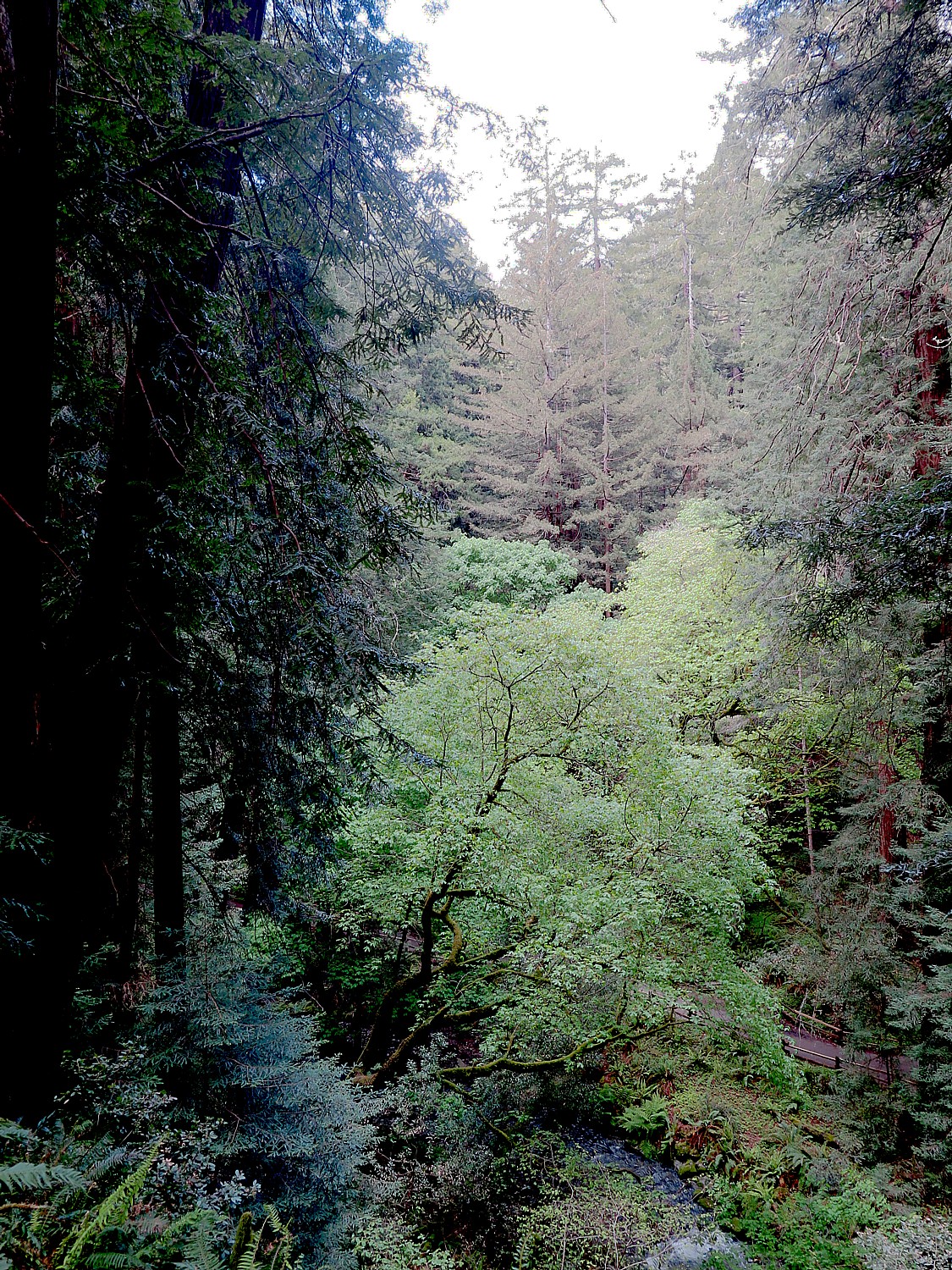
In the light gaps beneath the redwood trees are red alders, California big leaf maples, tanoaks, and Douglas fir. The forest floor is covered in redwood sorrel, ferns, fungi, duff, and debris. Wildlife includes the endangered coho salmon fingerlings that live in the lovely creek that flows through, Pacific wren, woodpeckers, owls, deer, chipmunks, skunks, river otters, and squirrels.
You walk among old growth coast redwoods, nurtured in the fresh water of Redwood Creek and by the fog.
I cross the fourth bridge over the Redwood Creek and take the Hill Top trail back -a narrow dirt path at a higher elevation – which gives a different perspective.
The Visitor Center at the Muir Woods entrance has exhibits and a vast selection of literature and information on Muir Woods. A cafe and gift shop is also located near the park entrance.
There are other ways to get to the Muir Woods on your own such as using a bus service (though it is temporarily out while they repair Highway 1; and if you use Uber or ride-share, you need to pre-arrange a pick-up because there is no cell service). Coming on your own, you can organize your visit to miss the busiest crowds during midday (best to arrive before 9 am or after 4 pm). The park opens every day at 8 am and closes at 8 pm (after March 18).
Muir Woods is open 365 days of the year, though hours vary with the season.
Muir Woods National Monument,1 Muir Woods Rd. Mill Valley, CA 94941, 415-388-2595.
The advantage of the Extranomical Tour is certainly the convenience of the pick up, plus the enhanced experience of a brief stop at Sausalito and (on our trip) the Presidio for jake’s “unique” view of the Golden Gate Bridge. Jake gives us a narration about the history of San Francisco and points out attractions on our way (like the tunnel, recently renamed for comedian Robin Williams, which is painted with a rainbow).
Extranomical Tours also includes a visit to Muir Woods National Monument in other tour offerings, such as one and two-day trips to Wine Country; and a trip that combines Muir Woods with Sausalito and Alcatraz.
The weather is overcast on the day I have set to do that iconic bike ride along San Francisco’s waterfront, over the Golden Gate Bridge into Sausalito and on to Tiburon. But that doesn’t stop me or several thousand other visitors to this engaging city. I just throw in some rain gear along with water and snacks.
I set out for Blazing Saddles, which has the largest bike fleet in California and some nine locations throughout San Francisco.
The company’s main location is at 2715 Hyde Street, ideally located in Fisherman’s Wharf, and just a block and a half from the start of the National Park Bike Path. This path takes riders on a beautiful, car-free bike ride along the bay, passed the Marina, through historic Fort Mason, and over to the Golden Gate Bridge, which is where most of the riders go.
Blazing Saddles has been in business over 30 years – it is the original “Bike the Bridge” company – but now has some new offerings, including a new electric bike model that was custom-made for the company, the Electric Blazer, and a free mobile app.
The new “e-Blazer” was customized for Blazing Saddles and they say is the lightest electric bike. The bike looks like regular bike (the battery is on the luggage rack on the back rather than where your legs are). It would be exceptional if you were riding San Francisco’s hills.
But a consideration for me, as the Blazing Saddles person explains, is that e-bikes, can only take the Blue & Gold ferry line from Sausalito or Tiburon to Pier 41, which has somewhat more limited service than the Golden Gate Ferry (which goes into the Ferry Building at Embarcadero – so I see that my last time back from Tiburon (where I am trying to get to) would be 4:15 pm and it is already noon.
I decide not to take the e-bike but to take a regular bike, which is lighter and easier for me to get on/off, and soldier through the hills, starting with Fort Mason (made it!), then the ramp up to Golden Gate Bridge (made it!).
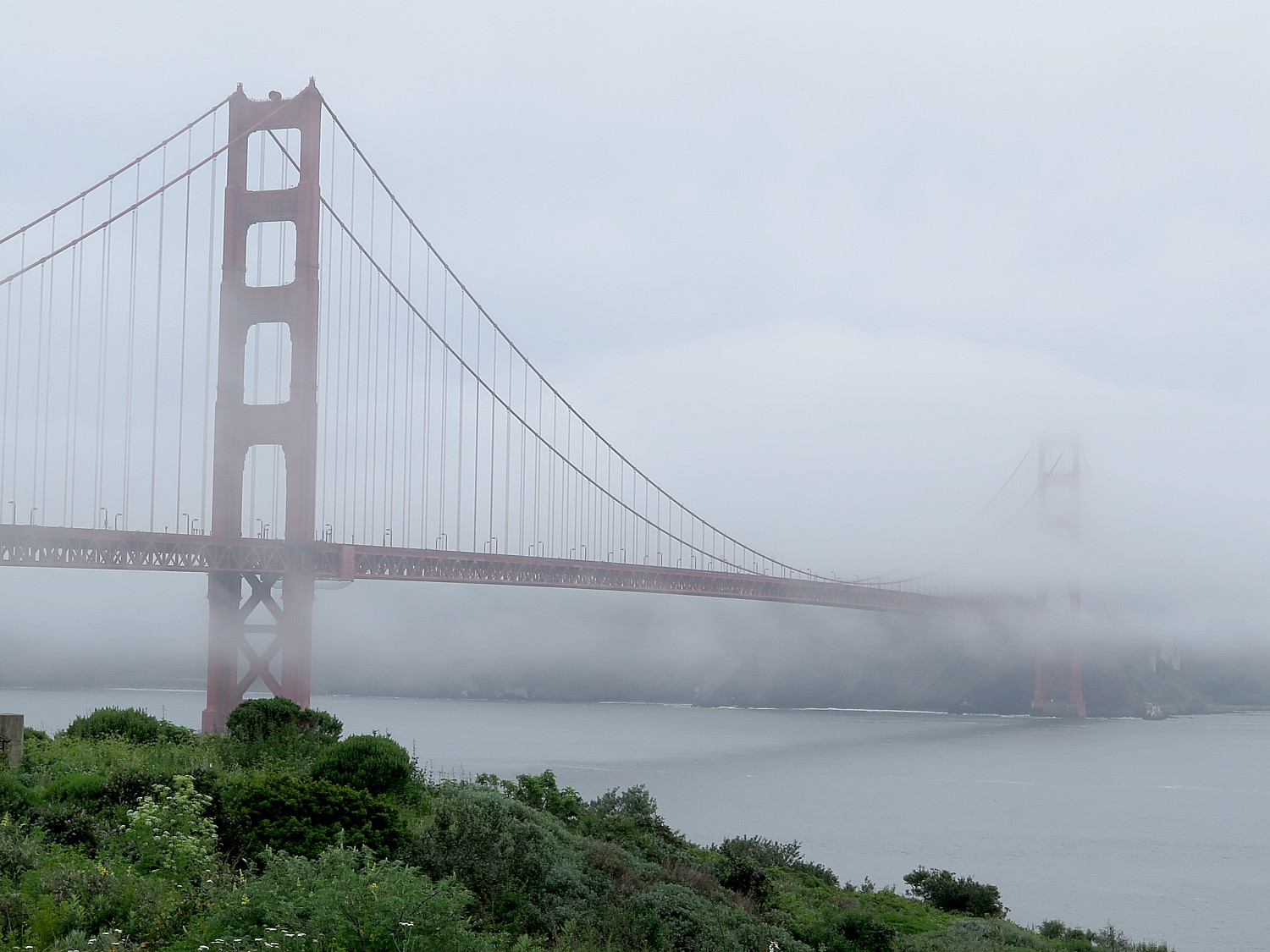
The weather may be overcast, but I get to see that wonderful scene of the Golden Gate Bridge half-shrouded in San Francisco’s famous fog, a scene that changes moment to moment, it seems.
It is 8 miles to Sausalito – that takes about 1 ½ hours (you won’t just be riding over the Golden Gate Bridge, you will want to sightsee, stop for photos, and also have to keep stopping for pedestrians). Plan to spend time – at least an hour – in Sausalito which has really wonderful shops, galleries, eateries and scenic views, even if you are planning to continue the ride to Tiburon. (I have spent time in Sausalito a few days before on my way back from Muir Woods with Extranomical Tours.)
It is 10 more miles between Sausalito and Tiburon, which should take another 1 ½ to 2 hrs.
Blazing Saddles does an excellent job of preparing you – showing a 2-minute video of the route along the waterfront through the Marina district, up over Fort Mason (a strenuous hill) to the ramp up to Golden Gate Bridge (also strenuous hill), then down, down, down, into Sausalito.
They also give you a ticket for the ferry which you don’t actually pay for unless you use it (saves time and anxiety to buy the ticket at the ferry but I notice that the Blue & Gold lets you buy the ticket on the ferry, also). When I get back, I pay Blazing Saddles $11.50 for the ferry (the same amount as you would pay directly to the ferry). Their map/brochure even gives the time schedule for the ferries.
They tell us we should return the bikes by 7:30 pm or else call. They supply quality helmets, a lock, a pouch and luggage rack, and an excellent map (which also shows points of interest along the routes) and take care to properly fit the bike. (Blazing Saddles offers an all-day guided tour out of the 2715 Hyde Street location, departing 10 am and 1 pm, that includes the all-day Deluxe Comfort bike rental for $55/adult, $35/child).
I had really wanted to see the ride to Tiburon which is mostly on a bike trail but partly sharing the road. But once you get under the highway and go along the highway on the service road, the sign to the bike route (for Bike Route 8) to Tiburon is confusing (everyone else I met on the line to the ferry made the same mistake) – when actually, all you have to do is follow the service road maybe ¼ mile more and turn up on Belvedere Road, for a much more pleasant ride (just a few hills) which soon connects to a very nice bike trail (Bike Route 10).
I made the mistake of not biking out to Mill Valley’s Old Mill Park, where you get to see the Coastal Redwoods, and then connecting to the Bike Route #8 – which is the way Blazing Saddles recommends to go (I was in a hurry to get to Tiburon).
The weather does not cooperate, but fortunately I have prepared for rain.
Eventually you connect with Route 10 which is a dedicated bike trail along the water into Tiburon.
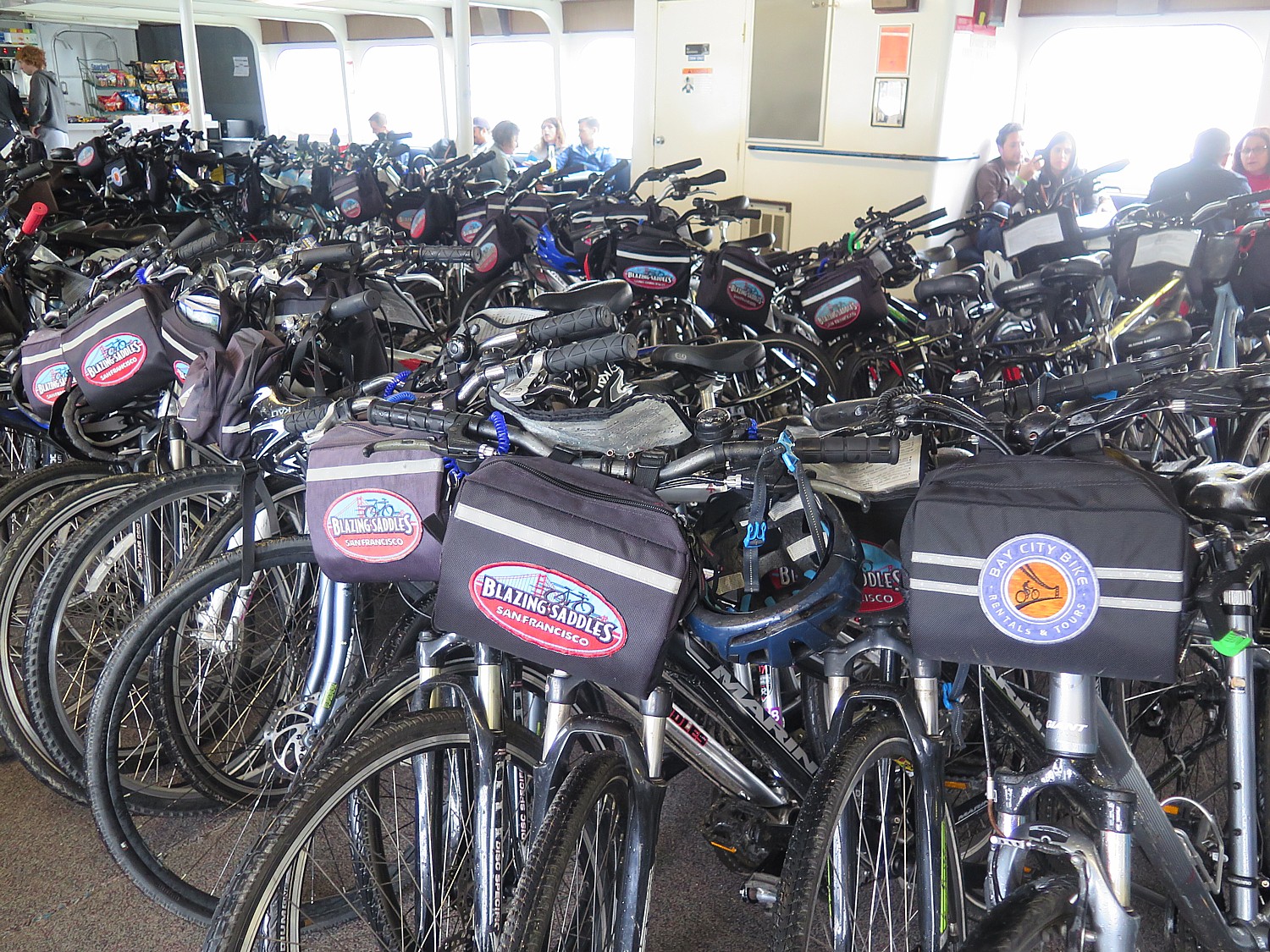
Even with getting lost (involving riding up three major hills in the residential area and stumbling upon the beautiful Audubon sanctuary (until a very nice man stopped his car and pointed out the route to me), I still get to Tiburon at 3:55 pm. There is not nearly as much to visit as in Sausalito, so I basically walked up and down the street in the “historic” district where the shops are and still made it to the 4:15 pm ferry for the fun 35-minute scenic “cruise” back to San Francisco’s Pier 41 at Fisherman’s Wharf, stopping at Angel Island and passing very close to Alcatraz on the way. There were a gazillion other bikes – a huge slew with the Blazing Saddles emblem – and the ferry people are extremely efficient in loading and unloading the bikers.
Besides this most popular Bike the Bridge ride (average 3 hours for the full 22 miles into Tiburon), other recommended routes include Bike the Parks (San Francisco’s bike route system connects Union Square and the “Wiggle” to the famous Golden Gate Park and the Presidio, 15 miles averaging 2-3 hours; the Marin Headlands Loop (from the north side of the Bridge, follow the coast west on Conzelman Road, out towards Point Bonita and Rodeo Beach, 10 miles, 2-3 hours; and “Conquer Mount Tamalpais, which would take you to Muir Woods National Monument, 15 miles beyond Sausalito, for a 5-6 hour trip – the elevations to Mount Tamalpais at 2,574 feet, make this especially challenging.
Indeed, San Francisco, despite its hills, is one of the most bike-friendly, welcoming cities anywhere (and if you get tired, public buses and the BART subway system accommodate bikes).
Blazing Saddles has a score of different road, hybrid and mountain bikes and types, starting at $8/hour or $32 for a 24-hour day; the best bike for biking the Bridge is a deluxe comfort hybrid, $9/hr, $36/for a 24-hour day; the e-Blazer ranges from $48-88.
Blazing Saddles Bike Rentals and Tours, 2715 Hyde Street, San Francisco, CA 94109, 415-202-8888, www.blazingsaddles.com
Maritime National Historical Park
Besides all the marvelous tourist places – souvenir shops, eateries of every stripe – there are some excellent attractions at Fisherman’s Wharf, such as the Exploratorium and the Aquarium and most especially the famous and fabulous Cable Car (expect long lines of about 30 minutes but totally worth it; along the cable car route, there is the Cable Car Museum which is free and SO fantastic).
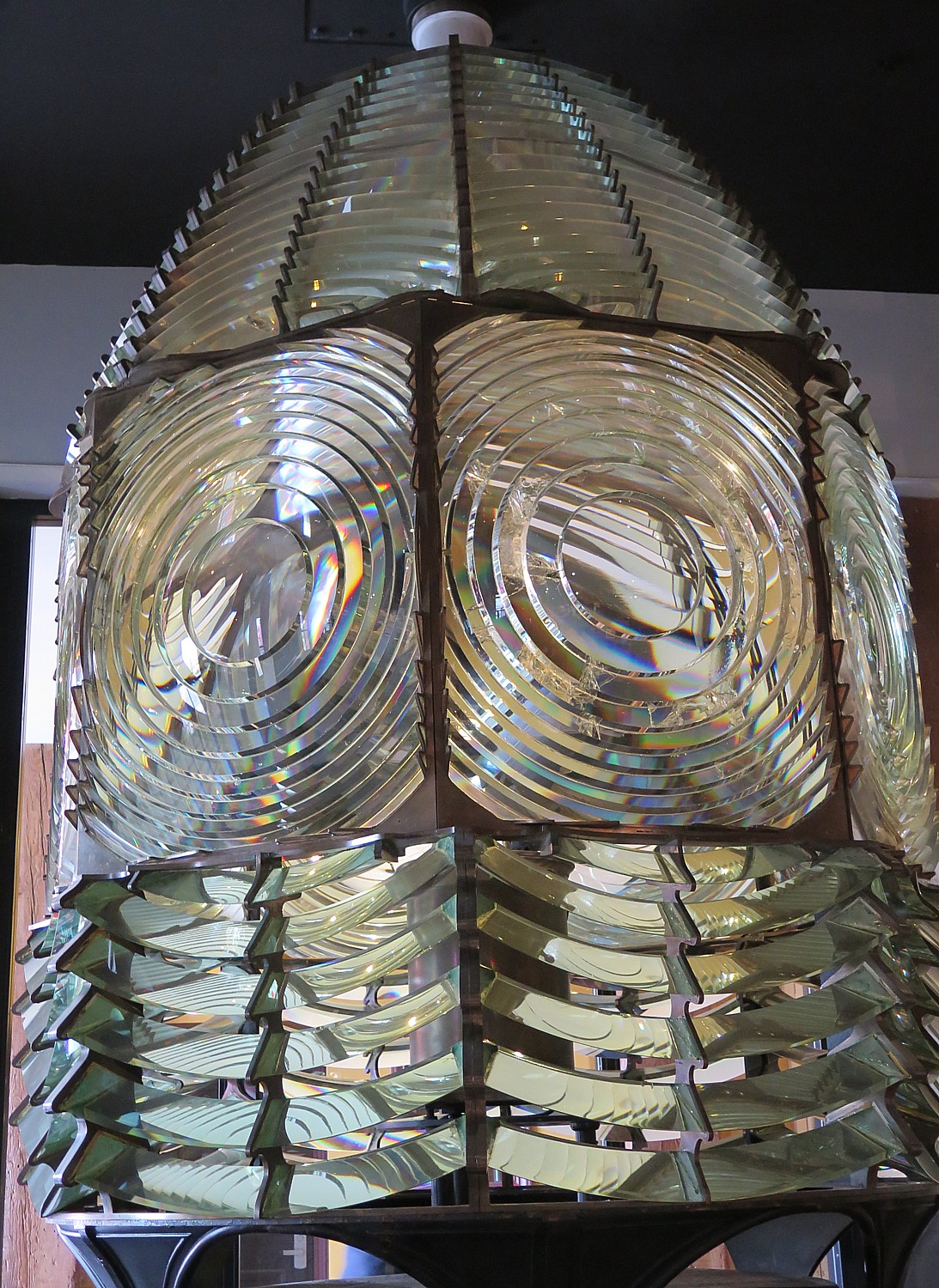
The end of Fisherman’s Wharf is the start of the San Francisco Maritime National Historical Park and the Visitor Center which is free and fantastic (located in the Argonaut Hotel building). Here you experience the sights, sounds and textures of the city’s seafaring past, beginning with the Native Americans who lived here before the Spanish arrived. There are hands-on activities and exhibits that describe the Gold Rush, shipwrecks, and development of San Francisco. On view is the lens from the Farallon Lighthouse. There are many historic vessels along the Hyde Street Pier, where park staff volunteers lead programs where you get to participate (school children can even overnight on historic vessels). The Maritime Museum is in the Aquatic Park Boathouse building (also free). (San Francisco Maritime National Historical Park, Fort Mason Center, San Francisco, 94123, 415-447-5000, www.nps.gov/safr).
I stop in on my way to picking up the bike from Blazing Saddles, and the exhibit gives me an excellent foundation for appreciating what I will see during the ride.
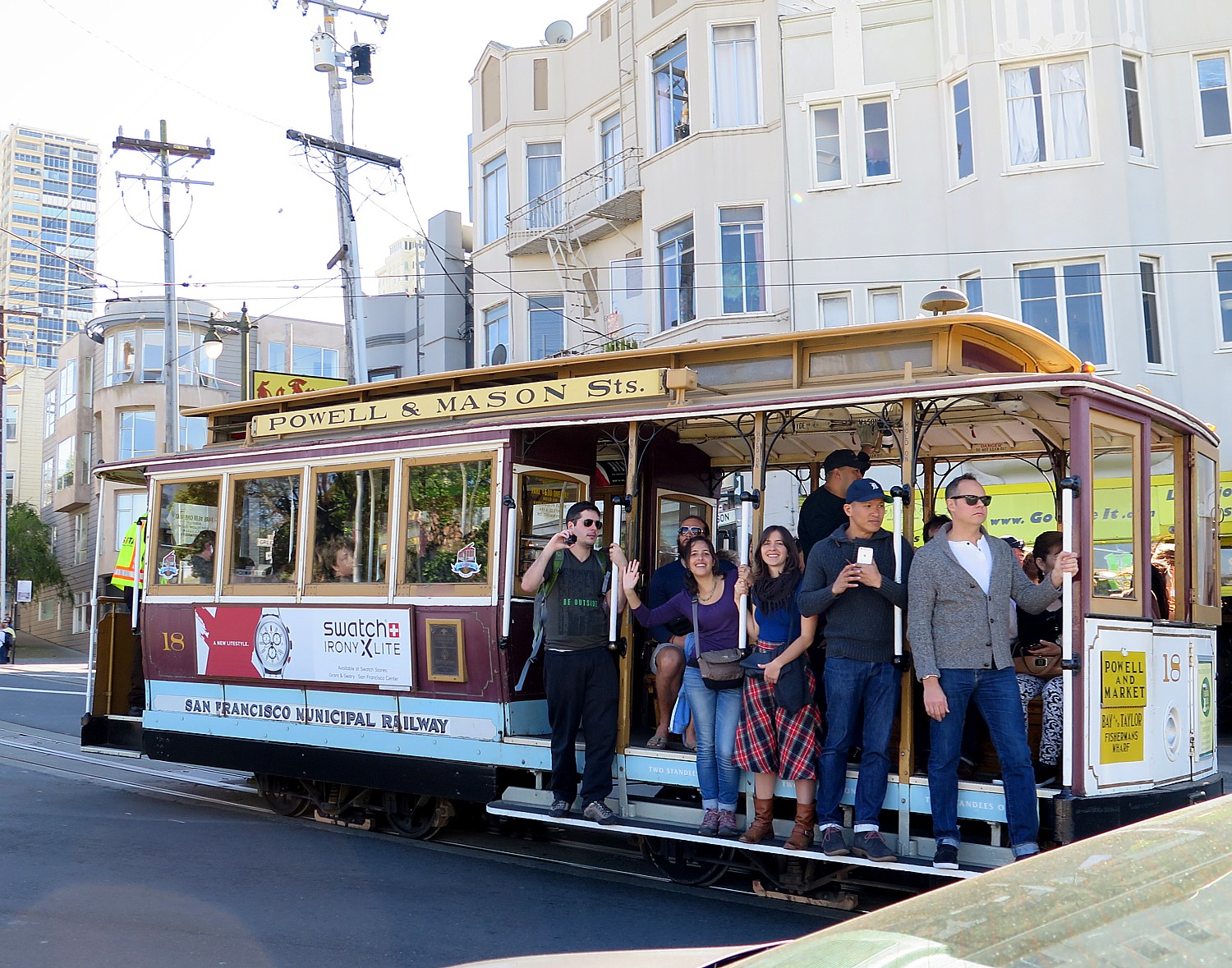
It’s also where a few of the marvelous San Francisco cable cars begin and end – be prepared for a 20-30 minute wait on a line but it is so worth it and is an excellent way to either arrive at Fisherman’s Wharf or finish off the day. The one-way fare is $7. (Locals can’t get on so it is almost exclusively tourists who ride the cable car.)
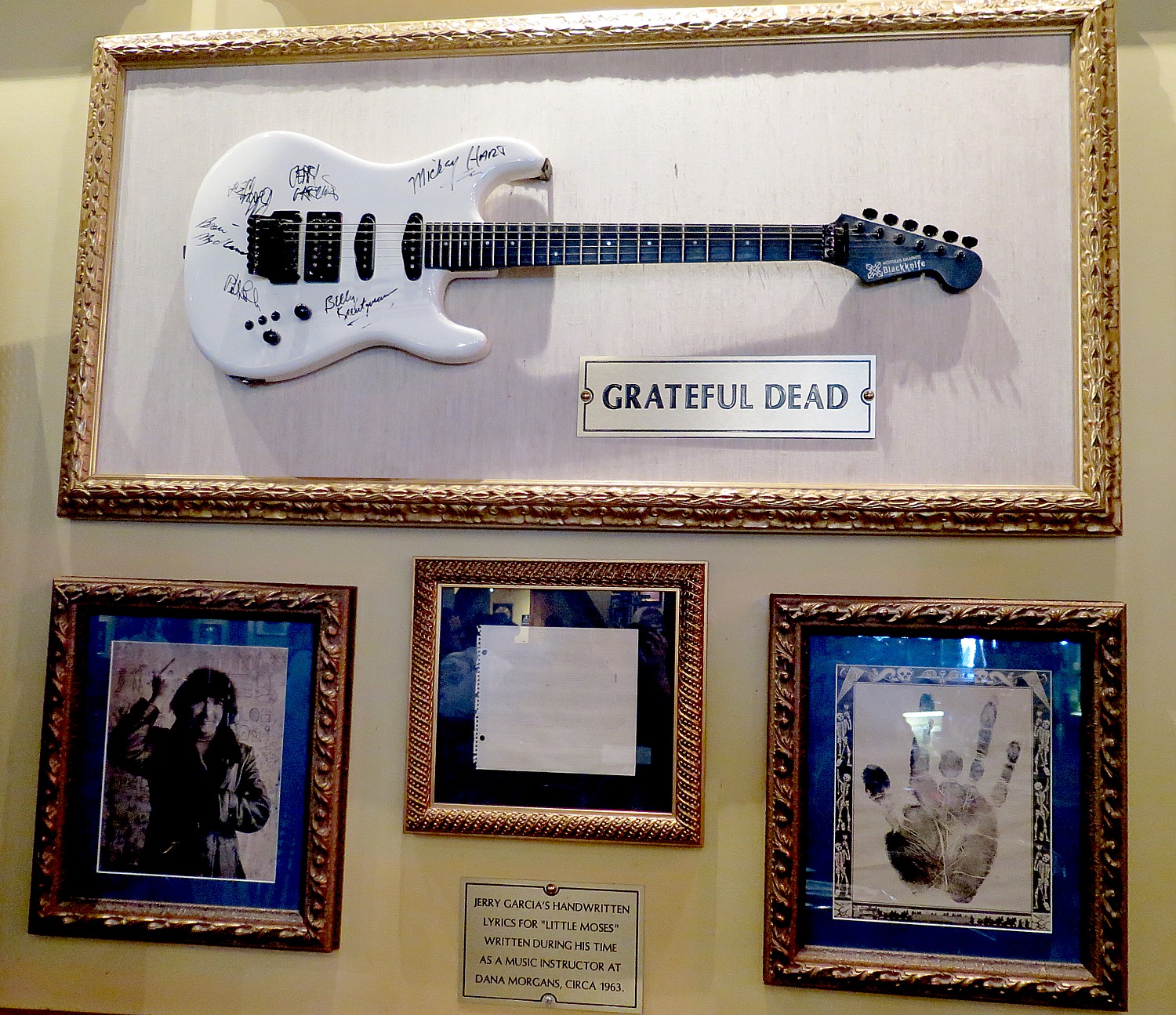
Pier 39, which is celebrating its 39th anniversary in 2017, is a tourist mecca with scores of fun shops and restaurants such as the Hard Rock Café (especially fun during this Summer of Love celebration, we noticed live music going on; also, check out the autographed Grateful Dead guitar, a painting of Jerry Garcia by Grace Slick of the Jefferson Airplane, Jerry Garcia’s bomber jacket, Jimi Hendrix’ jacket and one of the last photos of Janice Joplin, www.hardrock.com/cafes/san-francisco/).
This trip we enjoyed dinner at the Pier Market Seafood Restaurant, heralded for its New England clam chowder, Mesquite-grilled seafood, and lovely setting with views of the Bay, waterfront and resident sea lions.
Pier Market Seafood is one of the Simmons family’s restaurants in San Francisco (Fog Harbor Fish House, and Wipeout Bar & Grill are the others), offering menus that showcase all sustainable seafood offerings aligned with the Monterey Bay Aquarium’s “Seafood Watch” guidelines.
“We undertook this transition based on a commitment to best practices, even in the absence of any specific demand from our customers,” Scooter Simmons commented. “It was important to our family and everyone in our company to do the right thing and lead by example. There are surprisingly few area restaurants that have made this choice.”
Three generations of Simmons’ are a part of the history of San Francisco’s hospitality industry. Warren Simmons was the creator and developer of PIER 39, which opened in 1978, and his son, Scooter, daughter-in-law, Nancy, and his grandchildren, Nicki and Ryan, now work running the four Pier 39 businesses still owned by the family.
Menu highlights include garlic roasted whole crab, fresh seafood cioppino, mesquite grilled lobster tail, red curry steamed mussels, and Anchor Steam battered fish and chips and Pier Market’s award winning clam chowder.
In addition to the sourcing of sustainable ingredients for all seafood dishes the menu reflects seasonality, the use of local purveyors, generous portions, and moderate (“non-tourist”) pricing (mains are priced from around $11 to $30). Pier Market Seafood offers a diverse selection of libations including a wine list that emphasizes California vintages and handcrafted classic, contemporary and signature cocktails, plus intriguing non-alcoholic beverages including a strawberry basil nojito.
The selections are wonderful for sharing, especially the starters like sourdough garlic bread, garlic fries (crispy fries tossed with fresh garlic, herbs and topped with parmesan cheese); Crispy Scallops (house-breaded and served with roasted jalapeño aioli); fried calamari coated with sweet & sour sauce; crab cakes, a house specialty, served with a Cajun rémoulade; clams steamed in garlic, butter and white wine; steamed mussels prepared with onions and peppers in a red curry coconut broth.
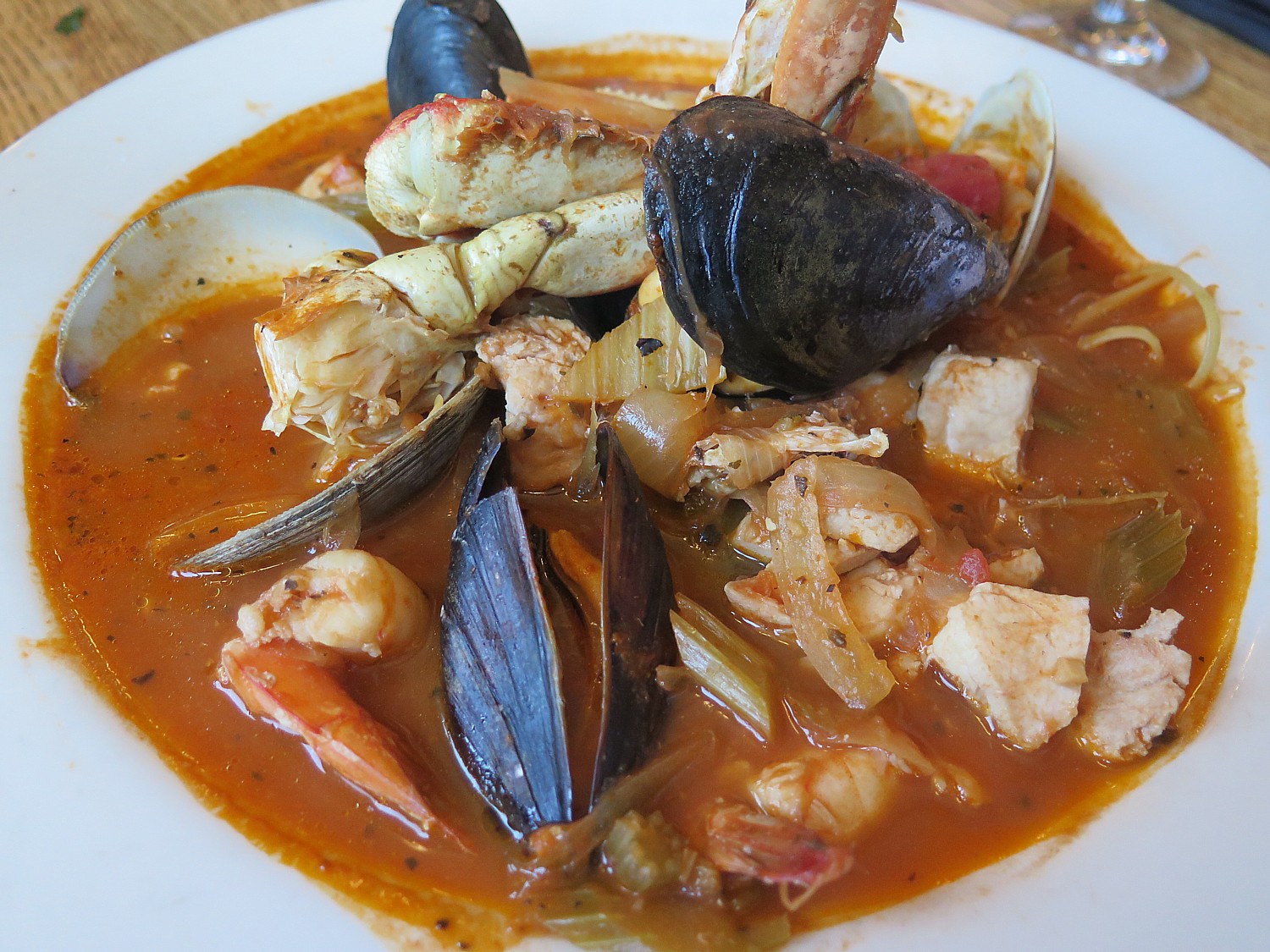
The restaurant is also very proud of its Cioppino, a classic San Francisco dish, a tomato based seafood stew with fresh fish, mussels, clams, shrimp and crab served over pasta ( for a few dollars more, they remove the crab from the shell).
The menu offers tremendous variety and selections – meats to salads, sandwiches, pastas – and the ambiance is casual, pubbish, perfect after a day of sightseeing. The restaurant serves until 10 pm.
One hour free validated parking in an easily accessed and conveniently located garage adds to the allure of the dining experience.
(Pier Market Seafood, Pier 39. San Francisco, CA 94133, 415-989-7437, piermarket.com/).
For more help planning a visit to San Francisco, contact San Francisco Travel. 415-391‑2000, www.sftravel.com.
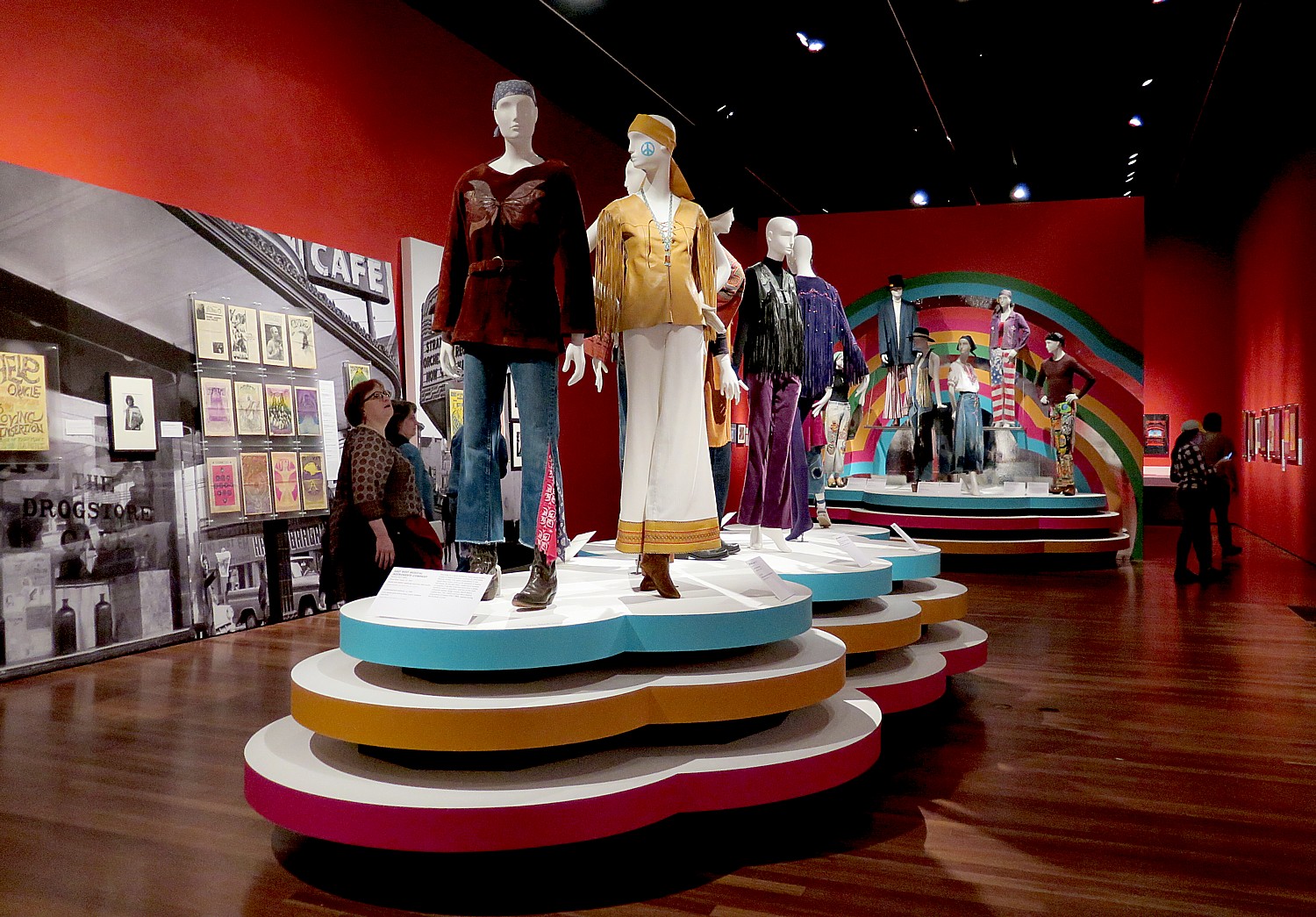
Wes Leslie’s Wild San Francisco Summer of Love Musical Walking Tour finishes only a couple of blocks down from the entrance to Golden Gate Park (see story), which played such a role in the Hippie Movement, and where the De Young Museum is holding the Summer of Love Experience, one of the more than 60 events, exhibitions, concerts, tours and attractions taking place during this 50th Anniversary of the cosmic 1967 event when some 100,000 young people descended on the city. So, after walking around the famous Haight-Ashbury district – epicenter of the Hippie Movement – taking in the shops and scenes that slingshot you back to the 1960s, I stroll into Golden Gate Park to the museum.
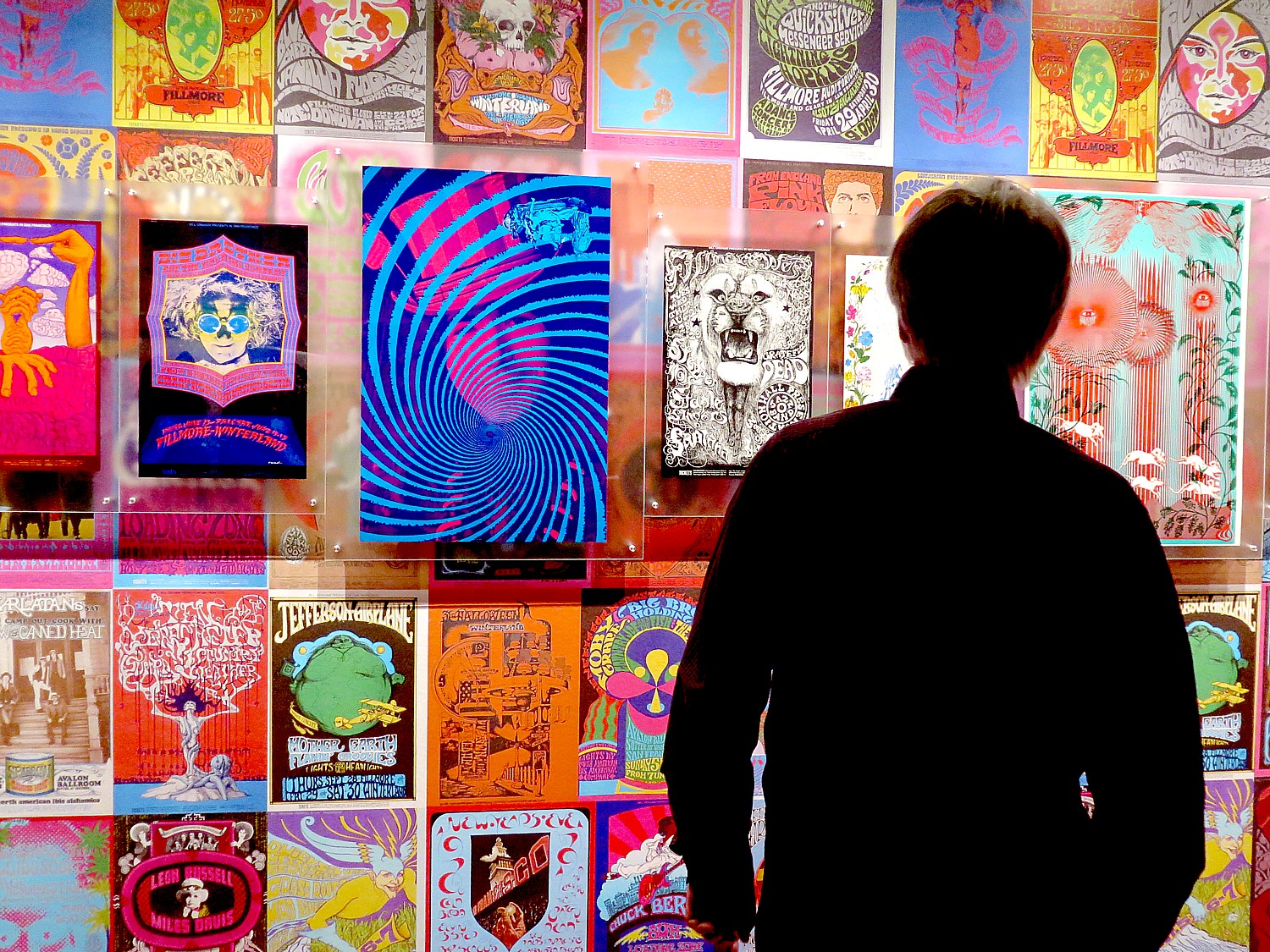
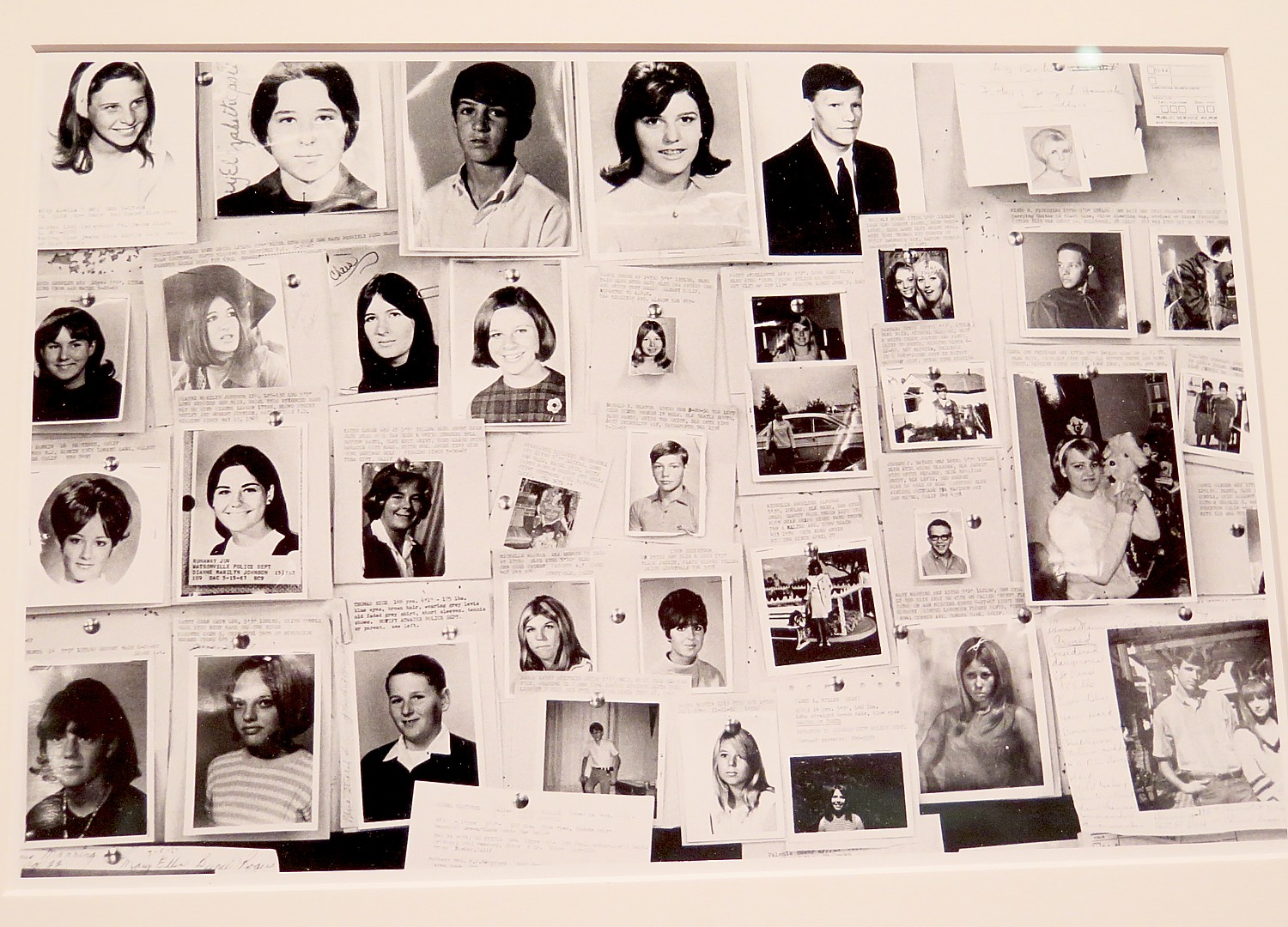
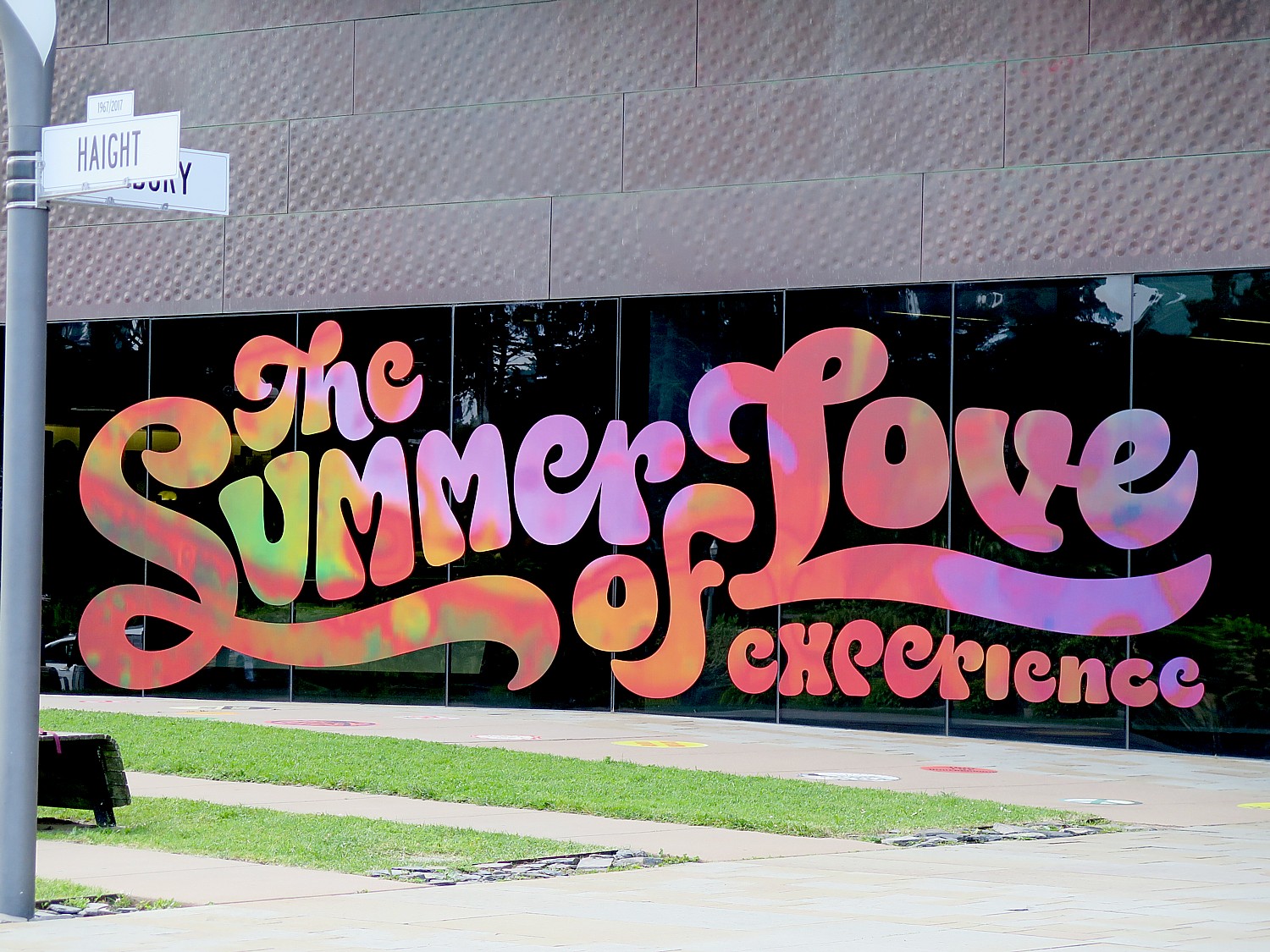
The Summer of Love Experience: Art, Fashion, and Rock & Roll, on view at the De Young Museum in Golden Gate Park through August 20, 2017, is an exhilarating exhibition of iconic rock posters, photographs, interactive music and light shows, costumes and textiles, ephemera, and avant-garde films. Part of the 50th anniversary celebration of the adventurous and colorful counterculture that blossomed in the years surrounding the legendary San Francisco summer of 1967, the exhibition presents more than 300 significant cultural artifacts of the time, including almost 150 objects from the Fine Arts Museums’ extensive permanent holdings, supplemented by key, iconic loans.
As you walk in, you are immediately set on the crossroads of Haight and Ashbury streets and the pins with the iconic phrases and issues that were top-of-mind of the time.
You literally step into the whirling dervish that was the times – psychedelic colored lights and brash, electrified music of Janis Joplin and others provide the beat and backdrop for the exhibit that includes a two-story square darkened room with colored projections of what appear to be the shapes inside a lava lamp and bean-bags to sit on.
In the mid-1960s, artists, activists, writers, and musicians converged on Haight-Ashbury with hopes of creating a new social paradigm. By 1967, the neighborhood drew as many as 100,000 young people from all over the country to this tiny neighborhood, which became the epicenter for their activities, and nearby Golden Gate Park their playground.
The period was marked by groundbreaking developments in art, fashion, music, and politics (captured in the images of photojournalists and street photographers), which is what is so eloquently showcased in this exhibit.
Local bands such as Jefferson Airplane and the Grateful Dead were the progenitors of what would become known as the “San Francisco Sound,” music that found its visual counterpart in creative industries that sprang up throughout the region. Rock-poster artists such as Rick Griffin, Alton Kelley, Victor Moscoso, Stanley Mouse, and Wes Wilson generated an exciting array of distinctive works featuring distorted hand-lettering and vibrating colors, while wildly creative light shows, such as those by Bill Ham and Ben Van Meter, served as expressions of the new psychedelic impulse.
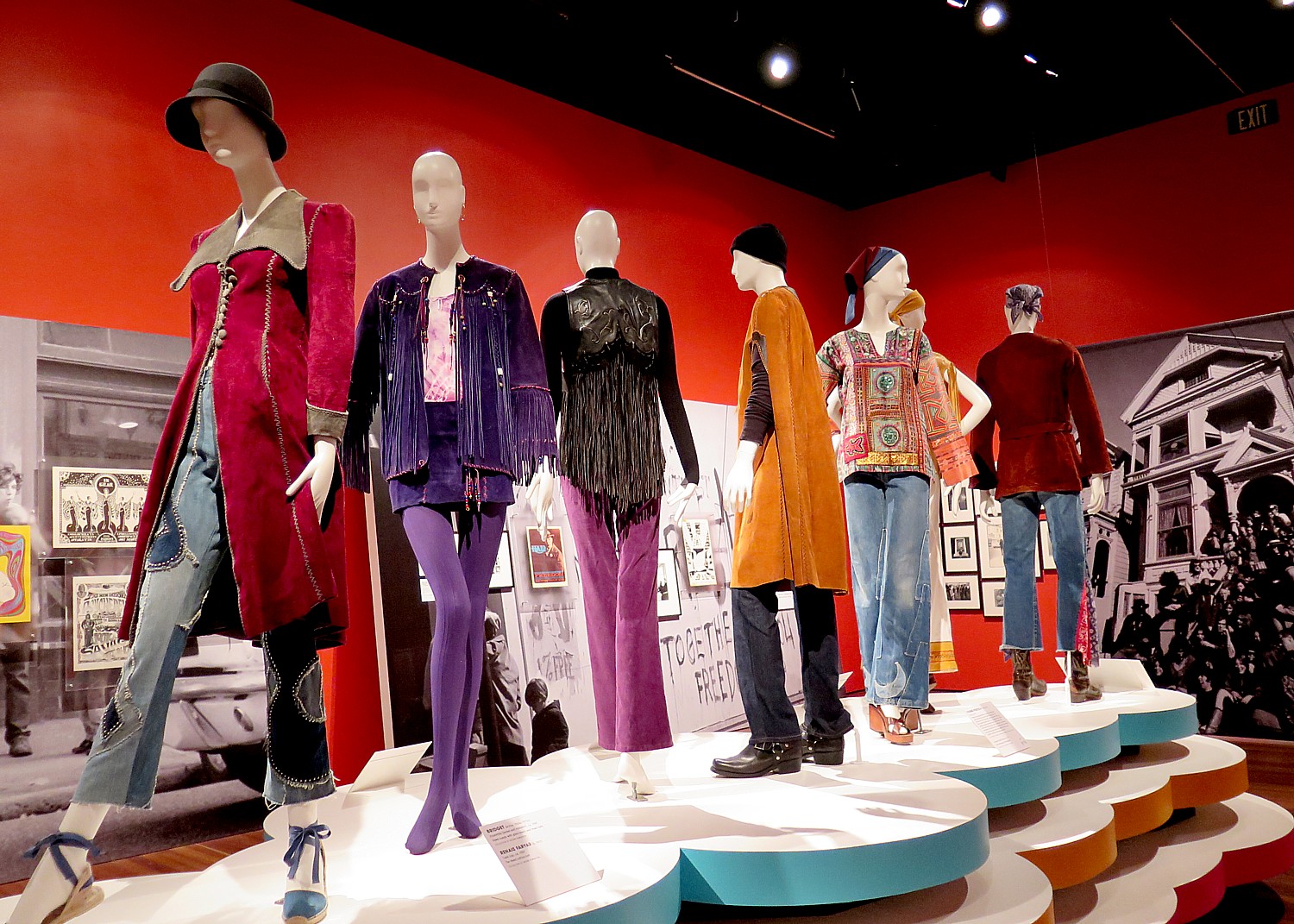
Distinctive codes of dress also set members of the Bay Area counterculture apart from mainstream America. Local designers began to create fantastic looks using a range of techniques and materials, including leatherwork, hand-painting, knitting and crotchet, embroidery, repurposed denim, and tie-dye. These innovators included Birgitta Bjerke, aka 100% Birgitta; Mickey McGowan, aka the Apple Cobbler; Burray Olson; and Jeanne Rose – whose creations are also on view.
The Summer of Love Experience: Art, Fashion, and Rock & Roll commemorates an “only in San Francisco” social and aesthetic movement, and will remind museum visitors that in a time of international upheaval, the city played a vital role in changing society and amplifying the pulse of the nation.
de Young Museum, Golden Gate Park, 50 Hagiwara Tea Garden Drive, San Francisco, CA 94118, 415-750-3600, ttps://deyoung.famsf.org/summer-love-art-fashion-and-rock-roll.
San Francisco Goes All-Out for Summer of Love Celebration
San Francisco Travel, the city’s visitors bureau, and the California Historical Society have joined forces on the 50th anniversary of the Summer of Love, offering more than 60 exhibitions and events, plus special tours like Wild SF’s Summer of Love walking tour.
At www.summerof.love, the California Historical Society provides the detailed factual and cultural context for this seminal summer through its own exhibition and work with cultural partners such as the de Young Museum.
“The Hippies” at West County Museum in Sebastopol(Thru-Dec. 2017): The West County Museum in Sebastopol presents “The Hippies”. The curators have collected memorabilia from the Hippie elders to recreate the environment that these rebels against consumerism and conformity built in the forests of Graton and Occidental 1966-1973. Morning Star Ranch in Graton was owned by Lou Gottlieb, the bassist of The Limeliters, a hit folk group of the 60’s. He opened his property to all and refugees from the Haight quickly settled in. They built their own shacks, lived without electricity and often clothes and exchanged the work ethic for the ethics of living in nature in a state of “voluntary primitivism.” Sex and drugs, pot and LSD, guitars and any handy noise makers were freely enjoyed by the denizens but not by all of their neighbors. The County Sheriff and Health Department became involved after vociferous complaints and after many fines and much legal maneuvering by Gottlieb to keep his commune open, the County bulldozers destroyed the huts, and the suddenly homeless hippies were forced to relocate. Some moved to Morning Star East in New Mexico, but others went a few miles away in Occidental where Bill Wheeler felt that he had enough land to share and the hippies moved in. The land was free to all but the living was too free for a neighbor who felt that the lifestyle was a threat to his children. Again, after legal action, the bulldozers moved in and the hippie commune era in Sonoma County came to an end. The West County Museum, 261 S. Main Street, Sebastopol, is open Thursday to Sunday, from 1 p.m. to 4 p.m.
Monterey Regional Airport: “Feeling Groovy,” Art at the Airport(Thru Fall 2017): The exhibit showcases collections that reflect music, entertainment and home life in 1960s Monterey County. Artifacts featured in the exhibit are diverse, ranging from the ordinary to the extraordinary. Visitors can view everyday objects from a 1960s kitchen, iconic fashions ranging from pill box hats to Beatle boots, and beloved games, toys and comic books. See Nancy Carlen’s collection from the Big Sur Folk Festival, the first time these rare photographs and objects have been exhibited. Go back to June 1967 when the Monterey Pop Festival welcomed Jimi Hendrix, Janis Joplin and Otis Redding – and ushered in The Summer of Love. Each object – from transistor radios to martini glasses – will transport you back to this transformative decade.
2017 Summer of Love Street Celebrations with It’s Your District and Sunday Streets (Thru Oct. 1, 2017): In conjunction with Sunday Streets, the non-profit It’s Your District (IYD) is hosting the 2017 Summer of Love Street Celebrations. Block parties will be held at the eight Sunday Street locations, and will include Summer of Love exhibitions, art projects, live performances and family-friendly activities. In keeping with IYD’s mission, these celebrations will bring in and promote Bay Area non-profits, businesses, arts, cultural and community organizations, socially conscious enterprises and individuals who are committed to bringing forth the unheard voices of residents and in sustaining the vitality of our community district by district. Sunday Streets engages some 120,000 people annually and this number continues to grow.
One highlight of the celebration is the Public Mural Art Project which creates murals designed to educate members of the community about the history of their respective neighborhoods. The art will focus on prominent heroes and the events that have contributed to the development of San Francisco districts from the 1960s to present day.
“Lavender-Tinted Glasses: A Groovy Gay Look at the Summer of Love” at the GLBT History Museum (April 7-Sept. 27, 2017): An exhibition highlighting the gay, lesbian, bisexual and transgender participants in the 1967 Summer of Love in San Francisco. The show also will explore the LGBTQ community’s own simultaneous cultural revolution in the city’s Tenderloin neighborhood. The stories of queer poets, philosophers, filmmakers and musicians integral to the era will be celebrated through historic photographs, artwork, film and documents from the archives of the GLBT Historical Society and private collections.
de Young Museum; “The Summer of Love Experience: Art, Fashion and Rock & Roll” (April 8-Aug. 20, 2017): Through a wide array of iconic rock posters, interactive music and light shows, “out-of-this-world” clothing and photographs, “Summer of Love” celebrates the city’s rebellious and colorful counterculture and explores the visual and material cultures of a generation searching for personal fulfillment through social change. The exhibition includes rock posters by artists including Victor Moscoso, Stanley Mouse and Wes Wilson along with examples of the handcrafted, one-of-a-kind garments created by such designers as Brigitta Bjerke, K. Lee Manuel and Jeanne Rose.
“Love or Confusion: Jimi Hendrix in 1967” at the Museum of the African Diaspora (MoAD) (April 26-Aug. 27, 2017): As Jimi Hendrix walked out onto the stage at Monterey Pop, he was also stepping out for his American rock and roll debut. Playing as “The Jimi Hendrix Experience,” Hendrix was introduced to California at the festival before the U.S. release of his first album. A performance enlivened with rock theatrics, sexual flamboyance and magnetic guitar riffs, this moment solidified Hendrix as a rock idol. An integrated band with a black front man, “The Jimi Hendrix Experience” represented racial and sexual freedom and the goals of the 1906s counterculture. Composed of photographs taken of Jimi Hendrix in 1967, this exhibition celebrates the 50th anniversary of the famous Summer of Love and the introduction of Jimi Hendrix as one the greatest instrumentalists of all time.
“Elaine Mayes: It Happened in Monterey” at SFO Museum(May 4-Aug. 10, 2017): SFO Museum will present an exhibition of photographs by Elaine Mayes (whose work is also included in the de Young Museum exhibit) taken at the Summer of Love’s legendary rock concert, the 1967 Monterey Pop Festival. The exhibition is located post-security in Terminal 3.
“California Historical Society; “On the Road to the Summer of Love” (May 12-Sept. 10, 2017): Guest-curated by Grateful Dead historian Dennis McNally, this photographic exhibition will start in the 1950’s with “HOWL” and the Beat Generation and move through the free speech movement to LSD, rock and roll and the Haight in the 60’s.
The Cartoon Art Museum; “Comix from the Summer of Love” (June-Sept., 2017): The Cartoon Art Museum celebrates the Summer of Love with a selection of underground comix from Bay Area creators Lee Marrs (Pudge, Girl Blimp), Trina Robbins (Wimmen¹s Comix) and highlights from the collection of Ron Turner, founder of famed San Francisco publisher Last Gasp.
“A Night with Janis Joplin” at American Conservatory Theater (June 7-July 2, 2017): Like a comet that burns far too brightly to last, Janis Joplin exploded onto the music scene in 1967 and, almost overnight, became the queen of rock ’n’ roll. The unmistakable voice, laced with raw emotion and Southern Comfort, made her a must-see headliner from Monterey to Woodstock. A.C.T. presents an evening with the woman and her influences in the Bay Area premiere of the hit Broadway musical “A Night with Janis Joplin” at the Geary Theater. Fueled by such unforgettable songs as “Me and Bobby McGee,” “Piece of My Heart,” “Mercedes Benz,” “Cry Baby,” and “Summertime,” a remarkable cast and breakout performances.
San Francisco Public Library: 50th Anniversary of Love and Haight (July 15-Oct. 29, 2017): In this exhibit, historical photographs, grass roots newspapers, posters and flyers, record albums and manuscript materials from community groups and City of San Francisco collections will document the social and political upheaval of the summer of 1967 and how the city responded.
Attractions:
The legendary Fillmore Auditorium offers performances throughout the year and launched the careers of greats including James Brown, Ike and Tina Turner, the Grateful Dead, the Jefferson Airplane, Santana and more. Famous for printing posters for every single show played at the venue, the poster room is just shy of 1,000 posters since officially opening its doors in the mid-60s. Celebrate the 50th anniversary of Bill Graham’s first show at the Fillmore, which was December 10, 1965. (http://thefillmore.com/about/)
Harkening back to The Psychedelic Shop, which opened on January 3, 1966, as the first head shop in America, Love on Haight is a boutique dedicated to keeping the memory of the Summer of Love alive (www.loveonhaightsf.com).
Check out the autographed Grateful Dead guitar, a painting of Jerry Garcia by Grace Slick of the Jefferson Airplane, Jerry Garcia’s bomber jacket, Jimi Hendrix’ jacket and one of the last photos of Janice Joplin. at the Hard Rock Café at PIER 39. www.hardrock.com/cafes/san-francisco/
At Madame Tussauds, rub shoulders with iconic stars and free thinkers of the Summer of Love such as Jerry Garcia, Janis Joplin, Carlos Santana and Steve Jobs. (www.madametussauds.com)
Founded in 1959 with avant-garde performance events, today The San Francisco Mime Troupe (SFMT) produces social and politically relevant theater performances full of dance, song, satire and comedy all year long. In 1965 future rock impresario Bill Graham, then the company’s business manager, organized his first rock dance/light show at the Fillmore Auditorium as a bail benefit for the SFMT and in 1967 The Troupe clinched its radical reputation with a comedy updated to satirize the Vietnam War (www.sfmt.org/company).
Viceroy Hotel Group’s brand new Hotel Zeppelin has been reinvented as a modern take on the countercultural rebellion of the 1960s. Its historic architecture dating back to 1918 is highlighted with Instagram worthy design elements that truly exude the Summer of Love vibe. From the Giant 12 foot (and climbable) Peace Sign constructed of repurposed license plates from roadtrips long forgotten, to blacklight graffiti murals fading in and out of view at their Fireside neighborhood bar – even the guest rooms feature vintage Bill Graham posters and rockband clad wallpaper that will transport you straight to the 1960s Fillmore. Grab a drink at their signature bar and restaurant Rambler and meander your way down to their massive “Den” arcade featuring vintage games like shuffleboard, skeeball, quick shot basketball, bingo and more (www.viceroyhotelsandresorts.com/en/zeppelin).
S.O.U.L. (Summer of Unconditional LOVE), a new, non-profit, online media organization, chronicles the happenings of the 50th Anniversary of the Summer of Love, with a focus on broadcasting stories of individuals and organizations implementing solutions inspired by the ideals and wisdom of the 60’s cultural movements. The information shared is intended to help people manifest a more loving and less fearful world by giving them hope and inspiring new action to be taken. “Come join us, and discover what you can do to participate in accelerating humanity’s shift into the Love Paradigm,” say Founders Evan Hirsch and Kip Baldwin www.nowsharelove.org).
To help visitors plan their “trip,” the San Francisco Travel Association has launched a special website, www.summeroflove2017.com, which provides an ever-expanding guide to the whole groovy scene, including events and itinerary ideas. (San Francisco Travel. 415-391‑2000, www.sftravel.com)