Alan Gilbert, in His Final Season Leading NY Philharmonic, Conducts Big Hug-and-Kiss to New Yorkers in Free Parks Concerts

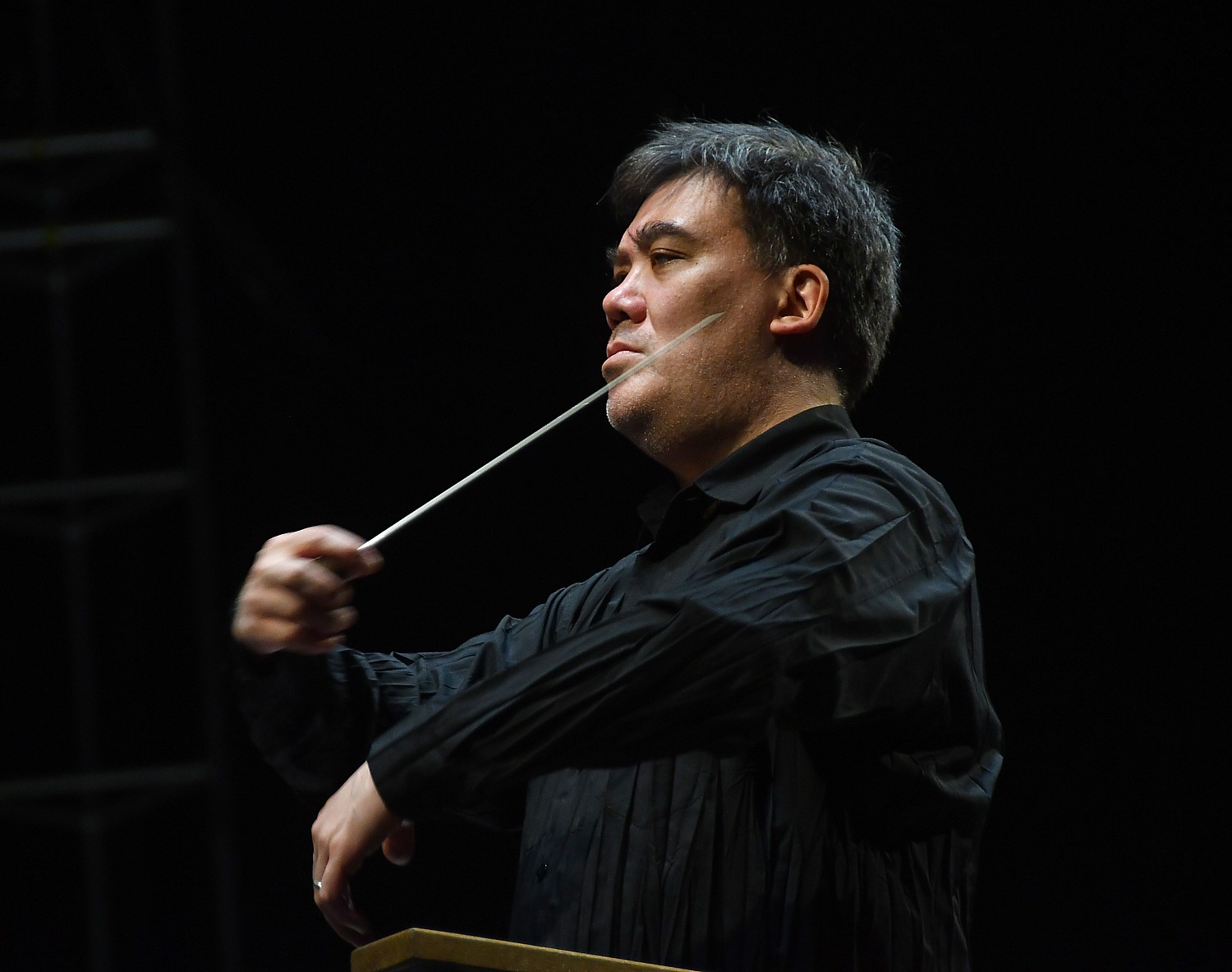
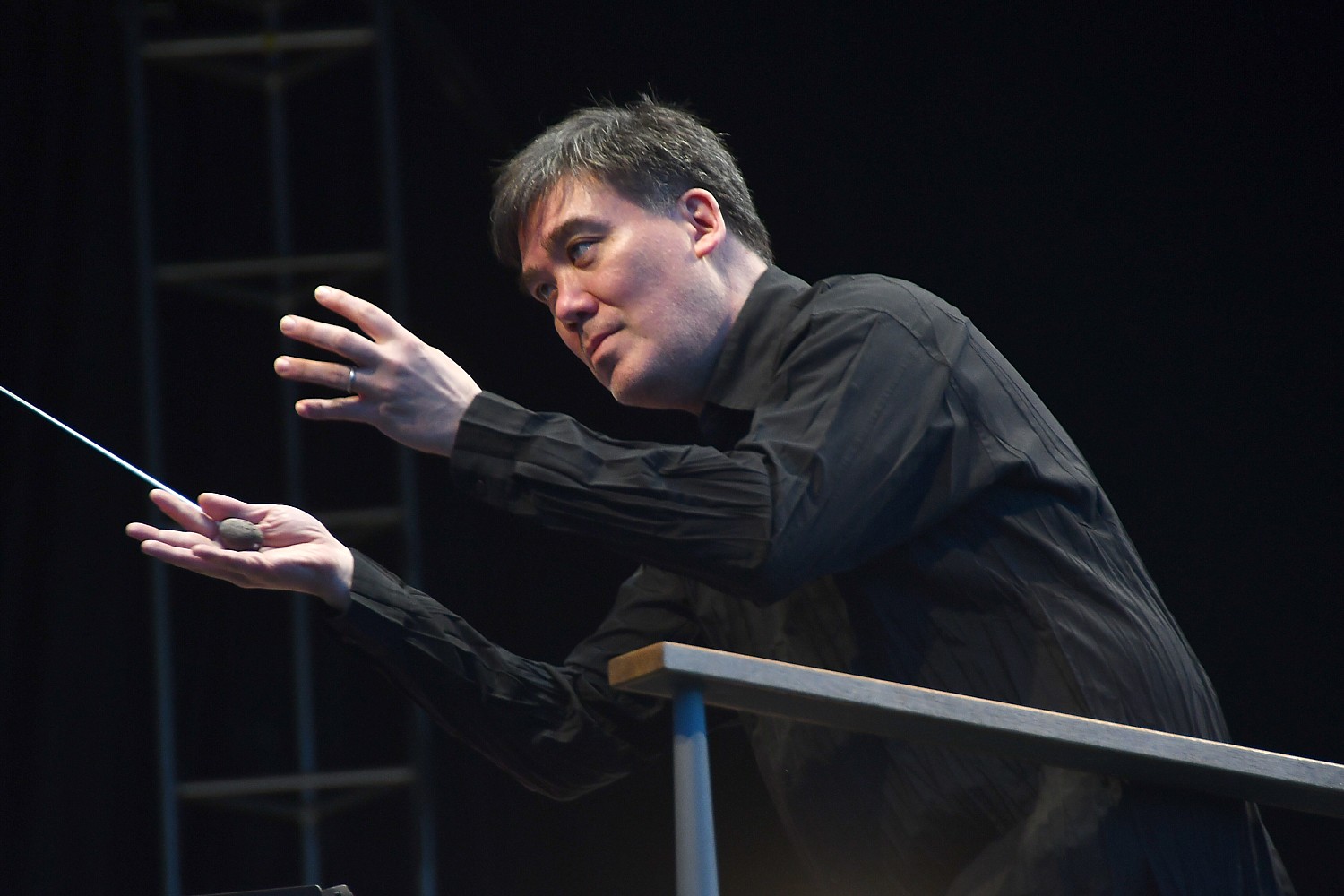
Alan Gilbert, in his final season as music director of the New York Philharmonic, conducts the orchestra in the free summer Concerts in the Parks series in Cunningham Park, Queens © 2017 Karen Rubin/ goingplacesfarandnear.com


By Karen Rubin, Travel Features Syndicate, goingplacesfarandnear.com


This year’s New York Philharmonic Concerts in the Parks – its 52nd summer – provided a way to say farewell to Music Director Alan Gilbert. The series, presented for the past 11 years by Didi and Oscar Schafer, was a hug and a kiss to the 100,000 music lovers who come out to the free summer concerts (“priceless music, absolutely free”), at the Great Lawn in Central Park, Manhattan; Cunningham Park, Queens; Prospect Park, Brooklyn and Van Cortlandt Park, Bronx. This season’s program was also the Philharmonic’s 175th anniversary season celebration of its hometown, featuring masterworks by Dvořák (Symphony No. 9, From the New World), Leonard Bernstein (Symphonic Dances from West Side Story), and George Gershwin (An American in Paris) — all written in New York and premiered by the Philharmonic  – and was the culmination of its season-long “The New World Initiative”.

Throughout the 2016–17 season, The New World Initiative has explored the New World Symphony’s theme of home and honors New York City and its role as an adopted home. The Philharmonic gave the World Premiere of the New World Symphony in 1893, marking the Orchestra’s first World Premiere of a work written in New York City that would become part of the standard repertoire. The Largo theme was later set to the words “Goin’ Home” by Dvořák’s student William Arms Fisher.
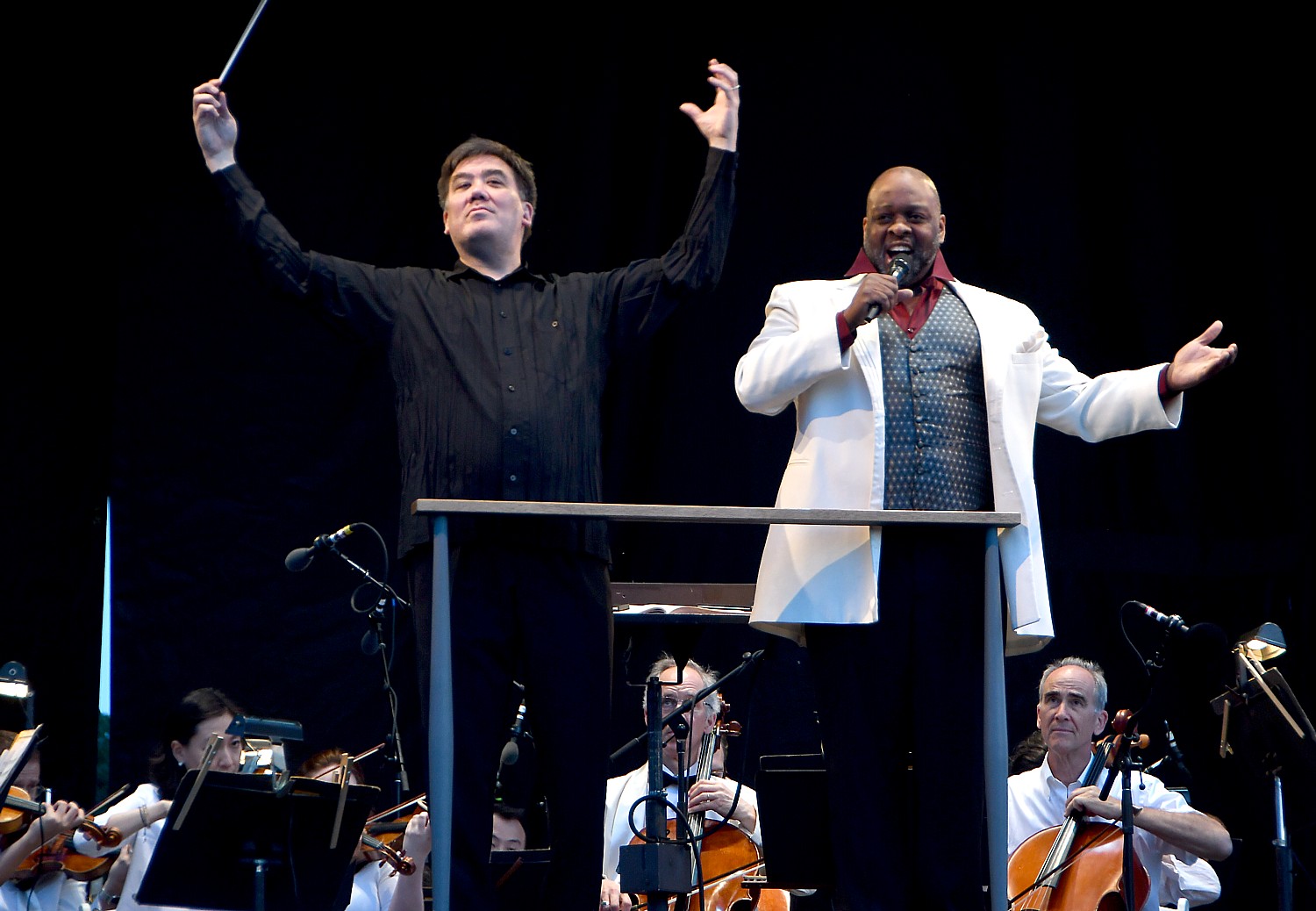
New York Philharmonic conductor Alan Gilbert conducts a community sing-along of “Goin Home” them from Dvořák’s New World Symphony, all part of The New World Initiative and the Philharmonic’s 175th anniversary season celebration of its hometown © 2017 Karen Rubin/ goingplacesfarandnear.com

The New York Philharmonic’s free parks concerts have become an iconic New York summer experience since they began in 1965, transforming parks throughout the New York area into a patchwork of picnickers, and providing music lovers with an opportunity to hear the best classical music under the stars. More than 14 million listeners have been delighted by the performances since their inception.

Before the New York Philharmonic takes the stage, it has become a new custom to “Share the Stage” with local musicians. This year, that included BombaYo (Van Cortlandt Park); The Ebony Hillbillies and Zulal (Central Park), The queen’s Cartoonists and Slum Suit (Cunningham Park) and The Side Project (Prospect Park).

And at this year’s concerts in the parks series, audiences joined the Orchestra in community performances of the “Goin’ Home” theme from Dvořák’s New World Symphony, all part of The New World Initiative and the Philharmonic’s 175th anniversary season celebration of its hometown. (Dvořák’s  symphony also incorporates the Shaker hymn, “Simple Gifts.”)

We caught the concert at Cunningham Park, in Queens, which also featured fireworks display.
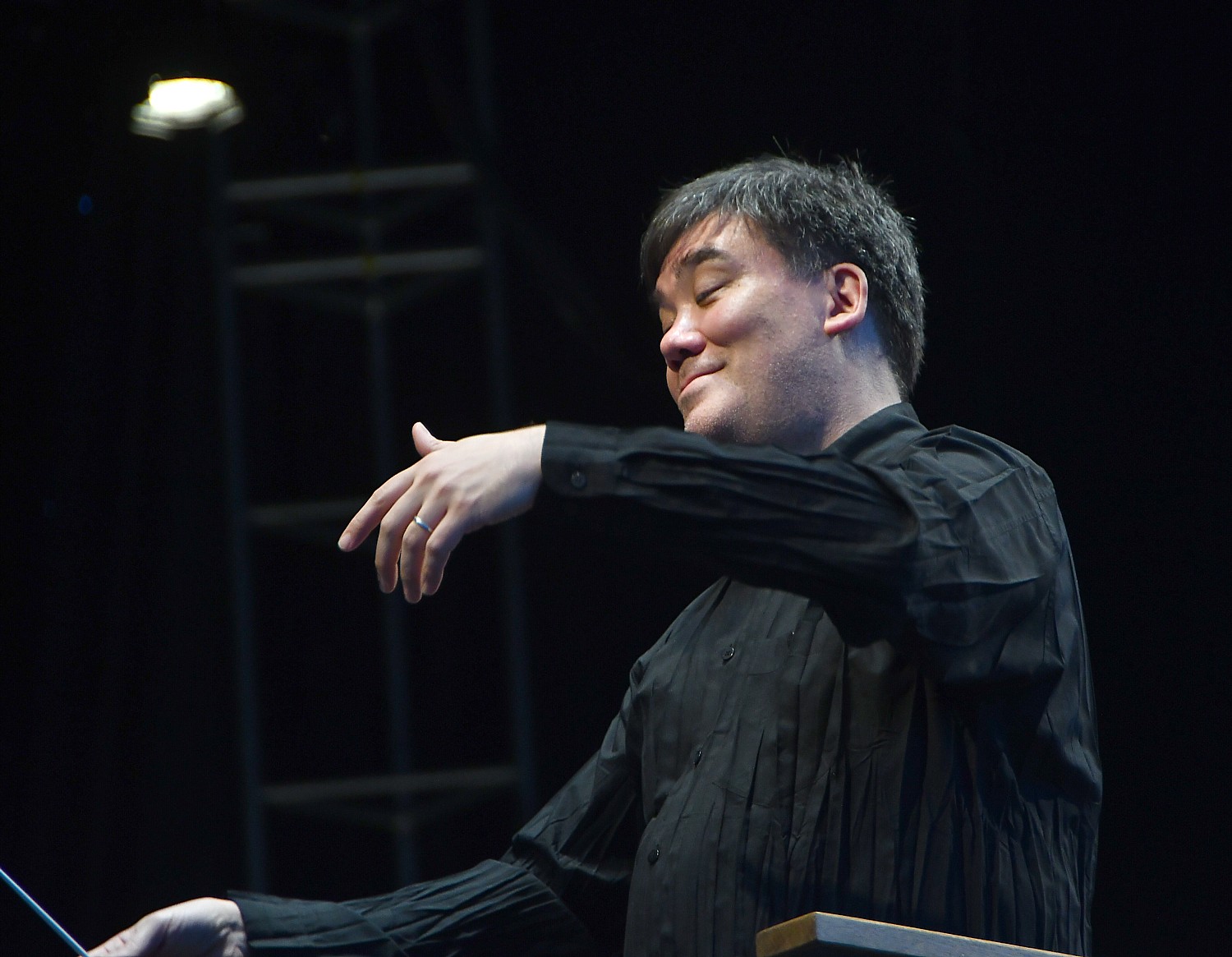
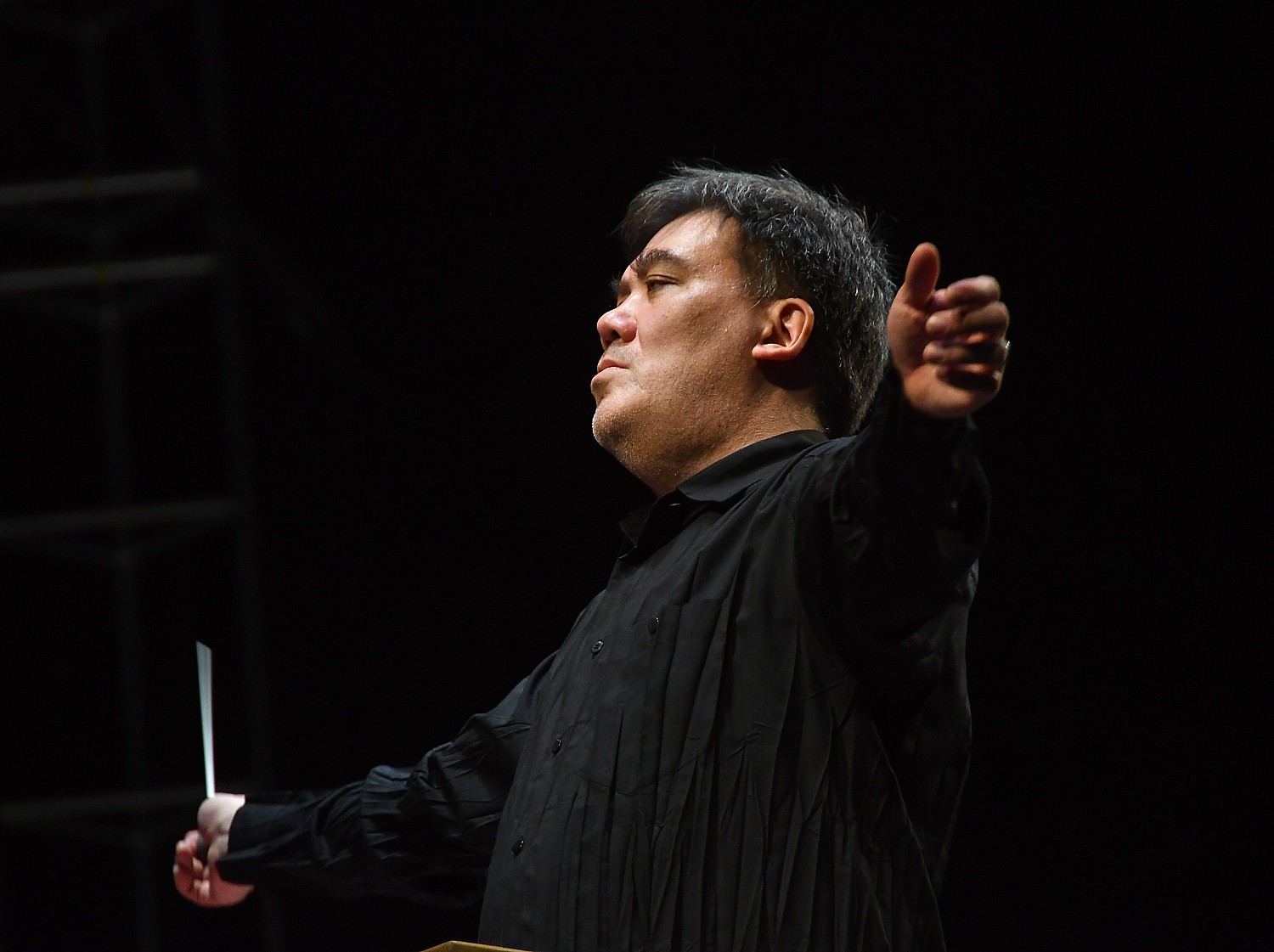
Alan Gilbert, in his final season as music director of the New York Philharmonic, conducts the orchestra in the free summer Concerts in the Parks series in Cunningham Park, Queens © 2017 Karen Rubin/ goingplacesfarandnear.com

The program was a crowd-pleaser – the Symphonic Dances from West Side Story were simply transporting – and Gilbert looked extremely relaxed and joyful.

Alan Gilbert, who has stepped down as music director of NY Philharmonic, just revealed that he will be trading New York for Hamburg, Germany, leading the Elbphilharmonie Orchestra in the new Elbphilharmonie concert hall as chief conductor.
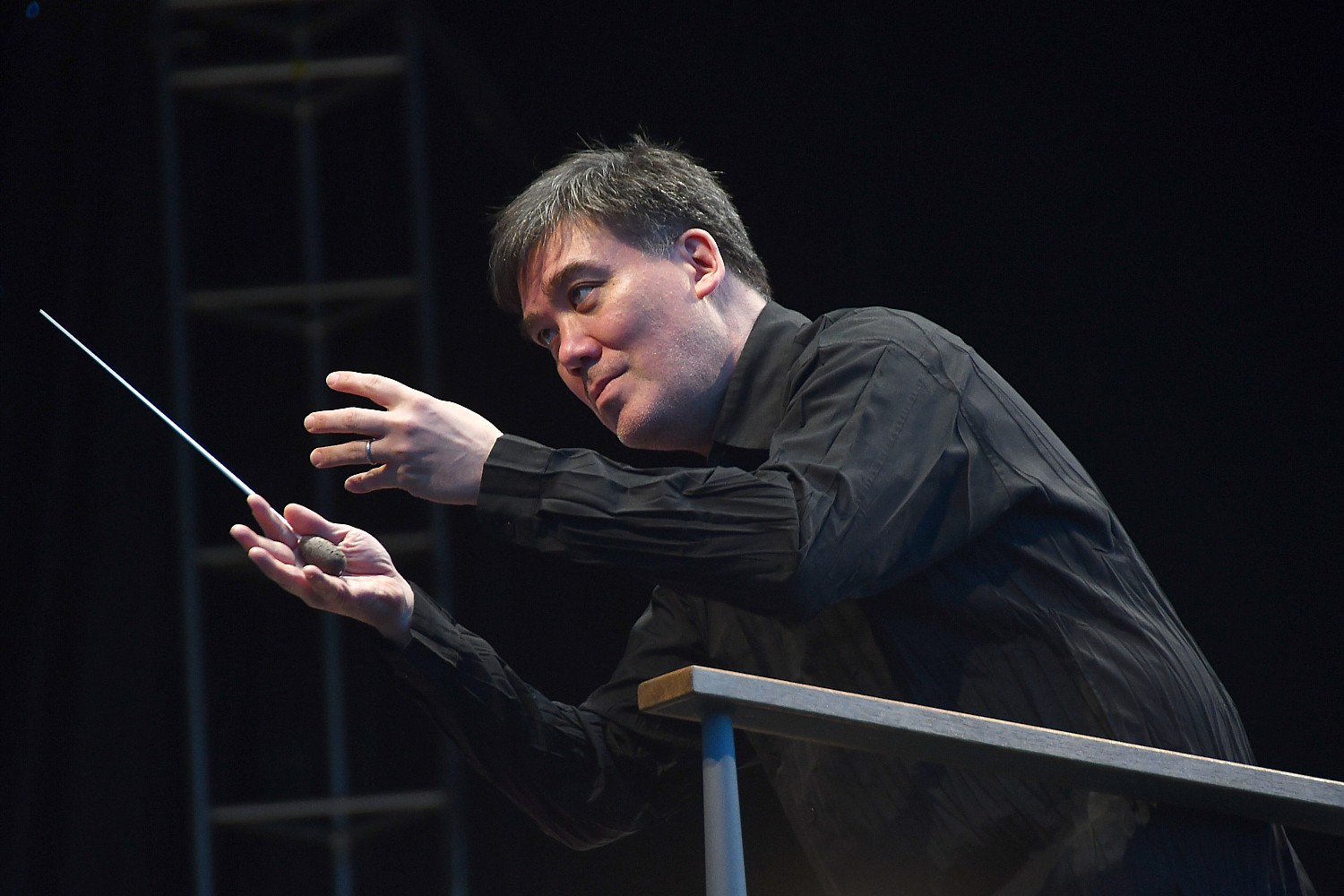
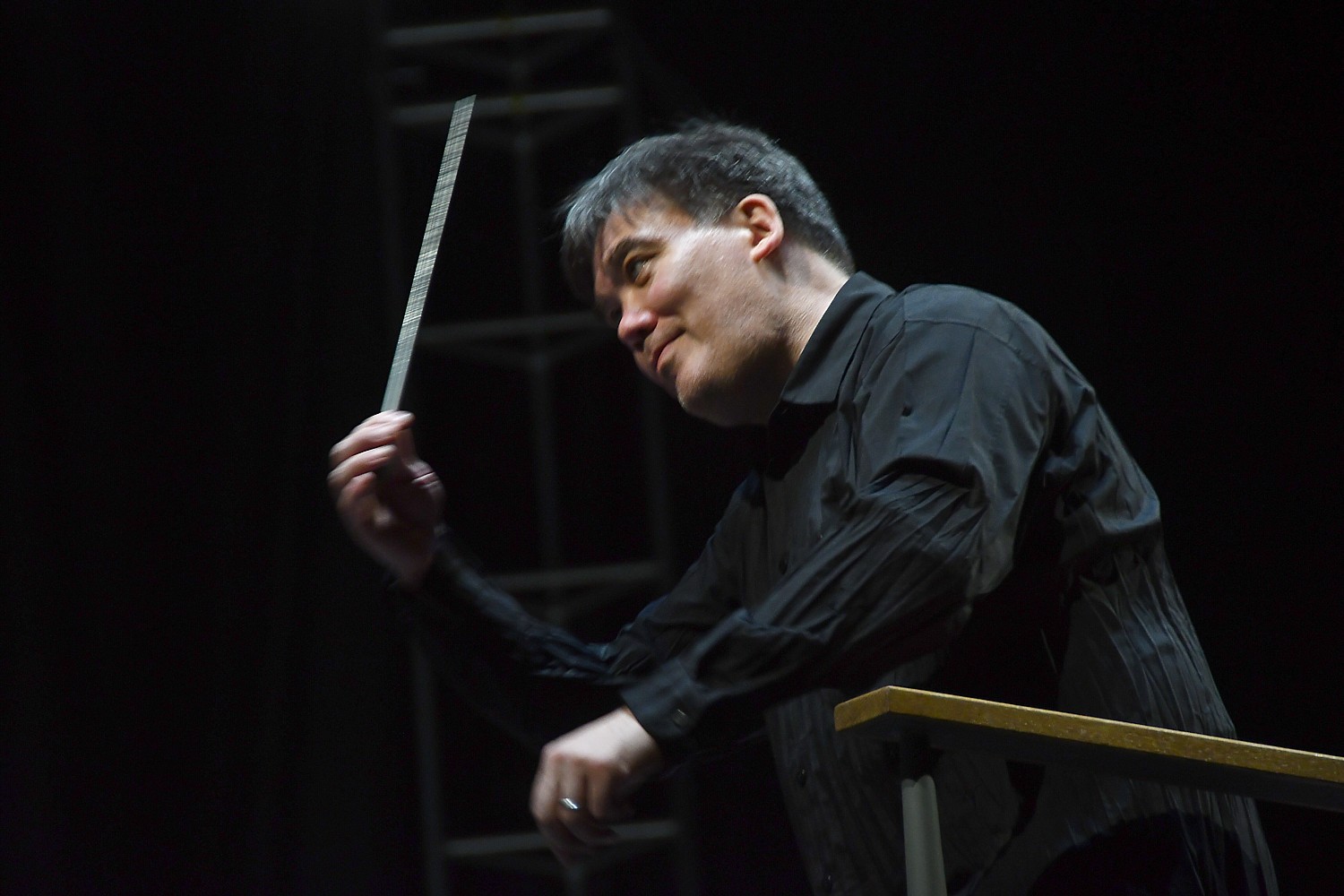
Alan Gilbert, in his final season as music director of the New York Philharmonic, conducts the orchestra in the free summer Concerts in the Parks series in Cunningham Park, Queens © 2017 Karen Rubin/goingplacesfarandnear.com

In a phone interview with the New York Times, Gilbert, a frequent guest conductor in Hamburg, said that the Elbphilharmonie’s vision aligned perfectly with his own paradigm for successful 21st-century orchestras. “It’s about how they connect to the cities they serve,” he said. “And one condition for that is the existence of a perfectly appropriate physical space. What’s going on there is related to what’s potentially going to happen here in New York with the idea of redoing David Geffen Hall.”

Gilbert bids farewell to New York in the parks concert program, writing, “It has been a privilege to stand upon this august platform and make decisions that have altered and enhanced New York City’s cultural landscape. When this Orchestra does artistic things, they are noticed, and they inspire others, far and wide. Ultimately, I know my tenure is just one chapter in the Philharmonic’s long story, and I look forward to seeing what comes next.”
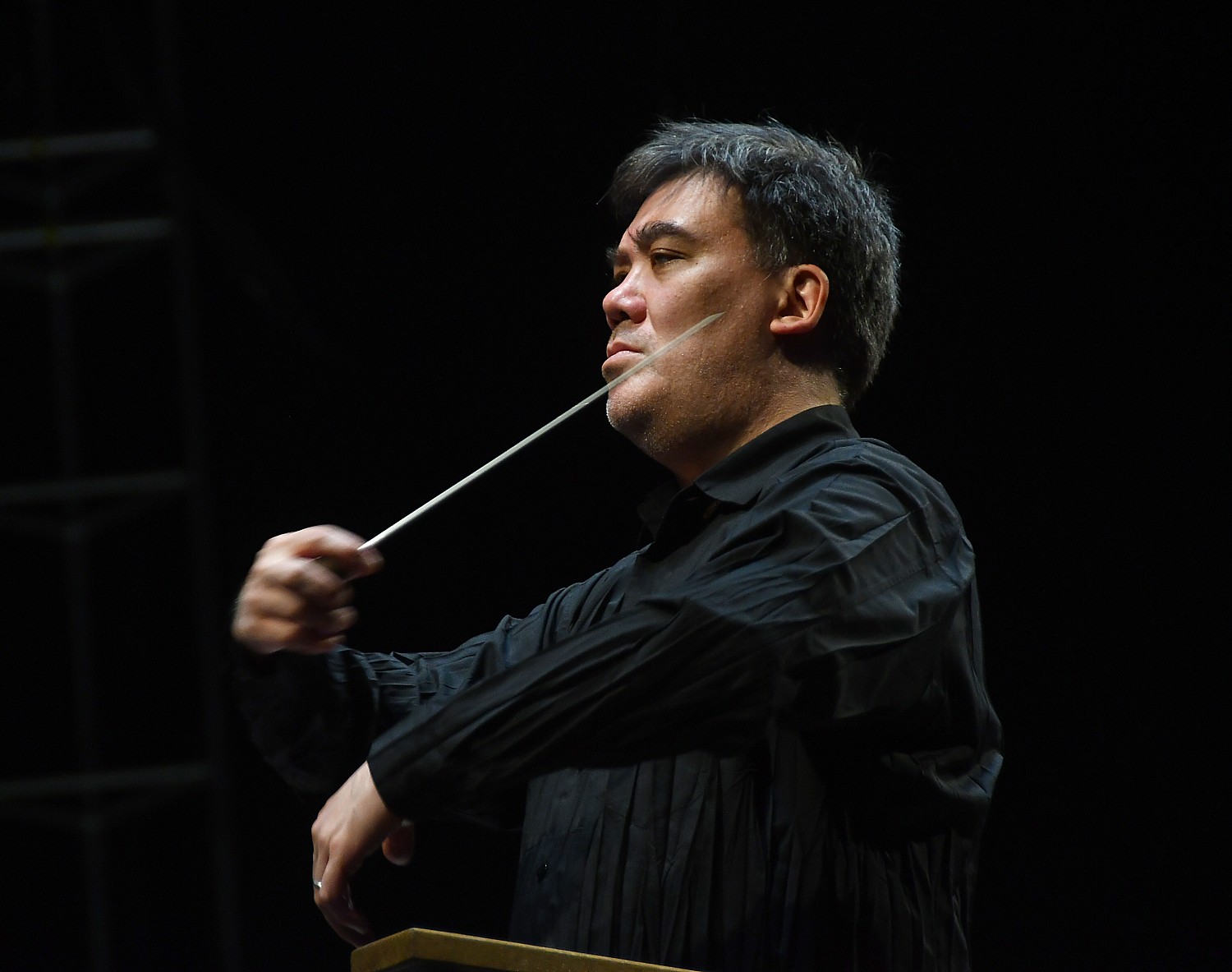
Alan Gilbert, in his final season as music director of the New York Philharmonic, conducts the orchestra in the free summer Concerts in the Parks series in Cunningham Park, Queens © 2017 Karen Rubin/ goingplacesfarandnear.com

As Music Director of the New York Philharmonic since 2009, Alan Gilbert has introduced the positions of The Marie-Josée Kravis Composer-in-Residence, The Mary and James G. Wallach Artist-in-Residence, and Artist-in-Association; CONTACT!, the new-music series; the NY PHIL BIENNIAL, an exploration of today’s music; and the New York Philharmonic Global Academy, partnerships with cultural institutions to offer training of pre-professional musicians, often alongside performance residencies. The Financial Times called him “the imaginative maestro-impresario in residence.”
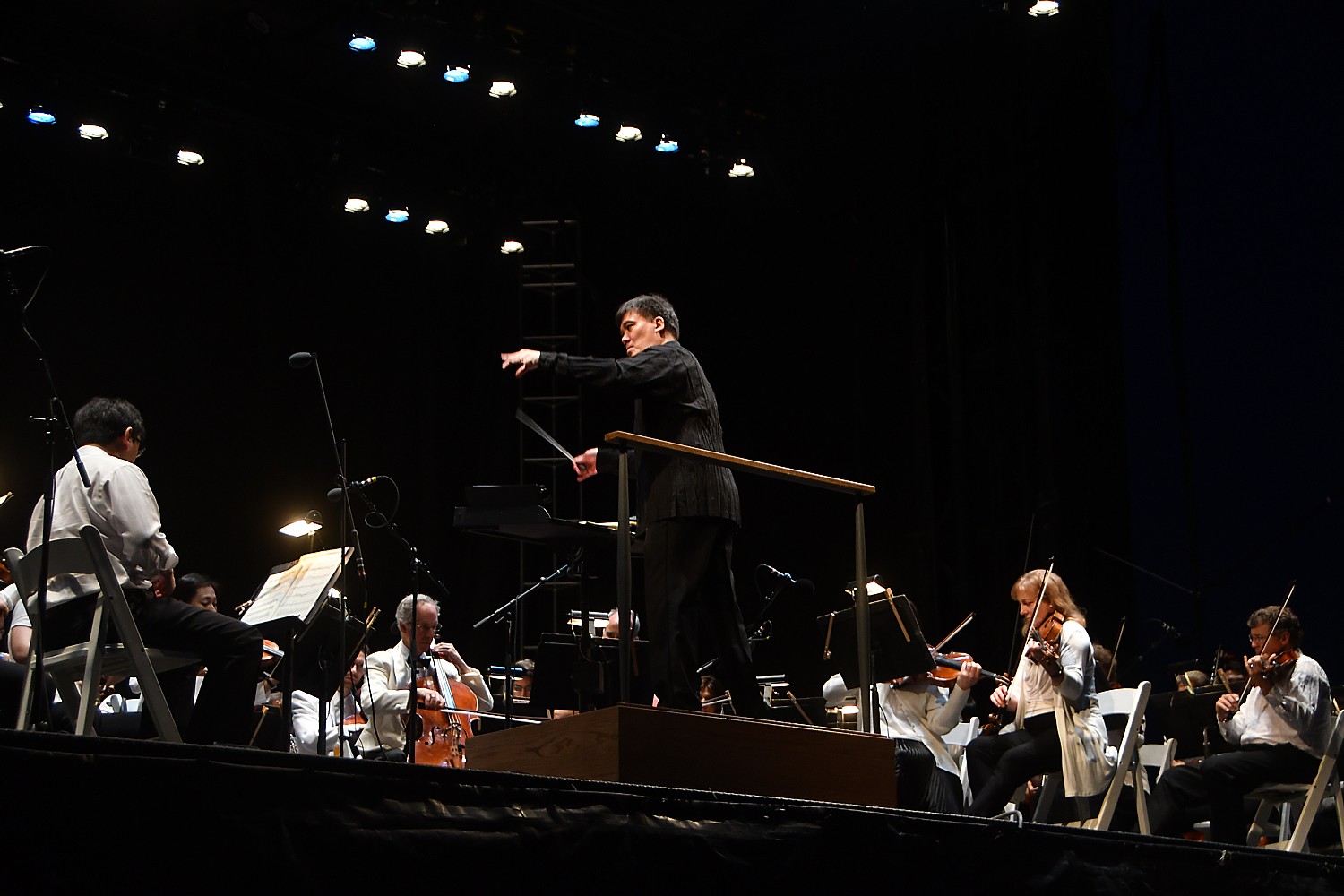
Alan Gilbert conducts the New York Philharmonic in Cunningham Park, Queens © 2017 Karen Rubin/goingplacesfarandnear.com

Alan Gilbert concludes his final season as Music Director with four programs that reflect themes, works, and musicians that hold particular meaning for him, including Beethoven’s Ninth Symphony alongside Schoenberg’s A Survivor from Warsaw, Wagner’s complete Das Rheingold in concert, and an exploration of how music can effect positive change in the world. Other highlights include four World Premieres, Mahler’s Fourth Symphony, Ligeti’s Mysteries of the Macabre, and Manhattan, performed live to film. He also leads the Orchestra on the EUROPE / SPRING 2017 tour and in performance residencies in Shanghai and Santa Barbara. Past highlights include acclaimed stagings of Ligeti’s Le Grand Macabre, Janáček’s The Cunning Little Vixen, Stephen Sondheim’s Sweeney Todd starring Bryn Terfel and Emma Thompson (2015 Emmy nomination), and Honegger’s Joan of Arc at the Stake starring Marion Cotillard; 28 World Premieres; a tribute to Boulez and Stucky during the 2016 NY PHIL BIENNIAL; The Nielsen Project; the Verdi Requiem and Bach’s B-minor Mass; the score from 2001: A Space Odyssey, performed live to film; Mahler’s Resurrection Symphony on the tenth anniversary of 9/11; performing violin in Messiaen’s Quartet for the End of Time; and ten tours around the world.
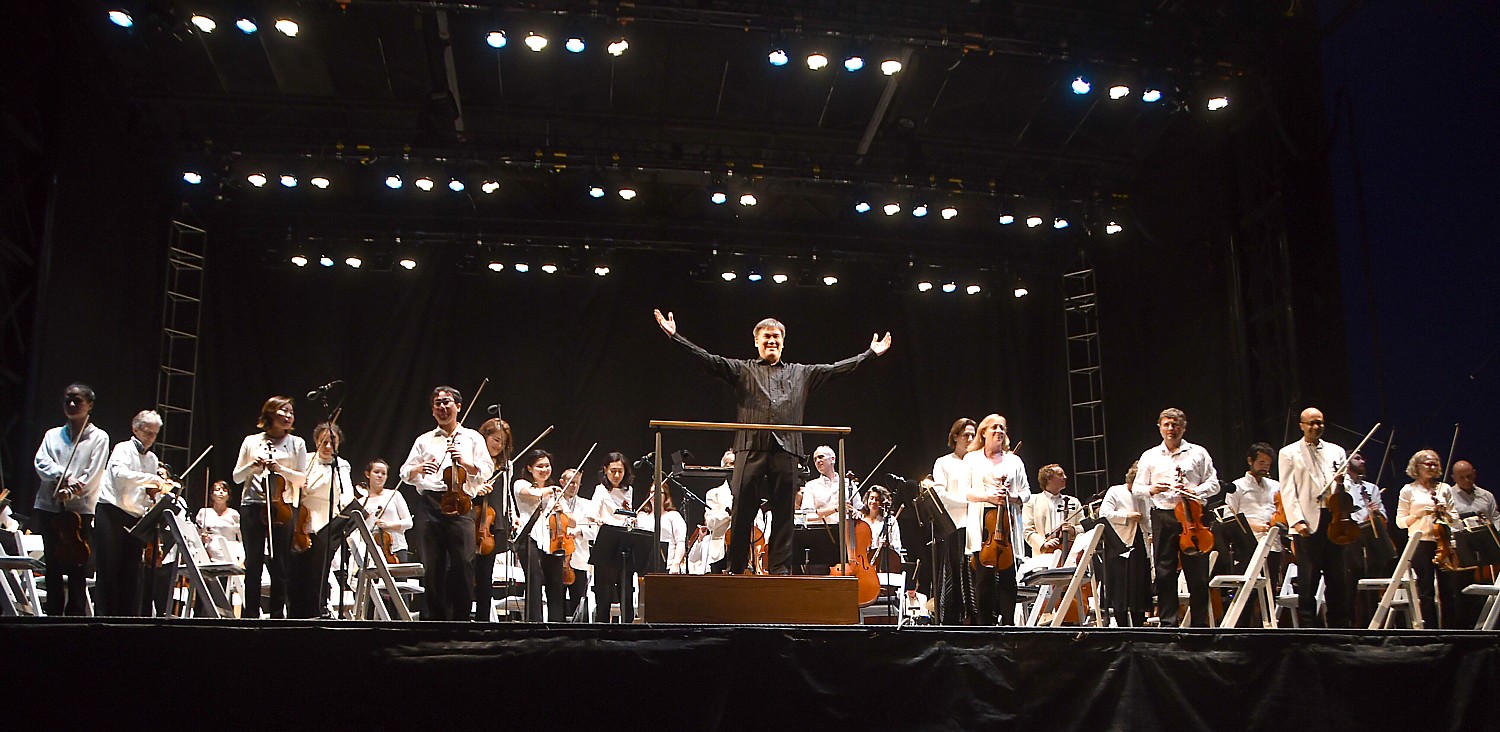
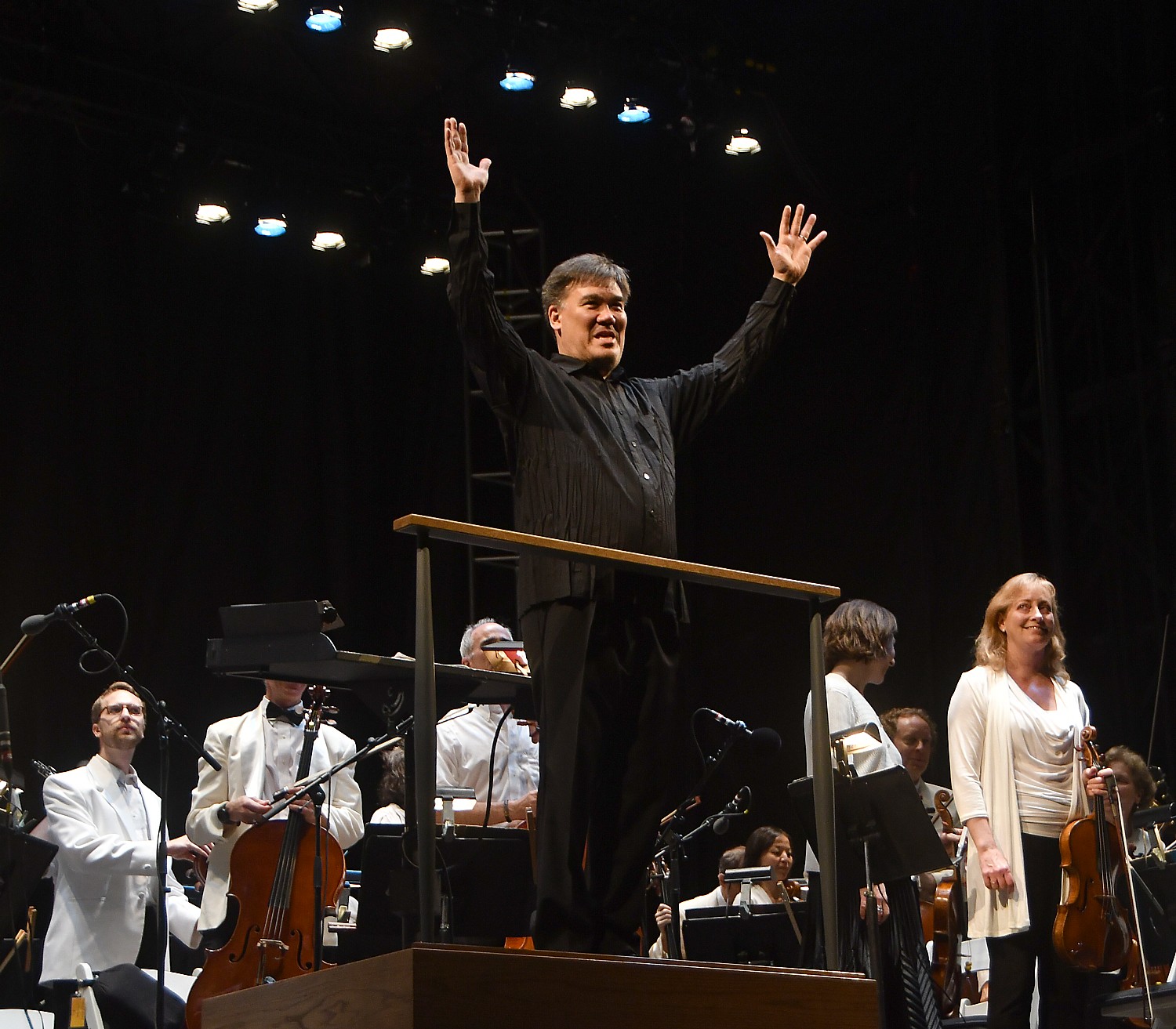
Alan Gilbert and the New York Philharmonic take bow at the end of the concert in Cunningham Park, Queens © 2017 Karen Rubin/ goingplacesfarandnear.com

Conductor laureate of the Royal Stockholm Philharmonic Orchestra and former principal guest conductor of Hamburg’s NDR Symphony Orchestra, Alan Gilbert regularly conducts leading orchestras around the world. This season he returns to the foremost European orchestras, including the Leipzig Gewandhaus, Munich Philharmonic, Amsterdam’s Royal Concertgebouw, and Orchestra dell’Accademia Nazionale di Santa Cecilia. He will record Beethoven’s complete piano concertos with the Academy of St Martin in the Fields and Inon Barnatan, and conduct Gershwin’s Porgy and Bess at Milan’s Teatro alla Scala, his first time leading a staged opera there. He made his acclaimed Metropolitan Opera debut conducting John Adams’s Doctor Atomic in 2008, the DVD of which received a Grammy Award, and he conducted Messiaen’s Des Canyons aux étoiles on a recent album recorded live at the Santa Fe Chamber Music Festival. Mr. Gilbert is Director of Conducting and Orchestral Studies at The Juilliard School, where he holds the William Schuman Chair in Musical Studies. His honors include Honorary Doctor of Music degrees from The Curtis Institute of Music (2010) and Westminster Choir College (2016), Columbia University’s Ditson Conductor’s Award (2011), election to The American Academy of Arts & Sciences (2014), a Foreign Policy Association Medal for his commitment to cultural diplomacy (2015), Officier de l’Ordre des Arts et des Lettres (2015), and New York University’s Lewis Rudin Award for Exemplary Service to New York City (2016).

Here are some parting shots of the meistro.
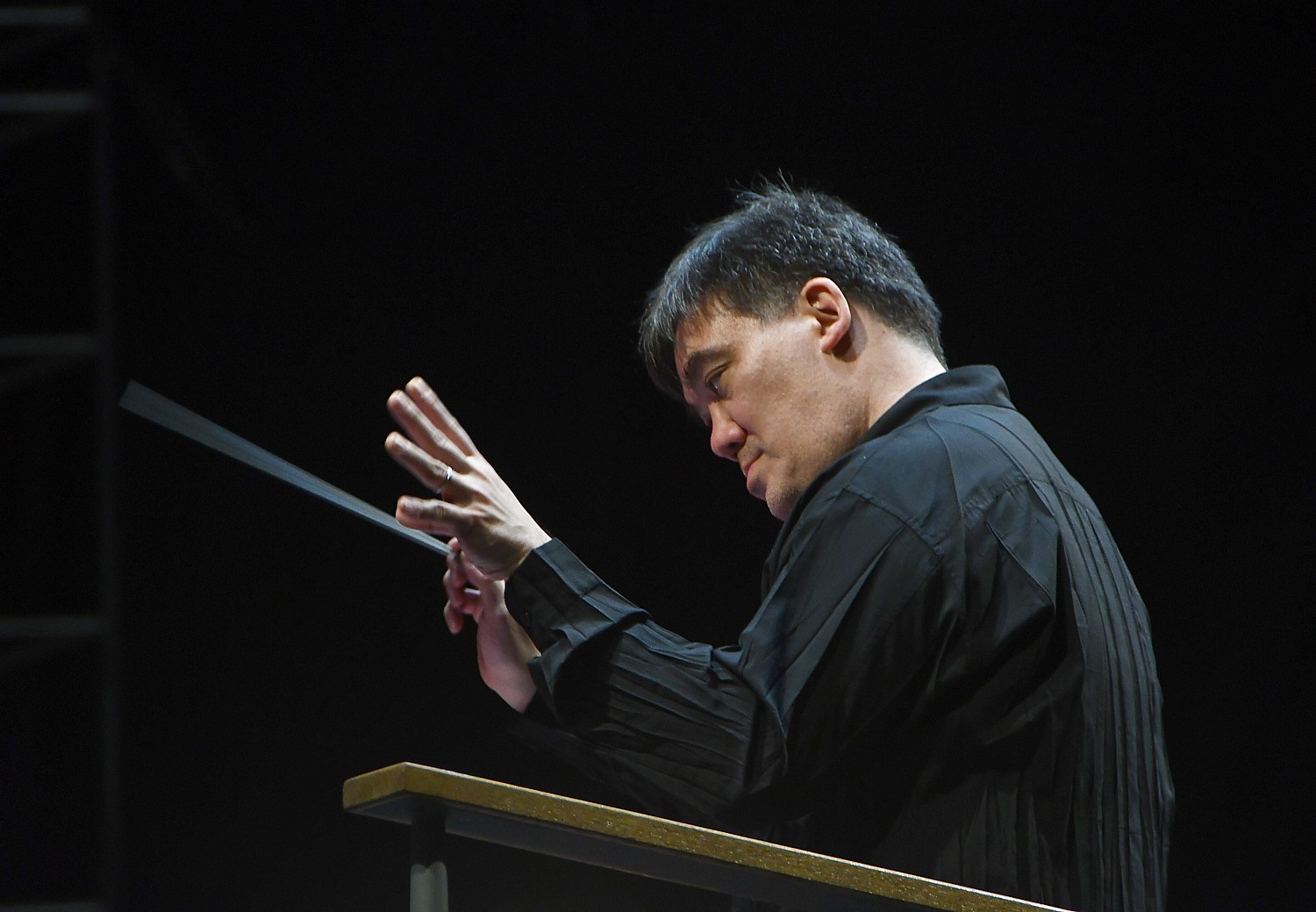
Alan Gilbert conducts the New York Philharmonic in Cunningham Park, Queens © 2017 Karen Rubin/goingplacesfarandnear.com
Alan Gilbert and the New York Philharmonic take bow at the end of the concert in Cunningham Park, Queens © 2017 Karen Rubin/ goingplacesfarandnear.com

____________________


© 2017 Travel Features Syndicate, a division of Workstyles, Inc. All rights reserved. Visit goingplacesfarandnear.com,  www.huffingtonpost.com/author/karen-rubin , and travelwritersmagazine.com/TravelFeaturesSyndicate/. Blogging at goingplacesnearandfar.wordpress.com and moralcompasstravel.info. Send comments or questions to FamTravLtr@aol.com. Tweet @TravelFeatures. ‘Like’ us at facebook.com/NewsPhotoFeatures


Fifth Avenue Museum Mile Festival Showcases Exhibits Not to Be Missed This Summer in NYC

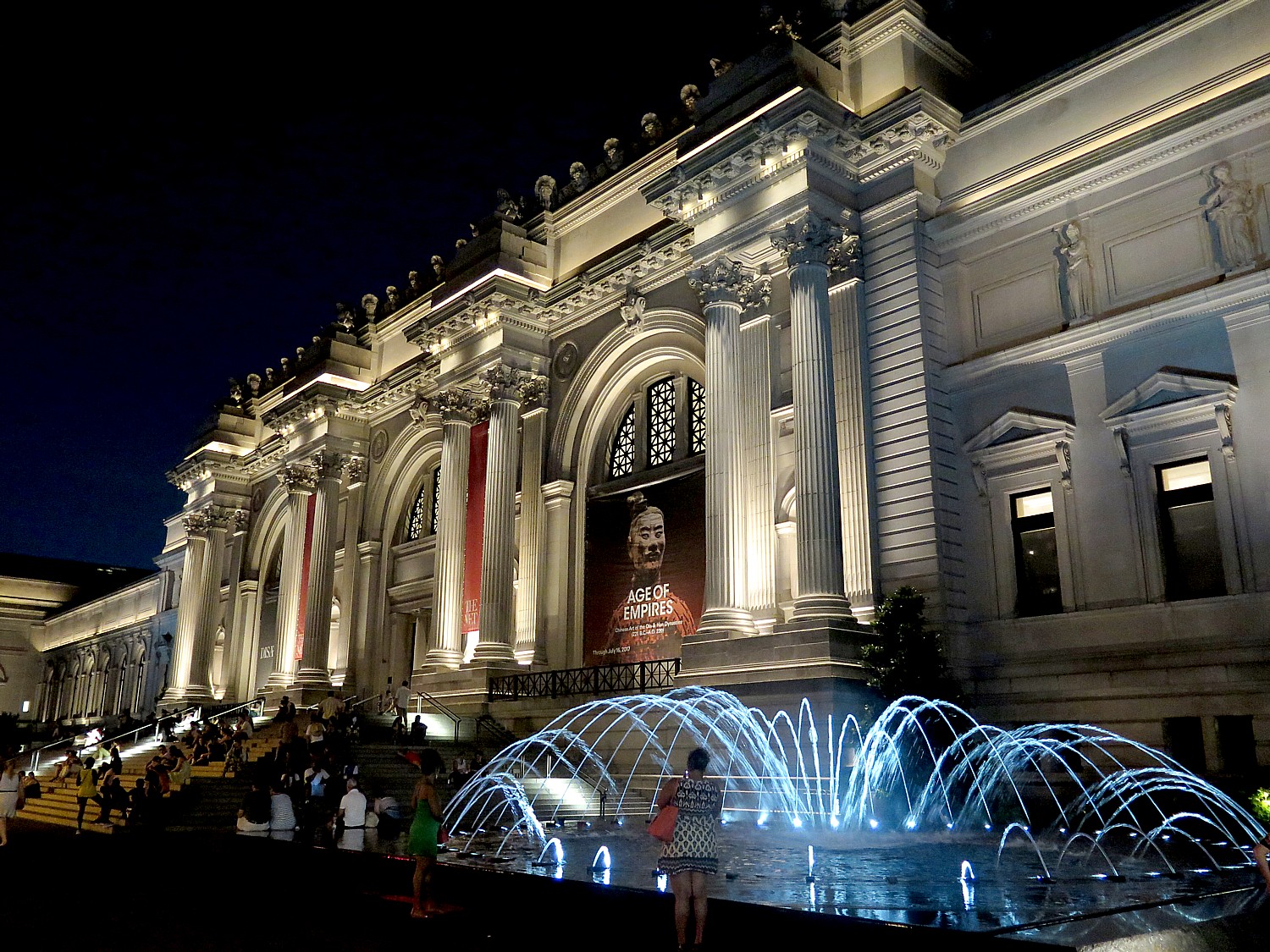
The Metropolitan Museum of Art at night © 2017 Karen Rubin/ goingplacesfarandnear.com


By Karen Rubin, Travel Features Syndicate, goingplacesfarandnear.com


Even if you were unable to get to the once-a-year Museum Mile Festival along Fifth Avenue on June 13, when six museums (some of them with pricey admissions) throw their doors open to one and all for free, it provided a marvelous preview of some spectacular exhibits that are on through the summer or fall.

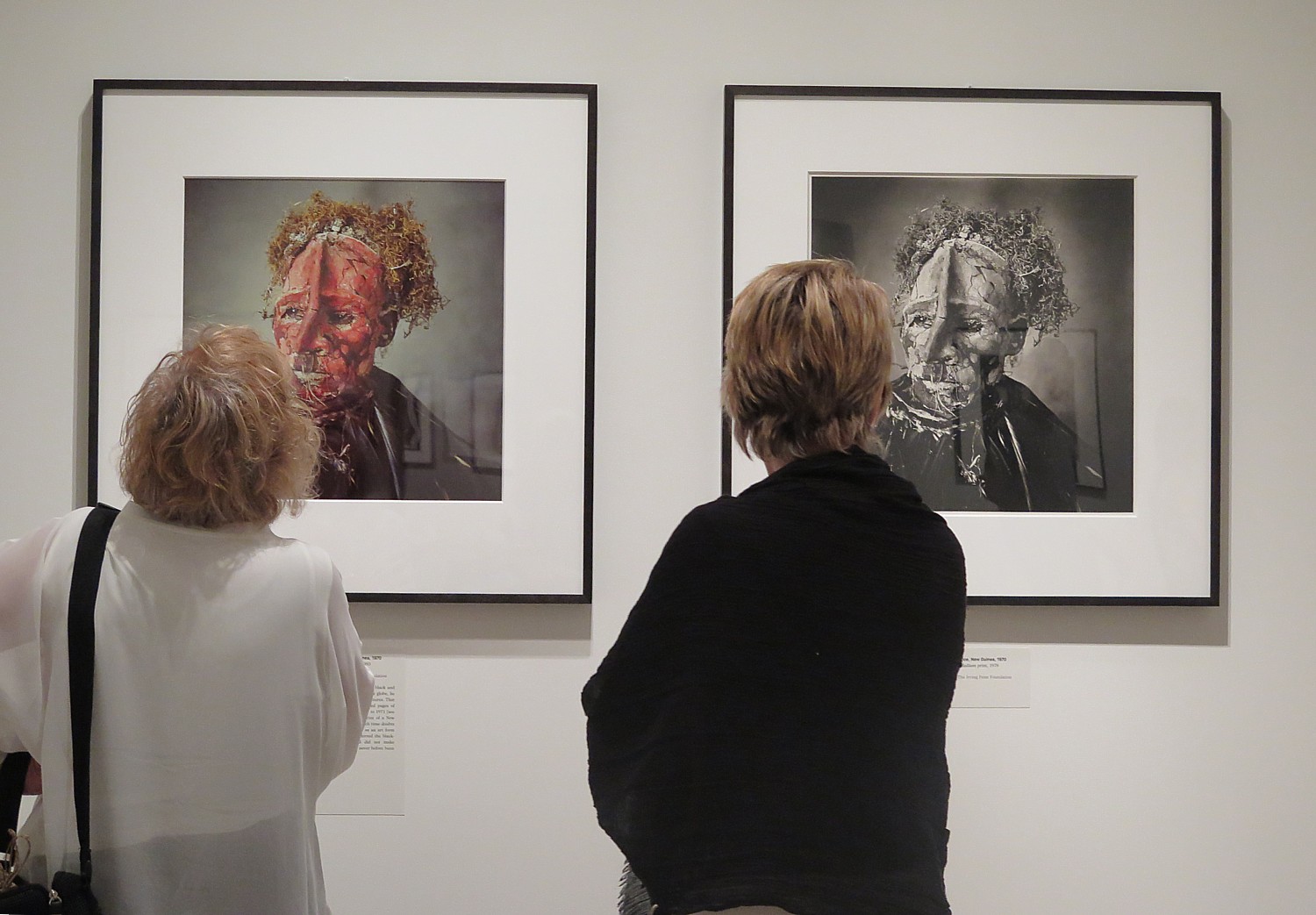
At the Metropolitan Museum of Art, at the southern “border” of Museum Mile, I visited the Irving Penn Centennial, a marvelous survey of this brilliant photographer’s career and an opportunity to see the museum quality prints that would have been seen in the pages of important magazines like Vogue; the exhibit is on through July 30, 2017.

Met Museum-goers viewing the “Irving Penn Centennial” exhibit © 2017 Karen Rubin/goingplacesfarandnear.com

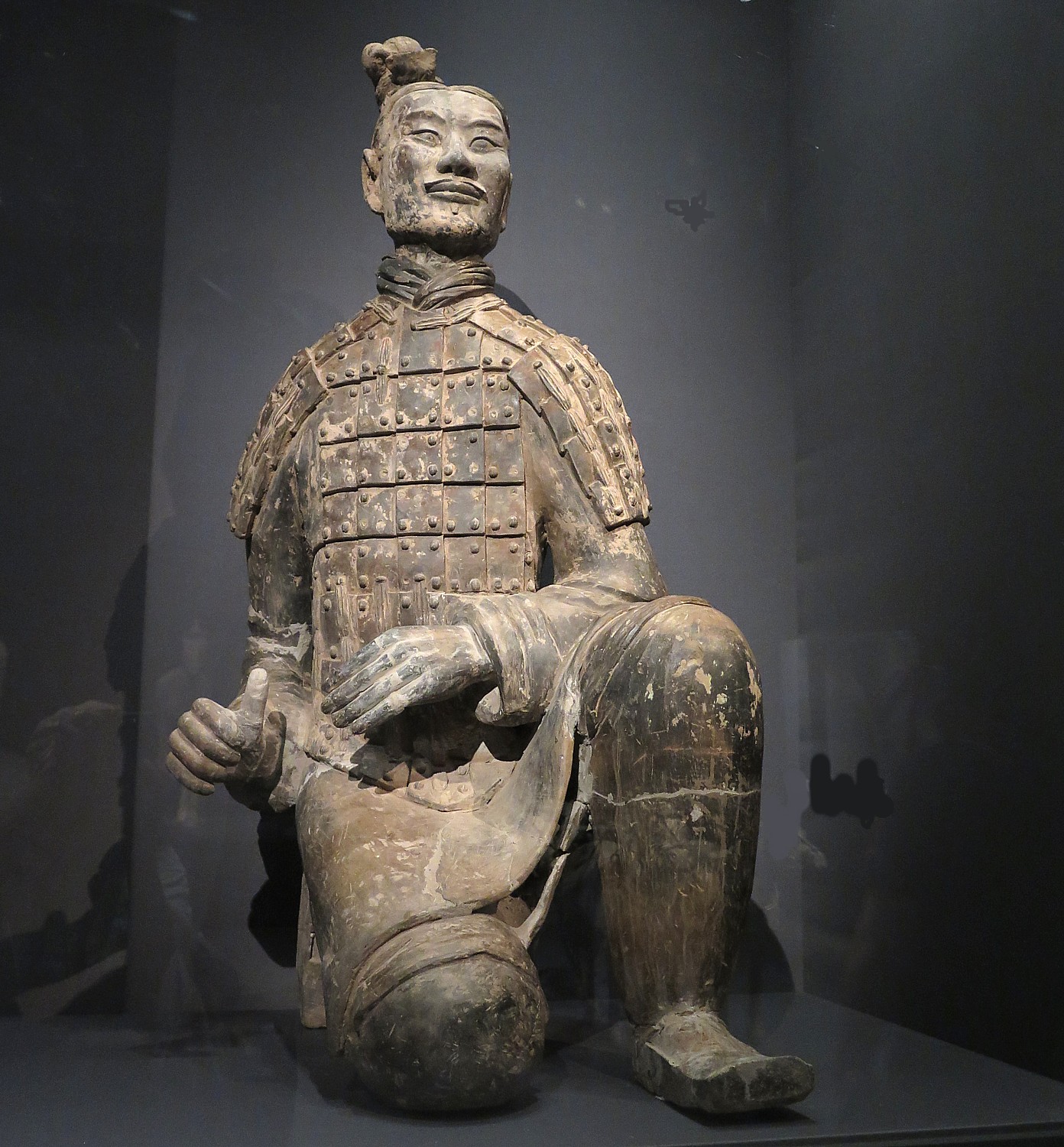
I went from Irving Penn Centennial to the “Age of Empires” exhibit of breathtaking sculpture and artifacts from the Qin and Han dynasties, spanning 221 BC to 220 AD, including near life-size but extraordinarily realistic statues of terracotta warriors from Xian (so life-like they appear to breathe) that I had seen for the first time when I visited what was at the time newly uncovered site in 1978 in China. This important exhibit is on view through July 16, 2017.

One of the terracotta warriors on view in the “Age of Empires” exhibit at the Metropolitan Museum of Art © 2017 Karen Rubin/ goingplacesfarandnear.com

Then, I couldn’t resist, I luxuriated in the galleries devoted to Impressionists and Post-Impressionists.

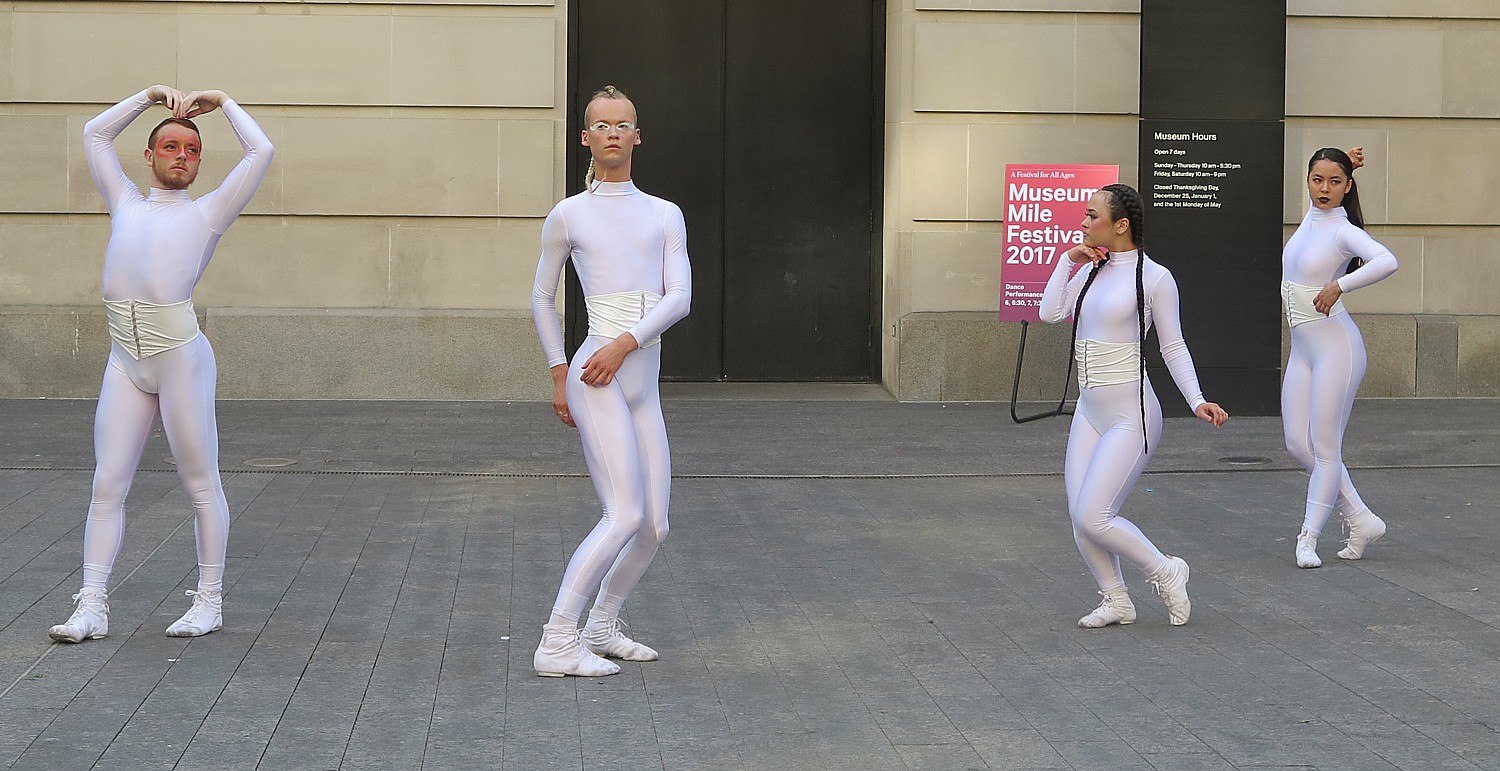
Outside, the Met Museum hosted performance art – a troupe of dancers whose movements formed artistic poses. (My favorite time to visit is on a Friday or Saturday evening when the Met is open late, has music on the mezzanine; favorite place to eat is in the American Café in the sculpture garden; also, take a docent-led “Highlights” tour, which brings you all around the museum.)

The Metropolitan Museum of Art, 1000 Fifth Avenue (at 82nd Street), New York, NY 10028, (212) 535-7710 http://www.metmuseum.org/. 

Performance of Sidra Bell Dance New York outside the Metropolitan Museum of Art during the Museum Mile Festival © 2017 Karen Rubin/ goingplacesfarandnear.com

(My clever strategy was to start at the Met at 5 pm, giving me an extra hour of the Museum Mile Festival in order to cover more territory.)

I next visit the Neue Galerie New York and get my annual “fix” of the breathtaking “Woman in Gold” and other Gustav Klint paintings (Klint has become one of my favorite artists).  The Austrian Masterworks exhibit is a celebration of the 15th anniversary of the museum’s founding, highlighting Gustav Klint, Oskar Kokoschka, Alfred Kubin and Egon Schiele.

Neue Galerie New York, 1048 Fifth Avenue (at 86th Street), New York, NY 10028, (212) 628-6200, http://www.neuegalerie.org/. 

The Solomon R.Guggenheim Museum, which always gets an enormous crowd for the Museum Mile festival, is featuring “Visionaries: Creating a Modern Guggenheim,” “Hugo Boss Prize 2016: Anicka Yi, Life is Cheap” Solomon R. Guggenheim Museum, 1071 Fifth Avenue (at 88th Street) New York, NY 10128, (212) 423-3500, https://www.guggenheim.org/

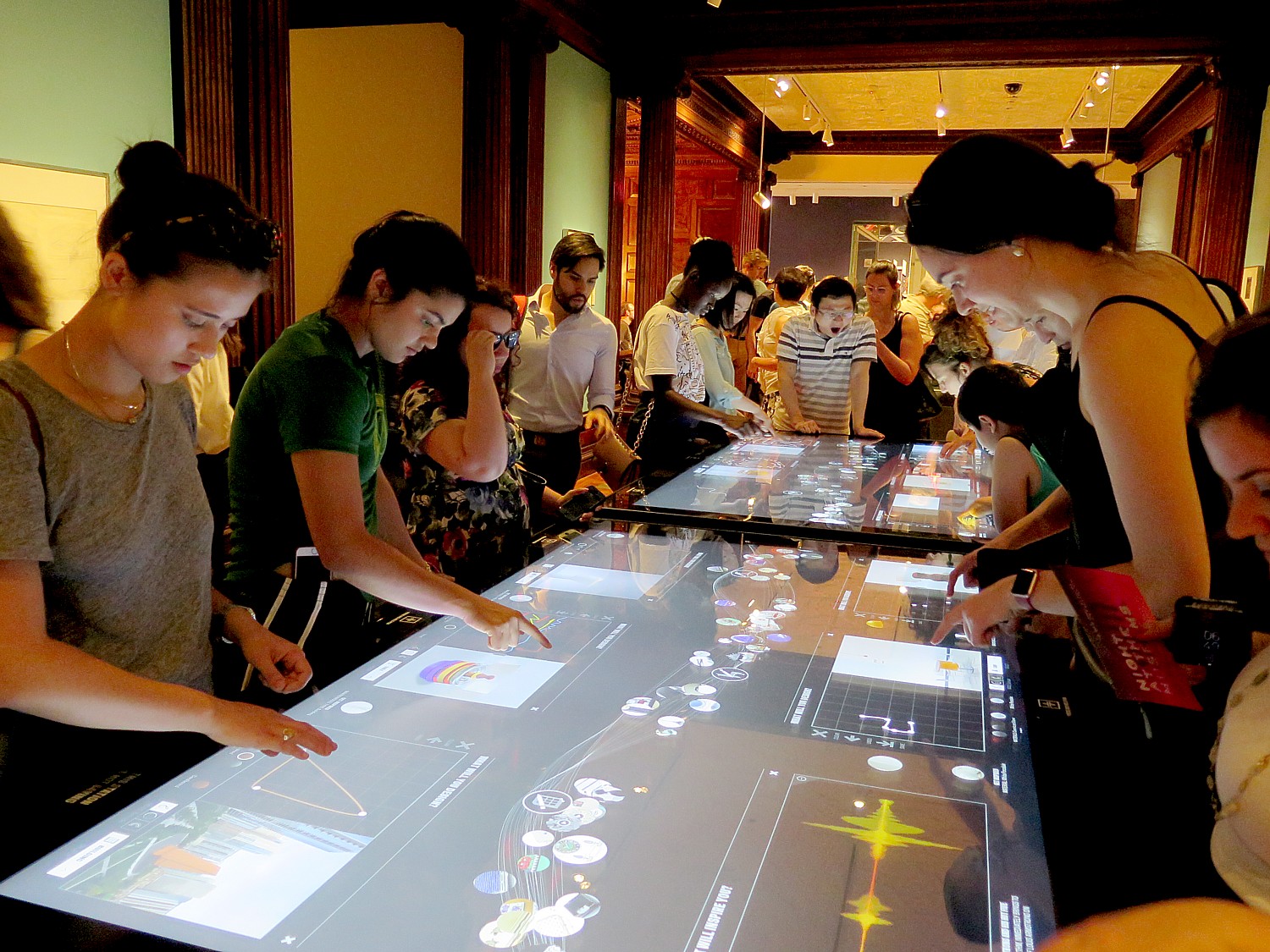
You get to try your hand at design, at the Cooper Hewitt Smithsonian Design Museum housed in an exquisite Fifth Avenue mansion © 2017 Karen Rubin/goingplacesfarandnear.com

Cooper Hewitt National Design Museum, which is part of the Smithsonian Institutions, a collection established by Sarah and Eleanor Hewitt as the Cooper Union Museum for the Arts of Decoration in 1897, housed in an exquisite mansion, is presenting a marvelous exhibit, “The Jazz Age: American Style in the 1920s” – bringing together the design elements of the era through a range of furnishings, architecture, clothing, paintings and music, and what made the designs so distinctive and reflective of cultural trends of the time. For example, “Bending the Rules,” the cross-pollination of American and European artists (“A Smaller World”), the infatuation with technology and machines. One of the special delights of the Cooper Hewitt is their interactive opportunities to create designs.

Cooper Hewitt Smithsonian National Design Museum, 2 East 91st Street (off Fifth Avenue) New York, NY 10128, 212-849-8400, http://www.cooperhewitt.org/ 

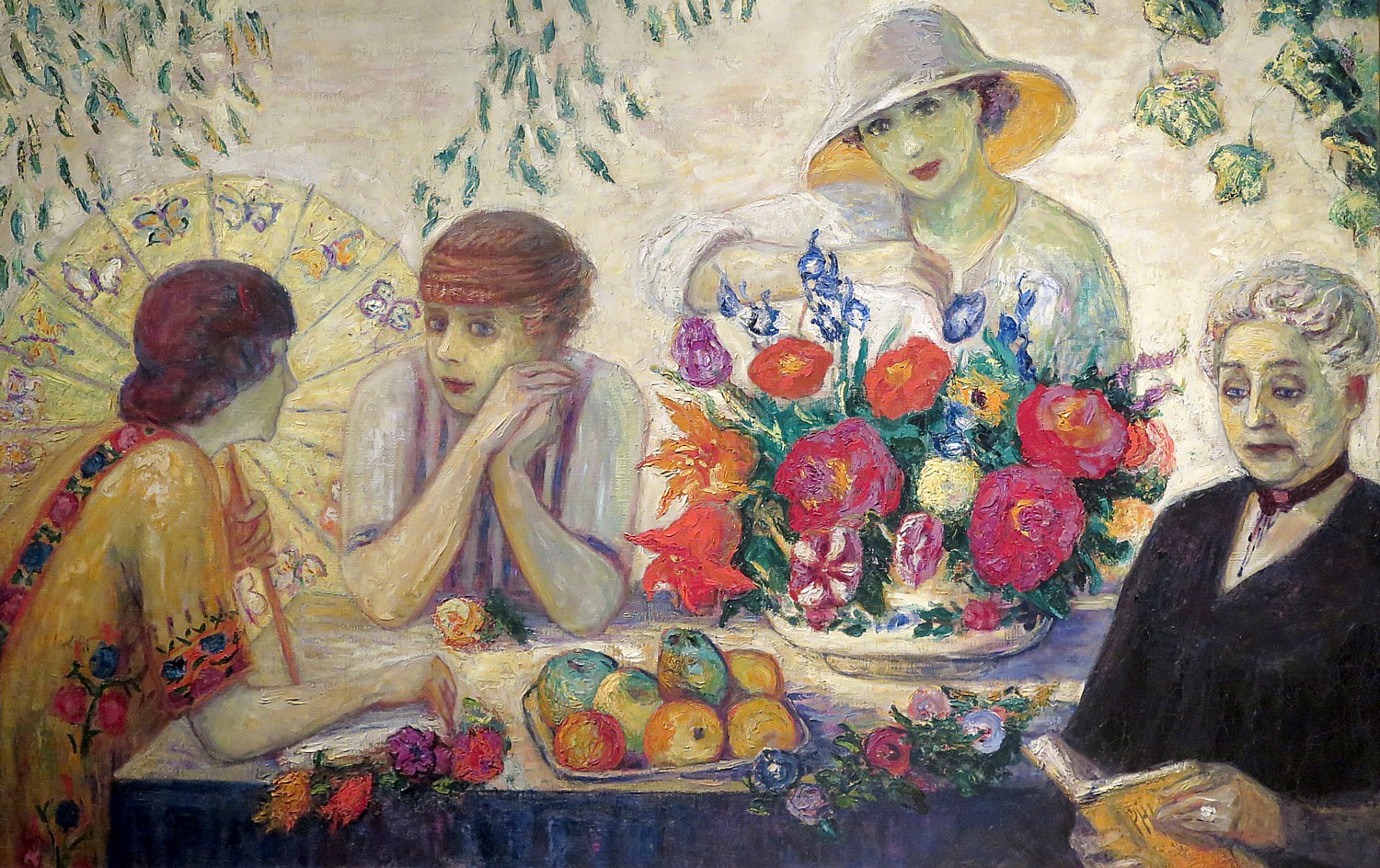
Painting of the Stettheimer sisters and mother by Jazz Age, avant-garde artist and poet Florine Stettheimer, on view at the Jewish Museum © 2017 Karen Rubin/goingplacesfarandnear.com

The Jewish Museum’s special exhibit this season also focuses on the 1920s, featuring the painter and poet and exemplar of the avant-garde, Florine Stettheimer. This was all new to me – I had never heard of her, or her incredible sisters, before (their independence, feminism and stunning range of creativity reminded me of the Bronte sisters, except these ladies did not keep their creative output a secret).

The Jewish Museum, 1109 Fifth Avenue, (between 92nd & 93rd Streets), New York, NY 10128, (212) 423-3200, www.thejewishmuseum.org.

The two exhibits – at the Cooper Hewitt and the Jewish Museum – are that much more inspiring to see contiguously, to have this extraordinary in-depth insight into the Jazz Age, a time of tumultuous change in culture, social mores and political currents on a scale that only recurred 40 years later, in the 1960s, and now.  I became intrigued when I heard of the Jewish Museum’s exhibit at the Jazz Age Lawn Party on Governors Island in June (you have another opportunity to enjoy this fantastic festival August 26 & 27, jazzagelawnparty.com; see story)

From there I walked further north, to just about the top of the Museum Mile with only about an hour to go of the festival.

Dancing in the street, outside the Museum of the City of New York, during the Museum Mile Festival © 2017 Karen Rubin/ goingplacesfarandnear.com

The Museum of the City of New York always has smart, clever exhibits. The not-to-be missed exhibit, “New York at its Core,” that is on now is in three parts, in three different galleries. It explores the essential question, “What makes New York New York?” (Answer: Money, Diversity, Density, Creativity) and takes the city from its very beginnings (room-sized images of neighborhoods morph from centuries ago into today), to its development as a melting pot for cultures, and then lets viewers imagine what the city of the future should look like (“Future City Lab”) and how it should solve the challenges of affordable housing, greenspace, environment, transit, and so forth. One of the most interesting parts is a computer-generated animation that puts you into the scene.

Museum of the City of New York, 1220 Fifth Avenue (at 104th Street), New York, NY 10029 (212) 534-1672, http://www.mcny.org/  

See yourself in the city of the future and have a crack at solving urban challenges, at the Museum of the City of New York © 2017 Karen Rubin/goingplacesfarandnear.com

Then, at the end of the Museum Mile, El Museo Del Barrio is featuring “Belkis Ayon: Nkame” and “A Retrospective of Cuban Printmaker Belkis Ayon” El Museo del Barrio, 1230 Fifth Avenue (at 104th Street), New York, NY 10029, (212) 831-7272 (http://www.elmuseo.org/)

____________________


© 2017 Travel Features Syndicate, a division of Workstyles, Inc. All rights reserved. Visit goingplacesfarandnear.com,  www.huffingtonpost.com/author/karen-rubin , and travelwritersmagazine.com/TravelFeaturesSyndicate/. Blogging at goingplacesnearandfar.wordpress.com and moralcompasstravel.info. Send comments or questions to FamTravLtr@aol.com. Tweet @TravelFeatures. ‘Like’ us at facebook.com/NewsPhotoFeatures


On the River Inn Meets Challenge of Woodstock, Vermont’s ‘Quintessential New England’ Reputation

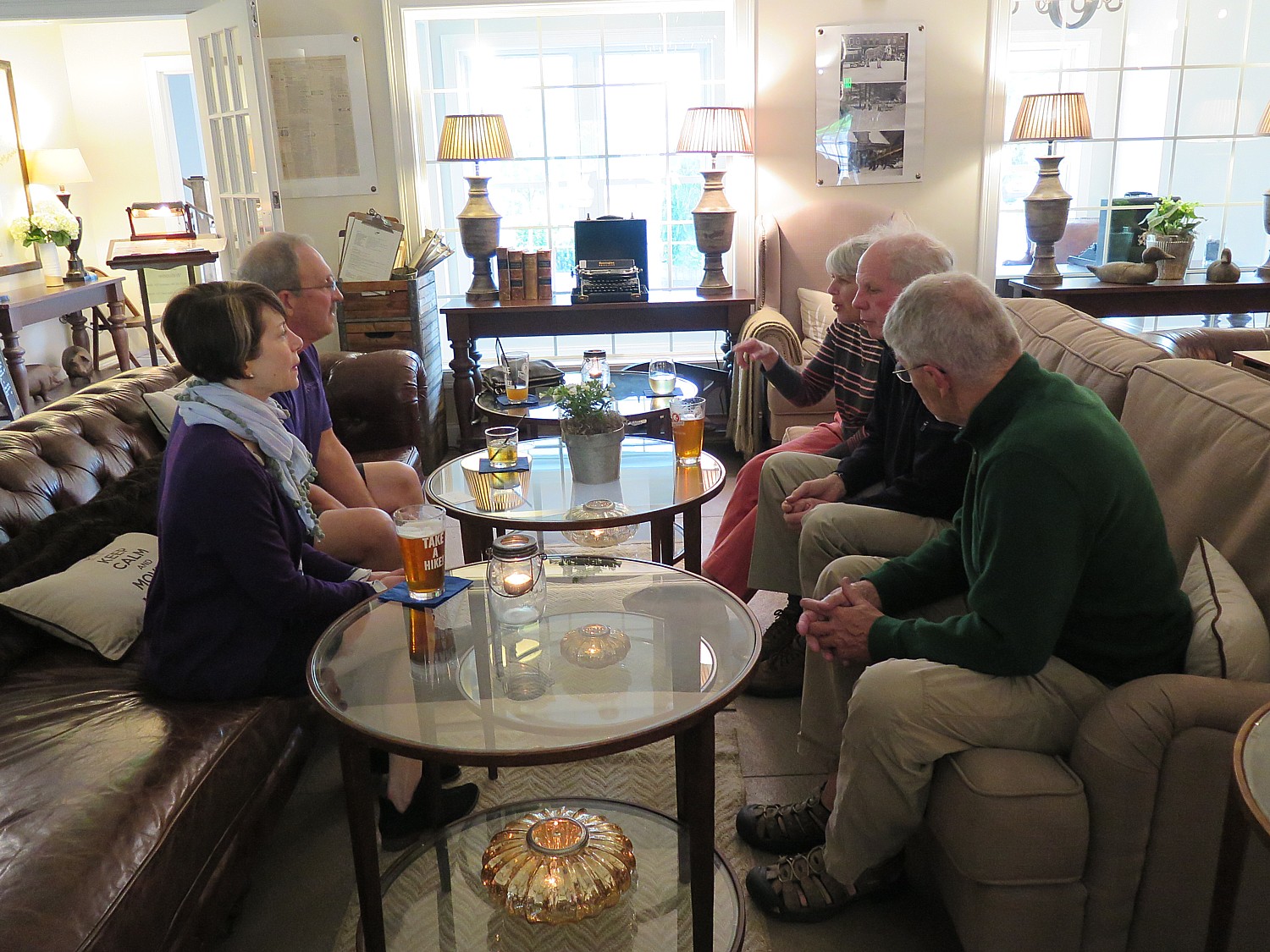
Discovery Bicycle Tours group gathers in On the River Inn’s restaurant/lounge after the Saturday ride © 2017 Karen Rubin/ goingplacesfarandnear.com


By Karen Rubin, Travel Features Syndicate, goingplacesfarandnear.com

Imagine the pressure on innkeepers wanting to build new in the historic village universally known as “Quintessential New England” with its amazing array of stunning architecture from the 1800s, including the classic Woodstock Inn that graces the village center just across from the green; with its covered wood bridges, classic New England white steepled churches and homes that proudly display dates from the 1800s.

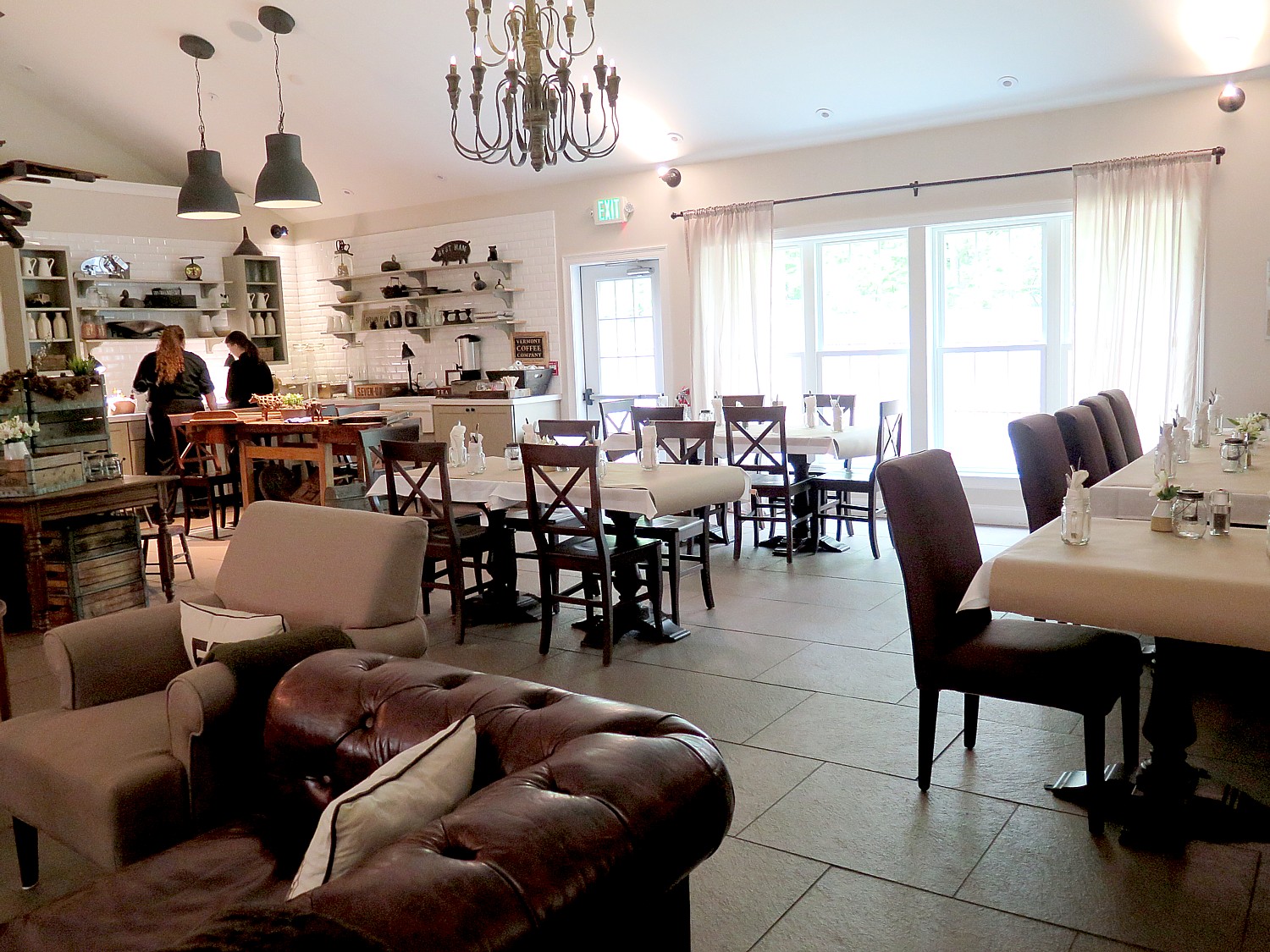
Family owned and operated, the On the River Inn succeeds in stellar fashion, seamlessly integrating the charm of a traditional Vermont inn with lovely vintage and traditional touches while embracing the best of modern design and amenities – large open floor plan, high ceilings, full-length windows from which natural light streams in.

An open floor plan links the bar/lounge and restaurant at the On the River Inn, Woodstock, Vermont © 2017 Karen Rubin/ goingplacesfarandnear.com

Indeed, it was deservedly named by Conde Nast Traveler in 2015 as one of the Top Hotels to Open and “the place to visit”. The inn is conveniently located two miles from the picture book village of Woodstock on six acres fronting the Ottauquechee River, so you have easy access to lovely shops, galleries, restaurants without the bustle.

The Inn on the River is selected as our hub for the Discovery Bicycle Tours weekend biking trip (see story). This caps an exceptionally designed program – I mean, you’re in Vermont – in Woodstock, no less – but that is not enough to make a fantastic bike trip. I really appreciate this as I take note of how they have structured the itinerary – the choice of roads (this is a shared-road,, not a bike trail experience) and routes that has to be within the realm of do-ability, as well as stunningly scenic (what you imagine Vermont to be), with decent road conditions (I am amazed at the roads that are unpaved dirt and gravel. But the choice of accommodations is what really caps off the whole Vermont experience. (800-257-2226. 802-457-3553, discoverybicycletours.com)

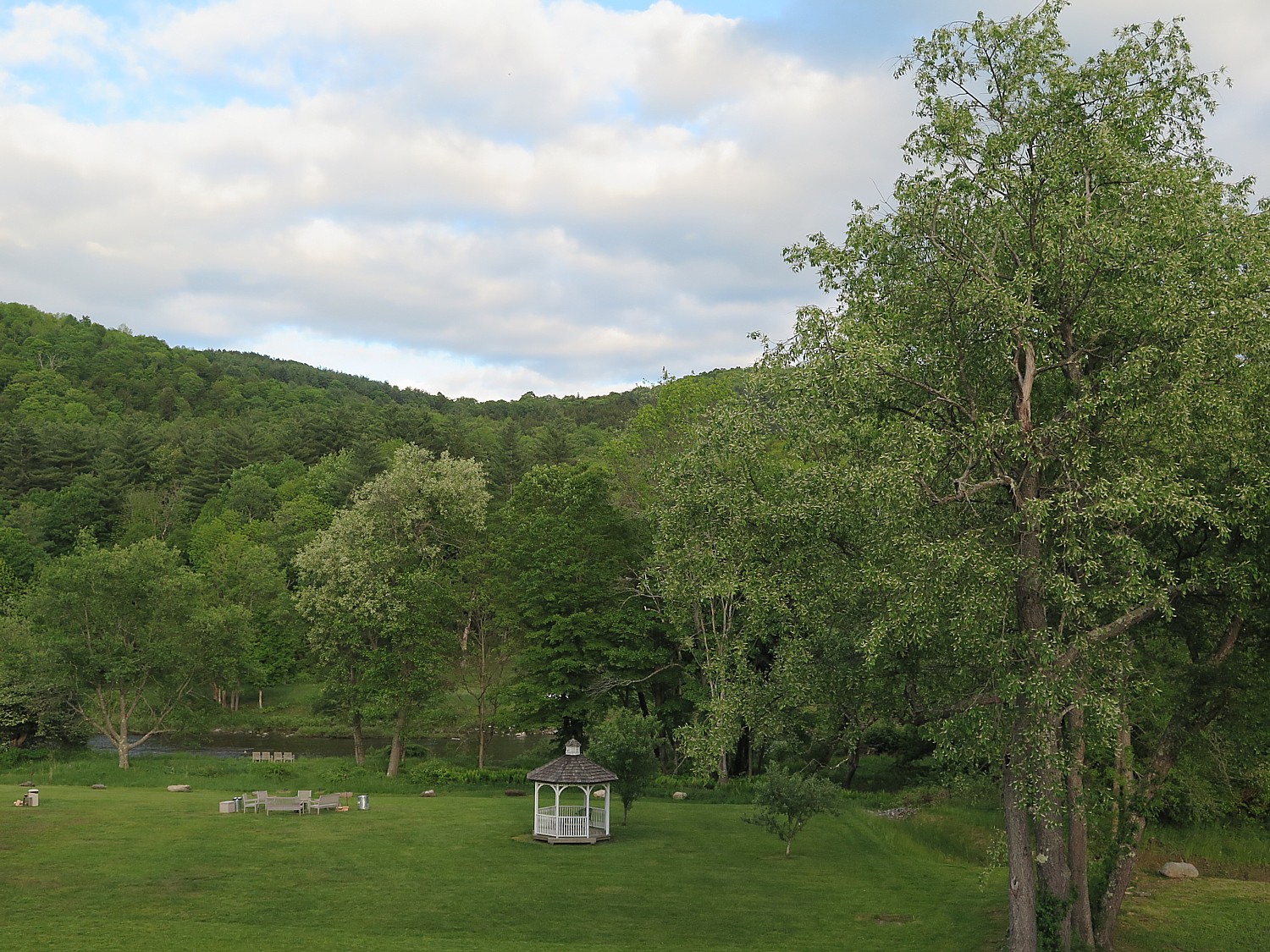
The low-rise inn is laid out so that each room has view of expansive lawn that stretches to the Ottauquechee River; a balcony (or patio) with rocking chairs, firepits and gazebo (just waiting for a wedding).

The low-rise inn sprawls out horizontally yet is intimate. It may well be feng shui but there is such a sense of peacefulness when you walk in, which also reflects the very welcoming staff.

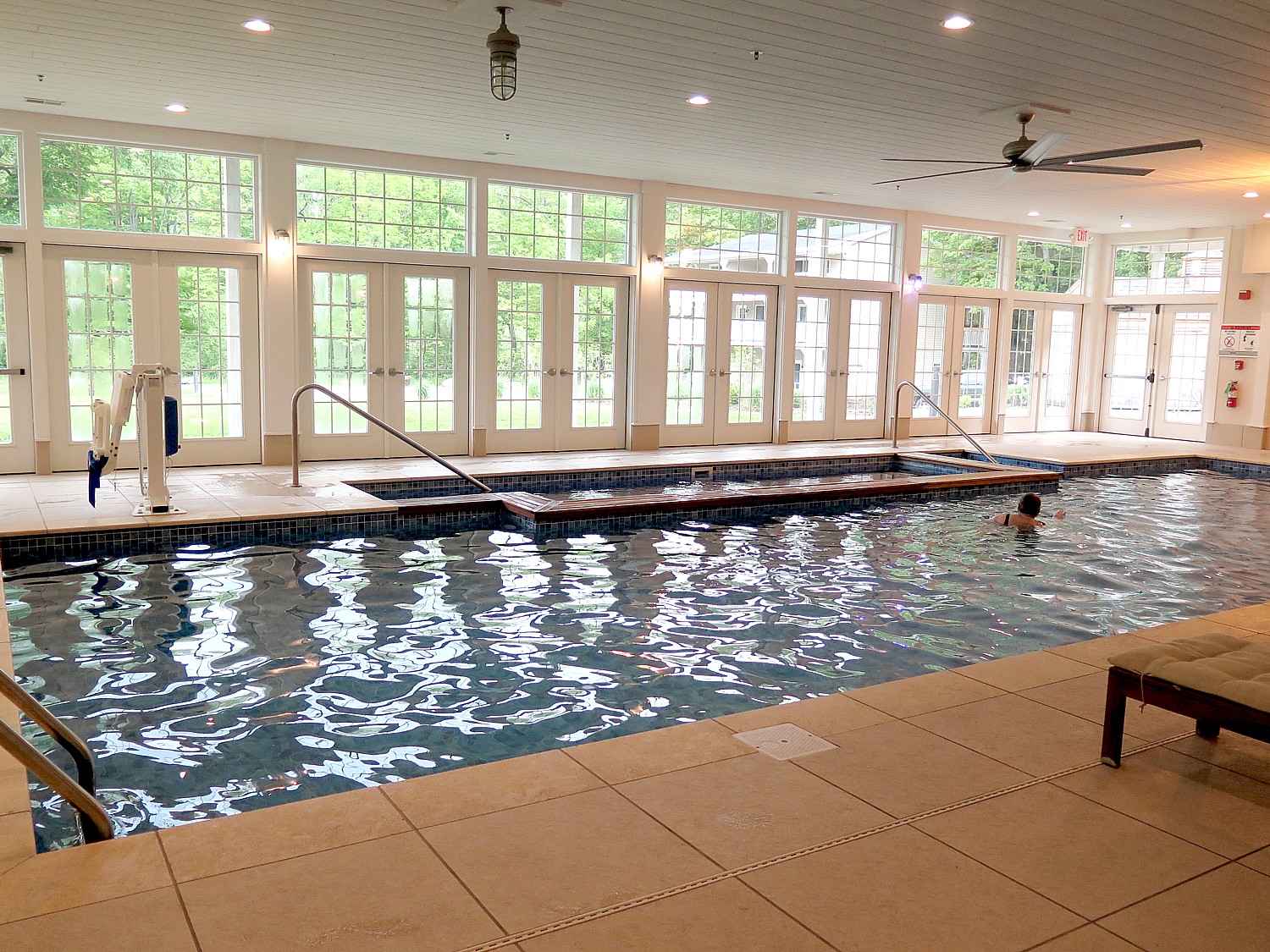
The indoor pool at On the River Inn, Woodstock, Vermont is refreshing after a day of cycling © 2017 Karen Rubin/goingplacesfarandnear.com

It offers a stunning lap-size indoor pool with gorgeous blue and white tiles, kept to a perfect temperature for swimming, with adjacent hot tub, and dry sauna and fitness center. There is also an expansive library; games and entertainment lounge and toddler play room.

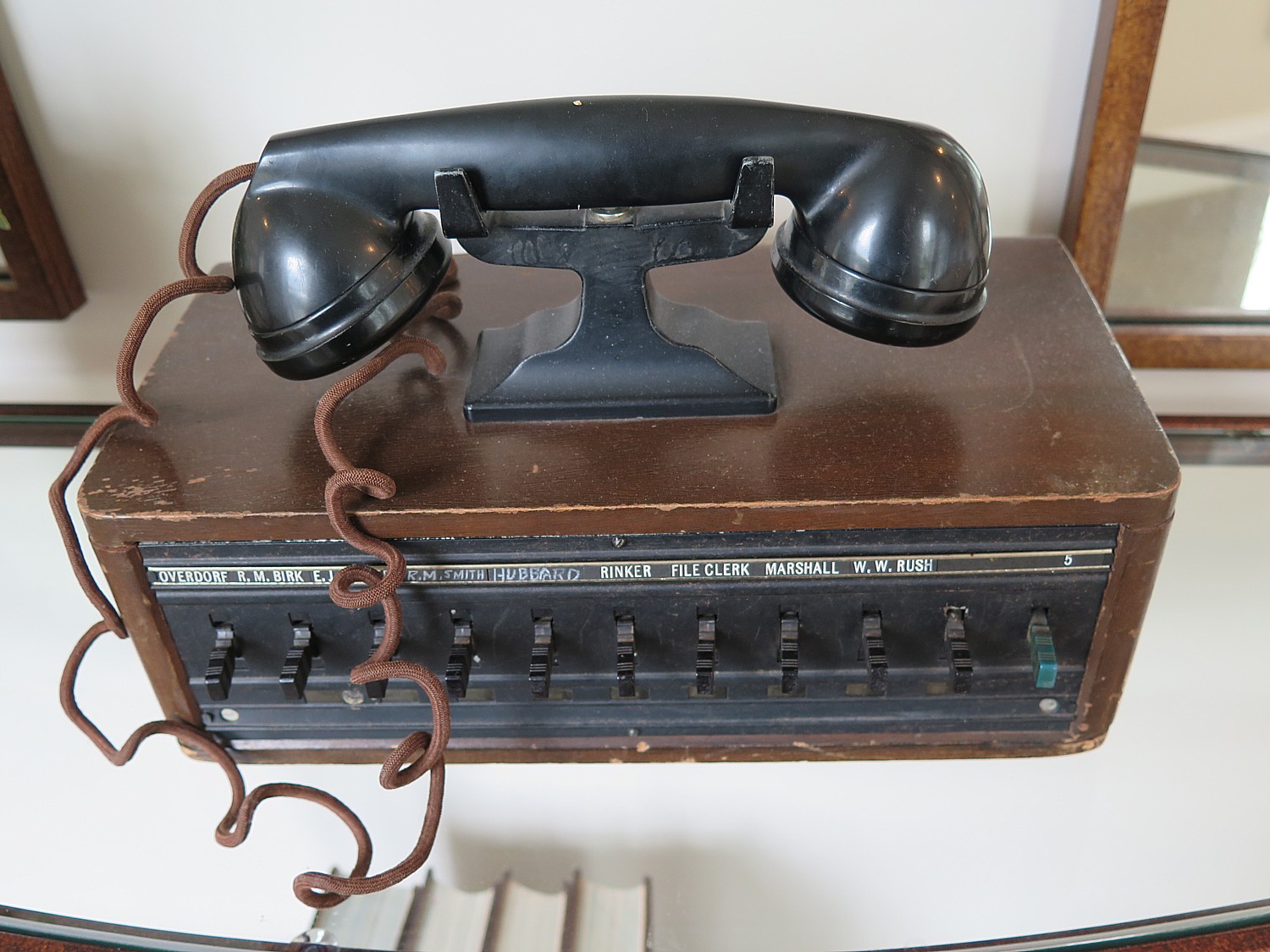
Quirky antiques and vintage items create a feeling of whimsy feel at On the River Inn, Woodstock, Vermont © 2017 Karen Rubin/ goingplacesfarandnear.com

Quirky Vermont antiques and vintage pieces make you smile with their whimsy when you come upon them in the hallways– an old TV, a telephone, Henke ski boots, US Post Office metal mail box door serve as room #s. The hallways are bathed in natural light that streams through full-length windows – a modern touch –  which also contributes to the feeling of well-being.

The restaurant, bar and spacious lounge with fireplace is laid out in an open-floor plan though the room doesn’t feel large because of intimate sitting areas with plush leather chairs and sofas, that make it feel cozy.

The 506 Bistro serves a seasonal menu emphasizing Vermont specialties like Yankee Pot Roast, a organic burger (outstanding) sourced from a nearby farm, fresh strawberry shortcake with Vermont berries. The menu for our group is very varied so there are fish selections (grilled salmon), pasta, meet selections, vegetarian options (ratatouille) and Caesar salad with ahi tuna.

The antique bar and the furnishings of the “kitchen,” where each morning we help ourselves to a buffet breakfast, just add to the pleasant ambiance.

The inn serves a complimentary country breakfast, has coffee/tea out all day (as well as coffee maker, microwave and refrigerator in the room), free WiFi and parking.

Construction is top quality; the furnishings in neutral brown, beige and white. The bedroom is spacious with a king-sized bed, pull out sofa, lounge chair, flat-screen TV; the bathroom is marble with a warming rack.

On the River Inn’s expansive lawn extends to the river © 2017 Karen Rubin/goingplacesfarandnear.com

On the River Inn, which is very much a four-season retreat (Killington, Pico, Suicide Six are nearby for winter skiing), is one of several inns owned and operated by a couple  with Vermont roots: Aaren Macksoud is originally from Woodstock; his family owns and operates a maple syrup farm and a Vermont country store). They also own hotels in East Africa (where they live now): Palacina Berlin, Palacina Hotel Nairobi, Baraza Resort and Spa Zanzibar, Breezes Beach Club and Spa Zanzibar, The Palms Zanzibar and Zawadi Hotel Zanzibar. They also own and operate Tour Africa Safaris, a tour company that specialized in safaris to East Africa and Palacina Interiors one of East Africa’s most prestigious and internationally recognized Interior Design Studios and Retail Stores specializing in Hospitality and Restaurant Design. (Now I understand where the lovely design comes from.)

“We work with a set of principles which we firmly believe customers recognize and appreciate: Maintain international hotel standards, incorporate a beautiful design which reflects the destination, create a feeling of home and ensure that the clients understand from the moment they arrive that the property is family owned. The attention to detail, the emphasis on creating a home away from home, warm hospitality and personalized service have always been our guiding principles.”

Besides being so near Woodstock, nearby attractions include the Billings Farm and Museum, Killington, the Longtail Brewery, King Arthurs Flour.

(On the River Inn, 1653 Rt4 West Woodstock Rd., Woodstock Vt., 802-457-5000, reservations@ontheriverwoodstock.com, generalmanager@ontheriverwoodstock.com, www.ontheriverwoodstock.com.)

See also:

Discovery Bicycle Tours’ On the River Weekend in Woodstock, Vermont, Shows How Personalized a Group Tour Can Be

____________________


© 2017 Travel Features Syndicate, a division of Workstyles, Inc. All rights reserved. Visit goingplacesfarandnear.com,  www.huffingtonpost.com/author/karen-rubin , and travelwritersmagazine.com/TravelFeaturesSyndicate/. Blogging at goingplacesnearandfar.wordpress.com and moralcompasstravel.info. Send comments or questions to FamTravLtr@aol.com. Tweet @TravelFeatures. ‘Like’ us at facebook.com/NewsPhotoFeatures
 

Discovery Bicycle Tours’ On the River Weekend in Woodstock, Vermont, Shows How Personalized a Group Tour Can Be

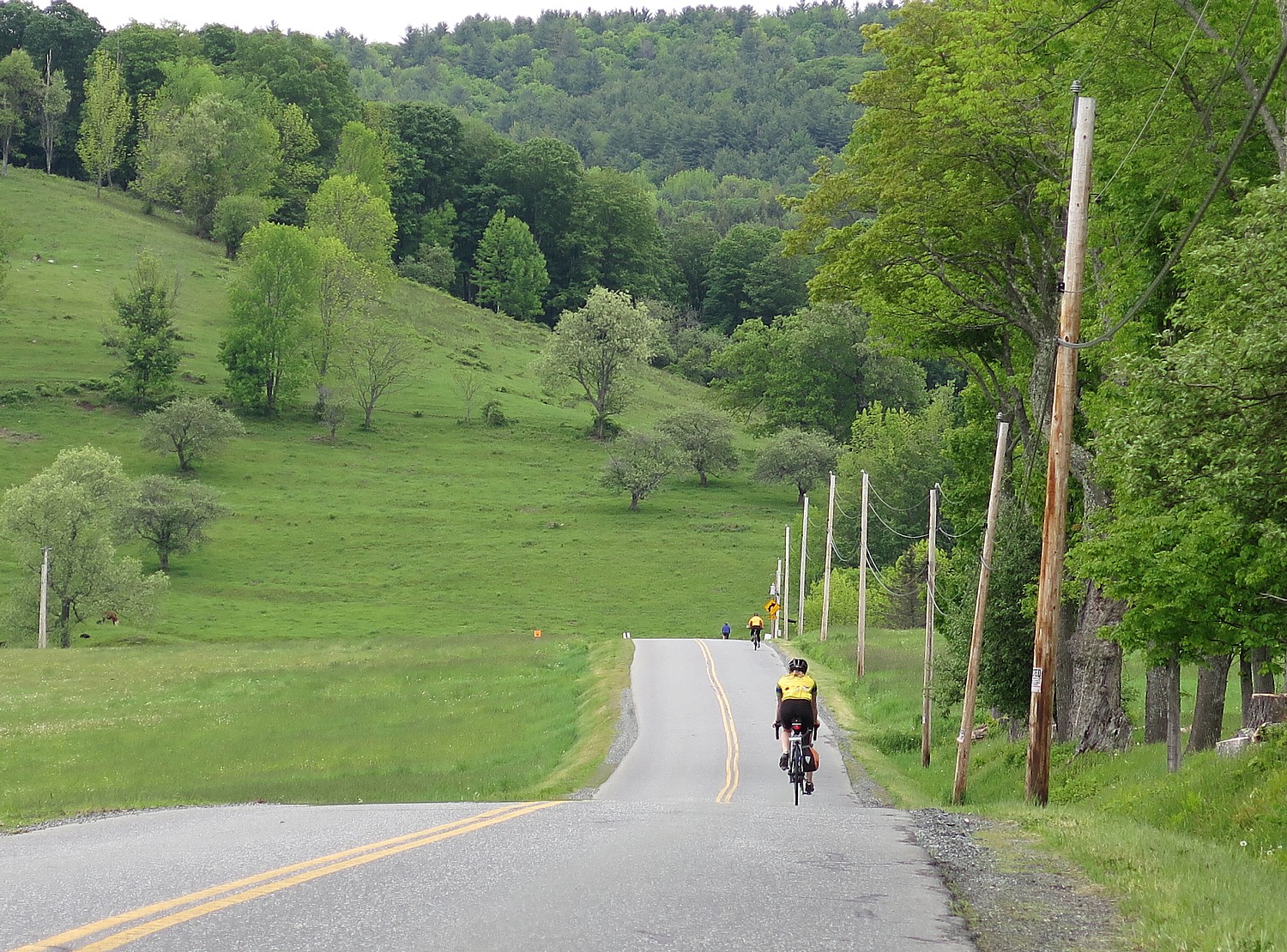
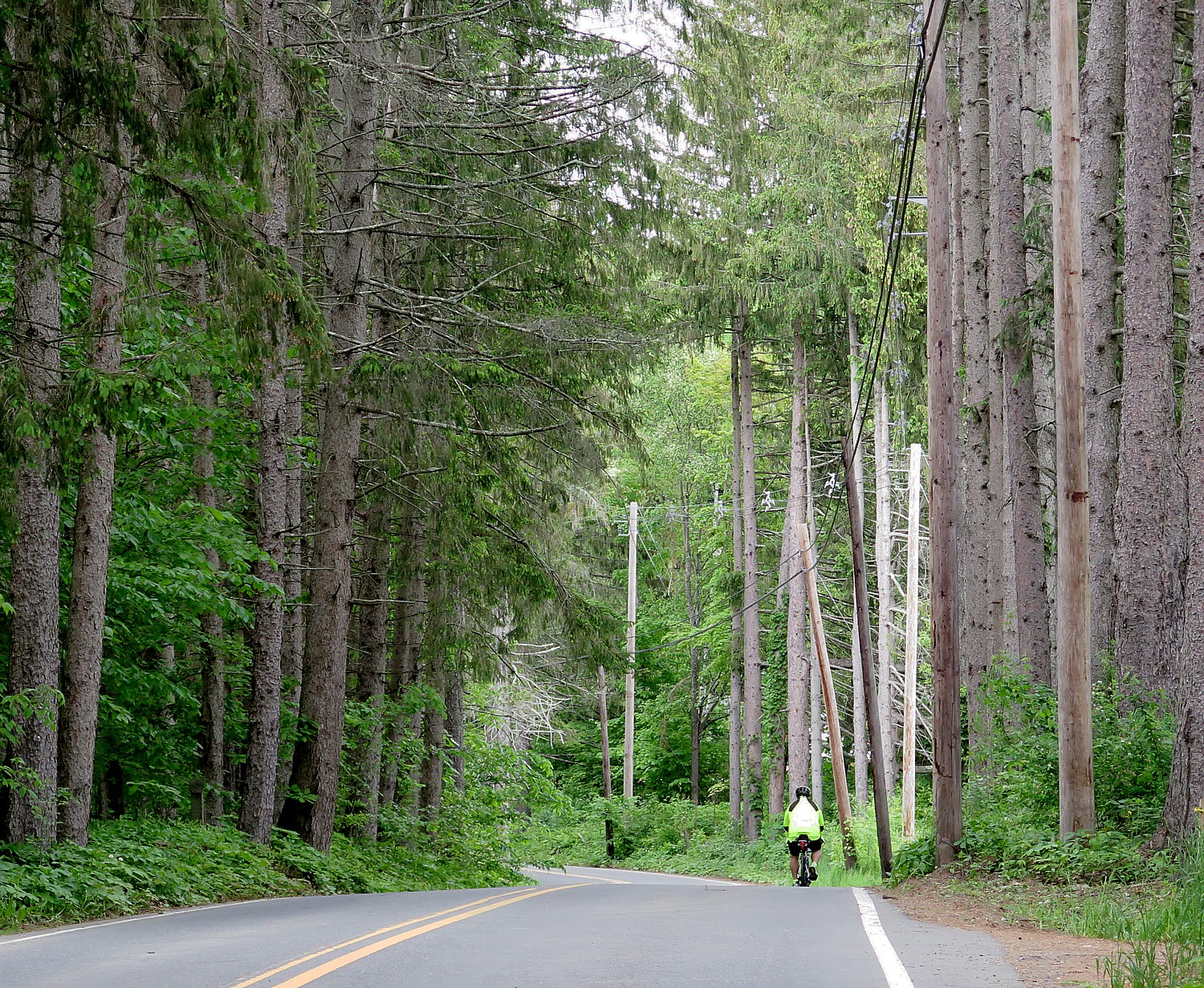
Riding Vermont’s country roads on Discovery Bicycle Tours’ On the River Weekend © 2017 Karen Rubin/goingplacesfarandnear.com

By Karen Rubin, Travel Features Syndicate, goingplacesfarandnear.com

I have joined a Vermont bike tour centered around Woodstock village, that takes place over Bike Travel Weekend in June. The popular itinerary offered several times during the year by Discovery Bicycle Tours is one of some 850 events around the world this weekend to raise awareness of the joys and benefits (and ease) of bicycle touring.  No one has to convince me – I have long appreciated how bike tours provide everything I look for when I travel: the opportunity to discover, explore, immerse, photograph, encounter at a perfect pace– not too fast and removed as you are traveling by car or bus, and not too slow as hiking so you can cover just the right amount of distance – and, still have a physically exerting experience, a personal challenge, plus the camaraderie of a shared adventure. A bike tour is sight seeing rather than sightseeing; being a participant not an observer; a part of, not apart from, your surroundings; an experience rather than a scene. Bike tours are enriching and satisfying on so many levels.

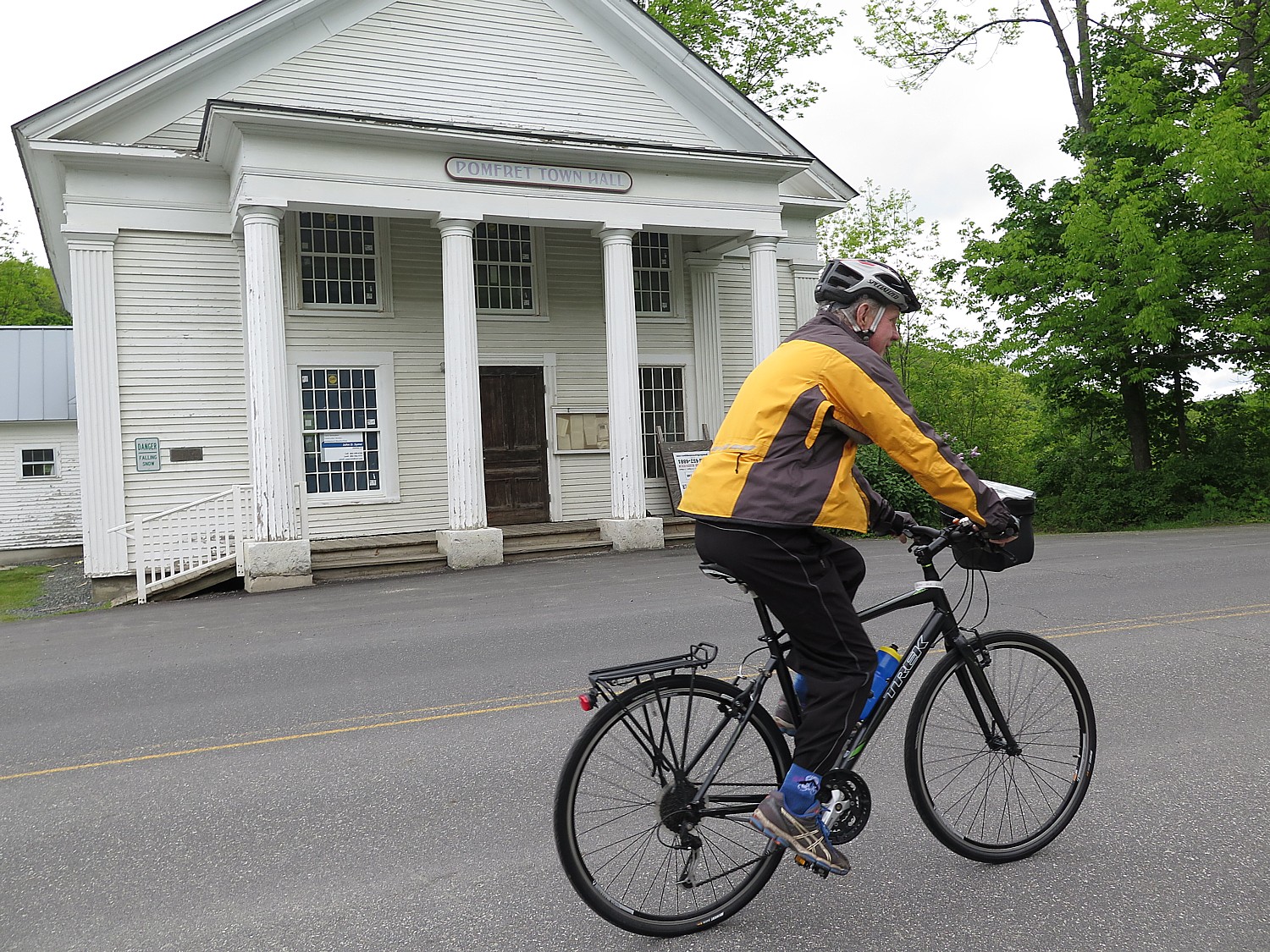
Making it to the top of the hill! The Pomfret Town Hall © 2017 Karen Rubin/goingplacesfarandnear.com

But as I appreciate during the course of this short weekend, all of that doesn’t just happen. It requires knowledgeable and careful planning that we just take for granted as we experience it – how the route is designed for distance, topography, scenery; the choice of accommodations; the quality of the equipment; the attention, expertise and personality of the guides, not to mention having snacks and cold water readily at hand.

What is surprising to me about the Discovery Bicycle Tours approach is that even though this is a guided, group tour, it is really very individualized. Jim Ortuno, our expert guide, tells us at our first gathering that the goal is for each guest to have “a perfect day” whatever that is – and I contemplate what that actually means and how that might be achieved. So people who are relatively new to biking who don’t want to do the climbs can simply hop into the van (Jim, orients us in advance as to what the topography will be like and where he will be parked for those who don’t want to make the 3 ½ mile climb.)

It is fascinating to see this in practice: how with the two guides – one driving the van, the other biking at the back as the “sweeper” – they are able to accommodate everyone, regardless of age, physical ability, biking ability or interest. It is a guided, supported group ride, but we all go at our own pace, have our own interests and goals – some (like me) stop often for photos and don’t mind the physically exerting climbs; others are new bikers or really don’t want to climb; still others are intense bikers and want to cover the distance at a fast pace.

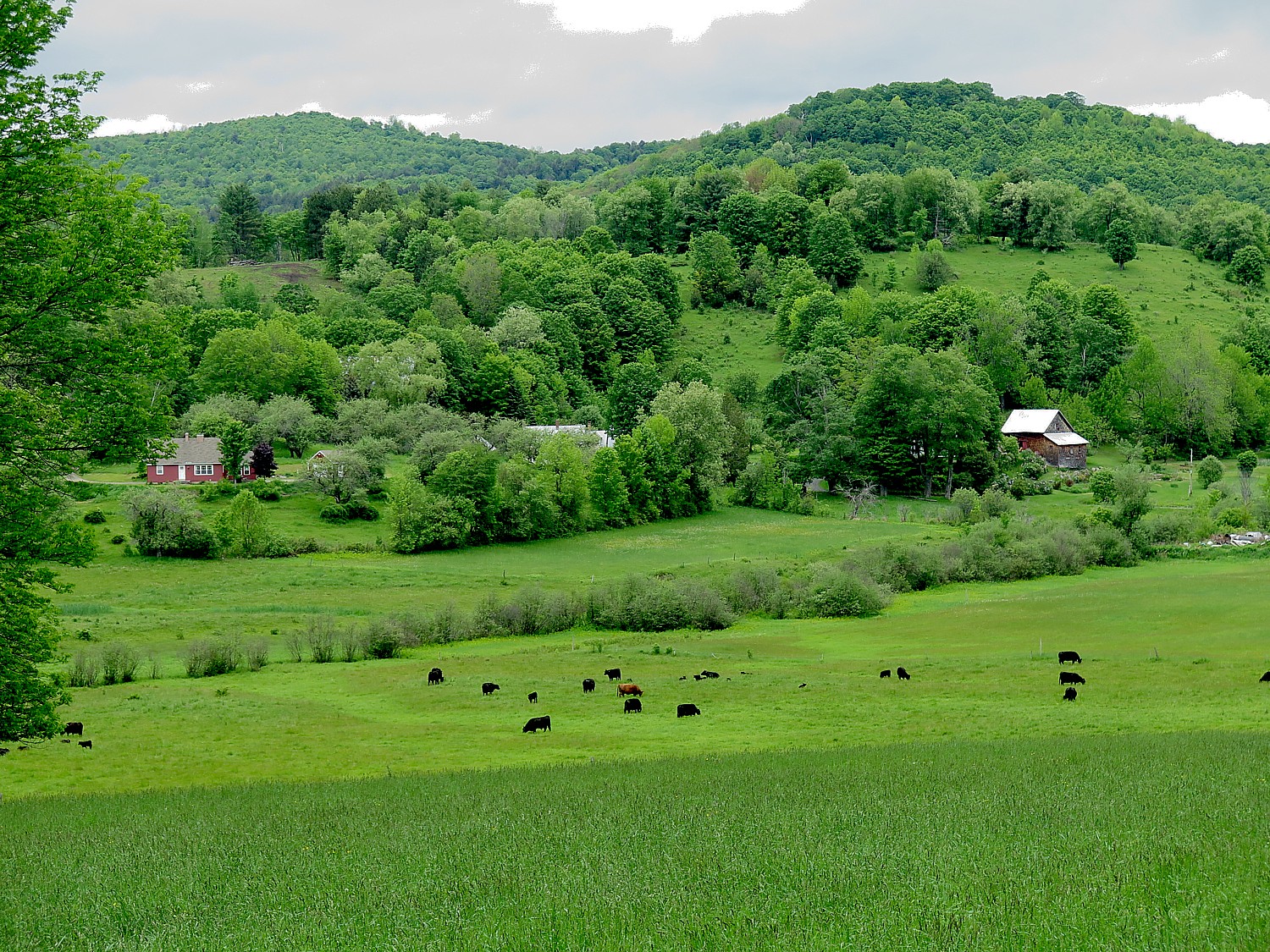
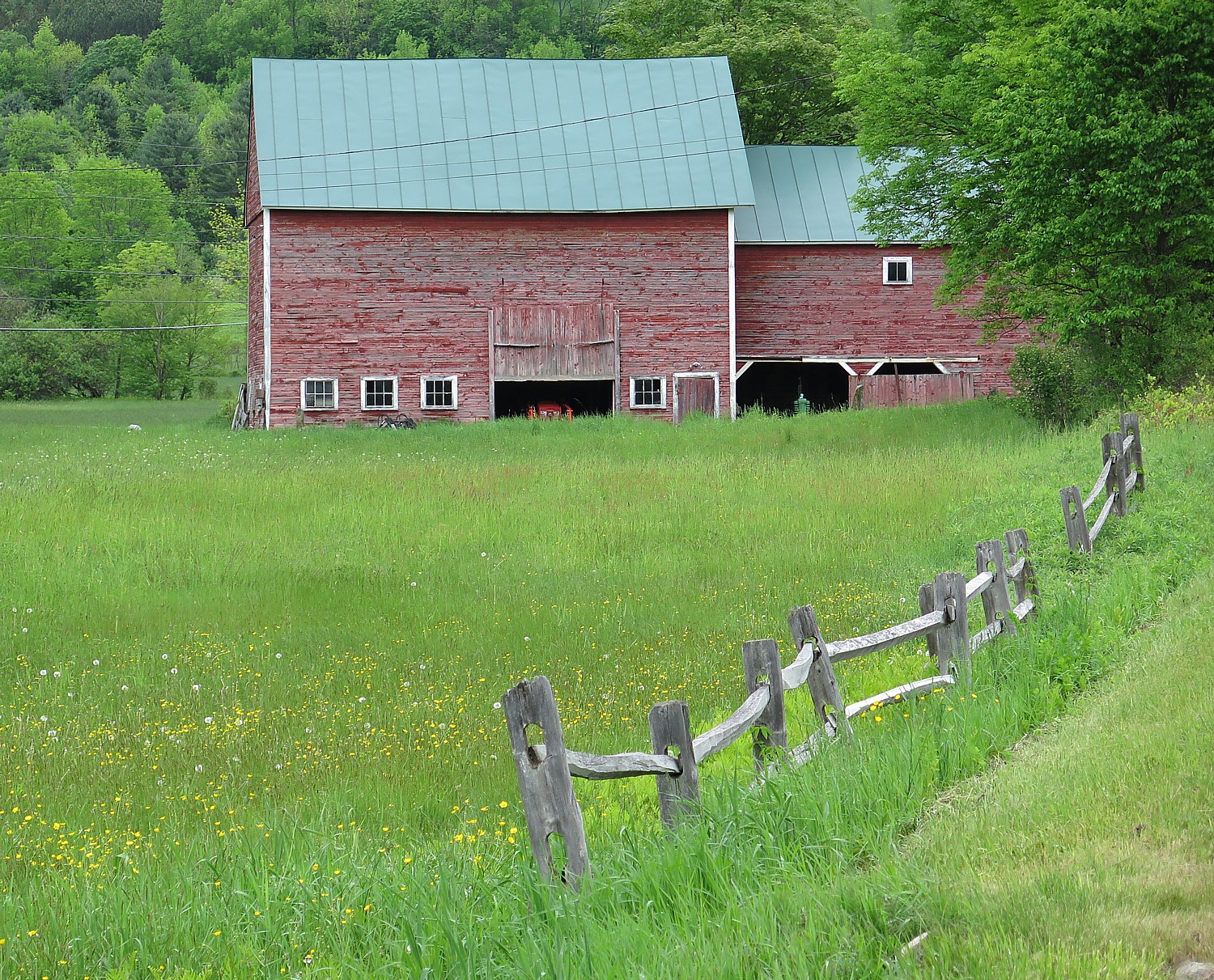
The On the River weekend bike tour takes you to scenes that evoke Currier & Ives © 2017 Karen Rubin/goingplacesfarandnear.com

Indeed, Vermont provides an exquisite setting. Just crossing the border you immediately feel a sense of peace come over you. But these are the Green Mountains, after all. The trip planner has to be cognizant of the hills as well as the traffic situation, since we ride on roads, rather than bike trails.

Riding at our own pace means we can spend time without feeling we are holding up the group investigating an equestrian competition, watching glass blowing at Simon Pearce, or visiting the Billings Farm, or hiking down the Quechee Gorge, or shopping at an artisans market, or constantly stopping to take photos (guilty!) – but are being watched over to make sure nobody has any issues.

The bikes that are included in the program are top quality – Trek, Specialized – and we get to choose whether we want a hybrid or road bike. We have sent in our request and dimensions earlier so that they have our properly sized bikes ready for us at the inn. We can bring our own seats or pedals or clips if we want. They provide the helmets as well and water bottle, and the bikes have a carry-bag with a place to put the written directions and maps.

When I hear a flapping sound in my rear brake that I can’t figure out and Jim, who restores classic cars, can’t immediately fix it either, he whips out a spare bike, just my size, from the top of the van.

Discovery Bicycle Tours’ On the River weekend takes you through Vermont’s scenic countryside A classic Vermont country scene © 2017 Karen Rubin/goingplacesfarandnear.com

The advance preparation is also extremely good. We receive a complete itinerary and directions, packing list. Discovery also makes available the trip’s maps and directions on a Smartphone based GPS app, RIDE WITH GPS (as well as providing meticulously written directions and maps). By downloading the app which has our exact tour routes, we get turn by turn spoken directions, a map of the day’s cycling route, and a live plot displaying our progress throughout the day – how far we’ve gone, average speed, accumulated elevation. “She” gives us fair warning when the big climb is coming so we can get into proper gear, and at the top, gives a verbal high-five; “she” tells us when there is a good general store to stop at where we can take care of business, and even notes when we are coming to an attraction we might want to visit.

Despite the video that we are directed to, most of us can’t figure out how to download the app properly, but Jim and Kenzie Novak get it going for each of us before we set out.

We meet the first night at dinner at the delightful inn selected for this trip, On the River Inn, just about 2 miles outside the center of Woodstock, a quintessential New England village that is visual eye-candy.

After dinner, we meet for an orientation and Jim cleverly organizes an “Icebreaker” (think of one word to describe you:”adventurous”, “fun”, “embarrassing,” “easy-going”, “quirky”, “excited”). There are 11 of us on the tour – a mother and her son and daughter-in-law have come from Illinois and found the tour by a Google search; a fellow came from Miami;  a couple came from Massachusetts; two ladies came from downstate (one had traveled the famous El Camino de Santiago in Spain with Discovery before). Three of us are traveling on our own. Cyclists are the most open-hearted, open-minded, open-to-new-experiences sort of people and within moments we congeal into a single group.

Jim suggests a trick for tackling the climb: just look down and directly in front, relax hands and shoulders, breath in once out twice, and sing or whistle (I find that’s exactly what I’ve been doing), and gives us riding tips.

35-Mile Pomfret Ride

On Saturday morning, we come down between 7 and 8 am to be properly fitted for the bike and helmet; we can attach our own pedals or seats if we like and if we bring our own bike, Jim checks that out too.  The bike has a pouch which has a plastic holder for our written directions. We are given a water bottle and a bunch of goodies marking Bike Travel Weekend.

Safety is clearly the tour company’s top issue, so they give us their cell numbers, and let us know where the closest emergency medical services are located in our written directions.

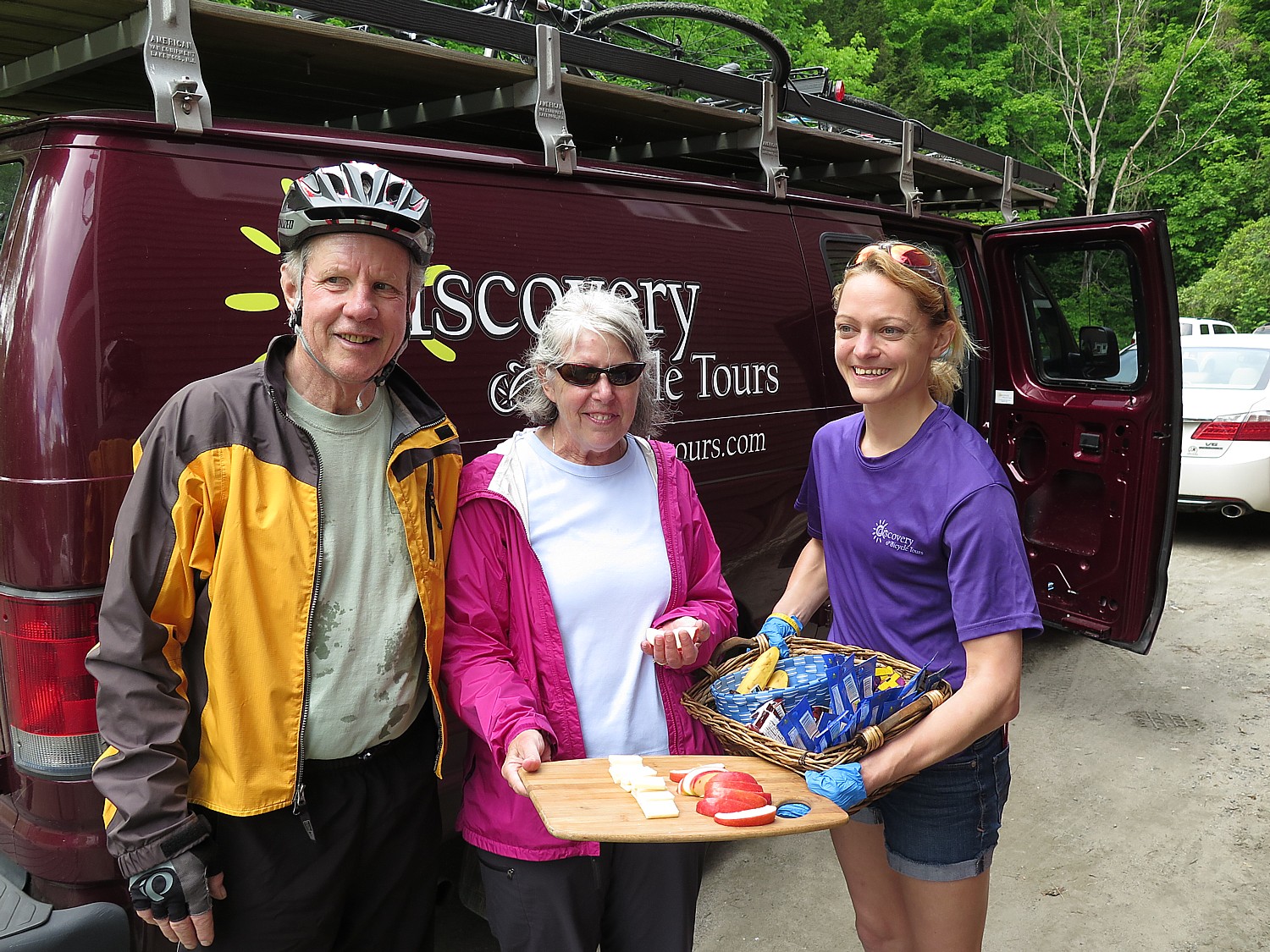
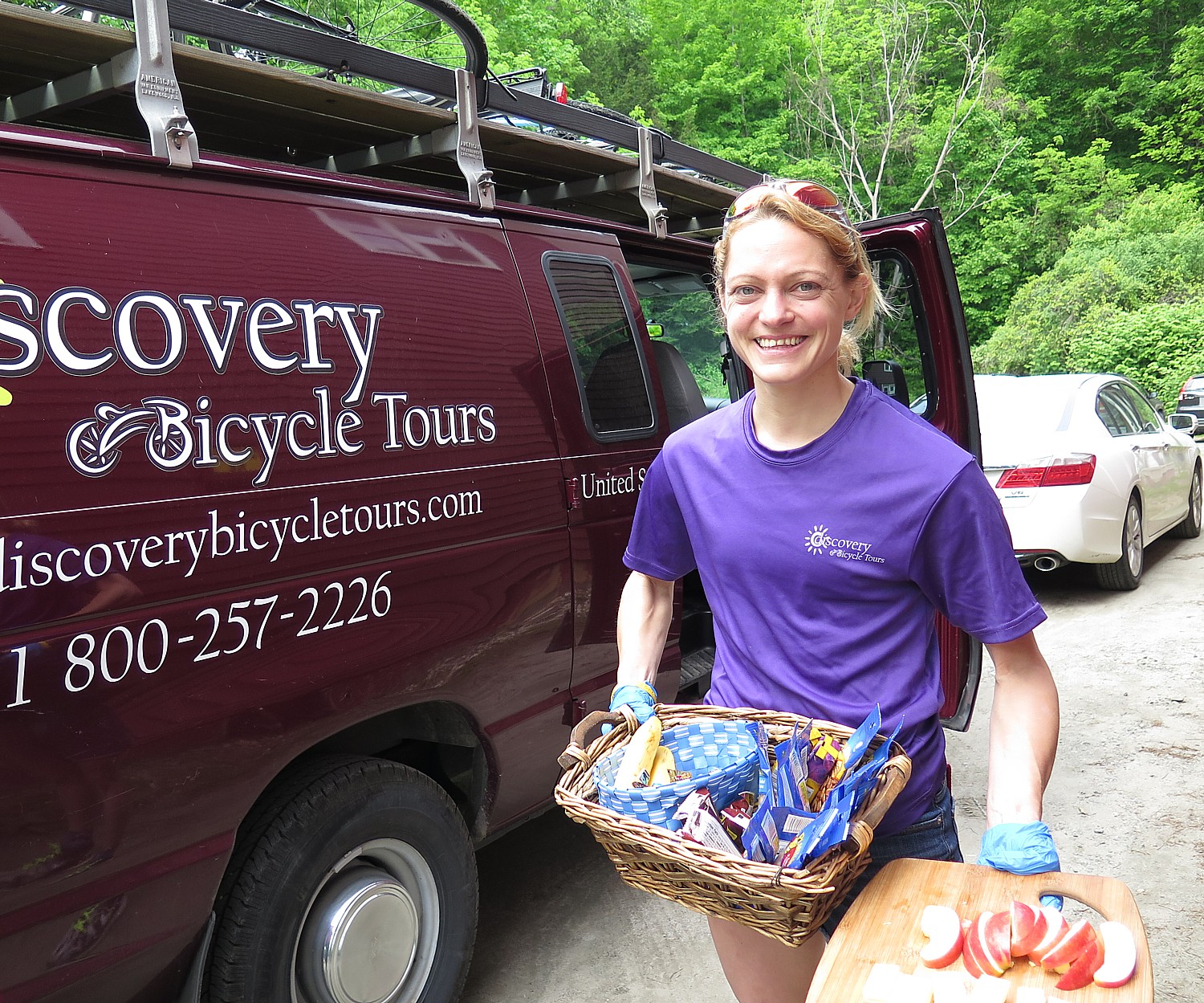
Discovery Bicycle Tours’ guide Kenzie Novak offers snacks and cold water © 2017 Karen Rubin/goingplacesfarandnear.com

Jim, who is driving the van on the first day, tells us the two places where he will be pulled over if anyone doesn’t want to do the climb, then passes us often to make sure we are all right – we can give a thumbs up sign or wave him on, but if we put thumbs down, he knows to find a safe place to pull over to give aid; he would put on his blinkers to acknowledge.

Kenzie, the second guide, is on the bike today and rides “sweep” – at the back of the pack, but as she comes upon us, also asks if we need anything, or makes helpful suggestion to be a better biker – like shifting gears more efficiently or choosing the right gear.

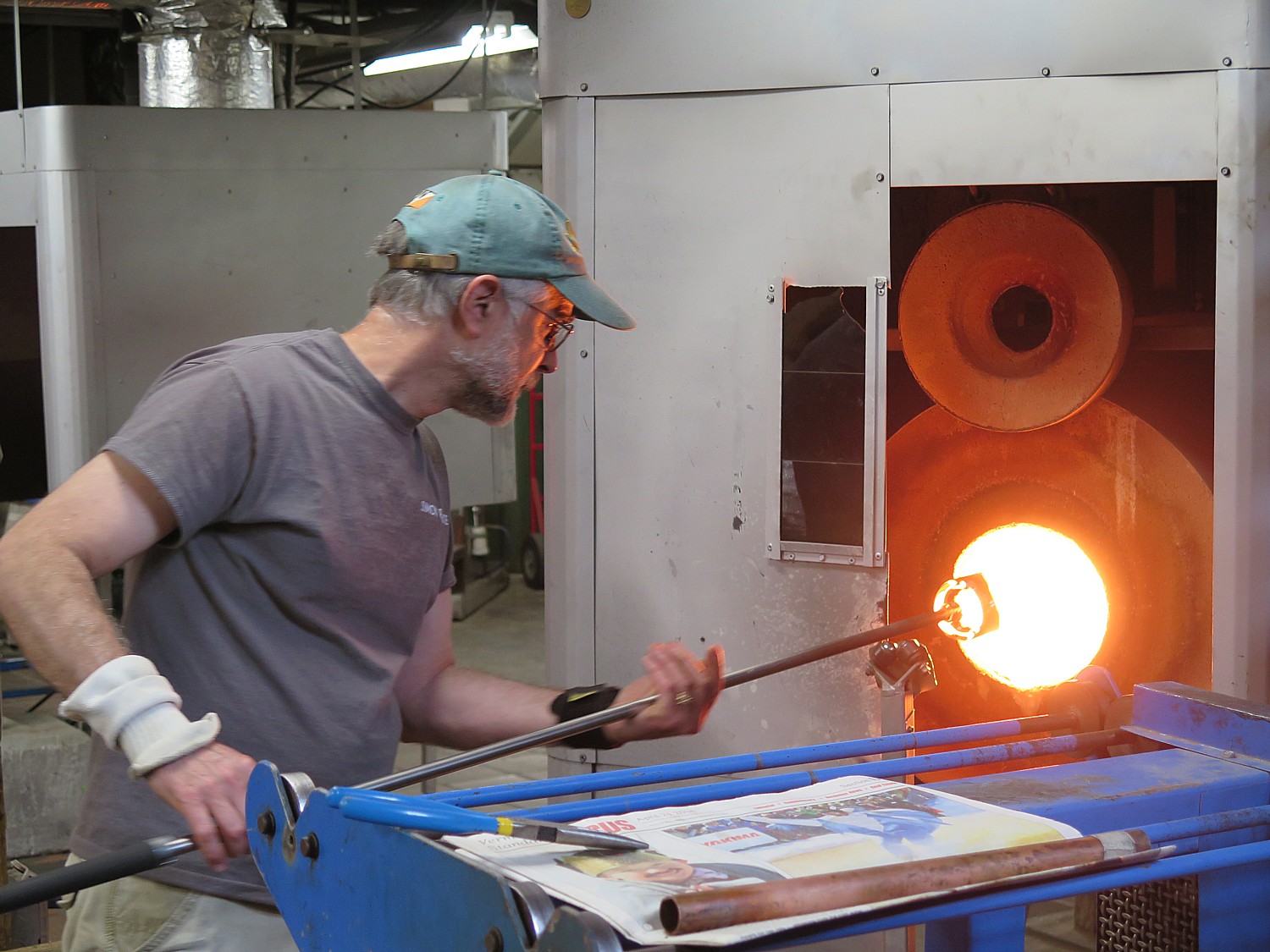
Watching how glass is made at the Simon Pearce Glass Works, Quechee © 2017 Karen Rubin/goingplacesfarandnear.com

Saturday’s ride is 35 miles (a shorter, flatter option is available, or those who don’t want to do the 3 ½ mile climb can ride in the van to the top and sail down a 6-mile stretch with views of stunning countryside (Currier & Ives come to mind) that Vermont is so famous for. The first three miles are relatively gentle ascent; it’s the last half-mile that is a wonderful strain that gives you that endorphin-rush for having done it.

We bike along the road (as opposed to a dedicated bikeway) but as Jim has promised, the Vermont drivers are very hospitable.

We come to the charming village of Quechee, where we visit the Simon Pearce Glass Works. I am transfixed watching the glass-blowing and shaping process.

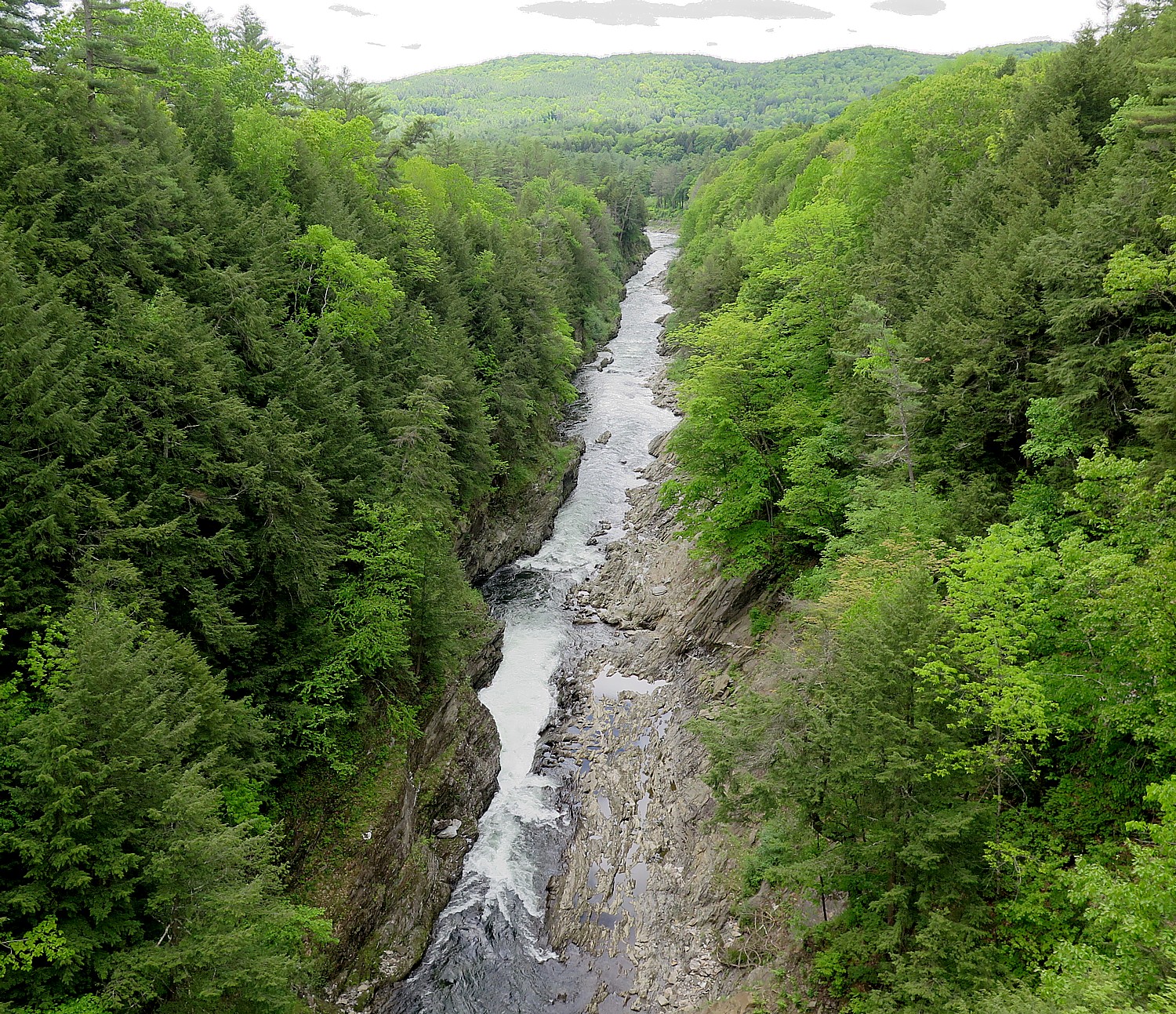
Quechee Gorge © 2017 Karen Rubin/goingplacesfarandnear.com

We continue on to Quechee Gorge (but Jim has put my bike with the flapping brake into the van and I ride the 2 miles to the snack bar where we have lunch). I will still get to bike this stretch because we will backtrack these two miles after lunch. The Gorge offers dramatic views from the bridge and I hike the half-mile trail down to the bottom (the view isn’t worth it).

We come down a short steep hill and the GPS lady notes the sharp turn-off onto a dirt road just before an absolutely marvelous Taftsville Covered Bridge (watch out for loose gravel!). I am really appreciating the care that Discovery Bicycle Tours puts into designing the route.

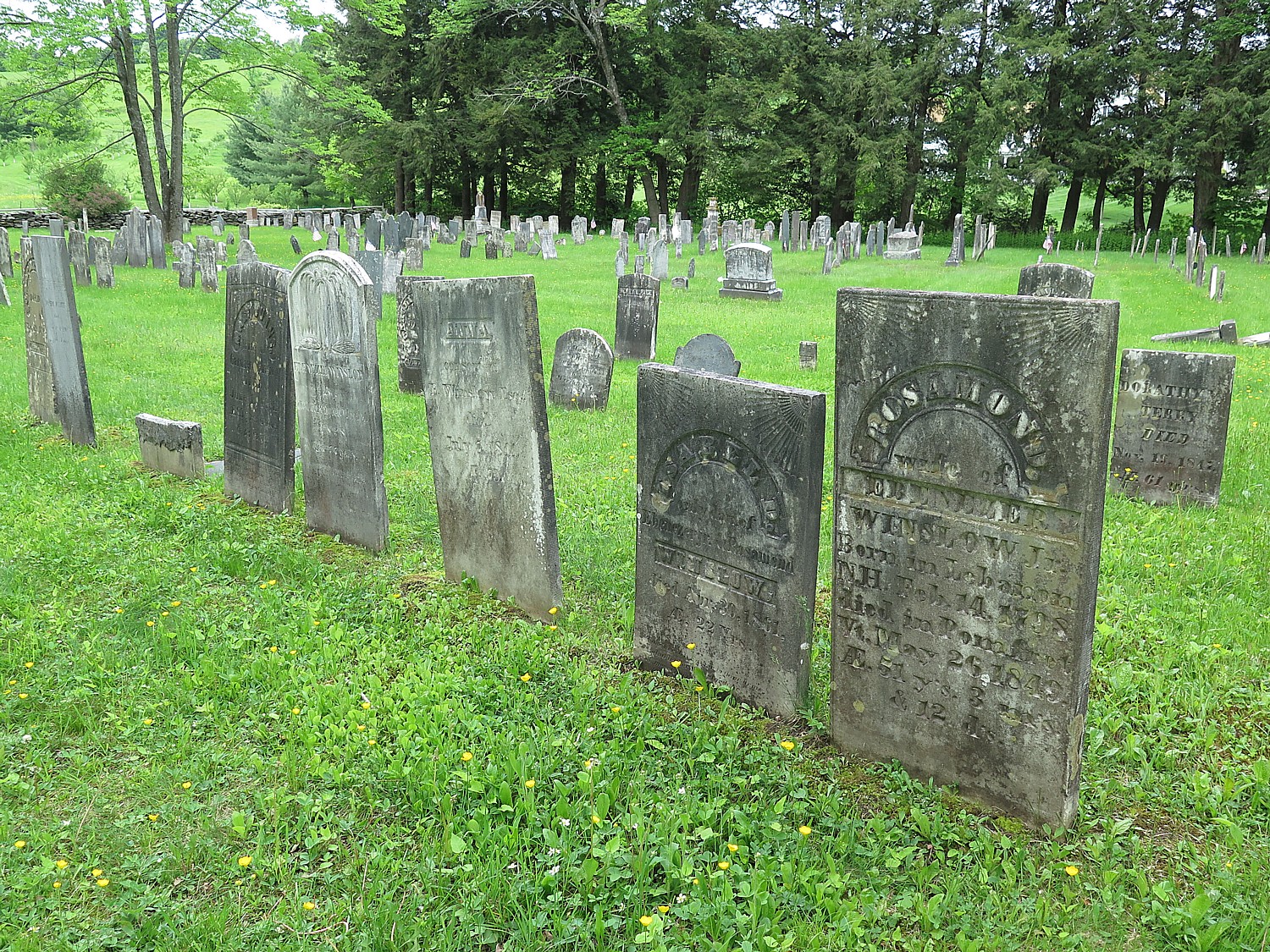
Centuries old cemetery just outside Woodstock, Vermont © 2017 Karen Rubin/ goingplacesfarandnear.com

Who would have believed that Vermont still has unpaved roads! This part of the ride though is so beautiful, along the river, passing farms that go back hundreds of years. I stop off at a cemetery where I note one of the tombstones is for a veteran of the American Revolution; others from the Civil War. It is striking to see the family stones in a line.

Just before coming into Woodstock, we pass the Billings Farm and Museum, a Rockefeller institution, where we can stop and visit.

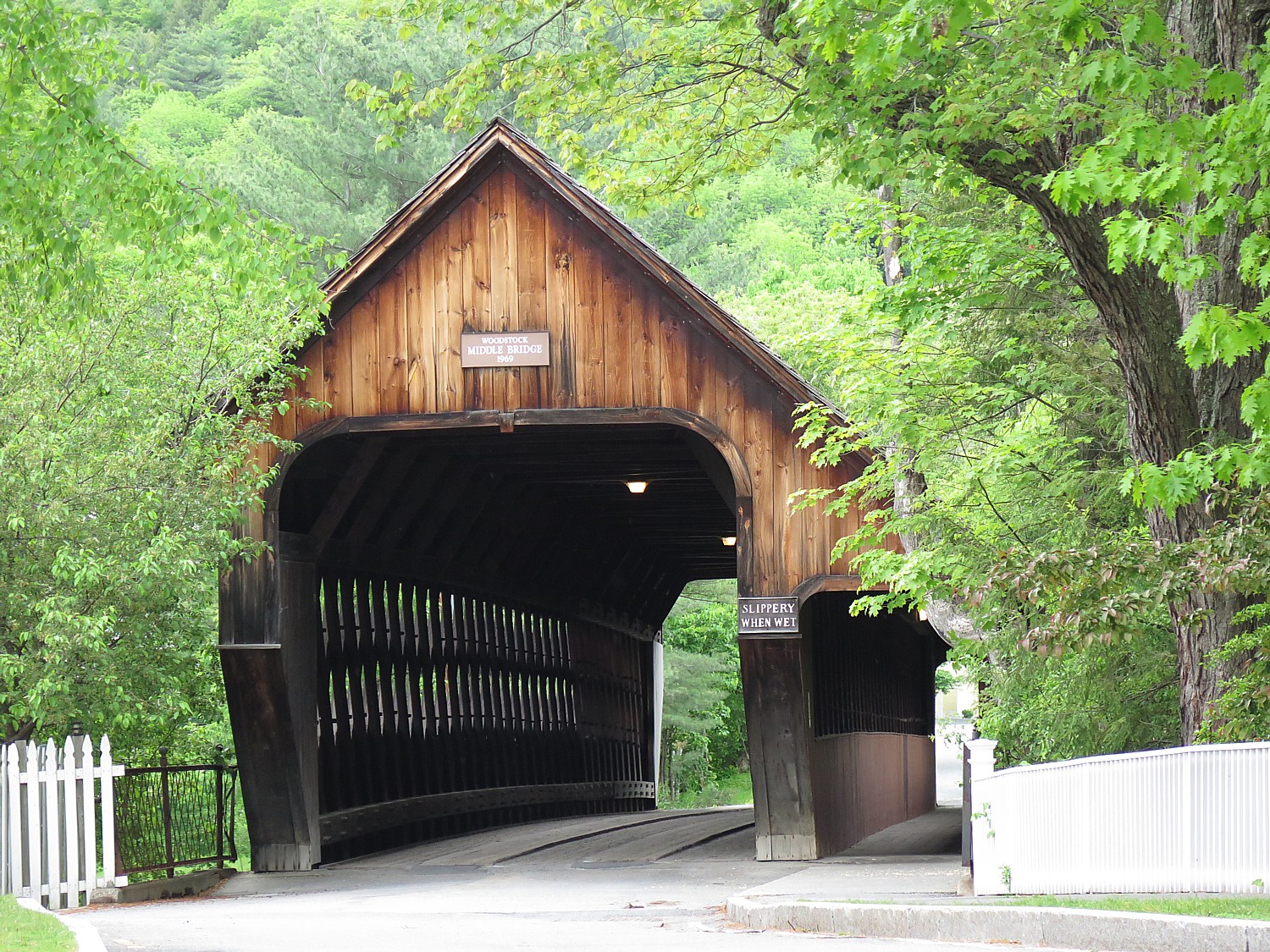
Soon we cross The Woodstock Middle Bridge, a picture-perfect covered bridge that takes us right into the heart of the village to the Woodstock Green.

Woodstock Middle Bridge © 2017 Karen Rubin/goingplacesfarandnear.com.

We arrive here around 3:30 pm and have plenty of time to explore, shop (I love Gillingham’s General Store, which dates back to 1886 and offers everything from the practical to the whimsical to the touristic). The van is available for those who want to shuttle back to the hotel rather than tackle one last steep climb at College Hill (it turns out to be such a short hill that by the time you feel it, you are at the top).

There is time before we meet for dinner to swim in the inn’s gorgeous indoor pool – big enough (and just the right temperature) for lap swimming – the hot tub, dry sauna and fitness room.  On the River Inn proves a superb choice for accommodations, that really rounds out the Vermont experience.

Discovery Bicycle Tours group gathers in the restaurant/lounge at the On the River Inn after the first day’s ride © 2017 Karen Rubin/goingplacesfarandnear.com

Jenne Farm Ride

The Sunday ride is shorter, 20 miles, to accommodate the fact that people are traveling back. We check out of our rooms but Discovery has arranged for two rooms to be available for us after the ride to shower and change before hitting the road.

The itinerary is basically 10 miles in and back on the same road – but it is remarkable that coming back is a totally different experience, it might as well be a different route.

Stunning scenes along the Discovery Bicycle Tours On the River ride © 2017 Karen Rubin/ goingplacesfarandnear.com

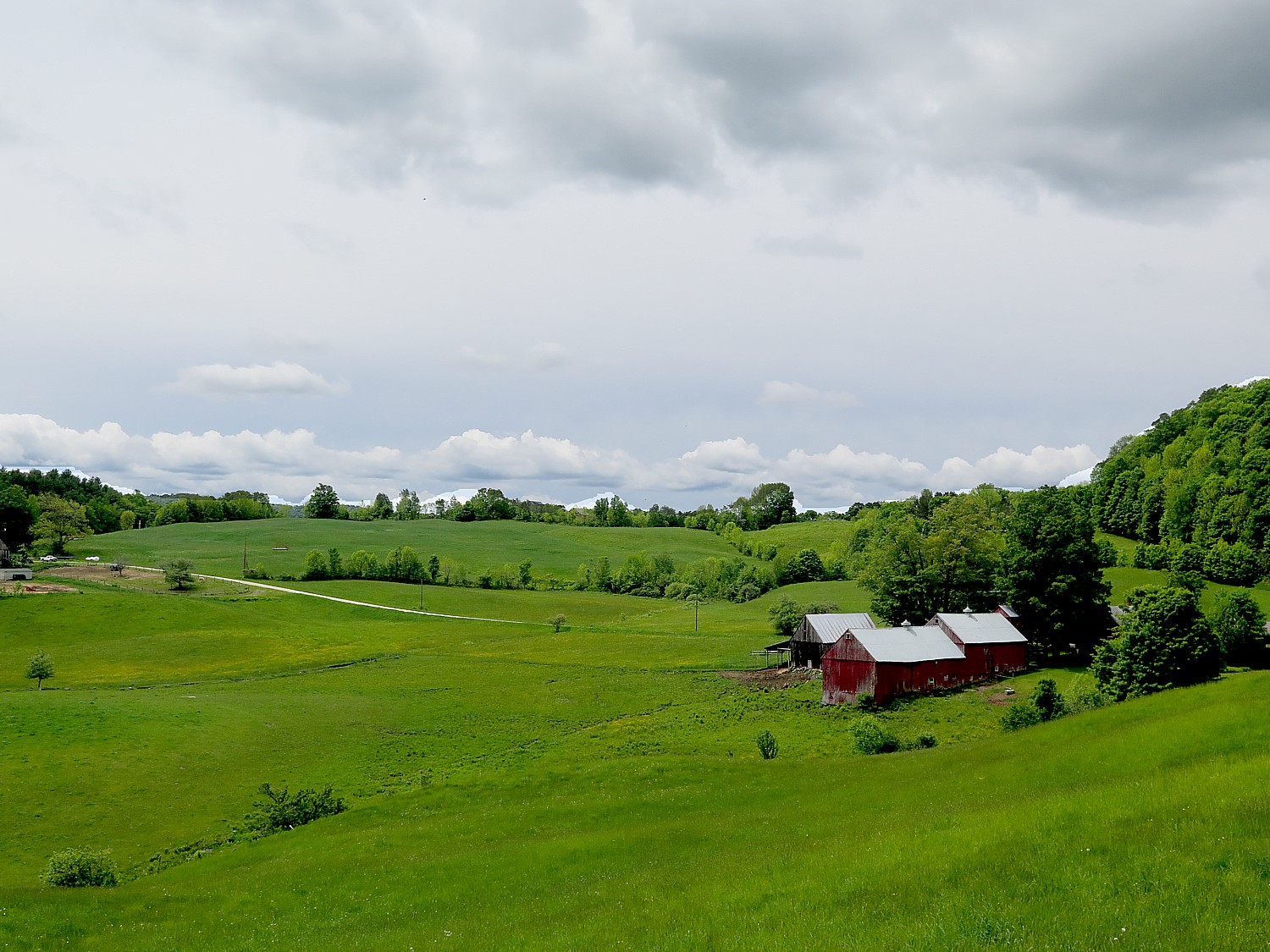
It’s a beautiful ride that takes us south along Kedron Brook passing through picturesque South Woodstock (a good thing, too, because we avoid a major half-marathon event going on where we biked Saturday), visiting a charming country store and passing the Green Mountain Equestrian Association (where  a cross-country equestrian competition is underway) before arriving at a vista overlooking the Jenne Farm, possibly one of the most photographed scenes in New England.

The 10 miles going is virtually all up – beginning with a gentle pitch to a gradual pitch, and only the last half mile of a steep pitch (the GPS “lady” gives the heads up when we are to prepare for the steep climb). But the challenge is made easier because we already know we can do it from the previous day’s ride.

Jenne Farm, “one of most photographed places in the world,”is highlight of Sunday’s bike ride © 2017 Karen Rubin/goingplacesfarandnear.com

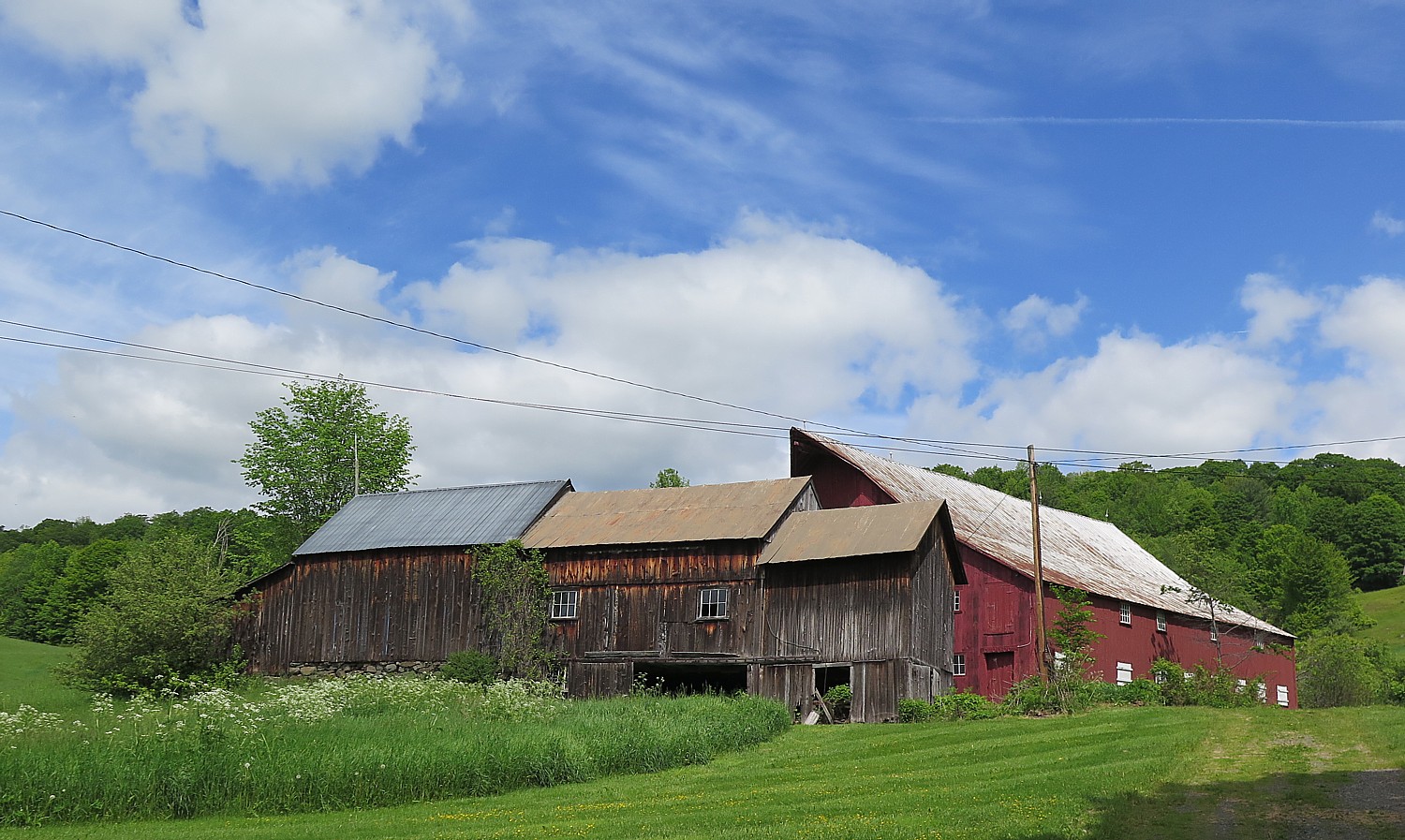
At the very top we are warned to be careful as we start the descent and not gain speed because very shortly there is a hard-right turn off the paved road onto a private dirt road that begins very steeply. They have made sure to mark the place where we will turn. I choose to walk the bike up that sandy hill. This is actually the private drive to the Jenne Farm, which for good reason boasts being “one of the most photographed farms in the world” especially in autumn. The scene (which I recognize from the inn’s posters) has appeared on magazine covers, photography books, a Budweiser television commercial, and was used as the setting in the films “Forrest Gump” and “Funny Farm.”

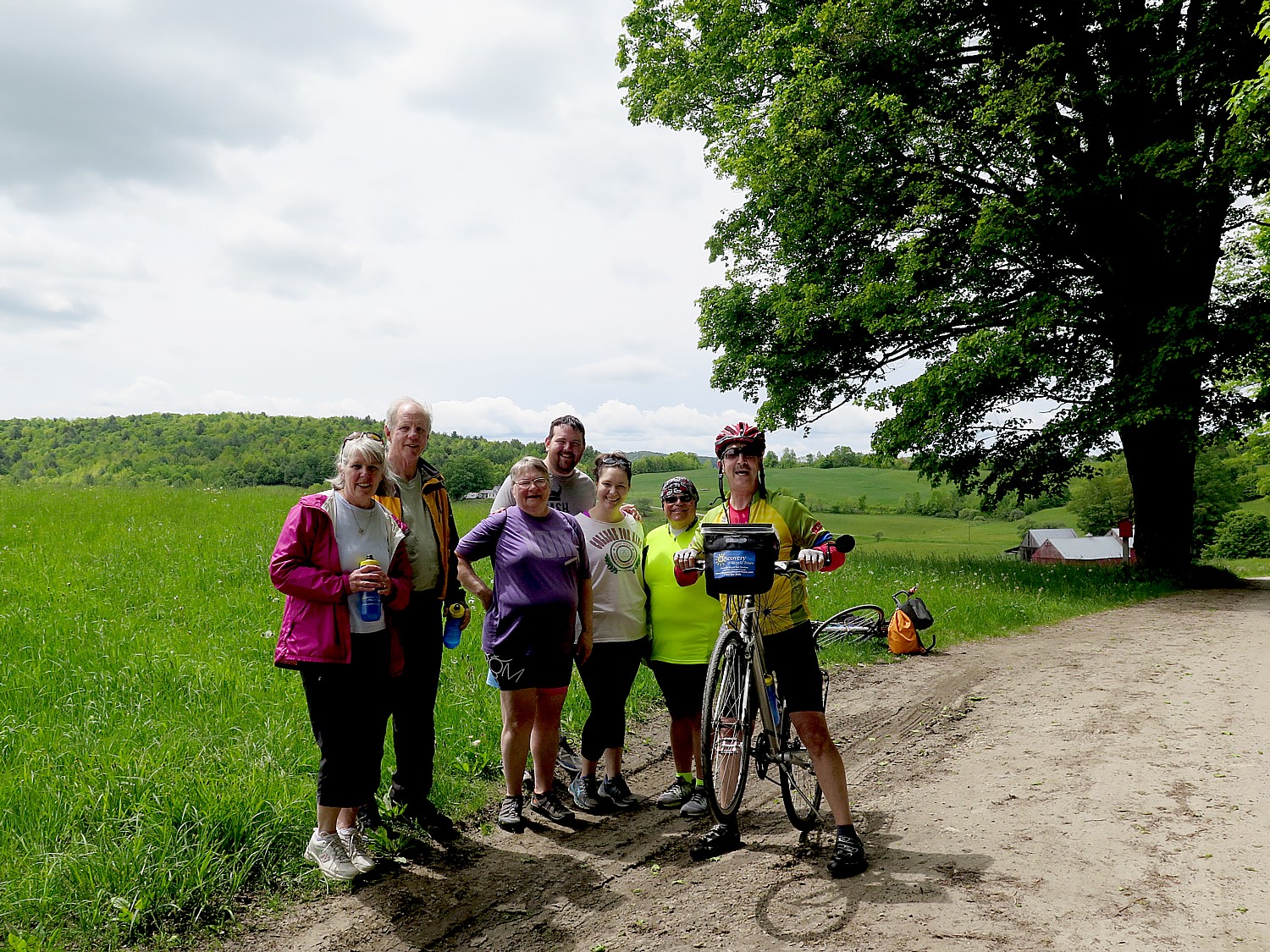
Bike tours have a way of bringing people together © 2017 Karen Rubin/ goingplacesfarandnear.com

Gradually, we all find ourselves gathered together beside a tree looking down at the classic country scene (we are reminded this is a private road and we are on private land).

In this and all the classic Vermont scenes we have seen (at one point I think to myself that the aging red barns and covered bridges have been put there for tourists’ benefit), serendipity makes the scene and the experience unique – the weather, colors, light, time of day, season, and myriad things that make it unique.

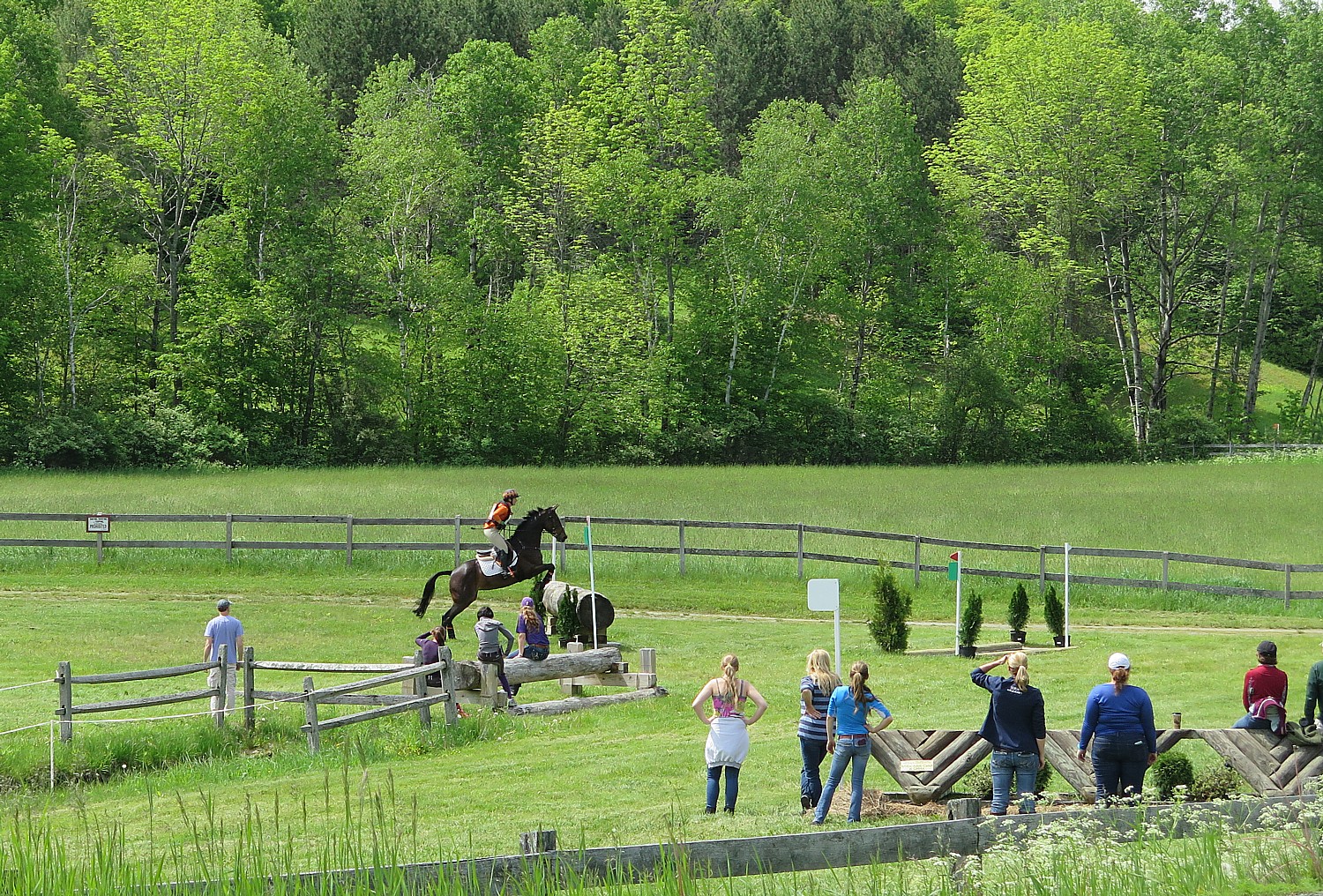
Stopping to watch part of the cross-country competition at the Green Mountain Equestrian Association © 2017 Karen Rubin/goingplacesfarandnear.com

Returning, there is that short steep hill which we came down, and then pretty much downhill for the 10 miles. But even though we are traveling the same road, the scene is completely different – the return takes you alongside a creek. And because we are going at our own pace, I linger at to watch the equestrian cross-country competition underway at the Green Mountain Equestrian Association grounds and stop frequently for photos. I think I am the last rider back to the inn, happy as a lark. 

Turning a Group Tour into a Personalized Experience

Discovery Bicycle Tours began offering inn-to-inn bicycle tours throughout Vermont in 1977. Larry and Dawn Niles have been running the business since 1991 and have expanded the tour offerings to include a variety of tours in the United States, Quebec and Europe.  They range in length from our 3-Day/2-Night weekend tours to 11-Day/10-Night tours.(New this year is a 10-day/9-night Dolomites to Venice tour). Each tour is designed to provide a uniquely memorable experience for the rider and includes all accommodations, most meals, bicycles, helmets, detailed directions and maps, van support and tour guides.

“We continue to encourage a culture that values substance over flash, where our focus is on the individual guest’s experience rather than a preset ‘one-size-fits-all’ formula. We are all about treating people personally,” Larry says, and this becomes clear from the first moment we gather together.

It’s hard to envision, at first, what our guide, Jim Ortuno, means when he promises that the plan is that each of us have our own perfect day. And if it isn’t, it’s not for the lack of trying. They go over-the-top to be accommodating each person’s individual abilities, interests and goals.

Discovery Bicycle Tours has designed several itineraries in Vermont where the company is based © 2017 Karen Rubin/goingplacesfarandnear.com

The selection of offerings this year include:

Vermont – On The River Inn Weekend (offered throughout the season, https://discoverybicycletours.com/bike-tour-vermont/bike-tour-vermont-river/); North Hero House Weekend; Shoreham Inn Weekend; Lake Champlain Islands; Vermont Discovery; Northeast Kingdom; North Hero House Midweek; Vermont Lake and Leisure)

California Wine and Coast

Cape Cod/Martha’s Vineyard

Gettysburg to Washington DC

Maine – Coast/Acadia

Florida Keys Multi-Adventure

Maryland (Eastern Shore Chesapeake Bay; Harbour Inn Weekend)

Quebec – Eastern Townships

Italy – Puglia; Tuscany; Dolomites to Venice

Scotland

Ireland – County Clare / Connemara

Spain – El Camino de Santiago

France – Provence


Kenzie Novak is on hand with snacks for the Discovery Bicycle Tours riders © 2017 Karen Rubin/goingplacesfarandnear.com

Discovery Bicycle tours also offers private and family tours, as well as customized tours. Each is designed to recognize and encourage varying skills and interests of riders. The tours are flexible and most include easy-to-moderate riding, plus optional routes for the more energetic cyclist.

At this writing, Discovery was offering a $400 discount on the 6-day/5-night Coast of Maine tours, that includes all ferries and excursions, guided kayaking, 5 nights lodging, including three nights in premium rooms at the Bar Harbor Inn, each with a private balcony overlooking Frenchman’s Bay, 5 breakfasts, picnic on Swan’s Island, 4 dinners, bicycle, helmet, and free transfer provided from/to Bangor International Airport (July 23–28, July 30–August 4, and August 13–18).

There also was a recent “Teacher Appreciation Sale” of $250 off longer tours and $100 off weekend trips.

Discovery Bicycle Tours, Post Office Box 207, 2174 Maxham Meadow Way, Woodstock, Vermont 05091 800-257-2226. 802-457-3553, discoverybicycletours.com, info@discoverybicycletours.com.

Next:  On the River Inn 

____________________

© 2017 Travel Features Syndicate, a division of Workstyles, Inc. All rights reserved. Visit goingplacesfarandnear.com,  www.huffingtonpost.com/author/karen-rubin , and travelwritersmagazine.com/TravelFeaturesSyndicate/. Blogging at goingplacesnearandfar.wordpress.com and moralcompasstravel.info. Send comments or questions to FamTravLtr@aol.com. Tweet @TravelFeatures. ‘Like’ us at facebook.com/NewsPhotoFeatures
Gatsby-esque Jazz Age Lawn Party is Joyful Escape on Governors Island


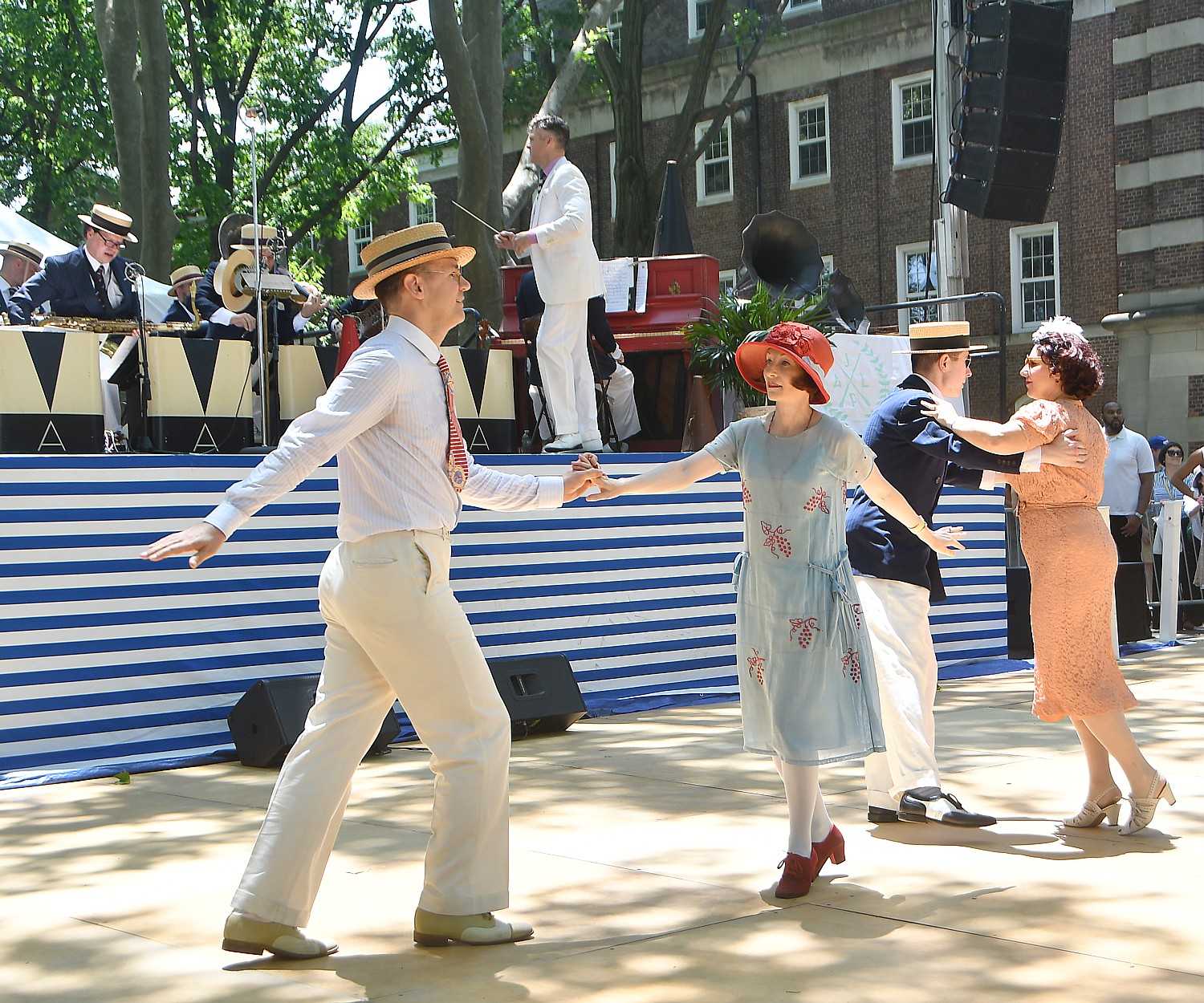
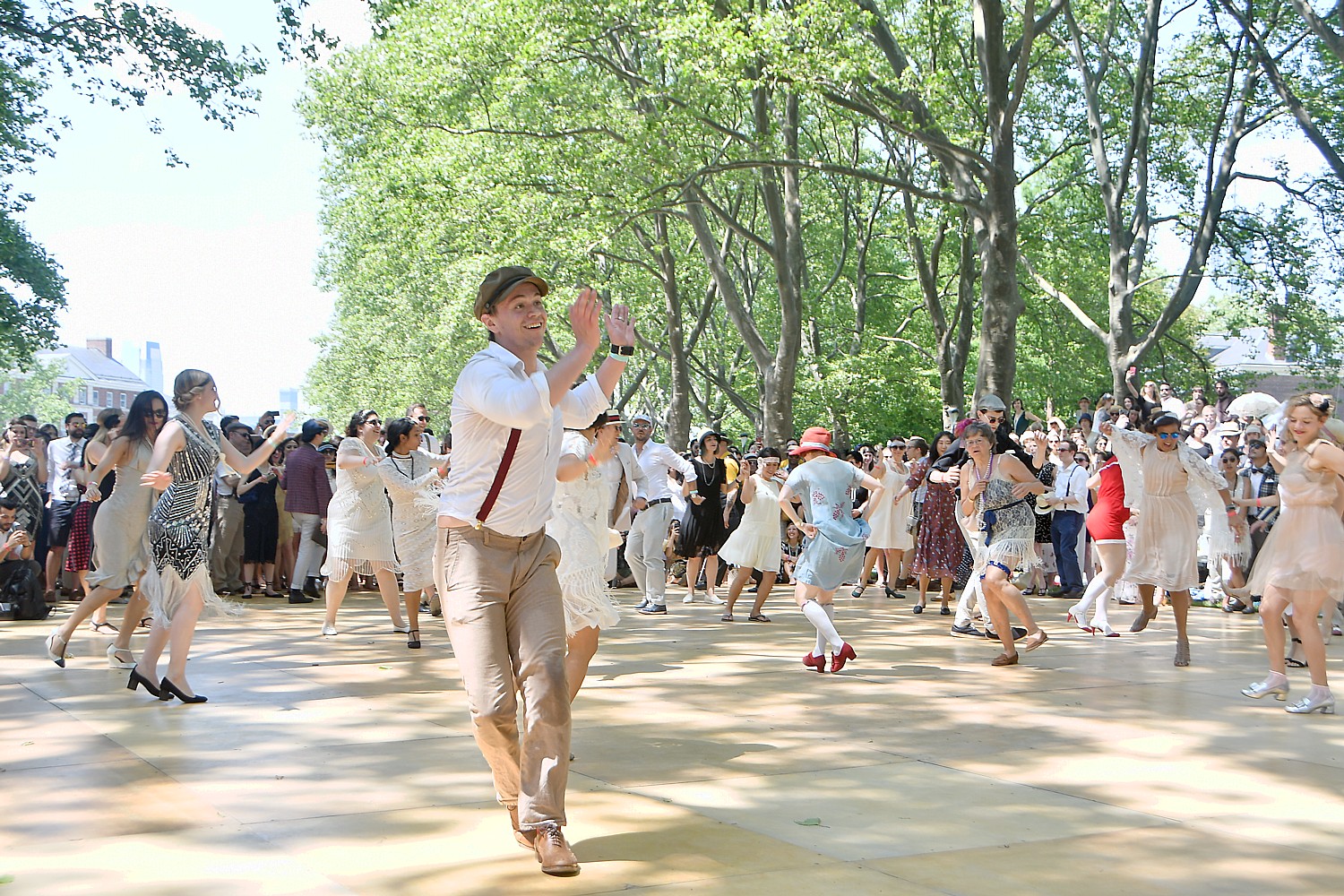
Heidi Rosenau & Joe McGlynn, regulars at the Jazz Age Lawn Party on Governors Island, dance to Michael Arenella and His Dreamland Orchestra © 2017 Karen Rubin/ goingplacesfarandnear.com

By Karen Rubin, Travel Features Syndicate, goingplacesfarandnear.com


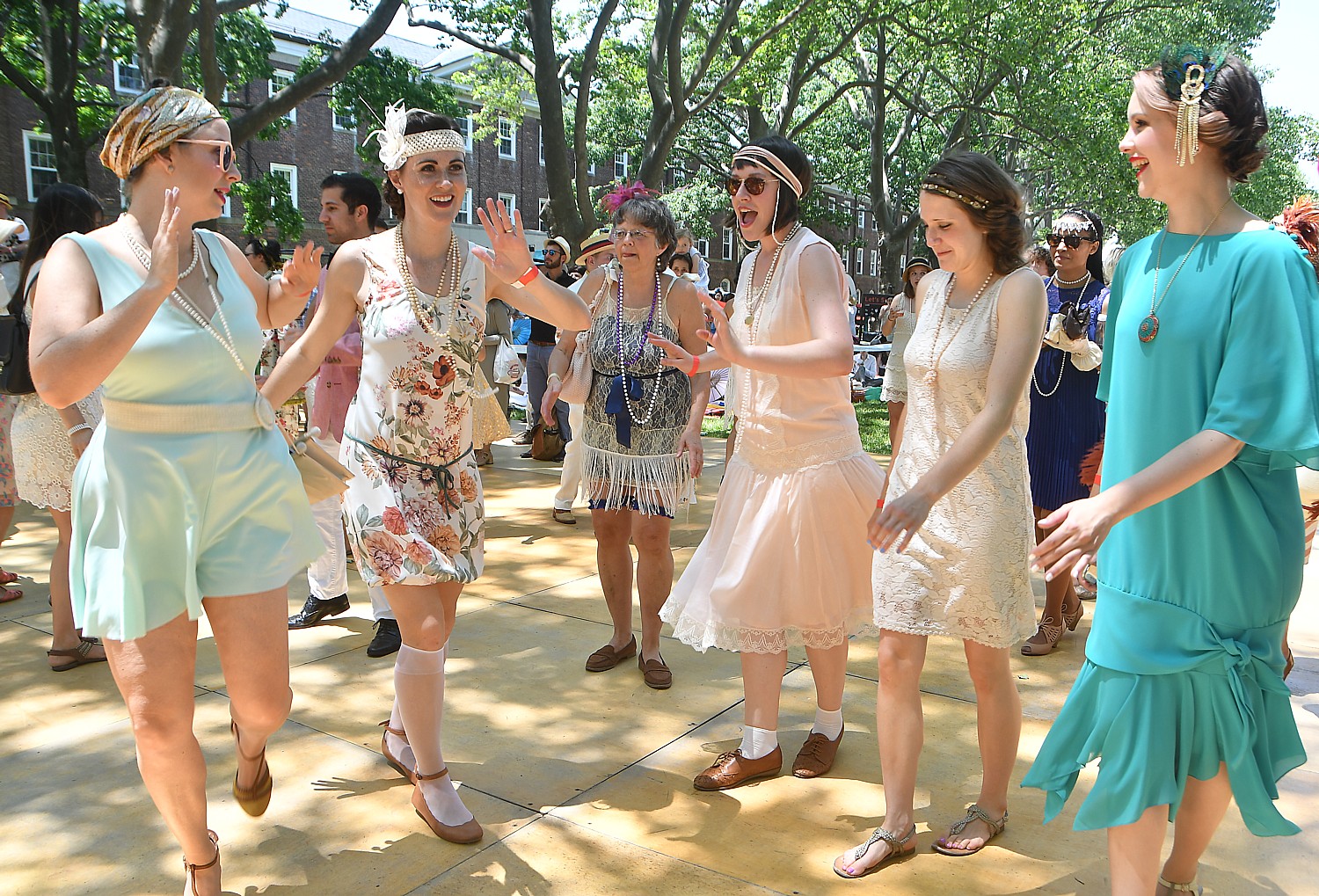
New Yorkers love to dress up – any excuse to don a costume will do, but in the case of the Jazz Age Lawn Party, now in its 12th year on Governors Island, it is a chance to push back the clock and create your own community, a Gatsby-esque Brigadoon of sorts. It is the best of New York and brings out the best of New Yorkers. The music and atmosphere brings out pure joy.

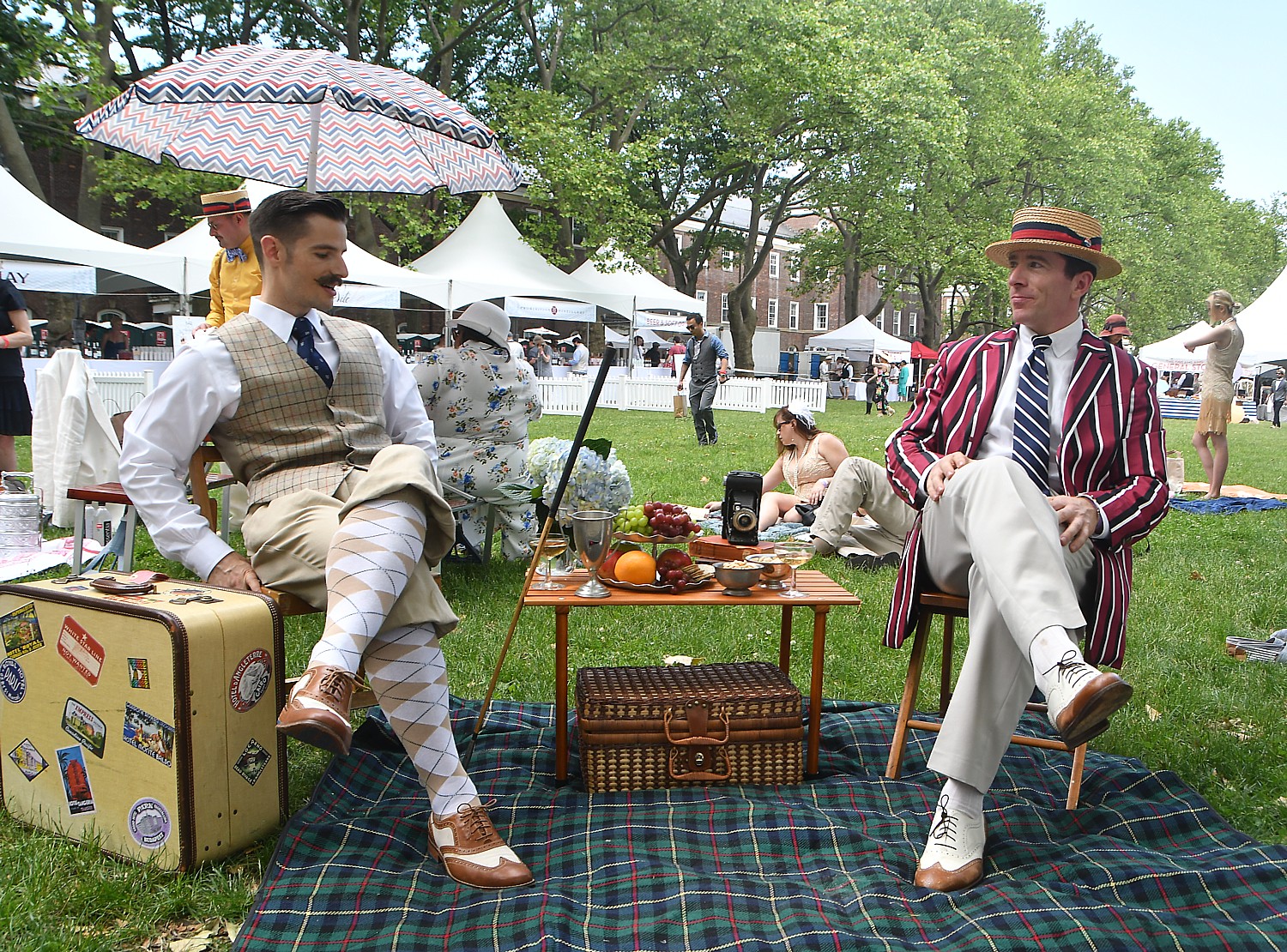
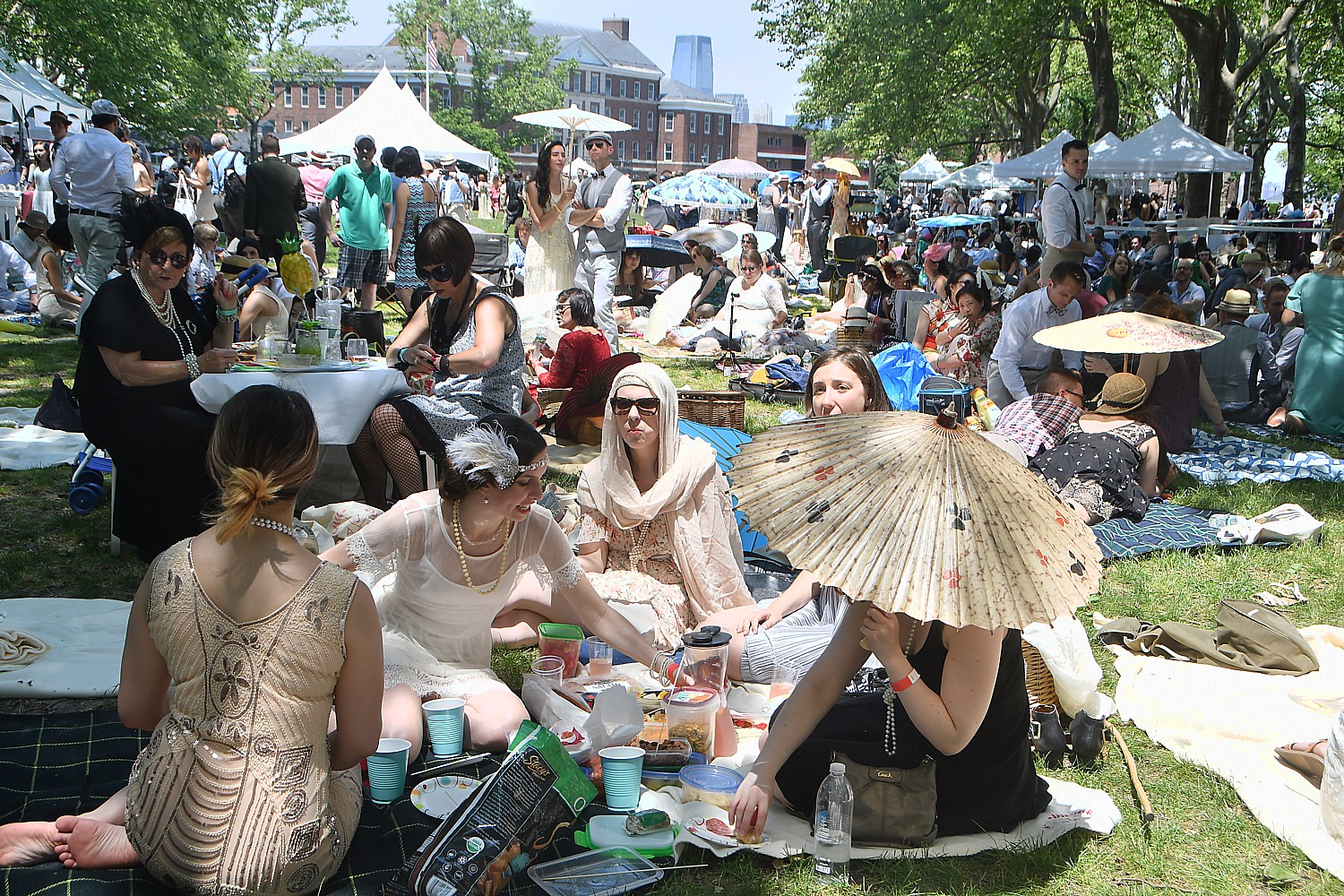
For an entire afternoon on Saturday and Sunday of the weekend of June 10 and 11, and again on August  26 and 27, you are transported – quite literally by ferry – to the 1920s era of hot jazz. People of all ages, dressed to the nine’s as flappers and gents, bearing wicker picnic baskets, stream onto the island, with its forts and structures from the Civil War and World War II. A stone’s throw from Manhattan and Brooklyn, and yet a world and an era away.

Flappers at the Jazz Age Lawn Party on Governors Island © 2017 Karen Rubin/ goingplacesfarandnear.com

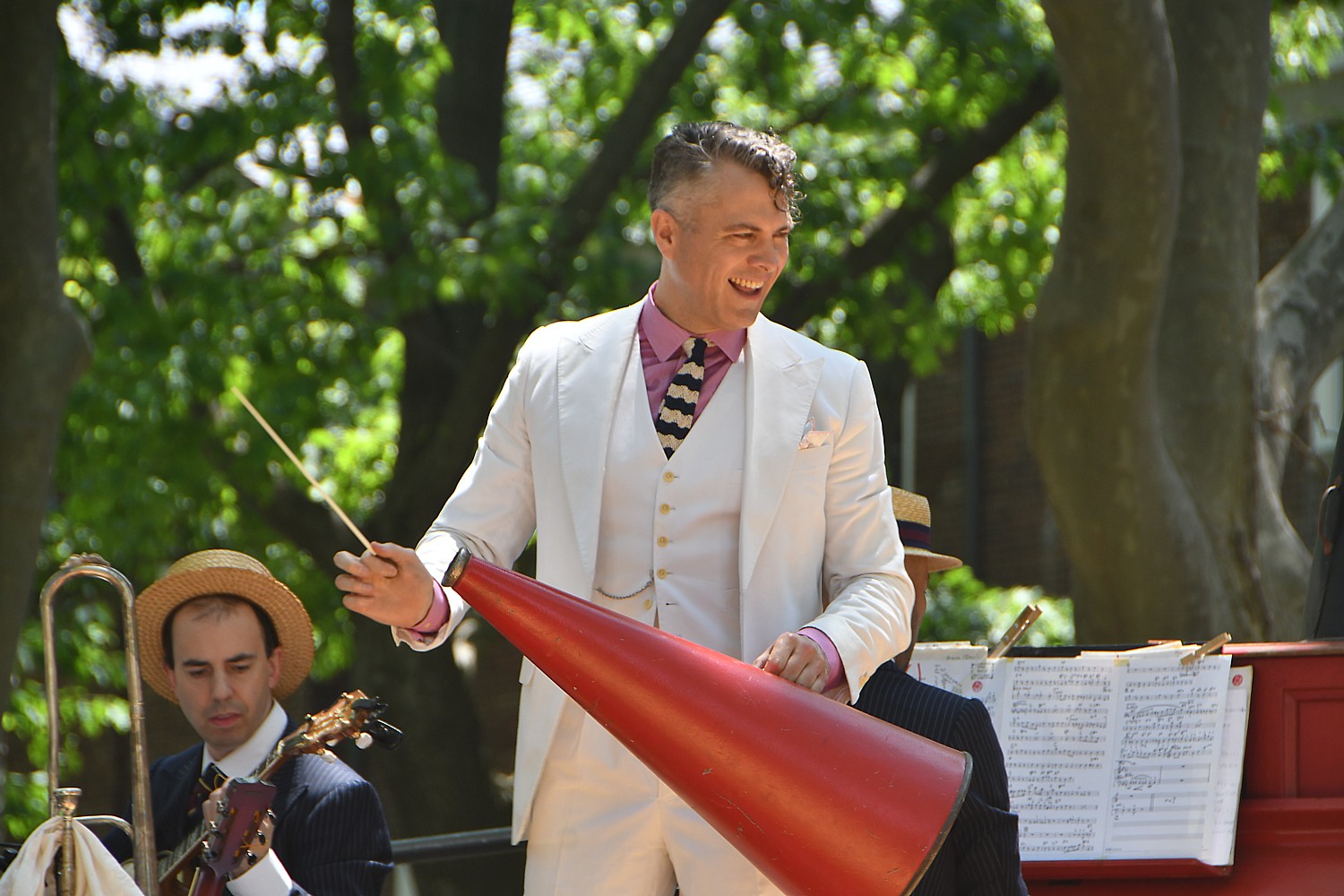
Michael Arenella and his Dreamland Orchestra create this literal dream, with his meticulously recreated music of the 1920s.

There is impeccable faithful reproduction – even the cocktails are Speakeasy worthy and if you didn’t have appropriate attire, you could rent or buy vintage, take a tintype photo or a photo sitting on a blue moon with a vintage camera. Little boys are there with their caps and suspenders, little girls with hair bows. Interlude music is provided on vinyl recordings over antique gramophones.

Michael Arenella leads his Dreamland Orchestra, faithfully re-creating the Roaring ‘20s sound and spirit © 2017 Karen Rubin/goingplacesfarandnear.com

At one point, Michael Arenella, who throughout the afternoon gives these wonderful asides about the music, says his trombone “is so old I have to use a string to keep the slide on- that’s how authentic we are, folks.”

The only thing marring the illusion are the ubiquitous cell phones.

Conductor, composer, musician and crooner Michael Arenella presents a personally transcribed, one-of-a-kind songbook for your listening and dancing pleasure by his Dreamland Orchestra, playing the Hot Jazz of the 1920s.

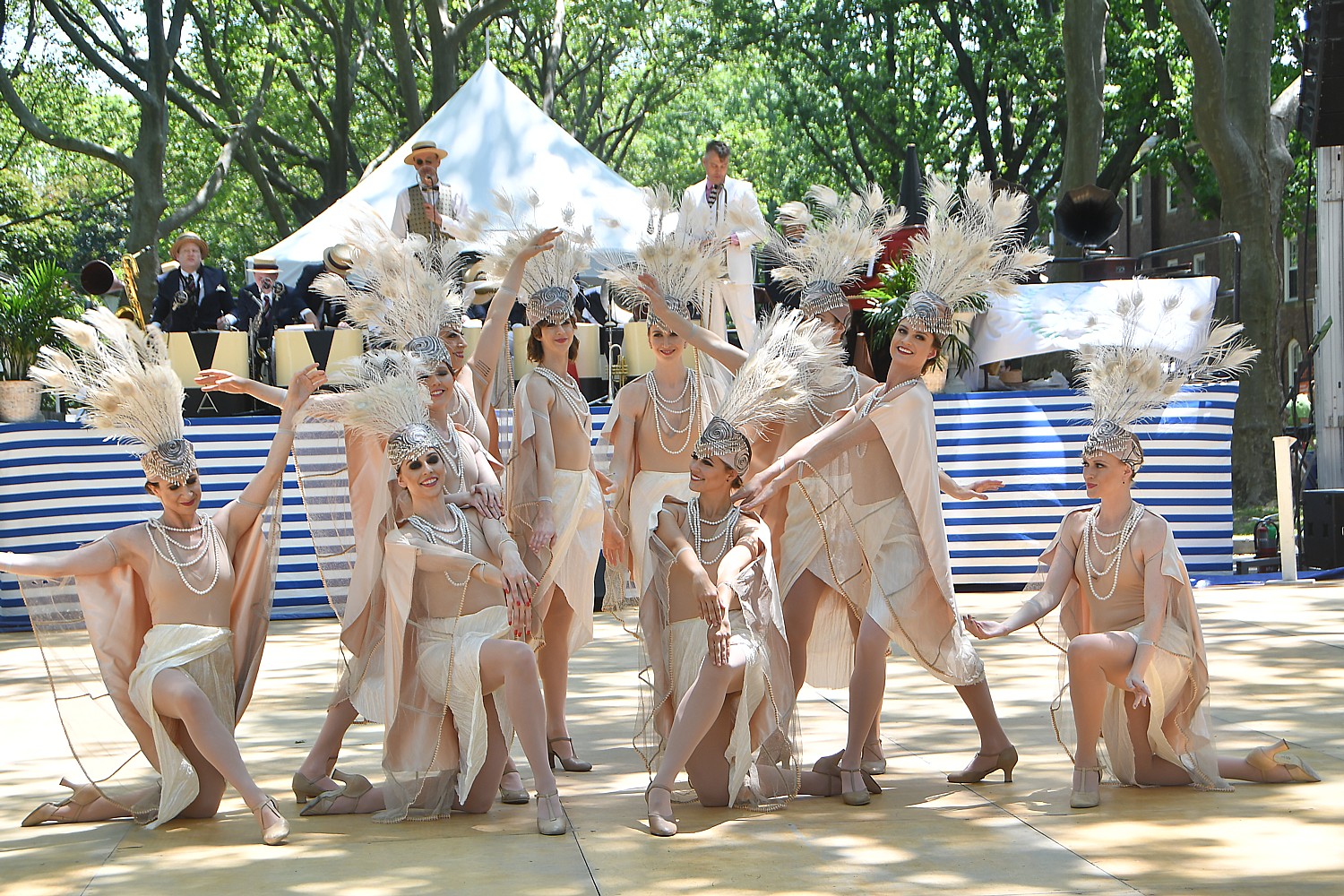
The Dreamland Follies at the Jazz Age Lawn Party © 2017 Karen Rubin/ goingplacesfarandnear.com

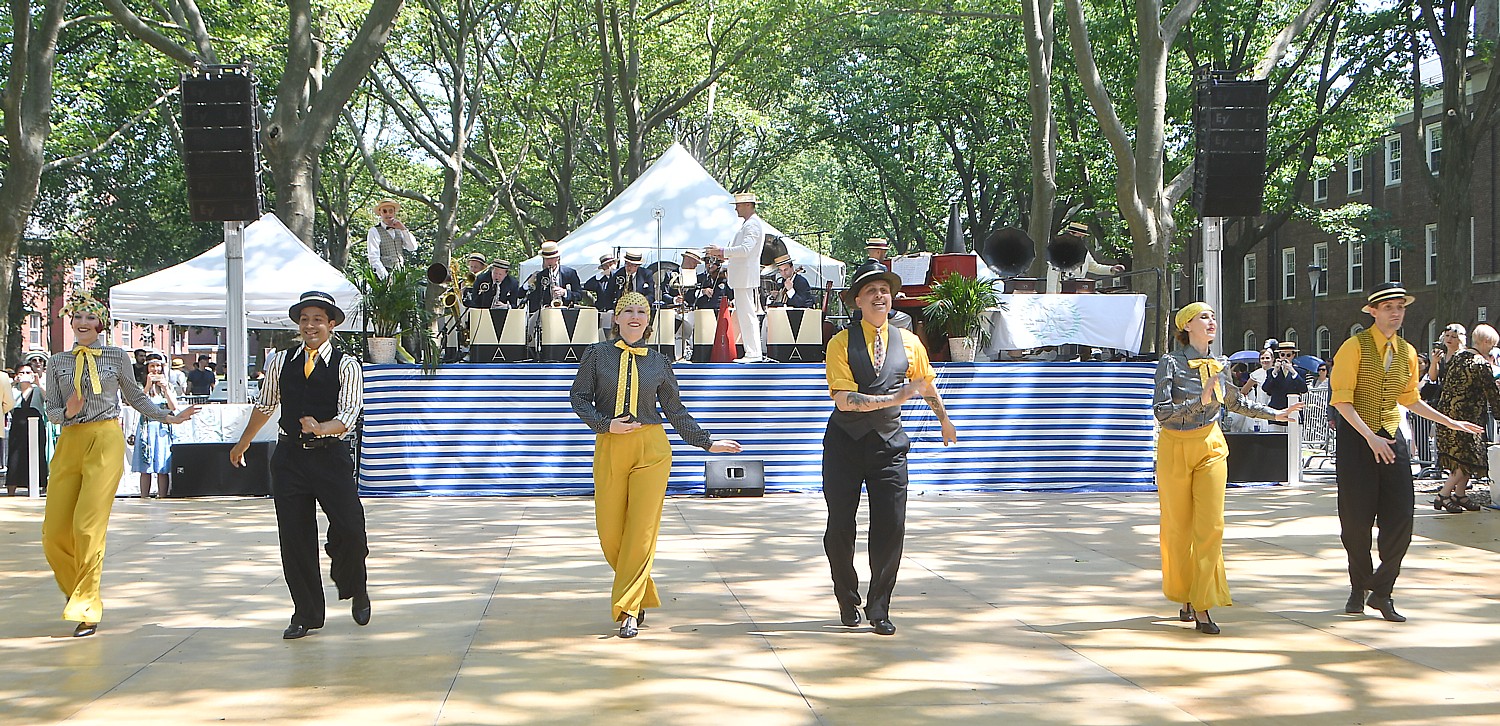
The entertainment abounds on two stages (and two dance floors): The Dreamland Follies evoke Ziegfeld-esque grand dance routines; Roddy Caravella and the Canarsie Wobblers is a fun-loving dance troupe that conjures the rebellious and exuberant spirit of Roaring ‘20s; Queen Esther pays tribute to jazz royalty of yore and Peter Mintun takes the moniker of “world’s greatest piano man”; Drew Nugent and the Midnight Society have come from Philadelphia, presents wry, spry, and certifiably Hot Jazz and the Gelber & Manning Band, feuding vaudevillian lovebirds quarrel, coo and make beautiful music together.

Nick Pankuch of Astoria demonstrates the exuberance that won him the Charleston contest at the Jazz Age Lawn Party © 2017 Karen Rubin/goingplacesfarandnear.com

There are fun activities as well which you can join: Charleston Dance Contest to determine who is the Bee’s Knees; Bathing Beauties and Beaus Promenade, wearing vintage swimming outfits of the age (for entry email: bluevoon@aol.com), The High Court of Pie Contest (categories include “Mom’s Best” “Best Savory ”, “Most Original” and “Hobo’s Choice”; for entry email: govislandpie@gmail.com).

Glenn Hanna and Jared McNabb have come to the Jazz Age Lawn Party from Boston for the third year © 2017 Karen Rubin/goingplacesfarandnear.com

The afternoon starts off with dance lessons in the hottest dance steps of the time, like the Charleston. You can immortalize the day in your own Vintage Portraits-You Ought To Be In Pictures, perched on a Paper Moons or in tintypes using the same techniques and chemicals (a mixture of gunpowder and ether) as were used more than a century ago; the ultimate family-friendly event also features Kidland carnival games and prizes for junior Gents and Flapperettes. There’s also a 1920s MotorCar Exhibition, where you can get up close and personal with flivvers and Tin Lizzies, and Antique Gramophones that reanimate original recordings from the 1920s.

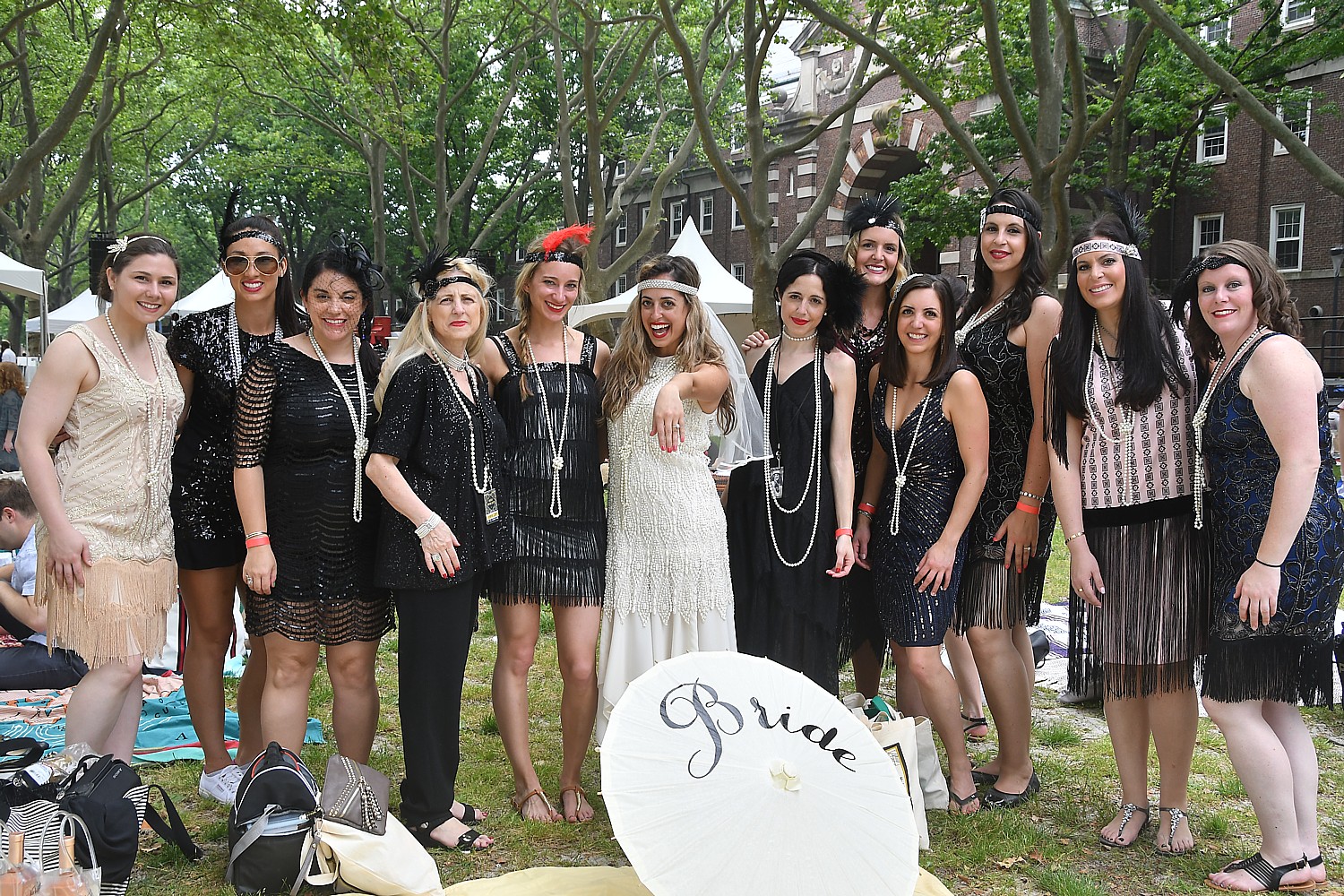
Bride-to-be Melissa Colabraro brought her Bachelorette party to the Jazz Age Lawn Party from Boston © 2017 Karen Rubin/ goingplacesfarandnear.com


Jazz Age Lawn Party on Governors Island creates a Gatsby-esque Brigadoon © 2017 Karen Rubin/goingplacesfarandnear.com
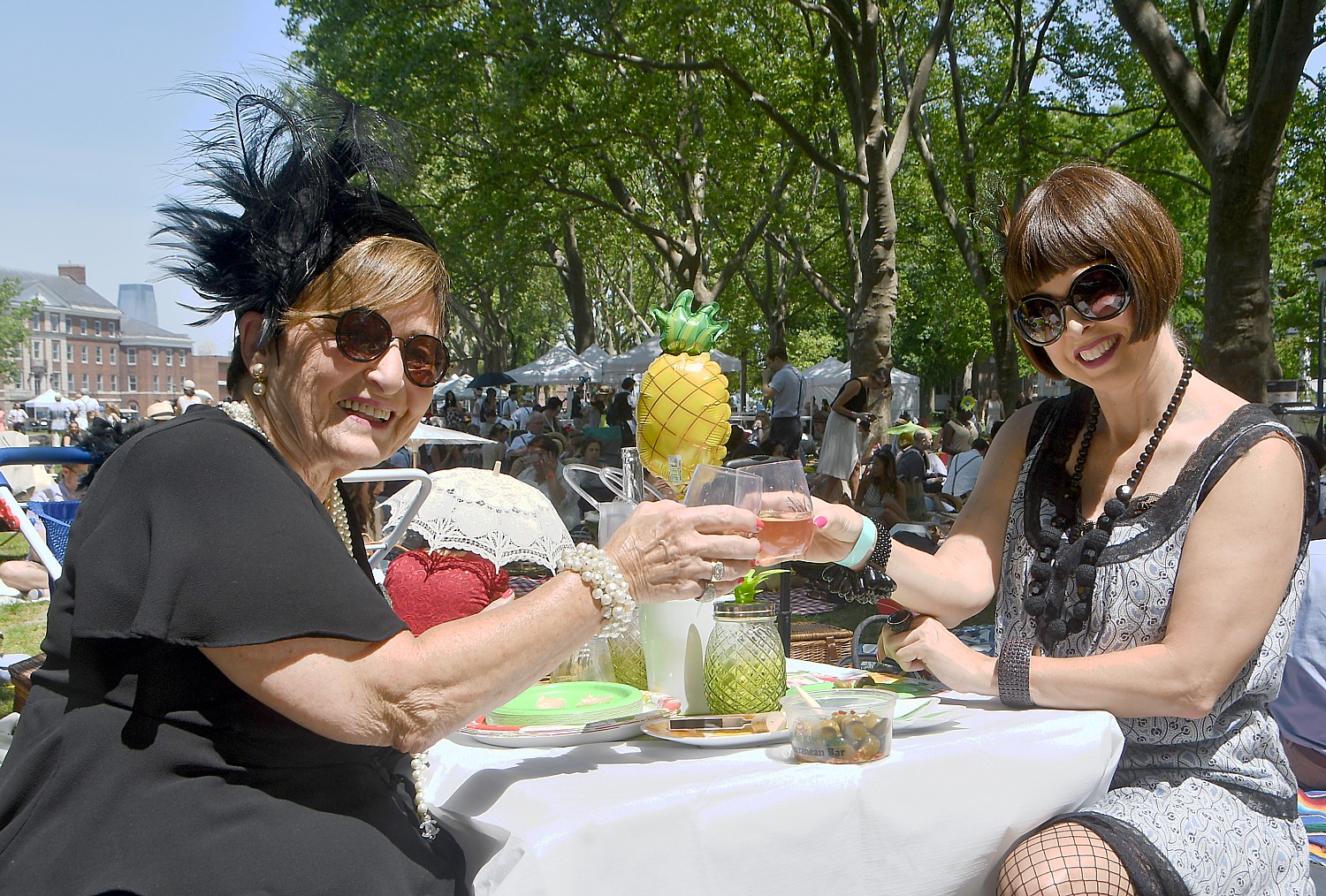
Barbara Tito and daughter Kim Tito from Connecticut celebrate Barbara’s 75th birthday at the Jazz Age Lawn Party © 2017 Karen Rubin/goingplacesfarandnear.com

And what would a Prohibition-era, speakeasy event be without booze? VieVité, Côtes de Provence Rosé is the official wine sponsor of the Jazz Age Lawn Party. In addition, refreshing summer cocktails feature Lejay, the official liqueur sponsor which created crème de cassis in 1841, and Bootlegger 21 NY Distilleries, crafted in Roscoe, NY, which is this year’s the official gin and vodka of Jazz Age Lawn Party,. Libations available also include ice cold beer, lemonade and soft drinks. (Take note: you can’t bring in your own alcoholic beverages.)

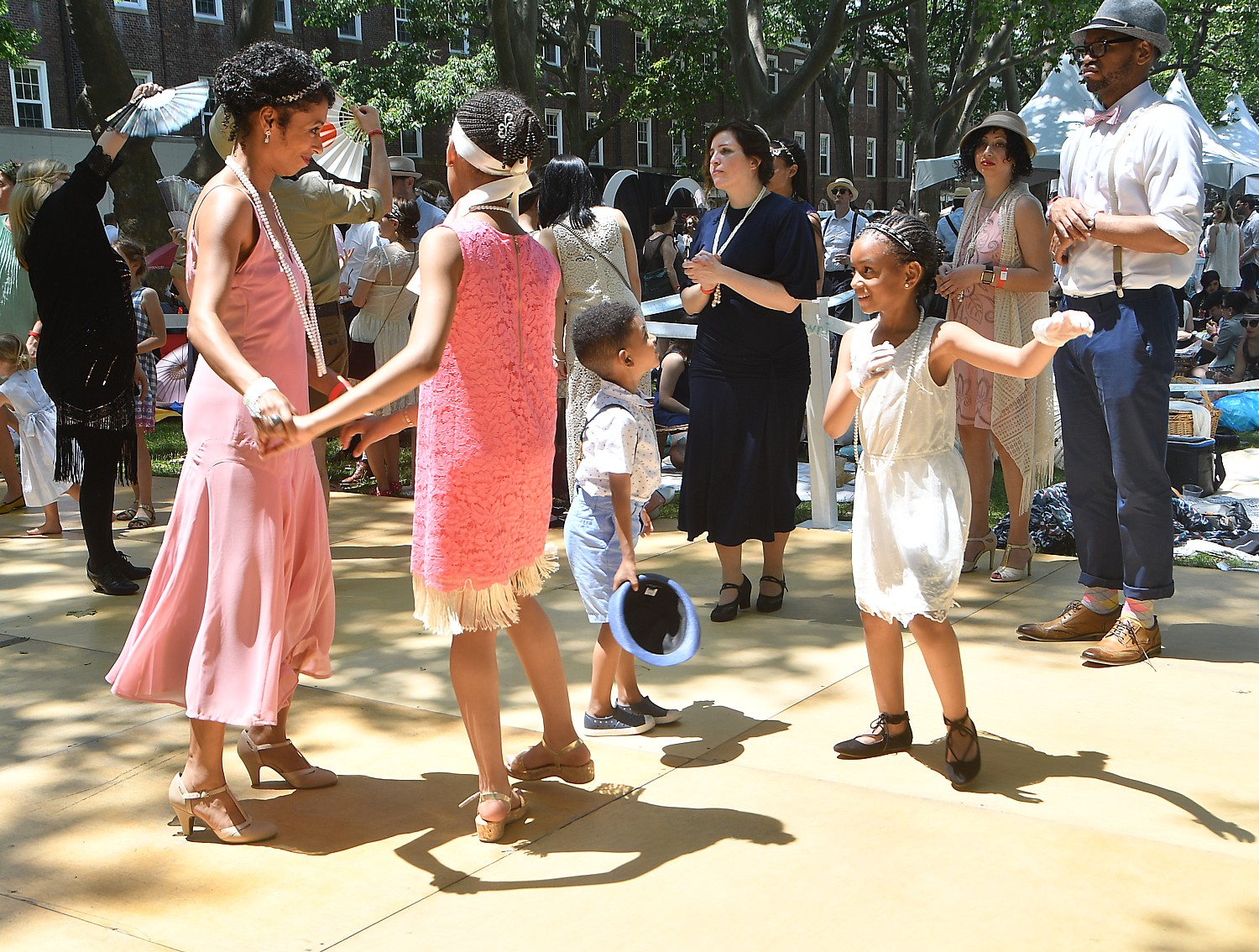
The Jazz Age Lawn Party draws many families © 2017 Karen Rubin/ goingplacesfarandnear.com

New for 2017, Dreamland Gourmet Picnic Totes, featuring freshly prepared, custom ordered lunches that you receive when you enter, complete with a chilled bottle of VieVité Rosé, and other treats! (included in all “Bee’s Knees and “Bonnie & Clyde” ticket packages).

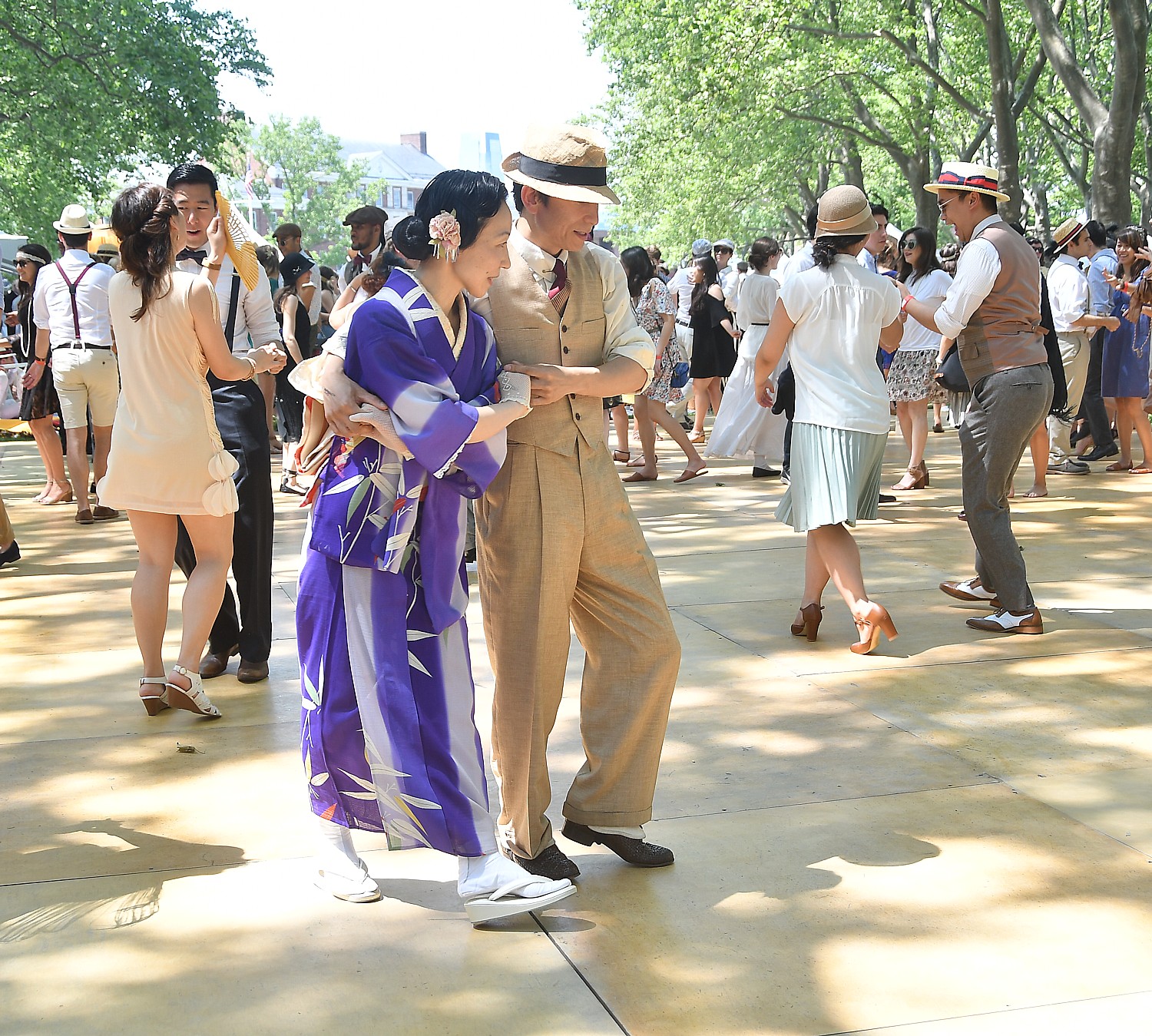
Jim & Yoko from Japan join in the dance © 2017 Karen Rubin/goingplacesfarandnear.com

People also took advantage of the Gourmet Picnic Market’s fancy picnicking fare, treats and snacks including ice cream, cotton candy, hot popped corn; the Dreamland General Store, offering picnic blankets, parasols, hand fans and assorted sundries; vintage clothing vendors and artisans who create a veritable village of timeless treasures.

Roddy Caravella & the Canarsie Wobblers at the Jazz Age Lawn Party © 2017 Karen Rubin/ goingplacesfarandnear.com

This event sells out and this year, for the first time, tickets are only available for purchase in advance. For tickets and information, visit, http://jazzagelawnparty.com/. Purchase tickets at http://jazzagelawnparty.ticketfly.com/.

Queen Esther pays tribute to the jazz greats © 2017 Karen Rubin/goingplacesfarandnear.com

____________________

© 2017 Travel Features Syndicate, a division of Workstyles, Inc. All rights reserved. Visit goingplacesfarandnear.com,  www.huffingtonpost.com/author/karen-rubin , and travelwritersmagazine.com/TravelFeaturesSyndicate/. Blogging at goingplacesnearandfar.wordpress.com and moralcompasstravel.info. Send comments or questions to FamTravLtr@aol.com. Tweet @TravelFeatures. ‘Like’ us at facebook.com/NewsPhotoFeatures
 

Barging through Burgundy, Day 5-6: Walking Tour of Dijon’s Old City

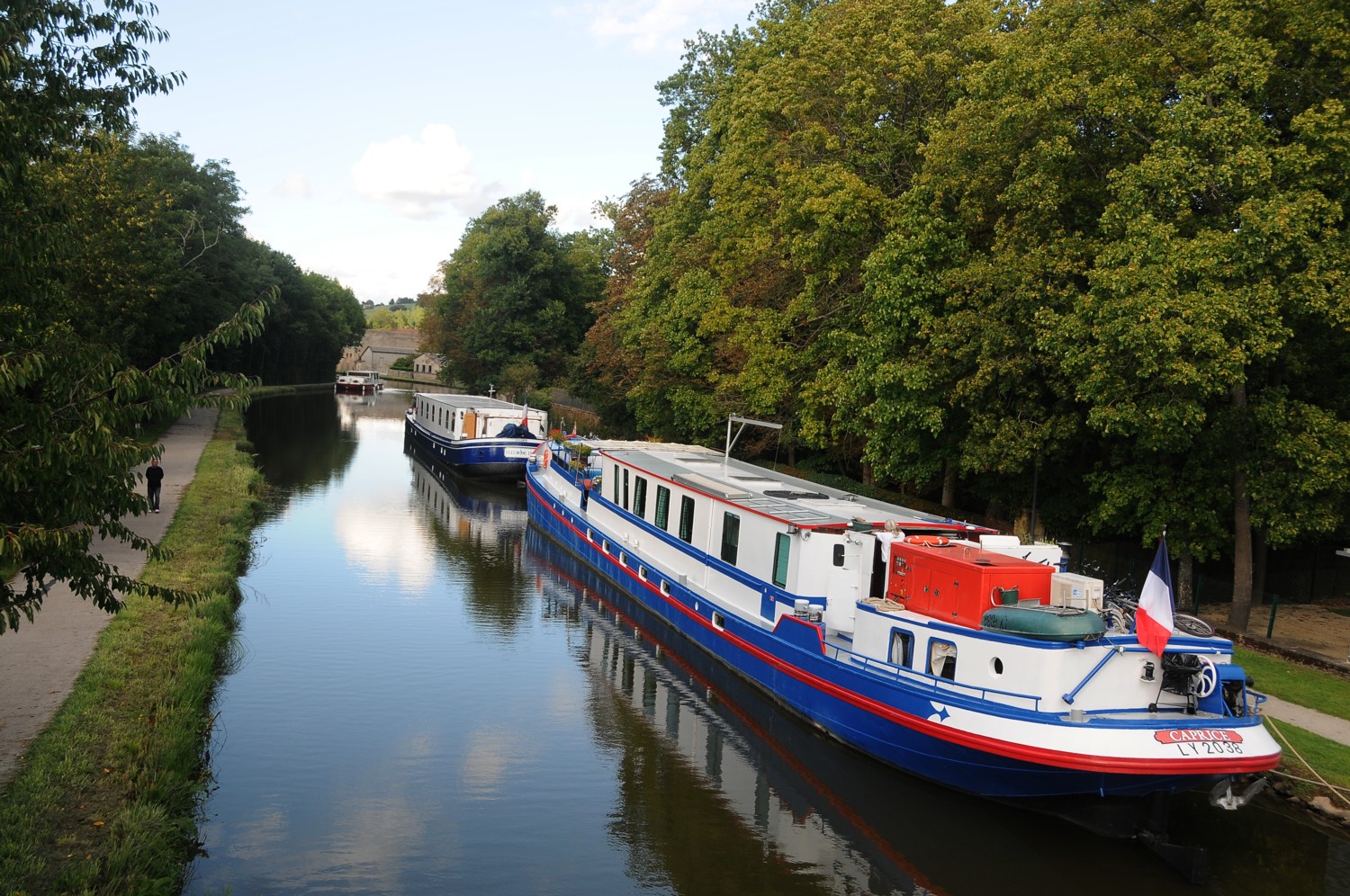
The Caprice finishes its cruise of canals and rivers of Burgundy in Dijon © Karen Rubin/news-photos-features.com

by Karen Rubin, Travel Features Syndicate, goingplacesfarandnear.com

Thursday: Arrival in Dijon

We are only a few miles to the last lock before Dijon, the capital of Burgundy, and the French landscape, though still predominantly countryside, becomes more and more populated and commercial as we come closer.

After breakfast on board the Caprice, our charming barge hotel, we take bikes and explore a village.

Back on board the Caprice, Chef Herve treats us to a cooking demonstration – he is preparing salt-encrusted salmon, which is the lunch entree, along with a variety of salads.

The Caprice, one of France Cruises’ luxury hotel barges, floats up a canal in Burgundy © Karen Rubin/news-photos-features.com

The wine is a 2010 Musadet Sevre et Maine sur Lie, from the Loire Valley, with a fresh, sharp, neutral flavor to compliment fish; and a 2010 Burgundy red, Saint Armour, named for the village which was named for a martyred Roman soldier, with a fruity flavor of currants.

The last bridge before we enter Dijon’s port is one where we all have to duck – it seems the barge uses every inch of space above.

We come into the port of Dijon, where we will stay overnight.

Caprice’s Chef Herve serves the salt-encrusted salmon for lunch; earlier in the morning, he provided a cooking demonstration © Karen Rubin/news-photos-features.com

Guy, who has been our guide and bus driver throughout our journey, takes us for a guided tour into the Dijon’s old city, the climax to an incredible week-long journey into Burgundy’s countryside. Dijon is the crowning jewel.

The historic district is just a 15-20 minute from where the Caprice is docked, so we can return on our own and have a couple of extra hours to explore.

As always, Guy, who is a former journalist, is fascinating, illuminating with stories and anecdotes what we can appreciate visually.

He reminds us of the popular Burgundy drink, Kir, which was named for a mayor who served from 1946-1960, was a priest, a canon, and a member of Parliament- the famous drink is named for him. “He did nothing in Dijon – that was reason it is well preserved.” The current mayor, on the other hand, wants to modernize, and is constructing a street car (light rail).

The magnificent architecture of Dijon’s Old City © Karen Rubin/news-photos-features.com

Dijon is a household name because of the mustard, which is still produced here, but these days, they import seeds from Canada. It is also a center for artificial flavors and fragrances.

Dijon is the capital of Burgundy – hospitals, university, administrative services (government), and the main stop between Paris and Lyon.

Burgundy was an independent state, and allied with Britain against France. The last Duke was killed 1463 – his enemy was King Louis XI of France, known here as “the Sneaky One” because though France had a treaty with Burgundy but the King still invaded Dijon.

One of the highlights is the main indoor market – a marvel of steel architecture that goes back to Eiffel, though his colleague finished the project.

The Caprice squeaks under the bridge as we float into the port of Dijon © Karen Rubin/news-photos-features.com

It is just across from the church of Notre Dame with a marvelous bell clock. “The King of France tried to bribe a town in Burgundy to rebel, and when it did, the Duke besieged it and as punishment, in 1673, took the clock. At the time, it only had a man with the pipe; then in 17C, the people of Dijon (who have a good sense of humor), added a woman so the man wouldn’t be lonely, and in 18C, added two children.” The man strikes the bell on the hour; the woman on the half, and the children on the quarter hour.

Notre Dame has stunning gargoyles, but Guy tells us that a usurer was killed when a gargoyle broke off and fell on him. As a result, the “corporation” of loan sharks demanded they all be taken down; but finally, they were cleaned and replaced in 18C. Notre Dame was defaced during the 1793 Terror, and the anti-religious furor that swept through.

The Church of Notre Dame provides a dramatic backdrop at the end of the Rue Musette © Karen Rubin/news-photos-features.com

The owl is symbol of Dijon, and there is an owl on Notre Dame that legend says, you touch with your left hand to have a wish come true (it’s been rubbed smooth over time).

Here we come to the Maison Millière, the charming shop we had first encountered on our first afternoon in Dijon, which specializes in hand-crafted owls.

There are fabulous buildings – stately majestic public buildings, grand mansions that served the noble members of Parliament – through Dijon.

Many of the grand buildings have been “re-purposed” after the Revolution.

Guy, our guide from the Caprice, explains the legend of rubbing the owl that is on the side of the Church of Notre Dame, with your left hand: wishes come true © Karen Rubin/news-photos-features.com

The Plaza Royale was renamed Place de la Revolution, and the avenue renamed Avenue de la Liberte.

What is astonishing is how many famous people are associated with Dijon: the architect of Versailles, Jules Mansart, also designed the Plaza Royale; Francois Ronde, who designed the Arc d’Triomphe in Paris, is from here.

I wander on my own, and am fascinated with the street names, many with biographical information

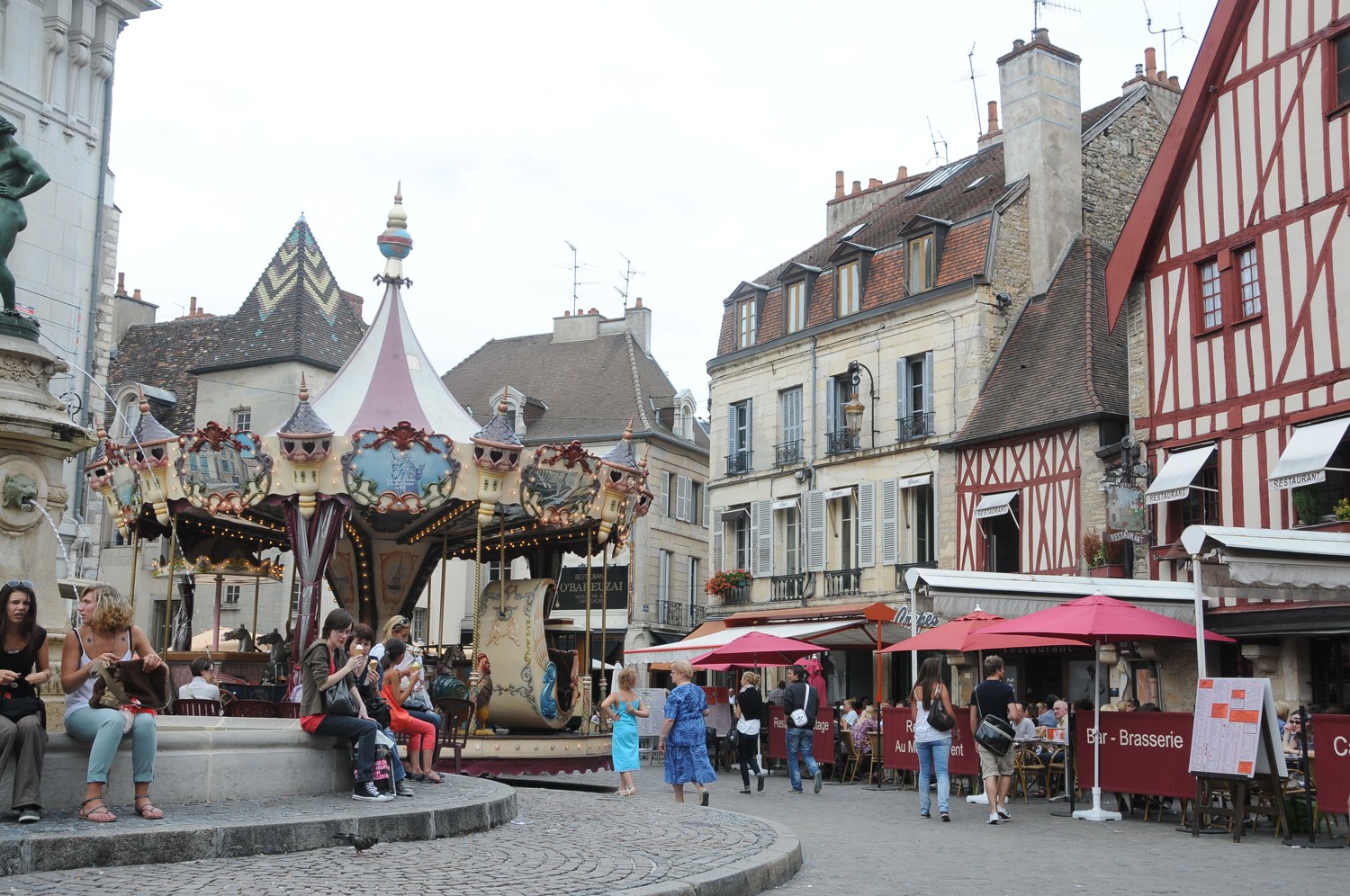
In the square of Dijon’s Old City, buildings from the Renaissance flank a carousel from 1865 © Karen Rubin/news-photos-features.com

Rue Danton was named for “conventionnel organisateur de la defense nationale, ne en 1759, mort sur l’echafaud en 1794.” I am fascinated and subsequently learn that Georges Danton was a French Revolutionary leader and orator, often credited as the chief force in the overthrow of the monarchy and the establishment of the First French Republic (September 21, 1792). He later became the first president of the Committee of Public Safety, but his increasing moderation and eventual opposition to the Reign of Terror led to his own death at the guillotine.

The clock above the church of Notre Dame, with the man who strikes the hour, his wife who strikes the half hour, and their two children who strike the quarter hour. © Karen Rubin/news-photos-features.com

I come upon Eglese Saint Philibert, originally built in 12th century, and destroyed in the Reign of Terror that followed the French Revolution. It is now undergoing a restoration.

I am so happy that I will have two extra days in Dijon (see story).

Gala Farewell

I walk back to the Caprice in time for our gala farewell dinner.

The last night of our cruise is a gala dinner (we “dress” in our finest, that is what we have with us) – the table, in a U-shaped banquet formation, is set magnificently, with fresh lilies and zinnias.

A fountain provides respite during a walking tour of Dijon’s historic district, spanning 97 hectares © Karen Rubin/news-photos-features.com

The menu consists of foie gras with leek salad with a sweet fig jam; filet de boeuf with red wine sauce, potatoes from Noirmoutier and mushrooms.

The 2007 Sainte Croix du Mont, a Sauvignon Blanc, Tina tells us, is produced at a vineyard on right bank of Bordeaux in southeast France, where there are early morning mists (usually not good for wine) is difficult to produce. “You need a lot of luck. The grapes have to develop a ‘local rot’ – a fungus – which actually produces a bursting sweetness. The yield is small – you have to pick the grapes by hand when ripest – a lot of work. It’s lighter than a dessert wine but full bodied.”

The red is a Grand Barrail Larose St Emilion 2009, a Bordeaux.

Three houses dating from the 1400s in Dijon’s Old City: the middle one is propped up by the two on either side © Karen Rubin/news-photos-features.com

The cheese tonight is a Roquefort – the quintessential sheep’s milk blue cheese from Avignon in the south of France, owes its distinctive character to a mold found in the soil of local caves

The second cheese is a Brie de Meaux, from the Ile de France, a creamy cow’s milk similar to Camembert. “King Louis XIV had 3 passions: poetry, wine and cheese,” Tina, the general manager, says. “He would send a damsel a cheese with a poem”

The dessert is a Chef’s surprise (actually a birthday cake for one of the guests).

Lunch onboard the Caprice always features red and white wines as well as cheeses © Karen Rubin/news-photos-features.com

Friday morning, after breakfast, we depart the Caprice. The whole crew, wearing their Barging Through France shirts, line up to greet us and bid us farewell. It is that most amazing and gratifying feeling that only travel provides when you get to realize how everyone has bonded and formed friendships in just a week’s time.

Incomparable Value in France Canal Cruising

In reflection, I think this is as perfect a trip as it could have been, vastly exceeding my expectations – in terms of the sights we have seen, the interesting attractions and excursions, the quality of the wining and dining, the cruise experience – France Cruises, the American agent for Barging through Burgundy which owns and operates the Caprice, really offers superb value for money.

The gala farewell banquet onboard the Caprice features a beef filet with red wine sauce © Karen Rubin/news-photos-features.com

The passengers onboard have really bonded – gives you plenty of opportunity – we are not on top of one another, but the meals, where you basically sit where you want or where there is room, so the table groupings always change, and you get to know one another, or when walking or biking along the canal, or on the bus or walking through the villages during our excursions, or in the evening sitting around in the lounge or on deck… people came from all over and many different backgrounds, but shared an interest and eagerness to learn and experience things, and we each shared from our own experience and knowledge base.

The immersion into French food and wine – especially with the selection of wines and cheeses at lunch and dinner – has been very satisfying and also interesting, since food and wine are so inextricably linked to culture and heritage of a place.

The size of the boat and the service makes it ideal for families, family reunions and groups of friends traveling together. There are barge boats that a single family can hire and guide themselves , though it seemed to me to be tricky process to go through the canals – some were automatic, operated by sensors, some had attendants, but some involved hand-cranking the bridge or pulling a chain to activate the doors.

Many people have the concern that you can get bored on a barge cruise or feel confined, but we are never bored or stir crazy – because of the opportunity to go off the boat and explore, especially by bike, and also the excursions. Those who want a more sedentary experience can have it, as well.

This size boat and the itinerary are perfect for us – not too small that you are forced to be on top of people or lacking in level and quality of service, and not too big.

The crew of the Caprice at the farewell gala banquet © Karen Rubin/news-photos-features.com

The daily excursions are marvelous and interesting and take you to places you might not have known to visit, and into the essence of what the region is -particularly the visit to the Chateau Rully with the Count – just seeing the portraits on wall of his ancestors, the very mug his 14th century ancestor had drunk from (that he still uses), the personal artifacts of the family were amazing.

Considering all that is provided, and the high level of service, the experience fulfills France Cruses’ boast that this cruise affords some of the best value in canal cruising in France (particularly with the special offers and packages that are available from time to time). I am a believer.

For information, contact France Cruises, Inc.,9901 IH 10 West, Suite 800 | San Antonio, TX 78230, 866-498-3920 or 210- 775-2184; Email:Marketing@FranceCruises.com, visit www.FranceCruises.com orwww.FranceCountryTours.com. Visit the blog The France Insider.

The cruise aboard the Caprice is now completely updated for next season:http://www.francecruises.com/barge-354-Caprice-742.html

Dijon is such a fascinating city, our exploration continues (see A Walk Through the Centuries in Dijon, France).

(Originally published in 2011)

____________________

© 2017 Travel Features Syndicate, a division of Workstyles, Inc. All rights reserved. Visit goingplacesfarandnear.com,  www.huffingtonpost.com/author/karen-rubin , and travelwritersmagazine.com/TravelFeaturesSyndicate/. Blogging at goingplacesnearandfar.wordpress.com and moralcompasstravel.info. Send comments or questions to FamTravLtr@aol.com. Tweet @TravelFeatures. ‘Like’ us at facebook.com/NewsPhotoFeatures
Barging through Burgundy, Day 3-4: Hotel-Dieu, Beaune, Clos de Vougeot

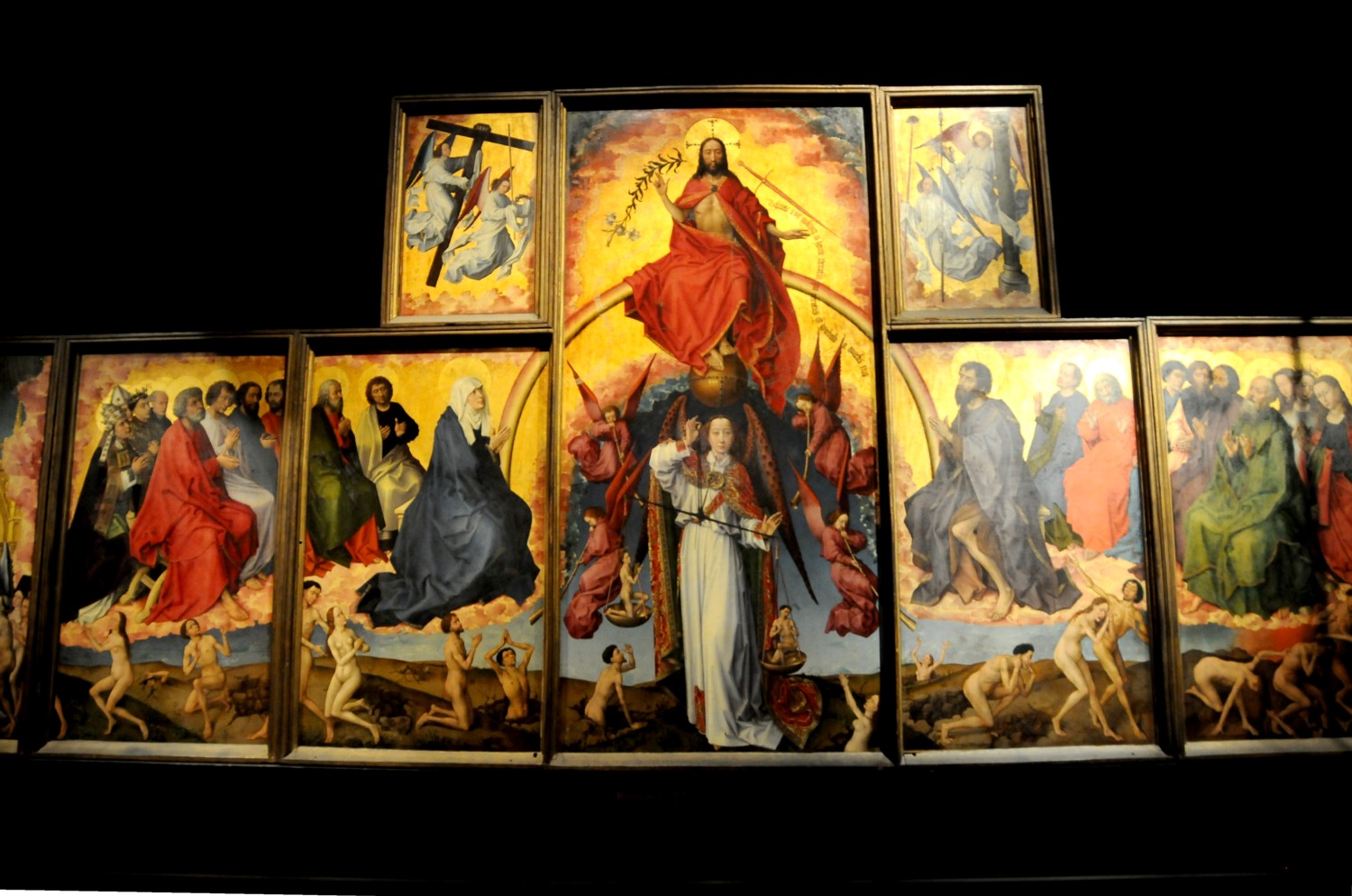
Panels of the Polyptych, completed in 1445, attributed to Flemish artist Roger Van der Weyden, at the Hotel-Dieu, Beaune © Karen Rubin/news-photos-features.com

The Caprice barge hotel take us through some of Burgundy’s most important attractions

by Karen Rubin, Travel Features Syndicate, goingplacesfarandnear.com

These next two days aboard the Caprice barge hotel, we cruise to a spiritual center, which is in the capital of Burgundy’s wine region, the Hotel-Dieu in Beaune, and the next day to the “mother church,” as it were, of Burgundy wine, the Clos de Vougeot, seat of the Confrerie des Chevaliers du Tastevin, the Burgundy wine society.

Tuesday.

I get up early enough to have another walk in this picturesque village of Chalon sur Saône, before the barge pulls away at 8:30 am. We sail down the River Saône as we enjoy breakfast.

Hotel-Dieu a charity hospital founded in 1443, is one of the most important monuments in Burgundy © Karen Rubin/news-photos-features.com

We spend a lazy morning, sailing on river – this part more typical of a cruise. We sit and read, chat with our traveling companions, and look out at the pleasant landscape – riverside homes, and occasional heron or egret.

Before we know it, it is time for lunch – “charcuterie” (a cold meat platter), green bean salad, tomato and feta cheese salad, green salad, and lemon tart.

The wine is 2010 Macon Villages, a Burgundy white Chardonnay that is light, fruity, and perfect for lunch; and Cotes du Rhone, 2010, of Lyon, fruity flavor of cherries and red berries, a blended Gambon Cabernet, light wine for lunch

Hôtel-Dieu has Burgundy’s largest roof of colored, varnished tiles © Karen Rubin/news-photos-features.com

We arrive at Seurre, a lovely riverside town with a 16th century church and beautiful brick houses from the 17th century and travel by bus 26 km to visit the famous city of Beaune.

Beaune is the wine capital of Burgundy most famous for the magnificent Hôtel-Dieu, a charity hospital founded in 1443. The most important monument in Burgundy, it boasts the finest Burgundian-Flemish architecture in the world (and I believe it) and the largest roof of colored, varnished tiles, its opulence seemingly contradicting its purpose.

The Hotel-Dieu was built in 1443 by Nicolas Rolin, the chancellor to the Duke of Burgundy, Philippe-le-Bon. Rolin was in charge of finances (collecting taxes), and lo and behold, became extremely wealthy. At the end of his life, he had a great desire to “give back” to community (and buy a place in heaven). In 1463, King Louis XI, said, “This is a beautiful thing to do with all the money he stole.”

Beds separated by red velvet curtains at the Hotel-Dieu, Beaune © Karen Rubin/news-photos-features.com

Remarkably, though no longer a hospital, the Hotel-Dieu is still a retirement home – with the longest waiting list in France. It is a wealthy institution from tourist revenue and donations over the centuries in the form of the vineyards and the wine that is produced. The home owns 60 hectares of most prestigious Bourgignon vineyards. At the annual wine auction, the wines typically fetch far more than wine is worth, to give “donation”.

The “new” part dates from the 17th century.

During June and July there are concerts here.

Inside, we see a vaulted gothic ceiling – how the hospital room would have had beds, with red velvet curtains for privacy, lining each side of the room.

The hospital area in Hotel-Dieu, where beds with red velvet curtains line both sides of the vaulted room © Karen Rubin/news-photos-features.com

We see where “Seule etoile” is spelled out in floor tiles, an expression of love from Rolin to his wife, meaning “only star,” which comes from the way he referred to his wife, “The only star of my heart.”

The kitchen has a huge dual-hearth Gothic fireplace, with its original accessories; the floor of the hearth is tiled with the “Seulle star” motto. Most interesting is the steel spit, made in 1698, which is turned by a little “robot,” Maitre Bertrand, dressed in the traditional costume of large floppy boots, white breeches, red jerkin with gold buttons and a white cap with turned up brim.

The Hotel-Dieu in Beaune boasts the finest Burgundian-Flemish architecture in the world © Karen Rubin/news-photos-features.com

We visit the centuries old pharmacy and can see the machine that was used then to make suppositories.

There are shelves stocked with bottles of ancient remedies from that time, like Teriacr, one of most common remedies of the time, made from venom of viper. I see a jar dated 1777.

In the pharmacy at Hotel-Dieu, the charity hospital founded in 1443, see centuries-old jars of medicines © Karen Rubin/news-photos-features.com

The glass bottles still contain “specifics” with names that sound like they have come out of Harry Potter: woodlice powder, eyes of crayfish, vomit nuts powder, elixir of property.

The piece de resistance of the hospice is the Polyptych, kept in a darkened room which you enter through a glass door. These are unimaginably stunning panels commissioned by Rolin in 1443 and completed in 1445, attributed to Flemish artist Roger Van der Weyden. Representing Last Judgment, it was placed above the altar of the Chapel, but was only allowed to be seen by the sick on Sundays and feast days.

The Polyptych at Hotel-Dieu in Beaune is attributed to Flemish artist Roger Van der Weyden © Karen Rubin/news-photos-features.com

The detail is so exquisite, there is even a large magnifying glass that makes sweeps over the panels. You see St. Michael weighing souls, Christ, Virgin Mary (trying to alleviate judgment), St. John, apostles. The people who are damned are on the right; the left has people who will go to heaven.

Then you walk through a room of tapestries – the largest series of seven tapestries, woven at Tournai at the beginning of the 16th century, tells the parable of the Prodigal Son. Another series of Brussels tapestries dating from the end of the 16th century, tells the story of Jacob.

Our walking tour continues in Beaune – the church of Notre Dame, dating the 13th century, has a magnificent stained glass window, rare for its grey and yellow coloring, dating from 16th century.

Panels of the Polyptych, completed in 1445, attributed to Flemish artist Roger Van der Weyden, at the Hotel-Dieu, Beaune © Karen Rubin/news-photos-features.com

This being the capital of Burgundy wine, there is a Museum of Wine (we visit an outdoor display of ancient presses) and walk through ramparts from the 15th century.

After Guy’s guided tour, we still have two more hours to explore Beaune on our own before returning to the barge by bus. It is a bustling city, with loads of wine cellars and shops and cafes, befitting a wildly popular tourism center.

Beaune is a bustling city in Burgundy © Karen Rubin/news-photos-features.com

Back at the Caprice, I go off to explore Seurre, which dates from 1278.

The “new” town hall was built 1771, with neoclassic façade.

L’Eglise Saint Martin dates from the 13 C-14C; it was damaged in 16 and 17C but restored. The chapels were built for the most revered families of 15 and 16 C. The largest chapel was for the Bossuet family, the most influential family in the city. Some were elected city magistrates and mayors of Seurre, but the family had humble beginnings as wheel wrights. (There is a Rue Bossuet in Dijon.)

Clos de Vougeot, seat of the Confrerie des Chevaliers du Testevin, the Burgundy wine society © Karen Rubin/news-photos-features.com

Dinner consists of a marvelous gazpacho soup with crayfish; codfish in a delicious lobster sauce served with artichoke, zucchini, and cherry tomatoes; and for dessert, a grape tart.

The cheese selection, Comte, is from the Franche-Comte region, and Sainte Maure is a masterpiece of Touraine goat cheese, rolled in black wood ash, recognized for the long straw through the middle (which facilitates handling).

Clos de Vougeot, in Burgundy’s Cotes de Nuits region, famous for its vineyards © Karen Rubin/news-photos-features.com

The wine this evening is a Montagny l’er Cru (“cru” means it is a superior wine); and a 2010 Chinon from the Loire, which has a sharp, firey, fruity, black currant flavor.

I am thoroughly enjoying these anecdotes about the wines and cheeses.

Clos de Vougeot & The Confrerie des Chevaliers du Tastevin

Wednesday.

We start the day sailing on the River Saône to St. Jean de Losne, where we connect to the canal de Bourgogne.

The Cotes de Nuits, Burgundy’s famous wine-making region © Karen Rubin/news-photos-features.com

We see scores of barges here, including many live-aboard barges that people either rent or own. I don’t envy their effort to get through these locks on their own.

Today’s shore excursion takes us through the Cotes de Nuits region, famous for its vineyards, to Clos de Vougeot, where wine has been produced by local monks since the 12th century. It also is the seat of the Confrerie des Chevaliers du Tastevin, the Burgundy wine society.

Winemaking in the Cotes de Nuits dates back to the 12th century © Karen Rubin/news-photos-features.com

The 12th century monks of Citreaux transformed winemaking, turning their vineyard into a model for “scientific” pruning and cultivation.

In 1790, during the French Revolution, the Abbey and its annexes including the Vougeot vineyard, were confiscated and declared “Property of the Nation”. For the next century, the domain changed owners frequently. It was gradually broken down until 1889, when the buildings and remaining vineyard came into the hands of Leonce Bocquet, a Burgundian owner, who saved the edifice from destruction and spent vast amounts of money restoring it.

The Caprice cruises the picturesque canals of Burgundy © Karen Rubin/news-photos-features.com

Etienne Camuzet, acquired the chateau in 1920 and made it available to the Confrerie des Chevaliers du Tastevin, an association of wine growers, in 1934.

In 1944, it became the “spiritual” home to the Confrerie, which became the caretaker of the Clos de Vougeot, turning the chateau into a kind of Acropolis of Burgundy where pilgrims from the world over come (www.tastevin-bourgogne.cominfo@tastevin-bourgogone.com).

Roger, the first mate, maneuvers the Caprice through the narrow canal lock © Karen Rubin/news-photos-features.com

The association wanted to elevate Burgundy wine, which had fallen in prominence to Bordeaux wine. The society was meant to market the wine, but they did something quite clever: they invited popular entertainers (like Maurice Chevalier) and important diplomats to become Members of the Society. It worked, and they brought back Burgundy as a major player in the international wine industry.

On the walls, we see the annual photo of the Society members, looking regal in their sashes.

The motto here: “Jamais en vain; toujours en vin” (“Never in vain; Always in wine”)

From here, we go to a private wine tasting in Nuits St Georges before we return to Caprice.

The Caprice cruises through picturesque countryside of Burgundy © Karen Rubin/news-photos-features.com

Along the way, we see fields of sunflowers browning – used for fuel – and solar panels on “ancient” houses.

Meals are an Event

Meals are an event on the Caprice. The tables today are decorated with colored napkins, beautiful place settings. Tina waits for everyone to be seated, and then makes a presentation of the menu, the wines and the cheeses, telling interesting stories about them.

The lunch menu consists of feuillete de tomatos – sundried tomatoes and goat cheese in pastry; wild rice and tuna; celery root salad; green salad ; and for dessert, crème brule.

The Caprice cruises the canal of Burgundy © Karen Rubin/news-photos-features.com

The wines are Cotes Chalonnaise and Cotes de Provence Rose

After lunch, we bike along the tow path of the canal.

The gatekeeper at lock 62 shows us his museum of collections – everything from postcards to wine to coins.

Dinner this evening includes melon with cured ham and St. Croix du Mont wine; Duck breast served with a peach sauce, Provencale tomatoes and sugar snap peas; and for dessert, almond cake with a lemon tea mousse and passion fruit.

Fine dining aboard the Caprice

© Karen Rubin/news-photos-features.com

The wines are a 2009 Saint Veran, a rich buttery white Bourgogne and, befitting this morning’s visit, a Bourgogne Hautes Cote de Nuits, a rich red, fruity wine.

The cheeses today are Morbier, a cow’s milk cheese, sometimes known as night/day cheese becasue one side is made from morning milking and the other is evening, Tina says. “With a good palette, you can tell the difference -stronger tasting side is the morning milking, more flavor.”

Valencay is a goat milk cheese in the shape of a truncated pyramid, with a salty flavor and crumbly texture, coated in wood ash to preserve the flavor. Tina tells us the story of the cheese, which dates back to Napoleon: it was made in his honor in the shape of a pyramid, expecting Napoleon to be victorious in Egypt. Instead, Napoleon, who lost in Egypt, was offended by the point of the cheese, so it is always made with a truncated pyramid “so not to offend his relatives” (it is fantastic).

The Caprice is owned by Barging Through France, and represented by France Cruises, Inc, San Antonio, Texas, 866-498-3920,www.francecruises.comwww.FranceCountryTours.com.

(Originally published in 2011)

____________________

© 2017 Travel Features Syndicate, a division of Workstyles, Inc. All rights reserved. Visit goingplacesfarandnear.com,  www.huffingtonpost.com/author/karen-rubin , and travelwritersmagazine.com/TravelFeaturesSyndicate/. Blogging at goingplacesnearandfar.wordpress.com and moralcompasstravel.info. Send comments or questions to FamTravLtr@aol.com. Tweet @TravelFeatures. ‘Like’ us at facebook.com/NewsPhotoFeatures
 

Barging through Burgundy, Day 2: Chateau de Rully

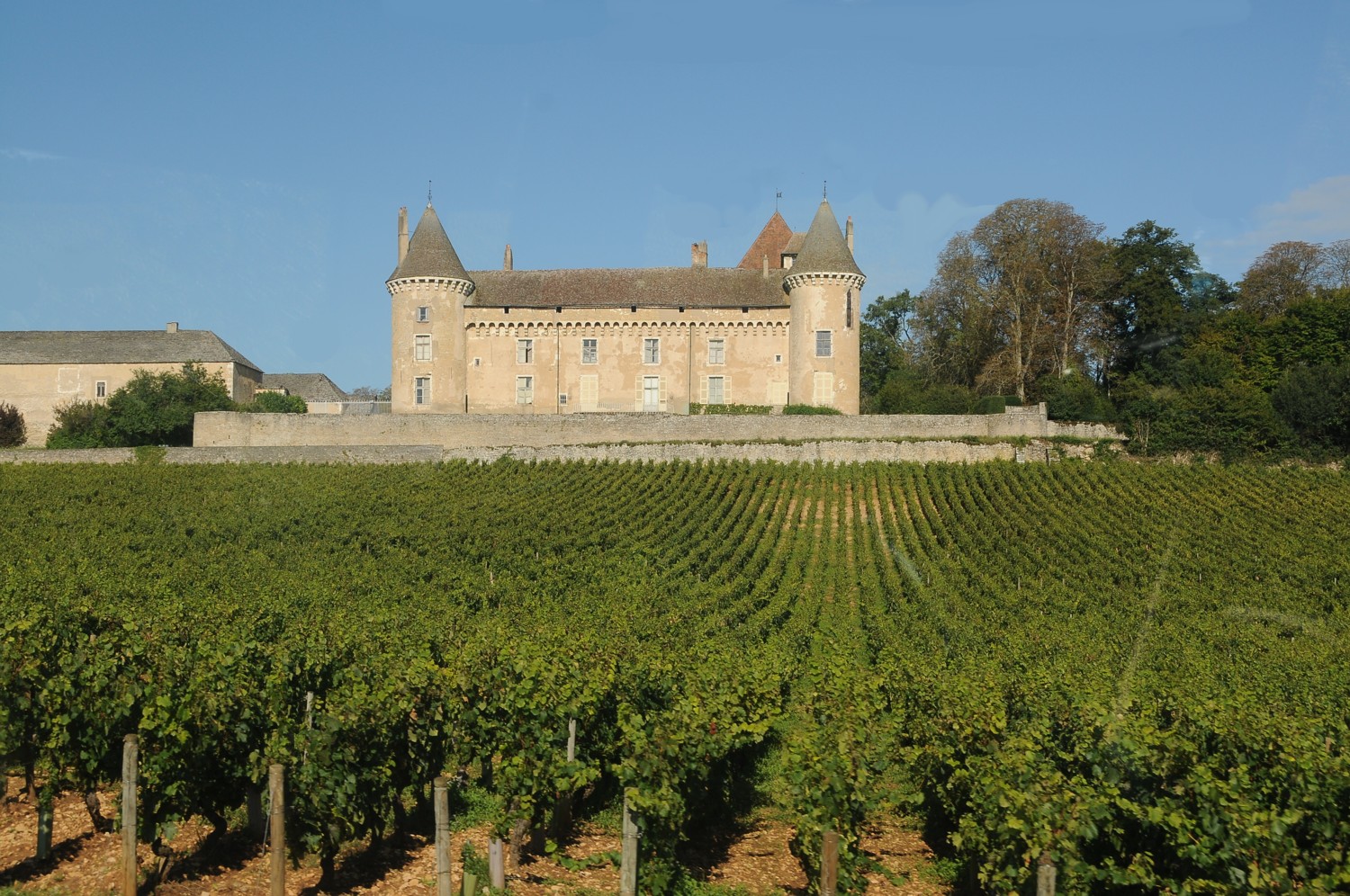
Chateau Rully in Burgundy, France. which has been in the same family for 900 years © Karen Rubin/news-photos-features.com

Day 2 aboard the Caprice barge hotel brings us to a castle in the same family for 900 years

by Karen Rubin, Travel Features Syndicate, goingplacesfarandnear.com

Our second day’s excursion through Burgundy, France, aboard the Caprice, a barge hotel, proves to be an extraordinary highlight.

We travel by bus to the Chateau Rully, dating back to the 12th century. Most incredibly, the chateau has remained in the same family for 900 years.

Compte Raoul de Ternay and family greet us at their home, the Chateau Rully in Burgundy, France. The chateau has been in the same family for 900 years © Karen Rubin/news-photos-features.com

It is a most impressive structure, as we drive up through acres of vineyards to what looks more like a castle than a chateau. We will have a private tour by the current owner.

As we walk up the stone path, we are met by the youngest heir, Comte Raoul de Ternay (the third generation of the Ternays), his wife pushing a stroller, and their young son.

This is the home he grew up in, and which is still the home for their extended family, including his mother and aunt.

The Chateau Rully is surrounded by vineyards © Karen Rubin/news-photos-features.com

He explains that the family name has changed over the centuries, when ownership transferred through the female line. The main family names have been Rully, Saint-Léger (until end of 16th century), Montessus (into the 20th century) and nowadays Ternay. Most fascinating are the portraits of these ancestors that line the walls.

Ternay took over when his father passed away 16 years ago; the family must maintain the chateau without any state support, so 10 years ago, he opened it up to visitors.

This is so much different than seeing a castle, but having some sense of the people who lived in it. But there is no denying, the structure is formidable.

Portrait of Marie Ferdinande Agathonge de Vaudrey, imprisoned during the French Revolution, the local people protested and demanded her liberation. She saved the chateau for the family © Karen Rubin/news-photos-features.com

This medieval fortress was built around a 12th century square keep (Donjon), the oldest part of the chateau that remains. It reveals some interesting features of medieval military architecture with its parapet walk, battlements, machicoulis and loopholes.

During the 14th century, the defense system was improved a path round, the battlements, with crenellations for firing weapons, merlons for protection, and loopholes for archers. A dry ditch (moat) was built around the château to reinforce the defense – the only way in was a drawbridge.

As we walk in, Ternay explains that the dry moat was removed by his great grandfather at the end of the 19th century, after he fell in.

Compte Raoul de Ternay hosts a wine tasting in the massive kitchen of the Chateau Rully © Karen Rubin/news-photos-features.com

We walk past a statue of Saint Mary. He tells us that the chateau was occupied by Germans during World War II for only about two months before D-Day, but for most of war, his great grandfather managed to keep them out, insisting that the historic building would be bombed if they occupied it. His grandmother installed the statue of Saint Mary, for having survived World War II.

It makes you think about how this building managed to survive through all the tumult over the centuries.

The main building dates back to the Renaissance.

Cote de Nuits, wine region in Burgund © Karen Rubin/news-photos-features.com

The current appearance of the chateau was designed in the 15th century with the addition of a small courtyard and North and East wings, turning the fortress into a manor house. Outbuildings, and the great and lower courtyards were added in the 18th century. An 18th century building boasts Burgundy’s largest stone roof.

The Chateau is by no means a museum and very much a private home, he tells us, so we will see a television among other modern accoutrements, and family photos – which to me, makes it all the more interesting.

We enter the home, where he tells us the main staircase dates from the 17th century – the weight is concentrated on the walls, making for an open entry space.

The pleasant dining room aboard the Caprice barge hotel © Karen Rubin/news-photos-features.com

“The staircase doesn’t creak,” he says, joking that he could sneak into house when he was younger.

We are ushered into a beautiful salon, which he says is used very few times a year because of the fragile furniture. There are two mirrors, made in two different eras: a 17th century mirror made in six parts because that is what the technology allowed (the Chateau de Versailles has same kind of mirror); the second was made in the 18th century, in two parts, because of the technological improvements.

Chalon sur Saone © Karen Rubin/news-photos-features.com

Most fascinating to me are the portraits we see of his ancestors – the great grandfather who protected the castle in World War II.

But most interesting of all is the portrait of Marie Ferdinande Agathonge de Vaudrey. Born in 1740, she was 16 when married and had 15 children by the time she was widowed at 32. She was imprisoned as an aristocrat during the French Revolution, but the local people protested and demanded her liberation, and finally, the authorities said, “Take her and get out.”

She spent much of the Revolution in the castle, protected the castle, and was largely responsible for keeping it in the family, he says.

Chalon Sur Saone © Karen Rubin/

news-photos-features.com

Asked how long was she in prison, he says that family tradition said just three or four days but he found documents that showed she was in prison for 8-9 months.

Still, he distinguishes how “there were two revolutions, the one in the cities, and the one in the towns. The Revolution in the countryside wasn’t so ‘dramatic,’ the count says.

Chalon Sur Saone

© Karen Rubin/news-photos-features.com

He points to a stunning wood cabinet that was made in 1899 by his great-great-grandfather, a master wood maker and artist, made of mahogany from Cuba.

We are brought into the kitchen – an amazingly massive room with vaulted ceilings built in the original keep, and a massive 1771 fireplace. It was “modernized” in the 19th century with a stove and the fireplace was no longer necessary. The stove itself, is fascinating to behold.

St Vincent Square, unchanged in centuries. The centerpiece is an 11th century cathedral © Karen Rubin/news-photos-features.com

Here Ternay hosts a wine tasting made from grapes from the Chateau Ruilly vineyards.

Everywhere you look in this great room, there is some fascinating artifact, including a 14th century old mug from one of his ancestors, which he says he still uses.

(Chateau de Rully 71150, 33 (0) – 385872089, chateauderully.com)

Cruising on the Canal

Wood decoration on a tudor building in Chalon Sur Saone © Karen Rubin/news-photos-features.com

We return to the Caprice for lunch: salads of carrots and coriander, lentils cooked in orange juice, a wonderful Quiche Lorraine, chocolate mousse for dessert; and enjoy Pinot Noir – Bourgogne 2009 and Pinot Gris Van D’Alonso 2009.

We float down the canal as we dine. You chat amiably, savor the flavors, and see the scenery flow by in slow motion.

Tapestry in St Vincent’s, Chalon sur Saone © Karen Rubin/news-photos-features.com

I am relishing the benefits of a cruise style of trip: you have all the relaxation and comforts of a resort-style vacation, with all the interest and variety of a sightseeing-style trip, and without the packing. We are, after all, immersed in a foreign country with a storied history. But the character and size of this barge makes it all the more special, and river cruises are particularly special because of the pace of the journey, and the fact you are always seeing interesting landscapes on both sides.

The 12th century cathedral, St. Vincent Square, Chalon sur Saone © Karen Rubin/news-photos-features.com

You notice everything: now we are going through the lock and going down. Lock 28 has the date in stone: 1862.

I am enjoying lunch so much, I lose track and realize I have just five minutes to prepare to get off at lock 28.

The Caprice barge hotel, tied at the steps to Chalon sur Saone © Karen Rubin/news-photos-features.com

Tina tells us we have to get back on by Lock 34 or else the towpath turns away from where the Caprice will go on to enter the River Saône.

The route here is gorgeous pastoral scenery of farms and fields.

We bike up to lock 34, have more time, so go back to 33, then walk back to 34.

It’s Lock 35 that has the severe drop, 55 feet, which brings us level to the river.

Biking along the towpath adjacent to the Canal du Centre © Karen Rubin/news-photos-features.com

We float into Ville Chalon sur Saône: you really appreciate arriving in the city by water: the view is stunning, dramatic, with the ancient city on both sides of the water, spanned by an elegant bridge.

Chalon was built alongside the Saône about 3000 years ago. It was a naval base even during Antiquity, hosted large fairs during the Middle Ages, and was a trading center into modern times. It has a magnificent old town, which is so revealing for the way the street names, etched in stone, have been replaced.

The magnificent scenery along the Canal du Centre, Burgundy © Karen Rubin/news-photos-features.com

We tie up right at the city’s stone steps that lead from the water.

We arrive mid afternoon. Guy leads us on a walking tour of the old town just after we arrive.

The picturesque scenery as we float along the Canal du Centre, Burgundy on the Caprice © Karen Rubin/news-photos-features.com

Chalon was important during Roman conquest of Gaul – Julius Caesar, 52 BC. This was last navigable port from Mediterranean. Roman ships carried wine northbound; that’s when the vineyards were started.

Chalon was part of Burgundy, which in the 12 C was an independent realm governed by a Duke (Dijon was the capital). Burgundy allied with England in the Hundred Years War. this brings up the story of Joan of Arc: in 1429, Joan of Arc began her quest to unite the French behind the future Charles VII and drive the English out of France. Joan was captured by Burgundian troops and handed over to the English, who burnt her as a witch (for wearing men’s clothes), at English-held Rouen in 1431. English Henry VI was crowned king of France in Paris.) We see what remains of a fortress.

The Caprice cruises the Canal du Centre © Karen Rubin/news-photos-features.com

During WWII when Germans invaded France, and the Demarcation line was drawn between Fermany and Vichy, it went through Chalon. Jewish resistance fighters went through (to get to Switzerland).

Just up from the stone steps where we tie up the barge, we come up into the square, where we see a statue to Nicephore Niepce who invented photography in 1765 (he was a colleague of Daguerre’s).

The beautiful Burgundy countryside beside the Canal du Centre. © Karen Rubin/news-photos-features.com

Guy guides us through the town for the first hour – his commentary is absolutely fascinating and the town has wonderful architecture. Soon we are in front of Niepce’s house, where he lived in 1765, looking probably much the same as when he left it, on a picturesque narrow street he would have loved to photograph.

We see how street names have changed with political tides – there is Rue Voltaire, named during the Restoration, in the 1820s.

The beautiful Burgundy countryside along the Canal du Centre © Karen Rubin/news-photos-features.com

We come upon the St Vincent Square, unchanged in centuries. The centerpiece is an 11th century cathedral – the façade has been replaced after it was destroyed, but even then, the “new” facade dates from 1780. The base of the tower dates to the 12th century; the base of the Church is Romanesque; the gallery is Gothic; the organ is Baroque. There are some magnificent examples of centuries-old tapestries.

After our walking tour, we still have an hour more to explore on our own before returning to the Caprice for dinner.

This isn’t just an old city, it is a bustling town of 80,000 with a vibrant shopping street, and if you cross the bridge, you get to a modern residential area.

The Caprice cruises the canal

© Karen Rubin/news-photos-features.com

The dinner, Monday, is another extraordinary event: escargots a la crème d’ail (snails in garlic sauce); breast of guinea fowl served with a honey and saffron sauce, baby vegetables.

The cheeses tonight are Brillat-Savarin, developed in the 1930s in the north of France and named after a renowned 18th century food writer Brillat Savarin.

Also Epoisses, a local Burgundy unpasteurized cheese from the village of Epoisses in the Cote d’Or, halfway between Dijon and Auxerre; the rind is washed with Marc de Bourgogne, a local pomance brandy.

Chalon sur Saone at night

© Karen Rubin/news-photos-features.com

The wines are a Petit Chablis and the red is a Moulin a Vent, a Beaujolais made from the Gamay grape which, we learn, has a thin skin and is low in tannins.

The desserts are an assortment of traditional Burgundy sweets.

Chalon is such a beautiful city, after dinner, we walk down the gangplank, up the Medieval stone steps back into the town to walk about the old city. Yellow lights hit the stone of the buildings, making the most stunning shadows, shapes and textures. (We need to return by 11 pm, because they take up the gangplank.)

The Caprice is owned by Barging Through France, and represented by France Cruises, Inc, San Antonio, Texas, 866-498-3920,www.francecruises.comwww.FranceCountryTours.com.

(Originally published 2011)

____________________

© 2017 Travel Features Syndicate, a division of Workstyles, Inc. All rights reserved. Visit goingplacesfarandnear.com,  www.huffingtonpost.com/author/karen-rubin , and travelwritersmagazine.com/TravelFeaturesSyndicate/. Blogging at goingplacesnearandfar.wordpress.com and moralcompasstravel.info. Send comments or questions to FamTravLtr@aol.com. Tweet @TravelFeatures. ‘Like’ us at facebook.com/NewsPhotoFeatures
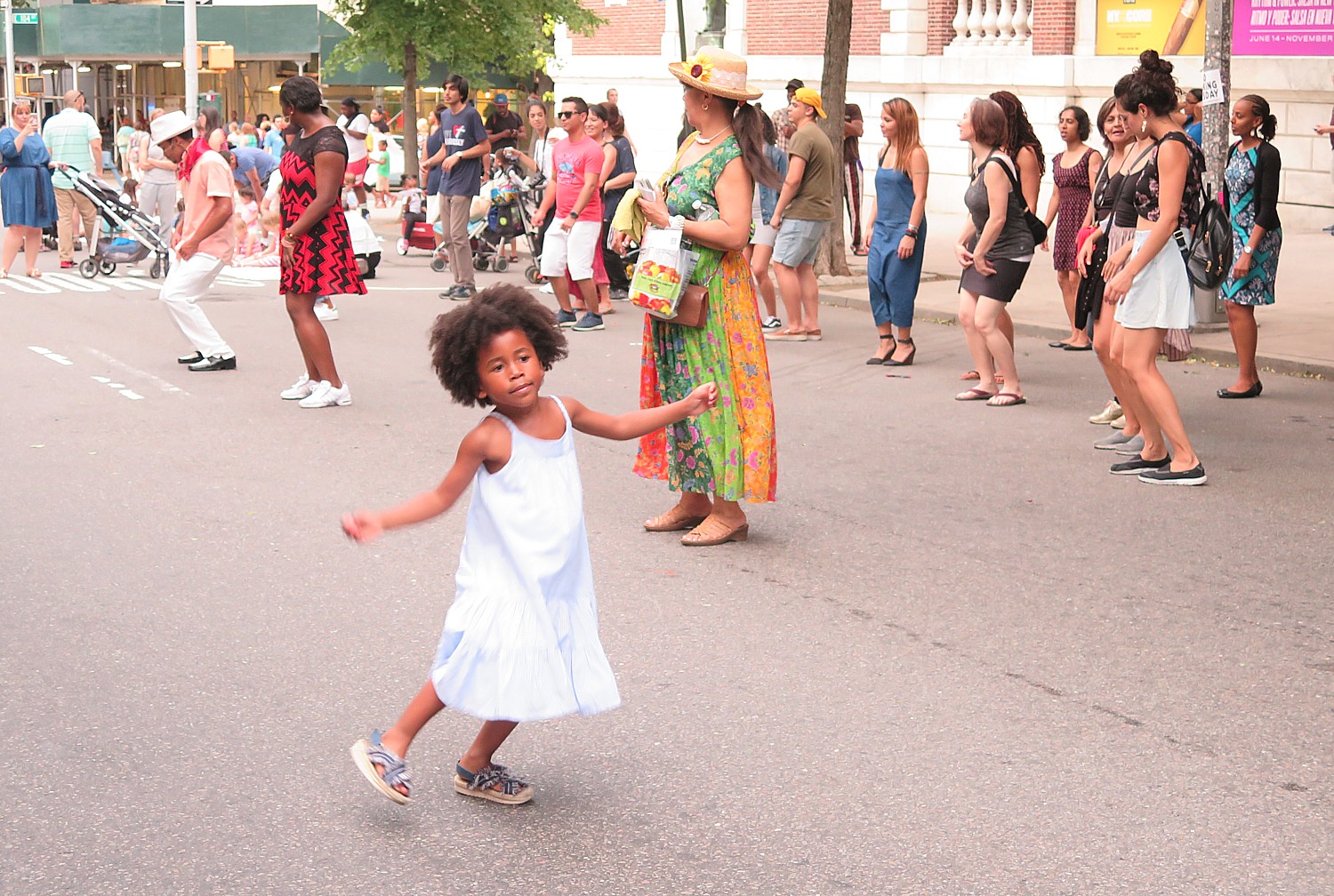
 

Barging through Burgundy, France: A Visit to Chagny Market


Cruising on the Caprice barge hotel is a marvelous way to experience the French countryside © Karen Rubin/news-photos-features.com

by Karen Rubin, Travel Features Syndicate, goingplacesfarandnear.com

It is late afternoon when we get our first glimpse of the Caprice, the barge hotel that will be our home for the next week as we cruise along the canals and River Saône through Burgundy.

I literally fall in love with the boat, looking much like a Monet painting on the mirror-still water of the canal. It is absolutely sweet, charming, inviting.

The gorgeous Burgundy countryside on our way to St. Leger Sur Dheune, where the Caprice is docked © Karen Rubin/news-photos-features.com

We have arrived where the Caprice is docked at St. Leger Sur Dheune after about 1 1/2 hour bus trip from Dijon. Dijon is an enchanting Old City, just a few hours outside of Paris, that I bless my good sense to have planned to stay over at the historic Sofitel Hotel when we return (the cruise alternates routes; this is the northbound route that ends back in Dijon).

During the course of the next week, the canal and river cruise of Burgundy on the Caprice proves to far exceed my hopes and expectations – everything from the creature comforts onboard, the fine dining and wining, the pleasant company of our fellow travelers, the picturesque landscapes and fascinating attractions, the opportunity to bike and explore storybook quaint villages, the relaxed and casual atmosphere that is eminently more satisfying than lounging on a beach.

The biggest surprise for me are the excursions. Each day we are taken by bus to some really fascinating place, with our own guide.

The Caprice was built as a commercial barge, carrying grain, timber and coal, and converted to a passenger ship 25 years ago. It has a “boatee” shape – not squared off, flat like other barges – designed for rivers as well as canals.

The vineyards of the Cote de Nuits region, Burgundy, France © Karen Rubin/news-photos-features.com

The upper deck of the Caprice has a two-tiered sundeck with tables, chairs and umbrellas. and is decorated with pleasing flower pots. The indoor salon has comfortable upholstered seating and large picture windows, and is separated from the dining area by a bar stocked with beverages and ice. The dining area has lovely picture windows that let in light and let you see the countryside float by as you linger over your meal.

We gather together in a comfortable lounge for an orientation to the barge and our cruise, meet the staff, enjoy a welcome drink of the traditional Burgundian Kir Royale and meet our fellow travelers.

Our group is extremely diverse and comes from all over: Colorado, Connecticut; Cleveland, Ohio, Detroit, Michigan; Ft Lauderdale, Florida; Vancouver, England, Australia, and New York.

Tina, the general manager, is from the UK, who we come to know as incredibly pleasant, efficient, and good-humored, welcomes us with a very helpful orientation to the boat and the program, and introduces the staff: Chef Herve, hostesses Sophie (who is now married to Herve) and Molly, Roger, the first mate and Captain Willy.

Tina gives us a wonderful orientation to what we will experience.

The boat floats so slowly along the canal, “a toddler can toddle at the same speed,” she says, so we can walk along side, and get back on at the next lock, or bicycle the towpath that goes alongside, or take the bike to explore nearby villages. (We just have to give some advance notice to Roger, the first mate, to hand us down the bike).

The Caprice barge hotel, tied up at St Leger Sur Dheune, at the start of a week-long cruise through Burgundy © 2011 Karen Rubin/news-photos-features.com

During the course of our cruise, we will go through some 21 locks. Going through the locks is a main source of interest and excitement.

“We make it look easy but there is only two inches of space – so don’t stick your limbs out.” At the point the barge is level with the shore – just a few moments, really – that’s when we can get off and walk or bike along the towpath, or even bike into nearby villages, catching up with the barge further on (they give us an approximate time schedule).

She warns us that some of the bridges we go under are extremely tight space – and may even brush the top of the boat, so if we are standing on the high terrace, “be aware, you may have to duck.”

There are windows in cabins, but we need to close them when we are moving – because water will come in like waterfall.

The stunning scenes along the canal at St. Leger Sur Dheune ©  Karen Rubin/news-photos-features.com

The water on the Caprice is potable, but bottled water is provided, as well, and we can help ourselves to a chilled supply in the refrigerator, where there are also sodas and beer.

Wines – red and white – are served at lunch and dinner, and there is also a bar – you run your own tab by simply marking down what you have consumed.

Coffee and fresh fruit are set out all day long, and a platter of cookies is there for us when we return from our afternoon excursions.

A bell is rung 5-10 minutes before lunch and dinner, and to signal when we need to get ready for excursions.

Breakfast is more casual. We can help ourselves to a marvelous buffet, available from 7:30-9:30.

Biking on the towpath along the canal.

Everything is extremely well organized: Each day, they post the list of the locks we will be going through, with the distances to the next one, mostly half to one-mile apart (that lets you know when you can get on/off), and also post the menu, and the schedule for the day, and each day they tell us what we will be seeing the next day.

Each day, we arrive in our new destination for the night around 4:30-6 pm and dock, giving us time to explore these quaint villages and towns by walking or biking.

We will spend the first two days on the Canal de Sange – traveling about 8 miles – then join the River Saône, spend one full day on river, and then the next day, start on the river and end on the Canal de Bourgogne which will take us into Dijon.

Tina tells us that after 11 pm, the crew goes to sleep and “the last person in locks the door.” If we want to stay out later, we need to take a key to open the door.

The decor on the Caprice is extremely pleasing – nautical with rich blues and polished wood and brass fittings.

Below deck, Caprice has 10 cabins averaging 82 sq. ft. with (big surprise) private bathrooms. The cabins are cozy and comfortable, with warm wood paneling, a window, decent lighting, and good storage.

Our bags have already been brought to our cabin – we spend just a couple of minutes and then rush off. We have just enough time before dinner to explore so we immediately take off on bikes and along the towpath. This turns out to be some of the most picturesque countryside of the trip, and the late afternoon golden light makes it that much more enchanting. The farms dot the rolling countryside, we come upon some of the most contented looking cows I have ever seen, and some donkeys. The evening is picture perfect as the sun goes down.

Picturesque villages along the canal in Burgundy ©  Karen Rubin/news-photos-features.com

Everyone is seated at dinner by the time we return and we take the last open seats. Tina has waited for all of us before she starts the presentation of the menu, describing the courses and explaining the wines and the cheeses with fascinating insights.

This first night’s dinner lets us experience Chef Herve’s genius at combining flavors and textures: a salad of goat cheese with whole grain mustard greens, pine nuts and black current; the entree of Cod with balsamic reduction, red tomato (so full of flavor) and saffron risotto (texture is exquisite). The presentations are stunning – worthy of the finest restaurant. A feeling of absolute contentment rushes over me.

Indeed, the cruise is not just a “heart of Burgundy” itinerary, but a food and wine itinerary, and during the course of our journey, we really take a journey into French food preparation, and wines and cheeses (though I am pleased that the preparations are not as rich as they could be, and overall, you do not feel guilty enjoying the meals).

At lunch and dinner, there are both a white and a red wine and a couple of cheeses – different each time, so during the course of the cruise, we have had an amazing tour of French wines and cheeses.

This first night’s wine selections are Sancerre and Brouilly, served with a flourish.

Scenes out of an Impressionist painting are just beyond where the Caprice is tied up, at St Leger Sur Dheune at the start of the canal cruise ©  Karen Rubin/news-photos-features.com

The cheese is a delectable Camembert, one of France’s most famous, originating from Normandy, where cows graze on rich soil scattered with apple trees. Also, Fourme d’Ambert, from the Auvergne region, and one of the oldest cheeses in France, dating back to Roman times; it is one of the mildest blue cheeses with a creamy flavor and nutty finish. This cheese, Tina tells us, is injected with wine to help with ripening and for sweetness.

In these kinds of trips, the most interesting part is getting to know your fellow passengers, and each meal, we sit where we like (or where there is still an open seat) so over the course of the cruise, we get to spend time with everyone.

We meet Sidney, 90 years old, who tells us that she took her first trip to Europe when she was 16, in 1937, sailing across the Atlantic to Paris on the Bremen, a German war prize, operated by Cunard. She tells us how she arrived the day before July 14, Bastille Day, and stayed with a woman whose fiancé was killed in World War I. In Connecticut, she started a school, became a reading teacher, and then opened a bookstore. “Amazon.com killed it,” she says, and that’s when she started traveling again. At another meal, we learn that Sidney’s aunt married Teddy Roosevelt’s son; that one side of her family came on Mayflower while the other came in chains from Scotland.

Sunday, Market Day in Chagny

Breakfast is served fairly casually – a buffet that is set out between 7:30-9:30 am, satisfying both early and late risers.

We begin our cruise on the Canal until the bell rings signaling that we should assemble for the bus, and we are taken on our first excursion, to the charming town of Chagny, where the weekly Sunday market is underway (each of the cruises visits one of the local markets).

A picturesque scene in the late afternoon at St. Leger Sur Dheune at the start of the cruise on the Caprice © 2011 Karen Rubin/news-photos-features.com

It seems everyone has come from throughout the region – there is every manner of food – cheeses, breads and pastries, luscious looking fruits and vegetables, meats, plus clothes, CDs, housewares. There are amazing aromas and sounds, colors and textures. There must be a mile of stalls. It is exciting, vibrant, and marvelously colorful.

At one stall, there is a selection of chickens still with the heads on, ducks, and some other unidentifiable fowl.

The Caprice, one of France Cruises’ luxury hotel barges, floats up a canal in Burgundy © 2011 Karen Rubin/news-photos-features.com

I love seeing the French words on signs, hearing French and feeling my French jog back to memory in my brain.

We return to the Caprice for a delightful lunch of baked ham with Chablis sauce, broccoli salad, prawn and pasta salad, and green salad. The food is all delectably fresh – Herve shops twice a week at markets such as these.

The wine is a Bourgogne Chardonnay, and a Saumur Champigny.

The dessert is a creamy but solid white cheese, doused with a currant sauce that is magnificent.

We notice many live-aboard barges – some are rentals – and have an amazing appreciation for their skill in managing going through the locks, which often are just big enough for the barge. Most of the locks are self-service – some of the locks open automatically but others have to be hand-cranked.

We don’t stay on the barge long – every opportunity we grab the bikes and ride along the tow path or veer off into nearby villages.

In the afternoon, the Caprice ties up to give us time to explore a charming village, where we are able to bike around, enjoying the traditional architecture.

This evening’s dinner: a quail salad (with beet shoot sprout that gives it a remarkable texture), delectable roasted lamb in a rosemary sauce with potato, all with a gorgeous presentation. The dessert, a passion fruit shortcake.

The Caprice barge hotel takes you on the canals and rivers of Burgundy, passing gorgeous countryside and quaint villages © 2011 Karen Rubin/news-photos-features.com

The wine selections are a 2010 Pouilly Fume, from the Loire, with a wonderful dry, citrusy, fresh taste, and an Hautes Cotes de Beaune (where we will visit tomorrow), a medium bodied wine from grapes grown on high slopes.

The cheese selections are Chaource, is a triple creamy cow’s milk cheese that melts in your mouth like snowflake, and Cantal.

I am appreciating Chef Herve’s cooking – a young fellow, he is a master at unusual combinations of flavors and textures – his selections are always surprising.

The Caprice is owned by Barging Through France, and represented by France Cruises, Inc, San Antonio, Texas, 866-498-3920,www.francecruises.comwww.FranceCountryTours.com.

(Originally published 2011)

____________________

© 2017 Travel Features Syndicate, a division of Workstyles, Inc. All rights reserved. Visit goingplacesfarandnear.com,  www.huffingtonpost.com/author/karen-rubin , and travelwritersmagazine.com/TravelFeaturesSyndicate/. Blogging at goingplacesnearandfar.wordpress.com and moralcompasstravel.info. Send comments or questions to FamTravLtr@aol.com. Tweet @TravelFeatures. ‘Like’ us at facebook.com/NewsPhotoFeatures
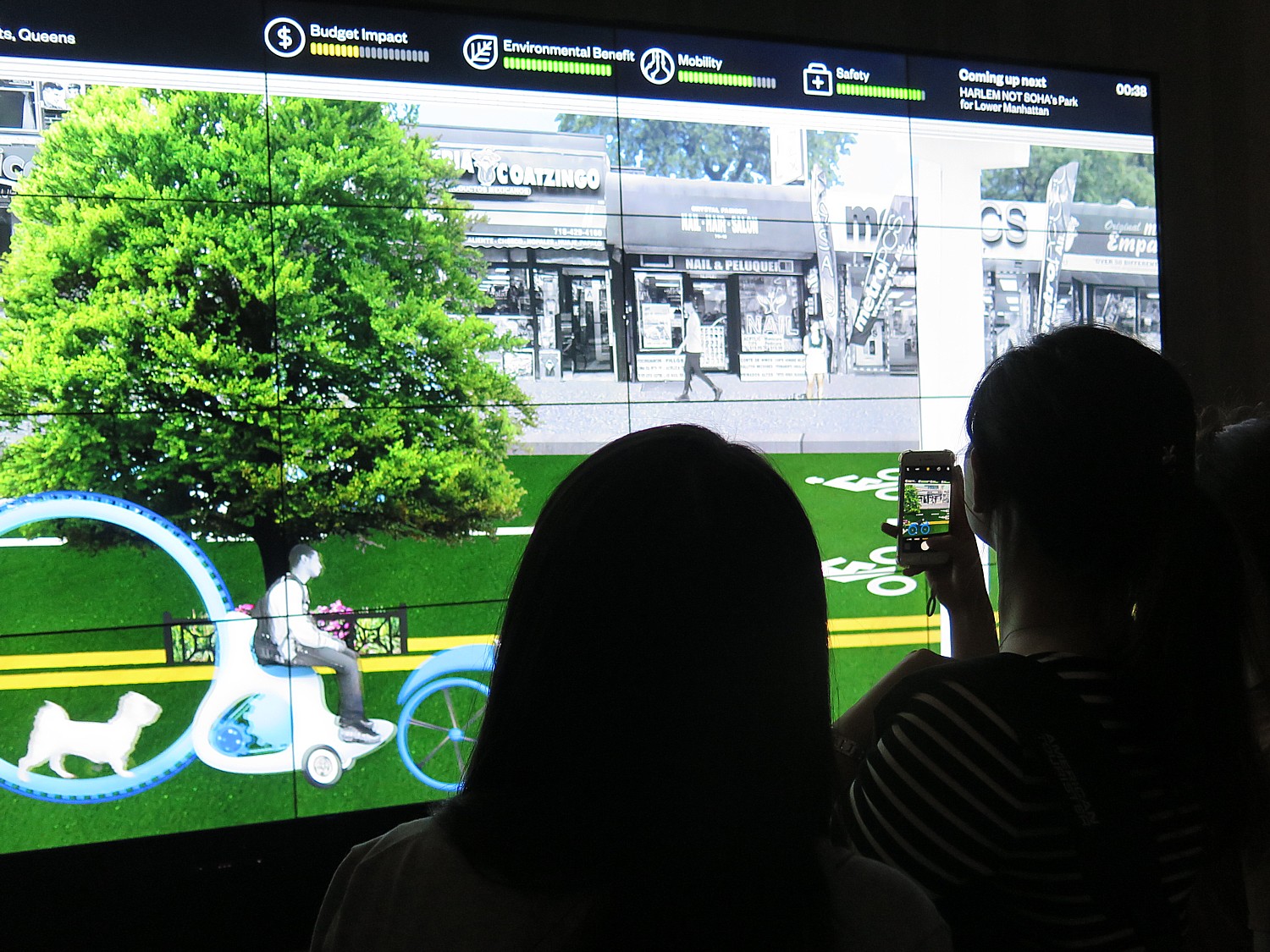
USAF Thunderbirds Headline Memorial Day Weekend Bethpage Air Show at Jones Beach, Long Island

USAF Thunderbirds in formation, at the Bethpage Air Show, Jones Beach, Long Island © 2017 Karen Rubin/goingplacesfarandnear.com

By Karen Rubin, Travel Features Syndicate, goingplacesfarandnear.com


The US Air Force Thunderbirds headlined the Bethpage Air Show at Jones Beach State Park, Long Island, flying the thrilling red, white and blue F-16s. The event over Memorial Day Weekend, May 27 and 28, honors those who have died in service to the nation and veterans.

USAF Thunderbirds solos demonstrate a tactical maneuver © 2017 Karen Rubin/goingplacesfarandnear.com
USAF Thunderbirds solos demonstrate precision flying © 2017 Karen Rubin/ goingplacesfarandnear.com
USAF Thunderbirds demonstrate precision flying © 2017 Karen Rubin/ goingplacesfarandnear.com
USAF Thunderbirds solos demonstrate a tactical maneuver © 2017 Karen Rubin/goingplacesfarandnear.com

New this year was the Warrior Flight Team, a 501(c)(3) charity comprised of a team of all volunteers, which works to bring career opportunities to veterans. They brought two Soviet-era jets, built in Czechoslovakia (when they were put on the market, collectors could buy them for something like $75,000): Black Vandy 1 and Roman 86, raced around the sky at 560 mph showing precision flying and tactical maneuvers.

New this year at the Bethpage Air Show at Jones Beach was the Warrior Flight Team flying Soviet-era jets, built in Czechoslovakia, Black Vandy 1 and Roman 86 © 2017 Karen Rubin/goingplacesfarandnear.com

A personal favorite is the GEICO Skytypers Airshow Team, a flight squadron of six vintage WWII era U.S. Navy SNJ-2 trainers . The team performs a thrilling, low-altitude, precision-formation flying demonstration filling the sky and coming from all directions (even right at each other) to provide spectators a unique viewing experience while showcasing the tactics and maneuvers utilized during training during WWII.

GEICO Skytypers, flying World War II-era training planes, demonstrate tactical maneuvers and precision flying © 2017 Karen Rubin/ goingplacesfarandnear.com

The airshow traditionally kicks off with a ceremonial parachute drop by a representative of the US Army Parachute Team, the Golden Knights, delivering the American flag to a tiny target on Jones Beach. The whole team then returns for a demonstration performance. They barrel out of their plane from an altitude of 12,500 ft, at a speed of 120 mph before pulling the cord to release their parachute; in one demonstration we see what happens when a chute fails at just 5,000 ft. (they have a spare chute). We learn that the parachutes they use, use the same aeronautical techniques as the original Wright Brothers plane in 1903.

Golden Knights, the US Army’s parachute team, at the Bethpage Air Show, Jones Beach, Long Island © 2017 Karen Rubin/goingplacesfarandnear.com
The US Army Golden Knights parachute team make a precise landing right on Jones Beach © 2017 Karen Rubin/goingplacesfarandnear.com

The line-up also includes many returning favorites, as well as some new entries:

106th Air National Guard Rescue Wing deploys worldwide to provide combat search and rescue coverage for U.S. and allied forces – indeed, only last month they rescued the cargo ship Tamar. They are a World-Class Team of diverse, adaptable personnel recovery focused war fighters with a mission to provide worldwide Personnel Recovery, Combat Search and Rescue Capability, Expeditionary Combat Support, and Civil Search and Rescue Support to Federal and State authorities; since 9/11, they have been deployed to Iraq, Afghanistan and East Africa. The 106th Air National Guard Rescue Wing provides Personnel Recovery to the state of New York. They demonstrate how they parachute into all sorts of conditions – today into the water, and how they are recovered into helicopters that follow along the C-130 (which can refuel planes in flight; the wingspan of the C-130 is so enormous – it is actually the distance the Wright Brothers flew on their first famous flight). Just how dangerous this is was demonstrated the next day when a US Navy Seal tragically lost his life in a parachute demonstration on the Hudson River for Fleet Week NYC.

106th Air National Guard Rescue Wing demonstrates a parachute rescue into water at the Jones Beach air show © 2017 Karen Rubin/ goingplacesfarandnear.com

John Klatt Airshows and Jack Link’s Beef Jerky teamed up to create a one-of-a-kind plane, the Screamin’ Sasquatch, powered by dual powerplants: a Pratt & Whitney 985 Radial Engine and a General Electric CJ610 (J85) Jet Engine with 3,000 lbs of thrust. This system allows the plane to achieve feats other stunt planes are unable to do. During his performance, Ret. USAF Lt Colonel John Klatt experiences forces of plus and minus 4Gs, which means a 200 lb. man would weigh 800 lbs. He travels at 250 mph.Considering the ridiculous aerobatics Klatt performs in the plane, it is astonishing to learn that the plane is a Taperwing Waco made famous by the barnstormers of the 1920s and 1930s, and is based on a 1929 Waco, modified and “beefed up” big time.


John Klatt performs thrilling aerobatics in his one-of-a-kind plane, the Screamin’ Sasquatch at the Jones Beach air show © 2017 Karen Rubin/ goingplacesfarandnear.com

A perennial favorite at Jones Beach is Sean D. Tucker, who performs impossible feats in a specially built, one-of-a-kind, most high-performance aerobatic aircraft in the world, the Oracle Bi-Plane. It is a fire-breathing monster with over 400 horsepower, weighs just over 1200 pounds,has a revolutionary set of wings that use 8 ailerons instead of 4, and responds to the slightest pressure on the control stick even at 300 mph. Sean flies the aircraft backwards, straight-down, tail-first at more than 100 mph. At points, he experiences 6 negative Gs. There he is, doing the inside outside loop; two consecutive Hammerhead stalls; the spiraling tower. More than half of Sean’s maneuvers are original and have never been duplicated by another aerobatic pilot. Amazingly, Sean started flying because he was afraid to fly, the long-time show announcer Rob Ryder notes. 

Sean D. Tucker in his specially built, one-of-a-kind, most high-performance aerobatic aircraft in the world, the Oracle Bi-Plane © 2017 Karen Rubin/ goingplacesfarandnear.com

David Windmiller, Long Island’s hometown hero (from Melville), thrills spectators in his Zivko Edge 540 aircraft, built especially for aerobatics, with seemingly impossible feats at speeds of up to 220 mph that keep his peers and his fans in awe. Windmiller has been flying since 14 year old, soloed at 16 year old and started aerobatic flying before he got his license and has accumulated 18,000 flight hours, including 8,000 doing aerobatics. He performs snap rolls, inverted flat spin (where the plane falls from the sky), 4 knife edge tumblers, inside-outside octogan loop. 

David Windmiller Long Island’s hometown hero thrills spectators in his Zivko Edge 540 aircraft, built especially for aerobatics © 2017 Karen Rubin/ goingplacesfarandnear.com

Matt Chapman, flying for Embry Riddle, performs maneuvers in which he experiences as much as 9 positive Gs and 6 negative Gs. His Eagle 180 plane has parts from 3 countries. He’s also an American Airlines captain.

Matt Chapman flies for Embry Riddle © 2017 Karen Rubin/ goingplacesfarandnear.com

This year’s air show marked the return of the American Airpower Museum Warbirds, which present historic aircraft in a moving display.

One of the historic planes from Long Island’s American Airpower Museum © 2017 Karen Rubin/goingplacesfarandnear.com

SUNY Farmingdale Aerospace’s Flying Rams flew seven of their 22 college-owned aircraft in a fly-by piloted by their top academic Professional Pilot performers. The State University of New York (SUNY) Flight Center is a crown jewel of the SUNY system. 

‘Yellow Peril’, one of the early vintage airplanes used for training pilots so-nicknamed for how dangerous they were to land, flown by the Bayport Aerodrome Society © 2017 Karen Rubin/ goingplacesfarandnear.com

The Bayport Aerodrome Society, formed in 1972 is composed of aviation professionals, recreational pilots, and people interested in preserving aviation history. ​As a “living museum” they have a variety of antique aircraft flying on the field including Bi-Planes, Champs, and Cubs. This was their first time at the Bethpage Air Show. One of their pilots, flying the plane with “26” painted on it, is 90-year old pilot who served in World War II. Another of their Waco planes was flown by Anne Lindbergh (wife of Charles Lindbergh), and later, by Tom Cruise. These planes, made mainly of wood (to conserve steel for the war effort) were used as trainers.

The Bayport Aerodrome Society vintage plane with #26 on its side is flown by a 90-year old pilot who served in World War II © 2017 Karen Rubin/ goingplacesfarandnear.com
The Bayport Aerodrome Society Waco plane of 1920s vintage is one that that Anne Lindbergh and Tom Cruise have flown © 2017 Karen Rubin/ goingplacesfarandnear.com

________________

© 2017 Travel Features Syndicate, a division of Workstyles, Inc. All rights reserved. Visit goingplacesfarandnear.com,  www.huffingtonpost.com/author/karen-rubin , and travelwritersmagazine.com/TravelFeaturesSyndicate/. Blogging at goingplacesnearandfar.wordpress.com and moralcompasstravel.info. Send comments or questions to FamTravLtr@aol.com. Tweet @TravelFeatures. ‘Like’ us at facebook.com/NewsPhotoFeatures


Because travel is a life-enhancing, relationship building, world-changing experience