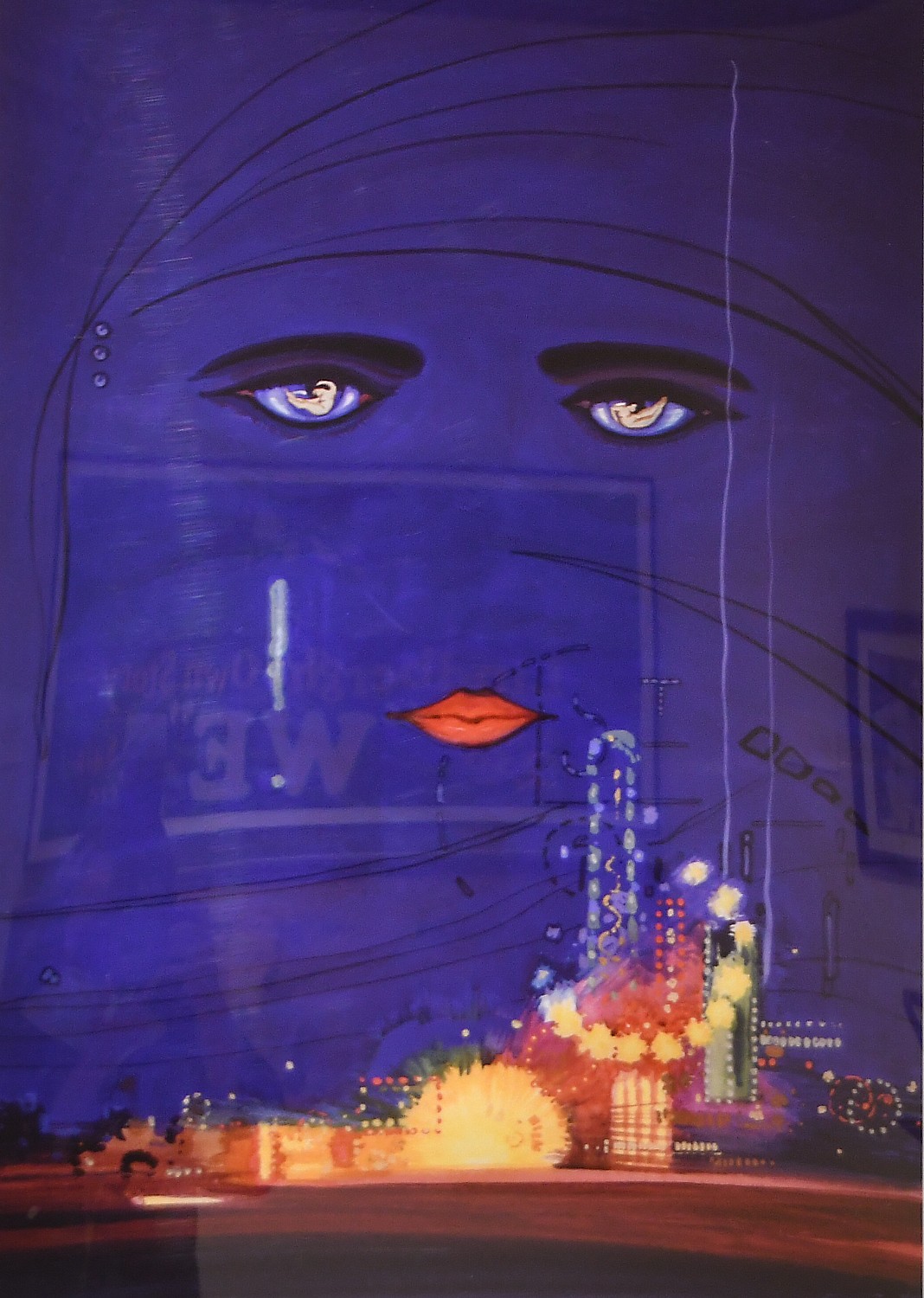
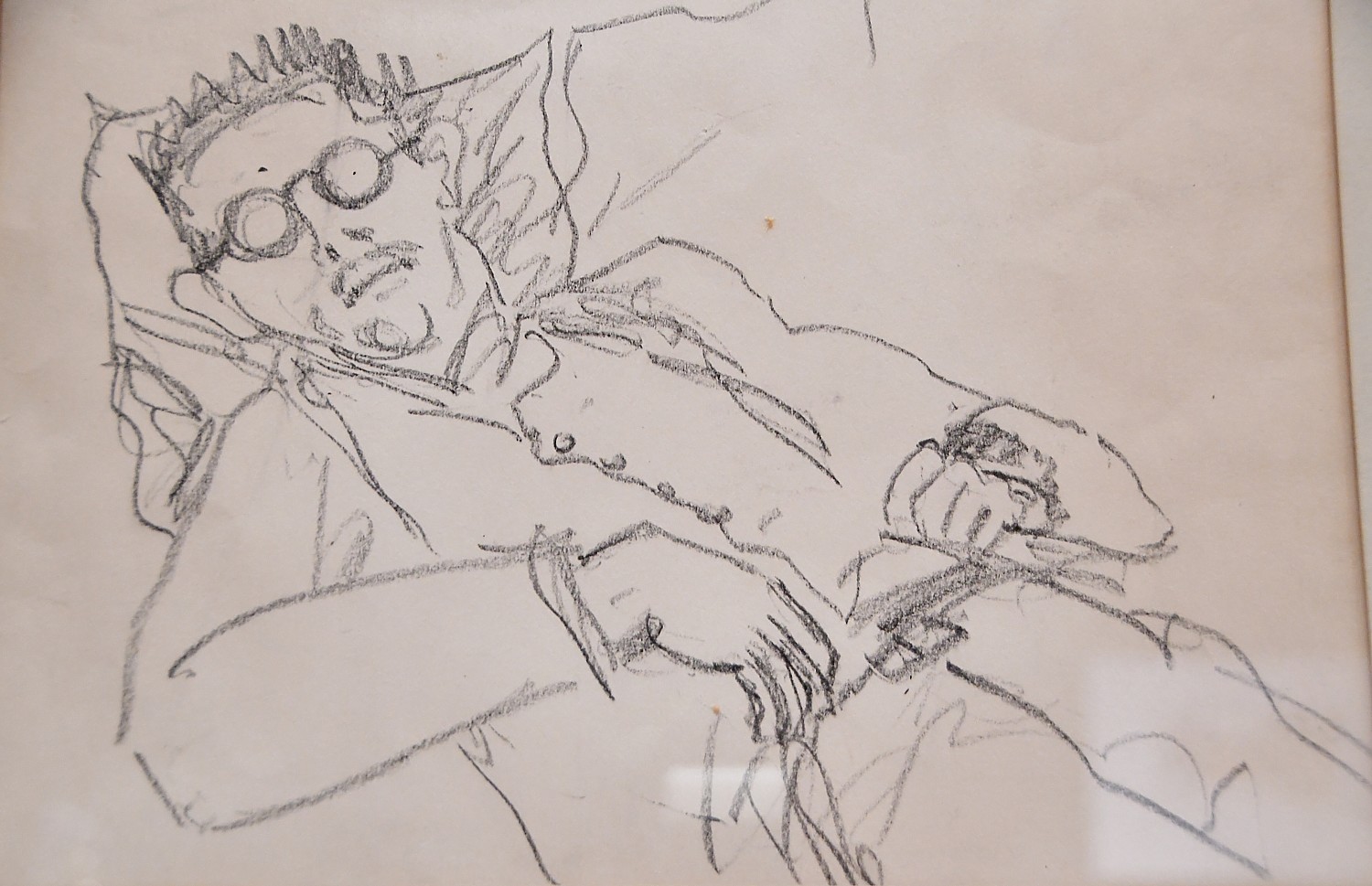
What is most remarkable about the new exhibit at the Nassau County Museum of Art, “Anything Goes: The Jazz Age” celebrating the Roaring Twenties, is the cross-connections between art, music, literature, design, furniture and fashion, and the people who were similarly cross-pollinating these cultural categories. There is a drawing by George Gershwin, another by ee cummings, the original painting by Francis Cugat (brother of Xavier, the musician) that F. Scott Fitzgerald wrote into his iconic novel, “The Great Gatsby” and had to have for its cover (and has never before been seen outside the Princeton University Library).
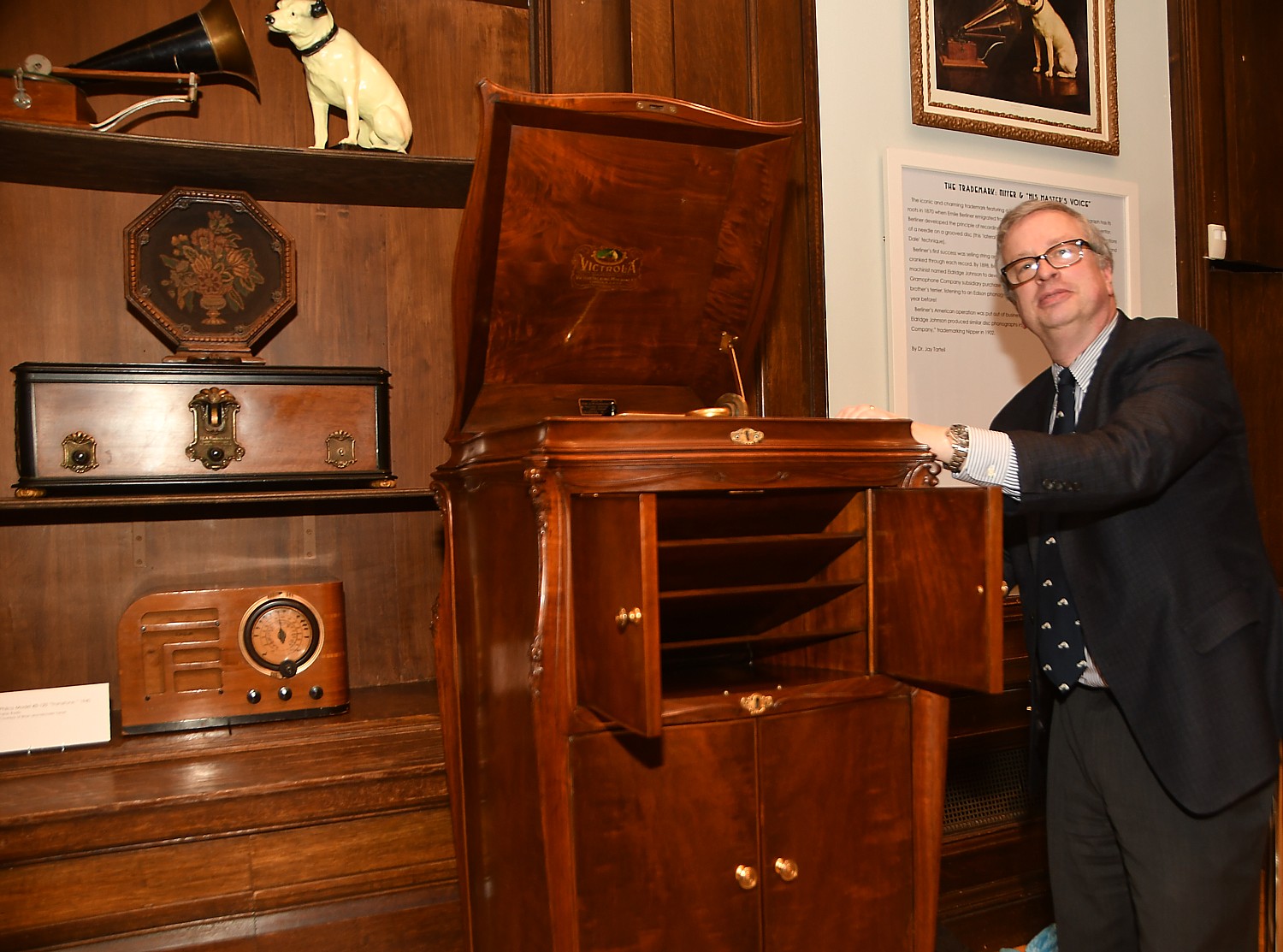
There are the Park Avenue Cubists, and the clique that gathered at Gerald & Sara Murphy’s beachhouse in Antibes (Sara, a famous Jazz Age muse, is the subject of a little-known Picasso drawing of her on the beach at Antibes). One room of the fantastic Frick mansion that is now home of the museum is devoted to Jazz Age music, with gramophones and Victrolas and radios that show off the design, while early records from the collection of Dr. Jay Tartell play. Even fashion and jewelry design (Tiffany is represented).
There are so many astonishments as you go through – James Joyce’s “Ulysses” was censored and burned but here in a bookcase is one of the first editions, along with a copy of F. Scott Fitzgerald’s “This Side of Paris,” based on Hobey Baker, a World War I flying ace and Princeton hockey star and in a gallery, the original Hobey Baker Memorial Trophy.
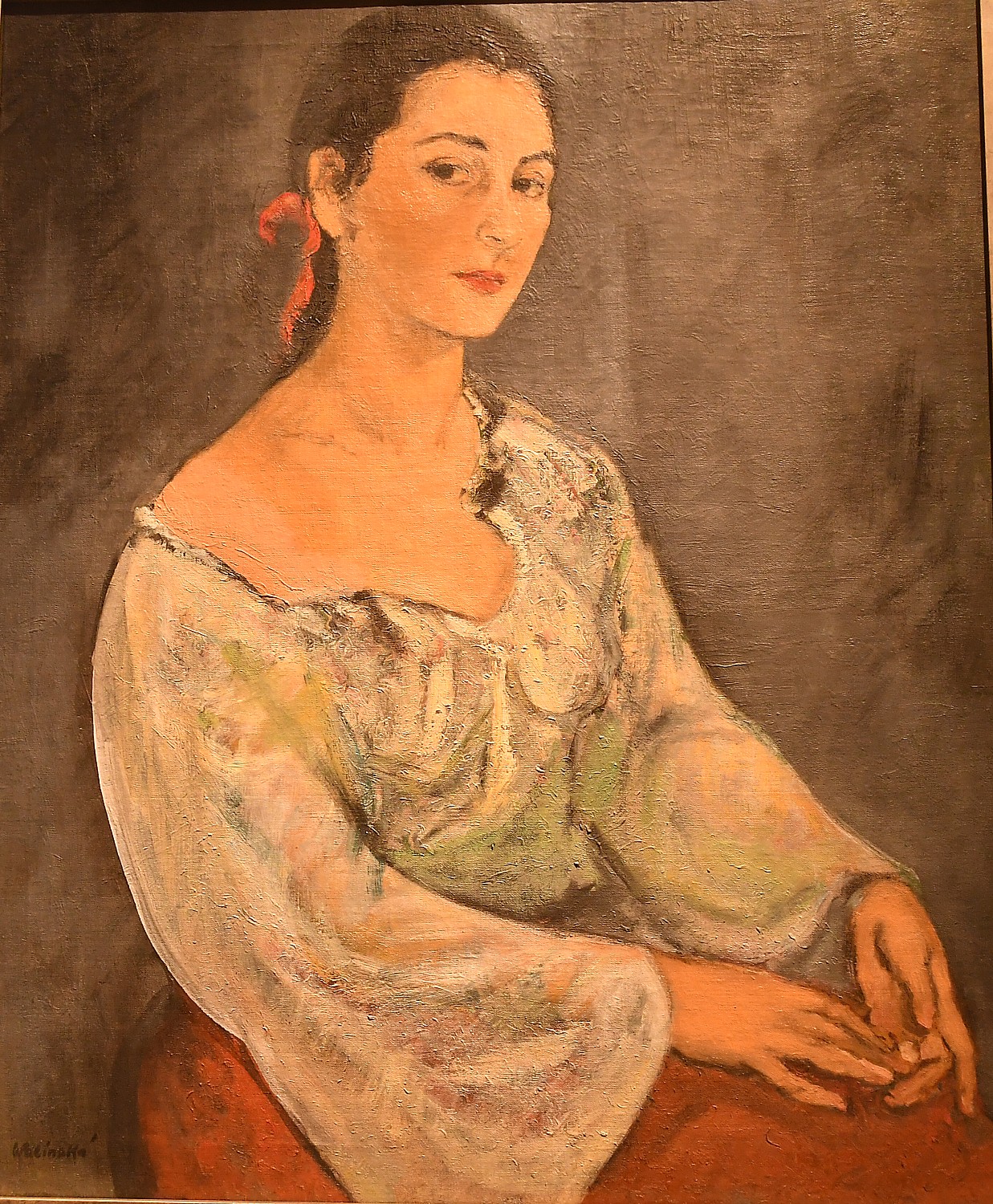
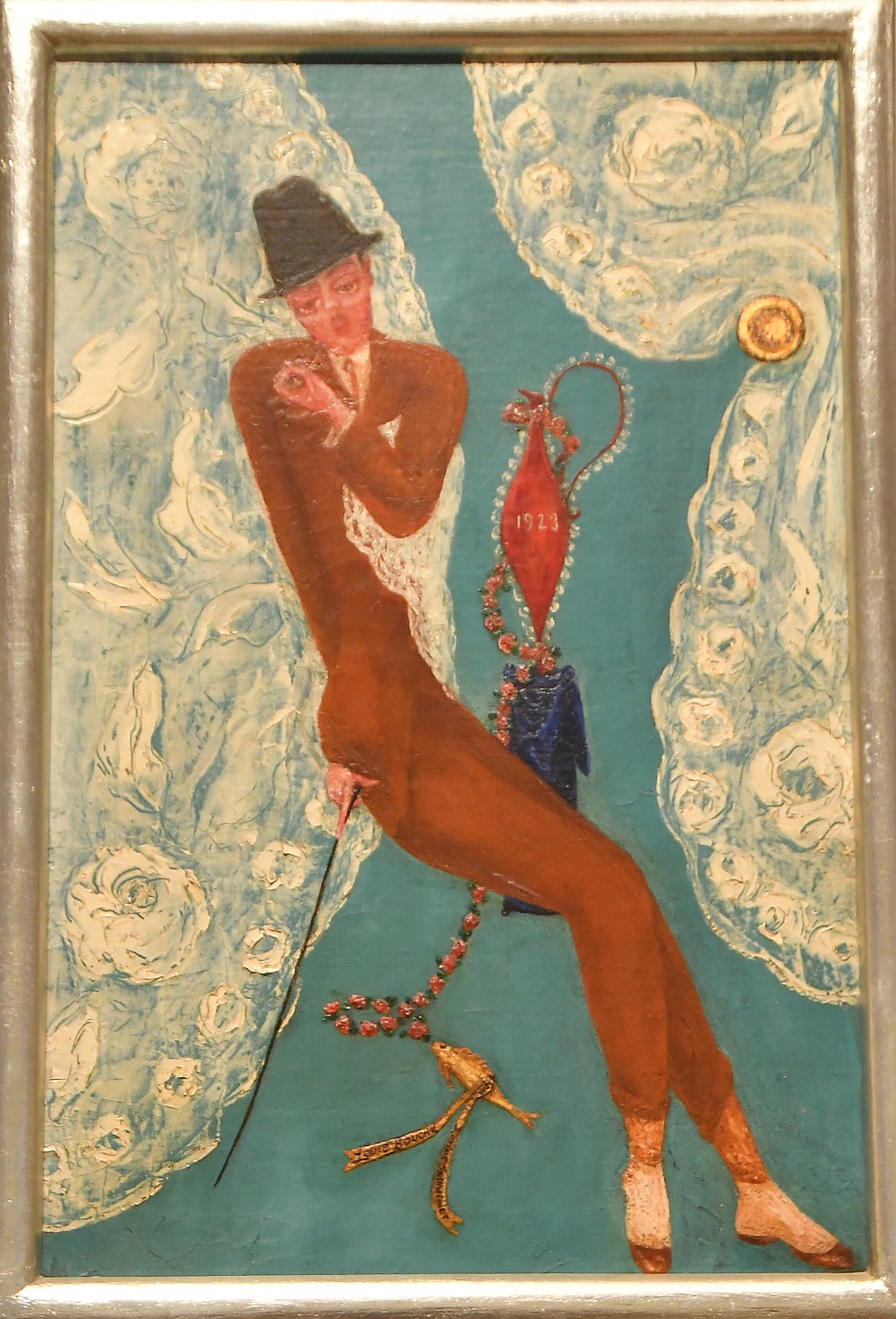
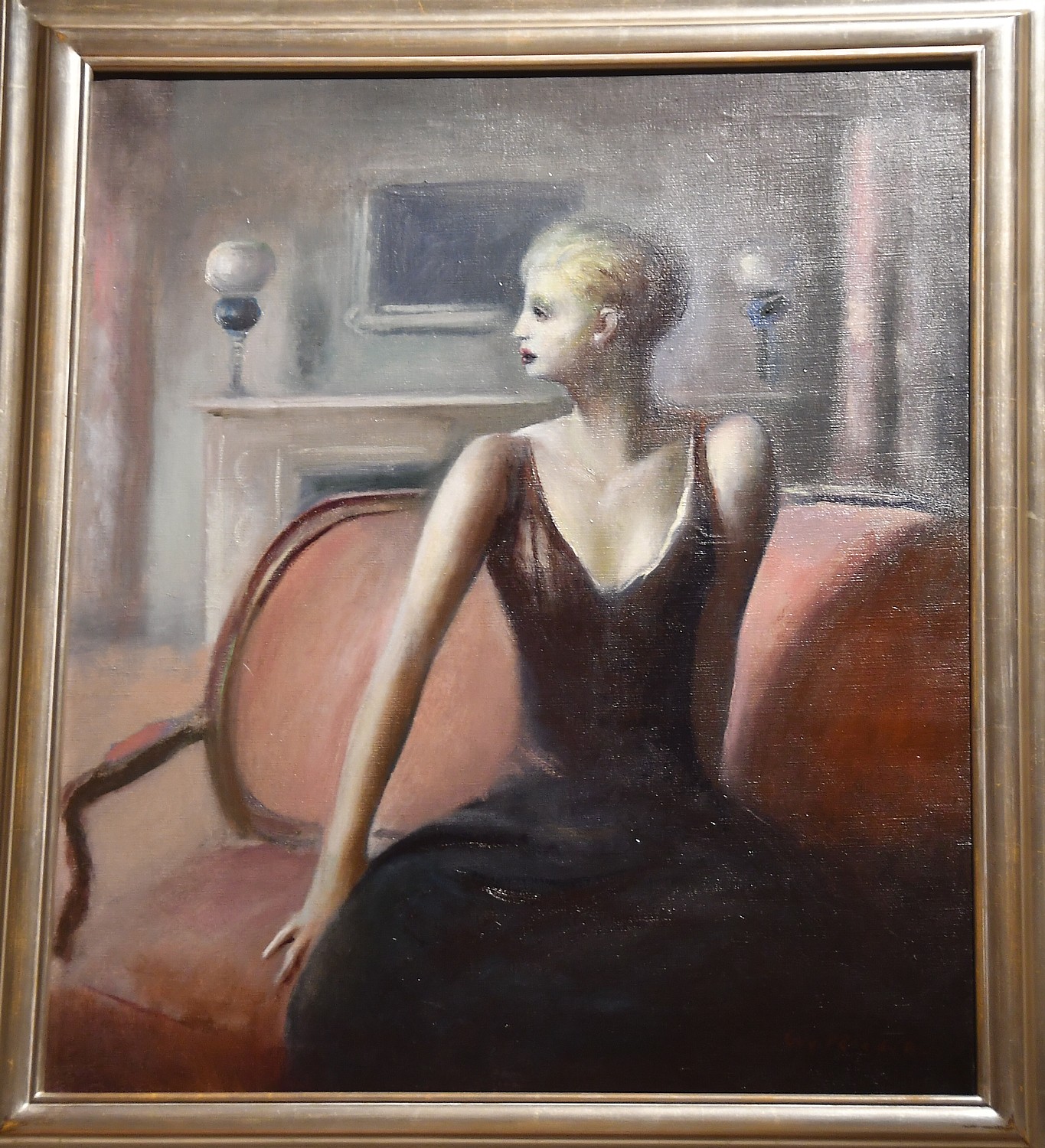
In this extraordinary multimedia exhibit, you are immersed in the masterpieces and experiments of a generation that changed the history of Modernism. The giants among the artists – Picasso, Léger, Matisse, Beckmann, Nolde, Lachaise, Man Ray, Stuart Davis, Florine Stettheimer and Tamara de Lempicka – are all represented in the show with major works, but there are so many artists – particularly women artists – who will be new for many like Anna Walinska, a teenager from Brooklyn who lived in Paris during the ‘20s and met Picasso, Matisse, Stein and others while making the drawings and paintings which are on view in a solo gallery in the show.
The exhibition tracks the progress of Modernism in art from Cubism to Neoclassicism. Composers such as Gershwin and Porter were taking syncopation and the blues to new heights at this time, and their records, sheet music, and piano rolls are on view and are heard throughout the show on ’20’s-era turntables and player pianos.
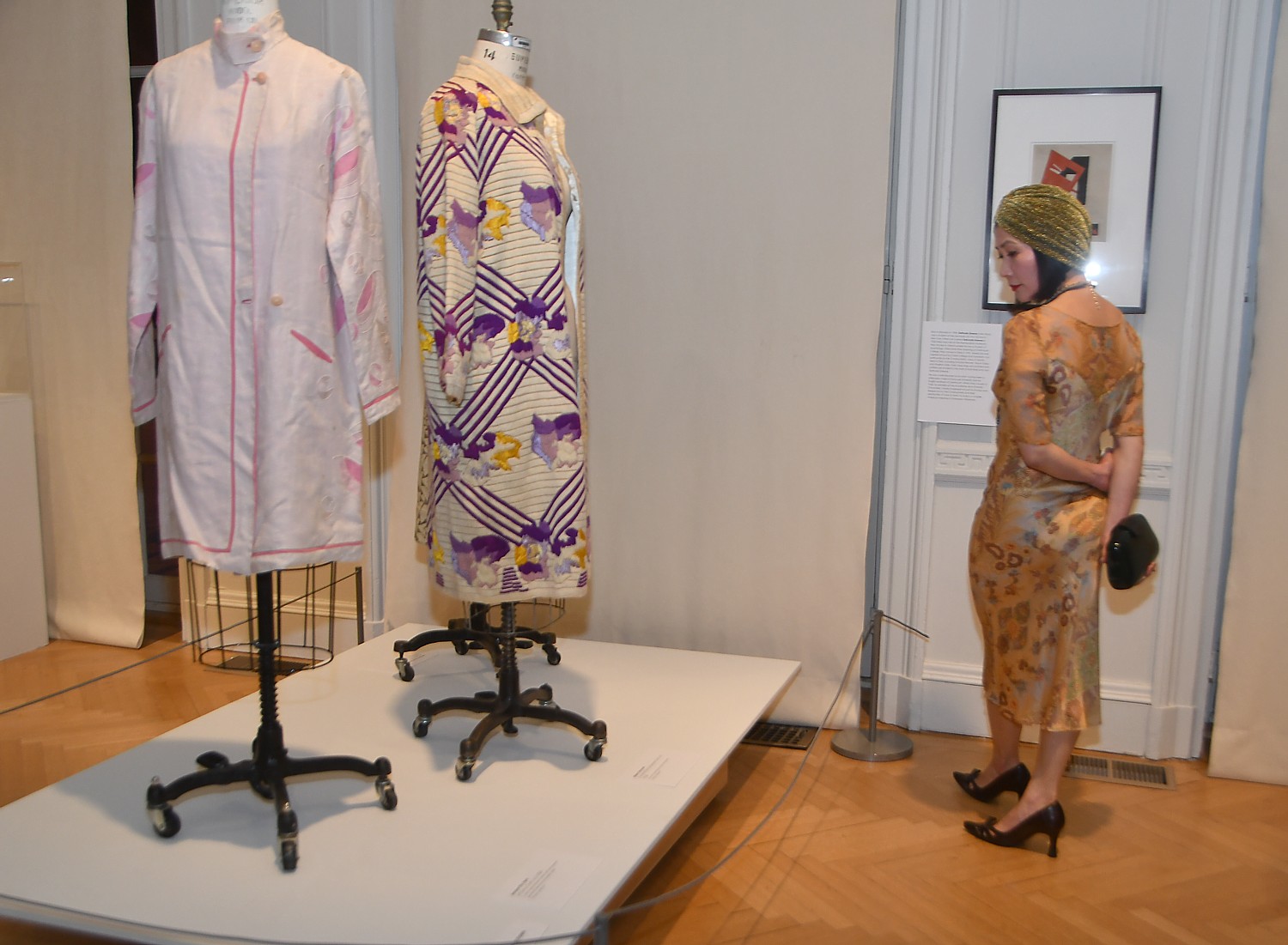
The Ballets Russes, for whom Picasso and Chanel designed productions, broke all dance conventions and inspired a new wave of fashion, with examples in the exhibition curated by noted expert on ’20’s fashion, JoAnne Olian. The exhibit’s pieces of Art Deco furniture and rare jewelry from the private collection of the Macklowe Gallery display the machine-age elegance that was in vogue.
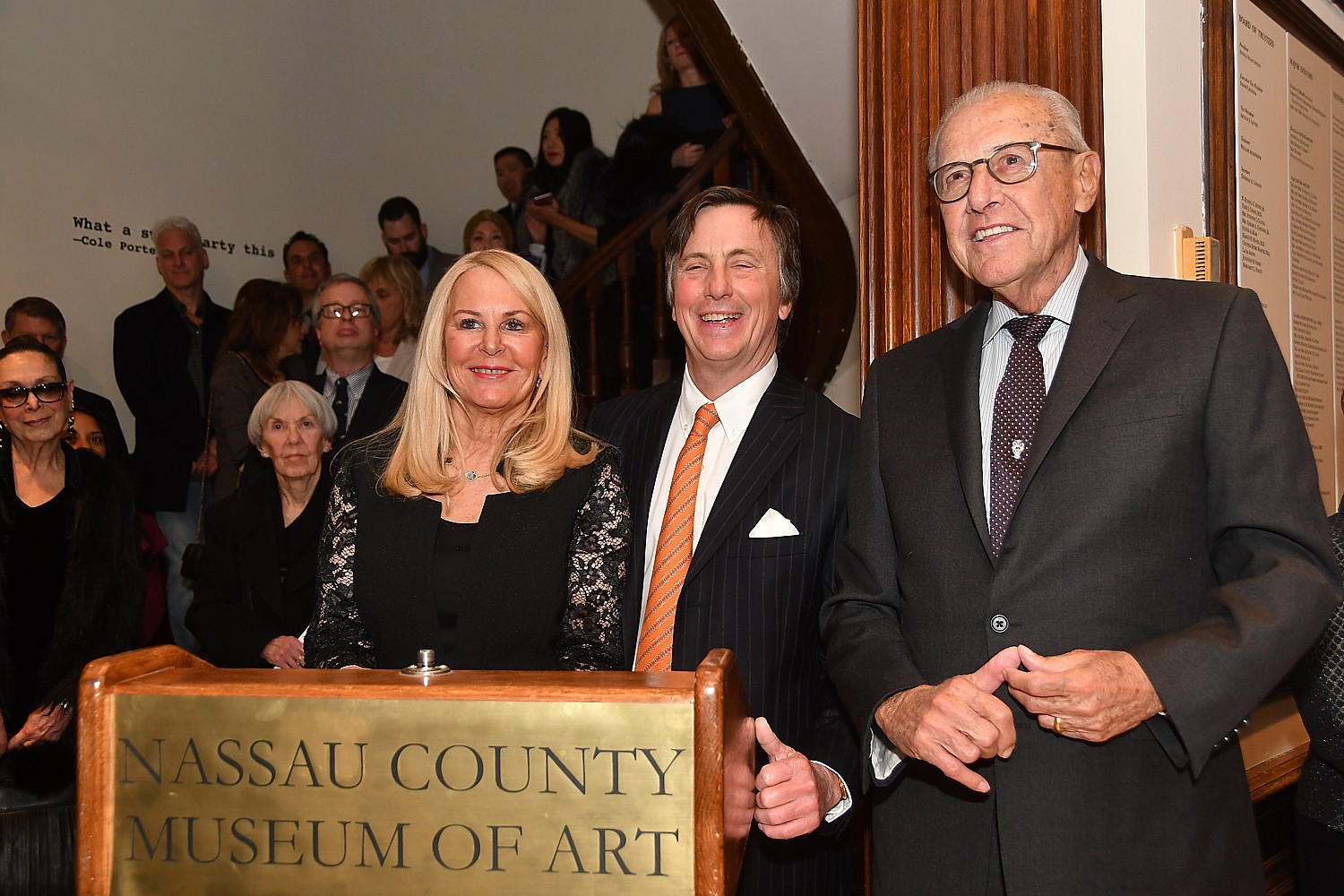
“We’re used to Cubism today, but these guys were brave,” museum director Charles A. Riley II, who organized the show, said at the opening reception.
The show ties all the cultural strains together so you almost see the creative pollination from one discipline to another, all in an expression of a philosophy that defined the Jazz Age: “Living well is the best revenge” was the motto of an extraordinarily fortunate generation, anything but “lost,” that remains today the epitome of sheer creative freedom.
Riley noted that though a sense of artistic “freedom” and breaking social and cultural conventions was the theme of the Roaring Twenties, it was “freedom plus order.” Lindbergh’s flight across the Atlantic to Paris that so inspired the sense of adventure and daring, was also an exercise in discipline.
The show offers a comprehensive picture of the Jazz Age when World War I ended on November 11, 1918 and ended on October 24, 1929, when Wall Street crashed after its historic nine-year bull run. The commentaries and notes that accompany the exhibit are fascinating insights to the context for the creations and the people propelling them.
In addition to art and design, the exhibition brings the age of superstars vividly to life with memorabilia celebrating the Golden Age of aviation, including a leather pilot’s helmet and goggles, photographs of Babe Ruth and a seat from the original Yankee Stadium built in 1923, original Victrola turntables and the first generation of radios, first editions of monumental novels and sheet music, and the original Hobey Baker trophy, the top honor for American college hockey (all players who visit wearing their team jersey during the run of the show will be admitted for free).
As Riley, who donned his own Princeton hockey jersey, noted, Hobey Baker’s life was worthy of a movie – a World War I flying ace, at the end of the war he would likely have headed to Wall Street; he took one last flight which proved fatal.
The exhibition unveils some important historical discoveries, including previously unknown drawings by the poet cummings that were found by his dear friend Gaston Lachaise. Their friendship and collaboration is celebrated in a gallery that includes many of Lachaise’s greatest sculptures, including a monumental cast of “Elevation,” as well as his own drawings and a stunning portrait by cummings of the legendary supermodel Marion Morehouse.
A fortunate group of American artists and writers in Paris during the ’20s, many of them in Stein’s circle, were pioneering a new style of abstraction, and the show boasts some significant canvases by Davis, as well as Charles Green Shaw, Gertrude and Balcomb Greene, Joseph Stella, Carl Holty, Jan Matulka, Charles Biederman and an unknown work on paper by Betty Parsons, who would become best known as one of the great champions of Abstract Expressionism.
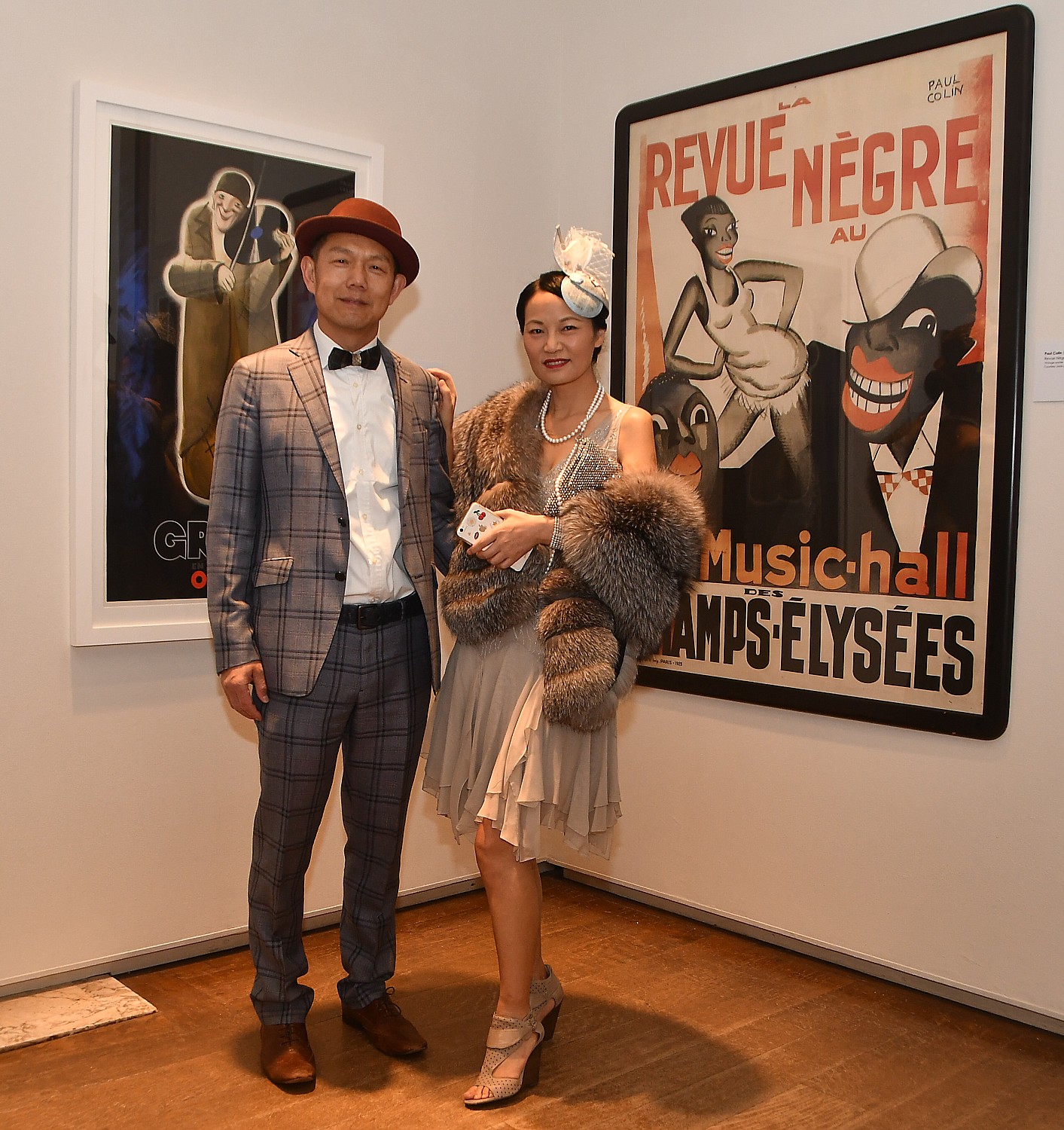
In another art historical coup, the show presents an unknown drawing by the model and muse Kiki de Montparnasse that had been hidden among the papers of Man Ray, whose portrait of Kiki is among the treasures on view, along with his portraits of Hemingway, Chanel, James Joyce and dancers from the Ballets Russes. The other major photographic finds in the show are by Carl Van Vechten, whose lens captured the jazz greats in Harlem nightclubs. The show also boasts an unknown drawing of Baker by the artist Paul Colin, whose posters, including rare examples included in the show, made her famous in Paris.
“When I play hockey, I leave it all on ice,” Riley said, wearing his hockey jersey.”This show is everything I’ve got – my heart and head. All laid out.”
Throughout the exhibit, there are fabulous photographs of these key figures that put you right into the moment.
The Long Island connections in the show are among the highlights. F. Scott Fitzgerald published “The Great Gatsby” on April 10, 1925, but he started it two years before over the garage in a rented house in Great Neck. In his lecture, Scribner III, whose grandfather published the novel, will reveal the backstory of its progress from manuscript to masterpiece under the editorial guidance of Maxwell Perkins, who secured the iconic cover by Cugat. And Lindbergh took off from the storied air strip at Roosevelt Field, where Elinor Smith, the “Flying Flapper of Freeport,” set new records for altitude and endurance.
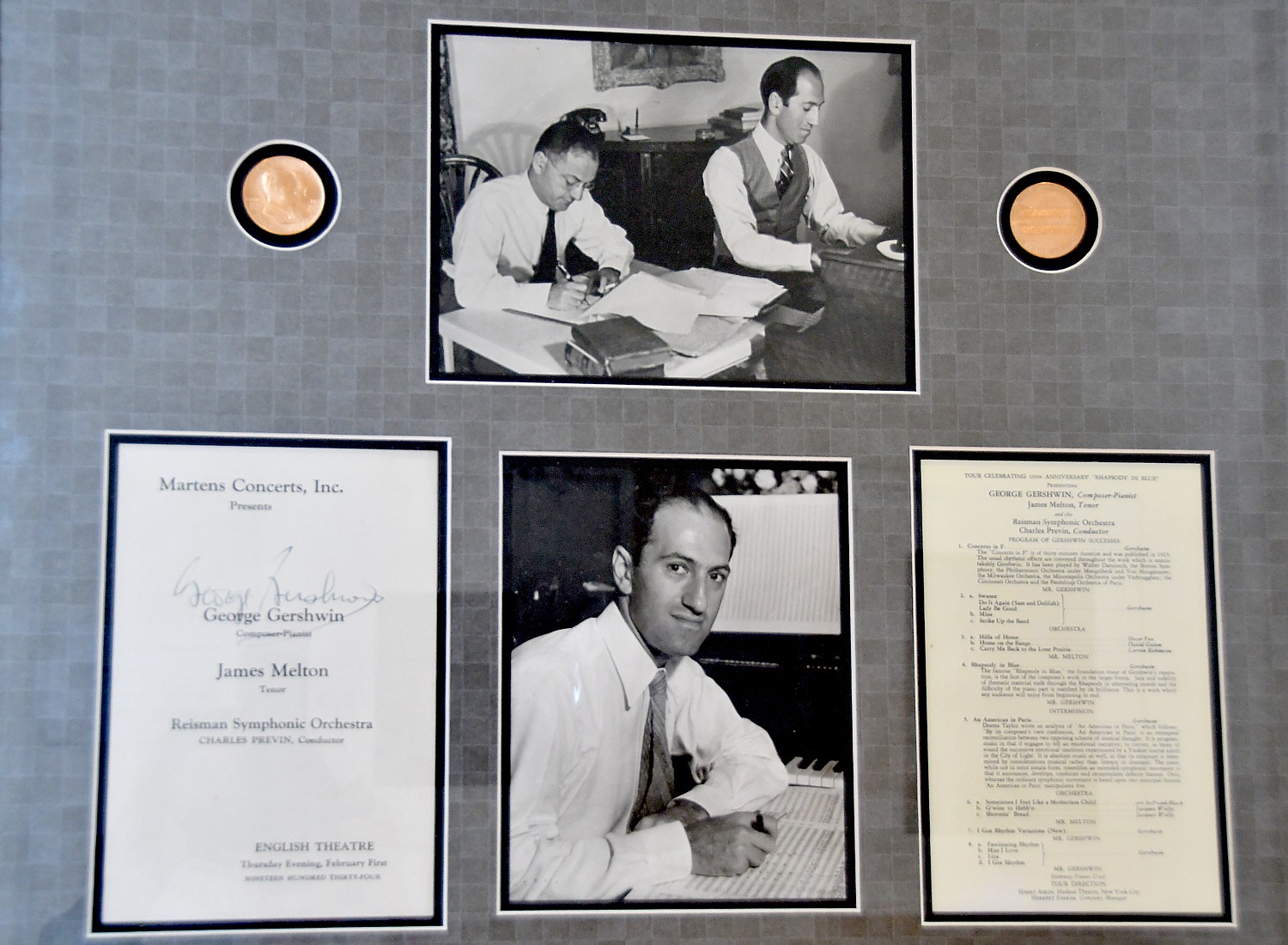
Indeed, the local connections are also in the collectors who have loaned to the exhibit, including Dr. Jay Tartell and Deborah Tartell who not only loaned the stunning gramophones, phonographs and victrolas, but also that sensational photo and autographed program of George Gershwin; and Dr. Harvey Manes, a trustee, who loaned several works.
Drawing on museum, university and private collections, including those of the Heckscher Museum, Parrish Museum, Cradle of Aviation Museum, New York University Grey Art Gallery, and Princeton University, the wide-ranging exhibition has been underwritten by the Americana Manhasset and Wheatley Plaza, longtime supporters of the museum and its mission.
In addition, the programming and publications have been sponsored by generous gifts from The Ritz-Carlton Residences and by Charles Scribner III. Each week the show will feature special programming, including live jazz in the beautiful paneled library of the mansion, lectures by experts in the arts and design, and live demonstrations of the player piano and Victrola in addition to the museum’s renowned docent-led tours and education programs.
Among the programming highlights are a May 12 lecture by Scribner, a popular speaker at the Morgan Library and Metropolitan Museum of Art, among other venues; an original cabaret musical based on the lives of Scott and Zelda Fitzgerald composed and performed by Angela Sclafani and her ensemble; and tours of Jazz Age Manhattan led by museum director Charles A. Riley II, author of two books on the period. The museum is publishing a fully-illustrated catalog of the exhibition with essays on the art, music and fashion of the era, and is re-launching the official website with special features keyed to the show.
This year’s gala ball on June 9 will be themed “All That Jazz” with guests in costumes, Angela Susan Anton, Board President, announced.
“Anything Goes: The Jazz Age” is on view through July 8, 2018.
The Nassau County Museum of Art is located at One Museum Drive in Roslyn Harbor and is open Tuesday through Sunday, 11 a.m. to 4:45 p.m. Admission is $12 for adults, $8 for seniors (62 and above) and $4 for students and children (4 to12). Members are admitted free.
For more information about the museum and exhibit, call 516-484-9338 or go to www.nassaumuseum.org.
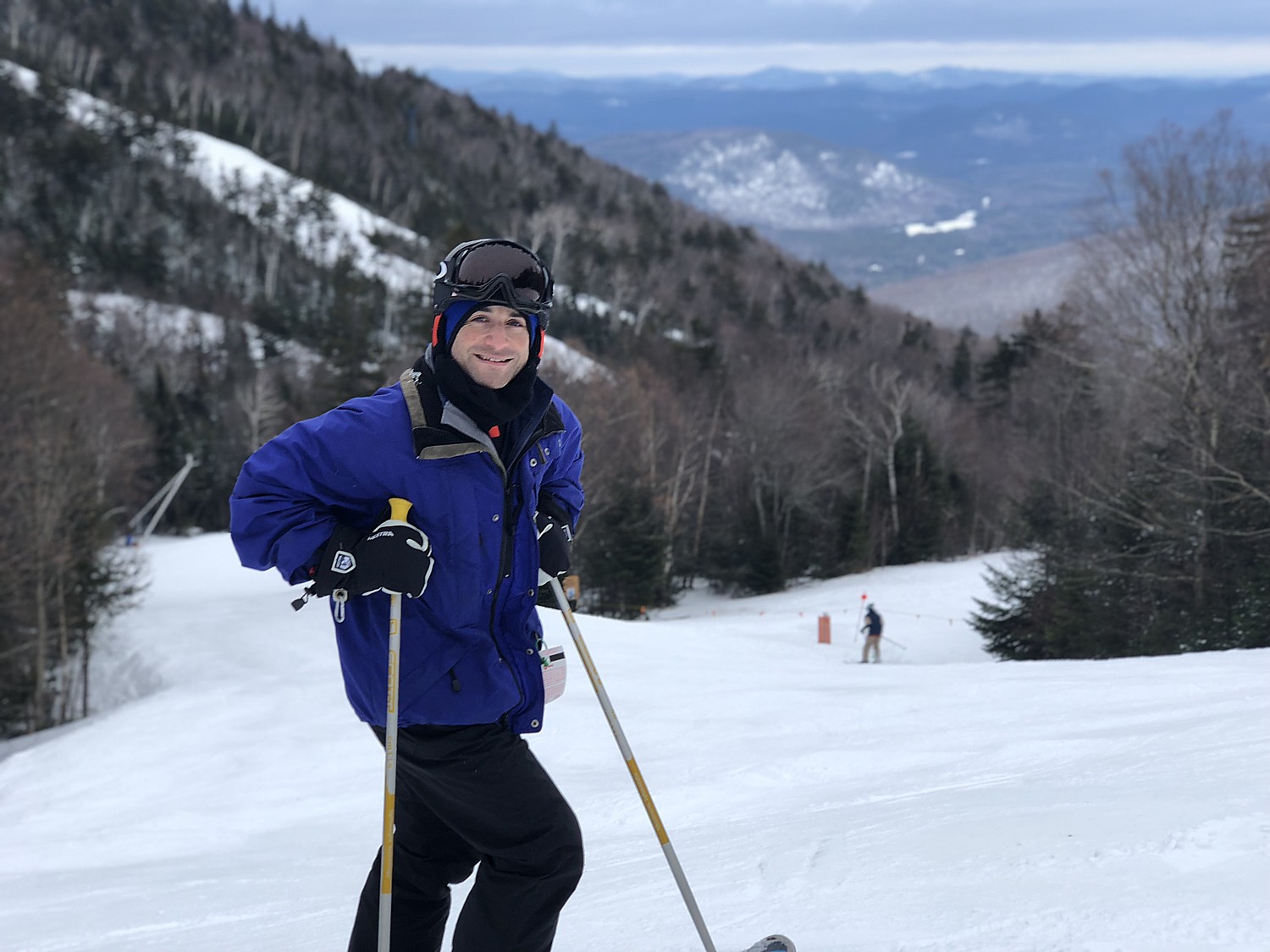
We arrive at Gore Mountain, in New York’s wild and open Adirondack Mountains, park in lot E and immediately find a shuttle driver to take us to the base lodge. Three kind gentleman staffers open the door for us and greet us as we walk in. We get our ski rentals quickly and are out the door, taking the gondola to the summit.
The first thing we notice at Gore is the ease of the experience. While maintaining a deceptively small, family-friendly feel, every amenity is considered and every step of getting you out of the parking lot, through the rental shop, and up to the mountain is as smooth as can be.
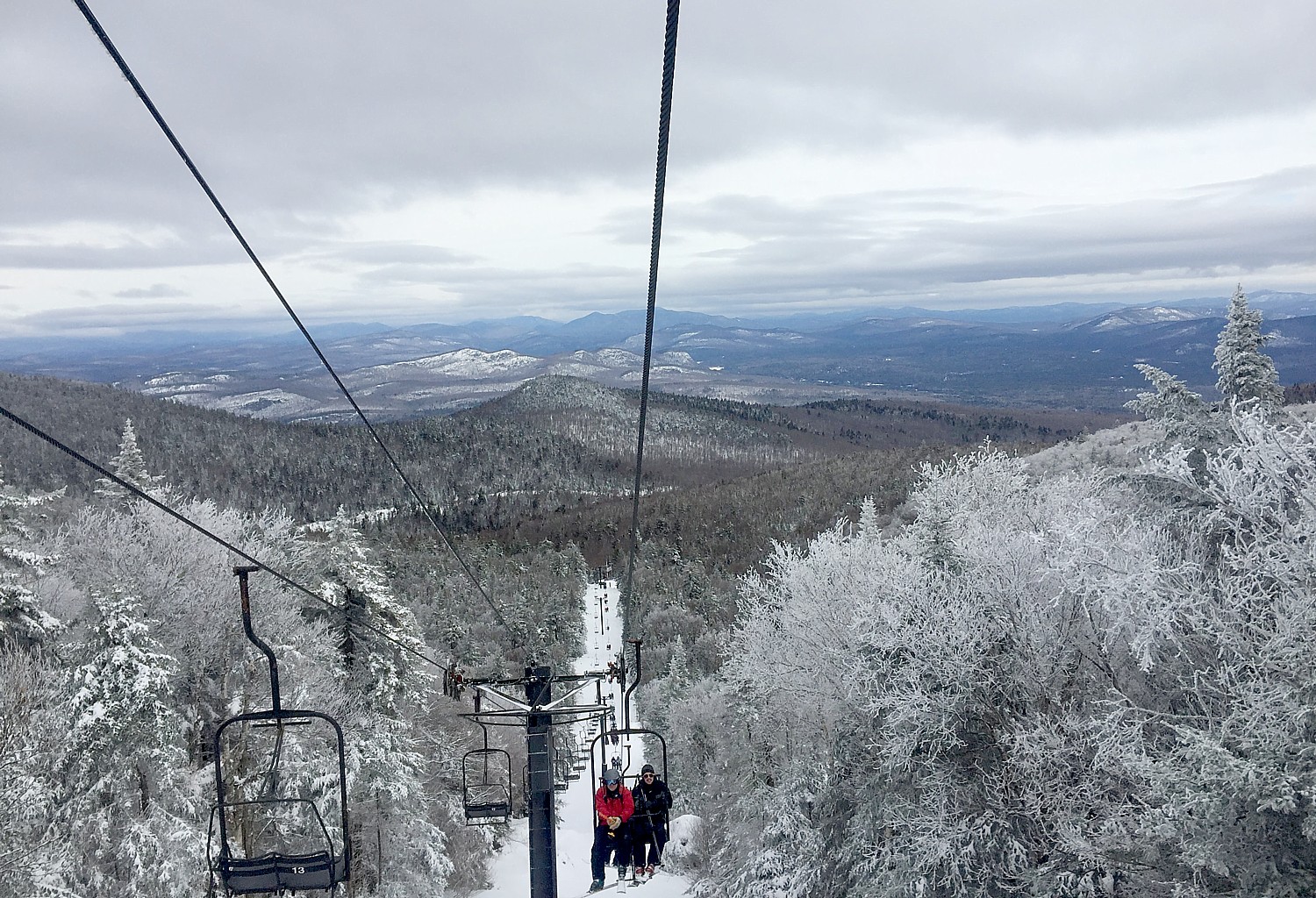
On this particular Saturday when they had several inches of new powder, whenever we veered away from the gondola, it felt quiet and we experienced the sweeping panoramas of the Adirondacks without much of a crowd. At some points, the open vistas of the Adirondack Preserve let you imagine yourself skiing the Rockies.
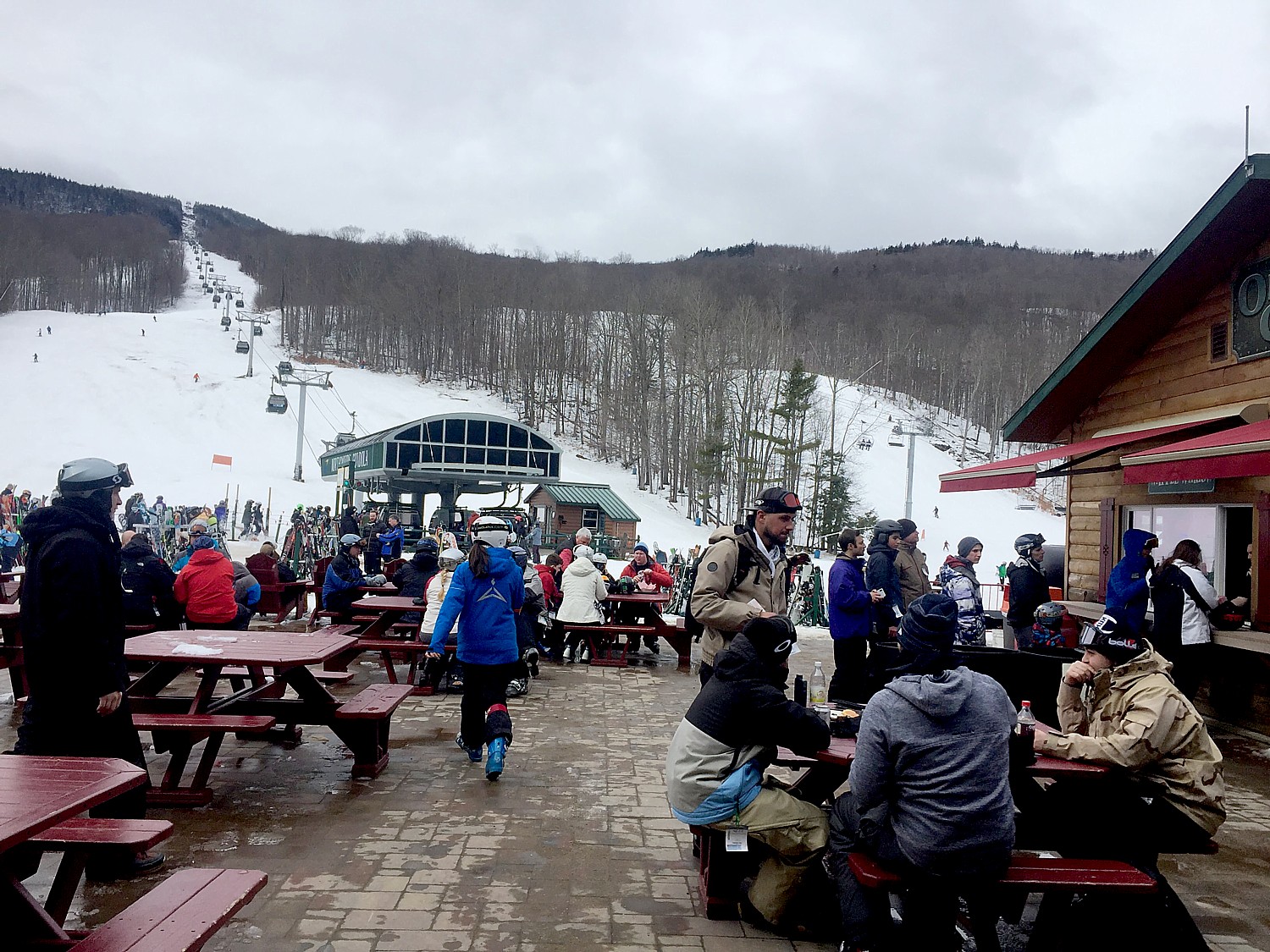
Though Gore skiing consists of nine faces across four mountains, you can easily move between the areas, and it’s simple to get back to the base lodge and food-court or the mid-mountain Saddle Lodge to grab a bite or warm up.
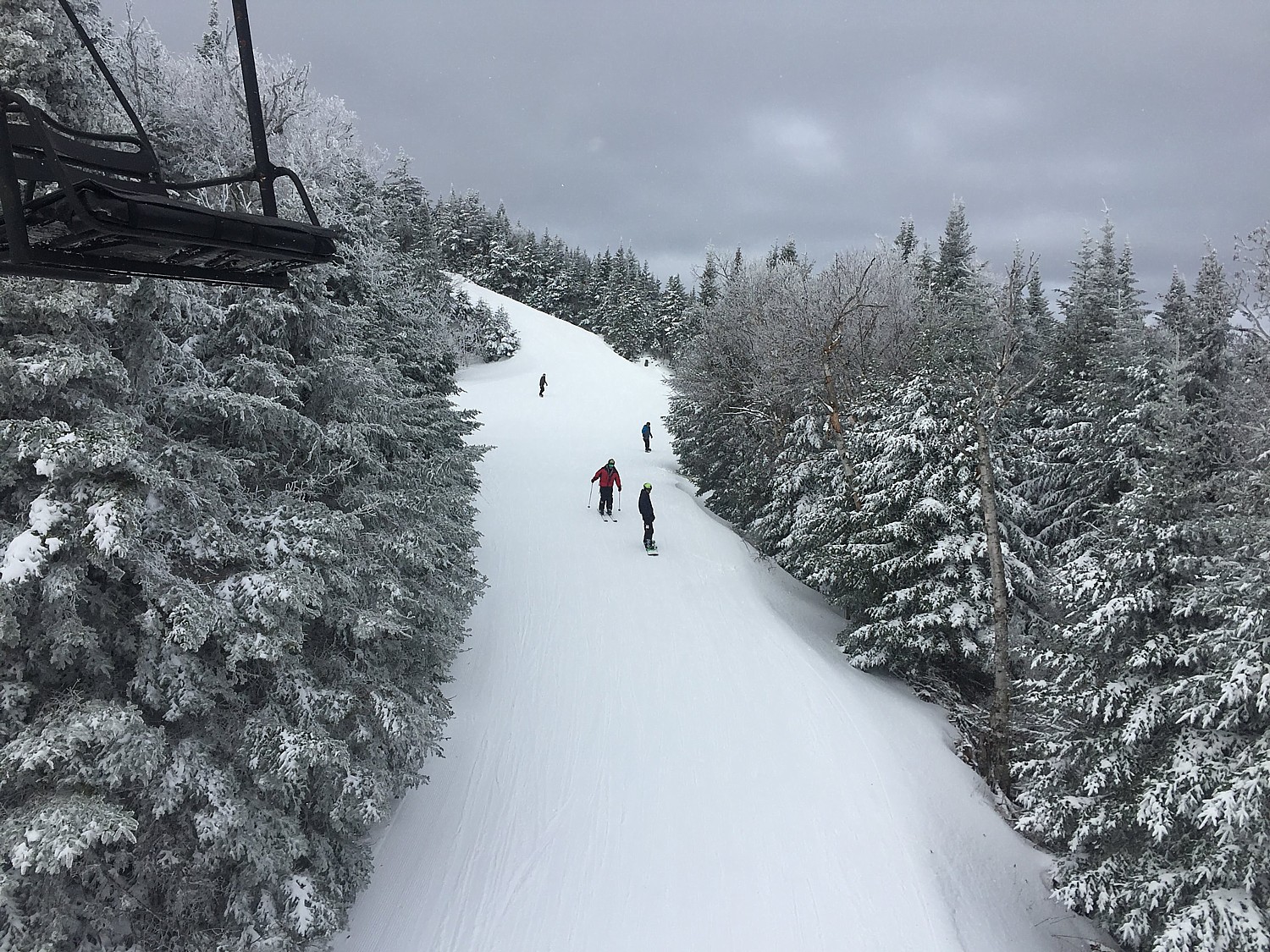
There are a lot of options for all types of skiers (10% of trails are classed as easier, or green; 50% are intermediate, or blue; and 40% are most difficult, or black trails). They also feature abundant glade skiing when there’s sufficient snow –– more than we’ve seen at most of the East Coast resorts.
It is surprising to realize that Gore is the biggest ski destination in New York State (and New York has more ski areas than any other in the nation!), with the most skiable acres (446 acres), 107 trails, 27 glades (Gore was one of the first eastern ski areas to develop gladed terrain), six freestyle areas. Six of its trails are longer than 1 1/2 miles, with the longest run 4.4 miles. In all, Gore offers 42 miles of skiing, even night skiing! With 2537 vertical feet, Gore also offers the 6th greatest vertical in the East – a greater vertical drop in fact than such famous mountains as Stowe (2360), Sunday River (2340), Okemo (2200), Jay Peak (2153), Mount Tremblant (2116), Loon, (2100), Mont-Sainte-Anne (2050), Mad River Glen (2037), Stratton Mountain (2003) and Mount Snow (1700).
Each of Gore’s four mountains have their own character: Gore Mountain is the biggest and highest, at 3600 ft., Bear Mountain rises to 3200 ft., Burnt Ridge Mountain rises to 2735 ft. and Little Gore Mountain goes up to 1900 ft.
Among them is an astonishing array of terrain, not to mention views and the fact that if conditions are not the best in one area, or are too crowded (not likely because of the way skiers are dispersed), you can simply move to another.
It is more useful, though, to divide Gore into its different areas: the Straight Brook Area on Gore Mountain is where you will find a variety of challenging terrain and glades; it is also where you will find the two runs, Rumors and Lies, rumored to be the steepest train in the East (unconfirmed). There are also a couple of intermediate trails – like Cloud – which connects to other blues and greens to ski the whole way down. In all, this area has 10 trails, 4 glades and 54 acres accessed by a quad lift.
“The Dark Side” of Gore known as the High Peaks Area is “Classic Adirondack” skiing and very popular with experts. There are 12 trails and 2 glades on 30 acres, accessed by a double chair.
Bear Mountain offers the Northwoods Area, accessed by the Northwoods Gondola and Gore’s newest lift, a high-speed detachable quad. You can take a green trail Sunway, 2.2 miles down to the base; a blue trail, Twister, is long, wide and forgiving, and beautiful, lined with trees and with lovely views of the Adirondacks. This area offers 29 trails, 3 glades, gondola, detachable quad, double and four surface lifts on 154 acres. (The gondola is marvelous, and they cleverly post these interesting historical notes in each car.)
The North Side is off the beaten path, and offers an array of easy-going cruisers and gorgeous views of High Peaks. It’s considered the best bet for families (9 trails, 2 glades on 37 acres serviced by a quad).
Burnt Ridge area is one of Gore’s four peaks of development, which is noted for its geology and great views of North Creek and the Hudson River – six trails, four glades on 70 acres, serviced by “one of the most luxurious rides” on the mountain, a high-speed quad.
North Creek Ski Bowl is where they offer night skiing as well as tubing (8 trails, 5 glades, on 47 acres, serviced by two triples. This area has its own base lodge and parking lot, plus half pipe and terrain park. That means you can drive up in the day, arrive in the late afternoon, and purchase a night-skiing ticket; or if you purchase a multi-day ticket, you purchase an add-on for night skiing (3-9 pm). Night skiing is offered Friday, Saturday and Sundays, and daily during holidays, until 9 pm.
Now for the runs. Our two favorites were on opposite sides of the mountain: Chatiemac at Gore Mountain and Sagamore at Burnt Ridge Mountain. We were intrigued by Rumors and Lies on Gore, which are two of their most famous runs, but neither was open due to the lack of snow. The rest of the top of the mountain was fun to explore. The caveat about this area is they don’t feature high speed lifts. On the other hand, the double High Peaks Chair lift is one of the last of its kind on the East Coast and makes for a sweet slow-paced ride between the glades.
To get to the top of the mountain you have two options, right or left: from the top of North Woods Gondola you can go right to take the windy green Ruby Run to blue Upper Wood Inn, to the High Peaks Chair. Pick up speed towards the bottom as you’ll have to skate for a decent chunk at the end of that ride, and will end up at the quaint double chair lift. Or there’s a pretty fast and enjoyable black called Uncas that will spit you out at the Straight Brook Quad, which will take you straight up to the top at quicker speeds.
Our other favorite was Sagamore, a long delightful black that we had virtually to ourselves. On this March day with not a ton of snow, that trail was still a pleasure top to bottom.
In general, Gore has excellent signage and interesting trivia throughout the property. Each of the gondola cabins has its own set of fun facts, including one about Gore’s award winning environmental initiatives (all the finalists behind Gore were Colorado or west coast mountains). The timeline above the stalls in the food court is another sweet touch.
We got to experience the major renovations Gore made this season at three lodges. At the base area there are two large additions which (as we found) streamline the rental process and facilitate getting back on the mountain. Another addition that any hungry skier will appreciate is their brand new smoker and the amazing pulled pork sandwiches it produces in the outdoor Open Pit Grille by the Base Lodge Food Court. The new mid-mountain Saddle Lodge is another welcome addition featuring smoked chicken tacos and a breathtaking view.
Last season, Gore introduced Nordic skiing, turning its old tubing park into a cross-country ski area –– which has snowmaking on 3.7 km of its 5 km trails. The new area was so successful last year (even opening by Thanksgiving) that Gore hosted the New York State Nordic Championships. The Ski Bowl where the Nordic area also has a half pipe, border skier cross, and twilight skiing (until 8 pm).
On one gondola ride, we learned from a nice woman with her daughter that 3rd and 4th graders ski for free at many mountains in New York State (I Ski NY Free Passport); also, kids under 19 ski free with an adult.
The demo skis we rented were excellent: my Rossignol skis felt like they almost turned by themselves they were so smooth.
Gore started off as a destination ski area – after all, it wasn’t that easy to reach. But over time, especially as the New York Thruway and Northway made it so easy to reach from Albany, Saratoga Springs and Glen Falls and even Montreal, Gore became more of a day trip.
However, if you have more than the one day, the Adirondack region has so much to offer. The landscape is breathtaking, and significantly, relatively undeveloped. You also have some marvelous resorts and lodging – the grand, historic Sagamore Resort on Lake George is 45 minutes away (they offer a shuttle bus), and in North Creek, the Copperfield Inn is as intimate as an inn (only 31 rooms), but with all the services of a luxury hotel (Copperfield Inn, 307 Main Street, North Creek, NY 12853, 518-251-9808, www.copperfieldinn.com). North Creek is a charming village with several delightful bistros and shops, and the village offers a free shuttle bus to the mountain, less than 10 minutes away, every 20-30 minutes throughout the day, in season.
This visit was an easy day trip for us, but after realizing what a special destination Gore is, we will definitely be coming back for a longer stay.
Gore Mountain, 793 Peaceful Valley Road, North Creek, NY 12853, Snow Phone: 518-251-5026, info 518-251-2411, goremountain.com.
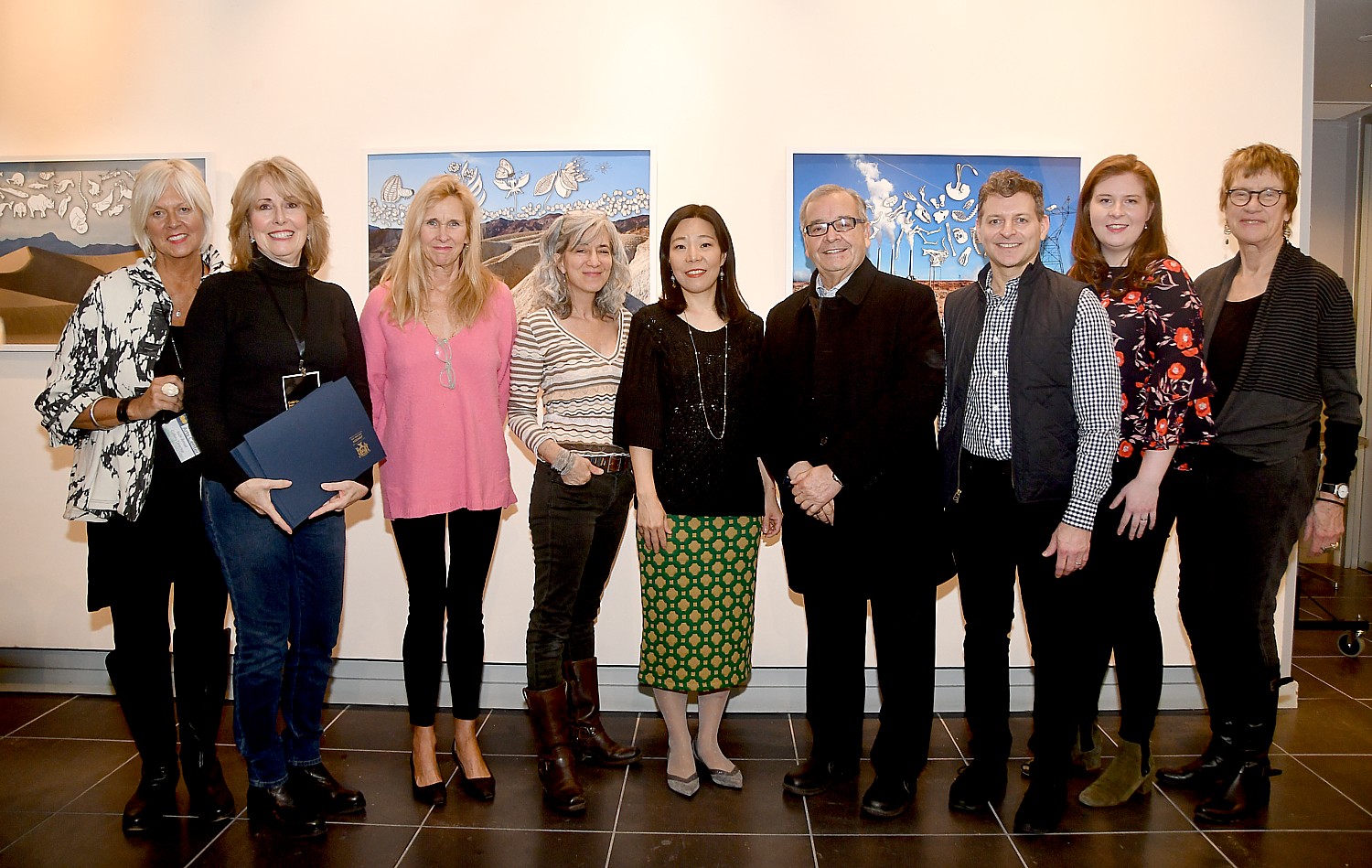
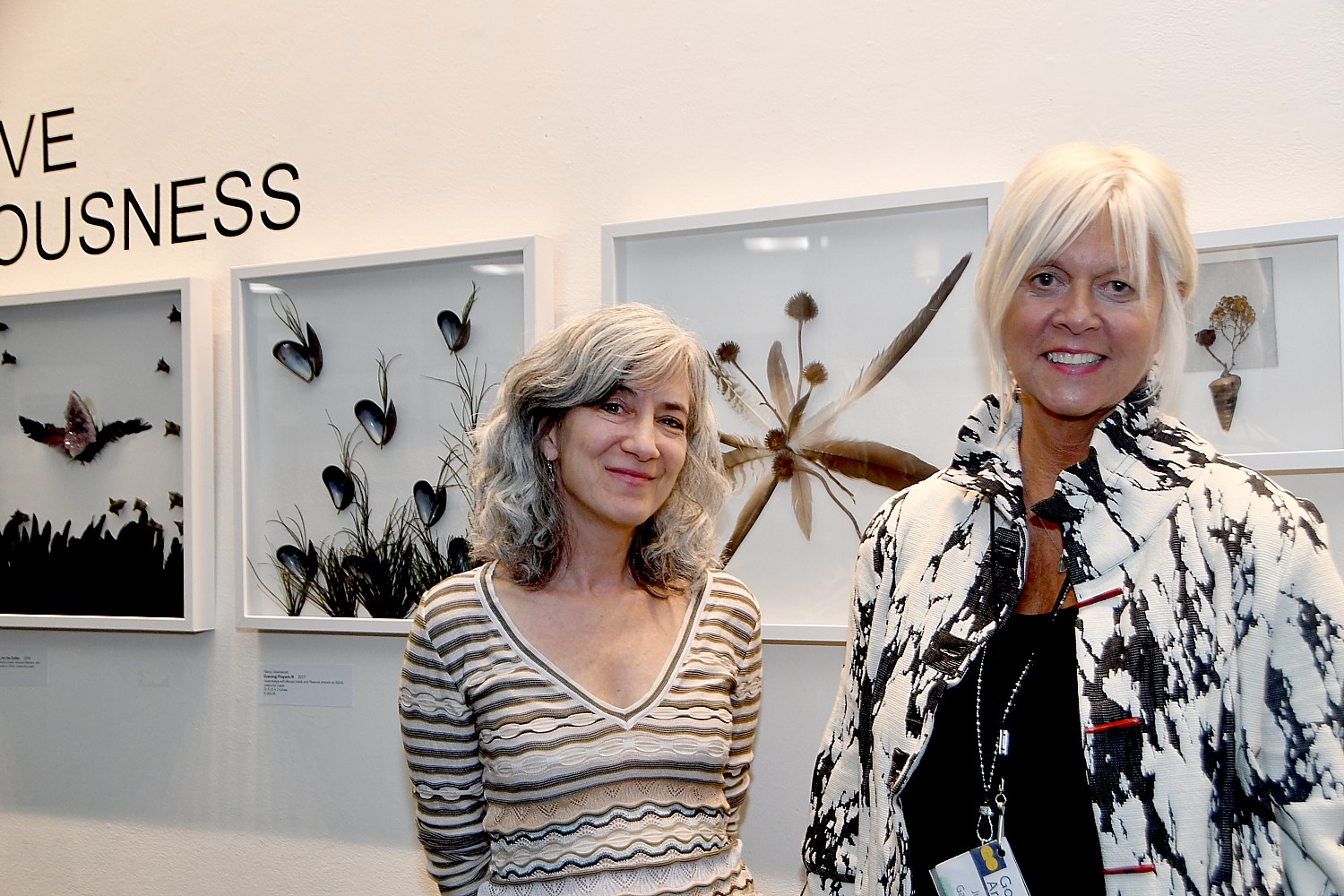
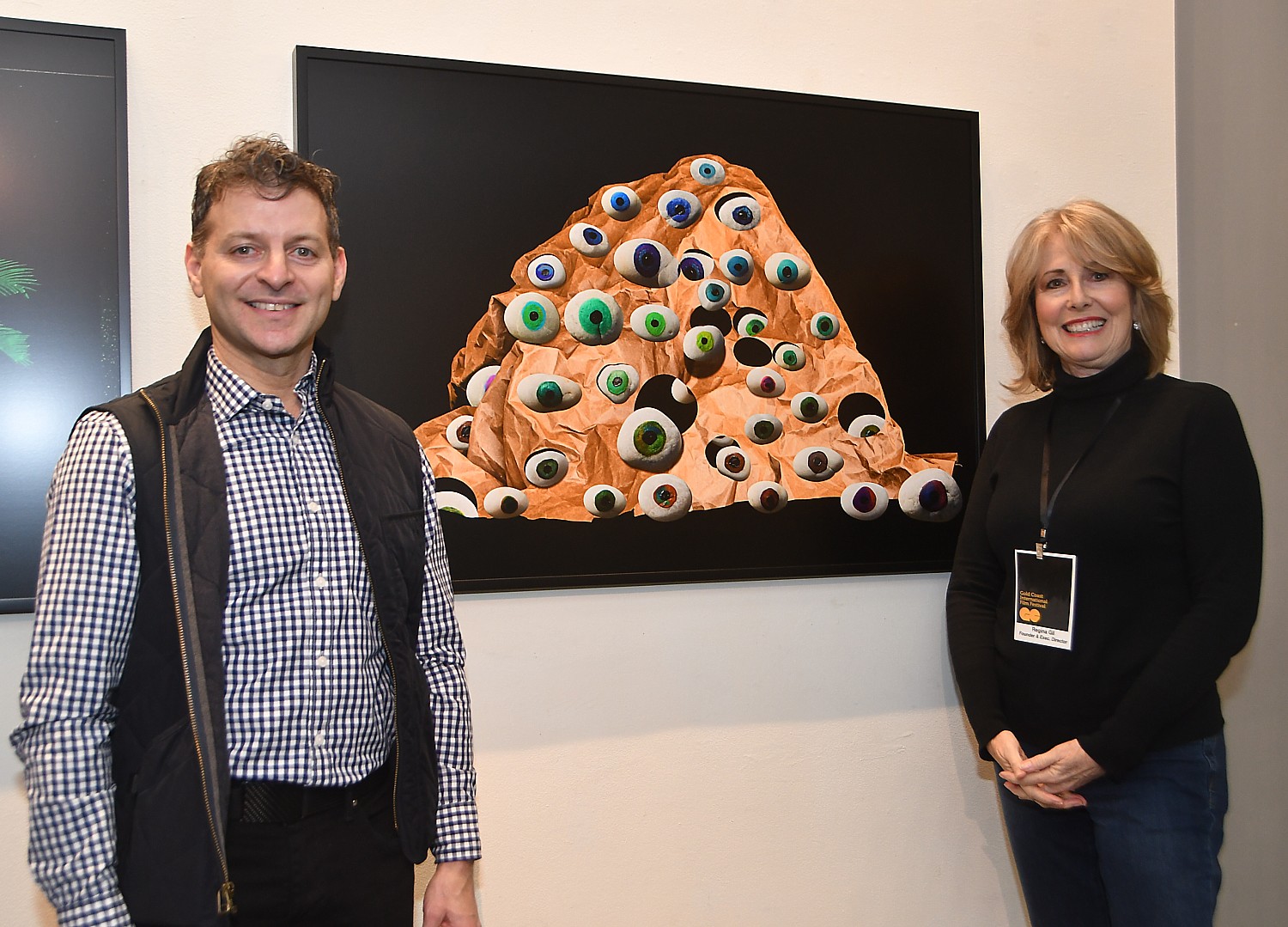
“Nature has been inspiring artists for centuries, and its beauty has been captured in paintings, sculptures, photographs and a variety of other medium. But some artists take the relationship between art and the environment a step further, creating works from nature itself or producing artworks that make bold statements about the natural world and the imprint mankind has left on it.” This is what curator Jude Amsel was looking for when she put together the exhibition, COLLECTIVE CONSCIOUSNESS, on view at the Gold Coast Arts Center Gallery in Great Neck, Long Island through April 1.
The seven artists whose works are represented “are commenting on man’s relationship with our planet. These artists have the power to make environmentalism a priority and bring green initiatives to the forefront of cultural conversations,” she stated.
“With all the gloom and doom, we can feel sad with what’s happening in the world. But these artists bring an awareness,” a literal consciousness of our role and responsibility, Amsel said at the Artists’ Reception, March 4. The viewer is left with a sense of optimism that man’s better impulses will rise to the fore.
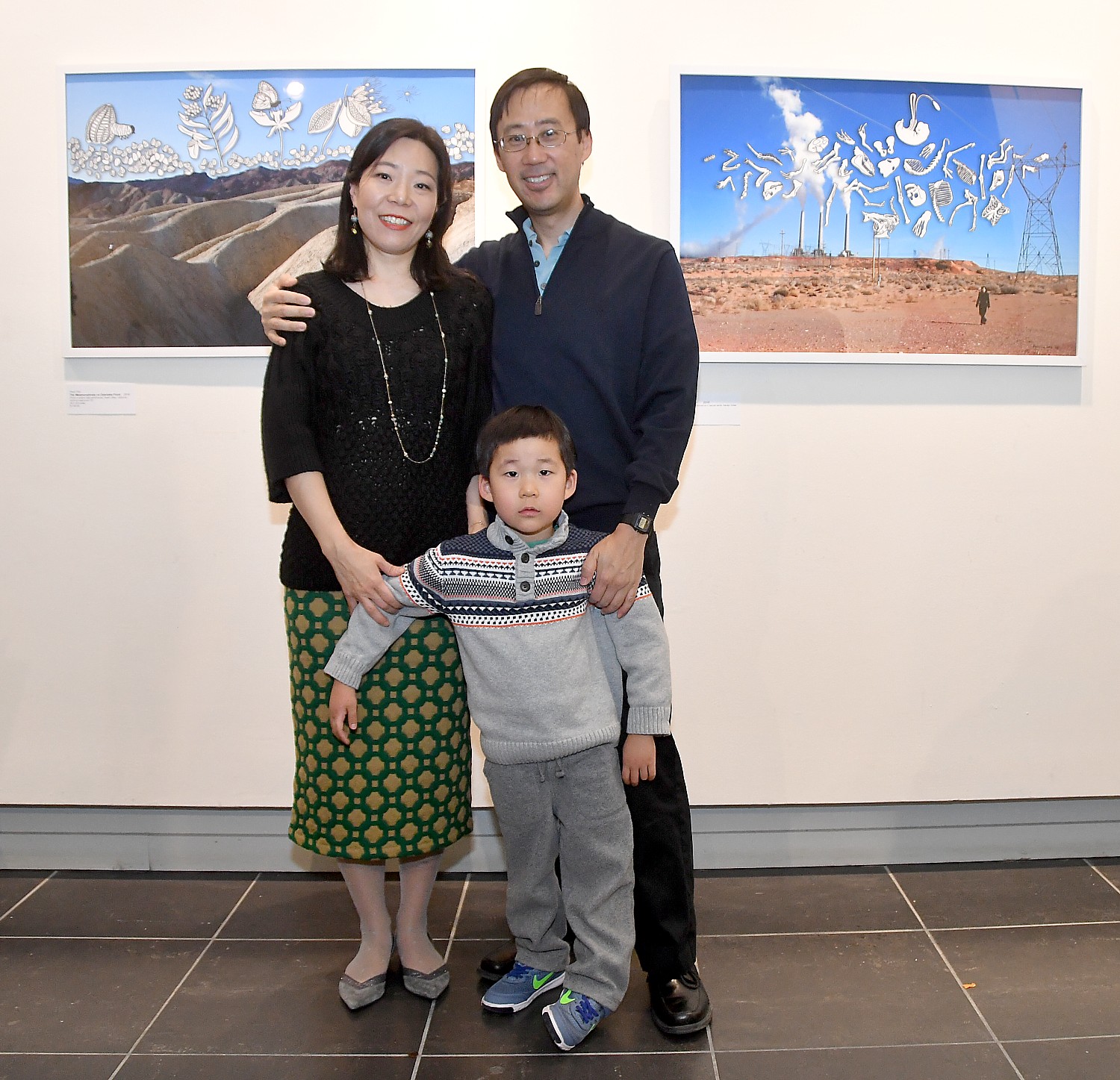
Yoon Cho’s work – multi-media performance art which combines video superimposed with digitized drawings – is the starkest commentary on this theme: her project was inspired by a difficult pregnancy after 10 years of marriage and the birth of her son, she and her husband traveled to barren landscapes to comment on extinction and procreation, the images of life forcing its way through.
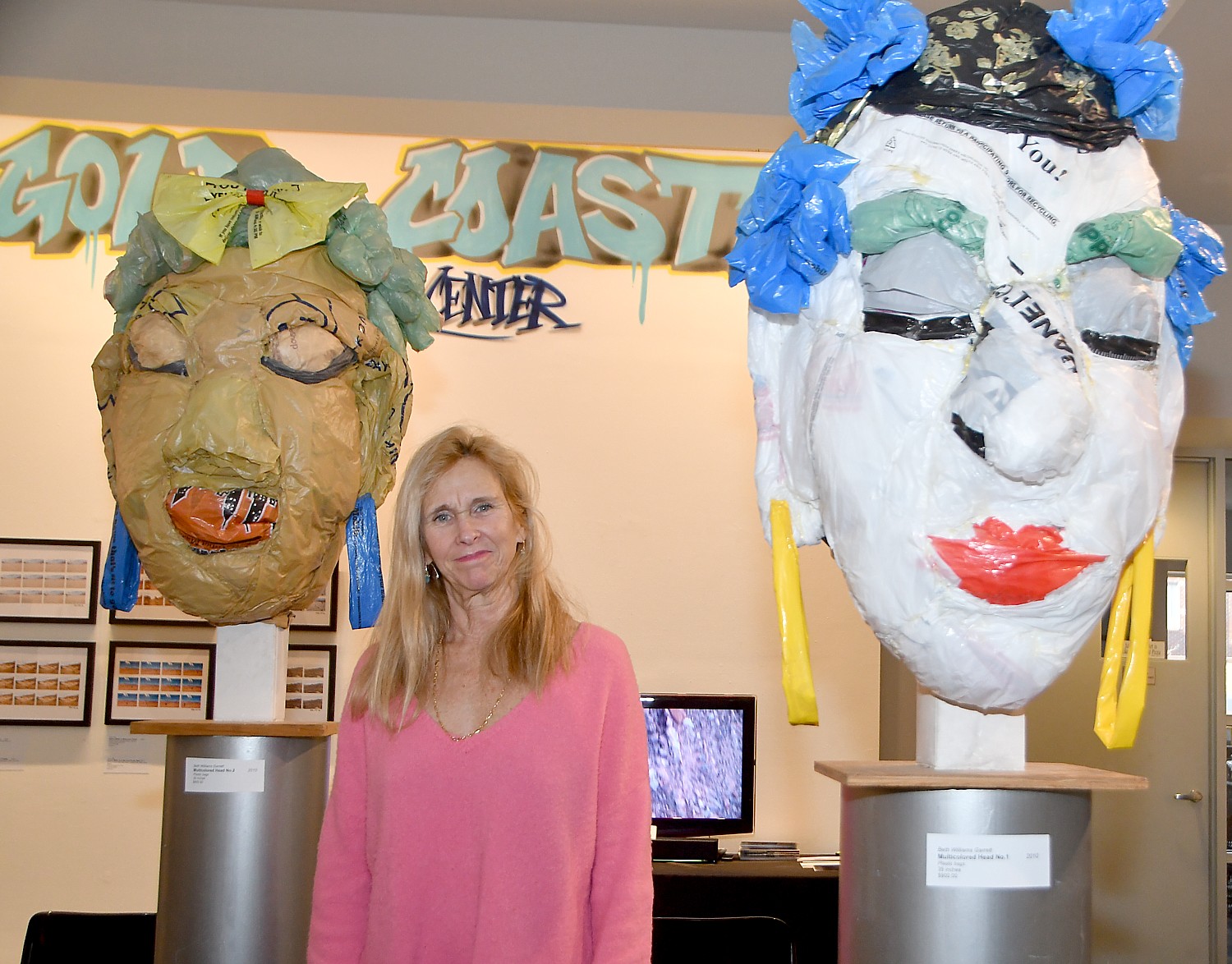
Beth Williams Garrett created feminized Buddha head sculptures out of plastic bags.
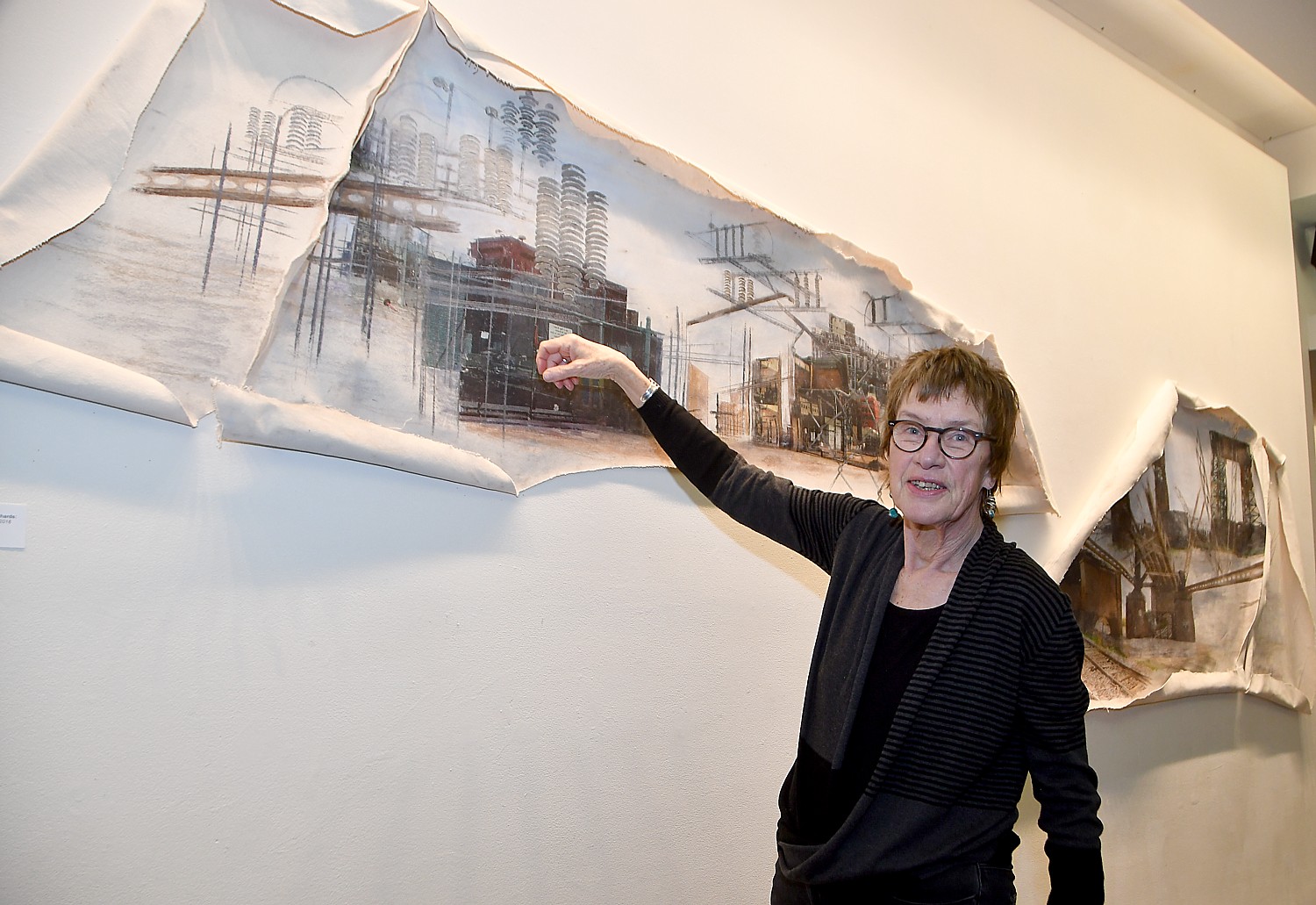
Linda Cunningham turned the blighted industrial waterfront of the South Bronx into striking images on torn, furled canvas.
Nancy Gesimondo found solace in creating assemblages of natural materials, where mussel shells appear as butterflies, a metaphorical prayer flying to heaven; water chestnut seedpods are like flying bats, and peacock feathers are like tall grass.
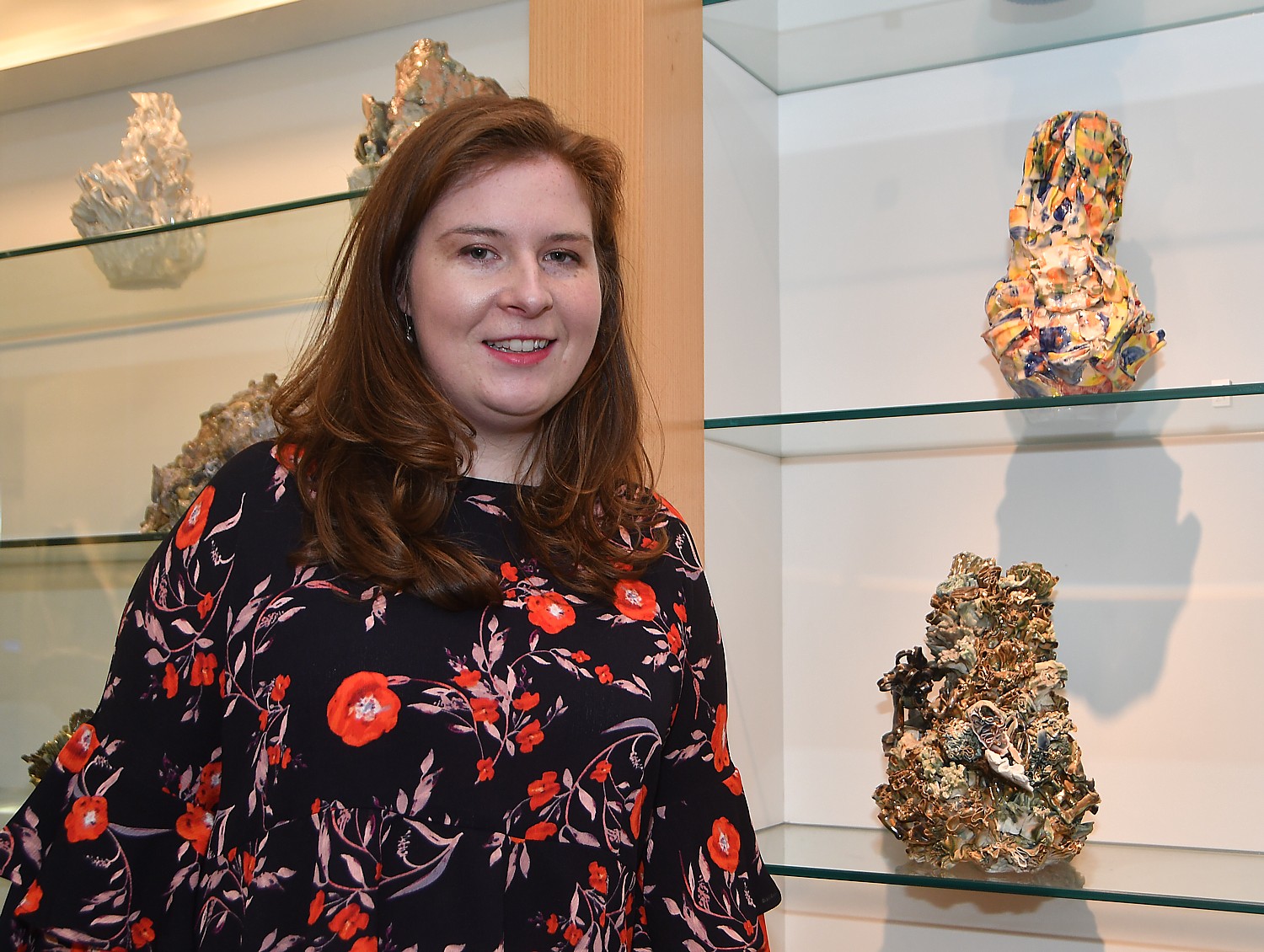
Lauren Skelly Bailey re-creates the natural world of coral reefs in meticulous glazed ceramics, mimicking the surprise you have when you touch coral, which seem to be fluid and flowing to discover they are rock hard.
Charles Cohen uses realistic photography to get reduce household products to the shape and color of their plastic containers to force a different perspective.
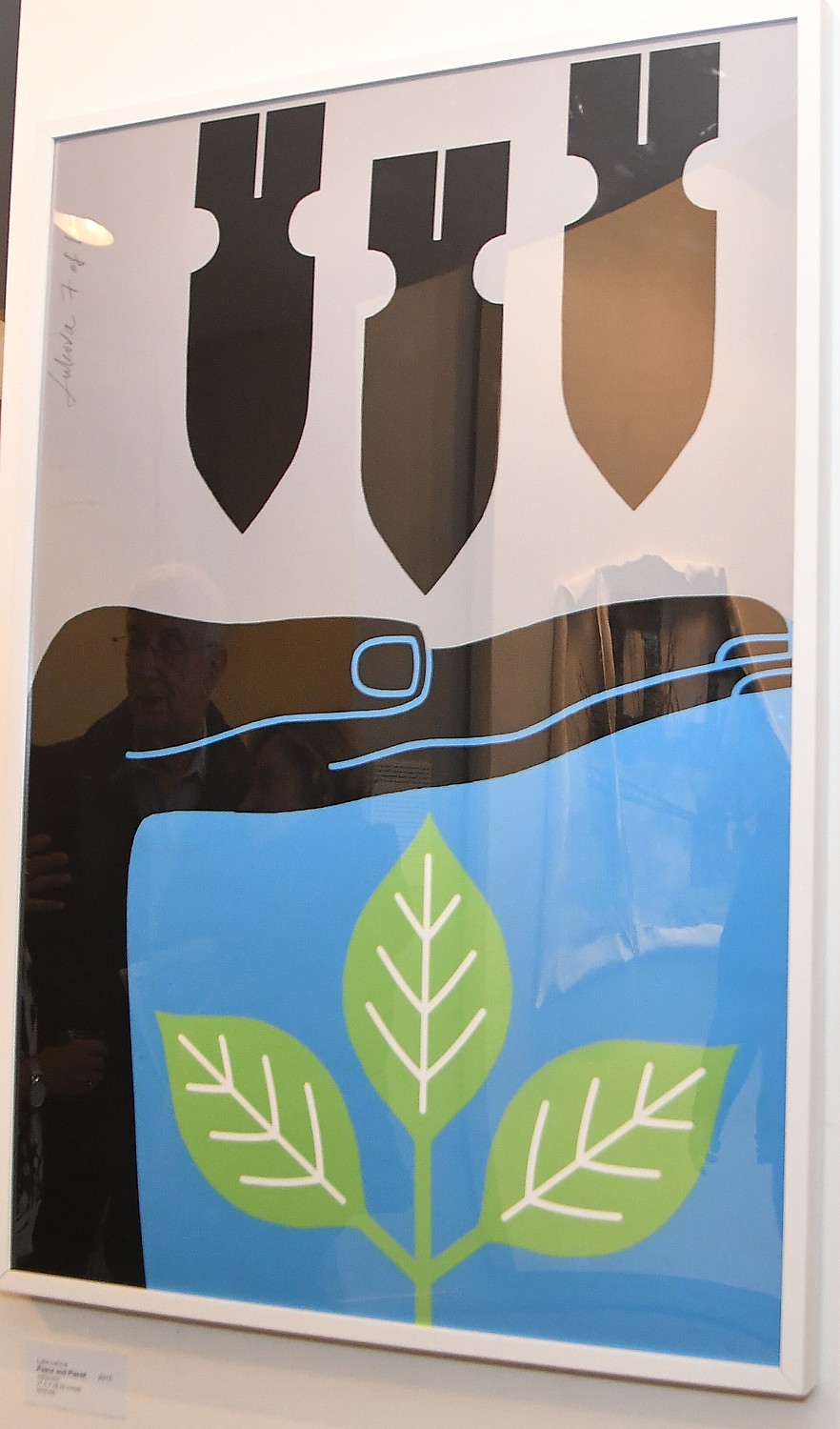
Luba Lukova, whose graphic artistry can be seen in the New York Times, brings her timely commentary to an image of a green plant shielded by a hand as bombs fall, in her silkscreen, “Peace and Planet” (2015).
What is so interesting is to see such variety of media and approaches that come together to the essential message of human impact on the natural world: a collective consciousness of our responsibility.
Lauren Skelly Bailey’s ceramics are uncanny in the way they so realistically, meticulously yet artistically represent coral. You appreciate the beauty of nature’s own design. And like nature itself which is deceptively complex (think of a wasp’s nest), her work is exceptionally technical. “Stacking Up” (2016) for example, is crafted of porcelain, stoneware, slip, glaze, resin and flock – the pieces are each fired five to seven times. There are pieces gilded with real gold on the last firing.
She began her arts education studying painting and cartooning at Adelphi, graduating with a BA and MA, then went on to the Rhode Island School of Design (RISD) to earn her MFA. She produced many of these ceramics during a residency at the Museum of Arts & Design and had two grants from the NYS Council for the Arts.
“My work explores methods of making assemblage sculptures, conglomerations, installations, and figurines. There’s that sensation of falling for process, the chase of finding the unexpected and learning how it occurs. From that knowledgeI make intentional decisions regarding textural surfaces, glazes, slips and clay applications, changing the context of the piece from a study to a solution. I respond to changes and observe balance in my work, seeking to push an uneasy tension between materials and form. Each new sculpture is a moment, something new that has been achieved or understood, taking me further into my experience with ceramics.” (laurenskellybailey.com)
The first reaction to Nancy Gesimondo’s assemblages is how they evoke Native American references. Nancy is from Sunnyside, Queens.
“My work is an exploration of materiality and science that results in new visceral narratives. I create assemblages comprised of natural materials such as shells, feathers, seedpods, semi-precious stones, rocks and crystal formations.The juxtaposition of these found elements results in surreal landscapes, imaginal creatures and hybrid specimens that aim to suggest the exploration and sense of mystery of an archeologist assembling vestiges of a distant past with no true reference of their origin.
“My work is a reflection of my appreciation of nature’s beauty and diversity, as well as my concern for its decline. The delicate fragments imbue the work with an ethereal quality that portends a futuristic glimpse of the place we call home.”
Her assemblages draw upon natural materials she regularly collects – feathers, shells, seedpods, semi-precious stones, rocks and crystal formations. “It shows a reverence for Earth.”
“I’ve been collecting feathers forever – they are like little signs from beyond to me.”
She added, “I let the materials guide me towards the image. I very rarely see the composition in advance.”
The overall feeling is of tranquility, a peacefulness, a poetic aesthetic. The natural elements are used as metaphors.
“A Winged Victory for the Sullen” (2016) is an assemblage with amethyst crystal, iridescent feathers, and water chestnut seedpods (collected at Beacon NY), that look like flying birds. It is mounted on 300 lb watercolor paper, and she explained how she had to puncture roofing nails from the back, then glue the seedpods on.
“Evening Prayers III,” (2017) draws upon mussels that look like butterflies, and a strip of peacock features that look like tall grass. “It’s difficult to find mussels that are still together, but after my father died, I wanted to go to the beach. I went to Long Beach where I know there are mussels, but on this day, I never saw so many whole mussels as then. I collected four bags worth. I felt it was a sign from my father, “Abundance. Don’t worry.”
“The shells poetically morph into butterflies. They are like prayers – wishes and wants that fly to heaven.,”
Linda Cunningham makes an artful plea on behalf of South Bronx in her series, “South Bronx Waterfront Sagas-shards: The New Vision” (2016).
“Collaged canvas with torn edges convey contradictions documented with photo-transferred images, layered with acrylic and pastel revealing a broken South Bronx history, an urban renewal tragedy, an area once the retreat of choice for fresh air and greenery. The shards of information and vistas evoke the Port Morris harbor where barges once docked and youth swam off a pier in the East River. The beautiful open vistas are now inaccessible to the residents of the Mott Haven and Port Morris areas of the South Bronx, abandoned and dominated by deteriorating remains, rotting remnants of piers, power stations and City Waste transfer stations.”
Cunningham’s work centers upon time, transience, contradictions, and compelling environmental concerns juxtaposed against industry and urban blight.
The canvas itself is twisted and tortured in its way – not at all the neat rectangles that fit into frames.
“Life doesn’t come in a convenient box – I can’t work in a square (or rectangle). Life is one torn edge to another.”
Beth Williams Garrett, who studied painting at the Rhode Island School of Design and has shown her artwork up and down the East Coast, said, “I was a painter for 30 years, until 2010, when I felt the need to make sculpture. I was searching for a suitable sculpting material, I stumbled upon using plastic bags as a medium… Plastic bags were being thrown away – that’s no good for environment. They present themselves to me as a material to make sculpture with.”
“The inspiration for my first sculptures came from my travels to Buddhist temples in Japan and ancient ruins in Rome.”
Indeed, the sculptures fashioned of plastic bags evoke Buddha, but then there is a twist. “I have always felt my work was autobiographical, as a woman and focused on the female figure.
The result is a feminized Buddha – “girl Buddhas” she said.
Her skill as a painter comes through in the way she uses the colors and patterns in the plastic bags to great effect. One of the pieces draws on both her painting and the sculpting.
“Since then, I have been exploring what I can do with the plastic bags. My newest endeavors have been combining the 3-dimensional work with the 2-dimensional work as relief/multi media pieces and I continue making heads as I love how the plastic bags lend themselves to creating facial expressions.”
“It happened by accident in the studio. I propped the plastic bag head on a canvas to take a picture and decided to combine the two. I usually paint bodies without a head, so it made me laugh to make plastic bag without the body. (bethwilliamsgarrettart.webs.com)
Yoon Cho’s Desert Walk Photo and Video Series explores the connection with our environments by featuring America’s diverse desert landscapes with superimposed digital drawings of various biological life forms over the artist’s walk performance. The silhouette graphics of biological life forms such as cells, pollen, reproductive organs, embryos, and skeletons in the sky tell a story of the cycle of life and our co-existence with the Earth.
Cho’s personal journey from a difficult pregnancy to motherhood and upbringing in a family of physicians encouraged her to examine the relationship between the biological life forms and their habitats. The Desert Walk encapsulates beauty, destruction, and preservation of the land we live in.
The work is based on photographs from 20 different sites in four states (New Mexico, California, Nevada and Arizona). The final scene is at the Array where astronomers listen for signs of life from outer space. “That represents the future,” she says.
Her work was supported by the Puffin Foundation and New York State Foundation of Arts. (www.yooncho.com)
Charles Cohen uses photography to change perspective.
“From the threshold between participation and observation, I break with day to day experience. Familiar with the ethnographer’s dilemma, I embrace this betwixt state as the key to being human: we act as protagonist and critic in our own lives so that we can bridge the gap between individual and collective.
“My work exposes reductive dualities and challenges the ordinary relationship between perceiver and perceived by provoking reflexive thought… My work explores a range of subjects, literal and figurative, in an embrace of liminality and in confrontation with a binary view. The result transforms the subject/object relationship from real to metaphor and liberates a state of being—one. (www.promulgator.com)
Luba Lukova creates images that she hopes will catalyze action and change the world. Her thought-provoking posters address essential themes of humanity and injustice worldwide. Her messages help viewers develop empathetic understanding for social and cultural issues through indelible metaphors and an economy of line, color, and text. Lukova’s work is included in the permanent collections of MoMa; Denver Art Museum; Bibliothèque nationale de France; Hong Kong Heritage Museum; Centre de la Gravure et de l’Image imprimée, La Louvière, Belgium; the Library of Congress; and the World Bank, Washington, D.C. (www.lukova.net)
The Gold Coast Arts Center is a 501(c)(3) not-for-profit organization dedicated to promoting and supporting the arts through education, exhibition, performance and outreach. It offers classes for tots to seniors in art, music, dance and performance;, events, gallery, film festivals and outreach programs.
The Gold Coast Arts Center, 113 Middle Neck Rd, Great Neck, NY, 516-829-2570 or www.GoldCoastArts.org.
By Eric Leiberman, David Leiberman, Laini Miranda & Sarah Falter
The nearest supermarket is almost an hour away. When the two mountain passes are closed, you’re stuck here. But for Kirkwood devotees, these are comforting perks that distinguish this Tahoe, California, ski resort from other ski resorts out west, even from Vail Resorts other two Best of Tahoe resorts: Heavenly and Northstar. The fact is, at the beginning, middle and end of the day, Kirkwood is all about the mountain.
We arrived at Kirkwood – from San Francisco and New York by way of Sacramento airport – Thursday night. The drive to Kirkwood was easy and beautiful along the dark, very straight followed by very windy, starlit Route 88 — through the Eldorado National Forest, past Tragedy Spring, and suddenly, on the side of the road, the unassuming and welcoming Kirkwood sign. Pulling in, we drifted by quiet condos on Kirkwood Meadows Drive and felt like something between exclusive guests and trespassers. We soon discovered that this is apropos for Kirkwood.
We were warmly welcomed with granola bars, a travel-sized Supergoop sunblock for each of us, trail maps, a calm “you’ll love it here” vibe, and an explicit “you’ll love it here” assertion. The lovely receptionist shared with us a nearby restaurant recommendation along with some intriguing history, in the vein of the many stories we’d soon hear from Kirkwood staff and family, about the old-timey and purportedly haunted Kirkwood Inn. We checked in to the Mountain Club, right at the base, pulled the car into the garage, took the elevator up to our room, and kicked off our cozy stay with a bottle of Rodney Strong Cabernet Sauvignon and the Winter Olympics Opening Ceremonies. We eased into the cozy condo by the warm fireplace and felt our big city pressures melt away.
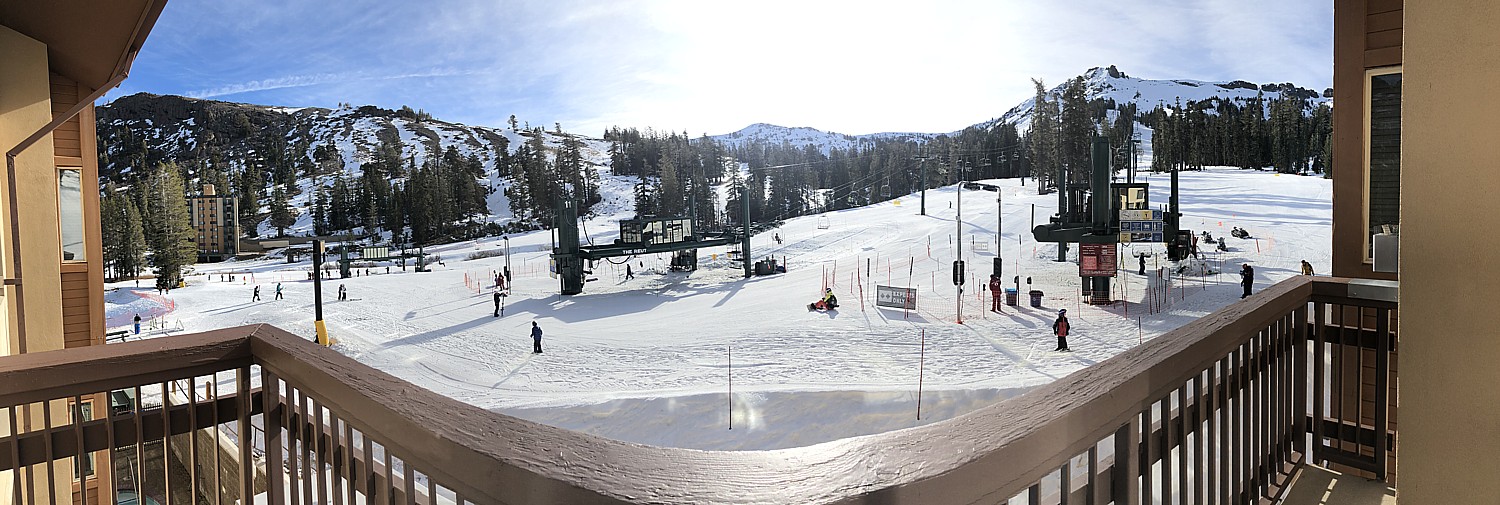
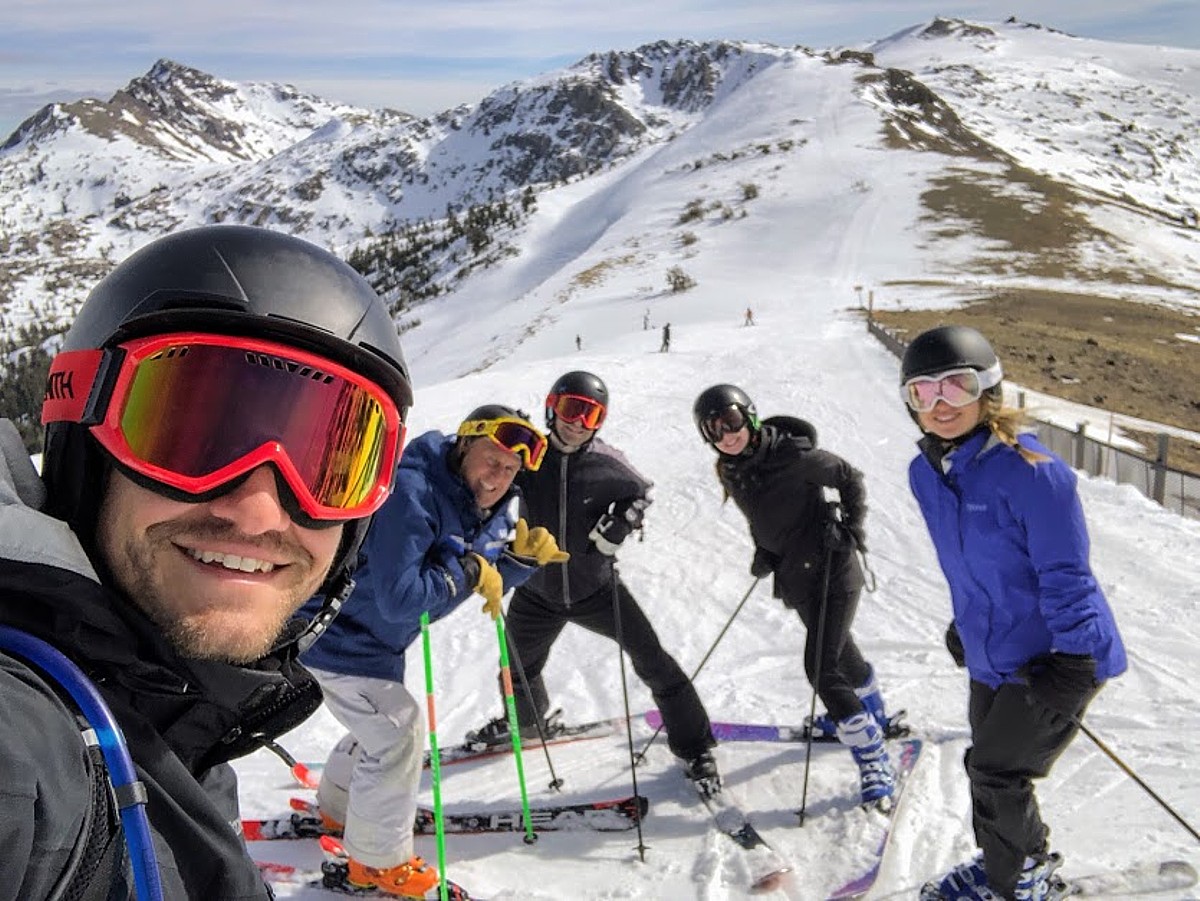
Friday morning greeted us with blue skies, jagged mountain peaks, and a lift that we could practically jump onto from our terrace! We headed to pick up our gear at the demo shop, where we met soon-to-be familiar faces Carlos and team. Carlos is a young guy who we felt we would have been friends with in school and who, over the course of the next couple days, we would become friends with as he cheerfully helps us try different pairs of boots and skis. He appears to be one of many Kirkwood staffers who simply love being at Kirkwood and ski the mountain every chance they can. (Carlos points out that, in fact, he lives steps away from the gondola at the higher-trafficked Heavenly Mountain up in South Lake Tahoe, but he prefers to wake up before dawn and drive to work and ski at Kirkwood.)
When Dick Reuter and Bill Klein started Kirkwood in 1972, many viewed it as a fool’s errand. At the time, there was nothing in Kirkwood – resources and infrastructure were both sparse. But Dick and Bill saw the beautiful mountain’s promise and had a vision for building a ski resort in Kirkwood, so they got to cutting trails and installing lifts.
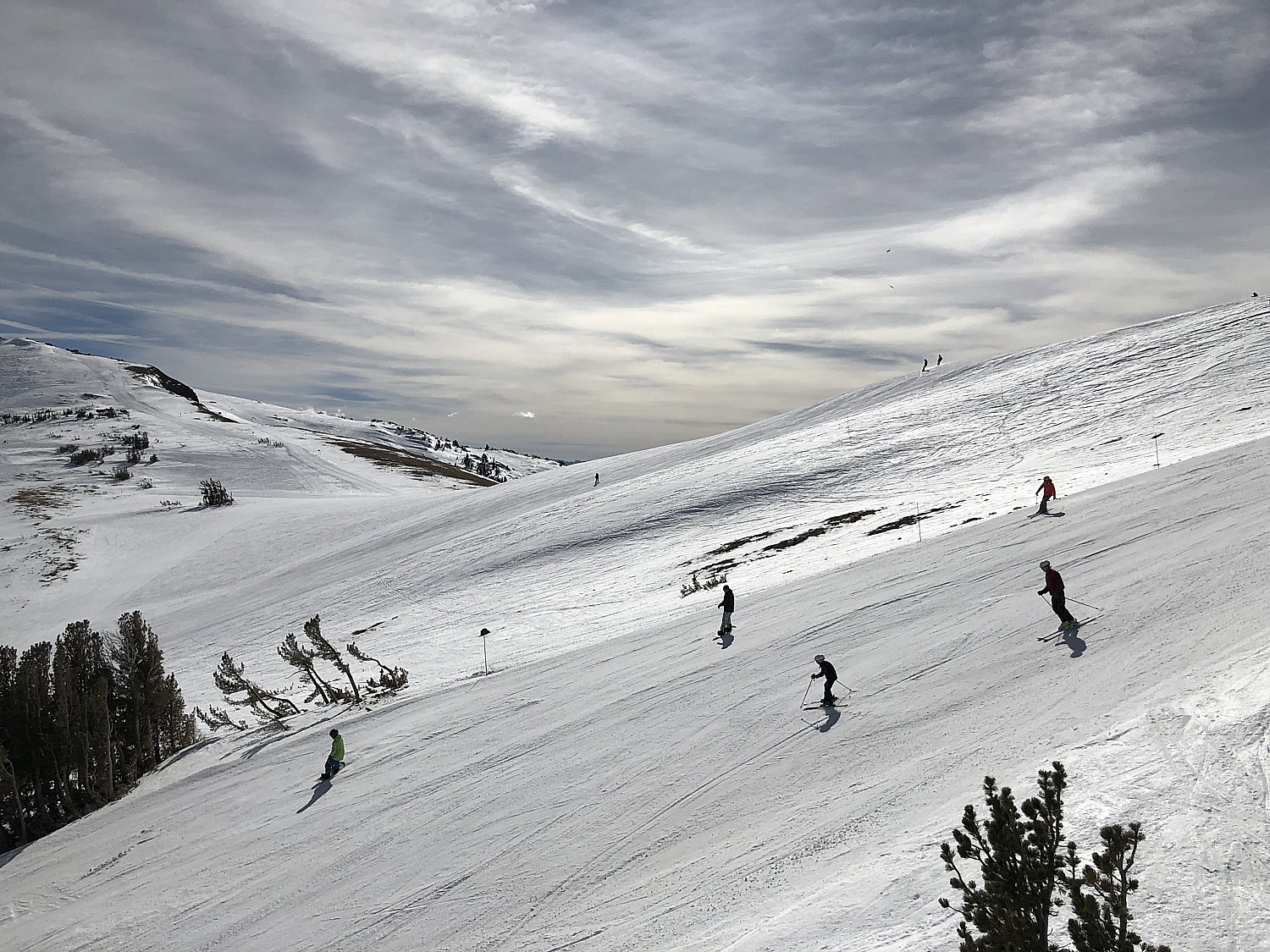
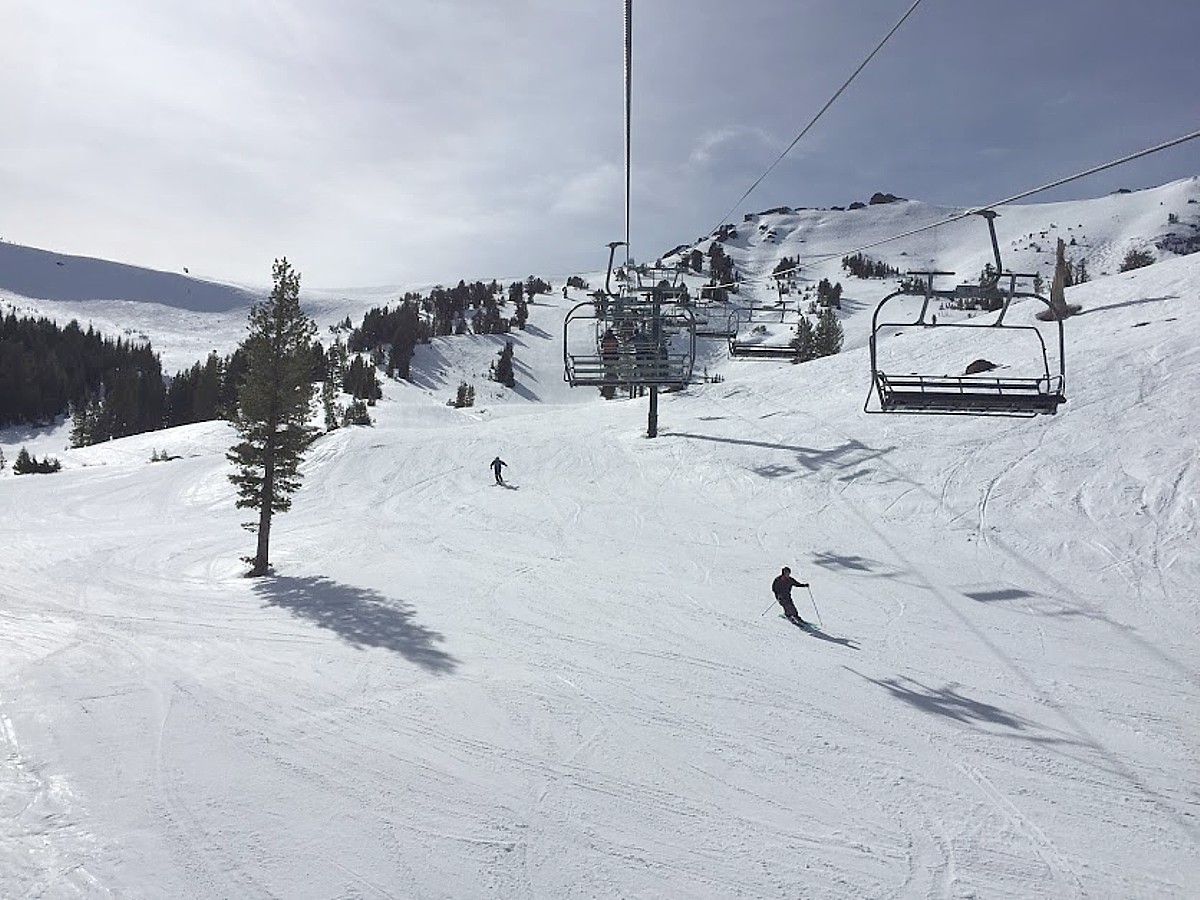
Almost 50 years later, that vision has yielded something spectacular. Kirkwood consistently boasts greater snow accumulation and longer retention of that snow than other Tahoe resorts. The secret is its high base (at 7,800 ft up to a summit at 9,800 ft.), steep terrain, long ridgelines and predominantly Northeast facing mountains. The combination of all these geographical assets and smart trail design (86 trails, a total of 2,300 skiable acres) makes Kirkwood’s conditions and terrain rival those of any resort in North America.
What is more, Kirkwood is now part of Vail Resorts, which also owns nearby Heavenly Mountain and Northstar in the Tahoe area, and is part of Vail’s Epic Pass. It is a credit to the Vail Resorts company that Kirkwood has retained its own character and personality.
Kirkwood is great for skiing with groups of friends of family. Unlike most resorts that have a series of peaks and different lifts servicing those peaks from various bases, Kirkwood features a long ridgeline with trails mostly funneling to the same base. As a result, it’s easy to meet up with the rest of a group, even if members of the group have varying abilities and are skiing terrain of differing difficulty. It’s quite hard to get lost at Kirkwood.
Kirkwood’s Timber Creek is one of the best training terrains in the region, with great blue and green runs. The larger Mountain Village, on the other hand, will lead you to a mix of blues and blacks, with just a few short green runs on the Snowkirk lift. For beginner or intermediate skiers, sticking to the groomed trails is the way to go. For advanced skiers, there are endless trails to explore and trees to drop into off the long ridgeline. Pay attention to the signage at the base of the lifts, as certain lifts are specified “Experts Only” and will only serve black diamond runs. (Of its 86 trails, 12% are beginner, 30% are intermediate, 38% are advanced, and 20% are rated expert; the longest trail is 2.5 miles; out of the 14 lifts, two are high-speed quads.)
For those looking to explore the side and backcountry of Tahoe, Expedition:Kirkwood offers guided excursions, specialty clinics and backcountry awareness training. Kirkwood’s terrain provides access to backcountry opportunities within resort boundaries straight from the lifts, and EK guides can help even the most advanced skiers and boarders find terrain that thrills and challenges. (To book, 209.258.7360 or email ExpeditionKirkwood@VailResorts.com)
While there wasn’t enough snow during our time at Kirkwood to explore the backcountry, we still found great value in the instruction and knowledge of our all-star, veteran ski instructors Tony and Steve. Tony has been teaching at Kirkwood for 20+ years, and Steve for almost 5 years. (Kirkwood employees seem to have genuine loyalty and pride. We learned that one snowcat operator has been working at the mountain for 40 years.)
In a half day, Tony coached a couple of us intermediate skiers how to appropriately shift weight to improve balance on runs of varying difficulty, clean up turns on steeper terrain, and venture down mogul runs for the first time, albeit very slowly and safely.
Steve took the more advanced skiers in our group to Sentinel and Palisades bowls and showed us some of the most insane cliff lines we’ve ever seen. As Steve put it, “I don’t care who you are or how long you’ve been skiing, there’s something inbounds on this mountain to make even the most daredevil skiers scared.”
After a long day of skiing and riding, we were ready for a hot tub session and a hearty meal.
There are several dining options and a few aprés bars at the base and on the mountain, but this is not the place you come for party scenes, pampering or gourmet meals. Again, the draw of Kirkwood is the mountain, not the village or resort amenities. So while there are a couple of good dining options, the more “Kirkwood” thing to do would just be to buy a bunch of groceries and cook for yourself in the comfort of your condo.
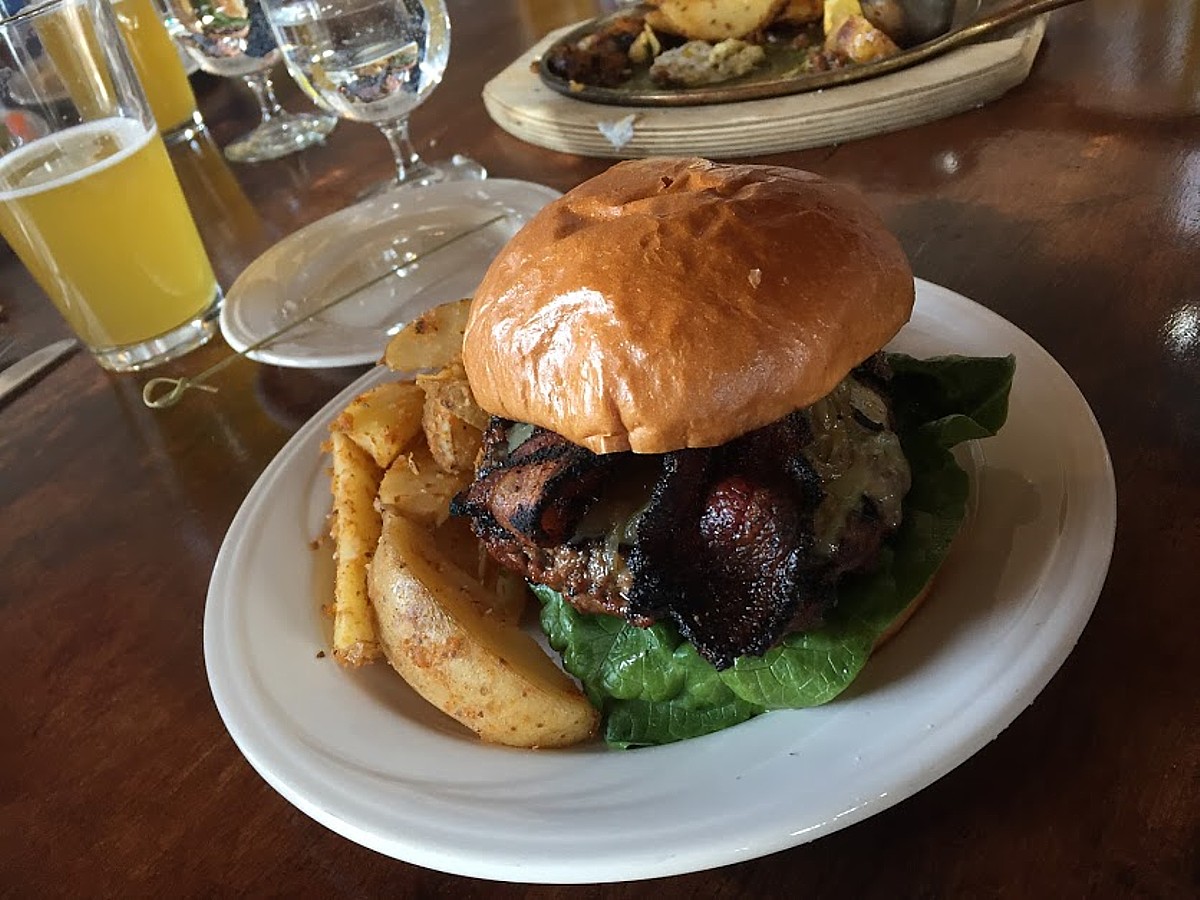
That being said, the on-mountain dining is quite good. We dined at The Wall once for lunch and once for dinner (and enjoyed their $3 Tequila Happy Hour special for a great aprés ski another day). Their food is rich and delicious. The plates are pricey, but most of the portions are huge and share-worthy so we recommend ordering for the table. A great starter is the Spanish Fries of potato wedges with perfectly cooked chorizo bits and cheese. If you’re looking for a big meal, get the cheeseburger. You might not rush straight back up the mountain after, but your tastebuds will be happy.
As far as dinner at The Wall is concerned, our favorites are the truffle mac & cheese appetizer, short ribs braised in red wine, and chicken schnitzel with spaetzle. The menu is constantly rotating, but if you find any of these items on the menu, we highly recommend any of them.
The aforementioned Kirkwood Inn, which has been around since 1864, is another dining option near the mountain (5-minute drive). We unfortunately did not get the opportunity to visit, but we heard wonderful things.
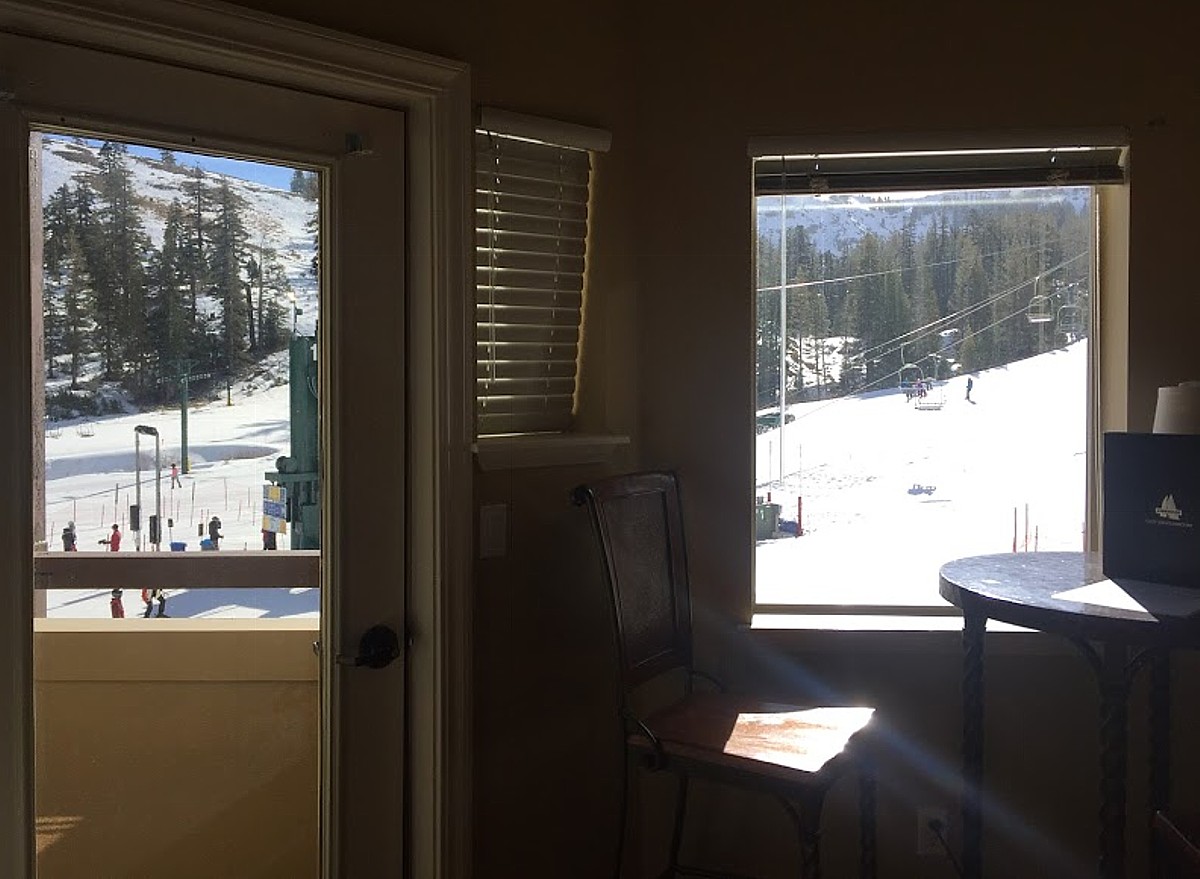
There are multiple lodging options when visiting Kirkwood. The three ski-in/ski-out options are The Mountain Club, The Lodge at Kirkwood, and Snowcrest Lodge. We stayed in a 2-bedroom suite at the Mountain Club and couldn’t have asked for more. Our living room looked out onto three chairlifts and each room had sweeping views of the mountain. Beds were very comfortable and the cozy living room felt like we were in our own home. Other highlights of the facilities worth taking advantage of after a long day of skiing included an outdoor hot tub, exercise room, sauna, and steam room all offer a perfect finish to a long day on the slopes.
All in all, we were blown away by Kirkwood’s simplicity and purity. We live in a fast-paced world where over-stimulation has become the norm, and ski resorts are increasingly catering to that expectation by doubling down on their resort activities and luxury offerings. But Kirkwood has stayed true to its roots. It is off the beaten path and promotes a simpler lifestyle based around the ideals of world-class skiing, enjoying time with loved ones and connecting with nature.
It also bears noting that skiing Kirkwood is less pricey than most major ski resorts.
So pick up some groceries on your way in and relish in the time away from the noise and action. This is not one of those getaways where you’ll need a vacation from your vacation. This is it. At the end of the day, it’s all about the mountain at Kirkwood. And we hope that never changes.
Kirkwood is located about 45 minutes south of Lake Tahoe, The closest airport is Reno-Tahoe International Airport, about 1 ½ hour drive away. Jetblue offers nonstop flights from JFK.
Amidst the largest snowpack in 22 years, the Best of Tahoe Resorts, a subsidiary of Vail Resorts, announced an extended ski seasons for Heavenly Mountain Resort daily through April 23, and the weekend of April 28 – 30; Northstar California through April 23. Kirkwood continues with spring skiing through April 16. (See snow.com)
They are the CLIO awards of the hospitality, travel and tourism industry – a gigantic segment of the US economy and culture which people don’t readily recognize as being so integral to everyday life, so fundamental to local economies and communities. But these are the advertising, public relations and digital marketing campaigns that excite, engage, inform and ultimately spur millions of us to venture out and experience new places, people and activities. Travel bolster local, state and national economies, creates an economic underpinning that sustains heritage, culture and the environment, while travelers are themselves enriched, often with life-enhancing, life-changing experiences; they become ambassadors, opening lines of communication and understanding between people that break down the barriers that promote conflict. And going back to the age of Marco Polo, travelers help the free exchange and spread of ideas and innovations.
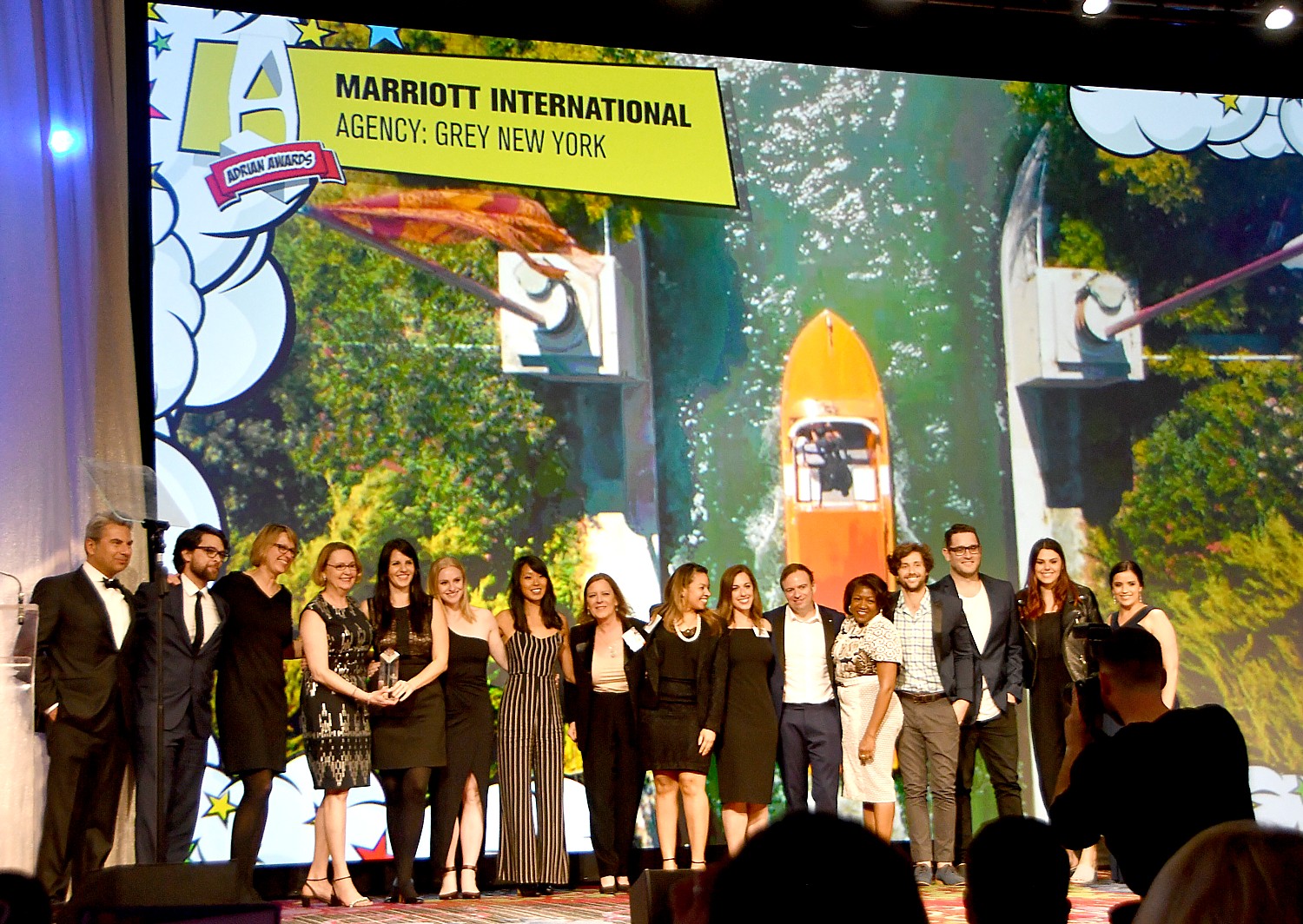
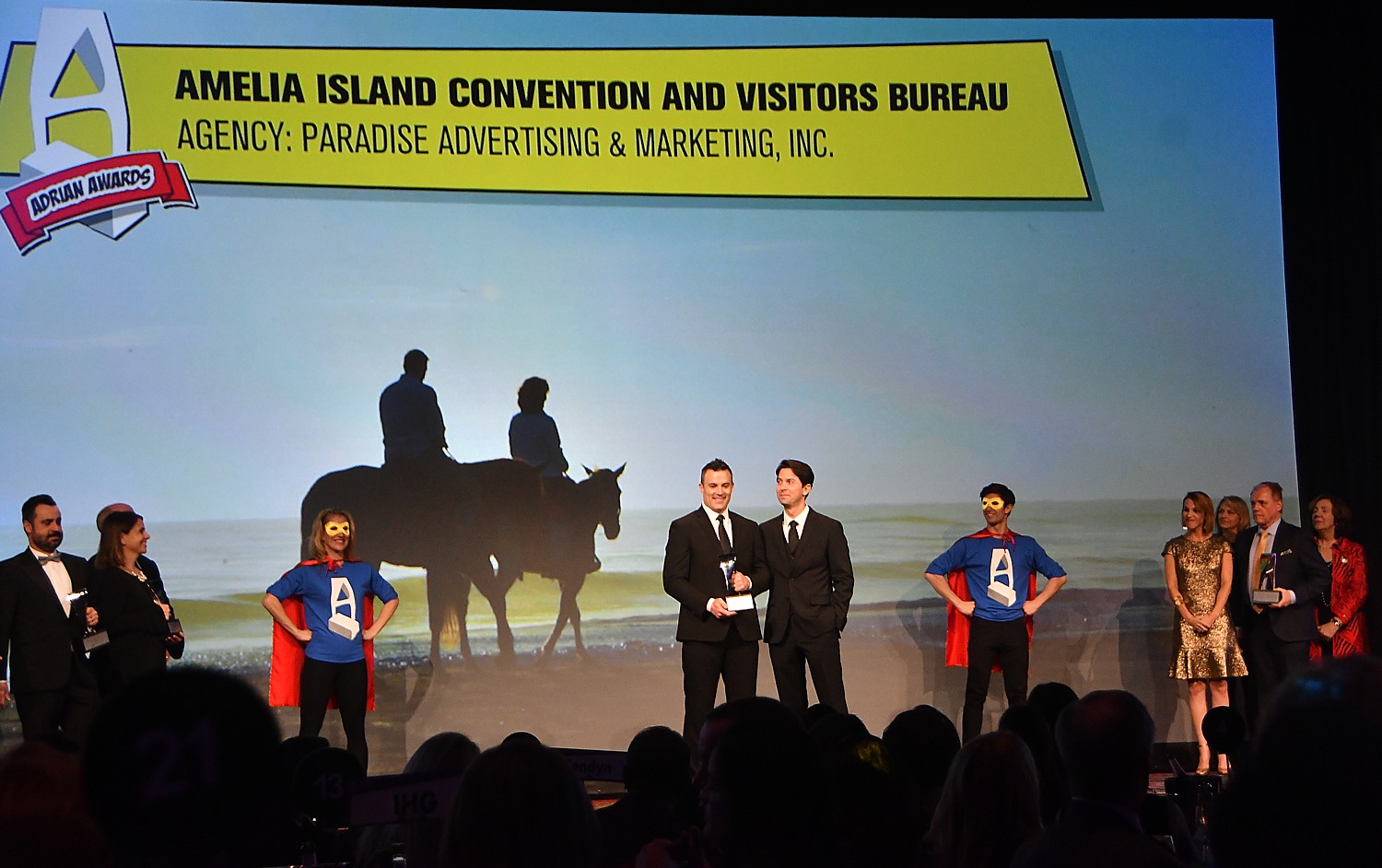
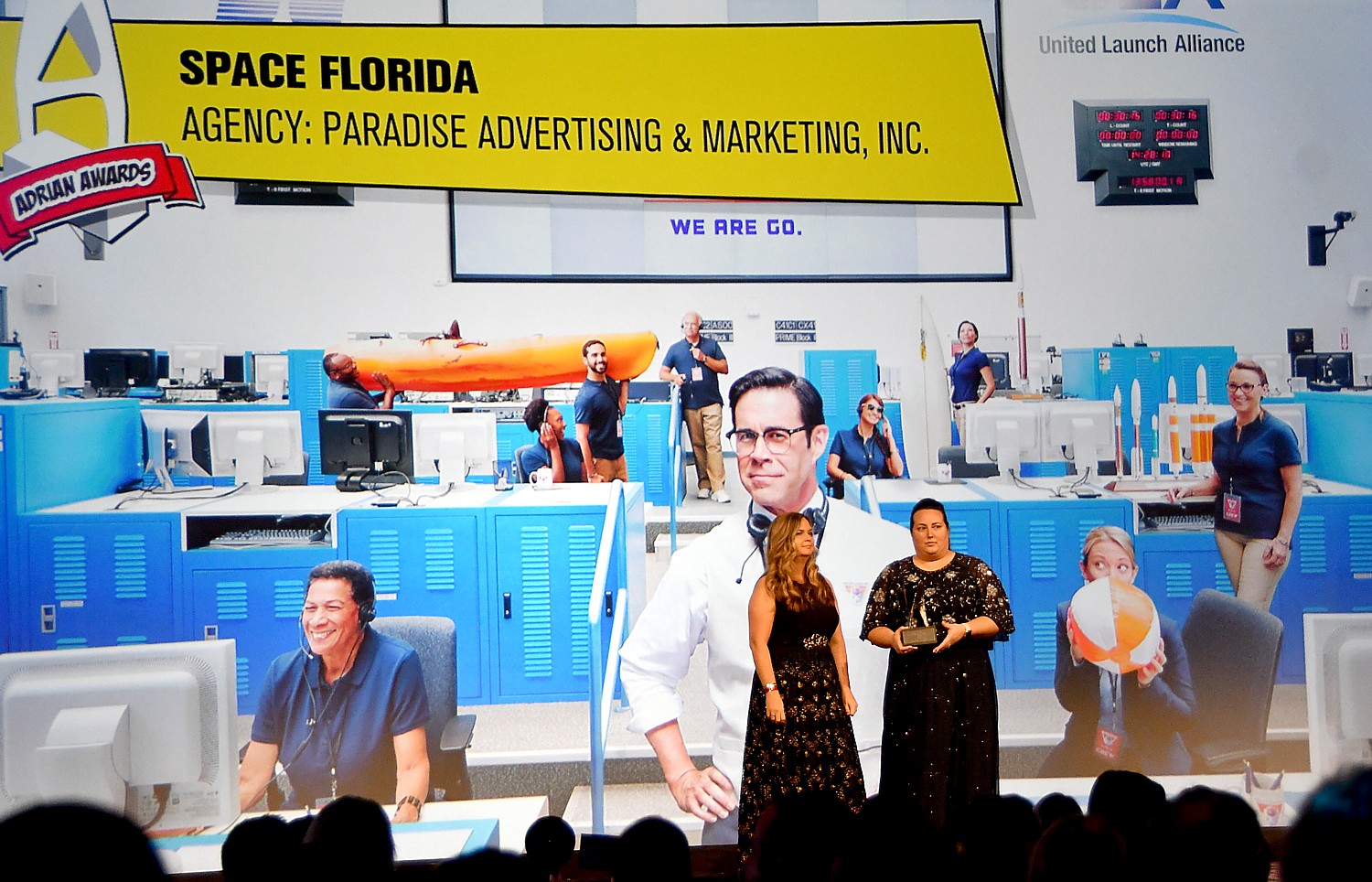
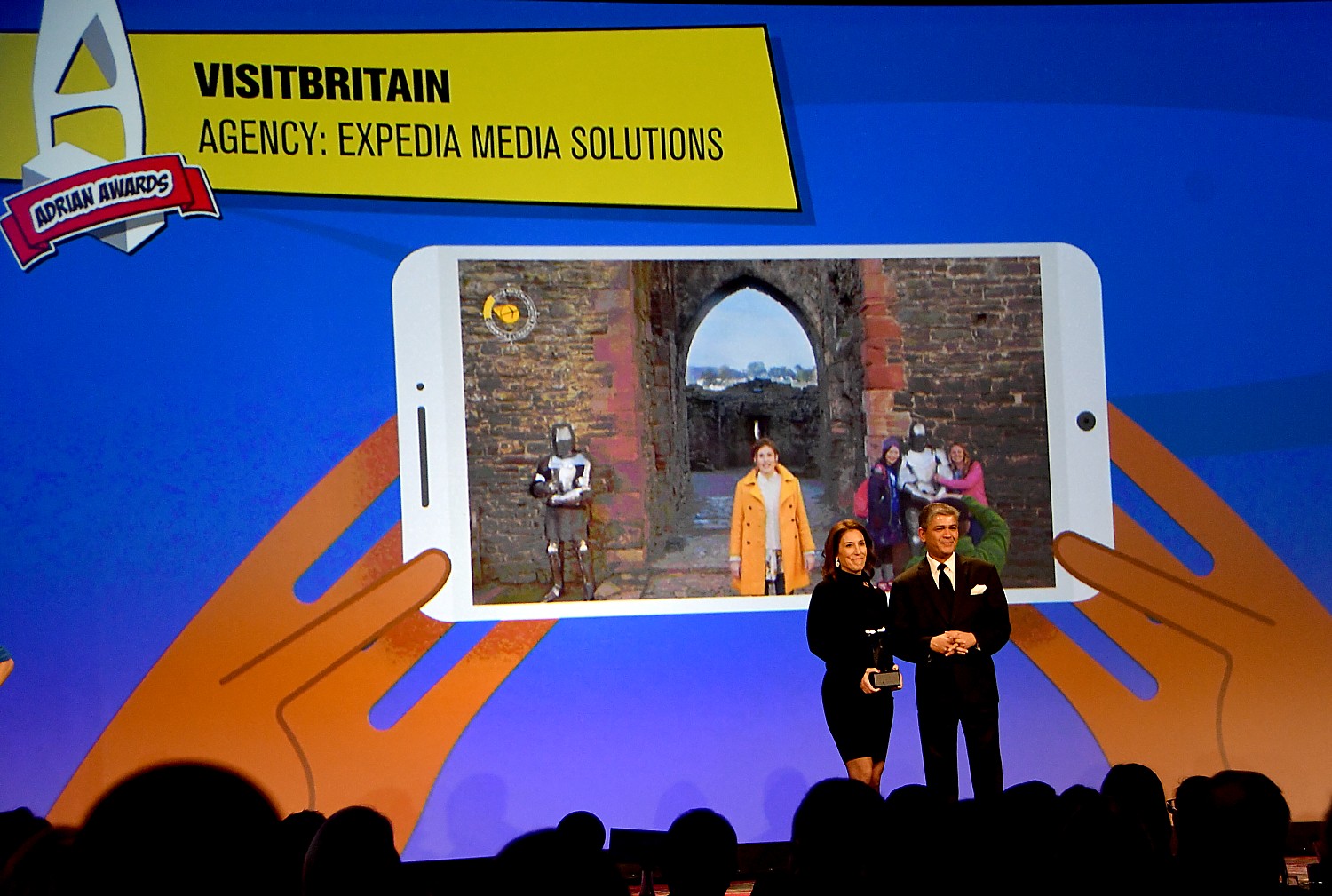
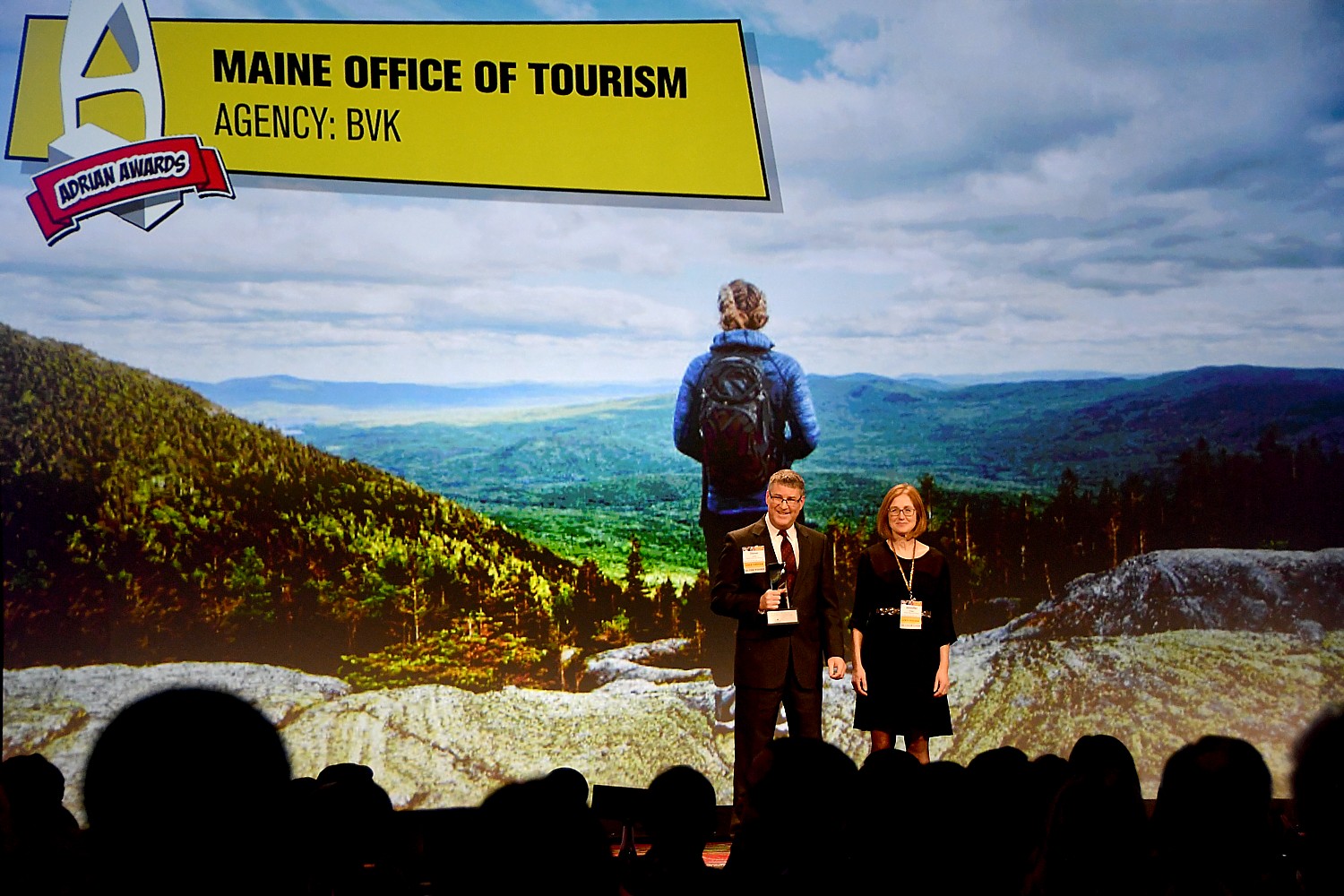
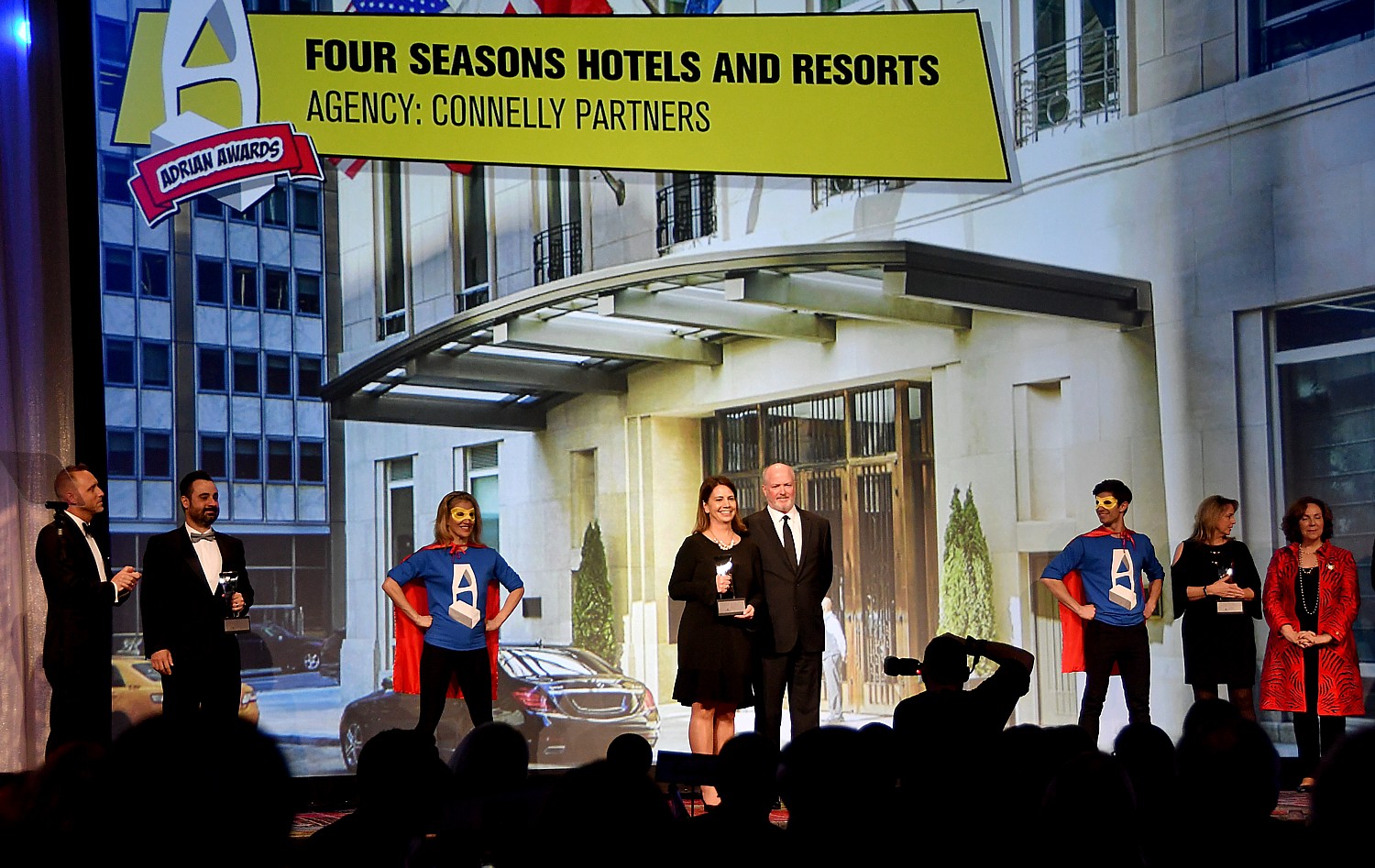
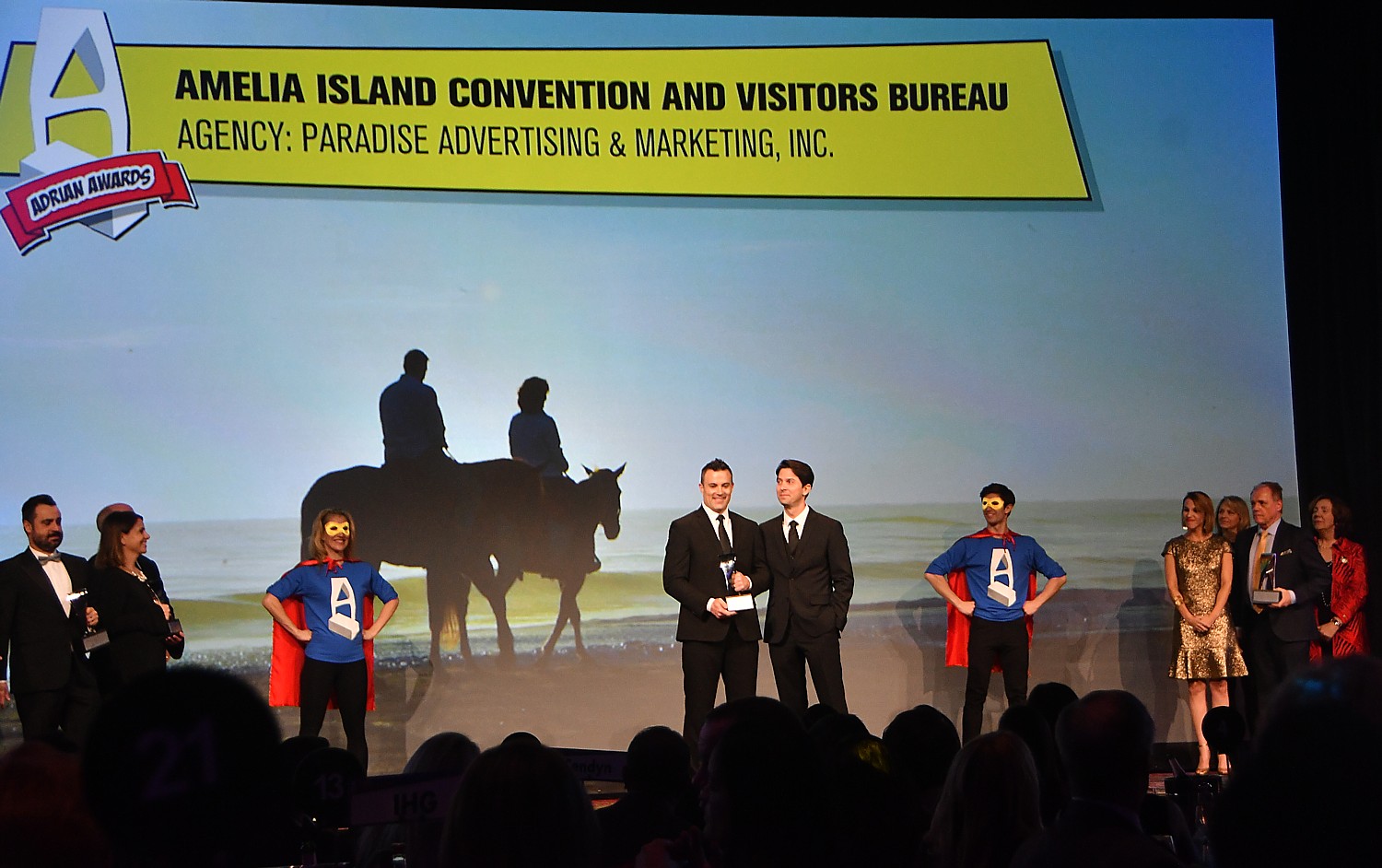
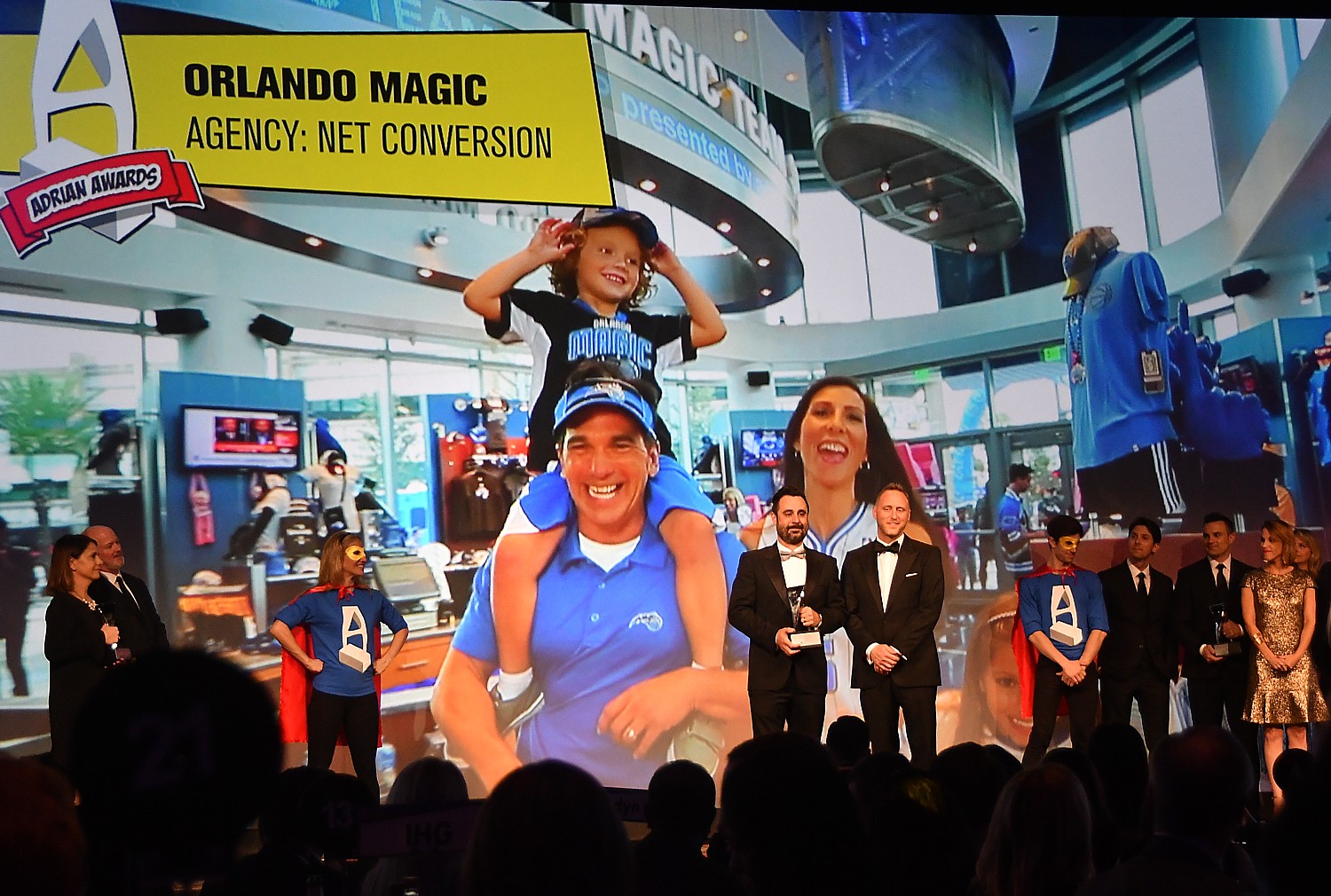
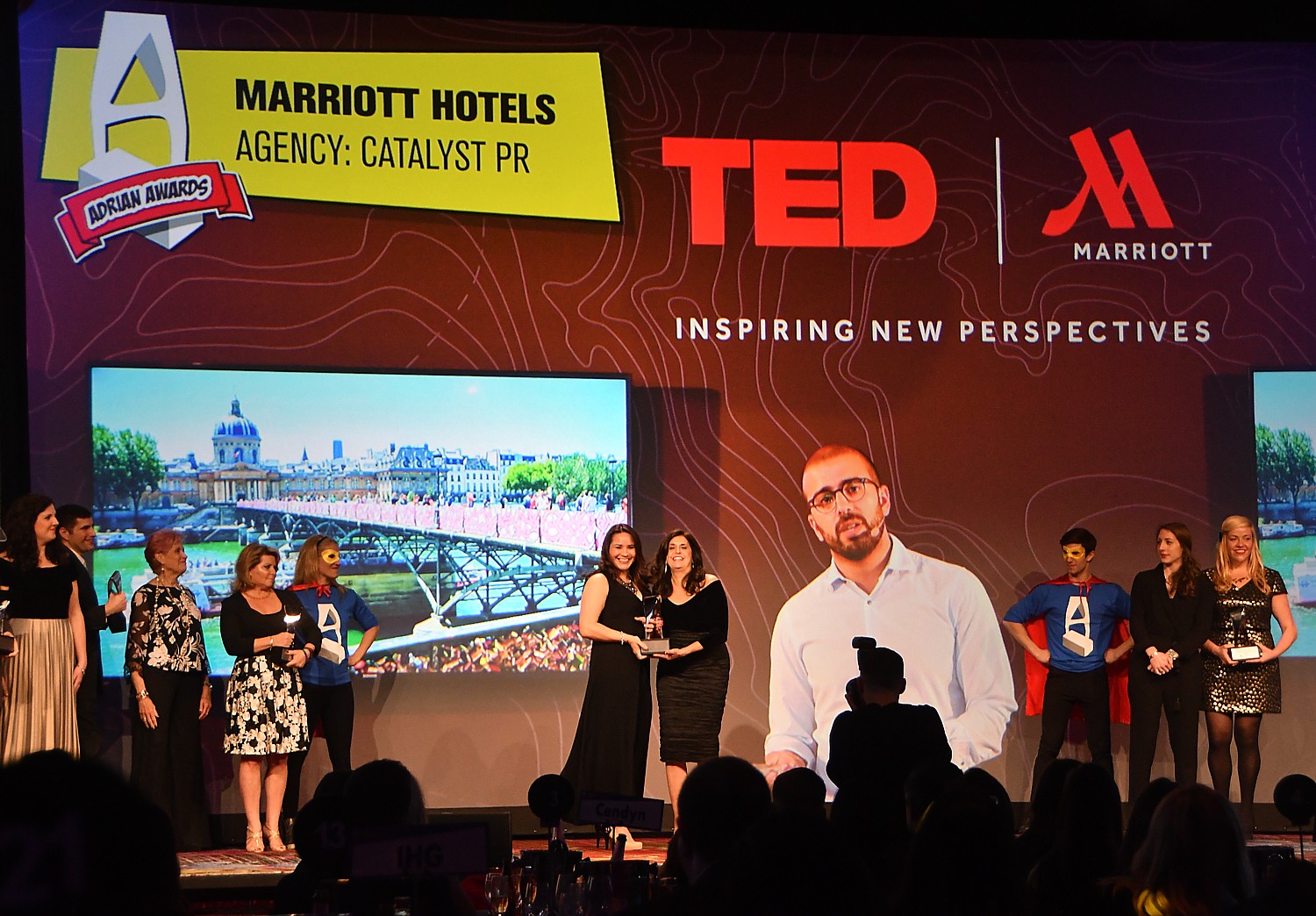
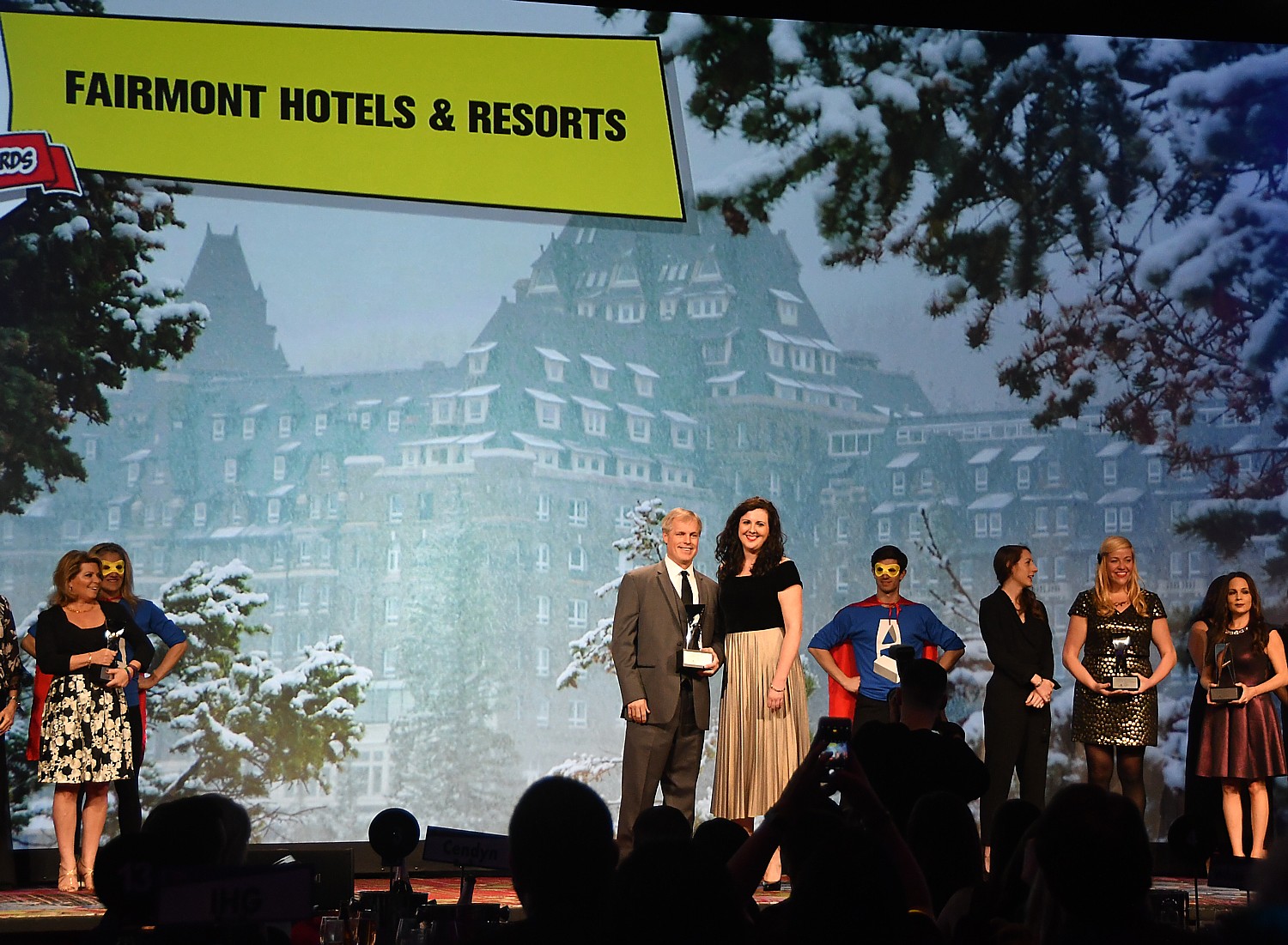
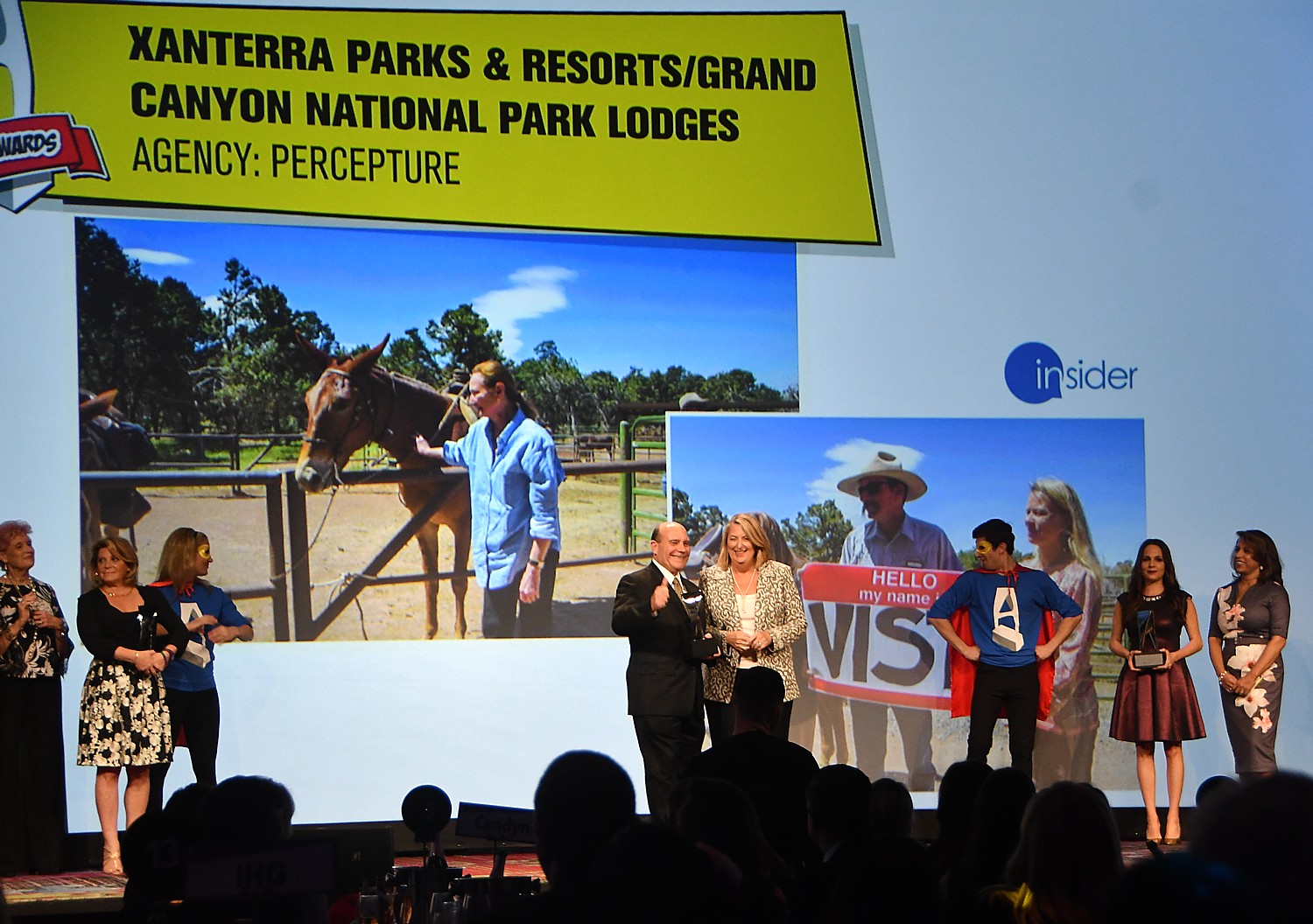
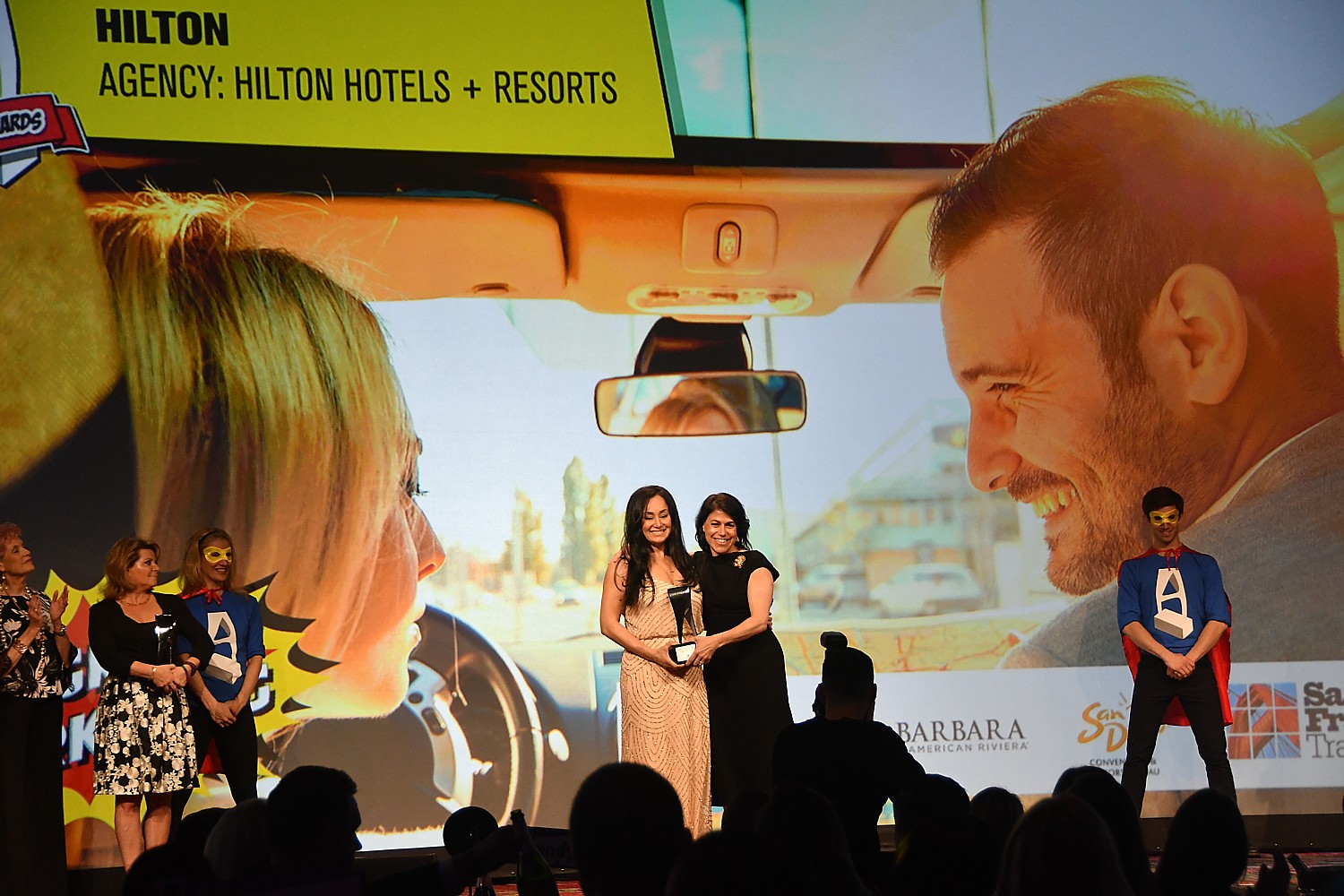
The Hospitality Sales and Marketing Association International (HSMAI) hosted its 61st annual Adrian Awards Dinner Reception and Gala at the New York Marriott Marquis, celebrating innovators in hospitality advertising, digital marketing, and public relations before more than 800 industry professionals. A highlight was a look back at the organization’s 90 year-history in promoting standards for hospitality and innovations in marketing campaigns that inspire travel.
“HSMAI applauds this evening’s winners for their ingenuity and hard work,” said Robert A. Gilbert, CHME, CHA, president and CEO of HSMAI. He added, “Adrian Awards winners spark innovation throughout the entire hospitality industry.”
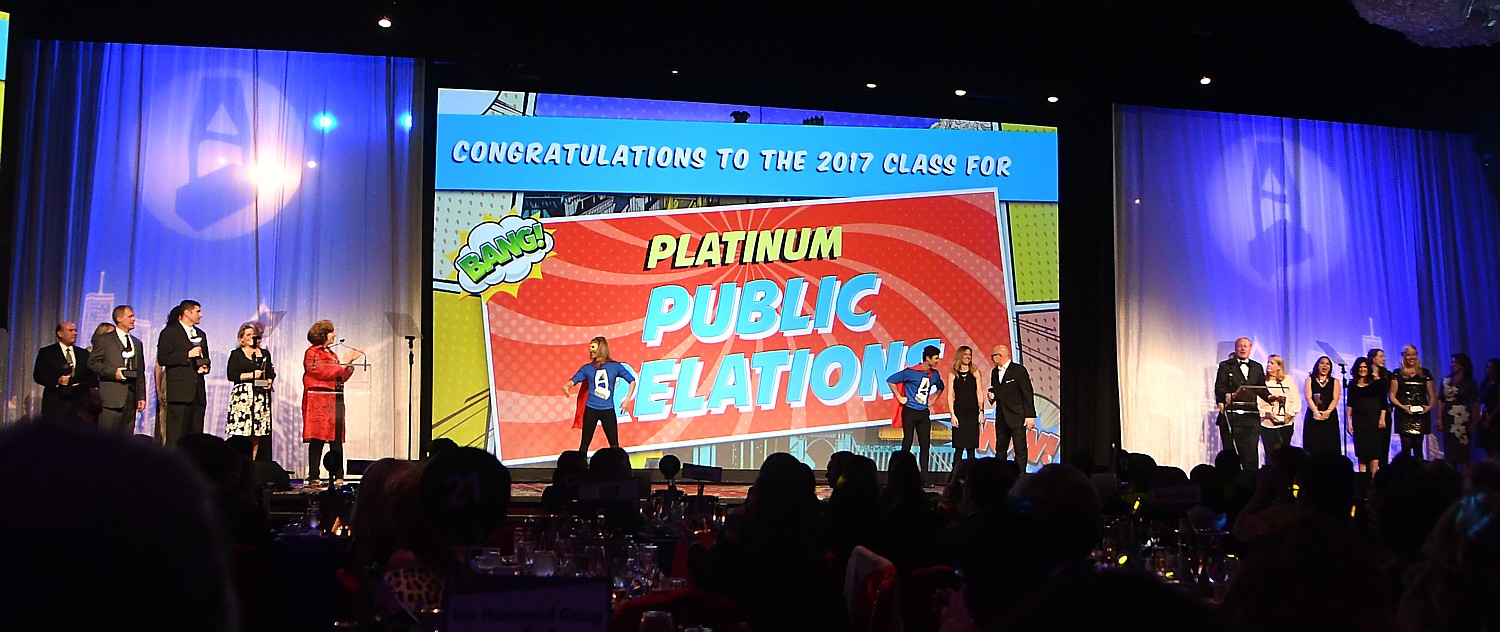
Established in 1956, the Adrian Awards recognize marketing achievements in hospitality across multiple segments of the industry. Award winners are selected from more than 1,200 entries by senior industry and media experts, for four main entry divisions: advertising, digital marketing, public relations, and—newly added—integrated marketing. Gold Award winners across these categories were recognized during the Adrian Awards Dinner Reception, which was co-sponsored by HSMAI, Google, and TravelClick. Platinum winners were selected from exceptional Gold Award winners.
The judges speak of authenticity, engagement, blurring of lines among media, emotionality, innovation and creativity, visual beauty, quality of content, storytelling, and most significantly measureable results in distinguishing the winners.
The stakes are huge: these advertising, marketing and public relations campaigns are a key part of the travel and tourism industry that generates $2.3 trillion in economic output (2.7% of the nation’s GDP) from domestic and international visitors. Travel expenditures support 15.3 million American jobs (8 million directly); account for $221.7 billion in wages, and generate $141.5 billion in tax revenues to federal, state and local governments, levels that increased significantly over the past decade, and have been a significant factor lifting the nation out of the Great Recession to “full” employment. International visitors to the United States in 2016 generated $212.3 billion, 9.5% of exports, but were forecast to fall by 0.6% in 2017, largely due to the political climate, travel ban, and concern over gun violence (which has accounted for several countries posting travel warnings). These are the kind of issues that the travel marketers address.
Travel and tourism is vital globally: Travel & Tourism generated $7.6 trillion (10.2% of global GDP) and 292 million jobs in 2016, equivalent to 1 in 10 jobs in the global economy. The sector accounted for 6.6% of total global exports and almost 30% of total global service exports. Travel and tourism doesn’t just improve lives, but is critical to livelihoods.
The United Nations has designated 2017 the International Year of Sustainable Tourism for Development. “As one of the world’s largest economic sectors, Travel & Tourism creates jobs, drives exports, and generates prosperity across the world. The International Year provides an enormous opportunity to further showcase the tremendous economic, social, cultural, environmental, and heritage value that the sector can bring.”
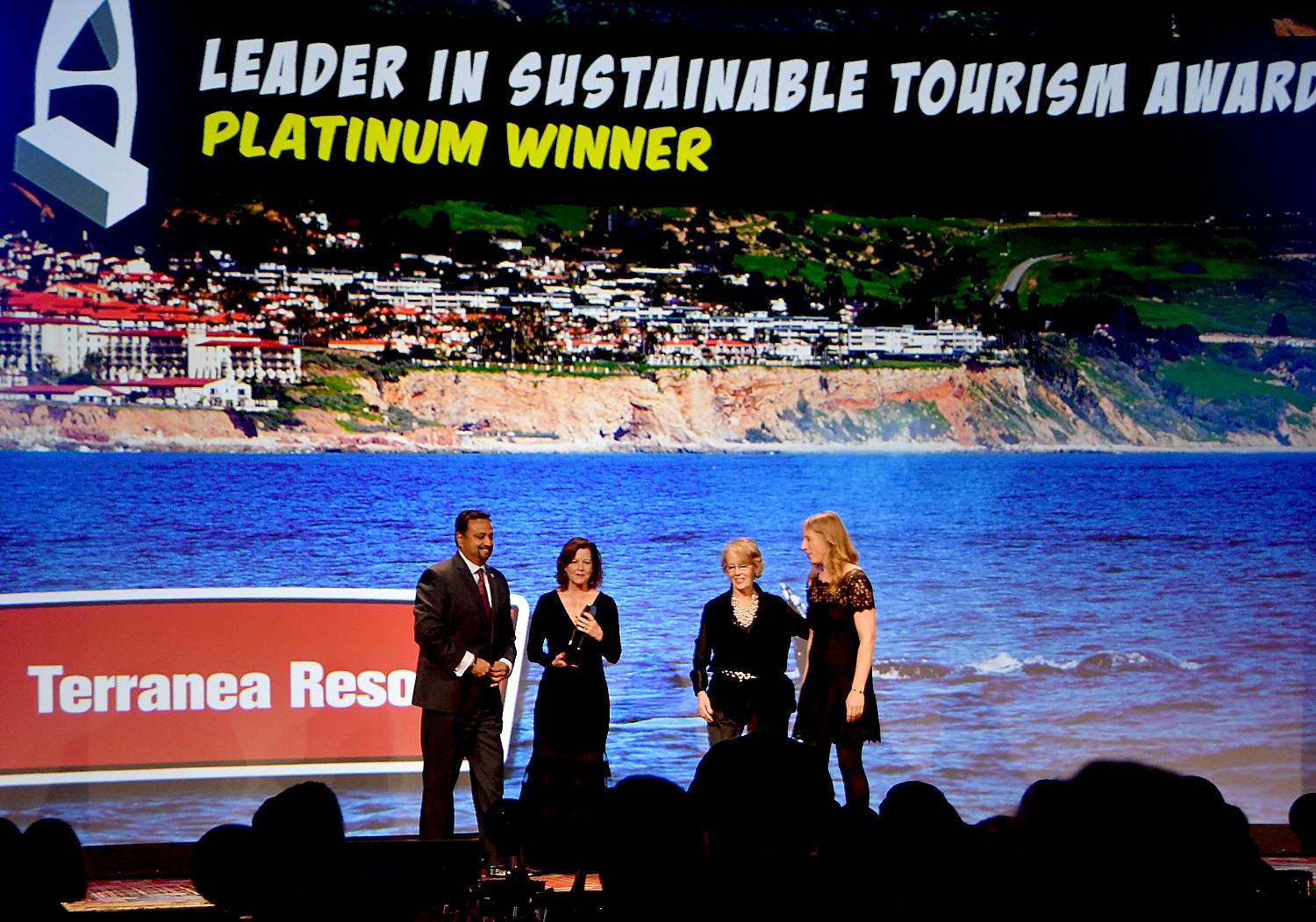
The winner of the eighth annual Leader in Sustainable Tourism Award, presented by HSMAI and National Geographic Traveler, was Terranea Resort.
Best of Show Awards, the pinnacle of the evening, were presented to Platinum Award winners from three divisions—advertising, digital marketing, and public relations—as follows:
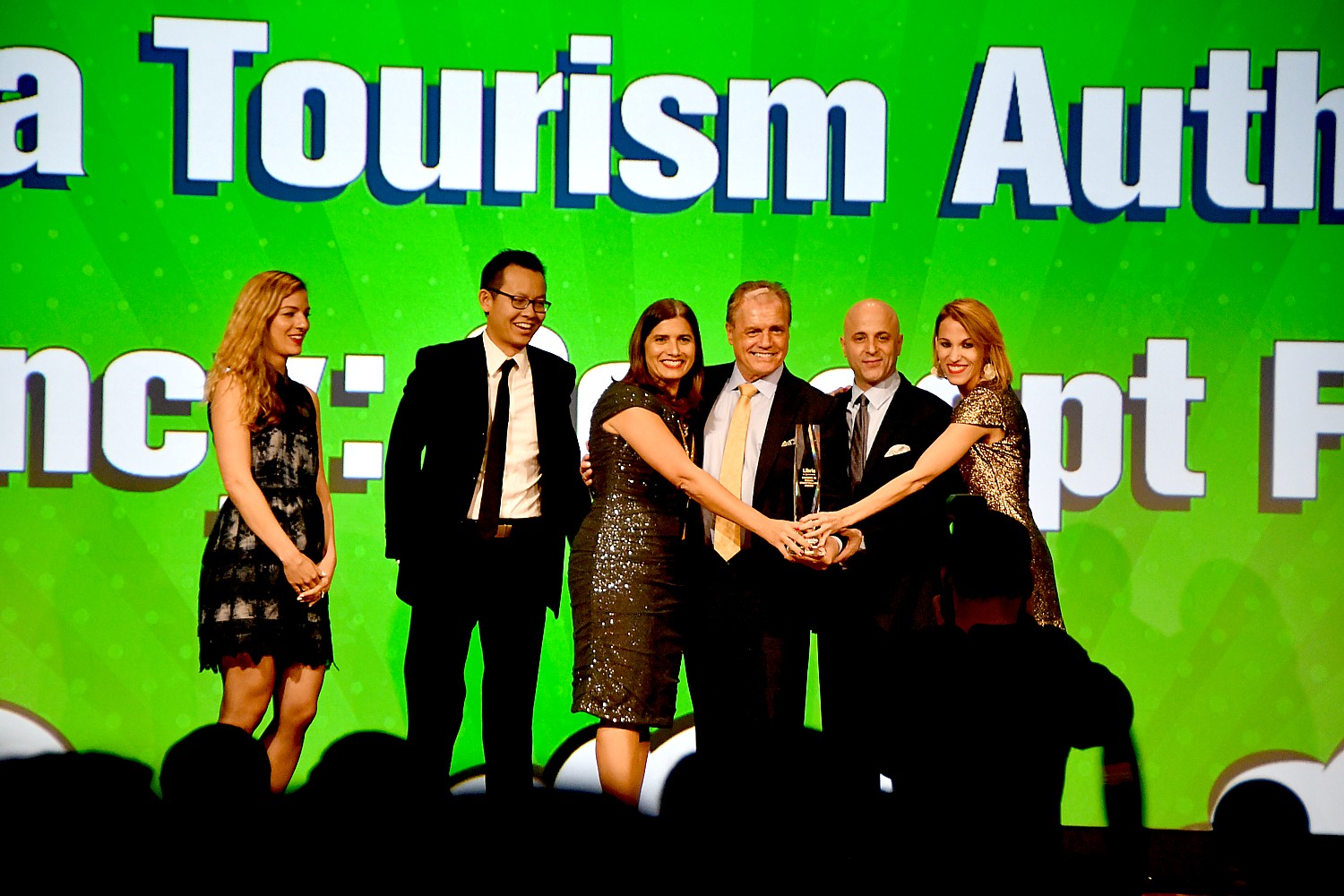
(Tie) Advertising “Best of Show” – Newfoundland and Labrador Tourism and its agency, Target: “Off the Beaten Path” Geo-Targeted Campaign
(Tie) Advertising “Best of Show” – Marriott International and its agency, GREY New York: “You Are Here” Campaign
Public Relations “Best of Show” – Mexico City Tourism Board and its agency, Weber Shandwick: “From Humble to Haute: Changing Perceptions of Mexico City”
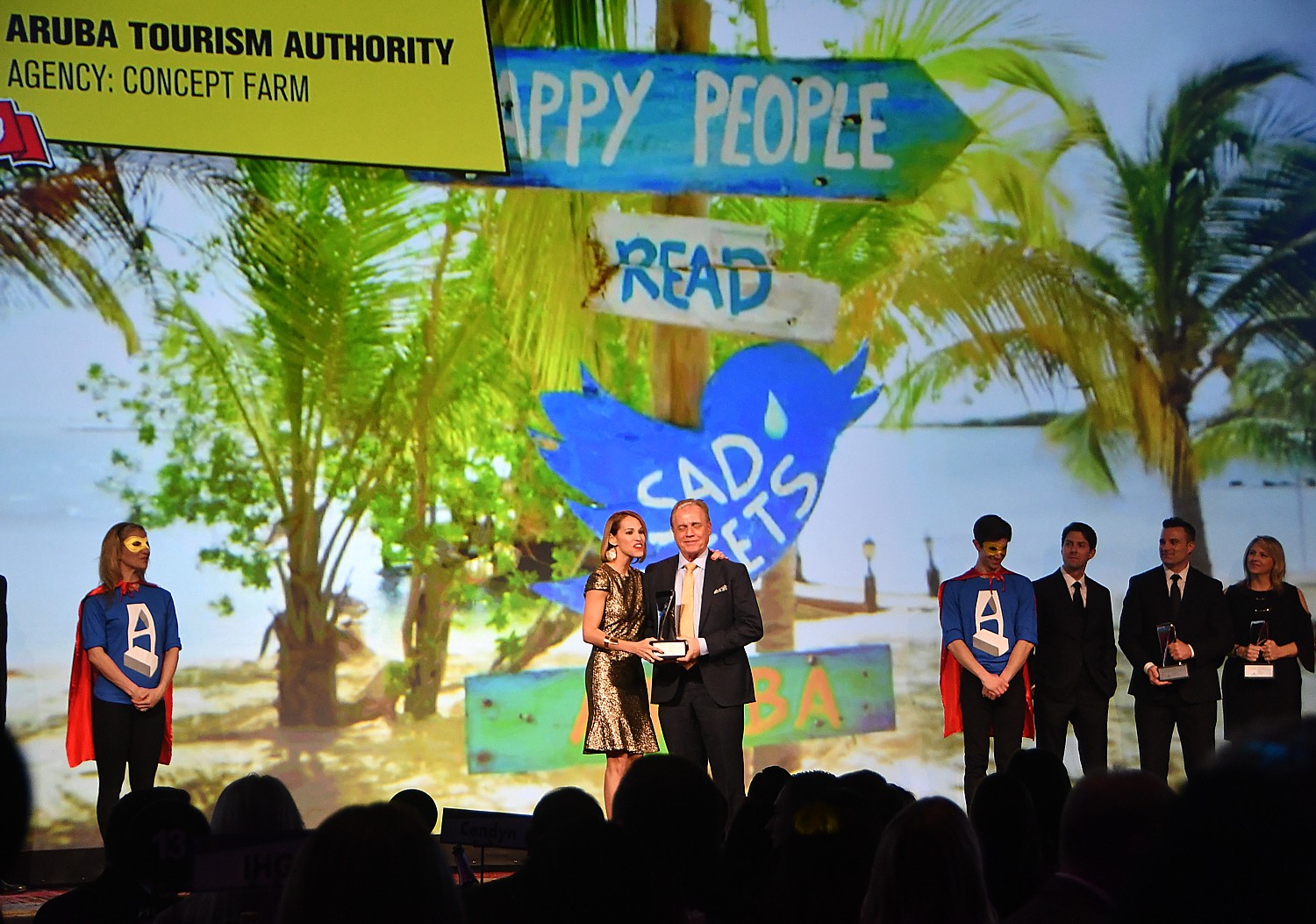
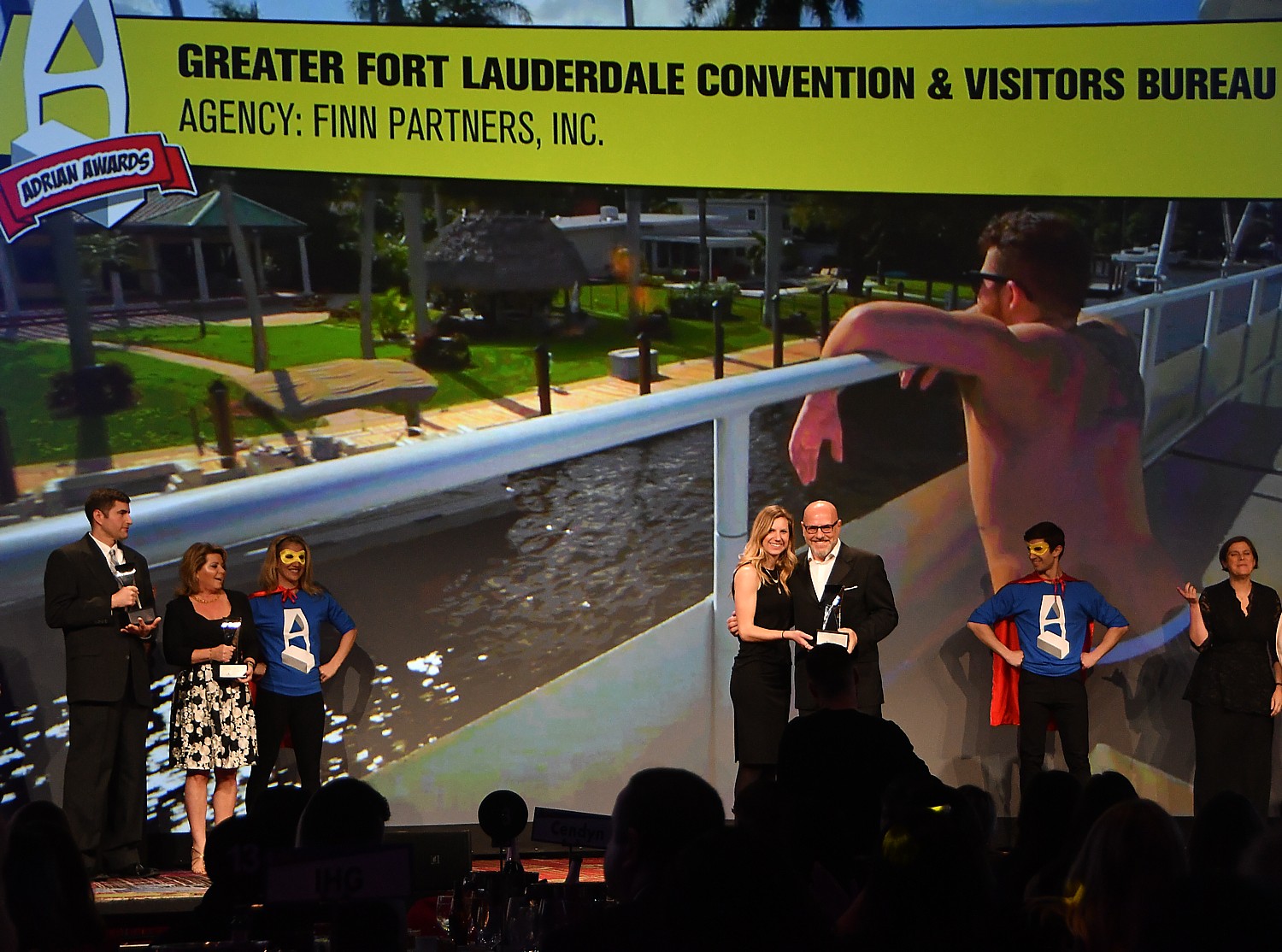
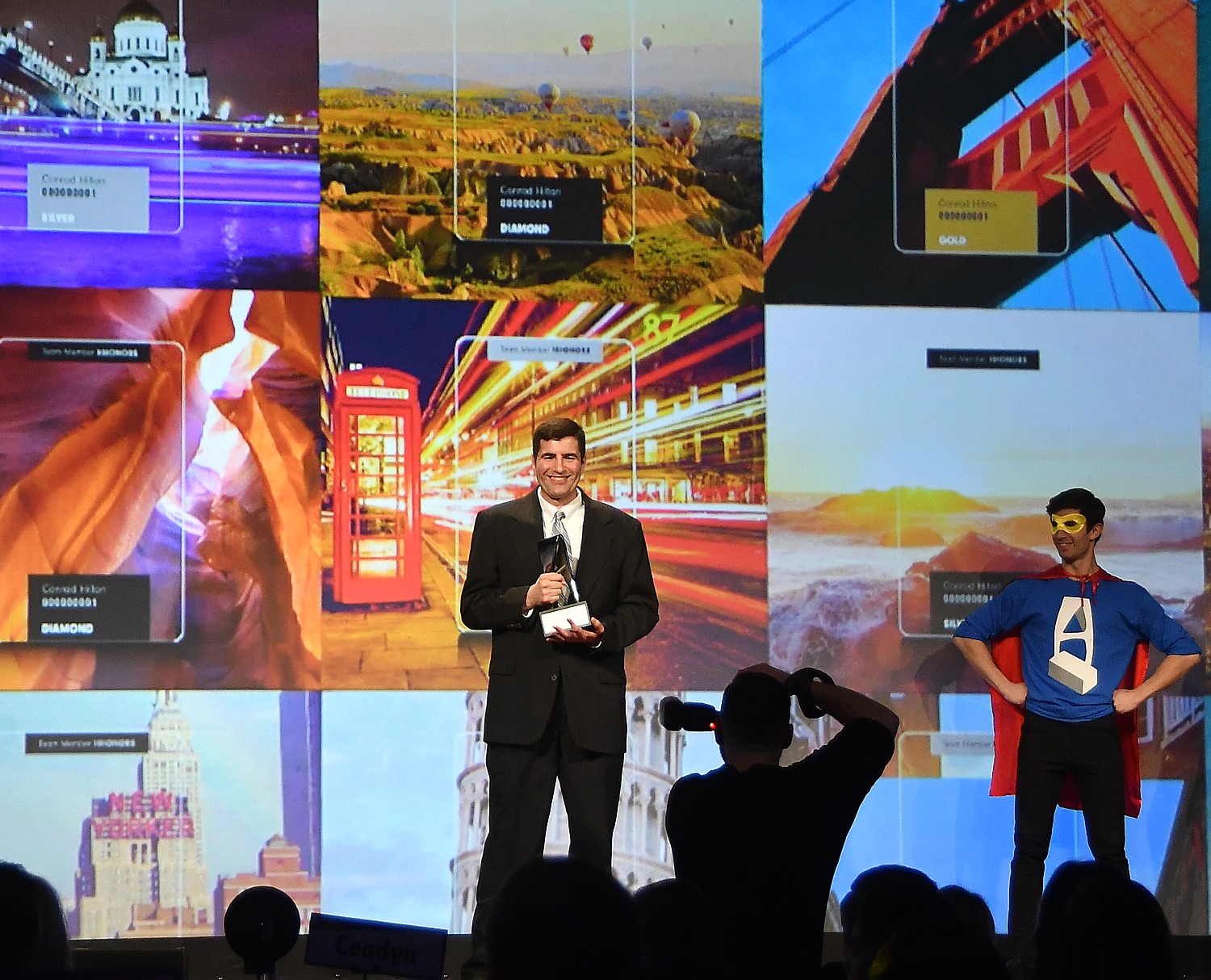
Gold Award winners’ submissions were showcased on digital displays at the Adrian Awards Dinner Reception and featured during the Gala stage presentations. “Right in line with this year’s theme, ‘be a travel marketing superhero,’ the Adrian Award-winning campaigns demonstrated boldness, resolve, and charisma,” said Fran Brasseux, HSMAI Executive Vice President.
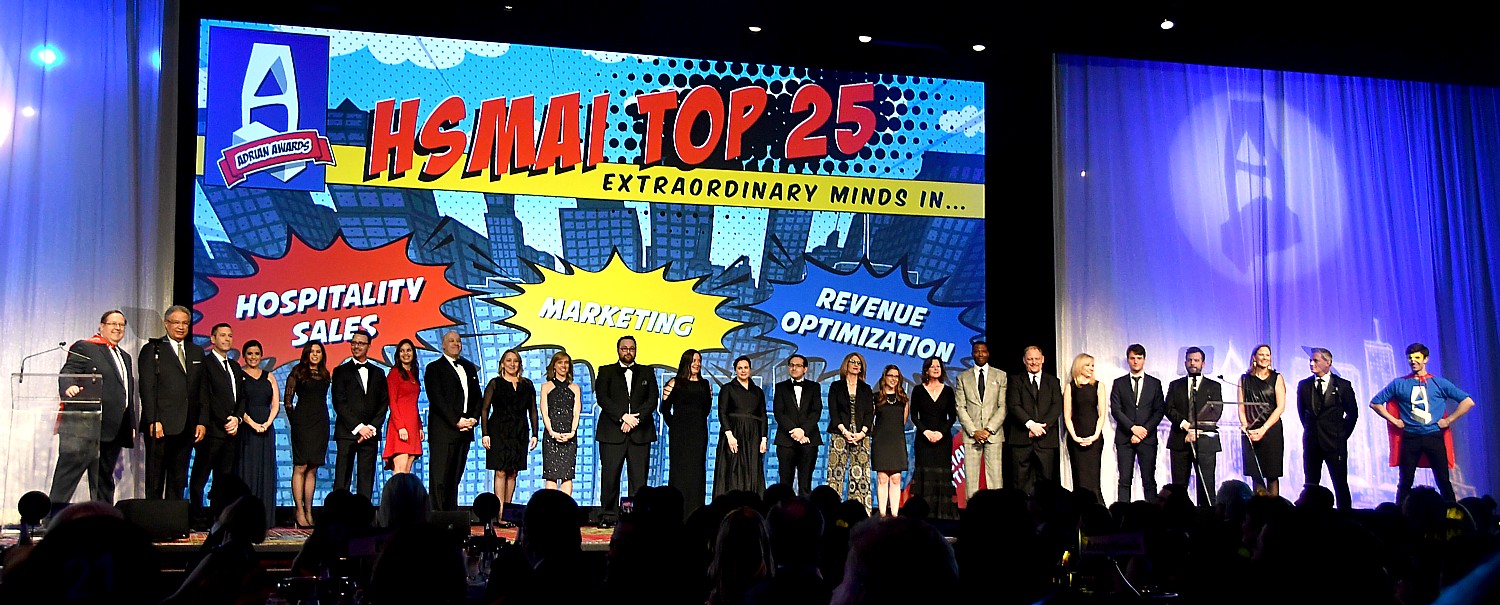
Selected by a panel of senior industry executives, The HSMAI Top 25: Extraordinary Minds in Hospitality Sales, Marketing, Revenue Optimization for 2017 were honored by HSMAI in a reception co-hosted by Questex Hospitality + Travel and also recognized on stage during the Gala.
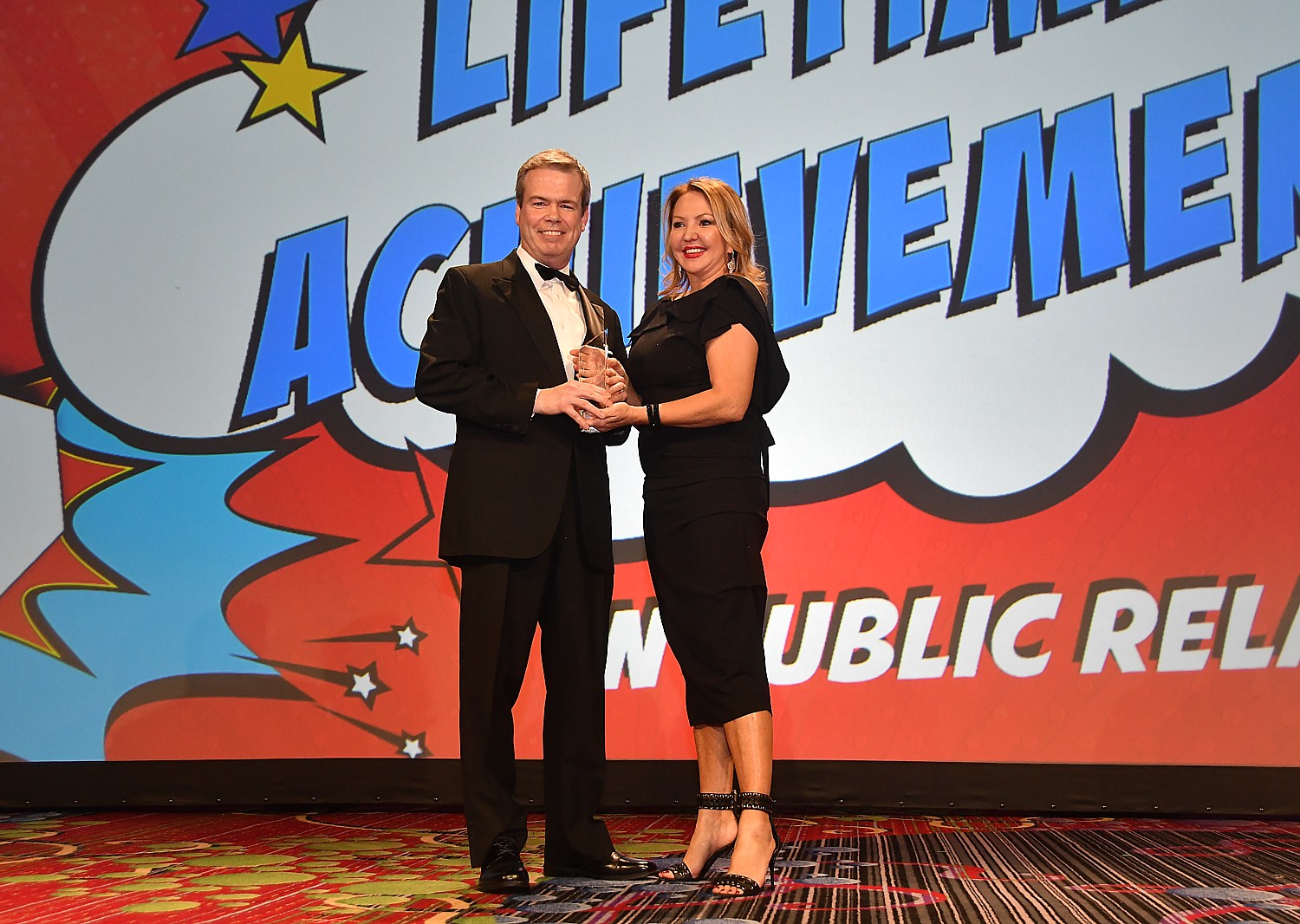
Additionally, the distinguished careers of two industry leaders were celebrated with HSMAI Lifetime Achievement awards. Edwin “Ed” Fuller, president, Laguna Strategic Advisors, was honored with the 2017 Albert E. Koehl Award and Terence “Terry” Gallagher, president, Lou Hammond Group, New York, was honored with the 2017 Winthrop W. Grice Award for Public Relations.
“I’d like to thank HSMAI for giving me an honor that I wouldn’t have imagined possible more than 30 years ago when I began my own professional career,” said Gallagher, at the awards ceremony. “I’ve been blessed to be in what I feel is the greatest industry and it’s because of some wonderful people who taught me so much along the way.”
After expressing gratitude for his award, Koehl Award recipient Ed Fuller shared some advice to his industry colleagues in attendance, “Remember to work on developing your people and investing in the people you are growing.”
Selected as one of the Top 100 Events in New York by BizBash, this year’s superhero-themed Adrian Awards incorporated eye-catching, comic book-inspired imagery and numerous other superhero references, which set an upbeat, playful tone for the evening.
The Hospitality Sales and Marketing Association International (HSMAI) is committed to growing business for hotels and their partners, and is the industry’s leading advocate for intelligent, sustainable hotel revenue growth. The association provides hotel professionals and their partners with tools, insights, and expertise to fuel sales, inspire marketing, and optimize revenue through programs such as HSMAI Digital Marketing Strategy Conference, Adrian Awards, and Revenue Optimization Conference. Founded in 1927 and celebrating 90 years in 2017, HSMAI is a membership organization comprising more than 5,000 members worldwide, with 40 chapters in the Americas Region.
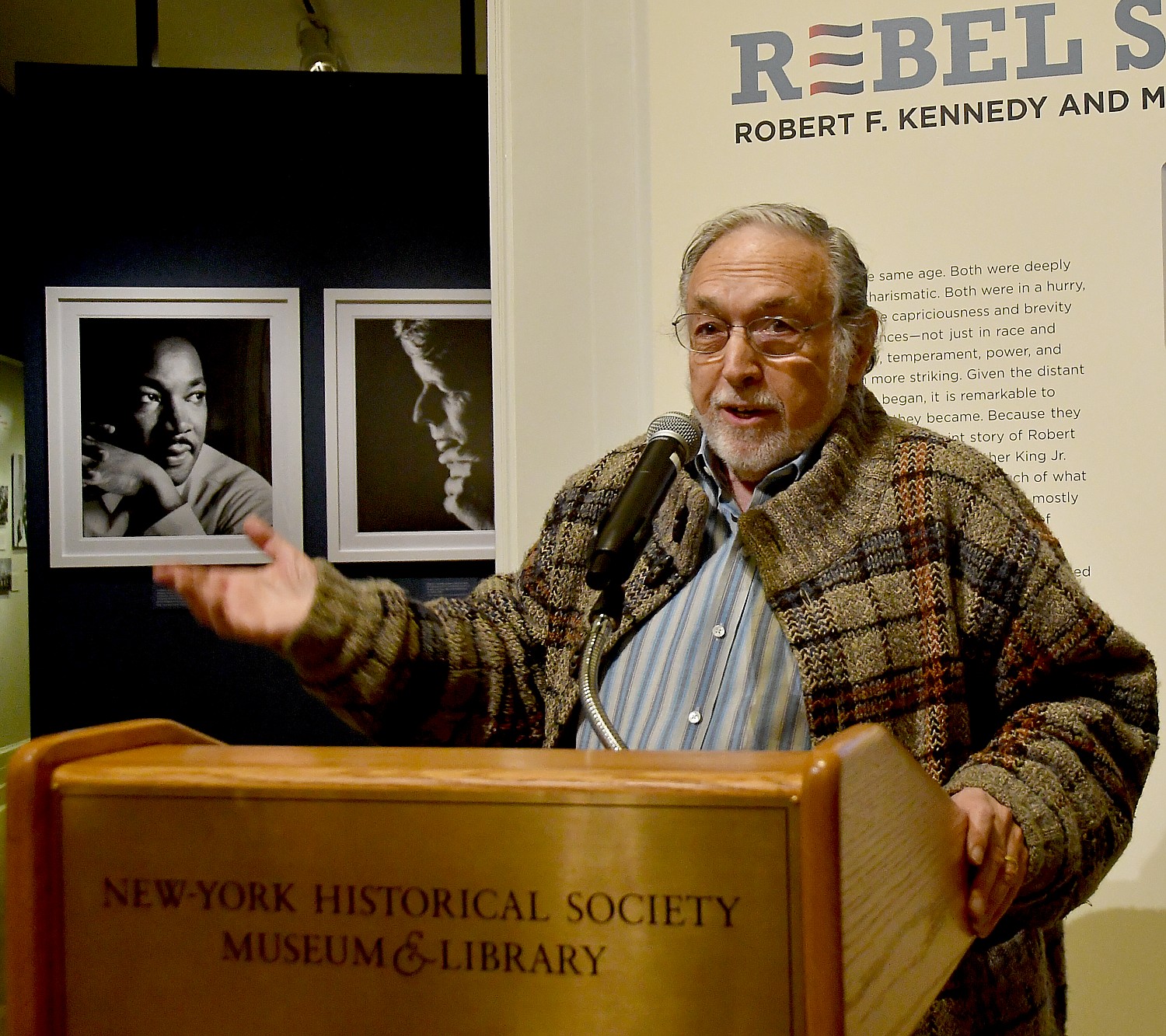
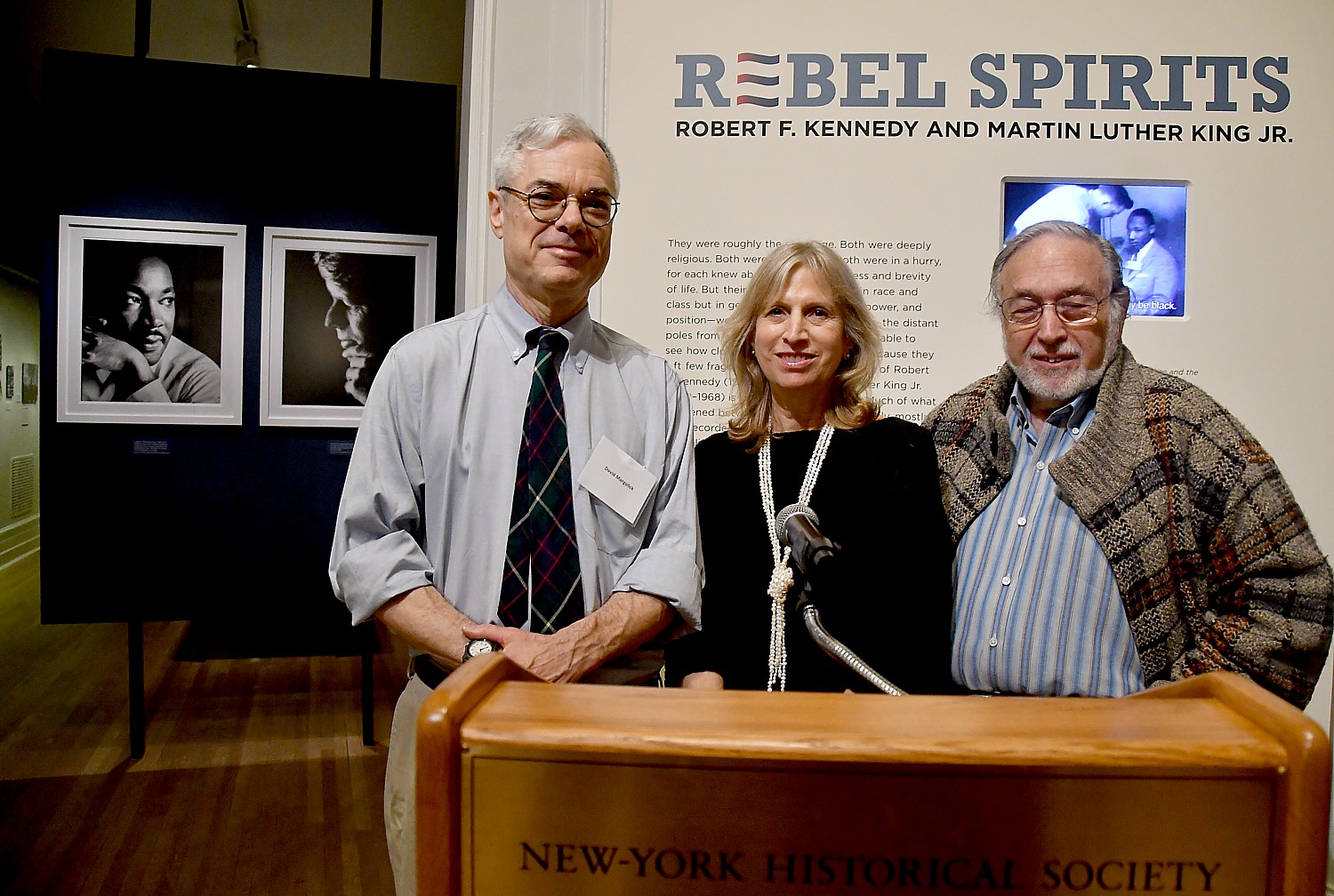
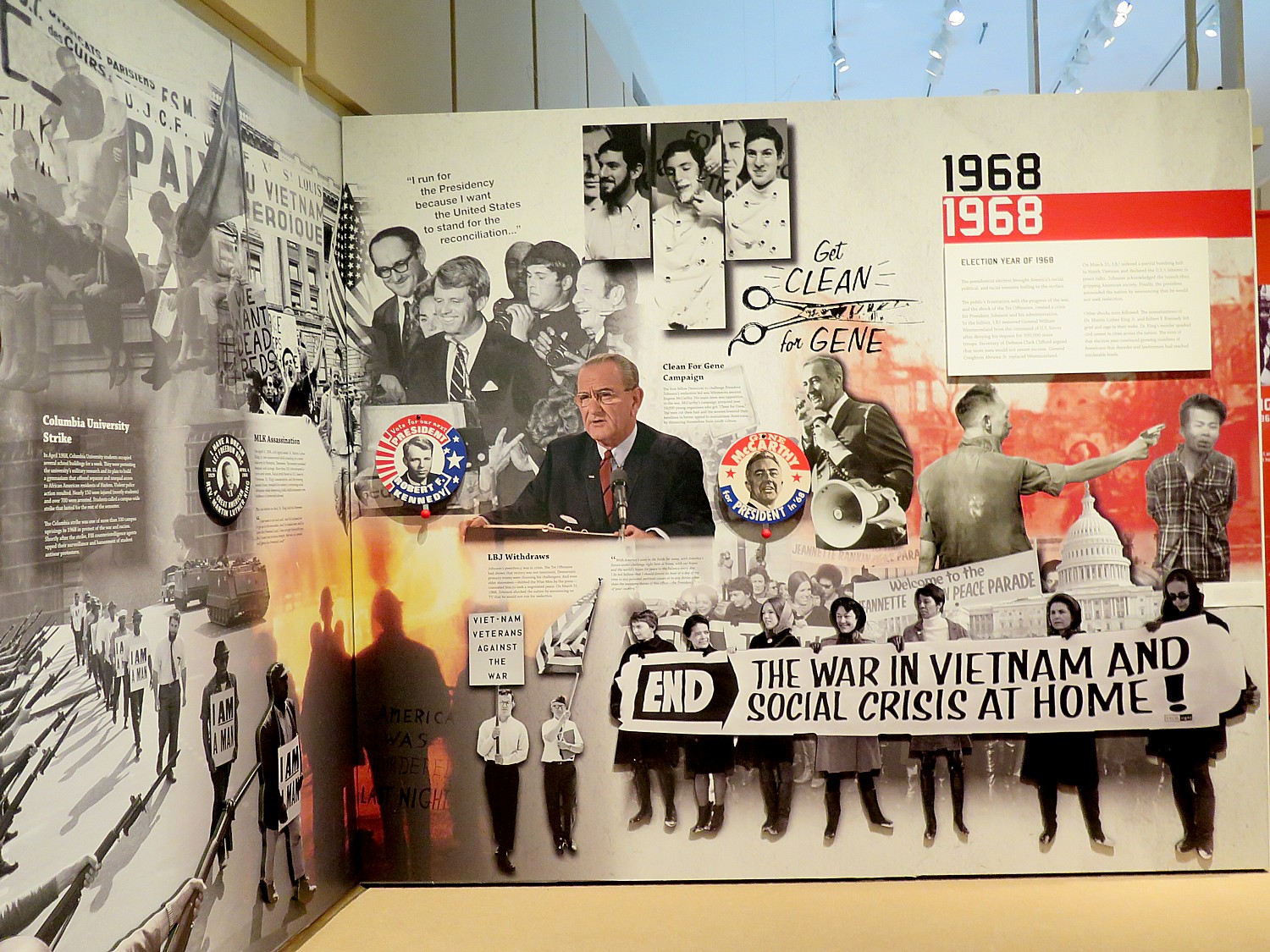
Martin Luther King Jr. and Robert Kennedy are tethered together in peoples’ minds, and not only because they both were assassinated within two months of each other in that fateful year of 1968. A new, remarkable exhibit that has just opened at the New-York Historical Society commemorates the 50th anniversary of those events, examines their conjoined legacy and makes some interesting discoveries: their lives had a kind of parallel trajectory, yet, they consciously steered separate courses, intersecting finally in death.
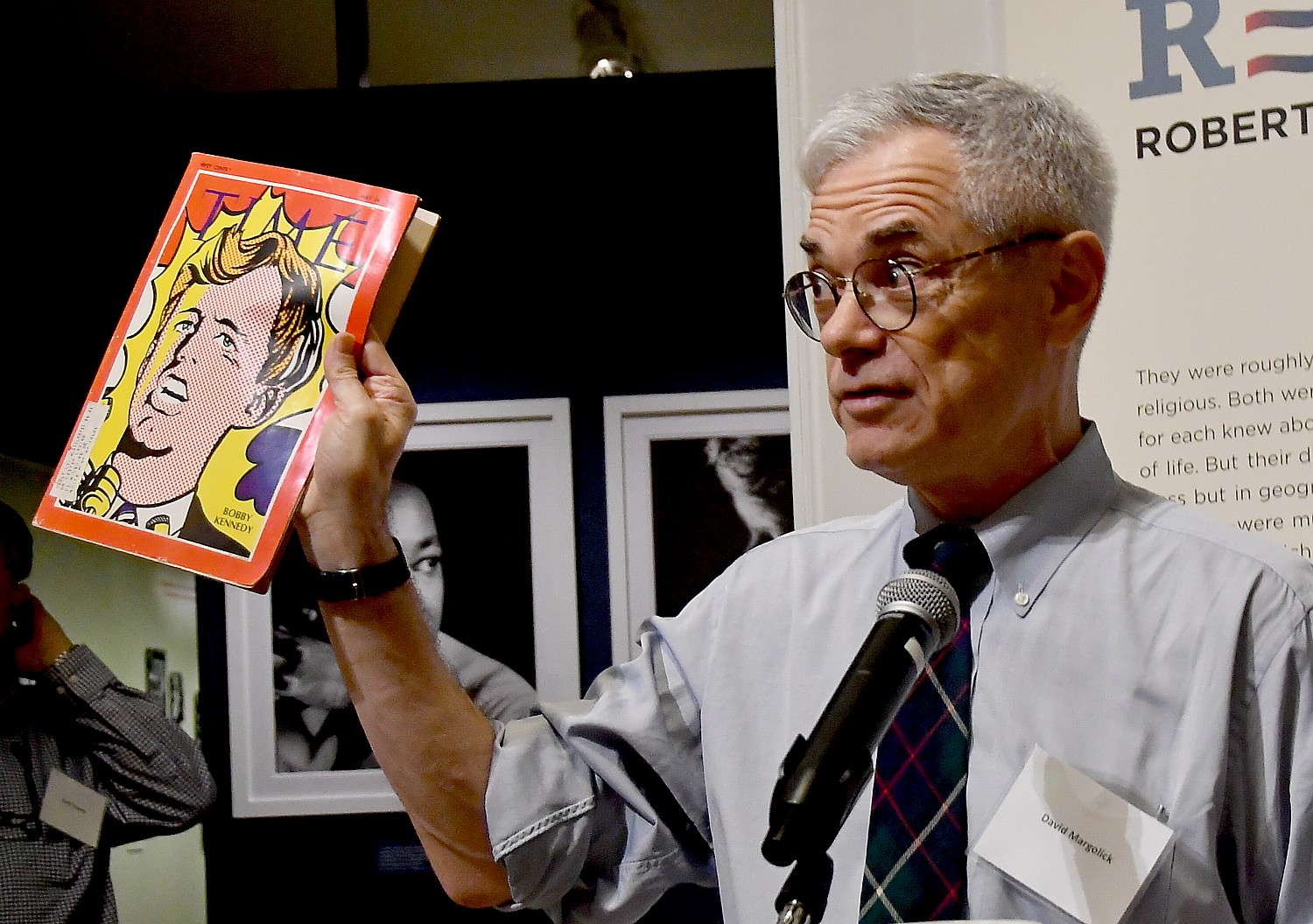
On view through May 20, 2018, Rebel Spirits: Robert F. Kennedy and Martin Luther King Jr. showcases 61 photographs and 30 documents and artifacts that reveal the relationship between these historic figures. The exhibit is based in part on The Promise and the Dream, written by Vanity Fair contributing editor and New York Times writer David Margolick and produced by Lawrence Schiller for National Geographic Publishers. Schiller, a photojournalist who covered many of the significant events throughout the 1960s, conceived of the project and collected 21,000 photographs, sifting them down to 3,000, then 2,000, and ultimately, over the course of just three days, laid out the photographs that are presented much like a 20-page photo essay in Life Magazine, where Schiller worked, would have produced.
But in the course of gathering that material, an essential question arose: why were there so few photos of King and Kennedy together? The exhibit has just one where the two men were at the same event, with then-Vice President Lyndon Baines Johnson. Another instance where they would have been together was when King testified to a Senate Committee which included Robert Kennedy, in which he stated that the millions of dollars that were being sent to support the war in Vietnam should better be spent to revitalize America’s ghettoes (a photo is taken from behind King). Significantly, while Kennedy supported the idea of spending more in cities, he was forced for political reasons (like the fact that his brother, as President, dramatically escalated America’s role in Vietnam) to disassociate himself from King’s anti-Vietnam stance.
Margolick, who researched and wrote the book in a mere seven months time, started off with no pre-conceived notion, but wanted to come up with some original construct about these two lions of American history.
Indeed, if news is the first draft of history, books provide the room for reflection and context.
The big idea of the book and the exhibit is that “Robert Kennedy was a political person and Martin Luther King Jr. a spiritual person; they respected one another but there was a limit how closely they could ally,” Margolick said at the press opening of the exhibit.
The two men had reason to be wary of one another.
Robert Kennedy was at his core a politician from a political family; on top of that, his brother, as president, had made key decisions including significantly involving the US in war in Vietnam, and was skittish about making civil rights a key focus of his administration; as JFK’s Attorney General, Robert Kennedy had signed off on J. Edgar Hoover’s request to surveil King, whom Hoover was convinced was a Communist. But Kennedy also sent US Marshals to force school integration.
King, for his part, was a spiritual man for whom civil rights was not merely a political issue but a matter of everyday survival for millions of people who could be brutalized without repercussion under a Jim Crow regimen.
“They were initially wary of each other,” Margolick said. “There was an enormous chasm which gradually shrank, but did not entirely disappear.”
“RFK felt MLK a liability, he couldn’t get close.” There was that special night, when Robert Kennedy, who made a concerted effort to embed himself into black communities when he realized he did not have more than a superficial understanding of issues, was in “black” Indianapolis for a campaign speech and gets notice that King has just been killed, and instead of rushing away, he spoke compassionately to the crowd. “That was a special night. Death was the only time Kennedy actually embraced [the idea] of King. Kennedy was dead two months later. There was no time to carry torch of MLK.
“But even in limited time, Kennedy was reluctant to embrace King. The Kennedys were politicians King was a spiritual man. Kennedy considers the political implications of everything. Part of the purpose of this book is to examine and correct the revisionist idea that were together – really was there was always space between them.”
They also came from completely different worlds: Kennedy chose to take up the fight; the fight chose King.
Over the course of researching the book, Margolick said, “my point of view was constantly evolving. I wanted it to be as original as it could. I looked at newspapers no one had; primary documents not examined before. I came to realize the most precious thing was to talk to dwindling supply of people who knew both men – very few knew both: Andrew Young, William Vanden Heuval and some behind scenes intermediaries.
Margolick realized that an excellent source would be the photographers who photographed both – including Harry Benson, Steve Shapiro – who could even describe how differently they interacted with crowds.
“Both men had a sense of their mortality – they knew they were doomed.” One of the photographers, he thinks it was Harry Benson, said that when King was in a crowd, he would look it over carefully, mindful of his safety. He never stayed in one place longer than he had to.”
But, he adds, “Robert Kennedy didn’t care. He had a premonition of death but approached it differently. He told his security force he didn’t want precautions. There were reporters who never left RFK’s side because they expected he would be assassinated and wanted to be there when it happened.”
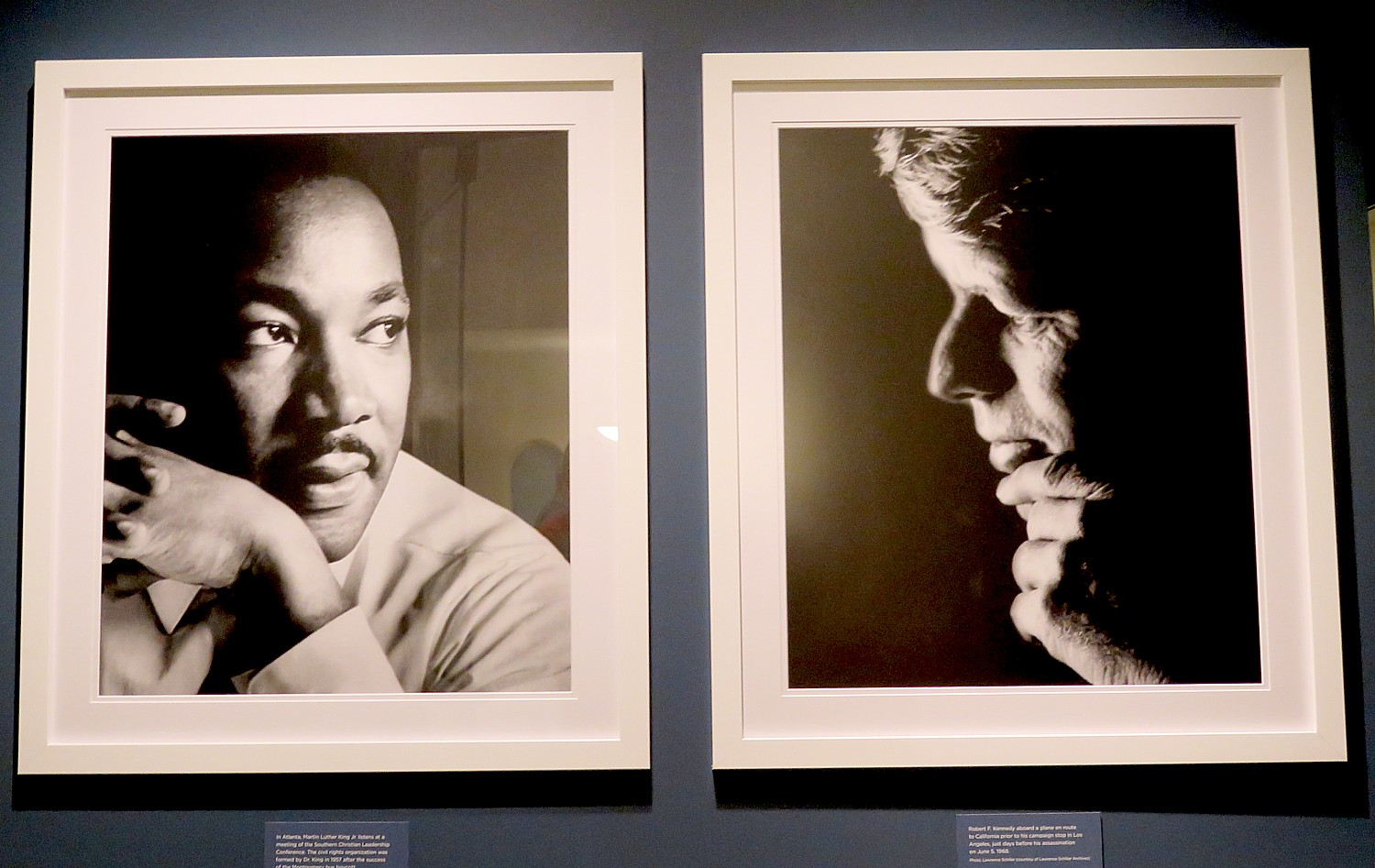
Lawrence Schiller, who organized the project and curated the exhibit, was one of those photographers who helped document history beginning in the 1960s. He was assigned to Robert Kennedy and followed him for the last 40 days of his life. Schiller was at the Ambassador Hotel in Los Angeles the night that Robert Kennedy delivered his last speech, tried to hurry out by going through the kitchen, where he was met by Sirhan Sirhan who shot him dead. (The portrait that opens the exhibit was taken by Schiller on board Kennedy’s plane en route to California just days before the speech.)
He was just 26 years old working as a photojournalist on a fateful day in 1963 when he was summoned from Los Angeles to Dallas after President John F. Kennedy was shot. He was in the police station when, as it happened, the police were booking Lee Harvey Oswald.
“The elevator opened to reveal Oswald, who was only 24 years old. It shocked me that evil could be in such a person – a kid my age had caused this tragedy.”
Schiller, who has several photos in the exhibit, called upon many of the photographers he knew who are represented, but there are many which had not been published before.
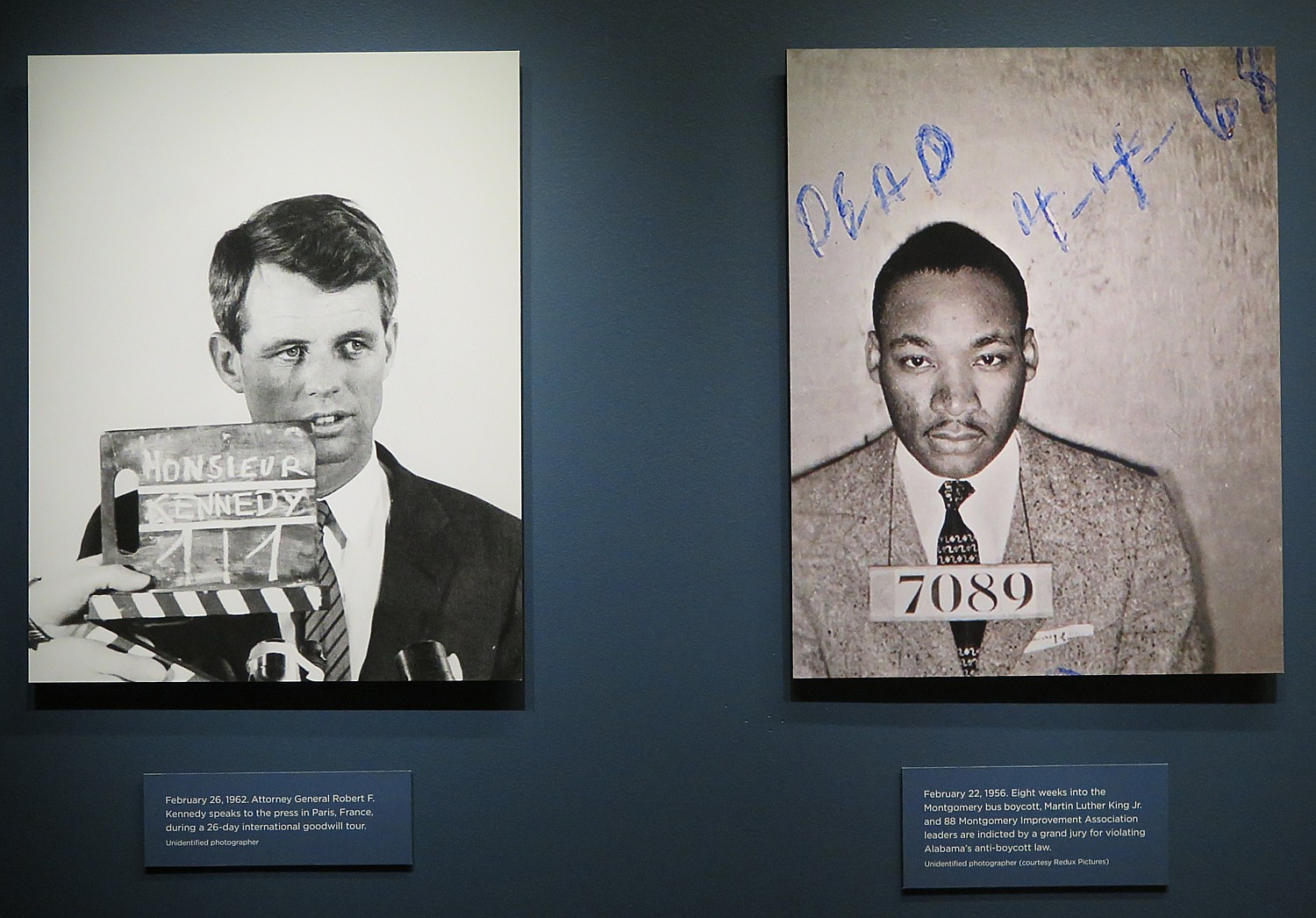
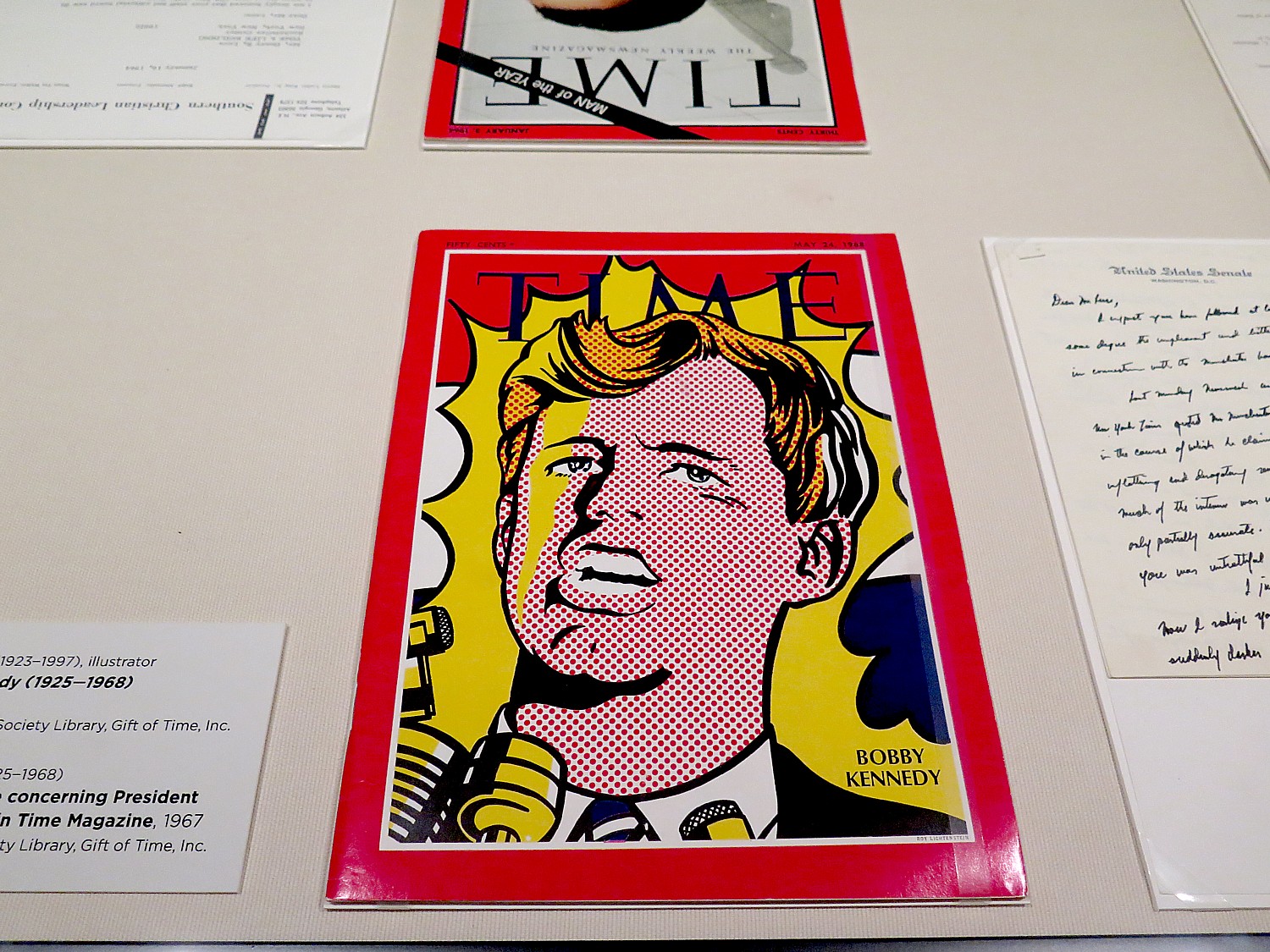
The exhibit is laid out chronologically for the most part, but in some cases “emotionally chronologically”, as when a portrait of Robert Kennedy, photographed on Feb. 26, 1962, with a movie slate, is juxtaposed next to a police mug shot of King from Feb. 22, 1956, upon which someone had scrawled “DEAD 4-4-68”; and in a case with artifacts, the Time Magazine editions with each on the cover, is displayed. ”King’s ‘Man of the Year’ drove people crazy,” Schiller remarks.
Asked which photo was the most impactful, Schiller points to one of a man with a broom, sweeping the blood from outside King’s hotel room in Memphis, a photo which he said had never been published; another shows the hotel room. Schiller says that people came in and collected vials of blood to keep as a memento.
The exhibit starts with Rosa Parks and ends in a field after Kennedy’s assassination, where people are holding a sign, “So long Bobby.” Several of the photos don’t feature King or Kennedy at all, but provide context: the KKK, US Marshals, Freedom Riders, the march after Medgar Evers was assassinated in June 1963, just five months before JFK was assassinated, in eerie similarity to the one-two King-Kennedy assassinations.
There is great intimacy of the experience – the photos, which were printed all at the same time in the same lab from negatives and then scanned – are 8 x 10 and smaller, the room is compact, so you are close to the images, can easily read the captions and notes.
“The insight we came to early on emerged from the question: Why were there not more photos of the two together?” Margolick said. “The book tries to fill the gap, why there were no more photos of the two together. They kept apart. We are documenting, explaining the absence of something.”
One notable absence is a still photo of Robert F. Kennedy addressing a black audience in Indianapolis the night that King was killed, which in itself, says a lot.
“No one knew how important that speech by Kennedy would be, the night MLK was killed,” Margolick said. “The event that became so important was so scantily covered, there were just two still photographers there from local papers. It was only a 6-7 minute speech, but there is no film of the entire speech.” But it was at that point that Kennedy most fulsomely embraced King. (A portion of the video is displayed.) There’s a monument in Indianapolis commemorating the event.
Born Worlds Apart
Martin Luther King Jr. (January 15, 1929 – April 4, 1968) and Robert F. Kennedy (November 20, 1925 –June 6, 1968) were born worlds apart—culturally, geographically, racially, financially, and politically—but by the time they were killed within months of each another in 1968, their worlds had come together. As their concerns expanded beyond civil rights (King) and organized crime (Kennedy), their ties deepened to encompass shared interests in supporting the poor and opposing the war in Vietnam. This unprecedented exhibition explores the overlapping paths of their lives through images taken by some of the most renowned photojournalists of the era, including Bob Adelman, Danny Lyon, Henri Dauman, Jacques Lowe, Spider Martin, Steve Schapiro, Lawrence Schiller, and Paul Schutzer, alongside original correspondence, publications, and ephemera.
“The year 1968 rocked the nation in many ways, but it would be difficult to point to anything that shocked and sickened Americans more that year than the senseless and tragic deaths of Robert Kennedy and Martin Luther King Jr.,” said Dr. Louise Mirrer, president and CEO of the New-York Historical Society. “Fifty years later, the legacies of Kennedy and King still reverberate. This timely exhibition underscores the two men’s lasting impact on our nation while drawing attention to the ways in which their lives intersected. ”
Exhibition highlights include images of King and his son looking at the charred remains of a cross the Ku Klux Klan burned outside his Atlanta home in 1960, King’s mug shot after being indicted for the 1956 Montgomery Bus Boycott, and Kennedy being swarmed by an adoring crowd during his 1968 presidential campaign. Also on view are posters reading “Honor King: End Racism!” and “I Am a Man” that were carried in a Memphis march led by widow Coretta Scott King and her children on April 8, 1968, as well as a black and white “Kennedy/King” button worn by a New Yorker in memory of the two slain leaders.
An adjunct display showcases the bronze sculpture of Martin Luther King Jr.―one of five existing casts created by Harlem Renaissance artist Charles Alston (1907– 1997), on loan from the Community Church of New York. Rebel Spirits is based in part on The Promise and the Dream, written by David Margolick and produced by Lawrence Schiller for National Geographic Publishers. The exhibition was curated by Lawrence Schiller, Cristian Panaite, and Marilyn Kushner. It was produced by Wiener Schiller Productions, Inc. in association with Susan Bloom International with support from Getty Images, The Jacques Lowe Estate, and Steve Schapiro.
Published by National Geographic and written by David Margolick, The Promise and the Dream: The Interrupted Lives of Robert F. Kennedy and Martin Luther King Jr. features an introduction by historian Douglas Brinkley. The book is available at the NYHistory Store.
Several public programs will provide further insights into the exhibition and its time period. On March 6, eminent legal experts survey the evolution of the U.S. Supreme Court’s interpretations of the 14th Amendment—in commemoration of its 150th anniversary—and civil rights throughout American history, highlighting landmark cases such as Brown v. Board of Education. On April 23, scholar Randall Kennedy discusses the Supreme Court and Martin Luther King Jr. On May 21, journalist Chris Matthews sits down to explore the rebel spirit of Robert Kennedy.
Vietnam War
The New-York Historical Society has a variety of fascinating exhibits, some short term and some ongoing.
The Vietnam War: 1945 – 1975 on view through April 22, 2018 is particularly timely in conjunction with the “Rebel Spirits.” Featuring interpretive displays, digital media, artwork, artifacts, photographs, and documents, the exhibit provides an enlightening account of the causes, progression, and impact of the war. Spanning the duration of U.S. involvement in Indochina, the narrative incorporates perspectives covering both the home and the war fronts.Displays touch upon the Cold War, the draft, military campaigns initiated by both sides, the growth of the antiwar movement, the role of the president, and the loss of political consensus. The exhibition explores themes of patriotism, duty, and citizenship. Key objects include a troopship berthing unit, interactive murals, vibrant antiwar posters, artwork by Vietnam vets, a Viet Cong bicycle, the Pentagon Papers, and news and film clips.
Gallery of Tiffany Lamps
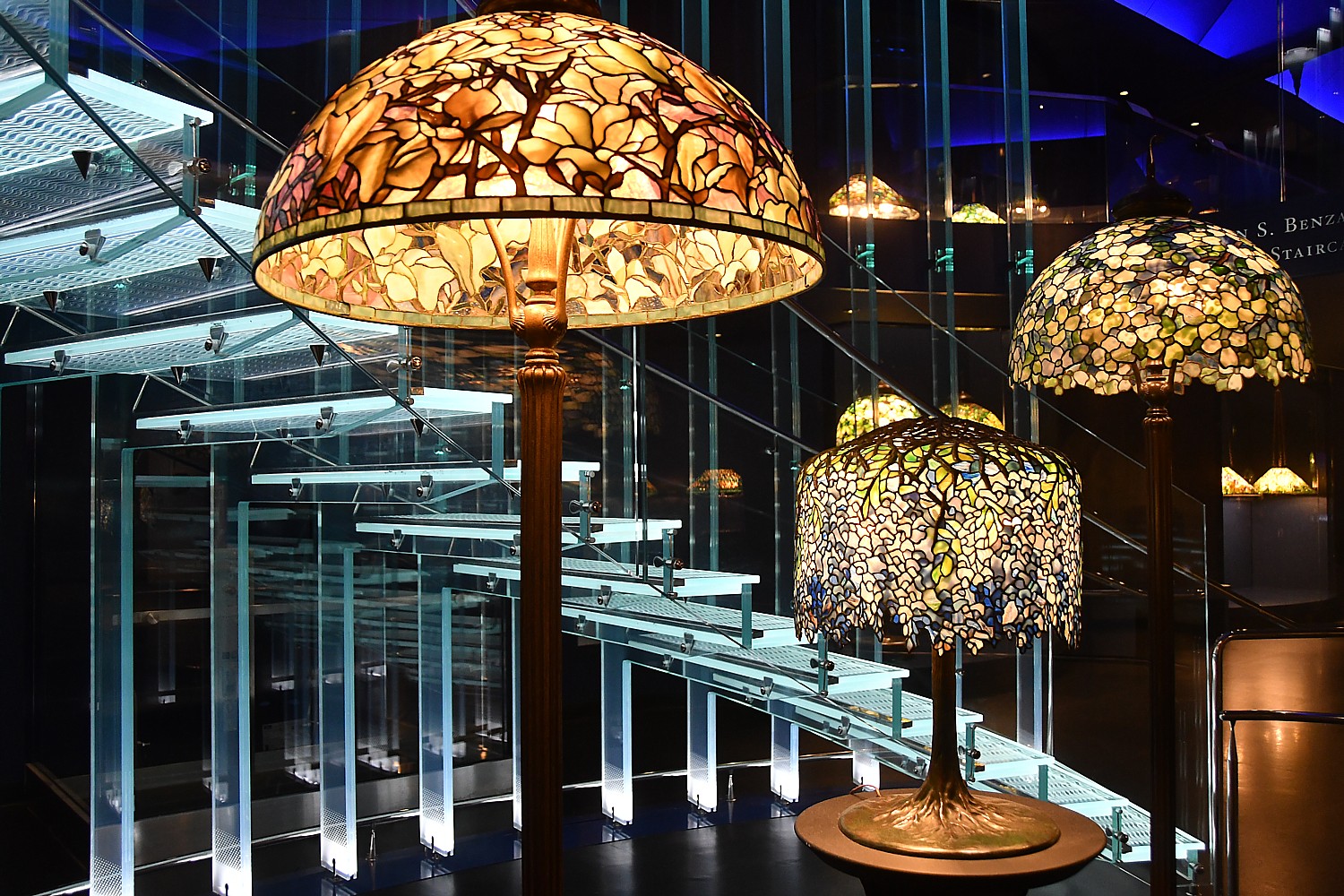
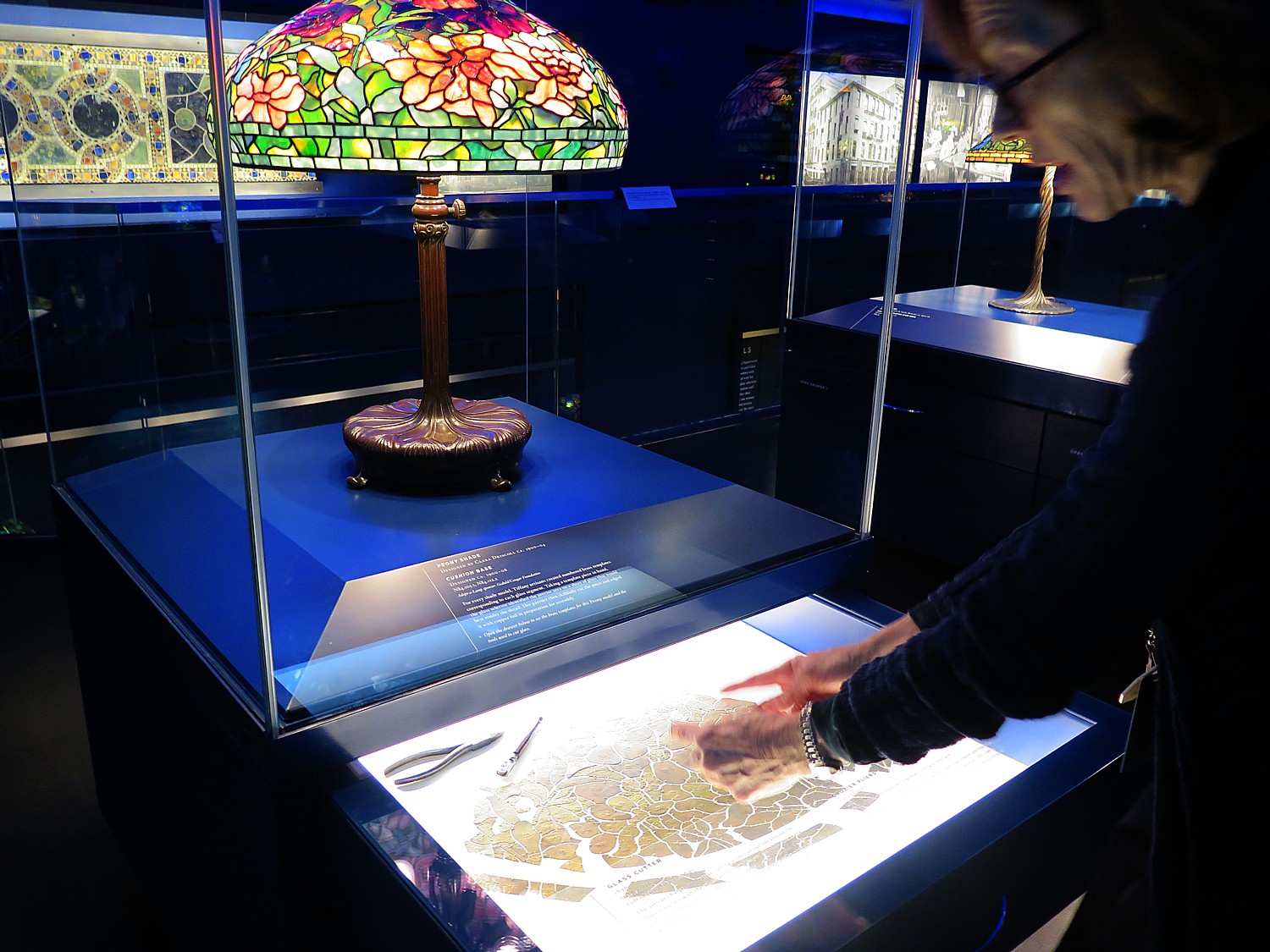
Step into the Gallery of Tiffany Lamps, a permanent exhibit which is the centerpiece of a newly designed fourth floor, and you are aglow in light and beauty. The exhibit features more than 100 illuminated Tiffany lamps from N-YHS’s spectacular collection displayed within a dramatically lit jewel-like two-story space (the glass staircase is exquisite).
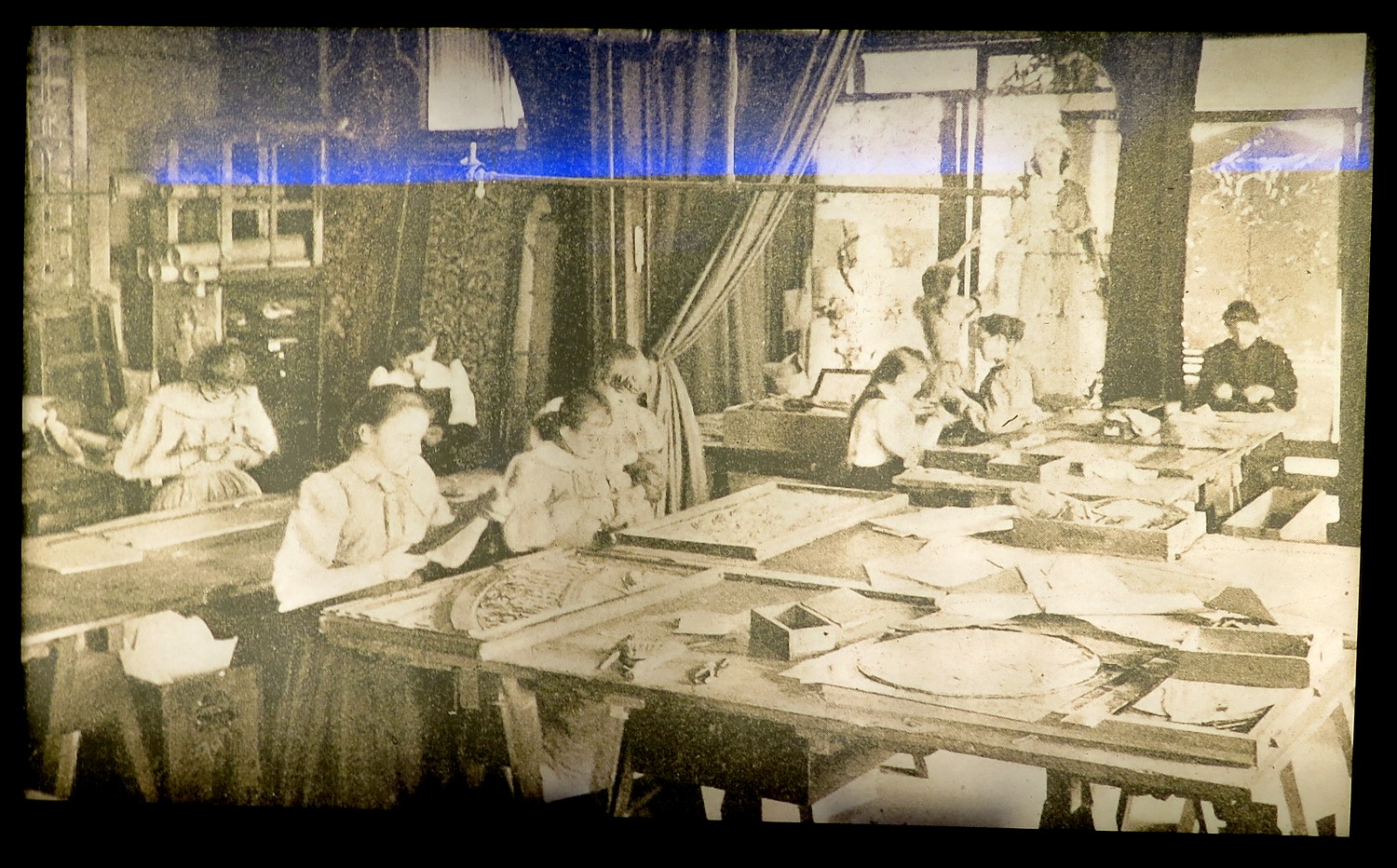
The presentation is breathtaking, and so insightful: it was only in the last decade that it was learned through a series of letters that some of Tiffany’s most famous and prized lamps, featuring nature imagery like wisteria, dragonflies, spider webs, were designed by Clara Driscoll, who headed the Women’s Glass Cutting Department of some 45-55 young women (mainly 16-17 year olds who would work until they went off to be engaged).
The redesigned fourth floor also offers exhibitions and interactive media that explore American history. Themed displays in the North Gallery present a variety of topics—such as slavery, war, infrastructure, childhood, recreation, and 9/11—offering unexpected and surprising perspectives on collection highlights. Touchscreens and interactive kiosks allow visitors to explore American history and engage with objects like never before. When I visit, a docent is discussing the Industrial Revolution with high school students.
Women’s Rights & Social Activism
A new Center for Women’s History enables visitors to discover hidden connections among exceptional and unknown women who left their mark on New York and the nation with the multimedia digital installation, Women’s Voices, and through rotating exhibitions in the Joyce B. Cowin Women’s History Gallery. Objects from the Billie Jean King Archive are also on view.
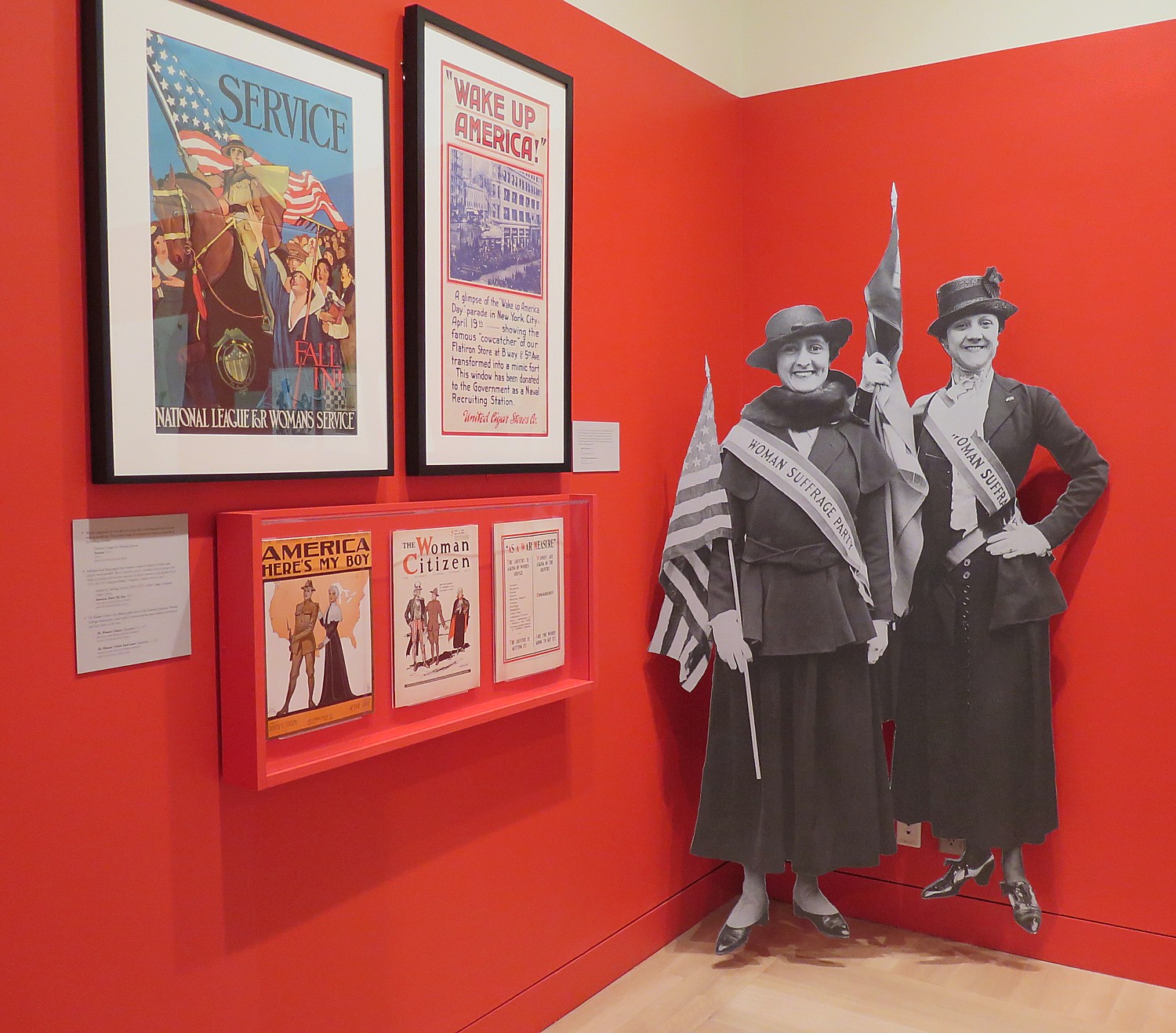
Hotbed, a special exhibit on view through March 25, 2018, is about Greenwich Village in the early 20th century, when it was a hotbedof political activism and social change—where men and women joined forces across the boundaries of class and race to fight for a better world. At the heart of the downtown radicals’ crusade lay women’s rights: to control their own bodies, to do meaningful work, and above all, to vote. Celebrating the centennial of women’s right to vote in New York and on view in the Joyce B. Cowin Women’s History Gallery, Hotbed features immersive installations and more than 100 artifacts and images—drawn from New-York Historical’s archives and several private collections—that bring to life the neighborhood’s bohemian scene and energetic activist spirit.
Collecting the Women’s Marches, on view through June 3, 2018, documents January 21, 2017, when hundreds of thousands rallied at the Women’s March on Washington for diverse issues including women’s rights, racial equality, and the environment. Counting more than 500 sister marches across the United States, it was the largest single-day protest in the nation’s history. As part of its History Responds program, the New-York Historical Society collected a range of artifacts, including signs, sashes, pussyhats, and colorful props, to document the moment. One year later, Collecting the Women’s Marches highlights some of the political and visual themes that emerged, as well as the efforts of individuals and groups that worked behind the scenes. An adjunct display of protest clothing by Olek (Agata Oleksiak), an artist who works in crochet, and Brick x Brick, a public art performance group, is also on view. It is odd to have an exhibit of a major historic event so recent, and to actually have been there.
New York through the Lens of George Kalinsky on view through June 3, 2018 is an amazing photo exhibition of some of New York’s most iconic cultural moments over the past 50 years as captured by George Kalinsky. Serving as Madison Square Garden’s official photographer, Kalinsky has turned truly memorable moments―sporting events, legendary performances, and notable occasions―into lasting images that have defined the city. Among the quintessential photographs on view are Pope John Paul II hoisting a seven-year-old child onto the Popemobile in Madison Square Garden, Bill Bradley celebrating a New York Knicks victory, Sloane Stephens winning the 2017 US Open, and Jesse Orosco falling to his knees on the mound as the Mets won the 1986 World Series.
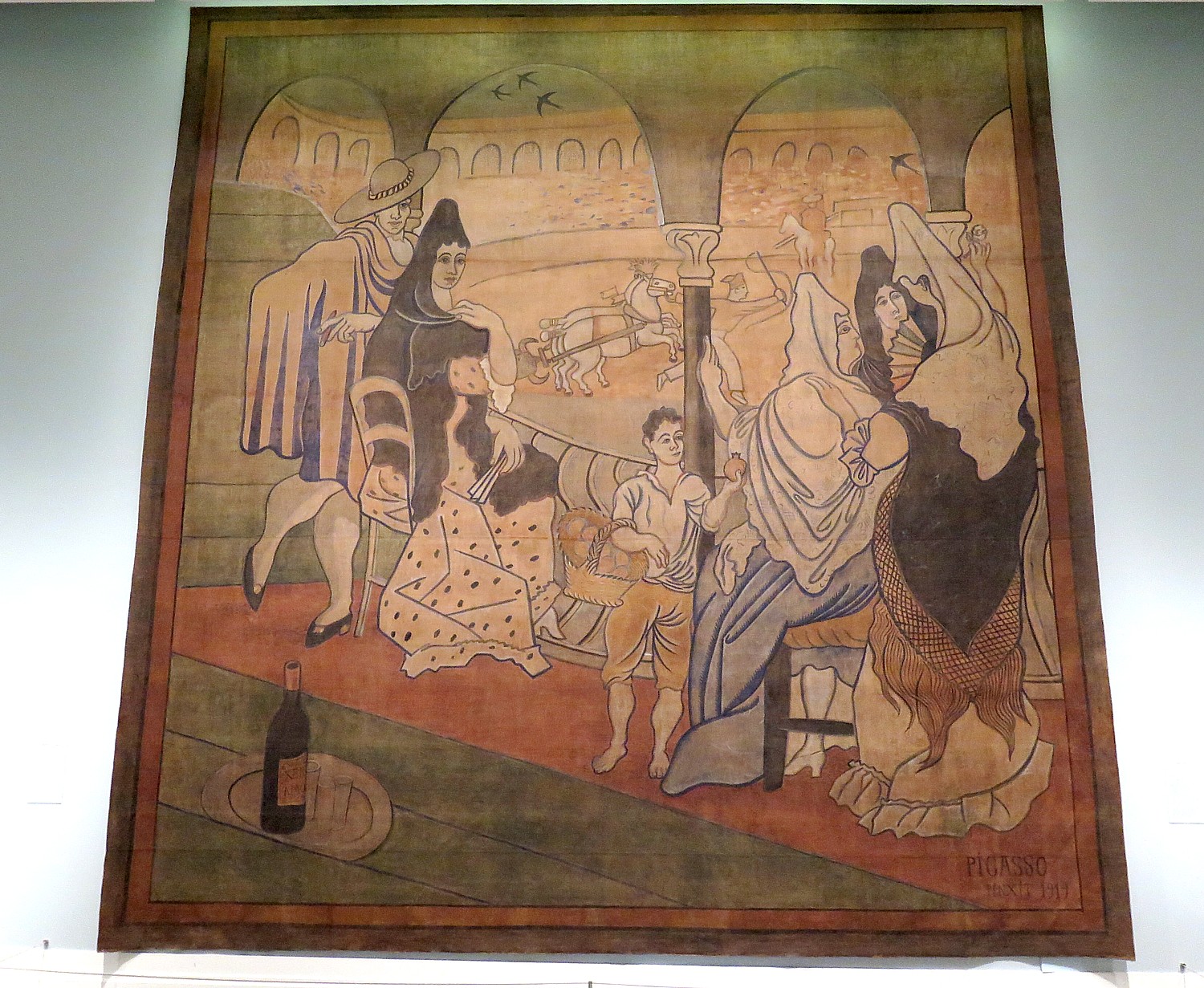
Collector’s Choice: Highlights from the Permanent Collection, ongoing: Since 1804, the New-York Historical Society has been welcoming to its collection some of the most esteemed artworks of the modern world. Collector’s Choice: Highlights from the Permanent Collection showcases a selection of paintings that reflect the individual tastes of several New York City collectors who donated their holdings to New-York Historical. Joining Picasso’s Le Tricorne ballet curtain are featured American and European masterpieces spanning the 14th through the 21st centuries from Luman Reed, Thomas Jefferson Bryan, and Robert L. Stuart, including colonial portraits of children, marine and maritime subjects, and an installation showcasing recently collected contemporary works.
Hours: Tuesday – Thursday: 10 am – 6 pm; Friday: 10 am – 8 pm; Saturday: 10 am – 6 pm; Sunday: 11 am – 5 pm Admission: Adults: $21; Teachers and Seniors: $16; Students: $13; Children (5–13): $6; Children (4 and under): Free. The museum has a pay-as-you-wish policy on Fridays from 6-8 pm.
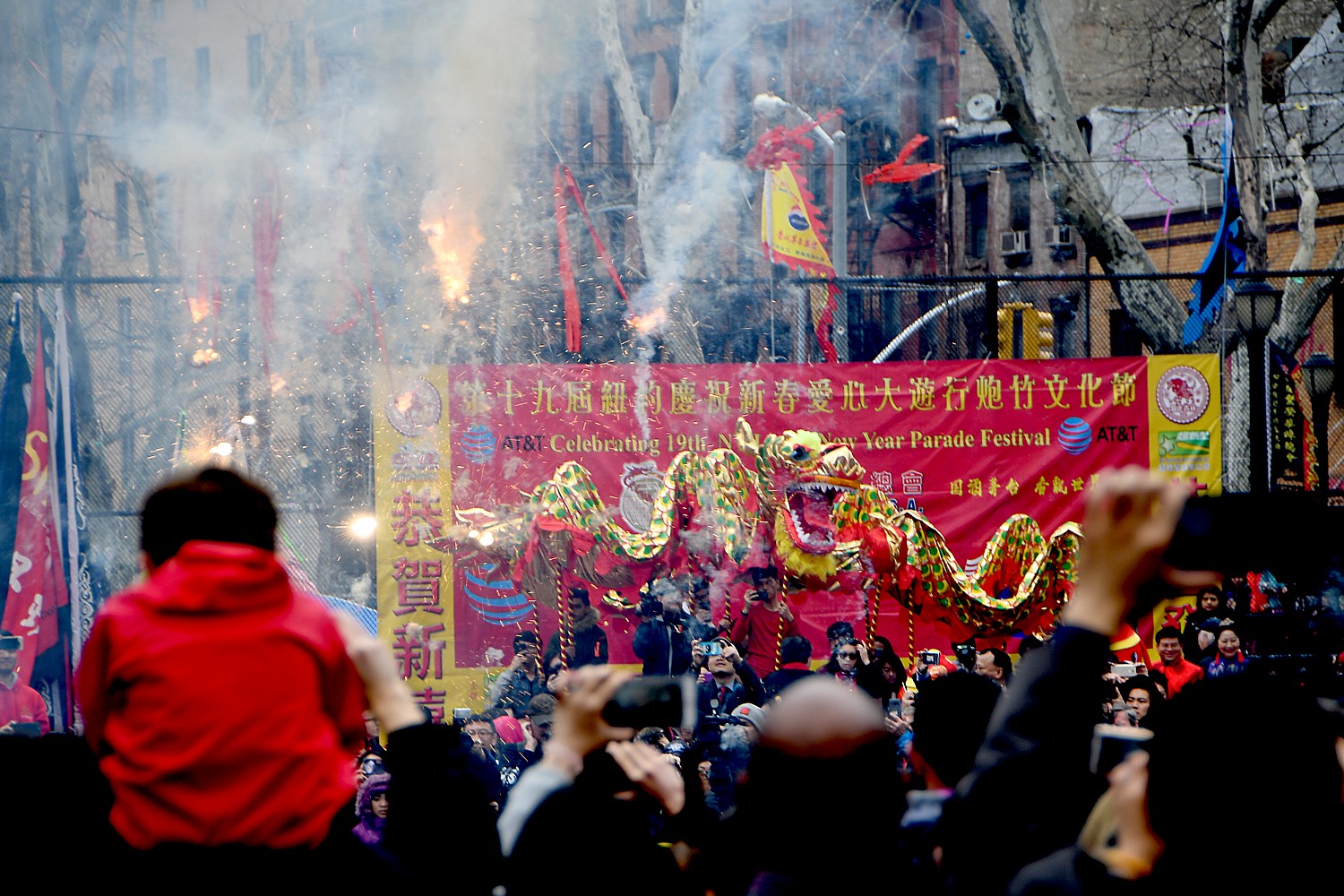
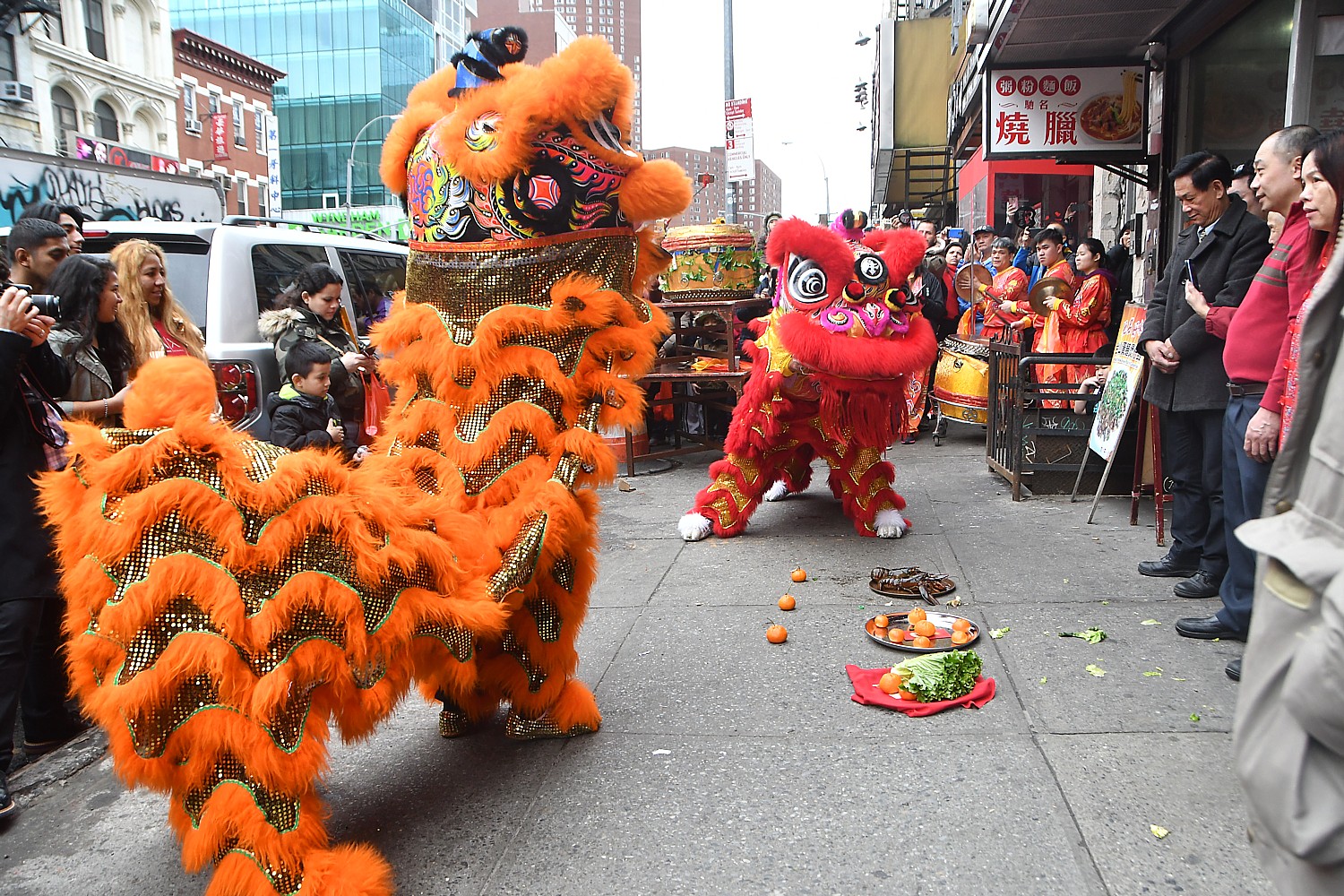
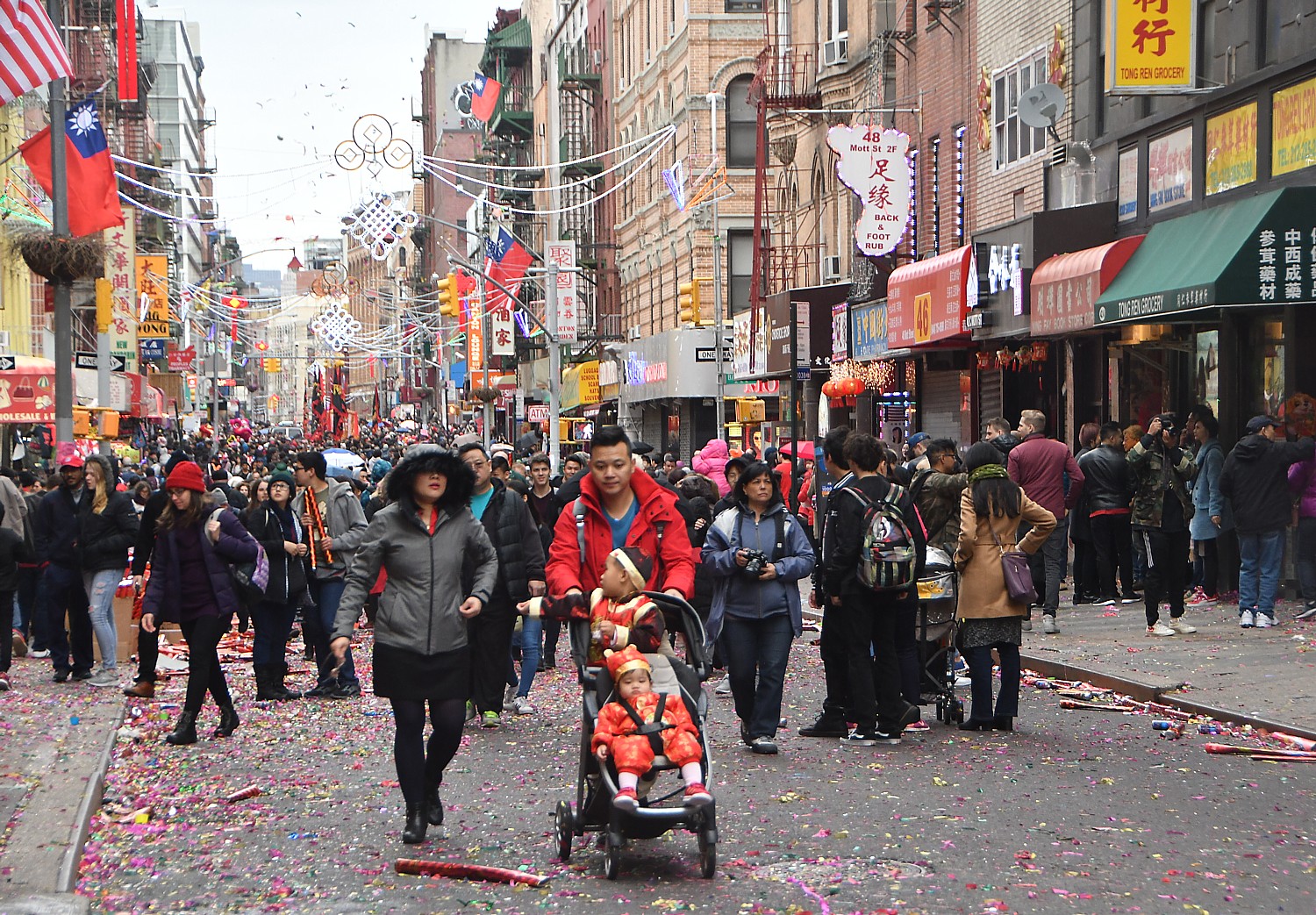
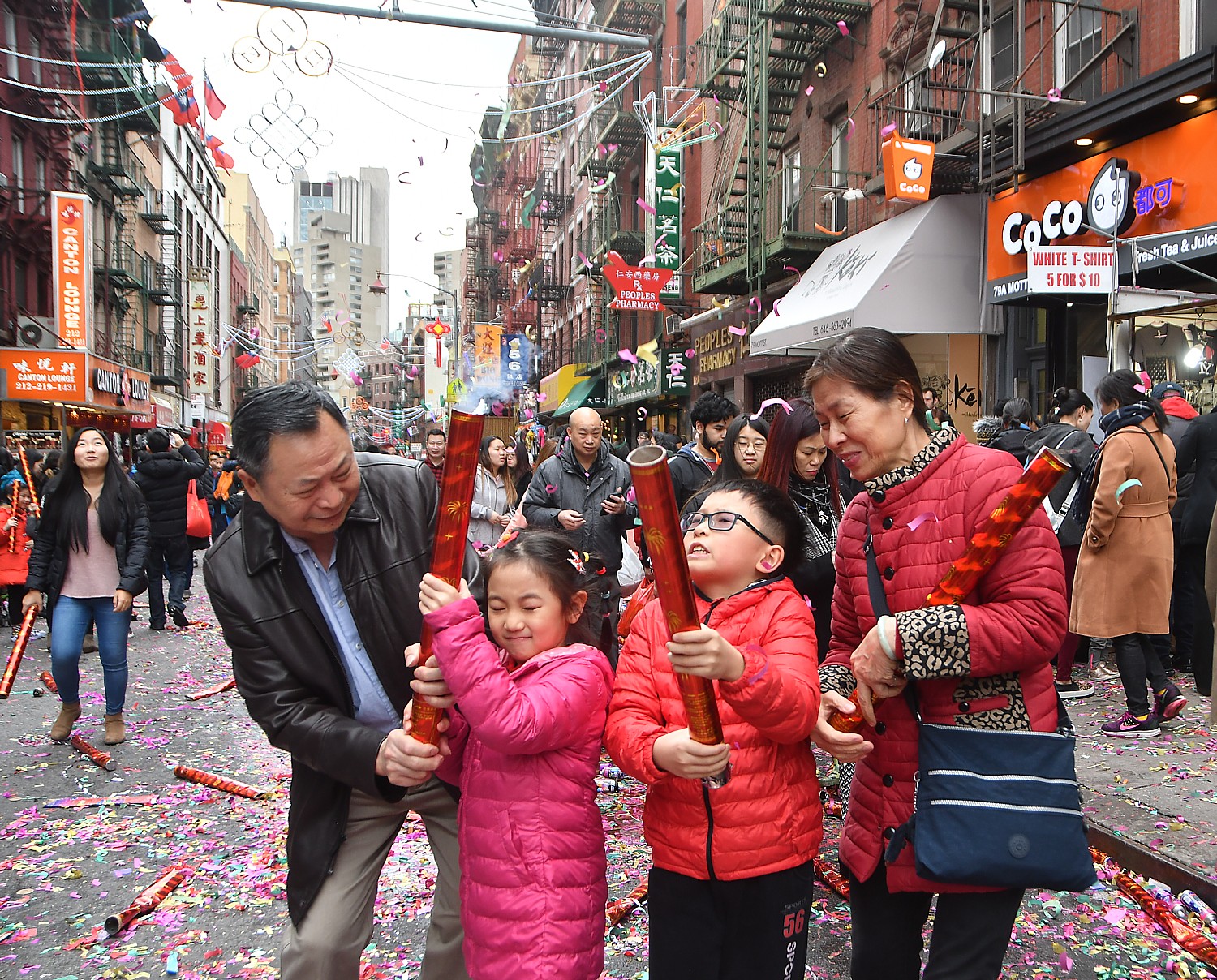
The 2018 Lunar New Year festivities got underway in Chinatown, in Lower Manhattan, with the traditional Firecracker Ceremony and Festival to welcome the Year of the Dog. Thousands lined Sara d. Roosevelt Park on Friday, February 16, to be thrilled as some 600,000 explosions were set off to ward off bad spirits.
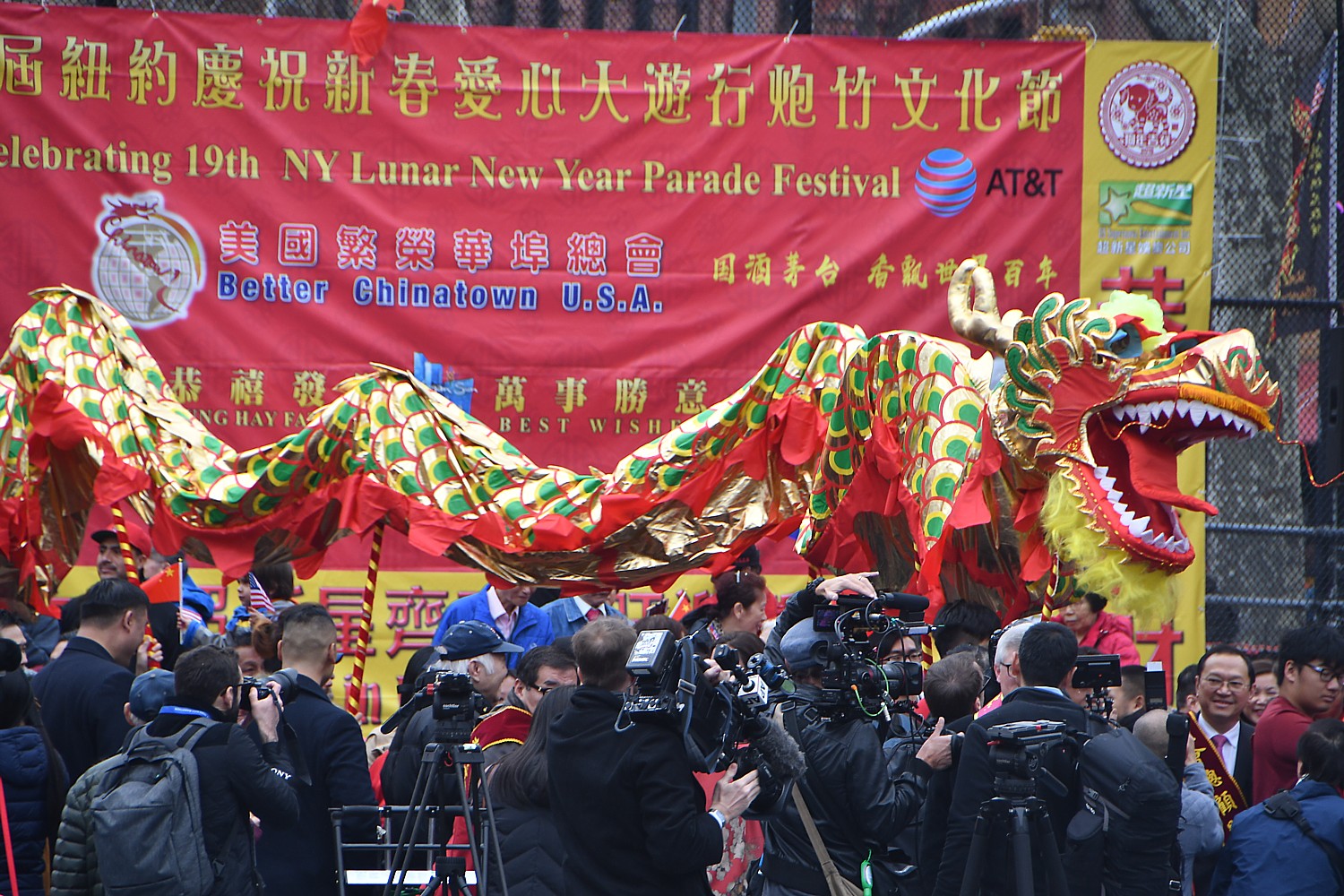
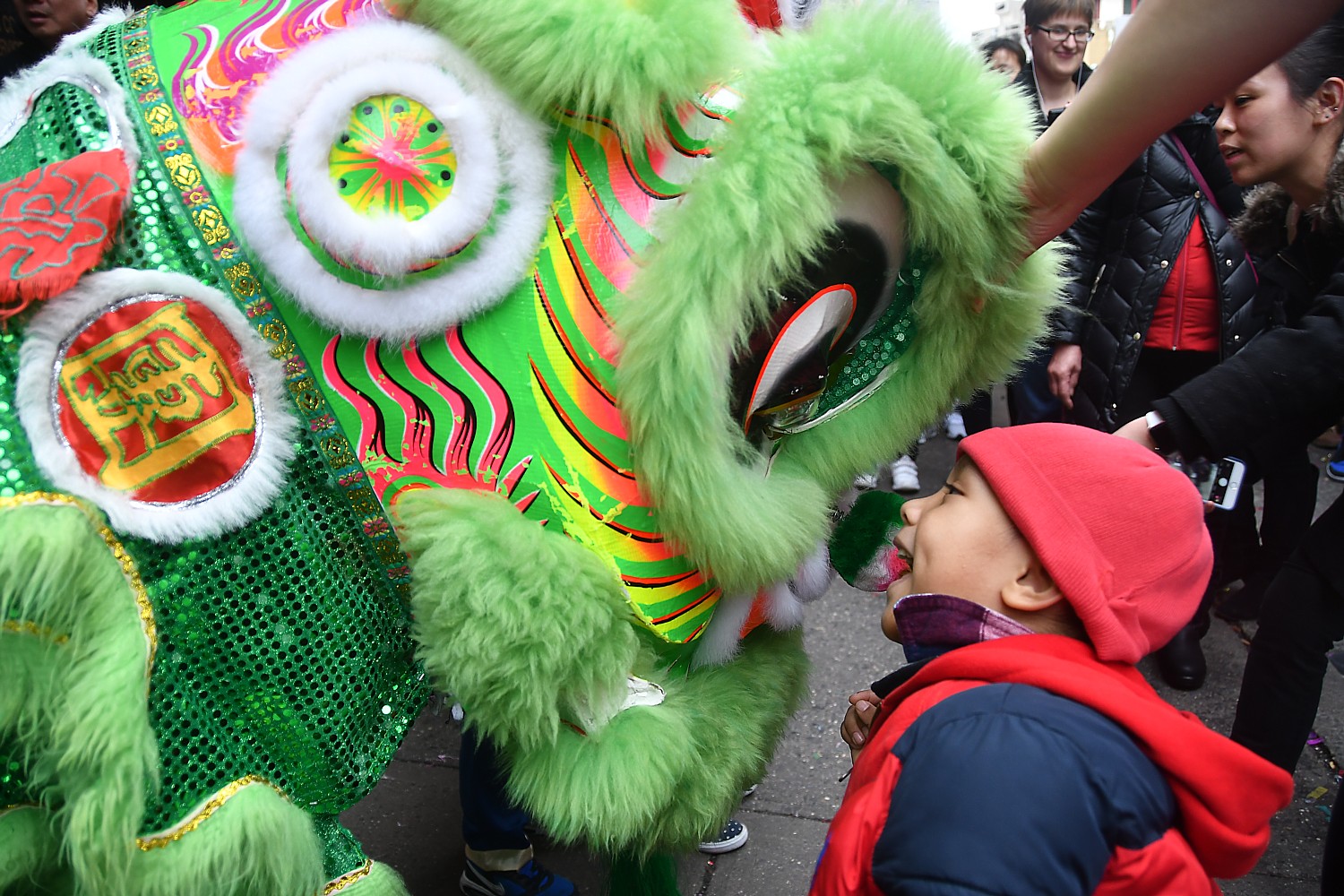
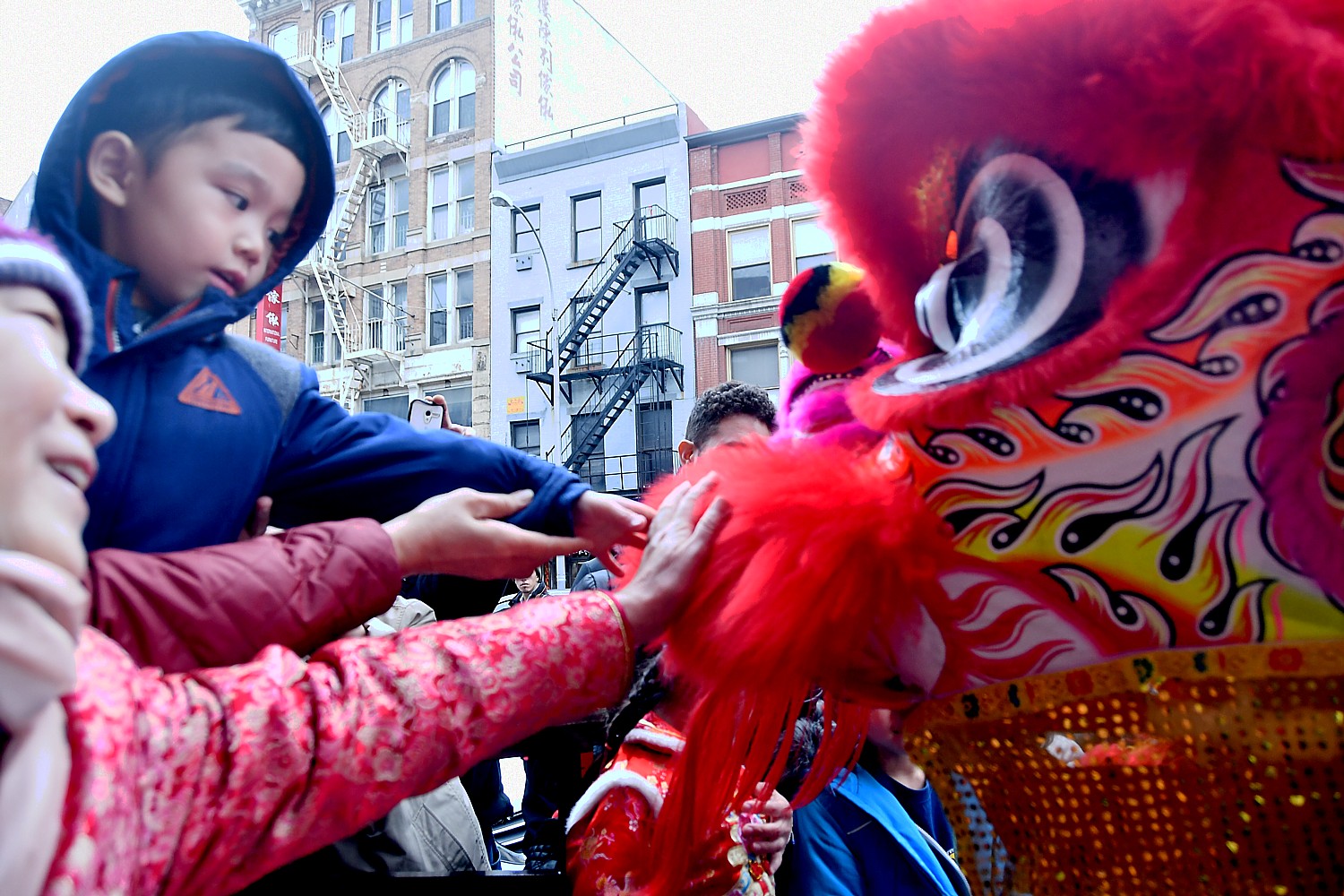
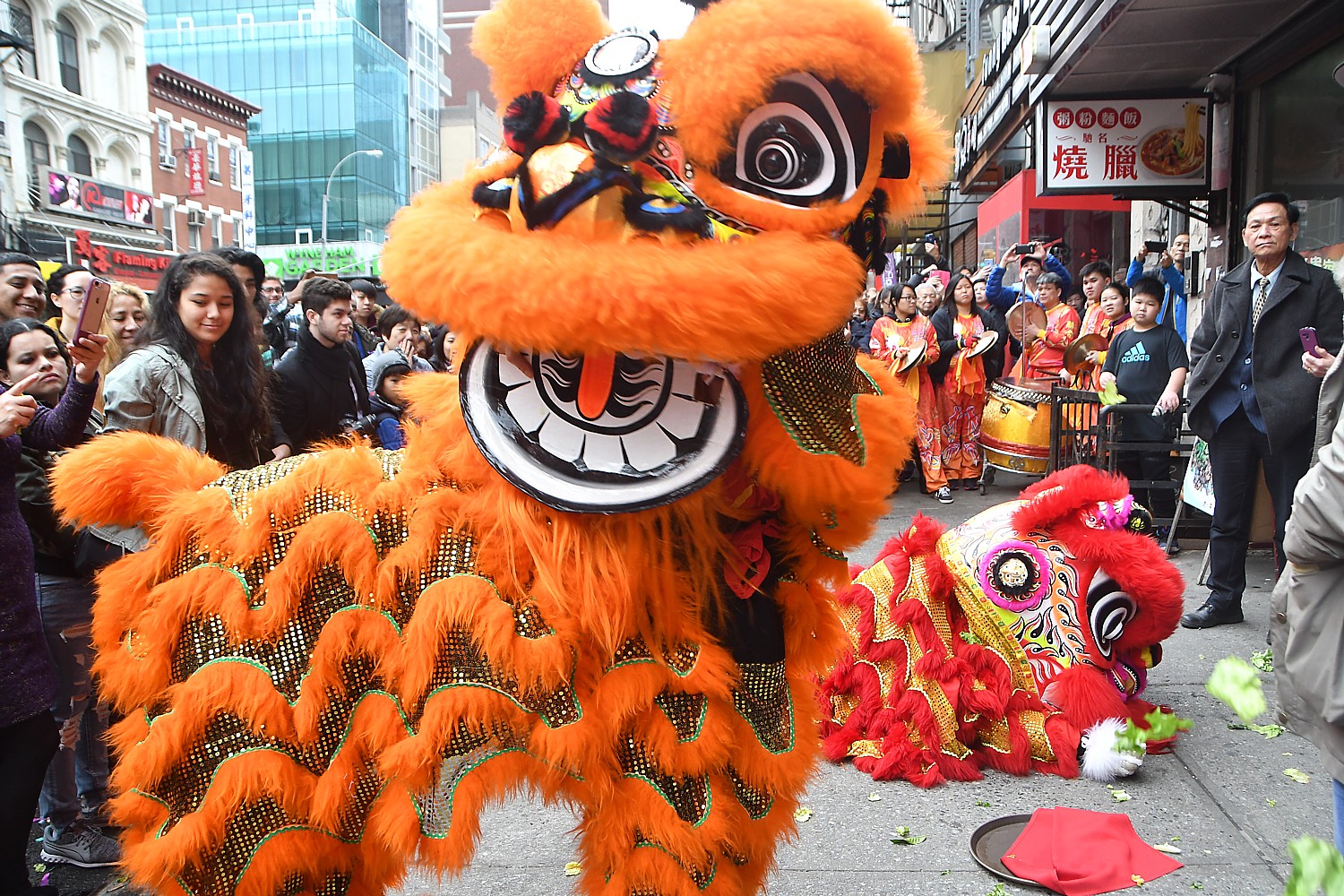
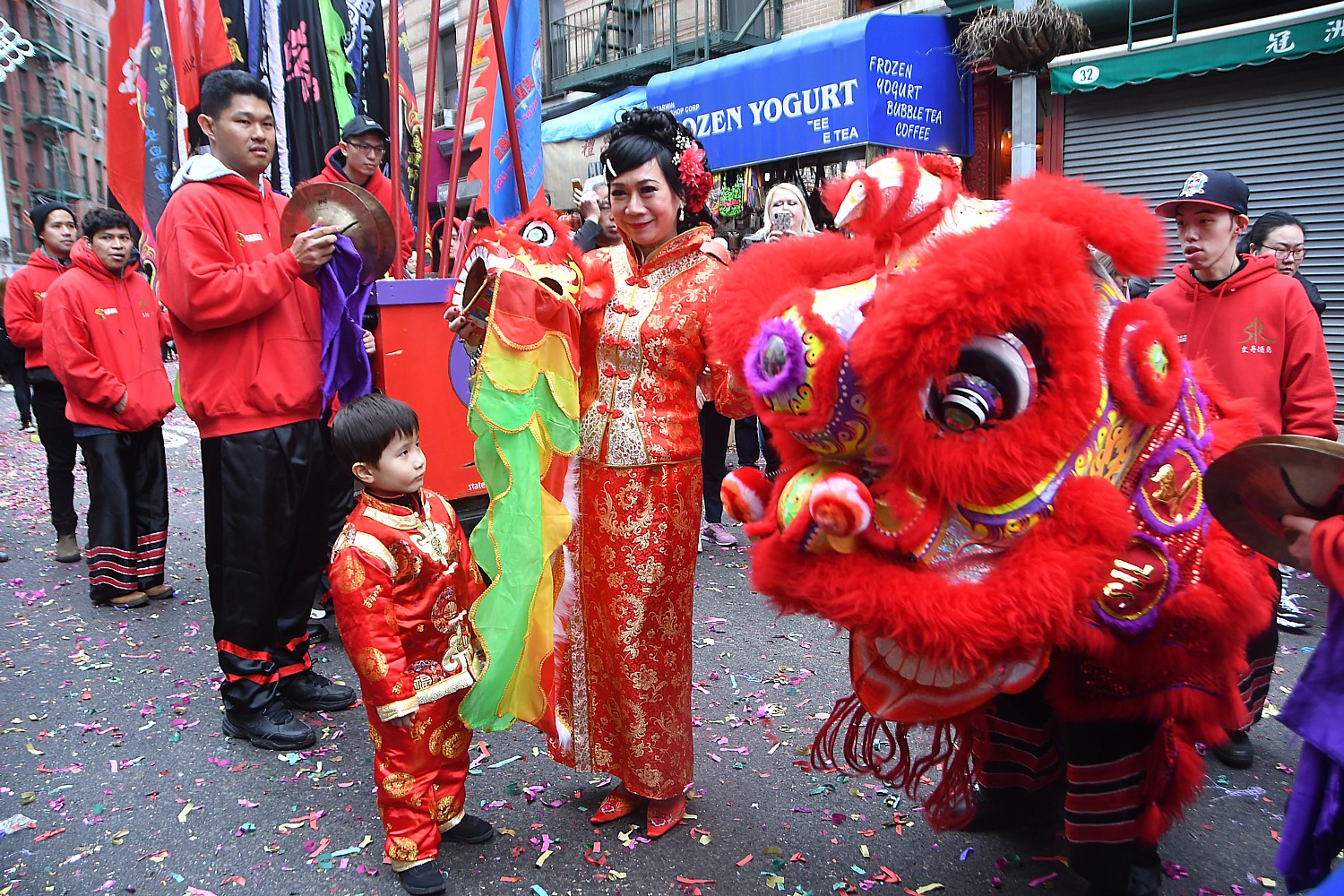
Along the warren of streets through Chinatown you could see groups of lion dancers – performers who mimic a lion’s movements in a lion costume to bring good luck and fortune – entreating shopkeepers and celebrants for treats and tips.
At the Lunar New Year, Chinatown becomes a fantastic street party with vendors, food and festivities, and heritage and ancient traditions on view: decorations like lanterns feature the color red which is a symbol of good luck in Chinese culture; many wear traditional Chinese costumes with colorful silks to represent joy and good fortune. Many visit Chinese temples to pray for good luck and burn incense sticks.
The celebrations conclude with a fabulous Lunar New Year Parade through Chinatown on Sunday, February 25, beginning at noon, a colorful pan-Asian procession that incorporates Chinese, Korean, Japanese, Vietnamese, Taiwanese, Malaysian, and even Hispanic floats and cultural performances. Arrive early to snag a good spot. Some half-million people line the route.
Through the 10 days of celebration, people honor household and heavenly deities, as well as their ancestors, and devote the holiday as a time for family to come together. Children expect get treats.
“Lunar New Year is the liveliest and most important celebration in Chinese culture and Chinatown is the place to experience it!
New York City’s Chinatown, two square miles in lower east side of Manhattan, is the largest Chinatown in the United States and the site of the largest concentration of Chinese in the western hemisphere. Manhattan’s Chinatown is also one of the oldest ethnic Chinese communities outside of Asia.
The Museum of China in the Americas (MOCA) offers a walking tour that takes visitors through Chinatown to learn about holiday traditions and customs observed by Chinese households. Witness how the neighborhood transforms itself in preparation for the New Year and discover the characteristics that make this holiday unique.”
Tours are conducted in English and are led by MoCA docents with personal or family roots in the neighborhood. In case of inclement weather, tours will be held in the galleries. Advance reservations are required. For information and reservations call 212-619-4785 or purchase tickets online, www.mocanyc.org. (Museum of Chinese in America, 215 Centre Street New York, NY 10013, 855-955-MOCA).
Tour operators and cruiselines are still offering programs to Cuba. Abercrombie & Kent is offering a people-to-people program with A&K USA Chairman Phil Otterson, featuring 7 nights aboard boutique sailing yacht ‘Le Ponant’.
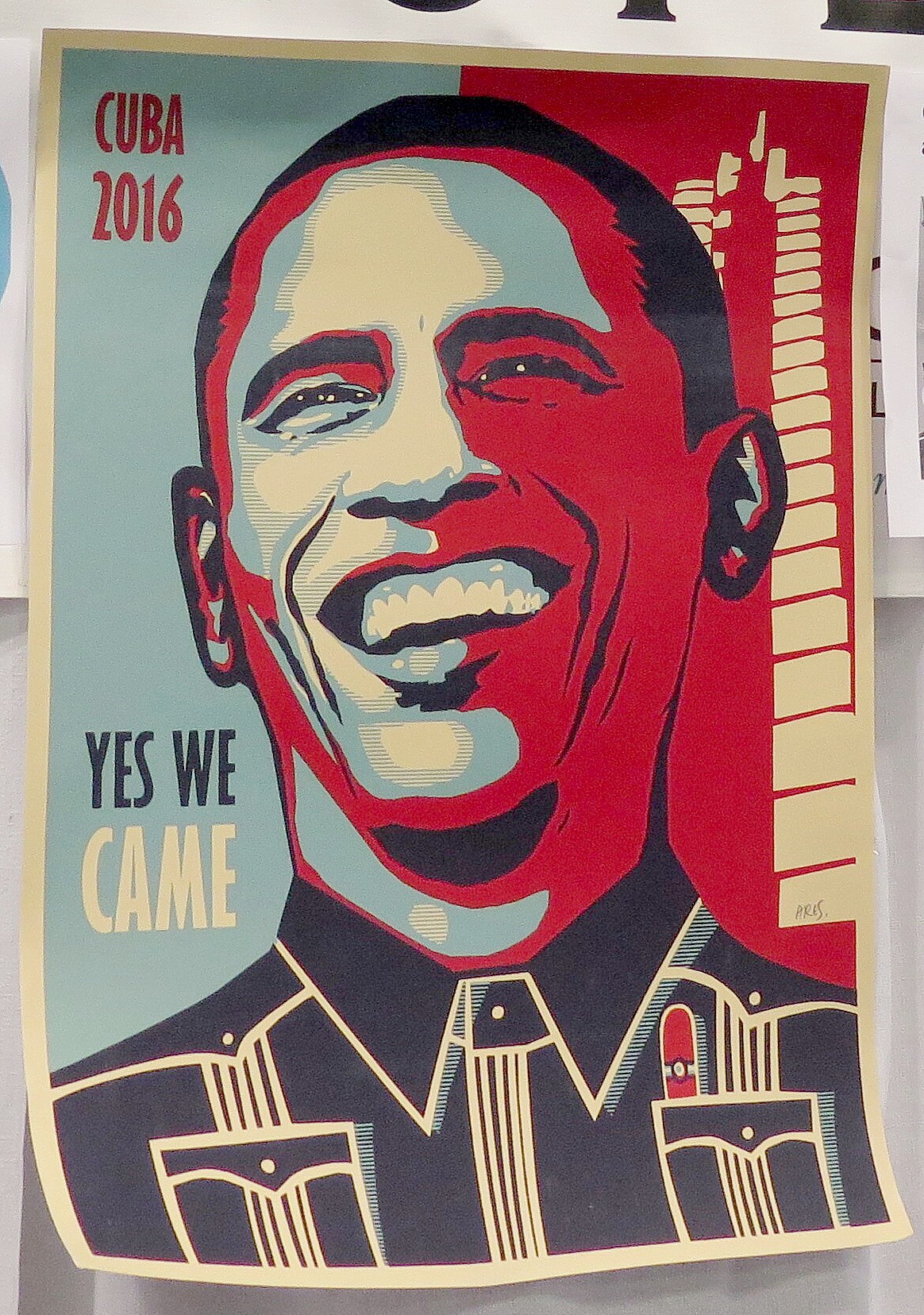
After President Obama threw down barriers for Americans to travel to Cuba, the island nation saw a surge in tourism – US airlines launched new flights, cruiselines set up calls, and hotel companies were looking to build. Then the Trump Administration reversed the Obama policy, creating confusion about Americans’ ability to travel, which even travel professionals say they are having a hard time deciphering.
“Tourist travel to Cuba remains prohibited. You must obtain a license from the Department of Treasury or your travel must fall into one of 12 categories of authorized travel,” a spokesman for the US Department of State said.
“Travel to Cuba is regulated by the Office of Foreign Assets Control (OFAC) of the U.S. Department of the Treasury. Anyone located in the United States, regardless of citizenship and nationality, must comply with these regulations. Individuals seeking to travel to Cuba are not required to obtain licenses from OFAC if their travel is covered by a general license. If travel is not covered by a general license, you must seek OFAC authorization in the form of a specific license. Travelers who fail to comply with regulations may face penalties and criminal prosecution.” See the Department of Treasury webpage; also OFAC’s FAQl: https://www.treasury.gov/resource-center/sanctions/Programs/Documents/cuba_faqs_new.pdf
The Department of State also has a travel advisory on Cuba at its travel.state.gov site. “Reconsider travel to Cuba due to healthattacks directed at U.S. Embassy Havana employees.”
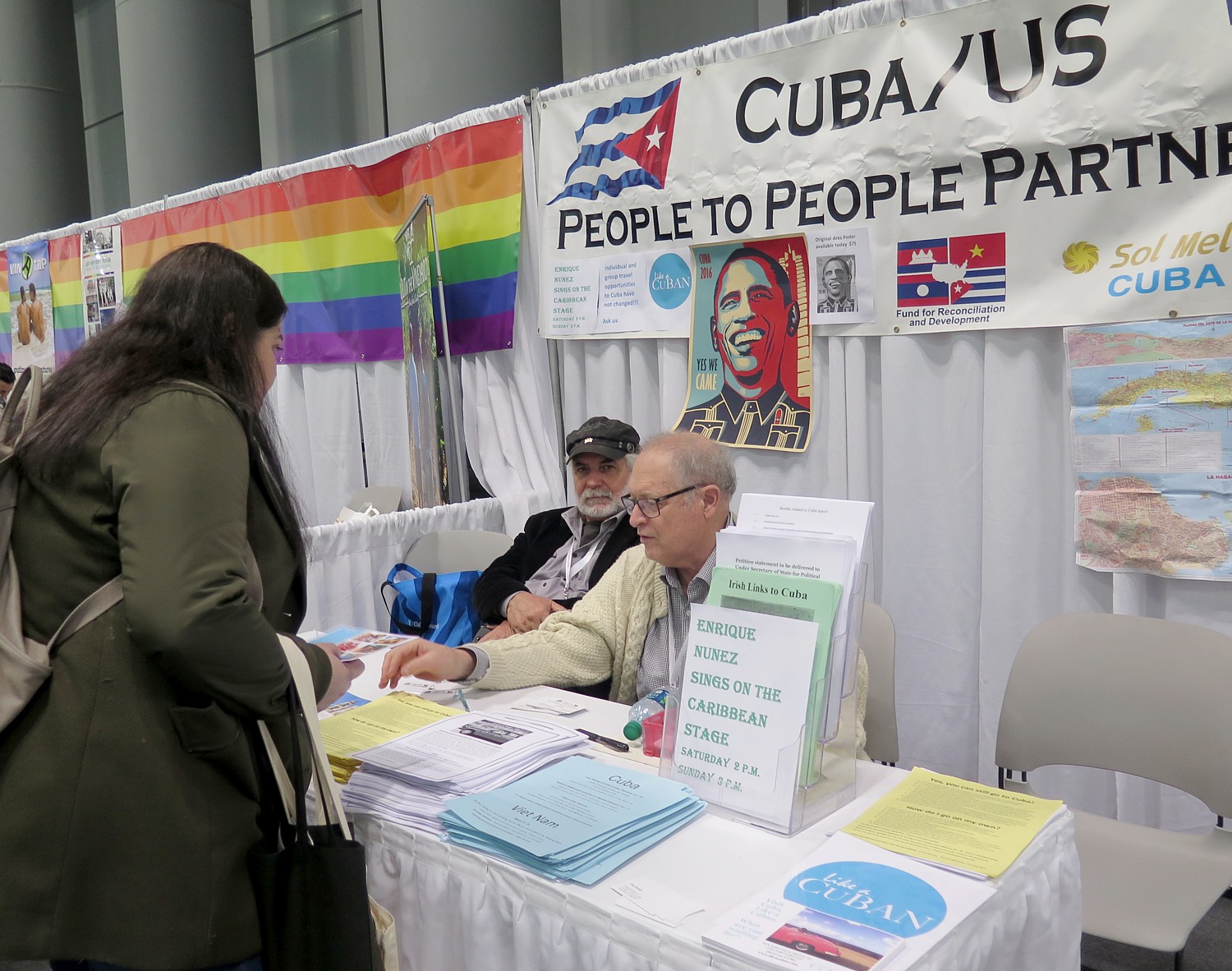
The change in policy specifically impacts independent travelers’ ability to visit under a broad People to People policy without joining some kind of licensed group – which those who have been advocating for opening travel to Cuba for decades say is not a surmountable problem.
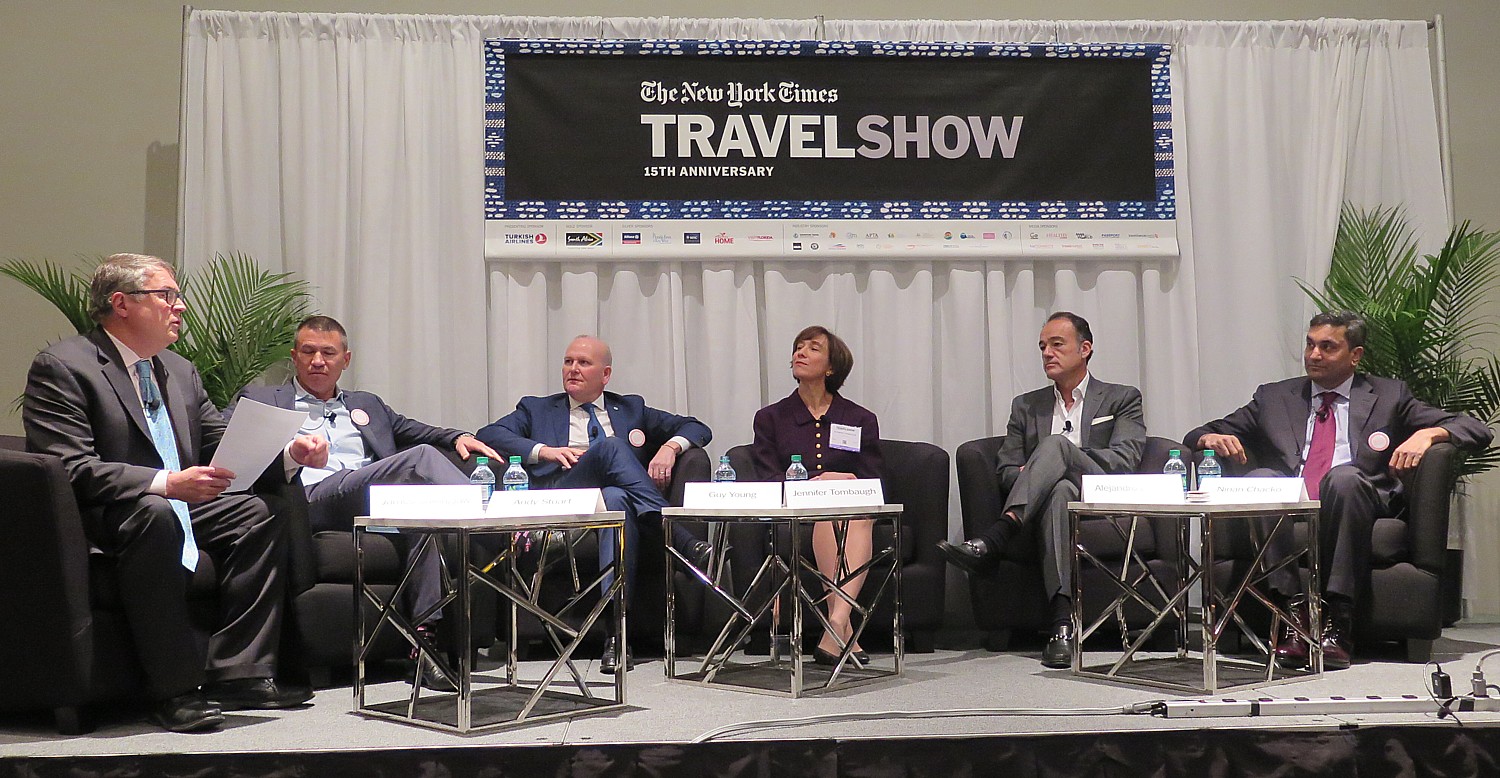
Meanwhile, cruise lines like Norwegian are still coming in and even benefiting from the restrictions. “All of our ships are covered under People to People provisions,” Andy Stuart, president and CEO of Norwegian Cruise Line, said at the New York Times Travel Show industry panel. “The fact we are still going, added capacity, tells the story that this is fantastic way to visit, There is still pent-up demand. We have doubled capacity –we have the two largest ships that can sail into Havana harbor. We are excited about it. We have to get the word out that Americans can still go to Cuba.”
But USA-Cuba travel professionals argue that the Trump policy is only a blip that can easily be overcome by anyone who is interested in visiting.
Despite Trump’s hard-line speech to shut down relations with Cuba last June in Miami, Americans can still travel to Cuba.
“All types of purposeful travel authorized by the Obama Administration remain legal,” stated John McAuliff, Executive Director & Founder of the Fund for Reconciliation and Development (www.ffrd.org).
Travel with groups and on cruises are unaffected by the policy.
“Even hotel restrictions have a legal work-around,” he maintains.
Independent travel by individuals, families and friends is also largely unchanged but now falls under the re-written license category of “Support for the Cuban People” instead of “People to People.”
The withdrawal of 60 percent of US diplomats in October was connected to a still unexplained medical problem that affected only US and Canadian diplomats. “It is totally unknown what happened and who is responsible, but the goal of cooling relations succeeded.” On the other hand, Canada did not withdraw its diplomats.
“There has not been a single confirmed case of similar health symptoms from the 4 million visitors to Cuba last year, including 650,000 Americans. No other country has issued any kind of health advisory.
Indeed, the International Tourism Fair in Madrid recently judged Cuba “Safest Destination in the World.”
The State Department, under internal rules, issued a Travel Warning because with the reduced staff, it could not provide the normal level of citizen services.
Those who want to travel to Cuba on their own can. Here are tips:
Book a ticket nonstop on JetBlue from JFK or United from Newark (about $300).
Select “Support for the Cuban People” as the type of travel you are undertaking.
Use AirBnB to reserve a room or an apartment (known as casa particular) from a private owner.
You can dine in a private restaurant (paladar).
You can buy handicrafts and other items from self-employed shop keepers (cuenta propistas). (The Trump Administration was hysterical about Americans traveling to Cuba because tourism dollars, they say, support the military state and maintain the Communist regime.)
You can hire a guide privately, such as Enrique Nunez, an art historian, singer-songwriter, artistic director and ‘lecturer on wheels” who drives you around in an old Soviet Lada (“The Car of the Cuban Survivor”; iroko011@gmail.com.)
As much as possible, use private taxis, which are also available for travel between cities.
“Whatever you do, wherever you go, be intentional and responsible that your goal is ‘a full-time schedule of activities that enhance contact with the Cuban people…and that result in meaningful interactions with individuals in Cuba’.” (What that means is up to you.)
Keep a journal or list of your “meaningful interactions” for five years.
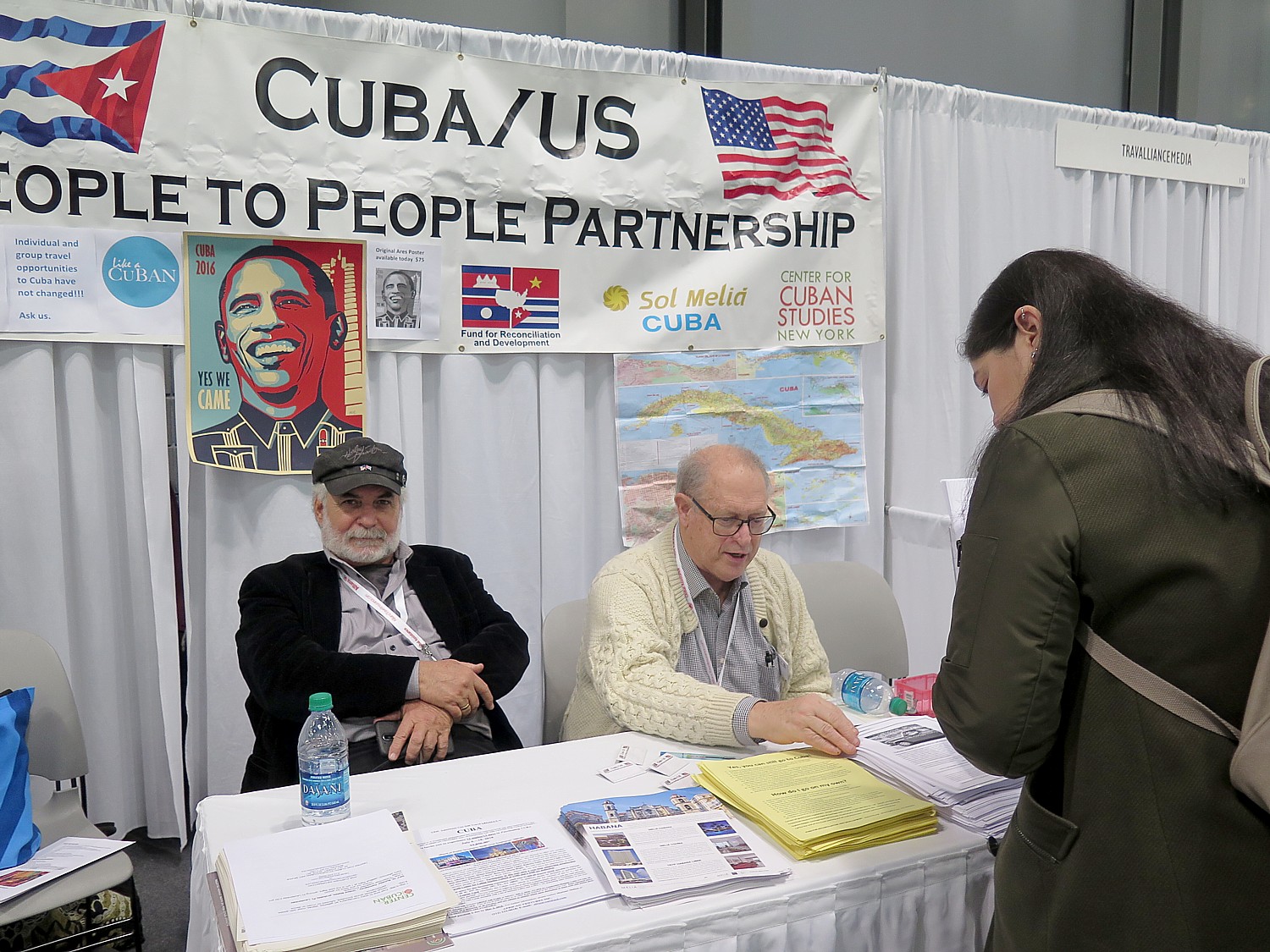
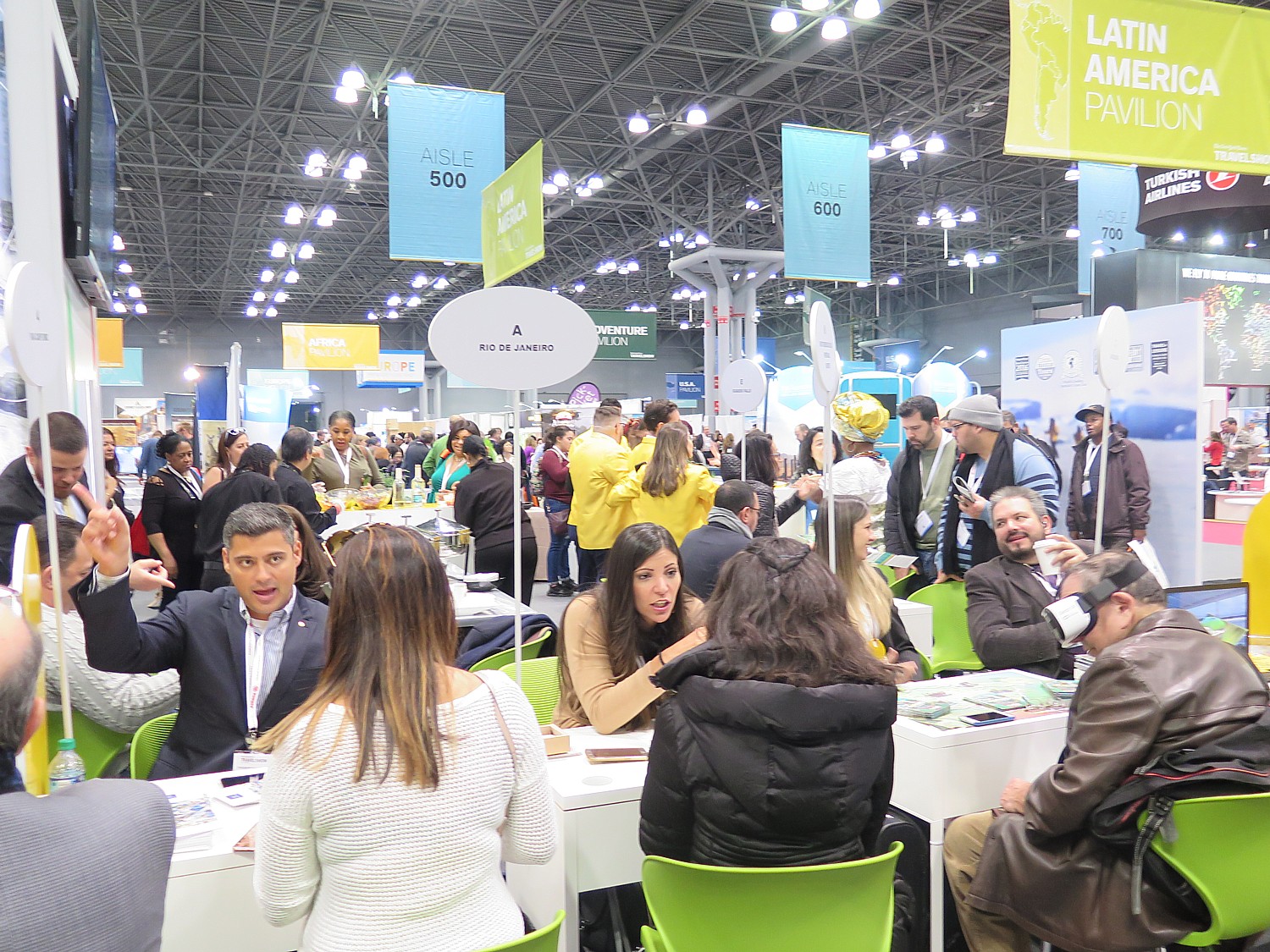
Some two dozen travel entities were at the New York Times Travel Show with services related to Cuba travel, including Cuba/US People to People Partnership, Fund for Reconciliation & Development; Cuban Guru, LLC; Intrepid Travel; Access Trips Culinary Tours; Celestyal Cruises; New York Times Journeys; REI Adventures; Norwegian Cruise Line/Crown Cruise Vacations; International Expeditions; Intrepid Travel; Diving Unlimited International; smarTours; Dream Yacht Charter; Wild Frontiers; African Ventures.
Natural Habitat Adventures offers licensed tours to Cuba (photo supplied by NatHab.com)
McAuliff advises that the best, most economical group tour for Americans to get an overview of Cuba is on a fully inclusive one week cruise offered by Celestyal. Now in its fifth year, the cruise departs from Havana or Montego Bay, Jamaica, and visits three ports in distinctive regions: Santiago, Havana and Cienfuegos. (Passengers boarding in Havana have the option of creating their own program before or after the cruise.)
“A unique feature is that more than 60 Cubans are with you for the whole voyage including lecturers from the University of Havana, musicians, dancers, animators, chefs, waiters, and room attendants.”
FFRD is circulating a petition to Under Secretary of State for Political Affairs thomas Shannon, Donald Trump, House members and Senators:
“We urge the State Department to immediately rescind its politically motivated Travel Warning on Cuba and suspension of issuing US visitor and migrant visas in Havana.
“The freedom of independent and group travel to Cuba by all US citizens must also be protected by regulation and by law.”
Travel professionals at the New York Times Travel Show had somewhat mixed feelings to the US State Department’s new travel advisory and alert system (travel.state.gov) because of the newness and how consumers are processing the information. Some said they appreciated the greater specificity, but others felt that destinations were unfairly tarnished. But they observed with some amazement at the resilience of American travelers to return to destinations that have had some crisis like a natural disaster or terror attack.
“When we had those [terror attacks] in London last summer, within 48 hours we were back to normal booking patterns,” said Guy Young, global brand engagement officer of The Travel Corporation.
Jennifer Tombaugh, president of Tauck Tours, said the tour operator used to plan for up to 12 months for tourism to recover to an area that suffered from some kind of travel disruptor. Now, it only takes three months for a rebound.
“We see, whether it’s been a natural disaster or a terrorism event or just overall economic disruption that all of our guests are rebounding much, much more quickly than they did in the past,” Tombaugh said.
“For better or for worse, there is a resilience about the American traveler that we haven’t seen in a long time,” she said. “I think we’re sort of redefining what uncertainty means, and I’m not quite sure if that word even resonates for people even more. I think they’re saying, ‘The world is crazy. Life is short. Let’s go out and explore.'”
But resilience might actually reflect the high degree of confidence that travelers have in travel professionals – the tour operators, cruiselines and travel agents who are there to advise them more accurately when they book, provide more security when they travel and handle emergencies should they arise.
Citing robust advance bookings, the panel – reflecting a cross-section of travel entities – were all highly optimistic of strong sales for 2018, coming off a record 2017 for just about every destination, bolstered by a strong global economy. However, the United States, was one of only two destinations showing a downturn, with international arrivals down about 4 to 6 percent –representing a $4.5 billion hit to the economy and loss of some 46,000 jobs. They said inbound travel was hurt by Trump’s rhetoric, the travel ban, concern about gun violence, and a general discomfort to visit the US. The United States, once the most desirable destination for international travels, slipped to #3, and dropped the 8 in terms of international arrivals.
On the other hand, outbound travel by Americans is strong.
Ninan Chacko, CEO of Travel Leaders Group; Alejandro Zozaya, CEO of Apple Leisure Group; Andy Stuart, president and CEO of Norwegian Cruise Line; Guy Young, global brand engagement officer of the Travel Corporation; and Tombaugh of Tauck reported the strongest advanced bookings in years – with travelers booking as much as a year ahead.
“2018 looks like a fantastic year, the best on record if bookings continue at the same pace,” said Guy Young, global brand engagement officer of the Travel Corporation, which has 30 brands in its portfolio, ranging from youth travel to luxury travel, and travel products all over the world. “Every destination is up except for the United States. In a given year, some brands are up, others are down, but in 2018, everything is up. It will be a phenomenal year.”
Get a Passport: Hilton Passport Project
Hilton Hotels & Resorts, in collaboration with the US State Department, has launched the Hilton Passport Project.
It turns out that having a passport is good for you.
Hilton Hotels & Resorts undertook a study and found that 53% of Americans with passports are content with their lives, compared to 34% of those who do not possess a passport.
Hilton, in collaboration with the US State Department, has launched the Hilton Passport Project, an initiative aimed at inspiring more Americans to apply for passports.
“For nearly 100 years, we’ve witnessed the profound impact travel has on the lives of our guests,” said Stuart Foster, vice president, global brand marketing. “With more than 570 hotels in the heart of the world’s most incredible destinations, Hilton Hotels & Resorts makes travel within reach. The Hilton Passport Project is our way of helping more Americans unlock the power of travel and realize the benefits a passport can bring them – whether that’s becoming more content with their lives or enjoying new experiences and opportunities.”
Every few weeks, a Hilton location in the United States hosts a Passport Concierge booth, where guests and the general public can have their passport pictures taken for free and apply for or renew a passport. Between one and three employees from the State Department will be on hand to answer passport-related questions and help fill out applications. For a list of coming locations, visit facebook.com/Hilton.
First-time applicants pay $110 and a $25 application fee. Passport renewals cost $110 and expedited passports are an additional $60. If you’re renewing your passport, you can do it by mail, but if you’re getting a new passport or if yours has been lost or stolen, you must apply in person.
There are more than 8,000 passport application locations around the country. Around 60 percent are post offices while the rest are courthouses and libraries. Visit the State Department’s Where to Apply link for more details. In addition, there are 27 passport agencies, where travelers can apply for rush passports – for example, if you are traveling within two weeks’ time.
On January 10, 2018, the Department of State launched changes in how information is shared with U.S. travelers, replacing Travel Alerts and Warnings for countries that warrant them to a new system where every country has a Travel Advisory with a level ranging from 1 to 4. The advisories are hosted in a redesigned hub for traveler information, travel.state.gov.
“These changes are intended to provide U.S. citizens with clear, timely, and reliable safety and security information worldwide,” the State Department stated in a press advisory.
Level 1 – Exercise Normal Precautions: This is the lowest advisory level for safety and security risk. There is some risk in any international travel. Conditions in other countries may differ from those in the United States and may change at any time.
Level 2 – Exercise Increased Caution: Be aware of heightened risks to safety and security. The Department of State provides additional advice for travelers in these areas in the Travel Advisory. Conditions in any country may change at any time.
Level 3 – Reconsider Travel: Avoid travel due to serious risks to safety and security. The Department of State provides additional advice for travelers in these areas in the Travel Advisory. Conditions in any country may change at any time.
Level 4 – Do Not Travel: This is the highest advisory level due to greater likelihood of life-threatening risks. During an emergency, the U.S. government may have very limited ability to provide assistance. The Department of State advises that U.S. citizens not travel to the country or leave as soon as it is safe to do so. The Department of State provides additional advice for travelers in these areas in the Travel Advisory. Conditions in any country may change at any time.
The Travel Advisories for each country replace previous Travel Warnings and Travel Alerts. While the State Department will issue an overall Travel Advisory level for every country, levels of advice may vary for specific locations or areas within a country. For instance, U.S. citizens may be advised to “Exercise Increased Caution” (Level 2) in a country, but to “Reconsider Travel” (Level 3) to a particular area within the country. Detailed Travel Advisories also will provide clear reasons for the level assigned, using established risk indicators, and offer specific advice to U.S. citizens who choose to travel there:
C – Crime: Widespread violent or organized crime is present in areas of the country. Local law enforcement may have limited ability to respond to serious crimes.
T – Terrorism: Terrorist attacks have occurred and/or specific threats against civilians, groups, or other targets may exist.
U – Civil Unrest: Political, economic, religious, and/or ethnic instability exists and may cause violence, major disruptions, and/or safety risks.
H – Health: Health risks, including current disease outbreaks or a crisis that disrupts a country’s medical infrastructure, are present. The issuance of a Centers for Disease Control Travel Notice may be a factor.
N – Natural Disaster: A natural disaster, or its aftermath, poses danger.
E – Time-limited Event: A short-term event, such as an election, sporting event, or other incident that may pose a safety risk.
O – Other: There are potential risks not covered by previous risk indicators. Read the country’s Travel Advisory for details.
The State Department stated it will review and update each Travel Advisory as needed, based on changes to security and safety information. Additionally, U.S. embassies and consulates will now issue Alerts to replace the current Emergency Messages and Security Messages. Alerts will inform U.S. citizens of specific safety and security concerns in a country, such as demonstrations, crime trends, and weather events.
Revamped Website, Travel.State.Gov
The Department’s newly-redesigned hub for traveler information,travel.state.gov, will host all Travel Advisories, recent Alerts issued for each country, and an interactive map in mobile friendly formats.
Country pages on the site will continue to include all travel information currently available, including details about entry/exit requirements, local laws and customs, health conditions, transportation, and other relevant topics.
To receive security and other important updates while traveling, U.S. citizens can enroll their travel plans in the Smart Traveler Enrollment Program (step.state.gov), and follow on Twitter (@travelgov) and Facebook (facebook.com/travelgov).
We posed additional questions to a spokesperson for the Department’s Bureau of Consular Affairs:
How was the new Travel Advisory system created? How has it been received by travel professionals and travelers?
“Over the past year, we received feedback about our consular safety and security messaging from State Department colleagues throughout the world and from our many outreach activities to the public and other government stakeholders. This feedback helped us tailor our new Travel Advisories to the information travelers need most.
“The revisions to consular safety and security messaging improve the Department’s ability to inform the public in an efficient and comprehensive manner. Information is easier to find, understand, and use. Travel Advisories ensure U.S. citizens receive important advice for every country, applying a consistent worldwide standard.”
“Our goal was to improve our communications with U.S. citizen travelers to provide clear, timely, and reliable safety and security information worldwide. So far, the feedback was been positive.
“One thing I’d point out: it’s important to read the full Travel Advisory for the country your visiting. In some cases, we have different Advisory levels for different parts of the country. Mexico, for example, is a Travel Advisory Level 2 – Exercise Increased Caution, but some areas of Mexico are Level 3 and 4. So it’s important to read each Advisory carefully.”
How do you determine the overall level for a country?
“We consider many factors to determine the Travel Advisory level for each country, including crime, terrorist activity, civil unrest, health, natural disaster/weather, and current events. We clearly explain the reason for the Travel Advisory level and describe the safety and security concerns.
“The information used to formulate Travel Advisories is collected from a range of sources, such as crime statistics and other information that is publicly available, information gathered from U.S. government sources, as well as assessments by our embassies and consulates. Travel Advisories also take into account decisions made to protect the security of U.S. government personnel overseas and ensure that U.S. citizens receive appropriate security information.
“This analysis is undertaken without regard to bilateral political or economic considerations. Travel Advisories represent our commitment to protect U.S. citizens traveling and residing abroad by providing them important safety and security information.
“Travel Advisories are based on safety and security conditions that could affect the lives and interests of U.S. citizens abroad, not on political considerations.”
During the Obama administration there was an attempt to make it easier for travelers to come into US. How has the Trump Administration changed the way visitors are treated? Travel into the US from abroad is down 4-6% in 2017 – an otherwise a banner year for international travel – which is estimated to cost the US economy $4.5 billion and the loss of 40,000 jobs. Is this something the State Dept is concerned about?
“The Department of State remains committed to efficiently processing applications for legitimate travel to the United States.
“At the same time, every visa decision is a national security decision, and we must ensure that applicants do not pose a security risk to the United States. We have never hesitated to spend additional time evaluating visa applications to this end.
“However, we do recognize the importance of international travel and tourism to the U.S. Economy. 75.6 million visitors traveled to the United States in 2016. These visitors spent $244.7 billion and supported 1.2 million jobs here in the United States in 2016. The U.S. travel industry (international and domestic) is a substantial component of U.S. GDP and employment, contributing $1.6 trillion in economic activity.
“Together with other agencies, we are in contact with industry groups and work with them regularly to discuss concerns and opportunities.”
Some 15 countries around the world have travel alerts about travel to the United States because of gun violence. Can you comment?
“Our responsibility is to provide information for U.S. citizens traveling overseas. We’re aware that some countries have their own travel alerts, including regarding the United States, but we’d have to refer you to those countries for information on how they develop their alerts.”
During the Obama Administration, there also were programs to facilitate and encourage young people to travel abroad, take foreign internships, join programs like Peace Corps, coordinated through the State Department. Can you comment on such programs under the Trump Administration?
“Again this year, the Open Doors student mobility numbers showed an increase in American students studying abroad, topping more than 325,000 American students in academic year 2015/16. Increasingly, U.S. colleges and universities are making study abroad an integral component of the higher education experience for Americans. And more U.S. students than ever before are taking advantage of study abroad opportunities in a wide range of countries.
“To help facilitate this growth, the State Department launched the U.S. Study Abroad Office in 2015 with the goal of further increasing and diversifying U.S. participation in study abroad, including diversity of study, geographic representation and diversity of institutional types, as well as diversity of study abroad destinations around the globe. We work with U.S. and foreign institutions to expand opportunities and highlight the value of studying abroad. Our Benjamin A. Gilman Scholarship Program increases participation in study abroad by providing resources to federal Pell grants recipients, and Critical Language Scholarship Programs provide training in over a dozen foreign languages critical to U.S. foreign policy priorities.
“Study abroad helps students understand the perspectives and values of others, enabling them to succeed in our diverse workplaces, communities and educational institutions. The State Department supports American colleges and universities in their efforts to increase study abroad. You can find more here:https://studyabroad.state.gov.”
What is the position from the State Department about the benefit of international travel – Americans going abroad and foreigners visiting the US – in terms of fostering people-to-people understanding?
“All of us who work in this field know how vital exchange programs and international study is to our shared future. It is one of the key means for the next generation of global leaders to gain the knowledge and skills they need to succeed in our global economy, foster progress in our societies, and address shared challenges.
“When people go abroad, they make connections that broaden their worldview. They become part of an international network of individuals with the shared experience of navigating new and unfamiliar languages, cultures and institutions, as they gain knowledge and develop resourcefulness and critical thinking skills. This experience is especially crucial for young people who will increasingly compete and interact in an interconnected world.
“The State Department sponsors exchange programs to increase mutual understanding and respect between the people of the United States and the people of other countries, as a goal of U.S. foreign policy. These include the International Visitor Leadership Program and Fulbright Program, our flagship exchanges, the Benjamin A. Gilman International Scholarship Program, Critical Language Scholarships, high school exchanges, as well as support for the global network of EducationUSA educational advising centers that provides information on U.S. study to international students worldwide.”