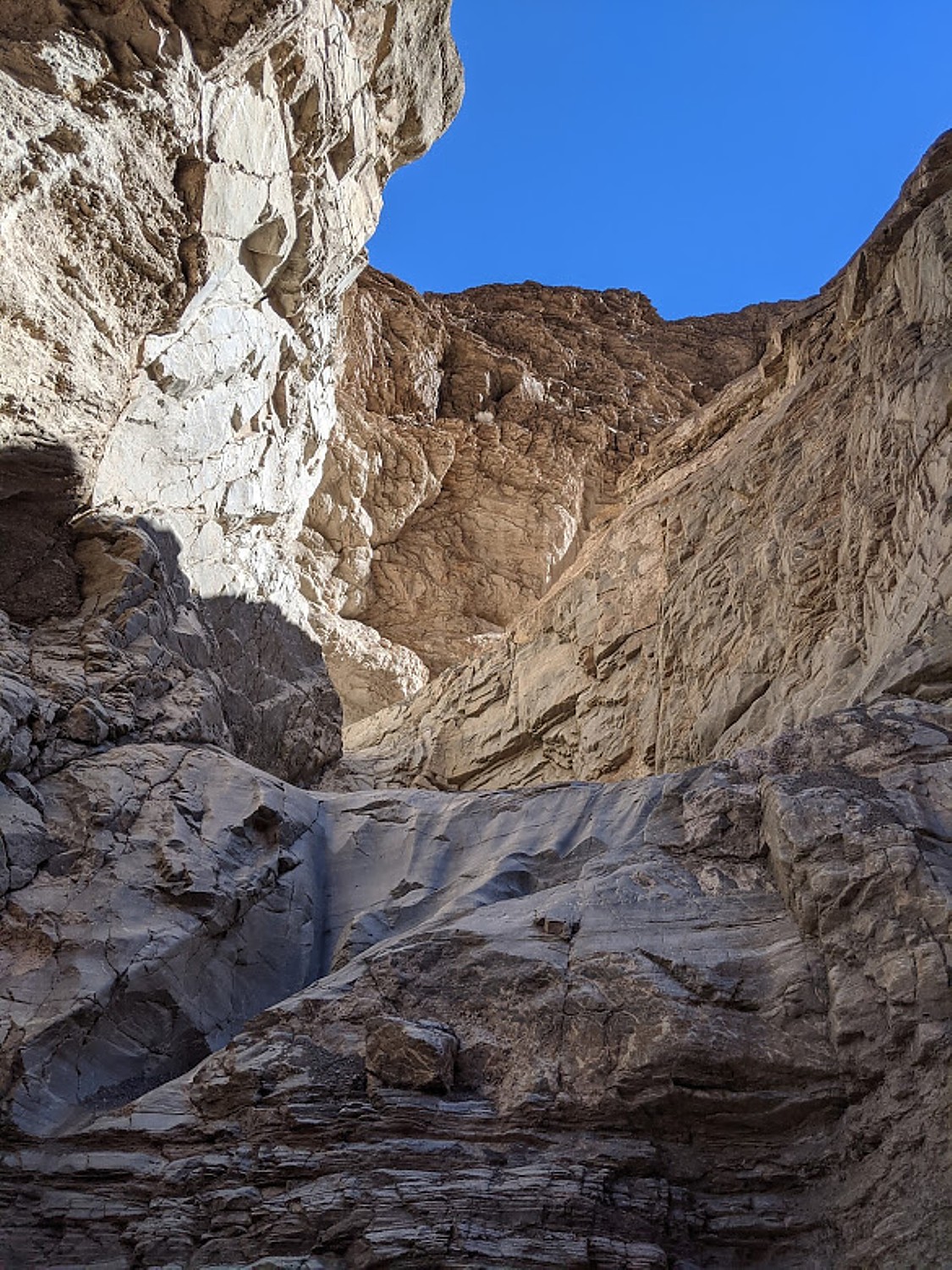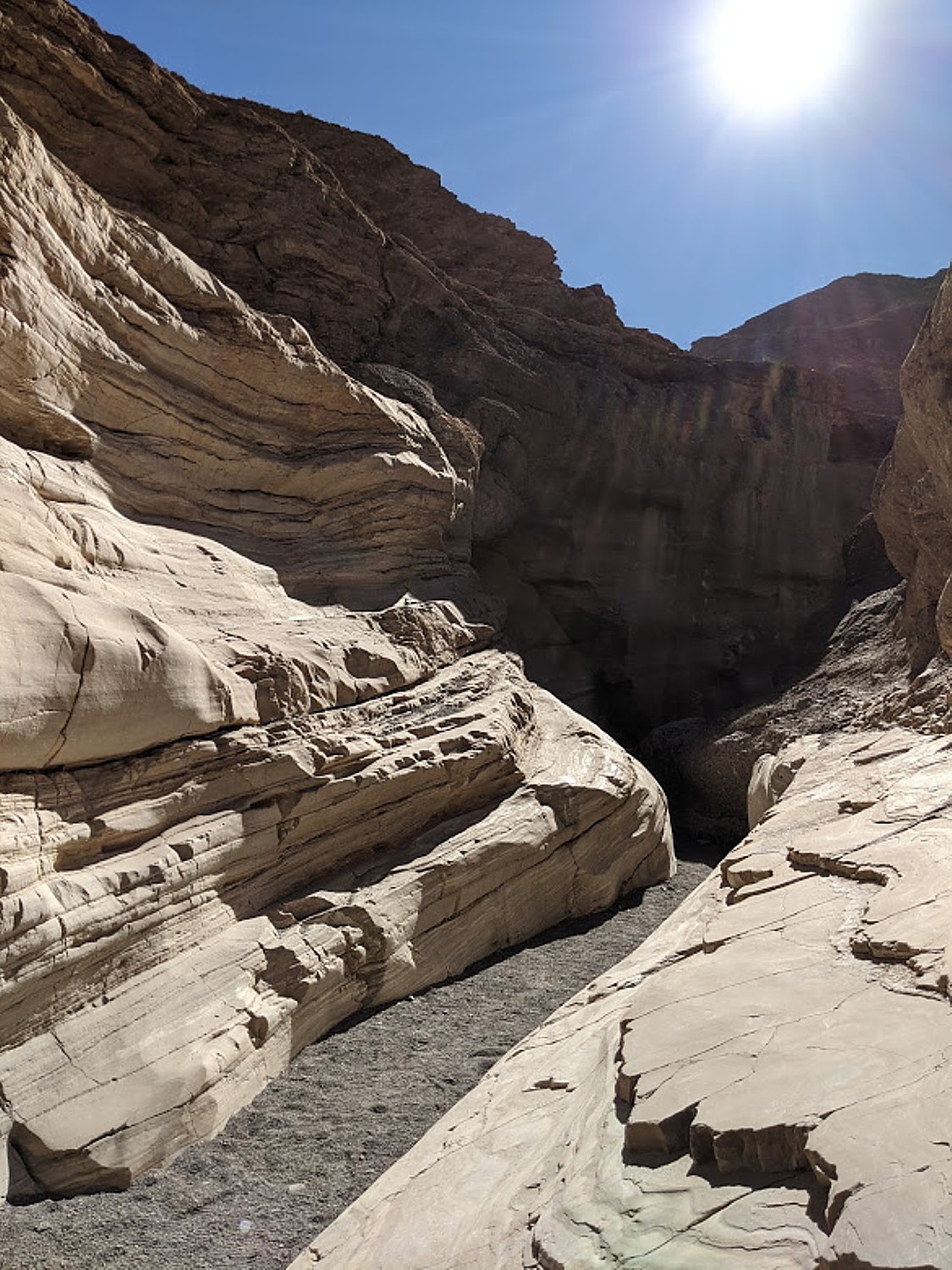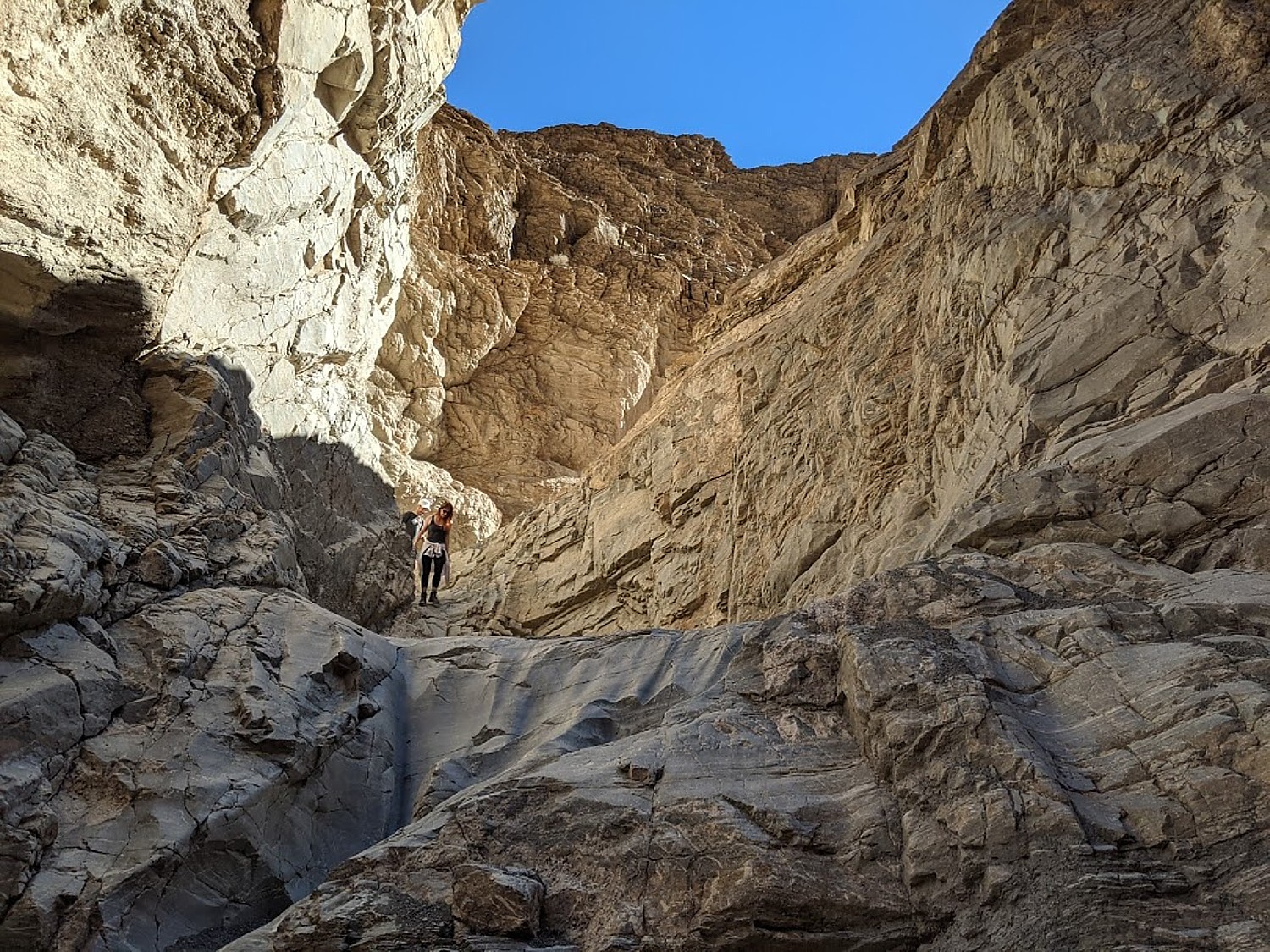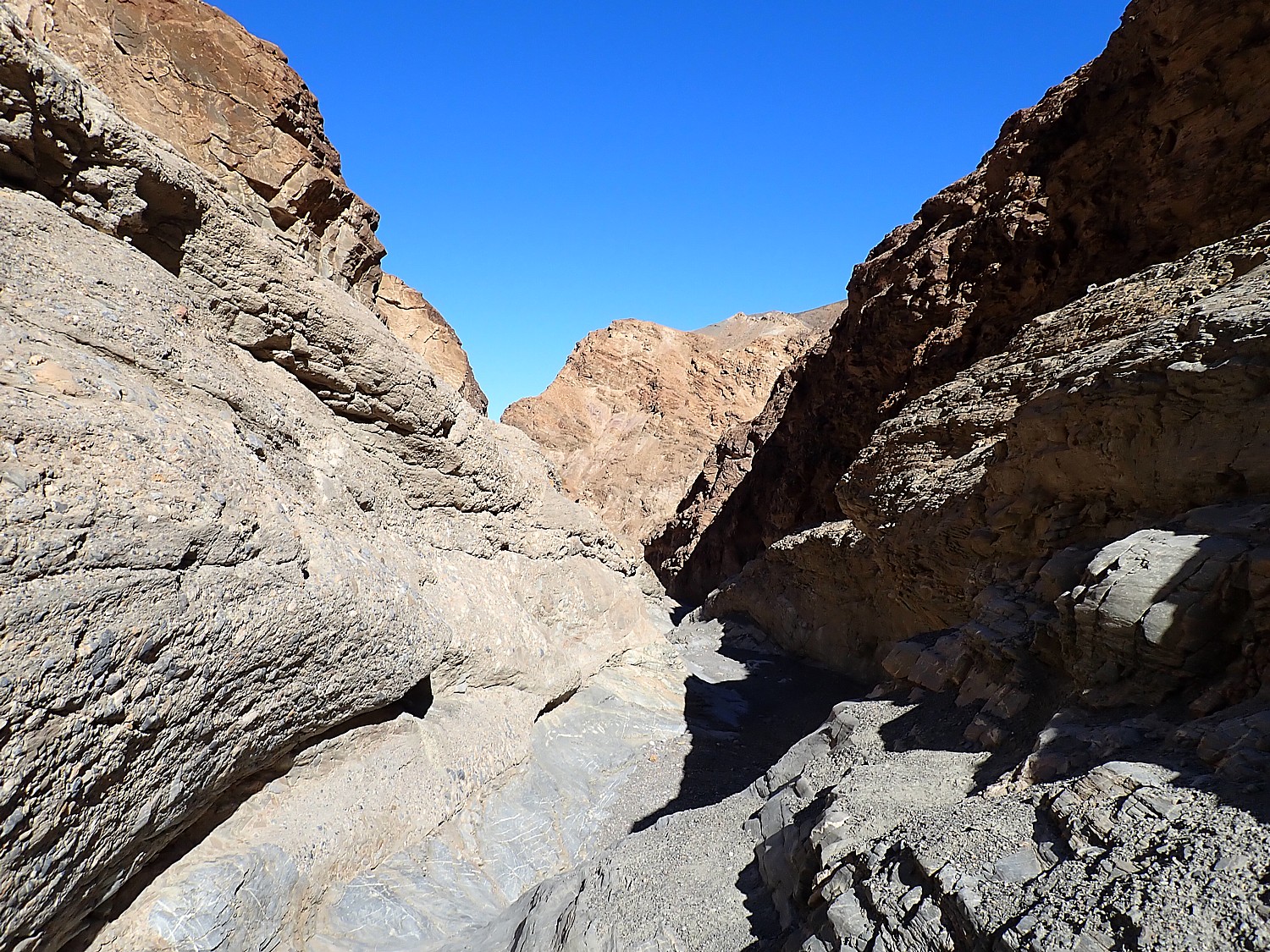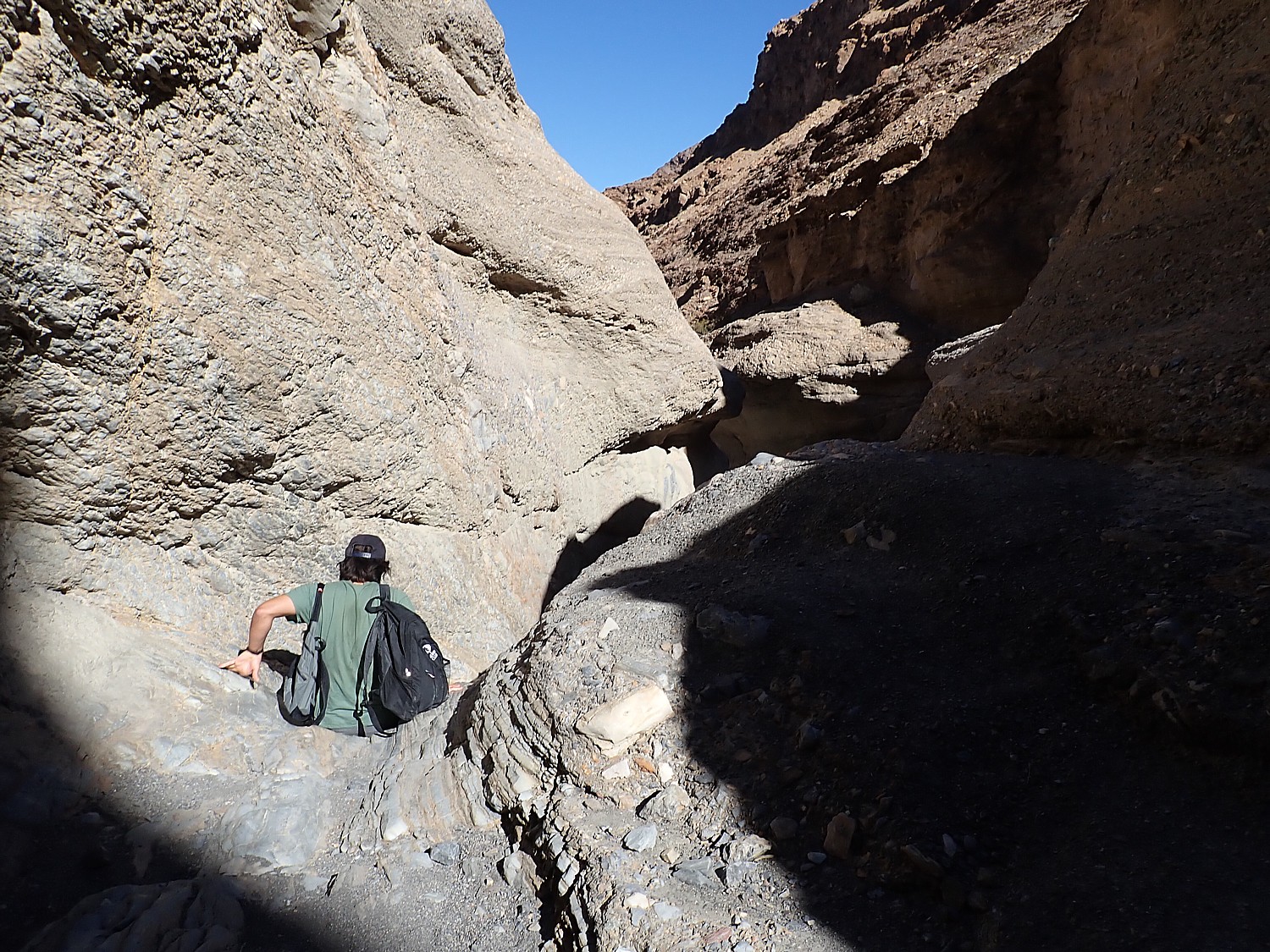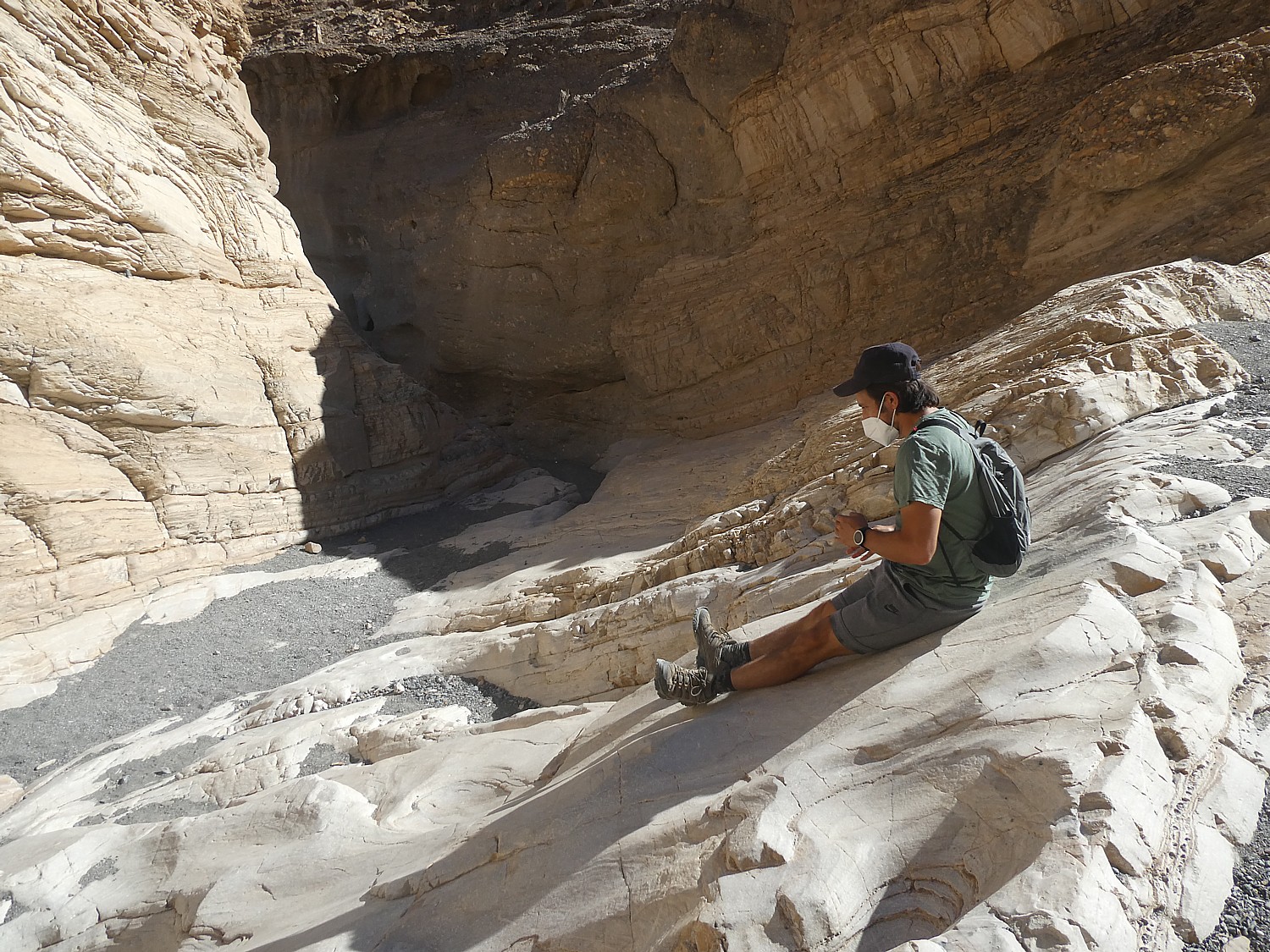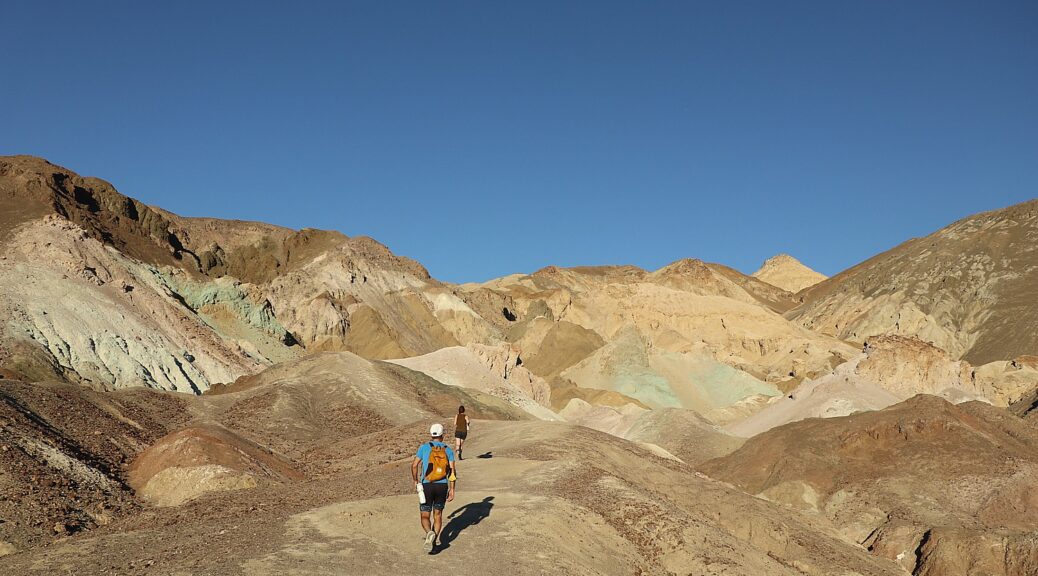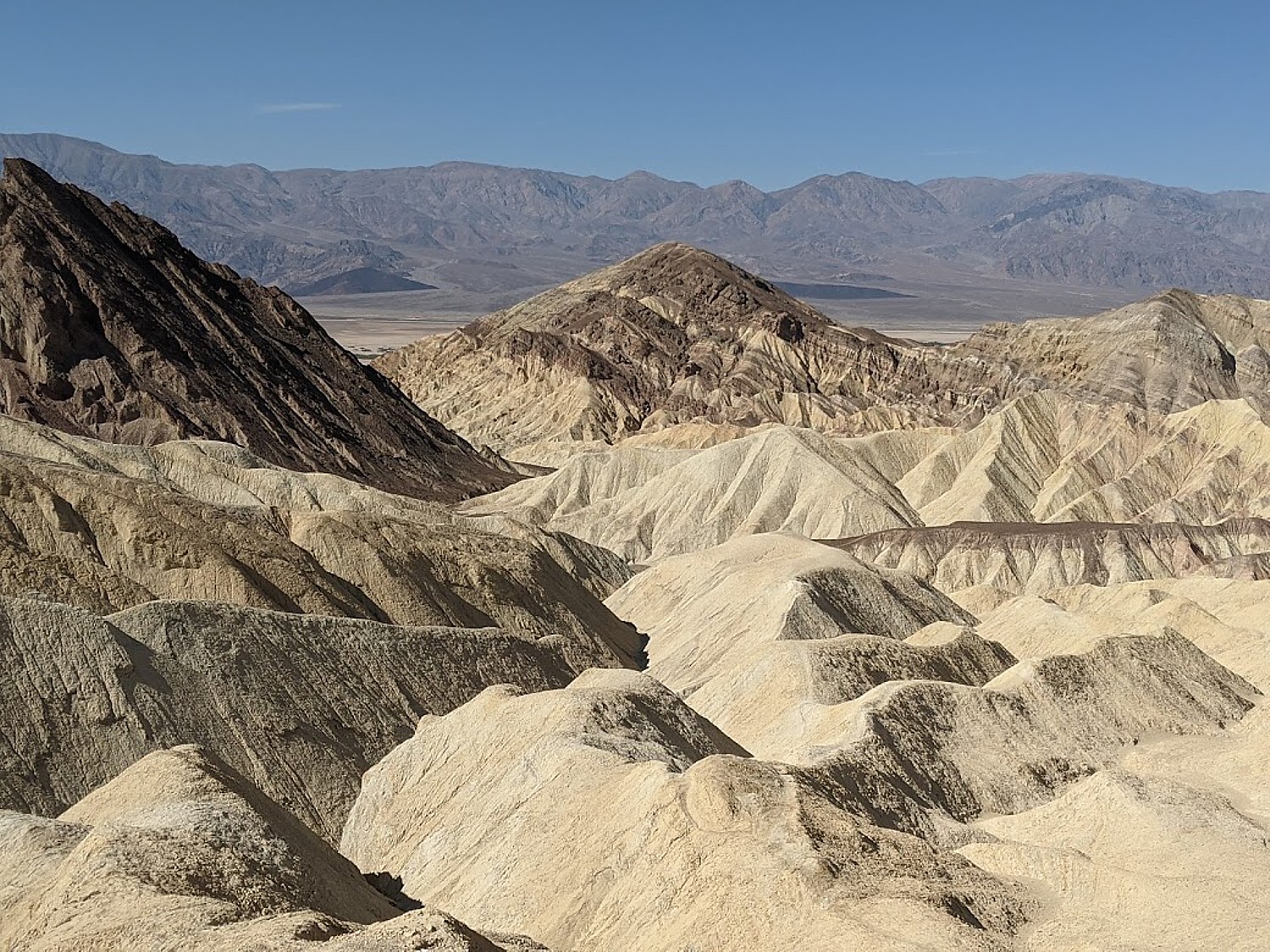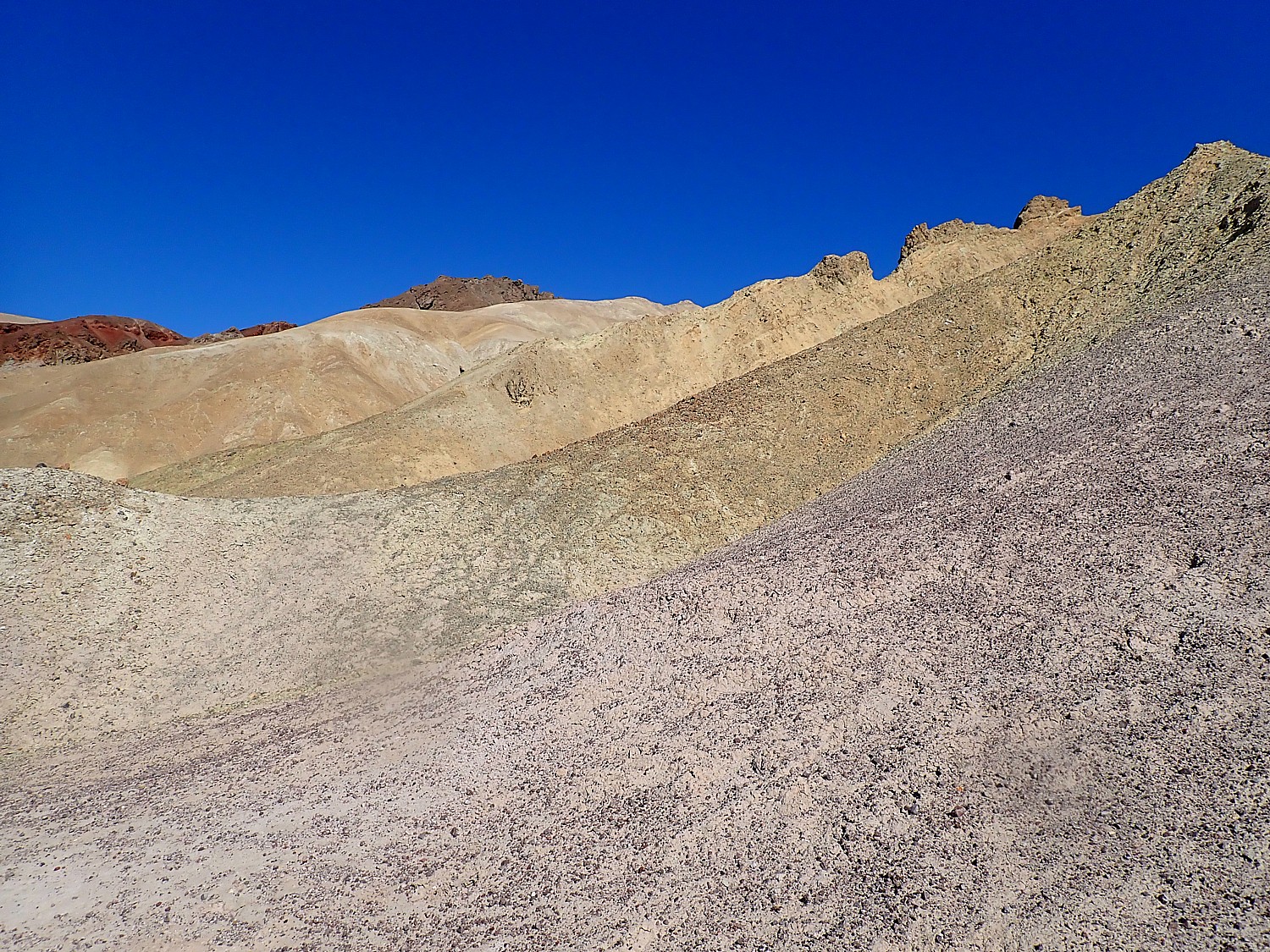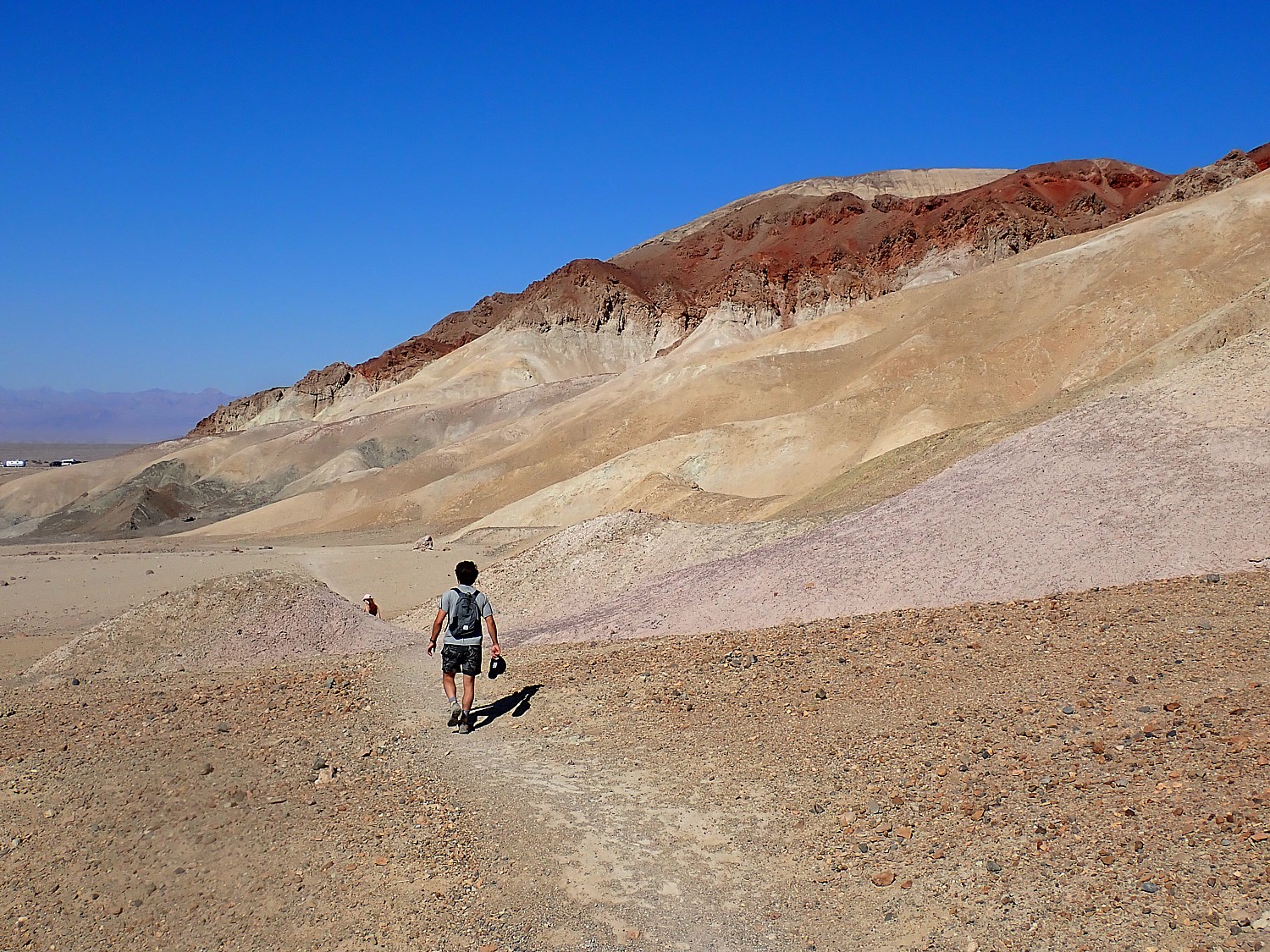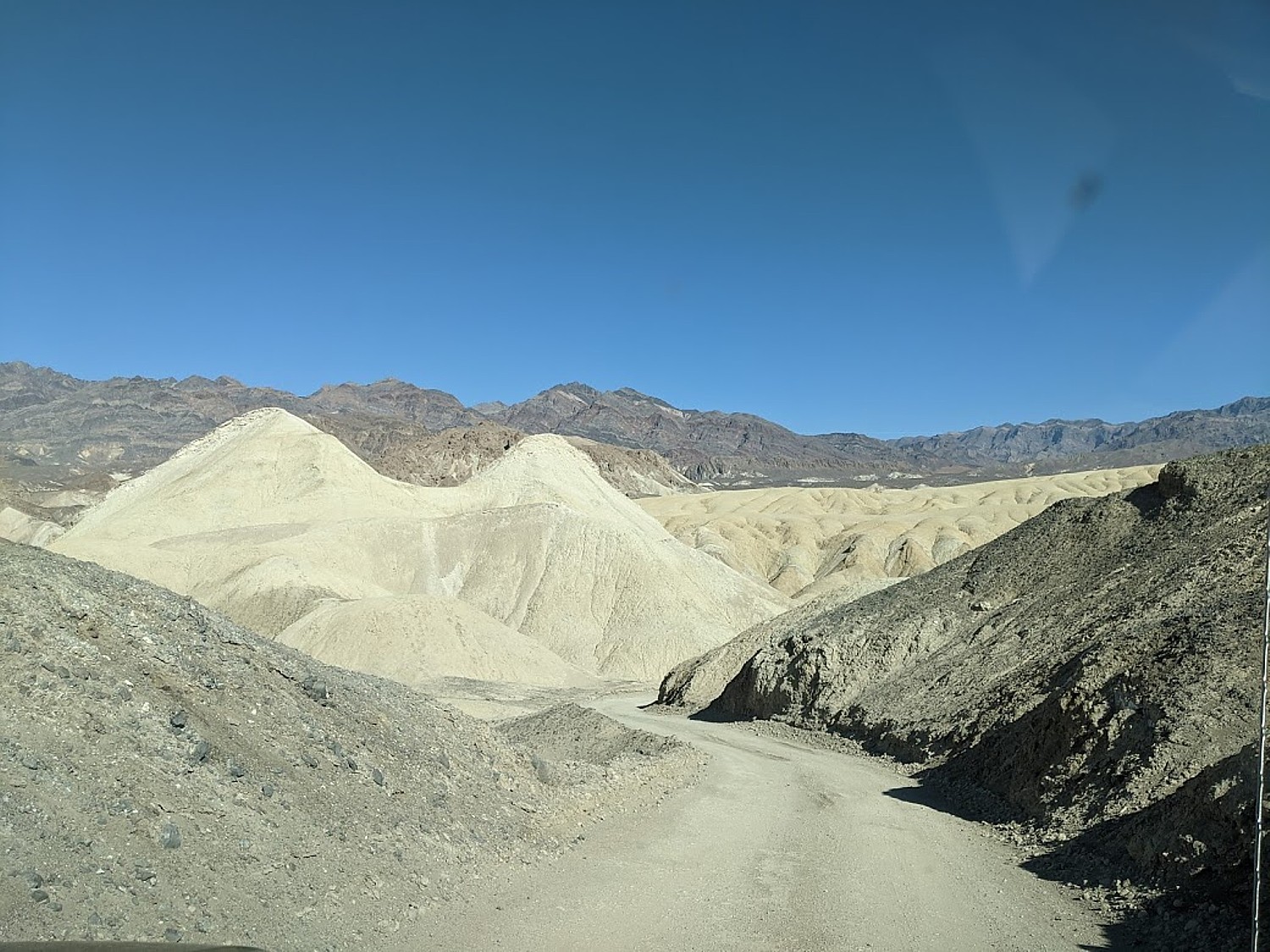
Category Archives: Camping/Hiking/Outdoors

Road Trip: Hitting the Highlights of Death Valley National Park

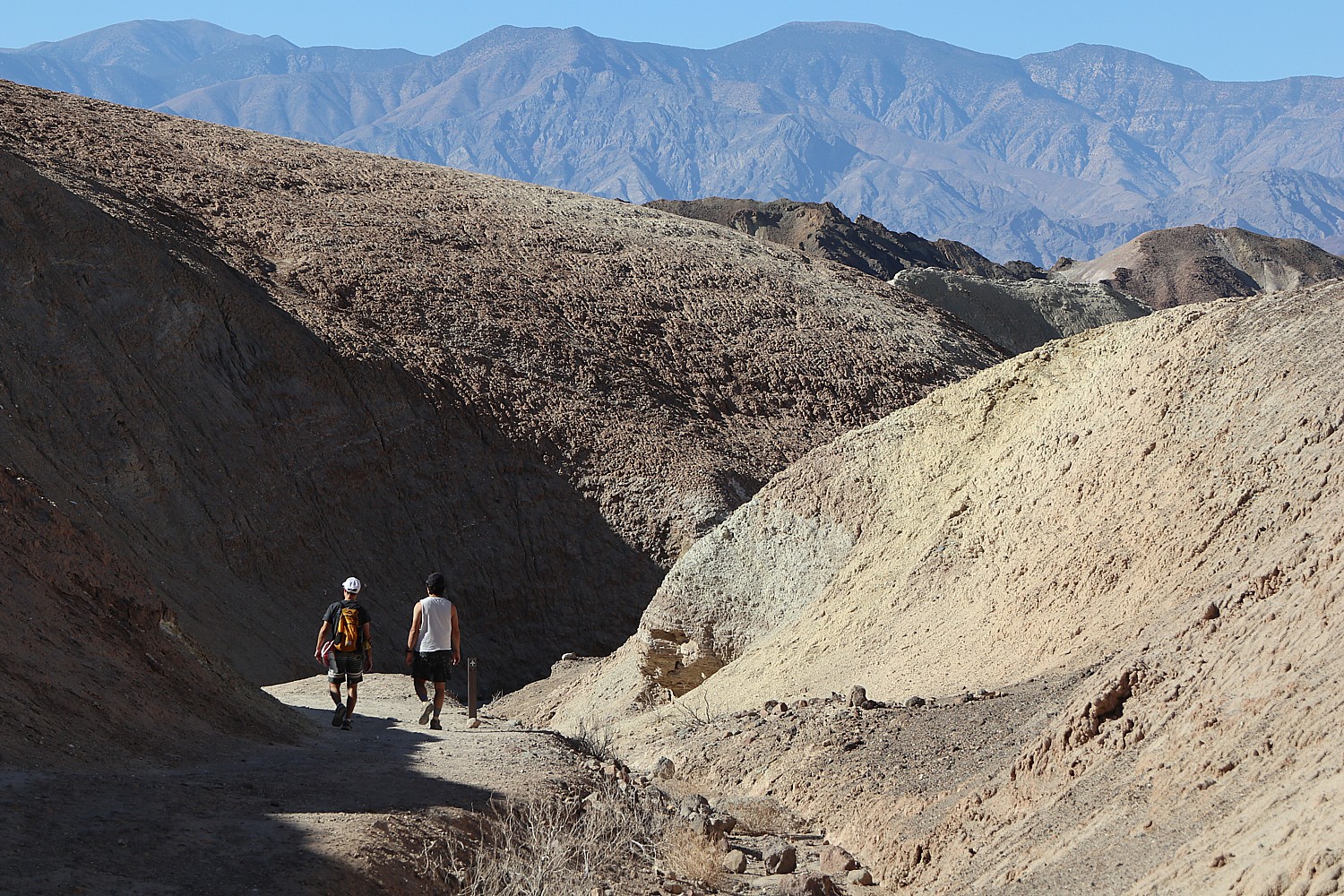
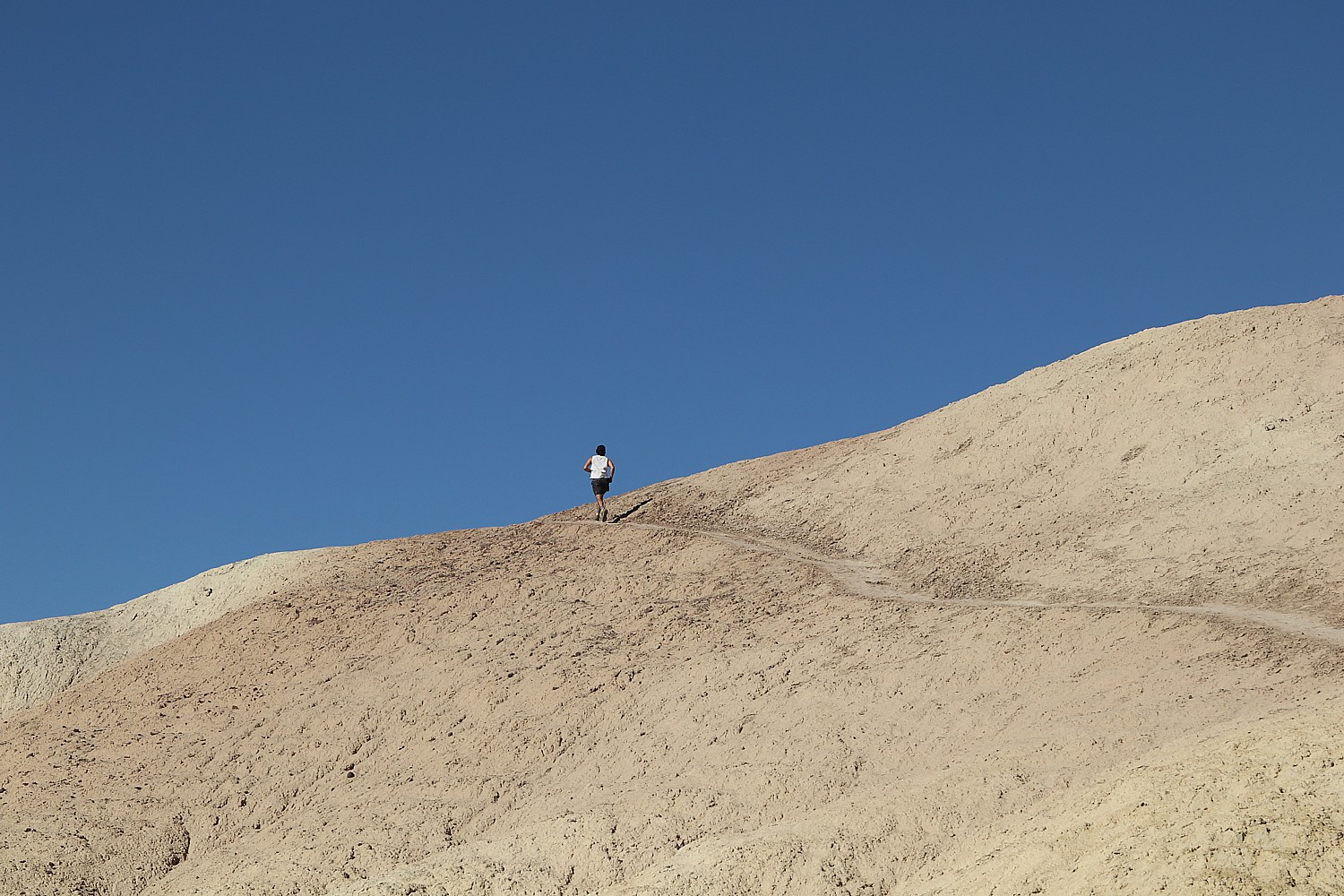
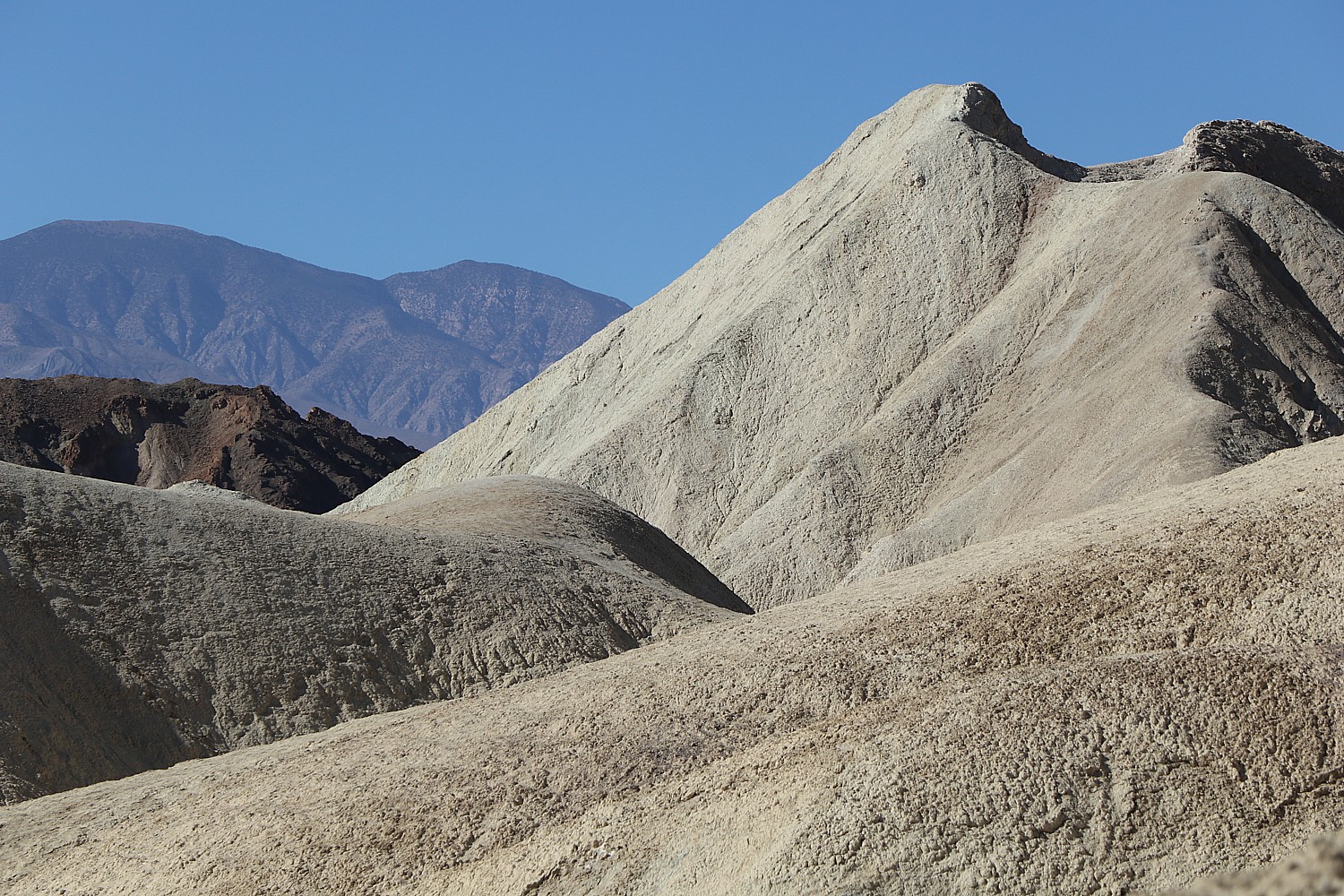
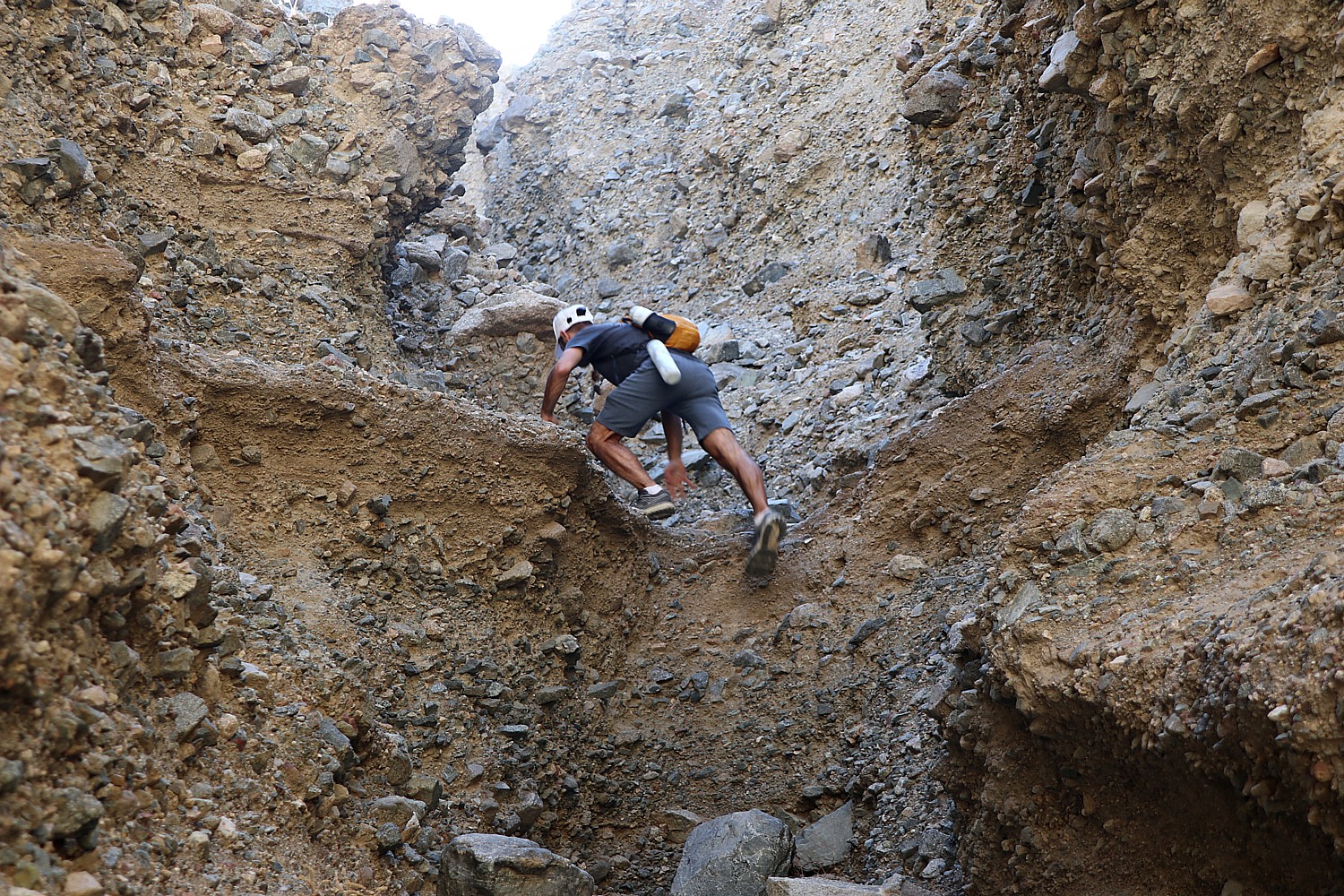
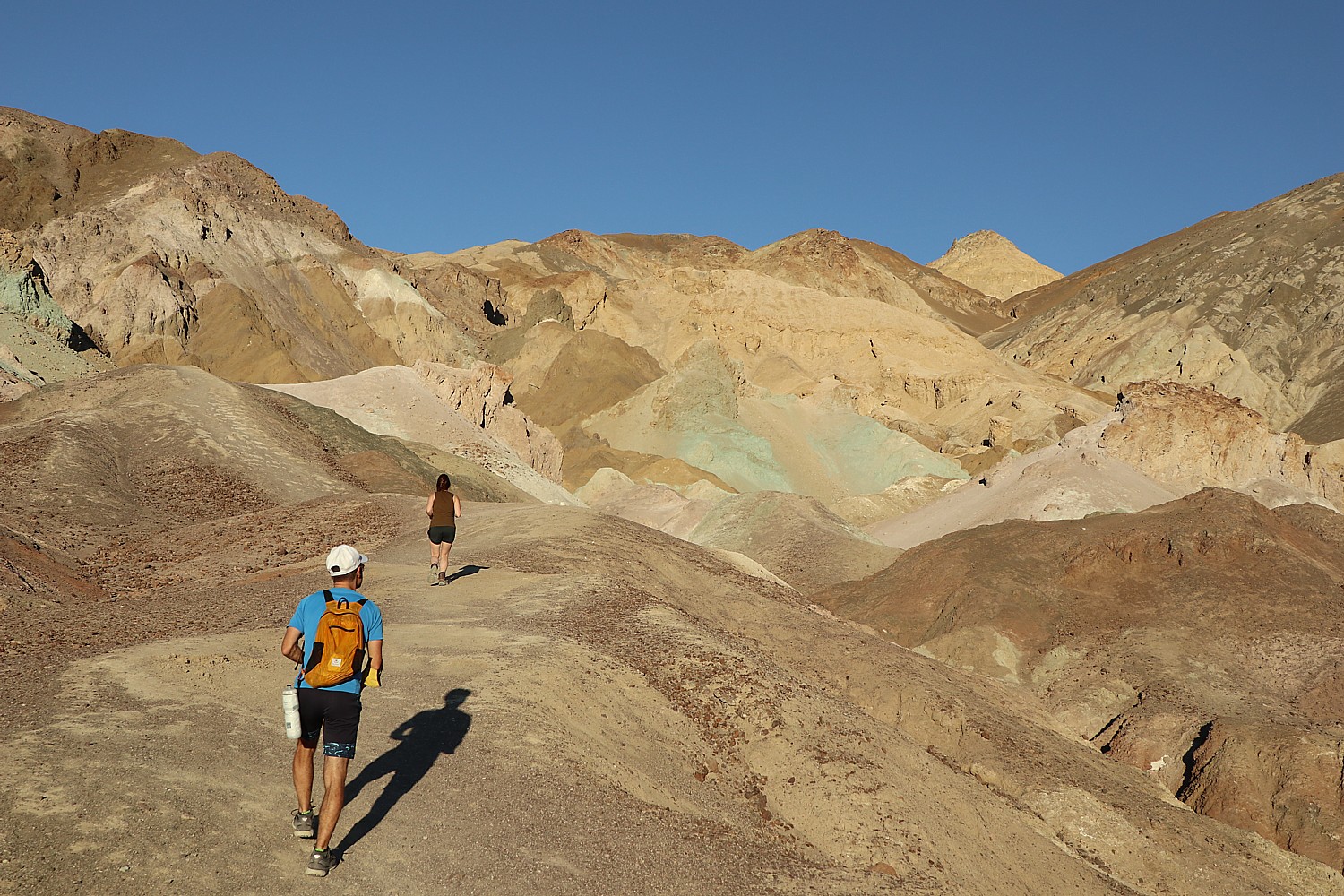
Hiking into the Artist’s Palette, Death Valley National Park © Karen Rubin/goingplacesfarandnear.com

By Karen Rubin, Eric Leiberman, Dave E. Leiberman & Laini Miranda

Travel Features Syndicate, goingplacesfarandnear.com

Tourism began in Death Valley in 1926 with the opening of the first hotels. It became a national monument in 1933 and was elevated to a national park as recently as 1994 with the expansion of 1.3 million acres. It is mind-boggling to realize Death Valley is the largest national park outside Alaska, at 3,422,024 acres – twice the size of Delaware.

A basin below sea level, there is drought and extreme heat, but towering peaks, rising as high as 11,000 feet that ring the basin, get snow. There is even a waterfall. Periodic flooding over millions of years has carved and smoothed ragged rock – a cautionary tale of nature’s power and unpredictability – while oases provide refuge for wildlife and people. Most surprising of all is the diversity of life that has adapted to this harsh location, no more surprising than that there are people here at all – indeed, the Timbisha Shoshone American Indian tribe are repopulating the area around Furnace Creek.

Death Valley is a land of extremes and constant surprises that excite the senses and force you to pay attention. You are never merely a casual observer, but an active participant, often getting to test new skills.

Because Death Valley National Park is so vast, so massive (nearly 1,000 miles of paved and dirt roads, with gasoline and water as much as 78 miles apart) and conditions that can be fairly treacherous, you are advised to research and plan out what you want to do not only to maximize what you see but for safety’s sake.

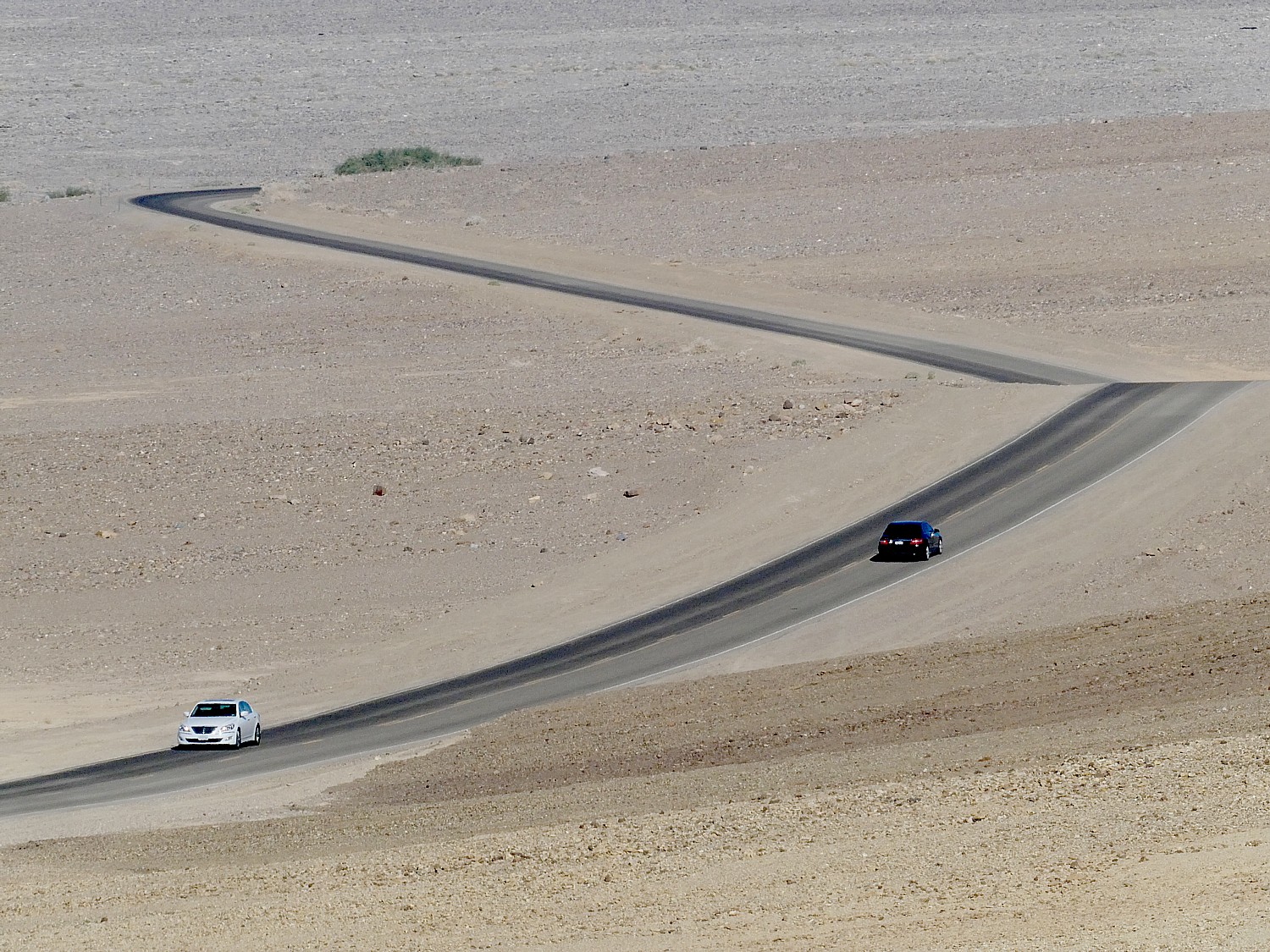
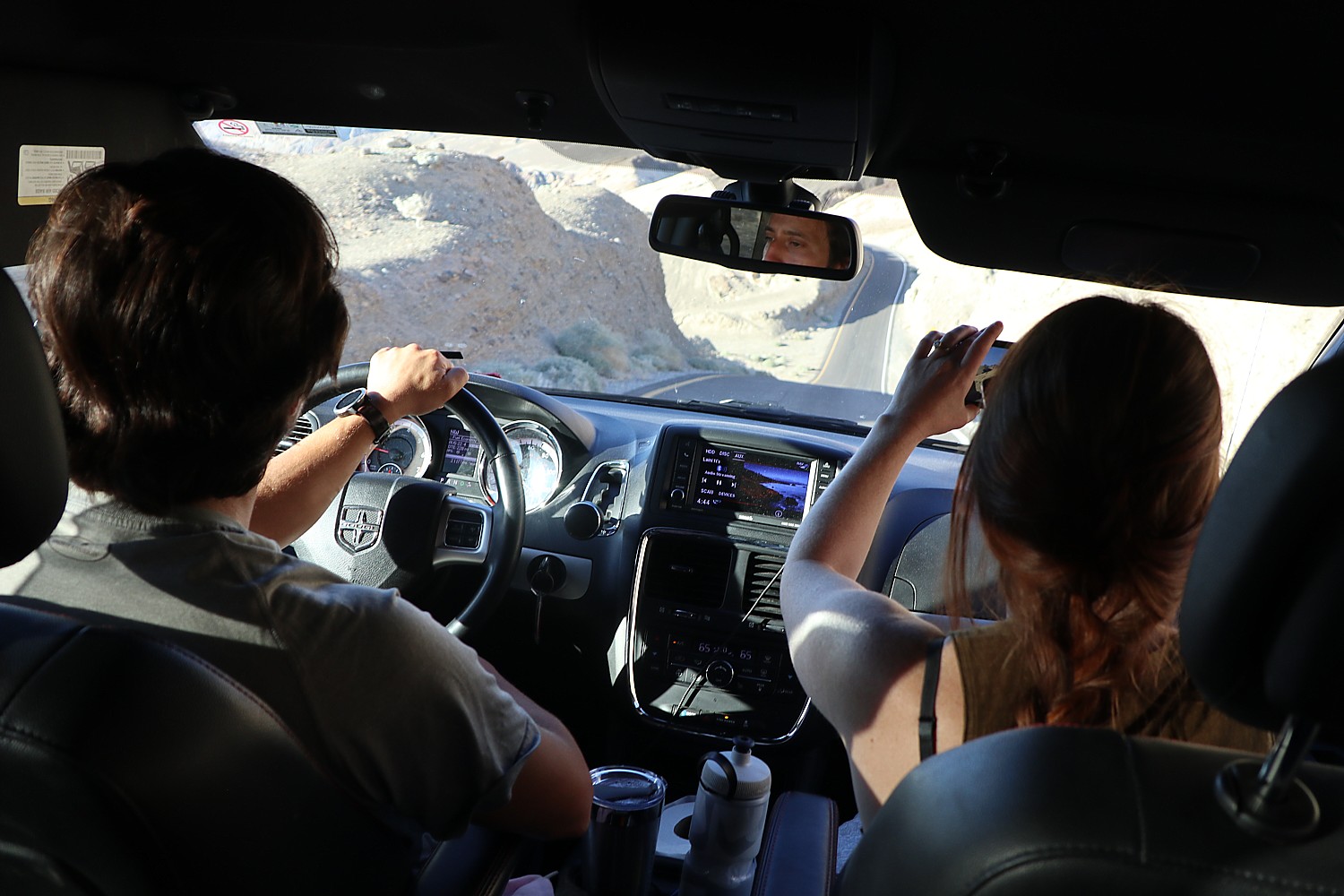
Driving in Death Valley National Park © Karen Rubin/goingplacesfarandnear.com

Among the important safety considerations: especially in summer, you are advised not to start hiking a trail after 10 am (take into account the distance and estimate the amount of time you need – my rule of thumb is one mile per hour); make sure you have sufficient water (allocate a gallon of water per person per day, which you should buy before you arrive); have hat, sunglasses, sunscreen. You are advised not to hike certain trails after a rain or if rain threatens because they can be treacherous. The weather can change dramatically – indeed, you can see where floods have come through and etched the rock – canyons can turn into rivers quickly. The ground temperature in summer can actually be 80 degrees hotter than the air temperature – a temperature of 201 degrees F was actually measured; ground temperature on the valley floor is 40 percent higher than surrounding air temperature. And yet, it can also get very cold – the lowest temperature recorded on the valley floor was 15 degrees F in 1913.  (The best time to hike in Death Valley is from November through March.)

And though you may well see other hikers on the trail (masks!), what stays in your mind is how few, how remote; in four days, we never saw a park ranger on the road. This is no amusement park with pretend thrills. But this sense of the possibility of danger is thrilling.

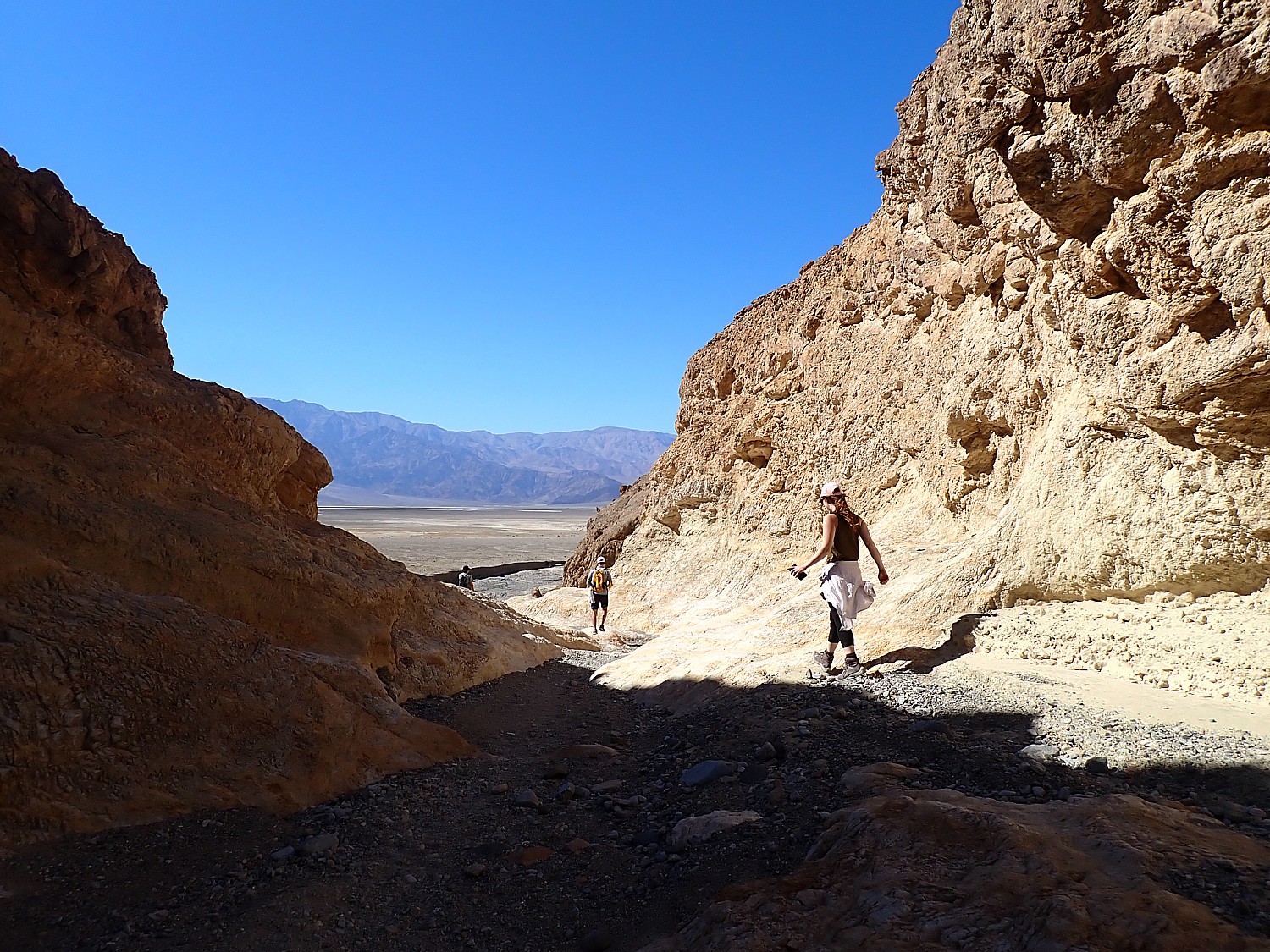
Hiking the Golden Canyon Trail, Death Valley National Park © Karen Rubin/goingplacesfarandnear.com

We research the most popular hikes (alltrails.com is a great source) and highlights of Death Valley, set them into geographic areas, calculated an estimated amount of time to visit, mixed hiking with less strenuous touring, and driving time (there is no public transportation in the park) and took into account the time of day and season – you don’t want to be at the far end of a trail when the sun has already begun to set.

So we had cleverly notched one of Death Valley’s most popular highlights, Mesquite Flat Sand Dunes, timing are arrival in the late afternoon the day before, and on our way back into the park  on our first morning from our Air BnB in Beatty (20 miles away), we explored Rhyolite Ghost Town, which was also high up on our list of “must-sees.”

For our first full day in Death Valley, we’ve etched out hiking the Golden Canyon trail, 20 Mule Team, Badwater Basin, Artist’s Palette, and finishing with the sunset at Zabriskie Point.

Golden Canyon Trail

Red Cathedral off the Golden Canyon trail © Karen Rubin/goingplacesfarandnear.com

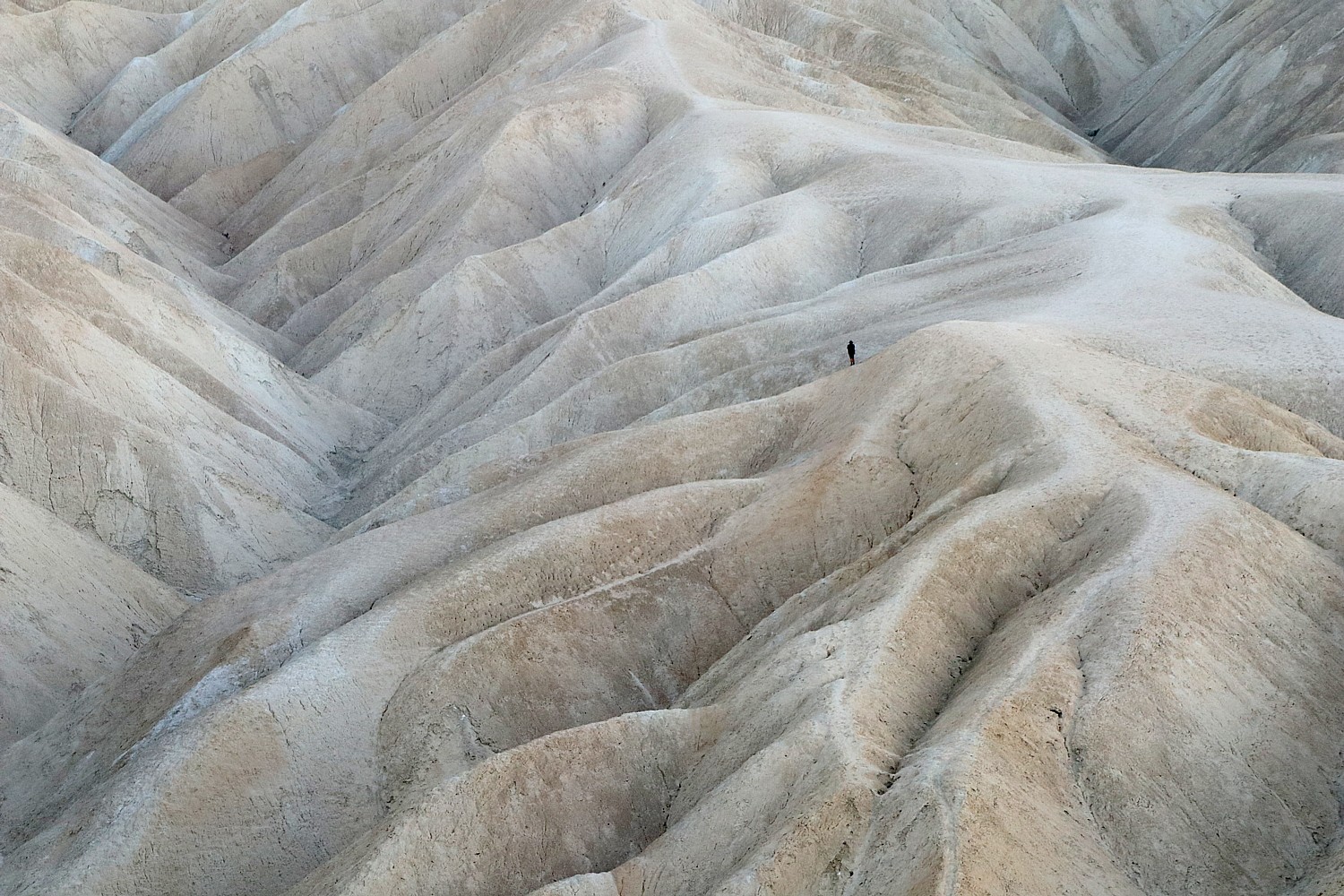
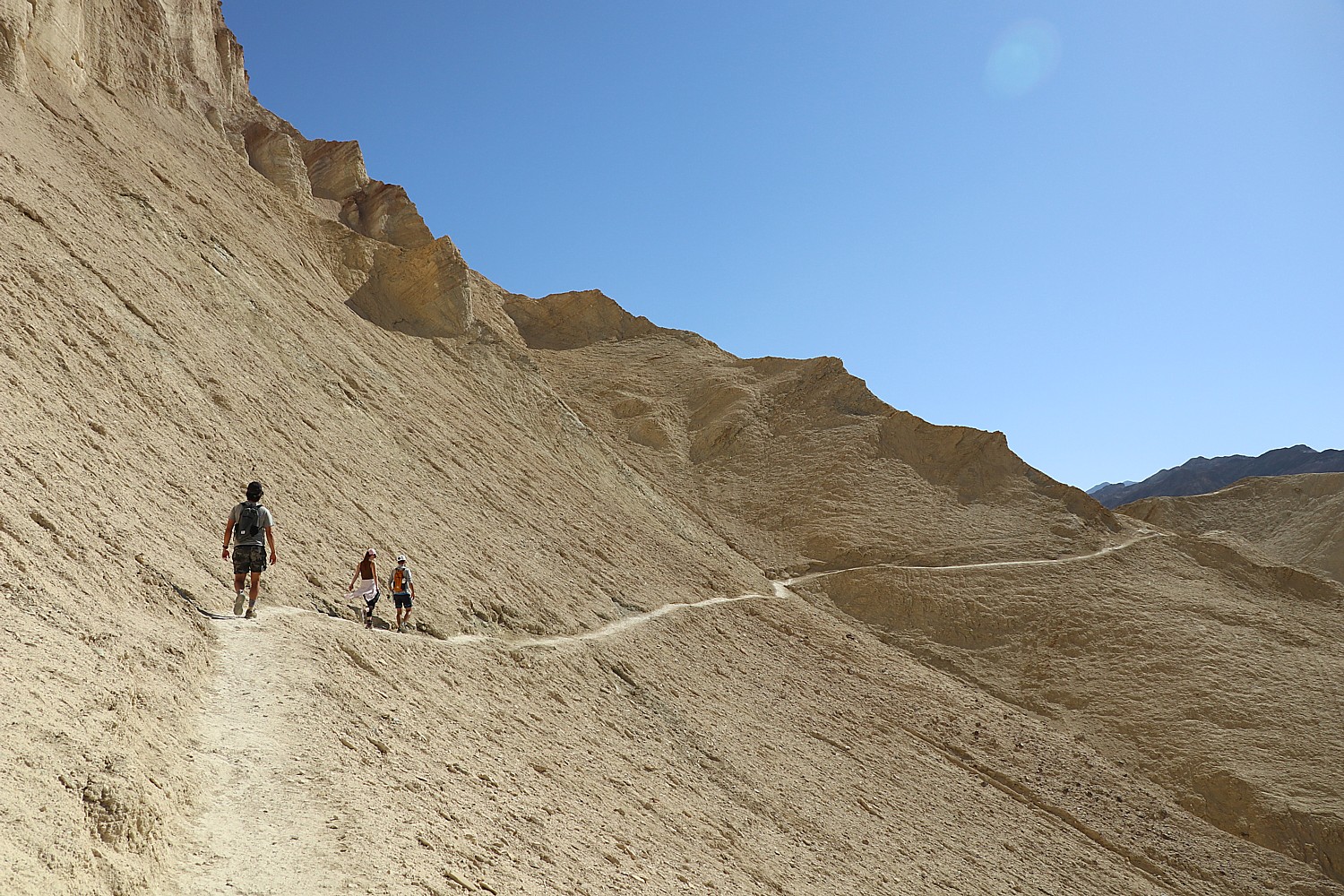
Our first hike, Golden Canyon trail, is the most popular in Death Valley and for good reason. It hits on all cylinders: the absolutely dramatic landscape, patterns and colors of the rocks, but also, the trail itself. The section between the Red Cathedral (really gorgeous) and the turn-off to the spur trail to Zabriskie Point is particularly exciting – you walk a narrow cut in a rounded rock and then over a formation we dub the “Stegasaurus” – like a dinosaur’s back. The full loop is 4.5 miles, winding past Manly Beach and Gower Gulch, just about every step pure joy. The morning sunlight brings out the golden hues in the eroded badlands, contrasting with the red stone cliffs of Red Cathedral. (The hike takes us from 10:30 am to 1:30 pm).

Golden Canyon Trail, Death Valley National Park © Karen Rubin/goingplacesfarandnear.com
The section of the Golden Canyon trail we dub “Stegasaurus” © Karen Rubin/goingplacesfarandnear.com
Golden Canyon Trail, Death Valley National Park © Karen Rubin/goingplacesfarandnear.com

Feeling absolutely exhilarated after the hike, we drive through the 20 Mule Team Canyon – driving it actually does feel more like an amusement park ride. There is a narrow, winding, looping, rolling one-way only road that takes you through. You are reminded that this place used to have mule teams hauling out borax. It’s perfect after the hike – a 15-minute drive through.

Driving through 20 Mule Team Canyon, Death Valley National Park © Karen Rubin/goingplacesfarandnear.com

We drive through Artist’s Drive to Artist’s Palette, where we have a picnic lunch (planning!), but decide to return later in the afternoon when its famous colors will be more pronounced.

Driving the loop-de-loop of Artist’s Drive, Death Valley National Park © Karen Rubin/goingplacesfarandnear.com

Badwater Basin

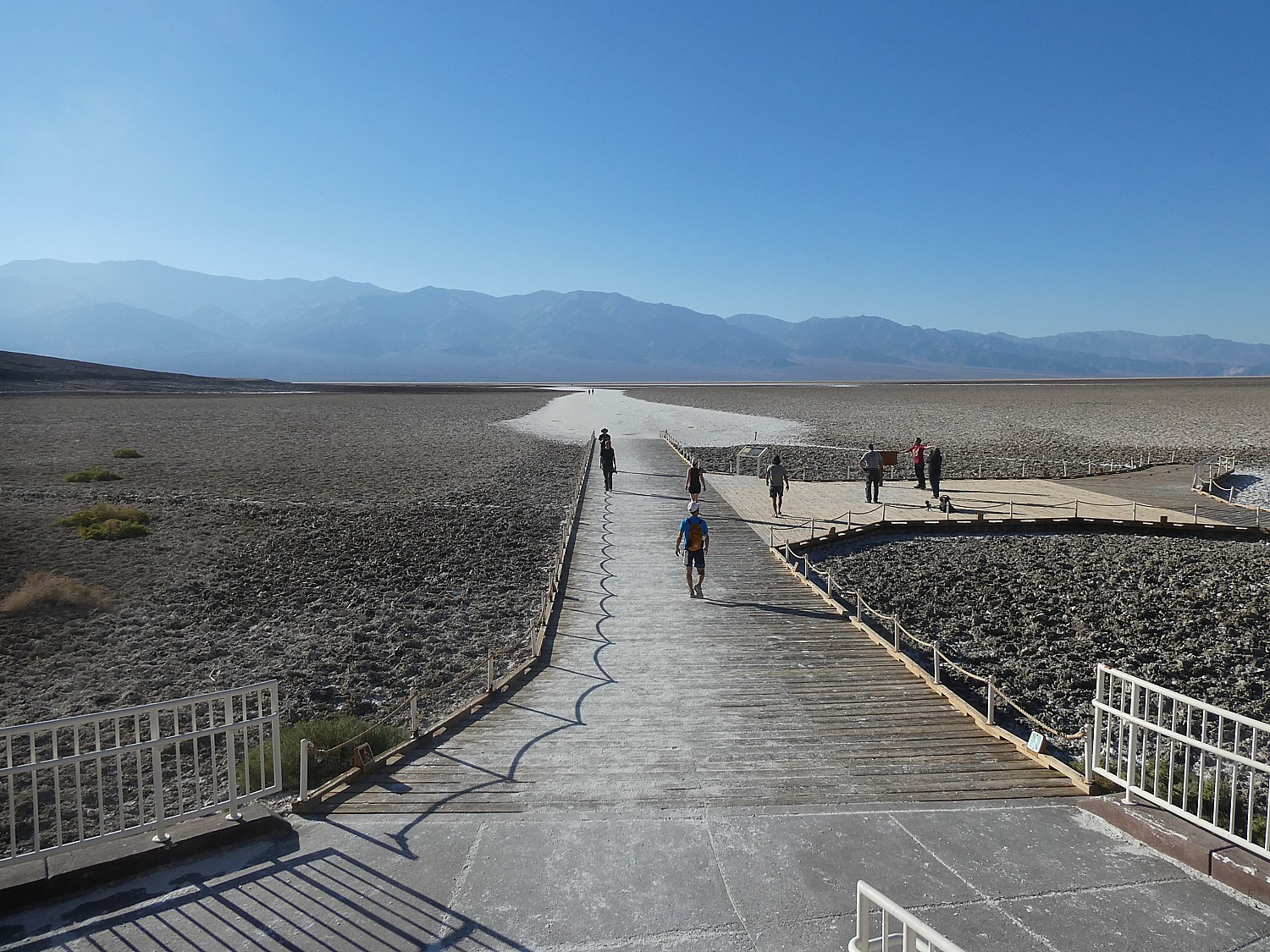
Badwater Basin, Death Valley National Park © Karen Rubin/goingplacesfarandnear.com

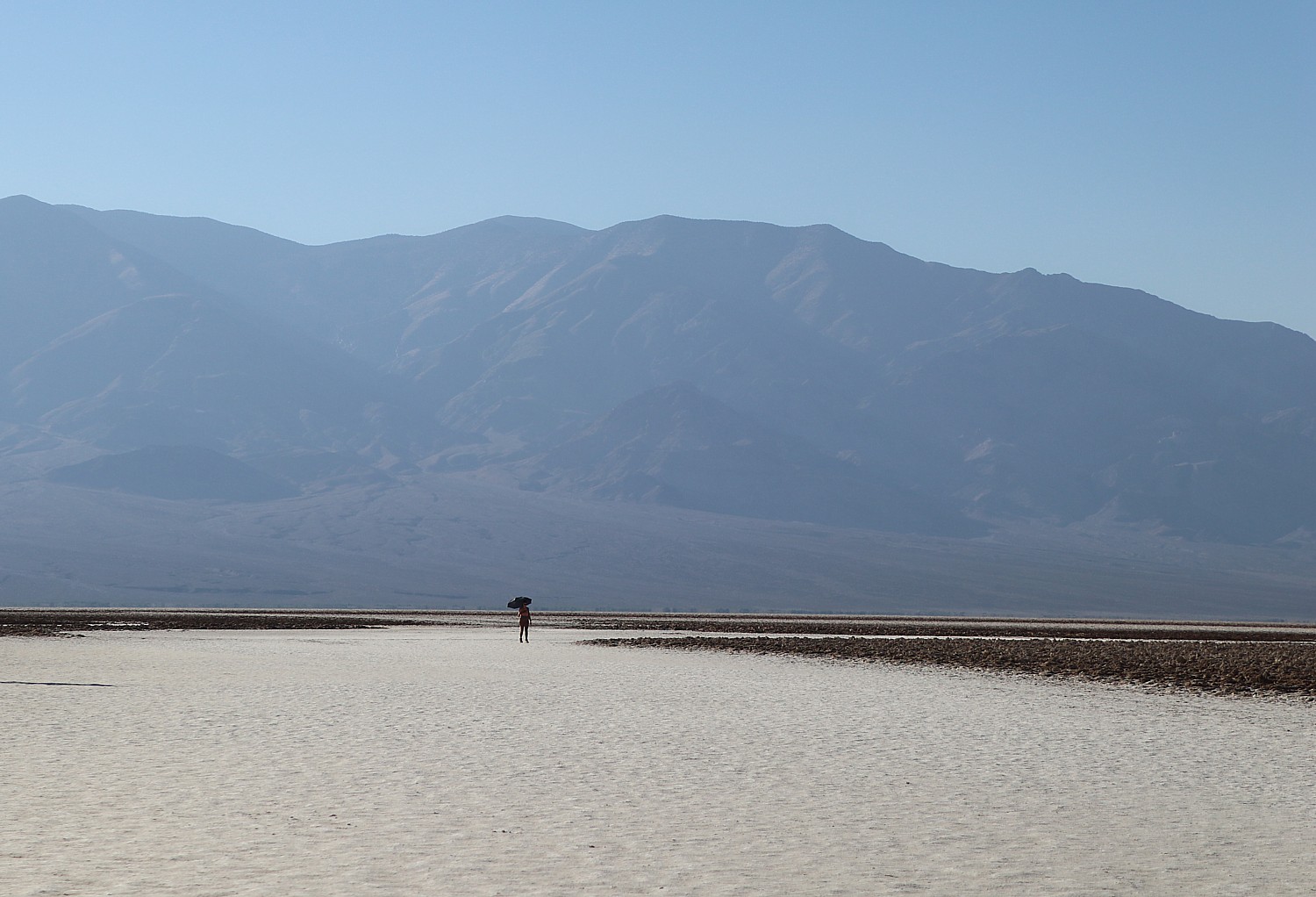
Then on to Badwater Basin, probably one of the most famous sights in Death Valley. Spanning 200 square miles, this extraordinarily expansive, giant salt flat doesn’t look it but you can walk 7 miles across, ringed by mountains. At 282 feet below sea level, when we stand here we are standing at the lowest point in North America. The basin consists of sodium chloride (table salt), calcite, gypsum, and borax. 

Badwater Basin, Death Valley National Park © Karen Rubin/goingplacesfarandnear.com

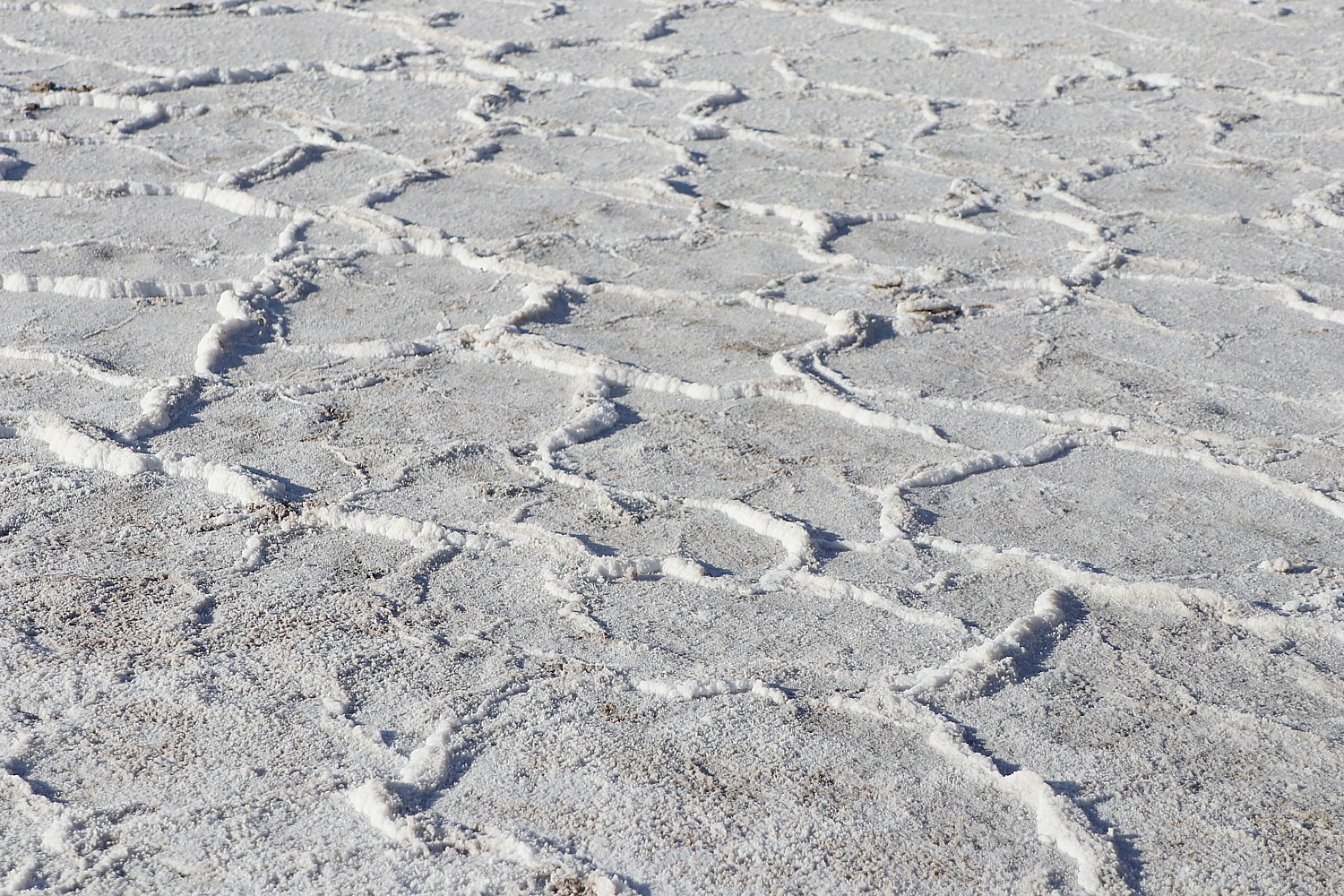
Though named “badwater,” the water is not actually bad but salty, and despite the name, “Death Valley,” it is remarkable to learn that many organisms thrive in it. The pool is home to an endemic snail naturally found only at this location, and its rim is dotted with salt tolerant plants, such as pickleweed. This was once a large inland lake which evaporated over thousands of years, leaving concentrated salt deposits behind that form fascinating geometric polygon shapes.

Badwater Basin, Death Valley National Park © Karen Rubin/goingplacesfarandnear.com

The pool and boardwalk are easily accessible from the parking lot off Badwater Road, but for the best views of the salt polygons, walk out onto the salt flats a half mile or so. Look behind you to the cliffs of the Black Mountains to the east, where there is a sign high above marking sea level. From here, you can also see Telescope Peak in the Panamint Range to the west; at 11,049 ft, this peak is over two miles above you. “Nowhere else in America can you see such a dramatic vertical relief over such a close distance.” (https://www.nps.gov/places/badwater-basin.htm)  (Eric gets to hike up Telescope Peak on his return a month later on his adVANture; see ad-VAN-turing, Newest Travel Trend)

It’s 4:30 pm and there are long shadows bringing out the interesting formations and patterns in the salt. Here, we are famously 282 feet below sea level.  (In summer, it is not advised to walk out on the salt flats after 10:30 am).

Artist’s Palette

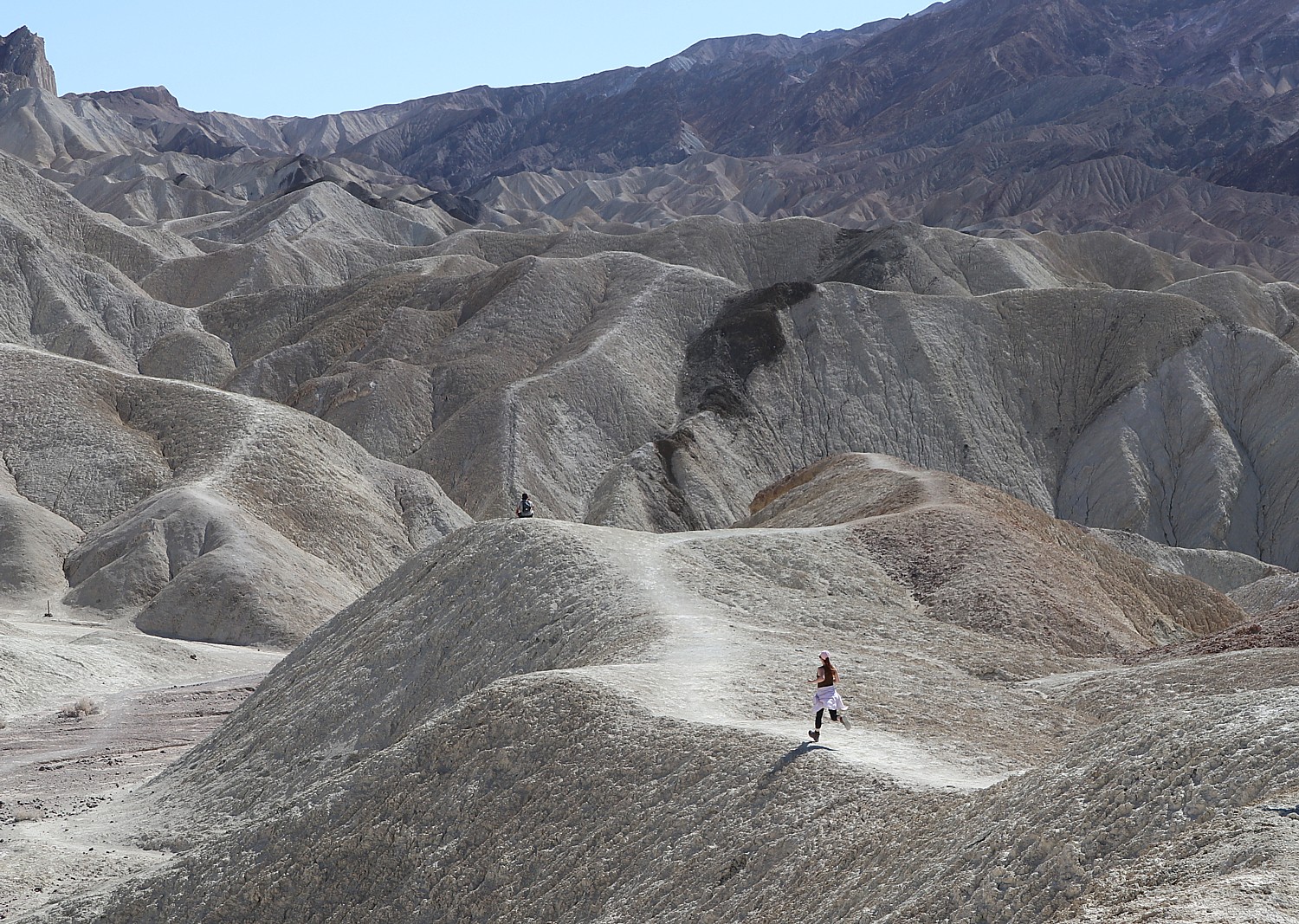
Artist’s Palette, Death Valley National Park © Karen Rubin/goingplacesfarandnear.com

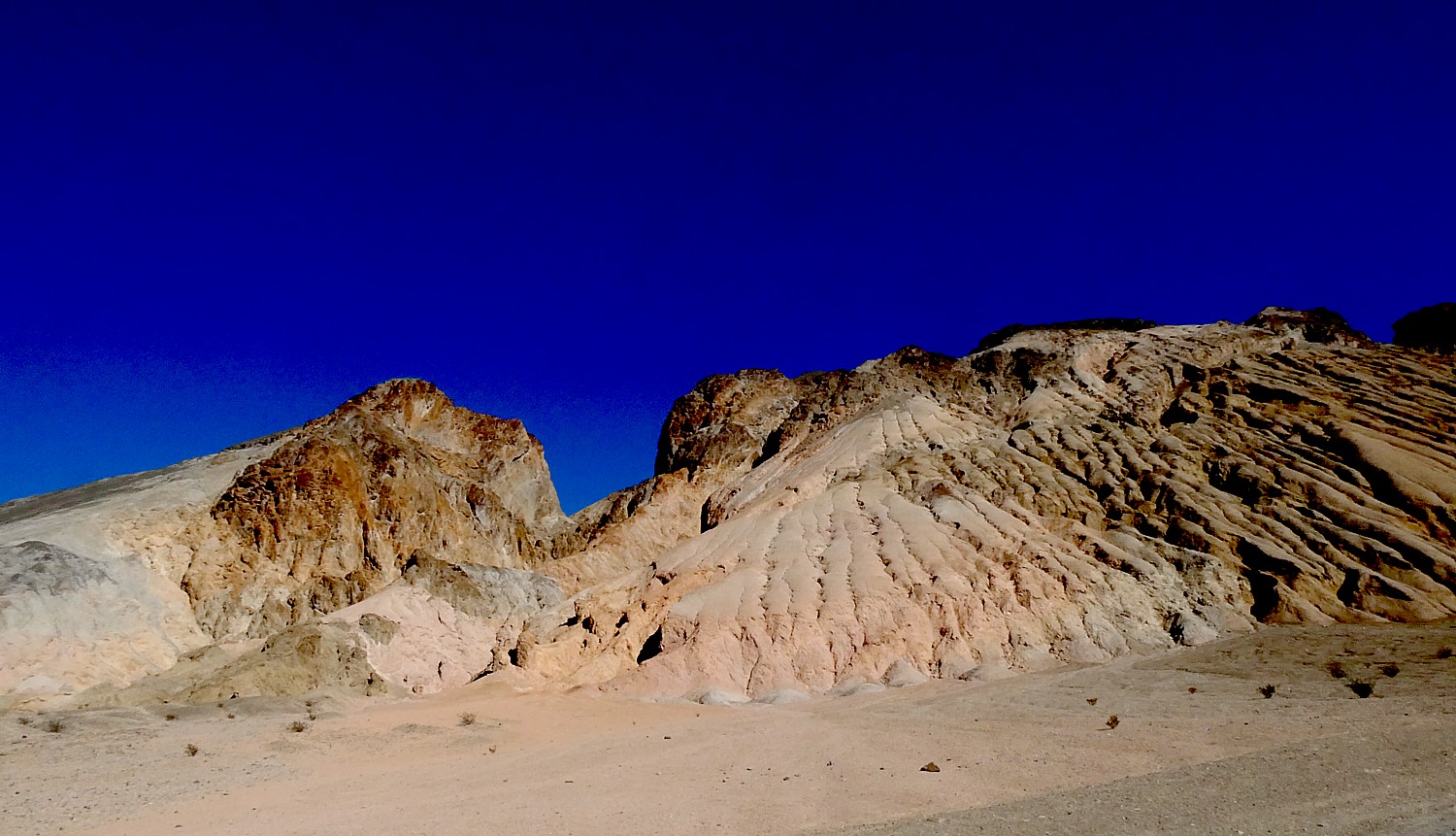
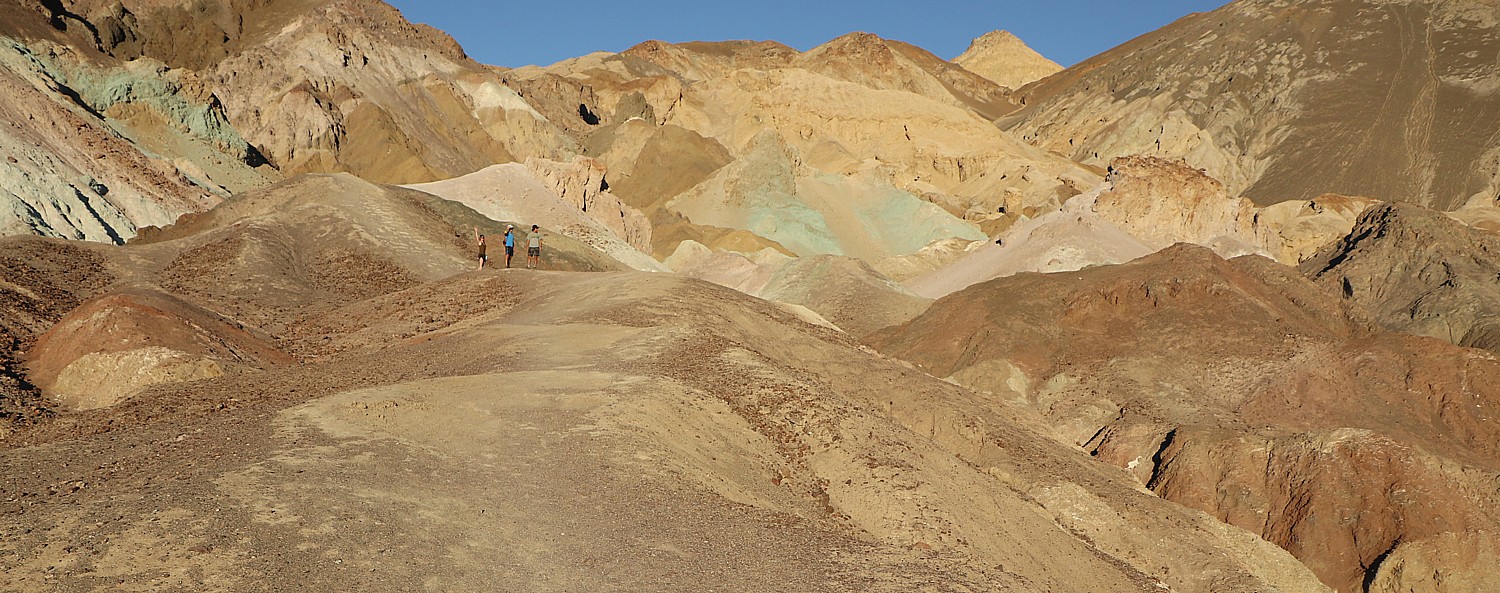
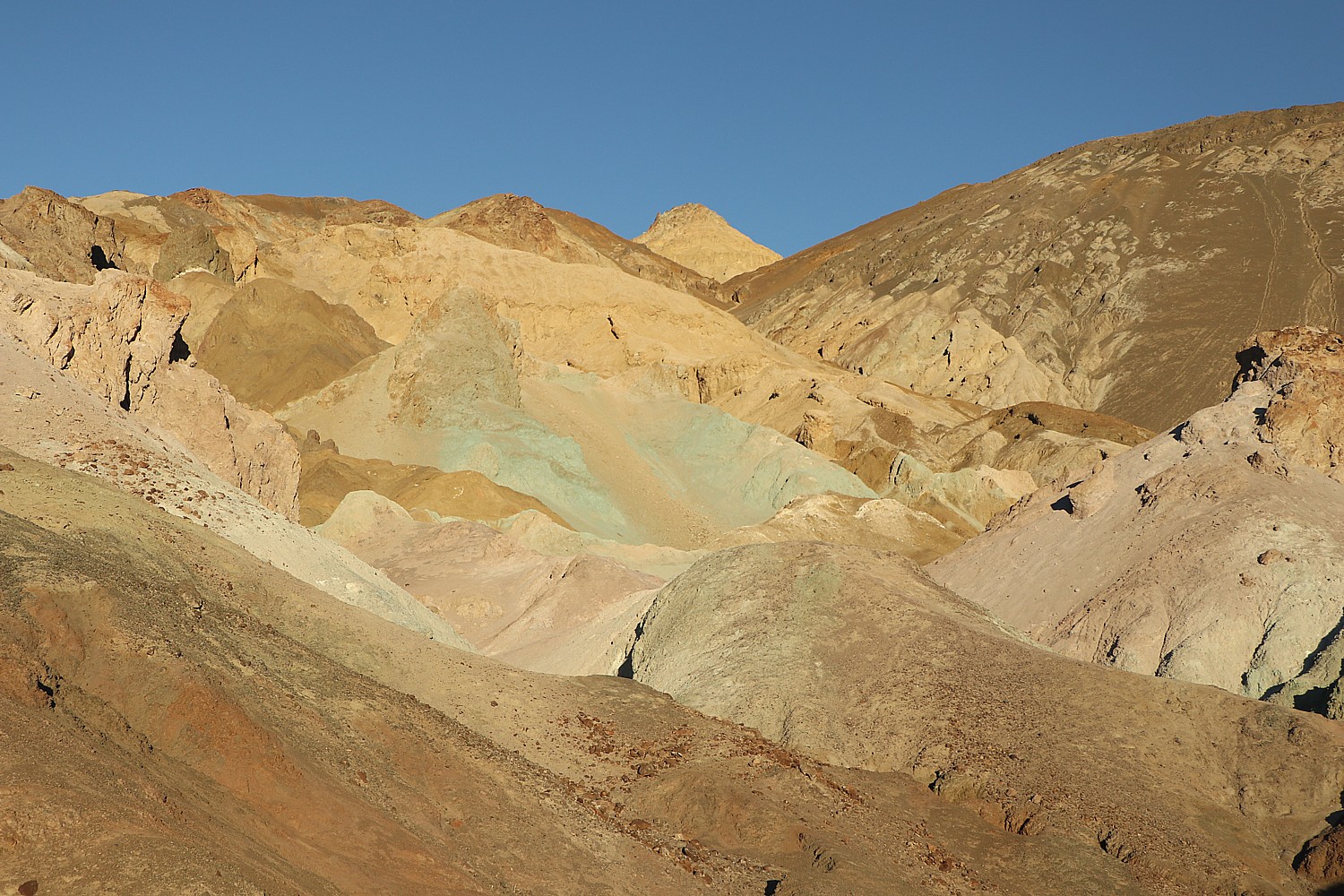
We drive the nine-mile loop-de-loop roller coaster of Artist’s Drive to Artist’s Palette, to see the richer color of the cooler, late afternoon  sun, and scamper across the rolling ridges, literally into the multi-colored palette itself – yellow ochre, burnt umber, sienna, rust, rose, copper.

Artist’s Palette, Death Valley National Park © Karen Rubin/goingplacesfarandnear.com

Artist’s Palette is one of the most popular places to watch the sunset, but we decide to go to Zabriskie Point instead.

Timing the sunset can be tricky because of the peaks, the day of the year, also. You need to get wherever you want to see the sunset a half-hour before, when the colors begin to deepen. The actual sunset is over in a few minutes, so you have a very short window for the best images.

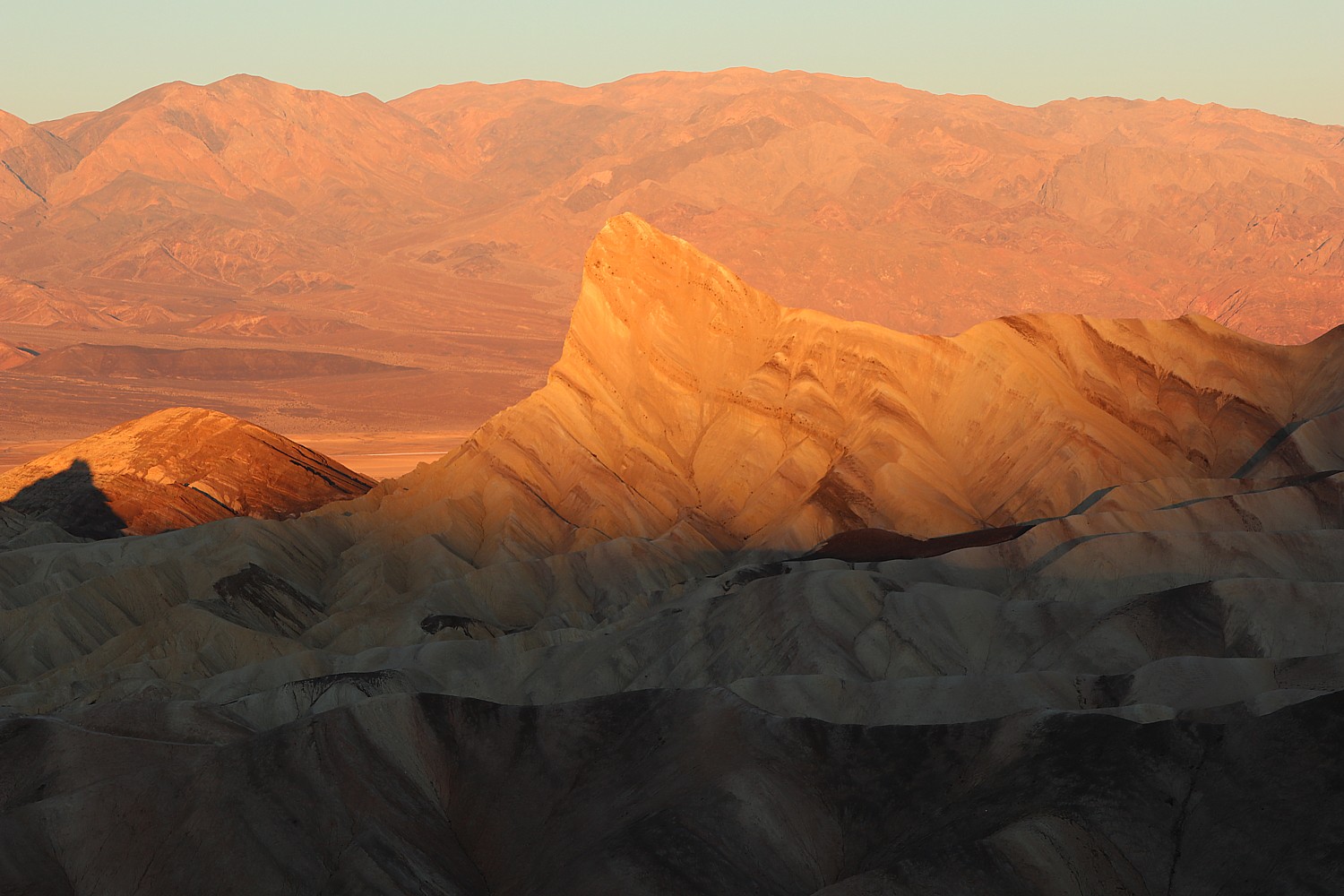
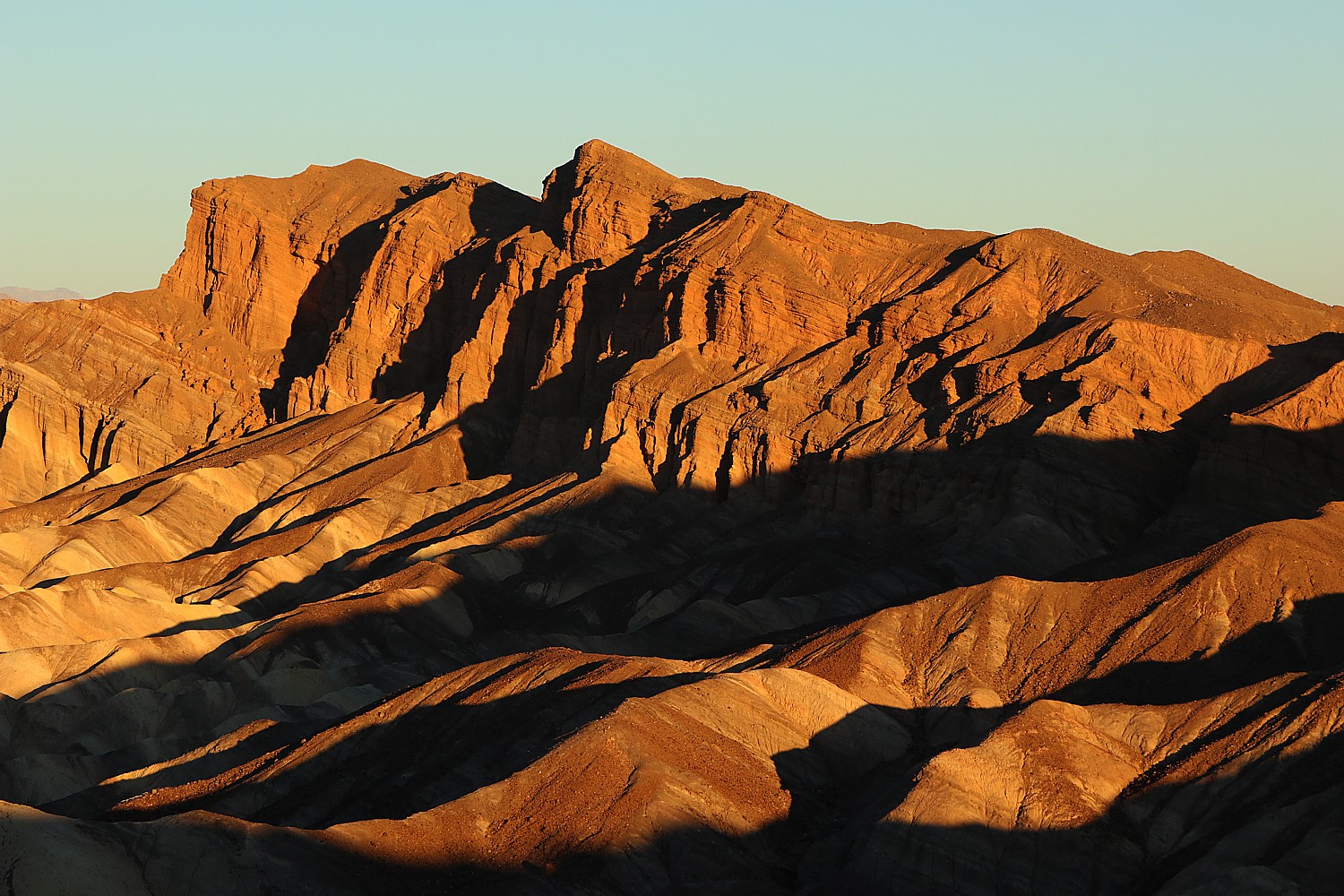
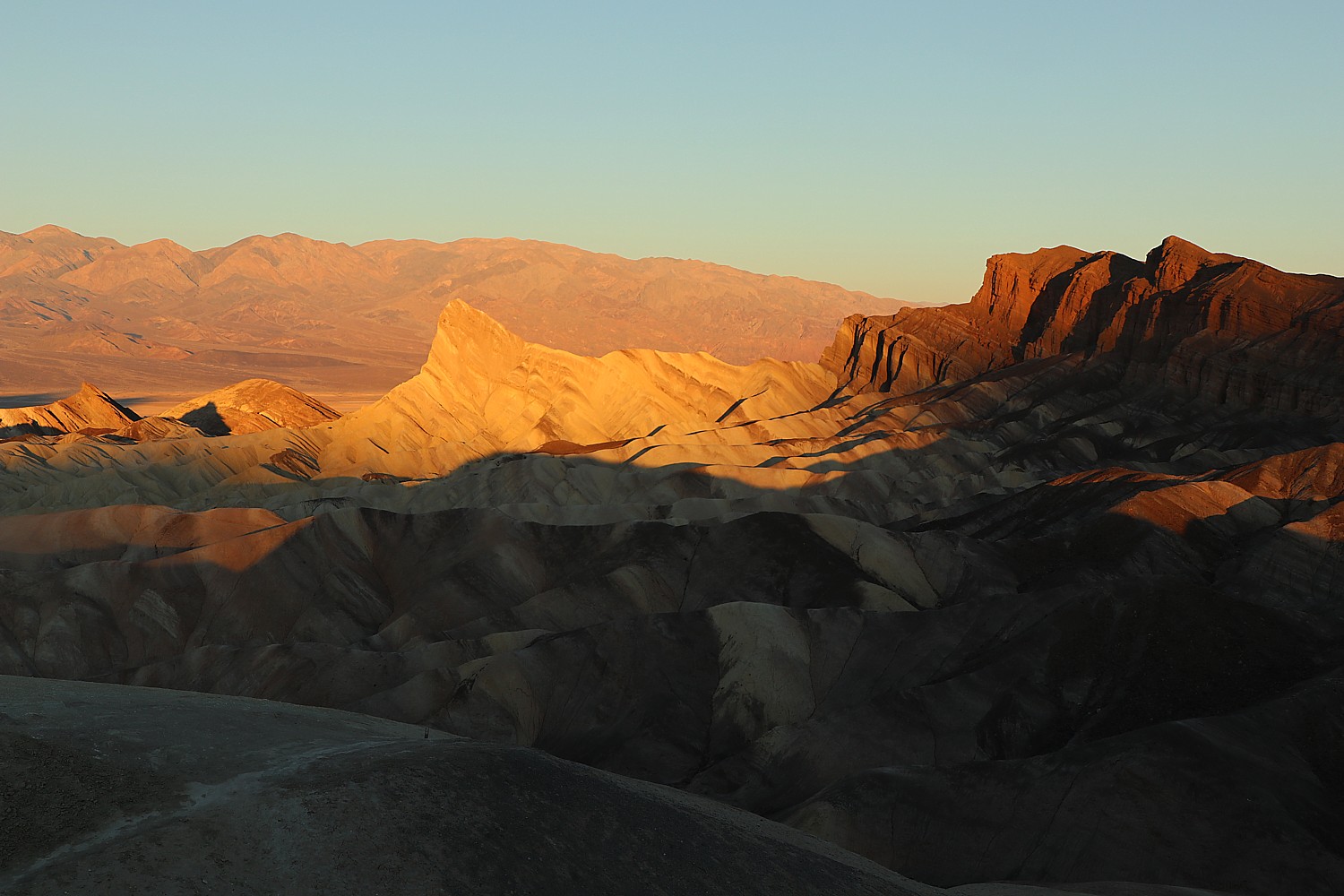
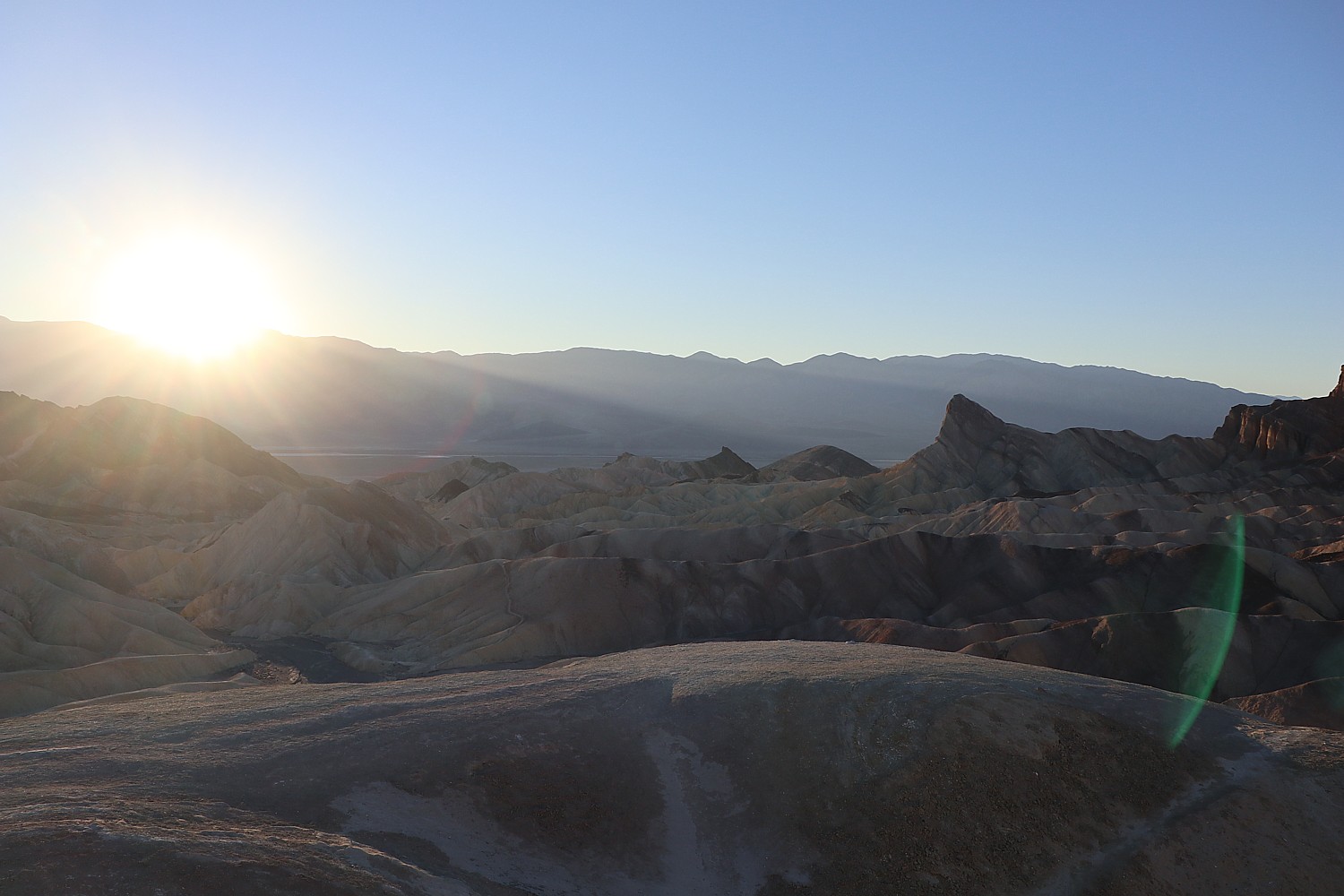
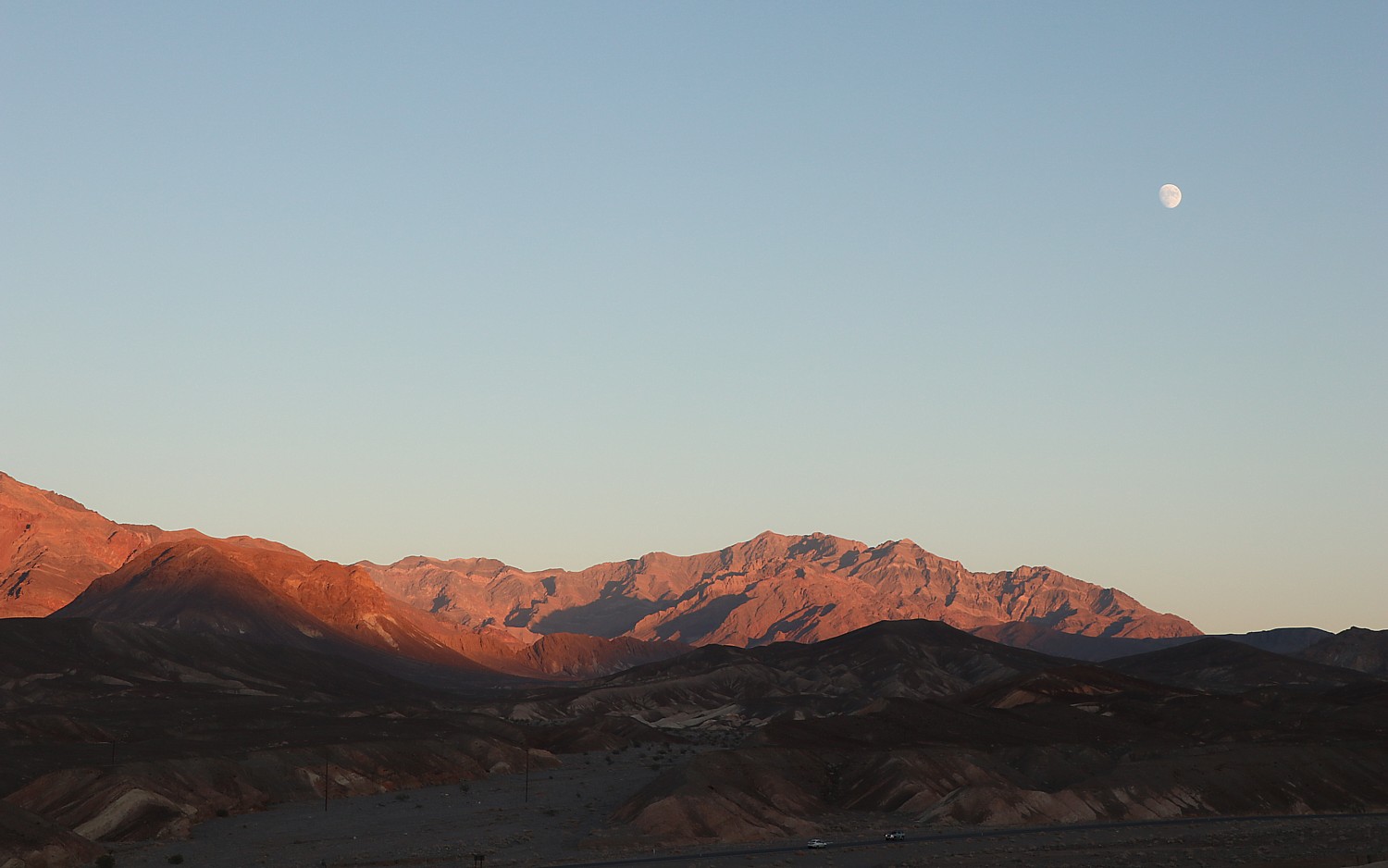
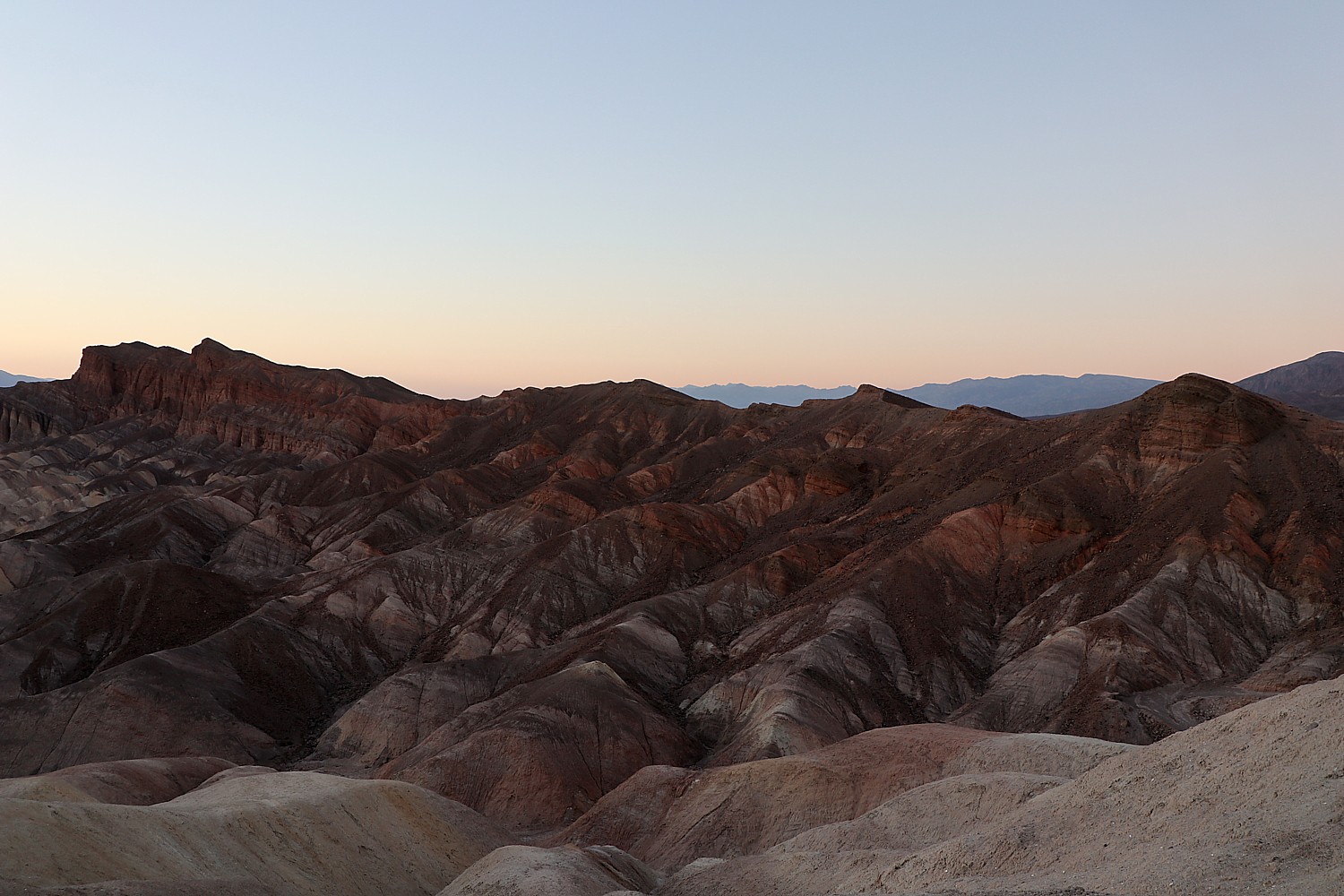
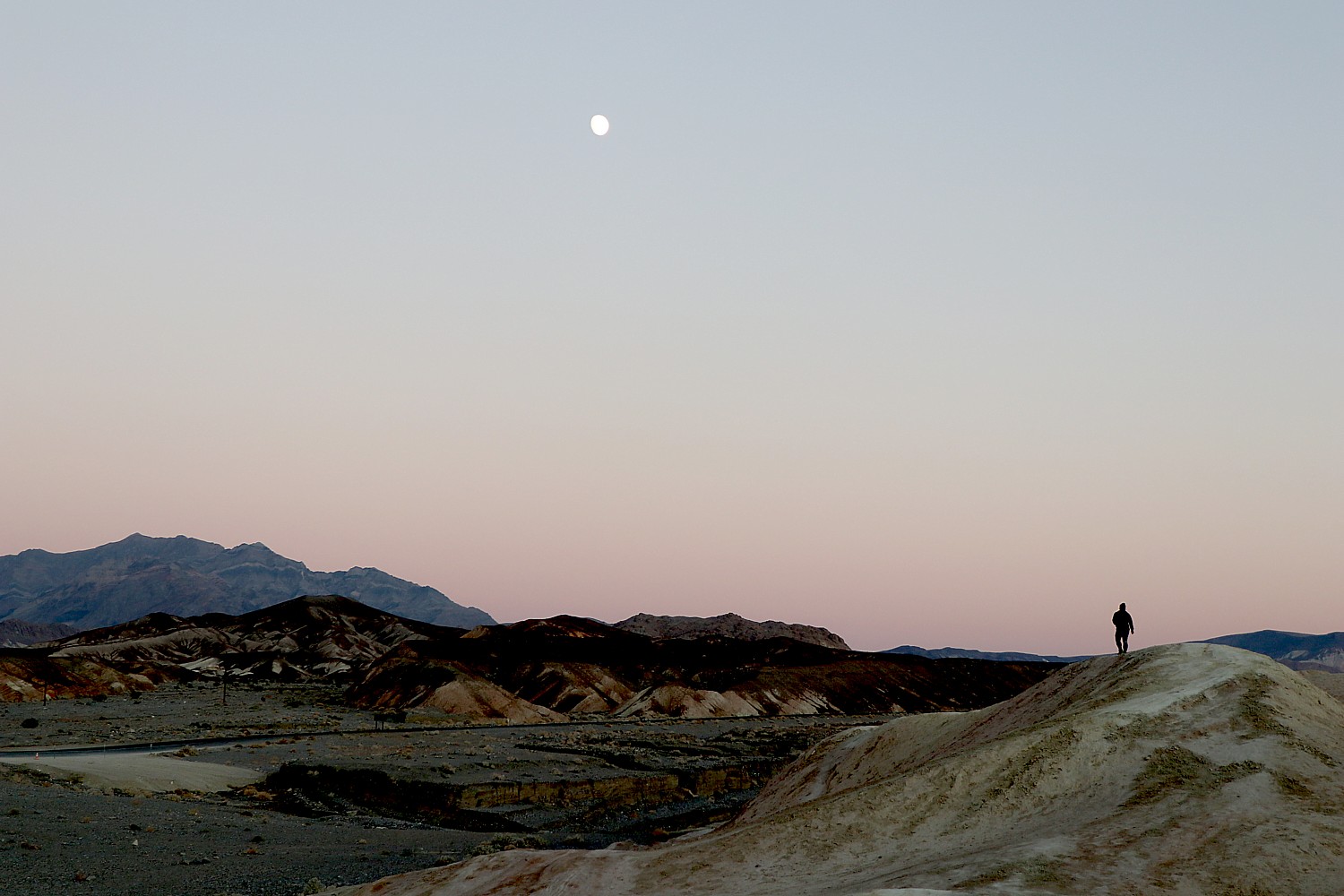
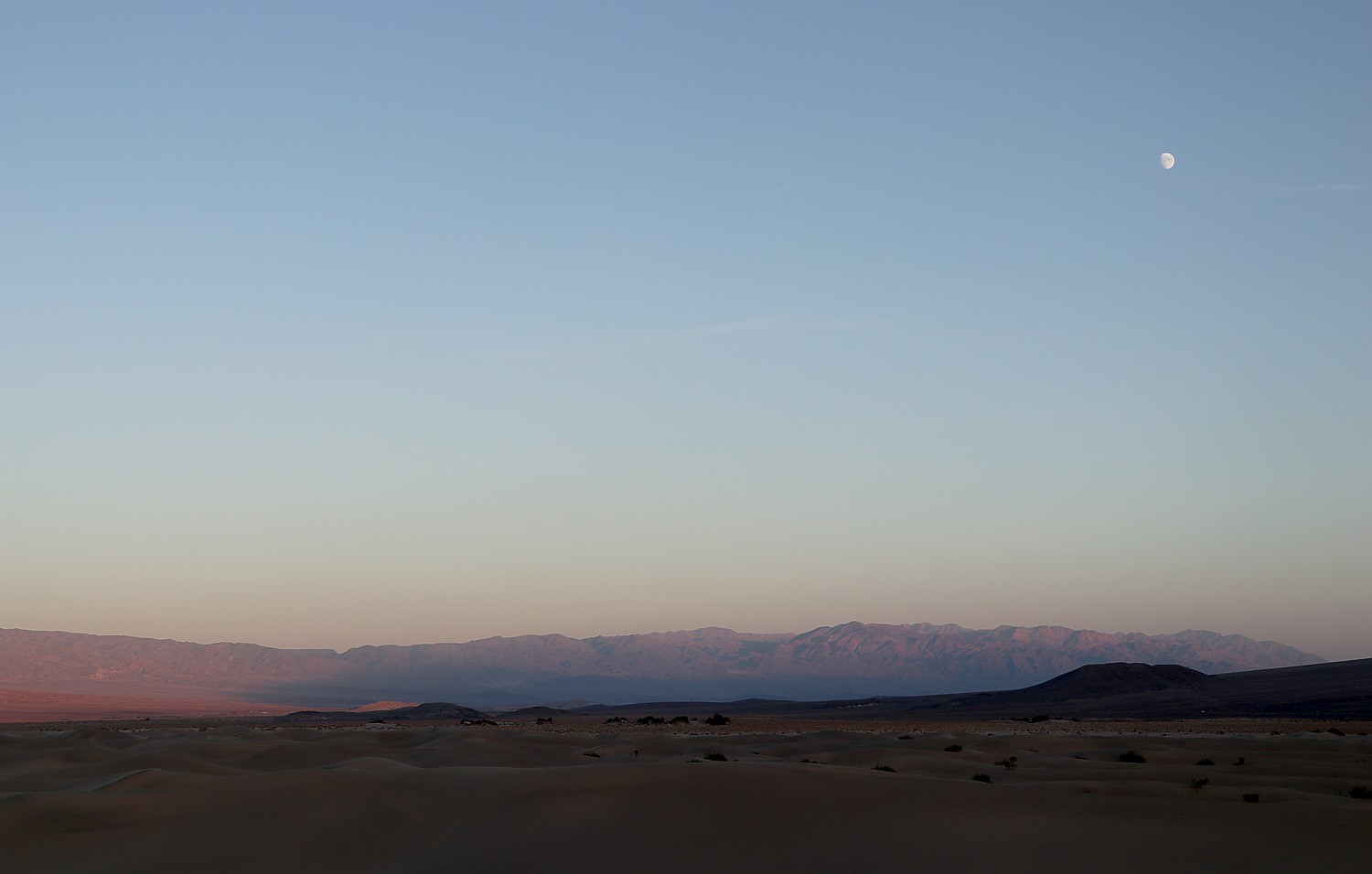
And so we miss the sunset at Zabriskie Point by five minutes. Even so, it is a gorgeous sight as the rocks take on warm colors, there is a pink rim to along the mountain ridges, and a full moon rises.

Sunset at Zabriskie Point, Death Valley National Park © Karen Rubin/goingplacesfarandnear.com
Moonrise at Zabriskie Point, Death Valley National Park © Karen Rubin/goingplacesfarandnear.com
Sunset at Zabriskie Point, Death Valley National Park © Karen Rubin/goingplacesfarandnear.com
Sunset,at Zabriskie Point, Death Valley National Park © Karen Rubin/goingplacesfarandnear.com
Moonrise at Zabriskie Point, Death Valley National Park © Karen Rubin/goingplacesfarandnear.com

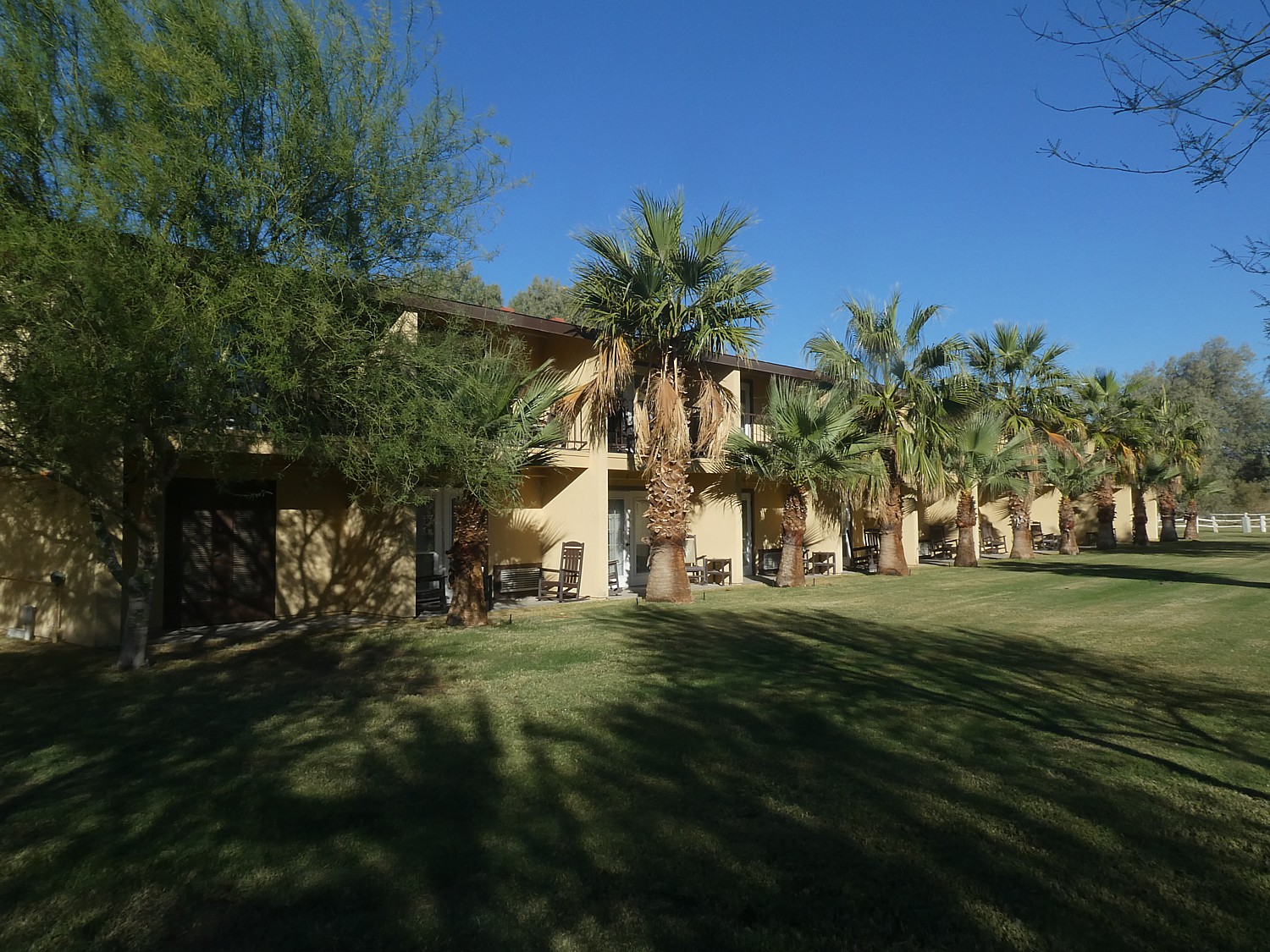
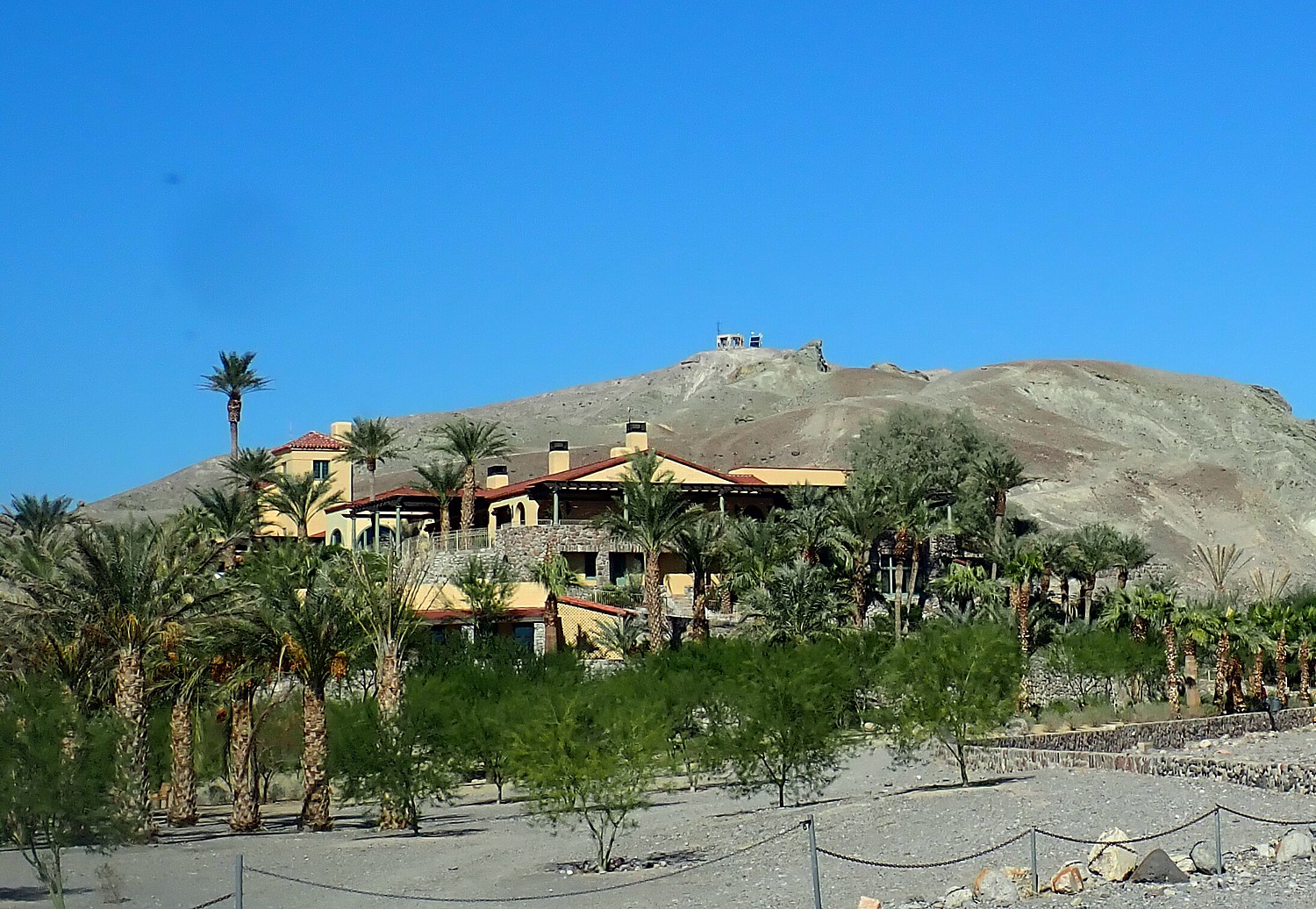
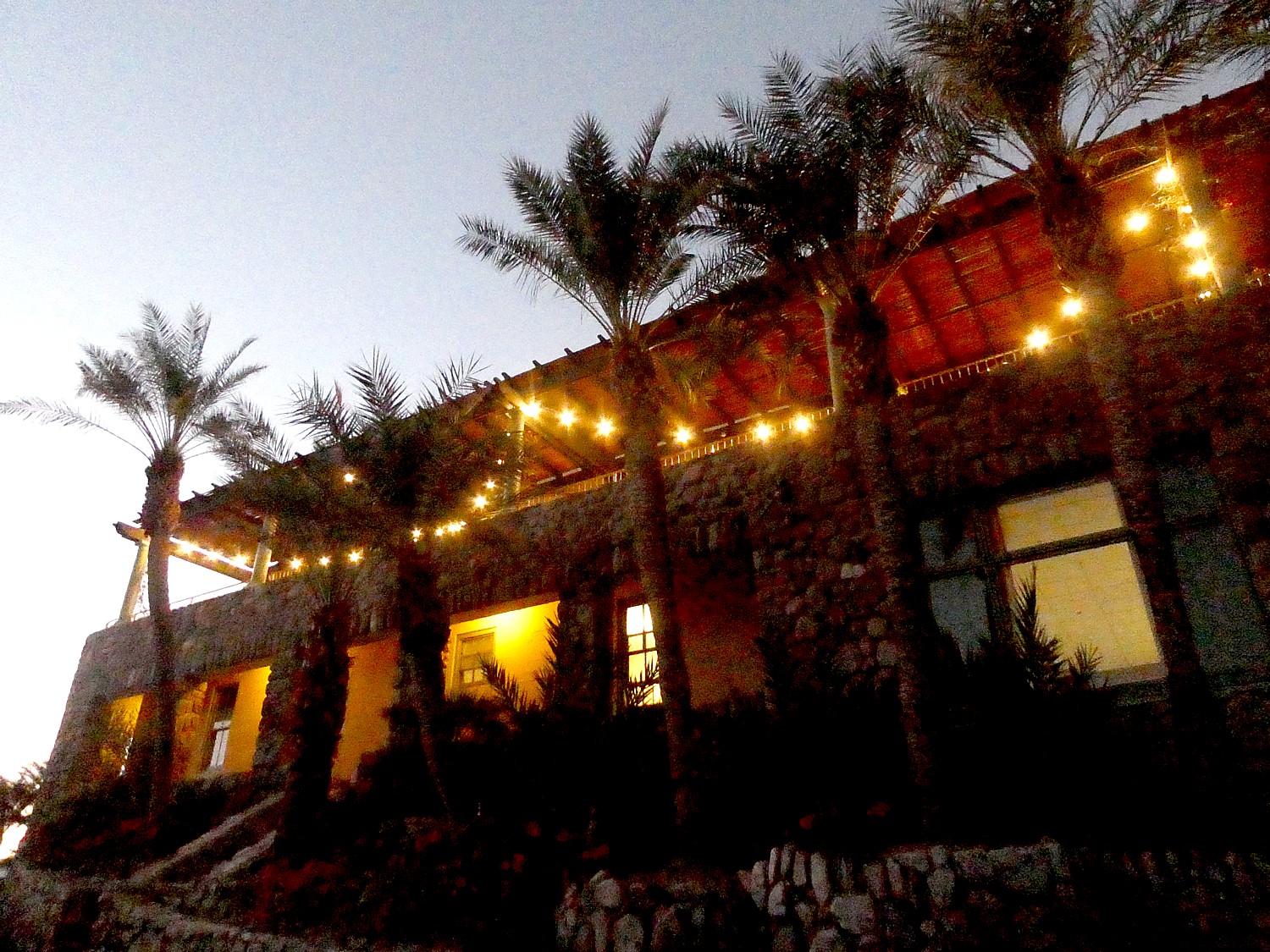
Fortunately, we will have the opportunity to see the sunrise and sunset on our next day. Indeed, that’s why we decided to book two nights at the Ranch at the Oasis, just a short drive away from Zabriskie Point, instead of driving 45 minutes each way to the Designed to Death Air BnB in Beatty, Nevada, where we stayed on our first night.

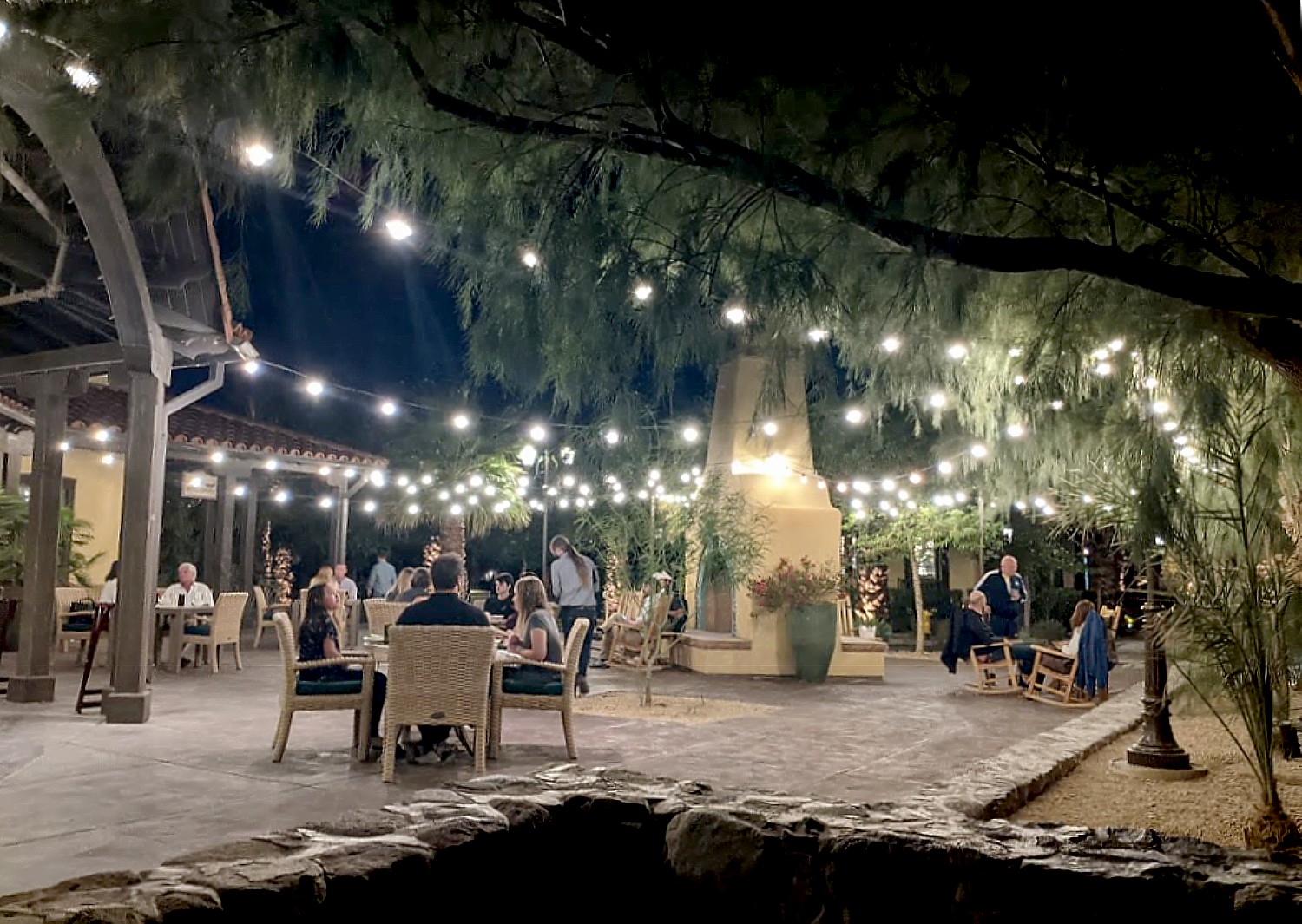
We check into the Ranch at Oasis, order out dinner from the menu and sit outside on the lovely terrace adjacent to the restaurant (which also has outside dining, properly spaced). It is sheer perfection (as was the steak with an espresso rub, fantastic!).

Dining al fresco at the Ranch at Death Valley © Karen Rubin/goingplacesfarandnear.com

We drop our things in our hotel room (Laini has made sure to get a first-floor room at the end of the hall, close to the door, so we would have minimal time in a public space, and was assured that the rooms are thoroughly cleaned and left for 24 hours before the next guest). We immediately go to the Olympic-sized pool – absolutely magnificent, naturally warmed to a constant 87 degrees by hot mineral springs. The water feels silky, and as we swim we delight in the stars overhead. (www.oasisatdeathvalley.com)

The biggest surprise of all is how diverse Death Valley is – low valley floors, salt flats, rugged mountains rising as high as 11,000 feet, deep and winding canyons, rolling sand dunes, oases. The landscape is not a monotone at all, but a riot of colors, textures, contours. Each hike we take, each highlight we explore is spectacular in its own way, exciting and thrilling, exacting surging emotions and senses – the Mesquite Flat Sand Dunes, the Golden Canyon, the Badwater Basin salt flats, the 20 Mule Team Canyon, Artist’s Palette, Zabriskie Point – and it’s only been a day and a half.

The next morning, we get up before sunrise to get to Zabriskie Point (about a 7-minute drive away) to watch the brilliant display as the rocks seem aflame with sunlight.

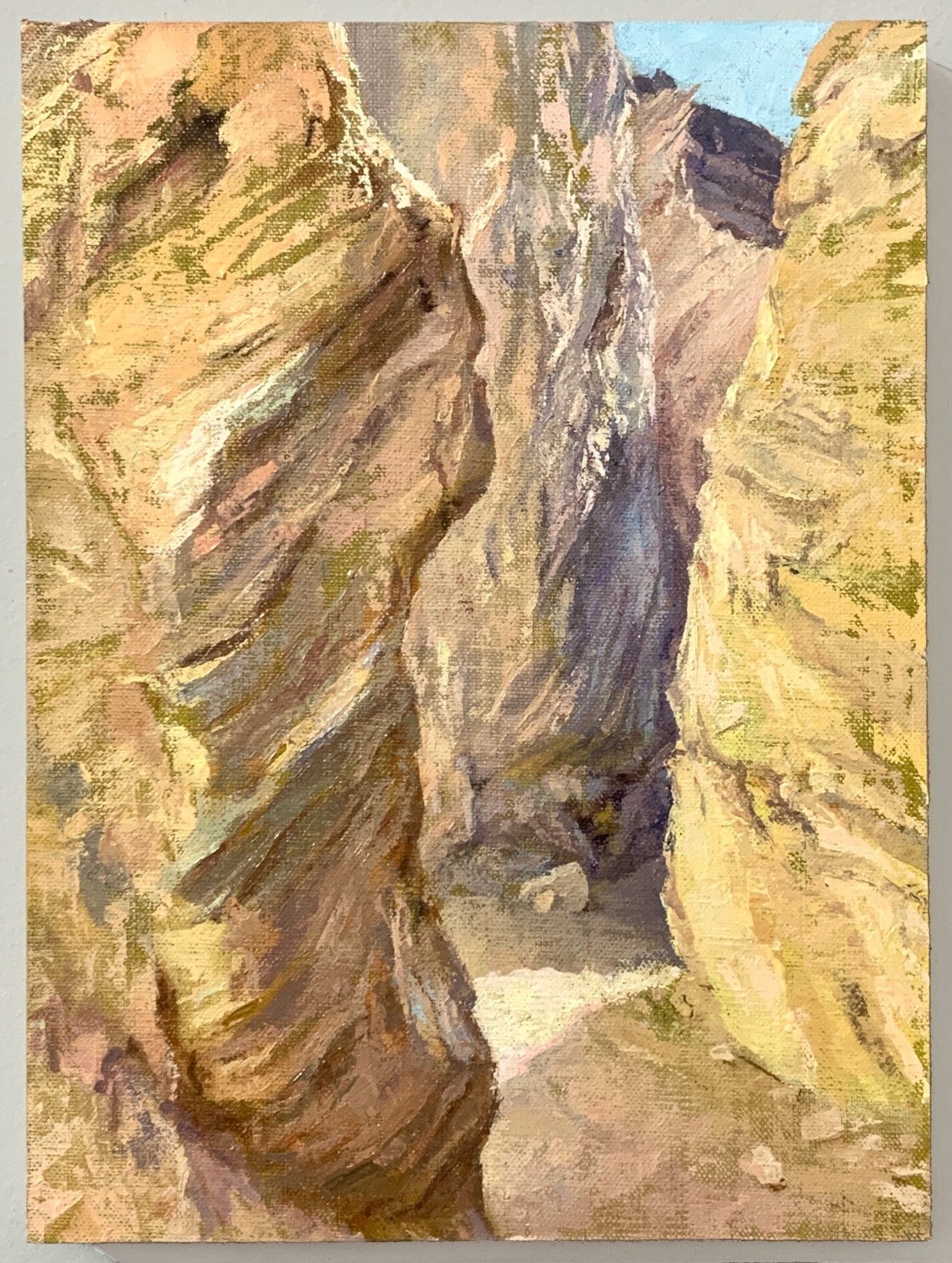
Death Valley in art: “Golden Canyon,” by Laini Nemett (2021, 12 x 9 in, oil on linen on panel). Visit www.laininemett.com

See also:

ROAD TRIP: DISCOVERING DEATH VALLEY’S TREASURES, RICHER THAN GOLD

_______________

© 2021 Travel Features Syndicate, a division of Workstyles, Inc. All rights reserved. Visit goingplacesfarandnear.com, www.huffingtonpost.com/author/karen-rubin, and travelwritersmagazine.com/TravelFeaturesSyndicate/. Blogging at goingplacesnearandfar.wordpress.com and moralcompasstravel.info. Send comments or questions to FamTravLtr@aol.com. Tweet @TravelFeatures. ‘Like’ us at facebook.com/NewsPhotoFeatures

Road Trip: Discovering Death Valley’s Treasures, Richer than Gold

Mesquite Flat Sand Dunes, Death Valley National Park © Karen Rubin/goingplacesfarandnear.com

By Karen Rubin, Laini Miranda, Dave E. Leiberman & Eric Leiberman

Travel Features Syndicate, goingplacesfarandnear.com

In the quest, so very popular in these days of coronavirus, of finding open spaces to become renewed, revitalized, revel in nature and contemplate one’s place in the universe, there is no better place than Death Valley National Park, spanning California and Nevada.

Our four-day trip to Death Valley has an overlay of planning that goes beyond planning for hiking in a vast desert: the coronavirus pandemic. It impacts our route, where we stay (an Air BnB at the outskirts and the Ranch at Death Valley in the park, having double-checked their COVID-19 protocols), how we organize food and water to take with us (and ice chest) to cut down on the need to eat out.

And our itinerary is designed to pack as much as possible from such an expansive landscape into such a limited time. In the process, we discover that we are very much following in the footsteps of the miners who came before seeking the treasures in these landscapes. For us, the treasures we find are not the material kind, but even more enriching.

With an eight-hour drive ahead of us, we calculate when to depart in order to get to Death Valley in time to begin our exploration. With meticulous planning and organization that the Army would be proud of, we pull away from Sonoma at 5:39 am, taking an interior route, east toward Tahoe, then south, passing the eastern side of Yosemite National Park.

The fall scenery all along the way is breathtaking, going from wilderness, through these little Western towns and ranches.

We pass the ski resorts at Lake Tahoe, where the road takes us up to an altitude of 8,000 ft. and temperatures as low as 19 degrees, and by the end of the day, down to 275 feet below sea level at Death Valley. As we drive out of Tahoe, we watch the thermometer ticking up a degree every mile, until reaching the 80s. Actually, the weather is quite cool and comfortable for Death Valley, which is the hottest place on the planet, with ungodly temperatures that reached 130 degrees this summer, but can also get frigid in winter. Our visit, in October, is actually a terrific time.

Mono Lake Tufa State Natural Preserve

Mono Lake Tufa State Natural Preserve, Lee Vining, California © Karen Rubin/goingplacesfarandnear.com

Laini plots our route so we would stop at Mono Lake Tufa State Natural Preserve, in Lee Vining, California, where we have a picnic lunch. The first sight of Mono Lake from the highway above is astonishing: a stunning, ethereal scene with its brilliant aquamarine color and striking tufa formations. We stop at the overlook and then drive down along the shore to the parking lot. The visitors center is closed (because of COVID-19 restrictions), but we go into a trailhead that leads to a short boardwalk to the lake edge.

California created the reserve to protect these spectacular “tufa towers,” calcium-carbonate (limestone) spires and knobs formed by the chemical interaction of freshwater springs and alkaline lake water. The reserve protects the lake surface as well as the wetlands and sensitive habitat for the 1 – 2 million birds that feed and rest at Mono Lake each year.

Mono Lake Tufa State Natural Preserve, Lee Vining, California © Karen Rubin/goingplacesfarandnear.com

Covering 65 square miles, Mono Lake is ancient – over 1 million years old and one of the oldest lakes in North America. Freshwater evaporating from the lake each year has left the salts and minerals behind so that the lake is now about 2 1/2 times as salty as the ocean and very alkaline. “The extremely high salinity and alkalinity of Mono Lake has created a rare ecosystem, supporting a complex food chain of green algae, brine shrimp and alkali flies, and more than 80 species of migratory birds.” (www.parks.ca.gov)

Mono Lake Tufa State Natural Preserve, Lee Vining, California © Karen Rubin/goingplacesfarandnear.com

(Highway 395, 13 miles east of Yosemite National Park, near the town of Lee Vining, California, 760-647-6331, www.parks.ca.gov; also www.monolake.org).

We stop off at Carroll’s Market (probably the last one we will see), which actually gets high ratings on Yelp, especially for its blue cheese dressing, and has become its own attraction. We buy a dozen gallon jugs of water and stop off to fill up at a gas station.

Death Valley National Park

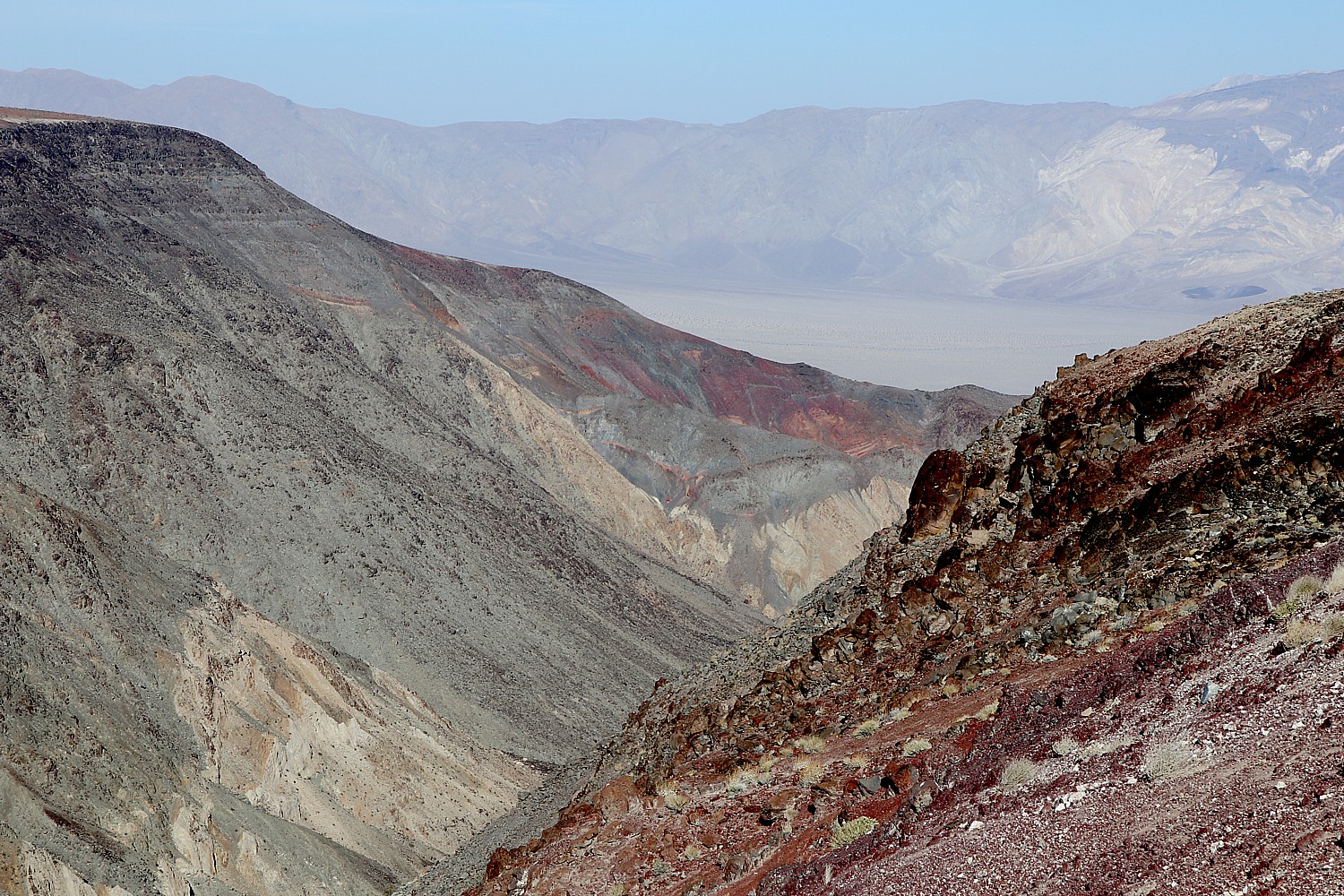
Father Crowley Vista Point view over Rainbow Canyon, a colorfully striped canyon created by ancient volcanic activity, nicknamed “Star Wars Canyon” © Karen Rubin/goingplacesfarandnear.com

After a long flat stretch with mountains in the distance, we drive the winding mountain road (make sure you have a full tank of gas), entering the park at Panamint Springs. We stop at the Father Crowley Vista Point for the view over Rainbow Canyon, a colorfully striped canyon created by ancient volcanic activity. Nicknamed “Star Wars Canyon”, it’s where the military practices Star-Wars type of flying. The wind today is so intense, it practically throws us over.

(Nearby is Darwin Falls, a seeming oxymoron in this desert place, quickly turning from a gravel canyon to a lush oasis of cottonwoods and willows, creek crossings, and finally 20-foot waterfalls, a two-mile roundtrip hike, which we have marked down for a return visit.)

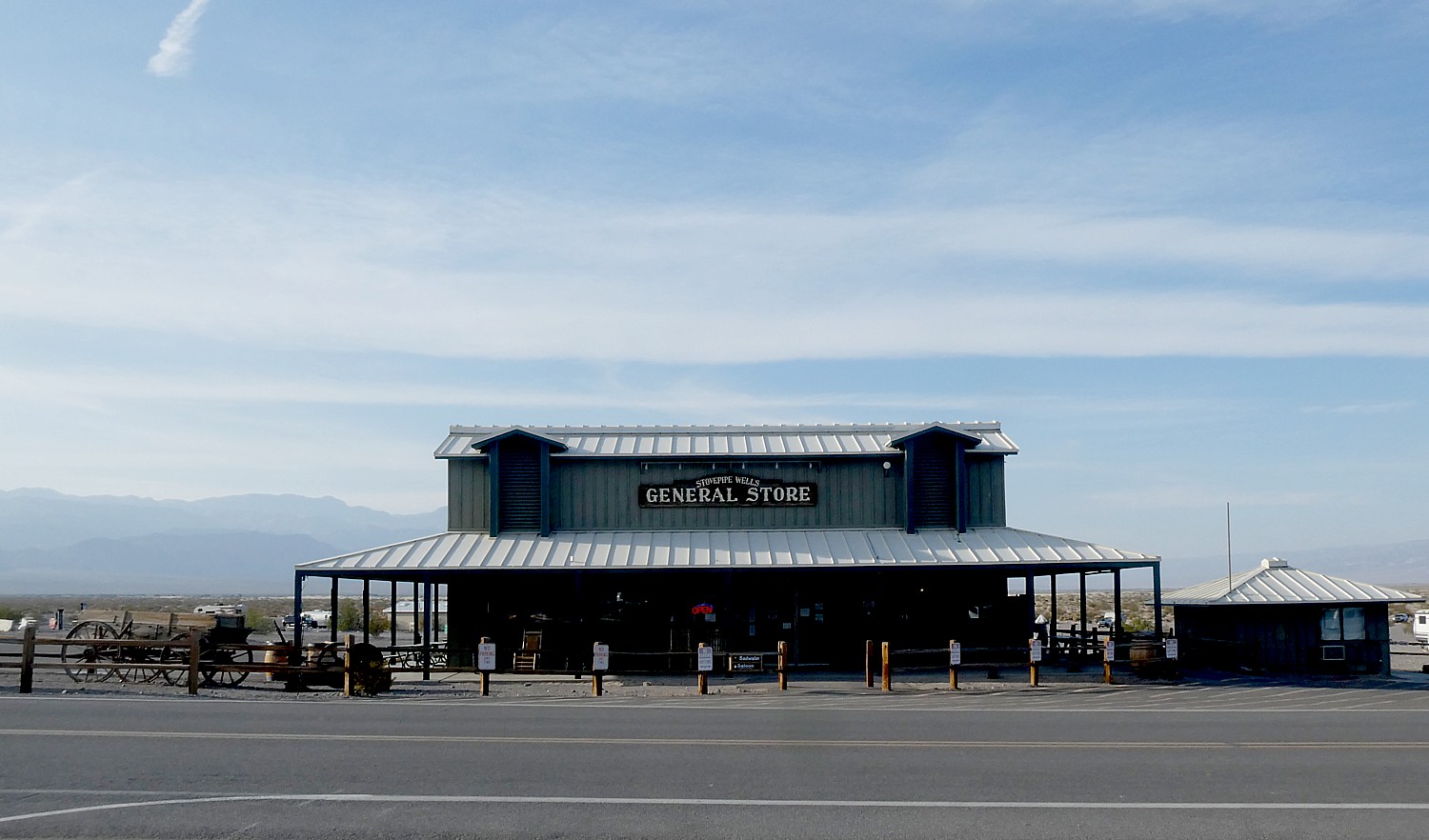
We stop at the historic Stovepipe Wells Village – like something out of a Western movie – that links back to the very beginning of tourism in Death Valley. In fact, long after mining gold, borax and talc had collapsed, tourism has been the enduring enterprise in Death Valley.

Stovepipe Wells General Store evokes the earliest days of tourism to Death Valley © Karen Rubin/goingplacesfarandnear.com

Herman William “Bob” Eichbaum effectively invented Death Valley’s tourism industry here, believing its “beauty, mystery and history” would attract tourists. Indeed, since 1915, motion pictures, automobile companies and writers weaving tales and promoting advertisements sparked interest (early social influencers) in visiting. In 1925, Eichbaum built a 38-mile toll road over Towne Pass and 20 tent-style bungalows, a restaurant, general store and filling station. He opened the Stovepipe Wells Hotel in 1926. Just a few months later, the luxurious Furnace Creek Inn was opened by the Pacific Coast Borax Company, setting off an intense rivalry. Most enthralling is that both places are still around and give you this sensation of stepping back in time. (Open year-round, deathvalleyhotels.com, 760-786-7090).

Mesquite Flat Sand Dunes

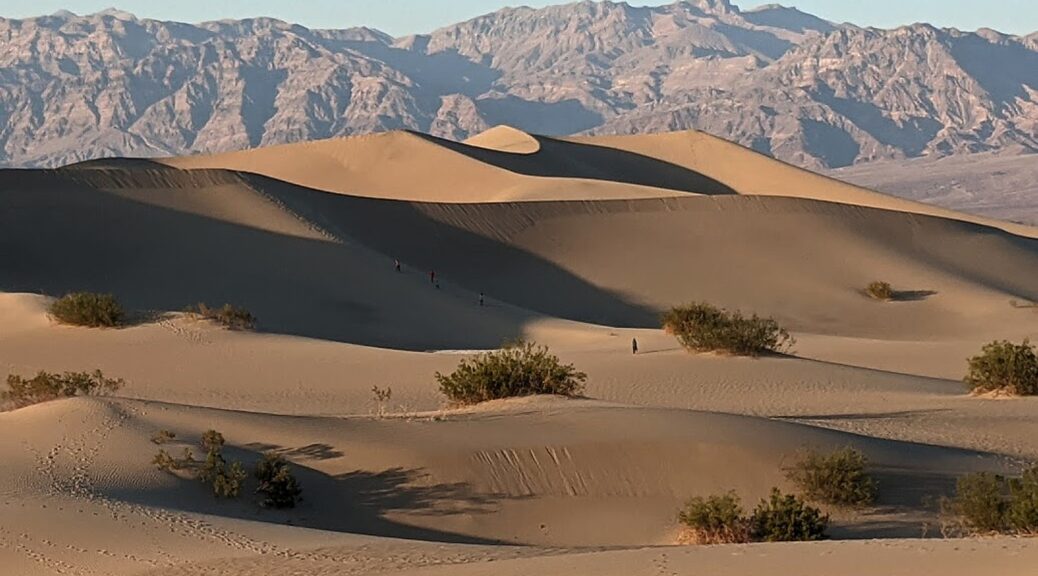
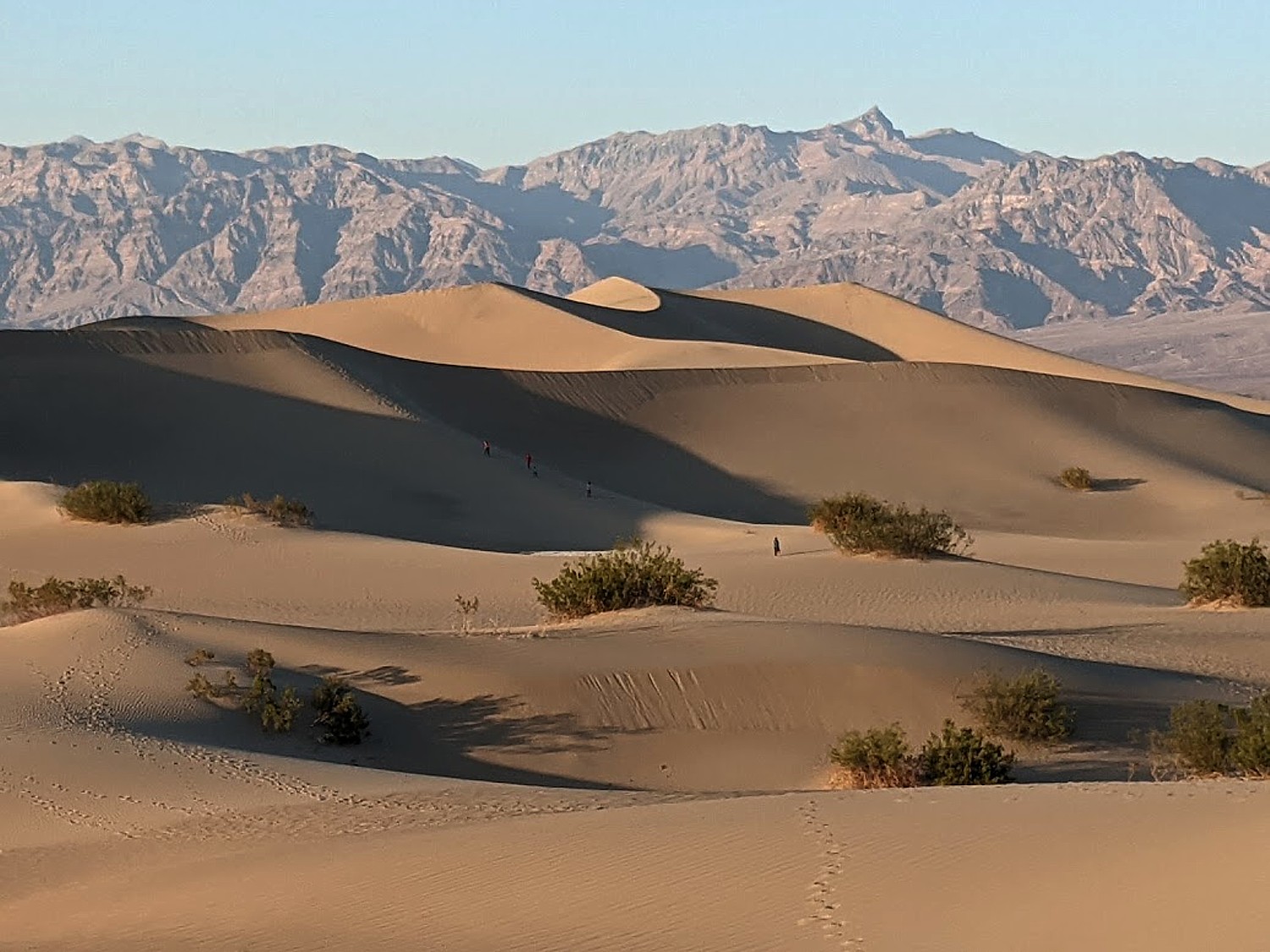
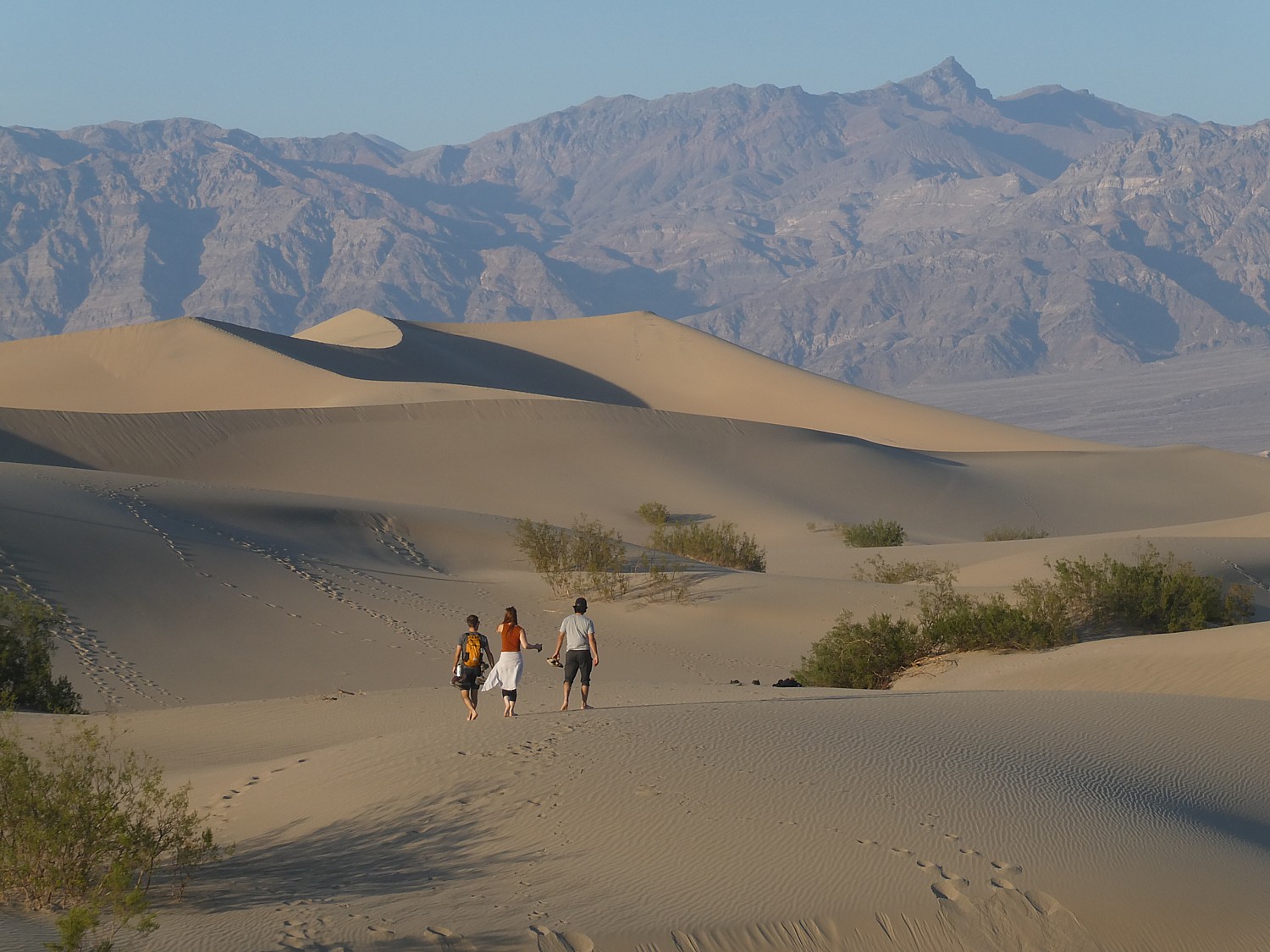
Mesquite Flat Sand Dunes, Death Valley National Park © Karen Rubin/goingplacesfarandnear.com

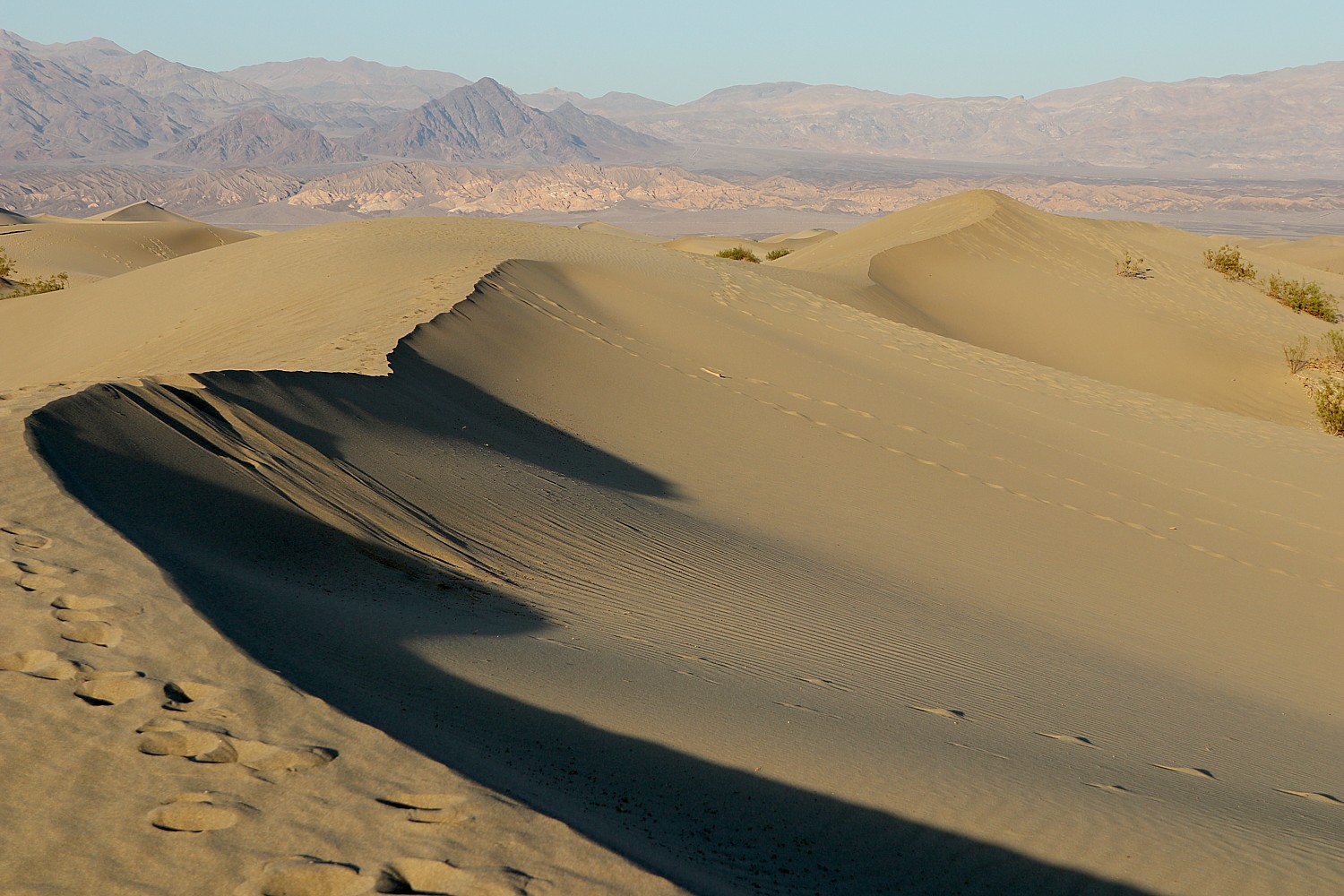
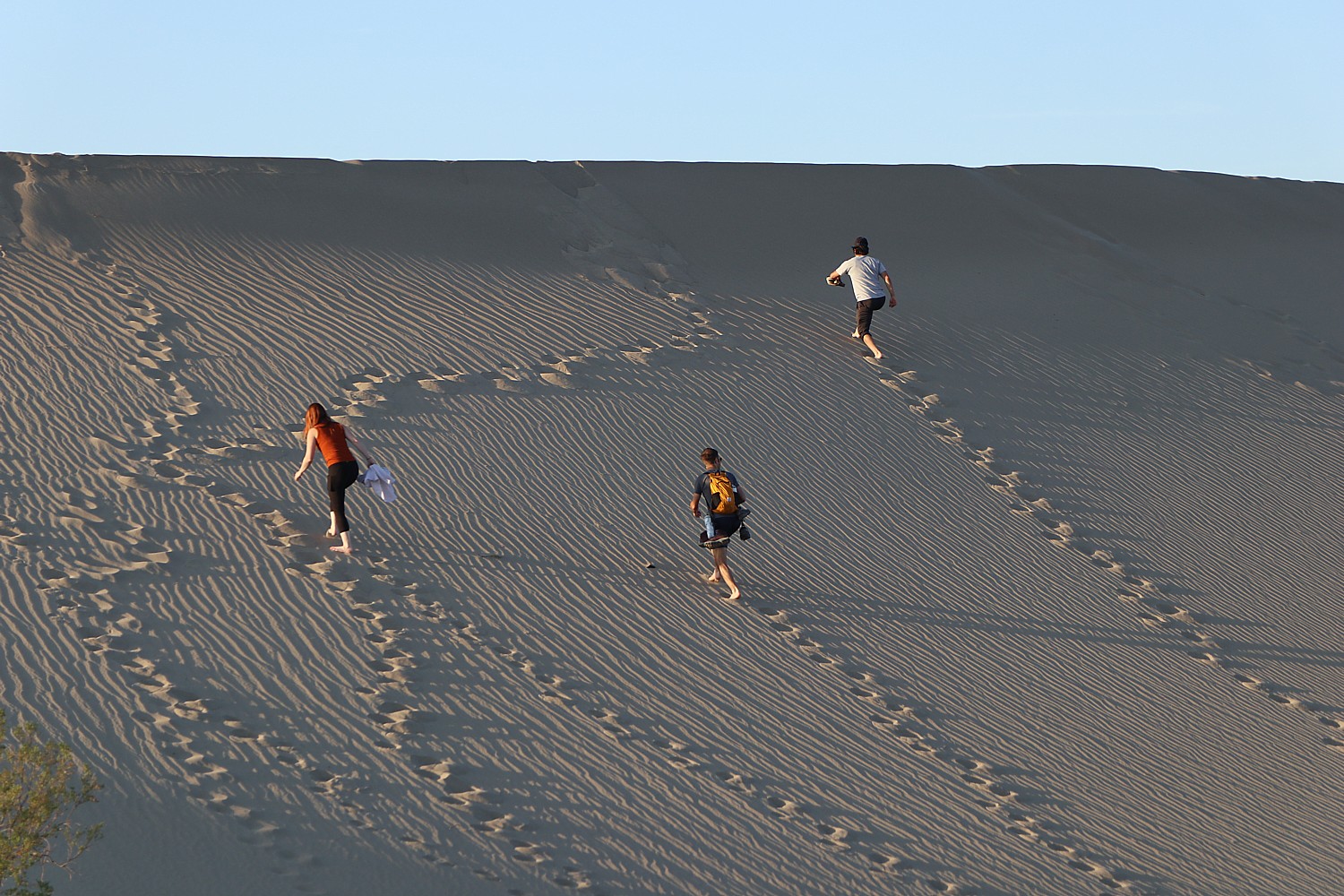
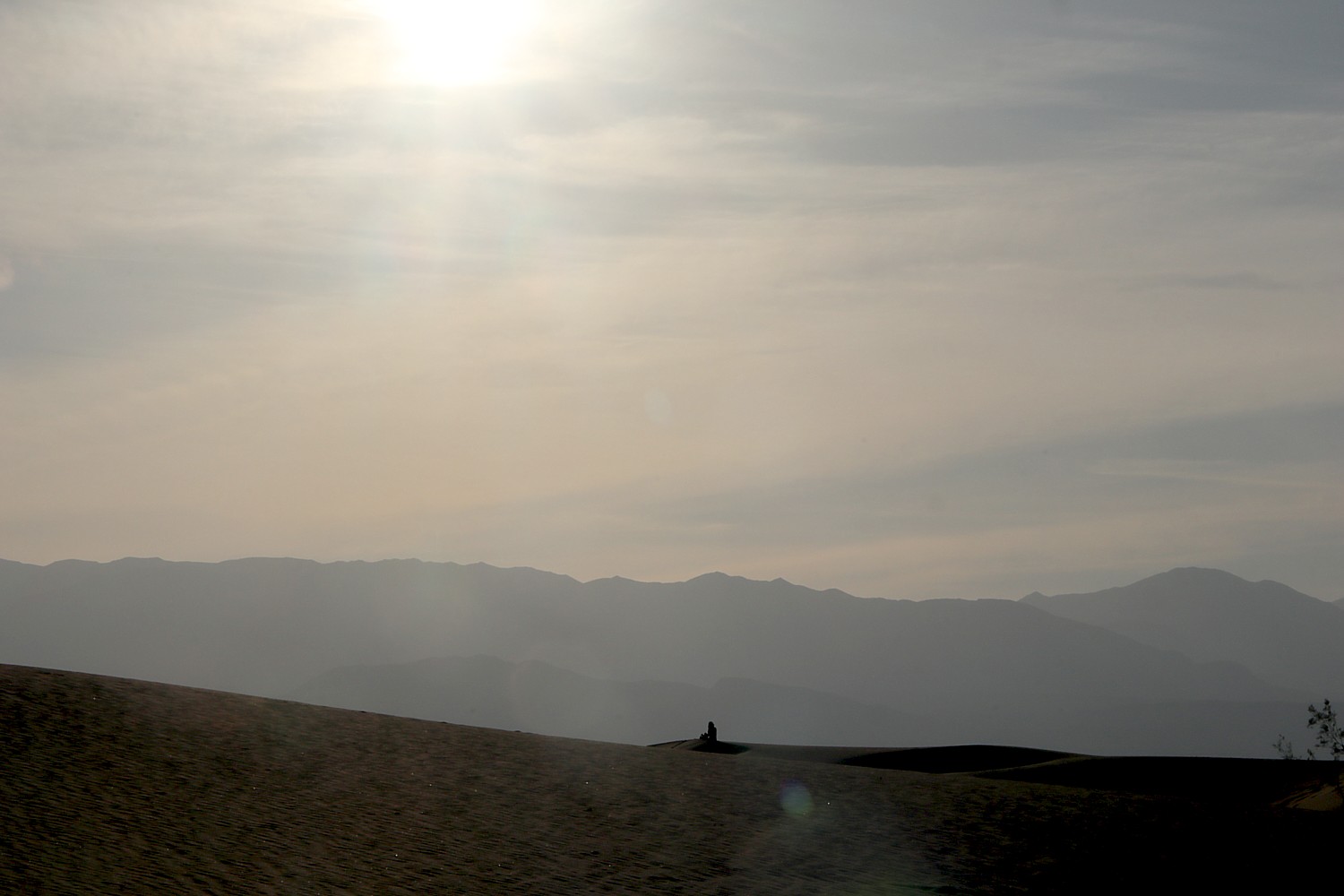
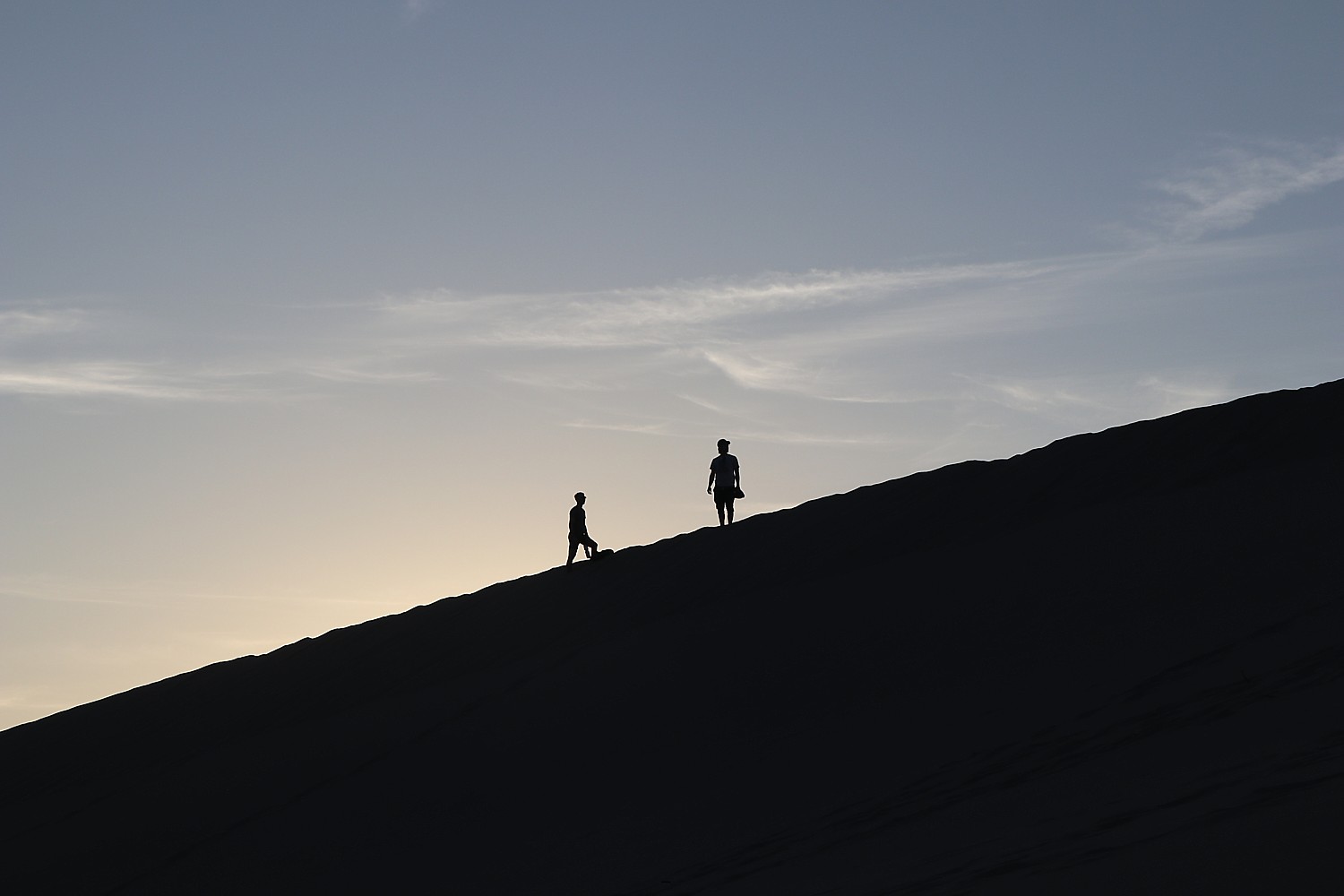
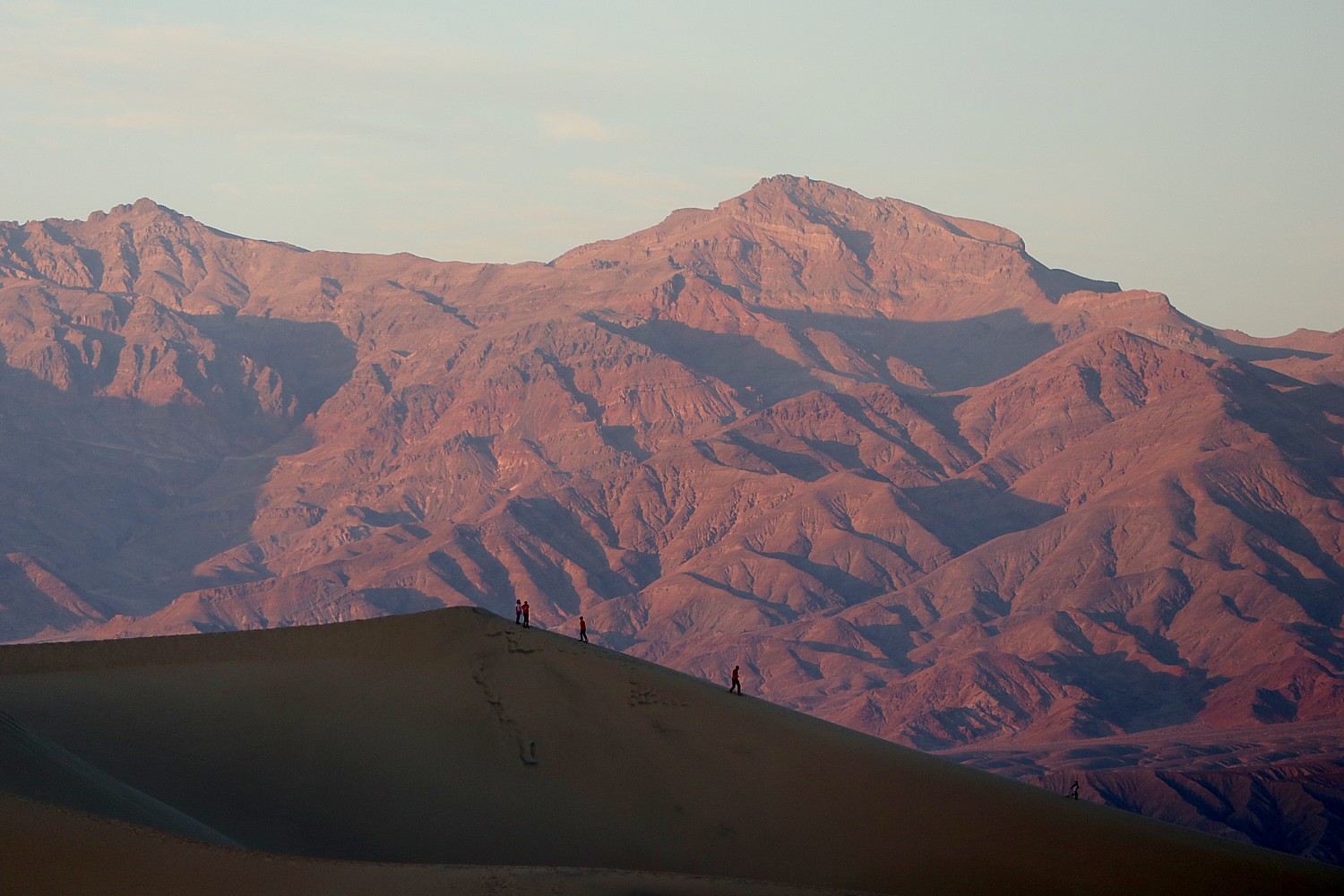
It’s only a short drive from the village to reach Mesquite Flat Sand Dunes, a little after 4 pm, giving us at least one hour before sunset. We have just enough time to play on the dunes and watch the colors (and temperature) change with the setting sun. People bring cardboard sleds, using the sand like snow.

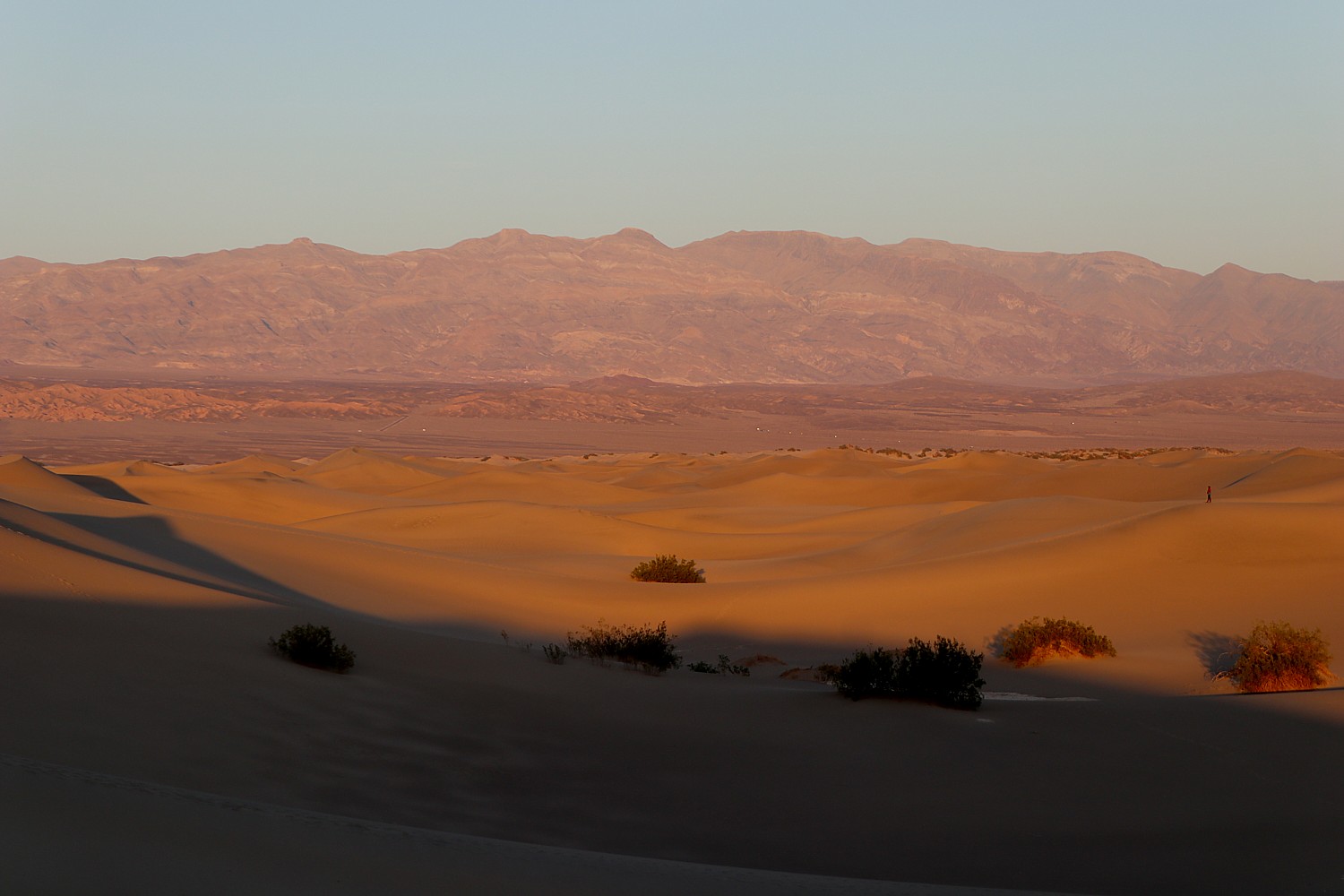
Mesquite Flat Sand Dunes is an extraordinary setting:  sprawling over 14 square miles, ringed with mountain peaks, the contrast of colors, shapes, contours is just stunning.

Mesquite Flat Sand Dunes, Death Valley National Park © Karen Rubin/goingplacesfarandnear.com

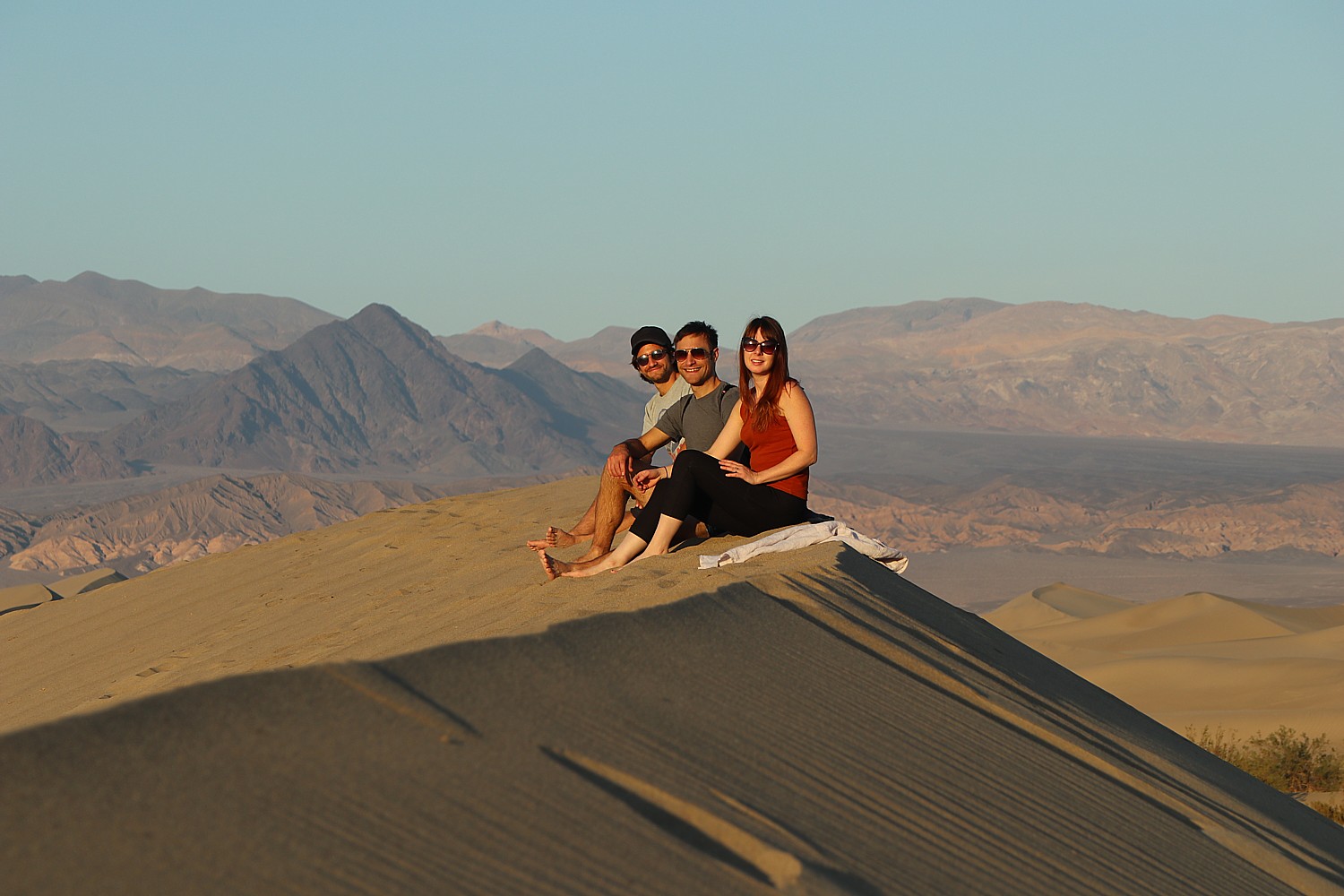
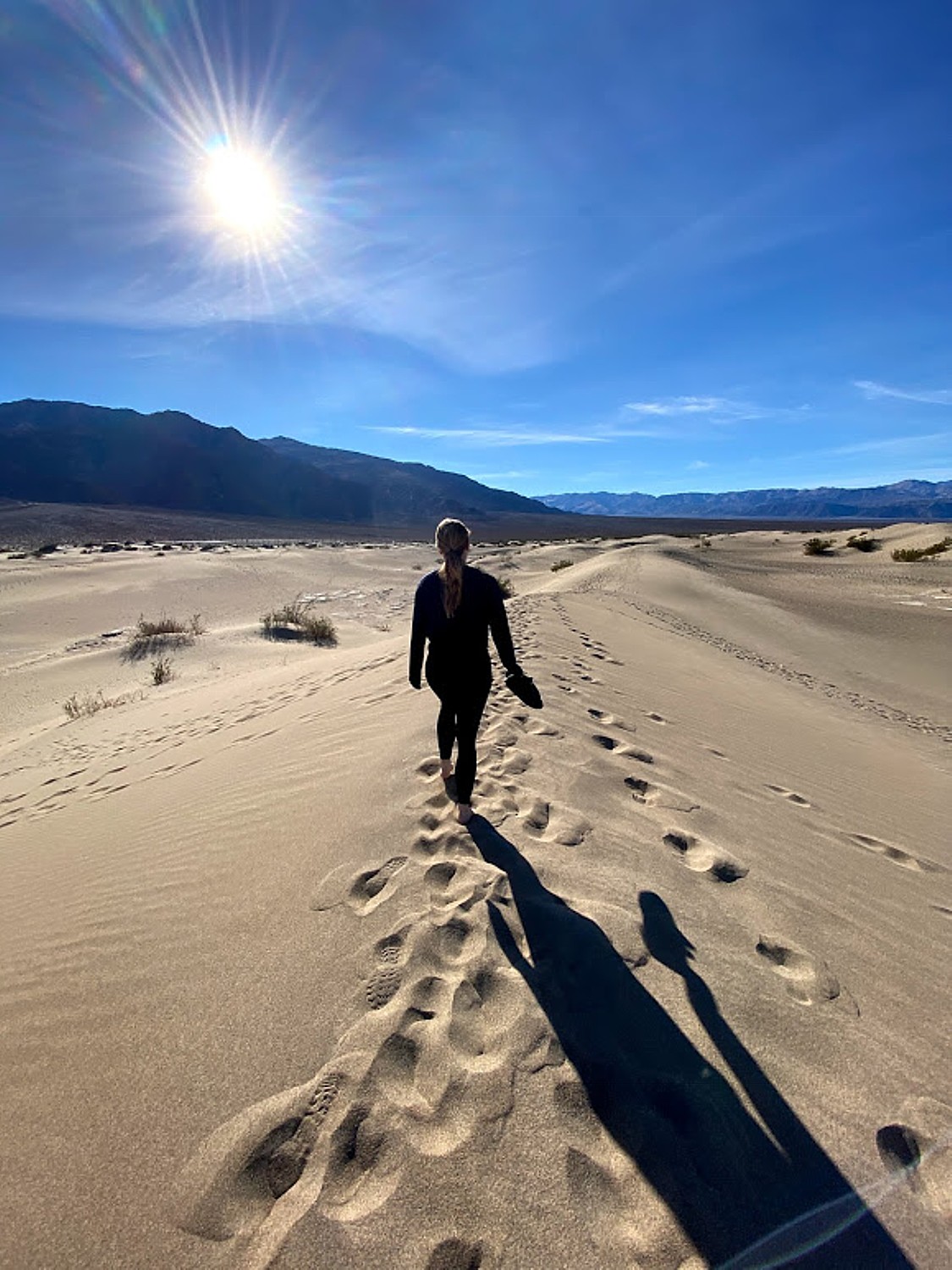
In late afternoon, the sand is cool enough to take off shoes and feel remarkably soft granular sand on toes. We climb the dunes –as much as 150 feet high- wowed in the colors of the golden hour as the sun descends.  All the pure joy you had playing in a sand box when you were four comes bursting through.

Mesquite Flat Sand Dunes, Death Valley National Park © Karen Rubin/goingplacesfarandnear.com

The best time to visit is the early morning or late afternoon; on a dawn hike, the notes say, you might see tracks of nocturnal animals and if you hike at night in the warm months, they warn, be alert for sidewinder rattlesnakes (I’m still thinking about the tracks of nocturnal animals).

Designed to Death

We drive on, reveling in the scenes of the road disappearing into the far distance, headed to our Air BnB, with the intriguing name, Designed to Death, in the small town of Beatty, about 20 miles outside the park’s eastern border (Las Vegas would be about 1 ½ hours beyond). Though the name evokes Agatha Christie, it is breathtakingly beautiful, cozy luxury, with a bit of a Western vibe – easily explained because the hosts are interior designers and the house is a showplace for their talent.

Preparing dinner at Designed to Death AirBnB, Beatty, Nevada © Karen Rubin/goingplacesfarandnear.com

We are here for too short a time to fully enjoy all that the house affords. Set on an isolated stretch of high desert, the 1,200 sq. ft.,  three-bedroom, two-bath vacation home was designed by Peter Strzebniok to incorporate the vistas, providing stunning views while making the desert part of the interiors – merging the inside with the outside. What we do thoroughly enjoy though, is the large open kitchen, dining room, living room, that opens onto a 900 sq. ft deck with hot tub. The Presidential Suite at a five-star hotel would not have been any nicer or more comfortable.

Our Designed to Death Air BnB hosts are Karen McAloon, an interior designer who works in San Francisco Bay Area, Los Angeles and Joshua Tree, who was an HGTV host and her partner was her producer. (They have two sister properties, Hip Modern cottage of Amazingness in Lake Tahoe, @hipmoderncottageofamazingness, and Too Pool for School in Joshua Tree, @toopoolforschooljtree.)

They provide excellent notes – like the nearest place for supplies would be at Family Dollar, but the nearest actual grocery is 70 minutes south at Pahrump. They also supply tour information of nearby ghost towns, museums, attractions and of course Death Valley National Park. There is an interesting note about the wild burros that we might see (there is even a traffic sign like a deer crossing), which are descended from burros abandoned by miners a century ago. “Don’t feed them, they can be destructive. They tend to be down at the creek in the morning and wander into town at night.”

We take full advantage of the gorgeous kitchen to prepare dinner (we brought food for dinner and breakfast).

Rhyolite Ghost Town

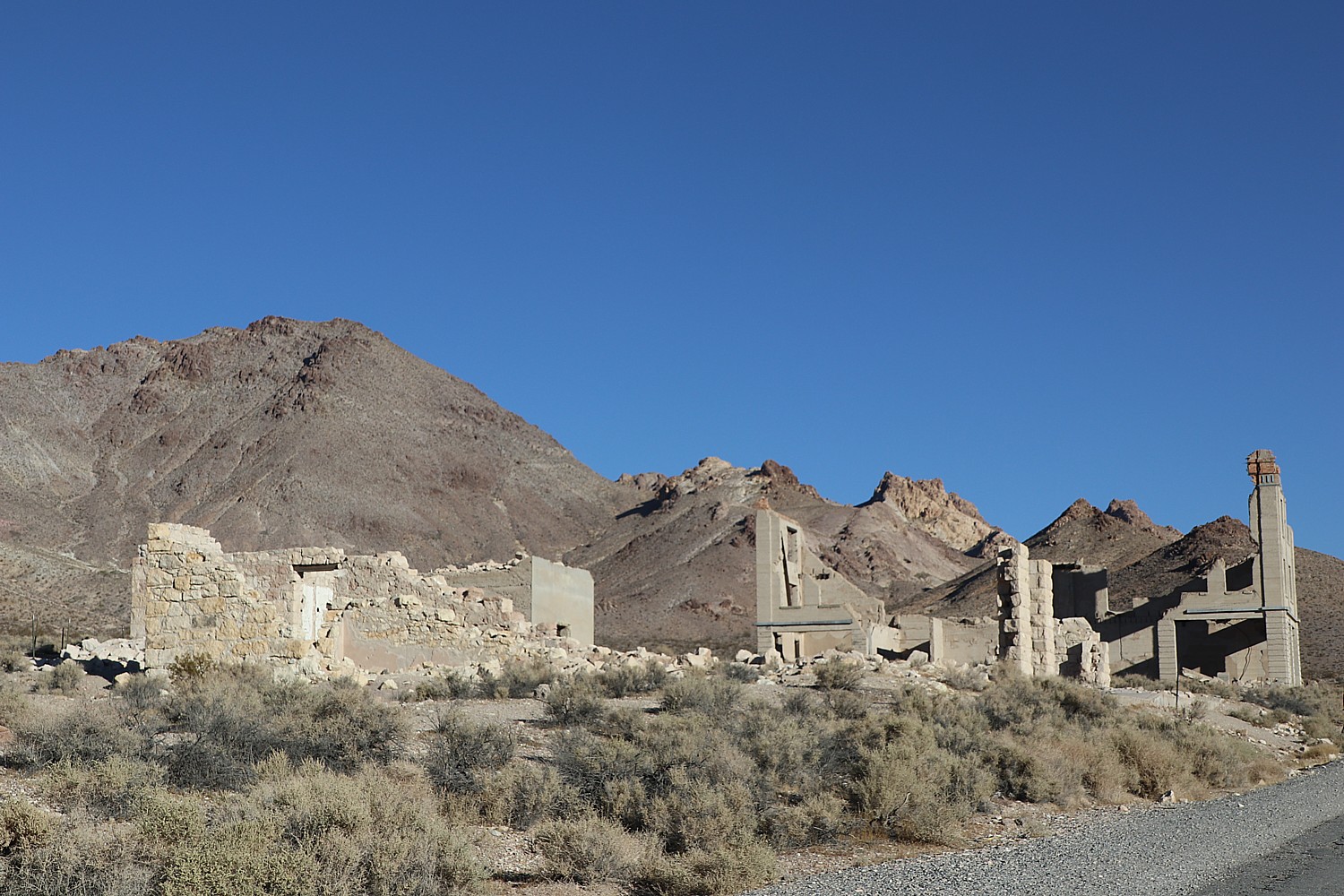
Rhyolite, a Death Valley ghost town © Karen Rubin/goingplacesfarandnear.

The next morning, we pack up quickly and head out early morning with a plan to stop off on our way into Death Valley to visit an actual ghost town, Rhyolite.

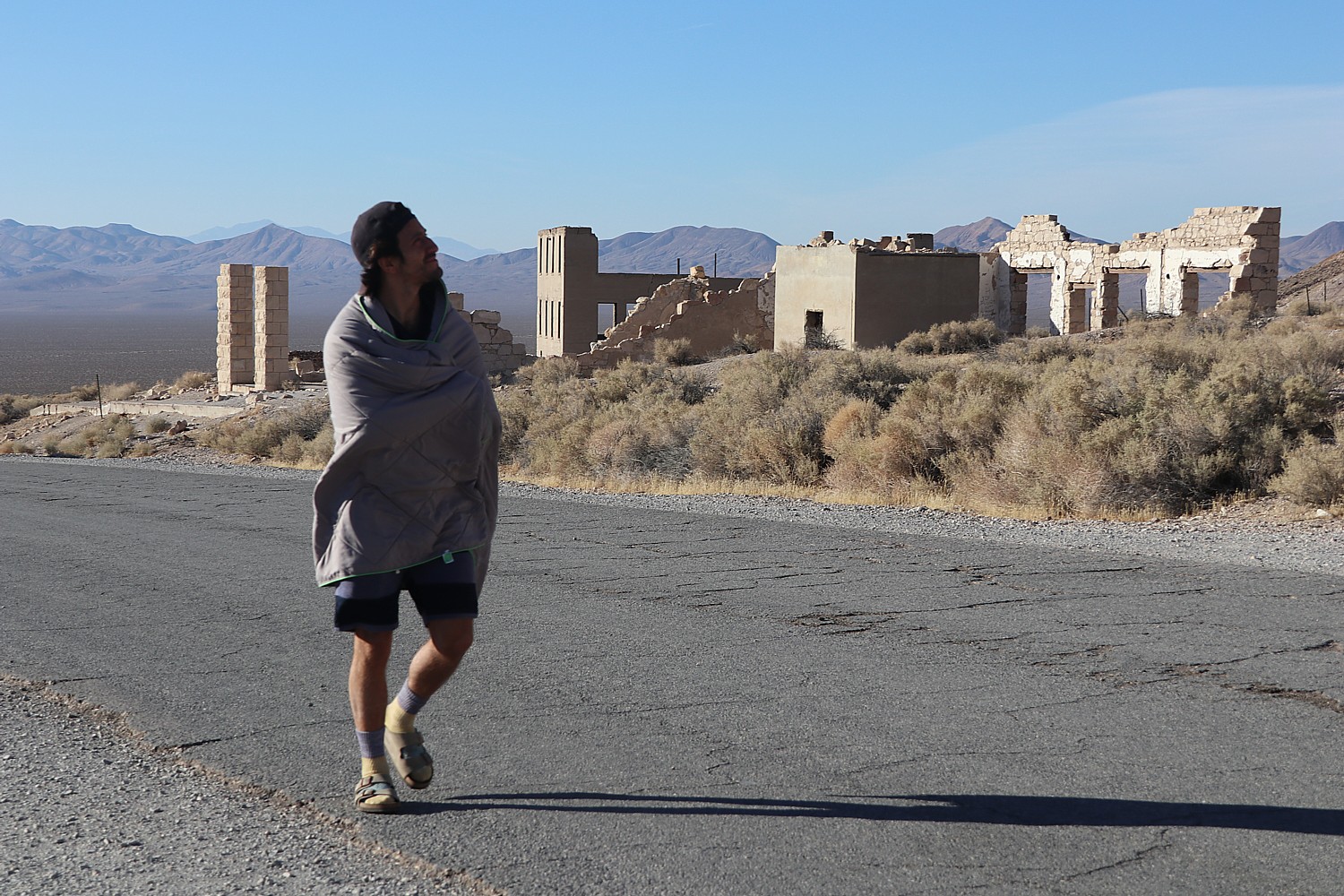
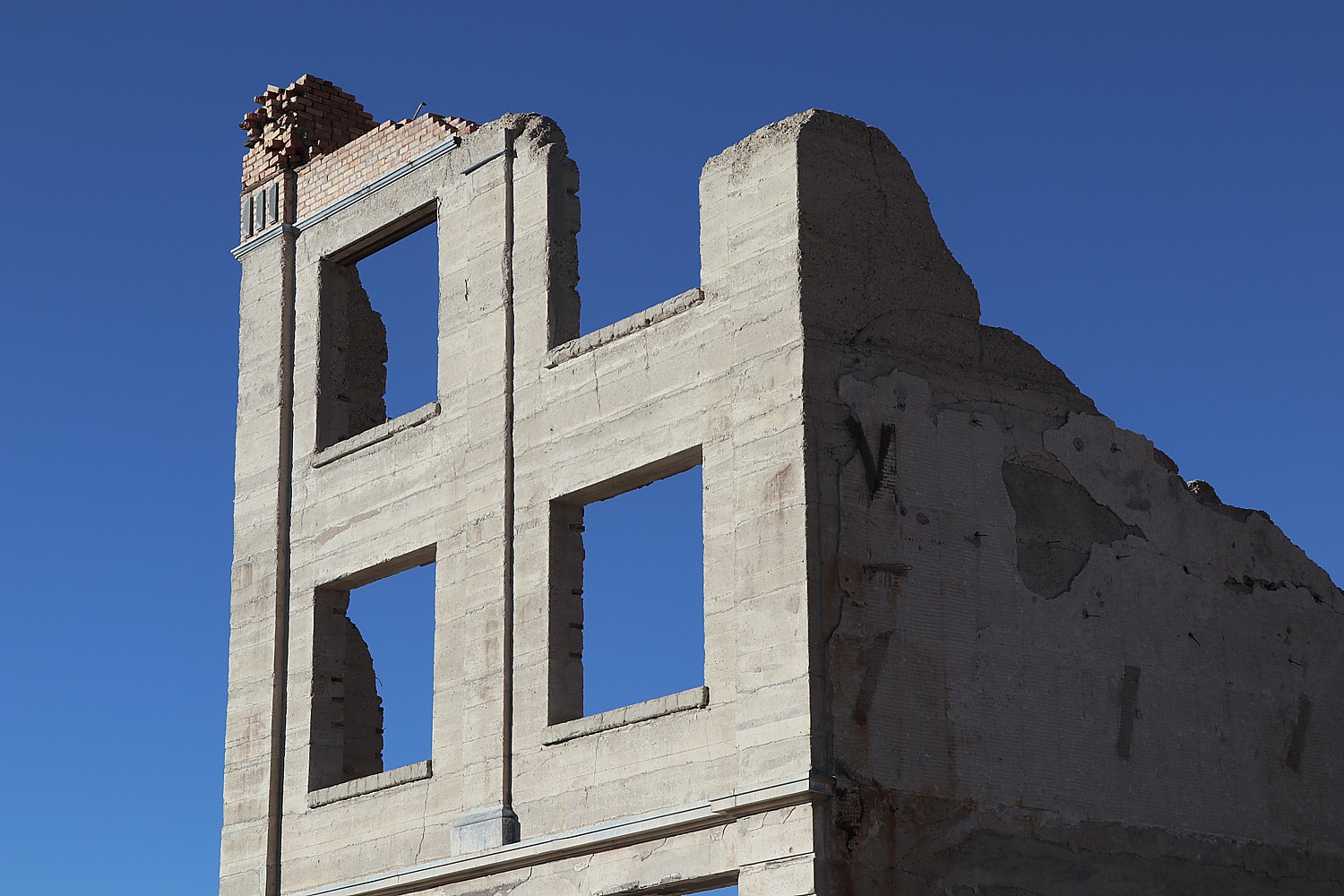
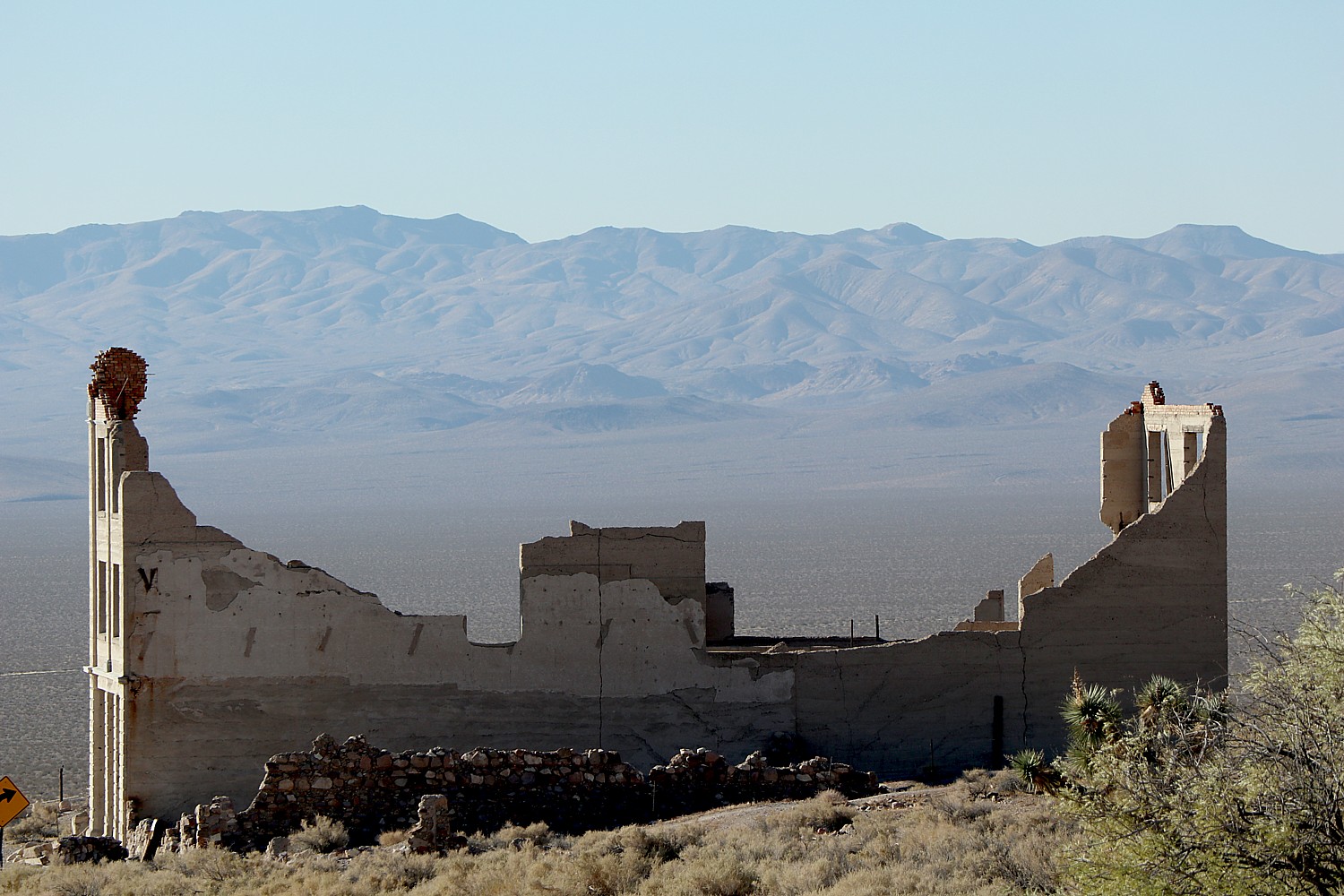
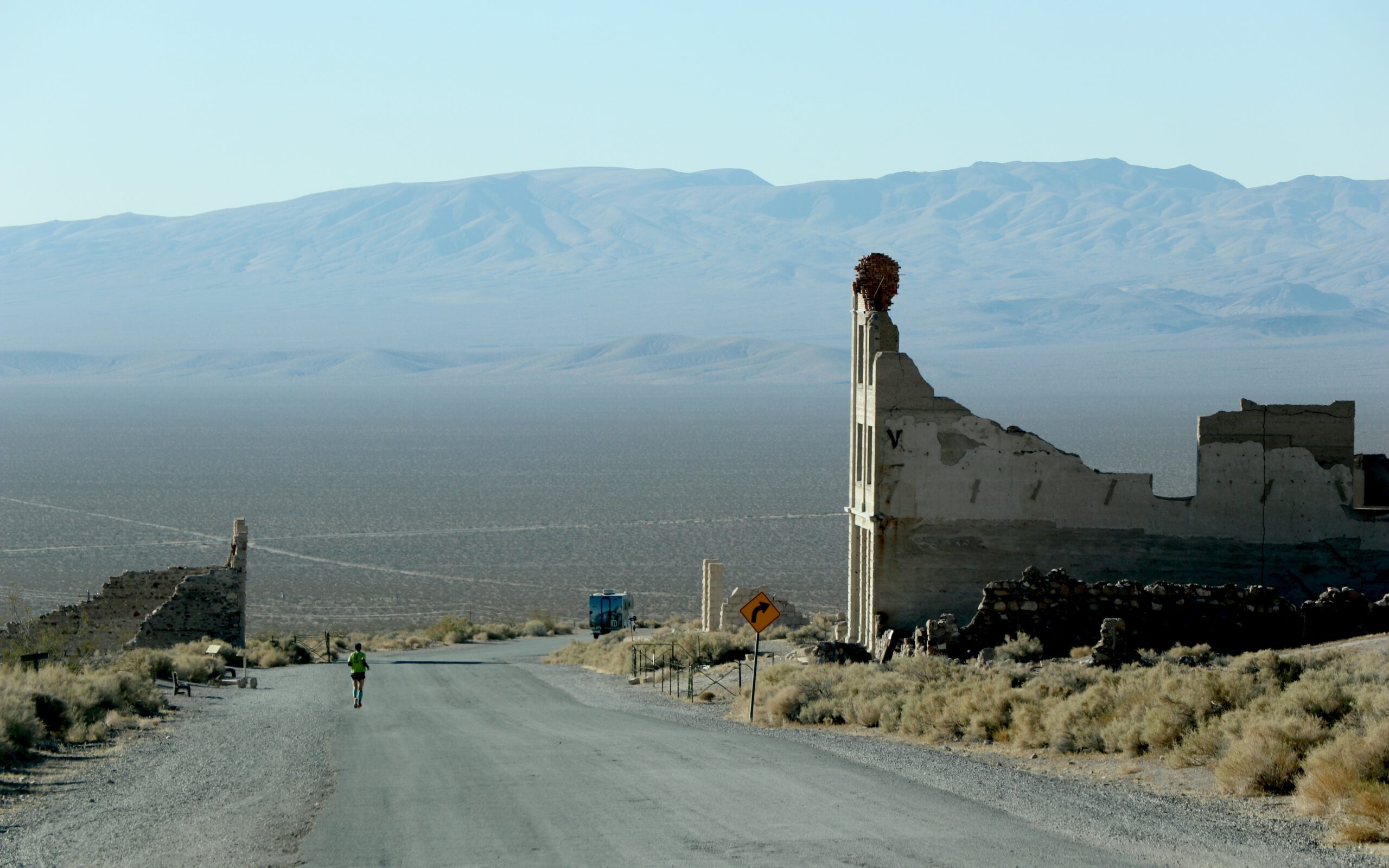
It is so fascinating to try to piece together what this town might have been like and to realize how big it was – most surprising, really (especially when you see the context) is what’s left of a hotel and casino. A casino! “100 years ago, Rhyolite was the largest city in southern Nevada with more than 10,000 residents. Yet after only a decade, the town became a ghostly remnant of itself” – a classic boom and bust story, with all sorts of lessons about the transitory nature of success in the span of history. It is tremendously exciting to wander about these ruins, so dramatically set.

Rhyolite, a Death Valley ghost town © Karen Rubin/goingplacesfarandnear.

In its heyday, between 1905-1911, Rhyolite had two churches, 50 saloons, 18 stores, two undertakers, 19 lodging houses, eight doctors, two dentists, a stock exchange and an opera.

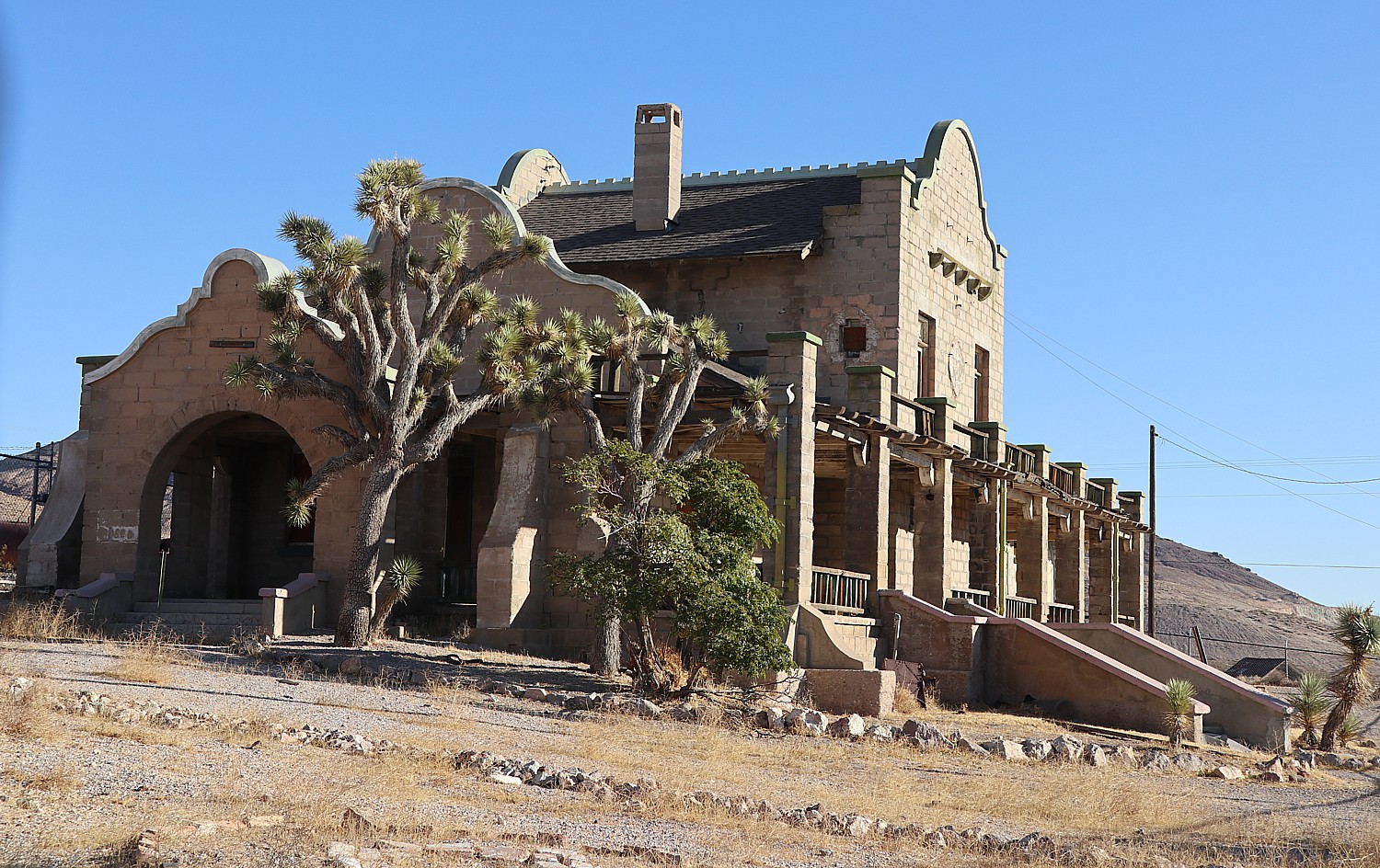
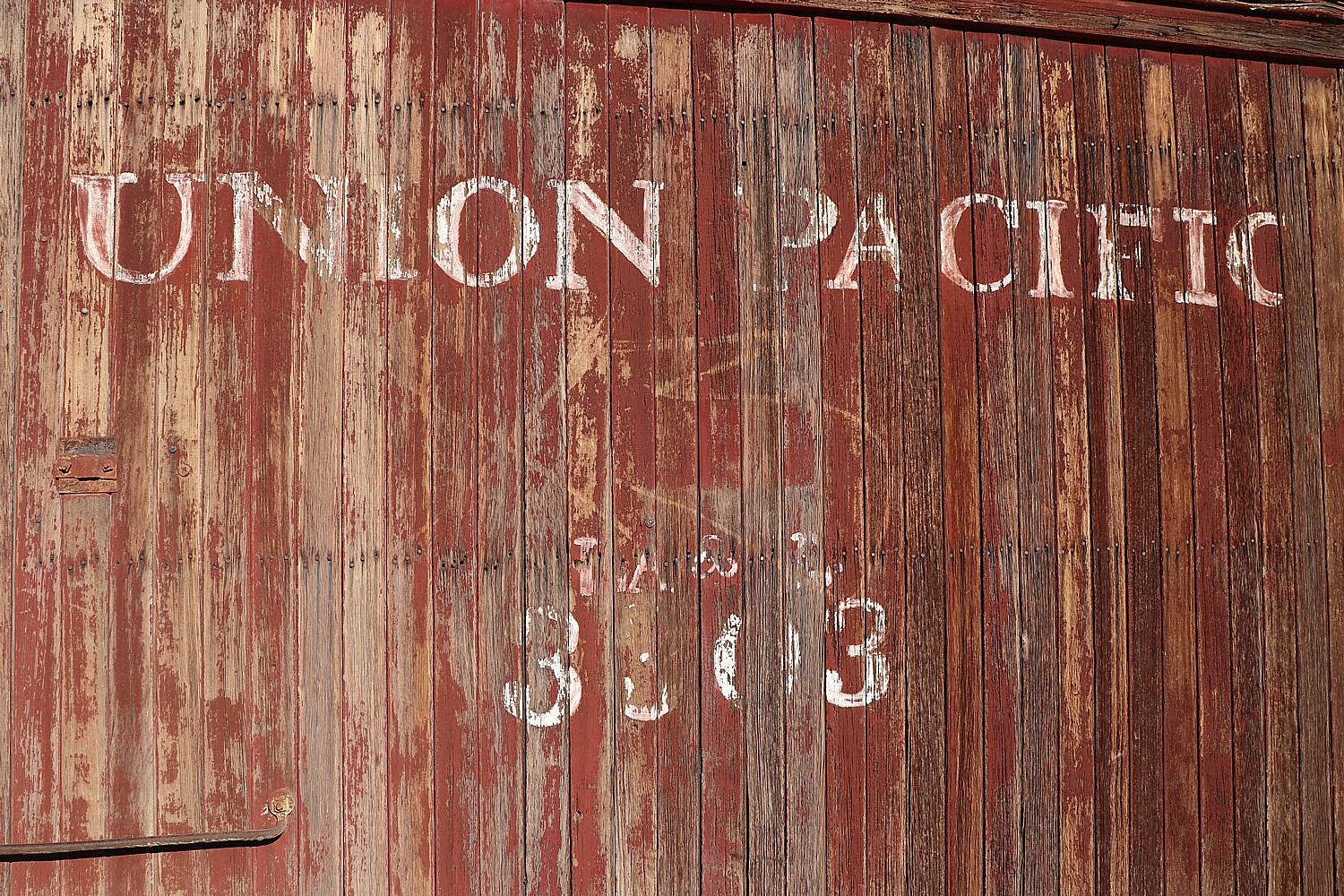
The ruins that remain today include the Bottie House, the train depot (there is a caboose there), the remains of a three-story bank building and the jail.

It is one of several ghost towns that are scattered through Death Valley, “the silent ruins of broken dreams.”

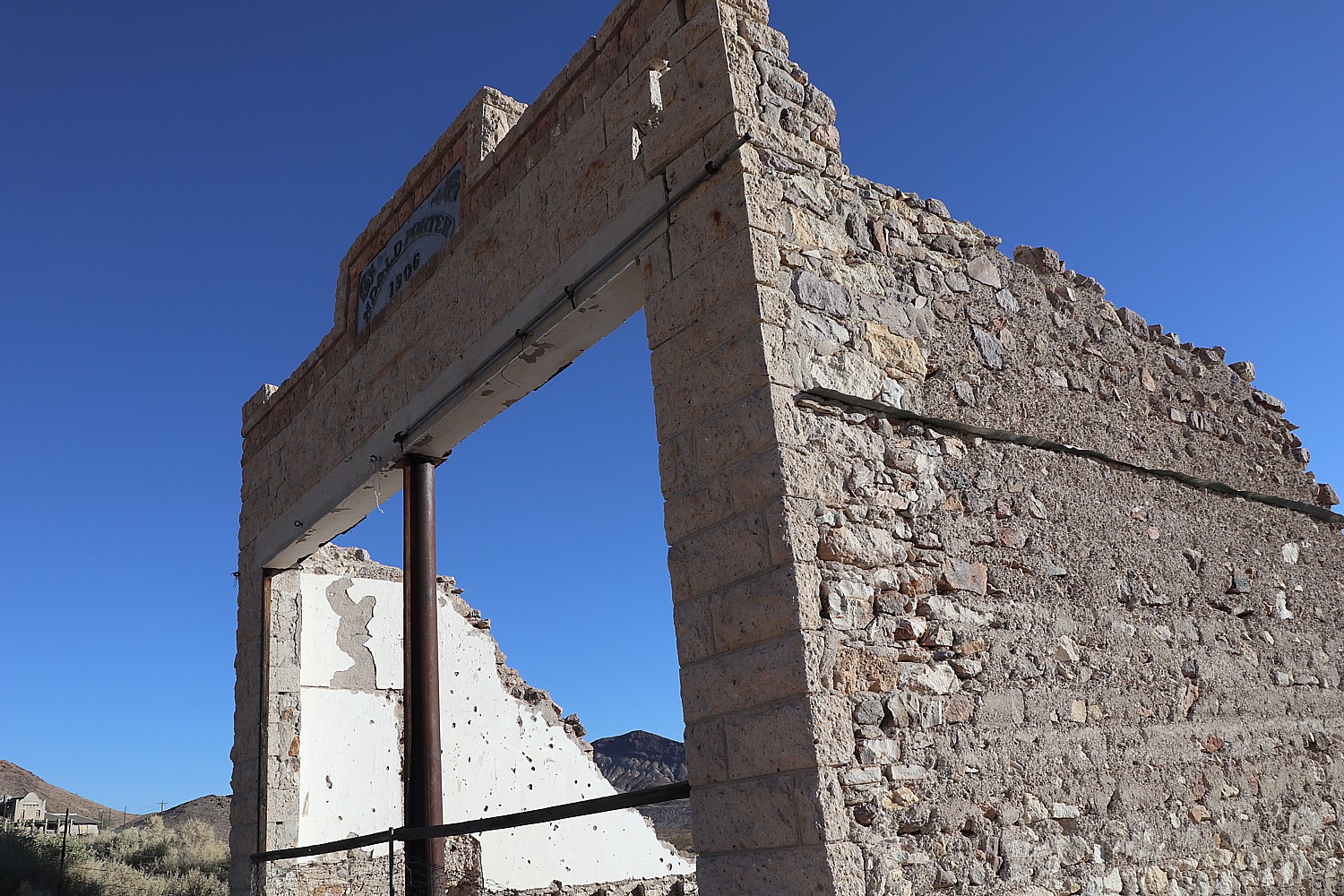
Death Valley in art: “Rhyolite Bank Window,” a Death Valley ghost town, by Laini Nemett (2020, 12 x 9 in, oil on linen on panel). Visit www.laininemett.com

Next: Hitting the Highlights of Death Valley National Park

______________________

© 2021 Travel Features Syndicate, a division of Workstyles, Inc. All rights reserved. Visit goingplacesfarandnear.com, www.huffingtonpost.com/author/karen-rubin, and travelwritersmagazine.com/TravelFeaturesSyndicate/. Blogging at goingplacesnearandfar.wordpress.com and moralcompasstravel.info. Send comments or questions to FamTravLtr@aol.com. Tweet @TravelFeatures. ‘Like’ us at facebook.com/NewsPhotoFeatures

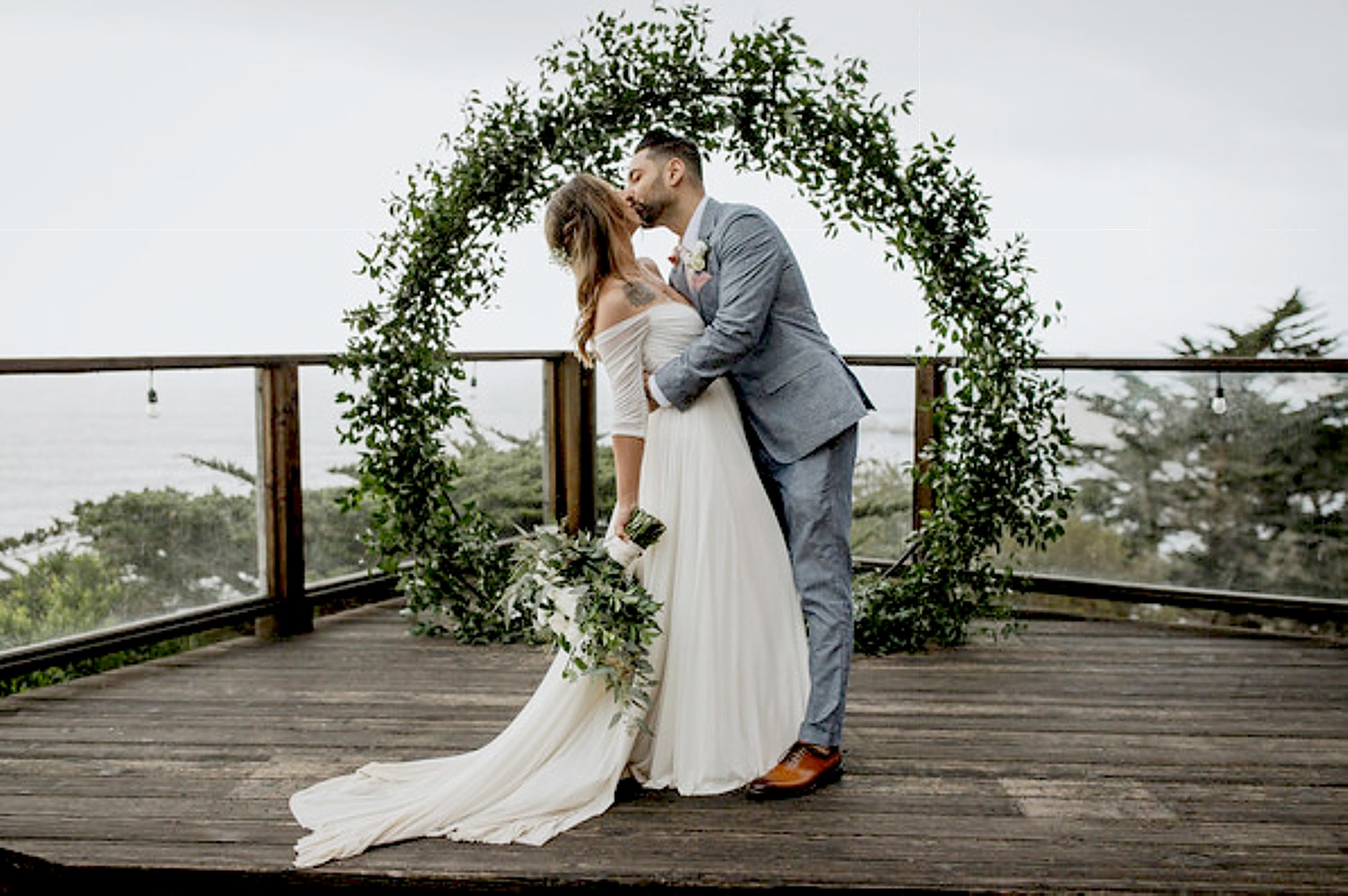
Finding Love in All the Right Places

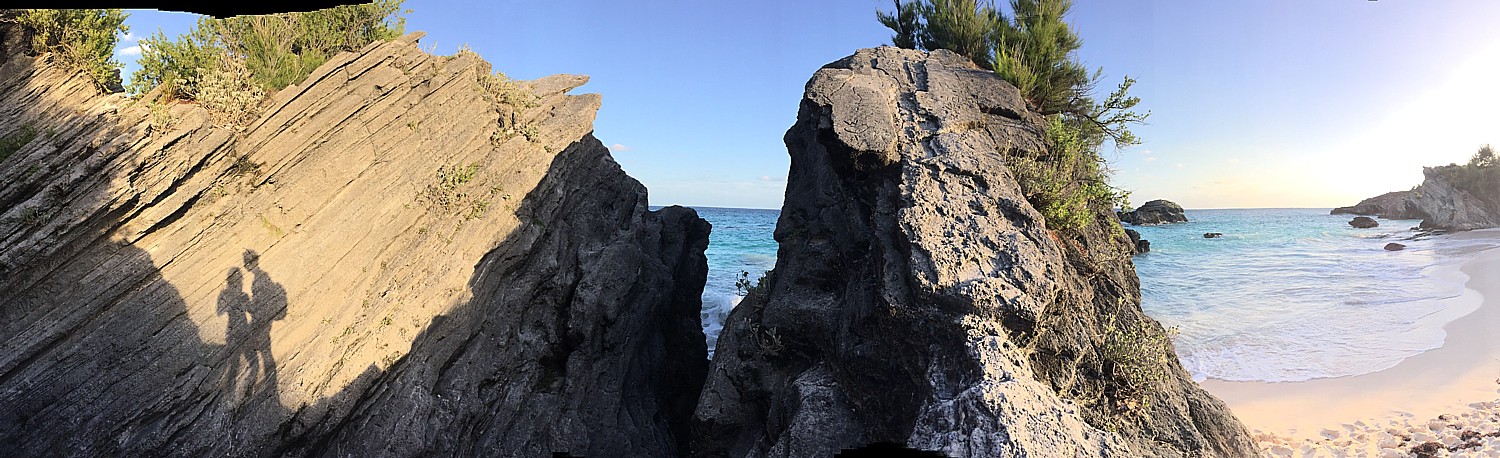
A wedding proposal on a Bermuda beach. One of the most romantic places on the planet, Bermuda, once known as the honeymoon capital, has safety protocols in place to welcome lovers to the island nation, a 2 ½ hour flight from New York © Dave E. Leiberman/goingplacesfarandnear.com

By Karen Rubin, Travel Features Syndicate, goingplacesfarandnear.com

Just in time for Valentine’s Day, New York State is permitting restaurants to reopen indoor dining at 25 percent capacity, and as of March 15, will allow venues to host weddings at 50% capacity up to 150 guests. Governor Cuomo proposed that couples get engaged on Valentine’s Day and tie the knot on March 15.

Romance is by nature an intimate experience and even in a pandemic, it is possible to find romantic places and experiences. From glamping in nature, to boutique inns, to grand resorts offering specially planned, socially-distanced venues, and from romance to proposal to marriage vows, the coronavirus has certainly reshaped romance and love, but where there is a will, there is a way.  Love conquers all.

Back to Nature

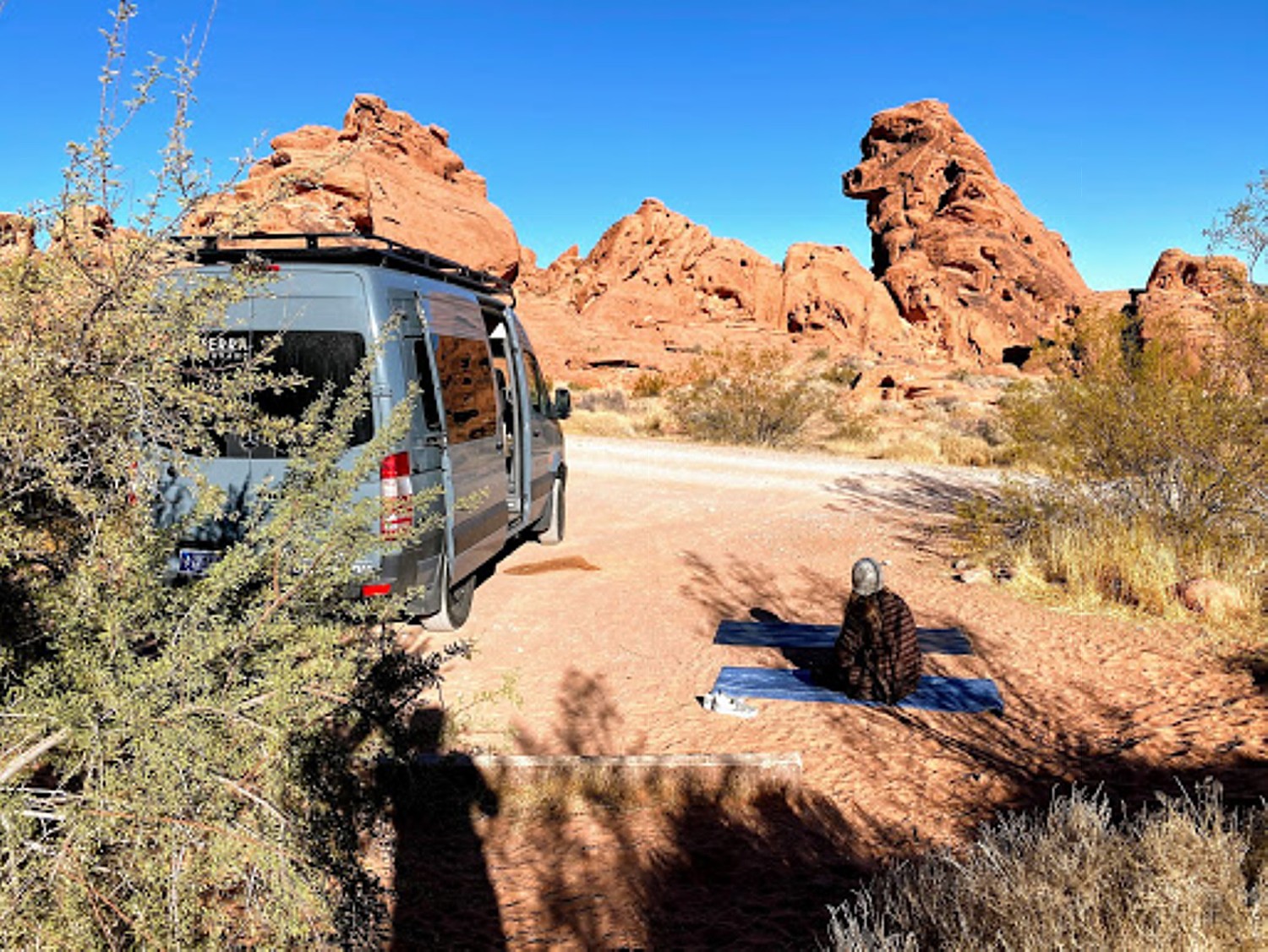
adVANturing in a Moterra camper van © Eric Leiberman/goingplacesfarandnear.com

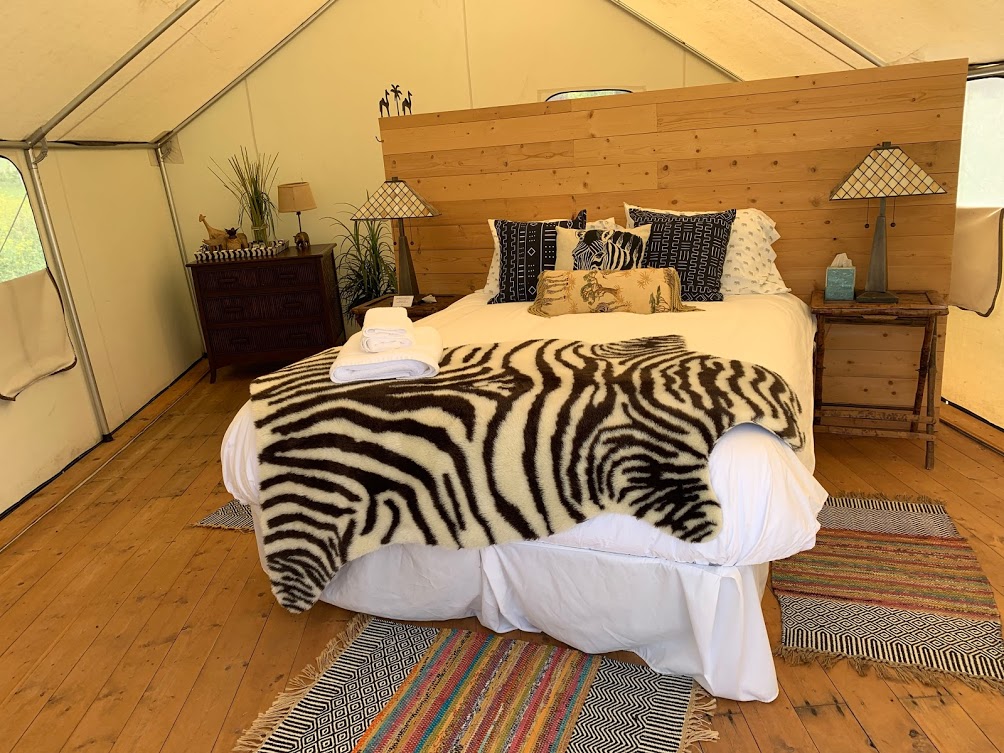
There is nothing more romantic than getting a camper van and following wanderlust, or renting a cabin or lodge or glamping on a lake or mountaintop, with that added spice of adventure and nature (as in, “let nature run its course” or “doing what comes naturally”). Glamping is also providing the setting for back-to-nature weddings and renewal of vows.

Kampgrounds of America (KOA) has a special section for glamping, cabins, and “unique camping options” (a teepee, a yurt, a train caboose, a Conestoga wagon, tree house, wall tent, a vintage airstream among them) that offer the atmosphere sure to get an “I will” or an “I do.” (See: https://koa.com/ways-to-stay/unique-accommodations/)

A glamping wedding in Montana (c) Eric Leiberman/goingplacesfarandnear.com

GlampingHub, launched in 2013 as a booking platform for distinctive accommodations, sustainable tourism and  luxury camping, is where you can find glamping spots all over the world, ranging from pet-friendly hotels or eco-friendly hotels, glamping retreats & getaways. It devotes a portal to Romantic Glamping (https://glampinghub.com/portal/romantic-glamping/).

Romantic Getaways

The Daniel Webster Inn in the historic village of Sandwich on Cape Cod is inviting couples to celebrate Valentine’s Day with a Feb. 13-15 package that includes champagne, chocolates, roses; $60 toward lunch or dinner and $15 toward breakfast, and a special gift to take home. Also, a suite-deal package is a one-night escape in an elegant suite with fireplace and oversized whirlpool tub, and chocolates and massages, plus $50 toward dinner. (Dan’l Webster Inn & Spa, 149 Main Street, Sandwich, MA 02563, 800-444-3566, 833-361-4988, https://danlwebsterinn.com/)

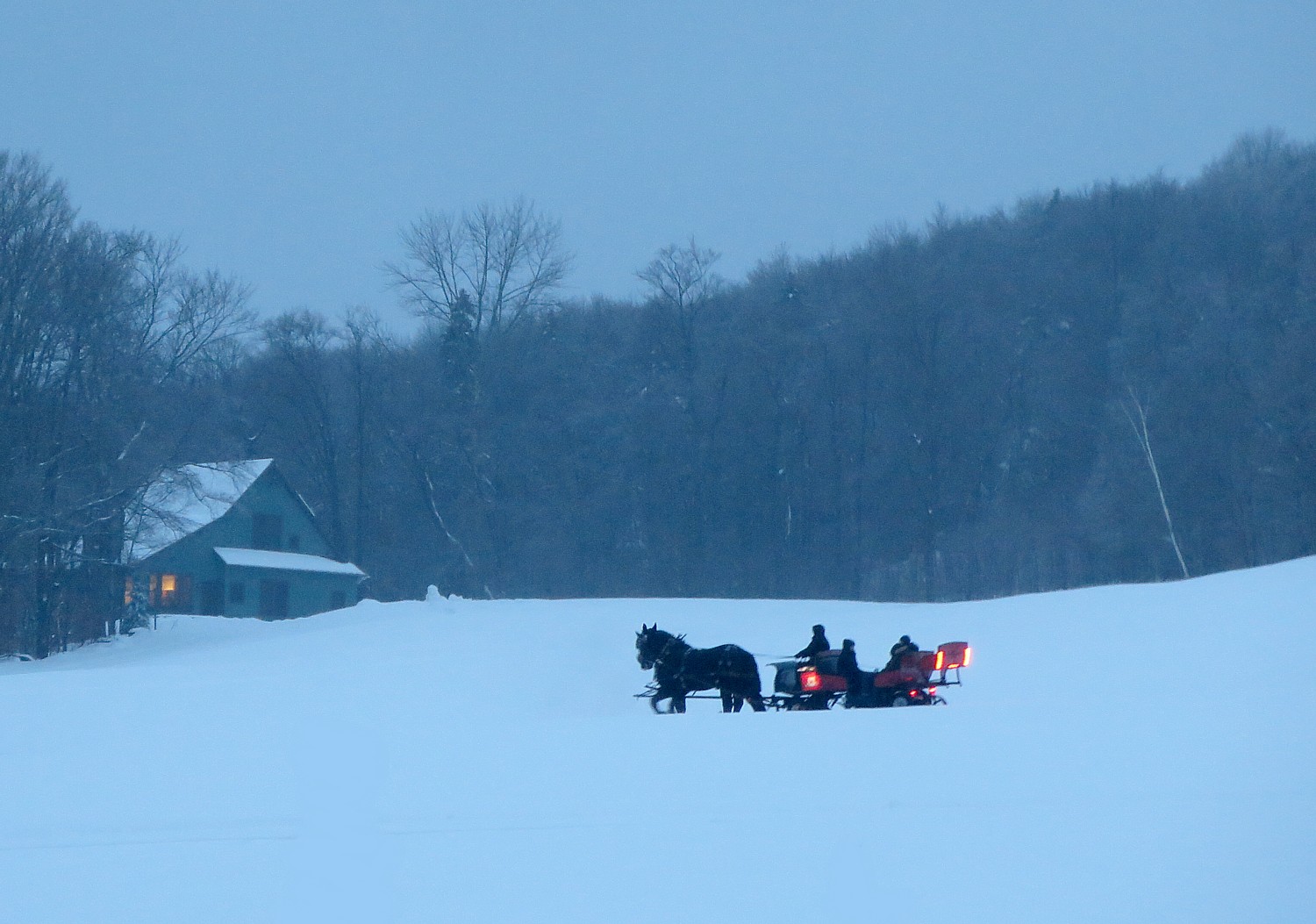
What is more romantic than a sleigh ride at Mountaintop Inn & Resort, Chittenden, Vermont (c) Karen Rubin/goingplacesfarandnear.com

Mountain Top Inn & Resort has all the charm, the warmth, the cozy, intimate hospitality of a country inn, and all the luxury, amenities, activities and quality dining of a resort. The setting is breathtaking – 700 acres surrounded by open fields, a 740-acre lake and mountains beyond, and the Green Mountain National Forest. In addition to a lodge, it offers separate cabins, and a barn/event space. It is no wonder Mountain Top is so popular for weddings (elopements too!) – it exudes romance. (Mountain Top Inn & Resort, 195 Mountain Top Road, Chittenden, Vermont 05737, 802-483-2311, www.MountainTopInn.com).

With a secluded island setting and the beauty of the Adirondacks as your backdrop, the grand, historic Sagamore Resort is an enchanting destination for a Lake George wedding, proposal or romantic getaway. Besides the hotel, there are separate villa-style lodges. The AAA Four-Diamond resort offers a world-class spa, a Donald Ross-designed championship golf course, swimming and tennis and the Adirondacks.  (110 Sagamore Road, Bolton Landing, NY 12814, 518-644-9400, 866-384-1944, www.thesagamore.com)

Grand Historic Hotels Offer Special Ambiance

Historic Hotels offer ideal ambiance for a romantic proposal, a destination wedding, honeymoon, or special milestone.

The entire list of Historic Hotels of America members, in my book, are ideal for romantic getaways (historichotels.org), but here are a few of our favorites for your proposal:

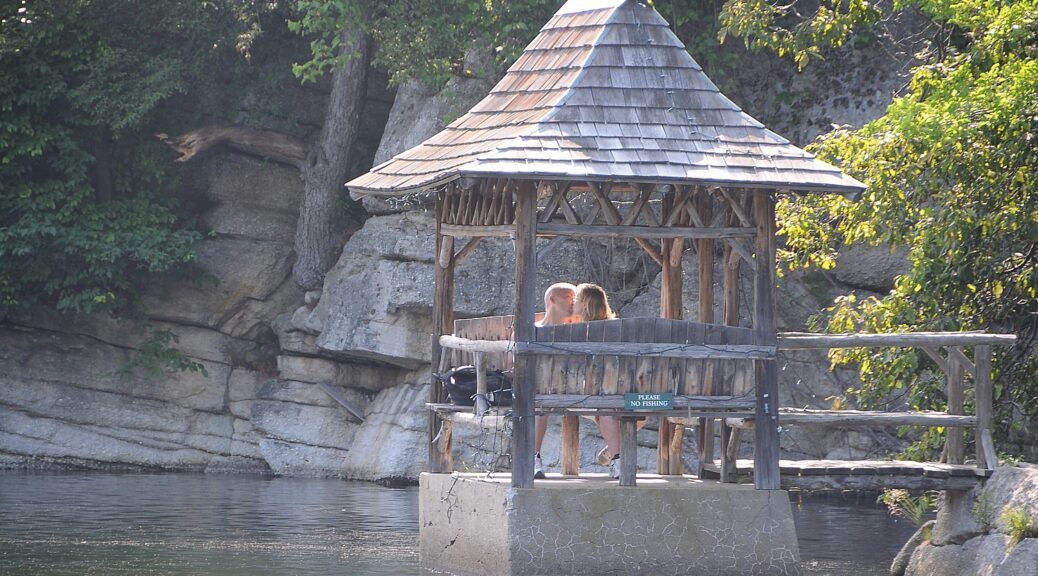
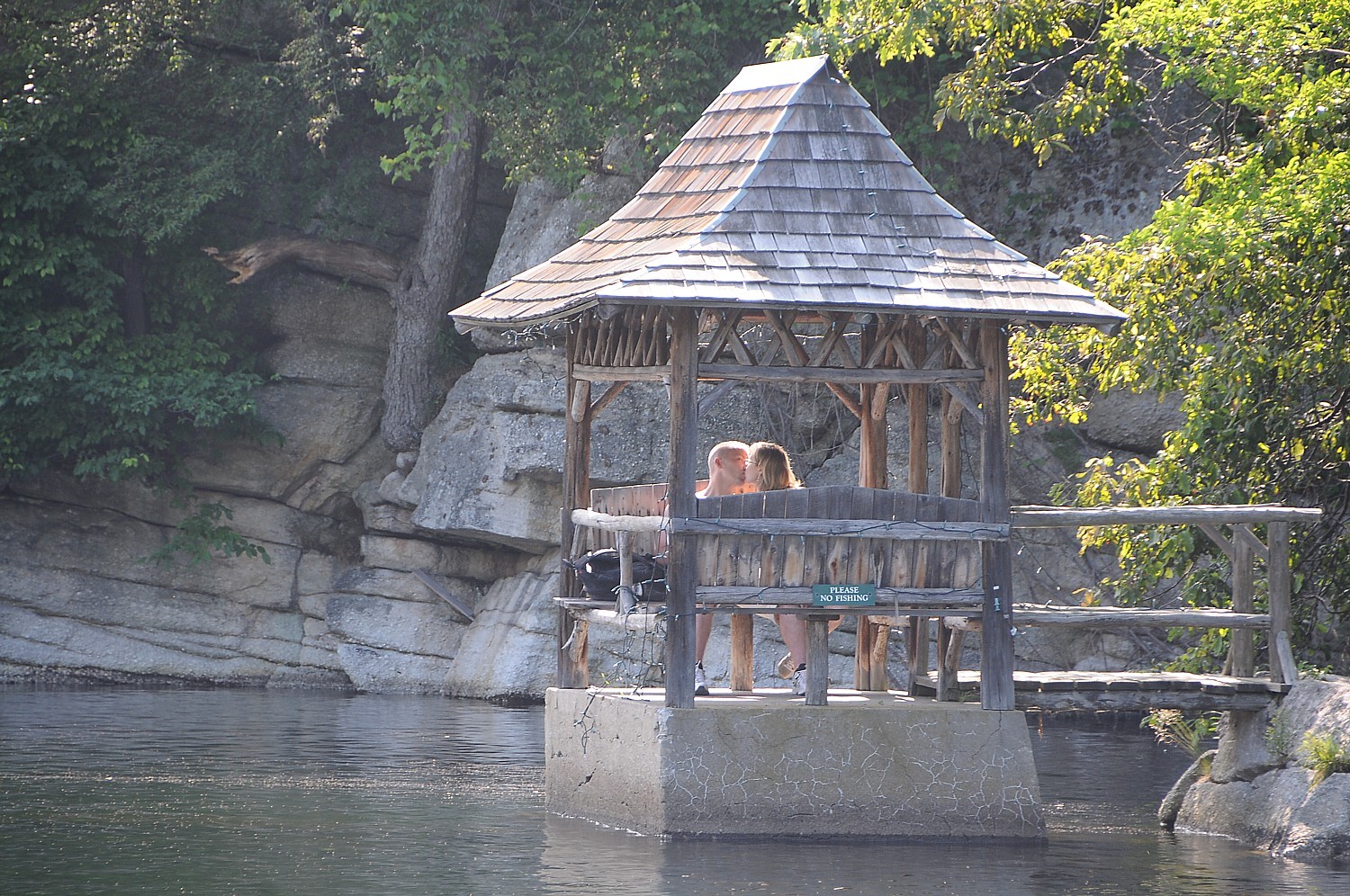
Romantic gazebos placed along the lake’s edge are extremely popular for popping the question at Mohonk Mountain House, a Victorian jewel in New York’s Hudson Valley (c) Karen Rubin/goingplacesfarandnear.com

Mohonk Mountain House (1869) New Paltz, New York: Mohonk Mountain House is an enchanting Victorian Castle perched at the top of a mountain with a private lake. The hotel has 120 “summerhouses” which are rustic gazebos designed for two people to share special moments together; taking in stunning views during or after a hike on 85 miles of trails- all of which provide the perfect romantic backdrop for someone to get down on bended knee. The Sky Top Tower is a hiking destination with panoramic views of the Shawangunk Cliffs and Catskill Mountains and a popular engagement site, along with the boat dock, which provides amazing views of serene Lake Mohonk. This is a full-service grand resort with world-class spa, indoor pool.

The Otesaga Hotel and Cooper Inn (1909) Cooperstown, New York: With its majestic views, The Otesaga Resort Hotel sits on the southern shore of Lake Otsego, known as Glimmerglass in James Fenimore Cooper’s novels, which makes the lake a popular place to pop the question. The lake dock, with its quaint stillness and breathtaking views surrounded by century old oak trees is a perfect place to get down on bended knee. There are some who would rather propose in an old-fashioned boat with the resort as a backdrop and others that would prefer to be on a horse drawn carriage pulling up to the resort’s front portico. Moreover, being the home of the national pastime makes Cooperstown and the Otesaga a unique venue for a baseball themed engagement.

View from our cozy cottage at Basin Harbor Club, Vergennes, Vt., grand historic resort on the shore of Lake Champlain (c) Karen Rubin/goingplacesfarandnear.com

Basin Harbor (1886) Vergennes, Vermont: Basin Harbor is a grand yet rustic resort set on the stunning shores of Lake Champlain in Vermont. Steeped in tradition, this 700-acre resort has a variety of breathtaking settings that provide a perfect backdrop for engagements and weddings. From the Orchard Garden, filled with flowers and greenery to the Lodge Lawn with panoramic views of Lake Champlain and the Adirondack Mountains, there are plenty of places for someone to get down on one knee. There’s just about every activity you could want, including golf course, boating, tennis. Besides hotel accommodations, there are charming cottages.

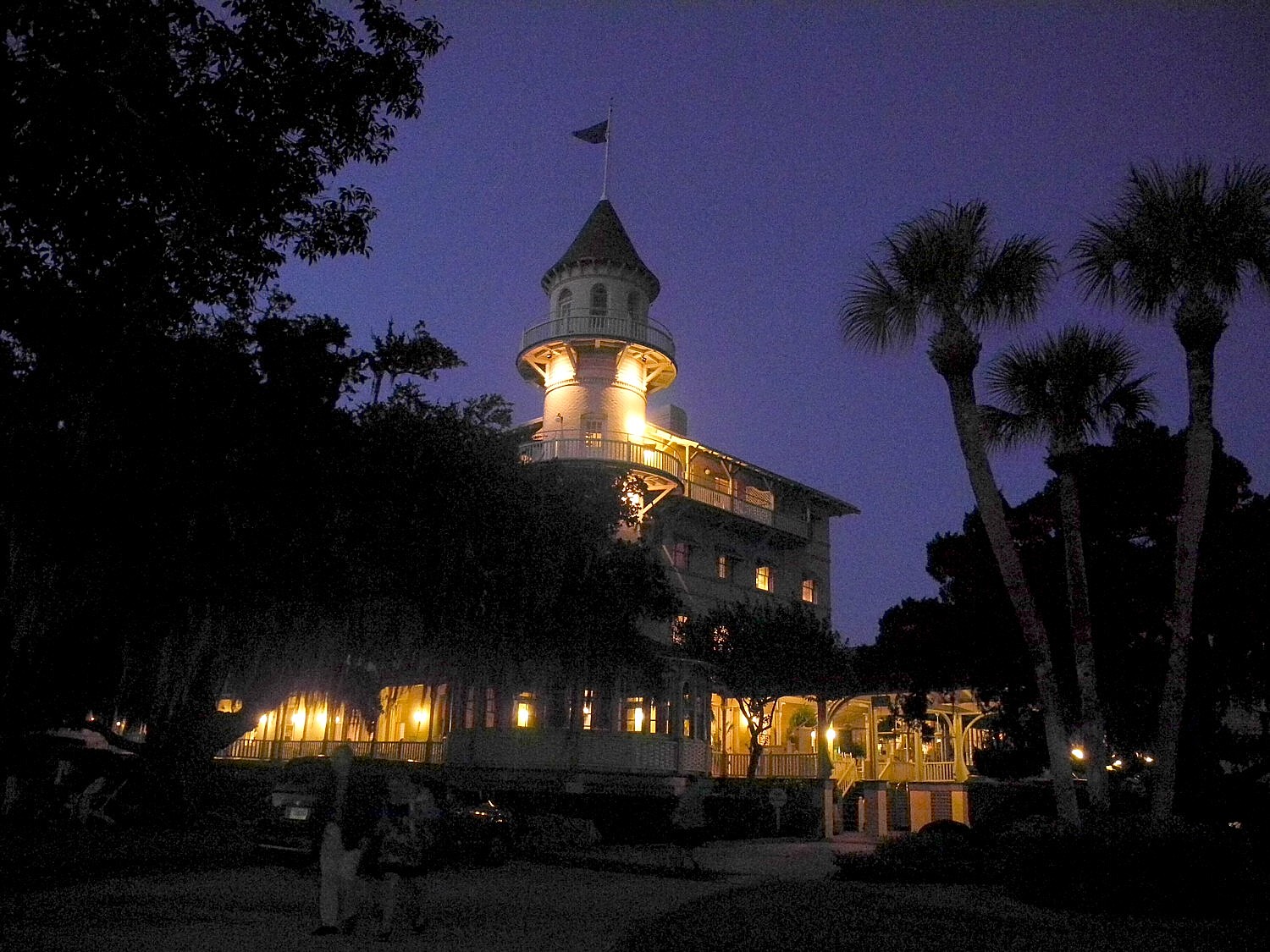
Jekyll Island Club Hotel (1887) Jekyll Island, Georgia: Built in the Queen Anne style, the Jekyll Island Club Resort is a castle surrounded by Southern charm. With sweeping Spanish moss and hundred years old live oaks, Jekyll Island is one of the most romantic spots in the South. The magic of the island will carry guests back in time to the grandeur of millionaires. From the top of the turret to quiet moments in Crane Garden, this little slice of heaven is perfect for any romantic proposal. Many couples who get engaged at the hotel have grown up coming to the Resort and wanted the destination to be a part of the proposal and eventually, the wedding. Besides the hotel accommodations, there are separate cottages. Jekyll Island also offers elopement packages.

With sweeping Spanish moss and hundred years old live oaks, Jekyll Island Club, Georgia, is one of the most romantic spots in the South (c) Karen Rubin/goingplacesfarandnear.com

Ledges Hotel (1890) Hawley, Pennsylvania: This hotel’s historic bluestone building and natural waterfall provide a dramatic backdrop for proposals. A life-long commitment made in the shadow of a historic landmark is symbolic of a relationship that will stand the test of time. The tiered decks overlooking Paupack High Falls are one of the most romantic spots to pop the question at Ledges Hotel. It’s a popular destination for engagements no matter the season. During winter, the frozen falls offer a stunning backdrop. Budding trees and rushing waters are a hallmark of spring. Summer by the waterfall is lush and cool, while fall foliage creates a vibrant landscape in autumn.

The Hotel Hershey (1933) Hershey, Pennsylvania: Known for its refined elegance, signature services and abundant amenities, The Hotel Hershey is a marvelous destination for a romantic getaway. The Hotel is rooted in its own romantic love story, between founder Milton S. Hershey and his wife, Catherine, and couples can spend time together in the beautiful Fountain Lobby, which was inspired by the couple’s travels and designed to look like a Spanish-style courtyard with palm trees, a beautiful fountain and a painted sky on the ceiling. The Formal Gardens behind the hotel are a popular spot for proposals. There, guests can find a quiet, romantic, picturesque area with beautiful flower beds, pergolas, fountains and reflecting pools.

See the full list of 2021 Top 25 Historic Hotels of America for a Romantic Proposal

See more suggestions; https://www.historichotels.org/us/experiences/honeymoon-romance.php. Historic Hotels of America, 800-678-8946, historichotels.org.

Micro Weddings

Micro weddings are all the rage. It’s all about keeping your special day small, but significant.

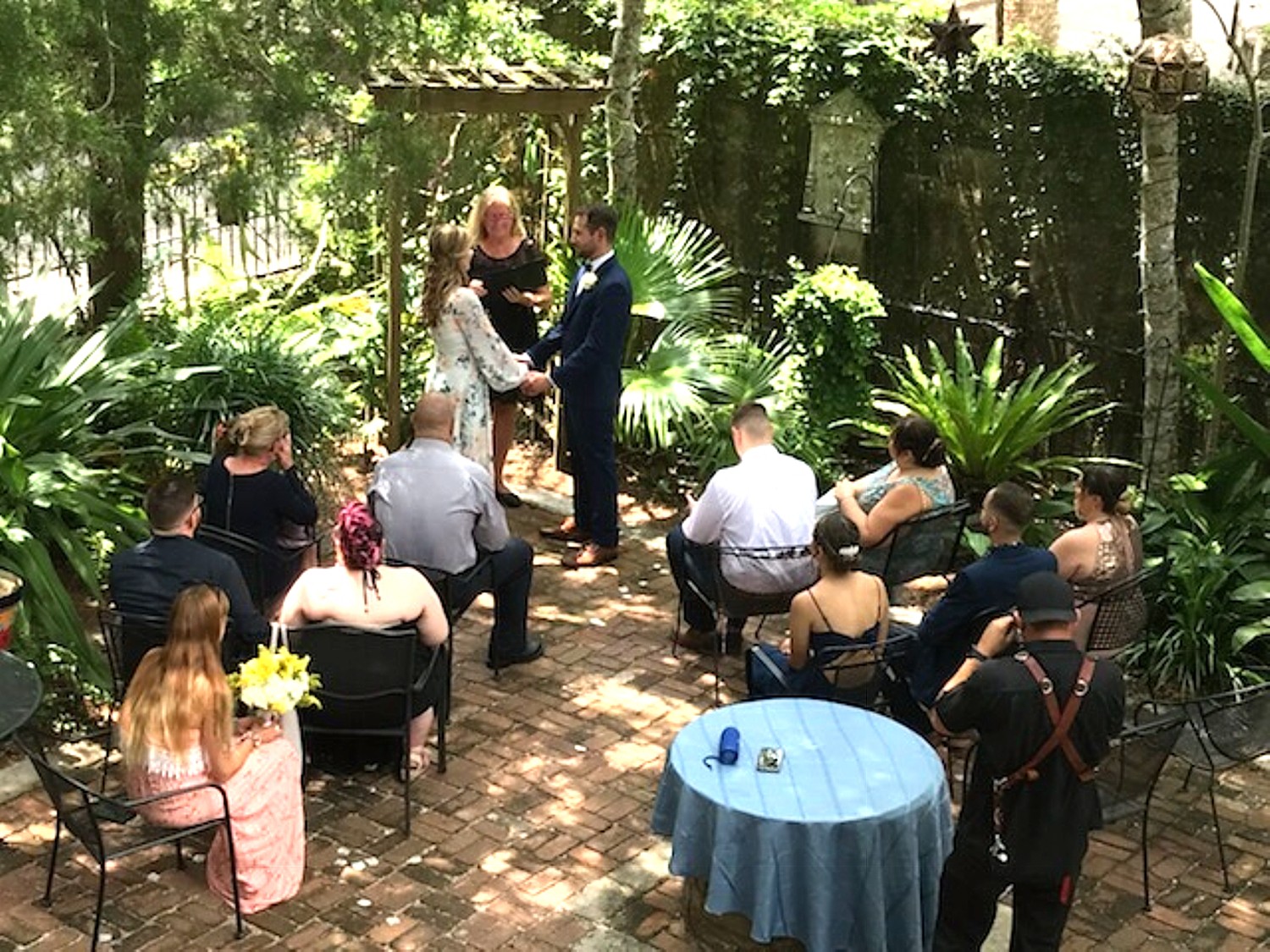
The courtyard of the historic St Francis Inn in the heart of historic St. Augustine, Florida, is a charming place for a small wedding. The couple can plan a private elopement for two or a micro-wedding in the four-season garden with up to 10 guests, flowers, champagne, house-made wedding cake and horse-drawn carriage ride (279 St. George St., St. Augustine FL, 800-824-6062, https://stfrancisinn.com/)

A micro-wedding in the garden of the historic St. Francis Inn, St. Augustine, FL

Then stay at either the St Francis Inn or the Casa de Suenos Bed and Breakfast (20 Cordova St., St Augustine, FL, 904-824-0887 dream@casadesuenos.com, https://casadesuenos.com/), or at a house on the beach.

Southampton Inn on Long Island has more than 20-years tradition of hosting “micro-weddings” – or the “minimony”. The inn has 3 acres of landscaped grounds, 2,300 sq. ft indoor ballroom for intimate but well-spaced wedding celebrations in a romantic setting (91 Hill Street, Southampton, NY, 11968, 631-283-6500, southamptoninn.comreservations@southamptoninn.com)

What may be a renewed old trend: elopement – it is said to date back to the 14th century, taken on new meaning in the 17th century, and was revived in popularity during the Great Depression when resources and money was scarce. Today, elopement packages are seeing new popularity because they have the benefit of catering to small, intimate ceremonies (as few as just the couple and witnesses) and minimizing the stress that typically comes with prolonged wedding planning Hotels also let the couple take advantage of windows of opportunity, compressing the time between “I will” to “I do.”

Hyatt Carmel Highlands Inn offers special wedding and elopement packages.

Hyatt Carmel Highlands Inn offers special wedding and elopement packages that keep intimacy and romance in mind. Designed for 2 to 20 people, the Highlands Elopement Package allows couples to exchange vows on a romantic gazebo overlooking the Pacific Ocean. Hyatt Carmel Highlights 120 Highlands Drive, Carmel, California, 93923, events specialist, 831-622-5461, 831-620-1234, hyatt.com.

See also: Top 25 Historic Hotels of America for a Romantic Proposal

_____________________

© 2020 Travel Features Syndicate, a division of Workstyles, Inc. All rights reserved. Visit goingplacesfarandnear.com, www.huffingtonpost.com/author/karen-rubin, and travelwritersmagazine.com/TravelFeaturesSyndicate/. Blogging at goingplacesnearandfar.wordpress.com and moralcompasstravel.info. Send comments or questions to FamTravLtr@aol.com. Tweet @TravelFeatures. ‘Like’ us at facebook.com/NewsPhotoFeatures
ad-VAN-turing, Newest Travel Trend

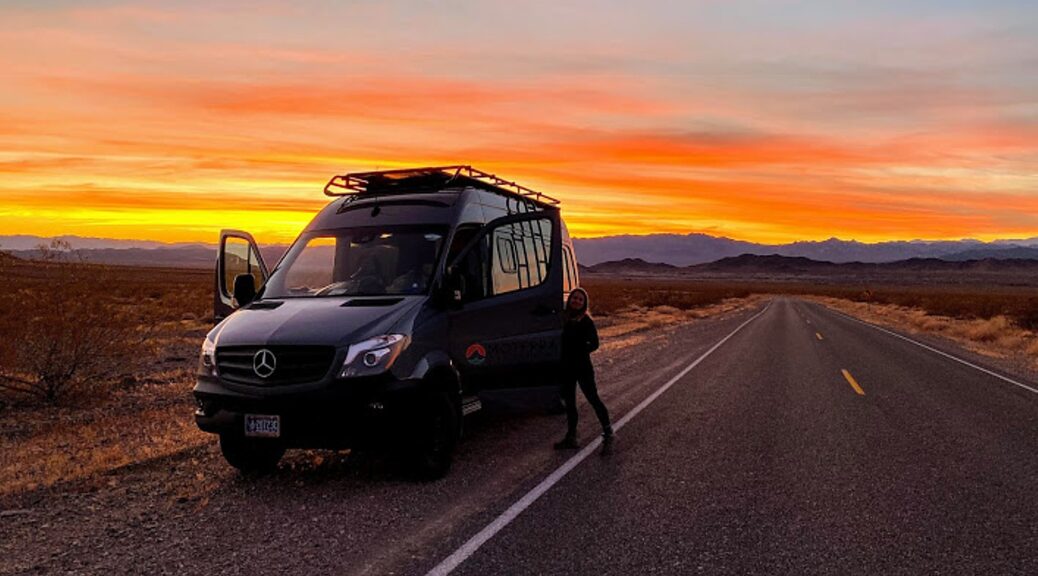
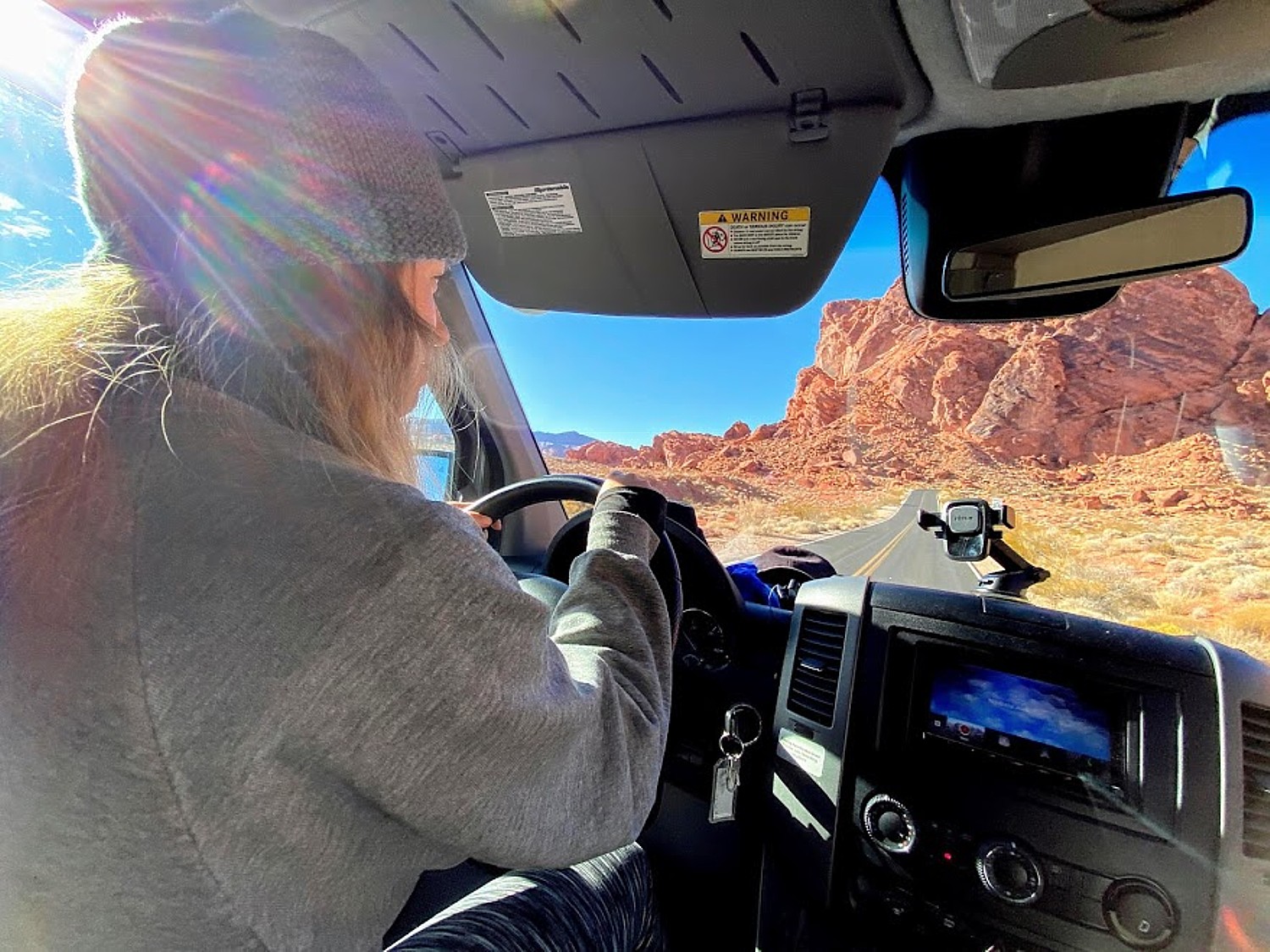
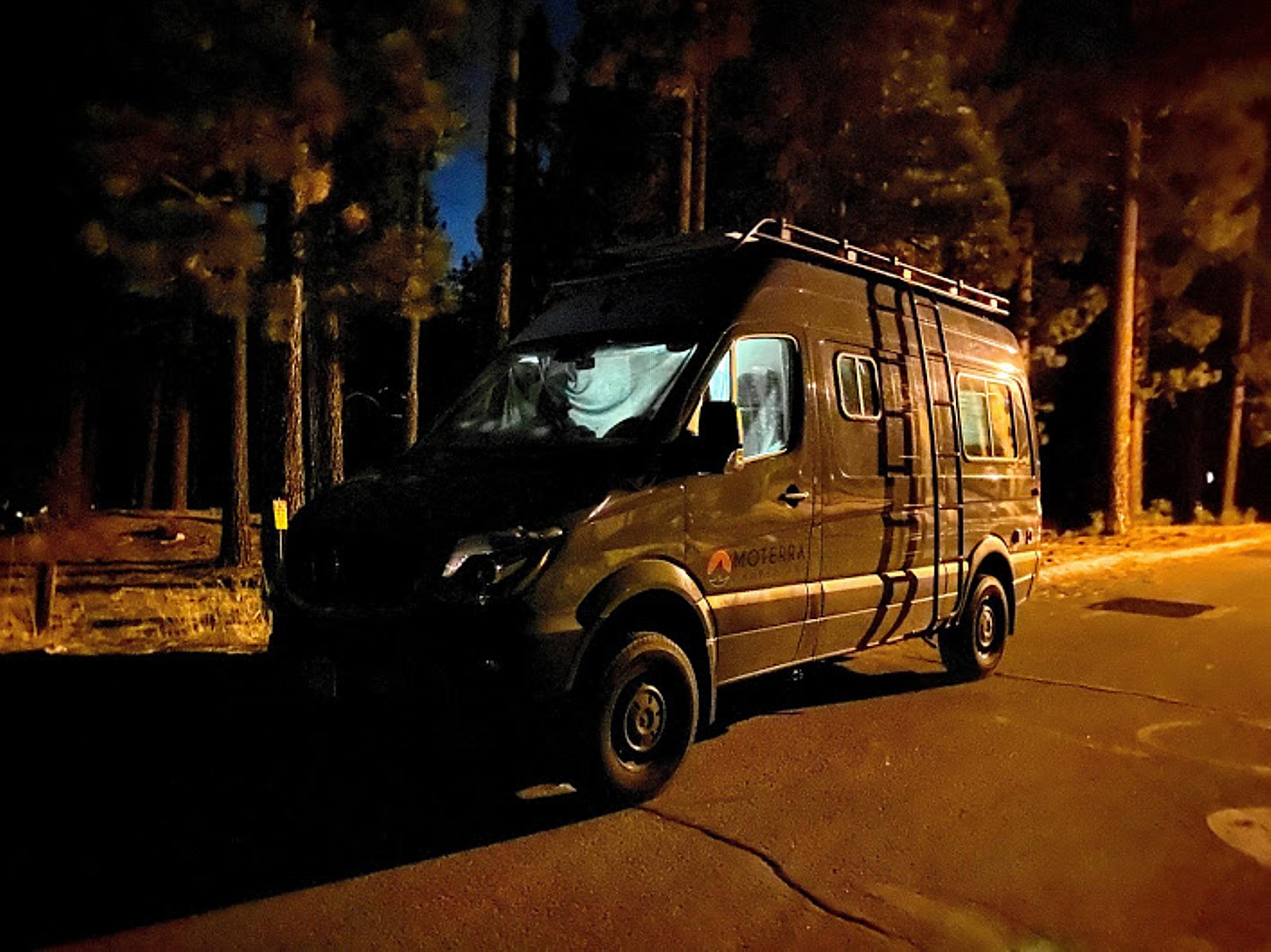
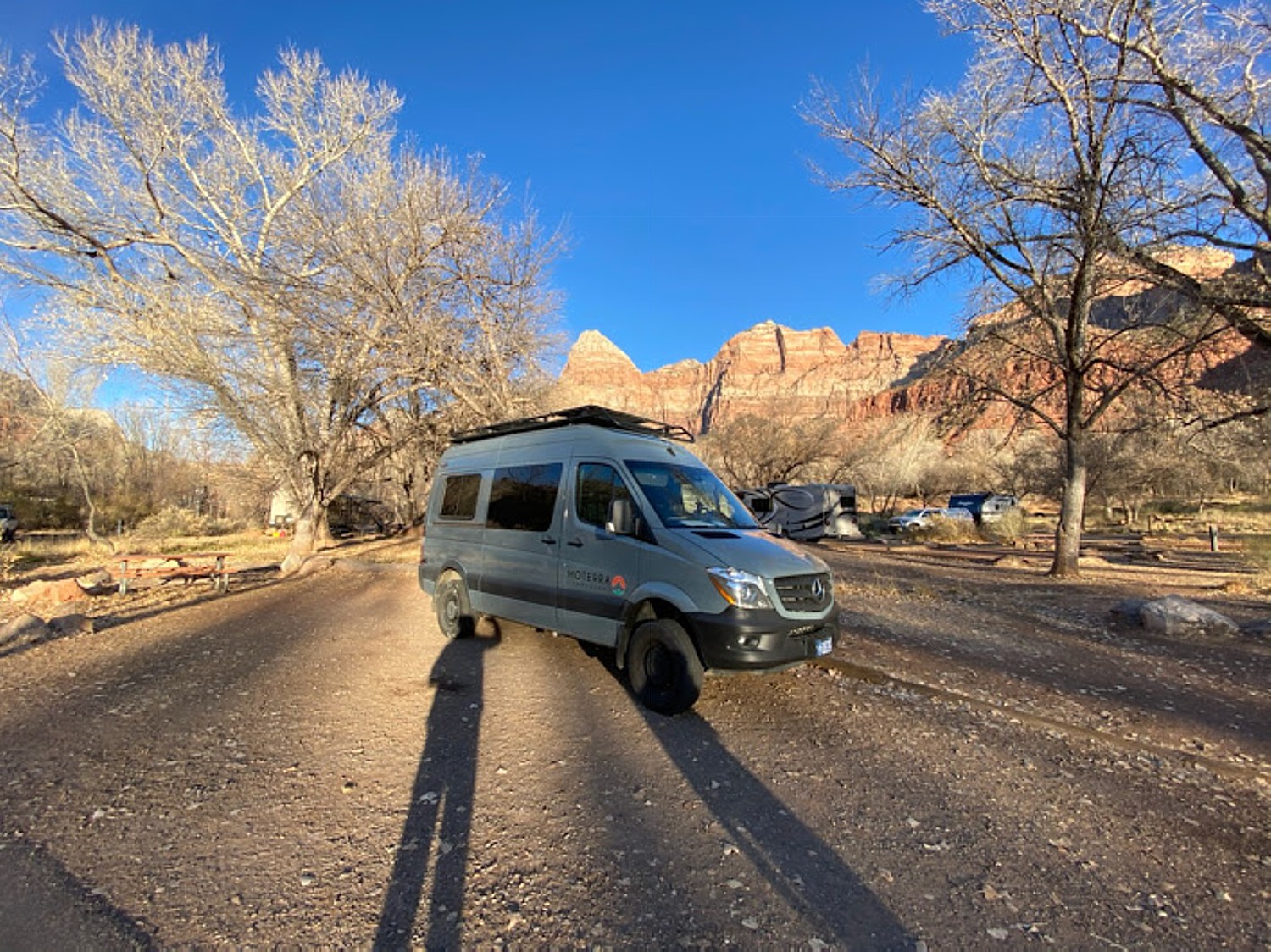
adVANturing in a Moterra camper van © Eric Leiberman/goingplacesfarandnear.com

by Eric Leiberman and Sarah Falter,

Travel Features Syndicate, goingplacesfarandnear.com

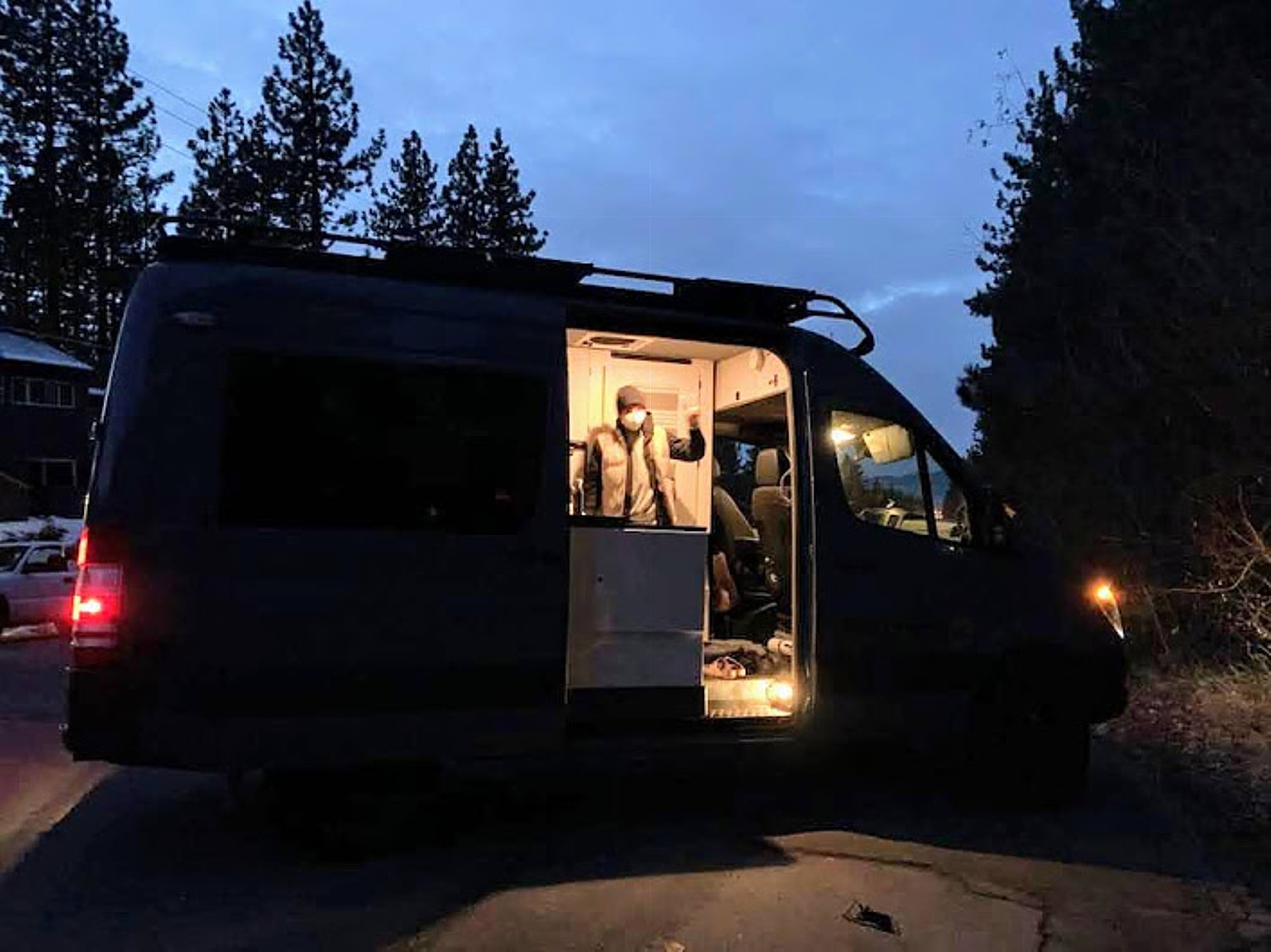
The biggest travel trend to explode out of the time of Corona is ad-VAN-turing – basically a freewheeling adventure in a tricked out van (sleeker than an RV but with most if not all the comforts of a studio apartment on wheels). These high-tech, luxury mobile campers are designed to be self-sufficient, carrying their own water, electricity, toilet, galley kitchen, even solar panels for energy so you don’t have to plug in, but can still have enough power in reserve to run the heat at night so you have incredible mobility and freedom to explore.

In mid-December, we took off with an indefinite week-long itinerary from Sonoma, California, in a Moterra camper van which we picked up in San Francisco.

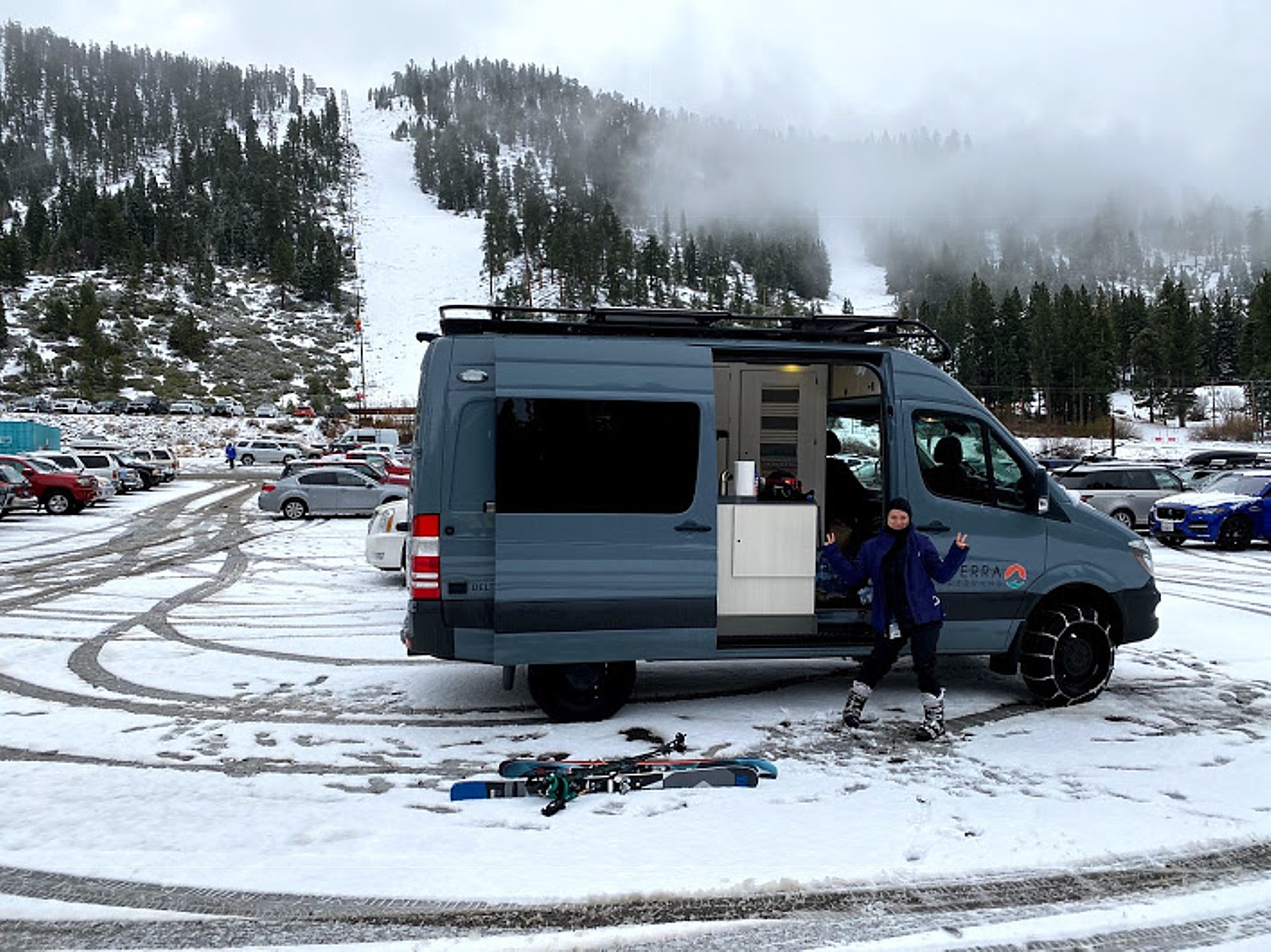
We spent our first day skiing at Heavenly Resort in Lake Tahoe, California (we stayed overnight a couple blocks away from the parking lot, which made getting first chair easy!).

In place for first chair at Heavenly Mountain Resort Base © Eric Leiberman/goingplacesfarandnear.com

From there, we drove down to Death Valley National Park, spending one night at the Panamint Springs RV park and another at the trailhead for Telescope Peak (fairly desolate this time of year).  We were really impressed with how our van got us safely to the base of mountain treks without issue, thanks to the four wheel drive.

Mesquite Flat Sand Dunes, Death Valley © Eric Leiberman/goingplacesfarandnear.com
Summit of Telescope Peak Hike, Death Valley © Eric Leiberman/goingplacesfarandnear.com
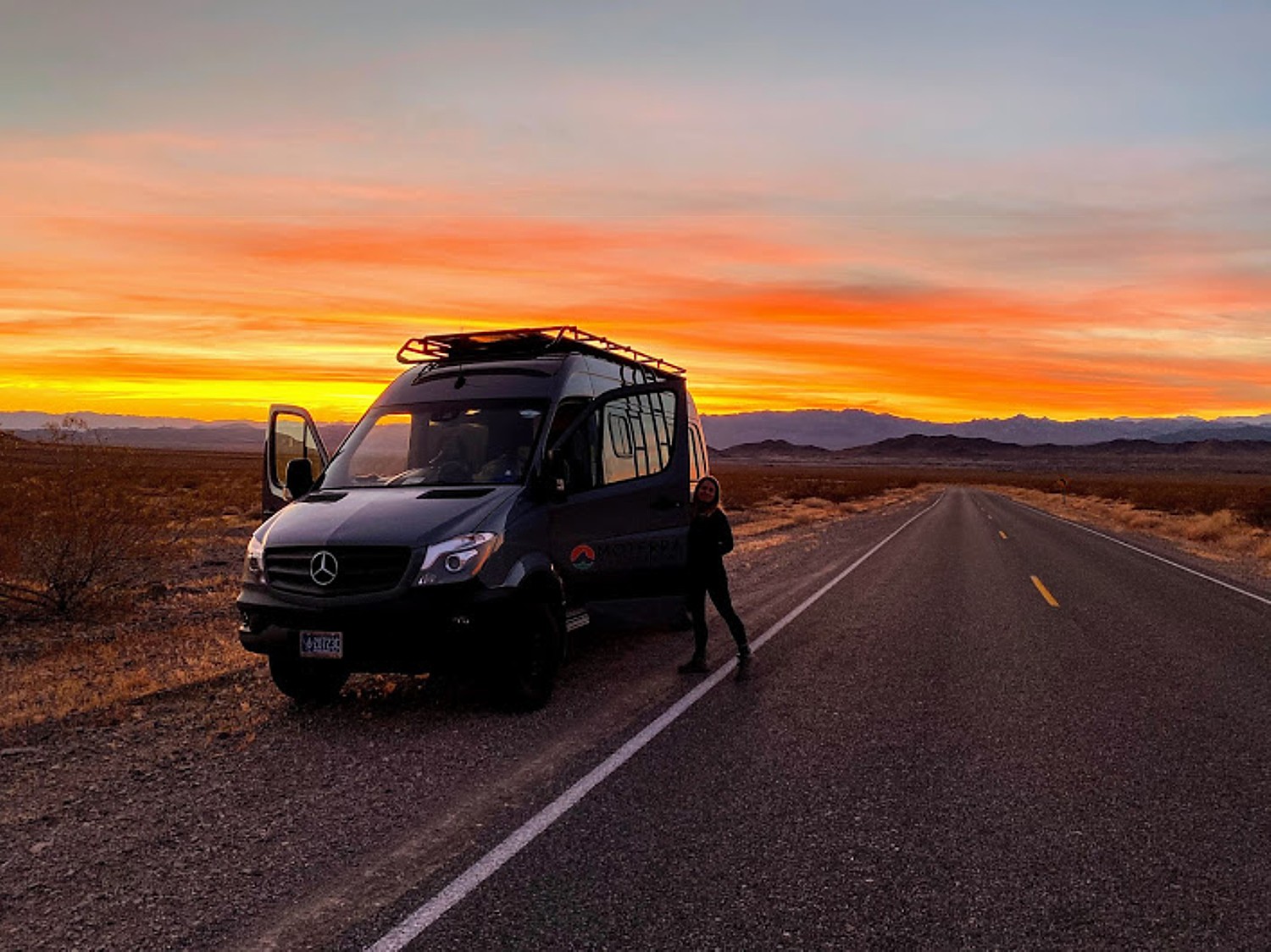
Gorgeous sunset on the drive from Death Valley to Zion © Eric Leiberman/goingplacesfarandnear.com

Though the mid-December days were short and the nights were cold, we were cozy and comfortable in our van with round-the-clock heat and cooking amenities. And snuggling up on the roof of the van with wine in hand made for some glorious stargazing (we lucked out our first night in Death Valley with a mind-blowing Geminids meteor shower).

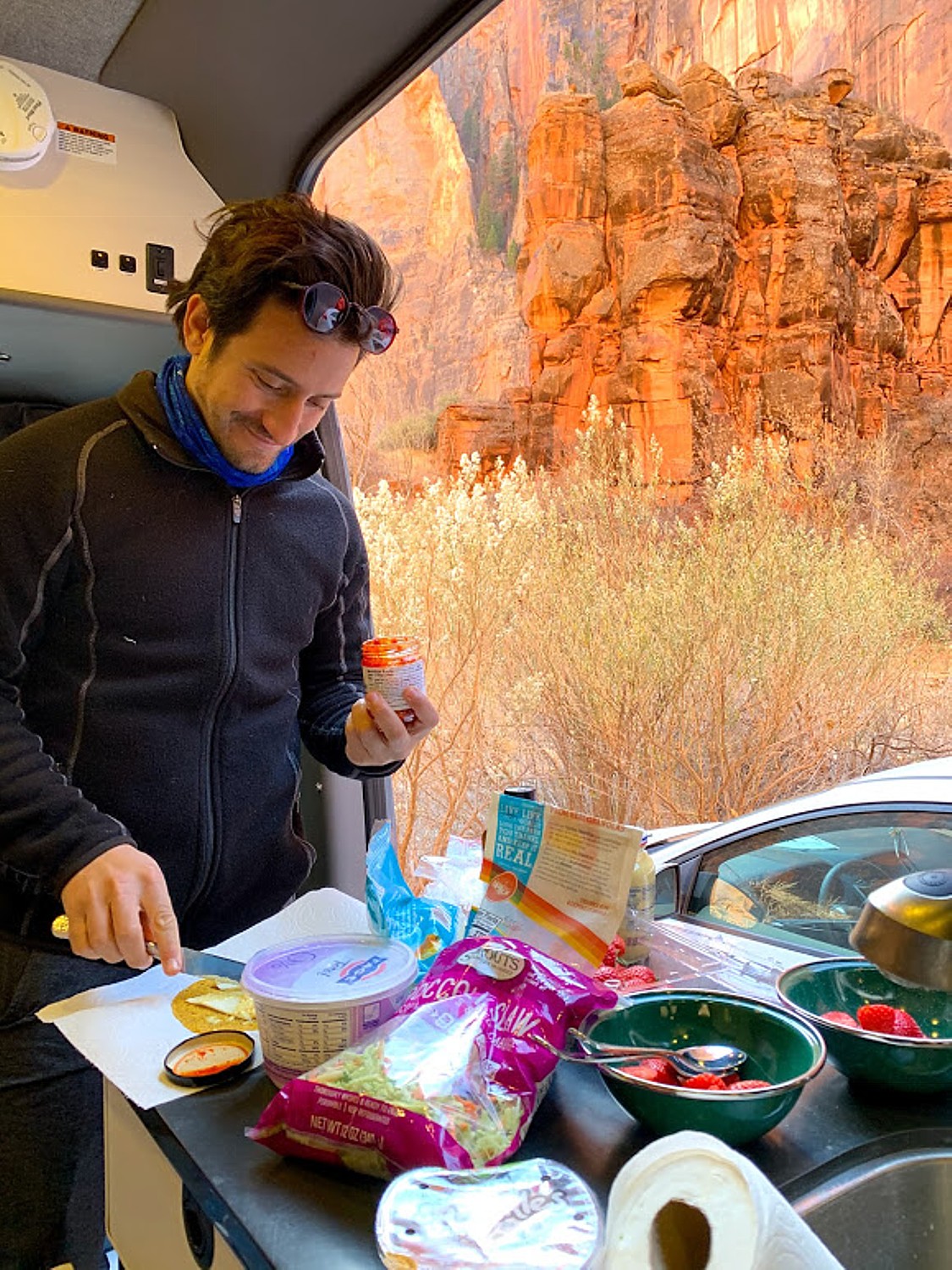
After Death Valley, we made our way to Zion National Park, Utah, stopping along the way in Las Vegas, Nevada, to pick-up a quick dinner. The Angels Landing & Narrows hikes are not to be missed. And being able to pull over at picturesque lookout points for homemade (van-made) lunches made the experience in the park all the more special.

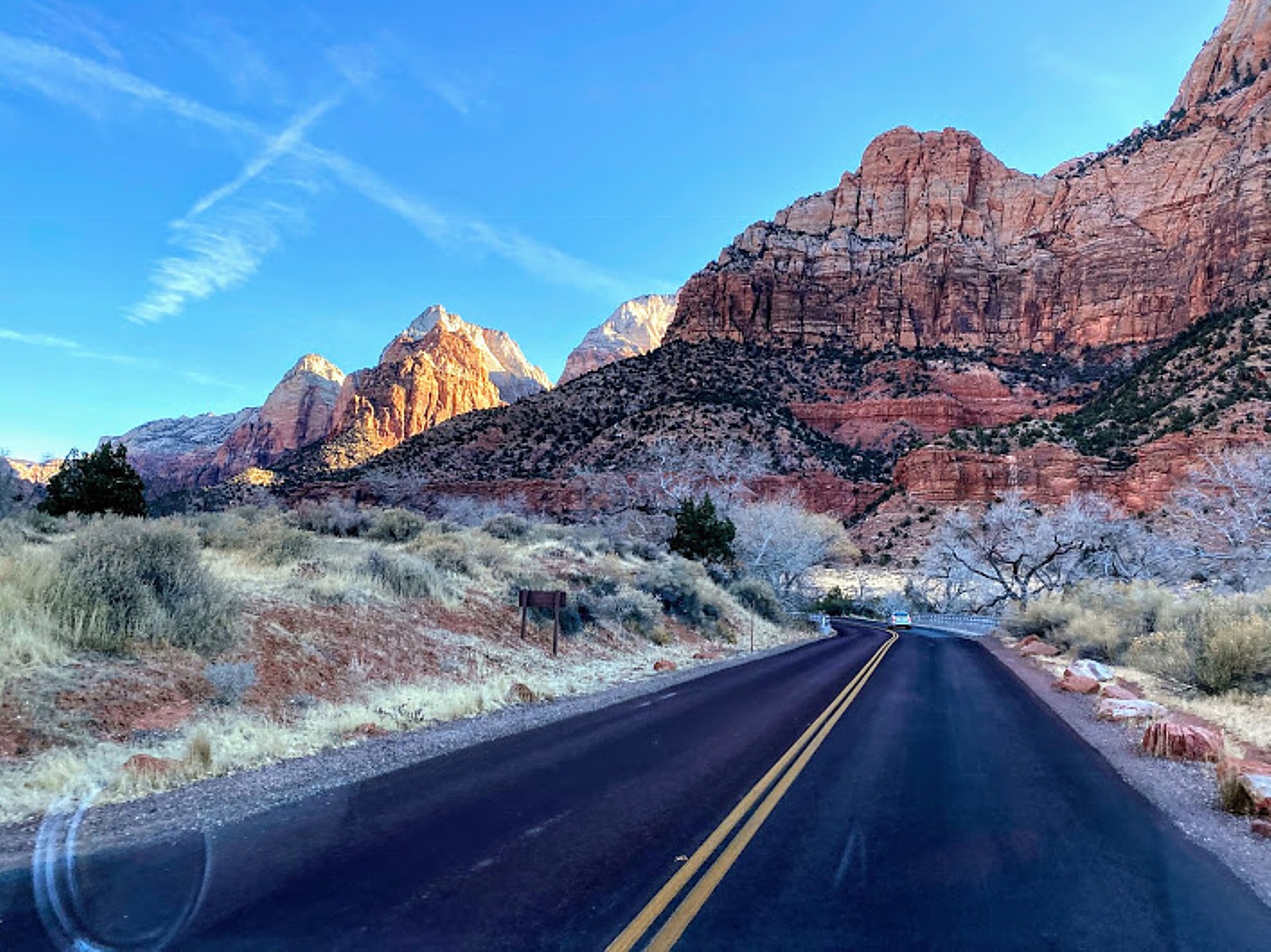
Driving through the wintery scenery in Zion National Park © Sarah Falter/goingplacesfarandnear.com
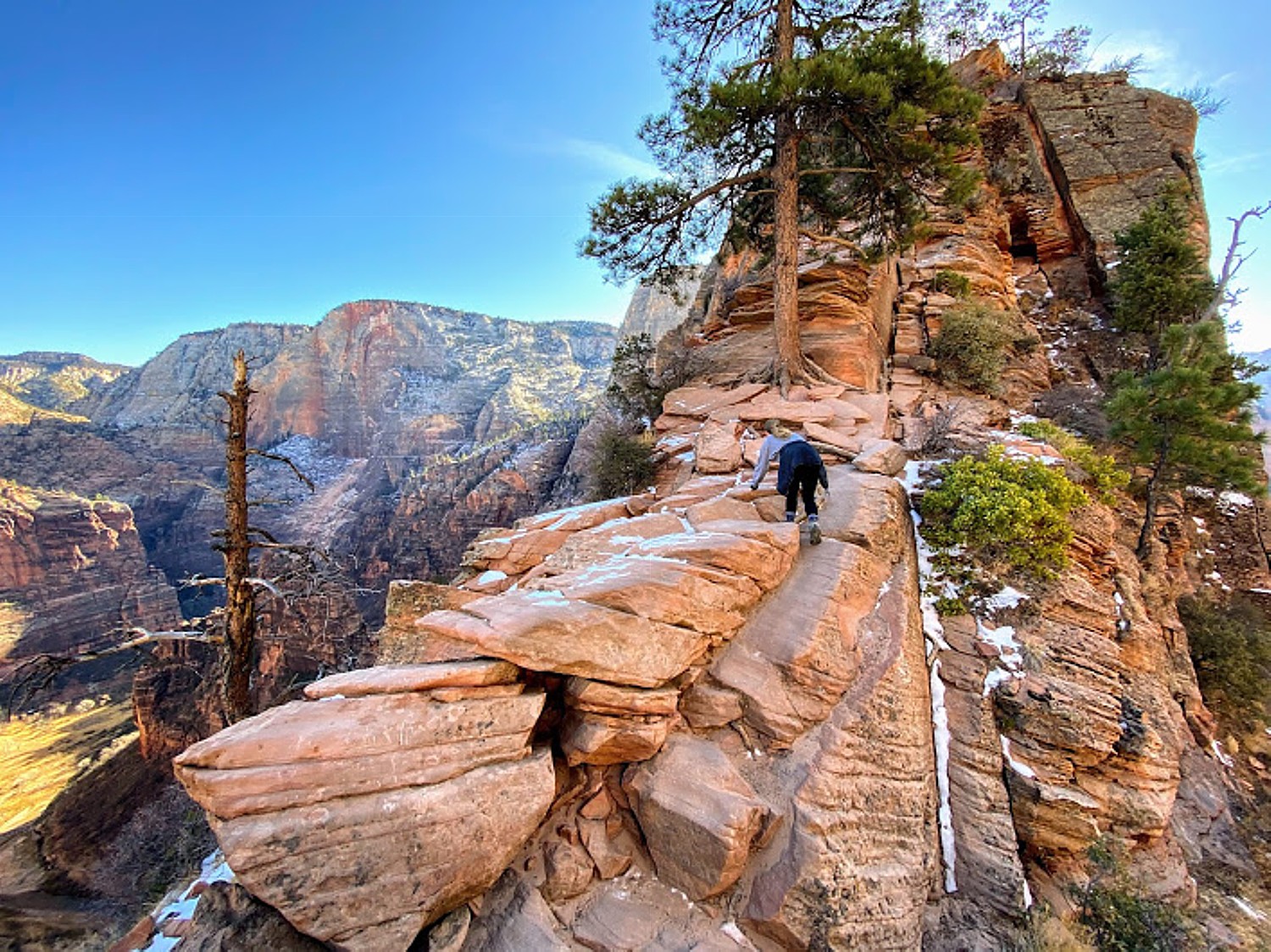
Near the top of Angels Landing, Zion National Park © Eric Leiberman/goingplacesfarandnear.com
Zion National Park © Sarah Falter/goingplacesfarandnear.com
Preparing lunch after a hike in Zion National Park © Sarah Falter/goingplacesfarandnear.com


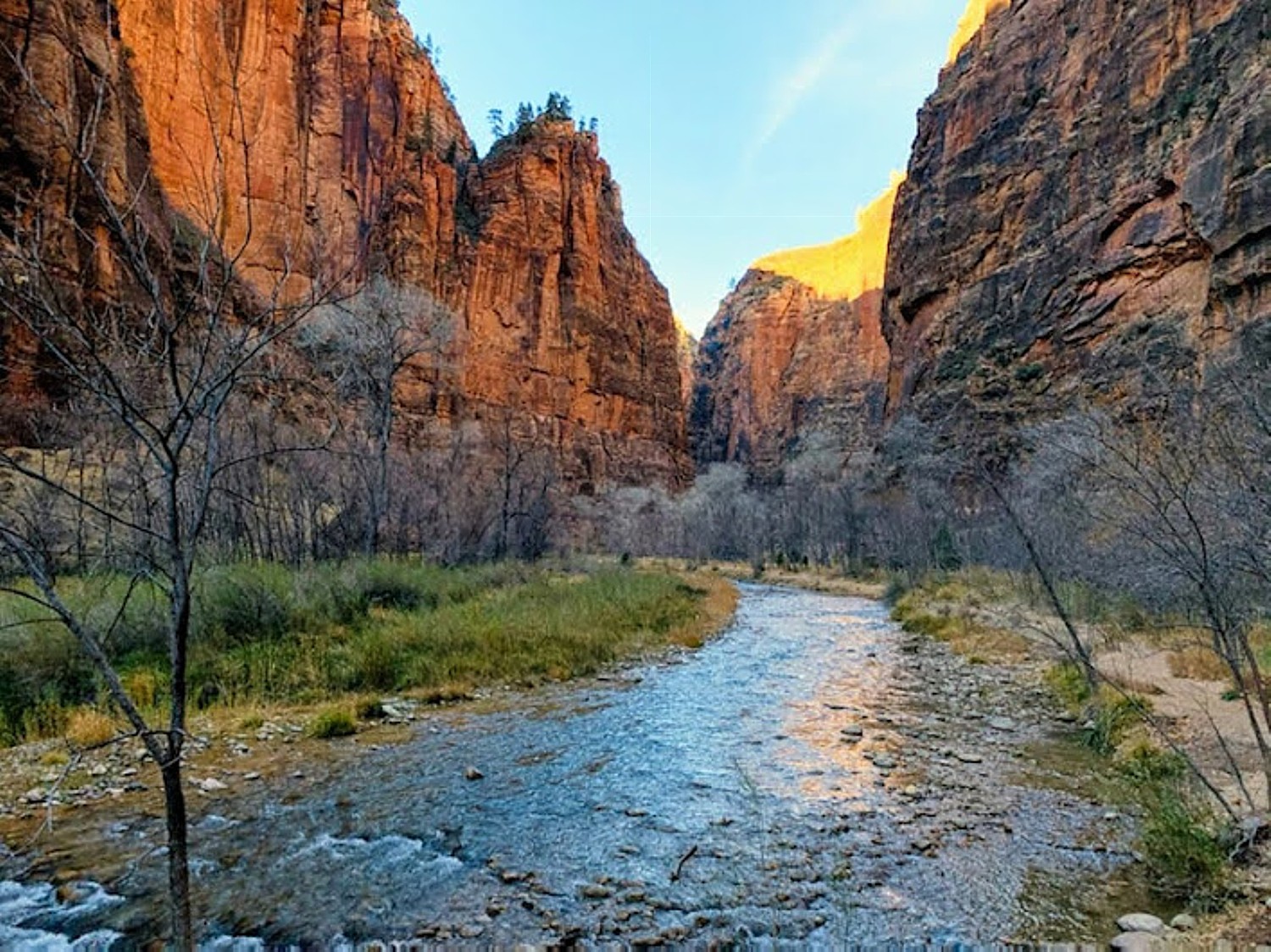
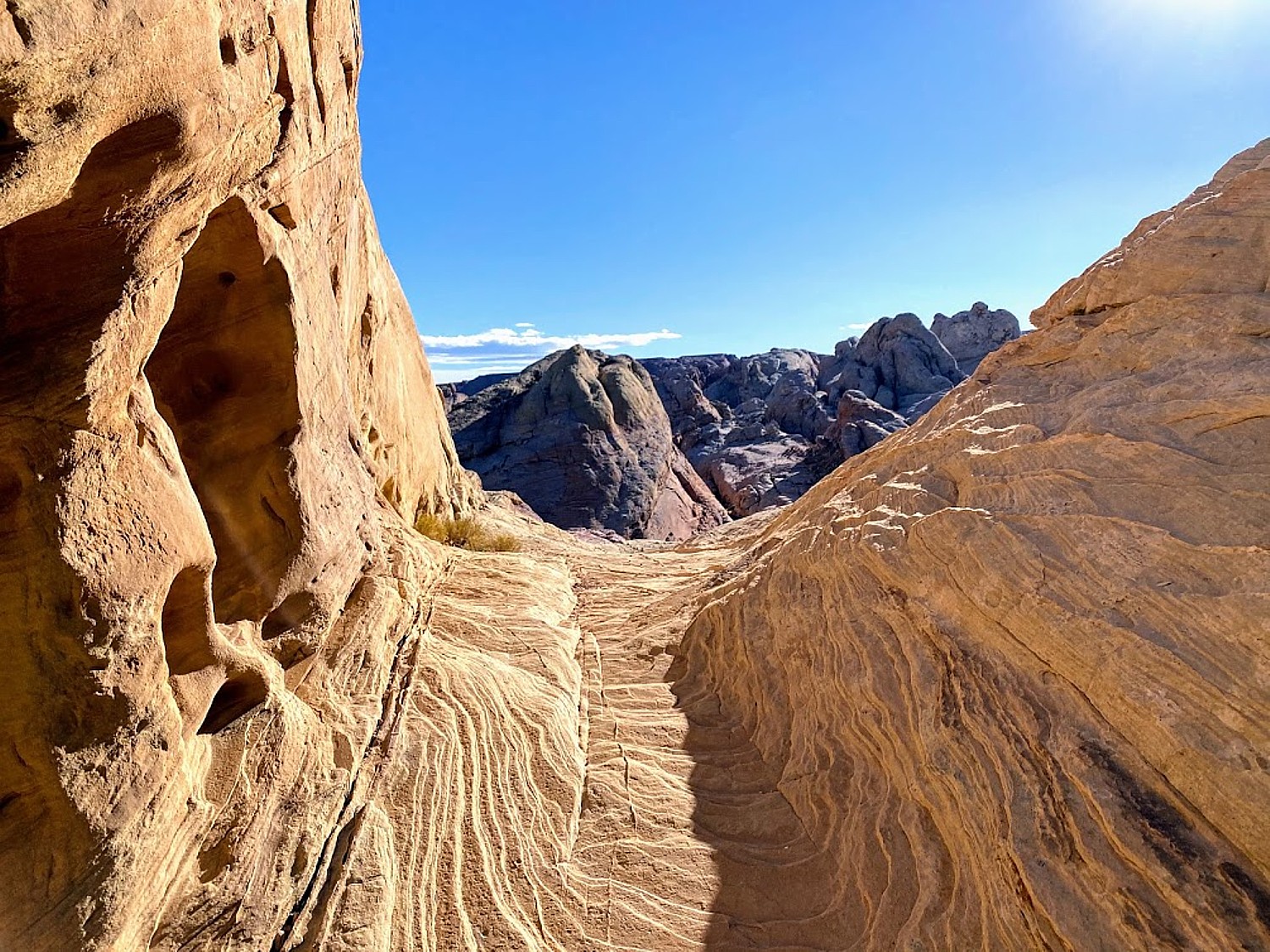
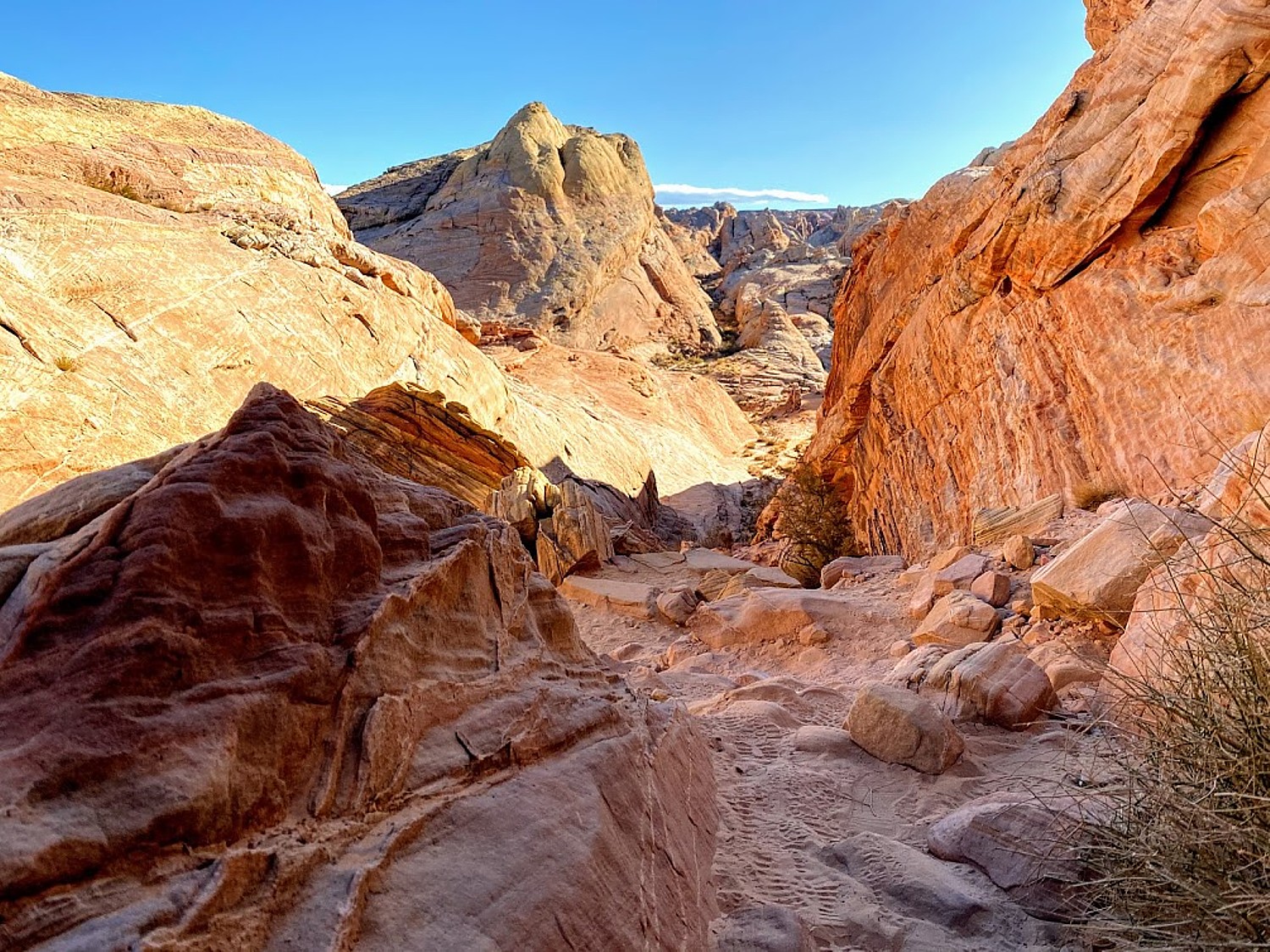
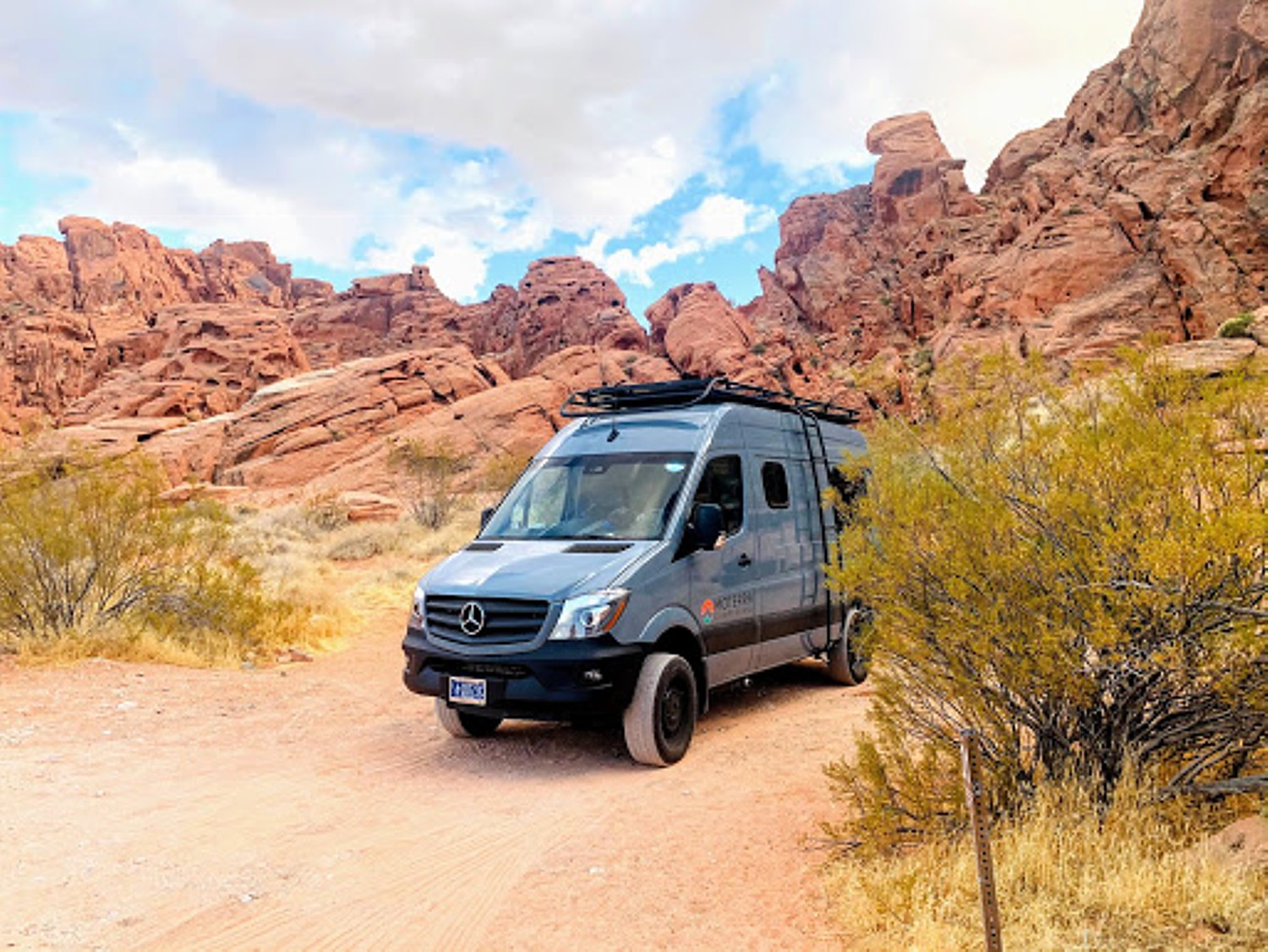
On our way back from Zion, we spent a night in Valley of Fire State Park (about an hour east of Vegas). We were shocked we hadn’t heard of this Nevada state park before. The massive red rocks and scrambly canyons made us feel like we were exploring communities and dwellings straight out of The Flintstones! We spent the night at the spectacular Arch Rock Campground.

Valley of Fire State Park, Nevada © Eric Leiberman/goingplacesfarandnear.com
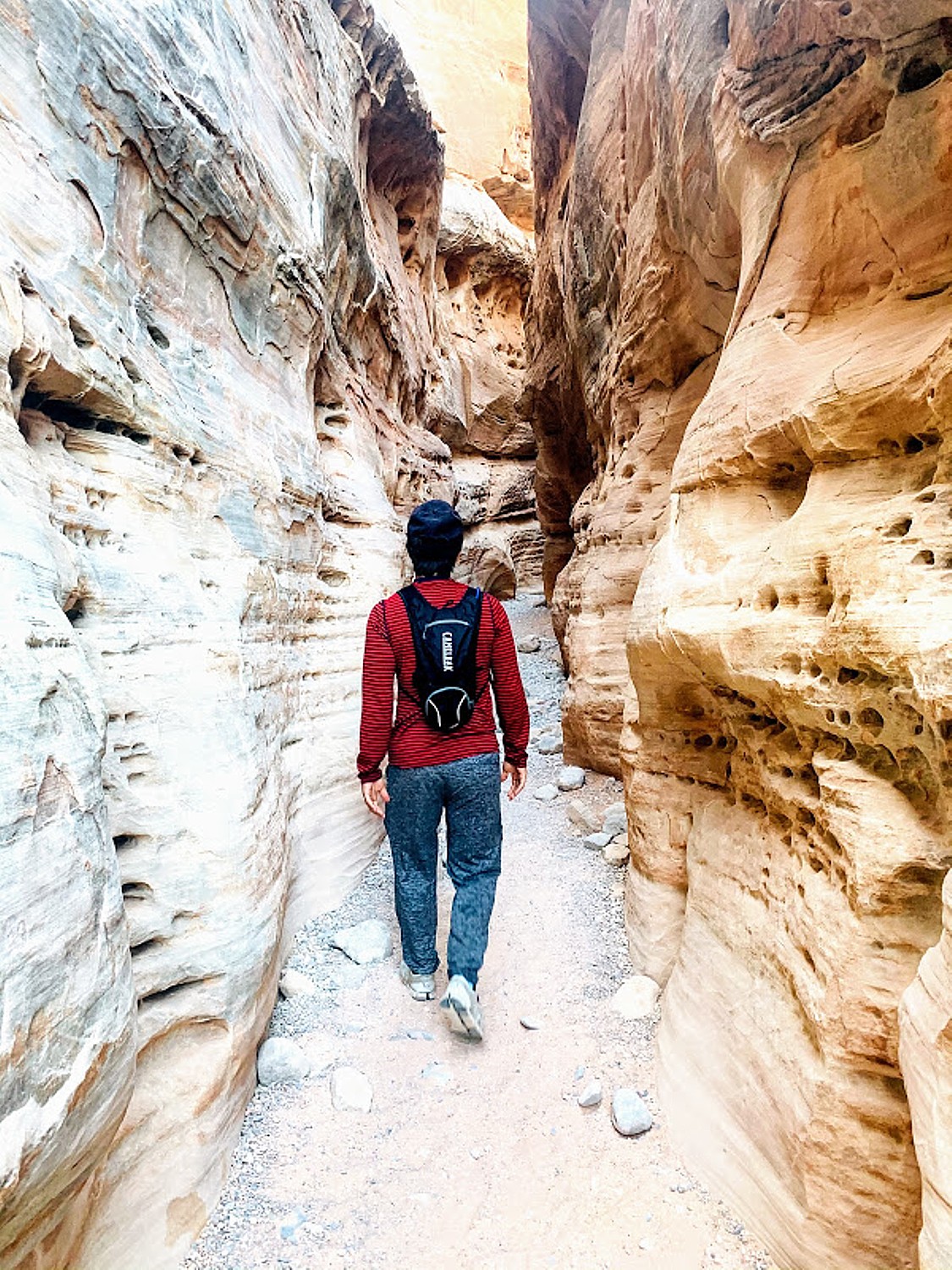
White Domes Trail, Valley of Fire State Park © Eric Leiberman/goingplacesfarandnear.com
Arch Rock Campground, Valley of Fire State Park © Sarah Falter/goingplacesfarandnear.com
White Domes Trail, Valley of Fire State Park © Sarah Falter/goingplacesfarandnear.com

While making our way back towards the Bay Area (by way of Los Angeles), we already began planning our next adVANture for Summer 2021 – we’re thinking the Pacific Northwest. As fabulous as it was to explore the National Parks in the off-season (we hear Zion especially can get unbelievably crowded and Death Valley is known to have some of the most extreme temperatures in the world), we’re looking forward to our next trip with warmer weather and longer days for exploring.

Moterra Luxury Camper Vans Lets You Pave Your Own Path

You’ve probably now heard of glamping – luxury camping. Now Moterra Campervans offer a novel way to experience the national parks and wilderness by luxury camper van, which also provides amazing self-sufficiency.

With all the luxury of a 50-foot long RV, the Moterra camper vans, at 19-foot long,are  much less cumbersome to drive and park, and can even be used in easier-to-book tent camping spots in national parks, so you can stay away from the busy (and likely booked up) RV parks.

Arch Rock Campground, Valley of Fire State Park © Eric Leiberman/goingplacesfarandnear.com

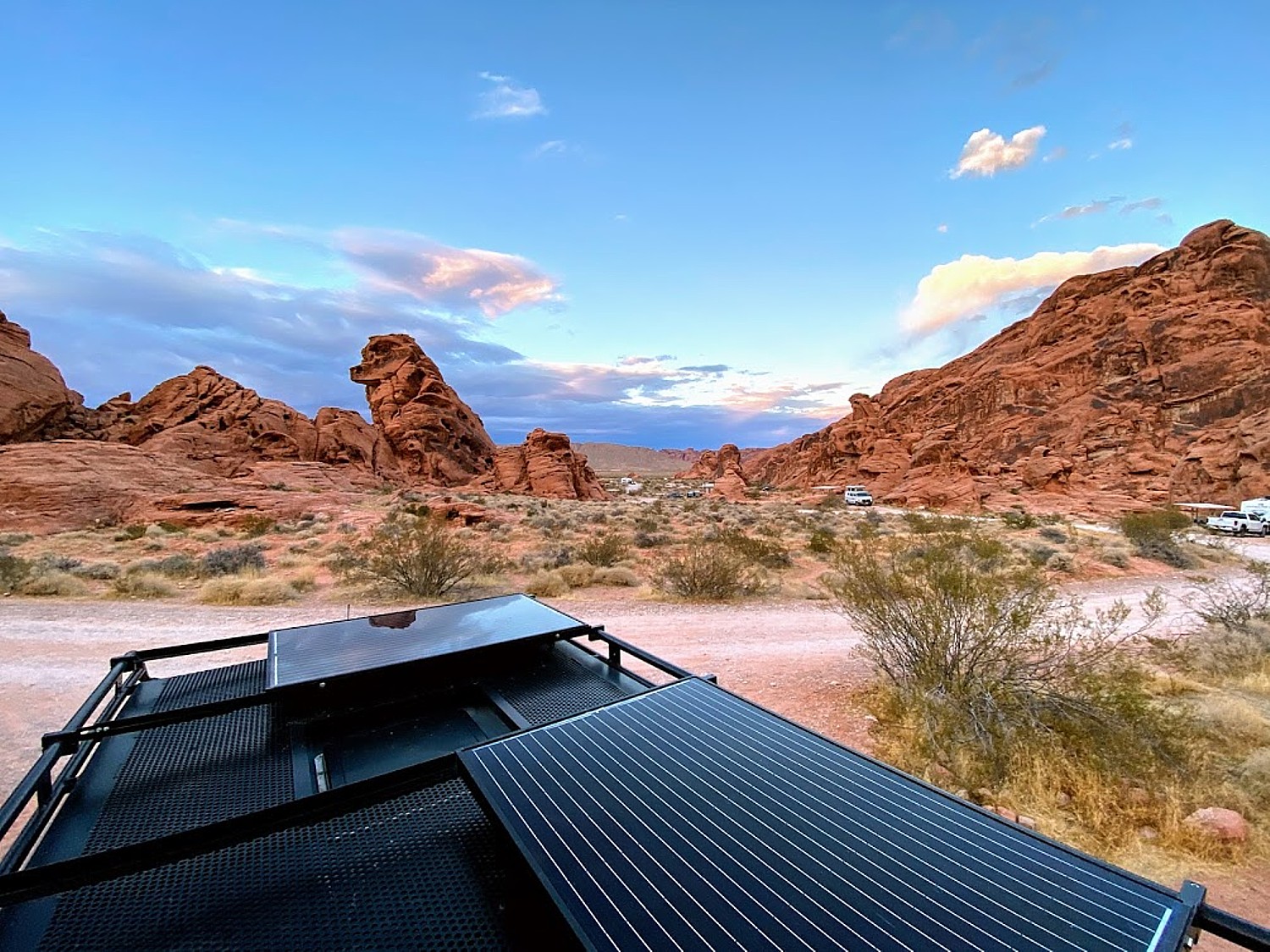
You don’t even need to plug into electricity because the vans are powered with rooftop solar panels and auxiliary batteries (not noisy generators); or have to plug into a water supply, since they hold between 16 and 24 gallons of fresh water, or bathroom, since they have  their own sink, even their own bathroom facilities (port-o-potty; some actually have its own shower), and with their own galley for cooking and refrigerator, these camper vans provide a new level of mobility.

These camper vans come with bluetooth audio, cruise-control and touch-screen navigation. A backup camera, blind spot sensors and lane assist technology make maneuvering a breeze. You don’t have to stay in an RV park, but can go wherever tents are allowed.

The Moterra camper van is self-sufficient. You don’t need to plug in for electricity or water, so you can follow your wanderlust © Eric Leiberman/goingplacesfarandnear.com

Moterra’s fleet of specially outfitted Mercedes Benz Sprinters, tricked out by Sportmobile, are outfitted with absolutely everything you need for camping, from sleeping stuff (memory foam pillow!), to cooking (marshmallow skewers) and dining, cleaning supplies, amenities like chairs and table, inflatable solar lights, even bear spray.

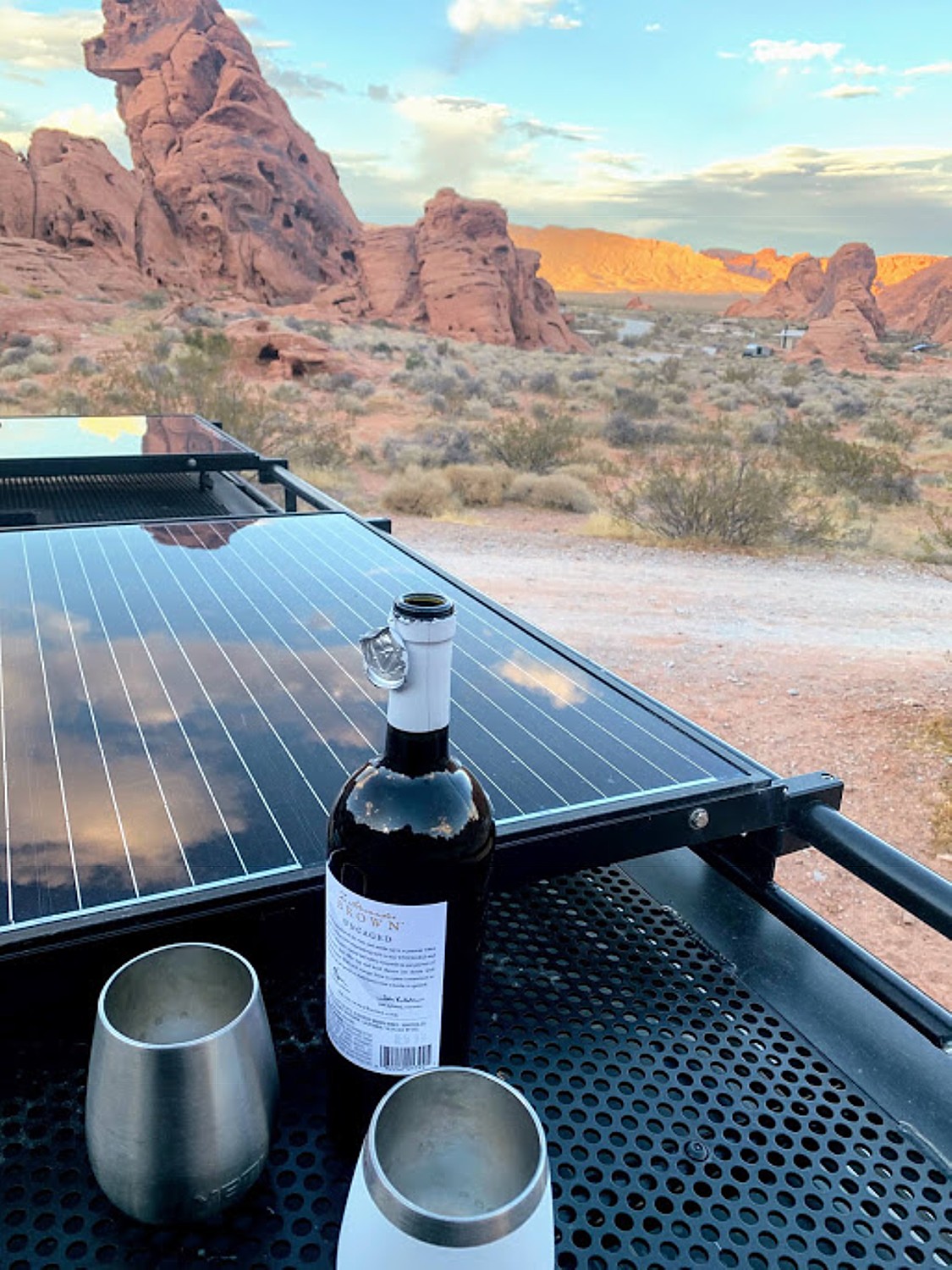
Enjoying a bottle of wine on the camper van roof and getting set for star-gazing; solar panels provide enough power to keep the heat going all night © Sarah Falter/goingplacesfarandnear.com

There are two models to choose from: The High Roof is perfect for couples – it includes a queen sized bed in the back, galley kitchen, sink, indoor shower and portable toilet. The Pop Top, which sleeps four, is perfect for families, with a double bed down below and a double bed up top in the Pop Top! While the Pop Top does not have an Indoor Shower, you can get as an add-on a solar shower that can be used outside, and has a sink and stove. Both models are rented for $339 a night.

Add-ons available include hammocks & bike racks, and services such as pre-bought groceries.

The Moterra fleet is positioned for adventuring in Yellowstone, Wyoming; the Grand Tetons; Utah; Glacier National Park (Montana); Las Vegas (great gateway for desert adventuring) and California.

Death Valley © Eric Leiberman/goingplacesfarandnear.com

Moterra, which founded by Gabe Aufderheide and Trevor James who were formerly with Backroads, the renowned active travel company, also offers packaged and customized tour itineraries.

All-inclusive packages consist of:

Moterra Campervan Rental and cleaning fee

Day-by-day personalized Itinerary with directions and destination info.

Pre-booked campsites, handpicked and booked in advance where possible, or GPS locations for off-the-grid dispersed camping spots.

Scenic routes that take you to the heart of the action while minimizing road traffic.

Individualized suggestions depending on your preferences for hiking, scenic attractions, restaurants and activities.

A wide range of activities to make the trip your own, like white-water rafting, wildlife safaris, road biking, horseback-riding, kayaking and scenic floats.

Zion National Park is featured in Moterra’ pre-packaged 13-night/14 day Mighty 5+ Grand Canyon trip © Eric Leiberman/goingplacesfarandnear.com

For example, a 13-night/14 day Mighty 5+ Grand Canyon: featuring Arches National Park, Canyonlands National Park, Capitol Reef National Park, Bryce National Park, Zion National Park, Monument Valley and Grand Canyon National Park is priced from $5999.

A six-night/seven-day family-oriented Yellowstone Handpicked Highlights package features Yellowstone National Park and The Grand Tetons National Park (from $4699).

Moterra operates out of Jackson, WY, Whitefish, MT, Salt Lake City, UT and San Francisco, CA.

Check the website for deals, discounts on early bird bookings, extended trips, spring 2021 discounted add-on for one-ways, and gift cards.

Moterra Camper Vans, 1565 Berger Lane, Jackson, Wyoming 83001, 307-200-7220,

info@gomoterra.com, gomoterra.com.

__________________________

© 2021 Travel Features Syndicate, a division of Workstyles, Inc. All rights reserved. Visit goingplacesfarandnear.com, www.huffingtonpost.com/author/karen-rubin, and travelwritersmagazine.com/TravelFeaturesSyndicate/. Blogging at goingplacesnearandfar.wordpress.com and moralcompasstravel.info. Send comments or questions to FamTravLtr@aol.com. Tweet @TravelFeatures. ‘Like’ us at facebook.com/NewsPhotoFeatures
New York’s 750-Mile Empire State Trail, Longest Multi-Use State Trail in Nation, Officially Opened!

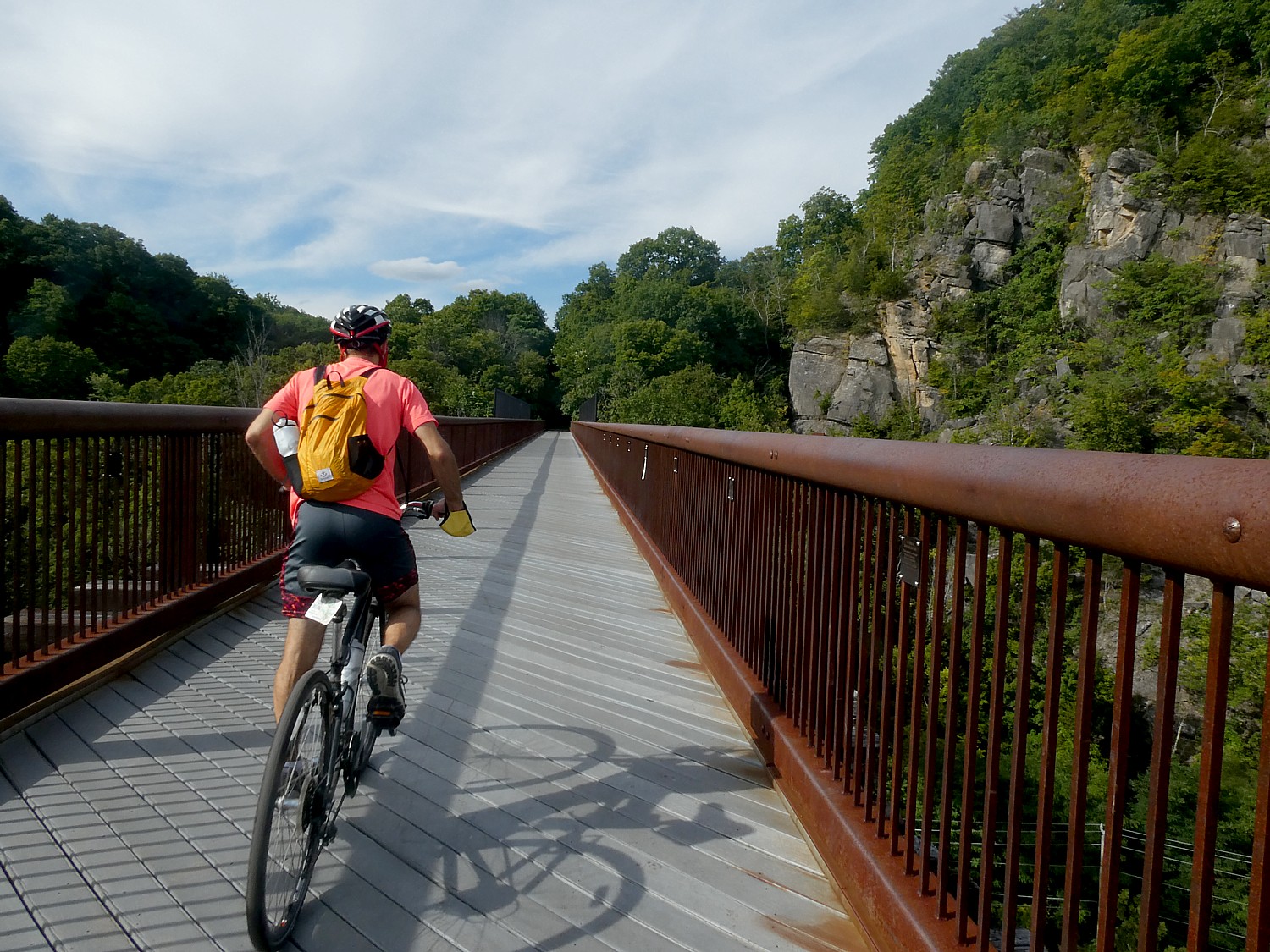
Biking over the Rosendale Trestle, 150 feet above the Rondout Creek, on the Wallkill Valley Rail Trail, part of the New York Empire State Trail © Karen Rubin/goingplacesfarandnear.com

by Karen Rubin, Travel Features Syndicate, goingplacesfarandnear.com

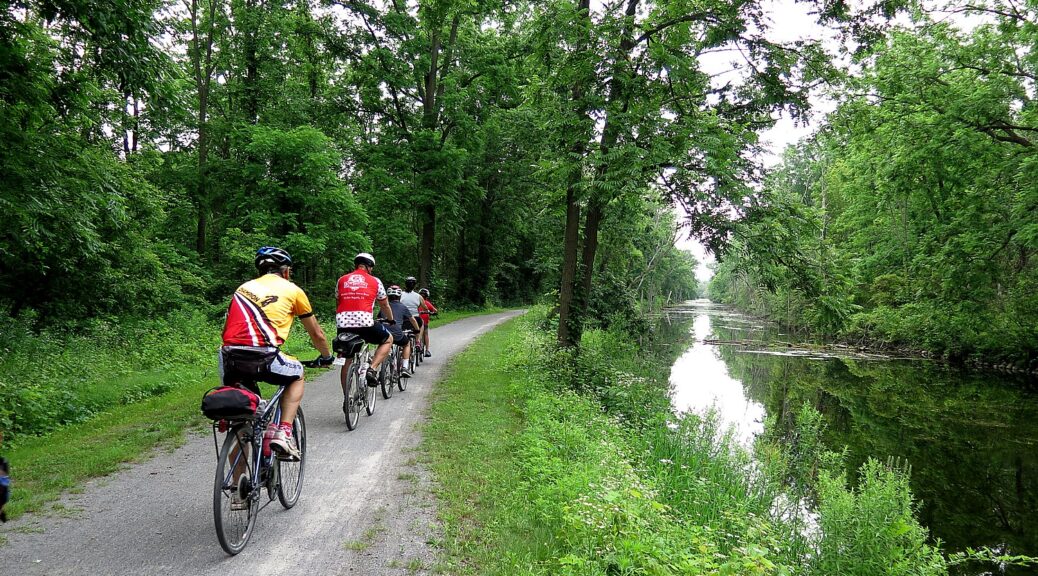
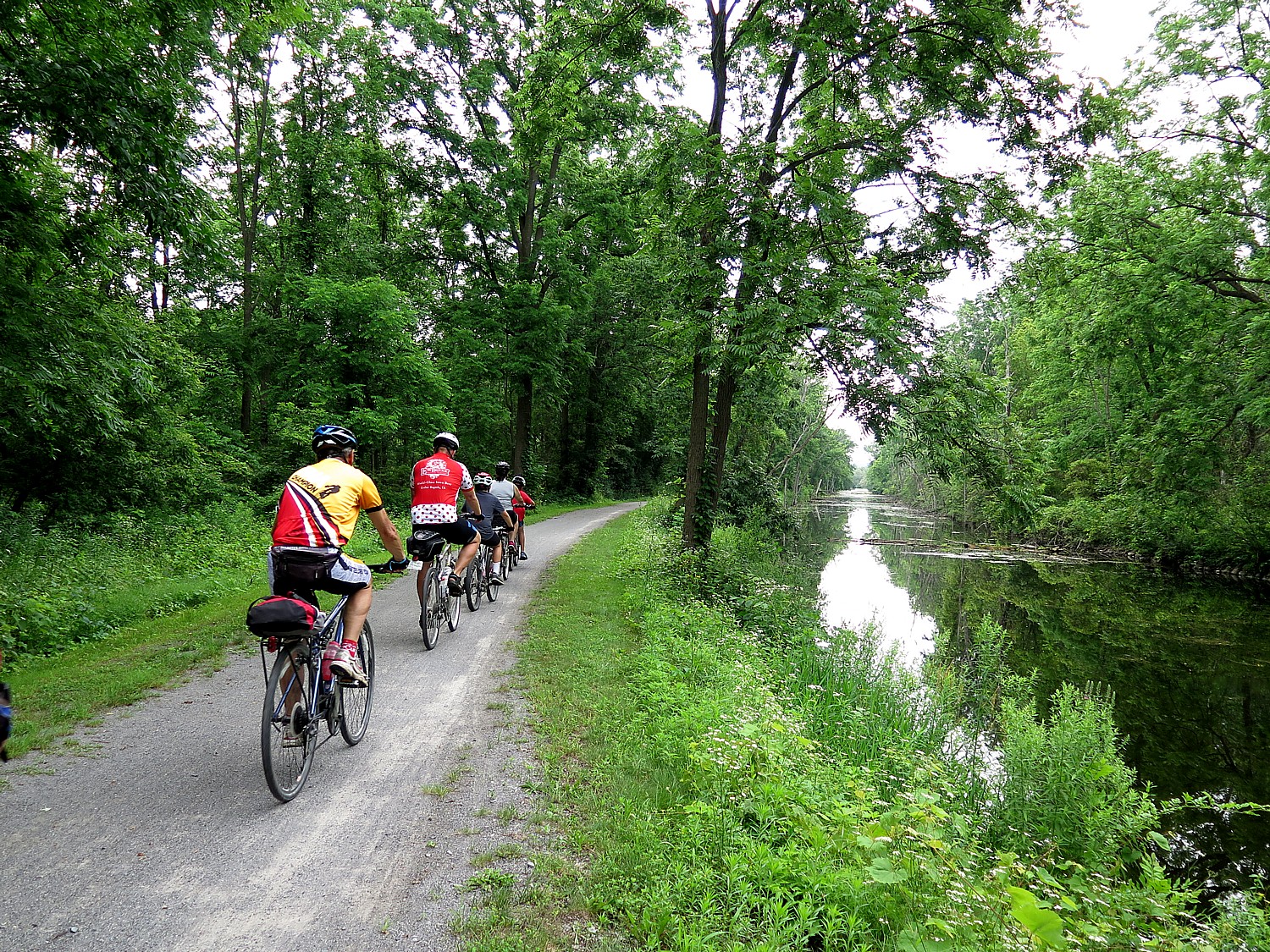
New York’s ambitious Empire State Trail, now the nation’s longest multi-use state trail, is now fully opened as of December 31. The trail network spans 750-miles total, 75 percent of which is off-road trails ideal for cyclists, hikers, runners, cross-country skiers and snow-shoers. The new recreational trail means you can go from New York City north-south through the Hudson and Champlain Valley to Canada, and east-west from Albany to Buffalo along the Erie Canal on a safe and incredibly scenic pathway, discovering fascinating historic and cultural sites along the way.

 The Empire State Trail is expected to draw 8.6 million residents and tourists annually and will be an economic boon to rural communities, in addition to providing opportunities for healthful activities promoting wellness among New Yorkers.

“Nearly four years ago, we announced plans to build the Empire State Trail and I am excited to announce it’s been completed on time and will open on New Year’s Eve,” Governor Andrew Cuomo said. “There’s no trail like it in the nation – 750 miles of multi-use trail literally from Manhattan to the Canadian Border, from Buffalo to Albany. Not only does it provide an opportunity to experience the natural beauty and history of New York, but it also gives New Yorkers from every corner of the state a safe outlet for recreation as we continue to grapple with the COVID-19 pandemic. As we approach the holiday weekend, there is no better time than now to put on your mask and experience it for yourself.”

“During this unprecedented year, the Empire State Trail has been a lifeline for many, as local residents explored recreational opportunities in their backyards while remaining safe during a global health pandemic,”Lieutenant Governor Kathy Hochul said. “The completion of the 750-mile state trail not only makes physical connections between locations across the state, but it also continues to build on how we are reimagining our natural wonders and historic corridors as a source of recreation, economic development and tourism in New York State.”

Introduced in the Governor’s 2017 State of the State address, the Empire State Trail will be open year-round, including winter. It connects 20 regional trails to create a continuous statewide signed route. As part of the 58 distinct projects to complete the Trail on time, more than 180 miles of new off-road trail was created and 400 miles of previously disconnected, off-road trails were linked to eliminate gaps and ease engineering challenges such as railroad and water crossings in high traffic areas.

The New York State Department of Transportation improved 170 miles of on-road bicycle route sections to enhance safety and travel on low-speed rural roadways and city streets when possible. New York State also installed 45 gateways and trailheads along the route to welcome visitors and branded the trail with signage, interpretive panels, bike racks, and benches.

The Empire State Trail website provides quick and easy access to trail information including segment descriptions, access points, trail distances, parking areas, restrooms, and nearby amenities and attractions. The website’s responsive and user-friendly design allows users to access interactive maps from mobile devices, zoom in to specific location of interest, and download/print maps of trail segments. Cyclists can print “cue sheets” with highly detailed directions for following a selected trail segment. The site also features information about the variety of activities and destinations on or near the trail such as campgrounds, parks, historic sites, and popular stops among the local communities.

Recently completed projects that finalize the trail include:

Hudson Valley

Biking over the Springtown Truss Bridge over the Wallkill River, featured in the movie “A Quiet Place,” on the Wallkill Valley Rail Trail, now part of the 750-mile Empire State Trail © Karen Rubin/goingplacesfarandnear.com
  • Albany-Hudson Electric Trail: The Hudson River Valley Greenway constructed 36 miles of off-road and on road trails from the city of Rensselaer to the City of Hudson in Rensselaer and Columbia counties. The $45 million trail follows the historic route of an electric trolley which operated from 1900 to 1929. The corridor is owned by National Grid, which authorized New York State to build a trail on the route.
  • Maybrook Trailway: Metro-North Railroad constructed a new 23-mile rail-trail on its inactive “Beacon Line” corridor from Hopewell Junction in Dutchess County to Brewster in Putnam County passing through the towns of Pawling, Southeast, Paterson, Beekman and East Fishkill. Along the route, the trail winds through rural landscapes and wooded areas featuring seasonal waterfalls and crosses the Appalachian Trail. The $42 million Beacon Line was the first all-rail freight connection across the Hudson River north of New York City. It originally opened as a rail line in 1892 and served as a vital transportation link between New York and southern New England, carrying trains between Derby Junction and Maybrook, via the bridge over the Hudson River at Poughkeepsie that is now the Walkway Over the Hudson.
  • Hudson River Brickyard Trail: The City of Kingston constructed a new 1.5-mile Empire State Trail section along the Hudson River shoreline. The $1.4 million project was built with City of Kingston and Town of Ulster funds matched by state grants from the Department of State and Hudson River Valley Greenway.
  • Battery Park City Gateway: The $450,000 gateway marks the southern terminus of the trail in Lower Manhattan.
The completion of the New York Empire State Trail means you can bike from Hudson River Park in Manhattan, up to the Canada border © Karen Rubin/goingplacesfarandnear.com

Erie Canalway Trail

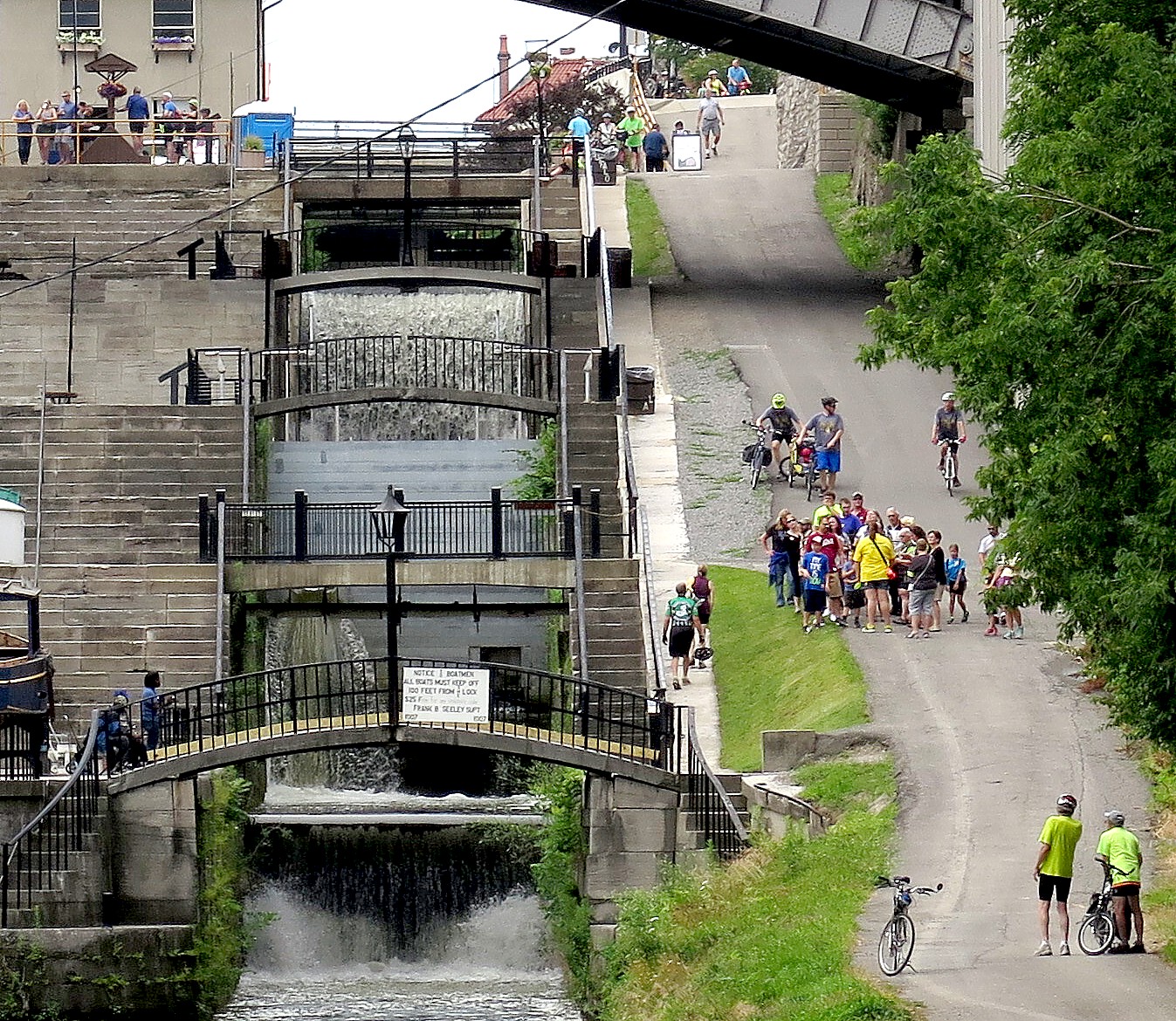
Cycle the Erie riders visit the historic Flight of Five Locks at Lockport, the engineering marvel that made the Erie Canal possible © Karen Rubin/goingplacesfarandnear.com
  • The Ralph C. Wilson Jr. Gateways: These four gateways in Western New York provide a welcoming connection for trail visitors at key access points in: Buffalo Harbor State Park in Buffalo; at the western entrance to the Erie Canal in Tonawanda; at Five Locks Park in Lockport; and in Genesee Valley Park in Rochester. The gateways include kiosks featuring local and statewide trail information, bicycle racks, and shaded granite block seating. Each gateway features a “Ralph C. Wilson, Jr.” memorial plaque honoring the late owner of the Buffalo Bills. The Ralph C. Wilson, Jr. Foundation provided $2.6 million dollars for the gateways.
  • Macedon Bridge: NYSDOT restored a closed vehicle bridge over the Erie Canal. The $4.2 million investment created a bicycling and walking trail and created a local park.
  • Erie Blvd-Syracuse: NYSDOT constructed a 3-mile trail in the median of Erie Blvd, from East Syracuse to DeWitt. The project cost $23 million.
  • Loop the Lake Trail-Syracuse: Onondaga County constructed a new 1.5-mile trail on the south shore of Onondaga Lake, including a new bicycle/pedestrian bridge over CSX’s rail line. The project was funded with County and federal funds.
  • Utica: New York State Canal Corporation constructed a new 3.5-mile trail east of Utica for $9.3 million
  • Herkimer County: New York State Canal Corporation completed a new 2.2-mile trail section Lock E18 to Route 167, a new 1.3-mile trail section Frankfort to Ilion, and a new 2-mile trail from Ilion to Mohawk. These projects totaled $16.4 million.
Stopping off to visit the Erie Canal Museum in Syracuse during the Cycle the Erie bike tour © Karen Rubin/goingplacesfarandnear.com

Champlain Canalway

  • Fort Edward to Fort Ann: The New York State Canal Corporation constructed two adjacent trail sections. The $14.3 million investment created a 12-mile trail from Fort Edward to Fort Ann.
  • Fort Ann to Comstock: NYSDOT built a new 0.75-mile off-road trail in Washington County and designated a 7-mile route on local roads and cost $2 million.

“The Empire State Trail is a testament to Governor Cuomo’s vision to make New York State an unmatched destination for outdoor recreation,” New York State Parks Commissioner Erik Kulleseid said. “Everyone from the most experienced long-distance cyclists to family groups with children will enjoy this pathway. People can take a quick bike ride or walk close to home, or they can plan a multi-day adventure to take them from one end of the state to the other.”

“Governor Cuomo’s vision for the newly-completed Empire State Trail merges economic development with the beautiful views along the Canal system to create exceptional outdoor recreation opportunities, both for residents of canalside communities and for visitors from across New York and beyond,” New York State Canal Corporation Director Brian U. Stratton said. “The Erie Canalway and Champlain Canalway Trail segments of the Empire State Trail reintroduce New Yorkers to the historic towpaths of our state’s storied waterways and connect a new generation to the rich heritage of the New York Canal system.”

“Completion of the 750-mile Empire State Trail is a truly historic achievement for New York State that demonstrates the intricate connection between investments in transportation infrastructure and the vitality of our communities,” New York Department of Transportation Commissioner Marie Therese Dominguez said. “This breathtaking trail will allow countless generations of New Yorkers and visitors to explore the world-renowned natural wonders and beauty of the Empire State and provide unparalleled recreational access to users of all ages and abilities – all while promoting environmental responsibility, tourism and economic development. The New York State Department of Transportation is proud to have played a significant role in fulfilling Governor Cuomo’s vision. Excelsior!”

“New York’s landscape offers extraordinary opportunities to explore the outdoors and experience the state’s world-class natural resources while still being able to recreate locally,” New York State Department of Environmental Conservation Commissioner Basil Seggos said. “This exciting milestone for the Empire State Trail enhances one of New York’s premier recreational opportunities and demonstrates Governor Cuomo’s commitment to showcasing our state’s diverse communities, boosting their local economies, and connecting more New Yorkers to our environment.”

“The completion of the Empire State Trail further demonstrates Governor Cuomo’s commitment to invest in canalside communities and compliments the Reimagine the Canals initiative,” New York Power Authority President and CEO Gil C. Quiniones said. “Together, these investments safeguard the Canal’s role as a driver of economic growth. The Empire State Trail also will improve the quality of life of New Yorkers while simultaneously showcasing the historic beauty that already exists in the landscape surrounding the canals.”

“I want to thank Governor Cuomo for his vision, and our talented and dedicated Metro-North project team for giving new life to this area along Metro-North’s Beacon Line,” President of Metropolitan Transportation Authority Metro-North Railroad Catherine Rinaldi said. “This project ensures that New Yorkers and outdoor enthusiasts alike will be able to enjoy the trailway for decades to come.”

“Governor Cuomo’s Empire State Trail announcement completes New York State’s vision to create a Greenway trail between New York City and the Erie Canal, and it caps the efforts of communities up and down the Hudson Valley to develop an iconic multi-use trail,” Hudson River Valley Greenway Executive Director Scott Keller said.

Empire State Trail Brewery Passport

In addition, a virtual passport program showcases the 200 craft breweries closely surrounding the Empire State Trail, in partnership with the New York State Brewers Association. The Empire State Trail Brewery Passport, made available through the NYSBA’s existing New York Craft Beer App, will encourage New Yorkers to visit breweries within 10 miles of the Empire State Trail.

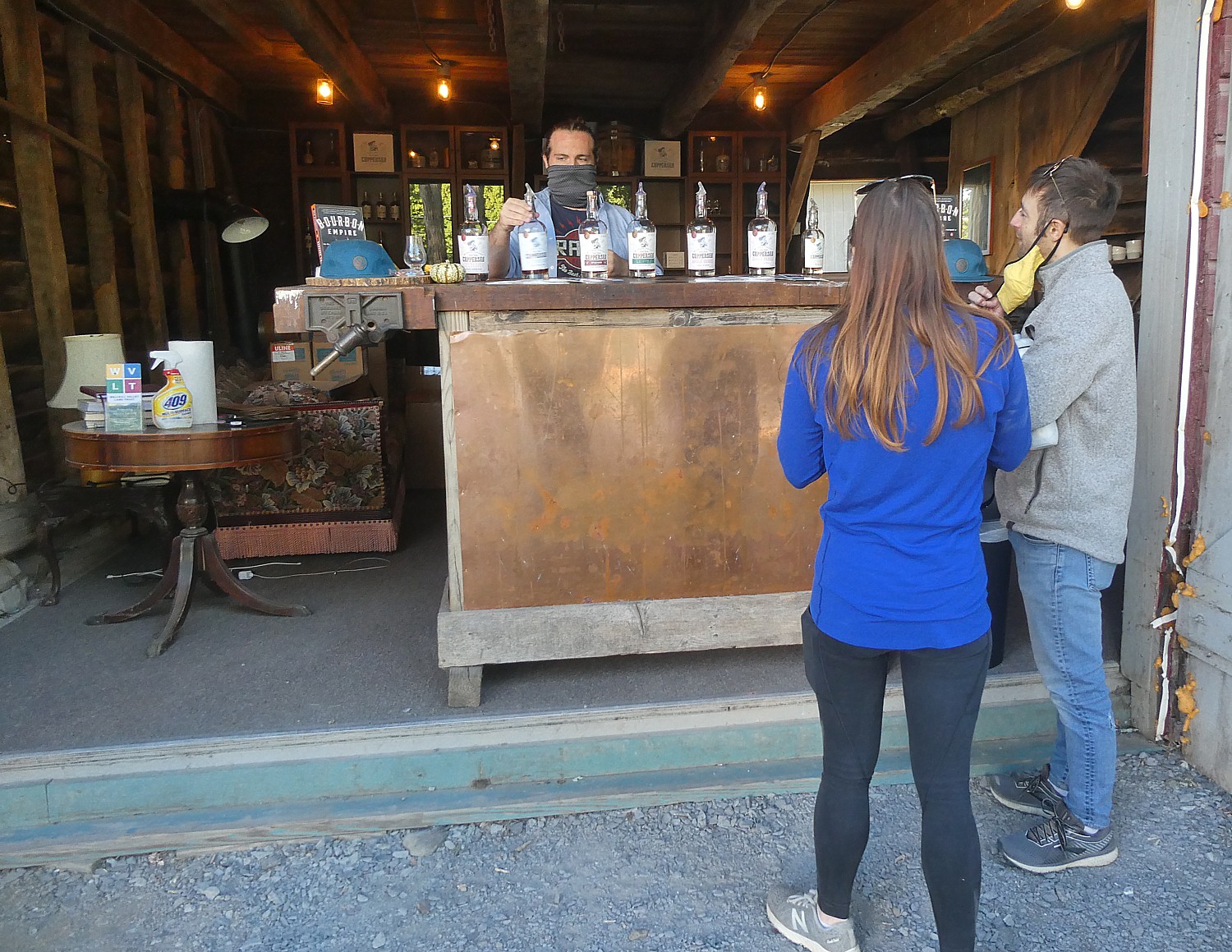
Just off the Wallkill Valley Rail Trail and up the road from the River to Ridge Trail is Coppersea Distillery. In conjunction with the Empire State Trail, New York is has created a passport program and an app showcasing the 200 craft breweries closely surrounding the Empire State Trail © Karen Rubin/goingplacesfarandnear.com

At each brewery along the Trail, visitors can digitally check-in on the app, earning a stamp on both of the app’s passport programs – the Think NY, Drink NY Passport and now the Empire State Trail Brewery Passport.

Exclusive rewards are awarded at levels determined by the number of stamps received on the Empire State Trail Brewery Passport, from neck gaiters, to shirts, to backpacks and more. By checking-in at 200 breweries and completing the Empire State Trail Brewery Passport, visitors will receive a branded cooler backpack and a t-shirt stating, “I completed the Empire State Trail Brewery Passport.”

The New York Craft Beer App is the first state-wide beer app in the country and is available for both Apple and Android devices. The app gives craft beer enthusiasts access to a map containing every brewery across New York State, searchable by region, and includes directions to breweries and allows users to build and save a personal tour of selected breweries. (https://thinknydrinkny.com/the-app/)

Parks & Trails NY’s Cycle the Erie Ride

Parks & Trails NY is hoping to offer the 23rd Annual 400-mile, 8-day Cycle the Erie biking/camping trip on July 11-18, 2021. The state has made improvements to complete the trail, from Buffalo to Albany, as part of the 750-mile Empire State Trail © Karen Rubin/goingplacesfarandnear.com

Meanwhile, Parks & Trails NY, a long-time advocate and activist for repurposing trails and byways for recreational use, is hoping to offer its 23rd annual 8-day 400-mile, Buffalo to Albany biking/camping Cycle the Erie trip July 11-18, 2021. PTNY is taking wait-and-see to offer the trip, which had to be cancelled due to the COVID-19 pandemic in 2020, and is delaying registration until March 1.

“We continue to plan for a potential ‘in person’ 2021 CTEC event while remaining flexible in our options, given the uncertainty of the months ahead in terms of the pandemic and state regulations,” write the ride directors.

“2021 is going to be a great year for the cycling community and with so many new additions to the Erie Canalway Trail we cannot wait to share it with you.” (See https://www.ptny.org/cycle-the-erie-canal/annual-bike-tour for more.)

Details on the 750-mile Empire State Trail at https://empiretrail.ny.gov/.

See also:

NEW YORK’S EMPIRE STATE TRAIL COMES TOGETHER: BIKING THE WALLKILL VALLEY RAIL TRAIL IN HUDSON VALLEY

Cycle the Erie: 400 Miles & 400 Years of History Flow By on Canalway Bike Tour Across New York State

Cycle the Erie, Day 1: In Lockport, See Erie Canal Engineering Marvel, ‘Flight of Five’, Cruise Thru Double Locks, and Go Underground to Fathom Rise of Industrial Revolution

Cycle the Erie, Day 2-3: A Sequence of Charming Canaltowns, Pastoral Landscapes, Punctuated by City Birthed by ‘Mother of Cities’

Cycle the Erie, Day 4: Seneca Falls to Syracuse, Crossing Halfway Mark of 400-Mile Biketour

Cycle the Erie, Day 5: Deep Dive into The Erie Canal: ‘Mother of Cities’, Empire Builder, Wonder of the World

Cycle the Erie: At Fort Stanwix, Rome, Time Travel Back to America’s Colonial, Native American Past

Cycle the Erie, Days 6-7: Erie Canal Spurs Rise of America as Global Industrial Power

Cycle the Erie, Days 7-8: Schoharie Crossing, Mabee Farm, Cohoes Falls to Finish Line in Albany of 400-Mile BikeTour

__________________________

© 2021 Travel Features Syndicate, a division of Workstyles, Inc. All rights reserved. Visit goingplacesfarandnear.com, www.huffingtonpost.com/author/karen-rubin, and travelwritersmagazine.com/TravelFeaturesSyndicate/. Blogging at goingplacesnearandfar.wordpress.com and moralcompasstravel.info. Send comments or questions to FamTravLtr@aol.com. Tweet @TravelFeatures. ‘Like’ us at facebook.com/NewsPhotoFeatures

Driveable Getaways: Hiking the Hudson River School Art Trail in the Great Northern Catskills

Sunset Rock. Hiking the Hudson River School Art Trail, in the Catskill Mountains, Greene County, New York State © Karen Rubin/goingplacesfarandnear.com

by Karen Rubin

Travel Features Syndicate, goingplacesfarandnear.com

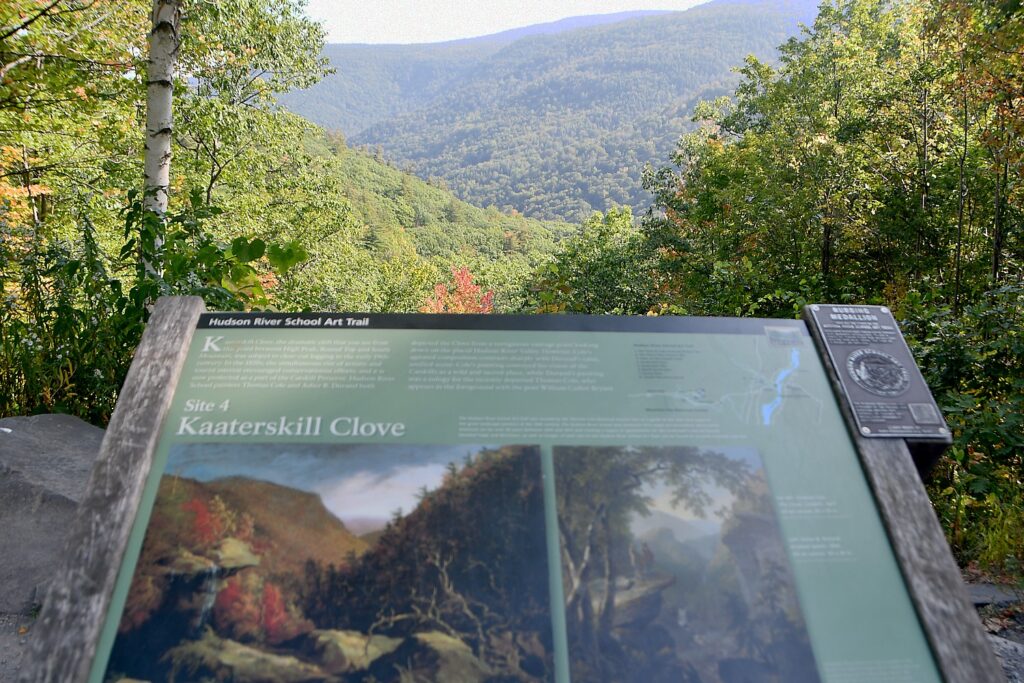
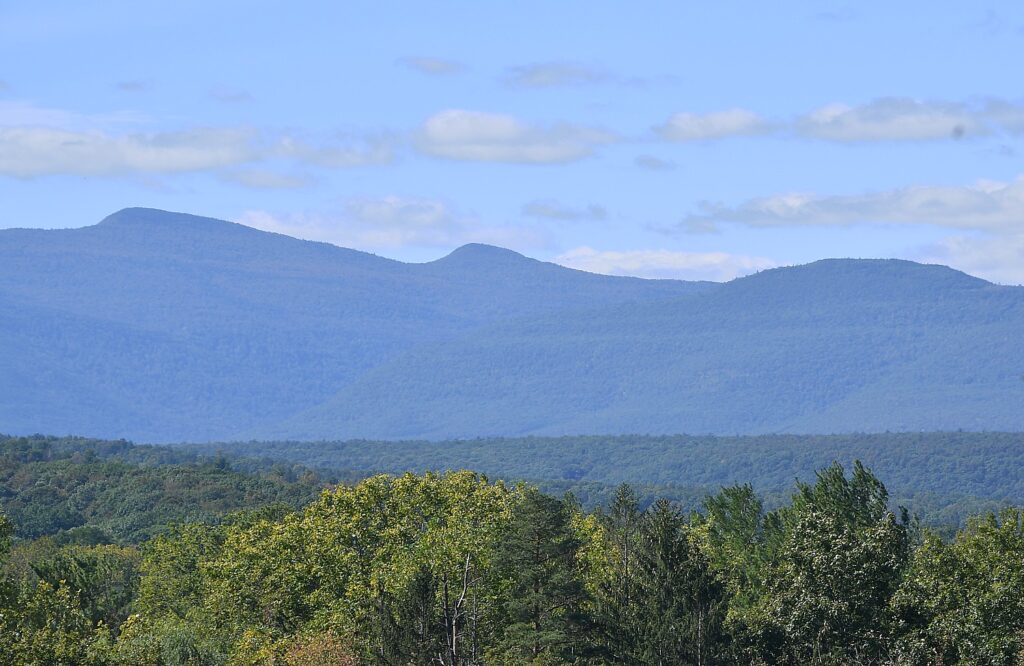
My getaway exploring the Hudson River School Art Trail in the Great Northern Catskills of New York starts at the trailhead to Kaaterskill Falls, where you get an amazing view of Kaaterskill Clove (HRSAT Site #4). You gaze out over the gorge where mountain peaks seem to thread together and compare the scene today to the way it is depicted by Hudson River School artist Asher B. Durand’s 1866 painting.

Kaaterskill Clove. Hiking the Hudson River School Art Trail, Great Northern Catskills, NY © Karen Rubin/goingplacesfarandnear.com

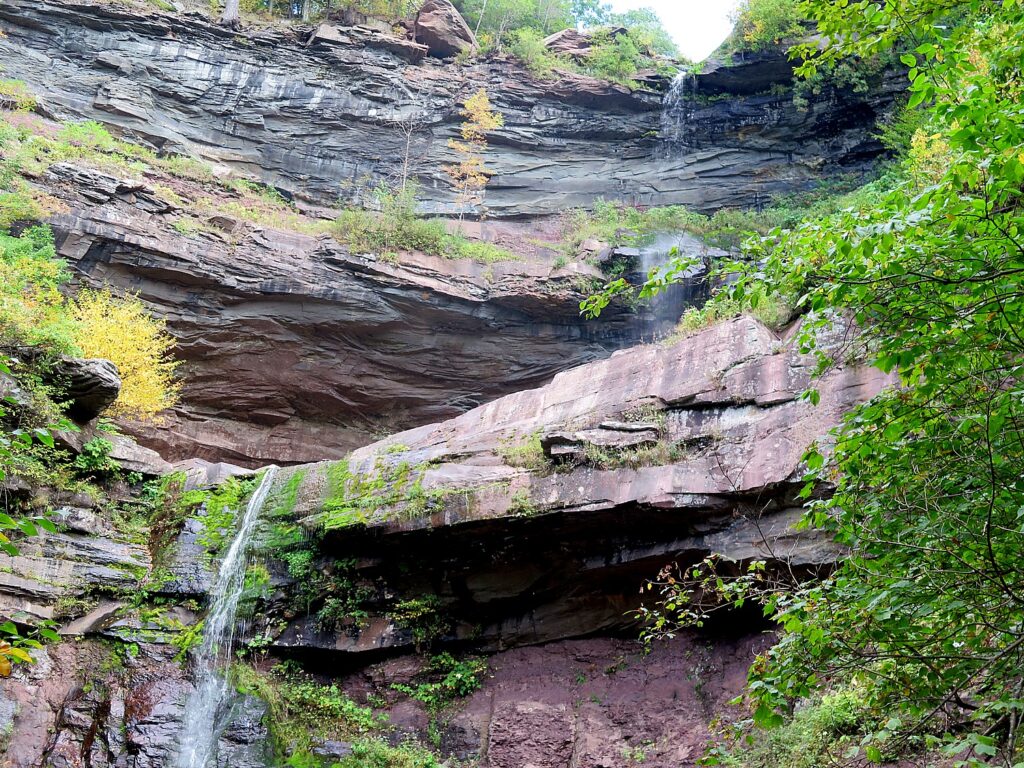
It’s a short walk along 23A (watch out for cars on the winding narrow road) to the trailhead for one of my favorite hikes, Kaaterskill Falls (HRSAT Site #5), a stunning scene that looks remarkably just as depicted in an 1835 painting by Thomas Cole, known as the father of the Hudson River School. “It is the voice of the landscape for it strikes its own chords, and rocks and mountains re-echo in rich unison,” Cole (who was also a poet and essayist) wrote.

Kaaterskill Falls. Hiking the Hudson River School Art Trail, Great Northern Catskills, NY © Karen Rubin/goingplacesfarandnear.com

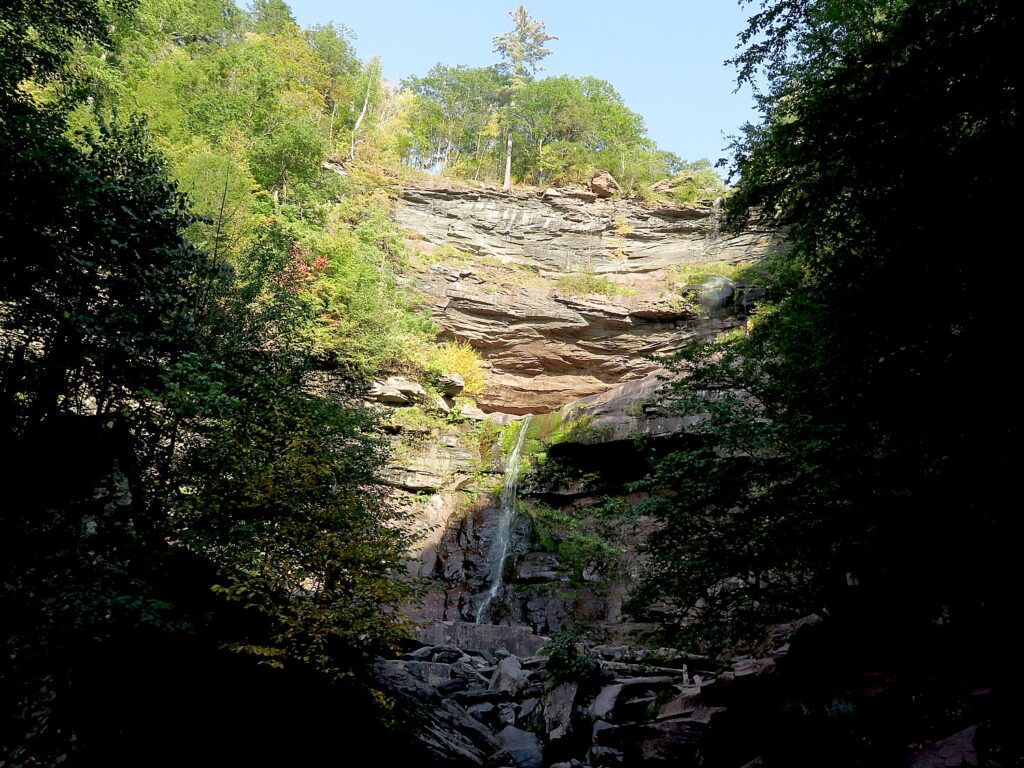
The Kaaterskill Falls were a favorite subject of many of the Hudson River School painters and for me, is the quintessential combination of stunning scenery plus the physical pleasure of the hike – half-mile up to the base of the double-falls, then another half-mile to the top.

Kaaterskill Falls. Hiking the Hudson River School Art Trail, in the Catskill Mountains, Greene County, New York State © Karen Rubin/goingplacesfarandnear.com

The two-tiered Kaaterskill Falls, 175 and 85 feet, is the highest in New York State and was described by James Fenimore Cooper in “The Pioneers” which Thomas Cole, a friend of Cooper’s illustrated.

Hiking the Hudson River School Art Trail, Great Northern Catskills, NY © Karen Rubin/goingplacesfarandnear.com

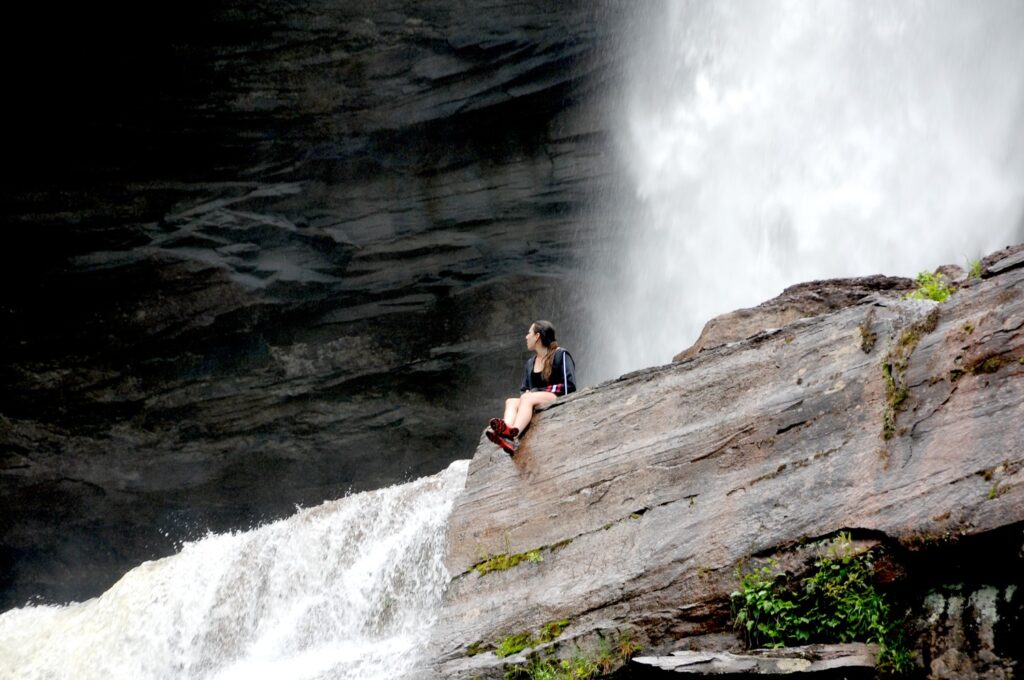
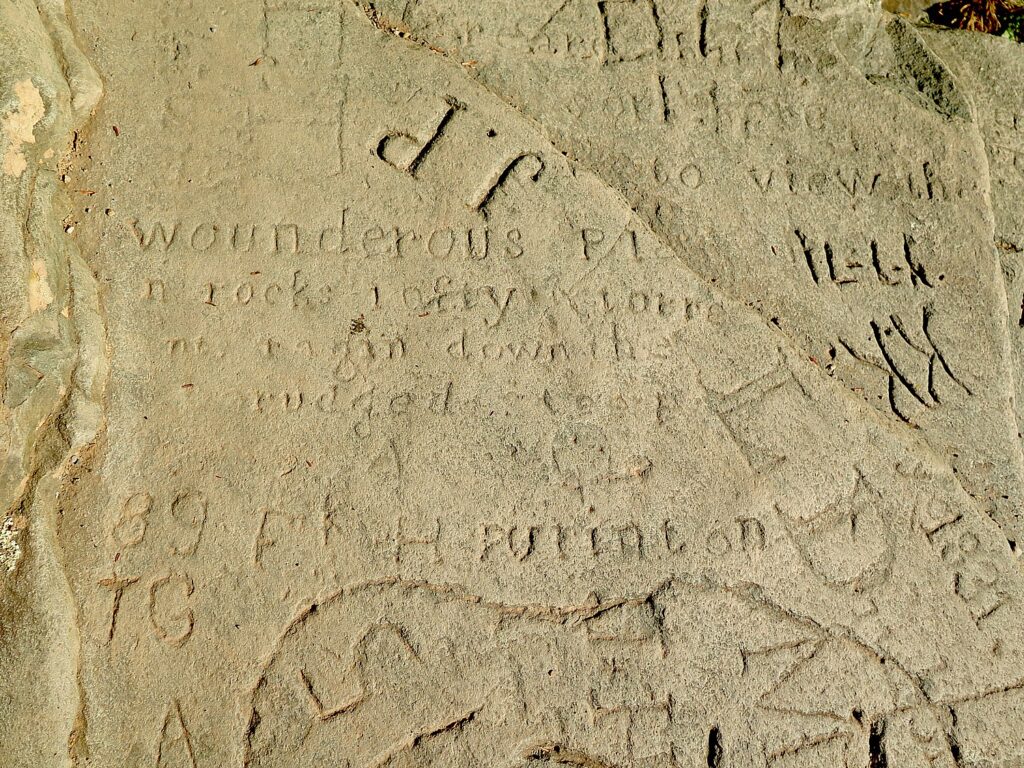
There is a small trail through the woods to the very top of the falls. Signs admonish hikers that climbing the ledges beside Kaaterskill Falls is extremely dangerous, and has resulted in numerous injuries and deaths. But the falls are not flowing when I come, so I get to walk on the ledges, giving me a really nervous view straight down and beyond, to the Valley and letting me look at the carved initials and graffiti from the 1920s and 30s, some even from the 1800s.  You feel a sense of kindred spirit with those who have passed through and passed on. You feel the height and the proximity to the drop off, and it makes your heart flutter.

At the top of the Kaaterskill Falls. Hiking the Hudson River School Art Trail, Great Northern Catskills, NY © Karen Rubin/goingplacesfarandnear.com

Later, I will recognize the view in Thomas Cole’s paintings and imagine how he must have stood in this precise place where you are standing.

Kaaterskill Falls. Hiking the Hudson River School Art Trail, Great Northern Catskills, NY © Karen Rubin/goingplacesfarandnear.com

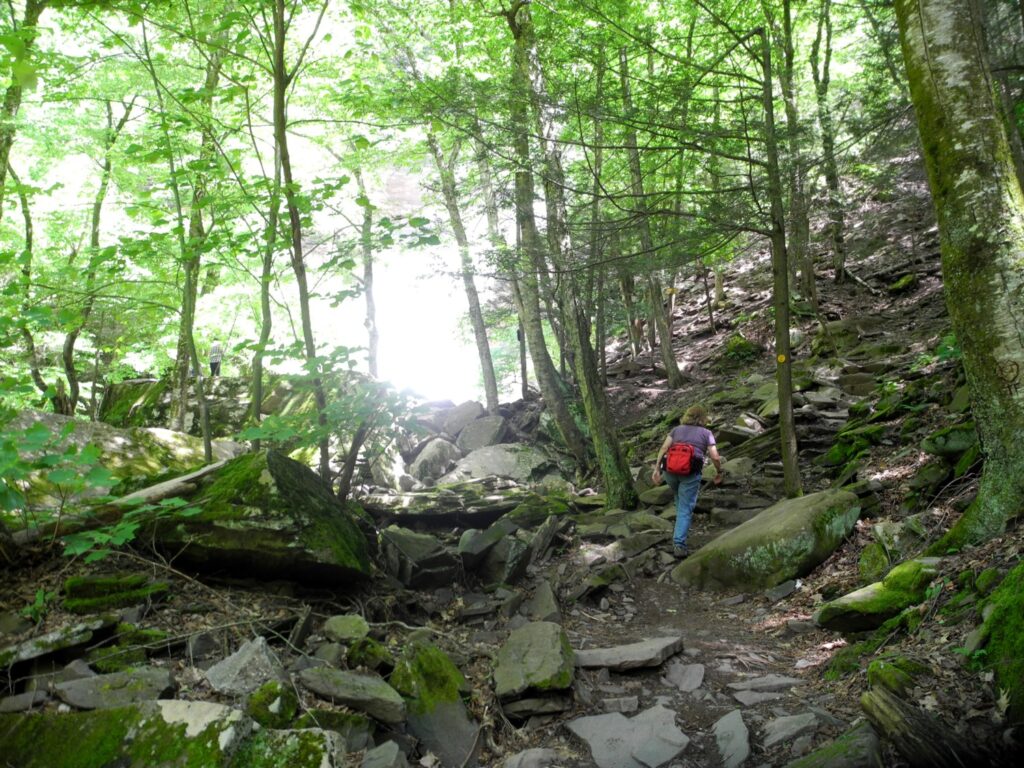
It is a half-mile to the base, and another half- mile to the top of the falls, for a total of 2 miles roundtrip. There are some scrambles and it is uphill almost all the way (walking sticks are really recommended), and is thoroughly fantastic.

Hiking the Hudson River School Art Trail, in the Catskill Mountains, Greene County, New York State
© Karen Rubin/goingplacesfarandnear.com

(The parking lot is just west of the trailhead and across 23A, so you park and walk back along the road, being very careful. Haines Falls NY 12436, 518-589-5058, 800-456-2267).

HRSAT Hikes in North-South Campground 

For my second day, after an amazing breakfast at the Fairlawn Inn, I head to North-South Campground, where there are several of the Hudson River School of Art Trail hikes (as well as many other hiking trails) – the lake itself depicted in paintings such as Thomas Cole’s “Lake with Dead Trees,” 1825 (HRSAT Site #6).

Artists Rock, Escarpment Trail, North-South Lake Campground, on the Hudson River School Art Trail © Karen Rubin/goingplacesfarandnear.com

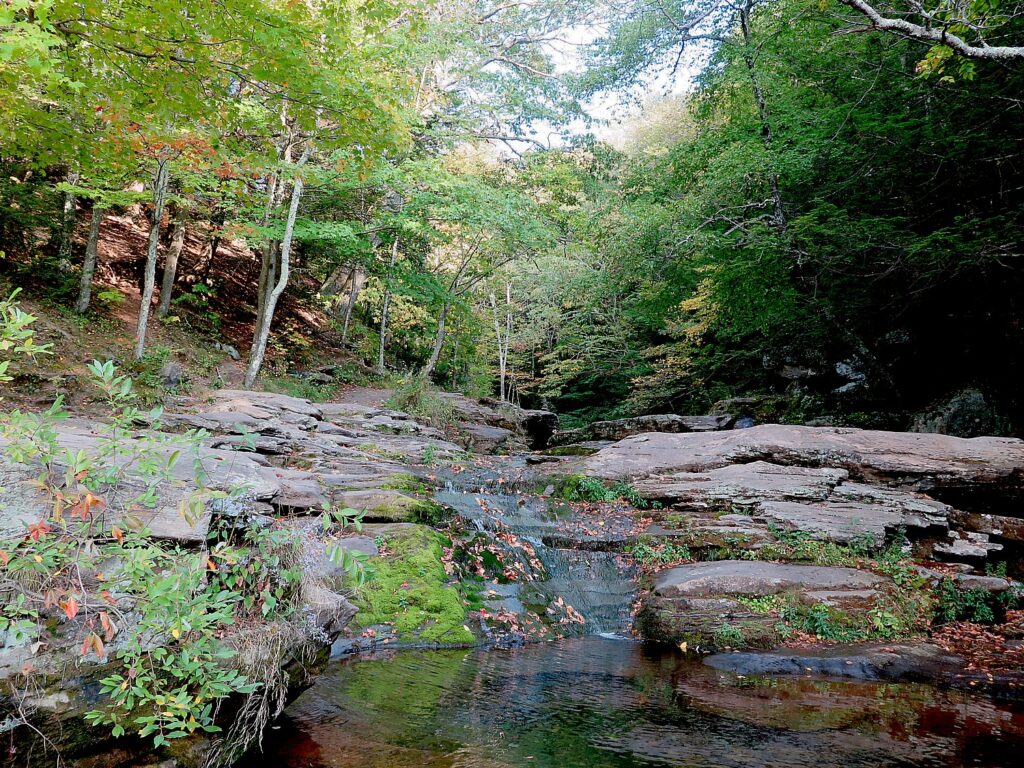
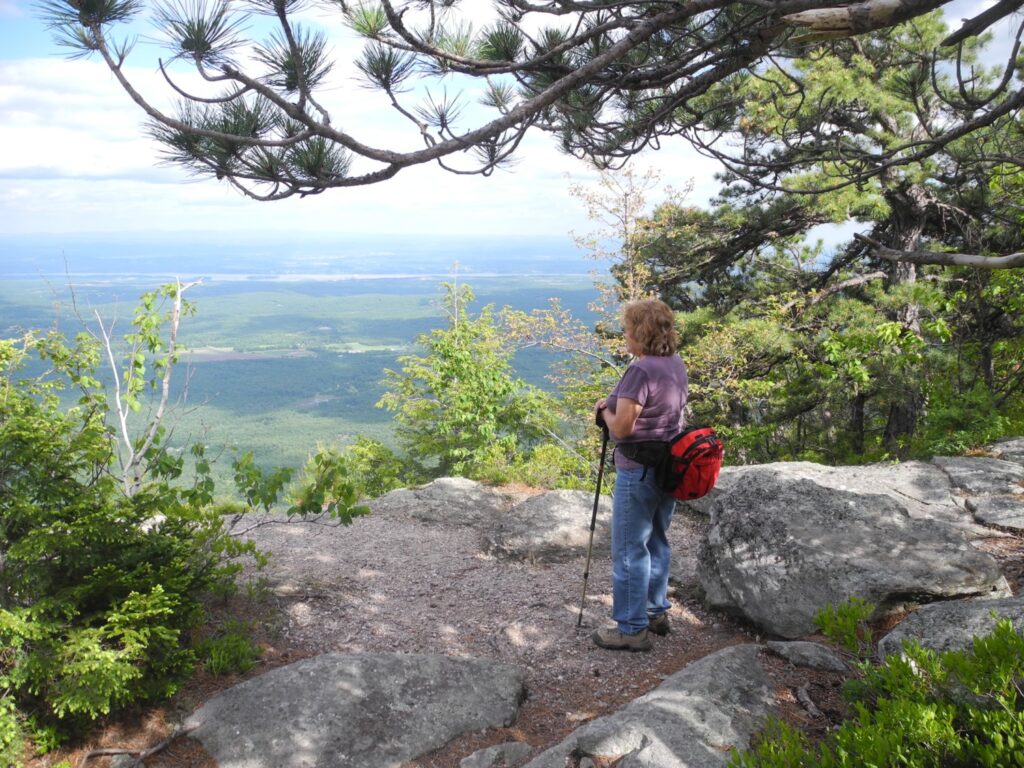
The Escarpment Trail to Sunset Rock (HRSAT Trail Site #7) begins along the well-marked blue trail (you cut off to the yellow trail to Sunset Rock) that mostly wraps around the ledges, with the amazing views that so enthralled the artists of the Hudson River Valley. Close to the beginning is a fairly interesting scramble, then the trail winds through the woods along side fabulous rock formations before coming out again to the ledges. You reach Artists Rock at about a half-mile. Continuing on, you look for the yellow trail marker to Sunset Rock and from there, to Newman’s Point.

Escarpment Trail, North-South Lake Campground, on the Hudson River School Art Trail © Karen Rubin/goingplacesfarandnear.com

You can either reverse and come back on the Escarpment Trail, or make a loop, coming down the Mary’s Glen trail, passing Ashley’s Falls.

Ashley’s Falls on Mary’s Glen Trail © Karen Rubin/goingplacesfarandnear.com

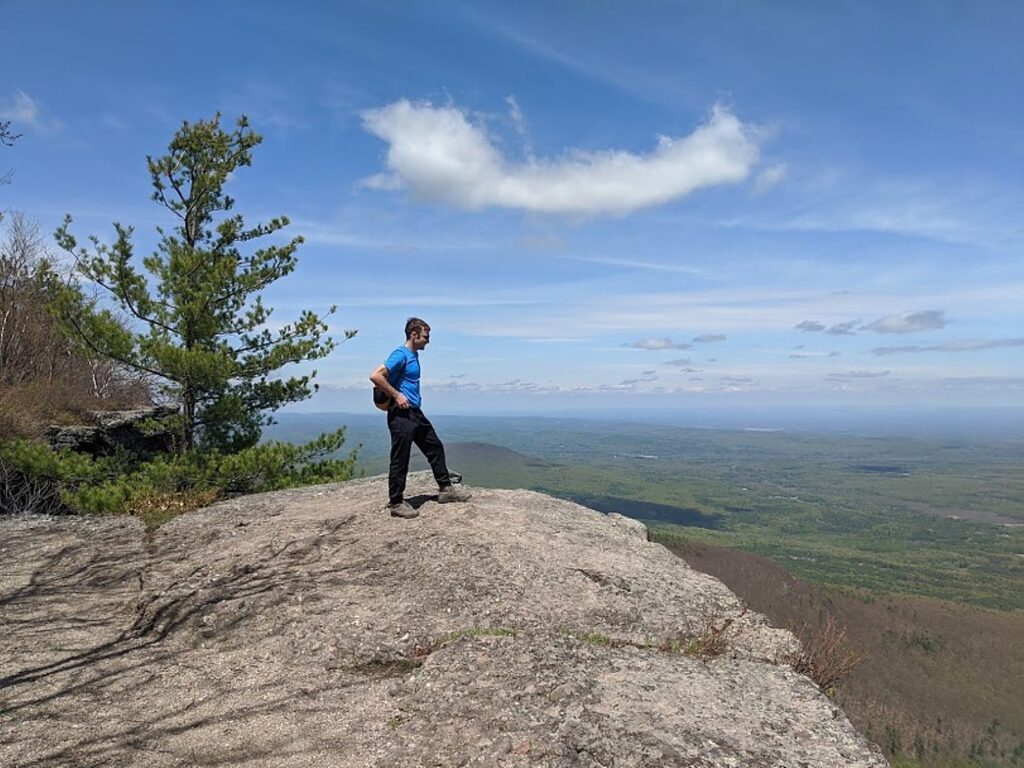
Mary’s Glen trail can also be the entrance to a more challenging hike, to North Point, a distance of 3.2 miles with 840 feet ascent. It is a mostly moderate climb but has some short, steep scrambles over rock, but you come to large open slabs and expansive vistas at North Point, a 3,000 ft. elevation with some of the most distant views.)

North-South Lake. Hiking the Hudson River School Art Trail, in the Catskill Mountains, Greene County, New York State © Karen Rubin/goingplacesfarandnear.com

Back at the North-South Lake, you can follow around the shoreline to see the same views that inspired Hudson River School paintings.

You can also take the trail to the site of the Catskill Mountain House (HRSAT Site #8), one of the earliest tourist hotels. The majestic hotel, which was opened in 1823 and accommodated 400 guests a night (Presidents Arthur and Grant were among those who stayed here), burned down in 1963 but the view that attracted visitors still remains as one of the most magnificent panoramas in the region, and can be compared to Frederic Church’s “Above the Clouds at Sunrise” (1849).

Where the Catskill Mountain House used to stand. Hiking the Hudson River School Art Trail, in the Catskill Mountains, Greene County, New York State © Karen Rubin/goingplacesfarandnear.com

It is fun to see the initials carved into the stone ledges from more than a century ago. The Mountain House began drawing thousands of guests each season from all over the country as well as from abroad, who came not just for the cooler, healthier climate but for what had already become one of the most renowned natural panoramas in the young nation: the valley 1,600 feet below, stretching east to the Taconic Mountains and the Berkshires, with the silvery thread of the Hudson visible for 60 miles from north to south.  On a clear day, you can see five states – Connecticut, Massachusetts, New Hampshire, Vermont and New York. The hike is just a half-mile with only an 80-foot ascent.

Hiking the Hudson River School Art Trail, in the Catskill Mountains, Greene County, New York State © Karen Rubin/goingplacesfarandnear.com

There is a $10/car day use fee for the NYS DEC’s North-South Lake Campground from early May through late October, however the fee is waived for NYS residents 62 years or older midweek. The campground is open May through October; 518-589-5058 or call DEC Regional Office year-round at 518-357-2234, www.greatnortherncatskills.com/outdoors/north-south-lake-campground.

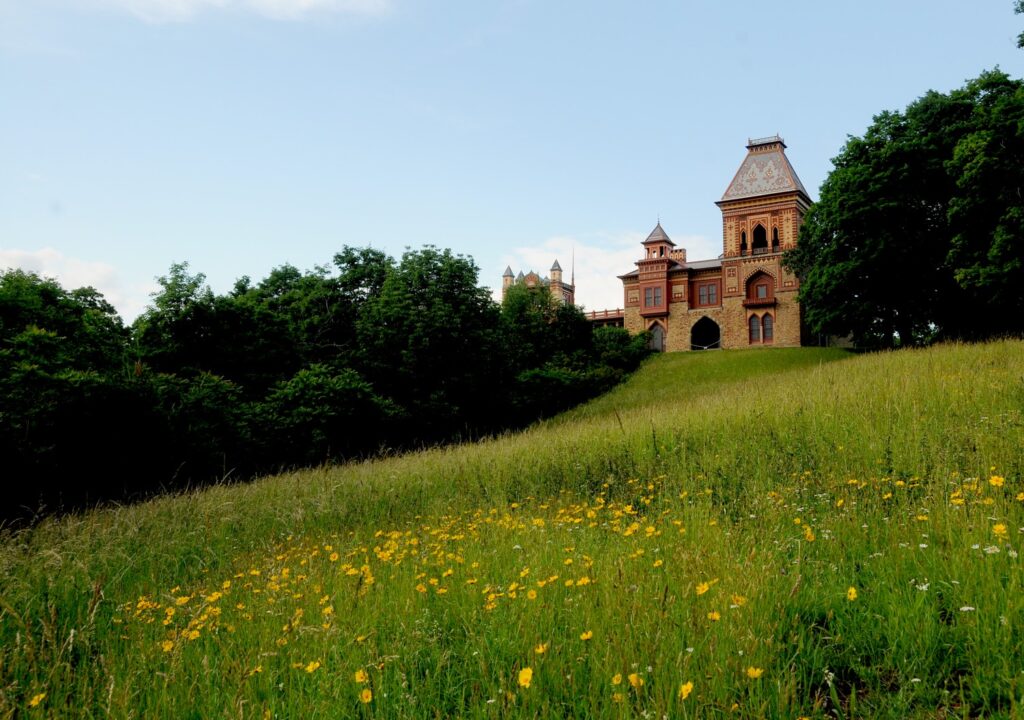
The Hudson River School Art Trail also features Olana, the magnificent and whimsical mansion home of artist Frederick Edwin Church. At this writing, the entrancing mansion was not yet reopened to visits, but the 250-acre grounds and the first-ever legally protected “viewshed” to the Hudson River are open (5720 Route 9G, Hudson, NY 12534, 518-828-0135, olana.org.)

Frederick Edwin Church’s Olana, Hudson, NY © Karen Rubin/goingplacesfarandnear.com

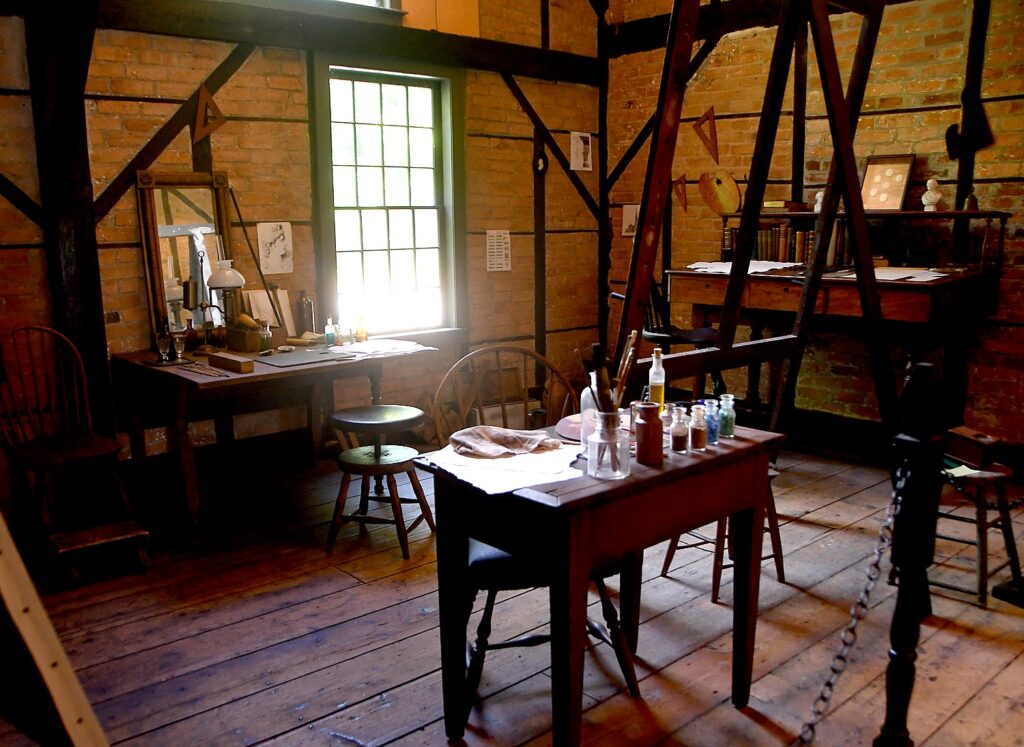
Also, you can walk the grounds Thomas Cole Historic Site (the home has yet to be reopened, but is marvelous to visit, especially Cole’s studio). (218 Spring Street, Catskill, NY 12414, 518-943-7465, www.thomasscole.org)

Thomas Cole National Historic Site, Catskill, NY, on the Hudson River School Art Trail © Karen Rubin/goingplacesfarandnear.com

Get maps, directions and background on the Hudson River School Art Trail atwww.hudsonriverschool.org/hudsonriverschoolarttrail.

View from Thomas Cole National Historic Site, Catskill, NY, on the Hudson River School Art Trail © Karen Rubin/goingplacesfarandnear.com

Also, walk on the Hudson River Skywalk along the Rip Van Winkle Bridge to find incredible river views.

In Tannersville: Explore the Mountain Top Arboretum, 178 acres of trails, wetlands, gardens, and native plants; go on a mountain biking adventure at the Tannersville Bike Park, part of the Tannersville-Hathaway Trail System.

In Athens:Rent a kayak or paddleboard at Screaming Eagle Outdoor Adventures; explore along the Hudson River at the Athens Riverfront Park and look for the Hudson-Athens Lighthouse

Places to stay include:

Fairlawn Inn bed-and-breakfast, Hunter, NY, the Catskills © Karen Rubin/goingplacesfarandnear.com

In Hunter, the Fairlawn Inn where we have stayed, oozes charm; open year-round (7872 Main St. Hunter, NY 12442, 518-263-5025, www.fairlawninn.com).

Just outside of Catskill, A Tiny House Resort offers 10 tiny houses perched over the Catskill Creek; open-year-round (2754 CR 23BSouth Cairo, NY 12484, 518-622-2626,www.atinyhouseresort.com).

In Coxsackie, Gather Greene is a glamping destination offering 17 wooden glamping cabins on 100 acres of rolling hills and fields, each is equipped with air conditioning and heating, full bathrooms, a mini-fridge (176 Levitt RoadCoxsackie,  262-448-3683, www.gathergreene.com).

More information from Greene County Tourism, 800-355 CATS, 518-943-3223, discovergreene.com.

______________________

© 2020 Travel Features Syndicate, a division of Workstyles, Inc. All rights reserved. Visit goingplacesfarandnear.com, www.huffingtonpost.com/author/karen-rubin, and travelwritersmagazine.com/TravelFeaturesSyndicate/. Blogging at goingplacesnearandfar.wordpress.com and moralcompasstravel.info. Send comments or questions to FamTravLtr@aol.com. Tweet @TravelFeatures. ‘Like’ us at facebook.com/NewsPhotoFeatures
Driveable Adventures: Hiking/Camping in the ‘Grand Canyon of the East’ – NY’s Letchworth State Park

Letchworth State Park, New York © Karen Rubin/goingplacesfarnandnear.com

by Karen Rubin, Dave E. Leiberman & Laini Miranda

Travel Features Syndicate, goingplacesfarandnear.com

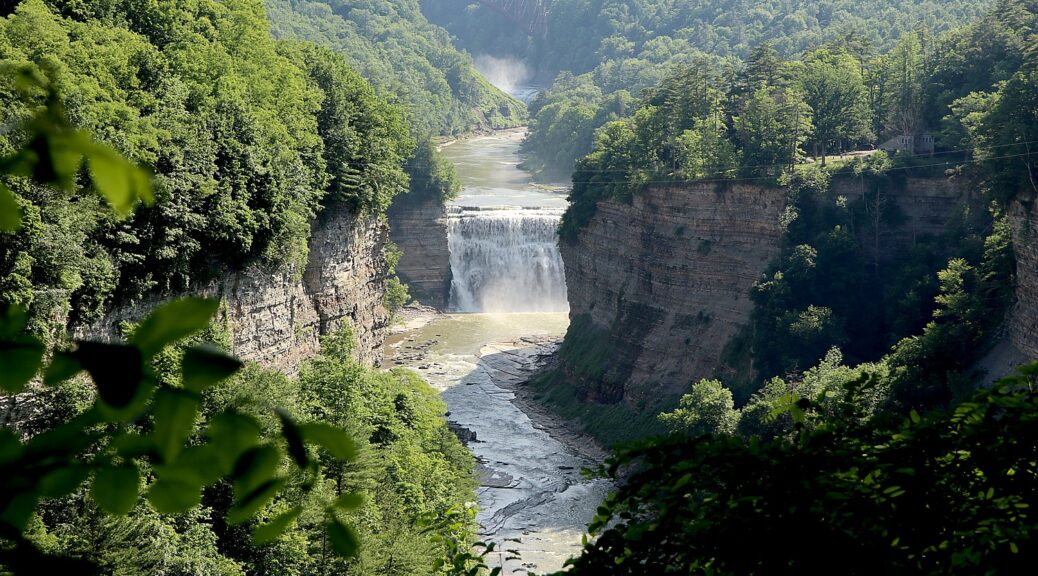
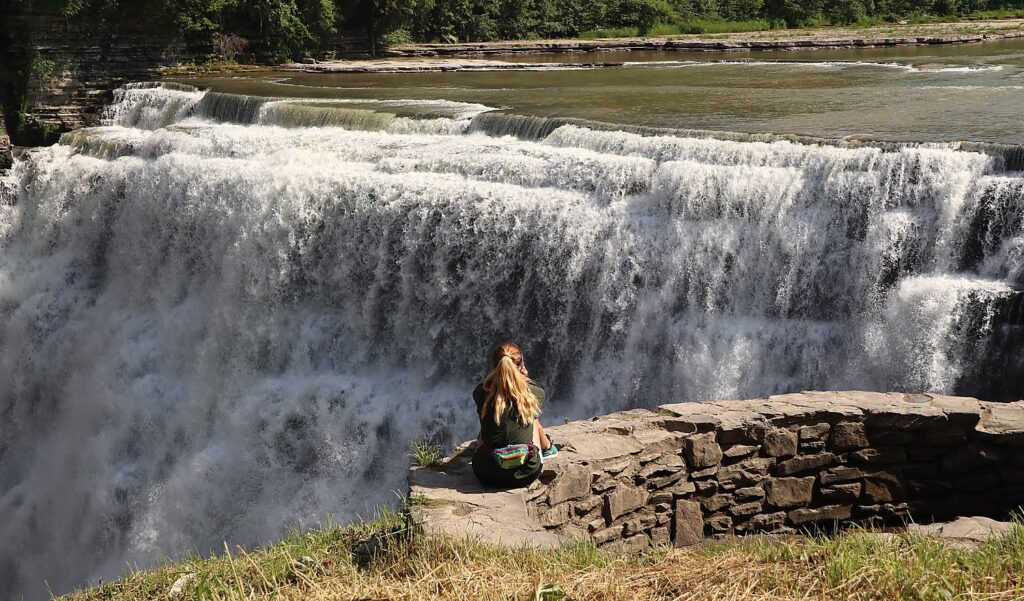
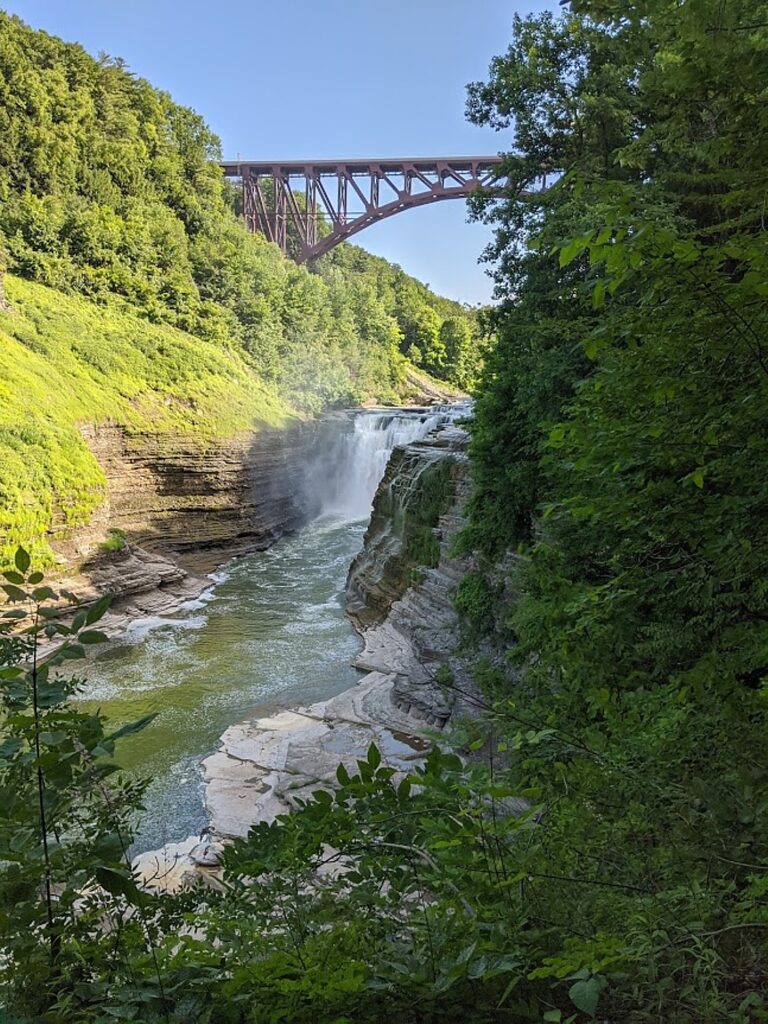
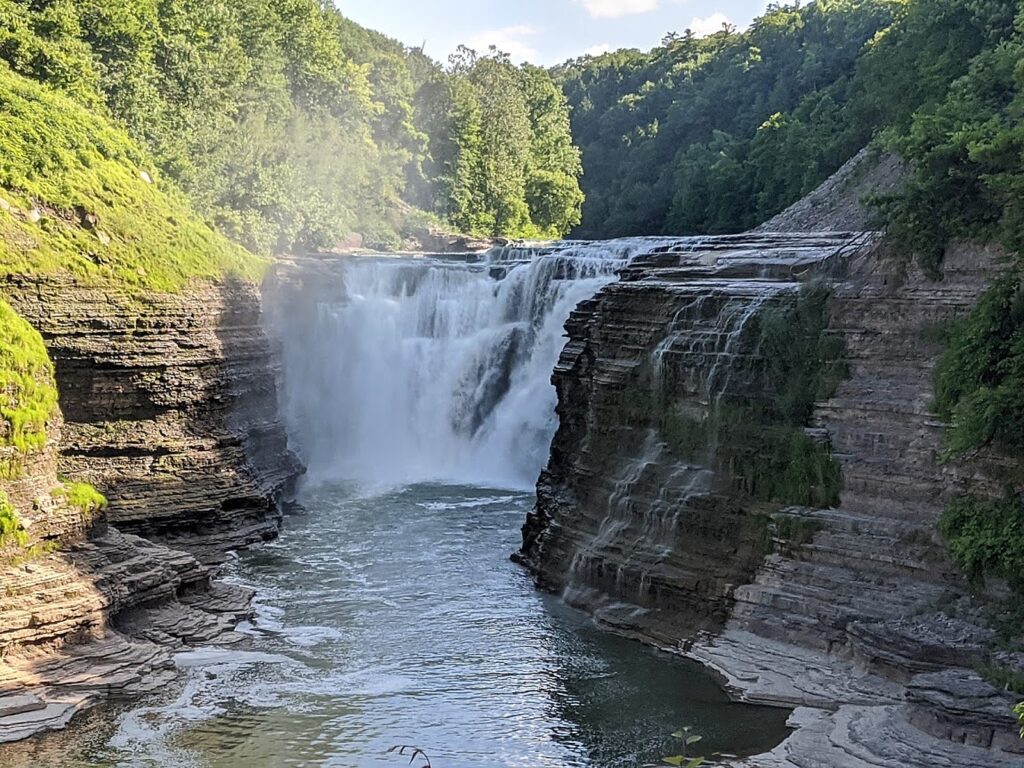
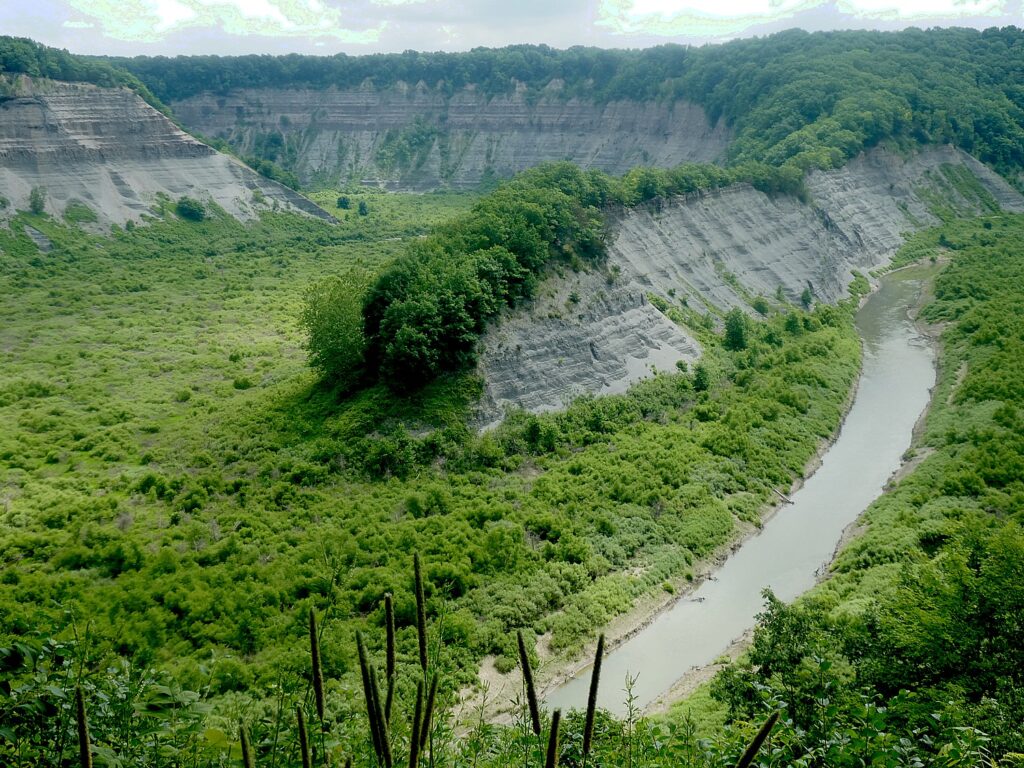
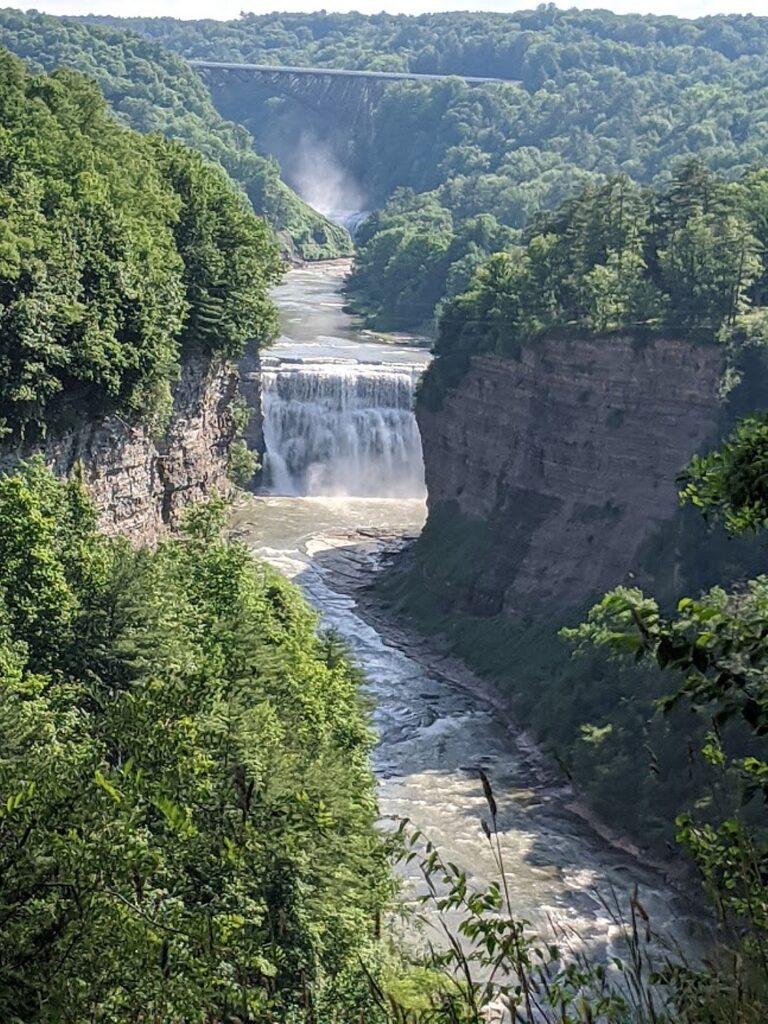
It doesn’t take long once you arrive at New York’s Letchworth State Park to see why this vast preserve merits its nickname, “Grand Canyon of the East.” One of the most dramatically scenic areas in the eastern United States, the Genesee River roars through a humongous gorge that extends the 17 mile-long expanse of the park, over three major waterfalls between cliffs as high as 600 feet, surrounded by lush forest.

Ever since I saw a poster of Letchworth State Park while riding the Long Island Railroad, I said, “Where is that!” So when our plan to camp and hike in the Southwest fell apart this year and feeling safe staying within New York State which has so scrupulously monitored and imposed safety conditions to contain the coronavirus, we sought out a comparable adventure driving distance from home: Letchworth is just south of Rochester in western New York in appropriately named Wyoming County.

Letchworth State Park, New York © Karen Rubin/goingplacesfarnandnear.com

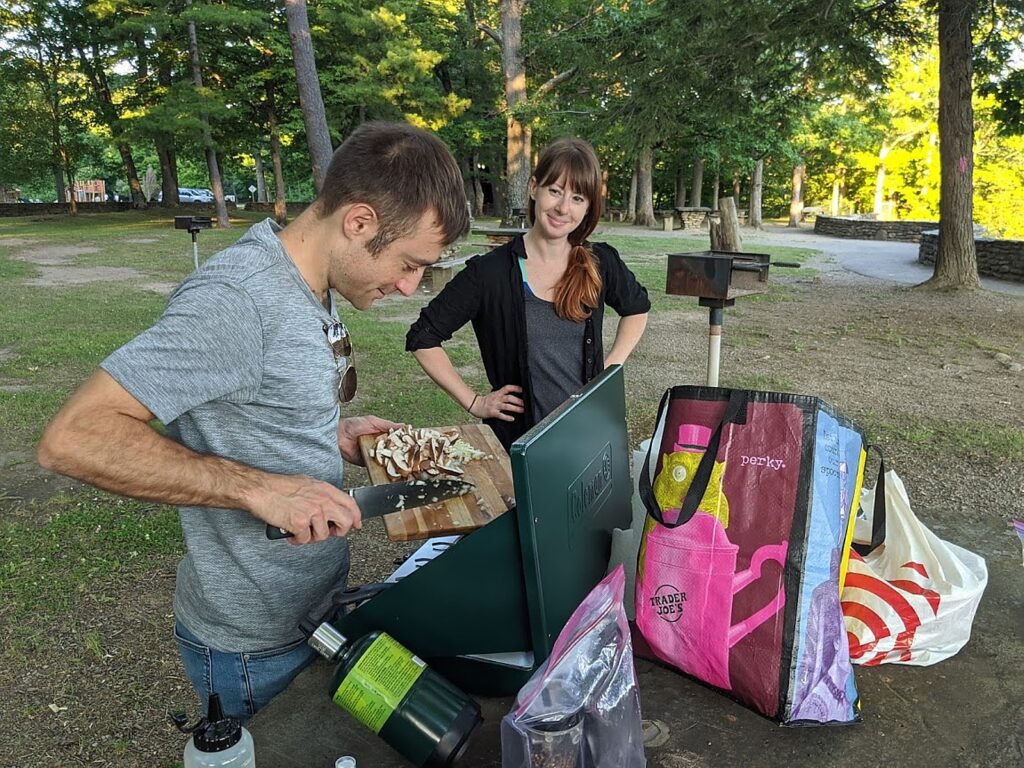
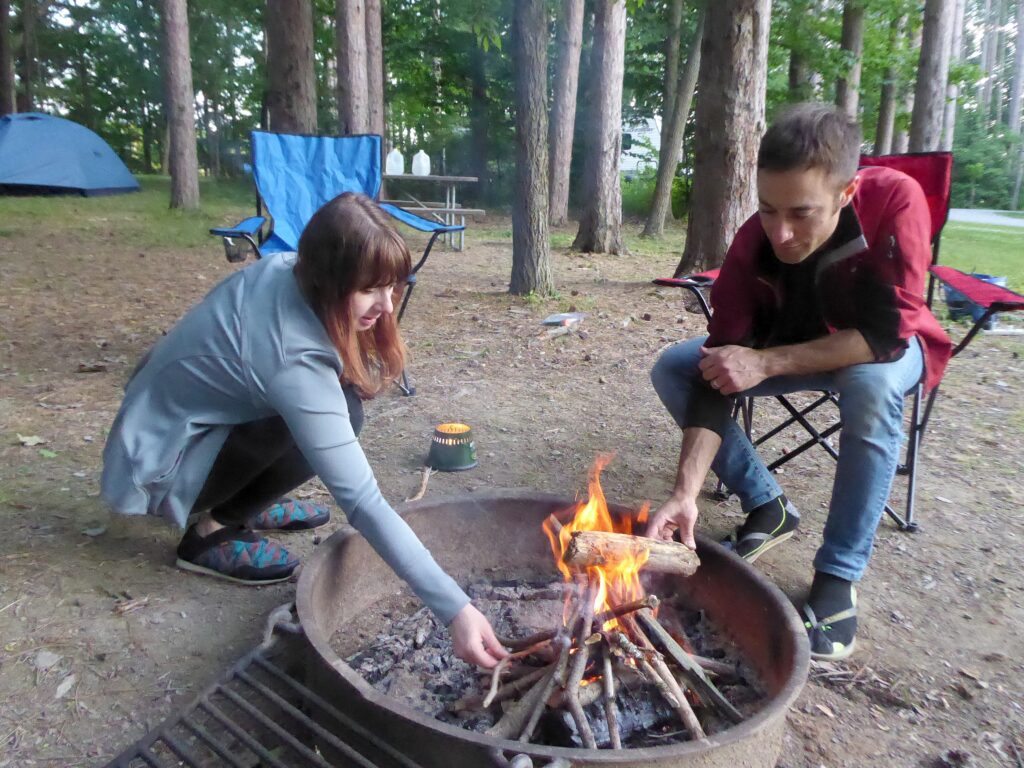
Our camping trip was made all the more special by staying in the campground within the state park that had only just reopened (private campgrounds, such as Kampgrounds of America, koa.com, are also available in the area) – so we could cook our dinner in the most spectacular settings – dinner with a view and be in prime places for the early light. (I booked our stay mere minutes after the website, reserveamerica.com, reopened reservations.)

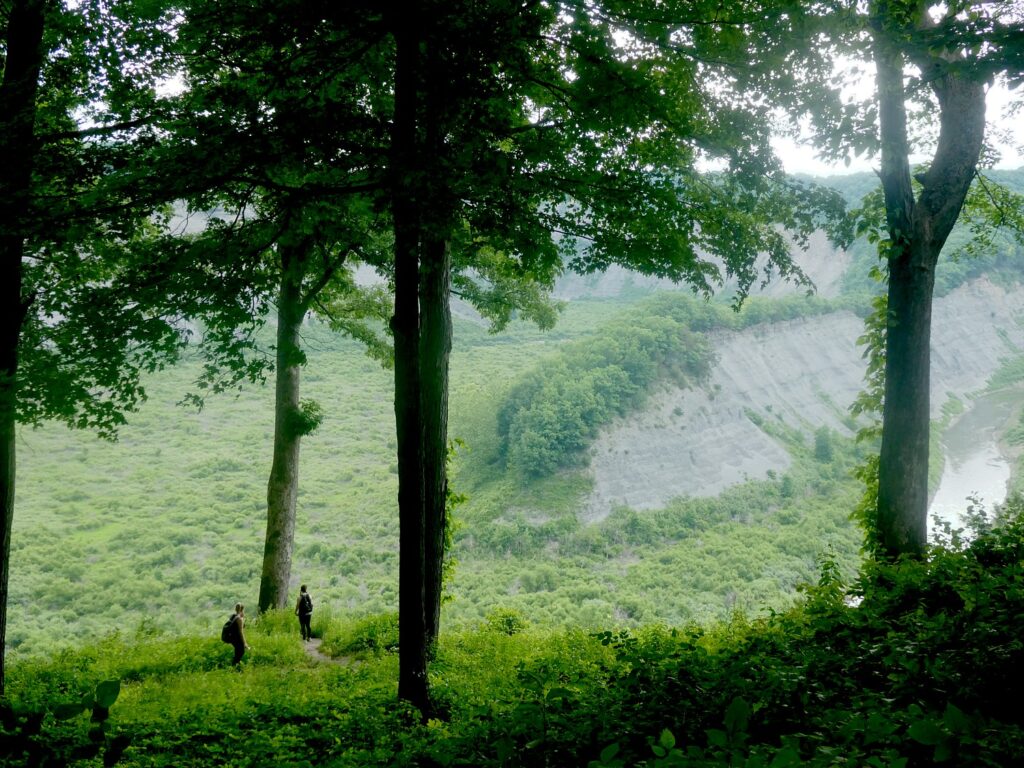
During the two full days we were there, we hiked the most scenic, marquee trails: the Gorge Trail (#1), 7.6 miles following along the rim in the southern portion of the 17-mile long park, and the next day, the Highbanks Trail (#20), 4.5 miles along the rim and through forest in the north part of the park. Indeed, these hiking experiences were reminiscent of hiking the Rim Trail along the southern rim of the Grand Canyon.

Letchworth State Park, New York © Karen Rubin/goingplacesfarnandnear.com

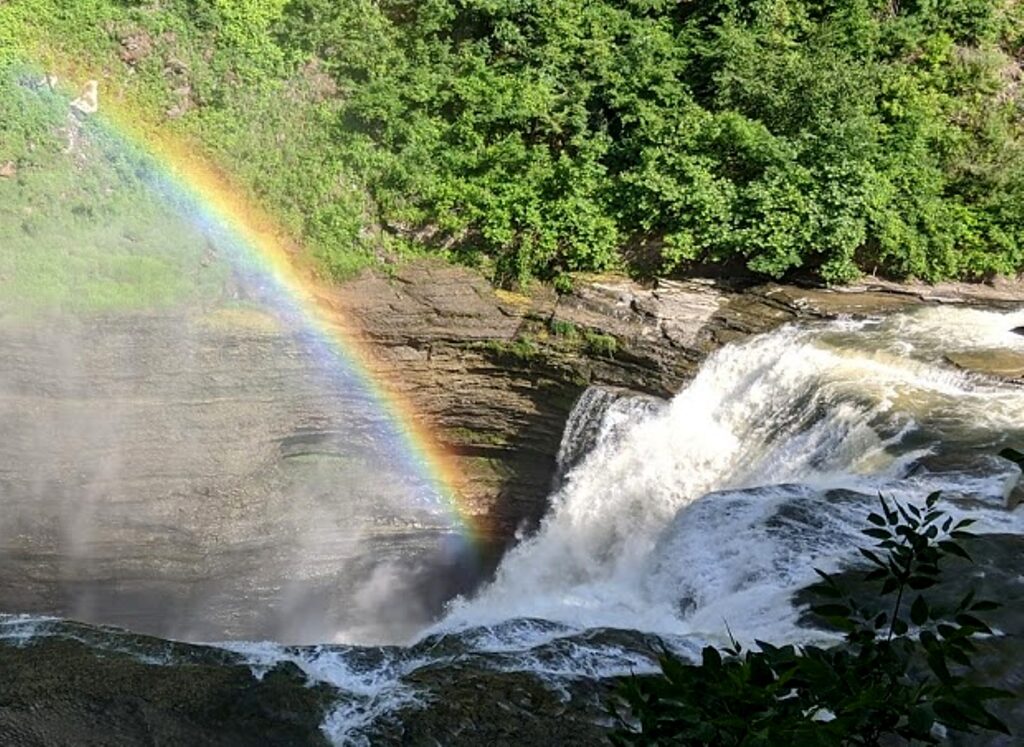
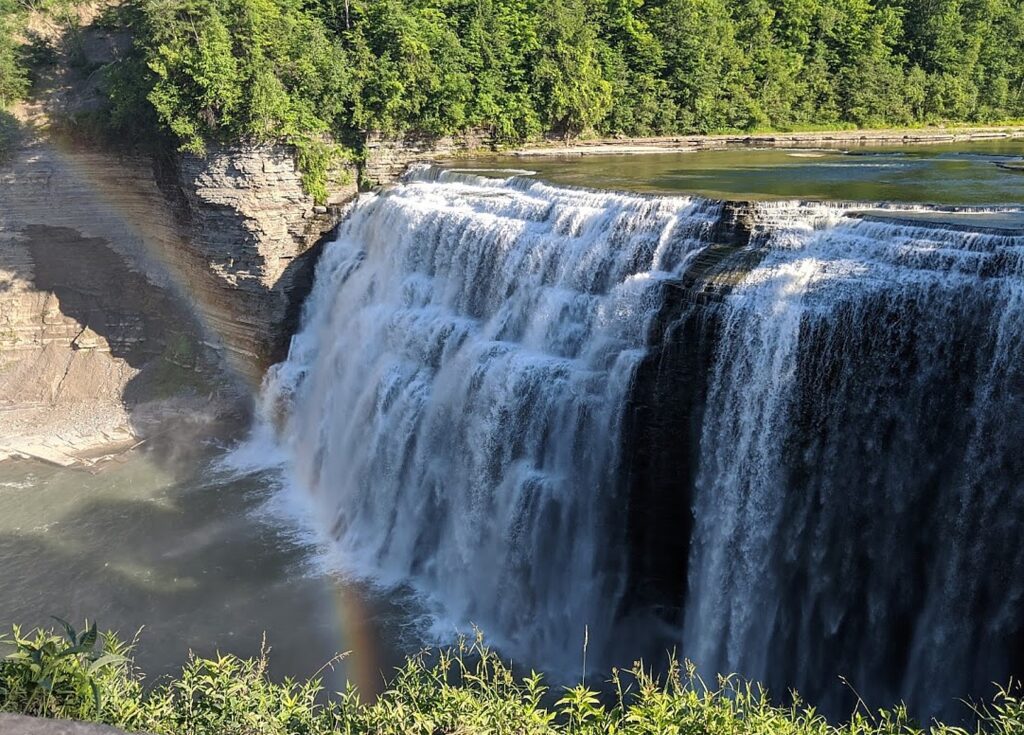
Letchworth State Park, (voted best attraction in New York State in 2017) is a geologic wonder. Its main attractions are three waterfalls (and if you visit in the late afternoon, you may well see rainbows over the Middle Falls) in the southern section. The trails take you to the most popular, scenic overlooks, which people can drive to, so they can be bustling with visitors (when we visited, people seemed to be respectful of wearing masks and keeping distance). This is another reason why camping in the park is such an advantage – the driving tourists tend to arrive at mid-day, so you can get out early and have these spectacular scenes almost to yourself.

If you do the hike early in the morning, do it from north to south. It’s out-and-back, so to avoid doing the 7.6 miles twice (that is, 15 miles), you can leave a second car or a bicycle at the end (as we did).

Letchworth State Park, New York © Karen Rubin/goingplacesfarnandnear.com

The park is huge, about 17 miles long (it takes about 20-30 minutes to drive from the campground to the Upper Falls along the Park Road which is narrow, winding and rolling with dips and rises) to the Upper Falls area. Indeed, the park is so narrow that the hiking trails are just alongside the road, separated in most instances by curtains of trees.

Letchworth State Park, New York © Karen Rubin/goingplacesfarnandnear.com

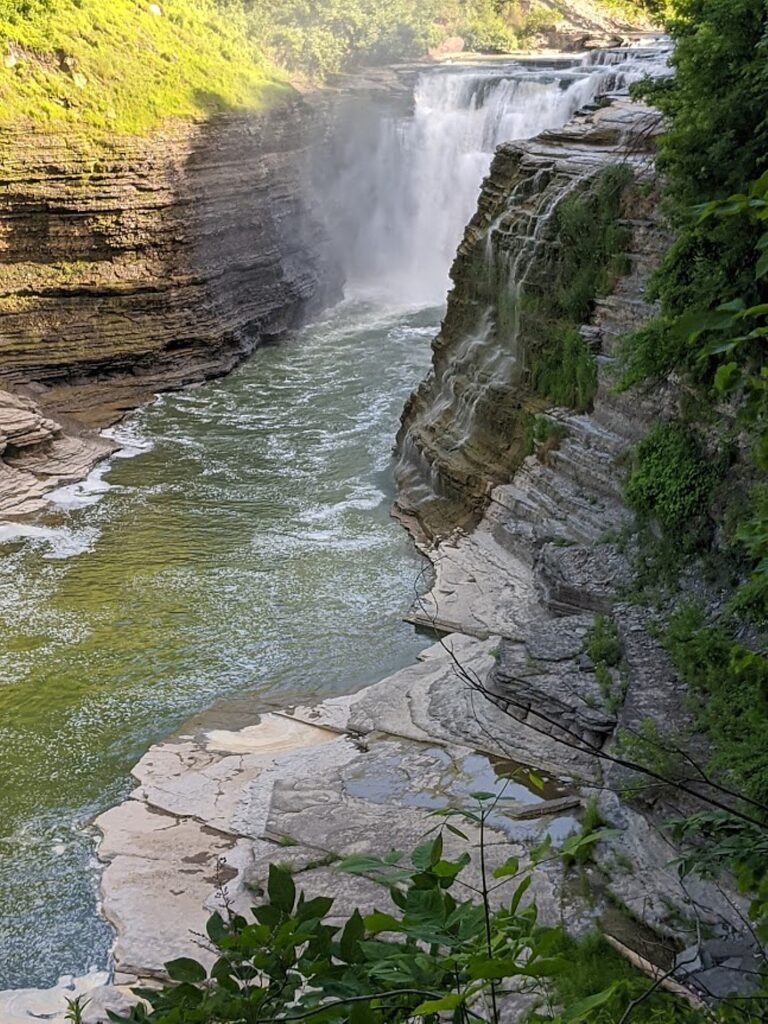
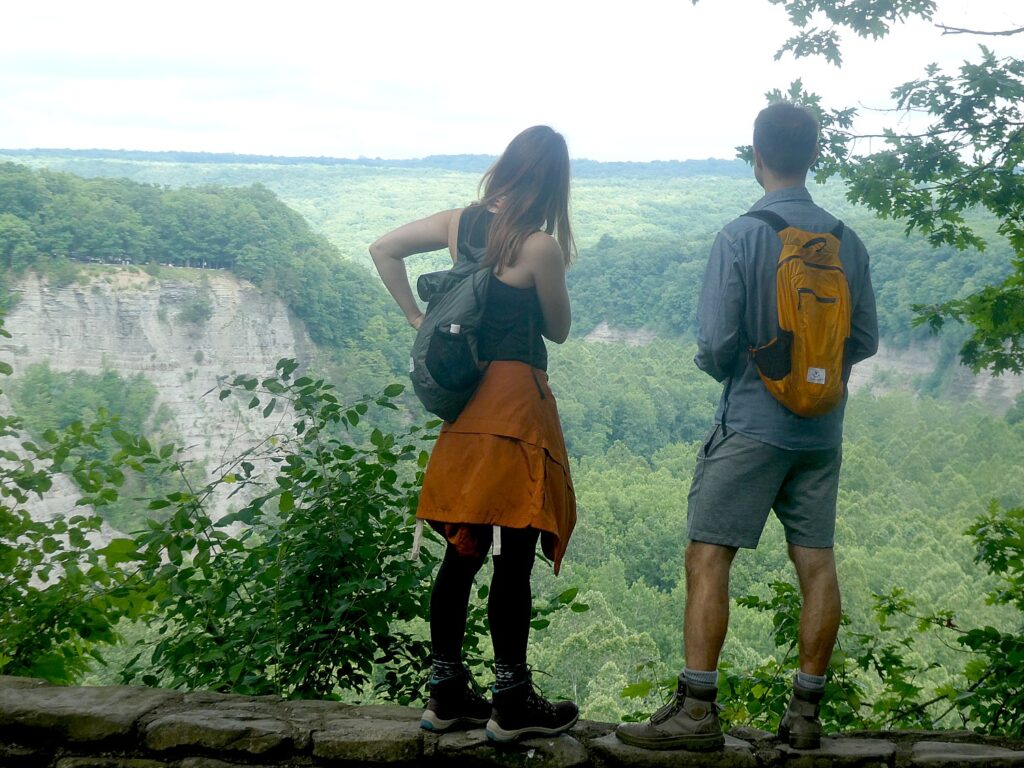
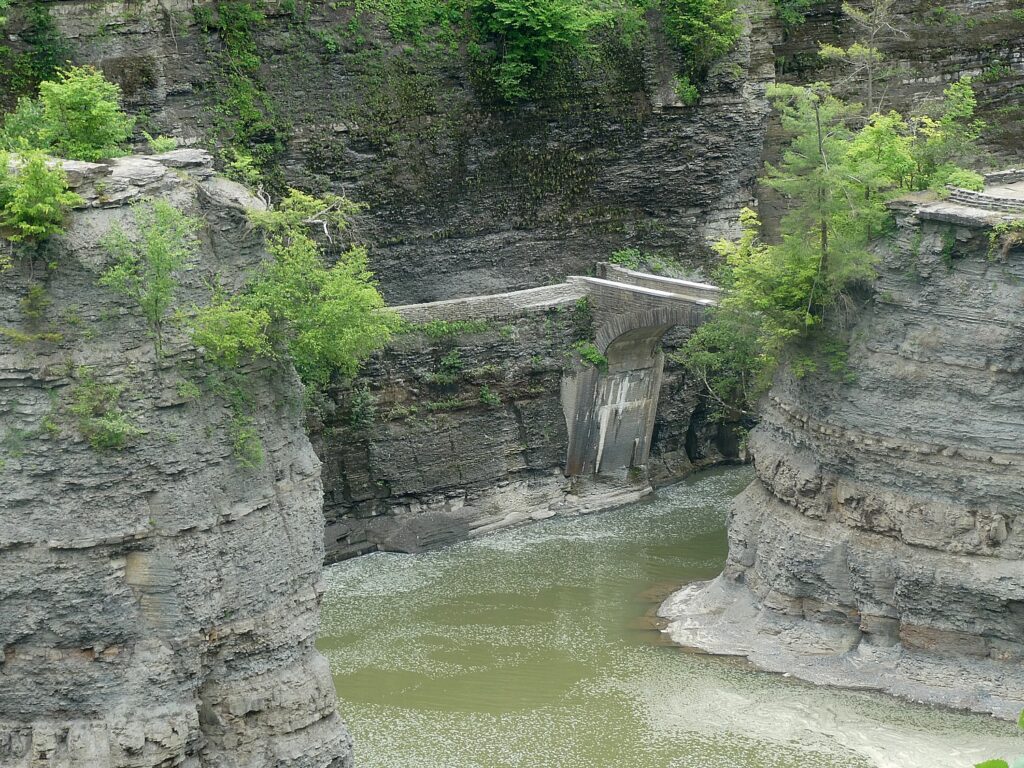
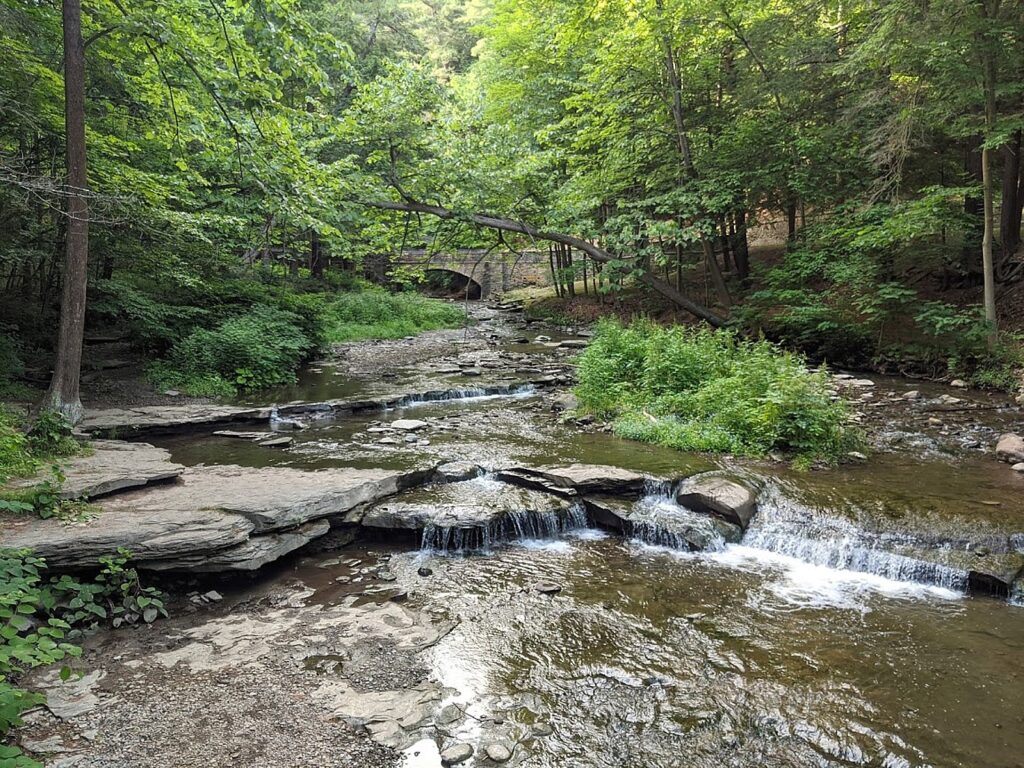
The Gorge Trail, in the south, brings you to the most spectacular views – Upper Falls and Middle Falls in quick succession, then Lower Falls. The real surprise is coming upon Wolf Creek waterfall and a bridge with a painterly scene. Along the way you come upon these stunning stone look-outs at Inspiration Point, Archery Field Overlook, Great Bend Overlook, Tea Table lookout, which also have stone tables and BBQ set-ups.

Letchworth State Park, New York © Karen Rubin/goingplacesfarandnear.com

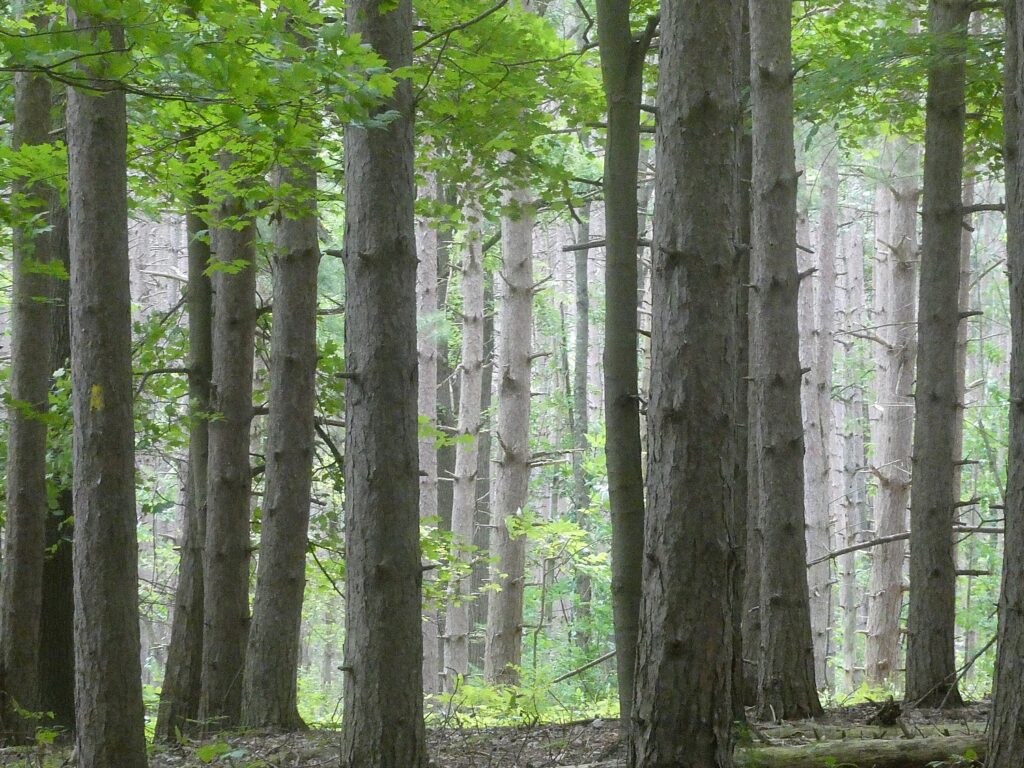
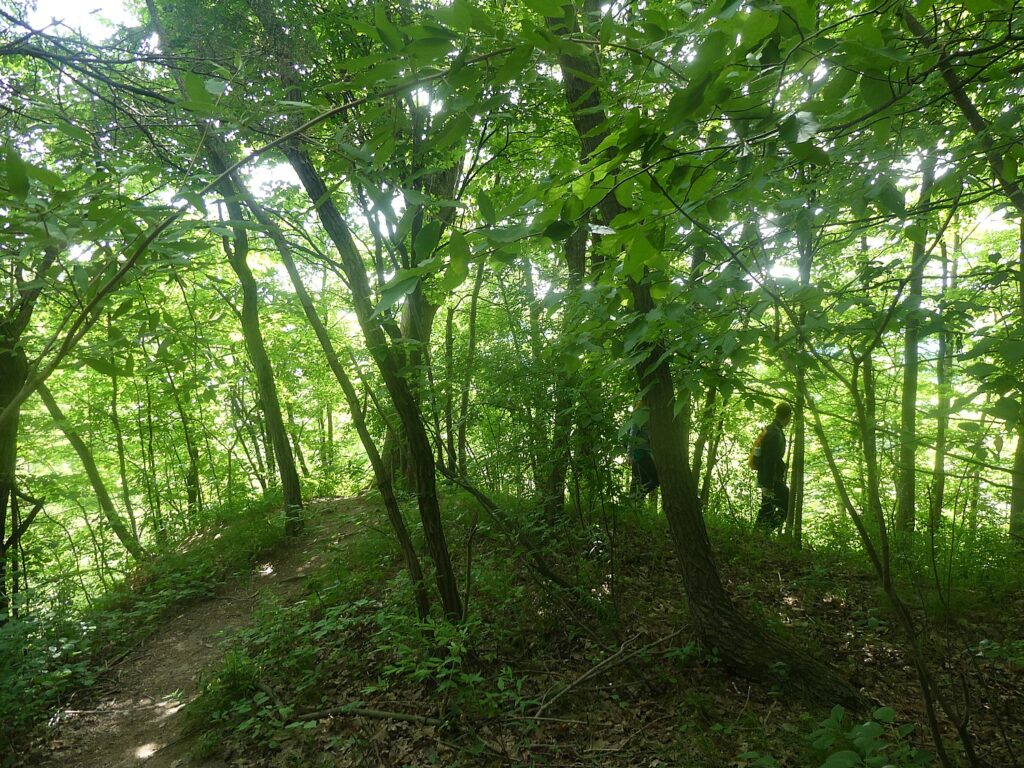
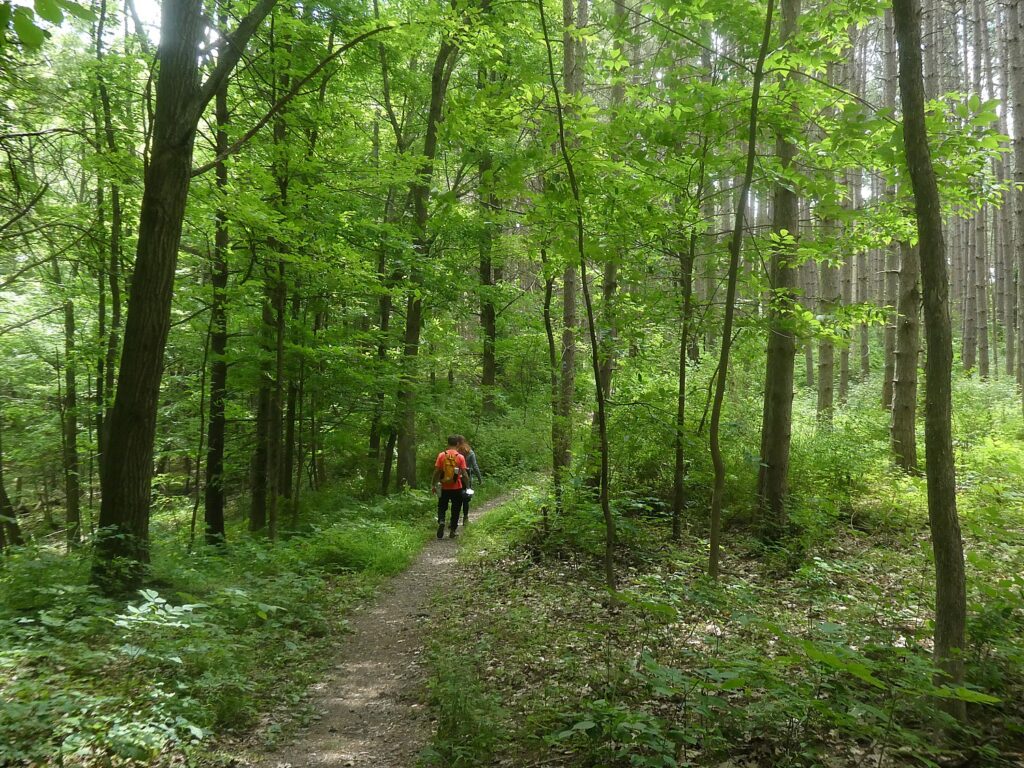
The Highbanks trail in the north section doesn’t have the awesome waterfalls, but is very special in its own way, providing the expansive vistas that evoke awe over just how enormous and winding this gorge is (respect for Mother Nature’s power) and why Letchworth has been dubbed the “Grand Canyon of the East.” Here, the hike brought us into stunning woods where the forest itself makes a painterly canvas.

View from Hogs Back on the Highbanks Trail, Letchworth State Park, New York © Karen Rubin/goingplacesfarnandnear.com
Letchworth State Park, New York © Karen Rubin/goingplacesfarnandnear.com

We started at the absolutely stunning overlook at Hogs Back (where we parked our car for the hike), going south about 2.5 miles, then reversing and going north from Hogs Back, you walk along the ridge, sometimes almost hanging over the gorge, until you come to the Mt. Morris Dam Overlook. The treat here comes at the end, at the Mt. Morris Dam Overlook Area, where there is a delightful snack bar serving excellent ice cream.

Letchworth State Park, New York © Karen Rubin/goingplacesfarnandnear.com

Two of the trails that I believe was closed during our visit, but definitely recommended is the Footbridge Trail that brings you down to the Lower Falls (#6A), just a half-mile long but rated “moderate” and the Portage Trail (#6).

Footbridge, Letchworth State Park, New York © Karen Rubin/goingplacesfarnandnear.com

Altogether, the park offers 66 miles of trails (almost all rated easy or moderate, and most on the west side of the park). But for hard-core hikers, there is a 22-mile Finger Lakes Trail that runs along the entire eastern section of the park

Letchworth State Park, New York © Karen Rubin/goingplacesfarnandnear.com

I tried to research in advance to find the best places for sunrise and sunset photos, which of course depends on season and weather. I wasn’t able to get any sunrise or sunset photos, but the late afternoon light proved best at the Upper Falls and Middle Falls (where rainbows seem not uncommon as the sun lowers and sends its rays through the mist).

Letchworth State Park, New York © Karen Rubin/goingplacesfarnandnear.com

Instead of eating at the campsite (not that scenic, but very pleasant for sleeping and breakfast), we kept our food in the cooler and equipment in the car and each evening would pick out a different setting – dining on tables with slate tabletops apparently taken from these very cliffs. David would haul out his Coleman stove and tiny propane tank, his culinary tools, cutting board, and perform his culinary magic. We dined at the appropriately named Tea Table the first evening, Wolf Creek the second evening, which proved our favorite, with a virtually private view of a sweet waterfall, that we discovered on our hike. We were going to have our third night’s dinner overlooking the Upper Falls, but realized this is the most popular part of the park, and since a priority was to avoid possible exposure to lingering COVID germs, we decided to return to Wolf Creek which we again had all to ourselves.

Wolf Creek, Letchworth State Park, New York © Karen Rubin/goingplacesfarnandnear.com

Each evening we returned to the campsite and David and Laini made a fire (s’mores for dessert!). The peace of this place, with tall trees opening to a blanket of stars, and fireflies darting about as if they were Superflies! or shooting stars, was perfect and priceless.

Highbanks Campground, Letchworth State Park, New York © Karen Rubin/goingplacesfarnandnear.com

Letchworth, which was voted USA Today’s Reader Choice for Best State Park in the nation in 2015, is well maintained, especially during this heightened COVID-19 health emergency. The campground restroom facility was very clean, and all the restrooms (they indicate which are open), require masks and social distancing.

Letchworth State Park, New York © Karen Rubin/goingplacesfarnandnear.com

Our plan for this trip was to be completely self-sufficient so we wouldn’t have to worry about getting water or food, not knowing if places would be open to buy supplies and wanting to cut down our interactions as much as possible. We took enough supplies for our three days, though we did discover that by the time of our trip, this region of New York had achieved Phase 4 reopening, so places were open though with significant limitations, including the Highbanks Camp Stores. (Concessions also were at the Dam Overlook Cafe and Highbanks Pool Snack Bar on the North end; Letchworth Gift shop, Lower Falls, upper Falls Snack Bar.)

(Indeed, for the foreseeable future, travel will involve more planning and forethought, checking ahead what will be open and under what conditions; as a general rule, some places are requiring advance reservations or timed-ticketing.)

Mount Morris Dam, Letchworth State Park, New York © Karen Rubin/goingplacesfarnandnear.com
 

The Highbanks campground is wonderful – six miles from the entrance, and several more miles to get to the actual camping loops for tents and RVs. There are also cabins. Several areas accommodate pets.

There are also a few cottages and lodges available within the park. For a family vacation rental experience, the Maplewood Lodge, located at the entrance to the Highbanks Camping Area, sleeps up to eight and has a furnished kitchen, living room with working fireplace, TV and DVD/BluRay player and formal dining room.

Camping was one of the attractions for us to come to Letchworth at this time (so many are choosing camping and RVing and even AirBnBs over commercial hotels), but the park also offers the charming Glen Iris Inn, scenically set right above the Middle Falls.

Glen Iris Inn, Letchworth State Park, New York © Karen Rubin/goingplacesfarnandnear.com

An inn since 1914, the historic Glen Iris Inn was formerly the country estate of William Pryor Letchworth. Completely restored, the inn offers accommodations and is open to the public for breakfast, lunch and dinner (banquet and catering services are available for special events). We see people dining on the lovely veranda, as well as in an enormous tent set up on the lawn to further accommodate those preferring to dine al fresco.

Addressing this historic moment, rooms are sanitized with an electrostatic cleaning machine and sealed for the guest’s arrival; capacity in Caroline’s Dining Room is limited to 50%. In addition to rooms in the Inn, the Glen Iris also offers some cottages (585-493-2622, glenirisinn.com).

Just across from the inn is the small stone William Pryor Letchworth Museum which tells the fascinating story of Letchworth Park, paying tribute to William P. Letchworth who preserved the land and its heritage by donating it to the state. The museum tells the history of the Genesee Valley, the canal, and of the Seneca who lived on these lands. Letchworth’s personal collection of artifacts from local Native American tribes is on view.

The museum also relates the compelling story of Mary Jemison, “The White Woman of the Genesee,”  born on a ship from Europe in 1743 and kidnapped from her home in Pennsylvania in 1758 by Shawnee, then sold to the Seneca who adopted her into the tribe, becoming Dehgewanus. (Trail #2 is named the Mary Jemison Trail, the creek is named De-ge-wa-nus Creek and there is a statue of her, erected by Letchworth not long after her remains were brought back from a reservation and reburied on his estate, that Letchworth dedicated to her memory in 1910; read her remarkable story: http://www.letchworthparkhistory.com/jem.html)

We didn’t have the opportunity to visit the museum during our visit, but is one of the top items on our list for our return.

Letchworth State Park, New York © Karen Rubin/goingplacesfarnandnear.com

We also did not get a chance to explore the Humphrey Nature Center which in normal times, offers year-round environmental education programming and interactive exhibits highlighting the geology, wildlife, and ecology of the park.

Highbanks Trail, Letchworth State Park, New York © Karen Rubin/goingplacesfarnandnear.com

Letchworth State Park offers many recreational facilities and activities that were just beginning to reopen at the time of our visit – including nature, history and performing arts programs, guided walks, tours, a summer lecture series. The enormous Highbanks Recreation area has a pool. And since our visit, the park opened a new $2 million outdoor Lower Falls Recreation Center offering table games, badminton and pickle ball courts, bocce and shuffleboard, as well as a fitness loop.

Highbanks Trail, Letchworth State Park, New York © Karen Rubin/goingplacesfarnandnear.com

The project also involved restoration of a historic bathhouse that is used as the base for the whitewater rafting concessionaire, Adventure Calls Outfitters (https://adventure-calls.com/). Letchworth also offers  kayaking, there is even hot air ballooning (https://balloonsoverletchworth.com/). 

A half-dozen trails allow biking (I wouldn’t recommend biking on the main Park Road), and there is horseback riding as well.

Middle Falls, Letchworth State Park, New York © Karen Rubin/goingplacesfarnandnear.com

Letchworth State Park is open year-round – the fall colors look spectacular, as do the winter scenes when there is cross-country skiing on most of the trails, snowmobiling on four trails, and snow tubing. Winterized cabins are available.

To book a spot in the state campground, go to https://newyorkstateparks.reserveamerica.com/.

Letchworth State Park, Castile, NY 14427 (there are several entrances, but Mt. Morris Entrance is closest to the highway; check out the wonderful antique shops in Mount Morris); 585-493-3600, letchworthpark.com.

Letchworth State Park, New York © Karen Rubin/goingplacesfarnandnear.com

New York State Office of Parks, Recreation and Historic Preservation oversees more than 250 parks, historic sites, recreational trails and boat launches, which were visited by a record 77 million people in 2019. A recent university study found that spending by State Parks and its visitors supports $5 billion in output and sales, 54,000 private-sector jobs and more than $2.8 billion in additional state GDP. For more information on these sites, call 518-474-0456 or visit parks.ny.gov.

______________________

© 2020 Travel Features Syndicate, a division of Workstyles, Inc. All rights reserved. Visit goingplacesfarandnear.com, www.huffingtonpost.com/author/karen-rubin, and travelwritersmagazine.com/TravelFeaturesSyndicate/. Blogging at goingplacesnearandfar.wordpress.com and moralcompasstravel.info. Send comments or questions to FamTravLtr@aol.com. Tweet @TravelFeatures. ‘Like’ us at facebook.com/NewsPhotoFeatures
New York State Parks, Campgrounds, Beaches Reopen Just in Time to Save Summer

Hiking the Escarpment Trail in the North-South Lake Campground park in the Catskills Preserve affording spectacular views of the Hudson River Valley. New York State has officially reopened state parks and is taking reservations for campsites © Karen Rubin/goingplacesfarandnear.com

By Karen Rubin
Travel Features Syndicate, goingplacesfarandnear.com

Visiting New York State’s parks has been such a respite, a source of revitalization and renewal during this unprecedented public health crisis. Thankfully, they have been officially reopened as New York proceeds with its NY Forward phased plan, as New York has gone (miraculously) from having the highest-rate of COVID-19 infection in the nation to the lowest in just 100 days. That has been managed by methodical, scrupulous implementation of protocols, a “new normal,” that include reducing capacity in parking lots and cleaning restrooms, and requiring people to wear face masks when they cannot keep six-feet apart, even when hiking on a trail.

This weekend, I biked at Jones Beach State Park, where the bike path has been extended 3 miles along Ocean Parkway, then biked along the boardwalk which was surprisingly uncrowded and people were observing healthy practices (and there were plenty of monitors, as well as hand-sanitizing stations, and scrupulously cleaned restrooms), then continued the trail along Wantagh Parkway 5 miles to Cedar Creek Park and return – a 20-mile ride that is absolutely exhilarating.

Jones Beach State Park, Long Island, NY (c) Karen Rubin/goingplacesfarandnear.com.

Another weekend, I biked the sensational Bethpage State Park trail. The 6.8-mile trail, which is remarkably treed and natural-looking despite going through a narrow corridor between highway and residential neighborhoods has been nearly doubled in length, to 12.5 miles, from Woodbury Road, into and through Bethpage State Park and Massapequa Park (https://www.dot.ny.gov/bethpagebikeway).

Biking the Bethpage State Park trail into Massapequa Park, Long Island (c) Karen Rubin/goingplacesfarandnear.com.

I can’t wait to bike the newly opened 3.6 mile bike/walking path along the Governor Mario Cuomo Bridge (former Tappan Zee), which affords views of New York City to the South, Hudson Valley to the north (mariomcuomobridge.ny.gov). Already, the Walkway over the Hudson in Poughkeepsie has become one of the most popular attractions in the state (walkway.org), and this new path is expected to be a boon for local tourism as well.

See: New 3.6 Mile Biking/Walking Path Opens on Mario Cuomo Bridge over Hudson River

New York State Governor Andrew M. Cuomo announced the opening of the 3.6-mile shared bicycle and pedestrian path on the Governor Mario M. Cuomo Bridge (the rebuilt Tappan Zee Bridge), providing an environmentally friendly new connection for families, runners, cyclists, walkers and commuters to travel between Westchester and Rockland counties over the Hudson River. The path opened with safety protocols in place to limit the potential spread of COVID-19.

I also discovered how easy it is to hike in the Catskills – within 2 ½ hours drive, to be amid sensational scenes immortalized in the Hudson River Art School paintings (and now on the Hudson River School Art Trail), making it a day trip (the rest stops along the New York Thruway are open and observing COVID-19 protocols). (hudsonriverschool.org)

A centerpiece of the art trail is the North-South Lake Campground, 2 ½ hour drive (but you can now book a campsite), where there are a number of hiking trails that bring you to the scenes depicted in paintings by Thomas Cole and Frederic Edwin Church. My favorite is the Escarpment Trail, which goes along the edge for breathtaking views over the Hudson including Artist’s Rock, Sunset Rock, Newman’s Ledge, Boulder Rock and North Point, through wilderness with dramatic rock formations, and down Mary’s Glen trail, passed the beautiful Ashley Falls. (https://cnyhiking.com/North-SouthLakeCampground.htm)

Coming upon Ashley Falls on the Mary’s Glen trail in North-South Lake Campground state park in New York’s Catskills (c) Karen Rubin/goingplacesfarandnear.com.

Make it into a real adventure, in order to enjoy all the outdoor amenities of North-South Lake Campground, and make it a camping trip. North-South Lake Campground is the largest state campground in the Catskills, with more than 200 campsites.

NYS Parks Campgrounds Reopen

New York State Office of Parks, Recreation and Historic Preservation (State Parks) has begun accepting new camping reservations for all available sites – including tents, trailers, RVs, cabins, yurts and cottages – for camping stays beginning on June 22. Reservations are expected to fill quickly. Reservations can be made in advance by calling 800-456-CAMP or http://newyorkstateparks.reserveamerica.com. Online reservations are encouraged.

State Park Police and operations staff are patrolling campgrounds to ensure compliance with social distancing and crowd control measures. Anyone who does not adhere to this guidance will be requested to leave the facility, and will not receive a refund.

Upon check-in, campers will be asked a series of screening questions to determine if they may have been in contact with anyone suffering from Covid-19, or if they have any potential symptoms of Covid-19, including fever or respiratory illness. People who may be at risk will not be permitted to camp.

Campground density reduction and social distancing measures will be in effect, including:

  • No walk-up reservations will be allowed.
  • Each congregate restroom facility will be opened and cleaned per DOH protocols.
  • Rest rooms and shower buildings may have reduced capacity and may be closed periodically for cleaning.
  • Campground gatherings will be limited to immediate household members only.
  • All campground events and programs are suspended.
  • Park Social Distancing Ambassadors will monitor campgrounds, picnic areas, beachfronts, lawns, boardwalks and other areas to ensure park guidelines are being met.
  • COVID related signage has been installed throughout the park system.

For a listing of campgrounds operated by the Office of Parks, Recreation and Historic Preservation, visit https://parks.ny.gov/camping/. Campgrounds in the Adirondack and Catskill Parks overseen by the Department of Environmental Conservation operate on a different schedule.

If you are closed out, you can look to some of the private campgrounds, such as Kampgrounds of America (koa.com).

Beaches and day-use areas

In alignment with NY Forward, State Park beaches, day-use areas and historic sites are charging the normal entrance fee of $6-$10 as regions reach phase 2 of reopening. For information, visit: https://forward.ny.gov/.

The 2020 Season Empire Pass for unlimited day-use entry costing $80, is a wallet-sized card that can be shared within a household and not assigned to a specific vehicle ( https://parks.ny.gov/admission/empire-passport/default.aspx)

For guidance on visiting New York State Parks during the Covid-19 public health crisis, visit: https://parks.ny.gov/covid19/

NY Parks 2020 Plan

New York is spending $2.9 million to improve new or existing trails and playgrounds in state parks across the state in the next phase of the NY Parks 2020 Plan. The plan is a multi-year commitment to leverage a broad range of private and public funding to invest approximately $900 million in State Park improvements. Under the initiative, Governor Andrew Cuomo has set a goal of modernizing 100 playgrounds, replacing outdated equipment with modern, code-compliant facilities, improving access for people with disabilities, and creating specific areas for older and younger age groups.

“We are continuing to invest in every corner of the state to ensure that New Yorkers have access to nearby family-friendly, top-notch facilities, with modern playgrounds and expanded or improved opportunities for hiking and outdoor recreation,” Governor Andrew Cuomo said. “Our State Parks serve as community anchors as well as economic engines for families and business across New York, and this is why we have made their enhancement a top priority.”    

New York State has invested millions to refurbish the Art Deco structures in Jones Beach State Park as well as add amenities © Karen Rubin/goingplacesfarandnear.com.

Projects funded include:

Capital Region

  • Saratoga Spa State Park ($50,000) – Rehabilitation of stone dust paths.
  • Moreau Lake State Park ($20,000) – Design work started for a new gravel parking area at the Sherman Island boat launch.
  • Materials purchased ($5,000) for creation of new trail signs at the regional sign shop for all parks in the region.

Central New York

  • Fillmore Glen State Park ($60,000) – Completion of a new 80-foot bridge, rehabilitation of box steps and stone steps, and regrading of a mile of the North Rim Trail.
  • Chittenango Falls State Park (69,000) – Renovation of existing playground.

Finger Lakes

  • Chimney Bluffs State Park ($50,000) – Construction starting on a new 400-foot boardwalk and trail relocation, with completion expected in spring 2020.
  • Genesee Valley Greenway State Park ($50,000) – New drainage culverts are being added to improve the 90-mile former canal towpath and railway bed in Monroe, Livingston, Wyoming, Allegany and Cattaraugus counties. In September, Governor Andrew Cuomo announced $6.4 million in grants from the Ralph C. Wilson, Jr. Foundation, in addition to $4 million in state funding, to support ongoing improvements to the Genesee Valley Greenway State Park and the Niagara Shoreline Trail in Western New York.

Long Island

  • Hallock State Park Preserve ($17,000) – A new .75-mile birding trail loop added from the upper parking lot through Harbor Hill moraine and rare clay hoodoos (a type of rock tower formation) along the north shore of Long Island Sound.

Mid-Hudson Region

  • Taconic State Park ($158,000) – Expansion of playground to include equipment for younger children and a bear theme.
  • Lake Taghkanic ($245,000) – Expansion of West Beach playground to include new fish theme, along with increased shade structures and an ADA-compliant pedestrian trail to the beach.
  • Mills Norrie State Park ($405,000) – Bids opened for new woodland-themed playground, with construction to start next spring for summer completion.
  • Fahnestock State Park ($325,000) – Design work started for a new bird-themed playground at Canopus Lake, with completion estimated in 2020 or 2021.
  • Trail signage replacement ($75,000) throughout region, with work expected to be done by spring 2020.
  • Hudson Highlands State Park Preserve – New interpretive panels will be added to the Constitution Marsh Bird Conservation Area, with work expected to be done by spring 2020.

North Country

  • Wellesley Island State Park ($10,000) – Construction of new boardwalks at the Minna Anthony Common Nature Center.
  • Robert G. Wehle State Park ($50,000) – Construction of a new playground shaped like a dog’s paw, to underscore Wehle’s history as a breeder of champion bird hunting dogs.
  • Higley Flow State Park ($50,000) – Construction of a second playground closer to the campgrounds.

New York City

  • Clay Pit Ponds Park Preserve ($15,000) – Trails have been improved at the 265-acre nature preserve at the southwest shore of Staten Island.

Southern Tier

  • Buttermilk Falls State Park ($30,000) – Work begun on new 56-foot bridge at Scott’s Dam connecting the main parking lot to the Bear Trail, with completion expected in spring 2020.
  • Taughhannock Falls State Park ($10,000) – Construction completed of new box steps and stone steps on the South Rim Trail.
  • Chenango Valley State Park ($282,000) – Playground near beach area improved with upgraded equipment. Clearing work has started on the Chenango Lake Trail, with planning begun for a new ADA-compliant parking area near the trailhead, a new Oak Island bridge and a mountain bikes skills course.
  • Oquaga Creek State Park ($75,500) – Construction of new play area.

Western New York

  • Allegany State Park ($130,000) – Rehabilitation complete on the 25-mile Art Roscoe Cross-Country Ski and Mountain Bike Area, with work expected to be complete by October. Work is complete on refurbishing the Lonkto Hollow Trail and culvert replacement. Replace culverts, with work expected to be done by October 2019. Refurbish the Stoney Trail and replace culverts, with work expected to be done in summer 2020.
  • Midway State Park ($300,000) – Construction this winter for a new train-themed playground reflecting the park’s origination as a 19th century “trolley park,” with work expected to be done for the 2020 operating season.
  • Letchworth State Park ($300,000) – Design work underway for new Nature Center playground, with construction start anticipated for April 2020.

Statewide

  • Backcountry Trails Program ($170,000) – Sterling Forest State Park: Repairs to existing trails, and construction of new Doris Duke Trail and seven-mile Red Back multi-use loop; Hudson Highlands State Park Preserve: Restoration and surfacing improvements to highly-used trails.

State Parks oversees more than 250 parks, historic sites, recreational trails, golf courses, boat launches and more, which were visited by a record 74 million people last year. For more information on any of these recreation areas, call 518-474-0456 or visit www.parks.ny.gov.

______________________

© 2020 Travel Features Syndicate, a division of Workstyles, Inc. All rights reserved. Visit goingplacesfarandnear.com, www.huffingtonpost.com/author/karen-rubin, and travelwritersmagazine.com/TravelFeaturesSyndicate/. Blogging at goingplacesnearandfar.wordpress.com and moralcompasstravel.info. Send comments or questions to FamTravLtr@aol.com. Tweet @TravelFeatures. ‘Like’ us at facebook.com/NewsPhotoFeatures

National Parks: This Summer’s Go-To Vacation Happy Place

Grand Canyon National Park. Visiting national parks this summer could be just what the doctor ordered to revitalize © Karen Rubin/goingplacesfarandnear.com

by Karen Rubin, Travel Features Syndicate, goingplacesfarandnear.com

In a weirdly awful bad news/good news way, this year is probably the best ever to visit one of America’s iconic national parks and the national parks have never been more important to revitalize our national and personal spirit. But if ever you wanted to get some sense of how it was back-in-the-day, this is it, precisely because capacity in accommodations are limited and the millions of international visitors who come each year are not coming. The National Park Service received more than 327.5 million visit in 2019, and there will be a clamoring for Americans with a renewed vigor to See America and leave the cities for the great outdoors, which means getting a place to stay will be problematic.

“The benefits of getting into nature for a few days are just what the doctor ordered – especially now,” said Cort Wright, Manager of the Moab Adventure Center, which operates programs into Arches National Park, Utah, and on the Colorado River. “As depression and anxiety diminish, our renewed vitality gains a foothold and positive attitudes surface. It will be a joy for us this summer and fall to see our guests transformed by the activities we provide.”
 
According to a study conducted by the University of Minnesota, “being in nature, or even viewing scenes of nature, reduces anger, fear, and stress and increases pleasant feelings. Exposure to nature not only makes you feel better emotionally, it contributes to your physical wellbeing, reducing blood pressure, heart rate, muscle tension, and the production of stress hormones.” (For the full report see: https://www.takingcharge.csh.umn.edu/how-does-nature-impact-our-wellbeing.)

Here are some vacation ideas:

Hike & Bike North Rim of the Grand Canyon: Providing gently rolling terrain of lung-expanding dimensions, the North Rim of the Grand Canyon has been long-held as sacred ground to hikers and cyclists. Escape Adventures offers an amazing 5-day tour of the North Rim that includes mountain biking, trekking and camping. Trails brimming with wildflowers lead guests to exhilarating hikes along the rim. Crossing over to the west side of the plateau, guests camp alongside one of the most scenic mountain bike paths in the world, the Rainbow Rim Trail. (https://escapeadventures.com/tour/grand-canyon-north-rim-mountain-bike-tour/)

Remote Dude Ranch Getaway: Red Reflet Ranch is a 28,000-acre luxury resort and working ranch on the west slope of the Bighorn Mountains, just minutes from the Bighorn National Forest. It is a scenic three hour drive from Yellowstone National Park. The closest sign of civilization is Ten Sleep, Wyoming, with a population of about 260. Guests stay in their own private chalets, and family-friendly activities include horseback riding, ATVing, ziplining, swimming, fishing, shooting, and indulging in gourmet farm-to-table cuisine. The ranch is open for business now. (https://red-reflet-ranch.net/)

Red Reflet Ranch is a 28,000-acre luxury resort and working ranch on the west slope of the Bighorn Mountains, just minutes from the Bighorn National Forest.

Grand Teton Tiny House Retreat:  Just minutes from Jackson Hole, Wyoming, Fireside Resort capitalizes on the tiny house craze and the classic appeal of rustic cottages by offering 25 pint-size, luxuriously outfitted tiny house rental units designed by Wheelhaus. The resort is located a stone’s throw from Grand Teton National Park and the Jackson Hole ski slopes. It is a great place to post up for a ski trip or a summer getaway.  (https://www.firesidejacksonhole.com/)

Big Sky Base Camp: If outdoor adventures like hiking, mountain biking, and fly fishing are your style, look to visit Big Sky, Montana and stay at The Wilson Hotel. Located on the edge of Yellowstone National Park, the town is home to Big Sky Resort and its 5,850 acres of ski terrain, as well as shaded forests, wildflower-filled meadows, rocky mountaintops and clear, cool rivers and streams. (bigskyresort.com)

Bryce & Zion by MTB: Soaring red stone spires and ancient citadels of rich Navajo sandstone give way to haunting hoodoos and curving arches of rock  a geologist’s dream and a mountain biker’s paradise. The rides on this 6-day Escape Adventures tour offer swift lines that wind and wend through deep Alpine meadows and Aspen forests only to spill out onto yawning mesas and buttes. The world-famous trails of Red Canyon’s Thunder Mountain, Cassidy, and Casto Canyon, are but a few of this tour’s many highlights. (https://escapeadventures.com/tour/bryce-and-zion-mountain-bike-tour/)

Great Parks North: Join the Adventure Cycling Association on its Great Parks North Route. This tour follows the Rocky Mountains from Missoula, Montana, to Jasper, Alberta, exploring some the most spectacular national parks the U.S. and Canada has to offer. Great Parks North will highlight Glacier NP, Waterton NP, Banff NP, and Jasper NP. (https://www.adventurecycling.org/guided-tours/self-contained-tours/2020-great-parks-north/)

Xanterra Travel Collection Outlines Re-Opening Plan for Lodging, Dining, Services in Yellowstone National Park

YELLOWSTONE NATIONAL PARK (MONTANA & WYOMING) – Xanterra Travel Collection today announced that operations in Yellowstone National Park including lodges, campgrounds, dining and tours will begin a phased re-opening on a limited basis starting June 1.

The decision to re-open was made after closely monitoring the guidance and recommendations of public health agencies such as the Center for Disease Control (CDC) and World Health Organization (WHO) as well as federal, state and local governments.

The current schedule for Xanterra operations in Yellowstone National Park has cabins with private baths, campgrounds, take-out food service, gift shops and select tours and activities available as part of a  phased approach to opening beginning on June 8. Opening and closing dates are subject to change based on future conditions and public health guidance as well as the ability to maintain a safe environment for visitors, employees and NPS staff. 

To learn more about Xanterra’s sanitization measures and ongoing efforts to keep employees and guests safe including physical distancing, ongoing cleaning, employee training, personal protective equipment and more, visit https://www.yellowstonenationalparklodges.com/health-and-safety/.

Visitors should come prepared and follow all CDC and local health guidance including practicing good hygiene and social distancing, wearing facial coverings in public spaces, and staying home and not visiting the park while sick.

Yellowstone National Park © Eric Leiberman/goingplacesfarandnear.com

LODGING: At this time, only cabins with private baths are scheduled to open at these locations: Old Faithful Inn, Grant Village and Roosevelt Lodge are currently closed but may reopen in 2020 if conditions allow.

Old Faithful Lodge (June 8-Oct. 4)

Old Faithful Snow Lodge (June 8-Oct. 25)

Mammoth Hot Springs Hotel (June 1-Nov. 1)

Lake Yellowstone Hotel (June 17-Oct. 4)

Lake Lodge (June 17-Sept. 2)

Canyon Lodge (June 19-Oct. 12)

CAMPGROUNDS:  Xanterra campgrounds are currently scheduled to open on this schedule:

Madison (June 15-Oct. 18)

Bridge Bay (June 17-Sept. 7)

Grant Village (June 17-Sept. 13)

Canyon (June 19-Sept. 20)

Fishing Bridge RV Park will remain closed through fall of 2021

DINING:  Select dining outlets will be open with “take out” options only. Based on current public health guidelines, dining room seating and dinner reservations are not available.

Mammoth Hot Springs Area: Terrace Grill (June 1-Oct. 12)

Old Faithful Area: Geyser Grill at Snow Lodge (May 22-Oct. 25); Old Faithful Lodge Bake Shop (June 8-Oct. 4); Old Faithful Lodge Cafeteria (June 8-Oct. 3)

Canyon Area: The Eatery at Canyon Lodge (June 19-Oct. 12)

Yellowstone Lake Area: Wiley’s Canteen at Lake Lodge (June 17-Oct. 4); Lake Lodge Lobby Bar (June 17-Oct. 3)

Grant Village Area:  Grant Village Dining Room (June 17-Sept. 13)

LIMITED GUIDED ACTIVITIES AND TOURS: Tours and activities will be limited to guide boats, boat rentals, backcountry shuttle, and dock slips at the marina, horseback rides at Canyon Lodge Corral, and bike rentals at Old Faithful Snow Lodge. Road-based tours, Scenicruise tours, Stagecoach rides, or the Old West Cookout will not be offered. Pricing and other details can be found online (https://www.yellowstonenationalparklodges.com/adventures/)

Bike Rentals at Old Faithful Snow Lodge (June 8-Sept. 7 or as weather permits, reservations not accepted)                                                        

Bridge Bay Marina/Dock Slips (June 17-Sept. 13)

Boat Rentals (June 17-Sept. 6, first come, first served, reservations not accepted)

Guided Fishing/Sightseeing Boats (June 17-Sept 13)

Backcountry Shuttle Boat (June 17-Sept. 13)

Canyon Lodge Corrals, Horseback Rides (June 18-Sept. 7)

Private Tours: Yellowstone Forever is the official nonprofit educational and fund-raising partner of Yellowstone National Park. Information about their private tours can be found here or by calling 406-848-2400. 

SHOPPING:  Select Xanterra gift stores will be open, but with controlled access to comply with distancing standards:

Mammoth Hotel (June 1-Oct. 12)

Old Faithful Snow Lodge (May 22-Nov. 1)

Old Faithful Lodge (June 8-Oct. 4)

Lake Yellowstone Hotel (June 17-Oct. 4)

Canyon Lodge (June 19- Oct. 12)

Lake Lodge (June 17-Oct. 4)

Madison Campground (June 15-Oct. 18)

For updates on the opening of Xanterra operations in Yellowstone National Park, visit https://www.yellowstonenationalparklodges.com/health-and-safety/. For reservations, visit https://www.yellowstonenationalparklodges.com/, or call 307-344-7311. For updates on the three-phased plan for re-opening Yellowstone National Park as well as the latest information on NPS operations in Yellowstone, visit www.nps.gov/yell.

With nine unique lodging options, including the renowned historic Lake Yellowstone Hotel, Yellowstone National Park Lodges allows you to have the ultimate park experience. Staying in the park is the best way for visitors to experience all it has to offer, including the exciting wildlife watching. Once the day-visitors leave, Yellowstone remains for the in-park overnight guests alone. Yellowstone National Park Lodges offer tours and activities guided by Certified Interpretive Guides that help create memorable experiences. For more information on lodging, tours, and vacation packages visit, yellowstonenationalparklodges.com or call 307-344-7311.

Known for its “Legendary Hospitality with a Softer Footprint,” Xanterra Travel Collection provides unforgettable experiences through its operations in national parks, including lodges, restaurants, tours, and activities, as well as through its ownership of resorts, a cruise line, a railway, and tour companies. Xanterra has operations in Grand Canyon, Yellowstone, Zion, Glacier, and Rocky Mountain National Parks, and Mount Rushmore National Memorial. Xanterra Travel Collection also owns and operates the Grand Canyon Railway & Hotel in Williams, Ariz., The Grand Hotel in Tusayan, Ariz., The Oasis at Death Valley in Death Valley Calif., Windstar Cruises, Holiday Vacations, VBT Bicycling Vacations, and Country Walkers.  Xanterra is also affiliated with two Forbes Five-Star Resorts, The Broadmoor in Colorado Springs, CO and Sea Island on the coast of Georgia.

With Reopening of Arches National Park, Moab Adventure Center Counts on Nature to Restore the Pandemic Weary

MOAB, UT– Arches National Park in the world’s favorite red rock playground of Moab, Utah, has reopened to visitors. Guided tours of this iconic park have resumed, along with a variety of half-day, full-day and overnight river rafting programs along the Colorado River.

Arches National Park, Utah has reopened.


Moab Adventure Center, a full-service resource for the adventure-minded, suggests three guided park tours to nudge the housebound into the outdoors. The company is also armed with newly instituted COVID-19 mitigation and operations protocols (see: https://www.moabadventurecenter.com/covid-19
 
Guided Tours of Arches National Park: Daily morning and sunset tours of Arches National Park help interpret the 150 million years of geology and nature that have created this masterpiece of more than 2,000 arches – the highest concentration on the planet. Tour rates are $89 for adults and $79 for ages 5 to 12. See: https://www.moabadventurecenter.com/arches-national-park-tours

Moab Adventure Center offers tours into Arches National Park, Utah.


A third tour offers a breathtaking aerial tour of the park. Departing mid-morning, the half-hour flyover views formations such as Courthouse Towers, North and South Window Arches, Delicate Arch, Devil’s Garden, the Colorado River, Fisher Towers, and Castle Valley. Youth two and under fly free on a parent’s lap. Tour rates are $109 for adults and $55 for youth 3 to 12. For details see: https://www.moabadventurecenter.com/arches-national-park-air-tours
 
Colorado River Tours: Full and half-day rafting adventures on the Colorado River along the southern border of Arches National Park can also be arranged through the Moab Adventure Center. A half-day morning tour showcases the mild to moderate rapids under a background of red rock cliffs, spires and buttes. Rates are $74 for adults and $64 for ages 5 to 12. Another half-day option comes with a BBQ lunch. Rates are $89 for adults and $79 ages 5 to 12. A full day on the river, with lunch, is a memorable seven-hour excursion. Rates are $109 for adults and $79 for age 5 to 12. (For details see: https://www.moabadventurecenter.com/moab-river-tours.)
 
As of May 1, 2020, the Southeast Utah Health Department authorized a phased reopening of businesses in and around Moab. Lodging, commercial campgrounds, restaurants and activities are now available and operating within recommended guidelines. The town is seeing quite an influx of visitors as so many now are choosing an outdoor vacation as the best escape with loved ones.
 
Moab Adventure Center is offering most of its regularly scheduled activities along with new private tours (www.moabadventurecenter.com/private-tours). These include exclusive Hummer Safari outings for up to nine people; private canyoneering adventures; exclusive Arches National Park morning tours; private stand-up paddle boarding lessons for up to six people; and private Moab rock climbing outings for up to four people.
 
Moab Adventure Center is a division of Western River Expeditions (http://www.westernriver.com/) an adventure travel company headquartered in Salt Lake City, with operations and offices in Moab and Fredonia, AZ. The company is the largest single tour provider in Moab, Utah. The Moab Adventure Center is located at 225 South Main St., Moab, UT 84532. For information and reservations call (435) 259-7019 or (866) 904-1163. The center also has a 2,000-square-foot retail space selling adventure related gear, clothing, maps and souvenirs.

Moterra Luxury Camper Vans

You’ve probably now heard of glamping – luxury camping. Now there is a novel way to experience the national parks and wilderness by luxury camper van.

With all the luxury of a 50-foot long RV, but, at 19-foot long, the size of an SUV, without the cumbersome size that makes it difficult to drive and park, and even the need to plug into electricity (the vans are powered with rooftop solar panels) or water (they hold 24-gallons of fresh water), their own sink, cooking facility, refrigerator and even their own bathroom facilities (a couple actually have its own shower and toilet, but others have port-o-potty), these camper vans give a new level of mobility. The vans can be used in tent camping spots in National Parks, so you can stay away from the noisy RV parks.

Founded by Gabe Aufderheide and Trevor James who were formerly with Backroads, the company offers these are specially outfitted Mercedes Benz Sprinters, built out by Sportsmobile, in Yellowstone, Wyoming; the Grand Tetons; Utah; Glacier National Park (Montana); and California.

These camper vans come with bluetooth audio, cruise-control and touch-screen navigation. A backup camera, blind spot sensors and lane assist technology make maneuvering a breeze. You don’t have to stay in an RV park, but can go wherever tents are allowed.

The vans come equipped with absolutely everything you need for camping, from sleeping stuff (memory foam pillow!), to cooking (marshmallow skewers) and dining, cleaning supplies, amenities like chairs and table, inflatable solar lights, even bear spray.

Moterra luxury camper van.

There are two models to choose from: The High Roof is perfect for couples- it includes a queen sized bed in the back, as well as a kitchen, sink, indoor shower and portable toilet. The Pop Top, which sleeps four, is perfect for families- it has both a double bed down below, and a double bed up top  in the Pop Top! While the Pop Top does not have an Indoor Shower, it offers a solar shower that can be used outside, and it also includes a sink and stove. Both models are rented for $319 a night.

Add-ons available include hammocks & bike racks, services such as pre-bought groceries and airport pick-ups, and packaged and customized tour itineraries.

All-inclusive packages consist of:

  • Moterra Campervan Rental and cleaning fee
  • Day-by-day personalized Itinerary with directions and destination info.
  • Pre-booked campsites, handpicked and booked in advance where possible, or GPS locations for off-the-grid dispersed camping spots.
  • Scenic Routes that take you to the heart of the action while minimizing road traffic.
  • Individualized suggestions depending on your preferences for hiking, scenic attractions, restaurants and activities.
  • A wide range of activities to make the trip your own, like white-water rafting, wildlife safaris, road biking, horseback-riding, kayaking and scenic floats.

For example, a 10-day/9-night Mighty 5: Utah’s Desert National Parks is priced from $5499, providing two-days each in Zion National Park, Bryce National Park, Capitol Reef National Park, Canyonlands National Park and Arches National Park.

A six-night/seven-day package offers the highlights of Yellowstone National Park and The Grand Tetons National Park (from $3699).

Moterra operates out of Jackson, WY, Whitefish, MT, Salt Lake City, UT and San Francisco, CA.

Moterra Camper Vans, 2950 West Big Trail Drive, Jackson, Wyoming, 307-200-7220,
info@gomoterra.com, gomoterra.com.

_________________________
© 2020 Travel Features Syndicate, a division of Workstyles, Inc. All rights reserved. Visit goingplacesfarandnear.com, www.huffingtonpost.com/author/karen-rubin, and travelwritersmagazine.com/TravelFeaturesSyndicate/. Blogging at goingplacesnearandfar.wordpress.com and moralcompasstravel.info. Send comments or questions to FamTravLtr@aol.com. Tweet @TravelFeatures. ‘Like’ us at facebook.com/NewsPhotoFeatures
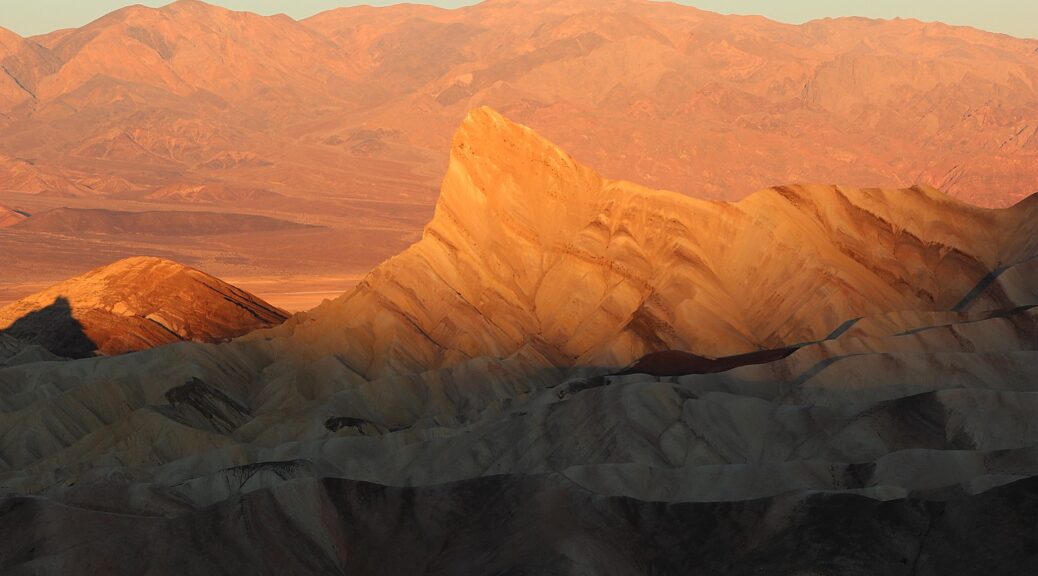
Where to Go to Reclaim Summer Vacation from COVID’s Grip

Discovery Bicycle Tours, operating out of Woodstock, Vermont, is promoting private and small-group tours through uncrowded rural areas, within driving distance of Northeast’s major metros this summer © Karen Rubin/goingplacesfarandnear.com
 

by Karen Rubin, Travel Features Syndicate, goingplacesfarandnear.com
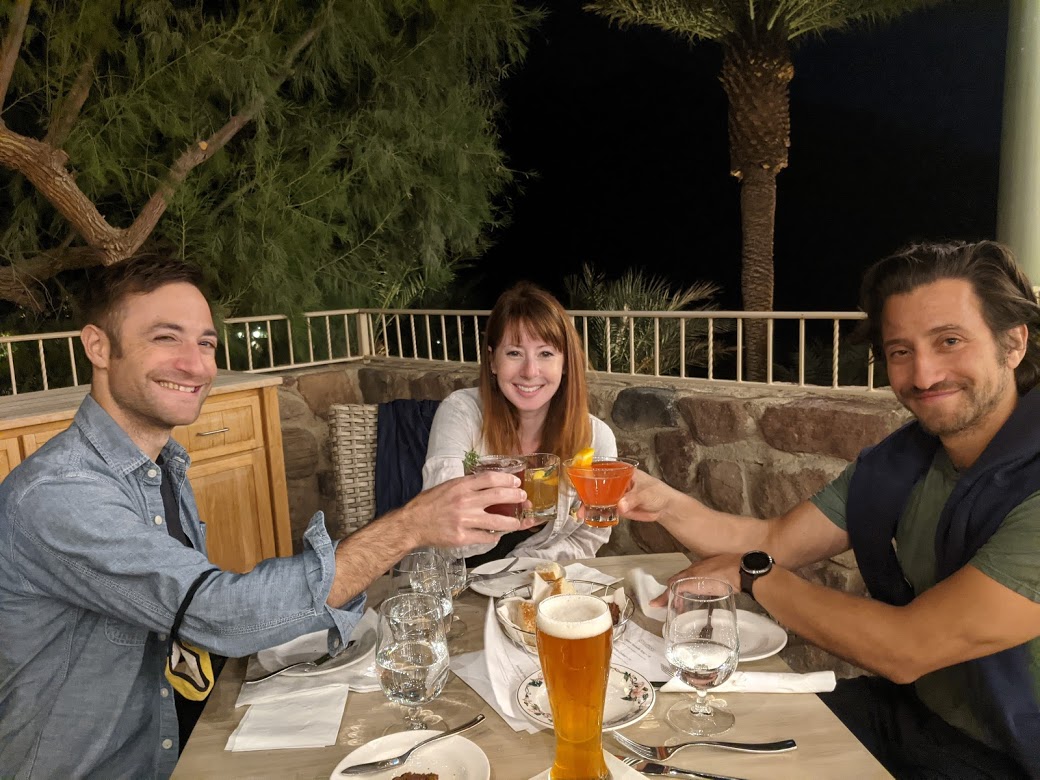
Memorial Day typically is the start of the summer vacation season. But this Memorial Day and this summer season is anything but typical. Still, because of the opportunities to enjoy the outdoors and explore uncrowded areas, summer may be the best time over the next many months to escape neighborhood boundaries and travel. Face it, some destinations, some travel experiences are better suited than others in this time of coronavirus pandemic, and travelers need to have confidence that travel providers, authorities and communities have taken all precautions to provide a safe, healthy environment where they are traveling.

Travelers, too, bear responsibility to not become infected or inadvertently carry infection to other places: wearing masks, washing hands frequently with soap, socially distancing, and self-quarantining when not feeling well. Some localities even have 14-day quarantine periods imposed on any visitor (check), and some communities may be less than welcoming to tourists from areas known to have had high infection rates. New Yorkers, for example, may be welcomed with less than open arms, but the good news is that New York has made it exceptionally easy to get tested, so travelers can move about with a sense of confidence (recognizing that a test only reflects that moment in time).

Indeed, instead of shutting down tourism altogether – punishing local economies that depend on tourism – places that impose a 14-day quarantine might instead take a result of a test that either affirms the traveler is not carrying COVID-19 infection or has the antibodies to indicate they have already had the infection; some might even set up their own testing stations at the “border” – the toll booths on the highway or the airports – where a tourist can immediately be tested and stay over a night, rather than 14 days, for the result – much as nations require proof of vaccines. Such measures would also inspire confidence in other travelers that they won’t become exposed.

Very possibly, the most difficult part of organizing a summer vacation will be access in light of limits on capacity. For this reason, going through an experienced, well-respected tour company which can provide services with the heightened attention to wellness, has permits and accommodations, will be key.

Here are some suggestions for your summer vacation:

Austin Adventures Responds to Renewed Interest With Custom, Small-Group Programs

Austin Adventures is seeing an uptick in requests as national parks reopen.

Austin Adventures is “definitely seeing an uptick in domestic travel requests as the national parks of the west express their opening plans,” says Dan Austin, founder and CEO of the travel company. “Many want exclusive departures. We have a new program to accommodate these requests. We are using private cabins and estates and providing full service guided adventures using these properties as a base camp.

“Guides will pick up guests at the airport and provide full services by day, tucking the guests into their private retreats by night. All vans and equipment are sanitized daily per CDC guidelines and following the lead set by airline carriers. Strict social distancing guidelines will be followed in all public areas. Guest will enjoy getting out on the trails and into the backcountry away from crowds. Activities like rafting and horseback riding will all be done in a private group setting.” 

Austin is setting up scheduled small group departures, adding an extra vehicle – two vans for 12 guests – to keep group size small even while transporting guests.

Planning is made a bit more complicated because the various national parks are opening with different timelines and new regulations, each set by the individual park superintendent all based on what’s best for their park and guests, Austin says.

Austin Adventures is designing private and small-group tours ideal for families.

“Yellowstone is our top seller and while there will be limited accommodations in the park opening and lots of new COVID rules, we will be back running tours June 14.” A key advantage is that Austin is fully permitted and capable of following the strict COVID-19 guidelines.

The company also expects to operate in the Grand Tetons, Wyoming, and Bryce and Zion in Utah, as well as Alaska.

“All starting a bit later but running in some capacity   A couple of casualties of COVID is our Canadian Rockies adventure – because of strict quarantine rules [still not allowing nonessential travel from the United States across its border] and our Glacier National Park trip because of the uncertainty as to when and how it will open. Hotel openings are key and often alternates must be found outside the parks.”

Austin Adventures, Billings, Montana, 800-575-1540, 405-655-4591, www.austinadventures.com.

Western River Expeditions Draws on 60 Years Experience to Devise Protocols to Keep Families Adventuring this Summer

Where in the world – and how – will families vacation this summer?

“Given months of pandemic-driven lock-down orders, what will be attractive will be vacations that embrace fresh air and the healing powers of nature that can work wonders on family spirits and recovery,” says Western River Expeditions.
 
The company is drawing on its nearly 60 years operating top-quality river rafting vacations for individuals, families and friends to address pandemic-related challenges. Here are some of many steps the company is taking to counter COVID-19 fears. 

  • Screening Employees: Every day before work, each employee must pass both a temperature and pulse oximeter screen, and then answer a detailed questionnaire.
  • Screening Guests at Check-in: Guests exhibiting temperatures of 100.4 or higher will not be allowed to travel with Western River Expeditions at the time they planned; instead, they will receive an “Adventure Credit” which allows the guest and any members of the group who were currently living at the same physical address during any of the 7 days prior to the trip to use the full paid value of their trip as a credit for a future trip at a later date.
  • Screening while on Multi-Day Trips: All trip participants and guides will have a daily temperature and pulse oximeter checks and fill out a daily review of symptoms questionnaire. 

New protocols have been put in place should someone experience COVID-19 symptoms during a trip. In such case, steps will be taken to protect other guests from exposure during the remainder of that trip. There also will be protocols for toilet facilities, hand washing stations and social distancing (when feasible) as well as reduced number of guests per raft.
 
The company will also implement specific guidelines that address everything from life-jacket use and sanitation, to meal prep and service, use of shuttle vans, number of people per shuttle vehicle, sanitation of rafts, dry bags, cots, sleeping bags and all associated equipment. For more details on Western River Expeditions’ specific protocols see www.westernriver.com/covid-19
 

Western River Expeditions plans to offer its famed rafting adventures this summer with special protocols.

Western River Expeditions is expecting to operate late spring and summer 2020 trips, subject to the easing of government-mandated closures. Three trips in particular are ideal for families:

  • Desolation Canyon, a five-day trip through breathtaking Desolation Canyon and Gray Canyon on the Green River in central Utah. Trips are scheduled to depart June 7 through Aug. 12 with a minimum age of five years old (see www.westernriver.com/desolation-canyon
  • Southwest Sampler, a four-day adventure that includes an off-road Hummer Safari, Arches National Park tour and overnight rafting trip as well as a stay at Moab’s Marriott SpringHill Suites. Departures are scheduled May 26 through Aug. 26. If National Park closures affect the operation of the Arches National Park tour, guests will explore another stunning location in Moab (see  https://www.westernriver.com/moab-utah-vacation-sampler)
  • Grand Canyon, the three-day option still has some limited space on certain dates from June 21st through September. Conveniently departing and returning to Las Vegas, NV, this 100-mile journey is suitable for families with kids as young as nine (see https://www.westernriver.com/grand-canyon-river-trip
Western River Expeditions is recommending three family tours this summer.

Other adventures from Western River Expeditions include:

Utah’s Cataract Canyon Classic 4 Day: These should operate June 2 through August 25. This spectacular 4-Day Colorado River trip runs 100 miles from Moab to Lake Powell through Canyonlands National Park. A flight returns guests to Moab over Canyonlands.

Cataract Canyon Express 2 Day: This faster-paced 2-Day Colorado River trip runs 100 miles from Moab to Lake Powell through Canyonlands National Park. Large whitewater rapids are a big part of this adventure!

Upper Grand Canyon 6 or 7 Day: Trips starting June 14 and later are currently scheduled to operate. Select trips June through September have limited availability. The upper 188 miles of the Grand Canyon offer some of the largest whitewater rapids in North America and a plethora of side canyon attractions. 

Lower Grand Canyon 4 Day with Bar Ten Ranch: All 4 day departures from June 21sthrough September are expected to operate; limited space is available on select departures in 2020.

Western River Expeditions is an adventure travel company headquartered in Salt Lake City, with operations and offices in Moab, Utah and Fredonia, Arizona. From March through October, the company guides more people down rivers in Utah, Idaho and Arizona than any other company. It is the one of largest licensed outfitters in the Grand Canyon and the largest single tour provider in Moab, UT, through its Moab Adventure Center division (http://www.moabadventurecenter.com/).
 
Western River Expeditions, Salt Lake City, UT,  866-904-1160, 801-942-6669, www.westernriver.com.

Luxury Active Vacations from Butterfield & Robinson

Butterfield & Robinson Experience Designers have been diligently researching, collaborating with long-trusted partners to offer programs with increased safety measures, mindful activities and more flexible booking policies.

The result is a curated selection of experiences in remote locations—from rustic-chic cabins to island-perched hotels—that, when combined with wide-open spaces, create the perfect setting to start exploring again.

The luxury active vacations company is focusing on private groups of family and friends who are looking for exclusive experiences at remote high end properties or luxury camping. The price point is around $700-1000 per person, per day. The options range from guided biking and walking experiences to lodge- based single stay experiences. For example:

Venture to the Wild West for private cabin stays or full takeovers of luxury ranches like Wyoming’s Brush Creek and The Ranch at Rock Creek in Montana. Or head to Colorado and settle into a cottage at Dunton Hot Springs, where you can gallop on horseback through the San Juan Mountains and let your stress melt away in a natural outdoor pool.

Butterfield and Robinson makes it possible to venture to the Wild West for private cabin stays or full takeovers of luxury ranches this summer.

In California’s wine country, innovative winemaking techniques fuse with fresh, farm-to-table food. Pair with properties like the sophisticated SingleThread or the dreamy Auberge du Soleil.

In the rust-colored desert expanses of Utah, choose how you interact with the landscape, whether it’s a stay at the sleek and restorative Amangiri resort or a private houseboat charter (complete with a private chef!) on Lake Powell. Elevate the experience with luxury camping on the North Rim of the Grand Canyon for a secluded moment in one of the most beautiful places on earth.

Say aloha to paradisiacal beaches, active volcanoes and sky-high waterfalls for some adventure further afield in Hawaii. Check in at the Mauna Lani on the Kohala coast and fill your days with water sports, epic hikes or a round of golf before kicking back in the evening with Mai Tais.

Butterfield & Robinson, Toronto, Ontario, 866-551-9090, http://butterfield.com/

Discovery Bicycle Tours: Yes You Can Bike This Summer

Discovery Bicycle Tours, operating from Woodstock, Vermont, is resuming operations in destinations that have reopened for outdoor adventures, with important new health precautions in place. The company is also highlighting its small-group active vacations and can customize private tours (https://discoverybicycletours.com/private-tours)

The trips are organized to bike through rural places where you can leave the crowds behind and bike freely, and with fewer inn transfers.

“Our small tours are carefully crafted to provide personal choices for your comfort. You have options to dine with a small group, outside or in your own room. Each inn and restaurant on tour has new protocols to comply with local health rules,” writes Chief Customer Officer Thistle Cone, who recently bought the bike tour company with Scott Cone.

“Our leaders are adding extra cleanings of vans and bikes and will provide more social distancing for van transfers. Bring a comfy mask — and we will have extras.”

Idyllic country scenes greet Discovery Bicycle Tours cyclists just outside Woodstock, Vermont (c) Karen Rubin/goingplacesfarandnear.com

Among the July and August six-day tour offerings now booking:

Crater Lake & Scenic Bikeways: July 26-31, Aug. 9-14
Lake Champlain Islands: Aug. 16-21, Aug. 30-Sept. 4
Coast of Maine: July 19-24, Aug. 16-21, Aug. 23-28
Idaho Trails: July 5-10, Aug. 22-27
Great Allegheny Passage: Aug. 30-Sept. 4

“Looking for an East Coast getaway that’s a short drive from the major metro areas? Stay tuned to our website for more Vermont tours to be added soon … most in August through October.” 

Discovery Bicycle Tours, Woodstock, Vermont, 800-257-2226, info@discoverybicycletours.com, discoverybicycletours.com.

New Jersey’s Beach Mecca The Wildwoods Reopens

The Greater Wildwoods Tourism Improvement & Development Authority (GWTIDA) has been tirelessly working with the Greater Wildwood Hotel and Motel Association, Wildwood Business Improvement District (WBID), the Wildwood Special Improvement District (WSID), the Greater Wildwood Chamber of Commerce and area businesses to set up initiatives such as enhanced sanitizing protocols, as well as expanding seating in restaurants out onto the sidewalks and adjacent parking lots for al fresco dining, enhanced sanitizing and spacing on amusement rides and all surfaces, social distancing procedures in ride queue lines, sanitizing of rental bikes, boats, jet skis, kayaks and of course promoting the wide spacious beaches where visitors can stretch out and relax with plenty of room to practice social distancing. 

“We are pleased to report that the Wildwoods are open for business for the 2020 summer season,” said Greater Wildwoods Tourism Improvement and Development Authority (GWTIDA) Executive Director/CFO John Siciliano. “Health and safety is a top priority for the Wildwoods, and every precaution is being taken to assure that all who visit feel safe and comfortable,” he added.

The famous beaches of The Wildwoods, New Jersey are reopened this summer.

North Wildwood and Wildwood beaches and boardwalk has reopened to limited activity; the cities’ parks and bike paths are reopened and Wildwood Crest beaches, parks, bike paths, and sport courts for non-group play are open. In addition, hotels, motels and short-term rental properties are scheduled to begin reopening in Wildwood and North Wildwood on May 26 and Wildwood Crest properties will reopen on June 1.

Short-term rental properties, like all aspects of reopening the Wildwoods for the summer, will take measures to meet social distancing guidelines by initially opening at 60 percent capacity. Increased sanitizing and cleaning protocols, especially in high-touch areas, will be encouraged to ensure an optimal visitor experience. Additional measures may include having later check-in times to allow additional time for guest room preparation and enhanced sanitizing.

The Wildwoods offer 11,000 room accommodations – including 8,000 hotel and motel rooms, and 3,000 vacation rentals. The mid-century themed hotels/motels throughout the five-mile island developed during the era of burgeoning automotive travel of the 1950s – which is making a comeback in this New Normal.

 “The designs and architectural features pay tribute to the post-war pop culture. Their architecture continues to memorialize the bold spirit of a newly restless society, while motel names conjure up tropical paradises and other exotic destinations.”
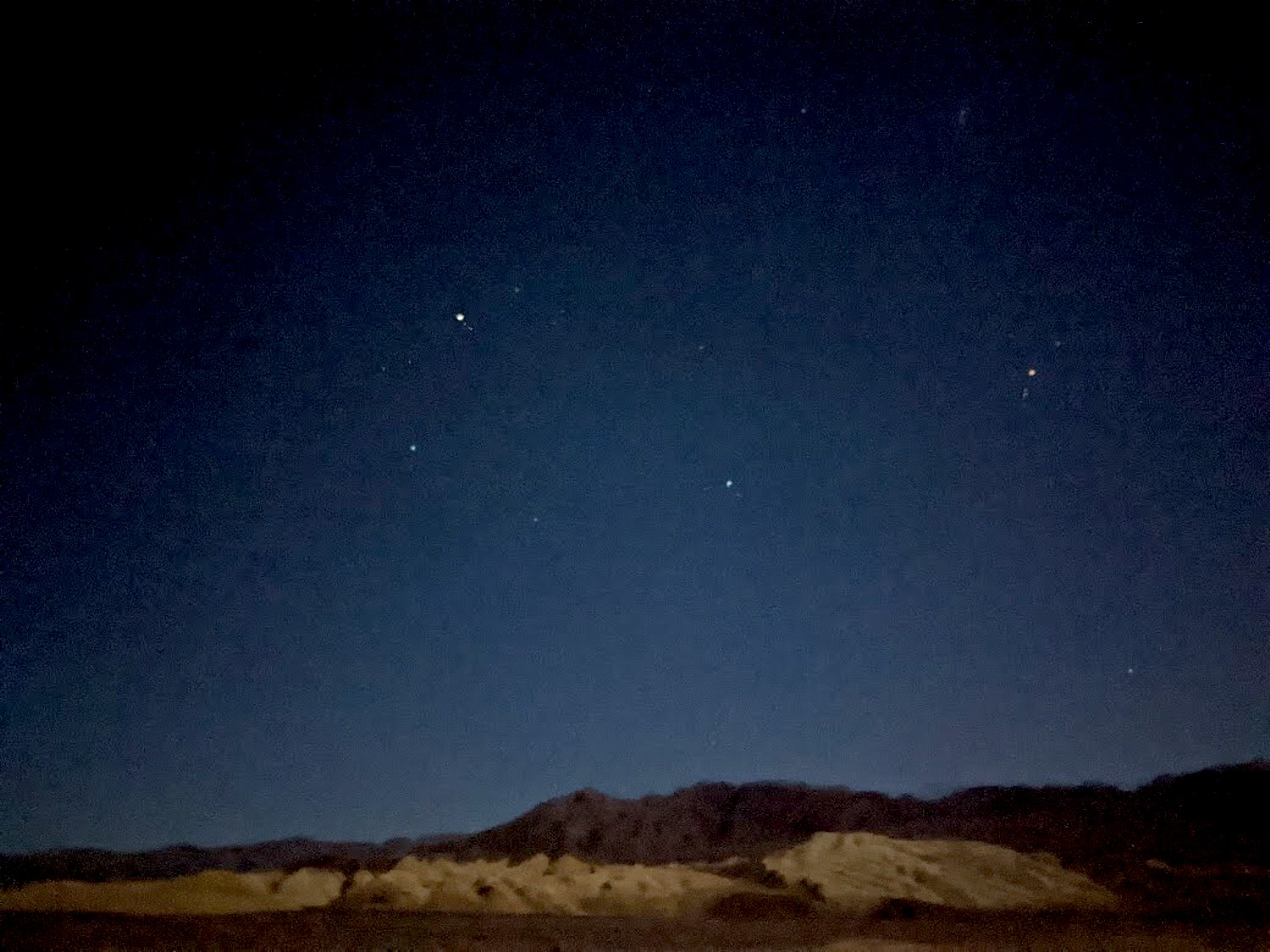
Visitors must adhere to the social distancing guidelines set forth by Governor Phil Murphy; all activities are subject to the orders of the Governor.

Walking, running, fishing and sunbathing are welcomed on the beaches. Physical activities such as biking, walking and running may take place on the boardwalk. Boardwalk establishments offering takeout-only food, will also be open for business. Municipal parks and playgrounds will be open; however, playground equipment will remain closed. Everyone is encouraged to use best practices for social distancing, including wearing masks while enjoying the beach and boardwalk. Sitting and gathering in groups is prohibited.

The Wildwoods’ five-miles of free white-sand beaches serve as the ideal location for visitors to clear their minds and enjoy the calming benefits of ‘Beach Therapy’. The beaches offer an award-winning and spacious stretch of sand to relax, recharge, and reunite with friends and family. In addition to being the perfect place for relaxation, the beach gives visitors a wonderful opportunity to exercise freely and spend quality time with family.

Another way to recharge, get physical exercise and enjoy the beautiful summer air – all while keeping a safe distance from fellow visitors – is taking part in the Wildwoods’ ‘bikeability’. Take in the breathtaking views of the Wildwoods, starting at the far southern end of the island along the Dunes Bike Path in Wildwood Crest, up onto the Wildwoods’ 2.5-mile Boardwalk, and through North Wildwood’s Muhlbury Bike Path to the North Wildwood Sea Wall – a scenic, leisurely 12-mile round trip route. You can also ride bikes-only lanes through downtowns and around the entire island.  

Golf courses can be found all across Cape May County – from Cape May National to the south to Shore Gate Golf Club to the north – and offer a variety of playing levels from beginner to scratch golfer.

Known as the ‘two miles of smiles,’ the iconic Wildwoods Boardwalk is pure sensory overload with three amusement piers with 100 rides and attractions, carnival-style games, flashing arcades, shops and irresistible food. The Wildwoods food & beverage establishments are doing their part in abiding to safe distancing guidelines by offering curbside pick-up, delivery, and al fresco dining options.

For additional information about The Wildwoods, New Jersey, call 800-992-9732 or visit www.WildwoodsNJ.com

 _________________________
© 2020 Travel Features Syndicate, a division of Workstyles, Inc. All rights reserved. Visit goingplacesfarandnear.com, www.huffingtonpost.com/author/karen-rubin, and travelwritersmagazine.com/TravelFeaturesSyndicate/. Blogging at goingplacesnearandfar.wordpress.com and moralcompasstravel.info. Send comments or questions to FamTravLtr@aol.com. Tweet @TravelFeatures. ‘Like’ us at facebook.com/NewsPhotoFeatures