American Museum of Natural History Creates Immersive Experience for Understanding ‘Our Senses’

Looks like a flat 2-dimensional image but the image is made up of separate three-dimensional blocks, one of the illusions at ‘Our Senses: An Immersive Experience’ at American Museum of Natural History © 2017 Karen Rubin/goingplacesfarandnear.com

By Karen Rubin, Travel Features Syndicate, goingplacesfarandnear.com

You are in a room. There’s a mural on the wall with drawings of animals. There is red light and you see a set of animals; then the light turns blue and you see a different set of animals.

In another room, you try to build blocks looking through glasses that turn them upside down. It’s disorienting, and that’s the point.

In another room, you are tricked into thinking two squares on a checkerboard are different shades of grey, when in fact, they are the same.

In another room, you feel off balance by the swiggles of black lines on the walls that don’t equate with the flat floor you are standing on.

In another, you push a button to see the vivid, fluorescent colors of a flower as a bee would see them.

In the new, highly experiential exhibition  Our Senses: An Immersive Experience opening at the American Museum of Natural History, a series of 11 funhouse-like galleries dare visitors to rely on their senses—and then reveal how and why what we perceive is not all, or exactly, what’s actually occuring around us. Inspired by extraordinary diversity of sensory “super powers” in species, including humans, across the natural world, Our Senses takes experiential exhibition to a new level. Our Senses opens for a weekend of Member previews beginning on Friday, November 17, and will be on view to the public from Monday, November 20, 2017, through Sunday, January 6, 2019.
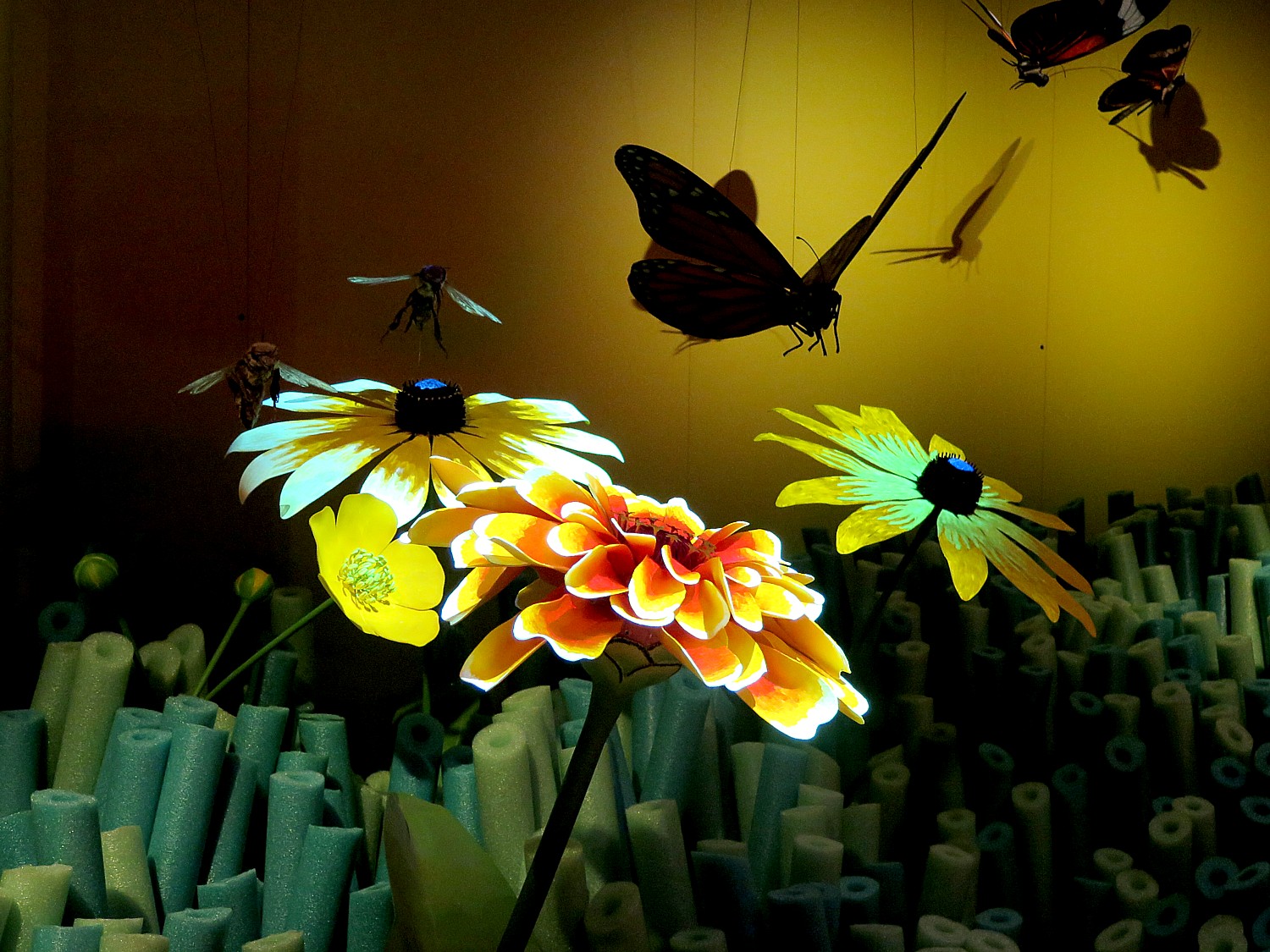
New science: it was known that insects see in ultraviolet but only a few years ago, did scientists understand just how vividly they could see. At a push of a button, “Our Senses” let’s you see a flower the way a bee would © 2017 Karen Rubin/goingplacesfarandnear.com

“Our senses are essential to how we live and make sense of the world around us. They provide pleasure, warn us of danger, and allow us to interact with one another,” said Ellen V. Futter, President of the American Museum of Natural History. “But how exactly do they work, why did they evolve the way they did, and what things are we not able to sense or perceive accurately? In a kind of ‘sequel’ to our 2010 exhibition about the brain, Our Senses: An Immersive Experience will explore the intriguing power of our sensory perceptions, offering our visitors not only highly enjoyable learning experiences, but an enriched perspective on what makes us human.”

She adds, “Spoiler alert: we have way more than five senses.”

“In a way, this exhibit is a sequel and extension of the 2010 exhibit about The Brain and cognition [which also was curated by Rob Desalle who curated “Our Senses: Am Immersive Experience.”]. While senses gather information and are highly evolved capacities, we can’t make sense of our world without the brain.” That is the role of prior learning, prior experience, culture, which prime our senses, focus our attention, and trigger the brain to interpret and perceive and combine the different stimuli into a message, idea, concept, action.

Human senses, and human brains, adapted over millennia to help our ancestors survive by shaping and enhancing their perceptions of everyday encounters. Our Senses reveals how until recently in our evolutionary history, humans have been oblivious to some of nature’s ubiquitous signals, including UV and infrared light, very high- and very low-frequency sounds, and electric fields. With the advent of new technologies, scientists now know those signals are all around us—whether or  not perceptible to us through our senses alone. But detecting things is not enough, because our  ears and eyes alone cannot create a conscious perception—that  requires a human brain.  Human sensory perceptions may seem like windows into the outside world, but actual perceptions are created in the brain.

“How we sense the outside world has been on humans’ minds probably since our species could think about thinking,” said Our Senses curator Rob Desalle, who is a curator in the Division of Invertebrate Zoology. “The evolutionary nature of how and why we sense our surroundings the way we do made this a perfect topic for our museum to explore. This exhibition will immerse visitors in galleries that test their senses, and give them some tools to approach the age-old human question of how we sense the world.”
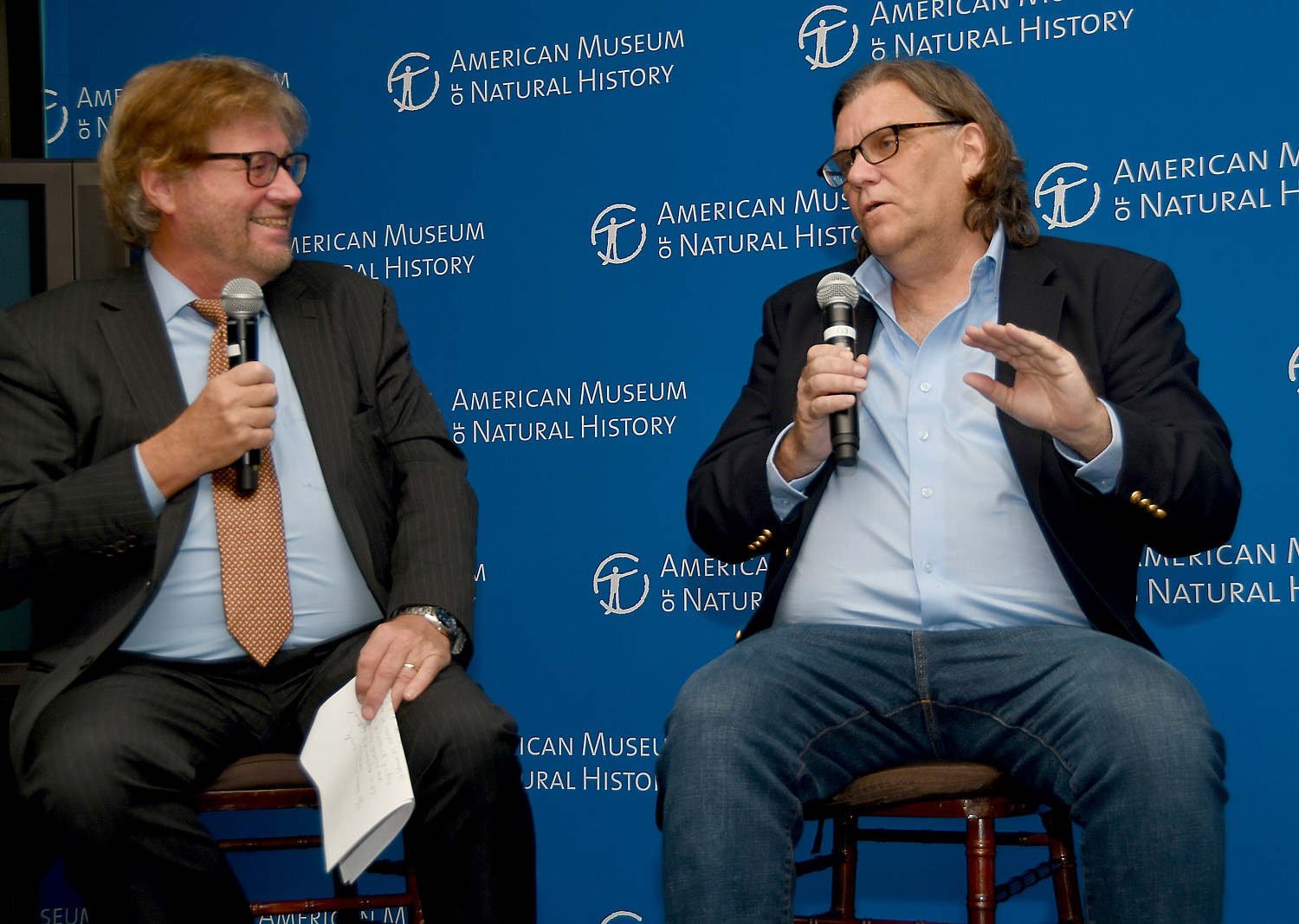
Michael Novacek, Senior Vice President & Provost of Science and Curator of the Division of Paleontology at AMNH talks with Rob Desalle (right), Curator in AMNH’s division of Invertebrate Zoology and Curator of “Our Senses: An Immersive Experience” about the interconnection between evolution and senses and senses and the brain © 2017 Karen Rubin/ goingplacesfarandnear.com

DeSalle has overseen several major exhibitions, including Brain: The Inside Story, which explored how the human brain uses molecular, chemical, and electrical signals to interpret information and learn at every stage of life, which carry into this exhibition.

Visitors walk through 11 interactive galleries designed to test perceptions and illuminate the complex relationships between sensing and perceiving. A musical soundtrack customized for each space enhances the immersive experience. In addition, a live presenter in the exhibition gallery will invite visitors to discover why humans have senses and what’s unique about human perception—including why human beings are the only species that creates imaginary sensory experiences and shares them with others through language.
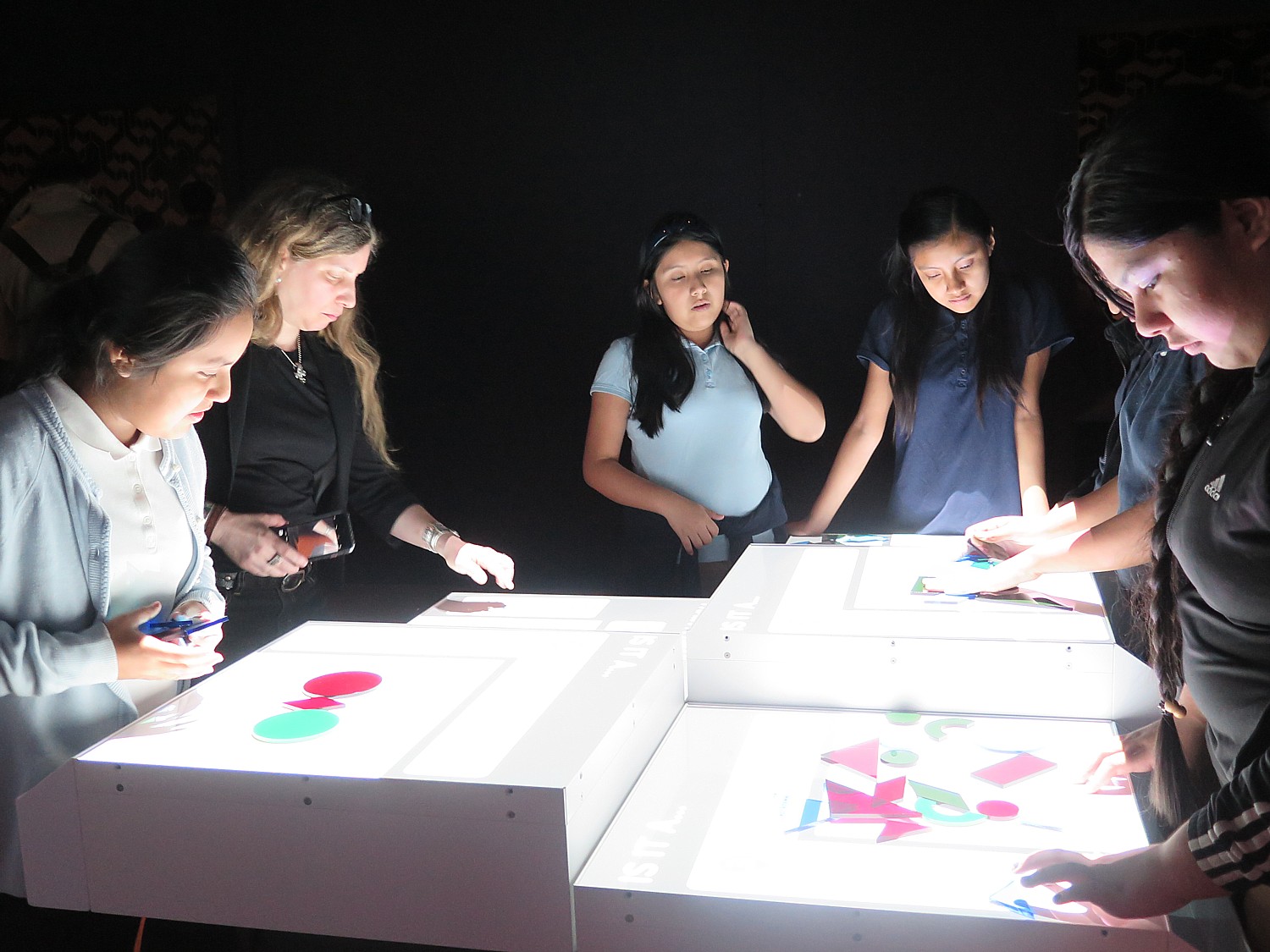
Sixth graders from MS247 become immersed in puzzles, illusions and interactive experiences to better understand “Our Senses” at the American Museum of Natural History © 2017 Karen Rubin/goingplacesfarandnear.com

The exhibit is laid out in a way that will particularly appeal to younger people – they will particularly love the puzzles and illusions – providing an understanding of how they perceive the world that will be foundational to learning. But adults, giving more intense look, will find some up-to-the-minute research: for example, that birds can regenerate the cilia in the ear that if humans lose it, lose their hearing, so scientists are studying if cilia can also be regenerated in humans; that male peacocks don’t just use their stunning plumage to visually attract a mate, they move it so it produces a sound, imperceptible to humans, but that is attractive to females.

There is a 20-minute live presentation that really brings home the message: we have more than five senses, the ones that we use to navigate the outer world and let us know where we are in space. We also have inner senses that monitor when we are hungry, thirsty, tired, oxygen-deprived and need to breathe. Every animal – even single-cell animals – have some senses and many animals have senses that are superior to humans, humans are the only animal (that we know of) that can imagine and communicate.

“No other animal can conjure up whole scene using complex signals. Only humans can create imaginary sensory perception and share through language. For example, only humans can make up a story and share it,” the presenter tells us.

“Humans don’t’ just take information into the brain, we can send information out. We can imagine a sensory experience and make it real: create food, fashion, art, architecture, machines, melody and manuscripts.

“Most sensory experiences we have are products of our imagination. We don’t just experience what is – we create what we imagine, then share it with others.”

“Nothing makes sense in absence of evolution,” DeSalle says. He points to the fact that single-cell animals have a primordial sense of touch, they can determine where they are in space. “Our senses go back 3.5 billion years, to the origin of life.” 

“Our brain and senses have evolved so that the brain can process what the senses take in with rapid response,” he says. “Because of the way brain evolved, we have some wild ways of dealing with information… Sometimes there is conflict between the brain and signals the senses receive (there are examples in the exhibit) – where we are primed to see something else, but interpret based on what we already sense. That is Evolution: to deal with rapid response.”
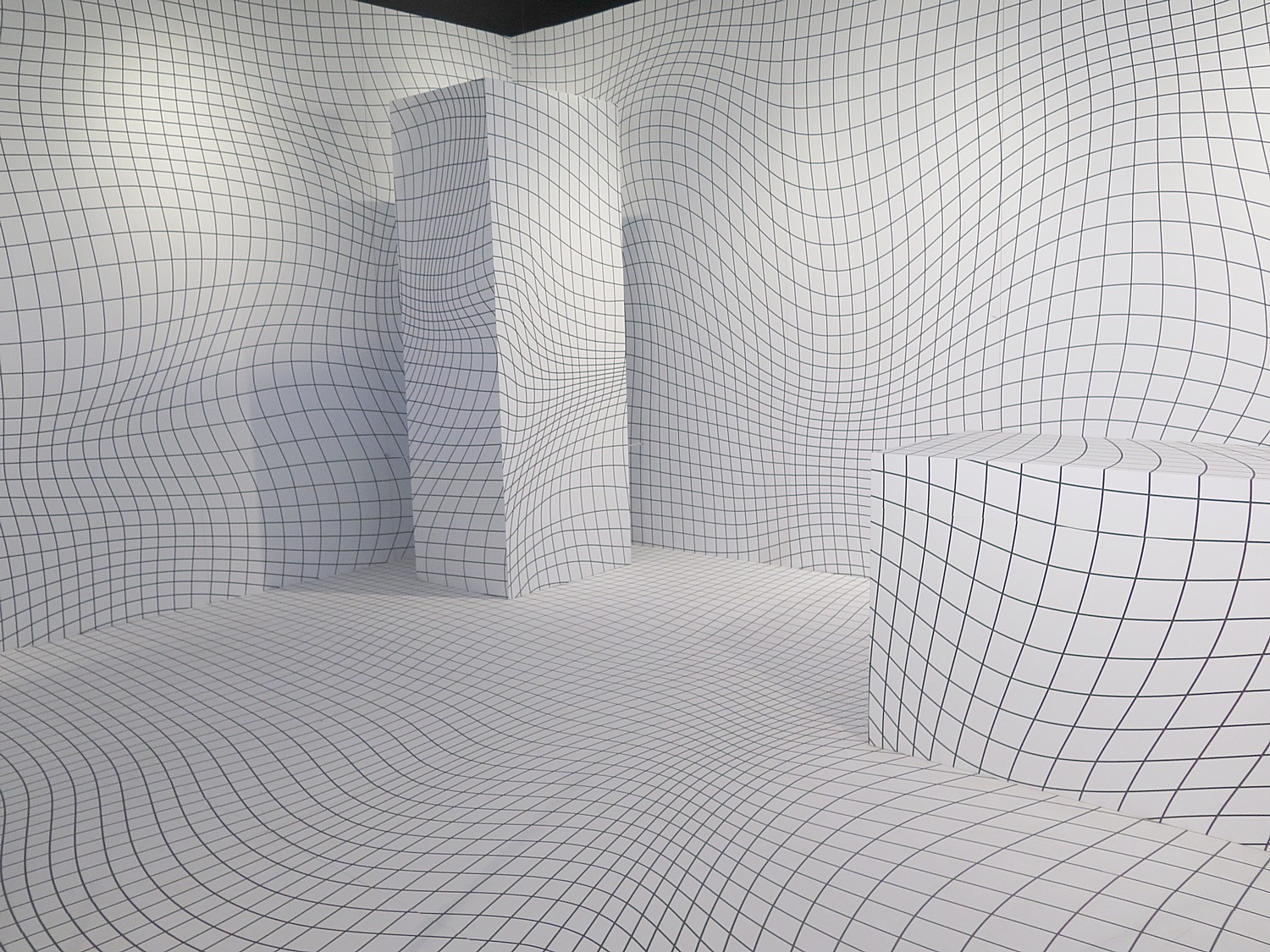
What happens when visual cues conflict with other senses? Swiggly lines on the walls conflicting with a flat floor, put you off-balance © 2017 Karen Rubin/ goingplacesfarandnear.com

For example, the exhibit shows how we are primed to focus – based on internal needs, experience or habit or prompts– in order to break through the clutter of sights and sounds.

Senses are our source of information about the world, without which, we wouldn’t be able to survive. Take the sense of smell, for example, which helps us determine which food is edible, and which is rotten and could cause disease.

There is an incredible spectrum of the capabilities of senses – many animals exceed our own; humans have a particular space on the spectrum. For example, humans see only a narrow range of light compared to other animals and do not have very sensitive touch. But humans build machines that allow us to sense beyond our range – think of microscopes, telescopes, night-vision glasses, hearing aids, cochlea implants.
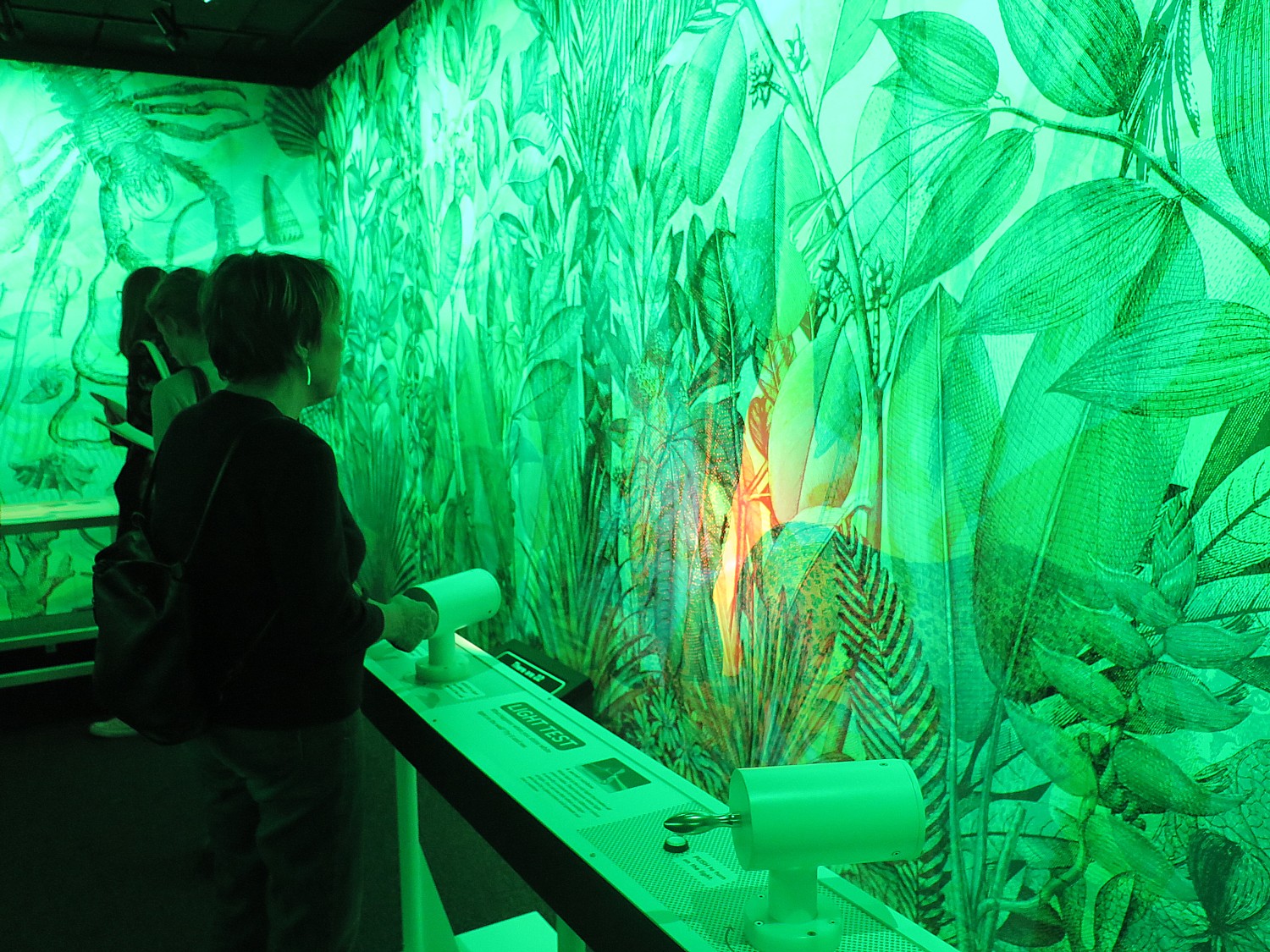
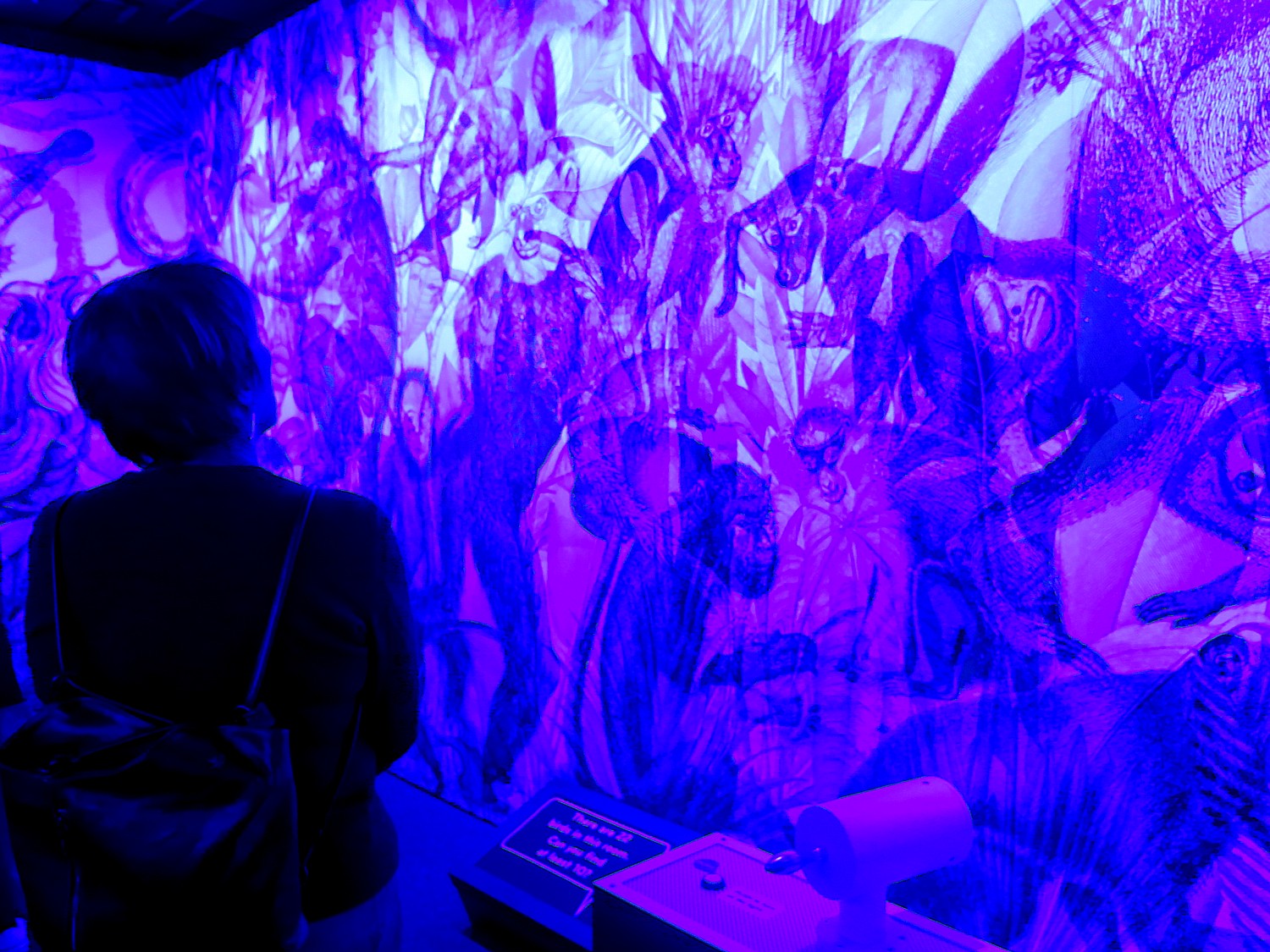
What you see changes with the changing colors of light © 2017 Karen Rubin/ goingplacesfarandnear.com

You need at least 1 ½ hours to go through – even more if you want to do the immersive activities. And it is helpful to go through once, but then go back and spend more time reading the explanations.

Entrance is by a timed ticket (free with admission), which you can obtain online before you come, or when you arrive at the museum.

Our Senses is open from Monday, November 20, 2017, through Sunday, January 6, 2019. (Members will be able to preview the exhibition starting on Friday, November 17, through Sunday, November 19.) In conjunction with the exhibition, OLogy, the Museum’s science website for kids, has an exhibition-related feature about optical illusions and what they reveal about the human brain and our species’ evolutionary past.  Also, Our Senses Curator Rob Desalle explains the human brain for kids in a video: Why is the brain so wrinkly? What does the brain do while we sleep? DeSalle, curator in the Museum’s Division of Invertebrate Zoology, answers these questions and more about one of our most vital organs. (Click goo.gl/UMQw7B)

The exhibition is designed and produced by the American Museum of Natural History’s award-winning Exhibition Department under the direction of Lauri Halderman, vice president for exhibition.

Our Senses is supported by Dana and Virginia Randt.
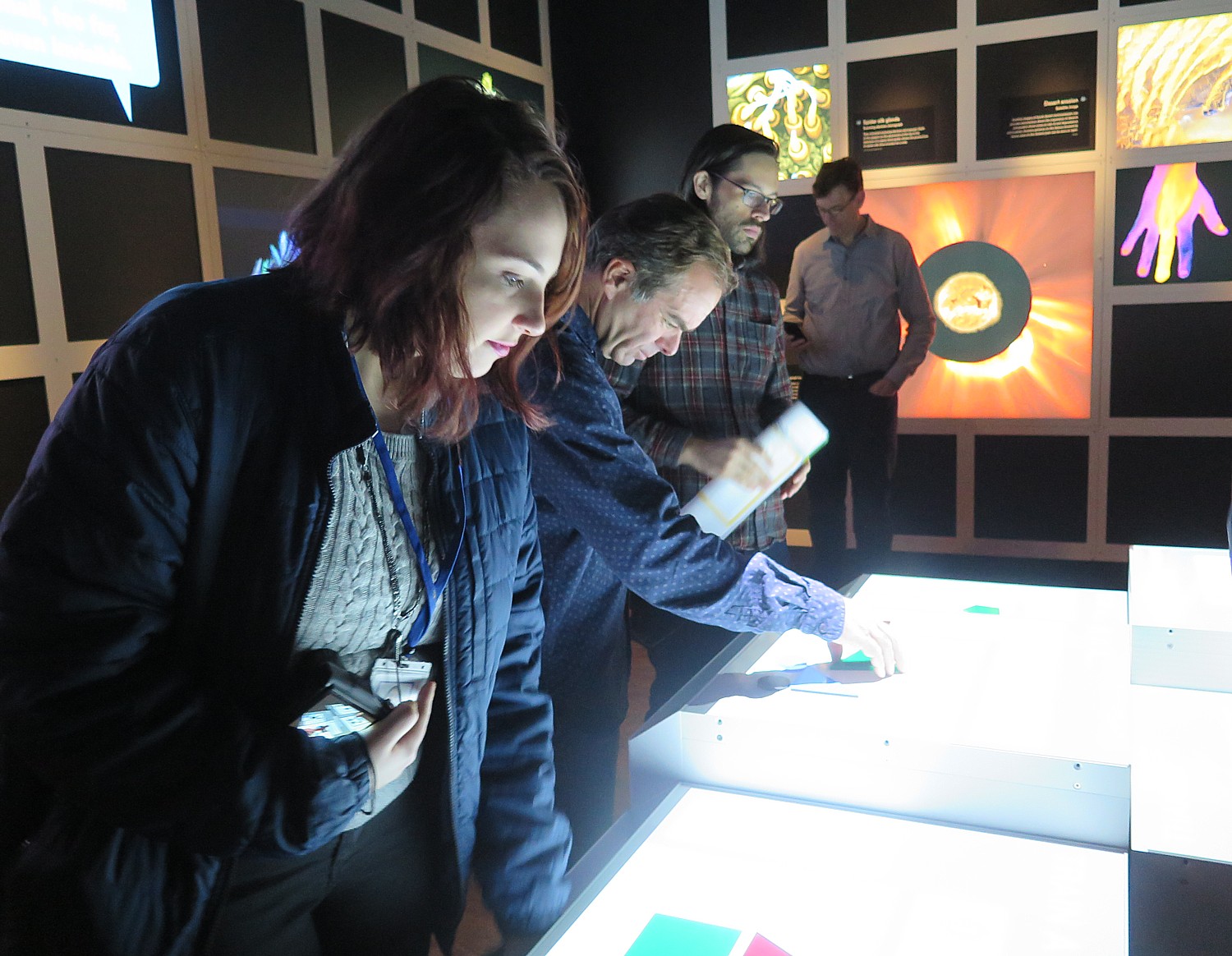
The new exhibit at the American Museum of Natural History is constructed so you learn about our senses through various immersive experiences © 2017 Karen Rubin/goingplacesfarandnear.com

A program, “The Neuroscience of Illusion,” with master illusionist Apollo Robbins and neuroscientists Stephen Macknik and Susana Martinez-Conde will be offered Tuesday, Dec. 5 at 7 pm ($15, Seniors and Students $13.50, members $12); special access to the Senses exhibition available to ticket holders one hour prior, 6-7 pm; tickets at amnh.org.

There’s still time to take in the extraordinary “Mummies” exhibit, on view until Jan. 7, 2018 (admission by timed ticket; need the General Admission Plus 1).

Visiting the Museum 

The American Museum of Natural History, founded in 1869, is one of the world’s preeminent scientific, educational, and cultural institutions. The Museum encompasses 45 permanent exhibition halls, including those in the Rose Center for Earth and Space and the Hayden Planetarium, as well as galleries for temporary exhibitions. It is home to the Theodore Roosevelt Memorial, New York State’s official memorial to its 33rd governor and the nation’s 26th president, and a tribute to Roosevelt’s enduring legacy of conservation.

The Museum’s five active research divisions and three cross-disciplinary research centers support approximately 200 scientists, whose work draws on a world-class permanent collection of more than 34 million specimens and artifacts, as well as specialized collections for frozen tissue and genomic and astrophysical data, and one of the largest natural history libraries in the world. Through its Richard Gilder Graduate School, it is the only American museum authorized to grant the Ph.D. degree, and, beginning in 2015, the Master of Arts in Teaching (MAT) degree, the only such freestanding museum program. Annual visitation has grown to approximately 5 million, and the Museum’s exhibitions and Space Shows are seen by millions more in venues on five continents.

The Museum’s website, mobile apps, and MOOCs (massive open online courses) extend its scientific research and collections, exhibitions, and educational programs to additional audiences around the globe. Visit amnh.org for more information. 

Museum admission is free to all New York City school and camp groups.

Pay-what-you-wish admission is available only at ticket counters, where the amount you pay is up to you.

General Admission, which includes admission to all 45 Museum halls and the Rose Center for Earth and Space but does not include special exhibitions, giant-screen 2D or 3D film, or Space Show, is $23 (adults), $18 (students/seniors), and $13 (children ages 2–12). All prices are subject to change.

General Admission Plus One includes general admission plus one special exhibition, giant-screen 2D or 3D film, or Space Show: $28 (adults), $22.50 (students/seniors), $16.50 (children ages 2–12).

General Admission Plus All includes general admission plus all special exhibitions, giant-screen 2D or 3D film, and Space Show: $33 (adults), $27 (students/seniors), $20 (children ages 2–12).

American Museum of Natural History, Central Park West at 79th Street, is open daily (except Thanksgiving and Christmas), 10 am–5:45 pm. For additional information, call 212-769-5100 or visit the Museum’s website at amnh.org. Become a fan of the American Museum of Natural History on Facebook at facebook.com/naturalhistory, follow on Instagram at @AMNH, Tumblr at amnhnyc, or Twitter at twitter.com/AMNH.

See also:

New ‘Mummies’ Exhibit at American Museum of Natural History Lets You Peer Through Wrappings, Peel Away Layers of Time

_______________________

© 2017 Travel Features Syndicate, a division of Workstyles, Inc. All rights reserved. Visit goingplacesfarandnear.com,  www.huffingtonpost.com/author/karen-rubin , and travelwritersmagazine.com/TravelFeaturesSyndicate/. Blogging at goingplacesnearandfar.wordpress.com and moralcompasstravel.info. Send comments or questions to FamTravLtr@aol.com. Tweet @TravelFeatures. ‘Like’ us at facebook.com/NewsPhotoFeatures

‘Darkest Hour’ Wins Best Picture Award at Gold Coast International Film Festival

Artist Edwina Sandys, granddaughter of Sir Winston Churchill, discusses her grandfather at the Long Island premiere of “Darkest Hour” at the 2017 Gold Coast International Film Festival, Long Island, with Festival Founder and Executive Director Regina Gil and Diane Masciale, VP & GM of WLIW21 and Executive Producer of local productions at WNET © 2017 Karen Rubin/news-photos-features.com

By Karen Rubin, Travel Features Syndicate, goingplacesfarandnear.com

The results are in: Darkest Hour, a new film starring Gary Oldham as Winston Churchill, is the winner of Best Narrative Film at the 7th Annual Gold Coast International Film Festival. Best Documentary award was a tie: Underfire: The Untold Story of PFC Tony Vaccaro, the World War II soldier turned war photographer, who attended the sell-out screening, and the Long Island premiere of Dare to Be Different, about WLIR 92.7, the influential Long Island radio station on the cutting edge of music in the 1980s.

In all, the festival, now in its 7th year, screened more than 80 films from 12 countries – 36 of them Long Island premieres – with Q&As with dozens of visiting artists including directors, producers, and grandchildren of famous film subjects: Winston Churchill’s granddaughter, the artist Edwina Sandys; Frank Sinatra’s granddaughter, AJ Lambert who attended the 60th anniversary screening of the movie musical Pal Joey, and David Ben-Gurion’s grandson, Alon Ben-Gurion, after the screening of an extraordinary documentary based on six-hours of recently uncovered candid conversations with Israel’s founding father.

A record 15 of the screenings were sell-outs; the film-festival drew 4500 audience goers of all ages and backgrounds, from all over Long Island and the metro area – 175 different zipcodes.

“People think film festivals are elitist – but that’s not what we’re about,” said Festival Director Caroline Sorokoff. The festival featured “Free Film Friday,” with presentations of the movie classic “Sergeant York,” starring Gary Cooper; family short films at the Great Neck Library, and film shorts at the Port Washington Library (with a Q&A with Israeli filmmaker Yaniv Segalovich, director of An Average Story, Letiferet, who joined Alexandra Gil, curator of the Gold Coast International Film Festival’s short films; the film won an audience award).

“Hundreds of people took advantage.” And this year, veterans could come to any screening for free, thanks to a grand from GEICO.

The Gold Coast International Film Festival is distinguished by the fascinating events that are organized with the screenings – Q&As with producers, directors, actors, experts and people associated with the films.

Indeed, a highlight of the festival was the Long Island premiere (two weeks before general release) of Darkest Hour, featuring Academy Award nominee Gary Oldman’s brilliant performance as Winston Churchill and the terrifying early days of his appointment as Prime Minister as Hitler’s forces were taking over Europe and threatening an invasion of the British Isles. It was Britain’s darkest hour. And like the movie “Lincoln”, and “Thirteen Days” about John F. Kennedy and the Cuban Missile Crisis, which shows the backstory of a key “moment” in pivotal history, we learn of how he had to overcome intense opposition from political rivals, and the diabolical choice he faced: negotiate with Hitler to save British lives at a terrible cost or rally the nation and fight on against incredible odds. Gary Oldman brilliantly portrays the first dark days of Churchill as Prime Minister. Directed by Joe Wright, the screening at the Soundview Cinemas in Port Washington, featured a Q&A with Churchill’s granddaughter, the artist Edwina Sandys, a young child during this time, who spoke nostalgically and lovingly of her grandfather and grandmother, Clementine.

Edwina Sandys, a renowned sculptor, at the Gold Coast International film Festival to talk about her grandfather, Sir Winston Churchill, after the screening of “Darkest Hour” © 2017 Karen Rubin/news-photos-features.com

Underfire: The Untold Story of Pfc. Tony Vaccaro is the remarkable story of WWII infantryman and legendary photographer Tony Vaccaro, who created one of the most comprehensive, haunting and intimate photographic records of the war using a smuggled $47 camera while developing the negatives in his helmet at night. Tony Vaccaro, himself, along with Director Max Lewkowicz and Producer Valerie Thomas participated in a post-screening Q&A session, followed by the opening reception of Tony Vaccaro’s acclaimed, wartime and celebrity photography at the Gold Coast Arts Center Gallery in Great Neck (on view through February).

The Long Island Premiere of Dare to Be Different had three sold-out screenings, and featured a Q&A with Director Ellen Goldfarb and Executive Producer and former WLIR Program Director Denis McNamara, plus a host of other special guests, including artists and DJs featured in the film. It was an event that could only happen on Long Island, where WLIR brought new wave music to America. WLIR helped launch the careers of U2, Talking Heads, Depeche Mode, Blondie, Duran Duran, Tears for Fears, The Clash, and The Cure, among others. Special guests attending the premiere include Larry “The Duck” Dunn, Michael “Eppy” Epstein, Max Leinwand, Steve North, Carol Silva, Donna Donna and “Malibu Sue” McCann.

Alon Ben-Gurion, grandson of Israel’s former Prime Minister, David Ben-Gurion, speaks with audience after the screening of the documentary, “Ben-Gurion Epilogue,” based on six hours of newly discovered conversations with Israel’s founding father, at the 2017 Gold Coast International Film Festival, Great Neck, Long Island © 2017 Karen Rubin/news-photos-features.com

Ben-Gurion: Epilogue, a stunning documentary compiled from six hours of never-before-seen footage, of newly discovered conversations with Israel’s founding father presents  a rare and fortuitous piece of cinematic archeology – it’s as if film was found of candid conversation with George Washington. Watching, you realize you are seeing a work of undeniable historical significance with prophetic implications for Israel’s future. Presented in Partnership with American Friends of Soroka Medical Center to a standing-room-only audience at the Bowtie Cinema in Great Neck, the screening featured an extraordinary Q&A with Ben-Gurion’s grandson, Alon, who spoke personally of time spent with his grandfather.

“Bombshell: The Hedy Lamarr Story,” a documentary about the gorgeous actress focuses on her role as inventor of secure wifi, Bluetooth and GPS communications and how her arresting beauty stood in the way of being given credit for her brilliance, screened at the Gold Coast International Film Festival, featured a panel discussion moderated by Diane Masciale of WLIW21 and WNET (right), with Alexandra Dean, Director (second from left), Fleming Meeks, Journalist and Dr. Christine Metz of the Feinstein Institute. © 2017 Karen Rubin/news-photos-features.com

An extraordinary documentary, Bombshell: The Hedy Lamarr Story, was the first of a new “Science on Screen” series funded by a hard-to-win grant to the Gold Coast Arts Center to better communicate science to a general audience. The documentary finally credits the dazzlingly-beautiful actress as a brilliant inventor responsible for the innovation that made possible secure WiFi, Bluetooth and GPS communications (her intent was to make the Navy’s torpedoes more effective in order to win World War II, but the Navy put the patent away in a drawer until it was rediscovered by another inventor devising military weapons). The Long Island premiere, featured a Q&A (sponsored by Edelman financial Services, LLC) with Director Alexandra Dean, Fleming Meeks, the Forbes journalist who scored amazing interviews with the reclusive actor late in life, and Dr. Christine Metz of the Feinstein Institute and was moderated by Diane Masciale of WNET.

Straight/Curve: Redefining Body Image, Long Island Premiere at the Gold Coast International Film Festival of the documentary examining the industries and obstacles responsible for the body image crisis and showcasing the dynamic leaders fighting for more diversity of size, race and age, featured a Q&A with Director Jenny McQuaile and Producer Yael Melamede and a panel of distinguished experts from Northwell Health: Dr. Gabriella Farkas, Dr. Bonny Patel and Nancy Farber, ND. The Q&A was sponsored by the Katz Institute for women’s Health at Northwell Health.

“Straight/Curve: Redefining Body Image,” Long Island Premiere at the Gold Coast International Film Festival of the documentary examining the industries and obstacles responsible for the body image crisis and showcasing the dynamic leaders fighting for more diversity of size, race and age featured a Q&A with Director Jenny McQuaile and Producer Yael Melamede and a panel of distinguished experts from Northwell Health: Dr. Gabriella Farkas, Dr. Bonny Patel and Nancy Farber, ND moderated by Festival Director Caroline Sorokoff © 2017 Karen Rubin/news-photos-features.com

The 60th anniversary screening of Pal Joey, an Academy Award-winning musical gem, with famous classics by Richard Rogers and Lorenz Hart, celebrating its 60th anniversary this year starring Frank Sinatra, Rita Hayworth, and Kim Novak, featured a Q&A with AJ Lambert, Sinatra’s granddaughter (Nancy’s daughter) and Raj Tawney, a multi-media journalist/producer. Lambert spoke about her warm and loving grandfather.

Supergirl, the story of Naomi Kutin, an Orthodox Jewish pre-teen girl with an extraordinary talent – holding a world record in powerlifting, featured a Q&A with the film’s director, Jessie Auritt and “Supergirl” herself, Naomi Kutin and her family.

The delightful documentary Hummus! The Movie, was followed by “The Great Gold Coast Hummus Taste-Off” at Lola restaurant next door to the BowTie Theater in Great Neck Plaza.

The 60th anniversary showing of “Pal Joey,” a movie musical with classics by Rogers & Hart, starring Frank Sinatra, Rita Hayworth and Kim Novack, at the Gold Coast International Film Festival featured a Q&A with AJ Lambert, Sinatra’s granddaughter (Nancy’s daughter) and Raj Tawney, a multi-media journalist/producer © 2017 Karen Rubin/news-photos-features.com

The seventh anniversary of the not-for-profit Gold Coast International Film Festival featured over 80 films and dozens of filmmakers at screenings and events at North Shore venues, including Soundview Cinemas in Port Washington, the Bow Tie Cinemas in Great Neck, Port Washington, Manhasset and Roslyn, and the Gold Coast Arts Center in Great Neck.

Films presented this year showcased major Hollywood actors, include Gary Oldman, Kristin Scott Thomas, Patricia Arquette, Burt Reynolds, Isabelle Huppert, Rainn Wilson, Bill Nye, Rosemarie DeWitt, Imogen Poots, and Shahab Hosseini, star of the 2016 Oscar-winning film, The Salesman, which premiered at last year’s festival, featured in the East Coast premiere of the Iranian film Gholam this year.

This year’s festival included more than 40 premieres, including French movie-star Isabelle Huppert’s new film Souvenir; Burt Reynold’s new film Dog YearsBombshell: The Hedy Lamarr Story; Yellow Birds, starring Jennifer Aniston, Toni Collette, Alden Ehrenreich and Tye Sheridan, and the timely Bill Nye: Science Guy. Award-winning feature films from the world’s most prestigious festivals (Cannes, Toronto, Sundance, Tribeca, Hamptons) were screened, along with dozens of excellent short films.

Israeli filmmaker Yaniv Segalovich, director of “An Average Story” (Letiferet) which won an audience award, joins Alexandra Gil, curator of the Gold Coast International Film Festival’s short films, for a Q&A, at one of the Free Film Friday events © 2017 Karen Rubin/news-photos-features.com

The festival featured films from 12 different countries – most that you cannot otherwise get to see – including 1945, from Hungary about a remote Hungarian town preparing for the wedding of the village magistrate’s son, when two Orthodox Jews arrive at the village train station with two coffin-shaped wooden crates, supposedly filled with soaps and perfumes. Is this a harbinger of the return of more Jews? Led by the boorish village magistrate, the townspeople fear that these strangers may be heirs of the village’s denounced and deported Jewish neighbors and have come to claim their family’s stolen property. Paranoia runs rampant, leading to tragic events and a potent, unexpected ending. “While there have been many films about the Holocaust, there are few about its immediate aftermath, when greed and material gain from the Jewish peoples’ demise was pervasive. Director Ferenc Török cleverly captures this often overlooked moment in history where one town’s actions become a metaphor for the moral decay of the whole country. Shot in elegant black and white with an eye for exquisite composition and a minimal evocative score, 1945 is a subtle and nuanced study in the collective guilt and enduring anti-Semitism of postwar Hungary,” wrote Jay Rosenblatt, San Francisco Jewish Film.

The Long Island premiere of The Insult, provided a rare look at modern-day Lebanon. The intelligent, rivetting and politically charged drama focuses on how a minor disagreement between a Christian Phalanges Party supporter and a Palestinian construction foreman sparks an unforgivable insult, which ignites a confrontation of national importance. Celebrity lawyers, TV news, and political leaders get involved in a trial that rips open raw memories of Lebanon’s violent past

Paris Opera, from France, provided a  fascinating, candid behind-the-scenes view of a season at the Paris Opera, following the array of personnel – management, performers, costumers, cleaning crew – even choreographer Benjamin Millepied – who work night after night to bring breathtaking spectacle to this legendary setting.

The New York premiere of Back to Burgundy, from France, is a story of wine, family, family business, and more wine is set amid the gorgeous backdrop of Burgundy, and told with an assured mix of drama and humor. Jean, who had left his childhood home more than ten years ago, returns after his father’s death to reconcile the future of the business with his brother and sister.

This year, GCIFF again presented the work of talented young filmmakers in grades K-12 in its Young Filmmakers Program, presented in partnership with Hofstra University, a festival sponsor.

Alexandra Gil, curator of the Gold Coast International Film Festival’s short films, and Regina Gil, Festival Founder and Executive Director, present awards for short films at a gala luncheon at Neiman Marcus Garden City © 2017 Karen Rubin/news-photos-features.com

The festival finished on Wednesday November 15 with a Closing Awards Lunch at the cafe at Neiman Marcus Garden City (in Roosevelt Field). Neiman Marcus was a major sponsor of the film festival.  The lunch also launched the Neiman Marcus ”Love to Give” Collection, where 10% of the proceeds from the sale of the ”Love to Give” items goes back to the Gold Coast Arts Center, based in Great Neck, Long Island, which organizes the annual Gold Coast International Film Festival.

For the past 110 years since Neiman Marcus’ founding, said Doris Wilshere, Vice President and General Manager, supporting the arts has been a priority. “It has been of particular interest to the founders. That’s why our partnership with the film festival is important to us. It’s the one budget we are encouraged to spend every $1 of, every year.”

David Kirschenbaum , Neiman Marcus Garden City Director of Public Relations, Regina Gil, Gold Coast International Festival Founder and Executive Director, and Doris Wilshere, Vice President, General Manager of Neiman Marcus Garden City, announce launch of ”Love to Give” Collection, which gives back a share of the purchase to support Gold Coast Arts Center’s programs © 2017 Karen Rubin/news-photos-features.com

In addition to Neiman Marcus Garden City, sponsors and partners of this year’s Gold Coast International Film Festival included: founding partners, the Town of North Hempstead and Douglas Elliman Real Estate; major partners, Hofstra University and the Nassau County Industrial Development Agency; GEICO; Deluxe Entertainment Services Group; AARP Long Island; A.L. Sarroff Fund; Katten Muchin Rosenman LLP; The Katz Institute for Women’s Health at Northwell Health; St. Mary’s Kids; Jet Blue; Biener Audi; LVR Rental; The Inn at Great Neck; The Andrew Hotel; WLIW21; Altice; New York Women in Film & Television; Anton Publications; Blank Slate Media; LI Pulse; Edelman Financial Services, LLC; and LOLA of Great Neck.

More information at www.goldcoastfilmfestival.org; facebook.com/gciff.

The Gold Coast International Film Festival is produced by the Gold Coast Arts Center, a 501(c)(3) not-for-profit organization dedicated to promoting and supporting the arts through education, exhibition, performance and outreach. Gold Coast Arts Center, 113 Middle Neck Road, Great Neck, NY 11021, 516-829-2570, www.goldcoastarts.org.

_______________________

© 2017 Travel Features Syndicate, a division of Workstyles, Inc. All rights reserved. Visit goingplacesfarandnear.com,  www.huffingtonpost.com/author/karen-rubin , and travelwritersmagazine.com/TravelFeaturesSyndicate/. Blogging at goingplacesnearandfar.wordpress.com and moralcompasstravel.info. Send comments or questions to FamTravLtr@aol.com. Tweet @TravelFeatures. ‘Like’ us at facebook.com/NewsPhotoFeatures
 

Big Changes Await at Ski Colorado Destinations This Season

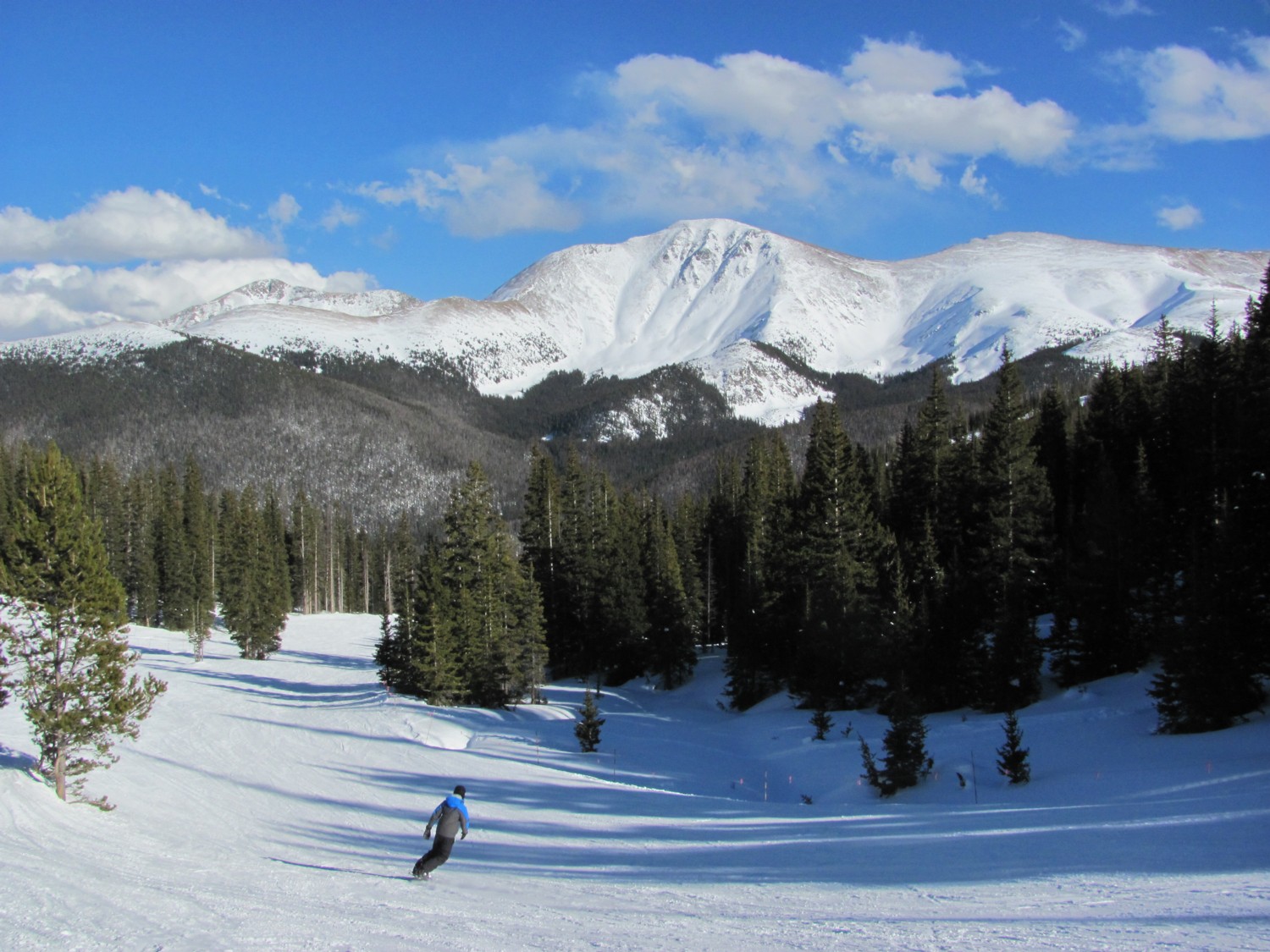
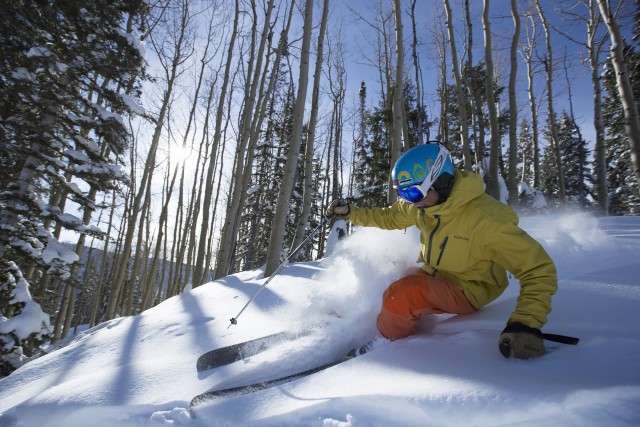
Skiing at Winter Park, Colorado. The resort, which is owned by the City of Denver, has new connections by Amtrak from Denver, and is now in the Aspen/Snowmass ownership family © Karen Rubin/goingplacesfarandnear.com

By Karen Rubin, Travel Features Syndicate, goingplacesfarandnear.com

Whoa! Hold onto your skis, it’s going to be a wild ride! This year’s big skiing newsflash is the mega-mergers creating new behemoths that span the nation and even beyond, which has the independents looking for differentiating ways, as well as collaborations to compete.

Vail Resorts (with four Colorado ski destinations: Vail, Beaver Creek, Breckenridge, Keystone plus 10 more coast-to-coast, Canada and Australia) just keeps getting bigger, with the acquisition of its first Northeastern resort, Stowe Mountain, giving Eastern skiers a really good reason to buy Vail’s Epic Pass.

And now, the Crown family, owners of Aspen and Snowmass resorts, and KSL Capital Partners acquired Intrawest Resorts and Mammoth Resorts, in a $1.5 billion deal, and then, for good measure, purchased Deer Valley, in Utah, as well, literally just down the road from Vail Resorts’ Park City mega-resort.

This newly formed mega-operator mergers a dozen mountain resorts into one company, including many iconic destinations, such as former Intrawest flagships Steamboat and Winter Park in Colorado (though Winter Park is still owned by the City of Denver), and Stratton in Vermont. Also in the new portfolio are Mammoth Mountain, California’s busiest ski area, Lake Tahoe’s Squaw and Alpine, and Tremblant in Quebec. The deal also includes heli operator Canadian Mountain Holidays. Collectively these resorts represent 20,000 skiable acres and draw 6 million skier visits.

While it is easy to imagine a system-wide ski pass to rival Vail Resorts’ Epic Pass in the not-distant future, for this upcoming season, the variety of passes that the resorts had been offering will be used: Rocky Mountain Super PassMountain Collective, and the M.A.X. Pass will be honored at the respective resorts.


Here are more highlights of Colorado Ski Country USA resorts:

  • Olympic qualifiers in Colorado will feature the Toyota U.S. Grand Prix at Copper Mountain in December and Snowmass in January in advance of the 2018 Olympics in PyeongChang.
  • Notable anniversaries include the 50th Anniversary of Snowmass, which will be celebrated with a day of 1967 lift ticket pricing at $6.50, Loveland Ski Area’s 80th Anniversary and Cooper’s 75th Anniversary.
  • New terrain across the state includes 468 new skiable acres at Arapahoe Basin with the expansion into the Beavers and Steep Gullies. Purgatory will also open new expert and intermediate trails.
  • New lifts across Colorado Ski Country: Eldora Mountain Resort is opening this season with a new six-person detachable chairlift, the first six-person chairlift in its history. Steamboat’s Gondola underwent significant upgrades over the summer to modernize and improve the guest experience and Purgatory will welcome a full season of its new transfer lift.
  • Mountain Coasters galore with Copper Mountain, Steamboat, Purgatory and Aspen Snowmass all opening a year-round mountain coaster in the fall or early winter.

Steamboat

The news at Steamboat is that it is now part of the group that owns Aspen/Snowmass, Intrawest, the four Mammoth mountains in California; Squaw Valley; Mont Tremblant and the Canadian Mountain Heliskiing (CMH) company in Canada, plus Deer Park, Utah, and Stratton Mountain, Vt. and operates Winter Park, Colorado.

Steamboat has made significant improvements to its gondola for the 2017-18 season, installing new grips, hangers, terminal equipment, electronic controls and other infrastructure to the resort’s main access point. These renovations will provide a faster, smoother and more efficient experience for guests.

Half of Steamboat’s terrain is intermediate and beginner, and there is an entire lift devoted to intermediate terrain offering long cruiser blue trails.

The Outlaw Mountain Coaster, which will operate year-round, opened September 8, 2017. The mountain coaster descends more than 400 vertical feet with a riding length of more than 6,000 linear feet, making it the longest mountain coaster in North America.

A true destination resort, Steamboat is now accessible by direct flight from Newark. It is a 30 minutes drive from Hayden Airport – if you show your boarding pass, you can ski free for the afternoon; rental shops are open late so you can get your equipment the night before, saving time and hassle for the morning.

Kids & Grandkids Ski Free programs enable children 12 years of age and under to ski free the same number of days as their parent, grandparent, or legal guardian when the parent, grandparent, or legal guardian purchase a five-or-more day adult lift ticket. For season passes, one child (12 and under) is eligible to receive a free season pass with parent, grandparent, or legal guardian purchase of an adult Steamboat Season Pass. For more information, visit www.steamboat.com.

Visit Steamboat’s central reservations, tell them what you are looking to do and they can direct you to the best value offers. Steamboat is also part of M.A.X. Pass and the Rocky Mountain SuperPass. Intrawest operates the Steamboat Grand hotel at base area.

For more information, visit www.steamboat.com.

Winter Park Resort

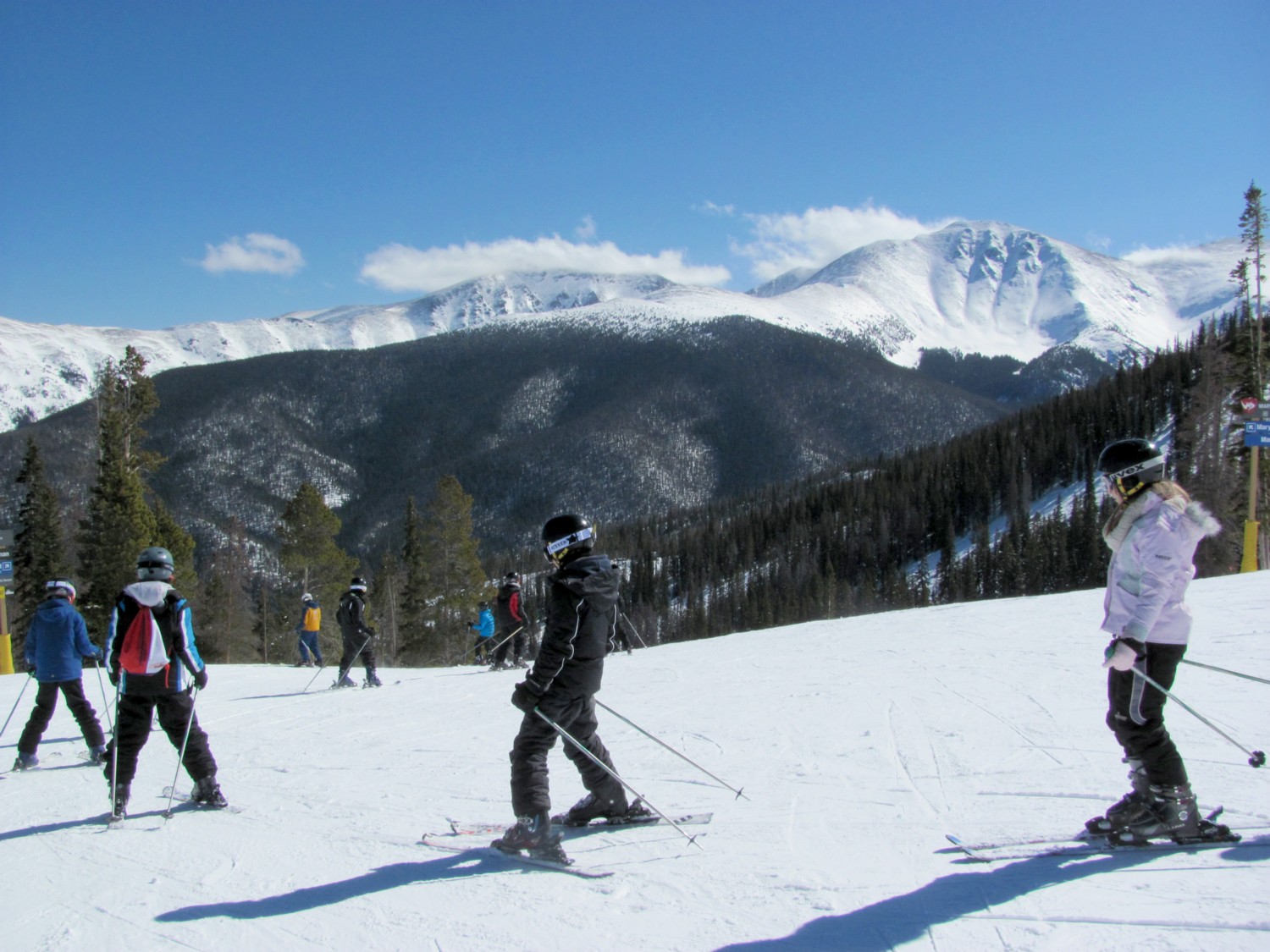
Ski school at Winter Park, Colorado © Karen Rubin/goingplacesfarandnear.com

Winter Park is expanding and improving the Winter Park Express, the train service between Denver’s Union Station and Winter Park Resort that was reintroduced last year (and sold out). The addition of three First Friday trips will give guests a total of 27 round-trips to choose from. Prices on select departures have been lowered to $29 one-way, providing additional cost savings for those looking to travel to the slopes by train.

The Winter Park Village will feature a renovated rental shop and a new retail location, reducing wait times on busy rental days. There are two new snowcats to increase grooming efficiency, 4,500 new feet of snowmaking pipe and 15 new snow guns to improve early season snowmaking.

A new trail from the top of the Zephyr Express Lift to the Mary Jane Trail will allow easier access from the Winter Park side of the mountain to the Mary Jane side.

Kids and Beginners Ski for Less: At Winter Park Resort, kids five and under qualify for beginner lift tickets for $10 a day or $30 for the season with no black-out dates. These lift tickets are intended for beginners only and grant access to the Galloping Goose chairlift at Mary Jane.

For more information, visit www.winterparkresort.com.

Aspen Snowmass

Aspen Snowmass will host Olympic qualifying events when the U.S. Grand Prix stops in Snowmass January 10–January 14, 2018. U.S. Snowboard Team and U.S. Freeski Team athletes will be competing to punch their tickets to February’s Pyeongchang Winter Olympic Games.

Snowmass will celebrate its 50th Anniversary all season long including $6.50 lift tickets on December 15, 2017. This was the original price for a lift ticket on opening day in 1967. Celebrations will also include a 50th Anniversary Golden Gala, monthly firework displays and other festive events.

The Breathtaker mountain coaster will open at Snowmass Mountain in December 2017. The mountain coaster will drop guests more than 400 vertical feet on a mile of turning track and be open year-round.

Kids Ski Free: Children six and under always ski free at Aspen Snowmass. For children ages seven to 12 years old, Aspen Snowmass allows kids to ski free when booking two or more nights of lodging through Stay Aspen Snowmass or renting children’s ski or snowboard equipment from Four Mountain Sports. There is no limit on the number of days children can receive free lift tickets when renting from Four Mountain Sports. The offer is valid January 1 – April 15, 2018. Mention kids ski free when you call 800-290-1326 or visit www.aspensnowmass.com for more information.

Copper Mountain

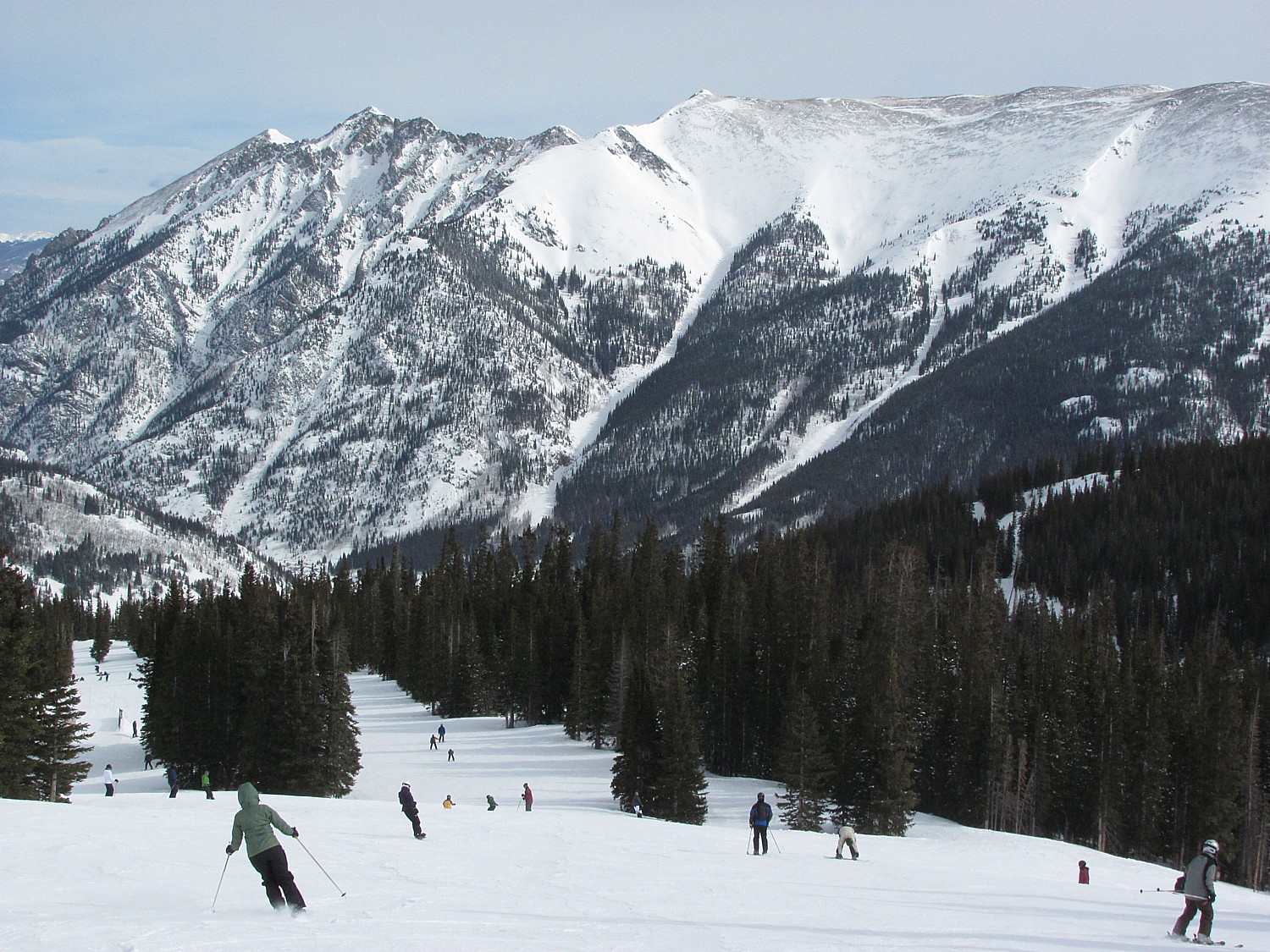
Copper Mountain: Skiers and riders this season can enjoy a new lift and lodge, the Kokomo Express Lift and Koko’s Hut. The lift will serve beginner terrain in the West Village © Karen Rubin/goingplacesfarandnear.com

Copper Mountain, which is famous for its Woodward Barn camps, clinics and individual indoor sports training, will host Olympic qualifying events December 6-10, 2017 when U.S. athletes compete in the halfpipe and big air events during the U.S. Grand Prix.

Skiers and riders can enjoy a new lift and lodge, the Kokomo Express Lift and Koko’s Hut. The lift will serve beginner terrain in the West Village, while the lodge will offer seating, casual dining and more, complete with a large outdoor deck and sweeping panoramas of Copper Mountain and Tenmile Range.

Copper Mountain, which is owned by Powdr (the ski company that also owns Killington, Vermont and just bought Eldora Mountain, Colorado) is debuting the Rocky Mountain Coaster in fall 2017. With an overall length of 5,800 feet and a vertical drop of 430 feet, the mountain coaster will be a thrilling year-round experience for guests.


One, Two, Free! With Copper Mountain’s One, Two, Free! Package, kids 12 and younger ski free with the purchase of an adult two-day lift ticket. The deal also includes additional perks like a third night of lodging free, a third day of rentals free, a free half-day ticket on the day of arrival or departure, and free upgrade to the Secret! Pass for early access and shorter lift lines. Children five and under always ski/ride free at Copper Mountain.

Copper is part of the M.A.X. Pass and Rocky Mountain Super Pass.

The resort is a 90-minute drive from DIA through Eisenhower tunnel.

For more information, visit www.coppercolorado.com.

Arapahoe Basin Ski Area

Arapahoe Basin is adding 371 acres of most difficult and extreme terrain this season (photo by Dave Camara)

With one of the few terrain expansions in the country, Arapahoe Basin is adding 468 new acres over two years with the expansion into the Beavers and Steep Gullies. For the 2017-18 season, 371 acres of most difficult and extreme terrain will be open, adding 50 feet to the vertical; guests will need to hike back to the Pallavicini chair. Next summer, a four-person lift will be installed for the 2018-19 season, and two more intermediate trails will be added in the Beavers.

Arapahoe Basin is always the first ski resort to open in the nation and the last to close (June, sometimes even July), and is a free shuttle bus ride (five miles) from Vail Resort’s Keystone (A-Basin was once owned by Vail Resorts, Vail Resorts’ EpicPass and Keystone lift tickets are accepted), where there is also plenty of lodging choices. People know A-Basin, which has been owned by a Canadian real estate company since 1997, for its blacks and double blacks advanced terrain, but there is plenty of intermediate trails, also offering long cruisers, groomed runs on the back side of the mountain a mile long.

Kids Free 2 Ski Pass: Children five and under ski free every day at Arapahoe Basin with a free Five & Under lift ticket from the ticket window. Children ages six to 12 can ski or snowboard for free any two days of the 2017-18 season with no blackout dates through the Kids Free 2 Ski Pass. Register online, at a Front Range ski show or at the mountain by December 18, 2017.

The rental shop was remodeled this summer to help guests get out on the slopes quicker during busy days. The resort also launched a new website, free device charging stations and free public WiFi throughout the base area and at Black Mountain Lodge at mid-mountain.

Because of the extended season, Arapahoe also offers its own multi-day and spring pass.

In summer, A-Basin offers summer events; disc golf, hiking to mid mountain, mountain biking (not lift served). Weddings are a big summer business: “The lift is the procession; couples get married in front of Continental Divide. A rustic romantic lodge at mid mountain, can accommodate 200 guests.

Arapahoe is a 75 minute drive from Denver (2 hours from airport). For more information, visit www.arapahoebasin.com.

Crested Butte Mountain Resort

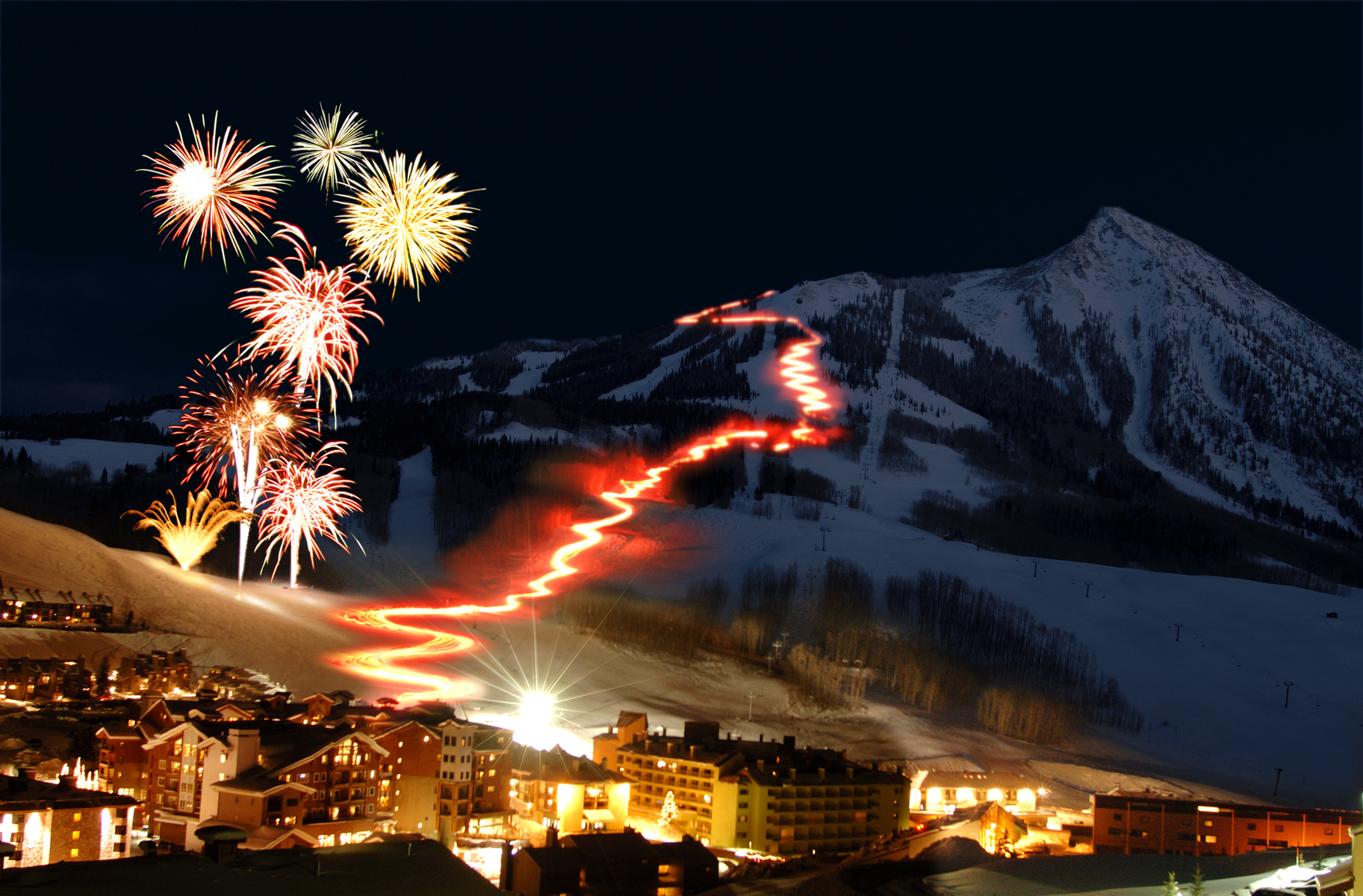
Fireworks and torchlight parade at Crested Butte Mountain Resort (photo provided by CBMR)

Crested Butte is enhancing the guest experience for beginners by re-grading the teaching terrain and introducing a new adult beginner area. Guests looking for a break from the slopes can enjoy a slice from the new pizza oven at Paradise on Crested Butte.

A new program, CB North Face Guides, will help expert skiers and riders navigate the extreme terrain of the resort including the famed North Face.

Kids 12 and Under Ski Free: Children six and under always ski free at Crested Butte. All kids ages 12 and under visiting Crested Butte Mountain Resort Nov. 23 – Dec. 15, 2017 and Apr. 1 – 8, 2018 ski or ride free. No strings attached, no parent ticket required, no lodging stay required, no advance reservations, just a free ticket for kids.

Crested Butte will host its annual Christmas Eve celebration, an evening complete with a torchlight parade and Santa Claus coming down the mountain in a sleigh pulled by a snowcat.

Crested Butte is the sister resort to the popular Okemo Mountain Resort in Vermont,m and is part of the M.A.X. Pass.

The closest airport is Gunnison or Montrose. For more information, visit www.skicb.com.

Telluride Ski Resort

Celebrating its 45th Anniversary, Telluride is continuing an ongoing multi-year, multi-million-dollar investment in snowmaking upgrades and technology. For this season, the grooming fleet is being expanded and there is a new dual-purpose project that serves as a golf course practice facility in the summer months and a 15-acre terrain-based learning area during the winter ski season.

People associate Telluride wih tough skiing, but half of the terrain is rated as intermediate and this year, Telluride is adding 15 acres of beginner terrain and new magic carpet.

Advanced skiers can revel in black and double black diamond trails and hike-to-terrain; intermediates have trails from top to bottom that let you  “see forever”.

Kids Ski Free: Free lift tickets are available at the Telluride ticket window for children ages five years old and under. Child lift tickets for children ages six to 12 are available online at discounted rates for two or more days of skiing when you purchase at least 48 hours in advance. Telluride also offers children’s ski school lessons divided into programs that offer age and skill specific learning experiences.

Telluride is a charming walking town, connected to the Mountain Village by gondola, where there is The Peaks, a luxury hotel that is the resort’s largest, with a world-class spa; the Inn at Los Creek, a boutique hotel,  and other lodging options, plus shops and restaurants.

The privately owned ski area is part of Mountain Collection of 15 quality resorts.

Options to get to Telluride include flying into Montrose or Telluride airport.

For more information, visit www.tellurideskiresort.com.

Purgatory

Skiing Purgatory (photo by Scott DW Smith)

Purgatory Resort will have a new mountain coaster this season, which will be accessible from the base area and operate year-round. The coaster is 4,000 feet in length with a 300 foot-vertical drop, and features eight switchbacks and one loop.

Purgatory is also expanding its terrain with new intermediate and expert trails on the back- and front-sides of the mountain, and is adding new gladed tree skiing. The triple chairlift, Needles Lift 6, offers a new mid-way loading zone to provide an easier way to access terrain for ski teams, terrain park users, and skiers or riders who want to take laps on the frontside of the mountain.

The resort also has new snowmaking infrastructure including increased pumping capacity and more energy efficient snow guns.

Kids and 4th Graders Ski Free: Kids seven years old and younger ski free every day at Purgatory Resort. Fourth grade students also ski free at Purgatory with proof of grade. For more information, visit www.skipurg.com.

Loveland Ski Area

To celebrate its 80th year of operations, Loveland is offer snowcat skiing in Dry Gulch for the first time. Loveland will also continue the popular Mountaintop Matrimony event on Valentine’s Day.

Kids Ski Free: Children five and under ski free every day at Loveland. Children five and under can also purchase a ski or snowboard package equipment rental for $12.

3-Class Pass for Kids  is for all children, ages four to 14, of all ability levels. When guests pre-purchase or complete three full-day lesson packages, they receive a free unrestricted season pass to keep practicing their skiing or snowboarding skills for the rest of the season. Children’s full day lesson packages include a lesson, lift access, equipment rentals (ski or snowboard), helmet and lunch.

For more information, visit www.skiloveland.com.

New Direct Flights, Expanded Train Service Ease Travel to Colorado Ski Resorts This Season

DENVER –Colorado Ski Country USA has announced new direct flights to and from Colorado’s eight regional airports and expanded service on the Winter Park Express this season that will provide skiers and riders from across the country easy and convenient travel options to their favorite Colorado ski resorts by train, plane or car this winter.

Also, the Amtrak Winter Park Express, coming off a highly successful inaugural season, will offer expanded train service for the 2017-18 ski season. The Winter Park Express will depart from Union Station in downtown Denver each Saturday and Sunday from January 5 through March 25, plus three new “First Friday” round-trips, with a reduced fare of $29 each way on some departures. With more than 27 round-trip options and over 500 seats on each train, the Winter Park Express allows visiting skiers and riders to travel to Winter Park Resort without renting or setting foot in a car.

Colorado’s eight regional airports are offering new and expanded flights for the 2017-18 season. Steamboat will feature new nonstop flights from Austin (AUS) and Kansas City (MCI) on ViaAir into Steamboat/Hayden (HDN) airport beginning Dec. 13, 2017. These additional flights bring Steamboat’s total direct air service to 14 major U.S. airports.

Aspen Snowmass has new daily nonstop flights through American Airlines from Phoenix Sky Harbor International Airport (PHX) starting this winter along with expanded service from both Dallas Ft. Worth (DFW) and Chicago O’ Hare (ORD).

Telluride has increased access this winter through new American Airlines direct flights into Montrose-Telluride Regional Airport (MTJ) from Charlotte Douglas International (CLT), Saturdays starting Dec. 23, 2017. Delta Airlines will operate new flights this winter from Salt Lake City (SLC) to Montrose-Telluride (MTJ) over the Christmas and New Year’s holidays.

Skiers and riders hoping to make it to ski areas in the southwest part of the state: Telluride, Silverton, Purgatory and Wolf Creek, have another option from Denver (DEN) on a new Boutique Air flight servicing Alamosa San Luis Valley (ALS) with three daily non-stop flights with a round-trip as low as $100.

Visitors can also access seven resorts within a two-hour drive of Denver (DEN), including Colorado Ski Country USA’s newest member resort, Echo Mountain. Only 35 miles or 50 minutes from downtown Denver, the Idaho Springs ski area offers six trails on 60 acres just a short drive from the Front Range.

For a full list of flights into and out of Denver (DEN) servicing Colorado’s eight regional airports and for direct flights into airports servicing all of Colorado Ski Country USA’s member resorts visit coloradoski.com/traveling.

5th and 6th Grade Passport Program

Colorado Ski Country USA offers any fifth grader the chance to ski or ride three days at 22 participating member resorts across the state absolutely free. That’s up to 66 free days on the slopes. Fifth graders who have never skied or snowboarded are eligible for the First-Class program which provides never-ever skiers and riders one free full-day beginner lesson and equipment rental at the resort of their choice. All Passport holders also receive one complimentary junior rental from Christy Sports. The corresponding 6th Grade Passport Program offers four days of skiing at the same 22 resorts for only $105 before November 30, or $125 through the end of the season. To register for the Passport Program visit:www.coloradoski.com/passport.

Colorado Ski Country USA (CSCUSA) is the not-for-profit trade association representing Colorado’s 23 ski & snowboard resorts. www.ColoradoSki.com, on Twitter @ColoradoSkiUSA and on Facebook at www.Facebook.com/ColoradoSkiCountryUSA.

See also:

Vail Resorts Unveils Major Improvements at Network of Ski Destinations; Deadline to Purchase EpicPass is Nov 19

_______________________

© 2017 Travel Features Syndicate, a division of Workstyles, Inc. All rights reserved. Visit goingplacesfarandnear.com,  www.huffingtonpost.com/author/karen-rubin , and travelwritersmagazine.com/TravelFeaturesSyndicate/. Blogging at goingplacesnearandfar.wordpress.com and moralcompasstravel.info. Send comments or questions to FamTravLtr@aol.com. Tweet @TravelFeatures. ‘Like’ us at facebook.com/NewsPhotoFeatures
 

Dolphin Quest Affords Memorable Way to Experience Bermuda

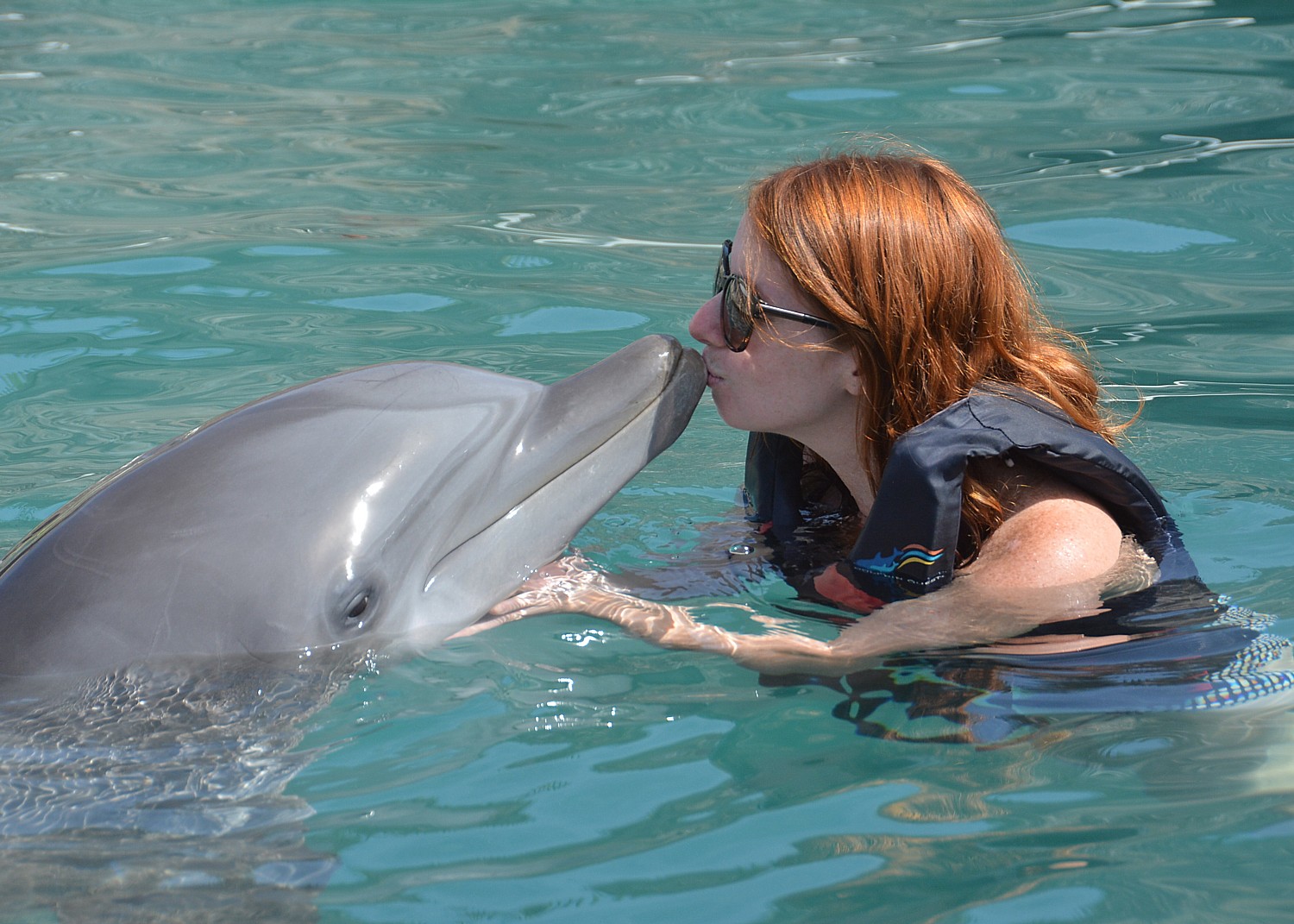
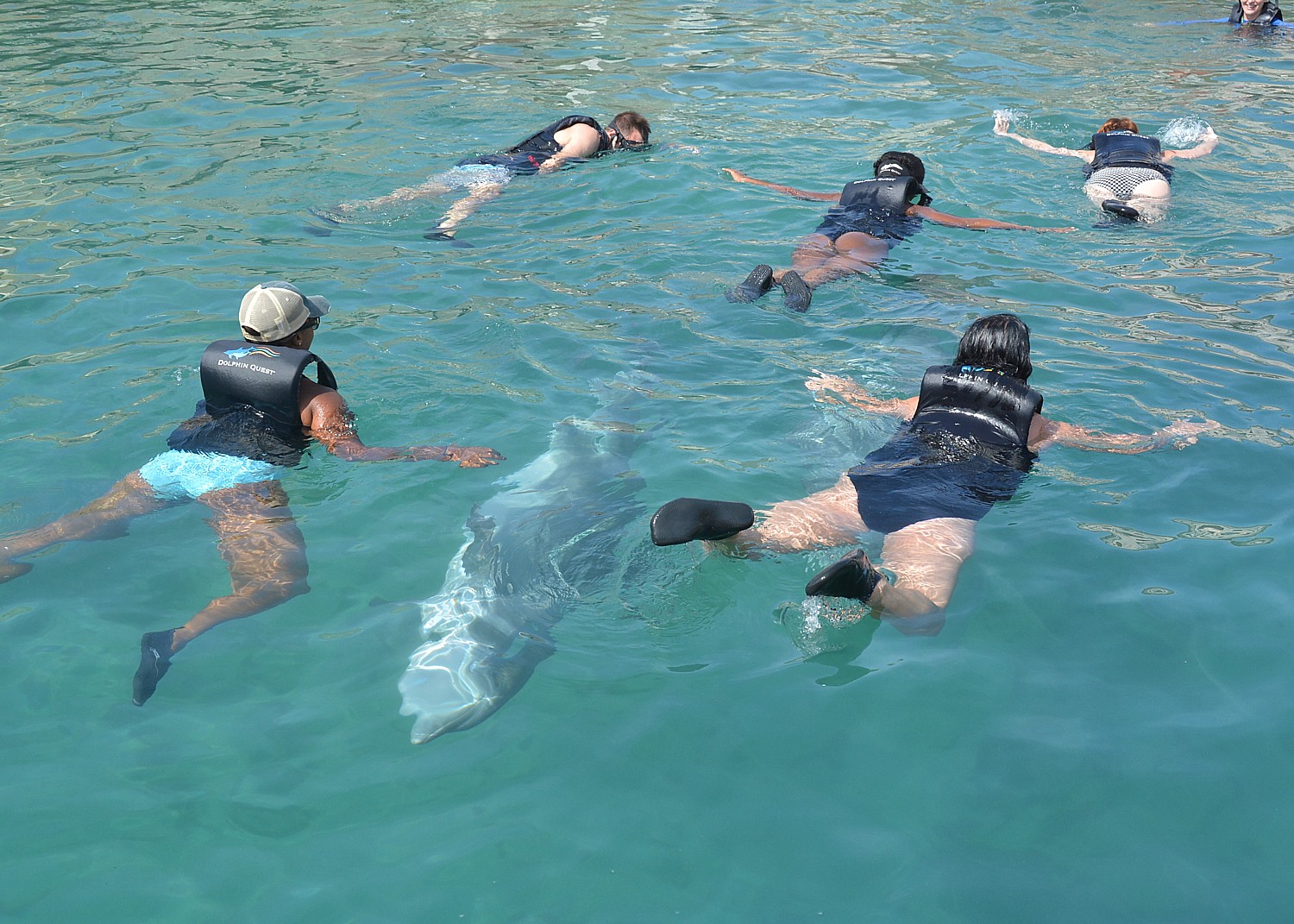
David and Laini with Caliban, the dolphin, at Dolphin Quest Bermuda (photo courtesy of Dolphin Quest).

By David Leiberman & Laini Miranda

Travel Features Syndicate, goingplacesfarandnear.com

Bermuda is a magical place where the beaches have pink sand and the aquamarine water is so clear, you can see amazing marine life and feed fish Cheerios. But one of the most magical experiences of all is Dolphin Quest.

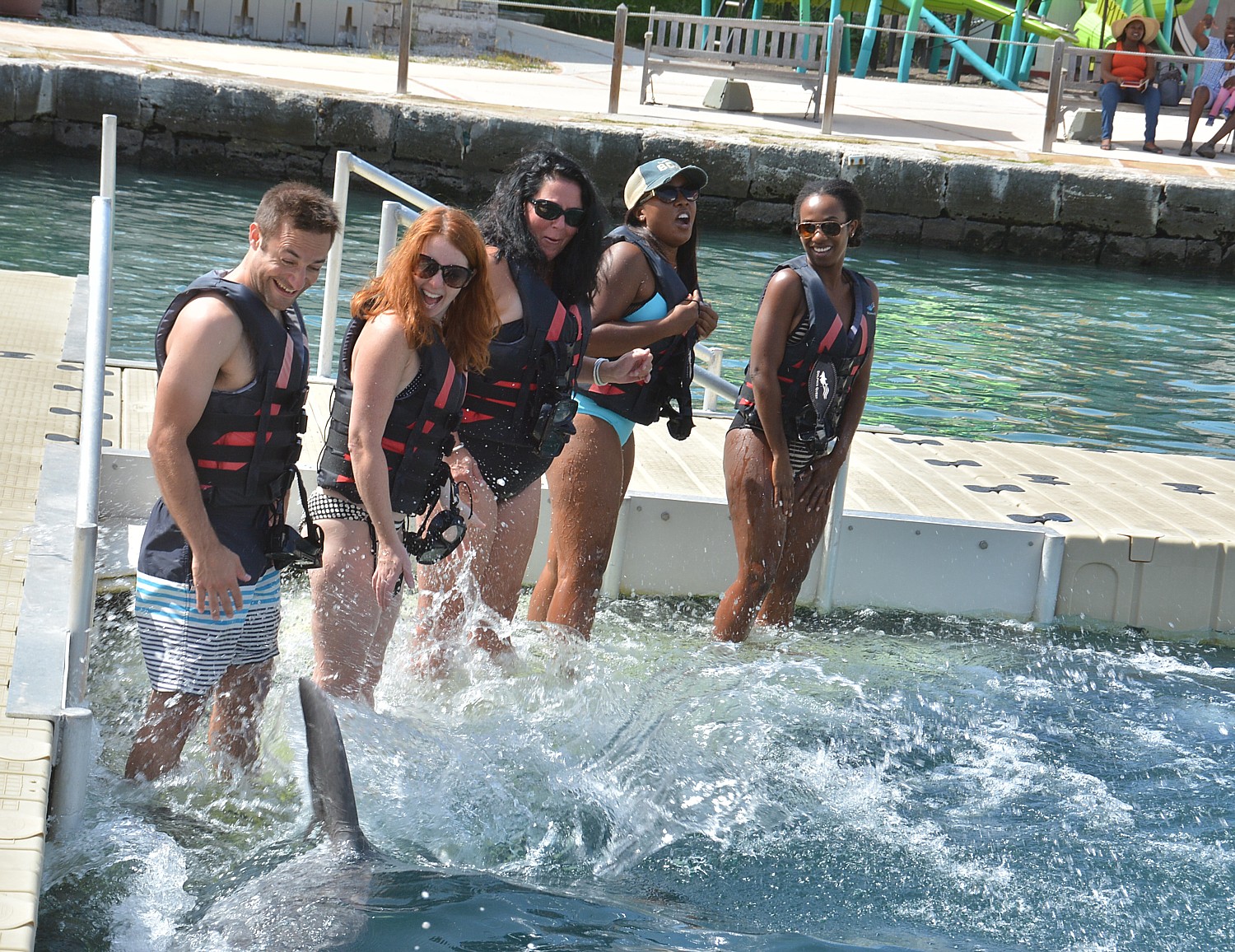
The experience starts off with our own training – shaping our own behaviors in order to properly interact with the dolphin. We join three others for a 30-minute Dolphin Dip – one of several different interactive encounters that are available. Lottie, the cheery dolphin trainer, tells us so much about how the dolphins learn and how they respond to specific calls. She demonstrates some incredible tricks (behaviors) by teaching the five of us how to signal to the dolphins ourselves.

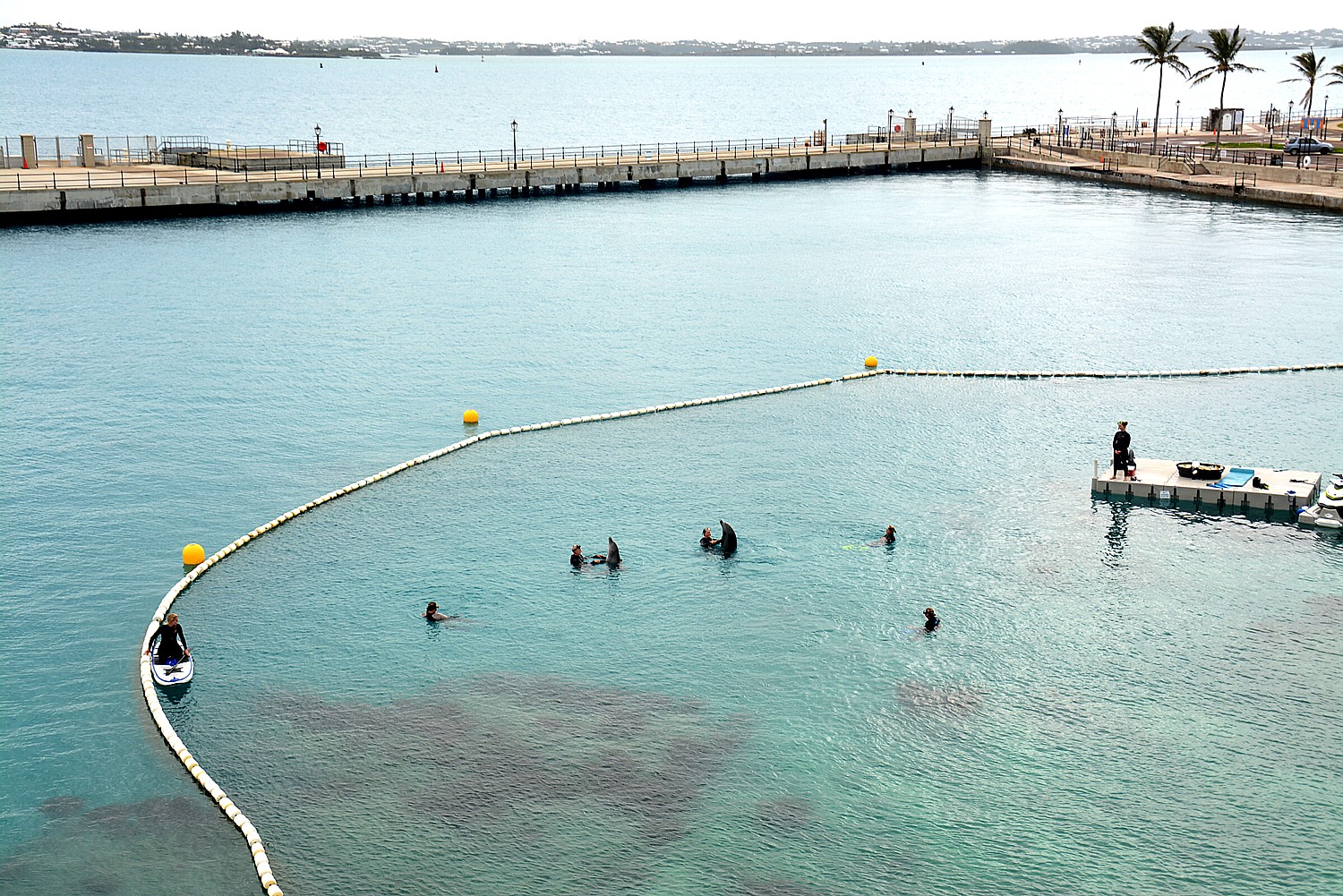
Dolphin Quest organizes small-group encounters with dolphins in their habitat within The Keep at the Naval Dockyard in Bermuda (photo courtesy of Dolphin Quest).

When we are in the large pool, Lottie calls me out to the middle of the lagoon and tells me to bring my hands together with palms facing up on the surface of the water. She blows a whistle and Caliban swims up to me and puts her snout on my hands, seeming to smile up at me with that broad dolphin mouth. Then she tells me to show her my cheek and he kisses me on the cheek!

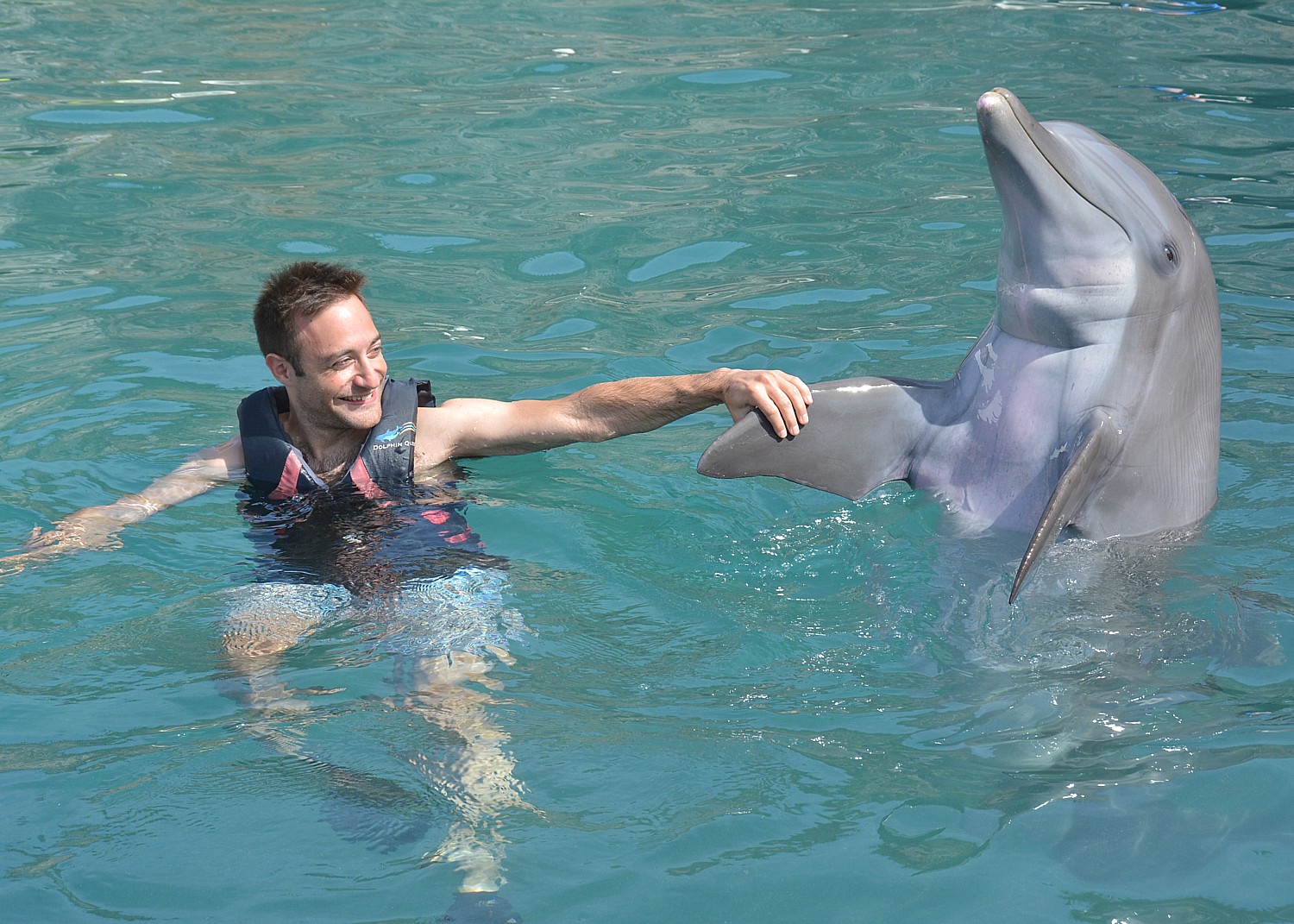
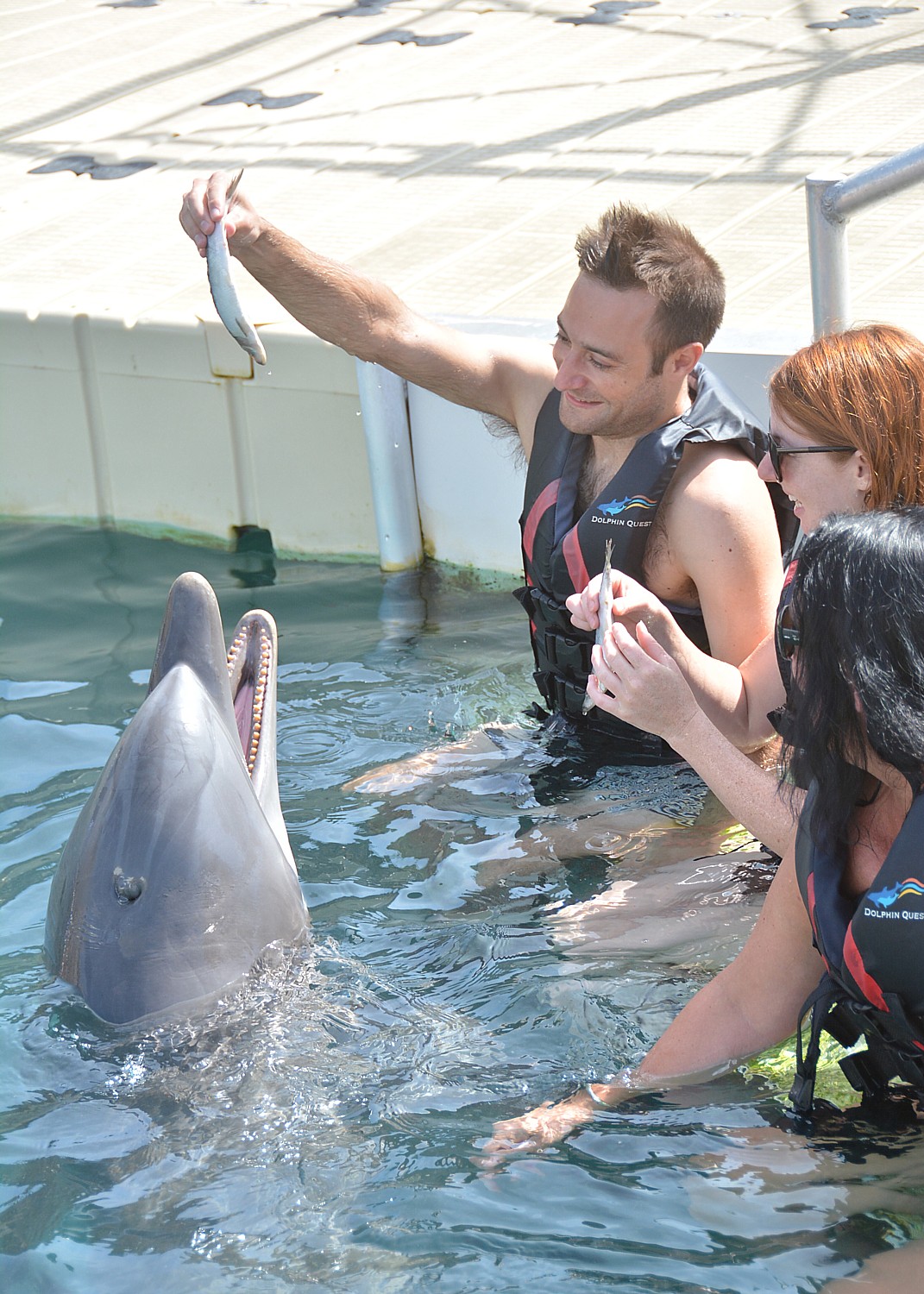
Now it’s Dave’s turn to come out. Lottie tells him to put his hand out to the side. Then Caliban swims up and takes his hand. They practically dance! Then Caliban swims past us, inviting us to stroke her tummy for positive reinforcement. We get to feed her a small fish after each behavior which she seems to really enjoy.

Dancing with the Dolphin: David joins hand to Caliban’s fin (photo courtesy of Dolphin Quest).

Lottie has each of us engage different behaviors with the four dolphins we get to meet, which are all also perfect photo opps. A professional photographer is on hand shooting photos the whole time and capturing so many amazing moments.

The digital and physical copies of the photographs are available for sale through an online portal. They’re pricey, but they capture priceless moments! There is free seating poolside so if anyone in your party is not in the water with you, they have the opportunity to capture their own photos, too.

The photographer is also extremely knowledgeable about the dolphins. He tells us about the 5- star health care they have and that the average lifespan is roughly double for the dolphins in their facility compared to dolphins in the wild. They also have a larger, more natural enclosed swimming area just outside the walls of the maritime museum, though we can’t see it ourselves because it is being cleaned.

It’s $219 for the 30-minute “Dolphin Dip” — pricey, but one of the cooler experiences we’ve had. It’s an amazing gift for someone you want to indulge and celebrate! Family/friends can watch from the sidelines where they can also enjoy seeing the dolphins up-close without paying the premium of being actually in the water with them.

A portion of the proceeds goes towards continued animal research. So far, Dolphin Quest programs in Hawaii, Oahu and Bermuda have contributed more than $3 million in funding, resources and field support to vital marine studies around the globe. University research studies have generated hundreds of published scientific works that are helping researchers find solutions to the threats dolphins and whales face in the wild. These studies also help the marine mammal community better care for dolphins in human care.

But there is something more: Dolphin Quest gives people a rare experience to interact and engage with dolphins, deepening our empathy for marine mammals and raising awareness about conservation programs.

“With our dolphins, we touch the hearts and minds of our guests in a fun and inspirational way, sharing how each of us can play a vital role in protecting our precious ocean ecosystem,” Dolphin Quest says.

Dolphin Quest affords experiences that make lifelong ambassadors on behalf of protecting and conserving marine mammals (photo courtesy of Dolphin Quest).

Our time with the dolphins is not like a performance. We are reminded that dolphins are wild animals; they clearly only engage with us as they like, and seem to genuinely enjoy the intellectual stimulation.

It is an incomparable experience to interact with another species, and especially so with an intelligent marine mammal.

In addition to contributing millions of dollars toward research and conservation programs, Dolphin Quest also contributes essential medical and training support to wild marine mammals in distress through the marine mammal stranding networks in Hawaii and Bermuda. Its team members also hand raise newly hatched endangered sea turtles, releasing them back into the wild when they are large enough through the “Turtle Ambassador Program”.

Dolphin Quest also organizes beach and stream cleanups, recycling efforts, and other environmental stewardship initiatives.

We get to feed Bailey a small fish after each behavior which she seems to really enjoy (photo courtesy of Dolphin Quest).

Indeed, Dolphin Quest’s humane stewardship of the marine animals living in its care is recognized: Dolphin Quest is an accredited member of the Alliance of Marine Mammal Parks and Aquariums, with all three of its locations certified by the American Humane Conservation program.

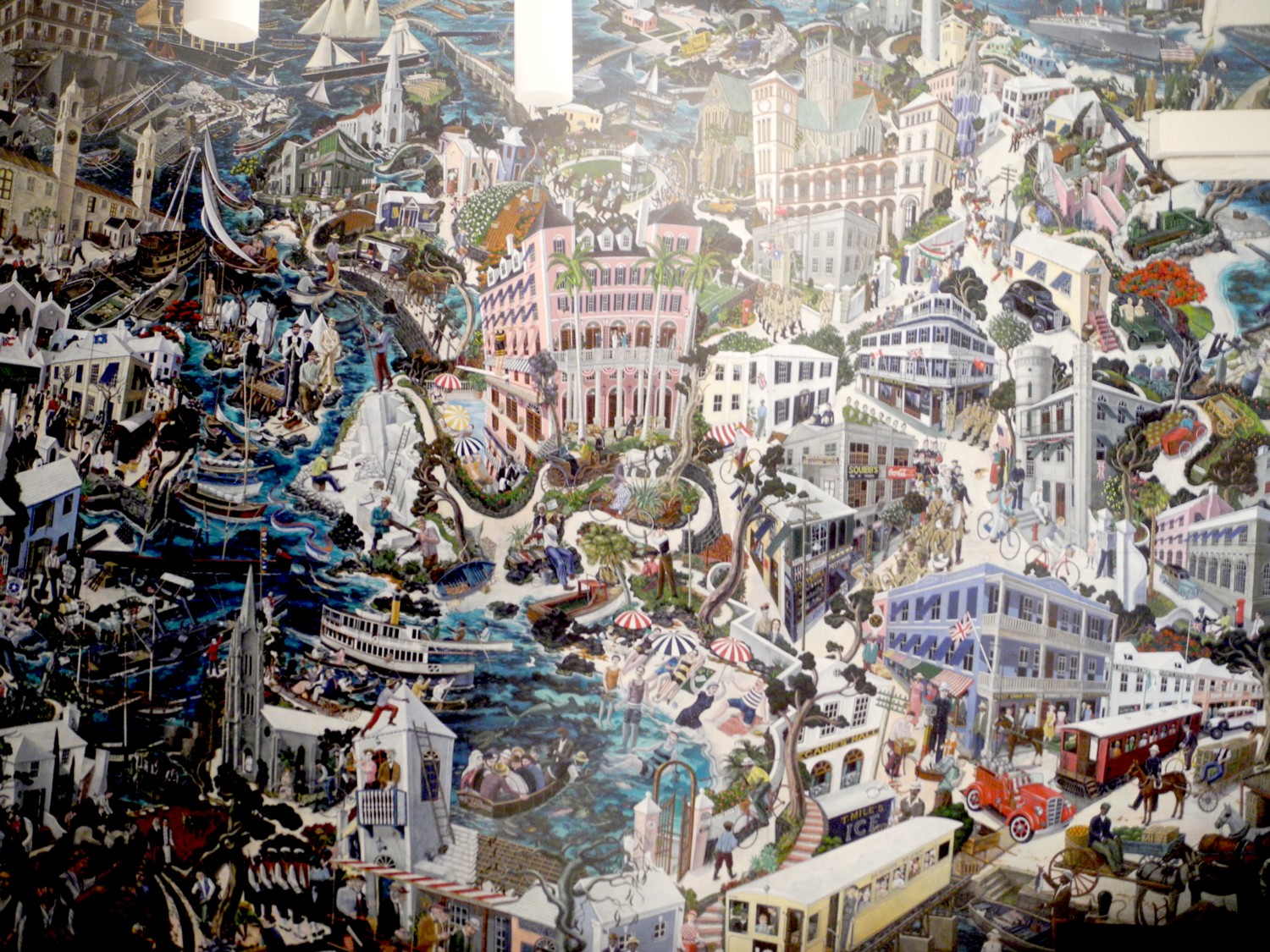
After the Dolphin Dip (or any of the Dolphin Quest programs), you are given free admission to the Maritime Museum and the National Museum of Bermuda, where you can explore the 200-year-old fort and experience educational maritime and cultural exhibits including: the Commissioner’s House, Shipwreck Island, The Warwick Project, Bermuda’s Defense Heritage and The Hall of History 1000-square-foot mural painted by Bermudian artist Graham Foster, plus an onsite Playground and Playhouse for children.

New Programs in Expanded Ocean Habitat

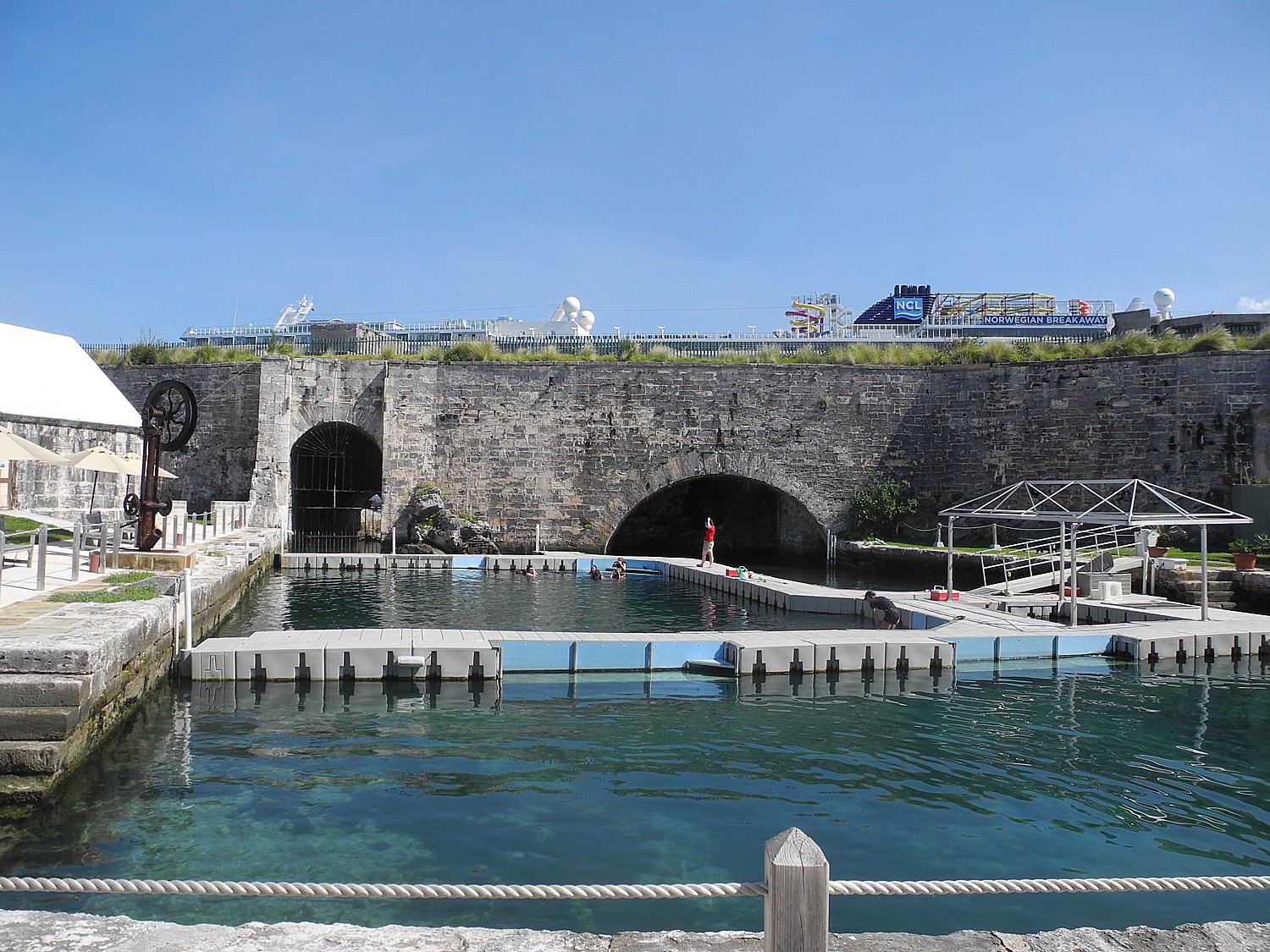
Dolphin Quest Bermuda has expanded its large ocean water dolphin lagoon inside the walls of the National Museum of Bermuda to include an outer Ocean Habitat. Accessed by a tunnel passageway, this supplemental sea sanctuary provides Dolphin Quest’s dolphins and guests another enriching natural environment to explore.

Accessed by a tunnel passageway, the new expanded Ocean Habitat provides Dolphin Quest’s dolphins and guests another enriching natural environment to explore (photo courtesy of Dolphin Quest).

The outer Ocean Habitat utilizes an environmentally friendly sea pen structure. Its natural underwater terrain and sea life mirrors the shallow bays and estuaries where the coastal ecotype of Atlantic bottlenose dolphins are found in the wild.

“While our dolphins are thriving in their ocean water lagoon within the walls of the museum, it is so fun to be able to introduce them to another area for them to play, socialize and inspire people to care about and protect dolphins in the wild”, says Lauren McWilliams, Supervisor of Marine Animals at Dolphin Quest Bermuda.

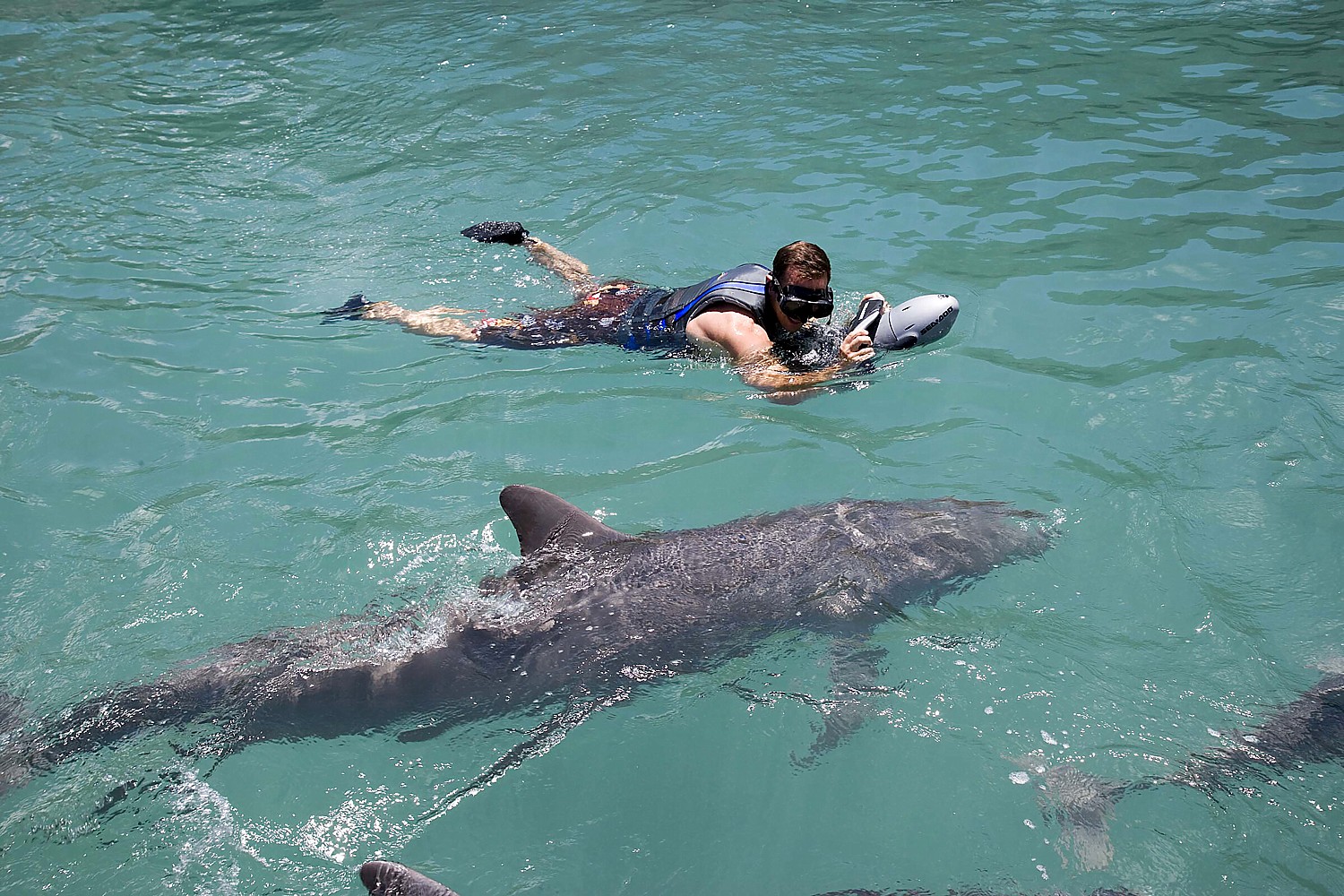
Dolphin Quest has introduced guided water scooter ride with the dolphins in the new Ocean Habitat (photo courtesy of Dolphin Quest).

Founded by two marine mammal veterinarians in 1980s, Dolphin Quest continues to be on the leading edge of advocacy, conservation and research. Back then, Dr. Jay Sweeney and Dr. Rae Stone sought to create an alternative to oceanariums and “dolphin shows.” They set out to create pristine and enriching natural dolphin habitats where visitors could enjoy inspiring and educational dolphin encounters that, in turn, funded wild dolphin conservation.

Since opening their first location at the Hilton Waikoloa Village in Hawaii in1988, Dolphin Quest has become recognized as a leader in establishing large natural habitats for the animals, creating successful dolphin breeding programs and developing innovative interactive dolphin programs that combine fun and learning for the animals and the people, and promoting environmental stewardship.

They opened their first Dolphin Quest in Bermuda in 1996 at the Southampton Princess Hotel, but it was damaged in Hurricane Gert in 1999. The staff battled high winds and rough water to move the animals to a protected area on the most southwestern side of the island, into an area known as The Keep within the Royal Naval Dockyard. This offered a large, protective ocean-water lagoon within a historic fort, with a connected outer habitat that would be safe from hurricanes and weather events. This became Dolphin Quest’s home on Bermuda. 

New innovative and inspiring interactive programs are now available in the Ocean Habitat: “Dive with Dolphins” helmet dive, the “Sea Quest” guided water scooter ride with the dolphins and the “Exclusive Sea Quest” which is a private experience.

Dolphin Quest Programs Year-Round

A variety of programs are offered year-round. The website offers excellent information and an easy-to-follow breakdown of the various programs available by season and by age-appropriateness. Programs include:

Ultimate Adventure, an hour-long program (45 minutes in the water with dolphins), the longest time available, appropriate for ages 6+, available May-October.

SeaQuest, a scooter program, April-October, for ages 8+, 45 minutes

Dolphin Encounter, available November through April, let’s you create your own dolphin experience (30 min., $175).

Underwater Exploration (20 minutes with dolphins, for ages 8+, $100 (maximum 3 people):  You explore dolphins’ natural ocean habitat with underwater scooters and snorkeling; you have the opportunity to interact with dolphins in deeper waters, guided by marine mammal specialists (water scooters and masks provided; you must be a proficient swimmer; no more than 3 people and the trainer). After the program, the  marine mammal specialists are available to discuss dolphins’ care and wellness, animal training, conservation; and you get free full day admission to the National Museum of Bermuda. Winter programs (November- May) provide free wetsuits and booties; and a winter hot tub special (December 15-April 30, limited spaces available).

Swimming with dolphins. Dolphin Quest offers programs year-round at their habitat located within The Keep at the Naval Dockyard (photo courtesy of Dolphin Quest).

Marine Conservation Tour is a two-hour behind-the-scenes program that finishes with a five-minute dolphin touch, but it focuses on training programs, learning about animal care, visiting the medical lab, and watching the dolphins interact and socialize with each other (November-April, $79)

Trainer for a Day, a five-hour program with 60 minutes with the dolphins where you are side-by-side with trainers and dolphins and participate in dolphin health exams, dolphin training sessions, dolphin play time and dolphin programs for guests (lunch included). There is time in the water with the dolphins as well as interacting from the docks. (Wet suit and booties provided, November-May).


National Museum of Bermuda

The fortuitous collaboration between Dolphin Quest and the National Museum of Bermuda greatly enhances the visitor experience, as well, because you are not only given this rare experience to interact with marine mammals, but also become immersed in Bermuda’s rich heritage.

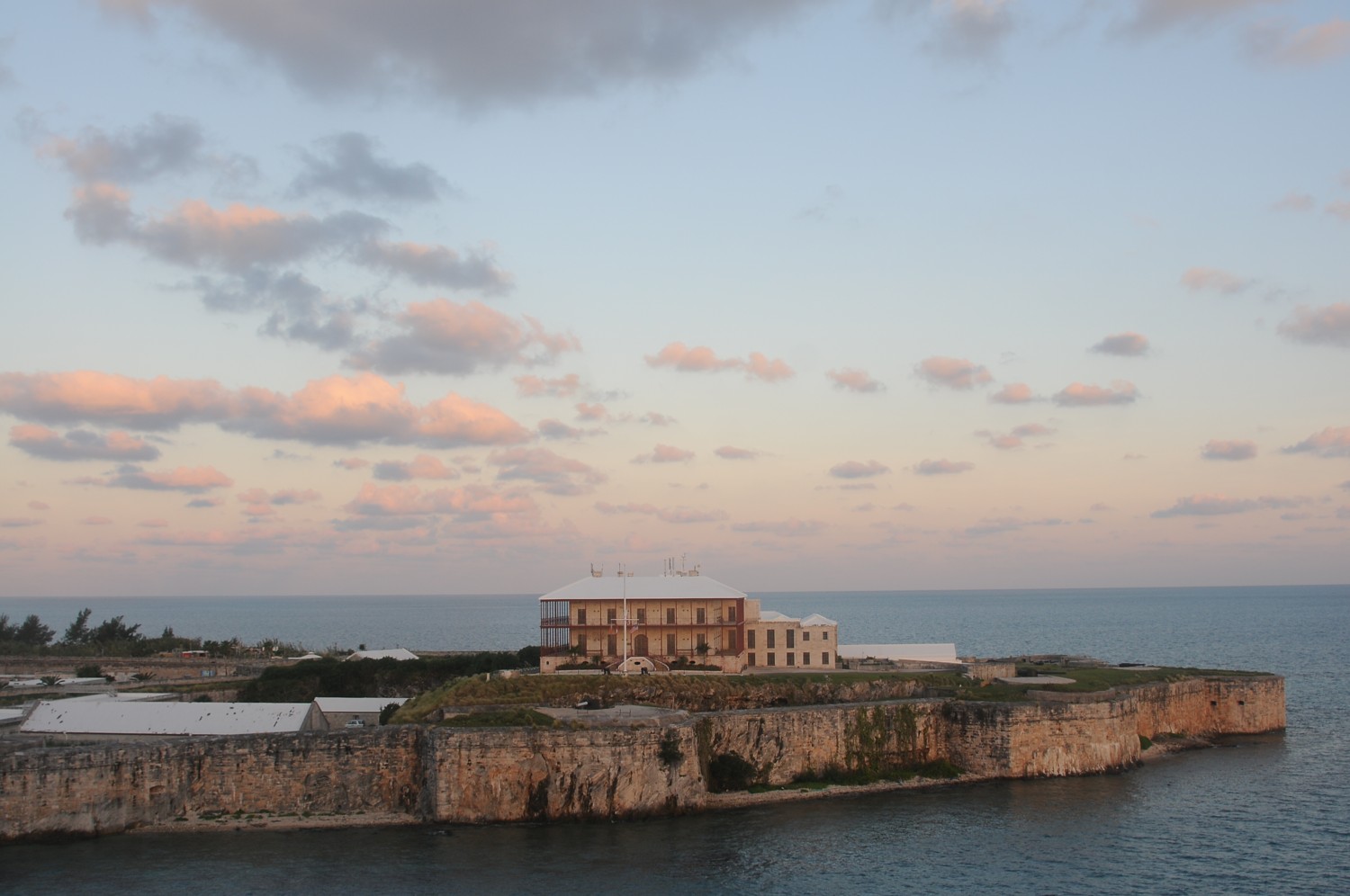
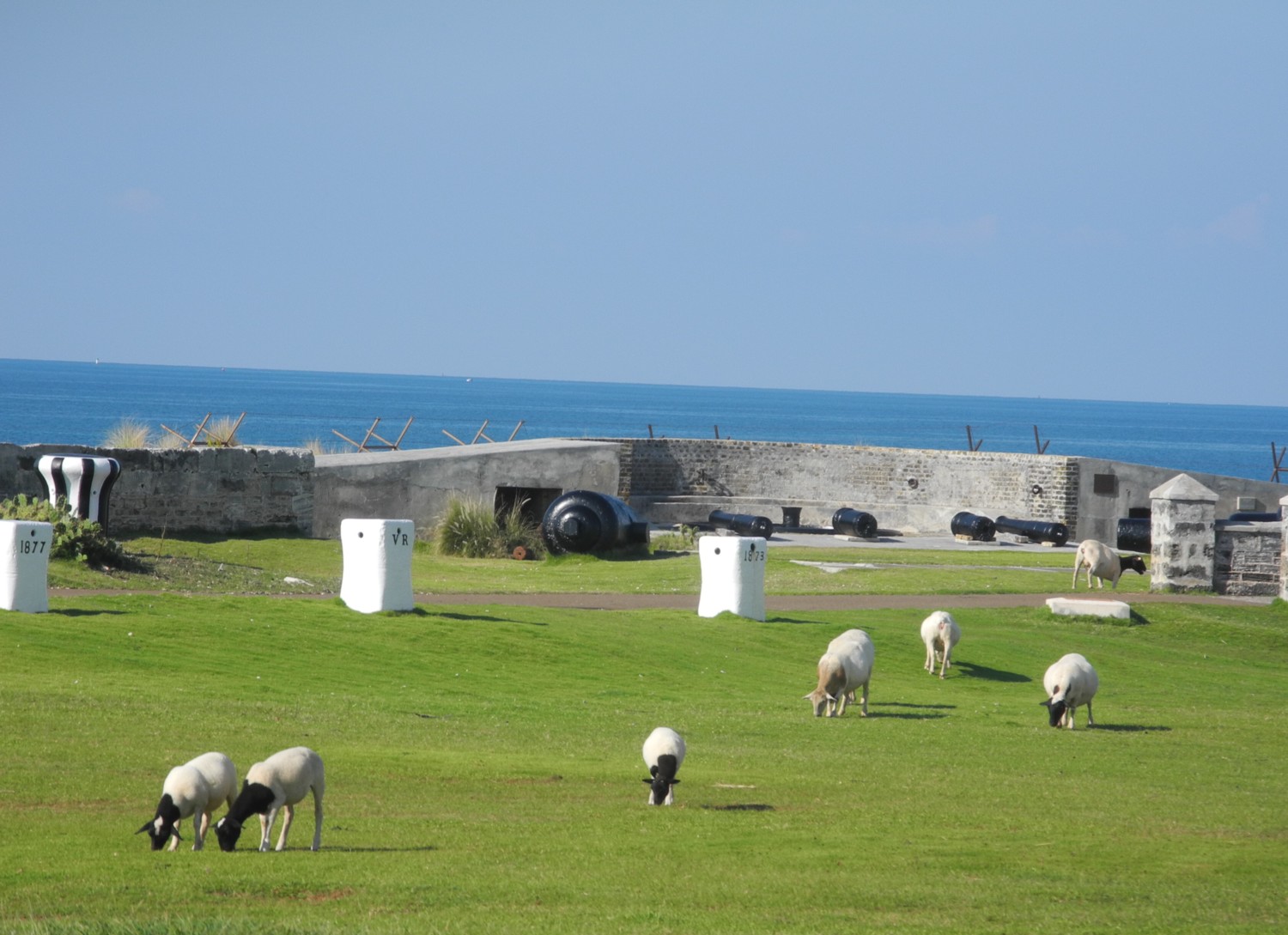
The Keep of the Dockyard is a six-acre historic fort that was designed to serve the naval fleet at anchor in Grassy Bay. It was once one of the most strategic military installations in the world and was heavily protected with a moated entrance, cannons, shell guns, and other weapons.

The Naval Dockyard contains the National Museum of Bermuda as well as Dolphin Quest © Karen Rubin/goingplacesfarandnear.com

It was designed so munitions and provisions could be moved by boat between the large Keep pond and the vessels in the harbor. The grounds and many buildings of the Keep are now home to the National Museum of Bermuda’s exhibits and serve as home base for its highly-regarded maritime research, restoration, and preservation efforts.

“The fort provides probably the world’s most secure home for our dolphins, and we are enjoying exploring the many possibilities for expanding our dolphin programs within this historic context,” Dolphin Quest notes.

It is contained within a 16-acre National Museum of Bermuda with eight exhibit buildings and the most extensive historical collection in Bermuda, including the hilltop commissioner’s house. You can walk along the ramparts.

In 2016, the dolphin’s habitat was expanded to include The Ocean Habitat, a large sanctuary that extends beyond the museum walls and allows the dolphins to swim out into the ocean waters via a connecting tunnel from inside the lagoon. The entire sanctuary is one of the largest and most natural dolphin habitats in the world. Dolphin encounters in this area allow guests to interact with dolphins while riding underwater scooters and they can also explore the Bermuda reefs and bountiful marine life.

Dolphin Quest is contained within The Keep of the Naval Dockyard © Karen Rubin/goingplacesfarandnear.com.

After American independence from Britain, Bermuda was identified as a strategic location for a naval base and dockyard. Construction on the dockyard began in 1809, which involved massive land reclamations and quarrying, first by slaves and then by thousands of British convicts. In its heyday, the dockyard provided facilities for the Royal Navy’s fleet.

The Keep was the citadel of the Dockyard, built to guard the naval base against land or sea attack and as an arsenal. The massive bastions and ramparts were designed by the Royal Engineers and are reinforced at intervals by casemated gun emplacements. Casemates were built in the late 1830’s to house troops manning the Dockyard fortifications. After Dockyard closed in 1951 it became Bermuda’s maximum-security prison from 1963-1994.

It is currently undergoing extensive restoration by the Museum and volunteers.

Walking the ramparts of the Naval Dockyard © Karen Rubin/ goingplacesfarandnear.com

The Museum’s scope has expanded to encompass more than maritime history and today it is a vital custodian of Bermuda’s heritage. It is also a champion for the preservation of Bermuda’s underwater and land-based cultural heritage through collecting, exhibitions, restoration, conservation, research, publication, education, public outreach, and archaeology.

The National Museum of Bermuda’s scope has expanded to encompass more than maritime history and today it is a vital custodian of Bermuda’s heritage © Karen Rubin/goingplacesfarandnear.com

The National Museum of Bermuda is open daily except Christmas Day (Dolphin Quest is still open); admission fees are $15/adult, $12/seniors; under 16 free; admission fee is waived for Dolphin Quest participants.

“Dolphin Quest is committed to protecting our planet and inspiring the next generation of ocean stewards by providing inspirational interactive experiences, educational programs and contributing funding, resources and field support to vital marine studies around the globe.

“With resort partners in Bermuda, Hawaii, and Oahu, Dolphin Quest inspires tens of thousands of guests each year to care about and help protect dolphins in the wild.” 

Dolphin Quest Bermuda. National Museum of Bermuda. 15 The Keep. Sandys, Bermuda MA 01. Tel: 441.234.4464 (local); call 800-248-3316 from US. https://dolphinquest.com/dolphin-quest-bermuda/.

_______________________

© 2017 Travel Features Syndicate, a division of Workstyles, Inc. All rights reserved. Visit goingplacesfarandnear.com,  www.huffingtonpost.com/author/karen-rubin , and travelwritersmagazine.com/TravelFeaturesSyndicate/. Blogging at goingplacesnearandfar.wordpress.com and moralcompasstravel.info. Send comments or questions to FamTravLtr@aol.com. Tweet @TravelFeatures. ‘Like’ us at facebook.com/NewsPhotoFeatures
Regent Seven Seas’ Navigator in New York Provides First-Hand Look at ‘Most Inclusive Luxury Cruiseline’

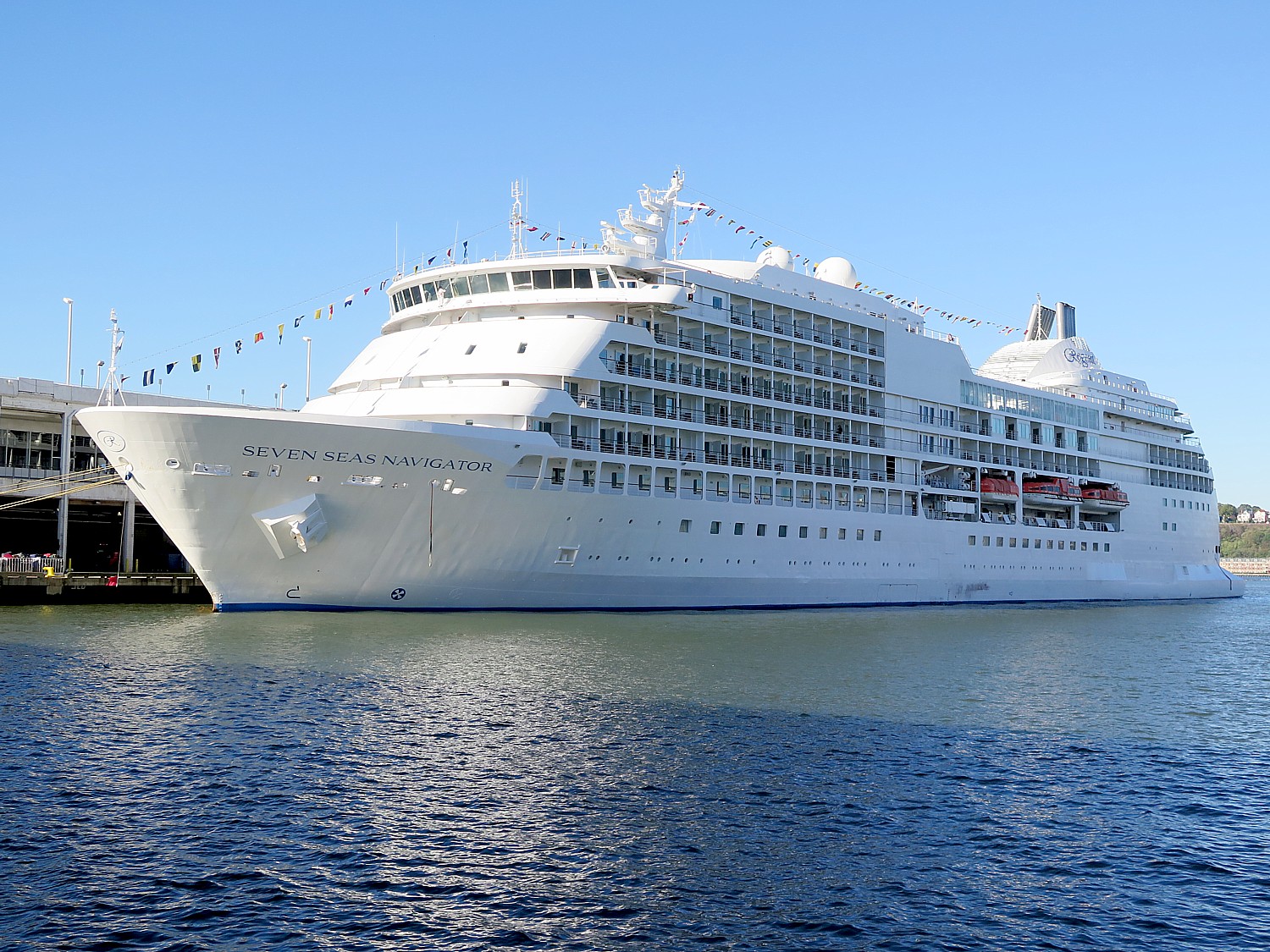
Regent Seven Seas Navigator docked at Pier 88 on the Hudson River in New York City © 2017 Karen Rubin/goingplacesfarandnear.com

By Karen Rubin, Travel Features Syndicate, goingplacesfarandnear.com

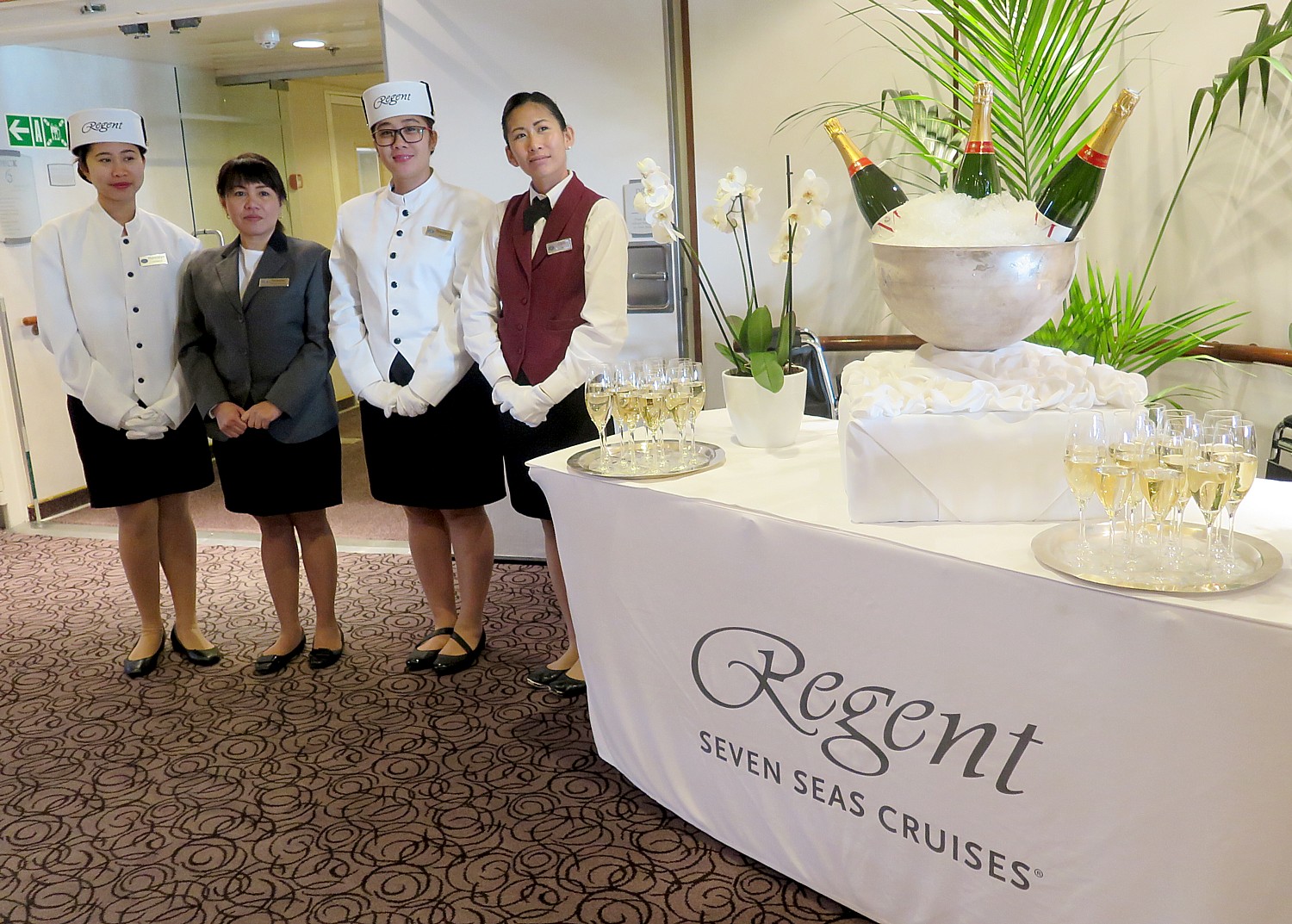
Regent Seven Seas’ Navigator had just come in from a month-long voyage. Docked at Pier 88 on the Hudson River in New York City, as passengers for its next sailing – a 12-day cruise up to Halifax, Nova Scotia and down to Bermuda (fall foliage and eternal spring combined in a single journey) we got to tour the ship and see why Regent boasts being the “most inclusive luxury cruiseline.”

In style, feel, and philosophy, Regent Seven Seas harkens back to the glory days of ocean cruising – elegant, luxurious, intimate, a hunger and excitement to explore places.

RSSC specializes in longer cruises and a focus on destinations with longer stays in port to give more time, more in-depth visits, multiple nights in port, and free, unlimited shore excursions. It lists some 450 ports of call among its itineraries, which include a 137-day circumnavigation of the world, and longer stays in port to give more time, more opportunity for in-depth visits. Regent’s smaller ships can access ports that bigger ships cannot, and therefore are less frequented and less overrun (Check out www.rssc.com/destinations).. For this reason, unlimited shore excursions among a long list of inclusive features

Regent Seven Seas offers a sophisticated, refined ambiance and casual elegance, and a premium on pampered service – the staff to guest ratio is 1:1.5. This isn’t the cruise for a family looking for rock-climbing walls, water slides, flow-riders or supervised children’s activity programs. But it’s a cruise for families who want that sense of discovery, of immersion into cultures and heritage

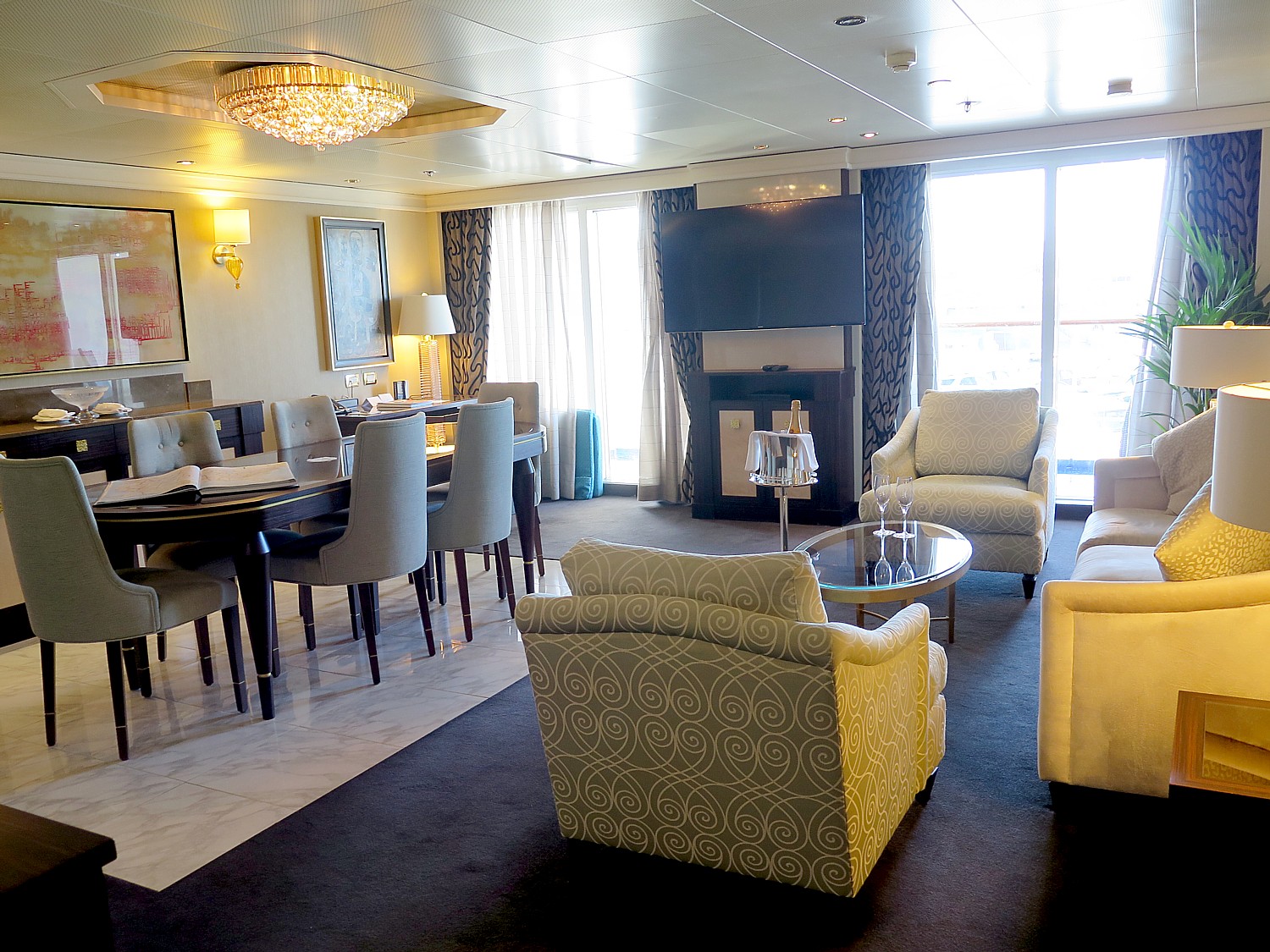
The dining room/living room in Navigator’s Master Suite © 2017 Karen Rubin/goingplacesfarandnear.com

Because of the longer itineraries, cruisegoers tend to be of retirement age, who want “good food and beverage and bucket-list destinations.”

So a really significant all-inclusive feature of Regent Seven Seas Cruises are free unlimited shore excursions in every destination, as many as you like in a day. There are a limited number of optional tours, Regent Choice Shore Excursions, that because of their special content or limited availability or high cost, like heli-touring, require a discounted supplementary charge.

Free unlimited shore excursions (you can take multiple ones a day) is just the beginning. Also included are two-for-one fares; free roundtrip business class air on all intercontinental sailings or free roundtrip air on domestic flights; free unlimited Wifi; specialty restaurants with no surcharge; free unlimited beverages including fine wines and premium spirits; free open bars and lounges; in-suite mini-bar replenished daily; free pre-paid gratuities; free transfers between airport and ship; and free one-night luxury hotel package in concierge suites and above.

Regent Seven Seas Navigator has a staff to guest ratio of 1 to 1 ½ © 2017 Karen Rubin/goingplacesfarandnear.com

When you calculate the inclusive features, the unabashedly pricey fare becomes more of a value proposition. And, on top of that, there are special offers at RSSC’s site:

For example, the June 12, 2018, 12-day London (Southampton) sailing to Copenhagen on Seven Seas Explorer has two-for-one fares from $12,499 (with the discount) but children 17 or younger sail for $1,299.

The July 6, 2018 12-day Reykjavik to Dublin voyage on Seven Seas Navigator, priced from $9,799 pp, features a bonus savings of $1400 per suite.

A featured offer on an 11-day sailing on Seven Seas Explorer, Monte Carlo to Barcelona on April 12, 2018, with fares from $10,099 pp, features bonus savings of $2800 per suite.

Return to World Cruises

This year, Regent Seven Seas Cruises offered its  first world cruise in six years on Seven Seas Navigator,  beginning and ending in Miami on a circumnavigation of the globe in 128 nights, calling on six continents, 31 countries, 62 distinct ports and exploring 29 UNESCO World Heritage sites.

Navigator is also the ship for the 2018 and 2019 world cruises; Mariner, which accommodates 700 passengers, will be the ship for 2020.

World Cruises come with a slew of additional inclusive features, including roundtrip air, full medical care, and visa and passport services.

Refined Ambiance

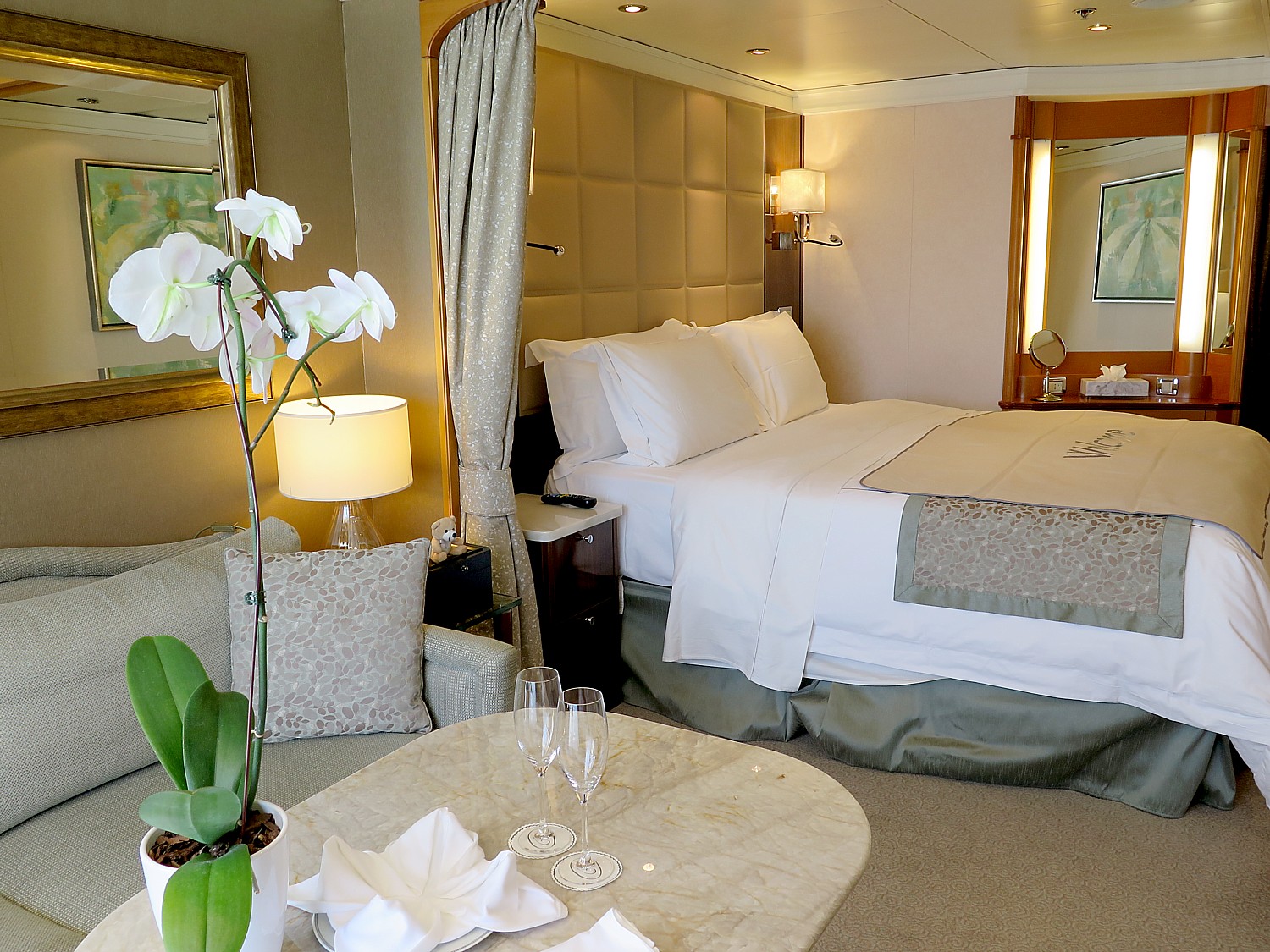
Navigator is refinement, elegance and grace, a destination in itself. Accommodations are all-suites, nearly all with private balcony. With only 490 guests, and a staff to guest ratio of 1 to 1 ½, you feel pampered.

Regent Seven Seas refurbishes ships every 2-3 years; and in 2016, Regent initiated a two-year fleet-wide $125 million refurbishment program to bring its ships up to the standard of its newest, Seven Seas Explorer, which has been hailed as “the most luxurious cruise ship” ever built.

Navigator had just gone through a bow-to-stern refurbishment in the first phase of the renovation project and we were able to see the fresh, warm color schemes, contemporary design, plush furnishings and amenities.

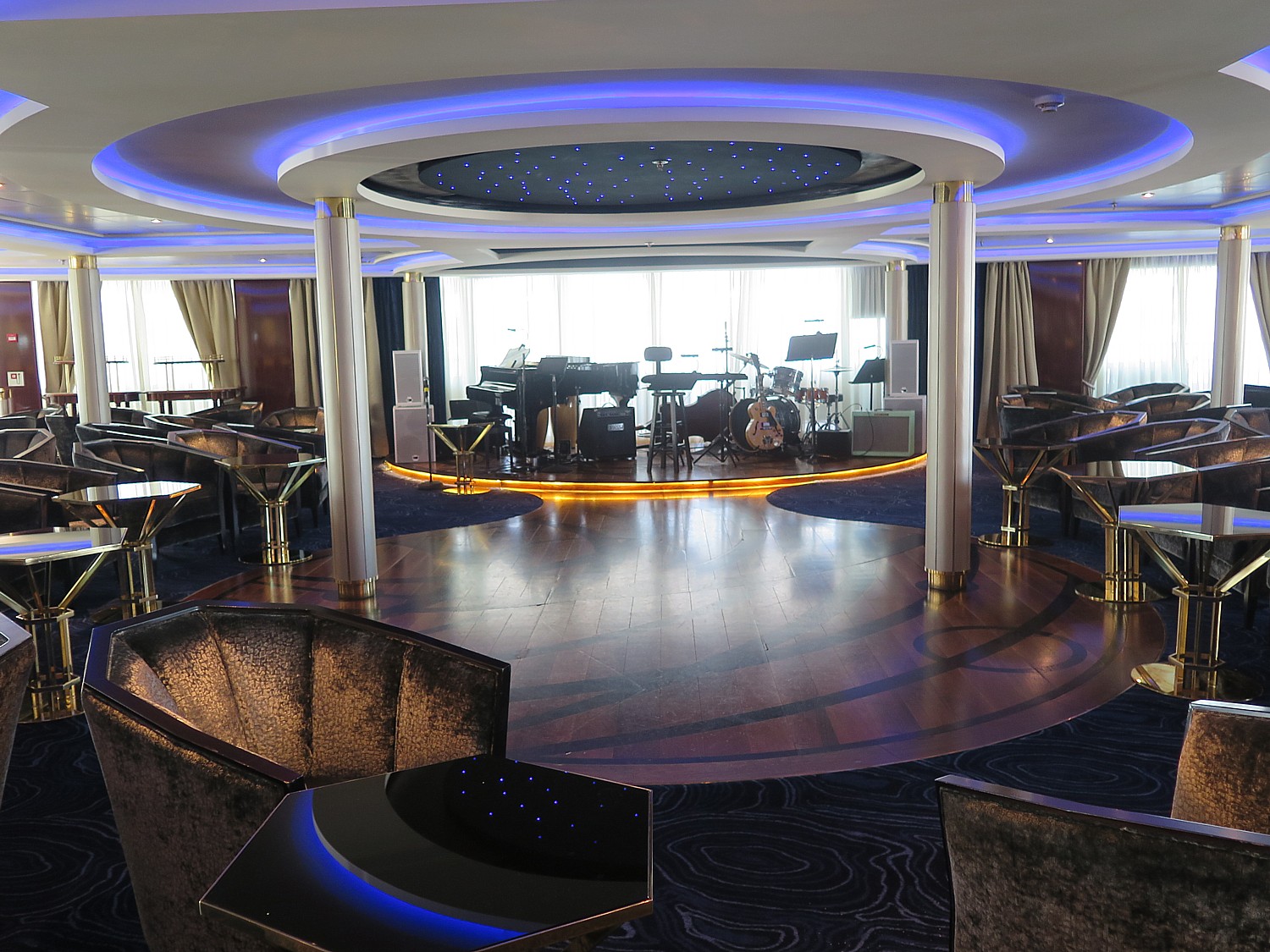
Galileo Lounge on Regent Seven Seas’ Navigator © 2017 Karen Rubin/ goingplacesfarandnear.com

A popular space is the Galileo Lounge on Deck 11 with a décor that conveys a celestial feel, beginning with its tempered glass double-door entrance trimmed with an abstract design reminiscent of the solar system and featuring a decorative sun-shaped handle. That theme extends inside the 132-seat cocktail lounge, where a night-black oval-shaped ceiling twinkling with fiber-optic “stars” overlooks the inlaid wooden dance floor.

Navigator Lounge / Coffee Connection: By day, these intimate Deck 6 venues – connected by a central walkway – are bathed in natural light from a bank of windows overlooking the sea. By night, the Navigator Lounge transforms into a small night club, with a Steinway piano as the centerpiece. Adding to the elegance are leather-wrapped columns with a copper-topped capital and dark wooden base.

The theater is a stunning affair – sofas and easy chairs with small tables, a beautiful stage where there is nightly entertainment – Broadway reviews and Las-Vegas style entertainment performed by a small cast of 4 to 6, plus onboard lectures from the Smithsonian Collection by Smithsonian Journeys .

There is also a small casino in the style of the French and Italian Riviera, as opposed to Las Vegas glitz and noise.

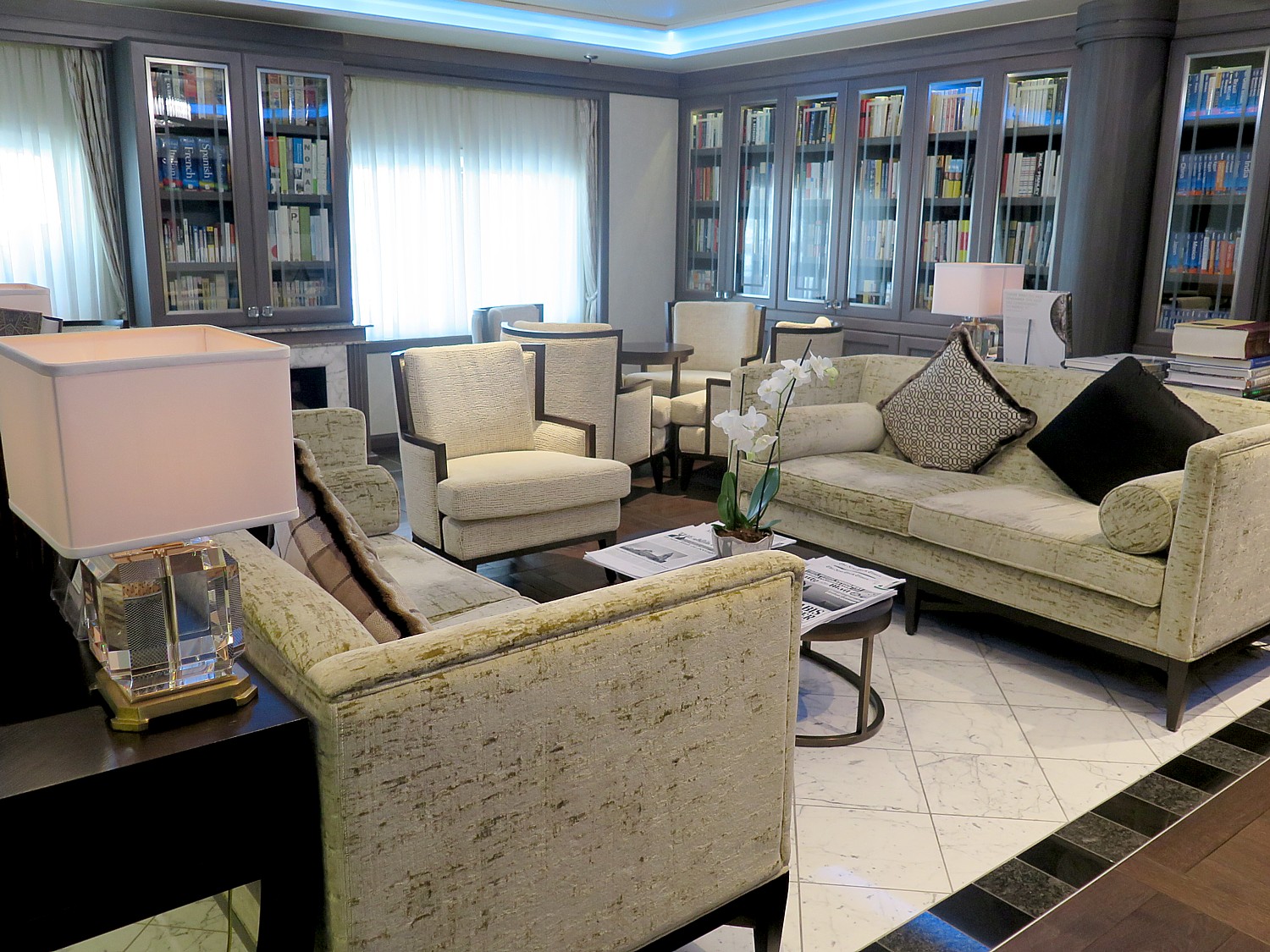
The Library aboard Regent Seven Seas’ Navigator © 2017 Karen Rubin/ goingplacesfarandnear.com

The Library is gorgeous (there is wireless access throughout the ship, free wifi).

There is an onboard Canyon Ranch SpaClub® offering various spa treatments; as well as a fitness room and yoga rooms – with free classes (stretching, pilates, yoga, spinning) offered throughout the voyage.

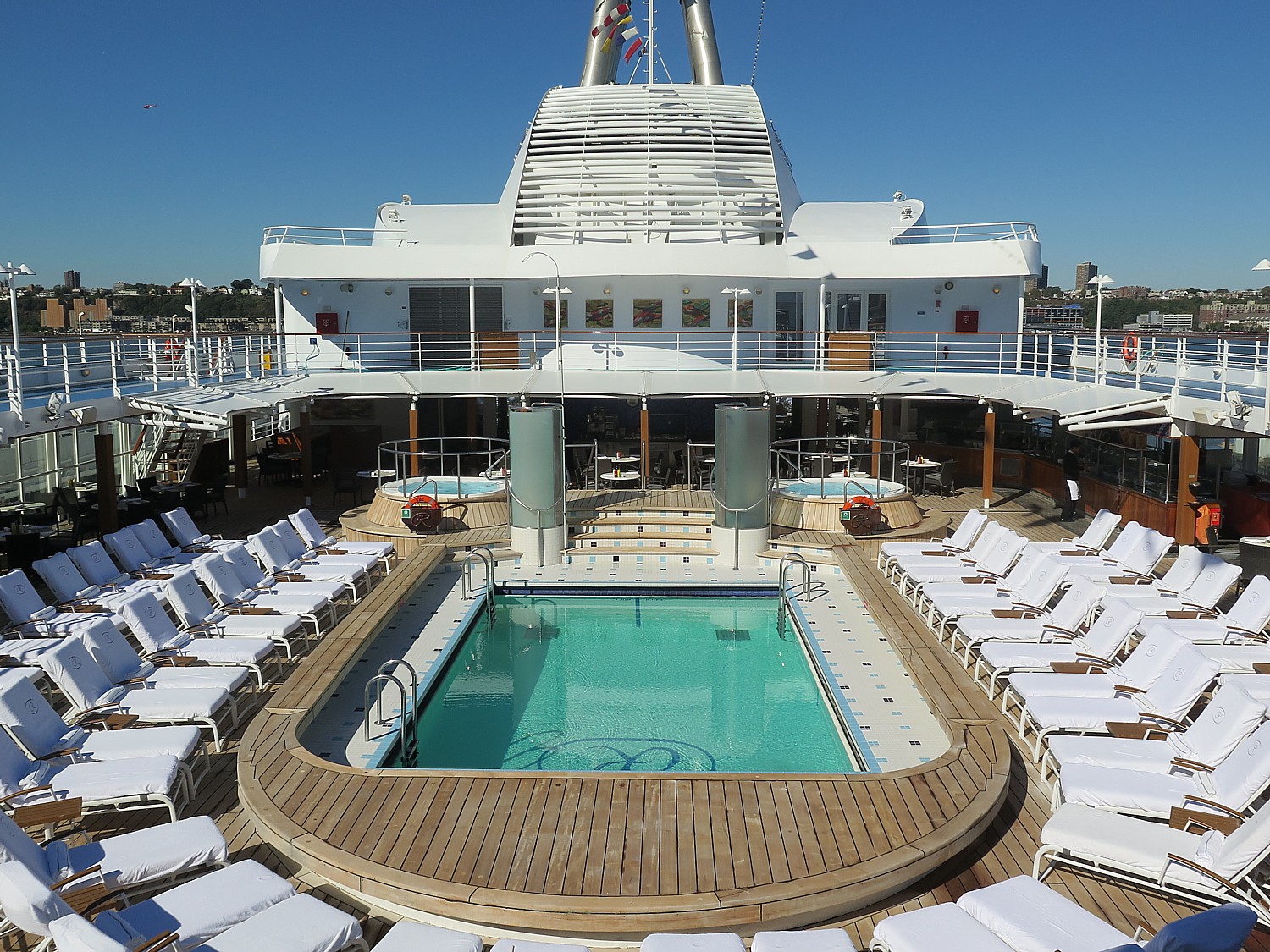
The outdoor pool is lovely; there is also a jogging track and miniature golf.

Cuisine

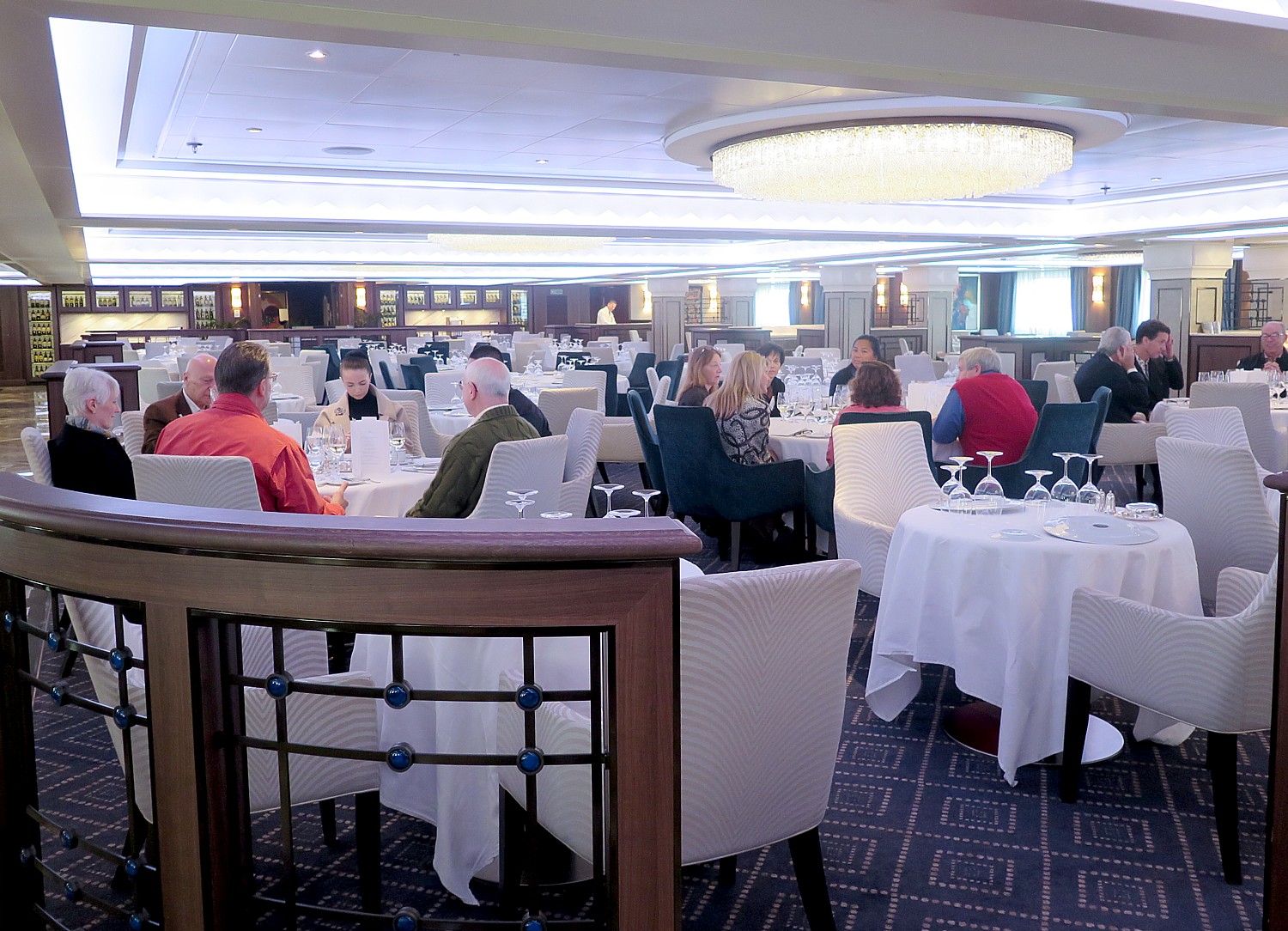
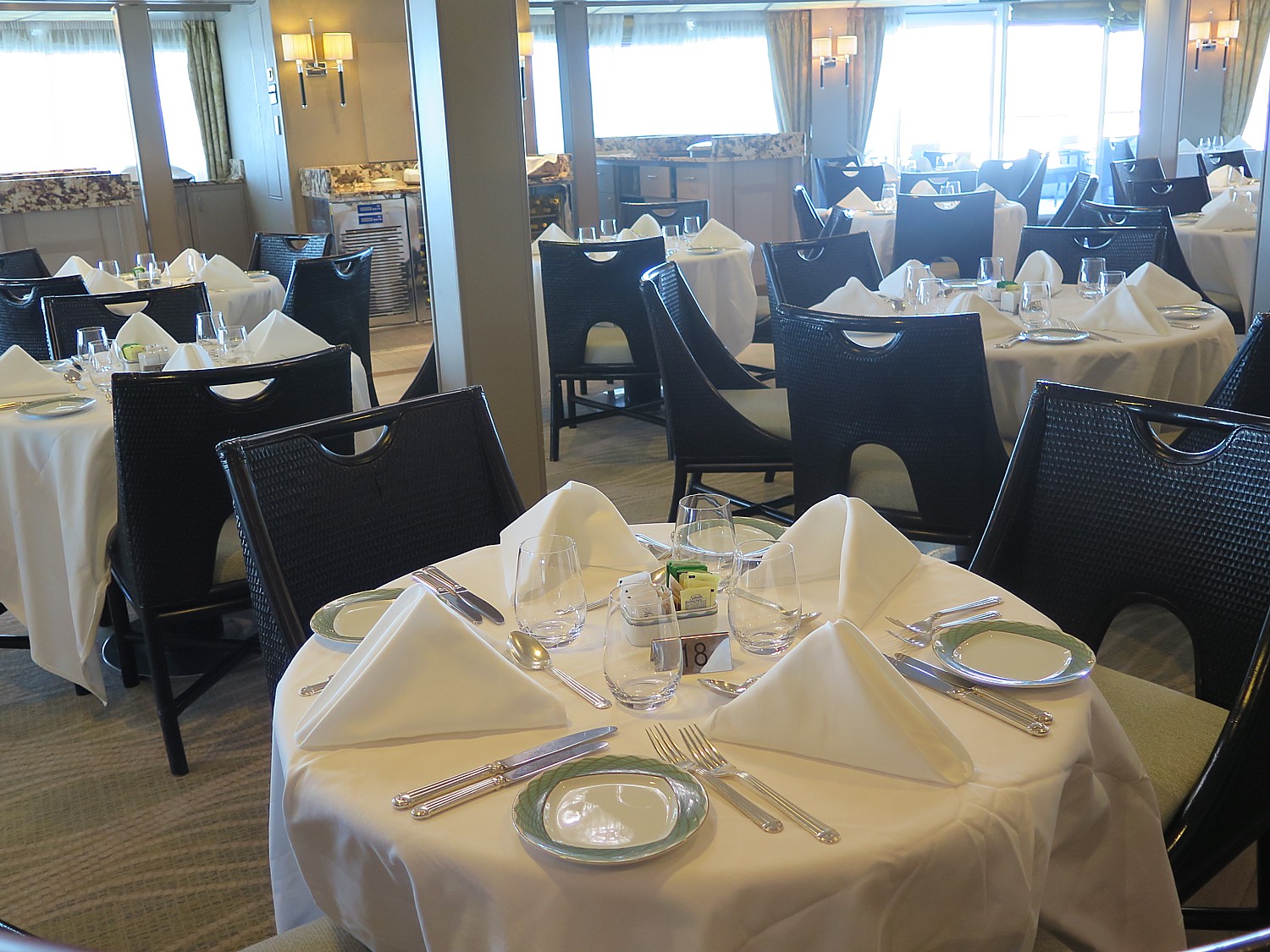
Regent Seven Seas is also known for its cuisine. In Compass Rose, the main dining room, the menu changes daily with a selection of offerings that reflect the destination, along with popular Continental cuisine standards, a selection of Canyon-Ranch healthful items, vegetarian and Kosher. The specialty restaurant on board, Prime 7, is a classic American steakhouse.

Compass Rose, the main dining room aboard Regent Seven Seas Navigator © 2017 Karen Rubin/goingplacesfarandnear.com

La Veranda, a lovely casual restaurant for indoor and al fresco dining with incredible ocean views,   is the casual restaurant serving smorgasbord-style for breakfast and  lunch that transforms into a fine dining venue, Sette Mari La Veranda, for dinner featuring regional specialties and Italian specialties.

The Pool Grill offers casual dining al fresco and a popular Burger Bar. There are culinary demonstrations and wine tastings.

La Veranda, the casual dining room on Regent Seven Seas Navigator © 2017 Karen Rubin/goingplacesfarandnear.com

Suites with Benefits

Regent Seven Seas prides itself on being the most inclusive luxury cruising experience afloat, but as the suite category increases, so do added benefits:

The Concierge Suite Category, 356 sq ft with 55 sq ft balcony, adds free one-night pre-cruise luxury hotel package that includes ground transfers, breakfast, porterage; priority online shore excursion and dining reservations; binoculars; Espresso Maker & cashmere blankets, commemorative gift plus the rest of the amenities.

The Penthouse Suite category, 356-476  sq. plus 55-60  sq ft. balcony adds in personal butler; daily canapés; Guerlain bath amenities; in-suite I-Pad; personalized stationery; complimentary pressing on first night.

The Navigator Suite category, ranging from 414 to 495 sq ft with balcony, adds a welcome bottle of Veuve Clicquot  and fresh flowers; personalized in-suite full-liquor bar set-up; in-suite caviar service;  delivery of up to three daily newspapers and world atlas; in-suite Blue-ray Player; selection of Fig & Tea Leaves Bath Salts; luxe fruit arrangement, plus all the amenities provided in Penthouse, Concierge.

Regent Seven Seas Navigator is all-suite © 2017 Karen Rubin/ goingplacesfarandnear.com

The Master Suite category, ranging in size from 1021 to 1173 sq ft with 100 sq ft balcony, some with full wrap-around and the Grand Suite Category, 539 sq ft., plus 200 sq. ft balcony, some with full wrap-around balcony, adds on Dinner with the Captain; guaranteed reservation each night in specialty restaurant of your choice; in-suite dining menu; complimentary 25 minute personal fitness session at the Canyon Ranch SpaClub® Fitness Center; in-suite complimentary cocktail party for eight; Guerlain Box; Bottega Veneta bath amenities (in addition to the others) and Tea Forte set-up.

The suites are have big-screen TVs; walk-in closets equipped with plush terry robes and slippers; umbrella, hats, bag; bathroom well stocked with a selection of top-flight toiletries; an amenities box of everything you might think of (with a plush bear); liquor set-up; coffee-maker.

And, in the category of “they think of everything”, each deck has a launderette that is available to guests – extremely popular, especially on longer cruises.

Events at Sea

With just 245 suites, Navigator is the smallest ship in Regent Seven Seas’ fleet, and its size, equivalent to a luxury boutique hotel, makes it ideal for corporate incentives, meetings and events.

In fact, organizations can charter the ship –about $1.2 million might do it – for a three or four-day sailing and RSSC will alter the itinerary, bring the ship to you, and customize the cruise, while incorporating all the inclusive features (shore excursions can include team-building activities).

The ships are ideal size for corporate meetings, incentives, or events, and a cruise is ideal because everything is included, the participants spend their time together, there are venues for meals, entertainment, and it has the allure of being luxurious, glamorous, special and an experience that cannot be duplicated.

Everyone who sails on Regent Seven Seas is automatically inducted into the Seven Seas Society, a loyalty program that comes with exclusive rewards and benefits such as priority online shore excursion and dining reservations, free garment pressing and WiFi.

The outdoor pool aboard Regent Seven Seas’ Navigator © 2017 Karen Rubin/goingplacesfarandnear.com

Regent Seven Seas Cruises is part of Norwegian Cruise Line Holdings Ltd., a leading global cruise company which also operates Norwegian Cruise Lines and Oceania Cruises. With a combined fleet of 22 ships and around 45,000 berths, these three brands offer itineraries to more than 520 destinations worldwide. The company is introducing five more ships through 2019.

Norwegian Cruise Line is an innovator in cruise travel, most notably with the introduction of “Freestyle Cruising,” which revolutionized the industry by giving guests more freedom and flexibility. Also, The Haven, which is a luxury enclave with suites, its own private pools and dining, concierge service and personal butlers.

Oceania Cruises offers immersive destination experiences with destination-rich itineraries spanning the globe and the finest cuisine at sea.

Regent Seven Seas and Norwegian Cruise Lines have both undertaken fund-raising campaigns to help the recovery in Caribbean islands so badly damaged by the recent hurricanes.

Nine of the line’s itineraries have had some adjustments – six replaced calls at San Juan with St. Kitts.

For more information about Regent Seven Seas Cruises, visit www.RSSC.com, call 844-4REGENT (844-473-4368) or contact a professional travel agent.

_______________________

© 2017 Travel Features Syndicate, a division of Workstyles, Inc. All rights reserved. Visit goingplacesfarandnear.com,  www.huffingtonpost.com/author/karen-rubin , and travelwritersmagazine.com/TravelFeaturesSyndicate/. Blogging at goingplacesnearandfar.wordpress.com and moralcompasstravel.info. Send comments or questions to FamTravLtr@aol.com. Tweet @TravelFeatures. ‘Like’ us at facebook.com/NewsPhotoFeatures
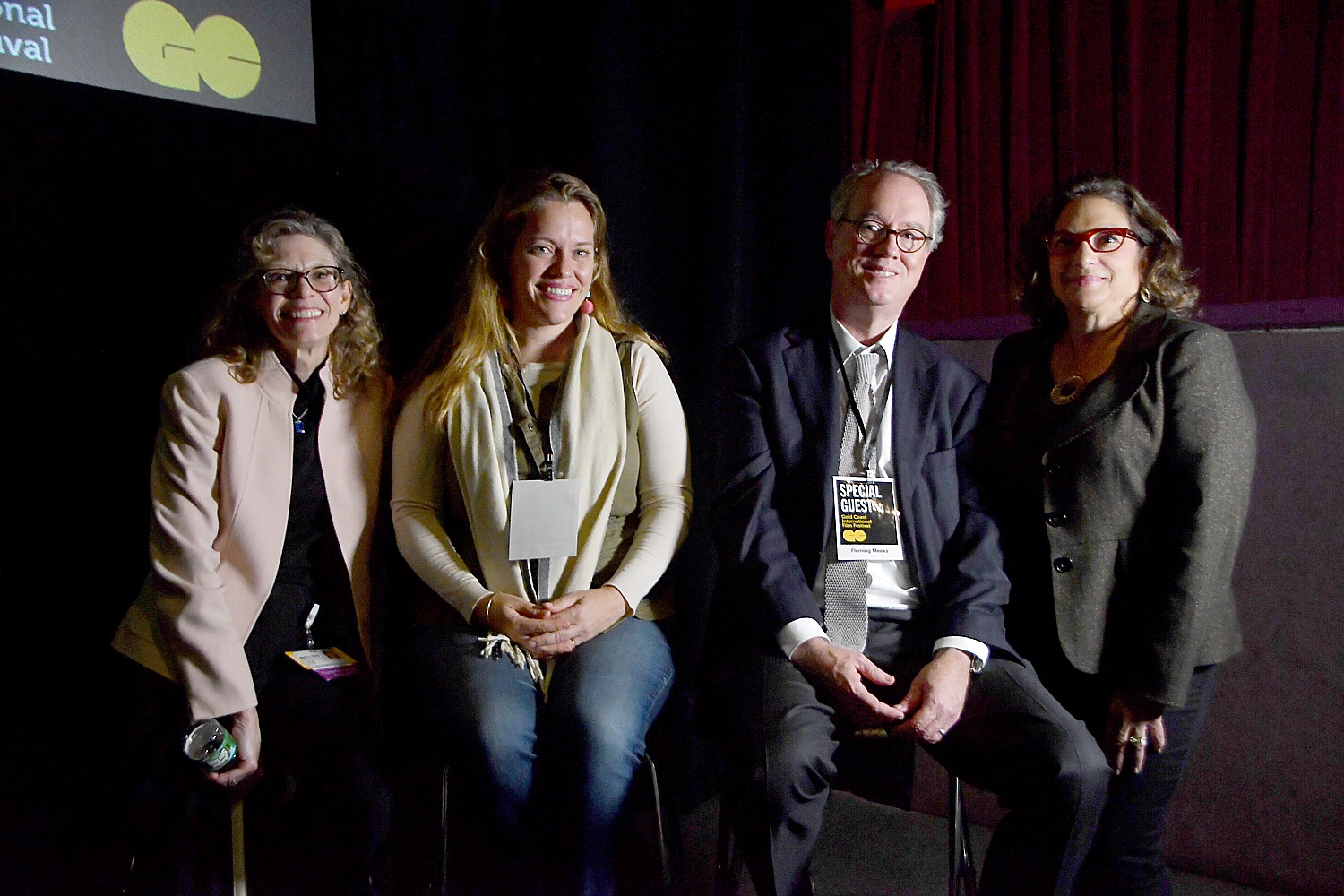
 

Fall Getaway in the Great Northern Catskills: Hiking the Hudson River School Art Trail

The view from Sunset Rock, immortalized by artist Thomas Cole, the father of the Hudson River School, America’s first art movement, is much the same today © 2017 Karen Rubin/goingplacesfarandnear.com

By Karen Rubin, Travel Features Syndicate, goingplacesfarandnear.com

My three-day fall getaway in the Great Northern Catskills exploring the Hudson River School Art Trail starts before I even arrive at the historic Fairlawn Inn, in Hunter, NY. Taking advantage of the time of day and beautiful weather, I stop at the parking lot on 23A for the trailhead to Kaaterskill Falls, where you get an amazing view of Kaaterskill Clove (HRSAT Site #4). You gaze out over the gorge where mountain peaks seem to thread together and compare the scene today to the way it is depicted by Hudson River School artist Asher B. Durand’s 1866 painting. The trees are just beginning to turn colors (the peak is usually around Columbus Day weekend), but I swear that the same tree, already crimson, is the same red tree in the painting, also depicting an early fall scene.

The view of Kaaterskill Clove, Hudson River School Art Trail Site #4, one of the most painted scenes, with the marker that compares the scene to Asher B. Durand’s 1866 painting © 2017 Karen Rubin/goingplacesfarandnear.com

It’s a short walk along 23A (watch out for cars on the winding narrow road) to the trailhead for one of my favorite hikes, Kaaterskill Falls (HRSAT Site #5), a stunning scene that looks remarkably just as depicted in an 1835 painting by Thomas Cole, known as the father of the Hudson River School. “It is the voice of the landscape for it strikes its own chords, and rocks and mountains re-echo in rich unison,” Cole (who was also a poet and essayist) wrote.

The Kaaterskill Falls were a favorite subject of many of the Hudson River School painters and for me, is the quintessential combination of stunning scenery plus the physical pleasure of the hike – half-mile up to the base of the double-falls, then another half-mile to the top.

Kaaterskill Falls, a favorite subject of the Hudson River School painters © 2017 Karen Rubin/goingplacesfarandnear.com

The two-tiered Kaaterskill Falls, 175 and 85 feet, is the highest in New York State and was described by James Fenimore Cooper in “The Pioneers” which Thomas Cole, a friend of Cooper’s illustrated.

The waterfalls, usually rushing, are just a trickle after a long dryspell, but the hike is still absolutely fantastic – just enough challenge (I love my walking sticks) – and means you can get much closer than you might if the falls were fuller.

© 2017 Karen Rubin/goingplacesfarandnear.com

You make it to the base of the double-falls. Last time I hiked the trail, there were barriers and warnings not to go higher because it was so steep and dangerous (people have died!), but since then, there are staircases so you can hike to the very top. (There is also access to the top from other trails and nearby Laurel House Road parking lot above).

The two-tiered Kaaterskill Falls, 175 and 85 feet, is the highest in New York State © 2017 Karen Rubin/goingplacesfarandnear.com

I climb up and take a cut-off to the bottom of the high falls where there is a pool of water. Though it is already autumn on the calendar, it is as hot as a summer’s day – record heat in fact, close to 90 degrees – and people are in the shallow pool. The ledges are beautiful and you get a wonderful view back down the valley.

Soaking in the pool at the base of the Kaaterskill Falls © 2017 Karen Rubin/ goingplacesfarandnear.com

Another half-mile climb (another new staircase gets you up the steepest part) brings me to a winding forest trail that wraps around the hilltop to the very top of the falls. I cross a bridge over what would usually be rushing water. You can look back to the steep drop of the falls, back to the valley – just as Thomas Cole and the artists would have seen it. There is a viewing platform which looks back at the falls, bookended by trees just beginning to turn into their kaleidoscope of fall colors (the peak is traditionally around Columbus Day).

The falls are normally rushing but now a trickle after a dry-spell, means you can go to the very edge © 2017 Karen Rubin/goingplacesfarandnear.com

There is a small trail through the woods to the very top of the falls. Signs admonish hikers that climbing the ledges beside Kaaterskill Falls is extremely dangerous, and  has resulted in numerous injuries and deaths. But the falls are not flowing when I come, so I get to walk on the ledges, giving me really nervous view straight down and beyond, to the Valley and letting me look at the carved initials and graffiti from  the 1920s and 30s, some even from the 1800s.  You feel a sense of kindred spirit with those who have passed through and passed on. You feel the height and the proximity to the drop off, and it makes your heart flutter.

Later, you will recognize the view in Thomas Cole’s paintings and imagine how he must have stood in this precise place where you are standing.

Generations of trekkers have carved their initials into the ledges at the top of the Kaaterskill Falls © 2017 Karen Rubin/goingplacesfarandnear.com

It is a half-mile to the base, and another half- mile to the top of the falls, for a total of 2 miles roundtrip. There are some scrambles and it is uphill almost all the way (walking sticks are really recommended), and is thoroughly fantastic.

The tranquil scene at the top of the Kaaterskill Falls © 2017 Karen Rubin/ goingplacesfarandnear.com

I’ve taken my time, really savoring the views and the scenes and the smells, and the couple of miles hiking have taken about 2 1/2 hours.

(The parking lot is just west of the trailhead and across 23A, so you park and walk back along the road, being very careful. Haines Falls NY 12436, 518-589-5058, 800-456-2267).

I set out along 23A toward Hunter and the Fairlawn Inn.

Hudson River School Art Trail Hikes in North-South Campground 

For my second day, after an amazing breakfast at the Fairlawn Inn, I head to North-South Campground, where there are several of the Hudson River School of Art Trail hikes (as well as many other hiking trails) – the lake itself depicted in paintings such as Thomas Cole’s “Lake with Dead Trees,” 1825, (HRSAT Site #6).

I take the longer and wonderfully more challenging (only moderately strenuous) hike which brings you to such spots as Artist’s Rock, Sunset Rock and Newman’s Ledge (you can continue to North Point). Other hikes bring you to Boulder Rock, the Catskill Mountain House (HRSAT Trail Site #8) and Laurel House sites.

Artists Rock along the trail to Sunset Rock © 2017 Karen Rubin/ goingplacesfarandnear.com

The hike to Sunset Rock (HRSAT Trail Site #7) begins along the well-marked blue trail (you cut off to the yellow trail to Sunset Rock) that mostly wraps around the ledges, with the amazing views that so enthralled the artists of the Hudson River Valley. Close to the beginning is a fairly interesting scramble, then the trail winds through the woods along side fabulous rock formations before coming out again to the ledges. You reach Artists Rock at about .4 miles. Continuing on, you look for the yellow trail marker to Sunset Rock.

Taking in the view of the Hudson River Valley from Sunset Rock, a cherished site for Thomas Cole and the Hudson River School artists © 2017 Karen Rubin/ goingplacesfarandnear.com

I continue on to Newman’s Point but overshoot and head up some challenging scrambles before turning back (the trail to North Point continues for another mile). I am delighted with myself to have gone what I estimate was an extra .4.

View from Newman’s Ledge © 2017 Karen Rubin/goingplacesfarandnear.com

Back at the North-South Lake (it’s taken me about three hours taking my time), people are swimming in the ridiculously unseasonably hot (near 90) weather.

I look for a relatively easy trail and find just a short distance away, Mary’s Glen trail to Ashley’s Falls (alas, the falls are all but completely dried up when I come). This is an ideal trail for families with small children who want to avoid hiking near open ledges. You go through a lovely wooded glen alongside a beaver meadow and stream to a deeply forested cascade, Ashley’s Falls. This day, though, there is no cascade. (just .6 mile roundtrip).

Hiking is not just about the long view, but the near-view: two ants transport their prey © 2017 Karen Rubin/goingplacesfarandnear.com

Mary’s Glen trail can also be the entrance to a difficult hike, to North Point, a distance of 3.2 miles with 840 feet ascent. It is a mostly moderate climb but has some short, steep scrambles over rock, but you come to large open slabs and expansive vistas at North Point, a 3,000 ft. elevation with some of the most distant views.)

On my last visit, I did a wonderful hike to the site of the Catskill Mountain House (HRSAT Site #8), one of the earliest tourist hotels. The majestic hotel, which was opened in 1823 and accommodated 400 guests a night (Presidents Arthur and Grant were among those who stayed here), burned down in 1963 but the view that attracted visitors still remains as one of the most magnificent panoramas in the region, and can be compared to Frederic Church’s “Above the Clouds at Sunrise” (1849).

It is fun to see the initials carved into the stone ledges from more than a century ago. The Mountain House began drawing thousands of guests each season from all over the country as well as from abroad, who came not just for the cooler, healthier climate but for what had already become one of the most renowned natural panoramas in the young nation: the valley 1,600 feet below, stretching east to the Taconic Mountains and the Berkshires, with the silvery thread of the Hudson visible for 60 miles from north to south.  On a clear day, you can see five states – Connecticut, Massachusetts, New Hampshire, Vermont and New York. The hike is just a half-mile with only an 80-foot ascent.

North-South Lake, Hudson River School Art Trail Site #6 © 2017 Karen Rubin/ goingplacesfarandnear.com

There is a $10/car day use fee for the NYS DEC’s North-South Lake Campground from early May through late October, however the fee is waived for NYS residents 62 years or older midweek. The campground is open for camping from May through October; 518-589-5058 or call DEC Regional Office year-round at 518-357-2234, More information at www.greatnortherncatskills.com/outdoors/north-south-lake-campground.

Get maps, directions and photographs of all the sites on the Hudson River School Art Trail at www.hudsonriverschool.org. 

Other Ways to Experience Fall in the Catskills

Those who prefer driving to experience fall foliage will find two National Scenic Byways in the Great Northern Catskills: a 21-mile route that descends from high country peaks to Durham Valley farmland., affording  views that stretch across the Hudson River Valley to summits in four New England states. Then take an excursion along Mountain Clove, a byway that meanders through ravines, historic districts, and waterfalls. In fact, one of the best foliage views in New York State, Innkeeper Chuck Tomajko notes, is just 2 miles from his Fairlawn Inn door, at the intersection of Rte 214 and 23A – which looks toward Bear Creek and some half-dozen mountains that form layers.

The intersection of Rte 23A and 214, looking out to Bear Creek, is considered one of the best spots for fall foliage in New York State © 2017 Karen Rubin/ goingplacesfarandnear.com

An Arts-Meets-Nature Driving/Exploration Route: The Kaaterskill Clove Experience provides a new self-guided discovery tour through the history of American art, and the primeval landscape that inspired it. Tailored, easy-to-follow itineraries provide a roadmap for families, adventure seekers and leisure travelers to experience the Kaaterskill Clove at your own pace, while enjoying everything that Greene County has to offer, from farm stands to charming cafes. (www.greatnortherncatskills.com/kaaterskill-clove)

Antiquing. The villages of Catskill and Tannersville are known for their antique shops. Actually the best antiquing of all turns out to be across the street from the Fairlawn Inn in Hunter: the Antique Mall, housed in what used to be the Masonic Center, is owned by innkeeper Chuck Tomajko. Among the treasures: two chairs that had been owned by Elizabeth Abell, the woman who introduced Mary Todd to Abraham Lincoln. Another chair dates from the mid 18th century, made in Philadelphia, could well have been used by Washington, Jefferson or any of the signers of the Declaration of Independence.

A colonial chair from Philadelphia which could have been used by George Washington, and two chairs owned by the woman who introduced Mary Todd to Abraham Lincoln, among the treasures at the Hunter Antique Mall © 2017 Karen Rubin/goingplacesfarandnear.com

The Bronck House Museum, where you see how eight generations of a family occupied this same house for more than 350 years.  (Greene County Historical Society, 90 County Route 42, Coxsackie, NY  12051, 518-731-6490, gchistory.org/bronckmuseum.html).

The charming town of Hudson with its galleries, antique shops, and restaurants.

Hunter Mountain is a four-season resort most famous for skiing, but offers a score of festivals and activities in fall, including weekend scenic skyrides (www.huntermtn.com).

Pick your own apples and pumpkins at Boehm Farm

Hull-O Farms offers a corn maze, as well as pumpkin picking.

There is also a Wine & Craft Beverage trail through the Hudson Valley (see TravelHudsonValley.com).

A great place to stay: The Fairlawn Inn, a historic bed-and-breakfast, 7872 Main Street (Hwy 23A), Hunter, NY 12442, 518-263-5025www.fairlawninn.com.

Further help planning a visit is available from Greene County Tourism, 700 Rte 23B, Leeds, NY 12451, 800-355-CATS, 518-943-3223, www.greatnortherncatskills.com and its fall hub www.greatnortherncatskills.com/catskills-fall-foliage

The I LOVE NEW YORK weekly foliage report – a detailed map charting fall color progress, vantage points for viewing spectacular foliage, suggested autumn getaways and weekly event listings – is available at www.iloveny.com/foliage or by calling 800/CALL-NYS (800/225-5697).

See also:

Fall Getaway in the Catskills: Thomas Cole National Historic Site is Site #1 on the Hudson River School Art Trail

Fall Getaway in the Great Northern Catskills: Frederick Edwin Church’s Olana

3-Day Fall Getaway in the Catskills: Fairlawn Inn is Superb Hub for Exploring the Hudson River Valley

_______________________

© 2017 Travel Features Syndicate, a division of Workstyles, Inc. All rights reserved. Visit goingplacesfarandnear.com,  www.huffingtonpost.com/author/karen-rubin , and travelwritersmagazine.com/TravelFeaturesSyndicate/. Blogging at goingplacesnearandfar.wordpress.com and moralcompasstravel.info. Send comments or questions to FamTravLtr@aol.com. Tweet @TravelFeatures. ‘Like’ us at facebook.com/NewsPhotoFeatures
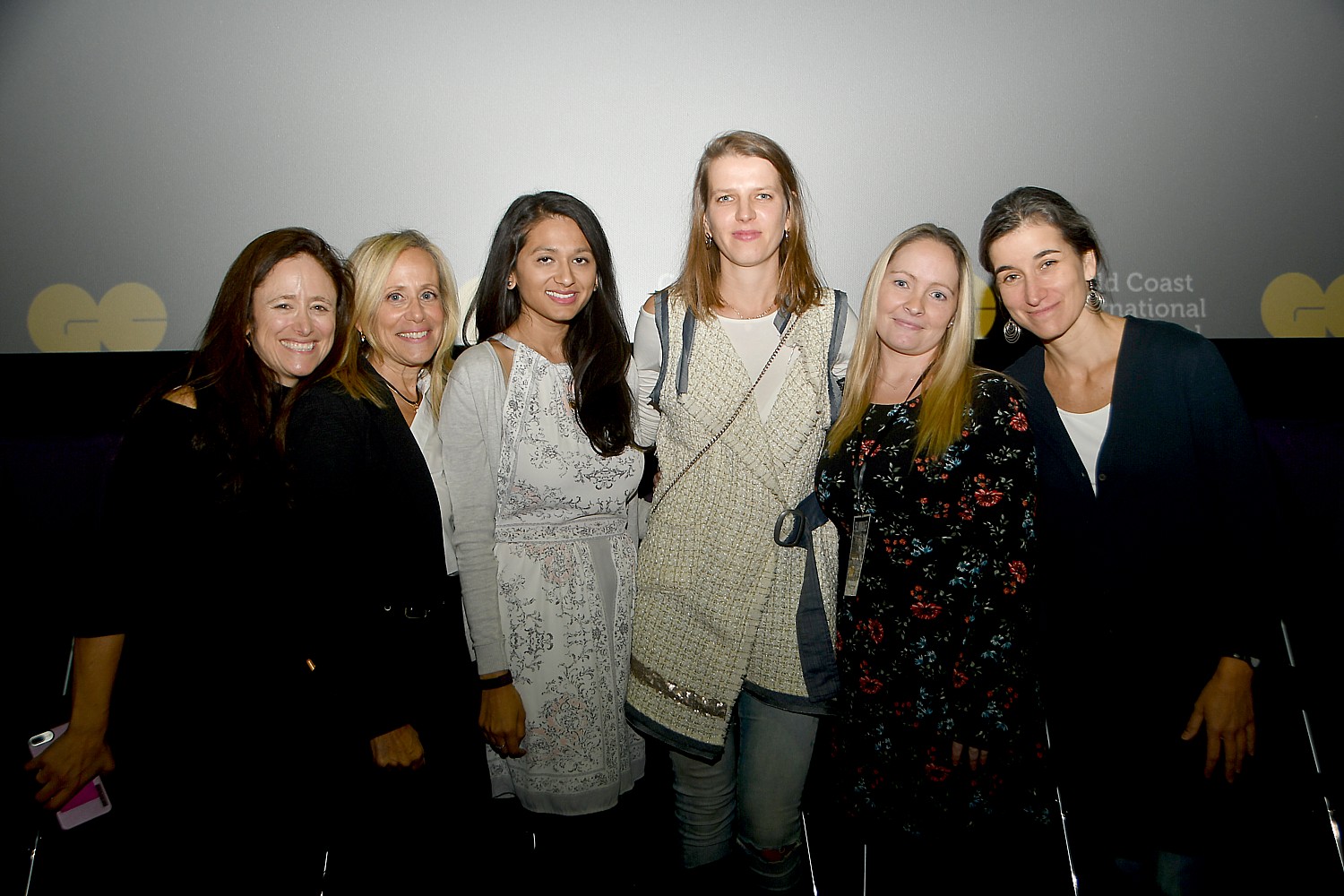
Fall Getaway in the Great Northern Catskills: Frederick Edwin Church’s Olana

Frederick Edwin Church orchestrated visitors’ arrival to Olana so you would look up © 2017 Karen Rubin/goingplacesfarandnear.com

By Karen Rubin, Travel Features Syndicate, goingplacesfarandnear.com

Just over the Rip Van Winkle Bridge from the Thomas Cole National Historic Site (#1 on the Hudson River School Art Trail), you see this grand mansion perched on the hillside, poking out from the trees. It is just a short ride off Rte 9G on eastern shore of the Hudson River to get to the long drive up to the mansion and farm, Olana, built by the Hudson River School artist Frederick Edwin Church.

View of Frederick Edwin Church’s Olana from the Rip Van Winkle Bridge © 2017 Karen Rubin/ goingplacesfarandnear.com

Spanning 250 acres, Olana is one of the most intact artist-created landscapes in America, and “the most intact artist residence of its age in the world,” our guide explains. In fact, it is the artist’s last major work. Church designed, even decorated, every aspect of the house and landscape – digging out a 10-acre lake, planting some 50,000 trees. And today, virtually all the furnishings (95% we are told) are original to the house, even in the same places as when the Church family occupied the house, up until the 1960s.

Literally saved from a wrecking ball, the Olana State Historic Site is now one of New York’s premier historical attractions (HRSAT Site #2), drawing 20,000 visitors a year. You can only visit the house on a guided tour and they only take up to 12 per tour, so tours frequently sell out by 1 pm (advance reservations are recommended).

As I approach Olana, a sign on the road introduces me to a new word, and a new concept – “viewshed.” The word intentionally evokes “watershed” – a protected resource area. Here, Olana, chosen and designed by the artist Church for the views, successfully established a “viewshed” maintaining that this is a national cultural resource worthy of protection and preservation.

The notion of preservation versus progress is the very essence of Church and his Olana, taking up the key theme from Thomas Cole, his teacher and mentor.

The protected “viewshed” from Frederick Church’s Olana © 2017 Karen Rubin/ goingplacesfarandnear.com

Church’s background is very different from Cole’s. While Cole, renowned as the father of the Hudson River School art movement, America’s first, was an immigrant from England, Church was born in Hartford, Connecticut in 1826 to a well-to-do family (his father, Joseph Church, owned several businesses including a silversmith and became a director of Aetna Life Insurance Company). Whereas Cole had little art training, Church’s father arranged for him to study with Cole for two years, 1844-46, when Church was 18 years old. Church then went to New York City to set up a studio. He became the youngest Associate of the American Academy of Design, in 1850, and within a few years, became one of the most successful artists of his generation – a veritable rock star.

Portrait of Frederick Edwin Church hangs in Olana © 2017 Karen Rubin/ goingplacesfarandnear.com

And whereas Cole, the immigrant, was enthralled by the wildness of the American landscape, Church fell under the spell of naturalist Alexander von Humboldt, who encouraged artists to travel the world. Church traveled to the Middle East, South America, Europe (one of his children was born in Rome), Labrador and Greenland. He brought these images and ideas back to the Hudson River Valley where he would build Olana, and his worldliness and world-view filled his canvases.

Ultimately, Olana became his canvas.

Over the last 40 years of his life, from 1860-1899, he designed and fashioned Olana into a three-dimensional work of art that includes the magnificent Persian-inspired home with its various collections, set within a 250-acre landscape, meticulously designed for iconic views of the Hudson River Valley.

Virtually all we see at Olana belonged to the Church family and wherever possible, is positioned where it would have been © 2017 Karen Rubin/goingplacesfarandnear.com

What is most remarkable about Olana is that the home and grounds never left the family – the furnishings, the art, even the books, are all Church’s possessions, and we see them laid out in the deliberate living canvas that Church intended.

After Church died, in 1899, his son, Louis, occupied the house, and when Louis’ widow died, in 1964, the house and estate were saved from being sold off by virtue of a public-private collaboration between New York State Parks and a private nonprofit, Olana Partnership (similar to the collaboration between the Central Park Conservancy and New York City’s parks department). Olana opened to the public as a museum in 1966.

This is most fitting, since Church served as commissioner of Central Park (he was a distant cousin of landscape designer Frederick Law Olmstead). He also was a founding trustee of the Metropolitan Museum of Art. (Church was responsible for locating Cleopatra’s needle, the obelisk, behind the museum.)

And Church, who achieved national and international prominence with his seven-foot wide painting, “Niagara” (1857), was credited with creating the Niagara Reserve – New York’s first state park and one of the first in the nation, a precursor to the national parks movement.

The Olana grounds include five miles of carriage trails, managed by New York State Parks, and are open to the public at no charge.

Artist painting the view that Frederick Church created at Olana © 2017 Karen Rubin/goingplacesfarandnear.com

The Olana Partnership has worked to restore Olana as well as the landscape. The physical landscape, in Church’s planning and today, is as much art as the landscape painting on canvas. As you walk the trails, the images are framed – markers here as along the other sites of the Hudson River School Art Trail, compare the scene today to paintings. And since my last visit, the view from the mansion to the Hudson River and Catskills beyond has been opened up.

Indeed, as I arrive at Olana, there a group of artists, in the area on a week-long workshop, are painting the scene.

Church’s Worldly View

While Thomas Cole was an immigrant from England who glorified America’s landscapes in a way that had not been done before, Frederic Edwin Church was one its most traveled among the Hudson River School artists, and he brought these images and this worldliness into his canvases.

Frederick Church’s Olana offers an astonishing collection of art. You can only tour the house with a guide © 2017 Karen Rubin/goingplacesfarandnear.com

Church finished his two-year study with Cole in1846 but Cole died soon after, in 1848. Church seems to have always maintained a connection with Cole – returning to the Hudson Valley to build his home close to Cole’s Cedar Grove, traveling with Cole’s biographer to Labrador. He found ways to help the Cole family – helping sell Cole’s paintings (he owned several himself, some of which are on view at Olana) and hired Cole’s son Theodore as Olana’s farm manager.

When Church was in his 20s, he became enamored with the renowned naturalist and explorer Alexander von Humboldt who encouraged artists to travel and paint equatorial South America. In 1853, Church made the first of two expeditions following in Humboldt’s footsteps, chiefly in Colombia; the second, in 1857, to Ecuador.

“Sunset, Jamaica.” Frederick Church traveled to exotic locales for his subjects. © 2017 Karen Rubin/goingplacesfarandnear.com

The paintings he produced from these trips made him one of the best known and most successful painters of his generation.

The New York exhibition of his ten-foot canvas, The Heart of the Andes, in 1859, “was the most popular display of a single artwork in the Civil War era, attracting 12,000 people who paid admission in three weeks to its New York premiere alone, then traveling to Britain and seven other American cities on a tour lasting two years.”

The painting sold for $10,000 to collector William Blodget, at the time, the highest price ever paid for an American painting,” says Olana curator Evelyn Trebilcock. We get to see Church’s final study for “Heart of the Andes”.

Frederick Church’s study for “The Heart of the Andes” on view at Olana © 2017 Karen Rubin/goingplacesfarandnear.com

Church set out again to travel to exotic places and intrigued by literature of Arctic exploration, in 1859, he hired a boat to take him to the north Atlantic between Labrador and Greenland to sketch icebergs, joined by Louis Legrand Noble Thomas Cole’s biographer. At the beginning of the Civil War, in 1861, Church exhibited Icebergs: The North, another grand canvas, which also was a blockbuster hit.

With his career on the rise in 1860, Church’s married Isabel Carnes and came back to the Hudson River Valley, where he had studied painting with Thomas Cole, and bought a farm overlooking the Hudson River on the opposite shore from Cole’s house.

Touring Olana: ‘Thou Art Welcome”

You walk in through the threshold to Olana under an inscription in Arabic, “Thou Art Welcome.”

Most remarkable: all the land and the contents of the grand home are intact, because they had always been within the Church family, and everything you see was meticulous conceived and planned by Church.

That’s what makes the experience of being here all the more profound – there is an immediate connection to the man and creative process of this great artist, who until now, I had only appreciated through his canvases on view in art museums.

Frederick Church used Persian architectural influences to create Olana © 2017 Karen Rubin/goingplacesfarandnear.com

Olana is every inch Church’s creation. Church traveled the world (he is a worldly person in his reading and outlook) and went to Mideast, and when came back, wanted to create a “fantasy”. He actually never went to Persia but thought the Persian style could be fanciful. But he didn’t just fabricate the designs out of his imagination, he studied Persian art and architecture. He never visited the Alhambra, but bought photos in order to incorporate the Moorish design elements. He experimented with colors and patterns.

“The desire to build attacks a man like a fever,” Church wrote.

He built the house in two years (for about $90,000, or about $2.5 million today, fairly reasonable), and spent the next four years meticulously decorating it.

Architectural detail of Frederick Church’s Olana © 2017 Karen Rubin/ goingplacesfarandnear.com

Church experimented with different designs; he mixed the colors; he based his patterns on a book of Persian architecture; the stencil designs on the door – in gold and silver paint – have a shimmering effect. The gilded patterns we see on the grand doors – Les Arts Aribe – are from original stencils.

“He meticulously arranged every room, choosing exotic items for their emotional effect, each room a composition. It took him four years to complete decoration.”

I ask whether Church produced much art during this time, and the guide explains that by 1876, when Church was 50 years old, landscape painting had fallen out of fashion and his career was on the wane, Church came down with crippling rheumatism. Home and family became more important and Olana became his primary canvas.

The exotic décor Frederick Church used at Olana; he spent two years building his mansion and four years decorating it © 2017 Karen Rubin/ goingplacesfarandnear.com

Most important to Church were the views. He oriented the house and the windows southwest to best capture the view.

“Our home will be a curiosity in architecture, but the view from every window will be fabulous,” Church said.

The paintings we see that decorate the rooms are Church’s own collections – his own paintings as well as painters he admired, including Thomas Cole.

There is also Church’s painting of “Petra,” 1868, with its unusual perspective (even for Church) – a vertical image of the temple, carved into rock cliff , as you come to it through a rock cleft, like a photograph.

The unusual perspective Frederick Church used in his painting of El Khasne Petra; the painting hangs in the family room, furnished much as it was when the family lived at Olana © 2017 Karen Rubin/goingplacesfarandnear.com

The last time I visited, I was able to see Church’s library, and what he was interested in, what informed him (almost like reading a journal, it is so telling about values, perspective, world-view, what informed him). He was interested in natural science, novels, religion (Presbyterian), “Women of the Arabs”, “Popular History of the Mexican People” “Natural Law & Spiritual World.” He owned a copy of Darwin’s “Origin of the Species.” He was friends with Mark Twain, who also lived in Hartford, where Church was born.

In 1888, at 61 years old, Church devoted himself to expanding house and building a new studio within the house. He closed the New York City studio he had rented for 30 years.

Today, his studio seems just as he left it, with various items of folk art and pre-Colombian artifacts Church collected on his travels.

Frederick Edwin Church’s studio is much as he left it © 2017 Karen Rubin/ goingplacesfarandnear.com

On the wall, “Christian on the Border of the Shadow of Death,” a dark, early painting, reminiscent of Cole. Here in the house, we can see the transition of his style, from largely emulating Cole to developing his own style and perspective.

“Church was a smart marketer of his art – people paid a fee to see just one painting. Lithographs of his work were successful,” says Olana curator Evelyn Trebilcock. “When Church studied with Cole, he painted in Cole’s style, incorporating Christian message, but Church realizes it is not commercial -not saleable- so he instead shows God in beautiful sunsets.”

We go up back stairs that would have been used by the servants – to the second floor family rooms, which were opened to the public in 2009.

Most impressive here are the tiles and the fireplace, produced by Ali Mohammed Isfahan which Church acquired in New York City (they know because they have the receipts).

The Olana dining room, set up for the Church family, has a gallery of art that Church collected on his travels © 2017 Karen Rubin/goingplacesfarandnear.com

In the dining room, set for a family meal, the walls are an art gallery – none of which are Church’s, but are the pieces he collected on his travels through Europe, artists he wanted to showcase and support.

There are also portraits of Church, his father, Joseph, who became a director of the Aetna Life Insurance Company and Church’s wife – all painted by other artists since Church never painted portraits. In my mind, it suggests the humility of the man.

Preserving Olana

After Church died, his art (along with the Hudson River School) fell out of favor.

In 1964 after Church’s daughter-in-law died, the fate of Olana was thrown into question. Then David Huntington, an art historian, got interested and reignited popularity in Church’s work.

Huntington organized a preservation group to buy Olana and got the heirs to agree to give the group two years to come up with the funds, $450,000, to buy Olana.

“The house was going to be dismantled – the items had already been tagged for auction at Sotheby’s,” Mark Prezorsky, landscape curator, says. “The Hudson School was out of style. You could buy a Cole at a garage sale.”

Olana barely escaped a date with the wrecking ball and now has one of New York State’s top attractions © 2017 Karen Rubin/goingplacesfarandnear.com

Indeed, the 1960s was not a good time for Victorian architecture – it was a time for sweeping away the “old” for the new, a period of anti-establishment frenzy. Cole’s home, Cedar Grove, for example, was put up for auction – all the possessions were sold off – and might have been knocked down altogether to make way for the Rip Van Winkle Bridge.

The Catskill Mountain House which dated from 1824 and figured in many of the Hudson River School paintings, he pointedly notes was burned down in 1963.

But Huntington, the art historian, “was able to see what Olana was.”

The preservation group got the heirs to agree to a two-year “stay of execution” so that they could raise the $430,000 purchase price – they made the deadline with 10 cents to spare. But now that they owned the house, the problem was affording to maintain it.

Each season, Olana hosts exhibits; this year’s exhibit was “OVERLOOK” a groundbreaking installation by Artist Teresita Fernández with 55 works including “Penetrable” by Jesus Rafael Soto. © 2017 Karen Rubin/ goingplacesfarandnear.com

New York State in astonishing short order had Olana declared a state historic site – the resolution went through three readings in the Assembly and Senate in a single day and Governor Nelson Rockefeller flew by helicopter to Olana for the bill signing. The site is now owned and operated by the New York State Office of Parks, Recreation and Historic Preservation.

Olana is one of first anywhere to have a preserved “viewshed” (Monticello is another) – arguing the need to preserve the view helped defeat a plan to build a nuclear power plant on the Hudson.

“The farm is big part or Olana,” Prezorsky, the landscape curator, says. “The way we experience it is how move through it –the views open up….. He composed his home as artistic masterpiece in midst of nature. This is one of the few farms where art and farming intersect.”

View from Frederick Church’s studio © 2017 Karen Rubin/ goingplacesfarandnear.com

Church had a 10-acre lake hand-dug as part of the design “before machinery; he sold off “muck” for profit.” Church, he says, was a very practical man; he wanted the farm to be a sustainable enterprise. He planted some 50,000 trees.

Thanks largely to the preservation of Olana and the Thomas Cole House, the Hudson River School regained its place in American history and culture. Olana awakened a sense of pride in scenery and conservation.

Olana resuscitated an appreciation for Church’s art. In 1979, Frederick Church’s “The Icebergs”, discovered in a home for boys in Manchester, England, broke the record for an American painting, selling at auction for $2.5 million.

Olana offers house tours from April  through October (closed Mondays), and on weekends November through March. Reservations are highly recommended; there is a car fee on weekends and holidays, and a fee for the house tour. Plan your visit and see a schedule of special events, at olana.org.

Olana State Historic Site, 5720 Route 9G, Hudson, NY 12534, 518-828-0135, olana.org.

The Hudson River School Art Trail, a project of the Thomas Cole National Historic Site, has 8 trail sites; during the course of my three-day getaway, I get to experience six of them. Get maps and directions for all the sites on the Hudson River School Art Trail site, www.hudsonriverschool.org.

A great place to stay: The Fairlawn Inn, a historic bed-and-breakfast, 7872 Main Street (Hwy 23A), Hunter, NY 12442, 518-263-5025www.fairlawninn.com.

Further help planning a visit is available from Greene County Tourism, 700 Rte 23B, Leeds, NY 12451, 800-355-CATS, 518-943-3223, www.greatnortherncatskills.com and its fall hub http://www.greatnortherncatskills.com/catskills-fall-foliage

See also:

Fall Getaway in the Catskills: Thomas Cole National Historic Site is Site #1 on the Hudson River School Art Trail

3-Day Fall Getaway in the Catskills: Fairlawn Inn is Superb Hub for Exploring the Hudson River Valley


_______________________

© 2017 Travel Features Syndicate, a division of Workstyles, Inc. All rights reserved. Visit goingplacesfarandnear.com,  www.huffingtonpost.com/author/karen-rubin , and travelwritersmagazine.com/TravelFeaturesSyndicate/. Blogging at goingplacesnearandfar.wordpress.com and moralcompasstravel.info. Send comments or questions to FamTravLtr@aol.com. Tweet @TravelFeatures. ‘Like’ us at facebook.com/NewsPhotoFeatures
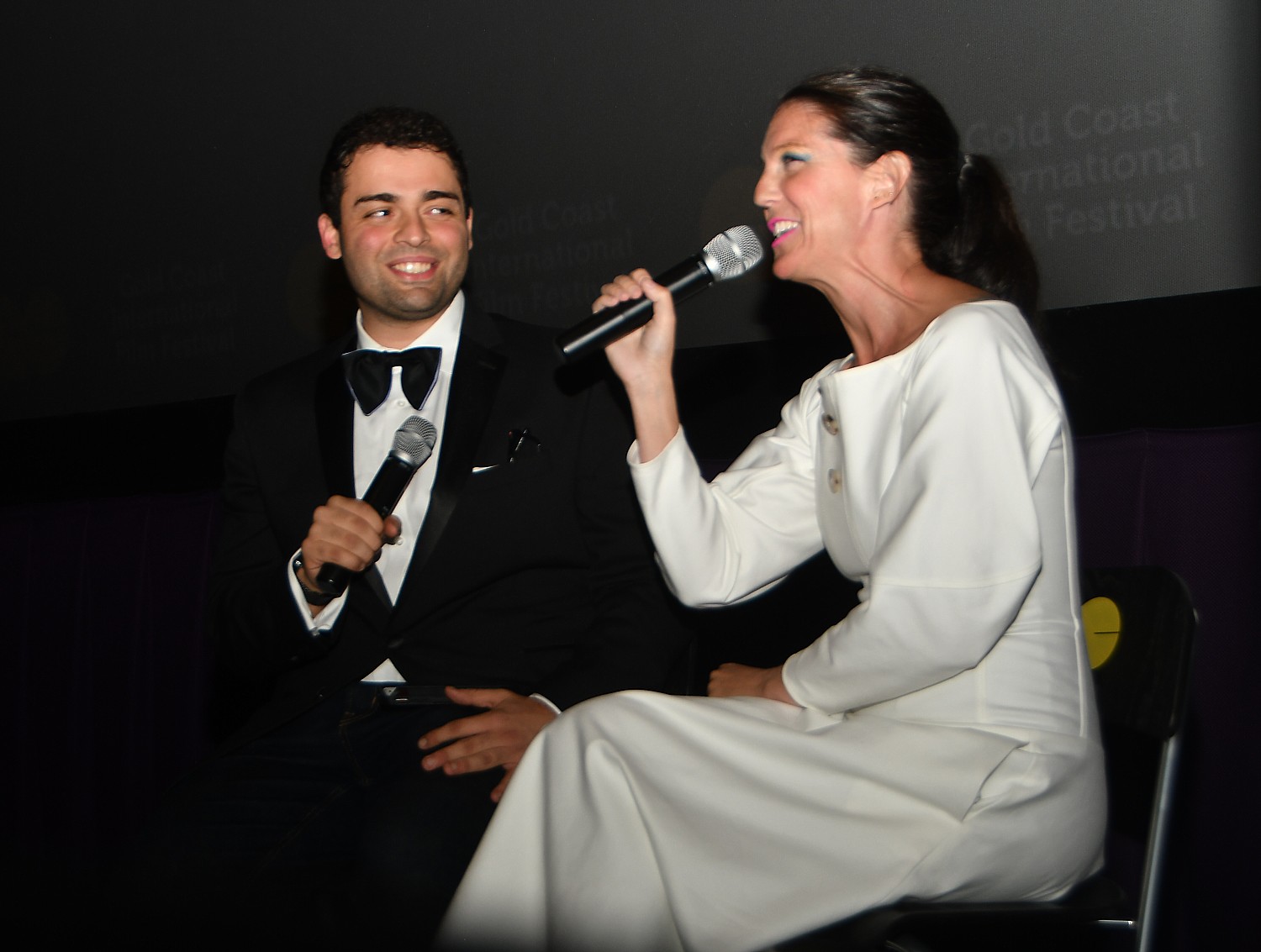


Fall Getaway in the Catskills: Thomas Cole National Historic Site is Site #1 on the Hudson River School Art Trail

Thomas Cole’s studio at Cedar Grove, a National Historic Site “Where American Art Was Born.” © 2017 Karen Rubin/goingplacesfarandnear.com

By Karen Rubin, Travel Features Syndicate, goingplacesfarandnear.com

The first thing you notice about the Thomas Cole House, “Where American Art Was Born,” is the view from his porch – out to the ridges of the Catskills Mountains, the Hudson River curving around a bend. It is not hard to imagine that in Cole’s day, there would have been fields between his house and the river. But it is the same scene immortalized in paintings renowned as the “first American art movement.”

Cedar Grove, Thomas Cole’s home, is where you discover how one man invented a new way of looking at America © 2017 Karen Rubin/ goingplacesfarandnear.com

Thomas Cole’s Cedar Grove, now the Thomas Cole Historic Site and Site #1 on the Hudson River School Art Trail, has been redone since I last visited – more of the house restored to the way it was when Cole, at 35 years old, married 24-year old Maria Bartow, the niece of the man who owned the house and farm where Cole was renting studio space for 10 years..

The guided tour has also been revamped with new innovative, multi-media features as well as personal effects – I love seeing Cole’s top hat, his musical instruments which he played and posed, his paint box, his traveling trunk with his signature and date, 1829 – and original paintings, and most especially his studio with his easel and paints and a room devoted to his creative process.

The view of the Hudson River Valley and Catskill Mountains from Thomas Cole’s porch at Cedar Grove © 2017 Karen Rubin/goingplacesfarandnear.com

The presentation really personalizes the man, brings him into your presence. You start the guided tour in the parlor that Thompson, who really encouraged Cole, turned into a sales office for the artist. What appears to be Cole’s portrait – a video projection – becomes a slide show of his art as a voice narrates from Cole’s own journal and writings. Around the room are projections or digital reproductions of Cole’s paintings (some of Cole’s original paintings are in upstairs rooms we visit). He describes the inspiration and rejuvenation he feels from this wilderness, how he is “deliriously happy” at having his family, and his outrage over the “ravages of the axe” of progress.

Touring the Thomas Cole’s Cedar Grove, a National Historic Site © 2017 Karen Rubin/goingplacesfarandnear.com

These themes come together in his work: while primarily a painter of landscapes, he expressed his philosophical opinions in allegorical works, the most famous of which are the five-part series, The Course of Empire, which depict the same landscape over generations—from a near state of nature (depicting American Indians) to consummation of empire (Rome), and then decline and desolation, which is now in the collection of the New York Historical Society (and will be on display at the Metropolitan Museum of Art in 2018); and four-part The Voyage of Life, which are reproduced in his studio. (“Thomas Cole’s Journey: Atlantic Crossings” will be on view at the Met, January 30-May 13, 2018, and feature some of his most iconic works, including The Oxbow (1836) and his five-part series The Course of Empire (1834–36, www.metmuseum.org/exhibitions/listings/2018/thomas-cole,).

I appreciate Cole as very possibly America’s first environmentalist, the first to appreciate conservation and raise the alarm over the march of progress at a time when the Industrial Revolution was taking hold and technological progress was worshipped along with capitalism, as he railed against the “copper-hearted barbarians” and “dollar-godded utilitarians.”

“We are still in Eden; the wall that shuts us out of the garden is our own  ignorance and folly,” he says, as a projection of his painting, “Expulsion from the Garden of Eden” (1828) appears.

Cole worried that America’s rapid expansion and industrial development would destroy the glorious landscape – in 1836, he could see the railroad being built through the valley and he bemoaned the loss of forest along Catskill Creek, “the beauty of environment shorn away.”

Cole recognized America as a land in transition – the settled and domesticated juxtaposed with the wild and undomesticated… He witnessed the changes taking place around him.. And in the early 1800s, America was still in process of creating own culture, distinct from the European settlers.

An Immigrant Dazzled by America’s Wilderness

Thomas Cole was born in Lancashire, England, in 1801 and emigrated to the United States with his parents and sister (his father was in textiles) in 1818, settling first in Philadelphia, then Steubenville Ohio, then New York City. He had little formal art training; he picked up the basics from a wandering portrait painter. Cole soon focused on landscape and ultimately, Cole transformed the way America thought about nature and the way nature was portrayed on canvas.

Thomas Cole’s paint box © 2017 Karen Rubin/goingplacesfarandnear.com

As an immigrant, Cole was dazzled by America’s vast stretch of untamed wilderness, unlike anything that existed in Europe. At this point in time, though, most Americans did not appreciate the wilderness – they thought of it as something to be feared or exploited. Instead, America was enthralled with industrialization, technology and progress.

Thomas Cole’s signature inside his trunk © 2017 Karen Rubin/ goingplacesfarandnear.com

Cole was 24 years old when he took one of the new steamships up the Hudson River (it was “the thing to do” at the time). He made a painting which sold immediately, came again to make another painting and that sold immediately, as well. He came so often he looked around for a studio in the village of Catskill. He came to Cedar Grove, John Alexander Thompson’s 110-acre farm with an orchard and a hilltop view out to the Hudson River and the Catskill Mountains – the same view we see today – and for the next 10 years, rented a studio in a structure next door to Thompson’s house (where Temple Israel now stands).

Sketch of Mary Cole

Cole fell in love with Maria Bartow, Thompson’s niece 11 years younger than Cole, then 35 years old, and moved into Cedar Grove permanently, all living together in the modest house which Thompson had built in 1815.

Thompson provided Cole with the two parlors on the main floor to use as “sales rooms” for his painting, and built a studio for Cole, cutting out a window so he would have northern light.

Thompson also built a studio for him with a high window to bring in northern light, and we see his paints and easel as if he had just left the room for a moment.

Cole’s studio, which Mary’s uncle made for him, installing a high window to bring in northern light, has been restored. It is where he painted one of his most famous series, the four “Voyage of Life” paintings (he painted eight sets of four; one of the sets is in the New-York Historical Society and will be on display January 2018 at the Metropolitan Museum of Art).  We see his paints and easel as if he had just left the room for a moment.

Thomas Cole’s painting materials, as if he had just left his studio for a moment © 2017 Karen Rubin/goingplacesfarandnear.com

Alas, the studio probably contributed to his early death, at the age of 47, when his wife was pregnant with their fifth child – the studio in winter had little ventilation and he was working with turpentine and paints and had a respiratory illness. He died of pleurisy. Mary named their son Thomas Cole, Jr.

Frederick Edwin Church, recognized as a prodigy, was 18 years old when Cole, then 43, took him on as an art student. Cole would take his six-year old son Theodore out with them painting. Paintings by Church that have a small boy are likely Cole’s son. After Cole died, in 1848, Church, who built his Olana on a hilltop on the opposite shore of the Hudson, helped the family, even hiring Cole’s son Theodore as his farm manager.

Photo of Thomas Cole’s granddaughter below his painting © 2017 Karen Rubin/ goingplacesfarandnear.com

Cole’s Creative Process

Touring the house is remarkable because it contains many of Cole’s personal effects including several of his paintings, like “Prometheus,” and his special items like musical instruments that he played and used as props for his paintings.

All of this is fairly miraculous because the house was sold in the 1960s and the contents auctioned off – the paintings, the furnishings. Over the years, many of the sold items have since come back, like “Uncle Sandy’s” chair, which we see today, which was purchased by a local postman who donated it back to Cedar Grove.

Thomas Cole’s writing desk © 2017 Karen Rubin/goingplacesfarandnear.com

In a living room on the second floor, Cole’s letters “appear” on his actual writing desk (triggered by a motion detector); some of the paintings that decorate the room where they would have been are reproductions (the originals held in museums), but some are originals. There are black-and-white photos of his daughter in her later years, sitting in that very room. I am fascinated to see his “magic lantern” (an early slide projector with hand-painted glass slides) that drew its light from a candle inside. We appreciate Cole as a man of enormous talents –a poet, essayist and musician in addition to an artist and we see some of his instruments. We visit his bedroom and see his traveling trunk which he had made on Pearl Street, with his signature and date.

A magic lantern © 2017 Karen Rubin/goingplacesfarandnear.com

We learn that he was close friends with the novelist James Fenimore Cooper and provided illustrations for his work, including “The Last of the Mohicans” (1827) and “The Pioneers.”

My favorite room is his “Process Room” where we see his actual sketches, his paint box which he decorated with a beautiful painting and papers and his famous color wheel.

On my hikes on the Hudson River School Art Trail, I wondered how Cole would have captured the scenes – the sheer logistics of getting to these remote places that take us 20 minutes to reach by car along paved roads. Cole painted at a time before photography was a handy tool, before capped paint tubes made painting “en plein air” as feasible as it was for the Impressionists decades later.

I learn that Cole hiked with a pocket easel and pencil. He would get to a place like Sunset Rock by dark (a trail which I hike), camp and stay there a few days. He made copious notes of the smallest details – the light, color (he created a color-wheel for himself which we see), the atmosphere, the vegetation and natural forms.

Thomas Cole’s color wheel © 2017 Karen Rubin/goingplacesfarandnear.com

But then he would wait before he painted the scene, for time to pass “to put a veil over inessential detail to turn it into beautiful and sublime…He had a vision of nature as an expression of the divine.”

It is important to realize that at the time, a painting afforded the only way for people to see places without actually visiting for themselves.

He began to turn his landscapes into allegorical exposition. Over a three-year period, he painted “The Course of Empire” a series depicting the same landscape over centuries and generations as civilization rises and falls, from savage to civilized, from glory to fall and extinction. He intended the series as a warning against American unbridled expansion and materialism. It took him three years to create and earned him a veritable fortune in commissions and fame.

Thomas Cole’s top hat © 2017 Karen Rubin/goingplacesfarandnear.com

Cole also became progressively more spiritual – coinciding with a rise in spiritualism in America. – and used his landscape painting as religious allegory. This is manifest in Cole’s “Voyage of Life,” a series of four paintings that show a pilgrim from infancy to old age, led by a guardian angel, which became Cole’s most popular work.

Each year, there are always special exhibits as well – in the Cole house, oddly juxtaposed with Cole’s 18th century works (we even see the wall trim that he painted himself) is a contemporary artist, Kiki Smith. In the New Studio, a separate building, this season is “Sanford R. Gifford in the Catskills.”

A glimpse into Thomas Cole’s creative process © 2017 Karen Rubin/goingplacesfarandnear.com

Most days when you visit the Cole house, you take a guided tour, but on Saturday and Sundays, 2-5, you can tour the house on your own. The house usually closes at the end of October but this year, it is open for three weekends in November.

Thomas Cole National Historic Site, 218 Spring Street, Catskill, NY 12414, 518-943-7465, www.thomasscole.org (Normally open May-October, but will have extended season this year, three weekends in November).

Get maps, directions and photographs of all the sites on the Hudson River School Art Trail at www.hudsonriverschool.org. 

A great place to stay: The Fairlawn Inn, a historic bed-and-breakfast, 7872 Main Street (Hwy 23A), Hunter, NY 12442, 518-263-5025, www.fairlawninn.com.

Further help planning a visit, from lodging to attractions to itineraries, is available from Greene County Tourism, 700 Rte 23B, Leeds, NY 12451, 800-355-CATS, 518-943-3223, www.greatnortherncatskills.com and its fall hub http://www.greatnortherncatskills.com/catskills-fall-foliage

See also:     

3-Day Fall Getaway in the Catskills: Fairlawn Inn is Superb Hub for Exploring the Hudson River Valley

_______________________

© 2017 Travel Features Syndicate, a division of Workstyles, Inc. All rights reserved. Visit goingplacesfarandnear.com,  www.huffingtonpost.com/author/karen-rubin , and travelwritersmagazine.com/TravelFeaturesSyndicate/. Blogging at goingplacesnearandfar.wordpress.com and moralcompasstravel.info. Send comments or questions to FamTravLtr@aol.com. Tweet @TravelFeatures. ‘Like’ us at facebook.com/NewsPhotoFeatures
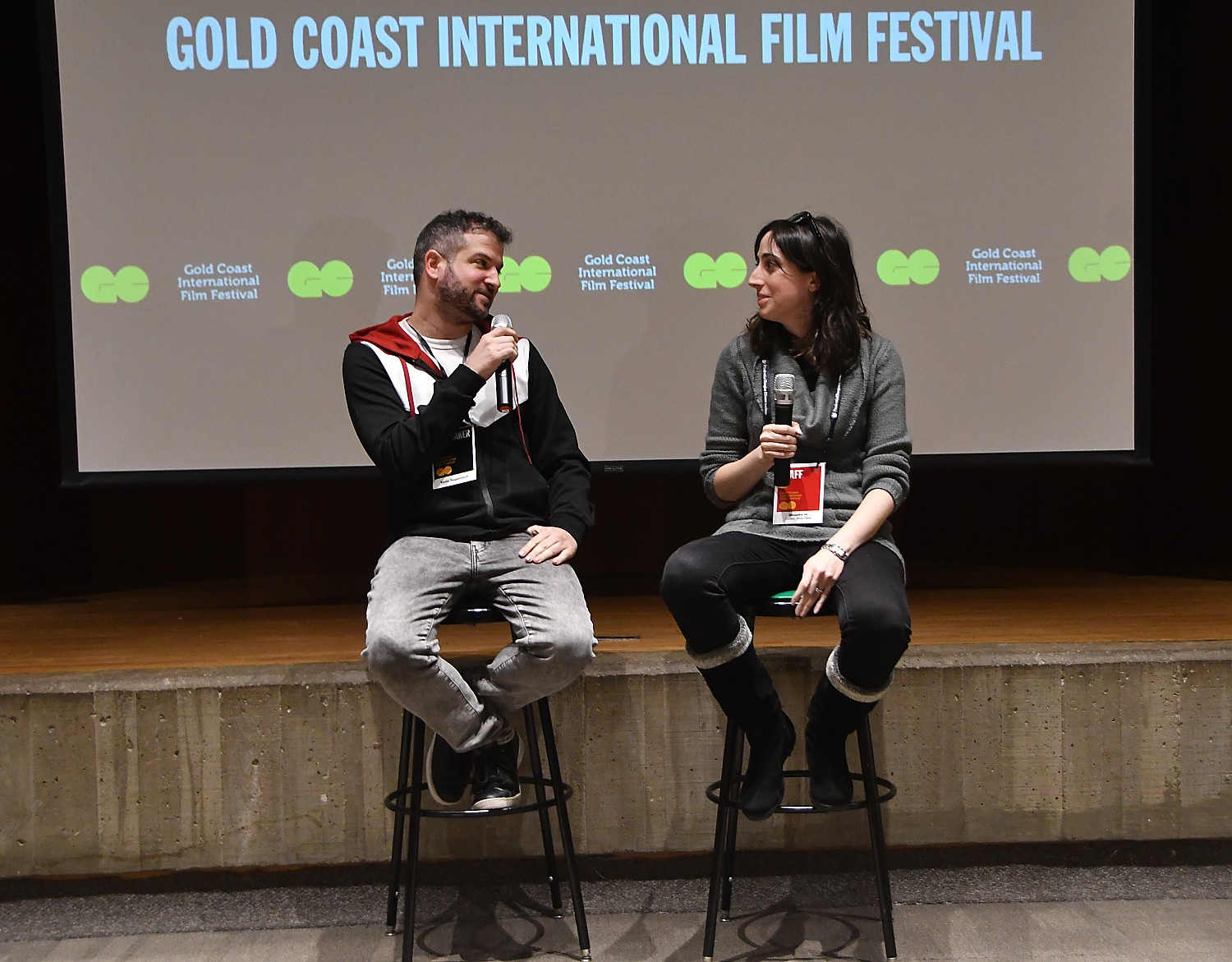
3-Day Fall Getaway in the Catskills: Fairlawn Inn is Superb Hub for Exploring the Hudson River Valley

The historic Fairlawn Inn, Hunter, NY, looks out to the Catskill State Park © 2017 Karen Rubin/goingplacesfarandnear.com

By Karen Rubin, Travel Features Syndicate, goingplacesfarandnear.com

Two hundred years ago, Thomas Cole, the father of the Hudson River School art movement, sailed up the Hudson River to the Catskills and was smitten by the landscape, by the natural world, by the respite from the bustle of New York City. And so convenient to reach, even then, coming by the new steamships which was the “thing to do”. He railed against the influx of “progress” even then, and the ravage of the axe that was already decimating the lush forest. It is remarkable that we have Cole and his student, Frederick Edwin Church who built his magnificent Olana on a hilltop with a view over this magnificent Hudson Valley, to thank for its preservation. The Catskills are magnificent any time of the year, but in fall, there is an explosion of color. And like an explosion, it is fleeting.

Less than three hours drive to Hunter, NY, from Long Island, is the Fairlawn Inn, a magnificent bed-and-breakfast inn with an incredible story to tell. It will be my hub to explore the Hudson River School Art Trail that offers some of my favorite hikes in the world. They trace the footsteps of the artists and you can see the very same scenes they painted.

On my way to the inn, I have already visited two of the sites on the trail – relished the view from Kaaterskill Clove, marveling how it still looks much as it did in Thomas Cole’s “The Clove, Catskills” (1827), and Asher B. Durand’s “Kindred Spirits” (1849) -even the tree just turning red for fall foliage seems the same as the scene in the painting – which you see from the parking lot for the hike up Kaaterskill Falls, then continuing on to take this stunning hike to the heights of the double falls. They are along Route 23A, the scenic byway you take from the Thruway to get to Fairlawn Inn, in Hunter, less than a dozen miles further.

View of Kaaterskill Clove with the Hudson River School Art Trail marker that lets you compare the scene today with the Cole and Durand paintings © 2017 Karen Rubin/goingplacesfarandnear.com

During my all-too brief three-day getaway to the Catskills/Hudson River Valley, I spend two days hiking trails associated with the Hudson River School Art Trail in the Catskills State Park, just beginning to show their fall colors and imagining how the artists walked these trails before me, and one day re-discovering two historic jewels: Olana, Frederick Edwin Church’s exquisite mansion home and estate that has become one of New York State’s most visited historic houses (for good reason), and the Thomas Cole House Museum, devoted to the artist known as the “Father of the Hudson River School” which has been restored since my last visit with new ways of experiencing the museum that really give you a sense of the man.

The Fairlawn Inn is ideally situated, and so charming and comfortable, you immediately feel whatever city stress or physical exhaustion dissipate as soon as you cross the threshold – all of this the artistry and craftsmanship of the gracious host, Innkeeper Chuck Tomajko, who has anticipated everything to make his guests feel absolutely at home – even providing refrigerated drinks, ready snacks and fruit, a coffee maker and a refrigerator for guests to help themselves.

It is about 5:30 pm when I arrive at the Inn, bathed in the golden light of the late afternoon. Set beside Hunter Mountain (the entrance to the popular ski resort is less than a half-mile away) and with views of the Catskill State Park from its wrap-around porch, the bed-and-breakfast inn is in a Victorian jewel originally built in 1840 and expanded in 1904 as the summer home of a wealthy Jewish philanthropist and real estate developer, Harry Fischel.

The charming dining room at the Fairlawn Inn where a made-to-order breakfast is served © 2017 Karen Rubin/goingplacesfarandnear.com

Innkeeper Chuck Tomajko, with 40 years in the fast-food industry, bought the bed-and-breakfast in 2002, and remodeled, redecorated, refitted, and refurnished with stunning antiques and period pieces and other amenities, exposed the gorgeous oak and maple floors and woodwork (hemlock, which was typical of the area because it was a byproduct of the tanning process the area was known for), created the stunning landscaping, added a patio, fire pit and waterfall, all with an eco-friendly eye.

Chuck claims to have the only historic home in North America that has earned a 4-key rating (on a 5-key scale) from Green Key Global, a Canada-based eco-tourism organization and was named Good Earthkeeper for 2013 and #1 Inn in New York for 2010 by New York State Hospitality & Tourism Association.

Indeed, it is quite remarkable for a 113-year old house to get that distinction– Chuck has used composting, solar tubes that bring in natural light to otherwise dark hallways,low-flow shower (yet still wonderful pressure); LED lighting throughout; the outdoor lanterns are solar-powered (from Ikea, no less; he has a plan to use them for Christmas lights).

One of the parlors at the Fairlawn Inn © 2017 Karen Rubin/ goingplacesfarandnear.com

Walking around the inn, there are wonderful sitting areas outfitted with books, a parlor with a bar with snacks and a refrigerator with drinks as well as coffee maker to help yourself; a pool table in another parlor; a living-room area; outside a gorgeous, lushly landscaped patio with waterfall, solar-powered lanterns, a fire-pit.

I love to see Chuck’s clever innovations – how he made a wine rack out of crown moldings and planter hooks; a fire pit out of a coal bin; how he turns “shabby chic” into beautiful pieces of furniture.

Each of the guest rooms at the Fairlawn Inn bnb has its own theme and decoration © 2017 Karen Rubin/goingplacesfarandnear.com

There are 5 rooms upstairs of the main house, each one differently configured and scrumptiously decorated, several with fireplaces. The Glenwood Room has a two-person Jacuzzi and a fireplace. Several rooms are “outside”, along a lovely porch with charming sitting areas, in that extension to the home that originally housed the Jewish scholars and served as an ice house. My room, the Spring Valley, was originally a mikvah (a ritual bath for a bride).

The rooms are each uniquely themed and decorated in period furniture (several have clawfoot bathtubs), but with modern amenities (private bathroom in each, free Wifi) and eco-friendly features like solar-tubes which bring in natural light. Several have gas-operated fireplaces; at least one has a two-person Jacuzzi bath.

The Fairlawn Inn, a Gold Eco-Rated Lodging and 2015 Trip Advisor Certificate of Excellence winner. is gorgeous, comfortable, wonderfully situated, excellent amenities, but the best asset is Chuck, himself, who is more than a gracious host.

Bed-and-breakfast inns really reflect the character of their structure and the personality of the innkeeper. The Fairlawn Inn is an expression of Chuck’s phenomenal sense of hospitality and his prodigious artistic talents – the interior design and decorative arts, antiquing, painting, landscaping, and culinary arts. He loves to cook.

Fairlawn Innkeeper Chuck Tomajko preparing breakfast © 2017 Karen Rubin/goingplacesfarandnear.com

Many bed-and-breakfast hosts love to show off their breakfast creations but Chuck goes beyond: he offers his guests a selection of four different made-to-order omelettes (I enjoy his feta cheese, spinach, kale and arugula omelette) plus a special item like pancakes (selection of fillings), fresh fruit and muffins (pumpkin spice), freshly brewed coffee, served in a gorgeous dining room (just the right size – not too big, not too small), with glorious sunlight flooding in from the windows.

Before we leave the table, he comes out with a bottle of water and snacks to take on our hikes.

Everything is so caring, so thoughtfully arranged, so meticulous – there is even a night light in bathroom and hooks. Little things that matter. There is a remote control for the fireplace which Chuck has decorated himself with antique tiles.

Wicker lounge chairs on the Fairlawn Inn porch make for a comfortable place to relax © 2017 Karen Rubin/goingplacesfarandnear.com

The porch has a delightful sitting area of wicker lounge chairs – even a blanket nearby – as well as tables if you should want to eat al fresco.

I am truly intrigued by Fischel’s story which Chuck relates as he gives me a tour of the inn and ask who built the house and why it is so enormous, with a huge two-story extension. Chuck explains that Fischel would house Jewish students in the summer; my room, Spring Valley, actually was a mikvah (a room used for a ritual bath for a bride).

The Spring Valley room at the Fairlawn Inn was used as a mikvah by the original owner, Harry Fischel, who built the Victorian home in 1904 © 2017 Karen Rubin/goingplacesfarandnear.com

Chuck points to a thick biography of Fischel, written by his son-in-law, Rabbi Harry S. Goldstein. Fischel, I learn, was born in 1865 in a small, isolated  town of Meretz, Lithuania, to poor but pious parents (his father was a cabinet maker). Yisroel Aaron Fischel (later known as Harry) became an architect and a builder by the age of 19. At 20, he emigrated to America virtually penniless (“he had 60 cents in his pocket” Chuck tells me) and earned his first million in real estate at a young age (he pioneered building tenements in the Lower East Side on irregular-shaped lots, becoming the first successful Jewish developer on the Lower East Side). But even when he was earning just $10 a week, so his biography reads, he sent money home to help support his parents. “Fischel was one of the leading pioneers in the growth of American Judaism, in general, and in American Jewish Orthodoxy, in particular, particularly in the dynamic precedent-setting first half of the 20th Century,” the Wikipedia biography notes.

The Hunter Synagogue which Harry Fischel built across the street from his home, in 1914 and is now on the National Register of Historic Places © 2017 Karen Rubin/goingplacesfarandnear.com

Chuck notes that Fischel laid the cornerstone at Yeshiva University, built a high school for Jewish girls, and personally prevailed on President Taft to install a kosher kitchen at Ellis Island in 1911, so that Orthodox Jewish immigrants could have the opportunity to eat kosher food during a probation period (so they could be strong enough to pass the test to avoid deportation).

He also built the first modern Jewish theater in 1904 (exclusively for Yiddish productions).He was first Treasurer of the Central Committee for the Relief of Jews Suffering Through the War in 1914, a member of the Executive Committee of the Joint Distribution Committee in 1914; organizer of the Palestine Building Loan Association in 1921; built the home, office, yeshiva and synagogue for the Chief Rabbi of Palestine Abraham Isaac Kook at his own expense in 1923; established the Harry Fischel Institute for Talmudic Research in 1931 (which, after the creation of the country of Israel, trained, for many years, a large percentage of the judges who presided over the religious courts in the country); and established the Harry Fischel Foundation on January 4, 1932 (later renamed the Harry & Jane Fischel Foundation). He laid the cornerstone at Yeshiva University.

Harry Fischel’s summer home, now the Fairlawn Inn, and the Hunter Synagogue directly opposite, both built by Fischel more than a century ago © 2017 Karen Rubin/goingplacesfarandnear.com

Fischel also built the first synagogue in Hunter, but it burnt down in 1914, so he built a new one across the street from his home – a charming Victorian from 1914 that is on the National Register of Historic Places and is still operating.

Fischel died in 1948, just before Israel became a nation.

The Fischel house remained in the family until 1993, when a couple bought what had become a decrepit structure and devoted 3 ½ years to restore and renovate it into a bed-and-breakfast, which opened in 1996.

Fischel’s great grandson, Aaron Reichel, has visited the inn twice, Chuck tells me.

It is interesting to see some of the relics of the past: built 1904 when electricity was considered “transitional” (they didn’t know if electricity would last), there are light fixtures that were made to accommodate both electricity and gas; fixtures pointed down (for electric) and up (for gas). Electricity was delivered but made gas on-site – capturing methane released from coal, but sometimes blew up.

The hemlock wood paneling that is so stunning especially in the dining room was actually a by-product of the tanning process that was the major industry in Tannersville and Prattsville.

The outdoor patio which Innkeeper Chuck Tomajko created is part of the lush landscaping at the Fairlawn Inn © 2017 Karen Rubin/ goingplacesfarandnear.com

The Fairlawn Inn is perfect for corporate retreat (with all the outdoor activities- from skiing to mountain biking that are so great for team-building); special interest groups, multi-generational getaways, destination wedding with expansive lawns for a tent (Chuck loves to cook and has accommodated weddings with up to 150 guests).

The inn is ideal for a hub-and-spoke itinerary for exploring and enjoying the amazing array of historic, heritage, cultural and outdoor attractions and Chuck offers lists of attractions walking distance and a short drive that fill out a three-day getaway but can also easily fill a longer itinerary. He also can put you on the path for antiquing, and the Hudson Valley Wine & Craft Beverage trail (TravelHudsonValley.com)

(And Chuck can steer you to every one, providing comprehensive lists, brochures, maps, print-outs, and his personal guidance and tips.)

Plenty of space: the architecture of the Fairlawn Inn, the summer home of Harry Fischel, was unusual because he used it to house students and today makes a great venue for corporate retreats, special interest groups, and family gatherings © 2017 Karen Rubin/goingplacesfarandnear.com

Hiking is a huge activity and for my second day at the inn, I go to the North-South Lake Campground from which there are many trails as well as a fantastic lake (people are actually swimming with the record high temperature for a fall day), and set out for one of my favorite hikes that takes me to more of the Hudson River School artists’ favorite spots: North-South Lake (site #6 on the Hudson River School Art Trail), Artist’s Rock and Sunset Rock (site #7 on the HRSAT); another trail goes to where the Catskill Mountain House stood (trail site #8).

Pre-Revolutionary chair, made in Philadelphia, may well have been used by George Washington; it is flanked by chairs that had been owned by Elizabeth Abell, who introduced Mary Todd to Abraham Lincoln © 2017 Karen Rubin/goingplacesfarandnear.com

For my third day, Chuck gives me a tour of the Hunter Antique Mall, housed in what used to be the Masonic Lodge, which he also owns, which offers a literal treasure trove of fabulous finds, with fascinating documentation and excellent pricing. He points out a pre-Revolutionary chair made in Philadelphia that easily could have accommodated George Washington, and a pair of chairs signed on the bottom for Elizabeth Abell, a friend of Abraham Lincoln’s who introduced Mary Todd to him. (It turns out that chuck is an absolute expert on antiquing, and can steer you to auctions and a “junking” trail where you can find treasures at garage-sale prices). He offers his patrons clever ideas: like turning a stack of vintage luggage into a sidetable that also affords cramped apartment-dwellers storage; and how you can make a bird feeder out of gorgeous blue-and-white China cup and saucer; and decorates otherwise bland furniture with a waxy-press-on craft.

Fairlawn Innkeeper Chuck Tomajko shows how he might make a bird feeder out of blue-and-white china cup and saucer © 2017 Karen Rubin/ goingplacesfarandnear.com

I then go on to the Thomas Cole National Historic Site in Catskill (#1 on the Hudson River School Art Trail, www.thomascole.org) with a sensational guided tour as well as featured exhibit in the New Studio (this year’s exhibit is “Sanford R. Gifford in the Catskills”); the house usually closes at the end of October but this year has an extended season of November weekends; and then on to Olana State Historic Site (#2 on the HRSAT), in Hudson NY, which closes for the season on Oct. 28 (www.olana.org).

I prefer hiking to experience fall foliage, but those who prefer driving will find several scenic byways: Greene County’s two National Scenic Byways include a 21-mile route that descends from high country peaks to Durham Valley farmland.; along the way, you will find views that stretch across the Hudson River Valley to summits in four neighboring New England states. Then take an excursion along Mountain Clove, a byway that meanders through ravines, historic districts, and waterfalls. In fact, one of the best foliage views in New York State, Chuck notes, is just 2 miles from the Fairlawn Inn door, at the intersection of Rte 214 and 23A – which looks toward Bear Creek and some half-dozen mountains that form layers.

The intersection of Rte 214 and 23A, just two miles from the Fairlawn Inn, looking toward Bear Creek is ranked as one of the best foliage views in New York State © 2017 Karen Rubin/goingplacesfarandnear.com

An Arts-Meets-Nature Driving/Exploration Route: The Kaaterskill Clove Experience provides a new self-guided discovery tour through the history of American art, and the primeval landscape that inspired it. Tailored, easy-to-follow itineraries provide a roadmap for families, adventure seekers and leisure travelers to experience the Kaaterskill Clove at your own pace, while enjoying everything that Greene County has to offer, from farm stands to charming cafes.

Other attractions include:

Sky Walkway over the Hudson River alongside the Rip Van Winkle Bridge.

Antiquing (Tannersville and Catskill are the main villages, but Chuck can steer you to auctions and a “junking” trail where you can find treasures at garage-sale prices).

You can follow the Hudson Valley Wine and Craft Beverage trail (travelHudsonValley.com)

Bike (or walk) the 2.7-mile long Huckleberry Trail that follows the old Huckleberry Railroad track and is mostly under trees.

There is mountain biking and golf at Windham Mountain (another wonderful ski mountain just 8 miles up 23A).

Close by in Coxsackie is The Bronck House (in the same family for 400 years) and the quaint town of Hudson with its galleries, antiques, boutiques and restaurants, which is operated by the Greene County Historical Society (http://www.gchistory.org/).

The Fairlawn Inn is within 90 minutes of major attractions including Hyde Park (Franklin Roosevelt’s home and library), the Walk Over the Hudson, Hyde Park (FDR),Walk Over Hudson, Huguenot Village in New Paltz (a national historic site with costumed interpreters, www.huguenotstreet.org), Howe Caverns and Cooperstown (Baseball Hall of Fame). And it’s just 2 ½ hours from “the universe” of New York City.

The village of Hunter is accessible from Amtrak to Hudson, MTA to Poughkeepsie, where you can find Enterprise and other rental car agencies, car service and Uber.

The Fairlawn Inn, 7872 Main Street (Hwy 23A), Hunter, NY 12442, 518-263-5025, www.fairlawninn.com. (Children must be 10 or older.)

Really helpful sites to plan your getaway include www.greatnortherncatskills.com and its fall hub www.greatnortherncatskills.com/catskills-fall-foliage offered by the Greene County Tourism, 700 Rte 23B, Leeds, NY 12451, 800-355-CATS, 518-943-3223.

____________________


© 2017 Travel Features Syndicate, a division of Workstyles, Inc. All rights reserved. Visit goingplacesfarandnear.com,  www.huffingtonpost.com/author/karen-rubin , and travelwritersmagazine.com/TravelFeaturesSyndicate/. Blogging at goingplacesnearandfar.wordpress.com and moralcompasstravel.info. Send comments or questions to FamTravLtr@aol.com. Tweet @TravelFeatures. ‘Like’ us at facebook.com/NewsPhotoFeatures
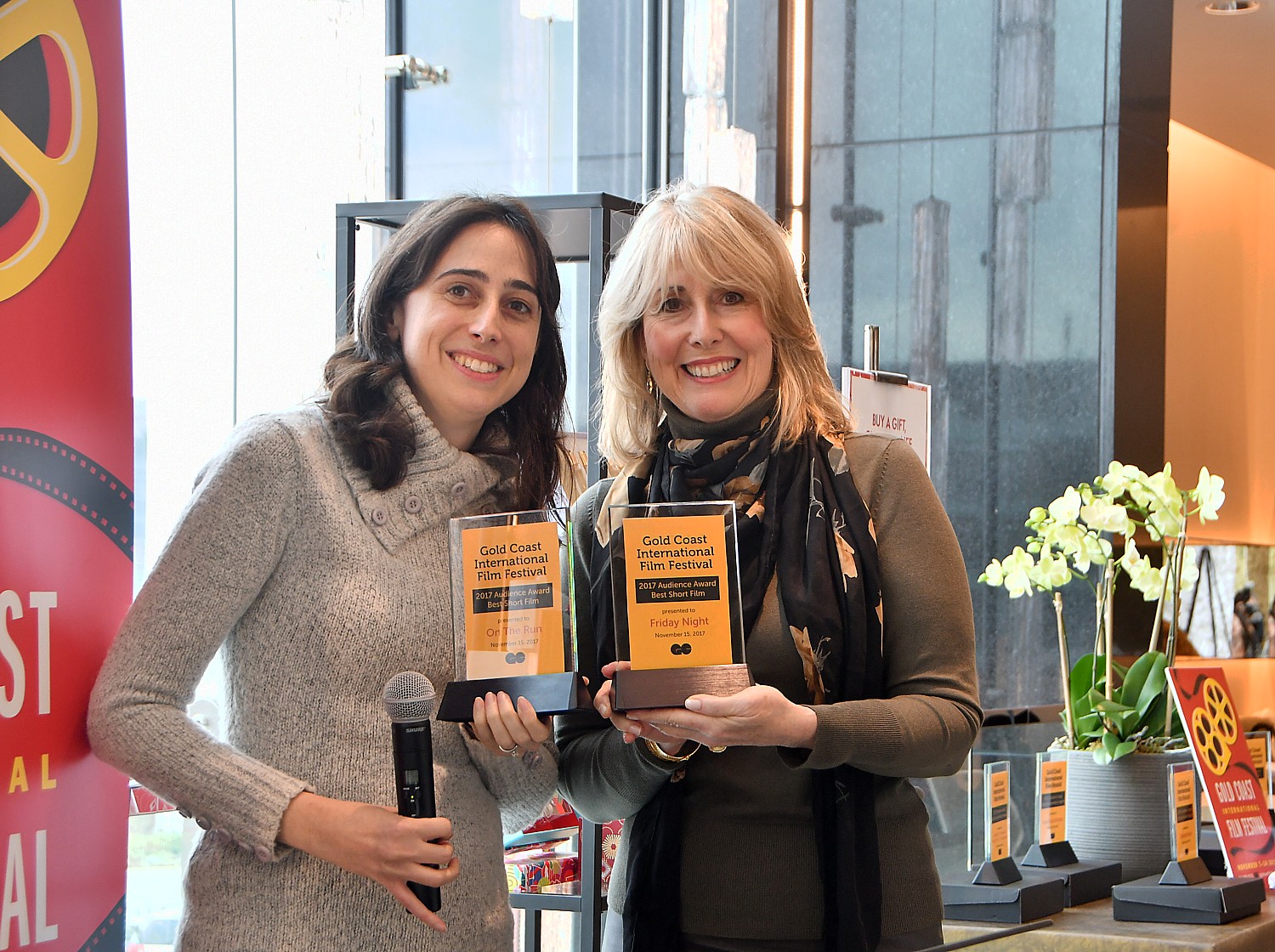
 

“Liberty’s War” Exhibit at American Merchant Marine Museum Spotlights Unsung Heroes of WWII

Scots maritime artist Jim Rae depicts a German aircraft firing on the Murmansk-bound Liberty ship, SS Cornelius Harnett, part of the convoy JW-52 in the Norwegian Sea, Jan. 25, 1943. The painting is included in the “Liberty’s War” exhibit at the American Merchant Museum Museum, Kings Point © 2017 Karen Rubin/goingplacesfarandnear.com

By Karen Rubin, Travel Features Syndicate, goingplacesfarandnear.com

The first stunning realization from the new exhibit at the American Merchant Marine Museum, “Liberty’s War,” is how vital the cargo ships, manned by civilian volunteers, were to winning World War II. The second is how dangerous this was – the convoys of merchant ships under near-constant attack by U-boats, Luftwaffe and kamikaze aircraft. Indeed, more than 9,500 merchant mariners lost their lives manning nearly 3,000 ships during the war. And finally, that the merchant seamen only received $5,000 compensation if they were killed or disabled in the war, and were not eligible for any of the GI Bill benefits the soldiers received. This probably tells the story more than anything else why their heroism is unsung and virtually unknown until a memoir of one engineer, Herman Melton.

The new exhibit, which is on view through February 28, 2019, is based on the life and wartime experiences of Herman Melton, a graduate of USMMA’s class of 1944, as described in his memoir edited by his son, Will Melton, Liberty’s War: An Engineer’s Memoir of the Merchant Marine, 1942-45.. Herman Melton became an engineer, serving from 1942 to 1945 on so-called Liberty ships. His position on the ships – in the engineering room deep in the bowels of the ship– was particularly hazardous because enemy submarines would target the engine rooms as the most vulnerable part of a ship. But the men had to stay in their positions to give the ship a fighting chance for survival.

Will Melton autographs a copy of the memoir of his father, Herman Melton, an engineer on a Liberty ship in World War II, at the opening of the “Liberty’s War” exhibit at the American Merchant Marine Museum, Kings Point © 2017 Karen Rubin/goingplacesfarandnear.com

Indeed, the USMMA is the only military academy that flies the Battle Standard, in honor of the 142 of its students who died aboard merchant ships in World War II – tributes to them play in a tiny chapel-like room in the former Barstow mansion where the museum is housed. In all, more than 9,500 merchant mariners lost their lives in World War II.

The USMMA actually came into creation because of World War II – the need to staff the merchant ships was so critical that a four-year training program was compressed into 18 months.

The role of these Liberty ships – there were nearly 3,000 of the cargo ships between 1941 and 1945 – was critical to supply the war effort, to bring fuel and supplies to allies.

“They were an absolutely crucial link in the Allied supply chain that ultimately resulted in victory in 1945,” Joshua Smith, interim director of the American Merchant Marine Museum, writes in the exhibit’s brochure. “Too often that story gets ignored, but in the American Merchant Marine Museum’s latest exhibit, ‘Liberty’s War,’ the story of these valiant little freighters is told through the eyes of a young man from Texas, Herman Melton.”

Herman Melton was 89 years old when his son convinced him to write a memoir. As the exhibit notes reveal:

Melton faced combat in both the Atlantic and Pacific Theatres during World War II, always serving aboard Liberty ships, the slow but enormously useful vessels that carried the supplies that propelled the Allies to victory.  During his time on convoy duty in three oceans, Herman entered combat at sea in some of the fiercest fighting with both the Germans and the Japanese. In the treacherous Murmansk run of 1942-43, Herman sailed as a Cadet-Midshipman as American and British merchant ships delivered urgently needed Lend-Lease supplies to the Soviet Union. Allied convoys faced German U-boats and Luftwaffe torpedo bombers operating at their peak efficiency, out of Norwegian bases.  The result was that many Allied supply ships were lost, and many merchant mariners died while trying to supply the Russians.

“Liberty’s War” exhibit includes photos of some of the men who served on the Liberty ships © 2017 Karen Rubin/goingplacesfarandnear.com

During his January 1943 voyage across the Arctic Sea to north Russia, Herman’s Liberty ship, SS Cornelius Harnett, was attacked by torpedo bombers of Germany’s Coastal Air Group 406 based in Norway.  Herman’s battle station called for him to carry ammunition and reload shell magazines for the U.S. Navy Armed Guard gun crew aboard the Harnett. The gunners helped to shoot down two of the four attacking aircraft, and their commander received the Silver Star from the U.S. Navy for his performance in the action. More than fifty years later, The Russian Embassy in Washington recognized Melton in a 1992 ceremony with a medal from the Russian Government for his service.

Herman again entered a deadly combat zone during the Allies’ invasion of the Philippines in the fall of 1944. Airmen of the combined Japanese army and naval air forces waged a do-or-die battle against American forces. Herman was now the Third Assistant Engineer aboard SS Antoine Saugrain in an Allied convoy steaming from New Guinea carrying specially-trained troops and super-secret anti-aircraft equipment. During an attack by Japanese torpedo bombers, the Saugrain took two direct hits before its Master gave the order to abandon ship off Leyte Island. Although the ship’s rafts and lifeboats could carry only a fraction of the more than 200 crew and soldiers to be rescued, all hands survived thanks to two U.S. Navy frigates dispatched to pick up men in boats and swimming in the water. After two more attacks by Japanese bombers, the Saugrain was sent to the sea bottom.

Helen and Herman Melton were married in the chapel at the US Merchant Marine Academy, Kings Point © 2017 Karen Rubin/goingplacesfarandnear.com

The exhibit also tells a love story, Herman’s wartime romance with Helen Dunn, his Kansas junior college sweetheart. Before departing for service in General Douglas MacArthur’s war in the South West Pacific, Herman and Helen were married in a saber ceremony in the Academy’s chapel in the old Chrysler mansion.

It is this personalization that makes the exhibit all the more poignant.

Melton’s memoir is being published by U.S. Naval Institute Press in September, to coincide with the museum’s exhibit highlighting Herman’s experiences battling both the Germans and the Japanese.

The American Merchant Marine Museum showcases the vital role that merchant mariners play in war and peace © 2017 Karen Rubin/goingplacesfarandnear.com

The “Liberty’s War” exhibit is illustrated with wonderful photos – personal as well as military – along with period uniforms, souvenirs of Herman’s wartime assignments and documents of his training as one of the first Engineer Cadet-Midshipmen of the USMMA, artifacts, ship models, and maps that let you trace Melton’s own harrowing journey as well as a superb documentary video you can watch in a small alcove.

Scots maritime artist Jim Rae depicts a German aircraft firing on the Murmansk-bound Liberty ship, SS Cornelius Harnett, part of the convoy JW-52 in the Norwegian Sea, Jan. 25, 1943. The painting is included in the “Liberty’s War” exhibit at the American Merchant Museum Museum, Kings Point © 2017 Karen Rubin/goingplacesfarandnear.com

In addition, there are remarkable paintings that were created by Jim Rae, who came to the exhibit opening at Kings Point from his home in Scotland to attend the opening reception, September 8. Rae’s drawings and paintings, which he has been making since he was a boy, are remarkably precise and exacting – he says he can complete one in the time it takes to watch a show over lunch.

Paintings by Scots maritime artist Jim Rae show the drama of the Liberty ships © 2017 Karen Rubin/goingplacesfarandnear.com

Rae has spent his life at sea – first as a cabin boy in the British Merchant Navy and later enlisting in the Royal Navy. “It was while serving on various aircraft carriers that I took up painting once again.”

Rae says his subjects “are really quite specialized: not many people want a painting of the ‘Battle of the North Cape’ unless Granddad served in one of the ships taking part. I tend to concentrate on lesser known events, and the ‘little ship’ rather than the battleship and great battles.”

Captain Hugh Stephens, now an adjunct professor at SUNY Maritime, recalled his pwm experience serving on one of the Liberty merchant ships during World War II during the opening of the “Liberty’s War” exhibit © 2017 Karen Rubin/ goingplacesfarandnear.com

Barstow Mansion

The setting of the Barstow Mansion, now the American Merchant Marine Museum, on Kings Point, overlooking Long Island Sound, on the campus of the US Merchant Marine Academy © 2017 Karen Rubin/goingplacesfarandnear.com

The Merchant Marine Museum is housed in the former Barstow Mansion.

The Gold Coast mansion, harking back to the Gilded Age, is utterly stunning, William Slocum Barstow, the first mayor of Kings Point, made his fortune first, as a partner with Thomas Edison until he set out on his own, in 1901, one of the first electrical engineers. He founded many electric utility companies and was the man responsible for lighting the Brooklyn Bridge. He was very much involved in Great Neck community, even funding the bridge and overpass at the Long island Railroad to cut down on the fatalities when the train crossing was a street level, and he and his wife donated the funds for the Woman’s Club of Great Neck. The Mediterranean Revival-style mansion was Barstow’s main residence The Barstow Mansion was his main residence from 1 915 until the end of his life, in 1942, and then his wife’s until 1953 when it was sold to the Lundy family (of Lundy Restaurant fame). The architectural features – wood paneling, decorative ceilings – are breathtaking.

The American Merchant Marine Museum is located on the grounds of the U.S. Merchant Marine Academy, 300 Steamboat Road, Kings Point, NY 10024fammm.us. Admission is free, and it is open to the public from 10 a.m. to 3 p.m., Tuesday through Friday (closed during USMMA holidays and the month of July).  It is highly recommended that you call (516) 726-6047 or e-mail museum@usmma.edu before visiting.

________

© 2017 Travel Features Syndicate, a division of Workstyles, Inc. All rights reserved. Visit goingplacesfarandnear.com,  www.huffingtonpost.com/author/karen-rubin , and travelwritersmagazine.com/TravelFeaturesSyndicate/. Blogging at goingplacesnearandfar.wordpress.com and moralcompasstravel.info. Send comments or questions to FamTravLtr@aol.com. Tweet @TravelFeatures. ‘Like’ us at facebook.com/NewsPhotoFeatures
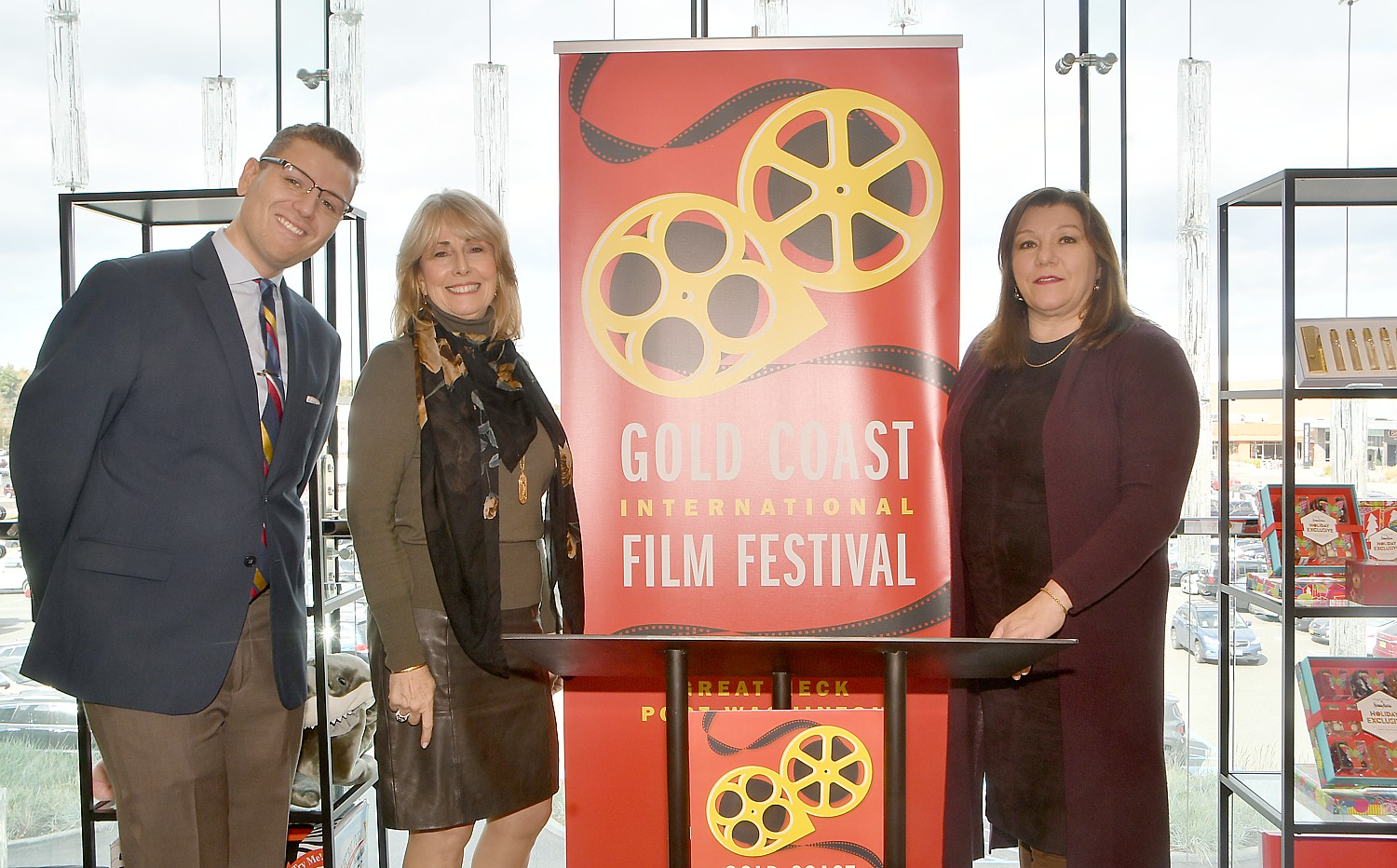
Because travel is a life-enhancing, relationship building, world-changing experience