By Eric Leiberman and Sarah Falter, Travel Features Syndicate, goingplacesfarandnear.com
Eric and Sarah are on a 6-month around-the-world sabbatical, and are filing these dispatches periodically. Here’s their report after a month in Mexico before moving on to Asia.
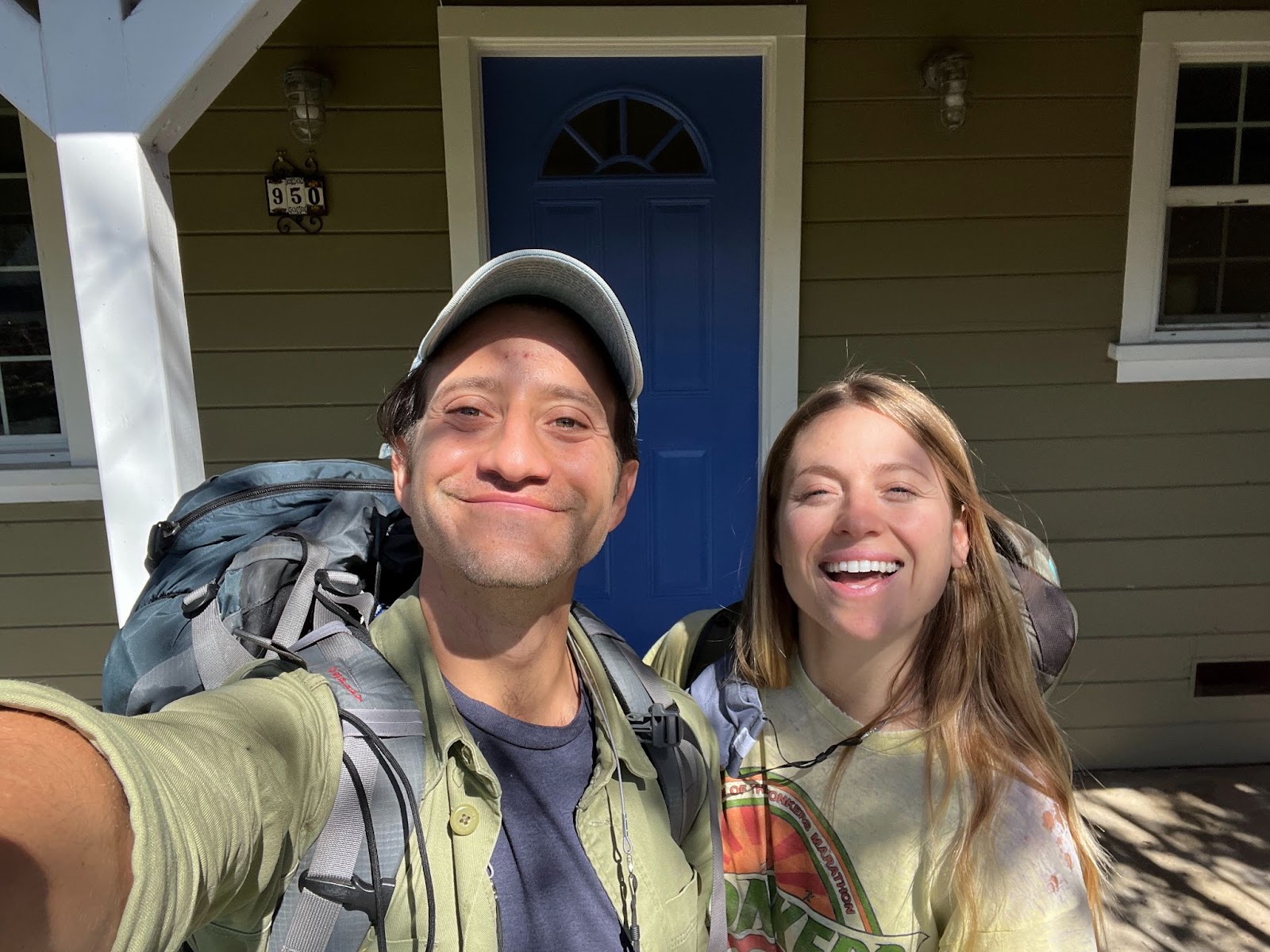
We finally did it–rented out our house, packed a tiny sliver of our possessions into four packing cubes inside a large backpack, strapped on our water shoes and hit the road for the adventure of a lifetime–six months of uninterrupted travel! We have now been traveling together for exactly five weeks and we’re delighted to share that we still like each other!!
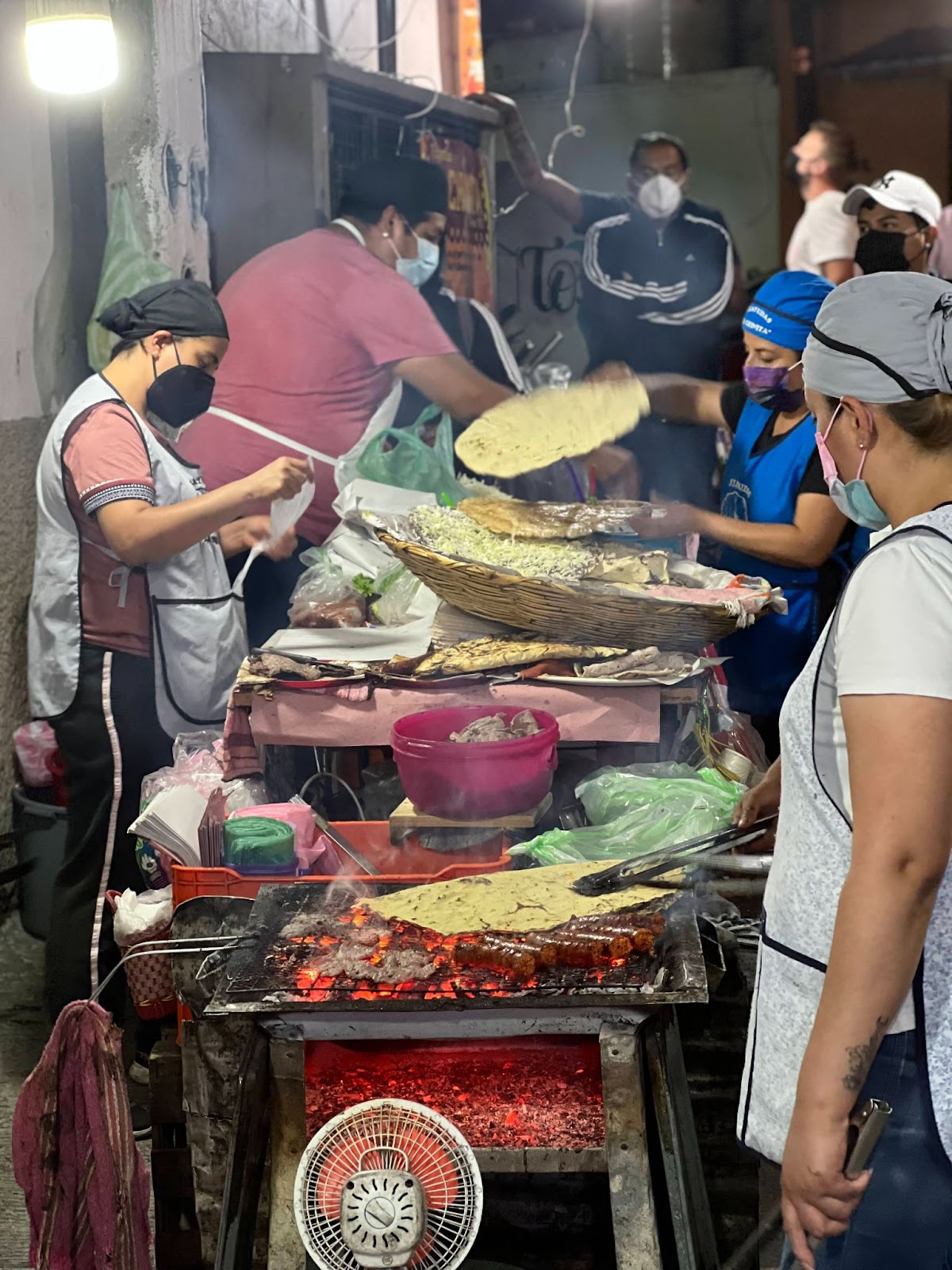
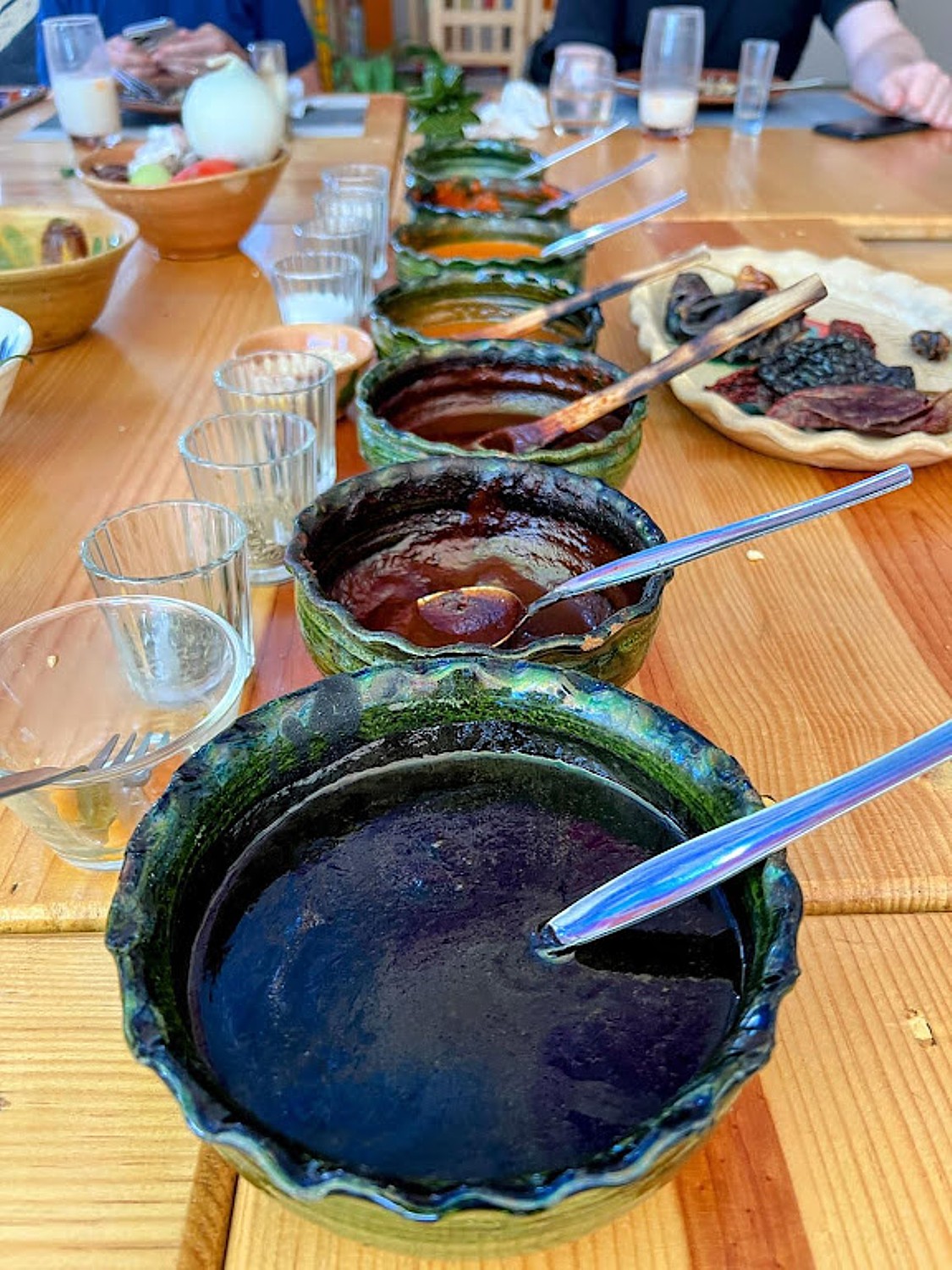
We’d come to learn that this sort of deep, bold and soulful flavor was uniquely Oaxacan, and was pervasive throughout their history, cuisine & art. They have a fascinating history of protest and human rights advocacy that permeates the art all throughout the city – from the large format street murals to the gallery walls in fine art museums. It is dark and expressive with lots of skulls, fire, protest depiction & political symbols. Learning more about this history brought new meaning to the intense flavors of mole and mezcal.
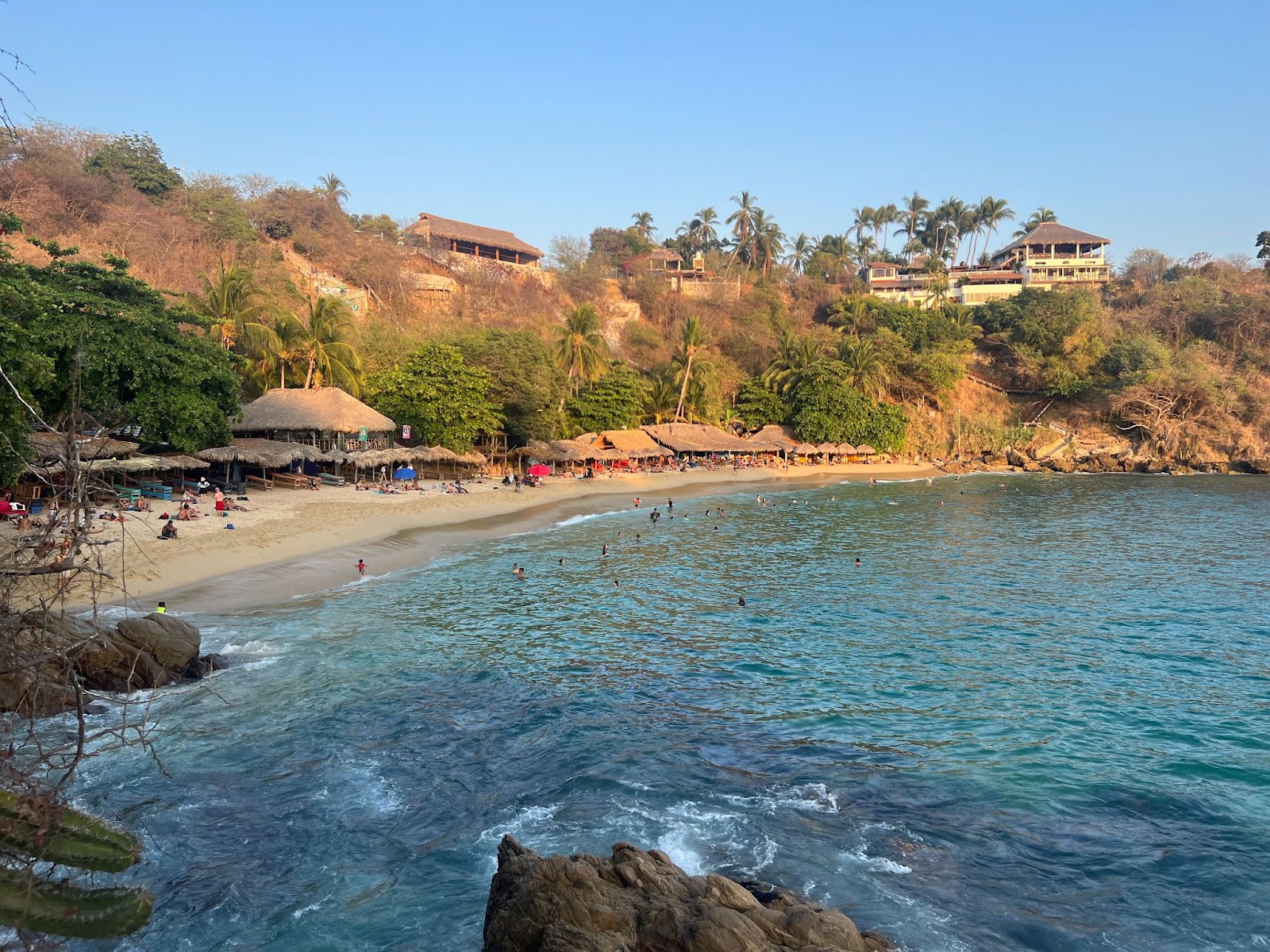
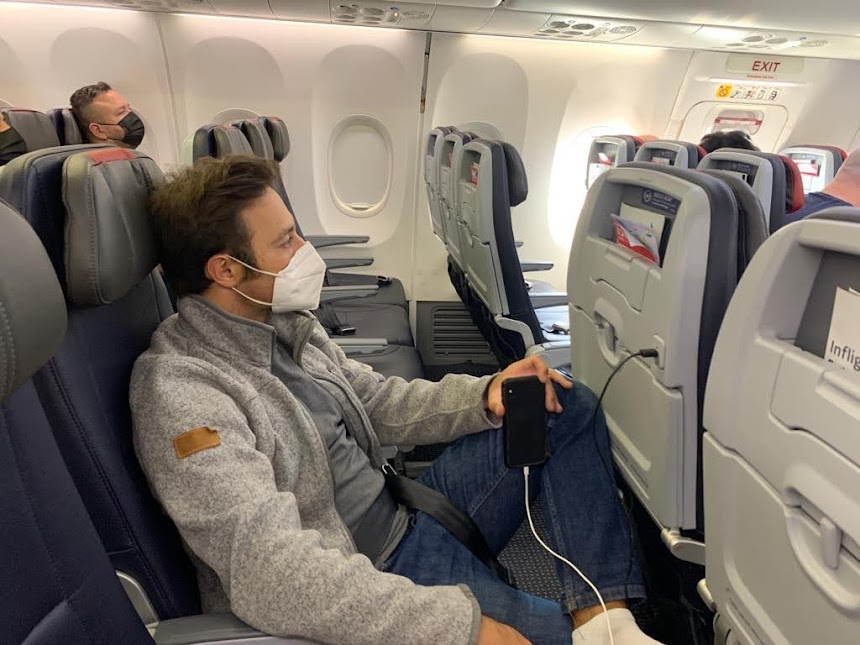
We continued our journey on a 7-hour drive almost entirely on mountain roads with dramatic switchbacks to the coast of Oaxaca (Eric drove and Sarah passed out on drowsy Dramamine). Over the next week, we made stops at three beach towns: Puerto Escondidio, Mazunte, and Playa Bocana. Puerto Escondido prevails for its cliff-like coast line and amazing street entertainment (imagine our surprise when a man with a guitar and an amp shows up on the beach, usually a nightmare scenario at any Bay Area park, and ends up providing the most perfect sunset vibes)!
Mazunte gave us some good laughs because its “hippie” vibe is out of control and almost cartoonish; you’re weird if you actually wear shoes around town/on hikes, and if you don’t like acai and bulle proof coffee you need to get your ass out of there. But, thankfully, we (gladly) dabble in some aspects of the hippie lifestyle, so the vegan nomz, acai bowls & a two-hour (very stinky) yoga class were a welcome change-of-pace. Eric even bought a turquoise pendant (maybe a Buddhist symbol? We’re not sure; we’re posers) there that he wears most days now as a lucky charm 🙂
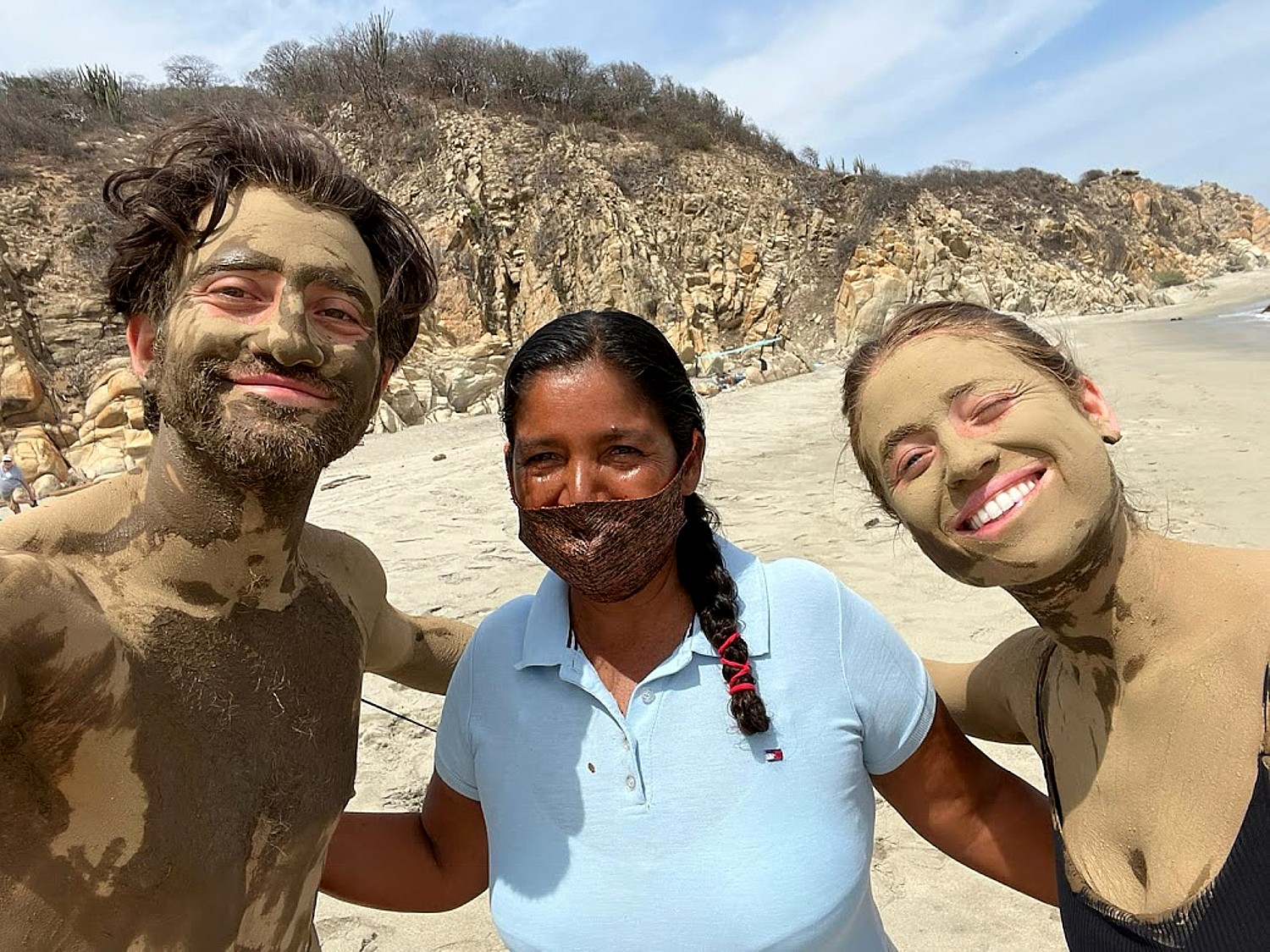
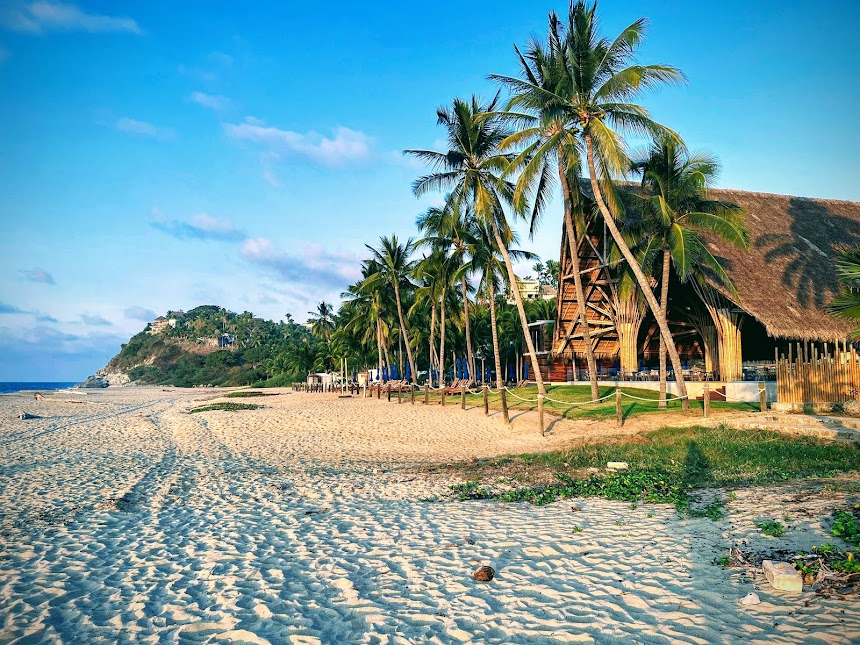
And the last stop on the Oaxacan beach tour was La Bocana; a true surprise gem. It is a tiny town with just two restaurants, one boutique hotel and several local women who provide mud scrubs (with the special mud from this beach) daily.
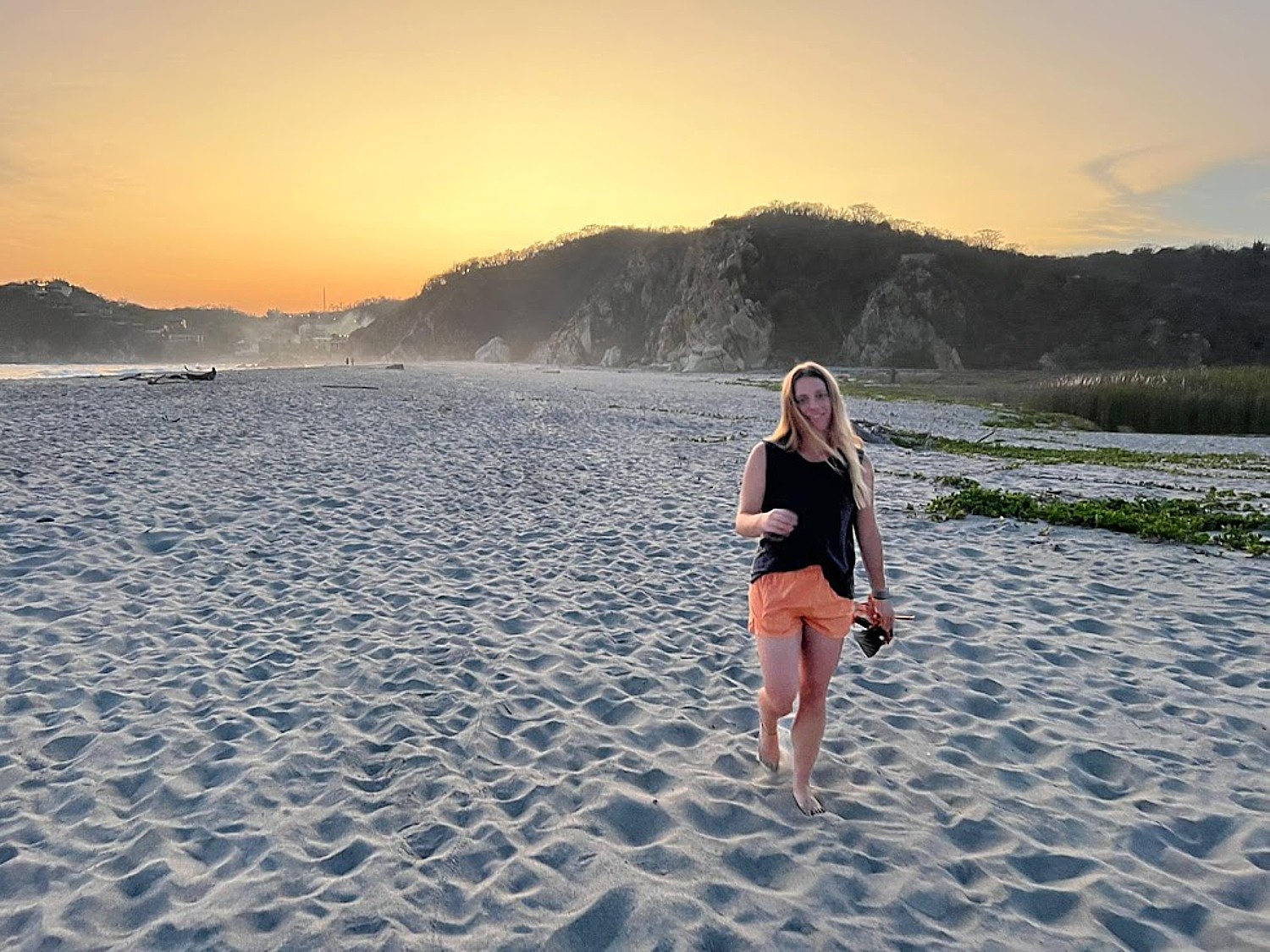
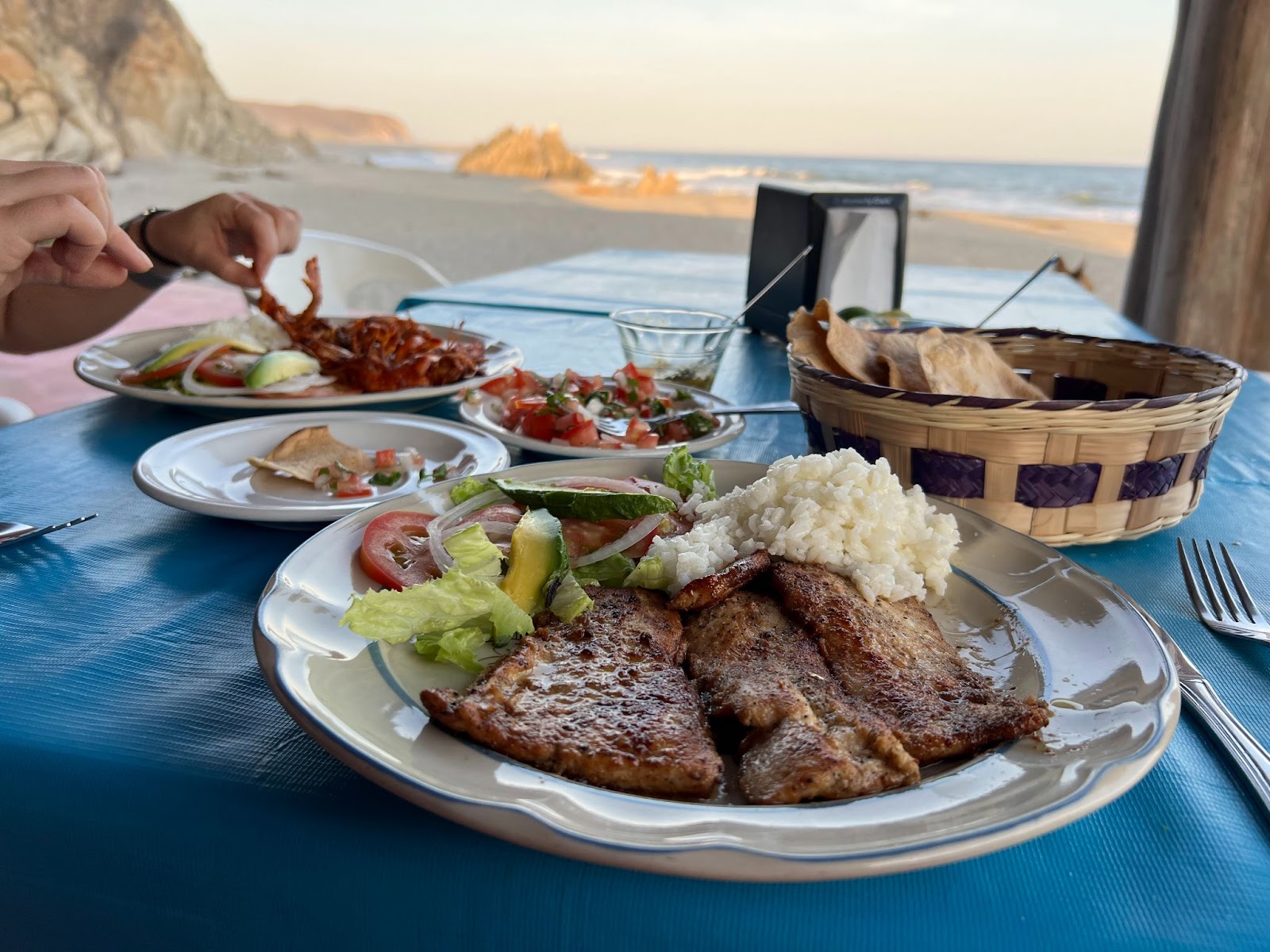
Our cute little airbnb was a mere 50 yards from a spectacular long stretch of beach that felt like it was all ours. And when we started exploring the beach, we’d come to discover that a 15-minute walk up the beach led to the intersection of a gorgeous river with the ocean; which was utterly picturesque and made for a best-of-both-worlds situation of enjoying the beach while swimming in the calm of the river. During our short stay at La Bocana beach, we made both sunset and sunrise pilgrimages to this beautiful spot. Anyone who knows Eric knows he can’t resist a sunrise/sunset swim. And we ate delicious camarones a la diabla (shrimp in spicy sauce) and fresh langosta from that river basically every meal there, happily.
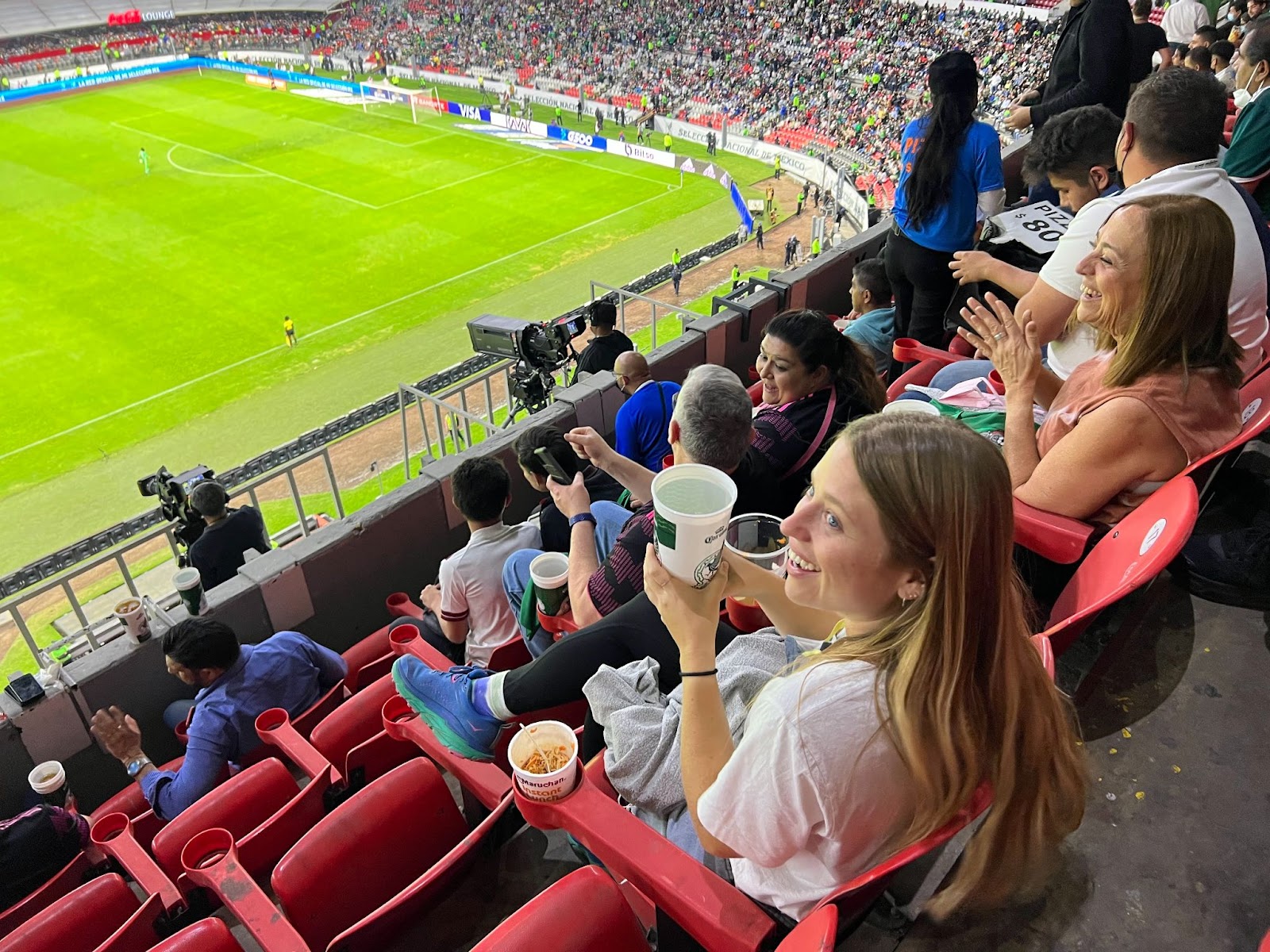
The return to Mexico City was a happy one because we were excited to spend more time exploring and Sarah’s mom Marci came to join for a week! Major highlights included visiting a Luis Barragan house, discovering more neighborhoods/parks & going to the Mexico vs. El Salvador World Cup qualifying futbol game (where we tried nearly every food item sold in the stadium.. even Cup of Noodles with shrimp & hot sauce which yes, is cold and soggy by the time they sell it to you at your seat!)
Another gem we discovered in Mexico City is the weekly shut down of major streets on Sundays (up to 50km we learned) to promote safe and uninterrupted biking/running/roller blading. We stumbled upon this by accident in our first CDMX stint, and were so excited to show Sarah’s mom! We went basically the entire route out to the big park, down to the neighborhood of Coyoacan, and back. Mexico City is truly as lovely and vibrant as everyone says it is. It’s like the best of both worlds of East and West Coast US cities; it has the serendipitous cosmopolitan feel of NYC with the wide open green spaces of LA/SF. Everyone is in love with Mexico City these days and it’s obvious why.
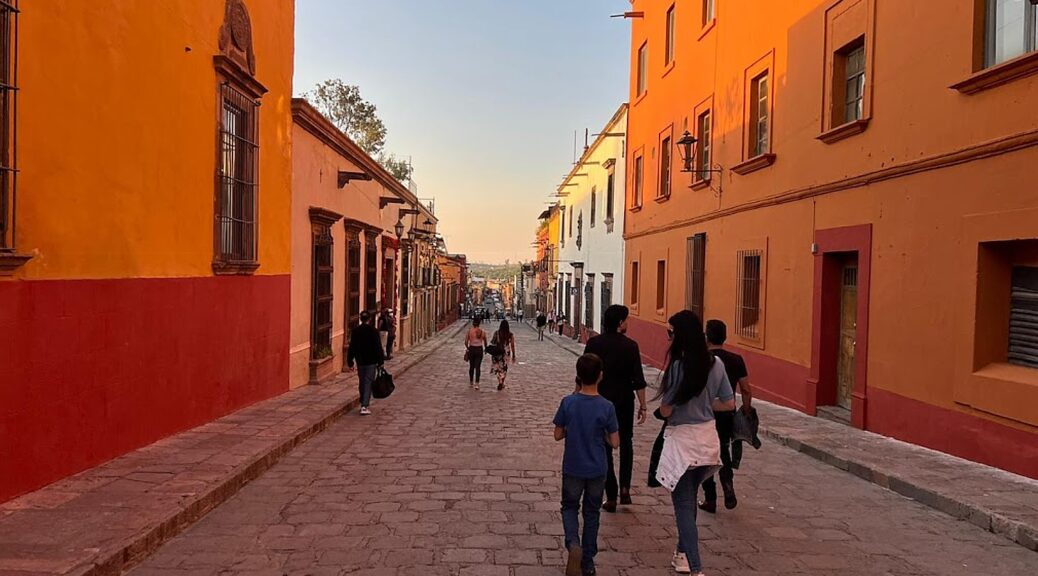
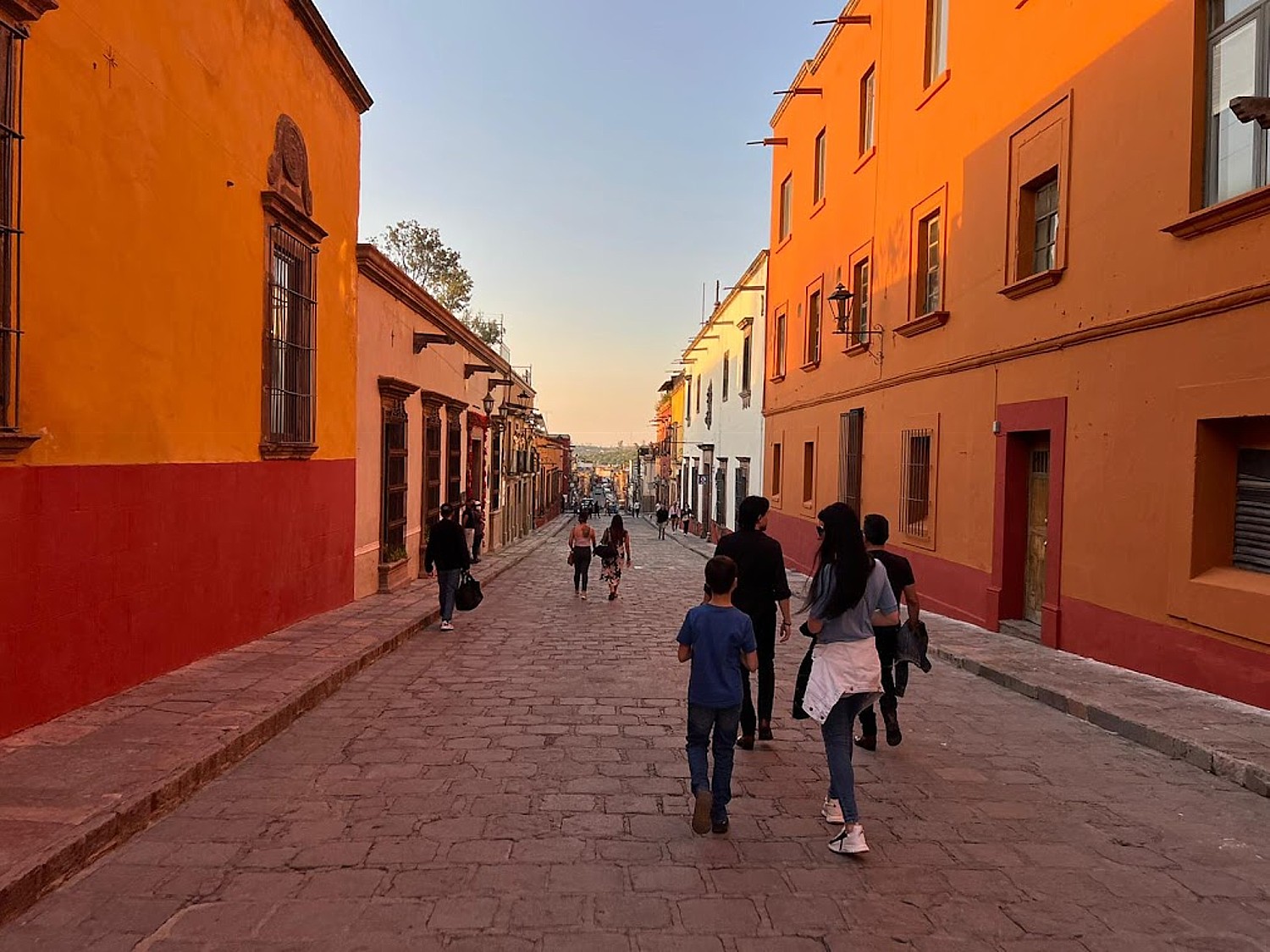
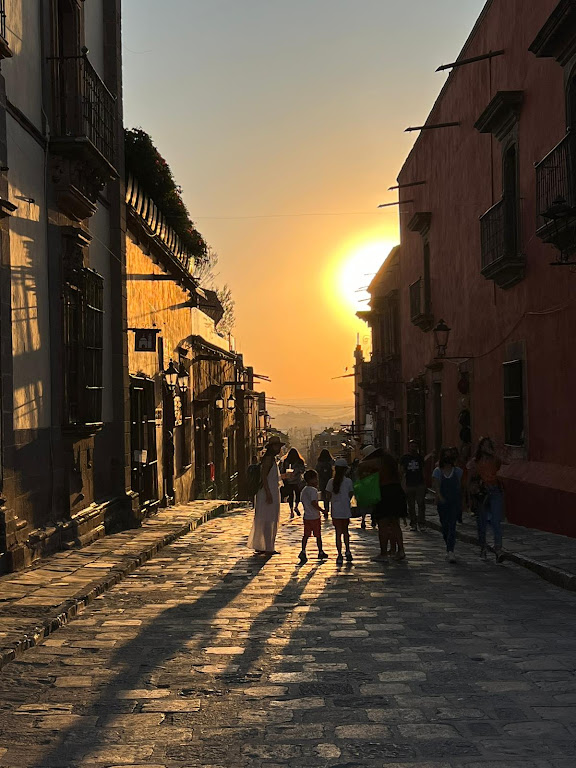
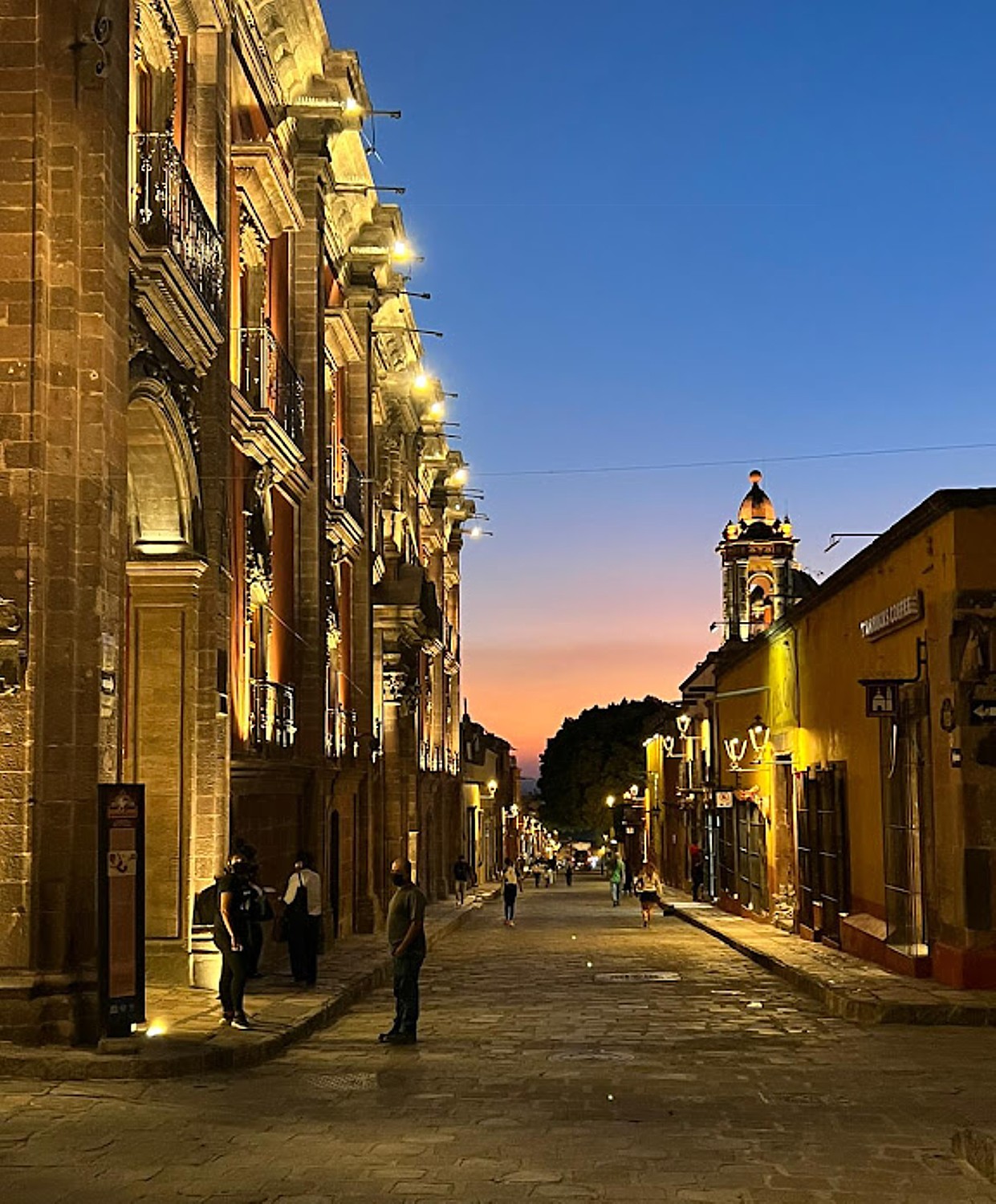
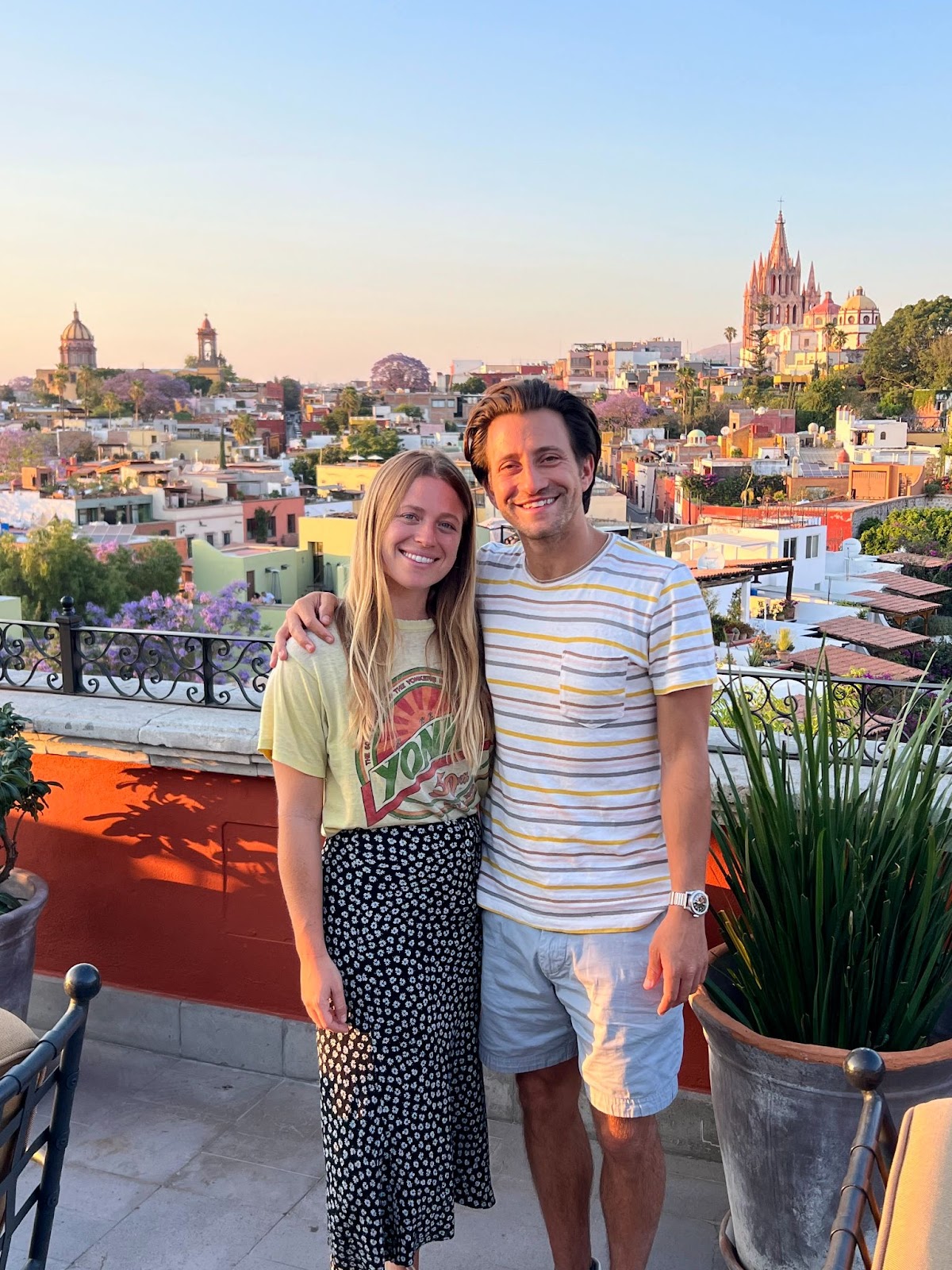
Last stop on the tour landed us in San Miguel de Allende, a shorter 3-4 hour drive from Mexico City. San Miguel is a very charming town, known for its colonial architecture which drew many artists in the 20th century. It’s a must to find a terrace to enjoy the sunset, taking in the gorgeous pink church and red rooftops while obliging every other couple’s request for a photo (Eric is a hot commodity because he takes multiple angles and never skimps on the portrait mode). Eric did finally succumb to the first round of food poisoning of the trip here (which is shocking given what he’d eaten in the previous 4+ weeks), though he recovered in a day and we’re happy to report that Sarah’s stomach of steel is still going strong (knock on wood).
Eric and Sarah in San Miguel de Allende, get ready to continue their around-the-world odyssey in Asia.
At the present moment, we’re in Seoul after a failed attempt at Vietnam entry (and over 50 straight hours of travel), but were super stoked to begin the Asia chapter of our travels, where Sarah’s love for headbands and bucket hats is bound to flourish. It’s crazy and refreshing how “home” has become having each other, and our backpacks….
By Karen Rubin, Travel Features Syndicate, goingplacesfarandnear.com
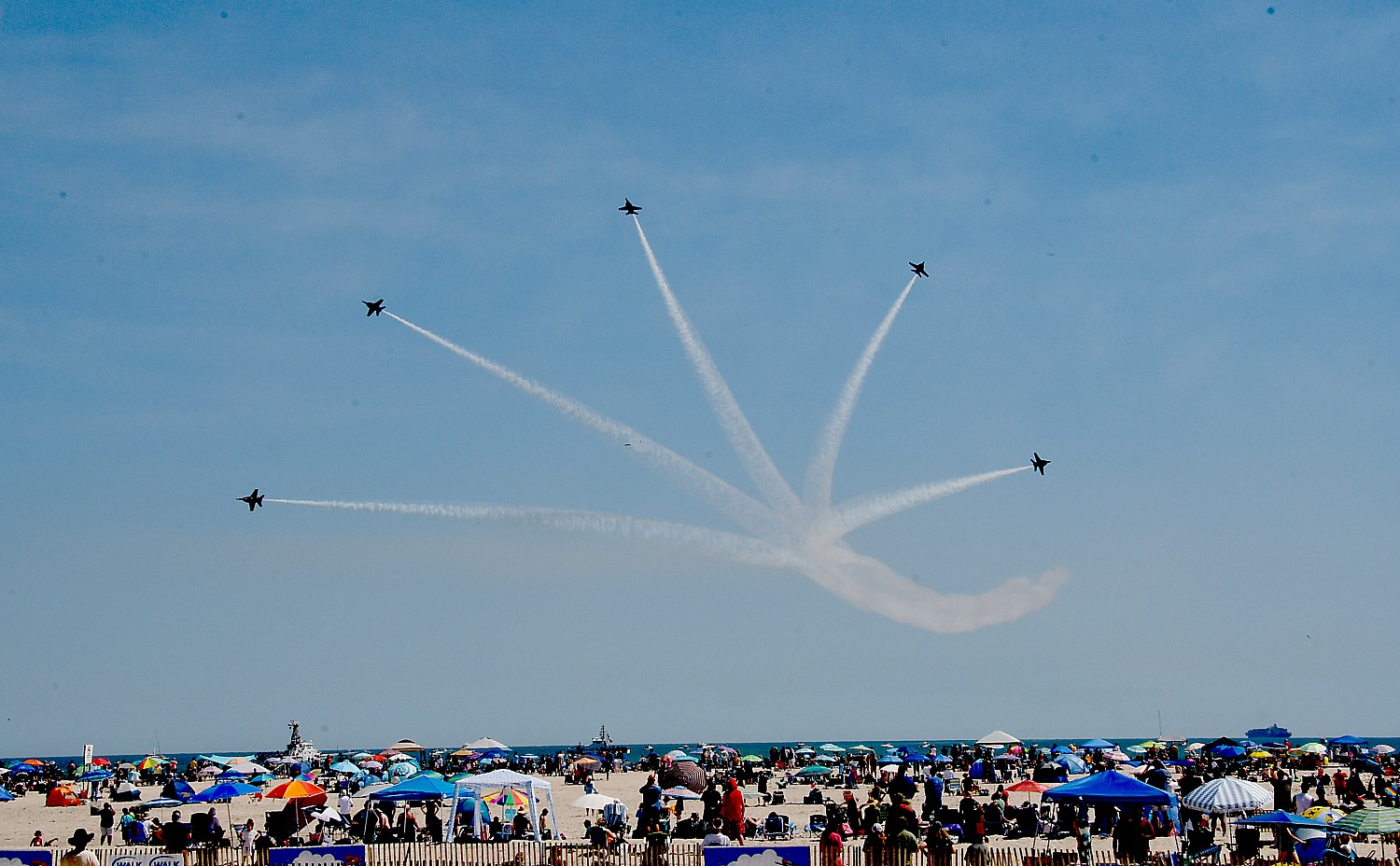
The US Navy Blue Angels were the headliners at the 2022 Bethpage Air Show at Jones Beach State Park, Long Island, over Memorial Day weekend, performing their heart-stopping maneuvers in their F/A-18 Super Hornets.
The Blue Angels were formed in 1946 by Chief of Naval Operations, Admiral Chester Nimitz, who had a vision to create a flight exhibition team to raise the public’s interest in naval aviation and boost Navy morale (and likely Congressional funding). In the 1940’s, the demonstration team thrilled audiences with precision combat maneuvers in the F6 Hellcat, the F8 Bearcat and the F9 Panther. During the 1950’s, they flew their aerobatic maneuvers in the F9 Cougar and F-11 Tiger and introduced the first six-plane delta formation, still flown to this day. By the end of the 1960’s, the team was flying the F-4 Phantom, the only two seat aircraft flown by the delta formation. In 1974, the Blue Angels transitioned to the A-4 Skyhawk, a smaller and lighter aircraft with a tighter turning radius allowing for a more dynamic flight demonstration. In 1986, the Blue Angels celebrated its 40th Anniversary by unveiling the Boeing F/A-18 Hornet. In 2021, the team began flying its current aircraft, the Boeing F/A-18 Super Hornet and celebrated its 75th anniversary.
A total of 17 officers voluntarily serve with the Blue Angels at one time, according to the Blue Angels’ website www.blueangels.navy.mil/. Each year the team typically selects three tactical (fighter or fighter/attack) jet pilots, two support officers and one Marine Corps C-130 pilot to relieve departing members. They typically serve two years with the team and then return to the fleet after their tours of duty.
Who gets selected? “The Chief of Naval Air Training selects the “Boss,” the Blue Angels Commanding Officer. Boss must have at least 3,000 tactical jet flight-hours and have commanded a tactical jet squadron. The Commanding Officer flies the Number 1 jet. The Chief of Naval Air Training also selects the “XO,” the Blue Angels Executive Officer. XO is a Naval Flight Officer (NFO) or Naval Aviator with at least 1,750 flight-hours.
“Career-oriented Navy and Marine Corps jet pilots with an aircraft carrier qualification and a minimum of 1,250 tactical jet flight-hours are eligible for positions flying jets Number 2 through 7. The Events Coordinator, Number 8, is a Naval Flight Officer (NFO) or Naval Aviator who has finished their first tour. The Marine Corps pilots flying the C-130J Hercules aircraft, affectionately known as “Fat Albert,” must be aircraft commander qualified with at least 1,200 flight hours.
“The mission of the Blue Angels is to showcase the teamwork and professionalism of the United States Navy and Marine Corps through flight demonstrations and community outreach while inspiring a culture of excellence and service to country.”
Just about every two years, the Blue Angels come to the Bethpage Air Show at Jones Beach to thrill audiences. This year, they performed in front of a capacity crowd of 181,000. Here are photo highlights.
The Blue Angels typically alternate with the U.S. Air Force Thunderbirds who are scheduled to headline 2023 Bethpage Air Show at Jones Beach next Memorial Day weekend.
By Karen Rubin, Travel Features Syndicate, goingplacesfarandnear.com
A capacity crowd of 181,000 turned out at Jones Beach State Park for the 2022 Bethpage Air Show on Sunday, May 29 (after the Saturday show was all but cancelled due to poor weather).
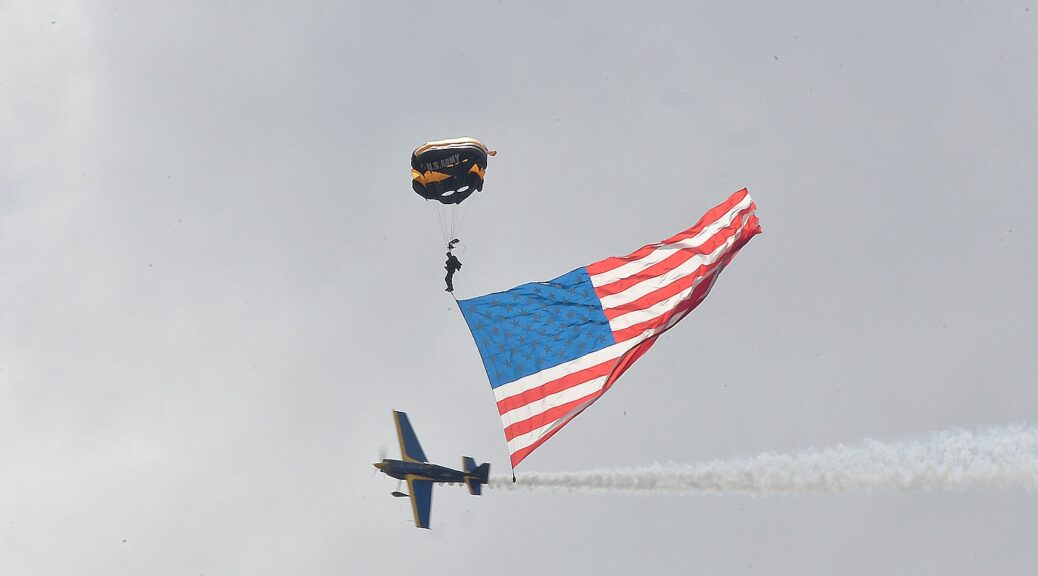
Viewers were thrilled to see The United States Army Golden Knights Parachute Team making their 16th appearance at Jones Beach, military performers including the Air Combat Command F-22 Raptor, the U.S. Navy F-35C Tac Demonstration Team, the U.S. Coast Guard, and the 106th Rescue Wing NY Air National Guard HC – 130 / HH 60 Demonstration Team.
They witnessed the daring do of Jessy Panzer, a renowned female aerobatic pilot, flying for her second time at Jones Beach in a bi-plane; three of the American Air Power Museum’s flying fleet of Warbirds; the SUNY Farmingdale State College Flying Rams; Long Island’s own David Windmiller; and Mike Goulian, the most decorated aerobatic pilot in North America.
Also, the world-famous Skytypers, who are based at Republic Airport (and basically invented and patented skytyping) demonstrated thrilling combat maneuvers in their flight squadron of five vintage WWII aircraft.
By Karen Rubin, Travel Features Syndicate, goingplacesfarandnear.com
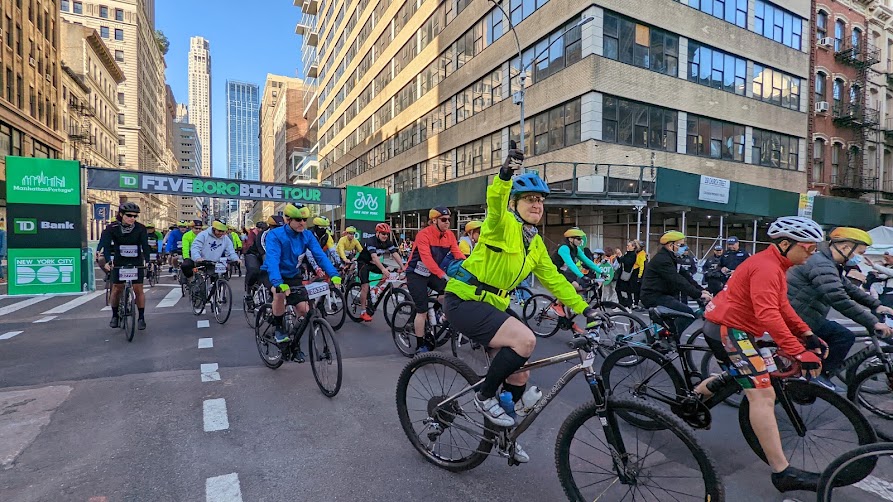
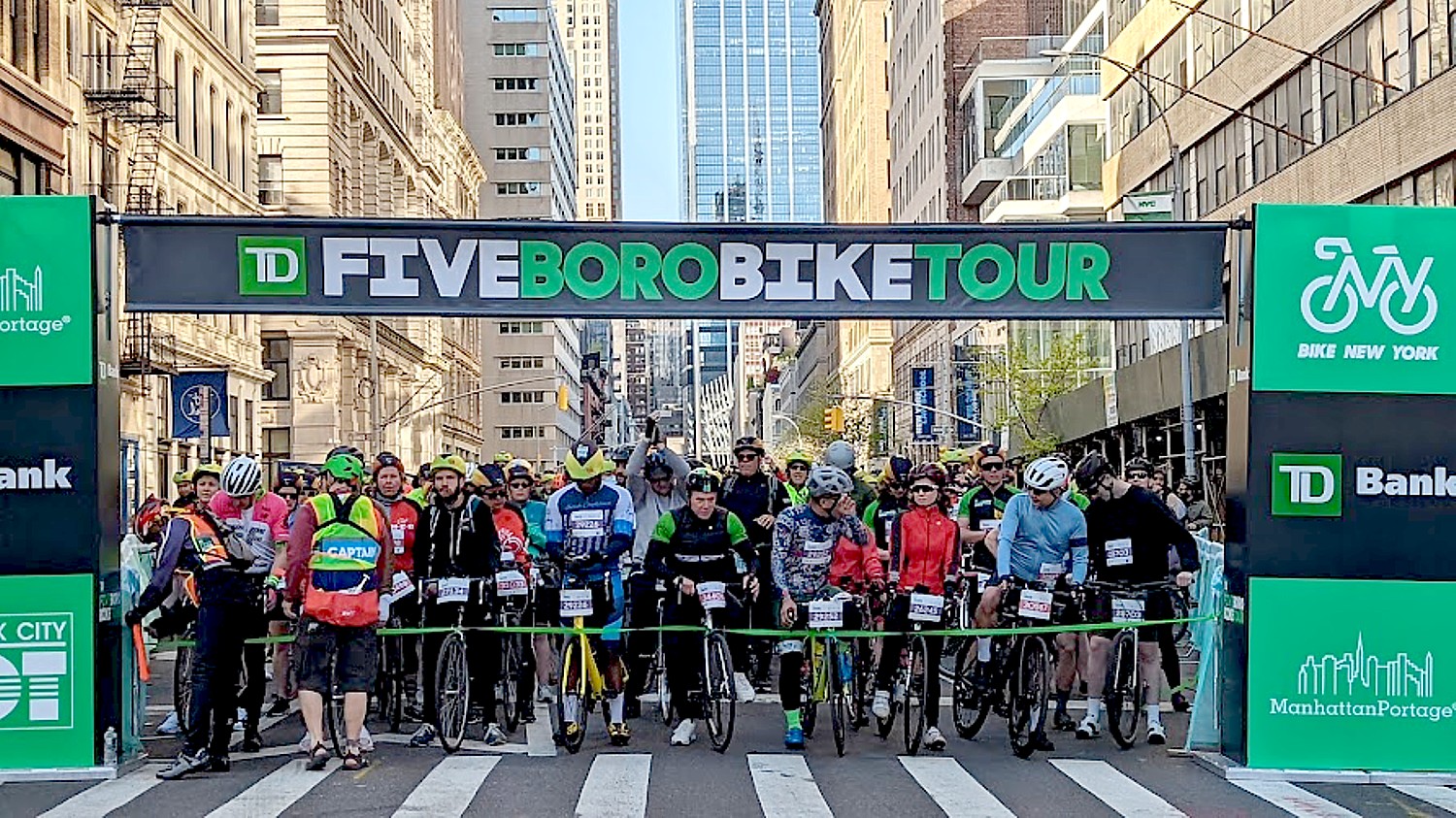
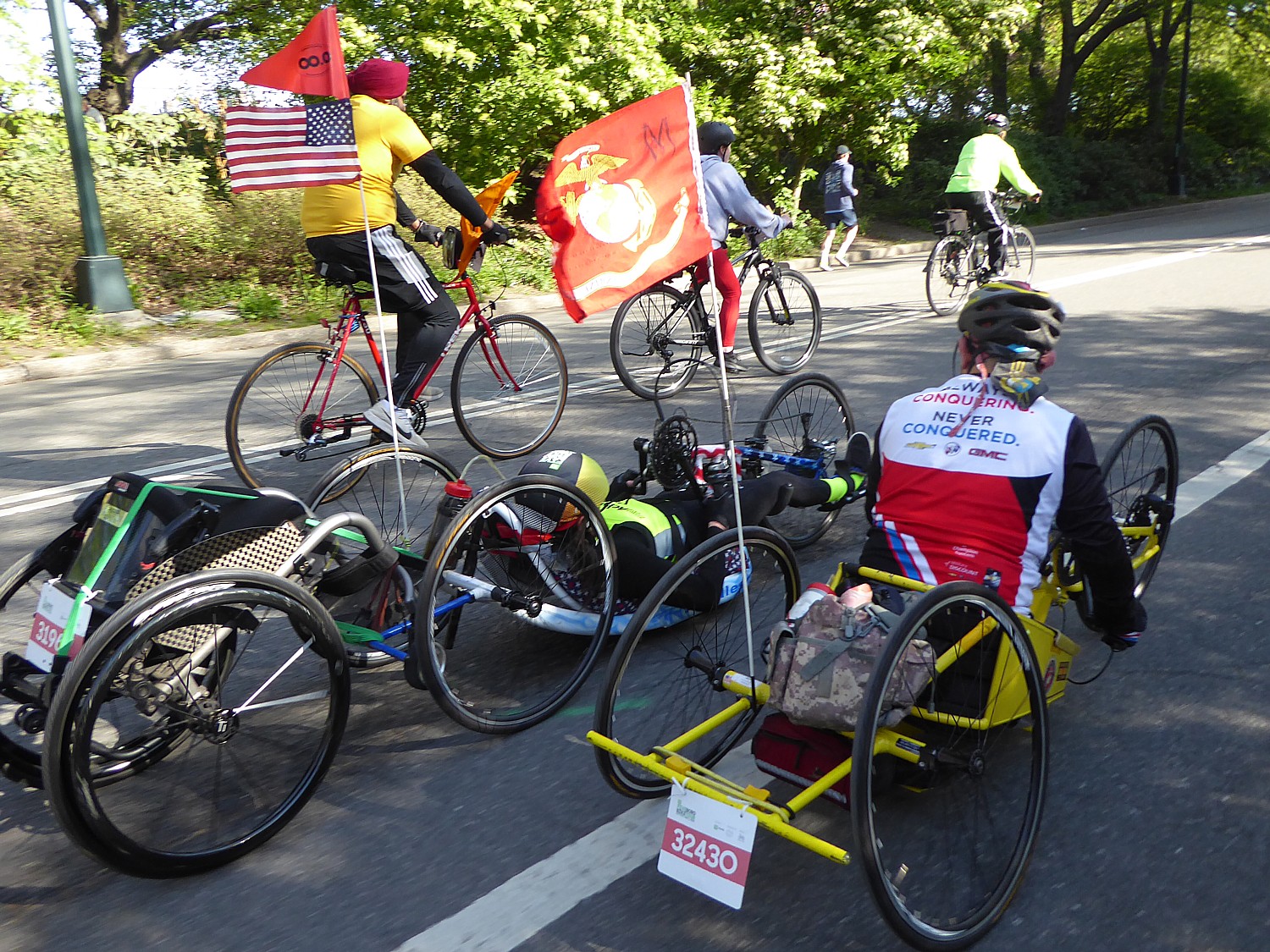
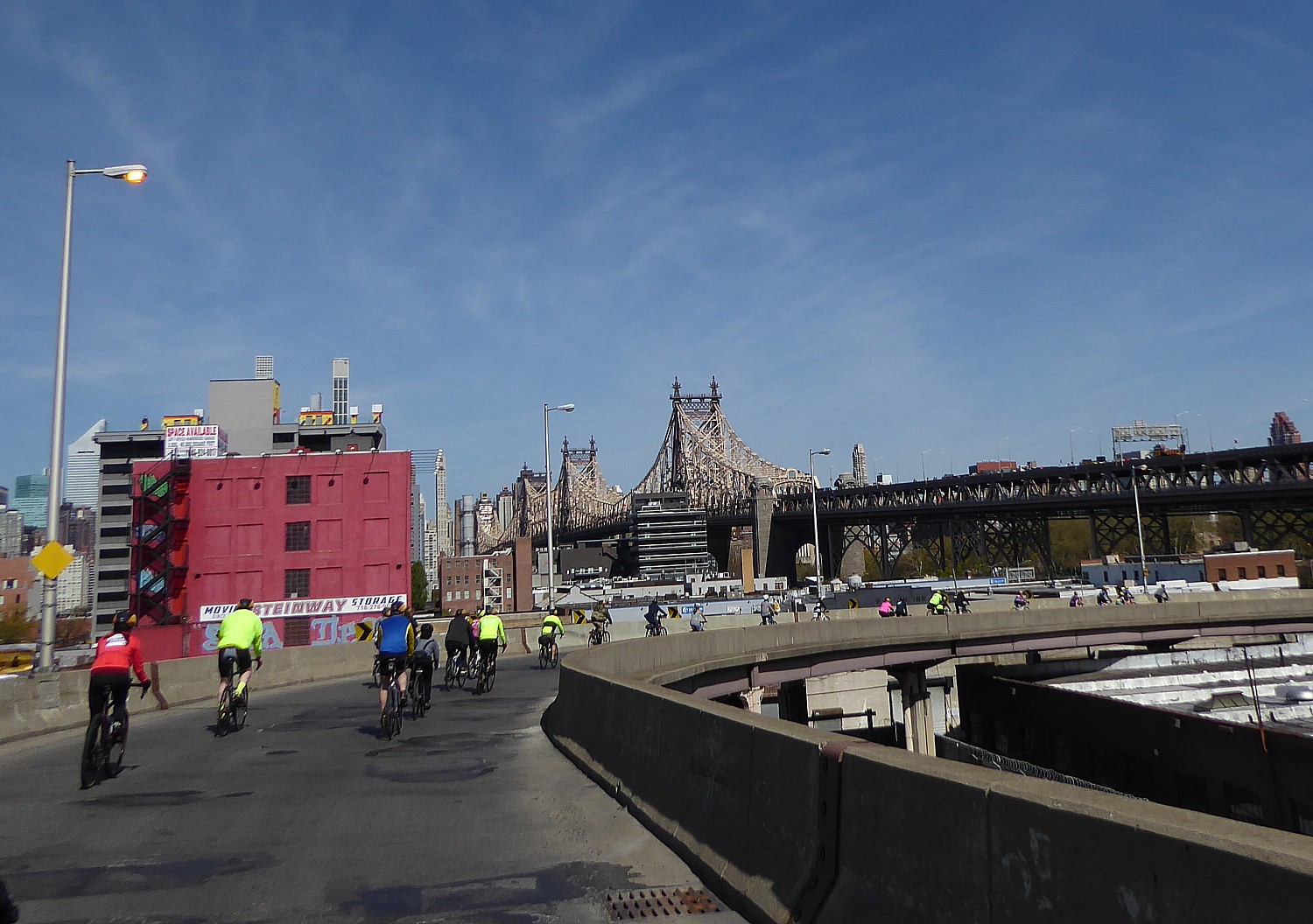
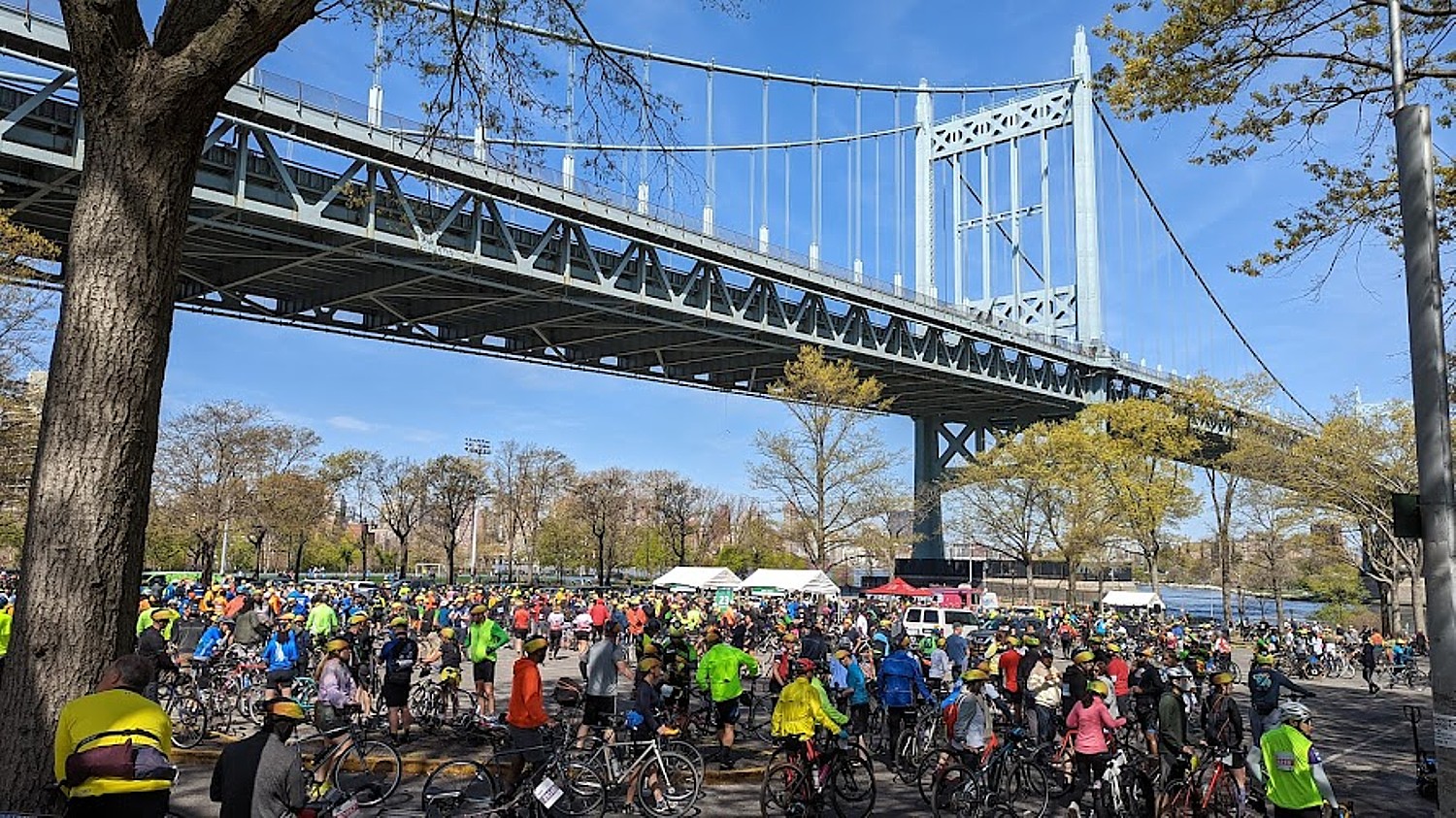
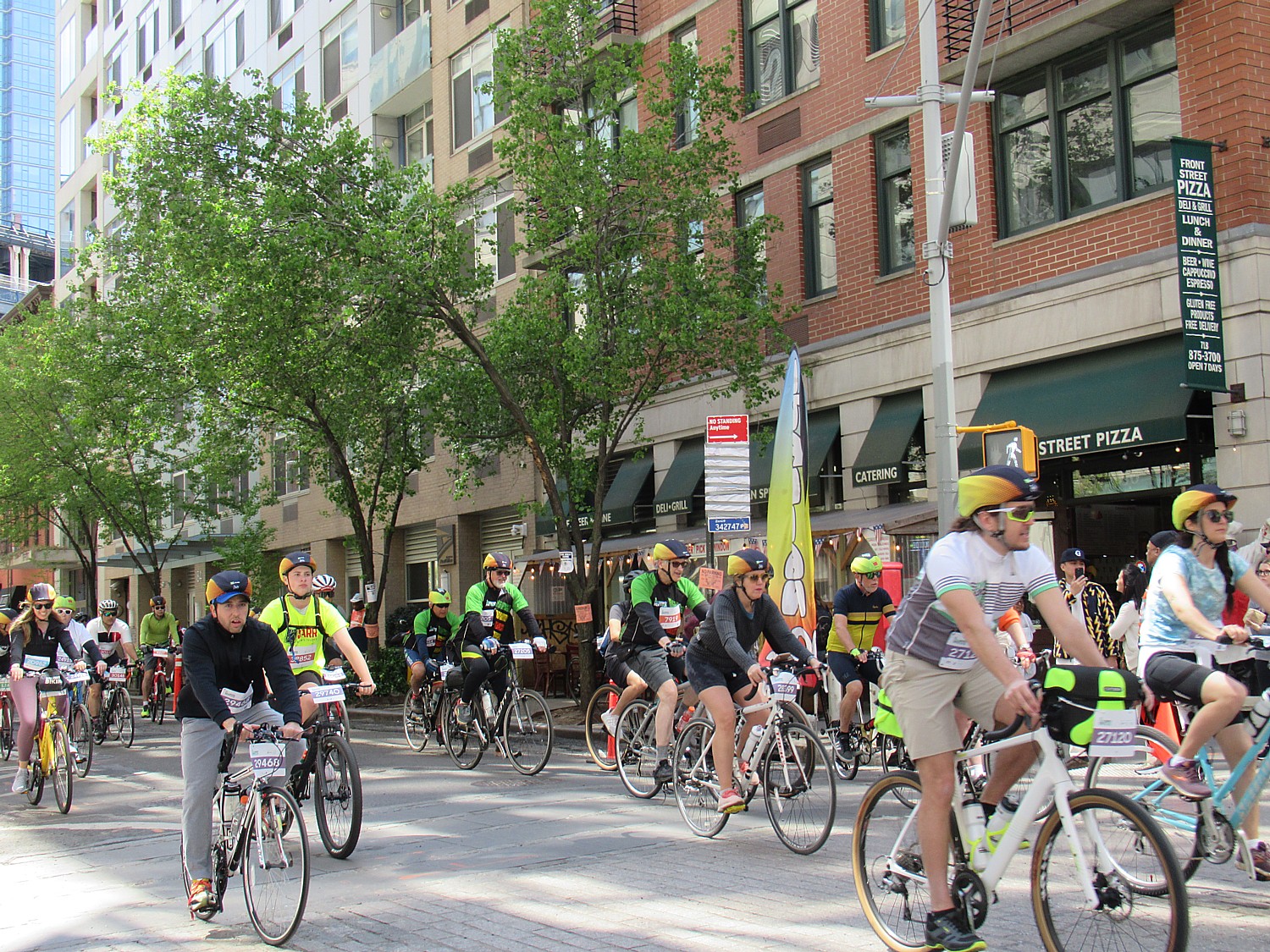
On an absolutely perfect, sunny spring day when New York City is at its absolute best, the TD Five Boro Bike Tour, the world’s largest charity bike ride, returned to its full strength: 32,000 cyclists, hailing from all 50 states and 32 countries, got to 40 miles of car-free streets across all the city’s five boroughs.
In addition to being the largest bike ride in the United States, it’s the most diverse and inclusive ride in the world – with people of all ages, backgrounds, abilities, said Bike New York CEO Ken Podziba.
The sheer joy and delight – omnipresent for the ride – was particularly exuberant this year for the 44th edition of the bike tour after a hiatus in 2020 and last year’s (held in August instead of May) limited capacity of 20,000.
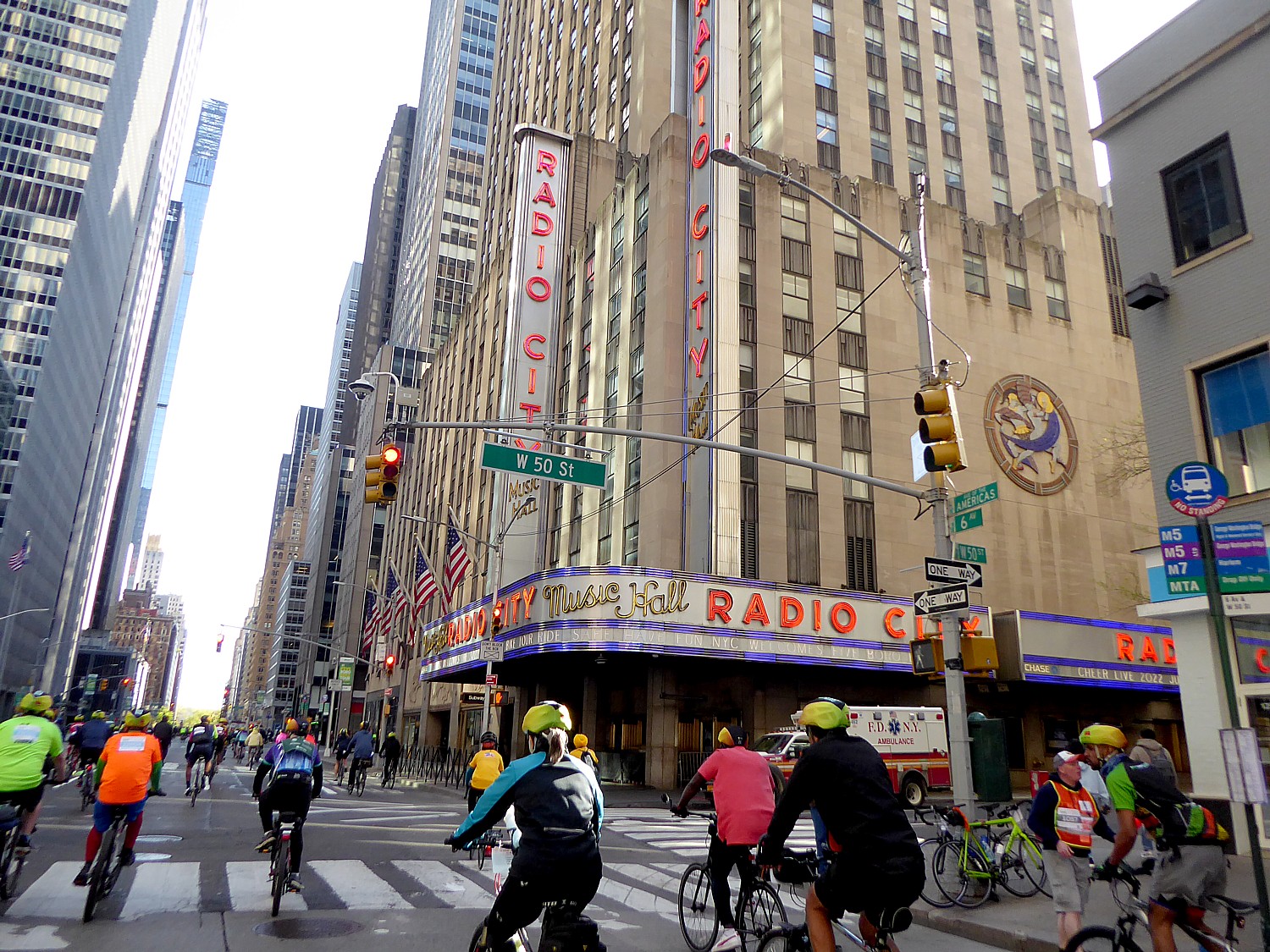
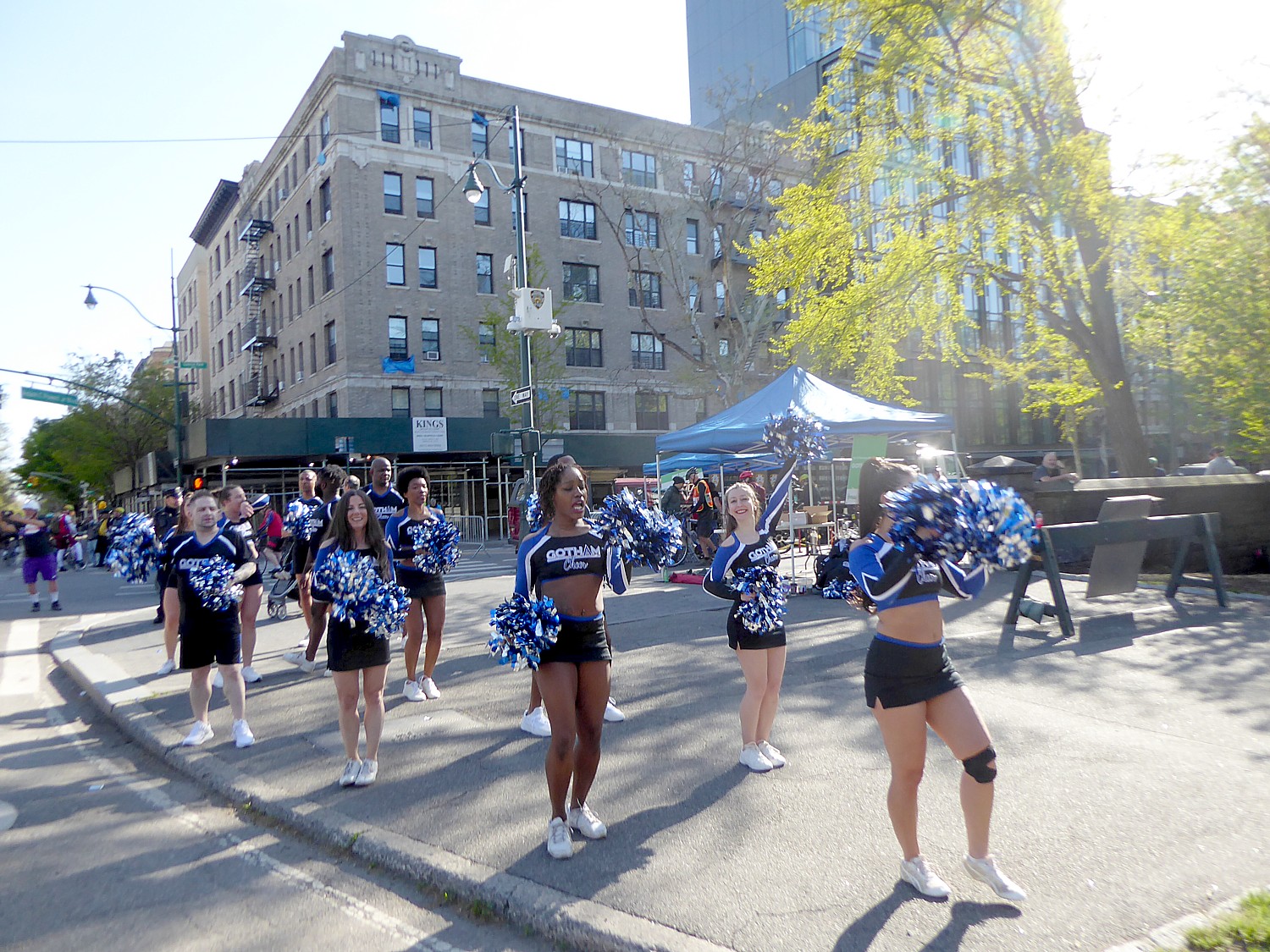
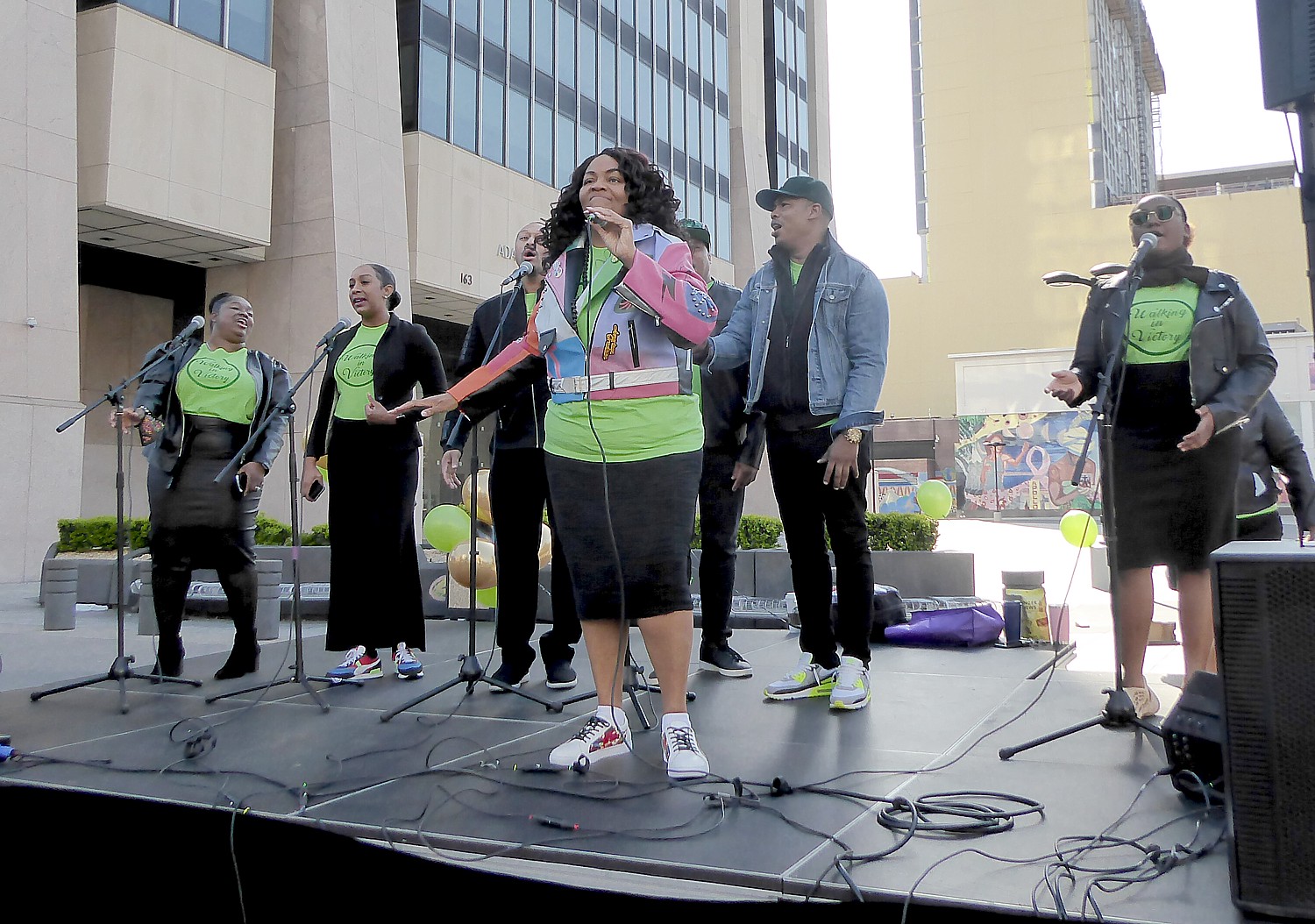
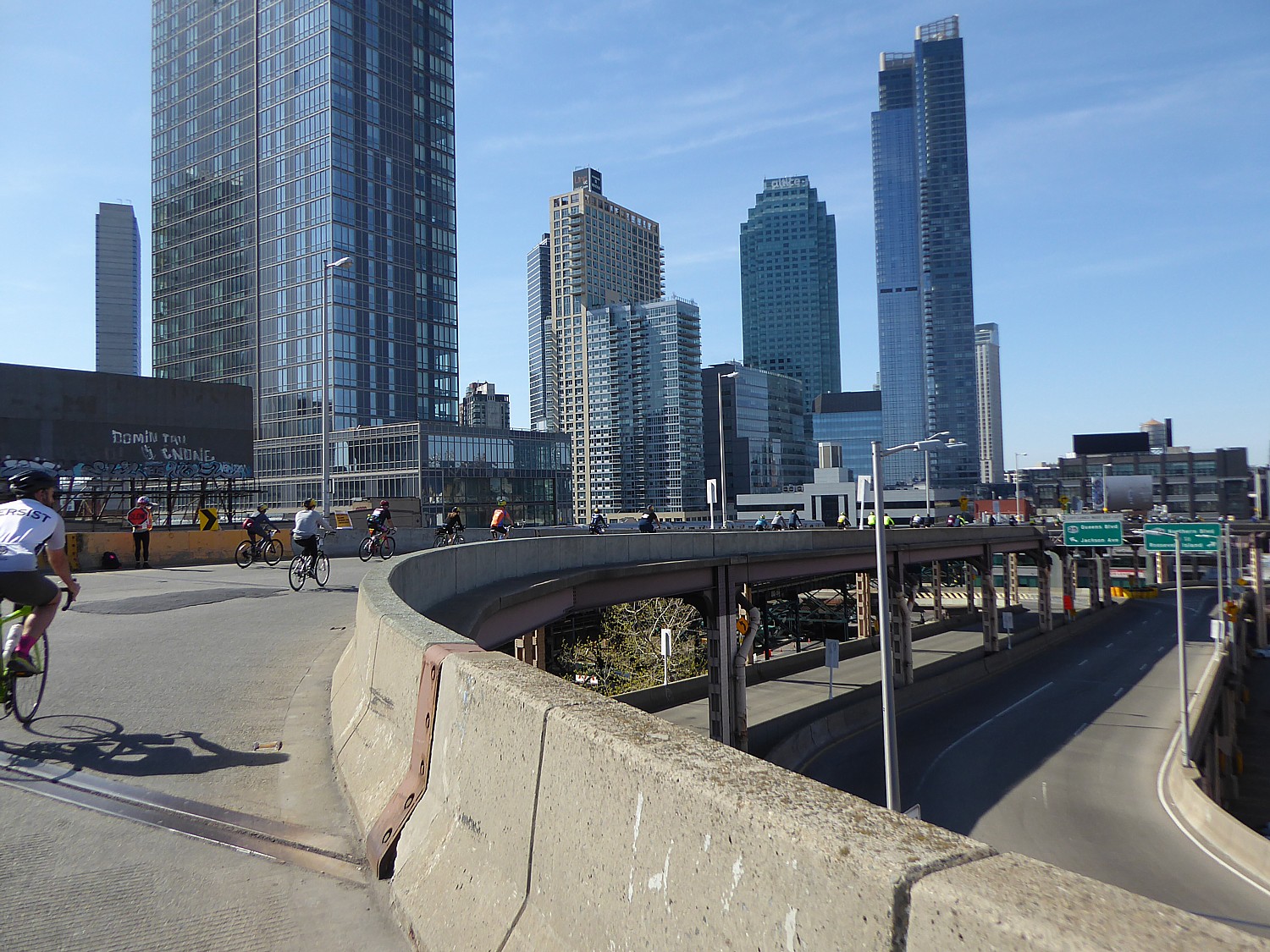
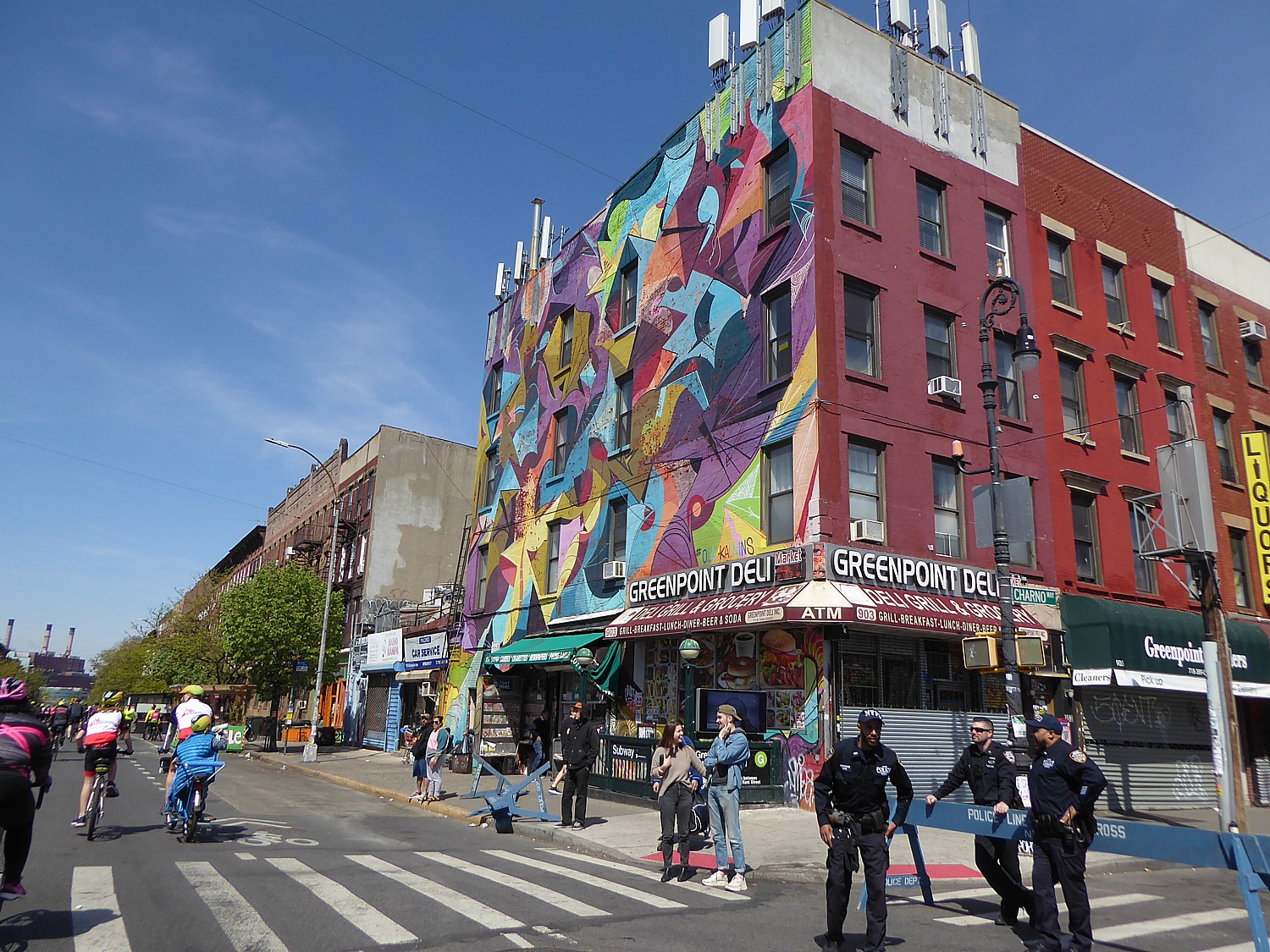
Cheerleaders, bands, banners and signs, marquees greeted and cheered on the riders as they made their way up through Manhattan, into the Bronx, back into Manhattan, down the FDR Drive (a personal favorite), over the Queensborough Bridge (what a view!) into Queens and along the revitalized waterfront, then over another bridge into Brooklyn, onto the highway and over the Verrazano’s one-mile expanse, into Staten Island to the Finish Festival at Empire Outlets on Staten Island’s North Shore, before taking one of New York City’s best rides back to Manhattan, the Staten Island Ferry (and in my case, a delightful ride up the Hudson River Greenway).
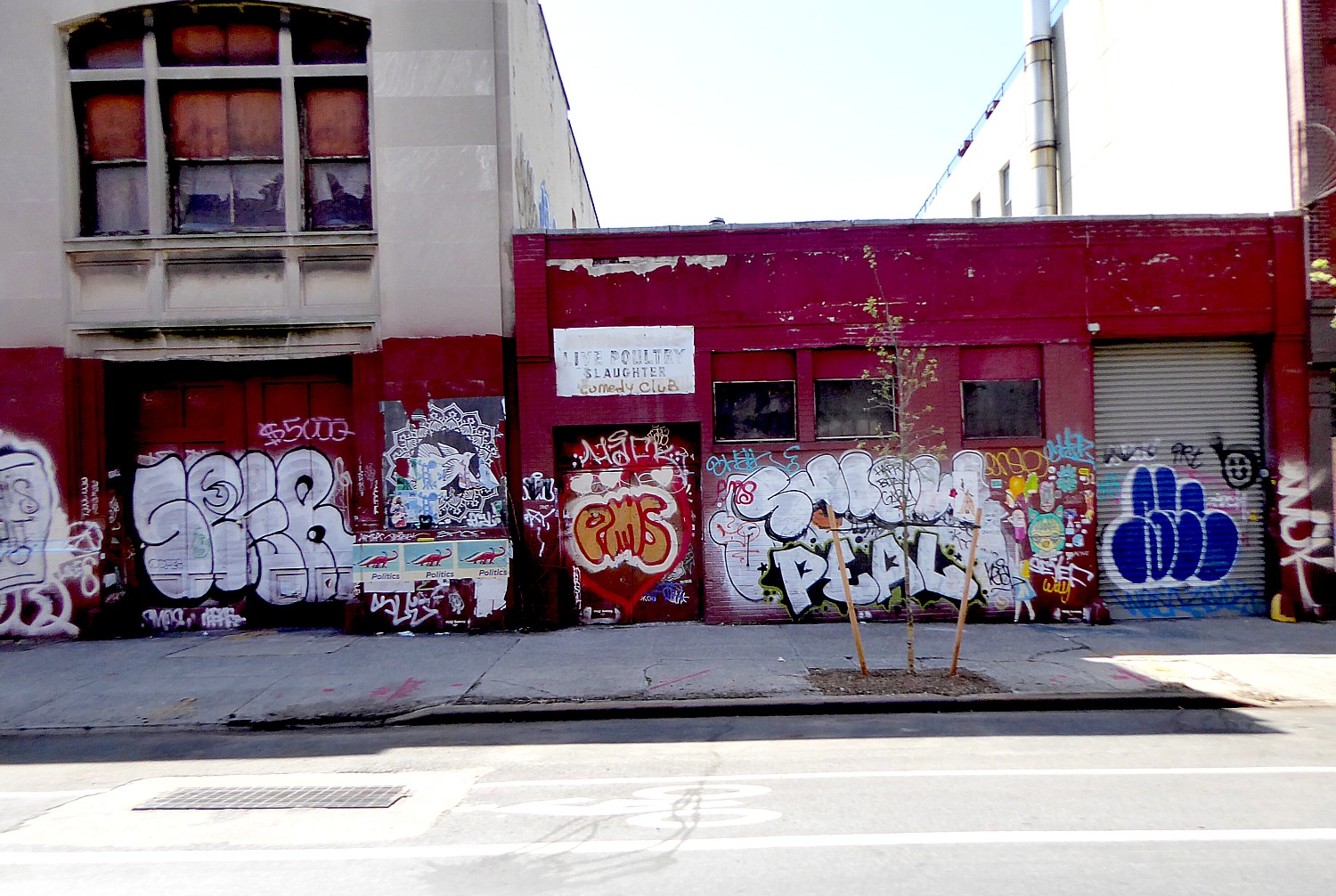
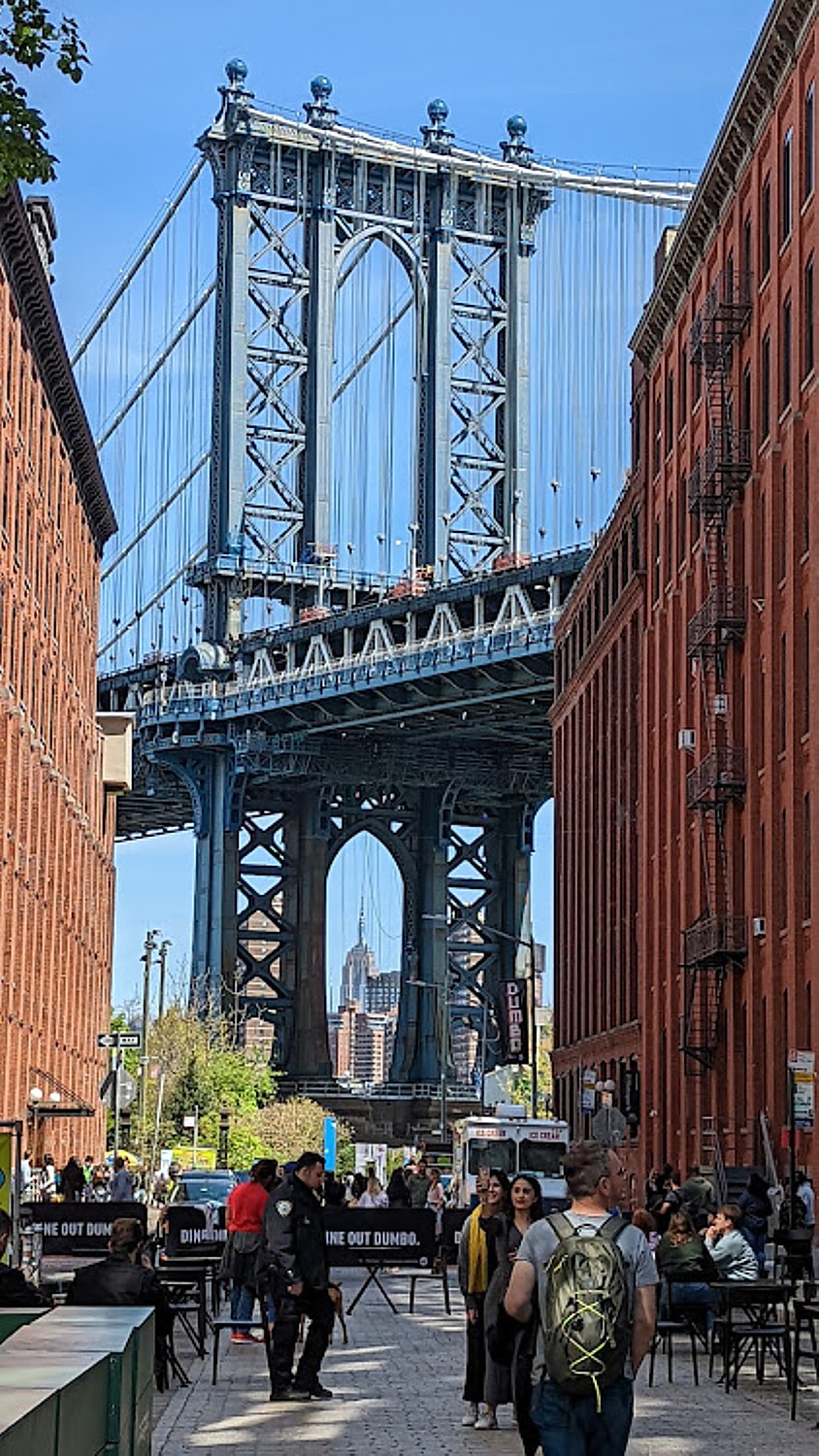
What is so special about New York City’s TD Five Boro Bike Tour is how, for one day, you and 32,000 of your closest friends, feel like you own the city. The streets, bridges and highways – like Sixth Avenue, the FDR Drive, the Queensborough Bridge, the Brooklyn-Queens Expressway and the Verrazano (the longest suspension bridge in the Americas) are your domain. It makes you giddy. Neighborhoods – so colorful, with their distinctive personalities and character, ring with sound and spirit – Greenwich Village, Harlem, Astoria, Williamsburg, Greenpoint, DUMBO, Staten Island’s north shore. Central Park’s blossoms seem to burst open just for us.
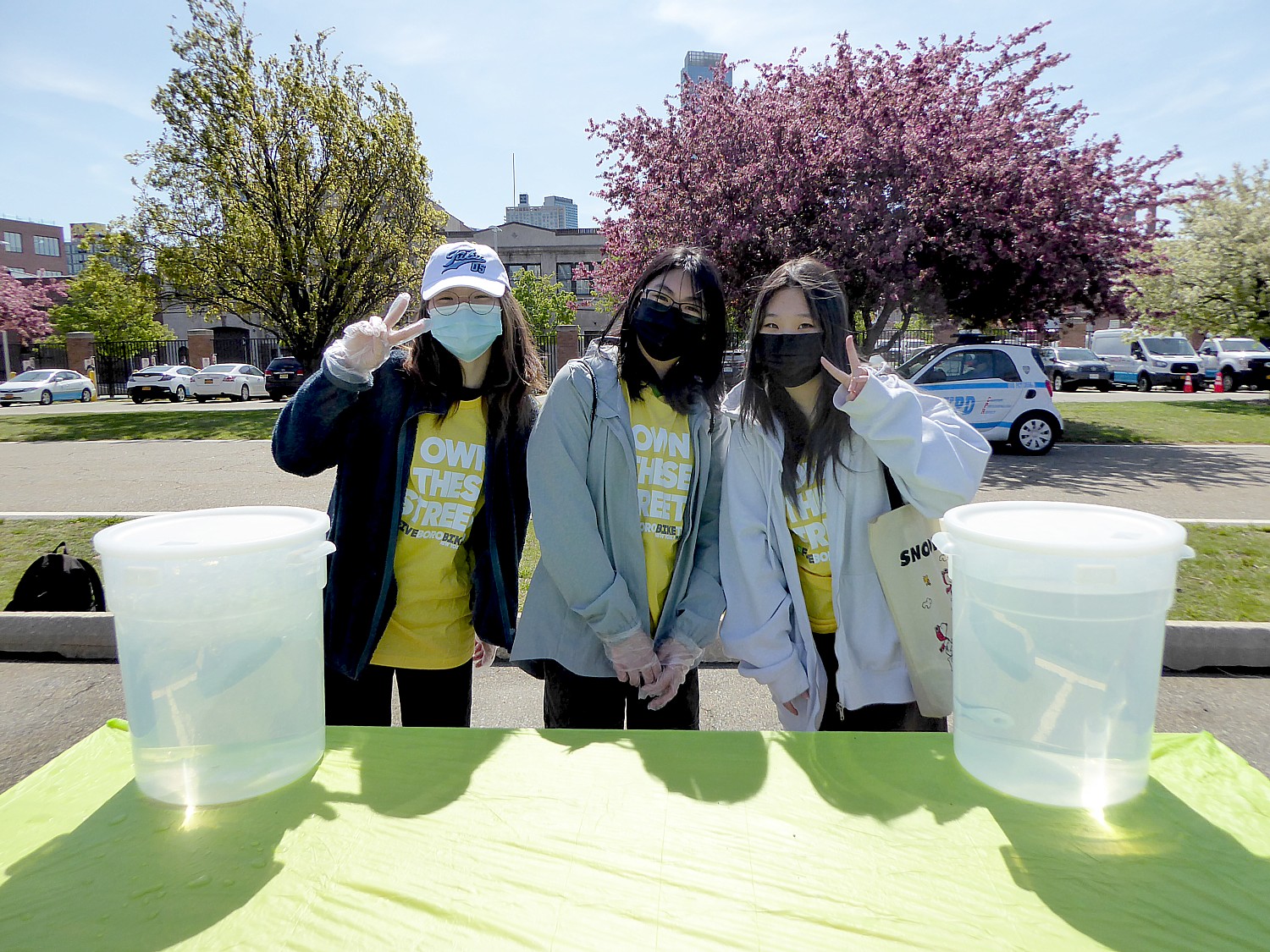
Some 1,200 volunteers – captains, marshalls, EMTs, bike repair people, people who hand out snacks and refill water bottles – add to the Big Apple-sized welcome riders receive.
The annual event raises money for bike education. Bike New York operates bike education centers, after school programs, summer camps, as well as its first membership program.
Numerous charities also use the event for fundraising, purchasing registrations which participants then raise money against.
The ride is designed to be a family friendly tour, not a competition, appealing to all abilities, ages – volunteers hold signs to slow the pace and alert riders to turns and obstacles.
TD Bank has been the title sponsor for the past 16 years; Manhattan Portage was the presenting sponsor.
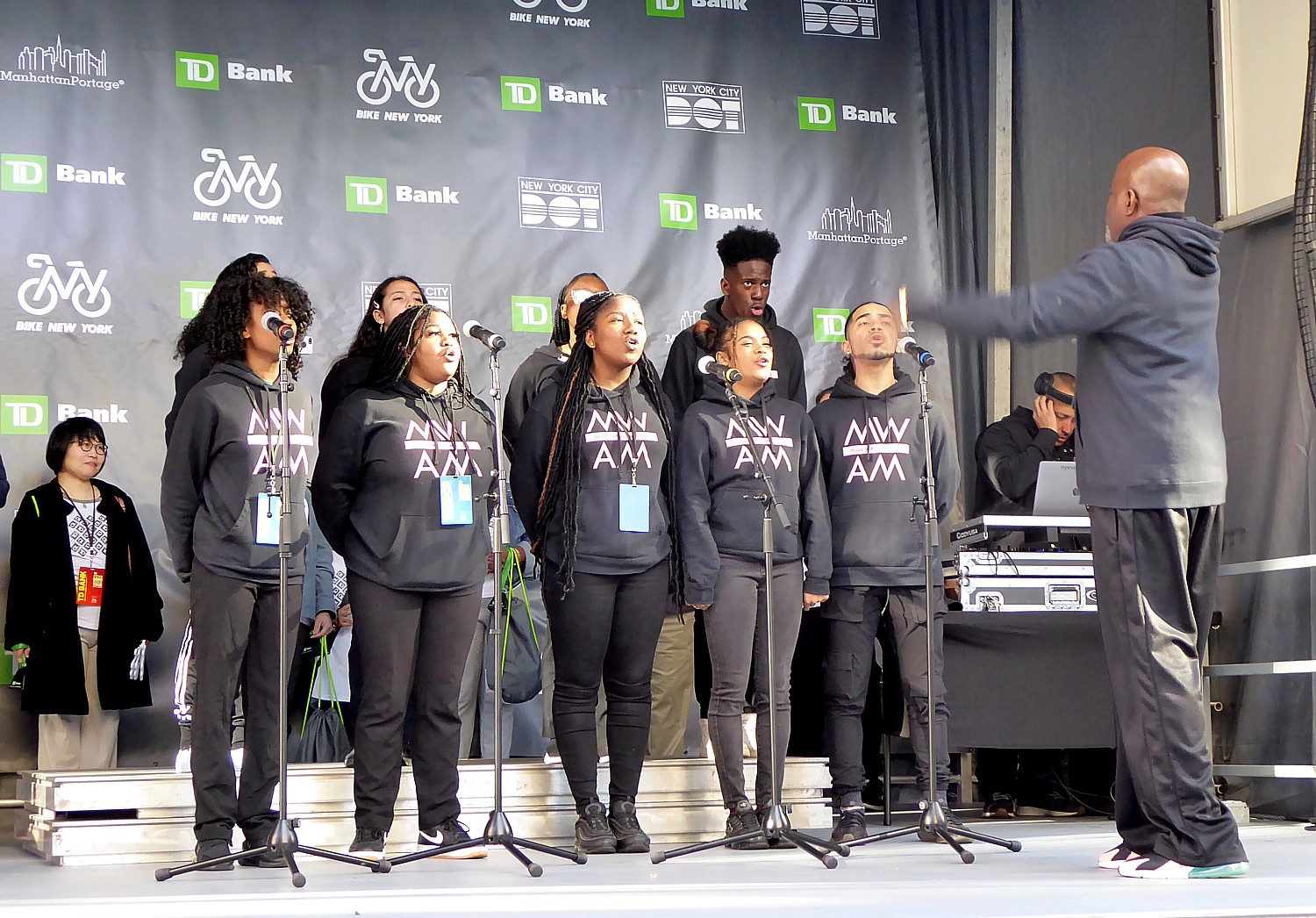
Among the dignitaries on hand to send the cyclists off: Ken Podziba, President & CEO of Bike New York; Andrew Bregenzer, Regional President of Metro NY – TD Bank; Su-Hwei Lin, CEO of Manhattan Portage; New York City Department of Transportation Commissioner Ydanis Rodriguez; Manhattan Borough President Mark Levine; NYC Council Members Christopher Marte and Lincoln Restler; and representatives from Prosecco Cycling, including Italian elected officials.
More information about events and programs offered by Bike New York at bike.nyc.
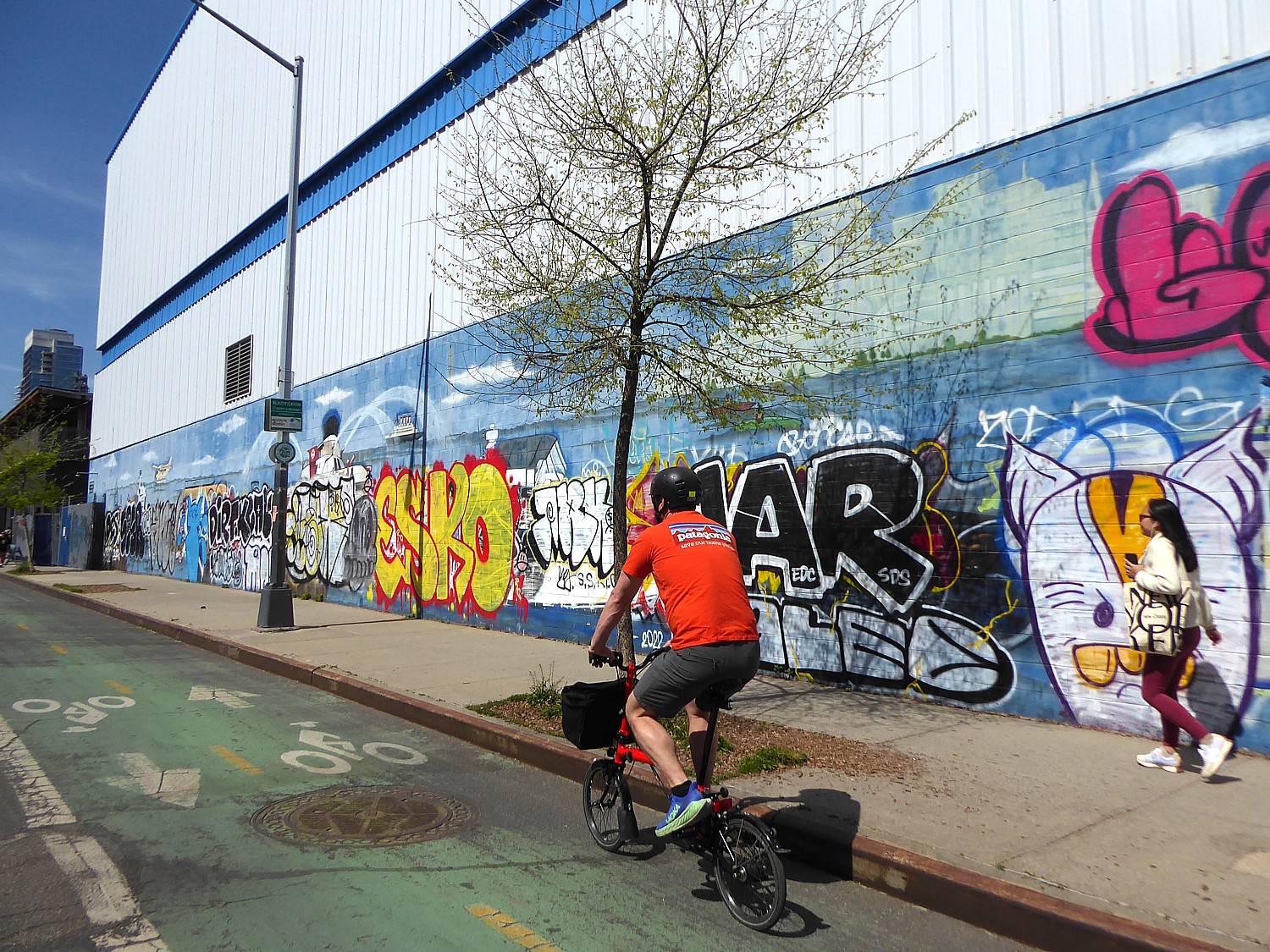
Celebrate Trails Day on April 23 follows immediately after Earth Day for a good reason – biking fulfills the best attributes of sustainable, responsible travel while minimizing the adverse impacts of tourism. Biking lets travelers, adventurers, explorers experience places far and near with the least carbon impact of going place to place; taking the slow-road so you can really connect to local communities you would never see otherwise and spending your tourism dollars with the people who need it most; you can stop and get off to interact with people, take a photo, travel at a pace and a perspective – sitting in a saddle without the wall of windows – to really see, focus, smell the roses, and yet have an ever changing view to see, with the excitement and intrigue of new experiences that might be around the next bend.
And then there’s that endorphin thing that happens as you pedal and take in the fresh air that revs the brain and fills you with good feelings. And biking also affords a way to be in community but socially distanced and in open, uncrowded spaces.
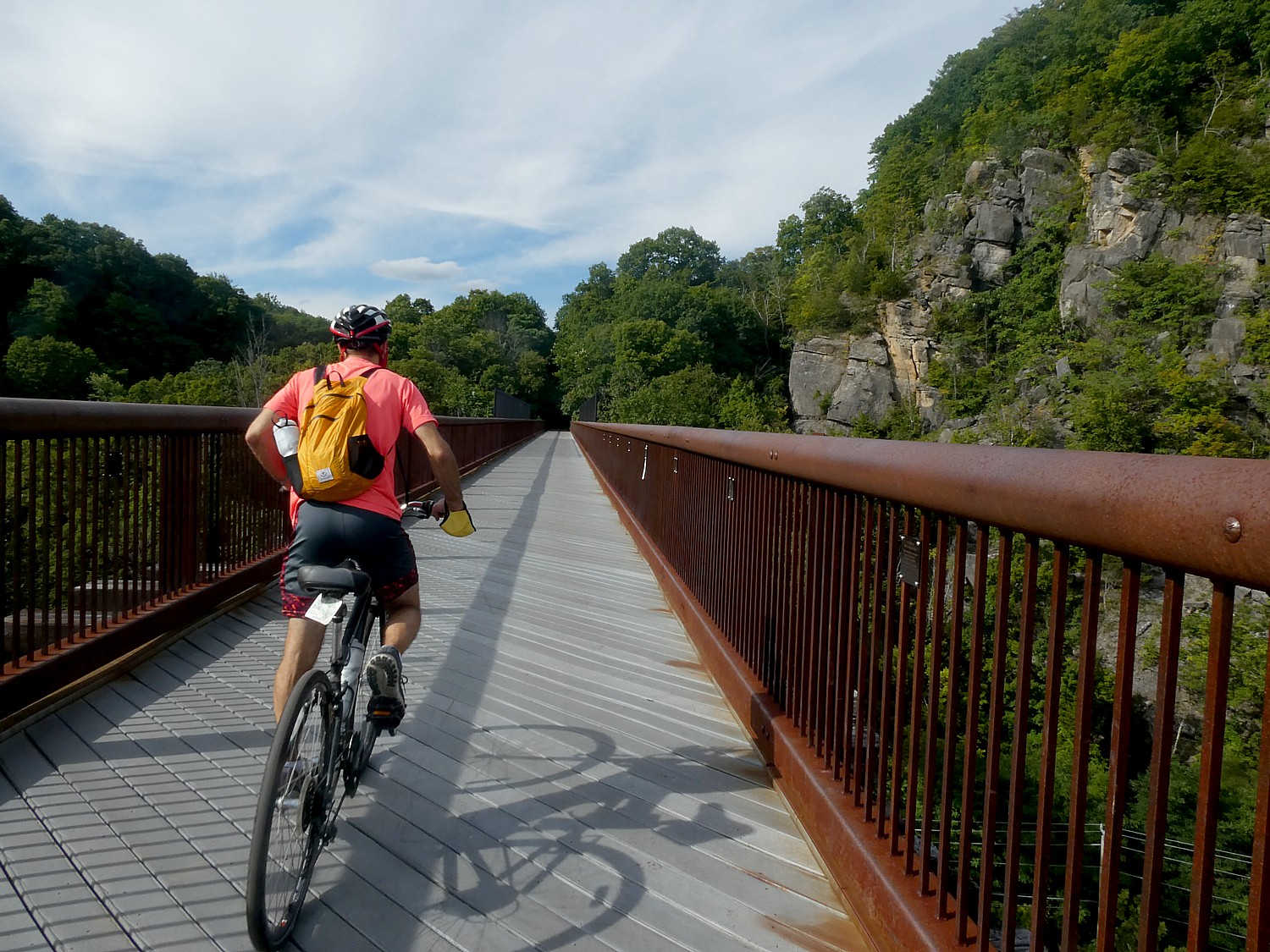
Tour operators are responding to the desire to explore by bicycle with new itineraries, near and far: such as close-to-home (reachable by car) programs that take advantage of New York State’s new 750-mile Empire State Trail (you can ride north-south from the tip of Manhattan to the Canadian border and west-east from Buffalo to Albany), or for a close-to-home foreign experience, biking in Quebec, as well as to trips to exotic locales – like New Zealand, Vietnam, Chile. Or how about Albania, Bulgaria or Transylvania?
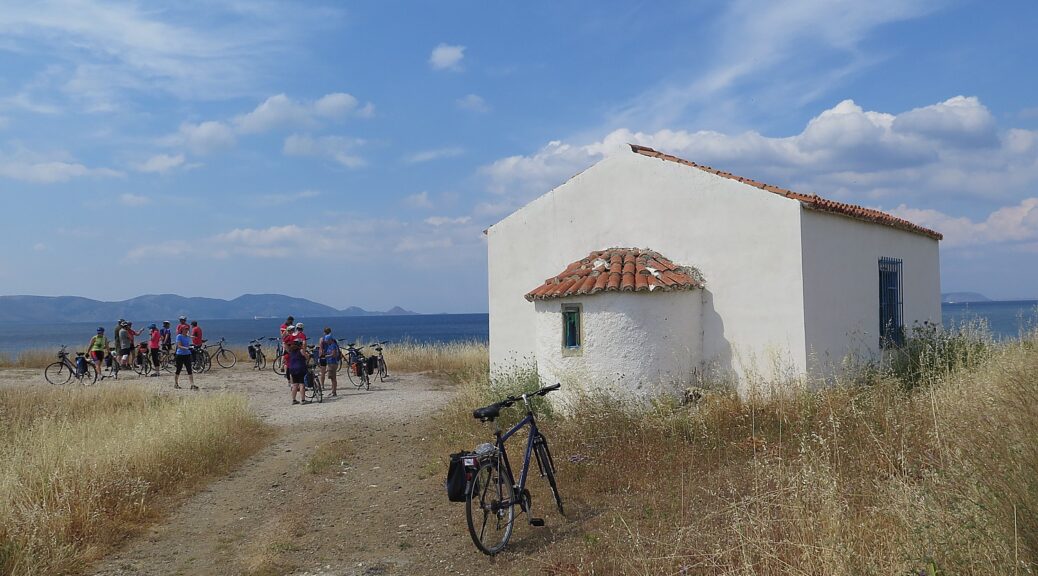
More offerings that combine boat and bike make the trip even more convenient (you only unpack once) and add a special element of plying waterways by a small river boat, canal boat or barge, or go from island to island. And many offer an e-bike option, opening a whole new dimension for exploration on two-wheels, especially for people who are concerned about physical abilities.
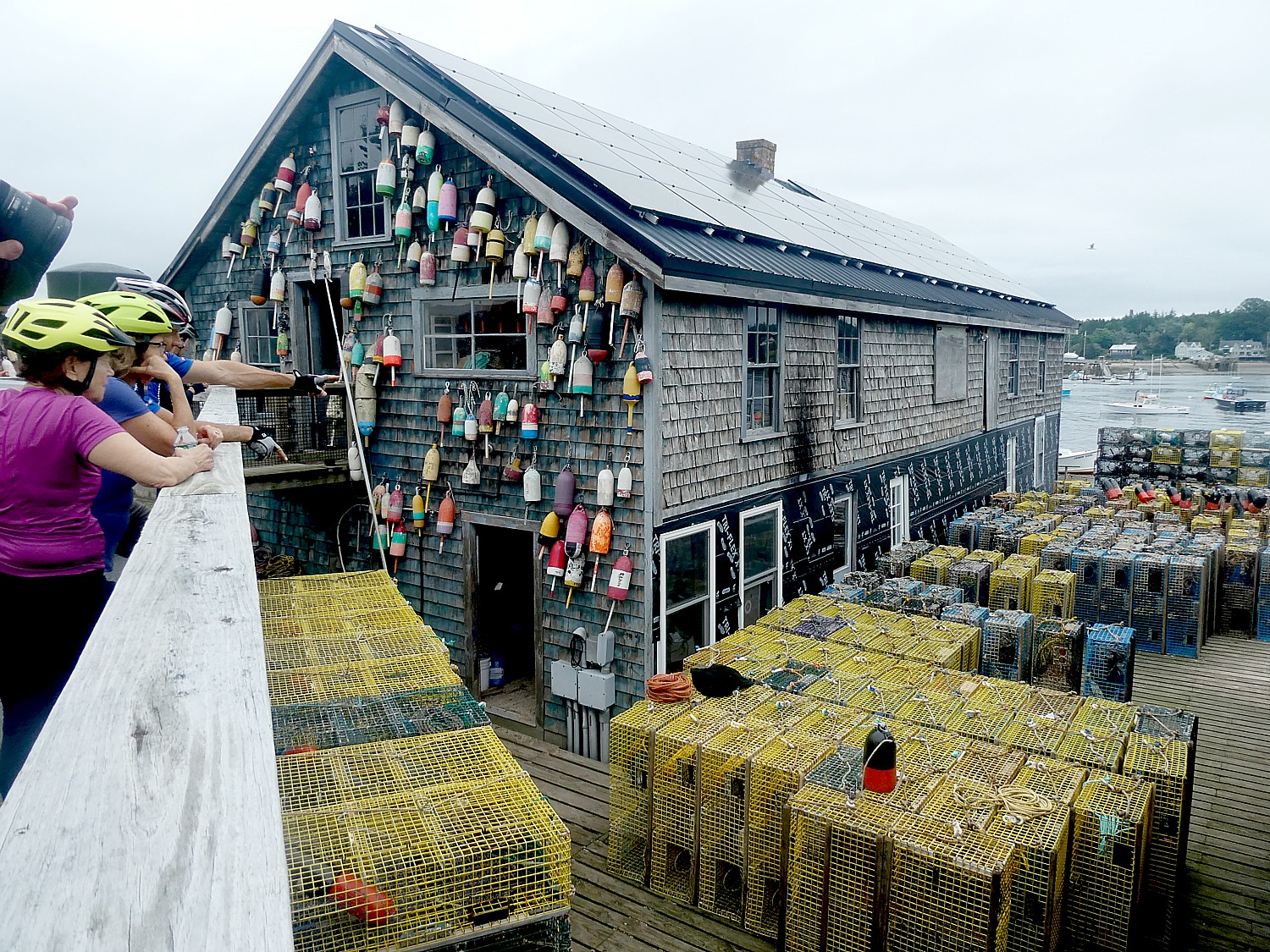
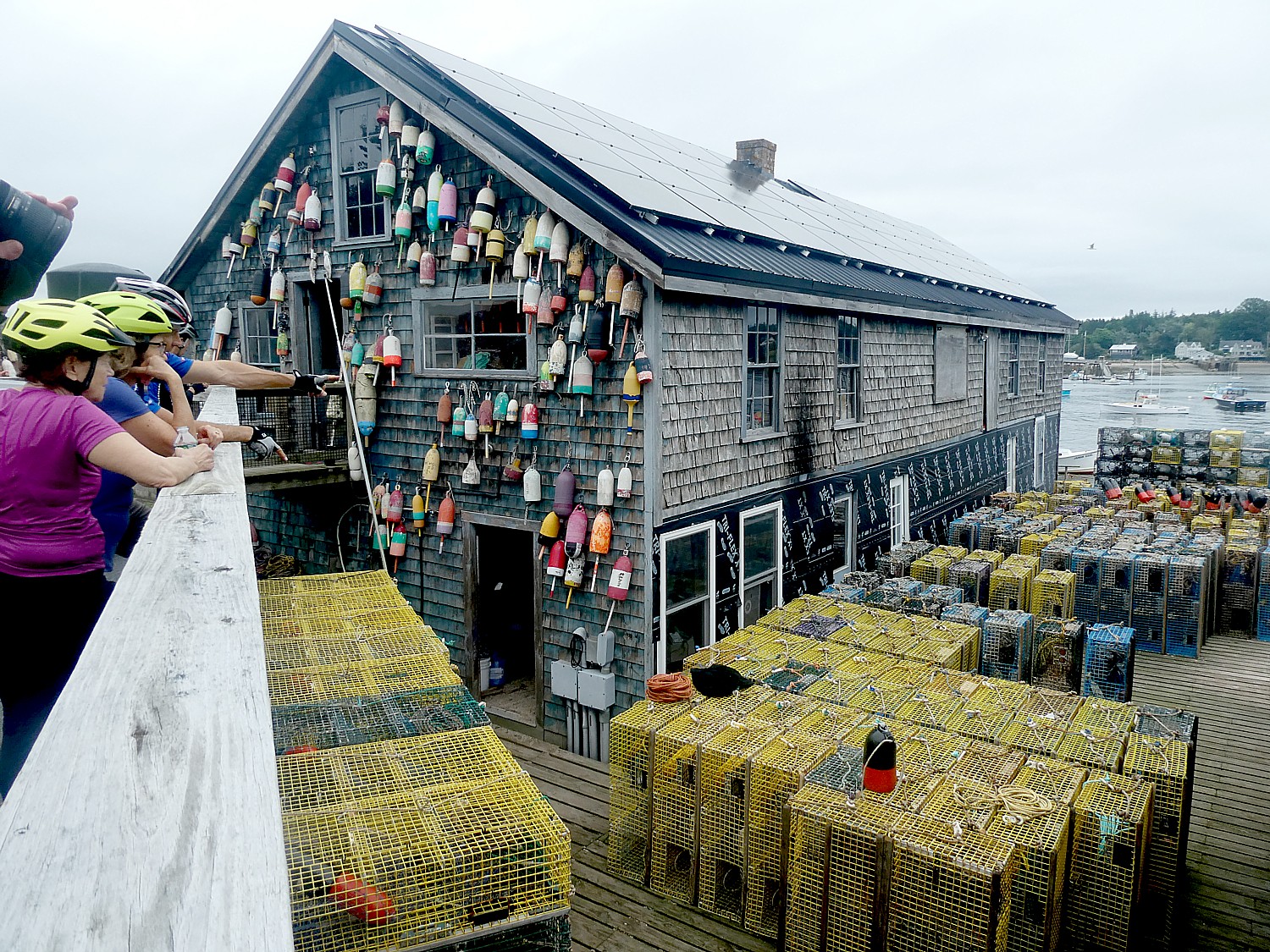
Discovery Bicycle Tours has an amazing array of itineraries in the United States (including new itineraries on the NYS Empire Trail), Canada, Europe, Chile, New Zealand and Vietnam. What I love best (I biked with them last summer on the Maine Coast/Acadia national park, and before that Vermont) is that the programs are really geared for a vacation, the guides there to make your experience purely enjoyable. There are all these extras, as well. A new itinerary on New York’s Empire State Trail; an itinerary on the Erie Canal Trail and New York’s scenic lakes, canal path from the Buffalo area with added scenic riding along Lake Ontario to the Finger Lakes on six-day Erie Canal & NY Lakes tour; a new 3-day Hudson Valley Weekend tour (bike car-free paths & quiet roads, dine at the famous Culinary Institute of America and visit a family-owned winery;a gentle six-day Lake Champlain Islands bike tour with beautiful views of the Green Mountains and Adirondacks; and a challenging six-day biking/camping Green Mountain Gravel Adventure on gorgeous Vermont dirt roads and trails and experience famous Vermont craft breweries and swimming holes.
Nearby but exotic: a six-day tour of the Quebec Eastern Townships known for their beauty, their villages and their wineries.
Among Discovery Bicycle’s international itineraries is a new six-day in England,Cotswolds & Stonehenge Bike Tourand a Moselle River Bike & Barge tour. From close to home to far, far away, Discovery is introducing an 11-day New Zealand Trails tour to experience New Zealand’s unmatched scenery, riding car-free rail-trails and quiet bikeways along deep blue lakes amid soaring ice-covered peaks, through rolling grasslands and hidden valleys (Nov., Jan., Feb.)
Wilderness Voyageurs, starting out from its home base in Ohiopyle, PA, has spread throughout the US. We’ve traveled with them on their South Dakota “Badlands & Black Hills” tour and on rides along the Great Allegheny Passage with Rails to Trails Conservancy.
Wilderness Voyageurs’ 4-day Chesapeake Bay Bike Tour takes advantage of the easy elevation gain for a charming journey along the Maryland coastline. Cycle through farms, woodlands and see bald eagles and endangered species in the Blackwater National Wildlife Preserve. Enjoy seafood feasts, ferry rides, and century-old architecture.
Wilderness Voyageurs is also featuring a specially designed five-day Type 1 Diabetes Ride on the Great Allegheny Passage (July 24)., biking, hiking, visiting Fallingwater, with Dr. Jody Stanislaw, a naturopathic doctor and a Type 1 diabetic, who will be guiding each day with tips on the balance between insulin, exercise, and diet. It’s an ever-changing equation and if you’re tired of the sugar roller coaster, this is an exceptional opportunity. Ride together with fellow type 1s and Dr. Jody.
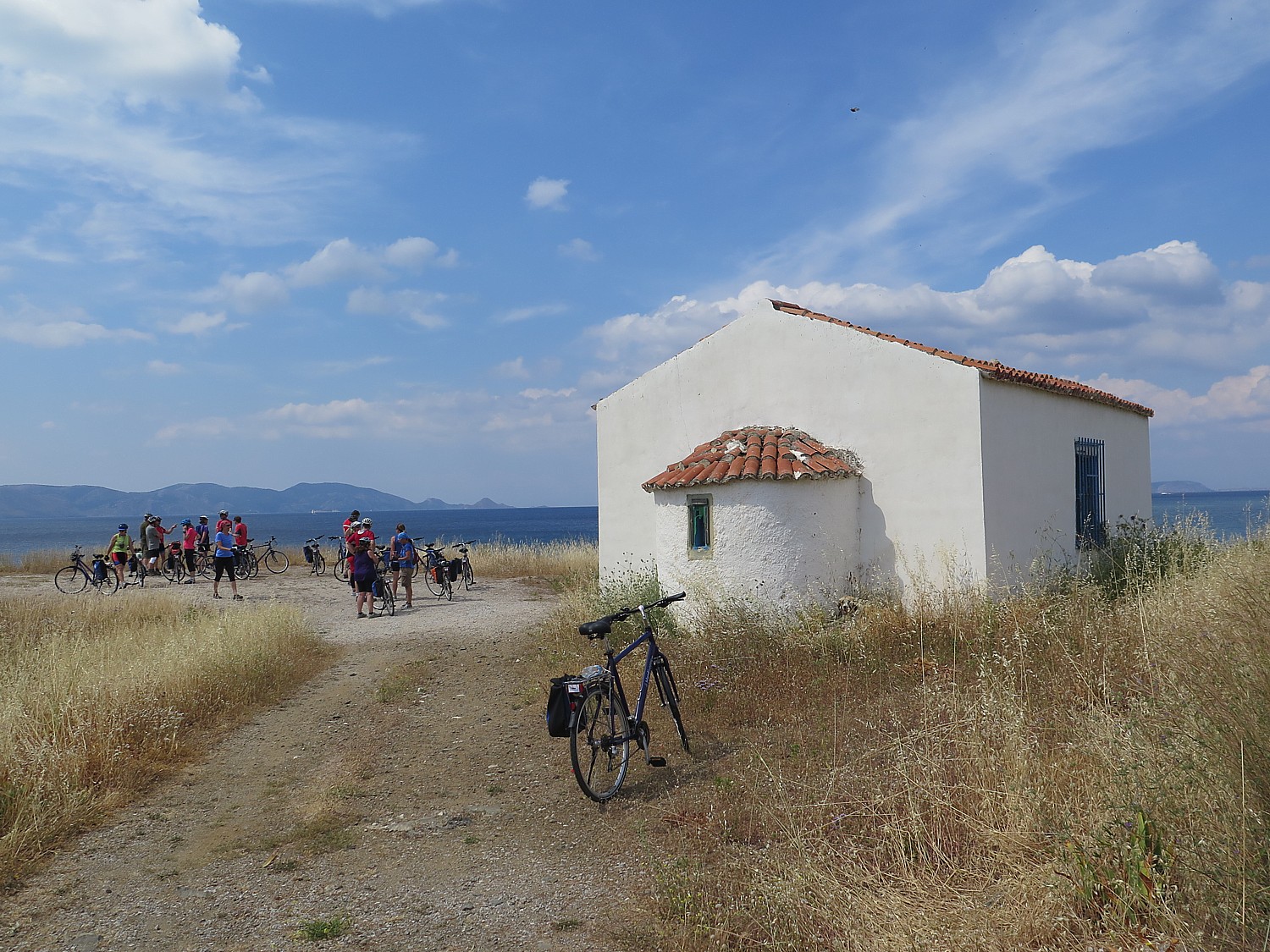
BikeTours.com, specializing in European biking adventures (guided, self-guided and bike/boat tours), has listed its top destinations for 2022: The Greek Islands (which I did); Czech Republic; Croatia; Transylvania, Romania; Salzburg, Austria; Umbria, Italy; Scotland; Dolomites, Italy; Southern France and Albania (which I did). I’ve also taken their self-guided Venice-Croatia trip and their guided Slovenia biketour and for our first self-guided bike tour, the Danube Bike Trail (ideal for families and first-timers).
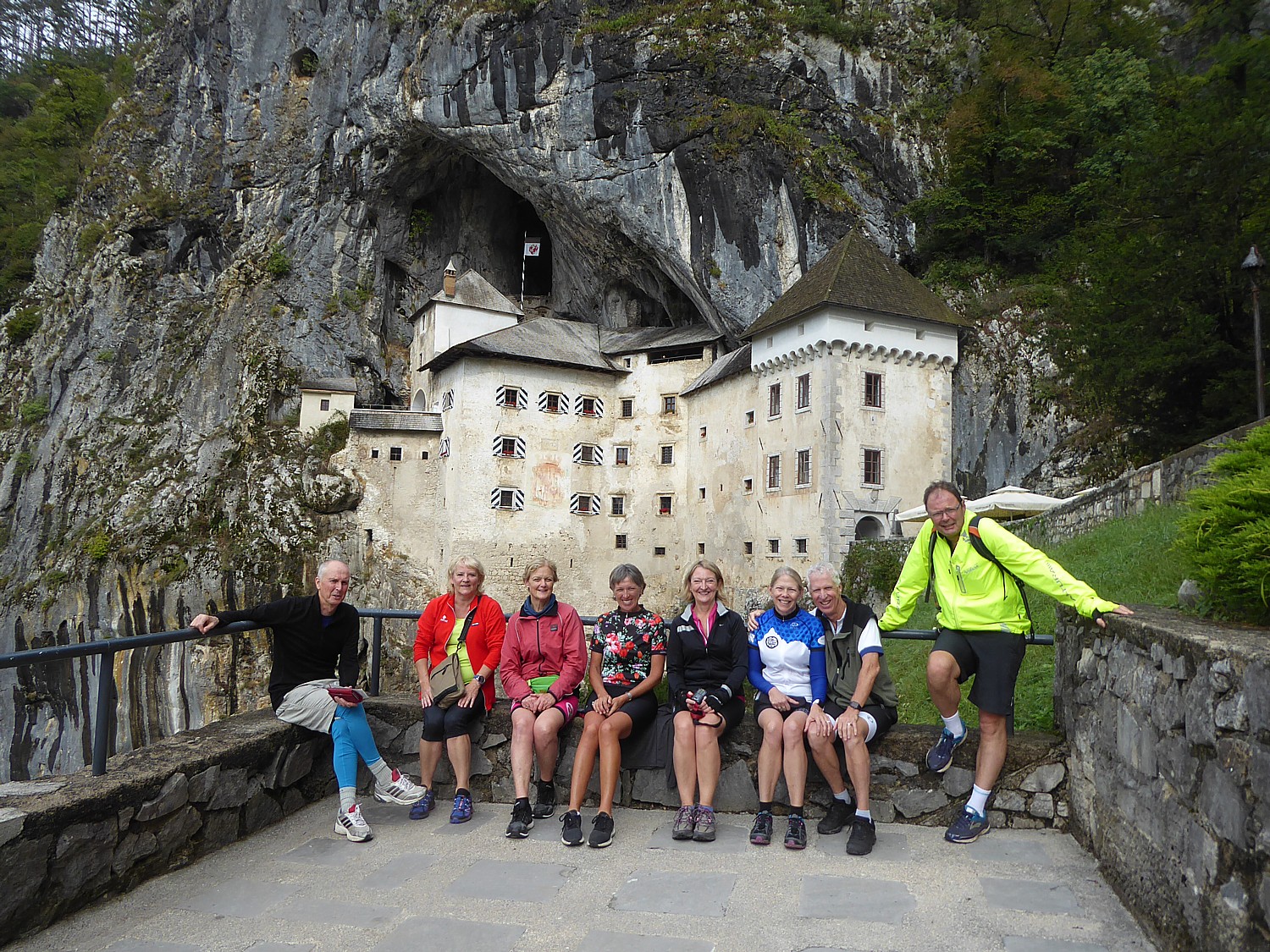
“If you’re itching to get back in the saddle with a European bike tour but want to explore destinations heavy on beauty and light on people for most or all of your tour,” Jim Johnson, president of BikeTours.com, suggests Bulgaria, Slovenia (which I did – biggest surprises were visits to Predjama Castle and Postojna Cave), Apulia (Puglia), Transylvania, and Connemara (Ireland).
But this year, recognizing that some may still be more comfortable traveling closer to home, is offeringnew tours from its sister company, Bike the South. One of them is “Tennessee Hills and Stills,” focusing on the state’s whiskey producing tradition.
Check the really user-friendly site: Biketours.com, info@biketours.com, 877-462-2423, 423-756-8907.
Butterfield & Robinson, long known as a luxury tour company, has introduced a series of departures geared to families with young adults (late teens and up), who will relish this opportunity to share an experience before their YA flies the coop. Among the itineraries: Switzerland E-Bike, Alsace E-Bike, Tuscany biking, Berlin to Prague Active, Mallorca E-Biking, Prague to Vienna; Alentejo, Portugal; Catalonia; the Camino do Santiago Biking,
Perhaps most intriguing: Cambodia & Vietnam: in Cambodia, see the spectacular ancient Khmer temples at Angkor, comprising one of the most jaw-dropping temple complexes in the world; then head to Vietnam and experience the buzz of Ho Chi Minh City and the serene landscapes of Can Tho; delve deep with three nights in Hoi An and wrap up in the Imperial City of Hue.
More biking tours are incorporating camping options. TrekTravel is going a step further, with a new partnership with AutoCamp (autocamp.com) to provide (get this) Airstream suites (those famous RVs) for two brand new itineraries; Palm Springs & Joshua Tree, and California Wine Country.
Among TrekTravel’s most popular itineraries this year: Prague to Vienna, New Mexico (cycle on the historic streets of Santa Fe, within the expansive pine forests, and beneath high desert mesas and Badland formations).
The itinerary I’ve been eying: Portugal, featuring the Alentejo wine region, a majestic countryside of wheat, olive trees, vineyards, and the seat of the world’s cork production where you see the cork tree groves and Roman temples in towns like Evora, a UNESCO World Heritage Site.
TrekTravel is also continuing to offer private trips for 10 or more guests (Top 5 destinations: California Wine Country, Ashville to Brevard, Puglia, San Juan Islands, and Tuscany).
(TrekTravel, 866-719-2427, Trektravl.com)
Duvine Cycling & Adventure Co. is another high-end active travel company with trips that combine wine and gastronomy in such lavish places as France (Ride Through France’s Most Fabled Terroirs) and Italy. Duvine’s newest itinerary is Bike and Boat in Amalfi: The Amalfi Coast has dazzled travelers for decades, but there’s another side of this destination that’s rarely seen. Our two new tours hold the key to the Cilento Coast, Italy’s best-kept secret. Whether by bike or private yacht, you’ll wend up the Amalfi Coast with views stretching back to Calabria, climb to towns memorialized by Hemingway, and hike Positano’s Path of the Gods to vertiginous vineyards.
(duvine.com, 888-396-5383)
B’spoke Cycling Holidays, based in London, are geared for the harder-core, but for more leisurely cycling, look to their sister brand Cycling for Softies which offers luxury cycling tours in Europe’s famous wine regions.
I’m headed to Europe for Boat Bike Tours’ eight-day Bruges-Amsterdam tour. A leading European operator of boat-and-bike tours which more or less founded the concept 40 years ago, the company offers 70 itineraries in Netherlands, Belgium, Croatia, Czech Republic, Danube Countries, Austria and Serbia. Germany, Greece, Hungary, France, Italy, and Slovakia incorporating their fleet of 50 ships, from barges and sailing ships to motor yachts. (More when I return.) You can live chat on their website, boatbiketours.com, +31 20 72 35 400
Hosted on the fourth Saturday of April, Celebrate Trails Day (formerly Opening Day for Trails) is an annual spring celebration of America’s trails. Started by Rails-to-Trails Conservancy in 2013, the celebration encourages people across the country to get outside and enjoy the nation’s exceptional trails and trail systems. There are featured events throughout the country, and if you let RTC know you will #CelebrateTrails, you can win prizes (railstotrails.org/celebratetrails).
Rails to Trails advocates for creation of multi-purpose trails using strong arguments of health and quality-of-life for locals, economic opportunities for communities along the route, and climate benefits of non-carbon-emitting transportation. Since 1992, RTC has advocated for more than $15.6 billion in funds to support more than 54,000 trail and active transportation projects. The Trails Transform America campaign has this message for Congress: Trail networks are as fundamental to America’s transportation systems as roads and rail lines and deserve robust federal investment. Explore trail network projects that are bringing transformative benefits to communities nationwide.
The most ambitious of projects is The Great American Rail-Trail which, once completed, would enable riders to cross the entire nation on linked rail trails. Stretching more than 3,700 miles between Washington DC and Washington State, through 12 states, the trail will directly serve nearly 50 million people within 50 miles of the route.
The RTC site is also a great place to find trails near and far and download the TrailLink app, https://www.traillink.com/mobile-apps/
By Karen Rubin, Travel Features Syndicate, goingplacesfarandnear.com
To be candid, I would not have traveled to Florida except for a special occasion presenting an opportunity to visit with family I haven’t seen in quite some time. Luckily, this is a mere week before Omnicron hit with such fury or is even a thing, but I still don’t feel Florida particularly appealing for a long list of reasons.
My destination is the immensely popular Daytona Beach area. So even though Omnicron has yet to hit and though I am triple vaxxed, because of Florida’s contempt for preventive public health measures, I remain extremely vigilant in using a mask, staying outdoors as much as possible and avoiding crowds – even the wedding I attend is a small, intimate affair held outside.
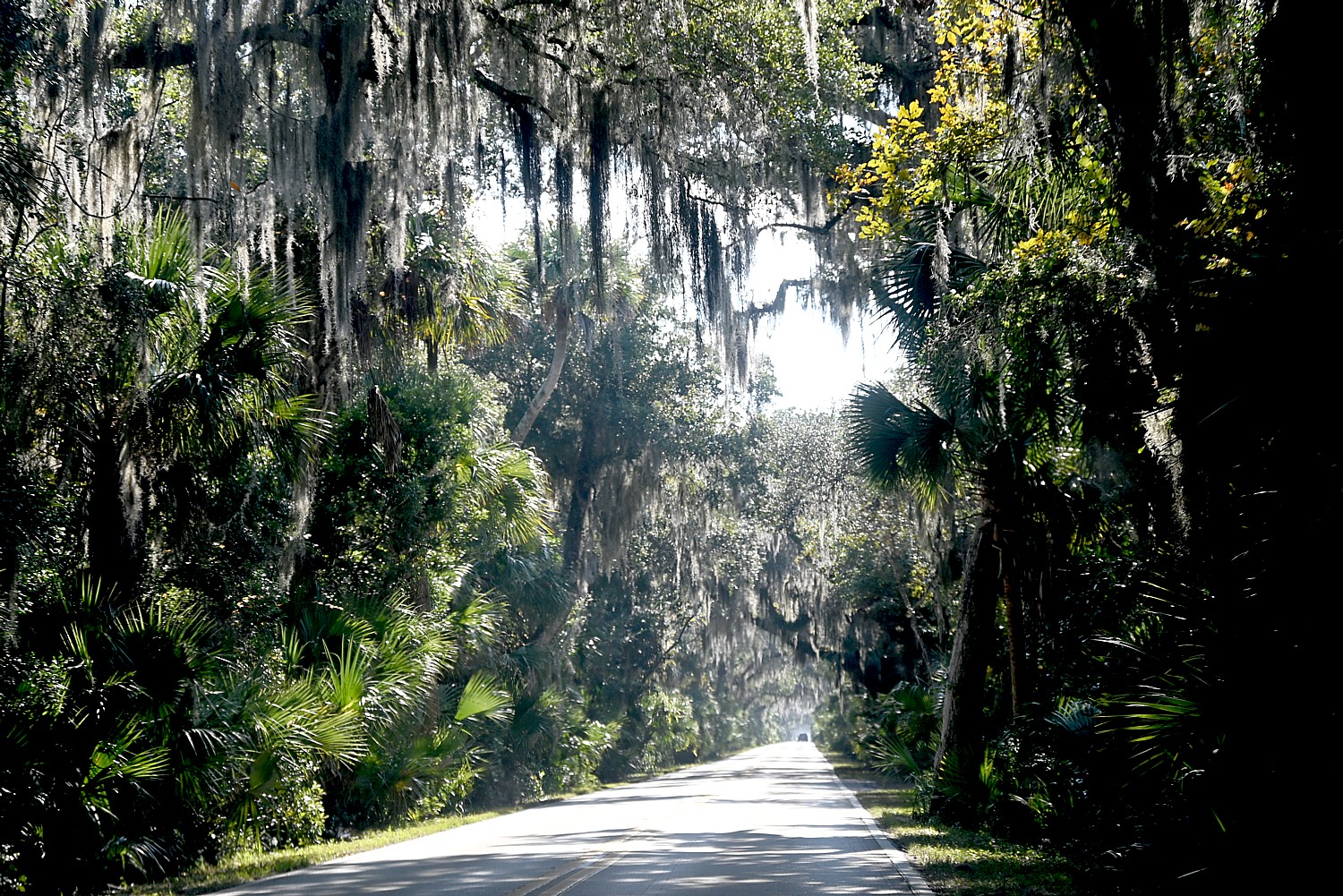
Fortunately, the Ormond Beach area, a mere few miles north of Daytona Beach, and north along the famed Highway A1A, where, my cousin – a native Floridian – takes me, is the fabled “Real Florida,” and provides the perfect setting.
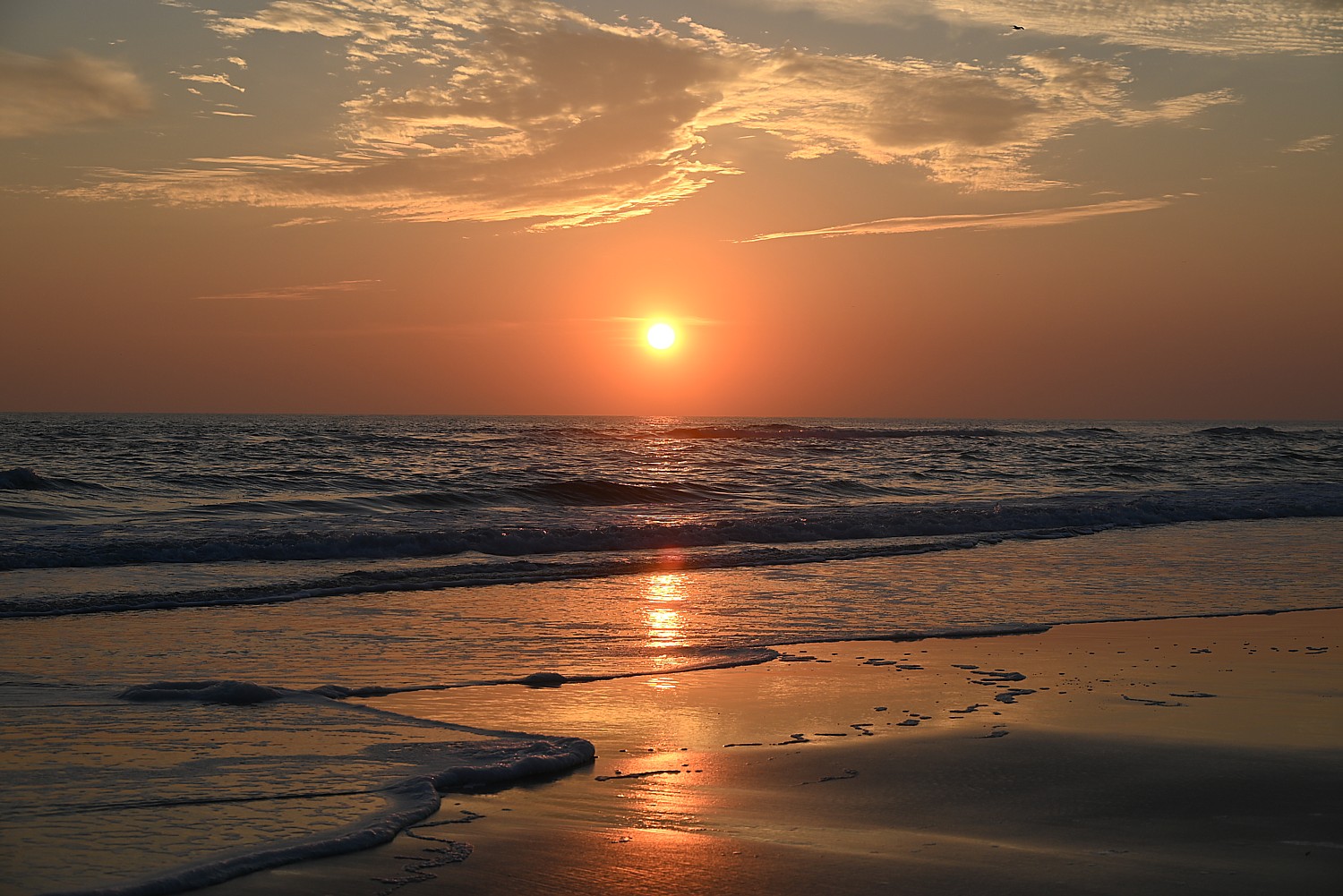
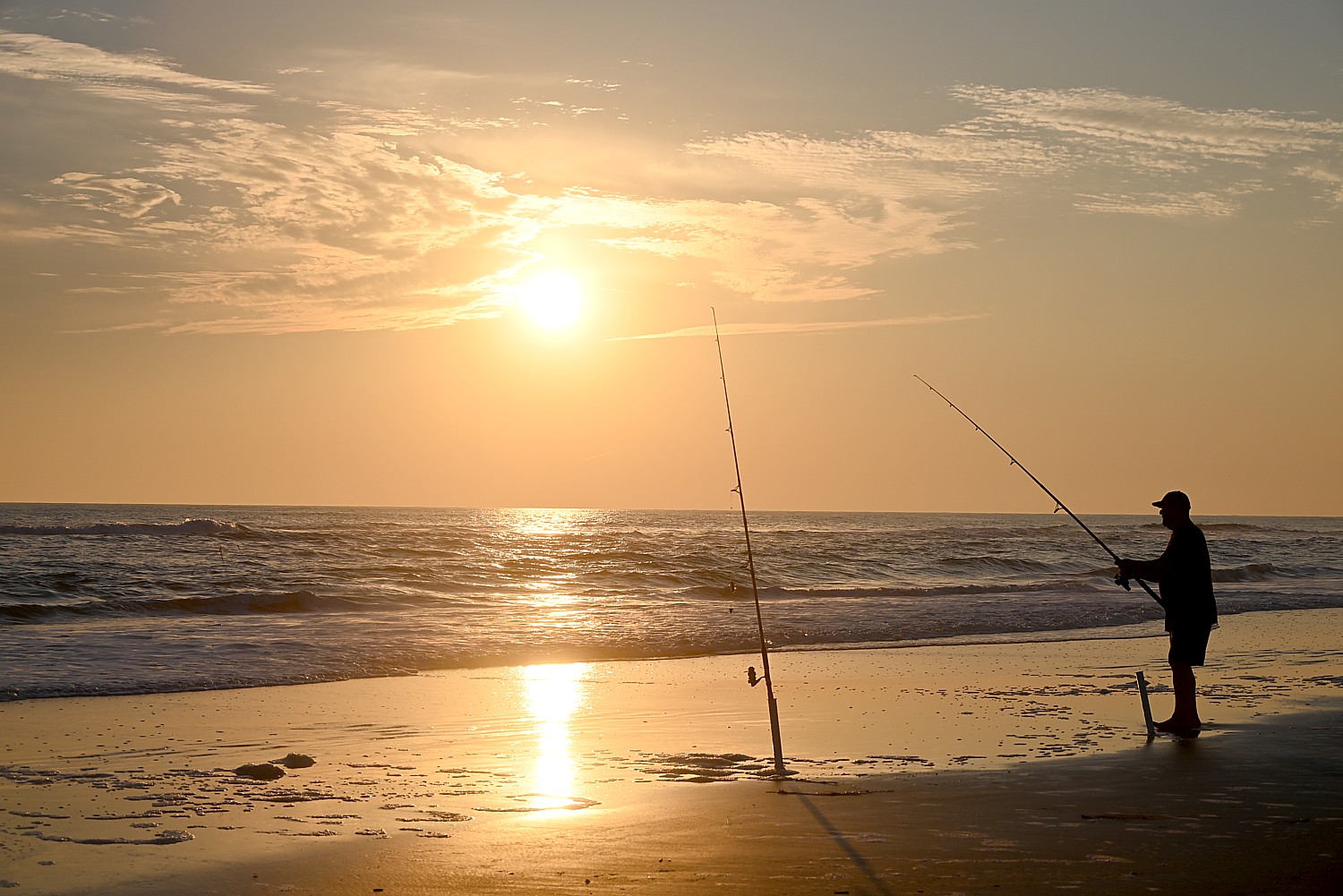
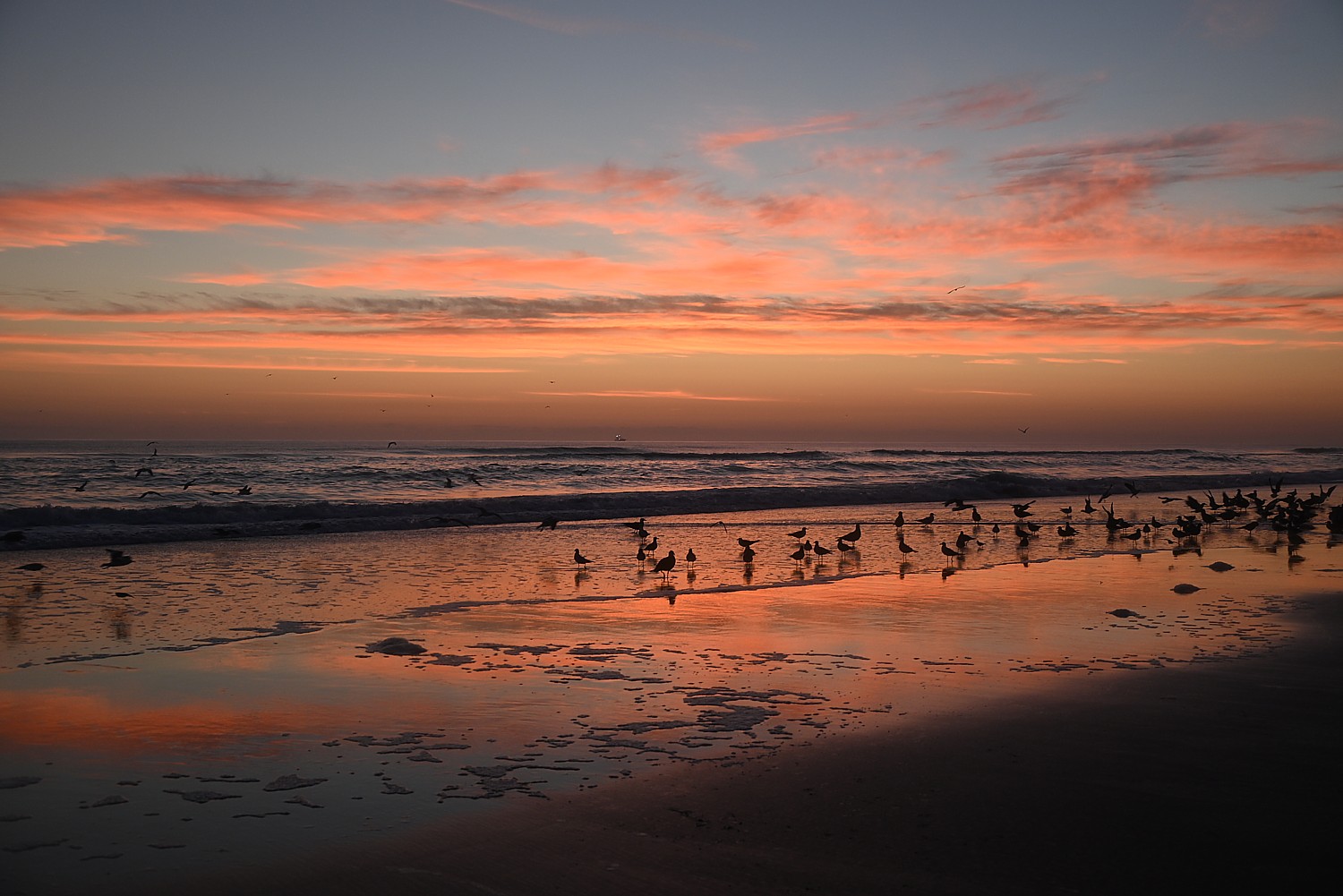
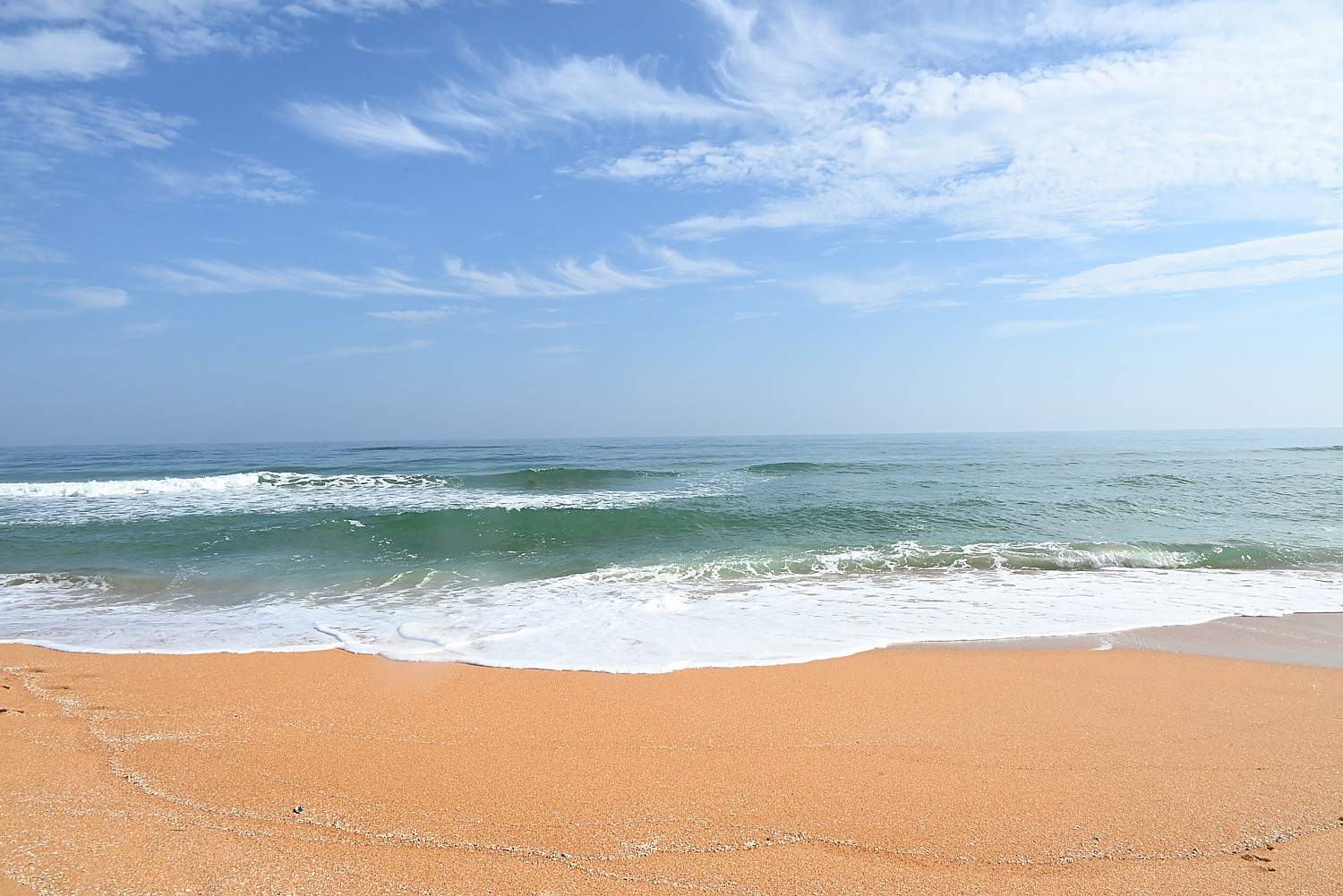
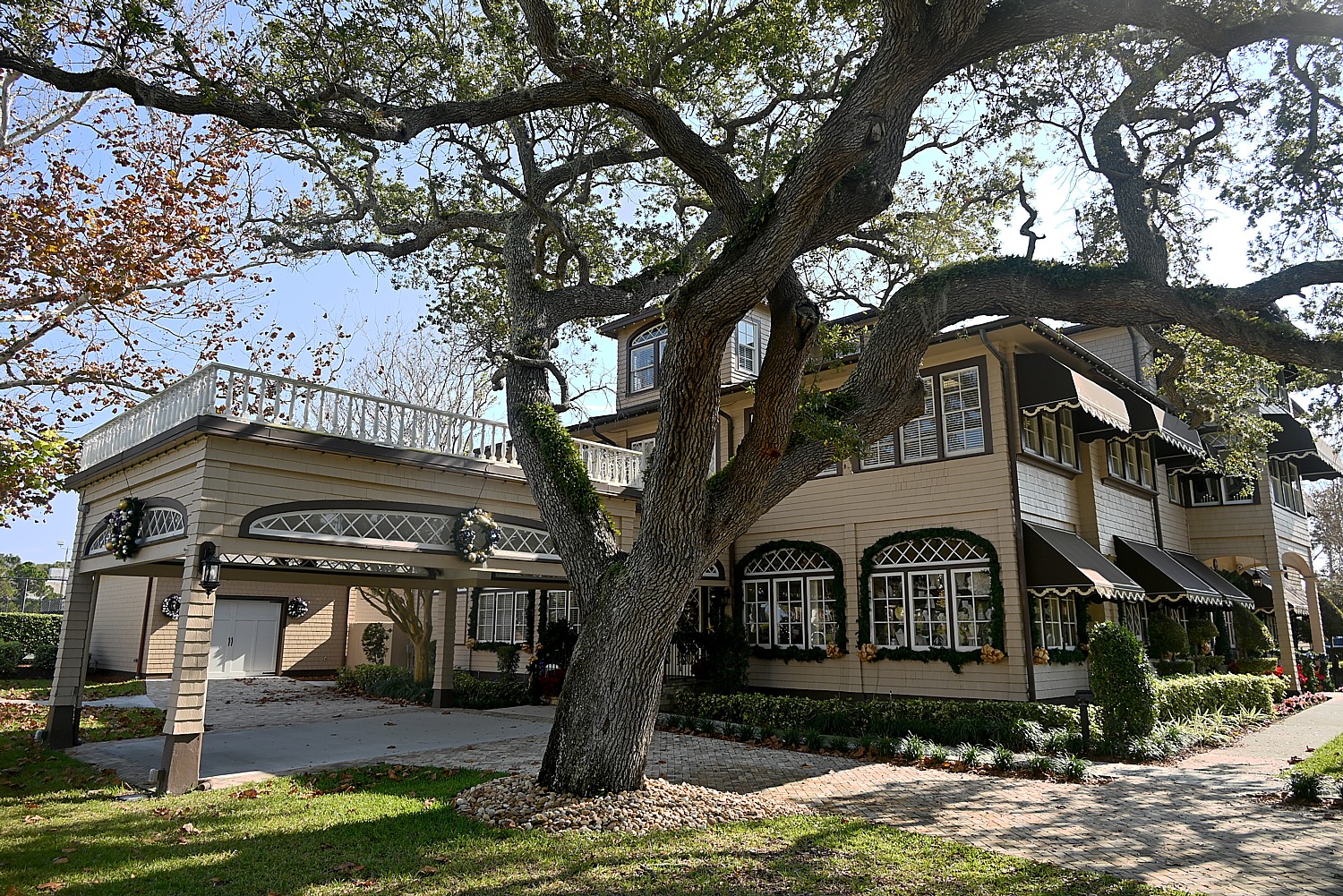
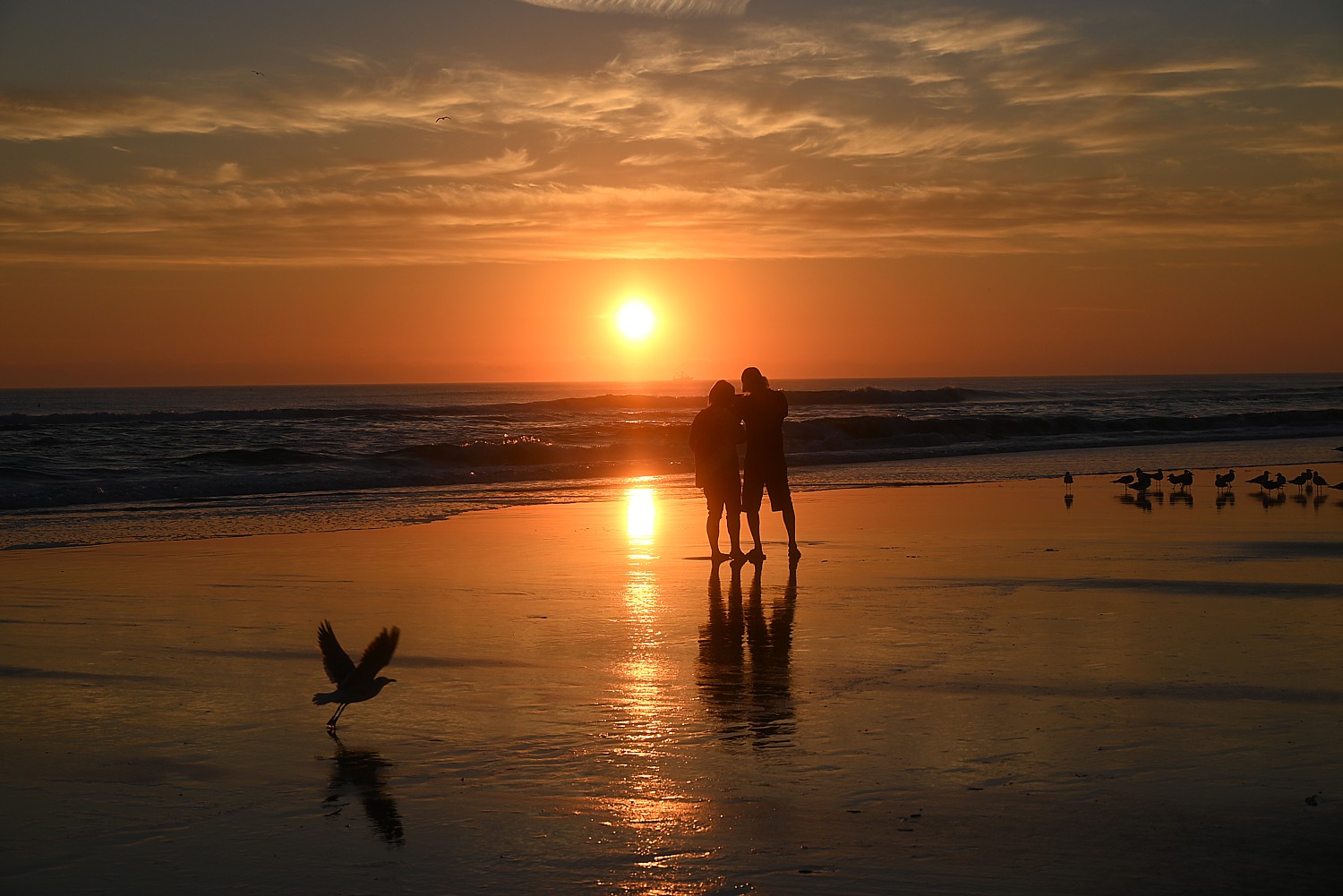
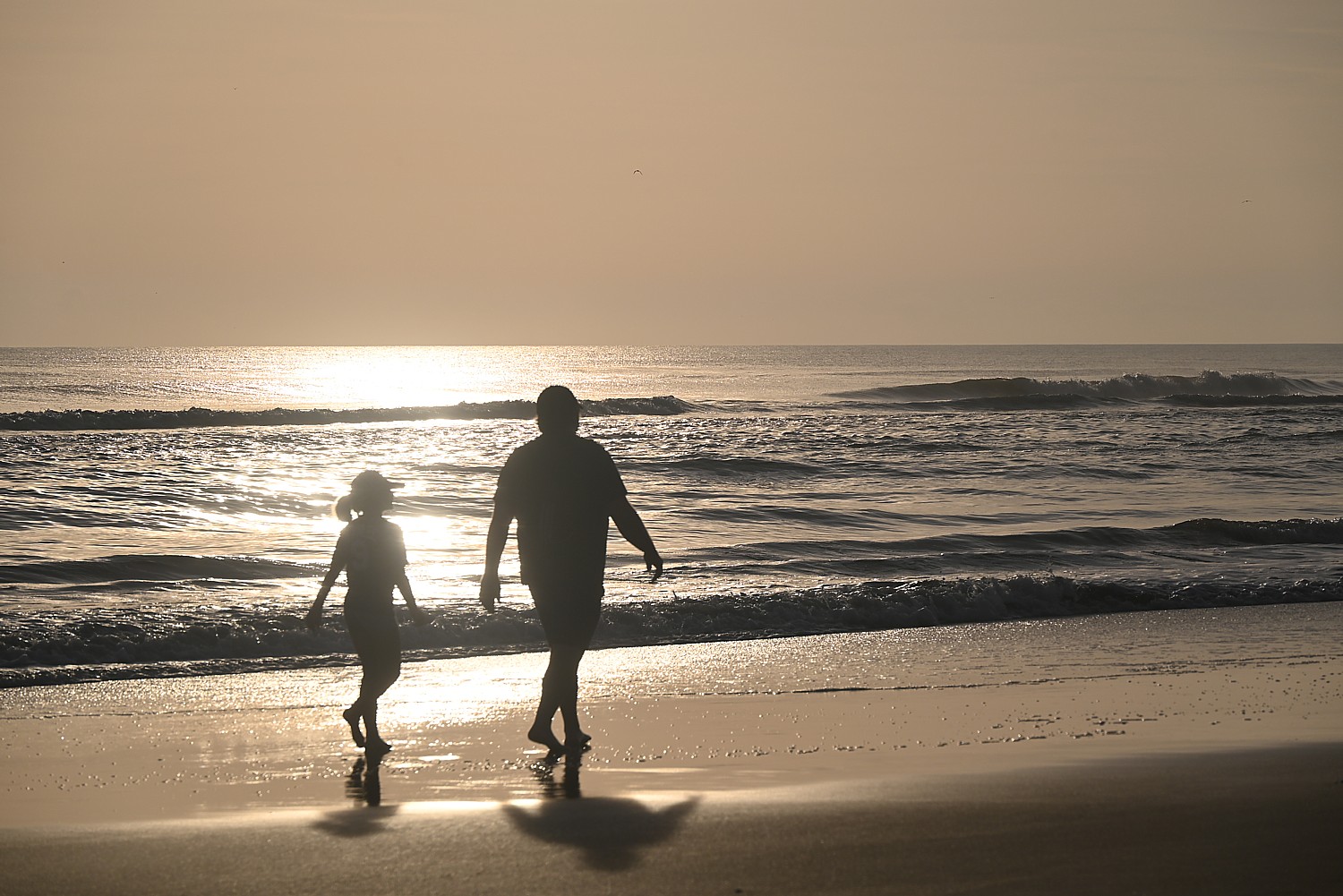
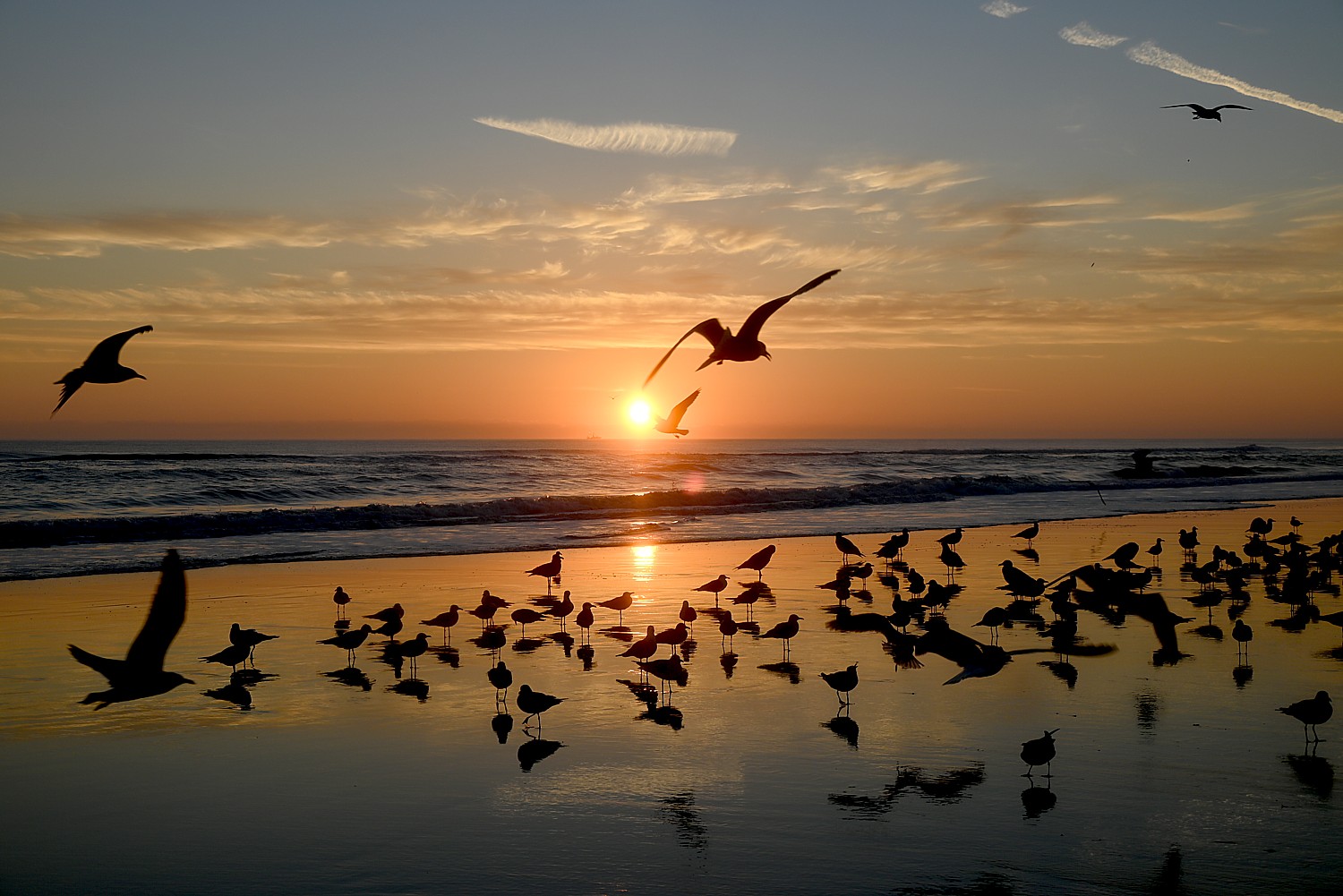
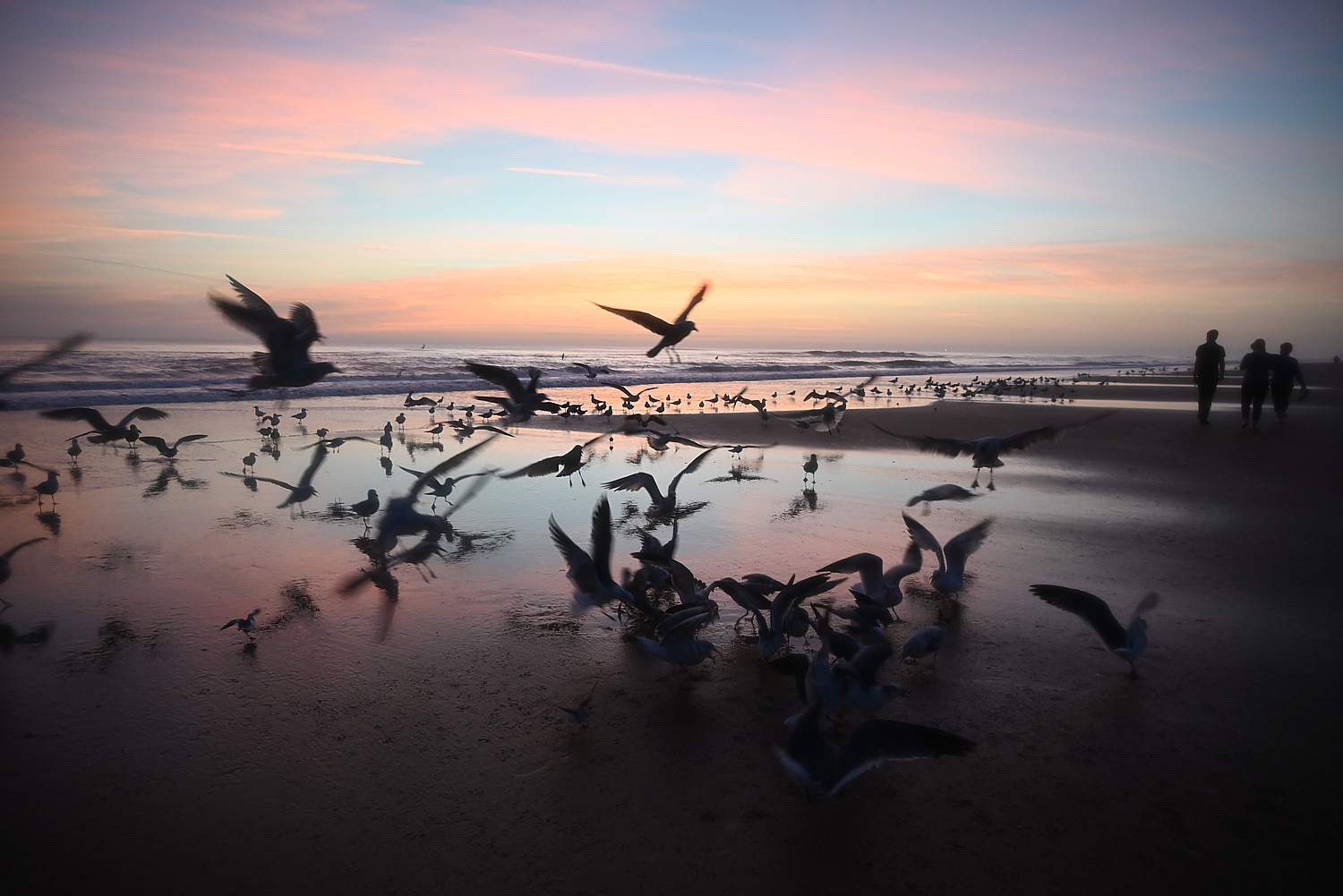
I stay in a delightful boutique hotel, the Lotus Inn, refurbished with chic touches (stunning pool, fire pit, landscaping), right on the beach, so that each morning, I can grab a cup of coffee from the lounge and walk out onto the beach before the sun rises, when the colors begin to burst in the sky.
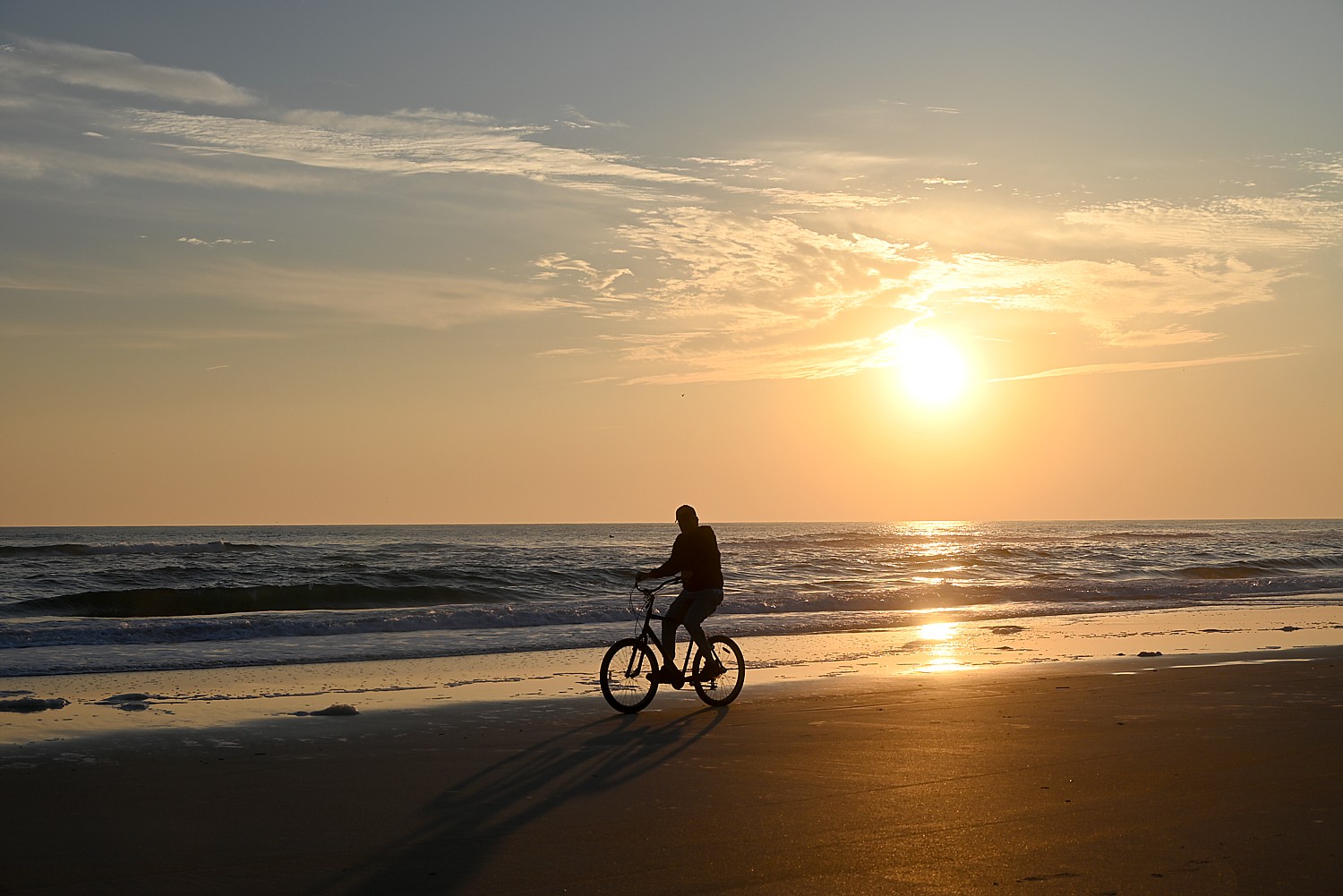
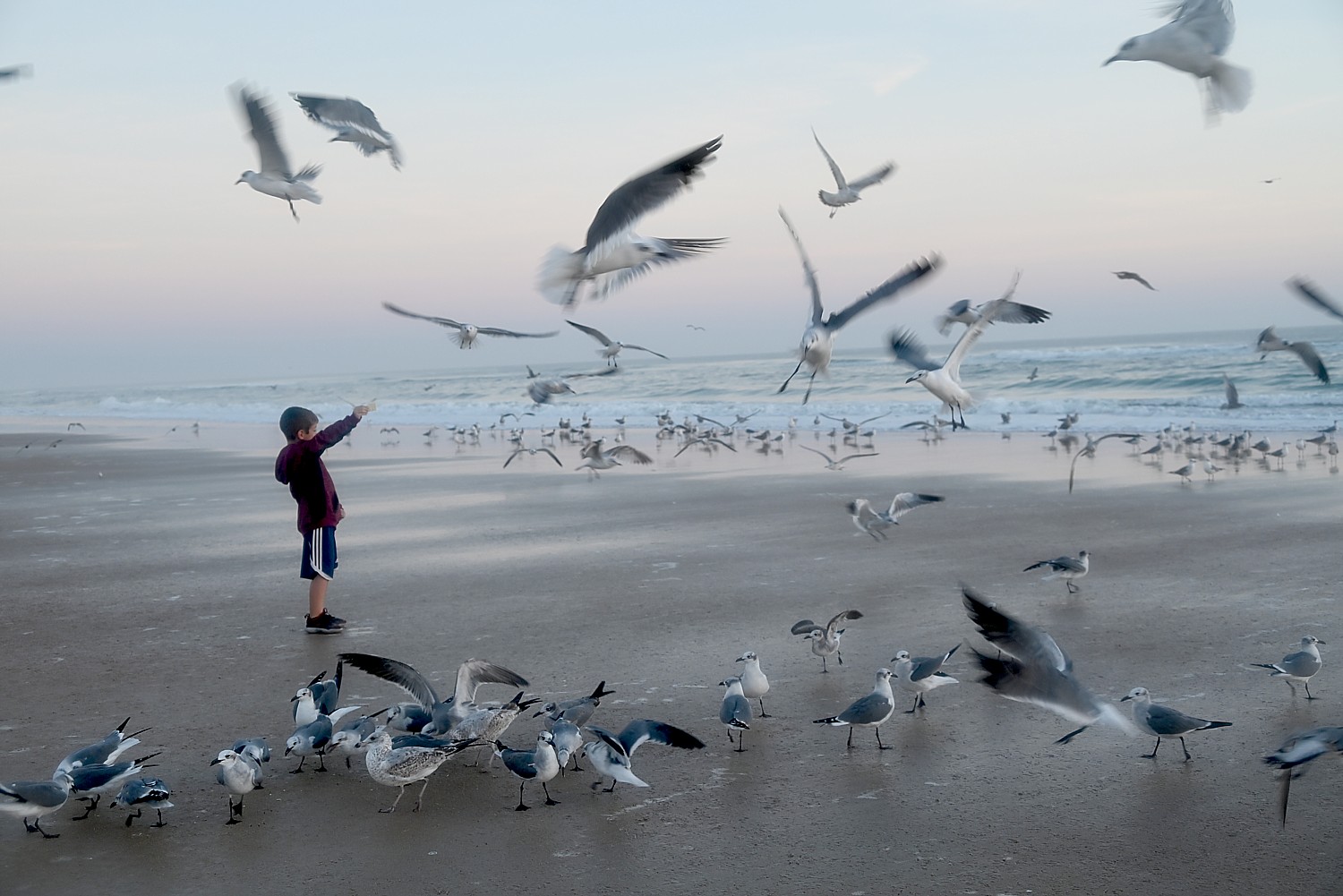
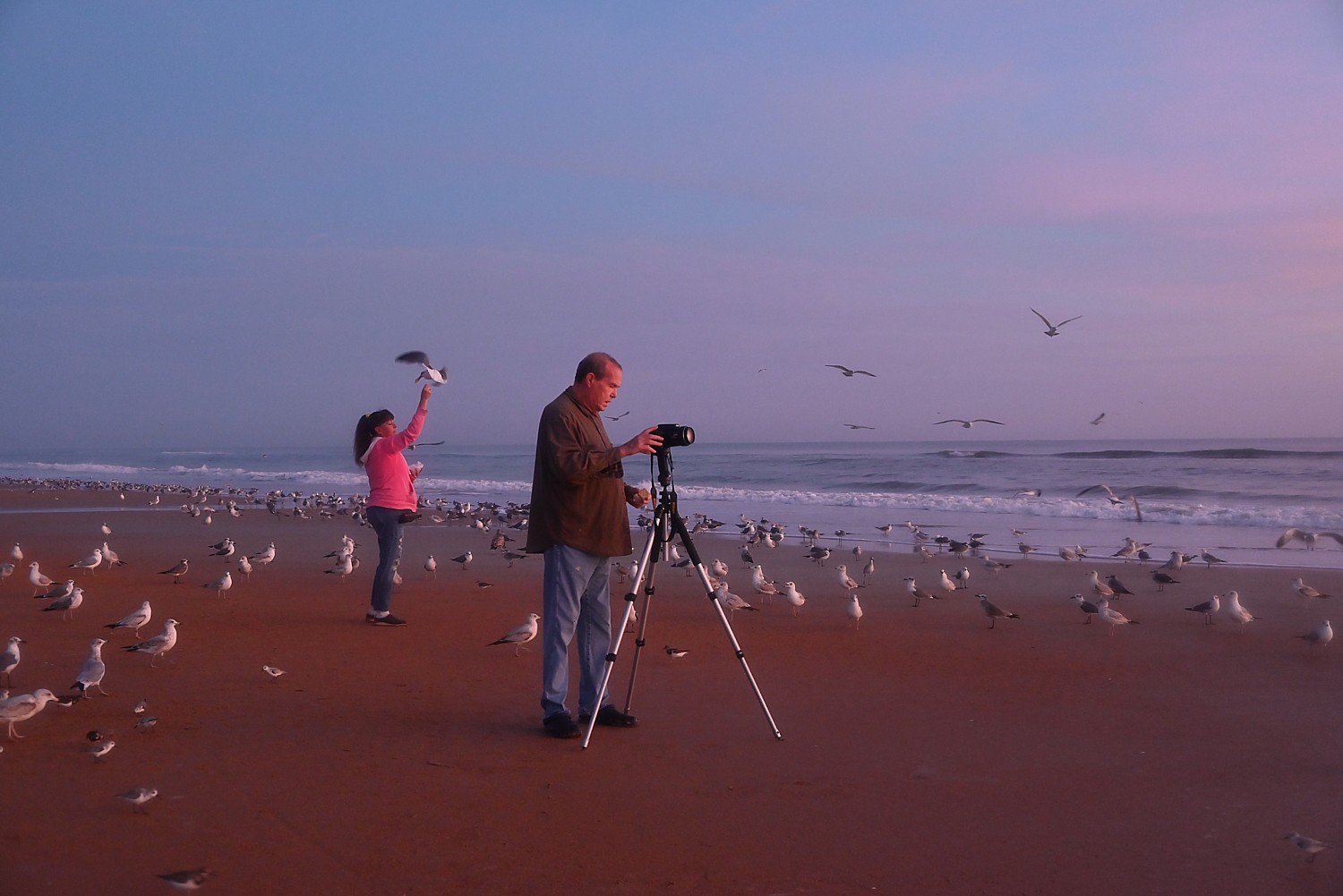
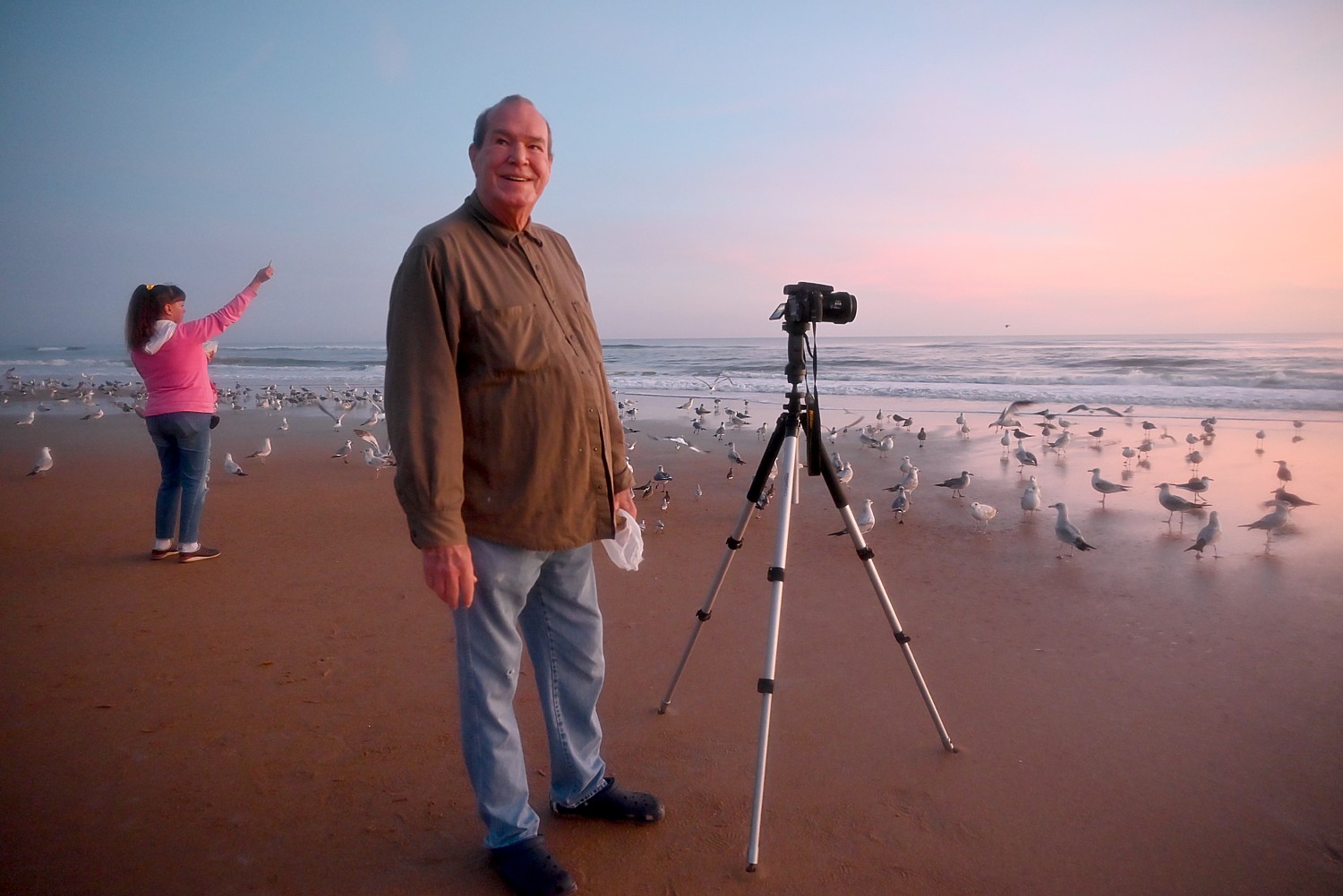
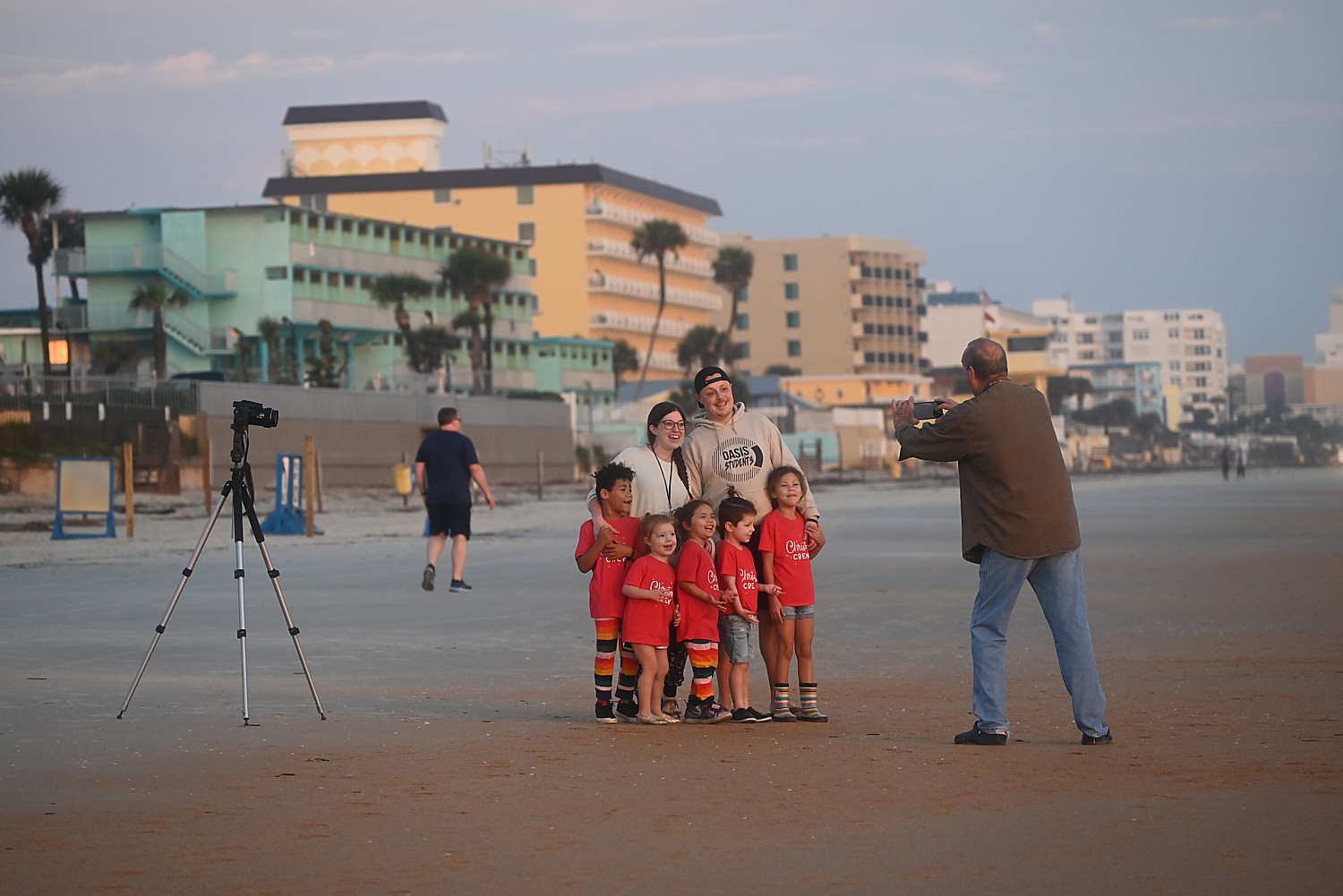
I do this each of the four mornings of my visit, and each day, the experience is very different and dramatic in its own way – the colors most vibrant on the first day, a tad less so on the second but the experience enhanced when I discover Jeffrey Dunne, who has come out every morning to photograph the sunrise for something like 10 years, posting them and drawing his own following, as well as taking photos for visitors. There are other regulars I get to meet as well, which includes a flock of seabirds who are drawn to this one spot because of a woman who comes each day with crackers (sharing with visitors who delight in the experience). The colors are different on the third day, but now I focus on the activity – the regulars who come, like the group of swimmers in their wetsuits, who come no matter the season. My fourth morning, there isn’t a sunrise at all, but I get to see the beach in its moody blue-grey colors.
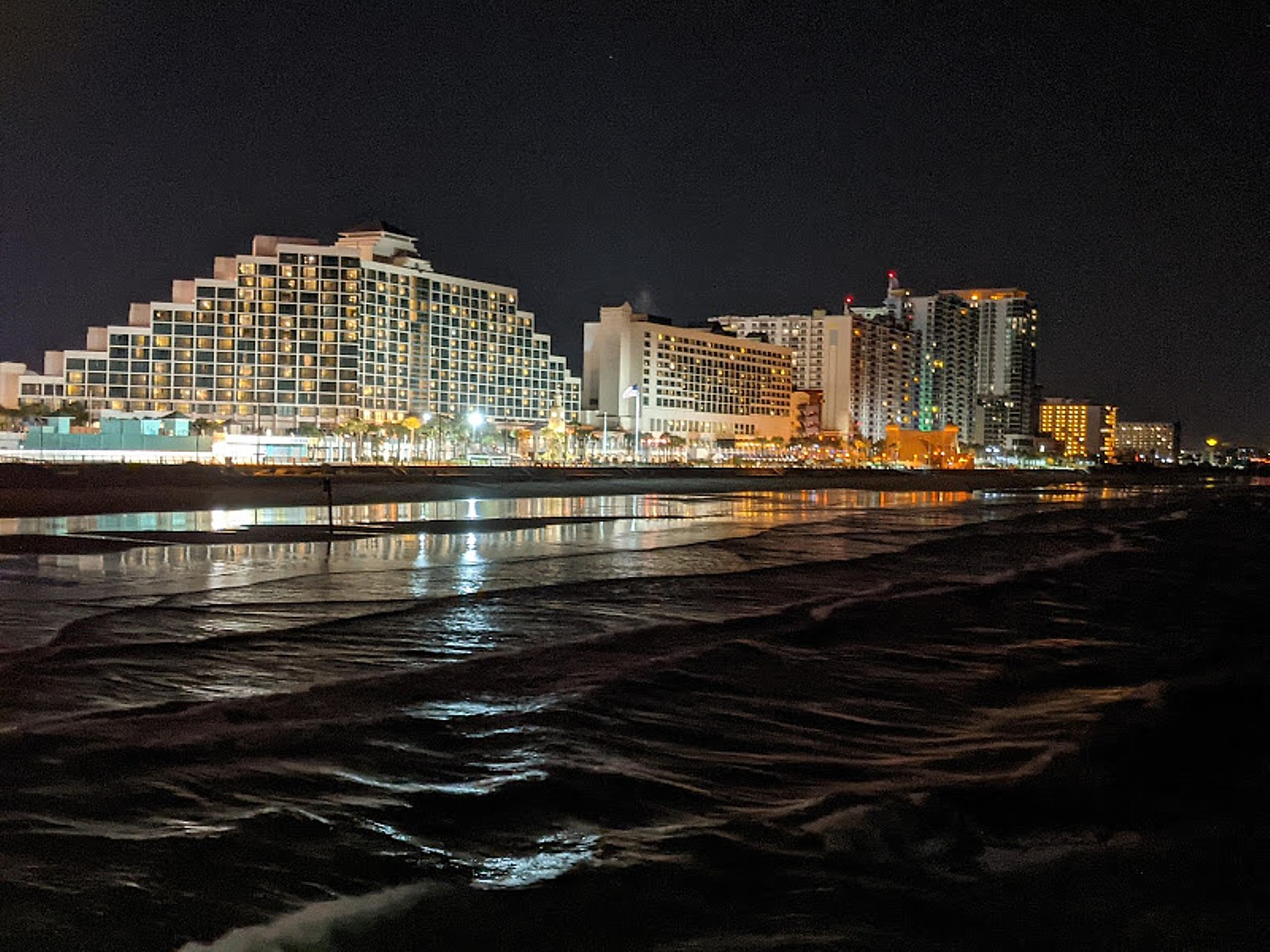
Even though you can see Daytona Beach from Ormond Beach, the atmosphere here is completely different. Here there are mostly low-rise, low-density hotels like mine, the Lotus Inn.
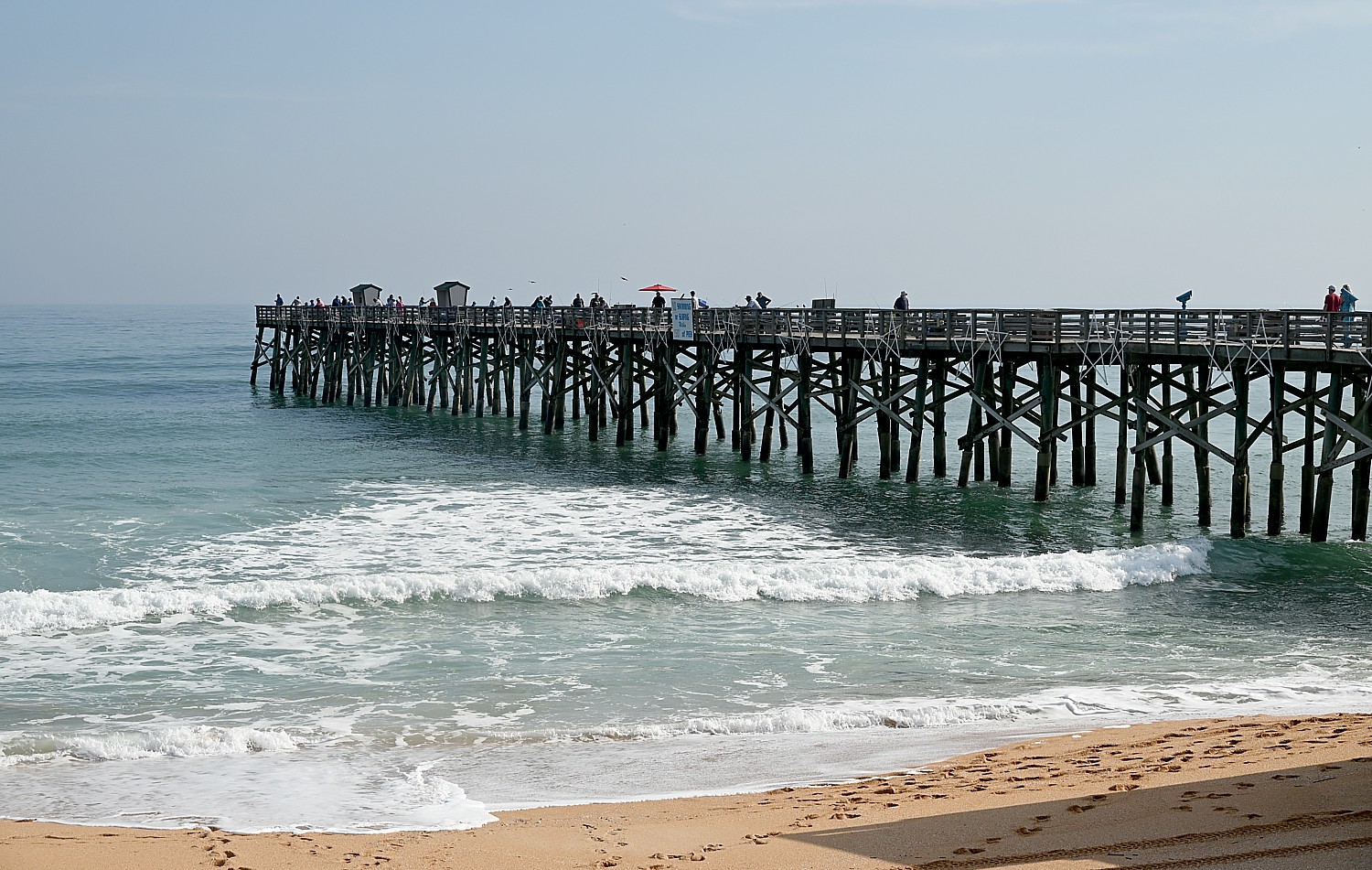
My first night in Ormond Beach, I drive my rental car the four miles down A1A to Daytona Beach and walk the charming boardwalk, really enjoying discovering the 1930s-era Bandstand, coming upon the boardwalk games, and then the long pier itself, alight in neon announcing Joe’s at the end, with a stunning view back at the shoreline. I also get a glimpse of the heart pounding, adrenaline pumping thrill rides at Screamer’s Park.
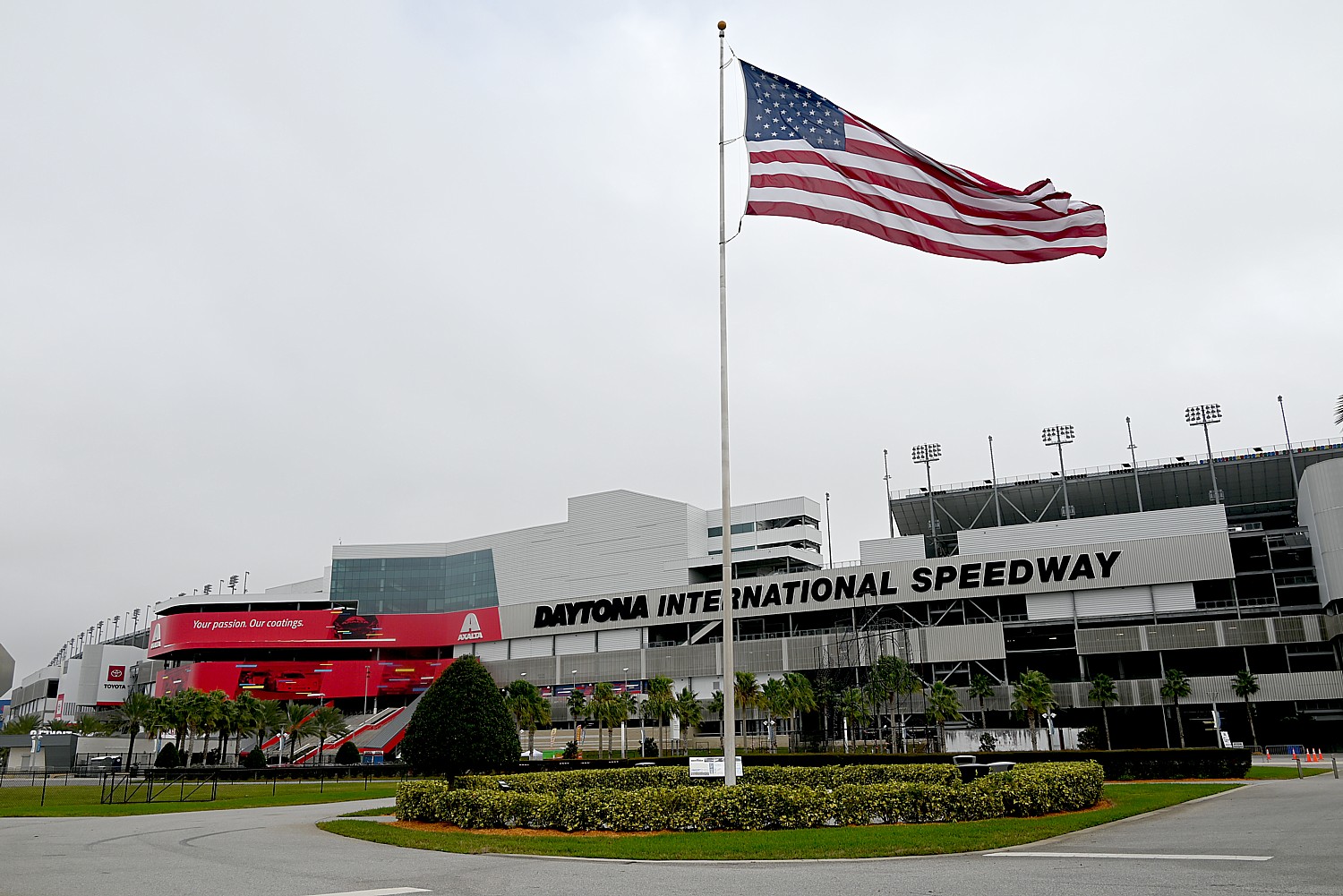
Now of course, Daytona Beach is famous for auto racing and the Daytona 500 – that began on the beach (cars are still allowed in specific lanes, and plenty of people bike on the flat, hard sand, which became the International Speedway. I would venture that most who come are car people, and touring the speedway and visiting the Racing Hall of Fame are musts. The Daytona International Speedway has just undergone a $400 million “reimagining” and transformed into a state-of-the-art motorsports facility. You can even get behind the wheel of an actual race car with NASCAR Racing Experience and take laps around the world famous 2.5-mile Speedway. (“Speedway Tours” run multiple times each day; tour tickets are sold on a first come first serve basis, and include the Motorsports Hall of Fame of America, https://www.daytonainternationalspeedway.com/tours/).
I stop by for a look at the gi-normous stadium, how it is banked at a 30-degree angle so the cars don’t just fly off at the turns, but spend my time discovering what my cousin, Ray Weiss, a former journalist, calls “Florida as it used to be.”
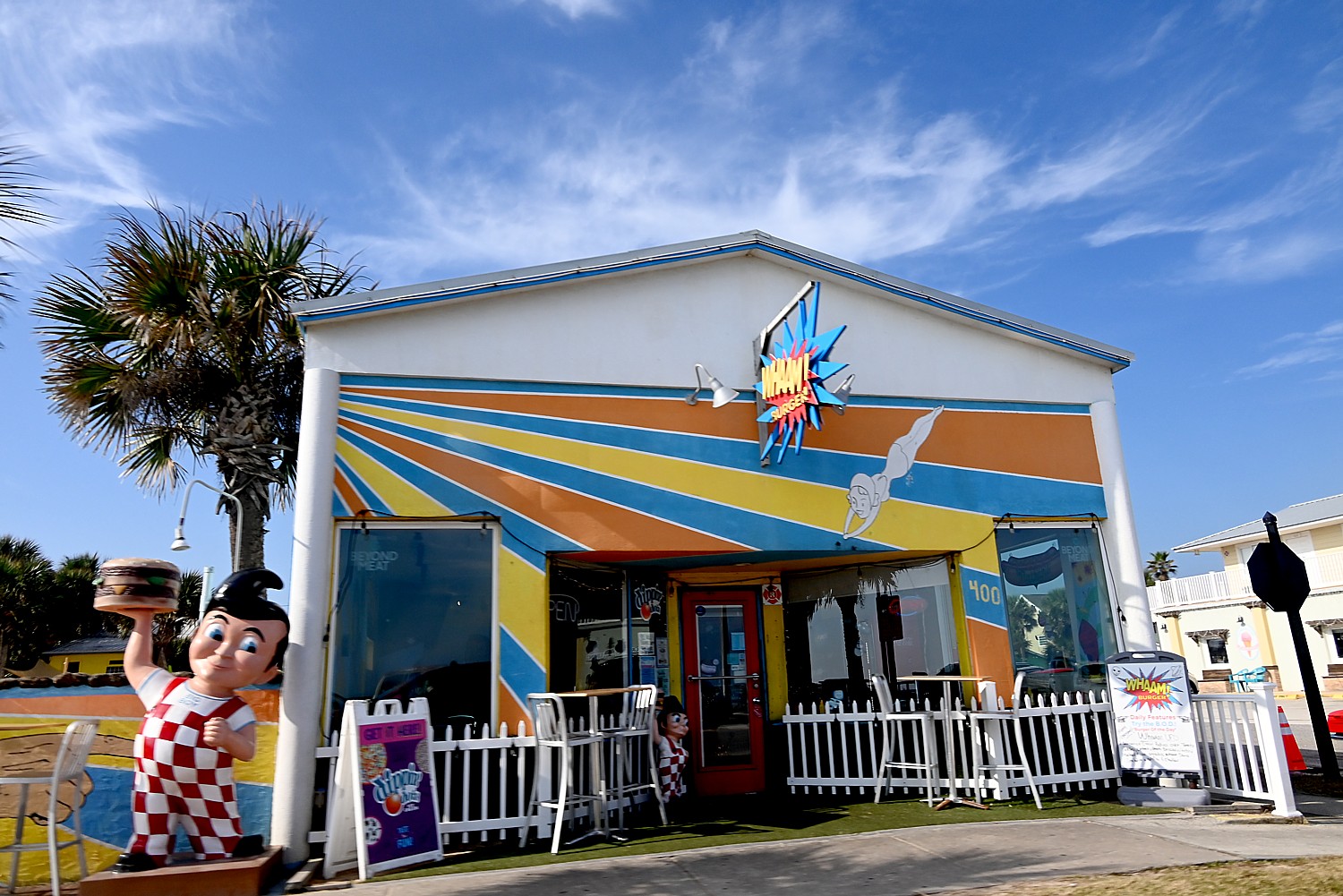
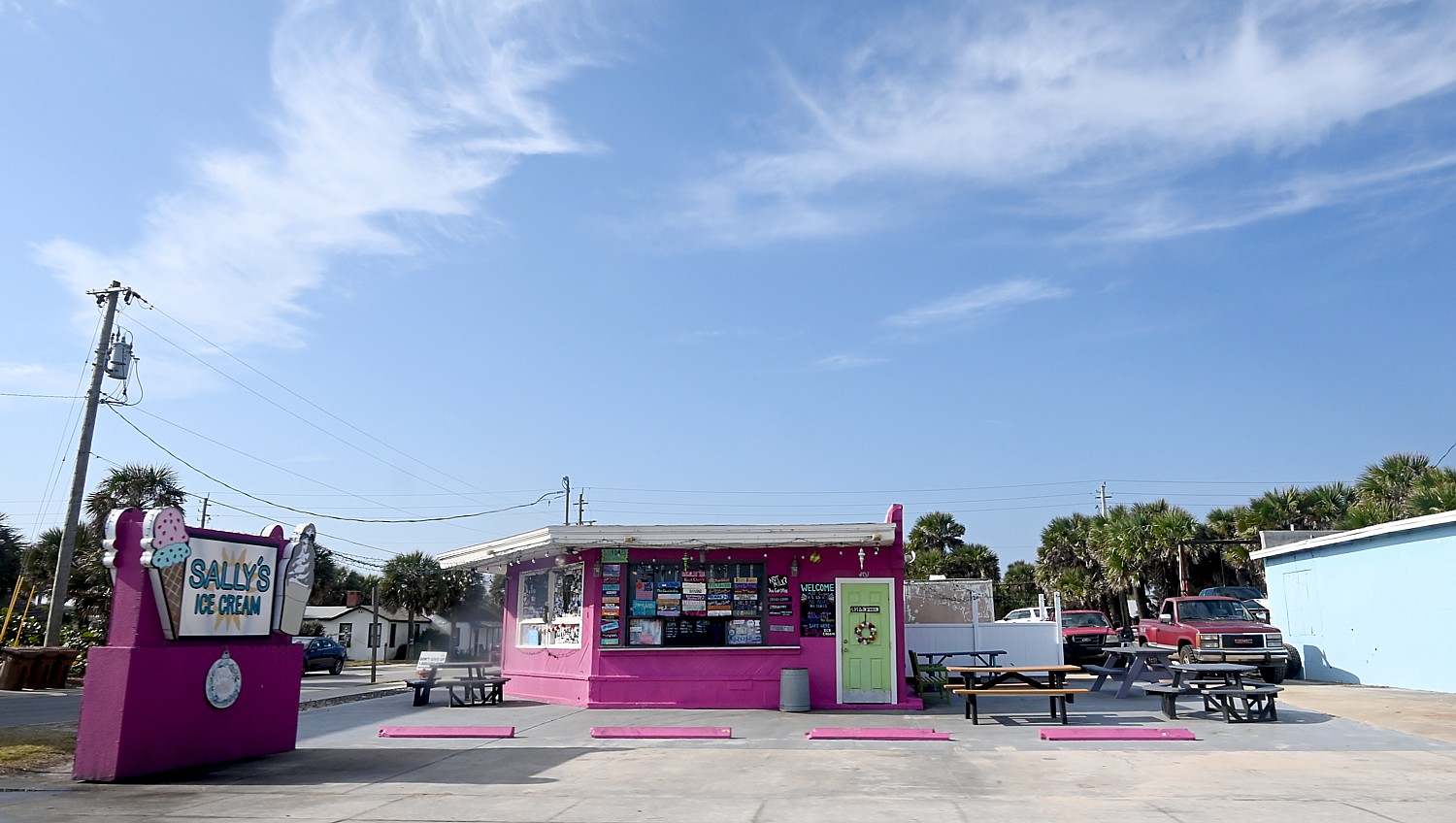
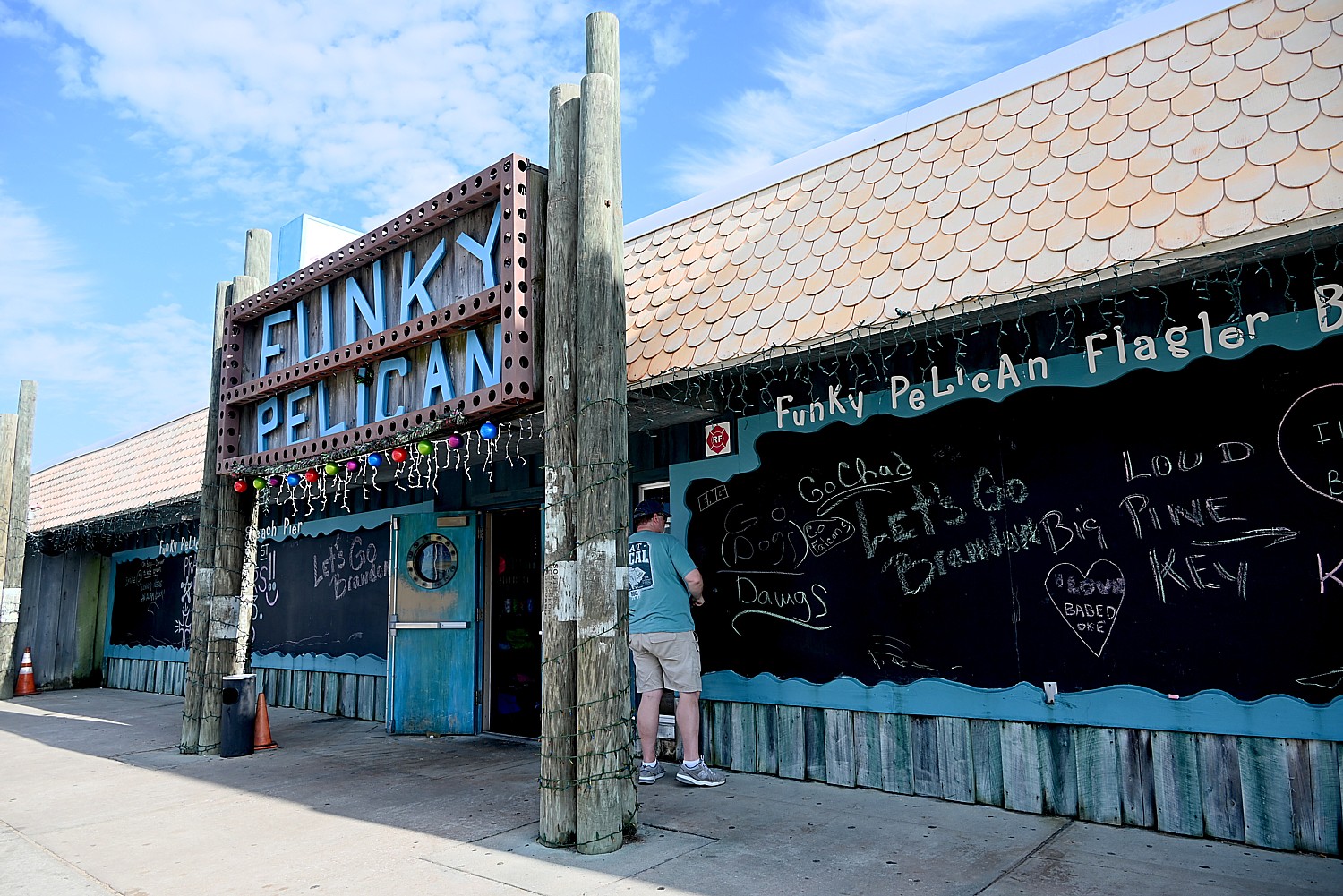
Ray drives me up the famous A1A, to Ormond by the Sea up to Flagler Beach, which cannot be more un-touristy. Here, he stresses, you can still park your car alongside the two-lane road (they call it a highway), on a patch of sand bordered with sea grass, and walk right onto the beach – such a contrast to Daytona Beach, which seems to be competing to have as many high rises and parking meters as Miami Beach. (My cousin describes Daytona Beach perfectly: “a bit of an Atlantic City feel with a redneck flair.”)
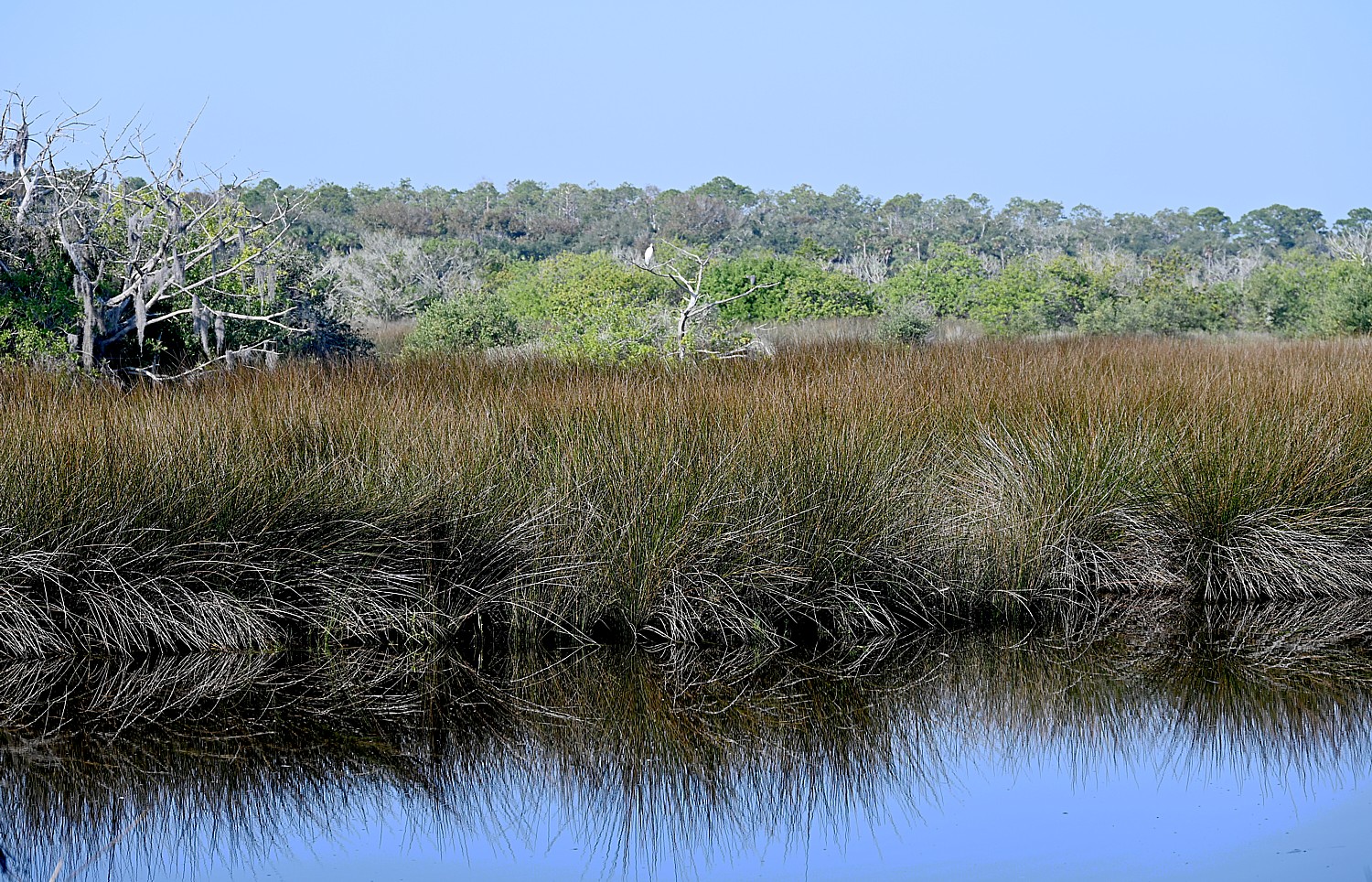
This stretch between Ormond Beach and Flagler Beach, though, is exactly as he has described it and what he cherishes – there are the colorful, weatherworn, funky beach places, miles of undeveloped open beach (vacant of people) and thousands of acres of pristine land called the Loop – woods, water and marshland. “It’s like stepping back in time to what the rest of Florida once looked like when the Seminoles were here,” he says. He should know because my first memory as a child was visiting his family in old Miami and seeing Seminole Indians wrestling alligators.
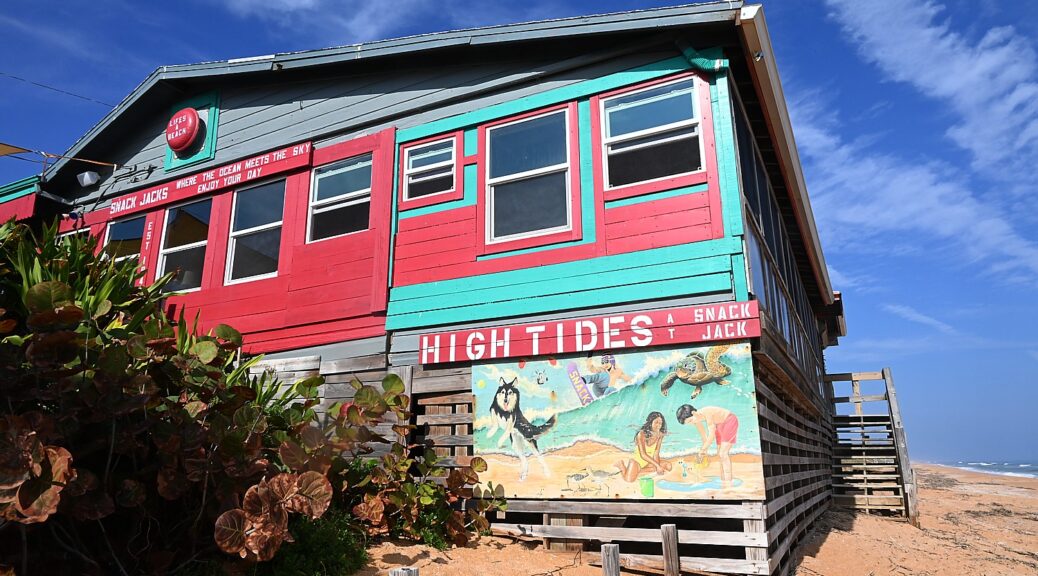
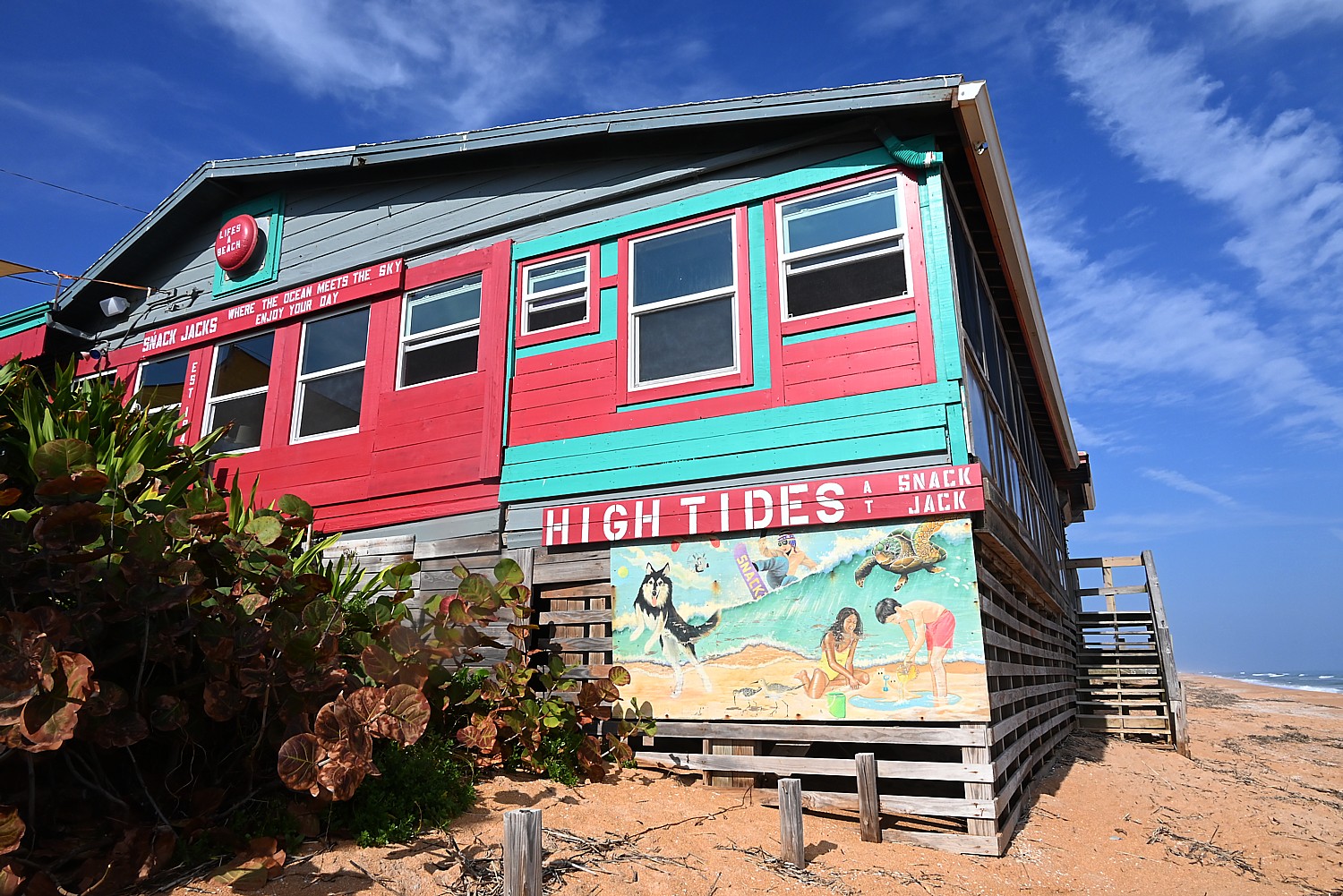
Flagler Beach is a Florida town that is seems stuck in the 1950s. No high-rises here, only modest houses on the beach. (My thoughts alternate between thinking that the property they sit on would be $1-2 million in Long Island, and thinking that sea level rise caused by the climate change Florida’s governor denies makes them worthless.) Ray points out several old style restaurants, stopping at Snack Jack’s right on the beach – his favorite and I can see why.
On my own, I also discover some of the attractions that make actually living here wonderful – starting with the Museum of Arts and Science (MOAS).
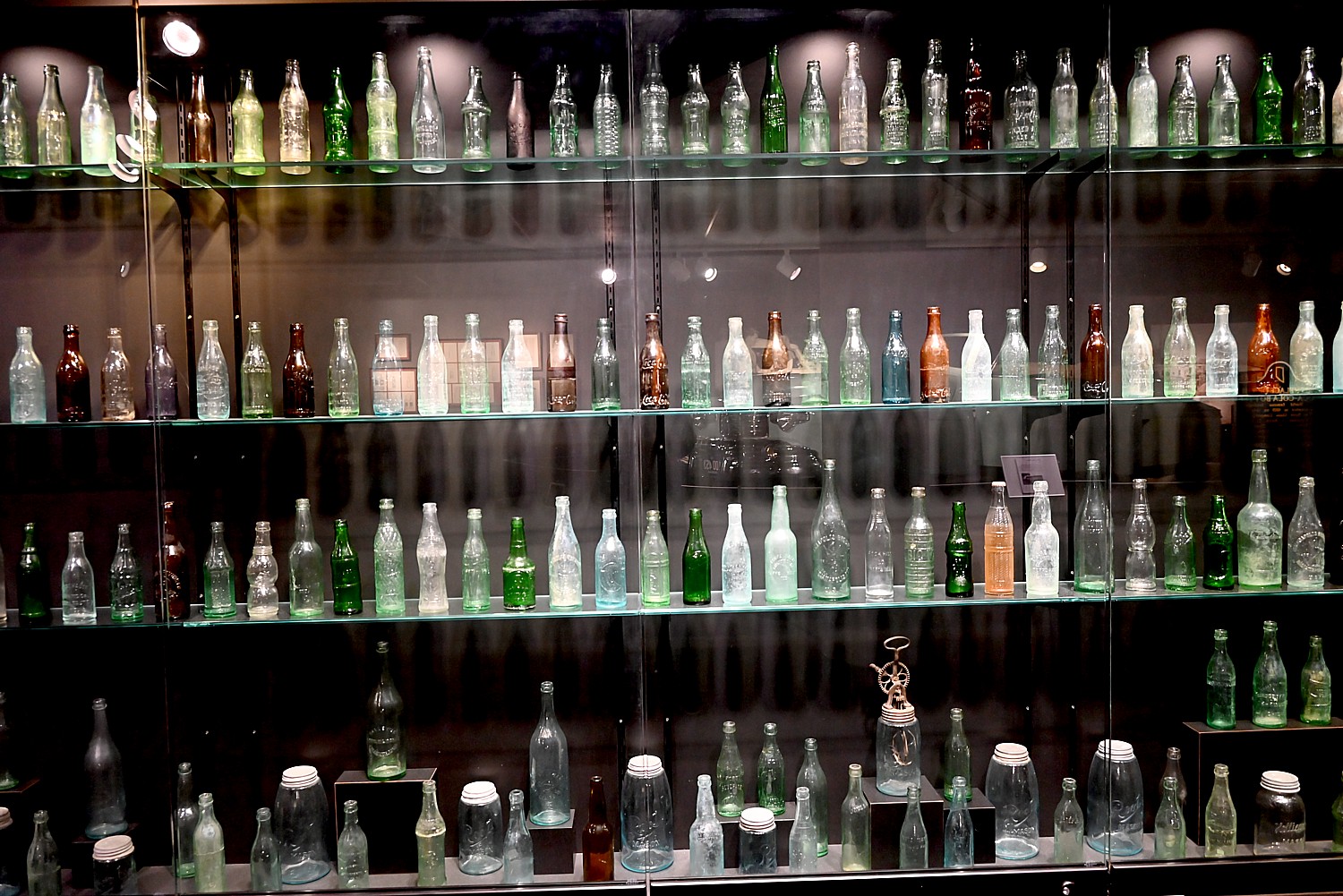
When I arrive, I ask the receptionist what is special, what should I definitely look out for. She replies, “Well, we have the biggest collection of Coca Cola bottles, and a skeleton of a giant sloth.”
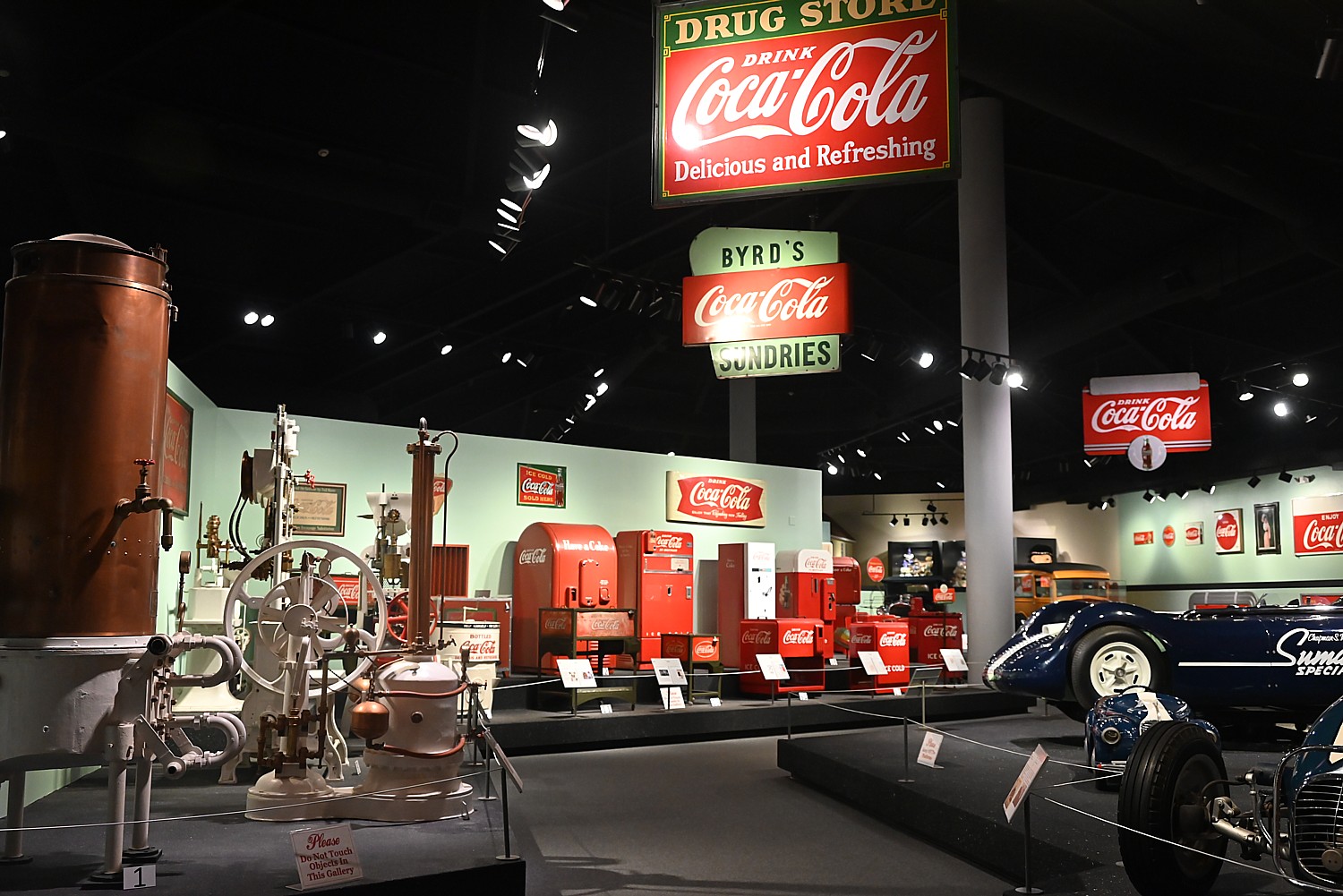
Walking into the Coca-Cola collection, you can’t help but let out an actual “Wow,” It turns out that the guy who invented and manufactured that classic glass Coke bottle in Indiana, Chapman J. Root (he got 5c royalty on every bottle sold), also had interests in Coca-Cola bottling plants in New York, New Jersey, Pennsylvania, Missouri, Illinois and Florida, and when he retired, his grandson Chapman S. Root took over the company and moved it, in 1951, to Daytona Beach. Over a 50-year period, Chapman S. Root and his wife Susan Root Fieblman, collected some 100,000 objects that make up the $5 million Root Family Museum collection – probably the largest of Coca-Cola memorabilia – housed within MOAS. We see not only a timeline of all the bottles and bottling equipment, but the delivery trucks, the different vending machines, all with the trademark Coca Cola red color. It is pure Americana – both for the Coca-Cola cultural iconography and the story of an entrepreneur and innovator making good. (See: For Coke Fans, Collection is ‘The Real Thing’, https://www.orlandosentinel.com/news/os-xpm-2001-10-14-0110120609-story.html)
Then I walk into the “Natural Florida” exhibit and there it is. When you think of “sloth” you might think of Sid in the “Ice Age” movies. Now imagine The Hulk but probably three or four times the size. The skeleton of the Eremotherium – the largest sloth to have ever existed – that we see assembled in its fearsome pose was collected just 2 ½ miles away. It would have weighed up to five tons and stood 15 feet tall – only the Wooly Mammoth was larger in the Western Hemisphere. Phenomenal.
The rest of the museum has some fabulous, unexpected and eclectic collections: African tribal artifacts including incredible masks, Chinese art, and the American decorative arts collection of Anderson Child Bouchelle (a fifth generation Floridian, his father was Florida’s first cardiologist, brought to the state by Henry Flagler). I especially love “The Warehouse” where you can peek at treasures that otherwise would be stored away. (352 South Nova Road, Daytona Beach, Florida 32114, 386-255-0285, www.moas.org/visit/index)
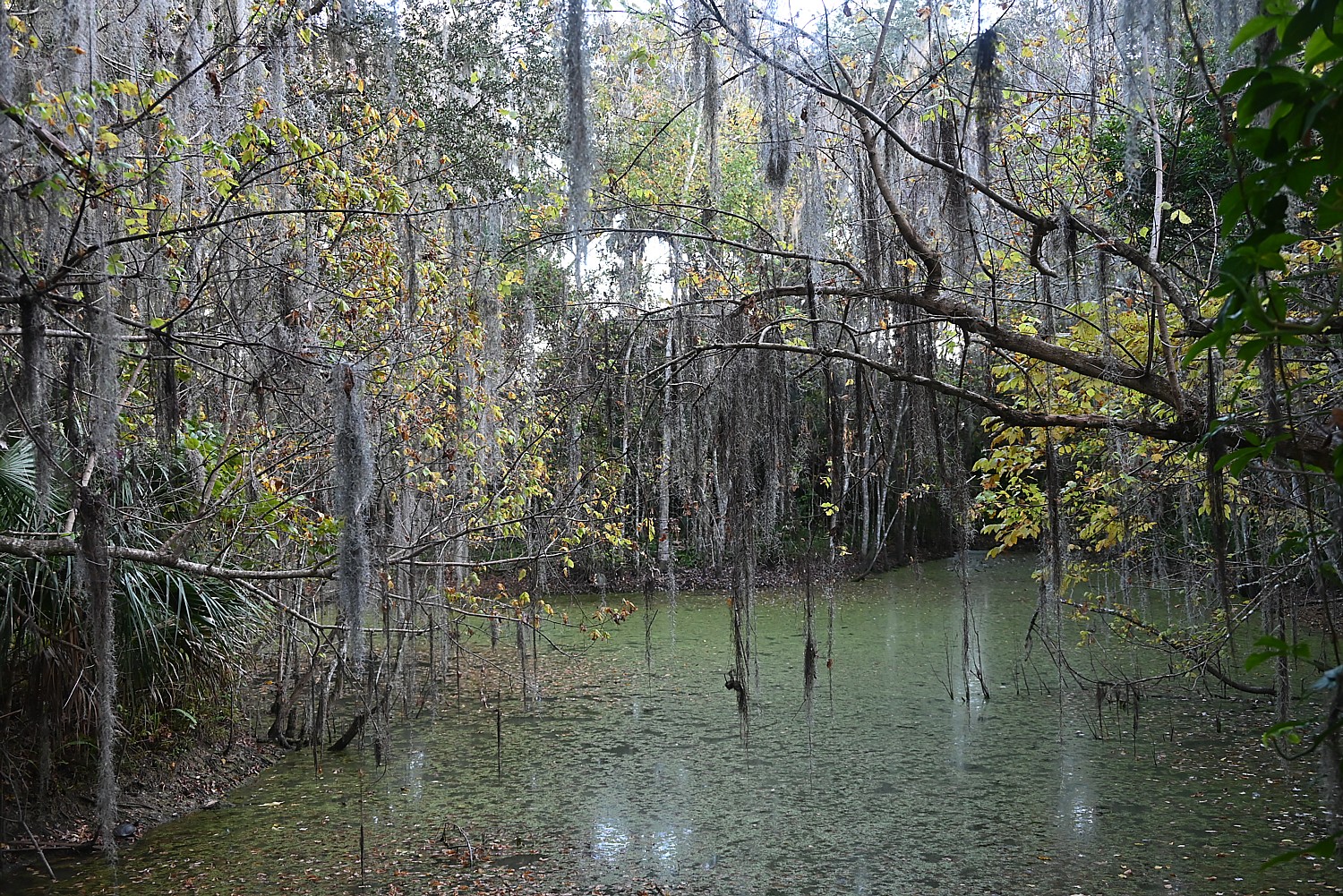
Before leaving, I follow the Nature Trail that starts just outside the museum that takes you on a boardwalk into the jungle (note the sign that warns of such creatures as snakes and alligators).
The next day, after my ritual beach walk to revel in the daily miracle of the sunrise, I go off to two other signature attractions, both very close together at the southern tip of the barrier island.
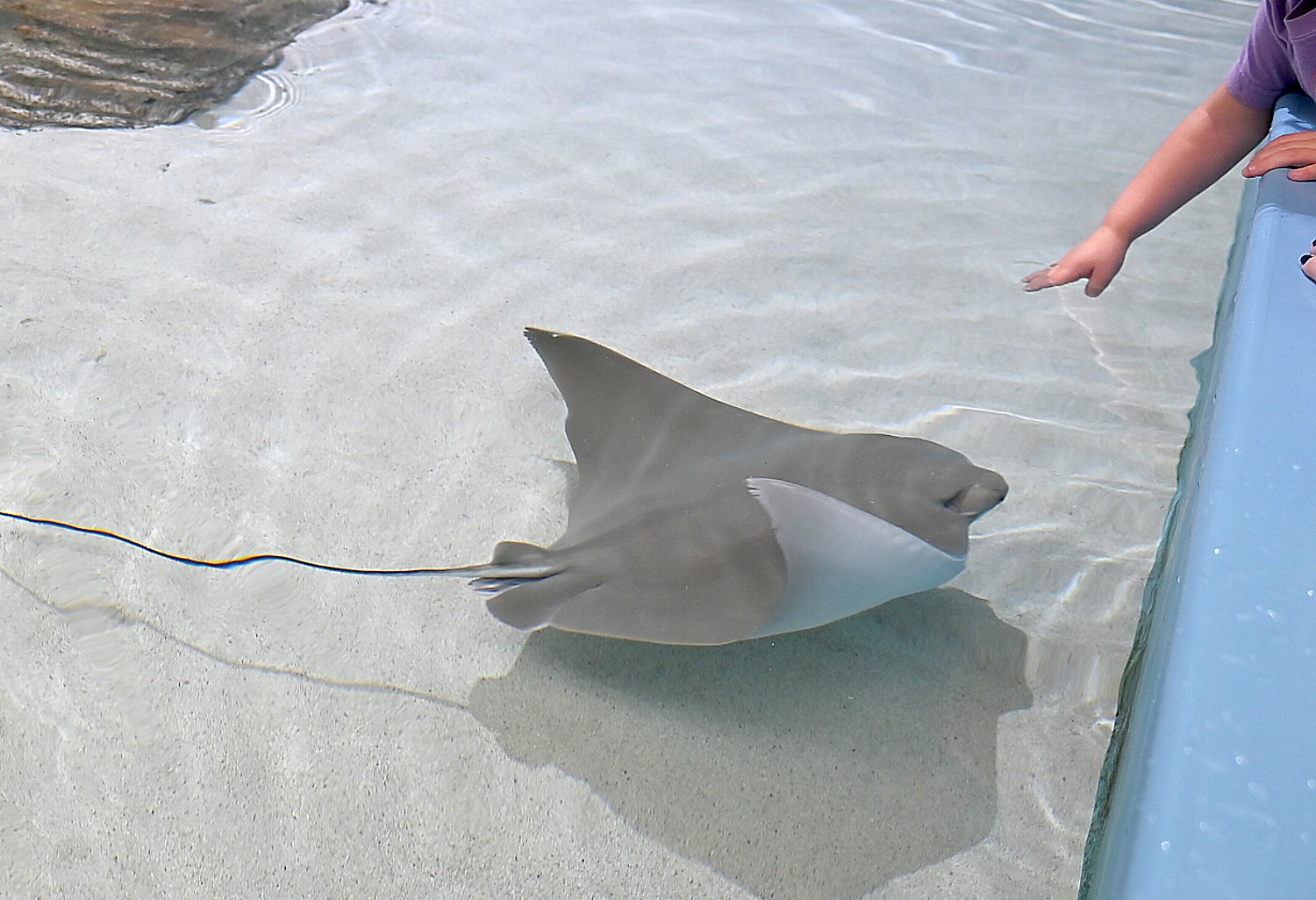
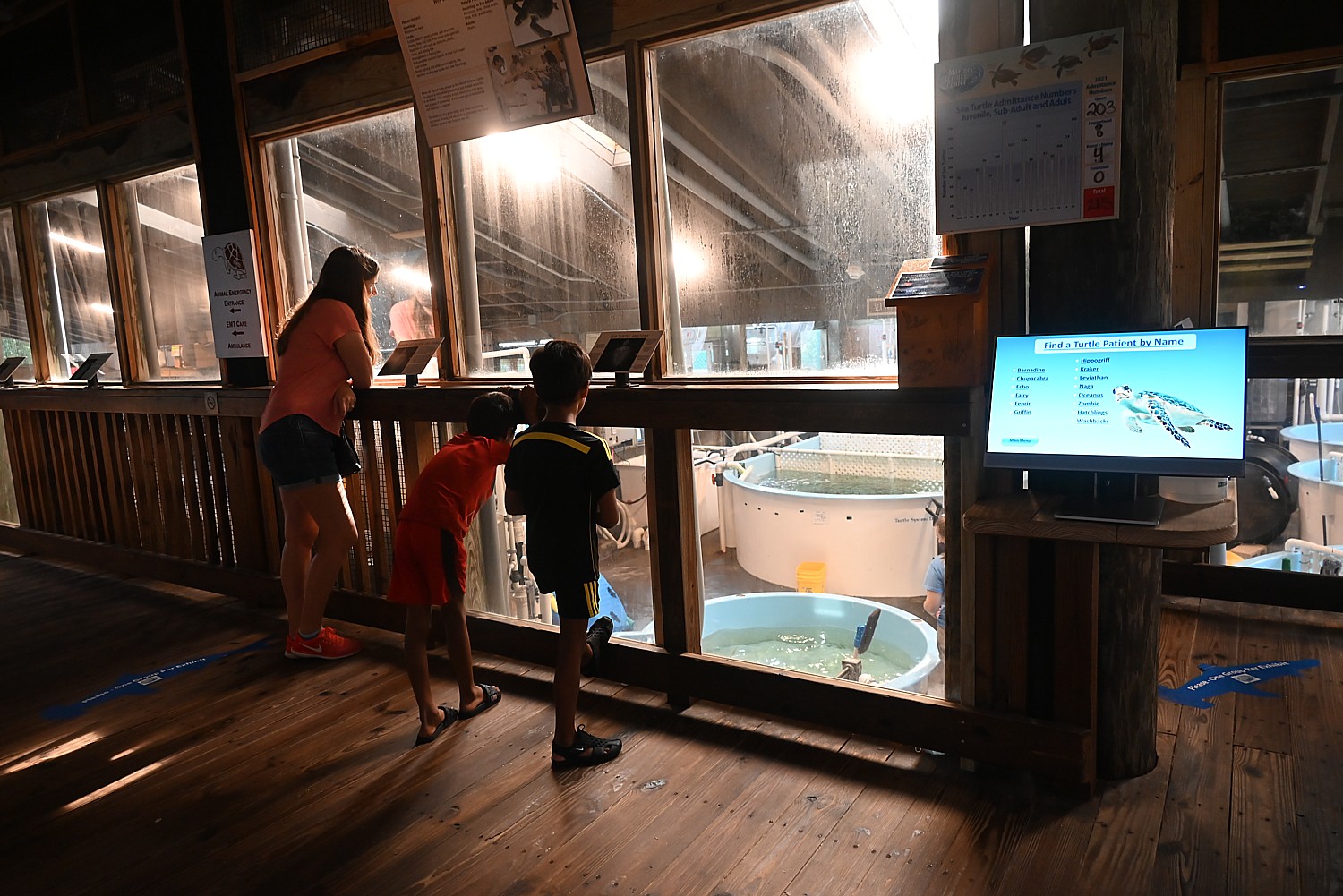
The modest but intimate Marine Science Center, is mainly an aquarium but also is where you can see its medical facilities where sea turtles are being restored to health (you can even watch operations through a glass) and a sanctuary for rescued birds. The small area is packed with fun things to look at, interact with and learn about Volusia County’s rich marine life – like how they are re-growing (not just restoring) coral so crucial to the survival of ecosystems. This is a delight for families with children (100 Lighthouse Drive, Ponce Inlet, Fl 32127, 386-304-5545, www.marinesciencecenter.com)
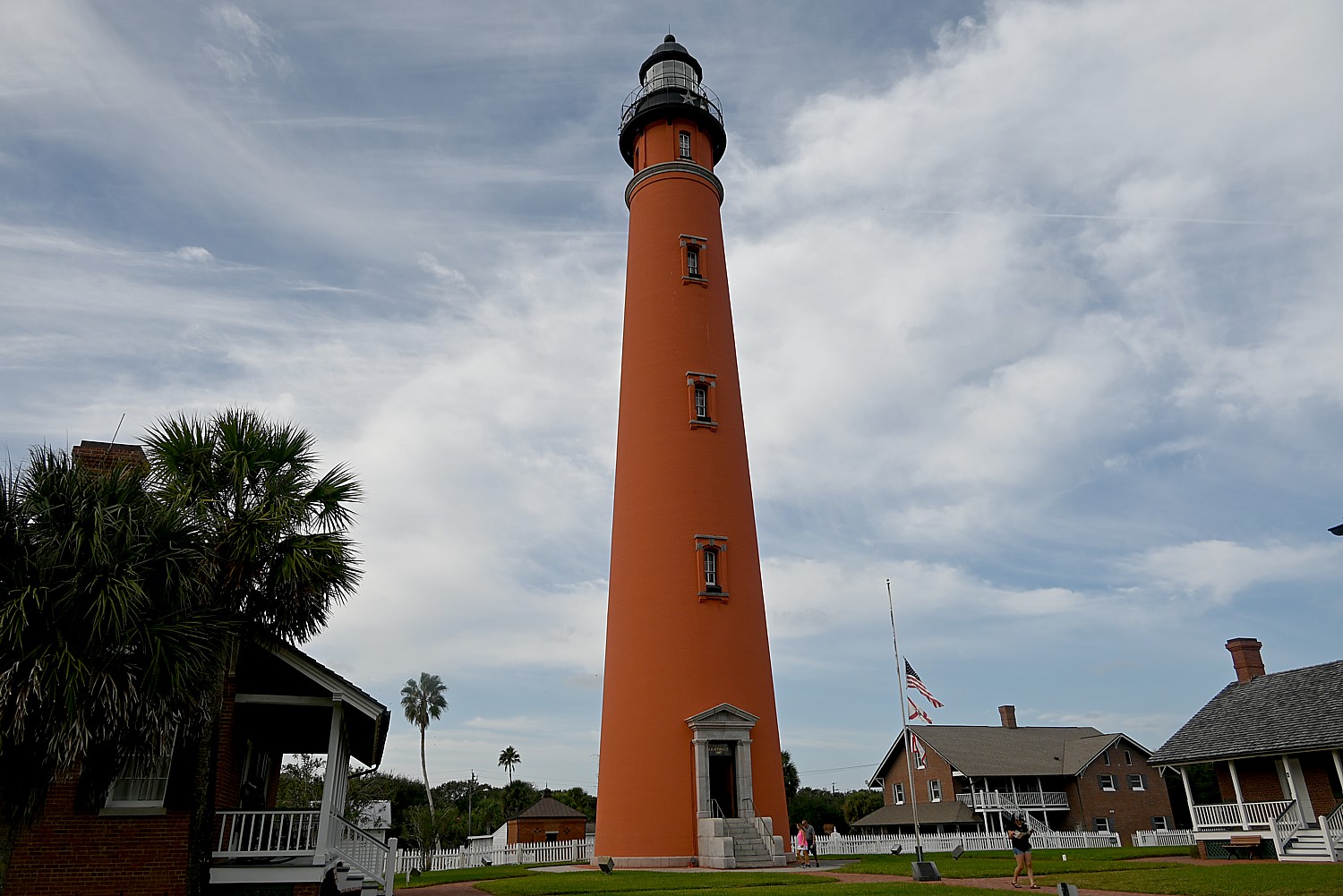
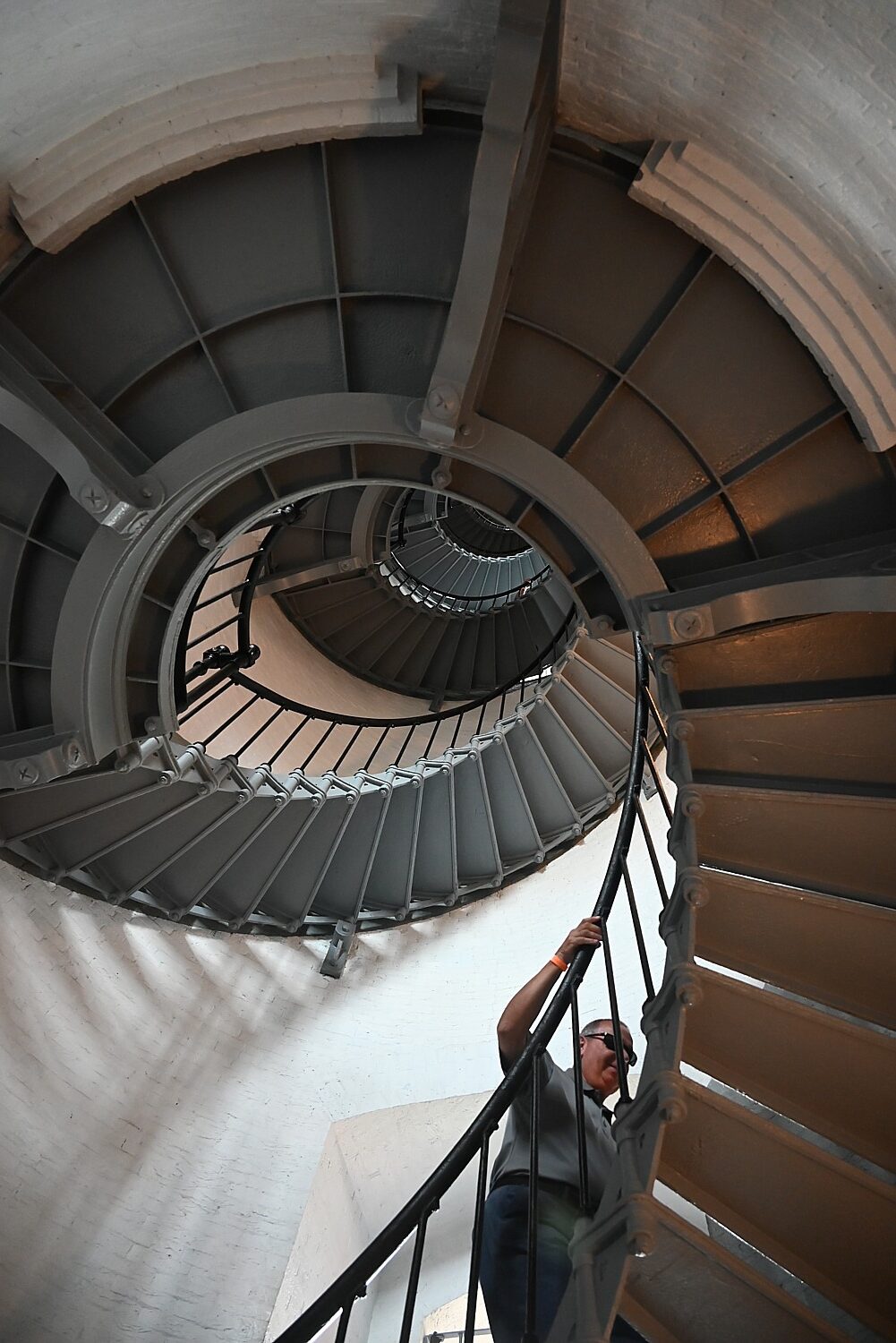
Nearby, The Ponce Inlet Lighthouse, constructed in 1887, is a treasure. At 175 feet tall, the lighthouse is the highest in Florida and second highest in the country. You can walk up all 203 steps winding around and around, and step out for a 360-degree view. Most interesting are the other structures and buildings – all original – that you can visit and the exhibits that show the life and times of the lighthouse keepers, and wonderful videos showing the history. In the modern Ayres Davies Lens Exhibit Building, you can see a world-class Fresnel lens collection. There is also an exhibit of Cuban Rafts that carried refugees trying to make their way to freedom on these fragile homemade boats and rafts. There is really a lot to see and explore, including nature trails and you can walk out to a very long break-water. (4931 S. Peninsula Drive, Ponce Inlet, FL 32127, 386-761-1821, ponceinlet.org)
For more historic sites, you can trace the footsteps of educator and civil rights activist Dr. Mary McLeod Bethune on a tour of her former home, and visit the historic Jackie Robinson Ballpark (where in 1946, a year before he broke the major league racial color barrier in Brooklyn, Robinson broke the color barrier with the Montreal Expos, the triple A minor league affiliate of the Brooklyn Dodgers, after being rejected from other Florida cities, Ray relates).
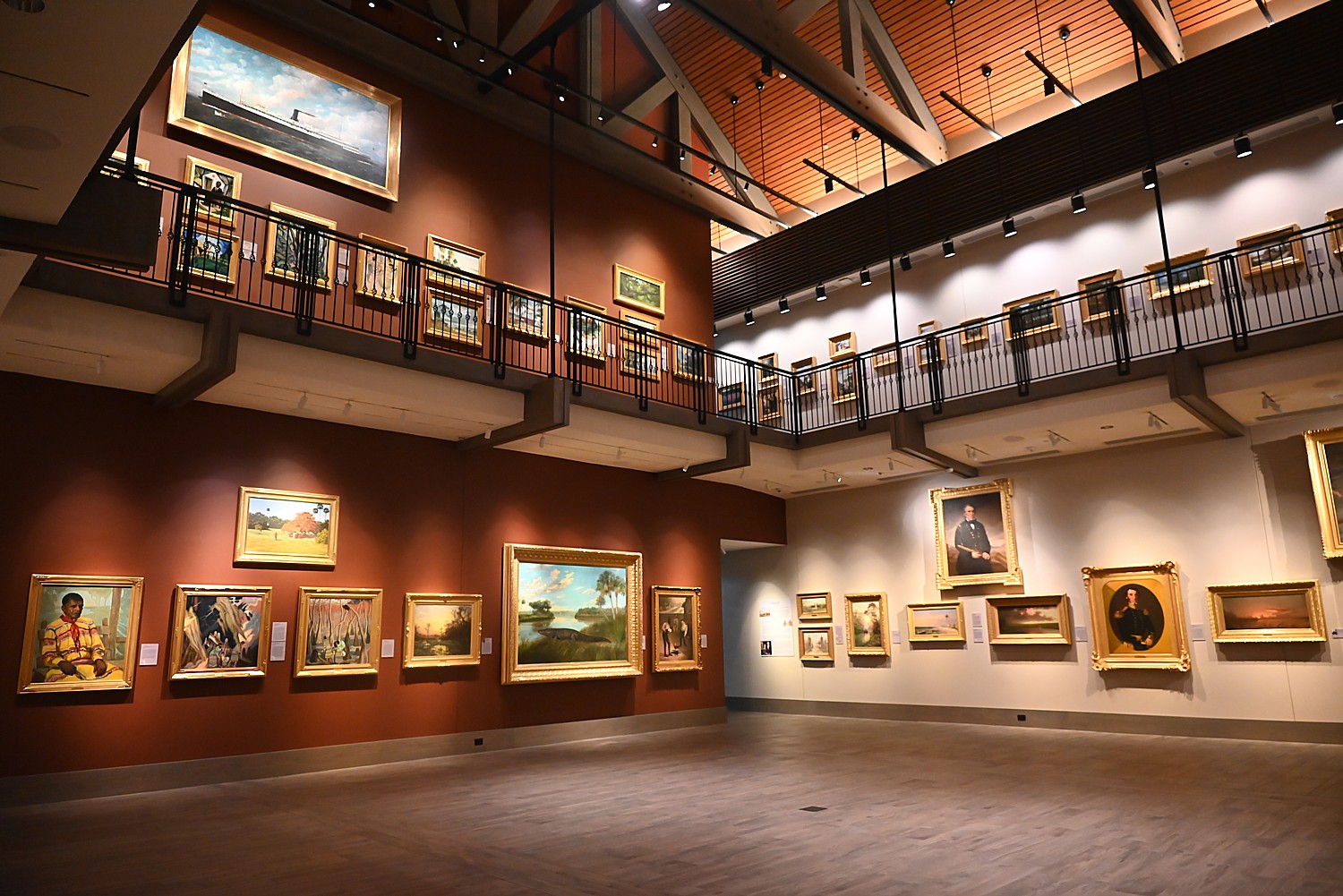
The next day, I visit the extraordinary Cici and Hyatt Brown Museum of Art, which is on the same campus as MOAS. This is the most astonishing find of all. Since 1997, the Browns made it their mission to collect art representing Florida. After being a traveling exhibit for some time, what is the largest collection of Florida art is now housed in this stunning, brand new two-level structure. The museum features a rotating collection of 2,600 Florida-themed oil and watercolor paintings. The Museum’s grand central gallery and mezzanine showcase the collection’s signature pieces, while six smaller galleries feature beautiful changing exhibitions with Florida themes. Most impressive are the way the paintings are selected, framed, how they are hung together, and the absolutely fascinating notes that accompany each and every one – not only a biography of the artist, but the context for the painting, something of history, and then really fascinating notes that are like a painting tutorial. (https://www.moas.org/explore/cici-and-hyatt-brown-museum-of-art/index)
While not my focus on this trip, I would be remiss not to include some of the immensely popular and new attractions in Daytona Beach:
Speedway Indoor Karting (SIK), which opened in late 2020, offers state-of-the-art electric powered karts and gives guests of all ages and skill levels a full racing experience on a 16- turn road course featuring multiple elevation changes and a slick tri-oval.
Daytona Lagoon Premier Waterpark and Family Entertainment Center, just north of the pier area and steps from the beach, added a wave maker Treasure Lagoon Wave Pool, arcade games, and two water slides: Kraken’s Revenge, a 54-foot-high, four-lane mat racer slide; and Shaka Halfpipe, a thrilling inner-tube experience that shoots riders backwards over a 50-foot drop. These new features, along with mini golf, go-karts, the MEGA arcade, and Sky Maze indoor ropes course make this a favorite year-round family spot.
More my speed: a new Riverfront Esplanade. The park that runs the length of historic downtown Daytona Beach is being transformed. When complete in 2022, the Riverfront Esplanade will extend a mile along the Halifax River and include a promenade along the water’s edge, running and walking trails, and landscaping designed to encourage relaxation and reflection including water features, shade trees and raised botanical gardens.
Interactive maps for themed trails are available on DaytonaBeach.com including the new Cars, Craft and Culture trail, Share The Heritage Trail, Monuments & Statues Trail, an Iconic Trail and a Motorsports Trail to add to its popular Hiking & Biking Trails and the Ale Trail.
For more information, Daytona Beach Area Convention & Visitors Bureau,126 E. Orange Avenue, Daytona Beach, FL 32114, 386-255-0415, DaytonaBeach.com.
By Laurie Millman and Martin Rubin, Travel Features Syndicate, goingplacesfarandnear.com
We’ve heard for years about the beautiful DuPont family mansions and gardens in the Wilmington, Delaware and Brandywine Valley region. With Marty now mobility-challenged, we set out on a long weekend to visit these fine architectural examples of Gilded, Industrial Age homes and gardens, to check out first-hand how the DuPont historic sites accommodate visitors with accessibility issues:
Winterthur Mansion and Gardens
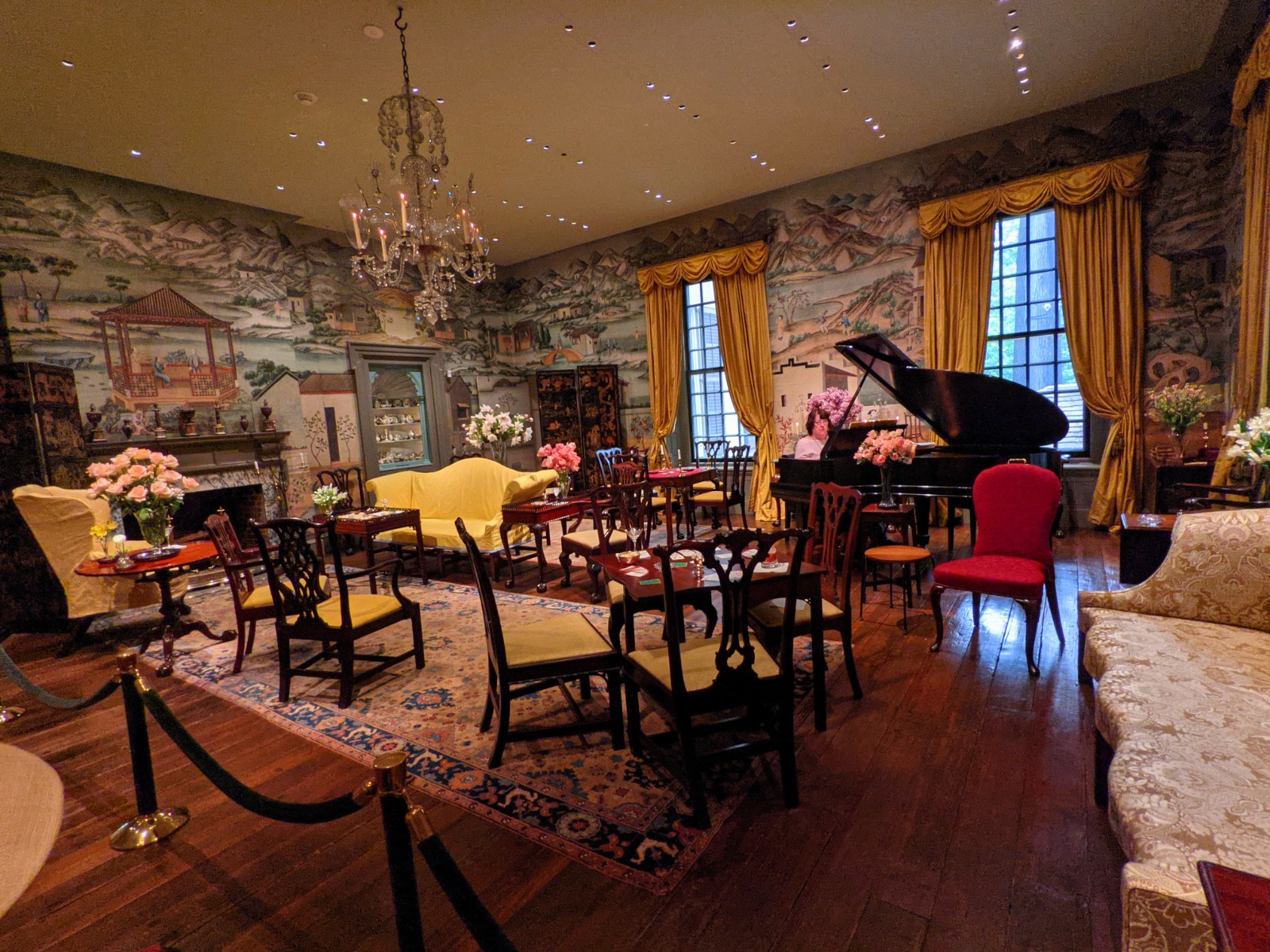
The Winterthur grounds are expansive, with walking trails running through 1,000 acres of woods, meadowlands and farmland. Natural and groomed paths are also found throughout the 60-acre gardens surrounding the childhood home and country estate of Henry Francis DuPont (1880-1969). The Mansion complex includes the family home, botanical labs, Library and Museum galleries revolving exhibits.
Winterthur offers a number of accessibility options to tour the garden area and the mansion complex: a) Companion-guided wheelchairs and strollers are available at no cost at the Visitor Center where you pick up your tickets, as well as at the Galleries Reception Atrium. b) Shuttles and trams for touring the gardens and reaching the mansion and galleries have wheelchair lifts and ramps, and designated wheelchair spots that allow a wheelchair to be securely locked in place. There is a sharp incline leading up to the mansion’s main entrance from the tram stop, which will require some effort to push a wheelchair up the hill; but once inside, it is easy to navigate around the main floor of the house with an accessibility device.
Guide and therapy dogs are allowed on the shuttle and tram, as well as in the buildings. Assistive listening systems are available for guided tours and special presentations. With at least one week’s notice, a sign-language interpreter can be hired for your visit. The grounds have restrooms with ADA bars and are wide enough to accommodate a wheelchair or mobile scooter.
Winterthur is open to the public from late February through mid-November. Tour tickets are currently available by calling 800-448-3883, or on-site in the Visitor Center. Reserve a wheelchair when you make a tour reservation, to ensure availability when you arrive. To learn more about accessibility options at Winterthur, explore this link: https://www.winterthur.org/visit/plan-your-visit/transportation-and-special-needs-access/. For a virtual tour of Winterthur, go to https://tour.winterthur.org/.
Winterthur Mansion and Gardens, 800-448-3883, 5105 Kennett Pike, Winterthur, DE 197350, www.winterthur.org.
Nemours Estate
The early 20th century home and grounds of Alfred I. DuPont was designed in a late 18th-century French style. Nemours offers self-guided tours of the mansion. You will have to bring your own mobility devices, as the Estate does not rent wheelchairs, electric scooters or strollers, nor does it offer a shuttle or tram to tour around the 200 acres of grounds and gardens.
Nemours mansion and gardens is a hike from the parking lot. For those walking the grounds, wear comfortable walking shoes. Although the roads and paths leading to the mansion are flat, paved, and accessible by wheelchair, scooter, and stroller, the garden paths are not paved nor handicap accessible. However, between the beautifully manicured sunken gardens, reflection pools and Art-Nouveau statues, there is a wide overlook for picturesque views, which can be reached by a mobility device.
When arriving at the Nemours mansion, the staff is very accommodating for visitors traveling with mobile devices (strollers are not allowed inside): they put out small ramps to get our wheelchair over a few steps leading into the mansion’s main floor. Once inside, visitors take a self-guided tour of the two accessible floors. Nemours has a huge, grand spiraling staircase leading up to the bedrooms on the second floor. Alternatively, for assistance to go up to the second floor, a first floor mansion attendant will contact a member of the staff on the second floor and direct you to an elevator that opens to a mezzanine level. The second floor attendant will be waiting to assist with a stair lift to the second floor.
The Estate is open to visitors from April through December, with self-guided tours of the mansion and chauffeur’s garage. ADA bathrooms are located a short walk from the parking lot and in the mansion. Food and water are not available onsite, but visitors are encouraged to bring food and water, even to bring a blanket to picnic on the grounds. Service animals are allowed on the grounds and in the mansion.
The Hagley complex offers a hands-on learning experience for all ages about early American commerce and life. The 235 acres of the Hagley grounds, founded by E. I. DuPont in 1802 for manufacturing gunpowder, rise above the Brandywine River. Open daily, Hagley currently offers small-group tours of the ancestral DuPont family home and garden. Interpretive docents and demonstrations are also found at the restored mill, the artisans building, and the Workers Hill Community, where the gunpowder works employees lived.
Pick up tickets for your timed tour at the Hagley Visitor Center and Gift Shop. A bus with a wheelchair lift leaves from the Visitor Center parking area. Some areas of Hagley are not easily navigable in a mobility device – ask the staff in the Visitor Center to highlight those areas on a grounds map. To reserve a group tour or a lunch and learn tour, go to https://www.hagley.org/plan-your-visit/hours-admission, call 302-658-2400, or email tickets@hagley.org. Call or email to confirm wheelchair availability.
Hagley Museum and Library, 200 Hagley Creek Rd, Wilmington, DE, 302-658-2400, www.hagley.org.
Longwood Gardens
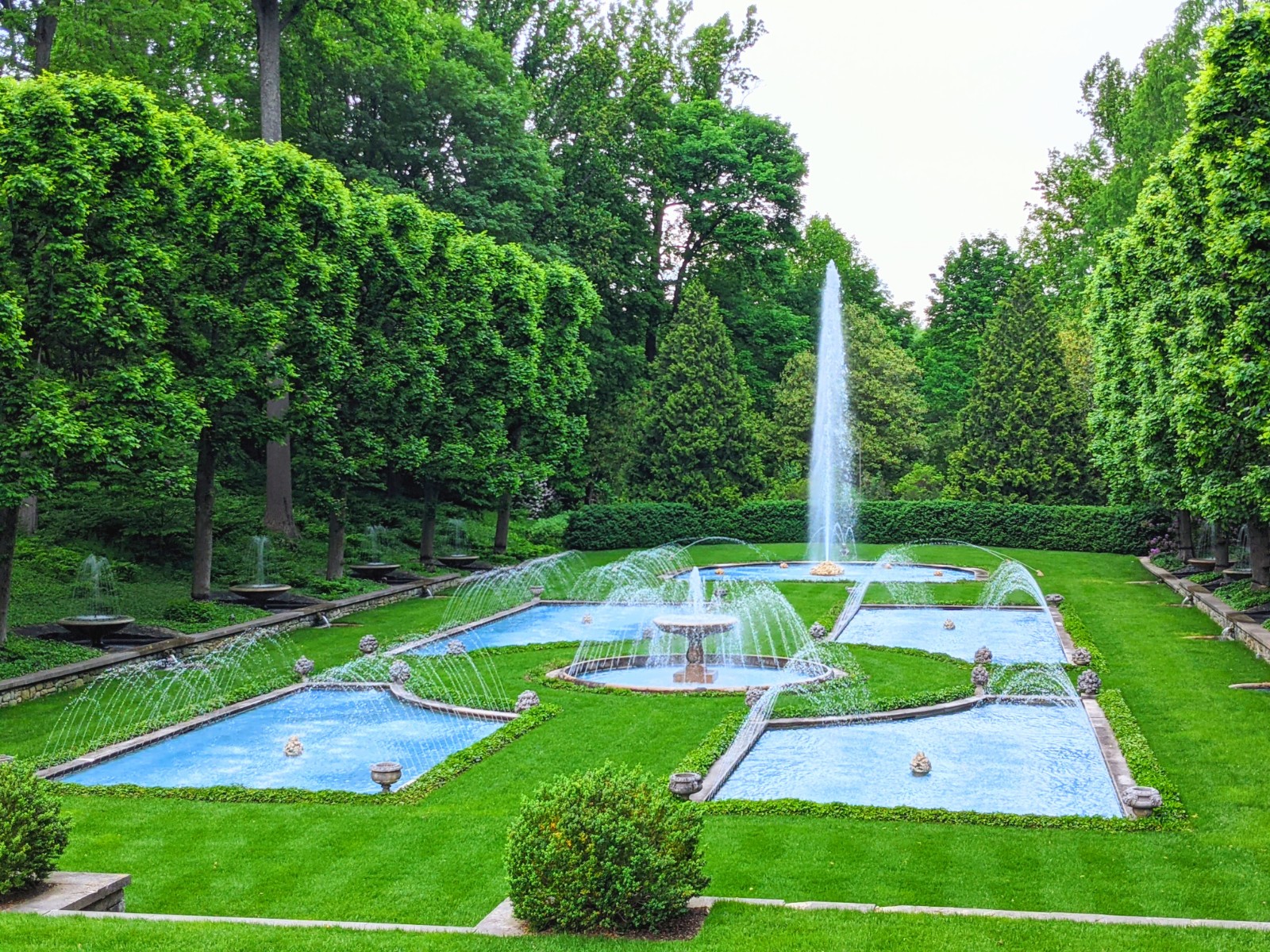
Longwood Gardens was developed initially in the early 20th century by Pierre DuPont to be enjoyed by family and friends. To perpetuate and expand his vision, after DuPont died in the mid-1950s, the mission of the Gardens was to continue for public enjoyment and education. This is one of our favorite gardens in the country and one of the largest in the world. With 1,100 acres of outdoor gardens, Longwood is open year-round for visitors (even Christmas Day!) to enjoy the ever-changing seasonal displays of outdoor natural beauty, along with “dancing” fountains scattered throughout the grounds and beautiful, indoor glass conservatories (one of them a massive 4.5 acres).
Over the past few years, the Main Fountain Garden area has been the location of beautiful fountain, light and fire shows with synchronized music. Fountain performances will resume on May 5, 2022.
Longwood does not offer a shuttle or tram to tour around the large park, but the hilly garden paths are primarily paved and mobility device accessible, as well as most buildings. Visitors to Longwood Gardens are strongly recommended to bring their own mobility devices (strollers, wheelchairs and scooters with 3 or more wheels). Through our experience, electric-powered mobility scooters will handle the steeper paths better than companion-pushed wheelchairs. The Visitor’s Center offers a limited supply of electric scooters on a first-come, first-served basis, with a “pay as you wish” rental fee policy for the entirety of your visit – more of a donation than a fixed price. A limited number of free wheelchairs and strollers are also available at the Visitor’s Center. The Gardens provides many water fountains and bathrooms that are mobility device accessible. Service dogs are permitted on the grounds and in the buildings. With at least two week’s notice, a sign-language interpreter will be available for a private, guided group walking tour; amplified listening devices are also available for use on the private tours.
At this writing, the Gardens is selling timed tickets. Check out availability and ticket prices at https://longwoodgardens.org/visit.
As our experience shows, there is no reason not to continue to explore and experience attractions and destinations, just prepare in advance.
April is National Garden Month
April is National Garden Month. As the colors of spring begin to appear across Wilmington and the Brandywine Valley, enjoy the warmer weather and change of seasons with a weekend tour of the region’s numerous botanical gardens, all within a short distance of one another.
Jennifer Boes, Director of Marketing Communications and Media Relations for Greater Williamsburg prepared this driving itinerary:
Start at Rockwood Park, just off I-95 in north Wilmington. Though not as well known as some of the area’s other gardens, the grounds surrounding the rural Gothic-style Rockwood Mansion are sublime. Explore the 72 acres of parkland including a six-acre formal garden. Unique features include a monkey puzzle tree (an unusual-looking evergreen native to Chile); a ha-ha (a sunken wall used to keep livestock away); and a stone from the Giant’s Causeway, a distinctive hexagonal rock formation along Ireland’s coast. An apothecary garden, filled with medicinal plants, was added in fall 2019.
Hagley Museum & Library’s gardens are as much about function as they are about form. It has two very different restored gardens that date back to the 1800s: one that fed the du Pont family and another that fed company workers. A pollinator garden, new in 2020, attracts a variety of butterflies and bees.
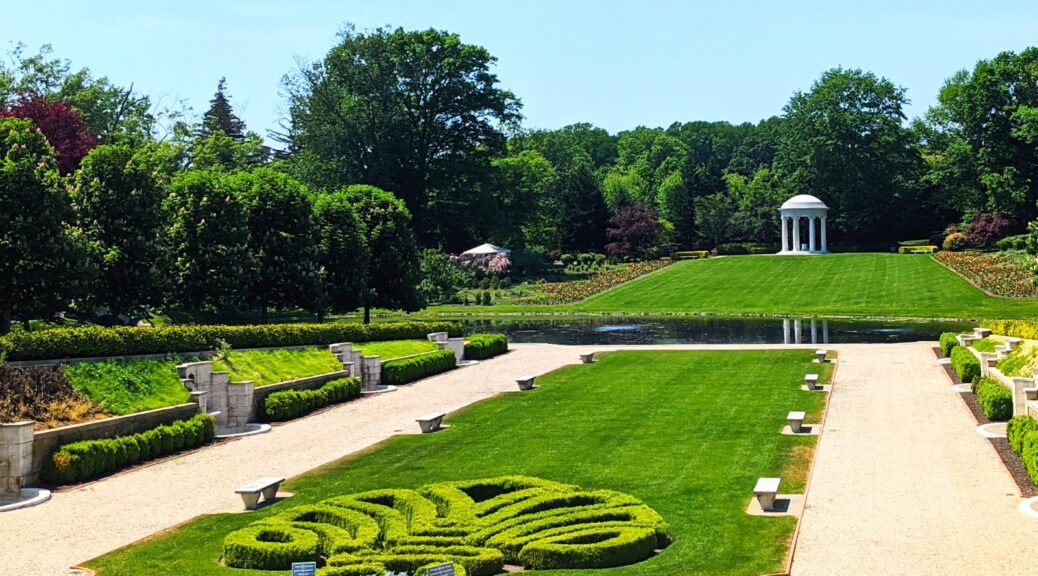
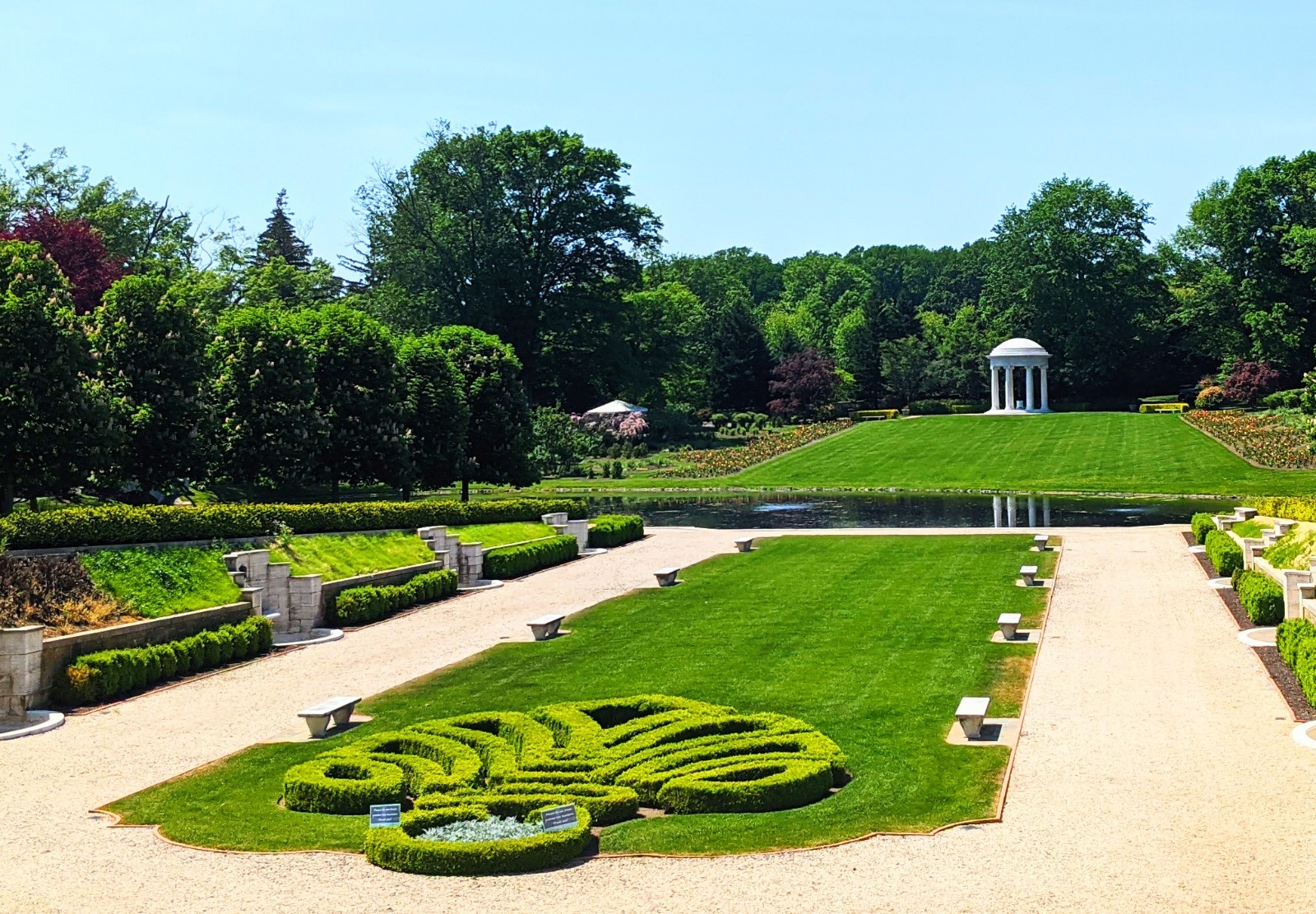
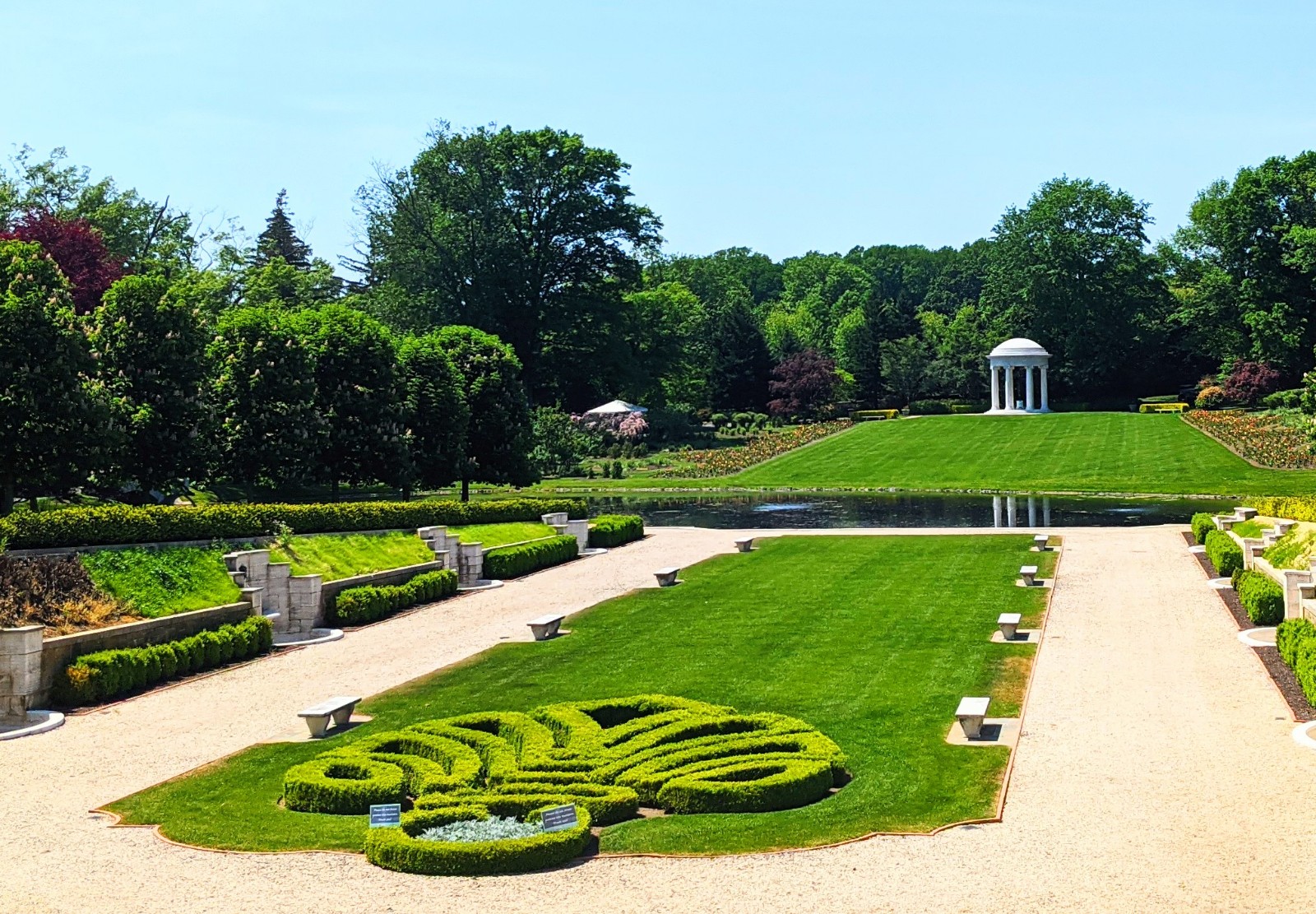
Nemours Estate’s French-style gardens, inspired by Versailles, are among the finest and largest of their kind in the U.S. There’s a formal boxwood garden and a maze dominated by a sculpture gilded in 23-karat gold leaf. The Baroque-style Russian gate was acquired from a palace built by Catherine the Great. The English gate was once used at Wimbledon Manor. In addition to the formal gardens, there are family-friendly woodland walking trails to explore.
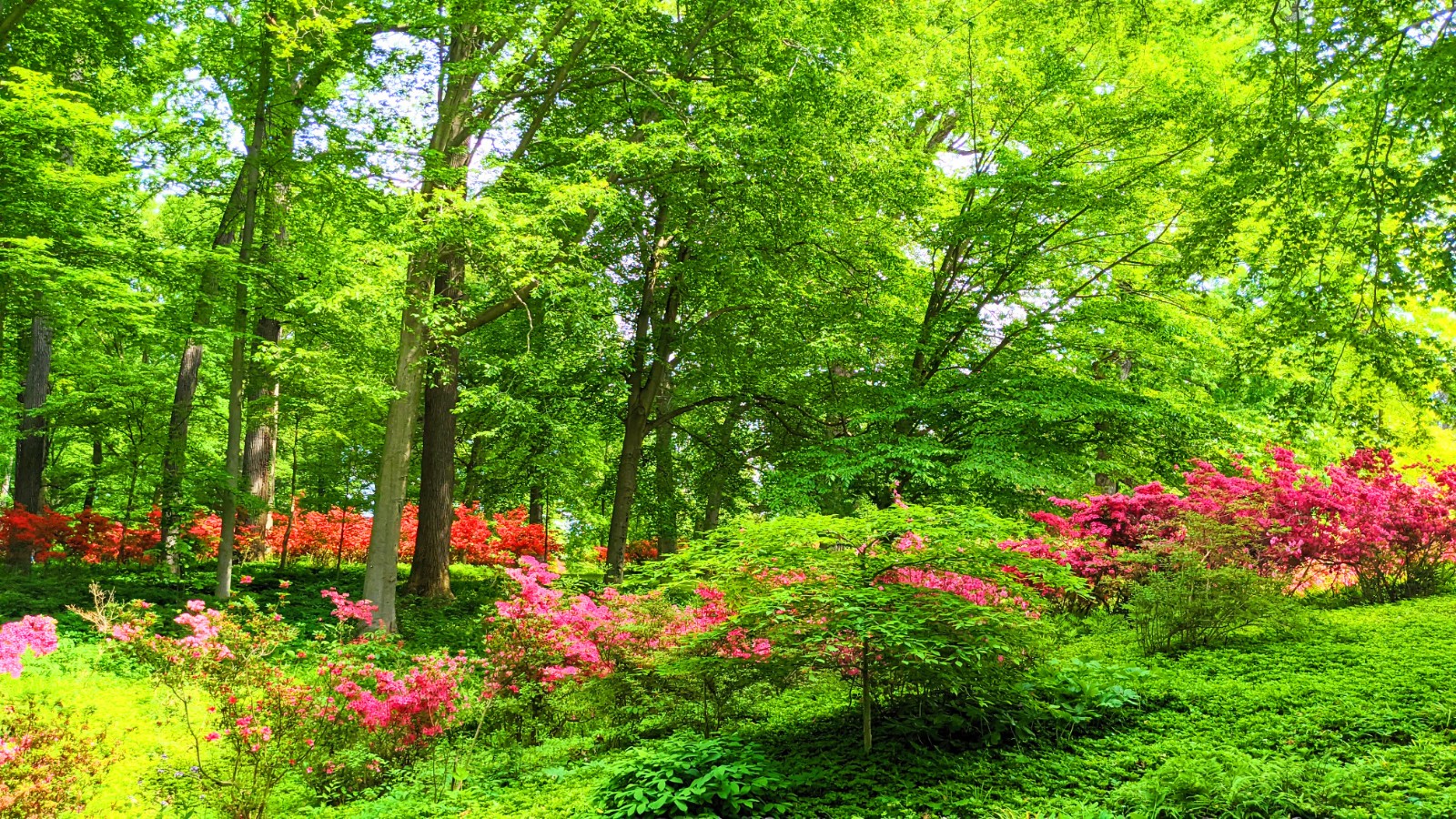
Winterthur Museum & Gardens features 1,000 acres of rolling hills, streams, meadows and forests. A favorite of the young and young at heart is the fairytale-like Enchanted Woods with its Faerie Cottage and Tulip treehouse. From April into May, the Azalea Woods, with thousands of Kurume azaleas and wildflowers that weave through the forest, is a must see.
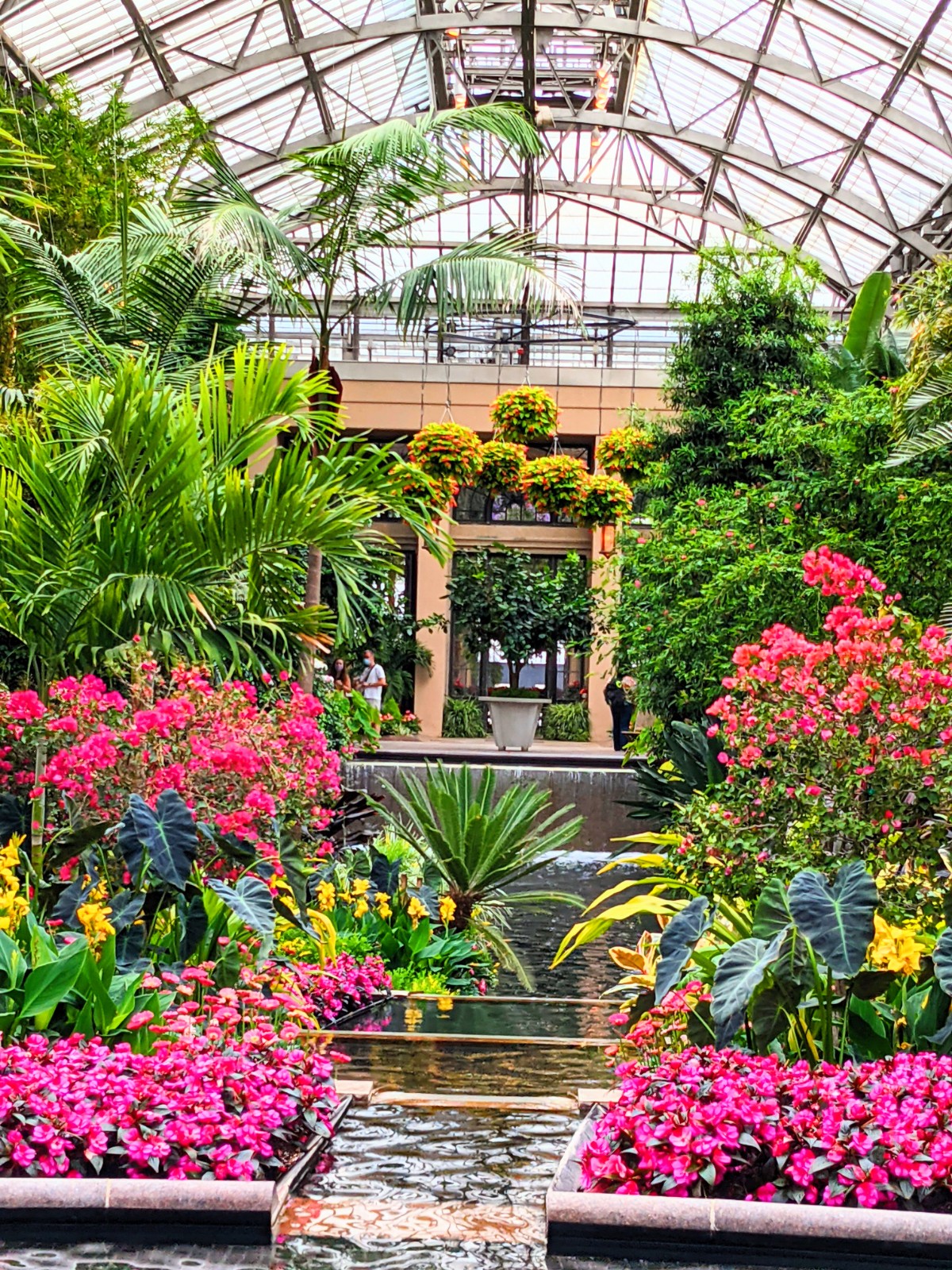
The nationally renowned Longwood Gardens is home to 11,000 varieties of plants spread across 1,100 acres of meadows, woodlands, and elaborate horticultural displays. In the four-acre conservatory, don’t miss the Wood’s Cycad. Called Longwood’s “King of the Conservatory,” this palm tree-like plant is extinct in nature and one of the rarest plants in the world.
The final stop on the garden tour is Mt. Cuba Center in Hockessin, Delaware. Opened for general admission to the public in 2013, it is home to more than 1,000 native plants, many of which are threatened by extinction. On the gently rolling hills of the Delaware Piedmont, part of the Appalachian Mountain system, it consists of 630 acres of historic pastures, fields, ponds, native forests, a woodland wildflower garden, and formal landscapes. One notable feature is the trillium garden, containing every trillium species native to the eastern U.S.
The Greater Wilmington Convention & Visitors Bureau is an excellent source of information to preplan your visit to the Wilmington-Brandywine region: 800-489-6664, www.visitwilmingtonde.com.
By Karen Rubin, Travel Features Syndicate, goingplacesfarandnear.com
You know the refrain: “It’s a nice place to visit, but I wouldn’t want to live there.” Rare is the place that is equally precious to visit and reside. Fortunately, our family has decided to reside in such a place, and I get to visit: Sonoma, California.
Just 43 miles northeast of San Francisco, Sonoma has long been a retreat for urban dwellers, offering a “healthier” climate.
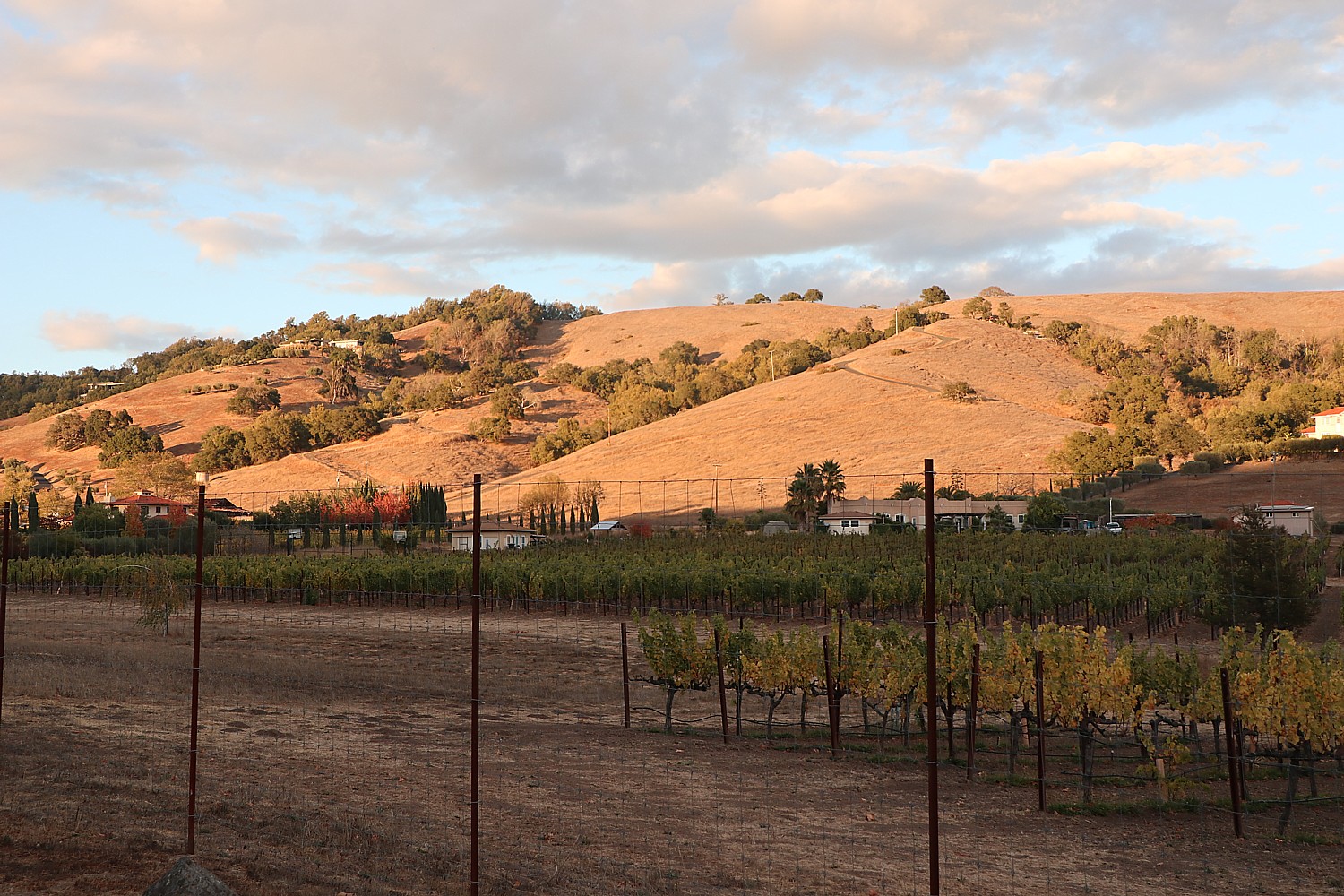
Sonoma is the perfect combination of man and nature, as the vineyards attest, and residents today are obsessive about preserving that balance. In fact, the Sonoma County Tourism, as part of its continued commitment to encourage responsible stewardship from visitors and residents, has just joined the Global Sustainable Tourism Council.
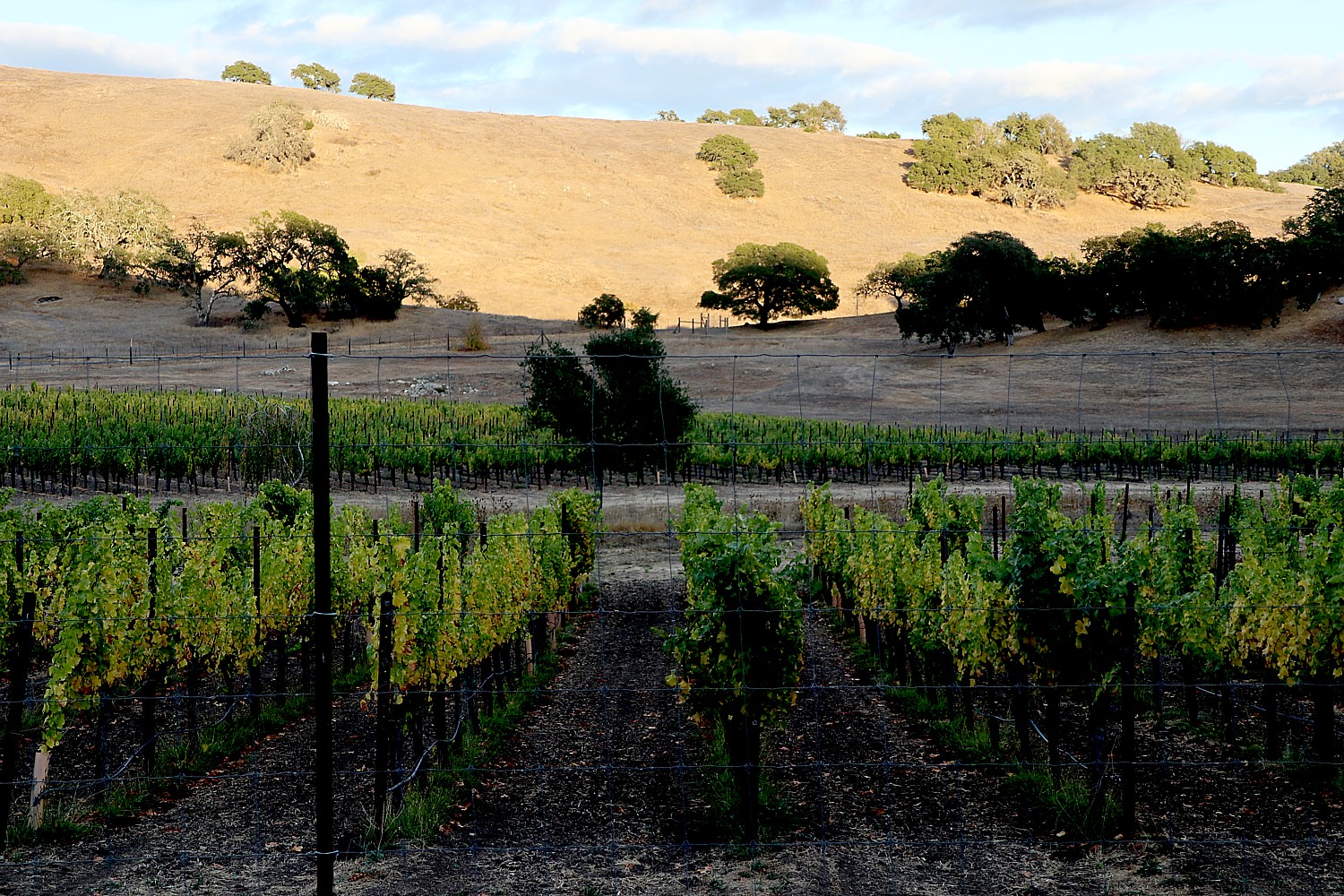
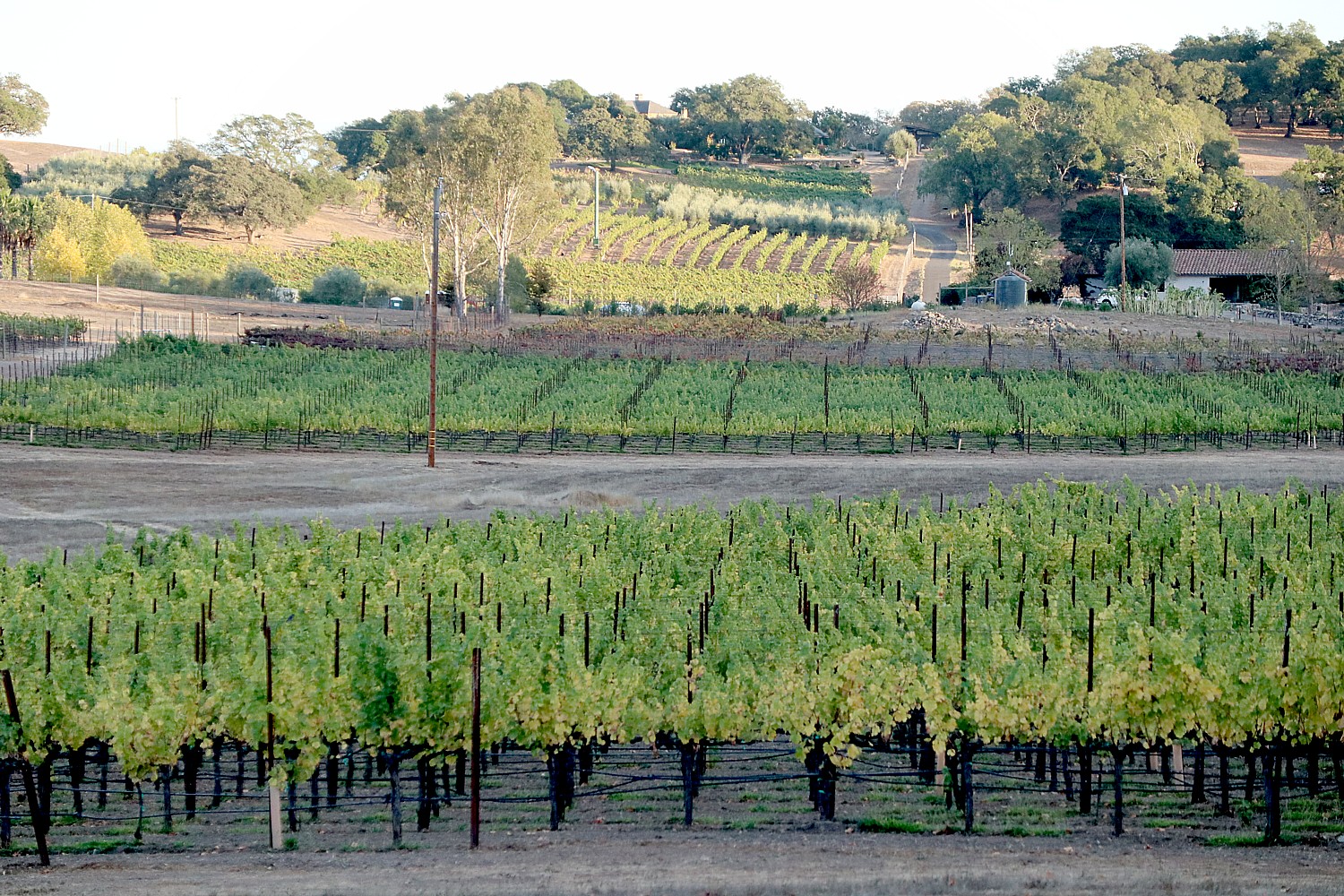
This is my second visit to Sonoma and while my family works, I get to explore like a local, hopping on a bike to ride the delightful paved recreation trail that goes right into the exquisitely quaint, historic village center and out to the vineyards. On my first trip, we biked, visited wineries, and hiked the spectacular Pacific coast. This trip, I focus on Sonoma’s history, heritage and the fascinating people who shaped it. What is more surprising is how contemporary the history feels – truly, history repeats.
It starts at the village plaza – utterly charming today with lovely restaurants, wine tasting rooms and boutiques – but dotted with really important historic sites that are part of Sonoma State Historic Park, a collection of six sites located throughout the community.
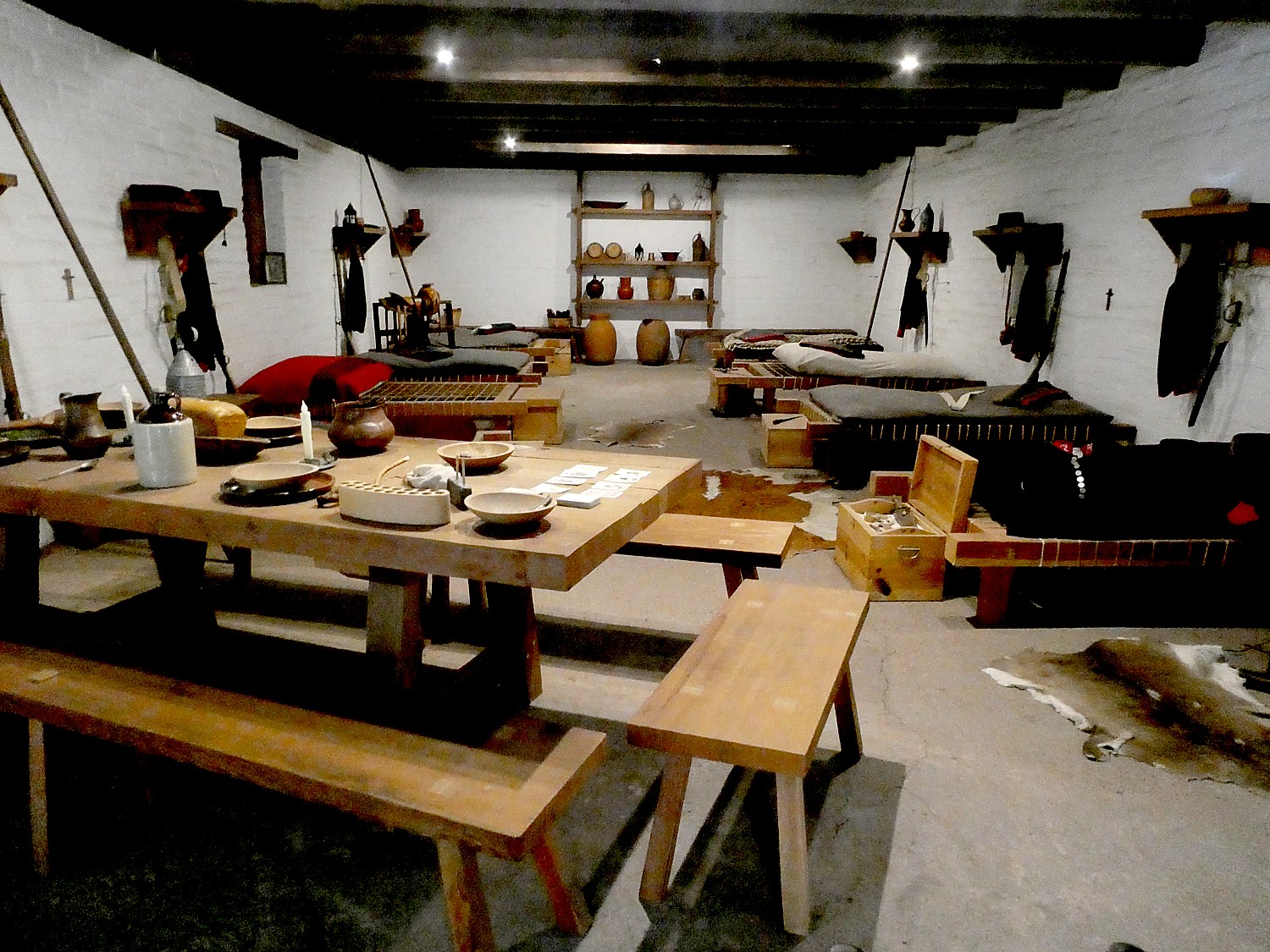
I start at the Barracks, a military post of Mexican soldiers established in 1834 to serve as a buffer to Russian expansion from Fort Ross (!!!). The Russians had come in 1812 to produce crops and trap furs to supply their Alaskan settlement. (The Russians ultimately moved out, ironically, just before gold was discovered.) You can see a room furnished as if the soldiers were still there. It is interesting to learn that they had to supply their own uniforms, horse and supplies, and basically buy them back from the Commandante. The barracks turns out to be the best place to start my journey because it offers an excellent video that encapsulates the history of this place, and puts everything into context.
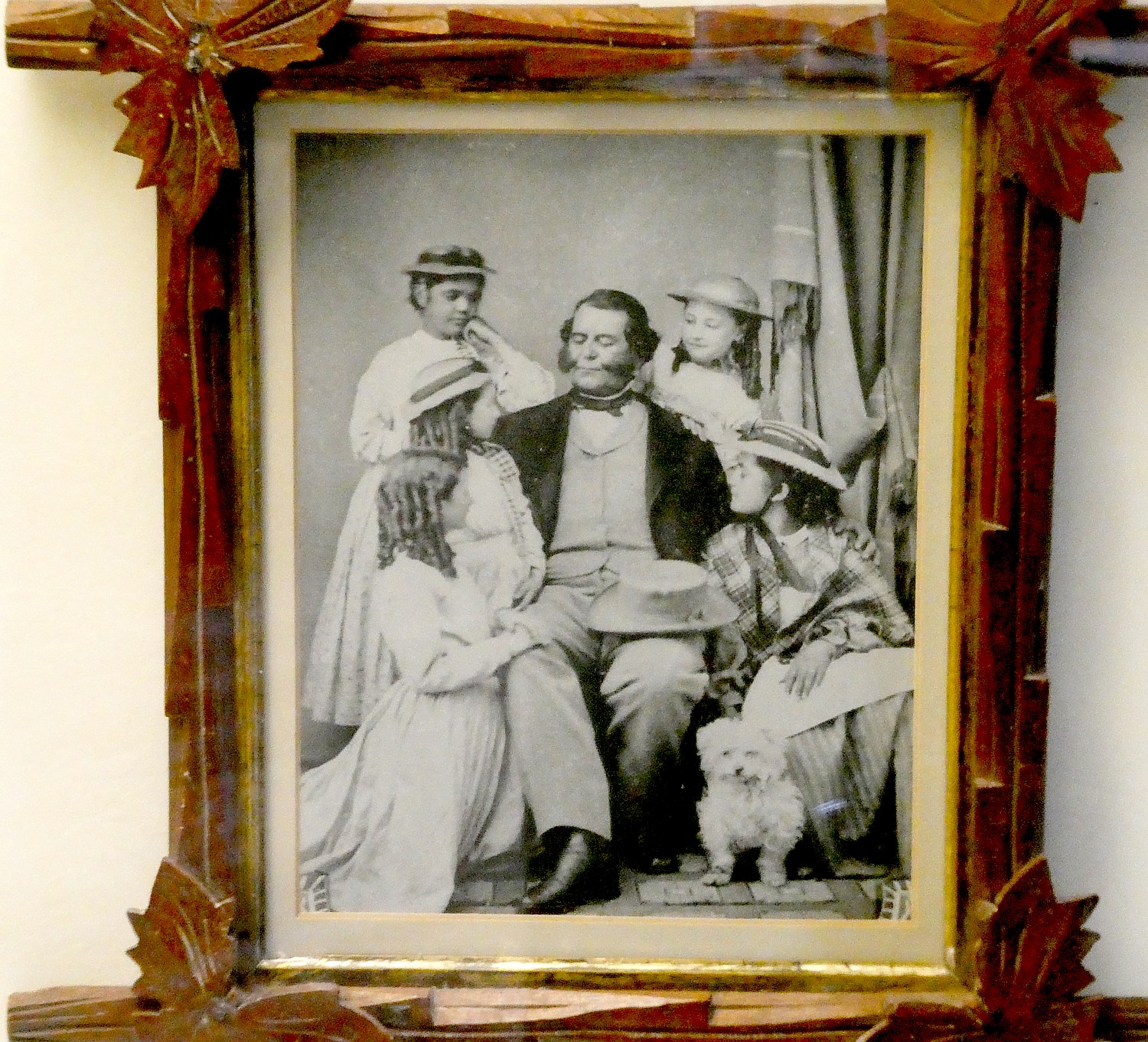
From 1834-1846, it was the headquarters for General Mariano Guadalupe Vallejo, the Commandant of the Frontera del Norte – the northern Mexico provincial frontier – who built it, as well as the Plaza. More than 100 military expeditions set out from Sonoma to subdue rebellious Wappo and Cainameros or Satisyomis native tribes trying to overthrow Mexican domination. For ten years, until 1844, the Presidial company of Sonoma was considered the most powerful military force in California. During the short-lived California Republic, the barracks housed Republic followers until July 9, 1846, when the Stars and Stripes flag was first raised at Sonoma. It then served as an army post. In 1860, Vallejo remodeled the barracks to serve as a winery. (Vallejo’s story, I learn, underpins just about everything in Sonoma.)
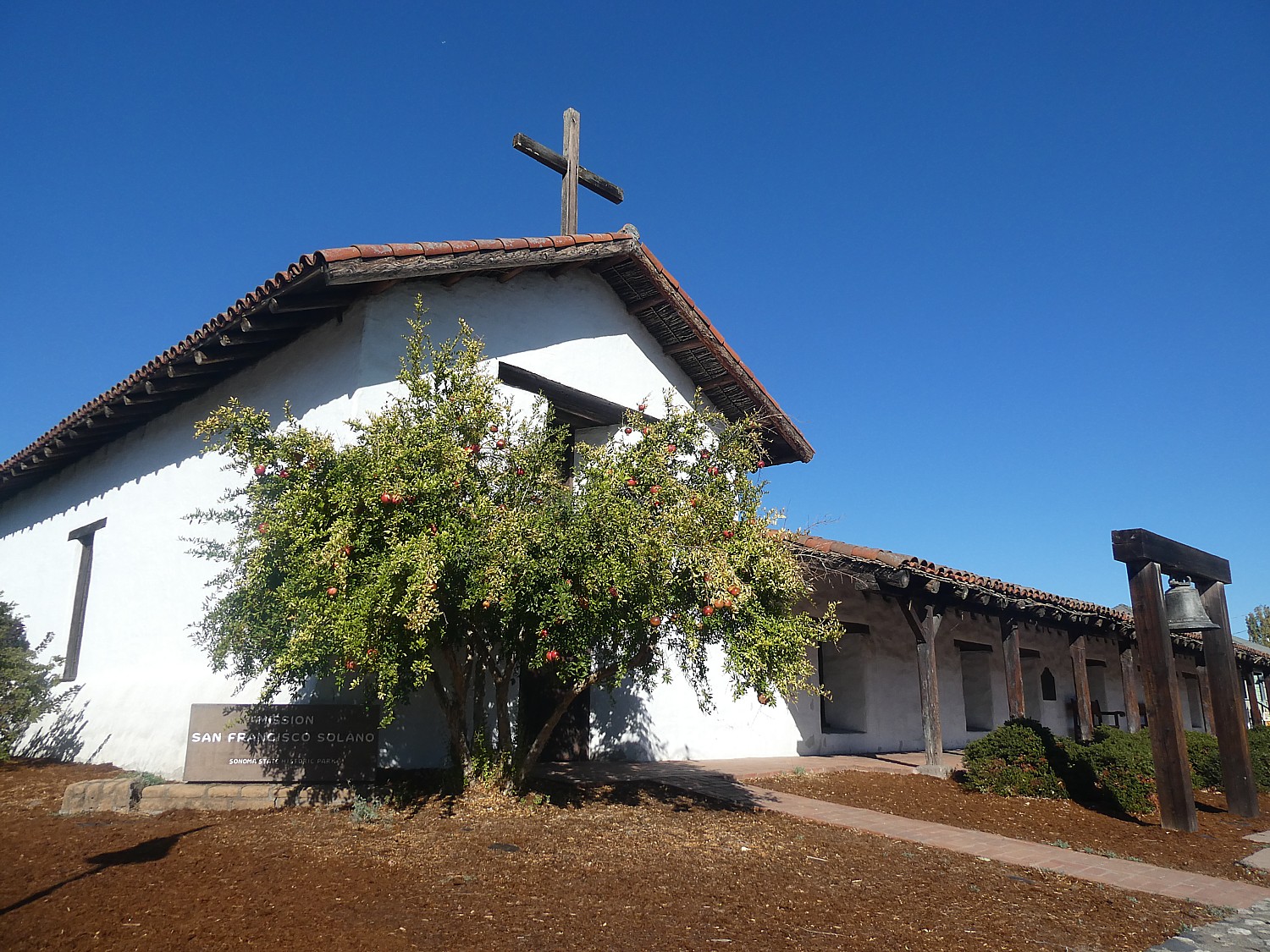
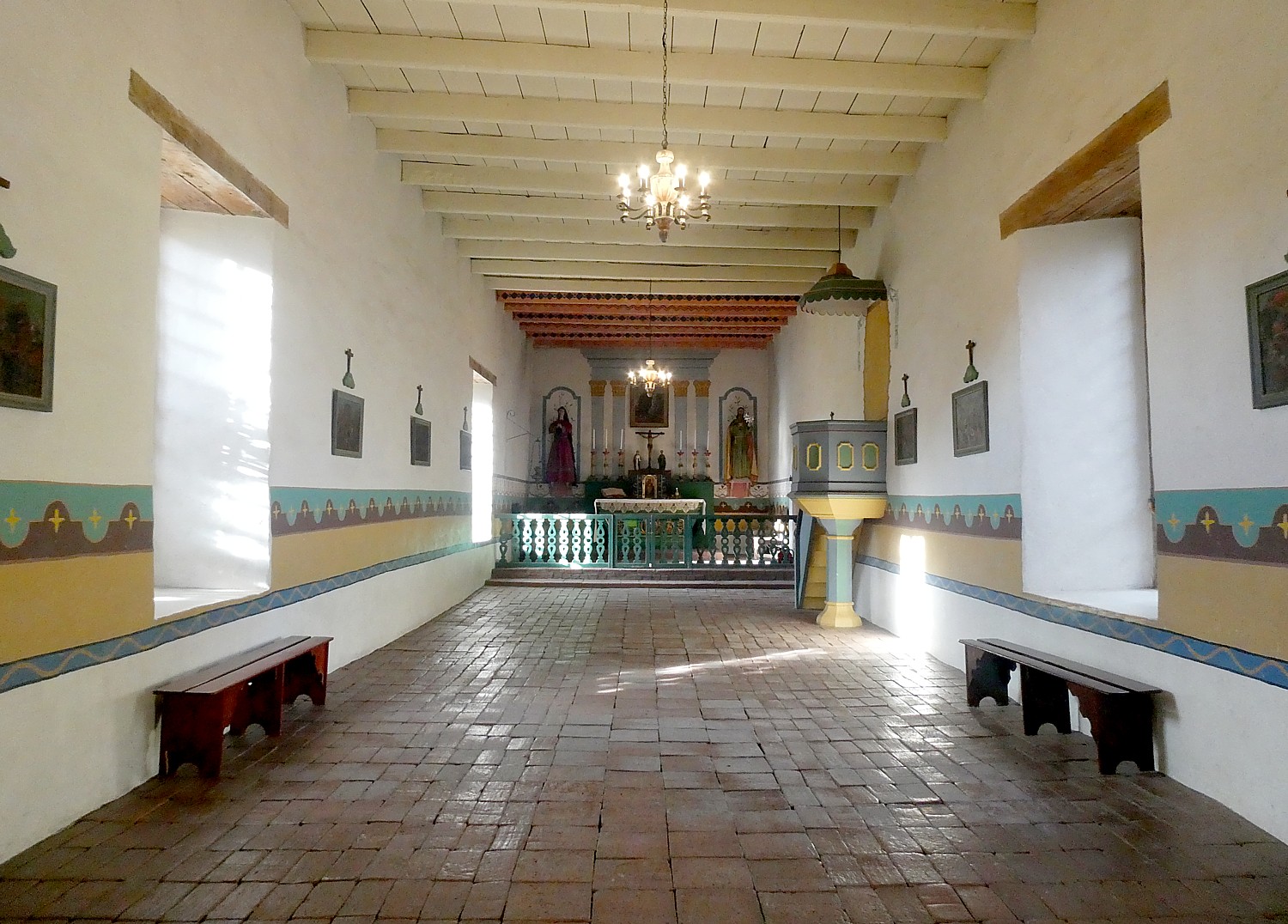
Across the street from the Barracks is Mission San Francisco Solano – the last of 21 missions established in California. It was founded in 1823 to convert Native Americans to Christianity – often forcibly. Indians would come to the mission first out of hunger –since the colonists introduced disease, technology and livestock which depleted the corn that was their mainstay. The Indians’ had their own culture, religion, lifestyle which “was contrary to the colonists” and so, had to be eradicated. Under the mission system, families were split up, children taken for indoctrination. Indians revolted and tried to escape the mission and the soldiers would hunt the “fugitives” down and bring them back. I learn in the video in the Barracks. (There is a display, “Collision of Cultures,” which acknowledges the tribes’ experience.)
“The Sonoma mission’s sphere of influence reached its peak around 1832, with nearly 1,000 Native California Indians in residence and 10,000 acres of land used to raise crops and livestock.” In 1834, the Mexican government secularized all the missions into parish churches – which was General Vallejo’s task.
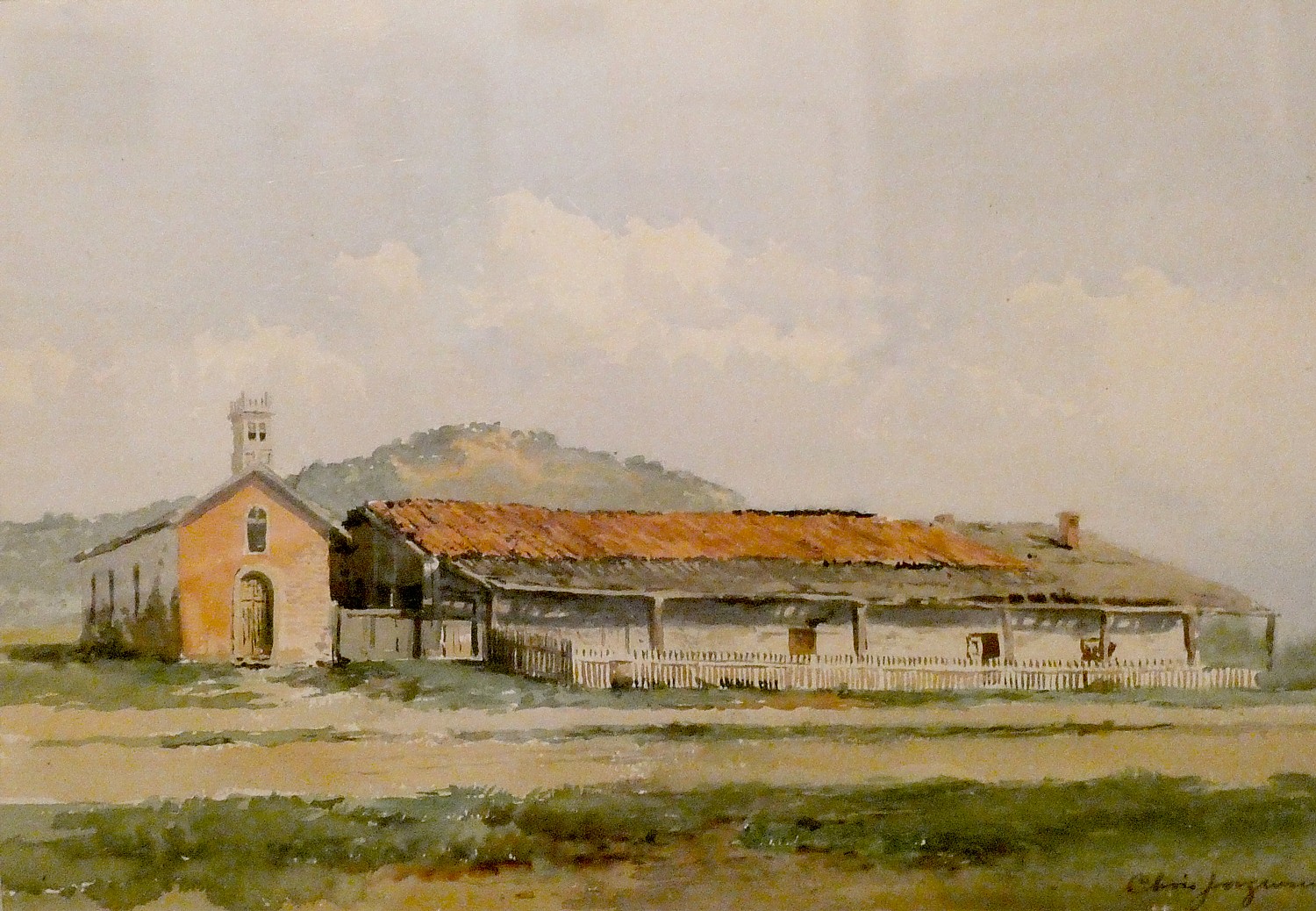
The Dining room today houses a marvelous exhibit of watercolors created between 1903-5 by Chris Jorgensen depicting the 21 missions that remained. His watercolors helped generate interest in preserving the missions. It is most interesting to see his watercolor of this mission as it stood.
It is here in the mission that I meet Ranger April Farnham. When I ask if she is a native Californian, she tells me of her great great great aunt, Eliza Farnham, born in Rensselaerville, NY in 1815, who came to northern California in 1849 with her two sons (her husband, Thomas Farnham, was apparently a rogue). What a character! Wikipedia describes Farnham as a novelist, feminist, abolitionist and activist for prison reform (she worked as the matron of Sing Sing prison’s women’s ward). She returned to New York in 1856 and in 1859, organized a society to assist destitute women find homes in the West. She returned to California, but died in New York City, at the age of 49, of consumption.
(I’m so intrigued about her, I look up her publications: Life in the Prairie Land, 1846 – An account of life on the Illinois prairie near Pekin between 1836 and 1840; California, In-doors and Out, 1856 – A chronicle of her experiences and observations on California; My Early Days, 1859 – An autobiographical novel; Woman and Her Era, 1864 – “Organic, religious, esthetic, and historical” arguments for woman’s inherent superiority’ and The Ideal Attained, 1865 – The heroine molds the hero into a worthy mate.)
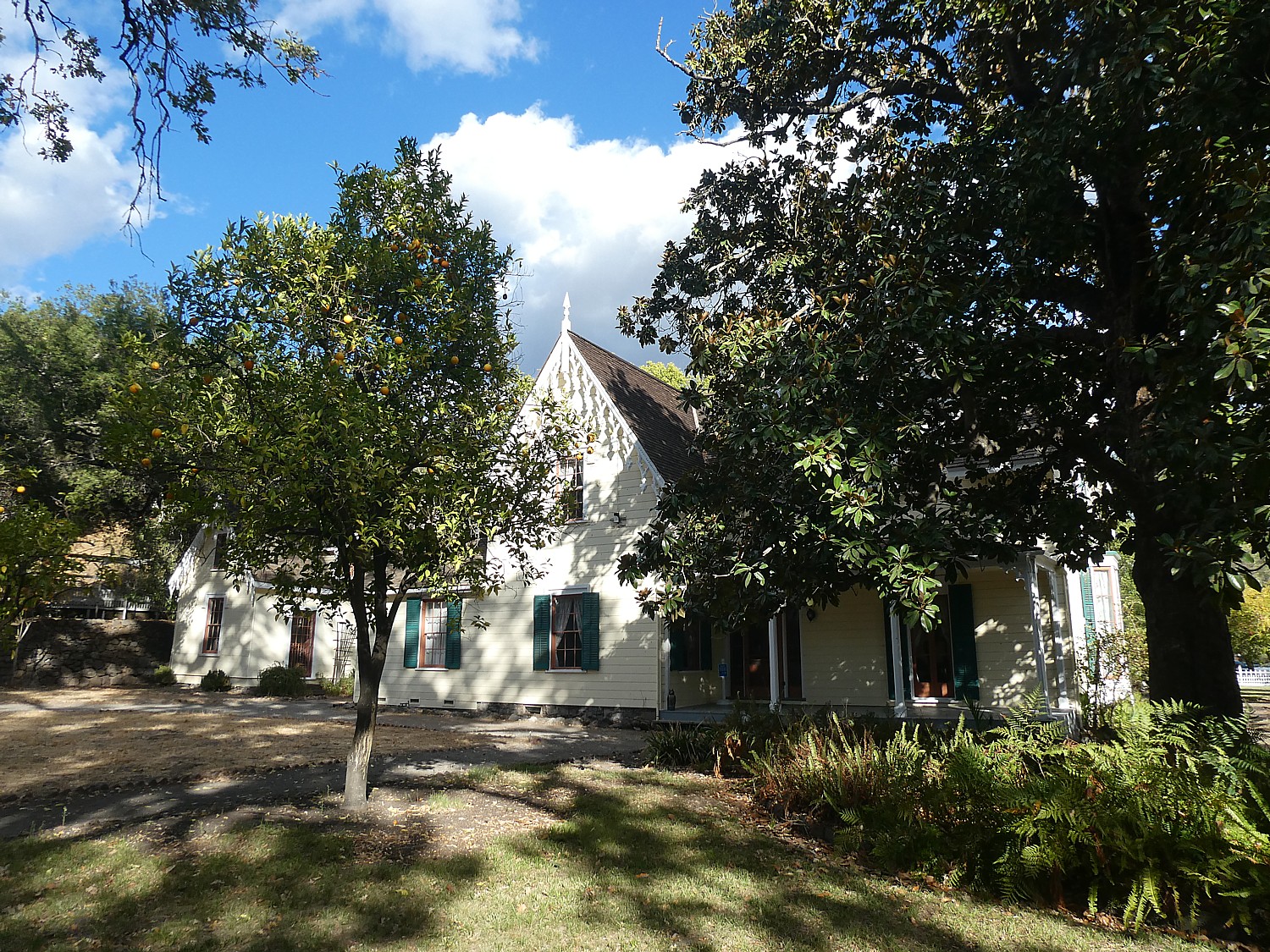
I get back on my bike to visit General Vallejo’s home, Lachryma Montis, a 20-acre site (out of his original 500 acres) just along the path about a mile from the mission. Here you appreciate what a visionary – even progressive – Vallejo was, and how instrumental he was to the founding and nurturing of Sonoma through its multiple transitions. By the time he was 40, he had lived under four flags – Spanish, Mexican, the Bear Revolution and then the United States.
Born in 1807 to an upper class Spanish family, his career paths were limited to the military, politics or church. He chose the military. At the age of 25, a lieutenant, he commanded Presidio de San Francisco, the “director of colonization.” In 1826, he was ordered to secularize the missions and transfer power from the church to civil authorities.
The Mexican government fell into chaos; there were frequent changes of governor in his district. Vallejo got no assistance from Mexico and had to pay his soldiers out of his own pocket. The settlers became Mexican citizens, learned Spanish but were different from the “Yankees” who began to come through.
After Mexican Governor Jose Castro proclaimed that the purchase or acquisition of land by foreigners who had not been naturalized as Mexicans “will be null and void, and they will be subject (if they do not retire involuntary from the country) to be expelled whenever the country might find it convenient.” 33 Yankees lead the Bear Flag Revolt against Mexican authorities. They attacked Sonoma, took Vallejo prisoner, imprisoning him at Sutter’s Fort for two months, where he contracted malaria and was a dath’s door before being released. “His imprisonment lasted longer than the Republic” (communication was slow). At the time of the Bear Flag Revolt, (June–July 1846), there were 500 Americans living in California, compared with between 8,000 and 12,000 Mexicans.
Despite the Treaty of Guadeloupe that ended the Mexican-American War (1846-1848) assuring the Mexicans their property ownership would be respected, the Yankees claimed the property belonged to them “by right of conquest”. Mexicans, including Vallejo, had to fight in court to prove title and that often put them in debt. His holdings were reduced from 500 acres to 20 acres, but he kept his vineyards.
Indeed, Vallejo also had a hand in developing wine-making in Sonoma. His two older daughters married sons of Count Agoston Haraszthy, who began the first vineyards (you can learn this part of the history at Haraszthy’s Buena Vista winery).
Ever adapting, Vallejo went on to be elected state senator for Sonoma, serving until 1853.
What is striking about Vallejo’s home is that it looks like it was deposited here from New England. Vallejo referred to his dwelling as the “Yankee Home” or “Boston House,” departing from traditional adobe style. That was deliberate on his part, to symbolize change (and acceptance) of becoming part of the United States.
You start your visit in the Chalet, a Tudor-style structure which originally was a storage house and granary, now a visitor center that houses a museum with family photos and personal artifacts of Vallejo and his family (he had 16 children, 10 of whom lived to adulthood), as well as their magnificent carriage. The furnishings in the main house, too, are mainly from the family.
You visit the parlor, which Vallejo furnished with items from around the world, the master bedroom, his daughter, Maria’s, bedroom, the nursery. You visit the bedroom of Luisa, his 15th child, who was born here, married here and, after being widowed, raised her three children in the house; she cared for her elderly parents and inherited the estate where she lived until her death in 1943 at 87. She sold the estate to the state of California in 1933 and served as its curator from 1933-1943.
There are several other interesting buildings and structures: the picturesque stone and masonry reservoir was constructed in the 1850s to collect water from natural artesian springs; a tiny cottage, the Hermitage, or “Napoleon’s Cottage” at the top of a winding stone staircase above the reservoir, where Vallejo’s youngest son, Napoleon, moved in 1865 at the age of 15, and kept 14 dogs, two monkeys, three cats and one parrot.
Sonoma’s Plaza itself – the birthplace of the state’s Bear Flag – is picturesque. You can see a monument to where rebels raised their new, homemade flag and declare their own republic, June 14, 1846. (The Bear Flag Republic lasted just 24 days; then the United States took over).
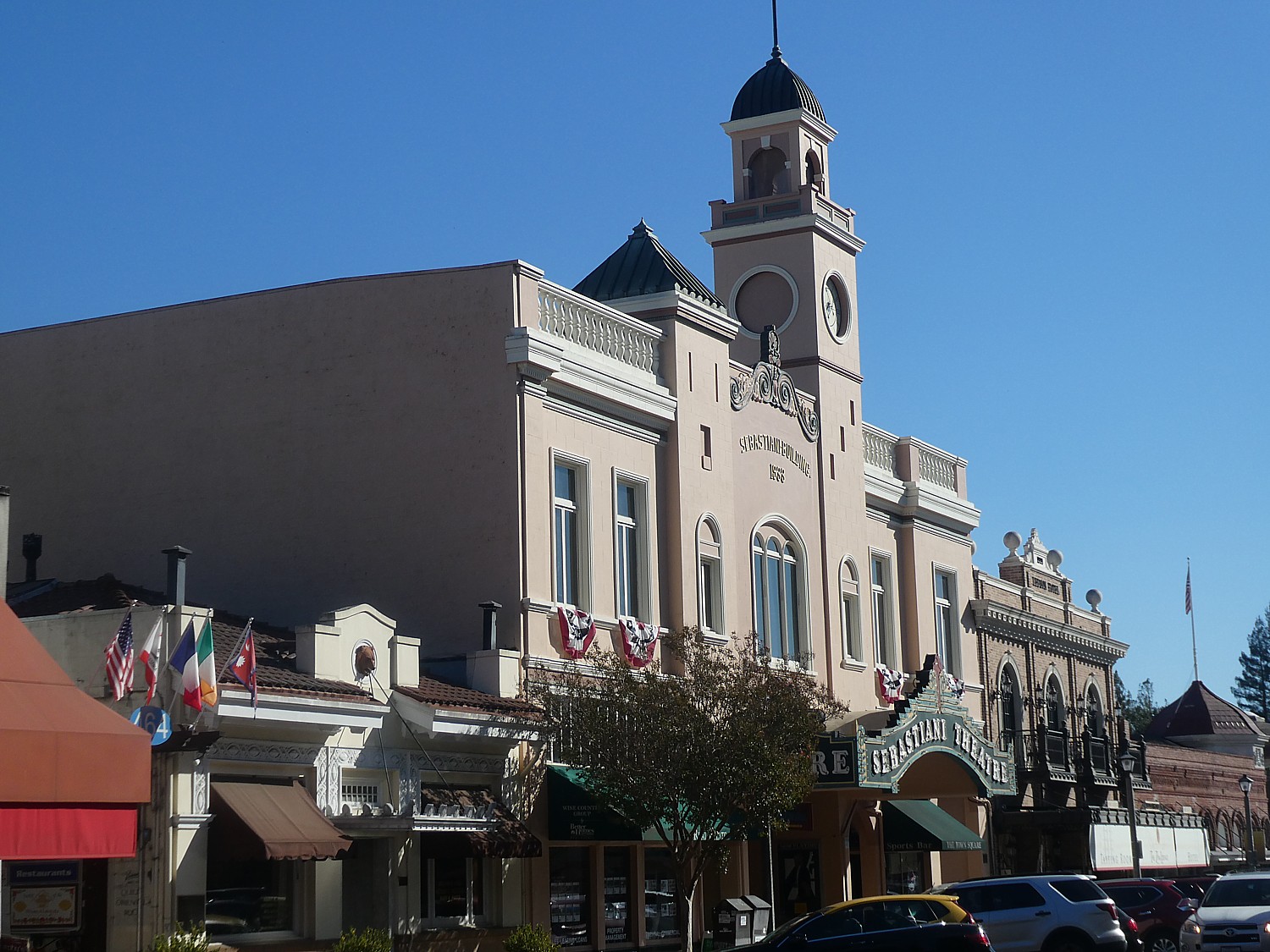
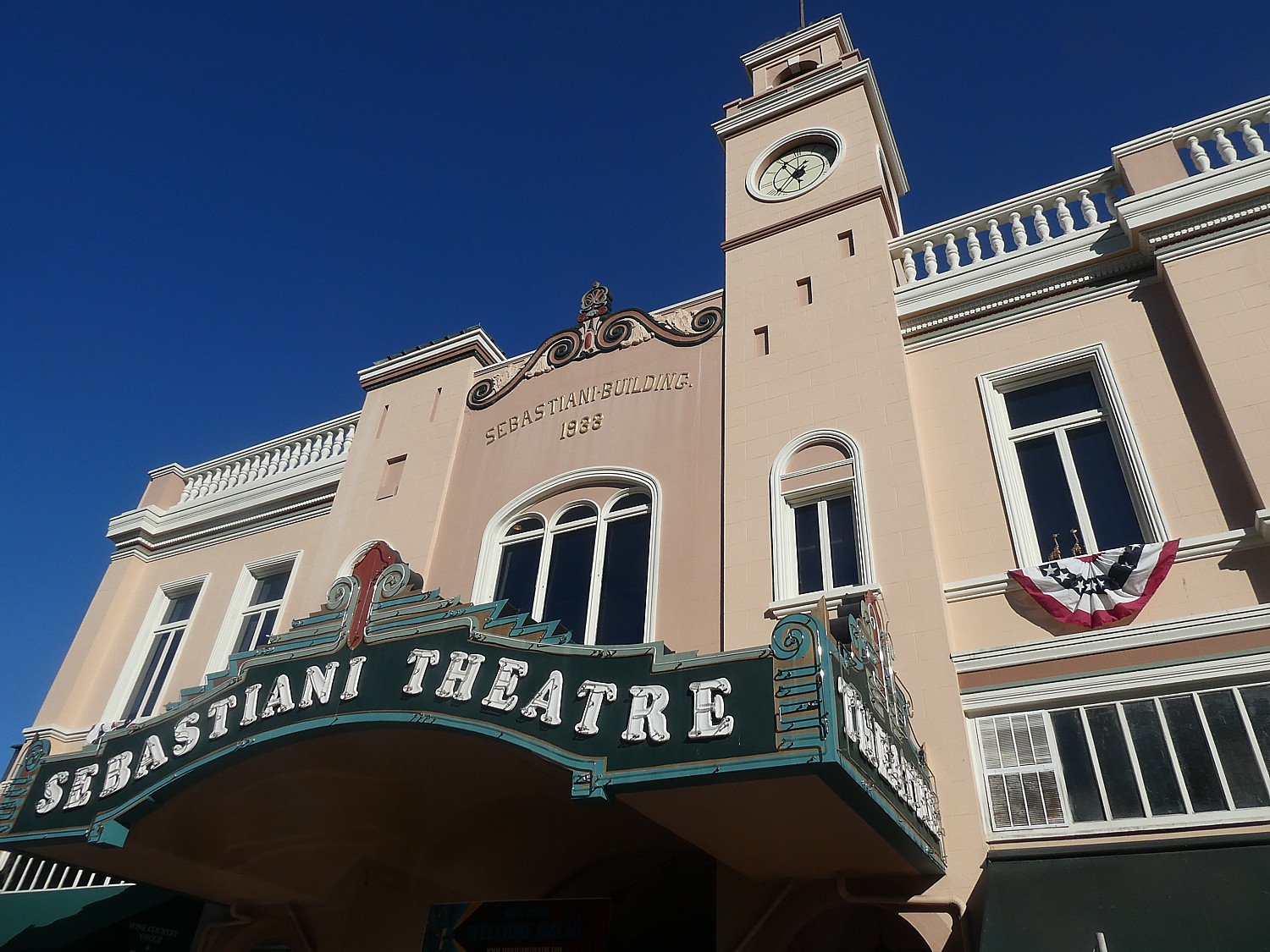
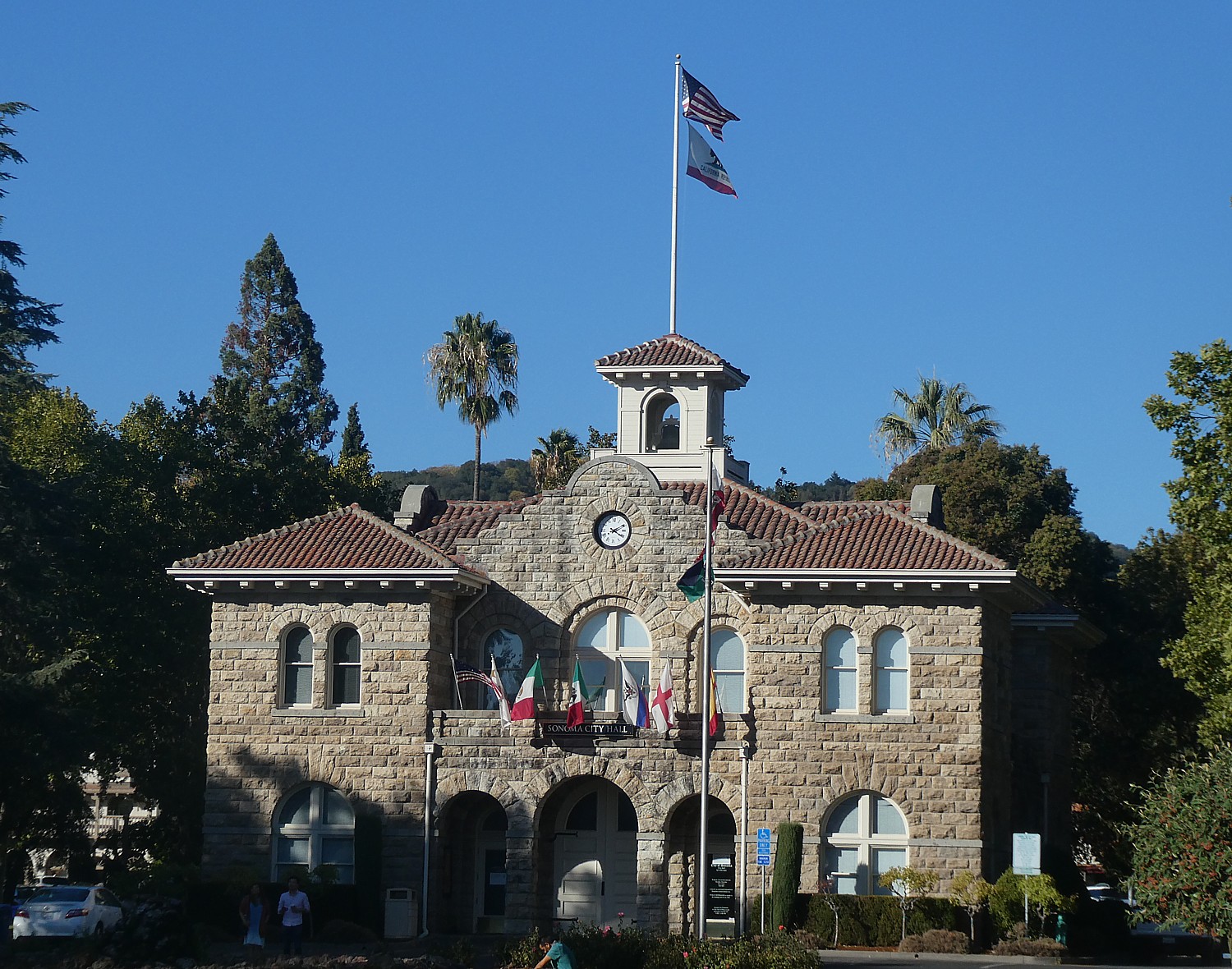
There is also City Hall, a pavilion for outdoor events, and across the way, a lovely old-timey movie theater.
The Sonoma State Historic Park (363 Third Street W, Sonoma CA 95476, 707-938-1519). includes six sites – in addition to the Mission, the Barracks and Lachryma Montis, it also includes Casa Grande (Vallejo’s home on the plaza), the beautiful Blue Wing Inn (built to house soldiers it later accommodated such famous visitors as US Army officer Ulysses S. Grant); and Toscana Hotel. For a schedule of docent-led tours, visit www.parks.ca.gov or call 707-938-9560. (The $3 admission includes same-day visit to the Barracks and General Vallejo’s Home (363 3rd St. West) and Petaluma Adobe State Historic Park (3325 Adobe Road, Petaluma).
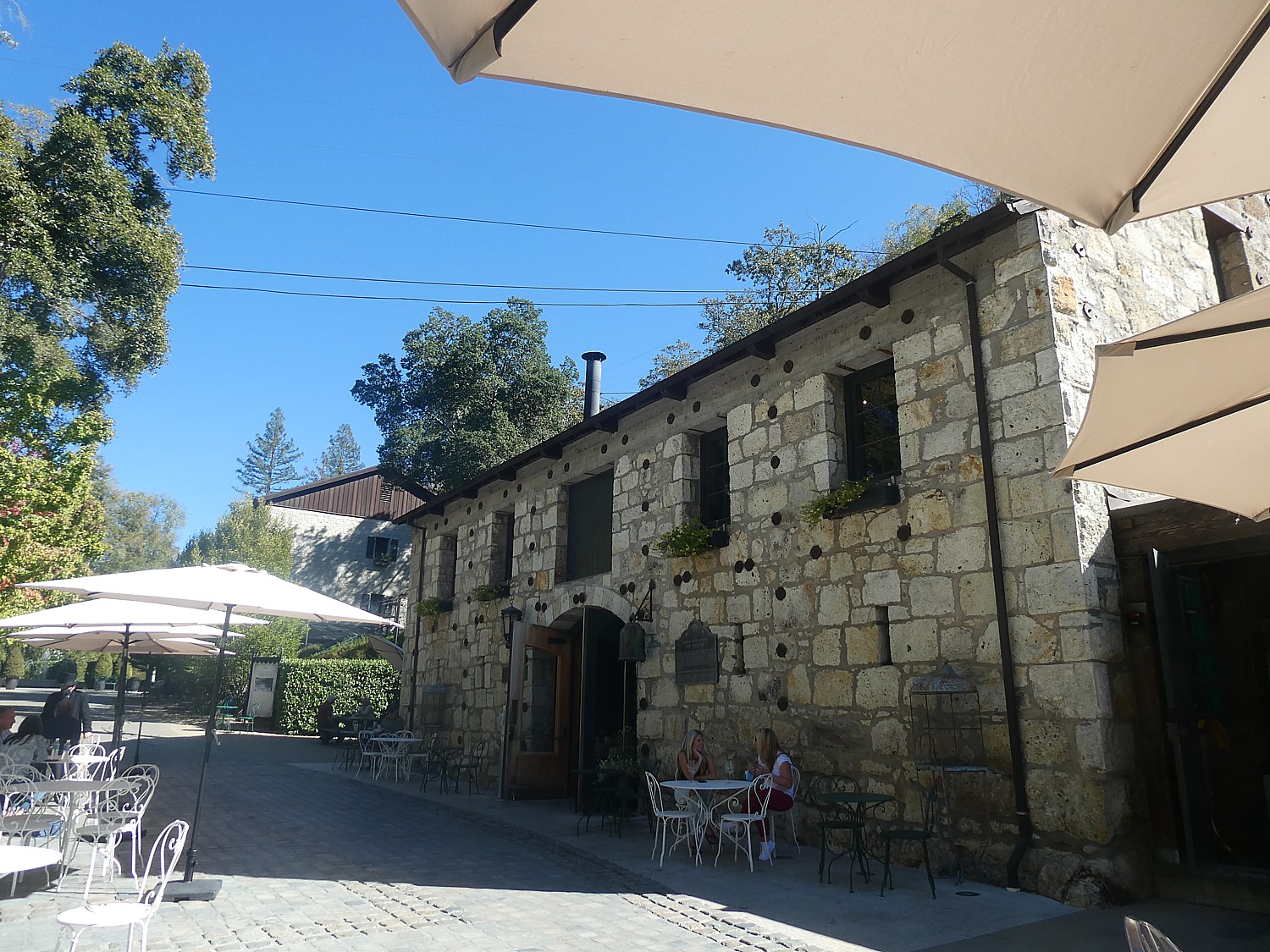
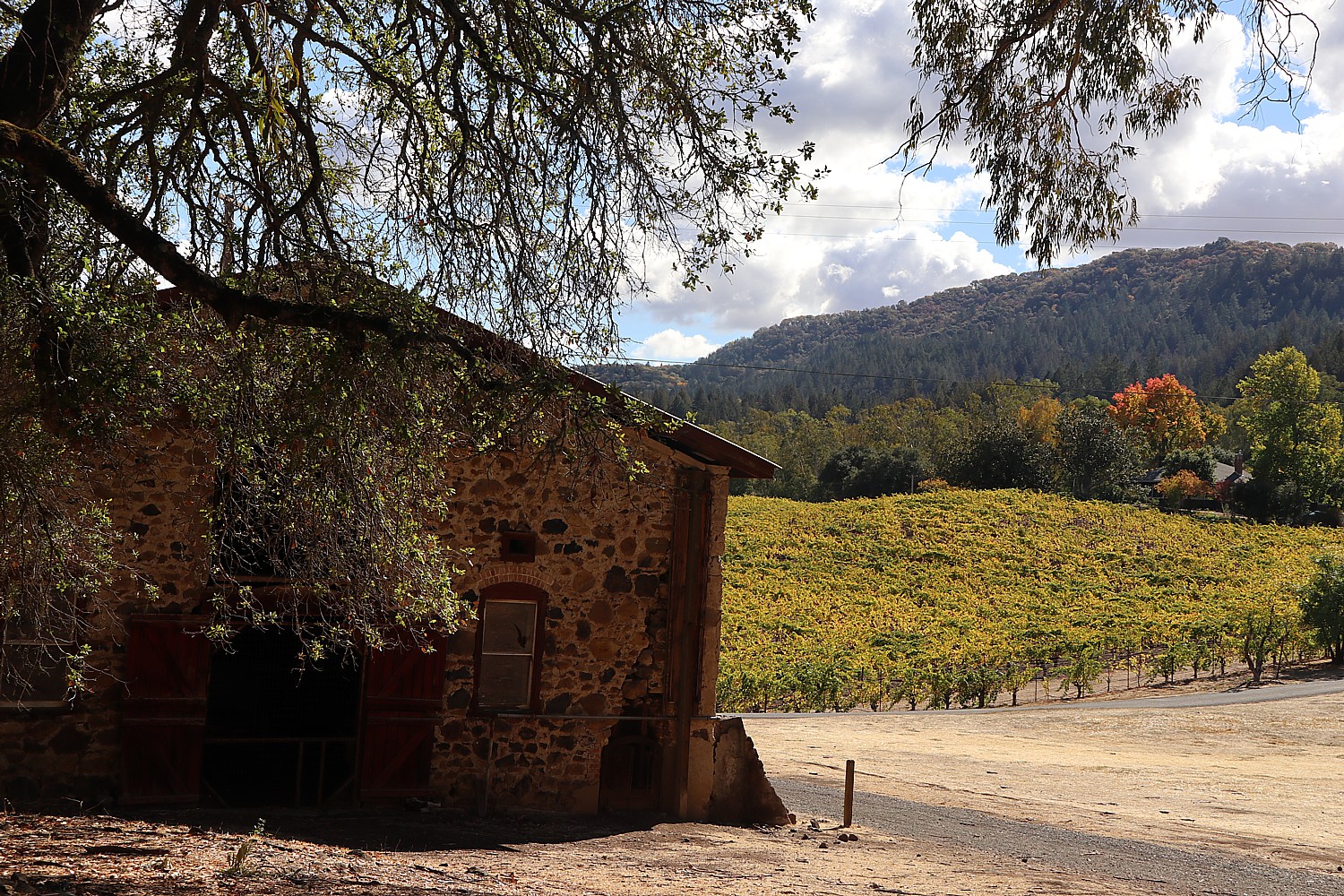
My biking takes me into the vineyards that completely ring the village. I return to the Buena Vista Winery, founded by Count Agoston Haraszthy, who came from Hungary initially in pursuit of gold but in 1857, decided instead to build a stone winery on the property. He introduced cuttings from Europe’s best vineyards to California and basically proved that California could produce wine. Buena Vista Winery, 18000 Old Winery Road, Sonoma, CA 95476, 800-926-1266, tastingroom@buenavistawinery.com, www.buenavistawinery.com.
There are about 90 vineyards and wineries you can explore, see Sonoma.com.
I also come upon a wonderful local community garden, Sonoma Garden Park, which is a working farm, education center and “vibrant gathering place” where I encounter a gardener who comes up from San Francisco and learn about sustainable gardening in this drought-plagued place (Seventh St. East & MacArthur).
Another marvelous example of this merging of man and nature is the Jack London State Park in nearby Glen Ellen, where we go for a hike and discover a most intriguing history. I was expecting to hike in the woods, but the historic and biographical features blew me away.
I always associated Jack London with San Francisco and Alaska. It was a complete surprise to learn that Glen Ellen was home to the writer/adventurer from 1905 until his untimely death in 1916, at age 40, of gastrointestinal uremic poisoning. London pioneered new agricultural techniques here at his 1,400-acre Beauty Ranch.
“London was well ahead in the real estate game in 1905 when he began buying up what was then exhausted farmland around Glen Ellen,” writes Kenneth Brandt, The Short, Frantic, Rags-to-Riches Life of Jack London,” in Smithsonian (www.smithsonianmag.com/smithsonian-institution/short-heroic-rags-riches-life-jack-london-180961200). “His intention was to restore the land by using innovative farming methods such as terracing and organic fertilizers… ‘I see my farm,’ he declared, ‘in terms of the world and the world in terms of my farm.’ Today, docents lead tours showcasing London’s progressive ranching and sustainable agricultural practices.”
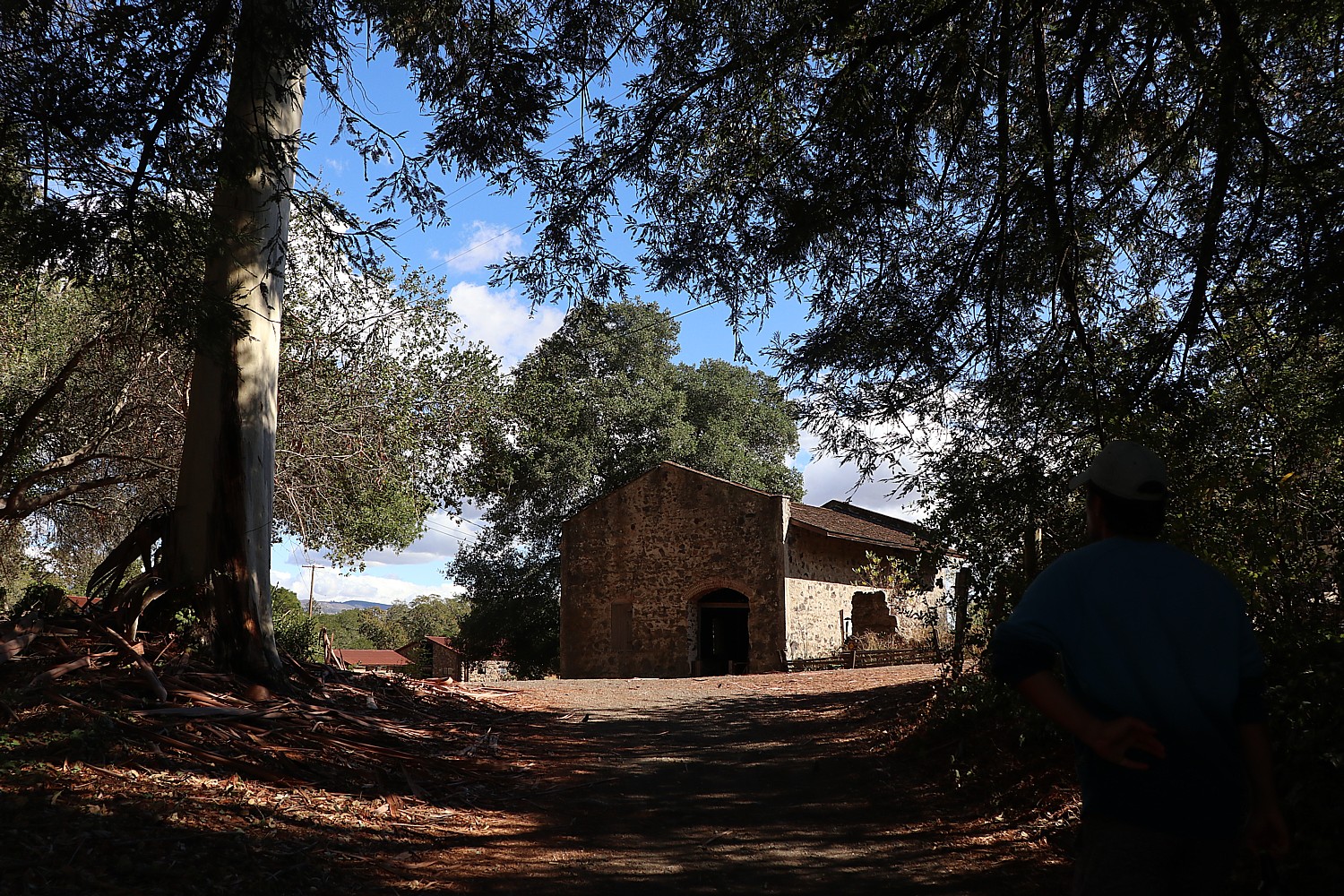
We wander through the ruins of his old stone winery and see a stone barn. You can visit the magnificent ruins of London’s 15,000-square-foot Wolf House mansion, built out of native volcanic rock and unstrapped redwoods, that would have had 26 rooms and nine fireplaces, a library measuring 19 x 40 feet, a two-story high living room, a wine cellar and – befitting a forward looking innovator – electric lighting and built-in vacuum cleaning system. It cost $75,000 ($1.9 million today) to build, but burned to the ground a month before completion.
“Built out of native volcanic rock and unstripped redwoods, it was to be the rustic capstone of Beauty Ranch and architectural avatar Jack London himself. He was devastated over the fire but vowed to rebuild. He would never get the chance,” Brandt writes.
I learn how contemporary London actually was, his writings and outlook remarkably prescient (or else you realize things don’t actually change but only repeat) – he could have been writing today. “He also remained politically engaged,” Brandt writes, quoting London from a 1914 letter: “If, just by wishing I could change America and Americans in one way. I would change the economic organization of America so that true equality of opportunity would obtain; and service, instead of profits, would be the idea, the ideal and the ambition animating every citizen.”
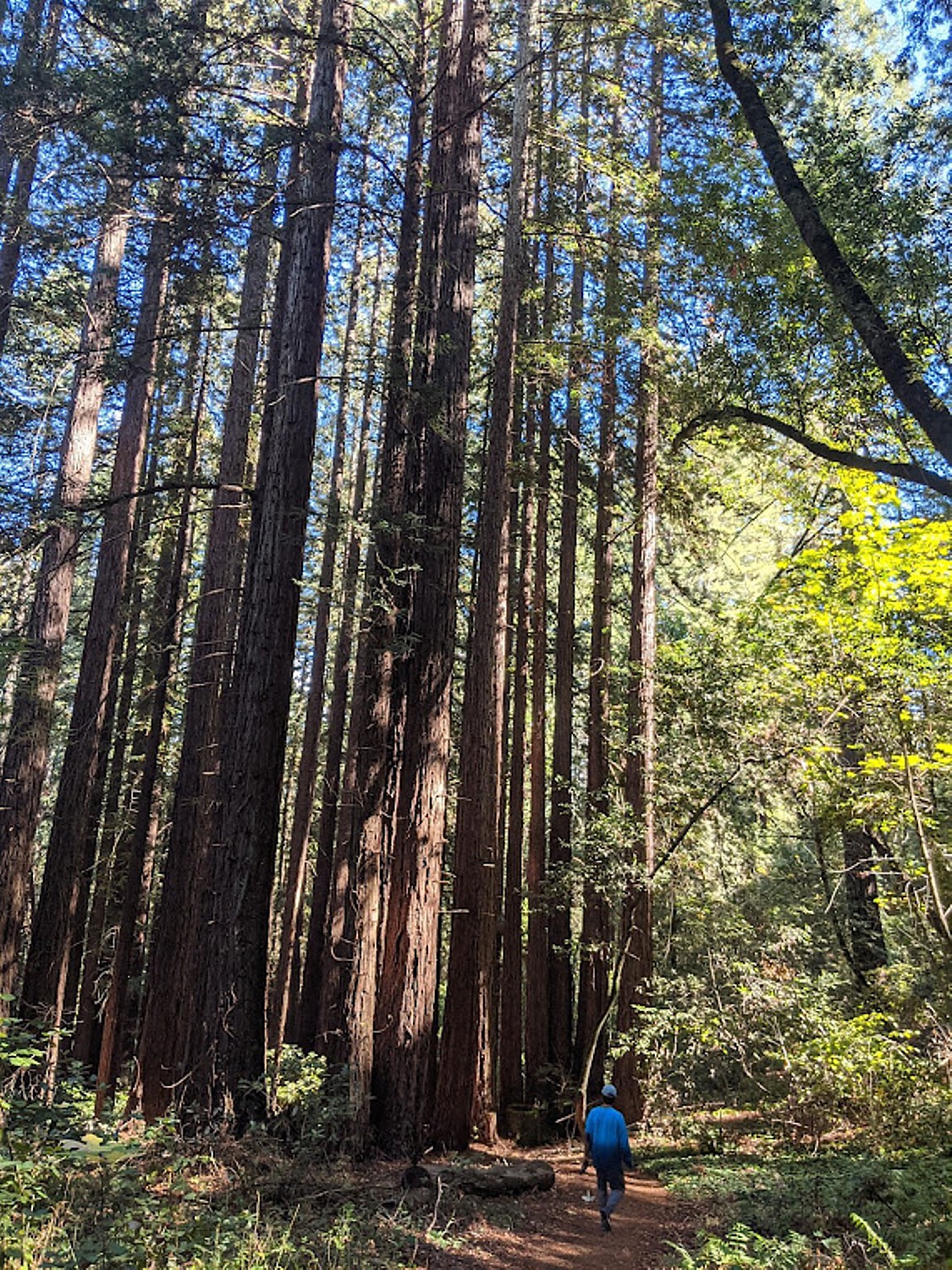
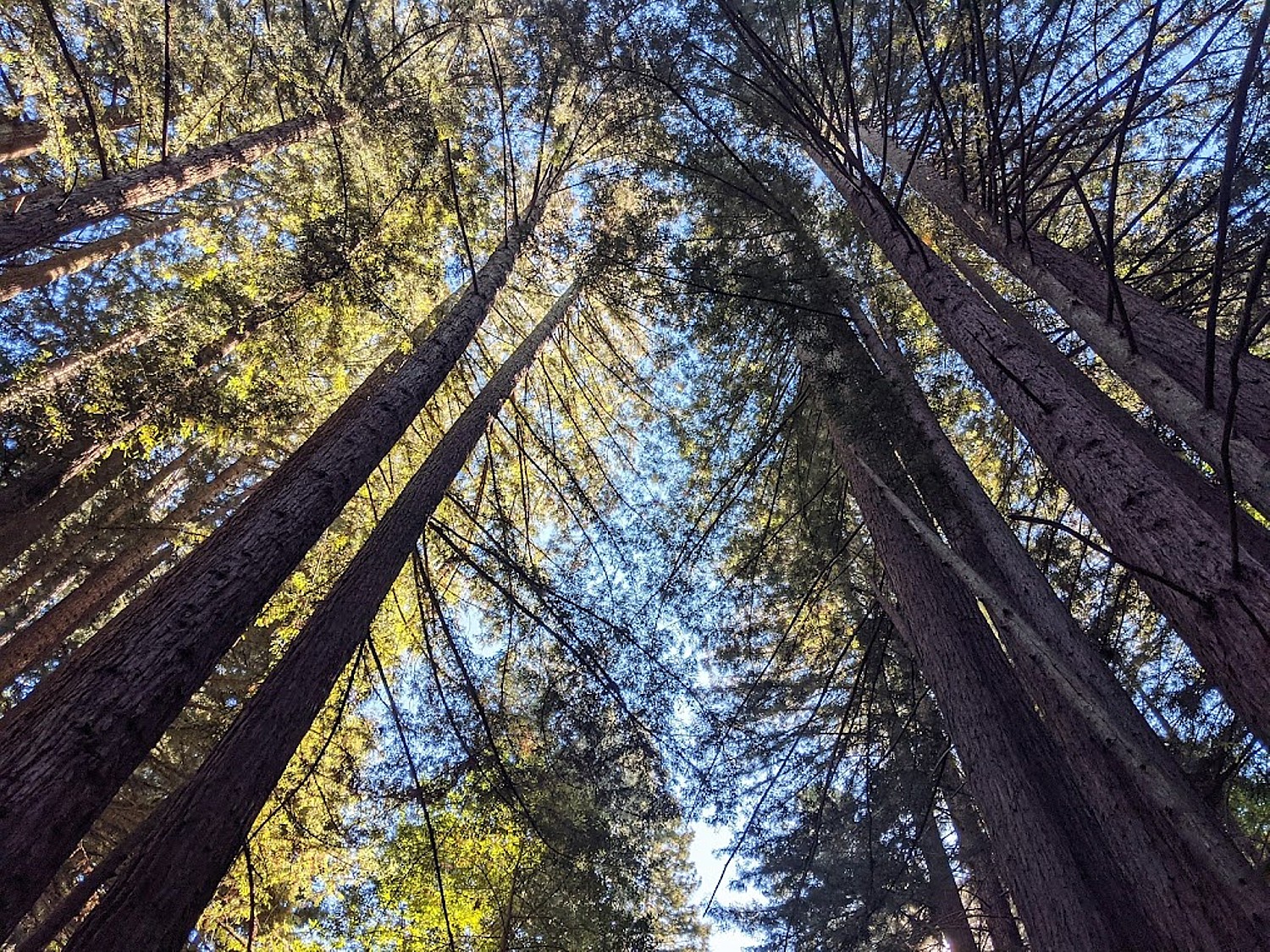
We set out on our hike (there are 20 miles of trails) through lush forest, majestic redwood groves, and meadows (a scenic six-mile trail leads to the top of Sonoma Mountain; you also can explore by horseback or bike), passing by a gorgeous vineyard to get to the trail. (We note the sign warning about rattlesnakes as we enter.)
I must return to visit the museum housed in “The House of Happy Walls” where there are displays of London’s books along with artifacts London and his second wife, Charmian, brought back from their 27-month sailing adventure among unexplored South Seas islands. (Volunteer pianists play on Charmian’s 1901 Steinway grand piano in the cottage where she lived from 1934 until she died in 1955.)
The park is very popular with locals in the know about all there is to do here – including concerts, performances, lectures, piano recitals; year-round there are free docent-guided tours, docent-led Sunday morning hikes, and other park events. Download a park map.
You can pick up picnic supplies, as we did, at the superb Glen Ellen Village Market or croissants, mini-sandwiches and other baked goods at Les Pascals bakery.
In the late afternoon, we take a walk in the “neighborhood”:
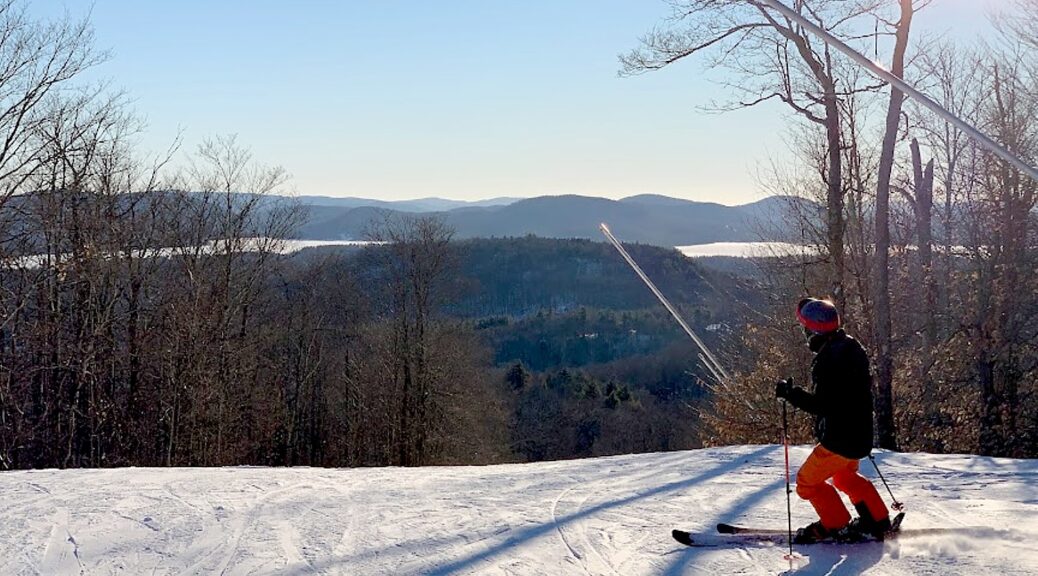
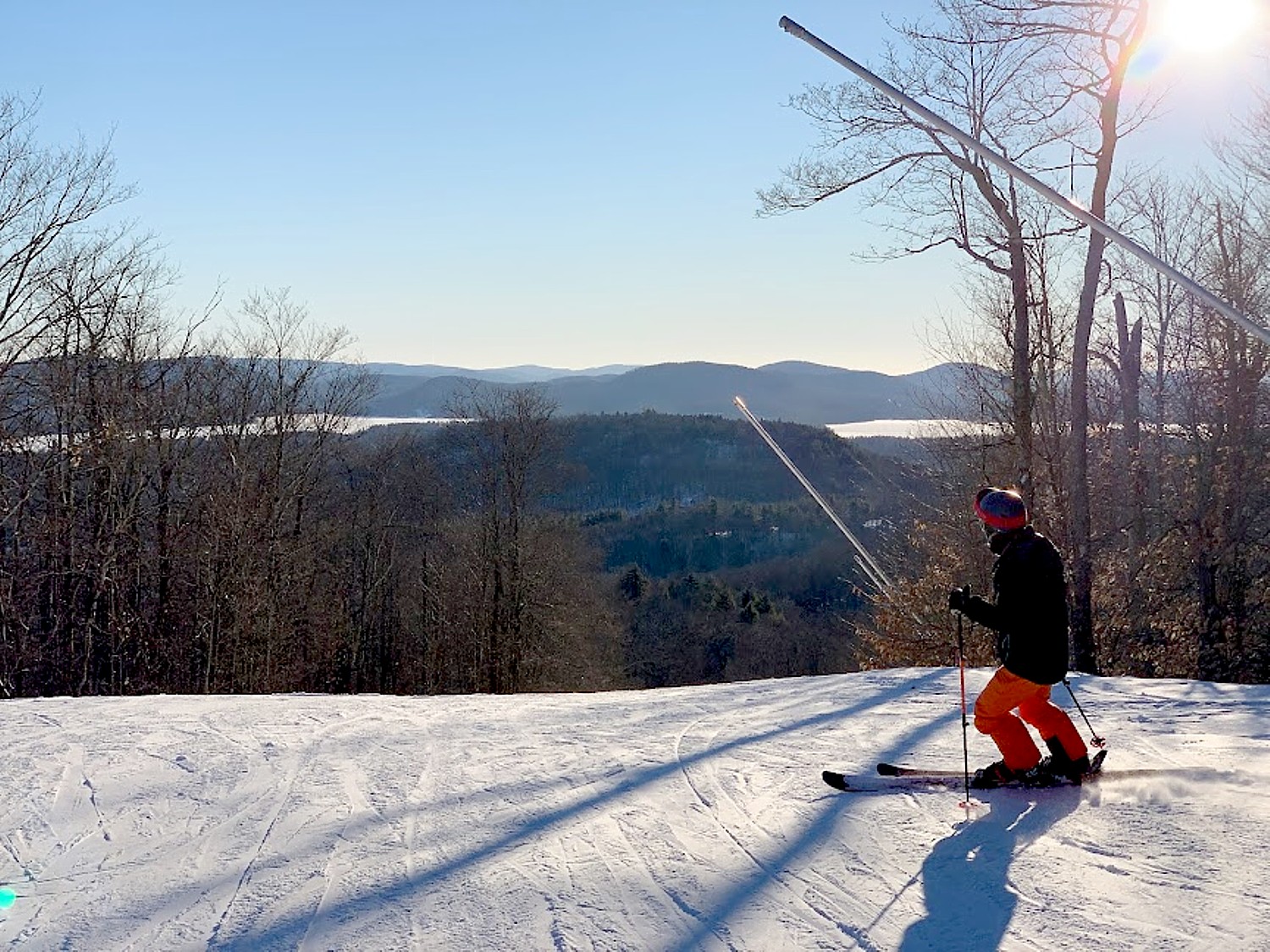
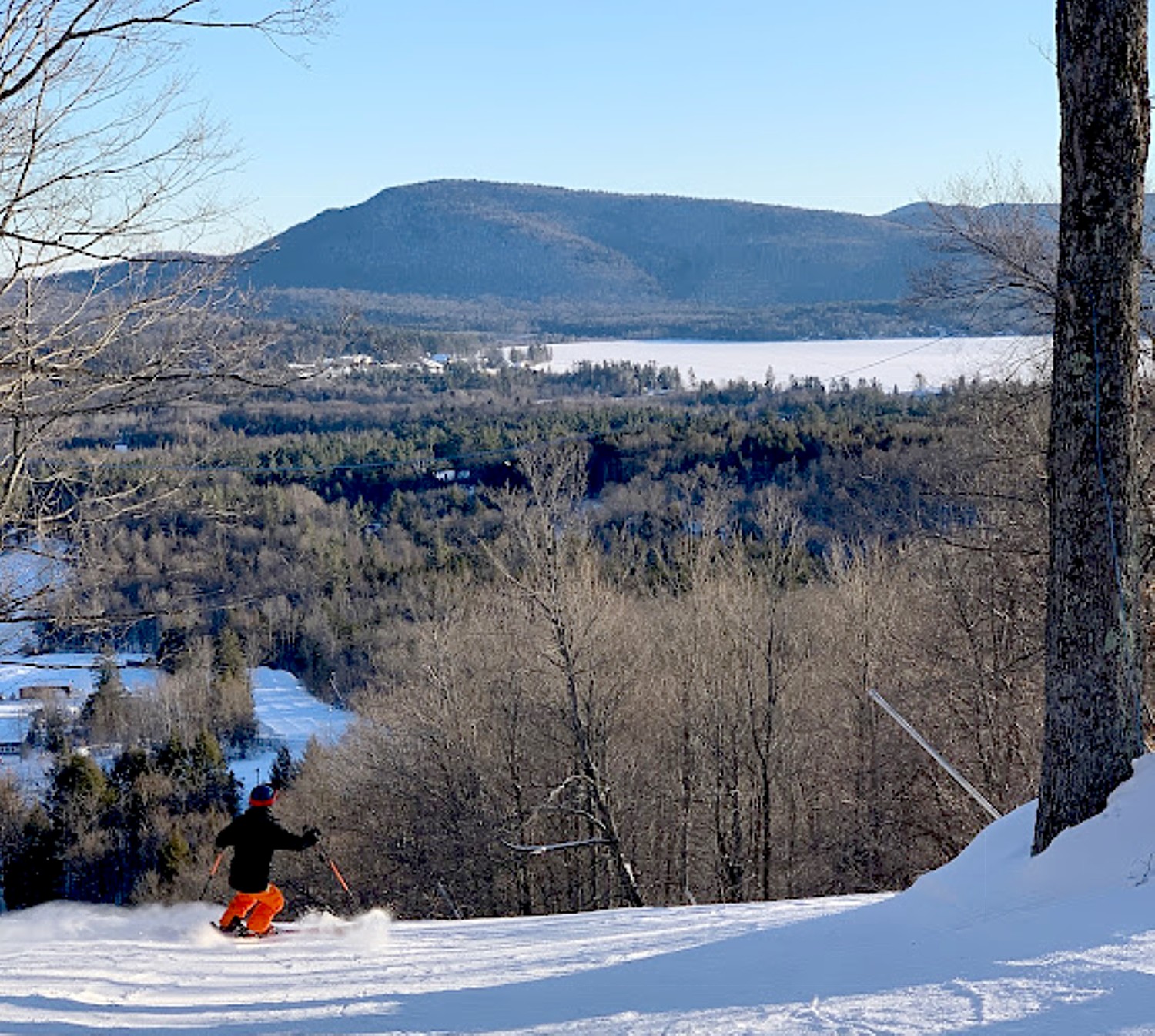
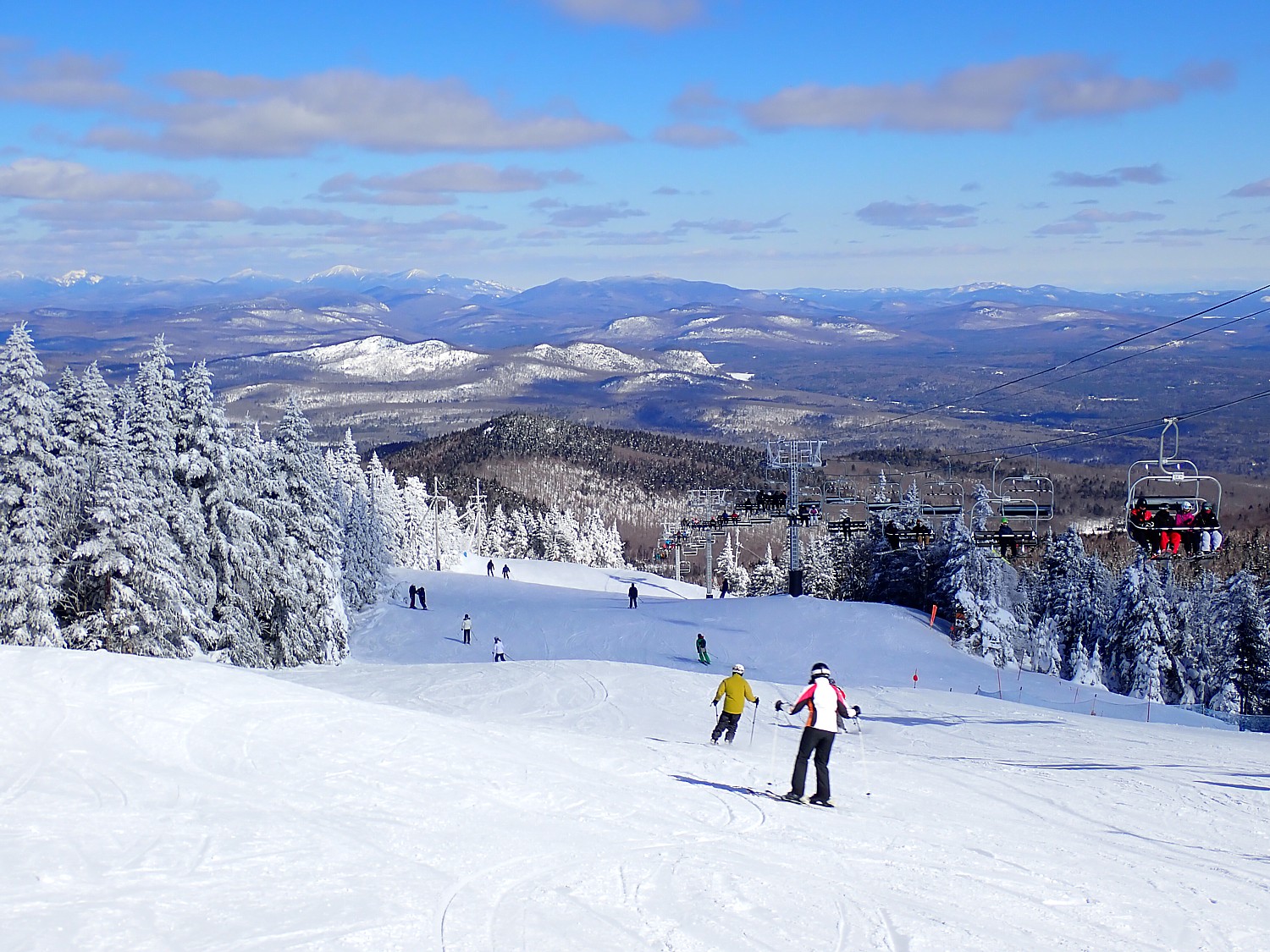
It’s 2:30 pm when we leave The Lorca, our lodge just up the road from Oak Mountain. By 3 pm we’re on Einstein’s Express, the quad chairlift that takes us up this delightful ski area, likely overshadowed by nearby major Adirondacks ski destinations, Gore Mountain and Whiteface. Looking behind us, the snowy Adirondack lake vista of Speculator bears a beauty that reminds us of the scene when you ski down Heavenly Mountain and come upon that sweeping view of Lake Tahoe.
Our first run down is Sacandaga, a lovely green cruiser with gorgeous views, some nice bends, and exquisitely groomed snow. Our Weather app says it’s 9 degrees, but in the sun we don’t notice it. Perfect warm-up run.
We check out Upper Ryan’s Run (a black) and Lower Ryan’s Run (a blue). For a small, very family-friendly mountain that is so close to Lake Pleasant, Indian Lake, Blue Mountain Lake, and other popular Adirondack lake towns, Oak Mountain surprises us with its variety of trails to explore. Nova, Alternate, Skidway, and the other trails on that side of Einstein’s Express aren’t open, but we enjoy an hour of runs down Oak Mt. Run, Fifth Ave, and the trails surrounding Sacandaga.
It’s fun (and educational!) to see the local high school ski team practice as we ride the chairlift. It inspires us to work on our weight-shifting and carving for the remainder of our spontaneous Friday afternoon ski outing.
We hear great things about Acorn Pub and Eatery down at the base where there is often live music. We’ll need to check it out next time for après ski.
This quaint ski area – popular with families since 1948 though a new discovery for us – offers 22 trails (snowmaking on 40%), a 650-foot vertical from base (1,750 feet) to summit (2,400 feet), and four lifts (quad, two T-bars and a surface lift). The longest run is 7,920 feet.
In addition to downhill skiing and snowboarding, Oak features four lanes of snow tubing and miles of snowshoeing trails that take you through a majestic forest.
Lift tickets to Oak Mountain are very reasonable. Full-day tickets are $44, four-hour tickets are $37, and two-hour tickets are only $30. We highly recommend starting or ending the day with even just an hour of skiing at Oak Mountain.
(Capacity is limited, and lift tickets, rentals and lessons must be booked in advance online.)
Oak Mountain is a three-season resort in the Southern Adirondacks, an easy drive from Albany, Utica or Lake George.
Oak Mountain’s website lists nearby accommodations and “Play and Stay” packages.
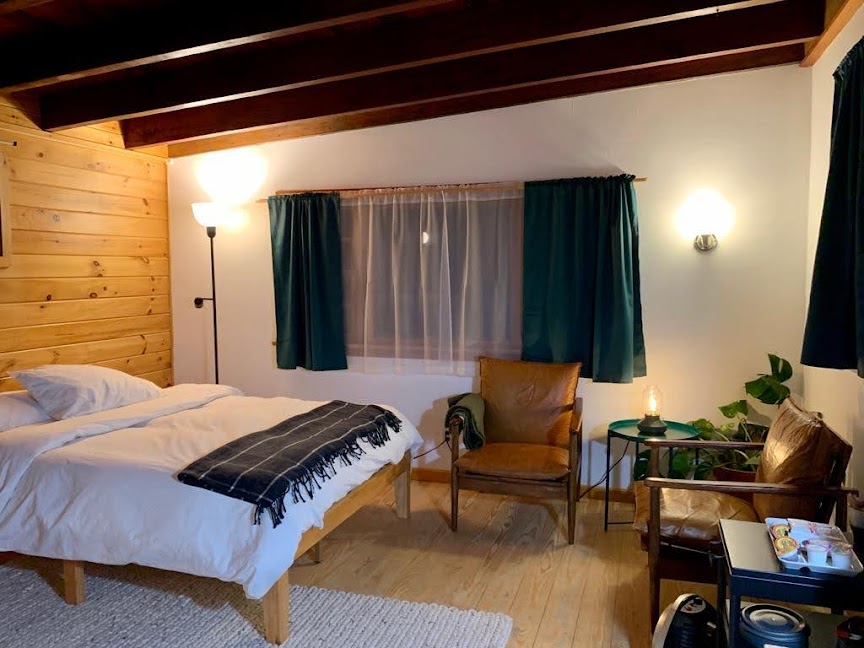
Among them is Lorca ADK, our lodge which we recently renovated from a historic motel, to accommodate stays year-round.
Lorca ADK is a classic drive-in lodge, reimagined as a self-check property for the contemporary traveler (c) Dave E Leiberman/goingplacesfarandnear.com
Lorca ADK is a classic drive-in lodge, reimagined as a self-check property for the contemporary traveler. It’s surrounded by forests, across the road from Indian Lake with gorgeous islands. The eight units provide coffee, tea, mini-fridges, s’mores and firewood. The property offers grills, fire pits, lawn games, a seasonal pool with weekend hours, and a nature walk. Lorca ADK is about 20 minutes from Oak Mountain, and about 30 minutes from Gore Mountain Resort.
We can see just how important travel is in our lives – to our wellbeing, our growth, our connections to family and friends, and as literal ambassadors of peace, understanding and shared innovation.We know this from the huge surge that occurred during 2021, after the COVID-19 vaccine opened floodgates to travelers, by making it safe(r) to be out and about. Even during the worst of the pandemic, before a vaccine, people found a way to continue to embrace experiences, drawing upon the infinite possibilities to tailor something that felt right.
It may well be that the Omicron variant, by virtue of just how transmissible but less dangerous (at least for those who are vaccinated and use precautions like masking, social distancing) will help bring about the end of the global coronavirus pandemic, as more people develop immunity. Or not. It may well be that new variants will arise – perhaps progressively less dangerous. Or not. And it is more likely that some form of virus will be endemic and dealing with it will be part of the “new normal” of everyday life. And people will find a way to go on with their lives and have this in mind: life is precious and our time is finite, make the best of every day. And that includes sharing experiences with the ones you hold dear. And top of the list to achieve that is travel.
Where to go in 2022 is as much a question of “how to go” and “why to go”.
I’m thinking that many of the same trends of 2021 will hold in 2022 – a focus on outdoors activities, low-density destinations, open-spaces (national and state parks), bike trips, driveable destinations, RVs and camping.
Even if the Omicron variant of COVID-19 abates, as is expected, and is less dangerous than Delta, and travelers are much more likely (even required) to be vaccinated and show a negative test, people will be concerned about whether there is yet another variant around the corner that can break through, whether destinations will impose new restrictions, from mandated quarantines to capacity controls to shutting borders altogether (airlines, tour operators, hotels and the like must continue flexible cancellation policies if they want to stay in business at all). There likely will be the continued need for advance purchase of ticketing, and possibly a return to capacity controls, as well as requirements for masking and social distancing. This will define the new “normal” because the protocols won’t be going away any time soon – certainly not until there are months that go by without a coronavirus outbreak before anyone feels safe enough.
But because there is now widespread vaccinations, masking, and testing will be much more available (and free), people will continue to travel and live their lives. COVID will be “endemic” – embedded in how we live.
And the lure of travel – for all the benefits travel affords in terms of personal growth, renewal, bonding, discovery – will be very strong, even stronger. And where there is a will, there will be a way.
People will opt for travel that does not require a lot of connections (if taking air) or complicated itineraries, will many will seize opportunities to travel last minute because of the changeability of the situation. They will look for flexibility (and ability to cancel or change), and travel styles that give them more control.
Travel companies have already adapted: like G Adventures (gadventures.com), with a new “Travel with Confidence” policy; Moab Adventure Center (www.moabadventurecenter.com) and its parent, Western River Expeditions, which organize customized small-group trips.
The innovations and adaptations – on airlines, at hotels and resorts, attractions, restaurants – that have already been put into place will be continued, improved, enhanced. Many have actually been very popular improvements.
Indoor attractions may well continue capacity limits, advance purchase and online/touchless ticketing.
A concern for health and wellness will likely overhang travel planning. People should be monitoring CDC and WTO health reports and State department – not just on infection rates, but what destinations, travel suppliers, hotels, restaurants are doing to take COVID-19 health protocols seriously. Use your own protocols – the more protective N95 masks, hand-sanitizing. (New: Fend Wellness Sanitizing Hand Wipe Mitts are wearable hand mitt wipes that provide a protective liner between you and all surfaces that come in contact with your hands, available on Amazon and online, fendwellness.com).
For complicated, long-distance and expensive itineraries, use a travel advisor (www.travelsense.org, www.virtuoso.com, ustoa.com, and the new Reco from Tripadvisor (helloreco.com). Try to make plans with flexible cancellations or change policies; use respected and well established tour operators and travel companies which can adapt quickly on the ground and revise itineraries as necessary and even extract you if conditions warrant. If traveling abroad, purchase travel insurance that incorporates health coverage (your domestic health insurance does not provide much coverage; my go-to travel insurance company is worldnomads.com)
Check with State Department (travel.state.gov) and CDC.gov as to conditions. Make sure vaccinations (and cards) are in order (many countries are much more restrictive than the United States). Sign up for the Smart Traveler Enrollment Program (STEP, Step.state.gov), which shares your contact information with the nearest U.S. embassy and sends travel alert notifications. The STEP app is worth downloading prior to traveling.
Road Trip!: Continue to discover destinations, experiences within driveable distance, or, for long-distance holidays, revert to the old-school “road trip” and string together destinations in an itinerary that make a loop. An excellent way to do that is to go to historichotels.org because each of these 300 member properties from 44 states, the District of Columbia, the U.S. Virgin Islands, and Puerto Rico, are destinations in their own right. Hotels and resorts are being scrupulous about cleaning and sanitizing and have installed procedures and technology. You can also create your own itineraries using hotels.com (which offers extremely flexible cancellation policy), booking.com, airbnb.com.
Ski/snowboarding/mountain resorts holidays – More people taking up skiing, snowboarding, snowshoeing, uphilling which are ideal outdoor activities during winter. Fortunately, there are many major ski areas within driving distance. Ski passes like Vail Resorts’ EpicPass and Alterra Mountain Company’s Ikon Pass, which provide access to dozens of destinations, let you really explore. And to help, Alterra just introduced the Ikon Pass Travel, a trip planning service (ikonpass.com/travel).
Renting RVs/camper vans will continue – last year was a boom for camper van rental companies like Moterra (307-200-7220, gomoterra.com); Blacksford, offering an all-inclusive RV pricing with unlimited miles, 24-hour roadside assistance and a free annual pass to national parks (www.blacksford.com); and Tracks & Trails markets packaged national park RV vacations, 800-247-0970, www.tracks-trails.com). Another idea: pilot your own canalboat – like an RV on the water – on the Erie Canal (eriecanaladventures.com, 315-986-3011).
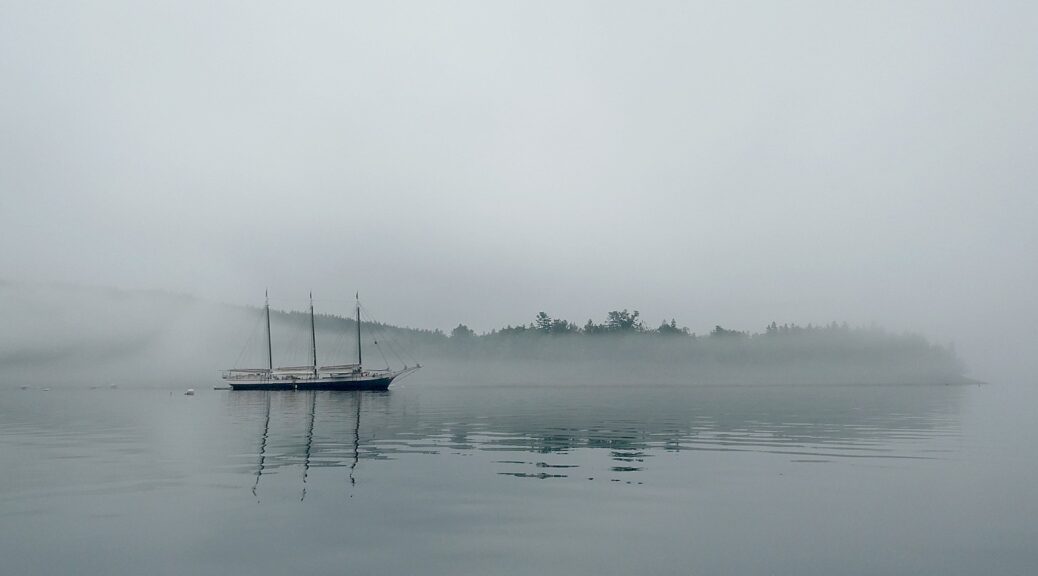
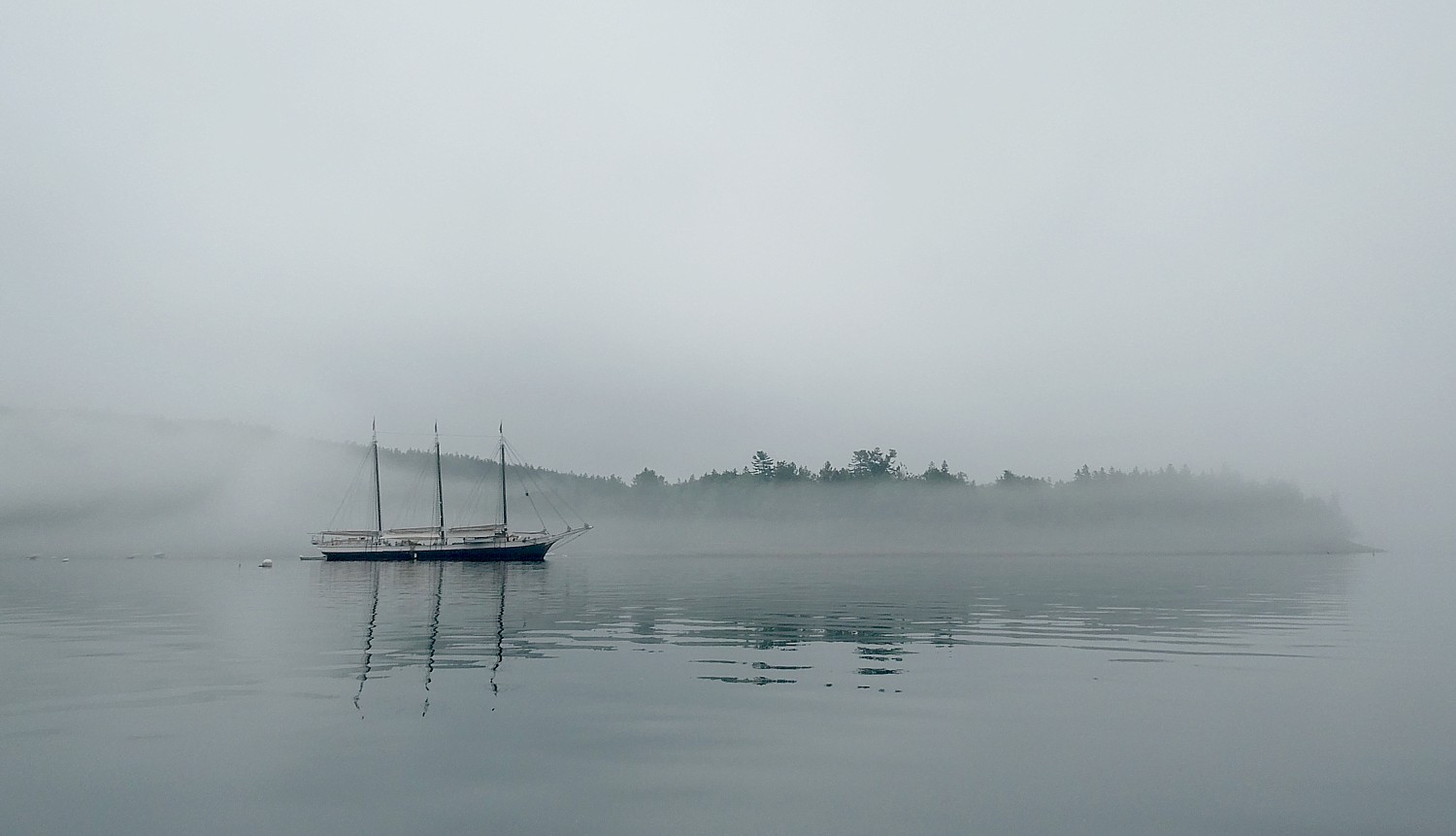
And while big cruiseships may be a dubious proposition, small ships like Blount (blountsmallshipadventures.com, 800-556-7450) and riverboats like CroisiEurope (croisieurope.com, 800-768-7232), and historic sailboats like the Maine Windjammers (800-807-WIND, www.sailmainecoast.com) will be desirable ways to keep sailing.
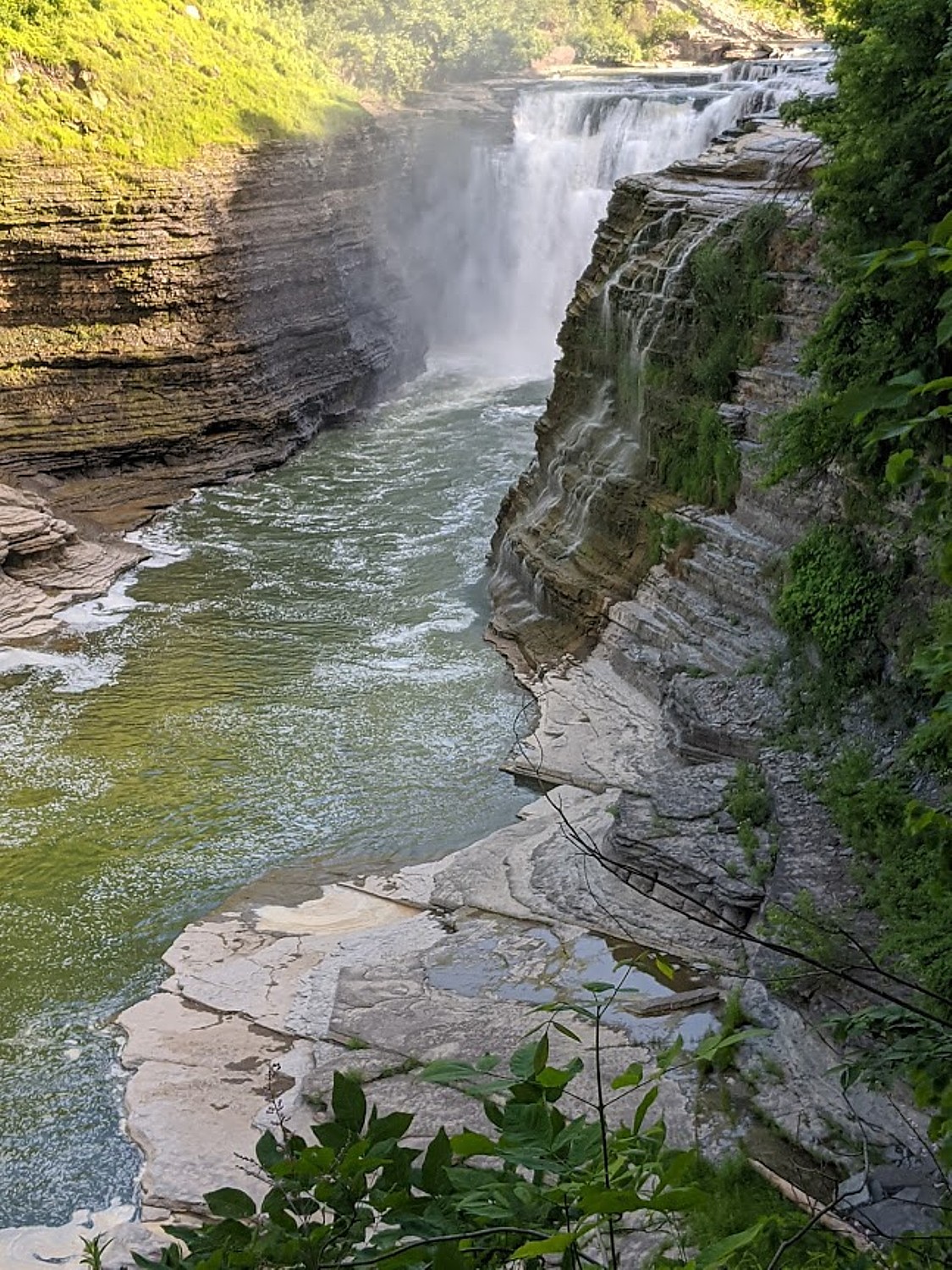
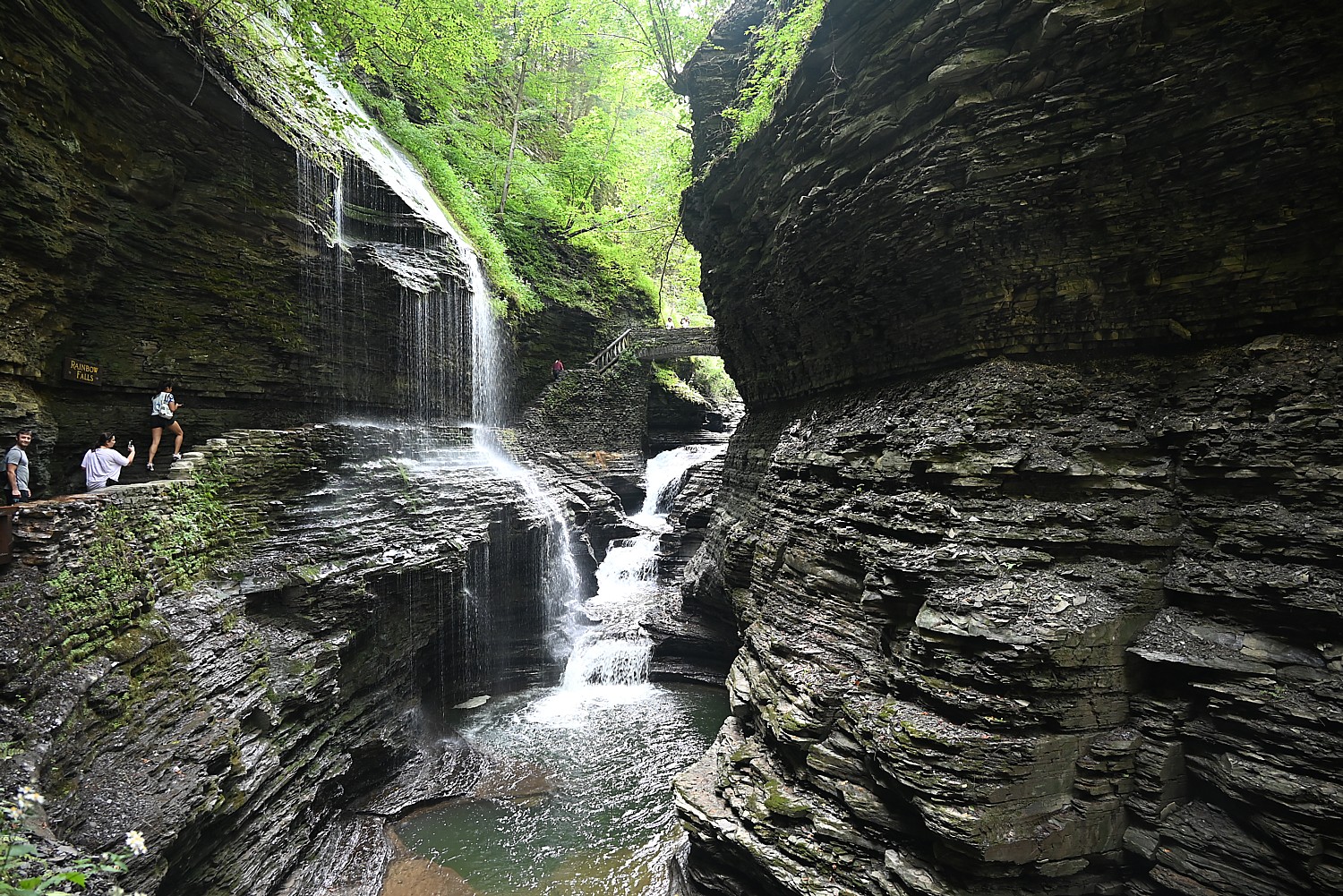
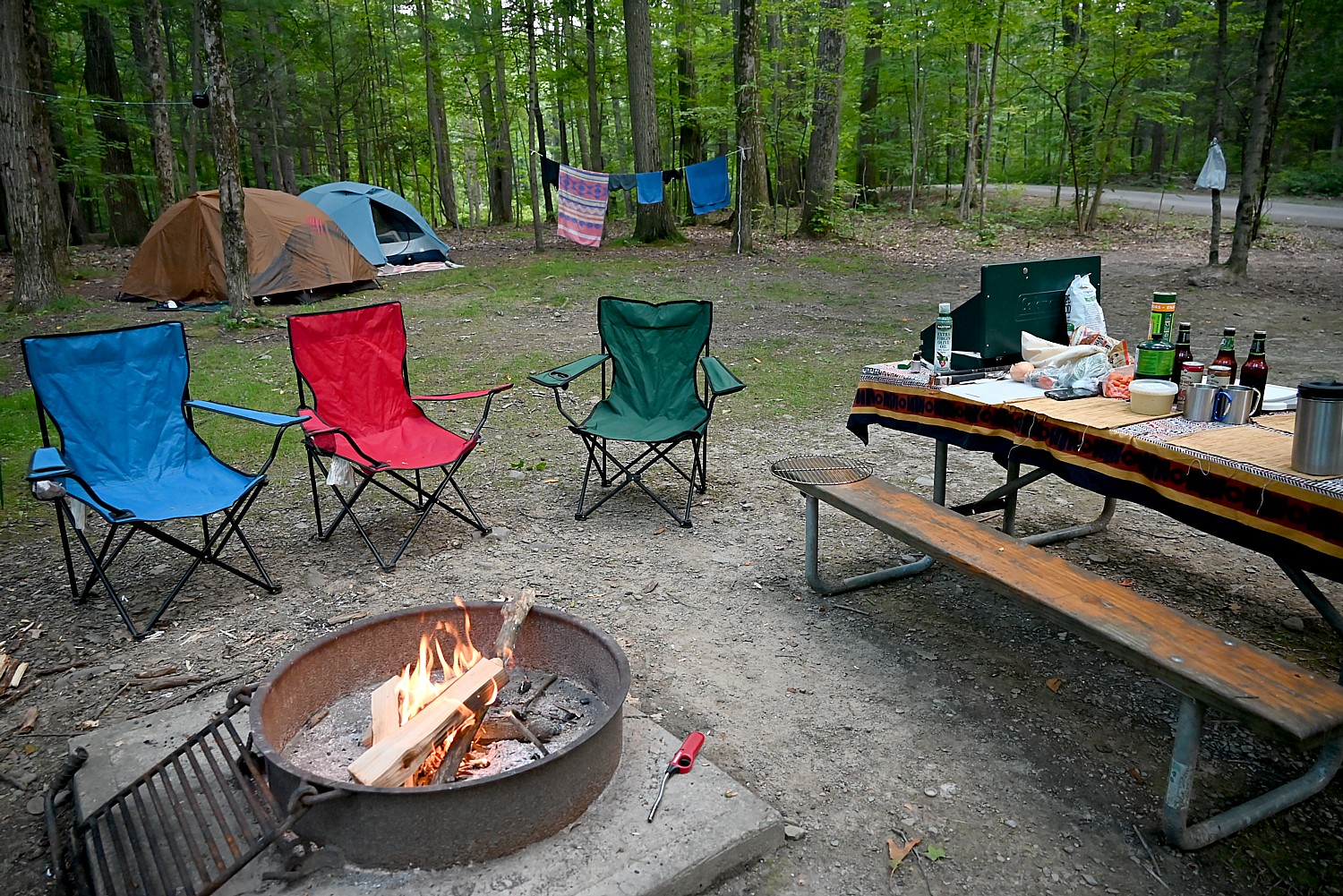
Camping/glamping –Check out New York State campgrounds in state parks like Watkins Glen and Letchworth State Park; book at 800-456-CAMP, newyorkstateparks.reserveamerica.com). Last year, New York expanded glamping/camping opportunities along its picturesque canals through Tentrr (tentrr.com/nysp). To find private campgrounds, visit Campground Owners of New York, 585-586-4360, campnewyork.com, and Kampgrounds of America (our favorite: Herkimer Diamond Mines KOA, Herkimer, NY (315-891-7355, www.herkimerdiamond.com). If California is your destination, visit www.camp-california.com.
And nationally: Kampgrounds of America (koa.com); Yogi Bear’s Jellystone Park™ Camp-Resorts with 75 locations throughout North America (pools, water slides, splashgrounds, activities, www.jellystonepark.com); and, internationally, Glamping Hub, with 22,000 locations around the world, from safari tents, yurts, treehouses, to cabins (glampinghub.com); and Pitchup, which has 5344 campgrounds, glamping sites throughout the Americas, Europe (www.pitchup.com)
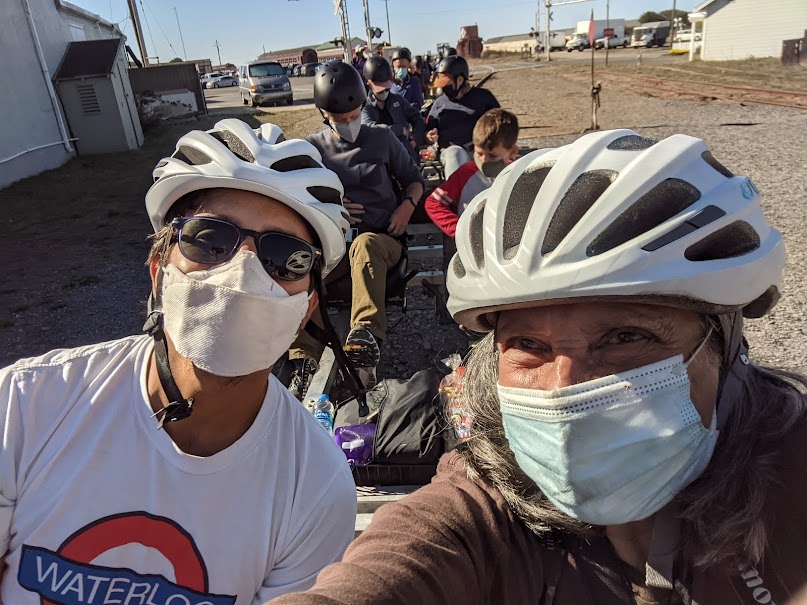
Bike tours are among our favorite modes of travel – a perfect pace and immersion into surroundings with scenic and important heritage routes, that are offered as inn-to-inn, bike/boat tours, or as bike/camping trips, and as guided tours or self-guided. Among our favorite bike tour companies: Bike Tours (biketours.com), Wilderness Voyageurs (855-550-7705, Wilderness-Voyageurs.com), Discovery Bicycle Tours, which has a new Vermont Gravel biking/camping trip (800-257-2226,discoverybicycletours.com). Also, Parks & Trails NY is back with its 24th Cycle the Erie Canal, eight-day, 400-mile biking/camping trip, from Buffalo to Albany, (July 10-17); registration has just opened (https://www.ptny.org/cycle-the-erie-canal/annual-bike-tour)
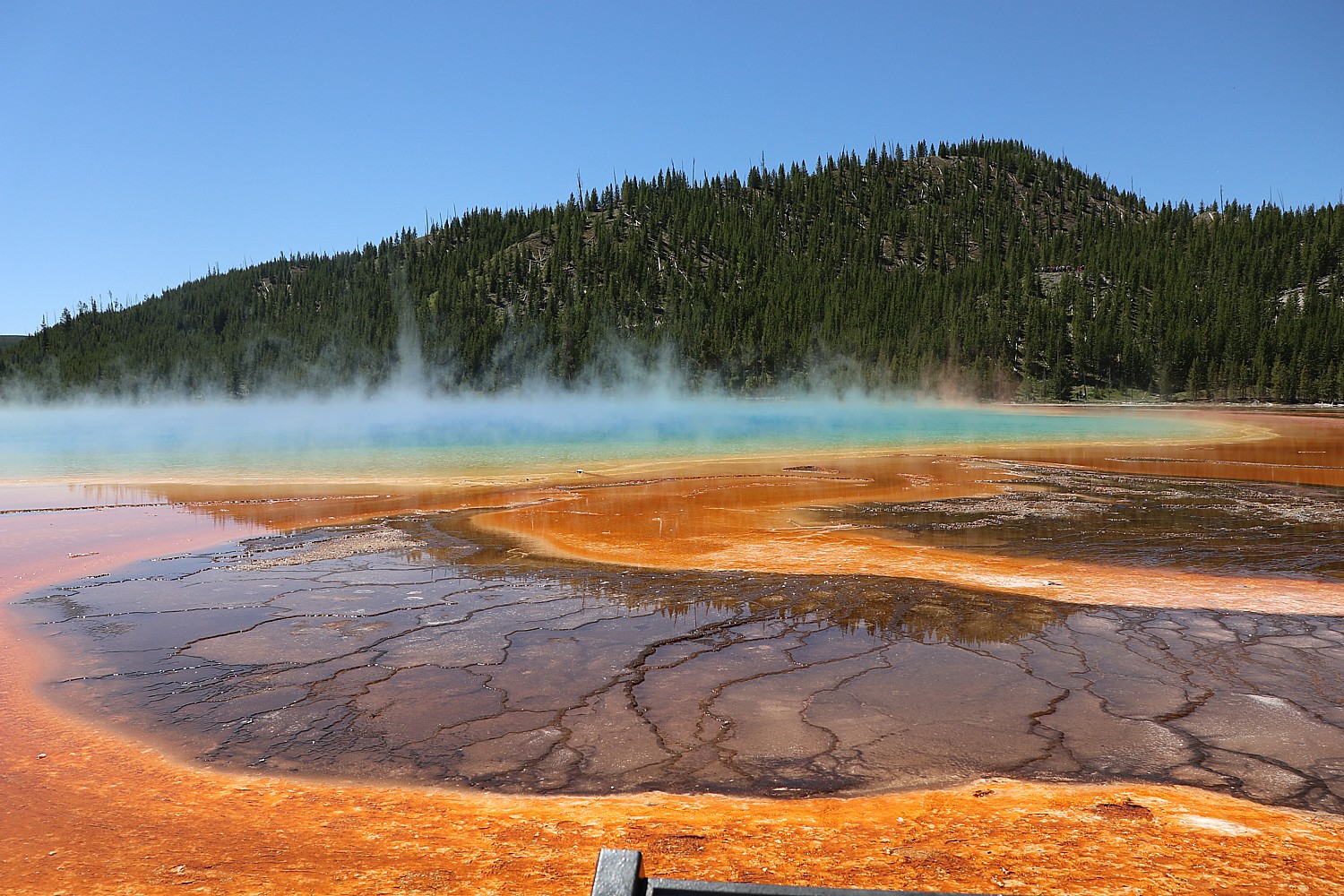
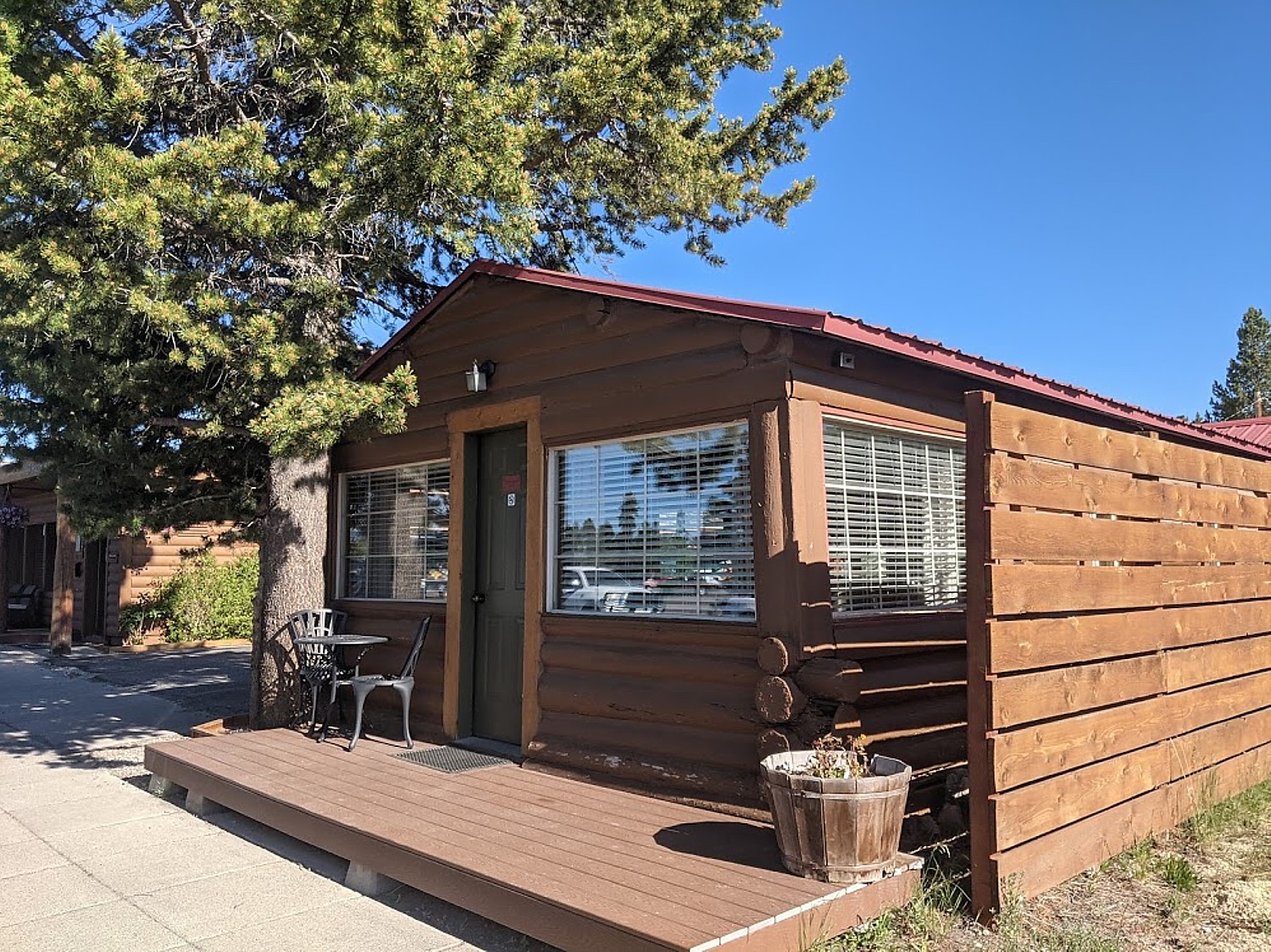
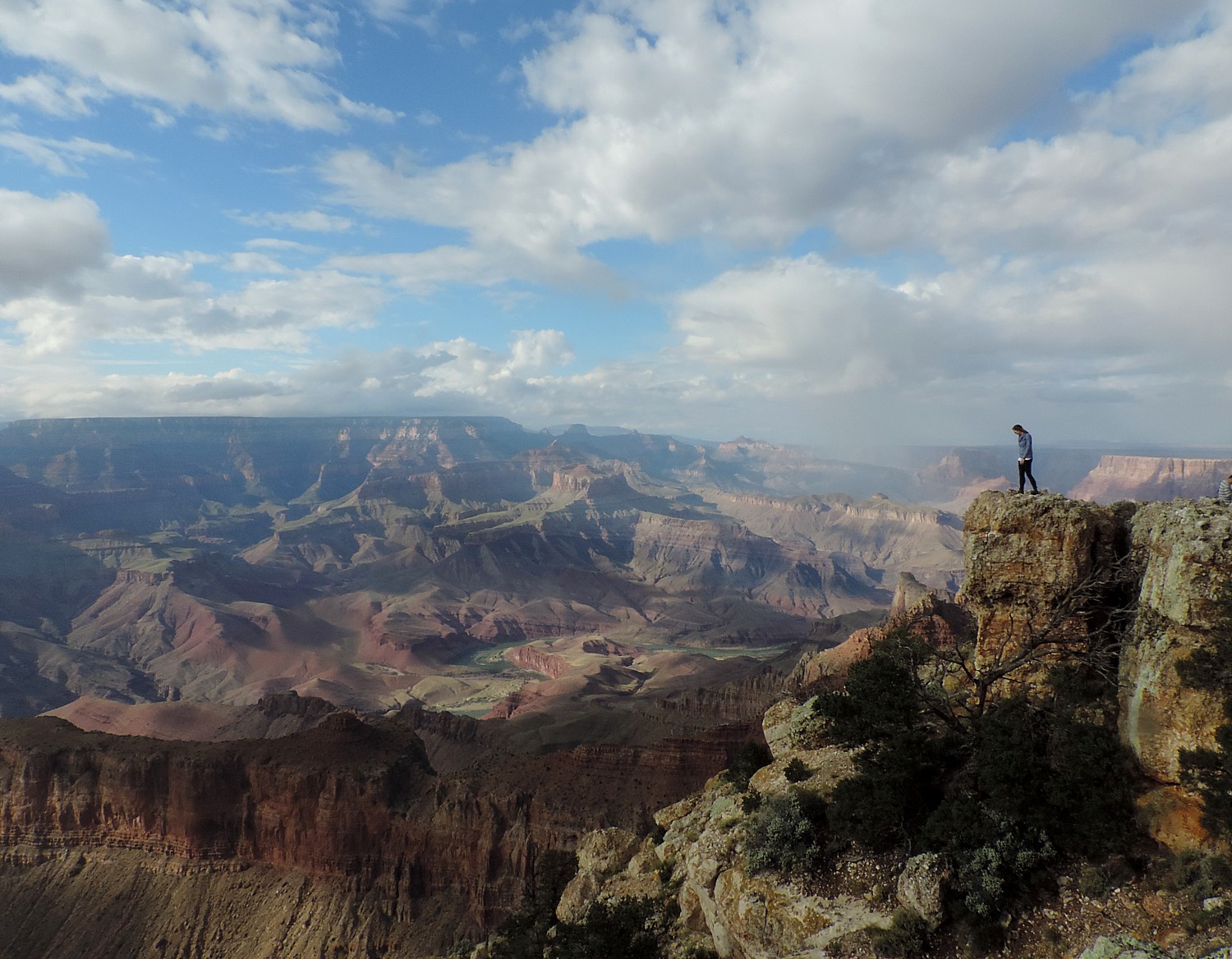
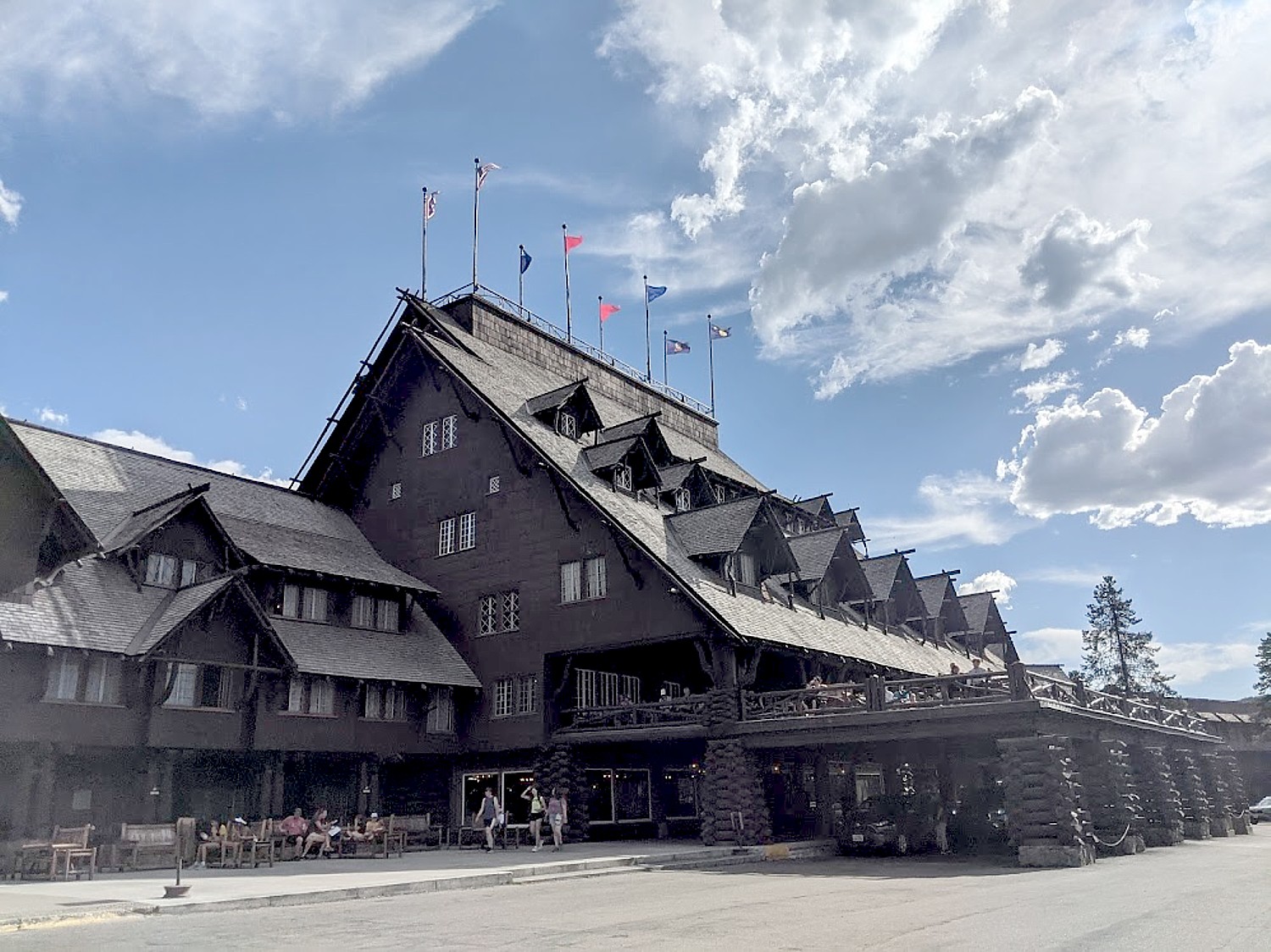
Visits to national and state parks will again be popular this year. There are tour operators that have organized tours, and you can do what we did last year, go to AirBnB, hotels.com and booking.com to get availability, but there are two companies that dominate in-park lodging: Xanterra (xanterra.com) and Delaware North (delawarenorth.com)
Delaware North last year implemented its Rest Assured Commitment to Care comprehensive health and safety program at the lodging properties it operates, including re-engineered operating procedures to minimize contact risk and bolstered hygiene protocols aligned with guidelines of the U.S. Centers for Disease Control and Prevention (CDC). Delaware North Parks and Resorts operates lodging in and near many iconic national and state parks, including Grand Canyon, Yellowstone, Shenandoah, Sequoia & Kings Canyon and Olympic National Parks and Niagara Falls State Park, as well as at cultural attractions such as Kennedy Space Center Visitor Complex (www.delawarenorth.com/divisions/parks).
Known for its “Legendary Hospitality with a Softer Footprint,” Xanterra Travel Collection has operations in Grand Canyon, Yellowstone, Zion, Glacier, and Rocky Mountain National Parks, and Mount Rushmore National Memorial. Xanterra Travel Collection also owns and operates the Grand Canyon Railway & Hotel in Williams, Ariz., The Grand Hotel in Tusayan, Ariz., The Oasis at Death Valley in Death Valley Calif., Windstar Cruises, Holiday Vacations, VBT Bicycling and Walking Vacations, and Country Walkers.
Wellness travel – There will be more interest in visiting resorts that cater to wellness (not the same thing as medical tourism), like Canyon Ranch or like the The Inn at Leola Village, Leola, PA, touting its Paid Time Off Wellness Package (theinnatleolavillage.com). The Global Wellness Institute defines wellness tourism as “travel associated with the pursuit of maintaining or enhancing one’s personal wellbeing…an opportunity to maintain and improve our holistic health.” A helpful source is spafinders.com.
Wellness and glamping combine at Picocanoa Rodavento, an eco-lodge in Veracruz, Mexico where thrill seekers can explore the surrounding jungle-clad hills by whitewater rafting, mountain biking, rock climbing and even zipping across the canyon and colorful treetops. The glamping site offers traditional wellness treatments, including a traditional Mayan temazcal prehispanico steam bath, as well as an outdoor pool and bar surrounded by lush greenery, a campfire for enjoying traditional batucada drum parties and safari tents and cabins that travelers can book for $98/night on outdoor accommodation website.
Beach and golf resorts that afford lots of space, uncrowded, perhaps with own villas and beachfront will be in high demand. Many Caribbean and Mexican resorts, for example, are emphasizing their COVID-19 protocols and healthful ambiance. Club Med, a pioneer of the all-inclusive concept, for example, is touting its spacious low-density resorts surrounded by nature, spread across 50 acres, operating at a limited capacity, its enhanced safety and hygiene protocols, free onsite antigen testing, and free cancellation policy, as well as unlimited culinary options, and inclusive activities from skiing and snowboarding to standup paddle boarding and snorkeling and family activity programs (www.clubmed.us, 800-Club-Med)
Dude Ranches check off all the items on our list for being outside, inclusive and pure fun. New York State has a surprising number of these delightful venues. Among our favorites: Pine Ridge Dude Ranch (866-600-0859, www.pineridgeduderanch.com); Ridin’ Hy (518-494-2742, www.ridinhy.com); and the ever-popular Rocking Horse Ranch (877-605-6062, www.rockinghorseranch.com).
Want the real West? Dude Ranch Association, with 100 members across the western United States and Canada, each entirely different from one another, can help you choose where to go (307-587-2339 duderanch.org); another source is the Colorado Dude Ranch Association (866-942-3472, coloradoranch.org).
More focus on experiential and purposeful travel – those bucketlist experiences that resonate at a fundamental level with one’s being, the experiences that are important enough to risk going outside one’s comfort zone. It could be anything: hiking/camping trip to Machu Picchu (alpacaexpeditions.com); wildlife safari in Kenya (EF Go Ahead experts navigate travel and health and safety guidelines and plan fully refundable trips with no change fees, 800, 590-1161, www.goaheadtours.com); a voyage to Antarctica (atlasoceanvoyages.com, 844-44-ATLAS) or a cooking class in Paris (cooknwithclass.com).
A corollary of this is more focus on sustainable, responsible tourism and ecotourism. Even if much of society has become entrenched in “me-me-me” view, people who are travelers tend to have a more open, one-world sensibility, and are sensitive to the need to protect and appreciate environment, heritage, ecology. There is a lot more interest in seeking out travel experiences that immerse you in local cultures and use tourism to bolster local economies in order to sustain local communities and culture, and do as much good in the world as for oneself.
TRIPS by Culture Trip, is touting its “ extremely flexible and generous cancellation plan in place should Covid restrictions change your plans, including rebooking for free up to 48 hours before departure and if TRIPS by Culture Trip cannot change your booking dates, they will refund the booking (culturetrip.com/trips, 678-967-4965).
Even though you may want to hold out to survey the situation, you are best advised to book early because dates will fill, and take advantage of flexible cancellation or rebooking policies. National Plan for Vacation Dayis January 25th.